
This week’s guest is Sara. Sara grew up in a Canadian Mennonite community and embraced it wholeheartedly. She was surrounded by evangelical Christianity and she thrived.
As a young adult, she married and followed her husband into ministry. While he led, she helped as was expected of her. It didn’t occur to her until years later how little her own leadership skills had to be set aside.
Sara’s husband started deconstructing his beliefs before she did, but as he was learning, she was also learning. Years later, she knew he’d become an atheist before he did.
It wasn’t easy, but they made space for one another to learn and grow and move down their own paths. Today, Sara is a spiritual director for others and doesn’t have a specific label for herself, and it works just fine.
“There’s a whole host of ways of being in the world…”
“Waves” track written and produced by Makaih Beats
Transcript
NOTE: This transcript is AI produced (otter.ai) and likely has many mistakes. It is provided as rough guide to the audio conversation.
David Ames 0:11 This is the graceful atheist podcast United studios Podcast Network. Welcome, welcome. Welcome to the graceful atheist podcast. My name is David and I am trying to be a graceful atheist. Please consider rating and reviewing the podcast on the Apple podcast store, rate the podcast on Spotify, and subscribe to the podcast wherever you are listening. We have a merchandise store on T public, you can get all of your graceful atheist and secular Grace themed items there, the link will be in the show notes. If you're in the middle of doubt, deconstruction, the dark night of the soul, you do not have to do it alone. Join our private Facebook group deconversion anonymous and become a part of the community. You can find us at facebook.com/groups/deconversion Special thanks to Mike T for editing today's show. On today's show, Arline interviews this week's guest Sarah. Sarah grew up in Canada in a Mennonite community that also had a lot of evangelical influence. Her and her husband were both deeply committed Christians, her husband deconstructed and D converted first. And Sarah began to deconstruct her faith. Sarah is still a spiritual person, and does not care for labels. But what she is describing is a Christian or a spiritual humanism. Here is Arline interviewing Sarah.
Arline 1:50 Right. Welcome to the graceful atheists.
Sara 1:53 Thank you. Good to be here.
Arline 1:55 You and I have chatted, we're both in the deconversion anonymous Facebook group. You are the lovely spouse of one of our former guests. And yeah, I'm just excited I get to talk to you.
Sara 2:07 I'll take it. I'll take it.
Arline 2:10 Okay, so we usually just start tell us about the religious environment that you grew up in.
Sara 2:16 Sure. So I grew up in small town, Manitoba, Canada, and that is a cold place. But it was full of warm hearted people. For me, growing up growing up Evangelical, Mennonite, Christian, so I'm not sure who's all familiar with Mennonite people out there. But a lot of people in the States could think of Amish people for a first comparison. We still have people groups in that tradition up here with the bonnet and and the old fashioned dress, the modest dress, but mostly progressive communities. So modern communities, full of evangelical based Mennonite Christians. So that's how I grew up, was just being ushered into the faith. So I've learned the term cradle Christian. And that definitely applies to me. So I remember I remember being told that I said the center's prayer around age four. So you know, in in smack at the age of innocence, just reciting, reciting to my parents at bedtime, the sinners prayer and thus becoming a Christian. And my parents describe to me, our faith, our family history as culturally, we came from Mennonites, but our faith was more progressive. So we did attend a non denominational church in our community, which of course was full of evangelicals. So non denomination or not, that's that's what I grew up in and really embraced wholeheartedly. The faith. And so for me that looks like let's see if I can age myself. Date. give you guys a date reference in the 90s. Growing up as a teenager, a little bit of purity culture, a lot of the youth rallies, evangelical, mainstream musicians and concerts. A lot of the culture that I was involved in was all Christian so from morning to sundown, was Christian media and Christian teaching. You did not go to Christian school, we had public school, but really was not exposed to other ways of life or other faiths or other cultures. I'm really just, what's the word one tone, just a uniform tone in our in our small town at least. And I guess you could say I, I wasn't popular, growing up, but I was good. And in the Christian circles that made one feel pretty secure and the affirmation of elders and peers was something that I enjoyed and sought and was rewarded with, because of being good. And I, I was really good at being a Christian and enjoyed it. And I do, I would say, I was lucky that we did grow up, I would say more progressive. And the purity culture, stuff that that did come around indoctrinated a lot of the younger teenagers younger than me at the time. And I didn't get hit with with too much of that guilt messaging. But as a grew up into young adulthood, I, I took the opportunity, of course, and to take the next step from being a good Christian in my small town to being a good Christian in a small college, a small Christian College. So our community has Christian College, about seven minutes away from the town. And so that was my big leap forward out of high school, into the big wide, wide world, seven minutes down the gravel road, away from my house where I grew up my whole youth. And at this school, I would say I did receive, again, a more progressive Christian evangelical education. So in that way, continued to avoid some of the more the pitfalls, some of the more abusive messaging, I would say that the messaging I received was, stay on the straight and narrow and listen to your elders. And, and really, the the messaging Other than that, was, you know, that, that women were submissive to men. But that was never really something that that was something that I struggled with. And it was never rammed down our throats, maybe because nobody questioned it. So regardless of why the messaging didn't seem that traumatic for me. It did enable me to keep mostly an open mindset, I guess. So it was at this Christian College, that I would say, I continue to learn a more open minded and open hearted way of being a person of faith.
I did go on to to take a marketing degree, somewhere else and return to work at this college. And the the marketing challenge that I was presented with when I worked there was very interesting to me because the school was transitioning from I'm not sure what they would have been called beforehand, but they were embracing what was called a liberal arts, education. And so the liberal arts in our area of Canada, all people heard was the word liberal. And they thought this, this college was off the rails and that that was it. However, how I understood it then, and how I understand it now is liberal arts is just a wide range of studies. It's a broad spectrum, education, that's what they were seeking to provide. So I would contrast that with other colleges where the religious messaging is heavy handed and inescapable, and in as much as this college wasn't perfect, they did present as far as I understood it a more open way of being. So as I transitioned from attending the college to You know, ending up working there, I met my husband there. And he was, you guessed it a very good Christian. At the time, we were well matched, both of us wanting to be not just good Christians, but leaders in our community. So leading, as someone who worked at the college, was what I was fully embracing. And my husband eventually ended up working in ministry. We were volunteering at our church multiple times per week, he was volunteering and working full time with youth. And that was always interesting to me, as well as he was fully whose full time employed in ministry. And I was expected to come and help. And this was a fully unpaid understanding was that I would be there to support and help but also lead and teach teenage girls and be a mentor to them. And I didn't quest question it, I enjoyed it. I felt that there was room for me as a strong, outspoken woman to have leadership skills. It wasn't until later that I would realize that in all of that, the ability to fully use my voice, my intellect, was still completely under the the leadership of others, especially under the leadership of men. So from there, we had started a family, we had a young family, and I would say, a catalyst to our growth. My husband and I would be when we did start a family, one of the things about having children having a baby, what is the the expression, having your heart, on the outside, walking around in the world, having having your heart outside of you walking around in the world, we both experienced that intense vulnerability that comes with realizing we're not in control. We leave, pray to and believe in and trust in this big, omnipotent God. And yet, there is there suffering in the world, and there are things that can happen to your loved ones. So the problem of, of pain, the problem of suffering, the fear of not being in control, or wondering why there's a God that would allow suffering, we did have few intense health scares with our first with our first child. So that really prompted both of us this question of what kind of god is this, that we believe and we started to question a little deeper? Hey, what's up with?
The questioning, I would say lead to my husband D converting first. So the deconversion of one spouse when the other isn't ready or hasn't made the same types of growth or the same direction of growth. That's something that we confronted early on, I would say my husband found it difficult to tell me what he was going through for fear of what I would say, and just not necessarily fear, but the the intense, honest discomfort that comes with realizing your spouse and you are, are different and growing differently. And my husband at the time was studying Christian psychology and pursuing his master's in Christian counseling. A lot of the benefit of being a spouse of a student is that you you learn a little bit alongside with them, definitely not to the same extent that he was learning, receiving the training directly, but watching and watching the books that he'd bring home and hearing him talk about what he was learning did benefit me as well. And, and I knew he was questioning and and I did question. A lot of the things I was told from the Bible as well, when one of the areas that we immediately agreed on was the area of the Bible as a book, a literature book, and for context, how it was put together and who wrote it and when and why and learning about the different types of literature contained within this book. Being open to the Bible as Miss being open to portions of the Bible as poetry, and art. We eventually realize that the Bible being the be all and end all, it, it didn't strike us the same way as it used to, using the Bible as a rule book. Using the Bible as law at more than just as a place to find messaging about values, just using it as the foundation for everything for all sources of thought, was not something that we could both condone. I was, I would say, I was very at peace. With that, as you could probably tell. Living in the headspace and questioning and learning and embracing my intellect is not something that I would say that I naturally gravitate toward. That's not me. I, I was always the one who would say I have the gift of faith. I don't question I just believe I, I just know. And even as we were growing and changing, it didn't seem very unrestful to me, because we were still good Christians. We were still going to church, we were still leading in the community. And we also experienced some freedom in what my husband was doing in his ministry, where we were learning about evangelicalism as relational. Instead of, we called it we call it relational instead of vacuum cleaner salesman, evangelicalism. So instead of saying, you know, upfront, hey, we're here were Christian, you should be to Why aren't you one? Here's how you can be one Why aren't you and yet very heavy handed salesmanship. We embrace relationship. First, I, I would describe this as an immature way of knowing that love is more important than law. And we wouldn't have had the words for it then. But we were thankfully supported to continue to do ministry. Without being heavy handed. Or I would use the word abusive now we we were able to be loving in as much as providing religious propaganda in central rural, small town Manitoba can be loving. So I would say, my I knew my husband had become atheists before he did. I remember that conversation on our, on our hosts, we're both are on our coach. We're both night owls. We were staying up way too late having one of our discussions like we do. And maybe I wasn't being the most loving at the time. But, but I remember telling him after he he'd told me for a few years, he was agnostic Christian, which then I had to look that up and make sure that I knew what that meant. And at the time, I could say, okay, yeah, I understand agnosticism, and being able to say that I hold a view of God or what is out there and I don't know for sure. And there are there are more learned and technical definitions than that. The way I understood it very simply was this is what I think I believe, but I may be wrong and I hold that opinion loosely.
So for him to tell me for years, he was agnostic, Christian, I was fine with. And I looked at him one night and I said, you're not you're not agnostic, Christian, you're agnostic atheist. And that that term that's a laden term. So for anyone, and I think I know your audience pretty well, there's probably a lot of people out there who for a long time, that term atheist was so laden with guilt and fear and condemnation. And it was probably the worst thing that could happen to someone was who they've turned into an atheist. And so for me at the time, even though our, our growth as people our development as people was heading in that direction, it definitely scared me. And I think more so than the label was just the implication for our partnership. And the questions that that would raise, how would we raise our kids? How would we celebrate the holidays, the really practical ins and outs of having partnership between two people where their faiths are so different. And for the next year or two after that, I would say my growth continued. But I wouldn't say necessarily the same direction. And now, this is probably where it might get interesting. Because as much as I could look at what I believed and and see that the term agnostic fit with me as well agnostic Christian, I couldn't quite embrace the term atheist. And, and so that's kind of where we parked for a long time. As we both continued to grow, my husband getting more and more comfortable with the term agnostic atheist, eventually found his way to community Bihu humanist Canada, the community of humans Canada, and, and so for him to announce to me that he had become a humanist. That was the next step in in his growth and I still felt I still felt a little left behind, I still felt a little bit like, that wasn't the right direction for me. I did look into humanism for a while and try it on the label of Christian humanist. And I wrote a few essays, developing the idea and, and show making a case for Christian humanism, which I believe there is a case for that type of belief. But along along the way, of my, my studying on my own, not professionally, just casually, I'm pursuing my own topics and books that that kind of served me on my growth path. I realized that I didn't like any of this anymore. Any of these labels. I didn't like the Christian label. I didn't fit the atheist label. I didn't fit the humanist label. I didn't fit the deist label, see theist label. I every label that that someone suggested to me or put on me, I just there was always something that didn't quite fit about it, and portions of it would fit and others wouldn't. And I struggled with feeling about, you know, where did that leave me? What type of community did that leave me with? And then COVID Hit COVID I feel like that's every single story these days or every single interview. There's the point in their history and then COVID. So, the loss of community was happening for me before COVID And the first year of COVID in our small town, cemented my husband and I are shared need to be out to be out of the church. or there was not really a path forward for us that continued to see us. In the church, I was working in communications at the time, I was actually a small town journalist, small town journalism at the beginning of COVID, when all of our governments were doing what they were doing and doing what they could, what they thought they needed to do during the beginning of COVID. And, and I was also on the communications team for our church, and realize that I needed distance from the church, and COVID eventually became a gift. The, the quarantining the bubbling, the distance from the community became a space to breathe. And I know it's cliche. But there's people who would say, there's more people now that would say, they're not a Christian, they're still a Jesus follower. And that's where I saw myself, Jesus follower for a while. And eventually, I wouldn't say that that part has necessarily fallen off. But I started to find other ways of finding information and finding community and finding teaching, outside of Christianity outside of the Christology that I had grown up with. That just made sense. And once you find things that just make sense, you can't go back.
What I deconstructed from is easier to define evangelical Christianity is what I deconstructed from. And I would definitely say D converted from. And we haven't found our way back to a church, there's no plans in the future to return to a church. That's not a healthy environment. For us. It's not where we find that there's life giving activity for us. And what I've reconstructed to is harder to define. So I think I'll leave it there, as far as giving you a history of where I've come from and where I where I'm at. So
Arline 28:05 I have a few questions. Yes. You said there were. There were other ways that you found. I'm not sure the words that you use, but like other ways of thinking about things that you found, what do you have any examples of some of the the no longer Christian things that you were finding that were helpful to you?
Sara 28:27 Yes, there were some big ones that ended up being my non negotiables. One of the first ones that I had to turn away from was the term would be complementarianism. The idea that the genders the idea, first of all, that there's two genders, and that one is subordinate to the other. That became a no fly zone for me in a no go zone. It just did not add up. And the way I rebuilt from that was finding, first of all, a healthy dose of feminist theology. Once I immersed myself in feminist theology, and knew that it wasn't wrong, it was biblically supported. And more than that, it was holistically healthy for women to be seen as equals and operate in the world as equals. I could not subscribe to a church or faith tradition that views women as less than men. So I've constructed the, the author that that helped me the most, I would say would be Rosemary Radford rather. And she's a medical All Episcopalian, Catholic, whatever labels can we give to her? Eco eco theologian, feminist theologian. She passed away just a few years ago, after a lengthy career in writing and pursuing theology and teaching. And of course, it can't remember the the Catholic school she was at. Come on brain. But she she her writing very technically heavy, theologically textbook key. It gripped me and provided for me something to set my back against, so that I didn't need to just say I don't think that it's correct that women are subordinate to men. Now I have some theology that made sense to me now, now that I've come to where I am. I wish I could say I've picked up a lot more non religious feminism. There's no authors for me to name drop there. And that's on my list of things to continue pursuing.
The idea of health? No, that was. So the idea of health as an eternal place of torment became something I could no longer believing, and turning toward more progressive ideas of universal universalism became a way for me to stay as a Christian. And as I continue to grow, the idea that everyone is loved. It's an idea that transcends religion, it transcends Christianity. And the Universalist theology made sense to me. But just a mindset of love and acceptance. You don't need a textbook to flesh that idea out. So the idea that we're all connected and all okay, and loved. That was something that kept me growing. And interestingly enough, I would say the idea of time. And now now's where, you know, I don't put my foot in my mouth over this issue. But I started to find issues representative in science, physics, the study of matter and energy became extremely fascinating to me. And realizing that a, a spiritual being attached to a concept of time that we as humans could possibly begin to understand was, it became evident to me that in my tradition of Christian evangelicalism, the concept of linear time had to be upheld in order for the concept of morality and goodness and final judgment. To make those concepts possible, you had to hold up this linear version of time. And I didn't like that it didn't sit well with me.
Arline 34:09 Interesting. I thought of that. But yeah, that makes sense. There has to be an end. And then a hell. Yeah, well, yeah.
Sara 34:17 So to realize that our universe is growing and expanding, and that the Christian God doesn't fit with science. That became something that I needed to dig into my husband being the more intellectual one and challenged me in that regard. A lot. And it became kind of fun because we would often read articles or or read books. He had read the whole thing, I would just read portions of it. But who did we enjoy Carl Sagan? Neil deGrasse Tyson. There's more I try to remember who else we've read. And I'm not so good with names all the time. At Anyway, the game that we would play between the two of us was that he would read article based on physics and say, See, there is no God. And I would read the same article, and I would say, See, God is so much bigger than how we understood.
Arline 35:35 That's amazing. I love that chocolate have that conversation. And it's fascinating to watch. Two people read the same thing. And yes, the interpretation, the takeaway, the inferences are different. Wow. Yeah. Okay. So when you say earlier, you said, like, we're all we're all okay. And we're loved. I don't I don't even know how to ask this question like, is it a by whom? Or is it just like an inherent worthiness? Or is there a god? Little G quotation marks? Or is it still like up in the air because you don't have to have integers and all that good stuff.
Sara 36:15 For me, it's still up in the air I like for someone who I would describe myself and others, of course, would would agree with me, and call me an all or nothing person for someone who was an all or nothing person. Faith for me has not become an all or nothing. Zone. And I guess what I'm trying to say is, I still use the term God. But what I'm talking about what I believe in, is not what Christians the way I understand them, I would say 99.99% of the Christians I grew up with, they would not understand if I just use the word God. Rosemary Radford brother suggests, for the sake of egalitarianism, of course, she suggests using on paper anyway, it doesn't translate very well to, to spoken word, but she recommends using the term Gods slash depths. So capital God slash d s, s, to represent both genders of God.
Arline 37:34 Okay, got it. Okay, I
Sara 37:36 see it. Yeah, I enjoy that. But also, I don't view God as both male and female. And I don't view God as a God is gender less. That is another way of looking at God, I don't, that doesn't resonate with me, I finally landed on God being gender full. So as the spectrum of gender becomes something that science and the Western society as we understand, it begins to wrap their heads around, realizing that if one believes in God, I believe God is gender full. And I started creating a document for myself as a writer, as a researcher, I've started creating a document for myself to collect names for God, I'm not happy with any of them. And there are some that I like more than others. So in when you dig into the different traditions, surrounding God, capital God is, is what Christians are comfortable with. Jewish tradition, not writing the name of God and seeing the name of God as being holy, and not even capturable. In in a written form that intrigues me terms like the, the great mystery, the divine, the source of all being the ground of all being the most ancient parents. There's some poetical language and some scientific language for God that really resonates with me. And I think that's indicative of, you know, again, not needing to be fully in or fully out. So The way I see God is that source of love, that connection, the the embodiment of the whole way of approaching and enacting and being part of love. To me, that's God.
Arline 40:20 I have a hard time separating the word God from the stuff that I was taught, I have enjoyed or liked to see, when I was on my way out and didn't know I was on my way out. But I was just reading different books, I was reading Anne Lamott squirt, like her more explicitly Christian stuff. And she always talked about God, and called her. And she. And that was fun for me, that just little experience of the feminine pronouns for what I had always thought of as masculine God. And again, I didn't know I was on my way out. But that was, that was a nice little change. Eventually, it shifted. And I liked the idea of goddesses until I read about a bunch of the goddesses and I like, they're all heifers, I don't like any of them. Like, they're all just terrible. And for me, I don't believe in gods and goddesses and things like that. And at the same time, I like the idea of just some kind of whatever the reason is that love seems to be so important for humans, for primates for animals, to to exist well, for our species to keep going like this. It does as well, when we cooperate and are kind and loving, and all these kinds of things. So I love that I'm like, prepare for that.
You in Your un hubs. He's his ADSL. And you are your unlabeled, wonderful self. How did how are the conversations these days? Do you guys just let one another? Do whatever works for you? Is there any conflict? How did you decide about raising kids and holidays? And all those things you mentioned earlier? Once you guys just are have to figure that out? Or are you still figuring it out?
Sara 42:19 Yeah, we're still figuring it out. There's, there's no right or wrong way to do this. So we do feel a lot of freedom. In that regard. A lot of our conflict has dissipated, I think the confusion or fear about what each other believes, or why or how it's going to impact us a lot of that has just dissipated with with time when you're in it, it's scary. And when you've been in it a long time, it's not scary anymore. And we, for how strong willed both of us are, we did find a way to let each other be ourselves and let each other grow, how we would grow. And for me that ended up looking like after experiencing the loss of community, I didn't want to stop growing, I didn't want to stop trying to find people who were like minded. One of the authors that I had picked up earlier in my deconstruction was Kathleen Norris. And for someone coming out of an evangelical tradition, just to be exposed to a writer, for me who represented feminism and an open minded, open hearted way of being but someone who had been an atheist and came back into the church and why was very interesting to me. How she seemed to retain an intellectual integrity and open her heart up to what ways what ways she could grow as a human. And so her book. The cloister walk was one of the first ones that I read, and in her frustration with the church community that she was just kind of finding her way back into. Those were the same frustrations that I had found were leading me out of the church, and I thought both trajectories were AOK Kay. And that that felt good. That amount of acceptance, felt good frustration, vocalized healthily can lead to making healthy steps and choices, away from away from abusive situations away from dogmatic theology away from confinement into more open minded ways of experiencing the world. And from there, she helped introduce me to the Benedictine way of living, which to me was a delightful way of incorporating spirituality. Without the heavy handedness of what I'd experienced in evangelicalism, which is so funny because you think about monks, living in community with rigid rules and expectations. And how could that be a place of more freedom than the modern church, and without judgment, I just say that that's, that's a mirror for the Western Church to be looking at themselves through, that's for sure. When a life of a status ism, become becomes the, the way of freedom. It just ended up fascinating me what I ended up doing to continue to pursue studies and growth while my husband was finishing, not a counseling, Master's in Counseling in a Christian school, he was finishing a Master's of Science in, in a secular university. While he was finishing that I ended up looking into taking courses and studies in what I would eventually know as spiritual direction. So through the Benedictine community, close to where I live, they offered a two year certificate in spiritual direction. But what interested me most what fascinated me about what they offered was the open handed way of offering what they knew with a take it or leave it, gentle kind of way of offering spiritual study. So the program ended up being something that I couldn't take until COVID hit and it could be fully operational online, and suddenly became something that fit into our lifestyle. And what I was able to make work was my schedule. And the the program itself being open to anyone from any faith from any spiritual tradition became something that was very important to me. So I didn't want more Christian education. I wanted spiritual education. I wanted to know if I'm not a Christian, what else is there? What can I still be? And for me, that program really helped to answer a lot of those questions. But more importantly, it showed me which questions served me and which questions didn't. Questions that resulted in closed thinking or closed loop answers. Let's just say the Benedictines are not great at those questions. They're good at the kind of questions that leave you asking more questions.
Arline 49:37 And
Sara 49:39 to me, yeah, to me that represented the freedom to arrive where you're going to arrive in your spiritual journey, whether that is to remain a Christian or not. And whether that's to be a humanist or not, or an eight atheist as long as the way of being in the world is loving and open. That seemed to be okay. And, and I liked that. Yeah,
Arline 50:17 like love and kindness and the things that are mostly universal. I don't know if they are fully universal, but that most society see as very important and very necessary yet again for us to thrive. They're not inherently Christian, they're not owned by Christianity like, and even within Christianity. There's so many different versions of it, we're exposed to this one. Very Evan Jellicle. White, I would say North American in the nine different countries, North American version of Christianity, Western, I guess. And like you were talking about the Benedictines and then there are there's Orthodox churches, and I mean, just Christianity looks very different in different places, and spirituality looks different. And I love that you've been able to figure out like, what feels best and is right for you. And knowing that we have that kind of freedom and relief, the more constricting Hi, what's the word? Hi something religions, high demand religion?
Is there anything I should have asked, we have a few more minutes or anything I should have asked but that you want to talk about.
Sara 51:47 Just trying to think if there's any more pieces of the puzzle that would lend any clarity. If if I would just name another author that helped me on my journey. Anyone looking for further reading. If there if, if any of your listeners are, are still deconstructing still in the process of D converting, because as I mentioned, I'm, I'm not a black and white thinker anymore. It's not a switch that gets flipped. I'm a Christian, and then flip the switch. Now I'm not the spectrum of faith is wide. And Thomas Keating, helped me on my way, as far as presenting an open minded theology that insisted that science be involved, and included and important in a holistic way of being in a way of being a spiritual human. There's no conflict with looking at the way the world is made and coming up with new ways to think about it and new language to talk about it. Thomas Merton, another Thomas, from from Thomas Merton's righteous anger, in the 60s, and his writing. And just one of his final lectures, admonishing people, encouraging people exhorting people to be open to language to learning about, you know, why do we say the things that we do about God? And why is it written that way? And where did that come from? And hey, doesn't this tradition in Christian meditation mirror that in Eastern religions and, and from there, I talked myself into some Buddhist studies for a while, and, and from from, you know, realizing the practices of Buddhism, the commitment to lessening the suffering of others, and how that's not in conflict with, with Christianity with, with how I want to live, and realizing that truth is truth. I know that's a loaded word these days, that everyone claiming to have the capital are real, capital T truth. And realizing that, even though it's subjective, you'll know it and you'll know with whom you share your definition of God, you'll know with whom you share your definition of love, you'll know with whom you share your diff admission of truth if you hold that openly and yeah,
Arline 55:08 leave it there. Yes, that's a lovely place to end. Sarah Thank you so much for being on the podcast I would ask for recommendations for girl you name drop. So many fantastic authors and books that people can find who are still, who still Christians like Thomas Merton and Kathleen Norris, Richard Richard Rohr.
Sara 55:31 Richard roars in there, anyone with a psychotherapy bent or psychology bent? Carl Jung Jung, in fact, psychology has been really formative for me as well. And yeah, just realizing that there's a whole host of authors, there's a whole host of ways of being in the world that aren't Christian, as in it, you know, being pegged being in the box it and it's okay, and it's scary at first. But once you're out there, it's wide, open and wonderful.
Arline 56:11 How can people find you online? If you're doing the spiritual direction? Is there a way people can find you?
Sara 56:17 Yeah, I do spiritual direction. I also just write my own reflections on life and the world and deconstruction. So I have a website called the prairie thistle, tours that are really hard to spell it. I don't know why I picked them, but just spell check, and you'll find it WWW dot prairie fissile.ca.ca. Because I'm in Canada. So yeah, okay.
Arline 56:41 Well, we'll put we'll put all the links in the show notes so people can find it. And thank you again, for being on the podcast here. This is lovely. Thank you, Arline.
My final thoughts on the episode. So when I've already talked to someone and gotten to know them, I get really excited when I get to speak with them on the podcast, because I just know they're lovely and wonderful. And I get excited. And Sarah was no exception. It was such a great conversation. She's so kind and gentle spoken and I just, I could listen to her forever. Go, you need to narrate some books. There you go. There's your future job. My final thoughts on the episode. There are so many, I don't know to call them universal truths, because I'm sure there are places where this things are not absolutely true. But like, it seems for humans to survive as a species and for us to survive interstitially with other animals and plants, fungi, the whole earth, like love, kindness, cooperation, empathy, like there's so many things that seem to be integral for us. No matter where we live, like Christianity does not have a hold on humility, kindness, gentleness, whatever the fruit of the Spirit, whatever they were, these are just good things to have. And she kept using the word openness, like if we can be open to things, and I can't cite the science, but I've heard on plenty of podcasts. 10%, happier podcast talks about a lot. And I don't know where else. But when we stay open to things, and we're not judgmental about things and we're not closed to whether or not we could be wrong. It's just good for us, our mental health is better. Our nervous system is less activated. When we stay open to things when we are willing to be wrong when we're willing to give people the benefit of the doubt when we're willing to hear new information and not be closed off to it. Like it's just it's just good for us. And so staying open, being loving, not at the expense of our boundaries and our own personal well being but loving others, because Christianity will teach you to love others, and it'll just burn you out. And that is not that's not good. Last thing, she also talked about having children and the problem of pain and suffering. Like when she when they had children, she and her husband realized like, she didn't say this explicitly, but I've heard it from a few different places. And this was true when my husband D converted. It's like, we should not feel like we are better parents to our children because we treat them better than God treats his kids. That doesn't seem like we should be more moral, or ethical, more kind and loving than God is. And, yeah, there's so much suffering in the world, trying to square up the god we're taught is in the Bible with what we actually see in the world and what we actually see in the Bible. That takes a lot of gymnastics, lot of mental gymnastics, and it's just not worth it. It's not worth it at all. Sara, thank you again for being on the podcast. It was wonderful and I really enjoyed it. And
David Ames 1:00:03 the secular Grace Thought of the Week is humanism. This podcast has from day one been about humanism. And what that means to me is caring for people. I believe in people. With hindsight, I recognize that I had been a religious humanist and after deconversion it was a natural move to being a secular humanist. But really, my core values of caring for people did not change. Maybe my reasons did, but it did not change. I legitimately do not care if people are spiritual and not religious, or Christian or Muslim or Jewish, if they care about people, if they recognize that relationship with other human beings is the most important thing in the universe. Until next time, my name is David, and I am trying to be the graceful atheist. Join me and be graceful human being. The beat is called waves by MCI beats. Do you want to get in touch with me to be a guest on the show? Email me at graceful atheist@gmail.com for blog posts, quotes, recommendations and full episode transcripts head over to graceful atheists.com. This graceful atheist podcast, a part of the atheist United studios Podcast Network
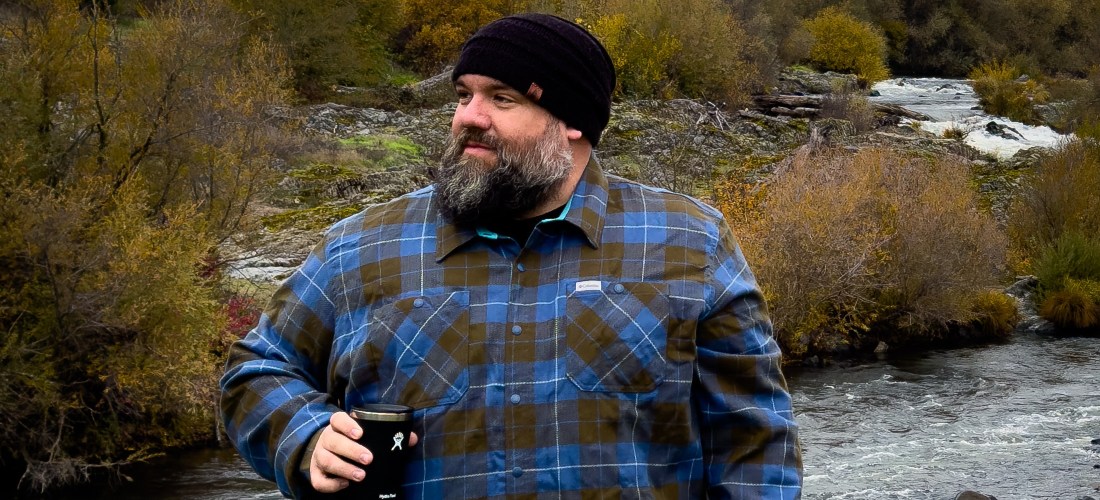
Arline interviews this week’s guest, Andy Neal of Andy Films And Hikes fame. He is self described as a “plus size hiking influencer.”
Andy tells his story of deconstruction, acceptance of his body and his joy in nature. He is an inspiration to all to get outdoors and experience nature.
“Waves” track written and produced by Makaih Beats
Transcript
NOTE: This transcript is AI produced (otter.ai) and likely has many mistakes. It is provided as rough guide to the audio conversation.
David Ames 0:11
This is the graceful atheist podcast United studios Podcast Network. Welcome, welcome. Welcome to the graceful atheist podcast. My name is David and I am trying to be the graceful atheist. Please consider rating and reviewing the podcast on the Apple podcast store, rate the podcast on Spotify and subscribe to the podcast wherever you are listening. We do have our merchandise store on T public you can get all of your graceful atheist and secular Grace themed items the link will be in the show notes. If you are in the middle of doubt deconstruction of the dark night of the soul, you do not have to go through it alone. Join our private Facebook group deconversion anonymous and become a part of the community. You can find us at facebook.com/groups/deconversion Special thanks to Mike T for editing today's show. On today's show, our Lean interviews today's guest Andy Neal and Neal is a self described plus size hiking influencer. He is on Instagram. You can find him at Andy films hikes. He is an inspiration to everyone to get outdoors and experience nature. He tells his story of deconstruction, his acceptance of His body and His joy and nature. Here is our Lean interviewing Andy.
Arline 1:45
Andy Neal, welcome to the graceful atheists podcast.
Andy Neal 1:48
Arline, thank you so much for having me. I appreciate you inviting me on the show and talk about my story.
Arline 1:53
Yes, I'm excited. I think I've just stumbled upon you in my reels. One day, your your hiking stuff came up, and it was just fantastic. So I started following you. And then one day you just posted, maybe it was a part of the caption. I can't remember something about just leaving religion. And I was like, Wait, there's a whole other story here that I want to know. So yes, there is. Well, thank you for being here. And usually we just begin tell us the spiritual environment or religious environment you grew up in. Oh,
Andy Neal 2:24
wow. So it's long and complicated. I grew up the the son of two disillusioned Baptist preacher kids. So Wow. Both my parents were very disillusioned by religion. They never really like. Called it also like Christmases and Easter's we were always always there. In church, always with that pressure from grandparents who needed to get the kids in church, you need to get the kids in church ended up going to a Christian school, a very, very conservative Christian School in Southern California. That also was big. And it was it was weird. It was Southern Baptists, but the Patrick pastor at the church that was attached to the school was Pentecostal. So he had a lot of Southern Baptists, very conservative things, but then they would take a whole week off of classes because there was an out feeling of the Holy Spirit. And we needed all the kids in the school to speak in tongues, crazy stuff that, you know, Department of Education ever found out, it would have been big trouble. So I grew up in that and then around age of gosh, well 1112 My mother started getting into drug use mostly pills, prescription pills and my parents divorce once California tropic services got involved, and so my dad was like, We need to get the kids back in the church, started going to church really consistently. Age 12 on we moved from Southern California to Las Vegas, where we joined a huge mega Southern Baptist, it was a megachurch, five 6000 members, you know, four or five services. And I got very, very involved in youth group there. And I was there every time the doors are opened. And during this whole time, my family was a wreck. Honestly. My mom was in and out of rehab not been able to stay sober. My parents are just divorced. My dad married someone new, we weren't getting along. And the only family I really had during this whole time was the church. For better or worse. They were there were positive adults there for me a youth group. So every time there was something I would be there every time there was a lock in or whatever I was in the church. I ended up working in the church. My senior year of high school is a janitor helping clean up after services. It's a big mega church. So it's like, oh, just clean up all the bulletins in the pews. Now this will take like two hours if you had to go down like two miles abuse, no joke. So this was a huge church. And then, you know, right out of right out of high school, I decided you know what, you know, actually during high school. Church camps are funny. I had We responded to the call to ministry. And even before that is when I had my conversion experience of something called the choir the fire, which is very problematic that conference. But then I got called in the ministry and high school church camp. And from that point is I'm gonna be a pastor, I'm gonna be a missionary. And you know, from age 16 on that's what I pursued, and right out of high school, went on a mission trip, came back home, my parents said, the parents danced up, Mom basically kicked me out the house. I was on my own, got on my feet real quick. No College, no education. Started working at a southern First Baptist Church, Las Vegas, started working there. quickly went from a youth helper to part time, paid volunteer ish to their youth pastor at age 19. With no formal theological education with kids, I'm literally pastoring who are a year younger than me. I'm only here at a high school that went back quick and often. I went from a very large Southern Baptist mega church to First Baptist Church, Las Vegas, despite people from the South first Baptist, I think huge bills is very small under 500 people. I didn't know the rules about really conservative small Southern Baptist churches. And at that point, you know, I bounced around. I did that for a while and then I bounced around different churches doing children's ministry, worship ministry, I play guitar, you know, so, which was the result of my youth group days, and really just went full fledge into full time ministry. By the time I was 23. I got licensed as a pastor. And my wife shortly after that, who's from Oregon, she moved here are moved to Las Vegas from Oregon to find a job. We met got married, she kind of later in life conversion experience at 1920 in college, and things Las Vegas at that point were very. The economy was crap is 2000 6007 We got married. And so I thought, hey, let's move to Oregon, and Oregon. And I was working at Starbucks, volunteering at churches, churches taking everything they could for me, I was writing children's ministry, I was wearing worship ministry all volunteer doing and then my life is like you need to do something with this. So I decided to go into multiple Bible College in Portland. And did that graduated with a degree of church leadership and ministry. And from there, I went into full time vocational ministry like I actually be paid full time, worked on the coast as a youth pastor for a while. And then things were there's a small Baptist Church there and things weren't going great. So I moved back to Oregon with my wife. We adopted that point, we adopted three kids from foster care to a special needs and worked at a non denominational church here in Southern Oregon. And that was, it was bad. I thought it was because I thought it'd be good because the pastor had tattoos, skinny jeans, like okay, it's a cool hip shirt. They're not there were more to the social justice stuff. I can jive with this. They have a they have a community garden in the back. And it was it was just this. I tell people it was the same theology I was dealing with before, especially with the LGBTQ community. It was just in tattoos and skinny jeans with all of us.
At that point, I remember very clearly my wife was struggling there. My wife was struggling period, she actually went on staff, as a children's director, was struggling. She has a bachelor's and master's degree in education. The pastor was actually younger than me. He was constantly threatened by me and my wife when we were just trying to work with the kids and students. The youth that had come into my youth group at that church were and that happened to my last church to all LGBT, not all but a good amount of LGBTQ students coming and feeling safe there. The elders in the church were getting back as kids weren't coming. On Sunday morning. They come the Wednesday night youth group, so they wouldn't come on Sunday mornings. And I asked a few of them, why aren't you guys coming from the mornings like we don't feel safe Sunday mornings, straight up, don't feel safe. Okay, I can I get that I get that. And there's tons of stories behind that. But yeah, eventually my wife we were at dinner at Red Robin here in Medford, Oregon. And she's like, I'm, I don't believe in God anymore. Like we will but will will, will will. What do you mean, at this point, things were really things were tough with our kids with special needs. We were being told by the church. They didn't need therapy. She prayed away, which seems to be their answer for everything from being gay to having mental health issues.
Arline 10:00
Question. Did your wife say that? Or did you say that?
Andy Neal 10:02
My wife said that she has I don't believe in God anymore. And I'm, you know, I'm like, I'm struggling. I wasn't I wasn't there. I don't even think I'm still. I wouldn't necessarily call myself an atheist. But it's like, I don't believe in God, I believe any of this. And I thought, Okay, our marriage is over. I can't keep doing this. And I understand. It was just like, oh, my gosh, what are we going to do? And then I was just looking around like, this isn't right. What's going on? Isn't right here. This isn't me. It's the same stuff I was dealing with at the baptist church out on the coast and Southern Baptist churches. It's just, I don't, why am I holding on to this and I, through therapy and counseling. I discovered I was holding on to it because during my very traumatic time in my formative years, that was my family. So I had a sense of loyalty there to a fault. Like, I was loyal to this organization to the church, because they had worked. They were there for me when no one else was. And so I felt I needed to do the same for the church to give the church chance, even though they had screwed me over so many times. And then within the next few months, I had started coming to the same conclusion I had talked with the leadership was like, hey, I want to start transitioning out of youth ministry. At this point, I'm doing youth ministry full time, I'm doing worship ministry full time, because they fired the the worship pastor. So I'm working 6070 hours a week for $30,000 a year. So it's, it's it was it was bad trying to trying to get, you know, things don't try to keep my family together. They weren't supportive with our kids or adopted kids. So actually, I told her what are transitioning out of youth ministry, when you start looking for another youth minister, I want to focus on the music and technology. You know, I was always the guy on staff like, hey, we need a video made Andy, can you make a video and go get camera equipment, make a video, make it funny, get the youth together, do a skit put it on screen. And eventually someone that actually in the church had said, Hey, we're starting a small production company, and he would like to work 510 hours a week for us to consult do social media. And I was starving for anything like I need. I just I can't do church stuff anymore. I'm like, Yeah, I can do that. Let's keep it on the download, though. Eventually, the church found out even though come to find out later, the guy who asked me actually asked for the permission first. And they use that as leverage against me. Like, he took another job that permission. I'm like, No, actually, I've come to find out. That permission was asked. And things were getting really bad. And I was I was trying to slowly transition out and just try to take care of my family. And then one day, they're like, oh, no, you're, you're, you're fired, basically. And here is a non if you want to if you want a severance package, here's a nondisclosure agreement. As far as you're concerned, you are leaving to pursue a career in the entertainment industry, and your six months average sufferance, and at time, it came to a shock. It was all like boom week, my wife, our lives were turned upside down. And I was like, Okay, I sign it. I, on one hand, I regret citing because I had to say something that wasn't true. They were firing me. Let's say times, like I need to provide for my family. And they're offering severance. So yeah, I'm gonna take it
and so I did, and then I started just working, you know, in the production industry as much as I could locally in Southern Oregon, which is really huge. And then decided, You know what, I'm gonna go to film school. And the day literally, the day I signed the nondisclosure agreement, I contacted Southern Oregon University, the new film program, their digital cinema, like, hey, you know, I'm 36 years old. I already have a bachelor's degree, I'd like to meet with some people there about, you know, what would it take to get a second bachelor's degree? Because I didn't really at that point, I'm realizing my Bible degrees, not going to be a whole lot of good. Even though it was accredited. It is an accredited Bachelors of Science, it was going to be a lot of good, like, okay, that's why I'm talking to counselors there. I met with the program director, because I found that I can do this in two years, just basically taking all my prerequisites and let's do everything, and went to film school and started working. Every little thing I could do in production and social media and in Ashland, Oregon, which is an amazing town. I love fashion so much. And from that point, I was taken from a very religious, Christian evangelical world. Everyone surrounding me was Christian Evangelical, to a world of Southern Oregon University to Ashland, Oregon national Oregon is home of the Oregon Shakespeare Festival, largest Repertory Theater outside of New York, on the side of the Mississippi, so that Oregon University is renowned. A liberal liberal school is constantly being recognized by advocate Magazine as one of the most LGBTQ friendly schools in the nation, and littles Ashland Oregon. So very, very conservative. Here then plopped into a film program, with all kinds of people I have no never met, you know, I've never been around before, very diverse and I'm like, I like them better, like, this is this is more, this is more me and just fell in love. And at that point my wife and I were, we're going to, we're going to therapy, we're working through things and, you know, today we're still married 17 years later I, you know, part of me this out of you know, I have so I know so many people who've left their faith and even but you know, their partner and then both at the faith but they found out how different people they really were. And they weren't there wasn't animosity or anything, they're just like, you know, we're both very conservative Christians then and we've left the faith and with different people now and they didn't stay together I don't know how we managed to work it out, but we did. And that's not for everybody. I think we were just ultimately compatible on an interpersonal level our faith and our religion isn't what brought us together. So we just were able to work things out and yeah graduated 2018 with a film degree and from Southern Oregon University have been trying to figure out different ways to tell the story of mine tell story of those who lost their faith I was working on documentary for a while did a few short documentaries about that got involved with the you know x evangelical groups for awhile on Twitter that was that that that that rebel Twitter, Dallas, toxic, but in that realm of the internet was very toxic. And just trying to find my footing until I discovered the outdoors at the at the behest of my therapist, I was literally talking with their therapist about just having existential dread and struggle and having something bigger than myself to rely on my whole life. Like it just you know, something bad was happening, like it depend on Jesus, or there's a plan or this bad things happening. It's because of sin. Like, I just feel like there's this big hole in my life. And she said, Go for a hike, go into the outdoors, we're in one of most beautiful places in the world. I didn't instantly fall in love with hiking, and it just became Wow, my thing. I just started posting about it. And started like realizing I am I'm a plus size person. I'm personally bigger body realizing, oh, you know, more serious, I got into hiking or there's not backpacks. I mean, there's not clothes, if any, oh, here's one company, Columbia Sportswear, they do it. So I just started buying their stuff and just tagging them and then eventually Columbia reaches out I have like maybe 4000 followers on Instagram. Hey, you'd love to come to do some modeling for us and other companies are reaching out and then slowly start building this platform and then I one day i i went viral. You're going for a stupid hike for my stupid mental health.
Arline 17:38
I think that's what I saw. I think that's what I first saw of yours you
Andy Neal 17:43
know 37 million views and I've had over a dozen more videos go viral since then. And this is what I do full time. Advocate for people to get in the outdoors for their mental health advocate for the plus size, body positive or body confidence community. And I do post often about me leaving my faith you know, I was very vocal about while I was in university I was very vocal about it and almost very bitter and mad about the church and I just found out that wasn't doing me a whole lot of good and surrounding myself with a bunch of people who were also mad and angry wasn't doing me personally a lot of good. And so I really toned back you know, my vitriol towards the church even though it's deserved I was deeply hurt and scarred by the church. But for me dwelling on that just wasn't wasn't positive. So when I stood back and got to the outdoors I discovered a new side of myself I didn't know existed
now whenever I share about you know about my about my former faith and my former career I'm very I try to be I try to be as non confrontational as possible I try to be like you know, this was my experience never tried to demonize anyone for their deeply held spiritual beliefs because you have those for whatever reason. I think issue when those deeply held spiritual beliefs turn into policy turn into actions where you say someone is less than like if you want to believe Jesus is Lord, great, great for you. But you say because of that, you have the right to legislate someone's morality or you know, say someone can't do something with their body or say these people who love each other can't get married. That's where it's like, no, no, no, no, that's not cool. And since then, what I call myself an atheist, no, but I wouldn't call myself the surly a theist or I, the outdoors for me has kind of become what my religion is what I don't even call it religion. I even like that. This what I, I find meaning and purpose. And I've talked to some people, the best way described is I'm a bit of a pantheist, you know, believe that everything is God or the divine. Some people, I've described my theology as some people that say that's very close to Druidism. And I don't like putting a label on it. And that could just be my way, my way. evolutionary sense of coping with what I've been through and dealing with things, I don't know. But that's just where I'm at. That's the very, very short version of, you know, 20 years of history there. But that's, yeah.
Arline 20:37
Yeah, you go from this here, all the answers, you have to have all the answers. This is the correct way. This is your morality, this these are your ethics, this is literally brought down from heaven and told you what you're supposed to believe and how you're supposed to behave. And yeah, in 20 years, you find that like, you don't have to have all the answers. Like, like, you're like, I don't have to have a label and I love the outdoors has become not your God. I don't know how to say that. But like has, where you go to find meaning and like purpose in life and whatever that feeling is that you get when you're out in in nature. Absolutely.
Andy Neal 21:14
Yeah. The Stingley feelings used to get in the worship service, I feel those on the outdoors now. And I realized it's more of a biological response to to grandeur and bigness or community. It's not the Holy Spirit filling you because I get the same thing. When I climb up a mountain, I'm like, Oh, my gosh, look at this view. You know, it's discovered that's the same thing, a lot of its emotions, and adrenaline and chemicals and just things that your, your body is wired to do by evolution or by whatever. However, that's supposed to work.
Arline 21:44
Yeah, for me, that was part of me leaving Christianity was starting to realize that a lot of the things that I used to think were sinful problems, were just like physiological stuff that I could deal with, with eating differently, or doing yoga or doing calming my nervous system. Whereas like, like you were saying, with your kids, the church spiritualize is everything. So then when they're actually biological things that can help or pharmacological I'm not even sure I'm saying that word, right? Like these things that can be helpful. They're not even options for us. Yep.
So you go hiking, like what? Yeah, I guess what are some of the things that that evokes inside of you, like you were saying, with the biological where some of your places you'd like to go, and,
Andy Neal 22:35
gosh, I love to go anywhere, where I feel smaller. Oh, wow, I live I live two hours from the Redwood National Park. In Northern California, I'm in Southern Oregon, with two hours in there, you know, seven of the 10 largest trees in the world are there and I'm just to go and stand in front of a tree that's like, you know, this, this this tree, he was supposed to be here when Jesus was here, like, and it's the size of a house, you know, just width wise, and then it goes up and you can't see the top of it, or, you know, go to the from there you go to the ocean from climb up to the top of a platen, you know, we have the Taylor rock plateaus here or, you know, any of the mountains or peaks, bodies, a lover I just love like hiking by the Rogue River here in Southern Oregon, or go north to the Willamette River or the Columbia River Gorge. Those places where I'm just like, wow, like, and as a part of that, as this as a plus sized person, you know, dealing with you know, things like fatphobia and size discrimination. And being an advocate for that, for so many people is realizing, you know, the outdoors, bigger is better. And, you know, it's okay to take up space. And then, you know, for the first time in my life, having been big my whole life, having you know, dealt with eating disorders have been diagnosed with an eating disorder having found out because part of that eating disorder was because of toxic weight, my family dealt with food, but also, I had celiac disease, and I was undiagnosed for 34 years. So my body the way my body treated food, my mind was just messed up because it was food was literally killing me. But I was always hungry. That's a whole other story. But having though that my whole life and going out and feeling small sense of smallness. For me, it's just like, wow. And just in the grand scheme of the universe, like I'm significant, but same time. Look at all this. This is just epic and amazing and feeling that feeling of feeling small for me is just it's like none other
Arline 24:41
is hiking and being out in nature. Like is that into like more of an independent thing or have you found like in real life community to share it with or
Andy Neal 24:50
I have and I've been very, honestly very hesitant to get too plugged in into communities. There's one group that I'm friends with the founder unlikely hikers, which is anti, anti anti racist, pro, LGBTQ pro size organization that encourages everybody to get outdoors photogenic Rousseau. She's amazing. We become close friends and that group we've done we've done group hikes together here in southern Oregon and Portland and Salt Lake. And to get with other people who don't look like typical hikers, which, you know, when you think of hikers, you think of, you know, the dude in the Mountain Dew commercial, you know, he's rip doesn't wear shirt, you know, he's, he jumps off a cliff catches the Mountain Dew in midair, you know, that's what you think of, whereas the outdoors are for everybody in the outdoors, have healing properties for every person, you know, not just, you know, white dudes with ripped abs, white straight dudes with ripped abs. And so the unlikely hacker has been a huge community, my online community has been great. But I have been honestly hesitant to get involved with communities just because, you know, being burned by the church and then getting caught involved in the X Evangelical community for a while. And that was just found out how toxic that was for me. I'm very, I'm very hesitant of community. You know, like, what I do is also very lonely because now having this platform, you know, I can't in the outdoor spaces, or even Northwest and parks California, I can't go anywhere without like someone recognizing me. It's like, okay, does this person want to genuinely want to be my friend? Or are they just like me? Because I'm that dude, the dude from the hiking video? Yeah, you know, I've had issues where people have gone on a hiking trail. And people saw me and they took my video on picture and posted it without me knowing, like, Oh, I saw the hiking guide. And my kids are with me, and I'm like, That's not cool. You know, so don't post don't post my location too long gone. Stuff like that. Safety stuff that you'd have to think about, you know, when you're just you know, on Instagram, you're looking waterfall cool snapping, posted, it's like, No, we got to wait hold hours before we post this. So I've been very hesitant. You know, a lot of it because I was really burned by, by the church community, I'm still, it's very lonely. It's a, what I do, what I do is a very lonely job. You know, I have people who follow me who helped me, help me manage things. But it's it's been hard. Trying to find community is difficult, especially knowing you don't want to live in a big town, I don't want to live in a big town. I grew up in Southern California, Las Vegas, I love where I live. Now. I love the community here. But I know for me, that's something that I have to work through and find people I trust. Because when you leave the church, you have always this built in community. So I go from church, to church to church, you know, in ministry, you go the church, everybody want you know, we have this built in automatic community, like people are just there. And they're automatically your friends, because you're both Baptist or evangelical Christian. There, you're just supposed to be friends. And that isn't always great, because you have people who not necessarily are compatible, you know, trying to force relationships or friendships and no work. And the second I left, you know, after being burned so hard. All those friends, lifelong friends, friends from high school, who, you know, I surrounded myself with Christians in high school and college years, they're gone. Like, I can count the number of people who still have contact with me, hundreds of people on one hand, and it's very, it's very just cordial contact. It's not like, you know, deep, lasting friendships. So it's just been it's been difficult, you know, 40 years old now. And it's like, how do you make friends when all the friendships you grew and cultivated with in high school and college and through your 20s? And 30s? You know, you're an apostate. Now, they want nothing to do with you. And they're taught that, you know, you know, I came from a bit of a little bit of a reformed culture, you know, Calvinistic, so either they're like, Well, he was never really Christian, he was a liar, or, you know, he'll eventually come back. So either people are just, you know, an apostate or any conversation they have with me is trying to win me back to the Lord, which just, you know, my DMs are filled with that right now. So I don't want to deal with that. Oh,
Arline 29:23
no, not at all. At least for me, it often feels dismissive. I'm like, You're not even hearing what I'm saying. You're not even seeing the person in front of you. You're seeing the person I used to be or the person you hope I'm going to be. And I'm like, no, like, just, let's just have a conversation. And I have a few, one or two friends that you know, I have very, like some super progressive Christian friends that back when I was a good Calvinist would not believe that they were actual Christians. But those kinds of people, I can keep those in my life. Our values are still similar, you know that. And then I have one or two gets more conservative, theologically friends, theologically conservative friends that I can talk to a little bit. But yeah, it's like, just talk to me, like, just hear me just hear my story. And then it's, it's extra icky. If you're in, you know, your DMS are filled with people who don't know you at all, and are trying to like, yeah, tell you what you need to believe. Yeah,
Andy Neal 30:22
one real I posted in July just about I'm walking towards the ocean, just talking about talking about the subject about the loneliness of not having friends. Somehow, in the last three weeks that real has hit the Christian Instagram, from months ago. It's gone from like, 100,000, to USD almost a million in DM, after DM requests of, you know, three, three basic responses. Hey, you know, don't give up the Lord. Hey, I'd love to chat with you sometime to you're going, you're going to hell to you and never really a Christian, you know? And it's like, wow, how loving like really, and your posts wasn't even for them. It was just me expressing where I was, you know, and hoping to encourage others, which it has. I've gotten plenty of DMS from people said, Yeah, I love I left, I'm deconstructing I'm dealing with the same thing. But I'm just either someone to be shunned or someone to be one to them. And I hate that because I actively tried to not be that way for so long. In the evangelical church, I didn't want I wanted to see people for who they were, I didn't want to see people as a prize to be won. I didn't want to close the deal to get to say a prayer to except to use in their heart. That's why I think my youth groups were filled with such a variety of teenagers because they just felt welcomed and valued. And that's what I wanted. My accidentals, like if they choose, you know, if I'm really gonna stick my theology at the time very, somewhat Calvinistic. If Jesus so chooses to impress on the heart Hill, when I when that was just my attitude, I'm just gonna love people for who they are, and let Jesus do what Jesus does, which I think actually served me in realizing like, oh, wow, I'm missing a whole lot here. I'm missing a whole lot different experiences of my lived experiences, you know, straight cisgendered, white, you know, Protestant, Pastor, kid, a Protestant pastor, kids male privileged, is totally different from what all these kids are experiencing is, you know, they're coming to youth group and their parents, you know, have kicked them out of the house, because they came out, they're dealing with gender issues, they're dealing with, you know, economic issues, you know, mom can't pay the rent and things like that, you know, dad left. I'm like, wow, the eyes were just open to so many different experiences. And yeah, I just, it's eye opening. And it was very, I don't know, it's been it's been a journey. Yeah.
Arline 33:03
Do you have advice for people who are like, I need all in wonder, and I need I want that the feeling that I used to have in church like, not, how did you get that in nature? Because then you're just like, trying to make nature do a thing for you. But like, how do people get started just like, being free like that? I guess?
Andy Neal 33:21
Therapy? I mean, Oh,
Arline 33:24
nice. Yes, no, no, please, therapy? Yes.
Andy Neal 33:27
I I am a huge advocate for mental health and huge part of my platform. I had to really kind of look at myself. And therapy, forced me to do that. And a good therapist is not going to give you the answers. A good therapist is going to ask you the right questions about yourself and going to therapy, you know, in dealing with these questions of, you know, existential dread and, you know, dealing with questions of having to forgive myself for things I said and preach from the pulpit that weren't just wrong and horrendous and homophobic and chauvinistic, and borderline racists, if not full on race, like it's just like, oh my god, I used to see these things. I used to believe these things. Or even when times where I didn't necessarily believe them as I was slowly deconstructing, which was a slow process. I would say I'm just to make the church happy because like, Oh, I know that this line is a crowd pleaser. I'll say that and everybody will, you know, I'll preach on hell. And even though I was really kind of on the fence about what hell was in this and half the time, I'll preach on it. And I'll get a lot of amens and whoops and hollers and I did just because I want to keep my job, you know. And so therapy really was helpful in finding that, you know, the outdoors may not be that thing for you. It could be you know, another aspect for me is creativity, you know, going out, you know, movies, film cinema, it's a huge part storytelling that could be what it is for you that's kind of secondary for me and I've definitely my username on online as Andy films and hikes for a reason. I love those two things. So but really discovering who you are who, you know, you peel back, you know, all the religion, all those old experiences, what's left, and then you got to rebuild that. That's why the term deconstructing has been has been termed your, your deconstructing your faith, and who am I and what is it, I believe, and then you can begin to build that back up, you know, whatever that looks like for you.
Arline 35:33
Yeah, getting to do this, interviewing people hearing people's stories, like, it's amazing how people find meaning and purpose and love and all in wandering community. Like all the things that the Church teaches us, they have cornered the market, this is where you get these things. And then people leave. And they're like, actually, yeah, it takes some work to find some of these things, but like, actually, it's just people helping and loving other people and creating the spaces to find these things and, and nature. Oof, yes. I don't know. I guess I was just trying to say that, like, it's beautiful. Seeing how many different ways people are able to find all the things that we were once told, you can only find this in church. Yeah.
Andy Neal 36:16
And the church doesn't have a monopoly on truth. The church doesn't have a monopoly on community or big life changing experiences, but they'd like to, from my experience, that's what they told me. I I've, in deconstructing I definitely I visited some more liberal churches, some Universalist, Unitarian, and some UCC churches, which were great in the sense that there were there were Christians who, you know, they they did the traditional Christian things, you know, Sung hymns to the stuff, but then like to hear like the pastor from the pulpit. Say, Yeah, this part of the story, David, you know, when David best she got Bathsheba, you know, the Bible doesn't address the fact that best David was basically a murderer and a rapist, and he was actually kind of a bad guy. And he probably had homosexual relationships, too. And this is all stuff that they don't teach you. And we need to look at this for what it is. And realize that, you know, David wasn't perfect. He wasn't the we say he's a man after God's own heart. And just things I never heard like, what David was probably gateway, you're talking about, Jonathan, wait, what about but he had to do that with Bathsheba? And what is this all this like, wow, like, and just hear people say I believe in the Bible, but the Bible is inerrant. Like, okay, and use like literary criticism and things like that. Look at the Bible critically in the time it was written and who wrote it, and that the person we even like, Did Moses really write the Torah? No, probably not. It was mostly even real, we don't know. And just like to hear those things like, oh my gosh, and you know, for me, I can't be you know, liberal UCC Christian just because there's just so much triggering stuff in there. And for me, I was taught for so long, the Bible is inerrant. And then to go to a point where I'm like, this is true, like, these concepts are true, but this isn't true. The Bible says, you know, homosexuality is an abomination, but not really are things like that. I just can't, I can't split those hairs. So for me, it was just like, I can't do it. You guys are awesome. I love that you're loving people. I love that like church, I was going to for a few months, you know, they're they're marching in the Pride Parade. This is great. I love that you're doing this. I love that you're, there's moms out there since I'm a church mom, who has a gay son and I'm wanting to give you a hug. If your mom's stuff like that, like that's great. I love what you're doing. I just can't do because it's just, it's too difficult for me to make those theological leaps and to be constantly triggered. You know, they'll they'll be singing hymns and hymns. I know, but they changed the words which is great, but still, for me, that him old rugged cross, and you've changed the lyrics. It's still it's, it means something else to me. There's other there's time there's there's times where they did invitationals and you'll walk down the aisles and repentance things, and myself about church really saying that song and I'm like you a bad stuff. Can't do it. Yeah, that's a whole other tangent. Sorry.
Arline 39:12
No, that's a great tangent. Because, you know, lots of people are still in the church. Lots of people are still like, like, there's Tim Whitaker of the new evangelicals. They're still marches but you know, these different people who are like trying to help white evangelicalism stop being the most terrible thing that it is, you know, like trying to help one of my best friend's very liberal church, they they were in the Pride Parade, they had a booth at the festival. They are trying to make their religion as kind and loving and good and like all the things as possible. I'm with you though. I'm I'm all the way to the point where I really don't think they're gods and goddesses like I don't think any of that stuff is real. However, unlike if you're if you're doing that, that's fabulous. I can't I got tired of being the being the light A person who had to decide whether this in the Bible was true, or is it an allegory or I was just like I can't and either you take all of it or it just, it just got to be too much. So I would very much understand that feeling of like, especially like you talked about literary criticism, like, okay, it's a poem, but that that poem in Psalms was the reason I was pro life and pro like birthday content, or like life at conception for so long. And I'm like, Okay, I can't I can't do this anymore.
Is there anything that you wanted to talk about that I haven't asked? Like you? You did fantastic with your story. And I'm like, what else do we have?
Andy Neal 40:43
I think, for me, I want to touch on just being the slow process of me, converting, not converting D converting whatever you want to call it. It was, it was so gradual that I didn't even see it was happening. And it started. Before I was even like, a full time at a church. I was in Las Vegas. And I was working part time at a church as a children's pastor. And this was back in 2000. I want to say five, very much for the Lord. But I was also working part time at Starbucks, because I needed health insurance. And I remember I was close, I was closing the store with another two other Starbucks employees, one of them had I had a car. Other one had a car and the supervisor didn't have a car and he was going to take the bus home. It was raining in Las Vegas, which doesn't happen. It was pouring. And it was probably like, it was probably late winter. And he's about to get on the bus. And I'm like, dude, I'll take you home. Sweet name was Jamar. And he knew I was a children's pastor, and he was an openly, openly gay black dude. And, you know, at this point, I'm just like, I'm gonna love him to Jesus, you know, and he'll, he'll turn upon, he'll turn away from his gateways and all this crap, you know, that trying to be, you know, a liberal Christian, you know, like, I'm gonna, I'm gonna engage with the gay community and they're gonna, they're gonna see their ways and he's just gonna love women, you know, stupid stuff. And I remember we're driving and he said, Hey, can you see my Carl's Jr? Real quick, like, get some dinner, broke into my apartment. His apartment was not in a great part of town. I'm like, Hey, can you take the bus here everyday, please take the bus before I had a car. Like that's like an hour and a half to our bus. Right? You know, one way every day is like, yeah, man. Okay, that sucks, dude. So we get to the parking lot. It's raining. He's like, hey, you know, Andy, I used to be like you. And like, we couldn't be any different. This is a black dude who lives in, you know? Not so good part of town. He's gay. Like, we couldn't be any more different. And I'm like, What do you mean? He's like, so I wanted to be a pastor. For a long time. I'm like, wait, what? He's like, Yeah, I grew up in the black church. I grew up in church. I was like an intern. For a pastor. He was training me up. I was learning all kinds of stuff. But I was dealing with what I call a time you know, same sex attraction. That's what he called it the time. Yeah, that was the only thing so extraction. And, you know, I tried everything. I read all the books, I tried to pray it away, and it wouldn't go away. So I went to my pastor, and his pastor, essentially, shunned him said you are an abomination. You are not allowed here. His family shunned him, said, No, we only party you come back when you're not gay anymore. And he's like, I so badly just wanting to serve God serve Jesus. I wanted to do this. But I couldn't because of who I was. And for the first time in my life, I realized oh my gosh, like, he's not he's not choosing to be gay, or he's doesn't need to just repressed you know, same sex attraction. Like this is a part of who he is. And you saw the, the tears in his eyes and like, I was like, Oh my gosh, and from that point forward, it was just this. Okay, I need to keep more of an open mind about things. And slow like, I'm seeing things for other perspectives. You know, when the church champions like bathroom bills and stuff like that, I'm like, is that really the best thing we like? Should we be worrying about that? Like, and so much of my my deconstruction, I take back to that that car ride in Las Vegas with Jamar and just and just to see see humanity in someone's face, who wanted to be a part of the church who wanted to serve God, but was told you are an abomination. And that really set me on a path, you know, for the next you know, 15 years of really kind of looking at my, my faith and the way I treated people very critically and realizing, okay, the Bible says this, but practically that doesn't work out. Are these two these two things the Bible as much as you try with hermeneutics and other things to make them work together, they just don't. I'm putting one on one together and I keep getting three and that doesn't work. That can't be true. And it was that point in my life where, you know, I'm learning I'm growing and I'm reading start reading, you know, more liberal Christians like, oh my gosh, I got a Rob Bell book people are freaking out like crazy. Yeah, back on, you know, after Rob Bell said there was no hell and everybody through it burned his books. And just that that path I was on, you know, to where it's like, you know, I I voted for Obama, like the first time he ran, didn't tell anybody on the download. Second time, I voted for him in that I had posted online after he clearly one on my Facebook page I posted, you know, all people, my church, follow me, said, You know, it doesn't matter who the president is, you know, Jesus is still king basically saying, You guys quit it, don't worry about it. The church was the church was angry, because they thought that was a blatant like, he did he vote for Obama. So I wasn't, I was in my pastor's office for two hours, the day after the election, him trying to get me to say who I voted for it, I wouldn't say it. And a few weeks prior Well, he was out of town I had actually preached, I had actually preached about, you know, us loving the community and loving others and showing love to everyone. And I had said a statement in that sermon, I'm all about social justice. Meaning that you know, we need to clothe the naked for you the hung up stuff that Jesus in the gospels clearly say you're supposed to do. These are good things. Yeah, I use that word, social justice. And the deacons were up in arms, like, so you voted for Obama, and he's all about, you know, social justice. And I tried to explain what that meant. And, you know, and slowly this, that reaction I got, and then, you know, I go to the church, you know, back in Oregon, and it's like, you know, oh, you know, skinny jeans, tattoos, we accept everybody, except my children who have adopted from foster care who have been abused in every way possible for coming into our home. They have these mental health issues, which we're still dealing with today are still trying to get them treatment for. And they're saying we need to pray it away. And slowly, it was a slow, slow process of, and then I'll just, you know, crap hit the fan eventually. And then I was like, I'm out. I can't do this anymore. I say all that is to say, you know, it's, it's, it really is a process. Because I was in that community. And there was so much trauma bonding for me with the church, because that's what got me through a very traumatic childhood, that I had to really see for what it was. And that's not to say, you know, I always tell people, I'm never going to down on you for your deeply held spiritual beliefs. I am not going to tolerate if those deeply held spiritual beliefs impede on the rights or humanity of somebody else. And that's where I draw the line like, No, it's not gonna happen. You believe in Jesus. Great. You believe in the literal resurrection. You believe the Bible is in Aaron. Great. Don't put that on me or anyone else? Yes.
Arline 48:20
David, is the main host. He just talks about like its death by 1000 cuts. Like there's rarely in a story where it's like, here, sometimes there's this big thing that happens, and you're like, I'm done. But usually you look back and you're like, there's a little bit here, a little bit here a little bit here. And yeah, it's slowly just, people have often said, they just came to realize, I don't think I believe this stuff anymore. And if it flies in the face with an I don't know, if I, you may have had this where people are like, you set out to leave? And it's like, no, like, I was just either living life or trying to make this work for me. And then all of a sudden, I'm like, actually, this isn't working for me.
Andy Neal 49:05
Yeah, I've had the same thing happened where I people say, Oh, Andy left to pursue a career in your teen ministry because he was lured away by the Civil War. You know, he loved to go back to school and he went to Southern here, Southern Oregon University is seen as like Satan. You know, he got he got, you know, he went to a Bible college, but then he went to a liberal atheist college and then he got pulled away that way or now because, you know, I'm a full time influencer, and he just wants fame and fortune. And, you know, he's was lured away by the things of social media and things of this world. And I'm like, That which would make excuses I mean, no, you know, it was, it was death by 1000 cuts. It was a slow, just like I can't you get the point. You're like, I just, I just, I just don't believe this anymore. And that was a strange realization being being at being at Southern Oregon University being in a film class where I am in a group of, you know, students, you know, some of my first interactions with the trans community was at Southern Oregon University, I had never had interactions with having people in my group were making fun together who are trans, who are LGBTQ who are black, who are people I just I just didn't normally rub shoulders with and having a great time doing it. And I just realized, like, I'm not a Christian. Like, it just this realization is like sitting in this group, and we're filming stuff, and I'm just looking around, I'm like, I'm not a Christian. Like I wouldn't. It wasn't it wasn't this grand, huge theological realization. This was like, Yep, I, I can't do it. And this isn't me. It's just can't be true. And you know, I know, the theologian, and we haven't gone to Bible College. I'm always trying to figure out more things. And I'm reading things and discovering more things like oh, yeah, this is where this lineup. And I think the biggest thing for me was the realization that if Jesus, you know, Jesus had Jesus's death had enough power to save me, but doesn't have the power to save everybody. Like, that doesn't work for me, like, if Jesus, if Jesus can, Jesus's death, blood and Resurrection can save me. And I can choose to reject that. That means I have more power than Jesus, if that makes any sense. It's like, that doesn't compute. Like, or just like, if you like, if Jesus, Jesus is all powerful, and his death is Endo. Why could Why couldn't he just saved me? I'm choosing to reject that. So. And then it's gonna count things about freewill. And I'm like, it was just like, no, this doesn't work. And I'm getting off on a tangent here.
Arline 51:49
Well, I mean, it takes so many like mental gymnastics to Yes, all of the things work. And it's just like, at some point, it's like, one of the women who've been on the podcast before. She's in our Facebook group, and she said, I was Calvinists. Apparently, God never chose to save me. So now I'm just gonna, you know, like, I don't have a choice in this. Like, I'll just continue with that. When people asked, he's like, Well, there's nothing I can do about it.
Andy Neal 52:14
Yeah. Yeah. Was Calvinists really, truly aren't Calvinists? in and of themselves? They are. It's yeah. Oh, so was marked down for a while. So which is also also part of my, when he went down with the whole William Wallace a second thing that was also part of my deconstruction, like, Oh, this guy idolized who had been to the Axway nines conferences and like, oh, gosh, that's not very Christian. You know, he's in Seattle. We were thinking like, Oh, he's more of a liberal Christian. No, he wasn't. He was the ESV, toting, you know, hellfire and brimstone guy who's still preaching though. And Scottsdale. Great.
Arline 52:55
Yep. Yeah, my little feminist heart starts the my blood starts to boil, because I just think about the pastors who can do pretty much anything and they'll just find a different pastor. They'll just go somewhere else, and they will get hired again.
Andy Neal 53:09
That's one of those instances, I wish I would have listened to my wife because I was going to be a church planter next 29. And my wife went to the pastor's wife thing, and she's like, This isn't good. And I'm like, Oh, you just need to learn to be, I'll set an ass. Listen to those other pastors wives and, and be more submissive, and this and that, which, you know, my wife and I, we've never had a traditional gender role relationship she's always taken. She's always taken more than more male traditional role in our marriage and relationship and our parenting and I've always taken more of the female traditional role in our marriage, parenting relationship. It's just how it's worked for us. And that's how our attitudes are, you know, we did like the love and respect marriage conference thing and say, No, I actually require more love and she requires more respect. This doesn't work like this gender doesn't compete with us. So yeah.
Arline 53:57
Well, yes, love and respect is a book we will but we will use that as a segue into Do you have any not that recommendations that have been helpful to you and your deconstruction, books, podcasts, YouTube, anything?
Andy Neal 54:14
Gosh, there really it's been a bit of a struggle, I've only found one book, there's been so many just different resources and things that I've turned to and looked at but I find myself going down a rabbit hole because the algorithms are going at this up just watching getting myself more depressed and getting myself more anxious and angry. I just I just don't want to I don't want to I don't want to be the angry even ex angelical I don't want to be that guy. And I understand that for so many people that is a stage you have to go through it's a stage of grieving you're gonna be a I was that guy for a long time. And that's fine. I just don't want to be anymore cuz I didn't like who I was becoming. But one book I got to write here. This is why A hiker friend of mine has hiked the Pacific Crest Trail. I hope I was wrong about trail damnation, a true memoir. Tim Mathis is a friend of mine, hiker. He's also written a book about hiking the dirt bags guide to the life, eternal truth. Riker trash, ski, bums and vagabonds, this has been very helpful just telling his story as another outdoors person. Yeah, it's been it's been great. He's been on my podcast, the hacker podcast, which is now the venture is out there podcast. And we just taught we Co Co misery about our experiences in the evangelical world. And that has been been super, super helpful. But yeah, there hasn't, you know, I've listened to a lot of other podcasts and other things. And really, you know, the most, the most help, this is gonna sound so weird, the most helpful piece of media and my deconstruction construction, has actually been the movie version of Donald Miller's book, Blue Like Jazz.
Arline 56:03
I didn't know there was a movie. I knew the book. But it was off limits because I was a good Calvinists and didn't see those crazy liberals.
Andy Neal 56:10
Yes, he talked about Mark Driscoll, the cussing pastor and all that, but there was a movie, which was taped, and it talks about how really how Donald came from a, you know, Southern Baptist, Texas upbringing, and he goes up to Portland, Oregon, goes to our liberal school, after suffering some trauma from his church, and the process of deconstruction and kind of kind of leaves you hanging whether or not he's really a Christian at the end or not. But just for me, that piece of media does seem that and you know, from my own experience, leaving Southern Baptist, you know, yeah, sure, some more little liberal trips going to Oregon, it was very helpful to seeing this the struggle on the in the, the existential dread, and I go back to that movie a lot. I don't know why I just I find comfort in it. And I relate a lot with that story. The movie has changed a lot from the book, the book isn't, it's really a series of blue light, as is really a series of essays, whereas the book is the books really series of essays, whereas the movie is more of one continual memoir or narrative, so that he takes from those a lot, a lot of liberties are taken. But yeah, that piece, I don't know what it is. And this is hard to find, I actually ended up buying a copy just because it's really hard to find now on streaming or anything else, but and I wouldn't endorse Donald Miller as an author or person at this point in my life, based on what I've seen from him online. Also, there's another another person, who I've just, even though, can be very problematic, Joshua Harris. And when he posts online, he's one of the few like, ex Christians I follow. Back in my very active Twitter days, we actually had some dialogue. He started following me for a while. And even though he's done some pretty problematic things, you know, about trying to monetize deconstructing, like, if you're here. But just think, seeing this person who I held on a pedestal at age 19 when he was only like, 21. And you hear a story, it's like he was, he was thrust into this, and not minimizing the responsibility he needs to take for his own actions, but just seeing what he went through a huge grand scale. I'd seen him speak probably a dozen times. He was a Southern Baptist darling. And, you know, he's doing his thing now trying to, you know, figure out, you know, him and his wife separated amicably. And he just tried to ease up in Canada trying to do his thing, the thing that like, wow, someone like him, who I held on this pedestal, who I based my entire pre marriage relationship with my wife upon his teachings. And he couldn't do it. It just gives me comfort. A lot. And I'm not saying like both Donald Miller and Joshua Harris, there's some problematic things. Yeah, there's there's definitely trigger warning there and other things, but just I relate a lot of ways, knowing these guys, these champions of evangelicalism, they fell hard in the eyes of the church, and makes me feel like wow, they really don't have it figured out. And that gives me comfort, if that makes any sense.
Arline 59:38
No, it does. There's some times that I'm like, I would love to just sit down with Beth Moore, Jen Hatmaker just different women who've just been like, you know, butchered all over the place, and just be like, how are you doing? What's going on? Like, you know, like, how are you? What's life like these days, you know, so I get it.
Andy Neal 59:58
That's more he's one of the nicest people you ever meet. You've met Beth Moore. Oh, I'm jealous. We were I was at a conference and we are Turfan got stuck in the mud after a rainstorm, bunch of a slug and she came out there and start talking. How can I help you all? The nicest person I literally have ever met. Like, and yeah, I've watched has been through what she's had to go through. I'm like, wow, that's uh, you know, this was back in like 2003. But it was hard to find me. Follow me on Instagram or Tiktok at Andy films and hikes or on YouTube at any function hikes, mostly outdoor, and body confidence content I do occasionally post about. Well, I'm in the mental state to do a post about my journey and faith, I try to be very careful about it. Because it invites a lot of a lot of conflict and invites, a lot of people just want to argue if I turn the comments off on those kinds of posts, the DMS are even more so. So I'm just like, yeah. My hope is with this particular podcast that I can share my story and be like, because I get asked all the time. Oh, you know, watch. Tell me your story. I'd like to hear you. Listen, listen to this. And you can hear my story. Yeah. And yeah, that's the best way to find me. Instagram, Tik Tok or YouTube at Auntie films and hikes.
Arline 1:01:15
Yay. Well, Andy, thank you so much for being on the podcast. I really enjoyed this. This was wonderful.
Andy Neal 1:01:20
Thank you for having me.
Arline 1:01:28
My final thoughts on the episode. I've been following Andy. Since I think since I got back on Instagram, like he just popped up in my reels. It was his going for stupid hike for my stupid mental health reel. And it was just fantastic. And his body positivity, his anti diet, culture stuff, like all these different things, just getting out in nature. And nature's for everyone. Like all these things. I was like, Wow, this all this resonates with my little my little heart. And then to know, where he's had to come from, to get to where he is now, in terms of loving himself, seeing nature and being able to just have the all and wonder and that whatever that experience is that you get whenever you're out in nature when you're like he said, when you're around something that's so much bigger than yourself. You don't have to go into the supernatural world to find it. Like it's really, it's right here on this planet. Oh, I just love it. I just love it all. One of the things that stood out to me, is y'all, us in the x, then Jellicle X religious world. We've got to have our feelings, because that's reality. We've got to like go through whatever parts of that, I guess stages of grief that we need to whenever we've lost something. We've got to have the feelings, yes. But we cannot be like a toxic community where people can't come and where it's just anger and meanness, anger and meanness. I'm very thankful for the Facebook group. Because it is it isn't like that. But yeah, there's a lot of just anger at the church. And when you find your people online to be angry with it can it can keep going, it can escalate. But yeah, we can't be that because not everybody needs that. We've got to figure out how to deal with our junk and make space for anger. Because yes, we have to have it. But I guess not just sit there and stew. Andy, I'm so glad that you're You're out. You're finding finding all the things that you needed to find you're able to find it in nature and your life now. It's fabulous. Y'all like getting out of religion. They told us all that they told us that these things can only be found in religion. It's not true. Just flat out not true. Community, love, solid relationships, all wonder, like all of these things. All of these things can be found outside of religion, history.
David Ames 1:04:11
The second is a great start of the week, inspired by Andy is accepting your body. Within the Christian bubble, the idea of the flesh being evil, I think extends to the rejection of our bodies, whichever shape, size, or form it takes. A part of secular grace is accepting oneself and that includes our humanity, as well as our physicality who we are embodied. And what is inspiring about Andy's story is not being limited by our bodies, but experiencing nature being outdoors. Until next time, my name is David and I am trying to be the graceful atheist. Join me and be graceful human beings. The beat is called waves by MCI beats. If you want to get in touch with me to be a guest on the show, email me at graceful atheist@gmail.com. For blog posts, quotes, recommendations and full episode transcripts head over to graceful atheists.com. This graceful atheist podcast part of the atheists United studios Podcast Network
Transcribed by https://otter.ai
This week’s guest is Kris. Kris grew up in a home with much wounding and suffering, an irreligious home that would shape her desire for God as a young adult. She became a christian when she was 22—a “poor, broken young mom.”
For years, Christianity worked well for her. She found community, built a family, made friends. Church gave her a place to use her abilities and passions, but there was always a glass ceiling.
In 2017, she and a friend went to a “biblical archeology” seminar. For the first time, Kris was learning from professors, not pastors, and the questions started coming. It wasn’t long before Kris realized she couldn’t go to church or be in a home group. She didn’t have the language for what was happening, but now she knows it was the beginning of her deconstruction.
A strong leader with a kind and compassionate heart—and a love for Ozzy Osbourne—Kris is enjoying the life she’s found beyond religion.
Quotes
“I started reading this Bible, and I didn’t have any bias. I didn’t have anybody telling me what it meant…so I could just read it as a text and take it at face value or what I thought it meant, which was great.”
“I learned that I was a Big Time People Pleaser…whatever it took to fit in, I was going to try to do that.”
“Everything began to feel really corporate in this church.”
“I had this intense fear of pride.”
“I had this duel belief of ‘God is this good, kind, loving god,’ and ‘But what if I piss Him off, and He’s not that nice?!’”
“I realized that my image of God was basically my senior pastor from the church I was at, and if I tried to imagine God…I would hear this guy’s voice.”
“…everything just started unraveling in my faith. I realized I couldn’t read the Bible anymore. I couldn’t listen to any Jesus music anymore…I would get uncomfortable. I would feel anxious. I didn’t understand what was happening. I didn’t ever think that this could be considered religious trauma.”
“Coming out is hard, no matter what you’re coming out with.”
“Waves” track written and produced by Makaih Beats
Transcript
NOTE: This transcript is AI produced (otter.ai) and likely has many mistakes. It is provided as rough guide to the audio conversation.
David Ames 0:11
This is the graceful atheist podcast United studios podcast. Welcome, welcome. Welcome to the graceful atheist podcast. My name is David, and I am trying to be the graceful atheists. Please consider rating and reviewing the podcast on the Apple podcast store, rate the podcast on Spotify, and subscribe to the podcast wherever you are listening. Remember, we have a merchandise store on T public to get all your graceful atheist and secular Grace themed items, you can find the link in the show notes. Recently, I was on harmonic atheists YouTube channel, I'm gonna have the link for that interview in the show notes. I'd love to have Tim on here at some point in time, but it was really wide ranging, very interesting conversation. Love for you guys to check that out. On today's show, my guest today is Chris. Chris became a mom very young. There were mental health issues in her birth family, and she experienced some mental health issues. She then had a fairly dramatic turn towards Christianity, and threw herself into it wanted to become a leader went through theological training, and started at a mega church, where the reality of women and leadership began to suppress what she was able to do. She did have opportunities to reach the least of these the people that she cared about the underdogs in her terms. But there were things she knew she could not tell her Christian colleagues and friends. Eventually she went on a trip with a focus on biblical archaeology. And she was learning things about the Bible for the first time. And that began her deconstruction process. Today, Chris experiences a lot of freedom on the other side of deconstruction. Here is Chris, to tell our story. Chris, welcome to the graceful atheist podcast. Thank you. So I was just looking at our email it took us since August to make this happen. So I'm really glad that you're here. I understand you've been a part of the Facebook group as well. So I'm excited to hear your story.
Kris 2:25
Thank you. I appreciate that. Yeah, it's really been helpful being on that Facebook group. And you know, just seeing other people that have gone through similar things. And very grateful for that. Yeah, fantastic. Yeah, I guess I'll just start. You know, unlike a lot of people on the Facebook group, or some of the stories we've heard, I didn't grow up in the church. And, you know, had no, really no basis of religion. My family didn't do anything. I think the only time I was ever in a church was when my mom got married when I was 10. And so, didn't really know much. But for some reason, as a kid, I was always drawn to like, like, I played a little toy organ. And it had somebody gave me a like a book with hymns in it. And I loved playing the hymns. And, you know, there were things like that, that I was drawn to. So I really didn't become a Christian until 1993. I was 22. And kind of want to talk about that. But I have to give a little bit of history. Sure. So when I was when I was a kid, I was my mom was a single mom. And we were poor. We lived in West Texas, and I live in Oregon now. But when I was 11, my mom took her life and I got bounced around from family member to family member and I ended up with my grandmother, who I lived with till I was 16 and moved out with my boyfriend then. So that's kind of a little brief. Background while I'm
David Ames 4:07
very sorry, it's been very difficult.
Kris 4:09
Thank you. I appreciate that. It was and my family. We dysfunctional family. You know, we didn't talk about it. Being an only child, it was very lonely. My mom was kind of neglectful of me. You know, I don't think anybody knew if she was depressed or had bipolar or anything like that, you know, this was the this was 81 When she died, but you know, and our family wouldn't have talked about in any way you know, we just a lot of alcoholism and you know, later found out mental health struggles and so whenever my mom died, I you know, as a teenager, I was 11 and then you know, living in I moved to this new mexico town with my grandmother, but you know, I didn't know how to deal with anything, and didn't really have any help. I think my grandmother tried to take me to counseling one time, and that was the only time I went, and, and she never really wanted to talk about it, you know, she had lost her child and probably didn't know how to grieve that as well. So so there was just no healthy outlets there. And so when I was about 14, I just started acting out, you know, partying, and, you know, sleeping around, doing all the things, and moved out at 16. And, you know, still graduated high school with honors, and, you know, started college and you know, tried to do the things. But I ended up getting pregnant. And so, my first year of college, and I ended up marrying, the guy that I'd moved out with, you know, had a baby quit college, all these things ended up just being this, this very poor, broken, single mom, and I didn't really want to be a mom. So anyway, all that that was, you know, I got a job and just ended up divorcing the guy after 11 months, but you know, had the baby and all that.
So 1993 rolls around, you know, I'd been, I had a three year old, I'd been, you know, partying for a long time, I'd been just, you know, doing all the kind of same stuff my mom had done, you know, leaving my child at random babysitters, and just, I was pretty miserable. I was very depressed, and I didn't want to live anymore. And so I just, you know, decided to take my kid to my daughter to daycare, and then come home and just, you know, take all the stuff I had, and, and end it all. Oh, wow. And. And, as I was contemplating that, I looked up on the wall and saw a picture of me and her and just, I guess, heard this voice in my mind saying, you know, do you want her to grow up to be like you. And that was a really pivotal moment for me. And, you know, at that time, it was a God moment I attributed to. And that's what kind of changed my life and toward, towards spirituality toward faith. And so, I decided not to take my life that day, which was great. And I started going to, I started well, I actually I pulled out a Bible and started reading a Bible. You know, that I'd gotten, I think, when I was in junior high, my grandmother took me to some youth groups, you know, and dropped me off hoping that would help me not be a messed up, kid. And so fix them. Yeah. And it actually was a good experience. You know, it was, you know, I met some other kids. And, you know, it just, it was a good experience for me, and, but I still had a Bible that they had given me that I never opened. And so I started reading this Bible. And, you know, I didn't, I didn't have any bias. I didn't have anybody telling me what it meant, or anything like that. So I could just read it as a text and take it for face value are what I thought it meant, which was great. I'd like to be able to go back and do that again. Just just, you know, like, reading any book. But no. So anyway, that's kind of where I started. And, you know, I started trying to find churches to go to and just because the words in the Bible, I think, I didn't know, you know, I didn't understand, you know, people would always say, Jesus died for your sins. I was like, I know what that means. You know, and, and for some reason is, I started thinking about that. And didn't understand the whole sin thing. But I knew that I was, I was feeling like something in this God thing cared about me. And that's what I needed most of all in my life, because I had, you know, just, I had abandonment issues. I'd been neglected I, you know, was seeking love and all the wrong places. And you know, so it's like, oh, wow, if, if, if I could be loved that would fix everything. And so, so yeah, so that was what I did. And like, six months after that, I answered an ad in the newspaper back in the olden days before online dating. And I met this super guy, and he was a new Christian. And so we kind of started our lives together, and we've been married 27 years now. But it was, you know, it was it was kind of how we started out and we lived in at that time, we lived in Lubbock, Texas. West Texas bible belt, you know, every if everybody's a Christian pretty much, or at least it feels that way. But we ended up moving two hours north to Amarillo, which is same thing, you know. And so we were looking for a church and we tried a couple places. And we went to this one church and went there for a little while, and we wanted to get involved, you know, we just wanted to, you know, we didn't know anybody, we needed to get involved, and we liked kids. So there's they said, Okay, well, we'll do an interview to see if you could, you know, help with the youth or help something. And one of the questions, they had us fill out this questionnaire, and one of the questions was, how many people have you led to Christ? And we were like, I guess? You know, that's not something we really think about much, you know, and that, for some reason, I felt so guilty. I was like, Oh, I haven't done this thing. This, I should be doing this. This is something I should be doing for God. And I think part of it was because the interview with the guy was like, you know, if you're not doing that, are you really a Christian? You know, that kind of thing. Right? We didn't end up getting involved at that church, we're gonna be going to a different church that didn't quizzes so much about, you know, how we did all that. But we did get involved in and, you know, we taught, you know, Sunday school and stuff like that. And my husband is, he's just this playful, wonderful guy that, you know, I would be like, Okay, I want to sit down and read you this Bible story. And he's like, I got a cool game. Let's do that. And so, you know, he was popular. And I was like, alright, you know, maybe I should try. We're adults. So I did. Yeah. So yeah, so I started just getting involved and went through kind of a program. That was like a lay ministry program. And it was really great. I learned a lot about myself learn some counseling skills, even though that's not what it was. And, and, you know, learned how to be a little bit more assertive, a little less passive aggressive, but also learned that I was a big time people pleaser, and no surprise, I mean, you know, I just, all my life just wanted somebody to, you know, just to love me and to accept me, I think, as I was. And I think even though I thought God did, I still was like, not sure, like, I probably need to be a certain way, you know, for anybody to like me, I found that I was the kind of person that would just kind of blend in, do whatever was expected in that circle, whether it was with friends, or any social environmental work, or church, whatever it took to fit in, I was going to try to do that. But I was just really like, you know, I just addict, this Christianity stuff. And, you know, want to commit my life to it. And so that church, they advertise that they were going to partner with Dallas Christian college to get, you know, if people wanted to go there and get a degree in ministry, and I was like, Oh, yes, that's exactly what I want to do. And so by that time, I had another child, two girls, nine years apart, and, but they had it set up where it was a program that, you know, it's like a two year program. And you know, it's our first online program. So you're gonna go to eight week class, and then another eight week class, another eight week class. And so it was lined out where you had to do it a certain way to graduate in this program, and I didn't have enough credits. So I started, I started the program, but also had to take, like some online classes or some, whatever you call it, when they send you the books. Anyway, I don't know how to take some correspondence classes, and also was attending class at our local community college. So I was taking tons of hours of school, I was working full time had this little kid, you know, husband, who was great with kids, thankfully, and really supportive. And so, you know, I was working my ass off. Because I wanted this degree so bad. And, I mean, I remember there was one term one semester when I took 21 hours, and I was so depressed and so apathetic and so depleted, you know, and never thought twice about, you know, what am I doing this for right now, but I was like, you know, I have to do this I have to push through because this is, this is going to, I think, what I thought is it would give me value and, you know, identity maybe, you know, and, and, and I was just passionate, I loved it. You know, I just, I loved to study and And to learn and just eat it up
so I ended up getting to that point. So it's like my last couple of classes, I think I started emailing the church that we'd been going to and that we'd been involved with. And I was like, got any positions open? I'd really like to work there. Yeah. So I did, yeah. Did that for, I don't know, maybe about six months. Finally. They called and they said, we do have a position open for an assistant. And would you like an interview? I'm like, Yeah, sure. And that was fine. You know, I didn't want to be an assistant. I wanted to be in like, you know, right. Big Dog School, like, you know, yeah. But, you know, I'm, like, foot in the door, saw good. And I did not understand the whole patriarchal thing. You know, and I guess I just thought, hey, you know, what, I'm a smart, strong woman. I was that strong. I was just headstrong. But, you know, had these ideals, you know, and I'm thinking, I'll get in there, they'll see how great I am. I'll be doing ministry and doesn't work that way. Although it worked out. But um, so I got the job. And I was excited. And you know, it was really fun. And it was, it was a church, it was a nondenominational church. And in Texas, there's a lot of those and some of them are, you know, like, holy, rollin, and some aren't, and some are kind of in the middle, and we were some than in the middle. But the year that I started working, there was in 2003. And then in 2005, we got a new pastor, new senior pastor, a man of Big Vision. Okay, and so our church was we had about like, maybe 1800 people, members, and sidenote, church membership annoys the hell out of me stupidest thing ever. You know? What, you have to be a member who is so special now I'm expected to type.
David Ames 17:08
That's exactly what it is. It is it's expected.
Kris 17:12
Yeah, that's like, okay, and I didn't like it back then. Never liked it when I worked there. But what do you get to do? So anyway, so this, this guy that comes in our church had bought some land out, like in the southwest of town that we were going to eventually move to when we had the money. And because we were really landlocked where we were. And when, when he came in, that became his primary focus, you know, we're gonna build the church out there, it's going to be huge. You know, we're going to be growing, growing, growing, we're going to change all kinds of things. And it was scary. It was exciting. A lot of people left the church because they were not comfortable with that kind of change. And totally understandable. There was another church similar to ours, so they went there, you know, and, but we also, as we built and started sending out flyers and rebranding, and all that, you know, got a whole bunch of new people coming in. And, and it was a neat place. It was huge. It was beautiful. He started hiring more people. And the idea was that everything would be done with excellence. Everything was about how good it looked. And how I don't know. Perfect. It was right. Right. Yeah. And it, you know, at the time, I was like, That's really nice. I mean, that's, that's really pretty. And, you know, I'm glad that you know, it's not junky and cluttered, because I like things organized, but at the same time, you know, we started to have our own communications team where we couldn't create our own fliers or signs for the door, things like that, because, you know, no, clipart Yeah, I get that. But, and that was fine. But there was he had this vision and he had a brand in mind. And he was he was a guy with the his father was a business owner, he grew up rich, he grew up with a business mindset. Which, fine, whatever, that's great. But everything started to feel really corporate. Yeah, in in this church, and like, everything had to grow everything had to it was all about image, you know, and there's some churches that are like that, I think. You know, there's a humility in some of them. And this one, there wasn't, although I defended him and the church, you know, to everybody who came down on it. I'm like, no, there. He is humble. He just wants more for Jesus. You know, And, you know, I was bought in. There was one time when we had a staff meeting, when we first moved down into that building. And he gave us a while he was always preaching at us, and he also bragged about how he talked a lot. And he does, he did talk nonstop. And he, he would talk to us about things, and he was very good at compelling you, you know, a very convincing person and saying, you know, if you're not 100%, bought into our vision, and our mindset and our plan, I want you to quit today. And, you know, we'll support you for the next month trying to find another job. But if you're not bought in, you need to leave. Which, in some ways is great, you know, because then, you know, you get everybody who's on board, everybody's on the same page, we're like, rah, rah, you know, but also, at the same time, you're kind of creating clones in a way. And, you know, there's no thinking for yourself, or having that creative, you know, thought process of your own. And I didn't understand that at the time, you know, and so I was like, Yes, I'm bought in, you know, go, go go, of course, I'm doing the thing I always did just blend in fit in, you know, be the be the same as everyone else. So that, you know, everybody likes you and things work out,
David Ames 21:24
which is perfectly normal, by the way. Yeah. I talk a lot about that. I think beliefs are tied to community. And that was an explicit call to that, you know, if you want to be a part of this, you have to be 100%. And or you need to leave now, it's not always explicit like that. Sometimes it's much more implicit. But, you know, if I don't uphold these particular beliefs, or these standards, or these behaviors, then I'm no longer part of that community and riots really threaten.
Kris 21:50
Yeah, exactly. And maybe the words don't sound threatening, but it feels that way. Now these obviously, we're, you know, hey, if you're not bought in, you know, you need to quit, because pretty much will probably fire you. But we we were also told not around that same time. You know, we don't put up with gossip, you know, it's wrong, it's sinful. And he didn't define gossip. You know, a lot of people have different definitions, but he's like, if you get caught gossiping, you're gonna be fired.
So that started this fearful mentality of not being able to vent to your co worker or to question something, you know, you got it was like, you couldn't talk basically about things without having to have your church face on. And, you know, be like, Well, praise God, everything's great. You know, and which that really wasn't true. But that's, that's how it felt like, you know, suddenly, I'm not allowed to think to speak out loud of some things that I might be thinking about that can be contradictory to anything. So kept it inside. And, sidenote, I did have to keep things inside because, you know, we're southwest Texas. This is a mega church, by this time. Everybody, and I'm saying everybody, and I know that's a big word, but it's pretty much true is conservative, and, you know, doesn't approve of many things. And so I was a Democrat, couldn't tell anybody. Some things came out later that, you know, definitely couldn't tell anybody but you know, I want to, by the time I left the church, it was there was a staff of 100. And there were three Democrats on staff and we knew it, the three of us we didn't tell anybody because we knew we would get backlash, a lot of guys with guns and not shy about telling everybody that they bring them to church every every Sunday, you know, and that kind of thing, even talking about it openly on staff. But there was a time when I was just happily doing my job and walk into the break room and senior pastor, I keep keep debating fresh, his name. Senior Pastor walks in behind me, we're the only people in there and he says, So I hear you're a Democrat. And my editor inside self was like, oh shit. I mean, you know, what do I say? And, um, you know, my stomach's clenching, and I'm getting a nervous and I'm like, and he goes, Well, I tend to, you know, I'm an independent, you know, and blah, blah, blah. He's like, but you know, I'm just curious. And I knew the question was coming, why are you a Democrat? You know, and, and I'd, you know, kind of him hot and I'm like, Well, you know, human rights, things like that, you know, care about people kind of don't, don't want to go the other direction because it's Usually not caring about people. And but I was nervous, you know, this guy's so above me and influential and I loved my job and yeah, he's like, Okay, well, I was just wondering and you know, it never, it didn't occur to me to think about why is he asking me, you know, what does he care? What's he afraid of? You know, I mean, but that's just how the culture in Texas is, you know, or at least, you know, that area of Texas for sure that it is so far fetched for anybody to be Christian and Democrat, they just the two don't go together.
David Ames 25:34
And that's a heavy power imbalance there wasn't, you know, it wasn't actually threatening your job or something. There's an implied threat. Exactly. Yeah.
Kris 25:43
Yeah. And, and I wasn't sure what direction that could go, you know, and so, I was, I was nervous, I was uncomfortable. And it's something that now I'm like, I don't have to defend myself to you, I can believe anything I want, you know, and you can believe what you want to, and that's fine. We can just go about our business. But at the time, I was, Oh, I was just easily intimidated. But eventually, prior to that, you know, I'd been working at that church for quite a while. And they finally said, you know, we're going to take three of our assistants that have really been, you know, instrumental in ministry, and we're going to basically give us a promotion. And so I'm like, Yeah, finally, get to be, you know, an ordained pastor or whatever. Now, they just called us associates. And they told us, we couldn't be ordained because we weren't men. But we could be licensed because we're women. And we couldn't be pastors, because we weren't men, but we could be ministers. Not sure what the difference is something they made happen, wrote into some bylaws and did some things, but it made me feel good. And, you know, they, you know, basically, we ended up being able to file clergy taxes. So we're, we're filing the same tax status, we're doing the same jobs. You know, we're not getting paid the same. We're not getting the same respect or recognition. I did get an office, but I later had to give up that office because they hired a man, pastor that needed an office. So you know, wow, go back to the cubicle girl. You know, yeah, stupid, you know, and trying to, you know, I don't know, trying to do things in a cubicle when you're trying to pay attention, and you're writing, you know, teaching and stuff. Like, that's hard. But
David Ames 27:37
you don't have to, you don't have to defend. Sir, it's totally absurd.
Kris 27:42
Well, it is. And, you know, at the time, I mean, they were like, oh, Chris, you are so good. You are so kind to do that, you know, thank you for giving up your office, you know, and, and I remember even one time the pastor I had offered to help. My boss, even though I was not an assistant anymore, we didn't really have an assistant. So I'd offered to help her in some assistant roles. And he brought me up in front of the whole staff and went on and on and on. Look at this humility, look how kind she is, look at how great she is. And, you know, that was really uncomfortable. But it also during this whole period of my church life, I had this intense fear of pride. And, and I think that was built into me in from the church, from whatever scriptures are read, I don't know. But there was this intense fear that something I do is going to be considered prideful by God. And, you know, that would be really bad. And so I was always trying not to be proud of myself or, you know, be a leader, even though I'm a natural leader. I mean, I would be, like, just repress a lot of things in me. Because, you know, I don't want to be proud. I don't want to be full of myself. I don't want to be arrogant or anything like that, you know, God might do whatever God does strike me down or something which I, you know, had this, this dual belief of, you know, God as a gracious, good, kind, loving God. But also, what if I piss him off? And he's not that nice, you know? So, you know, it's like, there's this idea of grace that we would preach about, but I don't know. It never really made sense to say that God is love, but if you do something wrong, they send you to hell and you know, or not really, if you do something wrong, if you don't, you know, follow his son and you're going to hell and these two things don't jive. But you know, at the time, I was very fearful and you know, you can You can always find a way to explain things to yourself. That makes sense.
David Ames 30:03
Absolutely. Yeah. Well, with hindsight, it's it's super pain it is. And
Kris 30:08
it's kind of like you were saying about community being, you know, what you're around is what you believe in. And so if you don't have anything around you to challenge those beliefs, then sometimes you just stay that way, and you're happy, and you're just trucking along. And I think that's, you know, that's the big thing about what did challenge my beliefs was that we ended up moving
some of the things that really, I had a hard time with, that kind of just go along again, with this idea of controlling what we believe and what we think, what we say how we act? Well, two things, one of the things was when the new pastor came, he immediately told us, we are no longer going to say these words, we're going to say these words. So no longer do we have a stage, we had a platform, we didn't have a church bulletin, it was a program. You didn't have a sanctuary, it was the auditorium. A minister was now a pastor. People walking in the front door were guests and it very, very strict. These are the things we say. And we don't deviate from that. Because we need to all look like we're on the same page, we're all together a consistency. We also had to had very strict rules, which I guess some churches do, most churches do, but about the opposite sex, we couldn't be alone in a room with the opposite sex, we couldn't be alone in a car with a member of the opposite sex. If you're going to hug somebody, you can do a side hug nothing else, you know, didn't want anybody to get the impression that you, you know, could be doing something immoral or wrong. And that was so ingrained in me that even now, I haven't worked there and nine years, 10 years, almost 10 Even now, if I go to give a guy a hug, I feel uncomfortable, you know, coming in farther than a side hug, you know, or being alone in a car with a guy. And, you know, my husband trusts me, I trust me. I mean, you know, and I have male friends. So but it's still like this ingrained thing that and that was the thing about this guy, he was just so good at convincing you of stuff, you know, and I was easily swayed. Just it's it's like a, you know, an a narcissistic relationship with someone who's, you know, but I wouldn't. He's not clinically narcissist. But it'd be fun to call him that. But anyway, he's not.
David Ames 32:48
I think it was just safe to say that he's very charismatic and a leader in the sense of potentially manipulating people around him.
Kris 32:56
Yes, I'm used to getting his way. And yeah, exactly. Yeah, he very much wanted our church to be one of the biggies, you know. And there were there were certain people that he would follow that we would go to their, whatever big conferences they'd have, and stuff like that. And he would, you know, imitate our church to look like theirs. We also we expanded our campuses. And so Supposedly, the small churches in small towns would come to us for advice. It started in our own town, but then it branched out to small towns around us, and come to us for advice or come to him for advice. And he would tell them how to make their church, you know, get more people and stuff like that. But it would get to the point where we would take over their church, and they would have to brand everything exactly like us had to look exactly the same have the same fonts and all the things and we would he would preach on the weekend and it would be by video in their church. So it's like, okay, if you want to, if you want your church to get help from our church, you better be ready pastor not to be preaching anymore. Because, yeah, hope that's not your passion. So it was we did that with, I don't know, seven or eight other churches. I didn't like it. I didn't like it at the time. But one of the things that got to me about it was so our church was in an affluent part of town and I was never that way but it that's just kind of, we catered to the rich. I remember having a conversation with one of the pastors one time had been there a long time. And when I first started working there, he's like, he's like, Well, what do you feel like God, you know, calls you Who do you feel like God calls you to minister to and I'm like, the underdog. I'm always about the underdog, the defenseless the helpless, the homeless, you know, the Poor. And he's like, you know, I'm called to preach to the rich. And I'm like, oh, okay, let's go. Just, I mean, just yet loud. That's fine. I mean, I guess rich people needed Jesus too. But anyway, but that's how it felt at this church for so long. And we finally ended up getting this campus in the northeast side of town, which was a very poor part of town. And there was a lot of refugees and immigrants. And this campus, when I heard about it, I was like, I want to go work there. I still want to be a part of that, you know, because that was where my heart was. And they're like, no, no, you need to stay here. You're doing things. I'm like, all right. But none of our campuses, except that one ever really did anything for like, you know, the helpless and the homeless and the helpless in the filming. Just, you know, it was weird, and, you know,
David Ames 35:53
people Jesus talks about, yes,
Kris 35:56
exactly. You know, and so, had I been really pushed to keep the status quo, then that would have been hard, but I think I was lucky. And because I think they knew that I wasn't like everybody else at our campus. So I got to, you know, I had opportunities to do great things. And I was really grateful at the time because I got to start up, suicide Grief Support System, started as a group, and it became a whole thing where we were, you know, helping a lot of communities across, like about a 200 mile span, and that, that I kept doing after I left the church, and that was really a passion of mine, but also got to, like, they let me use the bus barn, you know, an old kind of warehouse thing that we had, and, and I got some people to donate clothing and furniture, and all this, and I worked with Catholic Charities in town to furnish apartments for refugees. And so just got a bunch of buddies, that church, and we'd go do that on the weekends, and it was just a great thing. And then I also got to work in recovery and oversee our, you know, Celebrate Recovery. And so at least I had the opportunity to be with the people that I wanted to be with, you know, the, you know, people that are just stopped on the street, you know, and it was, I'm very grateful for those years.
David Ames 37:29
You know, I think it's important to say, as well, that people like yourself, who you genuinely care about people, the church is your opportunity to actually, you know, help people. Yeah, and it gives you a platform to do that. Right. You know, I'm sure there's rest of the story, and it's too bad there is but like, your natural desire to care for people is good. And, you know, I'm glad to hear that you had opportunities to actually execute on that.
Kris 37:56
Yeah, and I think you're right, you know, and I think a lot of people I've known, you know, that's, that's part of what they've loved about going to church is having the opportunity to do good for others, you know, get involved in whatever way and, and, you know, when we moved here, we started going to a church that was very community oriented, they cared a lot about the homeless, and you know, they didn't spend money on carpet. They, you know, their building was old and running down, but they spent all their money on like the community and what they could do to help other people and I was really a nice change. I loved it, you know.
One last thing about the, that church and the senior pastor was that everything was trendy, you know, name brand, everything, spend lots of money on things, you know, and then all the people I worked with, it felt like all the guys they had to dress just like him, you know, read the same books, you know, try to impress them. Everybody on staff, it felt like we were always competing for his favor. We have to be the funniest the trendiest the coolest, you know, the wittiest the smartest, oh, I've been studying blah, blah, you know, well, I read Socrates or whatever, you know, and it was always things like that. And that was an area in which I felt so insecure. Because, you know, I'm smart, I'm funny, I'm all those things, but I, I definitely am not trendy. I can name drop brands. And he's talking, you know, on Sunday morning about, oh, well, you know, get your call Hans and your blah, blah, blah. And I'm like, I don't even know what you're saying. But that was just a common thing. And it was all always about image and always about impressing him, you know, and, and so, I lived with this For years, and this will come into play in a minute when want to talk about why I had to start deconstructing. So in 2014, we, my husband and I, we had talked about moving to Oregon before, and we thought, well, we might retire there because we love it, you know, and rural West Coast kind of people. And but our kiddo, in 2013, we went through some really tough times with our youngest child, and in 2014, or maybe 2013, they came out as gay. And, and, you know, my husband's first thing to them was you couldn't have picked a better family to be gay. And you know, and so there was never any issue with that for us. But that was another area at that time where I'm like, I can't tell anybody at church, I can't tell anybody I work with, I might lose my job, because they had already, like, they hadn't fired anybody for something like that. They had taken this, there was an instance of a young man, I knew who was working in the children's area, and they thought he was gay. Nobody knew he was gay. And they removed him from there, because they were afraid he was gay. And you know, if you're gay, you're gonna corrupt children. Right? So, you know, you gotta turn everybody gay. Yeah, exactly. And, and so gay will rub off on people. Yeah, right. You know. And so, knowing that that had happened, I'm like, I tell anybody, something's gonna happen. I can't say anything, you know, which is terrible, you know, and it's not like, I was gonna go tell anybody anyway, it's, you know, my kids pleased to come out. But you know, worrying, okay, now who's going to find out? What are they going to do? You know, things like that. And, and at the same time, getting all these, this preaching about homosexuality, getting taught to and a huge staff meeting about homosexuality and how we've got to, you know, what can we do to fight this beast or whatever it is. And, you know, so I'm getting all this all the same time, and it was really hard to. I felt like, like, while I loved and accepted my kid and had no problem with it, I felt terrible on the inside, because I'm like, I am not pleasing God, you know. So there was that whole thing, but But in 2014, we decided to move to Oregon. And my kid was in my oldest had already graduated, moved away. And graduated college, and my youngest was a junior in high school. And at that time, Sam was female. He's, he's trans. And so he's since you know, transitioned. And so and we didn't, we didn't really know everything, but he was we were like, you know, we'll stay here until you graduate, whatever you need to do. He's like, You know what, let's just go. Let's just see what it has has to offer, you know, we're not going to know if we like it till we get there. And like, wow, genius kid, let's do that. You know, and so we did. And that's when he came out to us once we moved here that he was trans. And so we were like, Okay, this is new. And at the time, he used the pronouns, I'd never heard that before. And, you know, it's like, okay, you're gonna have to teach me some things because that all Yeah, that's plural. Of course, I've learned a lot since then, you know, but yeah, it felt good that we could just be open about it as a family, and we didn't have to be afraid of who might find out anything. You know, and we started going to church, we joined a home group because we hosted a small group in our house for like, seven years and loved that environment, you know, and so we joined a home group so we could get to know people and, and that was all good for the first two years. It was it was good. We had fun. It was, you know, it was what we needed at the time, and it helped us transition to a new city. I when we first moved here, I I tried to find a job as a pastor somewhere. And, you know, they just don't hire a lot of pastors in Portland. I don't know what's up with that. Not a very religious city. It isn't. But I ended up getting a job with the Department of Human Services working with people with disabilities. And, you know, and I've been there ever since. And I love it. And I'm an assistant and I'm happy and I don't care. And I just love it, you know, work with like minded people that want to do good for others, and so it's great.
After we'd lived here a couple of years, a friend of mine in Texas, who was also a Democrat, and, you know, didn't tell anybody She was a big time Bible teacher at that church, and she ended up moving to a different church. But anyway, she told me, Hey, there's going to be this biblical archaeology seminar in Minnesota. Over the summer, you want to go like, yeah, that'd be awesome. So we went, and this was 2017. And, you know, it's led by Bible dudes, you know, but they, they're, you know, professors. And so they have a little bit of different mindset. And so in this teaching, that whole week, I heard things about different Bible stories, that were also in other cultures and way prior to the Bible and all this stuff. And I was like, what? You mean, the Bible is not inerrant and perfect and original and written by God and all this stuff? It just, I mean, it just blew my mind.
David Ames 45:57
I couldn't imagine. Yeah, I think the the bubble, like the the limitation that has been within churches, leads to people deconstructing, because then when they just they encounter even the barest of facts.
Kris 46:12
It's like, there's, there's something out there. That's not what we're being taught. And maybe I knew it prior to being a Christian, but it didn't matter, then, you know, and it was really mind blowing, and it planted a seed in my brain. And my friends said, okay, so no one that said, Change your faith. I'm like, no, no, I'm still hardcore Christian, you know, blah, blah, blah. And, but we got back, or I got back home and, and I was fine. I was going to my home group going to church for about three months or four months. And then one day, suddenly, I just couldn't do it anymore. I told my husband, and this is how I felt at the time that I realized that my image of God was basically my senior pastor from the church I was at. And if I tried to imagine God, or anything, I would hear this guy's voice. I couldn't read the Bible without hearing his sermons. You know, and so I didn't have my own concept of Christianity anymore. It was everything I'd been taught at that church. And, and that really bothered me. And so I told my husband, I don't want to go to church anymore. I don't want to go to our home group anymore. I need to like back off and figure out who God is in my own self because I'm, I'm losing, you know, touch with what I was doing. And he was kind of glad about the church thing. He never liked organized religion, but he was very patient. For many years, like decades,
David Ames 47:52
while you were working, yeah, you
Kris 47:54
know, but it's such a sweet man. And, you know, like, they would tell us, you know, be careful what you put on social media. And if you're, if your family posts anything, we're gonna let you know. And you're gonna have to tell them to take it down. And I mean, I'm lucky they never found stuff he posted, because he's always been very bold and outspoken. But anyway, I told him, You You be bold and outspoken. You say what you want, I don't care. But anyway, so this is that's that was in the winter of 2017 2018. Everything just started unraveling in my faith. And I realized I couldn't read the Bible anymore. I couldn't listen to any Jesus music anymore. Which is fine. I wasn't big on it. Because it all sounded like country to me and not like country. Like you know, but, but just everything just like, started, I would, I would get uncomfortable, I would feel anxious. I didn't understand what was happening. You know, I didn't ever think that this could be considered religious trauma. Because, you know, in my idea, trauma was, you know, like, some of the stuff that happened to me as a kid, it's blatant, it's, you know, super harmful and all that and, and I didn't know anybody who had like, wasn't going to church anymore, you know. So, I also had this layer of guilt of like, I'm not going to church. I'm not pleasing God. And then I had a person call me from Texas that I don't know how they found out, but they call me crying and like, I just heard that your son is gay and yell or go into hell, and I'm just so sad for you like, Oh my God. Yeah, so I had a couple of those kinds of conversations with people that I had to block out of my life. You know, things like that. Were just, it was a really tough time because all of my identity was wrapped up in being a Christian. You know, I didn't know anything else. And I also you know, the deep feelings of guilt around not pleasing God were just huge, but at the same time, there was just, I could not open that Bible, I could not do any of those things. You know, I had always listened to podcasts and this and that and couldn't do any of that. And, and the only person I knew to talk about it was my husband, because, you know, he was sweet, very understanding, always been very supportive, no matter what I'm thinking, and, but there was no one I could talk to about it. And suddenly, I realized, I can't talk to my Christian friends, I can't talk to my non Christian friends that I have here, because they don't have any frame of reference. There's just nobody there. And so it was a really lonely couple of years, where I was starting to deconstruct and didn't know, that's what I was doing. I started going to counseling for some of my childhood traumas. And, you know, that's, I think, when I realized, Okay, I am experiencing the effects of religious trauma as well, this has to be something else I work on, because, you know, but I didn't really know how. But you know, during counseling it, it was helpful, it, you know, at least brought things to light that where I was being given unhealthy, outside stressors, indoctrination, things like that. And even though my counselor was not, she didn't know much about religious trauma, and it wasn't her expertise, she was still helpful in that. And so I just started trying to, well, basically, I was like, Okay, well, if I'm not going to go to church, I need to explore other areas of spirituality, you know, so I started, like, looking into other things. I'm like, Okay, what about Buddhism, and, you know, the, all kinds of stuff that, you know, could replace that empty God hole, you know, whatever, you know, getting into crystals, getting into energy medicine, getting into, you know, just just reading different things, you know, comparing religions, I started watching, you know, documentaries, on cults and starting to understand, you know, the, all the things they have in common and seeing where, you know, things that have been done to me. Maybe not intentionally, or whatever, but they were still really hurtful. And similar to cults, you know? Yeah.
David Ames 52:35
You may not know, but my wife is still a believer. So every once in a while, I find myself back back in a church. And even, you know, the sweetest nicest people, you know, and I like, I like the people at her church. I can't unhear the manipulation. Yeah. Right. It just screams in my ear. And so even though I know, they have the best of intentions, and you know, they have no, no sense of the manipulation that's happening, like is just like screaming. Yeah. And, you know, you can't, you can't unlearn that or unhear it once you recognize
Kris 53:10
Yeah, exactly. And that. That's been interesting, you know, because I see it in different areas, because, you know, I'm still really close friends with the people that were in my home group in Texas, although all of them have left the church. You know, which I find interesting. And they all did it on their own, they didn't even know I was doing it. So like, interesting.
You know, I talked about the fear of pride, and the people pleasing and things like that. Those are some of the biggest things that came out of this for me was, you know, who am I without the church? Who am I without my Christian identity? And if I, and I'll be honest, I don't, I don't really know what I believe, you know, I think I might still believe in some sort of God. I don't know. I mean, I'm not atheist, I'm agnostic. But, you know, as I started to realize that, okay, I've decided I'm not following these rules, any more than what, what direction am I following? You know, what defines who I am? You know, and, of course, that's a big rabbit hole to go down. But, you know, I started realizing that I had suppressed so much of myself, or suppressed so much of myself that I don't really know who I am or what I believe, and I'm still trying to figure those things out. And I'm sure I'll do that the rest of my life. But, you know, I had always tried to suppress this strong woman leader tendency that I had, you know, because I wanted to be the perfect Christian wife, even though my husband was all about, you know, we're eek Well, and all that, I'll be like, well, but you're gonna get the final say on everything and I'm going to cook you dinner and I'm going to be subservient, blah, blah, blah, you know, and we laugh about it now. I try to be a control freak now and just be like, no. But I love it. You know, it's, it's so much easier than it used to be. But now it's like I've realized, you know, I can be proud of myself. Like I learned, I taught myself how to paint like landscapes when I was still a Christian, and it was 2013 when we were going through tough times with my kid. And it was something that brought me peace, and but, you know, people would say, Oh, that's really good. I'm like, Oh, well, you know, it's God, you know, bah, bah, you know, that kind of thing, you know, could never accept any compliments, you know, and now I'm like, Yeah, I'm pretty good painter. That's fun. I like it, you know, go Chris, you know, or whatever it is, you know, and being able to accept myself, you know, I never was able to accept me as me, I thought, you know, I had to be somebody else, just to make everybody happy. You know, and I'm learning that I can just make myself happy. And it's fine. You know, and learning what it takes to make myself happy. You know, that's been the last few years of being okay, with the way I look, the way I feel the things that think, you know, one of the really great things about not ascribing to the religion I was involved with was that when I first became a Christian, I threw away all of my hard rock CDs, because I thought that was probably pretty bad. But now I'm like, Hey, I forgot how much I like Ozzy?
David Ames 56:50
Yeah, just fun. You know, that is that's the best transition, which we should just make drop right there.
Kris 56:58
Makes me laugh, you know, the things that, you know, you think you you need to sacrifice for God or for whatever it is, and I don't feel like I'm, I don't know, I don't even know how to express this, like, I'm the same person. You know, I've just, you know, stopped listening to rock for a long time, but it doesn't matter. I can listen to what I want. You know, it shouldn't be so mind blowing. But it is a profound moment.
David Ames 57:31
Yeah, I totally get it. And, you know, I think what you said earlier was really important as well, that, you know, you can't talk about it with your Christian friends, and you really can't talk about it with your secular friends, either, because they're not going to get it. I think that's why the deconstruction community is so important. It is we get it,
Kris 57:50
it is, and that is part that has really been a huge help for me, you know, just reading other people's posts. And, you know, I think I went to an online support group, but just, you know, being around people who are have experienced the same thing in their own way, you know, regardless of what type of religion it was, or whatever, but just knowing that we've we've all got some really common themes. And I mean, it's just like any of the support groups I used to teach, you know, people would be like, Oh, thank you so much. This is greatest thing. I'm like, you know, really, it's that you came together with other people that were like you and realize that you're not alone. You know, and you don't have to do this alone. And I think, for me, that's been, you know, very important. You know, and I see that in other people's posts, too, that, you know, we're, we're in this together, even though we're miles and miles apart, we can still support each other. And I appreciate that about, you know, this podcast and about the Facebook page that there's a lot of support, you know, you get involved in some groups are pages, and there's a lot of, you know, some negative comments, and I just haven't seen any of that everybody is like, oh, no, you can do this, or I feel for you, or whatever it is, you know, and being a part of that kind of community is really powerful and valuable.
David Ames 59:11
Well, I have to give credit to our Lean Community Manager for that. She's She's amazing. And I do think that the community is amazing itself. So I'm glad you're a part of it.
As we wrap up, Chris, we've hinted at a few things, but do you have any recommendations for things that were helpful for you along the way, either books or podcasts or groups, anything like that?
Kris 59:39
I think, not really. I do think that it's, if a person's really having a hard time, I think it would be wise to have you know, therapy or a support group. I'm a huge proponent of those and being able to work through it with someone and, but it's like anything, you know, come hanging out is hard, no matter what you're coming out with. And so having, you know, finding, if it's if it's this podcast or the Facebook page or another one that's similar, I think that's really important. It's just not something that's easily done alone. You know, for me, I, I want to grow as a person throughout my life, you know, I want to work on things that I struggle with and be a better person than I was yesterday. And so I don't if I, if I just sit there and try to deconstruct by myself, I'm just gonna get stuck, and I'm going to be stagnant. And so, you know. So I really highly encourage people just to, you know, find that community. There's a lot of good books out there that I've heard of, but I haven't read them yet.
David Ames 1:00:51
Okay. Well, I appreciate that. Definitely a plus one to being a coming on part of a community whether that's our deconversion anonymous or any others, I think, I think that's it. That is the power of humans coming together to care for each other. I think that's what will get us through all this. Absolutely. Chris, thank you so much for being on the podcast.
Kris 1:01:11
Thank you. I really appreciate you giving me this opportunity.
David Ames 1:01:19
Final thoughts on the episode. I wish we could say that Chris's story was unusual or rare. And yet, there's just a common theme of strong leadership. Women who want to be a part of ministry wants to be a part of helping people and being limited and held down and told what they can and cannot do. This always strikes me as a tactically Bad mistake on the church's part, in that they are suppressing 50% of their population from actually participating. I really appreciated Chris's compassion and desire to help people that was real and came across in her interview so so strongly, it's just clear that she cares for people. And that is secular grace. I'm very glad to hear the freedom that Chris experiences on this side of deconstruction being out from underneath the limitations and the restrictions within Christianity, where she can love people unconditionally without reservation. I want to thank Chris for being on the podcast for telling her story with vulnerability and compassion. Thank you so much, Chris, for telling your story. Secular Grace Thought of the Week inspired by Chris is care for people. It never ceases to amaze me that the most compassionate, loving, caring people within the church are limited in how they can care for people or meet real human needs because of who they are allowed to care for and who they are not allowed to care for this side of deconstruction, deconversion those shackles are off. And you can just love people, even people who are radically different than yourself. That is secular grace. Next week, Arleen interviews Megan, you're not gonna want to miss that episode. Until then, my name is David. And I am trying to be the graceful atheist join me and be graceful human. The beat is called waves by MCI beads. If you want to get in touch with me to be a guest on the show. Email me at graceful atheist@gmail.com for blog posts, quotes, recommendations and full episode transcripts head over to graceful atheists.com. This graceful atheist podcast, a part of the atheists United studios Podcast Network
Transcribed by https://otter.ai
When we’re in the thick of Christianity, we’re bombarded with the idea that if we leave we’ll no longer have purpose or meaning in life. Our life’s purpose is given to us by the church, and if we “turn our backs on them,” we have nothing.
But it’s simply not true.
I turned once again to our online community to find out how some atheists find meaning in life, and the answers are beautiful. If you’ve left religion, only to find life on the other side, please comment below.
“If anything I think being an atheist has made me appreciate this life even more. Like if we only get one, I can cherish it a lot more.”
“My life has meaning when I experience it and don’t run from it. Whether it’s a sweet time snuggling with my kids and reading a book together or a harder day where my mind just won’t work for me, if I’m experiencing my life, then it’s meaningful to me. I don’t need a divine purpose to find meaning anymore. It’s just there.”
“Get as close to the beauty of the earth as possible. Be present and breathe. Practice self-compassion and extend loving kindness to others.”
“I don’t find any ultimate meaning in life anymore. But I still find it worth living, and that’s good enough.”
“I think you have to make meaning. For me, loving my family is the most important thing. Helping others and making the world a better place are much more important and meaningful to me now than “saving” others ever was.”
“Honestly, I’m relieved about not having the pressure to be a world changer and having a higher purpose. I never felt like my life was measuring up to its true purpose when I was in Christianity, and I spent too much time worrying about decisions, being afraid I was going to make the wrong one.”
“Without eternity, each second of this life is precious. Loved ones, nature, my kitties, and pursuing my hobbies bring me fulfillment.”
“As an atheist, I find more meaning in everything because I’m rooted in reality, in the present, in the here and now, not some nebulous, unproven future afterlife. We shouldn’t be ‘coping’ with the idea that this is the ‘only life’. We should be celebrating it. Meaning is what we make. This life is what we make. It always has been (even when we thought it was god). I don’t need a higher purpose or a higher power. I never did.”
“Knowing this is the only life I have, I’ve learned to live in the here and now. Appreciating the beauty that surrounds and embracing life’s mysteries without having to do any mental gymnastics.”
I received dozens more answers to this question that I could share here. If these answers resonate with you, then our private Facebook group may be a good space to check out.
“I have the nerve to walk my own way, however hard, in my search for reality, rather than climb upon the rattling wagon of wishful illusions.” –Zora Neale Hurston
This week’s guest is Tracey. Tracey spent her childhood in a white American Christian home where Focus on the Family reigned and “Obey right away” was the expectation.
She was a believer as an adolescent but began asking hard questions in high school. As a young adult, she saw how prideful the leaders were and how easily Christians were pulled in.
“That’s a theme through my whole experience of Christianity…Christians are actually attracted to narcissists…People are drawn to or encouraged to seek answers from narcissists.”
As an adult, Tracey became Catholic, only to see the same threads running through—narcissism, misogyny, racism, abuse and more.
In the past few years, Tracey’s found solace in yoga, meditation and nature. She’s grown and been changed, not through the religious beliefs she’d had as a child or as an adult, but through experiencing the real and tangible world.
“The mountain of evidence, learned throughout my training and experiences as a physician and a mental health professional, that church teachings do not lead to emotional well being and human flourishing, my coping with the cognitive dissonance and eventually being unable to live a double life as an evidence based professional on the weekdays and devout follower of church teachings at home and on the weekend.”
“As someone who’s come out of this now, I see how performative Christian parenting is…There’s a lot of pressure in Christianity to make sure everything looks good.”
“…a lot of interviewees have Hell Anxiety. I had the opposite. I had like, Hell Skepticism.”
“That’s a theme through my whole experience of Christianity…Christians are actually attracted to narcissists…People are drawn to or encouraged to seek answers from narcissists.”
“I saw how my psychological agency was taken away by this idea that women are supposed to be the ‘followers,’ and not initiate things [romantically].”
“I was still going to an evangelical church…I started to see that their prayer life is just magical thinking.”
“I look back at…confession. It’s very problematic. There’s secrecy involved; whatever happens in the confessional stays secret…There’s a power dynamic there, as well.”
“They really promoted these ideas, like ‘wanting to have other things in your life besides having kids is selfish.’ Even things like, ‘wanting time to rest or wanting your own hobbies’; that’s selfish. All you were supposed to be doing was having children.”
“I think the church encourages men to have narcissistic traits.”
“I was now trying to be a progressive Christian but I still saw so many things…I just couldn’t get over.”
“The Catholic Church was really making women reproductive objects.”
“…trying to discover these answers to my questions? It all just started to fall apart.”
“I had done all this work on myself, for my own personal spiritual wellness—my yoga, meditation, just being silent, being out in nature. Christians will say, ‘When hard times come, you have to lean on your faith,’ and a hard time had come, and I really saw that faith was superfluous. It wasn’t doing anything for me. I didn’t need it.”
“The mountain of evidence, learned throughout my training and experiences as a physician and a mental health professional, that church teachings do not lead to emotional well being and human flourishing, my coping with the cognitive dissonance and eventually being unable to live a double life as an evidence based professional on the weekdays and devout follower of church teachings at home and on the weekend.”
“Waves” track written and produced by Makaih Beats
Transcript
NOTE: This transcript is AI produced (otter.ai) and likely has many mistakes. It is provided as rough guide to the audio conversation.
David Ames 0:11
This is the graceful atheist podcast United studios Podcast Network. Welcome, welcome. Welcome to the graceful atheist podcast. My name is David and I are trying to be the graceful atheist. Please consider rating and reviewing the podcasts on the Apple podcast store, rate the podcast on Spotify, and subscribe to the podcast wherever you are listening. If you're in the middle of doubt, deconstruction and the dark night of the soul, you do not have to do it alone. Join our private Facebook group deconversion anonymous and become a part of the community. You can find us at facebook.com/groups/deconversion Remember, we have a merchandise shop on T public where you can get your graceful atheist podcast and secular Grace themed items. You'll find the link in the show notes. Special thanks to Mike T for editing today's show. On today's show, my guest today is Tracy Tracy grew up in a Focus on the Family obey at all costs, family environment. She started off in a Presbyterian Church, she experienced evangelical churches, she eventually got married to a Catholic man and became Catholic. During medical school, she began to deconstruct and ultimately her being a psychiatrist and relying on science began to conflict with her faith. She now calls herself a nun and o n e. Here is Tracy, to tell her story. Tracy, welcome to the grateful atheist podcast.
Tracey 1:52
Oh, thank you. I'm so excited to be here. I've been listening for really only a couple of months. But it's been a joy to listen to the podcast. And I'm really excited to get to tell my story.
David Ames 2:04
Yeah, and I'm excited to have you it sounds like you've got some unique perspective as well as some unique expertise that you bring to the table. So I'm really glad to get into it. But we'll begin with where we always do, what was the faith tradition that you grew up with?
Tracey 2:19
Sure. Um, so I guess my story of how I relate to religion starts maybe a couple years before I was born, that my parents both had grown up in a Presbyterian Church that became part of the Evangelical revival that was going on in the 1970s. And so they met after college and got married. In the mid 1970s, when all of this Evangelical revival was going on, they had this charismatic pastor at their church. So, so this church I grew up in was was like a mainstream, or like mainline Protestant Presbyterian Church. But I would say it tended more like towards the evangelical the, or the conservative side of things. So you know, I look at I look back at my life as a young child, and I see, you know, my parents were, they had good intentions, they, they meant, well, they were loving people. But they were probably also, you know, people were very young, starting their family, not really having a lot of confidence, or a lot of, you know, like that, like they really needed some sort of outside source to tell them what to do. And so that became evangelical Christianity and for, for you for their parenting and their family decisions, they really relied on an organization called Focus on the Family, which I think a lot of listeners, if they've had a background in Christianity, they know what that organization is. For any listeners who don't know, what Focus on the Family is, or what I've come to understand it to be is Austin, it's ostensibly are like superficially, just an organization that helps with like Christian parenting, Christian marriage, just giving advice, the person who runs it is named James Dobson. He's been around since like, the mid 70s. And he is a psychologist. Um, but if you really dig into what this organization is about, there's a lot of political ties to white Christian nationalism to the religious right. There's really a lot more to it than what it looks like on the surface. So my parents follow this parenting philosophy and it's, you know, based on this Christian idea that we're all sinners and so that means that children are sinful to children who kind of have to have their will broken or be trained through discipline, how to be obedient, and so that training included some spanking and corporal punishment. It also includes the idea which I think is a little bit more insidious but also important that children need to be instantly compliant or that obedience means obeying right away like the child is not supposed to have time. Um, to process their emotions, to be able to shift from what they're doing, they just need to comply right away. And, you know, it really the model is emphasizing obedience compliance, not emphasizing emotional well being regulation and understanding of emotions, mental health, those things were not emphasized. So, you know, I have one memory of being spanked as a child. And I could tell you know, that we talked so much about cognitive dissonance, and I could tell my parents had that cognitive dissonance too, you know, they would say things like, I don't really want to do this, but I have to do it out of love. This isn't pleasant, but I'm doing it because I love you. And you can see, like, we all know as human beings, that hitting someone as the opposite of love, but but we're all in this. We're all in this distorted world, right. And so So, you know, I, my parents were kind people, they weren't doing this in a cruel or repetitive way. But, but and I look at myself and I would not that I look back labeled myself as a highly sensitive person, or maybe an empath is like a label that some people use. And so it didn't, it didn't take very much for me to get in line. And, you know, I really learned very quickly to be sensitive to my parents moves or to what they wanted. And as I, as I look back on that, that kind of discipline, it really robbed me of my own agency of my own sense of personal autonomy, and instead was replaced with like an outward compliance, a fear based compliance. And so I look at my family life as a lot of good things happening. My parents were kind people, they wanted me to get a good education, we had nice times walking to the park, having a pet dogs going on vacation. But I always see like, there was this overlaying sense of fear, or like, I wasn't totally safe to be myself, you know, I think my parents probably didn't have some of their own emotional issues dealt with. And so it was hard for them to like validate or empathize with my emotions, it was really more an outward focus on behaving yourself, keeping yourself under control. And you know, when unfortunately, the result of that is that outward outwardly other people would see my family and say, oh, what good children you have, and your children are so obedient. And so then my parents are getting this positive feedback, like overdoing it a really good job. And I see, as someone who's come out of this now, how performative Christian parenting is, I saw my parents judge what was going on in other people's families, what was going on in other people's lives and how they were raising their children. It's there's a lot of pressure in Christianity, I think, to make everything look good look like it's working, living up to expectations. So I'll come back to that. Because that, that comes back in my life as an adult in my parenting.
David Ames 8:07
When you were young, was this something that you personally took on? Or were you just following along with your parents? In
Tracey 8:13
terms of my, my faith or my Christian belief?
David Ames 8:17
Correct? Yes.
Tracey 8:18
Yeah, I was so good. So getting into some of that, you know, so we went to this Presbyterian Church. And I do remember, like, when I was seven years old, and there was like, a really nice Sunday school teacher. And there was a little boy in the class who had said, he asked Jesus into his heart to be his savior. We're all about seven at this age. And, and the teacher was the Sunday School teacher was so happy and all this is so wonderful. So I'm like, oh, I should ask Jesus into my heart, too. And so I did, whatever that involves saying a prayer or something. And I remember telling my parents, and they're like, Well, you already did that when you were four. And they told me, they explained the whole story to me, and, and I'm like, I don't even remember that. So So I look at that now, like, you know, we were just these really tiny children, whether I was four or whether I was seven. Like we didn't really understand we were just doing what the adults told us to do. But, um, you know, like that, that Presbyterian Church, I really don't see anything there being like, like traumatic or abusive, it was a pretty nice place. I had some good memories. But I never, you know, for my parents, that was like their community, that's where they belonged. And I never really felt that either. I was just kind of there. Because that's what we did every week as a family. And I didn't really ask a lot of questions as a child, really not until high school. Did I, you know, look at things on a deeper level. Did that answer your question?
David Ames 9:42
Yes, it does. And then going into like, The Age of Reason, and maybe into high school, where you're part of youth groups and things like that. Were there things for you to participate in, in that church?
Tracey 9:53
I did. I did like a youth choir in high school, but I even know part of my experience. Who was that? I didn't always feel like I fit in socially at the church. I didn't really have any close friends there. My close friends were at school and I went to public school, or other kids in the neighborhood, but it just I never really like clicked with that whole church community. Okay. There is another brief period of time, and I don't really know why. But it was around middle school age, like maybe 1011 12 years old that my parents left that Presbyterian Church and instead, we went to a fundamentalist Bible Church for a couple years, I think maybe there was a pastor they didn't like at the Presbyterian Church. And so that was a different experience. And we're like, the women would wear these little like lace doilies on their head, and I'm like, What's that all about? And they sit, oh, that's how they showed their submission to their husband, because there's a Bible verse about women covering their heads or something, and my mom, to her credit, would not wear it, which, you know, I appreciate that now, um, but you know, it, this was a lot more, you know, like sitting and listening to an hour long sermon, and, you know, just a lot more hardcore teachings. And I just remember, like, Oh, I just hated going to that church. Yeah, and this is where, you know, like, there was nothing very traumatic at the Presbyterian Church, but at this at this church, I remember in Sunday school, they taught us about hell, and so we're, like, 1011 12 years old. And I really think it's interesting looking back, that you have a lot of interviewees who have held anxiety. And so I had the opposite. I had like, held skepticism or how,
David Ames 11:30
okay, yeah. What's the
Tracey 11:34
word I'm looking for? Nevermind, I can't think of it. So I remember, like we had to, we had to look at these Bible verses that are about like, people burning in the lakes of fire and all that. And I'm just sitting there, like, 11 years old. Like, they want me to be scared by all of this, but it just, This just can't be true. Like this is this. And I don't know what it was. But it just, it just never sank in with me or I just never
David Ames 11:56
good for you, Tracy. Yeah, I think skepticism is the right word for that. Good for you. Yeah,
Tracey 12:01
yeah. Yeah. So then, you know, by high school, we were back at the Presbyterian Church. And another interesting thing I saw is that when my parents chose to leave that fundamentalist Bible Church, there was a family that we'd been, we'd been really close with there, like, we have dinner at their house all the time, we would spend time with their family, their kids were the same age as my brother and I, we it seemed like we were very close. And when we went back to the other church, this family just stopped speaking to us completely. Okay. And that, you know, that was really eye opening for me too. And I asked my parents, like, why don't they invite us over anymore? Or why don't they speak with us? And my parents said, Oh, well, they're angry that we stopped going to their church. And it was just interesting to see that it looked like this was a close and trusting friendship. And then it was really contingent on us believing what they believed going to their church, and it wasn't really a mutual friendship.
Yeah, so moving into high school. So going back to this Focus on the Family organization, so they really emphasize adolescence is like it's a really dangerous time. People, there's sexual temptation, people stray from the faith, they ask too many questions, sex, drugs, rock and roll all that and so, so I could, you know, again, as a highly sensitive person could feel my parents anxiety about this period of time, even though I was a good kid, they really didn't have anything to worry about. But they were, they had that anxiety, there was a lot more control. You know, the other thing that happens in adolescence, I think, is there's a lot of, you know, pigeonholing people into gender roles. And so there was a lot more control about what I was wearing, you know, who I was spending time with, my parents had the idea No, none of my friends at this public school, we're like, good enough people for me to spend time with. And, you know, that was difficult for me that there were times that I, I wanted to date somebody. And I just didn't really pursue that because of the negative attention and the the control and anxiety that would have been happening at home. And that's something I had to grieve later on that I didn't really get an opportunity to, to have some relationships that would have been nice relationships to have, right? Yeah. And so like to my parents, I was appearing very compliant, very well behaved. But, you know, like going to public high school was really an exposure to a lot of other things. And I really loved public high school, you know, that I had this whole variety of friends who were Catholic, Jewish, atheist, agnostic. And there's were some more cognitive dissonance came in like, especially my Jewish friends who were very devout, a lot of them in their own faith and very lovely people and doing a lot of good through their synagogue or through their own community. And saying, Well, you know, why would my church say these people go to hell or the you know, Like, like they don't believe in Jesus yet they have this really good life. It just it just didn't fit. And then just learning from my public school teachers, just all these views of all these intellectual pursuits, science literature, I was interested in like, like theater, and I'm a musician. So I did a lot of like with the orchestra, the musicals, I really loved psychology. That had always been fascinating to me. And so, so, you know, I really saw from my parents more, trying to control that intellectual control at home, like when our biology class did the unit on evolution, my dad wanted me to read some other stuff about like, creationism and like, Oh, this is a other point of view, you should believe. And I had an American history teacher who was like, very, very avant garde, in terms of like, not teaching us the sanitized version of American history. And I could see how uncomfortable that made my parents that I was learning some of this information in psychology was something that was fascinating to me. And then my, you know, my parents want mostly my dad was like, Well, you know, that's like those social sciences aren't really like serious sciences. And you see now like, like, Christians have a hard time with psychology, because it doesn't lead to the same conclusions about what makes us happy. And what's healthy for us.
David Ames 16:23
Well, neither neither do the harder sciences. But yes.
Tracey 16:29
Yes, yes, that is true. So then it was time to go to college. So it's so you know, another thing that had happened to me through adolescence is I hadn't because of that intellectual control, I haven't really had the opportunity to figure out what I wanted, or how to make my own independent decisions. And so, you know, it's time to go to college. And I'm like, I don't know how to choose something. So my parents, so you know, they, they picked a couple of different conservative Christian colleges for me to look at. And, you know, I picked the one where I felt the most comfortable and I got a scholarship there. And so, so that's where I see like, the religious trauma became more where religious trauma came into play, or where things became really intense. So theory, the culture was not I just got like purity cultural light in high school, nothing that was really that traumatic. But in college, there was really a heavy emphasis here that you were supposed to marry young, you had to marry somebody from the college, you had to be engaged. By the time you were graduating at age 22 A lot of stuff on gender roles, modesty, that really came some of that coming from the college, some of it coming from the students who brought their own baggage with them. So I saw my peers, you know, like, like, either dating or the more conservative ones having a courtship being engaged by age 1920 21. Yeah, a lot of other a lot of other sort of, you know, heavy religious concepts of like sacrificing your own happiness for God's will. A lot of pressure to go into the ministry and missions and everything was very performative. You know, a lot of like, these student led worship services, where everybody, you know, all these, like, very heartfelt, dramatic stories. And, you know, I just kind of felt inadequate, because I wasn't a very dramatic or attention seeking person, and I didn't have anything real profound going on in my life. So and then the same, the same issue came up here that I still never really dated. Because I think deep down, I knew, you know, I'm 20 years old, I'm not ready to get married. And if you start dating somebody here, you're going to be pressured to marry them. There was one guy who was really interested in me, and he pursued me and it just scared me to death. And I just kind of like, you know, held him at arm's length. And, you know, I still kind of he was a good person, I just wasn't,
David Ames 18:49
I think this is really important. What you're describing. Yeah, part of part of adolescence and dating, is finding what you like and what you don't like. And if the, if they're the heavy expectations that this is courtship, leading to potential marriage, it just completely removes your ability to learn what it is that you like, and a potential partner.
Tracey 19:12
Right. Right. And that will that will come in later for me but yes, I had I had a close friend who she started dating somebody and like, you know, like the night they decided they were going to start dating. They said it was a courtship and it was like, they were on the path towards marriage from like, like the day they decided they wanted a relationship together. And that, you know, that was really, that's really a lot you know, we'd our brains aren't even fully formed at age 19 or 28 to make those decisions
and I was a really good student I majored in microbiology and knew I wanted to go into health professions and you know, as college is progressing, I'm still single I have my whole life ahead. To me, so I decided to apply to medical school and I got accepted. And so I look at that now like how warps was that, that I thought going to Meadows medical school is like, that's my plan B, or that's my backup plan if I don't get to be a Christian wife and mother. No, I think like, like, like, you know, you're you're 22 years old, you've been accepted to professional school, you have your whole life ahead of you. Like, that's, that's a wonderful thing. That's like, that's great. It's not a problem. But but you know, this environment I was in was warped, where it was hard to even see that. And you know, and then the other really significant aspect of this Christian college experience was there was a professor there and I don't know if you'd call this exactly sexual harassment. Was it spiritual abuse? Was it on a narcissist. So there was this professor who he had this like reputation around campus as having this spiritually powerful aura, he is very charismatic. He, but he was a biology professor. But he was always really weaving all this religious stuff into the classes. And he told these stories about himself. Like he's got some special spiritual, spiritual abilities, or like, he could like Intuit things about people. And, you know, and so it didn't take long to see what was really happening was his, his special interest was only in the young single women.
David Ames 21:21
The shocking,
Tracey 21:22
I am shocked, attractive young woman. Yeah, so he would, so he would encourage some of these students and sometimes it was me, oh, you're not understanding that come to my come to my office hours, and we'll go over this one on one. And so so like, there was nothing that was overtly sexual, or that was, you know, like assault or anything like that. But he would just, you know, get very intrusive, very personal about, like, tell me about your spiritual life? Are you dating anyone? You know, lots of way would you like me to pray for you, let's, uh, you need a hug. And so, um, you know, eventually I mentioned some of these things to my parents. And so my mother, despite her evangelical Christian part of her, she's still a human woman, who has been through some of these things themselves as herself and was like, you know, this is not okay. And that was just devastating for me, you know, like to, to, you know, to be in this, like, these rose colored glasses about religion, and then in this huge loss of innocence to see like, this person is using religion, and using God for their own narcissistic supply. And then a couple years later, it came to light that there were a couple other students who had reported this kind of thing. It was ongoing, and the school didn't really do anything about it. So look at the irony here that my parents sent me to this Christian College to keep me safe. From the problems of the world that then this is, this is what you get at a Christian institution.
David Ames 22:47
Yeah, I mean, clearly ironic. The thing I wanted to mention is, you know, if you felt like, you know, there was some grooming activity happening with you that maybe wasn't, you know, aggressive. You can imagine that somebody with maybe a less strong personality than yourself, or born who would be pushed around by that. Yes, sort of. Yeah, exactly. Exactly. So clearly, that person was preying on people on
Tracey 23:09
Yeah, yeah. And so I mean, I think that's really a theme that I see through my whole experience with Christianity, too, is that there's this Christians are actually attracted to narcissists. And, you know, they don't get that information about personality disorders, about coercive control, psychological manipulation, people are actually like, encouraged to be like, drawn to or trust or seeking answers from narcissists. And, you know, with, we see plenty of that going on. So So then my next step was medical school. And so that I my deconstruction from evangelical Christianity happened fairly quickly in medical school. So I'm finally exposed to all these things that I'd been protected, protected in quotes from, you know, may like meeting a lot, lots of people from all different religions, atheists, secular humanists, queer people, just like everybody who I was told to kind of keep it arm's length. You know, now I'm interacting with all these people in medical school and they're all lovely people, none of the things I had been taught about them were true. But you know, I did still kind of at first stick to my Christian roots. And Elena like, went to the the other evangelical or Christian students as my friend so I started dating a man in that social group. And we, you know, this relationship was like, it was just fraught with poor communication. Like I'd say, we probably dated for five months, but I can't even tell you exactly how many months it was because the communication was so poor about like, are we friends who are interested in each other? Are we actually dating Are we in a relationship? And so this is where I see like, where purity culture hit hard for me that you know, for me that like the physical, the stuff about my body, like I was kind of spared that part, but I saw my psychologic To go agency was really taken away by this idea that women are supposed to be like the followers and not initiate things. And I realized, like, I didn't even feel like I get asked this man like, like, What are your intentions? are? Are you attracted to me? Or are we dating or not? You know, unfortunately, fortunately, he was a nice person, he just didn't have good communication skills. And so I was, it wasn't like a severe harm when we broke up, but I thought like, how vulnerable that could leave me to not be able to speak up for myself to not be able to plan my life, get my needs met, speak up for what I needed in a relationship. You know, when I saw to how like that, like that whole dynamic that puts an unfair burden on the male to if he's supposed to, like, take all these risks and make all these decisions. without really any input from the person that he's dating. You know, that's, that's really, that's really a lot to put on anyone. So you can see all the reasons this relationship failed. I also saw like purity culture, had taught me to look for external qualities, performative qualities, you know, treating a person, like a commodity, like this person is my means to the end of a Christian marriage. Instead of, you know, I didn't ask the questions like, Is this person kind does this person communicate? Well, does this person honest, is this person authentic? You know, I didn't. I didn't learn until I gone through that experience, that that's really what I needed to be looking for.
Yeah, so So then, you know, as medical school progresses, I started spending time working with patients. And you know, not just the classroom learning. And so I saw like, all these politically conservative theories about social problems about poverty, about single mothers, all these things, it was all wrong, like, all these conservative theories are totally off base. And I seeing I'm seeing all these things, like how hard the working poor have to work, and they can never get ahead. This is in the early 2000s, before Obamacare. So some people like they just can't get health insurance, and they can never get ahead because of that, you know, I met the obstetricians who were actually the ones going to Planned Parenthood and doing work there. And I'm like, you know, these people aren't greedy, these people aren't getting any money for doing this. They're just, you know, trying to help these underserved people. You know, seeing how what we call poor life choices are what Christians would call sin, I'm like, these people are just having like mental health problems, and they're dealing with trauma. And this is about psychological distress, or they're just doing these things because they have to, to survive. And so but also, like, learning all the science of, of medicine, and so I was still going to an evangelical church at the time. And I'm just realizing, like, you know, they would have all these prayer requests for all these people who are sick. And I started to see like, like this, their prayer life is like magical thinking, like, they don't even understand the science of this, or they're praying for things that are like, wow, that, you know, that wouldn't really be a safe outcome. If that happened. It just, and then I saw how they, you know, they didn't credit the work of the health care providers, when something went well, they would just say, Oh, God works in miracle. And I also saw how selective they were with like, if someone had cancer, or someone had heart problems, they would get surrounded with love and attention, and they'd come to the front of the church, so everyone could pray for them. But then there's people with mental health struggles, people whose children were having behavior problems, like those people were hidden. We don't we don't talk about those people. And I even like, like, David, just like, a couple years ago, found out that a couple of those my peers, like young women in that church had had a teenage pregnancy and it was so well hidden, I didn't even know for like 20 years. And then I saw, you know, I saw two there they had while I was there a whole political dispute over half the people loved the head pastor, and half of the people didn't like him. And there was all kinds of bad behavior about that, where I was just kind of like, you know, I can't I can't do this anymore. And so I was kind of out of the evangelical church after that, but wasn't ready to leave my whole religion. So at the same time, you know, I'm in medical school and I decided to specialize in psychiatry. So I still always been fascinated by Psychology found out as I'm going through medical school I'm much more interested in this person's story than I am in like, what is their lab work look like? Or you know, what are their what is their heart sounds like and so that's kind of going against that Christian culture where people saw Christian saw me know mental health and psychiatry is kind of like like scary are those people are all atheists are they're gonna like, like, convince you that your faith is wrong and so so I really he kind of had to go against the grain with that too. And I remember my mother saying, Oh, I'm kind of disappointed, I thought you'd be a real doctor with a white coat and a stethoscope. Fortunately, by that time, I had enough confidence in myself that I'm just like, Well, no, this is what I'm gonna do. You know, another sidebar that was interesting, as I well, you know, when I worked on the inpatient psychiatric units a couple of times, people who had attended my childhood church showed up having a psychiatric admission, and I'm like, wow, you know, like these, you know, these problems are there that people never really talked about. And so like, while all this is going on, you know, I've gotten over a purity culture, I've started taking a different approach to dating and yeah, just in found that went so much better to just appreciate the person for who they are. Just take it one day at a time, don't plan your whole future out, I, you know, I was starting to speak up for what I needed in the relationships, set boundaries, you know, and finding out like, those relationships ended, and then I would just feel sad and move on, I didn't feel like I was ruined, or anything was ruined, or God was disappointed, just like, well, you know, that wasn't the right person, or the chemistry was off, or, you know, this, he didn't respect me about this issue, so and so so and eventually, I met the man who ended up becoming my husband. So he was a medical school classmate. And he was Catholic. Not like a super serious Catholic, but attended a Catholic church. And so by this point, I was open minded enough, I thought, well, you know, like any Christian is a real Christian and a good person. So. So sometimes I would go to his Catholic Church. And this was not a typical Catholic Church. So this was the church that was like, like the student, parish, on the campus of where we were going to medical school. So it was run by this hippie Franciscan priest who what didn't have to answer to the whole church, government structure, and he just kind of did his own thing. So it was a very progressive search. And so that was that was really appealing to me, but the progressive part, but also like, the things that didn't exist in Protestantism with like, you know, there's a whole you have a whole season, a liturgical season where the calendar moves around like Christmas, and lent and Easter, and there's all these different feast days to celebrate, and all the feed all the physical aspect that wasn't there. Or like the sensory aspects, that's a better way to say it, right? There's not there in Protestantism with the candles and the, you know, the way the music was just kind of more like more rich, or the bells and the incense and all those things. And so I was kind of intrigued by Catholicism, but I didn't want to convert yet. And so we ended up going to an Episcopal church that had some of that, you know, formal and liturgical aspect, but there wasn't this pressure to conform. And that was a really good time in my life, you know, like, like, I was falling in love with the person I wanted to marry, I wasn't taking religion so seriously. I would, you know, I was enjoying what I was studying, like, by that time, we graduated from medical school, and we were doing our training. And so I so I went into a psychiatry residency and loved learning all the psychology about that. You know, my husband and I did not wait until we were married to have sex. And so that was another thing where purity culture was disproven. You know, like, I remember, I remember waking up and going into work the morning after I lost my virginity and just being like, I don't feel any different. I'm still he told me that I was going to be a completely different person. And I'm not and
David Ames 33:37
the only difference between you your husband and Christian couples who say they didn't is that you're telling the truth?
Tracey 33:45
Yeah. Oh, man. Yes. So and then, but one interesting thing I found out is that, you know, when my husband decided to propose, he took my parents out to lunch to ask them for their blessing. And he told he didn't tell me right away. But he told me later on that my parents were really pretty hard on him. And, you know, they really interrogated him about his theology, and like, kind of questioning if he was really a Christian. And then it had a lot of questions for him about is he going to be complementarian enough for them? Like, was he going to be the spiritual leader of the family? And how was he going to do this? And would he and how, and if we didn't agree, was he going to be the one to make these difficult decisions was I going to submit to Him and you know, he said, that really weighed heavy on him for many years and you know, he felt a lot of pressure then to like prove, hey, I can do this I can be a good Christian husband and father and so he started to get more religious especially after our first child was born.
And so then my after my oldest child was born, we finished our training program. So now we have to find a place to work with long term and so and we and our baby was one so and we decided to move back to my husband's hometown. And so he came from a small town like in a rural farming community in the Midwest. So, so it was at that point, you know, we had our child baptized, and then I'm like, this is kind of weird that we're all you know, kind of, like from different church traditions. And I decided then to join the Catholic Church, sort of based on what I knew from the Catholic church in the city. Okay, but then the Catholic Church and my husband, small rural town was quite different. So and then at first, you know, I probably, I've probably maintained a healthy skepticism about some things like, you know, the, this was, you know, like, maybe five years after the, the pre sexual abuse scandal had really hit the mainstream media. One thing we decided to do then, too, is, you know, the Catholic Church has this issue about contraception, and you're not supposed to use contraception. They have an alternative thing called natural family planning. And so what that that really is, is like, and if the if the background on this is like, when contraception became mainstream in the 1960s, the Catholic Church had to make a decision about are we going to say, this is okay or not, and it's a very controversial decision that they decided no, but they said, people can use fertility awareness methods, to they said, postpone, like not to prevent, but to postpone to space, your births. And so, so we decided to go that route after our first child was born. And you think like, Okay, you're 30, you're healthy, you know, your life is kind of together, you know, you want to have more kids, like, that's not that terrible of a decision at that point in your life. But it could, it could be later on, but we went with that. And so now we're in this more conservative community. You know, but I was kind of focused on, we had two more children getting my career established. And it was really, by the time my third and my youngest child was born, things started to get more difficult. So my husband, you know, and he has this pressure on him to be a good provider, and to be this Christian husband and all these things. And he was getting very focused on his job. He was having a hard time saying no to work demands. He put a lot of identity into his career. And so then I'm trying to maintain my career too. And I'm raising three young kids. And I really found that a lot of those in almost unconscious Christian beliefs came back to really haunt me a lot of stuff about like, good mothers don't send their children to daycare, or you know, like, when I was growing up in the 80s, and there's like, the Satanic Panic of like, like, you know, the people who work at daycares are all child abusers, and Satanists, and you know, you, good mothers stay at home with their kids. And so I was really having a hard time with anxiety about my children's health and safety, I was having a hard time trusting other people to take care of my kids. And I really see, like we were getting drawn into those traditional Christian family stereotypes, you know, my husband has to be the provider. And you know, and then I'm, I'm feeling like, I have to be this perfect mother. And so it gets back to, you know, what I was talking about before with his performance, and my Christian family is his performance. And we have to live up to these role expectations. And we were really getting drawn into that. And that was having an impact on our marriage, where my husband and I were kind of getting emotionally detached from one another, and not really being our real selves anymore. And unfortunately, everybody in our church would reinforce that and praise that, Oh, you're such a good family, your children are so well behaved. And, you know, you said the sexism in the church, too, that my husband and I had gone to the same medical school, we have the exact same knowledge of that same training, exact same degree. But they said he's such a wonderful doctor, and they told me she's such a wonderful mother.
David Ames 38:59
Wow. Yeah.
Tracey 39:02
And what I was really finding was, I liked my career, in a lot of ways better than I liked being a parent, at least have young children. You know, I'm going to work and I either like, like, using my intellect, working with other adults being professional, it's very rewarding. And so so that was, that was not what the expectation was supposed to be that I like my job more than I think, you know, I think a lot of women feel guilty to admit something like that, like I don't I always enjoy being a mother. I like being at work more. Yeah, but I also started to see in this small town, this small town, there was just so much misogyny, so much sexism built into this rural culture. And so some of it was at the hospital like in my mental health practice, I felt very comfortable but the larger medical staff had a lot of older male doctors and you know, they'd go to meetings and just like speak over people and act intimidating and hijack the meeting with their Gender, they made a lot of sexist comments. So it was that was sort of a hostile environment. But then in my work, I worked with a lot of women patients who had been then they've grown up in that community and been survivors of childhood sexual abuse or other sexual violence, there's a lot of domestic violence. And I just saw like misogyny and abuse of women and children, it was just epidemic in this community. And it's so ironic that you, when you drive into the town, on a certain highway, there's a road sign, and it says, Welcome to, in the name of the town, see you in church. And then it's got a list of all the churches. And so it's supposed to be like this model, religious farming community. But then I saw the underground of that of like, like these women and children who had just been abused, and like all of this underbelly of this community. And that was really hard for me. The I Am a sensitive person. But I see too, that in my Christian upbringing, I wasn't really taught how to set boundaries, and to keep myself separate. And and you think about what, what happens in Christianity is you're supposed to spend all your time helping other people worrying about other people, you're supposed to go up to total strangers and ask them about their beliefs, and you're supposed to insert yourself in other people's personal decisions. And so I had never learned boundaries, and I was really overwhelmed. And unfortunately, I kind of looked to religion, to the Catholic religion to help me with that anxiety. So something else is unique to Catholicism is confession. And the idea that, you know, you don't just confess your sins to God, that you go to the priests, and you have this little private meeting with the priest, and then the priest tells you that God forgives your sins. And, you know, I think I've just really needed someone to talk to, and I was going to confess things that weren't really sins, you know, just like, I felt irritated with somebody or, you know, I noticed somebody who's not my husband, who I think is attractive, you know, like, those aren't really sins, that's just part of being human. But by this time, we had a new priest, and when he heard these confessions, he kind of encouraged me to think about myself that way, and to be hard on myself that way, and to come back and kind of, and, you know, I look back at that the whole process of confession is very problematic. There's a there's secrecy involved, that whatever happens in the confessional state secret, and we see and you know, that's there's a public discussion about that in terms of if somebody confesses something like abuse of a child, and then the priest doesn't report that because it's part of it's part of this secrecy, but there's a power dynamic there that sets up a lot of unhealthy situations. And what I also saw is how it created this cycle of shame, you know, like, the Church teaches you that you these things you do are sinful, so then you feel shame. And then you need some relief from your shame. So you go to confession, and then you feel this wonderful relief that you've been forgiven. And then your life goes on, and you make mistakes, because you're human. And then the cycle repeats. And I started to see, you know, looking at my professional life, you see that like their cycles of domestic violence, their cycles of addiction, and I'm like, oh, you know, this, this cycle of shame and going to confession, it doesn't really look that different from these other cycles of pathological behavior.
But then, so this priest, it got to know my husband and I, he encouraged us to get much more involved with natural family planning, not just to practice it in our private lives, but to be involved in the community and to become teachers. And he thought it would be a great look for his church, if he had two physicians who could also teach this natural family planning method. Yeah. So. So we joined an organization and got their literature, we started taking some classes. So like, this developed a new anxiety for me, because my youngest child was about one. And I knew I never wanted more than three kids. Like if you would ask me at age 1415, I would say, Oh, I probably want three kids. Like I always knew I wanted three kids. But But this but this organization, was really promoting the idea that like you're not supposed to put a limit on it or you're not supposed to have that much control over your life. God's supposed to decide how many kids you're gonna have.
David Ames 44:31
Can we just say three is a lot? A lot.
Tracey 44:35
Yeah, to to the world, but like in this in this organization, they would say that's a small family and a lot of these people have 6789 kids and, and, you know, they really promoted these ideas, like wanting other things in your life, besides having kids was selfish. Or just things like wanting time to rest wanting time for your own hobbies, like that selfish, like all you were supposed to be doing was having children. And so I started to feel this guilt about like I knew knew I didn't want a fourth child. And like, is that wrong. And it's just like really getting caught up and anxiety about that. And so this preset also befriended my husband. So my husband had finally gotten to a healthier place with his work where he had cut back on his work as a doctor. But now this priest was encouraging him to like, like, join the school board for the Catholic school and start a Men's Ministry at the church. And I was really jealous about that, because I wanted to do a lot of things for the church. But nobody ever asked me because I'm a woman. But all these people look up, they looked up to my husband, they admired him. And so they you know, that's where the narcissism comes back in that I think the church encourages men to have narcissistic traits. And I saw, like my husband, he was not like that at all, when I met him and fell in love with him, but you know, this whole system and what this priests was encouraging him to do, got him like, very caught up in his image and feeling like he was a community influencer. And again, just like really getting drawn into the church and to being this model family. And not really being happy on the inside. But every blood looking good to everybody else.
David Ames 46:13
The fact that you both went to the same medical school at the exact same training is just such a painful example. Yes, of that different standards.
Tracey 46:22
It's right. And we and we get mail all the time that's addressed to Dr. and Mrs. Yeah, and I think in our entire 20 years of marriage, we've had one piece of mail that's addressed to Dr. And Mr. Right, right. And that's just not religion, that's all of society.
Yeah, so 2015 was the year everything fell apart. So I had to, you know, I've been getting more and more strict with myself. And so lent came around. And then that's, that's also a unique sort of Catholic thing, maybe not just for Catholics, but like giving something up. And that can become very performative, or they're like suffering is encouraged or being hard on yourself. And so I decided to not eat any snacks. And you know, I started losing weight, and I was hungry all the time. Interestingly, in the middle of all this, I got called into jury duty. And this was like a really serious case, where there was a serious crime that had been committed, and the defendant was facing a life sentence. And I remember, like, I wanted to go to church and talk to this priest, I needed advice, I was overwhelmed. And he just wasn't there. Thank God, he wasn't there. So I went in. So this whole week, I was on jury duty, I was just left alone with my own thoughts. And I had to make this momentous decision. And I came away with that with like, I am perfectly capable of discerning the facts, I'm perfectly capable of making my own informed decision, I can be at peace with the decision I made, I didn't need any help from anybody. And that was really like this little, you know, this, this event that just kind of like broke up, this thinking pattern had been stuck in with the person, we decided the person was guilty, and he went to prison for life. And I was just like, really at peace with that, like, I know, that was the right decision. The other thing that was going on then as my hospital was, had been bought out by a bigger healthcare company, and I would have had to renegotiate my contract. And I was very stressed about that. So you know, like, I'm not eating properly. I'm all stressed about all these things. And so I started having chronic digestive problems. My My body was saying, you have to stop this, you have to stop all the stress, you have to stop putting yourself through all this guilt, stop beating yourself up. I was talking with my lawyer about these contract negotiations. And he said, you know, Tracy, you're a really talented psychiatrist, your work is valuable to the community, you can do everything you want. You don't have to sign this contract. You don't have to work for this company. And I think that was the first time somebody in the community said, like, you have value, you have power, you can do what you want to do. And I also saw at the same time, like, like, I'd like to working at this hospital for quite some time, but I thought people were taking advantage of my empathy. They were taking advantage of my leadership, my responsibility, they were piling too much work on me. So I started seeing a therapist, a secular psychotherapist, and I decided to quit that job. And so my therapist really introduced me to this concept of scrupulosity. You know, like call it like, like you're a normal human being. And you're, you know, there's all these things that you're saying are sinful, and they're not sinful, and you need to stop beating yourself up. She encouraged me to use yoga and meditation to calm my body down. I finally had a moment of clarity where I was like, why would God want me to have all these children? And like, why am I feeling guilty about not wanting to have more kids? And I realized, like, that idea wasn't even coming from my concept of God. All it was was worrying about what religious authorities and church people would think of me was like, oh, you know, like, that's not even, like, why do I care that much with those people? will think of me. So I was starting to find my voice. And so this priests that was at our church, I started to push back and ask him some really hard questions about like, Why can't women be priests, and the financial scandals in the church, and then most importantly, the sex abuse scandal. And he got very upset and very defensive. When I was asking those questions, especially about child sex abuse scandals, and, and he actually started yelling at me after church, and I surprised myself that I just stood my ground, I didn't fall apart, I didn't burst into tears. But I just walked out and I was I left. But then I emailed him and said, I want another meeting with you about this. And you know, that was a very strange meeting, like where he said he was more concerned about the reputation of the good priests. He didn't say a word about the effects on the victims or like children being harmed, right. And so I, you know, I disagreed with him, like, I'm a medical professional, I think we should be subject to higher scrutiny. If we if we do something that breaches trust, that should be public knowledge. And I can't remember what he said, but he got so upset that he likes got out of his chair and stood over me. So that was just like a very strange reaction. I got there. And I had also said, like, Why does my husband get to lead a men's group and the women don't have anything, and I want to lead a women's group? And, and he said, Well, you can only do that if I oversee everything, and I approve all your material. And I'm like, oh, forget that. So this really like this whole, you know, this whole situation, I just really, that relationship with that priest was kind of broken after that. So then I kind of started over, I found a different job. I've joined it. There's like a liberal Catholic justice can't sorry, Catholic Social Justice group, and I joined the town's NAACP chapter. And I decided, since I couldn't do my women's group, we just met privately and did a book group that we just met in people's homes. And so I kind of found like, this small town had this liberal underground. And so you know, I found some different people, I started doing yoga regularly, all my digestive symptoms, and my health issues went away, you know, I gain back the weight, I lost from the anxiety, so I was doing better. But I, you know, I'm still trying to be a now a progressive Christian. And I just saw so many things with the cognitive dissonance, they just couldn't get over with, you know, and one was the church teaching on LGBT people. And I saw, you know, of all my patients, my LGBT patients were the ones that I loved the most. And were just like, they were just like good people who were stressed out by the discrimination around them. None of the people at church were really like, close friends to us. They were friendly, but they weren't close friends. And our closest friends were our next door neighbors who were a married gay couple, and they were just, like, kinder and better to us than any of the church people. Yeah. So you know, like, the Church says these things like, oh, LGBT people have disordered lives. And I'm, like, you know, how can this be possible? You know, when I saw that, I was still seeing the same patient population of these women who had been abused, and they're like downtrodden, by family life, and, and I saw in my own life, like, you're gonna feel better, if you stand up for yourself, you're gonna feel better if you find your voice. And none of these women really wanted that. And they wanted me to just just prescribe me some medication. So I can live this submissive Christian life and not feel any anxiety about it. Just seeing all these other ways, people were downtrodden in this small town, like with, you know, like factory work, and just not really being happy with themselves not accepting their emotions, they just kind of wanted to erase their real selves, and just live the way the society here wanted them to be. And I just saw, like, you know, this just isn't, this just isn't right. And you know, the church has encouraged these dysfunctional beliefs that are making people miserable. And nobody here really wants to change. You know, I thought yoga and meditation had saved my health, and had reduced my anxiety, but most of my patients would reject that, because it's not, is not a Christian belief. So it was it was just hard to continue practicing in that situation. And at the same time, I'm doing a lot of reading on my own. And so now I'm reading like very liberal Catholic theologians. So reading a lot of feminist theologians. So John Chen Duster is one who is really interesting to me, as he was talking about how like feminist theology or like a, like a feminist society is one that's shaped like a circle, you know, everybody's equal, everybody has a seat around the table. And a patriarchal society is shaped like a pyramid with the most important person at the top and then, you know, like, the structure trickling down to the people at the bottom and I'm like, Oh, shit, you know, that's exactly what the Catholic church looks like. The Pope is vicious. And I'm like, Oh, how can I? How could I be a Catholic and a feminist? I don't Um, if this is gonna work
you know, I really wanted to dig into why does the church say that women can't be priests? And when you really dig into that theology, what it says, is that because women don't have a body like Jesus, women are less like Jesus than men, and only males could be priests, because Jesus is male. And it's in really, when you get into it, it's like they're saying that men are more like God than women.
David Ames 55:42
What I'm seeing heavily implying that yes,
Tracey 55:44
yes, yeah. And so you see the flaw in the theology there that there's there's saying God is about power and authority. So the people with power and authority must be more like God. And the people who are more like God are the ones who should be given power and authority, and it's like a circle. But what I'm seeing at work is 90% of the people who inflict abuse and trauma are men. Like, how can you say that those people are more like God. And so it's so there's like that complete disconnect to there. You know, my husband and I gave up on the whole natural family planning thing. In I really saw, I really saw as a result of that, that. Like, the Catholic Church was really making women reproductive objects, like everything was about like, Oh, you don't need to be a priest, because you could be a mother. And then your job is to like, like, pass on the faith to your children. And, you know, all this theology kind of ties into like, like gender roles, and that the church is supposed to be like a woman and that Jesus was like the leader of the church. And so I really started to ask like, well, how is a reproductive object different from a sex object? Like they say it's wrong to sexually objectify women? But if I'm a reproductive object, how is that any different? Right. So and then another really interesting thing, and this was like the huge chunk This is, like the, or the huge link in the chain, there really unraveled my Christian faith was reading Walter wink. And his book is called The powers that be so he was like a non violence theologian. And he said, we can't believe the atonement theory. Because that's been complicit invite in violence, like why would we worship a God who demands a violent human sacrifice to appease his own wrath for creating us being able to send but now he's so angry that we're just doing what he we, He created us to do, that he has to violently kill his own son. So God like that would be aligned with all the dictators, all the conquerors, all the abusers of history? Like, why would and I'm like, oh, no, you know, like, the whole, the whole faith is built on this. And he's right. I can't believe this. So So reading all those theologians try, you know, just like trying to discover all these answers to my questions, it all just started to fall apart. You know, the other thing was that Catholicism Catholics will say, like, Catholicism has the fullness of truth like these other religions have some truth, but the fullness of truth is only found in Catholicism. But what I saw is like when I started doing yoga, that gave me something that Christianity never gave me that it reconnected me with the goodness of my own body. And I learned to find like self esteem, and peace in myself. And I had never found that Christianity elite alienates you from your body, and I had to find that in another religion. So I'm like, Well, how can Catholicism have the fullness of truth? If this other religion gave me something that Christianity overlooks?
David Ames 58:53
I think you've just put your finger on the most dangerous thing about traditional religion in general, is that they each claim exclusive access to the fullness of truth, right, like each each church will say to themselves, that they're the one true church and then out is whether that's formally doctrinal lay or just implicit. That's the danger that can be so devastating. Yeah.
Tracey 59:19
Yeah. And so, so at the same time, you know, my, so things were starting to unravel for me. My husband was really still a believer at the time. But he started to see like all the stuff he was doing for the church unraveling. So he had been president of this Catholic school board for a couple of years, and they were really taking advantage of him. Like this was like a second job that he wasn't getting paid for. And like he was taking care of his patients at work and the school principal would call him and he'd get like, pulled out of the healthcare he was doing, to try to solve some kind of crisis for the school and he was like constantly responding to complaint letters, resolving conflicts, spending our own money on like, material rules for board meetings. This man's group that he was in, he found out like nobody there really wanted to work on themselves, they just kind of wanted to complain about all the young people and complain about politics. And so he dropped out of a lot of a lot of stuff that he was doing. And so this is by like, 2016. And so the, like, Donald Trump is running for president at this point. And I saw the impact on that small community, where I was never, I was never shocked. The way people in the mainstream media were because I had seen that how Christians embrace this, you know, like these narcissistic leaders and Christians are really like, the theology is more about power than it is about love. But it was still, you know, like, like, it's some of these things that happened during this campaign were just really atrocious. And I saw like, the signs still went up, all over the community bumper stickers on cars in the church parking lot. And I was just kind of like, we've had enough like, we can't live in this situation anymore. So we moved back to the larger metropolitan area where I grew up and where we'd met in medical school.
So we weren't ready to completely leave Catholicism. And in a large city, you can find more like a wide variety. That's an interesting thing about the Catholic churches that there's kind of more room for different, you know, different cultures and different politics. And so we found a more progressive Catholic Church. And so we had about like a year and a half to get settled in. And then the pandemic happened. And so the pandemic for me was, like, really, it all unraveled for me with the pandemic. And so another thing with Catholicism is that the belief is more more involved with the sacraments and the idea that receiving these different sacraments like baptism, and confession and all these things that you're getting grace from those sacraments, and the most important one
David Ames 1:01:59
is in physically physically being there to receive sacraments, right.
Tracey 1:02:03
And so the so the, so the Eucharist being the most important one was so communion, and the Catholic Church does communion every single week. And the idea is you need to go and they believe that that's like, Jesus was fully present. And it's not just bread and wine. And then you get grace from receiving that, like you're receiving Jesus every week, and that makes you a better person. Okay, but then the pandemic happens, and it's like, like six months that we can't go to church. And this all happens in the springtime during Lent and Easter and these, like, most sacred times of year. And, you know, I really saw absolutely no difference in my life from not doing that
David Ames 1:02:43
practice, right.
Tracey 1:02:47
And in you know, what I, what I saw too, was that I really, I really did okay with the lockdown the big the beginning part from March 2020. And that, you know, like six to eight weeks after that, and like every human being on the planet, I had anxiety about like, am I going to get sick or what's going to happen in the future. But I had done all this work on myself with you know, like, with from my own personal spiritual wellness, my yoga meditation, just like being silent, being out in nature. In You know, I think like, like Christians will say, when hard times come, you have to lean on your faith. And a hard time had come. And I really saw that faith was superfluous. It wasn't doing anything for me, I didn't need it. And I was doing fine. Like, I had learned how to manage my worries and and so when I, when I saw other people, like, they didn't know how to do that, and they're like, oh, everything's gonna fall apart if we don't go to church, or I don't know what to do with myself when I don't go to church and like, I just wasn't having any trouble with that. So and, you know, and then and then I was really disappointed with how a lot of Christians responded to the pandemic, like I think it was the Archdiocese of Brooklyn, sued and went all the way to the Supreme Court saying that it was a violation of religious freedom to have to follow the state's social distancing laws, and they won that case. But to say like, we need to be in charge more than we need to protect vulnerable people from getting was just really just it was just really strange to me, or like the the debates about the masks and so so people would say, like, oh, the mask doesn't work. It doesn't protect me. But the idea of the point isn't to protect yourself. It's like if you wear the mask, that's going to protect somebody else. And so then if everybody wears the mask, we all protect ourselves, we all protect everybody and we're all in this together. And it was like that frame of reference didn't even make sense. Christians in it, the religion is supposed to be founded on love of neighbor on Do unto others as you would do unto yourself. And it's like this when the rubber hits the road, people don't even care about that.
David Ames 1:05:11
I was profoundly surprised by that. I really I really was like, you know, I even having lived through the, the Trump era, I thought that Christians would want to care for people's health. And I was truly surprised yet again. Yeah, the reaction that came out of that.
Tracey 1:05:30
Yeah. And then seeing, you know, like, as the vaccines are developed, or people, Christian saying faith over fear, and they meant like, oh, I don't need the vaccine, or I don't need to wear a mask, or I don't like like God is going to magically protect me. And I kind of took me back to my medical school days and seeing this, like, relying on magical thinking instead of and like rejecting the science. So then, in August of 2020, the news broke that this priest who had been having such a heavy influence over my husband and I, during those years on the small town, he was arrested on Federal sex trafficking charges. And so you open up this whole story and it like it was it was this very disturbing story, like there was no doubt that he was guilty. Like there were tapes, confessions, he made videos of some of his crimes. Yeah, I mean, it was it was disgusting. So it and as we absorbed the shock of all that, we realized, like everything we'd experienced in the relationship with this person who we kind of thought was our friend or somebody who cared about us, it was all spiritual abuse. And my two, and so he was attracted to teenage boys. And my two younger children are boys, who were very young at the time. But I saw like, he could have had a long term goal of like grooming our family to get access to our two young sons as they were growing older. And seeing how like, he had encouraged that script velocity in me because it kind of kept me preoccupied with myself. And he kept my husband busy being like, dependent on by all these committees, so that my husband was too busy to notice. And, but then I also saw that when I woke up, and I started challenging this priest, he just like, he dropped me, like a hot potato, and I and like, at the time, it was really hurtful. But then I think, you know, standing up for myself, thinking for myself thinking critically, that probably saved my two sons from becoming abuse victims, it probably saved my kids lives. Yeah. And so since then, he's been found guilty. So he's gone to prison for the rest of his life. But what we're still kind of working through that how that is affected our ability to trust people.
David Ames 1:07:35
Sure, yeah. That would be devastating, even if there were no direct physical abuse or sexual abuse. Yeah. Right. Yeah.
Tracey 1:07:53
But, uh, you know, just just reflecting a little bit more on the other things that happened during the pandemic, with the election of 2020, and then the January 6, insurrection, and just seeing that same that same shallowness and in Christians of not being interested in what was really true or not being interested in the long term good of democracy and public order. And, you know, like, I had a devout Catholic friend who gotten a huge Facebook argument with me, basically, just all I said was that January 6, was a bad thing. And just seeing like this, you know, and I didn't realize it until later. But growing up in the 1980s, you know, there was this marriage that developed between Ronald Reagan and American Christianity. And how has that developed over my whole lifetime, most like American Christians were really their religion had really become the Republican Party. So the book Jesus and John Wayne, which is written by Christian Kobus, copes dma's I don't know if I'm saying her name. Right. Like, that's, that's a really good book in terms of like, the overview of that whole process.
David Ames 1:08:54
Yeah, yes.
Tracey 1:08:58
Yeah, so and I got a new job, I started working at the VA Medical Center. And so that was a that was a much better experience for my career. So I have continued to enjoy being a psychiatrist. I'm still there. You know, the I think the pandemic was really a time to pause and reflect about a lot of things. And it really gave my husband and I a chance to reflect on how all those years of our marriage and our family life being a performance how we'd really lost our emotional connection. You know, my husband was starting to question starting to deconstruct, but, but he was like, a couple years behind me in the process, but with the pandemic, he had some time to really think about that more question a lot more. And then between 2019 and 2022, he lost his mother and his three remaining grandparents. And so he and he started to come to grips with the idea that his Catholic faith was really more about pleasing His mother and pleasing His grandparents. And, and pressure from a lot of other people. So things started to unravel for him too. And I, you know, I think we all deal with that, to some extent the idea that, especially when we were kids, these were our attachment figures that people were dependent on for food and for shelter. Like we needed to believe this or we needed to be involved in this church community. So that these people that we depended on for survival could stay connected with us. And you know, there's, there's really so much I'm not sure I'm saying this very well, right now. There's, there's, you know, there's so much pressure that comes from your relationships, being with people who are really invested in their faith and feeling that motivation to also have that faith or appear to have that faith to please those people around you.
David Ames 1:10:52
And parents just have a tremendous impact on your belief systems, your likely belief systems, and it sounds like even for your, for your husband, even as an adult. And yeah, yeah, you have to consciously recognize that you are independent from your parents, and that you have your own beliefs.
Tracey 1:11:10
Yeah, yeah. And then from my husband to the when this priest got arrested, that was just really a bombshell for his faith. And it just really made him question and unravel everything. And so and so during this time, my husband and I also decided, you know, we weren't making enough progress, with our relationship getting better. So my husband got into psychotherapy in against, like secular psychotherapy, if you you're, excuse me, a few years later, I got into individual therapy myself, we did couples counseling, too. And it was really important for me to find couples counseling that was based on like secular or science based evidence, I think there's so much marriage counseling that's based around Christian ideas or religious ideas, and I really didn't want that. So we did find a marriage counselor who's the Gottman method. And so John and Julie Gottman, their researchers, their relationship research researchers, they're in they're out in Seattle. And so they've developed a lot of like behavioral and communication methods that are based on their research, behavioral research on what makes relationships work. So what we so and that was really wonderful for us to, to do that psychotherapy. And it really was, we were able to get back to who we were, before we had kids before we got so entrenched in this church life, and we're just two human beings who loved each other, we didn't have to have all these roles and all these expectations. And just enjoy being with each other. Again, we had to learn a lot of communication skills, we had to work on like emotional regulation, we had to make our relationship feel safe and welcoming again. And, you know, I and I look back on that, like why the church should want people to know those kinds of skills, because the church is so into marriage, but but they don't teach that kind of stuff. It comes from secular research. Yeah. And another thing that had happened during the pandemic is that my oldest child came out to us as bisexual when she was 14. And so So and she's given me permission to talk about this in this interview. And so she had been doing confirmation classes in the church before the pandemic hit, and I could tell something was kind of off. But she didn't want to talk about it then. And then when she came out, I'm like, Oh, okay. Yeah. So then I asked her about that. And she said, she just couldn't feel accepted in a church that didn't affirm her or allow her to be herself. And she said, and so I asked, like, what do you want to do? And she said, she did not want to go through with the confirmation, which I think is interesting, because you look at confirmation as being sort of like a rite of passage of you're becoming an adult in the church. But her rite of passage, and her understanding of her adult phase was I can't be part of the church.
David Ames 1:13:59
Interesting. Just, just side note, by the time people are hearing this Christian loves Dalton, who is the president of the Norwegian Humanist Association, they have humanist coming of age ceremonies, and most most of Norway does either a religious coming of age or a humanist one. And it really, it's very interesting like that. Those are valuable, it is valuable. But it's, I take your point, that her actual becoming an adult was the rejection of of ritual.
Tracey 1:14:30
And so my husband and I really had to question that too. Why would we want to be a part of this church that excludes someone we love dearly?
A different experience with my youngest child who was only about 10 at the time, and when we had gone back to in person services at church. I remember looking over at him and he looked like he was going to have a panic attack. And so I took him outside and said what's going on? He's like, I just don't like being at church. I don't feel like my real self when I'm here. And I felt like he was articulating to me something that I'd felt all those years ago was just like, I don't belong here. I'm only here because my family is making me come, this isn't me. So after that, we decided, you know, we would give our children the choice if they wanted to go to church or not. And interestingly, so the oldest and the youngest don't want to the middle child likes being an altar server, and he still goes, and so we want to respect that too. So you know, as as my faith is kind of unraveling during the pandemic, another book that I read that was really helpful was Brian McLaren's book, Why stay Christian. And so he has a the beginning section of all the reasons not to be Christian. And then the middle section of why to stay Christian. And then the last section is, whatever you choose, this is how to take care of yourself. And I you know, and I recall, like, like, none of the reasons to say Christian resonated with me at all. A year ago, I guess, reading this, yeah, and all of the reasons not to be Christian, but the one that was most compelling to me, there was a chapter titled, because Christianity is a failed religion. And what he meant, and what he meant by that was, Christianity does not change people's lives. It doesn't have any real. It doesn't do what it advertises that it does. And, you know, that just nailed it. For me. Like I said, I've been trying to do this for 40 years. And it just hasn't transformed my life. It did not help my marriage. It did not help my parenting and actually made those things worse. I didn't see it in transforming individual churches, I certainly I you know, I really saw Christianity making the country worse, making the community that I lived in worse. And then all these things outside of Christianity, like like yoga, like meditation, being in nature, studying all these other disciplines. Psychotherapy had had made me better. And so I just saw, I just started to see like, like, you could be a progressive Christian. And you could try to argue some of these things from Oh, like the Bible says, welcome immigrants and all these things that I'm like, I don't need that. I don't need a Bible verse to tell me that, like, I just know that it's the right thing to do. So why do I need to hold on to all this? So this really, that's where I am now.
David Ames 1:17:24
I think that's a really profound insight. And actually, I was, I read reread your email before we chatted today. And I want to just quote you, because I think you really capture what you just said, in a sentence here. The mountain of evidence learned throughout my training and experience as a physician and mental health professional, that the church teachings do not lead to emotional well being and human flourishing. My coping with the cognitive dissonance and eventually being unable to live the double life as an evidence based professional on the weekend and a devout follower of the church teachings at home and on the weekend. And it reminds me of the quote from Christopher Hitchens, and which I'm going to just paraphrase, in fact, that Christianity can't even satisfy the faithful that it's even the people who are the most dedicated, who are the most committed, find it unsatisfying. So I think you're expressing that. And that's, that's a really interesting thing.
Tracey 1:18:16
And I Yes, I tried so hard for so many years, and it just didn't, it just didn't make me happy. It just didn't give me the life I wanted to have.
David Ames 1:18:25
Right. I want to close with you've given several recommendations that we've gone along, but I understand that you have a Facebook group that's dedicated to recovery, but specifically about Catholicism. Yeah, if you want to talk about that,
Tracey 1:18:36
yeah. So this all started, I was a part of another Facebook group that I would recommend called Raising children on fundamentalist. And that that group was really geared around parenting for people who had left the faith or who want to who wanted to avoid the religious pitfalls of raising children. And so and that is mostly people who have left like your podcast, mostly people who have left evangelicalism, but there were a few Catholics in the group, and I had to kind of, you know, like, made Facebook friends or had private message some of those people and one of them said, why don't we start our own Catholic group? And so we did. And so there are about four of us who, who left and started this new group. And so the name of that Facebook group is Catholic sabbatical. And so that is a group for anybody who is interested in like they've been a part of the Catholic Church and are questioning deconstructing are in the process of leaving or who have already left and and just just need a safe place to process that. Fantastic. Yeah. So and that's something that I you know, anybody who's listening to the podcast, who has been in Catholicism would, we would welcome more members, but I would advertise that. It is for people who have had actual experience in Catholicism. We don't welcome members who are just curious about what Catholicism is or or I just want to see what's going on because we want that to be a safe place for people to process without having to spend a lot of time and energy educating people.
David Ames 1:20:09
That makes total sense. Tracy, thank you so much for being on the podcast and telling your story. Oh, you're welcome.
Final thoughts on the episode. Tracy story covers so many things. It's hard to summarize. I love that she was a precocious child. I love how she said she was hell skeptical. She was recognizing the generals that she was being put into, she experienced the sexual harassment in in Bible college. Down to She says that her medical degree was plan B. It's astonishing to me. I'm very grateful that she went on with her medical education and became a psychiatrist and that science played a role in her deconstruction process. Tracy has a lot of insight for us. From that psychiatric point of view. She talked so much about the magical thinking of prayer, the Christian tendency towards narcissists and cognitive dissonance. I think those are valuable insights that she brings to the table for experiences a psychiatrist also informed her that the conservative political view of poverty was incorrect. Another great insight heartbreaks that the experience with the priests who went on to be discovered to have been abusive to young boys is just tragic and heartbreaking. also appreciate that we get to hear Tracy's experience of autonomy of growing to trust herself, during the jury duty and contract negotiations, recognizing that the support of the church wasn't adding anything to it. Ultimately, she says that faith was superfluous. And I want to end with the quote one more time that Tracy says the mountain of evidence learned throughout my training and experiences as a physician and mental health professional, that church teachings do not lead to emotional well being and human flourishing by coping with the cognitive dissonance and eventually being unable to live a double life as an evidence based professional on the weekdays. And a devout follower of church teachings at home on the weekend. I think that captures everything about Tracy story. I want to thank Tracy for being on the podcast for sharing her story with us. This is It's been amazing. Thank you so much Tracy for being on the podcast. The secular Grace Thought of the Week is you can be good without God. Tracy says this while she's wrapping up she's saying that although there are good things within the Bible, she doesn't need the Bible to tell her how to be a good person. She already knows that she should welcome immigrants. And this is so force fed to us from within the bubble that not only is the only goodness that we might have from God, but that we are ultimately not good at all. None of that is true. You can be good without God, you can be good without the Bible. You do not need a religious tradition to tell you how to be a good person. You can choose to do good for other people to show kindness to give love and show secular grace. Next week Arline interviews Nora Tomlin you're not going to want to miss that one. Until then, my name is David, and I am trying to be the graceful atheist. Join me and be graceful. The beat is called waves by MCI beads. If you want to get in touch with me to be a guest on the show. Email me at graceful atheist@gmail.com for blog posts, quotes, recommendations and full episode transcripts head over to graceful atheists.com This restful atheist podcast part of the atheists United studios Podcast Network
Transcribed by https://otter.ai
This week’s guest is Religious Trauma Life Coach, Mary Burkhart. See her full bio here.
Mary grew up in the Apostolic Pentecostal Church, and her family’s devotion goes back generations.
When she was little, unspeakable things happened to Mary, but their church self-righteously dismissed the situation, forcing her mom and her to move. They found different churches; Mary hoped these would be different.
Between working behind the scenes in another church and seeing the “same ugliness,” she’d seen before and a silly question asked by a college friend, Mary’s uncertainties started to pile up. She was still a believer but she needed sturdier answers than Christianity was giving her.
“It’s not about being hurt or about hurt feelings. You leave [the Church] because things keep compiling, things keep compounding. That’s why.”
After more than fifteen years out of religion, Mary coaches others through their own journeys of religious deconstruction with Religion In Remission. Her work is a grand example of secular grace.
“We really have to take our experience and make it work for us. It’s fuel. We can either let it destroy us, or we can let it make us better.”
“At five and six years old, I was just so moved. In retrospect…I was so moved because I would see everyone else so moved, and I wanted to be part of that. I wanted to be part of the Spirit. I wanted to be part of the environment, and I took it very seriously.”
“When you get…behind the scenes, you start to see a lot more of the ins and outs of how a religion and a church function. You start to see things unravel. You start to see that people are not what they seem like they are.”
“It’s not about being hurt or about hurt feelings. You leave [the Church] because things keep compiling, things keep compounding. That’s why.”
“I never knew that my exit from religion would lead me to atheism. I never knew. I had no idea. When I left the church, I thought I was leaving that church. That was it.”
“It is just as difficult to leave a religion as it is to stay.”
“The compassion that religion is supposedly built on just doesn’t exist. It’s all a business.”
“Everyone has speculations. Even religions have speculations. They’re just going off what they’ve been told!”
“…a lot of people don’t like it when I say this, but religion is for people who are terrified of their own mortality. They have to have some kind of guarantee that there’s ‘something else out there.’”
“Is it really love if you can’t take your love away without consequences?”
“You have to own your own existence. You have to own your own life…You decide how to live your life. You decide what’s important to you…You have to find what you makes you happy, and you have to go after that.”
“If I can help people, steer them away from that ledge and say ‘What you’re feeling is normal. What you’re feeling will get better. What your feeling has a remedy.’ That makes me happy. That gives my life some purpose…”
“Waves” track written and produced by Makaih Beats
Transcript
NOTE: This transcript is AI produced (otter.ai) and likely has many mistakes. It is provided as rough guide to the audio conversation.
David Ames 0:11
This is the graceful atheist podcast United studios podcast. Welcome, welcome. Welcome to the graceful atheist podcast. My name is David, and I am trying to be the graceful atheist. Thank you to all my supporters on Patreon if you too would like an ad free experience of the podcast become a patron at patreon.com/graceful atheist. If you're in the middle of doubt, deconstruction, the dark night of the soul, you did not have to do it alone. Join our private Facebook group deconversion anonymous and become a part of the community. You can find us at facebook.com/groups/deconversion Remember, there is a merch shop you can get your T shirts and mugs with graceful atheists and secular Grace themed items on it. The links will be in the show notes. Special thanks to Mike T for editing today's show. On today's show, Arline interviews this week's guest, Mary Burkhart. Mary is a life coach helping people through deconstruction with her company religion in remission. Mary grew up Apostolic Pentecostal, she had some very traumatic experiences in her young life. Later in life, she began to work in the tech part of the church and saw how the sausage was made behind the scenes. And eventually, her questions piled up beyond her ability to continue to her faith. Today, Mary is helping other people process there deconstructions you can find Mary on Instagram, at religion underscore in underscore revision. And there'll be many links for her work in the show notes. Here is our Lean interviewing Mary Burkhart.
Arline 2:08
Mary Burkhardt Welcome to the graceful atheist podcast.
Mary Burkhart 2:12
Thank you. Thank you for having me.
Arline 2:14
I'm sure it's the almighty algorithm of Instagram that said, you may like this account. And so I started following you. And I'm no longer a Christian, no longer believer and I have an okay. religious background. Like I didn't have a whole lot of crazy because I did not grow up in it. But I loved the resources that you were putting out there the the questions you ask you just like curious. And so anyway, I love what you're doing. And I want to hear all about religion in remission. But um, first, Mary, tell us about the religious environment that you grew up in?
Mary Burkhart 2:48
Sure. I grew up Apostolic Pentecostal. And what that is, yeah, that's usually the response that I get. Very, very churchy. Yeah, you know, church, many, many days out of the week. So when I was, I was born into it. My mom, she's been in it since she was 12. And I've been in it because she's still in it. And my dad was also very heavy into it as well. It is later years he's very religious, but he doesn't really go to church anymore. Just because of health reasons. But he's definitely very, very much a believer. But I grew up Apostolic Pentecostal and when you think about the connotations that come along with that, running around the church and Holy Ghost filled and, you know, all kinds of speaking in tongues and what they call crazy cult stuff. It kind of comes along with that, and being at church so much dedicating a lot of your time to the church. My mom was very, very devout and into, you know, us serving in whatever capacity we could. She was very close with the pastor, which was a woman and her daughter. Yeah, right. It was the pastor being a woman who was very rare, because they didn't you know, there was not very big on women pastors back then. And I'm an 80s baby so I mean, it wasn't terribly far away, but it was definitely still close enough to where they didn't think that women should be leaders over a flock. And so we were in church. I mean Monday for I try to remember the order of things but I know Monday was like cleaning the church after Sunday's you know, Tuesday's a prayer meeting. Wednesday's was Bible study. I think we had maybe Thursday was choir rehearsal, and then Fridays we had off and then Saturdays we go clean the church for Sunday. Sunday. We were in church all day. Yeah, it was it was just that deep. Um, And so my devotion to religion and to God to the Christian God, I'll say, came very early in my life. And but I, I don't? Well, it's hard, right? Because indoctrination is definitely it's a difficult being, it's a difficult beast to deal with. I've learned not to live my life with a ton of regrets or resentment towards towards it, because it really did shape me into who I am, you know, we have to take our experiences and make it work for us. It's, it's fuel, like, you know, we can either let it destroy us or we can let it make us better. As I got older, I mean, I, even though I didn't really understand fully the devotion and the things that were happening, the the vows that I was saying, and, you know, the commitments that I was making, I meant them, you know, I didn't know anything with them. But I was still very committed. And I was testifying in church at five and six years old. And I remember, I was just so moved, you know, because, and in retrospect, obviously, because at five years old, six years old, seven years old, well, you really know about this huge system of religion. But I was so moved, because I would see everyone else moved, you know, and I wanted to be a part of that. I wanted to be a part of the spirit, I wanted to be a part of the environment. And I take it very seriously, there was just a lot of mimicry. Because I wanted to make sure that I fit into that mold. And so it was around five years old that I started being sexually abused. And it was by my god, brother. His mom had died. And he was in his teens. And it was very, it was difficult, obviously, you know, for the obvious reasons, but it was confusing. And more so when everything came out, because my brother was the one I confided in. And I asked him not to say anything. But of course, he did. And I was very happy that he did, because it stopped everything in its tracks, and come to find out he was also abusing some of my cousins. But what happened with the church at that time was, I was called a liar. And I was completely demonized. And I was shamed. I was I was just talked about so badly as a child, not at all, and had no frame of reference, you know, for where this stuff would even come from. I'm just telling what happened. And yeah, my mom, she asked if we want it if I want it to take it to court. And I told her, yes.
Arline 8:11
So your so your family, your mom believed you? Oh, absolutely not. But not church.
Mary Burkhart 8:17
Yeah, no, my mom 100% believed me. And my it was kind of a split thing. My parents had split by the time everything came out. And my dad was he believed me, but he was of the mindset that he's just a kid. You know, he's a teenager, we don't want to ruin his life. And let's just, you know, do that. That typical church response, you know what I'm saying that typical? Yeah, let's sweep it under the rug, so that it can happen to someone else, essentially, you know. But I told my mom, I wanted to go to court. And we were pretty much excommunicated, and ostracized by our church. It was hard for me because I, because I still didn't understand the the depth and the scope of religion itself. All I knew was what they told me. And that was that God was love and that he was supposed to, you know, his people love us. You know, we were supposed to love each other and believe each other and trust each other. And when that happened, I was totally confused.
We won our case. And I just think that the scars were a little bit too deep for my mom at that point, because, like I said, she's been in it since she was 12. And she loved her church family. So for that to happen, you know? And it's funny because even now, saying it, I don't think I ever really took the time to think about how deeply that part hurt her. You know, she had Been in it way longer than we had? Would that was in New Jersey and we she took us and moved us to North Carolina for a fresh start. Oh, wow. Yeah, that was a few years later. And so I grew up the latter part of my years and for the next 20 years in North Carolina, and we continued going to church we found a church in North Carolina St. Apostolic, Pentecostal very, very traditional churchy running around the church, we couldn't dunk, you know, and she was home, you know, she, so I didn't go back immediately. But I started following her when I was about 16. And it was a few times off and on from like, 14 to 16. And then I committed completely. But even though we were away from the church in that time, we never stopped believing we always had those core beliefs of Jesus Christ is the Savior and, you know, death, burial resurrection, he's got in the flesh and all that. And when I started really committing myself to my religion, I don't do things half assed, so I'm like, I'm gonna commit, you know, and I'm reading and I'm searching, and I'm researching. And I was, I loved it, I found that that same kind of naive love that I had when I was about, you know, five and six again, and with the people that I felt like, we're family, you know, and, you know, spiritual brothers and sisters, and we were able to make friends and, you know, make connections. And then it wasn't, it was proud. I started shortly after I went back to church on the sound ministry. And I completely loved it. I'm very technical, so that that's something that always sticks with me, wherever I go. And, but when you start in the technical aspect of things, and you get behind the scenes, you start to see a lot more of the ins and outs of how a religion and a church functions. And you start to see things unravel, you start to see that people are not what they say they are. They don't believe as heavy as they say that they do. They have flaws and use, you don't think anyone's perfect, but they're not practicing what they preach. And yeah, for me, not, I guess, having that gap between, you know, the adolescent years and the teen years, you know, that those preteen to young teen years, I missed kind of that transition, you know, in church that you get, when you realize these things younger, and you just still go with the flow, you know, you're just like, Okay, well, you know, this is just kind of how it is, right? So I had a naivety as an as an older teenager, almost an adult into my young adult years. Thinking that, well, we're all the same. We're all serving God the way that he wants us to, we're all making the sacrifices, we're all doing the same things and reading our word and going to church. And we all love this, you know, the same God the same way. It was just not the case, you know, and that was a hard realization for me as well. But seeing those same kinds of the same kind of ugliness surface that I noticed when I was younger, and it was I think I was going to college, and I was just talking to this guy who he wasn't a believer at all. And he just asked a really silly question about Can God make up a boulder that's too heavy for him to lift? Yeah. And I was like, No. Yeah. You know, it was just it was a weird question. And I always say it's the dumbest question. But it really did throw a monkey wrench at me and it was it kind of started to chip away at what I now understand is critical thinking. Things are black and white. You know, things are things are not always easily answered. And I don't remember the guy's name, but I'll always be grateful to him for for that simple, little crazy question.
Things to do, once you start to employ certain strategies, critical thinking and, you know, you're, you don't look at things the same way. It's like, well, what if, what if this isn't or what if This is or, you know, how do I go about this in a different way? And so people always ask me, why did you leave the church? That's what they want to know. Why did you leave? Why do you think they just want some really simple answer, like, Oh, I was hurt, you know? No, that's people. Most people don't leave the church because they're hurt. They don't leave because it's like, hurt, okay? You deal with feelings and emotions, like an adult, the same way you do, whether you're in or out of, out of the church. It's not about being hurt. It's not about hurt feelings, you leave, because things keep compiling things keep compounding that's why, because they continue to be unresolved and they keep compiling. And you're trying to resolve inconsistencies. You're trying to resolve the the backbiting that you're seeing, you're trying to resolve the lack of love and compassion that you're seeing, you're trying to resolve these inconsistencies and contradictions in your holy text. And it's like, okay, so you know, if I can't get answers here about this, there's no answers for this. There's no answers for this. There's not you know, and things just really start piling up. You, you don't really have a choice at that point, but to, you know, serve your cognitive dissonance. And one way or the other, right? So you're either going to turn inwardly to your religion, and say, Okay, I'm just going to ignore all of this over here and just continue to trust and have faith. Or you're going to say, No, I need to know. And I feel like I deserve to know if there's more truth out there. So you turn outward, and you say, I'm going, I never knew that my exit from religion would lead me to atheism. I never knew I had no idea. When I left the church. I thought I was leaving that church. That was it. That was it. For me. I was like, Okay, I'm just done. When I left the church, I tried other churches. I didn't try other religions, but I did go non denominational, so that I could you know, I'm just like, Okay, let me see. But it was just more of the same. It was just more and so I left religion altogether. And I didn't even leave God, I was still a believer, you know, and it was just, it took time to really unravel and deconstruct my religious experiences. And the more research that I did, the more of my understanding that came through. That is when I made the decision, that I do not believe in a God in any God. And so it's people always want that simple answer. Why did you leave? Is that simple? You know, it's really not. And you can say, well, I joined the church. And you know, I didn't for this reason, you know, it's not, but it's usually not simple for why you join a church, either, you know, unless you were like, Okay, I was born into it. But why did you stay? Because there's, it's more complicated than that. So a lot of believers, they want to know why you left, right, they want to know, why did you leave? Because they're looking for some hole in why you left? Why did you, you know, you must have been hurt. Someone must have said something. So? No, it's It's, it's just as difficult to leave a religion as it is to stay. Yeah, it's totally difficult, you know, in the little cliched adage, about the road to atheism being littered with Bibles, which I always change to holy texts, because it's true. It doesn't matter where what religion you're coming from. Most people who have been indoctrinated into religion, or have been developed to a religion for a specific number of years, have tried to find answers within their religion first, before them. And it's just, it's not happening. And there's a reason for that, you know, so, in my own coaching, I never tell people you shouldn't believe you know, and I think a lot of people think that's what I do, I don't turn people away from their religion. And as a matter of fact, there have been several potential clients that I have told, you might need to go back to your religion, and see if you can get these answers because you're you seem to be confused about why you don't believe you know, and no one can give you that why you have to figure that out for yourself. So you know, telling people not to believe or to leave religion, that is not what I'm here for you. It's something that we all have to come to on our own.
Arline 19:38
I haven't had a lot of people ask, like, why did we leave? And sometimes I'm like, just ask me, I will talk to you just ask me. Like family family has asked a whole lot. But yeah, you're right. Like, I didn't leave because I wanted to sin or because I was hurt. Like I said earlier, like, our church life was pretty easy, which wasn't too bad. My husband he converted and so that sent me on a job He realized he couldn't believe so I was like, Oh my God, what? What do we do? So then I'm like, reading everybody I had not read yet who was a Christian. I was reading Catholic people I was reading like, these people that used to be off limits. And I was like, No, it's just the, the, the church is getting bigger to me, Holy Spirit's bigger, I was just learning, I had no idea it was going to lead me to be an atheist. And it was it was just a long trail of like, learning and learning and learning and then eventually going, you know, this doesn't, like I thought it did. And the things for me it was there was also a lot of mental health stuff. And so realizing that like, praying was stressing me out because I didn't know if God was going to help me or not, yes, like that anxiety, and finally, just being like, I don't, I'm just not gonna pray about stuff. It was like my brain cleared up a little bit like, it was so bizarre. So yeah, there's no easy answer. And it takes a long time. It's not an end for my husband. It was very emotional. For me. I was just like, I don't think this is true anymore. So then, of course, I get the thing Bush's head knowledge, No, baby, if you saw my journals, it was like the real deal. The whole Yes. Anyway, I've talked a lot but go ahead.
Mary Burkhart 21:10
So no, no, it's, I totally get what you're saying. And you know that that whole spiritual bypassing that they love to do when it comes to you know, your journey, the the No True Scotsman fallacy about you know, you were never really a believer. I'm like, Listen, I don't have anything to prove to anybody. And then that's not why I do what I do, you know, but it's always funny to me when I like, Well, you were just never really a believer. You're never you're never truly a Christian if you if you could leave so easily. I'm like, unfortunately for you, I was more Christian than you were. You know, I mean, I have, I have I've spent so many hours on on my knees praying, I have spent I have gone to so many prayer meetings, so many tears, waiting, just continue fasting, feet washing, okay, like I was, I was in it all the way. And I believed all the way journals thick, you know, notebooks full of knowledge and just studying studying material that I have, I cease to sit at the front, I remember when I was old enough to go to the Adult Bible study, I was so ready. I was like, Oh, my gosh, I can't wait. And I was just, and then the adult Sunday school, because my pastor taught it. And I was just, I'm like, I just want to know, you know, I want to know what's going on, I have to get this information. And I used to look at the Bible as something that was so dynamic. Like, how could you just read one scripture, and then it can be interpreted so many different ways. I thought I loved to read. And then I left religion and I started reading more philosophy and psychology. And I was like, oh, but you can do that with anything, you know.
Arline 23:04
I'm just about to be 40. And it just dawned on me a few months ago that I can highlight other books, and like, take away really great insightful things, right, fiction and nonfiction, with all my little highlighters, like I used to do in my Bible, like, I can learn from all these people. And it never it just, yeah, there's you can get it from so many different
Mary Burkhart 23:27
years. Just like music, right? And that's a big one.
The one thing, big thing that I really try to drive home with a lot of my, my clients, my, my friend, my family, whatever it is, whoever I'm talking to. Music is huge, but it's the psychological tactics of religion, right? They know what they're doing. That's why there's a song for everything music evokes emotion. And when you really start to understand how down to a science religion has it, it's it's really predatory. We are emotional beings. And religion understands that. Think about when you go to the store. We buy with emotions first, and then we rationalize later. Yes, that's, that's how religion is. We will join religion we will you know, we dive in headfirst, and then we rationalize it later. So when we're talking about giving, let's talk about tides, right? There's this music, a tone of music that's played. There's certain scriptures that are used to evoke emotion and say, you know You know, what a man rob God? And are you going to, you know, how are you going to bring in, you know, your, your 10%, or whatever into the storehouse, you know, give until God to God's people. And I remember my pastor used to say, don't give until it hurts, give until it stops hurting. And I always thought that was that was first of all, that was so brilliant. Because you're like, Wait, do I give more? Or do I give? Yeah, I'm like. So, you know, it's really up to your interpretation of what that means. But it was always meant for you to give more essentially, you know, take the sacrifice, take the leap, trust God, you know, and there was always, it never failed, there was always a search situation in the church where I, personally would see and experience people trying to decide between whether to pay their bills, or whether to pay their ties. And I always thought that was so hard. I was one of them. At one point, I was like, man, you know, what do I do? How am I? Because you're supposed to trust it's all about faith. Right? Yeah. And that is one of the most difficult things. It's easy for people who are wealthy, you know, it's okay. Okay, here's my whatever. It's just, but if you're working and trying to make your ends meet, it's tough. It's a tough decision to make. When I was more faithful and devout, it was an easy decision, but I would suffer because of it. And yes, like, I couldn't understand, like, I would see people who needed help from the church, and then they couldn't get it. And like, wait, but wasn't, isn't that what we're here for? To help people? Are we supposed to be, you know, and like I said, being in the background, and behind the scenes and seeing how things work? Then I also started hearing Oh, well, you know, you don't get your jobs, you can't get help. What about the community? What about the, you know, the, the Bible says that we're supposed to help, that's what we're here for. That's what the church is established for, to help the world to help the community. And it just really came out that there was agenda, you know, and then the more that I started going to other churches, the more that I started researching, and even helping people and talking to people, the more I find out, this is a thing. You know, it's not it wasn't just my church. Yeah, it wasn't just my religion. It's, it's a theme throughout religion. And the compassion that religion is supposedly built on just doesn't exist. It's all a business. Yeah. And that's where you know, it. It makes it easier for me, but it also made it more difficult in the beginning, you know, because, my, my soul, I was like, Yeah, my soul is just a business, my soul. What about that? What about that is okay, where I'm really trying to strive and get to, you know, this heaven place. And it doesn't seem like that really, is the goal of church anymore. You know, it just kind of seems like this is all a transaction. And yeah, it was, it was difficult, and it's hard. But I wouldn't change it honestly, just for me, the way that I went about everything, because I honestly, I went with all my heart. And that's one thing I tell my clients, like, your intention matters, because there's always a lot of regret, things that I wish I didn't do. I wish I didn't say places I wish I wouldn't have gone. But intention matters. And it's not your fault that you were exploited. That's not your fault. You have to understand that and it's a difficult time. But if you can push beyond that, that guilt and that shame, and that's what I deal with a lot with people. It gets better, you know, we have to learn to shed that because our intention was not to, you know, exploit others or bring others into a system that we thought was horrible. It was to help people and to really think that when we're bringing them into a system of salvation, that we're this is the only way that they're going to be able to get to, you know, to get to heaven and to save their soul to make their life better. That's that was that intention? And you know, it's, it falls on us because now we are the ones who are deconstructing, and we're the ones who've walked away but we understand better you know, better you do better. That's all you can do. That's all you can do.
Arline 30:02
Yeah, that's very true.
So how did you get from, to, let's say, Christian to not real sure about church to still believe in God, but then started reading, how'd you get into philosophy was that just you just started reading other stuff? Or
Mary Burkhart 30:24
I always loved the concept of philosophy, but I never really was like, Oh, let me just read Nietzsche, you know, let me just open this up, you know, me read a little bit of Aristotle, you know, but honestly, it really was just that. I wanted to understand different schools of thought. I just, I honestly, I've just picked up a book on philosophy one day. And it was the first philosophy book, oh, my gosh, I don't even remember it was it was some existential ism book. epicurean, I think that's actually what it was. But I I was still fascinated, because I was like, Wait, this makes so much sense, you know, and just how, how we view life. Under religion, it's search for the right word. It's so concrete, right? It's like, okay, we have a goal. We have to live like, we have to live every facet of our being around this goal. We are working towards heaven. We're working towards salvation, we're working towards saving souls. That is our goal. Then you start reading, different schools of thought, and philosophy. And it's like, what if life means nothing? Yeah. Well, wait a minute. What of all this actually means shit? What if this means nothing? What if I don't? What if I don't mean anything? You know, it's really mind blowing. And I always, I love that experience that I had, when it came to philosophy. What if none of this matters? What if I die, and there's nothing but void? You know? How does that work? And it's hard, right? It's hard realizations. We don't ever know what's after death. But we have speculations everyone has been even religion has speculation. They don't know for sure they just go on, they're going off of what they've been told. But even in the Bible, it says, like, your people can't come back to you and tell you, they can't warn you. So you know, don't expect that. So what kind of assurity Do you really have that, you know, an afterlife exists? But I think the existential is existential is a part of philosophy has always been the most fascinating part for me, because one of the biggest takeaways was that religion. And a lot of people don't like when I say this, but a religion is for people who are terrified of their own mortality. Hmm, they have to, they have to have some kind of guarantee that there's something else out there, we cannot stand the thought that all of this just ends. And part of part of understanding that all of this just ends is okay. begins with understanding that all of this isn't actually great in the first place. You know, it's like, you know, even if your life is good, that's awesome. But think about the state of the world. Everywhere else, you know, we get so much tunnel vision when we're in religion. And it's, you know, I always use the example of a like a 12 car pileup. Oh, God is so good. There was a 12 car pileup, but I walked away. Every other person involved is gone, but I'm good. So God is good. What?
Arline 34:17
I remember some lady at the library where library frequent tours, and she was talking about how would the storms came through recently, she was like a not a tree fail. Like God was so faithful. And I was like, this was what I was still a Christian. And I just said to trees fell in our yard. Like, what does that mean about our life? Like, and she didn't? Yeah. What did God just like? That sound? It sounds so presumptuous. Right. Like it sounds so presumptuous. It really,
Mary Burkhart 34:47
at its core. That's, that's what it is. I mean, you talk about I remember the Hurricane Katrina and you know, or any hurricane really, they're like, Oh, the cross is still saying anything,
Arline 35:00
or the Bible that survived the fire?
Mary Burkhart 35:03
The fire? Yes. Because if you actually look into it, the Bible is actually made of like flame retardant material and the thickness of it, it's going to take a lot longer to burn. But we don't think about that. We just think, Oh, well, you know, it's something that has God's name on it. So it had to be preserved. And but you know, it's like this hurricane came through this town and killed 1100 people, but the cross is still standing. So God is still good. And it's like, no, definitely not. No, but yeah, if you ever noticed, like a funeral, let's just say, and it happens a lot. That has a lot of funerals. But, you know, I noticed the pattern a lot for people is, when someone dies, we lost three people very close to our family, my uncle, my aunt and my brother. Every single time there was a funeral. Everyone's like, oh, yeah, family is so important. We got to stick together, we got to do more. And you know, this, God is so good. And I'm just like, now at this, at this point, when I, when we lost all three of them, I no longer was a believer. So for me, I'm trying not to be cold. And just tell everybody like you listen, this is going to pass, you're just afraid of your own mortality, this death has just brought your mortality closer to you. And so that's all that's happening is that you're once again, faced with the fact that life ends. That's really all it is, you know, and this is going to pass, you know, right now, you're just speaking from a place of fear. I wish it was, you know, real, I wish that you guys really wanted to stay in contact with family. But you know, this is just really, it's all fear based. And, you know, but these are the most religious people right there. Because they're responding in kind to the way that they serve religion. In fear. They're serving in fear, elaborate, what? Kind of, they're responding in kind to the death of a loved one, the same way that they serve religion, which is fear based. Oh, yes. Yeah. Yeah. So it's consequence, right. So there are a lot of people they, you know, they say, Oh, well, you know, I love my I love God, I love this. I love that. So is it really love? If you can't take your love away without consequence? Mm hmm. You know, are you serving your god seriously, in full truth and love and devotion? Because there's consequences if you don't? Or, you know, it's hard. But that's a difficult question. Because it's hard for people to say, well, yes, I am. But how do you know? Because there are consequences. You know, it's not love. If there's consequences for removing your love away, for taking your side of the equation. Yeah, if we've taken your side of the equation, if you have to burn for, you know, leaving and saying, you know, I'm out of here. This is not for me. Is it really unconditional love? Is it really? You know, is it is it really unconditional love? And can you honestly say that you're serving fearlessly? I couldn't. I mean, some people might be able to say that they are. But I couldn't. I couldn't say that. It was It wasn't fear based for me. I was told it was totally fear based. I was like, Wait a minute. Yeah. This makes total sense to me now, you know, because especially being indoctrinated into it from a child. I had such irrational fears of hell. Such irrational. Yes, yes. And anybody who was brought up Baptist Baptists, any kind of, you know, really like deep Pentecostal roots. You at one point in your life, thought you were left behind. You went to the church, and no one was there, you came home and everybody was gone, or somebody with everybody was asleep or whatever. Nobody was answering your phone. You thought you missed the rapture. You know.
Arline 39:19
We weren't taught the rapture stuff. But I have heard so many people on the podcast talk about that, like, they, yeah, they turned around and target and couldn't find their mom and start panicking. And I'm like, I cannot imagine being the little kid and like, having this experience
Mary Burkhart 39:35
that that that's the first thing that comes to your mind as a child.
Arline 39:38
Yes, rather than like, oh, I stepped away and she's on the toy aisle like, Yeah,
Mary Burkhart 39:44
but um, oh my gosh, God doesn't love me. I left behind
Arline 39:49
my head
so tell me Now that you are a flaming crazy atheist who has you can't you can't have meaning in life, you can't have hope you can't have any note, you're not a moral person. How do you find your hope and your meaning?
Mary Burkhart 40:14
These days? Oh, man, that's good. Yeah, I mean, like I said, I love philosophy. And I'm really, about, you have to own your own life, you have to own your own existence. I mean, I think nihilism to a great extent is blurring the lives of absurdity. Because, you know, you just, yeah, okay, some, a lot of things don't matter, you know, conceptually, but you give your life meaning. You decide what you're living for, you decide what's important to you. You know, I am, I'm married to a wonderful man. I have a daughter who's about to be six years old, and a couple of weeks, I'm pregnant with my second. And, you know, I work very hard to take care of my family, and I relish the time that I get to spend with them, the memories that we make, you know, that is what gives my life meaning, you know, helping people through my coaching is one of the things that gives my life meaning. I can't speak for everyone else, but you have to find what makes you happy. And you have to go after that, you know, it's, it's easy to sit back and say, Well, you know, life doesn't mean anything. So I'm just, I'm not going to do anything about it. But at that point, I mean, you're just resigned to, to just exist. And that's, I mean, if that's what you want, sure. But, you know, for me, I, I feel like, this is the only life that we get, you have to, you have to make it mean, what you want it to mean, you have to yes, there's a system, especially in the United States, this country is not set up for us to win, right. But there are ways to live a great life and to enjoy life, you know, if the homeless person on the street, can have a smile on their face, and be so loving, I know I can too. You know, I have a lot to be grateful for I work hard. And it's about finding your passion, serving in that. Like, my passion is the coaching, you know, I, I didn't have this when I started deconstructing. And I wish that there was something like this available. Because my journey through deconstruction was very dark. In the beginning, I didn't realize that I was lacking a whole lot after I left the church. And I almost took my life. It was it was a very hard time because I just the things that I work to help people recognize on their own journeys, are the things that I wish somebody would have told me, you know, and I've been deconstructing for over 15 years. And it's been, it's been, it's gotten a lot better, but having to do it on my own. And there are people who don't survive it, because religion is so much one of the heaviest pieces of the country here in the United States, and in a lot of other countries, too. So you'll have people who, unfortunately have taken it a step further and have ended their life. Because you get family rejection, you get friend, you get all kinds of self hate, and you don't understand emotions and things you don't understand because of the way that indoctrination and religion weaves itself into your life. It's hard, it's so difficult. So if I can help people, steer them away from that ledge, and say what you're feeling is normal. What you're feeling will get better. You know, what your feeling has a remedy. That's, that makes me happy that that gives my life some purpose, you know, on a certain level because I do enjoy helping people but man, being able to steer people away. That's invaluable, you know, and I I have a heart for that because, again, those psychological tactics, we don't know what's happening to us. When we're indoctrinated. You know, we think we're just serving in religion. We think we're just doing you know, what comes with it. We're being manipulated and it's hard. It's a hard it's a hard thing to unravel. So, you know, as far as, of course, morality I mean, Obviously, we're immoral havens, and there's no there's no basis for morality if you're an atheist. But I always think that's so funny because morality predates Christianity. Yeah. So it's just so funny that they're like, Oh, well, you know, it's you can't have morals if you're not a Christian because God is the ultimate authority of morality. No, not really, though.
Arline 45:26
Yeah. And let's open the Bible and pull out some morality from different aside.
Mary Burkhart 45:33
Yeah, it's like
Arline 45:35
it's perfectly and infanticide. Like all the sides, all the
Mary Burkhart 45:40
rape and yeah, yeah.
Arline 45:53
Well, you were talking about your coaching, so tell us all about religion in remission, tell us what you're doing.
Mary Burkhart 46:00
So, religion, our mission is my coaching program I've been, it's my coaching business, I've been coaching for over two years now. And I absolutely love it. You know, it's helping to see people, you know, helping people to see themselves in a better light. Because we come out of religion with so much darkness and heavy of heart, you know, and just hopelessness sometimes, and think anything from you talking about sexual identity, to, you know, your, your human identity, to family rejection, to, you know, unsure of how to just view the world, where do I fit in, in the world? Now? You know, what, what do I do now that I don't have religion, all of these things, they matter, and they're so downplayed in religion, we get into these little bubbles within our religions. And then when you hit the world, you're like, Shit, no one prepared me for this. I have no frame of reference, I don't know what to do. And so being able to help people understand that one, it's completely normal, it happens, it's fine. But to that, it's, there's another side to it, you know, it gets better. Because I was so heavy, I was just, man. It took a lot for me to get to a place where I wanted to end my life. And so to come from that, and know, like, boom, there's, there's so much better on the other side of it. This is It's okay, you can get through this and your life can be so much better than you think. Because there's endless possibilities. If you decide that you want more, you know, it's about that's what it's about, you know, so you have to make the decision. Like, you know, this is just not my end, you know, I'm not just someone who left religion, I'm actually a human, a whole human. And I can, I can make my life what I want it to be. So I coach people. And I basically the core of it is helping people to transition out of toxic religion environments, toxic religious environments, and toxic mindsets, because that's really, the mind work is what needs to happen before anything else. And one of the things that I definitely harp on is indoctrinate indoctrination. And I coached people who have been in religion few years to, you know, over 30 years or whatever, it doesn't matter. But indoctrination is so subtle, and in harsh, that I really love to help people unwind that. Because it and I, I've said it before, if anyone's heard me that they know I use a rope analogy, you know, it's it's it religion reinforces itself. And it's so that's why you know, people, there's a revolving door, a lot of people will leave religion, but they'll go right back into it, because it really does, it reinforces itself. You know, those the rope is made up of little strands that are woven into fibers that are woven, you know, they're just in there tightened around it, so you cannot just break that that's how indoctrination is in our life. You know, you have to carefully remove these little fibers and strands out from your life because if you try to do it by like chopping the rope in half or just pulling it strands, you can unravel your entire life. So that's why some people just don't make it and so it's important that you be careful. You know, when you're unraveling your religious experiences and unpacking them Um, but the mindset work is so important. And we have to make sure that we're taking the time to do that a lot of times you see people come out and it's just like, one extreme to the next. You know, but if you've been in religion for I usually say about, you know, 10 years or more in your life, especially if you're an adult and you've been indoctrinated, you have to consider that you've been indoctrinated longer than you've been away from religion. Yes. So you, you have to be patient with yourself. And that's, that's really the most important part. You can, you know, get frustrated if you want to, but it's not. You have to take your time. It's a process, you know, and it's a lifelong process that we have to commit to. So don't you know, don't be in a rush because I was indoctrinated. I didn't leave religion until I was 24. I didn't become an atheist until I was 26. Well, I'm 39. So I've still been indoctrinated longer than I've been away from religion. Yeah. So you know, it's, it's a lifelong journey. So you know, you have to be patient with yourself. But, um, yeah, I have a podcast called religion or mission podcast, it's on YouTube, it's on Buzzsprout. And I just, I interview guests, and talk about their own deconstruction and their own religious experiences, or even lack thereof. I am on Instagram, Facebook, Twitter, you know, it's all over the place for me and I have been on several podcasts and, and it's always been a journey, I'm really grateful for the growth that religion and revision has had. And I, I, there's a big thing coming in the future. And we'll see, you know, I won't release it here. But right now, what's what's happening with religion, and my mission is I have a 12 week coaching program called destination deconstruction. And that is, it's so funny, because I always tell people like there is no destination to deconstruction, right? When you're on that path, there's no destination, don't ever think that you're going to get to a point your deconstruction, you're like, I'm finished, I'm done. I've completed these constructed. No, that's not that's never the case. But when you're leaving religion, the destination is to get healthy on that path to deconstruction. So it's about making your way to that Healthy Start of deconstruction. So in that 12 week, coaching program, it's about transform helping people transform their toxic mindsets, and dismantle them, so that they can start their deconstruction in a healthy way. And, you know, we go into even sexual identity, because it and I, it's funny, because I actually even posted about this today, where sexual identity is a huge part of our human identity. So much so that it colors, our experiences every day, we don't think about it on, you know, on that level every day. But, you know, you see someone you're attracted to. But if you see someone that you're attracted to, and you've spent years and religion, you're probably a year ashamed of that attraction, you're probably beating yourself down. You know, so it's about those nuances of sexual identity, as well as the big parts, you know, as well as, you know, what, I do think that I'm attracted to the same gender, or I do think that I want to explore this more, you know, so, in the 12 weeks, it's intense, but we go through, we go through a lot of what it takes to get a healthy start to, uh, to deconstruction, um, and it's even if you even if you've been away from religion for a while, you know, but you feel like, Man, I'm missing something. I need to figure out where I want to start and what which direction I want to go in, you know, everybody's welcome to to come. So
Arline 53:58
that's awesome. Do you have any recommendations books, podcast, YouTubers, anything that either was helpful on your deconstruction journey, which 10 or 15 years ago, that was long time ago? Or, or just now anything now that
Mary Burkhart 54:13
I'm that you're leaving the fool by Dr. Wintel Dr. Marlene widow, she's awesome. She you know, she coined the term religious trauma syndrome. And thanks to her and her work, it really is getting more attention that it deserves in the mental health space, because for the longest time, I mean, religion just didn't want to acknowledge that there were mental health issues, but neither did the mental health community. And so, you know, now that we're able to get things like religious trauma syndrome in the DSM, you know, it's, that's huge. It to acknowledge and religion may still not acknowledge it fully because it means that they have to acknowledge that there's a problem in the system. But that's, it is definitely worth read podcasts. I love Matt Dillahunty. He's, he's awesome. He and everybody knows him. Black nonbelievers has a podcast called in the cut. And I love black non believers allowed Mandisa Thomas. She's awesome. She's the founder of Black non believers. And I am a part of that. And basically, I mentioned black non believers a lot. Because when being a woman of color being a black woman coming out of religion, well, black people are the most religious denominations, denominations, excuse me. Demographic, not dominant demographic. And so, uh, you know, being a woman of color and not being religious 15 years ago,
Speaker 2 55:50
you know, yes, that's true. Yeah.
Mary Burkhart 55:53
So now it's a lot more it's because becoming more common, but it's, it's difficult to find support, it's difficult to find people who look like you. And it's just like, I don't know what to do. So when I found black non believers about eight years ago, I was very happy. I was very, because I was like, Oh, thank goodness. So I'm not alone in this. You know, it's hard. Because when you're growing up in a black household, that is extremely religious, everything surrounds that everything is about that, you know, whether you're going to church or not, you are a believer, and that's just kind of the end of it. And so, being a non believer in the people of color space, it's been, that helps a lot. It helps when you have that kind of representation and the support, you know, around you, so be black nonbelievers also has a Facebook group, and a podcast and you can always follow them in DC. They're on Instagram and Twitter as well. divorcing religion podcast with Janice Selby. She is. Yeah, she's awesome. I actually interviewed her on her. She's interviewed me as well on her podcast. She came from a very fundamentalist background as well. Very Mennonite. And oh, wow. So yeah, it was her trends. Her story is beautiful. Yeah, I mean, uh, speaking up with Andrew Pledger, who is also a great spin on the podcast. Yeah. Okay. Yeah, he's awesome. And he has I love his perspective, and how he's definitely, because he's a member of the LGBTQ community as well. And so you know, he definitely promotes that, that angle to help people who are struggling with it in that community. So yeah, some some really great ones out there. And I mean, if I think you have any more, I'll let you know. But yeah.
Arline 58:03
Well, Mary, thank you so much for being on the podcast. This was a lovely conversation. Of course,
Mary Burkhart 58:08
thank you so much for having me.
Arline 58:16
My final thoughts on the episode. That was a lovely conversation, I really enjoyed getting to know Mary, I've only been following her a little bit on Instagram. But she asks some of the just most curious questions. Like she really wants to know how people are doing what are the things that they've struggled with since leaving religion? What do they miss from religion? How are they finding meaning and hope? It's neat to watch and to see people respond on Instagram to her questions. And, and I know she really has, oh, I was about to I was about to say she really has a heart for people. But the Christianese runs deep. But yeah, she has a heart for people, she really wants to help others and not to make them into atheist or make them into anything, but to just empower them to become the people that they want to be coming out of toxic religious environment. And so it's wonderful to see the work she's doing and the people that she's helping and thank you again, Mary. It was a fabulous conversation.
David Ames 59:22
The singular Grace Thought of the Week is participation was interesting that we did not plan to have Daniel and Mary back to back both Daniel and Mary talk about the existential dread on this side of deconversion or even the existential dread that drives religion in the first place. But a very insightful thing that Mary mentioned, is giving back as a part of the process of healing as a part of the deconstruction process. Over the years we've tried to provide ways for people to participate, obviously you can join the deacon version anonymous Facebook group and become a part of the community there. We have people like Jimmy who writes for the blog, Arline writes for the blog Arline does interviews, Mike t does the audio editing. There are lots of other things that you could participate in with the podcast if you are interested. If you have any interest on doing website work, marketing, running a group for the community, any of these things can be a way that you could participate and give back. Beyond the podcast, obviously, there are ways in your community as well. Volunteer, do something that you love something that makes you feel like a full human being, and that can absolutely be a significant part of growing as a human being and healing from the deconstruction process. Next week, we have Dr. Darrel Ray of recovering from Religion Foundation, as well as the secular therapy project. Darrell is also written a number of books, including The God virus and sex and God. Darrell is a font of wisdom. I think you're absolutely going to love this conversation. Check it out next week. Until then, my name is David and I am trying to be the graceful atheist. Join me and be graceful human being. The beat is called waves by MCI beats. Do you want to get in touch with me to be a guest on the show? Email me at graceful atheist@gmail.com Four blog posts, quotes, recommendations and full episode transcripts head over to graceful atheists.com. This graceful atheist podcast a part of the ABS United studios Podcast Network
Transcribed by https://otter.ai
You’re going to want to grab a cozy drink and pull up your favorite note-taking app because this episode is jam-packed!
Former guest, Daniel shared his deconversion story here, and now he returns with a lesson on the psychology of modern—and often, predatory—apologetics. He knows his stuff, so prepare to learn a few things.
“The target audience of apologetics is actually believers, and the purpose of apologetics is to reduce cognitive dissonance.”
“I was interested in the reasonable and logical end of faith, and as long as I identified as an evangelical Christian, I wanted to convince people it was true by use of reason and logic. I bought in 100% that the purpose of apologetics was to convince non-believers to become believers.”
“Intelligence and belief have absolutely nothing to do with one another. There are many fantastically brilliant geniuses out there who also hold to theistic beliefs.”
“Holding an opinion requires very little effort [from your brain], but actually changing an opinion requires your brain to engage in difficult, sophisticated, and expensive processes.”
“Our brains naturally tend toward rationalization over rationality. It’s a struggle to do otherwise.”
“The dark side of psychology, as a field, is where people will take their awareness of these biases and use them to impact [others’] behavior in a negative way—casinos, gambling in general, a lot of games…they all use tricks of human psychology to get us to spend more time and money…”
“Predatory apologetics…exploit our tendency to have these cognitive biases in order to give more weight to the kind of evidence they present.”
“Another dangerous effect of belonging to an in-group…is when our personal beliefs or our personal experience of reality is at odds with the expected beliefs of the group. We may change our beliefs to match those of the in-group without even noticing.”
“We have a strong tendency to equate the beliefs of a group with the group itself and to react strongly to protect that belief system…”
“Lee Strobel and The Case for Christ…that was the book that, I think, started my deconstruction because I read it and just had this sinking feeling in the pit of my stomach, like, Is this supposed to be a strong case for Christ??’”
“The target audience of apologetics is actually believers, and the purpose of apologetics is to reduce cognitive dissonance.”
“The appeal to authority that modern apologists rely on is an encouragement to the listeners, to the readers to outsource their doxastic labor, which is a fancy way of saying: They want you to outsource the working-through of your arguments for your beliefs to determine if they’re sound.”
“[Apologists]…are not the only ones trying to reduce cognitive dissonance…Liberal or progressive believers do this by altering their beliefs to more closely conform with their experience of reality, to be more palatable, to be less of a source of dissonance.”
“…why I call it ‘predatory apologetics’: It sacrifices the honest doubter on the altar of rationalization so that the uncritical believer can feel more secure in their faith and continue contributing to the evangelical machine.”
“[Apologists] are humans, too, and they’re not holding onto their beliefs because they’re trying to be bad people…They’re just as human as you and I, and I think what’s driving them to defend their faith so strongly is an existential feeling and experience that we all have deep down…”
“As meaning-making machines, we can’t give the same assurances as the apologists, but we can encourage people to look at the world as it truly is—frail and precious—but it’s ours, this time that we have.”
“Waves” track written and produced by Makaih Beats
Transcript
NOTE: This transcript is AI produced (otter.ai) and likely has many mistakes. It is provided as rough guide to the audio conversation.
David Ames 0:11
This is the graceful atheist podcast United studios podcast. Welcome, welcome. Welcome to the graceful atheist podcast. My name is David, and I am trying to be the graceful atheist. Thank you to all of our supporters. If you too would like to have an ad free experience of the podcast, please become a patron at patreon.com/graceful atheist. If you're in the middle of doubt, deconstruction, the dark night of the soul, you do not have to do it alone. Join our private Facebook group deconversion anonymous and become a part of the community. You can find us at facebook.com/groups/deconversion We now have merch thanks to Arlene for setting up the merchandise shop. If you want a t shirt or mug, a note pad that has graceful atheist podcast or secular Grace themed quotes on it. Go check out the shop links will be in the show notes. A quick note that there will be no episode next week. Don't panic. We will be back on July 30. Special thanks to Mike T for editing today's show. On today's show. My returning guest today is Daniel. Daniel has a background in mental health addiction, the social sciences psychology and specifically around Applied Psychology. And today he wanted to talk about the psychology of apologetics. And we go deep here this was a lot of fun to talk with Daniel about our experience apologetics during our faith during the deconstruction phase and afterwards. I'll reiterate what we say multiple times throughout the episode. This is not to make fun of anyone to talk about someone's intelligence in any way. We were both convinced by apologetics back in our faith. But it is to recognize that in many ways apologetics can be manipulative. And the apologists tend to blame the victim when someone has honest doubt. Daniel is just an incredible guest to discuss this conversation. Here is Daniel sharing his expertise and knowledge. Daniel, welcome back to the graceful atheist podcast.
Daniel 2:32
Thanks, David. It's good to be here again.
David Ames 2:34
Daniel, what's more, I'd really like you to talk about your expertise, like what is the area that you are most educated in and the work that you do?
Daniel 2:43
Sure thing, I've worked in the mental health and addictions field for about a decade and a half. Prior to that I was in Christian ministry youth ministry for about seven years. I have a I have a Bible college degree in social sciences. I have a Master's of Science in Psychology. And my focus in my both career and education has been in the area of Applied Psychology. essentially making sure that information data research can be translated into formats that can be used by frontline workers, social workers, counselors, people in the medical profession. That's been my that's been my professional practice and my, my passion. Sometimes I call it shortening the research to practice pipeline. So most of my most of my last decade and a half has been reading and consuming research and evidence based practices and trying to figure out how to make them viable for mental health professionals.
David Ames 3:48
Awesome. Awesome. We know that we had your interview a handful of months ago, quite a few months ago at this point. And then you were also on our four year anniversary podcast. But I really have always appreciated your voice off Mike Daniel and I are becoming friends. I think I've just really appreciated your perspective on things. Today we're going to be talking about apologetics and specifically the psychology of apologetics. And I feel like this is the Venn diagram of what you and I do a bit. Maybe just, you know, introduce the topic for us and then we'll get rolling.
Daniel 4:26
Sure thing. So I want to throw a disclaimer right up here at the front. I am not a philosopher. I have no formal training in philosophy. I took a couple of philosophy courses back in the day and everything else has been kind of self taught and I flatter myself saying maybe I might be the equivalent of a first semester first year philosophy student I don't even know all the terms. I kind of limp along at my best I might I might be reading week you know first year philosophy student Yeah, but yes I tend not to approach this stuff from the film, philosophy, end of things. I'm much more interested in people and how they work. But a lot of my interest in apologetics actually goes back to when I was an evangelical Christian. And as an evangelical Christian. Before I started deconstructing this many years before I started deconstructing, I read a book that a lot of people have read since the 17th century, which is called Paradise Lost. Have you ever read it? Yeah. A long time ago, but yes, I have. Yeah. Yeah, there is a lot of good things to be said about paradise loss, which is written by John Milton in 1667, a British author, it's an epic poem, it's 10 chapters, it is really one of the great pieces of English literature from that era. And, you know, when you look at the history of Europe, and, and how the Dark Ages was primarily named to the Dark Ages, because there wasn't a lot of good literature being written at the time. This is really like, as you're emerging from it, you get stuff like Paradise Lost, and it's just, it's gorgeous. It's gorgeous writing. And I still love it. But there is a passage at the beginning. In the very first pages of Paradise Lost, John Melton is writing a prayer. And his prayer is about his book, the stuff he's about to write, you know, essentially asking God to make it good and true and noble, and all this other stuff. And there's just one line where he says, What is dark Illume? What is low res and support that to the height of this great argument, I may assert eternal Providence justify the ways of God to men. And I read that just at the tail end of high school, I think, and I was so fascinated by that one statement justify the ways of God, to men, I was interested in the reasonable and logical end of faith. And as long as I identified as an evangelical Christian, I want to convince people it was true, by use of reason and logic, I bought in 100%, that the purpose of apologetics was to convince non believers to become believers. And I wanted to do this by justifying the ways of God demand by explaining, you know, God and showing the reason and the logic for God to people. I also want to acknowledge though, that I was also wanting assurance that it was true. Deep down, a lot of us did. And for a long time, the basic arguments convinced me, mostly because I was never really exposed to significant voices on the other side. So when I started deconstructing until 2010, and examine the aggregates for myself, I was dismayed by how poor they were relying on assumptions and unproven premises and bad logic. And even worse in my experience, and the experience of many others, when people express concerns of the quality of those arguments in favor of Christianity, they're often made into targets of abuse, they're told they're holding on to sin. They want to find excuses not to believe, or they're otherwise choosing to find these arguments unconvincing, they're told it's not a, this isn't a logic problem. This is a heart problem. And that really bothered me. And as I started leaving Christianity behind, passing that point, somewhere in that process between belief and unbelief, I became really curious about this process of apologetics and the industry of apologetics and how it was impacting the people who who were being targeted by it. So that's kind of what led to me digging into this a little bit. And, and well, I think we should probably start by defining apologetics I use the word like 18 times already.
David Ames 8:52
Just before we do that, I just want to say as well, that, you know, in my story, listeners have heard me say multiple times, apologetics definitely played a role in my deconversion as well. And similar to you, you know, all through Bible college, and then the years after, when I would come across something that I didn't really love the explanation for. I thought, well, clearly there's there's someone smarter than me somewhere else who must know this. And I just never took the time to go track that down. Yeah. And as the the deconstruction was leading towards deconversion, and I was trying to track these things down, I was astonished just like you that, Oh, these are bad arguments. And I have said many times that I was, at the time, convinced of the conclusions by faith, but recognizing how poor the arguments were, how problematic they were, and be deeply uncomfortable about.
Daniel 9:51
Oh, yeah, that is an incredibly common experience and what you're, what you're describing that sort of underlying belief of well, some He knows the real reasons for this. So I just need to trust that they know these apologists who are very convincing. That's actually by design in the apologetics industry. And I can I can, I'm gonna touch on that a little bit later.
David Ames 10:13
Okay. Yeah, go ahead. And let's give the definition then. Sure thing.
Daniel 10:17
So apologetics is a word with Greek origins, it means to speak in defense. In Greek days, it was a legal term you'd have at describing somebody who was speaking in defense of somebody at a trial. It's the practice of systematic argumentation, or to justify a set of religious beliefs. That's the modern definition. It's pretty common in Christianity, it's less common in Islam and Judaism, although it does exist, and it's even less common in other religions.
David Ames 10:54
I was astonished the first time I listened to a Muslim apologist because of the similarities and differences. If you go on YouTube, and you actually search for Muslim or Islamic apologists, it's worth your time. And the reason is, it's lots of similar arguments for theism for wildly different conclusions, right. And I think that any Christian who is struggling with doubt and whether or not they should trust apologetics should go look at Islamic apologetics and make a comparison. So it may be rare, but it does exist. And I think it's super valuable just to see what that looks like.
Daniel 11:38
That is a fantastic suggestion. And I think if you can try to compare it, or even watch Islam versus Christian debates, because you'll see the Islamic apologists bringing forward arguments that Christian apologists have also brought forward and the Christian apologists will be declared Well, that's clearly bananas like, you know, and and yet it's a different standards are applied all over the place. It's yeah, you're right. It's a it's a real treat to watch. I want to be a little bit cautious to and in how we talk about apologetics because we're talking about a this specific kind of apologetics. It's a widespread popular one. But we aren't talking about an individual's personal reasons for believing we're not attacking spirituality in general here, or even, you know, the, like systematic theology in general. We're talking about the specific phenomenon of modern apologetics, which I think we can probably zero in on or the next few minutes. And a really good overview of this was in a recent episode of the counter apologetics Podcast. I'm not sure if you listen to that one with Emerson green. Emerson, he challenged atheists to spend all their time defeating the weakest most easily dismantled arguments for theism and then acting like they won something. The online atheist community including several popular YouTubers and reactors can poke holes in evangelicalism and classical theism, and refute those positions with relatively minimal effort. The new atheist movement spends a great deal of time and energy on refuting them and beating them into the ground, and then acting as though this battle against religion has been won. You can look at any of Sam Harris's or Christopher Hitchens debates for examples. But what Emerson pointed out was that refuting the most easily dismantle versions of an argument doesn't really bring you any closer to determining if it's true or not. He also pointed out that if atheists can't tell the difference between going to use his words here, morons like Frank Turek Lee Strobel Ken Ham, or the Answers in Genesis group, and an analytical philosopher who comes from a theist perspective, like David Bentley, Hart, then we have no business even being involved in the conversation on a philosophical level to begin with. What I love about some of the those podcasts that Emerson and David are on, is that the people who are engaging at that level in the analytical philosophy level, from the theist and the atheist camps resemble each other far more than they do the people at the more ground level YouTube Debate, you kind of have some experience. There's a lot more respect between them. There's a lot more curiosity in the engagement. And they don't really engaging in the bad faith tactics that we're talking about today. And I do you know, there's a lot of apologists right now who are quite, quite popular and are the sort of the, the ideals in this modern apologetics or predatory apologetics world we're talking about, I think one of the most popular or at least the most record Nyeste would be William Lane Craig. And he's written so many books and on so many YouTube Debates and so many debates at university. And for those listeners, there's this look on David's face right now that I can only describe as like, just resignation. Yeah, I've been there. But say what you want about William Lane Craig, at least he fully admits that the facts were to show Christianity would false was not changed his mind, which he's admitted on multiple occasions. He admits that his faith isn't based on reason. He's, it's based on a personal attachment and experience with what he believes to be the Spirit of God. And then his reasons and facts are a secondary factor. He's come right out and said, I think we should listen to him.
David Ames 15:42
I think one of my frustrations with apologetics is that, I believe, and obviously, this is conjecture, but I believe that that is true for everyone. For all apologists. And yeah. And my belief is that if you, you know you had a month to just spend time with that person and talk like human beings for an entire month, that at the end of that month, you would probably be able to get that person to say, Yeah, I believe it on faith, which is today ism, which is rejected. And so they're unwilling to say that out loud very often. So I do appreciate that Craig has said that out loud on camera on tape a number of times. And I wish more apologists would say that. I wish
Daniel 16:27
more atheists would believe him. Yeah, yeah.
One last caveat, before we really dive in, I also want to point out that intelligence and belief have absolutely nothing to do with each other. There are many, like fantastically brilliant, like geniuses out there who also hold to theistic beliefs. David Bentley, Hart is a great example. He's such an amazing writer and, and analytical philosopher, and he dunks on Calvinists constantly, which I find personally amusing. But he's such a brilliant guy. And just because that he and I find the arguments to be different levels of convincing doesn't mean that I'm smarter than he is. You also look at someone like Francis Collins, who runs the Human Genome Project. Yeah, who is a theist is a Christian, and is far smarter than I'm ever going to be. Intelligence has nothing to do with it. And I just want to make sure that that's clear. We're not I know, you and I've talked about this beforehand. We're not here to like poopoo on people who believe in in spiritual things as being somehow less intelligent than us. It's just not true. The data doesn't support it.
David Ames 17:51
I agree. And the obvious way to see that is that for someone who does D convert, they have the exact same intelligence before and after that fact. I did not gain intelligence points. Yeah, after D converting, oh,
Daniel 18:06
same here, I gained some, again, some anger that I had to work through. I think a lot of us do. But I didn't get I didn't get one IQ point smarter. And also, I am not free of ongoing delusions. They just didn't know what they are yet. Right. So Jeff, louder is the president of the secular web. And he had an interesting comment about apologetics. He said an apologetic may also be defined in terms of its aggressiveness. A soft apologetic is merely an attempt to defend the rationality of accepting a worldview. A hard apologetic is much more ambitious attempt to demonstrate the irrationality of rejecting that worldview. And modern apologetics is definitively hard it is. You look at anything from William Lane Craig or the rest of the bunch. You see that they're trying to demonstrate that it's completely irrational to reject what they're saying that it's foolish to reject what they're saying. They'll often speak very disparagingly of counter arguments. Like they'll say naturalism has been shot full of holes. Nobody can accept it on a reasonable level, and then just got to move on. I think we need to understand that their brand of apologetics, we're we're having a conversation about rationality versus rationalization. So rationality is a forward process that gathers evidence ways it outputs a conclusion we seek to obtain more accuracy for our beliefs, by changing those beliefs to conform more closely with reality. For rationalization, it's a backwards process, you have a conclusion, and you are moving into selected evidence. First, you write down the bottom line, which is known and fixed, like the resurrection of Jesus, that then the purpose of your processing is to find out which arguments you should write down on the lines above it. So we're seeking to fix our brains more securely. Lies.
David Ames 20:01
Yeah. First of all, that's very human. Right we do we do that all the time in non religious contexts. Yeah. But that is this the core of the problem with apologetics is that they're beginning with the conclusion and then finding rationalizations for it. Yeah. And trying to point that out is is generally not received. Well, yeah.
Daniel 20:23
And the reason why we do this, it's not because of laziness. It's not because of the like, they're just bad people. It's not because of money. For something, it's probably because of money. But it's because of how our brains work and how we've evolved to work and to process information. And this is where, you know, my area of interest comes in. You know, I'm not about to debate William Lane, Craig on philosophy, he's quite a good debater. But I am really interested in how William Lane Craig's Brainworks, which is the same as yours in mind. In the field of evolutionary psychology, which is seeing evolution through a psychological lens and think psychology through an evolutionary lens, researchers will study how our brains have adapted over many generations to become the cutting machines that they are, we're really fascinating creatures with exquisite minds that process information faster than we could ever believe, just like a computer, to those, those processes are occurring in the background, outside of our conscious awareness. One of my favorite things I learned about the brain is that it's often referred to as a cognitive miser. This means that the brain tends to conserve mental resources, by urging us to think, give attention to detail and solve problems in ways that require the least amount of calories possible, the least amount of effort, possible. Efficiency, that's what that's what the brain cares about. And sometimes that's that that's important. And that's good. And it's if when timeliness is more important than accuracy, this works just fine. Holding an opinion requires very little effort, but actually changing your opinion, requires your brains to gain gin, difficult, sophisticated and expensive processes. So expensive for our mental resources. And you know, calories is the most basic mental resource there is. You want to hear something really interesting. Before chess tournaments, a lot of people will eat a lot of carbs, because they know they're, they're going to be burning a lot of mental energy, they'll carb load just like they do before a marathon, which I think is fascinating.
David Ames 22:40
And it's the difference, you know, again, viscerally you can feel this, like the difference between sitting down to watch your favorite Netflix show versus, you know, calculus, trying to calculate a complex equation, right like that takes effort and work. And it's similar to what you're describing here that when we are accurately evaluating our beliefs to reality, that takes mental energy and can be exhausting.
Daniel 23:05
Oh, yeah. And I think anybody who's gone through any level of higher education knows, like the crash you experienced or reading along paper. It's it's not just almost said, it's not just all in your head, but it is on your head, your brain, your brain is just tired. And because our brains don't want to engage in those expensive processes unless it's absolutely necessary, we rely on heuristics. These are mental shortcuts that we use to arrive at judgments, bypassing the process of critical thinking. The result of using heuristics is a strong reluctance to change our minds. We don't naturally gravitate towards information that challenges our perspectives, makes us uncomfortable or requires us to grow we do naturally gravitate towards information that confirms our perspectives, and allows us to stay the same even with an information may go against the best data we have available. In other words, our brains naturally tend towards rationalization over rationality, it is a struggle to do otherwise. And you and I have had this conversation before. This is also referred to as our brains developing cognitive biases.
I got a few examples of cognitive biases that people are probably aware of there's confirmation bias. That's our tendency to favor information that supports what we already believe and discount information that disproves it does confirmation bias where we spend more time and energy denigrating contrary arguments, then we do supportive arguments, even when those supportive arguments are bad. And I you know, I think it would example what that Sean McDowell has. He's an apology Justin he's got a YouTube channel and I've someone to put together it might have been the YouTuber Paulo Jia. I think a side by side of, you know, Shawn, accepting an argument when it's constructed in his favor and then denigrating it when it's you know, for for Islam or something the same exact argument. There's anchoring bias, which is our tendency to give the first piece of information we hear in a subject the most weight. So for example, once we've heard an interesting theory on a subject, it might be more difficult for us to accept alternate theories, if those alternates are better supported by the evidence. You can see the entire flat Earth community for an example that
David Ames 25:41
and the danger of misinformation and disinformation that like, oh, yeah, first.
Daniel 25:46
And that leads nicely into another bias, which is the misinformation effect. It's our tendency to alter our own memories based on new information. Often in situations where memories of an important life event will change after he watched the news, so many people experiences after 911 they remember that they'd seen the second plane hit on live television when reality they only saw it later on the news. Yeah, you know, yeah. And then one that's actually quite important for artists Russian today as the authority bias, it's our tendency to be more influenced by the opinion of an authority figure, unrelated to the actual content of their argument. So cognitive biases help us to be more confident on our beliefs, and may also minimize experiences of cognitive dissonance, which is an unpleasant psychological state, resulting from an inconsistency between two or more components. In our belief system. Cognitive Dissonance is an incredibly common experience for many people who are deconstructing, and it's come up multiple times on your podcast from multiple people. And we're, I think we're gonna circle back to it in a bit. But I want to say about these biases, the dark side of psychology as a field is where people will take their awareness of these biases, and use them to impact our behavior in a negative way. Casinos, gambling, in general, a lot of a lot of games that have random elements that you are required to pay for. They all use tricks of human psychology to get us to spend more time and money on them. Yeah. And predatory apologetics actually uses these biases as well. They exploit our tendency to have these cognitive biases in order to give more weight to the kind of evidence that they present, often to the use of logical fallacies. So one example would be the argument of authority logical fallacy. It appeals to our authority bias, you know, so they construct their arguments in such a way to appeal to these cognitive biases and to, you know, to sort of short circuit our ability to use our reason to examine them.
David Ames 28:04
Yeah, a couple of things. One, the other thing that I think both of us would agree is we don't want to teach people about these biases, so that they can go out and say, to the believers in their lives, look, you have this cognitive bias, it's much more to recognize these biases in ourselves, as you were going through the list. I was like, Yeah, and I, I don't even mean just prior to deconversion, even today, when I am reading, doesn't have to be religious, but something you know, something politically that I disagree with, or what have you, I'm looking in a very critical way at that. And, and when I'm reading something that I agree with, I'm not, and I, and the more I can recognize that about myself, you know, hopefully, the better I can be at not fooling myself not continuing to fool myself in any particular area. But the point is that just because you've gone through deconstruction, deconversion doesn't mean you're over these biases, that those biases are part of being human. And we should have a great deal of empathy for, let's say, the people in our lives, who are still believers, whose cognitive biases may be obvious to us, because those happen to be the ones we've overcome in some way or another, or that topic is one that we have overcome in some way.
Daniel 29:20
I agree. And you mentioned reading the news recently. I actually, I did something. I think it's called eating the onion. Where you read a headline from a satirical website, and you assume it's true. Yeah. And I can't read what the headline was, but remember reading it, it was about some religious thing. And I read and I thought, well, of course, yeah. Then I I circled back later i i saw that it was sort of satirical website and had been all made up and it was about some church doing some, I think some Easter pageant that went awry, or I can't remember exactly was a few weeks ago. And I circled back to it and read and just thought, Oh, it's a god dammit. That was a satire website. Yeah. Yeah, I did it myself. We're not immune to cognitive biases. We all do them. And our brains are consistently pushing us to rely on heuristics and to not spend energy if we don't have to. That's why we have the scientific method. Yes.
David Ames 30:17
Sorry, I want to circle back really quickly. We're recording right now in earlyish April. And on April 1, the internet is unreadable. And I tried not to look at it on April 1, for that exact reason, because those headlines stick in your head. And humans also have a thing called Source blindness that we forget and where we learn something. And and you can I recognize in myself that I will hold on to those untrue things, things I know are untrue. Forget their source three months from now and still think that they're true in some way. And so I try to avoid the internet for days after after April 1.
Daniel 31:00
Very good advice. Yeah.
David Ames 31:11
One of the ways that I've been trying to not summarize, but to generalize, an idea is that I feel that beliefs are tied to the communities that we're members of. Now, this is obvious when you have gone to, you know, maybe one church ever in your life, and you go and you visit a new church, and even though they're Christian, you immediately begin to see differences. But this expands out even from that, like the fact that we are Americans, right? In theory, we believe in freedom of speech, and the Constitution and things like that. So we are members of this community. And we have a set of beliefs that that come with that, that can have positive elements, and it can have negative elements. And I think that we implicitly learn as humans that in order to be a part of this community, I have to accept these sets of beliefs.
Daniel 32:06
Yeah, I think you're, I think you're touching on something really interesting, which is an often overlooked part of discussions about things like apologetics like cognitive biases, people bring that up in the apologetics context all the time. But it's much more rare that they bring up the the social or the in group aspects of belief, and how it relates to apologetics. This is especially especially good timing. For me, as you know, I like I mentioned I'm interested in evolutionary psychology, but I also just finished reading Sapiens, which is a book that's really popular on our on our Facebook group. It's by Yuval Noah Harare, and I love that book. It's it's very interesting about human history and how we how we evolved as social creatures. I think what's especially interesting is, for most of our 200,000 year history, as a as a sub species, Homo sapiens lived in bands of about 150 people or less. So cooperation, altruism, and protection are all powerful benefits of belonging to a strongly bonded social group. You know, like 10, people can protect each other at night around a campfire much easier than two people can write. So natural selection has always favored those who are more naturally inclined to band together and form strong bonds. Having a strong in group allows you to protect yourself from other groups that might want to come take your resources or whatever. So there's two terms that are really important, I think, for understanding this part of the discussion. It's in group and out group. An in group is a social groups that we psychologically identify with, this could include race, religion, gender, political party, or even a sports fandom. Or like a Doctor Who fandom Yes, we usually belong to several different in groups, even several at the same time. And we kind of switch mental identities as we are focusing from one to the other. And one or the other will become the primary Association in different contexts. So when you're in church, you're in group is the is the religion when you're at a you know, at a comic book convention, you're in group is the the geek community and so on. And outgroup is the opposite. It's a group that we don't identify with or we don't belong to it's it's them, you know, there's us and them. When we identify with an in group, it makes us feel safer, more welcome. More at home, we tend to experience greater freedom of expression. We also look positively at the members of our in group, ignoring their faults, focusing on their positive features, and showing them favoritism this is what's called in group bias which has a tendency to believe and behave in certain ways, when it comes to dealing with our in group, giving them more benefit of the doubt, and bypassing our conscious thought entirely. And you can look at the many examples of, you know, clergy, abuse of children or church members on how people will just kind of not even, not without even thinking, say like, well, you know, he probably didn't do that he's a good Christian man or right or whatever, they're not sitting down and consciously examining the evidence that's just part of their in group bias, which can also produce some other negative effects, we're more likely to be suspicious or hostile towards people who aren't in our in group. This goes back to the days when you had to be because they might come in, you know, kill you at the campfire at night and steal your resources. We may also be more willing to compromise our morals making us more likely to be dishonest if it will benefit the group. Even if honesty is highly valued by the group. And this can in the apologetics field, you know, people will sometimes Reese restate or overemphasize the strength of a claim, because it's going to benefit the group, then you can see the many examples of people who have supposedly found, you know, using big air quotes here. Yeah, sounds like ancient manuscripts that confirm some detail from the Bible or, or ancient relics that confirm something. And it turns out to be a to be a fake, I think Hobby Lobby has been caught like a few times, but by that kind of scam. So another dangerous effects of belonging to an in group that that can happen is when our personal beliefs or our personal experience of reality is at odds with the expected beliefs of the end group, we may change our beliefs to match those of the in group without even noticing. And there's been countless studies on this. And it's really fascinating, as much as it is alarming. If you've ever noticed somebody like a loved one seemed to change after they join a group, or become more devoted a group, this may be what's going on. And it may not be even happening as a result of conscious decision, like I'm going to be more like these people, I'm going to believe, right, more like these people. So that's, I think, something that happened an awful lot during the pandemic. And with the advent of Q anon and things like that.
David Ames 37:25
Yeah, and the obvious, you know, extreme example of what what we're describing here are more cults or I think that word is overloaded, but you know, high control groups that have very strict sets of beliefs to be a member of the community, and yet, and they they draw people in and then demand a very high level of conformity.
Daniel 37:47
Yeah, I agree. And there's probably a lot of there's a lot of churches that crossed that line into kind of that that cult territory. You can even make a case for some of the European football clubs doing the same. Sure. Yeah. But I don't want to make any of your European fans upset.
David Ames 38:07
Yeah, just here really quickly, you know, former guests, Alice Greczyn, talked about being a part of a acting group that became very culty, very, you know, a strong leader, a charismatic leader, that had basically all the markers of a cult, so it really has nothing to do with with religion, it is about high control. And that again, that conformity, that demand for conformity.
Daniel 38:30
Yeah, yeah, let's like, let's say it again, for the people in the back, who may not have heard, this is not about you know, we're better than people who are religious or spiritual. This is about, we're trying to understand human behavior and how we work and how this type of you know, belief, conforming, or belief encouraging behavior can kind of hijack those processes. I, yeah, the last thing I want is for somebody who's on the fence to walk away from this and think, Well, if I don't de convert, I'm stupid. That's not the case at all. Yep.
David Ames 39:15
One more slightly, not quite secular, but adjacent. Example is the 30 for 30 podcast did a whole thing on Vikram hot yoga, okay, that basically became very, very cold. Like, I found that really interesting to listen to, again, not to criticize yoga or, or even that group of people, but rather to recognize myself in how you go from being an outsider and maybe being even skeptical to becoming a member and being totally committed and defending the leader.
Daniel 39:49
Yeah. And isn't it interesting how we don't even really make a distinction between the members of the group and the beliefs of the group. We tend to react and this is then, something that neurologists have found, we have a strong tendency to equate the beliefs of the group with the group itself and to react strongly to protect that belief system. Because we so easily divide the world into us and them, you know, and the beliefs when they're when a group is built around beliefs are tied to the safety and security of the group, we react to threats to the to the group to the group's beliefs as we would a physical threat to the group. So there's been some fMRI studies, that when a belief is directly challenged by new information, parts of the brain that typically show activity for physical threats, expressed greater activity in people who tend to be more resistant to changing their minds. When we are feeling very, when we feel like a belief is a very integral part of our group, or personal, our personal belief system, we react to a threat to that belief, as if we're being physically attacked, the brain doesn't make a distinction is the same, you know, same fight or flight reaction, same sympathetic nervous system activation, it's, it's all the same. We also had some studies, and I'm kind of bouncing around here a bit, because the research is, it's extensive, but it's by no means, you know, collated neatly for people who are interested in drawing these connections. Social psychologists from the University of Waterloo found a connection between how strong your religious beliefs are, and your willingness to associate with former members of your religion. So the stronger your religious beliefs, the more willing you are to just like reject ostracized or even dehumanize people who leaves your religion. So our natural inclination to be altruistic to one another can actually be overridden by the strength of our in group bias, which can cause real harm to those who may have left religion for legitimate reasons.
David Ames 42:10
Yeah, you know, the extreme again, examples are the ostracizing of people the shunning the, you know, we hear this in Scientology in Jehovah's Witnesses, but this happens in evangelicalism as well, where someone who leaves is immediately persona non grata. They don't exist anymore. Yeah. And even even interacting with them is frowned upon. And, and again, this could be very, maybe not explicit. It could just be implicit and no, you know, known. And I think that's the real danger, we see in what I do, right? And the damage that that does to people to families to friendships.
Daniel 42:51
Oh, yeah, like, I, I've been ghosted, or had long, you know, messages sent to me or, you know, other other negative experiences from people I've known for years, decades, even after I D converted. And it was, it was, it was hurtful, it was, it was painful. But I'm like, I'm a cisgendered, white male, you know, middle class, I'm okay, over here. And I have resources, and I have, you know, relationships that aren't falling apart. And, you know, talking about not being better than people who are religious, the two best human beings I know, in the world are my parents, and they are both Christians. And they are the absolute best example of what you would want a Christian to be in this world putting their time and effort and energy and money, where their, their mouths and their beliefs are. You know, there's, I've got a lot of resources. I can't imagine somebody going through this, when losing their religion means losing their entire community, their entire family, you know, I still have a good relationship with my parents, I still have a good relationship with my family. I still have, you know, most of my friends are religious in one way or another. And there are people who, from people of color or people from the LGBTQ plus community, they lose everything when they lose their in group when they lose their religious beliefs. And, you know, as painful as it was, for me, I definitely kept more people than I lost. And that is not a common experience, especially for people from more marginalized communities.
David Ames 44:37
Yeah, I think that's definitely true for myself. I'm a bit of an introvert. So my friendships tended to be deep view and deep and I kept most of those friendships through the process. A couple of people fell off and other people I would call acquaintances are the ones who bailed out entirely, you know, so yes, I am and family have been, you know, supportive as maybe He's strong word but like, you know, not threatening or not yet antagonistic at all. So yeah, so I agree that, you know, I think I've had it very easy through this process
one of the things that I've been struck by about apologetics on this side of deconversion, is that, ostensibly, it's, as you as you set up at the beginning, a defense of the faith in a rational, evidential way, and one assumes then the target audience is the skeptic. And yet, what I find is the vast majority of the consumers of apologetics are believers already, and that skeptics tend to either know the arguments against the refutations but in fact, they are not the target audience of apologetics. Why do you think that is? And what are the implications of that?
Daniel 46:06
So I think you've, I think you've hit the nail on the head in terms of the the primary issue with this kind of apologetics is this bait and switch but the audience, like you said, they often claim that they're attempting to spread the gospel that apologetics is an evangelistic tool, right? They're defending rational claims for Christian belief. We're trying to win skeptics for Jesus when atheists for Jesus and you often will hear lots of stories about people who, you know, like Frank Turk has his he trotted out every once in a while he sees a young man at a conference and the guy says he doesn't believe in God. He says, Well, how long have you been sleeping with your girlfriend? And the guy goes pale, and everybody claps? Yeah, yeah, kind of thing. But so Lee Strobel, in the case, for Christ is sort of like the classic example. And that was the book. I think that started my deconstruction, because I read it and just had this sinking feeling in the pit of my stomach. Like, is this supposed to be a strong case for Christ? Because I don't, I don't feel so good about it. So Robert J. Miller is a professor of religious studies and Christian thought at Juanita College in Pennsylvania. I hope I pronounced that right. He said we can determine the audience of apologetics, not by who it seems to be aimed at, but by who actually reads it. Like you said, David, and we can determine its purpose not by what the author seems to intend, but how by how it actually functions. If we proceed like this, we reach two important findings. One, the audience for an apology is insiders, to its function is to support what the audience already believes. So the target audience of apologetics is actually believers. And the purpose of apologetics is to reduce cognitive dissonance. It does this through a few a few methods we talked about like engaging cognitive biases. Another would be thought terminating cliches. So psychiatrist Robert Jay Lifton coined that term. These are like brief, easily memorized phrases with the intent of shutting down questioning. So like, you know, it's this is a mystery like, you know, God's God's ways are above our ways. That's a thought terminating cliche, you say that, and it's intended to kind of stop the process of cognitive dissonance. They're definitive sounding phrases, that which trick people into believing that they're insightful, or that they actually answer a hard question, attempting to reduce the experience of cognitive dissonance without actually resolving the conflict. So the arguments that apologists use are often attempts to reduce cognitive dissonance through employing thought terminating cliches logical fallacies and other methods of engaging cognitive biases. Appeal to Authority is one of the most frequent one of the most common. And it is. You mentioned earlier, that you kind of have this belief that somebody out there knows the answers. I think I said that too, when you were interviewing me and there was a few other people I've listened to on your podcast is that the same? The appeal to authority that modern apologists rely on is an encouragement to the listeners to the readers to outsource their Doxastic labor, which is a fancy way of saying they want you to outsource the working through of your arguments for your beliefs to determine if their sound were given the arguments by apologists who urge us to trust them the arguments are sound, the opposing side is full of holes are easily disproved. And you know, look at any of the rhetoric used by William Lane Craig Frank trick, Gary Habermas and, and all the rest. And the reason why they're attempting to reduce people's cognitive dissonance is to keep them in the in the in group. Yeah, because losing P Apart from the N group is a threat. It's an existential threat. And maintaining your religious belief is so important for your belonging in the in group. Reducing your cognitive dissonance is of paramount importance for the apologist that's the apologist is attempting to do, they're attempting to reduce members of the religions cognitive dissonance by means of rationalization. But the funny thing is, they're not the only ones trying to reduce the cognitive dissonance in the religious group. But liberal or progressive Believers do this by altering their beliefs to more closely conform with their experience of reality, to be more palatable and to be less of a source of dissonance. So apologetics and progressive Christianity are actually both two sides of the same coin. Both are designed to protect the in group by keeping doubters in the in group. Religion scholar van Harvey talked with us back in 1976, about how accommodating Christian beliefs to become more humanistic, pragmatic and socially liberal was a more progressive way of keeping believers who are experiencing cognitive dissonance about their beliefs in the in group.
David Ames 51:06
Yeah, I think it's, it's so clear to me that, like if you watch a, even a debate on YouTube with a an apologist and someone on the secular side counter apologist, or what have you, that they aren't engaging with the person they're speaking with, they are speaking to their own audience. And as long as you and I know, the statistical research about people leaving the church is dramatic. Yarn would be terrifying for those people who are still within the church. And apologetics is an attempt to stop the tide to stop the bleeding of the people who are leaving and deconstructing. And the way that even, you know, not just apologists but pastors will talk about deconstruction is another element of this. It is, you know, back to who went when did you start sleeping with your girlfriend, you know, it is a way to blame the victim to say you're deconstructing because your faith is weak. And if your faith was stronger, you wouldn't be doing this. And all of that is in a, you know, little boy with the finger in the dam and trying to stop the leaks from happening and it is futile.
Daniel 52:21
Yeah, and now and now we come to it right now we come to the consequences of threatening the in group. What happens when a believer is not convinced by these apologetics arguments. It creates a profound sense of cognitive dissonance in us when we're trying to accurately and honestly examine the evidence, it imparts feelings of distress and anxiety because the message of this kind of predatory apologetics is very clear. The evidence is to be believed, and only pre prescribed answers are allowed. And doubting is okay. But successfully doubting is not. That was a quote from somewhere that I have not been able to find the person who said it. I believe it was a rabbi. But it was such an interesting moment for me to read that because of course, doubting is okay. You're told doubting is okay, but you got to finish your doubting on the right side of the equation.
David Ames 53:14
Yeah, the long night of their soul is allowed as long as at the end of that your faith is strengthened and you're still apart.
Daniel 53:22
Exactly. And you can't go into a more liberal progressive or, you know, God forbid, general generalist spirituality kind of camp because that's just as bad as apostasy. Yeah. So because apologetics claimed to be evangelistic in nature, but in reality, they're, they're an in group protecting measure, aimed at those who wish to remain in the faith, when the messages they examined critically fall apart. The blame is implied to be with the doubter, like you said, for not arriving at the correct answer. So here you see apologists big and small, rejecting the existence of non resistant non believers, somebody who wants to believe but is unconvinced? Or is open to believing but as unconvinced. They will often say that those who failed to be convinced are intellectually dishonest, trapped in sin that want to be their own god or whatever they maintain that apostasy is a failure of reason, rather than its natural conclusion. They may even maintain that atheists aren't really atheists that deep down we know God exists. And we're choosing acts of rebellion. I'm sure you've never heard that.
David Ames 54:36
And maybe, maybe once or twice. Yeah.
Daniel 54:40
And you can see it like there's an unfortunate amount of quotes from apologists about this, that really make it clear where they're putting the blame and if it's okay, I'm just gonna, just gonna read some of them right now to kind of illustrate what we're talking about here. So Mike Licona He was a pretty popular apologist on YouTube these days says, quote, sometimes it's moral issues. They don't want to be constrained by the traditional Jesus, who calls them to a life of holiness. One friend of mine finally acknowledged that Jesus rose from the dead, but still won't become a Christian because he said he wants to be the master of his own life. That's the exact way he put it. So in many cases, it's not all it's a heart issue, not a head issue, but a quote. Now, my sympathies go out to Michael Cohen, his imaginary friend that he's quoting here, but I don't. I don't think that's a typical experience for most people who stopped reading that they think it's factually true, but they just want to be masters of their own destiny.
David Ames 55:39
I personally haven't met really anyone who would would fit in that category. Right? Yeah. I think there are definitely people who, who migrate to a more generalist spirituality to use your term. I think that happens, people who maybe say, God exists still, but certainly not people who call themselves atheists. Like, I don't know any atheists. So anybody who self identifies as an atheist and says, God exists, I just hate him that I have never seen ever not once.
Daniel 56:08
Yeah, I, I would invite any listeners who know these people that Michael Okona or whoever else are talking about, by all means, David would love to interview you. If you know Jesus exists, and you just don't want to follow him. Call in the but not actually.
So William Lane Craig says it a few times. Here, I'll just quote him that two separate places, he says, quote, I firmly believe and I think that bizarro testimonies of those who have lost their faith and apostatized bears out that moral and spiritual lapses are the principal cause for failure to persevere, rather than intellectual doubts, but intellectual doubts become a convenient and self flattering excuse for spiritual failure, because we thereby portray ourselves as such intelligent persons, rather than as moral and spiritual failures.
David Ames 57:12
I'm sorry, I'm laughing. I'm laughing here. But let me let me, let me respond actually, to that. So I do think that that is the prevailing view of apologists and pastors. I just happen to interview Bart Ehrman. That's the podcast episode is out as as you and I are speaking. And one of the things that we talked about is that the the seeds of leaving Christianity are within Christianity, and specifically for me, it was that desire for truth. I cared about truth, a deeply, deeply cared about truth. Yeah. And Bart pointed out that evangelicals believe in truth as well and evangelize. The reason that apologetics exist is evangelicals believe that there's a method to find that truth that this that apologetics that rational approach to Christianity leads someone to truth. For me that search for truth, lead, outside of it was the recognition of the weakness of those apologetic arguments and, and lead outside of that, I'll add to that really quickly, just to say, humility, and honesty, self honesty, in particular, were the other two that really comes to mind of the things that are part of what it means to be a Jesus follower that ultimately helped lead somebody out. And all of this to say that people leave Christianity, right, you know, having interviewed 150 plus people at this point, for many different reasons for moral reasons. There are people who were hurt by the church that does exist. But there's a significant contingent of people who leave for intellectual reasons. And I definitely put myself in that category. And so it's just funny to hear how much they reject that because, again, they are absolutely convinced by their own apologetic arguments.
Daniel 59:00
Yeah. And let me just say two things. First, it's deeply unfair of you to interview me the day after Bart Ehrman came out. I listened to that, and I was just sitting here like, I gotta I gotta follow this. Well, here we go. The second is that I, I agree with you. And I don't read these quotes to try to like stir up anger towards these apologists. But we're just to illustrate, you can hear it baked into every every comment this is this is aimed at protecting the end group. It's aimed at punishing those who leave it's aimed at punishing those who arrive at that place of honest doubt. You know, and and for those who well, like you and I, we both D converted due to intellectual reasons. That is something that they just simply can't contend with. That it doesn't fit into the into the system, and also for people and I'll get back to the quotes here in a second but for people who do Leave fundamentalist or evangelical Christianity and still maintain some, you know, like a belief in God, either a deist God or a belief in you know, God is the collective humanity or like all these things that like are perfectly reasonable ways to exit Christianity and arrive at a more generalist spiritual belief or some people go into Wicca like that's fine too, like all these things that are just not the fundamentalist kind of perspective. They they get this too they get punished by this too is not just those of us who don't believe you know anything supernatural anymore. And you see, you brought up Bart Ehrman. I think it's so interesting that he says he's not actually trying to convince people to stop being Christians. He is trying to convince people to stop being fundamentalists. Yes, you know, and be like, so many of the people in my life are either Christians or spiritual in some way, and are still just, you know, in my life, and we're, we're in relationship and we love each other, and we hang out and we are, you know, we're in a mutually respectful relationship. It bothers me that they are also targets of this stuff.
David Ames 1:01:15
Absolutely. And you mentioned earlier to just becoming more progressive and your Christianity is also punished as well. So yeah, and and just one more thing about Bart, the thing that I was struck by is how much he values, the New Testament, the the text of the New Testament for itself. So absolutely, he's I think, I think he does have the goal of making people less fundamental fundamentalist.
Daniel 1:01:40
Oh, he's a, he's a really interesting guy. I would very much like to be a fly on the wall in one of his lectures. Yeah. So I'll just throw out a couple other quotes that I think illustrate the illustrate the in-group Protecting bias here. So William Lane, Craig again, says, quote, when a person refuses to come to Christ is never just because of a lack of evidence, or because of intellectual difficulties. At route, he refuses to come because he willingly ignores and rejects the drawing of God's Spirit on his heart. Unbelief is that route of spiritual, non intellectual problem, unquote. And then a little bit later, I think, in the same book, he says, no one in the final analysis, fails to become a Christian because of lack of arguments. He fails to become a Christian, because he loves darkness rather than light and wants nothing to do with God. Yeah. So yeah, you can kind of see who's being who's being out grouped here. Catch it. Yeah. Who, who's being othered, who's one of them, suddenly, the person who doesn't find this argument convincing? It can't be because of an intellectual reason. It's got to be, you know, a spiritual failing. Bill Bright from Campus Crusade for Christ kind of doubles down on this in a really interesting way. He says, I personally, have never heard a single individual who has honestly consider the evidence, deny that Jesus Christ is the is the Son of God and the Savior of men. The evidence confirming the deity of the Lord Jesus Christ is overwhelmingly conclusive to any honest, objective seeker after truth. However, not all, not even the majority of those to whom I've spoken have accepted Him as their Savior and Lord, this is not because they were unable to believe they were simply finally willing to believe, unquote. And my, so you and I read this and you're chuckling and I, I kind of had a smile on my face when I was typing this out and thinking, you know, okay, all right, thanks, Bill. But my heart goes out to all the people who are honestly trying to find a reason to stay believing in God. Yeah. And read this. And just feel that rejection, that pain as the as the the reason for their struggles are placed on their own head. You can't ever let the category Let the curtain be drawn back. And you see, the Wizard of Oz is just a dude. Right? It's got to always be putting the blame on the person who's struggling. And I, having been in that position, and no longer there. I have an incredible amount of sympathy for those who are sitting in that seat and either move on to become, you know, progressive Christians, or just spiritual or agnostics or atheists. It is it is patently unfair, and completely false. But more than that, it is. It is completely connectable to these psychological processes to the, to the social grouping that we do to our evolutionary cycle. ology it all. You know, it all makes sense why they're behaving this way and why they're, they're saying these things. They're saying these things because they need them to be true. They need it to be true, that it's not an intellectual issue, because they're relying on their audience's cognitive biases to accept these arguments as valid. And they know that by doing so, it may trigger cognitive dissonance. And so they need to preempt that in their narrative. But this narrative imparts feelings of distress and anxiety, to the honest doubter. And this is what makes modern apologetics predatory and why I call it predatory apologetics. It sacrifices, the honest doubter on the altar of rationalization, so that the uncritical believer can feel more secure in their faith and continue contributing to the evangelical machine. Hmm.
David Ames 1:05:55
Wow. I feel like we need to just stop there. That was a Mic drop. But yeah, I do have just a little bit of a little bit of wrap up that I wanted to do. But that was that's amazing.
Daniel 1:06:16
I also, you know, as much as we're, you know, dunking on William Lane, Craig. And I don't even bother getting any quotes from Frank trek because because why bother? As much as we're, you know, calling these people out and saying, hey, they're victimizing people, and they're doing so in a way to protect their in group and the sanctity of their in group and all this stuff. I think it's important to still humanize those people, to still humanize them in their experiences. And I, you know, there's been the occasional time where I've watched some of these and I haven't watched debates in a long time, I'll occasionally watch a new video that comes up from one of these people. When I'm feeling especially like torturing myself, but I see the occasional glimmer from people like Sean McDowell have this this honesty that they're trying to hold up. And it just reminds me that these are, these are humans too. And they're not holding on to their beliefs, because they're trying to be bad people. They're not, you know, because a lot of people who believe the same things as they do, aren't going around harming people with these predatory methods and aren't. You know, like I said, the best people I know in the whole world are Christians. And, and I've got lots of friends who are believers in one thing or another. So when it comes to the William Lane Craig's, and the, you know, Sean McDowell, wills, and, and so on. They're just as human as you and I, and I think that deep down, what's driving them to defend their, their faith so strongly is, is an existential, you know, feeling and experience that we all have deep down. And this is the start of a much longer conversation that we we aren't going to finish today might take offline, but the dual nature that we have, of animal and human, the only being on planet Earth that we know of, that has both a strong survival drive, and simultaneously knows that we are one day going to die and cease to exist, creates this incredible tension. And there's a whole field in social psychology that studies this called Terror management theory, which you can you can read about, and there's some fascinating books, and videos out there about it. But it all goes back to a social scientist who wrote a book in the 60s, called Ernest Becker, the book was called The Denial of Death. And he said, he referred to this tension as the worm at the core, the simultaneous existence of us as these beings who have transcended the mud and muck of, you know, where we came from. And we can build these things. And we can reason and we can have these amazing cultures and relationships and all this stuff. And at the exact same time, we're going to die and we're going to become like dirt someday. And the fear of non existence, Becker said, was the source of so much drive in our societies and in our cultures, to leave something behind to transcend death in some way. And he pointed to religions that, that focus on a revolve around an afterlife, and not all of them do, but a lot of them Yeah. As one of those ways we use to deny the reality of death. Yeah. And you can, you know, you can say that without it being a judgment on any one. It's like the apologists, William Lane, Craig and I, we are both gonna die one day, and we both have some level of existential dread about that, how he deals with and how I deal with it. Our are different but we're both dealing with it. Like you, you can't live every day with this. Like, oh my god, I'm going to be dead someday I'm going to not exist someday that like because then you you get institutionalized is what happens and many people do. And there's a whole branch of therapy called existential therapy and Irvin Yalom is a major proponent of that very excellent psychotherapist who wrote several books on it. He, he and many others like them will spend time with people working through those issues without you know, resorting to believing in an afterlife that we have no proof for trying to help people understand that yes, we are going to die and we are gonna be gone someday. And that is that was all we have. We just we just have one one life. It reminds me a bit of the RFU sauce Sandman on Netflix. I didn't know okay, well, it's it's excellent. And I recommend it to everybody. But there's one episode where the personification of death is collecting souls at the at the end of their lives. And one soul she collects is, is very young, and they they kind of say like, Hey, this isn't fair. And she said, Well, you, you get what everybody gets, you get a lifetime. Yeah, you know, and we all we all get a lifetime. And we all know that it's going to end. And some of us deal with that dread, by believing in an afterlife. And you can, you can see the some level of I'm not going to call it desperation, but some level of that existential dread. In some of the things the apologists are saying, which is why I come back continually to these are humans. They deserve our, you know, if not our respect for what they're saying and doing. They at least deserve our compassion. In his book, reasonable faith, William Lane, Craig said, if there's no God, the man and the universe are doomed, like prisoners condemned to death we await are unavoidable execution, there is no God and there's no immortality. And what is the consequence of this, it means that life itself is absurd. It means the life we have is without ultimate significance, value or purpose. That's not an apologist making argument. That is a genuine fear that a lot of people have. And I think that there's a little bit of honesty in William Lane Craig's statement here that that is, you know, that's an argument for believing in anything, that is a genuine, existential experience, that when people jump up into this, what if there's no God, what if there's no heaven, you feel that you feel that? Well, then life has no purpose. And, you know, that's a that's a real experience. So transcending your in group and out group bias is transcending your cognitive biases, this is just a deep psychological experience, that, you know, from the first moment, you realize you're gonna die as a child, you know, you see your dog get hit by a car, or you, you turn over a rabbit's body in the woods, and you see the worms eating it, and you have this knowledge of death. And that that tension begins to happen between your survival drive and the knowledge that you are going to cease to exist, we all have to deal with that in some way. So I understand where they're coming from. But as much as I can say that and as much as I understand how Craig is saying, there's no purpose, there's no meeting, like who wants to live in a universe like that? My response is, or we have to work out our purpose, that as meaning making machines, we can't give the same assurances as the apologist. But we can encourage people to look at the world as it truly is, it is frail, and precious, but its powers this time that we have.
David Ames 1:13:56
I have a feeling I'm going to talk a lot about this in the secular Grace Thought of the Week, I don't want to stomp on what you just said, I do want to wrap us up and say that having interviewed so many people, number one, this problem of facing our finite human life doesn't end when you deconstruct that actually kicks into high gear then I also want to add that I've been surprised by discovering the existentialist philosophers that they are so denigrated by the church. But the whole point of Nietzsche a, saying God is dead is not to celebrate. You will recognize the grief of deconstruction. In that statement, you know, that is, what do we do when we recognize that meaning doesn't come from outside of us that meaning isn't external, and objective, but we need to discover in ourselves or created ourselves, and so there's a wealth of hope, even in the darkness of existentialist philosophy. And then to wrap As up entirely back to the idea of non resistant non believers, the vast majority of people that I interview, are kicking and screaming on the way out, they are trying desperately to find a reason to believe and to remain a believer. And apologetics does them harm rather than good. And I want to completely finalize on a quote from a previous guest, Jenna, Jenna was at a retreat, they were talking about the loss of another retreat members, family member, and they were celebrating that she was in another place. And Jenna was asking real hard questions. And she says, I realized they are not ready to answer these questions, the answers they have satisfy them, and they don't satisfy me. And I don't know what to do with that. And so to wrap on a moment of hope, if you find that the answer is no longer satisfy you, you are not alone. You are not the problem. The pat answers are the problem. And hopefully, this podcast and some of the people that we've interviewed, also have a message of hope that on the other side of belief, there is meaning and purpose and love and joy and all the things that you're told you cannot have without God. They do exist, I promise you. Well, Daniel, as always, you have brought a level of rigor and education to a conversation that can often devolve into finger pointing and name calling. I really appreciate the humility that you brought to this conversation. And you were incredibly gentle and kind to the apologists more so probably than I would be. I thank you so much for being on the podcast. Thank you for
final thoughts on the episode? That conversation with Daniel was so much fun. Daniel brings so much intelligence, expertise, knowledge, the background on psychology and the social sciences, mental health and addiction is just amazing. And he is so graceful. In talking about the apologists and recognizing again, this is not about intelligence. It's not about trying to make fun of anyone here. It is the recognition of ourselves what we used to believe, and the manipulation of the apologetic in Daniel's word, the predatory nature of apologetics. I want to call out just one funny moment. Hopefully you laughed at me at the same time. Right as we're talking about kind of blind spots and an in group thinking I refer to both of us as Americans. I'll point out here that Daniel is Canadian. He was in fact very gracious not to correct me at that point. But hopefully you laugh along with me myself at that point. Daniel, thank you for being so gracious in that moment. And thank you to all the Canadian listeners. I could quote Daniel all day long, but two quotes jumped out at me that say so much. Talking again about apologetics. He says they are saying these things because they need them to be true. And that is in reference to the way that people who are going through deconstruction are denigrated. The doubter is mocked. The apologist or the pastor is trying to hold back the floodgates and, of course they attack the doubter, they attack the deconstructionist? The second quote from Daniel is why he calls it predatory apologetics is that it it sacrifices, the honest doubter on the altar of rationalization, so that the uncritical believer can feel more sure in their faith and continue contributing to the evangelical machine. That was when I said this was a mic drop moment, he really captured the whole conversation in that one quote, If you have been that doubter, like I have, you know, how painful it is to recognize the moment that you no longer accept the answers that you are being given. And the main message of this podcast and what Daniel and I were trying to accomplish here is that you are not alone. If you are in that doubt or position, that in fact, there's very good reasons to doubt and the exact opposite of what the apologetic class and the pastoral class would be telling you. I want to thank Daniel for being on the podcast for sharing with us his expertise, his wisdom, his graciousness, Daniel, you are much appreciated in the community and for what you bring to the podcast and to the friendship with me. Thank you so much, Daniel, for being on the podcast. The secular great start of the week is about grappling with our own death. As I hinted in the conversation with Daniel about the existential dread that apologists feel, I knew I would want to talk about that, in this section on this side of deconversion, on this side of of looking at philosophy, having been waved off of postmodern philosophy, which tends to be the existentialist and coming back to it, I realized that the existentialist philosophers have the most to say to us who have deconstructed the whole point of postmodern is that the modern age had all the answers, the modern age trusted the authorities, the modern age, didn't question what those authority figures said. And postmodernism is all about the fallout once you no longer accept the answers that your authority figures are giving you. Once the truth is less clear, what do you do? And I think this speaks so much to the process of deconstruction. I lead off by talking about the existential dread about the finiteness of our lives and our eventual death. Much of the existentialist philosophy is about the absurdity of life the absurdity that we are only here for 80 some odd years. And what difference do we make in the world. And yet, the point of it all is to see the meaning that we make, Daniel said, we are meaning makers. It is perfectly natural to fear death, to fear, our finite nests, to have existential dread that is the human experience. What I think came out of our conversation today is the recognition that apologetics is a response to that the need for an afterlife is so deep, so hardwired in humanity, that we are willing to accept poor arguments for bad arguments. And less we make this out to be just an issue for religious people. I've talked a lot about the secular angst about death. That is in modern culture, much of sci fi, movies and television are about trying to get back to a lost loved one. So this it has less to do with religion and more to do with what it means to be human, and to lose someone you love. And to know that someday, you will be the one last. Each of us has to come to grips with this and grapple with it and learn to live with it. And the secular Grace concept is that we embrace our humanity we embrace its finitude and we make meaning while we are here we relish in the relationships that we have in the love that we have for one another. And we accept the meaning that we can make and the time that we have. We are taking next week off so there will be no episode next week. Do not panic. We will return on July 30 With Mary Burkhardt who has the online presence, religion in remission. She's absolutely amazing. I can't wait to hear that episode myself. Until then, my name is David. And I am trying to be the graceful atheists. Join me and be graceful. The beat is called waves by MCI beads. If you want to get in touch with me to be a guest on the show. Email me at graceful atheist@gmail.com for blog posts, quotes, recommendations and full episode transcripts head over to graceful atheists.com This graceful atheist podcast a part of the atheists United studios Podcast Network
Transcribed by https://otter.ai
This week’s guest is Benoit Kim. He is a “Veteran, Penn-educated Policymaker turned Psychotherapist, & Podcaster at Discover More.” Benoit is a Christian, creating space for deep and meaningful conversations and stories. The Discover More podcast is a show for independent thinkers with an emphasis on mental health. Benoit is currently a forensic clinician at Project 180.
“This force of life…this container of life is larger than our will, larger than what we think our life should be versus what it actually is.”
“I was 24 at the time, and that was the first time I had to confront my limited mortality: Holy crap. I may die.”
“At the end of the day, humans are meaning-making machines…”
“There is no such thing as ‘useless emotions’…They all serve a purpose.”
“Self-discovery, curiosity, explorations, personal developments? Those are all products of privileges. If you don’t have privileges, then you’re surviving…”
“Passing a policy is not the same thing as implementing a policy.”
“The macro is comprised of the micro…Hurt people hurt people. Period.”
“Change takes time.”
“You may get hurt again, but if you don’t try, that’s the biggest regret.”
“I don’t have ‘bad or good’ in my paradigm of vocabulary. Does it serve you or not serve you?”
“Stress is the number one trigger that activates all mental illnesses.”
“Stories are not just content. Stories are these lived, visceral experiences that become embedded genetically into our minds…”
“…storytelling stays as this timeless avenue to really connect people…”
“There are a lot of contributing factors to why psychotherapy works, but I think the essence of all mental health is this feeling that you are not alone.”
“Waves” track written and produced by Makaih Beats
Transcript
NOTE: This transcript is AI produced (otter.ai) and likely has many mistakes. It is provided as rough guide to the audio conversation.
David Ames 0:11
This is the graceful atheist podcast United studios Podcast Network. Welcome. Welcome. Welcome to the graceful atheist podcast. My name is David and I am trying to be the graceful atheist. I want to thank my latest writer and reviewer on the Apple podcast store S S. Thank you so much for leaving your review. Please consider rating and reviewing the podcast on the Apple podcast store, rate the podcast on Spotify, and subscribe to the podcast wherever you are listening. Thank you to all my supporters. If you too would like to have an ad free experience of the podcast please become a patron at patreon.com/graceful atheist. Are you in the middle of doubts deconstruction, the dark night of the soul. You do not have to do it alone. Please join our private Facebook group deconversion anonymous and become a part of the community. You can find us at facebook.com/groups/deconversion We now have merch if you'd like to have a secular Grace themed graceful atheist podcast theme t shirt mug and various other items. Arline has done the work to bring up a shop for us. The link will be in the show notes. Please check it out and get your merch today. Special thanks to Mike T for editing today's show. On today's show, my guest today is Benoit Kim. Ben was the host of the Discover more podcast. It focuses on independent thinking and mental health. Benoit himself is a forensic clinician in psychology. And he brings to bear his wide ranging life experience including being French Canadian, having gained citizen in the United States by serving in the army. He was educated in and worked in policymaking for some time, until he decided that that wasn't what he wanted to do with his life. He wanted to help people. And so he went into psychology. Benoit is a believer, but he has shed the fundamentalism, we get into the how purity culture has affected his life. And finally, we touch on a subject that's important to Benoit and one that I need to be honest, I'm skeptical about and that is the use of psychedelics in a clinical format. I want to be clear here that then law presents the evidence in a compelling way. But the difference between using psychedelics within a clinical environment with a trained psychiatrist is significantly different than doing so on one's own. I'll leave it at that. Here is Ben walk in to tell his story. And walk him Welcome to the graceful atheist podcast.
Benoit Kim 2:59
David, thank you for having me on on this rainy weather in Los Angeles at least.
David Ames 3:04
Yeah, yeah. So I'm up in the Pacific Northwest and I have sunshine. So we've we've traded weather. Yes, we did. Benoit, I'm gonna let you talk about your own CV. There's a lot to it. If you could introduce yourself, tell people like what you're doing. I'll say up front that you're a podcast host of the Discover more podcast, we're gonna get into some of the things where we are very similar, I think and maybe some of the differences. But go ahead and introduce yourself to the listeners.
Benoit Kim 3:30
So here's my 40,000 foot overview. So yeah, my name is French. I'm probably one of the few French Korean American you will meet. And for the longest time on Facebook for 10 plus years, I was the only Benoit Kim. So I spent the first half of my life in four different countries in three different continents. I was born in Paris, and then I moved to Korea, which is my ethnicity. And I lived in China for a while before I went to a boarding high school in California. And that was the induction of my faith into this Lutheran High School. Okay, and well, I'm sure we'll get into it where I think that was the first time I became allergic to these Lutheran indoctrinations of what is what what they deem as Greece for the team as faith what they deem as a good Christian air quotes versus the actual execution of that faith and this gracious lifestyle that I very much admire. And so now Currently, I work as a psychotherapist at USC, I accepted my new offer into the reentry populations working with just the populations who have mental illnesses. And I'll be working with them to hopefully to restore their sanity and for them to read, implementing the society because as we both know, recidivism extremely high, at least in Los Angeles is about 70%. And I'm a former policymaker I went to graduate school at University of Pennsylvania, which is a number one school at the program at the time. I went there and not to brag about the procedure of the school per se since I worked a lot to shed that layer of the false self of this prestige. But it's more about the fact that I went there for the sake of making impact because I believe in different vehicles for changes as a therapist, as a lawyer, as a physician, etc. But as a policymaker, you can impact 1000s and 1000s. Because I held this utilitarian philosophy for the longest time. But through a lot of the dirty politics compromising soul for the sake of impact, I took my hopefully my third and last career pivot in the last seven years into the clinical fields two and a half years ago. And my clinical interest in psychotherapy, in addition to psychedelic therapy, which speaks to my own healing journey, because psychedelics allow me to heal through my own sexual trauma, if you have opportunities to go down to because I'm very passionate about especially Men's Health and men's sexual health, which is not very often talked about. Okay.
David Ames 5:41
Excellent. Wow, there's a lot to unpack. And hopefully we can get to, I'll just say immediately that on the podcast, and a reoccurring theme has been the impact of purity culture, in particular on people as they, as they deconstruct that, that affects them. Even in the context of marriage, right, even after from a Christian perspective, sex is supposed to be a good thing, they can still find problems that follow them into marriage, from that purity culture, so as well as other people who have experienced sexual trauma events as well.
Man, you've hinted at a lot there, I want to focus just a little bit on the journey of faith for you. One of the questions we start with often is, what was your faith tradition growing up,
Benoit Kim 6:35
I appreciate you picking up what I'm putting down, which is an indication of a seasoned podcaster. But I have a lot to say because I feel like faith first and foremost ebbs and flows. Of course, spirituality ebbs and flows, which is a seasonality of life. However, as you talked about purity culture is like this very big box. And I think It confines a lot of those who really upholds not just faith per practice that religion, or practice organized religion versus just believing this higher entity. I was born into Christian Christianity. My parents are my mom's a Catholic, devoted, I don't like denominations. I don't like the label. Because as the Bible talked about, religion isn't flawed. But men is, therefore religion becomes flawed, just like Jesus spent a lot of his effort trying to dismantle and fight the temple, so to speak. So I was born into that faith. However, I think a lot of people fail air, quote, to convert from their childhood faith to adulthood. Whether that stress has by their life, reality says about life, the grief and the loss, or as tragedies, which is inherited to life by suffering is part of life. Christian faith aside, so I think that was my first taste into the perceived Christian faith versus the execution of Christian faith through the boarding High School just alluded to. It's like, it's a Lutheran High School, okay, I won't name the school, where they're a lot more conservative, a lot more orthodox, so to speak. And one thing that really, I think catalyzed is my whole conversations with myself and others about what it means to be a good Christian. Was I remember, I remember her name, her name was faith, very synchronistically. Yeah. And she was a senior, and she experienced pregnancy. In high school, and one thing that all crazy a lot of Christians, and especially Lutheran orthodox branches, talk about is pro life, pro life, pro life. And so through whatever conversations or faith, she chose to keep the baby, but then I found out a few months later that she was expelled two months before graduation. Wow. Okay. And I think that was the first time I really contemplated about what is this mean? That they're indoctrinating their teaching of all these biblical messages, all these truth, and all these important things by this Messiah who was a perfect human, and the perfect God that walked the earth, yet, in reality, they're expelling this 17 year old who made probably the one of the hardest decisions in our life, to keep that baby or her faith. Yeah, the rewards she gets his getting expelled two months before she bought a graduate, which obviously sparked a lot of other GED other processes, and I was very much disheartened by that. But to answer your question, I think that was the first catalyst about this just faith conversation. And I think for the first time, I realized it's bigger than just what people teach us on the schools.
David Ames 9:34
I definitely think this is one of the similarities that we have is a focus on Grace. I'm going to be on your podcast, I'll tell my story there. But just for context, you know, I came to Christianity late in my in my teenage years, and I call myself a grace junkie I was having read the New Testament, I thought that hey, this is what and when I got to church for the first time, like for real for the first time, I thought, hey, they seem to have missed this part of the message. They seem to have forgotten that he came from the poor and the sick and not the well, not not the perfect and holy. So I think that's a deep similarity in our journeys here.
Then while then I'd like to hear just a little bit more than as you get out of the boarding school and go on with the rest of your life, I understand you had a plan to do policymaking and a few other things. You've also been in the army. Tell me about some of those experiences.
Benoit Kim 10:33
Yeah, I tell a lot of people that I'm 30 now, but I feel like I lived 10,000 lifetime, and in the last decade, which is a deep privilege, because I'm alive here to tell the story. So as an Asian American, I think I was part of this statistics where I was raised by a tiger mom, I was raised under this belief, that achievement at all costs, mental health isn't real, doesn't matter. Just work hard, put your head down. And whatever will happen, will will succeed. So I had all these three year five year seven year and meticulous plan, I'm a very cognitive and very heavy, and I like to front load, and I like to organize everything. But ironically, contrary to my high school faith journey, I think through this, a lot of pain teachers, as I call them, I think God taught me to surrender, that this force of life that we call is this container of life is larger than we are, it's larger than our will larger than what we think life should be versus what it actually is. But I joined the Army, because that's how I became a naturalized citizenship. I became a reserve army just after the combat training in the summer, through this specialized language program, because I'm multilingual. So it's like a linguist program based on warfare needs. And then through that, at the time, it was relatively peaceful. When I joined, it was 2015, I believe. So there wasn't a lot of things going on. We're coming from the post Bush era, right things relatively calm during the Obama era as well. And then 2017. I don't know if you remember, but Mr. Trump and Kim Jong Un at the time, that had a excuse my French thick measuring contest? Yes, I have a red blood cell. And no, I have a red blood cell. No, mine's bigger, etc. So our unit was one of the 12 units to get someone to get deployed to North and South Korean border. And I was 24 at the time. And that was the first time I had to confirm my limited mortality, that holy crap, I may die, because he was perceived as extremely high tension. And the tension was escalating for like months, so a lot of speculation about is this war through etc. And that's, I think that's when I really questioned my faith as well, because I was like, God, why have though forsaken? That's a very common saying in the Bible, and otherwise, and that's how I really felt. And they also catalyzed my first major depression. Like I said, because of my tiger mom, I didn't believe in mental health. Somehow, whatever I wanted to do a Will my power through and I was able to achieve it. Sure. There's obstacles. There's the micro pains and sufferings and teachers, of course, but I've never experienced this dramatic shift of my internal landscape. Going from this, someone who feel I could do most things to Holy crap, I don't have my life in control, I may die in the next nine months, whatever the timeline is, but then through it, we can talk more about but through different ebbs and flows, I really realized that was God's way of instilling what Surrender means, because as you know, errorCode, high achievers, people who are very heavy, we have way of intellectualizing everything to our own benefits. And somehow, I think God found ways to humble me more because at the time, I was more prone to hubris, I really thought I'd had it all I could do whatever I set my mind to suppose through this faith, I'm God's child, I can do all things through Him. But of course, it's over spiritualization
David Ames 13:54
and just being a 20 something, man, but yes, I definitely remember thinking, Yeah, I know it all.
So definitely, I think one of the things that makes you interesting as a podcaster is having a couple of fairly dramatic life experiences that made you reevaluate the importance of life, the importance of mental health, the importance of being the self aware of the self achiever in you and recognises you needed a little self grace. Talk to me a bit about how that you get from the hubris and the gold, achievement oriented personality to a bit more humility and a bit more self grace.
Benoit Kim 14:45
I wish the answer is more it's a rosier don't I'm about to share, but in actuality, just when you're faced by the tidal waves of life, you just humble you learn to be humbled the life humbles you, because I truly believe whether you believe in synchronicity, spirituality, the source, oneness, God, whatever language you want to touch it as that I believe it as God, I think God or life tries to teach the same lesson. Until you learn that lesson. I think he hits you that with a seamless and over and over again. So for about three, four years, I didn't truly become humble. Like the humility wasn't ingrained in my essence. Until the third fourth year, I realize Holy crap, God, I see what you're trying to teach me. And through that shifts inevitably became more receptive to feedback, just to accept this truth that life is just unknowable. And I think CS Lewis, famous Christian philosopher, he's like a mystic and a lot of people's. I mean, the guy's phenomenal. I think he talks about one of the fundamental characteristics of God is the unknowability. The moment you can know and grasp what God is called, loses its essence. And I think you can make that same statement about the universe and the source. And I think it's unknowability that I really had difficulty with. Because why isn't pattern recognitions useful, because it allows you to feel a sense of delusions or illusions control about the future. But the past is not predicted, the past does not predict the future period. So I think that's how I was able to go from this mid 20 kid who I got it all to learning about the heart, the hierarchy of ignorance, the more you know, the more you know, nothing. And so through that, and just a lot of the tidal waves of life. And through a lot of introspection, which is my personality trait shout out to my parents, to how a journal, I'll meditate. And I'll really think about what just happened to me and sort of create a space in my life to review the archives of my behaviors, and actions. And is what I'm doing serving me is that allowing me to show up the way I'm proud of the way God is proud of, to my friends, to my partner, to my work, etc. But it was not this straightforward, linear journey, because I think a lot of people have this illusion that life is linear, as you know, they will life isn't a linear NatHERS feet journey. And I think I just accepted the non linearity, nonlinear idea of life. And I think God played a big role, the way I perceive it, as at the end of the day, humans are meaning making machines. And I think that's the meaning I'm I chose actively to equip my life with and the lane I walk. And that's why I'm very open with different type of conversations, I have a lot of atheist friends, because at the end of the day, you find a meeting that is fitting in your life, the continuum of life you walk in, and that can either serve you or it does not serve you.
David Ames 17:42
Yeah, it's interesting in in just that answer, you've went over a number of things where we disagree. And the one that we do agree on is, is that people are meaning makers. And we there's some this the other thing I think is interesting about your story, I do think that each of us must come to a point where we recognize that fact, and there's no way to share that with someone else. I recently had Jennifer Michael hex, it's a beautiful writer. She's written a number of books, one called doubt, once called the The Wonder paradox. But we talked about that a lot that almost every generation as a society, and each individual has to go through this process, a bit of self discovery, a bit of the humbling process, a bit of recognizing that we make meaning in this life and embracing that and moving forward. And maybe not everyone makes that pass that recognition and experiences that but it's a very significant human experience.
Benoit Kim 18:37
You know, if I may, I think a lot of people forget this truth, that self discovery process that you alluded to, requires a pause, and an inflection point, so to speak, like the pandemic, a lot of people call it a great pause. Of course, it's it's a lot of tragedies happen. A lot of people died. So I hate finding silver linings in such a tragedy. At the same time. Our brains are about 3 million years old, give or take. So it's been optimized, evolutionarily speaking. So it's like with emotions, there is no such thing as useless emotions. That's why I talk a lot about my my clients, anger, grief, sadness, they all serve a purpose, just like happiness, excitement and joy. They all serve a purpose. The positive negative dichotomy of emotions is what we actually then as but Delos of purpose. Likewise, our brains allowed us to create this autopilot modes, right? Thinking Fast and Slow by Daniel Kahneman, Nobel Prize winning cognitive psychologist, he talks about system one thinking is an evolutionary optimize. So we can just go go go, he doesn't really require to think, but if you have to think about 12 times 15, you have to wait a minute, you have to pause and really think that and I want to, I'm quite a meta thinker. So I want to tie that into the question or this discussion we have. Were likewise without these Eriko sufferings there's so many humans are allergic to who we want to prevent suffering? Which is pretty laughable because we didn't choose our birthright. We're only here, David, because our parents grandparents made a certain decisions at a certain point in the timeline that allowed us to be born. So if if we didn't even choose to be born, what gives us any rights to have this? hubris, this belief that we can actually influence or exert power over life? And so to that point, I think, yes, self discovery. And yes, I think through this self discovery, many people go from converting charter faith to adults of faith. In my case, there are a lot of ups and downs are in your case, who choose to do convert, whilst upholding this grace or gracefulness essence that I think, is probably the reason why you're so open to talk to a lot of Christians and believers, because some people do have that, but I think requires a pause. And I think that pause often comes with pain.
David Ames 20:53
It's interesting, you mentioned the pandemic, if you just go back through the back catalogue. A huge number of guests will talk about that that was that was the moment they were out of the context. And they began to question what they had been taught. So again, I'm positive on on pauses.
I want to return back to your personal story a bit because you you I think, got the entire education to do policymaking as an extension of what you were doing in the army, I believe, and then subsequently decided that that wasn't the thing you wanted to do. So let's talk about about that, like what that was like, and then what the, what changed your mind.
Benoit Kim 21:37
That's another shining example, about the surrender piece I think God had me on for the last quite a few years. So I really believed in the avenue of policymaking, because I recognize the power of the privilege of education, not just in my life, but also my parents is life as well as immigrants, they only got to where they are because of the education they've been given. And self discovery, curiosity, explorations personal developments, those are all byproducts of privileges. If you don't have privileges, then you're surviving. And you don't have the ability to seek out podcast row yourself, this growth junkies as I am. So that's the privileges itself. But so I got into policymaking and you hear hear things, right? You're like, oh, a lot of people stray away from their intended path, they become part of the problem, because that's the only way. But once again, the hubris that means I know I'm different, I will be able to successfully overcome and conquer this monstrosity of policy grille locking system. Unlike the millions came before me who failed even Obama he talks about in his autobiography, The Promised lands. So I thought, no, I could do it. And I got into policymaking. And being a pen was a pretty conducive environment. And that's when I really realized the reason why Eric would prestige is important is not the name volume, but the environment that you're in. For the first time in my life. I was not the first in my class, like high school was pretty effortless for me. Things came pretty easily for me, just cognitively speaking. But then when I was at Penn, I realized I was not the lowest coefficients, but I was either the average or everyone else was above me. But I think that was my growth mindset. I heard work where I wasn't deterred by that. I wasn't envious. I saw that as amazing as holy crap. I could be esoteric. I could have these philosophical or whatever conversations and people get it. It's like us playing podcasting. Right. So you say tennis, you throw a ball, I catch it, and I give it back. It's like a give and take process. So and extend that into policymaking where at least at the NGO, non governmental organization, our work as a policymaker, a lot of people are paying graduates. So there is that this understanding that you'd have this air, quote, cognitive ability, the CV to be here, but I think that's when this policymaking became tricky, because I realized a lot of people who are in that field came from a very privileged background. And they had a theory, like they had a great grasp, in theory, but not in the pragmatic implementations or what that means, right? Because passing a policy is not the same thing as implementation of policy. It's a timeless gap that we still grapple with in 2023. And I saw some of that within the policymakers are quote, circle. But then the real difficulty for me was realized, I am not different from anyone else came before me. I'm just the same. And it's also a systematic issue because to implement any changes, you have to compromise, you have to make trade offs, you have to make deals, and it's not about what I want. It's about what you have to do. Like David, if I asked you if you can make a minor moral compromise minor, but you're not killing anyone. You're not stealing any Think you may lose a few hours of sleep. But in return as a product of that you can impact 4000 marginalize folks. Would you do that? You're probably see yes,
David Ames 25:11
yeah, no. And I understand that policymaking must be 1000 of those kinds of compromises a day. So yes, I understand.
Benoit Kim 25:18
Yeah. So that's what I saw. And I realized through iterations of that, if I have to make that compromise today, I'll be fine. But what about next week? What about a month? What about a year, just like cigarettes and addictions, nobody start with a pack of cigarettes. First time you start with the first, nobody started with six bottles of wine, you start with the first glass of wine. And I think I saw this iteration process. And I'm very good at system thinking. So I disability to sort of zoom out from the moments and momentum and this Go Go Go mode. And I really have to think for myself that can I resist this force of policy for the sake of air, quote, utilitarian impacts, and I realized I don't want to sacrifice my soul. I don't want to sacrifice my essence of who I am. The integrity and the moral compass outside of religion, that I uphold the early there to my conditioning, and my upholding is not all conditioning is bad, you can keep some conditioning in the program, some that's not serving you. And that's when I dealt with. And I turned 28, about two and a half years ago to really so with that, and I chose to depart from policy. But I was fortunately able to create a policy and truancy aspect in Philadelphia. And that was really cool working with a black and brown youth. So I still uphold the law of gratitude. And I still smile when I think about some of those experiences. But it is so difficult beyond what people even imagine and the complexity is infinite.
David Ames 26:43
Yeah, in particular, the just the system's inertia and your you know, one person trying to move a mountain. Yeah, I can really I can really appreciate that.
You went on to want to focus on psychology psychotherapy. Tell me why what was it about that that intrigued you?
Benoit Kim 27:10
There are a lot of confusing factors. And also to preface I didn't work in I wasn't a congressman's i Sure i spent a few years in policy Bose mainly to city level, I worked with some state folks for grants and funding sake. But I do want to preface by saying that I'm still very limited by the experiences, I'm just speaking about my own experiences. So please don't come find me after the fact. I think there's a lot of contributing factors to policy issues, socio economic, political, whatever language you want to add on to it. But from my experience, at least in Philadelphia, which is the poorest major cities, they contend with Chicago, back and forth, they have one of the highest crime rates, and they have the highest illiteracy rates in all of major cities. So through that container and experiences, I realized a lot of the political issues and the societal issues I was deeply passionate about, were simply the byproduct of lack of mental health intergenic intergenerational trauma, like their trauma genes, epigenetics, like people who go through a lot of hardships, like in the black communities, that trauma gets encoded epigenetically, which is a change of DNA expressions, genetics is that DNA genomes, and I saw that into poverty. But often it's the combinations of many of those factors. And I think mental health and emotional health became the through line, that I saw a lot of the political issues I was working with, at least in city of Philadelphia. So I realized, wow, I think myself included, and many folks forget that the macro is compressing them micro. And so you have to address the individual trauma component because hurt people hurt people, period. So I think I had to decide, do I want to stay in the macro realm? Or do I want to go to micro which is individual work, and there's so many opportunities, and there's so many directions you can take, but through my interest in psychology, emotionality, because I think how we behave, our behaviors are often the manifestations of how we feel internally, views internal reality it's manifests externally, right. So because of that, I did a lot of research and I chose the social work, which is a discipline I choose. But whether it's LMFT, sizes, whatever. Y'all do psychotherapy, you just different approaches and different modalities.
David Ames 29:34
If you're willing, I said I wasn't gonna push you in this direction. But let's, I'm going to if you're willing, how did therapy or psychotherapy apply to you personally? And was that a part of the decision to go down that road?
Benoit Kim 29:45
I think it's twofold. So I as I alluded to earlier, my first experience, and my first taste of mental health was through my major depressions catalyzed by my deployments, this looming deployment of potential Life and Death, which is a lot for a 27 year old to bear because there is not a lot of opportunities in life to confront your mortality unless you have like near death experiences, car accidents, etc. So that was a first right so I was recommended the army to see a counselor. But I only saw her once because I was very apprehensive. I didn't I was a skeptic, I didn't believe in mental health, right. But I did experiences otter consuming darkness, a imagery I can think about and I share on my podcast sometimes is like the bottomless pit and Dark Knight Rises three were were Wayne was stuck in this bottomless pit, and no one ever escaped beforehand. But with his big plot armor, he was the first human to escape. And now of course, he became this hero's journey became this Batman triumph, etc, right? I wasn't Batman, I didn't have this, I didn't have his fiscal policies, or his money or the plot armor. So I felt stuck in that bottomless pit. And this feeling of stuckness is where a lot of people attribute depression feeling like if it's major depression, so that was one. But I think the real change with psychotherapy and the potential of it and why I became to believe it. So I went from a Skeptic to Believer even after my major depression, because change takes time period, especially such a dramatic shift of internal psyche, from not believing to believing or believing to not believing in your case requires a lot of processes was my sexual trauma, where I feel comfortable sharing because I was healed through that through the power of psilocybin therapy, which is magic mushrooms, and I'm very well versed in psychedelic research. So I'm both practitioner, and I'm also researcher, and also consumer research, was in college, I had a sexual trauma with this individual. And without the gory details, it really contributed to my insistence that hookup culture became very vindictive, because I didn't always want to save my virginity for my wife, because who knows life is very long, but I wanted to at least save it for this special someone. And this person wasn't the special, someone got it. And yeah, I was roof feed, and I woke up on the other side with their trauma. So because of that I spent majority of my early 20s and mid 20s. Just on it wasn't I didn't want to commit sure the commitment issues collegially I couldn't commit. Because most people with commitment issues, it comes down to this feeling of lack of safety and relationships, why trauma. So that's how I was I was in superficial relationships, couple months at a time, a couple of weeks at a time never wanted to commit because of the fear of being hurt again. And into 2017. When I came across this healer, who facilitated me through this psilocybin therapy, of course, it is still illegal on a federal level. But there's some exciting research and we're making some significant headway. So under this Aerocool psychedelic Renaissance we're in and within a worth eight hours, David. So remember, I spent six years harboring resentments, anger, rage towards this individual. And that extended towards all female and all woman just internally because it's traumatic response into within seven to eight hours. I had this song after the guided psychedelic therapy where I literally thought to myself, I was like, Oh, I wonder how she's doing. Should I reach out and message her saying that I forgive her now forgiving her act of forgiving her by giving myself that permission to move on with my life. I think that's why forgiveness is hard because you feel stuck. I never reached out it was too much work. I forgot her last name. So I never did that. But going from this dramatic shift of unable to AERCO move on with my life relationally to this place of forgiveness and grace, by forgiving her and I forgive myself. And through that I was able to recommit to relationships, we accept the fact that you may get hurt again. But if you don't try that's the biggest regret. Because I tend to live my life minimizing regrets. I don't really believe in optimal decisions because there's constant opportunity costs being here. We're not outside what's raining outside for me, but it's sunny outside Yeah, into recently six months ago. I'm happily engaged to my fiance after three and half years. Congratulations and thank you thank you and that to me is what healing is where it allows me to recommit and have faith and relational container that we call romantic relationship once more into now being happily engaged with my future lifelong partner. So it's been quite a quite a journey with mental health and psychotherapy to say the
David Ames 34:49
least Yeah, wow.
Yeah, so let's let's chat brief About the psychedelic side of things, and I want to preface it by saying, everything we do at this podcast is about gathering evidence. And I understand there's some fairly compelling evidence that I'll give you in a moment to discuss that psychedelics within a clinical environment is quite effective for in particular things like PTSD and other traumatic events like such as yourself. I think the thing that that I caution is as an A not you, but other people. Other people, I think, are a bit too Cavalier. Because what is kind of wink wink, nudge nudge under the hood is yeah, you can, you can go, you know, take LSD or magic mushrooms on your own and have this experience on your own. So there's a vast gap between doing something on your own versus in a clinical environment with trained people who can walk you through, ultimately, the experiencing of that trauma and the letting go of that trauma. So a couple things I'd like you to address one. Let's talk about the research for a second from your perspective. And then do you share my my hesitancy to blanket recommend psychedelics?
Benoit Kim 36:13
100%, I think we live in this era of I call it Eriko motivation for analysts, incessant motivations, inspirations, all these advices. That's out of context. I don't give advices anymore, because you have to contextualize everything. And you have to ask what is the context? So yes, and a reference point that just came to my mind as you were sharing is alcohol. So I've been sober from alcohol for about three years, because he became a point of the service in my relationship, actually. So I've been sober from that since. Two, I have nothing against alcohol. It played a role in my life. I don't have bad or good in my paradigm of vocabulary. I just, there's a serve here. There's an officer if you are bringing that up, because alcohol is the only drug because it's a poison, chemically. That in America, if you tell people you don't drink, people ask you, why not? Not even? Why don't you mockery? Why? He told them, You don't smoke weed, or you don't smoke cigarettes? Oh, good for you. Yeah. I want to start with that. But I'm bringing this up. Because, like I said, I have the opportunity to spend mine first half my life in Europe, and Asia, and all causes a lot more nor not just the more normative, but people start drinking at an earlier age. But if you look at the incidence of blackout, drunk driving all of these tragedies associated with drinking is significantly less than America. And I think it comes down to not the substance, but the utilizations in education around it. Like in Europe and Asia, most family and households will introduce you to all kind of more subtle, incremental stage, you have a sip of wine, you have a couple of beer with your family, especially with your dad, which is a lot of containers I'm familiar with. And then over time, based on the education's and this in a controlled setting up in a home, you get to gradually increase your tolerance or your exposure, or your alcohol intake. And you do that across society, right? Whereas in the America, we don't have that. Yeah, people get fake IDs, people binge drink. People go go crazy when they're turned 21, public drunkenness. I was one of those. So I had a public drunkenness on my record for a while until it was explained a long time ago. So that's one thing I wanted to share. But yeah, I do agree that it has to be approached very, very cautiously because there are some red tapes. And now I'm sure we'll segue into the research aspect and the clinical implications and why it's so efficacious as a molecule, as a healing modality is if you have heart disease, if you have mental illness in your family, and mental illness and mental health are different mental health is the overarching umbrella. And that mental illness is within that umbrella, just like physical health is not cancer. But cancer falls into the umbrella of physical health likewise, so if you have schizophrenia, bipolar disorder, borderline personality, disorder, etc, in your family, because of research shows about 20 to 30%, of mental illness is genetics. What that means is 20 and 30% of people with Family Mental Illness history, that genes these Dormans until it gets triggered by stress. Stress is the number one trigger that activates all mental illnesses. And when one's mental illness is activated, it's irreversible. That means you have that for the rest of your life. Right. So if you have any of mental illness history in your family, it has to stay away because psychedelics has been documented to trigger psychosis or a psychotic episode. So that's one and two heart disease. People with heart issues or heart disease in your family, you also have to stay away because it's not conducive to So there are red tapes, and it has to be consulted with medical doctors. I'm not a medical doctor, this is not medical advice. But you have to seek, you have to safeguard against potential implication, because you can have too many ibuprofen, it will have adverse effect, but ibuprofen when taken appropriately, it has almost virtually zero setup. It's extremely safe, right. But if you take in too many, you could cause some serious heart issues and etc, heart failures. Likewise, with psychedelics, it's the same thing. When you approach it safely through education's the research, and I don't mean just Google browsing or asking, telling me everything about I don't mean that but I mean, actual research and actual consultation with professionals, he can have some amazing, amazing efficacy is and I'm sure we can talk more about.
David Ames 40:50
Again, I don't want to get into my story too much, but just context a lot of drug and alcohol addiction in my family. My rebellion was like, I'm not going to drink. So I'm actually, you know, sober by choice and have been since 16. And I completely relate to you like, when I tell people that, you know, they think, Oh, is it religious? And it's like, no. So it is you are the odd person out, I've had to work out the social graces of you know, occasionally buying around for people just to be, you know, be a part of the group, I enjoy being with friends, you know, even if they are drinking, that's fine. I don't hold it against people. But it was definitely not something for me.
The other aspect of growing up around drug and alcohol is, you know, I've talked to people on psychedelics, I've talked to people on various other drugs. And one of the things I joke about is I've never come away from one of those conversations thinking, wow, that was really deep. And I just want to contrast that with what might happen in a clinical scenario where someone is guiding you through the experience. And so I'm definitely open to the research and the data that suggests that that is, can be a positive experience. And the last thing I'll say is, for myself, I've got also a bunch of mental health issues, including several of the things that you mentioned. So my father, I, I believe had schizophrenia. My mother, I believe she had personality disorder of one kind or another undiagnosed. And so for me personally, that would never be an option. So just to have that out. So again, let's give you an a chance to talk about some of the research here as well.
Benoit Kim 42:42
Thanks for sharing. I appreciate you sharing. Some of those disorders and personalities that we talked about are some of the most stigmatized in America due to Hollywood portrayal. Big surprise what you're saying Hollywood does not portray these realistically. So I appreciate you sharing that nonetheless. So also, I want to preface by saying that most of our research is from with John Hopkins maps. These are not the research I conducted. But I'm consuming and these are the sources I usually go to. And of course, Rick Doblin the founder and the CO executive director at maps, which is a psychedelic research center under the John Hopkins Hospital is extremely credible resource, and they are the pioneer and a leading effort in the psychedelic Healing Center, or in the psychedelic healing effort around. So they just completed their third clinical trial, sponsored and funded by FDA. So it's extremely credible. Even our old, outdated government agency department, like FDA has recognized because to documented evidence, it's just, it's too compelling, as you said earlier, so they're a third trial finish, so that data is coming out. So I'll be speaking mainly about the second clinical trial that was completed about a year ago, give or take, so the data is out there and also I'm very well versed in most meta analyses. Meta analysis just means it's extremely credible has a lot of authority. And this cross references multiple different sorts of clinical settings and data points. So it's like a consolidations of most researches just for educational sake. So if you I want to start somewhere else with numbers because I think number stick it's very simple number is affects us. So effect size is the if you've taken statistics or whatever effect sizes like a generally speaking how effective the dosage or the study substance is. So more common substances that people are aware of SSRI or SSDI, which is an antidepressant. It's very common, it works for some does not work for many. The effect size of SSRI or antidepressants is about 0.3 which means it's minor reflectiveness because study shows that about 30 minutes to an hour of rigorous running or workout produces the same amount of serotonin. As SSRI serotonin is the happy molecule as we as we collectively say it is right. So as you can tell it works, and definitely now for all, and then about MCT. Magnetic conversion therapy is one of the most effective treatment for depressions, like chambering treatments, resistant depressions, or EMDR is about 0.8, which means it's very, very great moderate to very strong evidence. Psychedelic therapy, David is 1.2 effect size. Wow, yeah, which is four times the effectiveness of SSRIs. And about a third more significant and more efficacious than MCT, or other some of the more very strong evidence base therapy like CBT, and so on. So that's the effect size, I want to start there. And the study I'm about to quote is the second clinical trial with John Hopkins, the FDA approved, they recruited I think, 110 participants after parsing after bedding after eligibility, like the health cautionary that we just talked about. And these are the people with complex PTSD, treatment resistant depression, what that means is these people have been on medications like SSRIs, they have been seeking psychotherapy for a decade, 10 years. So these are not skeptics, these are full believers of mental health. But they continue to battle with ongoing complications and suffering by their symptoms, despite being treated for them. So these are the criteria. So the eligibility the bar is extremely high to enter this realm of control study clinically, and not to turn this into a neurobiology lecture. So I'll share some of the high bullet points where it's a two year longitudinal study. Because I ketamine, which is considered as Special K like the entry drug for psychedelics, it does not give you these crazy illusions. In fact, it's very mild. You just feel this deep relaxations. Now, just for people who are listening to us for the first time, it's the only approved psychedelic substance for clinical usage, but it's over applied. What I mean by that is, it works. But according to meta analysis, and the most cutting edge research, the sustained efficacy for ketamine is about one to two weeks. What that means is it does improve your emotional well being it does decrease your symptoms, etc. But after about one or two weeks, it diminishes and you have to reapply. And at least in LA ketamine is about $280 an hour. So it's extremely expensive. The entry point is very high economically, so it's not sustainable for many people. And so for a psychedelic, I'm alluding to psilocybin, MDMA, which are the main molecules for PTSD are some of the symptoms we talked about, or the diagnosis we talked about. It has at least two years of sustained efficacy. So two years after the completion of this study, 86% of the participants that are alluded to, they no longer exhibited any symptoms that eligible them for have this diagnosis. In other words, 86% of these participants who've been medicated for 10 plus years, who've been seeking therapy for 10 plus years, no longer have any depressive or PTSD symptoms, that when they got retested for diagnosing sake, like diagnostic assessment, they didn't even qualify for PTSD, or depression. And it's I'm not talking about symptom reduction. Here, I'm talking about a complete eradication of the root disease itself. And until now, EMDR is a very, very great trauma modality. But psychedelic therapy is the only known modality that has the ability to have this effect size, with this ability to eradicate some of these symptoms that have plagued so many people.
David Ames 48:48
Okay. All right. Well, I think you've done an excellent job of presenting presenting the evidence, I will let the audience you know, take that as as it is, and with a grain of salt and do some research on their own as well.
I do want to talk a bit about some of our similarities and differences. One of the things that I think so we already talked about. Grace we've talked about, we don't need your neither of us drink. Anything I thought was just really interesting as we both did, America, I'm curious what I although I'd never was in the military, I'm huge into national service. I think that the civic engagement of Americans is so low. I'm a big believer in America. I'm curious what your experience was, and maybe I'll share briefly what mine was as well.
Benoit Kim 49:39
That's why it's awesome. I don't think I've ever heard you. I did some research for your upcoming episode next week. But out of the I came across that information. So I was a part of Teach for America, which is part of the sub branches under AmeriCorps. I think there's so many categories within AmeriCorps itself, because it's sure Yeah, so Mine was a state AmeriCorps program under Teach for America. And so that was the entry point for me to go to nonprofit, which I didn't mention earlier. Like I said, I feel like I live so many lifetimes, I forget some of the experiences I've had, especially the under the current Busy, busy chapters in life that I'm currently in. But so that was my entry points to Philadelphia. That's how she got there. And another thing I didn't share, it's not on my CV is I used to be in private sector because I studied Economics and International Relations and undergraduates. And so I got into management consulting, but I left that race very soon. So it's not even on my CV, I often forget, I was in private sector for a very, very brief blip of my life. And so I knew I needed to get into nonprofit because proceeds does not transfer. And what's considered prestigious in one field. The other field has complete disregard, of course, because it's very contextualized. So I did all my research and I realized, what's a consistent threat. I sort of alluded to this earlier to allow me to be where I'm at in life, education. So that's the focus I'll it's the focal point I wanted to approach and tackle. And I did a lot of research and I realized Teach for America is one of the accelerator programs, it pays for a lot of your certificates. And it has a great reputation, like Michelle Obama used to talk a lot about it during her first lady days. So you know, Brenda effect, Oh, Michelle Obama, must be legit. I applied I got into and then I taught in inner city, Philadelphia, I taught middle school, I taught sixth, seventh and eighth graders. And it was a it was called around bay around the Institute of Science and Technology, not the gorilla around Bay, but around Bay in Swahili means brotherhood. So it was a first Afro centric charter school in all of Pennsylvania. What that means is, it's all Africans, and not just African Americans, but there are some Africans, we actually speak Swahili in school, we have all these principles that we practice, like morning circles to afternoon rituals for brotherhood, sisterhood, etc. So that was my experience. And to be honest, as a veteran, as someone who had some profoundly challenging experiences in my life, to say the least, because I've always had like three near death experiences in the last six, seven years. When I look back to my teaching time, teaching these kids who come from the most horrendous family backgrounds, addictions, domestic violence, sexual abuse, death, drive by shootings, the list goes on almost on a, like a daily basis. It's that rough of a neighborhood that come from Yeah. I thought I was going to be the Congress teacher with this accolades. This fancy CB going to teach them about the subjects I was teaching. Very stereotypically, I was teaching math and social studies. So I'm just going to embrace my stereotype. What the little that I know, in actuality, the expectation was me the subject experts teaching these kids who lack the opportunities. In reality, I learned more about life, and grit, humility, Grace from these 128 kids that I taught, I think, sure, I taught them some linear equations graph, a couple of subjects I, that I don't even know what purpose it serves in life anymore. But some of the lessons I learned from them, and just this ability to show up, despite these horrific challenges over and over again, and still show up to school, as good friends as whatever. And I was like, wow, I will never forget some of the moments I shared. And I get emotional thinking about this, because like they represents such this anti fragility, because there's resilience, and there's into fragility, which means the rebounds, you get back to even stronger threshold than where you started. And just this crazy, display day to day for how much hardships they go through. And you can never tell some of this reality they live under until they ask you or until they tell you. And yeah, I realized we don't all we don't always have to wear our pain and trauma on the sleeves. Which is not to go off the rails. But I feel like we're in this interesting culture. We're in oscillated too hard. 10 years ago, nobody ever talks about emotions. Now that's all they ever talk about. And emotions are important. But since that's not all, like you have to confront your trauma, you have to know work. And I think these kids who didn't know mental health from black and brown communities, who have the most significant hardships, they even now when I think about but they're just so gracious, so understanding, so forgiving, so loving. So some of the pillars I've learned I still care today, but I attribute a lot of my gratitude and just this profound, profound just thankfulness towards my americorps teach America experience
David Ames 55:00
Excellent. Again, I won't go into too much depth, but I was working not in an inner city, but small sized city with the probation department. So kids that had either been in juvenile hall for some time and were on probation, or were in probation schools, basically, after kind of continuation schools, you get to a little more intensity in a probation school, and saw everything from heroin addiction to parents on meth, and kids just trying to make it work. You know, same thing that I think these were just amazing individuals that were surviving incredible odds. And I've related a lot to it, because again, grew up with drug and alcohol, and my family, and it was a definitely a life defining job, if you will, for two years of my life. So I'm a huge proponent of America, regardless of where you serve, Peace Corps, the same thing, you know, just again, back to having a sense of civic obligation, something like you know, like to give back. Right, and I really part of your story that I love is the naturalization through military service, participating in AmeriCorps and you know, clearly you're you're also giving back. And I think that should be tied into university education, right, like baver, pay for some of the or all of the, you know, your university education, and then you serve for a couple of years in in one capacitor and others, I think, just as a no brainer for helping America to heal a bit.
Benoit Kim 56:38
Could I ask you a question, please? Yes. So when I think back to some of my white peers in the teacher America program, a lot of them had this not barrier, but this limited belief that their skin tone or doing the city will not allow them to build rapport and build relationships with some of these students they serve, at least in Philadelphia, even outside my school is predominantly black and brown. I don't know the predominant population, your work whether you serve, but do you feel like your personal lived experiences transcended your skin tone, your zip code, where you came from, and that allows you to sort of really work and build relationships with some of the youth that you're working with?
David Ames 57:19
Yes, and I think we could go into really deep waters, regarding race, because I'm mixed as well. So my dad's side is Spanish, Mexican with Native American. And that's and my mom's side is, is just very Caucasian. But I actually remembered a new word recently Mestizos, which is the mixed, you know, from Mexico's embracing of the Spanish heritage people within Mexico. And that's it, right, but that's me. So I am obviously very white passing, and I'm culturally Caucasian, as all get out. And so I've always had this weird experience of observing racism around me and not being the subject of that racism. But to answer your the heart of your question. Absolutely. The you know, in particular, the experience of being a child of an alcoholic and a drug addict, was one to one right, like, that applied directly. And as a general rule that, you know, try to get get through to kids at the same time, like myself, I think they were also very guarded and protective. And that didn't always work. But no, I didn't see that as a particular barrier. The population was white, Hispanic, very small, Asian community as well. So
Benoit Kim 58:37
yeah, I don't usually do leading questions, but I sort of can gauge what the answer could be. Because I think that's a pretty ubiquitous across these AmeriCorps programs where the lived experiences transcends these other perceived barriers, but it just did tie that into podcasting. I think that's why I love the art of long form podcast name, because stories outlive all of us. I think it's a deep, profound privilege that we have the opportunity to hold space and have these platforms, at least for me started as a passion project. Now it's a business to uphold these stories. And I think people underestimate with this tick tock cultures, everything's 15 seconds or less, highly scripted, highly rehearsed. I think people forget the power of stories, because stories are not just content. Stories are reflections of these lived visceral experiences that become embedded genetically into our minds. And we found them as very viscerally powerful, that we feel called to share these stories to other people. But I think you can go beyond podcasting America or whatever other containers but from my experience, my limited 30 years experiences, I think storytelling studies continuously as this timeless avenue to really connect people away from their skin color, race, zip codes, your socio economic statuses, and that's why I think stories are so powerful because As to my knowledge, almost Sapiens or humans are the only species that have the ability to retell our lived experiences to others.
David Ames 1:00:09
And I think some of what I think we're both doing, but this podcast in particular is letting people tell their stories. And many of my guests, I didn't have that experience, I had a different experience. And it is the diversity. It's the literal diversity of the stories that someone else is out there going. Wow, you know, Jenny is telling my story, Bob is telling my story. You know, like, I think we sometimes don't know what we don't know. Because we haven't experienced that and letting listening to other people's stories, we get a peek into other people's experience.
Benoit Kim 1:00:42
Yeah, I tried to create connection with mental health, every opportunity, I get professional hazard. But to tie that into mental health, David, there's a lot of contributing factors to why psychotherapy worse, but I think the essence of all mental health is this feeling that you are not alone, that you already have this profound realization that you are now walking this path of life by yourself. Because this perceived solitude or perceived loneliness, is in a lot of senses, contributes to depression, feeling depressed, and I can't even tell you how many men clients of mine, who told me Oh, you're just gonna talk about feelings, you're not going to change me and you're not going to fix me. You're right. I'm not here to fix you. I'm just the navigation system, an avenue of explorations for thought content, your emotionality, etc. But just by creating space to hold these experiences in a clinical container, or like you on this podcast, because secrecy, there's a lot of stigma around your, your guests and the people you try to create space for, which is the reason why I reached out in September last year, that you're gracious enough to respond recently for connect here, officially. But people underestimate and I cannot emphasize this enough that I want to put this in a messaging board where just feeling hurt, feeling seen. Those two things alone can dramatically improve your emotional well being and mental health. And because none of us live on islands, even if you live in an actual Island, there's villages, there's tribes. And I really, really believe that healing and grounding takes a village. And if more of us can get our stories out there, even in this realm of stories overload content overload, just it's not it's not even about getting your stories heard by others more about knowing that your stories are being seen. And there are other people walking similar path with different contexts. But pain is ubiquitous. Doesn't matter who you are.
David Ames 1:02:50
Benoit, I want to give you a chance to talk about the Discover more podcast, maybe tell us the story leading up to starting it. What are you trying to accomplish there?
Benoit Kim 1:02:59
That's a vast question. I'm still figuring that out. In my year 3.5, but the genesis of was very simple, pun intended with the Bible. So in early 2019, I saw the early rise of podcasting through Joe Rogan, Tim Ferriss, some of the greats are doing amazing podcasting for the right reasons, I believe, I've always been I've always felt this loneliness said going into Elijah's talks about this perceived loneliness. I've ever since I can remember I read the secret when I was 13. I've been reading I've been I've always been a ferocious readers. And I realized I don't just love one thing. I love a lot of different things. I love human psychology. I love politics. I love physics. I love all of these economics. But I always felt this loneliness where I feel like a lot of people couldn't relate to my esoteric or wide ranging interest. So if I tried to have these conversations, I could tell people tune out, or they're not as engaged or they're very straight up this interested at times. So I thought, Oh, am I am I weird? And of course, there's jack of all trades, master of none. I disagree. I think you could be Jack of all trades, and Master of some. I don't think it's mutually exclusive. But yeah, I thought I must be I must be the weird one. I overthink I have all these interests and nobody can relate until podcasting. were heard through podcasting and realize Holy crap, there is this people that have 4000 miles away from me, or riding the facility in my city or America, who have the exact same interest, who are actively holding spaces to have these immersively engaging conversations with other amazing people, like high caliber aside, just people from academic backgrounds, professors, psychologists, business owners, athletes, and I was like, Wow, I'm not alone. And I'm not the weird one. After all, maybe I just represents a smaller subset of populations, cognitively so that's one. But yeah, I started is just to capture some of these public conversations like every single one of us have had those Erico profound conversations to in the morning, maybe over a sip of wine or 20 sips of wine. But how often do we remember those conversation? I didn't. So I had a co founder of who we later departed about a year ago to create a differences. But yeah, he was somewhere just similar. We met in the gym five in the morning, and we could just talk about almost everything under the moon. It was almost like a podcasting sessions. Every time we will talk, we'll have hours on it. And so I thought, why don't we create a public catalogue and capture some of these conversations, it was a very self serving very pure, and simple reason and intentions. But then over time, I realized the once again, full circle, it's the beginning of this conversation, this hierarchy of elements were just 24 at the time, what do we know about this world? But what do we know? So we've shifted the format to more interview based, and we started having the people we deemed as interesting, because even now, like my show has amounted to a certain accolades. I've had a couple amazing milestones, which I'm very grateful for. But I still uphold this Northstar, so to speak, or this compass from my podcasting where I want to do this in perpetuity. I want to do this for at least 10 years, I have seven more six and a half years more to go. So to do that, I have to stay in the game for as long as I can. And to stay the course I have to do what I feel interesting, intrinsically first. Right, right. There's intrinsic motivation goes a far away. I share that because I still want to have the people that I find interesting, not just what the analytics or what the listenership says. And I try to ask a few personal selfish questions to fulfill my own selfish desires. Because I have to be engaged in these conversations. Like, I reached out to you because I was a I never heard about the deconversion process until I came across your podcast. I never heard about the term graceful atheist. It seems like a very oxymoron, right? Like intentional, societal propaganda. If you're an atheist, you can be graceful grace is exclusive rights by the religions, etc, etc. So I genuinely have a lot of questions to ask you, which you will experience next week? Yes. So I saw a poll, that same intention, even now, miles away from where I started, but at the end of day, I want to elevate the stories that I think need to be elevated the most. And I want to have conversations and learn from some of not just the best or smart, but really interesting people. Because I think through these collective Conversations, I'm hopefully imparting this message that we all share more similarities than not, yeah, because I think that is the key ingredient to hopefully one day, moving through and resolving this extremely polarized, these deep cosmic divide between the left and the right, whatever language you want to divide. And I think a lot of that comes down to this lack of conversations. We are no longer having conversations as human beings face to face. It's just not happening. Different political ideologies, your merger, your except for right. We just label them under his whatever boxes arbitrarily. And yeah, those are some of the intentions i saw pulled. But it's honestly like therapeutic for me. I live for these conversations, the SEO, the marketing, the other stuff. I hate those. It's just part of the process. But I love having these conversations. And it's almost like food for thought.
David Ames 1:08:30
Yeah. Wow. A couple things. I want to respond to that. One, again, to quote Jennifer Michael, heck, she talks about how doubters, and believers have more in common than the vast middle. The vast middle doesn't care. He hasn't thought about it, right, and the doubters, and then the true believers have thought about it a lot. And so I do appreciate this kind of conversation I talked a lot about after I left Bible college, still Christian for many years afterwards, but I missed immediately, the 2am conversations in the dining hall, where whoever random person happened to be in there, you get into these deep, meaningful conversations, and I completely missed that. And so similar to you, like part of this is selfishly for me, so that I get to have these conversations, because that is part of my mental health. That's something that I need is to have meaningful conversations, even with people with whom I disagree. And I think that I couldn't agree more that that is part of what is absolutely missing, that we don't talk to one another anymore and respect the humanity of each other and so on. So, so I appreciate appreciate you being on.
Benoit Kim 1:09:43
Yeah, you're 27 years of understanding. You've been a Christian for 27 years. deconversion and another set from dining hall 2am conversations. Some of the deepest conversations I've had is an aeroplane. We call that we call that the passenger seat confession right? Because I will never see you again. So I'll just Yes, exactly. You're radically honest with you because I have this perceived safety net of never having crossed paths again. And of course, that's true most, but I still remember some of the most interesting and deep, insightful conversations on the plane. And I think that speaks to once again to tie into full circle where we all have a lot to share. And I think as long as you can identify those people, because I do feel like on a societal level, I'm very deeply concerned about the rise of superficiality rise of superficial conversations. Right, this conversation with Dr. David Rudd, is a former president at University of Memphis, tenured psychologist, top psychologists in the world. And he does talk about that even with his distinguished academic career and as a president of a large university. He does see this correlation with the rise of superficiality along with the rise of mental health issues. And I think we have to actively combat that because it's only going to get worse and short from content, as you saw on YouTube, everything just pushing out with the rise of Tik Tok and I do really feel like deep, meaningful sociality or social relationships is often predicated and dependent on deep, meaningful, intentional conversations.
David Ames 1:11:26
Then walk him the podcast is discover more? How can everyone find you? How can they find the podcasts? How can they find out more about you?
Benoit Kim 1:11:34
I don't have any books to promote. So if you found any interest or any value in some of the conversations we have today with David, and yeah, this is just Hi, I'm in real life. And I love these conversations. And truly Nothing excites me more than when a listener reaches out. Or I can connect with you offline to ask more questions. Don't just follow me ask me difficult questions, heavier questions. That's how I keep my brain active because Alzheimer's, my biggest fear, a little quick disclosure, but if you find any interest, I invite you to join me on my discover more journey on the podcast, discover more. It's a play on words. Hopefully, you're discovering more value from the actual container of the episode that you tune in. But it's also more of a call to action that I invite you to and I challenge you to discover more about on your own accord that you found interested in. If your interest was piqued by anything we talked about today. Do more discovering, do more research on your own. That's critical thinking thinking about thinking. So it's two bits to full about my name, and you can find me Apple podcast, Spotify, etc, etc. And if you're more of a visual learner, my in person studio is recently completed with full fully stocked media setup. So I invite you to check us out some of the cinematic effort we tried to put into these videos more and more on YouTube at discover more podcasts. And if you want to connect with me on social media, it's also discovering more podcasts, or drew the line at tick tock so I don't have a presence.
David Ames 1:13:00
I respect that. I respect that. Mike Kim, thank you so much for being on the wrestling atheist podcast.
Benoit Kim 1:13:06
Thank you for having me on for your thoughtfulness and the thoughtful questions.
David Ames 1:13:16
Final thoughts on the episode. As Ben while said, it's as if he has lived 10 different lives. He has so much life experience at such a young age. It is quite impressive. Then whilst podcast discover more is wide ranging on all the various topics that he is interested in, and it has a particular focus on mental health. Because I'm me, and part of what this podcast is about is skepticism. I have to acknowledge here that both Benoit and his podcast veer into the areas that I would consider pseudoscience at times. At the same time, I think Benoit himself is dedicated to learning and discovering the truth. And I wouldn't have him on this podcast if I didn't believe that he has something important to say. Ben was discussion of being in the policymaking field and acknowledging the compromises that one would have to make nearly on a daily basis, I thought was profound. His move towards clinical psychology and the desire to help people as well as what he's doing with the podcast to normalize mental health and focusing on a growth mindset, I think are very, very important. And Benoit is uniquely qualified to speak on those issues. On the topic of psychedelics, if you're a longtime listener to this podcast, you'll know that I am super skeptical, and at best ambivalence, the point that I made in the conversation that I have spent a fair amount of time with people on these very psychedelic drugs as well as a number of other drugs. And the experience for the person subjectively is profound and deep and meaningful, and the experience for the sober person is not. Having said that we also at this podcast, believe in evidence, and there is very compelling evidence that in a clinical environment, with trained clinicians, psychedelics can have a positive impact in certain areas. The reason I haven't talked on this subject until now is that many of the voices out there, including people, like Sam Harris, I think are way too Cavalier. And they're not talking about the potential downsides and risks and limitations. And Benoit was able to articulate those downsides, risks and limitations, while also being a proponent. So I really appreciate the perspective that he brings and the research that he has done. But finally, I will say, be skeptical. Do some of your own research. If this is an area that you feel like would be helpful for you. Seek out professional help, don't do this on your own. Finally, it's obvious that Benoit is a Christian, but I really appreciate that he was willing to come on this podcast. I am actually going to be on the Discover more podcast in a few months. And both of those conversations were really fun and helpful. And it was good communication. And I hope that Benoit and I can be examples of what it is like to speak with people who don't necessarily agree. We were able to find our common ground, what I call secular grace, I think Benoit is describing in a different way, about caring for people. And that's really what matters. That's the core part that makes a difference. You can find the Discover more podcast wherever you find your podcasts, as well as on YouTube. Check out Benoit and the Discover more podcasts. I want to thank Benoit for being on the podcast for sharing his personal story, sharing his life philosophy, sharing his experience and expertise. Thank you so much Benoit for being on the podcast. The secular Grace Thought of the Week is listen to people. My favorite quote from this conversation with Benoit is people just want to be heard. And this is coming from a clinical psychologist, someone who someone who professionally has been in counseling sessions has done work with in sometimes very extreme mental health issues. And this is something that I believe very, very deeply. This is what I think this podcast is about. And Benoit said this as well, that people feel like they are alone, that they're the only one experiencing whatever the thing is. And this is what this podcast has been about to say you are not alone in your deconstruction in your questions in your doubts. So those of us who have gotten through deconstruction, some of us who have gone through deconversion, and we're on the other side, and we want to live a graceful life. We need to be willing to listen to sit down and hear people but more importantly for the person with whom we are speaking for them to feel heard. Not that we are just waiting to respond and correct but that that person feels like we understand them. My deep feeling is that the human experience is the need to be known. And in some ways we are trapped within our own minds subjectively. The more we communicate with other human beings and feel heard feel known, the more whole as a human being we become. Next week, our Arline interviews Stephanie Stalvey. Stephanie is the amazing artist on Instagram @stephanie.stalvey.artist. Her artwork is around family, being married, having children sacks, just the whole experience. It's absolutely beautiful. It's a long running series that tells us a long story. You're definitely not gonna want to miss this next week. Until then, my name is David and I am trying to be the graceful atheist. Join me and be graceful human beings. The beat is called waves by MCI beats. If you want to get in touch with me to be a guest on the show. Email me at graceful atheist@gmail.com for blog posts, quotes, recommendations and full episode transcripts head over to graceful atheists.com This graceful atheist podcast part of the atheists United studio This podcast network
Transcribed by https://otter.ai
Content Warning: Sexual abuse, spiritual abuse, severe mental health disorders
Kyler’s story is one of “beauty from ashes”. He lives with dissociative identity disorder, a category of CPTSD. Kyler is one distinct personality in the “system”. The adults in his life abused him as a child—would not keep him safe—and so his brain stepped in and made a way to survive.
Kyler watched the church fail him and his family over and over, refusing to help or even acknowledge the abuse and trauma.
“This person who has PTSD has no clue where it’s from, has all this trauma, pain, and hurt…and the church just wants to throw Bible verses and actually doesn’t want to help you.”
Today, Kyler is a completely different person than when he was young. He’s now free to embrace his whole self without shame and fear, and the future looks radiant.
“If you want to lose your salvation…go to bible college. It’s the best way to do it.”
“For me, deconstructing wasn’t so much…moments of research…it was more, moments of watching the church—for years—fail everybody, fail me, fail my family, just completely fail.”
“This person who has PTSD has no clue where it’s from, has all this trauma, pain, and hurt…and the church just wants to throw Bible verses and actually doesn’t want to help you.”
“Fuck God’s plan.”
“How can [God] say, ‘I have created you. I have a plan for you. I’ve done all these things!’ And then just go, ‘Oh well. I was there, but I didn’t do anything about it.’ That’s not a loving, caring god. That’s just a psychopath who enjoys watching things.”
“Where [God] was real or not, whether he was the creator of the universe or not, I really didn’t care and I don’t care. I would rather, in a sense, burn in hell than spend eternity with that.”
“[God] will never get another ounce of my praise.”
“It was amazing to see that when we just decided, ‘I’m done being a Christian,’ how much easier life got. Our anxiety dropped. Our depression dropped. Self-worth went up.”
“It’s really funny to see the non-christian community be more loving and more like what Jesus would have been than the Christian community ever was.”
“[In fiction, you] journey with these characters, love these characters, cry with these characters, rejoice with these characters, and it gives you a space outside of trauma, a space outside of the shit that is the world sometimes…”
“Waves” track written and produced by Makaih Beats
Transcript
NOTE: This transcript is AI produced (otter.ai) and likely has many mistakes. It is provided as rough guide to the audio conversation.
David Ames 0:11
This is the graceful atheist podcast United studios Podcast Network. Welcome, welcome. Welcome to the graceful atheist podcast. My name is David, and I am trying to be the graceful atheist. I want to thank my latest supporter on patreon Jean, thank you so much for supporting the podcast, as well as existing patrons Curtis, Melissa, Susan Joseph, John Ruby, Sharon Joel, Lars Raymond, Rob, Peter, Tracy, Ginny, and Jason. Thank you all for supporting the podcast, it makes a big difference. If you are interested in having an ad free experience of the podcast, you too can become a patron at any level at patreon.com/graceful atheist. I'm very excited to announce that we now have merch. Our lean has gone through all the work to set up a merchandise shop with various logos for the graceful atheist podcast. You can get T shirts, mugs, and all kinds of things. The link will be in the show notes please check that out. Please consider joining our private Facebook group deconversion anonymous and become a part of the community. You can find us at facebook.com/groups/deconversion. Special thanks to Mike T for editing today's show. On today's show. First a content warning. Today's episode includes sexual abuse, spiritual abuse, and very complex mental health disorders. If you would find that difficult in any way, you may want to sit this one out. Arline interviews our guest today Kyler. Kyler suffers from dissociative identity disorder which is a form of SI PTSD. And this stems from the sexual abuse that he experienced as a child as well as the spiritual abuse that he experienced. In Tyler's words, his story is one of beauty from the ashes. Here is Kyler telling Arline his story.
Arline 2:18
Kyler Welcome to the graceful atheist podcast.
Kyler 2:21
Thank you for having me. I appreciate it.
Arline 2:23
I'm excited to hear your story. You and I have actually connected in real life through your wife. And yeah, I'm excited to hear your story. You and I were just talking before we started recording. Is there any background you want to give before I you know before I say okay, what Tell me about your spiritual life growing up?
Kyler 2:43
Yeah, so I think that, like it's going to be kind of up to like my story kind of almost has two stories, in a way because so 2018 I was diagnosed with dissociative identity disorder, which for some people know it as multiple personalities. It's also sits in the C PTSD category, versus just PTSD. And so my story is a little different, because the first part of my life is almost seen from one perspective. And the second part of my life is kind of seen from another just via the way DoD works. And so there's kind of this what's the word I'm looking for? It's just it's just to kind of different perspectives where it's kind of like an on off switch in a way.
Arline 3:43
Okay, I think people are going to resonate with your story regardless of yeah, oh, this, this will be awesome. See PTSD, but what does that students that's,
Kyler 3:53
that's this essentially is essentially complex, PTSD, post traumatic stress syndrome. So that's kind of what they take something like di D, which is a diagnosis that PTSD fits in, but it's more so complex. It's just a complex version of it.
Arline 4:14
Okay, I've heard and tell me if I'm wrong. I've heard Laura, Dr. Laura Anderson say, CPT, PTSD is like, there isn't a beginning and an end. It just, it's not like there's a traumatic event. It's like this. You can't know for certain when it started and ended.
Kyler 4:31
Yeah. So where is it CPTSD like so specifically with DoD is usually an extended period of abuse, whether that's sexual, spiritual, physical. Oftentimes, it comes from the sexual abuse side versus the other ones, but it can. So it's an extended period of abuse, usually at a young age and so that That's so that's where you can't really pinpoint a day and go on this day. You know, it's just a build up of trauma.
Arline 5:12
Okay, that makes sense. Okay. Well, Kyler thank you again for being here and tell us about the religious environment that you grew up.
Kyler 5:20
I think I was one of those, like homebred Christians, you know, in a way, where, you know, you're the son of a wannabe worship leader, who's the son of a pastor, right? And I grew up very, you know, church from the beginning, baptized at a young age, all of that kind of BS that goes along with that, right. And so we started so like the first part of our, I guess life as a as a child was very much in the Nazarene church, which is kind of a lose your salvation. If you sin, don't ask God for forgiveness, you're probably sick and die, you're probably going to hell kind of deal. Oh, wow. Like not even like a you don't even get like a 24 hour kind of grace period, you know? Yeah, yeah. It's it's definitely a you know, every Sunday is a call to the altar every Sunday, you got to, you know, it's not quite Catholic, where, you know, you have to go in and talk to a priest, but very much a, you know, Sunday at the altar call, make you feel guilty. Then we, then we jumped on the reform train.
Arline 6:41
So that's a big jump,
Kyler 6:42
it is a big jump right to go from one to the other. Part of that is due to my parents getting kicked out of most of the churches we went to, for some reason, and I have my guesses as to why we got kicked out. But I'm not quite. I'm not quite sure. The reasons why we always had to leave. The few that I can remember, were mostly them yelling and screaming at people as we kind of left kind of deal. But then we went to Calvary Chapel, which Chuck Smith kind of this in the 70s I think it was kind of started evangelizing to the hippies kind of deal. And they're very, I looked up the word because I wanted to know what it was expository teaching. So instead of doing Yeah,
Arline 7:37
it's not topical with like, you just go through the whole
Kyler 7:40
book. All that fun stuff. So that's kind of the environment we grew up in as a kid in early adult was this kind of homegrown Christian you didn't really have a choice you were kind of saved out of you know, just living in a Christian home quote unquote, Christian home
Arline 8:09
Am I right? Were you homeschooled also
Kyler 8:12
Yes. Yeah. So homeschooled was added on to that so that adds a whole nother layer of Yes. We were we weren't like the you know, the long skirt. You know, homeschoolers, we like to think of ourselves as the cool homeschoolers when we were okay, but yeah, homeschool added a whole nother level. So obviously all my education came from a biblical background and a biblical you know, topics and you know, all the curriculum is biblical, all that stuff. So,
Arline 8:53
oh, yes, you are not the first homeschool adult homeschool kid to be on here. Oh, heavens.
So is this high school college like, what's what's happening
Kyler 9:11
all the way up until high school. We, in a way dropped out of school, but also didn't we had enough credits technically, to graduate but our mother would not let us and so she wanted us to do a whole nother year. And we said fuck that we're gonna do it. We weren't they. I didn't move with them. And I did the real stupid thing and went to Bible College.
Arline 9:41
Oh, also not the first one.
Kyler 9:45
I've gone to college. If you want to lose your salvation for anybody listening, that's a Christian go to Bible college is the best way the best way to do it.
Arline 9:53
And why do you say that?
Kyler 9:55
The the amount of Jesus that they throw at you is like like drinking from a fire hydrant. And so you just kind of get one you start to, I think dive into more of the the history of the Bible and you start to find more questions, or you start to learn about the Greek and all that and you start to go, Wait a second, this. This doesn't. That doesn't make sense. Like, yeah, as a regular Christian, I think you can just kind of see the top layer of things and not dive too deep. When you start to get into like, where did this come from? Where did that come from? You start to go ahead. Does that make sense?
Arline 10:44
Yeah, that makes sense. I, I did not go to Bible college, I was not a Christian. I didn't grow up in it or anything. I became a Christian in college at a public university. So the heathens were all around me. But Jesus found me. And so I did not have that experience. But I have heard multiple people talk about like, you learn how to study the Bible. You learn exegesis, and hermeneutics and all this stuff, and then all of a sudden, it's there more questions come that don't have really satisfying answers,
Kyler 11:16
have no satisfying answers. The problem is you, you start to realize that it's just a book written by people. And you start to really get into these questions that there the Bible College is trying to teach you one way, but you're starting to look at and go, but you don't have an answer to any of these other questions. I'm asking, right, like, I get what you're trying to teach me. But let's, let's hold up here and answer this question. And they're just like, ah, you know, trust God, and you're like, No, that doesn't work.
Arline 11:48
And it's like this weird. Use logic and Bible study tools and all this on the one hand, but then when the questions get too difficult, it's like, Oh, you just have to trust the Lord. Like, I don't have a rule gets to pick Yeah, who gets to pick? Which questions get answered? And do I
Kyler 12:03
use logic? And what do I do? That's probably what got me into the most trouble as a kid in the church to was always wanting to, to ask the why question, right of why, why this? Why that?
Arline 12:16
Okay, so you went to Bible College? did was it? Was it a good experience? Was it not a great experience?
Kyler 12:23
It was, it had, it was a lot of bad on some good, I think, I think they were like, it was bad to the point where like, the person of the Bible college, tried to get go as far as like controlling things like the, the relationship I was in with Lily, my wife at the time, when I would ask questions about our personal life and intimacy and you're just kind of like, oh, wow, it's kind of none of your, your business, you know, what I would do, but surprisingly, the missions trip that we did at the end was the best experience of Bible college that there was, it was a really cool experience for us. We went to Kyrgyzstan when it was overthrowing its government. And so we were there as the riots were happening and as as this government was being overthrown, so it was pretty cool to experience some of those things it was kind of like a nice this is the real world kind of experience looking back you know, obviously in the moment it was this great ministering opportunity right we're oh man the Lord blah blah blah this and that.
But looking back now I can go so it was a real world moment for us to just kind of go
learn a lot and look at the world and I think a different point of view it's kind of how I view that moment now versus you know, the Christian way you would view it in the moment
Arline 13:59
Yeah, that's that's huge that's a country that does not come up in American news very often to know anything about what's happening so that's awesome that's
Kyler 14:08
it's technically a third world country so it was there were some cool experiences of getting to see these nomadic people and getting to drink glacier water right out of mountains kind of do a natural hotsprings kind of thing but like the outside looking in it was it was a big I think real world moment for a very delayed you know, young man at the time
Arline 14:35
Yeah, because homeschooling to Bible college to yeah completely different culture in a different on a different continent everything
Kyler 14:43
yeah
Arline 14:52
so you said that was at the end of Bible college
Kyler 14:55
that wasn't the in the Bible College.
Arline 14:56
Were you in literally married yet had or what happened? Next out
Kyler 15:00
So, we got engaged while I was at Bible College. And so we had been dating for a while. And Bible college only kind of happened because I had planned to play baseball my whole life, but blew my knee in, in high school. And so kind of lost all the opportunities. I had to play baseball. And so we were kind of dating, we were dating, went to Bible college got engaged, and they got married the next year, I believe, yes, we got married the next year.
Arline 15:39
You have to check the timeline.
Kyler 15:40
The jag the timeline is terrible with dates, I'm terrible with dates due to just like numbers. And the a timeline for me can get very mushed up and very messy. Just due to the way D ID works, so
Arline 15:56
Okay, so the DI D diagnosis did not come, you said till 2018. So what's happening in between these years? Like, is Christianity still working for you?
Kyler 16:05
So this is kind of where I think the added that for me, deconstructing wasn't so much. Like these moments of research or moments of like, it was more a moment of watching the church for years fail everybody and fail, me fail, my family fail.
Just completely fail. And so during this time, there were there would have been three kids born. So two kids born, one was born after my diagnosis.
There was a lot of, I think, pain and hurt and anger on my side, and not knowing where to direct it. And not knowing where to, and not getting the answers out of the out of anybody, church world. Nothing. There were there was a suicide attempt, in a way, a very, not so much more of a suicidal ideation that was with the plan, and with a desire to do. I did have two attempts as a teenager that obviously failed. I'm not very good at it.
You know, look, you know, hindsight. 2020 I'm glad that I'm not over three. With that. So there were you know, there was a psych ward visit, and lots of attempted therapy. And then and then finally in 2008, some are sorry, 2018. There were the right people in the right place to kind of step in and help with what was going on. Good.
Arline 18:07
And so you said Christianity had been working for you. But you said the deconstruction, you said the church was failing people was it just personally or so
Kyler 18:15
a little bit of there were several things so failing, in the sense, so we went to a church here in Atlanta, that was very, I'm gonna say yappy. So lots of people who, you know, had money, and lots of people who now not works based, but we're looking at it you could definitely there it was more of a like, throw your money at people instead of helping prosperity gospel, not so much prosperity gospel as much as you just have all these rich people who said, Well, why don't I just give money to these people instead of actually going to? I see. You know? So one of the big ways that we mean Lily got failed, the church failed, I started to fail us on the beginning was our second oldest son getting diagnosed with anxiety and Asperger's. And the church had no answer or care to help us. They watched us constantly sit outside the sermons because he couldn't be in them. He couldn't we couldn't take him to childcare. And they just didn't do anything about it. It just didn't care. You know, and so we sat silently suffering in the church while they just kind of did their crap and let us get out there and didn't didn't do anything other than try to tell us you all you let your kid cried out or, you know, that kind of thing. And so and then it also failed in the form of, you know, wanting to get messy with people who Were messy, right? They, they wanted to be a church, they wanted to be a place that you know, let messy people join. But they, they wanted you to join so you could become right. So you could change they didn't want to. I think they tried to deal with your mess, and all the shit and all the baggage that you carry, but they really had no answer for it. And they just wanted to point you to this counselor, this Bible study or this men's group or this and it's like, no, I've got questions about why I was, you know, sexually assaulted by 10 plus men that I don't, I don't really give a crap about your, you know, your Bible study I want to, but which, at the time, you know, I didn't exactly know about all of this, because the way di D works is, it will suppress those memories. And so I'm this, you know, person who has PTSD has no clue where it's really from, has all this trauma, and pain and hurt and has no clue what it's from. And the church just wants to throw Bible verses and stuff at you doesn't want to help you. And so, that was kind of the the, the biggest failing kind of happens after we got our diagnosis of di D. So that comes a little later in the story. But the failing where I kind of lost my shit on this church and pulled every every elder and the pastor side that I knew, cussed them out and said, screw you happened a little later in the storyline
so what kind of happened was I I struggled a lot with depression, self harm. Just feeling like a worthless piece of shit. Really, honestly, and not really knowing why and life that why have these feelings. And we kind of had this, we had the car wreck. And that kind of brought forward for the for us at the moment that there's these people in our head talking. And they're different people than who I am. Right? Okay. I don't recommend the movie. But the movie split, we were watching and afterwards, the personality at the time when that's us. That actually happens in our mind, like, what's happening in this movie that that happens. And so we started to walk down kind of a path of seeking how to get help for that we had gone to a, a Christian therapist, who the next few people I'm gonna talk about if more Christians were like them, we'd still probably be Christian. Like, the type of people where you can actually see love and kindness and just general want to help you right? Like if if the church was like them, holy shit. They would move the mountains that they think they could, right. And they would be the the force for good that they think that they are. We did a personality test before we had our diagnosis. And the guy was like, I need you to do another one. And we're like, okay, and we did a second one. And it didn't match up. Oh, wow. Yeah. And so he was like, as a as just a counselor. He couldn't exactly diagnosis with DD multiple personalities. But he was like, Yeah, I think you I think you might have this right. And we just kind of blew it off because it wasn't until after the wreck and after Valentine's Day of 20 2018 where we got our official diagnosis. After we went to the psych ward again and got a diagnosis the at the same church we're at that was treating us like crap, right? They brought in a new counselor, who was actually educated was actually schooled on trauma and schooled on therapy and all of these things, right, like an actual licensed professional was brought into. And she was amazing. She took the she was willing to I might get emotional here but she was willing to take the message ship that was us and go let me let me fix let me help you Not let me throw money at you. Now let me I mean, the the amount of time she put into us was amazing, you know, and I have nothing, nothing bad to say about her, right? Like, she never did anything in my eyes that she really was, like I said, if more people were like her more people were like the other counselor, I think there's a chance we'd still be a Christian, right? Maybe? Probably not. We asked him any questions. So we get diagnosed with our di, D, and then we get on medicine. So we got on a ton of antidepressant and, like, help medicine to help with sleep. And from there, this is kind of where the story takes a little bit of a, here's the second view on our life, because now enters all of these personalities, people who are, you know, different ages, different genders, different sexualities in our mind, right, same same body, but it's almost like you've have 10, roommates, 13, roommates sharing headspace, but living with one body, right. And it was very chaotic for a long time. When you have personalities who are now able to be themselves, and they feel pain, they feel anger, they don't necessarily want to be married, they don't want to be a father. Or they're nonverbal. They don't talk they're, you know, they're within a DI D system called littles. And so they're, you know, five, six years old, they don't they're not, they don't have to communicate these things, right? They just know that they want to a stuffed animal. And to be comforted. They don't know what they don't, they don't want to raise children, right. And so you it switched from it's kind of weird, because Kyler is actually the the person that was hosting at the time up until we had d&d host being the main person who runs the system, or the main person who you see in front of you every day, who does your day to day things, it can look very different. For everybody who has the ID, right, the way a host works can be the person who just does your daily tasks to the person who, who is, you know, out there, the majority of the time for us, it was the latter. He was more of a Christian. And he was more he was the one who Lily really dated, and Lily really, in a way fell in love with. And it had been his life that had been being lived, essentially up until that point. So enter all of these other people who want to have their own lives, including myself, right? And I know that can be a little confusing the whole Kyler and me being I still go by Kyler because it just makes the most sense, right. But I do go by a different name internally in the head, in this system. But it you know, Kyler decided, in a way to leave to just be done as an as an altar. And that kind of threw a big wrench into things in life, right? Because here you have me, who is a part of a system has not necessarily been I've been there the whole time. I've seen all this stuff. But I've seen it from an internal point of view. And I don't believe in God at all. So here's where that kind of switch was of he's gone. I want nothing to do with the with the church. And this kind of came after a very close friend of ours at the time, their daughter was molested within the church by somebody in the church and it was swept under the rug. And I still to this day have immense anger over it like to watch people I respected at the time or were respected at the time to watch and it was it was swept under the rug because the teenager that did it was the son of the best friend of the pastor.
Unknown Speaker 29:51
Okay, and
Kyler 29:54
I found out because obviously it's one of my closest friends at the time. It's his daughter, right like there's no Like, he was afraid, I think, at first to tell me because he knew I was gonna lose my shit. And I did. I watched them, let this family fall off the face of the earth and just say, Fuck you, we're just gonna leave you, we're gonna cover this up, we're gonna let you bleed dry, and we're not even going to check on you. We're not going to see how you do and we're not going to make sure your daughter has you know, therapy, we're just going to kind of sorry, that happened, blah, blah, blah, just trust God
when I found out, I individually pulled aside every elder, this was me and Kyler at the same time doing this as in a way of, I think just pure anger of calling, you know, called them out as cowards, as poor leaders. As you know, why would you let you have a wolf in sheep's pen? You're supposed to be the shepherd. How dare you, you know, kind of do Real men don't do this kind of thing. Like, you want to be some real Christian man. Go fuck yourself. Right? Like, and when I say I knew all the eldership I knew all the eldership like, we were. I didn't know we were always that guy. That was friends with everybody but never quite ourselves. The elder Right. Which I'm so glad we never were but and then the pastor in the same thing. pulled him aside, told him he was a coward. How dare you cover this up? You know, how do you get this quiet, and not help this fan, I was more upset about the helping the family than I was the keeping it quiet. I just kind of assumed that that always happens in a church. Right. But the whole the whole, just letting the family that suffered. Get hurt was too much for me. And that was kind of my me as somebody as an altar. would never, you know, even if I had been considering Christianity at the time, I never would have after that. Right? And then to see Kyler at the time, that was his just kind of like the world sucks. I'm done with it moment. You know why? Why? You know, we've asked all these questions. We've not gotten the answers. When we get answers there. Just trust God trust, you know, it's God's plan. Fuck his plan, you know what I mean? Kind of be like, yeah, if that's his plan, I want nothing to do with it. Right? If his plan is to let children be molested, if his plan is to let go, you know, the glory of himself come out. Because somebody's dad couldn't keep it in their pants, then fuck him. Like, I really want nothing to do with that. And so that's, you know, that's kind of the breaking, I guess the moment for us where we were just done. We just just just as a, as a whole, as a system. We just this, this was the biggest failure you could have is to let this little girl get treated that way and then not do anything for her. I spent my whole life having nobody there. You know, you know, my questions for the church, you know, through this time, right? We were asking earlier about, you know, what was going on during this time? Part of this, my questioning was, Where was Jesus? When I was being molested? Where was he? Was he sitting in a room watching me? Because if so, that's, that's just why why would why can't How can you say you're right? How can you? How can you say I have a plan for you, I've created you. I've, I've done all these things and then just go, Well, I was there. But I didn't do anything about it. Right? That's not a loving, caring God. That's just a psychopath, who enjoys watching things. You know? If somebody did that, as a human being, they go to jail. Right? Absolutely. Why would I worship somebody like that? Right? And so, I don't know, if we just decided, like, you know, what I was saying earlier about how some people do the research, right? And they discover God's not real or they, you know, they, they have these moments. That kind of lead. I just, I more or less decided I wanted nothing less to do with God. And I wanted nothing more I wanted. I wanted to be as far away from his plan, quote, unquote, or his Um, desire designed for me, you know, as I could, because that was that's just bullshit. Whether he was real or not whether he was the creator of the universe or not, I didn't care. I don't care. You know, I would rather in a suits burn in hell than spend eternity. With that. You know what I mean? Yeah, no,
Arline 35:25
I very much understand that that was a big part of my husband's deconversion was just realizing like, if I'm a better parent, than the god I'm supposed to think is like, all good and all knowing and wise and loving. But I treat my children way better than he treats his creation like, this isn't I should not have better morals be more ethical than the god I'm supposed to worship? And he's like, even if God is real, I don't I'm not going to worship him. He's not worthy of it.
Kyler 35:54
Yeah, no, I definitely. I said that same boat of just like, you'll never get another ounce of my praise my, you know. And, you know, it's just, and then, you know, then you add on to knowing what I learned in Bible, what we learned in Bible college, knowing what we knowing that there was just never these answers that we asked all these questions. Oh, this doesn't make sense. Why? Why were you allowed to sleep with your daughter in this part of the Bible, but now you can't hear? Like, why were you? You know, all these things? Like, you know, that just, there's Adam and Eve, they're the first creator. And then like, their kids go off and meet other people. Where did they come? Yeah,
Arline 36:38
wait, yeah.
Kyler 36:40
Are we gonna just skip where they created? Did these kids? Do you know that these kids have to have sex with their parents to have other kids to grow more? Like, just, if you read the Old Testament, it's fun to read and all that right. It's probably the scariest book you could ever read is the Old Testament.
So you just add on in all of that, and we just decided we were done. And then about, I would say, probably about three years ago is really, three years ago is where I as an author started hosting and started taking over right, that's 2020, kind of during the crazy pandemic, where I think everybody nowadays has a story of how they're like how it changed their life, right? Everybody seems to have a cool, crazy, or a fucked up story right? Up 2020. That's where I kind of really started to become who I am today. We stayed on our medicine up until about until about six months ago, I think it was now we were just on such a high dosage that we couldn't, we either had to change medicines, we could do more, or we had to figure something else out because we were on so much Anna depressants and so much. But it was amazing to see when we just decided I'm done being a Christian. How much easier life got just our anxiety dropped, our depression dropped our you know, self worth went up, skyrocketed. And not in a cocky way just in like, Oh, I'm actually worth something. I'm not this, this piece of shit that needs this person to tell me every day that I'm, you know, his and loved by Him, right? Like I in myself can just be this. This loved person. And we watched our happiness go up, we watched our joy continued to rise, we watched it was a transition for us and other parts to come out. Right? It was a transition to go from being you know, just alters in the head to now having to run the show. And having to manage that and having to having to figure out how that was going to work with other parts. And a lot of it came down to just wanting to be the dad that we didn't have for these kids that we had in the house. Right? Not wanting to see them grow up and then you know, Lily, just being fucking amazing and pouring herself into us and being there for us. And, you know, lots of people, you know, our, our mother in law. Father in law, stepped up in ways that became parents where we didn't have them, right. Friends stepped in and just said, Hey, I like you no matter what you choose, right like, I, you know, having people embrace the the DI D side of our life is I think also what kind of helped was just they were just like, oh, not none of the Christians would have. Actually when we were a kid, we had a kind of an incident that happened. And I won't get into details of that, because it's kind of gruesome. But one pastor actually tried to tell us we had demons inside of us. Yeah. And so I would imagine
Arline 40:31
that I mean, what other explanation?
Kyler 40:35
You don't remember doing this for three hours long. But you did it was a demon, obviously. Right. And so, you know, tried to have those cast Alamy and prayed Atomy and removed and all that I'm so sorry. Well, I didn't work obviously. Now, we
Arline 40:50
first had to think about little, little Kyler
Kyler 40:53
was I was a teenager at the time, so I wouldn't as little but I definitely the abuse for me stopped at like, the sexual abuse for me. Because there's, there's sexual abuse, there's spiritual abuse within the church, and pastors and that kind of stuff. There's physical abuse from my mother and verbal, like, emotional abuse from her. That kind of was on and off, but also, she was being abused by him. We refer to him as dipshit. So I have to pause every time I say. That's why because we just call it dipshit. So the abusive dipshit, you know, that stopped at like about 15 When we put them in the hospital for taking his knee out in a fight. And we were just done with it. And it just kind of kind of stopped after that.
Arline 41:45
Yeah, you can only abuse someone as they're growing up until they, yeah, are, yeah, grown men.
Kyler 41:52
And, you know, Kyler at the time, didn't remember doing that to him. Whereas, you know, parts in the head came out as protector and said, Listen, now we're done. We're just Yeah. And so, so up until 15th. The abuse is where it kind of stopped and it was, it was kind of just him as a teenager. But he shared us with other people. And we were also be inspired doctor, we were abused by people within the church too. So youth pastor, music pastor, worship leader, I should say, at the time and and then several other smatterings of just I guess random abuse I don't know. I don't know if once you're abused you just kind of have this target on your back that makes you look like oh, that kid probably would let me do something to him without you know saying anything right. I was going somewhere with this but it completely just escaped my brain as to where I was going but
Arline 42:58
it's okay you were you were just going back to think give some more backstory to the abuse like where all that had happened.
Kyler 43:08
It was kind of a you know, a lifelong thing until we were so you have all this childhood abuse that you can't I never really told you I'm a bucket of trauma. Which is funny because you've got this you've got this childhood abuse and then you've got the shit that just happens is bad luck shut the atmosphere as adult you blow you blow your knee twice you lose a you have a miscarriage that tears that rip you to shreds right literally we had a miscarriage I was on a flight the next day to find a place to live here we move here the job I was moving here for leaves me says Now we're not actually going to hire you but they go under completely under so we didn't get reimbursed for anything so we're just kind of stuck here in Atlanta and you just start to it just all starts to kind of add up right a car wreck just we had we owned a house that just seemed to plumbing just seemed to never want to work it just it just kind of was all you know you have all this stuff that as you get older is kind of adult stuff but you pile that on with the childhood stuff and it just plumbing overflowing into your sink becomes a way bigger deal than what it should be you know yeah and that kind of goes back to to some of the church stuff is like they were never willing to like help you with that they just want to throw money at you. I'll just get this fit here here's money to go do this here's my to do that never wanted to come in and you know help but
Arline 44:46
yeah, giving up their time and their energy versus just throwing money which
Kyler 44:51
is amazing to see the the non Christian community almost feels the not the opposite. Now that they won't get money but man Yeah, but it's like oh, You got a problem with your 3d printer? Cool, let's let's hang out. Let's figure it out. Let's get it done like, Oh, you got a problem with your, your plumbing? Oh, I know somebody let's come over and help you get it fixed right which is it's really funny to see the non, I'm gonna call it the non Christian community be more loving and more like what Jesus would abandon the Christian community ever, ever was.
Arline 45:23
man Yeah
So where are you now spiritually like, What? What? What do y'all believe or not believe?
Kyler 45:39
I don't know. That's like,
Arline 45:42
but isn't it nice to just not know and you don't have to have an answer. That's the
Kyler 45:46
I think that's, that's where I'm at is I'm comfortable? Like people would be like, you know why ask you? Well, why don't you want to know what you believe? No, I don't actually, I think that allows me to be a more open minded person. And allows me to have better conversations with humans and better conversations with individuals just, I don't come from a prejudiced or a pre notion of what I believe and saying, what No, it's this. So when you talk with someone who's Muslim, or Jewish, or you talk with someone who's, you know, a witch, or a Wiccan, or, you know, all these things, you can really just have a good conversation about getting to know them and what they believe. And you don't have to worry about trying to convert them to anything. And I'm okay with them. And I'm okay to be wrong, too. I'm okay with if, like, if I died today, and I was wrong. Okay, cool, right? Once saved, always saved, right? If you're not Nazarene. And so I just like, I've kind of go with the flow, right? Like, I believe that there's probably I don't know if it's energy or spiritual or what, but obviously, there's something right whether did somebody Yeah, like, did somebody create us? And then just walk off? Did somebody is there someone who is a god, but maybe isn't omnipotent? Is there nobody? Was it the Big Bang? Did we just kind of randomly come out of nowhere? I don't know. You know, yeah. And I also don't know that I have the energy to care. Like,
Arline 47:32
that's true. There's so many other things, more pressing things.
Kyler 47:37
I rather I rather go play catch in the backyard with my son, then fuss over or worry about creation or existence or, which is funny because we just, if you would have known, if somebody from our past saw who we were today, they'd be shocked that I wasn't willing to sit and apologetics was a big part of who we were. We could argue like, it's funny, because that's probably part of, of what led us to ask why a lot was we just maybe so we could we get out think pastors at a young age, apologetically, I could, you know, I could put pastors in their place apologetically, as some 10 year old, who's got some guy from seminar, who I know understand more about the Bible, and I can argue it better than you can, and I can disprove your Nazarene or your Baptist or your nondenominational belief. Easily, right. So if you saw me now, if you saw this guy who just kind of doesn't care, obviously, you wouldn't understand what the D ID thing, right? But you also you'd be I think you'd be shocked because I just, it's so hard after like, after, after all of that crap, you just want to be, you just kind of want to take a break. Like, maybe one day, I'll get to a point where I want to look at, or read books about spirituality or want to, you know, dive into, you know, energy or, you know, crystals, I don't know, but the way that their options,
Arline 49:25
yeah,
Kyler 49:26
but and it's like, you know, we're all if you think about it, we're all you know, Christians call it prayer. Scientists call it one thing, you know, other people call it, you know, putting it into existence, you know, it's all it's all the same. It's just a matter of kind of what perspective you come from, with it. And for me, I'm just at a point where I think it's better for my life for us as a human for us as a father for us as a partner to just not spend time diving into it because it's just exhausting, right? To try to try to know what you believe right to know what you know. And to know. It's just I'd rather just have fun conversations like this about belief and about, you know what you think, then try to figure out and pinpoint exactly what I believe. Yeah,
Arline 50:17
I love it
is there anything I should have asked that I didn't ask that you wanted to talk about? We have a few more minutes. Yeah, I feel like I rambled
Kyler 50:33
a lot. But I think I don't know if there's anything you should have asked that would assume you did something wrong. But no, I think that it's our story is hard to tell, because the DI D throws this wrench into it of like, he, you're not who you were back then. Right. And so you have this whole story that almost can be crumpled up and thrown out the window, because I'm not that person. And I came in as a host as an altar at the time when we needed to just step away from the church and we needed to not be and I was I have no no qualms being that guy and going, Oh, fuck you. were gone. Like, I'll pull us out of any situation and just be like, and that we're good. Forget it. So I think, you know, for us, it was it's just sad to see. The church, it's always sad to see the church fail people in the mental health perspective, right. Mental health is such a big deal. And it feels like the world could be at a better mental health place if Christians would take on a better view of like the therapist who who helped us if the Christians had that view. Oh, my goodness, man, what a what a place we'd be in right now. We'd be in a great place. But everybody would I think. So it's, you know, it's hard to watch sometimes I think and look back and go. The worst part is when you look back and go, Man, Did I really say that at one point in time in life like that? I really fucking tweet that. Like, did I did I, you know? And I think so the other thing I kind of wanted to talk about too, is I think, I used to be very homophobic. And a lot of that came from, I think, a couple things. One, you were raised in the 90s. Right? I was so everything was gay. You desegregate everything.
Arline 52:44
Right. Yeah. It was an insult. Yeah, it was,
Kyler 52:46
you know, if or if you didn't like it, it was just gay. Right? Yeah, I grew up, you know, because they're a Christian. So obviously, you're told Adam and Eve, not Adam and Steve, right. And then you add on trauma from men. And so all you see is men who, like men are bad men who like men do bad things, right. And thankfully, at our first like, job we had was Starbucks, we constantly had to work with these two gay guys, and they were very willing to take our crap. And let us ask some questions. And let us let us talk about it a little bit. And let us just kind of realize that not all cats are black. Right? And the logical the logic puzzle, you know, that just because these people did that, and actually the gay community aren't the ones that actually it's the ones that pretend to be straight. Yes, that are the ones that do the harm. Right? Harming children. Yeah. And so for, I think, after, you know, we've grown to be very big supporters of the LGBTQ plus community. Within the last, you know, 10 plus years, I think even III think even Kyler coming up with starting to realize and see those things and, you know, you loved the, or you hated the, what was the Hate the sin not the sinner, kind of crowd was, that's how he used to look at homosexuality, but I think, you know, as we've healed and as we've grown, we've been able to, to become very passionate supporters for that community and, and even, you know, find it pretty hard with nowadays, political stuff going on, you know, to not to not feel the the feel what they're going through and stuff and so it It was, it was really hard, I think at first to overcome that. But as we walked out of the church, it became a lot easier to embrace that community to love that community to almost feel like they're the better community. In a way, the more loving community, the more the Kinder community. And so it was. It's been nice to, to also look at communities and people differently and go, Oh, wow, I got this wrong. And you know, wow, that that tweet in that Facebook post pops up in your history right in Facebook, and you're like, like, Oh, yes. Did I really say this at one point in time in life? Like, man, I'm sorry to ever saw that, you know?
Arline 55:49
Yes. Yes. The stuff we believe the stuff we preach the stuff we thought about ourselves and others, it's Facebook memories are not always fun, sometimes are wonderful, but
Kyler 56:01
rarely, rarely for us. Are they? Are they? Okay, they tend to bring back some stuff, you know, it's like, they don't for us, you know, we didn't know. So at the time when we got married dipshit was in our wedding. Right? And so like, I can't look at any of our wedding pictures without getting triggered and stuff like that. So, yeah, it's it sucks. But going back and looking at those times, you just, you just you want to vomit or be like, Man, I suck. So hard. Yeah, I'm so glad I'm not bad anymore. Right? Yeah,
Arline 56:37
you're a different person.
Kyler 56:39
I'm so glad I'm converted from being converted.
Arline 56:42
I like it. Kyler thank you so much for for telling your story. Last question. Do you have any recommendations that have helped you in any part of your journey podcasts, YouTube videos, books, anything?
Kyler 56:55
I think the majority of my helping has has been, go go have conversations with actual people, and other books, podcasts and all that are great. But like, for us, it was getting into the nitty gritty with real people. And, you know, surprisingly, I guess I will say this, if you've ever read the Brandon, if you've not read the Brandon Sanderson series Stormlight Archives, right? That's a big, that's a, that's the nerdy part of our journey would be those books gave us an outlet to, to cry to feel. And that deals heavily with PTSD and actually has a character that has dissociative identity disorder in it. And there's a part in one of the books where we just I think it's the hardest I've ever cried in my life. And it was actually a pretty healing moment for us to just to read it and see it, right. So fictional books, yeah, I guess a bit, but a lot of talks with close friends or, you know, people just loving us. People not giving a shit, that we're this weird person with multiple personalities that they just, they just want to get to know us and maybe even some of the personalities. You know, Kennedy also. Yeah, I guess I'm not the most learned of people on on your podcast, but for me, it was fictional books and conversation with people, I think is what I recommend.
Arline 58:31
Now, I love it conversations with people like how I'm a huge advocate for reading fiction, because there are people who will only read nonfiction, which blows my mind. Like, I just think about fiction books. Like for me, things like Jane Austen written, you know, over 100 years ago, still funny and still clever, because people act the same way like the same societal things and issues and so, so fiction is a fantastic way to understand yourself and other people.
Kyler 58:58
Yeah, well, and fiction to fiction that's not written within, like, the world we live in. Now that's written in its own kind of world, and that space is never going to get it's never going to get outdated. Right? Like, it's never gonna have like, well, that doesn't make sense now, because we have TVs kind
Arline 59:14
of thing right? Oh, that's interesting. That's a good point. Yeah, it just
Kyler 59:17
kind of stays in its own time frame. And so you can you can get lost in these worlds. And people like Brandon Sanderson and that and multiple other alters he just happens to be my favorite. Give you a space to get lost in and heal at the same time. And to get lost in and journey with these characters. Love these characters. Cry with these characters rejoices characters, and it gives you a space outside of trauma gives you a space outside of the ship that is the world at times to just kind of go. Let me dive for five hours into this book. Love it, find a place to just kind of heal it and enjoy.
Arline 1:00:01
Yes. Oh, I love that explanation about fiction. That's yeah, I love it. Well, thank you so much for being on the podcast and have a fabulous day. Kyler
Kyler 1:00:11
Thank you. Appreciate it
Arline 1:00:20
my final thoughts on the episode. I am really thankful for Tyler's authenticity, his transparency, his willingness to tell their story. It breaks my heart when I think about like him when he was little. And as a teenager and the the abuse suffered. I don't even know the reasons you know, you don't. You don't always know the why things happen. What adults were thinking when they did these things, or allowed these things to happen. But like, who he is now who is grown to be and the partner that he is that dad. It's amazing. What getting away from religion getting away from abuse. It's amazing how hold and full and happy and even clear minded. One can be calm, when you don't have all the extra anxiety of Why is God not taking care of me? Where is God in the middle of this? Why hasn't God done something? How is this loving? Like it's just it's so much and it's amazing what our brains like the lengths our brains will go to to keep us alive. Here his mind did so much to keep him alive when he was little as he got older into adulthood. And it is just amazing. Our bodies. They're just amazing. Yeah, to keep him alive. I think I think my takeaway for myself personally is just a another reminder of how great fiction can be for people. Just being able to have a world that you can get away to, even if it looks like our world, or if it's completely different on a different planet or in this made up realm. It's good for us to be able to go places and like he said, weep and rejoice and have all the emotions, but it's safe to be afraid, but it's safe. Fiction is just wonderful, amazing movies, books. Any kind of wonderful stories, true stories also. Anyway, thank you again, Kyler. For being on the podcast, I'm honored that you would tell your story.
David Ames 1:02:57
The secular Grace Thought of the Week is simply reach out and get help. Many of the faith traditions that we have been a part of have dissuaded us from seeking therapy or psychological help of one form or another Kyler story represents that he was unable to get the help that he needed until he was on his way out. I simply want to say that that there are many ways to find help. If you are experiencing suicidal ideation, call 988 immediately within the United States and get immediate help. If you're in the middle of deconstruction and you need someone to speak to you can speak to someone immediately from the recovering from Religion Foundation, both web based and on the phone. Links will be in the show notes for that. And then finally, if you're looking for a secular therapist, I recommend the secular therapy project. You can find therapists in your area, as well as telemedicine who are not going to tell you to pray harder. Please, if you find yourself in a place where you need help, reach out and find help. Next week, we have Benoit Kim, who is the host of the Discover more podcasts. Ben was not the traditional guest for this podcast. He and I disagree on a number of things, including the fact that he is a Christian as well as his very strong interest in psychedelics in a clinical psychological setting. But at the same time, we have a lot in common what I would call secular Grace Benoit is interested in helping people become the best that they can be. It is a fascinating conversation and I hope that you will check it out next week. Until then, my name is David and I am trying to be the graceful atheist join me and be graceful human beings. The beat is called waves by MCI beats. Do you want to get in touch with me to be a guest on the show? Email me at graceful atheist at Gmail dot Calm. For blog posts, quotes, recommendations and full episode transcripts head over to graceful atheists.com. This graceful atheist podcast, a part of the atheists United studios Podcast Network
Transcribed by https://otter.ai