
My guest this week is John Marriott. We are talking about deconversion from the Christian perspective. John is the Director of Global Learning and teaches in the department of Philosophy of Religion and Ethics at Biola University. John did his PhD dissertation focused on deconversion from Christianity to atheism. He has written a book on deconversion called “A Recipe For Disaster,” which is directed to the Church on the ways they are setting up believers to lose their faith.
I define [faith] as having enough reasons for a hope worth acting on.
I think there enough reasons for me to act on this [faith].
I first came across John’s work in an interview he did with Randal Rauser. I was struck by the honesty and clarity that he had in describing deconversion. In particular this quote:
Something similar underwrites a significant percentage of deconversions. The biblical narrative that once easily fit within their childlike understanding of reality began to get squeezed out as they matured in their understanding of reality. The stories in the Bible about miracles, witches, giants, demons, etc. began to feel as out of place as Santa. To resolve the problems they may seek answers that will allow them to continue to believe in such things as adults in the 21st century. This is the experience not just of those who deconvert but all educated, reflective Christians today. I suspect that even for those that do remain Christians, the cognitive dissonance never completely goes away, it just has been reduced to a level that allows them to continue to believe. For deconverts however, the cognitive dissonance is not sufficiently assuaged by apologetics. It grows despite their efforts and reaches a tipping point. As in the case with Santa, the only way to resolve the tension is to admit what they know is true. God does not exist.
John proved to be as honest in person as he is in his writing. He met me in an honesty contest and we found points of agreement on what it is like to deconvert. Even though we disagree on the conclusions we were able to have a vital conversation.
The reason why I believe it is there is enough evidence for me that I find it persuasive. I don’t find the counter-arguments conclusive so there is sufficient and adequate reason for me.
But why do I find it sufficient and adequate? That is the real question.
And to answer that question it is so complicated:
there are personal reasons
there are sociological reasons
there are emotional reasons
of course there are some rational reasons
but at the end of the day we’re are so much more than mere Cartesian thinking machines.
To be able to say well “I am a Christian because its the truth and it is true because the evidence points in that direction so clearly and I have reasoned it out this way.” Is I think naive in how we actually go about forming our beliefs.
This is a 20 Questions with a Believer episode. John and I take turns asking each other questions and then crucially allowing the other person to answer.
Links
Website
https://www.johnmarriott.org/
Randal Rauser interview
https://www.christianpost.com/voice/the-problem-of-christians-becoming-atheists.html
Books


Interact
Deconversion and How to Deconvert
https://gracefulatheist.wordpress.com/deconversion/
https://gracefulatheist.wordpress.com/2017/12/03/deconversion-how-to/
Send in a voice message
Support the podcast
Patreon https://www.patreon.com/gracefulatheist
Paypal: paypal.me/gracefulatheist
Attribution
“Waves” track written and produced by Makaih Beats
Transcript
NOTE: This transcript is AI produced (otter.ai) and likely has many mistakes. It is provided as rough guide to the audio conversation.
David Ames  0:11
This is the graceful atheist podcast. Welcome and welcome to the graceful ideas podcast. My name is David and I am trying to be the graceful atheist. It has been a number of hard weeks, the tragic killing of George Floyd has shaken up my country and forced all of us to re evaluate our implicit biases. I just want to say up front that it should not be necessary to say black lives matter. But it is black lives matter. It should not be necessary to say that the police should de escalate rather than escalating violence. But it is much of what I talked about here with secular grace and humanism is about putting people over ideology. And the number one thing that we should recognize is when people are being hurt, the ideology is wrong, not the people who are demanding justice. For my international listeners, excuse me for a moment to being US centric here. Our nation is founded on the idea that equal justice under law is available to everyone. And when we recognize that that is not happening, we need to respond. Before we get into today's show, I just want to read a few statements from our founding documents and what I think are great humanist expressions of human dignity and human rights. We the People of the United States in order to form a more perfect Union, establish Justice, ensure domestic tranquility, provide for the common defense, promote the general Welfare, and secure the Blessings of Liberty to ourselves and our Posterity, do ordain and establish this Constitution for the United States of America. From the preamble of the Declaration of Independence, and I'm gonna use the original language here, so forgive the use of some of the archaic language. We hold these truths to be self evident, that all men are created equal, that they are endowed by their Creator with certain unalienable Rights, that among these rights are life, liberty and the pursuit of happiness. That to secure these rights, governments are instituted among men, deriving their just powers from the consent of the governed, that whenever any form of government becomes destructive of these ends, it is the right of the people to alter or to abolish it, and to institute new government. laying its foundation on such principles and organizing its powers in such form, as to them shall seem most likely to affect their safety and happiness and from the UN Declaration of Human Rights, whereas recognition of the inherent dignity and have the equal and inalienable rights of all members of the human family, is the foundation of freedom, justice and peace in the world. Whereas disregard and contempt for human rights have resulted in barbarous acts, which have outraged the conscience of mankind and the advent of a world in which human beings shall enjoy freedom of speech, and belief and freedom from fear and want has been proclaimed as the highest aspiration of the common people. Whereas it is essential if man is not to be compelled to have recourse as a last resort to rebellion against tyranny and oppression that human rights should be protected by the rule of law. Article One, all human beings are born free and equal in dignity and rights. They are endowed with reason and conscience and should act towards one another in a spirit of brotherhood. People over ideology, people are being hurt. People have had their rights trampled upon. People have been unjustly imprisoned, Black Lives Matter. On today's show, my guest today is John Marriott. John is the Director of Global Learning and teaches in the Department of Philosophy of Religion and ethics at Biola. University. He did his dissertation on deconversion from Christianity. So today's show is about deconversion. From the Christian perspective, John has also written a book called a recipe for disaster in which he is describing the way the church sets people up for deconversion. What drew me to John is a level of honesty from a believer and in some ways, an apologist that I haven't seen anywhere else. And I want to be clear here, John is very much a Christian and very much wants to convey the need for everyone to believe in Jesus and the God of the Bible. At the same time, he seems to recognize the humanity of those of us who have D converted, and rather than straw man arguments against us. He almost defends us and the reasons why we might de convert, we'll get into the details of his argument, which ultimately is an argument to the church. I mentioned multiple times and interview between Randall Rosler and John Marriott. That is the thing that stopped me in my tracks and made me go out and reach out to him and I'm gonna read you just the paragraph that stopped me. He was making the analogy of the way children lose their faith in Santa Claus. And again, I want to preface this by saying John is not saying that, from his perspective that God is like Santa Claus. But he says something similar underwrites a significant percentage of Deacon versions, the biblical narrative that once easily fit with their childlike understanding of reality began to get squeezed out as they mature, and their understanding of reality. The stories in the Bible about miracles, which is giants, demons, etc, began to feel as out of place a Santa to resolve these problems, they may seek answers that will allow them to continue to believe in such things as adults in the 21st century. This is the experience not just of those who do convert, but all educated reflective Christians today, I suspect that even for those that do remain Christians, the cognitive dissonance never completely goes away. It just has been reduced to a level that allows them to continue to believe for D converts. However, the cognitive dissonance is not sufficiently switched by apologetics. It grows despite their efforts and reaches a tipping point. As in the case with Santa, the only way to resolve the tension is to admit what they know is true. God does not exist. Again, I really want to preface this that John himself is not making this argument. He is just defending what D converts go through. Having said that, amen. This is one of the most accurate descriptions of deconversion that I have ever heard from a believer. And, again, that made me appreciate John, reach out to him. My conversation with John was fantastic. What you will hear is that neither of us spends very much time arguing against the other person, we spend a lot of time trying to find the common ground, it turns out we have quite a bit. I think this is the epitome of an honesty contest of the kind of thing that I often try to do on the podcast. If you are listening, and you think I didn't press John hard enough. You're right. i That wasn't my goal. My goal was to hear John's argument and full. I did present my perspective, my experience, and I felt that John was equally as graceful. And I appreciate that. I seems like I am saying this every episode these days, but the audio quality in this episode is not up to par. If this is the first time you're hearing the podcast, please don't judge the entire podcast by this episode. The audio quality was not good. Unfortunately, John's mic was too hot. And as well, because of the state of the world these days and everyone using Zoom every minute of every day, we had a lot of internet breakout. And in fact, I want to apologize to John, there are a couple of moments where he's making spiritual points. And I want to make clear that I didn't intentionally edit these out, but we lost two or three of these points due to internet connectivity problems. I plan to have John on the podcast again Sunday, he has another book coming out that I will be reviewing and when that day comes, we'll make sure that we get the audio in better shape. Having said all that, here's my conversation with John Marriott.

John Marriot Welcome to the graceful atheist podcast.

John Marriott  9:26
Oh, thank you. It's very good to be here. I really appreciate the invitation.

David Ames  9:29
Yeah, I was, as I was saying, I really appreciate that you have engaged with me, I emailed you and you were very responsive. And I appreciate that. Want to start by telling the listeners who you are just a little bit of your CV that I've seen, you're the Director of Global Learning, and you teach in the Department of Philosophy of Religion and ethics at Biola University. But the really interesting thing about you is that you did your dissertation focused on deconversion from Christianity to atheism, and you have written a book called a recipe for disaster. Fill that out of bed a little bit more about yourself and why you are interested in deconversion.

John Marriott  10:04
Yeah, I do work at Biola, which many of your listeners will know is an is an evangelical Christian University in Southern California. And my role there is I oversee, we have two distance learning centers, we call them the centers for intercultural study. One is in Switzerland, one is in Thailand. And we also run one on campus and in that department, as the director for global learning is to make sure those are unwell. And I also teach in a part time role in a couple of different departments at Biola. One is undergrad philosophy. And then one is the philosophy of religion. It used to be called philosophy, religion and ethics notes. It's called Philosophy of Religion at Talbot School of Theology. And I've been doing those now for about for about 10 years, I did do my dissertation and on deconversion. And it started out by I was looking at the I was on the internet one night, and I came across a website that cataloged people who have stories of people who had left the faith, and I was so intrigued by this, the more that I went down the wormhole of the internet, I found that there were literally 1000s of deconversion narratives online. And I thought, well, that's a fascinating area of research, I would really like to know why it is how it is, and what's the impact of people in the lives of people who have left a faith that is one that I hold. And so that's how the whole thing got started.

David Ames  11:28
Yes. So, you know, that's fascinating being on the other side of that, finding people that are interested in this. And part of what made me reach out to you, John, was I ran across an article, an interview you had done with Randall rouser, and I appreciated the honesty with which you described D converts. And so maybe to begin the conversation, I would say, there's been a rash of very high profile D conversions lately of high profile, worship leaders, authors, Christian authors, written link, the famous YouTube guys. And one thing that I'm fascinated by is the apologetic responses to these, there is, I imagine from your perspective, justifiable concern. But I often think these apologists have never spoken to a D convert clearly, because they are arguing against a straw man that doesn't appear to exist. From my perspective, from the interviews I've done, and my personal experience. Why do you think that is? When what is your approach when you are talking with our studying D converts?

John Marriott  12:36
That's a really good question. And because of the like you put it out the rash of well known people who have left the Christian faith and the responses that have have come from that, I put some time into thinking about this. And I really think it's, I think that there are two issues. I think there are two driving factors in this. And the first one, I think, is that Christians who remain in the faith are humans, just like everybody else. And I think that there is a natural knee jerk reaction that comes that wants to ascribe maybe blame to these people, whether it's moral blame, or just poorly understood Christianity to begin with, we were never truly in the face. Actually, you know, that it came out that they weren't Christians, because of the fact that they decided to leave. And I think that that's a natural reaction that just about any group has when someone leaves their group. Sometimes it's called the No True Scotsman fallacy where they say, Well, you were never really a Christian at all. And I think that the the human part of the people who make this argument comes out of a certain sense of maybe a little bit of fear, fear that says, Well, if these people who seem to be the great examples of faith, if they can lose their faith and leave, then maybe it can happen to me too. And I don't like that thought, and it causes me a lot of turmoil inside. So the best way to deal with that is to say, well, you know, they weren't actually really Christians, and I really am one, and they aren't. And so that's why they left now, I've seen this actually happened to a gentleman who was quite active in the atheist movement. And he was on he works online, he worked for a well known blog site, and he reconverted back to his Christian faith. And the same thing was said about him was that, wow, he never really adopted him. So I think this is a very natural human tendency. I think the second thing is though, when it comes from Christians, there might be a theological component that's driving it as well. And especially for someone who comes out of Joshua Harris, his background because from a more reformed perspective on Christianity, there is this belief that if you really are born again and God has saved you, then you will persevere to the because he keeps you. And if you can't lose your salvation, sometimes it's called eternal security. And if someone leaves, then it just shows that they were never really saved. And there are lots of Christians who would believe that and it is certainly a defensible, biblical doctrine. There's enough passages in the scriptures that say things like they went out from from among from us, because they were never of us in first, John. So I think those are the two driving factors. There's the human fear component, and then there is the theological component.

David Ames  15:33
Right? Yeah, a lot of that resonates with me. And first, I want to acknowledge that absolutely. I think the atheists side that we are just as guilty of the No True Scotsman fallacy as as Christians can be, just from a personal story, and I think this is what I want to bring to the conversation is, you know, my personal experience, it's always a really bizarre conversation to have with a believer in which I find myself in the position of defending my former faith. So that often that blame is happening, where is if I'm speaking to somebody who's reformed, you know, and I happen, maybe I say, I'm more of our Minion background that well, that's, that's, that's why you didn't understand the sovereignty of God. If it's the reverse, well, you weren't born again, you didn't make a decision for Christ. If a person is Catholic, and you're speaking to an evangelical or vice versa, you just didn't know you were in the wrong tradition. And you just wind up in these conversations where you're like, I'm not interested in defending that. But just to start at Ground Zero to say, you know, I was a person of real faith. And I think I said in my email to you, what I focus on are typically adult deconversion people who have lived some good portion of their life deeply, profoundly impacted by their faith, and who subsequently are no longer able to believe. And just starting at that ground zero. Sometimes it's challenging, particularly from an apologetic perspective.

John Marriott  16:58
Yes, I can understand that. And I am troubled when I see someone like Joshua Harris, or Marty Sampson, or Rhett and Link, and there's this latest gentleman from the band Hawk Nelson, who made an announcement. It's troubling to me that there is such a quick diagnosis as to why this happened. And a number of websites will start writing up policies of life and interview their friends and ask them questions about whether or not they've been going on for. And I don't find much of that helpful, because most of the time, the people who are doing writing these articles, and sometimes they're just well known, high profile Christian thinkers, don't know these people at all, I have never talked with them have never engaged with them don't know them on a personal level. And someone reached out to me from an apologetics organization last year, when Joshua Harris lost his faith, and my response to them was I don't know, Joshua Harris. I don't know why he did what he did. I don't know what his underlying reasons were. And I don't think it's helpful. I think it's helpful. In in a, in a sort of a research broad picture, to be able to say, here are the general reasons that the converts give, here are the general processes that they go through. And I think that can be helpful, but I don't think it's helpful to then say, so here's why this person lost their faith, or here's why that person lost their faith. I just, I think it's doing some sort of a diagnosis from a distance that we're not qualified to make.

David Ames  18:41
Exactly. And we can't read minds. So there's no way to the particular set of circumstances that lead somebody to change their mind,

John Marriott  18:48
the best diagnosis I think I've ever read. And I think this is a fair one is the BART Campo lo Tony Campo lo documentary and book one, which is, that's called why I left and why I stayed and it's for your listeners, if they're not familiar, Bart Campo is the son of Tony Campo, this very well known evangelical preacher, and an evangelical leader, and his son, worked with him for 20 years doing inner city ministry preaching the gospel and living a very sacrificial life serving the disenfranchised and the marginalized, of the inner city of Cincinnati. And it got to the point, though, that BART eventually lost his faith. He said that he wasn't that he would not believe but he just couldn't believe any longer. And in the book, why I left, why I stayed, they interact with one another. And Tony will say, here is my take on Bart's deconversion. And I think that there's something to be said, for a father's take on watching his son who is known for a long time. So I think this is something that played into his loss of faith. But unless it's someone in that sphere, I don't think saying very much specific about anybody is helpful. It's morally most likely just speculation.

David Ames  20:00
Absolutely. I'd like to turn now to your book, you have specifically five ingredients you call them for your recipe for disaster. And I'd like you to just give us the highlights of what those five ingredients are. Maybe you could tell us how those might apply to either a BART Campolo, or the gentleman from Hawk Nelson.

John Marriott  20:22
They don't know, Bart, and they don't know the gentleman from Hawk Nelson. So it's it's kind of challenging to be able to say, this is what, you know, this is why they did what they did. But it seems to me that when you when you step back in when When people found out that I was writing a book on deconversion, and I did my dissertation on deconversion, they always asked the same question. And you could probably guess what that is, and it's why do people lose their faith? And I understand the reason why people want to ask that question. They want to know what they can do differently. But it's, it's never one reason why people lose their faith, right? There's never one reason why people become Christians. And there's never one reason why people lose their Christian faith. And so I decided to try and make the case that it's more of a of a recipe. And you could apply the recipe in some way to the reason why people become Christians, too. But when it comes to losing their faith, it seems as though there is a certain set of ingredients that all recipes have, there's a preparation of those ingredients. And then there's a cooking environment. And the synopsis of the book is that the ingredients are the personality traits that seem to be typical of people who wrestle with faith. The preparation is the poor ways that the Christian church or parents or mentors have have worked with those individuals. And then the cookie environment is the secular world that the environment of the United States or Canada or the West, that is becoming increasingly secular, right. So that's the three parts to the recipe. And so you're asking specifically about the ingredients. And so in short, it seems as though there's a handful of characteristics, that people who end up leaving their faith or even people who identify as non believers who have not gone through a deconversion process seem to typically have in high numbers. And that would be there is a tendency for people who lose their faith to be above average in intelligence. Now, this is sort of debated, there are some people who will say, look, the statistics that show that and the studies that show that aren't actually all that accurate. There are other studies that say that maybe people who lose their faith are more analytic. And people who who are believers are more intuitive in their reasoning processes. But that has actually nothing to do with intelligence. But there are a number of studies out there that can't be ignored that seem to point in the direction that people who are non believers have high intelligence. The second thing was that they possess a personality trait, which is sometimes called being open to new experiences, psychologists identify at least five major they call them the five big personality traits that people seem to have that they're born within that they have throughout their entire life. And one of those is being open to experience. And that just means that if someone says, Hey, there is someone giving a talk down at the Student Union about some new position on something, you say, Oh, I'm interested in that I'm up for it. Let's go listen. Hey, skydiving next week, and you want to try that yeah, I'm open, tend to lose faith to be score quite high in. And this is seen in both Europe. And in the United States, hein stripe is a researcher over in the UK, in Germany. And he's done a cross Atlantic study on people who have D converted, and one of the things that they have in common is that there really is this open to experience category that they score high. And he also found that there is an anti authoritarian and anti fundamentalist feeling that many of these folks have, they don't like being told what to do. And they don't like submitting to, to authorities that they find to be overbearing. A fourth one is that there's a high degree of tolerance for ambiguity, which means that, you know, if, if you're in a faith that is very locked down and very narrow and has all of the i's dotted and T's crossed, and says you this is exactly the way that the world is. If you score high in the in the personality trait of of having a high tolerance for ambiguity and uncertainty, you're gonna have a hard time maintaining that faith because you're going to be able to see the tensions that exist in the gray, and be inclined more to want to live in that. But you're being called to live in a faith that is very black or white. And then lastly, the inability to process and reconcile difficulties with their faith. And this comes out of work done by a scholar named James Fowler, a number of years ago, and he wrote a book called stages of faith. And he says, there are six stages that people of faith of any kind go through. And stage three is stage three, four, and five are the important ones. And so stage three is a person who is in stage three, when and he defines most people in most churches in the United States at stage three, when they don't think that any other worldview that other than theirs is a descriptor of reality, it's more of a, you know, a blissful ignorance. It's not an arrogance, it's just an ignorance the world just is the way their worldview describes it to them. And that seems to make sense. There's no cognitive dissonance. But you know, if you get exposed to other people and other views, then you might move into stage four, where now you're starting to recognize that there are tensions between the reality that you have been taught and the reality that, you know, stage five, is when you somehow managed to go through stage four and go back to stage fright and move up to stage five, were you able to live with the tensions of your worldview, and you realize that not everybody has to see the way the world that you do and that everyone's worldview has some tensions. And so you kind of chill out and are and say, Okay, I can handle this. It seems as though people who lose their faith are unable to push through from stage four to stage five for whatever reason, and this is not a criticism, it just seems like, this is where they're at. Because Fowler says that stage four can be so mentally taxing and exhausting. But you can't go back to stage three because the genies out of the bottle you can't go back to and, and you can't fight and find way too many to hold your faith because you use the only other option you have left. And so those seem to be the characteristic ingredients of people who ended up leaving the faith.

David Ames  26:24
Again, why I reached out to you is that this resonates with me, I want to point out and say, the obvious care not because your first element is about intelligence. And in fact, I think that might be the one I would challenge. In that I've said often that this is rarely about intelligence. And in particular, because the person that I was, as a believer, used, you know, whatever intelligence I have, and that didn't change, when I became a D convert, one of the things I wanted to engage with you about is I see it as kind of these waves that take place, you begin with the very highly analytic type of people and people that at eight or nine years old, they say, You know what, I can't accept this, right, and they never become believers at all, then you have, you know, maybe a second order group of people that do have faith for some period of time. But again, they have kind of an analytic to them. In my case, I think the technical work that I do just being wrong often and error correcting constantly. I think this is what this bug is. And no, that's not what it was, I was wrong. Okay, let's try a different thing. Error Correction just brings out about, but I think what we're beginning to see now, and maybe the thing that is concerning from your perspective, is a kind of a third wave of people where, because the gate has been open, so to speak, there is more of an intuitive, or a more of, like I've seen apologists accused people of Well, it's because of their feelings that they're now D converting. And I think there's a small grain of truth there, right like that. It's become publicly acceptable on some level. And so you're starting to see people who maybe aren't that hardcore analytic perspective that are coming to this deconversion. Does that resonate as true to you?

John Marriott  28:17
Or? Yeah, I really think it does. I am becoming more persuaded that when it comes to maybe moral issues, that it is almost an intuitive moral gut instinct that directs the rationality and the reason. And then that almost circles back and justifies for us, the position that we are almost already inclined towards heading towards because it doesn't maybe line up with our, our values. Let me give you an example. One of the there's a researcher in Hong Kong, his name is Terry, who we viewed and followed for three years 623 Chinese Christians he interviewed I think, was about 900. At first, and then other people he put through a battery of tests, then he got 623 of those who identified as Christians. And then he followed this, those 623 Throughout the next three years, and intermittently had them redo the same kind of tests, personality tests. What he found was that there were 623 people out of that 900 That became Christians. And then after three years, 188 had left and they were no longer Christians. And what he thought what he found was very interesting is is that when you look at the values that those people who left the faith had before they became Christians, they scored high in characteristics in values such as self determination, power. hedonism was another one that they scored high in low in benevolence low in tradit seat, you know, in the respect for tradition, and so his he didn't draw this final conclusion, but he did say that that, because the there was there was a bit of a longitudinal aspect to this study, that there are certain predictors in the values that people hold as to whether or not they will retain their faith because at some point, they might realize that the values that they have, and the values of their faith don't really line up. And then if that's the case, it's it's much easier just from a human perspective. And I'm not criticizing anybody for doing this, because we all do it, to start to find reasons for why we think intellectually, that it's probably not true. Right? You always have, I've always had these doubts in the back of my head about the Trinity in the resurrection anyway. And now you're telling me, you know, as a Christian, I need to submit to this and to submit to that, and to believe this, and this is an important value. I don't think this is true anymore. So I think that's the case for a lot of people, right. I think that Jonathan Hite, the researcher out of UCB, and I think he's at NYU, now with us at Stanford. He argues that the elephant in the rider, the rider thinks that it's the owl, that He's directing the elephant, but really, it's the elephant who's deciding where he wants to go for the most part and and our moral gut level intuitions operate on the subconscious deep level, and almost make those decisions in the moral areas for us before it gets to a reason. And then our reason sometimes justifies it. So I'm not sure how far I think that holds. But I do think that there's some truth there. Which is why the whole part about whether who's smarter than this debate might not really matter all that much.

David Ames  31:33
I totally, totally agree. And in fact, you mentioned Jonathan Hite, I feel like I'm swimming in this zeitgeist right now about questioning our own reasoning, and that our reasons tend to be post hoc rationalizations of decisions that we make based on moral intuitions. You've got thinking fast and thinking slow with Danny Kahneman. You've got the enigma of reason. You've got Solomon's the knowledge illusion, and then Jonathan heights, the righteous mind, and all of those seem to be pointing at, you know, we think we are much more rational than than we are as human beings. And so I would agree with you that and one of the one of the ways that I say this is when I tell my deconversion story, and I'm giving the reasons. I'm also aware that some of that is constructed that it's some of it is post hoc, it is how I feel about it. It's my pine sight perspective. But in the early days, I really tried hard to remember what was I thinking, literally, from the days leading up before when I finally kind of admitted to myself, what was I consuming? What was I thinking about? That kind of thing? And I've lost track of that? Yeah, in all honesty, right? I can give you a detailed discussion of the reasons. But I am also strongly aware of the post hoc nature of that, oh,

John Marriott  32:53
I had a former student, not my personal student, but he was a university student reached out to me and say, Hey, I don't believe anymore. And I'd like to get together with you and have a discussion about our different worldviews. And I knew that the question that would come from him eventually would be so why do you believe like, I don't believe it anymore. But you do. So give me your reasons. And I knew for him it was going to be all cognitive, right? I knew he would want to know, what's all the reasons. And as I thought about it, I realized, I mean, I will tell him the reasons the reason why I believe it is because I think that there is enough evidence for me that I find it persuasive. I don't find the counter arguments conclusive. And so there is sufficient and adequate reason for me. But why do I find it sufficient? And adequate? That's the real question. And to answer you that question, I would have, I would say it's so complicated, because there are personal reasons. There are sociological reasons. There are emotional reasons. Of course, there are some rational reasons where I think I'm trying to do my best to evaluate the truth. But at the end of the day, we are so much more than just mere, you know, Cartesian Thinking Machines, that to be able to say, Well, I'm a Christian, because it's the truth. And it's true, because the evidence points in that direction. So clearly, and I have reasoned it out this way is, I think, naive in how we actually go about forming our beliefs. And so I agree with you on this. Now, that opens up a whole nother can of worms, right? Like then, how are we supposed to determine what is the truth if our reasoning is kind of isn't always that valuable? But I guess that would be time for another discussion.

David Ames  34:31
Absolutely. We may have to have a second discussion. I'm curious, just if you agree or disagree, I often try to describe this as something that happens to me and I hear lots of other D converts describe it as well, that there came a point in which my choice was engaged, my volition was engaged and I began to go do some research. But up to that point, it was things happening to me, right? So I wonder if you agree that belief or lack of belief, or or disbelief is really not a choice entirely that all these sociological and environmental factors and genetic and nurture factors all come into play all at the same time.

John Marriott  35:14
Yes, I definitely agree with that I will qualify it in in a minute. But I do think that belief for the most part is involuntary. I don't think that you can force yourself to believe in something that you are overwhelmed with evidence for the contrary, I do. I think that if I were to force myself to believe in Santa Claus, I would be lying to myself, and I would know that I was lying to myself. There's not even a positive case that can be made for the existence of Santa Claus, like I think that there can be for the existence of God. Now, some people might say, Well, no, I think they're actually equivalent. But it at least for me, they're not equivalent. But I do think that, for the most part, belief happens to us it's involuntary. From my worldview, and my perspective, I have to open up some space for there to be some responsibility for our beliefs. And I don't think I don't want to say that we are completely determined from all these subconscious and environmental factors that bring us to a particular conclusion. I want to say that I think those shape and form and impact us and are way more powerful than what we realize, I think we are often, you know, like swimmers who are swimming in a current, and the current is actually taking us where it wants to go. And we think that maybe we're actually the ones determining where we're going by the direction of our swimming. But I don't want to say that it's fully determined, because I think that there is a personal responsibility that we have, like you said, to investigate and to think and to come to certain conclusions on things. And then from my biblical worldview, I do think that there are other factors going on there as well. Right. So you know, as a former Christian, that there would be this idea that Jesus says things like, you know, people love darkness more than John writes and says, you know, people love the darkness more than they love the light. All of those would kind of come into how I think about this, but I agree with you that belief for the most part is involuntary.

David Ames  37:16
Okay. Yeah. And I think part of what is making our conversation you and I work here is that I appreciate and understand that you are fully convinced. And I think that you understand that I am not convinced. Yeah. And so like, it isn't about, you know, trying to undermine your reasons for why you're convinced or vice versa, right. So we just we are where we're at, and we're having the conversation. Oh, and,

John Marriott  37:41
and I appreciate that. And for full disclosure for everyone who's listening. When David reached out to me, one of the things I said was, look, I'm not I don't consider myself an apologist. And I don't find that interaction to be very helpful. And I'm not very, not very good at it. You know, I'm not I'm not a good quick thinker on my feet. But the other part of it, why I'm not really a great apologist is because you mentioned you said, you know, I know that you're fully convinced, and and the reason why I'm not a great apologist is because I'm not fully convinced. I think when it comes to faith, I define it as having enough reasons for a hope worth acting on. And so I think that there are enough reasons for me to act on this and to step up every day, and act that out and put one foot ahead of the other and continue. I am more convinced than others. And if I read a read Christopher Hitchens, I start to feel squeamish inside. And so I think it's helpful, you know, for the listening audience to know that, I think that that's okay. I think that we can undulate in our confidence, depending on circumstances, or I'm just a very weak believer. I don't know,

David Ames  38:51
I think you're very honest. And again, that is what really drew me to engage with you is, I can't tell you how rare just what you just said is, very often, people speak in absolutes, including from my side. And I think just acknowledging that we're all trying to figure this out. And we all have the information that we have, and we're convinced, or we're not convinced, I want to make sure that we don't lose track of time here, I want you to have some more time to talk about. So you've discussed the ingredients. And then you have two other concepts, the preparation and environment environment you've mentioned is the secularization of the culture. So we'll kind of leave that to the side. What is the preparation in your recipe that you're describing? And how do you feel the church has done on that? What is your recommendation to the church to change what they're doing?

John Marriott  39:40
Right? Well, I think that there are four things that seem to come up quite a bit in my interviews with people and reading narratives of people who have lost their faith and the four very briefly are this is that their people get over prepared. And by that I just mean many folks are told and in a suit And I don't even blame them for assuming this because this is what they've been told. And you we generally trust those who are in our authorities over us. They say, Look, this is Christianity. And unfortunately, it's not Christianity, what they're given what they're given is often a very bloated, very fragile, very inflexible House of Cards, kind of faith that says, All of these things are essential and have to be true. And if you pull out one, the whole edifice is going to come crashing down. And so you have to believe in literal six day creation, because the entire Bible rests on literal six day creation, you have to believe that the Bible is absolutely inerrant. And that is the foundation of your faith. Because if there's one error in it, then why trust any of it, because it's God's word, you should just throw the whole thing out. And it's not even just those, those are the primary ones, but then there are others, you know, like that the baptism has to be this way, and that women have to have this kind of a role. And what folks don't realize is that, I think, well, it's justifiable to have secondary and tertiary third level beliefs, I think what is helpful is to believers, and so this time raising my kids, these are the essential beliefs of Christianity. And I know that you could debate what those are. But I will point back to early creeds of the church, where the early church is a unified body, you know, before these various schisms, and they'll say, like, here are the 10 essential things to be an orthodox kind of, within the parameters of the community, Christian. And so as long as someone has that sort of a sociological view of Christianity, that I that I think is the one that needs to be passed on, and then to go deep on those beliefs, but for the most part, like I interview people, and they almost always come on to these very conservative fundamentalist backgrounds, who don't think that being any other kind of Protestant is okay, who thinks that Eastern Orthodox are all going to hell, you know, all Catholics are, are going to hell. And I want to say that that's way over preparing them that you're giving them something in Korea, Christianity for them, and making them carry this huge Wait, when they don't have to now, if you do, just give them the pared down essentials version, and then tell them listen, you need to think well about secondary issues. And third level doctrines like you should think about those things. That doesn't guarantee that they're still going to that they're going to stay in the faith. It's just one less impediment that sets them up for a crisis. Right. So that's number one. Number two is being underprepared and underprepared. I just mean, the Bible is a book that's been that's written, you know, even if you just go back to the time of King David, it is as far in the past to us, as 5500 is in the future to us, right. So we really have to help in the church, we really have to help people who pick up the Old Testament and look at it from an I don't mean this in a negative way. But from our modern moral sensibilities and understanding of the universe, we often tend to read through those lenses back into the Old Testament and see it as this just whacked out understanding of talking snakes and naked people in a garden, and floating axe heads and donkeys that are talking and all of genocidal sort of violence that's asserted assumed. I don't think that we've done a very good job of helping people think well, about the nature of the Bible. And let me just give you one sort of classic one, just one really quick example, then I'll give you the next one. So, you know, my, my, my daughter is in the third grade right now, just going into the fourth grade, and she will learn higher level math next year. And then after that higher level and higher level and higher level, and if she sticks with it, by the time she's done University, she will know enough math, that if she majors in it, she will love math to be able to see the rock. She'll understand the physics. But she will probably have the same Sunday School understanding of Adam and Eve story in the Garden of Eden. Right? It never seems to get nuance levels of understanding helped to be seen in a different kind of a light that seems to be able to make more sense in a 21st century world of science and technology, and also at the same time trying to be faithful to the text. Right. So I don't think that so I think it's very challenging and very difficult for students who go to UCLA to go to a church that takes that that would say they have a high view of the Bible. And that reads the stories in Genesis and maybe a fairly literal sort of maybe not nuanced, simplistic way, and talking about snakes and naked people and all that stuff in the garden. And then they go off to their physics class at UCLA, and they're figuring out how to beam their voice to outer space to a satellite and then to their friend on the other side of the world instantaneously. How do you hold these two in you know, intention? At some point you go I don't get it. So that's The second one, I don't think we've done a good job. I think you're underprepared. And quickly the last two, ill prepared is when I think and this is someone will certainly could argue this with me, but is when I think that young people specifically, are given a set of expectations and assumptions about what they can expect from God, or what God's going to do for them or what Christians should be like, or what it means to believe the gospel. And it's a very poor understanding and a very poor concept. And that sets them up for expectations that don't get fulfilled. And then that sets them up for for disappointment. I can't tell you how many people who I've met who have said, you know, God didn't come through for me, God didn't do this. God didn't do that God didn't intervene. And why am I suffering arises hardship going on? And then I will ask them just nicely, like not trying to be argumentative, but just wanting to know. But are you familiar with any of the passages in the Bible that talks about people suffering and what to expect and suffering will happen and that Jesus suffered, and, and this just seems to be a foreign concept to them, because they have this Americanized view of Christianity that we should be prosperous, and we should succeed, and that nothing should ever bad should happen. And that if I'm good to God and follow Him, then God's gotta God has to have my back and has to do what I expect him to do. And so there's that. And then the last piece is, is that they're painfully prepared, and that is when when Christians just really treat them poorly. Right, judge them, criticize them, have no patience with them, demonstrate hypocrisy, all of those are the kinds of ways that I think that people who have this particular set of of ingredients are negatively affected by by those of us in the church. Yeah, I

David Ames  46:40
think I have interviewed probably people in most of those categories, that would point to, you know, they wouldn't frame it that way that that was kind of the thing that led up to a deconversion for them. So you and I exchanged some emails. So I've hinted at where I'm going with this. But I'm curious what you think, for a person who does have a nuanced perspective on the Bible, who has, I know kind of what's trendy right now as Mere Christianity, you know, CS Lewis's perspective on, it's about the resurrection, it's about what Jesus did that kind of thing. And yet they still they find themselves unable to believe that the resurrection occurred, right. So so rather than looking at the tertiary issues, looking at the main thing, as they, as the apologist says, If I am unable to believe that the resurrection occurred, Am I justified in not believing in God's existence?

John Marriott  47:37
Yes and no. Right? So of course, I'm answering this from my own worldview, sir. And so let me give you the Yes, part first, I think that in order to be rational, we need to form beliefs in the proper way. I don't think that a belief is necessarily inherently rational or irrational. Maybe there are some very rare exceptions. But I think that for belief to be rational, it needs to be formed in the in the proper way. And part of that proper way is having some reasons and having some, some arguments to support it. And so if someone comes to the position where they say, I've looked at all the evidence that I've looked at all of the reasons, and I am unconvinced, then then I think that there is a certain amount of there's there's not a culpability there, right? Because because there is this part, where if you aren't convinced you you don't have control over necessarily what you believe. Right? You just don't, you can be in some sort of willful, state of to varying degrees of self delusion, I suppose. And that's, that's possible. But I think no, so on the face of it, I would say no, of course not. If you're not, you're not responsible if you come to this conclusion. And because you don't think the reasons are good. But then there would be from, from one biblical perspective, and I try and qualify that by saying one biblical perspective, because there's not necessarily just dance but I think that that would say you would be the part where Paul would say things like in Romans one where he uses the word that God has revealed himself to the degree that people are without excuse and the word he used there, you might well know is the word of Pollack, yeah, that there without any kind of defense because for what has been made manifest of God can be known by them because he's clearly revealed himself. And then Paul goes on to say, in the created order, and then in just consciousness as it were itself. Then he says, the reason why they don't see this they're not convinced of the reasons or because of this propensity and this desire to not just to sin but to fail to recognize God as an authority in in their life, and in Ephesians, he makes the same kind of argument where he says, you know, their, their, the blindness of the hardness of their hearts is really the reason why there is this, this ignorance that he uses that term in, in the belief in God, and specifically the God of that he's talking about the God of the Old Testament, the god of Jesus. So. So on that regard, if I'm a Christian, and I take the Bible as my final authority and criterion for truth, then I would say that, yes, there is a certain amount of culpability there because the Bible says that, that you are responsible for that. Does that make sense?

David Ames  50:37
Yeah. And again, you know, having been a former Christian, I know exactly where you're coming from. That's why again, so one of the features of both the the interview article which I will have links in the show notes, by the way, for the listeners, and I've only unfortunately read the first chapter of your book I plan on reading the rest of it, is that you seem to be very generous and acknowledging the deep converts are really seeking after truth. They're trying to be they have integrity, about their intellectual honesty, they are trying to resolve cognitive dissonance. And I think I put that question to you this way, there's a way of reading your work, which seems to make the skeptic look really good. And if you read it in kind of a negative way, or almost, it's almost negative towards the believer, I'm very curious if you've gotten any pushback from either University, or pastors or people of faith from your work.

John Marriott  51:36
Well, I'm a I'm a small fish in a very large pond. And so

I think my royalty check from that book, but my wife and I dinner at a low end restaurant. So

I don't think I think I'm sort of off the radar. In most cases now. The it has been some people who have read it and have it. I think that I want to listen to and that I, I'm concerned about. One criticism comes from a particular theological perspective. And this one, I think, is, from their perspective, I understand where they're coming from. And so will you they say, since a Christian cannot lose their salvation, John Marriott has just gone out and interviewed a whole bunch of people who were never Christians, right. And then taken from that information, distill that down into advice on how to keep non Christians just churched. Keep them in the church. But But still, they're not Christians. Yeah. And so I hear that I need to do a better job of explaining what I'm doing there. I have had some people say, look, you've given away too much in your emphasis on the essentials and having, you know, in pushing people to to go deep into affirm, you know, the kind of creedal statements that have always been part of his historic faith. Are you saying that it doesn't matter if someone believes that Abraham offered up Isaac, is that just fair game, you can just ignore large swaths of the Bible because the Bible doesn't talk about the Creed's don't talk about things in the Bible. And I think, Oh, I thought that was kind of a given that, that didn't have to be said that you should still take the Bible seriously. And that it is a criterion for truth, you know. So there, there has been that I try in I, you know, I'm writing as an insider. And I'm writing as an insider in in, hopefully a way that offers a corrective and I want to be gracious and charitable to those who have left, because I've seen how oftentimes they how they feel. And the impact in their life has been quite startling, for at least the first while. And so I'm trying to write as a social scientist, as opposed to a theologian. And from a social scientists perspective, I think that yeah, we haven't always done a great job in in the way that we've engaged with people. And I do think that, and this is where I could maybe get in a bit of trouble. I do think the apologetics industry has oversold the case for the truthfulness of Christianity and has not done it has done a disservice because you go in and look at bookshelves in a Christian bookstore, you'll find titles like Evidence That Demands a Verdict. And the verdict is not in question, right? Like it's so clear that it demands a verdict or beyond reasonable doubt. That's another book title. Yeah, without a doubt, that's another book title. And I think these may, might sell but you're really setting up people for a crisis of faith, because if it was all beyond any kind of reasonable doubt, it would seem as though there would be no room for it whatsoever. And it seems as though God is relationship, not one that is just built on the end of a logistic syllogism. So that's kind of why I try it. Be a little bit more compassionate to those who have left the faith. Now, I also want to say just in balancing that out, I've interviewed a lot of people who I can who I mean, as far as I can tell, after the interview, I walked away and said, Wow, they sure had an axe to grind, or they didn't want to be Christians to begin with, or they never truly understood what was, you know what Christianity was, like, when I hear someone say, Well, I prayed a prayer, you know, and, and I pray that prayer, and that's what made me a Christian. And then, you know, they say, oh, and then I found out that I couldn't just do whatever I wanted, whenever I wanted. And I was supposed to submit to the Lordship of Jesus and all that kind of stuff, then I say, okay, yeah, there are people like that out there. But not everyone is like that out there.

David Ames  55:45
Yeah, again, I want to acknowledge as well that, you know, people either choose not to continue their faith or to investigate it, or, you know, the the idea of just the examined life, you know, people that aren't interested in that there are certainly people that are that are like that, again, anecdotally, the people that I tend to talk to, really did, they worked very hard that, in your words, submitting to the Lordship of Christ, of trying to live out that faith doubling down as the doubts came, and yet still found that the House of Cards came down.

John Marriott  56:21
Yeah. And those would be the people that I would have interacted with, at least I tried to interact with doing my dissertation. And those are the two people who are trying to interact with now. Because those are the ones I think that are certainly the most interesting, right? It's easy to say, that guy, you know, by his own testimony was never truly serious. And it was never deep in his life. And it was maybe an intellectual kind of ascent. But but then I was just talking with a friend of mine, who is a pastor at church. And he said, he said, Yeah, I know, a fella who I went to seminary with, and he was a pastor for like, 20 years. And he no longer believes he's lost his faith. And when I talk with him about it, he's heartbroken over it. He says that belief, you know, unbelief happened to him. It wasn't something that he sought. And I think that that's really interesting to figure out why that happens. And if I ever do, then that'll be the book that gets all the attention. It's so complicated, and people are so you know, people are so complex.

David Ames  57:35
Yeah, I resonate with that. I think if you ever engaged with people from, say, the clergy project, which is a number of people who are or were in roles of leadership in the church, who have subsequently D converted, that you would find a very common thread through their of trying very, very hard to do the right thing and still finding that they were unable to do so. One of the my last few questions is, is it just because the statistics are available that we tend to focus on the 20 year old who walks away during college, I very rarely see either research or books written about adult D conversions. Why is that? Is it just that there's no data available for that?

John Marriott  58:19
That would be my first guess my second guess would be that, you know, I think I think a piece of why deconversion happens that's really hard to quantify. And I think that this is a controversial statement. But I do think that when psychologists talk about something that's called like, they call it a false self, I think this concept of false self is, is sometimes at play. And a false self is not. It's not a pejorative term. It's a term of censure, there's no criticism of a false self. The false self is just the self that grows up believing what they think they're supposed to believe in doing what they think that they're supposed to do. And at some point, they realize that that might not be who they really are deep down in their core and, and at some point after that they become strong enough and mature enough and emotionally developed enough to be able to say, Hey, this is not who I am. I think maybe a parallel could be when people maybe know at a young age that their same sex attracted, but yet they believe that it's wrong, they think that it's wrong, they would, you know, they don't act on it. They may not even admit it to themselves. But at some point, they become an independent, strong, psychologically stable, emotional person. And then they go, Oh, this is actually who I really am. And I think that that process probably happens for most people in their, in their 20s in their, you know, post adolescence, when they start to gain independence and think a little bit more for themselves and realize this is what I believe this is what I think. And so maybe that's why we see more folks who deconversion leave whatever faith tradition there is around that period of time, because they're also leaving home and being exposed to all kinds of different thinking and different ways of living and worldviews? Well as the older we get, it seems like we become more thinking unless we're working really hard. And there probably are less people who are going through that may be false self to authentic self transition at that point in life. Now, I just want to say one other thing is that I'm not exactly sure what I think of the false self authentic self kind of transition. But it does seem to me that if you can remove any kind of sort of moral condemnation from those terms that they might connote, there might be actually something there.

David Ames  1:00:42
Yeah, it's interesting. And again, one of the things I appreciate it and your work was, you know, you talked about integrity, you talked about authenticity, all of those things, really, maybe it's my ego talking, but really resonated. It's like, Yeah, I mean, those are the reasons. You know, that's what led me to, at some point in time, give myself permission to go look for answers outside of the bubble, so to speak. And ultimately, that led to deconversion. If you have any questions for me, we could do that now.

John Marriott  1:01:13
Oh, sure. How about? Let's see, I didn't have any questions thought out. And I'm sure that you probably recounted this other places. But I'm curious as to what would have been the intellectual reasons that when of faith that you conclude, like you said, you know, I either don't think there's sufficient evidence here to warrant belief, or I think it's just untrue. What were some of those?

David Ames  1:01:39
Yeah, so it's hard to summarize all of it. I think that there were two key concepts that started to fall apart at the same time. One was, I began to question dualism, itself, right, the idea of something other than the natural and specifically as it came down to the soul, you know, what were my reasons for believing that I have an eternal soul, that is something other than this body, that will go on after I die, that started to fall apart for me. And then, simultaneously, you know, and and again, I know this is post hoc, but like, around the same time, I was thinking about what were my reasons for believing that the resurrection occurred. And as I started to question kind of the one that about the physical nature of who I am as a person, the other started to fall apart as well. I went to Bible college, I wouldn't call myself into having been an apologist, but I liked philosophy. And I liked apologetic arguments. And I found those things interesting. So it wasn't that I had not examined these things very deeply. But there was a part of me that always said, someone smarter than me has proven this or has better evidence or something somewhere. And so when I finally gave myself permission to go seek that evidence, I was a bit horrified to find the weakness of the apologetic arguments. So to be fair, I can totally appreciate you know, someone who looks at the historical record that we have, and comes to the conclusion that the resurrection occurred, there's enough evidence for them. For me, it's an extraordinary event. It's it's the most important event in all of history and all of the universe. And that not to have a lot more evidence. And so that doubt began to erode. What formerly would have been pretty rock solid faith. And the more I thought, someone smarter than me, somewhere has got this nailed down. And I kept looking and kept looking, kept looking, and really didn't find it. That summarizes it in effect, but I just could, I found that I could not believe the resurrection occurred anymore. And for me, I agree with Paul, either Jesus rose from the dead, literally a man who was the God man on earth, died and rose again. Or if that didn't occur, this is all worthless, right? And so when I admitted to myself that I didn't believe that the resurrection occurred, I was done that, you know, I wasn't interested in going to seek out progressive Christianity or various flavors of other theologies or what have you. I just knew I'm done. And then very, very quickly, I realized, I'm a naturalist, right? I didn't know what that word really meant, you know, but now I understand that. Yeah, I think, you know, I think the physical world is is what is and that science is the way that we discover that. And back to just really quickly, one more thought is, again, that error correction, I was willing to be wrong. And I talked about deconversion as kind of the ultimate repentance. What I'm saying is, I was deeply mistaken about the most important thing on earth. Right and it was coming to me See that I believed something that I then subsequently believe did not have sufficient evidence to hold true.

John Marriott  1:05:07
Right. So that sounds to me different, a little bit different than what one of my assumptions about loss of faith is. And so tell me if you if you think that you're a bit more of an outlier, or if what I'm assuming is incorrect. There's a gentleman out here at Claremont and his name is Phil Zuckerman, I'm not sure if you know his name. He's written a handful of books on on this faith exit and, and secular societies and things like that. And he has in his book on faith exit, a section called one of the main reasons why people leave the faith is he calls it acquire incredulity syndrome, by which he means that over time, like, it's like the death of 1000 cuts, to the point where at some point, you just realize like, Oh, it's just completely gone. Like it's, it's, I just don't believe anymore. And it wasn't, wasn't one thing that did it. It wasn't one crisis moment of faith. It wasn't finding one error in the Bible, but it was this whole kind of, there's a pile of straws, and eventually the one straw broke the camel's back. And, and that's why they ended up kind of losing their faith, your sense to be a little bit different, or is there more of a backstory to yours?

David Ames  1:06:28
I relate more to what you're describing there. A good friend of mine, who I interviewed Matthew Taylor, very succinctly said this. And he said, You know, I suddenly became aware that I no longer believed, and he said the suddenly is describing my awareness. The process took years. And I really relate to that, that, in hindsight, I can see steps along the way of, you know, liberalizing opening up my worldview more again, I always was a bit of a pop science geek. So it's not like that was a new thing. But like, really recognizing that I felt, from an epistemological point of view, that scientific method has at least greater authority, if not the most, and that that had deep implications about the positions that I held.

John Marriott  1:07:20
Oh, so. Yes, so that sounds really similar to what you said it Matthew Taylor. Yeah. Matthew Taylor. Yeah. So when Matthew Taylor describes it as a sort of a sudden awareness, that sounds a bit like the journey that CS Lewis took into Christianity where he says, he was sort of, you know, he was kicking and screaming all the way. And then, you know, over time, he found himself realizing that he believed and he describes it as he was on a motorcycle. And he was riding from one point place in Cambridge, I think, to another place in Cambridge. And, and he says, he realized that when he got after it was all done. He was on the motorcycle, he hadn't crossed over to a position of belief. But he knew by the time he got off that motorcycle, it dawned on him, and he was suddenly aware that he actually did believe. And it seems as though yes, this is a similar kind of a process of how he came to faith and how many people exit out of faith, which is why I think that proof loss is very often a, there's a something that happens to people as opposed to something that they're willfully going out and trying to find rest rationalizations or justifications to get rid of

David Ames  1:08:28
two things I want to respond to that. One is I agree that just changing one's mind about some deeply held belief. It has that characteristic. And I will put in the show notes, a TED talk from a lady who describes it and uses the analogy of a phase transition the way water goes from liquid to solid or, or the other direction into a gas. And that it's not that the temperature has been static and then suddenly changes. It's that you know, the temperature can be rising or lowering. And if there's this moment of phase transition that takes place that can from the human perspective, have a sense of suddenness about it. Yeah. And yet that process of the temperature changing has been going on for a period of time.

John Marriott  1:09:14
That's a great, that's a great illustration. That's a great example. I'd like to see that. What is she talking about, by the way, in the TED Talk? Is

David Ames  1:09:20
it about changing, just changing one's mind? Oh, okay. I will definitely I will pass that along to you and email after this conversation, and we'll have it Oh, great. Yeah. Great. And then one other thing I wanted to point out is I've written a kind of a tongue in cheek blog post about the process of the deconversion. But that describes this, right? The first three phases are like, what I call precipitating events, things that just any little thing, a blip in the matrix, something that causes you to stop just long enough to valuate to think about some deeply held assumption. A second step is what I call a critical mass that that might be the analogy of the dark night of the soul, right? There's enough of those precip tedding events that they've mounted, and you have to take it very seriously at that point, and that the third step in there is kind of giving yourself permission to ask the questions. And that's the order in which I experienced it, right? Like these things happened to me, I didn't, you know, I didn't have any control over those. And at some point, I decided, I want to go find out for myself, and I'm gonna go figure this out, wherever the truth lies.

John Marriott  1:10:24
Yeah. And I think that's probably pretty consistent with the the people who I, who I believed had somewhat mature faith, faith that was fairly informed, and then eventually left it it was usually that's sounds like the process that they went through, there are others who did not have that kind of quality to their faith. And, and it was simply maybe a matter of, well, I have to, I'm supposed to believe, and believe is the same as certain. And now I've got this doubt in my head. So I don't believe anymore. So I'm no longer a Christian like, those are those folks. I mean, they're important. And certainly, their experience matters. But that's not as interesting to me as people like yourself who have had a massive change from a faith that from, from all indicators was genuine and real and meaningful and deep. And and I think that that's really where the interest lies in this whole discussion.

David Ames  1:11:25
Yeah. So yeah, John, I hope that maybe you and I can continue to work together. You know, if you have people that you are interested in interviewing, my back catalogue has got some fascinating characters in it. Sure. I do think we are wrapping up on time here. So I want to give you an opportunity, people, I think, will be shocked and amazed to hear your honesty and the way that you are approaching this, how can they find you? How can they interact with you? How can they find your book?

John Marriott  1:11:52
Oh, thanks. Well, first, let me just say that the approach that I do take is is one that, you know, I don't see you as my enemy. I see us as being in two different ideological camps. But those are ideological camps. And that neither one of us is absolutely certain and knows for sure that either one of us is right or the other one is wrong. And so we are kind of in the same boat together trying to figure this stuff out. And I've come to one conclusion, you've come to another. But that does not negate the fact that we're dealing with the same questions. And even if I do think that you've come to an erroneous conclusion, in minds, right, I'm still called to love you as somebody who is made in the image and likeness of God and to treat you with dignity and respect. And so that's how I try and come at this. I'm not interested in getting into apologetic arguments with people about why they're wrong. And and if someone wants to ask me why I think what I do, I'm happy to, to say that, but my explanation and my, my apologetic skills will only go so far. And I don't expect them to to persuade really, to be super swayed very many folks. But having said that, I do have a website, and it is WWW dot johnmarriott.org. And Marriott is like the Marriott Hotel, two Rs, two T's, and John has DOH. And I have a book that is mostly directed to those folks who are in the church, the recipe for disaster. But I have another one coming out with Abilene Christian University Press. It'll be out next year, and it's called the anatomy of deconversion. And what I did was I took all of my interviews with all of the folks that I did in my dissertation and put it into kind of a popular slash academic book that looks at is grounded in the testimony and the words and the stories of people who have lost their faith. And so the first part of the book is, is all that it's the reasons the process the impact, how people mitigated the impact, how they impacted their family life, their intellectual life, their emotional life. Surprisingly, the dissertation itself was called the cost of freedom, because the vast majority of people who are interviewed said, while losing my faith was really hard, but it was worth it. Because I felt like I was set free. Right. So I raised the issue in the book at the very end that it's incumbent upon Christians to ask what kind of faith are they passing on to people if they think that once people leave it, they say hoof relief, right, so so that one actually is probably the one that may be more interesting to folks who are on the other side of the deconversion line, and that that'll be out in a year, but you can find all that kind of stuff on my website. And of course, as a Christian, I would like to try and do things to help people maintain their faith, but to do so in a way that is that has integrity and isn't just sort of some cheap kind of keep them in just for the sake of numbers or something like that. So thank you.

David Ames  1:15:01
Well, thank you, John, for sharing your research and your insights. And again, mostly for your honesty and the grace with which you have described the deconversion process.

John Marriott  1:15:13
Well, thank you. And likewise, I really, I really appreciate the discussion. I really appreciate. It was really enjoyable, and I'd be happy to do it again.

David Ames  1:15:24
Sounds good. We'll have to plan. Okay.

Final thoughts on the episode? Well, that was an amazing conversation with John Marriott I, again, appreciate so much his honesty and the gracefulness with which he had the conversation. I'll point out again that neither of us spent very much time arguing with the other person, we didn't spend a lot of time pointing out the points of disagreement, we did find a number of places where I think we have a mutual understanding, even though we would come to radically different conclusions. I want to say here unequivocally that I understand that John is very much a person of God, and that he believes in Jesus Christ, and that he believes that all people should be Christians. But what I appreciated about him is his generosity with the way that he talks about and interacts with de converts, such as myself, I never felt like I was being talked down to. And I hope that he felt likewise, having said that, I think that what John has to say to the church is really, really powerful, mostly because it is honest, and it is a somewhat accurate perspective on what D converts go through. I want to highlight one particular quote from the conversation. And I encourage you to if you missed it, to go back and listen to the full context, make sure that I don't leave anything out here. But he says the reason why I believe it it is it being Jesus in the resurrection, is there's enough evidence for me that I find it persuasive. I don't find the counter arguments conclusive. So there are sufficient and adequate reason for me. But why do I find it sufficient? And adequate? That is the real question. And to answer that question is so complicated. There are personal reasons. There are sociological reasons, there are emotional reasons. Of course, there are some rational reasons. But at the end of the day, we are so much more than mere Cartesian thinking machines to be able to say, Well, I'm a Christian, because it's the truth. And it is the truth, because the evidence points in that direction. So clearly, and I have reasoned it out this way, is I think, naive, and how we actually go about forming our beliefs. And, again, this level of honesty is incredibly refreshing and also incredibly revealing. I understand that John would argue for the opposite side that atheists D convert has equally complicated reasons for deconversion. But if we can all agree that the beliefs that we come to are based on complicated reasons, many of which are outside of our control, we might have the humility to have better conversations with one another. I hope that my conversation with John was one such conversation. Now hope you appreciate it. I hope you will reach out to John, I actually hope you will go buy his books as well. Give those books to the believers in your lives, so that they might understand why and how you went through your deconversion. from a Christian perspective, I think that would be really valuable. I will have links in the show notes for John and his books, I do encourage you to go purchase them. John, thank you. I want to thank you for being on the show and sharing with us your research, your wisdom, and your generosity. I hope to have another conversation or more than one more conversation with you in the future. And I hope that you will hear from some of my listeners some encouraging words of identification with the way you have described D converts. Until next time, my name is David and I am trying to be the graceful atheists join me and be graceful human beings. Time for some footnotes. The song is a track called waves by mkhaya beats please check out her music links will be in the show notes. If you'd like to help support the podcast here are the ways you can go about that. First help promote it. Podcast audience grows it by word of mouth. If you found it useful or just entertaining, please pass it on to your friends and family. post about it on social media so that others can find it. Please rate and review the podcast wherever you get your podcasts. This will help raise the visibility of our show. Join me on the podcast. Tell your story. Have you gone through a faith transition? You want to tell that to the world? Let Nino and let's have you on. Do you know someone who needs to tell their story? Let them know. Do you have criticisms about atheism or humanism, but you're willing to have an honesty contest with me, come on the show. If you have a book or a blog that you want to promote, I'd like to hear from you. Also, you can contribute technical support. If you are good at graphic design, sound engineering or marketing, please let me know and I'll let you know how you can participate. And finally financial support. There will be a link on the show notes to allow contributions which would help defray the cost of producing the show. If you want to get in touch with me you can google graceful atheist where you can send email to graceful atheist@gmail.com You can tweet at me at graceful atheist or you can just check out my website at graceful atheists.wordpress.com Get in touch and let me know if you appreciate the podcast. Well, this has been the graceful atheist podcast My name is David and I am trying to be the graceful atheists. Grab somebody you love and tell them how much they mean to you.

This has been the graceful atheist podcast

Transcribed by https://otter.ai


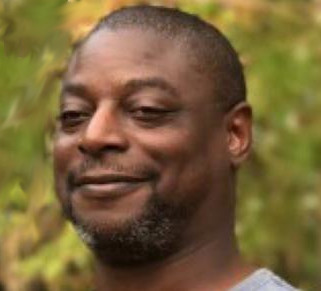






 gracefulatheist.com