Arline Interviews B

Agnosticism, Autonomy, Deconstruction, ExVangelical, Podcast, Purity Culture, Secular Community
Listen on Apple Podcasts

This week’s guest is B. B grew up homeschooled in a large evangelical household and spent nearly thirty years in the church, determined to fit in.  He felt like leaving for a while, never having belonged, and then in 2016, he knew it was the end for him. He hit the door running. 

One of the most destructive forces within his Christian upbringing was Purity Culture. Since deconverting, he’s learned that he isn’t alone when it comes to loving yourself and exerting your autonomy. B’s story is one of great evolution and freedom.

Tweet-Worthy Quotes

“…I thought, It’s real to everyone around me. It should be real to me. I need to keep trying. If it’s not real to me, then something’s wrong with me.

“I had been edging towards the door, and 2016 got me walking full-speed towards the door.”

“…consciously making that choice to say, ‘I’m not going back. I’m done.’…it was the biggest relief.”

“Now I feel free not to care. Is there a god? I don’t know, but more importantly to me, I don’t really care.”

“I sat down and looked at that picture and thought, I really like this picture. That was a whole new feeling. I had never felt that way.”

Podcast Recommendation

Go Home, Bible. You’re Drunk
https://www.irreverent.fm/show/go-home-bible-youre-drunk/

Links

B’s Instagram
https://www.instagram.com/happyinmyownskin/

Interact

Join the Deconversion Anonymous Facebook group!

Deconversion
https://gracefulatheist.com/2017/12/03/deconversion-how-to/

Secular Grace
https://gracefulatheist.com/2016/10/21/secular-grace/

Support the podcast
Patreon https://www.patreon.com/gracefulatheist
Paypal: paypal.me/gracefulatheist

Podchaser - Graceful Atheist Podcast

Attribution

“Waves” track written and produced by Makaih Beats

Bob Barnes: BAHACon 2022

Agnosticism, Atheism, Dones, Humanism, Podcast
Listen on Apple Podcasts

This week’s guest is Bob Barnes. Bob is a lifelong atheist and an organizer with BAHA, Bluewater Atheists, Humanists & Agnostics. BAHA “is a non-profit organization dedicated to improving the image of Freethinkers and Atheists and to give back to our communities.” 

BAHA is hosting its annual conference, BAHACon, with speakers and events you won’t want to miss! August 26 – 28th, 2022 in Sarnia, Ontario, Canada.

Links

BAHACon
https://bahacon.com

Bluewater Atheists, Humanists and Agnostics
https://bluewateraha.com/

Interact

Join the Deconversion Anonymous Facebook group!

Deconversion
https://gracefulatheist.com/2017/12/03/deconversion-how-to/

Secular Grace
https://gracefulatheist.com/2016/10/21/secular-grace/

Support the podcast
Patreon https://www.patreon.com/gracefulatheist
Paypal: paypal.me/gracefulatheist

Podchaser - Graceful Atheist Podcast

Attribution

“Waves” track written and produced by Makaih Beats

Deb is Done

Agnosticism, Autonomy, Deconstruction, Dones, ExVangelical, Podcast, Purity Culture, Spirituality
Click to play episode on Apple Podcasts
Listen on Apple Podcasts

This week’s guest is Deb. Deb “asked Jesus into her heart” at six years old and remained a devoted follower of Jesus for decades. She married her high school sweetheart, started a family and found herself living the missionary life on the continent of Africa.

As the years passed, Deb’s faith was tested—praying and watching children die on two continents, her husband pointlessly fired from their church, meeting different types of Christians and the reading of diverse books. Deb had more and more questions about her lifelong faith.

Today, Deb’s spirituality is one that stays curious and open to new thing, no longer holding tightly to any one creed. Her story is a beautiful one filled with compassion and love and a desire to meet people wherever they are. She is truly living out secular grace. 

Deb’s husband, Paul, tells his story.
https://gracefulatheist.com/2022/07/03/paul-is-done/

Tweet-worthy quotes

“I just knew the more we prayed, the likelihood of God answering was higher.”

“That’s what we needed. We needed to get kicked out of the church to begin being more honest with our doubts and our questions.”

“After sixty years of feeling like I have to go [to church] every time the doors are open, it was just amazing—the release that was!”

“…it’s so important to be curious and to be a lifelong learner. That’s my purpose for living, to just be a learner.”

“I want to be a lifelong learner. I’m seventy-one. I want to learn. I want to be teachable…and curious. That’s really my desire for the last years of my life.”

Recommendations

Podcasts
Youtube

Tara Brach’s guided meditations

Books

Brian McLaren’s Books

#PaidAmazonLinks

Brian McLaren’s Books

Interact

Join the Deconversion Anonymous Facebook group!

Deconversion
https://gracefulatheist.com/2017/12/03/deconversion-how-to/

Secular Grace
https://gracefulatheist.com/2016/10/21/secular-grace/

Support the podcast
Patreon https://www.patreon.com/gracefulatheist
Paypal: paypal.me/gracefulatheist

Podchaser - Graceful Atheist Podcast

Attribution

“Waves” track written and produced by Makaih Beats

Ruby Gets Real

Agnosticism, Bloggers, Deconstruction, Dones, ExVangelical, Podcast, Secular Grace
Click to play episode on Apple Podcasts
Listen on Apple Podcasts

This week’s guest is Ruby. Ruby is an author, blogger and YouTuber, living her journey out loud for the benefit of her followers. Lutheran to her core, Ruby spent her life committed to the institution of the Church. It took multiple heartbreaks and difficulties in life before she began to wonder, “Is any of this true? Is any of this real?” 

She threw out the formal church experience first. Then, through her impressive consumption of non-fiction books, she was able to be rid of the Bible and finally Jesus. 

Now, Ruby’s life is all about love and kindness toward her fellow human beings. As far as supernatural beliefs, she looks to “the flow,” of the Universe. She’s able to define god in her own terms and her life—and the lives around her—are better for it.

Quotes

“Confirmation was a social experiment for me.”

“I found that [enacting my faith] was what this was about…It’s always been about people.”

The Shack…was pivotal in my journey because all of a sudden, God doesn’t have balls.”

“If [all the Old Testament people] aren’t real, then what happens with Jesus?”

“People matter.”

“Love blossoms in the manure of my life.”

Links

Poetry
https://thepreciouspoet.blogspot.com/

What do I believe?
https://thepreciouspoet.blogspot.com/p/what-do-i-believe-may-7-2022.html

Book blog and recommendations
https://rubygetsreal.blogspot.com/

Atheistic Lent
https://authenticlent.blogspot.com/

Interact

Post on satisfaction
https://gracefulatheist.com/2017/01/19/i-still-havent-found-what-im-looking-for/

Deconversion
https://gracefulatheist.com/2017/12/03/deconversion-how-to/

Secular Grace
https://gracefulatheist.com/2016/10/21/secular-grace/

Support the podcast
Patreon https://www.patreon.com/gracefulatheist
Paypal: paypal.me/gracefulatheist

Podchaser - Graceful Atheist Podcast

Attribution

“Waves” track written and produced by Makaih Beats

Dave Gossen: Agnostic and Done

Agnosticism, Deconversion, Dones, Podcast, Unequally yoked
Click to play episode on Apple Podcasts
Listen on Apple Podcasts

Our guest this week is Dave. Dave grew up in the Mennonite Brethren faith and followed all the rules until at age 50, a gift from his son made him begin to ask questions. Dave’s love for his family and a desire for truth are equally apparent in his story. He asked hard questions and was never given satisfying answers. Knowing he had to tell his wife about his waning faith, Dave feared the consequences. Fortunately, Dave and his family have chosen to turn toward one another in love. It has been a trying journey for Dave, but he knows that pursuing truth and loving the people around you give life purpose.

Tweet-worthy quotes

“When the Jenga tower begins to fall, it falls big time.”

“Good science. Good medicine. Good doctors.

“Taking the Bible for granted. Taking the existence of God for granted…Maybe I’ve got to question the things that I’ve been taught my entire life.’’

“Don’t be afraid to ask questions. The things that you were taught your whole life? Just make sure you do some critical thinking about them.”

Recommendations

Podcasts
Books

#PaidAmazonLinks

Interact

Join the Deconversion Anonymous Facebook group!

Deconversion
https://gracefulatheist.com/2017/12/03/deconversion-how-to/

Secular Grace
https://gracefulatheist.com/2016/10/21/secular-grace/

Support the podcast
Patreon https://www.patreon.com/gracefulatheist
Paypal: paypal.me/gracefulatheist

Podchaser - Graceful Atheist Podcast

Attribution

“Waves” track written and produced by Makaih Beats

Shannon: Deconversion Anonymous

Agnosticism, Atheism, Comedy, Deconversion, Deconversion Anonymous, ExVangelical, Podcast, secular grief, Thought Experiments
Click to play episode on Apple Podcasts
Listen on Apple Podcasts

This week’s show is a Deconversion Anonymous episode.

This week’s guest is Shannon. Shannon’ story delves into the emotional experience of deconversion. Shannon grew up in an Independent Fundamental Baptist church, where the teachings were pernicious.

“It’s like ‘Love Jesus. Love God. And be afraid of demons, ‘cause they’re everywhere and they’re going to get you!’”

As a teen and into adulthood, Shannon knew her own beliefs and convictions did not always align with her church or family. She tried to be who they wanted her to be, but her decisions were never quite enough for them. 

“…showed me that no matter what I give, there will always be one step further. It’s just not good enough.”

Over the years, she slowly, like “mental velcro,” ripped out the only beliefs she had known. Where her family couldn’t hold space for her questions, her husband could. It was a hard journey, but she wasn’t on it alone.

“From, mentally saying, ‘This isn’t real. I think I’m done’ to being done? It was torture.”

Today, Shannon misses the certainty she used to have, the path laid out in front of her with easy answers. But she is able to see the world with new eyes—the glory and majesty of nature, the wonders of scientific inquiry. It has changed her for the better, and she isn’t looking back. 

“To me? [Evolutionary change] is magic.”

Recommendations

Thought Experiments For Believers
https://gracefulatheist.com/2018/12/03/thought-experiments-for-believers/

Deconversion How To
https://gracefulatheist.com/2017/12/03/deconversion-how-to/

Review of Hell is the Absence of God
https://gracefulatheist.com/2017/06/04/review-hell-is-the-absence-of-god/

Interact

Join the Deconversion Anonymous Facebook group!

Deconversion
https://gracefulatheist.com/2017/12/03/deconversion-how-to/

Secular Grace
https://gracefulatheist.com/2016/10/21/secular-grace/

Support the podcast
Patreon https://www.patreon.com/gracefulatheist
Paypal: paypal.me/gracefulatheist

Podchaser - Graceful Atheist Podcast

Attribution

“Waves” track written and produced by Makaih Beats

Luke Janssen: Recovering Evangelicals

Agnosticism, Critique of Apologetics, Deconstruction, ExVangelical, Philosophy, Podcast, Podcasters
Click to play episode on anchor.fm
Listen on Apple Podcasts

This week’s guest is Luke J. Janssen, M.Sc., Ph.D., M.T.S., Professor Emeritus, Dept. Medicine, McMaster University, and co-host of the Recovering Evangelicals podcast. He is a scientist in medical research. During a faith crisis he began taking courses on theology which turned into an M.T.S degree.

I’ve been face-to-face with faith and science my whole life.

Luke tells his story in four 15 year phases: his early years as a nominal Reformed Christian, his young adulthood as a Pentecostal/Charismatic fundamentalist, a desconstruction phase, and where he is now, with a “small part of him that won’t let go” and a belief in a creative force.

It is just that I couldn’t pretend anymore.
I just couldn’t pretend that I was a believer.
I just simply didn’t believe.

Luke and his co-host, Boyd Blundell, cover many aspects of desconstruction on the Recovering Evangelicals podcast. They discuss various apologetic and scientific arguments and honestly reveal what they do an do not believe now and why.

Recovering Evangelicals
… for those who were once very comfortable in their Christian faith until the 21st century intruded and made it very hard to keep on believing;
… for those who are intrigued by science, philosophy, world history, and world religions, and want to rationalize that with their Christian theology;
… for those who found that’s just not possible, and yet there’s still a small part of them that won’t let it go.

Links

Website
https://lukejjanssen.wordpress.com/

Recovering Evangelicals
https://lukejjanssen.wordpress.com/recovering-evangelicals/

Interact

Join the Deconversion Anonymous Facebook group!

Deconversion
https://gracefulatheist.com/2017/12/03/deconversion-how-to/

Secular Grace
https://gracefulatheist.com/2016/10/21/secular-grace/

Support the podcast
Patreon https://www.patreon.com/gracefulatheist
Paypal: paypal.me/gracefulatheist

Podchaser - Graceful Atheist Podcast

Attribution

“Waves” track written and produced by Makaih Beats

Transcript

NOTE: This transcript is AI produced (otter.ai) and likely has many mistakes. It is provided as rough guide to the audio conversation.

David Ames  0:11  
This is the graceful atheist podcast. Welcome, welcome. Welcome to the graceful atheist podcast. My name is David, and I am trying to be the graceful atheist. As usual, please rate and review the podcast on the Apple podcast store, rate the podcast on Spotify, and subscribe to the podcast wherever you are listening. Special thanks to Mike T for editing today's episode. onto today's show. My guest today is Luke Jensen. He is the co host of the recovering evangelicals podcast. The tagline for the podcast is for those who were once very comfortable in their Christian faith until the 21st century, intruded and made it very hard to keep on believing. Luke is a scientist who's done medical research at the university level. And he also has a master's degree in theology. And as his website describes, he has been face to face with faith and science and that debate for all of his life. As you're going to hear as he tells his story, he has gone through multiple phases, faith and deconstruction. At the latter half of the conversation, we try to dig into what he does believe currently, and that is a journey in and of itself. You can find Luke on the recovering evangelicals podcast on all the major platforms. Luke's website is lukejjanssen.wordpress.com. That is lukejjanssen.wordpress.com. And I will have links in the show notes. A special thanks to Joe a mutual listener to both the graceful atheist podcast and recovering evangelicals for getting us all together. I got introduced to Luke and Boyd, his co host, and I really appreciate that. Thank you, Joe, for reaching out. Here is Luke Johnson to tell his story.

Luke Jensen, welcome to the graceful atheist podcast.

Luke J. Janssen  2:20  
Thank you for having me.

David Ames  2:21  
Hey, Luke. So we had a mutual listener of ours, Joe who introduced us, he was a big fan of you and Boyd's podcast recovering evangelicals, and this one, and so that would be great for all of us to get together. And so far, our email exchanges, I really am fascinated by the work that you and board are doing. I've gotten a chance to listen to a handful of those episodes. And again, just really impressed with the level of openness and rigor that you guys handle those questions. And so I think it's gonna be a lot of fun to have you on. I want to give you just a couple of seconds to hear to say, who you are like your like your your resume, so to speak of where your education was, and things of that nature.

Luke J. Janssen  3:06  
Okay. And I'll just comment as well on that, that Joel bringing us together. He's basically sent an email to the three of us, you, myself and Boyd, and he just said, well, to us, at least he said you should go and Dave show. Yeah. And we went we looked at each other when Dave show who's and the now your email was CCD in there, but your email is graceful atheist@gmail.com. And so we just thought that was a moniker that was a name. For a month, we didn't know who Dave was. And then some of the things happened with oh, that's who DAVE Yes. Yes. So it was great. So to answer your question, then, so I'm 6061 years old, went to university worked as a, as a scientist in a lab for just about 30 decades, just over 30 decades. And I'm now retired from that. I just wanted to move on to other things. And the work that we did was in the in the era of asthma, looking at cell function, that sort of thing.

David Ames  4:02  
Interesting. All right. And you have a master in science, Master's in theological studies and a PhD in pharmacology and physiology. Is that correct?

Luke J. Janssen  4:13  
Yes. And actually, you know what, now that I think about it, I'll have to talk about the MCS later on, because I forgot to even mention that. But yes, so in, I did my Master's and PhD in medical sciences. And that's what that formed the basis of my career for 30 years. And it was near the end of that, that I was going through this faith crisis. And amongst other things, I thought, you know, what, I'm gonna take some courses on campus here. And one course became three became 30. And then I thought, you know, get a masters and MCs so there you go.

David Ames  4:39  
That's, that's awesome. Yeah, I think blade refers to that. You know, he says, the type of person Luke is he just went and got a master's in theology.

Luke J. Janssen  4:47  
Well, it was easy because it's on campus. I didn't have to go far and then as an alumnus, as a member of the of the university I could take the course of for free Okay, so it was easy, but it was hard work. I will say

David Ames  5:06  
Well, we're here to hear your personal story. And you have really interesting story of faith transition going kind of in multiple directions. But let's begin where we always do with the faith tradition you grew up or what was, what was your faith, like when you were young?

Luke J. Janssen  5:20  
Right? I'll break my life up into four different parts. It just seems to be that what happened to my life, fell out over 15 year blocks. The first of which then was obviously when I was a kid, we grew up in a Christian reformed setting, which for the listeners who may not know what Christian reformed is, we were very Dutch and very Calvinist, I think a lot of people will know Calvinism is all about Yeah, I found that to be, it was more of a social identity, that group that I was in there. And again, remember, I'm just a kid, I'm less than 15 years old. But it was more of a social identity, it was just an in group, it was the place where your friends were your co workers, where a lot of your family members were there. And so it was just the place you were, it was the society, the social group that you were part of. And I wouldn't really say at least for me, as such a young kid, it wasn't a personal commitment to a worldview or a religion. But it was a very formative part of my life. It it shaped my initial views on who God is, or what God was, God was a very angry god, a very judgmental God. Obviously, he was absolutely in charge. And it also shaped how he saw humans how I thought I was led to believe that he saw humans, humans are utterly evil to the core. Not much good for anything else, but burning in hell. So And how was very prominent in the thinking when I was a kid again, and I think to some extent, I can see generally speaking in the Reformed faith, it also meant that I was utterly young earth creationist, I just took the Bible, literally, but then again, not that I spent a lot of time in the Bible, it was just when things were said, or you hear from the sermon from the the pastor at the front, you just took it at face value. And again, it just wasn't a particularly personal thing with me, it was just the water that I swam, and that was the first 15 years of my life.

David Ames  7:11  
Okay, I guess my question then to you is, did you internally have faith at that point in time? Or was it truly just cultural at that point?

Luke J. Janssen  7:21  
It would, it was very much cultural and not a personal thing. I certainly had beliefs and values that were shaped by that community, and I live my life by it. Well, that's not totally true. There are many times they didn't, but you, you strove to abide by the social norms, that sort of thing. But it was not a personal thing. Certainly not a personal relationship. Okay. But even to say that it was a personal belief. I don't know that I would say that,

David Ames  7:47  
okay. That's actually relatively similar to me. I grew up in a nominally Christian family, you know, they were believers. But that wasn't talked about much we didn't go to we didn't go to church. And so, my grandmother, I remember this this moment. So clearly, I was about 13, or 14. And my grandmother realized that I didn't know what the apostles creed was, like, she just about died of shame, like she had failed. And so I kept asking, like, you know, who is this God character anyway, kind of thing. And it wasn't until my late teens, that I became very serious. But anyway, proceed. So what happens after this?

Luke J. Janssen  8:24  
Okay, so then the next 15 year block of my life from 15, to 30. And it really begins with my parents, again, my parents were Calvinists. They were Dutch, and they both grew up in that whole system. But they had a major conversion experience. And I'd say this is they both had a major conversion experience. But it seemed to be more dramatic with my father. He had the from what he tells us, as I understand his background, he wrestled really deeply was religious issues, especially the idea of being one of the elect. This is one of those ideas that Calvinists are big on that, basically, some people have chosen to go to heaven, and some are chosen to go to hell. And that's just the way it is. It's nothing more to it. And he, my father really wrestled with that whole idea of being one of the elect, as opposed to the ones going to this very fiery hell. And he was deeply fearful that he was one of those assigned to hell. Now, I'm not clear on all the details, but what I do know is that he did have a very profound personal experience. It was a deeply religious experience. And it literally changed him overnight. He was a different person because of that. became very passionate about his new faith, which I'll now call the charismatic or Pentecostal faith. I mean, it took a few years for to really evolve fully into that Pentecostal charismatic. I'll use the word phenotype. Yeah. But certainly, it was a very sudden, emotional, profound commitment to this new kind of faith and it became the only thing that he could talk about even to this day. So that's what happened to him. And again, that was roughly when I was 15 years old. For a few years, I resisted that he of course would be one to take while he did take, take the kids to these various fellowships, various church groups, home study home groups. Every Friday night, we went to this one place called visa UK a very charismatic kind of a place. And I was very resistant to that for a couple of years. Until it basically was coerced into an all say, joining the team and air quotes there. It's it's an experience, I'm not sure how much really to get into, except to say, at one moment, I was completely against being, you know, joining this faith that he held. And just because of the circumstances that I won't get into the detail, it was basically I was pushed against my will into this new faith. Now, I don't want to just, I'm not going to put the blame all on him. I did accept that new worldview. I did. I did pray the prayer, say the words and became a Christian. And from that moment on, I was committed. But I do have to say that though the way to happen was rather coercive. And that's really all that I'm going to say. So bottom line is I've resisted for a number of years and now all of a sudden I dove in headfirst and I became one of them as well. I think I was sincere. I do think looking back on myself as a 18 year old I was committed. I sincerely held that belief. And I became Uber involved. I taught and was involved in the Sunday school groups, college and career group. I was part of that I was in a Christian rock band. This is hilarious, because I was a keyboardist even though I have absolutely to this day do not have any experience whatsoever with Keith Morgan's. I just simply had enough money to buy a synthesizer and I now became the keyboard is for this Christian rock band, which you know, toured for about a year didn't last long, but it came from the summer camp, and we played every year at the summer camp. But there you go, yeah. Went on all kinds of evangelists, evangelistic campaigns, if our church would, you know, have something going reaching out into the neighborhood or, you know, bringing your friends to Sunday, Sunday school, where their college and career group. There was one year that Billy Graham came to our city Hamilton in 1988. And so I was part of that.

David Ames  12:16  
Okay, that's probably a big deal.

Luke J. Janssen  12:19  
Yeah, so so very much I was, I was all in and I was serving, I played my guitar. I did play guitar. I didn't play the keyboard, but I played the guitar for youth group for worship services, that sort of thing.

So that's me being involved there. But then let's talk about what you know, what did that what did this mean? I went to church twice on Sundays, and at least once midweek, that midweek would be say the Wednesday night Bible study or the Friday night youth group and college and career, that sort of thing. So three days a week, if not others. And they were very emotional services, especially, you know, as you know, if the service is two or three hours long, which today is unbelievably long, but during the last half hour, things got really emotional, a lot of a lot of emotions, and especially the Sunday night service, that's really what it was all about is just driving towards that final hour, where a lot of emotions were being poured out. Went to revival meetings to various healing meetings. You know, I'm sure people have heard of Benny Hinn, there's a few others but Jesus festivals, there was the the, the folk gospel businessman conferences, they also had their events. And I was all always part of that. I was pretty committed, needless to say, and I bought into that for the first five to 10 years for sure. And what did I buy into? So I read the Bible, literally, I saw it is absolutely inerrant and infallible. Which obviously meant then that the creation accounts, they were literal. That's the way it happened six days, I was a young earth creationist. And I even started to write a book at that time. So now we're, you know, in the in, I'm past my undergrad, university experience, and getting into my postgraduate experience, where I was starting to write a book that would finally prove to the world that young earth creationism was true. And you're listening, you'll remember those days, I said, lots of coffee, lots of lunchtimes, with bread talking about young earth creationism, and I was working on this book, which needless to say, never happened. Yeah. Interesting. And it's not just the creation accounts that it took literally, of course, there's the destroyed Israel coming out of Egypt. That whole story I took literally, yeah, if you've seen the 10 commandments with Charlton Heston, Charlton, has you seen that movie? That's what was in my head? Yeah. And many of the stories, the Old Testament, the teachings of Paul, all these things I just took at face value, what it said on the page, I just took it that way, right? I was absolutely certain that we were in the end times. You know, that whole beast and the Antichrist thing. Speaking in tongues was part of it as well. The another thing that I refer often to the cosmic Vending Machine God, basically whenever you need something, you just pray for it, whether that be a healing, whether it be passing a test, or, you know, people often refer to getting a parking space, that kind of thing. Well, I believe in this cosmic vending machine, God, you just asked and expected to get it.

David Ames  15:21  
I love that analogy that that really captures kind of the the attitudinal position towards oh, I need a parking spot.

Luke J. Janssen  15:30  
Yeah. And it never occurred to us. It certainly does now, but never occurred to us that we expected God to answer that kind of a request, but not you know, this kid who's got brain cancer or, you know, kids. It's more heartbreaking when it's breaking when it's kids, but kids starving in Ethiopia, God wasn't paying attention to them, but he would find me a parking spot that just never occurred to us at the time. Now, having said that, I, part of my background there, part of my, what I grew up with, was this belief in miracles. And I I'm not sure really, I can't really remember whether I believe them or not, I certainly went to those kinds of meetings. I went along with it, not just went to it, but went along with the whole idea. But I'm not sure I can say I really believe that. Because the fact is, I didn't pray myself for healings. i If I really believed in it, then I would have done that. And I don't remember ever praying for myself or for other people for their healings. I mean, certainly not. You know, the whole. Well, there you go. Yeah, Demons, demons were everywhere. That was also part of my background, in the Pentecostal circles, we are always and that's going to play into the third part of my life where I reject the whole thing. We'll come back to that. And then the last thing that I believed in at that time, and it was a last thing that I can get rid of, that I had to wrestle through was this idea of the personal relationship. The whole idea that, you know, God is my, my, my personal buddy. And Jesus is my personal buddy. And, you know, I believe that wholeheartedly. But from time to time, if you asked me at that time, I would express some frustration that it was kind of hard to really see how it worked. Just didn't live. I didn't, didn't experience that personal relationship. In our podcast, we did a number of episodes that deal specifically with that. And maybe if your listeners are curious, you can see what I mean by that. But so there you go. Yeah. So those are the things that I believed that's the church I went to we saw the church down the road, we had this euphemistic expression the church down the road, which was basically, you know, any Baptist Church, and things like that. They were second class Christians. We were the true Christians. Oh, gosh. And of course, and of course, you know, Catholics, they weren't even Christian. Going to Hell, yes. That was what we absolutely believed. Yeah. So here's the thing is we're getting close to my 30s. The second the end of the second part, 15 year block of my life. All these uncertainties began to accumulate questions that were being raised, there was cracks forming in the wall, contradictions and mistakes that I read in the Bible, they just were becoming a bit of a problem a bit too much of a problem. I mean, I say, when I saw these contradictions or mistakes, even when I was in my 20s, I noticed them and you just quickly filed them away. But now they're beginning to sit in my brain a little bit longer. And I was beginning to puzzle with them, until I've quickly filed them away. Yeah. And here's the other funny thing that I do remember, at the time feeling odd about the idea that even though I was very Evangelical, evangelistic, I was also always, you know, not always, there were many times I was telling my friends or again, when I worked with the when I volunteered with the Billy Graham crusade, I would tell people about my face and about what I thought they needed. But, and I know I'm not sure I've articulated this, but I do remember thinking to myself, certainly become a Christian, go to church, but don't go to my church. My church is whacked. I want to be kind of a Christian. I honestly did think that even though I went there for years, and clearly, you'd think that means that I believed a good bit of it. I do remember thinking to myself, when I'm talking to people witnessing is the word that we use when I was witnessing to friends are telling other people. I was always thinking do go to church but Dakota mind because it'll weird you out. That's fascinating. Interesting. Yeah. It's funny that it never bothered me at the time. Yeah, yeah. But it did still attend for many, many years, even as these doubts and questions and concerns were building. And I do remember now, for stepping to the present here. I do remember reading your how to D convert article, David. And these are all steps that I read in there that these are all classic deconversion stories, people who are fully committed. And then one question after another begins to build and and then, as your article then talks about the whole deconversion idea. We also boy I also talked to Brian McLaren in one of our episodes about the same sort of thing. It's the exact same sequence of events. So that's the end of the second half of my life.

David Ames  20:18  
So again, you know, it's it's I know, we're going to we're going to diverge at some point. But it is interesting, the number of parallels, I think you and I are contemporaries, and two things that really struck me. My first real church experience, first of all, was my my mother, who had a dramatic epiphany and a transformation from drug to drug addicts to functioning human being that that was my impetus to become a believer. I was all in, I felt like I had a personal relationship with Jesus. So that's slightly different. But Pentecostalism was the first exposure that I that I had in the 80s timeframe of Frank Peretti. And there's demons under every boy. Yeah, that whole. So that could definitely relate to that. So and then, you know, a long period of time of attending church, but having questions and not knowing at the time that the word was deconstruction, right like that, that, you know, I slowly began to see, well, this can't be an Eric, because there are problems. And like, and grappling with that, but but still absolutely remaining unbeliever for a few decades in my case. So right.

Luke J. Janssen  21:24  
Now, I'm curious. And if you want take this out of the final cut, I'm curious, you said that you said you did have a personal relationship. I'll say that I claimed to have had one, but it didn't feel it. And here's the funny thing. There were times where I would begin to feel something and then it really is, yeah, I'm just creating these feelings. I'm just, you know, crip, tensing these muscles. And it's through the breathing and through various things. I'm beginning to feel something and I was smart enough to know at that time, you know, what, I'm just creating this feeling. And I didn't want anything to do with that. Did you have more than that?

David Ames  21:57  
Yeah. So you know, it's, I think you've probably had the same experience. When we're talking to say, an evangelical today, you have this weird experience of kind of defending your former faith. And so I'm going to do, I'm going to do a bit of that, obviously, my perspective has changed today. But I had this sense of conscious contact is what I used to call it right. I was not terribly disciplined to have prayer time, half an hour out of the day, that kind of thing. But I felt like I had continuous contact as it were. So I know that you talked about feeling I definitely had a feeling of connection to God and a feeling of of relationship. How I interpret that today is radically different. But, but at the time, that's what I experienced.

Luke J. Janssen  22:42  
Right? And no voice is obviously now. The other thing, I mean, I would hear people say, but I feel,

David Ames  22:49  
you know, feel, you know, like the the language is so hard to pin down. But like you feel guidance, you feel a sense of God wishes this or that, that kind of thing. Yeah. As opposed to, you know, literal voice, right.

Luke J. Janssen  23:10  
Okay, so I'll jump into the third quarter of my life. And I'm going to call this a slippery slope phase, which everyone can relate to that expression. You've heard it all the time. In your article to deconstruction, how to deconstruct article, I think you call this the critical mass stage. Yeah. And so here's an interesting story. I said that I was gonna come back to demons, which demons was one of the things that we believed in. And I said that played into the ending of this part of my life. I can distinctly remember that one Sunday that we were in that Pentecostal church I was going to at that time, and I think many of your listeners are going to know the name. Benny Hinn, faith healer, he had a brother or has a brother, Henry Hinn, and I'm pretty sure it was Henry, they both did the same kind of thing. But Benny certainly rose to very big fame. But I think this one was a service being led by Henry hand. And I just, I just remember in this service, again, in the background, over the over the weeks, months years, leading up to this, I was beginning to have less and less conviction about what we were doing. But in this particular service, as he was winding up, you know, turning the crank to get the emotions primed up. He had a stand up, put our hands to the front of the church, put on our palms to the front of church and said, Okay, now we're going to Castle, the demons from the North. Now, I want you to turn around, we're going to Castle, the demons from the south. And then we had to cancel the game from the east and from the west. And I distinctly remember leaning over to my wife, and even though I would still say I was a well certainly wasn't full fledged believer, and even to some extent, Pentecostal, I remember leaning over and said, We're not coming back here again. This is this is too much. This is whacked. Yeah. And we didn't. I think I was only there once again, years later when I was there for a funeral for a friend of mine who was there and otherwise we never went to that church, let alone we never attend Did Pentecostal churches and that sort of thing after that? It just was there was too much emotion and too much weirdness, I understand. Yeah. So we started going to another church and actually several churches, we had to find a place. And I'll just characterize them I was basically Baptist, because I think a lot of your listeners will get a sense of what a Baptist church is like. And that's the kind of place that we went to. At that time, I still saw united and Anglican churches, they were basically dead churches. That's what I would have said at that time that he was dead churches. But we'll go to these other churches that are certainly not on the other end of the of the spectrum, the Pentecostal type. And it was during this time, once we left that, we did find a church that we attended for quite a while for a decade at least. And I was quite happy there. But these questions were beginning to accumulate during that time and really accumulate with a vengeance with force. And I'm going to break those up into three different I'll call them forces or influences on my life. The first which would obviously be science. I was a scientist, I went to university, worked in the university and use science in my life. And it was at that time, and again, I was a young earth creationist again, at that time, every new dinosaur fossil, every new discovery of another evolutionary adaptation, when I learned about them finding basic building blocks of life in meteorites, and I read about what, so Stonehenge and Sumerian tablets, that sort of thing. Every time I read about these things, the all confronted the beliefs that I grew up with, they all challenged my faith. It was certainly the young earth creationism that I grew up with. Yeah. And it was just a constant onslaught. And I found myself developing this split brain mentality, I had the Monday to Friday brain that I took to work. And I might even use words like evolution and adaptation, that sort of thing. I will use them but I certainly didn't really think that way. And then this Sunday brain that I had, that was a whole different worldview, young earth creationism, creationism still, and I really maintained that kind of dichotomy for a long, long time, the Monday to Friday brain and the Sunday brain are two different parts of my thinking. And I kept them very compartmentalized. And I know that that's not, it's a short term strategy, it's not going to last very long, you can only hold that kind of dissonance for so long. And, and so we'll come back to that. And that's the one of those three influences in my life. The second one then would be the morals and ethics that I read about in the Bible. The classic list of things that seem to bother so many people, the Canaanite slaughters, the ones that are included, often included, apparently innocent women, children, animals, the completely male oriented thinking of so many stories and values, you see, you sell a slave, and if the slave is male, you can get this much money. But if it's a female, you get half as much or if a child dies, you get more for a son and a daughter, and so many other ways, there was very much this male oriented thinking, and a blatant discrimination against women and slaves and foreigners and children. And It puzzles me now, I don't know why I didn't see those kinds of discriminations before, or at least they didn't bother me. Somehow they made sense. I don't know what else to say about that. One of

David Ames  28:23  
my observations was, obviously Grace was a major part of my Christianity is, and I'm continuing in a secular fashion. But I talked about how I had Grace colored glasses on when I went over that Scripture. And it wasn't until I like took those Grace colored colored glasses off to just read it, the text as it is, and just see what it actually says that the horror of what is Is there really struck me.

Luke J. Janssen  28:51  
Yeah. I guess what I was doing, I guess I'm saying the same thing you just did. In my own words, I just think it was again, my biblical literalism working against me, I believe those stories as real events, the stories of the Canaanites slaughters as an actual events. In other words, it was a God ordained event. I just use it because that's what the Bible told me. And I realized now that these are very much stories that people told. But that was another influence that began to chip away at my my faith system, the morals and ethics, the biblical morals and ethics actually ruined my faith

and then the third one was world religions, which for decades, I believe that any other world religion was was well, you can't call them demonic but we would have there there this satanic Islam, long list of world religions that you just dismissed us completely. Well, certainly non Christian, but more than that satanic because we will use those kinds of phrases that back when I was still young and naive and very foolish. But here's the thing. My job as a scientific research researcher took me into contact with so many people of these other faiths and religions, even going to their houses for dinner, going to conferences and rooming with them sometimes. And it's, it's embarrassing to admit that what I found was I was very confronted with the idea that these people were not the evil monsters I thought that I was expecting, right? I expected these to be very different people that were just night and day different from me. And they were wicked to the core. And what I found, though, was that these people were fundamentally good, they were sincere, they were kind and compassionate. And when we did talk about religion, they were not offensive. And the funny thing was that they were also just trying to be right in the eyes of a God that they believed they were just trying to be good. Yeah. And what really brought this part this influence, this destructive influence in my life, what really brought it to a boil was reading a book, I read lots of books, but this one in particular, I know it hit me like a hammer in the center of my face, Kite Runner by Colette Hossaini. And very briefly, basically, the story is of a kid who grows up in Muslim Afghanistan in a modern setting, I think was like the 1990s or something. This kid makes a decision. He's only he's a young teenager, I think he's 12, I think, when this happens, betrays a friend, which leads to some horrible consequences. And, and then this haunts the kid, right from the moment it happens for his whole life, and then the rest of the book. I mean, that's the first chapter, I think. And then the rest of the book is him as an adult trying to reconcile, not only to find this friend and to apologize, and to get forgiveness and reconciliation, but he's also going through this journey to reconcile with a God that he knew the only one he knew, which happened to be a law. And again, he grew up in a setting this, Afghanistan, Muslim iscan Stan, where there was no other story paints that as if there was no other Christian influences, it was just Muslim. And so this kid, now a man is just trying to get reconciled with God, whom he calls a law, because that's the only god he ever knew. And it struck me as I was reading the story. And still in this, this Christian phase of my life, I was thinking, as much as this kid just wanted to get right with God, too bad, he's going to hell because he's Muslim. And, and then it dawned on me that this is I couldn't tolerate this anymore did not seem right. The kid just wanted to be right with Allah and wanted to apologize to a friend. But he was going to hell because he wasn't a Christian. And I just couldn't justify that anymore. That really was the nail in the coffin on that part of my life.

David Ames  32:43  
Well, we talk a lot about that. It's not one thing. It's 1000 things. And we often focus on the first thing and the last thing. Right, right. And yet there are many points in between that, but so it sounds like this was one of the last things for you the straw that broke the camel's back, so to speak.

Luke J. Janssen  33:00  
Well, certainly one of the last things that basically had me beginning to say, You know what, I'm not sure I'm a Christian anymore, that's for sure. But but it was a long list of questions that finally got me to well, we'll come to that in moments. So it did start a whole cascade of changes in my thinking questions that I now actually started asking with vigor, I didn't just kind of quickly ask me that and realize, oh, I don't want to go there and file them away. So I actually began to deal with some of these. And it was a long, hard journey of deconstruction, you know, with air quotes, that what people usually think of deconstruction, meaning just taking a sledgehammer and breaking everything, which I now have learned, deconstruction can mean, a very, excuse me, can mean a very different thing. Sure. Maybe we'll talk about that later on. But I started going out for coffee with friends with people I respected and was asking these questions and trying to reconcile them trying to have them make sense. And I just found myself giving up ground on so many things that I once believed with full conviction. And so what kinds of things naturally obviously one of the first things to go I think the first thing to go would be this, the inerrancy and infallibility infallibility of the Bible. How could that not happen? All these stories that I took at face value, and now I'm saying they could not have happened, it doesn't make sense. It's not right, you know, again, getting back to the canine Canaanite slaughters. So that was one of the first things that that definitely went, I stopped reading the Bible literally. We can talk more about that later. Things like atonement theology, I was very much I grew up Calvinist and for a long time I had I held this idea for decades held this idea of original sin, and that whole idea of Heaven and Hell and reward and punishment. Christian exclusivism though the whole idea that Christianity is the only way to get to heaven, and then that one of the other things I already mentioned this, but it was one of the last things that I had that I found myself wrestling with was that personal relationship even into my 40s and 50s, I still thought I'm supposed to have this and I just was not able to experience it not able to realize it. Without generating it myself. That's the thing. I think I could have been someone who would say, Yep, I feel that personal relationship. But I would know deep inside, I'm just generating as a friend of mine, as a friend of mine calls that the warm the warm fuzzies just generating the warm fuzzies. And then I call that God. And that was one of the last things that I've finally had to let go of. And it took me so long to get rid of that. That idea.

David Ames  35:34  
I think people will relate to that. Yeah. Yeah. And I know there's a more to the story. I'm anticipating that but yes,

Luke J. Janssen  35:40  
well, so now we're getting nearer to the end of that third 15 year span of my life, I found it necessary that I had to accept that I was no longer a believer. Definitely agnostic, that's for sure. But I've not wasn't quite comfortable calling myself an atheist. I wouldn't call myself an atheist. And that's because I'm a scientist, scientist says, Well, if you if you say this, you have to mean it in the meaning of the word. And to me an atheist is somebody who knows that there is no God. And I can't, I couldn't say that, then we can come back later to the fact that I still can't say that.

The interesting thing was leading up to that admission that okay, I'm not a believer, I'm certainly an agnostic, leading up to that there's all this fear of walking to the edge, and you know, the panic and the uneven uncertainty of coming to that. But once you do make that step, it was just a feeling of liberation. I just found that. Now I can now I can breathe easy. I can, I can be honest with myself, for starters, and I can, there was a joy and a peace. Let's put it that way. I actually enjoy MP. So I've given up this faith that I'd had for 40 or more years,

David Ames  36:55  
we talked about just the release the you know, best self honesty, you lose the need to defend your Faith anymore. And yeah, there's some very interesting things that happen. And the irony is how evangelistic it sounds when you try to describe it, you know, like, literally, you know, scales falling from one's eyes kind of thing,

Luke J. Janssen  37:18  
right? No, Dave, in your show? Do you? Have you had people talk? Or have you talked about this allegory of Plato's cave?

David Ames  37:25  
I'm very familiar with that. I don't know that. We've talked about it a lot on on the podcast. So if you want to give the listeners just a brief overview,

Luke J. Janssen  37:33  
okay, so and the reason I'm doing this is because this is now I'm feeling that in my life, in that part of my life, I was feeling this whole Plato's cave experience. Yeah. So very briefly, I haven't really thought to do this. But let me just try. So in Plato's cave, you've got this guy stuck in a cave, he's chained, and he's just seeing shadows on a wall, cast by some fire or something like that. And he just sees shadows, doesn't make sense. He's looking at it. And things don't make sense. But he eventually managed to get free, which allows him now to walk around the cave. And then he sees that these shadows are actually just, they're just shadows of A, he had been building an image of what the shadows meant. And now he knew what those shadows were all about. He knew what was creating the shadows, he saw it from from a whole different angle, He then proceeds to walk out of the cave. In the process, as he gets to the top of the cave and breaks out in the sunlight. Now he's absolutely blinded, and he's scared to death, because he can't see anything, doesn't know where he's going. But eventually, he, his eyes accommodate, he can now see clearly, things as they really are not no longer just shadows on a wall, in the cave. But now he sees the sky and the trees and everything around them. And he sees what things are really all about. And there's this feeling of of elation of joy. And then he realizes I should go back into the cave and get my buddies out of that cave. Yeah, and so so that's where I found myself at this point in my life that I had walked up to that edge with such fear and uncertainty, and the blindness of, you know, if I let go of this, and I let go of that, there's nothing there to catch me. And I didn't know what to do. But once I finally did, there was that feeling of, of release, you use word release, and joy and peace. And then I did feel that I wanted to go back and tell the people that I've been going to church with about, you know, what, all these things were talking about. Maybe there's a different way to look at these things. And I really began to as so I started a blog called reaching back into Plato's cave. I wanted to reach back to them and help them pass that those questions that we're all dealing with. Yeah. So that was very much a decision that I made to finally say, you know, what, I don't believe all those things. So in that sense, I'm not a believer, and I'm definitely agnostic. And I just want to clarify, I often want to clarify, I want to say this to people I'm talking to. I'm speaking now to two different groups of people, the ones who are Christians and the ones who are atheist. To the ones that are Christians. I want them to know that this is not a rejection of a faith. I have had, because it's not that I just chose to stop believing, and certainly not motivated by wanting to have a different lifestyle, you know, the whole sex drugs and rock and roll thing. It's just that I couldn't pretend anymore, I just couldn't pretend that I was a believer, I just simply didn't believe, at least not all the things that I used to believe. And so a lot of Christians will become judgmental. At this point, some Christians will become judgmental at this point. As if I had a choice, I didn't have a choice, I didn't just know that the faith was real. And I chose to believe differently, I just couldn't believe it anymore. And then the other thing I want to say is to the to the atheist, and it's, it's one thing to say that you can give up a lot of these faiths, but it doesn't mean that you have to reject the whole thing. And I just simply dropped the things that I couldn't hold anymore, which was a lot of things, I'll admit. But there still were some things that made sense to me, they still do, and I hope we can talk about some of those. We're in the fourth quarter of my life that I'll be getting to

David Ames  40:58  
Yeah, I you know, I said this loop to you off Off mic. And I'm just gonna say it here that that really the podcast, as I started, it was for those people who, when they looked around at what they had left, it was so little, that what remained was so little that they maybe they don't call themselves atheists, but they they don't say that they're more than agnostic in some way or another right like that. They can't they there's nothing left for them. That was my personal experience. But I want to acknowledge that people go through the deconstruction process and land in different places, there's a wide spectrum available to people. And one of the things that I find exciting about that is that that people get to go and explore, to learn to find out what they believe and why. And that's ultimately their autonomous decision that they get to make, right. And so I just want to make sure that that's clear from my end that although the podcast does generally focus on the D convert, where I'm acknowledging there's a pretty wide spectrum for people to experience.

Luke J. Janssen  42:05  
Good. So now I'm sure there's listeners that are wondering, well, then what do you still hold on to? The one thing that I just could not shake is the idea that there's this, there is a creative force, a life force. And that's simply because again, I'm a scientist. And so when I look under the microscope, and and see what cells can do, when I look at it through a telescope, and to see what's out there, it just leaves a feeling in me that there's something bigger out there. And I just, I can't believe that this whole thing is just some crazy cosmic accident. I just can't go there. Now, I know that some people call that a God of the gaps. And I have often wrestled with the fact I've been against people, not against people, I've been against the arguments that are based on a God of the Gaps argument. I'm just against those. And that's the thing I said, all I'm doing is holding on to a God of the gaps. But I'd been corrected on that partly through some thinking. But I'll be honest, it was also in a lot of these podcast episodes that I've done with Boyd and there was a an episode we did with Steven Freeland to chemo that they're more recently as well, where the point is made. It's not that it's a God of the gaps. I'm not using it as an explanation of things. It's more it's a sense of awe, there's this awe in looking at the stuff under a microscope or at the end of a telescope, and just being in awe and just feeling that there's something bigger out there. I have no evidence that there is no God, I don't have evidence that there is a God, this is not my evidence for God, when I look through the microscope, I don't say, well, that's proof that there's a God, I'm not saying that. I'm just saying, there's an awe that there's something bigger called the life force, a creative force. And it just makes more sense to believe that, that there's this creative life force, rather than this is just a cosmic accident. That's where I stand on that whole idea.

It just makes believing certain things make more sense. For me, it's more intellectually satisfying. Again, it's not proof. For God. It's not proof that we exist for a purpose. But I also don't have definitive proof that there's no God or that we don't have a purpose. If you're going to be adamant on this, you have to acknowledge that. In this case, you're you're making a choice. I don't know that anybody has proof that there is no God or that we're not here for a reason. They don't have that proof. They just, I would say that they should acknowledge that they're making a choice to believe that and I just choose to believe that there is something bigger out there, and that we do exist here for a purpose for purpose that there is meaning to our existence. And I know that some believers will, will have problems with me referring to God as a creative life force. But here's the thing. I've moved past the idea of God is a personal God. A personal Buddy, He's not someone more closer to me than my neighbor or even than my wife, he's not a personal Buddy, he is he so I'm using, I'm using pronouns he, as if God is a person, and that's again, something that boy and I've talked a lot about in our podcast, God is not a person, he's not a he or a she or an IT, he's, he's it God is way beyond personification. And, and certainly I would call God a life force or credibly force in a lot of other things.

David Ames  45:29  
You know, it's interesting, I just want to jump in here. If you're if you ever get a chance, go back and listen to marriage Simka a, I did a an interview with an Orthodox Jewish person. And, man, the language you're using right now sounds almost exactly for what he was talking, you know, the the kind of a, the core of being, that being itself kind of force of being as it were, I'm struggling to use the language, but it just what you just said really struck me as very similar to potentially Jewish thinking,

Luke J. Janssen  46:01  
right? So I hang on to this idea that there is something bigger out there. And if I find out, I'm wrong, I don't feel I've lost anything. And even as I say those words, I don't want thinking, I don't want people thinking that I'm just, you know, the Pascal's Wager idea, I'm not just choosing to believe because it's in the hopes of being right about getting into heaven, I'm quite comfortable with finding out that we only have our life here on earth, and that there's nothing more after that I don't need to have a reward of heaven. For making this choice. I just choose based on what I see and what it feels that there is something bigger out there. And well, I certainly don't believe in the whole health thing, that's for sure. I grew up with and believed in this idea for 50 years, the idea that God hates humans, because we're so sinful, and that there's nothing he can do but just burn us up or even worse, torturous for an eternity, I find that I can't believe that. I do believe that people can create their own hell here on Earth. And I'm working my way through parsing the words of Jesus, when he's talking about hell, that he's talking about people creating hell on earth. And it goes both ways, I think you can create Hell on Earth, you can also create heaven on earth, if we can just get it together, okay. And that's where this whole meaning making thing comes together, I just choose to play in a team that's all about making meaning, making a difference, learning how to get along, learning how to love learning how to make things better, that's just a choice I made to be on a team. And if there's an afterlife, and there's a heaven, that's great, but I don't need that to make this choice.

David Ames  47:31  
So it's really interesting, Luke, because I use a lot of the same language without the underlying metaphysics. And I'm not trying to argue here, I just want you to understand where I come from, from my perspective that human beings are meaning makers, we make meaning that is part of what it means to be human. And this concept that we talked about on the podcast of secular grace is that human beings need to be accepted, we need to be known, we have a deep seated needs to be known by one another. We are social creatures. And this idea of secular grace is a proactive love, call it agape if you want. But just that that is the attitudinal direction that we should be facing is loving one another. I know that's not original, I appreciate that I'm stealing that. But that, from my perspective, there's no underlying transcendence necessary for all of that to remain true. That all is a human experience, that that all of these things can be natural. So it's fascinating how close you and I are, is what I think you're a great guest. This is this has been this is a great conversation. So I really appreciate it.

I think my question that leaps out is, what is the Bible for you now? So there's a lot of deconstruction that's happened. You have this sense of the creative force. So what does that? What does that say about the Bible? What does it mean to you now?

Luke J. Janssen  49:02  
For me the Bible. So I use an analogy. And in fact, I'm trying remember we use it recently in an episode, but for the longest time, that's right, it was it was an episode we did with Peter ends. And I asked him, What do you think of this analogy? For although the longest time I had this idea of the Bible as the user's manual, you know, you've got the user's manual for your car or for your stereo system. It's a manual. It's written by the maker of the product that we're talking about. And it's written to the people who are going to buy this product and how this is how you use it. Here's what you do and that sort of thing. That's what I thought the Bible for decades. I thought that's what the Bible was written by God is, you know, I might have been had to admit, okay, yes, sure. There was a human holding the pen, but basically, God's moving his fingers God's whispering in his ear, or is putting the thoughts in his head. And it's a it's a book written by God giving given to us humans to tell us how to live. And I've since realized, that's not realized. I've since come to accept the fact that it's not a user. As manual, it's rather a diary or a notebook. The whole idea that humans for millennia for 1000s of years have been have been looking up at the sky, feeling that there is this bigger thing out there trying to make sense of it, writing down their notes, writing down the stories that they told. Some of those stories are intended to tell us, okay, here's what happens when you do things this way. And here's how you could look better. Some things are written to basically say, here's how we did it, because we thought we were right. And boy, were we wrong. Now, now they're not that boy, were we wrong is not even admitted implicitly in the story. There's a lot of stores in the Bible that people look at and go, How can that be in that Bible? And I think it's there because the people at the time, this is what they did. And you look, we can now stand back and look at what they didn't realize how it just goes, it just goes downhill from there. So a lot of words to say, I now see the Bible as much more if not, well, largely, you diary or a notebook written by humans. And we get to look at those diaries and notebooks and take some lessons from them. And, and to some extent, we're writing back into those books when we interpret those biblical books. I mean, let's face it, a lot of the things that are written in the Bible have been interpreted so, so hugely differently. And that's why we have so many Christian denominations, they take the same passages and personal differently. And that's what we're now doing. We're taking those scriptures, looking at what those people wrote down and how they saw things and we're now applying our meaning to what they wrote down as if that's what those people meant all along. That's a lot of words to say where I see the Bible now.

David Ames  51:36  
And it's okay if you I'd like to dig just one step further. In that do you see the Christian bible as special or different from say, the Koran or the Bhagavad Geeta, Geeta, or any of the other collections of human wisdom that are out there?

Luke J. Janssen  51:52  
Only special in that that's what I grew up with. Okay. It's full of strange stories. It's full of, of, of disturbing stories, and it's full of things that I'll call untruth. I have looked at pieces of the Bhagavad Gita pieces of the Quran. So I'm not an expert on those and my point. My point is this. They contain a lot of truths. They may contain a lot of untruth, I don't know what those are. So I'm not going to say that they do. But I'm led to believe that they contain some untruths, and some disturbing stories. And but then so does the Bible. I mean, I will never deny that the Bible has a lot of very disturbing stories and a lot of wrong ideas, to be honest. So here's an example of what I'm talking about. The Israelites, if you if you take this Bible at face value, it talks about the Israelites having just come out of Egypt, they've been wandering around for a while, they're now setting up a religious system in the desert, and they're looking forward to getting into Canaan. And we're given these laws, presumably from God. And one of the first things they ask about is, well, what do I do when I need to sell my kid into slavery? And there's some words there that talk about what they need to do when they sell to kids into slavery. What do you do with a raped woman? And the solution there, presumably from God was, well, you have to make that woman marry her rapist, and there's no opportunity for divorce. There were opportunities, opportunities for divorce and other situations. But here in this case of rape, no, there wasn't. How can I? I can't say that that was God speaking. I think that was a human speaking a male speaking, were a bunch of males speaking. And that would be an example of what I'm talking about. When I say that there are things that are wrong in the Bible. Okay. And I think the Bible is intended to force us to ask some really hard questions and begin to look past the words. And really, yeah, actually, that's not the best way to do things.

David Ames  53:40  
Where I think we agree is that I think the the collections of human wisdom are a particular group of people in a particular time writing about how they made sense of the world, how they interacted with one another. And what 21st century eyes, that can be horrifying. So yeah, I think from the anthropological point of view of just kind of having kind of a step back and saying, trying not to just judge it, but to recognize that's, that's what they thought at that time. And we can take what we we think is useful, and rejects critically, what we find to not fit in the 21st century anymore.

Luke, another topic that I was interested in, I heard you allude to it in relatively recent episodes of the podcast, but I was never able to go back to the the archives to hear the detail is that you wrote a book about the soul. And so I'd be really interested to hear what your perspective is on the concept of a soul.

Luke J. Janssen  54:43  
So that actually came out of my studies when I did this master's of theological studies. Again, I want to say that I didn't just decide to get an MTS, I first took a course in Genesis what to do with Genesis because I wasn't a scientist and I did not know what to do with that whole creation account. So I took that course and then another and another until it finally became a degree. Now during that time taking all those courses, one of the things I began to learn, it really became so blatantly obvious to me and certainly is now was how thinking developed over time, I used to have this mentality that, you know, the Old Testament people believed this way, if you can't see me in the, in the audio, but I'm holding my hands as if I'm holding a basketball. This is what the Old Testament believed about things. The Old Testament, the ancient Hebrews believed about things. And then there was a change in thinking when Christ came on the scene. And now the New Testament again, have their new basketball. And they see things differently. But I really saw how thinking changed over 1000s of years. And in particular, on this topic of the soul and the afterlife, I realized that the very ancient Hebrews had a very different view completely different than what you might read about later on in the Old Testament, or certainly the New Testament, and certainly compared to now. And what also became apparent was that the changes in the thinking coincide when you when you take into account when these different books of the Bible are written. Some are written well. So we can argue about exactly when they're written, but certainly some are written from the point of view of many, many 1000s of years ago, say 6000, or 4000 years ago. Some of them were written from a context that's more like say three or 4000 years ago. And when you look at the at the timing of the changes in the thinking, when different books, the Bible convey a whole new understanding of the soul and the afterlife. They coincided with when these ancient people, the ancient Hebrews were in one context or another, they spent 400 years in Egypt, for example, they had a certain view, let me back up even further. So before they were in Egypt, they were Babylonians. Abraham was a Babylonian and we know about what the Babylonians believed. And there's hints of what a Babylonian, a Hebrew wise Babylonian faith look like some things that Abraham did, and people around him talked about, you can see now this base Babylonian influence. And they very much had a Babylonian look on what the soul was like and what the afterlife was like, then they end up in Egypt, and they're there for four or 500 years 430 You can hear different numbers. But the bottom line is they're in there for for almost five centuries. And if you look at anybody today, who comes from an immigrant family, and they are second or third generation in a new country, like Canada, or the US, those second or third generation kids are so North American eyes compared to their parents and grandparents who are so old school from the old country. Yeah. And there's a complete difference in just the course of a couple generations. Now you'll look at these ancient Hebrews they've been in Egypt for for almost 500 years, they're completely Egyptian eyes. And you can see that now in what they talk about. When we're referring to the soul in the afterlife. Then there's this encounter with the Zorro, Zoroastrians, the Persian Empire, Daniel, Daniel sees a whole has a whole new perspective on the soul and the afterlife. And it's largely because of his his contact with the Persians and the Zoroastrian faith. And then you come certainly Greek Greek thinking absolutely changed the way the ancient biblical writers saw the soul and the afterlife, it became a very platonic view on the soul in the afterlife. And then then you come to Paul and Paul was a completely Hellenistic Jew, and sees things very differently. And now we're today 2000 years later see the soul in the afterlife completely different yet again? Yeah. So that was the that was the generation of that book. It was a lot of learning. It was not a particular course, it was certainly was not my thesis while I was doing that master's degree, but it was an accumulation of all kinds of examples that I came across where the thinking of the ancient biblical writers how that thinking on all kinds of issues just changed over hundreds or 1000s of years.

David Ames  59:02  
And for you, personally, what was what would your position be on the soul?

Luke J. Janssen  59:07  
So that's what the book is about. And we did a number of episodes on that. And I'm just actually editing right now, as we speak. I'm editing an episode that will come out in a number of weeks where we talked about that. For me, the soul is an emergent property of the brain. Now, what is an emergent property? Basically, it's it's, it's a property that emerges out of basic constituents that you would not have seen those things there if you just looked at those basic constituents. So for example, I'm going to just try to quickly come up with analogies. You look at artificial intelligence or virtual reality. You can play virtual reality and you feel you're in a whole new virtual, you're in a whole new reality. But that's only because of a lot of circuits, a lot of software, a lot of electrons, and all the things are coming together to produce a whole new experience. And out of that emerges of unexperienced you can't it's a lot potential, if you don't have words for people will talk with civilizations that a civilization is based on people, people are built on organs. Organs involve chemicals, chemicals involve protons and electrons. And at each of those stages, you can't predict a civilization when you just look at the electrons and protons, neutrons. You can even predict the molecules. And then once you have molecules, you can predict the civilization all these things are emergent properties of, of the basic constituents. So the brain, the soul is an emergent property of a whole lot of nerves, a whole lot of reflex pathways, a whole lot of neural processing. And from that is an experience of what it what's going on around you who am I, I see myself immersed in a world where I am situated in a, in a social setting, I'm a member of a family and a social group, and a country all have these things feed into my personal experience of what is real to me. And that's to me, what the soul is all about the soul is what defines you, it defines your hopes, your fears, it defines your memories, all of these things, and we can route those in. The neural processing is an emergent property of that neural processing.

David Ames  1:01:24  
One more question on this. I didn't I didn't see us going this direction. But I'm really you're just you just make me very curious. To me, you've just described consciousness. So are those synonyms for you? And I guess the ultimate question is at death, does the soul continue on for you?

Luke J. Janssen  1:01:42  
Okay. First of all, no, I would not call consciousness and soul or mind or personality, the same thing, consciousness is just an awareness. And so even bacteria will have an awareness of a chemical gradient, for example, or light source, they have that conscious awareness. And so that would be consciousness. Now, soul and mind and personality certainly would include consciousness. It's one of those fundamental ingredients, they lead to a personality and a mind and a soul.

David Ames  1:02:11  
Can I Can I jump in and just correct? How about sentience? Is that a better word?

Luke J. Janssen  1:02:16  
Okay, so I haven't thought about that. So sentience, and and sentience is, you know what? I have to think about that that day, because sentence would be I think, it is a property, but I'm thinking more it's like a, it's an action of some kind of like, it's more of an action word to me, whereas soul to me is an experience. It's a it's a property. Okay. So there's overlap, I'd have to think about that one day.

David Ames  1:02:42  
Okay, great. Yeah. Hey, I succeeded. I got you to think.

Luke J. Janssen  1:02:47  
Now, you said, What does that mean for the afterlife? So Christians will talk about the resurrection, but he'll talk about the resurrection. And I firmly believe if you're going to believe in the resurrection, I don't know that there is I don't know that there's an afterlife, I really don't know. I honestly don't know that there's an afterlife, I believe it's possible, I have no idea what it looks like. But if there is they talked about this resurrection body, that body can look like anything. It doesn't have to be this physical body that I currently own today, which is a completely different body than they had 20 years ago. And let alone 40 years ago, I've had many bodies, and they've all looked very different. I know, we all grew up and by the you had five is not what you had 15 or 30. You get the idea. Yeah. So. So this emergent property that I call the soul works in the body that I now have, the nerves that I have, and the pathways that are ingrained in my brain. But in theory, those could be embodied in something else. People today talk about being embodied in a computer when you talk about transhumanism and, and being loaded up into the where they call it the metaverse, they talked about that. And it's something that actually they actually could believe would be possible. And in theory, if they could upload all your memories, all of your experiences, your preferences, the laws, you grew up with the values, you held all these different things. I would I would struggle to say that's not me that was embodied up there. If they had all those qualities and all those things of me, it'd be hard to say, well, that's not me. And then of course, that raises all kinds of other weird philosophical questions. So I think I've answered your question, David. Yeah, the afterlife could be a reimbursement in something doesn't have to be this biological body and probably wouldn't be a computer but who knows what it could look like.

David Ames  1:04:39  
I lied to you just a second ago. I've got one more question along this line. Because and I'll set the context for so for me personally. The last two things to go were the concept of a soul, my soul, specifically mine. Right, not just not just theoretically, but the idea that I have something that that will transcend to death. went for me. And the second are the really the truly the last thing for me was the resurrection of Jesus himself as a literal event. So I'm curious if you believe that Jesus was physically, literally resurrected from death, true death.

Luke J. Janssen  1:05:16  
Right. Okay, so I will take both of those. Let me start with the first one, though. So I think people will struggle with the idea that I talked with the soldiers being just an emergent property, especially the Christian believers amongst your listeners, and who here this will struggle with that whole idea. And yet, all you need is a brain injury, and you become a different person. There's stories, and people always pull out the story of Phineas Gage, people have a grandmother who's got Alzheimer's, and all that really is is a brain injury. And they recognize that that person is becoming less of who they once were. And sometimes they become a different person, they suddenly start acting and doing things that are completely different. Lots of stories of people having other forms of brain injury and becoming a whole different person. It's just bizarre. And the point is, if there really was a separate thing called Soul, write a thing called the soul that was writing in your body, you could have a brain injury, and that soul should still be there. But it's not. It's totally dependent on the brain, the machinery. So that's, we could go on at length about why I hold this view. But okay, so enough on that, yeah. Now back to the Jesus resurrection thing. Again, I don't know, I'm still wrestling through where I stand on who God is, whether he's an interventionist God. Certainly, to me, God represents a whole lot of moral values, good and love and that sort of thing. But whether he's an interventionist I don't know, if he were, if I could somehow be convinced that he were, I could see him looking down on these humans and saying, You know what, they could do things better here, I know this, the I have a better will for them. I'm going to send someone down there. Now, before I go any further, this is not I'm not going down the path where I'm going to send somebody down there. So I can rip him apart and spill his blood and pay for since that's not what I'm getting at. I think rather, if he were an interventionist God, he could send somebody in and say, Hey, guys, there's a better way. And here's how you do it. Get along, forgive, you know, that kind of thing, all the values that Jesus stood for, and which is why he was killed. And if that were the case, if this Jesus was either, you know, well, if this Jesus was there for that reason, and was killed for that reason, I could also imagine an interventionist God saying, You know what, now they've killed them, they've really done it, I'm going to bring them back, partly to put a spotlight on this guy, this guy is not just another guy who died from some good values. Here's a guy who stood for the values that I want these humans to finally get into their heads. And I'll put a spotlight on that. I would believe that such an interventionist God could conceivably be raising from the dead. So I haven't answered your question. I can't say yep, I believe that that's what happened is consistent with. I'm obviously not done wrestling through those questions. But I want to be honest with myself, and on the one hand, say, okay, look, I can't say that. I know that that's what happened that there was this interventionist God who did raise Jesus after Jesus made the point. Hey, guys, here's how to live. I'm not going to say I absolutely believe that. But on the other hand, I can't say well, I'm not going to say, it's not it's not possible because even as a scientist, I'm going to know that there are things that are now possible that were not possible. 100 years ago, we do things now today that are routine. We bring people back to life. We resuscitate, we don't we don't resurrect we resuscitate people, we do all kinds of things that are that were impossible. And now we realize, well, we just didn't know all the rules. We didn't know all the physical laws. And so I'm not going to deny that it's entirely possible. I can't say no, it's impossible. I just don't know how to say yes, it happened beyond saying, Well, I want to believe that it did.

David Ames  1:09:03  
I think that's very honest. So thank you for, for letting me dig deep there. I definitely want to spend some time though, on your podcast recovering evangelicals. So I want to begin that with how did that come about? What what was the impetus and and how did you avoid Connect?

Luke J. Janssen  1:09:22  
Okay, so again, I begin all those questions when I was in my 30s 40s, began a lot of questions. And eventually it became a blog site. And I started the blog, a lot of these questions, reaching into Plato's cave. And, and then that transformed into a podcast because one of the people that I had coffee with was this boy who happened to be at the time he was a no, not at the time. I knew him as a kid in the youth group. I was one of the helpers I used sponsor. I worked with our youth pastor and helped run the youth program with him. He did all the work. We were helpers, but boy was one of the kids in there and And, and then years later, I mean, I haven't even stopped to think how many years later, I then encountered Boyd again, that same youth leader brought the two of us together. Boyd and I, we had coffee he was there as well, we actually was a beer and french fries and that kind of thing, that scandal there. But that's where I had a good long chat with this boy. And he began to clarify a few things for me. And at the same time, at that particular time, I was wondering about doing a podcast. And it just turned out that, you know, the everything conversion, I began doing this podcast with this boy who I knew from long before, one of the reasons I wanted to work with Boyd said, he has a whole different background. Mine is very scientific with some little bit of religious an MTS degree. Whereas boys is very much philosophical and theological, he had that training. And he's a very sharp guy very quick in his mind. And I really thought, you know, this is the kind of guy that I can work with. So that's how the podcast started. So now I'm just going to very quickly do the blurb from my my podcast, so it's recovering evangelicals, I just want to point out to anyone who's trying to find it. We did start this podcast in January 2020, with that name recovering evangelicals. And just over half a year later, another group started with the same name on Facebook, recovering evangelicals. And then it was about a year later. So now, one year after I started, then another person started with a podcast called The New Evangelical, the new evangelicals, podcast, and the new evangelicals community. So a little bit of overlap there. And then another person came up with recovering evangelical podcast, she had the singular, we had the plural, but otherwise, it's the same name. So just want to call attention to the fact that there's at least four groups with very similar names. And we were there first.

David Ames  1:11:51  
Yeah, I'm giving you credit, then. Okay. So maybe just give my listeners overview of some of the topics you cover. And, and then we'll get into maybe who your audience is.

Luke J. Janssen  1:12:02  
Okay. So what we what the goal of the podcast is to just deal with questions that make it hard to believe it. And it's called recovering evangelicals, we've had a number of times a number, a number of episodes, where we explain why we call it that people who are trying to recover from evangelicalism, or even people who are trying to recover evangelicalism because we think evangelicalism is very, very broken today. So we're targeting those people who come from an evangelical background, or at least want to hear about that. And people who either have left behind, they've just given up on belief entirely, or people who are struggling with it. Maybe some people, some listeners are ones who are who are fully committed to the faith themselves, but they're working, they may be youth workers and working with kids who are asking these questions. So. So a lot of words to say, our goal in this podcast is to deal with those really tough questions. And we deal with ones like, you know, Original Sin and atonement theory, that personal relationship that I referred to earlier, we'd have a number of episodes to deal with that directly. Things like heaven and hell, or controversial things. young earth creationism for sure we deal with a lot, but things like intelligent design, religious trauma we have dealt with in the past, those are the kinds of topics that we have covered.

David Ames  1:13:17  
Yeah, great. And I'll just say that you guys tackle these issues with a high degree of rigor. So you come prepared, there's clearly research that has been done. I appreciate that you, you know, you bring the scientific perspective. And Boyd has the, the philosophical background as well. And you both have a theological background. And so it's, it's exceptionally well done, and I'll give you give you props for that. So.

Who do you see as your audience who are the people who are listening?

Luke J. Janssen  1:13:55  
Well, I kind of alluded to that. So there are people who have moved from one version of Christian belief into another, or they moved out of Christianity into an entirely different religion. We've I've heard from them as well. Some people who see themselves as agnostics, and some who are outright atheists, one of the most recent while this goes back, I'm going to take a guess. Five or 10 episodes. So to go we had somebody in particular who has just moved on from the Christian faith. A great guy I loved doing that episode with him. He and Redfern is his name.

David Ames  1:14:26  
He has been on the podcast I love him. Yeah.

Luke J. Janssen  1:14:31  
And and so we want to reach out to those people as well. Some of those people just we use this phrase scratching the itch. These people who even though they've left behind, they haven't left behind. They still come back whether they're aware of it or not. Well, the fact that they're listening to our podcast means that they aren't coming back to it. But they're just often finding themselves thinking these questions, they come back to scratch the itch. And so those are the people that we're talking to.

David Ames  1:14:58  
Luke, this has been An amazing conversation, I think you and I could talk for hours upon end. If ever we are in the same town at the same time, I would love to have coffee or beer or whatever, so that we could chat and spend a few hours. I hope this isn't the last time that we work together. But thank you so much. I do want to give you just one last chance to you how can people reach out to you? Where can they find the podcasts, that kind of thing?

Luke J. Janssen  1:15:21  
Well, they can email me at lukejjanssen@gmail.com. Or go to the podcast, which is at Luke J. jensen.wordpress.com. Excellent. Didn't do that too fast. They can find me on Facebook, of course. And we have a private discussion group which people can join. We do ask a couple questions, three questions, and a lot of people asked to join and they don't ask questions, well, then they don't get in. So we just want to know a few things about these people, we

David Ames  1:15:47  
do something very similar. I appreciate. Luke, thank you so much for telling your story. Good to be here.

Final thoughts on the episode. As you can hear, Luke is a really interesting person who has lived on that edge of science versus faith for all of his life. I've said this before, I really find it fascinating the number of people who have a young earth creationism as a part of their primary faith tradition. So here I mean, you know, Luke talks about not being fully committed as a younger person, and then eventually making a personal commitment, but having that be a foundational part of one's theology, and a very strong emphasis on the inerrancy of the Bible. Between those two things really are the main cracks that happen, that as a person tries to hold on to the inerrancy of Scripture and a young earth creationism, against the overwhelming evidence to the contrary, begins that process of deconstruction for many, many people. I appreciated Luke's honesty and talking about his younger years and not being entirely in and his description of his deconstruction of letting go of that inerrancy letting go of young earth creationism, as well as his honesty in still believing in something that he cannot look at the complexity and the beauty of life and not have adhere. I don't want to put words in his mouth, but not have an author or a designer of some kind or another. As I mentioned, throughout my conversation with Luke, it was fascinating to me, how close he and I are. And yet, I am comfortably on the other side of deconversion. And he maintains faith. On some level, I don't know that he would call himself a Christian any longer, but he has some sense of the Divine, something transcendent. I appreciate the tone of the recovering evangelicals podcast that they are very much trying to do what I'm trying to do in being an open, safe place for people to land. I think I'm on one side of the fence, and they're on the other side of the fence. But we're really trying to do the same work. So I appreciate it very much. I want to recommend for those of you who are interested in some of the apologetic arguments and what that sounds like from people who still maintain some level of faith, but who have deconstructed and let go of an evangelical fundamentalist perspective on the Bible. It is very interesting. As I mentioned, it's very rigorously done with a lot of research and intelligence, with Luke bringing the scientific perspective and Boyd bringing a philosophical and theological perspective. And like some of my guests who are in deconstruction, but would not say that they are D converted. They are working it out. And they are working it out on Mike in public. And I think that's really fascinating and interesting to listen to. So I can't recommend enough the podcast recovering evangelicals. You can find them wherever you find your best podcasts. You can also find Luke at lukejjanssen.wordpress.com. That's lukejjanssen.wordpress.com. And of course, we'll have links in the show notes. I want to thank Luke for being on the podcast and for sharing his story with honesty and being willing to dig deep. There is a potential at some point in time for me and a few other people being on the recovering evangelicals podcast. We'll see if that pans out. But thank you Luke for being on the podcast. I really appreciate it you and your story. Secular Grace Thought of the Week is it is also okay to be d converted to be done. I think for those in my audience who have crossed that Rubicon and They call themselves non believer or non theist or, or even an atheist or what have you, it's less about knowing that there is no God, the way that Luke framed it, and more about being done trying to find evidence for something that no evidence has been found for yet. I've intentionally had a number of guests who are deconstructing who are not de converts, to hear that voice to hear that side of the conversation. But one of the primary reasons for this podcast is to provide cover for those of us who say there is no more, there is no baby in this bathwater, and I am done. That is okay. I completely respect the agnostic position and not being willing yet to make that call. I think a much larger proportion of people who begin deconstruction are in that space where it's much more of an agnostic point of view. But I just want to make clear that if you are a listener, and again, you don't have to use the word atheist, but you no longer believe that a god or transcendence or supernaturalism exists. You are not alone, and you are okay. Next week, we have Robert peoples of the affinis project, Robert has done a tremendous amount of work in moving secularism forward in Arizona. He is a humanist and has a secular Grace perspective on life. And I'm excited for you to hear his story. Until then, my name is David and I am trying to be the graceful atheist. Join me and be graceful human.

Time for the footnotes. The beat is called waves for MCI beats, links will be in the show notes. If you'd like to support the podcast, you can promote it on your social media. You can subscribe to it in your favorite podcast application, and you can rate and review it on pod chaser.com. You can also support the podcast by clicking on the affiliate links for books on Bristol atheists.com. If you have podcast production experience and you would like to participate podcast, please get in touch with me. Have you gone through a faith transition? And do you need to tell your story? Reach out? If you are a creator, or work in the deconstruction deconversion or secular humanism spaces, and you'd like to be on the podcast? Just ask. If you'd like to financially support the podcast there's links in the show notes. To find me you can google graceful atheist. You can google deconversion you can google secular grace, you can send me an email graceful atheist@gmail.com or you can check out the website graceful atheist.com My name is David and I am trying to be the graceful atheist join me and be graceful human beings

this has been the graceful atheist podcast

Transcribed by https://otter.ai

Meghan Crozier: Prog/Post Christian Deconstruction

Agnosticism, Autonomy, Bloggers, Deconstruction, ExVangelical, LGBTQ+, Podcast, Podcasters, Purity Culture, Secular Community
Click to play episode on anchor.fm
Listen on Apple Podcasts

This week’s guest is Meghan Crozier, the writer behind The Pursuing Life blog and co-host of Thereafter Podcast. Meghan grew up in an Evangelical Free church and she was “all in”.

“I had my bible on my desk in middle school…so people knew that I was a Christian.”

After high school, Meghan attended a Christian university, signing a pledge to become a missionary. Her life turned out differently, and it took years to be content with that. Now, however, she is extremely thankful she never became a missionary. 

At the beginning 2020, when so much was changing in everyone’s lives, she clung to her faith. She journaled. She prayed for an hour daily and read her bible every morning.

“I don’t know what to do, so I’m going to pray through this. I’m going to try to figure this out.”

As the year progressed, she began to see other aspects of her church that she could not unsee—homophobia, gaslighting, ableism. Then the January 6th insurrection happened, and her church’s response to this disturbing event, Meghan knew she had to reconsider almost everything her life. 

“I’m a Person of Faith…ish.”

Meghan now holds her Christianity very loosely. She’s found community and connection through running half-marathons, social media, and her blog and podcast. Meghan is an important voice in the deconstruction world, influencing people with both the spoken and written word. 

“You have such a window into so many different pieces of faith change and deconstruction and discovering yourself.”

Twitter
https://twitter.com/thepursuinglife
https://twitter.com/thereafterpod

The Pursuing Life
https://www.thepursuinglife.com/

Thereafter Podcast
https://linktr.ee/thereafterpod

Prog/Post Xian Deconstruction Coffee Hour
6 AM PST / 9 AM EST on Twitter Spaces

Book recommendations
https://www.thepursuinglife.com/selfcare/books

Interact

Join the Deconversion Anonymous Facebook group!

Secular Grace
https://gracefulatheist.com/2016/10/21/secular-grace/

Deconversion
https://gracefulatheist.com/2017/12/03/deconversion-how-to/

Deconstruction
https://gracefulatheist.com/2017/12/03/deconversion-how-to/#deconstruction

Support the podcast
Patreon https://www.patreon.com/gracefulatheist
Paypal: paypal.me/gracefulatheist

Podchaser - Graceful Atheist Podcast

Attribution

“Waves” track written and produced by Makaih Beats

Transcript

NOTE: This transcript is AI produced (otter.ai) and likely has many mistakes. It is provided as rough guide to the audio conversation.

David Ames  0:11  
This is the graceful atheist podcast. Welcome welcome. Welcome to the Bristol atheist podcast. My name is David and I am trying to be the graceful atheist. Please consider rating and reviewing the podcast on the Apple podcast store and rate the podcast on Spotify. subscribe to the podcast wherever you are listening. The Facebook community continues to be a thriving place for people to connect every Tuesday night at 530 Pacific 830. Eastern there is a get together to discuss this week's episode. So if you are listening to the show and you have a very very strong reaction, and you want to talk about it with somebody, come join Facebook group facebook.com/group/deconversion links will be in the show notes. Special thanks to Mike T for editing today's podcast. On today's show, my guest today is Meghan Crozier. Meghan is a professor at a community college in the Pacific Northwest. She has a blog called The pursuing life that began as a Christian blog and has developed into a deconstruction blog. She is the co host of the thereafter podcast with Courtland where they discuss deconstruction and their experiences within evangelicalism. Meghan is a really important voice in the deconstruction community. She has a huge Twitter following and she hosts a weekly Twitter spaces on Monday mornings at 6am Pacific 9am. Eastern that is really filling a need and creating community within the deconstruction space. Here is Meghan Crozier to tell her story.

Meghan Crozier Welcome to the graceful atheist podcast.

Meghan Crozier  2:07  
Yeah, thanks for having me.

David Ames  2:09  
This has been a fun connection. Arlene who does our community management for our our Facebook group reached out to you she'd heard you on a number of podcasts and I think on a discord connection and asked you to if you'd be interested in being on the podcasts. And when she mentioned you. I was very interested. And now that I've listened to a bit of your work and read a bit, I'm fascinated by your position and all this. As I was thinking about this conversation, I was thinking we're kind of very close on the other side of the fence from each other so close. We can reach over and shake hands, right? Yeah, absolutely. So you are definitely still a person of faith. But you have been in the deconstruction world now for a bit. A bit of your bone a few days. You have a blog called pursuing life. And you're the co host of the thereafter podcast. Yes, yep. Fantastic. And then you're a bit of a Twitter phenom. It seems that you seem to have a pretty big following there as well.

Meghan Crozier  3:14  
Yeah, I mean, it's it's too bad. You can't get paid to tweet you know. It, it's fun. And it somehow it works for me. I don't know. I love community on Twitter. So for sure.

David Ames  3:27  
That's awesome. That's awesome. So let's jump in and I want to hear about your story. We often begin the conversation with what our faith tradition was growing up. So I'd like to hear what that was like for you. Was it meaningful? What was it like?

Meghan Crozier  3:42  
Yeah, so my story starts where a lot of stories start, right. I grew up evangelical. I was in a non denominational church. Actually, it was an E Free Church, but we were we were modeled largely after Willow Creek Community Church. I grew up in the Midwest, we were very close proximity wise to Willow. And I was I was all in man. I was the student leader in my youth group and I was at the pole See you at the pole. You know, I was there I had my Bible on my desk in middle school, you know, so people knew that I was a Christian and and I went to a Christian college so I went to North Park University in Chicago, they're affiliated with the evangelical Covenant Church. And I didn't grow up covenant but I just fit right in and yeah, so I was very closely almost became a missionary. I studied Spanish in college and for a lot of reasons that led me to becoming a bilingual teacher instead, which I'm so thankful for I'm so I'm so grateful that I missed that missionary mark, because yeah, it's a whole thing. And

David Ames  4:56  
we've we've heard one or two horror stories. Yes. Yeah,

Meghan Crozier  4:59  
yeah. I really and it's funny because one thing that I write about sometimes is I signed a pledge at Urbana in Urbana Conference, which is a huge missions conference through university to become a missionary after college for one to three years. And it took a long time to feel like becoming a teacher was okay, and that I hadn't missed this, you know, path that God was supposed to have me on and, and all of these things, and it's kind of a mindfuck how I thought that becoming a teacher was such a, you know, not the path or the right path for me. And looking back, I'm like, oh, man, I'm just so glad that I never was a missionary.

David Ames  5:41  
It amazes me how we treat teachers just in general, like, but specifically, you know, you comparing that to being a missionary, you know, it's quite a noble profession. It's really, really important. So, yeah,

Meghan Crozier  5:55  
yeah, yeah. And, and so one thing that happened during the pandemic is I wrote through my story, I had time, and I was, I was, I was trying to process you know, I was teaching at the time, and I was trying to process the shift that I was going through, because, you know, for my husband, we were all working at home, but he just, you know, he was at a computer already. And he just did it at home. And for me, I had to totally change everything. And I had to learn, you know, how to teach online, I was teaching first grade in Spanish. And so it was a lot. And so I initially started with writing, and I was trying to process and I really at first clung to my faith that was, you know, I was like, Okay, I don't know what to do. So I'm going to pray through this. I'm going to try to figure this out. And I wrote a memoir, and it was a memoir of prayer. And it was very evangelical. And it was, you know, I kind of called it from college to COVID. And I had prayed for, to like, for two years, I had prayed for an hour a day. And I was trying to trace these arcs of these prayers through, you know, 20 years later, and how I ended up as a teacher instead of a missionary and in the Pacific Northwest, and, oh, I might have written about the Prayer of Jabez. Like it was, there was some cringe stuff in there.

David Ames  7:16  
Sure. And it all makes sense time. Yeah.

Meghan Crozier  7:19  
Yeah. And people loved it. I, you know, people I went to church with it, my parents in my, you know, family and friends were like, wow, this is so good. And I just didn't sit right with me. And it something was off about it. And, and the more I was reading the Bible, I'm like, there's some really, really messed up stuff in here. And I am, this is not okay. And, and I was, you know, I have a whole healing story with my daughter that people tried to really push, you know, pray for healing. And she has a whole genetic condition, which is a whole thing. But and she's fine. But people tried to say, she was healed for what she wasn't. And so there was just a lot of stuff happening in messages that I was in a lot of political stuff happening that I wasn't comfortable with. And so I just that I mean, slowly, bit by bit, started to really question things. And, you know, you say, you're still a person of faith, and I'm like, I'm a person of faith ish.

David Ames  8:18  
Okay, all right. Yeah, you get to label yourself, that's fine. I really want to I want to explore, and if it's too personal, please say no, but this, the social pressure about healing, is, if you're not involved as an objective point of view, you know, you can see that there's a bit of manipulation there. But the as the person who is being prayed for, or the person who's the parent of the person who is being prayed for, there's a lot of social pressure to say, oh, yeah, it's a little bit better. It's incrementally better. And like, you can see how, you know, if we're being kind, well intentioned, care and hope, can lead to ultimately becoming wise, you know, basically something that that just isn't true. I wonder if you just explore that a little bit like, what was it that difficult for you as a parent?

Meghan Crozier  9:09  
Yeah, for sure. And so I mean, yeah, this is not a private personal thing. This I'm absolutely willing to share about this. But when, when my daughter was a baby, we found cysts on our kidneys. And we had no idea what it was. And so we went to a small group that it was almost like there was excitement about, oh, there's this mystery medical condition that we don't know what it is. And like, let's pray for this. And, you know, I was in therapy because it was scary. Because, you know, a doctor had said, like, she could be fine her whole life or she could be on dialysis by the time she's two. And that was scary, right? And so we were navigating that and going to doctors and going to clinics and trying to figure that out. And in the midst of that. We have people playing praying healing for her and we are in the Pacific Northwest. We're not far from Bethel. Well, we had people say you should get take her to Bethel. And we're like, oh, we're gonna take her to doctors. And, I mean, they didn't, we didn't have pressure to not go to doctors. But then every doctor's appointment became this framing of okay, well, this is have grown, but her kidneys are still well, God is working on those kids, you know, and it was just the framing of what is happening. And when she was five, we finally we had an MRI, we did a diagnosis, she has a condition called tuberous sclerosis, and she has a very mild form of that condition. And many kids, adults live with this condition. And there's a range of severity. And there's a lot of kids that have that are on the autism spectrum. And, and so there was a lot of messaging of, Wow, thank God, she's not this, or thank God, it's not this. And I was not comfortable with that messaging, because I'm like, there are very whole people that are living with different versions of this, this condition. And, and I cannot chalk my child up to and say, like, Thank God, she's not this person, because I felt like that was just so I guess ablest I have that terminology. Now, for it at the time, I was like, something's wrong about this, you know,

David Ames  11:24  
you know, again, on this side of deconstruction, I find it fascinating that it's never considered the opposite side of that coin. So your daughter was incredibly lucky to have a, a low severity version of this. Sorry, if lucky, is probably the wrong word. You know, what I'm trying to say that it wasn't, it wasn't more severe. And yet, you're now aware of people who have significantly more severe versions of this. And, and so that, you know, or given the example of COVID, right, you know, people who haven't had COVID aren't aren't able to recognize, you know, that there are people who will have very severe versions of COVID, or the, you know, they just had a cold, right. Thank God. Yeah. You know, and not, you know, recognizing the statistics, and particularly on the the subject of poverty. For those people who are well ensconced in the middle class, it's, it's very easy to think, Oh, well, you know, God loves me, without recognizing, you know, how many people who are praying every day to have food on the table on they don't have it?

Meghan Crozier  12:27  
Right? Absolutely.

David Ames  12:38  
I feel like I pulled you off off your storyline a little bit. But so the writing of the book looking at prayer over time, your daughter's illness, you started to have some pretty serious questions. And and let's take it from there.

Meghan Crozier  12:52  
Yeah, I would say you know, a lot of people ask what pulls what was what pulled the first thread for you. And for me, I was watching an evangelical megachurch, locally, I'm in the Pacific Northwest, I said that. But locally, we did a huge series on race. And that was it was great. Our pastor, you know, he it was almost like a docu series. He had traveled to Charleston, South Carolina, he had traveled to, you know, Montgomery, Alabama, and there was a lot of really good stuff in that. And then, you know, there was a lot of chatter about well, he's not afraid to lean into difficult topics. And I was like, what does that mean? And I discovered that his prior church, he had preached a very well known series called God in homosexuality, and dove into that, and I was, you know, it was the first time that me as you know, assists at White woman really saw what was being asked of the queer community. And so I saw, I watched him go through, you know, you know, you have three options. If you're queer, you can be celibate for life, you can force yourself into heterosexual marriage, and that might be fine. Or you can, if you, you know, do live into your full identity, you're just really not living God's plan for you. And so I started to just started to listen to myself for the first time and say, hold on. And as I started to share with other people, the reaction was so wild. And I was like, Wow, there's so much homophobia and what and, and I, it's hard to say that now. And now because I have so many queer friends now. And I and I just think I was blind to it for so long. And there were so many ways that I just fit right into what was being asked of people in the evangelical church. And so I just really didn't wake up to the exclusion and the hate and now I see the depth of the harm and how far it goes. And I've, of course, you know, looking at colonization and all these other things. It just opened the door for me.

David Ames  14:54  
Yeah, I think that a lot of the missional you know, seeker friendly churches don't realize that by by not being positively affirming, they are non affirming. And they feel like they can get away with ignoring the issue. Don't Ask Don't Tell kind of thing. And yet they are causing harm. Active harm.

Meghan Crozier  15:16  
Yeah. And I think, you know, well, I mean, I could talk about that forever. But I will just say that what is happening to is, there are parents that are being pressured to disown their children, when they come out as queer now, and I just, I see things like that happening. And it's like, okay, you can either choose God, or you can choose your child, what are you going to do? Because your family is just here for now. So, you know, God is eternity. And the messaging is so awful about that. And, and, you know, you see what the damage that it does to people trying to sort through their identity and, and, you know, growing up with messaging that says, you know, I'm, I'm inherently wrong for being this way. And so yeah, it's, it's infuriating.

David Ames  16:01  
Yeah. I am amazed by how many says hit people, one of the major factors of their deconstruction is the treatment of the LGBTQ community. And in that, you know, it's not their personal experience, necessarily, but that they begin to recognize the humanity of this person is being is being minimized, it's being reduced in the same way that racism does. And, and that that is such a catalyst for people to begin to reevaluate. And why I find that fascinating is it's really a moral argument, one that from the evangelical point of view we shouldn't be able to make. And yet it is very strong. I feel like I didn't really understand the term righteous anger until about 2016. And then it was like, Oh, this is what, that's what that feels like. Yeah, kind of having a sense of this is wrong. Justice is not being served here. And something is missing.

Meghan Crozier  17:04  
Yeah, absolutely. And I think that in the context of what was happening politically, I mean, I this is going to be tallied on how new I am to deconstruction. But I will just say, I was still going to this mega church, when somebody reached out and said, hey, you know, there's a progressive church in Portland that that has some of your same deal breakers, and I've seen you write about this. And after January 6, I watched both online, and I was in I was, I've never been one of those people. That's like, if your pastor doesn't preach about this on Sunday, walk out, just do it, you know, but it just, I think, the watching what had happened on Wednesday, January 6, and then going to church and having this like, lovely talk on making good habits. And, you know, making sure that you sometimes it might be helpful if you read your Bible before you drink your coffee, so that you know you get that time in and then going to this progressive Church Online and just having space held to say, how were you feeling on Wednesday? How are you feeling right now? Let's talk about that. And I was like, whoa. And that was that was the last time that I had opened that, you know, the Facebook page for that mega church because I was like, I you know, I think I'm just gonna just admit that I'm deconstructing and so yeah, I'm new in this.

David Ames  18:29  
Ya know, I can hear that a little bit. Yeah, that it's also the that exciting time where you, you know, at some point, I call this the permission to doubt phase right? Or the information seeking phase where, like, up until this point, you have a lot of things happen to you, that cause you to question, but at some point, you take the kind of proactive step like, Alright, I'm gonna take, I'm gonna take responsibility for this, and I'm gonna go learn some things and decide what I believe or don't believe it's terrifying. But it can also be really, really exciting.

Meghan Crozier  19:01  
And I mean, exciting is a word. I mean, it can be like, it's, I wouldn't recommend somebody to just like, hey, this is an exciting journey. But yeah, it's magical, airy, maybe. And, yeah, it's it's work.

David Ames  19:26  
On that note, you know, we throw the word deconstruction around. I have a definition in my head. I'm curious how you define it. And is that something that you are recommending is a strong word, but is that something that you're you're active for people online to begin questioning that kind of thing?

Meghan Crozier  19:45  
Cool. Yeah, that's the L. That's a two parter. So yeah, deconstruction. I probably have a different definition by the day. But I really believe it's a process of leaning into those doubts that you have have an understanding and, and really, you know, for me starting to understand that the inherited faith that you've had your whole life might have been, you know, you might have been taught an interpretation of something. And that, you know, there are other interpretations out there, you might realize, oh, there's other faith traditions out there that, you know, better match what I'm looking for, and what my value system is, and what my deal breakers are. And, you know, for some people, there's people that say, you know, this is not for me, and, and so I really feel like it's an ongoing, never ending journey. I really push back when people say I've deconstructed but I, you know, I think I'll, I'll say this is kind of when I started deconstruction, and it's, it will probably be going on forever. I still use the term progressive Christian, I hold it very loosely, there are times when I wonder if it's just to stay comfortable, because it's scary to let go of that. And so, but I'm willing to admit that and sometimes I say agnostic, Christian. But yeah. And then I on the second question, I was recently in a conversation on Twitter spaces about this where the question was, should we be evangelistic about deconstruction? And even though that phrasing kind of sucks, and people said that, which is fair,

David Ames  21:27  
I hate that sentence. But anyway, yeah.

Meghan Crozier  21:29  
But, you know, it's a shortcut to asking the question, right. And so it's a language to speak, some of us speak. And so there was a lot of really good conversation about, you know, not trying to push people out of their faith or what you know, their value system, but yet wanting to really point out the harm, and really help people understand, hey, this is super homophobic, and this is super queer phobic. And this is super colonizing, and, you know, and all of the things and help people understand and the harm towards women. And you know, my dad and I have had conversations where I'm like, your experience in the church has been a lot different than mine, as a woman who grew up in purity culture. So I mean, and that's, you know, we can go there, if you want.

David Ames  22:27  
I think that unless you want to head down that road, I think what I'm more interested in is, it sounds like you were active. I don't know if you'd say leadership. But you know, you were a voice in the Christian world, right, writing a book, you had people that were listening to you, I believe your blog was originally more Christian oriented. I'm curious what the response was, as you began to change, and publicly so

Meghan Crozier  22:52  
yeah, so once I wrote my book, I started to kind of explore what what will I do with this, and the blog came after the book, and there are posts on my blog that are not public anymore, about prophecy, and it's great. And, but I knew that if I wanted to be an author, I would have to build a platform on social media, I did not have that. And so I started this the pursuing life, which I still hold to that name. And I think there's something to be said about an ongoing pursuit of truth and what matters. And so it you know, it was interesting, because I did have initially connections with, you know, people I went to college with, or people that used to be my mentors, or people I was in small group with, and slowly as I started talking about pro choice things, and, you know, being queer affirming, and things like that, I would get messages. It was like, interesting thing that you said, Are you and, you know, pro and with a lot of language that I don't even want to say, because it's super nasty, and I and just so dehumanizing. And but then on the flip side, I would have like a neighbor that would reach out quietly and be like, Hey, I've been reading these blog posts that you're putting on Facebook, and I went through this, and I feel so seen. And, you know, I or, you know, I really feel like I could talk to you about this, can I let you know, and it was like, that was the beauty of it. Because even though it was hard to have people, you know, be so assuming about things and not want to have a conversation, but just kind of direct me away from what I was talking about. It was beautiful to really connect more deeply with some people in my life and then new people and you know, you can see now there's, I've been part of building community. And so it started as platform building and now I really see it as community building. Wow.

David Ames  24:56  
Yeah. Fantastic. I definitely want to talk about community Need, I'm gonna pause there for just a second and say, I think an answer to the question earlier about being evangelistically. Towards deconstruction, I always think that my goal is not to make more atheist or more deconstruction, my goal is to be the place to land for those people who have already began that process, right? Or those people who can no longer live with it at all. And to be that safe place. And yes, just by being public, you know, you're putting it out there. There's there's some element but I feel like like your neighbor, there are many, many people sitting in pews questioning themselves and, and feeling alone and isolated, and not realizing that there's this huge wave of people who have been going through the same thing been asking very similar questions. And and I think the answer to that is community so yeah.

I know that you've been doing like clubs, clubhouse and Twitter spaces and things of that nature. How did that come about? And how's that been working for you?

Meghan Crozier  26:14  
So interesting. Really early on some when I was, you know, still kind of trying to figure out well, what was going on, somebody reached out and said, I feel like clubhouse would be a good medium for you just the way that you are and the way you want to connect with people. And immediately after I joined somebody from my profile, my friend teal, short, he lives in Chicago, and he lives in an intentional community. And he's a progressive Christian. And that's how I had identified on my profile. And he was like, I really feel strongly about community. But it's so hard right now with the pandemic. And I just What would you think about having a weekly room to pull people together to talk about stuff, and it was beautiful, and the conversations were amazing. And we had our first our first night was about LGBTQ ally ship or something like that, which now I look back, and I'm like, wow, I really said that, huh? Like I called myself an ally, I would okay. But it turned into this beautiful community, there's something to be said about live audio conversations that aren't being recorded. There's nobody trying to one up or get likes or retweets, and just kind of come there. And through that, I connected with some other people that and I was on some deconstruction panels. And it was so early. I mean, this was January of 2020. This was, you know, I told you, I mean, this was just a couple of weeks after the insurrection where I was still kind of processing. So I always say, you know, I will be moderating the clubhouse room on music. And, you know, I would say something like, God, I can't listen to worship music anymore, because it's so triggering for me, because the organizations that put out what I used to listen to were complicit in this insurrection. And I would mute they would go on, and I would be like, on the floor, sobbing, like, what am I gonna do with me, like, what music is gonna carry me like, I had so much grief over the loss of things that comforted me that I, it was hard, but I was processing it in community. And that kind of led to Twitter spaces. And what I do now, and I have, you know, deconstruction, bookclub discord and things like that. And then, you know, that's how I connect with Courtland. And they started co hosting their after pod and, and I just became this thing where, and I think people saw that authenticity, and they were like, I, I don't know if people resonated or connected or what, but I think just knowing they weren't alone. And that's a powerful thing, I think.

David Ames  28:46  
Absolutely. I think my experience so far has been, you know, once people find some community at all, they read, and they begin to say, Hey, I feel this way about this thing. And 10 people come along and go, Oh, that's me, too. That that experience, that recognition of one story being told by someone else, is incredibly cathartic and has some healing elements to it.

Meghan Crozier  29:12  
Yeah. And I will say one other thing is, and I share this a lot, and it's just a small piece of it. I was also I taught for 15 years, and I was leaving my teaching career at the time, too. And so I was just unraveling everywhere I was, you know, going through faith change, career change. And so I think, too, I was very vocal about not being a person that had all the answers. And I think that's, that's the thing that draws people in sometimes is like, Okay, who I have totally put all my hope in these pastors that I thought had all the answers for so long, or this church that I thought had all the answers to this faith tradition, and it's I think there's something comforting about being in community with people that don't try to make it seem like they have all the answers and you They're totally together whole people. You know, I'm super vocal about therapy too. So

David Ames  30:05  
we're very pro therapy here on the podcast.

Meghan Crozier  30:08  
Yeah. I love it

David Ames  30:19  
I want to talk briefly about the thereafter podcast I listened to when you were interviewed on the show. And then, you know, a bit later their second season, you became the co host. I'm curious what that process was like, because as a, you know, again, I haven't listed a lot of them. But from my perspective, it was like, here have this podcast, they just handed you the reins, which is great. But I'm curious, like, were Was that something you were looking for? And how has that been for you as as an outlet?

Meghan Crozier  30:49  
You know, I had thought it would be fun to have a podcast, I didn't really know why or would or, you know, I'm glad I didn't do it when I was writing my book, you know. And I have become good friends with Courtland. And that's a whole thing too. I think I've made some I write about this, sometimes I've made some really close friends that are men, and that has, its new and I really fiercely advocate for it is possible to be friends with people and close with people that aren't your partner and have good healthy communication about boundaries and, and know, you know, where things are at. And, and I love it. And I think you know, there's this messaging for so long that you should just not be close with anyone that's not your partner. And so anyway, Carolyn and I had become good friends. And his first season was awesome. But his co host wasn't going to continue on for the second season. And so I, you know, just kind of happened, I was kind of like, Hey, I'm thinking about doing this. And we had a conversation that was like, what if, what if this is what it looks like, and started to kind of have talks and there was a, I run, I have this big goal to run a half marathon in every state. And so I was flying through Denver, and he came to the airport and we sat down and had dinner together and talked a little bit about it. And, and I love it, I it's just been so fun to sit down like you're doing I'm sure the you know, and have people share their journeys and have people you know, process and you see so many you have such a window into so many different different pieces of faith change and deconstruction and discovering yourself and all of those things. And so it's been really fun to connect with people. And also like, it's just yeah, it's it's a, it's a fun thing.

David Ames  32:44  
You guys, I sound like you've been doing it forever. It's very well produced. Courtland has that radio voice thing going for him? sounds it sounds, it's a great podcast. So I recommend it. So we'll definitely links in the show notes for people to find that

one of the episodes that I listened to you in Portland, we're talking about the evangelical response to deconstruction. And this has been one of those things where I find it so infuriating that I hold back a lot like, you know, I've gone on some friends podcast, to vent and to be less than graceful. To say how bad it is, I've interviewed a couple of people who are in the evangelical world who consider themselves experts on deconstruction. And what I find most often is that you can tell they've never actually spoken to someone who is in the middle of deconstruction or or, or, you know, deep on the other side. So I'm curious from your perspective, what you think of the evangelical response to this moment in time that we are having?

Meghan Crozier  34:04  
Well, I'll say this, I think a lot of the people actually might have spoken to people at deconstruction, but they've never listened to people. Yeah, yeah. And I so I think that there's a lot of pastors that look around and they see this hashtag or they see you know, videos, or they see people unpacking and, you know, like me, people are living their journeys out loud. And they it's like, they want to jump in there like I want to, I want to have a pulse on what's happening here and so they bring their hot takes, you know, there's the matt Chandler that says, people just think it's a fad and that it's sexy and they never had to pay to begin with and Joshua Ryan Butler had his for reasons people deconstruct and, and it was, you know, it's, it's to be cool to for street cred, you know, and it's, it is is infuriating, it feels because this journey is so personal. And because the first time I sat down with the the pastor at the faith community I've been part of and said, I'm going through deconstruction, and he was like, take care of yourself. Like, this is like really, you know, be kind to yourself. And it's like, he knew, you know, and these people that are making their hot takes, it's like, you have no idea how how much grief there is on this journey, you have no idea how hard this is. I mean, I, I said, I'd be like sobbing on the floor. Like, you just have no idea because it was because I was reading the Bible and, and seeing, you know, David fight, like winning over wives for you know, as part of a war prize and things like that. And I was like, no, like, I just, I could not, I could not do it anymore. And, and I and a lot of them are, you know, white men that have a lot of benefits from their position, and you know, and keeping their position. And so it is it's infuriating. And what's even more frustrating is those people that I mentioned earlier, that have you know, pushback on the things that I say they'll send me articles, and they'll be like, Hey, I saw this article in Christianity Today, about deconstruction. And it really made me kind of understand a little bit more, and I just want to be like, no, like, please, it does not make you understand a little bit more. And so that's the frustrating part. Because I think Christians that are trying to understand what's happening to their friends that are leaving the church are reading this stuff, and they're like, oh, okay, I feel comfort and like they never had true faith to begin with. And it's like, no, no, that's not it. And so I think there's, it's it's really false messaging, and it is very infuriating.

David Ames  36:51  
In my Kinder moments, I try very hard to understand the position that particularly pastors are in. And having both sides of understanding both sides of that equation, I realize you realize that the very thing they are recommending, get closer to God read the Bible more, pray more, are the things that most people in deconstruction are doing, they have doubled, they have tripled, they have quadrupled down. They are working, you know, to maintain their faith, and they are being dragged away, kicking and screaming. And that's the part that they don't seem to understand. And I think you've said it really well that it is really a grief process. It is the process of losing many, many things, the intimacy of a relationship with God, the community, friendships, family, in some cases. And so while you're going through this grieving process, and someone is saying from a pulpit that you were never a real Christian, it's pretty, pretty devastating, pretty hurtful.

Meghan Crozier  37:52  
Yeah. And I think, you know, to tell somebody that's healing from religious trauma. And I would say, my journey is like fear, like, you know, when I say that, I just, I have so many folks and community that I'm in community with that have had more severe trauma than I have in all of this space. But to tell somebody that's going through very severe trauma, you need to find healing from trauma in the institution that traumatized you. That I mean, it's just it's so bypassing of what's really going on and and or they say, it's really not trauma or it's really not, you know, what you're saying it is or it isn't that bad. And I think that you know, which is gaslighting? And then or they're just, this is my favorite. Why What about the good that happens from it that like people try to say like, but but this pastor even though he was an abuser, like there were he wrote some really good books, and it's like, no, like, no. So yeah, I they just don't get it. They really don't. And they're not listening to people that are hurting.

David Ames  39:06  
You mentioned earlier that you person of faith ish. So I'm curious, what are the things and you also talked about, you know, what music will carry you through things? So what what are the things that you now find as spiritual however, you'd want to define that spiritually fulfilling for you?

Meghan Crozier  39:27  
Yeah, so it took me a long time to close my Bible. I you know, and I, there was I had been during the pandemic, I had been had this habit of journaling and reading my Bible, and I, you know, and Enneagram one, it was just like, he liked to follow rules and have that kind of thing. And I was in therapy, and I was constantly saying, This is so triggering for me, this is so hard for me and my therapist was like, what if you didn't read your Bible? And I was like, what would I do in the morning? She was like, What if you read other things, and I started reading Brene Brown and I started, you know, reading other things. And then I started, you know, reading authors of color and queer authors and just really having more routine and structure around that instead of you know, that instead of trying to force myself through something that was not healthy for me. And I also started a vinyl collection. And I just really was like, I'm gonna reclaim what the role that music has in my life, because I am a runner, I run to music, I ran to playlists, and I needed to have a I have things that I resonated with. And so that has been amazing. And it's funny, because I, I read a lot, and I have not dug into all the theological, all of it, you know, like, all of the things and so Christians will try the Theo bros, you call him on Twitter, try to come at me with, you know, do you really think like, what do you think about hell? And what do you think about, you know, all of these things, the resurrection, and I'm like, you know, I don't really know right now. And I'm actually okay, not knowing that's not something that I'm sitting with, you know, trying to understand I'm okay, just kind of setting it aside, and really just saying, I don't know. And that's very infuriating. You know, I talked about having a, like sex positivity, and people get real mad that I, you know, push back on people trying to preach abstinence. And they're like, that is the biblical sexual ethic. And I'm like, Really, it's not. And they get so furious, because they want to tell me that I'm not a Christian. And I'm, like, you know, believe whatever you want to believe, like, you have no way of having, you know, deciding what I am or what I'm not. Right. And so I think, you know, like I said, I have that label ish. And I don't know it, well, I have it forever. I don't know, do I, you know, am I uncomfortable with it? Not really, but it's not something that I will ever hold grip onto, like I have in the past.

David Ames  42:02  
And one of the things we've talked about on the podcast is that, you know, you own the privacy of your own mind, and no one has access to that you choose to reveal what you want to to people who are safe and trustworthy, and you don't owe anybody else, anything else. So they have no access to that.

Meghan Crozier  42:22  
Well, and I do think that the way that I approached my faith is what I mean, you know, my co host, Courtland for the podcast is an atheist. And I mean, it's what has given me the opportunity to have these beautiful friendships with people of all different faith traditions, or non faith post faith traditions, or non faith traditions, you know, and so I think, you know, the fact that I hold it loosely, I don't feel this urgency to try to convert other people to what I believe in. And I, I love listening to what's meaningful to other people, right. And so if somebody's finding meaning in other traditions, I love it, I'm here for it, I want to read about it, I want to learn about it.

David Ames  43:08  
So selfishly, you've mentioned running a few times. I'm a runner, and I, I talk about all the time that you know, I don't meditate I run. And it is so important to me as a as mental health. And I know that that is also a privilege that not everyone will be able to run, but I recommend that people do something, some kind of exercise something, get out of the house, move around, get out in the sunlight, that kind of thing. That's really, really good for you. So I'd be curious if that is that's meaningful for you. And tell tell us about the half marathons in every state.

Meghan Crozier  43:44  
Yeah, so it's, you know, it's just kind of a fun hobby, but half marathon, I just feel like it's a good distance. For me, it pushes me to have those, you know, 789 10 mile runs on the weekends, but and you know, kind of stick to a schedule on the weekdays. That are it's a little shorter, and do it more doable. I've done a couple marathons, it kind of tears up my body a little bit too much. But I'm gonna say this because it has been part of my deconstruction is trying to navigate this. And so I think it's an important piece. For a long time running was very tied to my spirituality. I felt like it was, you know, God gave me the strength to get through that run. I was listening to worship music on the run, I was crossing the finish line to I'm no longer a slave to fear, you know, and it's just a coup. So I will say this, sometimes what I do, just to try to I live in the Northwest, and so to try to knock out some of those East Coast states. I will run a back to back half marathon. So I'll do one on Saturday and one on Sunday. I just did that last October. I did West Virginia and Maryland. And it's so what I do is kind of a typical training cycle, but I'll do double long runs on the weekends. And so I'll run on Saturday and Sunday. And I had this experience when I was training for that Um, West Virginia, Maryland, where I spent, you know, a weekend running. I'm not fast, I don't go for time I wouldn't be able to run, you know, for half marathons a year or six or whatever if I did. But I had this weekend where I went out on a Saturday morning, I was running for like, a couple hours. I went out on a Sunday, I was running for a couple hours, and I got in my car, and I was just like, sobbing. And I was like, What is going on here? And it was like, I felt like I got my body back. Like, I felt like I did that. Like, I felt like I worked hard. I got up, I hit the trail. I did it. I was listening to podcasts, and audiobooks. I listen to all kinds of things. And it was all for me. And it wasn't this. Like, I was like, Finally, I've reclaimed the role that this has in my life too, because I felt like I worked hard. And I knocked it out. And I did a great job. And I slayed you know, and I was like, wow, that was amazing. And so I think that's what running has done for me. And you know, whether I'm consistent every day, not really I've you know, and it's also helped me learn to not be perfectionistic about something because I'm like, you know, if I walked or in a race, that's fine. If I you know, if I don't go running on Monday, and I hit it on Tuesday, that's great, too, you know, so it has been it has been life giving for me.

David Ames  46:18  
Definitely for me, too. And in my case, age knocks out the need for speed there. I just want to be able to keep doing it, you know, yeah. Great mechanism for listening to podcasts as well. So for sure. Meghan, thank you so much for for being on the podcast, I want to give you a moment here to share all the myriad of things that you're doing. How can people get in touch with you or interact with some of your work?

Meghan Crozier  46:44  
Yeah, well, the best place to find me is on Twitter. And I am super responsive. DMS, comments, things like that. And so I'm at the pursuing life on Twitter. Check out the podcast. We love hearing from people that have listened to episodes and connected there after pod on Twitter. They're after podcasts on Instagram, and it's on all the platforms you can listen to. And I do have a blog, the pursuing life.com website. I'm kind of working on revamping it. Like I said, there's some older stuff that I'd love to update, edit, respond to. And keep an eye out because I have some writing things in the works. But yeah, like live conversations. We do Twitter spaces every Tuesday morning at 6am. Pacific Northwest time and so are Pacific time. I just must love to say the Pacific Northwest. Times. Sorry, I just I really do like it here. But don't tell anyone because we're good. But yeah, and I mentioned a deconstruction. Discord that's open, people can jump in. So if people want to see what that's about, they can send me a message and I can get them the link. And I think yeah, I think

David Ames  47:57  
that covers it. That's awesome. Thank you so much for being on the podcast.

Meghan Crozier  48:01  
Yeah, thanks for having me.

David Ames  48:10  
Final thoughts on the episode. Meghan is truly fascinating in that she is in some ways in the early stages of deconstruction, when I said it's exciting, she pointed out that it's also very difficult that it's work. And at the same time she has become a central voice within the extra angelical deconstruction community. It's always fascinating when someone deconstructs in public the way that Meghan has, she began as a Christian blogger and was writing a memoir about prayer. And then to go through the questioning phases and identifying what you no longer hold to be true. Obviously, in Meghan's case, a lot of embracing the LGBTQ community recognizing the racism within evangelicalism, and the harm that comes from that, as I mentioned in our conversation, that that's truly a moral argument. And it is weird in many ways for us on this side of deconstruction to be making a moral argument. When evangelicals act as though we have no moral standing. I was deeply touched about Meghan's daughter, and I appreciate her being willing to share what could be a very painful part of her life with us. I am struck over and over and over again from people's stories about the dark side, the dangerous side of the concept of prayer for healing and the social pressures that a person is under to say, Yes, something is better. And especially if it was your child. I can't imagine the kind of suffering that that would cause I'm very glad to hear that her daughter is doing well these days. I appreciate Meghan's honesty and saying that she's a person of faith ish that she sometimes calls herself a progressive Christian, she sometimes calls herself an agnostic Christian. That is kind of what I've been trying to capture this early part of the year is those people who are really in the middle of it, although my core audience does tend to be the D converted, deconstruction is a part of that process. And not everyone will land in deconversion. But it is good to hear voices who are processing. Right now, in the middle of those kinds of questions. I have now quoted Meghan several times, in reference to my saying that many of the hot takes on deconstruction show that those thought leaders, quote, unquote, have not ever spoken to someone going through deconversion. And she corrected me and I thought this was really insightful. It's not that they haven't spoken to people who are going through deconstruction, it's that they haven't listened to them. And I imagine that you listener can relate to that, that it's very hard to be heard when what you are trying to tell them is threatening to their identity to, in some cases, their livelihood, and something that is so deep as faith. One of the most important things that Meghan is doing is that deconstruction voice against evangelicalism against the backlash from evangelicalism towards those of us who have deconstructed or deconstructing, I think that is an important role that Meghan is fulfilling. I want to thank Meghan for being on the podcast, I appreciate the vulnerability, talking about grief, talking about her experience with her daughter, talking about the work that deconstruction is, we need to hear that we need to understand that it is a process of grief, it is at times and existentially difficult time in one's life. I appreciate Meghan's honesty, and I think she is a significant and important voice within the deconstruction community. Thank you Meghan, for being on the podcast. I'm all over the board on a secular Grace thought of the week I have several things that are just popping to mind having read listened to Meghan's interview. First is the true downside to prayers for healing. And those of us who were a part of a charismatic or Pentecostal faith tradition, or had a more full gospel perspective within a Baptist or Reformed theology, will have that experience of the expectation as someone has prayed for you that you are prompted to say, Yes, I feel better the headache is gone. So much of the apologetic argument about healing is questionable not because I think people are lying, but because the kinds of studies that have been done on healing are very rarely double blind, scientific studies. And therefore the people who were the subjects have a motivated reason to say that they got better. And therefore those kinds of studies are just not valuable. But really, what I wanted to talk about is the pain of being the person who is ill put the pain of being the person who is disabled, the pain of being the parents of the person who is ill. What begin is well meaning and well intentioned, and trying to show care can turn very quickly into something painful, and something that induces suffering. So much better to be like Meghan, and just to be present with someone as they are going through difficult times. As you've heard me talk about losing my father in law, I've recently learned from a nephew of mine a really powerful way to try to be present for someone who is going through grief or some suffering, and that is to ask them, Do you want to talk about it? Do you want to have space? Or do you want to be distracted? And that's really powerful. Because sometimes if we just say, What can I do for you, the person who is in the middle of grief of some suffering, doesn't have the emotional capacity to tell you what it is that they want, but they can answer those simple questions. It's a practical way of being present. Letting them know that you care without putting social pressure on the person who is in need to have to say the right thing or do the right thing or live up to some expectation. The other thought I had was about the evangelical response to deconstruction and how we respond to that response. As I mentioned in the episode, I get very, very frustrated that that, especially for very public evangelical leaders, and again, they show as Meghan pointed out, that they have not listened. I've said before that if they truly did understand us, they would be condemned. instructing themselves. And in some ways that relieves the burden, that we know that we won't be able to convince them, because we wouldn't have been convinced double. And if they did understand they would be on their own deconstruction path. Having said that, I do think it's very important that we represent deconstruction and deconversion, atheism, secular humanism, agnostic, whatever label you choose for yourself, that we are moral, that we do have a sense of purpose and meaning that all of the shortcut dismissals from the evangelical response are incorrect. And one of the ways that we do that is by doing so in public, I don't expect everyone to have a podcast, I don't expect everyone to have a blog. But for those of you who do, or are interested in doing so, every little bit, makes an impact. The last thought is about the community that Meghan is creating with the Twitter spaces on Monday mornings. You've heard me go on and on about community about the deconversion anonymous Facebook group, but also we are nearing the end of the pandemic. And we need to begin to look toward a in person connection. And I just encourage you to think of ways that you can create community, wherever you are. As I keep saying, we've got a long slate of really amazing interviews coming up we have Marla Tobiano coming up, we have April, a joy from Instagram fame, Ryan will kowski who is a secular humanist hospice chaplain, we have community member Bethany coming up and also Luke Jansen of the recovering evangelicals podcast. So I'm excited to share all of those, we do have a bit of a backlog. If one of those people you're really excited about don't panic, if it doesn't come out in the next week or two, it will be there. And until then, my name is David, and I am trying to be the graceful atheist. Join me and be graceful human beings, it's

time for the footnotes. The beat is called waves for MCI beats, links will be in the show notes. If you'd like to support the podcast, you can promote it on your social media. You can subscribe to it in your favorite podcast application, and you can rate and review it on pod chaser.com. You can also support the podcast by clicking on the affiliate links for books on Bristol atheists.com. If you have podcast production experience and you would like to participate podcast, please get in touch with me. Have you gone through a faith transition? Do you need to tell your story? Reach out? If you are a creator, or work in the deconstruction deconversion or secular humanism spaces and would like to be on the podcast? Just ask. If you'd like to financially support the podcast there's links in the show notes. To find me you can google graceful atheist. You can google deconversion you can google secular grace, you can send me an email graceful atheist@gmail.com or you can check out the website graceful atheists.com My name is David and I am trying to be the graceful atheist join me and be graceful human beings

this has been the graceful atheist podcast

Transcribed by https://otter.ai
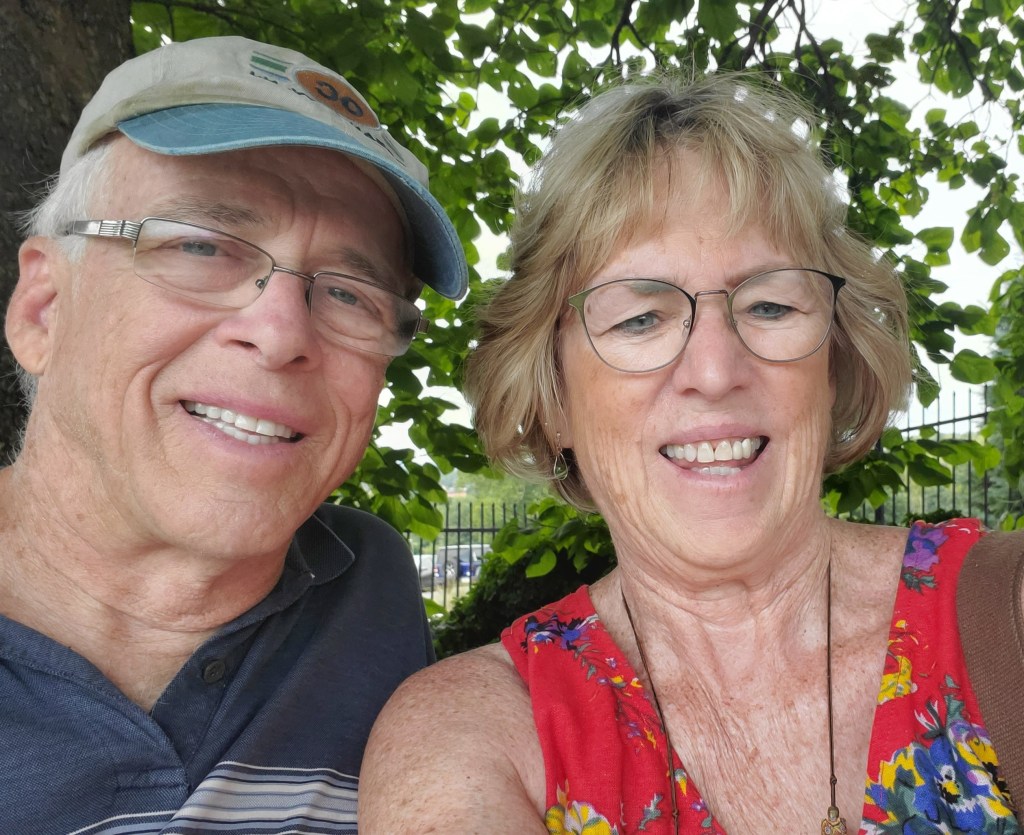
Derek Webb: The Jesus Hypothesis

Agnosticism, Deconstruction, Deconversion, ExVangelical, Musicians, Podcast, Podcasters, Secular Grace, The Bubble
Derek Webb
Click to play episode on Apple Podcasts
Listen on Apple Podcasts

This week’s guest is Derek Webb, musician, song writer and public deconstructor. For 10 years, Derek was a member of the Christian rock band, Caedmon’s Call. He then went on to a solo career where he focused on self reflection in his art. During that time, Derek began to desconstruct. He did so publicly in his music and on social media.

Where I find myself, strangely, being more tolerant, or loving or accepting than god is.
Where I feel like I am making apologies for the god of the universe who is supposedly all love.

For Derek’s Fingers Crossed album, “the tale of two divorces,” Derek made himself available to his audience for criticism. He and his team turned this into the podcast, The Airing of Grief. What could have been a public expression of anger and hostility at Derek’s change of heart, wound up being people describing their own deconstruction. It was a poignant reminder that we are not alone in this process.

Wouldn’t you rather lose all of it if the it that you have currently is not a real thing?

Derek’s next album, Targets, is a joyous and rebellious rock celebration of deconstruction. Derek’s current project, The Jesus Hypothesis, takes a second look at his former theological beliefs. For this project, Derek has made himself even more available to his audience by live streaming the writing and recording process for his Patreon supporters.

Because if it is not real I want to know that,
if it is real I want to know that,
and if something else is real I want to know that
and I feel like I know a little more than I used to know
in terms of what is there and what’s not
at least what rings true to me.

Derek is the perfect guest for the podcast as his art, music and personal style exemplify both having an honesty contest and Secular Grace.

Derek’s Website
https://www.derekwebb.com/

The Airing Of Grief
https://www.theairingofgrief.com/

Instagram
https://www.instagram.com/derekwebb/

Patreon
https://patreon.com/derekwebb

Interact

Join the Deconversion Anonymous private Facebook group and become a part of the community!
https://www.facebook.com/groups/deconversion

Is it just that I had the wrong image of god?
https://gracefulatheist.com/2016/11/17/is-it-just-that-i-had-the-wrong-image-of-god/

The Bubble
https://gracefulatheist.com/2018/01/15/the-bubble/

Deconversion
https://gracefulatheist.com/2017/12/03/deconversion-how-to/

Secular Grace
https://gracefulatheist.com/2016/10/21/secular-grace/

Support the podcast
Patreon https://www.patreon.com/gracefulatheist
Paypal: paypal.me/gracefulatheist

Podchaser - Graceful Atheist Podcast

Attribution

Transition music by Derek Webb from the Fingers Crossed album

“Waves” track written and produced by Makaih Beats

Transcript

NOTE: This transcript is AI produced (otter.ai) and likely has many mistakes. It is provided as rough guide to the audio conversation.

Summary
0:11 David’s goals for this year.
2:09 Introduction to Derek Webb.
5:05 Derek’s work in this deconstruction space is not a thing that you detach from.
8:47 What was your faith tradition as a child?
11:56 What was it like growing up in a church?
15:53 Young Life Camp is a fun deal.
24:56 The pressure of being a professional Christian and representing the church.
28:00 Great failure gives you the opportunity to do an audit of the presumptions that you have about invisible reality and about invisible unknowable things.
30:22 What is real and what is code language?
34:00 I wish I could tell you that your way isn’t ok, but I can not.
38:22 Making yourself vulnerable and owning the change.
46:07 Taking some responsibility for his own story.
50:08 Having your fans be a part of the process through Patreon.
54:11 What it’s like to be a fly on the wall of a record.
57:59 The job of an artist is to look at the world and describe what you see.
1:01:52 Deconstruction of the church from deconstruction of God.
1:09:56 How to break these things apart and not think you’ve done it just because you are not a part of the evangelical political party anymore.
1:13:37 Why you shouldn’t fear deconstruction, the only danger is not questioning.
1:17:21 Would you rather lose all of it if what you have currently is not a real thing?
1:20:56 Final thoughts on the episode.
1:24:53 The connection part of secular grace is the human connection. The church loves the idea of radical confession, but when you start doing it in a literal
David Ames  0:11  
This is the graceful atheist podcast. Welcome, welcome. Welcome to the graceful atheist podcast. My name is David, and I'm trying to be the graceful atheist. Please consider rating and reviewing the podcast on the Apple podcast store. And now you can rate the podcast on Spotify.

We made it to 2022. I remember the feeling of intense optimism at the beginning of 2021. And we are in the midst of the Omicron surge. So any of that enthusiasm is slightly tempered. But I do have some goals for the year for the podcast. I'm actually very interested in being on other podcasts. So if you happen to have your own podcast and like to hear me talk about secular grace or humanism, reach out to me. A second goal for the year that I've been thinking about lately is to be slightly more palatable for the Christian. My guest today is Derek Webb. And I think he does an incredibly good job of being a bridge between evangelical Christians and deconstruction. Even the title of the podcast has atheist in it is probably going to frighten away most believers. But one of the goals for this year is to at least engage a bit more, not in a debate style. But as always, in an honesty contest. If you are a believer, and you would like to be on the podcast and talk with me, I'd be very open to that prospect. Please get in touch with me at graceful atheist@gmail.com. Special thanks to Mike t for the first round of editing for today. I also did a bit of editing and the mix in with Derek's music. onto today's show. My guest today is Derek Webb. Virtually all of my listeners will probably already know who Derek is. But Derek was the lead singer for Caitlin's call for about 10 years, which was a very successful Christian rock band. And then he went on a solo career. And during that time, he went through his own deconstruction process. What Derek has done that is pretty amazing, is be really open, vulnerable and honest about that process with his audience, not only in his music, but also online and in various other media. Derek is the perfect guest for this show, because almost all of his work is about being brutally self honest about an honesty contest about vulnerability about transparency, showing the world where he's currently at and not hiding any of that. It was The Truman Show episode that Jimmy and Colin were on where Colin shared a story about seeing Caitlin's call when he was 18. A friend of Derek's heard that episode mentioned it Derek and Derek reached out to me, I'm very thankful that Derek reached out to me and I think this is a great conversation. In preparation for this. Both Jimmy and Collin suggested a number of things for me to listen to, obviously much of Derek's music from fingers crossed and targets and various other albums. But the one that had the most impact on me was his podcast, the airing of grief, which I highly recommend, and there will be links in the show notes. Derek's current project is called the Jesus hypothesis. And if you become one of Derek's Patreon supporters, you can actually be a part of that process. Derek will go into detail about that. You can find all of his music and all of his projects that Derek web.com will have those links in the show notes. Here is my conversation with Derek Webb.

Derek Webb, welcome to the graceful atheist podcast.

Derek Webb  4:27  
It's a pleasure. Great to be here with you.

David Ames  4:29  
Hey, I really appreciate you actually reached out to me after hearing an episode where a really good friend of mine Colin talked about what a moment it was for him. He was actually at a Caedmon’s Call concert. And you guys were doing a cover of a secular song and he had this context moment. Like, oh, wait, you know, music is just powerful, just by itself and, and he literally told himself now you know, Colin today, you know, said if I'd only and that the lead singer would someday be post evangelical or whatever term you want to use. Yeah. And have a huge audience for that, that what you know what that would have done for him as an 18 year old kid, so. So thank you so much, Derek, for being willing to come on the show.

Derek Webb  5:16  
Absolutely. Well, I appreciate you responding and being open to it. I mean, I'm, as we were talking just a few minutes ago, like I'm, I really care about the space, I really care about my friends who are still in the evangelical world, I care a lot about my friends who are kind of journeying on the outskirts and in no man's land around it. And it's, it's, as you know, what I'm sure your listeners know, it's like, it's not a thing that you detach your care, you don't you don't stop caring about it. Because it, it's still so much about where, where I've come from, and it's so much of the language that's so familiar to me and so much, and so much of our lives and families and colleagues and co workers and everybody is they're all on some they're on the spectrum somewhere, with some experience of invisible reality and some opinions about it. And so I don't see you don't stop thinking about it. And so it's funny, it's one of those things you just gets really hard to kind of get away from ultimately, you can detach your belief system from it, but you still have an awareness of it, and I still have a care for it. And so I always whenever I find people who are doing good work and holding additional space for people to think about this, I immediately, you know, want to listen, I want to contribute, I want to be part of it. You know, so I, so we when I saw what you were doing, what you're up to, and what great conversations that seemed like you were having, I just immediately reached out, and I'm so glad you responded. So thanks for having me.

David Ames  6:47  
Yeah, absolutely. Yeah, we're definitely the whole podcast, I think we're started to just say you're not alone. You're not crazy. Like there's plenty of us who have gone through this. You don't have to go through it alone. That's exactly it. Yeah. Yeah. One more piece of context that I think is important is that due to age, and when I became a Christian, when I stopped being a Christian and style, I actually have wasn't familiar with your music, yet very much prior to actually getting in contact with you. But what I am a huge fan of Derek, is your work in this space in this deconstruction space. So Colin, gave me a list and Jimmy to both both the people that were on that episode gave me a list of things to go listen to, oh, I absolutely adored, I listened to the first season of the airing of grief. Yes, man, what a powerful piece of work. That is, I really

Derek Webb  7:42  
appreciate it. Well, it sounds very much like what you're talking about. I mean, it was one of those ones, we want some friends and I determined that like, Oh, we're going through it. We felt like once we started to process our way through and out of a lot of kind of evangelical mindset. And just once we start, you think that what you're going through, everybody's going through and you think that when you discover something everyone just discovered it. And actually that's not true. It's most things you're coming into a moment with and you're kind of suddenly in the stream with it. And but there was just like you're saying that we were realizing how many people felt as though they were doing it by themselves and alone and isolated. And, and because the church is so good at congregating and about congregating themselves around ideas about things. And so once you're detached from that, there's just the lack of congregation. And that is that and you suddenly feel as though it's like all the files on your computer still being there. But all the directories being gone. Like you can't find your way to anybody or anything or any. And so you feel like you're all alone. And that was the main reason that we wanted to do that. Because we thought, because I had just put out this, this fingers crossed record, which was my kind of document of deconstruction that I had just gone through. And when and when people were responding to it, they seemed not to be responding to it so much as they were using it as an opportunity to do the same thing I was doing on the record, which is to tell their stories of what they had been through and where they had landed. And we thought Man, there clearly just needs to be more space for this more safe space for people to be welcomed to tell and bring their stories for the benefit of all the folks who don't feel brave enough to come or strong enough or maybe ready to come and bring and tell their stories. Just an order that everybody knows that they're not alone doing it. So I really resonate. Exactly. That was that was our exact same motivation for doing it. Yeah, I

David Ames  9:37  
always say that. That's the magic, right is somebody's telling their story. And the listener goes, you're telling my story. Yeah,

Derek Webb  9:43  
you hear your story come out of somebody else's mouth. And that's so deeply comforting. Yeah, absolutely.

David Ames  9:47  
I do want to come back to more of your work and we'll focus on sharing a little bit but I'd really like to hear your story. So the way that my guests often we begin with is like What was your faith tradition growing up? What was that? Yeah.

Derek Webb  10:02  
Yeah. So I grew up in the American South my whole life. I've always lived in the South. I was born in Memphis, Tennessee. I lived in Texas for a while. And I'm now back in Tennessee in Nashville and have been for about 20 years. And so anybody who knows what that is shorthand for knows that I grew up with immersed in the language of evangelical Christianity. At least that was my expense. I actually, as I'm saying, and I realized that's obviously not everyone's experience, but that was an inevitability in everywhere I grew up was, there was the presumption of at least an understanding of evangelical Christian faith, if not a full practice. So and I grew up going to church my my mom, grew up Baptist. My dad grew up Catholic. Okay. And so they raised me and my brother Methodist, because I feel like they thought that was maybe the compromise. I got so yeah, that yeah, as they both moved to the middle, they they found the the middle points for both in United Methodism, apparently. So anyway, that's how I grew up, I was confirmed that 13 In the Methodist church, we weren't super involved. My parents were not real religious. But they did feel as though like a lot of parents, especially who were having kids in the late 60s and 70s, felt it was important to bring their kids up in church and to at least show up on a Sunday. And, and I was in the part of Memphis where we lived the the really good school, the school that I that I wound up going to was a private Christian school connected to the church where we went, so Okay, so zero to sixth grade, I was in a private school at at a United Methodist Church in Memphis, which is where we also attended. So I mean, I was there, you know, seven days a week. Right? I mean, I really was because I went to school there too. And, you know, grew up going to chapel, at least a few times a week, if, if not more, and, and also walking through the sanctuary to get around to most of the other parts of the school, you know, so really, really, really, into the end of that. And it was mostly for me, I think, well, you don't know how you're experiencing it. When you're that age, you're coming up with it that way, because it's just part of the inevitable framework, it's just part of the context you're in and you don't know your life without it. Even if it means nothing to you from a spiritual discernment standpoint, it's just it's more this is just all part of what it is and what we're doing. And it's the water use women, it is the water swimming. And that's exactly right. And until you get out of it for a second, you have no idea you even in water, you just it's like the oxygen you're in. And so I did. So that's kind of how I grew up. And as I mentioned, I got confirmed as you do when I was 13, and to the end of the church, and they give you a Bible and I don't know if I don't remember if they kind of declare you it's your kind of a full member of the congregation in church. At that point. I don't know what that got me really. I remember being baptized at that time. And then when I was in high school, wound up by that time I was in Houston, and a lot of friends, the Baptists, especially the Southern Baptists are really strategic in the way that they really what they do is they they put a lot of their money and intention into youth programs, because they know that that's how you get families. And so you know, why evangelize one at a time when you can bet evangelize a junior high kid and get six, because you're gonna want to put all their siblings and their parents. And so that's a smart strategy. And so there's just the most kick ass youth programs you can ever imagine going on in the suburb of Houston, where I was and so I was getting pulled into a lot of Baptist churches. I remember like, wow, what's going on with the but like, every other week, and my friends are dragging me into some Baptist Church for some cool and it's legitimate, pretty cool thing, I guess, you know.

And anyway, so there wasn't anything that really seemed to take root for me until the middle of high school when I wound up involved with a high school parachurch organization called Young Life. Oh, yeah. Not church affiliated yet. And that was real big at my high school, their high school parachurch organization. So, or at least at that time, they were mostly just high school. And they and young life, at least in my area did a really good job. Of every one of these organizations or institutions have strategies, they have strategies. They'll have an approach and young lives, at least in my area. It was to kind of go after the cool kids because if because if you get the trendsetters and the tastemakers you're gonna get all the rest because they want to be like those kids. But my particular the particular young life leader in southwest Houston, was also this really quirky, nerdy, kind of intellectual guy and he was is nothing like the cool kids that he was recruiting so to speak. But so I really personally resonated with him and connected with him because I was kind of a quirky or I was not, I was none of those things. I mean, I was not popular or athletic or, or performed academically or anything like that. But I really resonated with his with his mind and how his mind worked. And he was really super smart and fascinating and funny. And so anyways, I got kind of pulled into that deal. And that was, that was kind of the first point where I felt like it was something I was really choosing. And that was where I think I would have said, I had an experience at a young life, summer camp, and their properties are magical, honestly, they're like, they're like the the Disney level of detailed intention. And all of their camps. They're really amazing. I mean, they do just a great job. It's there. It's so much fun. It's such a fun deal. And it's like, an every bit of it is combed over and intentional. And I love that about it actually, I'm so wound up at a between my sophomore and junior year, is that right? I wound up at a young life camp. And I had heard this pitch many times. I mean, it's like, I was so familiar with it, just the whole, like, the four spiritual laws like, Okay, here's how the world works. Here's what God broke. And here's what was done about it. And here's your choice. You know, it was like, here's the deal. And I knew it super well. And I probably felt at that time, like it was something I had already kind of taken a position on, even passively because I knew I had been baptized and gone through my little classes or whatever, in Methodist church when I was when I was younger, but they they take you through in the and they kind of set you up and it's like it. And having worked with young life in in a few for a few years after that I you definitely get a set, you get a pretty good view of how the sausage is made in terms of the intention around like, Hey, we're going to send me this message, and then this one, and then this one, and we're going to leave them with that one until the next night where we're going to offer this one. And it's like, it's, you know, it's good communication. It's well, it's well thought out, you know, and, and to be perfectly frank, I had chased a girl there. It's probably the reason that I was willing to go to that camp in the first place. And, you know, you see everybody making the decision, you see the hands going up, you see the people go into the front. And I was like, You know what, I think I'm, you know, I don't know, like, I'm going to for whatever reason, I mean, I didn't, as I really tried to think back to the experience that I had, it was one of those, okay, we're going to let them sit with. But here's what happened. And here's where you lost connection to God, and here's why it happened. And they kind of leave you with that weight and that heaviness until the whole next night. And the next night, they say but something was done about and here's what you do. And here's the opportunity to come and choose and decide whatever it is and and then they kind of send you out into the beautiful hills of Colorado to think about that and then come back and they're gonna see who made a decision. And they said whatever the one thing though is you don't go back to your cabins we don't want you going back to your cabins just go out and find a space under the stars. So of course, I was such a contrary kid, I was such a discipline case all through that all those years. That of course, I went straight back to my cabin and hid so that counts was coming to make sure there weren't kids hanging out in cabins. And I they came in didn't see me and left but But I went back and decided, you know, I think I'm gonna go ahead and own a decision about this. I think I don't know that I made this anything happened. It was just like, I think it's time I'm just gonna, I'm pretty down with this. I like these people. I like this thing. I kind of feel like I belong here a little bit it. It was giving me some things I really needed. At that time. I didn't have really in a lot of friends. I've been I've been in the music since I was single digits but and I've been in a lot of bands, a lot of bands all through high school and stuff. But I was I was in between bands right then. And that's like the story I'm kind of leaving out. It's not it's not really super relevant. But the band that I'd been in for a lot of years that was a big part of my identity had ended right before that summer. It was a big a big thing. For me personally, music is a big part of young life because they do these young life clubs every like Monday night, during the school year. And they have guys up in the front strumming acoustic guitars. And they immediately wanted me to come and do that because they you know, it's smart, it's good if they find a way to give you kind of a job to do that makes that that kind of goes to your strengths. And that certainly did for me and I it was fun. Like suddenly, I had a place to play music again. That was part of my identity. Again, I liked that friends and a whole like, it's just like, here's like, just the whole package just on a platter. You just kind of come and be part of it. And then you just get to all the benefits of it. It's amazing. And so I was like I liked it. So I was like yeah, I'm gonna I think I'm gonna hang with this. And so I think I'm gonna go ahead and, and give it's, it's funny. I felt like I was kind of giving him something I was giving them as like, I want to show up as a number for these folks. Because I like this. I like this thing and this guy has done a pretty good job and he's a good speaker and I mean, he didn't tell me anything I hadn't heard and it wasn't especially moving you even it was just, I was like, you know, I'm gonna, I'm gonna go up there because I think that would make them feel awesome. Like, you know, like, I want them to know that what they're doing matters. And so I'm going to show you know, and so I'm going to, I'm going to, you know, say that that's where my flag goes in the ground, even though it's probably it probably been years before if that happened at all. And so, so that was my experience came back and then and I was really into that. So the rest of height, so I had two whole years, plus summers to, you know, off at camps and stuff to, to really, for that to really take root. And that was a really important thing. It was a it was a you know, a lot of friends and a lot of memories and a lot of, you know, trips out to Colorado and ski trips and all kinds of stuff after that. And even for a minute for a hot minute considered maybe even working with young life and kind of running want to being like the one of these young life leader guys. And it just looked fun. It looked like a cool thing. You had to have a college degree, any degree in anything to do it. And I knew I wouldn't ever have that because I barely got out of high school. I was not, I was just I did. I didn't have any interest in that. And because music was my life, I started playing guitar when I was like seven or eight years old. And it's the only thing I've ever really been good at. And it was, and it was my whole life. So I blew school off constantly to revert to practice and then eventually in bands and, and that was my whole life. And so I knew I wasn't going to be getting I wasn't gonna be going to college. Okay, but anyway, so I hung with you online for a while even even you know that first summer after my senior year, and I thought, but where it kind of turns is so what would have been my freshman year of college just after that is when I met and connected with the folks who who we started Caitlin's call together. So Caymans was the band that I was in for about 10 years, right out of high school, so met those people. And that's its own story, too, but met those people. And we started playing music together. And we all had a pretty quick sense that this had potential. There was really something here we were really on to something and in a very Malcolm Gladwell, Ian kind of sense, we had a lot of advantages that other other bands weren't having around that time. And the way we were able to record our music and, and sell our music, and we were able to tour a little bit. We were in Texas, there's a bajillion colleges. And that's, and so just a lot of things fell our way made it really easy. And we found a lot of success at that wound up signed to Warner Brothers. And, and suddenly, that was a 10 year career. And what was interesting, it was just, you know, two years previous, that I had had this experience, that really, as I look back I I mean, I'm also kind of a closet intellectual. So I was loving and really falling in love with the, the academic side of all of this. And I loved I realized how much my brain loved the jigsaw puzzling of systematic theology. Tell my story, Derek. Yeah, yeah, so I so I really responded to that. And I think what I really had mostly, during my more mature, I would say, you know, years of belief was kind of a love affair with the language and a love affair with the structure. And with the theology and with making it all make sense. And being able to have answers and being able to kind of figure out some of that stuff, I loved it and loved debating it and loved, you know, honestly, I'm framing it in such a positive light, what I should really say is I loved like, weaponizing it, that's, that's, you know, I really, because I probably had some kind of a chip on my shoulder coming out of an experience where I was never seen as smart at all. And I think I was I just wasn't smart in a way that was being in any way noticed, or measured by any of the schools that I was going to or anything like that,

David Ames  23:37  
I think we can safely say that's true.

Derek Webb  23:39  
Well, but you know, I mean, and so so I so I think I had this kind of insecurity, deep insecurity about my intellect and, and so I was kind of a coming out of my shell a little bit from an intellectual standpoint, and really loving how my mind really wrapped itself around all of the systematic theology side, I was really studying all that studying the history instead. And I loved the idea of knowing a little more about that than the average Christian like, and I really, and I would start to infuse that in the songs I was writing and had a vehicle to do that, because by that time, we were practically professional Christians, because we wound up on a Christian imprint label of Warner Brothers, and then wound up actually skipping to a different record label. The point being, that, you know, we were suddenly generating, you know, Christian media, we were generating the, you know, influential Christian content or something. Although we were we didn't really know what we were doing or talking about it. We were just give you know, and that's kind of what you learn is like the people who are who have those voices. They're not necessarily the people who know anything or know anything more than you do. They're just the people that for whatever reason, I've been given the opportunity to speak loudly and, and volume is not an indicator of anything. Yeah. And so anyways, wound up for 10 Good years writing songs I was half of the songwriting for Caymans. Okay. But then there's also the added weird layer and pressure of being, as I said, kind of a professional Christian at that point. And representing something about that. And, and there's some rules that wind up getting kind of applied to it in terms of what you can and can't write songs about and things like that. So I can imagine that all winds up interesting. And again, I'm wired. So contrary that I wind up really going for most of the things you're not supposed to be writing stuff about. And that's what differentiates, I think, eventually my songwriting in the band, and then around the beginning of the to around 2000 or so is when I went out on my own as a solo artist, and did see myself as something of a disrupter, I think, in the, at least in the space of what was typically being produced and covered from a subject matter standpoint of Christian art, or whatever I, it was a small, it's a small space, but I, I was willing to kind of self sabotage to take on some of the issues I thought that the church didn't want to talk about, or things that I would see is. So I mean, that's really the things that I went after, because I'm wired that way. At least my my early solo career, I made a, I made a career out of really nine on the hand that fed me during all those years and interesting. So, and I think a lot of during a lot of those years, I think folks who were paying attention and listening to the music, seemed to have some suspicion that I was against the church or that I was out to criticize the church, when really the I didn't see that at all. I, I was ultimately in my own crosshairs. And I mean, you only you write about what you know. And what I knew was my own heart and the way that I felt and looked at the world and saw that, that sort of thing. And so that's ultimately what I was writing about. But I did try to broaden it out for the benefit of folks who I thought, you know, maybe needed to be shaken up a little bit like I did, and, but I only mentioned that to say that later, when I did go through, you know, a legitimate deconstruction, deconversion, whatever you want to call it. There are people who said, You see, we always knew because way back then he was so critical of the church and this and that, that we knew that he must be on some road to ruin or something I was like, actually, like I was writing about the church because I loved it so much, because I really wanted to see it thrive and prosper and succeed or whatever, at its mission. And but then then eventually, I guess it would have been around 25th, teen ish, went through some bumps kind of in my personal life, went through a divorce. And just had a moment to kind of take inventory a little to do an audit of all of the presumptions that I had had for many years, many of which went all the way back to that those early years, you know, of being a new Christian high school, and then being in Caymans and some of that, and loving the theology and all that stuff. It gave me an opportunity Anyway, great failure will do this. And it's one of the great, it's one of the great things about failure is it gives you the opportunity to kind of do an audit of the presumptions that you have about invisible reality and about invisible, unknowable things and visible like God unknowable, like the future to really think more critically about those things. And are they providing me a particular comfort right now, as I'm not just practicing Now it's showtime, like, now I'm really needing them to show up and either be meaningful and comforting. Either the ideas, or the actual expression of the ideas, which is going to be the body, the church, the people? How is it all going to? How's it all going to shake out now that the rubber is hitting the road? And it turns out that I'm not just a hypothetical, Senator, I'm an actual one. Interesting, because the church loves when you talk about the church loves the idea of radical confession, and really confessing your sins, one to the other, and to really be open about that and get gritty. And really, they love that in the hypothetical, but when you start doing it in the literal is when they start getting panicked. And when they start backing away and eventually communicating. I mean, it's like the, the it's like they, they really want you doing it, but then they want you doing it on their terms. And they want you doing it in a way that, that no one possibly could at a moment in a moment of crisis. Because you're you're not collected and you're not. You're trying to survive. So you can't help the way it may come out of you at any given time. And that's interestingly the point where the church really leaves a lot of folks. Yeah. Which is so fascinating to me, because it's like, Well, isn't this what we've been practicing for, though? Is this what we open? We've all been rehearsing for this moment. And now that I'm going to come to you with more than just the idea that I'm a center of I'm going to come to you with like, Oh, I I actually am there's no there's no escaping it anymore. And this is the moment like you would think that this would be the thing we've all been waiting for. And this is the thing we're built for. And now we're ready to really, you know, drop me into the machine. then the machine does its thing. And that's not it's like I was a wrench in the gears and the thing and it's like it had to spit me right out and and it's like you ironically you stopped making sense to the congregation when you start doing the one thing that apparently is the thing that everyone supposedly has in common there. It's like going to an AAA meeting and getting kicked out when they find out that you're actually a drinker. Yeah, it's like it. I thought, that's why we were all here. I thought that was the only one thing we had in common. And the reason we were gathering so why are you shocked? I mean, and I was writing songs even about like, one of my best known songs during my early solo career was a song called wedding dress. And the chorus of it is I'm a whore, I do confess, and I put you on like a wedding dress and run down the aisle, it's, you know, I'm a product with no way home, and I put you on like a ring of gold and rundown the, it's like, I wasn't false advertising I wasn't making. I mean, I was trying to tell you, you know, like, you just weren't listening or didn't believe me, or what was it. And so it was around that time. And that big audit that I mentioned, is when I just didn't find any of those things, particularly comforting or even really necessary, and really needed when I was really needed to survive. And as I was going through, you know, the hardest things I've gone through in my life, and really needing some a framework to be able to look at it and have it makes sense. And I needed something beneath me to catch me and I needed something to lean my weight around on. And all the things that I had, that I had brought with me, they just turned out not to be real things, they just they I would lean my weight over and just fall right to the floor. And they just, it wasn't a real thing. It wasn't really there. And so I immediately what I'd spent 35 or 40 years constructing and tweaking and working on like a Harley, as it turns out, was not a real thing. And I needed to, you know, build a quick parachute on during the freefall. And that kind of became the lighting the fuse on kind of where I am now, you know, and trying to make my way into like, Okay, well, what is real then? Or what can I discern as?

What can I find? What can I What can I test and, and find in terms of the way the world works, and, and what's really going on. And it was such a gift to be split up from this language that I was so committed to, and I've worked so hard on for so many years to, because you realize how much of it makes no sense. And how much of it is just kind of some weird code language that you're speaking with a small group of people, many of whom are not really taking it out for a spin to find out what it's really made of, it's like the same way that you can't really get a clear sense of the quality of the boat you're in while you're in it. Because you are in every way incentivized to believe that it can hold your weight, and that it is equal to the waves you're going to hit. It's not to your throne from the boat, and you can get up out of body, you know, vantage point of it, you can say oh my god, like that's what I've been in, like, that's barely a two by four, I mean, how in the world, or you come down and put your feet down and realize that you don't need a boat, because you the waters two feet deep, or whatever it is, it's like, whatever it is, those moments can be a great gift and, and then as you start to pull that thread, you just realize, oh, the whole thing just comes apart. For me, the whole thing really just came apart. And it was so good. Because there were so many things. It's so interesting, I swear to God, I'm going to stop soon. So you can talk to you but But you start to realize that there are so many things that you associate with this view of the world that you deep down you you knew didn't make sense. It's like, it's like when my friends from other religions or faiths or my friends who seemed to have lifestyles that were in contention with my view of the world, my Muslim friends, my might just my general secularist friends, my, my agnostic friends, or my my gay friends, my you know, they would come and we would talk about whatever the dilemma was. And I remember many times saying I think this is common. I wish it was like that I wish I could tell you that your way isn't okay way and that you can get to God and be saved that way. I wish I if it was up to me, I would I wish I could say that that your lifestyle and your behavior and your choices. That all that could just be okay. And that I that. I wish I could say that. Yeah, but unfortunately I can't because I don't have that luxury because here's where it says this is where I find myself strangely being more tolerant or loving or accepting or welcoming than God is right. And that's a strange like when I feel like I'm making apologies for the God of the universe who is supposedly all love. And yet I'm you know, making apologies on his behalf saying I what am I what am I supposed to do? Like? I wish he was as loving as I was but apparently he's not. Yeah, and things like that. So it's like, it gives you a chance to reframe and rethink some of those things. And let me say this, because I can already hear, although I'm suspicious that many of your listeners are, you know, will, will at least relate, I'm sure there are those who I would need to hear me say, and I want them to hear me say that I own 100%, that all those things I'm describing, all of those things could be a result of my wrong view of Evangel Christianity and my bad practice of it, or having being on the wrong side of it, or the wrong brand of it, or the or, you know, constructing a God out of all the wrong things and making it into the one that makes the most sense to me, and then saying, that's the only one I mean, and I even said, There's a song on the fingers crossed record that says, you know, either you're not real or I'm not chosen, you know, and maybe I'll never know. And either way, my hearts broken, you know, because it's like, in other words, I don't know, maybe this quasi reformed, very conservative, theologically conservative God, that it was the only one that made sense to me, is just the wrong one. And maybe I need to be an atheist of that God to find a real one, if there's one to be found. I am permanently uncertain about these things. And I'm not saying that I'm that I'm right. I'm just I just know that I was wrong before. Right. And I'm probably wrong again. But at least I'm detached from my certainty about it. If anyone's saying well, right, but you're the god you're describing. I don't believe in that God either. And I think that you're, and you know what you could be right. And I'm certainly not saying that all, this couldn't be my fault. I'm sure that it is. But for me, it was a good thing to be able to have the opportunity to go through and really pull all those things apart. And I think the only way I was able to do that was to have to land in it. And fine, and to blow right through it like to land in like a net that was supposed to catch me and find out that was air below me, I think was a great thing. Because then I was like, Oh, well, good to know. Yes. Because if it's it, because if it's not real, I want to know that. And if it Israel, I want to know that. And if something else is real, I want to know that. And I feel like I know a little more than I used to know in terms of maybe what's there or what's not, or at least what rings true to me.

David Ames  37:26  
I want to focus on the radical honesty that you mentioned. And specifically that you were mentioning, like isn't that what we're supposed to be doing is to reveal our humanity to one another and to experience grace?

Derek Webb  37:44  
truth will set you free, you know? Yeah, exactly, precisely.

David Ames  37:46  
On the podcast, we talk about secular grace, we talk about doing an honesty contest, rather than intellectual debate and honesty contests, and about trying to connect with each other. And I think you've just very eloquently described all of those things. I want to take that a step further. And just say, one of the things that I admire about your deconstruction work is the radical honesty. So you did the airing of grief and your original intention was to let people just bitch at you right to say, to say, Why did you do this to me directly? It didn't turn out that way. But you made yourself vulnerable, and owned the change that you made you understood the potential hurt that might have been there. And you put yourself out there and I just, I can't commend you enough for that work.

Derek Webb  38:38  
Oh, I really appreciate it. Well, yeah, so that so for for your listeners who don't know that area, grief was a podcast that some friends and I did in the year that that came right after the fingers crossed records. So just because I'm sure that just for people who don't know that it can get confusing. When I during my years, the last 20 something years of making solo music up until 2017 was when fingers crossed came out all of my records up till then we're dealing with not exclusively, I wouldn't have called myself a Christian artist. I don't think there's any such thing. There are Christian people who make art and their art has the fingerprints of their beliefs all over it, you can't avoid that. But I was never I never thought of myself as a vocational minister. I was not. That's not why I was doing it. I'm a professional singer and songwriter. But, but a lot of my work I was very I was always very preoccupied with spirituality and with especially looking in a critical way at the church that I did love and care about and consider myself a part of that's that's a brief, very brief description of kind of what my ethic was over many years. 2017 is where the hard pivot you know that the heart corner were that I took where the fingers crossed record was I kind of called it the the tale of two divorces. It was kind of my both horizontal and vertical divorce. I went through both In one year, and that record is kind of the the soundtrack for that. And so it was a bit of a record scratch moment for people who'd been with me for a long time. And because at that time, there would have been a good 20 years that they might have been with me. And in all likelihood, we're in some similar place to where I was maybe critical of, but ultimately loving and considering themselves part of the evangelical church. And so, and as I mentioned before, we, when I did that record, it seemed that people were using the record as a Rorschach to tell their own, ultimately, their own deconstruction stories, because when people would try to tell me what they thought of the record, they would just wind up telling me their story, right, which I really loved. And that's why my friends, I thought, okay, you know what, let's do this. Like, apparently there are not there. And again, this was back in 2015, or no, no, it was a 2017 2017. Maybe there are already plenty, but for at least these people, they seem to not have a safe place to tell these stories. So they're telling them to me, and I think there are a lot of people would be deeply comforted to hear these stories. And to hear, as you mentioned before, like their story, someone else, someone hearing their own story coming out of the mouth of another person, which means that they're not alone. And they're not crazy. And so our idea was, what if we just set up essentially, like a telephone number, and you can just call it and I'll spend 10 minutes on the phone with you, and you can just tell me your story. And just tell me, what your where you've been and what we'll we'll we'll bleep your name out. And we won't, you know, it'll, it'll be semi anonymous, and you can just kind of air your grief about your spirit, you know, your spiritual journey or whatever. And there were some people who aren't who did use it as a, as a means of evangelizing me or just telling me how generally heartbroken and angry they were at me for providing soundtrack for their lives up until that point, and then departing from that from their story, which I understand and that's fine. But ultimately, we did a handful of seasons of just collecting these deconstruction stories and kind of assembling them back by topic, and then releasing them for people as a means of comfort and feeling welcomed and included. And, and not alone, right. And I learned more than anybody did. I mean, because I was so new to it. And so to hear the stories of some people who had been going through a deconstruction or been through already a deconversion, decades before, and to hear it to hear their wisdom and what was on the other side of it, and to hear what something like reconstruction looked like for them, right, was really helpful. And it was I feel like I got the best end of the deal, hearing getting to hear all those stories, but it was a pretty overwhelming response. And I'm definitely proud of that work. I'm glad it's I'm glad it's there. We don't we're not doing it anymore. But I'm glad it's there for people to find if they find it, especially comforting. Yeah.

David Ames  43:03  
Yeah, and I don't mean to be stuck on the past here.

Derek Webb  43:06  
No, not at all.

David Ames  43:08  
If I were to grossly oversimplify. Fingers crossed, reads to me as I wish I could stay in. I can't. And I'm sorry about that. Targets feels a bit more of I'm out. What now how do I how do I reconstruct what what is life look like now. But that leads us to your current project, which is called the Jesus hypothesis. And I want you to talk about it, but it sounds like you're just revisiting some of the questions with a different perspective. So you want to tell us

Derek Webb  43:39  
about Yes. Yeah. So that's very well said I appreciate it. I appreciate you checking those things out. And yeah, so fingers crossed I mentioned and that's kind of the tail to divorces targets was directed came after and that was kind of like Okay, I think we've I think I've paid my my dues here now. I think I'm done grieving. I don't want that to be the hallmark of I don't want that to be the to be the grid through which I'm having to look at this forever. It's just I'm always pulling that thing apart. I'm always leaving a thing I want to go towards a thing now like I want to, I want to be not just repulsed, but compelled like I don't want to just be repelled I want to be you know, and so targets was more of a kind of defiantly joyous, yes, you know, record about unbelief, and also finding love again, it's about falling in love. And I'm remarried now for several years. And, you know, so it was it was it was I needed some joy and some the sound of joys to finances, rock and roll. So it's a very rock and roll record. Yeah. So Jesus hypothesis is the new project and I and the reason that I came around to, to doing this and what it's kind of about or what I'm trying to accomplish, was realizing that while I did go through a pretty intense kind of audit deconstruction, whatever process and I like the language of audit better because it's like that feels like a thing that's meant to be done. On regularly Yeah, rather than there's this exhausting, reconstruct it now deconstruct again and build it back up and tear back down. It's like my solution or whatever to that potential exhaustion was to just stop constructing why are we constructing like, the term belief is so problematic to me because of all the connotation around it like, I don't have anything anything in my life, I would put the weight of the term belief on anymore, I don't believe anything. Instead, rather than constructing and deconstructing, I'm going to my, the idea that was in the language I like is I'd rather hypothesize in real time, and whatever continues to ring true and work, I will continue to bring with me, but I want to be in a position to come in to new information and abandon it in a second if it stops making any sense that I think is a pretty decent failsafe from what had happened before happening again, like I don't want to become a fundamentalist about agnosticism, right? Or atheism, I don't, I want to remain open, and I want to hear everything, and I want to weigh everything out. And, and so that was part of it. The other big part of it was, as I mentioned, before, trying to take some responsibility, and own some of my own story. And maybe that being the biggest part of why I've gone through what I've gone through, and not even really at being the fault of a particular brand of evangelicalism, or God, or Jesus or the church or whatever, but I want to own it. My initial trip through the china shop, as the deconstructing it was I you know, I went in there with an axe and I chopped some some stuff down and I, it's what I needed to do. I think that's the way a lot of people feel initially about it. But I was taking some pretty broad strokes. And what I realized is that as I would have conversations with my wife, with my friends, inevitably, about invisible reality, about religion, about spirituality, about all of it, when I would shift into that gear, and start to talk about Jesus, God, the Bible, church, whatever, fascinatingly, I would go right back to where I was, in terms of how I thought, what all my opinions about all that stuff, I would fall right back into it and start defending the castle again. And so my friends would joke with me and say, you say you don't have a dog in the fight. But we're in this really, we're in this long conversation about talking about all this stuff. And you're come off like a reformed, agnostic, like, what's your deal? Like? It's like us, you say, you're not part of it. But it's almost like you're still defending this particular view of all this interesting. And I was like, oh, that's awful. Like, that means every time I go back to think about it, I'm revert I'm reverting, I'm going back into previous opinions that are just don't have any up to date thinking around them. And it's like, so maybe the thing that I previously took a, you know, an axe to, I need to go back and take a scalpel to, and I need to get specific and I need to get focused and I what I need to do is put, not just Okay, great theism. Okay, I've put that on trial, I've already come out of that a little bit from from a broad standpoint, now I need to go in and go after Reformed theology. And I need to go after my particular things, and I need to I need to surgically remove all that stuff and get it detached from it, so that I can just go back and even have thoughts about God, Jesus, the Bible, the church, and have them be in any way objective in 2021 2022, without having to only see them through my the narrow view of the way I've always seen them. Yeah, I need to go to look at them fresh, so that I can at least have better thoughts about them, and have some objectivity about them and put them in some kind of context. So that's really what this new record is, it's me going back and revisiting all of those specific presumptions, and putting all that stuff up on trial, working my way through my particular view of all of it, and just hypothesizing about it and saying, Okay, what if I was to allow myself because these are not things that I allowed myself previously. What if I was to and this will sound rude, very rudimentary to many of your listeners, but just just to say it, what if I allowed myself that inerrancy does not have to be part of the fixed system? What does that now allow to happen? What if I go in with a fundamental distrust of the apostle Paul, that's the majority of the New Testament what is that allowed to be possible now? What if I go through and in other words, what if I changed some of my rules and slowly go through and untangle all those things and then just look at all of it shit, there might be a lot of really interesting insightful things to learn and there might be some things I want to bring with me and there might not I don't want to give daddy all the control by being angry at daddy for the rest of my life. It's like so I want to go in and own it and I want to go in and and and look more critically at it. So that's kind of what this new record has is, is me going through and really pulling that stuff apart.

David Ames  50:07  
Yeah, that sounds awesome. And then you're doing one other really interesting thing. And that is that you are having your fans be a part of the process. So you'll actually do a session with your Patreon viewers, and they're able to interact with you on some level and then basically get inside your head as your as your yes.

Derek Webb  50:27  
Because, yes, because I thought that the people who had been with me this long and I do I have the way I kind of manage my relationship to the people who most deeply resonate with the songs and the questions and they've been with me the longest where who who care that much, or we apparently have that much in common where we really deeply resonate, you know, we're connected, is through this community platform called Patreon. And it's just a way for people to support to regularly micro support me, and then just have total access to everything all the time, you know, just and, and so everybody kind of gets what they need out of the deal. And it's a really beautiful thing. And so anyways, and that's been my thing for a handful of years now. And so my patrons, you to me feel like a safe group, because they really know me, I've spent a lot of time with most of them. It's, it's a manageable group, it's like four or 500 people. It's not, it's not 1000s of people, it's and so these are people who many of whom I really legitimately know, some of whom I talk to once a month on Zoom for about 20 minutes. So it's like, and I have for years and like we really know each other. And I do like private online shows for them all the time that we have q&a, and we talk and we have discord discussion groups. And so I feel I felt safer offering this to them. And I've always been a very private processor creatively. And I like nobody, my wife, my best friends don't hear the songs until I have obsessed over every conjunction. But with this, I thought you know what this would be, especially if I'm calling it a hypothesis if I'm experimenting, I think it might be interesting for folks who care and who want to see that, to really go with me through the whole process and really understand literally everything about this record and the songs and the decision making and the content and the themes. And so I started with no songs and I said, Okay, I'm going to live stream the entire process, and archive it to so you can go back and you can catch up. And then you can come with me and you can be live with me and and I've done maybe 18 or 20 songwriting live streams. I started with no songs I've got about 10 songs now that I'm not done writing. And I literally you can go back and you can literally watch me out of out of thin air. Like come up with and commentate my way through every melodic choice, every chord choice, every lyric choice, and just commentate my way through everything. I'm thinking, I've got multiple stereo cameras in my studio. And I just sit here and I just talk my way through it. Yeah, and I'm doing and now that we're in the recording phase, I'm doing that with the recording as well. We got cameras running, I'm actually doing the vocal takes and performing and we're doing it. So when the record is done, it'll come out sometime next year, I don't know exactly what the schedule is coming up, we're done with it yet. But this you'll be able to hear the song finished and then go back and start and watch the whole song appear out of thin air over time. And it just felt like this was a good record to, to offer that if to pull the curtain back for people who cared. And especially for people who might benefit to hear the literal thought progression all the way through. So they could really understand every one of those lines, every one of those lyrics. And so it would just enhance potentially their experience with the songs to wear when they're listening to it. I've been the only person who when I'm performing songs or talking about songs or hearing some of the songs, I have the memories of Oh, I remember where I was I remember that moment. I remember what I was thinking about the book I was writing when I wrote that I remember what like right when that appeared It was now there will be four or 500 other people who will have those memories with me of having been there when that happened. And they'll know exactly where I wasn't what I was thinking about what I was reading and, and it'll, if that helps them going through what they're going through. I thought that would be such a fascinating thing to try. Yeah. And so far, it's been amazing. It's been really fun. It would be very overwhelming for anybody who is not a big fan. But if it is the kind of thing that you're into, I'm just happy to have the document of it. And so that's kind of the way we've been doing it. And it's been pretty interesting. So Well, I

David Ames  54:26  
think you're on the cutting edge. I think that you're blazing a trail here that probably people will follow you.

Derek Webb  54:33  
Oh, well I appreciate it. It feel it makes it makes the creative process, the real time creative process of making the thing, the art just as much as the product of the result of that process, which most of the time, a record by the time somebody hears it. They've really missed all the magic, I mean of the thing appearing and the thing happening and the inspiration and everything that goes into it in the blood, sweat and tears. You get to hear the product of a process, but you don't Get to actually observe the process. And I just think, you know, records that have been important to me over the years, what I wouldn't give to have been a fly on the wall. And I've gotten to been with the artists when they were when it was happening. And to see the moment when they sang that vocal that I have now obsessed and listened to 1000 times and know every nuance of, and I just thought, I don't presume to be one of those types of artists. But for the handful of folks who connect with what I make, in that way, I would love for them to have that. And and and I'm always just trying to find, especially in the the world of digital art, and where there's no scarcity left in the world of digital music, it's like to create something that you had to kind of be there for and to and ultimate to enhance your experience of something that is that has no scarcity anymore, you can at least have a different experience of it and a heightened experience and enhanced experience of it. Yeah, you know, if you wish to, I liked that idea. And it is it feels like me making it is kind of so for these handful of people, the experience of going through this with me, is going to kind of be the art, it's that the album, so to speak for them is going to be this whole real time experience that we're having together. Right. And them honestly seeing where it's going before I do and knowing what it's about before I will, because they have the objectivity. I'm like right here, I'm like, right against, I don't know, I don't see it, I'll be the last one to see it. They don't take me months, it's always happens once the record comes out months later, when I've detached from the experience of having made it and I can just kind of forget a lot of that process and just listen to it more objectively, is when I get a sense of Oh, shit, like that's really revealing in a way I didn't realize deep, you know, but I don't usually get that till later. But these folks are going to know it long before me. And I also just love I love when art takes risks. I think that art is one of the few places left in culture where you can take real risks, and you can be really, and that can make something really beautiful. And I love artists to take risks. And I'm always looking for ways to take creative risks, I think great things happen. Because it keeps you as a creator on the edge of your seat it keeps it keeps you as a as a viewer listener, supporter at the edge of your seat. So I love the idea of it being something that for me, after 25 years of doing this as my job felt like risk taking and that that I immediately responded to I had the idea of doing it this way and immediately thought this could be awful. Like I could try it and I could literally not be able to do it right? Because I've been so private, what if I'm sitting in front of a camera, and I'm seeing how many people are watching and I'm like, just can't do it. What if I just can't do it. Because you do depend on something external to kind of happen, you know, you, you stand there with the key on the kite, but the lighting doesn't strike. There's nothing, nothing, nothing worth watching. And so luckily, it has worked, which I think is more a testament to the support that I received from these people and my trust in them. Yeah, you know, so anyway, but it has been fascinating. So it's been really fun,

David Ames  58:00  
very, very, very cool.

On the topic of art, or something that Colin was getting at and that an obvious observation as the bleeding of love song in the human secular sense and a worship song to God. In some ways, you're also doing with fingers crossed the divorce and deconversion at the same time, the flip side of that coin that's really interesting to me. Yeah. Is that something intentional?

Derek Webb  58:42  
That's a great question. The only way I know that the only way I know to answer it is to say that like I have always considered it my job and the job of an artist. And this is just a definition I like and you can people can use it if they if they like and they don't have to, is to look at the world and describe it. Look at the world tell us what you see. That's that's the job of an artist, it's really that simple. That is always that's always been the ethic of the mind, that's always been my creative ethic always. And it's interesting to me that sometimes when I have looked at the world to describe it, it has come out like something that would sound like a worship song. Sometimes it will come out as something that sounds critical of a worship song, sometimes it will come out as it comes out so many different ways. And yet it's the same process is producing all of it and, and, and the reason is because everything in that the reason I like that that as a job description is it's all variables. The world is constantly changing, that I am observing, I am constantly changing as I observe it. So I could even stand in the same exact spot look at the same exact thing and describe it a completely different way or not describe it at all not find any particular meaning in it. And I and that so something about really adhering closely to that ethic has kept me Be really honest, and it's kept me or it's proven, it's presented me with the opportunity for honesty, right. And so that has been fascinating to me to to note for me to know that I'm always going at it the same way, I'm always this is the same approach I always take. And yet look at what radically different things are happening over time. And I think I am really committed to that I'm really committed to really boxing out around the creative moments. And I hope this is what my patrons are observing in these sessions or whatever is like, I'm very committed to putting whatever perceived complication or trouble arises from something I may be writing at any given time, what may be coming out of me, vulnerably, I didn't even time putting those, you know, in the mail for the future for me to have to deal with, and really boxing out around the actual creative moment to make sure that at least it comes out vulnerably, honestly, so that by the time it's captured, I just don't want to have projected any kind of insecurity onto it. In the moment of inception, I really work hard to make sure even if if it presents tremendous trouble for me later, I'd rather say You know what, it's not my problem right now, to worry about what the consequence of me saying this is going to be right for my friends, for my family, for my fans, for anybody, I just need to say if this is what's coming out of me, I need to I need to be both bodyguard and midwife to it and really make sure it gets out and it gets out completely and the most the most concentrated pure version of it that I can as quickly as I can, and then just have to deal with that later. And so I just kind of always push consequences create the consequences of creative decisions, just pushing those into the future. Until they're just, there's nothing I can do about it. And it's like, oh, well, here's, here's this song. And I don't know, I don't know how I let myself get away with writing. Now having my marketing business hat on, like, Yeah, this is super problematic. But, you know, I, I can just all I can do is go back and get mad at the artists who wrote it. But I think that's a good tension, especially as a solo artist to create for yourself. Because yeah, there's a point at which I'm gonna have to be concerned about, okay, who is this for? And how do I market it to those people? How do I try to set it up to find the people who I think it's for and who do I, and you know, it's what I do for a living, it's how I make money. So I'm going to have to, I'm going to have to use whatever I've made back here, I've got to use that to separate people from their money, because that's how I eat Yeah. So if I over alienate everybody, I'm just going to work myself right out of the job. And maybe that's, you know, that and I've gotten very comfortable with a cycle of self sabotage where it's like, I feel very comfortable shedding a third of my audience annually, I think that's a pretty healthy thing. And and gaining a new third of people who are more immediately resonant with what I'm making. Now. I think that's a just a probably a very natural, healthy consequence of honesty. In the arts, you know, it's like it you have to, you can't be mad at people who don't like what you're doing now, you have to be grateful they were ever there. And then have them clear those seats. So somebody else can come sit in those seats. But I'm happy having no more fans, just having the number generally that I have had for the handle painful years that I've had them, and some of them clearing out to make room for new folks. And that's kind of the way I rationalize it and do it.

David Ames  1:03:30  
And you're growing as a human being and changing not just from a faith position, but just as you grow as an adult in general. Absolutely. To be able to express those experiences. Yeah.

I have absolutely stolen one of your guests on the airing of grief. It said something that just bowled me over. And if you know who it is, you can tell her thank you for me. Okay. But she disambiguated deconstruction of the church, from deconstruction of God. Yes. And if I were to take it just one step further, I'd say. There's just multiple layers of deconstruction, deconstruction in the Bible, inerrancy, deconstruction, theology, deconstructing the church, and then maybe the last thing to go is deconstructing God. And I'm just curious for you personally. Yeah. Did those happen in any particular order for you?

Derek Webb  1:04:28  
Yeah, I really appreciate you asking. Because I do think that's insanely important. And I feel like what you're describing that more granular deconstruction is essentially what I'm doing now. Like, I thought I was done, you did it, and it happened, and it's done. So now I am deconstructed. But as it turns out, you know, everything must always get more complex there. There you must apply more complexity to everything all the time, and break it down into further smaller pieces and smaller pieces and smaller pieces. And I think that's kind of what I'm allowing myself to do now. It was big picture now it's small picture and you Yeah, that was a great feature of those conversations, especially in that first season. It's something I picked up on and probably learned from the same person that you heard it from. And then it wound up being. For me language, I brought with me in the most conversations with folks who were part of our podcasts. And that was, like, it was interesting, how many times somebody would tell me their story. And then as we start to have a conversation about it, when they were kind of ready to talk about it, rather than ready to tell me, once they were done kind of telling me we were, we would just be discussing it. It's, it's, it was so interesting and ironic to me how many people, I was kind of talking back into faith, because I was like, okay, that's fascinating. I hear all those parts of your story. But for me at the time, I remember quick on my feet at that time, I'm breaking it into kind of three categories. You're not ever deconstructing even broad deconstruction, you're not you're not, there's not one thing you're deconstructing, there's the the idea of the church like the the institution, and the cultural voice of the church that exists kind of in the world, there's that. And your relation to that there is the literal expression of the Church, which is like Christian people, proud of fellow practitioners of Christianity, there's that. And then there's capital god, there's like, the idea of the all good, all powerful Maker of all things to whom you must be reconciled by way of blah, blah, blah, blah, blah. So there's like, there's these three things, and a lot of people would really have a lot of issues with the first two. But I wouldn't hear a lot about the last one. In their story. I was like, what sounds like, you have basically figured out that you don't belong, you don't resonate with or identify, either socially or politically, with the institution of the church anymore, that's a great thing, it's a great thing to be free of, because that just oversimplifies and reduces everything. And that's no good. And so I even if you were part of it, I would say to not be part of it anymore, because you just you're letting categories, do all your thinking for you. And that's and have all your conversations for you. And that's not healthy, it's not good. And then beyond that, it sounds like maybe you don't particularly identify or have been failed by, or particularly hurt by the individuals, the expression the actual community, the the congregants, that's totally fair, that's just your experience. But I don't know that that necessarily has a lot to do maybe with it, maybe maybe this is where you now get to start, as you said, thinking about how does all that bear or does it at all, on the way you feel about God as an idea, and maybe even your understanding of God, as an idea being uniquely informed by the Bible, maybe that's the thing you need to go pull apart so that you can have a better, bigger, broader, more abstract idea of God in order to determine if that's even a thing that you agree with, or resonate with. Because like, there's a song on the new record on G's hypothesis, that's called some Gods deserve atheists. And that's a, that's a phrase I've had for a super long time way, before I D converted, I had that phrase, because it was like, right, if I'm, the likelihood that the God that any individual is believing in is mostly a construction of their own ideas, is very high. Because Because like we are most likely the majority of God, as we see, it has got to be mostly a construction of it's, it's, it's, it's our own, it's our own ransom letter that we've kind of compiled of a lot of crap that we've cut out of a lot of magazines, it's like, a lot of Bibles, and a lot of experiences and a lot of relationships, like we've kind of pasted this thing together. And if you're rejecting that, and saying, I'm an atheist or an agnostic to that, well, that's fine. And that doesn't really have anything to do with anything other than you learning how you are distinct from everything that's behind you. But it's like, that kind of maybe has nothing to do with whether or not there's some benevolent, creative energy in the universe, and whether or not you can fit it into the skin of the God of the New and Old Testament. I mean, that's an important thing to think about. But that's not the whole conversation. And so that's the beginning of the thing, not the end of the thing, in my opinion, you know, because you immediately call something by a different name and loose it from all of the constraints that you've put on it. And now you're dealing with a whole other thing that needs a whole fresh, you know, exercise of thought around it like oh, well, because, you know, like, for me, the one thing that's come back around as maybe something I think I believe in or something I think is a feature of reality that I can discern that I think I can observe and test and does is cause and effect. Cause and effect I think is an actual thing. I actually do think and you can call that, you know Kismet? You can call that luck. You can even frame that into the law of attraction that what you put out comes back energy that you invest returns manifestation. I all that could be boiled down to cause and effect. And I do think that's a feature of reality. I do beyond that. I don't know. So the point being, I think it's extremely helped Want to break these things apart and not think you've done it? Just because you've decided you're not a part of the American Evangelical Church, political party anymore? Yeah, it's like, that's a great thing to do. It's a great start. But just because I want you to be thorough, and I want you to be healthy, and I ultimately want you to believe whatever rings true to you. And I don't have any problem with that. Maybe don't assume that baby Jesus went out with that particular bathwater, like, maybe you need to now start thinking about those things separate from you feeling like you're beholden to this particular political language, or rigid theological worldview, or whatever it is, it's like, it's important to break those things apart, and to make sure that you thought about them separately, right. And that was a lot of the encouragement we tried to bring to the airing of grief conversations was, like, I hear you really thoroughly doing it with this, but not with these two, right, or maybe with these two, but not with that one, you know, so don't move faster than you're ready to move, like you've really thought a lot about and really have a clear, you've settled with this. But like, maybe that just frees you up to really think more critically about this other one, and don't run so fast. And so far, like, be where you are, and move at your own pace. And, and I think that was, at least for me helpful to say, Oh, I don't have to, because some people won't go all the way there because they're like, oh, but if I do this, I mean, all of it's gotta be it's all or nothing at all has to go or I can't keep any of it's like, no, no, no, God doesn't get everything in the divorce. Like, there's a lot of things you could bring with you that those could be your things, you don't lose all of that stuff. You can bring love of enemy, love of neighbor, you can bring love of creation in the world. And I mean, you can bring all kinds of things with you that you thought belonged or whatever to your previously held worldview. Those can be your things that cannot be part of your own reconstructions scenario, you know, but so I so that's a great point. And I think I learned that from the folks who we were talking to in the podcast and hearing, it was just an observation, hearing them do it. And they realize you know what, that's not all of it, though, right? You're talking about this facet and that facet, but there's at least three if not a dozen, but there are the big three, you know, there's the group of people, the institution, and then like the dude, those all those all deserve their own

David Ames  1:12:16  
deconstruction. Yes. And for sure, you know, I'm doing just that right, this idea of secular grace, bring that with you. Of course, I'm absolutely stealing the intuitive obviousness that former evangelicals will recognize what we're talking about.

Derek Webb  1:12:31  
Yep. And if there's language that's helpful, and that is particularly beautiful, that you that we do find in the pages of the Bible. Well, then let's see if that some of that poetry is helpful. And then let's bring that with us. Absolutely. Let's do that. Yeah. Like, we're not going to allow some particular view of it, deprive us from benefiting from it if there's benefit to be had. And so I don't want to be afraid, I want to fear no information, right? I want to fear no language, there's no such thing as like, we tell our kids all the time, there's no such thing as bad words. They're not good words and bad words, there are only words and the meaning that we assign to them, and the ways that we use them. And so if I need to, if I if I particularly love certain poetic language, or philosophical language in the Bible, I don't want to feel like I don't I no longer suddenly have rights to that or something doesn't belong to somebody else. If I want to bring that with me and make that part of the language that I'm, again, kind of putting together to bring with me that that helps me then then I have every right to do that. And so do you. Yeah, I'm glad. I'm glad to hear that. And I'm glad to hear that that's part of the work that you know, that the community is doing.

David Ames  1:13:49  
As we wrap up here, Derek, one of my observations is that you provide a bridge for the Christian who is in the early part of deconstruction. I've always wanted to be that, but I think my audience has turned out to be the D converted. Yeah, primarily, it's people on the other side, and how do we live and thrive now? Yes, but I really appreciate the voice that you have and how necessary it is, man. And I want you to expand on one quote of yours you have shared in the past that you shouldn't fear deconstruction, The only danger is in not questioning at all. That's exactly right. And I'd like you to expand on that and like and let's assume for a moment that maybe I have a handful of listeners who are still believers who are just beginning those questions.

Derek Webb  1:14:36  
Yeah, that is the quote like that. Because if it turns out to not be true, wouldn't you want to know? And because if it turns out to be true, don't you want to know like, and so rather than to make some big decisions about languages and concepts when you're young, and then just never think about it again, just go on second. Well, you know, that's it, I've done my thinking about that stuff. And so here's my, these are my talking points. And here's the scripture verses that back it up, and I'm kind of done thinking about that, like, that's not a great healthy way to, to go forward and to be, you know, to be a person, here's my, my sweet dog contributing is very strong, very strong feelings about this. But yeah, so the point being that the only real danger is in not pulling the thread, because and I've even heard, you know, like, what's the language like God God is, is bigger than your doubts, or you got it, you know, God, God can handle your questions and your doubts and, and is, you know, arguably arguably bigger than whatever your doubts and questions are. But so either we believe that, so what what I would say is like, don't delay, don't if the stakes are high. And so there's an urgency, I think, that I would like to leave people with, to really fully engaging with yourself and these in these conversations, to really get to the bottom of it. In other words, pull the thread and pull it and one of things I love about John Shelby Spong, who is one of my favorite theologians, he's a, an Episcopal, I think he's a bishop. And he's, I've just gotten into his books in the last few years, and he's really tremendous. I've really loved his writing Jesus for non religious is a fantastic book for the believer or non believer, in my opinion, because he has such tremendous historical treatment of so much of the Bible, and so much I've really enjoyed his work. But in the beginning of that book of JSON religions in the introduction, he says, and I believe it when he does this, that his goal is to pull the thread and follow it and follow it wherever it goes, no matter where it goes. Even if it leads him completely out of all belief and faith and all, then you have to be committed to going all the way there. Yeah. And so I would just Yeah, so pull the thread continue pulling it up, because the only danger is not pulling it in order to somehow keep yourself in a state of Arrested Development to where you don't go on to realize, because maybe there is a better, more beautiful, more believable, more intensely fulfilling version of God or whatever it is, on the other side of pulling that thread just a little, maybe you're underselling, maybe your maybe your view of inversion of God, for those who are believers and fearful of losing all of it? Wouldn't you rather lose all of it? If the issue that you have currently is not a real thing, a thing that you have constructed? That cannot save you that cannot bring a fruitful, abundant life? For you? Wouldn't you rather get past that? Wouldn't? Wouldn't you rather be an atheist to a false god to find a real one? Is it Don't you think that risk is worth taking you, we have to be an atheist to every god that we find until we come up against a real one. Yeah, and and so you have to continue to do that you have to throw every false god under the bus, every false Savior onto the cross until we find ourselves to one that we have to reckon with. And that is the pursuit, that is the pursuit of all theology, that is the pursuit of all zealous believers. And so in my opinion, yeah, that the danger is in not doing it, the danger is in putting your head in the sands of certainty and saying, I will not think about it, because I'm so afraid of losing it. If your mere thought of it, could lose it for you, my invitation to you is that you've already lost it. If your god cannot, can't bear even the weight of the simplest tug at the thread, then it's not a real God who can save you. And so you need to be free of it. And you need to get on the pursuit towards a real God if there's one to be found, and to know God, if there's none to be found. But I would rather see you pursue your way all the way into truth, or, you know, at least feeling intellectually satisfied, then again, to just bury your head in the sand of certainty, and to be free of the preoccupation with certainty, ultimately, because when it comes as again, to invisible things like God, or unknowable things like the future certainty, we're just not going to be trading uncertainty, unfortunately, it's just it's not a thing, we're going to be able to be certain amount there is, no one can claim certainty on any side of this argument. Nobody can. We're finite human beings. That's right. So be free of that. And then pull as hard as you can for as long as you can on that thread. And just see where it takes you. Yeah, that's always been my encouragement in my in my invitation, because I see again, the only real danger is not pulling it. Because then you're just never going to know what can be known. And I don't I personally can't live that way. I need to know what can be known. Yeah. And there's more to know every day. And the further you pull, the more the light shines upon an even greater new questions. Yeah, there's even more thread to pull and so I'll run behind that to the day I'm dead, you know.

David Ames  1:19:54  
Wow, that is so incredible, and a great place for us to wrap up. Derek, how can we People find your music. How can they become a patreon? Let us know how they

Derek Webb  1:20:03  
Yeah, Derek web.com is just the probably the easiest, d e r e k w e BB Derek webb.com. And I'm just at Derek Webb everywhere you know on social media and wherever you go look. And that's, that's where you'll find me. I would love for people to come and hang with our little motley crew of folks. And you know, we've got 30 year faithful believers, we've got people who never believe in the first place, we've got people who have come in or out of it in the last six months, we've got everything in between. And me never knowing where I'm at, and doing it live in front of everybody. So it's like it's a, it's a pretty warm welcome place. I would love for folks to, if any of the music can provide any soundtrack to any part of your life, I would be honored to be found. So I think that's probably your best bet.

David Ames  1:20:46  
Yeah. And we'll definitely have links in the show notes. So

Derek Webb  1:20:48  
great. Great. Great.

David Ames  1:20:50  
Derek, thank you so much for being on the podcast.

Derek Webb  1:20:52  
Yeah, it's a pleasure is great. Thank you again, for answering my email. Already, I really appreciate getting to do this, I hope we can talk get some time Absolutely.

David Ames  1:21:18  
Final thoughts on the episode, I did this interview and the turnaround very quickly within one week, and I feel like I'm still processing this conversation, there was so much to it, it is so dense, I think you can hear that I am holding back a lot as because in my mind, Derek's time was very valuable. And I wanted to get him on mic recorded as much as possible. I have a lot of thoughts, I don't think I will be able to capture them all here. I think Derek is a quote machine. And you should go back and listen to this two or three times to try to capture all of the things that he says, I appreciated the analogy of not being able to discern the quality of the boat while you're in it. This is a lot of what I talked about when I talked about being in the bubble, that you cannot gain perspective on the ideology you are within, until you take at least a half step back. And that is sometimes the biggest challenge. But I also really appreciated him talking about the new project that Jesus hypothesis. In that context, he says I would rather hypothesize in real time, and whatever continues to bring true and work I will continue to bring with me. But I want to be in a position to come into new information and abandon it in a second. If it stops making any sense. That I think is a pretty decent failsafe from what had happened before happening again. Ultimately, holding what we believe to be true lightly as being willing to incorporate new information is the new epistemology the new way of thinking the new way of discovering what is true, that will lead us to closer and closer approximations of the truth. The last quote of darex is definitely my favorite talking about what do you have to lose by asking the questions of deconstruction that you either find out that is true, which would be great. Or you find out it's not true. And then you have learned something? Hate says Wouldn't you rather lose all of it, if the it that you have currently is not a real thing? And I think that really summarizes the question at hand for all of us who have gone through some doubt, who might be in the middle of doubt. For me, this was the question, did I care about truth? Or did I care about defending my faith, and I fell on the side of caring about truth. And being willing, as Derek says, to pull on that thread for as long as it takes as far as it goes. And in my case, it came to the end of theism. It came to the end of my Christianity, it became for me to atheism and humanism. If there was any daylight between Derek and I, it would be that I think he gives too much credit to the concept of the versions of Christianity. So he said an early on in the conversation, it could be a result of him having the wrong view or the wrong practice. This reminds me though, of how many times we as D converts have been told, Well, I wouldn't believe in that God, either. You're believing in the wrong way. If you believe like I did, or the God that I believe in, you would have real faith and it would all be different. And so there really is no winning that battle. I think at some point, it is okay to say I'm open to new proof to new information. But I have closed the book on the versions of Christianity are the versions of theism, and I can move on. So I think Derek gives almost too much credit to them here. I'm thinking of the Christian leaders more than the average A person in the pew because that's just in my mind a manipulation tactic. And I think Derek can be more assertive about where he's actually at on that particular topic. I want to thank Derek for being on the show, he absolutely lived up to the honesty contest. That seems to be the hallmark of all of his work. And I highly suggest that you check out his music, check out the airing of grief, become his Patreon and discover the Jesus hypothesis and participate in that process as well. Derek web.com is his website. And I will have links to all of these things in the show notes. The secular Grace Thought of the Week is about the sea of ABCs of secular spirituality, the connection part, the human connection, a quote from this episode from Derek, he says, it turns out that I am not just a hypothetical sinner, I'm an actual one. The church loves the idea of radical confession. They love that in the hypothetical, but when you start doing it in a literal is when they start getting panicked. Now, of course, I don't believe in sin, I think you're not broken, you're human. But what I do believe in is that human connection, and you could potentially use the term confession of connecting and being vulnerable with another human being and in a trusting, loving relationship, sharing those deepest secrets that you have as a cathartic process. I wanted to talk about secular grace so much during this conversation, but again, I didn't want to interrupt Derek much, but to just to say that, as Derek mentioned, we can take what we like from Christianity, and in his words, God doesn't get everything in the divorce. We can take this concept of loving one another agape love, of sacrificial, proactive love for one another, and try to live that out in our lives, without the need for a supernatural belief system. This is the bit that I am trying to bring with me and to share with you. I honestly believe this is what transforms people. Love motivates us on a level that is very, very deep. Our need for being known, being accepted being loved is very, very deep. So if we can be that for one another, we can have a radical impact on the people around us and ultimately, the community and our society. As I mentioned at the top 2022 got a lot of goals, including being on other podcasts, I want to reach out to more Christian believers. We will have people like Matt Oxley who I also think is doing a good job of being that bridge in between. We have Carlene coming up who was on the holiday episode and Judah coming up who I mentioned in the Ask me anything, that I'm reaching out to various other slightly more well known secular humanist thinkers, and hopefully we'll have more of those on the show as well. If you happen to know anyone you'd like to hear on the show, either believer or or humanists, please refer me to them them to me and try to get us in contact. I'd really appreciate that. Until then, my name is David, and I am trying to be the graceful atheist. Join me and be graceful.

Time for the footnotes. The beat is called waves for MCI beats, links will be in the show notes. If you'd like to support the podcast, you can promote it on your social media. You can subscribe to it in your favorite podcast application, and you can rate and review it on pod chaser.com. You can also support the podcast by clicking on the affiliate links for books on Bristol atheists.com. If you have podcast production experience and you would like to participate podcast, please get in touch. Have you gone through a faith transition? And do you need to tell your story? Reach out? If you are a creator, or work in the deconstruction deconversion or secular humanism spaces, and you'd like to be on the podcast? Just ask. If you'd like to financially support the podcast there's links in the show notes. To find me you can google graceful atheist. You can google deconversion you can google secular grace, you can send me an email graceful atheist@gmail.com or you can check out the website graceful atheist.com My name is David and I am trying to be the graceful atheist. Join me and be graceful human beings

This has been the graceful atheist podcast

Transcribed by https://otter.ai

Sara: Deconversion Anonymous

Agnosticism, Atheism, Bloggers, Deconversion, ExVangelical, Humanism, Podcast, Secular Grace
Click to play episode on anchor.fm
Listen on Apple Podcasts

This week’s show is a Deconversion Anonymous episode.

When I lost my faith, it felt like I lost my voice, too. I am a musician from a home of musicians.

My guest this week is Sara. Sara is “a musician from a home of musicians.” She grew up in an Assemblies of God church in a “vibrantly faithful home.” She spent her teen years in a “cool” Southern Baptist Church. She then spent some time in Acts 29 churches and Reformed theology. To round things out she attended a Presbyterian (PCA) church.

Sara started having doubts in college, but she was able to ignore them for some time. They eventually wore her down. Parenthood was the last straw. She realized she loved her son more than God loved anyone. God’s “hiddenness” was neglect that any parent could recognize.

They needed my free labor and I needed to be needed.

I was used to being needed.

Sara had been a worship leader. This usefulness kept her in the church longer than she would have otherwise. It also contributed to her deconversion as she saw what church was like “back stage.”

They said my voice was “clearly anointed by the Holy Spirit.” I went away thinking “no, I just spent four years and $60,000 learning how to manipulate you with it.”

Now Sara writes on her blog, Former Protagonist, about her deconversion experience. She is also exploring Humanism and loving her family.

Links

Former Protagonist Blog
https://formerprotagonist.blogspot.com/

Interact

Deconversion
https://gracefulatheist.com/2017/12/03/deconversion-how-to/

Secular Grace
https://gracefulatheist.com/2016/10/21/secular-grace/

Support the podcast
Patreon https://www.patreon.com/gracefulatheist
Paypal: paypal.me/gracefulatheist

Podchaser - Graceful Atheist Podcast

Attribution

“Waves” track written and produced by Makaih Beats