My guest this week is Brette. Brette was so serious about her Christianity in junior high her goal was martyrdom. In her young adulthood, she followed her pastor’s advice and attended Master’s Commission, similar to a discipleship training program. Her experience there was nothing short of psychological torture.
Of course, everything was always very spiritualized there and this was no exception. Everything was either god or demons. One part of the program was that we all we went through deliverance (exorcism) while we were there that we spent weeks preparing for.
Her faith began breaking down as did her physical and psychological health at Master’s Commission. It included deliverance sessions and enumerating her demons. It wasn’t until she saw her younger brother being treated poorly that she began to question. She and her brother left: “leaving was the BEST feeling!”
But I had finally given myself permission to question things and it all unraveled pretty quickly from there.
After a brief stint in “spiritual but not religious” land, she finally admitted she no longer believed in god. She let go of “trying to make it be true.”
Since then it’s been really interesting to me to look back on my past experiences and understand them from a purely naturalistic and psychological perspective. It was really helpful to learn, too, about Religious Trauma Syndrome.
Brette has since discovered naturalistic and psychological explanations of her experiences that have given her more closure and comfort.
My guest this week is Rachael Parsons Svendsen. Rachael is a Licensed Marriage and Family Counselor at RCPS Therapy. Rachael became a Christian at three years old. She went to Biola University and studied philosophy. Later in life she experience the effects of Religious Trauma: just setting foot in a Church she would break down in tears.
Honesty is an important value for Rachael and part of what led her to deconversion. She talks about the difficulty of relationships with believers in her life while attempting to maintain honesty.
Rachael and I investigate the experience of cognitive dissonance and religious trauma. We discuss the importance of the Easter story to Western thought, what is like to parent post-deconversion and the loss of the (false) sense of control after deconversion when difficult life events occur.
Rachael points out that she does not have it all together post-deconversion. We agree we are all winging it.
CG grew up in strict religious home in Nigeria, where everything was banned except Christian media. His family was heavily influenced by the Pentecostal Word-Of-Faith/Prosperity movement. CG attended a tyrannical, authoritarian, and punitive college in Nigeria.
CG, later on, moved to London, UK. In London, he saw that the world was bigger than the Christian bubble that he had been raised in his whole life. He attended a popular charismatic church where he met people from different cultures, beliefs, and denominations. However, some of his friends challenged his Word-Of-Faith/Prosperity beliefs. He started theological beliefs started changing as a result.
CG, subsequently, moved to the USA to get a graduate degree at a Christian college. He lived in the American south where, as an immigrant, he felt isolated and disconnected from the Christian culture around him. This drove him to a personal intellectual journey, where he spent hours reading books, listening to podcasts, and watching videos.
After graduating with his master’s degree, CG came to the point where he could not ignore the damage that Christianity was inflicting on his mental health and personal development. He realised that he had to choose between completely losing his sanity & freedom by remaining a slave to religion or abandoning his beliefs and accepting his freedom/autonomy. A few days later, he became an Agnostic, and, subsequently, an Atheist.
CG has been on the path of freedom, healing, and recovery ever since. He is deconstructing sexual shame, self-hatred, misogyny, white supremacy, colonization, and western imperialism (and other forms of injustice). He also seeks to heal the havoc that religion has inflicted in Nigeria (and other African countries) through evangelism, cultural imperialism, and colonization. Religion, significantly, contributes to the apathy and passivity of Nigerians, which prevents them from fighting for their freedom and justice.
CG is very passionate about humanism. He believes humanism is what our generation needs to help make the world (especially Africa) a better place. He is an existential humanist, a cosmopolitan humanist, and a planetary humanist. He believes that humanists need to have freedom (autonomy), humility, compassion, hope, love for learning, curiosity, and open-mindedness.
My guest this week is Troy Moore-Heart. Troy grew up in an Evangelical family in Texas and described his childhood self as a “true-believing born-again Christian” who was baptized by his father at 6 in his grandmother’s church. Troy experienced religious trauma, the natural childhood fears given the purported reality of a spiritual realm all around him. Later in life, when he acknowledged his sexuality he “fervently believed [he] was going to hell.” When he eventually came out to his family he needed to put up healthy boundaries.
It’s hard to be in relationships with people who think you’re going to Hell.
Troy started to call himself an agnostic and not an atheist for fear of losing his relationship with his family. After marrying as an adult, he came to terms with his religious trauma and anti-queer shame. He discovered secular humanism as “an ideological and moral home.”
We don’t need to believe in any supernatural deity or god or interventionist all powerful being to believe that we must be kind and moral.
Today, troy calls himself a progressive humanist, and he is focused on transformative justice. He is becoming a humanist celebrant. He supports projects like the Southern Poverty Law Center’s Y’all Means All and the Trevor Project. Troy also supports the thriving secular therapy community that is growing around trauma-informed therapy, including the Religious Trauma Institute and the Reclamation Collective.
My personal motto is: Do no harm but take no shit and work for peace and justice. For me that is humanism.
Troy requests that you consider signing the Southern Poverty Law Center’s “Y’all Means All” pledge. “It’s become a galvanizing slogan to promote LGBTQ inclusion and advocacy in rural Southern communities.”
My returning guest this week is Alice Greczyn. Alice has written a new memoir called Wayward: Spiritual Warfare & Sexual Purity. In it, Alice tells the harrowing story of growing up in an Evangelical family that attempted to live by faith. They moved from place to place believing the “Lord would provide.” Alice describes it as being “homeless.”
Alice came of age under the oppressive sexual and purity mores of the “Kiss Dating Goodbye” era. She tells the story of being shamed while on a YWAM mission trip to India for being “flirty.”
And that’s I think the greatest mind f*** of Christianity as a whole: these awful feelings are called love. They’re done in the name of love. My wires of love and shame and fear and guilt and self hatred were so crossed and it took me years to even see that wiring.
As an adult in her 20s, in a desperate but final act of faith, Alice tests God. God fails. And Alice begins the difficult process of letting go of faith. This is a dark time of panic attacks, depression and self-harm.
When we’re told God is love, and love feels like this horrible, self-hating guilt complex, what is love, how can we recognize good love?
With the help of secular therapy and the discovery of the term, Religious Trauma Syndrome, Alice began her recovery process. She studied the science of faith, neurotheology, and began to understand herself and those around her who still believed. In this new freedom, she rebuilt her life reclaiming her autonomy and discovering what real love feels like.
And again it [understanding neurotheology] alleviated the pressure. God wasn’t ignoring me. There was nothing wrong with me. I wasn’t broken. I wasn’t this chronic sinner who was just born defective and unable to feel the love of God because I didn’t have enough faith. It’s simply to be a matter of science and that’s how most things are to me.
On top of being an author, Alice is an advocate for those questioning their faith. Her organization, Dare to Doubt, is a resource for those who are no longer satisfied with their faith tradition’s explanations and demands.
Yet this demographic [millennial “Nones”] is also resilient. We are as brave as the martyrs we were raised to be. We are battling the spiritual war we were trained to fight. We’re just not on the side of religion, and believe us—no one is more surprised by this than ourselves. We are condemned, prayed for, and loathed as much as we are feared. But persecution was once our fuel. Our skin is thick with the courage to fight for truth as we see it, and where we once saw through dogma-colored glasses, we now see through the lenses of relativity, reason, and the validity of our own experiences. It is easy to dismiss us as bitter. It is understandable to write off our deconversions as desperate attempts at individuation and rebellion. It is compassionate to ask us why we left, instead of praying for us to rejoin.
“Waves” track written and produced by Makaih Beats
Transcript
NOTE: This transcript is AI produced (otter.ai) and likely has many mistakes. It is provided as rough guide to the audio conversation.
David Ames  0:11
This is the graceful atheist podcast. Welcome welcome. Welcome to the graceful atheist podcast. My name is David, and I'm trying to be the graceful atheist. I want to thank my latest reviewer on the Apple podcast store. Irish heretic. Thank you so much for rating and reviewing the podcast. Please consider subscribing to the podcast wherever you get your podcasts. Special thanks to Mike T for editing today's episode. One of my favorite aspects of the podcast is when people write in to me and tell me their stories. The last week and a half or so I've received three just incredibly poignant emails from people who are in the middle of or long past a deconversion process and finding the podcast lets them know that they are not alone. That is, ultimately the entire point of what we are doing here is to say that many have gone before you, you are not alone. This is normal. This is human. Let's remind each other that we are not alone. I wanted to mention here that on the blog, gracefully atheist.wordpress.com. I now have a number of book recommendations and the links for those books are using the Amazon affiliate program. So if you happen to be interested in any of these books, and you buy them after clicking on the link on my website, I'll get a little bit back from Amazon, which will go to the production of the podcast. On today's show. My guest today is Alice Greczyn. Alice has written a new memoir called wayward it's a harrowing tale of growing up in an evangelical family that was attempting to live by faith being led by the Lord, which in Alice's words ultimately meant they were homeless for much of her growing up years. Alice grew up in the 90s under the influence of the book, kiss dating goodbye. There was a tremendous amount of sexual repression and idealistic views on courtship, dating, sexuality. And in her memoir, she goes through with just heart wrenching honesty, telling her story of growing up in that environment. As you're about to hear, Alice is an incredibly inquisitive intelligent person. She has since done a lot of research in neuro theology. And it's fun to be reading the book and she's telling a particular story, and her current self breaks in to point out the science of the situation. It ends with a lot of triumph, and ultimately, Alice's dare to doubt organization that helps people going through faith transitions. I highly recommend the book wayward it is an amazing book that is gripping. My understanding is that Alice has a limited number of signed copies available. If you are interested in a signed copy, you can go to alicegreczyn.com/wayward-ltd-signed-copy. Of course, I will have the link in the show notes. attentive listeners may recognize Alice's name. She was on the podcast way back in July of 2019. So if you enjoy this episode, you should go and look that one up as well. I'm very proud and excited to give you my conversation with Alice Greczyn.

Alice Greczyn, welcome to the graceful atheist podcast.

Alice Greczyn  3:59
Thank you. It's such a pleasure.

David Ames  4:01
So you have the dubious honor of being the first repeat guest. So you're back to the Oh, yay. Yay. Yeah, that

Alice Greczyn  4:11
is awesome. What an honor.

David Ames  4:12
Yeah. And you've written a book called wayward and it is absolutely amazing. You know, again, I get asked often to read books, and some of them are good, some of them are bad. But this was ripping. It made me blush. It made me want to scream out loud. I recognized myself. I felt paternalistic, like protection for you. Just just a range of emotions, but that is all down to your writing ability. So my first question to you, Alice is, is there anything you cannot do?

Alice Greczyn  4:47
Thank you very much. I can't I can't sing or play music at all. I feel like I feel like I do a lot of things and I feel pretty confident that I can teach myself almost anything But I don't know if you if I put a little bit of power into it. But But music No. But thank you, I really appreciate your your kind words. I mean

David Ames  5:10
a lot. So you are human,

Alice Greczyn  5:11
after all, Oh, yes, very sorely human.

David Ames  5:15
Just in case anybody doesn't know. So Alice has had a successful modeling career successful acting career, she started the dare to doubt organization that helps people transitioning through faith transitions, with lots of resources there that's dare to doubt.org. So you've just done an amazing number of things in your life. And now you are an author? No, I

Alice Greczyn  5:36
am an author. And I have to tell you, as soon as I got my first shipment of hardcopy books, which just came in the mail a couple of days ago, my my boyfriend was asking, what's the part that I was looking to the most about actually getting to hold a physical copy of my book in my hands, and I thought about it and I said, being able to speak about this in past tense, because for so long, I've been writing a book or working on a book or in the middle of publishing a book. And now I get to say, I wrote a book, I'm an author. So it's a pretty fun feeling.

David Ames  6:09
So I'm gonna start with the the title wayward is such an evocative, single word. Tell me what that means to you and why you chose it as a title.

Alice Greczyn  6:18
Thank you. So wayward. For those who grew up reading the Bible. They may remember the wayward woman frequently mentioned in the book of Proverbs. And she's mentioned as in painted and very much the light of a harlot as a scandalous, scantily clad woman who stirs lust in men. In some verses, she's made out to be like she's married, and she's cheating on her husband and seducing men. In in the churches that I grew up in, though, I mainly just heard the wayward woman talked about as symbolic of everything that I was not supposed to be everything that women were not supposed to be, you are not to be sensual, you are not to be beautiful, you are not to be free. You are to be submissive, subservient, and chaste, and duty bound. And so for me, when I was thinking of titles for my book, wayward was a working title for a long time. And I always assumed that a publisher would change it, because I'm reading writing blogs, they're like, don't get attached to your title, you know, but, but my publisher loved it. And then I also came up with the subtitle, which is a memoir of spiritual warfare and sexual purity, and wayward, you know, in a secular sense waver, it also has connotations of being willful, of being rebellious of being, like a wayward child like a who just won't listen won't do what's expected of them. And so I liked that people who grew up with in religion would recognize it, possibly from the biblical references to the wayward woman. But I also liked it because it, it still says something to a completely secular reader of like, oh, it's, it's I like that it's a singular word. That hasn't been overused in the book market, because I did a bunch of research. And yeah, that's, that's how I came up with it. And that's what it that's what it means to me.

David Ames  8:08
Awesome. You start off the book, talking about just the nature of a memoir and human memories. So you kind of acknowledged that this is your story, or your telling of the story, which includes a lot of your family. So yes, it's talking about that, like what what is it like to start to write a memoir and acknowledging that, you know, memories can be valuable?

Alice Greczyn  8:29
I'm really glad you asked that actually, because as someone who reads memoirs, a lot all sorts of memoirs, I feel like there's not a whole lot that I can find anyway, about memoir, authors talking about the complex journey of writing a memoir, specifically how it relates to your loved ones that may appear in the book, whether their names are changed or not. And I did change quite a few names in wayward. So later on in my book, without giving away too much, I definitely get into a more neuroscientific look at faith and the effect of faith on the human brain. And some feedback that I got from earlier drafts was that it kind of seemed a little out from left field, like, Oh, why, why are we in a science book all of a sudden, but for me, understanding the science of mystical experiences truly was crucial to my healing and making peace with my religious past. And so I felt like having something at the beginning of the book, that is sort of a nod to neuroscience, where I talk about, you know, memory is fallible, and it changes as we need it to changes as other people influence it, and share their stories of what happened. And I mean, we've seen this, we see this happen all the time. And, for example, when there's a crime and police interview, say nine witnesses to the crime, people tell different stories, not because they're making things up, but because that's how their brain internalized it maybe the person was wearing a red jacket, but someone said no, it was blue. No, I'm pretty sure it was orange. Right? Memory really is some objective and there's so much to be explored. But I wanted that disclaimer there at the beginning because A, as I'm sure, as I'm sure you can imagine any listener or other writer can imagine, writing a memoir has definitely dredged up a lot of family stuff. And it's not been easy. Negotiating this venture with the people that I love, I am still close to my family. Unlike a lot of other memoir writers in my genre, my family and I are not estranged, I'm still very much in touch with them very close to them. And that made it a lot harder, it'd be a lot easier. In some ways. If my family had disowned me. And I don't say that my life would be easier. I want to watch my words here. But the publishing of this memoir would be easier. I understand now why people wait until their parents die, or they've been disowned before they publish a memoir. But there's so much love between my family and I. And despite how difficult it's been at times, they've remained very supportive. And I do try to make that clear. But that disclaimer there at the beginning is for them, but also for myself, and also for anyone who reads memoir, because I think myself included, it's very tempting to take an author's perspective as the cold hard truth, forgetting that this is the cold, hard truth to this person. Some things are objectively verifiable, like, where did we live in this year. But some things are not like someone's tone of voice or how I interpreted they meant for me to feel when they said something to me. And I wanted to I wanted to make clear that I take responsibility for how I interpreted things, whether it was things pastor said, my family said, the music I listened to, you know, this is how this is my narrative of what happened. And if you ask anyone in the story, very narrative, what happened, it will be different. And I feel like stating that upfront. I hope that does a service to memoir as a genre, because we all know of famous memoir, authors who have gotten busted for making things up. And yeah, part of me wants to cover my own ass and be like, disclaimer, I'm not saying this is the truth for everyone. But yeah, I think I think that that's what's beautiful about memoir, too, is it does ride that line between fact and fiction, and storytelling, and that little tiny, it's only like one paragraph or two long, I think there on the on the first page, I just wanted to own this as my recollection. And that way, people can just take everything that I say with a subjective grain of salt.

David Ames  12:28
I just appreciate it like for me, I think we've talked about before, you know, the honesty is such a rock bottom and authenticity. And I just saw that throughout the book, as you were working to convey what you honestly felt and how you were honestly responding to the events around surrounding you. And as you say, you were still owning all of that you weren't, you weren't blaming other people. And I just really appreciated that. I try not to thank you. One more compliment. And then I want to talk about that neuroscience for a minute. Yeah, we got back in touch in discussion about Sasha Sagan. And actually your writing really reminded me of her book in one particular way. Very eloquent prose, you're wrapped up in the story. And then you'd have these moments where you would modern, Alice would break through. So you'd be describing, you know, the charismatic church worship event, and then you'd break through kind of modern? Well, neuroscience says that, that reminded me so much of Sasha. So very good compliment to you that I think your writing is great is a huge, all of that, including the storytelling and the kind of modern skeptic in you coming through, it was just amazing.

Alice Greczyn  13:41
Thank you, that is a huge compliment. I really appreciate that.

David Ames  13:46
So to talk about neuroscience, so it's kind of starting at the end a bit, the book kind of ends in, you know, semi triumphant, you're talking about taking control of your life back and we're gonna get to this in a minute, you know, handling the trauma after both your experience growing up in Christianity and then leaving that faith behind and and just you know, the physical problems that that you wound up having. But it ends triumphantly a view, discovering how you're going to seek meaning in your life, how you're going to have purpose and ultimately ends with a dare to doubt reference, which I just loved, I absolutely adored. Thank you. What are some of the things that you've learned from the study of neuroscience? I think you dropped the term neuro theology as well. What are those things? What have you learned from those things?

Alice Greczyn  14:34
Oh, man, I feel like if first of all if I if I went back to school and did life over again, I honestly feel like neuro theology would be a field that I would deeply explore as much as my non mathematically inclined brain could. But yeah, I love it. So for those who don't know, neuro theology is sometimes defined as the neuroscience of spirituality or faith, my working definition for in the book And how I how I use it. It's the neuroscience of what are collectively called mystical experiences. And the way that I grew up those mystical experiences were called the Holy Spirit. So my, my background for most of my childhood was in charismatic Christianity, which is very emotive, very falling to the floor, being slain in the Spirit rolling around shaking, praying in tongues, prophesying, massive outpouring of laughter and crying, like it's a very, very demonstrative expression of Christianity that, that people will say is, is Spirit let, and I faked it. I think I talked about this before on your podcast, I faked it because I would go up to receive prayer and people would put their hands on my forehead and you know, pray over me in tongues and in English, and nothing would happen. I was hurt when I was really little by a pastor finally just like pushed me over, and it really hurt my neck for for a while. And not to mention, like psychologically traumatized me, because it left me with this complex of what's so wrong with me that God won't touch me himself that this man had to literally push me down on a flight of stairs because I wasn't falling over in the Spirit. And so to prevent anything like that from happening again, I decided that I needed to fake it. But caveat, I don't think everyone was faking it. I think a good number of people were, but later on in my book, when I am learning about the neuroscience of it, I'm like, What the hell was that? Because if not everyone was faking it. And I don't really think they were like people like my parents. What, what was that? And I learned that, that what I grew up being called being slain in the Spirit, or the holy, the Holy Ghost, was called so many things by other cultures, other religions in various times and places. Kundalini Yoga might be one of the more widely known parallels to it, where there's similar symptoms of entering basically a trance state, feeling electricity in your body. Speaking in tongues, you know, or glossolalia I don't know if I'm pronouncing that right. But yeah, and, you know, being touched on on the forehead, the third eye, like there's, there's so many others, like in Christianity, we would never say the third eye because that would be demonic. That's so Hindu derived. But you know, in other cultures there, there are these ecstatic trance states. And I call them soberly induced mystical experiences, because an acid trip is also a mystical experience, but obviously not soberly induced, you're ingesting a chemical substance or, or a plant derived substance. So I really needed to understand for my own well being and being able to move forward, what the Holy Spirit was what soberly induced mystical experiences were. And spoiler alert, we don't know, guys, we don't really know exactly, why is the human brain capable of doing this. But what I did learn was enough to put my mind at rest, that whatever this was, was not unique to Christianity, it did, it was not a testament to the power of God, it was not a testament to the truth being found only in Christianity, and furthermore, charismatic Christianity. And I think that, that that understanding, being able to see brain scan images of, say, Buddhist monks who are meditating or nuns who are chanting, and a lot of the research that I did outside of the book, because I only wanted to devote one chapter, but just in case it was too sciency. For some people, even though I know I know, a lot of others will really like it. It really brought me a level of peace, to be able to just see it. It's like, oh, no, this is not mystical at all. This is just chemicals firing off in our brain. These are just meetings of neurons. And what I learned is that oxytocin, serotonin and dopamine play a significant role in, in getting a person to an elevated opiate state. So there's there's several researchers that I quote in the book, and one of them is Dr. Michael pur singer, who has since passed away. But his work was really influential to me in understanding the the high of getting high on Jesus, which is totally possible. For some people. I don't think that everyone and I say this from my own experience, and also from talking to many other people who grew up like me, not everyone's capable of this. And we were taught that that meant that there was a sin in our life that was blocking us from feeling God or that we just didn't have enough faith. You are always the problem in Christianity. You are the center, it's up to you. And you know, God would have a miracle for you if you just had faith, but you have to be ready to receive it. And it's like, not everyone's wired for that, for whatever reason, whether it's genetic, I delved into a lot of the the genetic arguments for faith and also why some people genetically just aren't hardwired to be inclined that way that brought me a lot of peace to because, again, it alleviated the pressure of like, there was nothing wrong with me. God wasn't ignoring me. There was nothing wrong with me, I wasn't broken. And I wasn't this like chronic sinner who was just born defective, unable to feel the love of God, because I didn't have enough faith. It's simply to be a matter of science. And that's how most things are to me. And if not science that we can understand today, then then inspiration for the tools that we need to develop to understand them tomorrow. And in the future, I think that nothing can be I don't think that there's anything that needs to remain on. No, I think it's just a matter of time and tools. That is my opinion.

David Ames  20:31
You know, it's interesting, I think my experience fell somewhere in between, like, I had some real charismatic experiences, you know, feeling of warmth, you know, breaking down in tears, and just feeling a, you know, presence. I was also always kind of an outside observer to myself, and recognizing when I was kind of faking it, and when I wasn't, but the thing that I really related to, as you were describing, kind of the charismatic experience is that there is almost an addictive quality of chasing after that experience, so that your experience with the Toronto Blessing and your parents experience and the charismatic experience in general often can devolve into chasing that feeling chasing that experience. And you've just described quite eloquently the science behind why that might be the case, the hits

Alice Greczyn  21:19
of God or the Holy Spirit or whatever, whatever version of that you find and whatever your practice is, it is neuro chemistry, it is replicable. And it can become addictive, because it taps into the same part of the brain as drugs and sex like it can easily be it puts you in a new fork state. And there usually is a cutting down when you have a bunch of these neurons firing off just like when you when you might do a certain drugs say there can be a come down. And I remember seeing it a lot as a kid, like we go to these conferences or a revival, like, you know, a week long this or a weekend here. And I feel like my parents would just be on this high for like a week after when we got home. And then there could be a crash and who's to say what that crashes in my child mind. All I know is what I observed. Like I can't, I can't say for sure what my parents reasons were, but for the ups and downs of everything that I that I saw as a kid, but But it made a lot of sense to me learning about that, because I do think that a lot of people, like you said they keep chasing after that feeling because it supposedly it feels really good. I never felt it. Okay, all right. But it does seem like it feels really good. The closest that I came to feeling that and I wrote about this in the book was when I was 13. And I went to a friend's youth group meeting. And I cried there while my friend was praying over me. And I was crying because of the words that she was saying, and her prayer, the things she was saying made me feel so seen. And I was in such a lonely, depressed place. That it she saw me, not God she did. But in the language of God, and because I I grew up seeing people cry under the touch of God, I decided it must be God touching me through her and seeing me through her. And so because I was crying and so it made me feel like oh, God's really touching me because I'm crying. And it's like though I was just on an endorphin high and and my heart was just cracked open by confession and all of these other things and you're logically speaking, there's a lot mass hypnosis plays a large role in this too, and priming ourselves for those open, transformative mystical experiences. And I wouldn't go so far as to say that pastors and worship leaders are deliberately trying to hypnotize crowds to orchestrate mass cognitive experiences, as Dr. Peter Singer would say, but that is often the result. And I think I think music plays a very deep role in that because who hasn't been to even a secular concert and found themselves in sort of an almost like group hypnotic trance stay of just feeling good and everyone's swaying and raising their hands? And yeah, it's, it's a, I do think it can be addictive and easy to lose oneself.

David Ames  24:18
So I feel like we would be doing a disservice to the book if we just focused on the hard science because there's so much humanity in the book, I think a theme that just comes through very strongly is the loneliness you experience as your parents moved you about from place to place and you refer to many friends throughout the time and you there's just a sense of, and don't take this the wrong way, but its sense of desperation, like you need that connection to that friend comes through. And then you mentioned when a friend prays for you and you're breaking down crying because that is an expression of love or stranger or somebody you just met. A young person, your same age, prays for you and expresses actual care and you Do you are breaking down? Because that's what you need. And then all the way at the end with the hindsight of the human connection that you were longing for it was it was that what you needed? Was that intentional? Or is that just so hardwired into the story? I don't think

Alice Greczyn  25:22
that was intentional. But I'm glad that that translated, no. And I would not disagree with that I desperately needed human connection as as do we all and for those who don't know, like, in my book, yeah, my, my family moved around constantly, as I was growing up, and I was homeschooled my whole life. So I was always moving from one place to another, never really being able to have friends for very long. And I do think that ought to be all about sciences is explaining the how the what is is human connection, is love. Really, ultimately, I think, and it's, it's interesting, because today, especially working with dare to Tao, and in a lot of the secular spaces that I that I've that I've found years being one of them, humanism is such a recurring theme. And I remember somewhere in my book, towards the end, I like I write that people would say I'm anti humanist. And it's because I just don't think humans as a species are innately good. I just, we could all end tomorrow, and I'd be fine with that. Like, I could see us very much as we're just a virus on planet Earth taking up and not giving back a whole lot to Earth. But, you know, I that's like, there's so many ways to dive into that angle. And I do I, well, there's part of me, that very much sees it that way, I don't feel anti humanist because the other thing that I also write is, I think we I think most of us who are able have the choice to die, we always have the choice to kill ourselves. And when we don't, whether we consciously choose not to, or we just can't, it's never even crossed our minds, there's an act of choice to be here. And I think for me, I was very conscious of that choice. Because when I lost my faith, I lost my sense of meaning I lost my purpose, as many of us do. And I did not find comfort in in, in what I've come now to be known as humanism. At first I have now because I had to put a different lens on it in order for it to resonate deeper with me. But I think that in making that choice to stay alive, and in seeing ourselves objectively is just this, this primate animal that's just wired for connection, we just want to be loved. We want to be accepted. We want to be part of the clan, we want to cuddle, we want to have sex we want to eat, we want to feel good, we want to help each other. Those traits of humanism, I can totally get behind like those the love. And that is what keeps me wanting to live. Sorry if that sounds like Tanger does. In fact, I've

David Ames  27:45
written down two quotes, if I can, if it's okay, yeah, yeah. For me, the key to happiness lay and wonder, instead of sending my mind into an answer lists, spirals trying to find out the meaning of life, maybe I needed to rephrase my quest as that I'm looking for meaning in life. And a little later on, I was taught to deny the pleasures of the flesh, I came to realize that the physical and material world I was told to fear and abstain from was the very thing that made me want to live, I think, right, that leapt off the page to me, like, that's exactly what I find is kind of the problem with many religions, not all of them, but like it is that it is denying the humanity the things that make us human, are the pleasures of the flesh as it were, like, and so when you're denying yourself all of those things, you're missing out on the goodness of life.

Alice Greczyn  28:32
Yes, I 100% agree. I think it's, um, and I find this in non religious spiritual circles too. Like there's that that adage of we're a spiritual being having a human experience instead of we're human beings having a spiritual experience. I very much disagree with that. I don't, I don't believe in spirits. I don't believe in souls, I view that as a synonym for what I would call consciousness. And I'm inclined to suspect that consciousness is a product of the brain and that when our brains die, consciousness does, but I don't know, I'm open. You know, it's definitely a field that I that I like to explore. But again, I think, I think embracing my humanity and my flesh really was the antidote to my depression. Because there's so many years of hard wiring of us being taught to deny your flesh, you know, lean not on your own understanding, deprive yourself of pleasure, because pleasure is sinful. And it can lead to temptation of all sorts, whether it's the temptation to overindulge and drink or food or sex. And I spent so much of my young life living for the afterlife, as as did most of us, you know, that the afterlife, the spiritual plane is so much more important than this one. And that was, in my opinion, deeply, deeply, wrong, deeply harmful, and when I lost my faith I had to refine that in myself, I had to rediscover my flesh, I had to re reacquaint myself with myself with my body with my senses. I also right, right after I lost my faith and on wanting Lee became an atheist. I gave God a test. And he failed. That That same week, not even maybe a week or so later, I write that I, it was almost as though I lost my senses in a literal, in a literal way. My sense of smell was the only thing that I remember that I still had. But like I couldn't, I felt so numb. Of course, I could still hear things but like I didn't, I felt so removed. I was in like a dissociative out almost out of body state. And I had to relearn how to connect with myself. Because Christianity, for me, basically taught me how to be very disembodied how to not trust my gut, how to not follow my instincts and not use my mind and definitely not to indulge or gratify my flesh. And just because we don't believe in something anymore, as most of us know, does not mean that it leaves our body that doesn't leave our nervous system. And so, it was both exhilarating and terrifying to, to learn how to be in my body. Yes. Yeah. It's something that should be so basic. But it's, it's difficult. And I think I think a lot of it would be hard to explain to people who don't know otherwise. You know, it's like, how do we articulate that? That journey? Like what has it been like for you, I'm sure you've had moments where you've needed to reconnect with your body and learn how to listen to yourself and gratify yourself without pennants or guilt or shame. You know, it's such a, such an individual journey that I'm sure it's different for everyone. But I candidly share mine.

David Ames  31:49
Yes, there are definitely parts that made me blush. For anybody who's a believer who might be listening to this, it is deeply honest, it is not sensational, for sensational sake, it is expressing what it is like to grow up, you talk about hitting puberty, getting your period, masturbation, you were deeply influenced by kiss dating goodbye and trying to navigate relationships. You have this idea of your future husband and protecting that in some way. And the part that really made me want to scream was that you mentioned the scene, you're on a missions trip with YWAM. And your friends are accusing you of being flirtatious. And I thought, Oh, just the negative peer pressure. And and again, the denial of just being a person of regular human being. We've kind of avoided things so far. But like, let's talk about what were some of the things that you later recognized as religious trauma from Marlene, what else book? What were some of those experiences for you that that were traumatizing

Alice Greczyn  32:54
that that instance you just mentioned definitely was is one of them. So I was 15 when I went on a mission trip to India, through YWAM Youth With A Mission for those who don't know, they have like a teenage almost like teenage mission summer camp, sort of program called Mission adventures, or at least they used to this was in I believe it was the year 2001 Because 911 happened shortly after that. So 2001 I'm 15 We go to India and I'm a full on purity ring wearing like good little Christian girl never held a boy's hand never kissed a boy like totally saving myself and my future husband and write in letters, the whole the whole thing. I dressed very modestly and especially modestly in India, like we weren't allowed to show our shoulders, we all had to wear like baggy pants and long skirts. And three of the other kids who were in my youth group who were on the mission ship with me. One of them a guy basically confessed his feelings for me and wanted to get to know me better. And I was like, Oh, I don't date but thanks very awkwardly in my very inexperienced, blundering overly formal way. But then it came out that I was struggling with feelings for another guy in the youth group on this on the same mission trip. And I would have never acted on these feelings. Even if he liked me back. I wouldn't have dated him because I was I was waiting but I was I was wrestling with so much guilt over even having a crush on this guy.

David Ames  34:22
You're 15 Yeah. Yeah. Is that

Alice Greczyn  34:30
so normal? So number my hormones are raging and like I Yeah, you know, like I'm, I it's, it's totally normal. And I've been having crushes since I was like a little kid. But I in the in the book, I knew I focus on this one crush because he was probably the most significant crush that caused me the most. I caused myself the most guilt over it but but yeah, I so you know, I have feelings for this one guy, Zach. And but this other guy Luke likes me and I I don't want Luke to know that I like Zach, because I'm so mortified that even like him to begin with, and long story short, it all comes out. And then these three kids on the mission trip basically say that I've been flirting and sending mixed signals and distracting all the men in the whole team by by with my flirtatiousness. And I was so not a flirt guys, like I, I wasn't I was so and they they give instances like for example, on a bus ride from New Delhi up north to this other place, it was like an eight hour bus ride, the air conditioner broke. And it's so hot, it's like August in India. And I had these pants that would zip off into cargo shorts, like the long kind. These were not cute, sexy little convertible pants. These were like REI, like baggy, just you know, camping pants that were like long cargo shorts. I zipped off the lower half of my pants, guys. andalas scandalous. And furthermore, I put my feet up on the bus seat in front of me, which I was accused of doing it on purpose so that my legs will be right in front of my seatmate who happened to be a dude. And I was accused of trying to get him to notice me by like flaunting my legs in his face. And it could not have been further from the truth. I was so hot. I was just trying to stay conscious and cool off anyway. And like they were long cargo shorts. I was not like rolling them up all the way to my hips or anything like that. But and even if I had been so what right? But yeah, like thing instances like that. I just felt so I still to this day, like I'm flushing right now my body thinking about I don't think I've ever felt more ashamed than I did in that moment when those three kids were calling me out. And I don't think that they were consciously trying to come down on me and make me feel ashamed. I think that they were exercising what the Bible says to do, which is for Christians to call each other out on their sins and hold each other accountable. So that, you know, one black sheep doesn't ruin the whole flock at cetera. And I think, of course, it's ironic that this the shame conversation comes on the heels of one of the guys confessing his feelings for me. But it yeah, like I mean, there you go with like, victim blaming rape, culture, all of that stuff. It's always the girl's fault. She should have done more to guard her modesty.

David Ames  37:17
And then here the religious layer is saying there's biblical precedent for saying this kind of thing. And totally and that's on that's laid on top of you your responsibility for the boys purity in some way or another, which is absurd and ridiculous.

Alice Greczyn  37:33
Totally. And I ended up going to each male on that team and apologizing to them with a pastor accompanying me because God forbid, I believe.

David Ames  37:42
Yeah, yeah, that also had me screaming. Yeah. Yeah, that just felt like again, I apologize for the paternalistic aspect of this but a sense of protectiveness for you. We're kind of friends we're internet friends, right? We don't really know each other. But we're, we're internet friends. And, you know, so I have a I've legitimately feeling like the pain that in the shame that you would feel and here's a female pastor, someone who should have known better, who is walking you around having you apologize to a set of boys and I just, I guess what I'm trying to say. Allah says, My heart was broken reading this book for you. And it just the downside, the negative side of purity culture isn't something that I personally experienced. And so when I read something so honest and forthright the way that you have written this, my heartbreaks, not just for you, but for many of the millennials that we see these days who are coming out of religion, Christianity, specifically down that purity culture, and of course they're traumatized. Of course they are.

Alice Greczyn  38:49
Your Empathy means a lot to me, I've noticed I'm getting like watery eyes. I'm, I appreciate that and No apology necessary for any sort of paternal looking out for instincts that you have or felt. No, I hope that it resonates with people who went through things that were similar because I know I've found so much catharsis in reading other people's stories like that, like Linda Kay Klein's book pure, all about purity culture, from an evangelical Christian perspective, I was just sobbing all throughout that book reading story after story like mine, and far worse. And the shame is so so. So scarring, and I know of course, boys and men struggle with with shame to you know, like, it's, there's more hard data on how it's affected women in the long run. Maybe because physically, we we manifest more physical symptoms of it, but it's, it is absolutely debilitating. And I do hope that it'll help someone else know that this didn't just happen to you. So so many people have their own story of how they were shamed, even if not on purpose, because the true mindfuck of it is, is it's not called shaming someone. It's called love. Have and the woman youth pastor who was escorting me as I was apologizing to these men and boys. She was so it was it remains a little bit confusing but she was so gracious and reassuring to me like oh, don't beat yourself up about this, you know, like I had way more to repent for when I was your age and you know like I'm so impressed by what a godly young woman you are, like all of that, like it's like, but yet she was escorting me with this and and I was still doing I wouldn't say she made me do I honestly and I write this in the book, I honestly can't remember whose idea it was, it could have even been my own because I felt so bad. But surely an apology was necessary. Because if I've been this, this whore of Babylon and everyone's seen it, but me, then surely I need to own up to it. And she was there as like a chaperone figure who was reassuring me and like, comforting me and handing me tissues and telling me not to beat myself up. But they're with me doing this. And that's I think the greatest mindfuck of Christianity as a whole is these these awful feelings are called love. They're done in the name of love and my wires of love and shame and fear and guilt and self hatred were so crossed and it took me years to even see that wiring and I probably could have written a lot more about it in the book too but you know, had I had to cut it down to a book sellable size but but yeah, there's there's there's so much about and I think that I think it's something that I know I've seen a lot of X religious people struggle with are those wires and I write about in the book later how how that wiring affected my whole views on marriage on child rearing, because when we're told God is Love, and Love feels like this horrible like self hating guilt complex, what is love? How can we recognize good love? That's not to say that I didn't know good love. I did. You know, my parents deeply loved me and I I've had friends who have deeply loved me, but I had to, I had to relearn love, in a secular sense. And it was my secular friends as I was still a Christian, that showed me that that made me feel what it's like to feel just accepted. I never felt accepted in Christianity, because you're never good enough. You can't be accepted because you're wrong or sinful. And my secular friends when I was like, in my late teens, and I was living in Los Angeles, like, it was so discombobulating because I felt what I thought could be actual love. But it was not coming from a god source at all. And that was confusing, but also eventually incredibly liberating, because it made it made love accessible to me. It made love real to me. I didn't have to feel God to to know love. And that was huge for me.

David Ames  42:59
One other aspect that comes out is you mentioned Luke already. But Luke, later in the book expresses a bit more than just some feelings. You want to tell a little bit of that story?

Alice Greczyn  43:10
Yes, so Luke was one of the guys in India on the mission trip who, like he just said, confessed his feelings for me. And ended up being part of the night of shame, I'll call it. And fast forward two years later, I moved out to Los Angeles to because I believe God's opened the door for me to pursue an acting career. And I turned 17 A month after I moved to LA, because I was homeschooled, I'd already graduated from high school. So I was basically a very young adult. And I was here on my own, after my mom and siblings went back to Colorado and love to be here. And Luke, from Colorado, ends up coincidentally, in Los Angeles at the same time as me, and he was three years older than me. So I'm 17. He's 20. And he moved out here for something else and had family here. And we because I didn't really know anyone else in LA, he didn't either. We just became really, really good friends. And I reiterated to him at some point that, you know, like, I did not date we were definitely not dating, I could not have been more clear. And I didn't really feel like he was trying to date me. I thought we were just hanging out as friends. But I always felt such a burden to like beat boys over the head, making it crystal clear that there would be no misunderstanding, I wouldn't have to have a night of shame. Again, this is nothing. I mean, nothing. This is just platonic as platonic guests.

David Ames  44:36
So I have teenage daughters. Yeah, they are objectively beautiful. And we have this conversation a lot, right? Like they want to have male friends. And, you know, I'm telling them from the boy perspective, you know, yeah, it's good that you are just as clear as you possibly can be. But it's a burden, right? It shouldn't be on them. It shouldn't be on you, but it is

Alice Greczyn  44:56
it is and the grace that I can extend toward that In a secular sense as well, is we're just animals we're hardwired to, to breed and may and and, you know, at teenagehood, like most of us are already in our reproductive years. And I think that it's pretty natural for especially societally speaking for boys to be the pursuance. And therefore girls to bear the burden of having to clarify like, Nah, I don't, I'm not leading you on, I just want to hang out, you know, or, like, Y'all go to prom with you, but just as friends, you know, whatever it is. So yeah, it's a sucky burden. But I could I could just be like, well, it could just be one of those things in life. I don't know. I had that. Maybe it's just what I tell myself. So it feels less awful. Totally be that. But yeah, I. So yeah, couldn't have been clearer that you know, still saving myself for my future husband. And long story short, one day out of the blue, he, he, he's just like, God's show me or my future wife. And I just, I, I believed him completely, because who would make up something like that? And we both know, the world we came from, we both went to the same church, we both know the purity culture. And it's just not uncommon in that world for God to reveal who spouses are. And I've come across one question that people always ask, especially if they did not grow up, like me was like, essentially, in a graceful way, like, how did you fall for it? Like, why would they like clearly this guy is projecting his own motives and using God as a way to get you? I disagree with that. I think that I think that there was genuinely a part of him that genuinely believed that we were supposed to be together and that it was God's plan. Like he was a very godly young man, a great guy, a great friend. I loved him dearly, just not in that way. I did not. I was not attracted to him. I didn't feel romantic feelings for him. And I would guess that he did for me, but I would not say that he used God to cover up his ulterior motives. Like, I would think that would be false.

David Ames  47:00
I think you're being kind but okay.

Alice Greczyn  47:03
Yeah, maybe it was next. Maybe it was next. But I think I think he did believe that. And he came out one day, and I just went along with it. Because I think another thing that's important for people who, who have not yet read the book, or heard me on your other podcast episode, like I, just to make it again, clear, God never spoke to me. God always led my life through what he told other people, God spoke to my parents. God spoke to my friends, God spoke to my youth pastor. And I just by the time I was 17, I just gotten used to that I just gotten used to God never touching me. Never slay me with the spirit, never giving me a word, you know, or really putting something on my heart like I, I just accepted that for whatever reason. God didn't talk to me directly. Maybe he might one day, but patriarchy is a big deal in evangelicalism. And so God led my life through my dad. And it made total sense to me that God would lead my life and talk to me through my future husband. So that that for anyone who's wondering is why I went along with it, because it just wasn't surprising to me that God hadn't told me anything about marrying this guy, because God just didn't tell me anything. Period. And again, this was a very dear friend of mine, and I knew the sincerity of his faith. And I, I just was like, okay, and I thought it was also a very, I was struggling so many feelings of betrayal, not just from him as a friend, but also just I felt like God betrayed me because the promise of purity culture, right is that you you do all the right things, you save yourself. And then when God does lead you to your future spouse, it's going to be this epic love story that's like far exceeds your own fleshly imagination when you when you let God write your love story as the purity culture book by Eric and Leslie ludie stated, you know, he's God's going to reward that faith, he's going to reward your obedience. And so I thought that God's revealing of Luke being my future husband, it was jarring for so many reasons, but one of the main reasons was, but I don't have feelings for him. How can this be the epic love story that I was promised? I did everything right, God, I held up my end of the bargain. How can this be? And I felt like the answer that I told myself was, oh, well, this must be the fact that I don't love him that way, but have to marry him It must be God teaching me not to be shallow you know, it's shallow to want to be sexually attracted to someone it's shallow to that I'm that I don't care from that way and you know, it's it's or it's because I'm I couldn't stop masturbating. And so God's punishing my sin by making me marry someone that I'm not sexually attracted to like, that's what I that's what I thought. Yeah. And so I there's a way to justify everything. But that was my line of thinking. And yeah, that's, that's that.

David Ames  49:54
So you know, stop me if I'm giving too much of the story away, but I also was cheering when your mom kind of sat you down and said he really challenged you. You know? Are you sure? Are you really, really sure. And you kept giving the answers you thought she might want to hear. And she kept pushing until you kind of told her the truth. So good for her man.

Alice Greczyn  50:14
Yes. Oh, gosh, I know, I know, I'm if it had not been for my mom says. So here's the thing, guys, listeners or people who haven't read it yet. It wasn't just Luke, who was saying that God showed him that we were supposed to get married. My dad and Luke's mom also said the same thing. So there's an external confirmation of God's will, which was crucial to the whole courtship of purity culture, the external confirmation, especially from godly elders, like parents, affirms that you're on course with God's plan and not your own flesh. So my mom, however, did not hear from God that I was supposed to marry Luke. And yeah, she sat me down. And she could tell I was deeply unhappy. This was about two months into arbitrable a month or two into arbitrary level. And I, she could just tell, I lied to her. And I was like, No, I'm happy. You know, like, this is what you know, of course, I'm happy. He's a great guy, you know? And she could she's like, Are you sure though, like, and and I just crumbled into tears. I couldn't hide it from her anymore. And I'm so grateful that she, that she essentially like disobeyed what appeared to be God's plan, and gave me that out. And I also would like to say here, and I say this in the book, my mom had stopped going to church. By that point, my, she had already begun her own deconstruction at that point, although she would not have used that term. But that was also why I didn't trust her right away. It was because like, well, she's off the wagon, totally using her to tell my flesh what it wants to hear that I don't have to marry this guy. And so I still struggled. But ultimately, and it's not spoiling anything like I'm I'm not married, never have been I didn't end up marrying him. I broke it off. And it was the most terrifying thing I've ever ever done to this day.

David Ames  52:00
Yeah, I think that's what what struck me is you write about it being the most disobedient, you would have ever been to God, that you felt so strongly that that confirmation from your dad, his mom, and he himself that you were disobeying God by, by not having feelings by deciding not to marry this person.

Alice Greczyn  52:23
Yes. So So I think for sure I had I was, I believed at the time that I was a sinner just by being born, but also because I did struggle with things like lust, like, I don't know, just micro sins, nothing over like stealing, but just, you know, pride, whatever, whatever it was. And so I disobeyed God, sort of, you know, in my own heart and in private, but never in such an overt way, where it affected someone else's life, at least not that I'm aware of. And I felt like, it was so scary, because I wasn't just disobeying God's plan for my life, but his plan for Luke's life. And so I just, I thought, for sure, like, really, really bad consequences were going to happen because I was told, I was taught that God never punished us for our sins, He just allowed consequences to happen, which is the same fucking thing. So it's just semantics. Bottom line, when you go against God, bad things happen. And so I felt like for the first time in my life, I was deliberately and consciously stepping outside the umbrella of God's protection through my mind knowing deliberate sin of not going through with this plan, therefore opening myself up to Satan and all the hell that he would wreak on my life. And I, I was just waiting for it. i There was about like, a year after I ended my betrothal, where it was just what I now know is like major symptoms of religious trauma. But at the time, I just thought I was just waiting for Satan to get me and I it was anxiety, it was self harm. It was like disordered eating. It was it was self violence, it was just true mindfuck I would just I would be driving somewhere and I would just forget where I'm driving and just be crying on the side of the road, I was just waiting for the road to open up and swallow me whole and an earthquake as punishment for my son. And it sounds so weird to say now, but I genuinely believe that, that the consequences of my son would come and get me and I would I was gonna have to, to accept it. And you know, nothing bad happens. Of course, nothing bad happened. I moved on with life and eventually, but that was the turning point of my faith. That was where my deconstruction began, I would say was when I ended my betrayal. I was still a Christian for three years afterwards. But I was a different type of Christian I was starting to explore more liberal Christianity and I wanted desperately to believe that there was still God and he was still a God of love, and forgiveness, and I started focusing on those Bible verses. Was that told me what I wanted to hear that God was real all of my faith hadn't been a total waste my life did still have meaning and purpose and God but it was just a different type of God not the must obey me type of God it was the live your life Ecclesiastes sort of God

David Ames  55:17
dearly love Ecclesiastes. Oh,

Alice Greczyn  55:19
I do too. I still do I think of it as a very interesting philosophical book on like, what is the meaning of life? Nothing. It's all just smoke it spit into the wind. Like, it's like an ode to hedonism that for some reason still did not manage to get edited out of the Bible. But yeah, I was more I very much wanted to believe in God, just the Ecclesiastes version. And then even that just I couldn't hold that up anymore eventually.

David Ames  55:57
You hinted at it earlier, you have kind of a moment of testing God. And one of the things I find fascinating about the vicious cycle of Christianity in particular here, but But faith in general, is by saying that you can't test God. You feel bad for doubting for wanting proof wanting something. So can you tell the story about the spice rack and kind of testing God a little bit?

Alice Greczyn  56:24
Yes. So okay. So I, I reached a point I was 20. And my boyfriend at the time had sort of like innocently asked me like, Oh, why do you still believe in God anymore? And I was just stumped. And horrified at my stump Ignis, just like I don't know, I felt like I attributed to like, Oh, I'm just flipping out, because I feel put on the spot. But his question just, I couldn't shake it for weeks afterward. And we were watching was trying to watch this documentary called Jesus Camp. And it was so triggering to me, I couldn't make it even 10 minutes into the film, I had to stop it. And it brought up all this anger of like being ignored by God, because I saw these little kids doing what I used to do as a kid like having their hands in the air and crying all these grown ups were praying for them. And maybe some of them are knocking them over. I don't know. But it just, it was really triggering to me. And I was like, I need to know if God's real I can't, like I just couldn't shake it. And so one day, and you'd think something like this would would require like a big elaborate plan of like, how am I going to, like, I would have thought that I would have put a lot more thought into

David Ames  57:34
it while being fleeces and things like that. Yeah.

Alice Greczyn  57:38
I feel like I would have made something ceremonious about it or just, I don't know, but I just couldn't shake it one day I was just washing dishes at my sink, just totally mundane. And it was like a hot sunny afternoon and, and I just couldn't wander anymore. I was like, I just I have to test God now. And I had all these Bible verses screaming through my head about do not test the Lord your God. And I was like, I God if God's there he he's gonna get it. If he's really this God of love. He's totally going to have compassionate understand this is not coming from a place of pride or arrogance. This is coming from the most humble place of desperation of God, I want so badly to believe in you. You please, please, please make yourself known. It was not coming from a hottie like oh, yeah, of God's real do this. It wasn't like that it was it. I could not have felt more vulnerable or broken or desperate. And, and I figured, you know, even though it was wrong to test God, if he was really the God of love that I had believed him to be, he would understand and His grace and mercy would cover over any disobedience that that I was committing. And there was a spice rack on my counter. And I just happened to look over it and I was like, oh, man, like I just knew what my test had to be because my test had to be God. If you're real you need to knock over that jar of cinnamon. Because I need I need I needed God to know that like, he couldn't prove himself to me in a way that he chose it needed to be a way that I chose because I knew how slippery My mind was into making anything proof of God like I didn't want to hear my neighbor's doves and think like oh yeah, that's God answered me I didn't want to all of a sudden have a breeze blow through the window and be like, Oh, that's God answering me he does exist I could not afford that type of self convincing faith anymore. So and like you know, it's just a jar of cinnamon you know, this is the this is the God who's done so much more than that, you know turn people into whole pillars of salt and part of Oceans and you know, like all of that so I was like, This just has to be it and I waited and waited just my eyes glued to that jar summit and of course nothing happened and then I bargained with God you know the stages of grief I was in the bargaining stage like okay, it can be it can be another spice you know, knock over cumin knock over nutmeg, like any Okay? doesn't just just any any of that. And eventually I just realized just accepted like, nothing's happening. And it's it was such a weird, disquieting feeling of this slow admission for me of just like, holy shit. Like, there's no one there like, I'm, I'm just talking out loud, like, like, I'm just no one's listening. I just felt like I'm like a little kid talking to an imaginary friend and just all sudden realizing, Oh, they don't exist. And I but I and I felt like strangely, nothing, right? And that there's that numbness that I was talking about earlier, it was just sort of this like, like, I shouldn't be feeling so many feelings, like God was my whole life. And all of a sudden, he doesn't. I know, he doesn't exist. Like, I should be feeling more about this. And I couldn't. And the feeling caught up with me later.

David Ames  1:00:51
Yeah, yeah, let's get to that. I just want to react to that really quickly. You've expressed something there that I've been trying to express about that those early stages. And I talked about the absence of a sense of absence, well said. And what I mean by that is, shouldn't it feel like something is gone. But the point is, it was never there to begin with. So you've just expressed something that I feel is really deep about the process of deconversion of recognizing, nothing has actually changed? Yes.

Alice Greczyn  1:01:23
i It's like, how do you grieve someone who didn't exist, you know, when when a loved one dies in front of you or not even in front of you like, there, there can be a certainly a delayed reaction, but like that, it's like they were here, and now they're not. And that is very tangible. That is very obvious. But when you never felt or heard from God to begin with, and all of a sudden, it switches your mind is like, Oh, well, then that just means he's not there. It's like, but I've for 20 years, like been, or 21. I think it was 21. At this point. It was just it was just confusing, sort of. And yeah, I think you actually articulated just now better than better than I could, you know, it's the what did you call the absence of, of a sense of absence? Yes. And it was just the area's thing that I didn't. I didn't reconnect to my feelings again, until a week or so later, when I caught myself praying out loud out of habit. And I just like, froze, like, what, what am I doing? There's no one listening. And that's when the grief hit me. And it was just a spiral from there, guys for the next couple of years.

David Ames  1:02:32
Yeah, so you talk about the process of trying to find a maybe not overtly secular therapist, but someone who wasn't going to be, you know, either new agey or Christian. You know, somebody who was going to actually help and you eventually do find that, but do you want to just talk about, you know, what did help you through what was very difficult time? It wasn't all sunshine and roses after your deconversion Oh, no,

Alice Greczyn  1:02:58
I would have like Starbursts have fun and freedom and exhilaration sprinkled between like debilitating psychological trauma. I began having really bad panic attacks, that at the time, I didn't correlate to my loss of faith at all. I just thought I was going crazy out of nowhere, for some reason, because, and in large part in retrospect, I think, I didn't know about religious trauma, then I never talked to any other ex Christians. There, the internet wasn't what it is today, where you can just search a hashtag ex Christian and find a whole community. This was before, before Twitter and everything so and honestly, even if those things had existed, I would not have explored them. Because I think I would have been too afraid of people who were anywhere close to that world. I was so triggered by just the word God, it it like it wasn't even until a couple years ago that it wouldn't make me like flinch inside i since since doing dare to doubt I've, I've had to talk about God so much. And hear about God so much. So I feel pretty totally neutral about it now and good like I can, I can talk about this from a positive place. But for a long time, I just I just wanted to forget it. Honestly, I didn't, I didn't want to have any more power over my life. And so I think that was another reason I didn't attribute any of my post faith, depression, suicidal ideation or other struggles to my loss of faith, because that would be an admission that God still had power over me in some way, even though I no longer believed in him. So yeah, I it was really hard for me to find a therapist that I could that I felt I could trust. I've said before that I think I think that, at least in my experience that might be partly because I live in Los Angeles, which was a very woowoo spiritual kind of city. But I think therapy and ministry have a lot in common. I think the people who are drawn to pastor ship or minister professions, like therapists and counselors are people who genuinely want to help people. And so I think that there's a My experience a lot of overlap between the spiritual community and the psychological health community. And it was, if I felt spiritual vibes or saw spiritual books or a fucking crystal in the office of a therapist, I was like, no, no. Like, like no offense, but no, I because I in therapy you need if you're trying to get the most out of it, you need to be vulnerable, and you need to trust this person. And it's not to say that spiritual therapists are not trustworthy, they just weren't for me where I was at, or even Christian therapists, for that matter, you know, like, wherever, wherever you whatever is helping you grow. Like that's, that's your journey, you know, but for me and mine, I couldn't trust anyone that graduated from a Christian university, for instance, I would Google this shit, I would like look up, like, where did they go to school? You know, like, well, what is the Pepperdine stance? Oh, they went to Pepperdine? Nope. You know, like, it's like, I don't I don't care if it's because they have a good Psychology program. If their value system mentions God, nope. So I needed to know that I if I was going to go to therapy, it needed to feel very safe. And I did eventually find that with my therapist, it was very safe. And I was in therapy for three years, a little bit off and on, but mostly on following my deconversion, I probably would have still stayed in therapy, except I ended up booking a job that took me out of town for a long time. And then I was feeling a lot more level than and not to say that I haven't gone back to therapy at different points in my life. Since I have I am a big advocate of therapy, I totally understand why some people have an aversion to it. I think it's a because I've come across those therapists that I did not feel were a good fit for me. And if those were the only experiences with therapy I had, I probably be very anti it. But anyone who's wondering if therapy can help them. It's up to you. But I would advocate for just keep trying. And that's part of the reason I made dare to doubt is because I wanted to make it easier for people to find therapists, especially secular therapists who have who understand religious trauma, because I think, and again, you mentioned Marlene Brunel. And I certainly read about her work in my book, she wrote this book leaving the fold. And she is a therapist who is ex Pentecostal. And it's part of her mission now to help other therapists recognize signs of religious trauma and to be able to help them help their patients because I think it's natural for a lot of even secular therapists to recommend spiritual practices like meditation. I know many people who get a lot out of that, and I didn't it felt too much to me like prayer.

David Ames  1:07:33
Yeah, I I'm a huge skeptic, as well on that, on that front. And one of the things I think you capture in the book, and you said this on our, our first episode together, you said, you stopped being good at fooling yourself? Yes, I couldn't lie to myself anymore. God, that's so good. And I feel the same way. Like, it is the seeking after an altered state. Now, if you're gonna, you know, if you want to get high or go get drunk, or what have you, fine. But, but there's, there's still an element of that spirituality where you're seeking some altered state. And for me, my humanism is about experiencing the humanity right, and not trying to be something other than human. And yes,

Alice Greczyn  1:08:16
I just know, I just felt that in my body when you said it's like, yes, we don't need to try anymore. Right? We can just be yes. Yeah, no, because you're so right. I think that's part of that's the nail on the head of why spirituality doesn't really hold much of an appeal to me, like if the if there's a practice involved. Not only does it mildly, at this point, but it still does trigger me a little bit. And I'm like, Oh, this is my quiet time. I'm sitting down to meditate, you know, that it triggers me a little bit and like a prayer throwback. Not only that, but like it's not, I can, I can accept that. Some things aren't instantaneous. They do require a discipline and a practice before you start seeing the benefits of it. Anyone who's ever tried to work out regime knows that. But the difference between a mental exercise and a physical exercise, my muscles are sore when I work out, I know it's doing something. I don't know anything's happening. If I'm just sitting there, trying not to think and observe my thoughts of like, it's just a mindfuck. To me, I'm like, no, no, I don't I don't think this is for me. It's just not for me. But you know, Sam Harris is one of the most renowned atheists that we have. And he is a huge advocate of meditation. And I've done some of his guided meditations, thinking like, oh, maybe this one will, you know, feel safer to me and it definitely feels safer. It's just an i It's just still not something that I like to do on a regular basis. But I've just accepted that to me. Going for a beautiful hike, or cuddling with my cat and basking in the sun is so much more fulfilling. It's being in my body, it's being in my senses, because meditation is they say, you know, the number one thing, usually for a beginner in meditation is to focus on your breath. And in some ways that is very much like be in your body, but it doesn't work for me. Great for you. if that's helpful to you, but

David Ames  1:10:01
yeah, and it might sound like we're bashing on that, but I what I like to say is you're an experiment of one, what works for you is a part of this self discovery process. And you know, if meditation is meaningful and valuable to you, that's fantastic. I joke about all the time that running for me is very meditative. You know, that's my thing. You know. So whatever works for the person is really where they should totally totally.

I do want to end just on a bit of the the triumphal bits that I mentioned. So you, you began, dare to doubt. I wanted to read you one more quote from this, you're talking about the millennial experience and to contextualize that often is the people who grew up with the kiss dating, goodbye and a lot of that spiritual purity burden. You say, Yes, this demographic is also resilient. We are as brave as the martyrs we were raised to be. We are battling the spiritual war, we were trained to fight. We're just not on the side of religion. And believe us, no one is more surprised by this than ourselves. We are condemned, prayed for and loathed, as much as we are feared. But persecution was once our fuel. Our skin is thick, with the courage to fight for the truth as we see it, and where we want saw through dogma colored glasses, we now see through the lens of relativity, reason and the validity of our own experiences. It is easy to dismiss us as bitter, it is understandable to write off our deconversion as desperate attempts at individual individuation and rebellion. It is compassionate to ask us why we left instead of praying for us to rejoin just just it's amazing. Allison's just totally beautiful. Thank you. Thank you. I appreciate that. So I've been talking to Alice Greczyn and her talking about her new book wayward, which should come out February 2, if I'm not mistaken. And this episode, if everything works out, right, we'll be out the day before. So I will have links in the show notes for your new book. That's exciting. How else can people reach you?

Alice Greczyn  1:12:11
You can follow me on Instagram at Alice Greczyn it's just my name. I'm assuming you'll have a link where people can see the the Polish spelling of my name. So Alice Greczyn and then you can also find me on Twitter at Alice food. And check out dare to doubt two, if you're someone who's been deconstructing David, the graceful atheist is on their dare to doubt.org is a resource site, just Yeah, featuring different resources for people from different backgrounds. Right now. There's there's several different religious backgrounds that I have resources for if you're in the middle of deconstructing from any of them. But yeah, check out the book. And David, thank you so much for having me on here. Again. Always a delight to chat.

David Ames  1:12:51
Absolutely.

Final thoughts on the episode? Well, my first thought is go buy this book. It is absolutely amazing. It is available on Amazon. I will have links in the show notes. And on my website. It is available on Alice's website, alicegreczyn.com/book. As well, from our conversation, I think you've got a really good feel for just how incredibly intelligent, passionate and articulate Alice is. And the book represents that as well. As I was trying to hint at the overwhelming feeling that I personally had while reading it was just a protection for Alice and feeling aggrieved and angry for her. But in the book, she does not come off as bitter in any way. This is a person's reflection back on an entire lifetime of the experience of growing up Evangelical, experiencing the negative sides of that environment. And then slowly but surely overcoming that. There are many difficulties along the way, including self harm and suicidal ideation. So this was not an easy process for Alice, which makes the book all that more poignant and powerful as she tears out her soul to tell you her story. I also want to encourage everyone to check out dare to doubt.org that is Alice's organization that is helping people go through faith transitions. She has a tremendous number of resources there. She has been much much better at that than I have. No matter which faith tradition you are coming from. She has resources for you, and that includes lots of non Christian religious backgrounds. I want to thank Alice for being on the podcast and for sharing. So powerfully her story and the book with us. As always, one of the main drivers for me is about honest V and self honesty and Alice represents that so, so well, I wish Alice all the best luck with the book, I hope that all of you listening will go out and buy it. And I hope to see more books from Alice in the future. Thank you, Alice. As I mentioned at the top of the show, I have just been amazed at some of the emails that I've gotten of late of the stories of people going through difficult deconversion processes. I just want to thank you for listening. I want to encourage all of the listeners as a community to have each other's backs. I am interested to hear from you if we need to provide some kind of online space for communication amongst the listeners, I have thus far been hesitant to do so based on the fact that virtually every podcast in this space has its own community, and I am not a particularly good community organizer. What I'd really be interested from hearing from you all is if there's someone who would be willing to admin, say a Facebook group or some other online group that would allow people to communicate with one another that would be able to do moderate and basically own that I'd be very interested in hearing that. Please get in touch with me graceful atheist@gmail.com We will continue to have some exciting episodes coming up, including my conversation with Mayor Simka and my conversation with Troy. Representing y'all means all as well as many others, so please look forward to those upcoming episodes. Until then, my name is David and I am trying to be the graceful atheist join me and be graceful human beings.

Time for the footnotes. The beat is called waves from MCI beats links will be in the show notes. If you'd like to support the podcast, you can promote it on your social media. You can subscribe to it in your favorite podcast application. And you can rate and review it on pod chaser.com. If you have audio engineering expertise and you'd be interested in participating in the graceful atheist podcast, get in touch with me. Have you gone through a faith transition? And do you need to tell your story? Reach out? If you are a creator, or work in the deconstruction deconversion or secular humanism spaces, and you'd like to be on the podcast? Just ask. If you'd like to financially support the podcast there's links in the show notes. To find me you can google graceful atheist. You can google secular grace, you can send me an email graceful atheist@gmail.com or you can check out the website graceful atheists.wordpress.com My name is David and I am trying to be the graceful atheist join me and be graceful human beings

this has been the graceful atheist podcast

Transcribed by https://otter.ai
My guest this week is Suandria Hall. Suandria is a trauma informed counselor specializing in faith transitions. Her practice, My Choice My Power, is online and she offers mental health counseling to residents in Colorado and life coaching sessions online, by phone, and email for anyone.
What is more important to me than anything is being honest and being authentic about who I am and who I choose to be in this world. While pretending for a moment seemed easy. I really had no concept about how much I was about to unravel. Once I make this choice to say this out loud that I don’t believe this any more. What does that even mean? But I took a leap and I started to say out loud that I don’t believe this any more.
Suandria tells her story of being groomed for ministry in a very Charismatic community with rigorous honesty. In her early adulthood she began to question and eventually deconverted. She had a positive experience with a therapist who “held space” for her shifting faith positions. She then went on to become a secular counselor to help others through the same process.
What they are looking for is someone who doesn’t force any type of spirituality in the practice. They just want to show up and say let me just talk through some stuff.
We talk about the power of parents to influence children. And the damage that can occur when parents pass that responsibility on to an invisible god.
The child learns that the love the adoration the loyalty the devotion that a mother and a child would share with each other is now shifted. So now god becomes the number one.
Her approach to counseling is trauma informed and acknowledges Adverse Religious Experiences and religious trauma. She helps people going through the process of deconstruction and deconversion while being open to all faith positions.
Trauma is when our bodies our systems becomes overwhelmed, flooded with emotions, flooded with bodily sensations. It gets stuck.
“Waves” track written and produced by Makaih Beats
Transcript
NOTE: This transcript is AI produced (otter.ai) and likely has many mistakes. It is provided as rough guide to the audio conversation.
David Ames  0:11
This is the graceful atheist podcast. Welcome, welcome. Welcome to the graceful atheist podcast. My name is David, and I am trying to be the graceful atheist. As always, please consider rating and reviewing the podcast in the Apple podcast store and telling your friends about the podcast. I know a number of you have sent in questions for the episode with my wife and I we have actually now recorded that. I do suspect that it will come out a little bit later, probably in December. It was a compelling conversation for both of us. I think it was intense and pretty raw and honest. So I'm hoping that it comes across when we share this in December. I also have done just a number of interviews that I am excited to share with you. So you can look forward to some really interesting conversations over the next few weeks. onto today's show. My guest today is Suandria Hall. Sindri is a psychologist. She's a nationally certified counselor, a Board Certified tele mental health counselor and also a life coach. She's based out of Denver. Cynthia has a counseling practice called my choice, my power and you can find her at my choice, my power.com she grew up a preacher's kid and went through a deconversion process in her early adulthood. She has just a really powerful story that I think you're going to find compelling. I'll also recommend here, Suandria's Instagram account, my choice, my power counseling. on her Instagram account. She has a number of pearls of wisdom, just things to keep in mind and the craziness of 2020 to keep your mental health and I think it's well worth while checking that out. And without further ado, here's my conversation with Suandria Hall.

Suandria Hall, welcome to the graceful atheist podcast.

Suandria Hall  2:10
Thank you so much. I'm excited to be here.

David Ames  2:12
Thank you for saying yes. And come in and chat with me. Yeah. So I want to go over just a little bit about your credentials, the work that you do. I'll let you fill in the details here. But you are a national certified counselor, you're a board certified tele mental health counselor. And you do a lot of online work as well. But you're you're focused in in Denver, is that correct?

Suandria Hall  2:34
Yep, I'm home based in Denver. But my practice is virtual. So I see clients actually all over the world. In addition to being a clinical practitioner here in Colorado, I'm also a life coach. So that kind of broadens the scope. And yeah, it makes it makes for a very diverse group of clients, I can imagine.

David Ames  2:56
Yeah. And the name of your, your practices, my choice, my power. I wonder if you would talk about that just a little bit like that name.

Suandria Hall  3:07
Sure. So I focused on life transitions, religious trauma, and I do a lot of work with women. So the name of my practice, my choice, my power came from me been a preacher's kid, and experiencing how the power of choice became powerful for me. And I mean, it's a little bit corny, but it's, it's the truth. I couldn't think of anything else that was be fitting and I wanted that to resonate with my clients as much as it does for me.

David Ames  3:40
Right. So that is a good segue. I want to hear about your story. Let's start with what was your faith experience, like?

Suandria Hall  3:49
Sure. So I'm a preacher's kid from the south. Huge family. I didn't identify as a black woman. And long line of preachers, my father, uncles, aunts, my mother's like a prayer warrior and my brother. And like, that was life for us. Right? I was. I was introduced as a child actually, my parents. They're from a really small town in Alabama. I'm from a small town. They're from an even smaller town. Okay. And this tent revival came through eons ago, saw does floors and all of that came to their little town and it was led by a black couple. The woman was actually the main preacher. husband was the pastor but she was the main preacher and charismatic, gorgeous, confident strong, and this is like this 60s In the rural south, so can you imagine the impact? Yeah, she had on these at that. My parents were teenagers, right? So she came through preaching the word and it's amazing music and change their lives. When you when you come to a group of people who maybe don't have so much, and you see someone that represents wow, I can be that I can be there financially, I could be that in my level of competence and experience and exposure that was really life changing for my parents, and they were all in right and later married and gave birth to me. And I was raised in that environment myself, my brother and my sister.

David Ames  5:34
Wow, the first thing that just popped into my head there is that it almost seems like the church and I mean, this in the broad sense has gone backwards. We had some fairly dynamic female preachers, evangelists, thinking of Aimee Semple McPherson of the Foursquare fame. Somebody like you're describing there, it feels like, it's interesting. Where are those preachers and evangelists today?

Suandria Hall  5:59
That's such a good question. I visited my mom a couple of months ago, and we were talking about just everything that's going on in the world right now, specifically in America, and how the Church used to be like home base for these movements. And it wasn't so much about, you know, getting money and building these huge mega churches and filling up space. But it was, you know, the work of the community. And I asked you that same question like, what's, what's happening? What's going on? I think there's just been, you know, this inward, turn, like, make us better make us grow, but not so much in the community. And it's disheartening. Yeah, sure.

David Ames  6:44
We're going to talk a bit about community and your work here a little bit, but I want to focus in on again, your personal experience, that you feel like you had a personal relationship with God, that was something that was a phrase it this way, what was your experience of God?

Suandria Hall  7:00
So like I said, I was born into this Pentecostal Holiness environment. And it was like, I didn't know anything different. Yeah, right. No other ways of thinking and being. But it wasn't until I was about I think, 25 When I got for real estate. I had moved from my small town in Alabama, to Atlanta, Georgia. And one of my cousins, like I said, might use our family. We were just about that life. My cousin introduced me to a church there. mega church, a black minister. He and his wife, again, were just amazing. They took the experience that my parents had with that phenomenal, charismatic woman, pastor to the next level. Right, right. And I thought, wow, I can be sold out for Jesus, I can be rich. Yeah, like God's a party that big, too. And they really changed that experience. For me. I like real estate and, you know, just dived into this spirit led environment.

David Ames  8:13
Yeah. It strikes me again, this was the point you were making with your parents. And now here as well, that just having representatives, somebody that looks like you somebody that you can identify with who is showing some success showing, like you say, confidence, ability, talent there are putting on display, and that must be really profoundly impacting.

Suandria Hall  8:36
Absolutely. I mean, I was groomed for it. Yeah, sure. For sure. But that was definitely the warmth on the hook, because they looked like me. Yeah. And it was an easy transition to really just dive in and follow that church that that ministry those those leaders, for sure, right.

David Ames  8:58
Well, you and I wouldn't be talking if that was the end of the story. So describe a little bit about when and how did things start to fall apart? Or was it sudden was it did it take a long time? What were some of the doubts that you experienced?

Suandria Hall  9:13
So I just started to question things. I've always been a reader, my dad had, you know, tons of books in his reading space, and I would thumb through those. So it was important to read, although with Jesus in the Bible, I didn't read in the way of questioning, right? I just read what was given to me. In any other, you know, author that kind of supported these thoughts. I kind of stayed in there. But I started to read more and more and just question some of the teachings that were given at that church and I, I've always had a little bit of a rebellious streak. Um, so So I will push that envelope and say, you know, this sounds like another way to get money from us, you know, that was a big part of it. Tons of things. There were things around, you know, sexuality. Yeah. Things around who I am as a woman, right that was defined by this book and by these men, and it didn't really sit well with me. And it's just like I said, I started to question I started to read, and it slowly just started to crumble. Okay, what used to be life for me, like I said, something that I could just I was grown for, I could easily step in, just started to crumble fall apart, I started to see the cracks. And then I started to study religion in general. Like, okay, all I know, is pushing me. Let's see what else is out there. And you see this

David Ames  10:50
thread? Interesting. Yes, I'm

Suandria Hall  10:53
familiar stories and concepts. It's like, well, who owns this stuff? From? And I tell you read enough books, and you start to expand your circle of influence, right? Because everyone around me was Christian. Whether you live in you know, that super clean Christian or not,

David Ames  11:12
yes, yes. ostensively. Christian, yes.

Suandria Hall  11:17
But But that's where we were right. But when you start to introduce other people here, have your thoughts. It's like, oh, wait a minute. I don't, I don't think I believe this anymore. Yeah.

David Ames  11:29
I did listen to a couple of interviews you've done on podcasts previously. And one statement that you made that really, really struck me was that you had a moment of contemplating pretending kind of staying staying in? Can you expand on that?

Suandria Hall  11:45
Yeah, um, so you start to question right, you start to doubt. it crumbles even further. And then you get to a place where you have to make that decision. It was I felt like I had to make a decision on is this what I believe? Or is it not? What's more important to me than anything is being honest, and being authentic about who I am and who I choose to be in this world. And while pretending for a moment seemed easy, because I really had no concept of how much I was about to unravel. Right, right. Once I made this choice to really say out loud that I don't believe this anymore. What does that even mean? Right. So so that was the struggle. But I took the leap. And, and I started to say that out loud, that I don't believe this anymore. I didn't know what I believed in that moment. But I knew what was happening right now. Is something very real for me. And I needed to give myself the space and the time and the energy, the courtesy, right, to explore it and figure it out.

David Ames  12:59
Wow, I relate to so many things you've said there. The first of which is, you know, you read the Bible with a particular filter on. And I talk a lot about in my deconversion story that did another read through of the Bible about a year before I no longer believe. And I was angry. I was like, my wife was pointing out to me, like, why are you why are you angry? Yeah. And I was completely unaware of this, right. But I would, you know, be for at that, you know, after reading. And it was that the rose colored glasses had started to fall. And I was really just reading the text as it is. And then just kind of being fed, how it ought to be interpreted a little bit, and always seeing things within that lens. Let's talk some about your your work. So what led you to decide to pursue psychology and then to what extent is deconstruction, loss of faith a part of your work?

Suandria Hall  13:57
Sure. So you know, like I said, I raised in a family of ministers, and, you know, I saw them do beautiful things in our community. I watched my mom and dad take people in and just always helping people to this day. That's, that's who my family is. So I think there's just this natural part of me that wants to help people. So so that was an easy part of my decision to become a therapist, but with religion starting to just unravel. I saw a therapist when I was going through this. And I saw a few actually. I finally met one that just held space for me, right? She was a Christian as well. She didn't quite understand what was happening and where I would land and all of that. She just held space. But what I learned in that journey was that wow, what would it have been like to have someone Walk me through that in a very specific way, again, not to tell me who to be how to be. But the right question. So the right context, kind of validate these feelings that I was having. And why can't that be me?

David Ames  15:21
Absolutely. What I find interesting is there's people like Brian pack, and the religious trauma Institute and those that group of people, but it seems like such a small group of people. And this seems to me like a huge growth opportunity for counselors that, you know, we have the, the era of the nuns, the N O N. E. 's, the people who Mark none of the above. Like, there's a lot of people out there who are going to need to walk through that process.

Suandria Hall  15:51
Absolutely. Yeah, the religious trauma Institute is doing some really great work. Brian is actually a friend of mine. We Yeah, we do some work together as well. And, you know, I think we share that we know that this is a niche, and but it's needed. You know, the moment I started to say it out loud, that I was a secular therapist, it was on one hand terrifying. But on the other hand, like, this is this is necessary, I need to say that I need that to be distinguished, right? So that people can find me again, I thought about me, and my journey, just wanted to really make that available. So my clients, it's a wide range, I still see believers. So I have believers, and then I have atheists and everything in between. Yeah, you know, what they're looking for is someone that doesn't force any type of spirituality. In practice, they just want to show up and say, let me just talk through some stuff.

David Ames  16:52
Yeah. You have a an Instagram page, that is just a wealth of wisdom, I recommend everyone go and read your posts. And one of them kind of addresses this, you talked about, initially, after your deconstruction, deconversion process, you had some anger? Yeah, that it's important as a counselor that you do your own work, and you don't bring that to the counseling session? Do you want to expound on that?

Suandria Hall  17:18
Sure, um, you know, that's, that's part of, you know, our education is we're learning about theories and people and communities and all of that. But you're, you're challenged often to dig within your own heart, your own mind, to see what is happening so that you can show up, healed, it gives you a level of experience that's very personal and very real. asked that empathy that you can have with people. So I start with development, right? When we think about counseling, in general, we know how important development is our caregivers, our parents, this is where we learn love and safety and what it means to be nurtured in connection. These are fundamentals who are growth, right. So to put that in the context of this religious deconversion, or adverse religious experience, so parents are that powerful, right? It's a gift. But then that parent gives that power away to God, to religious, strict religious teachings to charismatic leaders. And so then the child learns that, Oh, okay. So the love the adoration, the loyalty, the devotion, that maybe a mother and a child would share with each other is now shifted. Hmm, interesting. Yeah. So now God becomes the number one. But here's this being that is to be our source of love. Right? But can't be touched. Right, can't be held, can't hold you remains distant, and then has all these requirements, right? requirements to be loved, and to be blessed and to be to be safe and protected. There's a list of requirements. Yeah. And back to me being a therapist that can help clients walk through this. We're in America, where 90% of the population believes in God, some form, and that bleeds over into the counseling world, right? So it really does make a difference when you walk into a room. So while we understand as the counseling community, how important these foundational relationships are, we miss that shift when all of that power, all of that influence is now God's Right,

David Ames  19:54
right. You have in a way, a deeper insight into the people who you are working with then maybe a religious counselor? They would?

Suandria Hall  20:04
Yes. Yeah, there are things I'm going to say yes. That a religious counselor might not or might not be able to validate or it may be extremely uncomfortable, right. So in essence, what we're talking about here is, is trauma. And I'll tell you why. So trauma, it's when our bodies our system becomes overwhelmed, flooded with emotions, flooded physically, like in our bodily sensations and things like that. So it gets stuck, right, and we're unable to move through it. Okay. And here's, and someone will say, Well, what does that mean? As it relates to religious trauma? So we have these strict religious teachings, right? And they're given to us. So a natural development, a child is able to explore, to be curious to learn by experience, it's a beautiful thing happening. Yeah. But when these young children are, as soon as they can think, told who they are, who to be, how to be your man, you're this way, you're a woman this way. These are your roles. This is what we do. This is what we believe. That natural process is stolen. Emotions are stifled. Learning is stifled. We don't see it that way. We think we're doing the best. I know, my parents who didn't have much to give this was the best they had to give. It was their way, right? of giving us a better life. So I understand it from that perspective. But having gone through this transformation, it's like, Oh, I miss, I miss some stuff. And I understand why now as an adult, having left religion, I'm struggling with things that are very seemingly very fundamental and and basic, it's like an Arrested Development. Yes.

David Ames  22:02
And it strikes me like you say, the curiosity that children are incredibly attuned to the reactions from their parents, they want to make their parents smile, they want to have a sense of being proud of them. And so if their curiosity is asking questions that hit those boundaries that are start to be uncomfortable, they get that clear message, you don't get to ask those questions, and that definitely would stifle their their growth.

Suandria Hall  22:28
No, there's a scripture that says, and, you know, it's been a while, but I'm sure I hear

David Ames  22:36
I'm a bit rusty, don't worry.

Suandria Hall  22:39
To pass on thoughts and everything that that exalts itself against the knowledge of the Word of God. Right. Right. Like you're literally taught to not allow any other thought in unless it's, quote unquote, biblical, and then you have all kinds of interpretations. So even that's, you know, muddy. Yeah. But so anything that doesn't fall in line with the Scripture, you can't even receive it. Yeah. Talk about your education, your experience being limited, you have to find a scripture that validates, right? Or invalidates this new information. And that's how you receive there's a constant filter on

David Ames  23:21
Yeah. You know, I think, as I've done a lot of interviews with people on a by hear stories, as they get to tell them, I've seen a very striking difference between people who grow up in the church, particularly some form of fundamentalist theology, and people who have some conversion experience later in life. So I happen to be in the latter category, I was about 1617 years old. So I always had kind of a slightly external perspective. And so it wasn't maybe as traumatic for me in the process. But man, for the kids that grew up with hell leaning over them, as much as we as the church talks about grace is very clearly communicated that this love that you're describing is, is conditional. If not these requirements, then that love isn't there. And like what what that does to somebody, I just see my heartbreaks for the challenges that people going through that process who grew up in the church have to deal with

Suandria Hall  24:25
for sure it's, it's now in the scriptures are coming back to me and when I think about our emotions, right, natural part of the human experience, but again, when you when you look at what is for me and my interpretation, and many of my clients, scriptures, like you know, cast down fear, right? Don't even be afraid, right? Like you can't even again you're told to resist, to resist to deny, and these are natural parts of the human experience that we really need. And when people experience traumatic situations, be it child abuse and domestic violence, the tragedy of 911 what we're experiencing right now, yeah, 2020 Yeah, I won't even go down the list 2020 It's, it's psychology one on one, when we treat these people who have had traumatic experiences, the point of it is to be reconnected with what's happening in our bodies, what's happening in our emotions, what we're thinking, like, part of healing from a traumatic experience and coping while we're going through a traumatic experience is being connected with ourselves, allowing ourselves to feel allowing ourselves to let those emotions rise and fall. This is a natural part of, again, the human experience. What religion says is no, you're not going to do that we're going to stifle those emotions, we're going to cut them off. And, you know, I remember, when we do confessions, in the church I was in, I mean, screaming at the top of your lungs. And, you know, again, the casting down, and this is what I want to devil want to do this, like all of this stuff, again, you're pushing down, down, down and away what you're actually experiencing, right. And here's the thing, when we do that, we silenced the parts of our brains that, yeah, tell us about fear, alert us to fear and danger. But we also silence those parts that tell us about joy, and love, and hope. So in in my work with my religious trauma clients, we're trying to bring all those parts back together. And it's it can be very scary and uncomfortable, because with that becomes the fear, rage, the anger. But we have to open that door to receive the love and the joy and the peace and the feel safe. Yeah. within ourselves that get in our emotions again,

David Ames  27:03
yeah. For me, something I've been focusing on a lot in my description of humanism, something I call secular grace, is a lot about just embracing my own humanity, which includes all that the you know, net real imperfections here, I'm not referring to sin, just you know, we are, we are prone to error, we make mistakes, you know, and just being able to be super honest with myself about when I make a mistake, when I when I do something wrong, right? When I do something good when something is, like you say joyful, something meaningful, and just embracing the humanity for myself and embracing the humanity of others. And it seems like in many ways, that religion Christianity specifically seems to kind of try to wipe away that humanity to, you know, we have to be victorious, or, you know, like, there's almost constant living in a false reality.

Suandria Hall  28:02
Yeah. And there's so much to learn in our mistakes. Right? And not just having them but being able to truly connect with them. This is what I did. This is what I said, this is how it made me feel. This is how it made another person feel. But when you have that religion, again, that religious filter, the answers are there. People can hold so tightly to their release, and cause you extreme pain. But if they feel like God said, To do this, they don't even care. They're not even connecting to that part of humanity that says I should, I should probably care about how I'm making another human being feel right now. But again, I have this validation from God. Right? I said, it's okay to do this.

David Ames  28:50
I'm literally on a mission from God. Yes,

Suandria Hall  28:53
yes. Yeah. I was reading the study. And it looked at the well being of people in religious dominant countries, versus secular dominant countries. And what it found was that religious people in religious dominant countries fared well. They felt happy, and connected and secure. They just they just fared better. Right. And then religious people in secular countries did it. They struggled. So it wasn't about whether or not their faith was giving them the sense of well being. It was about the community, the social structure, it was about what's around that really supported what they believe or did it? Yeah. Right.

David Ames  29:53
Yeah. I mean, I really want to expound on community here. I think in particular for the black church. arch that seems like is such a central part of the black experience in America is to be connected to a church community. And then to expand beyond that to say that I often say the magic of Christianity or religion is the people is the community and that we can actually acknowledge that it's the people, you know, be able to walk into a room and have 12 People say, Oh, I missed you. I love you. You know, I'd like that we need that we're hardwired for that kind of connectivity. And but there's nothing supernatural going on there. That is, people, humans to humans loving each other. You know?

Suandria Hall  30:37
Yeah, yeah. We've attributed to supernatural though, right? Right. I remember those high high emotions of being in charge. My dad's a musician, was he passed away a couple years ago.

David Ames  30:50
Sorry,

Suandria Hall  30:51
thank you. He's a musician. So music was always in our house. We had it at church. And it was like, magnificent. And any kind of music, if you're into it, your emotions aren't there. Right. But if it's in charge, we call it spiritual, the Holy Spirit, this is why we dance. This is why we do all these things. So that love that force, that energy that we get from just connecting with other human beings, celebrating with other human beings, greeting with other human beings, that's available to us all the time. But we've we've said that that's only in church. And to find it outside of church, I will admit that's, that's a difficult one, because it's just not readily available, where you find a group of people coming together at the same time, every week for this purpose, right? It's a plug and play thing here. But again, as you start to unravel all of this religious doctrine and these rules and start to walk in your own identity, you start to expand social circles and groups, and you start to create those for yourself. And you can find people that you can spend this time with inexperienced, that kind of love. I mean, me and my friends will dance will dance on Marco Polo, it's similar to like, yeah, like, wherever we can find it. We connect that way. So it's available. It's different. Yeah, it's different, but it's available.

David Ames  32:21
Yeah, I'm not sure if I've told this story on my before but you know, my family are they're still believers. Everybody's a believer still. And just recently, my daughter and I, we were like cleaning the kitchen or seven. We had Snoop Dogg's gospel album. You know, I don't know for listeners if you're into gospel or not, but I mean, it's a beautiful album, just like if you'd like gospel, beautiful, just dancing. You know, like, I was, like, I stopped at one point and said, you know, your atheist dad is dancing. And just kind of the absurdity of the moment and yet, we were having so much joy, we were connecting to each other. And, you know, just was a real moment was really deep, profound moment. Really.

Suandria Hall  33:03
Yeah, I still listen to some of it. It's beautiful music and it's moving it some of it, it's very uplifting, like I did is nothing wrong with that. No, in in, in healing trauma. You know, one of the things that really helps clients to move through that hung up emotion and that hung up those sensations in our body is to move. Yeah, right. So it you know, I think about these, as I've learned is I just, it really helps me reflect on my experience in a different way. And we were dancers, are you going to a black church and we're going to tear the church and it feels good. Yeah, it feels good to let that go to release that way. And you go home from like, whoa, I'm healed. I got it. Yeah, well, we know that religion acts more like an ointment right just a little something on top of the scar that temporarily keeps it from getting dirty again temporarily keeps it from getting infected but the real work requires that inner deep emotional hard look at what you're really experiencing. And that's the part we miss. So sure, listen to your music dance. Like I said, I have clients that are you know, wide range people are still there. I'm just like how do we get you to a place where you feel more confident in yourself? Right Well, you haven't given away all of your power your ability to critically think your ability to enjoy sex Yeah. To you know, just live

David Ames  34:43
right. I again from some other interviews view you talked about your you will often do a walk and talk before then the before times. You strike me what you say is very true. Just the motion itself. Have Yes, in some ways allows us to connect to our inner life in a way that maybe just sitting at a desk or sitting across from somebody doesn't do. So how's that a part of your work?

Suandria Hall  35:11
Yeah. So, you know, talk therapy helps, right? But it's the intent. And it's the words that we use. And it's, it's the focus that we're bringing forward in those sessions. And part of it is the sensations in the body. Again, trauma is all of that being hung up is stuck somewhere. It's almost like it stamps that moment in time your body does. So. It's not just what you think about it. It's not even just what you feel about it, the emotions, happy, sad anger. But it's also how your body is reacting. The headaches, the tense shoulders, the stomach aches like these are also happening as we experience things in life. And through this work with trauma, we're giving language we're giving words to what has been unspeakable. Oh, right. So again, you've been silenced, right? You've been told how to be who to be when to feel what to think all of that. So there's so much silence going on. So as clients start to reconnect, it helps to loosen up the body move around a little bit. What are you feeling? What are you feeling? I'm always asking, What are you feeling? Not just emotion? Where do you feel it in your body? Let's talk about that. When we when we when we talk about that experience with that pastor? And someone kind of gets a, it's okay, where is that right now for you? Where is that we I'm very intentional on helping clients see that. And that helps to release that and you can move forward through it and move forward. Yeah.

David Ames  36:50
And I think, you know, just some form of exercise as well is important. Like, whether that's yoga. In my case, I'm a runner, and I feel like that is my meditation. I'm working stuff out. You know, I'm like, There's something about those endorphins you get from just moving your body around. And I think it's actually really beneficial.

Suandria Hall  37:12
Absolutely. For me, it's hiking. Yeah, that's my go to I can go from miles. And I enjoy the movement, the sounds, the trees, the wind, the sun, all of it. Yeah.

David Ames  37:25
And the experience in nature, just stuff all there is to recognize that, like you said earlier that all isn't that just doesn't happen in church alone. Yes, it happens in many places.

Suandria Hall  37:38
Oh, I love that the ah, yeah. Yes, that's so real. And to give ourselves the permission to do that, you know, we laugh at people and call, you know, tree huggers. I have some friends who call me a tree arbor. It's like, Yeah, I do. Magnificent. Yes.

David Ames  37:56
Yeah, I point out, like, you know, I experienced a lot, you know, in the mountains, on the river and the ocean. And it's like, these things are quite literally bigger than ourselves. And there's something very powerful about just recognizing that that is the human experience of being next to something that is more powerful than you are and just literally experiencing humility, and that again, we don't need any supernatural elements for that to be true.

Suandria Hall  38:23
Absolutely. And I like that you said that experiencing something that's greater than you also experiencing something that's the same as you. Yeah. Because again, in charge, there's so many hierarchies. Yeah. Right. And we're all serving up and worshipping up. I think one of the biggest influences on me being able to go deeper. And love is my daughter, right? She's a tiny little thing. She's four. And I'm in awe of her every day. i I'm humbled by her presence, I'm humbled by, you know, she gets this freedom to explore that I didn't have and just watching that. It's just like, oh my gosh, oh, my gosh, it's beautiful. So yeah, I'm in awe every day. Yeah.

David Ames  39:11
They're autonomous human beings that I think I was, you know, Mike, my kids are teenagers now. And it's that whole process of just watching them. Each different developmental stage as they took more autonomy on for themselves is just it's it's, it's shocking. It's humbling. It's an amazing process to watch.

Suandria Hall  39:30
It is. It's nothing like it and, and so be a part of that. Again, again, with all the humility that you're required to walk in inside of religion because nothing can belong to you, right? Yeah. If it's good as Gods if it's bad as the devil you just get to skate through and not having any responsibility. Yes, but yeah, just owning the fact that I had a part in creating her Yeah, it's it's, it's flooring to me. And I don't give that to anyone except for father. But we did that, and I get to feel the weight of that gift, but also to the weight of that responsibility. It's, it's I don't give that away. Right. It's mine, and it helps really guide me on being an intentional parent.

David Ames  40:26
Yeah, yeah. And I'm certain that your daughter will grow up syncing your ownership of that responsibility and wait.

Suandria Hall  40:34
It's I sure hope so. I sure hope so. And I give her hers like No, honey, this is yours. You get to make this choice. You feel that?

David Ames  40:43
Yeah, yeah. So I'm asking this a bit out of order. I probably should have started with this. But you've mentioned a couple of different semi technical terms religious trauma or trauma informed and adverse religious experience. Can you talk about what those are? What do they mean? And then how do they apply to the work that you do?

Suandria Hall  41:02
So like I said, trauma is it can be a one time experience, it could be something that's happened over the years or things that multiple kinds of experiences that at one time over the years things that are passed down. So we're all of us have probably had some kind of experience that was difficult, but not everyone has trauma. Right. So that's kind of the thing that you're trying to work through and an adverse religious experience. I like that term that came from the religious trauma Institute. Yeah, yeah. I like that. Because I'm not anti religion. Right. You know, in a, again, because my experience, I have beautiful memories of my time in church, specifically, when I was a little girl, just, like I said, the music and my family was there. It was wonderful. It's like no family reunion every week. So I understand what people can get from it. That can be helpful, right. But I also know the realities of adverse religious experience the pain that it can cause the sometimes intentional hurt, and sometimes they didn't know, I know, for a fact, my mother would never intentionally hurt me. Right? Right, that that wasn't her intent, her my father's intent and introducing me to Jesus and Christianity, but it happens. So I think it's important to make that distinguishment between, you know, are you anti religion? Or are you I'm pro people.

David Ames  42:38
Exactly. This is something I've really been trying to communicate a lot lately, again, this idea of embracing the human beings within humanism and saying, yes, human beings are prone to answers that may not have lots of evidence. If you call yourself an atheist, you can say you, oh, well, they're being illogical or what have you, but we aren't Vulcans. We're human beings. And so embracing that is to care about the whole person, which may include religious beliefs, or what have you, and just being able to talk to that person and actually not see them as dysfunctional in some way or another. Right,

Suandria Hall  43:17
right. Right. What is what does it do for you? How is it serving you like, those are important questions that I have. With my clients. It's we're not, you know, pulling the rug from under people, like you have to work this stuff out piece by piece, and you want people to feel safe and ready to move through this process. And like I said, for some, they remain just in a different way. Some develop this new sense of spirituality. Some leave it all together, it's you know, that's, I didn't leave, you know, all this knocking on people's doors, proselytizing, for Christianity, to take on a new version of that. Right. I'm not telling you that I have the answer for your life. I believe that you have the answer for your life. Yeah, maybe you're not sure what that is just yet. Because of all of this trauma that's happened, all the silencing that's happened. But it's nothing like you getting there and feeling that and owning that and it walking in power in your life, right?

David Ames  44:19
Yeah, both the most terrifying aspect and the most joyful freeing aspect is that you suddenly realize that you're responsible for yourself for your own ethics for what you do. It can be scary, but it's also very freeing.

Suandria Hall  44:35
Oh my gosh, that is that is high on the list, like, Okay, so now that I hold all the cards, what do I do and how do I trust myself? And like I said, it's, it's a bit of Arrested Development. We're now oftentimes, these are adults who are going through this transformation. And they're like, oh my gosh, I've never done this before. I've never had to do this for myself, I have women that have been so committed to their faith into their husbands that they don't know how to live on their own. They don't own their bodies, they don't own their finances. They don't own their thoughts. They barely on their own, but have an influence in their children's like, everything's been given away. Right? So you get here, and it's like, oh, wait, it's up to me. And it's terrifying. Yeah, it's terrifying. It's a, it's a little by little unraveling a little by little build of your, your new value system or an edit that everyone doesn't throw everything away. And competence and seeing yourself and knowing yourself and becoming reacquainted or meeting for the first time, the real Yoo

David Ames  45:49
hoo, I love that. I wanted to talk a little bit about the process, from your perspective, from a psychology perspective of changing one's mind. So when I describe my deconversion, the immediate aftermath was, you know, this sense of the cognitive dissonance being gone. I was unaware of it. I was oblivious to the fatigue inducing cognitive dissonance. You know, I personally had a fairly sudden admission or recognition, and just this immediate sense of laying some burden down that I didn't know I was carrying. Is that common? Do you do when you when you are working with people? Do they suddenly become aware? Or? Or is it often a very long process? But how do you work with people that, especially when you can recognize they're carrying some cognitive dissonance?

Suandria Hall  46:45
Yeah, usually, if they come to me, and they reach out to this secular therapy, yeah. Okay. They probably work through. Yeah, quite a bit of that, or at least maybe that top layer, and then it just becomes these pieces, right? Yeah. Thinking for myself or my sexuality. What do I do with my money? What about mortality, like, it becomes like section by section, they're starting to work through these things. And we do some good old fashioned CBT we do some challenging of thoughts. We look at what's reality and what's not, you know, a part of healing trauma, trauma is to be able to see experience, observe the world and yourself and be able to label things as this is real. And this

David Ames  47:32
isn't interesting. Yes. Yeah. Right.

Suandria Hall  47:35
And I mean, the mere fact that we're talking about religion and God or gods, yeah, there's there's the struggle, which is, again, why some clinicians who aren't ready for religious trauma work, that can be difficult, because if you believe it's all real, you have someone that's not part of their healing. They need to be able to differentiate, right? what's real and what's not. Yeah.

David Ames  47:58
It's interesting. I'm sorry, this is a bit tangential. But so I grew up my dad passed away. When I was very young, it was very likely suicide. It was very likely mental health induced part of how that presented was him becoming very, very religious, knocking on doors, that kind of thing. And I remember just growing up, people talking about well, he was probably a part of a cult. Yeah. And not knowing like, how, how is this a cult? And this isn't quite being able to define that. And I find now on this side of the opposite side of faith. That's because it isn't definable. Right? If it's, if you can't point to it and show some evidence, or tangibly touch it or have something real, like you say the difference between things that are real and things that are Yeah, if you can't actually call that out, there is no way to define this as a cult. And this isn't.

Suandria Hall  48:55
Hmm. And that's the struggle in our field. Right? We are in a like I said it predominantly, God. Culture. Yeah. So it's a very thin line on what people want to say is real and not real. Right? We have people that hear voices and they're told to do things, and depends on whose name that is in Yes. You know, what I'm saying? Like, is, is this okay? You know, or is it not? It's, it's a very touchy subjects, it adds to the work that me and my colleagues are doing to bring awareness to speak truth, to validate these experiences that people are having, and not push them away. Because some people are totally returned to God. Maybe you just experienced God in a different way, a wrong way, a bad way.

David Ames  49:50
You just have the wrong version of God,

Suandria Hall  49:52
you have the wrong version and and I feel like the only you know the institutions that encourage people To return to abusers, our religion, and family, right, because these are pillars of our community. And that's when your caregiver is both your source of love and validation, but also pain and abuse, that creates some turmoil inside of a human being.

David Ames  50:21
Wow, I love that just going through the process of recognizing what is real and what isn't. Because so much of the religious experience is saying, Look at how beautiful the Emperor's clothes are. That's really kind of a daily experience and being able to let that go. Must be Yeah.

Suandria Hall  50:38
Yeah. I mean, like we talked about a minute ago, just part of the human experience. And we make mistakes, we do bad things, wrong things, painful things. And that's part of it. But when you're an experience that doesn't allow that to be attributed to God, or the belief or the teachings, you're constantly again, you're pushing it down, pushing it down, pushing it down. I remember my condolences to you, Dad.

David Ames  51:06
Thank you. Yeah.

Suandria Hall  51:08
When my dad died, he battled cancer for a number of years. And when he finally died, I remember sitting at his funeral. The preacher was saying, we knew God would heal him. Get this, we knew God would heal him on this side or the other. Right. But we can never write we can never be mad at God. Right?

David Ames  51:35
Yeah, right. Right. When you're probably experiencing rage. Yeah, I don't know if we were bleeding at the time. But yeah, just, you know, the the loss actually, sorry, I'll send you the I lost my mom to about about eight months after my deconversion and I talked about that. That was both very hard, but also super freeing, because I could truly grieve her, there was nothing, I wasn't having to say, I get to see her again, I could experience the full weight of that loss. And say goodbye, and let go. And, you know, again, not an easy process. You know, going through it I was, you know, reminiscent of or nostalgic for a time when I could believe you know, I get to see her again. But I feel like that grief was more thorough. Yes. Was was more real was more raw, more honest. Because I could could recognize reality that she was no longer with me.

Suandria Hall  52:38
Yeah, I, I totally get that and remind that that I was long gone. was a long guy, okay. But the grief was very, very different. I knew that it was final. Right. And something about that just gave me a real sense of closure. And I really clean to the memories of him in a different way than our experienced grief when I was inside of religion, right? Those memories mean everything to me, I giggle about them. You know what I mean? They just live with you in a different way.

David Ames  53:13
Yeah. Yeah. And you feel the, my mom lives on and me, right, my job is to tell to my kids, and I'll be like, ah, your grandmother would have loved that, you know, like that lives on because she's in my memory. And, and that is the way that humanity has dealt with death for time immemorial, regardless of how we contextualized it.

Suandria Hall  53:33
Yes, yeah. You know, I was thinking about so my daughter, and I could talk about her all the time. But you know, her she doesn't have a concept of death, not for real for it's, it's insects and worms die. Right. That's, that's the extent of her concept of death. But you know, as her parent, I know, there's gonna come a day when she's going to ask me about death. Yeah, you know, and what and what that means. And it's, you know, it's probably easier on a parent to be able to say, Oh, you're just gonna go to sleep and go to this beautiful place, and then I'll see you there one day, or you'll see me like, we're gonna all be together. Like, I get why that seems like a good choice.

David Ames  54:18
Yeah, in the moment, it seems like a totally rational thing to do. Yeah,

Suandria Hall  54:22
absolutely. But the other side of that is only if you're a good person, because if you're not, yes, yes, one or both of us will be in hell for the rest of our life. And we, we miss the part about how important right now is, yeah, right, because we're living to make it to heaven, escape hell, but we miss the value, the depth, the gifts and connection and now and what we do and how we treat people. You know, again, it's about shirking responsibility. Sometimes it's, I don't have to worry about as long as I do what God said I'm going to have it Yeah, care what you people are doing. But when you don't have that your hope is right here and right now. It changes how you work how you live, how you treat people, your social engagement, all of it you just it reshapes your life.

David Ames  55:16
And every moment with your daughter is rich with meaning and joy, even in the bad times, even when I'm arguing with my, my teenagers, you know, like, I am able to step back and say this is precious time that I have with them. Because time is the thing that we have no control over.

Suandria Hall  55:35
Yes, it is the hottest commodity. Yes.

David Ames  55:42
sundry I don't want to let you go without talking about just the the kind of the moment and time we live in 2020 has been hard. And that is the understatement of the year, just literally before you and I began chatting, my best friend and I were texting each other and he said, Hey, how you doing? And I said, Oh, I'm doing good. And then I texted back about two minutes later. I was like, really? I should just say I'm coping? Because it's been hard. Yeah, I know, this is kind of impossible question. But do you have any advice for those of us who are just trying to survive? Everything that is going on right now?

Suandria Hall  56:14
Yeah, you know, I wish I had an answer that would fix everything for everybody. But I don't, what I offer, like we said a minute ago, that time is all we have right now and how we treat people and how we treat ourselves and what we're honest about. And I think it's important to lean into that to be truthful, about what we care about what we're scared of, and why it's such a, this time gives us an opportunity. Talk about challenge thinking like, if I feel this way about a person or group of people, or about what I'm hearing from, you know, this politician or that one. What about it makes me hold on to it so quickly, or resistant so quickly? Yeah. Right, because and I think about that, again, in that religious context, we've grown for certain things, we can be grown for horrible things, right. And like I said, I think this is a time that we can really dig out some of that and really see some real healing in our individual lives and our families, our communities and in our nation. But it doesn't happen without pain. And I think we're just smack dab in the middle of it. But again, opportunity for healing opportunity for connection and care and love for one another that we otherwise wouldn't experience. So I try to look at it that way doesn't make it less painful and heavy. But I find purpose. Not necessarily in it. But in this moment.

David Ames  57:56
Yeah. Thank you for that. I appreciate that. Yeah, we have each other. That's what we have. Yes. And let's make a plug here too. For, you know, people, you need a little more help contacting Cynthia or someone else that are like the secular therapy project or the religious drama Institute, getting somebody who is going to dedicate time to just listen to you be able to tell what you're feeling is super valuable. And that was looked down upon in some churches looked down upon as like, you know, maybe you're weak or your faith isn't strong enough. But on this side of faith, we can say, hey, I need some help.

Suandria Hall  58:36
Yeah, absolutely. I in this is just real quickly, I did part of my internship at a church. Oh, wow. Okay, I did. And I was intentional about that, because I wanted to work with everybody. You know, I'm not about this exclusion stuff on any level. So. So I was intentional about working at a church, it happened to be a church that they believe Jesus saved you. But you have to do some work to get cleaned up, and I was like, alright, so they had a program there for therapists. Okay. And it was interesting. So I had people from the church and people from the community, and it was just a magnificent experience. So yeah, like, if you want help, it's available, and it's available in different ways. But this work is very specific. And you know, I'm intentional about what I say what I share, because I want that to be clear about the work I'm doing Yeah.

David Ames  59:37
Well, that's a good segue. How can people get in touch with you and your work?

Suandria Hall  59:41
Website is my choice, my power.com and you can follow me on Instagram at my choice, my power counseling.

David Ames  59:51
Excellent. And I highly recommend the Instagram is just like an oasis of hope and 2020 Thank you. I will have links in the show notes for those So, Suandria, thank you so much for sharing all of your wisdom here. Oh, you're welcome.

Suandria Hall  1:00:04
Thank you for having me.

David Ames  1:00:12
Final thoughts on the episode? Wow, I need to send a check to Suandria for that counseling session that got deepened a number of times. I really appreciate Suandria for talking about grief in such a real way allowing me to talk about grief in a real way. It's something that I don't think we address very often. So Suandria has such a very real way of communicating the process that she's gone through, you can tell that she would be completely fair, for people who are still believers who would engage with her. I want to make just a plug in general for secular counseling and sundry specifically that so many I think, have been in a church environment where counseling was off limits, and especially during 2020. If you need someone to reach out to, I definitely can recommend centria, her counseling practices at my choice, my power.com. And you can find her there also, again, I'll recommend her Instagram account, my choice, my power counseling. I want to thanks, Suandria, for being so honest and so raw and telling her story. I particularly was moved by the discussion of representation, as well as her acknowledgement of being groomed for ministry, and realizing later in life that that wasn't for her. She had too many questions. I appreciate her kindness in the way she sees her former faith community. I really appreciated our conversation about all talking about being parents and being in awe of our children. So thank you again, Xandria. For being on the show. I'm going to hint just a bit about the upcoming episodes that I have. I have had the opportunity to talk with Ian Mills, who we discussed in my conversation with Randall rouser on the topic of metaphysical naturalism, but also his expertise is in second century New Testament and the way that the New Testament was put together. It's an incredibly honest conversation been incredibly well informed, and to be totally honest, academic discussion, where Ian was talking way over my head a whole lot, but I still think it's a really valuable conversation. I'm also about to do an interview with Barrett Evans, the author of the contemplative skeptic. Barrett is very much a naturalist. He may call himself an agnostic. I'm not exactly sure, I'll have to interview him on that point. But he has written a book that is kind of a devotional that looks at kind of the deep questions of life and the answers that various philosophers and religious thinkers and secularists have come up with over the years. And anyway, it's an incredibly fair and balanced look very nuanced. Look at what it means to be secularly spiritual, however you want to define that. So that's upcoming. And then the most exciting thing for me to say is that Michelle and I did in fact, record the episode for our discussion about being unequally yoked. It was an intense conversation, I think it will be incredibly valuable. Look for that to come in December. Until then, my name is David and I am trying to be the graceful atheist join me and be graceful human beings. Time for some footnotes. The song is a track called waves by mkhaya beats, please check out her music links will be in the show notes. If you'd like to help support the podcast, here are the ways you can go about that. First help promote it. Podcast audience grows by word of mouth. If you found it useful, or just entertaining, please pass it on to your friends and family. post about it on social media so that others can find it. Please rate and review the podcast wherever you get your podcasts. This will help raise the visibility of our show. Join me on the podcast. Tell your story. Have you gone through a faith transition? You want to tell that to the world? Let me know and let's have you on? Do you know someone who needs to tell their story? Let them know. Do you have criticisms about atheism or humanism, but you're willing to have an honesty contest with me? Come on the show. If you have a book or blog that you want to promote, I'd like to hear from you. Also, you can contribute technical support. If you are good at graphic design, sound engineering or marketing? Please let me know and I'll let you know how you can participate. And finally financial support. There will be a link on the show notes to allow contributions which would help defray the cost of producing the show. If you want to get in touch with me you can google graceful atheist or you can send email to graceful atheist@gmail.com You can Tweet at me at graceful atheist or you can just check out my website at graceful atheists.wordpress.com Get in touch and let me know if you appreciate the podcast. Well, this has been the graceful atheist podcast. My name is David and I am trying to be the graceful atheists. Grab somebody you love and tell them how much they mean to you

this has been the graceful atheist podcast

Transcribed by https://otter.ai
My guest this week is Janice Selbie. Janice is a Registered Professional Counselor (RPC) in Canada helping people through religious trauma syndrome. Janice is the director of the Conference on Religious Trauma. Janice’s personal story of fundamentalism, tragedy and eventual freedom is inspiringly and honestly told on the episode.
Was it possible that everything I had believed had been wrong?
Janice also provides a workshop called “Divorcing Religion” using the analogy of divorce to help people out of fundamentalist religion.
It might take a tragedy (or more than one) to shake you loose from your cognitive dissonance.
This episode is another in the series of mental health professionals who specialize in religious trauma, religious abuse and the emerging term Adverse Religious Experiences.
Book Recommendations
Janice’s “extimony” has recently been featured in a compilation book called Daring to Share: Deception to Truth:
My guest today is Brian Peck. He is a licensed clinical social worker (LCSW) who specializes in religious-based trauma in his private practice and who helps guide individuals through their deconversions with evidence-based practices online. His practice is called Room to thrive and Brian describes it as “secular therapy for human well being.” It is trauma-informed therapy and coaching.
Brian has had a huge impact on me and my thinking. It was a great pleasure to get to pick his brain. You can hear me learning in real-time during our discussion.
If you have survived trauma (of any sort), your nervous system did exactly what it needed to do to survive.
This episode is another in an ongoing series of mental health professionals who specialize in religious trauma, religious abuse and the emerging term Adverse Religious Experiences.
My guest is Laura Anderson. We discuss religious abuse, religious trauma and the difference between them.
Abuse is the thing that happened to you. Trauma is the experience that your body or nervous system has as a response to the thing that happened to you.
Laura is a Licensed Marriage and Family Therapist in the State of Tennessee, a Professor of Psychology and an Approved Supervisor through the American Association of Marriage and Family Therapy (AAMFT). She has a Master of Arts in Marriage and Family Therapy and is in the final stages of completing my completing her Ph.D. in Mind-BodyMedicine at Saybrook University. Laura specializes in complex trauma, religious trauma, religious abuse, and purity culture.
Laura has developed a manual for mental health professionals on Adverse Religious Experiences and Religious Trauma which is available on her website. This is a resource for both mental health professionals and those who have experienced adverse religious experiences themselves. Use the discount code: RELIGIOUSTRAUMA15 for $15 off the price of the manual.
This episode is another in an on going series of mental health professionals who specialize in religious trauma, religious abuse and the emerging term Adverse Religious Experiences.

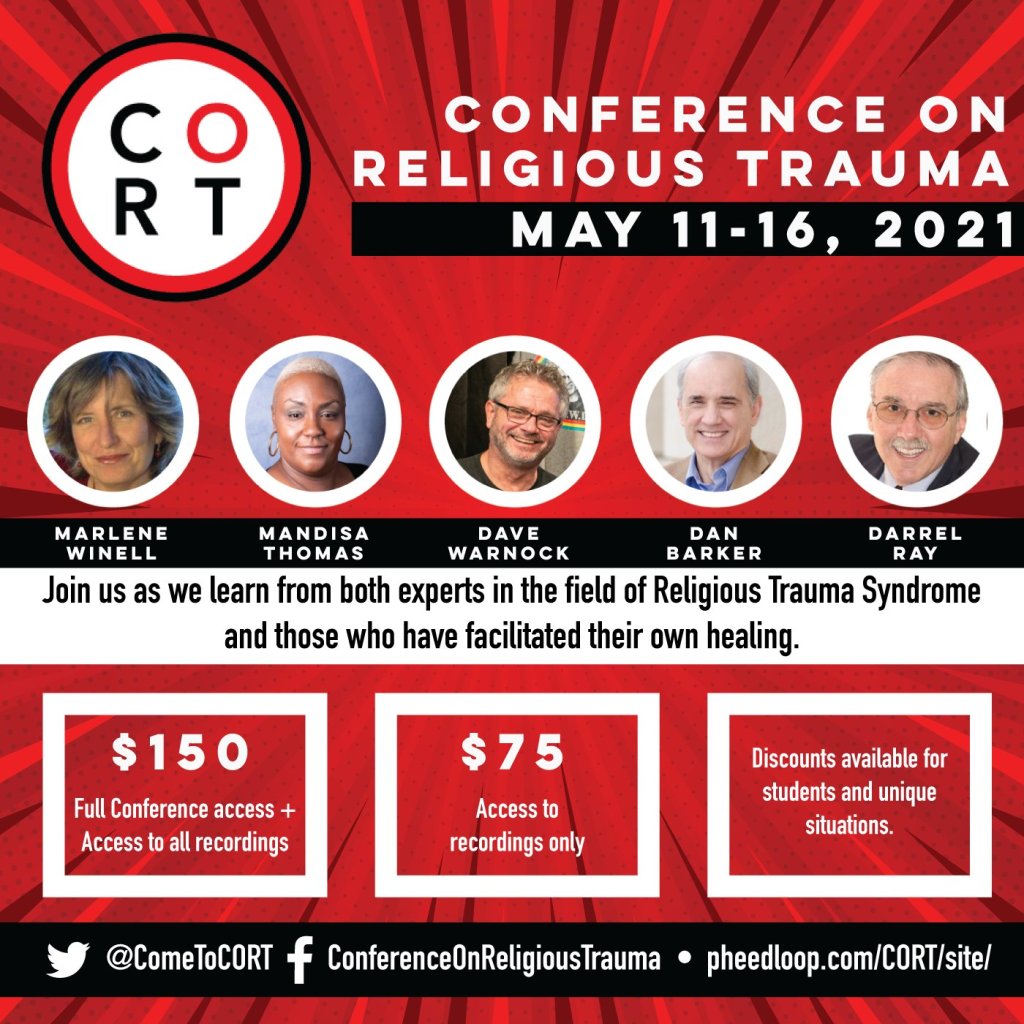




 gracefulatheist.com