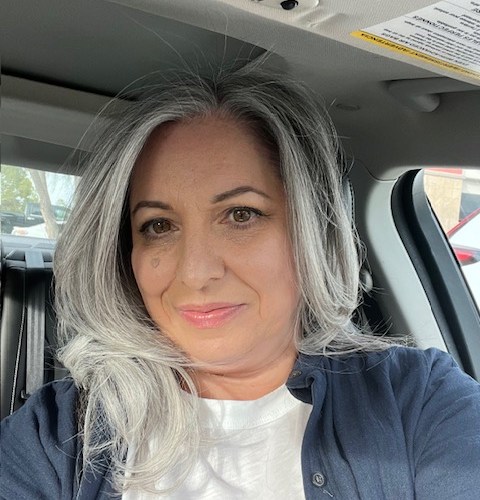
Jeremy Schumacher: Wellness with Jer

Adverse Religious Experiences, Atheism, Deconstruction, Deconversion, Podcast, Podcasters, Religious Trauma, Secular Therapy
Listen on Apple Podcasts

This week’s guest is Jeremy Schumacher. Jeremy’s story begins in the Wisconsin Evangelical Lutheran Synod and it was as culty as it sounds. He started questioning the beliefs when he was ten, but it took twenty more years before he was able to leave.

“Two things really kept me in [Christianity] longer than I needed to stay or wanted to stay: fear of hell…and everyone I knew and interacted with was Lutheran, just not having any sense of community outside of the church…”

Jeremy is currently a “licensed marriage & family therapist with additional specialties in religious trauma and sports performance.” See his complete bio here.

Links

Wellness With Jer
https://wellnesswithjer.com/

Instagram
https://www.instagram.com/wellnesswithjer/

Recommendations

Your Therapist Needs Therapy podcast

The Influence Continuum podcast (Dr. Steven Hassan)

Friendly Atheist podcast

Leaving the Fold by Marlene Winell

The Body Keeps the Score by Bessel van der Kolk

The Wonder podcast (atheopaganism)

Quotes

“It was this weird space that I existed in, of ‘having a good scientific background in psychology and not necessarily being able to apply it to other areas of my  own life…”

“[My wife and I] were both staying in it because we were supposed to, that’s how we were raised, and we had no knowledge of people who left successfully.” 

“The Bible is not a valid source. [I] would not cite this source if [I was] writing a peer-reviewed paper…That for me was like, ‘Oh. I’m an atheist.’”

“I started deconstructing at ten, but it took twenty years longer than I needed to.”

“Deconstruction was really lonely.”

“Neurodivergent brains find each other.”

“It’s nice; Sundays are free. You can sleep in!”

“The Wheel of the Year is a big deal…That’s been really helpful, I think, to have a structure and framework to note the passage of time and still have some sense of holidays without needing to do Christian holidays…”

“The Church is hemorrhaging numbers.”

Interact

Join the Deconversion Anonymous Facebook group!

Graceful Atheist Podcast Merch!
https://www.teepublic.com/user/gracefulatheistpodcast

Support the podcast
Patreon https://www.patreon.com/gracefulatheist
Paypal: paypal.me/gracefulatheist

Deconversion
https://gracefulatheist.com/2017/12/03/deconversion-how-to/

Secular Grace
https://gracefulatheist.com/2016/10/21/secular-grace/

Attribution

“Waves” track written and produced by Makaih Beats

Transcript

NOTE: This transcript is AI produced (otter.ai) and likely has many mistakes. It is provided as rough guide to the audio conversation.

David Ames  0:11  
This is the graceful atheist podcast United studios podcast. Welcome, welcome. Welcome to the graceful atheist podcast. My name is David and I am trying to be the graceful atheist. If you are in the middle of doubt deconstruction the dark night of the soul, you do not need to do it alone. Join our private Facebook group deconversion anonymous and become a part of the community you can find us at facebook.com/groups/deconversion Remember, we have a merchandise shop to get all of your graceful atheist and secular Grace themed items, you will find the link in the show notes. Special thanks to make tea for editing today's show. On today's show, Arline interviews our guest today Jeremy Schumacher. Jeremy is a marriage and family therapist. He has an emphasis on deconstruction and religious trauma. You can find Jeremy at wellness with jeremy.com. We'll have that link in the show notes. Here is our Lean interviewing Jeremy

Arline  1:25  
Jeremy Schumacher, welcome to the graceful atheist podcast.

Jeremy Schumacher  1:28  
Thanks for having me on. I'm excited.

Arline  1:30  
Yes, you and I have recently connected on Instagram, where I have found all the great people who exists. I just love it so much. And I saw that you also are at least internet acquainted with Tony George, who has been on the podcast boundless and free. And then apostasy Stacy Gron, who's fabulous and so like, I'm really excited to hear your story and to hear about things that you're doing these days.

Jeremy Schumacher  1:56  
Yeah, Stacy and I did a couple different YouTube shows together. And Tani and I have talked, but we haven't connected yet. I have a podcast too. We'll talk about that. Right. But it's it's one of those things where yeah, the the religious dramedy community, I think, kind of finds each other. So Instagram has been a great community for that and getting connected with people.

Arline  2:17  
Yes, Instagram is the mostly happy ish place on the internet as far as social media goes. And 40 So I'm not on Tik Tok. I don't know what's happening on tick tock. I'm, what is it? I watched the TIC TOCs that were made last week on Instagram this week, whenever they're already old.

Jeremy Schumacher  2:35  
Yes. Yes. As Elder elder Millennials gotta stick together on Instagram.

Arline  2:41  
Okay, well, Jeremy, the way we usually start is just tell us about the spiritual or religious environment you grew up in?

Jeremy Schumacher  2:48  
Yeah, for sure. So I was raised Wisconsin, Evangelical Lutheran Senate, which is wells for short. It's, I would say a really big deal in the Midwest. But I might have a skewed perspective because I grew up in like the capital of it, which is Milwaukee. That's where the seminary exists for the pastors who go through the well Senate. And at least when I was growing up, there were probably around 100 churches that's probably dipped to maybe like 80 or so. But just in the Milwaukee area, Milwaukee is a million ish people when you include all the suburbs, so it's not like a small city, but it's not, you know, Chicago, or LA or New York or anything like that. So like that not many number of churches, and a lot of those churches had schools attached to them in one area is is really kind of disproportionate. But that's that's what I grew up in. The Wells is Lutheran, it's the most conservative of the major Lutheran branches. So there's ELCA, which is Evangelical Lutheran Church of America, and that's the most progressive, they have women pastors and stuff like that, which is like very taboo when I was growing up. And then in between wells and ELCA is the Missouri Lutheran Synod, the LCMS, which I spent some time working at a LCMS college. So I've had experiences in both but I grew up wells, both my parents are wells, school teachers, they were high school in the area. So like, I was just deeply immersed in it, I went to a private school, which no way my parents could have afforded it if they didn't get discounts because they were teachers at the high school. So I'm the youngest of four siblings, all of us went through through in schools K through 12. parochial school, and we because we're in Milwaukee, we just interacted with other wells kids. So it was it was it was extra culty. I guess I'll say, just in the sense that like, the kids I played basketball against were other wells kids. Youth Group was all wells kids. The kids I went to high school with were all wells kids. So like even though we're drawing from different grade schools or elementary schools, we were all in that same bubble. And that in the church is how we refer to it like the Lutheran bubble, like with no sense of irony or awareness of how bad or unhealthy that was like, isn't this nice that we only ever have to interact with other wells people. So I had some friends in the neighborhood growing up who'd come over to our house because we have basketball hoop and like, but I didn't hang out with them. Like we play basketball in the backyard, I didn't go to their houses that didn't come inside our house, it was always like, this kind of, I don't know, disconnect. I was a talented athlete growing up. So I did have a little bit of exposure to other people in baseball, just because the Lutheran schools did not have a good baseball program. And I was I was quite talented. Not to toot my own horn. But like that was that was the only thing I was preparing for this episode. That was the only time I interacted with kids who weren't wells growing up was my baseball team. And there was a lot of like, I would say, say overt, like, my parents being like, Oh, they swear. So like, be careful around them, or like they're using language that we shouldn't use, or they might dress differently than you do. And so like, it was always kind of like, Hey, be aware that you're not around wells people. And so even when I had those opportunities to interact with people who weren't wells, like I was kind of shielded from it or kind of, I was taught to be biased against it. So it's hard for me to tell my deconstruction story without also talking about neurodiversity. So I have ADHD, I wasn't diagnosed till much later in life, and but around 10, I think is where it really started to like cause impairment for me, because a lot of stuff happened for me. Third, fourth grade, where I vividly remember coming home in third grade and telling my parents I didn't want to go to school anymore. So I think that's when the ADHD kind of kicked into high gear. And they kind of patted me on the head and said, like, you're gonna go to school, and I third grade, I also came home and said, I didn't want to go to heaven. Heaven sounded terrible. I'm not musically gifted, I can't sing. And so like an eternity of singing sounds awful to me. And like, my little 10 year old brain was like, I don't want to do that.

Arline  7:08  
Did you understand like the alternative? Or was it just like, I just don't want to do that? Is there any other place I can go in the Scytale? Or you hadn't thought?

Jeremy Schumacher  7:17  
I remember like getting a I said that pat on the head about you're gonna go to school kind of similar with heaven, like, oh, well, like, if you don't want to sing and have fun. You don't have to like you like baseball, there'll be baseball and heaven. And I was like, but everybody's perfect. So how are we going to compete and like that just kind of getting brushed over. So I like to say like, I spent deconversion, since I was 10 years old, although I didn't have space to really engage with that or do that. I can think of a couple things throughout my growing up years where I went in and talk to a pastor like one on one being like, hey, like, this doesn't make sense to me.

So in the wells, one of the things they teach is communion, the wafer is the literal Body of Christ, the wine is the literal Blood of Christ, and like, not in a Transubstantiation way, because it doesn't become that it is that whatever. So like, it doesn't make any sense. And I remember being like, hey, this doesn't make sense. Yeah. And I was a teenager and the pastor at the time, like gave me this, like, really hastily put together lesson on like, how the Greek is translated and like, what part of language it is, and like, why, and it was like, you know, enough for me to be like, that doesn't make sense, still. But all right, like at least there's a rationale. But I had a bunch of those I can think of some in high school I can think of, as I got older, switch churches, state in the wells. But like, when I was in grad school, some things popped up. And then when I started doing therapy, because I'm a licensed therapist, a lot more stuff of like, Hey, I went to a public university. I was at University Minnesota. So like a huge research institution where like, science is king, especially in the psychology world, which like has a bad reputation sometimes as a soft science. So like, evidence based practice research, Minnesota does so much research. It's one of the few D one institutions that makes as much off of the research happening in the school as the D one sports program makes, which is really unusual for D one. And so I had this experience of going from like, very conservative, like, I joke about my AP biology teacher using the word evolution, he would write out the word evil and then put a motion for our for our college level biology course while I was in high school, like so. So that's my high school and my grade school growing up years younger, Earth Creationism, all that stuff, like, and then I go to the school where it's like, no, here's science. Here's why we know what we know. Here's how we know it. We know here's how we do that well. And here's what it looks like when it goes portly and this is what it looks like when we're doing it well and so like, it opened up a whole new world for me and I think really made me like start to be I have problems doing like therapy with someone who's like Wives submit to your husbands or like looking at some of these these things. I was doing couples therapy and marriage therapist. So like looking at some of these things like, not only am I not sure that I believe this stuff, but like, I don't know how long I can keep working with people in this space. Yeah, so it was, that was a big step. For me. That's where I started moving to like, being more progressive and liberal Christian, but still trying to stay Christian, I think two things that I really looked at, like kept me in it for longer than maybe I needed to stay or wanted to stay, which was a fear of hell, which I was like a very imaginative kid. So like that, that held trauma stuck with me for a long time. And then just like everybody I knew everybody I interacted with was Lutheran. So just not having any sense of community outside of the church, and really having no concept of like, how to go about finding it. The only thing I'd ever really done outside of the church was sports. And so I was like, kind of involved in sports. I was coaching at the time, I played volleyball at the University of Minnesota. So I was coaching volleyball, and like, had people through it, but like, when you're religious, and you're raised in that religious setting, like you find other religious people, so it's like, I would have like, oh, well, like they're Catholics. So they believe something different, but at least they go to church. So like, even for my non wells people is like, everybody has some version of religious still. So I think that was really limiting for me, too. So I was working at a Christian counseling place, I went back, I remember arguing with my dad about it, got my license, got my degrees in counseling in graduate school, postgraduate school, all these licenses all these degrees to do couples therapy, and someone came like knocking on my door and said, like, here's a job if you want it. And I have ADHD, so like path of least resistance sounds great. I don't have to job hunt, you're just going to offer me one. So I took this job at this Christian counseling place, but I remember sitting outside at my parents house, on the back porch talking, my dad being like, I don't want to work with a bunch of wells people. And talking to him about it. He's a, he works at the high school. He's a guidance counselor. So like, he has a bit of frame of reference to talk about this stuff. So we kind of talked about it. And I was working at a Christian place, but not specifically Lutheran. And so it was like kind of fine, maybe not ideal, but like, hey, in this job market, I came out of college 2009. So right after like the big recession started and grad school 2011 was like, hey, if I can get a job without having a job hunt, that's great. So I was there. But I was like the liberal person on on the staff at the Christian counseling place, like, hey, we need to stop praying with our clients, that's unethical. And everybody else being like, no, it's fine. Like God will protect us, like, we won't get sued. Right, but like, that makes us bad therapists like we should be doing. So I was like, I don't know, there's this weird space that I kind of existed in of having a good scientific background in psychology, and not necessarily being able to, like apply it in other avenues of my life or being able to, like, apply what I knew in psychology, or I was teaching people in therapy to my own life, like just having that kind of mental block around like, you're not allowed to question this. So your brains just kind of gonna stay away from it. And I had other stuff. I had a really like unhealthy relationship in college because I stayed in a Christian and we had purity culture, like stuff and didn't know how to talk about sex and didn't know how to talk about consent. And like we're just making each other miserable, trying to have a normal college relationship while being good Christians. Like, there's there's a lot of stuff that like, is in there trying to do the cliffnotes because I know I can, I can chat a lot. My wife has also raised Lutheran, we did not go to high school together, we connected later in life. Our sisters actually roomed together in college. So my sister's a teacher, and my wife, sisters, teachers, so they went to the Lutheran teacher college and We're roommates and that's how my wife and I met.

We connected and we're both Lutheran, but like, we're both kind of outsiders. I think, for me my neuro divergence, I got diagnosed officially when I was in post grad. So it wasn't news to me. I knew I had ADHD at that point, but like getting the formal diagnosis was still meaningful to me. Having someone else like validate what I knew and I experienced was really helpful for me. But like, you know, I was a straight A student, I was an honors student, I graduated with all sorts of awards and stuff like, I'm not your, I'm not the stereotypical ADHD, or I'm like what I think is ADHD, but like people don't talk about enough. They only talk about people on one one end of the spectrum where they're struggling and can't get through school and I was much more of the like, significant overachiever but like depressed and bored because like nothing was stimulating to me. No idea how to self regulate. So I was kind of an outsider for that I think I very much grew up with like a middle finger to the law. Like, can I swear on this podcast? Absolutely, yes. Yeah. So like I had like a real fucked up police kind of attitude growing up, even though I'm white and privileged, and like all the like, boxes to check for like, hey, modern society, especially Christianity was made for you. But like, it didn't fit. And I think because of my neuro divergence, so that was like a thing. My wife is a feminist. She's very outspoken. She's very good at her job. She's a very talented teacher. And so she didn't fit in for those reasons. I mean, she didn't fit in because she's female. And she's outspoken. Like, that's enough and conservative Christianity to be a problem. So both of us, I think we're kind of like, stay in it, because we were supposed to. That's how we were raised that we didn't, we had no knowledge of people who like left successfully. I had a friend of mine who's gay, who I'm still very close with and like, but like, I saw how he was shunned like I saw, like, my, my cognitive dissonance around that was like, Well, I'm friends with him. Like, I'm an ally, like, I can keep like, I'm the only friend he still has from high school good for me without like, applying like, Yeah, but maybe, maybe you should leave the system that shunned him so strongly. But I think we're both kind of waiting. And I think having a kid was finally like, for me, it was like, I can't teach this kid Noah's Ark. Like, I don't want to have that in our nursery. I don't like, yeah, that was like a big break for me finally, and like, I wasn't comfortable with the term atheist yet, but I was like, out of the church, like, I don't want to do this stuff. I didn't feel comfortable on Sundays. When our son was very young, like I, I would take him to the play room, like that was like, I don't want to be involved. I don't want to sing like, I don't want to do these things. I'm not giving my offering to this church, like, we'll go but I'm not in it in any sense. But again, I think it was like neither of us had a model of what it looked like to not be in the church and raise a kid. So then COVID hit and like that was just our excuse to not go to church and never have to go back. But like it's one of those things where Yeah, suddenly people have said that I remember like saying to my wife like I was I got really into Richard carriers work. So he's a historian who works on early Roman and therefore Biblical stuff. And his like, he's so meticulous in the approach to history that he takes and I read some of his stuff that basically said, like, you know, like, we know these books are forgeries in the Bible. And that was news to me and like, again, I was raised on biblical literalism. So like, the gospels were written after Paul, like the Bible's published out of order, like I didn't even know that stuff yet. Neither. Yeah. So like those things, then it was like, Oh, all right. So like I already had, like, I feel like an ethic system and like morals and principles from how I do therapy and what I knew around mental health. I just needed that. Like, Hey, you don't believe this? Because you like it doesn't make it like, it's not historical, like the Bible isn't a valid source, you would not use this, you would not cite this source. If you were writing a peer reviewed paper, like, you can't use the Bible. And like that, for me, it was finally like, we weren't going to church already. Because it wasn't a good fit for either of us. But like that, for me, it was like, Oh, I'm an atheist. And like, just like this huge, kind of like, sigh of relief at finally, like, getting to that point, I was probably around 30 at the time. 31 Maybe, like, I started deconstructing at 10 Like, I feel like I stayed at 10 years longer than or 20 years longer than I needed to but but that's what it kind of took for me was like, these, I look back and see these like very explicit spaces where it's like, oh, that was like a big step away. Until finally that step of like, Oh, I'm an atheist and like, that's a good spot for me to be like I'm comfortable with that.

Arline  19:10  
That's a huge step because a lot of people not that it's bad or wrong to feel like you need like, but there is something more there is gods or goddesses or whatever, those kinds of things. A lot of people can't just be like, Yeah, I think I'm an atheist. It's interesting thinking with the the ADHD, I know a few other people who made that link very easily. They are also ADHD, or Adi HD. One is and and for me, I was fine with there not being God. So I was like, Okay, well, this was all made up. Like once I started reading Bart Ehrman and different people and I was like, Yeah, I was just fine with it. It didn't. My husband was very emotionally affected by the idea that none of it was that it wasn't true, or possibly wasn't true. That was just like, Oh, wow. And of course, I get the things like, well, it must have just been head knowledge. I was like, no So I was like indeed

Jeremy Schumacher  20:10  
Yeah, I worked at a Christian counseling place I spent time in working in higher ed where I did mental health for student athletes and coach volleyball. So I was coaching I was an instructor if you work at a Christian place like you were way too many hats because they underpaying everybody and want you to do so many things. So like, you know, all that stuff, too is thrown in there and my story but like, you know, I was like the LGBTQ plus ally, I was doing mental health for athletes, like some of the stereotypes about the women's lacrosse team exist for a reason like so like I was, I was, again like in that Christian space, but like, ethically, morally, I was not connected at all, like, the identity the culture of being a Christian was still a part of my life, but like, the belief was gone well, before I was out and out as an atheist. And then, you know, it's it's been a process like coming across this podcast was helpful for me. You mentioned Bart Ehrman. That was super helpful Richard carrier for me and like, he's, I don't wanna say fringe. Some people don't like him because he's a mythicist. So kind of saying, like, Jesus never existed at all. And it was just, it was a myth. But his his work and the way he does kind of the historical breakdown of things was was like I needed the science of it. And Bart Ehrman does some of that. But Bart Ehrman sometimes goes a little pop psych for my taste. So I just needed somebody who's like, let's get this past peer review, let's like do the process that I knew how to do from being a researcher from being at a research institution, like I needed that scholarly kind of level of like, oh, right, you know how to do all of this, you can apply all the same stuff, just apply it to your religion, too. But like, deconstruction was really lonely. I mean, I found a lot of this stuff after I deconstructed like, just that, that Steven Hudson's bite model, behavior control, information control, thought control, the motion control, like the information control, for me was really thing like growing up in that big of a bubble and what I would say as a call, like, just not like, all this stuff was out there while I was deconstructing, or before I deconstructed, I just didn't know about it, like I had no access to it. So it was just one of those things where like, finding community after I left was really helpful. And then I was like, then I wanted to go back and get my certification to work with religious trauma. So that was again, like, I think I was still doing some of my own work at that point. But like, that's how my brain operates. And you talked about ADHD like, that's definitely kept me in to because ADHD, one of the things with ADHD is black and white thinking and like, the religion gives you that religion says, like, here's right or wrong. So like, as much as I was, like, middle finger to the law, like I was going to judge those kids who went to the Lutheran school that I went to, but went and partied and drank like, how dare they? And so it was like, it didn't fit, but I could keep my foot I didn't fit, but I could keep my focus on other people and like, so again, like I think there's pros and pros and cons sounds weird. I think religion is harmful, but like it's one of those things where like, ADHD is a double edged sword, I guess I'm like, getting you out early or keeping you in. Because there are aspects of religion that like fit well, for some of the things my brain does naturally, in keeping me in with like, things like black and white thinking an all or nothing type thought patterns.

Arline  23:32  
That's interesting, because that was one of the things I wanted to ask you about was, I, in my personal experience, there's a big overlap of people that I know know now who have deconstructed and are just no longer religious in some way. And ADHD or audio HD. However, I didn't know if it's just because since I have inattentive HD, all of our low ADHD brains are now friends. So we found each other. So have you seen that there seems to be a big overlap? Or is it what you were saying? Where it just really depends on the person? Some stay in some late? Yeah, I

Jeremy Schumacher  24:04  
think I think there is an overlap, I should say, bias with you, because I am also ADHD, and I tell people all the time, like neurodivergent brains find each other. So I think I'm drawn to that a little bit. And I don't know, I find other people whose brains operate a little differently. But I think when you're neurodivergent, like your brain naturally doesn't fit the social norms. And these constructs that are being preached about on a regular basis often don't fit well for you. And so I think there's a natural kind of inclination for the neurodivergent brain to like, resist that. And I think some of the things that religion does for social control, take advantage of a neurodivergent brain and sometimes I think people like no, like, that doesn't fit at all and know that they're out. And again, like so we have these kind of major breaks around like having kids sometimes COVID was a big one. Trump the rise of Trump was a big one. But like, forever and ever or expand when people go off to college? Like, when do you get out of that bubble and experience the larger world? That's a time when a lot of people also deconstruct, so I think I have that opportunity. It was just I was dating a very conservative Christian girl, and we went to the college campus mission thing and like,

Arline  25:19  
you were still in the bubble is a different bubble. Like,

Jeremy Schumacher  25:21  
yeah, the bubble traveled with me to the University of Minnesota. No, seriously, I dated a girl who I went to high school with, like, we were not friends in high school, and we both went to University of Minnesota, we kind of like, glommed on to each other early on in the process.

Arline  25:35  
I did not grow up in the church, and I'm so thankful I used to think, Oh, I wish I had grown up in this. And now I'm like, I'm so glad I didn't grow up in this. There's so many things I didn't have to deal with. Yeah, but I became a Christian in college, and it was a public university. But yeah, we became our own little culty. Bubble. I don't know if it was a cold. It depends on who you ask. Yeah, it just, if you have the people around you reinforcing the beliefs. Even if you start doubting, or have questions, you just kind of sit it on a shelf. And like, keep on going. And for us, at least similar to what you were saying about having kids. In our 20s. It all worked fine. When we started having kids. Like that was when things just for my husband things were. He was like, I shouldn't feel like I'm a better dad. Then I feel like God is to his children. He's like, this doesn't this is not good. And then slowly he d converted before I did. Yeah. So just having kids. That was a big thing for y'all.

Jeremy Schumacher  26:39  
Yeah. And I think I look back on it. And like before we had kids, we talked about like, would we send them to a Lutheran School? And like, both of us, unequivocally, we're known for that answer. Like we did not want them. She had a bad experience. Her parents were divorced, she dealt with a lot of stigma for being from a family of divorce. She dealt with a lot of stigma, being like a talented female, smart, outspoken, articulate female. And I like I never I was, you know, I don't, I don't think I was clinically depressed. And I think for so many other people, because they spent so much time masking like, yeah, it didn't come out how unhappy I was. But like, grade school, like we had a and this this is across the board, like this is a soapbox, I'll get on a little bit like parochial schools, private religious schools have major bullying problems, because the church has has no concept of accountability. And that exists in the classroom then like, so like I was a bully growing up. And like, I don't look back fondly on that I was neurodivergent. I didn't understand any of the social dynamics. But I was a popular kid, because I was friends with the popular kid like, he and I transferred into our school the same year and like, hit it off, because we were both good at sports. And we were friends third grade through eighth grade. And like that made me popular. Like, I don't remember why I remember being like, this is weird. I'm poor, and everyone else in my private school has Nintendo 64 and a trampoline and a swimming pool like. So I think there was some of that, like, insecurity around it that people usually associate with bullying, but like also it was. It's such a like, in group out group dynamic in the church that like, these things are going on over and over and over again. And I didn't understand any of that I am a therapist, I don't understand social norms. Now. Just because I've neurodivergent and my brain doesn't do that stuff. But I look back and on some of those things, like I was not a happy, healthy person, like high school, I was pretty miserable. I stopped blaming other people. I wasn't mean to people, but like, I was mean to my instructors. Like I was that kid who was like, pushing every boundary I could up until getting a detention because my parents were teachers. So I like was not going to get attention but like, not like throwing stuff or making a scene but like intellectually trying to bully my professors around like, you want me to read Faulkner like I'm gonna go find a different fault there who's like the wrong Faulkner and write a paper on that and like, go ahead and try and fail me like, so I was like, always just trying to find stimulation, trying to find ways in which I could be like, a little more entertained. And like, so it wasn't depression, but it wasn't healthy. Like I was not a healthy kid. And so when we're gonna have kids was like, No, I was like, I was miserable in school. And I think people who knew me were like, You didn't seem miserable, because like that was so that was so much. That was my internal process, like the things I was doing to cope were not healthy. Luckily, I had sports as a huge outlet, and that helps regulate me a lot. Because I was in a lot of sports. I did a lot of sports with families, a big sports family, but like, I was not healthy in my interpersonal relationships. It's not healthy and my relationship with myself. So it's just like, yeah, having kids even before both of us deconstructed fully we were like, we're not sending our kids to a Lutheran School. But you know, we did we had them baptized like both our boys actually are baptized like we were still kind of going through the motion. Jensen's, it's, it's hard, even when you're at that point of deconstructing to like, Just finally, step out. Yes, there's a lot of sunken cost fallacy associated with that

Arline  30:21  
my boys, one of them was baptized when he was little we were in a Reformed Church. So he was baptized as a baby and the other, we were at a Baptist church. So he was just not sprinkled, he was dedicated. The like, exact same thing, but without water, same thing. But now they're older. And I'm curious, like, with your kids, how do they feel about not being in church? Or do they remember being tricked? I don't know how old your kids are. But mine, like, they're not interested in going back to church. And it would take a whole lot of convincing. I don't know that someone could convince them that supernatural stuff is real anymore, because they're just like, I need you to show it to me kind of thing.

Jeremy Schumacher  30:57  
Yeah, yeah, mine are both under five. So I don't think either of them have any cognitive memory on what was going on. So and our second one, we had drink COVID. We weren't going to church, but like the family. I have a couple of pastors in my family. So it was like we can do this over zoom. Like, I don't remember it being a thing my wife and I were asking for, I think it was just like, Oh, you're not going to church because of COVID. Here, let's like figure out how to do this over zoom.

Arline  31:27  
So what's your Sunday's look like now? Now that you're all heathens and not going to church? What do you guys do?

Jeremy Schumacher  31:32  
Sundays are free. It's nice to sleep in. I'm from Wisconsin, so we watch the Packers. But I identify as APO pagan, which is non theistic Earth revering science based paganism, so no gods no goddesses, we're not worshipping the moon. But but the Wheel of the Year is a big deal. So we follow the equinoxes, we follow the seasons. And that's been really helpful, I think, just to kind of have like a structure or a framework to like, note the passage of time and still have some sense of like holidays without needing to do Christian holidays with our boys. So like, celebrating you all and celebrating Halloween is a big one. Everyone likes the witchy aesthetic in it. But but for me, like finding that community was dream COVID So like lots of lockdowns, and that was kind of when that community online started blowing up. Because I think a lot of the people were looking for connection when you when you couldn't have it. And so I came to that a little late, but like, there's the Thursday night mixer that I go to on Zoom still. So it's people, Louisiana, California, Iowa, me and Wisconsin, like, so that's kind of been my community. And it's for me, that was really nice to not have like, sad people who weren't church people. But also people would be like, oh, man, global warming is like a real concern. Right. And like, they just naturally agree, like, so. It's nice. Some of them were raised pagan, a lot of them also left some sort of organized religion and found their way towards it. So with my ADHD, fire and water and nature in general, but specifically fire and water have always been like very calming for me, because they're stimulating there. Something's always moving. And so I think nature for me has always been a really big deal and finding something that kind of said, like, oh, we can we don't find something sacred and old religious texts like we find sacred in nature, we find nature we find what's important to us in our connection through nature. And so like that was really important to me something that was like, no gods and goddesses, and very science forward was really important to me, but that community for like, not not having non church friends was really important to start being like, Oh, here's other people. So I have one a Theo pagan friend who's in Milwaukee. We play d&d together. And like, you know, it's it's just, it's been nice. Hopefully, next year, I'll be able to go to the ATO pagan retreat I presented this year on religious trauma. It was the virtual conference, but there's an in person retreat every other year. So like that's been really meaningful. I'm a little bit more into it than my wife is. In the community sense because I do the mixers on Zoom and stuff and I went to the conference. My wife likes to celebrate for the holidays, equinox, the equinoxes of the year, equinoxes, I'm a bad pagan, I should know. I think it's eight. This is, yeah, that's what this is. And then like the halfway markers between so I think that's how it breaks down for eight of them. And it's just like, intellectually, it's been nice to learn something new again, like a lot of that stuff was very taboo for me growing up so seeing how people use Tarot like I was always so opposed to that and seeing how like people who don't believe in in magic or witchcraft or the supernatural can still do like tarot readings and it be meaningful to them. They're aware that it's psychology at work, they're aware, they're like kind of Wizard of Oz peering behind the curtain. They know how it works, but like it's still A way for them to Problem Solver or approach a problem creatively. And so like, that's been really fun for me to be like, Oh, I know nothing about this stuff. Like, let me learn something. So that's been like very safe and helpful. And it's nice to just, you know, complain about conservative Christians or the religious right, or global warming or whatever, like the people who I grew up with. And I'm like, oh, no, like what happened to you? I can have conversations with people who I didn't grow up with and are like, right, like, that's awful stuff, we should, we should definitely be concerned about these things. So that's been a really like, nice space for me after D converting to have a group kind of a community that already existed, that that matched a lot of my values and ethics that I've kind of built. And were very important for me leaving the church to then find a group that matches with that was really helpful for me.

Arline  35:46  
Yes, yes. And online has been such a wonderful place to find community. I live in Georgia, and, um, homeschool mom. So Bible study, white ladies would be my only friend group, like, I had no idea. And so when I started deconstructing it, you know, and I didn't have that vocabulary, I did not know that word. But when I realized, I don't know that I believe this service as seriously as I used to, I didn't have anybody to talk to I could talk to my husband, but he, it was very emotional for him. So that would, I didn't want to make things worse for him. So I'd asked my friends and they were Bible study white ladies, white lady Bible studies, I don't know how you want to call them, but and they don't know how to explain it. There wasn't a lot of thought about it. They were just kind of like, you know, everyone has doubts, or these are good questions, but they wouldn't that wasn't super helpful or engaging. And so then by the time I was out, I was like, Where do I go? There aren't like, I don't know, people in my real geography, who have any of the same thoughts at all. And since then, I have found secular homeschool moms who are a lot of people, a lot of women who have D converted. A lot of women who have realized they're queer, a lot of women who have, like, just just a whole lot of us. Yeah, that I didn't know existed. But for years, let's see 2020 For the past three years. Yeah, it's a lonely, you usually become a Christian, either in your family or friends or something. But rarely do you d convert with other people? Yeah,

Jeremy Schumacher  37:24  
yeah. And I think it's, it's a fascinating time as people, the churches, hemorrhaging numbers, you know, I, my experience was, was similarly I had my partner, which, like, I'm very thankful we were both deconstructing or deconstructed at the same time. But it's one of those things where like, I found all this stuff after I D converted, like, deconstructed, so it's like, this stuff's out there. But it's hard to find was one of the things that I was like, really passionate about getting my my training and religious trauma, and having kind of a formal knowledge and that helped to to build community like with like minded professionals. And there's always a bunch of us, there's a number of people who are training in it or getting trained currently. And so that's like a fun space. But it's been interesting, because as I'm more out, especially professionally, I'm out about it. Like I've had some family members who've reached out to me who are like, Yeah, we don't want to send our kids to Lutheran school either. And like, it's still I don't know, it's, it's secretive in my family. But like, it's been funny to kind of see people like find me still some people from high school and follow me on instagram who have deconstructed or left the church. So like, Yeah, I mean, I think neurodivergent you brought up people who, who are realizing they're queer once they can start investigating their sexuality. I think that's a huge thing. So having these these online spaces that are safe for people to explore having community because for so long, I think that's what people ascribe to the church like, well, if you move somewhere, can it get connected with your local church, or like I remember saying that when I was a Christian, so it was just one of those things where like, knowing there's community out there that isn't religious or isn't affiliated to a church is is so nice. And I think that makes leaving an unhealthy or toxic church environment so much easier for people to be like, Oh, you don't have to be alone in it. And you don't have to be lonely after you leave. Like, now I do religious trauma. So I'm working on the people who are deconstructing I'm working people who are working on leaving, and that's still such a fear for them of like, what happens when my family inevitably disowned me because I've got that conservative of a family. It's like, ah, yeah, there's community out there. Like, it's still that leap of faith to be at a point where you can leave and trust that there are people there who will be there for you with you when you're outside of the church,

Arline  39:51  
because a lot of people will stay in it longer simply because they don't have anywhere else to go. And knowing that there are spaces to go is a huge thing.

So you talked about your therapy, tell us everything, wellness with Jer, everything you're doing your thing. Tell us about it.

Jeremy Schumacher  40:16  
Yeah, so I own my own practice. I'm a licensed marriage and family therapist. I've added my specialty and religious trauma. I also have a background in sports performance because I spent a lot of years coaching I coached NCAA level. I did, took a couple teams, the NCAA tournament for volleyball, super exciting. So I've been in as an athlete at a high level myself, I've coached high level athletes. So I have that. And again, like my neuro divergence runs through all of this, right, like sports performance, religious trauma and marriage therapy, you have no overlap at all, because that's just what my brain is interested in. So after I left higher ed, I was super burnt out, doing way too many wearing too many hats, getting underpaid, et cetera, et cetera. As one day, I was working at a Christian college. I went and I worked at it was a secular practice. But the guy who ran it was a Christian. And he was like the yucky kind of, I would say, the yucky kind of Christian like he had very fancy cars, he had a place up north. And like, said all the right stuff to get me to come work with him. But none of it was backed up. So it was it was just a really like yucky practice, felt very car salesman, he had taken advantage of people and like taking advantage of people who have mental health issues. So like doubly yucky in my book. And so like, I was not going to church at that point. But I wasn't out as an atheist at that point. And so it was just kind of like that break. Came in my professional life where I could be like, Oh, wellness with Jerry, like, my logo was the Agra sill tree, which is very a big deal in Norse mythology. It's a podcast, so people can't see me, but I got long hair and a big beard. Like I've got some of that Viking aesthetic going on. And so like that was very free and and it was so nice to be in a space of like congruence where like, I'm upfront, here's my fee. No, I don't take insurance. I'm not trying to get rich in this, but like, I have to pay my bills too. So like very ethical, LGBTQ, plus, affirming, queer, affirming all the spaces that I wanted to kind of Occupy as a therapist, but had never been able to advertise or kind of had to, like, people had to find me. And like, I have art that is some rainbow themes. in it. One of my my media person who's fantastic helped me with my website design and all that stuff. They're queer, and they made a really beautiful piece of art for me. So like when I had people in my office like they, they could pick up on it, but I wasn't like I wasn't selling myself as like a queer affirming therapist. So opened wellness with Jer, which is not an easy is not an easy title or a name for a thing. You'd be surprised how many mental health facilities have trademarks on their names and how little variety is left out there for naming your own practice. So a lot of people just name it after themselves. But I was coming out of this fear of athletics and coaching where everybody knew me as chair or coach. So wellness with Jared kind of fit for my personality. I'm a laid back guy, kind of what you see is what you get. So I opened my practice, got my certification and religious trauma. And once I kind of got like my feet under me, there's a learning curve to opening your own practice. I'm very comfortable doing a suicide assessment. I'm very comfortable doing the therapy things. I had no knowledge on how to run a business. Oh, yeah, I think I'm still learning things. When I talk to other therapists, it makes me feel better because they're like, yeah, like, No, we weren't taught any of that in grad school. It's just a huge gap in our knowledge. So once I kind of felt settled with with that, I started a podcast called The your therapist needs therapy, where I interviewed other therapists about their mental health and how they navigate mental health while working in the mental health field. And I've had a lot of religious trauma therapists or people with working in that space, which has been really great. And then like, it's just, it's my podcast, right? So I get to have on it, whoever I want. So it's a lot of religious trauma right now, because that's what my brain is fascinated with. But it's my other stuff, too. So I have some nutritionists on there. I have some athlete mental health people on there. Working, fingers crossed and getting some a professional athlete or two on there. Maybe in the near future. A famous comic book writer recorded an episode with so like talking about religious trauma and themes of mental health and comic books. So it's just like my stuff like, here's what I want to talk about. Here's the things that are interesting to me. I'm not trying to get internet famous, but I'm trying to put out good information around things like religious trauma and neuro diversity and healthy sleep. Hi uh Jean and all this other stuff. So like, it's, it's very much like it's silly in a way because I'm like another person with a podcast but it's been very like a nice creative outlet and a nice another way of like connecting with the community. So finding therapists and like minded people who are working in the religious trauma spaces. So yeah, that's kind of what I've got going now. And then I got a almost six year old and almost three year old at home. So when I'm not doing work, it's a lot of stuff going on at home.

Arline  45:32  
Yes, that's a busy time with littles. Wonderful, I'm so glad our audience will become acquainted with with all of your work

one last thing before we wrap up recommendations, podcasts, books, YouTube channels, movies, anything that was helpful in your deconstruction or that you love now and you highly recommend anything?

Jeremy Schumacher  45:59  
Yeah, I mean, I talk about probably on a daily basis, Steven Hudson's, Hudson's sounds I'm not sure how to pronounce his name. Where he did the bite model, which is I mentioned earlier behavior information and thought and motion control. I'm writing a blog series on it right now just because of how often I reference it. And he has a podcast on cults and authoritarian control. I'm drawing a blank on the name of it, I really should know. Someone tagged me on instagram in a in a like recommended podcasts that recommended his and mine. And I was like, Oh, that's so nice. I love his podcast, too. So that was that that one is fantastic. I listen to this podcast a lot. The other one I listen to a lot is Friendly Atheist podcast, which like for me was just, again, that community of someone else being like, what is like the religious right doing? Like, is anyone like, why are we not disturbed by these behaviors? So like that one, that one provided a lot of sanity for me being like, yuck, like, I had a problem with those people when I was Christian, but like, that's what everybody was lumping me in with? Oh, yeah. There's a lot of sanity there. For books, it's it's, you know, Harlene, when ELLs work, leaving the fold, I think is like a seminal work on religious trauma. She calls it religious trauma syndrome, which we've kind of moved away from a little bit. The other big book that I have in my office that I recommend a lot is the Body Keeps the Score by Bessel, Vander Kolk, who's maybe not a great human being but his work around trauma was fantastic and has been like super helpful for people understanding how trauma works, and how something like religious trauma stays in your system long after you've D converted and why that is work and how that work gets done. So I love that book. I was just talking earlier with somebody around all these documentaries that are coming out around Boy Scouts, the different church scandals. And a lot of that stuff is I chuck, I'm chuckling because I'm just thinking like, right, I remember like being fascinated by Waco. I was like five when it happened. So

Arline  48:10  
I remember watching it until the news, just

Jeremy Schumacher  48:12  
Yeah. But like, I got really into cults, I got into the occult, like, as a Christian, like, these were things that that were like, fascinating to me with just not the self awareness to be able to reflect on it. But it's one of those things where like, I think seeing some of that stuff normalizes the experience when you're like, Oh, I was in a cult and like for mainstream Christianity and a lot of people who raised evangelical like that maybe they don't think of it but like, all those markers are there, there's there's all those forms of control and there's all those ways to kind of limit you and cut you off. So I think as long as those things are safe and comfortable, I think for some people who are still deconstructing those can be really overwhelming or triggering. But um, I talked about deconstruction as like doctrinal deconstruction, you're leaving a belief system and then deconversion as like, the process of like, unpacking all that stuff that's still in your system, like purity culture, and like some of the ingrained stuff. So I think those documentaries if you're in more of the deconversion side of things, where you've deconstructed and you're comfortable in your belief system, or your ethics that you have now I think those documentaries can be really helpful to kind of see these patterns as like oh yeah, that's that's how religions take advantage of people or that's how control is exerted on people when when they're not aware of it. So there's so much of that stuff out. It's on my list to watch the Boy Scouts one I haven't watched it yet but there's like three or four different things on waco there's all these things on on cults and mind control around cults. And so it's definitely coming a little bit more to the forefront. I like the atheist pagan podcast, it's called the Wonder so That was That one's nice, you know. And it's weird. I spent a lot of time in the mental health spaces too, obviously, which is not maybe at an interest for everyone, at least not in the nerdy way that I do. But there's also a rise of like non science, or unscientific thinking in the wellness spaces. Like, there. There's weariness around the rise of kind of the self help guru, and even pagan spaces, like my hackles get raised around crystals and some of that magical thinking type stuff like I can complain because I experienced Christianity evangelical fundamental evangelicalism firsthand, like I can say how bad that is, but like, it's not that Christianity has a stranglehold on it, like these things exist in other spaces. And so doing work around stuff like that educating myself around some of those things, too, because it, it looks different, but like the tactics, and the behaviors are the same as far as control and some of the authoritarian hierarchies that exist. So my, my attention span is all over the place, I probably have eight or nine books on my desk in my office right now that I'm wanting to read, and my brains, like you can read all of these. So I try and balance it so that I have time that's recreation. And I have the podcasts, I have a YouTube channel where I talk about comic books, or movies and mental health stuff related to that. So I try and have space for like professional engagement around things. And they're trying to have space for just recreation, which I think is really important for me. That was a really long and winding answer. I think they only gave two recommendations or three recommendations in there. But

Arline  51:38  
thanks. Okay, that was wonderful. No, it's part of understanding. Like, once people deconstruct it's like, there's a whole other world over there. So you're finding all wonder and fun and happiness, like all the things that we're told that we will find in religion, like, you find it outside of that. And so you were just telling us all the different ways you do it.

Jeremy Schumacher  51:56  
Yeah. And I, you know, in my work, I'm reminded of this, I like, have to slow down sometimes, because I get caught up sometimes, and like how freeing it is to be outside of religion. And when you're deconstructing like, it does not feel that way. And like, I know that I experienced it. But the further out you get, the more like confident you get and like no, it's so much like I have so much more joy in such a healthier person outside of religion. And so it's like, it's hard to remind myself to like, slow down, like there's a process to get there, you don't just jump out at that spot. So it's good for me doing the work that I do to be reminded of like, there's a process to all of this, but like it is it's fascinating to talk to people to deconstruct it or hear other people's story on the podcast when I talk to other religious trauma therapists and see like, just like the joy around like, I posted that Instagram real me dancing, and like, I would have never done that as a Christian and like, now I can and I, I like felt a little guilty. But then I was like, I don't need to be guilty. And then I didn't feel guilty. And it's like, that's so cool. Like, that's so fun to see. Like, find ways to experience that joy in your own life and like, not be humble about everything or not like just yeah, there's so much stuff to unpack and reconvert. And when you do, it's just so, so much more free and unhealthy.

Arline  53:13  
Yes, I love it. Well, Jeremy, thank you so much for being on the podcast. This was wonderful. Thank you for sharing your story and telling us all about what you're doing these days.

Jeremy Schumacher  53:22  
Yeah, for sure. Thanks for having me.

Arline  53:30  
My final thoughts on this episode. I really enjoyed this episode, I learned a lot. I did not know anything about the wills Church, the Lutheran church that he talked about. And it's always amazing to me. I don't know if Amazings the right word I love whenever I hear about people who they've gone through some things. And they take that knowledge plus professional learning knowledge and then use it to change other people's lives. Like he's a therapist. Now, sports performance, religious trauma, couples counseling, like he said, None of these things overlap necessarily, but he has experience with all of them. And he has a desire to help people a desire to do things ethically and humbly and kindly. I don't know if kindly is a verb, an adverb, but he's doing all these things. And it's helping other people. And I just I love when, when humans do that, it's like it's beautiful secular grace, like David talks about. I also am very intrigued by the this whole atheopaganism Like I've learned a little bit about it last year, because personally, I like the, like the rituals, I like the the Wheel of the Year. I love nature, like all of those things. Speak to me for want of a better way to say that. They like do something inside my body. I love it too much. But I don't want to have to believe in gods or goddesses, I don't want to have to believe in ancient texts that some dead guy wrote down and it's supposed to be important. And I especially do not want another patriarchy to tell me what to do. So I don't know. I'm intrigued. It was it was interesting to hear Jeremy talk and it makes me want to learn a little bit more about it. So thank you so much, Jeremy for being on the podcast. I really enjoyed it. And I learned a lot.

David Ames  55:27  
The secular Grace Thought of the Week is, don't take yourself too seriously. When we were in the bubble, everything seemed so serious. Sin was serious choices were serious. Salvation was on the line, whether you witnessed to somebody or didn't, whether someone was quote, unquote, saved or not. It was also serious. And that limited us on what we could do, what we could choose and who we could be. You don't have to take yourself that seriously. You can laugh at yourself. You can make mistakes, and you can learn from those mistakes, and there are no eternal consequences. Next week, I interview community member Chris, you're not gonna want to miss that episode. Until then, my name is David and I am trying to be the graceful atheist. Join me and graceful. The beat is called waves by MCI beads. If you want to get in touch with me to be a guest on the show. Email me at graceful atheist@gmail.com for blog posts, quotes, recommendations and full episode transcripts head over to graceful atheists.com. This graceful atheist podcast part of the atheists United studios Podcast Network

Transcribed by https://otter.ai

Graceful Atheist Solo October 2023

Deconversion, Podcast, Secular Community, Secular Grace

This week is a solo episode with David talking about the state of the podcast.

Interact

Join the Deconversion Anonymous Facebook group!

Graceful Atheist Podcast Merch!
https://www.teepublic.com/user/gracefulatheistpodcast

Support the podcast
Patreon https://www.patreon.com/gracefulatheist
Paypal: paypal.me/gracefulatheist

Deconversion
https://gracefulatheist.com/2017/12/03/deconversion-how-to/

Secular Grace
https://gracefulatheist.com/2016/10/21/secular-grace/

Attribution

“Waves” track written and produced by Makaih Beats

Transcript

NOTE: This transcript is AI produced (otter.ai) and likely has many mistakes. It is provided as rough guide to the audio conversation.

David Ames  0:11  
This is the graceful atheist podcast United studios Podcast Network. Welcome, welcome. Welcome to the graceful atheist podcast. My name is David, and I am trying to be the graceful atheist. Please consider rating and reviewing the podcast on the Apple podcast store, rate the podcast on Spotify, and subscribe to the podcast wherever you are listening. If you're in the middle of doubt, deconstruction, the dark night of the soul, you do not have to do it alone. Join our private Facebook group deconversion anonymous and become a part of the community you can find us at facebook.com/groups/deconversion. Atheists united, the organization that runs the podcast network that this is a part of is having an atheist adventure camping trip to Zion National Park in Utah, the trip will take place on November 2 through the fifth, you can find all the information at www dot atheists united.org/zion. I'll have that link in the show notes. Remember, we have a merchandise store on T public, you can get all of your graceful atheist podcast and secular Grace themed items there, the link will be in the show notes. On today's show, I'm flying solo. For today's show, I want to talk a bit about the state of the podcast and where I am in this whole process. As I mentioned in the last episode, my work commitments have become greater and greater over time. Many of you know that my wife who I love and adore is a Christian and and both of these things severely limit my ability to run the podcast. Don't panic yet. I'm not quitting. But I I need to get out what we'll be doing with the podcast going forward. I want to start with a bit of history. If you've heard me tell my deconversion story I D converted in the summer of 2015. I spent about a year reading books being quiet but on Twitter, really just absorbing what it meant to be no longer a Christian what it meant to be an atheist what it meant to be a humanist most importantly to me, almost immediately, I was talking in terms of secular grace. And I was trying to figure out ways to express that. I was on Steve hillwalkers voices of deconversion. Pretty early on in 2017. That was the first time I told my story publicly. And it felt so cathartic. It was so amazing to just tell the story. I was desperately looking around for a way to impact the community to continue to tell my story to talk about secular grace. Way before the podcast, there was a thing called secular Hangouts on YouTube, where me and a couple of friends from online, were just talking about things. It was not terribly well produced. But it was the beginnings of my attempt to express secular grace and my humanism and what it all means. And I knew from that experience that I had a particular voice and a particular view, the concept of deconversion Anonymous was already there. The concept of secular Grace was already there. And I needed to have the full freedom to just express that. Just before this time, I had already started a blog what is now graceful atheists.com and started to write down my deconversion story, the beginnings of what secular grace is really attempting to express these things. I learned relatively quickly that although i i can write, okay, that is not the medium that I am the best at. What I found I was the best at was having these relatively intimate one on one conversations with people. And thus I knew I need to do a podcast. In March of 2019, I started the podcast with no expectations that anyone would ever listen to it. My first couple of guests were a pastor from the UK, and a young woman also from the UK. And I've really enjoyed those conversations. I thought they were great. And I was getting so much out of those conversations. It was a time of my life after deconversion where I needed those conversations I needed to be able to just talk. After a few more episodes, I realized that what I was doing that was different than maybe other people online. Although honestly definitely stealing from Steve hilliker I was taking ordinary people and just having a conversation with them. Whereas a lot of my friends online at the time, were all focused on the very slim number of atheist celebrities, if you want to call them that. And I knew that wasn't sustainable, there was no way that I could keep a podcast going by just talking to the famous people within the community. And what I really wanted was the honesty and vulnerability and the truth of people's lived experience. And so a number of episodes in the magic and the intimacy of the conversation that would take place, I knew I was onto something, and I absolutely loved it. In those early days, I was doing a podcast every other week, by myself. And that was very difficult interviewing, editing, producing the whole thing, doing everything from scratch, the pandemic hits in 2020, I continued to do the podcast and was continuing to love it, I was beginning to feel the strain of the time that an effort to put into the podcast. And I began to reach out in late 2020, for people who would be interested in participating and helping Mike T responded. And in late 2020, he edited a couple of episodes. And I was saying, you know, hey, we'll figure it out if it's going to be every other week or once a week. And I think by January 2021 episode, I said, let's try to do it every week. Mike T has been amazing. He has been here from that day, never complained, has done more than 100 episodes, I don't have the immediate count on top of my head, then he's volunteering his time. And I am incredibly grateful for the work that he has done. If we went to once a week, which was more demanding, although I was now not doing the editing, I still had to schedule and then do interviews and do final production. When I do the intro outro and put all the music together that kind of thing. So it was still a lot of work. In late 2021. I put out the call again for people who would like to participate and Arline responded. Arline jumped in and helped with the community we started deconversion anonymous are really expanded it and she became the community manager. I know almost everybody listening to me who's ever been a part of the deconversion anonymous group will know that Arline's work has been incredibly invaluable. So we expanded there as well. Arline was also helping with copy editing the blog post, basically from that point on Arline's, writing the copy For show notes and things of that nature. In 2022. During the summer, the summers are always a difficult time to get interviews done, get the production done. I was really struggling to do once a week, and I asked for people who would be interested in hosting. So Arline, again stepped up, she did a few interviews. And you all know the rest of the history that we wound up going to an every other week process where I would do the interview for one week. And then Arline would do the next the interview for the next week. And we've done that basically since late 2022. And so obviously Arline's contribution to the podcast has been invaluable and consistent over time. And I am very, very grateful for the work that she has done. That brings us to 2023. In 2023, my work became significantly more demanding. I've had much less time to conduct interviews, and just the process of scheduling, conducting the interviews and then producing after Mike t does the editing and Arline does all the copy. And even with Arline doing an episode every other week as well. Also in 2023, I have found that eight years on from my deconversion I no longer feel the need the way that I did in the beginning. The experience is different. If I'm being honest, it feels like work at this point. One of the reasons that it feels like work is at each step of growth in the podcast. It required more work. And this was a ration that never got less. So that now we do especially between all of us between Mike T Arline and myself. We're doing a lot more for each episode. The reason I did this is to grow the podcast to grow the audience. It always felt like it was at least one of the goals of the podcast was to grow. And

as you know, there are lots of people who do podcasting for a living. I have a day job and I can't put the time in. So this summer When we hit kind of a law again, I found that I was struggling to get interviews lined up, or lean continue to do great work. But I have been struggling. So here's what I'm thinking about. Now, I want to recapture some of that early time when I didn't care. If there were three people listening, or nobody listening, I feel like I've been really focused on growth and metrics, and maybe the wrong things. Honestly, over this time period. The demand to have an episode every week or on any cadence for that matter, means that there were times where I released an episode that I wasn't 100% proud of. And I don't want to do that anymore. I want to recapture the voice of those early days, the graceful atheist secular Grace humanism, honest conversations with believers. And I want to take the time pressure off, the absolute most difficult part of producing the podcast is doing it on that cadence. So if I take the cadence pressure off, and say, I will release when I have a good interview, or when the interview is ready and produced, I can give myself that freedom to do that to take that pressure off. So that is where I am at. So I want to slow down. What happens next? First, I think we're going to try to run out 2023, we'll try to keep going, I'm not going to promise. So if a week goes by and there's not an episode, you know why? At the end of 2023, I'm going to take a break for at least a month, and we'll see how long it lasts, I want to again regain some of the passion for the project. If you are a supporter on Patreon, I completely understand if you need to stop that support, you can do so guilt free 100%, you are free to do so if you would like to hang on and see what we are able to do in the future. I would love that. But honestly, will not hurt my feelings at all. If you signed on with a once a week cadence and a certain expectation, and I'm going to change that. It's okay if you need to change your support or level or what have you. From the get go. I wanted the deconversion anonymous community to be independent from the podcast and it will remain so Arline tells me that she will continue to run that. So as long as Arline is willing, or some other community members willing, that group will go on regardless of what happens to the podcast. I want to express how grateful I am that you all have come along this journey with me that you are out there listening. That when I started, it really literally was 20 people 30 people for a fair amount of time. And now we're in the 1000s. And it's it's astonishing to me that anyone is listening. Again, I think the credit goes to the guests being honest and vulnerable and telling their stories. And that magic of hearing your story when someone else is telling their story. That is super powerful. And I think it always will be. For the many of you who recently have sent me emails saying that you would like to tell your story. I really do want to get to you, it is just going to take time, it's going to take a long time. So if you can be patient, I will reach out to you over time, and I'll have you on. So again, this is not the end. This is just a change. And we'll all be on this adventure together to see what happens next. Thank you again for listening. Next week, Arline interviews Jeremy, you're not gonna want to miss that episode. Until then, my name is David and I am trying to be the graceful atheist. Join me and be graceful. The beat is called waves by Mackay beads. If you want to get in touch with me to be a guest on the show. Email me at graceful atheist@gmail.com for blog posts, quotes, recommendations and full episode transcripts head over to graceful atheists.com This graceful atheist podcast be part of the atheists United studios Podcast Network

Mandi: Deconversion from Messianic Judaism

Atheism, Deconversion, Jewish, Messianic Judaism, Podcast
Listen on Apple Podcasts

This week’s guest is Mandi. Mandi grew up in a mixed Jewish and Christian home, attending a Messianic temple. She loved every minute of it as a kid and cherishes her memories. 

In high school and as a young adult, though, she began to ask questions, and as we’ve seen in religion time and time again, her questions were dismissed. 

After incredible and full years of life—moving to Israel, returning to Georgia, joining an Orthodox Jewish community, getting married, and having children—she identifies as an agnostic atheist.

“It’s been so good for my mental health, to not believe, to stop praying.” 

Recommendations

Small Creatures Such as We by Sasha Sagan
https://amzn.to/3LEfpE0

Sapiens by Yuval Noah Harari
https://amzn.to/3RHv35o

Annabelle and Aiden series
https://amzn.to/3ZKMVhx

Born Again Again podcast
https://linktr.ee/bornagainagain

#AmazonPaidLinks

Quotes

“The whole goal of the Messianic movement is to make Jews comfortable with Christianity…to get Jews to accept Jesus. The Messianic groups were started by Christians in order to proselytize Jews.”

“Most of the people who attend Messianic congregations aren’t Jewish at all…”

“In high school, I started asking more questions and becoming more critical of what I was being taught.” 

“Slowly…I started really questioning things.”

“I…stayed up all night at least once or twice, reading through this booklet, and it…all just fell apart for me really, really fast.”

“I didn’t want to change all of my beliefs; I didn’t want to leave everything. That was not my goal at all…”

“I never would have described my upbringing as cultish, but once you start to leave? You see…just how much control they have over people.”

“I was praying and praying and praying and praying and felt like no one was listening.”

“When I realized, ‘Oh, Jesus can’t be the Messiah,’ I never thought to question God. I gave up the belief in Christianity but, ‘Of course, there’s a God!’”

“Just the Problem of Evil; that’s a big one for me.” 

“I can no longer believe…To me, belief is just not a choice. You either do or you don’t.”

Interact

Join the Deconversion Anonymous Facebook group!

Graceful Atheist Podcast Merch!
https://www.teepublic.com/user/gracefulatheistpodcast

Support the podcast
Patreon https://www.patreon.com/gracefulatheist
Paypal: paypal.me/gracefulatheist

Deconversion
https://gracefulatheist.com/2017/12/03/deconversion-how-to/

Secular Grace
https://gracefulatheist.com/2016/10/21/secular-grace/

Attribution

“Waves” track written and produced by Makaih Beats

Transcript

NOTE: This transcript is AI produced (otter.ai) and likely has many mistakes. It is provided as rough guide to the audio conversation.

David Ames  0:11  
This is the graceful atheist podcast United studios podcast. Welcome, welcome. Welcome to the graceful atheist podcast. My name is David and I am trying to be the graceful atheist. I want to thank my latest reviewer on the Apple podcast store Thank you know Tita for the kind words that you had to say you too can rate and review the podcast on the Apple podcast store, you can rate the podcast on Spotify and subscribe to the podcast wherever you are listening. If you would like an ad free experience of the podcast, please become a supporter at patreon.com/graceful atheist. Remember, we have your graceful atheist and secular Grace themed items at the T public merchandise store you will find the link in the show notes. Special thanks to Mike T for editing today's show. On today's show, Arline interviews today's guest, Mandi Mandi grew up in a Messianic Jewish environment. She eventually moved to Israel and took on a more traditional Jewish faith and really, really enjoyed the community within the Jewish community. She began to see some problems and eventually deconverted and now considers herself an agnostic atheist. Here is Arline interviewing Mandi.

Arline  1:43  
Hi, Mandi, welcome to the graceful atheist podcast.

Mandi  1:45  
Hi, thanks for having me.

Arline  1:47  
Yes, I'm excited you and I have chatted off and on were in the same state. We have not met, but we are near each other. And so it's been nice to get to know you. And I'm excited to hear your story. So usually how we start is just tell us about your religious upbringing of your childhood.

Mandi  2:06  
Okay, I grew up in Georgia, and I am the child of a Jewish mother. And my dad is not Jewish. And they decided really, because of my prompting, when I was in kindergarten, I came home from school and I said, Why does everyone go to church because again, we lived in Georgia bible belt. And they said, well, we don't go because you're Jewish. And we just don't do that. And so I said, Okay, I guess I just accepted it. But I think they know now that I have a kindergartener of my own, I guess they were feeling some, some parental guilt or something. So they decided to look for some type of a solution. And what they decided to do was to start attending something called a messianic synagogue, which is, it's actually, in, you know, from my perspective, now, it's really not a synagogue, it is. It is a place a congregation that mixes it's mostly Christian, and they mix some Jewish elements into it some Jewish tradition. And that's where they decided to start visiting. They chose that because my mom, she was, you know, she's from Brooklyn, she's very culturally Jewish. She was she would never have gone to a church. And my father grew up and he's from Georgia. He, he was a, from a Christian background. And this, you know, the, the fact that their beliefs were essentially Christian made him comfortable. So they decided, let's, let's try this out. So we started attending this congregation when I was five or six years old. And from like, if you were to just walk into this place, it would not look, it would not look like a church. There were no, there were no crosses, or any kind of outward Christian symbols. In fact, the whole goal of the Messianic movement is really to make Jews comfortable with Christianity. So they will avoid using overtly Christian terms like we would not say Jesus, we would not we would say, instead of Jesus, they would say, Oh, well, his name was just Shiva, which has a more you know, it's a Hebrew name. Um, it would just make potentially make, mostly unaffiliated, uneducated Jews feel more comfortable. And when I say uneducated, I'm not saying they're stupid. I'm just saying someone who didn't grow up with like a solid Jewish education. That's mainly the people they attract and they also attract a lot of people who are in a mixed Jewish Christian marriage. In fact, most of the people who attend Messianic congregations aren't in Jewish at all, but somehow are trying to discover, like the Jewish roots of Christianity are those all have Hebrew roots. But when they when they did get a Jewish person to walk through the doors, it's almost like, they got really excited. And they almost felt like, Oh, we got somebody. And so they would almost immediately put them in forward facing positions so that they would have more of a Jewish presence. Like they, they had my mother working in the gift shop very quickly after we started going there. Other people that I know were, regardless of their Hebrew ability, or were put into the service, the structure of the congregation, they use the tried to use Hebrew liturgy. But it was still focused around a sermon. And there was still, even though they were combining Jewish things, there was still like this altar call, and things that Christians would be familiar with. Because indeed, that was that was really the goal was to get Jews to accept Jesus. It was actually the Messianic groups were started by Christians in order to grow up to proselytize Jews.

Arline  6:21  
Oh, wow, that's so icky. Like, that's just so gross. I had no idea. I just assumed it was Jewish people who had become Christian or had accepted use. I don't know the right way to say that. Yeah. And started it. Wow. That's, I'm not surprised why I'm surprised. I don't know how to say that. But yeah, go ahead.

Mandi  6:42  
Well, I didn't, I didn't really view it like that, you know, at the time, and neither did my parents.

The couple who started the congregation I grew up, it was one of the larger ones. And he, the man was Jewish, and his wife wasn't. And that's kind of pretty much that was pretty difficult for for those kinds of places. I immediately, I mean, I was I was a little kid, but I just, I just loved it. I loved every second of being there. I had a really positive experience there as a young child. I also read from an early age. And so I was looking for answers. And if I couldn't, but couldn't get my parents to explain it to me. I was going to be finding it in a book. So one of the first things I did, I was in first grade. And I really was, I guess, dealing with the whole confusion of having a Jewish parents and a Christian parent. And so I found this book in the library. And it was called, are you there God, it's me, Margaret by Judy Blume. Now, other girls might have picked it up, because they were interested in, you know, development and everything. But the reason I was interested in the book is because the character has a Jewish and Christian parent. And that's really what I was looking for. And then my teacher was like, calling home. Do you know what your first grader is? Reading?

Arline  8:17  
Oh, wow. Yeah, that is young for are you there God, it's me, Margaret.

Mandi  8:21  
But I promise it was just the religious part I was interested in at the time. So and then I remember spending a good amount of time in the library just trying to find books about Judaism because I was so so interested in it. At that point, my, my mom's mom had already passed away didn't really have anyone to ask except for my mother. And so all of the Jewish books I can get my hands on as a little kid were novels about the Holocaust, or, you know, books about the Holocaust. And so I became like really obsessed, which probably freaked my mom out a little bit because it's it's a heavy topic for a young kid. But that's, that's what I would read about as much as possible. And so we continue to go to the congregation I have a younger sister three years younger than me. We were super involved and really identified. I never ever called myself a Christian. Although it's 100% What I was if you were looking at like what I believed or what I was taught to believe, I would call myself a Messianic Jew. And I was I was super proud of that. We started celebrating. Before we had gone to the congregation, we celebrated the only holiday we celebrated was Hanukkah. And that that's really the only I only knew I was Jewish when I was very little because we had a menorah. Next breakfast mystery because we were a mixed family. And I had a star David, and that was it. But once we started going to the congregation, you know if you don't know so much about Judaism My mom didn't know about a lot of these holidays, even though she grew up culturally Jewish. We started celebrating all kinds of holidays. And I just thought it was the greatest thing ever. My dad went along with it and was supportive. He was just interested in coming from a Baptist background, he was interested in my mom being saved. So, around this time, I had gone on a field trip. And I think my mom was a chaperone. And one of the teachers, you know, prayed the prayer with her. On this field trip, we were at a park, for lunch. And so even the teachers kind of, I guess, had their eye on their eye on my mom, because, you know, knowing she's Jewish, you kind of have a target sometimes for people to want to convert you. So anyway, she said that prayer, and we just continued going to this congregation for years. And I got super involved in the youth group there. Most of my friends, my really close friends were from there. And when I went, when I got a bit older, when I was a teenager, they started having these, or they always had them, but I started going to these conferences, because it's like such a small group compared to like other Christian denominations. We didn't really get to meet a lot of other Messianics where we lived. So we go to these conferences, there was a big one every year up in Pennsylvania, and went to some in Florida. And that was like a big thing to look forward to. And that's how I ended up meeting other a lot of other friends from other parts of the country.

Arline  11:48  
So for the most part you enjoyed, did you call it synagogue? Or did you call it church? You call it synagogue?

Mandi  11:54  
I called it temple? Which temple? Temple? Yeah, that's what we called it. That's a word that maybe reform or concert, maybe conservative Jews would use that term. But that's kind of where they got it from.

Arline  12:16  
So you enjoyed it, and you believed it? Is this all the way into college young adult years? Or are you high school youth group?

Mandi  12:25  
When I was in high school, I started asking questions and becoming a little bit more critical of what I was being taught. I don't I really wish I had a copy of this letter. I remember writing the youth leader letter with all of my concerns. And he was basically like, he wrote me, he wrote me back and was like, you know, he was dismissive of them. And for some reason, I wasn't able to kind of push past that. So I know it started then. But I don't remember what specific issues I was I was dealing with. So later, later on, when I was in that college and career age group. My parents were having some problems at home, it got increasingly chaotic. I feel like I had a normal childhood up until the point and then it just got really bad at home. And I got so bad that I ended up moving in with my friends family. One of my good friends, she had actually moved overseas for university, and I moved in with her parents, which I had known since I was like a little kid, so happens to be that this man, the her father was the Bible study teacher for the youth group I was in and it was college age and career age, like 20 Somethings basically, in this group. So I had moved in with them. I appreciated them at the time, you know, opening their, their home to me. And my see my parents, they were very supportive in that they let us they let us have the flexibility to, you know, make certain religious decisions, but I, my parents weren't as into maybe the theology of things. As I was, I was, I think I took everything to heart. I'm always I'm a pretty serious person. And so, I just want to go back a little bit and say, like, for instance, I started I started struggling again, with certain aspects of being Jewish and Christian at the same time. It was at that point, I had gone to one of these big conferences that the Messianic movement holds. It was down in Orlando, Florida. And it was at that point that I went to a class and I discovered that there was certain groups of Messianics that Were more, more Jewishly observant than my group was. And that was really fascinating to me. So when I say observant, I'm talking about, they were trying to keep the kosher dietary laws. They were trying to keep the Sabbath keep Shabbat. For us the way, the way I was raised, we had our meetings on Friday night, Endor Saturday. But we had no concept of like setting the entire day aside, and that it has certain spiritual aspects and like, like that it's a set apart family time, we didn't have that idea. And we would say, Oh, we, you know, we keep biblically kosher, so that what that meant was that we didn't eat pork or shellfish or other animals that you're not supposed to eat, according to, you know, Leviticus. But we would have no problem like having a cheeseburger in an Applebee's, for example, like we didn't, yeah, we didn't like buy kosher, we slaughtered meat. And we didn't observe the what they called the rabbinic the rabbinic tradition of separating meat and dairy. So it was, it was a step towards kosher, but it wasn't keeping kosher at all. So anyway, when I met this other group, they were trying to live almost as as if they were observant Orthodox Jews, while still holding on to the belief that Jesus was the Messiah. So I ended up going to a class, and it was a leader from one of those groups. And I had some questions. And afterwards, they said, the guy said, Oh, look, I gotta go to lunch. But the guy sitting behind you can answer any question you have. And I turned around, and I met him. And this is, this is my husband. That's who I'm married to today. Oh, yeah. So now he was part of this group that was trying to be more observant, and it happens to be that of, I don't think any of those people were born Jewish at all. So with a whole bunch of non Jewish people trying to live as if they were observant, Orthodox Jews, while holding on to certain elements of Christianity. And some of them were some of them, you know, they didn't believe necessarily in the trinity or things like that. But they did believe that, you know, Jesus slash Yeshua was the Messiah. And so afterwards, we ended up talking and comparing notes. And I was really, I was really fascinated by this. So I ended up spending more time with with Andy, who's now my husband, but at the time his group of people would like get all get together for the Sabbath. And they would look for kosher symbols and things like that on on food. And I was like, Whoa, this is, this is different. And he introduced me, he lived in South Georgia, I lived in North Georgia. And so he said, you know, you should really check out there's a whole religious Jewish community in Atlanta. And and you know, you'd probably like to spend some time there and maybe attend some classes or come for a Sabbath meal. And I was like, okay, so I was a little scared. But I was like, alright, well, we'll check it out. So now it's very common in an Orthodox Jewish community, for them to host a Sabbath meal invite guests. And that's, that's totally normal. But the whole idea of going to a stranger's home that I had never met before, it kind of intimidated me. And I was also, I was told most of my life don't have anything to do with Orthodox Jews, because they don't believe in Jesus and they don't have the truth. And they will trick you. And I was I was told a whole bunch of negative things about them. So but my curiosity overwhelmed me, and I ended up going anyway.

Arline  19:16  
So your young adult, you've met Andy, you went to this thing in Atlanta? How did that go? How was that experience?

Mandi  19:23  
It was really cool. We went to this lady's home. And no, I from her perspective, I have no idea what she thought about us, but I think they're pretty used to having non affiliated Jewish people come and experience this. I think they're more puzzled by why is this non Jewish boy wanting to come and experience Java's but for me. They were more than welcoming, very, very nice. I came and I saw the we lit Shabbat candles, which is a traditional Jewish thing to do something I was familiar with as well. And we walked to the synagogue and I experienced my first my first Orthodox Jewish synagogue service, which is very different for me, because men and women sit separately, there is a dividing wall between men and women call them a pizza. I just felt like I was wearing some type of a sign on my forehead that I didn't belong there. And someone was going to question me or kick me out. But it wasn't like that at all. Everyone was very, very nice. Afterwards, I was invited over to another family's home, to have dinner with them. And so I said, you know, I agreed, and we decided to go now one thing about Orthodox Jewish life is you don't drive on the Sabbath. So I actually knew that. And so I had parked down the road and walked to the synagogue, because I didn't want to, you know, break any rules openly. Anyway, so we walked to this family's home, it ended up being a really long walk. I didn't expect that. And anyway, we got there. And the people that they set us up with, were Hasidic Jews, they had a little bit of a different dress, you might imagine, like, you might have seen something on TV, with long black coats, tall, furry hats, long beards. So I was a little bit intimidated, but they were very friendly and very nice. It turned out that the people that we visited that first very first night ended up becoming very close friends of ours, down the road. But it went, it went well.

Arline  21:44  
Good. Okay. So at any point, are you questioning or having anything happen? Or is this just like, life is going well, things are working well, Judaism, messianic Christianity, whatever you called it at the time is working well, and

Mandi  21:59  
well, I went, and it was challenging my beliefs in that he was moving quickly away from anything Christian. And, you know, tried to convince me that, you know, it's not a correct belief to believe that, you know, Jesus was God that that Oh, wow. Okay, that that was a big move away from Orthodox Christianity, I guess. And but he was still holding on to the idea that he was, he was he was the Messiah, but that the correct way to live would be to live more like, Jesus would have lived as a Jewish person. And, and in his, in the minds of these people were thinking this way that might that would have included not only laws that were in the Bible, but laws that were rabbinic in nature that came along later, the customs and traditions that the Jewish people have developed over centuries. So. So that was happening as well. In the meantime, the people, the family I was living with were becoming increasingly concerned for me, because they saw some changes in my behavior, they saw me stop. I started wearing like, only dresses, and only skirts, and I started taking on some outward observances that are common in the Orthodox world. And I think they saw some of my reading material, which was a lot of, you know, Jewish books. And I lived in a that I had a bedroom that I was renting from them. And so they would like slip books under my door. apologetics type books like so they were worried for me. I didn't have the greatest relationship with my parents at the time. They were going through their own thing. But I slowly I started I started really questioning things. But in the meantime, I started dating Andy, and wanted, he was convinced I was he will say to this day, as soon as I met you, I knew we were going to get married. But I didn't really get that message. So I got it, but it was a few years later. So anyway, he he proposed we got engaged. I was young, I was in college, my my parents were like, No, you've got to finish college. Don't Don't do this and the people. The family I was living with are also concerned. In the long run, it ended up being a bit it was all too much I was taking on these observances not really Because I was convinced of them, but really for him, and that really, that was just, it was too much too fast. And it was, it was a scary thing. Because if you think about it from the Christian perspective, like he's playing with apostasy, and that was, you know, the whole health thing kind of freaked me out. I thought he was going to eventually convert to Judaism and leave Christianity behind 100%. So we ended up going our separate ways broke up, and I didn't see him for another five years. Oh, wow.

In the meantime, I continue living with the family, I was going to college. And eventually, things started to fall apart for me with the religion, I didn't have the word deconstruction at the time, because this was like, in the early 2000s. And I had picked up a copy of this booklet on one of my visits to the Orthodox community of Atlanta. But at the time, when I first picked it up, I was like, Oh, I'm gonna put this on the shelf. You know. I know Mormons call it the shelf. But I mean, like, literally, I put it on the shelf. And I was like, that's another day. So anyway, but it was it was like a, it was an anti missionary guide. And it was a, a book written specifically for people like me, or people who were trying to convince Jews to become Christians. And it basically, in a very, very few amount of pages. It explained that, that this was just there was no way that Jesus could have been the Messiah. And I picked that book up thinking, I'm going to disprove this and use this against them one day, because I was convinced of my, of the truth of my belief system. But anyway, I put it aside, well, eventually, something's, something's happened. And I decided, I think I'm going to read that book now. So this has been a few years since I picked it up. I had already had that experience with the Orthodox Jewish community of Atlanta. And while there was a lot of positive things, it was just overwhelming at the time. So I started reading. And I think it was probably, I feel like I've stayed up all night, at least once or twice, reading through this book. And it was just so obvious. Like, it just kind of all fell apart for me really, really fast. What I'm talking about is, from the Jewish perspective, when Jews say Messiah, and when Christians say Messiah, that often mean two different things. From the Jewish perspective, a messiah is not a God, not someone to be worshipped, but a king, who will fulfill certain, certain prophecies or ideas, but those included making the world like, you know, peace on earth, basically, and a rebuilding of the temple in Jerusalem and worldwide acceptance of one God, and you can look out your window and say, Oh, these things haven't happened yet. So, you know, how could the Messiah have come. And then it also the book, the book that I was reading, went through how Christians claim that Jesus fulfilled hundreds and hundreds of prophecies in the New Testament. But if you examine them very closely, you realize these actually aren't prophecies. And if in, he didn't fulfill them, that and also that he came from the wrong genealogy to be qualified to even be the Messiah. So based on those grounds, I became I'm slowly opening my eyes to the fact that, oh, what I was taught, might not be true. And that was really scary place to be in. I didn't want to change all of my beliefs. I didn't want to leave everything. That was not my goal at all. But I had no other place to turn. So I went to my Bible study teacher, which was the, the father of the family I was living with, and started asking questions on our little college and career class. And I thought, you know, this was the safe space, I can ask these kinds of questions. But I quickly discovered it was not such a safe space to ask these questions. I was told. I mean, it was just met with like real frustration and I wasn't trying to be antagonistic. I'm not that type of a person or at least, I really wasn't that type of a person back then. But I was told I can come to class if I'd like, but I had to keep my mouth shut. I couldn't. I couldn't do I couldn't bring any of this up anymore. Like it was he was so frustrated with me that at one point, like he just got up, slammed his Bible down and walked out of the room like that was it was so tense. And I was really just wanting someone to convince me of the truth of my current of my, you know, the beliefs I grew up in. So eventually I stopped attending that class. I really was looking for answers. And I was becoming increasingly worried that Oh, no, oh, no, oh, no, you know that that sinking feeling like, this isn't true. And I had believed it so wholeheartedly. So I decided, I went to the leader of the congregation, who remember he was a Jewish man. He was he did not have any sort of Jewish education, although they call themselves rabbis, it's really disingenuous. But he was very convinced of his, you know, he was very sure that I would come right back. He's like, Oh, we have the truth. You'll come back, you know? Yeah, I can answer your questions. But I'll go talk to so and so. And he'll can answer your questions. And then they didn't have the answers. And I was just pushed off. And so I realized, I realized that there was something wrong and I was told, you know, whatever you do, don't don't talk to those Orthodox Jews, because they will, you know, they'll guide you in the wrong way. I decided to anonymously write a letter to another messianic leader that did not personally know me, and ask all of my questions. I was really, really seeking. And she wrote back again, dismissing most of my questions and said, you know, what, just encouraging me not to look for answers from from anyone else other than that group. So at that point, I was like, what are they hiding? So I decided to go online. And I found a rabbi online and I started sending him questions and I was pleasantly surprised to realize that he was okay with that. He was like, Oh, you're a Jewish person who was raised messianic and you have questions, great ease, and he also encouraged me to keep asking questions of, of the Messianics. He didn't want me to, like stop talking to them or anything like that. Oh, you know, questions are good. Ask Ask away. If I can help you, I sent you some verses to read, he understood that a message from from our perspective. We didn't take, we took the Bible seriously in one regard, but we did not take the rabbinic tradition to be like the word of God or anything. So he was pointing me to certain Bible verses that would help me help convince me of Judaism. But by just using the the verses from the Bible

what ended up happening was, I stopped attending the congregation as much the people I lived with noticed, and they pulled me aside and the mother of the family sat me down. And she gave me this whole talk. Basically, telling me he she gave me a little parable about that she made up about like, what if you were engaged to the most wonderful man in the world, and then the bridesmaid started whispering to you that he was really a bad guy. And you listen to your that you listen to these bridesmaids, and you ended up, you know, losing out on marrying the love of your life. Basically, this was an analogy that she was trying to, you know, yeah, Jesus being a bridegroom type of a thing. And she told me if you do if you do this, you're playing with fire, and you will go to hell. I was, I was terrified. I mean, this is a scary thing. So at that point, I prayed and I said, God, can you just, can you just be patient with me? I've got to, I've got to figure this out. Just be patient with me. At the time, I was best friends with this guy. And he kind of saw the direction I was going in and he said, you know, even if you end up living in an Orthodox community, and you're wearing a wig, and you have 17 children and whatever, your friend, I'll be your friend no matter what. And I said, But, but what if they tell you to stop talking to me? And he said, Well, if they do that, then I have to obey my spiritual authority. And that's, this is kind of I never would have described my upbringing as cultish. But once you start to leave certain aspects of that and You know that just to how much control they have over people. When I, when I left, it all kind of fell apart overnight, I was literally kicked out of the place I was living in. They told me I didn't want me to be a bad influence on their children who were still living in the home, like literally threw myself on the front lawn out, like get out. I ended up going to live with my mother again. My best friend stopped talking to me overnight, because indeed, they did tell him, don't talk to her. My sister, and her new husband also stopped talking to me. I was not allowed in their home, I could not see their baby because Satan had obviously influenced me like they, they demonize me pretty bad. So I found myself in a very short amount of time living back with my mother with absolutely no, no friends anymore that that would talk to me. And I was I was really searching for, like, what am I going to do next? Because I had already had a bit of experience with the Orthodox community of Atlanta, I just saw so much truth and beauty in that I decided, hmm, that's, that's where I'm gonna go next. It never occurred to me that maybe I should give it some time and take a break. I needed to find the truth, I needed to find it fast. So I jumped headfirst into Orthodox Judaism. Within the next six months, I had gotten on a plane, I had moved to Israel, I become a citizen. And I was signed up to learn to study in seminary for Jewish women who grew up like unaffiliated, and not religious. So it was like a seminary for newly observant Jewish women. And I was I had always actually wanted to go to Israel. That was that was something that was very important to me. And I had, I had visited one time before, but I completely started over by moving by moving there.

Arline  37:25  
How was that? I'm very surprised. I was not expecting this. So how was that experience? How long did you live there with these women?

Mandi  37:34  
I lived there about a year I had planned on like never coming back. I had always been a Jewish person moves to Israel. It's called Making Alia. That's what I did. And I lived I lived I went to two different two different groups. I spent some time with. And it was really it was in some ways, it was like some of the best times of my life. Because I really, I had never been like on my own before. And I was really on my own because when I moved to Israel, I didn't really have anyone there. Like I mean, moving to another country on your own is a great, I mean, it was absolutely insane that I did that. But it ended up being a great experience for me. The groups I was a part of, they really were trying to show you the beauty of Jewish life and Jewish families and coming from what was now a broken family. My parents had split. That was very attractive to me to see these families coming together. Especially like we'd go and spend Shabbos with them on the Sabbath. And it was just it was it was beautiful. And I want I really, really wanted that. Most of the other young women in the seminary came from homes that were you know, they grew up Jewish, but they weren't religious. But I grew up like, in some ways, like super religious because but I have a different background. So I couldn't really relate to them as much but completely fell in love with living in Israel and took on all the observances of religious Orthodox Judaism very fast

when people heard my story, I was often asked to tell my story over over dinner, because people are always interested to hear like, you know, how did how did you come to, to this understanding, especially from your background. So some people thought it was a little bit unbelievable. Like that's really strange. You know, how did how did you? How did that happen? But um Oh, Overall, I was very warmly welcomed. Partway through one of these programs I was on I got an email, it was in December of 2006, I believe. I got an email from Andy. And he was the one I was I was previously engaged to. And he said, I'm going to be in Jerusalem for a couple of weeks. He was he was a teacher at the time. And he was going to be there for his winter break, he was going to be studying at a yeshiva, which is like a men's school. And I'd love to meet up with you. And I was like, oh, no, he's probably still somehow involved in all the Messianic Christian stuff. And I completely left that behind. But I mean, I wanted to see a familiar face from home. And I was interested in catching up with him. So we ended up meeting, we met over by the Western Wall, which if you've ever seen, like pictures of like, the Old City of Jerusalem, like the big golden dome is there. And then there's a wall, it's very special to Jewish people. We met over there. And we ended up going out to coffee, and he explained, but in the meantime, he had converted to Orthodox Judaism. So we were more on the same page at that point. Now, he was teaching, so he was only there for a short time, and I had planned on never coming back to the US. So I mean, I didn't see that working out. But it was kind of amazing how we had come full circle. And he didn't, he wasn't converting for me. But he was doing he was on his own journey, separately than me. And I was doing my own things, you know, not for him this time. But because I was convinced of the truth of it. Well, I want to back up a bit and say, one of the things they do is they put you through a seminar, where they basically try to use different proof texts to prove that Judaism is true. In the Torah. The narrative is that God revealed Himself to an entire nation of people being being the Jewish people. And that no, no, like, you couldn't put a lie over on that many people, if there's millions of people, you know, you couldn't possibly lie to that many people. And, and it could, you know, still exists to this day. So they, they, you know, that was one of the big ones. I I'm no expert, but it was, it's called the the Kuzari argument. Anyhow, so I, I was, I was 100% convinced and the truth of this, he was to what ended up happening, my father got sick. And I ended up coming back to the United States for what I thought was just a couple of weeks to, you know, see how he was used to be with him. It turns out, it was not as serious as they thought. But that was how I got back. In the meantime, my mother said, you know, you should probably call Andy and I, because she can see she, you know, could see this all working out. But I couldn't and because I was planning on going back to Israel. But anyway, I call them I listened to my mom called him. I was unsure because I just thought like, you know, what's the point I'm about to go back to Israel, there's no point in calling him but I did. And he was up there the next weekend. That next Sunday, he was up and we started dating again. It just, it just kind of it seemed as if it was was absolutely meant to be. We had such a common, we had a common background. We knew each other's families. And you know, we were we were on really on the same page and it came full circle. So we ended up we ended up getting married that next December. So about a year after we met up again at in Jerusalem. We got married, we lived in we lived in South Georgia. So he's from for a little bit of time, but we knew we needed to get to the Orthodox community. That's one of the things about a community super important and to maintain religious Jewish life. You really you really do want to be in that community for several different reasons. So we ended up moving to Atlanta, and we lived there for the lat for the next eight or nine years. And it was my mother, my mother said You know, I don't want to let you know I don't want to be an Orthodox Jew myself, but I can tell that makes you happy. I can tell that this is this is a good thing for you. My favorite parts of living that life were the were definitely the community. I mean, it's almost like living at all. Little Village inside of me, I made some really good friends there. And the only reason the reason we ended up moving out had more to do with had more to do with it's like super expensive to live in Atlanta and the rent prices were going up and up and up. But we live, we live there and got very, very close with a lot of people in the community of the rabbis in the we went to, you know, very involved with the synagogue. And the hardest thing for me during that time was we wanted, we wanted to have children, and it just was not happening. And so I just, I just thought this is this is never gonna be and I was sad about it. I mean, most religious Jewish families have, have big, a lot of kids and all the other people my age, most of them had had kids and I and I didn't, and I just kind of was quiet about it. But I was praying and praying and praying and praying, and felt like no one was listening. And so eventually, I got a call from a rabbi we've become close with. And he said, I just want you to know that there are resources out there. And to make a long story short, someone, and I'll never, I'll never know who this who this was, someone anonymously came forward and said that they would cover our fertility treatments for us. I I mean, that kind of generosity I just didn't know existed. And it was a lot of working with rabbis and doctors and everything. But we eventually had our first daughter. And that's, I mean, the Jewish community is not perfect. But one thing they do take, they do take care of each other. And that was, I mean, that was a kindness that I will never be able to repay.

So we had our first daughter, and shortly after that, we moved. Because of my husband's job, we moved out near where you are, I believe. And I was teaching at the time, I was teaching elementary school and my husband was teaching high school. And during that time we ended up it was a huge shock to to find out we were pregnant with our second daughter without having to go through fertility treatments. And, and it was it was wonderful. When, when we moved I really I was kind of kicking and screaming, I did not want to leave the community I that was something that I I felt like oh, I finally have my people again, I have my place. I know what to believe I felt like I had finally found that and I felt like oh, isn't it good to have all of those things settled before you have children that way? You know, you can tell them all the right things to do and all the right things to believe. So but that didn't work out. So we ended up just keeping you know, wouldn't because we didn't drive, we would you know, the Sabbath is something we have every single week. I'm you know, made big meal, big family meals and everything. And it's a day we turn our phones off all day we don't drive we're now if we lived in the community, we could go to people's homes and things like that, but we were out on our own. Not in a Jewish area. So we would just stay home. I would I basically I do a lot, you know as much as you can with little kids I read a lot on on those days. But it was and my husband would do all the all the prayers, which normally you would do with a group but he would do them on his own. And that's how we were we eventually made another move. It has been well I always wanting to be a university professor. So we ended up moving one more time. We're still still in Georgia, just a different area. And it was not too long after that, that you know, 2020 happened. And just I don't know. I think that being isolated gave a lot of us time to think and reevaluate. And I don't know. I don't I can't I still I would like to do this, but I haven't pinpointed where it all started for me. But I really started to question things then that the first time I went through, I feel like I've gone through like two phases of deconstruction at this point in my life. The first time I felt I realized when I realized, oh, Jesus can't be the Messiah, I never, I never thought to question God, I gave up the belief in Christianity. But of course, there's a God, you know, so I just never, I never questioned that. And then the second go round. That's what I, that's what I started to question. And I can't I can't even put my finger on what started, which started, it was probably a lot of YouTube channels and a lot of podcasts that I listened to and books that I was reading. I didn't want to admit it to myself for a long time. But I was becoming increasingly frustrated. Once I started allowing myself to think, think about certain things that I was hearing on these podcasts and reading about. I started looking through looking at the Scripture through a new lens, and certain things started to bother me, I started to have ethical issues with some of the things I was reading in the Torah. And that was, that was really surprising to me, because I guess you look at certain people as Oh, these are the heroes of our faith, these this is Moses, and this is David. And well, I didn't look at them. I mean, I wasn't, I didn't think they were perfect people by any means. And that really isn't emphasized in Judaism. Well, in certain asked certain types, certain circles, they can do no wrong, but I started having real issues with with certain things. And one of my pet issues is when, you know, the narrative is, you know, Moses is taking the Jewish people. gland and, you know, and commanding genocide and that, how in the world could there's, there's really nothing you can say to justify that, although people have tried, people have tried, I've listened to Christians tried to justify it. I've heard John Piper tried to justify it by saying, you know, if anything God does is good. And so that's it.

Arline  52:18  
You know, just that, yeah, you just have to believe that, like, we're, we're just the clay and he's the potter and all that stuff. We? We can't question. Yeah,

Mandi  52:26  
right. Right. Anyway, that that was that was a that was and still is a big issue for me. And, I mean, I can get there's, there's lots of other stories, but those types of those types of things are things I struggled with. And then just the problem of evil, is that for me is the big one. How could an all powerful, all good? God, who know all knowing God, not answer. I mean, my prayers were to to have a child, which was important, but certainly there's more important prayers out there that he was also ignoring. That that really, really bothered me. And I kind of kept all of this to myself. For a while I had little kids, I didn't have like a close friend group. I did meet some friends, like this was not something that we were going to be talking about over coffee or anything. So the only one I really opened up to us, my husband, and he. He, I don't know, I think he I think he realized the direction I was going in before I realized it and even said, I don't think you believe in God. And I said, What are you talking about? Of course I do. You know? And he's like, No, he could see it. And he, I could not admit this to myself for the longest time. And he, it's, it's been, it's been interesting. Thank Thank goodness he is. He's very patient. He's very understanding. We can have open conversations about these things. Not to say that they aren't hard conversations, but we can talk about it and we're open with each other. And he has a great sense of humor. I mean, we laugh about stuff, you know, call he'll call me a heretic all the time and stuff like that. So I think a sense of humor is is a healthier so, about a week ago, I was like, gotta tell him I'm gonna, I'm gonna talk to Arline. And he's like, the whole idea of of me publicly saying anything was a little scary for him. And so then he started listening to the podcast a bit and he said, these sound like really nice people. Wow, okay. Because you know the term at I just got such a bad rap. I've been listening to you guys for well over a year and other podcasts as well. And so I've kind of gotten over it. But you know, just that that's a scary, it's a scary word. And he just was like, Oh, okay. Not to say no, it's really, he's got a real amazing story himself. But he admits he's like, you know, I guess everyone's agnostic. So he, he's like, he's like, I guess I'm an agnostic theist. Whereas I'm, I'm kind of coming out on the other side of that.

Arline  55:43  
So where are you now?

Mandi  55:45  
Yeah, I can no longer believe and it was not there was not like one day where it'll happen for me. But I believe it, to me, belief is just not a choice. You either do or you don't, and I no longer I cannot, I cannot believe I have to say that it has. It has been amazing for my mental health. To give up, leaf to stop praying. It was is very hard when you're when I when I talk about praying, I'm talking about like personal prayer, and Judaism. You also have, you know, praying from a prayer book and things like that, which I never, I never really got super. I didn't get a lot from that, honestly. But, um, personal prayer, I certainly did. And I don't know, it's just been, I feel a lot of freedom. And I feel I felt I felt like I had a lot of anger I was holding on to I was very angry at God for a while, because I still believed in him. And once I realized that I no longer did, I got to let go of all that anger that I that I was holding on to. And I feel like it's it's done wonders for me, I feel happier. And and I can handle I mean, there's a lot of bad evil things in this world. But I can handle, I can almost handle knowing that. But knowing that someone created evil, which the Bible literally says that God created good and evil, and in the book of Isaiah, knowing that someone or believing that someone created that, and is watching that and is unwilling to help that but says, but says that he's all powerful, and then demands worship. I just can't I can't get behind that anymore.

Arline  57:38  
No, absolutely. As a Christian, I was taught that like, without God, like, how do you explain things? How do you find meaning and all that, but really, it's like, all the evil stuff that happens, I would much rather it just be shitty things happen. It's arbitrary there, there isn't a reason it just really sucks. And humans do the best we can to make the best out of situations and to help one another. And that has, for me as well just been easier than trying to make it make sense and have meaning and all that. Right. As we wrap up. Is there anything I should have asked that you wanted to talk about that I that I didn't get to?

Mandi  58:17  
Sorry, if I've been a bit rambley it's just going through, it's almost like sometimes when I think back on everything, I'm like, almost like reliving it real quick. So sometimes I get lost in my thoughts. So thank you for being patient with me. But um, the the other thing that I just wanted to bring up was raising children when you don't have all the answers. It's been, it's been eye opening. And right now I have a five and an eight year old and my five year old and eight year olds ask some really hard questions. And we talk about these things. And I knew I knew the day was gonna come when they asked me this, because but anyway, it came a few weeks ago, when we were sitting. We were about to it was. And by the way, I also I'm still keeping Chavez, I'm still keeping kosher and living a traditional Jewish life while also realizing that I don't believe anymore, and so I'm in a kind of a weird place and probably a transitional place. And I'm not sure where we're going to be in a year. But I'm, you know, we'll we'll do it all together. And I just wanted to be open. I didn't want to, I'm not going to lie to my children. But I also want them to have their own journeys as well. And so anyway, my my five year old, actually, she said, You know, I and we call God Hashem. It's a traditional Jewish way of saying, God, she said, I just stopping question was real. I said, Really? What makes you say that because I really I'm not pushing this on.

Arline  59:56  
You want them to explain and you want to hear like what their thoughts are because They're probably way different than what we think they're going to go ahead.

Mandi  1:00:03  
So she just said that, you know, he just seems too magical. I think he's just magical. And I just don't think that's a real thing. And I was like, Oh, I said, Well, it's okay. You're allowed to think whatever you want. And okay, so then I got through that first conversation. And then we had a few more variations of that conversation with my eight year old and, and then my eight year old just said, Do you believe in that show, and it was so direct, and I couldn't, I couldn't put it off anymore. And I just looked at my husband, and I was like, No. And her eyes got real big. And, and he's, and then he did he, my husband was like, Well, I think, I think she's going through a lot right now. And everyone questions things in their lives, and blah, blah, blah, he was trying to soften it a little bit, but I was able to just say no, and, and it was like a burden off my shoulder if I could be honest with my kids. And. And it's not like, I know, I know, some people who have come to this conclusion and overnight, like they stop, they stop keeping the traditions of Judaism. That's not going to happen with our family. Like, it's just too much of who we are. And there is a lot of value in tradition. One of the books that I an author's that I really liked is Sasha Sagan. And, you know, if you read her book, she'll talk about, you know, humans need for ritual and that there are there are benefits to this type of thing. How much we're going to how much I'm going to do this. That remains to be seen we? Yeah, we're not sure. Yet. Our current one of our current struggles is, is it better for us to go to a synagogue so that our kids are at least around other Jewish kids sometimes? Or is it better for us to stay home and just keep on doing what we've been doing? And we haven't really come to a conclusion yet. But it is important for us to pass on these traditions to our kids, it's part of their story part of your family story. But for me, like I no longer, I can no longer believe this. And so I guess you if I had to label myself, it would also be agnostic atheist.

Arline  1:02:30  
Yeah. And that's one of the beauties of being outside of very firm beliefs is you don't have to have a label. Like, it's sometimes easier if someone asks and you can give a label but like, you don't have to have answers. You don't have to have it all figured out. And, and thinking about your kids, and you know, what will observing different rituals look like? Like your kids will evolve, you guys will evolve, your family will evolve. And you can keep what you guys love and throw out the stuff that you don't love. And it'll change in five years when your kids are older and they're not interested or maybe they are interested. It's nice to just have freedom, like you said earlier. Okay, so you mentioned Sasha Sagan, do you have any book podcasts, any recommendations for our listeners that have been helpful to you?

Mandi  1:03:19  
Gosh, I read I read a lot. I wish I had written down a list. I like to read different religious memoirs. I've read there's a lot of in addition to a lot of the ones that anytime someone recommends a book on your podcast, I'll immediately like jot it down. And I understand put it on hold at the library from a library person. But I there's one called heretic and I could maybe give you I can give you the name and a medic sits on my shelf. That one, a life changing book for me. A lot of people mentioned this on your podcast is Sapiens by Yuval Harare, also an Israeli amazing writer. I want to read all of his other books as well. But I also read the graphic novel version of that and that was pretty cool.

Arline  1:04:12  
Yes, we use that in our homeschool for history. Because it's so it's so well done.

Mandi  1:04:18  
Yes, since my kids are pretty little I haven't actually read these books yet but I did put them on hold at the library and I'll oral by them if they if they don't come in soon. There's the Annabelle and Aiden series. Have you heard of that? Is a children's series.

Arline  1:04:32  
We are bookish. I'm a snob when it comes to books. And so in my personal opinion, I'm sure they needed more money to make them better, but try them out and let me know what you think because I was not impressed. I like the idea behind Okay, the books. Okay, and then go ahead.

Mandi  1:04:50  
That's okay. No, but that's something I'd like to check out because I my kids like a lot of, especially my oldest really is into books that I She's into nonfiction like if she wants to kind of know what's going on in the world. So. So anyway, books to be able to start conversations would be things that I'm looking for in the future. But a podcast, there was a short live podcast that's still available. There's I'm not recording any more called Born again again. And it was one, one couples deconstruction journey. And it's, there's, I think there's a Facebook group that goes along with it as well, that that was really, really good. And yeah, I can, I can give you a list if you want.

Arline  1:05:39  
Okay, yeah. Between now in the release? Well, Mandy, thank you so much for being on the podcast, I really appreciate you taking the time out to tell your story. Thank you for having me.

My final thoughts on Monday's episode, I think the biggest thing that jumped out to me is when we'll first how complex it must have been to try to make some form of Judaism, plus Jesus. Plus just living in the United States without many different Jewish communities you could be a part of, and trying to make all of that work. The mental gymnastics it took for me to make Calvinism work, just evangelical Christianity in general. But having just all of that, that just seemed like so much, and the frustration when questions are dismissed. And that just seems to be part of any fundamentalist religious experience. You just can't ask questions, if you ask questions, it becomes too much for the people in charge, even if it's just the Bible Study leader. And it's not someone with a lot of power at the top of the church or the temple or synagogue. And maybe it's just because it becomes frustrating because they don't have the answers. And they just need you to be quiet so that they don't have to think about and critically examine what they believe. I don't know. That makes me curious what else underneath that. But um, the biggest thing that jumped out to me was when she said, belief is not a choice. Like you. You can't choose to believe something that you're convinced is not true, I can't suddenly believe that Santa Claus is real, I just can't. And yet, once you realize lots of people who've been on the show have talked about like, it wasn't that they set out to stop believing it says suddenly, they realize, I don't believe even if it's just part of their religious beliefs. They they can't force themselves to believe that part. And then of course, the unraveling begins. And for some, it's overnight. And for some it takes years and years. And like she said, it feels like she had two different phases of deconstruction. But it's beautiful to see where Mandi is now. And the freedom, the better mental health. Just feeling better, feeling happier, finding joy, when we're told a lot I don't know about in Judaism, but I know in Christianity, we're told a lot that you just can't find joy, you can't find hope you can't find any of these things. And so it's wonderful to see her on this side, finding joy and happiness and being open to whatever the future holds for her family. It's wonderful. So man, thank you again for being on the show.

David Ames  1:08:38  
The secular Grace Thought of the Week is be bad at fooling yourself. One of my favorite quotes from Richard Feynman that we quote all the time is, the first principle is not to fool yourself, and you are the easiest person to fool. I bring this up because I've just noticed a few occasions outside of the context of religion where the same process of being in a bubble and having an apologetic around the topic keeps people from seeing the untruths. What are these that continues to bother me and has over the years is what is sometimes called the heterodox sphere. And it is the group of intellectuals who assert that they know more than the scientific community more than the public health community more than the government in particular. And from my perspective, the people who listen to these people are just as much in a bubble as your typical evangelical Christian. The point of this is to say that even if you have deconstructed even if you have D converted, that does not mean that you are incapable of fooling yourself. Here's the thing though, you're better at recognizing when you are fooling yourself now, when you are worried about not being considered a part of the community, because you have different opinions. That's the big red flag. and be willing to investigate and find the truth wherever it lays. All right, I actually don't know what is going to come up next week, I'm considering doing a solo episode, we may run another Arline's interview, I want to thank all of you who have reached out to me saying that you'd like to be interviewed. I very much want to get to you all. I have to point out that right now, my work schedule has been really demanding. And that's the reason why it's taken me a while to get back to everyone. Please be patient. I will try to get to you all. All that to say that I don't know what's coming up next week. So until next time, my name is David, and I am trying to be the graceful atheist join me and graceful The beat is called waves by MCI beads that you want to get in touch with me to be a guest on the show, email me at graceful atheist@gmail.com for blog posts, quotes, recommendations and full episode transcripts head over to graceful atheists.com. This graceful atheist podcast a part of the ATS United studios Podcast Network

Transcribed by https://otter.ai

Jordon: Mennonite to Philosopher

Agnosticism, Atheism, Autonomy, Deconversion, High Demand Religious Group, Philosophy, Podcast, Purity Culture, Scholarship, Secular Therapy
Listen on Apple Podcasts

This week’s guest is Jordon. Jordon comes from a long family line of Mennonites, but Jordon is bookish and musical and never quite fit in.

He grew up in the church, but with two older brothers already having left the church, by 21 he was also out. He’d never had a television, went to public school, or really knew anything beyond the small bubble he was in. University changed all of that. 

“The sense of community I was getting from the friendships I was making outside of these church communities…was really kind of gratifying.” 

Over years of therapy and some world-traveling, Jordon has come to terms with his upbringing. He’s found fulfillment as a professor, discussing philosophy with students and continuing to learn and grow. 

Quotes

“My own beliefs continued to evolve away from the conservative stuff that I grew up with…” 

“[Purity Culture], it just seemed so backward to me.” 

“I had a moment where I really realized that  I didn’t enjoy going to church. I didn’t like the music. I felt really out of place…I realized I’d been pushing myself to go…”

“I remember having a really profound sense of the problem of evil…”

“The sense of community I was getting from the friendships I was making outside of these church communities…was really kind of gratifying.” 

“It wasn’t just that people didn’t go to college, it was actively discouraged.” 

“I grew up without TV, so what do you do with yourself? You read.”

“I couldn’t really go anywhere without running into people that I’d grown up with. It just felt like, ‘I can’t escape from this place…I need to get away from it.’”

“I wanted to believe. I actually really wanted to believe. I didn’t want to let go of it, but it was gone. There wasn’t anything bringing it back.”

“I was alienated from the community I grew up in. Never fit in there. Never belonged there…later, I felt alienated from the [mainstream] society that I was in.” 

“[Buddhism] just didn’t click for me; it just didn’t work. Those traditions seemed to have the same issues as the tradition I grew up with, just in different ways.” 

“I tried reading a couple of the Christian mystics. I just found it—to be honest—just kind of repulsive…the self-effacing language.” 

Interact

Join the Deconversion Anonymous Facebook group!

Graceful Atheist Podcast Merch!
https://www.teepublic.com/user/gracefulatheistpodcast

Support the podcast
Patreon https://www.patreon.com/gracefulatheist
Paypal: paypal.me/gracefulatheist

Deconversion
https://gracefulatheist.com/2017/12/03/deconversion-how-to/

Secular Grace
https://gracefulatheist.com/2016/10/21/secular-grace/

Attribution

“Waves” track written and produced by Makaih Beats

Transcript

NOTE: This transcript is AI produced (otter.ai) and likely has many mistakes. It is provided as rough guide to the audio conversation.

David Ames  0:11  
This is the graceful atheist podcast United studios Podcast Network. Welcome, welcome. Welcome to the graceful atheist podcast. My name is David and I am trying to be the graceful atheist. Please consider rating and reviewing the podcast on the Apple podcast store, rate the podcast on Spotify, and subscribe to the podcast wherever you are listening. Remember, we have a merch store on T public, you can get all of your graceful atheist and secular Grace themed items, you can find the link in the show notes. If you're in the middle of doubt, deconstruction, the dark night of the soul, you do not have to do it alone. Join our private Facebook group deconversion anonymous and become a part of the community. You can find us at facebook.com/groups/deconversion. Special thanks to Mike T for editing today's show. On today's show, my guest today is Jordan. Jordan grew up in a very insular Mennonite environments. He didn't have TV, he didn't go to public school. But when he went to university, everything changed. Today, Jordan is a PhD candidate in philosophy. He teaches about the self. Here is Jordan telling story.

Jordan, welcome to the graceful atheist podcast.

Jodon  1:44  
Thank you. It's a pleasure to be here. I've been a fan of the show for a while. And I've been interested in coming on and having a conversation with you.

David Ames  1:53  
Fantastic. Thank you for reaching out. It sounds like you have Mennonite background, which we'll obviously get into here in a minute. Let's just start. Tell us about what it was like growing up for you. What religious tradition? Did you grow up it?

Jodon  2:07  
Sure, yeah. So I did grew up in the Mennonite tradition. For listeners who might not be familiar with that. It's a small religious group that originated in Europe. And basically broke away from the Catholic church over disagreements about things like baptism. So one of the central tenets of the Mennonite tradition and the Anabaptist tradition in general. So there are other groups that are associated, that might not call themselves Mennonite would be that they baptize people who are of of age, not rather than baptizing, infants, things like that. So that was one of the major things that they disagreed with, over sort of the mainstream Catholic and Protestant groups at the time. So that's kind of the origin of it. But one of the other central tenets is non violence or pacifism. So I grew up with that, as well. But in general, is a pretty insular kind of upbringing. I'm from a pretty small town in Pennsylvania, I grew up on a farm. So there's kind of like a tradition of, of agriculture, that kind of thing, or very working class kinds of kinds of jobs. So that's sort of part of the whole kind of culture. I went to a very small religious school as well. Didn't go to public school for for 12 years. Okay. Yeah. So that's the kind of general setup as it were.

David Ames  3:40  
And then the question I often like to ask is, you know, when you were growing up, was it something that you took on yourself? Or was it something you were just kind of following? In your parents in the community?

Jodon  3:50  
Yeah, so my family history goes back to Germany and Switzerland, the origins of these groups, right. And then they came over from Europe to escape religious persecution because the Catholics didn't like them the process and like them, so they came over to the to America. And so it's, it's that's the family tradition. That's the tradition I grew up in. My parents were Mennonite, my grandparents were Mennonite, my great grandparents are Mennonite going back many generations to Europe. Yeah, so very much something I grew up with. There's very much that sense of history, I think, as well, you know, that kind of awareness of it as you're growing up. That's, that's something that does get talked about a lot as well. So, yeah, in school as well as church.

David Ames  4:40  
Okay. I'm gonna ask the question just a little bit different internally. Did you have like a personal sense of faith or like, Were you just going through the motions, or was it something that you owned yourself and your youth?

Jodon  4:55  
Right? Yeah. So I think pretty Early on, I had an intuitive sense that there were issues with faith tradition I grew up in. Nonetheless, nonetheless, I still believed in God. And that was something that I took upon myself personally, from a relatively young age. So in the Mennonite tradition, at least the tradition I grew up in, which was quite a conservative variety of it, you joined the church, somewhere around the age of, you know, between the ages of maybe 11, and 15. That's kind of the typical age range. So you joined the church, that usually goes along with becoming a Christian. So you invite Jesus into your heart, and then you join the church at the same time you become a member, you have to go through a little kind of process of that. So I did not do that. And my parents church. So I wanted to find some kind of alternative, I guess to that, because at the time I did identify as a Christian, I did believe in God, but I didn't want to be part of the church that I grew up in.

David Ames  6:05  
Interesting. Do you want to expand that a bit? What were some of the issues you were seeing? And why did you make that decision? So yeah,

Jodon  6:12  
yeah, there was some precedent for, you know, me not being part of it in the sense that I did have two older siblings who had left the church, one of them had never joined the other left. After joining. I knew I wanted to go to college. So another thing to mention is that there isn't really a tradition of going to college or higher education in general, in this kind of tradition. There's no intellectual tradition really at all. People don't go to college, they go through, you know, through high school, a lot of people didn't graduate from high school, a lot of young people left, you know, around, you know, grade eight, 910, that kind of thing to that was pretty common, at least when I was growing up. Yeah, so since that was a priority for me, I felt like that sort of came into conflict with some of these, the basic ideas of religious, you know, tradition I grew up in, but also, you know, the rules I grew up with were very restrictive. You know, it was a situation where I grew up without TV, for example, ya know, TV, pretty traditional dress styles, so particularly intense for women. But for men, too, there were a lot of rules. I was allowed to wear shorts as a kid, things like that most mostly button up shirts. You couldn't go to the movies, things like that. So there was always a sense of kind of missing out on that even as a kid, you know, just not wanting to have to deal with all these rules. So I wanted to get away from that I wanted to be part of something that wasn't so restrictive.

David Ames  7:55  
You mentioned, you know, it's fairly insular, like, was school then an opportunity to expand out of that, or was that also as insular?

Jodon  8:06  
It was just as insular? Yeah. So the church community that I grew up in there were like, you know, a few associated churches that were part of kind of a organization, right. Okay. With similar belief structures, similar beliefs, and so on, there's some variance, but very little. And then those churches supported a small school that went from grades one through 12. So that's where I went to school for 12 years. So it was run by the church, all the teachers were Mennonites, from the same kind of traditions. There was religious education that was part of the curriculum, and pretty much everything we studied. So yeah, it was definitely not an opportunity to kind of get break out of that.

David Ames  8:47  
So I'm curious where the drive to go to college came from? Was that within your family then or something else?

Jodon  8:53  
So I am a first generation college student in the sense that nobody else for prior generations had gone to college, but two of my older brothers did go to college so that again, there was a little bit of a precedent there for that. There were the two siblings that I had, who also were not part of the church.

David Ames  9:10  
Okay. And then it sounds like in, you know, not just church shopping, but you begin to have some issues in your teen years. First, let's start with kind of moving away from Mennonite Church. What happens next after that?

Jodon  9:25  
Yeah, well, so initially, I actually went to a different Mennonite Church. So around the age of 17, I stopped going to my parents church. And I went to a different Mennonite Church. So it was still Mennonite, but it was it was a much more kind of mainstream kind of Protestant church. So the church I grew up in, you know, it was just like sort of acapella singing, you know, hymns, that kind of thing. This church, people didn't have the traditional dress styles, music at a worship band, that kind of thing. So we would have just looked kind of like more of like a mainstream Protestant church to somebody looking on on. So I went there for a while because a cousin I had went there, and they sort of invited me to join their band because I played guitar and bass and stuff.

David Ames  10:09  
Yeah. And was that fulfilling for a while.

Jodon  10:13  
In the short term, it was nice to get away from the really restrictive tradition I grew up in. But ultimately, you know, after I spent a little bit of time there, you know, maybe a year or so I really didn't realize it really didn't fit in there. My own beliefs were continuing to evolve, it was still very conservative in certain ways. And I don't know, I just had this real pervasive sense that I didn't belong there, you know, so. Yeah, so at that point, I, I was dating a girl who went to a Presbyterian Church. So I was kind of bouncing around for a little bit, not really going anywhere consistently. And then, when she and I started seeing each other I have attended her church for a while the Presbyterian Church.

David Ames  10:57  
And I'm curious, then, was that significantly different than the more modern version of the Mennonite church? Not significantly?

Jodon  11:05  
No, there, there are a few things that were a little different, but they were relatively small differences. Yeah. At that point, it was still a pretty conservative branch of Presbyterianism. At the time, I did like the pastor, I felt like he was a nice guy who also, you know, he was highly educated. And that was sort of different, I guess, like, listening to sermons at the time. So there was a difference there. But ultimately, I experienced kind of the same thing. You know, I realized that that kind of environment. My own beliefs continued to evolve, I think, away from, you know, the kind of conservative stuff that I grew up with. And some of the conservative teachings of the Presbyterian church really didn't sit well with me.

David Ames  11:52  
Would you mind getting into the specifics? Like what Yeah, so you've you've mentioned, your beliefs were evolving, like, well, like, in what direction? What were what were some of the changing?

Jodon  11:59  
Yeah, I mean, some of that was political. So over time, I became more politically liberal. So the Mennonites, despite having, you know, like, despite adhering to things like pacifism, for example, that might sound sort of liberal in a broad sense. At least a group I grew up with, were very politically conservative. Now they don't participate in, in politics, so they don't vote, or hold political office or, or government jobs or anything like that. There's like a kind of separation between those groups and the outside world. But they did kind of espouse a kind of conservative political view. So I grew up with, you know, parents who listen to conservative talk radio, and things like that, right. So that's kind of the political atmosphere I grew up in. And over time, you know, I kind of moved away from that and realized my own political beliefs were more liberal than that. So that was part of it. But also just, you know, the, the Presbyterian Church still felt, I felt conservative ways as well, that weren't like necessarily codified. So there were a lot of people there who I guess had, you know, kind of a more conservative outlook in terms of politics, but also just in the way they kind of carried themselves or presented themselves and things like that, that didn't necessarily make me feel super comfortable. There are a lot of still kind of prohibitions around sex and sexuality that, that I wasn't super comfortable with. But that was a big part of it. That felt kind of just as conservative as the world I grew up in. To be honest, the Mennonite World did not like that either. I started to really feel like that didn't align with my own values. Yeah.

David Ames  13:46  
Would you say like, was there some purity culture? Like, for you, specifically? Are you referring to like LGBTQ support?

Jodon  13:54  
Um, I mean, some of both, really? Yeah. So definitely, the purity culture was something I was more aware of at the time. And that was the kind of thing that really affected me, because I, you know, I brought up this teaching that, you know, sex outside of marriage is wrong. And then I remember a specific instance, actually, while I was sitting in this, at this in service at this Presbyterian Church, and the minister who I had come to respect, partly because of his education and things like that started espousing this kind of view of like, you know, being against, you know, sex outside of marriage, or premarital sex and things like that. And I remember being really turned off by that, you know, it's just seems so at the time, it's seems so backwards to me. And, you know, I was again, I was just I wanted to be free of some of that stuff. I had grown up with it. And I was starting to move away from it. And so that was the thing I think that really kind of cemented it for me at the time. Yeah, and also, I just I realized I had a moment where I really realized that I didn't enjoy going to church. I didn't really like the music. I felt again, I just felt kind of out of place. This is not the place for me. And I realized that I had been kind of pushing myself to go even though I didn't like it. And I had this moment, one Sunday where I went, or I intended to go, and then I just drove by the church and drove around for a while. And I realized, I don't want to go, why am I why am I going? I don't want to do this.

David Ames  15:17  
How did you answer yourself? I mean, what did you decide? Do you just weren't going back? Or?

Jodon  15:23  
Yeah, yeah, I decided not to go back. Yeah. after that. I was like, why am I forcing myself to do something I don't want to do doesn't make any sense. Yeah, but yeah, the purity culture stuff was definitely a major, a major part of that for sure. For me at the time.

David Ames  15:44  
And would you say, at this time, did you still have a sense of faith? You know, in other words, differentiating deconstructing the church versus deconstructing God? Right. Like, which, which of those were you in which category?

Jodon  15:57  
Yeah, at that point, I was still identifying as having a personal sense of faith, you know? Yeah. So, uh, but I was kind of over the more kind of structured organize forms of, of Christianity. But I still would have identified as having some kind of faith that kind of started to really go away for me around the same time as the time I stopped going to church. So this would have been around the time I was maybe 21, early 20s. So you know, it kind of left my parents church at 17, even though it's still going to the Mennonite school. So I finished out them in high school while going to, you know, a much more liberal, quote unquote, liberal Mennonite church then went to the Presbyterian Church. And at this point, I was in college, I was still living at home with my parents. But, you know, I was taking college classes and learning a lot. I'm sure that was part of the influence, too, of just getting a sense of the outside world in a way that I kind of hadn't before. Yeah, yeah.

David Ames  17:03  
Were there any particular things? Like any specific doctrines that fell first?

Jodon  17:11  
The doctrines part, I mean, I think for me, it wasn't a doctrine so much as I remember really having a profound sense of the problem of evil, you know, at the time, that was something that really started to bother me. But even before that, you know, like, I was having real issues, making sense of the idea that, that I could pray to God and that God would influence or have power over my life in certain ways. Because then I thought, well, what's the point of me having any kind of sense of ownership over my own life? Like, how can I have any agency or ownership over my own life? How can I take pride and things I've done, or even feel guilty about things that I've done or anything like that, if I have no real control over my own life, or if some kind of external force can just kind of change things around without, you know, me having any control over it whatsoever? That just seemed really troubling. So I remember at the time, you know, I still prayed and things like that. But I remember thinking, like, I can't really pray to have this thing changed, because then I'm not living a life that I could be proud of, or have any kind of agency over something like that. So that really bothered me at the time. And then around the same time, the problem of evil kind of thinking about that really started to bother me as well. The idea that that suffering is in the world and that how can I how can I reconcile the suffering, even even the own things that I experienced with the good are benevolent, all powerful God?

David Ames  18:46  
Just as a side note, I think, you know, apologetics is very focused on answering that question. And to my mind, the fact that it is a question that we identify it as the problem of evil is the problem, right? You can make as many rationalizations and justifications for that, but almost everyone has to grapple with that issue and come to some conclusion about it.

Jodon  19:13  
Yeah, and for me, the kind of standard ways of responding to that issue that I read about or that I started to investigate just weren't satisfying to me. Right? Yeah, the idea that you know, free will or something like that as one way out of it. Just didn't quite convinced me or compelled me.

David Ames  19:39  
So, you know, it sounds like you're having very serious questions and learning a lot in college exposed to maybe the wider world bit, you know, walk me through like the next steps. What happens after that?

Jodon  19:52  
Yeah, so one other thing I should mention too, around this time, is that you know, I think a lot People find a sense of community in, in faith communities or traditions that they grew up in or that they're involved in, right. And that was just really lacking for me, I just didn't feel like I fit in or had a sense of community in these places, I would try to integrate myself into them, but it just never really took for me. And some of that was just cultural difference, like the things I was interested in or like talking about, or whatever, just didn't fit or align with the traditions I was kind of around at the time. So. And then in a church, you know, again, there's no intellectual tradition, right? People weren't, you know, reading or debating some of these kinds of questions that maybe I was kind of starting to think about, I started become really interested in literature or music, philosophy around this time. So I was interested in all that kind of stuff, right. And I started to kind of form a group of friends in my early 20s, that were interested in that stuff, I was playing in bands and kind of getting more involved in the little local music scene, actually, that popped up at the time. So I was really kind of, I think, getting more of a sense of community from that. And I just didn't have a sense of identification with their sense of community from these churches that I was attending, you know, at the time. So yeah, even the kind of music that was, you know, being played at church, I just didn't, I didn't like any of it. Really, I, you know, I participate in the praise and worship band, it was nice to have, you know, an outlet to like, play music with other people at the time. But, you know, I felt, I felt like the music was kind of corny, and it just didn't really do a lot for me. But I'd also grown up with just like these really rigid hymns. And those felt like really traditional, and they didn't, they didn't appeal to me either. So just like no kind of outlet there, that really worked for me. So there's a lot of things at the time that just weren't working. But the sense of community I was getting from some of the friendships I was making, outside of these church communities, and then also like a sense of community from the music scene. And, and also, like, sense of intellectual fulfillment that I was really discovering in college was really kind of gratifying. I was going to like a public, you know, you know, public, nonsectarian university, you know, that was nearby. So I wasn't like, part of a religious institution at that point for at my education. Yeah.

David Ames  22:14  
Everything that the church fears is people going on to get an education in a secular environment. And yeah, but there's a reason why they fear it right.

Jodon  22:23  
There is and so that was, that was something that really impressed itself upon me growing up. It wasn't even just that people didn't go to college, but it was actively discouraged. Right? So even my father was, like, you know, don't like don't go, you know, like, he basically really didn't want me to go, and he couldn't sort of out now prohibit me from doing it. Because, you know, it was my own person, some sense, but he, he was totally opposed to it. I heard other people, you know, ministers and things like that in in sermon saying, like, you know, we really discourage this kind of thing, right? Because probably for the reasons that, you know, for the kind of influence that those things did have, or for me, in some sense, yeah,

David Ames  23:04  
yeah. Yeah. For what it's worth, I had, my pastor warned me before I went to Bible College of all places. So yeah, this runs pretty deep, this anti education bent, I think, within the church.

Jodon  23:19  
Yeah. And for me, I think I was a natural student, you know, it was something that I just had like a really strong kind of inclination towards, I was always really good at school, as I was interested in learning. And that was pretty, pretty different from most of the kids I grew up with going into this little Mennonites school, because again, the tradition was kind of in the opposite direction, a lot of people left school at grade eight grade 10. Or if they did finish, you know, there's just a culture of kind of like thinking that education was, you know, not valuable. And so I grew up around that. So I think like, that further kind of separated me in that sense, because I was good at school and interested in it, kind of like reading things on my own, that separated me and also gave me a kind of outlet, I think, at some point, just that kind of intellectual fulfillment for me. So that was a huge, huge outlet. And I think just kind of way out of this whole kind of a restrictive world I grew up in.

David Ames  24:24  
Yeah, and you talked about just reading on your own, you know, that you're actually exposed to the world a bit by just reading to seeing that, that not, not everyone lives in this restrictive way. And that alone can be a really dangerous thing.

Jodon  24:39  
Yeah. So that's the thing. I spent so much time at the library as a kid again, I grew up without TV. So like, what do you do with yourself? Well, you read? Yeah, yeah, so I just I read compulsively just I read all the time when I was a kid and like kind of going into my teenage years into my 20s or just reading all the time.

David Ames  24:57  
Anything stand out from that like either fiction or nonfiction that really had an impact on you?

Jodon  25:02  
Yeah, it's interesting question. I mean, there's stuff that I read later that definitely had a direct influence. But I mean, when I was younger, I was just, I was just reading anything really that, you know, like, I remember like, kind of exploring kind of maybe like late teens, early 20s, when I was first going to college as well like reading things like, you know, classic novels or classic literature on the road, you know, or Dostoyevsky's Crime and Punishment, stuff like that, you know? Yeah. Yeah. Yes. So those were connections to a world that was outside of much, much larger than the world that I grew up in. And I was really interested in literature. So I started studying literature College. At the time, yeah.

David Ames  25:52  
I feel like we're right on the edge here of the story. Is there a moment where you decide like, I don't believe I don't want to assume maybe, maybe you still do? Like, what? Where are you at now? And how did you get to where you're at now?

Jodon  26:05  
Yeah, I'm an atheist now. I think there was a period. So after I stopped attending the Presbyterian Church, there was a period where a brief period where I still had a kind of sense of faith. And then that pretty quickly faded. And then I was in this kind of state where I would call myself an agnostic for a long time. Yeah. So there was a moment when I was traveling, I was I was a little bit lost in my early 20s. So I had actually taken a break from college at the time, this was around the time of the 2008 economic crash, it wasn't a great time to like, have left college to be honest. But I had trouble finding work and stuff. But I managed to find a job scrape some money together. And I was doing some backpacking. So I was traveling around in New Zealand. I didn't realize it fully at the time, but it was really my attempt to sort of get away from the past. Get away from my upbringing, because it's such a pervasive thing. I mean, I grew up in a small town in Pennsylvania, I couldn't really go anywhere that, you know, without running into people that, you know, I'd grown up with, it just felt like the sense of like, I can't escape from this place, you know, I need to escape from this place. I can't sort of get away from it when I'm here. Right. So I, I went to New Zealand, which was pretty much as far away as I could get. Yeah, it's pretty fun. But yeah, I remember, you know, going to a church there just going in and participating in communion, the service there, and I'd already kind of, you know, at the time was Experimenting a bit with, you know, with alcohol and sometimes drugs. And I felt pretty far removed from it in that moment. And I realized, I think in that moment when I was in that church that I no longer had any real belief. Right? Yeah. So that was kind of a real breakthrough moment for me. So I kind of came back from that. I realized that I was an agnostic, and I had this conversation with a friend at the time who, who said something along those lines, like I sensed that now you're an agnostic or something like that. And I think I might have denied it at the time that I realized after that conversation is like, okay, yeah, I think I am agnostic. Now, I don't really, you know, I don't really feel any sense of the presence of God. Like I used to feel. I felt really bad about that for a long time. I continued to try to pray and I wanted to believe, you know, I actually really wanted to believe I didn't want to let go of it, but it was gone. And there wasn't any bringing it back.

David Ames  28:54  
Yeah, yeah. I think that is really common Jordan, that that, you know, wanting to want to believe. And, and, and just, it's just not there. It's, you know, like you say, it's just gone. So, so were you feeling guilty then? Or what? What was that experience life as you've kind of acknowledged your agnosticism?

Jodon  29:15  
Yeah, I felt guilty and also pretty depressed. I felt pretty lost at the time. So I grew up in this very rigid world with a lot of rules. And I kind of reacted to some of those rules by wanting to get as far away from them as I could. And some of that was like, you know, I grew up in a culture that you know, we're any kind of self indulgence or any kind of pleasure was kind of forbidden in a lot of ways right? So I kind of swung the other way for a little bit and again, like I was kind of experimenting with with alcohol which I didn't have any experience with or things like that or or smoking weed things like that, that I didn't grow up with that were totally foreign to me and

David Ames  29:53  
sure, pretty also common to just especially like if you know, you grew up in a repress it environment where you're not able to be yourself make adult choices, that kind of thing, then then you get out. And it's pretty natural to just swing the other way for a bit and experiment with all kinds of things.

Jodon  30:12  
Yes, I was experimenting with a lot of stuff. Eventually, I was pretty depressed, but struggling with some of those mental health kinds of things at the time. But one of the things that really made a huge difference for me at the time was just going to therapy. So that was another thing that hadn't really grown up with, but there's some family history for me with some mental health stuff, particularly depression and things like that anxiety. So I was kind of aware of it a little bit. At the time, I relocated myself and moved to Pittsburgh, and basically ended up finding a way to start therapy. So I did a lot of therapy between the ages of like 23, and maybe like, 27, something like that. 28. So sort of like my early to mid to late, late 20s. There, I did a lot of therapy. So that really kind of helped me. I don't know, fine, fine, a little bit more of a balance kind of accepts the kind of unusual upbringing that I'd had. I think, in retrospect, I felt pretty alienated a lot of ways from mainstream American culture, just because my background was so different from other people's, that I just felt like there wasn't a lot that I had in common with, with other people that I might meet. And it wasn't even something that I was totally conscious of, I think I think it was like a deeper kind of deeper sense of just kind of alienation. So I was alienated kind of from the community I grew up in, never, never fit in there never belong there, really. And then a little bit later, I felt sort of alienated from the society that I was in. But therapy kind of helped me resolve some of those feelings. Yeah.

David Ames  31:53  
And then I'm curious, was the therapists that you worked with? Were they willing to kind of point the finger at that the religious experience at all? Or was it just the insular nature of the community that they would?

Jodon  32:07  
I think it was both. Yeah, I definitely had to work through aspects of both of those things. And to be honest, the for the religious community I grew up in there was no separation between those two things. Right. It was insular and insular because of the religious commitments of the people in the community. And because of the religious commitments in the community, it was insular, right? So it kind of went went both ways. So one of the central tenets was just like this idea of separation from the world, right? So the idea being that we need to be separated both in our appearance and our behavior, and literally separate like, by having our own schools and things like that, right. It was only when I became a little bit older, and I encountered people who'd grown up, you know, in, like, the Orthodox tradition, or things like that Orthodox Judaism and things like that, that I realized, oh, there are other communities that are just as restrictive and in some ways, just as insular as the one I grew up in, in different but related ways, you know, that I started to realize that I wasn't alone, right. And even even with this kind of experience, but yeah, it was, it was definitely some of both of those things, for sure. The both the insularity and the religious stuff.

David Ames  33:17  
Yeah, and I think you've rightly have pointed out that this is maybe a another level of a bubble. Right. So not just the typical evangelical experience of, of being within the Christian bubble, but also, like you say, physically, the community is separate physically, you have these, you know, different appearance different, a different changes. And I think that's a good comparison to the Orthodox Jewish tradition as well, were very, very, very separate. And, and that's going to have an effect on a kid, and obviously, come out as you grow up and recognize the impact that's had on your life.

Jodon  33:58  
Right? Yeah. And maybe another point of reference for people who might not be familiar with this kind of tradition would be the Amish. Right? I think most people are familiar with the Amish communities. So I mentioned that just because, you know, the community I grew up in wasn't as restrictive or as insular as the Amish, most Amish communities, but it was several degrees, you know, removed from that, in some sense. So people had cars and things like that, you know, but, you know, the traditional dress, the, you know, the abstaining from things like, you know, like, watching TV or things like that, right. And I was growing up kind of in the late 90s, early 2000s. So there's no internet, right? Or it's very limited. It's not like it is now where, you know, like, just having access to the internet would sort of allow you a portal to the world, you know, in a lot of ways. So not having a TV meant just sort of being cut off from popular culture almost wholesale right?

David Ames  35:05  
Okay, so, you know, therapy sounds like that really helped. I want to hear the story of going from agnostic to you call yourself a self an atheist now. So what was that transition? Like?

Jodon  35:15  
Yeah, interesting thing is that took place over quite a number of years. And it happened in stages. And this is one of the things that really impressed itself upon me just like hearing other people's stories in this podcast or other podcasts, you know, how common that is. But I did go through a brief period where I was probably about 25, or 26, when I tried to find a way to come back to certain aspects of Christianity, I was kind of seeking in a way for something to replace the religious belief that I'd had, I think I still felt guilty about it, I still miss certain aspects of it. For a while, I was reading a lot about Buddhist traditions, I even went to, you know, Zendo, a couple of times, like, Zen Buddhist meeting. And I just, it just didn't, it didn't click for me, it didn't work. Those traditions seem to have the same issues as the tradition I grew up in just in different ways. I started reading some of the Christian mystics. So that was one way I tried to kind of like find a way back into Christianity, I thought, Well, okay, maybe I can reject all these aspects of, you know, the, you know, the, the more structured belief system, but maybe I can find some kind of very personal way of connecting with some idea of the Divine, you know, and so I tried, I tried reading a couple of the Christian mystics, and I just found it, to be honest, kind of repulsive, I remember at the time, just being totally turned off by a lot of the self effacing language that really bothered me this idea of like, Oh, I'm so terrible, I'm so horrible, you know, like, I'm like this depraved, you know, like, sinful, you know, being and only God can kind of pull me out of that, I just found that I found that just a huge turnoff in these in these mistakes that I was sort of reading. So that was, I think that was that was when I was like, Okay, I don't think that there is any way I can kind of pull anything out of this. It's just, it's just too far removed from things I believe. At the time, I also remember that I started listening to a series of lectures by Dale Martin, who is in the religious studies department, or at least used to be in the religious studies, studies department at Yale University. There are this open yo courses online. And I started listening to a series of his lectures on the history of the New Testament. And it was the first time that I'd ever really considered the historicity of the Bible as a document. And just realizing the ways in which it was constructed. I just realized, oh, yeah, of course, this is totally constructed by human beings. Like, I probably believed that before, in some vague sense, but hadn't really kind of worked through it in a systematic way. And once I started listening to his lectures, I was like, okay, yeah, I, at this point, that's completely out the window for me in terms of like, being able to, like, affirm any of these beliefs as being, you know, from God or something like that, right. So that was a major influence on me at the time. And at this point, I'm around 2425 years old, I'm going to therapy, I returned to college, I'm studying philosophy. Now. I'd started out doing an English degree and then kind of switched over to philosophy. So I'm learning how to think systematically and critically about all kinds of things.

David Ames  38:58  
I want to touch back on the historicity issue within the Mennonite tradition, was the Bible focused on important was there a sense of authority? inerrancy, those kinds of things within that tradition?

Jodon  39:13  
Oh, yeah, very much. So yeah, so the Bible was seemed to be the divinely inspired inerrant Word of God. There, the group I grew up in was pretty rigid about only using particular translations. So they pretty much just use the King James Version. That was the version that they felt was most I guess, authoritative or close to adhere most closely to their own beliefs. I know one thing that a lot of people were pretty concerned about and this was like a nother major tenant was in the in the King James Version. You know, the wording suggests something like women should wear a covering over their hair. So that was a major, major belief that was part of that tradition. At the time that I grew up with, and so like, for example, that kind of belief, they felt like the King James Version of the Bible most clearly articulated. And in more modern translations, there's more ambiguity around what that meant, and so on. Right? Yeah.

David Ames  40:19  
Interesting. I think you've expressed something that I felt as well, where you just kind of make the assumption like you've been taught, this is authoritative, it's trustworthy, what it has to say you can rely on and then when you actually go to investigate yourself, you find that it's basically a house of cards, right? And for people who have grown up in a tradition that, especially to have the doctrine of inerrancy, that can just be devastating. That's the beginning of the end for most people.

Jodon  40:52  
Yeah. And I had some sense, I think, even before, like I was saying, Before, I kind of started investigating in a more systematic way that there were aspects of the Bible that weren't, you know, that were more literary or seemed to come together in ways that were influenced by people. But I hadn't really thought about how far down that went, I guess, right? Yeah. Yeah. Yeah. So investigating that a little bit more just out of interest sake, you know, really helped me get a get a sense of, of, of why the Bible no longer works for me and all these other aspects of Christianity, why they weren't something that that was going to work for me. I think at that point, I would have, you know, I started out kind of being an agnostic with who was sort of undecided. I mean, I guess the term agnostic can mean a lot of things, right? Does it mean that you that you reject certainty in God, but that you still believe? Or does it mean that you reject certainty and in the existence of God, but you don't believe you know, that kind of thing. So I think I started out as an agnostic, who felt like, a lot of doubts there that I couldn't kind of resolve. And because of that, I couldn't affirm a belief in God. But then I kind of moved along the spectrum of agnosticism. And then for a while, I was sort of probably would have said, well, I have some theistic, you know, inclinations or something like that, like, I still think maybe there's, yeah, maybe there's some kind of like, divine author of the universe, but it's totally just has nothing to do with Christianity or something like that, right. So there was a period of time where I would have probably said something like that like, almost like a deistic kind of thing, like God created the world and just kind of let things work like clockwork. But eventually, I reached a point where I felt more comfortable with the idea of atheism. And I can't point to a specific moment for that. But I think like some of these points along the way, are clearly pushing me in that direction. Yeah.

David Ames  42:53  
I am what we say all the time. Here's, you know, it's not one thing, it's 1000 things, right, it's, you discover about yourself, I no longer believe, and then you can, in hindsight, look at some of the things that pushed you that direction. But yeah, it's not something that necessarily happens all at once.

Jodon  43:19  
For sure, and I think a big part of it, too, was getting over the guilt that I felt. And it's complicated, right? I mean, some of the guilt was associated with just me not being able to be a Christian anymore. But some of it was also went further back, you know, I you know, I have four siblings. So three of us are not members of the church to our so there's a lot of pressure on me as the youngest of five kids, you know, to my older brothers that kind of already left the church, there was a lot of pressure on me to join the church to be part of it, because I was the youngest of five, I was almost like a kind of tiebreaker, I think, in a way, you know, you know, it's sort of like, well, if he's, if he's part of the church, then at least most of our kids are in the church. Right, that

David Ames  44:07  
successful parenting, successful parenting. Yeah,

Jodon  44:10  
so there's a lot of there's a lot of pressure there. And I think that, just knowing on some level that I was probably disappointment in a lot of ways to my parents. Because of that, I probably felt a lot of guilt about that, I think. And my relationship with my parents wasn't very good for a lot of those years. It's much better now. I'm a little bit older. I'm in my 30s. But, you know, I think probably for me, and for them just kind of coming to terms and being able to accept each other for who they are. Right? was a big, big part of that journey in that process as well.

David Ames  44:45  
I want to talk a little bit about now, you know, it sounds like education, therapy, travel, reading, all those things were really positive impacts on your life. What is fulfilling to you now, what are the things that you look to You for some of that existential need that we all human humans have.

Jodon  45:05  
Yeah, well, the funny thing is I did end up becoming an academic. So I'm a PhD student now, after I finished my bachelor's degree in philosophy, I sort of worked in restaurants for a while and kind of bounced around between doing different things. But eventually, I went on to graduate school, enrolled in a master's program, and philosophy did that. And then went on to go into a Ph. D. program. And that's what I'm doing now. I'm currently working on my dissertation. So there's always been, I think, for me, like a real sense of fulfillment in learning. And I think even just going back to like, you know, when I was a kid, like, I can remember sitting in church service, you know, in like the sweltering like Pennsylvania summer, you know, humidity and a button up shirt, just sweating and listening to the sermon and just kind of questioning some of those things. Like, wait, this doesn't sound right, this doesn't fit together. Right. So I think that kind of philosophical kind of attitude that I had, even from the time I was probably 1012 1314 years old, just kind of carried through for me, and I'm still, that's still a big part of who I am, and, and how I live my life now. So that's something that I find fulfilling, I still find, you know, a sense of community. I think friendships are extremely important. And maybe that sounds sort of obvious, in some sense. But I think it's an easy thing to overlook. Especially if you're in academia, sometimes you can get sort of caught up in the individual pursuit of learning or things like that. But yeah, friendship, connection with other people community, even through music, again, things like that. I think those things are still important to me. Yeah.

David Ames  46:55  
And I think friendship is one of those things, as you become an adult, you have to be more and more intentional about, yes, you know, actually giving time to your friendships, that is not as easy when you've got lots of other obligations.

Jodon  47:07  
Yeah, and that's definitely true. And it is the case that if you don't have kind of like a prefabricated community for you, right, you have to kind of go out and create it for yourself. And part of that is finding the kinds of friendships that you do kind of connect with and things like that. So for me, that was a thing I had to learn early on, as well, because it was like, Well, I don't feel super comfortable, or like finding like a place for myself in these like church communities, I'm kind of bouncing around between. So I'm going to have to find, you know, a sense of community somewhere else, or friendships outside of that, you know, and I think that's a big part of what allowed me to, to leave, right. Something else dimension too, is that these communities do retain most of the people that, you know, grow up in them right. Now, my family is pretty unusual in the sense that the majority, my siblings are not part of the church. But that's, that's very unusual. Most families retain all their kids and our faith. Yeah.

David Ames  48:18  
Jordan, as we, as we wrap up, main question that pops up for me is, you kind of buried the lead. The, you know, your PhD candidate in philosophy sounds like that's been a major part of your academic career. Yeah, a lot of philosophy is literally about the question of the existence of gods. I'm curious if you maybe trace your experience of that when you first began your Bachelor's to where you are now and how you feel about those philosophical arguments.

Jodon  48:44  
Yeah. So my particular area of of expertise, the thing I work on is not necessarily directly related to that. So I work on Yeah, I work on questions. I work on French and German philosophy. I work on questions concerned with self awareness, self, self knowledge, self consciousness, and how that relates to human rationality. In a broad sense, that's what I work on. Now, those questions aren't totally removed from questions about the existence of God, because those are questions about knowledge about pistol Knology. Right. Yeah. Yeah. So in that sense, they there there are connections. But I've always been interested in some of these questions that directly relate to like belief in the existence of God and so on. Right. So, yeah, I mean, those things. I don't spend time systematically studying them in the way that I did. But there was certainly a time you know, in my early 20s, especially when I was kind of like, going through my bachelor's degree in particular, and kind of after that, that I was kind of like, going through more of like, the philosophy of religion stuff and thinking systematically about some of that stuff. You know, I also teach because, you know, part of my program is that I I work as a teaching assistant for the university that I attend. And I teach I teach introductory courses in philosophy. And so some of the introductory courses, you know, we talk about proofs for the existence of God and things like that. So that is something where like, I go through those with undergraduate students on a regular basis.

David Ames  50:19  
And what's that experience for you personally?

Jodon  50:21  
Yeah, it's really interesting for me personally, because not only am I kind of working through it myself, every time with the students, but it's also interesting to kind of see how students will respond to it with their own beliefs, right. So I mean, my job as a philosopher is not to teach people what to think it's to teach them how to think, right, you know, and I want them to like, systematically examine their own beliefs, and think about them, you know, critically, right, no matter what they are. And if they if those are, you know, religious commitments or whatever, that's fine, as long as they're thinking about them critically. That's what's important to me as a teacher. But just kind of seeing how students respond to it. And I learned I learned stuff from undergrad students, right. Like, they will bring up interesting points about some of these arguments even now. Right? After all my years of education, I still hear like, interesting, it's still interesting to me to like, talk through some of these arguments and things like that now. Yeah. Yeah. So it's not as though I'm I ever, you know, it's not as though those questions are open for me in the same way they were when I was younger, but at the same time, I have to kind of come back to the arguments with an open mind in a way think about what are the strengths and weaknesses of these kinds of arguments?

David Ames  51:43  
Well, we may need to have you come back, and you can school us on the self? And, you know, that's a pretty deep topic in itself. I'm sure. Jordan, any any any topic that you were hoping to get to that we haven't hit yet?

Jodon  51:57  
Um, well, one, one of the things i i I wanted to mention, just because one of the reasons I wanted to come on the program is that, you know, I think it's important for people who might be growing up, or be part of these kinds of more restrictive groups, so Mennonites, Amish, you know, Orthodox, Jewish groups, things like that, perhaps conservative, conservative Islam, things like that, that are very restrictive, and conservative, you know, it can be very alienating to be to be in in those groups and feel like you want to leave and that there's kind of no clear way out, so on. But you know, I just want to emphasize that, you know, like, one of the things I learned through my experience with therapy, actually, is that even people who didn't share, like the kinds of restrictive background that I had, that there are pieces of other people's experiences that you can find that you can kind of share right in common. And I think that that's a way of finding, you know, some kind of common aspects of your experience that really helps you feel less alone if you're in that kind of situation.

David Ames  53:15  
Yeah, I can't agree more. I say all the time, some of the magic about the show is the diversity of experiences, the diversity of faith traditions, the diversity of the way people have dealt with that. And, you know, who knows who's going to react to your story, Jordan, you know, in a way that they don't to mine or the next person's you know, but you've learned from hearing other people's stories. And I think that's super powerful. Yeah. So Jordan, thank you so much for being on the podcast and sharing your story with us.

Jodon  53:42  
Yeah, it's been my pleasure. Really appreciate your

David Ames  53:50  
final thoughts on the episode? Jordan story reminds me again, of how difficult it is for precocious kids growing up in a very insular environment. And Jordan's environment was even more small and limited than many of the evangelicals who are the typical listener of this podcast, no television, no public schools. And he escapes two books. I love that I absolutely love that. And it is a testament to how education or in I mean, this in the loosest sense of the term, the reading of other experiences is a way to escape the limitations of where you grew up or the bubble that you grew up in. I feel for Jordan, I could hear the guilt that he feels for being one of the three children who left you know he wants to support his parents, but obviously he needed to move on with his own life and experience his own autonomy. As I joked with him at the end, he kind of buried the lede. He is a PhD candidate now and in some very deep heady stuff about the self, the existence of the self. That is absolutely amazing. We'd love to have Jordan back on to dig into that in further detail. But I enjoyed talking to him about how he now teaches entry level philosophy, which again, is often about the existence or the non existence of God. And he has to put himself in that position of more agnostic to teach that and I think that is wonderful and amazing. I want to thank Jordan for being on the podcast for telling his story, for living his own life, I really appreciate that. Thank you so much, Jordan, for being on the show. The second Degrace Thought of the Week is about independent thought. I think one of my character flaws is that I have to figure things out on my own, it's very difficult for me to learn from someone else. And what I'm saying here is that I'm kind of pathologically independent. My wife jokes with me, my family has joked with me over over the years, I have to feel it, touch it, see it, to believe it to know that it is true. This is a particularly bad trait within the Christian bubble, because I was always asking myself questions. And recognizing some questions. I couldn't touch like if I actually found the answers to those that I wouldn't like what I found. And so I avoided those questions. But Jordans story reminds me that you can be within a community. And, again, I think belief is very much tied to community and the sense of not wanting to leave your community is terrifying when you realize you no longer hold the same beliefs. But be brave, be willing to have independent thought you don't have to take it as far as me you can learn from others. But when you recognize that your thinking no longer fits within the insular community that you grew up in, be willing to move on to experience the world. The world is so much bigger. There's so much more diversity and more things to experience, and you will grow as a human being. As you do that. Next week, our Arline interviews Mandy, you will not want to miss that conversation. Until then, my name is David and I am trying to be the graceful atheist. Join me and be graceful. The beat is called waves by MCI beats. If you want to get in touch with me to be a guest on the show. Email me at graceful atheist@gmail.com for blog posts, quotes, recommendations and full episode transcripts head over to graceful atheists.com. This graceful atheist podcast part of the atheists United studios Podcast Network

Transcribed by https://otter.ai

Nora: MK to the USA

Atheism, Deconversion, ExVangelical, Missionary, Podcast, Purity Culture, skepticism
App Icon Apple Podcasts

This week’s guest is Nora. Nora grew up in Argentina, the granddaughter of Italian immigrants, and Argentina still has her heart. 

When Nora was in middle school, her father believed God wanted him to become a missionary to the US. The family’s move to California was all loss, culture shock, and homesickness for Nora.

Between church doctrine on divorce, enduring an abusive marriage, Christian Nationalism, and questions that kept coming, Nora stayed in Christianity as long as she could stand it. She truly tried to make it all work. 

“I did it on my own…I can say, for sure, God was not there for me, not emotionally, not spiritually, obviously not practically.”

Nora is now “allergic to spirituality.” She’s an atheist, no longer needing any god or religion to dictate her life. She lives out secular grace, aligning her life with her deepest values.

Recommendations

Bart Ehrman
Books
https://gracefulatheist.com/2023/04/09/bart-d-ehrman-armageddon/

Mega The Podcast
https://www.megathepodcast.com/

Seth Andrews
https://www.thethinkingatheist.com/

Quotes

“I spend the next ten years praying for my marriage. I’m begging God and begging God…trying everything.” 

“I laid hands on people, and I felt things. I will admit it. I felt things. I think the brain’s a powerful thing, and when you’re in the midst of that environment, you get sucked in.” 

“The crazier it got, the more skeptical I got.”

“This time, is God there for me? No. I had to save myself.” 

“I did it on my own…I can say, for sure, God was not there for me, not emotionally, not spiritually, obviously not practically.”

“You cry, and you feel feelings [in a worship service], and you think that’s the presence of God. You tell yourself that that’s God’s presence.”

“The first thing that went for me was Hell. I just couldn’t believe in Hell anymore.”

“You start asking questions, and then one question leads to another question.”

“2016…it was horrific to me, watching the Church. I felt betrayed. I felt lied to. I felt like everything they told me that they stood for didn’t matter. They were willing to throw it all away.”

“I used to think people were bad Christians because they had bad theology, not that the whole system was bad. Now I feel like the whole system is bad. It’s not just theology; it’s all of it.”

“I’m actually making a difference in people’s lives. It’s very fulfilling and God has nothing to do with it.”

“Nobody needs to hear about Jesus. They’ve all heard about him.” 

Interact

Join the Deconversion Anonymous Facebook group!

Graceful Atheist Podcast Merch!
https://www.teepublic.com/user/gracefulatheistpodcast

Support the podcast
Patreon https://www.patreon.com/gracefulatheist
Paypal: paypal.me/gracefulatheist

Deconversion
https://gracefulatheist.com/2017/12/03/deconversion-how-to/

Secular Grace
https://gracefulatheist.com/2016/10/21/secular-grace/

Attribution

“Waves” track written and produced by Makaih Beats

Transcript

NOTE: This transcript is AI produced (otter.ai) and likely has many mistakes. It is provided as rough guide to the audio conversation.

David Ames  0:11  
This is the graceful atheist podcast United studios Podcast Network. Welcome. Welcome. Welcome to the graceful atheist podcast. My name is David, and I am trying to be the graceful atheist. Please consider rating and reviewing the podcast on the Apple podcast store, rate the podcast on Spotify, and subscribe to the podcast wherever you are listening. If you're going through doubt, deconstruction the dark night of the soul, you do not have to do it alone. Join our private Facebook group deconversion anonymous and become a part of the community. You can find us at facebook.com/groups/deconversion Remember, we have a T public merch site. If you want your graceful atheists or secular Grace themed items, you can find them there and you can find the link in the show notes. Special thanks to Mike T for editing today's show. On today's show, Arline inner interviews community member Nora Nora grew up in Argentina until her father felt called to be a missionary to the United States of America. This was incredibly disruptive for Nora. Later due to purity culture, she got married very young had children relatively young, in a marriage that ultimately ended. She was part of very charismatic environments. And she says that the crazier things got, the more skeptical she got, eventually the Christian nationalism and the questions piled up and was too much as she could no longer believe. Here is our lien interviewing Nora.

Arline  1:59  
Nora, welcome to the graceful atheist podcast.

Nora  2:02  
Thank you so much for having me. Yes, I'm

Arline  2:04  
excited. We have finally connected and we're gonna make it work. Yes, you are a member of our private Facebook group, the deconversion anonymous Facebook group. And you have been a listener for how long?

Nora  2:18  
I'm gonna guess. 2019 I think is when I started listening. Yes,

Arline  2:23  
that's fabulous. Well, I'm so excited that you are ready to tell your story and how we always begin, tell us about the religious environment that you grew up in.

Nora  2:32  
Okay, so I am Argentinian. I was born and raised in Argentina. My background is a little bit different than most people's. My parents let me go a little bit about my parents because it does affect my faith journey as well. My mom is the daughter of Italian immigrants. Like a lot of Argentinian czar. And yeah, where 85% European people don't know that. So my mom was Baptist, her father when he moved to Argentina and the I believe it's the 1930s he right off the boat. There was a Baptist pastor Italian Baptist pastor and he would welcome the immigrants in. And that's how he got him into the church. Okay. So because most Italians are Catholic, but he converted when he moved to Argentina, and he had a girlfriend behind who was my grandmother. And she somehow converted at the same time as him in Italy. So he brought her to Argentina, and then they had their kids so they raise their kids in a very, very strict, legalistic, Baptist environment. My mom wasn't allowed to wear pants. She wasn't allowed to listen to secular music. She can watch TV, she can watch movies, you can listen to secular music. So she grows up in this environment, right? And she's not happy about it. And she's the fifth child. Her siblings were all 1015 years older than her. Her parents were much older when they had her. They basically told her if she they hadn't been Christians, they wouldn't have had her so she has all this trauma. Yeah, she has all this trauma growing up. My dad on the other hand, he his mother was Italian as well, his father English, but he grew up in a non Christian home, just not religious home. He grew up speaking English bilingual in his own house. But somehow when he's a teenager, his parents sent him to church camp. I don't know why. They just do and that's where he meets my mom. So my mom is attracted to my dad because he is more free spirited, right he's he doesn't have this religiously. realistic. My dad went to the movies. He went to the theater he, we grew up in Argentina, okay, it's a big cities. I grew up in New York. He went to the opera he went to, he did all these fun things. So my mom wanting to get out of that environment. Mary's my dad. Yeah, of course. And so my parents were in a Baptist church together. But my dad was very open minded, wanting to explore things. So apparently, I was born, you know, within a year. Apparently, when I was a baby, they got kicked out of the Baptist Church, because my dad dared to pray for someone's healing. And the pastor pulled him aside and said, you don't have the authority to do that. You're not a pastor. We don't believe in that. They got kicked out. Oh, wow. Okay. So they spent three years not going to church. I'm a baby, so I don't remember. So when they went back to the church, they got invited by a friend to go back. They didn't kind of want to, they spent a lot at they spent three years just my mom was loving it, you know, going to the theater, doing all the things she couldn't do as a as a child. So they got back into church, and now it's a charismatic church. So I have spend most of my Christian life in charismatic circles. So I even though my mom was Baptist, I did not grow up in a Baptist church. I was always in a charismatic church. It started with some home church. And then my parents were very, very, you know, they dove right back in they're totally, totally dedicated to the church, but my dad is able to explore the spiritual side are things which he loves, is speaking in tongues, the laying on hands, he he's always been just a curious person, he still is. The cool thing my parents did, is that they did not indoctrinate me as a child at all. Because my mom's background, they did not want me to grow up as a kid. Knowing about how, you know the things that are the guests talk about, I had an amazing childhood, I was just a kid I, I didn't know about hell, I didn't, no one forced me to do the sinners prayer. Nobody. You know, my parents took me to church, but I actually could do whatever I wanted. I remember reading comic books, or they didn't want me to make that decision as a kid. They didn't think children should. That's also kind of typical in Argentina and in Argentina. In evangelical circles. They're they're not really about, you know, homeschooling is not a thing. You know, there are Christian schools, but it's rare. They don't need it don't indoctrinate their children from the very beginning. They believe that that's something you do later, right, as a teenager.

So have an amazing childhood. In the last couple years in Argentina, my parents, through some context, join the Catholic Charismatic Movement, which was a big thing in the late 70s. I'm older. I'm in my 50s. And that was also an amazing experience. Because Catholics are not as legalistic either, especially when they've been, you know, in a traditional Catholic Church. And now they come into the charismatic side of things. It's like they're discovering Jesus, and they like the praise and worship, and they're happy people, but they still drink and they swear, and they're normal people. And my brother, and I loved being part of that. It was a real community. And again, as kids, the parents are doing their thing, we're running around playing, we're not in kids church. But my dad in that movement of the last couple years, he started preaching a lot on the weekends. Okay, so he had a business. He had a company that recorded cassettes and tapes a long time ago, very successful. And on the weekends he would do, he would preach, so he fell in love with preaching, right. And then he met American missionaries, and he met people and prophetic people, and they told him that he had to come to America to be a missionary here.

Arline  9:31  
Ah, that's interesting.

Nora  9:35  
Ridiculous. But just as a background, my dad because of his company used to go to America all the time. And he loved it, right. He just loved it here. He bought a lot of equipment for his company. So how much was God? How much was his own life for

Arline  9:53  
America? Interesting.

Nora  9:56  
I think it's his love for America, but it's So one day we were going to move to the US and give up everything to be missionaries. So at the age of 12, I was 19. At my parents sold everything, everything. He sold his business house, I don't even have anything for my childhood. And that's when my life turned upside down. So they took us to America. I was 12 years old, we moved to California. I don't recommend it to anyone moving to another country, not knowing anyone. It was the hardest thing. Yeah. My dad didn't have the support of a church. He went on his own. Like he just did it on his own dime. Right. And we had a tourist visa. And he just thought God would work it out. Yeah. Yeah. So we land in the only place he knows, which is California, because he's digital, our business there. His business context, said, you're on your own buddy, right? We don't have a church or anything. So he tries to figure it out. And he tries to go where he was comfortable, which is the, the Catholic charismatic thing. He found a couple churches, they were mostly Mexican. I hated it. I, I wanted nothing to do at church at this point. The Culture Shock was so hard, you know, our family just, it was a hard time for our family. My mom fell into a deep depression. She didn't speak the language. I'm thrown into, you know, going to school, trying to adapt while my parents are basically checked out because their entire life was about the ministry and trying to figure that out, get that off the ground, right. And because he doesn't know anything about immigration, he just overstayed our visa. So we were undocumented, essentially. Yeah. Because he sold everything we can go back. And once you're undocumented, you can't go back either, because you cannot come back in. So we're stuck in limbo. We don't have you know, the, the ministry is not working great for him. And somehow, a couple years into it, he hooks up with a church and American church, where the senior pastor had been a missionary to Argentina, through a friend. So they welcomed us in. So this age, I'm I think I'm around like, 14 or so. So, um, I'm still trying to adopt to middle school in America, you know, trying to make friends, seeing my country missing my huge Italian family that was really loving, you know, my entire life back there, I missed everything about it. So my dad through this church, got a bit of sponsorship, not financial. Apparently, my dad made a lot of money because he lived off of his savings for a good 10 years. I don't even know, anyone that I just knew, you know, we had a place to live. So he gets support from this church. Okay. And what I what I mean by that is that they give them the fellowship hall to start his own ministry. So this is what he thinks he's being called to. Right. So he starts a Hispanic ministry in Spanish. He's still there. It's been 40 years. Yeah, he's still there. And aside from that, this entire ministry that he'd built is really, like 30 people, like it's been. It's really ironic that he turned our entire lives upside down for like a little group of people, that 30 people, you know, our lives upside down

so I didn't want to go to church, I was not into it, you know, I guess, at the time, I was kind of resentful about, you know, the move and just having a tough time. So he introduces me to the youth pastor, and the American Christian, you know, on the English side, and tells my brother and I just go to this youth group here, you know, not gonna force you to go to church, but try the youth group. And they got me that they got me that's when I got totally, like, totally indoctrinated. And I started going to, you know, youth camps and retreats and, and I got deep deep into it. And I think part of it looking back is that I just wanted to fit in, you know, I just wanted a group of people to accept me, because I'm new to the country still. And they were pretty accepting but like in most American churches, they really like talk down to us, you know, because we're not an American. And I always like to joke that they treat me like a like a pagan peasant. Because they think I live in the countryside because it's Latin America. Even though I lived in a big city, like New York, a big city with like 30 million people, and, you know, I took the subways. And they think that I'm a pagan, because I'm from a Latin American country, you know, even though grew up surrounded, surrounded by Christians and Protestants, you know. So they talked down to me, they tried to do save me, you know, all that stuff. But I, I dove deep into it. And I liked having a community. But what happened when I was 15? is a one of the guys in the youth group, he was 24. And he wanted to date me. And my parents said, Yes. And I was 15 years old.

Arline  15:46  
Oh, my heavens, Nora, that's, it's wrong. Yeah.

Nora  15:52  
Yeah. I would never allow my kids to do that. And I looked at my parents, and my parents were like, well, he's a Christian. So we trust him. But he's 24 When I'm 15. So that made me grow up too fast and put me in a position that I shouldn't have been in. I dated that guy for a year. And then I dated the next guy who ended up I ended up marrying eventually. And he was also older than me. So I was 16. And he was 21. And he was in the worship team. And he was cool. And he was fun and talented. And he was interested in learning Spanish. So I ended up dating him. And things were not great. From the beginning. He he pressured me into having sex right away. So I'm 16 years old. I'm having sex with an older man in church. The guilt is killing me. Yes, killing me. I mean, my entire life revolved around me repenting and crying to God, and saying, it's not going to happen again. But you know, looking back, I'm a child. I mean, how can I blame myself, I'm a child. He's much older than me. And I have to keep this big secret, right? And I can't tell anybody at church can tell my parents come to find out many years later, this was a pattern for him. And he, yeah, he had done it to other women. And the senior pastor knew, and he had told my dad, and my dad did not do anything about it either. So I don't want to bash my dad, my dad's a great guy, my dad really, really practices. What we the best of Christianity, you know, he truly does love people. He truly cares about people. He's generally a really great guy. But during these years, I think is my parents were having their own troubles, you know, being new to the country, and and they just, I don't know, I don't know what to say. They just, were not parenting me. So I can say. So, obviously, I'm still in the church. I'm dealing with all this guilt and shame. And it's just such a huge problem. So how do we solve that we get married, right? Soccer player 20. And I didn't go to college, because again, my parents didn't know what to do. I was totally alone in high school, managing High School in America, which is a cultural shock High School in America is completely different than other countries. But I mean, I am a deep, devout believer, I, you know, the guilt kill me. So we get married. I'm 20. I think he was 25 or something. Marriage is bad from the beginning. Bad, bad, but I felt like I had to marry him. I already already sins, right? I gotta make it right. So it's bad from the beginning. We had our first child, four years later, I to remember when I got pregnant thinking, oh my gosh, I am stuck with this man now. Yeah. So I had my doubts even then, but he turned out to be verbally abusive, sexually abusive, controlling. What I thought he was, you know, he thought I thought he was a good Christian. But he was kind of faking it. He was very cruel to me. A few years. Then he told me he didn't love me anymore that he had marry me because it was his obligation, because everybody at church was pressuring him. But of course, I'm married for life. You know, I'm a Christian. I am They don't

Arline  20:00  
feel lonely options are sinful.

Nora  20:03  
Yeah, exactly. Divorce is sinful. I'm committed, I'm going to make it work. So I spend the next like 10 years, just praying for my marriage, right. So I'm like, begging God and begging God. And I mean, I would get up every morning and just pray and listen to my worship music and trying everything.

And then we got involved, we're still going to church. He's he kind of pretends he's the perfect Christian man and very charismatic person. So everybody loves him. Extremely talented. So everybody loves them. So pastors overlook any flaws because he's an amazing guitar player. So we're in this church. And at this time, through a long series, I, I left that church where I was a teenager, where we met and we went to a bigger charismatic church. And then we ended up in a church where we were out for about seven years. And in this church, he's in the worship team. I am too. We have another kid, I'm a stay at home mom, because you know, that's the right thing to do. And your Christian woman my mom went back to school. And she actually has two degrees and she became a teacher. So she finally pulled herself out of the depression and made a life in America. And she's she's done very well, my dad, you know, still same church. My dad was not traditional, you know, my dad did not raise me to be a stay at home mom and all that he he actually is a feminist. He's also very liberal. So I'm getting this you know, I'm as I'm getting deeper into this church, I'm getting the Christian nationalism and the you know, you got to be a Republican and all this and I didn't like that because first of all, I was an American, so I didn't get it. Even though it's been years, I didn't agree with any of that. But I kept my mouth shut. I did my duty. I was a stay at home mom, I tried to be the best submissive wife. I truly thought that if I submitted more, you know, God would bless me, my marriage would get better. Of course, it got worse and worse and worse. So we're in this church and this church is extremely charismatic. It became like cultish. Okay, we're like, rolling in the river. We are it's like rolling. You know. We're getting eggs. We get the we get all out. Oh, yeah. Falling in the spirit that people with the sheets, raising, you know, I even tried it. I laid hands on people and I felt things. Okay. I will admit it. I felt things. I don't know what. I think the brain is a powerful thing. Yes. Yeah. And you're in the midst of that. Environment. Right. You get sucked in. I heard people talking like chickens barking like dogs laughing uncontrollably, you name it. I've experienced it. Oh, yeah. The whole spirit. The whole fun stuff. Oh, yeah. And I thought it was fun, right? Like churches boring. At least this makes it fun. That's what I like. And then like my dad, I want you to explore like, what's out there. And when you're charismatic, you absolutely think that other denominations just don't have the whole picture. Right? They're missing out. It's not that they are not true believers, but they don't have the Holy Spirit. They don't have the power. They can't pray in tongues.

Arline  23:42  
And then I'm over here like, Yeah, we were in the Calvinists world where, like, we we weren't cessationists like, there were still miracles. We just didn't see them. But we thought you guys had gone off. Yeah, gone off the deep end and believe we were things that weren't that weren't biblical. We, we had our own versions of very, like terrible doctrines that just looked completely different, you know,

Nora  24:09  
phrase, yeah, no, we thought that everybody's just needed to be baptized in the Holy Spirit, and then their life would be transformed. And then you'd have miracles. The thing is, the longer you're in that, you don't really see those miracles, right? People fall under the Spirit and they cry, and they have this moment, but their life is still crap. Like, things don't get solved. And that's what I was experiencing. My marriage wasn't getting any better. My problems were not being solved. I could, you know, have these amazing, emotional experiences. But I started to question them. So I started to say, Well, God, why? Why am I why am I feeling these things? But it's not making any difference. It's not really working. And the crazy we got the more skeptical I got. So some things I wouldn't try like they were At the time, when the church everybody was rolling down the aisle, for healing for emotional healing, it's all about emotional healing, right? It's all about emotional healing. And there's a lot of pressure to confess things and pressure to confess your emotional problems and, you know, emotional, spiritual healing. And none of that works. None of it works. But I tried it. So, so what happened is we're in this church, it was my life, this church was my life. I, there was a time we went for seven weeks, every single night, to church for seven weeks. Oh, my gosh. And they're, of course, constantly beating us up that we're not doing enough for God, we're not giving God enough. If only we just did more. And I remember thinking at the time, what more could I possibly give? I am here every day, I am sacrificing my family life. I'm doing nothing by being at church. And all I'm getting is a preacher telling me, I'm not doing enough. If I wasn't given God enough, then I don't know what giving enough is. I gave everything I possibly could my time, my money, all my emotions, you know, I closed myself off from the rest of the world. I was deep into it. But yet my life was still not great. I'm still in this terrible marriage.

So it all blows up. When my husband, my then husband, has an affair with my best friend. Yeah. And I find out, I have this feeling, right, I have this feeling. But again, you're told to ignore your feelings, right? ignore your intuition. Ignore what your inner self is telling you. For some reason, I decided to give in and listen to that. And I had him followed. And I found him in my friend's house. This friend was using all the information that I was given her about my marriage and using it to get to him. And they were just so I would complain about how sad it was, how sad I was how my husband didn't love me, she go to him. Anyways, they had this secret relationship, which wasn't the worst pandemic, actually. In a way it was. It was the way I got out of that, you know, we're going on with about marriage. So she kind of did me a favor, in a way but going through was horrible. So you can imagine the church, what do they do? Obviously, the worst they could possibly do. They call me in for counseling. And they told me I have to stick stick it out with him, because it's the right thing to do. And they called him in and he was in the worship team, right. So they called him in and the discipline was, while you're going to be off the worship team for a couple of weeks. Couple of weeks.

Arline  27:59  
That's like, like at school, you, you just get in a little bit of trouble for this huge thing that like I don't even

Nora  28:07  
Yeah, and the worst part is they told me not to tell my parents because they didn't want me to taint my parents relationship with my husband. So I can't tell anybody. The penile UI through. I cannot explain. It's physical, like you feel like your stomach hurts. I'm just a broken, messed up. And by then I've been taking so much verbal abuse from him that I I was a beat down. I was a doormat. I was a doormat I had been. They also involve me that church and you know, discipleship, where you're discipling with an older woman. And she gave me again, the worst advice and they were always telling me, Well, he doesn't love you, because you're just not doing this, you're not doing that. You're not submissive enough? Well, I have a strong personality, you know, I try my best to squash it down. I was a doormat and I had zero self esteem at that point. So I was willing to stay with him. Even if he didn't love me, even if he treated me badly. I didn't have the strength to stand up for myself. And the church of course said okay, they all covered him because he's a man and he's gonna get punished for a couple of weeks and, and the church told me we're gonna have your friend not attend church, so you don't have to deal with that. Because they were her parents were big, big donors in the church gave a lot of money. So yes, so she was in one of that. You know how there's always a hierarchy in the church and the people that give a lot of money are close to this pastor. She was one of those people. She was married by the way and had kids our kids were friends. It was a mess. So as I'm trying to go through this, you know, they told me to just not they told me not to bring it up to him. because if I, if I accused him or brought him any pain, he would just bolt because he was there just because he was doing the right thing for God. And he didn't really want to be with me. So I had to shove it all inside, shove it on inside. I had one friend that stayed with me, and she's still my friend to this day. But basically church, of course, did the worst thing they could do, which is covered up. Let's forget it happened. Deal with it. Stay with him a few weeks later, my and then I lost my best friend to the same some betrayed by two people. Couple couple weeks later, my my, my husband is back on the worship team. I was on the worship team too. And I was singing and I look out and she's there. The best friend, and I went to the pastor and said, you told me you're going to protect me. You told me that I didn't have to deal with seeing her. And I said this quote, This is a free country. She can come whenever she wants to. Yep. Wow. That's when I left that church.

Arline  31:06  
Yeah, that like, the basic like minimum shepherding ability of a pastor. Yeah, not done. Like,

Nora  31:14  
they just did not take care of me. I was the last person everyone else got taken care of. But not me. Still, I believed still I you know clung to God. So my ex and I told him at that time, I'll give you a year. Or know where I got that from, I'll give you a year. I want things to improve with us. I want to have a real marriage. And I I said one of the conditions is I want to move to another city because I don't want to be around these people. I don't want to be around the church. I don't want to be around people that know everything that know all our dirty business, right? I don't want to know, my parents still don't know.

So we moved to Colorado. So this whole time I still live in California, right? We moved to Colorado, and we bought a big house. And I kind of kept myself busy with his house, getting my kids in schools and kind of distracting myself. Again, I'm not dealing with it, I'm just shoving it under the rug. Right. And, you know, we went to church, we never got as involved as before, but we would go I still 100% was clinging to God. And you know, he was everything to me. So the year passes and nothing really changes. My, my husband and I are just he's just distant. He's working from home. And I noticed that he was spending all his time online, you know, after work all night, all night. And so I started investigating. And that's when I found out that so we're talking three years later. So instead of a year, game three, I found out that he was involved with women online. So he was doing horrible things, with cameras with women who got really ugly. And that's when I discovered a whole world that didn't even know existed out there. And yeah, I kind of became a private investigator. I got to, I guess I started to feel stronger, you know, and I got to a woman to spy on him. I got him to admit all kinds of things. And I found out that this problem had, I knew the tip of the iceberg. He had been doing this kind of stuff for ever. He had been with other women, I mean, just a huge mess. And I went I went to New York with a couple girlfriends and I remember being there and thinking, I can't do this anymore. I just can't be married to this man anymore. And my plan all along because I felt so bad. Divorce was so wrong right to sin. I just my plan all along was I was gonna wait till my kids were grown and out of the house. And then I was gonna leave. Take my chances with God, right? If he hates me, he hates me. But my kids at the time were like seven and 11. I believe. That's a long time to wait. So I stayed in the marriage about 16 years really bad, right? It was a long time to wait. I can't make it. I can't and I really truly felt like I am going to lose my mind. I'm going to be my kids are not going to have a mother either. Because I really felt like I'm going to have a psychological breakdown. I just can't take any more of this. I can't can't do it. So I decided to tell him I want a divorce. took every bit of strength in me again at this time. Is God there for me? No I had to save myself. Right? And the Christian friends that I still had, were like, Don't divorce him, God can heal your marriage don't give up. And at this point, I just said, You know what, I rather be divorced and be in sin. I just I decided that that's what I was going to do. I'm just gonna be insane and deal with it. So I asked him for divorce. His reaction was, okay. Okay. Didn't try to fight for it and care. I mean, long he'd long been checked out of the marriage. And he denied everything. I had proof. I had printed scripts of what he had done. I had proof. That's it, you know? So he goes, Okay, so we actually had to live together for a whole year he lived in the basement, we had to sell the house, I decided I wanted to move back to California to be near some kind of family. You know, my brother, my, my parents were in California and like, I'm not going to be stuck here in Colorado or have no support. Being a divorced single mom and I hadn't gone to college. I hadn't worked in years, I had no income. So had to figure all that stuff out. And I don't know how but I did it on my own. I pulled up the strength. I did it 100% I can save for for sure. God was not there for me. Not emotionally, not spiritually, obviously, not practically, I had to somehow pull it together. So we sold the house, I moved back to California, I took my kids with me, he actually followed me to California. And then I spent the next 10 years being a single mom. And working bike back to work. I was a retail manager. I went back to college. I had to deal with my ex and the kids and life. It was rough. It was rough. But But I made it. I'm still believing at this point. 100% Believing but I was uncomfortable going to church. And the reason for that is because I attempted it a few times. And when you're a single mother, when you're divorced woman going to church, all the crap you get from people, people would pray for me that my marriage would be restored. I'm like, no, no, thank you. Don't pray for me. Do not pray for me. I told multiple people that then you know the divorce men were interested in dating. I was just just Yeah, it was icky. I'm like, Pina divorce woman in church. I don't recommend it either. So I didn't feel comfortable. So I kind of stopped going I still believe still 100% believed in God. 100% believed in everything. Jesus everything. I just felt like, I felt like I couldn't ask God for anything, because I was already divorced and insane. So he didn't you know, God was not on my side. So I stopped asking for things. I would pray for other people. But I wouldn't pray for myself anymore. Plus, it didn't work. And I didn't put those two together, right. So I would pray for people I would believe but I just could not be in church number one, and then I could not ask for me because I felt like well, God doesn't love me. I'm insane. Anyways, so I'm a divorced woman. So I'm no intention of getting married again. But I reconnected with somebody from that church where the whole mess happen where where we were where my ex husband was all that I reconnected with a worship leader who was divorced himself. And we had a lot in common, right, because we both gone through that crazy cultish church. And he had been the worship pastor and I'm like, watch your divorce. We met up. So 15 years later, we struck up a friendship. And then we got married nine months later. Oh, yeah. So married to an ex pastor. So we're married 11 years.

At the time, he had like a home church. And so of course, he wanted me to go with him. I was very hesitant. They're not gonna like me, I'm, you know, second marriage. How are they going to deal with that? So we had to struggle through all that, right. And at this, so this was the been like, 2012 are in there. But at this time, so we're going to his, we're gonna his home church. Like he's the he's the pastor. It's just a group of people. They're really warm. They're really nice. But I had such a hard time at this point with theology. I started to question everything. Because I hadn't been in a church where I was getting preached at in a While I was kind of just living my own faith, but not listening to it day in and day out, not listening to Christian music not listening to sermons, right. So when you get out of it, you'll go back in. Right?

Arline  40:16  
Yes, yes, you can see and hear things. So

Nora  40:19  
still be like, Wait a minute. That doesn't sound right. So I'm struggling, so I'm going to church with him, but it privately I'm like, I am struggling with the theology. I can't even sing the songs. Some of them. I have a problem with theology in the songs. Yeah, I don't like this. It makes me uncomfortable.

Arline  40:36  
Singing is a big way to like indoctrinate people because you memorize that stuff. And it stays

Nora  40:42  
and singing. We both were in worship teams, right? And we were in for worship teams together. We know the emotion that worship brings out in you, and you cry and you feel feelings and you feel that's the presence of God. That you tell yourself, that's God's presence. So I can't deny it. I? Yeah, I have my doubts about God. But I feel His presence. charismatics are all about the presence and the feelings are still like, wow, okay, I have my doubts, but I feel it. So must be true still. But I started questioning things. And as we were in that church, I just really started diving into what do I believe? And why do I believe it. And the first thing that went for me was how I just couldn't believe in Hell anymore. And I never spoke about this out loud in this home church, but I can no longer believe in hell. And I started thinking about, Well, I'm a parent, and my children have their moments of teenagers. I would never send them to hell no matter what they did. And I started thinking if I'm a better parent than God, right, yes, yes, that was a big for me, how can I be a better parent than God? That's not doesn't make sense. And of course, you start asking one question, and then leads to another question. So for the first time in my life, you know, I'm married again, my life is more stable. I'm not dealing with a bad marriage anymore. I'm not in survival mode, because so much of my life was survival mode. And I think that allowed me the space to start really questioning things. And luckily, I'm married to someone who also was questioning things. So we absolutely went on this journey together.

Arline  42:22  
Oh, that's wonderful. It does not happen often. So I

Nora  42:26  
know. It was. So we start I mean, we're each other's best friend. We start bouncing off each other. And he'd been a pastor me, he went to seminary, he, I would question him about the Bible. And like, did you learn about this in seminary? Did they tell you that? So we really, really deconstruct it together. Okay. He basically, I'm going to say from 2012. I'm gonna say, by 2016 or so he was, he's fully atheist. Atheist, I know. And I had a harder time getting to that point. It was slower for me. But I started reading books I started reading, Rachel Held Evans was a huge influence on me.

Arline  43:08  
Yes, yes. She was part of my, my deconstruction. I didn't know it at the time. But yeah, me

Nora  43:12  
neither. I started reading the book, because for me, it was a matter of, I can't believe American evangelicalism the way it's presented to me anymore. Yes, I got to that point. Right. So I guess I did go through the progressive Christian. Right. And, and I wanted to find a faith that I could work with that I, you know, that was accepting of, you know, queer people that was open to women being in leadership positions. I'd always been a feminist secretly in church, which was hard. Always. I've always been a feminist. I remember fighting with God that like, I don't want to be a housewife. Why did you give me a brain? If I have to just change diapers like I want to do with my life? Why this is unfair? Why do I care about other things? You know, I always was curious, I wanted to learn it was so hard for me. Anyways, I saw this time i Rachel Held Evans was great. I mean, there was a book where she talked about how come where she thought it was unfair for God to send a little girl that was born in a Muslim country then ever heard about Jesus, and if she and she got bombed, and she died, and she's supposed to go to hell. And that's not fair. That just, again, blew my mind. So from there, I went to Rob Bell, you know, to book after book after book. And in 2003. So, of course, 2016 happens, Trump. Yep. And that was the final nail in the coffin for me. I really was watching to see how Christians were going to react to it. I was appalled. The whole time. I was just appalled. And I still have friends from church at this time. And of course, I got into those Facebook fights and I was like, I can't believe You can support this man, I cannot believe it. And that's when I lost the other half of the friends that I hadn't lost the divorce. I lost the remaining Christian friends because I still believed 2016 I just could not support that. It couldn't. And my parents are liberals. My parents are Democrats. My parents didn't raise me that way. This is the one thing I have in common with my parents still, even though I'm not a believer. We talk about how can the church do this? You know, my father as a pastor, his he lost his pasture friends over it. Yeah, yeah. Thank God, my parents are liberal because I don't know how I would have done. I would have lost them probably.

Arline  45:44  
Yes, that's incredibly difficult. I have found my family is not super devoutly religious. They're just kind of like go to church religious. But when we were Christians and voting Democrat and being very, like, anti police brutality, anti whites party, that was much more difficult for them, than when we became atheist and agnostic. I was like, well, at least I can see the true God here. Like the real the real thing that's worshipped. But continue.

Nora  46:17  
Yes. So. So my parents, you know, my husband, my kids, my kids, by the way, tangent, I send them to Christian schools, and neither one of them is a believer. Oh, wow. My older one literally lost her faith in Christian High School. She is very smart, very analytical, very logical. And she, the more she got into Bible study, she was like, i This doesn't make sense to me. I can't believe it anymore. Both my kids stopped believing before I did. And I remember feeling like oh, no, my children are gonna go to hell. And then I stopped believing and help. But yeah, 2016 was a final I. It was horrific to me. Just this watching the church, I felt betrayed. I felt lied to I felt like everything they told me that they stood for didn't matter. They were willing to throw it all away. And I felt like deceived. And for me, it was the last, the last straw. You know, it's just, I can't believe in a God that would allow his people who are supposed to represent him, who's supposed to especially the Holy Spirit is supposed to convict you of sin, the Holy Spirit supposed to God, you're supposed to be the best people on Earth, because you have the Holy Spirit. And at the same I saw my old pastors, I saw old friends just totally turn and go down this rabbit hole. And I'm like, Okay, I can't believe in God.

But it took me a few, you know, took me until probably two or three years ago to really fully accept that I don't believe in God at all. First of all, let go of angry Old Testament God. Which I always had a hard time with. A hard time. Always I always felt like there were two different gods, you know, and I'm like, I kind of tried to ignore the Old Testament because I really like it. You know, I'll focus on Jesus. He was a cool guy. I was all about Jesus. I thought people were bad Christians, because they were they had bad theology. But no, because the whole system is bad. And now I feel like the whole system is bad. Yes, yes. It's not just the ology all of it. I can't solve. I couldn't salvage any of it at that point. And of course, I got into Bart Ehrman. Right. I started like, because I'm the kind of person that needs to figure out why I believed what I believed. Even though I no longer believe I still reading those things. I want to know where it came from. I want to know where that theology came from. It's fascinating it is. And I started to read the history of the Church of the Catholic Church. I swallowed a book of like, to me your 1000 years of church history. Wow. History of evangelicals in America. Ooh, that was something then, of course, I got into Jesus on John Wayne, power worshipers, all of that stuff. And how did I find that stuff? I found it by first Twitter. I got into extra angelical Twitter and I think that's where I found this podcast. I mean, David, they're just in conversations, and that really helped me. And then I started listening to this podcast and I have to say that when I started listening, I was still probably believed in God, but I wasn't sure anymore. So we moved to Las Vegas in 2019. We moved here just to just for economic reasons. You know, I love California. My family's still there, but Our kids are everywhere. We have six kids in there all over the country. So yeah, everywhere. At that point, it didn't matter where we live. So we moved to I live in Henderson, which is south of Las Vegas, very quiet community. My husband's a teacher now he's been teaching for 10 years. He teaches science. So that so he had to, like rethink everything that he used to believe to write, he went back to college, learn, you know, got a master's in education. I work in I have a great job. I work in a nonprofit that helps people with vocational training so that they can get jobs and we work with like the poorest of the poor and immigrants and people who come out of prison and who've come out of drug addiction. And like, I feel like I'm actually doing what I wanted to do. When I was a church, and it's much more effective. Church never did what we're doing. I'm actually making a different people's lives. And it's very fulfilling, and God has nothing to do with it. Crazy, amazing. You can actually help people without God. Because I had all these crazy beliefs. My mom had completely told me that good things happen to you because you follow God, bad things happen to you because you don't. Right. And that means, like, why, like so like and why she still believes that way. She still does. And it's really hard. I still have can have conversations with her about it. But anyways, I started listening to this podcast. And I have to say it helped me so much. Every peep, I love the stories. I love people's stories. I love them. And the more I listen to it, the more so when I moved to Vegas, I started listening to my commute to work. And I was like, Oh, wow, that's how I feel. Oh, wow. That's how I feel. Oh, so little by little by little. I lost all of it. I've given up all of it. We are not out to our family. Oh, my dad, it would break his heart. He's 81 years old. You know, we've been in America 43 years, he's still clinging to his. God brought me here. I have a hard time with that because I didn't want to come here. Obviously, it can't leave now have American children have a whole life here. But I still, especially now that I don't believe in God anymore. He turned our lives upside down to bring us to a country I didn't want to be in because of a prophecy. Right. And it didn't even turn out that great for him. He lost everything. He's 81 years old, he still has to pasture because he needs the income. My mom had to support them teaching. We lost all our family. You know, we don't have a family. We came from a big family. We don't go back there very often. My heart's still in Argentina. I do not appreciate the Christian nationalism here at all. I grew up in a pretty secular country where your faith was your faith. But it didn't it didn't mix in politics. I missed that. Yes. There are a lot of things I don't like about the way things have turned out, especially since Trump. And but yeah, we are not out to our family. So I have not told my family not planning on it. My parents, however, because they are very liberal on all that we discuss church issues day and night. And they don't have a clue that I don't believe it. And I don't even have to lie. It just I'm honest. They think I go to church, because I just don't like to be around Republicans. And that's true, too. So there you go.

Arline  53:38  
That was something that we were surprised about when we stopped believing was how much our values stayed the same things that had already that were already important to us. We're still like there are certain black Christians that I follow on Instagram that I can talk to, like our our values align. Our beliefs are very different. But I just saw someone shared in the deconversion anonymous group, a woman whose name I can't remember from the Baptists, like some kind of something. She's basically trying to get white Christians to stop following Christian nationalism. Well, she was on the atheist the Thinking Atheist podcast I follow. Yeah, talking to Seth Andrews. And I haven't listened yet. But I just it's like, when people's values align like it's, it's fabulous. It's people helping people and people changing the world. Yeah, like you said, Without God, and without all the foolishness that goes along with it.

Nora  54:33  
Yes. And obviously after I after I fully just embrace being an atheist, and I don't believe there's a God, I don't believe in any gods. I don't believe in anything spiritual. I am allergic to spirituality things you know, and other people go to those things. And the crystals on this and that I was so deep into the Holy Spirit BS that I can't even touch any of that, you know, I just can't It turns me off because I knew how manipulative it was. So I don't like any of it. I don't want any spiritual. I don't want to try to align my chakras or anything, I'm just not into any of it. If that's what your thing great, enjoy it, but I just I just don't believe in any of it. I'm just so turned off by the Uber spiritualization of everything you know, and the charismatic everything is the devil if it's not the devil, it's not God's timing. If it's, you know, God's testing your it's the devil, everything's the devil, right? Or everything is God, you know, you find a penny on the ground. And it was God planting that penny to, you know, I mean, I heard some testimonies that I was like, Are you kidding me? But my life now doesn't have all that guilt and shame. And yes, I still have the same values. Like you said, I still believe in goodness, and I still want to help people. And I still care about people. And I did when I was in church, and it broke my heart all the time that I saw people's lives not get better. I saw the church fail, I guess recently said that the church failing people. I saw that for 40 years. I saw it as a pastor's kid. I saw the dirty stuff that happened behind the scenes. People were horrible. I'm I'm surprised my dad's still a pastor. People betrayed, I'm left to church members, gossips. It is ugly back there. Behind the scenes, if you're, of course, married to my husband, he tells me these horrific stories. You got fired for preaching about love, you know, he get fired for wanting to have black kids in his church, you know, he get fired for good stuff all the time. And he hung on forever. And now he can't, he can't. One of his gets a pastor. I mean, we don't tell her I just don't.

I no longer have any church friends, except for the one that stayed with me through that divorce. And everybody else has gone from my life. And then I've had to make new friends, you know, and, again, I've helped people outside the church to be kinder. I hated that idea of the unchurched, the, the unsaved, or the last I hate calling people have lost their last or no loss. And nobody needs to hear about Jesus. Everybody's heard about him. I just laugh at that

Arline  57:38  
point. Yes. in some form, or fashion. People have heard about Jesus the entire way, especially in the United States,

Nora  57:44  
Thai Western Hemisphere. By the way, Latin America, they've all heard about Jesus, we don't need one thing I have to say I I do not like mission trips. The irony of my father bringing me here as a missionary, right. But my brother says he's a missionary kid, I guess I am. But I don't like mission trips. I think it's insulting to the locals. I was involved in a couple of times with people that went to Argentina and two people are in Argentina as well, Christians, there's so many churches, they have their own pastors there. They don't You don't need to go. You don't need to go. We also went to Rome a few years ago, and we're blown away by the Catholic Church and where all the theology comes from, right? It was like eye opening. You know how my dad likes to say my dad's funny. My dad likes to say that American Christians think there are two countries in the Bible, America and Israel and nobody else exists. And then America is like literally come descends from Israel. We have nothing to do with Israel. Nothing, nothing in common with that country.

Arline  58:56  
Nora, thank you so much for sharing your stories. This has been so much fun. You told it so beautifully. Oh, thank you. Is there anything? Yes. Anything I should have asked that I haven't wanted to talk about. We have a few more minutes?

Nora  59:08  
I don't think so. I mean, I just I just wanted to say about the missionaries. I know. It's just a big pet peeve of mine, especially short term missions, I really feel that people do it to make themselves feel better and think that they're doing something. But it's really hurting locals. It's really disrespectful to other cultures. I experienced it myself, you know, or Christians would talk down to me in America. You know, they look at me and they think that I'm magically brown because I come from another country, you know, and I'm, I'm 75% Italian. But I'm Latin American, so I must be brown and I must be indigenous and I must be you know, ignorant of Jesus and all this stuff. And I've had that kind of prejudice happen to me a lot. So, you know, I know the people that listen to this podcast are all cool and understand On the very first anything I want him to know, is if you meet people from other countries talk to them. Don't assume they don't talk down to them. Just talk. Don't talk down to them, please, if they don't speak English to them. Well, it's because we're bilingual. Okay? It's not because we can't hear you. Let's because we're bilingual. I am a hardest for immigrants. Because I went through it, I went through a horrific immigration story, and that's a whole other story. But be kind to immigrants, most of them and I work with them every day. Most of them are normal people who just want to have a life and that also disgusts me about the church, the treatment of immigrants just even when I was in it, just disgusting. We're not stupid or less intelligent or backwards. We do have toilet paper, you know, in our countries. I've been asked a million TV. I was asked if I DB I was asked if I lived in Eagle who I was asked all kinds of things by Christians up anyways,

Arline  1:01:03  
even though I'm no longer part of American Christian white American Christianity, I'm like I am so sorry that the Sikh

Nora  1:01:09  
continue to do that. Yeah, continue to do that. Yeah.

Arline  1:01:14  
Okay, have recommendations, any you've mentioned multiple books,

Nora  1:01:18  
but like, yeah, so, right now, our ermine is my life. I need someone to explain to me why believe what I believed I know. Why should I care at this point, but I do it. I need my brain needs it. Yeah, I love his books. I feel like they're understandable even though he's so smart and educated. Love his books. This podcast of course, I've been thanks to this podcast. I've recently gotten into mega that comedy one. And I'm yeah, I'm laughing so hard. It's so good for the soul.

Arline  1:01:50  
I'm glad I'm glad that my husband

Nora  1:01:52  
and I have both been in church. You know, ministries we love so hard. We love that. Yeah, just a lot of I would say I guess Bart Ehrman is my main. My main guy and I listened to Seth Andrews, too. And I've read his books as well. And I've gotten a lot from the people in this community. You know, anytime somebody suggests something. Thank you, everyone. And thank you to everyone, because your stories did make a difference in my life. And I am free now. And life making more makes more sense outside the church. Yeah, all the bad people, the good people, human behavior, all of it makes more sense. Because I used to be like, Why, why? Why? It makes more sense.

Arline  1:02:40  
I love it. No one again. Thank you so much. This was wonderful. Thank you so much for being on the podcast. Thank you.

My final thoughts on the episode. It breaks my heart, thinking about the way Christianity forces people to stay in marriages, especially women forces them to stay in marriages, where there is overt abuse happening. Even just having in some churches to like, define what that abuse is, in order to possibly find a way out. Or as a Norris case, like just continuously being told you have to stay in this marriage, God can redeem it, God can do this, God can do that. And like there isn't a god, he's not doing a thing. And yet, you have to stay, you stay stuck. And it's just heartbreaking. So many marriages are like that so many marriages, where people are just having to continue to stay in an abusive place. Because they're convinced that the God of the universe wants this for them, or that he's going to do something about it. And when a God has said something, you're not supposed to argue with it, and there's just that breaks my heart. Another thing that she mentioned, that I had not thought about until she said it she talked about how like being part of the charismatic church, it's all about feelings, but having that experience with God, the music, the emotion. And at the same time, you don't trust your feelings. You don't trust your intuition. You don't. You don't trust that gut feeling that tells you something's not right. So out of one side of their mouth to use a little Bible phrase. They're like, it's all about emotion. It's all about that experience. And on the other side, it's like, but if this feeling perhaps causes any doubt, then don't trust it. And like how do you live in that? How do you live in my religion is telling me but it's all about experience and emotion. And at the same time, I should not trust my emotions. It's just, it's just thing after thing of cognitive dissonance that we have to figure out how it works. And I'm, yeah, I'm so thankful, Nora that you told your story, that you're willing to come on here and share everything, and you told it so beautifully. And I'm glad we made it work. Thanks so much for being on the podcast again.

David Ames  1:05:34  
The secular great start of the week is, Trust yourself, trust your instincts. This theme has come up with a few guests recently, including Nora, maybe, particularly for women. But all of us who lived in the bubble of Christianity were taught to not trust ourselves to not trust our gut instincts, that somehow trusting our intellect and our instincts would lead us astray. And that is hard to get over. But on this side of deconstruction and deconversion, to trust your instincts to trust your your own intellect, even when there are those who disagreed with mitre church experience was similar to Nora's and that it was very charismatic. And that the more that things were emotional and demonstrative, the more doubt that I had. But it took me years to trust that instinct, and to recognize that it was because it was just humans being humans, and not because of some spiritual entity. Trust yourself. Next week, I interviewed community member Jordan, you won't want to miss that conversation. Until then, my name is David and I am trying to be the graceful atheist join me and graceful The beat is called waves by MCI beats that you want to get in touch with me to be a guest on the show, email me at graceful atheist@gmail.com for blog posts, quotes, recommendations and full episode transcripts head over to graceful atheists.com. This graceful atheist podcast, a part of the atheists United studios Podcast Network

Transcribed by https://otter.ai

Tracey: Focus on the Family to None

Autonomy, Deconstruction, doubt, ExVangelical, LGBTQ+, Mental Health, Nones, Podcast, Secular Therapy
Listen on Apple Podcasts

This week’s guest is Tracey. Tracey spent her childhood in a white American Christian home where Focus on the Family reigned and “Obey right away” was the expectation. 

She was a believer as an adolescent but began asking hard questions in high school. As a young adult, she saw how prideful the leaders were and how easily Christians were pulled in. 

“That’s a theme through my whole experience of Christianity…Christians are actually attracted to narcissists…People are drawn to or encouraged to seek answers from narcissists.”

As an adult, Tracey became Catholic, only to see the same threads running through—narcissism, misogyny, racism, abuse and more. 

In the past few years, Tracey’s found solace in yoga, meditation and nature. She’s grown and been changed, not through the religious beliefs she’d had as a child or as an adult, but through experiencing the real and tangible world. 

“The mountain of evidence, learned throughout my training and experiences as a physician and a mental health professional, that church teachings do not lead to emotional well being and human flourishing, my coping with the cognitive dissonance and eventually being unable to live a double life as an evidence based professional on the weekdays and devout follower of church teachings at home and on the weekend.”

Recommendations

Why Stay Christian by Brian McLaren

Jesus and John Wayne by Kristen Kobes du Mez

Raising Children Unfundamentalist Facebook Group

Catholic Sabbatical Facebook Group

Quotes

“As someone who’s come out of this now, I see how performative Christian parenting is…There’s a lot of pressure in Christianity to make sure everything looks good.” 

“…a lot of interviewees have Hell Anxiety. I had the opposite. I had like, Hell Skepticism.” 

“That’s a theme through my whole experience of Christianity…Christians are actually attracted to narcissists…People are drawn to or encouraged to seek answers from narcissists.”

“I saw how my psychological agency was taken away by this idea that women are supposed to be the ‘followers,’ and not initiate things [romantically].” 

“I was still going to an evangelical church…I started to see that their prayer life is just magical thinking.”

“I look back at…confession. It’s very problematic. There’s secrecy involved; whatever happens in the confessional stays secret…There’s a power dynamic there, as well.” 

“They really promoted these ideas, like ‘wanting to have other things in your life besides having kids is selfish.’ Even things like, ‘wanting time to rest or wanting your own hobbies’; that’s selfish. All you were supposed to be doing was having children.”

“I think the church encourages men to have narcissistic traits.”

“I was now trying to be a progressive Christian but I still saw so many things…I just couldn’t get over.” 

“The Catholic Church was really making women reproductive objects.” 

“…trying to discover these answers to my questions? It all just started to fall apart.” 

“I had done all this work on myself, for my own personal spiritual wellness—my yoga, meditation, just being silent, being out in nature. Christians will say, ‘When hard times come, you have to lean on your faith,’ and a hard time had come, and I really saw that faith was superfluous. It wasn’t doing anything for me. I didn’t need it.” 

“The mountain of evidence, learned throughout my training and experiences as a physician and a mental health professional, that church teachings do not lead to emotional well being and human flourishing, my coping with the cognitive dissonance and eventually being unable to live a double life as an evidence based professional on the weekdays and devout follower of church teachings at home and on the weekend.”

Interact

Join the Deconversion Anonymous Facebook group!

Graceful Atheist Podcast Merch!
https://www.teepublic.com/user/gracefulatheistpodcast

Support the podcast
Patreon https://www.patreon.com/gracefulatheist
Paypal: paypal.me/gracefulatheist

Deconversion
https://gracefulatheist.com/2017/12/03/deconversion-how-to/

Secular Grace
https://gracefulatheist.com/2016/10/21/secular-grace/

Attribution

“Waves” track written and produced by Makaih Beats

Transcript

NOTE: This transcript is AI produced (otter.ai) and likely has many mistakes. It is provided as rough guide to the audio conversation.

David Ames  0:11  
This is the graceful atheist podcast United studios Podcast Network. Welcome, welcome. Welcome to the graceful atheist podcast. My name is David and I are trying to be the graceful atheist. Please consider rating and reviewing the podcasts on the Apple podcast store, rate the podcast on Spotify, and subscribe to the podcast wherever you are listening. If you're in the middle of doubt, deconstruction and the dark night of the soul, you do not have to do it alone. Join our private Facebook group deconversion anonymous and become a part of the community. You can find us at facebook.com/groups/deconversion Remember, we have a merchandise shop on T public where you can get your graceful atheist podcast and secular Grace themed items. You'll find the link in the show notes. Special thanks to Mike T for editing today's show. On today's show, my guest today is Tracy Tracy grew up in a Focus on the Family obey at all costs, family environment. She started off in a Presbyterian Church, she experienced evangelical churches, she eventually got married to a Catholic man and became Catholic. During medical school, she began to deconstruct and ultimately her being a psychiatrist and relying on science began to conflict with her faith. She now calls herself a nun and o n e. Here is Tracy, to tell her story. Tracy, welcome to the grateful atheist podcast.

Tracey  1:52  
Oh, thank you. I'm so excited to be here. I've been listening for really only a couple of months. But it's been a joy to listen to the podcast. And I'm really excited to get to tell my story.

David Ames  2:04  
Yeah, and I'm excited to have you it sounds like you've got some unique perspective as well as some unique expertise that you bring to the table. So I'm really glad to get into it. But we'll begin with where we always do, what was the faith tradition that you grew up with?

Tracey  2:19  
Sure. Um, so I guess my story of how I relate to religion starts maybe a couple years before I was born, that my parents both had grown up in a Presbyterian Church that became part of the Evangelical revival that was going on in the 1970s. And so they met after college and got married. In the mid 1970s, when all of this Evangelical revival was going on, they had this charismatic pastor at their church. So, so this church I grew up in was was like a mainstream, or like mainline Protestant Presbyterian Church. But I would say it tended more like towards the evangelical the, or the conservative side of things. So you know, I look at I look back at my life as a young child, and I see, you know, my parents were, they had good intentions, they, they meant, well, they were loving people. But they were probably also, you know, people were very young, starting their family, not really having a lot of confidence, or a lot of, you know, like that, like they really needed some sort of outside source to tell them what to do. And so that became evangelical Christianity and for, for you for their parenting and their family decisions, they really relied on an organization called Focus on the Family, which I think a lot of listeners, if they've had a background in Christianity, they know what that organization is. For any listeners who don't know, what Focus on the Family is, or what I've come to understand it to be is Austin, it's ostensibly are like superficially, just an organization that helps with like Christian parenting, Christian marriage, just giving advice, the person who runs it is named James Dobson. He's been around since like, the mid 70s. And he is a psychologist. Um, but if you really dig into what this organization is about, there's a lot of political ties to white Christian nationalism to the religious right. There's really a lot more to it than what it looks like on the surface. So my parents follow this parenting philosophy and it's, you know, based on this Christian idea that we're all sinners and so that means that children are sinful to children who kind of have to have their will broken or be trained through discipline, how to be obedient, and so that training included some spanking and corporal punishment. It also includes the idea which I think is a little bit more insidious but also important that children need to be instantly compliant or that obedience means obeying right away like the child is not supposed to have time. Um, to process their emotions, to be able to shift from what they're doing, they just need to comply right away. And, you know, it really the model is emphasizing obedience compliance, not emphasizing emotional well being regulation and understanding of emotions, mental health, those things were not emphasized. So, you know, I have one memory of being spanked as a child. And I could tell you know, that we talked so much about cognitive dissonance, and I could tell my parents had that cognitive dissonance too, you know, they would say things like, I don't really want to do this, but I have to do it out of love. This isn't pleasant, but I'm doing it because I love you. And you can see, like, we all know as human beings, that hitting someone as the opposite of love, but but we're all in this. We're all in this distorted world, right. And so So, you know, I, my parents were kind people, they weren't doing this in a cruel or repetitive way. But, but and I look at myself and I would not that I look back labeled myself as a highly sensitive person, or maybe an empath is like a label that some people use. And so it didn't, it didn't take very much for me to get in line. And, you know, I really learned very quickly to be sensitive to my parents moves or to what they wanted. And as I, as I look back on that, that kind of discipline, it really robbed me of my own agency of my own sense of personal autonomy, and instead was replaced with like an outward compliance, a fear based compliance. And so I look at my family life as a lot of good things happening. My parents were kind people, they wanted me to get a good education, we had nice times walking to the park, having a pet dogs going on vacation. But I always see like, there was this overlaying sense of fear, or like, I wasn't totally safe to be myself, you know, I think my parents probably didn't have some of their own emotional issues dealt with. And so it was hard for them to like validate or empathize with my emotions, it was really more an outward focus on behaving yourself, keeping yourself under control. And you know, when unfortunately, the result of that is that outward outwardly other people would see my family and say, oh, what good children you have, and your children are so obedient. And so then my parents are getting this positive feedback, like overdoing it a really good job. And I see, as someone who's come out of this now, how performative Christian parenting is, I saw my parents judge what was going on in other people's families, what was going on in other people's lives and how they were raising their children. It's there's a lot of pressure in Christianity, I think, to make everything look good look like it's working, living up to expectations. So I'll come back to that. Because that, that comes back in my life as an adult in my parenting.

David Ames  8:07  
When you were young, was this something that you personally took on? Or were you just following along with your parents? In

Tracey  8:13  
terms of my, my faith or my Christian belief?

David Ames  8:17  
Correct? Yes.

Tracey  8:18  
Yeah, I was so good. So getting into some of that, you know, so we went to this Presbyterian Church. And I do remember, like, when I was seven years old, and there was like, a really nice Sunday school teacher. And there was a little boy in the class who had said, he asked Jesus into his heart to be his savior. We're all about seven at this age. And, and the teacher was the Sunday School teacher was so happy and all this is so wonderful. So I'm like, oh, I should ask Jesus into my heart, too. And so I did, whatever that involves saying a prayer or something. And I remember telling my parents, and they're like, Well, you already did that when you were four. And they told me, they explained the whole story to me, and, and I'm like, I don't even remember that. So So I look at that now, like, you know, we were just these really tiny children, whether I was four or whether I was seven. Like we didn't really understand we were just doing what the adults told us to do. But, um, you know, like that, that Presbyterian Church, I really don't see anything there being like, like traumatic or abusive, it was a pretty nice place. I had some good memories. But I never, you know, for my parents, that was like their community, that's where they belonged. And I never really felt that either. I was just kind of there. Because that's what we did every week as a family. And I didn't really ask a lot of questions as a child, really not until high school. Did I, you know, look at things on a deeper level. Did that answer your question?

David Ames  9:42  
Yes, it does. And then going into like, The Age of Reason, and maybe into high school, where you're part of youth groups and things like that. Were there things for you to participate in, in that church?

Tracey  9:53  
I did. I did like a youth choir in high school, but I even know part of my experience. Who was that? I didn't always feel like I fit in socially at the church. I didn't really have any close friends there. My close friends were at school and I went to public school, or other kids in the neighborhood, but it just I never really like clicked with that whole church community. Okay. There is another brief period of time, and I don't really know why. But it was around middle school age, like maybe 1011 12 years old that my parents left that Presbyterian Church and instead, we went to a fundamentalist Bible Church for a couple years, I think maybe there was a pastor they didn't like at the Presbyterian Church. And so that was a different experience. And we're like, the women would wear these little like lace doilies on their head, and I'm like, What's that all about? And they sit, oh, that's how they showed their submission to their husband, because there's a Bible verse about women covering their heads or something, and my mom, to her credit, would not wear it, which, you know, I appreciate that now, um, but you know, it, this was a lot more, you know, like sitting and listening to an hour long sermon, and, you know, just a lot more hardcore teachings. And I just remember, like, Oh, I just hated going to that church. Yeah, and this is where, you know, like, there was nothing very traumatic at the Presbyterian Church, but at this at this church, I remember in Sunday school, they taught us about hell, and so we're, like, 1011 12 years old. And I really think it's interesting looking back, that you have a lot of interviewees who have held anxiety. And so I had the opposite. I had like, held skepticism or how,

David Ames  11:30  
okay, yeah. What's the

Tracey  11:34  
word I'm looking for? Nevermind, I can't think of it. So I remember, like we had to, we had to look at these Bible verses that are about like, people burning in the lakes of fire and all that. And I'm just sitting there, like, 11 years old. Like, they want me to be scared by all of this, but it just, This just can't be true. Like this is this. And I don't know what it was. But it just, it just never sank in with me or I just never

David Ames  11:56  
good for you, Tracy. Yeah, I think skepticism is the right word for that. Good for you. Yeah,

Tracey  12:01  
yeah. Yeah. So then, you know, by high school, we were back at the Presbyterian Church. And another interesting thing I saw is that when my parents chose to leave that fundamentalist Bible Church, there was a family that we'd been, we'd been really close with there, like, we have dinner at their house all the time, we would spend time with their family, their kids were the same age as my brother and I, we it seemed like we were very close. And when we went back to the other church, this family just stopped speaking to us completely. Okay. And that, you know, that was really eye opening for me too. And I asked my parents, like, why don't they invite us over anymore? Or why don't they speak with us? And my parents said, Oh, well, they're angry that we stopped going to their church. And it was just interesting to see that it looked like this was a close and trusting friendship. And then it was really contingent on us believing what they believed going to their church, and it wasn't really a mutual friendship.

Yeah, so moving into high school. So going back to this Focus on the Family organization, so they really emphasize adolescence is like it's a really dangerous time. People, there's sexual temptation, people stray from the faith, they ask too many questions, sex, drugs, rock and roll all that and so, so I could, you know, again, as a highly sensitive person could feel my parents anxiety about this period of time, even though I was a good kid, they really didn't have anything to worry about. But they were, they had that anxiety, there was a lot more control. You know, the other thing that happens in adolescence, I think, is there's a lot of, you know, pigeonholing people into gender roles. And so there was a lot more control about what I was wearing, you know, who I was spending time with, my parents had the idea No, none of my friends at this public school, we're like, good enough people for me to spend time with. And, you know, that was difficult for me that there were times that I, I wanted to date somebody. And I just didn't really pursue that because of the negative attention and the the control and anxiety that would have been happening at home. And that's something I had to grieve later on that I didn't really get an opportunity to, to have some relationships that would have been nice relationships to have, right? Yeah. And so like to my parents, I was appearing very compliant, very well behaved. But, you know, like going to public high school was really an exposure to a lot of other things. And I really loved public high school, you know, that I had this whole variety of friends who were Catholic, Jewish, atheist, agnostic. And there's were some more cognitive dissonance came in like, especially my Jewish friends who were very devout, a lot of them in their own faith and very lovely people and doing a lot of good through their synagogue or through their own community. And saying, Well, you know, why would my church say these people go to hell or the you know, Like, like they don't believe in Jesus yet they have this really good life. It just it just didn't fit. And then just learning from my public school teachers, just all these views of all these intellectual pursuits, science literature, I was interested in like, like theater, and I'm a musician. So I did a lot of like with the orchestra, the musicals, I really loved psychology. That had always been fascinating to me. And so, so, you know, I really saw from my parents more, trying to control that intellectual control at home, like when our biology class did the unit on evolution, my dad wanted me to read some other stuff about like, creationism and like, Oh, this is a other point of view, you should believe. And I had an American history teacher who was like, very, very avant garde, in terms of like, not teaching us the sanitized version of American history. And I could see how uncomfortable that made my parents that I was learning some of this information in psychology was something that was fascinating to me. And then my, you know, my parents want mostly my dad was like, Well, you know, that's like those social sciences aren't really like serious sciences. And you see now like, like, Christians have a hard time with psychology, because it doesn't lead to the same conclusions about what makes us happy. And what's healthy for us.

David Ames  16:23  
Well, neither neither do the harder sciences. But yes.

Tracey  16:29  
Yes, yes, that is true. So then it was time to go to college. So it's so you know, another thing that had happened to me through adolescence is I hadn't because of that intellectual control, I haven't really had the opportunity to figure out what I wanted, or how to make my own independent decisions. And so, you know, it's time to go to college. And I'm like, I don't know how to choose something. So my parents, so you know, they, they picked a couple of different conservative Christian colleges for me to look at. And, you know, I picked the one where I felt the most comfortable and I got a scholarship there. And so, so that's where I see like, the religious trauma became more where religious trauma came into play, or where things became really intense. So theory, the culture was not I just got like purity cultural light in high school, nothing that was really that traumatic. But in college, there was really a heavy emphasis here that you were supposed to marry young, you had to marry somebody from the college, you had to be engaged. By the time you were graduating at age 22 A lot of stuff on gender roles, modesty, that really came some of that coming from the college, some of it coming from the students who brought their own baggage with them. So I saw my peers, you know, like, like, either dating or the more conservative ones having a courtship being engaged by age 1920 21. Yeah, a lot of other a lot of other sort of, you know, heavy religious concepts of like sacrificing your own happiness for God's will. A lot of pressure to go into the ministry and missions and everything was very performative. You know, a lot of like, these student led worship services, where everybody, you know, all these, like, very heartfelt, dramatic stories. And, you know, I just kind of felt inadequate, because I wasn't a very dramatic or attention seeking person, and I didn't have anything real profound going on in my life. So and then the same, the same issue came up here that I still never really dated. Because I think deep down, I knew, you know, I'm 20 years old, I'm not ready to get married. And if you start dating somebody here, you're going to be pressured to marry them. There was one guy who was really interested in me, and he pursued me and it just scared me to death. And I just kind of like, you know, held him at arm's length. And, you know, I still kind of he was a good person, I just wasn't,

David Ames  18:49  
I think this is really important. What you're describing. Yeah, part of part of adolescence and dating, is finding what you like and what you don't like. And if the, if they're the heavy expectations that this is courtship, leading to potential marriage, it just completely removes your ability to learn what it is that you like, and a potential partner.

Tracey  19:12  
Right. Right. And that will that will come in later for me but yes, I had I had a close friend who she started dating somebody and like, you know, like the night they decided they were going to start dating. They said it was a courtship and it was like, they were on the path towards marriage from like, like the day they decided they wanted a relationship together. And that, you know, that was really, that's really a lot you know, we'd our brains aren't even fully formed at age 19 or 28 to make those decisions

and I was a really good student I majored in microbiology and knew I wanted to go into health professions and you know, as college is progressing, I'm still single I have my whole life ahead. To me, so I decided to apply to medical school and I got accepted. And so I look at that now like how warps was that, that I thought going to Meadows medical school is like, that's my plan B, or that's my backup plan if I don't get to be a Christian wife and mother. No, I think like, like, like, you know, you're you're 22 years old, you've been accepted to professional school, you have your whole life ahead of you. Like, that's, that's a wonderful thing. That's like, that's great. It's not a problem. But but you know, this environment I was in was warped, where it was hard to even see that. And you know, and then the other really significant aspect of this Christian college experience was there was a professor there and I don't know if you'd call this exactly sexual harassment. Was it spiritual abuse? Was it on a narcissist. So there was this professor who he had this like reputation around campus as having this spiritually powerful aura, he is very charismatic. He, but he was a biology professor. But he was always really weaving all this religious stuff into the classes. And he told these stories about himself. Like he's got some special spiritual, spiritual abilities, or like, he could like Intuit things about people. And, you know, and so it didn't take long to see what was really happening was his, his special interest was only in the young single women.

David Ames  21:21  
The shocking,

Tracey  21:22  
I am shocked, attractive young woman. Yeah, so he would, so he would encourage some of these students and sometimes it was me, oh, you're not understanding that come to my come to my office hours, and we'll go over this one on one. And so so like, there was nothing that was overtly sexual, or that was, you know, like assault or anything like that. But he would just, you know, get very intrusive, very personal about, like, tell me about your spiritual life? Are you dating anyone? You know, lots of way would you like me to pray for you, let's, uh, you need a hug. And so, um, you know, eventually I mentioned some of these things to my parents. And so my mother, despite her evangelical Christian part of her, she's still a human woman, who has been through some of these things themselves as herself and was like, you know, this is not okay. And that was just devastating for me, you know, like to, to, you know, to be in this, like, these rose colored glasses about religion, and then in this huge loss of innocence to see like, this person is using religion, and using God for their own narcissistic supply. And then a couple years later, it came to light that there were a couple other students who had reported this kind of thing. It was ongoing, and the school didn't really do anything about it. So look at the irony here that my parents sent me to this Christian College to keep me safe. From the problems of the world that then this is, this is what you get at a Christian institution.

David Ames  22:47  
Yeah, I mean, clearly ironic. The thing I wanted to mention is, you know, if you felt like, you know, there was some grooming activity happening with you that maybe wasn't, you know, aggressive. You can imagine that somebody with maybe a less strong personality than yourself, or born who would be pushed around by that. Yes, sort of. Yeah, exactly. Exactly. So clearly, that person was preying on people on

Tracey  23:09  
Yeah, yeah. And so I mean, I think that's really a theme that I see through my whole experience with Christianity, too, is that there's this Christians are actually attracted to narcissists. And, you know, they don't get that information about personality disorders, about coercive control, psychological manipulation, people are actually like, encouraged to be like, drawn to or trust or seeking answers from narcissists. And, you know, with, we see plenty of that going on. So So then my next step was medical school. And so that I my deconstruction from evangelical Christianity happened fairly quickly in medical school. So I'm finally exposed to all these things that I'd been protected, protected in quotes from, you know, may like meeting a lot, lots of people from all different religions, atheists, secular humanists, queer people, just like everybody who I was told to kind of keep it arm's length. You know, now I'm interacting with all these people in medical school and they're all lovely people, none of the things I had been taught about them were true. But you know, I did still kind of at first stick to my Christian roots. And Elena like, went to the the other evangelical or Christian students as my friend so I started dating a man in that social group. And we, you know, this relationship was like, it was just fraught with poor communication. Like I'd say, we probably dated for five months, but I can't even tell you exactly how many months it was because the communication was so poor about like, are we friends who are interested in each other? Are we actually dating Are we in a relationship? And so this is where I see like, where purity culture hit hard for me that you know, for me that like the physical, the stuff about my body, like I was kind of spared that part, but I saw my psychologic To go agency was really taken away by this idea that women are supposed to be like the followers and not initiate things. And I realized, like, I didn't even feel like I get asked this man like, like, What are your intentions? are? Are you attracted to me? Or are we dating or not? You know, unfortunately, fortunately, he was a nice person, he just didn't have good communication skills. And so I was, it wasn't like a severe harm when we broke up, but I thought like, how vulnerable that could leave me to not be able to speak up for myself to not be able to plan my life, get my needs met, speak up for what I needed in a relationship. You know, when I saw to how like that, like that whole dynamic that puts an unfair burden on the male to if he's supposed to, like, take all these risks and make all these decisions. without really any input from the person that he's dating. You know, that's, that's really, that's really a lot to put on anyone. So you can see all the reasons this relationship failed. I also saw like purity culture, had taught me to look for external qualities, performative qualities, you know, treating a person, like a commodity, like this person is my means to the end of a Christian marriage. Instead of, you know, I didn't ask the questions like, Is this person kind does this person communicate? Well, does this person honest, is this person authentic? You know, I didn't. I didn't learn until I gone through that experience, that that's really what I needed to be looking for.

Yeah, so So then, you know, as medical school progresses, I started spending time working with patients. And you know, not just the classroom learning. And so I saw like, all these politically conservative theories about social problems about poverty, about single mothers, all these things, it was all wrong, like, all these conservative theories are totally off base. And I seeing I'm seeing all these things, like how hard the working poor have to work, and they can never get ahead. This is in the early 2000s, before Obamacare. So some people like they just can't get health insurance, and they can never get ahead because of that, you know, I met the obstetricians who were actually the ones going to Planned Parenthood and doing work there. And I'm like, you know, these people aren't greedy, these people aren't getting any money for doing this. They're just, you know, trying to help these underserved people. You know, seeing how what we call poor life choices are what Christians would call sin, I'm like, these people are just having like mental health problems, and they're dealing with trauma. And this is about psychological distress, or they're just doing these things because they have to, to survive. And so but also, like, learning all the science of, of medicine, and so I was still going to an evangelical church at the time. And I'm just realizing, like, you know, they would have all these prayer requests for all these people who are sick. And I started to see like, like this, their prayer life is like magical thinking, like, they don't even understand the science of this, or they're praying for things that are like, wow, that, you know, that wouldn't really be a safe outcome. If that happened. It just, and then I saw how they, you know, they didn't credit the work of the health care providers, when something went well, they would just say, Oh, God works in miracle. And I also saw how selective they were with like, if someone had cancer, or someone had heart problems, they would get surrounded with love and attention, and they'd come to the front of the church, so everyone could pray for them. But then there's people with mental health struggles, people whose children were having behavior problems, like those people were hidden. We don't we don't talk about those people. And I even like, like, David, just like, a couple years ago, found out that a couple of those my peers, like young women in that church had had a teenage pregnancy and it was so well hidden, I didn't even know for like 20 years. And then I saw, you know, I saw two there they had while I was there a whole political dispute over half the people loved the head pastor, and half of the people didn't like him. And there was all kinds of bad behavior about that, where I was just kind of like, you know, I can't I can't do this anymore. And so I was kind of out of the evangelical church after that, but wasn't ready to leave my whole religion. So at the same time, you know, I'm in medical school and I decided to specialize in psychiatry. So I still always been fascinated by Psychology found out as I'm going through medical school I'm much more interested in this person's story than I am in like, what is their lab work look like? Or you know, what are their what is their heart sounds like and so that's kind of going against that Christian culture where people saw Christian saw me know mental health and psychiatry is kind of like like scary are those people are all atheists are they're gonna like, like, convince you that your faith is wrong and so so I really he kind of had to go against the grain with that too. And I remember my mother saying, Oh, I'm kind of disappointed, I thought you'd be a real doctor with a white coat and a stethoscope. Fortunately, by that time, I had enough confidence in myself that I'm just like, Well, no, this is what I'm gonna do. You know, another sidebar that was interesting, as I well, you know, when I worked on the inpatient psychiatric units a couple of times, people who had attended my childhood church showed up having a psychiatric admission, and I'm like, wow, you know, like these, you know, these problems are there that people never really talked about. And so like, while all this is going on, you know, I've gotten over a purity culture, I've started taking a different approach to dating and yeah, just in found that went so much better to just appreciate the person for who they are. Just take it one day at a time, don't plan your whole future out, I, you know, I was starting to speak up for what I needed in the relationships, set boundaries, you know, and finding out like, those relationships ended, and then I would just feel sad and move on, I didn't feel like I was ruined, or anything was ruined, or God was disappointed, just like, well, you know, that wasn't the right person, or the chemistry was off, or, you know, this, he didn't respect me about this issue, so and so so and eventually, I met the man who ended up becoming my husband. So he was a medical school classmate. And he was Catholic. Not like a super serious Catholic, but attended a Catholic church. And so by this point, I was open minded enough, I thought, well, you know, like any Christian is a real Christian and a good person. So. So sometimes I would go to his Catholic Church. And this was not a typical Catholic Church. So this was the church that was like, like the student, parish, on the campus of where we were going to medical school. So it was run by this hippie Franciscan priest who what didn't have to answer to the whole church, government structure, and he just kind of did his own thing. So it was a very progressive search. And so that was that was really appealing to me, but the progressive part, but also like, the things that didn't exist in Protestantism with like, you know, there's a whole you have a whole season, a liturgical season where the calendar moves around like Christmas, and lent and Easter, and there's all these different feast days to celebrate, and all the feed all the physical aspect that wasn't there. Or like the sensory aspects, that's a better way to say it, right? There's not there in Protestantism with the candles and the, you know, the way the music was just kind of more like more rich, or the bells and the incense and all those things. And so I was kind of intrigued by Catholicism, but I didn't want to convert yet. And so we ended up going to an Episcopal church that had some of that, you know, formal and liturgical aspect, but there wasn't this pressure to conform. And that was a really good time in my life, you know, like, like, I was falling in love with the person I wanted to marry, I wasn't taking religion so seriously. I would, you know, I was enjoying what I was studying, like, by that time, we graduated from medical school, and we were doing our training. And so I so I went into a psychiatry residency and loved learning all the psychology about that. You know, my husband and I did not wait until we were married to have sex. And so that was another thing where purity culture was disproven. You know, like, I remember, I remember waking up and going into work the morning after I lost my virginity and just being like, I don't feel any different. I'm still he told me that I was going to be a completely different person. And I'm not and

David Ames  33:37  
the only difference between you your husband and Christian couples who say they didn't is that you're telling the truth?

Tracey  33:45  
Yeah. Oh, man. Yes. So and then, but one interesting thing I found out is that, you know, when my husband decided to propose, he took my parents out to lunch to ask them for their blessing. And he told he didn't tell me right away. But he told me later on that my parents were really pretty hard on him. And, you know, they really interrogated him about his theology, and like, kind of questioning if he was really a Christian. And then it had a lot of questions for him about is he going to be complementarian enough for them? Like, was he going to be the spiritual leader of the family? And how was he going to do this? And would he and how, and if we didn't agree, was he going to be the one to make these difficult decisions was I going to submit to Him and you know, he said, that really weighed heavy on him for many years and you know, he felt a lot of pressure then to like prove, hey, I can do this I can be a good Christian husband and father and so he started to get more religious especially after our first child was born.

And so then my after my oldest child was born, we finished our training program. So now we have to find a place to work with long term and so and we and our baby was one so and we decided to move back to my husband's hometown. And so he came from a small town like in a rural farming community in the Midwest. So, so it was at that point, you know, we had our child baptized, and then I'm like, this is kind of weird that we're all you know, kind of, like from different church traditions. And I decided then to join the Catholic Church, sort of based on what I knew from the Catholic church in the city. Okay, but then the Catholic Church and my husband, small rural town was quite different. So and then at first, you know, I probably, I've probably maintained a healthy skepticism about some things like, you know, the, this was, you know, like, maybe five years after the, the pre sexual abuse scandal had really hit the mainstream media. One thing we decided to do then, too, is, you know, the Catholic Church has this issue about contraception, and you're not supposed to use contraception. They have an alternative thing called natural family planning. And so what that that really is, is like, and if the if the background on this is like, when contraception became mainstream in the 1960s, the Catholic Church had to make a decision about are we going to say, this is okay or not, and it's a very controversial decision that they decided no, but they said, people can use fertility awareness methods, to they said, postpone, like not to prevent, but to postpone to space, your births. And so, so we decided to go that route after our first child was born. And you think like, Okay, you're 30, you're healthy, you know, your life is kind of together, you know, you want to have more kids, like, that's not that terrible of a decision at that point in your life. But it could, it could be later on, but we went with that. And so now we're in this more conservative community. You know, but I was kind of focused on, we had two more children getting my career established. And it was really, by the time my third and my youngest child was born, things started to get more difficult. So my husband, you know, and he has this pressure on him to be a good provider, and to be this Christian husband and all these things. And he was getting very focused on his job. He was having a hard time saying no to work demands. He put a lot of identity into his career. And so then I'm trying to maintain my career too. And I'm raising three young kids. And I really found that a lot of those in almost unconscious Christian beliefs came back to really haunt me a lot of stuff about like, good mothers don't send their children to daycare, or you know, like, when I was growing up in the 80s, and there's like, the Satanic Panic of like, like, you know, the people who work at daycares are all child abusers, and Satanists, and you know, you, good mothers stay at home with their kids. And so I was really having a hard time with anxiety about my children's health and safety, I was having a hard time trusting other people to take care of my kids. And I really see, like we were getting drawn into those traditional Christian family stereotypes, you know, my husband has to be the provider. And you know, and then I'm, I'm feeling like, I have to be this perfect mother. And so it gets back to, you know, what I was talking about before with his performance, and my Christian family is his performance. And we have to live up to these role expectations. And we were really getting drawn into that. And that was having an impact on our marriage, where my husband and I were kind of getting emotionally detached from one another, and not really being our real selves anymore. And unfortunately, everybody in our church would reinforce that and praise that, Oh, you're such a good family, your children are so well behaved. And, you know, you said the sexism in the church, too, that my husband and I had gone to the same medical school, we have the exact same knowledge of that same training, exact same degree. But they said he's such a wonderful doctor, and they told me she's such a wonderful mother.

David Ames  38:59  
Wow. Yeah.

Tracey  39:02  
And what I was really finding was, I liked my career, in a lot of ways better than I liked being a parent, at least have young children. You know, I'm going to work and I either like, like, using my intellect, working with other adults being professional, it's very rewarding. And so so that was, that was not what the expectation was supposed to be that I like my job more than I think, you know, I think a lot of women feel guilty to admit something like that, like I don't I always enjoy being a mother. I like being at work more. Yeah, but I also started to see in this small town, this small town, there was just so much misogyny, so much sexism built into this rural culture. And so some of it was at the hospital like in my mental health practice, I felt very comfortable but the larger medical staff had a lot of older male doctors and you know, they'd go to meetings and just like speak over people and act intimidating and hijack the meeting with their Gender, they made a lot of sexist comments. So it was that was sort of a hostile environment. But then in my work, I worked with a lot of women patients who had been then they've grown up in that community and been survivors of childhood sexual abuse or other sexual violence, there's a lot of domestic violence. And I just saw like misogyny and abuse of women and children, it was just epidemic in this community. And it's so ironic that you, when you drive into the town, on a certain highway, there's a road sign, and it says, Welcome to, in the name of the town, see you in church. And then it's got a list of all the churches. And so it's supposed to be like this model, religious farming community. But then I saw the underground of that of like, like these women and children who had just been abused, and like all of this underbelly of this community. And that was really hard for me. The I Am a sensitive person. But I see too, that in my Christian upbringing, I wasn't really taught how to set boundaries, and to keep myself separate. And and you think about what, what happens in Christianity is you're supposed to spend all your time helping other people worrying about other people, you're supposed to go up to total strangers and ask them about their beliefs, and you're supposed to insert yourself in other people's personal decisions. And so I had never learned boundaries, and I was really overwhelmed. And unfortunately, I kind of looked to religion, to the Catholic religion to help me with that anxiety. So something else is unique to Catholicism is confession. And the idea that, you know, you don't just confess your sins to God, that you go to the priests, and you have this little private meeting with the priest, and then the priest tells you that God forgives your sins. And, you know, I think I've just really needed someone to talk to, and I was going to confess things that weren't really sins, you know, just like, I felt irritated with somebody or, you know, I noticed somebody who's not my husband, who I think is attractive, you know, like, those aren't really sins, that's just part of being human. But by this time, we had a new priest, and when he heard these confessions, he kind of encouraged me to think about myself that way, and to be hard on myself that way, and to come back and kind of, and, you know, I look back at that the whole process of confession is very problematic. There's a there's secrecy involved, that whatever happens in the confessional state secret, and we see and you know, that's there's a public discussion about that in terms of if somebody confesses something like abuse of a child, and then the priest doesn't report that because it's part of it's part of this secrecy, but there's a power dynamic there that sets up a lot of unhealthy situations. And what I also saw is how it created this cycle of shame, you know, like, the Church teaches you that you these things you do are sinful, so then you feel shame. And then you need some relief from your shame. So you go to confession, and then you feel this wonderful relief that you've been forgiven. And then your life goes on, and you make mistakes, because you're human. And then the cycle repeats. And I started to see, you know, looking at my professional life, you see that like their cycles of domestic violence, their cycles of addiction, and I'm like, oh, you know, this, this cycle of shame and going to confession, it doesn't really look that different from these other cycles of pathological behavior.

But then, so this priest, it got to know my husband and I, he encouraged us to get much more involved with natural family planning, not just to practice it in our private lives, but to be involved in the community and to become teachers. And he thought it would be a great look for his church, if he had two physicians who could also teach this natural family planning method. Yeah. So. So we joined an organization and got their literature, we started taking some classes. So like, this developed a new anxiety for me, because my youngest child was about one. And I knew I never wanted more than three kids. Like if you would ask me at age 1415, I would say, Oh, I probably want three kids. Like I always knew I wanted three kids. But But this but this organization, was really promoting the idea that like you're not supposed to put a limit on it or you're not supposed to have that much control over your life. God's supposed to decide how many kids you're gonna have.

David Ames  44:31  
Can we just say three is a lot? A lot.

Tracey  44:35  
Yeah, to to the world, but like in this in this organization, they would say that's a small family and a lot of these people have 6789 kids and, and, you know, they really promoted these ideas, like wanting other things in your life, besides having kids was selfish. Or just things like wanting time to rest wanting time for your own hobbies, like that selfish, like all you were supposed to be doing was having children. And so I started to feel this guilt about like I knew knew I didn't want a fourth child. And like, is that wrong. And it's just like really getting caught up and anxiety about that. And so this preset also befriended my husband. So my husband had finally gotten to a healthier place with his work where he had cut back on his work as a doctor. But now this priest was encouraging him to like, like, join the school board for the Catholic school and start a Men's Ministry at the church. And I was really jealous about that, because I wanted to do a lot of things for the church. But nobody ever asked me because I'm a woman. But all these people look up, they looked up to my husband, they admired him. And so they you know, that's where the narcissism comes back in that I think the church encourages men to have narcissistic traits. And I saw, like my husband, he was not like that at all, when I met him and fell in love with him, but you know, this whole system and what this priests was encouraging him to do, got him like, very caught up in his image and feeling like he was a community influencer. And again, just like really getting drawn into the church and to being this model family. And not really being happy on the inside. But every blood looking good to everybody else.

David Ames  46:13  
The fact that you both went to the same medical school at the exact same training is just such a painful example. Yes, of that different standards.

Tracey  46:22  
It's right. And we and we get mail all the time that's addressed to Dr. and Mrs. Yeah, and I think in our entire 20 years of marriage, we've had one piece of mail that's addressed to Dr. And Mr. Right, right. And that's just not religion, that's all of society.

Yeah, so 2015 was the year everything fell apart. So I had to, you know, I've been getting more and more strict with myself. And so lent came around. And then that's, that's also a unique sort of Catholic thing, maybe not just for Catholics, but like giving something up. And that can become very performative, or they're like suffering is encouraged or being hard on yourself. And so I decided to not eat any snacks. And you know, I started losing weight, and I was hungry all the time. Interestingly, in the middle of all this, I got called into jury duty. And this was like a really serious case, where there was a serious crime that had been committed, and the defendant was facing a life sentence. And I remember, like, I wanted to go to church and talk to this priest, I needed advice, I was overwhelmed. And he just wasn't there. Thank God, he wasn't there. So I went in. So this whole week, I was on jury duty, I was just left alone with my own thoughts. And I had to make this momentous decision. And I came away with that with like, I am perfectly capable of discerning the facts, I'm perfectly capable of making my own informed decision, I can be at peace with the decision I made, I didn't need any help from anybody. And that was really like this little, you know, this, this event that just kind of like broke up, this thinking pattern had been stuck in with the person, we decided the person was guilty, and he went to prison for life. And I was just like, really at peace with that, like, I know, that was the right decision. The other thing that was going on then as my hospital was, had been bought out by a bigger healthcare company, and I would have had to renegotiate my contract. And I was very stressed about that. So you know, like, I'm not eating properly. I'm all stressed about all these things. And so I started having chronic digestive problems. My My body was saying, you have to stop this, you have to stop all the stress, you have to stop putting yourself through all this guilt, stop beating yourself up. I was talking with my lawyer about these contract negotiations. And he said, you know, Tracy, you're a really talented psychiatrist, your work is valuable to the community, you can do everything you want. You don't have to sign this contract. You don't have to work for this company. And I think that was the first time somebody in the community said, like, you have value, you have power, you can do what you want to do. And I also saw at the same time, like, like, I'd like to working at this hospital for quite some time, but I thought people were taking advantage of my empathy. They were taking advantage of my leadership, my responsibility, they were piling too much work on me. So I started seeing a therapist, a secular psychotherapist, and I decided to quit that job. And so my therapist really introduced me to this concept of scrupulosity. You know, like call it like, like you're a normal human being. And you're, you know, there's all these things that you're saying are sinful, and they're not sinful, and you need to stop beating yourself up. She encouraged me to use yoga and meditation to calm my body down. I finally had a moment of clarity where I was like, why would God want me to have all these children? And like, why am I feeling guilty about not wanting to have more kids? And I realized, like, that idea wasn't even coming from my concept of God. All it was was worrying about what religious authorities and church people would think of me was like, oh, you know, like, that's not even, like, why do I care that much with those people? will think of me. So I was starting to find my voice. And so this priests that was at our church, I started to push back and ask him some really hard questions about like, Why can't women be priests, and the financial scandals in the church, and then most importantly, the sex abuse scandal. And he got very upset and very defensive. When I was asking those questions, especially about child sex abuse scandals, and, and he actually started yelling at me after church, and I surprised myself that I just stood my ground, I didn't fall apart, I didn't burst into tears. But I just walked out and I was I left. But then I emailed him and said, I want another meeting with you about this. And you know, that was a very strange meeting, like where he said he was more concerned about the reputation of the good priests. He didn't say a word about the effects on the victims or like children being harmed, right. And so I, you know, I disagreed with him, like, I'm a medical professional, I think we should be subject to higher scrutiny. If we if we do something that breaches trust, that should be public knowledge. And I can't remember what he said, but he got so upset that he likes got out of his chair and stood over me. So that was just like a very strange reaction. I got there. And I had also said, like, Why does my husband get to lead a men's group and the women don't have anything, and I want to lead a women's group? And, and he said, Well, you can only do that if I oversee everything, and I approve all your material. And I'm like, oh, forget that. So this really like this whole, you know, this whole situation, I just really, that relationship with that priest was kind of broken after that. So then I kind of started over, I found a different job. I've joined it. There's like a liberal Catholic justice can't sorry, Catholic Social Justice group, and I joined the town's NAACP chapter. And I decided, since I couldn't do my women's group, we just met privately and did a book group that we just met in people's homes. And so I kind of found like, this small town had this liberal underground. And so you know, I found some different people, I started doing yoga regularly, all my digestive symptoms, and my health issues went away, you know, I gain back the weight, I lost from the anxiety, so I was doing better. But I, you know, I'm still trying to be a now a progressive Christian. And I just saw so many things with the cognitive dissonance, they just couldn't get over with, you know, and one was the church teaching on LGBT people. And I saw, you know, of all my patients, my LGBT patients were the ones that I loved the most. And were just like, they were just like good people who were stressed out by the discrimination around them. None of the people at church were really like, close friends to us. They were friendly, but they weren't close friends. And our closest friends were our next door neighbors who were a married gay couple, and they were just, like, kinder and better to us than any of the church people. Yeah. So you know, like, the Church says these things like, oh, LGBT people have disordered lives. And I'm, like, you know, how can this be possible? You know, when I saw that, I was still seeing the same patient population of these women who had been abused, and they're like downtrodden, by family life, and, and I saw in my own life, like, you're gonna feel better, if you stand up for yourself, you're gonna feel better if you find your voice. And none of these women really wanted that. And they wanted me to just just prescribe me some medication. So I can live this submissive Christian life and not feel any anxiety about it. Just seeing all these other ways, people were downtrodden in this small town, like with, you know, like factory work, and just not really being happy with themselves not accepting their emotions, they just kind of wanted to erase their real selves, and just live the way the society here wanted them to be. And I just saw, like, you know, this just isn't, this just isn't right. And you know, the church has encouraged these dysfunctional beliefs that are making people miserable. And nobody here really wants to change. You know, I thought yoga and meditation had saved my health, and had reduced my anxiety, but most of my patients would reject that, because it's not, is not a Christian belief. So it was it was just hard to continue practicing in that situation. And at the same time, I'm doing a lot of reading on my own. And so now I'm reading like very liberal Catholic theologians. So reading a lot of feminist theologians. So John Chen Duster is one who is really interesting to me, as he was talking about how like feminist theology or like a, like a feminist society is one that's shaped like a circle, you know, everybody's equal, everybody has a seat around the table. And a patriarchal society is shaped like a pyramid with the most important person at the top and then, you know, like, the structure trickling down to the people at the bottom and I'm like, Oh, shit, you know, that's exactly what the Catholic church looks like. The Pope is vicious. And I'm like, Oh, how can I? How could I be a Catholic and a feminist? I don't Um, if this is gonna work

you know, I really wanted to dig into why does the church say that women can't be priests? And when you really dig into that theology, what it says, is that because women don't have a body like Jesus, women are less like Jesus than men, and only males could be priests, because Jesus is male. And it's in really, when you get into it, it's like they're saying that men are more like God than women.

David Ames  55:42  
What I'm seeing heavily implying that yes,

Tracey  55:44  
yes, yeah. And so you see the flaw in the theology there that there's there's saying God is about power and authority. So the people with power and authority must be more like God. And the people who are more like God are the ones who should be given power and authority, and it's like a circle. But what I'm seeing at work is 90% of the people who inflict abuse and trauma are men. Like, how can you say that those people are more like God. And so it's so there's like that complete disconnect to there. You know, my husband and I gave up on the whole natural family planning thing. In I really saw, I really saw as a result of that, that. Like, the Catholic Church was really making women reproductive objects, like everything was about like, Oh, you don't need to be a priest, because you could be a mother. And then your job is to like, like, pass on the faith to your children. And, you know, all this theology kind of ties into like, like gender roles, and that the church is supposed to be like a woman and that Jesus was like the leader of the church. And so I really started to ask like, well, how is a reproductive object different from a sex object? Like they say it's wrong to sexually objectify women? But if I'm a reproductive object, how is that any different? Right. So and then another really interesting thing, and this was like the huge chunk This is, like the, or the huge link in the chain, there really unraveled my Christian faith was reading Walter wink. And his book is called The powers that be so he was like a non violence theologian. And he said, we can't believe the atonement theory. Because that's been complicit invite in violence, like why would we worship a God who demands a violent human sacrifice to appease his own wrath for creating us being able to send but now he's so angry that we're just doing what he we, He created us to do, that he has to violently kill his own son. So God like that would be aligned with all the dictators, all the conquerors, all the abusers of history? Like, why would and I'm like, oh, no, you know, like, the whole, the whole faith is built on this. And he's right. I can't believe this. So So reading all those theologians try, you know, just like trying to discover all these answers to my questions, it all just started to fall apart. You know, the other thing was that Catholicism Catholics will say, like, Catholicism has the fullness of truth like these other religions have some truth, but the fullness of truth is only found in Catholicism. But what I saw is like when I started doing yoga, that gave me something that Christianity never gave me that it reconnected me with the goodness of my own body. And I learned to find like self esteem, and peace in myself. And I had never found that Christianity elite alienates you from your body, and I had to find that in another religion. So I'm like, Well, how can Catholicism have the fullness of truth? If this other religion gave me something that Christianity overlooks?

David Ames  58:53  
I think you've just put your finger on the most dangerous thing about traditional religion in general, is that they each claim exclusive access to the fullness of truth, right, like each each church will say to themselves, that they're the one true church and then out is whether that's formally doctrinal lay or just implicit. That's the danger that can be so devastating. Yeah.

Tracey  59:19  
Yeah. And so, so at the same time, you know, my, so things were starting to unravel for me. My husband was really still a believer at the time. But he started to see like all the stuff he was doing for the church unraveling. So he had been president of this Catholic school board for a couple of years, and they were really taking advantage of him. Like this was like a second job that he wasn't getting paid for. And like he was taking care of his patients at work and the school principal would call him and he'd get like, pulled out of the healthcare he was doing, to try to solve some kind of crisis for the school and he was like constantly responding to complaint letters, resolving conflicts, spending our own money on like, material rules for board meetings. This man's group that he was in, he found out like nobody there really wanted to work on themselves, they just kind of wanted to complain about all the young people and complain about politics. And so he dropped out of a lot of a lot of stuff that he was doing. And so this is by like, 2016. And so the, like, Donald Trump is running for president at this point. And I saw the impact on that small community, where I was never, I was never shocked. The way people in the mainstream media were because I had seen that how Christians embrace this, you know, like these narcissistic leaders and Christians are really like, the theology is more about power than it is about love. But it was still, you know, like, like, it's some of these things that happened during this campaign were just really atrocious. And I saw like, the signs still went up, all over the community bumper stickers on cars in the church parking lot. And I was just kind of like, we've had enough like, we can't live in this situation anymore. So we moved back to the larger metropolitan area where I grew up and where we'd met in medical school.

So we weren't ready to completely leave Catholicism. And in a large city, you can find more like a wide variety. That's an interesting thing about the Catholic churches that there's kind of more room for different, you know, different cultures and different politics. And so we found a more progressive Catholic Church. And so we had about like a year and a half to get settled in. And then the pandemic happened. And so the pandemic for me was, like, really, it all unraveled for me with the pandemic. And so another thing with Catholicism is that the belief is more more involved with the sacraments and the idea that receiving these different sacraments like baptism, and confession and all these things that you're getting grace from those sacraments, and the most important one

David Ames  1:01:59  
is in physically physically being there to receive sacraments, right.

Tracey  1:02:03  
And so the so the, so the Eucharist being the most important one was so communion, and the Catholic Church does communion every single week. And the idea is you need to go and they believe that that's like, Jesus was fully present. And it's not just bread and wine. And then you get grace from receiving that, like you're receiving Jesus every week, and that makes you a better person. Okay, but then the pandemic happens, and it's like, like six months that we can't go to church. And this all happens in the springtime during Lent and Easter and these, like, most sacred times of year. And, you know, I really saw absolutely no difference in my life from not doing that

David Ames  1:02:43  
practice, right.

Tracey  1:02:47  
And in you know, what I, what I saw too, was that I really, I really did okay with the lockdown the big the beginning part from March 2020. And that, you know, like six to eight weeks after that, and like every human being on the planet, I had anxiety about like, am I going to get sick or what's going to happen in the future. But I had done all this work on myself with you know, like, with from my own personal spiritual wellness, my yoga meditation, just like being silent, being out in nature. In You know, I think like, like Christians will say, when hard times come, you have to lean on your faith. And a hard time had come. And I really saw that faith was superfluous. It wasn't doing anything for me, I didn't need it. And I was doing fine. Like, I had learned how to manage my worries and and so when I, when I saw other people, like, they didn't know how to do that, and they're like, oh, everything's gonna fall apart if we don't go to church, or I don't know what to do with myself when I don't go to church and like, I just wasn't having any trouble with that. So and, you know, and then and then I was really disappointed with how a lot of Christians responded to the pandemic, like I think it was the Archdiocese of Brooklyn, sued and went all the way to the Supreme Court saying that it was a violation of religious freedom to have to follow the state's social distancing laws, and they won that case. But to say like, we need to be in charge more than we need to protect vulnerable people from getting was just really just it was just really strange to me, or like the the debates about the masks and so so people would say, like, oh, the mask doesn't work. It doesn't protect me. But the idea of the point isn't to protect yourself. It's like if you wear the mask, that's going to protect somebody else. And so then if everybody wears the mask, we all protect ourselves, we all protect everybody and we're all in this together. And it was like that frame of reference didn't even make sense. Christians in it, the religion is supposed to be founded on love of neighbor on Do unto others as you would do unto yourself. And it's like this when the rubber hits the road, people don't even care about that.

David Ames  1:05:11  
I was profoundly surprised by that. I really I really was like, you know, I even having lived through the, the Trump era, I thought that Christians would want to care for people's health. And I was truly surprised yet again. Yeah, the reaction that came out of that.

Tracey  1:05:30  
Yeah. And then seeing, you know, like, as the vaccines are developed, or people, Christian saying faith over fear, and they meant like, oh, I don't need the vaccine, or I don't need to wear a mask, or I don't like like God is going to magically protect me. And I kind of took me back to my medical school days and seeing this, like, relying on magical thinking instead of and like rejecting the science. So then, in August of 2020, the news broke that this priest who had been having such a heavy influence over my husband and I, during those years on the small town, he was arrested on Federal sex trafficking charges. And so you open up this whole story and it like it was it was this very disturbing story, like there was no doubt that he was guilty. Like there were tapes, confessions, he made videos of some of his crimes. Yeah, I mean, it was it was disgusting. So it and as we absorbed the shock of all that, we realized, like everything we'd experienced in the relationship with this person who we kind of thought was our friend or somebody who cared about us, it was all spiritual abuse. And my two, and so he was attracted to teenage boys. And my two younger children are boys, who were very young at the time. But I saw like, he could have had a long term goal of like grooming our family to get access to our two young sons as they were growing older. And seeing how like, he had encouraged that script velocity in me because it kind of kept me preoccupied with myself. And he kept my husband busy being like, dependent on by all these committees, so that my husband was too busy to notice. And, but then I also saw that when I woke up, and I started challenging this priest, he just like, he dropped me, like a hot potato, and I and like, at the time, it was really hurtful. But then I think, you know, standing up for myself, thinking for myself thinking critically, that probably saved my two sons from becoming abuse victims, it probably saved my kids lives. Yeah. And so since then, he's been found guilty. So he's gone to prison for the rest of his life. But what we're still kind of working through that how that is affected our ability to trust people.

David Ames  1:07:35  
Sure, yeah. That would be devastating, even if there were no direct physical abuse or sexual abuse. Yeah. Right. Yeah.

Tracey  1:07:53  
But, uh, you know, just just reflecting a little bit more on the other things that happened during the pandemic, with the election of 2020, and then the January 6, insurrection, and just seeing that same that same shallowness and in Christians of not being interested in what was really true or not being interested in the long term good of democracy and public order. And, you know, like, I had a devout Catholic friend who gotten a huge Facebook argument with me, basically, just all I said was that January 6, was a bad thing. And just seeing like this, you know, and I didn't realize it until later. But growing up in the 1980s, you know, there was this marriage that developed between Ronald Reagan and American Christianity. And how has that developed over my whole lifetime, most like American Christians were really their religion had really become the Republican Party. So the book Jesus and John Wayne, which is written by Christian Kobus, copes dma's I don't know if I'm saying her name. Right. Like, that's, that's a really good book in terms of like, the overview of that whole process.

David Ames  1:08:54  
Yeah, yes.

Tracey  1:08:58  
Yeah, so and I got a new job, I started working at the VA Medical Center. And so that was a that was a much better experience for my career. So I have continued to enjoy being a psychiatrist. I'm still there. You know, the I think the pandemic was really a time to pause and reflect about a lot of things. And it really gave my husband and I a chance to reflect on how all those years of our marriage and our family life being a performance how we'd really lost our emotional connection. You know, my husband was starting to question starting to deconstruct, but, but he was like, a couple years behind me in the process, but with the pandemic, he had some time to really think about that more question a lot more. And then between 2019 and 2022, he lost his mother and his three remaining grandparents. And so he and he started to come to grips with the idea that his Catholic faith was really more about pleasing His mother and pleasing His grandparents. And, and pressure from a lot of other people. So things started to unravel for him too. And I, you know, I think we all deal with that, to some extent the idea that, especially when we were kids, these were our attachment figures that people were dependent on for food and for shelter. Like we needed to believe this or we needed to be involved in this church community. So that these people that we depended on for survival could stay connected with us. And you know, there's, there's really so much I'm not sure I'm saying this very well, right now. There's, there's, you know, there's so much pressure that comes from your relationships, being with people who are really invested in their faith and feeling that motivation to also have that faith or appear to have that faith to please those people around you.

David Ames  1:10:52  
And parents just have a tremendous impact on your belief systems, your likely belief systems, and it sounds like even for your, for your husband, even as an adult. And yeah, yeah, you have to consciously recognize that you are independent from your parents, and that you have your own beliefs.

Tracey  1:11:10  
Yeah, yeah. And then from my husband to the when this priest got arrested, that was just really a bombshell for his faith. And it just really made him question and unravel everything. And so and so during this time, my husband and I also decided, you know, we weren't making enough progress, with our relationship getting better. So my husband got into psychotherapy in against, like secular psychotherapy, if you you're, excuse me, a few years later, I got into individual therapy myself, we did couples counseling, too. And it was really important for me to find couples counseling that was based on like secular or science based evidence, I think there's so much marriage counseling that's based around Christian ideas or religious ideas, and I really didn't want that. So we did find a marriage counselor who's the Gottman method. And so John and Julie Gottman, their researchers, their relationship research researchers, they're in they're out in Seattle. And so they've developed a lot of like behavioral and communication methods that are based on their research, behavioral research on what makes relationships work. So what we so and that was really wonderful for us to, to do that psychotherapy. And it really was, we were able to get back to who we were, before we had kids before we got so entrenched in this church life, and we're just two human beings who loved each other, we didn't have to have all these roles and all these expectations. And just enjoy being with each other. Again, we had to learn a lot of communication skills, we had to work on like emotional regulation, we had to make our relationship feel safe and welcoming again. And, you know, I and I look back on that, like why the church should want people to know those kinds of skills, because the church is so into marriage, but but they don't teach that kind of stuff. It comes from secular research. Yeah. And another thing that had happened during the pandemic is that my oldest child came out to us as bisexual when she was 14. And so So and she's given me permission to talk about this in this interview. And so she had been doing confirmation classes in the church before the pandemic hit, and I could tell something was kind of off. But she didn't want to talk about it then. And then when she came out, I'm like, Oh, okay. Yeah. So then I asked her about that. And she said, she just couldn't feel accepted in a church that didn't affirm her or allow her to be herself. And she said, and so I asked, like, what do you want to do? And she said, she did not want to go through with the confirmation, which I think is interesting, because you look at confirmation as being sort of like a rite of passage of you're becoming an adult in the church. But her rite of passage, and her understanding of her adult phase was I can't be part of the church.

David Ames  1:13:59  
Interesting. Just, just side note, by the time people are hearing this Christian loves Dalton, who is the president of the Norwegian Humanist Association, they have humanist coming of age ceremonies, and most most of Norway does either a religious coming of age or a humanist one. And it really, it's very interesting like that. Those are valuable, it is valuable. But it's, I take your point, that her actual becoming an adult was the rejection of of ritual.

Tracey  1:14:30  
And so my husband and I really had to question that too. Why would we want to be a part of this church that excludes someone we love dearly?

A different experience with my youngest child who was only about 10 at the time, and when we had gone back to in person services at church. I remember looking over at him and he looked like he was going to have a panic attack. And so I took him outside and said what's going on? He's like, I just don't like being at church. I don't feel like my real self when I'm here. And I felt like he was articulating to me something that I'd felt all those years ago was just like, I don't belong here. I'm only here because my family is making me come, this isn't me. So after that, we decided, you know, we would give our children the choice if they wanted to go to church or not. And interestingly, so the oldest and the youngest don't want to the middle child likes being an altar server, and he still goes, and so we want to respect that too. So you know, as as my faith is kind of unraveling during the pandemic, another book that I read that was really helpful was Brian McLaren's book, Why stay Christian. And so he has a the beginning section of all the reasons not to be Christian. And then the middle section of why to stay Christian. And then the last section is, whatever you choose, this is how to take care of yourself. And I you know, and I recall, like, like, none of the reasons to say Christian resonated with me at all. A year ago, I guess, reading this, yeah, and all of the reasons not to be Christian, but the one that was most compelling to me, there was a chapter titled, because Christianity is a failed religion. And what he meant, and what he meant by that was, Christianity does not change people's lives. It doesn't have any real. It doesn't do what it advertises that it does. And, you know, that just nailed it. For me. Like I said, I've been trying to do this for 40 years. And it just hasn't transformed my life. It did not help my marriage. It did not help my parenting and actually made those things worse. I didn't see it in transforming individual churches, I certainly I you know, I really saw Christianity making the country worse, making the community that I lived in worse. And then all these things outside of Christianity, like like yoga, like meditation, being in nature, studying all these other disciplines. Psychotherapy had had made me better. And so I just saw, I just started to see like, like, you could be a progressive Christian. And you could try to argue some of these things from Oh, like the Bible says, welcome immigrants and all these things that I'm like, I don't need that. I don't need a Bible verse to tell me that, like, I just know that it's the right thing to do. So why do I need to hold on to all this? So this really, that's where I am now.

David Ames  1:17:24  
I think that's a really profound insight. And actually, I was, I read reread your email before we chatted today. And I want to just quote you, because I think you really capture what you just said, in a sentence here. The mountain of evidence learned throughout my training and experience as a physician and mental health professional, that the church teachings do not lead to emotional well being and human flourishing. My coping with the cognitive dissonance and eventually being unable to live the double life as an evidence based professional on the weekend and a devout follower of the church teachings at home and on the weekend. And it reminds me of the quote from Christopher Hitchens, and which I'm going to just paraphrase, in fact, that Christianity can't even satisfy the faithful that it's even the people who are the most dedicated, who are the most committed, find it unsatisfying. So I think you're expressing that. And that's, that's a really interesting thing.

Tracey  1:18:16  
And I Yes, I tried so hard for so many years, and it just didn't, it just didn't make me happy. It just didn't give me the life I wanted to have.

David Ames  1:18:25  
Right. I want to close with you've given several recommendations that we've gone along, but I understand that you have a Facebook group that's dedicated to recovery, but specifically about Catholicism. Yeah, if you want to talk about that,

Tracey  1:18:36  
yeah. So this all started, I was a part of another Facebook group that I would recommend called Raising children on fundamentalist. And that that group was really geared around parenting for people who had left the faith or who want to who wanted to avoid the religious pitfalls of raising children. And so and that is mostly people who have left like your podcast, mostly people who have left evangelicalism, but there were a few Catholics in the group, and I had to kind of, you know, like, made Facebook friends or had private message some of those people and one of them said, why don't we start our own Catholic group? And so we did. And so there are about four of us who, who left and started this new group. And so the name of that Facebook group is Catholic sabbatical. And so that is a group for anybody who is interested in like they've been a part of the Catholic Church and are questioning deconstructing are in the process of leaving or who have already left and and just just need a safe place to process that. Fantastic. Yeah. So and that's something that I you know, anybody who's listening to the podcast, who has been in Catholicism would, we would welcome more members, but I would advertise that. It is for people who have had actual experience in Catholicism. We don't welcome members who are just curious about what Catholicism is or or I just want to see what's going on because we want that to be a safe place for people to process without having to spend a lot of time and energy educating people.

David Ames  1:20:09  
That makes total sense. Tracy, thank you so much for being on the podcast and telling your story. Oh, you're welcome.

Final thoughts on the episode. Tracy story covers so many things. It's hard to summarize. I love that she was a precocious child. I love how she said she was hell skeptical. She was recognizing the generals that she was being put into, she experienced the sexual harassment in in Bible college. Down to She says that her medical degree was plan B. It's astonishing to me. I'm very grateful that she went on with her medical education and became a psychiatrist and that science played a role in her deconstruction process. Tracy has a lot of insight for us. From that psychiatric point of view. She talked so much about the magical thinking of prayer, the Christian tendency towards narcissists and cognitive dissonance. I think those are valuable insights that she brings to the table for experiences a psychiatrist also informed her that the conservative political view of poverty was incorrect. Another great insight heartbreaks that the experience with the priests who went on to be discovered to have been abusive to young boys is just tragic and heartbreaking. also appreciate that we get to hear Tracy's experience of autonomy of growing to trust herself, during the jury duty and contract negotiations, recognizing that the support of the church wasn't adding anything to it. Ultimately, she says that faith was superfluous. And I want to end with the quote one more time that Tracy says the mountain of evidence learned throughout my training and experiences as a physician and mental health professional, that church teachings do not lead to emotional well being and human flourishing by coping with the cognitive dissonance and eventually being unable to live a double life as an evidence based professional on the weekdays. And a devout follower of church teachings at home on the weekend. I think that captures everything about Tracy story. I want to thank Tracy for being on the podcast for sharing her story with us. This is It's been amazing. Thank you so much Tracy for being on the podcast. The secular Grace Thought of the Week is you can be good without God. Tracy says this while she's wrapping up she's saying that although there are good things within the Bible, she doesn't need the Bible to tell her how to be a good person. She already knows that she should welcome immigrants. And this is so force fed to us from within the bubble that not only is the only goodness that we might have from God, but that we are ultimately not good at all. None of that is true. You can be good without God, you can be good without the Bible. You do not need a religious tradition to tell you how to be a good person. You can choose to do good for other people to show kindness to give love and show secular grace. Next week Arline interviews Nora Tomlin you're not going to want to miss that one. Until then, my name is David, and I am trying to be the graceful atheist. Join me and be graceful. The beat is called waves by MCI beads. If you want to get in touch with me to be a guest on the show. Email me at graceful atheist@gmail.com for blog posts, quotes, recommendations and full episode transcripts head over to graceful atheists.com This restful atheist podcast part of the atheists United studios Podcast Network

Transcribed by https://otter.ai

Mary Justice: Deconstruction from SDA

Adoption, Adverse Religious Experiences, Deconstruction, Podcast, Purity Culture
Listen on Apple Podcasts

This week’s guest is Mary Justice, the heart behind the delightful Instagram account, @maryfairyboberry.

Mary is an international adoptee who grew up in an emotionally and verbally abusive Seventh-Day Adventist home. Between home and church, there were rules that dictated her entire life.

“It’s just so much fanaticism.”

As an adult, she has a family she cares for without the abuse or micro-managing from high-control religion. 

She’s been through a lot, but she’s choosing to laugh and enjoy her present life. Check out her Instagram account @maryfairyboberry for her own personal journey, cute kid videos, information on autism, and hilarious tweets about parenting. 

Quotes

“When you grow up Seventh-Day Adventist…You’re surrounded by it. You almost don’t even know people who aren’t SDA.”

“The SDA has a lot of rules in place, especially for women…and you’re expected to just follow along.” 

“…you’re going to be this good virginal girl that’s waiting on this invisible man…”

“Movies weren’t just like, ‘Oh, you don’t [watch them] because it’s bad,’ it was, ‘This is a place of ultimate debauchery.’” 

“It’s just so much fanaticism.”

“Everyone looking in, ‘Oh, this is the perfect little Adventist family,’ and then you come home and your mom is evil, and she’s mean and hateful and makes your life hell.” 

“If you’re excluding people? No. You’ve lost me.” 

“I still have faith. I feel like there’s something bigger than me that cares for me and others and is probably absolutely horrified at the way we treat each other.” 

“You can find your people. They are out there!”

“…there’s no such thing as a ‘little milestone’ to a parent of a medical child or a disabled child. Everything is massive.” 

Interact

Join the Deconversion Anonymous Facebook group!

Graceful Atheist Podcast Merch!
https://www.teepublic.com/user/gracefulatheistpodcast

Support the podcast
Patreon https://www.patreon.com/gracefulatheist
Paypal: paypal.me/gracefulatheist

Attribution

“Waves” track written and produced by Makaih Beats

Transcript

NOTE: This transcript is AI produced (otter.ai) and likely has many mistakes. It is provided as rough guide to the audio conversation.

David Ames  0:11  
This is the graceful atheist podcast United studios podcast. Welcome, welcome. Welcome to the graceful atheist podcast. My name is David and I am trying to be the graceful atheist. Please consider rating and reviewing the podcast on the Apple podcast store, right the podcast on Spotify, and subscribe to the podcast wherever you are listening. If you're in the middle of doubt, deconstruction the dark night of the soul, you do not have to do it alone. Join our private Facebook group deconversion anonymous and become a part of that community. You can find us at facebook.com/groups/deconversion Remember, we have a merchandise store with graceful atheist and secular Grace themed items, you'll find the link in the show notes. Special thanks to Mike T for editing today's show. On today's show, our Lean interviews this week's guest Mary justice, Mary runs the Instagram account. Mary Berry faux fairy, that is all about motherhood, her experience having a child with autism and her own experience as an adoptee. Mary grew up in a very strict Seventh Day Adventist environment and was able to deconstruct here is our Lean interviewing Mary justice.

Arline  1:40  
Mary justice Welcome to the graceful atheist podcast.

Mary Justice  1:44  
Thank you for having me.

Arline  1:45  
I got back on Instagram a few years ago, and I started following scary mommy because I'm a parent and I need scary mommy in my life. And the algorithm was like You may also like Mary fairy by Barry and I was like, okay, so I started following you. And not only have I learned like so much about autism, things I just did not know before. And about just being a mom, girl, I have laughed and laughed and felt so seen. So there is all that.

Mary Justice  2:17  
Well, that makes me happy.

Arline  2:19  
Oh yes. It's like your your page is so much fun. And then a few months ago, you just posted I can't remember the picture or the reel or anything. I just remember the caption, which is something about just pulling apart the religious environment that you grew up in, and I was like, hold up, I want to know more about this. So I snuck into your DMS and I was so honored when you responded. So thank you so much for being here. I'm super excited to hear your story. So yes, the way we use sleep again is tell us about the religious environment that you grew up in.

Mary Justice  2:50  
Okay, well, let's let's jump in. Um, I I'm from Honduras originally. So I was adopted, and my adoptive family. My mom is also from Honduras. She's like a relative, but not like really close or anything. But anyways, that we was adopted and brought to the US and we lived in Arkansas. And so I don't know if you've ever been to Arkansas lived in Arkansas, it's pretty rural. And our family is Seventh Day Adventist.

Arline  3:32  
Oh, wow. Okay. We have had multiple people who were SDA on the show,

Mary Justice  3:37  
I would imagine. Absolutely. And I guess it was almost a normal thing. Growing when you grew up seven through evidence, I want to say it's almost like you're immersed in it, you're surrounded by it. You almost don't even know people that aren't SDA, because so there's actual towns that are Seventh Day Adventist?

Arline  4:05  
Yes, I was in Bible study with two chicks who were Seventh Day Adventists and one of them lived in a place in California that begins with an El Loma Linda. Yep, yep, I do remember. Yeah. And she was yeah, she told us all about it.

Mary Justice  4:20  
So there's there's a few. When we moved to Texas, it was to Keene, Texas. Okay. And that is a primarily Seventh Day Adventist town.

Arline  4:32  
Wow, that's fascinating. Yes.

Mary Justice  4:36  
And you as an Adventist you hear about all the other SDA towns and like when you apply for college, hey, guess what you're gonna apply to a SDA college town and guess where I went ended up in college I was in college Dale, Tennessee, which is a Seventh Day Adventist college town and it's actually yeah, so But starting in Arkansas, our family was very, I would say the fundamentalist like, I mean that we're gonna follow it to the tee. Sundown to sundown. And for people that don't know what that means it's Friday nights are out of date. I used to just sort of call it holy night. Because you know, the minute the clock struck that they would they have times they actually have calendars that they send out to the church. And it's a sundown sundown so you know what time sundown begins on Friday, what time it ends on Saturday. And between those hours of sundown to sundown between Friday night and Saturday night. You have to observe the Sabbath. And by that I mean you're not going to go to restaurants, you're not going to spend money. Your house better be clean. Wow. Yeah, it's um it's something. So Friday night was like the day that we prepared or Friday was the day that we prepared for the Sabbath to come in and the house had to be clean, and we got our clothes ready and washed and things done because Saturday, pretty much couldn't do anything except go to church. Come home and do eat a meal prepared at your house. Because you're not going to spend money and you're going to take a nap.

Arline  6:31  
Oh, I mean, for that.

Mary Justice  6:35  
As an adult, the nap sounds great. As a child, the NAP is torture.

Arline  6:39  
Not so much. Yeah. So I'm curious thinking about the kids. Could you read books instead of take a nap? Or was it like you had to sleep? Or is this too nitpicky? Although it sounds kind of nitpicky, so

Mary Justice  6:49  
no. And you know, I think I think that some people are to the form of extremists, where if you were gonna read something, it better be like religious material. Okay. Yeah, things of that nature. We weren't allowed to listen to what they called secular music. So our station was always you get we had two things we listened to it was either Christian music or classical music. That was it. Oh, okay. And that goes for a lot of seventh day. Adventists. Like, even the ones I know. Now, they don't listen to secular music.

Arline  7:22  
One of the women in the Bible study, I remember her talking about the inherent like superiority of pianos to drums, because we're like, like, inherently evil. And I was like, this has white supremacy, like all this feels so gross to me, but I didn't articulate that at the time.

Mary Justice  7:45  
I think saying it like that is perfect. Because it is yes, drums are not allowed. Absolutely not. You will never find a drum in a Seventh Day Adventist Church

do know that there's more modern Seventh Day Adventist churches popping up here and there. A lot of them. So I'm from Texas now. We moved when I was like 10 to Texas. So there's, they're called cowboy churches here. Okay. Yeah. And everyone wears boots and hats and the deacons and pastors and they'll even have like the Texas flag shirts on and they'll take up the offering in cowboy hats. So they might be open to like a drummer too. But honestly, I haven't been to a Seventh Day Adventist Church and so many years, I couldn't tell you. But there's, there's just I feel like it's centered around a lot of shaming for for girls especially. And one thing that was interesting to me growing up is, you know, they were completely against Sunday being a day of worship, but they adapted to a lot of the Southern Baptist ideologies. Okay. So, I'm sure you've heard of Dr. James Dobson.

Unknown Speaker  9:26  
Yeah, yes.

Mary Justice  9:28  
So he was like, revered, in our household.

Arline  9:33  
Oh, that's fascinating, because, let's say we were Calvinists, so he wasn't like off the table because we listened to like Christian radio. But he was, I don't know, a lit I don't know a little bit culty. We wouldn't have said it that way at the time. Anyway, go ahead. I'm sorry. And

Mary Justice  9:49  
I mean, I'll say it now. So so, you know, growing up, my parents just oh my gosh, every book every tape he had It was in our house they read it listen to it worshipped it, basically. You know, they were very much into the whatever he said goes thing except for of course, the Sunday ideas. And in one of his things that he came up with is something called True love waits. Yes. Right. So, I was a I had to follow that I had to sign my little promissory note promising my future unknown husband that I would be a virgin and I had to slip a ring on my finger that said, do love whites

Arline  10:42  
marry my I did not grow up in the church. So I knew about it when we started going to church in high school, but like, I was already I guess, chewed up bubblegum, and there's, you know, all that whatever metaphors they use to shame girls, I was already there yet. So there was no ring on my finger. My dad, we never got into the Oh, I'm so sorry.

Mary Justice  11:06  
And I feel like it's taken me almost this long to see just how awful that is. You know, like, it's, it's, it's mess. But so the SCA has a lot of rules in place, especially for women. So dancing is not allowed ever. So I went to all private school up until my senior year, so I've only been to one year of public school, my entire list. So there was no such thing as dances or prom. So you'll have a banquet. You will get dressed and your shoulders must be covered at all times.

Arline  11:47  
Those shoulders will tempt cement hemp those voice.

Mary Justice  11:51  
Yes. So you had to have shawls. So we all had to go by these hideous shawls that you would see on, you know, like, an 80 year old woman probably. And were with our dresses. And then we went in it was a dinner. And usually something just like really cringey like, we actually had magicians that would come in. Oh, and that was the act for the evening. And then when that was done, you finished eating and that was it took some pictures and you left and that was the big thing. Yeah. And you're just sort of expected to follow along, you know, with the, all these rules, these guidelines, your your dresses aren't going to be too short, your shorts aren't going to be too short. You're never going to show your stomach You're not going to show your shoulders. For the good Christian Adventist women. Of course, you know, they're never gonna have any sort of jewelry on. They don't believe in jewelry. They don't believe in makeup. They don't dye their hair. They don't drink coffee, tea or anything with caffeine. Wow.

Arline  13:01  
So like it feels it feels infantilizing. It's like you're a child. Not you literally. I mean, like, the people in the church are children. And here are the rules. You have to follow it like it's micromanaging a bunch of kids that sounds Yeah, insulting?

Mary Justice  13:16  
It is. And so a lot of it they push off as like a health thing. Oh, this is this is for your health. So you can't you can't participate in caffeine of any sort, because it's a stimulant. And of course, you know, any alcohol is absolute no, no cigarettes, no, no, anything like that. But also, it's, you know, the true love waits thing comes into play there too. Like you're gonna be this good, virginal girl that's waiting on this invisible man. And you know, so I guess you're just waiting until you get married. That's what you have to look forward to, I guess. And so I kind of, I don't want to say rebelled against it. But I like demanded answers.

Arline  14:04  
Really, and this was in high school, or is this afterward? This is before

Mary Justice  14:07  
high school. So I don't know. Like my brother. I have a brother that he's not adopted. So he was their biological son, but he's five days older than me. So we grew up like twins. Oh, wow. Okay. And then I have an older brother who's 21 years older than me. Wow. Yeah. So he had his own family and stuff already. And he left the church a long time ago. But, um, so my brother, that's my age just. And it used to just drive me crazy because everything they said he just blindly followed along. And I used to call him the spy because like, his mission in life was to get me in trouble for not following along blindly. So if we were at school, and I stepped out of line, guess what? My parents found out your parents would know. Yeah. Right. And unfortunately, the teachers were the exact same way. So when I you know, and I did share this is on my Instagram a few times. When I got my first kiss, I was in seventh grade. And we thought were being really discreet. It was just a quick kiss on the lips. You know, that's like a huge milestone for every kid. It's your first kiss. One of those teachers at the administer elementary school I was at, called my mom. Oh, my goodness. And told my mom and I was grounded for a year. Holy cow. A year. A year. Yes. Wow. So it's I got, you know, called whore and everything else. So,

Arline  15:40  
I'm so sorry. From May I ask us like family or church people? Or Yes. Or

Mary Justice  15:46  
oh, my mom. Mary, oh, that's that was my mom

her family has been Adventist all the way back like her great, great, great, whatever grandfather started an Adventist church, you know, in the island that she's from, so like, you know, this goes back forever. And she brought all the ideals that were forced on her. And it's like, she never wanted to step outside that she never wanted to question that. That was just, and then I felt like I guess saying just crazy. It's just a way to describe it simply as a child, but that's the way I just, I was like, this is just crazy. This is madness. You know, like, and, but one thing, you know, she seemed to sort of pick and choose sometimes because she's a very vain person. And there were a few things that she was okay with, for her. Like, so makeups always been fine for her. But if like other people were a lot of it, she had a lot to say. So and then yeah, so it's like the cherry picking, you know? So and then she did get her ears pierced at some point in her life, and every now and then she would wear earrings very seldomly. But, and she did wear a wedding ring. Another thing that's really discouraged, and I think it goes across the board in most churches, which I really strongly disagree with is divorce. Yeah. They strongly discourage it almost forbidden. In some cases, I feel like but my mom, her last husband just died. And that was her fourth marriage. Oh, wow. So I feel like in a lot of instances, yeah, she did pick and choose what fit her best. But there was judgment for those around her, you know. So I feel like there's a lot of that in religion itself.

Arline  18:00  
Yeah, the things that we're interested in, or we want to do for whatever reason, somehow or another, there's a way to make it work and have it in our in our way. I remember when I was young, and like I said, we started going to church in high school, but I wasn't like, when I used to tell my little testimony. I didn't become a Christian until I went to college. High school was just we just went to church. I didn't care about it. But I remember thinking, all these people here who seem prideful and mean, at the church, we were at always like harping on queer people. Yeah. Because because they're married and they have all their stuff. And I remember just as a teenager being like, you guys are picking and choosing I didn't know I don't have that didn't have the language board or anything. But yeah, it's, it's, um, it's easy. And I remember when Rachel Held Evans tried to do the whole like, year of biblical womanhood, where she literally tried to follow everything it tells women to do in the Bible. Yes, it's

Mary Justice  19:00  
just the sensation, don't to random stuff.

Arline  19:03  
I think she I didn't read the book, because at the time, she was kind of off limits in our little part of Christianity. But I feel like she did like sit on the edge of her house. Like when she was having a fight with her husband. I don't know. I might be like spreading rumors about her great self, so I shouldn't say that. But yeah, he tried to do it all. Anyway, I apologize. You keep going keep telling

Mary Justice  19:25  
me know that. I feel like I want to dive into that too. And just look it up cuz I tend to like go down these rabbit holes in my search for answers now.

Arline  19:35  
Yeah, I totally get it. I have not been any kind of believer in anything for a few years. But I still have a high respect for what little bit I knew about Rachel Held Evans. Right. She like read one book of hers right before I realized I didn't believe anymore, and I still have a high respect for her work.

Mary Justice  19:54  
I will definitely go down that rabbit hole later if I can remember her name.

Arline  19:58  
No, no worries. I'll send it to you. Okay. Good. Continue. So you were either still in high school or had you had gone to college? I'm not sure where you

Mary Justice  20:06  
were. I was probably still in high school at this point. Um, so another rule in our house and many other adventures households is you don't go to movies. Okay, and movies weren't just like that. It wasn't just like bad. Oh, you don't do that because it's bad. It was oh, this is a place of the ultimate debauchery. I mean, it was like, and my mom and my dad Well, it was mainly my mom honestly. scared the living hell out of us growing up. So the Piggly Wiggly and this is the post, I shared the Piggly Wiggly in Arkansas. It was located right next to the movie theater in Arkansas. So to get out of the car and go through the parking lot, you're gonna pass by the theater because the doors were like right next to each other. And my mom had told us growing up, that your guardian angels will leave you if you ever enter a movie theater. Oh, my goodness. So my brother and I'm terrified. And so we would get out of our station wagon keys. You know, that was like the car, the 80s and 90s. And we would just run and hold our breath because it was like we didn't even want to breathe the air that was surrounding the theater for fear that I don't know what would happen. Honestly, I don't think we knew. But we knew that God would abandon us. Oh my God. And so yeah, as a little kid that's terrifying.

I remember that just being completely crazy. And Halloween. That was the other evil of the world. There was not even a mention of that. And I don't know if some people call it a holiday or whatever. I call it a holiday is my favorite holiday. But you didn't mention that in our house that no, absolutely not. I used to go to piano lessons. And so the piano books would come with just these, you know, pre made little pages that you would play and they would all have like different things. And sometimes they would have seasonal ones. And every now and then there'd be a Halloween page. My mom would lose her mind she'd rip it out. Or she'd take a Sharpie. And scratch the words of Halloween out and then write in these big, obnoxious, embarrassing letters to my piano teacher that we do not celebrate these kind of pagan horrible things for the devil and it was devil worship. And I would just be like, Oh my god, can I just play the piano now? It's just so much fanaticism just good work. Yeah, it's not it's nonsense, honestly. So you know, stuff like that. And it's crazy too, because like, I don't want to delve too much into like, the childhood surrounding because that's a whole nother rabbit hole. But it's was just so dysfunctional. At the same time, and then you know, you go to church, and you act perfect. And your dad is a deacon and your mom plays the piano in the church. And that's the way our life was we were there every Saturday. And you know, everyone looking in, oh, this is the perfect little Seventh Day Adventist family. And you know, then you come home and your mom is evil, and she's mean and hateful and makes your life hell. But I survived. And I And it's crazy, because I still have my faith. I am a Christian. I absolutely believe I do not push my beliefs on anyone because I don't like people doing that to me. Yeah. And I do respect other faiths and other faiths. And people that you know, don't believe that's fine too. But I am not of any religion. I feel like I've tried all the religions. I've literally went like church hopping through my adulthood adulthood, just going from like church to church just trying to find and not so much even just church but more like people or just a connection with anyone or fellowship or something to make me feel like included or after just this life of hell. And you know, I've never forced my kids to go we don't go really they will go with their friends if they want to go sometimes, um, but we weren't going to Baptist Church for a little while. That was just near the house. It was kind of convenient. And I was like, oh, let's try this out. and this was my last last attempt at religion really. Um, and we were there for I would say about six months or more. We didn't go like every Sunday or anything like that, but then come to find out, they start preaching one day and they're preaching politics, which I'm absolutely against Why are you preaching politics up here? And then also, they said that they did not allow divorced people to participate in activities with church like to help do anything like wow. And so to me, that just floored me. And that just took me right back to the whole. Let's cherry pick everything and we're going to I'm sorry, if you're excluding people. Now, if you've already lost me

Arline  25:56  
I want to go back a little bit. So how were your 20s? And I don't know about 30s. Because you said 80s and 90s, but I don't want to assume any age, but

Mary Justice  26:04  
Oh, no, I'm 37. Okay, we're about the same age. I'm sorry. I do jump around.

Arline  26:09  
Certainly. So was it I mean, were you still Seventh Day Adventist? Are you still some version of Christianity? How was it working?

Mary Justice  26:17  
So I guess I consider myself still SDA probably up until I was like, 18, when I just got completely like, Okay, this is craziness. And took that little James Dobson ring off my finger. I think my mom still has it. So when she found out that I had a serious boyfriend, she just like, lost her mind. And I was like, almost 19 years old at this point, you know. And she, like, unexpectedly, like said, we were going somewhere right in the pack something. And this is like the night before, and I was like, what she takes me out to this like cabin in the middle of nowhere to grill me about my sex life. Oh, my heavens, that yeah, it was horrible. And there was no like, literally no escape. I was in the middle of nowhere. Like, it was not just like humiliating, but it was almost like, traumatizing. Like, I feel like I'm an adult now. Like, you know, I'm being responsible. I really don't owe you any details about my life. Not at all. It was just mind blowing. So yeah, that ring. I don't know where that ring is. I don't care where that and because of that, sort of, I was going to a graduated from high school at that point. I that was see I was already out of high school. And I was at a community college that I myself was paying for. I'm at that time because I was like almost 19. And unbeknownst to me, my mom to get me away from that guy signed me up online. And got me accepted to southern Adventist University in college, Dale, Tennessee.

Unknown Speaker  28:17  
Oh, wow, that.

Mary Justice  28:20  
Yes. And once again, she and my brother pretty much decided what I was going to do with my life again. And they packed my stuff up one night, and literally, I mean, I had like one or maybe two days to prepare for this. I was like, I'm not going anywhere. And then it was like, Yes, you are. And I was still living at home. I was paying my bills and things and you know, paying for my college. But I was still living at the house. So she was like, No, you're going and it was like Where else was I gonna go with that point. Wow

So my brother drove me down there and left me and that was the weekend before Christmas. And so I was there alone. Like, just like sobbing in this cinderblock room. I felt like I was in prison because it literally looked like prisons. In the state I'd never been to it didn't know anyone. And that was I only went there for I think it was two semesters total so just like a year and fled from the noise. It was horrible. Honestly, I can't remember if I did the second semester I may have left during the second semester and got my own apartment but the first semester was hell. They do treat you like a child going back to what you'd said earlier, you know that whole childlike thing. So you're an adult, you're paying for your college and it is not cheap. And you have a curfew at the college, and you are not allowed to wear jewelry at the college. And they have these people that they don't name so you'll never know who they are. But they work with the college and the probably peers of yours there that you might think of your friends that go tell the Dean who's wearing jewelry where they were spotted wearing jewelry, and you get fined.

Arline  30:45  
Because naturally it money. I mean, what why not? Yes, yes,

Mary Justice  30:49  
exactly. And unfortunately, it didn't even stop there. So there's something called Vespers. And if you're adventurous, you absolutely know what Vespers are. It's like this Friday night worship service, and you have to go and they have one on Wednesday night, too. But honestly, I don't think I ever made that one. So you had to go to so many a month like you have a quota. Wow. If you don't meet that. I know there's fines included in there. But I don't know if they can expel you for it. I can't really remember. But I do know that there is fines for that. And the same goes for church. So church is non negotiable. You're going to church. Yeah, yeah, that makes you you weren't going to church on Saturday morning, you will be and they will come in your room, they check your room, they check your bathroom. And if you're not going, you're gonna get a fine, you're gonna get in trouble. You're gonna have to talk to the dean eventually, whatever. So one of the girls I was talking to that wasn't like, you know, going along with this like me. She was like, Listen, this is what I do. I hide in my closet. So it's like these these cabinets like the Narnia type cabinet, you know? Right. And so like all your clothes, kind of like hanging down. And if you got behind them and just pull them down in front of you. You could even leave the closet doors open even for better effect. And that's what I would do because I would be like right there behind those clothes and they would check me off is gone to church like every Saturday.

Arline  32:22  
Oh my god. Yeah. Yeah. Don't have to hide in your closet. You're not grown people can count you as having gone to church. Oh, my

Mary Justice  32:36  
goodness. Exactly. It was madness. And I tried every which way around it. Tried sneaking out. I climbed up on the roof one night in a drunken stupor. Trying to get out because they locked down the campus. And I was up on top of this dorm that's like, you know, stories and stories high. And I'm like, me and another friend of mine. Were up there like crawling around. And there was like, people outside like surveying the campus looking for anyone. And we were trying to like not get caught. It's It was crazy. And I'm glad we didn't fall off the roof.

Unknown Speaker  33:14  
I could have gone really badly. Yeah.

Mary Justice  33:17  
So that was that was interesting times there for sure. I got many funds. And then I I thought it would be humorous, almost a friend of mine worked at Hooters. That's fine. And so I immediately went and applied and got a job there. And you know, it was fun. And it was funny too, because, you know, I had to report where I was to the dean because you can't come in after a certain time. And the managers I had because I worked at Applebee's. And I worked at Hooters in Chattanooga, Tennessee. And they would have to write me these big long notes whenever I would be late for curfew explaining why I was late because I was at work. Oh my goodness. And they were just like, Do you not see that this is crazy. And I'm like, oh, no, I do trust me. And then the dean would tell me I was lying all the time. And I was making up these notes and I'd have to go back to my bosses. And I finally got enough of that and moved off campus and got my own apartment and never looked back. Never went back to that school. Good. So that's how that went

the rest of my college time was just you know, public colleges and I got a nursing degree. Which is also funny, small story. My dad made this list for me when I was like, seven, eight, maybe nine maybe not even that well. old saying what I could be when I grew up. And I remember there being three things on that list. I don't think there was a fourth thing. One was a nurse. Two was a teacher and three was a minister's wife. Wow. So, so telling, right? Okay. But unfortunately, I picked from that list.

Arline  35:31  
Now, did you become a nurse because you wanted to become a nurse? Or did was it like you'd that's all you felt you could do? Or

Mary Justice  35:38  
I think it was a lot of both of those things. Because I, it was something I was interested in, I've always been pretty empathetic towards people. And yes, I do like helping people. But it was also like, Oh, this is on the list. You know, like, maybe this will get some form of approval from my parents for the first time in my life. And there were a few times, I remember mentioning other career paths. And that was just like, not just discouraged, but like, just, there was a lot of just a lot of verbal abuse in that household.

Arline  36:23  
So at 18, you're like, I don't know that I want to be SDA anymore, at least. And then but you still went, but you went to the college because your force, your 20s have gone on after college. What happened next?

Mary Justice  36:37  
Well, I came home, I was actually planning to stay another year in college, Dale, while I was living in Chattanooga, near Collegedale, in my own apartment, paying my own way with everything and going to the community college in Chattanooga. And once again, my mom and my brother, I guess, sat down and had a powwow about my life together. And they called me one night. I was 20. And I remember I had a shift at work the next day. And my mom said, Your brother brought bought a plane ticket, and you need to go pick him up in the morning and he's driving you home tomorrow. Wow. There was no discussion. There was no Hey, guess what? I have an apartment here. Hey, guess what, I'm going to college here. I literally have a job to go to tomorrow. That was not a factor in my life. I felt like I had no say in my own life at 20 years old living in another state. I was in Tennessee and my parents or my my my dad passed away no four. But my mom and my brother, you know, made all my decisions from from freaking Texas. And I'm 20 years old. So once again, I felt like I still had no choice. I had no voice in the matter, which is just madness to me. I would never allow that to happen this like today. But I started packing my stuff that night. It was insane. And I had to call my bosses because I think I was still working at on who was working at Hooters, but I think I was picking up Applebee's still, and I had to tell him like, I'm not going to be back ever. Sorry. And I don't know, just I had to like leave and I had to luckily I had enough money to leave with the apartment complex to pay out for my lease that I had saved up, you know, because you can't just like abandon an apartment. Yeah, yeah. You have a lease. Yeah. But you know, I feel like with my mom and my brother, you know, that's, it's always been, they're gonna do what they want to do. And I just don't have a say I better just go along for the ride. So I ended up back in Texas on a whim at 20. And a few months later, I got pregnant. All right. And my life was already flipped upside down. Then it just I felt like it took a nosedive at that point, because telling your mom who's already like, the way she is that you're pregnant and unmarried at 20. Like, what, two or three months after coming home from Tennessee where she sent you in the first place. That was not fun. That was probably like the darkest time in my entire life, including my childhood. And I I'll never forget and you know, I was thinking about this the other day when we talked about having this conversation. My mom dragged me in. I mean, like, forced me to go to this counselor at the Adventist Church. And this was one of those cowboy churches, um, I was talking about. And I've never met this person, but I guess she was a friend of my mom. And she's like, I think she's a licensed counselor. And she works. For the church. Maybe she has an office somewhere else too. But she counsels inside the church. Well, anyways, my mom made me go in there, because my mom said that I had ruined her life and brought shame on our entire family. And, you know, all the fun things that I'm remember being in there, and I was like, scared to death. Like, I never wanted kids. Just wasn't a plan that I had for my life. Yeah, so I was planning to apply to like, overseas college program and go to London. So that was what I was going to be doing. I ended up pregnant. Well, I told my mom who demanded, like, what are you going to do? And I told her, Well, I'm gonna keep it. This is my kid. Like, I'm gonna figure this out myself. Like, nobody asked you for anything. I've been paying my own way for years.

Well, she was pissed. And I remember her taking me to that counselor and crying just like bawling her eyes out. And I was sitting there. And I remember just being like, so enraged, like, I refused to cry, like, I wanted to cry. And I was so mad, and I was just, I was hurt and scared to death anyway. And it wasn't like, I could just be like, I am scared to death, like, what am I going to do? Because I had no one to say that to my mom tells this woman that she's literally praying to God for me to drop dead.

Arline  41:52  
Oh, my gosh, yeah. And this counselor,

Mary Justice  41:54  
and I'll never forget, she just sits there in like, nods like with my mom, like, Yes, I can understand why you would pray to the Lord for your daughter to die. And my mom was telling her that she was praying to just be able to plan my funeral, so that she could bury me and get on with her life.

Arline  42:15  
Oh, God.

Mary Justice  42:18  
So. And I felt like that was like one of the, I don't know, like, I don't want to say, biggest moments in my life, but more like just such a defining moment in my life to where I realized, you know, like, this person is no longer gonna have any sort of hold on me. This church is no longer gonna have any form of connection with me in my life, or my more my kid's life. And, you know, I felt like, and I've never forgotten that, obviously. But not once, they asked me how I was feeling not once they asked me anything about me or the baby, or, you know, nothing. My mom ordered me out of the house had moved in with the guy that, you know, we barely been seeing or talking to each other for like, what, two, three months? And we ended up having to just like, dive in and become adults, like overnight and deal with this. And oh, my gosh, but I would love to have a conversation with that counselor today. Oh, yes. And I've really thought about that. And that's the thing I want to go back to like when we started talking about this conversation. And I was thinking about, you know, like, the moments in my life that like really just not just pointed me away from religion itself, this organized thing of hatred that people have just created.

That that's probably one of the most defining moments for that. And I would love to be able to tell that lady that like,

shake her hand, like you really opened my eyes this day. But also, just like, how could you call yourself a counselor? How could you do that? The damage that you've done, not just to me, but I know there's been countless others like me, that have come in there actually needing someone to talk to and God forbid, they actually went out and did something to themselves. Because of the hatred, you spewed their way. And I feel like that goes against everything that the God I worship says, and teaches and you know, and when it comes down to it, you know, the Bible says, you know, God is love and that's just the end of that story for me, like Period, end of sentence. You don't get to exclude somebody because you want to you don't get to just shame or judge or just, you just don't get to do that because it just doesn't work that way. But yeah, I would I would love to either write her letter or find her and have a conversation about that one day. Hopefully,

Arline  45:07  
the internet does wonders. I'm sure you could find her.

Mary Justice  45:11  
It does

Arline  45:22  
Where are you now you're still a Christian, but you're not you're not religious. You're not doing the go to church stuff. But you still love Jesus?

Mary Justice  45:29  
I do. I do. I still have faith, I feel like there is something bigger than me that cares for me and others, and is probably absolutely horrified at the way we treat each other. And that's one thing, like, I feel like it's actually like, really easy for me to tell, like, when I'm meeting someone or talking to someone, and you know, they tell me Oh, whatever, and they start getting, you know, racist or whatever. And I just immediately know, like, okay, yeah, it's just not for me.

Arline  46:05  
No, I get it. My husband stopped, well realized he couldn't believe this. One thing that different ones on the podcast have talked about, it wasn't that I suddenly thought, You know what, I don't want to believe anymore. It's just all of a sudden, I don't think I believe this. Like, you know, everything in me. In 2017, my husband realized he couldn't believe in the God of the Bible. He's like, it's just there's too much. thinking God is good and loving. And just and seeing how the world is he's like, this is not, it's not mixing up quite right for him. And then by 2019, I was like, actually, I don't know that I believe any of this in mind was for my mental health. I didn't realize how much this stuff I believed was causing a lot of my mental health problems. But it took us a long time to figure out like, Well, what do we believe? Do we have to believe anything? Is it you know, where do we find community? You mentioned that just trying to find a sense of belonging, like so where do you find that now not being part of like, churches? Where Where do you find

Mary Justice  47:04  
and I noticed some people it's gonna sound like insane. No, probably gets my rolls. But honestly, I found that online.

Arline  47:10  
Oh, girl, we do not roll because most of us, our closest friends that we talk to often are people that we've never met in real life yet. Anyway, go ahead. Exactly,

Mary Justice  47:19  
exactly. I space on a whim. I've seen this like horrible depression. And I just kind of like, had to try to snap myself out of it. You know, the, my son had gotten diagnosed with, you know, autism at that time, and I didn't know anything about autism. And it was just like, a lot to deal with on top of the family issues that I already have. And I just was like, Okay, I didn't know one thing about Instagram, nothing zero. And I absolutely can't stand Facebook. So I was like, I'm just gonna check this out and see what this is. And I'm just gonna create a Twitter is where I started. And I sort of was like, trying to figure Instagram out but didn't have a clue. So in, I don't know, I feel like I've taken a lot of like, my dark moments and sort of turn those into like this humorous onset. But it kind of, I don't know, it's kind of always helped me cope with things, just laughing about things. And I try to laugh off a lot of just, and I've even told stories to my friends. And they're almost, like, horrified by it. And I'm just like, laughing because it's like, it's almost unbelievable.

Arline  48:31  
Yeah, and I've heard people say, like, if I don't laugh, I will just cry. So

Mary Justice  48:37  
I never stopped crying. So, in slowly, but surely, like these other people just connected with me, and they were funny, and they had their own stories, and they had, you know, horrible things that happened to them. And we're all just clicking and there's no hateful. I mean, there's always hateful people on the internet. But, you know, once you find your people, they're, they're great. You know, and, and you can find your people. That's the thing, like, they're out there.

Arline  49:06  
They are out there. They may not be geographically close to you. But now they're, you can get Yes, you can find them.

Mary Justice  49:13  
Yes. And I feel like that's brought me not just community but like comfort and support and acceptance. And I've learned so much about, like, you know, kids with disabilities, people with disabilities, you know, the the queer community. I feel like I've really been able to understand how to be a better ally there. Things like that. And I think that's great. And right now I'm kind of trying to get to know like, my, my real like roots like where I'm from my my family and things like that. So that's kind of what I've been diving into lately.

Arline  49:58  
That's wonderful. I was raised by my dad. And like I said, I didn't grow up in church world. But my real mom left when I was little, and she had two other daughters with other men. And they, they were put into foster care and I was an adult when I first met one of my sisters, my other sister had passed away when she was little. But yeah, one of my sisters just found some old paperwork and found our real mom. I had always known a real mom, we didn't like I wasn't a bust security therapist. Oh, I lived with my dad. He took custody, but and so I still knew my real mom. But then yeah, I don't know what year 22,006 I think she found some paperwork, my sister and then we, we reconnected. And it can be a strange experience. But it's, it's cool. It's just like, yeah, that I don't know. It's amazing. It's really cool. It can be really traumatizing and also can be good.

Tell us more about Mary fairy Burberry. And like just what you're doing there because I love your tweets that used to go on Instagram, and they're just great anyway, but go ahead. It's more

Mary Justice  51:11  
like a mom humor. Yeah, plenty old. And my kids think I'm so uncool, but I don't care. It's to kind of laugh off, you know, just the adulthood sucks. Yeah, it's just helps to laugh. And then also I do post a lot of things about autism, you know, raising a child with nonverbal autism and all the things that go along with that, which, you know, therapies and, you know, other thing like little milestones and you know, there's no such thing as really a little milestone to a parent of a medical child or disabled child, everything is just massive, you know, so. And I've met other parents like that. And so just seeing their little wins along the way and, you know, learning about their kids and oh, hey, like learning, you know, I found out so much cool things and then getting to connect with those parents and I even met up with have a few moms that came to the area that was really cool. And I would like to, to hopefully, you know, make a few mom friends in the area to hang out with every now and then that would be kind of nice.

Arline  52:32  
Yes. I feel Yeah, leaving church for us, we, which are our stuff kind of coincided with COVID Like, my husband was still going to church with us while I was still trying to figure out what I believed. And then like the end of 2019 I was like, I don't think I believe anymore. And then 2020 We were we'd still gone but then just everything stopped and so it was like we just everything stopped and so we you lose a lot of community if you don't go back to church after that. And um, we were not going back and and it was interesting because some people could handle my husband not being a Christian and are still coming to church, but when neither one of us believed it was like okay, that's too I can't y'all God demons or something like

Mary Justice  53:12  
this is ridiculous.

Arline  53:16  
So yeah, you just finding in real life friends is so hard as a grown up. I just want to share it. This is out. I'll talk to you. I can have conversation like when we're at the playground or whatever. Oh, my gosh. Oh, yes. Okay, so any recommendations, you have podcasts you love Instagram, people, YouTube books, anything that either is deconstruction related, or just something you're loving right now?

Mary Justice  53:38  
Well, I've found, you know, the podcasts that you're doing to be really informative. I was listening the other night to another girl that had recently done an SDA program and I can't remember her name. But I just I was listening because it just really fascinates me. And it's sort of comforting to just like, hear, like, oh, all these other people went through this stuff. And then and even on Tik Tok, you'll find I was going down the James Dobson rabbit hole the other night, and just finding all these other people, and they were sharing their stories. And I was like, Oh, my gosh, I feel so

Arline  54:13  
right now. Well, the graceful atheists, I found them in 2020, and just started listening. And yes, just hearing other people tell their stories. It's like, oh, my gosh, I can relate to that. Yes, I thought that same thing. I wondered that same thing. And seeing how people have landed in different places, and there's no like, right way to do any of this. Like, yeah, it's comforting. I felt seen. And then in 2021, I actually was on the podcast to just tell my story. And then things Yeah, and then things have evolved from there. But um, but yeah, just hearing other people's stories. Oh, it's so good. It's good.

Mary Justice  54:47  
It is. It's, it's nice. Yes,

Arline  54:51  
it feels validating. Just like like I was saying about the stuff you post. Like it's just validating, like, I'm not the only mom who has said this bizarre thing to my child. But like, Why did I have to say these words out

Mary Justice  55:02  
loud? Yes.

Arline  55:04  
Okay. Well, Mary, thank you so much for being on the podcast. This was wonderful. I really appreciated you being here.

Mary Justice  55:10  
Thank you for having me. It was fun

Arline  55:17  
my final thoughts on the episode. I am not going to fangirl. I did a little bit in the episode, but don't judge me. I love doing this episode, like I really enjoyed getting to hear Mary's story. I did not grow up in the church. So it continues to blow my mind, the bizarre things that religious people teach their children and believe themselves. And I know I believed a lot of them. But just all the rules, it just feels like micromanaging. And I know, for myself, the idea of it brings so much anxiety I can't imagine, well, I guess I have experienced what it's like to live under that. But from the time you're a child, just the constant nitpick of everything that you do or say or think we're aware, or want to read or want to watch or how to spend your time, I mean, just rules and rules and rules. It's it's just so much thinking about how Mary has found community online. It makes my heart so happy. Because the internet is huge. And like she said, like you'll find your people, they may not be close around you in in real life or NGO is so important if we can have that. But if we can't find that if we can't find that community, online, it's such an almost like, endless resource. So yeah, find community find other people to be around you to find comfort and friendship and just all the things that people feel like they have to be in church to find. Hopefully, this younger generation, you know, the rise of the nuns, fewer and fewer people are being part of organized religion, fewer and fewer people are believing in anything, but they still need other people around them, they still need that human connection and community. I'm so glad that Mary's been able to find it and so glad that there is a resource like the internet like Instagram and Twitter. Yes, I love it so much. This was a great interview. Thank you so much Mary for telling your story.

David Ames  57:28  
The second the grace Thought of the Week is chosen family. It seems like we've had several guests recently who have experience a lot of loss and pain from family members who didn't act like family, particularly parents who did not act like parents. And on this side of deconstruction deconversion our relationships with family members can be very, very difficult. And it's just a reminder that you get to choose the people that you spend time with. You get to choose the people who you pour your love and time into. You get to choose who you call family. Next week, I interview Tracy Tracy comes from a Catholic background. She's also a psychiatrist working with trauma victims. That's going to be a great conversation. You won't want to miss that. Until then. My name is David and I am trying to be the graceful atheist. Join me and be graceful. The beat is called waves by MCI beads. If you want to get in touch with me to be a guest on the show. Email me at graceful atheist@gmail.com for blog posts, quotes, recommendations and full episode transcripts head over to graceful atheists.com This graceful atheist podcast a part of the atheists United studios Podcast Network

Transcribed by https://otter.ai

Amanda: Deconversion From An Unnamed Cult

Adverse Religious Experiences, Atheism, Autonomy, Captive Organization, Deconversion, High Demand Religious Group, LGBTQ+, Podcast, Purity Culture, Religious Abuse, Religious Trauma
Listen on Apple Podcasts

This week’s guest is Amanda. Amanda comes from a rather surprising brand of Christianity she refers to as the “Serpent Seed Pentecostal Cult.” She goes into detail, and it’s quite a ride. 

Various things happened throughout her adolescence that made her wonder if Christianity was true, but her mother would violently put a quick stop to those doubts. By 17, Amanda left home to live with a friend, but that couldn’t last long.

Amanda spent a decade trying out every religion under the sun but never found the one that could give real, solid answers. 

“Everybody thinks that they have the answer but nobody does.”

Today, she knows she doesn’t need the gods to dictate her life. She’s living it to the fullest and always moving forward. 

Recommendations

Start Where You Are by Pema Chodron

The Body Keeps the Score by Bessel van der Kolk

Pathologies of Power by Paul Farmer

Unlocking Us podcast with Brené Brown

Quotes

“I asked Jesus into my heart weekly, sometimes three or four times a week, from the age of five years old because I was scared to death of burning alive in a lake of fire for eternity.” 

“I was constantly told that I was a bad seed.”

“Girls? We aren’t supposed to be ourselves. We’re supposed to be what we’re supposed to be: the follower, the wife, the daughter, the beautiful one who does for everyone else without thinking for herself or about herself.” 

“…around the age of five or six, my grandfather explained to me that there was not a Santa Claus, so my brain automatically went to, ‘All the invisible men that I pray to must not be real then.’” 

“We became a doomsday cult.”

“…I married my high school sweetheart. We got married very young, early twenties, like you do when you’re in a cult.” 

“A lot of my family are of the cult variety where they believe that anybody who’s not white is going to go to hell…or they’ll be serving in heaven.” 

“Eventually I realized that none of the Abrahamic religions were my jam. They all fight over the same god, doing the same things, and it baffles my mind.” 

“Sometimes that’s all you need to hear: ‘I’m sorry.’ I didn’t get a lot of ‘I’m sorry’s,’ I got a lot of, ‘It’s God’s plan…’”

“We have the Family of Origin and then we have the Chosen Family.” 

“Everybody thinks that they have the answer but nobody does.”

“…so many people find [spirituality] beautiful and calming, and they find relief. They find so many wonderful things in it that I never found there, that I never had. I found those things in science, in questioning. I needed answers and religions aren’t that great at providing answers.”

Interact

Join the Deconversion Anonymous Facebook group!

Graceful Atheist Podcast Merch!
https://www.teepublic.com/user/gracefulatheistpodcast

Support the podcast
Patreon https://www.patreon.com/gracefulatheist
Paypal: paypal.me/gracefulatheist

Deconversion
https://gracefulatheist.com/2017/12/03/deconversion-how-to/

Secular Grace
https://gracefulatheist.com/2016/10/21/secular-grace/

Attribution

“Waves” track written and produced by Makaih Beats

Transcript

NOTE: This transcript is AI produced (otter.ai) and likely has many mistakes. It is provided as rough guide to the audio conversation.

David Ames  0:11  
This is the graceful atheist podcast United studios podcast. Welcome, welcome. Welcome to the graceful atheist podcast. My name is David and I am trying to be the graceful atheist. If you're in the middle of doubt, deconstruction, the dark night of the soul, you do not have to go through it alone. Join our private Facebook group deconversion anonymous and become a part of the community. You can find us at facebook.com/groups/deconversion Remember, we have a T public merchandise shop if you'd like to get your graceful atheist and secular Grace themed items. Go check it out. The link will be in the show notes. Special thanks to Mike T for editing today's show. On today's show, my guest today is Amanda. Amanda grew up in what she calls an unnamed cult. She uses the terms serpent seed Pentecostal cult to describe it. As a young girl when she expressed her questions, she was strongly informed that she was not allowed to question like that sometimes physically. Later in life, she began to see the hypocrisy within the church. And after calling it out, she was excommunicated. Amanda describes unknowingly having end endometriosis, which caused a lot of pain for her and was ignored by doctors and family. She tells the story the first time that she kissed a girl and ultimately getting her master's degree in Medical Anthropology. Here is Amanda telling her story. Amanda, welcome to the graceful atheist podcast.

Amanda  1:59  
Thank you so much for having me.

David Ames  2:01  
Amanda, thank you for reaching out to me, I've got to see a bit of the outline of what you're about to say. And it sounds like you have had a very interesting life. So I'm excited for you to tell your story.

Amanda  2:13  
Thank you so much. I'm I'm excited for a place to share it. Because you don't get a lot of those that are not in person, especially since COVID. Absolutely. I really absolutely.

David Ames  2:21  
Yeah. And I think that this is such a cathartic experience was for me personally, and I hope for you as well. So let's jump right in, you know that we always start with the faith tradition that you grew up with. So what was that like for you?

Amanda  2:36  
Well, that one's complicated for me, because it depends on who you ask what faith tradition I grew up in. Right. So my mom swears up and down, I did not grow up in a cult. However, my father will fully admit that he my mother and I were all raised in the same cult. The cult does not have a name. It is a serpent seed Pentecostal cult that is active in Georgia, where where we all live. And it has changed over the years. My mother still attends this church. However, now the church is on. It's like third or fourth pastor since I've been alive. And he has made it into a, you know, quote, unquote, respectable Southern Baptist Church. They even belong to the Southern Baptist coalition and everything. But before it was very much a Christian identity theology charismatic. There, it was very similar to the message, which is another very large cult that has been in the news relatively recently with a lot of things going on in, in Africa, and I'll let a lot of people look that up for themselves. It's very. So the church building, like I said, is still there, it still has the same membership that it had for the most part when I was a kid. The teachings however, are what make it a cult rather than a more traditional Baptist, what they call themselves Baptist, sort of church. So the teachings when I was a child, were the serpentine teachings and those teachings are that the forbidden fruit is actually a human being. That Cain was born of the forbidden fruit of Eve, laying with the serpent and having an offspring which was Cain and that Eve lie to Adam and said that Cain was his son, when in fact Cain was not his son. Cain was the serpent son.

David Ames  4:49  
I didn't think there was anything that could surprise me, but you've just surprised me. I was unfamiliar with that story. Interesting.

Amanda  4:56  
Welcome to a whole lot of it. Interesting, I can give anybody who is interested places to look about, about these very fascinating beliefs. So some other of their teachings are that because Eve laid outside of her marriage, and because she lied, all of her female descendants would suffer. Not only childbirth being painful, which is what the church like most churches believe that right? But that all of her, her female descendants would be lesser than or equal to males, so that they would have to have a male to help them get into heaven because they weren't holy enough on their own.

David Ames  5:50  
Okay. Right. So very, very patriarchal than

Amanda  5:54  
extremely patriarchal. Yes. So, you know, anybody who grew up in one of the Abrahamic religions knows that Adam and Eve had three sons, you only hear about Cain and Abel, the steps in there. Right? So Seth is their youngest, and he is who the Israelites are supposed to be descended from. And they are the chosen people in this circuit see belief, while Cain also went ahead and had, you know, had offspring as well. And those descendants are the evil people or the bad people. Right? Okay, so you have the first option, it depends again, on which branch of the cult you're in. The first option says that these these serpent seeds, these bad seeds of Cain, they can still go to heaven. Right. But they have to follow the exact brand of Christianity that the cult teaches. Okay. But while they're in heaven, they will not be equal to the Israelites or the children of Seth, they will be the servants in heaven.

David Ames  7:09  
Interesting. Okay. All right. Yeah.

Amanda  7:12  
So all of them pretty much believed that. But there are a few that are like, nope, these evil people just cannot enter heaven. They are demon spawn period, they cannot go they are only held, you know, for help. Right? That's a very small minority of the, of the beliefs of the groups that believe that right? So it also depends on who you ask which preacher which time of day. You ask him as to who are the serpent seeds. If anybody is, knows anything about Q anon and the Q anon conspiracy that's been really big, or that was really big, at least a few years ago. The reptilian people have Q anon. A lot of them actually believe that those are the serpents, the children of the serpent. Oh, in a literal sense, is what you're saying in a literal sense that they are reptilian. They don't, they won't say lizard people. Right? The people who believe in lizard people, they're different. Okay? They're the crazy ones. Yes. These people will call them reptilian or serpent people. And those are the ones that are leading the drinking of the baby blood and the and teaching, you know, Hillary Clinton how to sacrifice babies the proper way. She may be one depending on who you ask. Right? So there are those people literally believe in human reptile hybrids. Then there is another group who just believe in the racist version of it, that anybody with darker skin is the serpent seed and anybody with lighter skin is you know, the the chosen people that are going to happen, right?

David Ames  9:02  
That's surprising.

Amanda  9:05  
Surprising, right? It comes out of a group of British people from like the 1800s. A lot of them became what are now Neo Nazis and, and things like that. My family is very, very heavily into the neo Nazi movement. A lot of them still believe in it, a lot of them still adhere to it. And we will talk about that. Okay.

The group that also has like the final group that also has these beliefs that are a little bit different, that I wanted to mention, because a lot of people are familiar with the Moonies Oh, okay. The Moonies are the Korean cult that have a lot of guns. But they, they believe something very similar. But instead they believe everyone is born bad as a bad seed. And then because we all came from Eve, right? So everyone has that eat that her evil in them. But that you can become good by doing the right thing, believing the right thing, getting married in a mass, you know, wedding, or, you know, whatever. But that's the final group that kind of has these beliefs that people might have have heard of. And so I wanted to get kind of the turret that the church teachings out of the way so that I could talk about my personal.

David Ames  10:43  
There we go. Yeah, no. And I think that contact was really valuable. Because I for one was definitely not familiar with most of that.

Amanda  10:50  
Right. And it's something that I grew up with. So I assume all Christians, yeah, thought these things. Come to find out that no, they do not. So I asked Jesus into my heart, weekly, sometimes three or four times a week, from the age of five years old. Because I was scared to death of burning alive in a lake of fire for eternity. Yeah. I was constantly told that I was a bad seed. I was constantly told that. Because I didn't respect my mother. I didn't, I asked too many questions. I was, you know, the, I am. Myself and one of my siblings are gifted and gifted people have a tendency towards a lot of questions, a lot of defiance, a lot of, you know, just non neurotypical things.

David Ames  11:58  
I'll jump in here and just say that, you know, and really common theme is, you know, not necessarily gifted, but just precocious children struggle in these high demand religious environments. And it's very, very difficult that one's natural curiosity is seen as evil and bad. And you begin to doubt yourself and question questioning yourself, and it's a terrible vicious cycle. Right?

Amanda  12:23  
Especially when you're a girl in these environments, because, girls, we're not supposed to, to be ourselves, we're supposed to be what we're supposed to be. And that's the follower, the wife, the daughter, the dutiful one who, you know, provides for everyone else without thinking for herself or about herself. And that's in most religions, in general, if we're honest, but especially in these sorts of extremely painful, patriarchal ones.

Not long after I started asking God, and Jesus into my heart did I have before I started having doubts, okay. And that was because also at the age of around five or six, my grandfather explained to me that there was not a Santa Claus. And so my brain just automatically went to all the invisible men that I pray to must be not real then.

David Ames  13:33  
Right. That's a very logical step. Yes.

Amanda  13:40  
I explained that to my mother. And she, for lack of a better term, lost her mind. And she for it was days that she she called it spanking, but it was much more than that. She was going to make sure that I had the fear of God, the fear of my mother, the fear of the church in me, and make sure that I did believe forever and for always. I'm very sorry. Thank you. It's, it's been a long time. She and I have never had a better relationship than what we have right now. Good, okay. Because she understands that it was painful, and that she hurt me. And we had a lot of court ordered therapy to discuss it. Okay. So that was that was the big thing was from five years old until I left the cult. I was devout. I never questioned out loud again, whether or not I believed in God. My next doubts came when I was around 12 years old. Now this, this next part, I'll be 100% honest, is going to be very painful for me, because I've never talked to anyone about this except for my therapist. Okay, great. So if I get a little choked up, I am sorry,

David Ames  15:32  
you're more than welcome to be chopped up.

Amanda  15:34  
Thank you. But I, at 12 years old, I had already had my menstrual cycle for a couple of years, women in my family tend to start early. And so I had had my cycle. But when I was around 11, or 12, is when I started having excruciating and debilitating pain, constant, it was constant. And my mother took me to a doctor, but the doctor was someone she knew from church. So we told the doctor, everything we explained my pain, we explained that, you know, I was missing school, I was missing work. I was missing, you know, all of these things. And yes, I was working at false.

David Ames  16:31  
When we lie. Yeah, I was gonna kind of say, that sounds we lied

Amanda  16:35  
to the government, so that I could work. Wow. And so I missed school, I missed work, I missed so many things. I missed life, because of the pain. And the doctor sat me down with my mother, and explained to me that you're just gonna have to grin and bear it all women have pain during their periods, because Eve did evil things. And have that was when I was like, Okay, I gotta double down on religion. I gotta pray to God to take this away, because my doctor is not taking it away. So I have to, I have to beg God, I have to plead with God to take this pain. And I did that for years. years, I begged God, I tried to bargain I tried to, you know, do the whole, you know, if if I do this, will you take the pain away? If, you know if I proselytize? If I do, you know, XY and Z. And the pain never stopped.

David Ames  17:50  
I'm so sorry. That is just tragic that a doctor would, you know, not not do their job. And then it again, the vicious cycle of this makes you or someone in that position feel like it's their fault. Like it's your fault. And instead of this just a medical condition that needs to be appropriately handled.

Amanda  18:15  
So my father kind of took pity on me. And he took me to a Planned Parenthood. Okay. Which to me was I'm in an evil place with evil people. What are we doing? Right, but we didn't have any money. So I had to go where they could provide care. By the way, Planned Parenthood se i love you guys. i You're the best.

David Ames  18:45  
doing good work out there. Yeah.

Amanda  18:46  
Right. Exactly. Giving a 12 year old Pentecostal girl. Some Hope is what they did. Yeah. They put me on birth control pills. Okay, to help control the, you know, the cycle, get it? Manageable. And for years, I mean, he still to this day, I don't think anybody in the call knows that. I was on birth control pills. Because birth control pills were of the devil. Right? We always call them my hormone pills. They were my hormone pills. I had to be on the hormone pills. I was not allowed birth control was, you know, this evil horrible thing that you could not do. Okay. And so we never never explained what it was just she has a hormone condition. It's fine. And so I always felt even more evil for taking the things I wasn't supposed to be taking.

David Ames  19:47  
Oh, wow. So that's

Amanda  19:49  
right. And then as I got older, and I started to be curious about, you know, sexual feelings and things. I I was always told those pills are not to be used for that reason ever. This is not free rein for you to do anything. Purity culture was very, very big in my house. Yes, I guess. Yeah, I, you know, we dress modestly. My hair had to be a certain length. I was not allowed to wear makeup, I was not allowed to, you know, do a lot of those things. My mother was allowed to wear makeup because an adult woman had to be attractive to her husband and whatnot. But if you were not married, if you did not, if you weren't courting, you did not wear makeup, you did not try to attract attention to yourself in any kind of meaningful attraction, like sexual attraction kind of way. So I was like, Yeah, of course, I'm never gonna do any of those things. Those things are, are simple in bed. So I was on, I was on the pills for many, many years.

The next big thing, I guess, religiously, was when I was 14, I got baptized. And in this group, when you got baptized, you had to prove that you were in possession of the Holy Spirit. Okay, right. So the, there were a few ways to prove that you had been in possession of the Holy Spirit. And the biggest one. Everybody assumes, you know, knows Pentecostals speak in tongues. That's what, you know, that's what they do. So I was like, okay, yeah, that's, that's the one I have. That's the gift because they believed in a number of gifts that you could have. My grandmother believed that she was that she had dreams and was able to tell the future and things like that. Okay. So for me, I was just like, I can speak in tongues. That's what I can do. And so I got there. And they tested my gift is what they call it. Interesting. And I froze, I had no idea what to do. Okay.

So then I was like, oh, oh, man, I have so much trouble. And then I was like, Wait a minute. Speaking in tongues is just speaking another language. So I started speaking Greek and Latin, from my science textbooks.

David Ames  22:34  
I love it. I just started

Amanda  22:36  
I just started saying medical terms and scientific animal names and all these, all of these things. And they bought it. And I was like, Oh, good. Thank God, I'm in I'm in. I have, I guess I have the gift. Yes, they all they know what I was saying. They, they got it. And so I, I got baptized. I got I got the traditional baptism of being submerged in a river. Okay. Because in this particular tradition, they don't do this. Now. They have a small pool in the church, but used to the saying was if the watery flow in the Senate going,

David Ames  23:25  
okay, was how they various constraints on what,

Amanda  23:31  
because the, the reason you were submerged in the water was so that the water could purify you and wash away the sins, okay? So, if you're just sitting there in a pool, your sin, you're swimming and your sin is the way they thought about it.

David Ames  23:45  
Okay?

Amanda  23:47  
So I got I got baptized, I was like, Oh, thank goodness, I'm, I'm, I'm golden. Now. This is this was the goal this, we're done. I don't have to worry about my soul anymore. Right after that. The preacher retired and his son took over the cult. I was probably maybe 15. At that point. It wasn't long after I had been baptized. And then under him, we basically became a doomsday cult. And the world was going to end in the year 2000. y2k was going to was going to cause a civilization to crash. And we all needed to be ready for that. Okay, so we all became preppers. We all, you know, learned a lot of skills. To this day. I'm very good with Ebola as a weapon, because women weren't allowed to have the guns. We weren't allowed to do that, but we could learn other things. And so I learned how to use you know, more fit Quantico feminine weapons. And I still don't really know What y2k was supposed to be. I think even a basic Google internet search doesn't really explain it that well. But the world didn't end. And, you know, so I was just like, hey, wait a minute. The world didn't end like it was supposed to. I'm still scared of the world ending, we keep talking about the world ending, but it hasn't gone anywhere. It's still just as sinful, just as joyful, just as the same as it has always been in my life. So that was that was big. So that was kind of another faith crisis moment for me. And then after that, the next couple of years were really hard. Really, really hard for me. Because I started rebelling a lot.

David Ames  26:05  
Which is I got my hair the natural response to being controlled. Yes.

Amanda  26:11  
I got my hair cut. Whereas before, it had to be down my back. I got it cut up to my shoulders. The about the same length it is today. And my mother lied to the whole church and said that I had to get my hair cut because I had lice. And it was like going around my school. Wow, okay. None of my sisters had their hair cut.

David Ames  26:40  
It was just me. Yeah.

Amanda  26:43  
And so my mom wouldn't let me go back because I went to a friend of hers, that was a beautician. And her friend was like, it looks beautiful. It's great. It's literally in my mom, like, called you, Pearl clutching mouth covering. You know, what do I do? Oh, wow. And she was like, Okay, you're never gonna go see this friend of mine, again, to have your hair cut, because because she doesn't know how to cut your hair properly. And I was like, but it's beautiful. She says it's beautiful. I love it. You know, I want I want to take it like this. So I can keep it forever. And so that was that was one of the things where I was just like, you know, it's my body, I can do what I want with it. And then I wore pants to church, scandalous. It was very scandalous. I didn't even wear them in the church. I just wore them to church, because I was a tomboy. And I loved to play basketball. They had a basketball hoop outside of the church. And I love to play basketball with the boys. But I could never really do it well, because I was always in a long dress or skirt. So I wore pants to church. Not into the building. I wasn't trying to disrespect anybody. But I wore them to the church to play and then I was going to put my skirt on. Before we had service. The preacher saw me in the pants, and he flipped out. Wow, she called me a bad seed again. And he told my mother, you know, you have to have more control of your daughter, get her under control. If you don't get her under control. She's going to start making the other girls do things that are inappropriate and not okay.

Wow. So my mom doubled down on a lot of the things that she had had previously. And so I was like, Okay, no, I'm gonna rebel even more.

And one of the things that I knew was like, the worst thing you could do was to be with someone of the same sex

I was on the school bus. And this. This girl was there and I always thought she was really pretty. And one day a guy dared me to kiss her. Because they always were like, you know, she's the she's the crazy religious one. She's not gonna do it. She's so I was like, alright, watch me. Do and I kissed each other. And it was the most magical experience I had ever had up until that point. Okay, cool. And I was like, Oh my God, wait a minute. Do I actually like girl? Yeah, turns out yes, I do. And so, I was like, Okay, wait a minute. Again, years of therapy has helped me realize that part of the reason that I thought that this was wonderful and great and not as bad as everybody thought it was, was because I had always had negative experiences with men because all of my previous You know, sexual encounters were extremely negative. It, you know, I was I was sexually abused by an uncle as a child. I, you know, the boys that I was supposed to be or that were supposed to be courting me were never boys. I wanted to be courting me. They were ones that my mom approved of. Right. So, I was very taken aback by how much I enjoyed that. And so, again, I was like, oh, no, I'm in so much trouble. I kissed a girl, I'm going to hell. This is the worst thing that's ever happened to me. And so I go, and I try to talk to the preacher about it. And of course, I get called a bad seat again, I get told, like, you know, you got to repent, you got to repent. You got to repent. I'm like, okay, yes, I'm going to repent every Sunday, forever. And so it goes on like this for a few months. And then the preacher stepdaughter comes and lives in our house. Okay, because my mother and my mother sister who lived with us, at the time, they were known for the way that my aunt puts it all the time is picking up strays. My My aunt has so my aunt has never had a biological child in her life, but she has so many children, right. Okay. And my father had long gone, he had left the cold, he had basically left our family at this point. Because he, you know, he realized he was living in a cold and he wanted to get out. And my mom had was the one that asked for the divorce, which was like, super scandalous. And she was a trailblazer in her own right there. But, so when he was out, he was like, Alright, I'm done. I'm out. And he just left. And so that left me with my mother and my aunt. And now the preacher's daughter and some siblings and other children my aunt had acquired. But the preacher's stepdaughter had gotten kicked out because she was pregnant, out of wedlock. She wasn't that much older than me, she was maybe 1819. And one night, she confided in me that the reason that she was pregnant could be him.

David Ames  32:28  
Oh, wow. Okay.

Amanda  32:31  
And I was like, Wait a minute. Like, I thought you said that it was my cousin's son that you were having? And she was like, Yeah, I think it is. But it could also be my stepdads. And I was like, I do not envy your situation. When the baby was born, they gave him a paternity test. It turns out, he was my cousin's child. So, but that was a big shock to me. And I didn't say anything to anybody. I didn't tell anyone at that time. And then, maybe four or five months later, September 11 happened. And it happened on a Tuesday. And we went to church that Wednesday. And that Wednesday, you know, I questioned? Like, I mean, publicly, I guess for the first time in a long while, why would God let September 11 happened? Well, you know, and then we, you know, we got the Christian Answers, right. The, Well, God didn't let it happen. These these are bad people doing bad things. And God didn't let it happen. And it was, you know, it was all the fault of people who were Muslim and things like that. And so I was like, Okay, I guess. Right, because I, I went to a public school, I had Muslim friends and I knew they would never do anything like that.

The following Sunday, I was excommunicated from the cult.

David Ames  34:23  
Okay. Just for asking questions.

Amanda  34:27  
Oh, the so it's you it's an episode in and of itself, my excommunication. But long story short. Our preacher was known for having a verbal punching bag every week. He would choose somebody he wouldn't name you would he would name your sins and everybody knew who you were. That particular Sunday, he kept telling everyone that there was a sister who needed to repent and that she was bringing Shame on herself. She was bringing shame on her family. She was doing all these horrible bad things. You know, she had, she had worn pants to church. She had done this. She had done that. He didn't know I had kissed the girl at that point, but I'm sure he would have said it if he had no, right. So what you were supposed to do is you were supposed to come to the call of the altar, and you were supposed to repent your sins in front of the entire church and say, I'm sorry, God, please forgive me. I wouldn't budge. I was like, No, I'm not gonna I'm not gonna let him beat me into this right now. I can't. He kept on and on and on and on. Sometimes these services would literally last hours, where he would just berate us and tell us how horrible we were and what we were doing wrong in the world. And. And so finally, we were in like, our three of church, our four maybe, and I was done. So what I did was, I lost my temper. And I stood up. And I pointed at him. And I asked the first time I had ever cursed in church.

David Ames  36:14  
The first time not the only time.

Amanda  36:19  
I asked, Who the fuck could follow this man to heaven? Yeah, because I knew I sure as hell couldn't. Because the way that they believed was that you followed your preacher to heaven, you're your preacher, follow Jesus. But you followed your preacher. So you were part of his flock, and you had to be in that flock and do what you had to do to be there. And I was like, No, there's no way that this man is going to heaven. So if he's not going to heaven, I'm not going with him wherever he's going. And I let the beans spill about his stepdaughter to the entire congregation. And I said, you know, Jesus wouldn't want any of us following you. We know this is not okay. You're not okay. You know, and that night, I was not allowed back in the building. Okay. They told my mother that I was a bad seed, I was sinful, I was not okay, I was going to corrupt all of the other children. And that was the night that I got the worst beating of my life. And it was also the first night that I stood up for myself, and I hit my mother back for the first time. Okay.

And I did not I did not regret that. But it did put a wedge in, in our relationship for a long time that my mother still refuses

to talk about. So it does, it does bring up a lot that I'm still dealing with. Especially my relationship with my own child. But, you know, like I said, we have moved past it. My mother and I, and we are doing better. And a lot of that is because I left home. At that point. I was 17. And I called a friend of mine who could drive and I was like, Look, you need to come, you need to pick me up and get me out of here. I cannot be here anymore. One of us is going to kill the other one. And I went to go stay with that friend and her family. And I saw what quote unquote, normal Christians were like, for the first time. I had been over to friends houses, I had gone to their churches and things but I had never experienced it. To the degree that I did when I was staying with this friend and her family. They were Catholics. And they didn't go to mass that often. But when they did go, you know, it was a you dress up and you look nice, but it wasn't you didn't have the strict rules of that we had, or at least as strict of rules. I'm sure they're still strict comparatively. But

David Ames  39:44  
yeah, or maybe not the amount of control or micromanaging.

Amanda  39:49  
Right, right. And so the other thing that I thought was, oh my goodness, this church is so pretty.

David Ames  39:56  
Stained glass windows, stained glass.

Amanda  40:00  
Windows paintings everywhere. The church I went to was a Pentecostal church. They it's basically Foursquare walls and some pews. There's nothing, they don't do a lot of beauty because you're not there for the beauty. You're there for the message. Right. And so I was like, taken aback by how how awesome it was like, I knew that there were cathedrals out there. And then things like that. And I had seen pictures, but I had never dared into a church.

Like there wasn't ours. And so, you know, I stayed with them for a few months.

And I moved back home when I was 18. I left when I was, I had left when I had just turned 17. I left on my 17th birthday, as matter of fact. Because it was the loneliest day of my existence. I had been excommunicated a month before. My birthday is in October. I had been excommunicated a month before. And instead of being there with me on my birthday, which was a Wednesday, my entire family decided to go to church instead. Wow. And so I, when they when they came back, I was gone. I had asked my friend to come pick me up. And I was like, hey, look, I can't, I can't anymore. And I just can't be here, I can't do this. And so I was 18 when I moved back in, because my younger sister was starting to have a lot of mental health issues, mental health issues running my family. Nobody will talk about them, except for me and my sister at this point, because, you know, we have been far enough outside the coltan that being raised that way that we understand it's important to discuss. But my sister had a lot of mental health issues. And she was only 14 at the time. And so they were going to take her away, because she had been institutionalized multiple times. And my mom refused to go and get her the mental health that she needed. So finally, my mom was like, Okay, I'll do whatever you want. Just don't take my kid away. And so the court ordered family therapy for us as the whole family. They ordered even though I was 18, they still ordered me to be there. And so I was like, Okay, I'll move back to the house. I got guardianship of my sister. And we all went to court ordered family therapy for a good while. And then when my sister was 16, my mom still let her drop out of high school. And go, just work. Because that's what our family needed was money more than an education. Also, education is really, really looked down upon in culture, especially for women. My mother and her sister graduated high school, just barely. But my neither one of my grandfather's graduated high school. My father did not graduate high school. I have my siblings. I am the there are eight of us. I am the only one who has graduated high school. There is still one who might they are 16 years old right now. And so they might graduate. I'm not sure. I hope they do. But I'm the only one who who did. And I'm the only one who went to college. Which that is a very difficult topic for me too. Because nobody in my family supported that choice for me to go to college. I didn't have a college fund. I didn't have you know, I had I had parents, friends whose parents had like, put a second mortgage on their house so they could go to college or, you know, did all these things. My family was like, if you're gonna do that find a way

so I did, I found a way to go to college. I worked I ended up working for the school itself. So that I could go without taking out insane amounts of student loans, which I took out some but I didn't have to take out insane amounts. And I was able to get my undergraduate degree. Initially, I was getting my degree in biology, and then I was like, Oh, I love this. This is really cool. But I took a you had you had to have a fine arts class. And I took an anthropology class and I fell in love. It was that was that was my jam. Yeah, right. So at the same time, I was also figuring out a lot about my health. And I got diagnosed with endometriosis, which is a disease that anyone can get. But it's predominantly in a fat people, people assigned female at birth, and those who have estrogen treatments or estrogen hormones and things like that. So I found out that I had endometriosis. And I discovered this this really cool thing called anthropology. And I was like, okay, what can I do with both of these things? So I became a medical anthropologist, and I got my master's degree in Medical Anthropology, studying female reproductive systems and the inequality of people with, you know, the financial inequalities of people with uteruses, and how, if you had more money, you were more likely to get diagnosed with endometriosis, which is a somewhat treatable thing. And you know, it wasn't your fault. But if you were not as wealthy, not as well off, you got treated more like me and some of the other people is particularly women of color, who have a history in the gynecological record of just being treated like for lack of a better word shit,

David Ames  46:40  
ignored, and you know, yeah, and not taking their pain seriously. Right,

Amanda  46:45  
exactly. So, that's what my whole graduate career was based was based around between the undergraduate and the graduate degree, I married my high school sweetheart. We got married very young, early 20s. Like, like you do when you're in a cult. And so they and I, we married for we were married for a few years. Most of my family did not want me to marry this person. Because this person was Korean. And, like we mentioned earlier, a lot of my family are the, you know, of the cult variety that believe that anybody who's not, you know, white is going to go to hell, and that they are or they're going to be servants in in heaven. And that they, you don't you don't marry them? Because that's just, that's what do you do unto yourself and your children? So I got called Race traitor. I got called all sorts of things. Wow. Okay. And so I was like, Okay, I guess you guys aren't coming to the wedding. Because it's still happening. Yeah. And so I, I married that that spouse, and I reconnected to my dad and his new family. And my spouse and I, and my dad, we all kind of went on this journey together, of finding another place to call our spiritual home. Right? We went to churches, synagogues, temples, we did not go to mosques, because it was just after September 11. And we were like, I don't need to be on an FBI list. So we went, you know, to behind temples, Buddhist temples, we went to Jewish synagogues. We went to churches of all denominations, Catholic, Methodist, Presbyterian, Baptist, we went to mega churches, tiny churches, you name it, we went there. Okay. And eventually, I realized that none of the Abrahamic religions were my jam. They're all they all fight over the same God doing the same thing. And it baffles my mind. So I was like, Okay, we gotta get out of here. And so eventually, we kind of found Neo paganism. And that was a lot of my 20s was Neo paganism and

a lot of the beauty that you found there so i just i Still had Jesus a little bit, because I was like,

he's he's really, you know, I feel that feeling of the Holy Spirit and the, you know that all that beautiful mastery that they always talked about it when you have a religious experience or conversion, right? So I was like, you know, maybe Jesus is still there, technically, I still have the end because I've been baptized so I can do anything. You know, I can do all these pagan II things and, you know, look at tarot cards, because they're not going to burn my eyes out the second I seal. And, um, I can do all of these these wonderful, beautiful things. And so we did my, my ex, and I did that for a while. And then I started to have, I went off with my hormone pills. And we started to try to have children. We were not able to have children. Because of the endometriosis. I had multiple miscarriages with my ex.

Thank you. I appreciate it. That's sometimes that's all you need to hear as I'm sorry.

I didn't get a lot of I'm sorry. I got a lot of God's plan. It's God's plan, Amanda, that you don't have a baby right now.

David Ames  51:22  
Wow. Yeah.

Amanda  51:23  
I'm thankful that made me hate God. At that point, I was like, You know what? As much as I've been trying to hold on to that. Why would you do this to me? After all I've done like to try to prove myself to you. Why on earth would you take away this thing that I that I want so badly. And then the following year, my spouse came out as trans. Okay. And this is the part where it gets a little tricky for me to talk about legally, because the state of Georgia was not happy about myself coming out as trans. Because we had been married legally and distinctly as husband and wife in the state. And when my spouse came out as trans, I didn't leave my spouse right away. We stayed together. It's actually on the court record as this I fell in love with a person not a penis.

David Ames  52:35  
I love that in your notes. I thought that was great. That's, that's very eloquent, succinct way to say, what needs to be sad.

Amanda  52:44  
Right. So that was that that's literally in the court records. And it's how I explained it to my family as well. It was like, I fell in love with a human being I didn't fall in love with, you know, a body part. I don't need that body part to be happy. And neither did my spouse, obviously.

I was disowned by huge swaths of my family at that point. I mean, obviously, they were never happy about me being with a Korean person in the first place. And now that Korean person was going to be a woman. So they were like, no, no, we're just, you're all out. You just gotta go. And so it was very hard for a while. And that caused a lot of strife between my spouse and I. And then, you know, we decided that we were more like, siblings or best friends than we were spouses. And so they are still one of my dearest and closest friends to this day. It's actually very funny to me. My son was born on their birthday. So when when my son was born at 6am, I called them up and I said, Look, I'm gonna tell you right now, you're never getting another birthday present from me ever. I just gave you a baby. Yeah. And they were like, oh, yeah, no, don't never have a birthday present ever again. And we just dote on him for for everybody's birthday. And so, you know, when I, when we got to divorce, the state of Georgia tried to get me to Kevin annulment. Because they said we got married under false pretenses that my spouse had lied to me about their gender. And I said, No, they didn't lie to me. They were mistaken for themselves, but then lie to me. I'm not going to blame it all on them, because this was a choice that we both made together to separate not it wasn't because of the transition.

David Ames  55:00  
Right, right and two adults can decide to enter into a relationship and exit a relationship and healthy way. And it sounds like that's what you decided.

Amanda  55:08  
So we had to go in front of multiple judges and explain it. Which was a parade in and of itself, and felt very religious and a lot of ways because one of the judges was extremely religious, and asked a lot of very inappropriate personal questions that I that we had to answer, otherwise be held in contempt. So, long story short, we are now divorced. And I am married to a second person who my previous spouse introduced me to, okay. And that man, and I share a son that again, was born on my ex's birthday. And he is a staunch atheist. I've always been always will be a staunch atheist. And he and I got married. And then I got my master's degree. And nobody from my family came to my graduation ceremony. His family was there. My ex and my ex's family was there. My best friend who I had stayed with, when I was 17, she and her family were there, my family was not there. So that was very hard for me.

David Ames  56:30  
I can imagine, we say all the time that you learn who your your real friends are when you go through this process. But unfortunately, and painfully, sometimes you recognize that people you call family aren't what you think family ought to be right? To be with each other through thick and thin. And I'm very sorry for you.

Amanda  56:49  
Thank you. So I know, the listeners can't see my notes. But my notes often refer to my fo family of origin. And a lot of times, that's the way we speak about it in therapy, because we have the family of origin. And then we have the chosen family. Right? Yeah, the the chosen family is my spouse and the son that I created with him. That's my chosen family. My chosen family are my friends and the people who love me, no matter what my belief system is. And my family of origin are the people who tried to force a lot of these beliefs on me whether I wanted them or not. And they there was a lot of pain there. And there was a lot of happiness as well. But it comes with a lot of baggage. And my husband and I are trying to raise our son you know, the best way that we know how. Because at this point, I'm an atheist as well, I completely D converted. Even after trying all the other religions, they all were quite beautiful and, and had a lot of things to

offer. They just didn't. It didn't speak to me, like I had hoped they all would.

And I know in my notes, I say that the place that I that I kind of ended up right before my son was born, I had a very, very difficult pregnancy. And the place that I ended up Believe it or not, was the Satanic Temple of Atlanta.

David Ames  58:36  
Interesting. I tell you, you've got a very, very interesting story.

Amanda  58:42  
And they were the place I felt the most at home. And the reason for that was because a I had always been called satanic. I had always been called bad. I've always been called this horrible thing. And then when I went there, I was like, these people are really cool. Unfortunately, COVID and a lot of the restrictions and things like that. The temple is not currently active. There. There are some chapters still online and things like that. But it if you talked to the people, they were all atheists too. But they didn't want to lose that community and that beauty that you found in a place of worship. So they came together and did a lot of interesting things. Right. So the, the things that they that they did, weren't always things that I agreed with. So that was part of why I left and then also because I was having a child and I didn't necessarily want my child associated with that because, you know, that was a me thing. That wasn't a that wasn't something for him. And so that's kind of where I left religion behind was when my child was born. And I realized that, wait a minute, I'm a creator, I literally created this life with my husband. We made this beautiful human being that, you know, he asks so many of the same questions I asked. And instead of just telling him, You have to have faith, I've needed answers for him. So we look it up together, we find out the answers together, and we do the work as a family to find what works for us. So my son very much wants me to tell everyone that my husband and I are atheists, he is not an atheist. He is an animist. He believes in spirits, and he believes that everything has a spirit. So it's, for lack of a better comparison. It's a lot like the Pocahontas Disney movie. In my eight year olds world,

David Ames  1:01:07  
right, I was just gonna ask Him, He's eight years old. Sounds like he's got, you know, very good sense of who he is and what what he wants to be.

Amanda  1:01:16  
That's great. And we've always encouraged that because I wasn't allowed to. And so I was like, No, you can be whoever, whatever you want to be. If you don't feel like, if you don't feel like you're an atheist, like me and daddy, that's the 100%. Okay, you can be whatever you want to be I just ask that you please not necessarily join a cult?

David Ames  1:01:36  
Yes. Yeah.

Amanda  1:01:47  
Yeah, it's, it's been a very long and interesting journey to get here. But I am very happy that I'm where I'm at now.

David Ames  1:01:57  
That's awesome. I have a handful of questions if you don't, if you don't mind. One is that I want to be careful here. I don't want to be rude. But you know, being excommunicated. With hindsight, do you feel like that was a positive thing for you? And that kind of forced you to get out?

Amanda  1:02:15  
So I see it as a positive and a negative, right? Because a lot of people have that slow deconversion a lot of people have that, you know, I can I can do this on my own. I can, you know, mine was so abrupt was so charged, that that was very negative for me, and still has a lot of negative feelings associated with it. But yes, it did help me in the deconversion process, because I don't know where I would be now if I hadn't been. And I'm very happy with where I am.

David Ames  1:02:54  
Yeah, interesting. Okay. And then, when you met your current husband, and he was an atheist, how were those first conversations? Like, did you go over the same kind of story that you've just told us? And what was his response?

Amanda  1:03:09  
My, my first husband, or my, I'm sorry, my current husband, my first spouse introduced us when that spouse and I were still together. So I had known that my current husband was an atheist the whole time. And he had known that I had a very interesting and complicated spiritual life. So when we first started dating, I was still Neo pagan ish. He knew that I had gone to the Satanic Temple a couple of times. And he was like, yeah, there's some really cool people that this interesting legal stuff. Because they're the ones who always fight the 10 commandments, statues, everyone. Right. And so he knew that I was kind of on my way out. And I've asked him in hindsight, did you know that I was an atheist, or I was gonna end up an atheist. He was like, Yeah, I kind of thought you would. Yeah.

David Ames  1:04:03  
Yeah. Okay. And then the other thing is, you know, congratulations on the education. And I'm curious if I understand your expertise is in medical anthropology. But if the study of anthropology gives you any insight into that cult experience, the human experience of being behind a band group,

Amanda  1:04:26  
right, so it does, right, so I that was one of the things I looked into was, maybe I want to study cults. But then I realized that no, that's very triggering for me, that's not a place that I want to go talk about all the time.

David Ames  1:04:43  
Yeah, that makes sense.

Amanda  1:04:44  
Whereas the the endometriosis is also very painful and triggering for me to talk about. It's also something that I could get behind and try to do activism with and things like that. Whereas I didn't see a place where I could really go and do activism for people who had been in a situation where I was in an unnamed cult. Right. I knew that there were support groups for Mormons, I knew there were support groups. For people who left the LDS. I knew there were support groups for Scientologists. But there wasn't a name for what I was. So I didn't have that place to go, necessarily. And so that's i That's why I didn't go that way with the education. But I did. I did do a lot of Religious Studies. I, my official degrees are in anthropology and women and gender studies. But I have a little certificate tacked on the end of Religious Studies. Okay, because I was so interested in I took all the classes, I was like, I have to understand, what what are all of these Abrahamic religions? Why are there so many types of Buddhists? Like everybody thinks they have the answer, but nobody does?

David Ames  1:06:13  
Turns out we're all just winging.

Amanda  1:06:16  
Exactly, yeah. So yeah, it gives me a very interesting insight into what spirituality can be for people. Because so many people find it to be beautiful and calming. And they find relief, and they find so many wonderful things in it. That I never found that I never had there. I found those things in science and understanding and questioning. I needed answers. And religions aren't that great at providing answers. They're great at telling you what you're supposed to feel. But they're not great at helping you necessarily get there.

David Ames  1:06:59  
Right. Well, Amanda, I think your story is just amazing. I understand that you have a few recommendations that you would like to share with with everyone. So let's let's hear your recommendations.

Amanda  1:07:09  
Yes. So some podcasts and books and things that I found very interesting. One of them is the first like non Christian religious book that I ever read, was called start where you are a guide to compassionate living by a woman who goes by Pema Chandran. I hope I'm saying that right. But she is an American born Buddhist nun that runs a nunnery in Canada. And she, she writes about a lot of the the Western society and how it's made to kind of be questioned and and how you can find compassion through the religion of Buddhism and her her opinion. But it also gives you a lot of just, in the moment, thinking mindfully and doing a lot of those things. And she has a website and she's, she's, she's almost like a, an American Dalai Lama in a way. She dresses very similarly speaks very softly. And similarly to the way he does, and she's Look, she's a lovely elderly woman in her 80s. And I think everyone who's even interested, check that out. Another one, especially for people who have a lot of spiritual abuse in their past. And people who have even physical abuse and things like that is a book by a gentleman named Bessel. Vander Kolk. It's called the Body Keeps the Score. And it talks about how we hold all of our traumas in our body, and how we need a lot of ways of getting it out. And for some people, that's religion, and that's the, you know, the things that they do in their religions. But for other people who have like religious trauma and things like that, it's in finding other ritual in your life. It's in making that morning coffee for yourself to take care of yourself to help you wake up. It's in that dance that you do when nobody's looking. It's in a lot of those things that we take for granted.

David Ames  1:09:29  
Hey, see, it's just self care when I dance by myself. Exactly.

Amanda  1:09:34  
You need that you have to have that when you're singing to your soap in the shower. That's right. And then another one is by a medical anthropologist named Paul Farmer, he recently passed away. And it's called pathologies of power, and it's about how people in power keep that power by keeping everyone else sick and How, especially in America. We have a for profit medical system that really needs to be dismantled and is very much like a religious cult in a way. Right. And then the final thing, I'm sure everyone listening is familiar with Brene Brown in a way. She's all over the place. She has Netflix, she has podcasts, but her podcasts, unlocking us is beautiful and wonderful. And she has so many ways of helping, especially women get past the guilt. Because we all still have that guilt no matter how, you know, we were raised, especially leaving a Christian called or a Christian denomination. So many women have that that guilt of Oh, my goodness, it's not I'm making this about me. And my life is not supposed to be about me. It's supposed to be about my husband. It's supposed to be about my family. It's supposed to be about my parents. And she's like, No, you can make it about you. You can, you can do that. And you can still have your religion if you want to and do that.

David Ames  1:11:08  
Well, fantastic. We will definitely have those in the show notes. Amanda, you know, I say all the time that when somebody tells their story with vulnerability and honesty, and that can be painful, that process can be painful, but I guarantee that there are people that are going to hear your story, and recognize themselves in your story now, maybe not that specific cult, but that experience and many of the things of just the purity culture, all the things that you've described, I think are are fairly universal. And so thank you so much for telling your story.

Amanda  1:11:41  
Yes, thank you. And if anybody wants to reach out to me, I am in the Facebook group. Excellent. And if anybody wants to ask any questions in there or anything, they're more than welcome, and I will do my best to respond.

David Ames  1:11:53  
Yeah, you can also email me and I can get that message to them as well. Thank you so much.

Final thoughts on the episode? Wow, that is an amazing ride that Amanda has taken us on. Again, not all of us will have come from such an extreme circumstance. But it is inspiring and hopeful to hear that even within what Amanda describes as a cult, she was able to escape, she was able to come out of that environment and be free. The sexual abuse, the physical abuse is just heartbreaking. And you can hear that she has been through lots of therapy to help her get through those things. She did not have her family support. As a young woman, she gets excommunicated from the church. These are all just devastating moments in time, ultimately being called the bad seed is the dark side of Christianity. The sense that one is bad and wrong and dirty. And this was explicit in Amanda's case, even to the point of as she was experiencing the symptoms of endometriosis, that being assumed that it was just a part of the curse on Eve. There's so much more to Amanda's story, being married to someone who then transitioned marrying an atheist and going through her own deconversion process. But the exciting thing is that she then studied the medical anthropology, the anthropological side of things that will just studies side of things, as well as with the therapy, I think she's in a much healthier place today. I want to thank Amanda for being on the podcast for sharing her story with such vulnerability and honesty. Again, I think there are many of people who are listening that are going to really relate even if they weren't in those extreme circumstances. Thank you, Amanda, for sharing your story. The secular gray slot of the week is you are not a bad person. At first glance, this sounds like a platitude. But Amanda's story reminds us that in her case explicitly the being the bad seed that the dark underbelly of Christianity is that humans are meant to feel like they are not worthy that they are not good. And we try to have this discussion with religious believers. They will push back and point out all the damage that human beings do to one another. So I'm not saying that we are pure goodness. I'm saying we're neutral. But we are not bad people. We are not broken. You are not a bad person. You are not filthy rags. You are worthy of respect, love, community and kindness. Next week, our lien interviews Mary justice, you will not want to miss that episode. Until then, my name is David, and I am trying to be the graceful atheist. Join me and be graceful. The beat is called waves by MCI beads. If you want to get in touch with me to be a guest on the show, email me at graceful atheist@gmail.com for blog posts, quotes, recommendations and full episode transcripts head over to graceful atheists.com. This graceful atheist podcast, a part of the atheists United studios Podcast Network

Transcribed by https://otter.ai

MJ: Dissident Daughters

Autonomy, Deconstruction, ExVangelical, LGBTQ+, Podcast, Purity Culture, Race, Spirituality
Listen on Apple Podcasts

This week’s guest is MJ, the heart and mind behind the Instagram account, @dissident_daughters 

MJ grew up in a conservative evangelical home where Focus on the Family reigned and her whole world consisted of family, church friends, and a few Christian homeschooling families. She believed wholeheartedly, feeling all the existential pressure as a child to “save” everyone around her. 

As a young woman, MJ was surrounded by social workers while in college, and these colleagues were curious. They didn’t ask theological questions; they asked political questions, but for MJ it was all connected. She went to her pastor and was dismissed again and again. 

“I started asking myself, What are the criteria? What are [church leaders] really looking for? They’re looking for somebody who doesn’t question, doesn’t challenge the status quo, doesn’t have a viewpoint that encompasses anything that includes the world along with Christianity.” 

Now MJ uses her love of books and art to encourage others to hear different perspectives on—the inner life, relationships, systemic injustices, religion, and spirituality. Besides lengthening Arline’s personal To-Be-Read list, MJ’s Instagram has shown her that whatever one is convinced is true, there are other possible ways to view it. 

Links

Instagram
https://www.instagram.com/dissident_daughters

Recommendations

We Can Do Hard Things podcast (Glennon Doyle & Abby Wambach)
https://wecandohardthingspodcast.com/

I Weigh podcast (Jameela Jamil)
https://iweighcommunity.com/podcasts/

Quotes

“I always assumed that’s why they yelled in sermons, to wake up anybody who might have fallen asleep.” 

“Retreats are what I lived for.”

“I found myself to be like, Is there anybody out there that thinks like me? Is there anybody out there who’s questioning? And I found Rob Bell.” 

“Books were always my escape.” 

“When I uncovered Velvet Elvis, it gave me permission to ask questions. I think that was the first time in my entire life that I was taught, ‘Questioning is not the same thing as losing your faith.’” 

“I started asking myself, What are the criteria? What are they really looking for? They’re looking for somebody who doesn’t question, doesn’t challenge the status quo, doesn’t have a viewpoint that encompasses anything that includes the world along with Christianity.” 

“I kind of think of my deconversion as a series of awakenings.”

“I only referred to God as ‘he’ for thirty years, and that feels really closed-minded now. It definitely feels so much bigger…”

“It hit me hard: I cannot teach my daughter to love herself if I do not learn to love my self.”

“If you see yourself as holy, if you see yourself as being part of god, you have to let all this shame go.” 

“…I still adore Jesus, who he was. I don’t even know if he was real anymore. At this point, I don’t think it’s relevant. I don’t think it’s any more or less relevant than learning lessons from the goddess Freya or the goddess Isis or Kali.” 

“I wanted my world to get bigger, not smaller…” 

“I’ve grown to dislike the word ‘god’ in general. I prefer ‘goddess’ right now…I feel like ‘god’ has so much attached to it already…”

“[In nature,] I feel this awe and wonder and this stirring in me that connects me with everything else…” 

“By using the word, ‘witch,’ for me, that’s just reclaiming my power…”

“For my kids, I feel like I have to make the world a better place than when I entered it…”

“I think that you keep searching, and you keep searching and you keep searching, you’ll find your way out of it.”

Interact

Join the Deconversion Anonymous Facebook group!

Graceful Atheist Podcast Merch!
https://www.teepublic.com/user/gracefulatheistpodcast

Support the podcast
Patreon https://www.patreon.com/gracefulatheist
Paypal: paypal.me/gracefulatheist

Deconversion
https://gracefulatheist.com/2017/12/03/deconversion-how-to/

Secular Grace
https://gracefulatheist.com/2016/10/21/secular-grace/

Attribution

“Waves” track written and produced by Makaih Beats

Transcript

NOTE: This transcript is AI produced (otter.ai) and likely has many mistakes. It is provided as rough guide to the audio conversation.

David Ames  0:11  
This is the graceful atheist podcast United studios podcast. Welcome, welcome. Welcome to the graceful atheist podcast. My name is David, and I am trying to be the graceful atheist. Thank you to all the supporters on patreon.com. If you would like an ad free experience of the podcast become a patron at patreon.com/graceful atheist. If you're in the middle of doubt, deconstruction, the dark night of the soul, you do not have to go through it alone. Join our private Facebook community deconversion anonymous. You can find us at facebook.com/groups/deconversion Remember, we have the merch store at T Publix. The link will be in the show notes. Check it out for all your graceful atheist and secular Grace themed items. Special thanks to Mike T for editing today's show. On today's show, our Lean interviews today's guest MJ, MJ has a presence on Instagram at dissident daughters. She grew up evangelical in a Focus on the Family type home. She suffered through purity culture, getting married and having children very early. Later in life, she began to expand her worlds and she began to have her doubts. She asked questions of her pastors, specifically about the last chapter of Mark, culminating in an email to the pastor. As you can imagine, that did not go well. Now MJ considers herself a week in which she recommends books and art on her Instagram page, you can find that at dissident daughters. Here is our Lean interview MJ.

Arline  2:05  
Hi, Mia, welcome to the graceful atheist podcast. Hello, you and I connected over Instagram. I'm pretty sure that algorithm at some point in 2021 or 2022 suggested your account. And like your book recommendations, the different art that you share just your own personal stuff. Like I've loved it so much. So I wanted to hear your whole story. If you would like to tell us just start with what was the religious environment of your childhood?

MJ  2:34  
Well, it was evangelical Christian, but I didn't know that. Because my family always called it non denominational. So it wasn't actually until after my deconversion process that I figured out that we were evangelical when I realized that we had mission trips going everywhere, and I was trying to be be the person out there evangelizing. And I'm like, oh, that's what that means. Um, so I was raised in a very fundamentalist Christian atmosphere, in which my parents rejected Catholicism that they had been raised with, moved to Colorado from different parts of the country met each other in Colorado Springs as in the 80s. And I'm sure you probably know what else was happening around that time. So they latched on to focus on the family is how we're going to do our lives. It was Mickey and me it was, you know, homeschooling it was don't be involved in the secular world at all. We had homeschooling circles for each church, we had church on Sundays on Mondays on Wednesdays on Fridays, it was trying to fill up our lives, so that there's nothing that can sneak its way in and kind of detract us from our mission on earth, which is to get as many people to go to heaven with us as possible. So, early off, I felt the pressure of trying to convert all of my friends, anybody in my neighborhood because those are the only friends I was allowed to really have as a homeschooler.

Arline  4:08  
So you're homeschooling world. It was these were all other homeschooling Christian families, and I'm assuming they were all white Christian families and focus on the family, Christian families. You weren't exposed to even different kinds of Christianity.

MJ  4:21  
Yeah, and we often didn't even meet up with the homeschool circles until the testing we would have to do a test at the end of the year to make sure we were on par. So I would see other other homeschoolers there. About once a month my mom would try to set up some kind of like bowling or different activity with a couple other homeschoolers. And I honestly I only ever remember girls, and I only remember white girls and Christian white girls. And I think that's who my mother was hoping to surround me with. Because she, she also had this idea in her head of turning back time. And so we would watch Little House on the Prairie and talk about the prairie settler days and how beautiful and wonderful it was. And when fully we could go back to courting. And so my whole life, I knew that I was never going to get to date. That was not an option. It didn't matter what age I was, I could move out, they said and date, but it was going to be courting. And it was going to be with the intention of marriage, it's going to be with a chaperone. And so I grew up kind of thinking that was normal, because I watched a Little House on the Prairie. Yeah,

Arline  5:27  
wow. So high school did you do like youth group and things like that?

MJ  5:31  
I got introduced to youth group in seventh grade. It was through our church, obviously. And as I got into this group of kids, first I realized that I was boy crazy. I think being so isolated, made every boy the most handsome person on the world in the world. So it ended up being kind of a, I'm going to youth group to learn more about God. But I'm also like, more interested in learning about boys. But now the shame of that feeling is destroying my relationship with my parents, because I feel like they would know that I'm a horrible person if they knew my real reasons for wanting to go. So there's just this conflict of I want to do the right thing. I want to be here for the right reasons. But I also want to meet my future husband, was the way we saw this youth group was my release, it became such a important part of my life that my mother actually used it to punish me whenever I would mess up. She didn't really have anything else to like, take from me since I was very isolated. So it would be okay, well, you don't have youth group this week. And then it would be like, Well, I have to wait until church and we can't talk at church. And we have to sit with our parents and I have to wear a dress and all this. It was just a different atmosphere, the adults versus the youth. And I always felt like the youth actually cared about God. It was weird growing up and thinking that, Oh, well, you know, you sit down and you listen to a pastor and half the time the adults fall asleep trying to listen, I assumed that's why they yell and service was a wake up anybody who might have fallen asleep. That's a good time. And and I would just want to be a part of the youth who I thought were being, you know, motivated going on these retreats. retreats were what I lived for. And then by ninth eighth grade, my mother actually sent me to school, she sent us to a private Christian school. I think that if she had known what we were going to get into, she probably would have not made that choice. I'm grateful because my my school was not, was not white, it was very diverse, which was very interesting, because they had different outposts in London, in Liberia. In fact, I would meet my my first husband there who his his dad was from Liberia, her his mother was from here. And they weren't allowed to marry at their church because it was an interracial relationship, and had to go back to Liberia to get married and come back here in the 80s. And so that was my first like, kind of introduction to outside world, but it's only from a Christian perspective, very small classes, you know, 15 to 30 kids per class K through 12. And so it was a great experience to be out and around other kids, but also still closed off from we never learned about evolution. We had Bible class, we didn't have other electives. And so it was kind of the No touching and the purity culture is where that ended up becoming what it means to be a woman and especially a Christian woman for me. So that was a hugely, like, huge change in my life. But it was more of a buckle down on what we already believe a woman's worth is.

So it was it was really intense atmosphere. But I think that that was where I began to distance myself from my parents and realize that Hmm, I think that there, they wanted me to just be a wife and mother. They always talked about college like there was there was the goal of going to college. My mother put me through piano lessons for 10 years in the hopes of getting the scholarship by joining the orchestra, which, as an adult, I would ask her all often why did you pick piano there's only one piano in the orchestra. My sister got violin there are 60 strings in an orchestra. I'm like, I didn't have to be the best if I got violin, I just have to be mediocre. So I did piano lessons for 10 years quit it because or quit because I hated being in front of people. I'm I have stage fright like nobody's business. And so it was watching that their plan for me didn't include anything really outside of the proverbs 31 woman getting up to take care of my family. You can go to college, you can get a degree, but what your ultimate job is going to be is To be taking care of a family, which, as a younger girl, you know, I loved that idea. I had a dream of having six children and I had them on names and my best friend and I wrote letters to our future grooms. And it was just the atmosphere that the homeschoolers were raised. And we kind of all agreed I didn't know that it was different from what other people were getting. I think after my eighth grade year, my mom actually decided that I was not mature enough Emotionally, I think it was because she finally picked up on the boy craziness, and pulled me and my sister back out of school to homeschool us for another year. That was in my freshman year in 99. Enough 8090 98 to 99, which is when Columbine happened. So in Colorado, that kind of like was my 911 event for I think the rest of the world looks at 911 as this like life shaking Oh my god, the world is like bigger than we think it is. And it's more dangerous. And for for me, Columbine was that I think everybody in Colorado knew somebody who had been affected. I personally knew people who had been shot. And it was definitely one of those things where it was like, Well, this is community building thing. We're all coming together now. Like everybody's turning to God like we're it was almost like this religious movement in Colorado, to be like, turned back to Faith, like this will be your way back out. And so I kind of rededicated my life like tried to, like push hard into youth group, it was also all I had at the time, because now I was out of school. And so it became more and more of my passion. Then I went back to school, and in 10th grade back to that same private school where I would meet my first boyfriend, who I would end up marrying, because of purity culture. We were married for about three years and then divorced. So I do have two children from that, that marriage. And that was a such a an enlightening experience of what does it mean to actually encourage your child to marry the first person they sleep with. And so just another like, purity culture slap in the face. Like, this is not like, where it's going for me. But I transition from, from young adult or from child to adult immediately. And it was, oh, now you're a mother. So now you don't get to be kid anymore. You're 18, but you're an adult. And so it was a well, I'll just raise my child the same way I was raised, you know, it worked like churches helpful. Church will keep them out of trouble. It was kind of what I had always been taught is either sports or church, or both, if you want to make sure your kid graduates. And yeah, so it was a learning experience.

Arline  12:46  
They make it sound so easy. Just do these things. Everything will turn out great.

MJ  12:50  
Oh, absolutely. Um, around the end of that time, or ending high school, I decided I want to be psychologist. And so I went to kind of a liberal school, Metro, Metro State College of Denver, it was at the time is now Metro University. And so I went in for a liberal arts degree and found myself surrounded by people in social works. Settings, being like, why do you vote the way you do? Why do you vote against your own interests? You're a single mother, you're this demographic, you need this assistance from the state? Why? Why are you voting the way you do? Why do you have this certain preferences that you do? And I was always taught that it always came back to abortion. And so in my upbringing, I would be taken to abortion rallies outside of or route pro life rallies outside of abortion clinics, where we would hold signs and I would have nightmares from seeing these fake images of babies mutilated on on people's posters. And so it was a very like, well, it doesn't matter what happens to me, like the children matter, like the children matter. And I it's like, it's really hard to forgive myself for some of the indoctrination I think that I went through. But I spent years and yours just saying, Well, I agree with everything that this party like does for the community. But but the children like I can't I can't justify doing what's right for all these people. While these you know, these innocent people are being hurt. And so it became this is me against everybody else. Everybody hates me and my not hates me it was this perceived outcast, like perspective of myself. I thought that I didn't fit in that I didn't fit in into the social work setting that I was working in. And I didn't fit in into the Christian circles that I found myself in in church, and I found myself to just be like, is there anybody out there that thinks like me? Like, is there anybody out there who's questioning and I found rock Well,

Arline  15:01  
that's a big jump from James Stubbs to Rob Bell.

MJ  15:04  
I think it was the title that grabbed me. I was like, that sounds different. And I really don't know what made me pick up that book because I was not reading nonfiction at the time, I spent my entire life being drawn to fantasy, wanting to look at books as an escape, I didn't watch a lot of television. So books were always my escape, and I always would tell my kids, you know, it's, it's a much longer escape, because you can be lost for days or weeks in a novel, and you can only be lost in a show for 30 minutes or two hours, you know. So for me, it was I mean, I taught myself how to write and elvish I took it very serious. Yeah, I loved books. And so when I uncovered velvet, Elvis, it gave me permission to ask questions. And I think that was the first time in my entire life, I had been taught that questioning was not the same as losing your faith. And for me, that was huge, because I never wanted to be that person who could be critiqued as not being faithful.

I discovered Brene, Brown a couple of years ago, who is a type one on the Enneagram. And that's how my therapist actually promoted her to me was, she's a type one too. So you would probably like her? Well, the type one is all about reformer and doing what's right being perceived as good, instead of evil, right, instead of wrong. And so I spent my whole life not wanting to look wrong or sound wrong. And, and I remember my best friend crying to me one day and being like, what kind of pressure you must be under, because I'd be like, I'm a reflection of Jesus, like, everything I do is reflection. So people see me and every mistake I make, like, looks bad, like, on my faith, and like on all the people I care about, and my Savior, and like, it was just this, she was just heartbroken for me because she's like, how you're trying to be perfect. I was like, well, as close to it as I can be. Like, I didn't even try to deny it. I'm like, Well, isn't it in the Bible? We're supposed to be perfect. Like Jesus was perfect. Like, yes, yes, that's what I'm trying to do. And so obviously, that's a lot of weight to carry. And over over the course of, of many, many years, and finding my own church and going through divorce and feeling like an outcast once again, because nobody wanted me to volunteer, I wasn't allowed to volunteer for young life, because at the time, I was working at a dispensary, and even though it's legal in Colorado, it was a hard line for churches to draw. So I wasn't allowed to volunteer for young life. I wasn't allowed to be a church leader, for a small group at my church, because they asked five questions, and one of those were what are your opinions on marijuana? And I said, Why aren't you asking me about the Bible? Why? Why does our pastor talk about the bourbon? He drinks every week from the pulpit? Like, why are you asking this question? And then they never responded to me. And I never got asked to come be a leader. Um, I tried to volunteer in every capacity, and just got shut down and shut down and shut down and shut down. And so I started asking myself, What are the criteria, then? What are they really looking for? They're looking for somebody who doesn't question doesn't challenge the status quo doesn't have a viewpoint that kind of encompasses anything that includes the world, along with Christianity. And so it kind of felt like a line was being drawn in the sand. And I was trying to stand across both and be like, Well, no, I see their point. And I see their point. Why can't we just come together and discuss this, like, you know, and so I started emailing my pastor. And they directed me to his son, who was younger than me about 10 years younger than me, for all my theological questions. He had just graduated seminary school, and that was their theologian, Pastor. And so I started asking questions and deep wounds, and probably the most annoying ones, like, you know, why did they stop using incense like incense seemed like it was such a huge factor in the beginning church. It was even around a Jesus's day. And all of a sudden, like, if you missed instances, God would kill you. But then all of a sudden, it doesn't matter anymore. It seems like a God who would have killed for that might have cared about it later on. There was just different like, yeah, he didn't have any answers. I realized quickly that their their response to what they didn't understand or a question that they hadn't heard before, was to point to somebody else who had gotten a similar question and give a similar answer. And so I was constantly being pointed to this theologian or this theologian or this person or this person. And I think the most the last question I ever asked was, why, why were the extra chapters added to the book of Mark and then And, you know, in some in some versions and not other versions, I was like, but still credited to Mark and his his response was something along the lines of, well, I'd agreed with the other gospel slip. So they kept it in there. And I'm like, Wait, so we knowingly plagiarized. That doesn't. That sounds a little off to me like, and that was where it was like, Okay, I don't think I can trust my pastors to leave me, even though they're men. And I'm supposed to defer to men, which ended up being the step into my real deconversion was what I call my sacred feminine awakening, I kind of think of my deconversion as a series of awakenings. And so I feel like that's probably why the, the Conservative Party or the Christian church in general has kind of taken a very negative stance against woke. And so it almost is triggering for me to hear that be referred to in a negative connotation, simply because it was such a positive for me over and over and over again, it was like, you would think that this is the aha moment that changes everything. And then I'd have another one two months later, and I'd be like, but that changes everything. But that changes everything. And so it was just a series of awakenings. And the feminine Awakening was the one where I was like, I have to draw a line in the sand here. Because I'm never going to be able to be a leader in this church, like women are never going to be respected to the extent that men are I'm still being told that my husband is supposed to be my my spiritual leader. He was an atheist when I met him, he is still not a you know, still wasn't a Christian at the time. I'm like, he's, he goes to church with me, but I'm supposed to let Him lead me. Like it was just this. Something doesn't feel right about giving away my intuition and my like, conversations with God to somebody else. And say, you tell me what this is what God is trying to tell me.

After Rob Bell, I found Megan Watterson. She wrote Mary Magdalene Bradfield, which was this, this new approach to praying that I had never heard of, and it was really just meditation. But she calls it the soul voice meditation. And through it was the first time I felt like I was hearing back, I felt like, for 30 years, I had prayed to God and ask God and throw stuff out there. And never felt like I was really getting any kind of response. I was like, I might feel something I think I am getting an idea of what I'm supposed to do. Is this conviction like that. I'm even thinking about it. Like, does that mean it's wrong, like constant like questions, but no answers. And through the Soul voice meditation, I felt like I started to actually hear from God like personally have, no, you're not broken? No, there's nothing wrong with you. No, I love you. In fact, the first time I went inward on a soul voice meditation, and this is going to sound pretty woowoo. Which is funny, because Rob Bell just released an episode on the proper level of Whoo. It was right, that's, he's the best title ever, I need to get out, get a hold of him to title my book when I finished it. But it was trying to visualize God, like go to a safe place in your mind. For me, that was always a cabin, a cabin in the woods that has taken different visualization form over the years, or over every time I go into into my part. And while I was there, God appeared to me in my own face, which was really hard for me. Because it was like, Oh, I can't look at you like me, like I can't. And all I heard back was until you can see me in yourself, I'm going to come to you like this. And it was such a powerful like, mind shifting, life shifting, like, Oh, I am part of God already. Like, and I didn't have to, say a certain magic phrase to get there. I didn't have to be baptized. I didn't have to do a certain amount of things to become perfect. Like God has always been a part of me. And is this like connection that I made to Oh, God isn't everything and everyone and like, it's not like you can take God out of things, or put God into things. God is all encompassing. And so it became this like, much broader picture. And then I found myself trying to explain that to people and feeling like Oh, am I telling people that their idea of God was closed minded? Kind of, um, like, I only refer to God as He for 30 years, and that feels really closed minded now. It definitely feels like God just got So much bigger like I let her out of the box, you know, it was just something that shifted in me that was, well until I can see God in myself, then I'm not seeing God and female in the female body or in women. And then I got pregnant with my daughter. And I found out I was having a girl, I have three older boys. And I had already resigned myself to the fact that I was going to be a boy Mom, this is my fourth boy, my grandma had four boys, I'm excited. That way, when we went in for the ultrasound, it was just shock. I wasn't even excited when she said, Girl, I was just like, you sure. I'm pretty sure I only do boys like this is, this is not a thing for me. But something inside me started changing as she was growing and developing. And I started to come face to face with my own self loathing, and my own. My own internal misogyny honestly, I remember starting to like come up, or remember, like times in my life where I asked my mom, if God liked boys more than girls, I started to come back to like this realization Have you never felt equal in this religion? Is that what you want to do to your daughter, and a part of me feels guilty for never having that like, moment with all three of my boys. My oldest son is now 20. So hidden many years to kind of come to this, but it wasn't until she was developing inside of me that it was like, I want it to be different for her. Like, I don't want to talk about my weight in front of her. I don't want to use Snapchat filters. Because I don't want her looking back for it. It's a weird morbid thought. But I was thinking of the pictures that would be chosen for me, like at my funeral, like, if they would pull them off Instagram or Facebook, Facebook at the time. And if they were all going to have filters on them. And I was like, everybody's gonna be like, she looks like a different person. And each picture. And that hit me hard. I was like, I cannot teach my daughter to love herself if I cannot learn to love myself. And so self love became tied up in this feminine awakening, it became this interconnected. If you see yourself as holy, if you see yourself as being a part of God, you have to let all this shame go. And back to Brene Brown, like thank you, for my therapist, who I also started going to and 2020 like it was it is a great year for me, honestly, left church started over got therapy, but um, when she introduced me to Brene Brown's stuff on shame, I just realized that that's what my whole religion had been. My whole belief system had been based in, I'm worthless in and of myself. But Jesus died for me. If I say these magic words, he will come to live inside of my heart, and all of a sudden, I won't be worthless anymore, not because of me, but because he's in me. So it was still you're still worthless in and of yourself. And I wanted to change that and be like, No, you have worth in and of yourself. It'd be you being born you being taking your first breath like that is valuable in and of itself. And you have a lot to offer. Whether you were born with these genitals or these general rules, or these chromosomes or these chromosomes or how you identify, it has become a it's a really learning journey of knowing how much I didn't know, that I thought I knew. And coming to the end of this quest of the answer is to not have the answers. I feel like my whole life has been about finding the answer the truth. And now it's about well, maybe there are many truths. Maybe there are many paths, maybe there, there isn't one one, just one way and kind of reevaluating just my approach to everything might my holidays that I do with my family, the traditions that we hold the clothing that we wear, from A to Z, it's just now all of a sudden, this reframing and I'm kind of think I'm coming out of my deconversion process I'm well into the reconstruction of like, what do I want my life to look like now? What do I want to incorporate? What of Christmas do we take?

I have a weird, probably perspective that maybe a lot of D D converted people that don't have and that I still adore Jesus who he was. I don't even know if he was real anymore. At this point, I'm like I don't think it's relevant. I don't think is any more or less relevant than learning lessons from the goddess Freya or from the goddess Isis or Kali? I am like it doesn't make any difference to me whether or not he was real who he was. In what he spoke of was justice for the poor and the marginalized and, and not forgetting people. And that was the Jesus that I have fallen in love with. And so a part of me still holds on to that part of my faith, but I don't feel like that came from my faith. I look back at the church and my pastors, and I'm like, they didn't have this idea of Jesus that I met, like, they have like this white Jesus, this, like macho, like, you know, my, my former pastor is all into military and MMA and UFC and has is touted and is very macho Jesus. He talks about not wanting to follow up with the Lord. And, and so it's definitely been one of those things where I had to come to terms with this isn't the Jesus that you were taught, but it is the Jesus you discovered in the Bible. So you can't just say this whole book is evil, and throw it all out, because it introduce you to some really important truths. And that knowledge of being like you can sift through and find truth and claim it and you don't have to take anything at face value. You don't have to say, Well, if you don't believe all of it, then it's you don't believe any of it was so critical. For my I would say my emotional awareness, my development of, or my understanding of myself, my understanding of my relationships with other people, like understanding that nothing is all or nothing. That's a fun one, right?

Arline  31:31  
Yes, it is. Because we are taught that everything's black or white, it's either good or evil, it's right or wrong, rather than being able to take from Buddhism, or Shakespeare, or Toni Morrison or great movies, and just find your values and the things that you love and the things that you believe and yeah, piece it together. Because my dad has always been like that my dad's never been a Christian. He's always just kind of, you know, whatever he wanted to believe he kind of pieced together. And I thought, How do you do that? Then you're clearly just creating your own religion. Well, now, where I am now, I'm convinced everyone just creates their own religion. And I'm like, actually, this is a great idea if it you know, not harming people. So no, that's awesome that you're able to Yeah, just find truth wherever truth is found.

MJ  32:17  
Yeah. And that was actually in a Rob Bell quote, actually, I don't remember if it's a book or online. But he said once to affirm truth wherever you find it, because all truth is God's truth. And I remember bringing that up with my dad, who was definitely Rush Limbaugh like, Hart, he ran for House of Representatives in the Republican Party, against an incumbent Democrat and actually got like, 35% of the vote in a very democratic area. So it was very much so that our politics and religion went hand in hand. But then it was also like telling him about, hey, you know, we can affirm you all truth is God's truth. Right? If you if you search for the truth, they will find you, right? And he would be like, Well, yeah, I've never really thought about it that way. But that opened the door. So then I can be like, What do you think of this truth? And then tell him where I got it from? And it was like, not necessarily a biblical truth. But he would be like, yeah, yeah, that's true. Like, I can recognize that as, and I've watched him change. And I think that him changing more than any other person in my life has shown me that it's possible that somebody who was the most hardcore, like fundamentalists, like Christian that I could think of, even vocally anti feminist. And, and now today, I would say he's beside me, he still calls himself Christian. But he doesn't go to church. He doesn't he doesn't like to be identified in the group of American church goers. He talks about a different kind of Christianity, the Christianity that follows the real Jesus and it sounds like somewhere in there, he began to see this like, shift in, okay, this isn't right, this isn't right. This isn't right, and actually acted on it instead of just staying in the church, because I would watch my parents stay in a church long after long after it was being abusive to them. One church wouldn't allow women to pray a lead prayer in Bible study, and they would stay through that but then ended up leaving because they got a divorce and my dad was asked to step down from teaching because once you're divorced, you're no longer able to teach. Suddenly, all your Bible knowledge goes out the window. So there was just different in watching him at 65 years old, like twist and change and morph into this beautiful like human being who sees like the need for social justice in addition to love your neighbor and seeing seeing those as being the same really and being one isn't an act of love, and one is not just voicing it. So I definitely, I have hope for society. And so I keep talking to people, even if they think I'm crazy, or I've had most of my Christian friends and family kind of shun me at this point, or tell me I know what side you're on. And I'd be like, Wait, we haven't had this discussion yet. How do you know what side I'm on. But it was just a while we're here, and you're here. And so no matter what the topic is, you've already had your side has already picked, like, you have to pick one of these two. And I just kept rejecting that and rejecting that and rejecting that and being like, no, that's not how this works. I'm a human being. And I get to make a choice every time like, not just I'm pigeon holed into picking one or the other because of my faith. And I wanted my world to get bigger, not smaller. Through my my reconstruction. And it's, it's been, it's been a lot of fun. I holiday scare the crap out of me. It's, I feel like I have nothing to do like when it comes around to we're trying to change Christmas into you'll, and looking what what does that look like? Do we still acknowledge Jesus's birthday? We know it wasn't in December, but we're not celebrating it any other time. Like, do we still acknowledge it? You know, is? Is the Bible, something I do want to read with my kids at some point? Probably not all of it. Like, there's a lot of parts that I'm like, that was not kid appropriate ever. And I'm not sure I was given the Bible reading as punishment. Sometimes it would be like go to your room and read a gospel. So I learned Mark was the shortest possible, which is why I noticed that there was chapters added to it. But yeah, I mean, the reading the Bible was what set me free.

Honestly, it got me asking so many questions that things didn't add up. And I fell in love with history. And I fell in love with like trying to figure out where does this piece in with what was happening in Asia at the time? What was happening in Africa at the time, like, how does it all tie in to the bigger world picture so I can see what was happening instead of narrowing in on, you know, 911 and thinking, you know, what was happening in other parts of the world in 2001? You know, it's just one of those things where we I don't think we do it very often, if we're not taught to do it. And psychology taught me how to think critically, they had a research methods class, it was always about challenge your sources. Where are you getting that from? Did you get it from Wikipedia, because it was right after the internet had come out. Like, you know, you can't just pull things from here or here, we need, you know, peer reviewed articles. So we're gonna do real science. And I began to fall in love with the scientific method, the idea of proving yourself right, by proving yourself wrong by trying to prove yourself wrong. And so I tried to do that with my life and kind of just be like, how sure am I of this? Can I prove it wrong? Because if I can't, then it kind of like confirms my bias, you know, but it's like, there could be something else that comes up later that throws that out. And all of a sudden, you're just like, Well, no, what? Like, no, I don't know what to think anymore. Back to Rob Bell, he actually wants what did he use, he used the metaphor of trampoline versus a brick wall. So he said, you can either build your belief system out of a wall, and you pull out a brick and the whole thing crumbles. Or you can look at it more like a trampoline, and it's springy, and it's adaptable. And you can have fun with it, and you can enjoy the ride. And I just remember thinking I would much rather have the trampoline in the wall. Like I just, I want to have a springy like attitude towards life. I want to be adaptable, and I want to be open minded. And it's something I always thought I was. And even my husband like tells me Yeah, you were really open minded for a Christian. You definitely changed my mind about them. You definitely made me see that I was putting them all in one category and saying they're they're all the same people that you know, were cursing out girl saying they were going to hell for wearing short miniskirts at my college in Florida like, because that was his idea of the Christians are the ones with signs at your college telling all the girls are going to hell. And so when he met me, I spent my you know, first two or three years trying to change his mind about me, and then be like, wait, I think he's kind of right about me and in some ways, like I think that there are certain things that are just very close minded very unadaptable I'm still thinking I write I'm still hoping he's gonna convert. I'm still believing that might influence on him is stronger than his influence on me. So am I really really open minded? Or am I just open enough to make it seem like I'm listening?

Arline  40:07  
Who I need to pay attention to that because I can find myself in conversations. Similarly, no longer a Christian no longer a believer in anything supernatural, but wanting to ask questions that maybe can get the other person to think rather than just letting them be where they are. And like still being an Evan Jellicle, just for something completely different. Like, does that make sense? Yeah. The fun, the fundamentalism and the the evangelizing those kinds of behaviors and ways of thinking are hard to kick. Because for you, you were in it way longer than I ever was, like, it's a lot to get rid of.

MJ  40:42  
I saw the most convicting meme, I think, were posts on Instagram the other day, and it was about how, how was your fundamentalist upbringing still playing into your deconversion? And so he says, Are you trying to pull people out of the church the same way that you tried to pull them into the church, and I'm not gonna lie, the first year of my deconversion I was, I was tagging my former church and my former pastor, and almost every one of my posts and being like, this is flat tires, this is that this is who they are. This is the man series like this is sexism, this is patriarchy. And just trying to like, convince people that it was a cult. And I'm like, you learn something there, though. You spent nine years and you didn't learn nothing? Like, so you got something out of it? What if they're getting something out of it? And so I'm like, Okay, well, is there a right way to warn people about what they're getting into. So it's kind of a, I started listening to this new podcast sounds like a cult, and they have three cold categories. And one of them is, you know, live your life and then watch your back and then get the f out. And so the beginning of my deconversion was that get the f out and take everybody with you it's dangerous is going to destroy the world. Like they're, they're making these misogynist out of just hold legions of, of young boys in youth group I watched my son get targeted on online by all these like misogynist groups, his whole youth group is is very, I would say the worst like influence on him that I could have probably imagined. But it was just a an anger period that I had to work through a whole lot of anger. And Sue Monk Kidd describes that in the dissonant daughter about years of anger. And, and that is why that book spoke to be so deeply of trying to let yourself like feel angry and allow yourself to feel angry, and then do something about it. And so I loved her approach and being I'm going to surround myself with the sacred feminine kind of try to balance this imbalance. For me, that has been step one of deconversion is like relating to God in the feminine. Before I can go to Goddess genderless, God is bigger. And so it's kind of one of those, I spent 30 years here, like I would like to spend a couple of years loving her getting to know her, and then getting to know something even bigger. The My son is already kind of there my 17 year old, I feel like he like just bypass like all of it. And it kind of makes me jealous sometimes to be like, how did you just know? Like, how did you just know I raised you in the church too? Like, how did you just know this was just lunch, a bunch of crock? Like, it just seems like he knew innately like what was right what was true for him and was just like, I like that, but I don't like that. And I'm just not going to do that. And I don't believe that. But that's okay for you and are just like, well, I did something right, at least you know, like, maybe my kids will do better than I did. I'm still trying to undo all of that here. But he's already got this idea of calling it source or absolute. So so many different names out there. I think I find a different one. And every book I read read whether it's like on Zen or Buddhism or quantum healing, it's just I feel like science has a name for God, like we have a name Allah or Muslims have a name. So it's just all these different names for the same source that is just something other. For me, it is just something other than myself. That has well intentions for me. And I think that that has been the source of my self love healing journey of establishing a sense of worth of rebuilding who I think I am. When I met my husband, I told him if you don't learn anything about God in my face, because I told him how do you have a critique on a book you never read? He said he would never read the Bible. And, and I just told him early on that if you think that you know You cannot without knowing my face, like it is so entwined in who I am that I don't know who I am without it. And so now redefining myself as well, is it still faith? It is in a sense, but is it so core to who you are that you don't know who you are without it? So when I get to the part of supplying a bio to people, or online, or for my literary agents trying to get a book published, it's like, well, I don't want to start with I am this or I am that I'm like, these are just roles I play, like, how do I figure out who I am? Like, you know, Knowledge Seeker, and then I'm like, Well, you know, if you were a part of God, then all the knowledge is already there. So even if that identity was taken from you, if you could not seek Who are you at the core? And that has been what the last like six months has been about just trying to figure that part out and being like, I don't know anymore. But I don't think that that's the answer to, to arrive at a conclusion. Because I think if I concluded who I am at 38, then by the time I'm 58, I'm going to have to undo all that.

Arline  46:05  
You'll be a completely different person, then like, there may be like, I think about one of the things that was, I guess, shocking, I don't know if that's the right word for my husband and me, he d converted before I did. And that sent me on a journey to figure out like, Okay, what do I believe? And now we're both in similar places. But it was like, our values didn't change. Like, we were so surprised. They're surprised, because being Christian had been such an integral part of both of our lives for so many years. And then when we realize like, we can't believe this stuff anymore, but it was like, oh, but our values are still the same compassion, empathy, kindness, justice, wisdom.

Where are you now as far as like, what your beliefs are about supernatural like, for me? I've read the Brene. Brown and the Sue Monk Kidd, and like, they were all they've all been so good for me. But I've kind of landed in a place where I don't believe in the supernatural stuff. But what do you believe now about sorcerer universe? Or any of those kinds of words? I guess about God in general, like your definition if you have one?

MJ  47:20  
Yeah. Yeah. Um, so I have grown to like, dislike the word. God, kind of in general. I prefer goddess right now. Simply because it feels more. I feel like God has so much attached to it already. And when I think the word God, I think, a white man in heaven.

Arline  47:44  
It's hard to disconnect that from Yeah, I understand.

MJ  47:48  
I think that kind of rings true. Whether you were raised in any faith or not, is kind of you hear the word God and you kind of it's kind of been taken over. And so I try to avoid that word at all costs. I think my journey actually kind of led me full circle. When I was about 1415, I began to explore Wicca and I remember having this falling in love with the idea of God being represented through nature, and feeling like Well, that's the only place I ever feel like there's something bigger than me here. Like, I feel this awe and wonder, and this, this, this stirring in me, that connects me to everything else in nature. And so I go to the mountains on hikes every every month because it's, it's my like, fill back up with with goddess. And so when I was studying Wicca my parents obviously freaked out. Like, oh, my God is our worst nightmare, our daughter is becoming a witch. Um, but there was one hangup for me. And that was in a Wiccan religion, they focus on a goddess instead of a god. Or they focus on the sacred feminine instead of the masculine. And I remember thinking at 1516 years old, well, but I know God is, is Jesus, you know, so I know God is the man. And I could never allow myself to be a part of any ritual or any ceremony that said, Goddess, I would change it to God. And so it was this aversion to seeing God in the feminine. That kind of made me walk away from Wicca for a long time. And in my adult life, I've come across a lot of books that kind of brought me back to, I wouldn't say Wiccan anymore, because I would say that's one, one branch, just like evangelicals, one branch of Christianity. I consider myself an eclectic witch at this point, which in the sense that I didn't necessarily become one so much as remember who I am as a woman, I think which is worth the healers. They were the midwives they were the the wise women and I I feel like that is our birthright as women. And because our stories haven't been told, it's been his story instead of her story for so long, that it's gonna sound like a side by side trail real quick. But have you ever heard the red tent by Anna or Anita Diamont?

Arline  50:17  
No, I have lots of people who've loved it, but I've never read it.

MJ  50:21  
It's about Dinah, so the only daughter of Jacob and her experience is a woman in the in her culture and the the birth of the Israelites in her perspective of how not great these men were. But it talks about this red tent where women would sit during their cycles. And because it all syncs up in the same village, they would all sit there for a few days and talk to each other. And that was how women's stories were passed down. And so I had this heartbreaking moment. And I think it was in dancer, the dissident dancer, the Dissident Daughter, where I realized there was this break, where women who didn't have daughters had nobody to pass it down to. So there was just storyline last, and last, and last. And last. And so we don't know, the stories of these wise women are these, you know, these these witches that were able to use their power, they're tap into nature, there's own cyclic nature, and be like, Oh, I can read when when this cow was going to give birth, or I can tell you, you know what herbs are going to work for this. And it just became a discrediting of ourselves and the, in the beginning of the taking of our power. And so by using the word witch, for me, that is just Reclaiming my power. So I know it has a lot of connotation to a lot of people. And it can mean a lot of different things. For me, I'm more of the eclectic, which in the sense that I, I take from different ideas. I like the the gardening is like my favorite thing. Mostly retouching nature. I'm also vegan. So I think the connection to nature has always been there. For me, it's been something that I used to beg my church to, like, recognize, like, hey, like, why is he still talking about hunting or eating chicken wings in heaven. I'm like, I'm really hoping that we're not slaughtering animals by the billions and heaven. It's just, I really feel like we'll get past this someday, like if we can start to see all life as as valuable. And so I feel like I was already there. I just didn't know what to call myself. And so I still believe in a supernatural in the sense that I believe that when I use my tarot deck, it's like doing the soul voice meditation, but getting a clear answer, because I can doubt myself, when I do this whole voice meditation, I can be like, was it really me talking to myself? Is this what you said? But was that my intuition? Or was that my head because my head is kind of crazy. Like, I have all sorts of thoughts that go on up here. And so I'm trying to ask, you know, questions and get answers. And I'm like, Well, I got an answer, but I don't trust it. And so I'll pull up my tarot deck, and then I'll get an answer. That's like, yes, trust yourself. And I'm like, Okay, right. Um, so I feel like, I do get answers from something outside of myself. And that's kind of my idea of supernatural at this point, that and I do believe in multiple lives, reincarnation, I don't necessarily believe that they're all human, I don't even necessarily believe they're all on Earth. And I don't believe that time is linear, necessarily, I don't know if you know, some of my past lives are yet to happen. I'm like, I don't think that that's the point. I feel like whatever lessons I've learned here on Earth are lessons that I didn't get to any past life. And so like, when I see somebody struggling with something over and over and over again, the woman who accused Emmett Till of rape passed away today. And my first thought was, she's gonna have to come back and learn that lesson of race racism, like she's going to have to come back as somebody who suffers, you know, or somebody who loses somebody, you know, like, or, or somebody who, you know, has to, like, just face this somehow. Because in in my idea of the afterlife, and a lot of this is formed by a near death experience I had when I was four, and also reading up on other people's near death experiences because of my experience. I watched the show called Life After Death by Tyler Henry on Netflix. And he talks about how people still grow after they're gone. We don't just stop our growth cycle, we're still growing as spirits. And so that to me, was something that I held on to because it was it felt like there's so much that has been passed on and passed on and passed on for people not healing. And you see it in epigenetics with the African Americans holding on to more stress levels in their bodies because of their past. And I feel that women have some reckoning too. To Do With, with the witch burning and and the I mean, kind of genocide on women that was never really talked about or never really like, you know, even reported on like numbers were really not written the people who did write about it were men like, the things that we don't know are what I feel like my new mission in life has become of getting people to tell their stories, I find myself buying people journals all the time of like, Dad, tell me your story, Mom, tell me your story. And it's like, tell us your story. And it has like prompts and everything. But I'm just like, I'm not letting one more person go without hearing what they have to offer. Because I feel like we're missing out on the everyday perspectives, and getting the good writers perspectives. And I just want to have a history that encompasses men and women. And all cultures, and I want it to be moving towards a better Earth. So I feel like my spiritual idea or practice today is is that this earth can become heaven. Here. I don't know if that's something that has already happened in the past and comes back around. And it's a circle, that we just keep repeating. I like to tell people, we are God's evolution. Our evolution is part of God's evolution, as we are growing, God is growing like we are becoming more compassionate than we are caring more about every person, like we're not going back in no matter how much certain groups of people want us to, like, we're not willing to go back to being second class citizens, we're not willing to go back to the way things were We want a world that is more inclusive to everybody. And that I think was is my idea of God and heaven. And this interconnectedness of like realizing that my healing is your healing and that my my hurt is your hurt. And then once that happens, there's no identifying this as right or wrong or good or bad. Or it's just, well, if that hurt you, then it hurt me and I don't want to do that to you. So just a simpler way of living.

And for my kids, I feel like I have to make the world a better place than when I entered it. Just make sure that I am not leaving my daughter in worse hands. After Roe v Wade being overturned, then then she was going into it. Fortunately, I live in Colorado. So I have a lot of protections in place for for me here. But my sister lives in Texas, and I have you know, friends all over the country. And I'm like, I'm not willing to let anyone go. I'm not willing to let anybody be oppressed without saying something about it. And so in I mean, the racial awakening, Awakening was the other, you know, huge part of my deconversion that actually was my nail in the coffin of like, leave this church now and never come back. was right after George Floyd. Our church pretended like they were going to talk about it. They did one sermon on race, and they had their youth pastor, their young pastor, obviously the pastor's son in law off because it's only sees in the family. But they got him to get up there and give a speech about race and how racism has no place in the church and got a huge pushback online. And that was where I got called the terrorists for being a Black Lives Matter protester. And started to hear the words critical race theory and and have people like, come at me with this stuff. And, and my response was, I don't know what that is. But I do know what racism looks like. And I do know what it looks like when people are treated horribly, because I was married to a black man. And I was with him since I was 14 years old. I got pulled over when we were together, and he got a ticket. And I didn't know I was driving. Like there were different things that I would witness personally. And nobody would believe my stories. And it became this like gaslighting scenario, I felt just completely gas lit by the church. Like they're saying, No, we don't see race. No, we don't see race. And so the following week, the main pastor got up and said, We are not going to be that church that talks about race. And he said, and if you think we need to defend that, please read Romans 13. And that was the last sermon I ever listened to. And I was like, I can't be here. My kids depend on me. They depend on me standing up for them, because they are kind of being brainwashed in your youth group to think that they're gonna be treated like all their white peers. But if they get pulled over, guess who's going to jail first, it's my kid, not your kid. And so it was just this kind of heartbreak at realizing that even the people that I grown up with didn't believe me or trust me My opinion or thought that I was making a political statement by saying, you know, black lives matter, because I have been saying it long before, like back when Trayvon Martin was murdered in 2012. So I had been saying it for so long, that by the time it like really picked up in the light of Elijah McLean and George, George Floyd in Colorado, it became this. You're just jumping on the bandwagon kind of idea. And I'm like, oh, no, but these are my children. Like I've been saying their lives matter since day one. I've been calling out racist in the parking lot at their schools, like, I have been on this. But I had been alone in this, I thought that the church, if they knew would be like, oh, what? And that's actually what started my page, the dissident daughters page. It was, if people only knew this, like, maybe it would shift a perspective. And and I was like, Well, how do I share that I can't just keep giving our books to people this gift. And 99% of the time, they don't read it, or they get annoyed with me. And I'm like, you don't have to read I'm just giving you a free book. Like, for me, that's like the best gift you could give me. Because like, I didn't realize it would be so offensive or to do lists for people. And so that like became a Okay, so you can't reach out to people to give them stuff, because then you're like, targeting them? What if you created this other page? And I was too worried about my parents finding out that I wasn't Christian anymore. Yeah. So I kind of created an anonymous page that was separate from my personal page that so that it's funny, because everybody had already stopped following my personal page already, because it's black lives matter for four years.

Arline  1:01:43  
I totally get it. A few people have asked like, because on Facebook, I'm like, super anti racist, ever anti religious heifer on Facebook. And they're like, how does your family respond to your like, the things that you write about being an atheist, and I'm like, in 2014, when I first started waking up to the racism in the United States, and I attacked whiteness, they quit following me, like, they're not seeing anything that I'm writing. When I attacked, and I attacked the one true God of white Christianity. They stopped paying attention a long time ago, I was like, so they probably don't even see anything that I write. So I understand, yeah,

MJ  1:02:23  
they quit ironic, too, because my mother, like grew up, you know, she, we, she bought hook line and sinker, the idea of being submissive to your husband, and, and living under him and you know, quit her job and was taking care of her kids and being a good home housewife. And until she hit her, you know, late 30s, early 40s, and had her. I mean, Brene, Brown calls it her spiritual awakening, and other people call it a breakdown. In my mom's form was definitely the worst way you could do it, you know, turn to alcohol and affair and leave. And so it was kind of a well, it's all or nothing. It's either you're all in or you're all out. And now she's all in again. And so now it's just I'm praying for my grandchildren, please let my you know, please let my grandchildren go to you wouldn't keep them, you know, out of heaven, would you? It was like, Well, Mom, I'm not afraid of hell anymore. I stopped believing in that. So when you're not afraid of something that doesn't work as well. With like, wow, manipulation? 101. Yes.

Arline  1:03:25  
Some kids on the playground told my older son that like you put your family's gonna go to hell, if you don't believe in God, he goes, what, but we don't believe in hell. So we don't really care. Like, it's like, whatever. As we wrap up in Jay, is there anything that I did not ask that you that you want to mention?

MJ  1:03:44  
Oh, no, I think I kind of went in circles a little bit, I am still writing out my story, because it's hard to tell where it, you know, really starts I feel like I've been on a deconversion program since since I was four and fell out of a window. And, and it's like that near death experience, like convinced me that there is something bigger than me. But it also reminded me that I wasn't going to get answers from the people around me, because they didn't know either. And so that search is where I think that you keep searching and you keep searching and you keep searching, you'll find a way right out of it.

Arline  1:04:22  
Yes. And it is wonderful to be in a place where I don't know, is a perfectly acceptable answer. Like there doesn't have to be a right answer. There doesn't have to be a wrong answer. There doesn't even have to be an answer. It can be like, I don't know. And I'll keep looking or I'll stay where I am. But you don't have to have any answers and you don't you don't have anything to prove anybody you have to to make feel a certain way so that they know that you believe this or that and those are good things. Do you have any book podcasts, YouTube, any kind of recommendations that and I know you have book recommendations but like cuz we will direct everyone to your Instagram page. But um, yeah. Any recommendations that have been just just super helpful to you in your in your deconversion journey?

MJ  1:05:11  
Absolutely. I would say we can do hard things. By Glennon Doyle Abby Wambach and her sister Amanda Doyle, the podcast, right? It's a podcast. Yeah, the podcast, along with the AI way podcast by Jamila Jaleel. Those two, for the last year, I had been going through my LGBTQ like awareness, like, and realizing that I had no trans friends and being like, I don't understand their perspective in life, I need to know more. And so these podcasts have like, opened my eyes to perspectives I've there are people I don't even know their names. And hearing their perspectives has been so fascinating. And so mind blowing that I'm just like, how did how am I just discovering this now? And how did I think that I had a good idea of from all the books that I've read, have different personalities, when I'm like learning that there's a whole whole group of people out there that have never like shared and their stories are the most fascinating.

Arline  1:06:09  
Thank you so much. Where can people find you online if they want to connect with you?

MJ  1:06:14  
Right now it's just the Instagram dissident underscore daughters. And from there I am working on finishing up my book this year. We'll see if that ever gets published, I may just publish it myself. We'll see. But that's going to be kind of a just an in depth like story of my life. I feel like I've got a lot of things that I relate to different groups of people that usually are on opposite sides of the aisles. And hoping that my my book brings a perspective that you know, some people see themselves in.

Arline  1:06:47  
That's fabulous. Thank you so much for sharing your story. MJ, I really enjoyed this.

MJ  1:06:51  
Thank you, Arline Have a great day.

Arline  1:06:58  
And final thoughts on the episode in Jays amazing reading life that she shares on her page, dissident daughter's has been highly influential in the things that I've read over the past few years. And I think her story, if we as graceful atheist podcast listeners, if we can not dismiss her story because of words like witch or divine feminine or supernatural source universal that stuff. Her story is so similar to so many other people's stories. We're often raised with this black and white thinking where there's no nuance. There's only good and evil, right and wrong. It's filled with shame and purity culture and an inability to trust ourselves. Because we're explicitly taught, we can't trust ourselves, we cannot trust ourselves. We have to trust people outside of us to interpret what truth is. And I think just realizing how much nuance there is in life, how much we can learn from religions, from spirituality, from rituals, and traditions, what we can learn from women, because the atheist world is not exempt from misogyny, or white supremacy. And so yeah, just being willing to hear her story, and how much it resonated with me because I have read su MK kids, the dance of the Dissident Daughter, I did go through a time where I was like, I don't know if I believe in God. But I want God to be some something more feminine than what I have believed for so long. And I needed to go through that. I feel like I needed to go through that. And now like for me, I'm an atheist. I don't believe there are supernatural things in the world. I need more evidence than people stories. However, there is so much value in people's stories, so much value in the ancient stories, the ancient myths, and I hope we can be open to hear that. And MJ, thank you again for being on the podcast, and keep up all the amazing work that you're doing on Instagram. And I'm excited that you're writing a book I love it's

David Ames  1:09:35  
the secular Grace Thought of the Week is about trying to prove yourself wrong. My favorite part about this conversation with MJ was when she talked about the scientific method and attempting to prove yourself wrong. This is so counterintuitive to humans. We want to find corroborating evidence. We want to find things that line up with what we already believe as MJ captured in this quote, I started asking myself, What are the criteria? What are the church leaders really looking for? They're looking for somebody who doesn't question doesn't challenge the status quo doesn't have a viewpoint that encompasses anything that includes the world along with Christianity. We were in such a bubble that had no countervailing information or evidence. And when we come out the other side, and experience the world as it is, we can still take with us that need to only consume information that agrees with our existing opinions. The hard part is reaching out and finding information with which we disagree. It doesn't mean that we accept that entirely, but it does challenge the way we think trying to disprove ourselves or to prove ourselves wrong is healthy and a significant way to grow. Next week, I interview Amanda, that's going to be an amazing conversation. Until then, my name is David and I am trying to be the graceful atheist. Join me and be graceful human beings. The beat is called waves by MCI beats. If you want to get in touch with me to be a guest on the show. Email me at graceful atheist@gmail.com for blog posts, quotes, recommendations and full episode transcripts head over to graceful atheists.com. This graceful atheist podcast part of the atheists United studios Podcast Network

Transcribed by https://otter.ai

Darrel Ray: Recovering From Religion

Adverse Religious Experiences, Atheism, Authors, Deconversion, LGBTQ+, Podcast, Podcasters, Purity Culture, Religious Trauma, Secular Therapy
Listen on Apple Podcasts

Dr. Darrel Ray is the founder and President of the Board of Directors of Recovering from Religion and the founder and project leader of the Secular Therapy Project. See his full bio here.

Dr. Ray grew up in a Christian home but was already skeptical of certain claims at the age of twelve. He stayed in church—singing and teaching—but was relieved to finally leave the church as an adult.

He has decades of experience in psychology and has helped countless people who’ve been harmed by religion. 

“I’m guessing there are more people throughout history that have been traumatized by religion than any other single thing. Religion has built-in abuse.”

Links

Recovering From Religion
https://www.recoveringfromreligion.org/

Secular Therapy Project
https://www.seculartherapy.org/

Books

#AmazonPaidLinks

Quotes

“Religion is a sexually transmitted desease.”

“Twelve years old, you couldn’t slow me down! I get to the top and I find sharks’ teeth on top of the damn mesa. I think, ‘Wow! That’s really crazy…how’d they get up there?’ And my aunt says, ‘Well, God put them there in the flood,’ and I thought…I know better than that.” 

“I was very curious. You couldn’t give me enough to read!” 

“I wasn’t even a member of the damn church, and they’d let me teach Sunday school! That’s kinda dangerous, you know?” 

“It wasn’t that I was an atheist; it was that I came out as an atheist…The society will accept you as an atheist. Just keep your mouth shut; don’t tell anybody.”

“It was an explosion of emotion in that room, and it hit me hard: This is no gimmick; this is important…That was the first meeting of Recovering from Religion.” 

“Families: That’s the way you infect people with religion. You do it through children…”

“I’m guessing there are more people throughout history that have been traumatized by religion than any other single thing. Religion has built-in abuse.”

“When you separate from religion, you’re losing, losing, losing, losing. You’re losing a lot of things…Every one of those losses produces grief.”

“All ideologies have within them the elements of a religion.” 

“The leader [of a cult] is never restricted by the rules like everybody else is.” 

Interact

Join the Deconversion Anonymous Facebook group!

Graceful Atheist Podcast Merch!
https://www.teepublic.com/user/gracefulatheistpodcast

Deconversion
https://gracefulatheist.com/2017/12/03/deconversion-how-to/

Secular Grace
https://gracefulatheist.com/2016/10/21/secular-grace/

Support the podcast
Patreon https://www.patreon.com/gracefulatheist
Paypal: paypal.me/gracefulatheist

Podchaser - Graceful Atheist Podcast

Attribution

“Waves” track written and produced by Makaih Beats

Transcript

NOTE: This transcript is AI produced (otter.ai) and likely has many mistakes. It is provided as rough guide to the audio conversation.

David Ames  0:11  
This is the graceful atheist podcast United studios podcast. Welcome, welcome. Welcome to the graceful atheist podcast. My name is David and I am trying to be the graceful atheist. Thank you to all the supporters of the podcast if you too would like an ad free experience of the podcast you can become a supporter at patreon.com/graceful atheist. If you're in the middle of doubt, deconstruction and the dark night of the soul, you do not have to do it alone. Join our private Facebook community deconversion anonymous and become a part of the community you can find us at facebook.com/groups/deconversion There is a merch shop at T public that Arline has set up you can get your graceful atheist and secular Grace themed products links will be in the show notes. We are off next week. We will be back on August 20. Special thanks to Mike T for editing today's show. My guest today is Dr. Darrel Ray. Dr. Ray is the founder of both the recovering from religion and the secular therapy project. He has been a psychologist, the brunt of his career was in Organizational Psychology. He started recovering from religion by using meetup.com By asking the simple question, how has religion hurt you? People poured out their souls and made a connection. Since then he's written two best sellers, the god virus and sex and God. As you're about to hear Dr. Ray is a fascinating person and has done an amazing amount to impact the deconstruction deconversion community. Here is Dr. Darrel Ray to tell his story. Dr. Darrel Ray, welcome to the graceful atheists podcast.

Darrel Ray  2:06  
Thanks. Good. Good to be here. David. excited to talk to you.

David Ames  2:11  
Yeah, glad that we could finally make this work. I have been a fan of recovering from religion. And we recommend the secular therapy project about every other week. So glad to have that from the horse's mouth. So let's start just briefly with a bit of your bone a few days, maybe a bit about your resume you've written obviously a number of books and you've been a psychologist for many years could just tell us a bit about that.

Darrel Ray  2:36  
Yeah, I've been a psychologist, I guess and for 40 years, kind of dates dates me there, doesn't it? Or Or I don't know, you know, depends on how you start counting. But somewhere around that amount I started out in counseling and then clinical psychology and then moved into organizational psychology so I've kind of had two two and a half careers in areas psychology and then and then I got into what I'm doing now and that is Yeah, and retire I'm supposedly retired but I look at all the work I do and think damn and nobody's paying me now.

David Ames  3:12  
Yeah, but yeah,

Darrel Ray  3:13  
I read a written a couple books, the god virus, which was continues to sell really well and sex sex and God on on how religion distorts sexuality. And those all come out of my clinical work that I've practiced off and on six therapy and coaching and and you know, basic clinical psychology testing and all that and I just saw patterns of behavior that seemed to be related to religion throughout my career and right and, you know, retirement or coming close to retirement gave me the opportunity to start thinking about new things because I wasn't running my own business, my own practice. Anyway, I got started in, in a secular community in the mid mid 2006 2007, I guess you could say it when I was ramping down my my practice and that during that time, I saw Dawkins, Hitchens, Harris Dennett, all those folks writing books, and I had I had read quite a bit before that. And it just dawned on me nobody's written anything on the psychology religion. I mean, Dawkins is a biologist Harris is kind of a neuro scientist, but he's not a psychologist. So that gave me the notion that I loved all those books. I mean, The God Delusion was groundbreaking as far as I'm concerned. Yeah. But I thought there needed to be something more accessible to the layperson on how the brain works, how religion

influences us, and and gets us to do things we wouldn't normally do. I mean,

for example, being a celibate priest or celibate nun in the Catholic Church, that's pretty. That's pretty strange behavior. If you think about it, yeah. So that all those things kind of came together. And, and I just feel it's time to do a brain dump. And, and I did starting in 2009. I just started writing and working. And then that led to what else we'll talk about a little bit later. And that's recovering from religion. Now.

David Ames  5:29  
Before we get into your personal story, I just want to acknowledge that we had Rachel hunts on the podcast.

Darrel Ray  5:36  
She has she is an amazing, she's on the board of directors. She's our director of support groups. She's amazing. Yeah, just

David Ames  5:43  
really appreciated her. And then I think that's how you and I got in touch with each other. So thank you to Rachel for doing what she does as well. Yeah.

Darryl, I know you probably tell the story often but I'd very much like to hear we'd like to ask our guests what religious tradition or or or not Did you grew up with? And then kind of what is the story of the trajectory of your loss of faith?

Darrel Ray  6:12  
Well, I was I was born into a Christian family, pretty conservative, not fundamentalist. At least at the time. It got worse later. But going back before it was born, my my relatives, my my grandfather, my uncle, lots of lots of religious people, lots of elders in the family, my great grandfather on my dad's side, my answer, my grandfather on my dad's side was country church preacher for 45 years. Other grandfather was an elder in the church, Sunday school teacher, my parents actually founded, they were church planters at one point time and founded two different churches. When I was young, I was in my early teens when they were founding those churches. So as you can tell, I was surrounded by by religion, but I was raised in an independent Christian tradition, which is kind of a it's camera light. If anybody knows the history of religion in America, it was is a mutation of Christianity that happened in the 1830s or so. You know, it was one of those, you know, we got to go back to the basics, go back to the Bible that all that bullshit. So yeah, I was raised in the camera light. They weren't real strong. Kimberlite theology wasn't very, very good. I didn't think and it went, okay. Yeah. And so I, I went through adolescence, early on, like when I was like, 12 years old, I was visiting my aunt and uncle in New Mexico with my family. And they were they were teachers and the principal of Bureau of Indian Affairs school in Gallup, close to Gallup, New Mexico. So I love going down there because it was wide open. You're right in the middle of the Navajo Indian Reservation, and I'm 12 years old, you know, that's just that's just a kid's dream. And behind him is this Mesa that's 500 feet above the valley floor. And I love mountain climbing to this day. I mean, I've climbed 50 the highest mountains in the continental US. So I still I'm gonna go out and climb another one here. Probably this summer. But I you know, if it's there, I want to climb

David Ames  8:26  
it. Yeah.

Darrel Ray  8:28  
12 years old, you know, you couldn't slow me down. I got the top and I'm looking around and and I find shark's teeth on the top of the dam mesa. And think wow, that's really crazy. Yeah, I come down. I show it to my aunt Margie, and my my mother. And I say, hey, look, shark's teeth on the top of the mesa. How'd they get up there? And he says, Well, God put them there in the flood. And I thought to myself, you know, unkind words in my head. I know. I'm pretty sure so from time I was 12 years old, I thought evolution was cool. I never bought the creation story. My, my grandfather's weren't too happy that they had a grandkid that didn't believe that God created the earth in six days and in 6000 years ago, so but but they didn't, didn't disown me or anything. And I grew up to be who I wanted to be. But I always wanted to help. I was very socially active. As I went through adolescence, very active in high school and various groups and I sang I sang in the choir. I was in the United Nations Model United Nations. I just did lots of very curious and I couldn't give me enough to read I can read read constantly, which is kind of unusual for adolescent boy, although I was chasing girls too. I'm not saying I was distracted. Sometimes

went to college at Friends University fu for short. Some people say it's Friends University of central Kansas, you'll I'll let you figure that. Anyway, it was a good school then it's since become an evangelical nightmare as far as I'm concerned. There's a good school I got some good education. I majored in sociology and anthropology, I would have actually kind of minored in anthropology. I had enough to be a major, but they didn't offer major. So I basically got a double major, but I couldn't claim it because they didn't offer it. But anthropology was a real big love of mine. I thought just it just captured my attention. I liked sociology. But that wasn't my first love, even though that's what my maths major was. But the end of my college degree, the I had a college deferment for the draft. So I was, I was, it was right in the middle of Vietnam War. And if you didn't get a deferment, you were going to be cannon fodder in Vietnam. And I had been from from my freshman year, I did something. I look back and say, Man, I, my 18 year old self was braver than I am now. I'll tell you, I basically stood up and said, I ain't gonna fight that war mom, I was not gonna go they're dead. They can put me in jail if they want to, they can sit and go to Canada. But I am not fighting. I am not fighting the Vietnam War. And I'm gonna file as a conscientious objector. So I did. I was discouraged. Of course, everybody thought I was horrible, you're not patriotic and a true American for one to go kill people in another country that didn't do anything to us. And I I, they said I won't get it that I'll probably end up in jail. I mean, they did everything you know, to stop me but I was successful. I got I got a I got a for what they call a conscious objector status or whatever. And I was out there protesting the Vietnam War of protest and Richard Nixon of protest, and Linda Johnson and I was protesting, Bureau Agnew. All the people I was out there protesting. And, and even working a little bit at that time in civil rights, but main thing I got was a little part time job. I don't know where the money came from. But it was pitiful money, I got a part time job to get in my car and drive around to all the Kansas, all the little Kansas colleges and handout anti war information and material and organize, you know, try to get people to come to our I wouldn't organizing come to our organized meetings and protests. So it was pretty politically active. And then when I, when I got out of college, the war was starting to wind down but there's draft was still there. And I had this incredible desire, I've always had a desire to help people. It's just, it's just part of my nature i I've since learned to just accept it, you know, I'm going to help you with it. I'm not going to help you against their will. But I the only avenue I could see that to help somebody or help be a helping professional was to go in the ministry, I really didn't understand. I took one psychology class in college, they didn't even have a psychology department and Friends University. That's how that's how small university was. So it wasn't like I thought, oh, psychology would be a good way. I didn't even think of that. I went to seminary, and I looked around for a seminary, that would was so had a social justice component to it. Because I wanted to I wanted to, I didn't want to preach in the traditional sense. I wanted to get out and get my hands dirty and work with people and, you know, engage in civil rights work or political work within the church. And so I got it to I went to skaret college for Christian workers. It's not a it's not existence anymore. At the campuses, it's right across the street from Vanderbilt University and in Nashville. But I went to scared I got a two years degree in religion, with the goal of getting out and going and working and some kind of social justice or civil rights thing within the confines of the church. Which, after two years, I realized the whole religion things kind of bullshit. I didn't think much of it. I was still a liberal Christian, very liberal, Christian. Yeah. But I started realizing this isn't what I want to do. So what am I going to do? So I went to I went across the street to Vanderbilt University where they had the Counseling Center and I, I took some, some tests, you know, occupational tests and career tests. And they said I should be the test showed I should be the lawyer or a psychologist. So I said, I'm too honest to be a lawyer. You must be a psychologist, at least in my mind up to honest. Yeah. So I went to psychology route I accidentally. I didn't even intend to but I got a job through a mutual friend of mine at an institution for juvenile juvenile rehabilitation for juvenile delinquents. And I, I went there and I realized who I really really liked this and I'm pretty good at it to at least what at that level I was pretty good at it, I guess

so after about six months of that, I just said, Well, I'm gonna apply back at Vanderbilt Peabody College, people in the College of Vanderbilt University and for for doctoral doctoral program. And, and I did, and I got in, and, well, I had a lot of fun. I was working full time, my wife and I were about ready to have a baby and I was going to school full time in a doctoral program. I look back now and say, I couldn't do one of those three levels. But it was it was it it just, it just felt right. You know, I, the classes I was taking the professor's I was encountering the research that I was able to get involved with, it was just really cool. And that that gave me a nice boost into a career of lifelong career of psychology. But what I learned, one of the things I learned in my doctoral level studies is I get bored with one thing I've always got to be, you know, I like lots of variety. And Counseling Psychology wasn't really that interesting to me. So I didn't stay on that route long. I moved on into clinical psych, where I was doing a lot of testing and other things, getting some good training, and also getting the opportunity to train other people and and I learned at that time that I'm, I'm a good trainer, I can teach people. Yeah, and I really enjoyed teaching people. But I was a terrible psychologist. On Monday, I was the best psychologist on the planet. On Tuesday, I was a damn good one. But by Wednesday, I was average and you didn't want to get me on Thursday and Friday. So after a while I realized this is not for me, you know, it takes a special person to see patients five days a week I I just I never had the energy, not that kind of energy. And my mind was always going somewhere else. Well, if you're in an office with me, you don't want my mind somewhere else to be listened to. Yeah, so that led me into organizational psych because I'm good at organising, organizing, I'm good at helping structure organization. So they function well I understand the human human factor. And that's ultimately I ended up in or design org site. After about 10 years and clinical and I I loved org psych It was so fun. And I was interacting with VPs of fortune 500 companies I was flying all over the world I had a really good career. Very rewarding. But in the back of my mind the whole time I'm I'm looking at you know, I'm reading stuff I'm looking at religion. I'm watched what the Freedom From Religion Foundation is doing. And I'm looking at the abortion issue. I'm looking at the read the religious right, what they're doing with Jerry Falwell in their early 80s. And it's not sitting well with me. And I think you know, I'd really like it someday I need to do I want to do something like that, or about that. So that's kind of, I guess you could say the big picture into into where I ended up and why I ended up here.

David Ames  19:00  
You mentioned that you were a liberal Christian for some time. Was there a moment when you decided that it was you weren't that either that you were done anytime you well?

Darrel Ray  19:07  
Yeah, I'm starting. I graduated in 1974 from seminary and my I was married. My wife and I were living in Nashville and we kind of had an agreement she was raised in a fundamentalist her parents were even more fundamentalist, and they were in the same denomination but even more fundamentalist, and she and I had an agreement that we would just find the most liberal church we she wanted to always be in church always want to be going to church somewhere. So okay, I can deal with that. Although I'd rather sleep in on Sunday. But she I did that I was compromising. But I also liked teaching, you know this so this comes back to right make sense. I would go to church and no matter what church we went to, I would end up teaching Sunday school. Yeah, I wouldn't even remember the damn church.

But you know what they're desperate to find somebody to teach. And I taught. Well, when I was in, in college, I was teaching the senior high kids Sunday school. Can you imagine me teaching kids about evolution? I was, I was teaching evolution. When I was a sophomore, junior suborn junior in college. I was teaching evolution in Sunday School at my home church. Wow, okay, yeah. And I got away with it. I will tell you that, Oh, God could have created the world in 6 million years or 6000 years, you know, you take a mad angle, you know, and get away with it. So I experimented with that. And I really enjoyed it. And then when I've gotten married, and we moved to Nashville, I had the opportunity to teach Sunday school again there. And then when I moved back to Kansas, where I live now, my wife and I moved back here. We found the most liberal church we could find in Leavenworth, Kansas, which is hard to do, because it's pretty, it's a military, kinda. Okay. You know, the commander, General Staff College is here with the US Army. So it's pretty conservative area. We went to the Presbyterian church and they were desperate for somebody to teach the adult Sunday school class. So I volunteered to teach it i I'm, I'm not even not a Presbyterian. Right, exactly. I call myself a Quaker atheist. That's what I call myself today. Yeah, yeah. So I was, I started teaching the the adult class, they might get four or five people to show up for Sunday school. On any given Sunday, it was it was a dead class, basically. So I take over and within a month, I'm getting 30 and 40 people come to my class. Well, the room was too small to move me into a room that would hold 100 people. I never I never drew 100. But I was drawn 50 to 60. Because I was I was bringing interesting things in like mostly things like comparative religion. So let's compare Christianity Hinduism. Let's find out about Sikhism. Let's find out what the Baja behind religion is. And they were just eating this shit up. These are these are inquisitive adults, there had never learned a thing when they went to church. That's why they weren't coming. But when I started teaching, I was and I was having a blast because then I'd leave the Sunday school class and I'd go sing as a tenor soloist and the choir just let you know. And I was a, I was a good singer. I was even gonna major and in voice in college, but I was terrible at music theory. So I had to give up a career. I saying for years, so that the answer the question was, I was married, my wife wanted to go to church, I'm surrounded by religious family. We're going to a liberal church that I really only reason I was enjoying us because I'm teaching and then marital problems happen. And after almost 18 years of marriage, we get divorced. Well, to me, that was like a Declaration of Independence. I no longer have to compromise. I don't have to get up and Sunday morning. I can I can go and do things that my ex in laws would be terrified at. Go look campaign for, for Jimmy Carter, you know, or something like that.

David Ames  23:29  
Yeah.

Darrel Ray  23:30  
Which, which wouldn't have been Jimmy Carter at that time, it was Michael Dukakis. Anyway, yeah. I got to remember my president's here. That was the issue. It was it was that break from, from family break from her family specifically. Because my family always knew I was the weirdo. I'm the black sheep in the family. I'm the oldest child. And, you know, I know a lot of privilege comes with being the oldest kid, you know, there's other things, you know, like she had to do babysitting that I didn't like doing but beyond that, you know, the first kid got to get some privileged position. And I was able to leverage that to my advantage. And I really, I really enjoyed my childhood and I and what's back to back to why I got up. I really started reading more deeply once I got away from the marriage. And don't get me wrong. It was it was a miracle marriage. We we actually use the mediator we didn't we didn't go through divorce lawyers or anything. And we're still friends today. We've got two great kids and you know, there's no animosity or anything. They're just, you know, separating from her family. Was, was a really good step step for me. And it gave me the opportunity to read and interact and not go to church and, boy, I'll tell you It was like decompression it was fresh air i, I can interact with people I wouldn't have normally interacted with I could travel. My wife didn't like traveling. And I love traveling. And I've been I have literally been all over most of the world since then. Yeah, I'd never I'd never hardly been I'd never been on the I'd stage before I got divorced. So now I'm traveling, took my first trip to Europe in 1989. And then now the country almost every, every year at least once, except during COVID. Of course.

David Ames  25:34  
Yeah, yeah.

Darrel Ray  25:44  
Don't know that there was a single break. But I was. I was agnostic, I would call myself for a long time, until I started dating, my travel companion. And 2001 And we're on a plane to Ireland. We're going to go visit Ireland. And she says, I'm sorry, we're on a plane to to England. And she's reading my manuscript. The God bears. Yeah. And I have everything but I'm an atheist. Yeah, everything but name. But remember, I'm still a psychologist. I still have a practice, right? 2001 or 2000? And no, no, I'm sorry. She's reading an article. No, not this book is but Caitlin. And she recently, she's on the plane, she looks up at him and said, Darryl, you're an atheist. You need to sit or get off the pot. She had been an atheist her whole life, you know, so I said, you're absolutely right, Judy. So I'm gonna stop pretending I'm definitely an atheist. This is 2000 2001, somewhere in around that timeframe. And the fact was that I still couldn't say out loud, I'm an atheist, because I'm in a work environment. I'm a I'm a consultant. I'm interacting with religious people. And I just didn't couldn't take the risk. You know, I'm a, I'm an independent businessman. My whole business depends on and nobody asked me my religion. It wasn't a part of, of what I did. Until Until the god virus came out. In 2009, when when I was writing that I gave, I told my staff, I'm writing this book, I had five staff members. And my office manager turned white and said, Darryl, we're going to lose clients over this. Yeah. And I said, Well, you know, I need to do it. It's just, it's just in my blood, I can't, can't avoid it. And she was right. I lost all but two clients within six months. Wow, clients that I've worked with for 20 years, clients that have known me, trusted me, took my advice worked on me closely paid me lots of money. I mean, but just, it wasn't that I was an atheist, it was that I came out as an atheist.

David Ames  27:59  
Exactly. Yeah, yeah.

Darrel Ray  28:02  
So it was it was crazy. I learned a big lesson then, that this society will tolerate you as an atheist, just keep your mouth shut, you know, don't don't tell anybody. And that's kind of the way I've heard from many people and talking about it's being it is one thing talking about another thing.

David Ames  28:21  
I think there's a bunch of things there that people will relate to. And that's one of them is like, you know, the the fear of social ostracization in one form or another and particularly if your business is dependent upon it

so I want to hear about the the beginnings of recovering from religion, I understand that you basically did a meetup.com K come hang out. And that that kind of exploded into what we what we now have as recovering from religion.

Darrel Ray  28:55  
Yeah, I announced this, I was just after the god virus came out, I was getting constantly inundated with people saying I love your book, but I need help. I couldn't possibly help all these people. And, and I wanted to obviously, that's why wouldn't written the book if I didn't. So I just decided, let me try something. My I will confess, though, that it was a bit selfish, the beginning of this. I had a publicist, he was pretty much worthless to cost a lot of money didn't do anything, except one thing. In the process of trying to publicize the god virus he, he says, why don't you start an organization called recovering from religion and use that to sell your book? I thought, well, that's an interesting idea. So I decided to do that I announced it on meetup.com was fairly new at that time, announced calm, had a had the meeting at Lowell back back room of an IHOP restaurant here in town and and 11 people showed up and I only knew one of those 11 people and after Two or three hours, the restaurant owner is kicking us out. He's closing the room. Yeah. During that time I had people weeping and crying and telling their stories and hugging each other. It was it was. I'm a good group facilitator, I know how to do group therapy. I mean, I got that training and way back in graduate school. And this was like group therapy. But I wasn't being a psychologist. I was just facilitating a meeting. And I only asked two questions. I said, How did religion hurt you? And how did how have you benefited from leaving? It's all I said. And the rest of it was just making sure everybody gets to tell their story. And I'll tell you, David, it was an explosion of emotion in that room. And it hit me hard. As I was walking out, this is no gimmick. This is this is important. It's something people need. And I had no idea that need was so great. And that was the first meeting of recovering from religion. We then had another meeting a couple of weeks later, same thing happened. And we're getting ex Moonies ex Scientologists, ex Mormons, ex Baptists, will get all sorts of people showing up. Ex Catholics was a second meeting. We had these two older gentlemen show up there. They're both in there. They're both in their 70s. Late one of them I know was almost 80 years old. And both of them are musicians. They're they're played the organ. And church. One plays in the Catholic for the Catholic Church, the other plays for some Protestant church. And they're both gay. Yeah, and they're sitting in the meeting. And I'm just assuming, because they sat, they sat next to each other to, I'm just assuming they know each other. Yeah. They didn't know each other. They had no clue. And they show up and they just accidentally sat next to each other probably because they're, you know, both older white guys. And it turns out, they're both gay. They're both musicians in church, and their church would throw them out in a heartbeat if they found out that Yeah, okay. And they're now atheists.

David Ames  32:13  
It's all it's all your fault, Darrell.

Darrel Ray  32:16  
That was, that was a crazy meeting. Really crazy. But so that was the beginning. And it took off took three or four years for us to get our nonprofit status and really get the organizational structure the way it needed to be not like I said, I'm, I know how to organize I know how to create businesses. So I just took my skills in that area and applied them to this, this organization. And I got bylaws and incorporation and all that sort of stuff. And it started growing and ideas were starting to come in. And before you know it, the idea comes in, we should have a phone line. Not just have not just have meetings or meet up but have a phone line. So we gathered some money together and got got some GoFundMe to do that. And we got a phone line started. And then not long after that. Somebody said, why don't we start taking chances? Good. Not everybody can call in plus, we were getting inquiries from overseas from outside the continental United States. Yeah. So we, we started doing the chat thing. And these things just organically started growing. I cannot possibly do all this stuff. And I don't have the technical expertise, but I know how to facilitate it. And as we got volunteers with various skills, they would say, Yeah, I can do that. Or, you know, I know somebody can do that. And then the next thing was to really develop our training program and and start start trying to understand what, what what's possible for us to do and what, you know what, out of our reach that point in time. And in 2012 the issue of sex, I mean, the first printing of sex and God came out and that caused another tidal wave of need. People are calling me and you know, I need help. I appreciate your book. I'm gay. You know, I'm, quote, sex addict, which there's no such thing by the way, I just don't want to rant about that. And I'm trying to help all these people and I, they say I need a therapist, you know, every therapist to go to called me a sex addict. Every therapist I go to says that I need to go back to church or I need to pray about it or, you know, I violated God's law or some bullshit. I'm thinking therapists shouldn't be doing that. That's unethical as hell until I started trying to find a therapist for people. And I couldn't. I mean, I'm a damn psychologist. I should be able to know the signs but you can get on a therapist website, look at everything they've got, and still not know if they're going to send you back to Jesus or they'll have a cross around their neck or they have a Bible They're on their table. So that led me to start the secular therapy project and not any 2012. We started with 24. Therapists I personally vetted, I knew they were secular, I knew their evidence base, I knew they were licensed. And in 12 years since we started 11 years, since we started, I'm sorry, we've now got 734 registered therapists, and every therapist has been vetted, to make sure they meet those three criteria. And we turned down about 30 to 40% of all applicants, because they don't qualify. I mean, we take this shit seriously. The worst thing that could happen is one of their art therapists would practice woowoo on you or say, you know, you need more spiritual guidance, or, you know, some bullshit that comes out of their own religious worldview. So we pretty much that all of our therapists to make sure there's none of that going to happen. And we're very strict about it. So anyway, so that's the story of both recovering for religion and secular therapy project.

David Ames  36:11  
Yeah, very cool. And again, we, you know, at the podcasts were recommended all the time, we're very pro therapy to begin with. And then we referenced people to psychotherapy project, as many, many people tell their stories, and they'll say just what you've described, they went to a therapist, maybe even their website was unclear, but then they get, you know, you have to read your Bible more. And that just isn't an answer to the real world problems they're experiencing.

Darrel Ray  36:35  
Well, and that After that happened, I started getting more information about how these are various institutions. Universities, if you will, or training therapists. And I realized that there's been an explosion of universities that are training marriage and family counselors. And most of those institutions are religious institutions. And they're given people master's degrees in marriage and family counseling from Regents University, or George Fox University, or Liberty University, those are all fucking fundamentalist as hell. So what do you what do you really learning in those institutions? What you're really learning is a few techniques that might be psychologically sound, but mostly, how do you bring people back to Jesus? Or how do you Eddie, because families, that's the way you infect people with religion, you do it through children. So that's why the emphasis in so many institutions, religious institutions of higher learning, has been on marriage and family counseling. It's a lot easier set that up. And you know, a lot of people are wanting to come they want to help children and help families and they also believe in Jesus. So, I have been so shocked sometimes at for example, pH, you can get a PhD at you get a PhD at Regents University, which is Pat Robertson's University. Okay. And you will go, one of the requirements is you have to go through a year of pat robertson theology that says God sends hurricanes to Orlando because Okay, so you got a PhD from the University that teaches that shit. And what I mean, that's just, that's just so unethical. And yet, they got a PhD. They are licensed in the state of their residence maybe. So we're challenging that we're starting to try and challenge that and our, our current director, Dr. Travis force. McKee, bourse is actually making speeches around the show. He's done it once. He had to cancel yesterday, this weekend, but he's making talks about religious privilege in therapy. And that's crazy. Why would religion be privileged in therapy? And I did a you can go look this up. I did a talk at the last year at the conference on religious trauma on whiteness, professional psychology ignore religion, religious trauma, religious abuse, and there's a there's a lot of implied training within many adversities that you don't touch people's religion, even though that religion may have caused the abuse or the trauma that you're trying to treat. How the hell do you do that? How do you treat religious trauma without talking about religion? Anyway? So that's, that's where I'm at right now in my career. I'm really push on religious trauma

David Ames  39:58  
that's a great segue. That's what I got. I want to talk about next just the a bit about the psychology of religion and, and, or the deconstruction process, the conversion process. But as a jumping off point, you're describing the god viruses, it's almost like a transmission vector. Religion is going through families, as you just mentioned, generally indoctrination and childhood. My experience, you know, I became a Christian, my late teens already had very much a sense of identity already. And what I've been shocked at as I've interviewed people is, how devastating it is for those of those people who grew up with it. Right? Like, yeah, right, five years old, you're, you know, you're right and center, you're going to hell if you don't do X, Y, and Z. And that stays with a person. Right? Maybe if you could talk about a little bit about your understanding from that perspective.

Darrel Ray  40:50  
Yes, and I think this is, it's a lot of new information has just come out in, let's say, the last five or 10 years, about things like trauma. And I'm not talking to religious Trump, just Trump trauma in general, and how to treat it, how trauma affects the brain, that sort of stuff. And there's other information. I just, I think, what we're doing what I'm doing, and what my colleagues within regard for religion and the psychotherapy project are doing is we're, we're taking this research that's being applied to, you know, people who were abused by their childhood, or somebody who's, you know, think of a refugee coming from Syria right now, a 10 year old kid from Syria is probably experiencing trauma, or a soldier, or a family member in Ukraine, they're experiencing trauma. So those are all traumas that we can, we can put our finger on we understand much more lately, what that means and how to treat it and why it why it's so hard to treat in some cases. But nobody said, Okay, let's look at this. How many people have been traumatized by war? How many people have been traumatized by non religious child abuse? I mean, there's been a lot for sure. But I'm guessing there's more people throughout history been abused by religion than any other single thing. I mean, religion has built in abuse, look at the Catholic Church, pedophile problem, are the Jehovah's Witness, sexual abuse problem, there, there's just so much of it out there that's been covered up never been examined. until relatively recently. And that is, that's where we're at. We're saying, let's look at all this. And then there's, we see in recovering religion, we see this just just difficult emotional journey that people have. And their, their tendency to be drawn back into religion, or they leave religion and they still can't get over the fear of hell. Or they leave religion and they lose their whole family. So they lose the connection there. So there's a lot going on there. It's not a simple psychological formula. It's, it's a massive amount of emotional complexity. And it's, if you think about it, when you separate from religion, you're losing, losing, losing, losing, you're losing a lot of things you're losing, you might lose parents, you might lose your own kids, you might lose your marriage, you might lose your job. I mean, there's a lot of possibilities there. Every one of those losses evokes grief. So you've got a complex pattern of grief to have to deal with. It's hard enough to get over one thing that you're grieving over, let alone something as massive and big as this incredibly big worldview change you're going through. And then there's another piece that I think is interesting that we've been talking about lately. And that's attachment theory. You know, as we know, people, people, we have attachment systems in our brain. And they're, they're very important for our survival as a species. Because our infants are so immature. It takes years for human infant to become self sufficient. And I'm not talking now I'm talking about 10,000 years ago, we were still hunter gatherers. You still You can't let a five year old just go you'll get eaten by lions. Yeah. Yeah. So you have to be careful how you raise children. And those children better be bonded to you better better have a close attachment. Because the best guarantee of survival is attachment to the parent that can protect you and teach you how to survive in this dangerous world. Whether the dangerous world is Van is of Africa, or the jungles of New York City. I mean, it doesn't matter. There's danger out there. And that attachment is important. So we have very strong attachments as humans, to other humans. And we know this from a very, very old and unethical experiments, for example, the Harry Harlow experiments on monkeys back in the back in the 60s, which today are totally unethical, but, but they were done. And we know that that attachment is so important to the baby monkey, the baby monkeys will fail to thrive, they will literally die from lack of attention. And then there's other experiments like the Romanian orphanage crisis that happened after or late in the Ceausescu's dictatorship back in the 70s. And we have the same thing happening to human infants, they're getting plenty of food, they're getting nutrition, nutrients, they're not getting attention, they're not getting human contact, and they're dying, or growing up with incredibly bad, difficult mental health issues. Well, what we're seeing in religious deconversion, is they're having to deal with that detachment. Yeah, there's, that attachment is strong. And most of us stay attached to our family are appearance the rest of our lives. Most of us, not all of us by longshot but but then what if I have to tear that attachment off? My brain is going to go through some cycles, a lot of cycles, about how do I reconnect with appearance? How do I tell my parents, I'm an atheist? How do I do this or that, and all these things have consequences for the attachment. And what we understand better now is that this incredibly difficult time people have leaving religion is tied up with the grief and loss of all these things, but also tied up in attachment. And how to I mean, it's a big step to, to step totally away from your parents, because that's where the original attachment was, yeah, or to be rejected by your parents. And so it takes a huge amount of effort, psychological energy, emotional energy, to make that step. And it requires help, most people have a hard time doing it by themselves. Yeah. Especially they're raised in an environment where they were gaslighted say, are really abused as children. Because as we know, an abused child still has a very strong attachment. It may be an unhealthy attachment. But there's still attachments still there. So a lot of what we do at recovering from religion and secular therapy project is simply helping people deal with their, I call it detachment.

David Ames  48:05  
Yeah, exactly. So I love that framing actually, and I again, I know that listeners are going to respond to that or see themselves in that.

Darrel Ray  48:15  
Yep, yep. So let's just call it detachment syndrome. Yeah. And it's a part of religious trauma syndrome, of course, but it's deed. Yeah. Yeah.

David Ames  48:34  
So it's interesting you say that, because I've heard you say in the past, that you agree that religious trauma exists, but you at one point in time, said you didn't think that religious trauma syndrome. Oh,

Darrel Ray  48:46  
yeah. My my mistake. I don't usually word you add the word syndrome. Yeah. Yeah, I still don't it. Could

David Ames  48:54  
you explain this? Yeah, for

Darrel Ray  48:58  
a technicality. I don't think the layperson really cares. Okay. But it's, if you have a disease, there's there's a, there's a pattern of symptoms. I'm talking about physical disease, right? There's a pattern of symptoms that tell you what that disease is, you know, if you got measles, there's probably four or five things that are observable and testable. That will tell you it's measles. The same thing is true of psychological conditions as well mental mental conditions. So you need to you need to be able to determine what those symptoms are with some degree of accuracy and independent, objective observation in order to say okay, we have a cluster of symptoms here, and the cluster adds up to religious trauma syndrome. A syndrome is a cluster of symptoms, it's all okay, so, I don't think we're scientifically at the place where we can say we have a cluster a syndrome with We don't have a cluster of symptoms. Now, I do think and Dr. Merlin Waddell, and I kind of disagree a little bit on this, although I'm a great admirer of of her work back and she coined the term religious trauma. I think someday we may be there. But you know, it doesn't really matter. Doesn't really matter if we ever call it syndrome or not. Okay, because we have a, we have a set of criteria within the DSM that helps us understand and identify trauma, just trauma, without respect to religion. Right? Right. And if you have those symptoms, you have trauma, you have a trauma syndrome, you have a cluster of symptoms that fit the diagnosis of trauma. Now, where that trauma comes from, it could come from childhood abuse, gum from a bomb going off in a war, it could be being a refugee that, you know, has, has had periods of starvation. And all those things could cause trauma, or it could come from, from the terror that happens, you know, having people shooting guns around you in a war, or it could be the terror of being told you're going to hell every day. And that Satan is Satan is speaking to you when you touch your genitals and masturbate or whatever, you know. Yeah, yeah. So I don't care which one of those you choose, they all lead to trauma. So we don't need religious trauma syndrome, we just need to understand what trauma is. And then we might, if we really want to get help the person, we're going to have to understand where that trauma came from. And if it came from religion, then we need to label that as religious trauma. Whether it's, you know, you don't need to go any farther than that.

David Ames  51:57  
Yeah. Okay. I appreciate that clarity there. So.

I've been kind of waiting to get here. So you know, your second book is sex and God. And you also did the sex and sexuality podcast, a massive theme. The people that get interviewed is the effect of purity culture, on their sexuality as adults, even as D converts, maybe talk a little bit about what effect that has on a person and the repression of normal human sexuality.

Darrel Ray  52:36  
Yeah. Well, we can almost go right back to the attachment piece. Because if you think about it, the first human being you're attached to is probably your mother, the second one, maybe your father or another close caregiver. When you become an adult, those that attachment approach, you take into adulthood, because I mean, what is what is marriage, but some kind of attachment. But if you if you're going into if you're going into adulthood, with a messed up attachment system in your mind in your brain, then you don't know how to attach to other people? Well, what religion does is religion comes along in your early teens, and tells you your body is your enemy. normal sexual behavior, is the devil talking to you that you shouldn't have thoughts that, you know, you shouldn't have sexual thoughts. So we've got the religious thought police involved. Yeah. And all these things are, are oppressing you and confusing your mind about how to view your own body, and how to view other people's bodies. How to have a relationship with another human being with a body that and then what if you're gay? You know, what if you are LGBTQ? What if you're trans, you're getting incredibly mixed messages here. They're just incredibly confusing. So is it any wonder that that people have a hard time creating healthy attachments, sexual attachments, because they had such a terrible model in their teens? And if they're raised religious, their own parents also were infected with this purity idea. I mean, I my own family is a perfect example of this. My grandmother got married to Amanda main Thompson, and somewhere around 9029 She got pregnant. She had my father 1928 My father was then born in 1929. She was a flapper. She was a wild girl. She was out there dancing every every night. Yeah. Now, of course she never she would admit to it only only marginally. You couldn't get her to say too much there. Are she has My dad. And by by the time my dad was 10 months old, and the timeframe is as unclear because there was no documentation. Yeah, by the time that my dad is 10 months old, the census, the US Census 9030 shows my grandmother living with a guy named Ray.

David Ames  55:20  
Okay, so she was

Darrel Ray  55:23  
married to Thompson, there's no divorce records. And now and and oh, by the way, the US census in 1930 says, my grandmother Pearl Ray is living with a guy named Thompson. So the record shows she's living with Thompson and she's living with Ray It's okay if she wants to be polyamorous, I don't get the way she looked at it. And she was so ashamed of that little fact that we didn't find out. We didn't find out about this till much, much later after she was dead. She basically lied to us her whole life about about the fact that she may have had a baby quote out of wedlock. We're not sure. We're not sure about the timeline here. And then and then she is there's a divorce paper. The divorce papers show up in 1941. Now this is 11 years after she had moved out. Yeah, so she's been living with my grandfather and sin for 11. Okay, that's, that's purity culture. At at its best or worst. I don't know what you call it. Yeah. And then she she gets religion around 1941 or two Big time, big time. Religion. I don't know what caused it. But she be she goes, dives, takes a deep dive into Jesus. My grandfather becomes Ray, my grandfather raised the old grandfather knew him but he's not my genetic grandfather, he, he becomes a preacher and a Sunday school teacher and all this may really get into religion and my grandmother decides that my dad needs to get circumcised because it's okay. Because that's the Christian thing to do. Circumcision was never practiced in the United States until about 1890. It started. It had never been practice. I did not have that. Okay. Yeah, it's a it's a fundamentalist Kellogg, Kellogg cereal. Ah, Dr. Kellogg started the notion that boys shouldn't masturbate that masturbation leads to mental illness. And one way to reduce or eliminate masturbation is to circumcise boys. So in the 1890s 19, early 1900s, he started this campaign, forcing boys to get circumcised and shaming parents into it and saying, Look, Jesus, Jesus intended us all to be circumcised. And was it was a religious notion. He was a he was he may have never had sex his whole life. We're not sure he was married, but he never had kids. And he was too busy shaming everybody else. And he belonged to a sect of Christianity. That was pretty weird. I think Seventh Day Adventists are some derivative of that I forget. But anyway, remember Dr. Kellogg of Kellogg's cereals? The one that fucked a lot of men up? Yeah. A lot of us.

David Ames  58:23  
Yeah. I have some words for him as well. Yeah. And so

Darrel Ray  58:29  
my grandmother forces my dad at 12 year olds 12 year old to get circumcised without anesthesia. Oh my Wow, that that is purity culture. Yeah, as extreme if you think about it. Muslims do that now to boys and girls. Many many all Muslim culture, do it to boys that many several do it to girls with no anesthesia at 12 years old. You just read all these. Her book about Ayaan Hirsi Ali's book. You'll you'll hear the worst of it. But so my dad experienced this. And then I watch. You know, as his son, my parents son, I get access to information about them or know things and my mom always wanted to confide shipped to me, she probably shouldn't have. Like, I was like a psychologist in the family when I'm a good listener. And I find out I find this all out and my mom says this really messed up your dad. He has a hard time with sex. He loves sex. I know that but they did not have a good sex life for years. But, but partly because of this. And in fact, it took my grandmother dying. They their sex life did not really get good until after my grandmother died. I think something like that had a cathartic effect on him and he was able to move on. So I just look at my own family and look at what did purity culture do to my family and it And I've only got I've only gotten up to my father's generation. Yeah, the rest. I mean, I got so many more examples in my generation and then sub two more generations, I mean, old enough to have two generations now. And I'm watching the religious trauma still work its way out. I'll give you an example. A relative of mine had had a baby, quote, baby out of wedlock. I hate I hate that term. But that's the term they use back then. Sure. So she was shamed for having this baby before she got married. She did get married. But when the baby was born, it had a birth defect, a serious birth defect, okay. And it's she believed this purity culture at work, that God was punishing her and her baby for her having sex outside of marriage, man. Now, that was that would have been the next generation beyond me. Yeah. And that person has now grown up. Oh, and throughout this poor, poor person's early life, they were abused, because God was punishing him. Oh, man, you know, there's a lot of child abuse going on here. So much so that other relatives had to take the child because the mother was not capable or was abusive. Now that child has grown up, that child has had other children, and the same thing is being perpetuated by them. So this is you got Greta 1929 through to today. And you can see a pattern of religious sexual abuse and purity culture. Through what what how much is that? 8090? Yeah, well, that's that's a long time. It's 90 years of, of trauma in one in one family. And I'm sure my family is not unusual at all.

David Ames  1:01:55  
Wow, I really appreciate giving us the personal perspective on that. That was that was really, really valuable.

Last topic, you hinted at it and talking about Catholic priests who are nuns who are celibate. But I've heard you talk about the connection too hard, right? Like the proud boys, for some reason, there's this purity element within what are not obviously religious ideologies. And maybe we could talk about how that happened and why maybe,

Darrel Ray  1:02:33  
wow, okay, that's okay, wow, that's a whole nother two we got three more hours. I will just say that, to begin with all ideologies, have within them the elements of a religion. It doesn't matter. If you read my book, The God virus, I talked about communism as a religion. I mean, you look at Russia, Lenin is in a tomb, as if he's immortal. You know, the pharaohs were immortalized as gods. Well, same thing. They immortalized Lenin as a god you look at North Korea. Kim Jong Hoon, or Kim Jong Il Kim was one of those camps, yes. Now is now he's president for eternity. I mean, that's their word. Right? He'd been dead for, what 3040 years, and he's still president, there will never be another president as far as they're concerned. So those are religious ideas from what appears to be a secular ideology. And how many ideologies I mean, Nazism was an ideology, but it had incredible amounts of religious overtones to it. And wasn't Hitler really godlike in in the minds of the of those people. And if you look at things like the ideology that Putin is trying to espouse in Russia to justify the imperialistic Tsar czarist kind of expansion, it looks like the religion of nationalism, just like the religious right is looking at etiology of Christian nationalism. It these, these ideologies are remarkably similar because because the brain works the same whether you're a Russian, you're an Egyptian pharaoh, or you're, you know, you're a, Jerry Falwell, the human brain has these has these tendencies and there's openings in the brain for what it needs to absorb to survive, right? And in religions just come along, says, Oh, we could take advantage of that. Religion. To use the metaphor is a virus just like I said in the book. So etiologies are simply a virus, just like Any other any other biological virus the virus of Christianity wants to get from, from my brain to your brain. Now the most effective way to do that is to go through children is to brainwash indoctrinate children, that's the most effective. But you know, you got to Jehovah's Witnesses that knock on your door, when they're knocking on your door, they're trying to sneeze on you. Right? And the same thing for Mormons, they're trying to sneeze on you. They're trying to give you their god virus. Yeah, well, you so no matter whether you call it the proud boys, you know, or you call it, the Nazi you Hitler's youth, it doesn't matter. It's an etiology that's infected the brain. That gives a sense of longing, comfort and attachment. And I don't think I don't want to overemphasize it. But I also want to emphasize enough that we should, we should start acknowledging that attachment is a component of what what etiologies bring. They give me a sense of security. That's what that's what you're seeking as a child is what you're attaching to your caregiver is you want that security, so you can survive? Well, at all just come along, says we have the answer to surviving in this environment. And once you get infected with it, your rational brain is much weaker than this. I mean, it's so weak. Yeah, it takes a lot of effort to rationally work yourself out of these. So there's a lot of purity culture in, in things like the in cells or the proud boys. There's a lot of purity culture going on there because they've discovered the same thing that religions discovered. I don't quote Richard Nixon often, but this is one of the times I think he's, he's correct here. If you've got them by the balls, their hearts and minds will follow. It's if you've got them by their genitals, if they've got if you've got them by their sexuality, they will follow and that's what all these ideologies are doing. If you look at Russian communism, it was incredibly sexually repressive. If you look at Chinese communism, from the very beginning, it has been incredibly sexually repressive, even though Nazi dung had many, many girlfriends concubines, wives, whatever he had. Of course, it never belongs to the leader of the cult. The cult is not restricted by these rules, but everybody else is Communist China. Etiology is sexually sexually negative Russian, communist ideologists, actually negative proud boys a sexually negative it's, it's because sexuality is so important to us. If you can control a person's sexuality, you got him, they cannot get away. And then if you if you create fear around that sexuality, and terror of my own body, or terror that I might, for example, if if whatever the ideology is says, gays are the enemy, and I'm gay, I'm gonna have to look extra macho, I'm probably gonna have to do things to show that I'm worthy of the cult leader. And so you get gay Republicans in Congress, you know, they're outright or gay fundamentalist ministers doing crazy shit, but it's just a psychological pattern. I've seen it time after time or time whether you call it religion or ideology, they use the same techniques.

David Ames  1:08:46  
I think that's actually a profound insight that if you have their sexuality that you basically have their minds and hearts as well. So yeah,

Darrel Ray  1:08:54  
yeah. And Richard Nixon of all people. If you look at there's a documentary things called Wild Wild West it's about a guru from India that comes to Portland, Oregon or Oregon, I think it was and I've watched the documentary yet. It's like a classic study and all this shit. Yeah, it was it was incredibly sexually there. His cult was sexually restrictive. Yeah, he's grown. A whole bunch of women. And it's a look or look at the Waco Texas, you know, the brand's videos. He he had 20 or 30 Look at the Mormons Joseph Smith. 38 wise Brigham Young 54 wives or 52 wives who knows they lost count. So the cult leader is not restricted by the rules. But they know that formula for for getting people infected is through through religion. Religion is a sexually transmitted disease. Interesting. Yeah. If you think about it, without sex religion could would not be transmitted, it would be very hard. And you've got to have purity culture or some mean that's Hinduism, Hinduism, an incredibly purity, culture oriented religion. And so it's Islam. I mean, they're incredibly sexually restrictive. So I rest my case there find, find me an example that that contradicts. And I'll be very interested in that example. But I haven't seen one yet.

David Ames  1:10:30  
I think that is the Mic drop. I also appreciate that you bring out that this is not limited to Christianity in any way, it's not even limited to religion, that that right ideologies in general. I think that that's profound insight. Dr. Darrel Ray, thank you so much, I want to give you a moment just to talk about anything you want to promote the secular therapy project, well, if

Darrel Ray  1:10:53  
people need help, if they're dealing with some of the issues you and I've talked about, go to recovering from religion.org, hit the chat button, or call our number 8184. I doubt it. And you can call us from anywhere. And we've got five phone numbers directly from English speaking countries, like South Africa, like Australia, you know, and so forth. But you can literally call us from anywhere on the planet, if you've just got an internet connection, because we have web call as well. And we can help you and we can help you in many ways we can get you resources that you probably can't find yourself, you just tell us your story. Tell us what you're struggling with. We will find resources, we have a very huge, vetted, very curated library, that that we can find stuff and help get get help for you. We can also connect you with local groups, if you want to face to face meet with people. We don't have groups in every city. But even if you don't have one in your city, we have virtual groups that meet by zoom just like you and I are doing right now. They're meeting all the time, and you can you can meet with other people are going through the same thing you are. Or if you want to get in and talk to other people, maybe you're an ex Mormon, you're an ex Joe's witness, maybe you're LGBTQ plus, and you want to talk to other people in your same say having same issues, you can talk to us and we can let you into our private Slack channel, you have to come through us you cannot find on the internet, come to us say I'd like to join the ex Mormon group or whatever we can connect you with with that as well. And then of course, if you need professional, we're just peer support. If you need psychological professional support, you go to the secular therapy project and register at the STP. And then you can just search close to your zip code. It's kind of like online dating, you can search for anybody close to you, and you email them through our system. So you maintain confidentiality, and privacy. And then once you've found a therapist that fits your needs, you make an appointment, then it's you step outside of our system. And you know, go go get the therapy you need. Excellent. Other than that, I'd say read my book, sex and God or read the god virus. I think almost any human on the planet would probably benefit from either of both of those books. If I do say so myself.

David Ames  1:13:22  
I concur. I and we will have links in the show notes to all of those things. So Dr. Darrel Ray, you've been incredibly generous with your time. Thank you so much for being on the podcast.

Darrel Ray  1:13:31  
Thank you, David.

David Ames  1:13:37  
Final thoughts on the episode. I hope you enjoyed that conversation as much as I did. What's important to me is that the deconstruction process and the move away from religious thought has scientific underpinnings and we get to hear that from someone like Dr. Darrel Ray. The quote of the episode has to be religion is a sexually transmitted disease. I think what Dr. Ray meant there is that religion propagates from parents to children. And it's in that indoctrination that allows religion to continue, I also thought was very insightful to make the connection to attachment theory. And that part of the grief process of deconstruction and deconversion is the loss of that attachment both to community and to a sense of God's presence. I think that's absolutely true and why it can be so traumatic and painful when we come out of religion. At the podcast here, we are trying to be as open as possible to as many people as possible, but it's also good to reflect at times that religion can be criticized the analogy that Dr. Ray uses a virus is valid and As Dr. Ray said, to quote, I'm guessing there are more people throughout history that have been traumatized by religion than any other single thing. Religion has built in abuse. It's okay to say that that is an abusive system, it is okay to want to leave and to get out. If you need to talk to somebody, the recovering from religion is a great place to start. They have, as Dr. Ray pointed out both telephone numbers and online, you can reach out to somebody and have a conversation. They also have a bunch of resources, including more liberal churches. So if you aren't ready to leave, they have those kinds of resources as well. No one there is trying to D convert anyone they are there to listen to you will also mention the secular therapy project. If you're looking for a therapist who is not going to ask you to read your Bible more and pray more. It's free to you to find the therapists you do need to pay the therapist once you engage with them. But the secular therapy project is a great database to find people who have gone through that rigorous vetting that Dr. Ray spoke of in the interview, we will obviously have links in the show notes. I want to thank Dr. Darrel Ray for being on the podcast for sharing with us his wisdom, His education, his expertise. And his personal story, I think it was really valuable to hear the personal side of the scientific aspect that Dr. Darrell brings to the table. Thank you so much, Dr. Ray for being on the podcast. The circular Grace Thought of the Week is about independence, I originally had the experience that many of you have had as well of being the atheist at church. While there I tried to think of it from an anthropological point of view. I was watching my former faith tradition with fresh eyes and how I might experience it had I been at a religious ceremony that was unfamiliar to me. And it was striking, like what would lead people to raise their hands and sing and be demonstrative about their faith. And it struck me that it was absolutely about culture, it's about being a part of the in group and conforming to be accepted by that group. And I want to encourage you that if you were one of the people who couldn't conform, you couldn't make it work. And you needed to be independent, that that's actually a good thing. beyond religion, we are products of our culture. If you're listening to this in the United States, you're an American, you have a set of cultural ideas that are built in. And some of those are great, and some of them may not be. So independence and the ability to be an independent thinker is critical. Maybe especially in the moment in time in which we are in politically and technologically that we have to be able to question what we are given question the expectations to conform. I don't mean here rejection of norms just for rejection sake, but rather critically taking a look at what we accept to be true and good and moral, really working through that individually to the best of our abilities. We are going to take another week break. So we were are back on August 20. Arline interviews our guests and Jay, that's going to be a great conversation. Until then, my name is David and I am trying to be the graceful atheist. Join me and be graceful. The beat is called waves by MCI beads. If you want to get in touch with me to be a guest on the show. Email me at graceful atheist@gmail.com for blog posts, quotes, recommendations and full episode transcripts head over to graceful atheists.com This graceful atheist podcast, a part of the atheist United studios Podcast Network

Transcribed by https://otter.ai