Kyler: CPTSD

Adverse Religious Experiences, Deconstruction, ExVangelical, Mental Health, Podcast, Religious Abuse, Religious Trauma
Listen on Apple Podcasts

Content Warning: Sexual abuse, spiritual abuse, severe mental health disorders

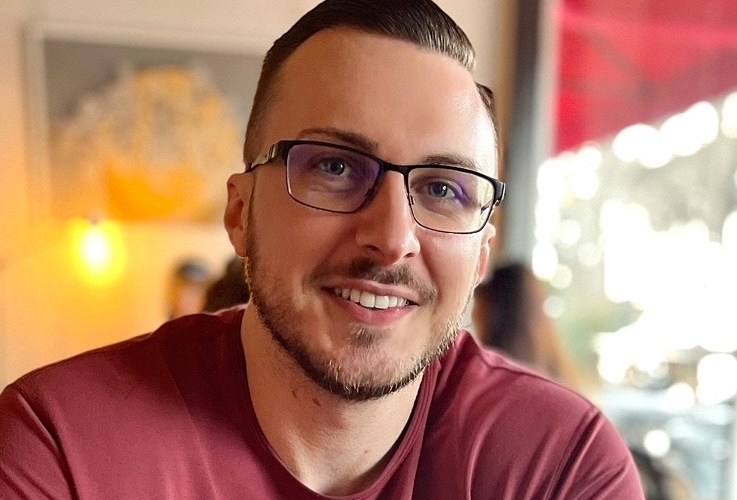
Kyler’s story is one of “beauty from ashes”. He lives with dissociative identity disorder, a category of CPTSD. Kyler is one distinct personality in the “system”. The adults in his life abused him as a child—would not keep him safe—and so his brain stepped in and made a way to survive. 

Kyler watched the church fail him and his family over and over, refusing to help or even acknowledge the abuse and trauma. 

“This person who has PTSD has no clue where it’s from, has all this trauma, pain, and hurt…and the church just wants to throw Bible verses and actually doesn’t want to help you.” 

Today, Kyler is a completely different person than when he was young. He’s now free to embrace his whole self without shame and fear, and the future looks radiant. 

Links

988
https://988lifeline.org/

Recovering From Religion
https://www.recoveringfromreligion.org/

Secular Therapy Project
https://www.seculartherapy.org/

Recommendations

“Go have actual conversations with people.” 

Stormlight Archive series by Brandon Sanderson

Quotes

“If you want to lose your salvation…go to bible college. It’s the best way to do it.” 

“For me, deconstructing wasn’t so much…moments of research…it was more, moments of watching the church—for years—fail everybody, fail me, fail my family, just completely fail.”

“This person who has PTSD has no clue where it’s from, has all this trauma, pain, and hurt…and the church just wants to throw Bible verses and actually doesn’t want to help you.” 

“Fuck God’s plan.” 

“How can [God] say, ‘I have created you. I have a plan for you. I’ve done all these things!’ And then just go, ‘Oh well. I was there, but I didn’t do anything about it.’ That’s not a loving, caring god. That’s just a psychopath who enjoys watching things.” 

“Where [God] was real or not, whether he was the creator of the universe or not, I really didn’t care and I don’t care. I would rather, in a sense, burn in hell than spend eternity with that.” 

“[God] will never get another ounce of my praise.”

“It was amazing to see that when we just decided, ‘I’m done being a Christian,’ how much easier life got. Our anxiety dropped. Our depression dropped. Self-worth went up.”

“It’s really funny to see the non-christian community be more loving and more like what Jesus would have been than the Christian community ever was.” 

“[In fiction, you] journey with these characters, love these characters, cry with these characters, rejoice with these characters, and it gives you a space outside of trauma, a space outside of the shit that is the world sometimes…”

Interact

Join the Deconversion Anonymous Facebook group!

Graceful Atheist Podcast Merch!
https://www.teepublic.com/user/gracefulatheistpodcast

Deconversion
https://gracefulatheist.com/2017/12/03/deconversion-how-to/

Secular Grace
https://gracefulatheist.com/2016/10/21/secular-grace/

Support the podcast
Patreon https://www.patreon.com/gracefulatheist
Paypal: paypal.me/gracefulatheist

Podchaser - Graceful Atheist Podcast

Attribution

“Waves” track written and produced by Makaih Beats

Transcript

NOTE: This transcript is AI produced (otter.ai) and likely has many mistakes. It is provided as rough guide to the audio conversation.

David Ames  0:11  
This is the graceful atheist podcast United studios Podcast Network. Welcome, welcome. Welcome to the graceful atheist podcast. My name is David, and I am trying to be the graceful atheist. I want to thank my latest supporter on patreon Jean, thank you so much for supporting the podcast, as well as existing patrons Curtis, Melissa, Susan Joseph, John Ruby, Sharon Joel, Lars Raymond, Rob, Peter, Tracy, Ginny, and Jason. Thank you all for supporting the podcast, it makes a big difference. If you are interested in having an ad free experience of the podcast, you too can become a patron at any level at patreon.com/graceful atheist. I'm very excited to announce that we now have merch. Our lean has gone through all the work to set up a merchandise shop with various logos for the graceful atheist podcast. You can get T shirts, mugs, and all kinds of things. The link will be in the show notes please check that out. Please consider joining our private Facebook group deconversion anonymous and become a part of the community. You can find us at facebook.com/groups/deconversion. Special thanks to Mike T for editing today's show. On today's show. First a content warning. Today's episode includes sexual abuse, spiritual abuse, and very complex mental health disorders. If you would find that difficult in any way, you may want to sit this one out. Arline interviews our guest today Kyler. Kyler suffers from dissociative identity disorder which is a form of SI PTSD. And this stems from the sexual abuse that he experienced as a child as well as the spiritual abuse that he experienced. In Tyler's words, his story is one of beauty from the ashes. Here is Kyler telling Arline his story.

Arline  2:18  
Kyler Welcome to the graceful atheist podcast.

Kyler  2:21  
Thank you for having me. I appreciate it.

Arline  2:23  
I'm excited to hear your story. You and I have actually connected in real life through your wife. And yeah, I'm excited to hear your story. You and I were just talking before we started recording. Is there any background you want to give before I you know before I say okay, what Tell me about your spiritual life growing up?

Kyler  2:43  
Yeah, so I think that, like it's going to be kind of up to like my story kind of almost has two stories, in a way because so 2018 I was diagnosed with dissociative identity disorder, which for some people know it as multiple personalities. It's also sits in the C PTSD category, versus just PTSD. And so my story is a little different, because the first part of my life is almost seen from one perspective. And the second part of my life is kind of seen from another just via the way DoD works. And so there's kind of this what's the word I'm looking for? It's just it's just to kind of different perspectives where it's kind of like an on off switch in a way.

Arline  3:43  
Okay, I think people are going to resonate with your story regardless of yeah, oh, this, this will be awesome. See PTSD, but what does that students that's,

Kyler  3:53  
that's this essentially is essentially complex, PTSD, post traumatic stress syndrome. So that's kind of what they take something like di D, which is a diagnosis that PTSD fits in, but it's more so complex. It's just a complex version of it.

Arline  4:14  
Okay, I've heard and tell me if I'm wrong. I've heard Laura, Dr. Laura Anderson say, CPT, PTSD is like, there isn't a beginning and an end. It just, it's not like there's a traumatic event. It's like this. You can't know for certain when it started and ended.

Kyler  4:31  
Yeah. So where is it CPTSD like so specifically with DoD is usually an extended period of abuse, whether that's sexual, spiritual, physical. Oftentimes, it comes from the sexual abuse side versus the other ones, but it can. So it's an extended period of abuse, usually at a young age and so that That's so that's where you can't really pinpoint a day and go on this day. You know, it's just a build up of trauma.

Arline  5:12  
Okay, that makes sense. Okay. Well, Kyler thank you again for being here and tell us about the religious environment that you grew up.

Kyler  5:20  
I think I was one of those, like homebred Christians, you know, in a way, where, you know, you're the son of a wannabe worship leader, who's the son of a pastor, right? And I grew up very, you know, church from the beginning, baptized at a young age, all of that kind of BS that goes along with that, right. And so we started so like the first part of our, I guess life as a as a child was very much in the Nazarene church, which is kind of a lose your salvation. If you sin, don't ask God for forgiveness, you're probably sick and die, you're probably going to hell kind of deal. Oh, wow. Like not even like a you don't even get like a 24 hour kind of grace period, you know? Yeah, yeah. It's it's definitely a you know, every Sunday is a call to the altar every Sunday, you got to, you know, it's not quite Catholic, where, you know, you have to go in and talk to a priest, but very much a, you know, Sunday at the altar call, make you feel guilty. Then we, then we jumped on the reform train.

Arline  6:41  
So that's a big jump,

Kyler  6:42  
it is a big jump right to go from one to the other. Part of that is due to my parents getting kicked out of most of the churches we went to, for some reason, and I have my guesses as to why we got kicked out. But I'm not quite. I'm not quite sure. The reasons why we always had to leave. The few that I can remember, were mostly them yelling and screaming at people as we kind of left kind of deal. But then we went to Calvary Chapel, which Chuck Smith kind of this in the 70s I think it was kind of started evangelizing to the hippies kind of deal. And they're very, I looked up the word because I wanted to know what it was expository teaching. So instead of doing Yeah,

Arline  7:37  
it's not topical with like, you just go through the whole

Kyler  7:40  
book. All that fun stuff. So that's kind of the environment we grew up in as a kid in early adult was this kind of homegrown Christian you didn't really have a choice you were kind of saved out of you know, just living in a Christian home quote unquote, Christian home

Arline  8:09  
Am I right? Were you homeschooled also

Kyler  8:12  
Yes. Yeah. So homeschooled was added on to that so that adds a whole nother layer of Yes. We were we weren't like the you know, the long skirt. You know, homeschoolers, we like to think of ourselves as the cool homeschoolers when we were okay, but yeah, homeschool added a whole nother level. So obviously all my education came from a biblical background and a biblical you know, topics and you know, all the curriculum is biblical, all that stuff. So,

Arline  8:53  
oh, yes, you are not the first homeschool adult homeschool kid to be on here. Oh, heavens.

So is this high school college like, what's what's happening

Kyler  9:11  
all the way up until high school. We, in a way dropped out of school, but also didn't we had enough credits technically, to graduate but our mother would not let us and so she wanted us to do a whole nother year. And we said fuck that we're gonna do it. We weren't they. I didn't move with them. And I did the real stupid thing and went to Bible College.

Arline  9:41  
Oh, also not the first one.

Kyler  9:45  
I've gone to college. If you want to lose your salvation for anybody listening, that's a Christian go to Bible college is the best way the best way to do it.

Arline  9:53  
And why do you say that?

Kyler  9:55  
The the amount of Jesus that they throw at you is like like drinking from a fire hydrant. And so you just kind of get one you start to, I think dive into more of the the history of the Bible and you start to find more questions, or you start to learn about the Greek and all that and you start to go, Wait a second, this. This doesn't. That doesn't make sense. Like, yeah, as a regular Christian, I think you can just kind of see the top layer of things and not dive too deep. When you start to get into like, where did this come from? Where did that come from? You start to go ahead. Does that make sense?

Arline  10:44  
Yeah, that makes sense. I, I did not go to Bible college, I was not a Christian. I didn't grow up in it or anything. I became a Christian in college at a public university. So the heathens were all around me. But Jesus found me. And so I did not have that experience. But I have heard multiple people talk about like, you learn how to study the Bible. You learn exegesis, and hermeneutics and all this stuff, and then all of a sudden, it's there more questions come that don't have really satisfying answers,

Kyler  11:16  
have no satisfying answers. The problem is you, you start to realize that it's just a book written by people. And you start to really get into these questions that there the Bible College is trying to teach you one way, but you're starting to look at and go, but you don't have an answer to any of these other questions. I'm asking, right, like, I get what you're trying to teach me. But let's, let's hold up here and answer this question. And they're just like, ah, you know, trust God, and you're like, No, that doesn't work.

Arline  11:48  
And it's like this weird. Use logic and Bible study tools and all this on the one hand, but then when the questions get too difficult, it's like, Oh, you just have to trust the Lord. Like, I don't have a rule gets to pick Yeah, who gets to pick? Which questions get answered? And do I

Kyler  12:03  
use logic? And what do I do? That's probably what got me into the most trouble as a kid in the church to was always wanting to, to ask the why question, right of why, why this? Why that?

Arline  12:16  
Okay, so you went to Bible College? did was it? Was it a good experience? Was it not a great experience?

Kyler  12:23  
It was, it had, it was a lot of bad on some good, I think, I think they were like, it was bad to the point where like, the person of the Bible college, tried to get go as far as like controlling things like the, the relationship I was in with Lily, my wife at the time, when I would ask questions about our personal life and intimacy and you're just kind of like, oh, wow, it's kind of none of your, your business, you know, what I would do, but surprisingly, the missions trip that we did at the end was the best experience of Bible college that there was, it was a really cool experience for us. We went to Kyrgyzstan when it was overthrowing its government. And so we were there as the riots were happening and as as this government was being overthrown, so it was pretty cool to experience some of those things it was kind of like a nice this is the real world kind of experience looking back you know, obviously in the moment it was this great ministering opportunity right we're oh man the Lord blah blah blah this and that.

But looking back now I can go so it was a real world moment for us to just kind of go

learn a lot and look at the world and I think a different point of view it's kind of how I view that moment now versus you know, the Christian way you would view it in the moment

Arline  13:59  
Yeah, that's that's huge that's a country that does not come up in American news very often to know anything about what's happening so that's awesome that's

Kyler  14:08  
it's technically a third world country so it was there were some cool experiences of getting to see these nomadic people and getting to drink glacier water right out of mountains kind of do a natural hotsprings kind of thing but like the outside looking in it was it was a big I think real world moment for a very delayed you know, young man at the time

Arline  14:35  
Yeah, because homeschooling to Bible college to yeah completely different culture in a different on a different continent everything

Kyler  14:43  
yeah

Arline  14:52  
so you said that was at the end of Bible college

Kyler  14:55  
that wasn't the in the Bible College.

Arline  14:56  
Were you in literally married yet had or what happened? Next out

Kyler  15:00  
So, we got engaged while I was at Bible College. And so we had been dating for a while. And Bible college only kind of happened because I had planned to play baseball my whole life, but blew my knee in, in high school. And so kind of lost all the opportunities. I had to play baseball. And so we were kind of dating, we were dating, went to Bible college got engaged, and they got married the next year, I believe, yes, we got married the next year.

Arline  15:39  
You have to check the timeline.

Kyler  15:40  
The jag the timeline is terrible with dates, I'm terrible with dates due to just like numbers. And the a timeline for me can get very mushed up and very messy. Just due to the way D ID works, so

Arline  15:56  
Okay, so the DI D diagnosis did not come, you said till 2018. So what's happening in between these years? Like, is Christianity still working for you?

Kyler  16:05  
So this is kind of where I think the added that for me, deconstructing wasn't so much. Like these moments of research or moments of like, it was more a moment of watching the church for years fail everybody and fail, me fail, my family fail.

Just completely fail. And so during this time, there were there would have been three kids born. So two kids born, one was born after my diagnosis.

There was a lot of, I think, pain and hurt and anger on my side, and not knowing where to direct it. And not knowing where to, and not getting the answers out of the out of anybody, church world. Nothing. There were there was a suicide attempt, in a way, a very, not so much more of a suicidal ideation that was with the plan, and with a desire to do. I did have two attempts as a teenager that obviously failed. I'm not very good at it.

You know, look, you know, hindsight. 2020 I'm glad that I'm not over three. With that. So there were you know, there was a psych ward visit, and lots of attempted therapy. And then and then finally in 2008, some are sorry, 2018. There were the right people in the right place to kind of step in and help with what was going on. Good.

Arline  18:07  
And so you said Christianity had been working for you. But you said the deconstruction, you said the church was failing people was it just personally or so

Kyler  18:15  
a little bit of there were several things so failing, in the sense, so we went to a church here in Atlanta, that was very, I'm gonna say yappy. So lots of people who, you know, had money, and lots of people who now not works based, but we're looking at it you could definitely there it was more of a like, throw your money at people instead of helping prosperity gospel, not so much prosperity gospel as much as you just have all these rich people who said, Well, why don't I just give money to these people instead of actually going to? I see. You know? So one of the big ways that we mean Lily got failed, the church failed, I started to fail us on the beginning was our second oldest son getting diagnosed with anxiety and Asperger's. And the church had no answer or care to help us. They watched us constantly sit outside the sermons because he couldn't be in them. He couldn't we couldn't take him to childcare. And they just didn't do anything about it. It just didn't care. You know, and so we sat silently suffering in the church while they just kind of did their crap and let us get out there and didn't didn't do anything other than try to tell us you all you let your kid cried out or, you know, that kind of thing. And so and then it also failed in the form of, you know, wanting to get messy with people who Were messy, right? They, they wanted to be a church, they wanted to be a place that you know, let messy people join. But they, they wanted you to join so you could become right. So you could change they didn't want to. I think they tried to deal with your mess, and all the shit and all the baggage that you carry, but they really had no answer for it. And they just wanted to point you to this counselor, this Bible study or this men's group or this and it's like, no, I've got questions about why I was, you know, sexually assaulted by 10 plus men that I don't, I don't really give a crap about your, you know, your Bible study I want to, but which, at the time, you know, I didn't exactly know about all of this, because the way di D works is, it will suppress those memories. And so I'm this, you know, person who has PTSD has no clue where it's really from, has all this trauma, and pain and hurt and has no clue what it's from. And the church just wants to throw Bible verses and stuff at you doesn't want to help you. And so, that was kind of the the, the biggest failing kind of happens after we got our diagnosis of di D. So that comes a little later in the story. But the failing where I kind of lost my shit on this church and pulled every every elder and the pastor side that I knew, cussed them out and said, screw you happened a little later in the storyline

so what kind of happened was I I struggled a lot with depression, self harm. Just feeling like a worthless piece of shit. Really, honestly, and not really knowing why and life that why have these feelings. And we kind of had this, we had the car wreck. And that kind of brought forward for the for us at the moment that there's these people in our head talking. And they're different people than who I am. Right? Okay. I don't recommend the movie. But the movie split, we were watching and afterwards, the personality at the time when that's us. That actually happens in our mind, like, what's happening in this movie that that happens. And so we started to walk down kind of a path of seeking how to get help for that we had gone to a, a Christian therapist, who the next few people I'm gonna talk about if more Christians were like them, we'd still probably be Christian. Like, the type of people where you can actually see love and kindness and just general want to help you right? Like if if the church was like them, holy shit. They would move the mountains that they think they could, right. And they would be the the force for good that they think that they are. We did a personality test before we had our diagnosis. And the guy was like, I need you to do another one. And we're like, okay, and we did a second one. And it didn't match up. Oh, wow. Yeah. And so he was like, as a as just a counselor. He couldn't exactly diagnosis with DD multiple personalities. But he was like, Yeah, I think you I think you might have this right. And we just kind of blew it off because it wasn't until after the wreck and after Valentine's Day of 20 2018 where we got our official diagnosis. After we went to the psych ward again and got a diagnosis the at the same church we're at that was treating us like crap, right? They brought in a new counselor, who was actually educated was actually schooled on trauma and schooled on therapy and all of these things, right, like an actual licensed professional was brought into. And she was amazing. She took the she was willing to I might get emotional here but she was willing to take the message ship that was us and go let me let me fix let me help you Not let me throw money at you. Now let me I mean, the the amount of time she put into us was amazing, you know, and I have nothing, nothing bad to say about her, right? Like, she never did anything in my eyes that she really was, like I said, if more people were like her more people were like the other counselor, I think there's a chance we'd still be a Christian, right? Maybe? Probably not. We asked him any questions. So we get diagnosed with our di, D, and then we get on medicine. So we got on a ton of antidepressant and, like, help medicine to help with sleep. And from there, this is kind of where the story takes a little bit of a, here's the second view on our life, because now enters all of these personalities, people who are, you know, different ages, different genders, different sexualities in our mind, right, same same body, but it's almost like you've have 10, roommates, 13, roommates sharing headspace, but living with one body, right. And it was very chaotic for a long time. When you have personalities who are now able to be themselves, and they feel pain, they feel anger, they don't necessarily want to be married, they don't want to be a father. Or they're nonverbal. They don't talk they're, you know, they're within a DI D system called littles. And so they're, you know, five, six years old, they don't they're not, they don't have to communicate these things, right? They just know that they want to a stuffed animal. And to be comforted. They don't know what they don't, they don't want to raise children, right. And so you it switched from it's kind of weird, because Kyler is actually the the person that was hosting at the time up until we had d&d host being the main person who runs the system, or the main person who you see in front of you every day, who does your day to day things, it can look very different. For everybody who has the ID, right, the way a host works can be the person who just does your daily tasks to the person who, who is, you know, out there, the majority of the time for us, it was the latter. He was more of a Christian. And he was more he was the one who Lily really dated, and Lily really, in a way fell in love with. And it had been his life that had been being lived, essentially up until that point. So enter all of these other people who want to have their own lives, including myself, right? And I know that can be a little confusing the whole Kyler and me being I still go by Kyler because it just makes the most sense, right. But I do go by a different name internally in the head, in this system. But it you know, Kyler decided, in a way to leave to just be done as an as an altar. And that kind of threw a big wrench into things in life, right? Because here you have me, who is a part of a system has not necessarily been I've been there the whole time. I've seen all this stuff. But I've seen it from an internal point of view. And I don't believe in God at all. So here's where that kind of switch was of he's gone. I want nothing to do with the with the church. And this kind of came after a very close friend of ours at the time, their daughter was molested within the church by somebody in the church and it was swept under the rug. And I still to this day have immense anger over it like to watch people I respected at the time or were respected at the time to watch and it was it was swept under the rug because the teenager that did it was the son of the best friend of the pastor.

Unknown Speaker  29:51  
Okay, and

Kyler  29:54  
I found out because obviously it's one of my closest friends at the time. It's his daughter, right like there's no Like, he was afraid, I think, at first to tell me because he knew I was gonna lose my shit. And I did. I watched them, let this family fall off the face of the earth and just say, Fuck you, we're just gonna leave you, we're gonna cover this up, we're gonna let you bleed dry, and we're not even going to check on you. We're not going to see how you do and we're not going to make sure your daughter has you know, therapy, we're just going to kind of sorry, that happened, blah, blah, blah, just trust God

when I found out, I individually pulled aside every elder, this was me and Kyler at the same time doing this as in a way of, I think just pure anger of calling, you know, called them out as cowards, as poor leaders. As you know, why would you let you have a wolf in sheep's pen? You're supposed to be the shepherd. How dare you, you know, kind of do Real men don't do this kind of thing. Like, you want to be some real Christian man. Go fuck yourself. Right? Like, and when I say I knew all the eldership I knew all the eldership like, we were. I didn't know we were always that guy. That was friends with everybody but never quite ourselves. The elder Right. Which I'm so glad we never were but and then the pastor in the same thing. pulled him aside, told him he was a coward. How dare you cover this up? You know, how do you get this quiet, and not help this fan, I was more upset about the helping the family than I was the keeping it quiet. I just kind of assumed that that always happens in a church. Right. But the whole the whole, just letting the family that suffered. Get hurt was too much for me. And that was kind of my me as somebody as an altar. would never, you know, even if I had been considering Christianity at the time, I never would have after that. Right? And then to see Kyler at the time, that was his just kind of like the world sucks. I'm done with it moment. You know why? Why? You know, we've asked all these questions. We've not gotten the answers. When we get answers there. Just trust God trust, you know, it's God's plan. Fuck his plan, you know what I mean? Kind of be like, yeah, if that's his plan, I want nothing to do with it. Right? If his plan is to let children be molested, if his plan is to let go, you know, the glory of himself come out. Because somebody's dad couldn't keep it in their pants, then fuck him. Like, I really want nothing to do with that. And so that's, you know, that's kind of the breaking, I guess the moment for us where we were just done. We just just just as a, as a whole, as a system. We just this, this was the biggest failure you could have is to let this little girl get treated that way and then not do anything for her. I spent my whole life having nobody there. You know, you know, my questions for the church, you know, through this time, right? We were asking earlier about, you know, what was going on during this time? Part of this, my questioning was, Where was Jesus? When I was being molested? Where was he? Was he sitting in a room watching me? Because if so, that's, that's just why why would why can't How can you say you're right? How can you? How can you say I have a plan for you, I've created you. I've, I've done all these things and then just go, Well, I was there. But I didn't do anything about it. Right? That's not a loving, caring God. That's just a psychopath, who enjoys watching things. You know? If somebody did that, as a human being, they go to jail. Right? Absolutely. Why would I worship somebody like that? Right? And so, I don't know, if we just decided, like, you know, what I was saying earlier about how some people do the research, right? And they discover God's not real or they, you know, they, they have these moments. That kind of lead. I just, I more or less decided I wanted nothing less to do with God. And I wanted nothing more I wanted. I wanted to be as far away from his plan, quote, unquote, or his Um, desire designed for me, you know, as I could, because that was that's just bullshit. Whether he was real or not whether he was the creator of the universe or not, I didn't care. I don't care. You know, I would rather in a suits burn in hell than spend eternity. With that. You know what I mean? Yeah, no,

Arline  35:25  
I very much understand that that was a big part of my husband's deconversion was just realizing like, if I'm a better parent, than the god I'm supposed to think is like, all good and all knowing and wise and loving. But I treat my children way better than he treats his creation like, this isn't I should not have better morals be more ethical than the god I'm supposed to worship? And he's like, even if God is real, I don't I'm not going to worship him. He's not worthy of it.

Kyler  35:54  
Yeah, no, I definitely. I said that same boat of just like, you'll never get another ounce of my praise my, you know. And, you know, it's just, and then, you know, then you add on to knowing what I learned in Bible, what we learned in Bible college, knowing what we knowing that there was just never these answers that we asked all these questions. Oh, this doesn't make sense. Why? Why were you allowed to sleep with your daughter in this part of the Bible, but now you can't hear? Like, why were you? You know, all these things? Like, you know, that just, there's Adam and Eve, they're the first creator. And then like, their kids go off and meet other people. Where did they come? Yeah,

Arline  36:38  
wait, yeah.

Kyler  36:40  
Are we gonna just skip where they created? Did these kids? Do you know that these kids have to have sex with their parents to have other kids to grow more? Like, just, if you read the Old Testament, it's fun to read and all that right. It's probably the scariest book you could ever read is the Old Testament.

So you just add on in all of that, and we just decided we were done. And then about, I would say, probably about three years ago is really, three years ago is where I as an author started hosting and started taking over right, that's 2020, kind of during the crazy pandemic, where I think everybody nowadays has a story of how they're like how it changed their life, right? Everybody seems to have a cool, crazy, or a fucked up story right? Up 2020. That's where I kind of really started to become who I am today. We stayed on our medicine up until about until about six months ago, I think it was now we were just on such a high dosage that we couldn't, we either had to change medicines, we could do more, or we had to figure something else out because we were on so much Anna depressants and so much. But it was amazing to see when we just decided I'm done being a Christian. How much easier life got just our anxiety dropped, our depression dropped our you know, self worth went up, skyrocketed. And not in a cocky way just in like, Oh, I'm actually worth something. I'm not this, this piece of shit that needs this person to tell me every day that I'm, you know, his and loved by Him, right? Like I in myself can just be this. This loved person. And we watched our happiness go up, we watched our joy continued to rise, we watched it was a transition for us and other parts to come out. Right? It was a transition to go from being you know, just alters in the head to now having to run the show. And having to manage that and having to having to figure out how that was going to work with other parts. And a lot of it came down to just wanting to be the dad that we didn't have for these kids that we had in the house. Right? Not wanting to see them grow up and then you know, Lily, just being fucking amazing and pouring herself into us and being there for us. And, you know, lots of people, you know, our, our mother in law. Father in law, stepped up in ways that became parents where we didn't have them, right. Friends stepped in and just said, Hey, I like you no matter what you choose, right like, I, you know, having people embrace the the DI D side of our life is I think also what kind of helped was just they were just like, oh, not none of the Christians would have. Actually when we were a kid, we had a kind of an incident that happened. And I won't get into details of that, because it's kind of gruesome. But one pastor actually tried to tell us we had demons inside of us. Yeah. And so I would imagine

Arline  40:31  
that I mean, what other explanation?

Kyler  40:35  
You don't remember doing this for three hours long. But you did it was a demon, obviously. Right. And so, you know, tried to have those cast Alamy and prayed Atomy and removed and all that I'm so sorry. Well, I didn't work obviously. Now, we

Arline  40:50  
first had to think about little, little Kyler

Kyler  40:53  
was I was a teenager at the time, so I wouldn't as little but I definitely the abuse for me stopped at like, the sexual abuse for me. Because there's, there's sexual abuse, there's spiritual abuse within the church, and pastors and that kind of stuff. There's physical abuse from my mother and verbal, like, emotional abuse from her. That kind of was on and off, but also, she was being abused by him. We refer to him as dipshit. So I have to pause every time I say. That's why because we just call it dipshit. So the abusive dipshit, you know, that stopped at like about 15 When we put them in the hospital for taking his knee out in a fight. And we were just done with it. And it just kind of kind of stopped after that.

Arline  41:45  
Yeah, you can only abuse someone as they're growing up until they, yeah, are, yeah, grown men.

Kyler  41:52  
And, you know, Kyler at the time, didn't remember doing that to him. Whereas, you know, parts in the head came out as protector and said, Listen, now we're done. We're just Yeah. And so, so up until 15th. The abuse is where it kind of stopped and it was, it was kind of just him as a teenager. But he shared us with other people. And we were also be inspired doctor, we were abused by people within the church too. So youth pastor, music pastor, worship leader, I should say, at the time and and then several other smatterings of just I guess random abuse I don't know. I don't know if once you're abused you just kind of have this target on your back that makes you look like oh, that kid probably would let me do something to him without you know saying anything right. I was going somewhere with this but it completely just escaped my brain as to where I was going but

Arline  42:58  
it's okay you were you were just going back to think give some more backstory to the abuse like where all that had happened.

Kyler  43:08  
It was kind of a you know, a lifelong thing until we were so you have all this childhood abuse that you can't I never really told you I'm a bucket of trauma. Which is funny because you've got this you've got this childhood abuse and then you've got the shit that just happens is bad luck shut the atmosphere as adult you blow you blow your knee twice you lose a you have a miscarriage that tears that rip you to shreds right literally we had a miscarriage I was on a flight the next day to find a place to live here we move here the job I was moving here for leaves me says Now we're not actually going to hire you but they go under completely under so we didn't get reimbursed for anything so we're just kind of stuck here in Atlanta and you just start to it just all starts to kind of add up right a car wreck just we had we owned a house that just seemed to plumbing just seemed to never want to work it just it just kind of was all you know you have all this stuff that as you get older is kind of adult stuff but you pile that on with the childhood stuff and it just plumbing overflowing into your sink becomes a way bigger deal than what it should be you know yeah and that kind of goes back to to some of the church stuff is like they were never willing to like help you with that they just want to throw money at you. I'll just get this fit here here's money to go do this here's my to do that never wanted to come in and you know help but

Arline  44:46  
yeah, giving up their time and their energy versus just throwing money which

Kyler  44:51  
is amazing to see the the non Christian community almost feels the not the opposite. Now that they won't get money but man Yeah, but it's like oh, You got a problem with your 3d printer? Cool, let's let's hang out. Let's figure it out. Let's get it done like, Oh, you got a problem with your, your plumbing? Oh, I know somebody let's come over and help you get it fixed right which is it's really funny to see the non, I'm gonna call it the non Christian community be more loving and more like what Jesus would abandon the Christian community ever, ever was.

Arline  45:23  
man Yeah

So where are you now spiritually like, What? What? What do y'all believe or not believe?

Kyler  45:39  
I don't know. That's like,

Arline  45:42  
but isn't it nice to just not know and you don't have to have an answer. That's the

Kyler  45:46  
I think that's, that's where I'm at is I'm comfortable? Like people would be like, you know why ask you? Well, why don't you want to know what you believe? No, I don't actually, I think that allows me to be a more open minded person. And allows me to have better conversations with humans and better conversations with individuals just, I don't come from a prejudiced or a pre notion of what I believe and saying, what No, it's this. So when you talk with someone who's Muslim, or Jewish, or you talk with someone who's, you know, a witch, or a Wiccan, or, you know, all these things, you can really just have a good conversation about getting to know them and what they believe. And you don't have to worry about trying to convert them to anything. And I'm okay with them. And I'm okay to be wrong, too. I'm okay with if, like, if I died today, and I was wrong. Okay, cool, right? Once saved, always saved, right? If you're not Nazarene. And so I just like, I've kind of go with the flow, right? Like, I believe that there's probably I don't know if it's energy or spiritual or what, but obviously, there's something right whether did somebody Yeah, like, did somebody create us? And then just walk off? Did somebody is there someone who is a god, but maybe isn't omnipotent? Is there nobody? Was it the Big Bang? Did we just kind of randomly come out of nowhere? I don't know. You know, yeah. And I also don't know that I have the energy to care. Like,

Arline  47:32  
that's true. There's so many other things, more pressing things.

Kyler  47:37  
I rather I rather go play catch in the backyard with my son, then fuss over or worry about creation or existence or, which is funny because we just, if you would have known, if somebody from our past saw who we were today, they'd be shocked that I wasn't willing to sit and apologetics was a big part of who we were. We could argue like, it's funny, because that's probably part of, of what led us to ask why a lot was we just maybe so we could we get out think pastors at a young age, apologetically, I could, you know, I could put pastors in their place apologetically, as some 10 year old, who's got some guy from seminar, who I know understand more about the Bible, and I can argue it better than you can, and I can disprove your Nazarene or your Baptist or your nondenominational belief. Easily, right. So if you saw me now, if you saw this guy who just kind of doesn't care, obviously, you wouldn't understand what the D ID thing, right? But you also you'd be I think you'd be shocked because I just, it's so hard after like, after, after all of that crap, you just want to be, you just kind of want to take a break. Like, maybe one day, I'll get to a point where I want to look at, or read books about spirituality or want to, you know, dive into, you know, energy or, you know, crystals, I don't know, but the way that their options,

Arline  49:25  
yeah,

Kyler  49:26  
but and it's like, you know, we're all if you think about it, we're all you know, Christians call it prayer. Scientists call it one thing, you know, other people call it, you know, putting it into existence, you know, it's all it's all the same. It's just a matter of kind of what perspective you come from, with it. And for me, I'm just at a point where I think it's better for my life for us as a human for us as a father for us as a partner to just not spend time diving into it because it's just exhausting, right? To try to try to know what you believe right to know what you know. And to know. It's just I'd rather just have fun conversations like this about belief and about, you know what you think, then try to figure out and pinpoint exactly what I believe. Yeah,

Arline  50:17  
I love it

is there anything I should have asked that I didn't ask that you wanted to talk about? We have a few more minutes. Yeah, I feel like I rambled

Kyler  50:33  
a lot. But I think I don't know if there's anything you should have asked that would assume you did something wrong. But no, I think that it's our story is hard to tell, because the DI D throws this wrench into it of like, he, you're not who you were back then. Right. And so you have this whole story that almost can be crumpled up and thrown out the window, because I'm not that person. And I came in as a host as an altar at the time when we needed to just step away from the church and we needed to not be and I was I have no no qualms being that guy and going, Oh, fuck you. were gone. Like, I'll pull us out of any situation and just be like, and that we're good. Forget it. So I think, you know, for us, it was it's just sad to see. The church, it's always sad to see the church fail people in the mental health perspective, right. Mental health is such a big deal. And it feels like the world could be at a better mental health place if Christians would take on a better view of like the therapist who who helped us if the Christians had that view. Oh, my goodness, man, what a what a place we'd be in right now. We'd be in a great place. But everybody would I think. So it's, you know, it's hard to watch sometimes I think and look back and go. The worst part is when you look back and go, Man, Did I really say that at one point in time in life like that? I really fucking tweet that. Like, did I did I, you know? And I think so the other thing I kind of wanted to talk about too, is I think, I used to be very homophobic. And a lot of that came from, I think, a couple things. One, you were raised in the 90s. Right? I was so everything was gay. You desegregate everything.

Arline  52:44  
Right. Yeah. It was an insult. Yeah, it was,

Kyler  52:46  
you know, if or if you didn't like it, it was just gay. Right? Yeah, I grew up, you know, because they're a Christian. So obviously, you're told Adam and Eve, not Adam and Steve, right. And then you add on trauma from men. And so all you see is men who, like men are bad men who like men do bad things, right. And thankfully, at our first like, job we had was Starbucks, we constantly had to work with these two gay guys, and they were very willing to take our crap. And let us ask some questions. And let us let us talk about it a little bit. And let us just kind of realize that not all cats are black. Right? And the logical the logic puzzle, you know, that just because these people did that, and actually the gay community aren't the ones that actually it's the ones that pretend to be straight. Yes, that are the ones that do the harm. Right? Harming children. Yeah. And so for, I think, after, you know, we've grown to be very big supporters of the LGBTQ plus community. Within the last, you know, 10 plus years, I think even III think even Kyler coming up with starting to realize and see those things and, you know, you loved the, or you hated the, what was the Hate the sin not the sinner, kind of crowd was, that's how he used to look at homosexuality, but I think, you know, as we've healed and as we've grown, we've been able to, to become very passionate supporters for that community and, and even, you know, find it pretty hard with nowadays, political stuff going on, you know, to not to not feel the the feel what they're going through and stuff and so it It was, it was really hard, I think at first to overcome that. But as we walked out of the church, it became a lot easier to embrace that community to love that community to almost feel like they're the better community. In a way, the more loving community, the more the Kinder community. And so it was. It's been nice to, to also look at communities and people differently and go, Oh, wow, I got this wrong. And you know, wow, that that tweet in that Facebook post pops up in your history right in Facebook, and you're like, like, Oh, yes. Did I really say this at one point in time in life? Like, man, I'm sorry to ever saw that, you know?

Arline  55:49  
Yes. Yes. The stuff we believe the stuff we preach the stuff we thought about ourselves and others, it's Facebook memories are not always fun, sometimes are wonderful, but

Kyler  56:01  
rarely, rarely for us. Are they? Are they? Okay, they tend to bring back some stuff, you know, it's like, they don't for us, you know, we didn't know. So at the time when we got married dipshit was in our wedding. Right? And so like, I can't look at any of our wedding pictures without getting triggered and stuff like that. So, yeah, it's it sucks. But going back and looking at those times, you just, you just you want to vomit or be like, Man, I suck. So hard. Yeah, I'm so glad I'm not bad anymore. Right? Yeah,

Arline  56:37  
you're a different person.

Kyler  56:39  
I'm so glad I'm converted from being converted.

Arline  56:42  
I like it. Kyler thank you so much for for telling your story. Last question. Do you have any recommendations that have helped you in any part of your journey podcasts, YouTube videos, books, anything?

Kyler  56:55  
I think the majority of my helping has has been, go go have conversations with actual people, and other books, podcasts and all that are great. But like, for us, it was getting into the nitty gritty with real people. And, you know, surprisingly, I guess I will say this, if you've ever read the Brandon, if you've not read the Brandon Sanderson series Stormlight Archives, right? That's a big, that's a, that's the nerdy part of our journey would be those books gave us an outlet to, to cry to feel. And that deals heavily with PTSD and actually has a character that has dissociative identity disorder in it. And there's a part in one of the books where we just I think it's the hardest I've ever cried in my life. And it was actually a pretty healing moment for us to just to read it and see it, right. So fictional books, yeah, I guess a bit, but a lot of talks with close friends or, you know, people just loving us. People not giving a shit, that we're this weird person with multiple personalities that they just, they just want to get to know us and maybe even some of the personalities. You know, Kennedy also. Yeah, I guess I'm not the most learned of people on on your podcast, but for me, it was fictional books and conversation with people, I think is what I recommend.

Arline  58:31  
Now, I love it conversations with people like how I'm a huge advocate for reading fiction, because there are people who will only read nonfiction, which blows my mind. Like, I just think about fiction books. Like for me, things like Jane Austen written, you know, over 100 years ago, still funny and still clever, because people act the same way like the same societal things and issues and so, so fiction is a fantastic way to understand yourself and other people.

Kyler  58:58  
Yeah, well, and fiction to fiction that's not written within, like, the world we live in. Now that's written in its own kind of world, and that space is never going to get it's never going to get outdated. Right? Like, it's never gonna have like, well, that doesn't make sense now, because we have TVs kind

Arline  59:14  
of thing right? Oh, that's interesting. That's a good point. Yeah, it just

Kyler  59:17  
kind of stays in its own time frame. And so you can you can get lost in these worlds. And people like Brandon Sanderson and that and multiple other alters he just happens to be my favorite. Give you a space to get lost in and heal at the same time. And to get lost in and journey with these characters. Love these characters. Cry with these characters rejoices characters, and it gives you a space outside of trauma gives you a space outside of the ship that is the world at times to just kind of go. Let me dive for five hours into this book. Love it, find a place to just kind of heal it and enjoy.

Arline  1:00:01  
Yes. Oh, I love that explanation about fiction. That's yeah, I love it. Well, thank you so much for being on the podcast and have a fabulous day. Kyler

Kyler  1:00:11  
Thank you. Appreciate it

Arline  1:00:20  
my final thoughts on the episode. I am really thankful for Tyler's authenticity, his transparency, his willingness to tell their story. It breaks my heart when I think about like him when he was little. And as a teenager and the the abuse suffered. I don't even know the reasons you know, you don't. You don't always know the why things happen. What adults were thinking when they did these things, or allowed these things to happen. But like, who he is now who is grown to be and the partner that he is that dad. It's amazing. What getting away from religion getting away from abuse. It's amazing how hold and full and happy and even clear minded. One can be calm, when you don't have all the extra anxiety of Why is God not taking care of me? Where is God in the middle of this? Why hasn't God done something? How is this loving? Like it's just it's so much and it's amazing what our brains like the lengths our brains will go to to keep us alive. Here his mind did so much to keep him alive when he was little as he got older into adulthood. And it is just amazing. Our bodies. They're just amazing. Yeah, to keep him alive. I think I think my takeaway for myself personally is just a another reminder of how great fiction can be for people. Just being able to have a world that you can get away to, even if it looks like our world, or if it's completely different on a different planet or in this made up realm. It's good for us to be able to go places and like he said, weep and rejoice and have all the emotions, but it's safe to be afraid, but it's safe. Fiction is just wonderful, amazing movies, books. Any kind of wonderful stories, true stories also. Anyway, thank you again, Kyler. For being on the podcast, I'm honored that you would tell your story.

David Ames  1:02:57  
The secular Grace Thought of the Week is simply reach out and get help. Many of the faith traditions that we have been a part of have dissuaded us from seeking therapy or psychological help of one form or another Kyler story represents that he was unable to get the help that he needed until he was on his way out. I simply want to say that that there are many ways to find help. If you are experiencing suicidal ideation, call 988 immediately within the United States and get immediate help. If you're in the middle of deconstruction and you need someone to speak to you can speak to someone immediately from the recovering from Religion Foundation, both web based and on the phone. Links will be in the show notes for that. And then finally, if you're looking for a secular therapist, I recommend the secular therapy project. You can find therapists in your area, as well as telemedicine who are not going to tell you to pray harder. Please, if you find yourself in a place where you need help, reach out and find help. Next week, we have Benoit Kim, who is the host of the Discover more podcasts. Ben was not the traditional guest for this podcast. He and I disagree on a number of things, including the fact that he is a Christian as well as his very strong interest in psychedelics in a clinical psychological setting. But at the same time, we have a lot in common what I would call secular Grace Benoit is interested in helping people become the best that they can be. It is a fascinating conversation and I hope that you will check it out next week. Until then, my name is David and I am trying to be the graceful atheist join me and be graceful human beings. The beat is called waves by MCI beats. Do you want to get in touch with me to be a guest on the show? Email me at graceful atheist at Gmail dot Calm. For blog posts, quotes, recommendations and full episode transcripts head over to graceful atheists.com. This graceful atheist podcast, a part of the atheists United studios Podcast Network

Transcribed by https://otter.ai


How Stoicism Helps

Blog Posts

This week I’ll discuss a few ideas from Stoicism and how they helped me during my deconstruction and eventual deconversion.

Before I do, I’d like to follow up on something I wrote earlier. In “Intro: Stoicism for Deconstructors,” I wrote:

It’s not my goal to “convert” you or convince you but to inform you. Stoicism is not one-size-fits-all, and I can’t know you like you know you. But having some conscious philosophy of life is essential.

I want to backpedal a bit: I’m not prepared to say that coming to some concrete philosophy of life is essential. It may be that for a long while, we need to spend our energy recovering from a lifetime of unreasonable expectations while being the best people we can be without overthinking it.

I will say that having a conscious philosophy of life can make answering some questions much easier, add richness and depth to your life, and help you on your way to tranquility.

Now on to Stoicism.

What is Philosophy?

At some point, I realized I needed to leave church, but I didn’t know where to begin. It seemed so overwhelming. Thankfully, I had already started reading the Stoics, and they have opinions on where to begin.

The Stoics and other ancients believed that philosophy was the “art of living.” People who lived deliberately and reflected on their lives were philosophers. Very different from the current perspective that treats philosophy as a purely academic discipline.

The art of living requires knowledge, so they encouraged learning theory, but it didn’t matter until you put it into practice.

Why does this matter?

Many of us grew up in a context where we were told the rules and expected to follow them. Losing that set of rules can be bewildering, to say the least. Learning to think differently about the art of living can help us make sense of an uncertain and constantly changing world.

Excellence of Character

When I was in the throes of deconstruction, especially after I realized I would have to leave the church, I can’t say I was thinking much about meaning. I was in survival mode. However, after I finally resigned my church membership, I realized I had to learn how to build community for myself and make my own meaning. For me, the Stoics provided a great starting place.

The Stoics believed that excellence of character, being the best human you can be, was the goal of life. They thought you would achieve eudaimonia, or flourishing, if you pursued this goal.

In Intro: Stoicism for Deconstructors, I wrote:

Humans are rational and social, so to be the best human we can, we must pursue excellence of character first by getting better at thinking clearly, and by practicing living well, especially in the context of the people and world around us.

This means to live a fulfilling life, we need to develop our character in the service of those around us and, ultimately, humanity.

It also means ethical action is centered around our character, not some rules handed to us thousands of years ago and interpreted by other people. Ethics, not mere obedience.

Why does this matter?

Since Stoicism is a kind of Humanism, it gives us a place in this world and provides us a tribe. At a fundamental level, there is no Us and Them. We’re all in this together. Stoicism gives us a practical way of working through that reality and helps us adopt all of humanity as our own.

All this gives us something significant to live for: the betterment of the human race. It’s actionable and direct. As we work on our character, we can see the benefits immediately as we benefit the people around us. In the words of the band Gojira, “When you change yourself, you change the world.”

Making the growth of my character a primary goal has been very fulfilling, not to mention clarifying.

Sorting Emotions

In my circles of Christianity, emotions weren’t talked about much except to warn about how untrustworthy they were. Making sense of these emotions was not a thing that was taught very much other than to direct people to prayer.

The Stoics distinguished between some key concepts:

  • Impressions. These are mental representations of the world around you. Things like “That cake would be good to eat.” or “That person is angry at you.” You can’t control these impressions.
  • Response to the impressions. These are either “yes,” “no,” or “maybe.” You can control this response.
  • Emotions. These result from that response and push you to some action. Sometimes this action is only to get upset. You can control these emotions.

Like Cognitive Behavioral Therapy, Stoics believed that your emotions are often the result of underlying beliefs.

Also, having a concept like “impressions,” which aren’t up to you, gives you a place to put intrusive thoughts, knee-jerk reactions, and other emotional-related things that aren’t under your power.

Why does this matter?

This one has been so powerful for me. I no longer feel guilty for intrusive thoughts (like unwanted sexual thoughts or imagining pushing someone over a cliff). These days I just roll my eyes and move on. No longer do I feel completely helpless to address my emotional difficulties. I can rely on the practices of Stoicism and problem-solving from Cognitive Behavioral Therapy to address the underlying issues leading to the emotions that I am having trouble with.

Planning for Setbacks

I think people generally don’t do a lot of planning for setbacks, so when they happen, they are often caught flatfooted. I don’t think Christianity is unique regarding this lack of preparation.

Because the Stoics realized it was difficult to address emotional issues in the moment, they took as much action as they could to prepare for future challenges. One way they did this was through the premeditatio malorum, or premeditation of ills.

The idea was to imagine vividly some negative thing happening, then imagine yourself handling it successfully. By the time the event came around, you’d have taken some of the sting away and bought yourself some space to manage it more wisely.

(This can be abused. If a company CEO is planning unjust layoffs and uses this technique to reduce the sting of feeling bad about hurting a bunch of fellow humans, that CEO is not being virtuous, even though they might be imitating something the Stoics did. They are not practicing Stoicism.)

Why does this matter?

This premeditation is an example of the pragmatism that I like about Stoicism. Christianity tends to spiritualize everything and, therefore, often doesn’t have consistent or reliable ways of addressing real-life issues.

Conclusion

There’s so much more, but my main goal here has been to introduce you to some of the ways Stoics think about life. Hopefully, this has been helpful to you!

We are nearly done with Stoicism for now, but I would like to spend a couple of posts talking about some practical, specific Stoic ideas.

Christian Lomsdalen: Norwegian Humanist Association

Humanism, Nones, Philosophy, Podcast, Politics, Secular Grace
Listen on Apple Podcasts

This week’s guest is Christian Lomsdalen. Christian is the current president of the Norwegian Humanist Association and a Ph.D. candidate at the University of Bergen studying the didactics (science) of religion.

Christian grew up in an ordinary Christian Norwegian family as “Christmas Christians”. He went to church for Christmas and other holidays, and that was about it. 

“I identified as a Christian…a quiet liberal Christian, probably. I guess a lot of the evangelicals in the United States probably wouldn’t have recognized me as a Christian.”

Around eighteen, Christian realized he didn’t believe in God, though he read the Bible and liked the stories. Since then, however, he has lived a humanist life. 

Christian shares many of the differences between Norway and the US, tackling religion and politics. The Norwegian Humanist Association is doing great work, and it’s a good model for other countries moving forward.

Links

Norwegian Humanist Association
https://www.human.no/

Quotes

“I read the Bible—tried to read it—and it was one of the things I read when I was bored…I had the encyclopedia, and I had the Bible, and I read them both.” 

“I identified as a Christian…a quiet liberal Christian, probably. I guess a lot of the evangelicals in the United States probably wouldn’t have recognized me as a Christian.”

“I really liked the stories; I still have favorite Bible stories…but I realized that I did not believe in the concept of God…”

“I think [deconstruction] is a nice word. I think it describes the process that I was going through…It was a slow deconstruction.” 

“My experience is that religion is not something that the state should do. It’s not a task for the state, and to give preferential treatment to one religion is principally wrong.” 

“…rituals and ceremonies are one of the glues of society; all humans do all kinds of small rituals…”

“All human traditions exist and are created in a context and evolve in a context, and that means when a secular thought system appears and evolves in a Christian context, it will have Christian values and Christian thought systems that are part of it…”

“One generation goes a lot to church and the next generation goes on some important dates during the year and the next generation [goes] even less…”

“Young families are not even ‘Christmas Christians.’ They are rather secular and that is quite a shift in thirty or forty years…

#AmazonPaidLinks

Interact

Join the Deconversion Anonymous Facebook group!

Deconversion
https://gracefulatheist.com/2017/12/03/deconversion-how-to/

Secular Grace
https://gracefulatheist.com/2016/10/21/secular-grace/

Support the podcast
Patreon https://www.patreon.com/gracefulatheist
Paypal: paypal.me/gracefulatheist

Podchaser - Graceful Atheist Podcast

Attribution

“Waves” track written and produced by Makaih Beats

Transcript

NOTE: This transcript is AI produced (otter.ai) and likely has many mistakes. It is provided as rough guide to the audio conversation.

David Ames  0:11  
This is the graceful atheist podcast United studios podcast. Welcome, welcome. Welcome to the graceful atheist podcast. My name is David, and I'm trying to be the graceful atheist. Thank you to all my Patrons for supporting the podcast. If you too would like an ad free experience of the podcast support the podcast at any level on patreon.com/graceful atheist. If you are in the middle of doubts, deconstruction, the dark night of the soul, you do not have to do it alone. Join our private Facebook group deconversion anonymous and become a part of the community. You can find us at facebook.com/groups/deconversion. Special thanks to Mike T for editing today's show. On today's show, my guest today is Christian Lomsdalen. Christian is the president of the Norwegian Humanist Association. It's one of the largest humanist associations in the world. You can find that at human dot and oh, he's also a PhD candidate for the University of Bergen. He studies the didactics or science of religion. And he's very, very focused on human rights. And what you're about to hear very interestingly, the rights of religious people within Norwegian and worldwide society. Here is Christian Lomsdalen to tell his story. Christian loves Dalton, welcome to the wrestle atheist podcast.

Christian Lomsdalen  1:49  
Thank you, David, thank you so much for having me on.

David Ames  1:52  
I appreciate you reaching out to me, I'm going to do just some highlights of your CV, but if you could fill in the details, you're the president of the Norwegian Humanist Association. You're a PhD candidate, I understand you're also a high school teacher. But tell us just briefly about yourself what you do. And we'll get into the details later.

Christian Lomsdalen  2:10  
Well, thank you, David. For my well paid the part of my life I work as a PhD candidate for the University of Bergen, which is the second largest university in Norway. Here I studied didactics of religion or science of religion, it could be used both terms for Yeah. And I do a PhD on the right to be exempted on religious, philosophical or lifestance grounds from activities that are part of the school day. So that is what I do for my professional life.

David Ames  2:47  
We need to publicize that here in the States as you can imagine, yes. Okay.

Christian Lomsdalen  2:52  
I'm trying now to write an article in English about how this right works in the Scandinavian countries. So I'm looking forward to completing data and having something to publish publish in English as well.

David Ames  3:05  
Okay. Yeah, we will be looking forward to that.

Christian Lomsdalen  3:09  
And, as you said, I'm the president of the Norwegian Humanist Association. We are the largest Humanist Association in the world, with now 135,000 members. Amazing. So that is the largest per capita and in real numbers, so okay. That is, it's something that I take a little pride in, it's

it's good to be able to be from what is rather a small country, but be a large organization in this aspect and to contribute to other people, other countries, groups, humanist groups. That is,

David Ames  3:52  
I think that's absolutely amazing. And Norway is leading the way here. So yeah, I think that's fantastic. Christian, we, you know, on the podcast here, we generally tell kind of our personal stories. So before we jump into the all the work that you do, I'd really like to hear, what was it like for you growing up? Did you have a religious tradition at all? And what was that?

Christian Lomsdalen  4:14  
I grew up in what is the kind of normal way to grow up in Norway? Or at least it was with my generation, it has been a shift for a new generation. So I will be talking maybe more about that later on. But for me, I grew up in what we call Christmas, Christian family. Yeah, our family that goes to church on in Christmas and does not do very much religion outside of that, but at the same time, I felt that that was how my religion growing up was and this is Lutheran Church, of course, for those who need to know my placement in the church map but Uh, we pray the evening prayers every day we celebrated most of the Christian holidays and so on. So to say that we were just Christmas Christians is probably a lie. But it's it's how I perceived it at a time. But when reflecting on this, I noticed that we did actually participate a lot in different Christians aspects. When I grew up, so I took, for example, the confirmation. I don't I'm not sure if that is a big tradition in the United States.

David Ames  5:37  
It is more so in the Catholic Church and some of the more liturgical churches, there might be more confirmation experience. It's less so in the evangelical world, but I think people understand the concept.

Christian Lomsdalen  5:51  
I liked the term liturgical church. Yes, yes. I'll turn my lights. Yes, yeah. Because the Norwegian state church, or former state church, we can discuss whether which one is true, okay. But in the Norwegian state church, it's quite liturgical. And the main church political party in the Norwegian state church is very liturgical. So that is good.

So, here, we have confirmations and most of the teenagers do this. So when I participated in my confirmations, I was living in Spain, but going to the Norwegian church in Spain.

David Ames  6:41  
Oh, interesting. Okay.

Christian Lomsdalen  6:43  
And well, I participated, I was identified as a Christian during this time, and being one of the more active Christians that took this confirmation, a lot of my co conference, they did not care a lot about the religious part of this, but I read the Bible tried to read it. And I, it was one of the things that I read when I was boards. I read the Bible. Interesting, okay, I had the encyclopedia, and I had the Bible, and I read them both like, through and through a couple of times, just because I was bored. Interesting. Okay. So I identified as a Christian at this time, and that was how I view the world quite liberal Christian, probably, I guess a lot of the invading evangelicals in the United States probably wouldn't recognize me as a Christian.

David Ames  7:35  
Yeah. They'd be sending you to hell, Christians.

Christian Lomsdalen  7:40  
Probably, yeah. Some of the Norwegian wellness as well.

David Ames  7:43  
Okay. But you took it relatively seriously by, you know, again, even the statement that, you know, you read through the Bible, you took that seriously, and maybe your other conference had not, that would also be very true in the United States that lots of people who sit in pews every week, I've never actually read the Bible. So it was internally, something you took on seriously? Or was it more following the the traditions?

Christian Lomsdalen  8:13  
On this part, I guess I was more active than a lot of my family. So I guess it was internalized anyways. And I think it's unfortunate that more people that grew up in a Christian background does not read the Bible, and because it's quite an interesting book to read. Yeah.

David Ames  8:33  
Absolutely.

Christian Lomsdalen  8:35  
And during the time reading it and reflecting on the some of the topics, but I realized after I called after a time that I really liked the stories, I still have favorite Bible stories, and I like a lot of the message in some ways. Still, but I realized that I did not believe in the concept of God, as portrayed. I didn't believe in the entity of this God, existence. And then I realized that I had a quite academic point of view on how to view this religion and realize that I'm not here. I'm an agnostic or atheist. Okay.

David Ames  9:20  
Um, roughly how old were you when you kind of made that recognition?

Christian Lomsdalen  9:24  
I guess I was 17. I wanted to leave the Norwegian state church when I was 15. Already, but that was a political statement, because I didn't believe in churches to be belonging to the state. Okay, so I was opposed to this. Belonging but still identifying as a Christian and then realizing that I'm not a Christian when I was 17 or 18. It was a fluid transition. Or deconstruction.

David Ames  9:56  
Yes. Yeah. The hot word is deconstruction. Sure.

Christian Lomsdalen  10:00  
I guess it's a nice word because it, I think it reflects upon the process that I was going through at the time. Slowly and gradually, but it was. Yeah. Some of your other interviews that you had this with quite rapid deconstructions sometimes, yes. This was a slow deconstruction.

David Ames  10:20  
Yeah, I like to say that we tend to identify the first thing. And the last thing, you know, what started it and what ended it, but there's 1000 points in between. And I definitely have lots of people who will say that it was decades of that process. So you're not alone in that, that for some people. It's a very slow, slow process.

So you've hinted out a few times the the relationship between the church and state in in Norway, do you want to talk a little bit more about that whether or not it is considered the state church?

Christian Lomsdalen  11:03  
Yeah, so I actually really wanted because that is interesting for me. Okay. Yeah. And the Norwegian church has been a part of the Norwegian government on order Norwegian state for almost 500 years since the year 50. And 39. or there abouts. Okay. Yeah. So they claim a very long history as being a part of the Norwegian government. And so it has been established as the state church very firmly. And the confirmation that I was talking about earlier, was a bylaw, obligatory ceremony to participate in for all youth. And it was an exam that you had to pass to become a grown up. Interesting, okay. And if you didn't pass this test, you could actually go to jail. And you were not allowed to marry or become part of the military. And a lot of so it was very tightly joined together. And the Norwegian church did was not its own legal person until quite recently, only five, six years ago.

David Ames  12:16  
Okay. Wow, that is very, that's really recent. Okay.

Christian Lomsdalen  12:19  
Yeah. So and the government was the one that hired new bishops and decided who should be the bishops and it was very tightly joined together. But we had a reform about 15 years ago, which, in in Italy, it was decided that it should be more separation between state and church, okay. And in this process, in this reform, the Norwegian government decided that this church should do the hiring themselves. I think that is a basic human rights for religious organization to decide upon their own leaders. And it was decided that it should be its own legal entity, and that it should be more disconnected from the Norwegian state. But at the same time, they have kept its own provisions in the Constitution in the Norwegian constitution. And the Norwegian constitution works differently than the American one, we actually change the text of the original Constitution with us, we does not just add amendments to it. So we change the text. Okay. But we still have this provisions in the Constitution that gives certain rights to the region's church or the church of Norway, as it's called. That is not the same for the other church churches or lifestance communities and so on and so forth. But it does say that all the rest of us also should get support financially in the same manner as the Norwegian state church. So we are also for some part included in this. Okay. But they say the politicians claim that they have separated church and states and at the same time they have their own, the Norwegian church has its own provisions in law in the Constitution that for my party says that this is a state church really still but a more disconnected state church.

David Ames  14:33  
I see. Okay. My immediate question is, Are most of the Norwegian politicians a part of the Norwegian church? Or are they open about that? Is that a thing that that they, you know, they represent or,

Christian Lomsdalen  14:47  
as you mean, compared to the American party? Yes. Where nine out of 10 is a member of a church or a believer? Yeah. No, we do. not actually know a lot of this, but because it's they do not have to report it and the Polit, the newspaper doesn't ask the politicians, are you a Christian or no. So it's not something that is considered important, and it's considered quite private. But we see that a lot of members of parliament are also members of church boards and so on. So we know that, at least some of them are there some there's some crossover, yeah, some crossover. But it's mostly tradition, we have a couple of political parties, which values the state church quite highly. And for some of them, it's because we want to control this Norwegian state church, and we want to make it progressive or something. Okay, for others, it's to defend tradition, and some use more Christian rhetoric about why they want to have this church that is the biggest one, give it its own provisions in law and so on.

David Ames  16:08  
So it sounds to me like both on the liberal end of the spectrum and on the conservative and there are politicians who might want to have that control.

Christian Lomsdalen  16:16  
Absolutely. That is a quite good reading of what I.

David Ames  16:30  
Like you, when I was a Christian, I was very concerned about separation of church and state, I felt like was important, both for the church and for the state. I'm curious, both when you were a Christian, and now as a humanist, why is it bad that the Church and State are connected to one another?

Christian Lomsdalen  16:53  
I think my arguments about this has changed from when I was a Christian. And but at the same time, it's quite similar, because my experience is that religion is not something that the state should do. It's not, it's not a task for the state and to give preferential treatment to one religion is principally wrong. And it might be good reasons why they want to have this regulation or control over the state church. And there's absolutely good reasons why someone would like to do that. But I think that is also wrong to this day church. I think this reduces the their fundamental human rights as believers as Christians, that the Norwegian government has some specific decisions, that is just for them. And this might be beneficial for them. And it might give them some possibilities that they wouldn't have and responsibilities that they wouldn't otherwise have. But at the same time, it does say that if the Norwegian Church wants to be undemocratic, because that is one of the tenants in the law, that they have to be democratic, and that they have to be nationwide. They cannot decide that they want to be a smaller organization with more limited scope, and that they want to have, for example, the bishops to be the final burden on everything. They cannot do all these like theologically based changes to their organization that all other lifestance communities, all other philosophical communities, all other religious communities can do to their organization. So I think this is a limitation on their religious rights.

David Ames  18:57  
Yes, yeah, exactly.

Christian Lomsdalen  19:00  
We try. I humor myself with this argument sometimes, because I find it kind of funny that I, as a humanist, am concerned that the Norwegian state church members do not have their full religious rights. And we can discuss the term religious rights as well.

David Ames  19:18  
Yeah, let's get into that in a second. What the parallel I want to make in the United States is I have this conversation with believers around me all the time. You know, imagine it, I don't know how it is in Norway. But in the United States, there are many, many denominations, that can be quite radically different from one another. And I'll point out if this denomination that you don't agree with if they gained political power, how would you feel if they began to say that your version of Christianity isn't valid and could enforce that with law or police or what have you, you would like that, and so that is thus the need for secularism or pluralism. And for the state to not have its fingers in religion.

Christian Lomsdalen  20:05  
And that is quite important. But at the same time the Norwegian system is built in such a way that this the church, even though it's a state church, they do not sanction what is the correct form of religion? So we wouldn't have some of this. But at the same time, the Norwegian state definition of what is our religion and what is our religious communities and who to gain support from the Norwegian state is quite Lutheran. Okay, okay. So, this means that, for example, the Vegan Society, even though they have been declared i lifestance, veganism is a lifestance. And we see the same in the United Kingdom. Okay, they cannot, they haven't been able to create the Norwegian Vegan Society, lifestance community, because they do not do lifestance activities. Interesting, all right. Because that is supposed to be ceremonies and teaching of the young and spreading the word and all of these things, and they do not do it in the proper Lutheran way. And that undoes the Norwegian state Church's way of doing things becomes the norm and recipe for all the others.

David Ames  21:38  
So back to a bit about religious rights, I imagine you're recognizing that this is kind of a human right as well, the ability for us to choose what we believe or don't believe and how we practice that religion. And if we look at history, that has been kind of a big deal.

Christian Lomsdalen  21:56  
Absolutely. And especially with the history of the United States in mind, this is a difficult subject, and it shows how important it is. Absolutely, this is a human rights issue. And when I'm saying religious rights, I'm limiting the the aspect of the human rights to just those that are related to your religion, and lifestance. And that is also a shorthand for saying that life stance and philosophical convictions also is a part of the same grouping. And I have some members of my organization that are quite annoyed with me for not always using lifestance instead of religion when I'm talking about this, because that could make it easier to remind the politicians that this is regarding all worldviews, both secular and religious.

David Ames  22:55  
The language is hard when we when we're discussing traditions and communities add, you know, things that that don't necessarily have a, let's say, theistic or supernatural element to them, but but they have. And I think we're going to, you're going to describe to us what the humanist society is, like, that have ceremonies and have a community built and a sense of being a group. And so yeah, it's hard to say is this a religion or not? And that word is just over over wrought with, with baggage.

Christian Lomsdalen  23:32  
Yes, and this is especially troublesome or telling that religious scientist or this, the scientists that do science of religion, have a lot of definitions for what their religion is and what the lifestance If they do not agree upon that. So in some regards, we could argue that secular worldview would also fit the same bill, but those I don't think those definitions is the best ones. Okay. But as the lifestance community, the Norwegian humanist associations, we work a lot with ceremonies, that is the biggest part of our daily work. My son is now going to the humanist confirmations. And he is that is because he's 15 and almost all teenagers at the age of 15 in Norway, go to these confirmations. It has changed a lot it doesn't involve a test and it's not state obligatory anymore and and you can choose a religious one or a secular one. Even a lot of them we even have a shamanistic confirmations, some places but Norwegian Humanist Association has the biggest non Christian non religious confirmation variant in Norway. So we Yeah, make the confirmations for about a third of the Norwegian youth. Okay, wow. So it's a lot of teenagers, or it's 15,000 to give it a number, so it's a very small American town.

David Ames  25:20  
But it sounds like culturally, that Norwegians want that ceremony that that is that's been a part of the process, whether it used to be religious and now a secular. Is that true?

Christian Lomsdalen  25:31  
That is absolutely true. And this is a tradition that is quite solid in the Norwegian societal framework. It's something that everyone does. And we have argued sometimes that one of the reasons that the church still has so big portion of the teenagers doing their confirmation of work is that we have provided a good alternative for those who just does not want the religious experience. And that means that it still is something that everyone does, even though the numbers of believers in the Norwegian community has gone from about 60 70% When I was born, till about a third of the population at the moment, wow. Okay. So even though the number of believers and it is especially true in the youngest parts of the population, because it's an age divide here as in the United States, even though this number of believers among these teenagers is so low, a lot of them still go to the Christian confirmation, because this is something that historically won't just do. Yes, yes. Okay. So we have these ceremonies ceremonies, and we have a naming ceremonies are welcome to the world ceremonies, we could use different names, and of course, funerals and weddings. So at the moment, I have been trained as a wedding celebrant. Okay, I'm going to be trained as a funeral celebrant this fall. Okay, but I already done my first funeral. Ah, interesting. That was a televised funeral. Really?

David Ames  27:21  
Wow. Okay. I think that's so important. Christian, I think some of my intellectual heroes in the secular world, talk about the need for ceremony and, and tradition. And to have secular versions of those. And I think that is, maybe part of the success of the humanist organization in Norway is that you are providing those, you're giving them a way to act out their life stance. And I think that's really, really critical.

Christian Lomsdalen  27:52  
And I really do like the name of your podcast, David. Thank you. The graceful atheist and for me, some part of this is part of doing this ceremonies and doing all of this like community work, that is a key part of this, because rituals and ceremonies are truly one of the glues of society. Yes. And we all humans do all kinds of small rituals, if it's the coffee in the morning that I bring to my wife every day, yeah. Or it's, every Saturday, we have pizza, and we are having the family dinner, or every summer we go to this place somewhere. And we have always been going there, all of this small rituals. And then we have the large rituals, for example, the Fourth of July in America or the 17th of May, which is the National Day in Norway, the constitutional day in Norway. And this is part of the glue of society and it's really important to have this even though one is an atheist and shouldn't really need this kind of illogical thing.

David Ames  29:12  
Yeah, and I think the the argument that that we try to make here is that these are human needs. The reason that there are religious examples and almost all cultures is that human beings need that connection with one another and tradition and ceremony and ritual, provide a way to literally physically act that out that is meaningful for human beings.

Christian Lomsdalen  29:38  
It is so fun to do this like this for ceremonies that is the the core of our ceremonies. It's so important to have a proper send off for the or goodbye to the ones that have died. And what really makes me sad is when there's no no One left to do this ceremony and to remember the life of somebody, because when one does not have a life after this one or believe in life, yeah, it's really necessary to remind ourselves of the importance of this human being that we do not have with us anymore and to remember them and all the good things they did, and all the less fortunate things they did. Yeah. So that is important to me and for our organizations. Wonderful.

David Ames  30:42  
I want to ask you a wide open question. And we can go any direction you want with this, the term humanism, I think people experience that in different ways, right? For some, it's very academic, it's maybe even anti religious. For some, it is more about, you know, connection with people. I'm curious for you personally, Christian, and then for Norwegians, what is humanism mean?

Christian Lomsdalen  31:07  
And you are quite right, it's like quite a difficult word, David to four to establish what it is because on the one hand, it is both academic term for I'm a humanist in my study in work because religious science is placed within the humanities. In that means, I'm a humanist. In Norwegian history, as well as in the European history, the humanism we talk about in history is more or less the Christian humanists, the evolvement of the Christian humanist man, this had a quite big place in Norwegian history, it was established as an important and existing framework. So in the Norwegian when the Norwegian Humanist Association was established in 1956, they chose to you use the word human ethicist, okay, are these humanist and ethical union I think is the word in best translation in American, which meant that we were that separated it from the Christian humanist term, and may established its own term that we could fill with what we needed it to be filled with, which was a secular humanism, okay. But at the same time, this has evolved a lot in the Norwegian context. So that now we more frequently uses the term humanism when we are talking about humanism as a term. And some of the strongest proponents of the Christian humanism, are quite angry with us for using their words, as a way to talk about our thing. Yes, and I feel that this is quite different things, even though they are quite similar, although their origin word the reasons for the world to be and the origins of everything is quite different in these two aspects. So on our Facebook page, the most contested posts are the one where we write humanism and write about our form of humanism. And a lot of people are writing on the Facebook pages, and commenting that this is not humanism. I'm a Christian humanist. And why use this word? I'm not a I'm not a humanist ethicist. I'm a humanist. The real thing do not monopolize our word.

David Ames  33:48  
Interesting. Interesting. So you're studying religion? So I'm curious, you know, when I talked to the equivalent of, of what you just described, maybe Christian humanists, although they probably wouldn't use that terminology in the States. But they want to say that humanism is stealing from Christianity, the moral framework, ethical framework, what have you from a, you know, studying of religion point of view, is that true? Do you think that humanism under a different name predates Christianity? What are your thoughts there?

Christian Lomsdalen  34:23  
I think that this is absolutely stealing from the from Christianity. Okay. Okay. And I have really no problem with it. Yes. Okay, but I think you make an important point, David, that you say that humanism even predated Christianity because I really do think that that is correct Christianity borrowed from traditions and thought systems that existed when Christianity was founded or appeared. Humans and at the same time, And this evolved in a context of traditions and points of view, its society that it was founded in. And at the same time, humanism as it exists in Western Europe, Northern Europe, United States has evolved from a cultural contexts. And for example, we I have been listening a lot to Tom Holland, for example, and his book dominion. And it seems like you're surprised that secularism or atheism comes from a Christian background. And this is the big finding, and all the Christian media has used very big headlines about this, this atheist historian that has discovered Christianity and its its reasons to create humanism. But this is not something new, right? All human traditions exist in a context and is created in a context and evolves in a context. And that means that when a human when a secular thought system appears, is evolved in a Christian context, it will have Christian values or thought systems, that is part of it, some of it will evolve further away, some of it will have experienced smaller evolutions, and it will be quite different. And some of it will be quite close, and quite similar. But this is not something new. This is basic cultural science.

David Ames  36:45  
Yes, yes.

Christian Lomsdalen  36:48  
So I'm not sure what the Christians that proposes this argument, because I hear it a lot as well, in the Norwegian context. I'm not sure what their goal is of this, do they want me to become a Christian just because some of my values and some of my ways to think is the same? Do they think that that will make me a Christian? And that will make me realize that I was a Christian all along? Yeah. Because I'm not really sure of the end points of what they have this argument, I'm, that makes me quite dumb fund.

David Ames  37:26  
I'm fascinated by it as well, I think, the way I have been framing things of late, and I've stolen this from multiple people, but is that everything is secular, that human beings are the source of religious traditions. And so religious traditions themselves are secular as well. And that, just as you say, this is the normal cultural evolution that takes place when people are together over time. And just that's just what happens.

Christian Lomsdalen  37:52  
You have traditions and they evolve. Exactly.

David Ames  37:56  
Exactly. Yeah. And, you know, I find like, the argument that humanism has stolen from Christianity, it's almost like, well, you know, that's, that's my ball, I get to keep that and you don't get to play with. There's almost that, you know, kind of, I don't want to say childish, but you know, a way of saying that's ours, and that's not yours in a way that just doesn't recognize the complexity of human culture.

Christian Lomsdalen  38:21  
And I think that that is a very good point. And to some degree, I think that this is a way for them to try to invalidate my, my worldview, on the basis that they had this part of this first. But at the same time, I think they should be rather proud of themselves. Because this means that their religion, their worldview, their religious worldview, have succeeded in such to such a large degree, that I as a secular person, includes this part of their worldview, as a part of my worldview, even though I don't believe in other parts of their worldview. And this is the same for the confirmation ceremonies, because a lot of Christians in Norway or some, it's less every year, are angry that we use the word conformations. Okay, because this is a Christian word they say. I would say that they stole it from the Roman Empire. So who steals from that they succeeded so much in making this tradition, an integral part of the Norwegian culture. They should be really proud that we use this word. Yeah. Yeah, it's like a point. It's more problematic than for us that we use this word really? Yes. Yeah. Yeah. But Latin words, fortunately have a lot of meanings in different ways. We use it in the way to strengthen the use not to confirm some

David Ames  40:00  
Ah, okay. Interesting Yeah.

Christian are there are some topics that I haven't asked about that you definitely wanted to bring up?

Christian Lomsdalen  40:17  
What I think is important to notice that you have seen the shift in American religious framework or the religious map, it has changed a lot during the last years. And to some degree, the American context is a few years behind on how many religious people there are, how many non religious people there are, because America is a more religious place than Europe. Yes. And in the Norwegian context, around 30% now says that they are a believing Christian, or that they believe in God. And even then a region churches members say that it's around the same. So even within the church, a lot of people are reporting that there are non believing, which has given quite interesting rhetoric from the Norwegian state church of late when they have been arguing that we do not place our members in A or B categories, and we value them as much and they want obviously want to belong to the Christianity, because while they are members, even though they do not need to be. This change in the religious landscape means that I felt that I grew up in a quite normal religious home, when I grew up, as I said in the beginning, and at the same time, I think that my children or not my children, it's hard to use the precedent of the Norwegian Humanist Association as an example, as a part of a normal Norwegian religious family. Okay, okay. But the Norwegian family normal family would not participate a lot in the church community, as of now, because, and this is a trend that I heard on their religious podcast, as well as unbelievable that some one generations goes a lot to church, and the next just goes to church, some important dates during the year, and then the next generation, even less than I think this has happened a lot in Norway. So at the moment, I would really believe that young families is not even Christian Christmas Christians. They are rather secular. And that is quite a huge shift in this 3040 years for where I have been alive. And that is quite interesting.

David Ames  42:56  
Yes, in the United States, and I don't have the statistics right off the top of my head, but the people who select none of the above nuns and O N. E. 's, are becoming the largest bloc of lifestance, let's say, people in the United States, which is quite a transformation from previous eras. So I think we're definitely looking at Europe in the UK for the secularization process that that you all have been through for some time now, almost for guidance, as we tried to figure out how what does this look like within what was formerly a very religious culture.

Christian Lomsdalen  43:34  
But what is quite interesting for an American situation is this notion that or the belief that no politician will ever get into office as an atheist or a secular person, or it will just be from some liberal districts. And this is quite strange for me as a Norwegian to hear about because we had our first more or less openly atheist Prime Minister in the 50s.

David Ames  44:04  
Wow, okay. Yeah. Yeah.

Christian Lomsdalen  44:07  
And this is not something new and he was buried in the same place or his ceremony for his funeral was in the same place as I conducted the funeral I conducted in the town hall of the Capitol. And this was, I'm not sure if anybody first a lot about that. He had a non religious funeral service, even though this was in the mid 80s.

David Ames  44:34  
Yeah, I think for right now, the I think there are many non religious politicians, but they have to hide. So I just very small handful, will say that they are agnostic. I actually think that one of the ways forward for us is to have a more formal sense of a humanist presence. Yeah, exactly. Yes. You know, for the politics. She needs to be able to say because the when when an American hears atheist they hear God hater immoral nihilist. And so I think a way forward is for a politician to say I am a humanist, I have an ethical stance, I, you know, I care about people, and that that might be the it for the future, a way for more secular politicians to hold their ground and and still be able to be elected.

Christian Lomsdalen  45:29  
And that is probably the reasons why you have graceful atheists.

David Ames  45:37  
Yes, yeah. Yeah. That Yeah, well, the podcast started because I just needed somebody to talk to I was feeling pretty lonely. So yeah.

Christian Lomsdalen  45:46  
But at the same time to show that you can be a moral human being that makes good decisions and care for? Well, your neighbor is an important part of establishing that this is a possibility that well does not seem to exist in America at the moment for politicians. Exactly. So I think that you what you do with highlighting the graceful ways to be an atheist is important.

David Ames  46:17  
Well, thank you so much, I really appreciate that.

Christian, can you tell us how people can learn more about the Norwegian humanist? I keep saying the wrong thing? It's not society, its association Association. Thank you. Sorry about that.

Christian Lomsdalen  46:40  
Oh, it's not that important.

David Ames  46:43  
And more about you? How can they find you?

Christian Lomsdalen  46:45  
If they want to learn more about the Norwegian Humanist Association that you can visit our webpage and it's quite easy in English, it's the most the USA it's human.no. So human dot Norway. Fantastic. Okay, that is the easy way to find the Norwegian Humanist Association. And you would have to scroll all the way to the bottom of the page and choose English. Okay, because that is not that easily accessible.

David Ames  47:15  
Actually, I wasn't, I was looking at it today in Chrome, and it'll just translate it for you. And it does a pretty decent job at that. Also,

Christian Lomsdalen  47:23  
we and the best thing about that is that you can read all the Norwegian pages, which are a lot of more Norwegian pages than English pages on this web page. So you will learn more actually, if you visited with the automatic translation than just visiting the Norwegian the English page,

David Ames  47:42  
we'll definitely have that in the show notes. Christian, I want to thank you so much for being on the podcast. This was a lot of fun. I always find it fascinating to compare culture. There's there's lots of similarities even and some differences. And I think that we all learn from that process. So thank you so much for being on the podcast.

Christian Lomsdalen  47:59  
Thank you so much for having me my

David Ames  48:05  
final thoughts on the episode. Christian was a fascinating person to speak with. Not only is he studying religion, from a teaching, didactic scientific point of view, but also the president of the largest Humanist Association in the world in Norway. And what Norway is doing is absolutely amazing that they are focusing on the human needs for community to have ritual in your life and give people the opportunities to act out their philosophical life states. I appreciate so much talking with Christian and hearing a different perspective, the European perspective that is definitely different than the United States, but also having very common ideas, the need for the separation of church and state for both the good of the state and the good of the church. And I find it fascinating that Christian is focused on the rights of religious people, including the politicians, and I think this is maybe what evangelical Christians don't get the most is that pluralism and secularism is actually good for everyone involved. I believe that history proves that out what evangelical Christians see as taking away something like school prayer, it doesn't occur to them that if you wanted to come and have a Wiccan ceremony or Satanic Temple ceremony, that would be difficult for them to swallow within a school. But by separating Church and State everyone is more free. I want to thank Christian for being on the podcast for telling his story, his personal story as well as the Norwegian story, giving us an A glimpse into what a more secular society can be like, one that embraces the rights of religious people and non religious people, and gives them the opportunities to live out their philosophical life stance. Thank you, Christian so much for being on the podcast. The secular Grace Thought of the Week inspired by Christian is about the human need for ritual. Two of my favorite books are, Kristen augments Grace without God and saucer seconds. For small creatures such as we, in both books, both women make the argument that human beings need to come together and physically act things out about their beliefs about their philosophies about their life stances to us Christians term. Sasha makes this explicit about births, coming of age, marriages, deaths, in the marking of time, things like birthdays, all of these things are really deeply important to us as human beings. And because they have almost always been wrapped up in religious tradition, on this side of deconversion, we can sometimes feel like they no longer apply to us. Or as Jennifer Michael hex coined in the Wonder paradox, dropped by and lie. In other words, we sometimes find ourselves at funerals and weddings that are religious, and yet we feel deeply uncomfortable. With all three of these authors suggest for us to do is to create our own traditions to reinterpret existing traditions to make rituals in our lives that are meaningful to us. And I love the way that Christian talks about this, our philosophical lifestance Or again, to use Jennifer Michael hex terminology, a graceful life philosophy, or in my words, secular grace. Next week, our lien interviews Kyler, that'll be a great conversation. Until then, my name is David, and I am trying to be the graceful atheist. Join me and be graceful human beings. The beat is called waves by MCI beads. If you want to get in touch with me to be a guest on the show, email me at graceful atheist@gmail.com for blog posts, quotes, recommendations and full episode transcripts head over to graceful atheists.com. This graceful atheist podcast, a part of the atheists United studios Podcast Network

Transcribed by https://otter.ai

Purity Culture Doesn’t Get the Last Word

Books, Deconstruction, Influencers, LGBTQ+, Musicians, Podcasters, Purity Culture, Uncategorized, YouTubers

Purity Culture says that monogamous married sex between two heterosexual people is the only good and moral way. Anything that “deviates” is evil and sinful, even an abomination to god.

But it’s all a lie. 

When we leave religion—whether it’s Christianity or any other fundamentalist belief system—we don’t magically forget everything we believed. The homophobia, internalized or otherwise, runs deep. Be compassionate and patient with yourself and others.

Below are some resources from members of our private Facebook group. Perhaps they’ll be helpful to you, as well!

“Just getting to know human beings who do life differently cannot be replaced by all the reading and listening.” —Ursula Schneider

Books

Entertainment

Instagram

Podcasts

Youtube

The last resource is a simple quote from a community member and past guest, Ursula Schneider: “Just getting to know human beings who do life differently cannot be replaced by all the reading and listening.”

We don’t have to walk this path alone, and there is so much we learn from one another. If you’re in need of community, consider joining the Deconversion Anonymous private Facebook group.

Arline

Finding Secular Community

Blog Posts, Communities of Unbelief, Deconversion, Secular Community

This week we have a post from a Deconversion Anoymous community member.


Every deconvert with an experience of lost, lapsed or damaged relationships over matters of faith has another–likely ongoing–story about the challenge of finding community and friendships afterwards.  There are headwinds here.  While faith change is a growing demographic, it’s still a  niche experience to expect to bond over, and societal trends make socialization more difficult for everyone, especially as adults.

There’s not a prescriptive solution.  Everyone has different personalities, abilities, motivations and circumstances.  Someone with religious trauma or other deficits might need the support of a mental health professional before they feel comfortable moving forward.  Someone in a precarious personal situation might need to prioritize stability.  Someone with a family will have to navigate unique tensions and responsibilities.  Success isn’t equitable, may be hard to recognize and may not come early or predictably.  But curiosity and a flexible mindset can help weather disappointment.  Some of it does come down to luck, but self-understanding and persistent determination improve the odds.

In practical terms, here are some things worth considering:

Podcasts

Podcasts are not tailored to our individual needs, and the parasocial affinity we may feel with creators is not a true relationship.  But a collection of trusted, predictable voices can be comforting and provide a sense of inspiration or solidarity when things feel lonely and bleak.

Online Communities

The best podcasts attract likeminded people, and attached online communities are a great way to meet them.  Book clubs and other topical online groups can be similarly selective.  Be adventurous…these spaces may exist on platforms you might not regularly use (reddit, discord, etc.).

This isn’t a panacea.  Not everyone has the technical comfort or time/patience to systematically hunt for new spaces.  Privacy/safety may be a concern.  Demographics aren’t always a good fit.  It can take a lot of effort to participate to a sufficient degree to understand whether something is worthwhile.

It can also feel like there’s a ceiling to the benefit of online interaction.  Chatting with random people is less connecting than with people you recognize.  Text can be impersonal compared to audio or video.  It’s good to consider the constructive social bandwidth of a medium relative to the time we invest in it.

Conferences / Retreats

The national conferences of groups like American Atheists, American Humanist Association, Americans United, etc. (as well as many regional conferences) are great places to put faces to names you might have only met online.  Even if you only meet someone once or if you only run into them at conventions, that can still greatly enrich the sense of connection in interactions continued online.  Travel and expense are considerations, but it’s often worth the effort if it means being able to expand your circle.  Retreats and get-togethers organized by smaller groups can also be worthwhile, though it can be intimidating to trust people you haven’t met.

Meetup / Nextdoor

The quality and relevance of local community listings varies drastically.  Finding something that’s relevant to deconstruction, active and interesting can feel incredibly random, but it’s important to check and keep checking.  Groups form all the time, and widening your criteria to things that may not be specific but still adjacent to other interests can yield unexpected connections.  Keep in mind that people may be organizing under a variety of terms.  Try: atheist, agnostic, freethinker, humanist, deconversion, etc.  Also, look for local groups and forums on more general social platforms.  If it’s focused on your area, then others are finding it too, and if you don’t see what you want, post yourself to see if it connects with anyone.

Congregations

People who leave church usually aren’t immediately interested in another church, but the benefits of congregational organization are hard to replicate.  There may be church-like groups such as Unitarian Universalists that are worth considering.  Many have webcasts so you can see what you might be getting into before visiting.

There are also secular groups like Oasis or Sunday Assembly to be aware of, but their spread is limited.

Volunteering

Civic service, mutual aid and other goal-oriented involvement are great ways to meet new people in a constructive environment.  It can be hard if these seem dominated by religious groups (even if they’re “progressive”) but it’s worth looking at a directory like https://www.volunteermatch.org/ or secular organizations like https://www.recoveringfromreligion.org/ for opportunities.

Networking / Directories

The best source of information for local community is often locals who have already done that work.  It doesn’t hurt to try reaching out to any secular people you learn of in your area for advice.

There are secularly-oriented social media and directories that might help you find some of these connections:


Unlike church, secular community is rarely a one-stop destination.  You may need to rely on a more eclectic group of supports and validations than you expect, but in the process you’ll become a more rounded person with skills and perspective that will help surpass this change and ones yet to come.

Hey There Benji

Adoption, Deconstruction, Podcast, Race
Listen on Apple Podcasts

This week’s guest is Benjamin Faye, also known as @heytherebenji.

Benji was adopted when he was young and during middle school, his adoptive parents suddenly “wanted a spiritual life” and started going to church. 

His life as an adoptee was difficult. Benji questioned whether he belonged in the family and things only got worse as he got older. His adoptive parent became abusive and in his early twenties, he had to leave. 

He hoped the church could be the place he could question and process his grief and uncertainty but it wasn’t. 

“…on some level, I knew that…there would be no room for me to process [my questions]. It would just begin and end with Jesus, and it’s very, very difficult to have a conversation when there’s a preset ending to it.”

Benji and his partner moved from church to church, hoping to find where they could fully belong. Skip ahead to 2020 and all the covert racism that has always been in the background of white evangelicalism became blindingly obvious. They both had to get out. 

Today, Benji is using his online platform to share his own story and to be a place of find empathy and compassion. His work is a great example of living out secular grace.

Links

Instagram
https://www.instagram.com/heytherebenji/

TikTok
https://www.tiktok.com/@heytherebenji

Important Things with Ben and Carole

Patreon
https://www.patreon.com/important_things

Quotes

“It’s varying states of uncertainty in oneself.”

“…on some level, I knew that…there would be no room for me to process [my questions]. It would just begin and end with Jesus, and it’s very, very difficult to have a conversation when there’s a preset ending to it.”

“I’m an eternal optimist…if somebody’s going to find the silver lining, it’s going to be me.” 

“It was that Genesis 50:20 thing where, like, ‘What the enemy meant for evil, God meant for good,’ and that’s the thing I told myself for the next five years…”

“On some level, you grow up understanding the power dynamic, and so if you’re the only Black person calling out racism in a white space, they will turn on you—and this is true in both liberal and conservative spaces.”

“I eventually began to shut down and was basically reliving my teenage years in my late twenties because I wasn’t safe anymore. I really wasn’t safe at all. I was told that I could be…but I couldn’t.”

“Looking back now…it’s a cult. I know that now just because of how it functioned, the way there was this, almost-deification of the leader and that the leader couldn’t really do anything wrong, wasn’t really held accountable for anything.” 

“It was survival mode all the time; fight or flight all the time.”

“What started to become clear: our pastor was, in effect, gaslighting our friend using our words. That’s when I knew that I was done.” 

“That following Sunday…was just another day, and there was such a relief to that. It was almost as if my body was like, Thank you. This is what we’ve been needing for a really long time…” 

“The more I listened and the more I watched [stories of deconstruction], the more I was like, Oh! So there is a name I can attach to this in-between place. There is this space that exists where people just aren’t sure about stuff.” 

“The more digging into it I did, the more I began to detangle things—the more I became ashamed for how I’d treated the LGBTQ community, the more I realized how functionally racist a lot of the theology was, and that it really wasn’t just one church.” 

“I got to a point where deconstruction meant letting some things fall apart, really letting everything fall apart and try to figure out who I am while in the wreckage.” 

Interact

Join the Deconversion Anonymous Facebook group!

Deconversion
https://gracefulatheist.com/2017/12/03/deconversion-how-to/

Secular Grace
https://gracefulatheist.com/2016/10/21/secular-grace/

Support the podcast
Patreon https://www.patreon.com/gracefulatheist
Paypal: paypal.me/gracefulatheist

Podchaser - Graceful Atheist Podcast

Attribution

“Waves” track written and produced by Makaih Beats

Transcript

NOTE: This transcript is AI produced (otter.ai) and likely has many mistakes. It is provided as rough guide to the audio conversation.

David Ames  0:11  
This is the graceful atheist podcast United studios Podcast Network. Welcome, welcome. Welcome to the graceful atheist podcast. My name is David and I am trying to be the graceful atheist. Please consider rating and reviewing the podcast on the Apple podcast store, rate the podcast on Spotify, and subscribe to the podcast wherever you are listening to. If you find yourself in the middle of doubt, deconstruction, the dark night of the soul, you do not have to go through it alone. Join our private Facebook group deconversion anonymous, you can find us at facebook.com/groups/deconversion Special thanks to Mike T for editing today's show. onto today's show. Our lien interviews today's guest Benji of Hey there Benji fame on Instagram. Benji was adopted, his adopted parents became religious, he found himself in the middle of a religious context that he threw himself into, he became a worship leader. But as time went on, things were not good with his adoptive parents. And things were not great within the church as well. Things like the inherent racism within the church became obvious to Benji over time. Now Benji uses his online presence to help people who are also going through the deconstruction process, you can find him on Instagram at Hey there, Benji, here is our Lean interviewing Benji.

Arline  1:53  
Hi, Ben, do welcome to the graceful atheists podcast.

Benjamin Faye  1:55  
Thank you for having me.

Arline  1:57  
I'm super excited you and I connected often on last year, and then recently we are living vaguely near one another. And so this is this is exciting. I'm excited to hear your story in a few weeks, I'll be able to hear your partner story. And this is great, I'm glad you're gonna be able to be on. So usually how we start is just tell us about the religious environment you grew up in.

Benjamin Faye  2:22  
Sure. So I'm, I'm strange in the sense that I didn't get into a religious environment until I was, you know, in my tween adolescent years into my teenage years. And so in some ways, I came into it with a real understanding of what was going on. I know a lot of people probably, you know, they grew up in it. And that's all they know. But I still remember life before it. So, and I think it happened because of my adoptive parent was starting to get back into church themselves. They were sensing a need for spirituality in their life. And they started bringing me and my younger brother to church. And yeah, so that's kind of how it started. It was a really weird start. Because like I mentioned, I didn't come from that. I came from kind of an a religious thing. And then was kind of dropped in the middle of this world with its own contexts with its own kind of, you know, reference points and didn't really understand it. I came to understand that later, certainly. But it was very strange in the very beginning.

Arline  3:33  
I did too, I did not become a Christian or become really acquainted. Well, in high school, my mom started taking us to church or taking me to church, I say us it was my she forced my dad to come to. So she started making us go to church. But college was when for me it became like a real thing that I cared about and everything. It was kind of an A religious background. Like I knew God created things or believed that but like, it was just kind of this vague thing that it wasn't important. So your tween and teen years did you get involved in like a youth group? Or how did you end up going into church?

Benjamin Faye  4:07  
Well, so initially, it started with like a boys mentoring program. I I didn't grow up with a male figure in the home. So my adoptive parents thought maybe this will be the thing to kind of put him in this. And plus I was having some struggles at that time. Just with school and with just I guess we can call it behaviorally. In my head there are air quotes around it simply because a lot of it comes back to stuff that was happening in the environment that I was living in. So it was something that was kind of feeding on itself and but I was sort of being outsourced to other people rather than it was almost as though the issue was me rather than the environment. And really that's what the Vichy was the environment. Of course, I wouldn't find that out in for another 10 or 20 yours but as you do, but But yeah, so it started off as boys mentoring. And then you know, getting involved with the worship team, that kind of thing. That's how I got involved. So it wasn't like a youth group thing necessarily.

Arline  5:16  
It's amazing what you learn in your like 20s and 30s, that it wouldn't have been really helpful a decade before to have understood that. It isn't your fault or behaviors, responding to the environment that you're in, you're doing the best you can with the resources you have as a kid. Exactly. Yeah. So then what? So how was high school after high school?

Benjamin Faye  5:37  
High school years were hard. Emotionally because of that, because it was like, I thought I was a Christian, I was never fully sure. I think Christianity has this way of making you like, re up every week. And I don't know what it's rededicate yourself so and then you know, the goalpost keeps moving all the time. So you're never really sure if you're a real Christian or not, because it's like you're getting this part, right. But then I saw you live in like this when you're bla bla, bla bla, you know, and so there's always this kind of like looking over your shoulder, which shouldn't happen in a loving relationship. But it's what we were sold was the loving way to spur each other on and good works as it were. Yep. So teachers were hard, because you're just trying to figure out who you are. And in the middle of trying to figure out who you are, you're still wrestling with, am I enough to be considered a Christian? So it's varying states of unsure varying states of uncertainty within oneself. And so my, my teachers were tough ones, because I felt myself always on the fence, wanting to be committed, because I want to belong somewhere, as you know, I'm an adoptee. So you really, like few things in the world matter more than belonging somewhere. And it's very easily to become destabilized in that way. Because you started off on really shaky ground by virtue of the fact that you came to, you know, cognizance away from what was your birth parents? Or what was your birth reference? You know, you're starting off on shaky ground, you know, you. You don't come to realize it fully until you get older. But all that trauma starts to come to bear, the older you get. And so a lot of my teenage years and really into my 20s was trying to prove myself, trying to figure out, you know, where I belong to proving I belonged in the places I was already in, and being put in positions and a lot of ways to where I had to prove that I'd want where I was always in. So that was very, very difficult for me. But I always had music. I was a musician. So I was able to speak that language. And that's kind of how I got through. And that's how I was able to prove my worth. It would eventually become very tiring, because it was based on what I did, rather than where it was. But I was happy for the 10% of belonging where I could find it.

Arline  8:09  
Yeah, if that's the way that you can get that belonging and feel like you're part of something that's a human need. And then you put adoption on top of that, where like you said, you're starting off with, do I belong? Because I didn't, did not belong before. And now I'm here and do I belong here, plus, the church. And as a church, you know, this is an extremely diverse, the whole entire world's version of churches is so different, but like, there's a lot of using people for their gifts, until you are just completely burned out. You don't have anything to give. And yeah, finding your worth in that. That's hard. Because I mean, how else are you finding your worth? If that's what they value, right?

So did you go into college? Did you start work? Like, what what were your 20s? Like? Yeah, so

Benjamin Faye  9:03  
I went into college, still playing on worship teams, playing in a gospel group, that kind of thing. playing concerts, playing shows, doing all that kind of thing while I was still in school. And it was interesting time vary up and down. It's like you start to figure some things out. But other things still kind of elude you. You're still not sure who you are, you're still not really settled in that. And in my early 20s, I actually was contacted by my biological family, and I hadn't really been connected with them in years, and that caused a lot of excitement, also a lot of conflict. Conflict, not only within but also conflict, I believe, within my adoptive family. I think they wanted to be supportive of it, but it's almost like it was almost kind of weird. And I don't think they know they knew a whole lot about my adoptive family and If they did, they didn't tell me. So I'm trying to figure out who I am, I'm in this in between place. Um, at the time, things are starting to come very, very strained with my adoptive parent. So all of what little comfort that I come to cultivate was starting to become stripped away at that time, and I was looking for it somewhere else. But now I'm being bombarded with this new family, you know, where some of them look like me. Some of them have my last name, some of them, you know, have stories about things that I was involved in that I don't remember. I remember getting a letter from my brother, who was in the army at the time it was in Afghanistan, and was like asking me what my interests were. And I'm like, Oh, wow, like, it's a weird thing to meet your brother. It's a weird thing to have all these experiences that you know, 2324 years old, however old I was. So if I had to put a word to it, my 20s, at least the early part of my 20s, were extremely chaotic. Just because I couldn't make heads or tails of anything. But this is a point in the time in time in your life where, you know, in a capitalistic sense, you're supposed to figure out what you want to do with the rest of your life,

Arline  11:15  
for the rest of your life, not just now like, for when ever and ever.

Benjamin Faye  11:20  
When I was in high school, one of the gym teachers would say, what you do the next four years determines the next 40. Which I mean for high school is a bit intense. Because, you know, just in terms of relationships, my graduating class was 593. I don't know if I still talk to anyone from high school. with any regularity. I barely remember not right, I barely remember what I learned in high school, and even college to some extent. So but you're supposed to have all that stuff sorted out. But it's like, I don't even know who my family is. Yeah. You know, and then what is the role of God and all this? Did God orchestrate this? And if so, then why is it feel so unsettled? Like where is the goodness of God and all this confusion? So yeah, it was it was a lot.

Arline  12:15  
It is a lot. Did you have church people around you? Did you have friends, any college ministry any kind of support

Benjamin Faye  12:23  
during this time, so I was in church, but I don't. I didn't really tell anybody about this type of stuff. Okay, mainly because I didn't trust a lot of the people around me, it doesn't mean that we're bad people. It's just, you know, who you can go to certain places with, and you know, who you can't. And the people I could go to go to for this type of stuff. Were out of church, there were people I met at college, people who I'm still friends with to this day, you know, 1015 years after the fact. People who I could say, Yeah, this is really hard, or blah, blah, blah. But I, but on some level, and I've always been more emotional, I've always been more on the sensitive side. And a lot of the men in my life were not, they just didn't function in that way. And so it made things very hard, because there was always an expectation of me, where I felt like there was to function like the other men. And if I didn't, then you know, you just don't, necessarily. And that was in family that wasn't church, it was just, you know, there was all these things about being manly men in church, but it never really felt right to me. I knew I was a man. And I knew that's how I saw myself. But the characterizations surrounding that manliness never really fit to me. So most of my friends, you know, as I got older, were women. And that's still true, actually. Because they cut a lot of them can kind of go to those places a lot more easily than a lot of men can, in a general sense.

I knew that I couldn't go to a lot of church people, really any church people with what I was dealing with. Because even though I didn't have a language for it, then I knew that they would find some way to spiritualize it. And on some level, I knew that that would water it down and make it more confusing. Like there would there would be no room for me to process it. It would just begin and end with Jesus. And it's very, very difficult to have a conversation that way. When there's a preset ending to it. You know, there's a lot of churches that will tell you that they have an open door policy or they're or they'll say, you can talk about anything as it but the understanding is as long as it begins and ends with Jesus. You know, so if it comes to A situation where you're questioning theology. You know, if you, if the end result is always going to be Jesus, then you're not free to ask questions, because questions mean you can land anywhere. And so I think on some level intrinsically, I knew I couldn't go there, because I knew that they would try to tie some bow on it. And that would make it feel inauthentic. Of course, I didn't know that. And so I just thought I was being quiet and shy and in a way sinful, because you should be able to share this is family. But if the thing about family in that context is it's kind of thrust upon you rather than it more so than it is felt in a lot of ways, and a lot of ways. Something that's preset for you relevant, something that's allowed to kind of exist organically. So while there were ways in which I felt accepted, it felt like it was based on what I do more than who I am.

Arline  16:02  
You can have built in community, which can work out wonderfully in church, and you can have thrust upon you community where it's like, you just need to trust these people and tell them all your business and it's like, I can't our bodies know, something's not right about this situation. This is not a safe place. Like, and I don't know that. We know those words, you know, years ago, these are, these are newer vocabulary, safe places and things like that, but your body knows, like, you know, something's not right. So, so what happened next? Yeah.

Benjamin Faye  16:34  
Um, so I mean, the early 20s were kind of a crazy time, I was still involved in church. I met my partner, Carol, we met at a church service. And, you know, we started dating really quickly got engaged really quickly. Yep. And, but it was, it wasn't because the church forced that on us. We just really, really fell for each other really quickly. And it was, it was interesting, because we were long distance. So she was in school, she was at art school in San Francisco. And I was back on the East Coast. And we grew up two hours from each other. So she's from New York, I grew up just outside of Philadelphia. So we're, you know, Northeastern people. But that was another relationship that really was helpful in having a place to go with a lot of these emotions, because when things were getting really bad, with my adoptive parent, that was one person who I could talk to about it. And to that point, my adoptive parents, I don't really know what happened. Little things would upset them. I was living at home during the time I was in college, because I went to a community school nearby, because it was what could be afforded. And little things like brooms not being clean, you know, or, you know, things like that became huge things. And suddenly, you know, I was being away from home, going out doing things that you normally do in your early 20s. And that was causing friction for some reason. And, you know, the phrase, the refrain I hear the most one time, when I went out for my birthday, I came back to grab some stuff to hang out. I think I'm sleeping over at a friend's place or something like that. And they just kind of went off on me. They didn't know where I was going. They didn't know what my plans were anything like that. Which again, I was in my 20s not sure why there needed to be a whole lot of that. But the thing they said was you're changing and I don't think it's for the better. And it felt like I was shifting and evolving as a person. And maybe they were struggling to have a handle on it because they had control all that time. Or I don't know, I have no clue what that was about. But it was a really, really difficult time. And, like just random outbursts that were really hard to take and it made the environment even more unsafe than it already had been because it was never really safe in an emotional way.

It never was but it got even less so progressively as time went on.

So I remember being the evangelical that I was praying after an outburst saying okay, God, if I'm not supposed to be here anymore, then my next then the next outburst will be my assigned to go didn't really have a whole lot of recourse, just a whole list of maybe a friend with an apartment, you know, nothing like that. And so a few days later, sure enough, another outburst happens. So I gather maybe two days worth of clothes, and I put it into the The front pouch of my guitar case, I go to class that morning, throw my stuff down at my friend's place. And I never slept another day in the house again. I crashed at my friend's place. And I said, I texted my adoptive parent. I said, Hey, I can't come back. I just can't do it. They called me I didn't answer. The rest of the family kind of was very concerned. And they were like, what, what's going on? And so some of them were like, Yo, what's happening? And I was able to speak to them, you know, to tell them what was going on. And then I had a cousin who was nearby where I was staying, and they came to see me. And I told them what was going on and what I experienced. And there were a lot of statements from that conversation that stay with me, but the one that stayed with me the longest was, to be honest, I'm amazed, she stayed that long.

Arline  20:55  
So family knew that your home life was not safe.

Benjamin Faye  21:01  
I don't know what they knew. But I knew that. But what I understood after that conversation, was that I wasn't the only family member to have some sort of friction. And so what they told me, they told me about some incidents that had happened. And they told me about how the family really felt about my adoptive parent about how they weren't as close as they seemed. And that there was just a lot of stuff, a lot of water under the bridge that lived there for 3540 years. And I was just kind of in the middle of it, meaning that I was being raised in the home. Nobody said anything. And I don't know if that was to maintain normalcy for me. Or for what but it's a hell of a way to find out that you're not on an island. Yeah, so that was going on

I was still serving you still on a worship team still. Yeah, every so all that's happening, sort of recap, meet and get engaged to my partner. Meet my biological family for the first time as an adult. Like really meet them. I had kind of seen them when I was about six years old, but didn't really remember have any memories. So this was the first time I really getting the skinny on things. I spoke on the phone with my biological mother for the first time in years. All this stuff was going on in college, still expected to get grades of some sort. And then also serving every Sunday. And eventually, all of it just became too much. And one night, when we were the worship team that I was playing on was playing at another person's birthday service type of thing. I started feeling really strange, like almost disembodied, strange. And they said they took home early. And the following morning, I began experiencing what are known as anxiety shakes, which is where the stress becomes so much that your body can't take it. And you literally start, you literally lose control of your body. And I shook for probably WV anywhere from 24 to 36 hours. I don't remember the exact, but it was somewhere in between that time. So I went to the hospital the next day and went there twice in the same day, because they gave me Ativan to settle me and even with the Ativan, I was still shaking. So it was the confluence. It was the confluence of not only what had happened very immediately, but all the things I had felt all those years before and didn't have an outlet for it. And eventually, my body just couldn't take it. And so that so that night when I went to the for the second time. Most of my family was out of town. There's just Thanksgiving weekend. So they were out of town doing something different. But my adoptive parent was still in town. And I didn't tell them what was going on. Because I don't think anybody did. This, none of my friends did I don't think I think I may have told the family member or something like that. I didn't tell my adoptive parent. Because on in a lot of ways they were the reason I was in the hospital to begin with. So I'm like I'm not going to you know, I'm not going to make the situation worse for me. Someone contacted them however. And once they had my friends were there they finally got a calm, they tell They tore into the room like a bat out of hell basically like, Hi, what's wrong with you? Those are the first, you know, first couple of words. Hi, what is wrong with you, like angrily. And my theory is that I think they were angry that they weren't told, because they felt entitled to that information. Entitlement is a big theme. And, and they went and talked to my doctors and just kind of made a bit of a scene and did exactly like they basically proved exactly why I didn't want to tell them what's going on. Eventually, my cousin asked me to have a meeting with my adoptive parent, which I realized now was not a good idea. Because there have been some situations in my past that I now understand as abuse. And so it was essentially asking me to face my abuser, and it didn't go well. And they ended up kind of taking my adoptive parents side and waterways. And so it kind of was a visceral confirmation of what I'd already always kind of known, which is that I can trust you, but to a point. So eventually, I was, you know, still at that friend's place, me and that friend had a falling out, had to jump to another friend's place, but I only had a little bit of time to be there. And so one of my biological sister who I just connected with, offered a place down in Florida. And so and it was, it was an opportunity that made sense, but at the same time, it was very scary, because I'd never lived anywhere else. I'd never been on my own really. And I was engaged to this person that was in the Northeast. And I didn't know when I'd be able to see them again, it was just kind of a mess, but ended up going anyway. And that was a whole situation. Just because what I was told was going to happen when I got to Florida didn't really happen. I was told that there'll be a place for me to stay at least read asleep. But what I wasn't told was that while they were sleeping, they were going to be evicted from that place. And they didn't tell me. So three days into being in Florida, I'm in a hotel with like six other people. But all the while, I was still looking for a church.

Arline  27:26  
So you're still leaving, hoping you're asking, I'm still

Benjamin Faye  27:29  
help. I'm an eternal optimist. So I'm just like, you know, there has to be some, if anybody's gonna find a silver lining, it's going to be me. So I'm like, I'm trying to find you know where God is. And this, maybe you're doing something in me, maybe you're testing me for something, maybe something bigger is coming down the line that I need to be prepared for. Trying to just reframe it and make it different things in my head. And so when I got there, I started working. And this was the beginning of my classroom teaching life. I was working with the Boys and Girls Club, teaching fourth grade and doing music teaching and things like that. And one of the teachers that worked there was a worship pastor at old at another church. And so they invited me to come play at their church at that time. And so I went did it went really well. And they offered me a room in their in their house still just basically run out. And it really ended up working out really nicely because it was down the street from I was working so did that. But I would come to find out that the church was not didn't have the most savory practices. And what I mean is that they were running a scam, essentially. Okay, like a very obvious one. The worship pastor sat me down when I was telling me about how their father who was the pastor of the church, we rarely ever saw had made friends with a prince from the Middle East. And on that Prince's deathbed, they gave them the certificates of deposit. And that they were worth billions and billions of dollars that needed to be released at a certain time. And what they did was they wrote to people in and they said, Hey, we have access to all of this money the President knows about and all these people know about it. That's supposed to be released at a certain time. We want to give you that money. But before we give you that money to do the things you want to do, whether that be start a business or start a nonprofit or whatever. You have to come every month and take these almost like courses. You know, to kind of train you for this kind of thing. And, of course, these things cost money naturally. So again, we every month, so on any given Sunday, our church wouldn't have more than 20 people in it. At the end of the month, we would fill to capacity. So it will be like people flying in from out of town, this will be like, you know, 850 people, all of them paying 100 $200 per person. And you add that up after a while, you know, to put it up, put it this way, they were I went to their house once they were living in Ronald Reagan's old house. So they, yeah, it was a huge house. So, and I tried to reframe it in my mind of like, okay, maybe God can still move through this. But you know, I would look up articles and see like, Oh, you were your, your pastor is being investigated in Texas for doing the same thing they're doing here. And I'm pretty sure they shut down not long, you know, like, not long after I left.

And somewhere in the middle of that, Carol, my partner wanted to come down and be with me because they were just over school and things like that. And I was trying to prepare for them. And I've been saving money and was putting money away and was like, looking for apartments and things like that. I ended up losing all of that money. Because the teacher that I moved in with, they didn't own their home. And I can't find out that they were only a substitute teacher, which meant that they didn't have a settle settle thing in the summer. And so all of my money went to just keeping the lights on and keeping the refrigerator running and all that stuff. And so, but now my partner's coming. Yeah. And so you know, it, we come down, we get married, and you know, but it's really, really rocky. Jumping from place to place, staying with family in town, that kind of thing. But still serving, we end up going to, like, that's one of the things that is consistent about that period of time is that we always served. Like, it didn't really matter when it came to Sunday morning, we were at church. Like there's almost there almost wasn't another possibility our minds. Yeah. And so, you know, we found a local church began serving on the worship team there. Did that for a long time, there were ups and downs. ended up homeless for a while. And that has to do a lot with like, you know, my paperwork growing up, my birth certificate and muscle security cards, didn't have the same names on them.

Arline  33:06  
Paperwork dictates being able to get a place to live and being able to get jobs and everything.

Benjamin Faye  33:11  
So I was out of work for like two years, just trying to sort that out. And so And of course, that raises questions about you know, your, your, you know, adoption and things like that. And so, I was trying to sort all that out, still serving in between all that I get an opportunity to surprise my biological mother who hadn't seen me since I was a child. So, my sister and I and our family drive up to Philly to go see her. Of course, she's like crying. And it's a whole big moment. And some of my siblings who hadn't seen me since I was really little. I mean, they look to me like, they'd seen a ghost. And I come to find out come to see their side of the story of what a life had been like without me. Part of the reason they looked at me that way, was because they weren't completely convinced I was alive. For a lot of my life. I kind of just disappeared, and they didn't really some of them didn't really know. My biological mother would send up balloons on my birthday every year, because like, almost like a memorial because they thought I was dead.

Arline  34:15  
Oh, wow. Do you know why like what the story was, that's where

Benjamin Faye  34:19  
things really got interesting. So at this point, I am in my mid 20s at this point. And so I remember sitting at a table and my bio mom, she just starts pouring out, basically all the stuff she's essentially wanted to tell me for years. So that's when I find that out. That's when I find out about how I came to be in my adoptive parents care. I was told the story that you know, my biological mother was too sick to take care of me. And so I had to come With my daughter parent, which I mean, you know, when it comes to having a biological parent with issues of substance abuse, that's about as softly as you're gonna land the plane. But there was no update to that story. And when I spoke to my bio mother, I told her basically that that was the explanation. And I was expecting for that sir story to match with what I've heard. And then I started watching her face as I told the story. And it changed like, there was an excitement, she was happy to see me. But there was a frustration that started to come over her face. And she asked me to repeat it. And so I did, and she mentioned is that that's not what happened. And so come to find out that, number one, my adoption was not legal. I was never supposed to be taken across state lines. But I was raised across state lines. Nobody had given my biological mother was high during a lot of the pregnancy and during the birth, and had left the hospital briefly like me for a day or so. Just in that stupor. But no, but when she came back, her child was gone. And nobody explained to me why,

Arline  36:20  
Oh, wow. Oh, Vinci.

Benjamin Faye  36:23  
And apparently, there was a confrontation between my bio and adoptive mother, where my bio mother found her, and basically said, Where is my child, and they came to this agreement, where my biological mother would be a part of my life. And so there was a meeting when I was very, very young. And where I got to meet her, but I don't have a whole lot of memories about it. I was five or six years old at the time. And so I didn't really have a lot of memories of it. And that was supposed to be an ongoing thing. But when my biological mother tried to make good on it, she she was met with lawyers, basically saying, if you tried to contact him, we will see you. Oh, wow. So we didn't have to be separated. Obviously, it wouldn't have meant the same thing. Because she wouldn't have been my mother. And there's a lot of arguments to be made that she probably couldn't show up for me in that way. Because she was still sorting herself out. However, what she told me was that the guilt of not handling my situation, exacerbated her drug use, because she couldn't deal with and other tools for it. So either way, it wasn't my adopted mother's call to make or not depends for call to make. And so I'm sitting there, just like, you know, my entire life history, like 2526 years of history is undone in 45 minutes to an hour. Not knowing how to make heads or tails of any of it. And to be honest, you know, it's been almost 10 years, I still don't really make heads or tails of it. It's just a lot still. I remember growing up, I remember after that conversation, I just went up to a bedroom nearby, I just cried. Because I'm like, What, Where do I come? What does any of this mean? Yeah, because you're now having to start to entertain some possibilities about the reality of the relationships of the people that you grew up around. And it was one of those moments where it's like, I don't see God in this. But there, it was that sort of Genesis 5020 thing of like, what the enemy meant for evil, God meant for good thing. And that's kind of the thing I told myself for the next, you know, five years, or whatever. And I just kind of tried to push it away, tried to push away the fact that it all hurts. And there were other things on that trip that really, like I understood the degree to which my biological father did not want me around. I understood and even my half siblings, like his kids, kind of resent my existence. For a lot of reasons, I was I was their dad's kid that was born out of wedlock, basically. And that, like my existence was a signal for the end of their parents marriage basically. And so like, whether it's fair or not, I'm a symbol for that. So being in an environment where they're in the house, and they don't even look at me, knowing full well who I am, you know. So that stuff, you know, really, really shook me up

As soon thereafter, we started going to a new church. And this was the last church, we would end up going to. Because this is where the churches were was really where the crap hit the fan for us. And it was really where we began to question openly things about church. Because the thing about it is that we had been, since we've gone to forgotten Florida, we had been in predominantly white spaces.

Arline  40:32  
So like, what we think of white Evangelical, like mega churches, small churches, traditional, well, you said your worship team, so it was more.

Benjamin Faye  40:40  
So it was one of those multicampus churches. So like, the way that elevation functions, were they have, you know, one shirt for many campuses, there was one of those in Florida. And so we did that for a long time portable church. So it was like a church campus, essentially, that we were serving. And then the next trip we went to was one church that was a part of multiple churches, like a network of churches all over the United States and across the world. They were very, very mission focused, they were very much about, you know, reaching the lost and doing short term impact teams and things like that going around the world. That was their whole bag. And so eventually, you know, we started going there. And it was out of need, because of the homelessness issue. We've been bouncing around for so long. And you know, it had benefits being there. And we were able to get back on our feet. And, you know, I was able to get my problems sorted out with my documentation and was able to get started, started working a lot and nonprofit serving people serving homeless communities. And so there were things that were starting to be redeemed in my life. And so I thought, okay, yeah, this is where it turns around, this is what God's getting the redemption, this is all starting to spin. And there were things that really did change for for the better in that space. But it was there that I really started to understand. Or maybe it fully admit that there was a lot of racism in white, even though it was basis. And I think on some level, you know, because because when you're black, like are really when you're a person who functions as a person of color, you're, it's just kind of background information. You It's, I explained it in another podcast, I explained it as almost like, seeing McDonald's, when you're on a road trip, it registers as like, that kind of background information. You've seen it before, but it just flies by you. Because it has to because you're outnumbered. And on some level, you grow up understanding the power dynamic. And so like, if you call it if you're the only black person calling out racism in a white space, they will turn on you. It can be dangerous very quickly, can be dangerous very quickly. And this is both in conservative and liberal spaces. Because with within conservative spaces, they don't like talking about racism in some liberal spaces, they feel like they've done enough. So you calling them out is like, you know, basically, like I'm trying Isn't this enough, you know, like, like they feel like they like. So it's very different. But it's two extremes of the same white supremacy. It's two extremes of the same power dynamic in the hierarchy. So you kind of understand when and where you cannot speak about certain things. But certainly, in one church, I had heard the parent of the pastor say, while I was in the car that Barack Obama didn't have the real black experience because he went to Harvard. But then, in this new church, when I would explain my fears about being outside after dark, because of all the unarmed killings of black men, by police, the thing I was told was, well, if you're doing the right thing, you shouldn't have a problem. Or being told, or being subjected to a diatribe about Black Lives Matter, and how evil it is and how black people don't actually experience racism, unprovoked while being driven home from worship practice, stuff like that. But you push it away because this is your family. And now since people have helped you get out of homelessness now you like almost like owe them somehow. And so there's all these

Arline  44:33  
entitlement. You mentioned earlier, this feeling of entitlement. Exactly, exactly.

Benjamin Faye  44:37  
And so, you know, there's a lot of suppression and a lot of things that happen. There was one moment when we when I lost my job, got in a car accident, and Carol got really sick, like hospitalized sick in a really short amount of time. And we were on the verge of losing our apartment and so we went to our church leaders and said, Hey, this is what's going on. And they basically rebuked us for not being fiscally responsible. And basically allowed us to lose our apartment. Because they felt they said that God was teaching us a lesson. To this day, it's difficult for us, it's all

Arline  45:19  
about individual. Your personal thing that you did, yes, I understand

Benjamin Faye  45:24  
more, certainly from from from a conservative standpoint, a lot of conservatives don't like, actually have this belief that people of color, specifically black people aren't working hard enough, or aren't trying hard enough or so right. After dealing all this stuff I was being essentially told, Well, you know, because you're not getting a W job immediately. You're not, you know, you're not trying hard enough, basically saying, like, have you tried, and I told them, like, McDonald's told me, No, I'm trying to do all these things to you know, and be like, we get it, but you're still not trying hard enough. And there was always hammered. Like, you know, if you don't work, you don't eat, if you don't work, you don't eat, they were saying I was lazy. That's what they were saying. And it was me just trying to adjust to everything that was around me. But being told no, you have to, like do this, do this, do this, do this. And it was all based on what their assumptions were about black people going into it. And they didn't really know me. Um, so I spent a lot of time living with that tension. But trying to pretend like it wasn't there. For the, for just the betterment of our experience there. Because I've talked too much about it, then people would tell me, like, you know, we'll go ahead and hash it out with him, you know, Matthew 18, handled like a brother, and I'm thinking to myself, but they're not going to listen to me, because this is what the assumption is, this is the assumption that they're making while having all the information. So, you know, but it was like, being subjected to gaslighting on the other side of it, too. So, you know, eventually I began to shut down, and just was basically reliving my, my teenage years, you know, in my late 20s, because I wasn't safe anymore. And I never, I really wasn't safe at all. I was told that I could be, I was told, like, you know, open door policy, and this is church, and you should be able to share with my family, but I couldn't. And that I would get penalized for that, too. That Oh, he wouldn't show up to share this or wouldn't share that. It would just it felt like everything was being legislated.

Fast forward now to 2020 Everybody's inside. And the pastor, you know, looking back now, there's an extreme, it's a cult. And I know that now just because of the way things functioned, the way there was this almost deification of the leader, and that the leader really couldn't do anything wrong, the leader was never really held accountable for things. Didn't know that then. But, uh, yeah. I always thought it was rare that they kind of held the leader on this pedestal all the time, and treated them almost like they were right in that aisle seat at the right hand of God. And the leader is really, really, really pushed living really close together, everybody lives really close together. So the entire Church lived within three to five miles of each other. Anything more than that, then somebody might say something to you.

Arline  48:35  
Wow. Yeah, that's a little bit guilty gather,

Benjamin Faye  48:39  
like gathering randomly, or sometimes, you know, with very little notice, if you're not there, or if you don't show up to a couple of gatherings. Somebody might call you. Okay, what's going on? You know, having finances meetings to see how if your finances are in order, that kind of stuff. So, yeah, they they sold it as though like, you know, nobody else is doing church like this. We have, like, we're doing it better. We're doing it differently than everybody else, you know, always comparing themselves to Bethel and opera room and, you know, saying like, you know, they have this special thing, but we have like it way more holistically than they do you know, that kind of thing. So 2020 rolls around, and we're all home. And the pastor's not doing well handling it with Emily well, because they like it when everybody's together. They just a very big on that. But for me having such a resume was a break you

Arline  49:36  
to say that so many people were like, this was this. It was nice. I didn't expect it to be so nice to not be a break

Benjamin Faye  49:43  
is so nice, because, you know, by that point, I was on the worship team. I had risen to the level to where I was a music director on that worship team. Oh, wow. So you know, I was always guiding the songs, telling people where to go on stage, you know, just just doing that type of stuff. And it was nice because it felt like some part of you was getting recognized. But it was like the most obvious part of me, like, you didn't have to work very hard to get to that place, you know, and so, but hey, it kept me involved, and it kept me It kept people off my back. So, you know, I was like, you know, this is how I survive fine. Again, didn't know that then I just thought that this was my calling. But, you know, it was survival mode all the time, fight or flight all the time. So to be in a situation where I woke up in a Sunday morning, didn't have to wake up super early, didn't have to plug stuff in. You didn't have to fake mingle with everybody, you go outside and be sociable. When you didn't want to. I didn't have to, you know, during worship time, I could go get coffee. And nobody would say anything to me about it. You know, it was it was just nice. And so I was like, okay, I can do this. I can handle this. Even though the situation that NIST that necessitated, this is awful. I can, you know,

I can get down with this, basically. And then we started hearing about ahmaud, arbery. And George Floyd, and breonna, and all these names. And it was a really interesting time in American history, because nobody could say they didn't see it. Everybody was home.

Arline  51:31  
Everybody's saw it, everybody, so many people who would not have paid attention. Otherwise, yeah, we're forced to finally see it. Yeah.

Benjamin Faye  51:39  
And a lot of churches begin speaking about it. Churches within our network began speaking about it passionately, well, about the frustrations of black and brown people and why they shouldn't have to keep doing this over and over and over and over again. Of course, that momentum would not last. But it's what it's what I commonly referred to as black square energy, where you put it up for a little bit, and then forget about it. And that was the summer of black square. But there was a noticeable silence from our leadership. And our church was relatively small, this was maybe 300 people. But Carol and I represented, I don't know, 20% of the black population, just by ourselves. So just the two of us. So there were maybe 10. And one of the one of the other people who were there we became we were fairly good friends with who was black. And they remember that they hadn't this up and they were like, Hey, is it weird to talk to any of y'all that like, our Leadership isn't talking about this? I said, it's, it's not weird, but it's a problem. And so, like, we formulated a plan to talk to leadership about it, and but we said, Okay, we'll give them one more Sunday's grace. And we'll say if they don't deal with it at all, yeah, then we'll say something that Sunday rolls around, don't stay at work. And so we said, Okay, we're going to talk to the worship director, who was kind of the passionate right hand man. And we're going to talk to them because they're a lot easier to talk to and deal with. So that night, we were going to do that, and just kind of gearing our minds up for it. And then the pastor calls us out of the blue. And they say, Hey, you know, I heard that there's this thing going, there are these things going on? Apparently, they they didn't know that all these shootings have happened. They said they didn't own a TV. And I've been I was in their house once and or a couple of times, and they don't own TV for real. But even if you don't own a TV, someone you know, does. So it feels like there's there's very little reason why you shouldn't know about this. Unless you're no one they tried to push it away.

Arline  54:15  
And yes, exactly.

Benjamin Faye  54:18  
And so there was a little bit back and forth about that. And they said basically, we're not going to address it. We're not going to talk about it at all. And their rationale was if we start talking about this, then everybody's gonna expect us to talk about everything if in their words, if we talk about this thing that we're gonna have start start talking about the gay thing. And we don't want to do that. What what they said was what will allow you to do we'll release you to have a prayer knights about it. Which is basically them giving us power without any power at all. They want you to have the feeling of like, you know, doing that, but they're not I'm going to back it in any way, shape or form. And I knew that was a cop out. And the more they talked, the more enraged, enraged I became. And my wife had it on speaker and we just, I had to walk out of the room a couple of times, because I was fuming. And he literally told them, like, look, we don't feel safe to talk about these things. In this space. We just don't. It's a real thing affecting our lives, and we can't talk about it. And they appeared to hear that and we said, Okay, now we said, our piece, hung up the phone, and I was ready to leave. I was done. I was, you know, I was not having it. And Carol had to kind of calm me down and say, Hey, why don't we just try this? You know, let's not do anything drastic. Let's just, let's, let's just see what happens. You know, let's try this. And so, like, you know, begrudgingly, I was like, Okay, fine. Whatever, we'll try it. But I don't like it. I think it's BS.

45 minutes later. That friend, I was I told you that I, they called us and they said,

the pastor just was just yelling at me for an hour. And that about the same thing about because apparently earlier that night, there had been a meeting. And some folks had spoken up about the shootings, and why there was a discussion about them. And he went off and all of them. The pastor basically accused them of having a spirit of accusation. And just, you know, it's always the devil has always demonstrated accusation, that kind of thing. And so, he then called again, and then just went off about it. But in doing so, he told our friend that we said that it was safe to talk about these things. Oh, which is in direct contrast to what we just told them. Yeah. So this, what started to becoming clear, as our friend was talking was that our pastor was in effect, gaslighting our friend using our words. And that's what I knew I was done. I was willing to give a try for another couple of for like, for like, you know, for about an hour. And then I got that phone conversation that was done. And it took Carroll a little bit more convincing. But the next day, like they'd had a dream that night, and they were like, yeah, it's time to go.

So within the next couple of weeks, we had begun talking to other friends who were wrestling with leaving.

Because of what had happened, they were people who were at that meeting where he went off and called, you know, on the whole spirit of accusation tangent. And they were all we were all kind of just our support group for each other. Just trying to sort out our feelings, not knowing what any of this means, because it feels like we're in this in between space. hadn't even really gotten into a theological discussion, as of yet, you know, about whether or not we'd stay in church or what, but we were just sort of all trying to sort it out together. The following Sunday, the pastor starts saying things about how having side conversations breaks down family. And it became clear, oh, my God, he's taking a shot at us. Yeah. And so it was a thing of like, how the hell do you know we're talking to each other? Eventually, we all all those of us who are kind of on the fence about leaving, or we're about to leave how to dinner. And that's when I found out that the pastor has a lot of dairy, say, flying monkeys, meaning. So Flying Monkeys is a term when a narcissist, or somebody like that has a bunch of people doing the work for them in a way. That's a very loose term, but it can be interpreted a few different ways. But basically, you have like these discipleship moments with other people in your church, where you share things with them, and then you pray through them and things like that.

None of those things are ever private. All of those things get fed back to the pastor.

And so on Sunday mornings, when it seems like wow, like, you must really be hearing from the Lord because I've talked about this in my discipleship meetings are blah, blah, blah, really, they were being fed that information all week. So they can kind of build an aggregate from all of that information. Didn't know that And so somebody was telling them that we were all talking. Eventually, we all left at different times Carol and I left first. And I would get text messages from people being like, you know, please reconsider leaving, you know, we're reading wide awake, please. Blah, blah, blah, blah, we need you. And, you know, my I never answered back because I think was like, you know, if you've, if you wanted to treat me, well, you would have and it shouldn't have taken my walking away for you to realize, like, yeah, like, You're not mad, it happened, you're mad, you got caught in a really obvious way. And so we ended up leaving that following Sunday was very interesting, because it was the first time in 20, some odd years that either of us just got up on a Sunday. And that's what it was, it was just another day. And there was such a relief about that. It was almost as if my body was like, thank you. This is what we've been needing. for a really long time, we can just say it now. And eventually, the pastor would go on the following week, the pastor would go on a tirade. After a few of us left, and like, all lives matter on screen yelling really loud. They would later destroy that footage when we tried to bring it up to their leadership. So the church we're going to as part of a bunch of churches, and the major church was the one we spoke to you. And the major church basically said, we can't do anything about it, because we're really not their leadership. They just pay for the name and the rights to the name. And you know, we don't have any real oversight over

Arline  1:01:58  
them. Gotcha. So already, they're just enforcing their their name.

Benjamin Faye  1:02:04  
So, okay, we basically creek without a paddle, we, I told them these horrifying things that have happened to us over the years and everybody a different story, but very, very sick, but like flavors of the same thing. And they just kind of said, Oh, well. And it really rattled me, because it was like, this isn't the way it's supposed to be done. And for a while there, I was willing to believe that maybe someday down the road, I'd find a church that was healthy. But at that moment, I just needed to be done. That was that. And that was just my thing. Carol has a whole different thing venture she'll tell you about. But, you know, I just needed to be done, I needed to kind of just turn things off for a while. Because I had been just bled dry. For years and years and years for my talents. For my vulnerability, being told it was on me to fix everything. Only for it to become very obvious that I wasn't the problem. But that it didn't matter. All while fighting for social justice online. But not seeing any of it in my real life. And so that back half of 2020 It was a I was in a really dark place. Emotionally, I just felt used and unsupported and all of these things. To the point where it's a minor miracle that I got to 2021 Honestly. Like, like sending rambling messages to my friends in the middle of the night because I don't have to tell them goodbye. Like that kind of thing. Yeah, and right when it was on that line of I don't know what anything means anymore. Because I defined my life by this one thing for so long, and it doesn't feel like any of that matters anymore. That's when I started stumbling across, you know, as if, by serendipity I started stumbling across a lot of accounts that were discussing this thing called deconstruction.

The more I listened in the more I watched, the more I was like, oh, so there is a name I can attach to this in between place. Yeah, like there is this space that exists where people just aren't sure about stuff. And so I like I just kind of soaked it all in. And I think just the discovery of that, and just wanting to see, like pulling it that just the pulling on that thread literally kept me alive. And the more digging into it, I did, the more that I began to detangle things, you know, the more ashamed I had been for the way I treated the LGBTQ community, the more I had realized how functionally racist a lot of the theology is, not just, and that it really wasn't just one church. Because I began to see the way that Bethel responded. And how many of them, were convinced that Trump was the guy and that they were saying this, while a black girl was leading worship, without understanding while singing songs and making albums, with, you know, black artists to almost offset the idea that they might be racist, only to hear stories of people of color who had left that space, who were like, Oh, my God, you know, and then Sean Foyt doing, what he was doing, and all like, and just recognizing that a lot of churches whether obviously, or not ascribe to this thinking, yes. But this was all I've ever known. And so I had gotten to a point where I was like,

I could try to figure this out. I could try to sort out a way to make this work.

But I'm so tired. That it almost doesn't even make sense anymore. Like there's almost more life and letting it go. And so I just decided that I was like, You know what, I can do all the digging, I want to I can learn how to read things in Aramaic, and listen to all these scholars and all these people talk about it. None of this changes the fact that the gospel is no longer simple. It's not an open as shut as this person died for you. And now you need to be gracious for this thing that you didn't even know is happening. Which began to see more and more abusive as I unpacked it, because you already get enough of that, as an adoptee. This situation that you didn't ask to be in, you were thrust into and now you need to be thankful. Because you have a roof over your head and you have food. And I'm thinking to myself, in what healthy situation is that ever shakey was not feeding me on the table for any of you. Yeah, like, like, we need to, let's unpack that. And I just gotten to a point where deconstruction meant just letting some things fall apart. really letting everything fall apart. And try to figure out who I am. Whilst in the wreckage. And as I was doing that, I was thinking through my story and how much I lived through while at that church, and I started to write down my experiences. And I was going to share it, but I was scared. And I didn't want people to come after me and things like that. Because there had been situations where other people who had left have been getting messages from people and we're trying to meet with other people and being in like yelling at people. And it was just it was a bad situation. Like people were very, very angry about people leaving. So I was scared. But after a while, I was like, You know what, I don't have anything to lose. So, in 2021, I put out a thread on Instagram, called, you know, why I left my church and it was supposed to be a series of three threads. I put the first one out. And it got this really enormous reaction. And suddenly I started being contacted by people who had left that church way before I got there and said, Oh my God, you are speaking to something that I've not been able to talk about. And then people who had left while I was there people who you know, I was told left because they were bitter and just couldn't you know, all this other stuff. have, you know, we're like, yeah, that's what happened to me. Yeah, that's what happened to me. Yeah. Or oh, man, that didn't happen to me specifically, but I underst. I know exactly, you're talking about blah, blah, blah, because I would use code names for the people that I was referring to. And they were like, I know this person. And they played along and kept the anonymity going. And what started as three threads became eight. And I told my told the whole story, basically, and people who hadn't talked in a while, because some of them were told to lie about the other person. And they had been friends before that. We're reconnecting in the comment sections. And sharing stories. And it became this really open space for people to share. What I didn't know was that people at the church got wind of it. And were like, and people who I blocked. And so they were literally, like, people who were still connected to me, were like taking screenshots and sending it to them. And they were talking about it in their small groups, and like it started some stuff. Oh, wow. So it caused like a minor ripple over there. And is led to some conversations, amongst other people. One of my friends, I'm fairly certain still uses it as a reference. Now, when I put that thing out two years ago, yeah. So I think that was the introduction of me beginning to heal from that specific situation, but really to take an honest look at evangelicalism from an outside lens from from relented, who's been in it, but now it's sitting on on the other side and saying, Okay, well, what is life like, now, for me, What is life like, you know, really examining those things, and it opened the door for me to examine that publicly. And a lot of people started to come to my page, you know, from that, and just reach kind of processing this stuff in real time. So at the time, I put that out, I think I had maybe 600 followers on Instagram. As of now, it just after that, it just started growing really fast. So as of now we're at somewhere around 5500 followers. Just really organically just by word of mouth. And like people began hearing about what I was doing. And really, it's like me just processing through this stuff, and writing it and posting and sharing thoughts about that objectively, but also talking about other things. So my page had become a resource for a lot of, you know, anti racist commentary. Because that would be I would do reels about how the word woke came to be, and what it actually means Yeah, or, I did one about Christian academies and how it was founded on the back of segregation, and how that dovetails within, you know, so and then I became friends with people in the space, I became friends with Tim from New Haven jungles. And, you know, he and I did a whole post on work. And that drew a lot of people to my page as well. So I kind of found myself in this space of creating, you know, post Christianity, if you will, about what it's like to be in this space now. Not just as a person who was even as an Evangelical, but also as a black person. Because Christianity is so much a part of the black experience, like just culturally, to not to actively choose to not be a part of that, is there's a certain degree of sacrilege that, you know, that that kind of taps into? Because like, What do you mean, it's like, that's what we do. But it it just kind of becomes unhealthy for me. So I find I function in a really strange space where I'm not limited to just talking about religious stuff, I can talk about racism, I can talk about, you know, the political systems within that. And sometimes I can have a lot of fun. You know, within those spaces, too, I do something on my page called 90 minutes of never getting back where I literally just, you know, watch a terrible movie and like, live Instagram story through it. And sometimes that dovetails with, you know, Christianity. I did, I did a Kirk Cameron movie, like a month or two ago. So, you know, we're actually I did another movie called I'm in love with the church girl, which kind of taps at that kind of theology as well. So sometimes it's a fun look at you know, just as a measure of healing, like if we like, we spend too much time crying over this stuff, maybe let's laugh about it sometimes, too. And that kind of leads me to present day where I've kind of stumbled into being a content creator. I didn't think I would be doing this. This way. I always liked the idea and thought it'd be fun and could be a way to engage myself creatively, but I certainly didn't think it was a thing where people will be asking about podcasts or asking about like my expertise on things that are I never saw coming at all

Arline  1:15:18  
as someone who has like learned a lot from your page on my said retweeted What is it when you share Instagram postings, repost it there you go okay, repost but um yeah, I've learned a lot. I've laughed. I've loved I loved the stuff that you did with Tim Whitaker. That was a good like, it's just people are learning and those of us who are willing to like sit and take it in and learn and share it with others and yes, like you said, you're an eternal optimist like the future can look very different. The future can look very different. So I am thankful work that you're doing how can people connect with you online Benji, like how can they find you and and see all the great stuff you're posting?

Benjamin Faye  1:16:01  
So I would say the front door is Instagram. I am over there at Hey there, Benji.

Arline  1:16:07  
All this in the notes? Yes.

Benjamin Faye  1:16:09  
Hey, there, Benji there. I'm also here. They're binging on Tik Tok. I'm on Twitter at underscore Heather Benji, Carol and I do a podcast called important things I've been in Carroll. So you can find that on, on wherever you get podcasts, Apple, Spotify, that kind of thing. But we also do a Patreon version of it as well. So that's at patreon.com/important_things. And that helps us out a whole lot. Especially now. We've been it's been a really interesting season for us. I'm just coming off of being really sick with long COVID For about two months, and had to literally forfeit my job because of it. So it really helps when people join. And so yeah, those are really the main places you can find me.

Arline  1:16:55  
Ben, do you thank you so much for doing this. I am I am honored that you would share your story. And I know our audience will not just learn a lot, but empathize with a lot of things that you talked about. So thank you again for being on the show. Absolutely. Thank you for having me.

My final thoughts on the episode. I feel like the word family was just weaponized. In Bingi situation, it just seemed like whether at home, having been adopted and being expected to be thankful that you have been put into this wonderful situation and don't question it. Don't expect anything different. Like weaponizing the word family there and then or the concept of family weaponizing family at church like this is your family. We wouldn't do that. Like trust us. You belong here you fit in here. family and belonging and love and relationships are all things that humans absolutely need. And when they're used against us like that is just, I don't know the epitome of of harmful for children, for adults for any of us. Like I'm so honored that Bindu would would share his story. And it's amazing to watch as he called himself an eternal optimist. So watch him be able to tell his story with authenticity and grace toward the people who've been in his life. And at the same time seeing the things that were harmful. And it's beautiful to see someone who's been through so much consciously move into spaces where he can help others grow and become better people. Like it's humanism at its finest. And I personally am thankful for the the content that Benji creates. Thanks again, Benji for being on the podcast. This was really good for me and really honored that you would share your story.

David Ames  1:19:04  
The second leg race Thought of the Week, inspired by Benji is humanism as anti racism. First, we obviously have to acknowledge that throughout history, both humanists and atheists have had their fair share of racism, but the core ideas within humanism. And the secular grace that we're trying to espouse here on this podcast is the opposite of that. It is the embracing of our humanity and the humanity of others. Much of the civil rights era and beyond time period, the black community was saying, I am a man, I'm a human being something that should not need to be said, but must be acknowledged. The idea of secular grace is embracing the humanity of others. It also requires acknowledging that my experience is not universal, that someone with different color of skin may experience the world in a different way. As Benji knocked about it was the background noise that just was always there. I think this goes beyond just racism as well to discrimination in general. As we get to know people who have a different life experience a different cultural background, sexuality, gender orientation as we know them as a human being, it is very, very difficult to hate a person. It is as we keep people as others, that we are able to hate them. While embracing your own humanity, embrace the humanity of others, and love them with secular grace. Next week, we have Christian Loms Dahlan who is the president of the Norwegian Humanist Association. I think you're really going to enjoy this conversation. The differences between the United States and Norway are pretty dramatic. And they have things like coming of age rituals within humanism. It's a really interesting conversation. Check that out next week. Until then, my name is David. And I am trying to be the graceful atheist join me and be graceful, human. The beat is called waves by MCI beats. If you want to get in touch with me to be a guest on the show, email me at graceful atheist@gmail.com for blog posts, quotes, recommendations and full episode transcripts head over to graceful atheists.com This restful atheist podcast part of the atheists United studios Podcast Network

Transcribed by https://otter.ai

Stoicism: History and Writings

Blog Posts

Following up from last week, let’s get into Stoicism. My goal is to apply it to deconstruction, especially from Christianity (which is what I know), but a general introduction may help.

Whirlwind History of Stoicism

Following is a somewhat tongue-in-cheek history of Stoicism.

Once upon a time, in the West, Socrates asked questions. The wrong kind, apparently, because the Powers That Be had him executed for them. The right kind, also apparently, because he got lots of other people to begin asking questions. One of those same pepple started the school of Cynicism, which said, Virtue is the only thing you need to live well. A while later, a Cynic student concluded Virtue may be the only thing you need, but having a house isn’t bad. His name was Zeno, from Citium (not this Zeno), and he started teaching to the public on a porch (“stoa” in Greek).

Time passed, and Stoicism came to Rome, where it was hip for rich kids to study Stoicism. Some of those rich kids turned out alright and, along with a formerly enslaved person, wrote valuable things for us..

Then Christianity came along, becoming the dominant life philosophy. In the 20th century, people began picking up virtue ethics as a way of living ethical lives—outside of religion—and Stoicism picked up steam again. Psychotherapists—inspired by Stoic psychology—developed Cognitive Behavioral Therapy and other cognitive therapies.

Key Writings

It’s probably better to read about Stoicism before reading the primary sources. See last week’s post for resources to get you started. Stoic technical language uses words we use in everyday speech; this can be confusing until you have a basic grasp of the terminology. That said, they’re pretty easy to read.

Seneca the Younger

Lucius Annaeus Seneca was a tutor, then advisor to the emperor Nero. He wrote letters and essays on anger, fortune/fate, grief, inner peace, friendship, and more. His writings are relatively easy to read, especially with footnotes (Which “Gaius” is he referring to this time??). Fun fact: Seneca died after Nero condemned him to death by suicide.

For a solid introduction to his letters, see Letters from a Stoic.

…hold every hour in your grasp. Lay hold of to-day’s task, and you will not need to depend so much upon to-morrow’s. While we are postponing, life speeds by.

Letters of Seneca 1.2

Epictetus

Epictetus was born into slavery in what is now western Turkey. Somehow he studied philosophy while enslaved and later gained his freedom. He became head of the Stoic school in Rome until all the philosophers were banished.

We don’t have any of his writings. However, Arrian, who studied under him, took (apparently?) excellent notes, and then translated them into lectures in the voice of Epictetus. These included the Discourses (4 of 8 books survive) and the Handbook (A.K.A. Enchiridion).

For a solid introduction to the writings of Epictetus, see Discourses and Selected Writings. You can also find a modernized version of the Handbook in A Field Guide to a Happy Life and The Art of Living.

People are troubled not by things but by their judgments about things. Death, for example, isn’t frightening, or else Socrates would have thought so. No, what frightens people is their judgment about death, that it’s something to fear. So whenever we are obstructed or troubled or distressed, let’s blame no one but ourselves—that is, our judgments.

Enchiridion of Epictetus, 5

Marcus Aurelius

Marcus Aurelius Antoninus was an emperor of Rome. He wasn’t a teacher of Stoicism but a practitioner, and part of his practice involved writing out philosophical ideas to force himself to think better. These have been published since then in the Meditations.

He has a way with words, as do his translators. My favorite translation is the one by Gregory Hays, but there are other good ones, as well.

The fraction of infinity, of that vast abyss of time, allotted to each of us. Absorbed in an instant into eternity.

The fraction of all substance, and all spirit.

The fraction of the whole earth you crawl about on.

Keep all that in mind, and don’t treat anything as important except doing what your nature demands, and accepting what Nature sends you.

Meditations 12.32

In my next post, we’ll get into some of the most important ideas of Stoicism, especially from a deconstruction perspective.

Ben Reed: Deconversion from Church of Christ

Atheism, Critique of Apologetics, Deconstruction, Deconversion, doubt, Hell Anxiety, Podcast, skepticism
Listen on Apple Podcasts

This week’s guest is Ben Reed. Ben grew up in the Church of Christ with a cappella music, no clapping, no raised hands, no prophecies, no miracles, but also no demons.

“Compared to the more charismatic denominations, the Church of Christ is pretty boring…I think that’s kind of why I stayed so long because it wasn’t that exhausting.”

Ben’s years in the church were good—no cognitive dissonance or serious trauma—until 2020.

“It wasn’t until Covid hit that I really started waking up, and I saw how Christians were acting about the masking and the vaccines, and I was thinking, Do you not see the moral implications and the examples that we are supposed to set here?

By 2022 and a chance encounter with some Mormons, too many questions were surfacing. Cheekily thanking “the gods of atheism,” Ben is now able to ask questions and expect serious evidence before he can be convinced of something.

It seems that “the promises of Christianity are found outside of it”.

Recommendations

Belief It or Not podcast
https://thesonarnetwork.com/belief-it-or-not/

@eve_wasframed on TikTok
https://www.tiktok.com/@eve_wasframed

@kristi.burke on TikTok
https://www.tiktok.com/@kristi.burke

@untestimony on TikTok
https://www.tiktok.com/@untestimony

Paulogia on YouTube
https://www.youtube.com/@Paulogia

Matt Dillahunty on YouTube
https://www.youtube.com/@SansDeity

Prophet of Zod on YouTube
https://www.youtube.com/@ProphetofZod

The Atheist Experience on YouTube
https://www.youtube.com/@TheAtheistExperience

Quotes

“Compared to the more charismatic denominations, the Church of Christ is pretty boring…I think that’s kind of why I stayed so long because it wasn’t that exhausting.”

“I remember…[believing] that ‘being your highest power is terrifying,’—being an atheist—and now that I’m on the other side, I’m like, This is pretty great!

“There are no thought crimes anymore. That’s a relief.”

“It wasn’t until Covid hit that I really started waking up, and I saw how Christians were acting about the masking and the vaccines, and I was thinking, Do you not see the moral implications and the examples that we are supposed to set here?

“All that ‘All Lives Matter’ says [in the context of Black Lives Matters] is, ‘Well, what about me?’”

“It just baffles my mind that Christian parents believe that there is an eternal hell of ‘eternal conscious torment’ that their kids have a chance of going to, yet they still are like, ‘Yeah! Let’s have like, four kids!’”

“In my opinion, if hell is real, then humanity needs to die out as soon as possible to prevent more people from going to hell.” 

Would the apostles have died for a lie? Of course not! Nobody dies for a lie! Well, actually, plenty of people die for lies.”

“I just started looking for more evidence to prove the Bible, and it wasn’t really working.” 

“I was like, I can’t make myself believe anything even for a minute. You can’t make yourself believe…”

“I realized how flippantly we would dismiss the ‘evidences’ of other faiths while giving our own the benefit of the doubt.” 

“Why should I, a human, whom God claims is foolish, have to defend all these terrible things, not to mention do all this patchwork for this book he supposedly left us…?”

“The promises of Christianity are found outside of it.”

“I’m not opposed to anything being true, what I am opposed to is bad reasoning.”

“…Jesus said, ‘My yoke is easy; my burden is light.’ Frankly, I have no idea what that means because Christianity is a hard burden to bear.” 

“At a certain point during my questioning, I started thinking, Is this our God? If his plan is so perfect and his message is so divine, why are there so many problems with it? Why is this my responsibility…Why can’t it just be self-evident?

Interact

Join the Deconversion Anonymous Facebook group!

Deconversion
https://gracefulatheist.com/2017/12/03/deconversion-how-to/

Secular Grace
https://gracefulatheist.com/2016/10/21/secular-grace/

Support the podcast
Patreon https://www.patreon.com/gracefulatheist
Paypal: paypal.me/gracefulatheist

Podchaser - Graceful Atheist Podcast

Attribution

“Waves” track written and produced by Makaih Beats

Transcript

NOTE: This transcript is AI produced (otter.ai) and likely has many mistakes. It is provided as rough guide to the audio conversation.

David Ames  0:11  
This is the graceful atheist podcast United studios podcast. Welcome, welcome. Welcome to the graceful atheist podcast. My name is David and I am trying to be the graceful atheist. I want to thank my latest patrons supporter Curtis, thank you so much for supporting the podcast. You too can have an ad free experience of the podcast by becoming a supporter on patreon at patreon.com/graceful atheist. If you are doubting having the dark night of the soul or deconstructing, you do not have to go through it alone. Join our private Facebook group and become a part of the community. You can find us at facebook.com/groups/deconversion

Two weeks ago we had Holly Laurent on the podcast. She is the comedic mind behind mega the podcast. nega is an improvised satire in the world of a fictional mega church and they are releasing a comedy investigative miniseries inside the world of their own show. It is called The Rise and Fall of twin hills. The Rise and Fall of twin Hills is a hilarious riff on the self important truth seeking that happens around church scandals, and the twisted psychology of those who are inside them. This mini series is chock full of ridiculous scandal. If you think that the real megachurch pastor improprieties we've seen over the last few years are bad. Get ready for the outlandish high jinks of Pastor Steve Johnson. If you're a fan of great comedy parody or just a lighthearted take on deconstruction, then go check out mega and their new mini series that started on May 21. There are a few episodes out already. So look up mega now and follow them you're not going to want to miss the rise and fall of twin hills. It's on Apple, Spotify or wherever you get your podcasts.

Special thanks to Mike T for editing today's show. On today's show, my guest today is Ben Reed. Ben grew up in the church of Christ tradition. He was very dedicated participating in an event called lads to leaders and winning the speaking competition on numerous occasions. And he began to have doubts as he got some space away from the church. One of the nagging problems for him was that he had studied apologetics and he began to see the weakness of the arguments of apologetics then eventually met Andrew Knight friend of the podcast and co host of still unbelievable. Now on this side of deconversion Ben is doing well and is glad to no longer have the burden of Christianity. Here is Ben Reed telling his story.

And read Welcome to the grateful atheist podcast.

Ben Reed  3:18  
Thanks for having me, David. It's great to be here.

David Ames  3:20  
Ben, it sounds like we have a mutual friend in Andrew Knight. Andrew is one of the CO hosts of the still unbelievable podcast. He's a great human being. And you reach out to me and you were saying that he was one of the people that helped you out along the way. So I first just wanted to say thank you to Andrew, like, continuing to be such a great human being. So

Ben Reed  3:41  
I second that he's a great guy. He helped me put into words, I guess the swarm of thoughts that I was having during my deconstruction and ultimate deconversion. So big props to him. Give him a pat on the back.

David Ames  3:57  
Yeah. You know, we talked just to wrap this up, like, you know, we talked so much about actually participating doing something within the community. And I think Andrew is just a great example of of doing that. So anyway, we're not here to talk about Andrew, we're here to talk about you. Obviously, the first question that we always ask is, what was your faith tradition growing up?

Ben Reed  4:19  
Yeah, so I grew up, like Andrew and I in the church of Christ, which is an evangelical denomination that, ironically believes it's not a denomination, right? They believe and every denomination, I guess, has this sentiment, but they the Church of Christ believes that they're probably the only ones going to heaven. I believed that when I was in the church,

but I'll just run down for the listeners, just some of the notable beliefs or teachings just to get some more context for those who aren't really familiar. So the Church of Christ obviously I've already said it doesn't build What's the domination it believes it is the church. Baptism completely Essential For Salvation. That's the point at which your sins are forgiven. So if you die in a car wreck on the way to get baptized Well, tough cookies, we're going to hell. Yeah. Yeah, like there are no worship bands, it's all acapella. Which I actually really enjoyed the acapella worship is beautiful. There's no clapping, no hand raising. It's led by a song leader. So just one person on stage always a man. And I actually still listen to hymns. I know, some D converts have a hard time after they leave, listen to that stuff. Listen to that stuff, because it can be triggering, but I like they've got some hits. Yeah, I've, I still enjoy them. But also, there are no earthly headquarters like the Baptist Convention or the Vatican. every congregation is separate from each other. And each one of them are led by a group of elders who are in charge of the deacons and the ministers. We don't use the word Pat. Well, they don't use the word pastor. Now we anymore.

David Ames  6:15  
Yeah, that's hard. The language is hard, isn't it? Yeah.

Ben Reed  6:20  
But they don't use the word pastor. It's ministers. And so it's usually the preacher and the youth minister. Okay. It's practically a sin to visit any other denomination. There are no modern day miracles, no visions, no prophecies, no demonic possessions. And they are young earth creationists. So okay, all of these things are based off of a very strict and narrow interpretation of the Bible, a phrase that I heard, every now and then in the church was, we speak where the Bible speaks and our silence where the Bible is silent.

David Ames  6:54  
Okay, and I've heard that phrase. I saw

Ben Reed  6:57  
a comment on Reddit that I thought was funny, and I'll share it it said, if it's not appropriate in a murder trial, it probably won't fly in the church of Christ. Which I thought was hilarious. Right. But I mean, it's like it's very conservative. Like, there's no like shouting or like, amen. Brother. Like, it's, it's, it's very, very boring, honestly. So as far as my experience, I have very fond memories of my time in church. Okay, yeah, I grew up at a church of about 1000 people, which is very large for a church of Christ. In the Bible Belt. It's actually in a very educated part of Alabama, which sounds like an oxymoron. But educated people are in Alabama.

David Ames  7:50  
I'm sure yeah.

Ben Reed  7:53  
But like, I went to church with literal rocket scientists. One guy who was really big into apologetics, who claims to be a former atheist, like, I guess, Lee Strobel, from the case for Christ. Yeah, he has his doctorate in nuclear engineering from MIT. So that kind of gives you an idea of like the people that I went to church with and grew up around. So combined with like the education level and, like, we didn't believe in demonic possession, modern day, demonic possession. It wasn't like that superstitious of a congregation. Got it. There was hell anxiety, of course, because they believe in eternal conscious torment. But, but that was probably it. And compared to like, the more charismatic denominations, the church of Christ is pretty boring.

I think that's kind of why it I stayed so long is because it wasn't that exhausting. I did experience health anxiety, like when I was a teenager, and I'll get to that, but like, I feel like charismatic stuff. It just sounds so much more exhausting. There's a demon around every corner and you can't, like you know what I mean? Constant spiritual warfare. But anyways, growing up my My family never missed a worship service ever. twice on Sunday, once on Wednesday, we were there. I went to VBS. As a kid, I helped prep for VBS. I was went to all the church camps, the church of Christ Church camps. We did this thing called lads to leaders. I don't know if you've heard of that. But it's a it's geared towards, like elementary through high school. And it's a convention every year where it's meant to create new leaders in the church, lads to leaders and like, tell it Looking at it from the outside, it's like super weird, but it was just normal. Basically what happens is you compete against other kids in acts of worship for a trophy. second, or third. So, and this this was to the this was to create leaders. And so there were events like Song leading speech, that was my forte, I won first place a few times, place pretty much every year. And there's like, 1000s of people doing this. So like, it wasn't just like, so let's see, there was a Bible bowl, and like puppets, securing of Scripture where you would memorize all these verses and like, get a plaque for it and stuff like, and looking back. It's like, like, even if God Israel, it's like, that's not cool. Like. Like, yeah. And there's like an award ceremony. Yeah. Yeah. So anyway, but I do have fond memories of that. As weird as it is. It was a good time. Because we were,

David Ames  11:05  
that is definitely the first time I've heard about that. So that is,

Ben Reed  11:10  
it's interesting. Yeah. Church of Christ.

David Ames  11:12  
And I'm assuming from the name that it was only boys as well. Is that true?

Ben Reed  11:17  
So to be more progressive, they did. Lads to leader slash leader. In the competitions, you can't, there was no, it was It wasn't co ed. So you had girls song leading, and boys song leading and everything was fine, except for your Bible ball team, which was like Bible trivia. And if you like it was a test, a written test, and you would study a book. And so like, there were girls and boys on the same team. And there was actually also debate, which I thought was a good skill. So like the tissue good skills, like I'm not afraid of public speaking anymore, because of lotsa leaders. They have a debate event for for these kids. So I mean, it could be beneficial. So like, I don't think my upbringing was totally bad. Like, I don't think I was traumatized, like a lot of people have experienced in the evangelical world. But anyways, like, in sixth grade, I was baptized. So like I said earlier, that's essential. That's the point at which you're a Christian. So you got to hear belief, repent, confess and be baptized for the forgiveness of your sins? Or else you're not a real Christian?

David Ames  12:43  
Oh, my immediate question that I like to ask people, you know, sixth grade, still relatively young. But was it real for you personally? Was this something you were just going through the motions for? Or did you have an internal sense of this?

Ben Reed  12:54  
So I knew that people my age around me, we're doing it at church. And so I felt like, oh, well, now's my time, but I didn't really get it. And to be honest, my parents don't have that strong of faith. So they tried, they tried to teach me and they brought me to the family minister. And he talked to me and the family minister. told my dad like he's ready. Okay. But funnily enough, and I was gonna get to this actually. So it's funny you asked this. I got baptized twice. When I was 17. When I was I was in high school. I started I had like a spiritual, I guess awakening where I really got into apologetics. Really. I mean, I read the Bible every day, deep prayer every night before I went to bed. And, and I was all in. And I started thinking, and what happened? The reason I got into that is because right before that, I was like, I don't think I knew what I was doing when I was like, in sixth grade, getting baptized, like, I don't remember any like conviction. And it's like, I'm scared. I'm gonna go to hell. And I was talking to my youth minister about it at a time and he's like, you should be fine. I'm thinking like, Dude, we can't risk we got to watch it. So you're just still like, oh, yeah, might be fine. Yeah, it's easy for you to say you're not the one going to hell like

David Ames  14:28  
I love it. That's amazing. Yeah.

Ben Reed  14:31  
But no, but I was like, I was bawling my eyes out because I was so scared. And he, he, he was like, if you want me to baptize you again, I'll baptize you. And so yes, I'll do it. So and that was just like a it was a really off the cuff thing that happened. Like after school one day. I just like texted my mom saying, I'm gonna go talk to my youth to the youth minister after school today. And so like school is right next to the church building. So I just walked over and like, okay, yeah, it was so really like, I don't know, I only had church friends, I didn't really have school friends. So like, I only hung out with church of Christ people. Not even like denominational friends. But the other activities that I did like throughout the youth group, I was on every retreat. I went on the youth mission trips, by the time I was a senior I, I was like a big leader. In my youth group, a lot of people looked up to me, and this was a youth group of about, like, 100 kids. So like, pretty big, especially our church of Christ. So funny, weird memory that I have from. So like purity culture, obviously is big in evangelicalism. And it's in the press who, I guess they don't have as many rituals, like the Purity Balls, and the purity bracelets and stuff like that, or rings or whatever. Definitely not chastity belts. Thanks, thank goodness, but the we did a guy girl retreat every few years. And this is my first one was when I was 15. And I'm 28 now, but let's see, the guys go somewhere, and the girls will go somewhere. And you know what they're going to talk about sex. And they, the youth minister during one of his lessons, he's he suggested to us teenagers that whenever we start dating a girl, we essentially enter it like we write up a contract with the girl's parents saying that we will not have sex with them until we are 15 I was

like, that seems a little excessive. was in his 40s? Like, yeah, so weird. I wouldn't feel comfortable. Like, I feel like it would be less awkward if they walked in on us.

Anyways, but like, I went to college, I was active in the church of Christ Christian Student Center, like we had our own building, and I was active in church that throughout college. I would, during the summers, I would come back home to my home church and be a counselor in the middle school guys cabinet camp. for like three years after college, I chaperoned on a few youth trips. And I was actually at one point for two years, I was also a small group leader for the senior guys in the youth group. And I actually remember in that small group, I remember telling them, that being your highest power is terrifying. Like being an atheist. And now that I'm on the other side, I'm like, this is pretty great. This is really nice. Yeah, I mean, obviously, like not the hot like highest power, I guess, in the spiritual sense. Obviously, like I follow the law, you know, I pay my taxes, but like you but more of like a moral sense. Like, there are no thought crimes anymore, which that's a relief.

David Ames  18:19  
Yeah, there are a number of myths that Christians tell themselves about atheists, Adam,

Ben Reed  18:24  
and I believed them. And a man. I used to think that well, and like one of my friends when I confessed to her just recently, she was like, so would you consider yourself an atheist or like, Well, I told her I've been telling people I'm agnostic, just because atheist is such a scary, scary, scary word to. to Christians. Yeah. And it seems to them so definitely a and it's it's almost to them. What they hear is me saying there is no God. Yeah, well, no, that's not what I'm saying. I just say, it hasn't been proven. Yeah. And but for their sake, I just say agnostic. Because I, I'm trying to whenever I have this, have these conversations with or like this confession, with Christians, if I feel compelled to. I do my best to get rid of the or prevent them from thinking that I'm an angry atheist or like, right, or, like, I do my best to prevent from them stereotyping me. Because I'm still very I still listen to them. And I still agree with them on some things. And I willing to say, Hey, I understand where you're coming from. And to some extent, I agree on this point and that point, but like, so it's even though I did go, I mean, it was a sharp decline, which we'll get into that. Sure. But, yeah, that I guess so that sums it up. Uh, like after college, we have a big actually young professionals and college group at my home church. And I don't know, like, after college, it was like, I just don't really care as much about like hanging out with these people. And that was kind of the that made that was not really a big deal. But that was, I guess, the very tiny baby step towards atheism. But I wouldn't say that that's that's like, the people really wasn't a problem for me even with like, like, I never got why? Well, I never, I never agreed with people who were like, well, this person was mean to me. So I'm leaving, which I get, I get why people do it now that I'm on the other side. But when I was in, I was like, that's not justified, you're supposed to go to them, like, so it's actually sinful for you to also leave, lead, leaving conflict unresolved conflict unresolved. Because there's two things that are said in the Bible. It's if you think your brother has something against you, you got to go talk to him, and vice versa, whoever basically whoever, since there's something wrong first, they have to go to go to the other. And my, my mom was one of those where I was having to tell the child was having to tell her, like what the Bible says. And that was really frustrating, too. But, yeah, so that's, I would say the answer for question number one. Okay.

David Ames  21:47  
So you've already hinted at, maybe the first baby step was not going to that group or Endor church for a little bit, but what are some of the things that began to break through this bubble? Yeah, so

Ben Reed  22:01  
I mean, don't get me wrong, I would still go to like class and like Bible class. And like, I was, I was still every worship, like, like, going to church, like skipping church was not an option for me, ever. For I. Yeah, so got and that's kind of actually a big thing in the church of Christ. Like, other denominations seem to not think it's big as big of a deal. But in the church of Christ as far as like from, from my experience, it's a big deal. Okay. Especially like the the standard that I held myself to. So I didn't want to be guilty of forsaking the assembly, like it says in Hebrews,

David Ames  22:41  
right? Yeah.

Ben Reed  22:45  
So like, as with a lot of even Joe X, angelic goals and atheists, I mean, the Trump stuff, started it. And for some, that was like the that was the breaking point. For me. Actually, it wasn't the breaking point. It wasn't until COVID Hit that I really started waking up. And I saw how Christians were acting about the masking and the vaccines. And I'm thinking people, do you not see the moral implications in the example that we are supposed to set here? Let's say that it is all staged. These other people don't think it is. It's the same thing as

like Paul said, when don't eat meat around the people who aren't comfortable eating meat.

But they didn't see it like that. It's the I don't see how it's not the same thing. And I was like, and I mean, I worshiped online alone in my apartment. I'm an introvert. I live by myself have so for many years, throughout college, and even now, but I just worked worshiped alone during that time in my apartment watching online because I was like, y'all, it's too early to go back. I mean, they were smart about it. They had a mask. They had two services. So it's masking required and masking optional. Interesting. Okay. Well, you will but they were trying, I guess. Yeah, they weren't as militant about it as like, I guess, the Greg locks of the world like in Nashville. I don't know if you know about Greg. Greg lock.

David Ames  24:29  
I'm familiar. But yeah, he's he's a very aggressive preacher. That online presence. Yeah.

Ben Reed  24:36  
Yeah, so but just that and like, the Black Lives Matter, stuff that happened around like George Floyd. And like, the whole, like, black lives matter. Well, no, all lives matter. Like, okay, yes. But like, the only reason people are saying black lives matter is because of what's happening to Black Lives. All Oh, all lives matter says in that context is, well what about me? Like, you know what I mean? What about me? Don't forget about me? Like, yeah, it does nothing and Christians. I saw a lot of them just on social media, it's just like the spreading the misinformation, and the hate. Or the I mean, excuse me the Christian love. But so they call it but like it was just really discouraging. And so like, even after all that, I still wouldn't even consider myself a, what you call a progressive Christian like some people are because I still thought homosexuality act homosexual activity was wrong, not not being attracted to the same sex. I didn't believe that was wrong. But I was like, What difference does it make it that can get married? Like, who cares, you're, they're still gonna have sex like, it does not matter. We're making a fuss about this stuff. And just just like the culture war stuff that just seems really petty, like use this as a teaching moment for your children quit trying to control everything. And so like it was that and like, also, like, I realized they didn't want kids. And I know that's kind of it's kind of like an off the topic thing. But like, I was thinking, like, I just don't just the idea that they could grow up and go to Hell, or like, even Well, I mean, that's not to say like, be a negligent parent. But like, I understand, like, it just baffles my mind that Christian parents believe that there is an eternal hell of eternal conscious torment

David Ames  26:47  
that their kids, their kids have a chance of going to yet they still are like, Yeah, let's have like four kids. Like, that's interesting. That is, I had never really put it in that that framing that is really interesting. Yeah. Because,

Ben Reed  27:01  
like, in my opinion, if hell is real, humanity needs to die out as soon as possible to prevent more people from going to hell, because and this is something that Andrew and I talked about. Basically, humanity is on a conveyor belt, there's people dying, and there's people being born. And it's been just churning for years and years and years. And as they drop off that conveyor belt, when they die, some are going to a lot of them are going to hell. And I think as a small minority, you're going to heaven. So if God's real and He knows this is happening, he knows the population of Hell is ever increasing. Why doesn't he stop it? To prevent more people from going to hell? Like he used Andrew use the phrase hasten the end, why hasten the end? Why doesn't he hastened the end? And then like, it's it just doesn't doesn't make sense to me. So yeah, like, I don't want kids and now like, like, without the whole marriage thing, and like dating, I feel free, so much freer to like, just date, someone who I like, rather than Okay, I like you. But what are your beliefs? And what are your mind new beliefs? Like? It's just I, yeah, it's almost like, we have to be on the same page about everything. And it's just exhausting.

David Ames  28:21  
It's like a negotiation, you have to negotiate like, the beliefs, you know, what's acceptable, what's not acceptable? Yeah. Yeah.

Ben Reed  28:28  
And like, let's say I met a girl, like, from a denomination. Well, great. Now this is gonna be a steep hill of conversion, trying to get convinced her to convert to the Church of Christ, because I'm sure not going to the Baptist Church. But like, Now, I could just I could do it, anyone I want. And that's so freeing and, and if I like, do find a partner, like I don't even know if I'll get married. I mean, the only reason I think I would get married is for the tax benefits, which is I don't think it should be that way. But that's the way it is right now in this country. So like, but aside from that, like it's just it doesn't there's it doesn't seem like there's a point to marriage. But I don't know if people have different opinions on it. So it's whatever. I don't know. Not that much. I'm not a staunch opponent of marriage, but I don't really see the point as much anymore.

David Ames  29:25  
And for sure, coming out of a more a higher control environment where marriage would be an absolute it's entirely justified to begin questioning that like what what have we inherited culturally that we want to keep and what do we not want to keep?

Ben Reed  29:48  
So I'm getting now here is the point at which everything started to fall. Okay. This happened last year 2022 During like February through April ish. Okay, some so I was living after college, I moved back to my hometown. And I was living there for a few years and and I currently live in the town of my alma mater that I live in, went to college, and I'll get to that later. But um, so it's about an hour away from home. But anyways, I was sitting at home one day in my apartment. And some Mormons came to my door. And I mean, you know, there's feel like they're missionaries. It's usually two guys. They actually weren't on bikes. They had drove a car. But, but they were in there get ups like the short sleeve white shirt and their name tags. Elder blank and elder Thing One and Thing Two. But the, like, I know that the the story of Joseph Smith, I mean, roughly like, so it wasn't, it wasn't scary to me. I like I like I said earlier, like, I know apologetics. I know, the arguments like glad it's in Galatians. Paul said that, if even if an angel comes to you with a different gospel, he has to be accursed. Yeah. So I use that against them. And they kind of wiggled around it, you know how they do. And like, I welcomed them into my apartment. And we actually, like, I started studying with them, just so and I was like, Guys, I'm going to be a hard sell. But like, I think that if the Book of Mormon is true, I would need to change but you just got to convince me. Yeah. Because I was using that as an opportunity to like, show them the target Christ. Right. Right. So they were, we were they were giving me some arguments and stuff like that. And at one point, they bless my home.

David Ames  31:53  
Okay. Nothing happened.

Ben Reed  31:55  
But let's see. So Oh, yeah, actually, funnily enough, they bless my home, and then my rent went up. So that's why I moved. All right. Thanks, guys. Thanks, guys. But the let's see, their argument that got me was they said that, like, you know, the story about Joseph Smith and he developed a following. Basically, the the peace followers and him, they essentially ruin their reputations and society, based off of the story. And the Mormons, the Mormon guys said, would somebody do that for a lie?

David Ames  32:43  
And very familiar. Yeah.

Ben Reed  32:46  
I've very familiar Yeah. And I, the more I got to like looking I was, they gave me a lot of like, readings to do and like talks to listen to from some of the higher ups and over in Utah. And I was like, I was always like, Hey, I'm open to it. I'm very open minded. I tried to be and, and none of it was working. I kept telling them like this praying for like it for the for the Mormon message to be revealed to me. Like it's not it's not changing, reading a passage from the book of Mormon, like, it's not really doing anything for me. But that argument, the who would die for her not to who would die for a lie, but who would ruins who would do something negative against themselves? Or a lie? Yeah. I started think like, my first thought when I and this was just in my thoughts after they had left was so I was just supposed to believe this stuff, because people 150 years ago chose to ruin their lives over it. Yeah. But then I thought, or I realized, oh, that's what we say about the resurrection claims. And like, would the apostles have died for a lie? Of course not. Nobody dies for a lie. Yeah. Well, actually, plenty of people die for lies. Yeah. All the time. Yeah, like, I mean, like, most notably, like, I mean, if you've heard anybody who's heard the word, or the phrase drinking the Kool Aid, that's, that comes from a cult that Jim Jones called. And they drank kool aid based off. They were convinced based off of a lie and the Kool Aid. It was not really kool aid, but it was poisoned. And

David Ames  34:27  
yeah, that's a literal example of being willing to Yes, yeah.

Ben Reed  34:31  
And like 911. I mean, I'm sure like, I mean, they did it because like jihad, you know, they were Islamic terrorists. And I'm sure I mean, they were probably very sincere. They sincerely believed this stuff so much that they were willing to die in a fiery plane crash for this. And all Christians know that Islam is a lie, obviously. You know what I mean, those hijackers died for a lie. So plenty of people die. And that was really The what started the slide for me. And then I moved over to this new city where I'd lived during college. And like, and I started getting in, I guess engrained into a new congregation here. And I started like meeting some people. But thankfully, like, so this happened, I moved May of 2022. And by late June, I had just stopped going to church. Okay, and for like, that was a by June. I like it, I had so many doubts in my head that Sunday was rolling around, and I was like, am I going to go to church? Can I do that I just, I can't go to church, I cannot add for the first time in my life. I just did not go and I had no excuse to go. Like, whereas other times, it's like, oh, well, I'm sick. And that was that was like, like, it had to be a pretty high bar for me to miss church. Like, even when I was completing my MBA, like, I was swamped with studying, and I would still go to church, like, so it was a big deal for me. And so the things that I just started, like, looking for more evidence to prove the Bible, and it was like, it wasn't really working. And then I started just to check it out. I started looking at like atheistic stuff. And like Tiktok was getting had gotten really popular during the pandemic when everybody was quarantined, and like, so now it's a really popular app for like atheists and extra angelical 's and their arguments just made so much more sense. And it's such an easier thing to believe, than having to do all these mental gymnastics of about this guy raising from the dead. And this is not even a recent thing happened 2000 years ago, supposedly like, and there was one tick tock that I saw, that kind of made me step back and think about like, he was talking about how you can't choose your beliefs. And I had never thought about that before ever. I always implicitly believed it simply because in order for something to be quote, unquote, morally justified, like damnation to be morally justified, you have to have the choice to believe in Christ because that your belief in Christ is essentially what gets you that it gets you in Heaven. Not to mention baptism, I guess, if you're part of the church of Christ, but like, but generally speaking, the belief that got you into heaven, and I was like, I can't make myself believe anything. I can't wait even for a minute.

David Ames  38:01  
Yeah, you can't make yourself believe you cannot force Allah, that Allah

Ben Reed  38:05  
is real, and that Islam is the true religion.

I actually got in touch with so that lads salitre stuff. He was a coach of mine for one of the events that we were doing years ago when I was a kid. And I looked up to him, he's like, 13 years older than me. And he became an atheist, like, 10 years ago. And that was kind of a shocker. Yeah. And he's like, he like me. He was one of the last people, anyone to anyone would have ever suspected to have become an atheist. And, but this was like, a long time ago. And I got in touch with him through Facebook, while I was like questioning all these things. And like, Hey, man, I know, it's been a while I'm reevaluating my beliefs. And I hope it's not too personal, personal of a question, but like, What made you start questioning? And he started listing some of the stuff and it's like, it's the same stuff. Because like, like, I realized how flippantly we would dismiss the, I guess, quote unquote, evidences, even though I don't consider them evidences, we would flippantly dismiss the evidences of other faiths while giving our own own the benefit of the doubt. Exactly. Well, that's, that's a double standard. So if we give them all the benefit, the benefit of the doubt, well, then they're all true, but they can't all be true because they all claim to be correct. So we had to put them all under the same amount of scrutiny. So I had to approach my own beliefs for as from from the standpoint of, I'm seeing this from a neutral place, right, would I be convinced, and I couldn't get myself back up to where I was. And I guess Parsh part of it is Like, I mean, I don't know, just me being like, not a typical evangelical like, I, like, I don't vote Republican anymore. Like I don't you know what I mean? Like, yeah. And like just I don't think everyone like having guns everywhere is such a good idea. That kind of stuff and like Yeah. And so like it's hard to relate to it was hard to relate to Christians even when I was over here. And there's like a high concentration of churches of Christ in the area that I'm in in Alabama. And so thankfully, this is what's really good. I was able to leave with very minimal, like, nobody noticed nobody said anything.

David Ames  40:45  
Okay. All right. Well, yeah, that has something to be thankful. And

Ben Reed  40:48  
I'm so thankful for that, which I don't know. It could be it could be viewed in a good or bad light. In the good light. It's like, I'm glad I didn't have to deal with all the like, Come back, come back. And shame on you. Like, you're never you know, you were never a real Christian and stuff. Like, fortunately, they didn't do that, because they didn't really know me that well. But also, from the bad point of view. It's like, wow, y'all didn't reach out to me. Y'all are supposed to shame on y'all. What would Jesus think? What would Jesus do? You got the bracelet I've seen on us seen it on you. Like, you know,

David Ames  41:26  
yeah, I've talked a lot about that. I expected to get lots of questions from people. And it's been deafening silence. Like no, like, no, no one has any interest in engaging me and why? You know why? Well, I think few

Ben Reed  41:39  
people do, like truly engaging, I feel think I think few Christians do. Yeah. Like, it's a hard topic, because it's like, oh, like, I don't, they don't they don't know what to say they really don't.

And so now we'll get to me confessing to my family. Okay, yeah. Yeah. So like, I had just moved to this new city. And my mom, like, I hadn't told anybody, I hadn't gone to church for a few weeks at this point. And it was like, in July. At this point. My mom texted me. And I hadn't told her soul. Oh, let me back up. So all through all this time, like all summer, and like, even into the fall, like I was talking to this guy, who had turned into a to a into an atheist. And he was like, taught we had like, multiple, like, calls about this. We even he even came over and like, got lunch with me. And the way we were talking about it so much. And he was a huge help to me,

David Ames  42:51  
Ben. Yeah, you have to know like, how lucky you are. So many people go through this entirely alone. So like, it's fantastic that you have somebody to be able to talk to you. That was great.

Ben Reed  43:01  
Well, and yeah, for the most part, I would say it had it was alone. Like I didn't tell anybody from church, that I was doing this actually, I did tell one person, it was my old youth minister, I'm still friends with him. Although I think our friendship might be different now, just because he knows for his in his eyes agnostic, not atheist. But like, I had a few calls with my youth minister, and I was just like, I'm really struggling here. I just can't I was talking about all the bad things in the Bible. And he was bringing up like, Well, what about context? And

David Ames  43:40  
a, what context? Are these things? Okay, man. Yeah, they're not Yes. Like,

Ben Reed  43:45  
I cannot it gets to a point where they just start to defend slavery and hell, almost as if they're a good thing. And like, it's just like, Okay, why should I a feeble human who guy claims is foolish have to defend all these terrible things not to mention, do all this patchwork for this book that he left supposedly left us that's, that's quite a mess. I mean, it's, it's, it's more problematic than a fixer upper. You know what I mean? And we're definitely not making a profit off of it. But like, well, actually, some churches are. But anyways, my youth minister was like, as the first to know about my questioning that was the first Christian I told and my mom texted me and my mom and I have never had especially like high school and college like ever since then, like, my mom and I have never really had a great relationship. I don't like I just tried to be cordial with her. But she and I are just totally different people. And so I I mean, I get it like, I'm her son. I'm her baby. I'm her. I'm her firstborn. So like, of course, like, yeah, she cares about me. And I do appreciate that. But like her faith is weak, and it is weak. She does not know why she believes what she believes. And my dad, I think, knows more, but there is, I never really looked up to them as sources of like, spiritual guidance. And, like, my youth minister was the guy that I looked up to, and even he couldn't, like, he tried, but it just wasn't helpful. So my mom, I keep getting off track. But my mom messaged me, Hey, your brother, and a few guys from church are going on a retreat this weekend, you should go with them. And this was after I had already, like stopped going to church and stopped believing I was like, Okay. And I was like, well, now is probably the best time if there's ever going to be a good time, because I'm not going to like, I'm not going to prolong this lie, or a facade with them at least. And so I gave her a call. And it breaks my heart just because it's when she answered, she was happy to. She was like, happy that I was calling. And I was like, oh, man, you don't know what I'm about to tell you. Yeah. And I started telling her this stuff, like, I was, like, I'm doing I've been doing a lot of studying. And I, I don't think the Bible is true. And I went on and elaborated. And she, she was like, I just cannot handle this. I can't stomach this. And so we had to kind of in the call, but like, she's also one she's not very good at like hard conversations, either. So she like she can't she can't handle like conflict well at all. So that certainly doesn't help. So like, since then, she hasn't really talked to me about it. She's gotten people from church to call me about it. And she thinks that other people can do a better job than her. Which, interestingly enough, one of those people is who is an elder at that at my home church is the dad of That Christian turned atheist. That was talking Yeah, so super, like but but they don't know that I contacted the atheists. Because I'm because like, it's one of those things where I don't want to give them a I don't want to make them more afraid than they already are. Because like, Oh, Ben that went out. He got in touch with him. Like, that's that guy. He He fed him all these lies and convinced him but like, the thing is, it's like I'm living in this small town of like, 40 to 60,000 people and the church. It's like, the church of Christ is on every corner. So it's not like I moved to this big city and Obinze chasing after the lust of the flesh. No, if anything, my faith should be strengthened here. And it didn't. It's not like the classic tale of like moving to the big city and just forgetting your faith. No, no that at all. I didn't really want it to happen. I didn't really have a choice. But so I call I told my mom, and then I gave an individual call to each one of my family members, my, my mom first and my brother, a brother. His first reaction was like, Well, do you think you need a Savior? And I was like, well, hold up. We haven't even proven there's a God. Yeah, it's like, Savior you'd like to. So that was a whole mess of debate. But then I told my dad because he had gotten home and like, I think, saw my mom crying. And so I was like, I was like, I guess Mom told you like, I'm not really convinced anymore. And and then he he, I'll just, just for the sake of this conversation, I'll give the name of the atheist just his first name just because, or actually, I'll just give a pseudonym. His name is Steve. And, and they the Christian turned atheists. And as my dad was listening to me, as I was telling him this he's like, would you say that it's the same kind of doubts that Steve had. And that like so this is a big deal in our church like growing like, because this is like, very few people made like such an exit from being so devoted, like teaching class and stuff like that to non religious at all. And so that's one reason why I think they got in touch with the elder dad that called me and then I got in touch to my mom totally gave my number to the sweet lady. Bless her heart. That's what we say in the south. But bless her heart Um, she she was texting me and just preaching to me and I was like, Kim, I appreciate you. Like, she's so sweet. Her heart is full of nothing but good intentions. But she's delusional. Like, like this, this preaching stuff isn't working for me.

David Ames  50:23  
I get it right. Like they think they're doing something good or unkind for you. Yeah.

Ben Reed  50:27  
Yes. Oh, bad. She, she said, I told her I was like this happened as a result of me searching for better answers. And she came back with something like, I know, you may have been searching for, quote, better answers. But just know that God is the best answer. Like that there was like just a really big sermon points, like, and at a certain point, I was like, I appreciate that you feel the need to reach out and care for me, and I feel very I've just, I'm thankful. But I don't think these texts are helpful or productive. I'm just not convinced the Bible is true. And I think that any attempts to convince like any attempts to bring me back is an uphill battle. And she thankfully, she didn't press much harder. She was like, Okay, I understand. But that was, that was straight up annoying. And I don't know, I told my sister that that lady got in touch with me. And my sister was like, she would she would make the run to and my sister is still a Christian. That's, she chose her. That's, I don't know what she was thinking.

The thing is, like growing up, my parents didn't really talk about a ton of like church stuff growing up, like they tried every now and then. But it just wasn't like, I felt like I was the spiritual leader of the family, not my dad. And I think my brother was probably going through that phase now, because my brother is really on a spiritual high right now. And I wouldn't be surprised if he stays in, but we'll see. He just has a different personality than me. But yes, I mean, like, it's like, I think they did a good job of raising a functional member of society. And like, as a Christian, like, I was still really respected. And my family is still respected in the church too. But I'm glad they don't talk about church outside of church. Whereas when I was in church, I was think I was so anxious. I was like, Y'all need to be talking about this so much more. This is so important. And I feel like I'm the only one who cares about this. And what a blessing it is. Now. Yeah, from the gods of atheism, I guess,

David Ames  53:02  
one of the things that your story reminds me of is when one of my my guests, Jenna said, she had this moment of realization that the answers were satisfying to the faithful. But the answers weren't satisfying to her. And, you know, what do you do with that? Right? And I think that's kind of what you're describing is all of these people who are satisfied with the answers are trying to give you the answers. They're satisfied with that you are not satisfied with those. And so it's it. It's how do you handle that? How do you how do you be the bigger person and be caring for them, even when, even when what they're doing is a bit abusive? A bit a bit manipulative? That kind of thing?

Ben Reed  53:44  
Yeah, I've had to be the bigger person. I've had to be more Christ like the now. But

David Ames  53:50  
Exactly, yeah.

Ben Reed  53:51  
Which is so ironic, though, is I say, Now, the promises. Well, this is kind of not really related. But I just came to my head. I say this now. The promises of Christianity are found outside of it. And I've never felt more free. I'm happy. I have friends. Like I didn't really have like, I realized how forced friendships were in the church. Because like, now, that's not to say like, a lot me a lot of people genuinely do have good friends. I didn't have a ton of like, genuine friends that I could count on that I felt like I could count on okay. It was more like a bunch of acquaintances. But back to the satisfying answers thing. apologetics is a big thing, and I think they're satisfying enough to keep people in. But not enough to convince people to join. And as a last ditch effort, I listened to things on YouTube. For those who want to look it up and not give Lee Strobel book royalties, there's an audio book of the case for Christ. It's 12 hours. I listened to it. I don't know if the royalties go to them or not, but it's not like they're a channel related to him, it seems. But anyway, I don't know if that's I don't know if I'm endorsing piracy. Nevermind.

David Ames  55:20  
No, it's all good.

Ben Reed  55:23  
But I listened to it. And man, my eyes just roll the entire time. It's bad. Like, it's I don't want to say he. Yeah, I don't want to say he wasn't a true atheist because that would be a No True Scotsman fallacy. I just doubt how of how skeptical he really was. Because the the if the questions he asked to those believers, which that's another problem, he only asked believers, he didn't ask like staunch atheists. Right? The in these interviews, like if those questions that he asked qualifies skeptical being, like staunchly skeptical, we get it together, man. Like, it's just it's bad. Yeah. I tell people this when I'm, like, I heard I have this answer prepared. I'm not opposed to anything being true. What I am opposed to is bad reasoning. Yeah. In the case for Christ. There's a lot of things like archaeology and oh, well, this place is mentioned in the Bible. And we still see that we still see that it's here today. So therefore, miracles happen, that kind of thing. But

David Ames  56:40  
it's a non sequitur. Oh, exactly. Yeah. Like,

Ben Reed  56:42  
okay, well, we could take a trip to New York City. There might be a person named Peter Parker there. Yes. He might even work at a newspaper. That doesn't mean Spider Man's real people. Okay. Like, it's just got total non sequitur. Yeah. That's a that's a really, that's a good good word, or good phrase of it.

The apologetics company that I grew up with was apologetics press. It is an exclusively Church of Christ. apologetics company, okay. And so like, if you have like we had, so he's a big celebrity in the church of Christ Kyle, but so he he'll go around and you can look them up on people. The listeners can look him up on YouTube. He debated Bart Ehrman and Dan Barker, actually some pretty big names. And, okay. Kaaba has a weird, really weird cadence. And I actually went to church with him for a bit but he's like a celebrity and like, so that apologetics press stuff. It's like the the typical apologetics stuff, along with why the Church of Christ aren't the only one gets going to heaven. But like that, also, looking back, helps me realize how silly it all is. Just looking at it from this atheistic point of view. I went back like growing up, I watched the debates between William Lane Craig and Christopher Hitchens, Bill Nye and Ken Ham. Kyle, but and Bart Ehrman and Barker. I was always on the Christian side. And it's so weird to see it from another point of view now. A big point in the Bill Nye call. Bill Nye and Ken Ham debate was during the q&a when a question or it was a Krishna answer a question or asker? I don't know. asked, what would it take to convince each of you of the other side's points of point of view? And some some people in the audience may have already seen this debate, but maybe you have to but Ken's answer was in an Australian accent. I'm not going to do it. But he said, like, Well, I'm a Christian. And basically he just said it. He just went on a bunch of like tangents about how he's a Christian like he believes the Bible is the Word of God. And then Bill Nye came back with evidence. I believe it if there's evidence, yeah, that's pretty telling. Exactly why. Yeah, and and I'm so like, I just find it so interesting. Like how Jesus said, My yoke is easy, and my burden is light. Frankly, I have no idea what that means. Because Christianity is a hard burden to bear. You know? Yeah. And the weight off my shoulders is the weight that they say will be lifted off your shoulders. When you're forgiven of your sins, at a certain point, during my questioning, I started thinking like, Is this our God? Like if his plan is so perfect, and like his message is so divine? Why are there so many problems with it? Why is this my responsibility to defend these things? Why can't it just be self evident? It's like, Christians, like preachers like, and Christians will spout all this nonsense about how God can do XY and Z for you. But when it comes time for him to do that, it's like, you can't put yourself in God's shoes. You can't you're you're playing God right now. Don't Don't question him like, Okay, if not now, when? Like, you know what I mean? It like the whole, the whole reason I was comfortable questioning is because I believed I had the Holy Spirit, Jesus said that the Holy Spirit will guide you into all truth will, okay. Right? I guess he has.

David Ames  1:01:09  
I think you summed it up so well, and that the promises of Christianity are found outside of it. Like I feel the same way that the very things that led me to Christianity led me out the need for truth, for humility for self honesty, all of those things, led me in and led me out.

Before as we're wrapping up here, Ben, I do want to hear about what is meaningful for you on this side of things. You've talked a lot about the freedom that you feel, but like, you know, what, books, other podcasts, YouTube channels, that kind of thing?

Ben Reed  1:01:49  
Yeah, so I've been I need to get to reading on some books I've been meaning to. But YouTube channels tick tock, and I'll listen to stuff and some podcasts, namely, the graceful atheist, I'm going to plug it just because I think it's great. I appreciate all of the listeners on here, continue to listen. But the beliefs that are not podcast, I think is really great. The Atheist Experience on YouTube, it's a Colin show, for theists and it just kind of helps you get a good gauge of like, how ridiculous Christians are and how I kind of like use their arguments against them. Also, like I mean, I think tick tock Christy Burke and Eve was framed was a really good let's see. Matt Dillahunty, which he's a big name in the atheist world. He has his own YouTube channel, he does the atheist debates Patreon project, which he basically it's just basically these monologues and he's just talking about certain argument claims of Christians and how they're problematic. And that's another thing too, claims are not evidence. But anyways, as far as the resources, also just go back and look at some of the stuff that you used to believe. Like, for sure me the case of Christ was like, the nail in the coffin. Ironically, it was not the slam dunk. I was told that it would be.

David Ames  1:03:30  
Yeah, ironically, Ben, I had that same experience, my best friend, the one thing he asked me to do is to read case for Christ. And I had already I was already semi familiar with it. I was like, Sure. Great. Like, yeah, and I was like, this did not have the effect that you thought it

Ben Reed  1:03:46  
was shame on you. But let's see. Yeah, the beliefs that are not really helped and believe it or not, has a YouTube channel to that has like separate videos from the podcast. Born, born again, again, was really good. It was a short lived podcast, but I think it's really good. Oh, Paula GIA on YouTube. Prophet of Zod forest Val chi for younger any younger Earth creations, create creationists out there who are believing in evolution for the first time. Let's see. Oh, on testimony on tick tock. That's all I can think of off the top of my head. But he was really helpful in he used to be a Mennonite. And he actually, he used to be a Mennonite and he worked on the Star Wars movies, which I'm a big fan of. Yeah, so super cool guy. He's up in Canada. But

David Ames  1:04:44  
yeah, and if anybody knows Paul, reach out to him. I've been meaning to have him on but just as

Ben Reed  1:04:49  
also, for the listeners, there's the line is a YouTube channel hosted by Jimmy snow. And so like some of these names that I've been mentioning, are on it Like, it's like a rotating cast of all these people, and they're alive. So it's really good. Also, Dave Warnock has a show that I called into once. Okay. Yeah. So, yeah. Other than that, that's all I can think of right now. Okay, I should have written down. But

David Ames  1:05:17  
no worries. We'll try it. We'll put we'll try to get a list together and get get that on the show notes. So awesome, man, really appreciate you telling us your story. Thank you for being on the podcast.

Ben Reed  1:05:26  
It's been a pleasure. Thanks for having me.

David Ames  1:05:33  
Final thoughts on the episode? I really appreciate Ben's story. It reminds me a bit of my own. Ben was very knowledgeable. He had studied apologetics. And when you begin to see the flaws in the arguments, even if you believe the conclusion by faith, but you see the strain that it takes to uphold those apologetic arguments, it begins to take its toll. And that's what happened with Ben. Another similarity is the experience with the Mormons. Although I didn't speak to Mormons directly. I had Mormons in my family and when I went to investigate, what is it that they believe? I found it very interesting. I didn't know that there were, in effect, signed testimonials. You could call that an affidavit about Joseph Smith and his claims. And when you compare that to the kind of apologetics about the Gospels and statements like Paul's the 500, who saw Jesus after the resurrection, who did not sign affidavits, it begins to shed light on how bad those arguments are. By appreciate that Ben actually had Mormons into his home and to engage in that this is what began his real doubt. This is sometimes called the outsider test for faith when you can see your own faith from the outside. If you hear someone tell a story about a young teenage girl who gets pregnant, and is quickly betrothed, and the claim that that girl was impregnated by God, does that sound realistic to you, as an outsider, not even a little bit inside the bubble, it makes total sense. I also want to give a shout out to Andrew Knight, the co host of the still unbelievable podcast. Andrew is an amazing person. And I was so glad to hear that Ben had connected with Andrew, who could help him along that way. Ben also had a friend of his who had deconstructed ahead of him who he could bounce ideas off of. And as I said in the episode, he was incredibly lucky to have that. And I will always quote Jenna as saying, I realized that they were satisfied with their answers. And I wasn't satisfied with their answers. And that is so much my personal experience. And it sounds like it was Ben's as well. I want to thank Ben for being on the podcast and for telling his story. Really appreciate it. Thank you so much, Ben. The secular Grace Thought of the Week is about curiosity. I think a common theme for many of us who deconstruct and especially those of us who go all the way and deconversion is an insatiable need for finding out the truth, that sense of curiosity of what is true and what isn't. And I don't think that ends after deconstruction, it is important that we as human beings continue to learn we continue to grow, rather than being locked into a particular pattern or way of thinking. I think this goes way beyond just religion. It affects politics, it affects culture, it affects relationships. Now, I want to be clear here, I'm not saying that all tradition is bad in any way. I think tradition is good. We've talked a lot about the need for ritual for human beings. It's the ability to question it, the ability to be curious and look behind the curtain. And if you find that the people around you are trying to stop you from doing that, there is your sign that you need to dig deeper. Be curious. Next week are lien interviews Benji, not to be confused with Ben. You'll want to check that out next week. Until then, my name is David and I am trying to be the graceful atheist. Join me and be graceful human beings. The beat is called waves by MCI beats. If you want to get in touch with me to be a guest on the show. Email me at graceful atheist@gmail.com for blog posts, quotes, recommendations and full episode transcripts head over to graceful atheists.com This graceful atheist podcast The ABS United studios Podcast Network

Transcribed by https://otter.ai