Sasha Sagan: For Small Creatures Such As We

Authors, Book Review, Humanism, Naturalism, Podcast, Religious but not Spiritual, Secular Grace, Spirituality
Click to play episode on anchor.fm

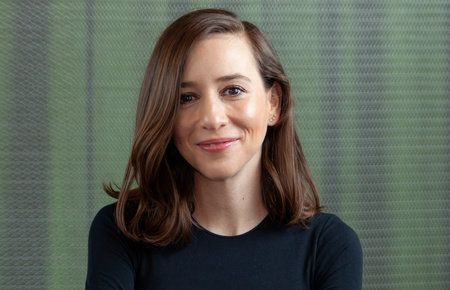
My guest this week is Sasha Sagan. Sasha has written a beautiful book called For Small Creatures Such As We: Rituals For Finding Meaning In Our Unlikely World. The book title comes from a quote in the book Contact:

For small creatures such as we,
the vastness is bearable only through love.

Ann Druyan and Carl Sagan from Contact

Sasha and the book she has written embodies Secular Grace and carries on the graceful life philosophies of her parents. Sasha has a galaxy spanning perspective on life that only the child of physicist can have. Sasha has an infectious joy about life. Listening to her or reading her work it is hard not to share in this joy.

In her book, Sasha argues that we as human beings need ritual in our lives to mark the passage of time, to celebrate the momentous moments in our lives and to mourn the loss of loved ones.

[Ritual] is really important to us.
Sometimes, when people are not religious or were religious,
there’s an urge to throw the baby [ritual] out with the bath water.
We still need these [rituals] even if we do them in a secular way.

We discuss secular grief in the face of the loss of her father, Carl Sagan, when she was 14 years old. Sasha shares the wise parting words he had for her and the ongoing impact he has had on her and the world.

Seeing life itself as worthy of celebration, For Small Creatures Such as We is part memoir, part guidebook, and part social history, a luminous exploration of all Earth’s marvels that require no faith in order to be believed.

From sashasagan.com

Links

Website
https://www.sashasagan.com/

Twitter
https://twitter.com/SashaSagan

Instagram
https://www.instagram.com/sashasagan/

Interact

Secular Grace
https://gracefulatheist.wordpress.com/secular-grace/

Send in a voice message

Support the podcast
Patreon https://www.patreon.com/gracefulatheist
Paypal: paypal.me/gracefulatheist

Attribution

“Waves” track written and produced by Makaih Beats

Transcript

NOTE: This transcript is AI produced (otter.ai) and likely has many mistakes. It is provided as rough guide to the audio conversation.

David Ames  0:11  
This is the graceful atheist podcast. Welcome, welcome to the graceful atheist podcast. My name is David and I am trying to be the graceful atheist. Well, as usual, I'm going to ask you to go to the Apple podcast store and rate and review the podcast. This really helps other people discover the podcast. If you found value or entertainment in the podcast, please tell somebody about the graceful atheist podcast. On today's show, I spent a fair amount of time talking about deconversion and interviewing people who have gone through the transition of a loss of faith. But actually, my favorite topic is what I call secular grace, or putting humanity into humanism is the answer to what now post deconversion. After you've left your faith, what do you do? That's actually the impetus that drives me to continue to do the podcast. So it is a treat for me when I get to interview somebody who is also a humanist who is concerned with putting humanity into humanism, and that is my guest today. Sasha Sagan. Saucer is a writer, a television producer, a filmmaker and an editor. She is an essayist, she has now written a book called for small creatures, such as we, which is actually a quote from her very famous parents, Andrew Yan and Carl Sagan, in the book contact. The full quote, that the title comes from is for small creatures such as we, the vastness is bearable only through love, which may be the most secular Grace quote I've ever heard. Sasha has book incorporates her parents graceful life philosophies. And she focuses on the rituals that we as human beings come back to over and over again, for those of you who may have D converted or deconstructed, the idea of a ritual might be terrifying, actually. And that's okay. But Sasha points out that cultures throughout history and all over the globe tend to come up with rituals around the same time periods. for the same purposes. The obvious examples are births, weddings, and funerals. And so this is not necessarily something to be frightened of. saucers book is beautiful, and beautifully written. And I recommend it to everyone. There'll be links in the show notes. And now I give you my conversation with Sasha saying

Sasha Sagan, welcome to the graceful atheist podcast.

Sasha Sagan  3:02  
Thank you so much for having me. I'm delighted to be here.

David Ames  3:05  
Well, thank you for coming. So Sasha, you are a writer, you've done television production, you're a filmmaker, you're an editor, you've been in major newspapers, you're an essayist. And now you've written a book called for small creatures, such as we rituals for finding meaning in our unlikely world. It also turns out that you have very famous parents. So can you tell us a little bit about yourself about your work and about your book?

Sasha Sagan  3:31  
Yeah, um, I was very lucky to grow up in a household where wonder and awe for the universe, as revealed by science was part of our daily life and dinner table conversation. And part of the way I was raised to see things. So I'm sort of goes hand in hand with that, but maybe not necessarily, is also a secular household. And so what I became really interested in over the course of my life, I lost my dad when I was 14. And then as I grew up, and got married and got ready to start a family of my own, I started thinking about, well, how do we celebrate and mourn and do the daily or weekly rituals that make up life in a way that is a reflection of our modern understanding of where we are in the universe, and how we got here, when the infrastructure for that kind of thing historically has been religion. And, you know, I think that those of us who don't believe are still entitled to mark time and have weddings, and have funerals and we still need those things. So combination of the way I was raised, and then what I experienced and just being generally kind of an outgoing social person who likes parties and celebrations led me to just talk Fact. And I've found that, you know, it's something really relevant to a lot of people, especially when you get to those points in life where you have to really examine these questions, whether it's when you plan a wedding, or you have a little kid who has a lot of questions about why things are the way they are, or when you lose someone, and you have to sort of really examine what that means. If if you don't believe that there's anything beyond what we have evidence to support.

David Ames  5:29  
Exactly. So my podcast, just very briefly, is on the subject of what I call secular grace. And really, that is simply just putting the humanity into humanism. I love that, and focusing on the fact that we still need each other even though we don't have a faith. But yes, it is, in fact, the human interaction our relationships with each other, that is the meaningful thing in life. So. So I have to tell you the just a brief story of the kind of emotional arc that I went through, yes, please, as I discovered you and your work. So I'm on the lookout for authors, writers, bloggers, podcasters, that are on the subject of humanism. And so when you began promoting your book, I just saw that the title, I didn't make the connection. And I thought, Oh, that looks really great. I'm definitely going to get that book and read it. And, you know, a little time passed, and I started following you on Twitter. And then I realized, Oh, you are that Sagan. I did not realize that you were Carl Sagan daughter and and Julian's daughter. And then I read the book. And I've got to tell you, Sasha, I just was really profoundly moved. Oh, thank you. By the time I was, I have the book in hand, I knew that we would eventually have this conversation. And part of what I wanted to do was to say, really focus on you and your work, and not exploit the fact that you're famous parents, but your dad is just in virtually every page. It's in Yeah. And the grief that is present there is just both poignant and beautiful. And so the first thing I just wanted to say to you, I know you speak Spanish is, is Lucia, anto I feel it, I feel it, I like it, just every page, it left it left off the page for me. So your your ability to convey the emotion and depth was just really profound. And I just thank you for writing this book.

Sasha Sagan  7:32  
Thank you so much. That's really kind. And you know, it's funny, because it's like, there's, of course, some part of me that's like, oh, I want to do my own thing or whatever. But like, because of the way my parents raised me and their work, and lots of my job like that, those are the major cornerstones of my identity, you know, yeah. And so I've gotten to a place where I'm like, This is me carrying on what I can have their legacy and their work, right. My mother's work continues. And she's an amazing science communicator, also and writer and producer. But I think that's who I am. And I think if I can sort of extend some of those things that they taught me that really were impactful, and maybe in my own way, continue that on, I'm comfortable with that. You know, it's I don't mind that at all. And I'm very proud to be their daughter, and very lucky.

David Ames  8:31  
Well, I do want to talk about secular grief a bit as we move forward. But first, let's just start with the title of the book actually comes from the book contact. And it turns out that your your mom wrote that line. So tell us about the meaning behind that. Yes.

Sasha Sagan  8:45  
So my parents started out with the idea of the story as a movie. And they worked on screenplays and you know, movies, there's a lot of moving parts, and it takes a lot to get a movie made. And this one took 18 years. And during the time, when they were trying to develop that and trying to get it made, they wrote it as a novel. And I parents collaborated on everything. And the line that the title of my book comes from is for small creatures, such as we the vastness is bearable, only through love. And I think that there's something about that that really sums up what you were just talking about as well. And it's sort of the antidote to the existential crisis. You know, that feeling of like, we're tiny, the Universe is big, we're gonna die. We're here for a second matter, like, you know, all this stuff that you're really concerned you off the deep end quickly. Yeah. And it's like, well, how do you get through to the other side? You know, the existential crisis that's real and sometimes you have to just freak out. But when you get through that part I think that it's like, well, then what do we have? When it's one another, and we're here right now. And this is the moment where we're here. And it's not forever, but at least, we have this moment, and we're in it together. And the farther out we see ourselves in the universe, it's tiny our planet is, the larger the cosmos is, it's makes it all the more precious that we have one another. Otherwise, it would be really, really hard. And so I think I think that there's something to that where you can find some of the comfort that doesn't always get associated with the really scientific worldview. And that perspective?

David Ames  10:42  
Well, I like what you just said that the existential crisis is real, I sometimes feel like I, you know, I hit the genetic lottery, and I have a predisposition to see the wonder, in life, even from a purely naturalistic scientific point of view, it's still totally awe inspiring to me. And I don't work at that. It just happens. And I just wonder how can we bottle this up? What your parents represented what you are carrying on, you know, how can we bottle this up and give it out to other people?

Sasha Sagan  11:12  
It's such a good question. I mean, I think the first step, if we were really doing it on like a grand scale would be to just like, pay public school teachers a lot of money and get people who are really enthusiastic about not just I mean, science, but math and history and all these things. I have the utmost love and respect for public school teachers, but it's really hard job. And it's a really hard job to do for very little money. And I can't imagine not getting jaded at some point. But if you have a couple of great teachers in your life, who are like, This is amazing. Look at this thing. And, you know, we stop sort of maligning facts as like cold and hard. And we have this a way of teaching children that there's beauty in what is real, and like, my daughter is like, almost two and a half. And like when she sees the moon, she freaks out. All excited. It's like, Mardi Gras. And like, we talked about it, and it's orbiting us, and we were at the sun. And it's so amazing. And we like make a really big deal about it when we see the moon. Yeah. I mean, it's easy to be like really blase. Yeah, Simone, congratulations. It's like, that's sort of really natural in a way. But there's something about once you learn something, and once it becomes really matter of fact, it's like you lose some of the stunning astonishment that you felt when you first discovered it as a child. And I think if we can preserve that, I mean, the example that I always want to give, and the thing that I still cannot get over is like, if we told children like, there is a secret code in your blood that connects you to your ancestors, to your relatives, and to everyone on Earth, and everyone who ever lived, and the earliest humans and the first one celled organisms, and like it's in there, and whether you believe in it or not, it, you can send a little bit of your blood or saliva off somewhere, and it will tell you who you are like, that's like out of a fairy tale. And by the time you're like, in middle school, and you have like a worksheet about alleles, and chromosomes, it's like, none of that. Astonishment is there, right. So I think it's really a matter of presentation. And if we could get some of the skill sets and enthusiasm that you so often find in religious settings, you know, as like a really like, a preacher who is just like, totally giving their all to what they're saying. And we could have some more of that in, in the sciences, among other areas of learning. I think we could make a dent.

David Ames  13:59  
Yeah. I'm trying to resist the desire to just quote you back your book. But I loved that quote you just described about, you know, if we taught science and math in the same way that a good preacher does, yeah. The other quote is that somewhere along the line, and I'm probably not recording it well, but that as we get scientific and naturalistic explanations that we've lost the wonder we've lost that. Yeah. And so I think people like yourself, can bring that to the subject, and it's such a vital role.

Sasha Sagan  14:33  
Thank you. I think you I think we have it in there. But it's like, I don't know the feeling of like a thunderstorm or something like that. It's like we innately being sometimes it's our experience of nature is fear, especially like a natural disaster. Oh, yeah. But that feeling of, Wow, this is enormous and majestic. And I think even when you understand it deeply, and I think you do this especially with weather like on the news like the meteorologists like when there's a hurricane like they are, they have a reverence and awe, and they understand it from a totally scientific point of view, right? Right think there are moments where we have this, we just sort of have to extend it a little bit, pull it out a little bit, dry it out a little bit in in society.

David Ames  15:26  
So one of the things that I think I have struggled with quick history I was a was a person of faith for many, many years. And that faith dissipated on me. And here I am today doing this. But one of the things I thought was interesting about your book is you don't shy away from words like spiritual or magic. And I find myself always using scare quotes, when I use those words. How can we recapture those words or redefine them?

Sasha Sagan  15:57  
It's such a good question. I'm like, Adam, logically they do come for me, even magical comes from the Magi. Right? These are like religious words, sacred holy, but I can't help but not use them, because they also illustrate how I feel about Nietzsche. And I think, you know, those words, developed in a language that was majority believers, you know, majority Christians. And so they have that history in that connotation. But words evolve and mutate also. And I think that as our understandings change, I think that those words can change, too. And I, you know, I use quotes too. And like, I've definitely gotten questions in the last few months, as I've been doing press for this book about like, well, how can you describe yourself as spiritual? I wouldn't use that word. But, you know, do you consider yourself spiritual even though you don't believe? And how can that be? And I think it's, you know, there are nuances that are missing in our vocabulary. You know, and that's true. So often, there are words, this thing and our language often, and we have trouble describing things sometimes because of that. But I think that those words are still the closest we can get because it evokes this feeling that I think we all really crave of like the just like the chill in your spine, and like feeling part of something enormous. And whether that is a theological concept, or a scientific concept, that like pit of your stomach, like sparkly feeling is something that I really think that we want, and that we almost can't avoid, because every time we understand something more deeply, or have an experience or you know, something scary happens, or something amazing happens. There is that sense. And I think as time goes on, we'll figure out what to call it. But yeah, just seek it.

David Ames  18:05  
Yes, yes. Really, it was a compliment that you went out ahead on didn't hesitate. I find myself hesitating all the time. Can I use this word? Because when I say often woman for me is soul when I say yes. Oh, it has evocative, profound meaning. And, you know, I mean, the core of my being, I don't write, I don't mean something other than my body. I'm sorry. Anyway, I just think that we need to just redeem those words. There's another religious term.

Sasha Sagan  18:34  
I know I mean, either. So many theistic expressions that I love, and you mean also, like when I like drop something, like I say, like Jesus Christ. Like, oh, my God, I mean, how many times do I say Oh, my God, and I'm like, I can't like I what am I going to do like make up something to explain that's like about, like, trials. Oh, my double helix. Like, I'm totally nervous. Like, it would be way too weird. Like, or like a one of my favorite expressions. And I wish I had a secular version of it is God willing, and like to say, like, oh, well, when we go do this, or whatever. What I really mean is, I hope it works out, right? No, or like, you know, people talking about like, a job or planning for a baby or like, all these things. And it's like that idea that like, well, we don't know how things are gonna shake out. We're terrible at predicting the future. But this is what we're planning at the moment. Yes, it's like, I wish there was a two word way to say that. But I don't have one yet. So sometimes I say that and they're like, what are you what are your whole thing is and I'm like, I know.

David Ames  19:51  
I find it charming. I think that's. So the book is primarily about rituals. So I'd like you to talk about Some of them that you described, but also, why are rituals important to human beings?

Sasha Sagan  20:05  
It's a great question. And it's so amazing because we're so all over the world and disparate cultures that had no contact with one another, we all decided we need some rituals, and a lot of them happen around the same time, same times of year solstices and equinoxes. And same times of life, verse coming of age death, you know, we all like these are really important. And we do them in really different ways. But and it's not every culture doesn't have exactly the same landmarks in terms of when when they but there's a lot of overlap. And I think it's really my mom always says, there's no refuge from change in the cosmos. Yeah. And I think that's really what it's about, we are on this planet, and the seasons change, and it gets cold and hot, or wet and dry, depending where you live. People appear, you know, out of other people's stomachs, and, and they grow up and they're kids, and then they're adults. And that's really weird. And then we go away. And we don't know where or what it is. And there's just so much to wrap our minds around that. We have to process all these changes. And I think the rituals, in the most basic sense, like a funeral, like, Well, why do we have that? Because we're like, Oh, my goodness, this person was just here. And now they're not here. What do we do? Yeah. And I think that, you know, no matter what the rituals are, we're like, Okay, this is the framework. This is what we've been doing for generations. This is how we handle this very difficult thing. Yeah. I mean, sometimes it's how we handle a really wonderful thing, like people getting married or something like that, you know. And I just think that it's, it's really important to us. And I think what happens is sometimes when people are not religious, or were religious, and then veer away from it, really, there's an urge to like, throw the baby out with the bathwater, right? But I, which is understandable, and I get it. But I think that we still need these things, even if we do them in a secular way. And that's what I'm really interested in is how, how we can do that. And sometimes how we can still honor our ancestors and what they did, or something you loved growing up. Without necessarily subscribing to the theology that it came from.

David Ames  22:36  
Definitely, I think that when a person goes through, particularly a faith transition, where they had faith in and then lose that faith, kind of the first thing that you see online is the much harder kind of debate culture or style of that loses all the wonder that loses all the awe and there's a trepidation for being a part of a group being apart. Being part of a community, in even the word ritual might be terrifying to some people. for that. I think I came through that and realize that, you know, it's a very natural explanation to say that human beings need rituals, and that every culture, as you have mentioned, throughout history and time, has had rituals for these life stages, and that we derive something from that we derive some meaning from that. And so on the other side of faith, or if you're secular from birth, you still need these moments, to mark time, as you say,

Sasha Sagan  23:35  
Yeah, and just I think it's like, in many cases, it's to like, increase joy. I mean, you know, when it's cold, and the days are really short. And the weather's really bad. You know, it's like, oh, well, we should make things really nice and like decorate them and make them be more light and have like delicious food and a party. Maybe that's like, seems so natural, and it's such a good call. Yes, that is a really like around the winter solstice is a really good time to try to cheer ourselves up with like, cookies and cookies and presents. Yeah, totally. Oh, yeah, definitely. Let's

David Ames  24:19  
do that some

Sasha Sagan  24:20  
more. Yeah. And I think that that kind of stuff. Once you peel back the specifics of the lore, or the mythology or the theology, you end up with the same throughlines and so much of them are rooted in nature. There are about astronomical Meteor illogical or biological changes, and that doesn't require belief.

David Ames  24:45  
One of my favorite different authors, Jennifer, Michael Hecht, and she talks about a graceful life philosophies, and I definitely feel like that is something that you are conveying here of just a joy in life. But one of the things I was struck By in your book is that you'll be in the description of just a very human event. And then the scientist and you will just jump through there one that just literally made me laugh out loud was you were describing, being in the same the same position around the sun, you know, in a year and then taking the scope out and saying, Yeah, but that sun is actually orbiting the center of the galaxy as well. So we're really not in the same place. And I just, I literally started laughing out loud. This is a scientist as well. So how do you blends that scientific knowledge that scientific exploration with kind of this graceful life philosophy,

Sasha Sagan  25:39  
I think it's like, the more we understand, I mean, if you get pleasure from like, learning, you know, the more we understand, and you know, it's always more amazing reality, when we just like really use the scrutiny of the scientific method, it is always more astonishing and more amusing than our than what we came up with, as human beings. And I think that that is really a source of joy. And think, wow, we couldn't possibly have imagined, you know, the scale of the Universe, or, you know, all these things that are so beautiful, or even like how the solar system works before we have the information to measure it, and all these other things that are so breathtaking. And that brings me a lot of joy. And I think that there's just something about the connectedness, the our desire to feel connected, and then realizing the thing we're connected to, you know, we're part of, it's in us we're in it is so much larger than, you know, 100 years ago, 1000 years ago, we imagined it to be and it's like, it kind of just puts a smile on my face this idea that, like, we're so bad at predictions. I mean, it's kind of like the god willing thing. But we have this system, where we can test things and try to figure them out. And we still know very little, but we're on the right track. And we will know a lot more than we used to. And it's like, there's just an endless number of, again, a sort of religious word revelations ahead of us, and we're gonna find out more and more, and, you know, we won't live to find out everything and but there's so much around the corner that will just take our breath away. And we live in a time where there's a lot of new information available, which is just so lucky. I mean, you know, if you're a really curious person who was interested in our place in the universe, and you lived, you know, in the year 1000, it would be like kind of a drag.

David Ames  27:49  
Very much. So yeah, I often wonder how useless I would have been at any other moment in history.

Sasha Sagan  27:58  
Right, where it's like, each of us is a both a product of our time. And we have these like anything's and but ya know, it's so true. It's like, another 1000 years, they'll say, Oh, my goodness, can you imagine if you lived in 2020? It would have been horrible, you know?

David Ames  28:18  
This question kept coming to me as I was reading it, and I want to pose it properly. There are times where I wondered, are there times in your life where you are reluctantly, a skeptic? Are there times where you wish there was something bigger?

Sasha Sagan  28:34  
Oh, that's interesting. Well, I don't feel that way. To me. The secular worldview is bigger. In my view, even though there is not a person like creature looking after us. I think it would be actually harder to try to understand why terrible things happen if there is a very good god who is taking care of everyone, then it is to be like, it is random and chaos. And the fact that anything ever works out is amazing. But, you know, like, that's sort of my do the way in which I am sometimes maybe not reluctant, but I feel that internal conflict is we all have these experiences, like really unlikely coincidences, where it's so hard not to be like, Wait Is race Raizy I write about that a little bit in the book happens all the time. I mean, little, like, cliche, is you think about someone and they call and like, of course when that happens, I'm like, holy

David Ames  29:47  
Yeah, but

Sasha Sagan  29:48  
I think and I have that like innate reaction of like, this is like a clue into the inner workings of everything. But when I really think it is So is that we are really good pattern recognizers, we love patterns. That's why you can understand the random sounds I'm making right now to be words and ideas. It's a huge advantage as far as our species, but we're so good at it that we see patterns where there aren't any. And it would be impossible. Like if you think about how many random thoughts you have in the course of a day, and how many people you run into, or call or get a text from, over the course of your life, it would be impossible that they wouldn't line up once in a while, right? But I still think it's amazing and worthy of like celebration on my big freakout when it does happen, because it's like, Well, someone does win the lottery, you know what I mean? Like, like, the chances are slim, but sometimes it lands and you whenever you get the jackpot or whatever, and you're like, Oh, amazing, you know,

David Ames  30:52  
statistically unlikely things happen all the time.

Sasha Sagan  30:56  
So, so cool, but I don't, even though they have moments where I'm like, you know, the Twilight Zone theme in my head is like, I still I still think that it totally statistical explanation is still like, fantastic.

David Ames  31:15  
Yeah, that's a great answer, though, that the scientific answers are the are the bigger perspective than magic?

Sasha Sagan  31:21  
I think so i That's the way I see it. And they're intrinsically beautiful to me, too. And I think there's like this idea that it's like, oh, this emptiness of space is like, so scary and negative. Whereas I still find it beautiful and comforting in a way that, that in all that we're here, I'm this little evolved perfectly to, like breathe the air and drink the water and feel the light of the star. I mean, that's, that's amazing.

David Ames  31:51  
Yeah, one of the ways that I tried to express this, this is back kind of back to the existential crisis. But that, you know, we learned the Copernican principle that we are not the center of the universe, we're not the center of the solar system that we have no special place in the cosmos. Right. And I would say the flip side of that is as, as far as we know, we are the only sentient creatures in this cosmos. And that makes us incredibly rare and incredibly precious. And the fact that we can communicate with each other, yeah, builds profound meaning and profound comfort. I just watched the movie Ad Astra. Oh, yeah. I don't know if you watch that. But

Sasha Sagan  32:30  
I haven't seen it. I have a toddler. So I don't get Yeah,

David Ames  32:33  
exactly. Sorry. Yeah.

Sasha Sagan  32:36  
Do you have a movie reference from before?

David Ames  32:41  
I feel yeah, I've got teenagers now. So I remember. Very quickly, I won't bore you with this. But the premise is the father has gone out looking for proof of, of extraterrestrial life. And he's obsessed with that to the exclusion of everything else, and that the son grows up and is also an astronaut and goes out to find him. And the son learns the lesson the father didn't, that it's humanity, that we are not alone. We have each other. Right. Anyway, it was just deeply profound. It was very, very slow movie I don't recommend everybody is going to love that movie. But anyway. But I couldn't I couldn't help but walk away. Like what a deeply humanist message.

Sasha Sagan  33:21  
Oh, wow. Yeah.

David Ames  33:24  
So your book from literally the introduction? I think I tweeted this right after I read it. The first tear was shed, you know, in the introduction.

Sasha Sagan  33:34  
Slash sorry.

David Ames  33:35  
Yeah, exactly. And I mean, that is a very high compliment that there's so much pathos, there's so much of yourself vulnerability in the book is deeply profound. Just very quickly, I lost my father when I was three or four, I don't really have a lot of I don't like to have a lot of conscious memories of him. I'm so sorry. Thank you. And then I lost my mother in 2015, shortly after my deconversion, so a lot of Oh, wow, a lot of grief. You know, right, as I was also experiencing the loss of so I, you know, and I think I've spent a lot of time processing that that's not a raw emotion. I'm not trying to elicit anything here.

Sasha Sagan  34:22  
I feel for you. And I'm that's really hard. And it's complicated, I'm sure. Yes. Yeah.

David Ames  34:28  
It's very complicated. But so again, thank you for the book and for the rawness of the grief that comes out on on the pages. And I think one of the topics that I'm most interested in is this idea of how do we grieve in a secular way? Right. I think you mentioned when people come up to you and they don't realize that your father has passed away. And they'll say, Hey, tell them how much his work meant to me. Yeah, you have to be the bearer of bad news. It's like, like, oh, just crushed my heart. Like I couldn't believe that. What You must have to go through. So one of my first questions is having so much of your father be a part of the culture and including things like on audiobook. And early your mom and dad's voice on Voyager that's just left. I mean, it's inescapable Is that does that make that grieving process harder? Or easier?

Sasha Sagan  35:21  
Oh, no, it makes it easier. I mean, I'm so lucky. First of all, because of, and I write about this a little bit, because of the nature of my dad's work. I have like all this footage of him talking in his voice and like audio book on like, his Cosmos, but also, like him on The Tonight Show, and like, all this stuff. And still, I mean, there's like video of him I've never seen that I know is still out there that I can like, look forward to 23 years after his death, so that I feel like so lucky. And that especially because, I mean, now everybody has video of everybody in their family, you know, whatever, opening presents, or whatever. But like, in 1996, it wasn't like that. And just because of the nature of his work, I have this, which is so lucky, and the love that people still feel for him and like, you know, once in a while, like the flip side of the, oh, tell him I love his work. And I have to be like, Oh, actually, he's not here anymore. And it's like, so awkward, partly because people are just generally so uncomfortable with death that like it's like, you know, we don't know how to talk about it. We don't especially and not in a secular way we don't know how to. We don't know what the right thing to say is there's all of that those experiences are really hard. But what I get much more often, which is the flip side is people saying, I just discovered him four years ago, and I've read 10 books, or I was born after he died. And I love him. He's my favorite writer, or you know, that kind of stuff where I'm like, wow, this really is, in a secular way. It's an extension, you know, he lives on a little longer in this non literal way. And I'm so grateful for that. And that makes it so much easier. And like, I feel like, what's really hard about grieving is being alone, um, you know, and isolated. And when I think other people miss him, too. And they still think about him and read his work and talk about him. I'm like, Well, that is extremely comforting. That's what really like, he honestly just like, helps me enormously so. So I feel like the majority of my experiences to do with him and his work and his legacy are extremely positive. But then once in a while, there's ones where I'm like, Oh, this is excruciating. But that's okay, too.

David Ames  37:50  
Well, I again, one of the more touching moments in the in the book is you're describing him apologizing to you near the end, and that he understood what you couldn't at the moment that this would be a life defining moment for you that everything would be affected by it.

Sasha Sagan  38:08  
Yeah, yeah. And I was 14, and I just didn't understand. At the same time, I'm like, What does anyone on Earth, like if I was, you know, 50? What I understand what I mean, like, we don't get it, and it's really hard, but like, I just didn't understand that this would be, in many ways, the defining event in my life. And that he, he understood that, that this would be a lot harder than I think I understood at that time, or for many years afterwards. And it was so but it was it may it was like the kind of the end he was very ill obviously. And so it was like the kind of thing that like made no sense, right? Of course, as the years went on, it became very clear why it was a really loving, thoughtful, true thing to say. And it's like a, almost like a riddle. You know, it's something that takes a long time to unravel to really understand, but it was really loving. And it was really, I mean, it's I still feel love from the last, you know, days and hours, even though more than two decades has gone by.

David Ames  39:25  
Well, that's short, an incredible amount of wisdom on his part. Yeah, there's no one will doubt or two have that kind of foresight to pass that along to you. Yeah. The other thing I think is beautifully told in the book is this idea of that those that we have lost live on in our memories. You refer back to a culture that has a distinction between ancestors and the living dead, that they live on in our memory and you quote your mom is saying she recognized that there's there's almost a second death When the last person who knew you dies, yeah. Can you talk about that? Just

Sasha Sagan  40:05  
yeah, I think about that a lot in the book I talked about someone we knew had a toddler. And they came by the house. They had, you know, my dad had met the toddler many times. And then they came by the house at some point in the months after my dad died. And and when they left me, this little boy was the youngest person, I think my dad, you know, knew, right. And my mom said, after they left, my mom said, you know, it's like, you win you, Oh, will you die again, when the last person knew you dies. And there is something about that there's, it makes me think of there's this. There's this record, somebody heard Abraham Lincoln give a speech, and then ran home and phonetically wrote down how he spoke, like, what his syntax and intonation was. And it was like, of course, this is so changed by technology now, like I was saying about, like having, you know, video of your friends now. And it's like, this idea that like, well, you know, now everybody who ever heard Abraham Lincoln speak is gone, too. And it's like, that's another way in which were done. And some people very, very small handful of people, you know, if your profile is on a coin, or there is a statue to you, or, you know, the most smallest, smallest percentage of people who ever lived, or we just know their name, even if we don't know really anything about them, the century when they lived the part of the world. But other than that, we go away. And that is something that, you know, there's two approaches to that, or three, maybe one is to deny it, you know, and if you say, Okay, well, that's not your belief system. If you believe that we don't go away, we just go somewhere else. And we continue on. Okay, that's one approach. Another approach is to sort of try to fight it with like, you know, I don't know, like cryogenically freezing, like, you know, all the things that we come up with to deny that in another way, and that's okay, too, you know, but the third way is to say, Okay, well, that's how this works. And we'll be gone at some point. And even if we figure out the, you know, whatever technology, you know, the sun's gonna burn out and 5 billion years, the Earth is, you know, maybe we can emigrate to some other planet, maybe. But things that we hold dear and the world, literally and figuratively that we exist, and now is not forever. And so, I think there's really something valuable. The third way way I would approach it is to face that and say, Okay, that's real. But we're here right now. And so let's do what we can to make the world better to find joy, to experience, love, give love, all these things that will make it so that when the time does come, it'll not feel as bad. I think.

David Ames  43:19  
I've described kind of a parallel concept of giving up the idea of the soul. Where there's this psychological need to believe that we go on, I think, as well to believe that our loved ones

Sasha Sagan  43:36  
Yes, I mean, more. So almost. Yeah, almost more so. Yeah, yeah.

David Ames  43:42  
Yeah. And you know, and I would love to believe that I would get to see my mom and my, well, yeah, like, I'd love to be able to believe that. But I recognize that, you know, having again, for me personally haven't gone through that transition. That part of the reason that was so difficult was coming to grips with the finiteness of of life that Yeah. On the other side of it now, and I'm not this is not original in any way. But the idea that it is finite gives everything poignance there's Yeah, every moment with my my family, my loved ones, my daughters, my wife, friends is, is valuable, precisely because it is rare and fleeting.

Sasha Sagan  44:24  
Absolutely, absolutely. If we lived forever, and there was no urgency to anything, it would be, first of all, it would be a totally different existence, people would operate in a totally different way. And there would be nothing unique or valuable or special about each moment. There's no beginning and no end. And I think that it's really easy to see that as a really painful thing, but I think it's also the source of all the positive things,

David Ames  44:55  
right. And then just lastly, a concept that you hint at in That is just being lucky to have lived at all. You just I think you say we were we, you know we existed. That fact that we are alive today is its own profound miracle.

Sasha Sagan  45:13  
Yeah. And I think that that's like a lot of what at the beginning of the book is about is like an all the different things that had to happen for you to be alive right now. And all your different ancestors who had to cross paths, and all this unbelievable plagues and invasions and wars that somebody had to survive, to get to the point where right now in the present, your you know, listening to this podcast, you know, is really astonishing. And I think that maybe there would be some other version of each of us, but we would have different ancestors with different combinations of qualities and idiosyncrasies and allergies, all sorts of other things. And I think the idea that, like you being exactly you at this moment happened, like if we can find a way to celebrate that. And I think the way that we find it the most is when we fall in love, because then you're like, wow, you're you and you're so amazing. And you have all these qualities that are so wonderful. And it's like that we sort of can glean it when it's an another person or when you have a new baby, and you're like, Oh, my goodness, you're this. Oh, I see my great uncle's funny expression. And like all these things, yeah. And so we get it like at the best moments of our lives, we get these little glimpses into that. And I think if we can find a way to to extend that into other parts of our lives, I think it would be really worthwhile.

David Ames  46:48  
Absolutely. Yeah, that's beautiful. I'm sorry. I said Lastly, and really, I've got one another. One more, one more question. Again, on this on this side of faith, or those of us who were believers, church or synagogue or provides this community this built in Yes, community. I really love the story you tell you tell about your your girlfriend's getting together. Yeah, regular basis to talk about how you have built community in your life.

Sasha Sagan  47:15  
Yes, I definitely. I mean, I strongly feel that the hardest part about being secular for me is that you have to like really put an effort to congregate, and I'm very social. And I like being in group situations. And it's just if I was really devout, I would have that in my life and all these different ways built in. And I because I'm not I have to make it. So one of the things that I did, sort of second half of the years, I lived in New York, I lived in New York for a long time, we moved to London for two years, and then came back and all of a sudden, I realized I miss my girlfriends so much. And that like seeing them one or two at a time was not enough. And I that I had all these interesting, amazing women who they would like each other it wasn't you know, and that together, we could really sort of form this like little tribe. And so it wasn't anything. I mean, it's totally doable. You can try this at home, just once a month, we had a dinner, we picked a restaurant, and I would send out an email. And sometimes it would be five or six of us. And sometimes it would be 12 or 13 of us. And the restaurant was extremely accommodating when we were constantly running away and being really loud, and all these things. So that was good. And we would once a month have like dinner and cocktails and talk and what was so for me rewarding was all these other friendships bloomed between women who, you know, someone I grew up with, or someone I went with, to college with, or someone you know, had worked with. And then after a lot of people started to move away from New York, which just happens, you know, and then and then I moved to Boston, and these friendships went on and all these different cities and people started doing ladies don't we call it the ladies dining society in other places. And even though I wasn't doing it anymore, it carried on and I that is something that I feel really grateful for. And I think there's something there is a real like you see it, there is a need in society for this kind of thing. And you see it as like there's, I mean, these things could be co ed or for men or whatever show seemed like these women's workspaces popping up in different cities. And you see like these will, you know, different groups where you're like, people want kind of a home base and like something in their life that's regular and steady and feeds them intellectually, emotionally in some way. Literally, dinner party. And I think that a lot of people crave that and I think if you're secular you know sometimes it's a little bit more of a drag and you got to put it together yourself, but I think it's worth it.

David Ames  49:59  
You I think that the lesson from that chapter in particular is just being intentional about building friendships. And yeah, maybe setting a time and setting a place and making that happen. So yeah, in effect to ritualizing.

Sasha Sagan  50:14  
And having a group to go through the ups and downs with

David Ames  50:18  
absolutely, yeah, somebody there just to hear the good times and the bad. Yeah, exactly. Well, if it's not obvious, I love the book. So much the book is, for small creatures, such as we are rituals for finding meaning in our unlikely world. And the author is Sasha Sagan, Sacha, how can people get in touch with you? How can they find your book?

Sasha Sagan  50:40  
Oh, it's sold wherever, wherever you get your books, you can find it. And I'm on Instagram and Twitter at Sasha Sagan. My website is Sasha sagan.com. And you can email me there. Tell me what you think I'd love to hear from you.

David Ames  50:56  
Fantastic. Thank you so much for your time and.

Final thoughts on the episode? Wow. All I can say is again, it was a joy to speak with Sasha. I find it wonderfully fulfilling to talk to another person who has the same sense of gratitude, awe and wonder at the world, while also holding purely naturalistic and scientific ideas about the world. And she so beautifully tells those both in the book and in this episode, about how her parents pass those things along to her. And now she's passing them along to us. I loved her answer when I asked about whether she was a reluctant skeptic. And she pointed out that the scientific answers tend to be bigger and more awe inspiring than any magical or theistic answers ever could be. That was a profound answer. I think in my interview, when we discussed her father, Carl Sagan, I often focused on the grief, I want to highlight here as well, the joy that comes across in Sasha's book, and in the podcast episode. Clearly, he has had a tremendous impact on her and the impact on the world continues to reverberate in her life. I just really appreciate Sasha, his willingness to share both the grief and her joy in her relationship with her father. I still can't get over the quote that the book title comes from, for small creatures such as we, the vastness is only bearable through love. And it turns out that it was Andrew Yang, who wrote that particular line that encapsulates so much of secular grace. And another theme that Sasha and I hit in the episode of she quotes her mom is saying there is no refuge from change in the cosmos. And Sasha talks about having to face the reality that everything will cease, including the sun burning out and the heat death of the universe. But we're here now. And let's do what we can to make the world a better place that to encapsulates secular grace. I want to thank Sasha for coming on the program for giving me her time and for sharing with us, her book and her insights and her graceful life philosophies. I will have links in the show notes for finding her online on Twitter and as well as links for her book, I highly encourage you to go out and get the book and read it. As the chaos and randomness of the cosmos would have it. Sacha also did an interview with Bart Campolo on the humanized me podcast. And I think it's a great discussion. And I highly encourage you to go and listen to that as well, especially if you can't get enough of Sasha Sagan. Are you still here? Oh, good. I've got a couple more announcements for you. One is that I have recently done an episode of the relationship podcast from long distance to marriage with Andrea and rich. You might ask why would I do that episode while they were doing a series on secular relationships or inter faith relationships, I went on with my friend Alice Gretchen from dare to doubt, Alice from the perspective of being very choosy about the partners that she chooses and what their faith positions might be in me from the perspective of being in a relationship with my wife, who is a believer, and D converting and middle of marriage, and trying to focus on the love that we have for one another and our shared set of values. Anyway, I highly recommend that you check out from long distance to marriage in the next week or so. I think that was a fascinating conversation. And then the second thing I wanted to bring up is that I occasionally do a call or a Hangout with people who are not interested in publicizing their story, but they need to tell it to somebody. And I generally will do a 15 or 30 minute call with people just to let them tell me their deconversion stories. And a common theme that I hear from them often is, what can I do? How can I give back? I just wanted to highlight that you can do many things, you can start a blog, you can start your own podcast, you can find groups with meetup.com. You can start your own book club, any secular activity of any kind that build some community is a great way to go. But I'm gonna highlight one more thing. I haven't pushed it very often. But I need to reiterate again, how much better I think this podcast could be if I had a bit more community support. So this is a call out to you if you have a talent in any area, graphic design, audio engineering, marketing, social media expertise, website, design, anything that could help make this podcast better, help more people. I'm gonna just put out the call to the community. If you're interested, please get in touch with me. Send me an email at graceful atheist@gmail.com I'm gonna slightly alter my typical sign off and say my name is David, and I am trying to be the graceful atheist. Please join me and be graceful in your lives. It's time for some footnotes. The song has a track called waves by mkhaya beats, please check out her music links will be in the show notes. If you'd like to help support the podcast, here are the ways you can go about that. First help promote it. Podcast audience grows it by word of mouth. If you found it useful or just entertaining, please pass it on to your friends and family. post about it on social media so that others can find it. Please rate and review the podcast wherever you get your podcasts. This will help raise the visibility of our show. Join me on the podcast. Tell your story. Have you gone through a faith transition? You want to tell that to the world? Let me know and let's have you on? Do you know someone who needs to tell their story? Let them know. Do you have criticisms about atheism or humanism, but you're willing to have an honesty contest with me? Come on the show. If you have a book or a blog that you want to promote, I'd like to hear from you. Also, you can contribute technical support. If you are good at graphic design, sound engineering or marketing? Please let me know and I'll let you know how you can participate. And finally financial support. There will be a link on the show notes to allow contributions which would help defray the cost of producing the show. If you want to get in touch with me you can google graceful atheist where you can send email to graceful atheist@gmail.com You can tweet at me at graceful atheist or you can just check out my website at graceful atheists.wordpress.com Get in touch and let me know if you appreciate the podcast. Well this has been the graceful atheist podcast My name is David and I am trying to be the graceful atheists. Grab somebody you love and tell them how much they mean to you.

This has been the graceful atheist podcast

Transcribed by https://otter.ai

Alice Greczyn: Dare to Doubt

Atheism, Bloggers, Deconversion, Podcast, Religious Trauma, Spirituality
Dare to Doubt
Click to play on anchor.fm

This is Alice’s first interview on the podcast. To hear her discuss her current book, Wayward – Spiritual Warfare and Sexual Purity, check out her latest interview.

My guest today is Alice Greczyn. Alice runs the Dare to Doubt website dedicated to millennials who are detaching from harmful belief systems.

Alice tells her story growing up with purity culture, Christian Courtship and Alice’s nearly arranged marriage. She describes being an atheist while surrounded by “LA spirituality”. She tells the story of cult-like acting classes.

As a Christian, she felt she had to fake spiritual experiences because others around her seemed to be having them but she never seemed to hear from god. Her honesty stopped her from claiming spiritual experiences she knew were not real. While watching the Jesus camp documentary, she asked herself, “how many of them are faking it?”

Alice recognized that other spiritual paths still required faith. She could not accept them because she could no longer lie to herself. She had grown to recognize when she was trying to lie to herself to “make things real.”

I became not so great at lying to myself, I recognized when I was trying to make something real.

Dare to Doubt walks the tricky line to be welcoming to atheist and those just beginning to dip a toe outside of the belief waters.

I built the site that I wanted and that I needed and that I wished I could have found when I was deconverting.

Alice is interested in studying why there are not more out women atheists and what causes non-believing women to hesitate to identify as atheists.

1% of women identify as atheist, I need to come out of the closet.

Alice recommends the Secular Therapy Project to find a therapist who will not push spirituality on you while you recover from your religious trauma.

I feel so much more love and so much more peace as an atheist than I ever felt as a Christian.

Links

Alice’s Social Media

https://twitter.com/alicefood
https://www.instagram.com/alicegreczyn/

Dare to Doubt

https://www.daretodoubt.org/
https://twitter.com/daretodoubt
https://www.instagram.com/DaretoDoubt/

Resources

Recovering From Religion
https://www.recoveringfromreligion.org/

Secular Therapy Project
https://www.recoveringfromreligion.org/the-secular-therapy

Alice’s Book Recommendation

Dr. Marlene Winell
Leaving the Fold: A Guide for Former Fundamentalists and Others Leaving Their Religion

GAP

Interact

Send in a voice message to the podcast:
https://anchor.fm/gracefulatheist/message

Support

Support the podcast
Patreon https://www.patreon.com/gracefulatheist
Paypal: paypal.me/gracefulatheist

Attribution

“Waves” track written and produced by Makaih Beats
http://freemusicarchive.org/music/Makaih_Beats

Attribution-NonCommercial-ShareAlike
https://creativecommons.org/licenses/by-nc-sa/3.0/us/

Transcript

NOTE: This transcript is AI produced (otter.ai) and likely has many mistakes. It is provided as rough guide to the audio conversation.

David Ames  0:11  
This is the graceful atheist podcast Welcome welcome. Welcome to the graceful atheist podcast. My name is David and I am trying to be the graceful atheist. Welcome back to the podcast. I hope you've missed me as we're on the summer schedule, which is roughly every other week. I do hope you will consider rating and reviewing the podcast in the Apple podcast store to Help others discover the podcast. I'm very excited about the interviews that I have lined up over the next couple of months so continue to tune in to hear people's stories of deconversion and their work in the deconversion space. My guest today is Alice Greczyn. Have the dare to doubt blog. On the dare to doubt blog Alice is focused on millennials who are detaching from harmful belief systems. Her blog has a number of resources for people going through the doubting, deconstructing and de converting process. As you'll hear in the interview, Alice describes the blog as what she would write to her younger self what she needed what she wanted when she was going through the deconversion process. In my conversation with Alice, we hit a number of subjects including religious trauma syndrome, guilt about former gullibility, purity culture, Christian courtship analysis, almost arranged marriage that was the beginning of her doubts. Before I start the interview, just wanted to make two comments. One is we talk about the Foursquare church. And I mentioned that it is Aimee Semple McPherson who started the Foursquare church, I couldn't think of her name, when we're in the middle of conversation, just want to make sure that that was clear. And then also, just to apologize to Alice. As I went through the editing process, I realized that I had interrupted her and derailed her a couple of times, she recovers quite nicely, and handles that with grace. I greatly appreciate Alice's honesty and her heart for people. And I think that comes through really well in this interview. So I hope you enjoy Alice Greczyn.

Welcome to the podcast.

Alice Greczyn  2:31  
Thank you so much for having me.

David Ames  2:34  
Alice I have found out about your blog online, your blog is called dare to doubt and I just really impressed with the work that you're doing there. You've got a number of resources on there for people who are going through the doubting the deconstructing the D converting process. And I was just really anxious to have you on so I'm really glad you're here.

Alice Greczyn  2:55  
Thank you so much. I really appreciate it. Very cool.

David Ames  2:58  
So before we get into the work that you do, I really like to hear your story I call our both our spiritual testimonies and our deconversion stories, our origin stories, it really tells a lot about who you are as a person of what that process was like. So tell us, what was your faith tradition growing up? And when did the doubts start to creep in?

Alice Greczyn  3:20  
Oh, man. Yeah, lately I've been thinking of in my head has died again stories instead of born against. But like it's once you're through that died again. It is born again an entirely different way. Yeah, so my origin story The so I was born into a Christian home. I never remember accepting Jesus. He was just always there. God was always there. By the time I was born, my parents were involved with the Foursquare Church, which has its roost and Pentecostalism for those who don't know. It's a very holy spirit friendly thing. And then, when I was a toddler, my parents were missionaries in Asia for a little bit less than a year. I don't remember a whole lot. And then when we got back to the states, my dad pastored, a Foursquare church for I want to say almost a couple of years in Illinois, and that's where I spent most of my childhood in Rockford, Illinois, when I was about nine or 10. I don't know if you've heard of this. It's a little niche. There was this spiritual revival movement that started sweeping over the world called the Toronto Blessing. Some people call it the renewal or the Father's blessing or the laughing revival. There were a lot of names for it, but my parents were very moved by the conferences that they attended. And there it was like the Pentecostal was notched up to like 10 with people like having seizures, rolling around and praying in tongues and having visions and ecstatic dancing and weeping for days and yeah, uncontrollable laughter like very, so. i My parents always told me that we were nondenominational. As an adult, I've looking back I'm like, Oh, I think the media classified us as evangelical. And then Christian media outlets views the term charismatic. So, but I always grew up being like, Oh, we're just Christians. We're just nondenominational. You know, my parents were very, very adamant that you couldn't pin God, he was so mysterious, so big, so multifaceted that to, like, try to put him in the box of a denomination was kind of limiting the possibilities of love and the movement of the Holy Spirit. So that's a that's a sort of nutshell version of like the definition, I guess, or lack thereof of my faith background.

David Ames  5:42  
So I have I have a fair amount in common there. Although I didn't grow up as a Christian. I became Christian. In my late teens, I was in an Assemblies of God, church, which is kind of kissing cousins to Foursquare.

Alice Greczyn  5:53  
Totally. I had a lot of friends who were Yeah.

David Ames  5:56  
I had a lot of friends in in Foursquare. And my favorite story from that is the local Foursquare when I was growing up would have when things got really rolling, they'd bring out this thing they called the river, which was this giant ribbon that was like four feet wide, and like 20 feet long, and they'd be flowing it up and down, and people were dancing. Anyway, that's my, that's my favorite. Spirit charismatic story. So I relate.

Alice Greczyn  6:22  
Oh, man, it is so filled with terms like that, like jumping into the river being cleansed by the fire. It's all like fire and river and holy rain and yeah, burning and refining oil. Like there's there's so many firewater terms

David Ames  6:35  
I find the community in Do you remember, the name is escaping me. But the Foursquare was started by a woman who called herself a prophet. I am blanking on her name. I'm sure someone can tell us. But anyway, that's kind of I always found that. Interesting. I think we'll get into the topic here in a minute about women in the church and women in atheism. But the Foursquare church was was started by a woman. And I always felt like that my denomination was uncomfortable with that. I thought that was interesting. Yeah. Did you ever you know, were you interested in doing ministry worship those kinds of things? Or was that or were you?

Alice Greczyn  7:11  
Yes, I was. So to kind of pick up from from that point, when the Toronto Blessing revival kind of hit on my family's life took a big detour, my parents felt called by God to give up worldly employment, to sell our house and most of our belongings, hit the road and follow him living by faith that God would provide. And I'm sure you're familiar with a Bible verse about Look at the birds of the air, if your heavenly Father feeds them, don't you think that much more He'll feed you. And so it was very, sometimes I like to say they call it living by faith. For me, it was homelessness. For a period, I totally understand where their hearts were, I shouldn't say that I'm learning to more understand where their hearts were, as we've, as we've been talking about it more as adults from the different places that we're at now. But it was it that was a period and then it ended with us settling when I was a teenager in Kansas City, Missouri, which is where the more Evan Jellicle thing kind of took off. And of course, when I was a teenager, that's when the purity culture aspect is drilled into us, as you know, when when you found God as a teenager, so I was homeschooled my whole life. So the only outlet I had for friends was through my youth group, right? No man, very many people who were not Christians or involved in the church in some way. So as a result of that many of my goals as a young adult became geared toward ministry, I wanted to be a missionary and I graduated high school early, I got my GED, because I was homeschool. I wanted to be a nurse. And so I was doing all the prereqs for nursing school with the plan to join YWAM the Youth With A Mission. And or so they have a discipleship training school in Perth, Australia with like a health care emphasis that I was intrigued by then I was also looking into Mercy Ships, which is like Doctors Without Borders, but Christian addition.

David Ames  9:09  
Right? I've had friends in both of those industries. Yeah.

Alice Greczyn  9:14  
Yeah. So that was that was that was the plan. And then as a teenager, I was approached by modeling scouts, who kept wanting me to get into the modeling industry somehow, and my family and I were living in Colorado, when I was 16. We moved around a lot. Okay. And so at this point, we're in Colorado. I'm 16. I don't think there's any way my parents are gonna let me start modeling at all, because it's just so worldly. And then, of course, as a female, I mean, men too. Absolutely. But you're selling sex. Yeah, so I don't know. I just never thought there'd be a way I was even sure I wanted to do it. I my own feelings were so conflicted. They viewed it as a door God was opening. They're like, you know, maybe this is like God's gonna provide money for all All the rest of the things I was like totally interesting. Yeah, it was interesting. And I think they, they they knew that maybe I could have a lucrative future in there and at the very least, like, what did I have to hurt by doing it? Then I have my own inner wrestling tooth. Oh, man, like, what if this is a door Satan's opening? It feels so good. You know, I get to play dress up and be pretty. I had this whole complex about being like a wayward woman. Oh, no. But it seems like, you know, if God didn't want me to do it, maybe maybe the door wouldn't be open and simultaneously the doors were closing for nursing and then other path. And of course, I, I was looking at life through an entirely mystical lens back then.

David Ames  10:42  
Yeah, science. These are things are pointing you

Alice Greczyn  10:45  
Oh, yes. Nothing occurs without coincidence. And so everything is either an open door or a closed door, you know, there's no uncertainly no personal will, in that, at least for me. My parents found God as adults. I grew up in it. And we've had interesting conversations about the differences, even just neurologically speaking like that, that can lead to but anyway,

David Ames  11:07  
can I just touch on that real quick. That's been a very much a reoccurring theme of late. As I mentioned, I came to this in my late teens. And I feel like I was spared the brunt of the trauma that I see a lot of people that go through, who are raised in particularly very conservative evangelical Christianity as children. And even part of my deconversion story was when my daughters were old enough to start thinking about baptism. I was deeply conflicted about this. This is what I was all the way into. I was a full blown believer, but there was something about it that felt really wrong to me, these children who couldn't possibly understand the decision that they were making, being encouraged by myself and my wife to go through baptisms. So anyway, I just feel like that's, that's definitely an interesting point, that those of you who were grown up in it as a child, when you're taught as a five year old, that these things are literally true. That's, that's hard to shake, even in your adulthood. Now,

Alice Greczyn  12:07  
it is, it is definitely because I think when you're an adult, you, you can better pick and choose what parts you're going to go with and what parts you don't like. For example, I recently found out my mom never believed in hell. And for me, that was like very much the bottom line of my faith. And the reason I stayed in it for so long. She just she's like, you know, for me, it was all about the love, you know, and like, I just kind of tuned those parts out. And she was kind of shocked that I couldn't do the same. And I was like, I never knew that about you. First of all, back then. Everyone else around me was telling me these things. Yeah. So and I don't think she realized how much of that fear based indoctrination was being instilled in her kids. She's since expressed, you know, she might have tried to shield us a little bit more, at least offered a balanced alternative perspective. But yeah, that's one of the differences between someone finding faith as an adult versus that is all you know. And like I said, being homeschooled, it was that extra insular layer of not really getting to meet or talk with people about any alternative, right? Any alternative way of life?

David Ames  13:17  
I will just say that I again, I relate more to your mom's experience. And, yeah, when I came to it, I was very much I call myself a grace junkie, right? The reason the reason I became a Christian was the grace that I saw in the New Testament and in Jesus specifically. And I was looking around the church going, Why do you think this? Why do you think, and I very much did the same thing where it's like, hell on the negative sides, I just minimized and I focus very much on the love and, and I now recognize, it's just one more way I'm privileged. You know, that spared me, the harder parts that I've seen many people that have to go through, again, trauma from trying to refer.

Alice Greczyn  13:59  
But you know, I would imagine, too, that you have a different set of challenges, because we mentioned we were discussing briefly, you know, the atheism community, sometimes at least we were first exposed to it is so very combative, and ridiculing. And I would imagine that unique set of challenges that someone who does find faith as an adult faces would include, like, why didn't you see it the first time, you know, like, why didn't you see the signs you you? You know, you hadn't drunk? You weren't raised on the Kool Aid, so to speak. So like, why did you ever run to it? And that also, I would imagine, could you know, if, as in the case of yourself, you do eventually leave that also, later on in your life as an adult? It's, I don't know I'm sure that has its own its own version of unique specialized trauma, deconstructing whatever word you want to use.

David Ames  14:51  
That's, by the way very good. Judo, you've just pushed it back onto me. I think it'd be a good podcast. Host I just didn't answer that I talked about a lot that what is unique to the deconversion process in general. And then mine specifically is a sense of almost shame or guilt for having been gullible in that I should have known better and really releasing that letting go of you. No, it was more about the community, it was more about my needs to be a part of a group to feel belonging. Those were the drivers that pushed me pushed me into that, but definitely felt poke fun at myself for you know, yeah, I should have figured that out a little sooner, because I was in it for 27 years or so. So it was a long time before I figured things. Yeah.

Alice Greczyn  15:38  
Oh, man. So a couple of themes that have come up so far in our conversation, keep reminding me of what I've been learning about cults, and I was gonna try to steer clear of using this word around. Yeah, discussing about Christianity, because I know it's very inflammatory. And I certainly do not think that all expressions of faith automatically mean they're cultish. Not at all. However, I do think, you know, we're talking about the difference between finding faith as an adult or a child, I've been learning in the cult community, there's like first generation cult member and second generation cold member, as opposed to adults who joined a destructive group, you know, after their mind had already had a chance to develop and then feeling like you should have known better I find that even with kids that were raised in religion or in a particular spiritual path, a lot of them just like many cult members, join another faith slash cult. And then when they leave the second time, they feel even more angry with themselves for having been duped again. Like I know people who one of my good friends he grew up in Calvary Chapel, right? Yeah. And were reaped heaps of shame on himself. When years later, after having left that he found himself in an acting class, Colt. They exist. Many bones to pick with acting classes, because of that my all of my red flags start going off. Yeah, because it's a very emotional, vulnerable place. That reminds me a lot of charismatic, weird Christianity.

David Ames  17:14  
Any, you make an excellent point that any group can have an authoritarian bent, and especially if you have a leader who wants to wield that power, work against the vulnerability and the honesty of the people, the members of that group, it can be anything,

Alice Greczyn  17:30  
all in the name of goodness, of course. Right, right. Self improvement, you know, or surrender, you know, and it's so, so easy to exploit that even unintentionally. I think many people who lead destructive groups freely do not have bad intentions. And that's something that I think, I know, for myself, I've gotten a lot of peace from acknowledging and it's helped lessen a lot of the anger and confusion was like, Oh, of course, they had good intentions, right? Everyone does.

David Ames  18:02  
That's a human experience. Yeah,

Alice Greczyn  18:05  
I think very few people knowing we are like, You know what, let's see how we can exploit people use their emotions against them take advantage of their vulnerability and make money. Well, like, I don't I don't think that that mindset is this common?

David Ames  18:19  
I totally agree. Yeah. And I think for many people who do grow into ministry, pastors and lay leaders, when they gain that sense of power it unwittingly you know, they're they didn't intend to wield it against people. But that's what winds up happening. Right? So I think we've we've skipped ahead just a little bit, I want to circle back just for a moment. I want to get to where when did the doubts start to creep in, but maybe you've got more story to tell of the faith experience as well.

Alice Greczyn  18:47  
So this is good practice for me to learn to tell my story. So my chronologically, my brain has the tendency to like to jump around. So I would say so I moved. So modeling led to an acting opportunity in Los Angeles. Again, I saw it as a door guard was opening. So I moved out to LA a month before I turned 17. That first year, I started booking right away, which at the time, I did not really know how lucky I was to even just have an agent or a manager. Many people live in LA for years before they get those things. And I started working. So the biggest turning point for me was what felt like an arranged marriage. Oh my so that same year when I was 17, a guy from my youth group in Colorado also moved to LA. Now we were both we were both from the same church. We both grew up in purity culture me a little bit more so than him it would seem and all of the Christian courtship books from I kissed dating goodbye to one God writes your love story by Eric and Leslie woody like all of the Christian courtship books I've ever read said very clearly how my love life was gonna play out like, right? Rule number one, you absolutely don't date. You don't encourage lust. You don't have lustful thoughts. You don't look at men or women lustfully. You don't, you know, like, once you do start a courtship, you wait until it's the person that God's revealed as your future spouse, and then God's will, is affirmed through other elders that he places in your life. So it's not like you just have to rely on your own self to know, oh, maybe this is the person that my flesh wants to marry. And I'm just gonna say, God put on my heart that this is my spouse, right? It's affirmed by other elders in your life. And like often your parents if you have godly parents, or maybe youth pastors. So for me, living in LA, this guy from my youth group, back in Colorado comes out, we become really good friends we've never dated. And one day he started acting a little jealous, over some guy friends that I was hanging out with, what is going on, man, you know, like, what, what's going on? He's like, Well, God showed me that your future wife just shocked and just just shocked, because and I, of course, believed him. Like, it's it's so easy in retrospect, to look back and be like, how would How did I believe that? You know, but I was primed for that revelation. Yeah. And I knew he would not say something like this lightly. And to this day, I think he totally believed and was sincere that that was the revelation at that time. And long story short, he called my dad to ask his blessing. My dad gave it and said he heard from God. So this guy heard from God, my dad had forgotten the guy's mom heard from God, that we were supposed to get married. And I was like, wow, it must be you know. And while I am feeling utterly shattered inside, because I was told that if you are faithful to your future spouse, and if you do, obey God, and let him write your love story, he's going to reward you with like, the most amazing wild romance beyond all your dreams, right? I completely believed it. And when it this reveal was this guy that I cared very much for as a friend, but had no romantic feelings for whatsoever I was. I it's hard to articulate in words, how stunned I was and also how betrayed I felt because I couldn't acknowledge the betrayal to myself, because that would mean that God had tricked me. Or that I felt tricked by God. Because you know, God doesn't trick you. It's selfish wants that make us think that. So it's, it was just a total mindfuck of emotions.

David Ames  22:41  
I bet yeah, man, you know,

Alice Greczyn  22:43  
is this is this a test from God? Is this like, when he told Abraham to slay his son is God just trying to see if I'm willing, and maybe I don't have to marry this guy, like, I don't know. Like, it was just all of my programming just was at war with itself and, and it was so hard for me to even know what my heart wanted. So I would say that that was the first time I really felt shaken and doubts came into play because it was like, Is this really God? It definitely seems to be really God. He told three different people. I'm the only one he didn't tell. But that made sense to me because God had never told me anything interesting. I had never felt God I had never heard from God. Well, everyone around me all growing up was feeling love or having visions or praying in tongues. I faked it. For me, ever, not once, and I would desperately tried to make it real. Like I thought one time when a friend prayed over me and youth group, I cried, because of what she was saying. But because I associated displays of emotion like laughter and crying with the touch of God, I thought, oh, maybe maybe this is God touching me. And in my heart, I knew. No, I'm just crying because I'm in a really rough place right now. All my friends love is really moving to me, my friend, but I was desperate to try to try to look for any sign that maybe God wasn't leaving me out. Because that was part of my own complex as a Christian was always feeling like I'm doing all the right things. I was such an auntie anxious girl, I was the best Christian I could possibly try to be and like I repented for so many of my thoughts and everything, like I was just so so earnest and

David Ames  24:24  
connect, can I jump in here and just respond to a couple of things, couple of things that you say that really, really speak volumes and one is I've heard this before of you're fully dedicated. You're trying to do everything right. And you have you've watched the people around you that are experiencing something that they're there that they are claiming is God and you're not feeling that and it's it's actually your honesty that's driving you not to fake it all the time. Or to accept something that is less than deeply profound because you're looking for The truth, then you're looking for the real thing, then you're recognizing that it isn't there. So that I just find incredibly ironic, and then to the story of the relationship is fascinating and that everyone else had heard from God, quote, unquote, doing. Except you. And I wonder how many people have experienced that. And I think that's probably, that happens probably on both sides, but probably more for women, where the men in their lives are saying, Oh, this thing is from God and feel completely obligated to something that you have no emotional attachment to. And that just must be a terrifying insight.

Alice Greczyn  25:43  
It is terrifying. It didn't feel terrifying in theory, because it was all I knew. And I should also clarify, my mom had not heard this from God. But by that point, my mom had stopped going to church. So it was easy for my mind to invalidate her because it was like, Well, you don't even go to church anymore. So of course, Satan might be using me because my mom is actually the reason why I ended up getting out of that engagement. Okay. It lasted for two months. And the whole time I just faked happiness. Like I don't think I've ever acted harder. And

David Ames  26:22  
you can accept the me.

Alice Greczyn  26:24  
I don't think I was doing a very good job because the guy that I was betrothed to he could sense something wasn't quite right, because I didn't want to do premarital counseling, which is, you know, par for the course and Christian courtship. And I was trapped. I was on a trip with my family away from him. And my mom just came up to me one day, and she's like, like, are you happy? Like, you don't seem happy? Self? And I was like, No, I'm totally fine. You know? And she's like, you know, do you, you know, you don't have to marry. And I'm like, tears. Yeah. Because I couldn't lie to my mom, you know, like, she knew she, she knew something. But even then, I still wondered if Satan was using her to deter me from the, from the path that God had so clearly laid out and triple confirmed. So, you know, I, my mom, even though I'm so grateful to her now, it still took me a month after that conversation to find the courage to leave because my mom's version of God at that point was the God that would not want me to marry a man I didn't love. But the Bible is full of stories of girls who had to marry men they didn't love. I still to this day, can't think of a single Bible story where the girl married a guy because she loved him. Maybe the Chi love lust at her like Jacob and Rachel or whatever, but we don't know how Rachel felt about him,

David Ames  27:50  
right?

Alice Greczyn  27:52  
I don't know. It's, um, it's so I don't know that just it wasn't that my ideas of God, even when I did believe in him, never quite panned out to be what I thought that they would be. And so my arranged marriage felt like nothing different. It was just extra painful, because it's a life commitment. Well, long story short, I finally find the courage to break up with a guy and I good rehab. Thank you. I still wasn't 18 Yet, I was still 17. And like, I'd never had a boyfriend and I felt I felt so terrified in the months that followed, because I deliberately gone against God's very clear well, and I was sure that Satan was going to get me at any minute because I'd gone against God's plan, which meant Satan could now get a foothold on my life if he wanted to. And I thought maybe I'd get cancer. I thought maybe I'd get in a car crash. I live in LA. So I thought maybe an earthquake will come punish me, you know, in salt. very egotistical sounding in retrospect, like, oh, yeah, God's gonna make an earthquake happen just because of me.

David Ames  29:01  
No, but you know, again, I've heard that kind of thing over and over. I remember people would say, I didn't do my Bible study today. And that's why my car broke down. Yeah, I'd be like, what god are you serving? Doesn't make it even as a Christian. I thought that's insane. Yeah. But I don't mean to say that about you. But I mean, I, I appreciate that. That is the kind of environment that it's a kid you grew up, you make those connections, and you feel like, you know what, I'm gonna get punished if I don't do the right thing? Well,

Alice Greczyn  29:32  
it's cause and effect at its most magical thinking form. You know, who's there? Obviously, it's like cause and effect but through the lens of mysticism and meaning and signs and, you know, God's Will versus Satan's will like, it's not at all. It's to this day. I have difficulty sometimes. I should say, to this day, I sometimes catch that same wiring that sort of black and white thinking mentality that I have really made an effort to try and just take note of and let go and try to look for the gray areas more. And I've become quite comfortable with it now. But it took me a long time I've been, I stopped believing in God 12 years ago. So I've been out for a little bit now. And even though leaving that arranged marriage was ultimately what got me to doubt, three year It wasn't until three, three and a half years after that, that I was unable to sustain faith at all completely. And so I would say that ending my betrayal was when I ended my relationship with evangelical Christianity or charismatic Christianity. And for a long time, I really wanted to be a liberal Christian. I wanted to be a progressive Christian, I wanted to be the kind of Christian that that believed that God loved gays, and they were gonna go to heaven to see that, that I didn't have to go to church and I didn't go to church. For a long time, my faith was still really important to me. I allowed myself to explore other spiritual paths as well like Buddhism, Taoism, Hinduism, Judaism a little bit more, because Judaism and Christianity are very similar in some regards, at least Old Testament wise.

David Ames  31:12  
And there's more openness for questioning and Judaism. I can I can see, I can see where some people might be attracted to that. Yeah,

Alice Greczyn  31:18  
sure. Sure. Yeah. And then you know, your, your LA, kind of spirituality that yeah, crystals and chakras and stuff like that past life therapists, I definitely saw one. Just just trying to open my mind and let myself learn about things that I'd never let myself learn about before. Because it was all if it wasn't from the Bible, it was a temptation of the devil. So I never let myself learn and I love to learn. It's my, it's my purest joy is when I'm learning something that I find fascinating. So I let myself do that. And along the way, there were some things that I really wanted to be true for me, I really wanted to be a Buddhist, or I really wanted to be a Taoist. I, those those really spoke to me for some reason, and Wicca to like nature worship, but for me, they all required faith. And for me, the bottom line was, I became not so great at lying to myself anymore. When I knew when something was not true for me. And I knew, because I recognize the muscles that I trained when I was trying to make it. So when I was trying to twist my gut feelings to justify whether I am feeling God or a spirit or a connection or something to the Divine, you know, I could tell when I was bullshitting myself. Yeah, I'm so good at it. And like I said, I was just not so good at it anymore, which I which freaked me out. But one day when I was about 20, or 21. So what it was for me that like really close the door on faith for me was I started watching this documentary called Jesus Camp.

David Ames  32:59  
Or, you know, I haven't seen it, but I'm vaguely familiar with it. Yeah, go ahead and describe it for us.

Alice Greczyn  33:03  
So Jesus Camp is a documentary that mostly follows these kids in Kansas in I think, Kansas City, or Missouri, near near there in the Midwest, watching just 10 minutes of that documentary, and I couldn't even watch anymore, I was shaking, because it was like watching my childhood, I was watching these kids with their hands raised and tears streaming from their closed eyes. I was wondering how many of them are faking it, because adults are not going to go away and leave them alone until they get until the kids give the performance that's expected of them, right? Maybe for some kids, they really are having some sort of genuine, mystical experience. But you know, they can't, I know I wasn't, so I can't I wonder,

David Ames  33:44  
I do want to be really careful. I do believe that there are people who truly have a, an experience of some kind, my argument is that they are attributing it to the wrong thing, right? They're attributing it to an external entity to a God, when in fact, it is the environment. It's the peer pressure around them. It's, you know, what have you and the human mind is easily primed. It's easily manipulated. And but I guess what I want to say is that, that people do have real experiences. I think your experience was also valid in that you were recognizing that this thing wasn't real. And maybe had a little more self awareness. Right. But I just want to make sure that we're not making a blanket statement over everyone. For example, just to be clear, my wife is a believer, and she's very much you know, her it's so real to her. And the reason I have not really, I don't go after her on on her faith at all is that it is such a foundational part of who she is. And it is a daily reality for her. I'm very cognizant of because I love her her for who she is. And that is a part of her to accept that part of her and to Love her in her entirety right?

Alice Greczyn  35:02  
That is so beautiful. I just have to say that is so beautiful, both on the part of you and your wife, who are unequally yoked.

David Ames  35:10  
That's exactly right. Yeah, it's a challenge I don't want to make. I don't want to make it sound like it's all roses and figs. You know, it's hard. It's very hard. I'm sure I'm sure that's the subject of an entire other podcast. But I want to I guess what I'm trying to get to is, I've talked to so many people now. And both are true, right? People that have had an experience that so feels so real to them, that they cannot distinguish it from what we might describe as reality. Absolutely, yeah. And people like yourself, who are in the middle of the same sets of peer pressure, the same emotional influencers and going, Yeah, this isn't quite right. And so both of those are in the spectrum in between is all possible.

Alice Greczyn  35:52  
Yeah. I 100%. Agree.

David Ames  35:55  
I totally derailed you. Sorry about that.

Alice Greczyn  35:57  
Oh, no worries at all. I totally agree, I think and that was actually one of the biggest parts of my healing was learning about mystical experiences I've come to call them and or some people call them religious experiences or psychedelic experience. Yeah. The kind I'm I say mystical experiences as a broader blanket. I have had psychedelic experiences that have shown me for the first time, even just an inkling of what everyone else was getting to experience on like, Oh, this is what it is. And as I've done a lot of research into the neuroscience of faith and spirituality. It's everything you just said is totally validated like we are, we're, I think some of us are more susceptible to having spontaneous, sober mystical experiences. Like no, no magic mushrooms involved. Yeah. And some of us are just not wired for that. And that doesn't mean there's anything wrong with you. It doesn't mean you're broken. It doesn't mean you're a sinner, because I always thought there was, it must be because there's some mystery sin in my life, right? Even though I was such a good kid. Yeah, I was a brat sometimes. But I was such a good kid guys. And like, I felt like man, it must just be some, some hidden sin that like I was hidden even for myself. And that must be why God's not touching me.

David Ames  37:11  
This is part of the trauma as well as that, you know, if things go well, and you do good, it's God gets credit. And if things don't go, well, it's your fault. You've done it wrong. In your part, you're totally putting that on yourself. Or you're experiencing

Alice Greczyn  37:25  
that credit is a one way street. It's yeah, it's, it's painful. My point is, I 100% agree with you that I think some people genuinely are having a mystical experience, while others like myself are faking it. And when I was watching Jesus Camp, that documentary, it just brought back all of that pain of never feeling God's love and always feeling rejected and left out. And, and it made me like I said, I couldn't finish it. I didn't finish that documentary until years later. But that was what made me get I got really angry for several weeks, maybe even a couple of months. And I was just so angry. And even though I looked at other spiritual paths, by then, like I said, they all required face, faith of some sort. And to me, Faith means something that you accept as truth without really believing it without really being convinced of it without knowing it. It's a book, it's, it's a, that's why it's called faith. It's a, I could tell like, I was like, oh, man, like am I just, I'm just leaving one facing for another facing. And none of it feels true to me. And I just needed to be honest about that. And I got, I gave God his last test. And he failed. Yeah. Then after that, it was like, about a month of exhilarating freedom followed by years of therapy. Burn, like, I felt so high on life. Like during the first month that I became an atheist, basically. And because I could wear whatever I wanted, I didn't have to worry about anything. I never ever wanted to feel the emotion of shame ever again. And after that, I started having, like suicidal panic attacks. And I had no idea why I did not correlate that to leaving my faith that this was in, like 2007 or 2008. I didn't learn about religious trauma syndrome, until like, 2013. I want to say 2013 or 2014. All I knew was that I needed help and have and the Christian mentality in me tried to tell me, of course, is what happens you know, this is Satan attacking you because you left God and there were a few moments that I could tell my heart wanted to relapse back into faith me like Okay, God, I'm sorry, I do believe in you. But again, I could not lie to myself anymore because I knew I was lying. I don't think faith is a choice. I know many people do. That's just not been my truth. I chose and chose and it was just never real to me. I think some people can choose and something is real to them. It's just, I never had that luxury but Path, okay, because I am so much happier where I am now. And I am so I feel so much more love and so much more peace as an atheist than I ever felt as a Christian ever.

David Ames  40:13  
Yeah, no, that's amazing to touch on what you just said there, I've always said that belief is not a choice. And I know there are some, you can get into the philosophical weeds, but just on an assert on a practical level, you are either convinced of a thing that it is true, or you're not convinced. And you can be somewhere in between that, you know, in the process one way or the other. But you really don't have the choice, you could no no longer you know, the question is suppose to say a Christian is, okay, choose to believe in Islam. It's just not possible, you can't volitionally decide, I'm going to believe this thing. And so reverse is also true. When we come to a point where we can no longer believe and I love the language you use, you said you could no longer sustain faith, I believe is the way he said it. That's how I felt like I couldn't, I couldn't keep the plates spinning. I was trying so hard to keep the plates spinning to make this thing work. And I went through the read through the Bible again, about two years before, just you know, reading apologists, I was trying so hard. And your story sounds very familiar, right? Like you've trying to do the right thing. And yet, it's just not work. And at some point, you have to admit yourself, I don't believe totally. And

Alice Greczyn  41:24  
the only thing that that reassured me when I would have those moments of anti doubt, I guess we'll call it like no longer doubting my faith, but doubting my decision to leave. The what calms me down, was reminding myself, you know, what, if there is a God, that loves me, if this God is real, then he gets it, he understands that this is just my journey right now. And after all, if he really did want to make himself known to me, and he's all powerful, and he could, if he could have and chose not to, then he has to understand that this is the result of that. And, of course, I was still terrified, because I was no longer acting on faith. And like that was that was the requirement to get into heaven. And then I thought, when I would get angry again, I was like, You know what, I don't want to believe in that kind of God and where the fuck him one way to get into heaven, you know, that is not the kind of gun No, that's not a God of love. And so I would have these conversations with my Christian self and my non Christian self and, and using the Bible for both arguments. I love that I love I love to this day utilizing the Bible or other spiritual texts, or non spiritual texts to argue and counter argue, because I really like to feel like I can understand something. There's so little in life that can actually be a process of trying, understanding to my own mind satisfaction when possible.

David Ames  42:58  
Yeah, let's touch on one more theme that you brought up. And that is, often people go through what you've described, where, okay, I'm no longer an evangelical Christian, maybe I'm a liberal Christian, or maybe I'm a Buddhist, or maybe I'm a Dallas. And I felt like, I came crashing through those pretty fast like, for me, it was just just my personality. I have described it as you know, when you see a movie, and somebody's hits every balcony on the way down, before they hit the ground, I felt like I just came crashing through those things. All the way to the ground of science as an epistemology is understanding how do I figure out what's true and what's not? And for you, it was it was the recognition that each of those things still required this idea of faith? How did you figure that out? How did you acknowledge to yourself that this was the same thing,

Alice Greczyn  43:49  
because they all had an afterlife theory and a set of rules for how to get there. Buddhism believed in reincarnation, and the rules for how to get there was accrue. Same with Hinduism as accruing good karma. Granted, there's many, many different denominations, or branches of Buddhism and Hinduism and all of that, you know, I'm making very broad statements right now. But for me, the bottom line of any faith is, or any spiritual path is boiled down to a belief in an afterlife and how to get there. Yeah. And that I just, I could not convince myself of I could not convince myself that A, that there is an afterlife and be that these people knew that this was when they get there any more than these people over here knew that this was the way to get there. So it completely canceled themselves out. Now, I was able to look at, let's say, the good parts of all of these different faiths and spiritual paths, and some of them did resonate with some sort of truth because to me, they're just common sense.

David Ames  44:49  
Right? You know,

Alice Greczyn  44:50  
maybe don't steal like, yeah. Not because you're going to accrue bad karma or because it's a sin, but because As you know, it's just, it's, it's just not nice and it has consequences. It makes people angry. It's being dishonest and I feel yucky about myself when I'm dishonest. I don't need any other metaphysical incentive to be a good person, it makes me feel shitty when I'm not so good person. That's my own definition of a good person. Because like I was saying earlier, everyone has good intentions, myself included. All we can do is to be honest with ourselves about what's true for us and what's not, and also give ourselves permission to change. I wouldn't be here today if I didn't. And I always still give myself permission to change. It's hard for me at this point to imagine that I'll believe in something again, in a classically spiritual or religious sense. But it can happen say I have some horrible accident, I have a near death experience. And I am convinced, yeah, now I've read a lot of accounts of, because that's one of the things that fascinates me are people who have had near death experiences and out of other out of body experiences, it definitely intrigues me, but I love I still love exploring spirituality and things like that, but through the lens of looking at it. Less is something we need to take on faith and more is something that Ooh, we just haven't quite figured out the scientific tools to measure the sort of experience yet and quantify it and and explain it. So to me, it's just a mystery to be solved. Not anything that proves that there's something more it's like, of course, there's something more like, but I don't think we need to get mystical about it. Yeah, it's just there's so much that's unknown.

David Ames  46:36  
Yeah, we don't understand consciousness yet. No. And something is deep in consciousness as a near death experience or a religious experience. It's like, of course, we don't understand it.

Alice Greczyn  46:47  
But that doesn't make it God that doesn't. Exactly. That doesn't make it something you have to take on face that makes it something that we get the joy or burden of figuring out if we want to, unfortunately, a lot of us want to and I love reading their research. If I could do school over I would definitely go into neuroscience. And I'd love to work in the field of neuro theology, which is just the mind science of faith.

David Ames  47:14  
I think you should do that.

Alice Greczyn  47:18  
It's a fascinating field. Yeah, I love learning about it as a hobbyist.

David Ames  47:23  
So we set off Mike and I joked that you're famous to me because of dare to doubt. It turns out that you are also an actress. So I wanted to touch briefly on the bubble of Hollywood, you kind of hinted at that, that there's definitely a Hollywood spirituality. And I'm just curious, are you out as an atheist to in Hollywood? And is there any back pressure about that for for your work?

Alice Greczyn  47:49  
Oh, good question. Oh, man, this is something I'm sort of in the midst of right now. So thank you for asking. So give me an A chance to kind of articulate that kind of going through your question step by step. I feel like I only recently came out as an atheist this year. I did start dare to doubt and I wrote one of my blogs was called the a word. Because for a long time, I said I was agnostic. And again, I couldn't bullshit myself. Just agnostic Why am I so scared of this atheist label? Yeah. And there it's when I really asked myself of course, it's very clear why I'm there's there's reasons that I knew and reasons that I didn't know about why I was reluctant to use the label of atheist. The first ones being oh, it just sounds so angry. I happen to really love a lot of angry atheists. I love Richard Dawkins and I'm so grateful to Bill Maher and Christopher Hitchens. Like, like I so deeply, deeply value the place and the voice that and I adoringly say this that angry atheism has Yeah, however feel because it's so validating and I kind of looked at I kind of look at it like stand up comedy, which is just fueled by anger and depression. It is. Sometimes you do need it to come out that callously so the point is made because speaking for myself, I watched Bill Maher's Religulous shortly after I left Christianity, and when I was looking at it, I was like, wow, like these poor Christians. He's mocking them so harsh and ridiculing them so harshly, you know, and you can tell they don't know how to mentally keep up with him or articulate their their responses and I felt bad, but the post Christian and he was like, yeah. It was like it was like he was the cynical little cheerleader affirm my decision and my doubt and affirming the logic that I always saw and didn't dare to question and so I think that I think that there is a time and place for that. However, there's like, a lot of people are very good way I feel allergic to the word God. A lot of people are very allergic to the word atheist. Yeah. And I understand that not just because of angry atheists or whatever, but because I think people are offended by that label for many reasons that get very deep and subconscious, in my opinion, because say you've lost someone say you're still a Christian. And I tell you, I'm an atheist, I don't know, maybe you've just lost your mother last year, right? You're comforted by thinking she's in a better place right now. And I'm saying, Oh, I'm an atheist, essentially saying, She's not there, dude. Yeah, she's not in a better place. Even if you're not consciously aware of that thought, feeling like, that's what I'm attacking. I can't help but think that it must be reverberating through your sense of comfort and make sense of the world in some level. And so I think that's another reason I steered clear that for a long time, because it was like, Ooh, you know, like, I do understand the role that faith plays and in the human painting, and I think that it's often I do see the good parts of faith, the comfort, I think, I think faith is at its best. Faith serves us best, in times of deep pain when we need comfort. And I think grief, what's more painful than than grief? So it was really hard for me to kind of be honest and say now, but I'm an atheist. And I was like, why can't I just say, I'm an agnostic, that's sort of the same thing. It's like, I am agnostic. And I look at it very literally, agnostic means like, without knowing and then a theist is like, without belief in gods or deities. And one can say, I'm both like, Well, yeah, I don't I don't know. I think everyone's an agnostic, because no one really knows anything. But it still felt like a pussyfooting way for me to hide my lack of beliefs. And when I learned that only 1% of women especially identify as atheists, I was like, Oh, my gosh, I need to come out of the closet. Yeah. Because that I know, for a fact through my own personal relationships, that there are many females who do not believe in anything who are not even spiritual. They are atheists, but and I respect, if that's not a word they're comfortable using for themselves, that's totally fine. But part of the reason it wasn't comfortable for me, and maybe why it's not comfortable for them is because it's still not safe to be an atheist. And I was shocked when I read when I was reading my article, the a word, I found that like, people distrust atheists more than rapists. Yeah,

David Ames  52:30  
I was like, what? That's crazy. And I was like,

Alice Greczyn  52:34  
Oh my gosh, we need to de stigmatize this because it's like, I'm an atheist, and I'm a very loved person. And like, I, I love to give love and like I, I think boil what it boils down to is people still associate spirituality with morality, and a lack of spirituality or faith, thereby must mean you have a lack of morality. And of course, that's not true. Yeah. But I in order for me to feel like I could really have a voice in that conversation. I needed to be open about it. I needed to be honest and be kind I recognize this is like old Christian mentality coming back up, but live the example. A living example of not Christ's love, but of

David Ames  53:15  
atheists. That's right. Yeah.

Alice Greczyn  53:19  
I, so that's what gave me the courage to kind of come out and, and say that so I mean, good, close friends and family members have know that I'm an atheist, but I did. I was not public about it until this year. And even now, like, it's not like in my Instagram bio, exactly. Yeah. No, I understand that flag necessarily, but I certainly don't shy from it either. If someone asks, you know, yeah, I'm an atheist, I think for a long time to I was really scared of adopting any label because I was afraid it would inhibit my sense of freedom to grow and change my mind. And I felt like I fell off such a pedestal of my own making when I left Christianity, that I was really scared to adopt another label when I might change more. And you know, it's like, okay, so I change more, you know, what, what's so wrong with that, you know, they change again, I change again, and yeah, fortunately still live in, in a condition where language semantics verbal expressions to say try and describe these like very big, big ideas and feelings. Like we're so limited feel so if the word atheist kind of sums up accurately for me where I'm at, then that's what I've gotten comfortable using.

David Ames  54:30  
Yeah, yeah, no, I think I go through the same kind of mental gymnastics right like so the moniker I use is graceful atheists that could easily be graceful humanist, right, identify much more as a humanist than an atheist but the the sense of the need to de stigmatize the word. Yeah, it's part of the reason and you bring up the very interesting idea that there are so many fewer women who identify that way. And probably because of astigmatism both outside of To the atheist community and and inside. Yeah, I love how you said the angry atheists have a lot to say. And it's it's valuable. And it's useful. But it's not all that there needs to be to say. And so I think so, what attracted me to the dare to doubt blog and the work that you're doing is, and what I'm trying to do with the podcast as well is to say, You know what, human beings are three dimensional, we are not Vulcans, we're not purely rationalists, we have to have something more than just a five point argument. To say that you can live life you can be a moral person, you can have all and belonging and love, and all the things that a person finds within religion outside of it. Yeah, and we need to expand the horizon of what is possible, and what other people perceive of being secular of being non religious.

Alice Greczyn  55:55  
Yeah, yeah. Yeah, I definitely agree that I think there needs to be, and there is, but it needs to be talked about more. Such a vast diversity within atheism, the way there isn't any religious or non religious group. You know, there's there's different branches of atheism, if you will, different denominations. Yeah, yeah. Oh, yeah. Yeah, I think it's interesting to me why, looking at why there's not as many women in the atheist movement, I think that there are, they're not often given the voice or the platform that some men have clearly had the opportunity to have. Yeah, I think also, there's a lot of data to support that women in general, and I hate gender stereotypes, but because there are always always exceptions, but in general, the data seems to show that women do tend to genuinely be a little more faithful, or have the capacity for spiritual belief than males do that that's, which I find very interesting. And I'd like to examine more. And I mean, of course, this research is filled with holes. It's like, well, short kind of controlled studies were there and how do they measure? Were people being honest with themselves and the answer the questionnaire, but will will work? But it's interesting to me. And I would like to over the next few years, like, try it, that's like, in my curiosity research project. Yeah, that's one of them is trying to understand why are there not more out women atheists? Yeah. And, you know, I've heard stories of there being a lot of misogyny in the atheist community. And you know, maybe that maybe that does genuinely play a role. I feel like, I don't know, like, I try not to focus on that too much. Yeah. And to just be who I am, and try to encourage other people to be who they are. And it's interesting, because with dare to doubt, I have tried very hard to make it feel as best as I can, welcoming to both an atheist and both someone who's just just beginning to dip a toe outside of the belief waters, right. And I think it's a very, very tricky balance to find. Because if I want to make it feel welcoming to to someone who's who say, maybe just starting to question and being like, Oh, I don't know if I believe in this part, I believe in this, but not this, they might feel very alienated by something on my site that says atheist or secular, right? And think that oh, no, this is an anti religion agenda. I can't go here. That's tricky, because like you said, I also want to be honest about my atheism, while holding space for other people to be honest about wherever they're at whether that means they under the atheist themselves, or they find a version of Christianity or Mormonism or Islam. That's just more true to them. Yeah. And they just had doubts about maybe a particular thing. It's been a tricky thing to navigate. I think at the end of the day, I just built the site that I wanted, that I needed when I was in my early 20s that I wish I could have found. That's awesome. Because, like you because like so I mentioned, I was in therapy for three years, this was before religious trauma syndrome had a name. I was combing through therapists bios and looking up where they went to school because I was desperately trying to see like, are you a Christian? Are you are you an atheist? Like, are you going to hurt me more? Are you going to invalidate my pain by telling me oh, well, have you tried praying about it? It's like I've had that happen. therapists have, you know, they don't say they're Christians on their site. But then I go in there, and, you know, the Christian in them wants, sees like a lost sheep and wants to bring them back to the flock. You know, it's, it's their only human, you know, and so it's hard, I think, to separate as much as people might have the best of intentions to I think it's very hard to separate your faith from your practice in such in that kind of setting. How can you especially when a person who needs the therapy is coming to see about these crises of faith issues. So it was really important to me and still is to this day, to find a therapist who has not gone to a Christian school. And I know this is very unfair, because I know a lot of atheists might go to a Christian school because the education maybe is better or whatever. But for me I mean, it's just something I've accepted about myself, it could be a button, I don't want to not trust the therapist I'm seeing. So if I have any doubts that maybe I could question their credibility, because maybe XYZ, I won't be able to trust them. And then why am I spending my money and time? Yeah. So I'm really happy to find that there are a growing networks of secular therapists, recovery from religion has probably done they they have the biggest resource that I know of with what they call the secular therapy project. Yes, that I feature on dare to doubt. I'm so happy that that exists. Now. I don't think it existed 12 years ago, when I needed therapy. And so I'm really excited to help other people find these things that maybe they don't even know they're looking for yet. Like, I didn't really know that I wanted a secular therapist until I saw a couple that weren't. And then I was like, Oh, my gosh, like, I don't want to therapy altogether. But is every therapist spiritual? You know, like, I, like I get what they have in common there. You know, a lot of spiritual practices want to help heal people in the psyche and stuff. So I, they're kind of it's therapy is very similar to ministry.

David Ames  1:01:10  
Yeah, exactly. And they're empathic people. Yeah. And I was gonna say, Alice, I've known you for one hour. And I can tell that you're an incredibly empathic person as well. Just to say that your work shows that as well. I think in your writing, you take great pains to make it welcoming to people who, they're never going to look up an atheist site, right. But they might admit, I'm having doubts, and they're gonna find your sites. And I think in your writing, there's empathy, there's sympathy, you've gone through it as well. And you express that very well. And I'm very hopeful that that people will find your site. Thank you. You've already mentioned that you've got that resource page, which I've been meaning to do myself for a long time, but you've done it. So well. How did you determine what you were going to put on the resource page, like were these things that you use yourself? Or were that through referrals?

Alice Greczyn  1:02:00  
So a lot of them I have not used myself because what I endeavor to make with Derrida doubt, so to back up a little bit, I started out knowing that I can't please everyone. I need to please myself, first and foremost, because that's how I'll come up with something authentic and original. It was important to me that it not just be for Christians, because a lot of the other sites that I have found out there are faith or former faith specific. And I think that that's great. I didn't find a I didn't find very many, like one site helps all sorts of things. And my site is not going to help all there's, there's way too many belief systems out. Sure. When I was putting on my business cap and leaving my heart cap aside for the moment, I was like, Okay, what do I hone in on to make this site's demographic, more clear and specific, so I'm writing to that one person. Like I said, it was my younger self that I ended up wanting to make the site most for knowing that there's so many other people out there who are exactly where I was. Yeah, so writing to my younger self really helped me focus that, okay, I'm writing to, it's welcoming to anyone, I want everyone to feel like they can go, but it was more millennial centric. Also, when I learned a lot of the data, showing that, you know, millennials, like my I'm 33, and my generation is the first girl with the Internet. And that I think has so many is probably the number one reason I would theorize why so many of us are leaving church more than any other generation previously, we just have so much more information and alternatives at our literal fingertips. And so I was like, okay, that will help me narrow the demographic a little bit. Right now I have, I think, five different belief systems, that I have resources for people who are in stages of doubt, Christianity, Judaism, Islam, Mormonism, and Amish, because that one, for some reason is just always been close to my heart. The sixth one is broadly Eastern religions and spirit and inspired groups, because that covers everything from Transcendental Meditation to harmful yoga cults. Yeah. And the pages that I'm working on building right now, slowly, but surely are a Jehovah's Witness and Catholicism, and there will be more too, but those are the ones that I'm mainly focusing on. And so I did not need all of these resources myself because I was not raised a Muslim. But I find and this is so interesting to reflect on. But I find that when I started dare to doubt, and I started getting more involved in the online community of ex believers, which I was not really previously I have so much almost more in common emotionally with the ex Muslims than I do the ex Christians for some reason. Oh, interesting. I don't know why this is. Yeah, I was because I noticed like the people that I'll that I'll follow from my dear to doubt Twitter. I it's so it's so interesting, like, I'm not sure. I've been trying to think like, why why is it that this really speaks to me in a way that this ex Christian stuff doesn't? You know, it's like, of course, they both do on some level. And I wouldn't say that I identify with all of ex Muslim things by any means. You know, that was not that was not my experience, but I don't know, it just it's I've been trying to find my place in this online. X believer space. Yeah. It's a harsh world out there, man.

David Ames  1:05:31  
It's sure it's like, it's

Alice Greczyn  1:05:36  
I did not know what I was getting into. With dare to doubt in that regard. And the social media regard like it's intense. It's been very educational. Yeah, my boyfriend's had to hear me talk about the Twitter atheist wars. I'm like, I don't know about this space. Like, this is so interesting to me, you know, I feel I once said, and some comment on something that I made on Twitter that all of us are so different. We were so diverse as believers, we're all going to be very diverse as ex believers. But it's very interesting to me to observe the tendency still within all of us to fight for identity and a set a code of conduct that we can claim.

David Ames  1:06:14  
Yeah, and who our enemies are, and who

Alice Greczyn  1:06:17  
our enemies are. My the next Pete blog piece I'm working on is kind of about that, like, finding my space, finding the sort of atheists that I want to be in this space. And if you say I'm in real life, like I don't like to get into big debates with people, right. You know, like, I love a good honest conversation. I love some sparring. If someone's down, like, I'll go there with you. Yeah, you're gonna need to really prove that you're that you really want that because I will. And, you know, I don't want to make people feel I don't like when people make me feel dumb. I don't want to go out of my way to people feel dumb, when I am not aware, it's to the best of my awareness. You know, like, I know, I'm going to offend people, I know, I'm going to hurt people's feelings. That's okay with me. As long as I know that I've done the best I can. And I don't know, like I find it's just a it is a tricky space to navigate. I think people are in very different stages of healing, very different stages of detachment, very different stages of identity and coming to peace with their past and also deciding what kind of future they want. Because they're trying to find what space they're gonna have for themselves and where they fit. And so it is it is very interesting. bouncing back and forth between my two Twitter feeds my actress one and then my dare to doubt one. Yeah, totally different. emotional experience. On a casual proves on my phone. Yeah, you know, and it's, it's like, there's a lot of heat out there. And so understandably so, you know, I don't mean, to come down on on any of that, you know, I have so much compassion for it. And I know, I will indulge in it sometimes. Yeah. I will tweet something I regret, you know, and I go, I don't know, I think one of my lessons that I've been trying to work on for myself, is being okay, with offending people. It's really painful for me, you know, it's like, part of it is the Oh, but I want people to like me, but it's also more than that. It's like, Yeah, we all like to be liked, but like, I really don't want to offend people, you know, like,

David Ames  1:08:27  
not intentionally not on purpose.

Alice Greczyn  1:08:30  
You know, and so it's a, it's sometimes hard for me to feel like I can be my true self and be share who I am. Even though that's what I so encourage of others, because I know I can take it, but sometimes I feel like other people might not be able to take me like, oh, man, but I have to be bold and, and be myself anyway. And I'm trying to get more comfortable with knowing that I will offend people. Yeah, painful process. But it's because it also feels too good. It's like Ooh.

David Ames  1:09:04  
I always I always say I love Twitter. I love Twitter, but it is the best and the worst of humanity all at the same time. And that Twitter draws out of me, the worst of me as well. I'm all about talking about the secular grace, this idea of taking taking the idea of grace but bringing it in without without the religious connotations that we need to love each other. Right? It's really that simple. And yet, there are definitely times where I get dragged in. I'm gonna argue I'm gonna be I'm gonna be an asshole. I'm gonna do it. Yeah, so like Twitter. Definitely. There are many times where I think, okay, I need to just not look at that for a while. Yeah,

Alice Greczyn  1:09:45  
no one just step away. Like, it's so easy to get involved, you know, and like, even when you think you're just sticking up, or just trying even when you think you're trying to be gentle about something like I don't know, maybe I try to ask myself like, is this going to help? You know more than it or like, I don't know, I can't really be the judge of that. But

David Ames  1:10:03  
you're already way ahead of everybody else though. Just asking that question. So before we wrap up, I wanted to ask just a couple more questions. One we've kind of intimated about we're talking hinting about online communities and the fragility that exists there. Just because we've left with religion does not mean we don't need to belong somewhere to have a sense of community. Where have you found community for yourself? And do you have any recommendations for people going through the process?

Alice Greczyn  1:10:32  
First of all, I love that question. So I find my sense of community through my biological family and my chosen family, I'm still very close to my parents, and I have four younger siblings, very close with them as well. I have a sister who lives out in LA with me now, the rest of them are kind of scattered all over. And then my chosen family, my my nearest and dearest friends, you know, I can count them on less than two hands, but they're like, their family to me. And I think that's all that, at least to my awareness, I'll have to think about this more. But that's all the community that I'm aware that I really need. When I left Christianity, and when I stopped when I became an atheist and stop looking at spiritual paths altogether. I was and remain very leery of groups very leery of community in general. Ah, okay. I don't I don't like the word community, to

David Ames  1:11:23  
be honest. Interesting. Yeah.

Alice Greczyn  1:11:25  
I was always told, Oh, it's about community. You know, we're very, my dad was very fond of saying, you know, churches, wherever. It's right here in the living room, you know, it's about community and, like, we didn't call potlucks potlucks, we call them common meals, because it was community meals. Oh, community is just one of those words that you know, I yeah, it used to be a trigger for word now it's it doesn't trigger me anymore.

David Ames  1:11:48  
But that's a really interesting perspective that I imagine many people still feel feel so that's that's fascinating.

Alice Greczyn  1:11:55  
I don't I don't like I don't like groups. I don't like anything where there's lots of people gathered I think hierarchy is in human nature hierarchy will form in groups and I don't like groups I don't like leadership. I've had a friend a very well meaning wonderful wonderful friend be like, I'll go with you to atheist church Sunday. Also sweet of her because she's not an atheist, but she was like, meeting me on my level. And I thought that was like, such a kind gesture on her part. But I was thinking like, oh, no, I have zero interest in going to any church period. I guess like, I don't want to go to any gathering like I don't know I like I've gotten you know, bring it back to the LA thing a little bit LA is so infamously spiritual and with all of these weird wacky little spiritual things, you know, from the Manson group on the more extreme end, you know, Cabal ism, which Madonna kind of made popular and not not on purpose, but you know, in the early 2000s, whatever, like LA is a very, it draws creatives, it draws artists, it's a city built on the entertainment industry and so it draws very sensitive types that are usually more metaphysically inclined, and I most of my friends, believe in something right? I do have some some friends that are a little more like me, that would fall into a more atheist category but for the most part, even within what I would say is my community my family out here like it's, it's still spiritually diverse, and it's taken a lot of conscious effort on my end to recognize my triggers and and to work on them by self induced exposure therapy. For one, also constantly reminding myself like this is not personal This is not personal. This is not personal, right? We'll talk about you know, having a moment with God or having some sort of spiritual or mystical experience it would sometimes still tap into that nerve of like, how come I never got that you know, like, how come your God is so selective about who he she them it whatever, you know, it's it took me a long time to be comfortable in this la spiritual space. With with where I'm at, and I'm, I'm so grateful that I would not say I am healed. I don't think that such a thing exists. But I would say I'm in a much much better stronger place where I'm able to not be as reactionary to the triggers when they are inadvertently stepped on like when a friend does the word God or Jesus, I'm not like, like, yeah, instantly writing you know, like freaking out. Now it's sort of it's become amusing to me actually. Not not amusing in like a patronizing sense, but just like, how fascinating like that is really, like, Tell me more. Like I'm a little more intrigued now, because I feel so safely removed from it at this point and conquer as threatened. Now someone is actively trying to convert me, or is telling me I'm gonna go to hell like, yeah, that'll push some buttons for a long time, but I'm sure that would push them button stuff. Yeah. Does that answer your question?

David Ames  1:15:00  
So yeah, yes, definitely. And so one one more question. We talked about the resources you have on your blog. But what specifically for you, did you find the most useful? Was there a book? Was it therapy was there? Yes. What was really meaningful for you in the deconversion process?

Alice Greczyn  1:15:17  
So, for me, secular therapy. And I found an amazing therapist who really helped me a lot. I tried like four or five before I found him, but I ended up seeing yours. And, you know, neither of us knew about religious trauma syndrome, but he still knew how to help me with what I now know were the effects of that which like I said, for me were suicidal ideation, panic attacks, self harm, breaks and psychosis, I was having auditory hallucinations and like just a lot of dissociative states, just my psyche was just just shattered. Wow. And it took a long time for me to to knit myself back together. And so the help of therapy for sure. And then when I did learn about religious trauma syndrome, I immediately had to find out like, Who is this psychologist that came up with this Dr. Marlene? Well, I will always be so infinitely grateful to for giving a name to the experience I was going through and what I know so many others go through and I read her book. Leaving the fold in the fold. Yeah, I read it right away. And I was just weeping throughout. And I by that point, I'd been out for several years. And I recognize ways that I've already begun to heal. But it also showed me like, oh, man, I still have like, so much further to go and but it really, and I may always and that's that's okay with me. It's it's part of my it's part of my fabric and and I embrace it. And if it allows me to help other people also going through that, then I'm, I'm so happy to be able to have that that privilege. But yeah, I would say so I feature Dr. Wells work, her website journey free, where she I have not done one of her retreats yet. But I mentioned she offers group retreats for people reclaiming themselves. And I think her book leaving the fold is her own background as Christian. But I think that it speaks to the deconstruction deconversion process of anyone. So her work is featured heavily on dare to doubt because I started nerded out this year, 12 years after I needed it, I guess I can't say that I've used many of the resources that are on the site myself, many of them are new. I didn't know about the secular therapy project I didn't know about recovery from religion and honestly again, getting back to my aversion to community this extends to online space to when I think on time I didn't want I was never curious about x Christian groups or meetups with other fellow X angelic goals or anything like I I was just like, No, no, no, no. Now I'm coming to a place where I'm again, I'm I feel more open to approaching it from the more curious amusement of a more like sincere like, oh, you know, like, I do very much want to hear other people's stories. I'd love yours if you have time. But yeah, I do. It's the it's the group label or community. There's something in there that I that I definitely recognize as baggage. There's something in there that even though I recognize how much an online community has helped other people in your process, that was not my journey. My journey was much more one on one with a therapist, which felt much safer to me. Yeah, I think a lot of my my issues that came up in therapy were I don't I have a very difficult time trusting people. I feel bad saying that but I do feel like a lot of us do. And I think I think that's why I was so reluctant to get involved in any space, whether in real life or online where it was like, oh, man, we're just more people. And same with like acting classes like I was saying earlier, like a lot of acting classes even reminded me of cults or women's groups. I can't tell you how many women's things I've been invited to whether it's like a full moon women's party. Yeah, what I am so creeped out by those I'm like, so much but no it's so it's so strange to me. I the rationalist to me is like oh humans like to gather we'd like to have order and hierarchy and do things as groups. And the other part of me is like, why do I need to know that? No, that's that's there's nothing but dangerous to me. It's it's interesting. I can't I still can't tell which is wisdom and which is fear, right? My reaction to not wanting to get involved with groups. I like one on one relationships. I like connecting with people one on one. I like healing in a more one on one setting. Yeah. Introverted by nature. So I think I'm just I'm just not a group person in general. Yeah, me

David Ames  1:19:53  
too. And this is actually why I started the podcast was like, I recognize I needed some of this for myself. Yeah, And I've watched I've watched the online communities just crumble, you know, and just the four or five years, you know, I've seen probably six or seven different communities crash. Yeah, part of it is that I'm convinced that, you know, online is gives us a simulacrum of community it gives it gives you part of it, but not all of it. And so I love the way you say, the family you chose, right, your friends, is your community. And I actually think that that is the healthier direction to go. So this has been great. But I want to give you an opportunity to tell people how they can reach you. What's your online presence? What's the devout sites?

Alice Greczyn  1:20:38  
Yes. So you can find dare to doubt at dare to doubt.org no numbers just dare dare to do you. bt.org. And that's the same thing for Instagram and Twitter at dare to doubt. I keep trying to make a Facebook page for it. But Facebook keeps kicking me out. I don't know why.

David Ames  1:20:58  
Maybe I'm on Facebook, too. Yeah,

Alice Greczyn  1:21:01  
yeah, it's yeah, whatever. But for now, you can find dare to doubt on Twitter and Instagram. And then for myself, my personal slash acting slash reading all the other things I'm into on Instagram is at Alice Greczyn. That's my name. And it's spelled a Li, C E, G, R E, C is in cat z is in zebra y. And as a Nancy, it's polish, but it's really easy to pronounce just like the girls first name Greczyn. And then on Twitter, I'm Alice food, which is even easier.

David Ames  1:21:30  
This is where you'll discover that Alice is actually really famous.

Alice Greczyn  1:21:36  
I haven't worked as an actor in a few years, like it's a, I had a really lucky streak in my 20s. And like my early my late teens, early 20s. And so most of the fanbase I have is still from that way back then. And just really loyal fans who have followed me to all the other places My life has gone, I still auditioned for acting less more. So I'm focused on a lot of other things right now, including dare to doubt. Yeah. But I'm also just waiting to kind of grow out of the awkward phase where you're too old play a teenager, but still too young looking to believe the doctor can't quite play grown out yet. It's like I am a grown up. But I fortunate enough to look young enough to play for younger roles. So it's getting out of that awkward stage writing it out.

David Ames  1:22:24  
Well, good luck to you on all fronts. Again, I just want to really encourage all the listeners that dare to doubts an amazing resource. It's incredibly well produced to I don't know if you're doing all your technical work.

Alice Greczyn  1:22:35  
I am. Thank you.

David Ames  1:22:39  
It's beautiful. It's got it's well organized. Very, very well done. I'm a tech guy. I'm impressed. The design aesthetic. Everything is great about it. So thank you so much. Yeah, so check that out. So Alice, thank you so much for being on the podcast.

Alice Greczyn  1:22:51  
Thank you so much for having

David Ames  1:22:59  
final thoughts on this episode? While this was a fun one, you could tell that Alice is very good at connecting with people and a couple of times there She reversed the roles and asked me some questions. And you could tell that she's very good at that. I think that kind of heart comes through in her writing on the dare to doubt blog, and is more than clear in this interview. Her story of a near arranged marriage was incredible. I can't imagine having the kind of social pressure and the purity culture, Christian courtship pressure that she must have been under. It was fascinating that she talks about the Jesus Camp documentary that was a spark for her deconversion. I also loved the way she said that she felt like she had to fake spiritual experiences, because the people around her appeared to be having some kind of experience that she didn't feel it was real. And as I pointed out to her in the interview, I think that's because of her honesty. It's the honest ones who are unable to pretend like something less than the real thing is real. Several quotes come to mind. She says, I became not so great at lying to myself, and she began to recognize when she was trying to make things happen. She recognized that all the other spiritual paths also required faith, and she could not live herself anymore because she knew she was lying to herself. And I love this quote the most I feel so much more love and so much more peace as an atheist than I ever felt as a Christian. And finally, I'm very thankful for the work that Alice does because of what she described herself that very few women identify as atheists. And yet there are probably many, many non believing women who just are uncomfortable with that term. And I think someone like Alice makes that a tangible and approachable reality. Women can recognize themselves in her work. And I think she's a great ambassador, and a bridge for maybe the non believing women who are uncomfortable coming all the way to say that they are atheists. And even more those women who might find themselves in a situation where they are faking it till they make it, they don't really believe and yet they are going through the motions. This hopefully, will give them the freedom to say, I don't believe I'm an atheist. I related so much when she talked about her distrust for communities and groups, I find that is difficult, even though I am convinced that we need that as human beings that we need to find communities is hard to do after you've gone through the deconversion process. And maybe you've been hurt by a community, it was really interesting to hear that even in just an acting class, you can have the same kind of bad behavior that you might see in a church. And it seems like we don't go through a podcast episode without mentioning the recovery from religion, organization. If you need someone to talk to, for any reason, can give them a call, and somebody will be on the line to chat with you. As Alice mentions, the secular therapy project, which is a part of the recovery from religion organization, is a way for you to find a therapist that you can guarantee is going to be of a secular mindset and is not going to impose a faith tradition on you. So if you're looking for a therapist, that is definitely a way to start. We'll have links in the show notes. As well as Alice's dare to doubt blog itself. There are a number of resources she has on her site, and we'll have links for that as well. I do ask you to go and check out the dare to doubt site. It's well worth your time. I want to thank Alice for being on the podcast and for her honesty and vulnerability and her willingness to put herself out there for others to benefit from her experience and wisdom. I hope you enjoyed this episode. Look forward to upcoming episodes in the next couple of weeks. I hope you'll join me next time on the graceful atheist podcast time for some footnotes. The song is a track called waves by mkhaya beats please check out her music links will be in the show notes. If you'd like to help support the podcast, here are the ways you can go about that. First help promote it. Podcast audience grows it by word of mouth. If you found it useful or just entertaining, please pass it on to your friends and family. post about it on social media so that others can find it. Please rate and review the podcast wherever you get your podcasts. This will help raise the visibility of our show. Join me on the podcast. Tell your story. Have you gone through a faith transition? You want to tell that to the world? Let me know and let's have you on? Do you know someone who needs to tell their story? Let them know. Do you have criticisms about atheism or humanism, but you're willing to have an honesty contest with me? Come on the show. If you have a book or blog that you want to promote, I'd like to hear from you. Also, you can contribute technical support. If you are good at graphic design, sound engineering or marketing. Please let me know and I'll let you know how you can participate. And finally financial support. There will be a link on the show notes to allow contributions which would help defray the cost of producing the show. If you want to get in touch with me you can google graceful atheist or you can send email to graceful atheist@gmail.com You can tweet at me at graceful atheist or you can just check out my website at gracefulatheist.com. Get in touch and let me know if you appreciate the podcast. Well this has been the graceful atheist podcast My name is David and I am trying to be the graceful atheists. Grab somebody you love and tell them how much they mean to you.

This has been the graceful atheist podcast

Transcribed by https://otter.ai

Lisa: Secular Sobriety

Atheism, Deconversion, Humanism, Podcast, Secular Grace, Spirituality
Lisa: Secular Sobriety
Click to play episode on anchor.fm

My guest today is Lisa. Lisa runs a YouTube channel where she shares from her life experience, recovery from substance abuse and humanistic values. Shortly after getting into recovery, Lisa also deconverted. We discuss what it was like to go through recovery and deconversion almost simultaneously. Lisa shares about secular alternatives to the 12 steps like SOS and SMART Recovery. We try to draw out the secular humanistic values that are embedded in the 12 steps while jettisoning the religious ones.

In the final thoughts section at the end of the podcast, I share my personal story of being a family member in a drug and alcohol addicted family and how the 12 steps influenced both my Christianity and now my Secular Humanism.

Links:

Lisa on Twitter:
https://twitter.com/HPNCAnonymous
https://twitter.com/ionamoxie

Youtube:
How not to be an a**hole
https://www.youtube.com/channel/UCWEmS-qN-qkKgu3ifxzm7VA

Video on Honesty
https://www.youtube.com/watch?v=VXynA-IAPeI

Video on Secular perspective on 12 steps as they apply to life
https://www.youtube.com/watch?v=nmPdMDccMHw

Secular Alternatives to 12 Steps:

Secular Organizations for Sobriety (SOS)
http://www.sossobriety.org/

SMART Recovery
https://www.smartrecovery.org/

Send in a voice message

“Waves” track written and produced by Makaih Beats

Support the podcast
Patreon https://www.patreon.com/gracefulatheist
Paypal: paypal.me/gracefulatheist

Kathleen B. Shannon: Religious Trauma

Adverse Religious Experiences, Podcast, Religious Trauma, Secular Grace, Spirituality
Kathleen B. Shannon on Religious Trauma
Click to play episode on anchor.fm

We throw around the term religious trauma but what exactly does the term actually mean?

On today’s show, my guest is Kathleen B. Shannon. Kathleen is a physiotherapist. She is a Licensed Mental Health Counselor in Washington state and a Listened Professional Counselor in North Carolina. I asked Kathleen to be on the show to talk about religious trauma from an expert’s perspective.

What does psychology have to say on the subject and what does she sees in her practice?

We discuss Kathleen’s experience at bible college, religious trauma, outrage exhaustion and what Kathleen calls equanimity.

Kathleen’s advice for those deconstructing:

Find a space that is safe to ask the questions, preferably one where they will not give you the answers.

— Kathleen B. Shannon

Links:

Connect with Kathleen B. Shannon:

http://kbshannon.com/
http://spiritualtraumarecovery.com/
https://www.facebook.com/spiritualtraumarecovery/

Shout outs:

I want to give Mandy Nicole (@ThatMandyNicole) credit for coining the term “Prayer Reflex.” Mandy coined the term after the recording of the show but it eloquently describes a feeling I was attempting to articulate in the episode.

Ryan Bell (@ryanjbell) for pointing me to A Great Big World’s song, “Say Something,” as perfectly describing the deconversion experience.

RHE:

The intro points out that we recorded the conversation with today’s guest, Kathleen B. Shannon, before the passing of Rachel Held Evans on May 4th, 2019. The absence of mention of Rachel and her work would have felt awkward. So, I make a few statements about Rachel’s impact on the world of progressive Christianity and I read a statement from Kathleen about Rachel’s impact on her.

Rachel Held Evans’ family’s Go Fund Me page:

https://www.gofundme.com/supporting-rachel-held-evans

Attribution:

“Waves” track written and produced by Makaih Beats

Support the podcast
Patreon https://www.patreon.com/gracefulatheist
Paypal: paypal.me/gracefulatheist

Kimberly Stover: Losing Religion Recovery

Bloggers, Deconversion, Podcast, Secular Grace, Spirituality
Kimberly Stover
Click to play episode on anchor.fm

On today’s episode my guest is Kimberly Stover. Kimberly works in the space of losing religion recovery. She describes this process as having three phases:

Reflect, Recover then Rise

Kimberly and I discuss religious trauma syndrome, the #EmptyThePews movement, how narcissism relates to Evangelicalism and rising up out of recovery. On Kimberly’s site she has resources for those in the process of losing their religion. If you are in the process of losing your religion, you don’t have to do it alone. Reach out to Kimberly and the resources she has available.

Links:

kimberlystover.com
facebook.com/realkimberlystover
twitter.com/realkimstover
instagram.com/kimberly_stover_writer

Kimberly’s book recommendation:

Leaving the Fold: A Guide for Former Fundamentalists and Others Leaving Their Religion by Dr. Marlene Winell

“Waves” track written and produced by Makaih Beats

Support the podcast
Patreon https://www.patreon.com/gracefulatheist
Paypal: paypal.me/gracefulatheist

Andrew McLeod: The Practice of Insight Meditation

Naturalism, Podcast, Spirituality
Click to play episode on anchor.fm

Have you noticed on this side of faith, you cannot escape references to meditation? I have to admit I am a bit of a skeptic when it comes to mediation. So I decided to have my friend and colleague, Andrew McLeod, on the podcast to help me understand what the practice of insight meditation is all about.

Andrew McLeod has been practicing meditation for 20 years, he has been on multiple silent retreats and he has had the unfortunate task of trying to teach me meditation.

Andrew makes compelling arguments for the usefulness of insight mediation. It helps one become more accepting of oneself and not mired by emotional reactions. It encourages one to live in the moment. It helps jump start loving kindness for others.

Links:

Get in touch with Andrew on Twitter: @mcleodent

Learn more about insight meditation:
Insight meditation society
Jack Kornfield:
Sharon Salzburg

“Waves” track written and produced by Makaih Beats

Support the podcast
Patreon https://www.patreon.com/gracefulatheist
Paypal: paypal.me/gracefulatheist