Suandria Hall: My Choice My Power

Adverse Religious Experiences, Deconstruction, Deconversion, Podcast, Race, Religious Abuse, Religious Trauma, Secular Community, secular grief
Click to play episode on anchor.fm
Listen on Apple Podcasts

My guest this week is Suandria Hall. Suandria is a trauma informed counselor specializing in faith transitions. Her practice, My Choice My Power, is online and she offers mental health counseling to residents in Colorado and life coaching sessions online, by phone, and email for anyone.

What is more important to me than anything is being honest and being authentic about who I am and who I choose to be in this world.
While pretending for a moment seemed easy.
I really had no concept about how much I was about to unravel.
Once I make this choice to say this out loud that I don’t believe this any more. What does that even mean?
But I took a leap and I started to say out loud that I don’t believe this any more.

Suandria tells her story of being groomed for ministry in a very Charismatic community with rigorous honesty. In her early adulthood she began to question and eventually deconverted. She had a positive experience with a therapist who “held space” for her shifting faith positions. She then went on to become a secular counselor to help others through the same process.

What they are looking for is someone who doesn’t force any type of spirituality in the practice.
They just want to show up and say let me just talk through some stuff.

We talk about the power of parents to influence children. And the damage that can occur when parents pass that responsibility on to an invisible god.

The child learns that the love the adoration the loyalty the devotion
that a mother and a child would share with each other is now shifted.
So now god becomes the number one.

Her approach to counseling is trauma informed and acknowledges Adverse Religious Experiences and religious trauma. She helps people going through the process of deconstruction and deconversion while being open to all faith positions.

Trauma is when our bodies our systems becomes overwhelmed, flooded with emotions, flooded with bodily sensations.
It gets stuck.

Links

Suandria’s Counseling Site
https://www.mychoicemypower.com/

Twitter
https://twitter.com/mychoicemypower

Instagram
https://www.instagram.com/mychoicemypowercounseling/

View this post on Instagram

While these points may be a part of your thinking about religion or harmful religious experiences, they are not the foundation of religious trauma. WE ARE TRAUMATIZED when our central nervous system (movements, bodily sensations, thoughts, speech, memory) is… • overwhelmed, altering the way we process and recall memories (Van Der Kolk) • unresolved or incompleted responses (Levine) • overstimulated repeatedly and cumulatively, usually over a period of time and within specific relationships and contexts (Courtois) In plain terms, religious trauma is when your ability to respond and create or experience safety is interrupted by TOO MUCH ENERGY unable to release or complete within religious context. In even plainer terms, your brain & body says "Hey, it's time to take care of yourself and here's the blood flow, chemicals, and hype to do it", but you don't because your religion has taught you to obey, stay silent, trust others (God, the Word, leaders, the group) instead of yourself. You live over stimulated, ready, and "ON" which can look like anxiety, fear, tension. Compliance dampens the discomfort. Examples and potential effects: I want to meet other people outside of our community/beliefs. NO–they are dangerous, sinful, will lead you astray. Obey. Must tow the line to maintain relationships and community acceptance. Kept away from people, cultures, and beliefs unlike yours. Can perpetuate social issues like racism and inequality based on ignorance. I want another my path, explore my interests. NO–stay in God's will. Doubt your ability to make decisions. Limit education and opportunities. Blocks creativity and exploration. Wait for someone or something else to guide you. Hyper-spiritualized decision making. I'm curious about sex and sexuality and want to have ownership of my body. NO–your body is not your own, submit and obey, in heterosexual marriage only. Struggle with intimacy, sexuality, and sometimes even routine health screenings. —– Even when you KNOW you can make another choice you don't because YOUR BODY reminds you that you can't. This is trauma work. This work isn't anti-religion. This work is pro-human experience. #sundaymorning

A post shared by Suandria Hall (@mychoicemypowercounseling) on

Interact

Adverse Religious Experiences series
https://gracefulatheist.wordpress.com/category/adverse-religious-experiences/

Steps of Deconversion
https://gracefulatheist.wordpress.com/2017/12/03/deconversion-how-to/

Full show notes
https://gracefulatheist.wordpress.com/2020/10/18/suandria-hall-my-choice-my-power/

Send in a voice message

Support the podcast
Patreon https://www.patreon.com/gracefulatheist
Paypal: paypal.me/gracefulatheist

Attribution

“Waves” track written and produced by Makaih Beats

Transcript

NOTE: This transcript is AI produced (otter.ai) and likely has many mistakes. It is provided as rough guide to the audio conversation.

David Ames  0:11  
This is the graceful atheist podcast. Welcome, welcome. Welcome to the graceful atheist podcast. My name is David, and I am trying to be the graceful atheist. As always, please consider rating and reviewing the podcast in the Apple podcast store and telling your friends about the podcast. I know a number of you have sent in questions for the episode with my wife and I we have actually now recorded that. I do suspect that it will come out a little bit later, probably in December. It was a compelling conversation for both of us. I think it was intense and pretty raw and honest. So I'm hoping that it comes across when we share this in December. I also have done just a number of interviews that I am excited to share with you. So you can look forward to some really interesting conversations over the next few weeks. onto today's show. My guest today is Suandria Hall. Sindri is a psychologist. She's a nationally certified counselor, a Board Certified tele mental health counselor and also a life coach. She's based out of Denver. Cynthia has a counseling practice called my choice, my power and you can find her at my choice, my power.com she grew up a preacher's kid and went through a deconversion process in her early adulthood. She has just a really powerful story that I think you're going to find compelling. I'll also recommend here, Suandria's Instagram account, my choice, my power counseling. on her Instagram account. She has a number of pearls of wisdom, just things to keep in mind and the craziness of 2020 to keep your mental health and I think it's well worth while checking that out. And without further ado, here's my conversation with Suandria Hall.

Suandria Hall, welcome to the graceful atheist podcast.

Suandria Hall  2:10  
Thank you so much. I'm excited to be here.

David Ames  2:12  
Thank you for saying yes. And come in and chat with me. Yeah. So I want to go over just a little bit about your credentials, the work that you do. I'll let you fill in the details here. But you are a national certified counselor, you're a board certified tele mental health counselor. And you do a lot of online work as well. But you're you're focused in in Denver, is that correct?

Suandria Hall  2:34  
Yep, I'm home based in Denver. But my practice is virtual. So I see clients actually all over the world. In addition to being a clinical practitioner here in Colorado, I'm also a life coach. So that kind of broadens the scope. And yeah, it makes it makes for a very diverse group of clients, I can imagine.

David Ames  2:56  
Yeah. And the name of your, your practices, my choice, my power. I wonder if you would talk about that just a little bit like that name.

Suandria Hall  3:07  
Sure. So I focused on life transitions, religious trauma, and I do a lot of work with women. So the name of my practice, my choice, my power came from me been a preacher's kid, and experiencing how the power of choice became powerful for me. And I mean, it's a little bit corny, but it's, it's the truth. I couldn't think of anything else that was be fitting and I wanted that to resonate with my clients as much as it does for me.

David Ames  3:40  
Right. So that is a good segue. I want to hear about your story. Let's start with what was your faith experience, like?

Suandria Hall  3:49  
Sure. So I'm a preacher's kid from the south. Huge family. I didn't identify as a black woman. And long line of preachers, my father, uncles, aunts, my mother's like a prayer warrior and my brother. And like, that was life for us. Right? I was. I was introduced as a child actually, my parents. They're from a really small town in Alabama. I'm from a small town. They're from an even smaller town. Okay. And this tent revival came through eons ago, saw does floors and all of that came to their little town and it was led by a black couple. The woman was actually the main preacher. husband was the pastor but she was the main preacher and charismatic, gorgeous, confident strong, and this is like this 60s In the rural south, so can you imagine the impact? Yeah, she had on these at that. My parents were teenagers, right? So she came through preaching the word and it's amazing music and change their lives. When you when you come to a group of people who maybe don't have so much, and you see someone that represents wow, I can be that I can be there financially, I could be that in my level of competence and experience and exposure that was really life changing for my parents, and they were all in right and later married and gave birth to me. And I was raised in that environment myself, my brother and my sister.

David Ames  5:34  
Wow, the first thing that just popped into my head there is that it almost seems like the church and I mean, this in the broad sense has gone backwards. We had some fairly dynamic female preachers, evangelists, thinking of Aimee Semple McPherson of the Foursquare fame. Somebody like you're describing there, it feels like, it's interesting. Where are those preachers and evangelists today?

Suandria Hall  5:59  
That's such a good question. I visited my mom a couple of months ago, and we were talking about just everything that's going on in the world right now, specifically in America, and how the Church used to be like home base for these movements. And it wasn't so much about, you know, getting money and building these huge mega churches and filling up space. But it was, you know, the work of the community. And I asked you that same question like, what's, what's happening? What's going on? I think there's just been, you know, this inward, turn, like, make us better make us grow, but not so much in the community. And it's disheartening. Yeah, sure.

David Ames  6:44  
We're going to talk a bit about community and your work here a little bit, but I want to focus in on again, your personal experience, that you feel like you had a personal relationship with God, that was something that was a phrase it this way, what was your experience of God?

Suandria Hall  7:00  
So like I said, I was born into this Pentecostal Holiness environment. And it was like, I didn't know anything different. Yeah, right. No other ways of thinking and being. But it wasn't until I was about I think, 25 When I got for real estate. I had moved from my small town in Alabama, to Atlanta, Georgia. And one of my cousins, like I said, might use our family. We were just about that life. My cousin introduced me to a church there. mega church, a black minister. He and his wife, again, were just amazing. They took the experience that my parents had with that phenomenal, charismatic woman, pastor to the next level. Right, right. And I thought, wow, I can be sold out for Jesus, I can be rich. Yeah, like God's a party that big, too. And they really changed that experience. For me. I like real estate and, you know, just dived into this spirit led environment.

David Ames  8:13  
Yeah. It strikes me again, this was the point you were making with your parents. And now here as well, that just having representatives, somebody that looks like you somebody that you can identify with who is showing some success showing, like you say, confidence, ability, talent there are putting on display, and that must be really profoundly impacting.

Suandria Hall  8:36  
Absolutely. I mean, I was groomed for it. Yeah, sure. For sure. But that was definitely the warmth on the hook, because they looked like me. Yeah. And it was an easy transition to really just dive in and follow that church that that ministry those those leaders, for sure, right.

David Ames  8:58  
Well, you and I wouldn't be talking if that was the end of the story. So describe a little bit about when and how did things start to fall apart? Or was it sudden was it did it take a long time? What were some of the doubts that you experienced?

Suandria Hall  9:13  
So I just started to question things. I've always been a reader, my dad had, you know, tons of books in his reading space, and I would thumb through those. So it was important to read, although with Jesus in the Bible, I didn't read in the way of questioning, right? I just read what was given to me. In any other, you know, author that kind of supported these thoughts. I kind of stayed in there. But I started to read more and more and just question some of the teachings that were given at that church and I, I've always had a little bit of a rebellious streak. Um, so So I will push that envelope and say, you know, this sounds like another way to get money from us, you know, that was a big part of it. Tons of things. There were things around, you know, sexuality. Yeah. Things around who I am as a woman, right that was defined by this book and by these men, and it didn't really sit well with me. And it's just like I said, I started to question I started to read, and it slowly just started to crumble. Okay, what used to be life for me, like I said, something that I could just I was grown for, I could easily step in, just started to crumble fall apart, I started to see the cracks. And then I started to study religion in general. Like, okay, all I know, is pushing me. Let's see what else is out there. And you see this

David Ames  10:50  
thread? Interesting. Yes, I'm

Suandria Hall  10:53  
familiar stories and concepts. It's like, well, who owns this stuff? From? And I tell you read enough books, and you start to expand your circle of influence, right? Because everyone around me was Christian. Whether you live in you know, that super clean Christian or not,

David Ames  11:12  
yes, yes. ostensively. Christian, yes.

Suandria Hall  11:17  
But But that's where we were right. But when you start to introduce other people here, have your thoughts. It's like, oh, wait a minute. I don't, I don't think I believe this anymore. Yeah.

David Ames  11:29  
I did listen to a couple of interviews you've done on podcasts previously. And one statement that you made that really, really struck me was that you had a moment of contemplating pretending kind of staying staying in? Can you expand on that?

Suandria Hall  11:45  
Yeah, um, so you start to question right, you start to doubt. it crumbles even further. And then you get to a place where you have to make that decision. It was I felt like I had to make a decision on is this what I believe? Or is it not? What's more important to me than anything is being honest, and being authentic about who I am and who I choose to be in this world. And while pretending for a moment seemed easy, because I really had no concept of how much I was about to unravel. Right, right. Once I made this choice to really say out loud that I don't believe this anymore. What does that even mean? Right. So so that was the struggle. But I took the leap. And, and I started to say that out loud, that I don't believe this anymore. I didn't know what I believed in that moment. But I knew what was happening right now. Is something very real for me. And I needed to give myself the space and the time and the energy, the courtesy, right, to explore it and figure it out.

David Ames  12:59  
Wow, I relate to so many things you've said there. The first of which is, you know, you read the Bible with a particular filter on. And I talk a lot about in my deconversion story that did another read through of the Bible about a year before I no longer believe. And I was angry. I was like, my wife was pointing out to me, like, why are you why are you angry? Yeah. And I was completely unaware of this, right. But I would, you know, be for at that, you know, after reading. And it was that the rose colored glasses had started to fall. And I was really just reading the text as it is. And then just kind of being fed, how it ought to be interpreted a little bit, and always seeing things within that lens. Let's talk some about your your work. So what led you to decide to pursue psychology and then to what extent is deconstruction, loss of faith a part of your work?

Suandria Hall  13:57  
Sure. So you know, like I said, I raised in a family of ministers, and, you know, I saw them do beautiful things in our community. I watched my mom and dad take people in and just always helping people to this day. That's, that's who my family is. So I think there's just this natural part of me that wants to help people. So so that was an easy part of my decision to become a therapist, but with religion starting to just unravel. I saw a therapist when I was going through this. And I saw a few actually. I finally met one that just held space for me, right? She was a Christian as well. She didn't quite understand what was happening and where I would land and all of that. She just held space. But what I learned in that journey was that wow, what would it have been like to have someone Walk me through that in a very specific way, again, not to tell me who to be how to be. But the right question. So the right context, kind of validate these feelings that I was having. And why can't that be me?

David Ames  15:21  
Absolutely. What I find interesting is there's people like Brian pack, and the religious trauma Institute and those that group of people, but it seems like such a small group of people. And this seems to me like a huge growth opportunity for counselors that, you know, we have the, the era of the nuns, the N O N. E. 's, the people who Mark none of the above. Like, there's a lot of people out there who are going to need to walk through that process.

Suandria Hall  15:51  
Absolutely. Yeah, the religious trauma Institute is doing some really great work. Brian is actually a friend of mine. We Yeah, we do some work together as well. And, you know, I think we share that we know that this is a niche, and but it's needed. You know, the moment I started to say it out loud, that I was a secular therapist, it was on one hand terrifying. But on the other hand, like, this is this is necessary, I need to say that I need that to be distinguished, right? So that people can find me again, I thought about me, and my journey, just wanted to really make that available. So my clients, it's a wide range, I still see believers. So I have believers, and then I have atheists and everything in between. Yeah, you know, what they're looking for is someone that doesn't force any type of spirituality. In practice, they just want to show up and say, let me just talk through some stuff.

David Ames  16:52  
Yeah. You have a an Instagram page, that is just a wealth of wisdom, I recommend everyone go and read your posts. And one of them kind of addresses this, you talked about, initially, after your deconstruction, deconversion process, you had some anger? Yeah, that it's important as a counselor that you do your own work, and you don't bring that to the counseling session? Do you want to expound on that?

Suandria Hall  17:18  
Sure, um, you know, that's, that's part of, you know, our education is we're learning about theories and people and communities and all of that. But you're, you're challenged often to dig within your own heart, your own mind, to see what is happening so that you can show up, healed, it gives you a level of experience that's very personal and very real. asked that empathy that you can have with people. So I start with development, right? When we think about counseling, in general, we know how important development is our caregivers, our parents, this is where we learn love and safety and what it means to be nurtured in connection. These are fundamentals who are growth, right. So to put that in the context of this religious deconversion, or adverse religious experience, so parents are that powerful, right? It's a gift. But then that parent gives that power away to God, to religious, strict religious teachings to charismatic leaders. And so then the child learns that, Oh, okay. So the love the adoration, the loyalty, the devotion, that maybe a mother and a child would share with each other is now shifted. Hmm, interesting. Yeah. So now God becomes the number one. But here's this being that is to be our source of love. Right? But can't be touched. Right, can't be held, can't hold you remains distant, and then has all these requirements, right? requirements to be loved, and to be blessed and to be to be safe and protected. There's a list of requirements. Yeah. And back to me being a therapist that can help clients walk through this. We're in America, where 90% of the population believes in God, some form, and that bleeds over into the counseling world, right? So it really does make a difference when you walk into a room. So while we understand as the counseling community, how important these foundational relationships are, we miss that shift when all of that power, all of that influence is now God's Right,

David Ames  19:54  
right. You have in a way, a deeper insight into the people who you are working with then maybe a religious counselor? They would?

Suandria Hall  20:04  
Yes. Yeah, there are things I'm going to say yes. That a religious counselor might not or might not be able to validate or it may be extremely uncomfortable, right. So in essence, what we're talking about here is, is trauma. And I'll tell you why. So trauma, it's when our bodies our system becomes overwhelmed, flooded with emotions, flooded physically, like in our bodily sensations and things like that. So it gets stuck, right, and we're unable to move through it. Okay. And here's, and someone will say, Well, what does that mean? As it relates to religious trauma? So we have these strict religious teachings, right? And they're given to us. So a natural development, a child is able to explore, to be curious to learn by experience, it's a beautiful thing happening. Yeah. But when these young children are, as soon as they can think, told who they are, who to be, how to be your man, you're this way, you're a woman this way. These are your roles. This is what we do. This is what we believe. That natural process is stolen. Emotions are stifled. Learning is stifled. We don't see it that way. We think we're doing the best. I know, my parents who didn't have much to give this was the best they had to give. It was their way, right? of giving us a better life. So I understand it from that perspective. But having gone through this transformation, it's like, Oh, I miss, I miss some stuff. And I understand why now as an adult, having left religion, I'm struggling with things that are very seemingly very fundamental and and basic, it's like an Arrested Development. Yes.

David Ames  22:02  
And it strikes me like you say, the curiosity that children are incredibly attuned to the reactions from their parents, they want to make their parents smile, they want to have a sense of being proud of them. And so if their curiosity is asking questions that hit those boundaries that are start to be uncomfortable, they get that clear message, you don't get to ask those questions, and that definitely would stifle their their growth.

Suandria Hall  22:28  
No, there's a scripture that says, and, you know, it's been a while, but I'm sure I hear

David Ames  22:36  
I'm a bit rusty, don't worry.

Suandria Hall  22:39  
To pass on thoughts and everything that that exalts itself against the knowledge of the Word of God. Right. Right. Like you're literally taught to not allow any other thought in unless it's, quote unquote, biblical, and then you have all kinds of interpretations. So even that's, you know, muddy. Yeah. But so anything that doesn't fall in line with the Scripture, you can't even receive it. Yeah. Talk about your education, your experience being limited, you have to find a scripture that validates, right? Or invalidates this new information. And that's how you receive there's a constant filter on

David Ames  23:21  
Yeah. You know, I think, as I've done a lot of interviews with people on a by hear stories, as they get to tell them, I've seen a very striking difference between people who grow up in the church, particularly some form of fundamentalist theology, and people who have some conversion experience later in life. So I happen to be in the latter category, I was about 1617 years old. So I always had kind of a slightly external perspective. And so it wasn't maybe as traumatic for me in the process. But man, for the kids that grew up with hell leaning over them, as much as we as the church talks about grace is very clearly communicated that this love that you're describing is, is conditional. If not these requirements, then that love isn't there. And like what what that does to somebody, I just see my heartbreaks for the challenges that people going through that process who grew up in the church have to deal with

Suandria Hall  24:25  
for sure it's, it's now in the scriptures are coming back to me and when I think about our emotions, right, natural part of the human experience, but again, when you when you look at what is for me and my interpretation, and many of my clients, scriptures, like you know, cast down fear, right? Don't even be afraid, right? Like you can't even again you're told to resist, to resist to deny, and these are natural parts of the human experience that we really need. And when people experience traumatic situations, be it child abuse and domestic violence, the tragedy of 911 what we're experiencing right now, yeah, 2020 Yeah, I won't even go down the list 2020 It's, it's psychology one on one, when we treat these people who have had traumatic experiences, the point of it is to be reconnected with what's happening in our bodies, what's happening in our emotions, what we're thinking, like, part of healing from a traumatic experience and coping while we're going through a traumatic experience is being connected with ourselves, allowing ourselves to feel allowing ourselves to let those emotions rise and fall. This is a natural part of, again, the human experience. What religion says is no, you're not going to do that we're going to stifle those emotions, we're going to cut them off. And, you know, I remember, when we do confessions, in the church I was in, I mean, screaming at the top of your lungs. And, you know, again, the casting down, and this is what I want to devil want to do this, like all of this stuff, again, you're pushing down, down, down and away what you're actually experiencing, right. And here's the thing, when we do that, we silenced the parts of our brains that, yeah, tell us about fear, alert us to fear and danger. But we also silence those parts that tell us about joy, and love, and hope. So in in my work with my religious trauma clients, we're trying to bring all those parts back together. And it's it can be very scary and uncomfortable, because with that becomes the fear, rage, the anger. But we have to open that door to receive the love and the joy and the peace and the feel safe. Yeah. within ourselves that get in our emotions again,

David Ames  27:03  
yeah. For me, something I've been focusing on a lot in my description of humanism, something I call secular grace, is a lot about just embracing my own humanity, which includes all that the you know, net real imperfections here, I'm not referring to sin, just you know, we are, we are prone to error, we make mistakes, you know, and just being able to be super honest with myself about when I make a mistake, when I when I do something wrong, right? When I do something good when something is, like you say joyful, something meaningful, and just embracing the humanity for myself and embracing the humanity of others. And it seems like in many ways, that religion Christianity specifically seems to kind of try to wipe away that humanity to, you know, we have to be victorious, or, you know, like, there's almost constant living in a false reality.

Suandria Hall  28:02  
Yeah. And there's so much to learn in our mistakes. Right? And not just having them but being able to truly connect with them. This is what I did. This is what I said, this is how it made me feel. This is how it made another person feel. But when you have that religion, again, that religious filter, the answers are there. People can hold so tightly to their release, and cause you extreme pain. But if they feel like God said, To do this, they don't even care. They're not even connecting to that part of humanity that says I should, I should probably care about how I'm making another human being feel right now. But again, I have this validation from God. Right? I said, it's okay to do this.

David Ames  28:50  
I'm literally on a mission from God. Yes,

Suandria Hall  28:53  
yes. Yeah. I was reading the study. And it looked at the well being of people in religious dominant countries, versus secular dominant countries. And what it found was that religious people in religious dominant countries fared well. They felt happy, and connected and secure. They just they just fared better. Right. And then religious people in secular countries did it. They struggled. So it wasn't about whether or not their faith was giving them the sense of well being. It was about the community, the social structure, it was about what's around that really supported what they believe or did it? Yeah. Right.

David Ames  29:53  
Yeah. I mean, I really want to expound on community here. I think in particular for the black church. arch that seems like is such a central part of the black experience in America is to be connected to a church community. And then to expand beyond that to say that I often say the magic of Christianity or religion is the people is the community and that we can actually acknowledge that it's the people, you know, be able to walk into a room and have 12 People say, Oh, I missed you. I love you. You know, I'd like that we need that we're hardwired for that kind of connectivity. And but there's nothing supernatural going on there. That is, people, humans to humans loving each other. You know?

Suandria Hall  30:37  
Yeah, yeah. We've attributed to supernatural though, right? Right. I remember those high high emotions of being in charge. My dad's a musician, was he passed away a couple years ago.

David Ames  30:50  
Sorry,

Suandria Hall  30:51  
thank you. He's a musician. So music was always in our house. We had it at church. And it was like, magnificent. And any kind of music, if you're into it, your emotions aren't there. Right. But if it's in charge, we call it spiritual, the Holy Spirit, this is why we dance. This is why we do all these things. So that love that force, that energy that we get from just connecting with other human beings, celebrating with other human beings, greeting with other human beings, that's available to us all the time. But we've we've said that that's only in church. And to find it outside of church, I will admit that's, that's a difficult one, because it's just not readily available, where you find a group of people coming together at the same time, every week for this purpose, right? It's a plug and play thing here. But again, as you start to unravel all of this religious doctrine and these rules and start to walk in your own identity, you start to expand social circles and groups, and you start to create those for yourself. And you can find people that you can spend this time with inexperienced, that kind of love. I mean, me and my friends will dance will dance on Marco Polo, it's similar to like, yeah, like, wherever we can find it. We connect that way. So it's available. It's different. Yeah, it's different, but it's available.

David Ames  32:21  
Yeah, I'm not sure if I've told this story on my before but you know, my family are they're still believers. Everybody's a believer still. And just recently, my daughter and I, we were like cleaning the kitchen or seven. We had Snoop Dogg's gospel album. You know, I don't know for listeners if you're into gospel or not, but I mean, it's a beautiful album, just like if you'd like gospel, beautiful, just dancing. You know, like, I was, like, I stopped at one point and said, you know, your atheist dad is dancing. And just kind of the absurdity of the moment and yet, we were having so much joy, we were connecting to each other. And, you know, just was a real moment was really deep, profound moment. Really.

Suandria Hall  33:03  
Yeah, I still listen to some of it. It's beautiful music and it's moving it some of it, it's very uplifting, like I did is nothing wrong with that. No, in in, in healing trauma. You know, one of the things that really helps clients to move through that hung up emotion and that hung up those sensations in our body is to move. Yeah, right. So it you know, I think about these, as I've learned is I just, it really helps me reflect on my experience in a different way. And we were dancers, are you going to a black church and we're going to tear the church and it feels good. Yeah, it feels good to let that go to release that way. And you go home from like, whoa, I'm healed. I got it. Yeah, well, we know that religion acts more like an ointment right just a little something on top of the scar that temporarily keeps it from getting dirty again temporarily keeps it from getting infected but the real work requires that inner deep emotional hard look at what you're really experiencing. And that's the part we miss. So sure, listen to your music dance. Like I said, I have clients that are you know, wide range people are still there. I'm just like how do we get you to a place where you feel more confident in yourself? Right Well, you haven't given away all of your power your ability to critically think your ability to enjoy sex Yeah. To you know, just live

David Ames  34:43  
right. I again from some other interviews view you talked about your you will often do a walk and talk before then the before times. You strike me what you say is very true. Just the motion itself. Have Yes, in some ways allows us to connect to our inner life in a way that maybe just sitting at a desk or sitting across from somebody doesn't do. So how's that a part of your work?

Suandria Hall  35:11  
Yeah. So, you know, talk therapy helps, right? But it's the intent. And it's the words that we use. And it's, it's the focus that we're bringing forward in those sessions. And part of it is the sensations in the body. Again, trauma is all of that being hung up is stuck somewhere. It's almost like it stamps that moment in time your body does. So. It's not just what you think about it. It's not even just what you feel about it, the emotions, happy, sad anger. But it's also how your body is reacting. The headaches, the tense shoulders, the stomach aches like these are also happening as we experience things in life. And through this work with trauma, we're giving language we're giving words to what has been unspeakable. Oh, right. So again, you've been silenced, right? You've been told how to be who to be when to feel what to think all of that. So there's so much silence going on. So as clients start to reconnect, it helps to loosen up the body move around a little bit. What are you feeling? What are you feeling? I'm always asking, What are you feeling? Not just emotion? Where do you feel it in your body? Let's talk about that. When we when we when we talk about that experience with that pastor? And someone kind of gets a, it's okay, where is that right now for you? Where is that we I'm very intentional on helping clients see that. And that helps to release that and you can move forward through it and move forward. Yeah.

David Ames  36:50  
And I think, you know, just some form of exercise as well is important. Like, whether that's yoga. In my case, I'm a runner, and I feel like that is my meditation. I'm working stuff out. You know, I'm like, There's something about those endorphins you get from just moving your body around. And I think it's actually really beneficial.

Suandria Hall  37:12  
Absolutely. For me, it's hiking. Yeah, that's my go to I can go from miles. And I enjoy the movement, the sounds, the trees, the wind, the sun, all of it. Yeah.

David Ames  37:25  
And the experience in nature, just stuff all there is to recognize that, like you said earlier that all isn't that just doesn't happen in church alone. Yes, it happens in many places.

Suandria Hall  37:38  
Oh, I love that the ah, yeah. Yes, that's so real. And to give ourselves the permission to do that, you know, we laugh at people and call, you know, tree huggers. I have some friends who call me a tree arbor. It's like, Yeah, I do. Magnificent. Yes.

David Ames  37:56  
Yeah, I point out, like, you know, I experienced a lot, you know, in the mountains, on the river and the ocean. And it's like, these things are quite literally bigger than ourselves. And there's something very powerful about just recognizing that that is the human experience of being next to something that is more powerful than you are and just literally experiencing humility, and that again, we don't need any supernatural elements for that to be true.

Suandria Hall  38:23  
Absolutely. And I like that you said that experiencing something that's greater than you also experiencing something that's the same as you. Yeah. Because again, in charge, there's so many hierarchies. Yeah. Right. And we're all serving up and worshipping up. I think one of the biggest influences on me being able to go deeper. And love is my daughter, right? She's a tiny little thing. She's four. And I'm in awe of her every day. i I'm humbled by her presence, I'm humbled by, you know, she gets this freedom to explore that I didn't have and just watching that. It's just like, oh my gosh, oh, my gosh, it's beautiful. So yeah, I'm in awe every day. Yeah.

David Ames  39:11  
They're autonomous human beings that I think I was, you know, Mike, my kids are teenagers now. And it's that whole process of just watching them. Each different developmental stage as they took more autonomy on for themselves is just it's it's, it's shocking. It's humbling. It's an amazing process to watch.

Suandria Hall  39:30  
It is. It's nothing like it and, and so be a part of that. Again, again, with all the humility that you're required to walk in inside of religion because nothing can belong to you, right? Yeah. If it's good as Gods if it's bad as the devil you just get to skate through and not having any responsibility. Yes, but yeah, just owning the fact that I had a part in creating her Yeah, it's it's, it's flooring to me. And I don't give that to anyone except for father. But we did that, and I get to feel the weight of that gift, but also to the weight of that responsibility. It's, it's I don't give that away. Right. It's mine, and it helps really guide me on being an intentional parent.

David Ames  40:26  
Yeah, yeah. And I'm certain that your daughter will grow up syncing your ownership of that responsibility and wait.

Suandria Hall  40:34  
It's I sure hope so. I sure hope so. And I give her hers like No, honey, this is yours. You get to make this choice. You feel that?

David Ames  40:43  
Yeah, yeah. So I'm asking this a bit out of order. I probably should have started with this. But you've mentioned a couple of different semi technical terms religious trauma or trauma informed and adverse religious experience. Can you talk about what those are? What do they mean? And then how do they apply to the work that you do?

Suandria Hall  41:02  
So like I said, trauma is it can be a one time experience, it could be something that's happened over the years or things that multiple kinds of experiences that at one time over the years things that are passed down. So we're all of us have probably had some kind of experience that was difficult, but not everyone has trauma. Right. So that's kind of the thing that you're trying to work through and an adverse religious experience. I like that term that came from the religious trauma Institute. Yeah, yeah. I like that. Because I'm not anti religion. Right. You know, in a, again, because my experience, I have beautiful memories of my time in church, specifically, when I was a little girl, just, like I said, the music and my family was there. It was wonderful. It's like no family reunion every week. So I understand what people can get from it. That can be helpful, right. But I also know the realities of adverse religious experience the pain that it can cause the sometimes intentional hurt, and sometimes they didn't know, I know, for a fact, my mother would never intentionally hurt me. Right? Right, that that wasn't her intent, her my father's intent and introducing me to Jesus and Christianity, but it happens. So I think it's important to make that distinguishment between, you know, are you anti religion? Or are you I'm pro people.

David Ames  42:38  
Exactly. This is something I've really been trying to communicate a lot lately, again, this idea of embracing the human beings within humanism and saying, yes, human beings are prone to answers that may not have lots of evidence. If you call yourself an atheist, you can say you, oh, well, they're being illogical or what have you, but we aren't Vulcans. We're human beings. And so embracing that is to care about the whole person, which may include religious beliefs, or what have you, and just being able to talk to that person and actually not see them as dysfunctional in some way or another. Right,

Suandria Hall  43:17  
right. Right. What is what does it do for you? How is it serving you like, those are important questions that I have. With my clients. It's we're not, you know, pulling the rug from under people, like you have to work this stuff out piece by piece, and you want people to feel safe and ready to move through this process. And like I said, for some, they remain just in a different way. Some develop this new sense of spirituality. Some leave it all together, it's you know, that's, I didn't leave, you know, all this knocking on people's doors, proselytizing, for Christianity, to take on a new version of that. Right. I'm not telling you that I have the answer for your life. I believe that you have the answer for your life. Yeah, maybe you're not sure what that is just yet. Because of all of this trauma that's happened, all the silencing that's happened. But it's nothing like you getting there and feeling that and owning that and it walking in power in your life, right?

David Ames  44:19  
Yeah, both the most terrifying aspect and the most joyful freeing aspect is that you suddenly realize that you're responsible for yourself for your own ethics for what you do. It can be scary, but it's also very freeing.

Suandria Hall  44:35  
Oh my gosh, that is that is high on the list, like, Okay, so now that I hold all the cards, what do I do and how do I trust myself? And like I said, it's, it's a bit of Arrested Development. We're now oftentimes, these are adults who are going through this transformation. And they're like, oh my gosh, I've never done this before. I've never had to do this for myself, I have women that have been so committed to their faith into their husbands that they don't know how to live on their own. They don't own their bodies, they don't own their finances. They don't own their thoughts. They barely on their own, but have an influence in their children's like, everything's been given away. Right? So you get here, and it's like, oh, wait, it's up to me. And it's terrifying. Yeah, it's terrifying. It's a, it's a little by little unraveling a little by little build of your, your new value system or an edit that everyone doesn't throw everything away. And competence and seeing yourself and knowing yourself and becoming reacquainted or meeting for the first time, the real Yoo

David Ames  45:49  
hoo, I love that. I wanted to talk a little bit about the process, from your perspective, from a psychology perspective of changing one's mind. So when I describe my deconversion, the immediate aftermath was, you know, this sense of the cognitive dissonance being gone. I was unaware of it. I was oblivious to the fatigue inducing cognitive dissonance. You know, I personally had a fairly sudden admission or recognition, and just this immediate sense of laying some burden down that I didn't know I was carrying. Is that common? Do you do when you when you are working with people? Do they suddenly become aware? Or? Or is it often a very long process? But how do you work with people that, especially when you can recognize they're carrying some cognitive dissonance?

Suandria Hall  46:45  
Yeah, usually, if they come to me, and they reach out to this secular therapy, yeah. Okay. They probably work through. Yeah, quite a bit of that, or at least maybe that top layer, and then it just becomes these pieces, right? Yeah. Thinking for myself or my sexuality. What do I do with my money? What about mortality, like, it becomes like section by section, they're starting to work through these things. And we do some good old fashioned CBT we do some challenging of thoughts. We look at what's reality and what's not, you know, a part of healing trauma, trauma is to be able to see experience, observe the world and yourself and be able to label things as this is real. And this

David Ames  47:32  
isn't interesting. Yes. Yeah. Right.

Suandria Hall  47:35  
And I mean, the mere fact that we're talking about religion and God or gods, yeah, there's there's the struggle, which is, again, why some clinicians who aren't ready for religious trauma work, that can be difficult, because if you believe it's all real, you have someone that's not part of their healing. They need to be able to differentiate, right? what's real and what's not. Yeah.

David Ames  47:58  
It's interesting. I'm sorry, this is a bit tangential. But so I grew up my dad passed away. When I was very young, it was very likely suicide. It was very likely mental health induced part of how that presented was him becoming very, very religious, knocking on doors, that kind of thing. And I remember just growing up, people talking about well, he was probably a part of a cult. Yeah. And not knowing like, how, how is this a cult? And this isn't quite being able to define that. And I find now on this side of the opposite side of faith. That's because it isn't definable. Right? If it's, if you can't point to it and show some evidence, or tangibly touch it or have something real, like you say the difference between things that are real and things that are Yeah, if you can't actually call that out, there is no way to define this as a cult. And this isn't.

Suandria Hall  48:55  
Hmm. And that's the struggle in our field. Right? We are in a like I said it predominantly, God. Culture. Yeah. So it's a very thin line on what people want to say is real and not real. Right? We have people that hear voices and they're told to do things, and depends on whose name that is in Yes. You know, what I'm saying? Like, is, is this okay? You know, or is it not? It's, it's a very touchy subjects, it adds to the work that me and my colleagues are doing to bring awareness to speak truth, to validate these experiences that people are having, and not push them away. Because some people are totally returned to God. Maybe you just experienced God in a different way, a wrong way, a bad way.

David Ames  49:50  
You just have the wrong version of God,

Suandria Hall  49:52  
you have the wrong version and and I feel like the only you know the institutions that encourage people To return to abusers, our religion, and family, right, because these are pillars of our community. And that's when your caregiver is both your source of love and validation, but also pain and abuse, that creates some turmoil inside of a human being.

David Ames  50:21  
Wow, I love that just going through the process of recognizing what is real and what isn't. Because so much of the religious experience is saying, Look at how beautiful the Emperor's clothes are. That's really kind of a daily experience and being able to let that go. Must be Yeah.

Suandria Hall  50:38  
Yeah. I mean, like we talked about a minute ago, just part of the human experience. And we make mistakes, we do bad things, wrong things, painful things. And that's part of it. But when you're an experience that doesn't allow that to be attributed to God, or the belief or the teachings, you're constantly again, you're pushing it down, pushing it down, pushing it down. I remember my condolences to you, Dad.

David Ames  51:06  
Thank you. Yeah.

Suandria Hall  51:08  
When my dad died, he battled cancer for a number of years. And when he finally died, I remember sitting at his funeral. The preacher was saying, we knew God would heal him. Get this, we knew God would heal him on this side or the other. Right. But we can never write we can never be mad at God. Right?

David Ames  51:35  
Yeah, right. Right. When you're probably experiencing rage. Yeah, I don't know if we were bleeding at the time. But yeah, just, you know, the the loss actually, sorry, I'll send you the I lost my mom to about about eight months after my deconversion and I talked about that. That was both very hard, but also super freeing, because I could truly grieve her, there was nothing, I wasn't having to say, I get to see her again, I could experience the full weight of that loss. And say goodbye, and let go. And, you know, again, not an easy process. You know, going through it I was, you know, reminiscent of or nostalgic for a time when I could believe you know, I get to see her again. But I feel like that grief was more thorough. Yes. Was was more real was more raw, more honest. Because I could could recognize reality that she was no longer with me.

Suandria Hall  52:38  
Yeah, I, I totally get that and remind that that I was long gone. was a long guy, okay. But the grief was very, very different. I knew that it was final. Right. And something about that just gave me a real sense of closure. And I really clean to the memories of him in a different way than our experienced grief when I was inside of religion, right? Those memories mean everything to me, I giggle about them. You know what I mean? They just live with you in a different way.

David Ames  53:13  
Yeah. Yeah. And you feel the, my mom lives on and me, right, my job is to tell to my kids, and I'll be like, ah, your grandmother would have loved that, you know, like that lives on because she's in my memory. And, and that is the way that humanity has dealt with death for time immemorial, regardless of how we contextualized it.

Suandria Hall  53:33  
Yes, yeah. You know, I was thinking about so my daughter, and I could talk about her all the time. But you know, her she doesn't have a concept of death, not for real for it's, it's insects and worms die. Right. That's, that's the extent of her concept of death. But you know, as her parent, I know, there's gonna come a day when she's going to ask me about death. Yeah, you know, and what and what that means. And it's, you know, it's probably easier on a parent to be able to say, Oh, you're just gonna go to sleep and go to this beautiful place, and then I'll see you there one day, or you'll see me like, we're gonna all be together. Like, I get why that seems like a good choice.

David Ames  54:18  
Yeah, in the moment, it seems like a totally rational thing to do. Yeah,

Suandria Hall  54:22  
absolutely. But the other side of that is only if you're a good person, because if you're not, yes, yes, one or both of us will be in hell for the rest of our life. And we, we miss the part about how important right now is, yeah, right, because we're living to make it to heaven, escape hell, but we miss the value, the depth, the gifts and connection and now and what we do and how we treat people. You know, again, it's about shirking responsibility. Sometimes it's, I don't have to worry about as long as I do what God said I'm going to have it Yeah, care what you people are doing. But when you don't have that your hope is right here and right now. It changes how you work how you live, how you treat people, your social engagement, all of it you just it reshapes your life.

David Ames  55:16  
And every moment with your daughter is rich with meaning and joy, even in the bad times, even when I'm arguing with my, my teenagers, you know, like, I am able to step back and say this is precious time that I have with them. Because time is the thing that we have no control over.

Suandria Hall  55:35  
Yes, it is the hottest commodity. Yes.

David Ames  55:42  
sundry I don't want to let you go without talking about just the the kind of the moment and time we live in 2020 has been hard. And that is the understatement of the year, just literally before you and I began chatting, my best friend and I were texting each other and he said, Hey, how you doing? And I said, Oh, I'm doing good. And then I texted back about two minutes later. I was like, really? I should just say I'm coping? Because it's been hard. Yeah, I know, this is kind of impossible question. But do you have any advice for those of us who are just trying to survive? Everything that is going on right now?

Suandria Hall  56:14  
Yeah, you know, I wish I had an answer that would fix everything for everybody. But I don't, what I offer, like we said a minute ago, that time is all we have right now and how we treat people and how we treat ourselves and what we're honest about. And I think it's important to lean into that to be truthful, about what we care about what we're scared of, and why it's such a, this time gives us an opportunity. Talk about challenge thinking like, if I feel this way about a person or group of people, or about what I'm hearing from, you know, this politician or that one. What about it makes me hold on to it so quickly, or resistant so quickly? Yeah. Right, because and I think about that, again, in that religious context, we've grown for certain things, we can be grown for horrible things, right. And like I said, I think this is a time that we can really dig out some of that and really see some real healing in our individual lives and our families, our communities and in our nation. But it doesn't happen without pain. And I think we're just smack dab in the middle of it. But again, opportunity for healing opportunity for connection and care and love for one another that we otherwise wouldn't experience. So I try to look at it that way doesn't make it less painful and heavy. But I find purpose. Not necessarily in it. But in this moment.

David Ames  57:56  
Yeah. Thank you for that. I appreciate that. Yeah, we have each other. That's what we have. Yes. And let's make a plug here too. For, you know, people, you need a little more help contacting Cynthia or someone else that are like the secular therapy project or the religious drama Institute, getting somebody who is going to dedicate time to just listen to you be able to tell what you're feeling is super valuable. And that was looked down upon in some churches looked down upon as like, you know, maybe you're weak or your faith isn't strong enough. But on this side of faith, we can say, hey, I need some help.

Suandria Hall  58:36  
Yeah, absolutely. I in this is just real quickly, I did part of my internship at a church. Oh, wow. Okay, I did. And I was intentional about that, because I wanted to work with everybody. You know, I'm not about this exclusion stuff on any level. So. So I was intentional about working at a church, it happened to be a church that they believe Jesus saved you. But you have to do some work to get cleaned up, and I was like, alright, so they had a program there for therapists. Okay. And it was interesting. So I had people from the church and people from the community, and it was just a magnificent experience. So yeah, like, if you want help, it's available, and it's available in different ways. But this work is very specific. And you know, I'm intentional about what I say what I share, because I want that to be clear about the work I'm doing Yeah.

David Ames  59:37  
Well, that's a good segue. How can people get in touch with you and your work?

Suandria Hall  59:41  
Website is my choice, my power.com and you can follow me on Instagram at my choice, my power counseling.

David Ames  59:51  
Excellent. And I highly recommend the Instagram is just like an oasis of hope and 2020 Thank you. I will have links in the show notes for those So, Suandria, thank you so much for sharing all of your wisdom here. Oh, you're welcome.

Suandria Hall  1:00:04  
Thank you for having me.

David Ames  1:00:12  
Final thoughts on the episode? Wow, I need to send a check to Suandria for that counseling session that got deepened a number of times. I really appreciate Suandria for talking about grief in such a real way allowing me to talk about grief in a real way. It's something that I don't think we address very often. So Suandria has such a very real way of communicating the process that she's gone through, you can tell that she would be completely fair, for people who are still believers who would engage with her. I want to make just a plug in general for secular counseling and sundry specifically that so many I think, have been in a church environment where counseling was off limits, and especially during 2020. If you need someone to reach out to, I definitely can recommend centria, her counseling practices at my choice, my power.com. And you can find her there also, again, I'll recommend her Instagram account, my choice, my power counseling. I want to thanks, Suandria, for being so honest and so raw and telling her story. I particularly was moved by the discussion of representation, as well as her acknowledgement of being groomed for ministry, and realizing later in life that that wasn't for her. She had too many questions. I appreciate her kindness in the way she sees her former faith community. I really appreciated our conversation about all talking about being parents and being in awe of our children. So thank you again, Xandria. For being on the show. I'm going to hint just a bit about the upcoming episodes that I have. I have had the opportunity to talk with Ian Mills, who we discussed in my conversation with Randall rouser on the topic of metaphysical naturalism, but also his expertise is in second century New Testament and the way that the New Testament was put together. It's an incredibly honest conversation been incredibly well informed, and to be totally honest, academic discussion, where Ian was talking way over my head a whole lot, but I still think it's a really valuable conversation. I'm also about to do an interview with Barrett Evans, the author of the contemplative skeptic. Barrett is very much a naturalist. He may call himself an agnostic. I'm not exactly sure, I'll have to interview him on that point. But he has written a book that is kind of a devotional that looks at kind of the deep questions of life and the answers that various philosophers and religious thinkers and secularists have come up with over the years. And anyway, it's an incredibly fair and balanced look very nuanced. Look at what it means to be secularly spiritual, however you want to define that. So that's upcoming. And then the most exciting thing for me to say is that Michelle and I did in fact, record the episode for our discussion about being unequally yoked. It was an intense conversation, I think it will be incredibly valuable. Look for that to come in December. Until then, my name is David and I am trying to be the graceful atheist join me and be graceful human beings. Time for some footnotes. The song is a track called waves by mkhaya beats, please check out her music links will be in the show notes. If you'd like to help support the podcast, here are the ways you can go about that. First help promote it. Podcast audience grows by word of mouth. If you found it useful, or just entertaining, please pass it on to your friends and family. post about it on social media so that others can find it. Please rate and review the podcast wherever you get your podcasts. This will help raise the visibility of our show. Join me on the podcast. Tell your story. Have you gone through a faith transition? You want to tell that to the world? Let me know and let's have you on? Do you know someone who needs to tell their story? Let them know. Do you have criticisms about atheism or humanism, but you're willing to have an honesty contest with me? Come on the show. If you have a book or blog that you want to promote, I'd like to hear from you. Also, you can contribute technical support. If you are good at graphic design, sound engineering or marketing? Please let me know and I'll let you know how you can participate. And finally financial support. There will be a link on the show notes to allow contributions which would help defray the cost of producing the show. If you want to get in touch with me you can google graceful atheist or you can send email to graceful atheist@gmail.com You can Tweet at me at graceful atheist or you can just check out my website at graceful atheists.wordpress.com Get in touch and let me know if you appreciate the podcast. Well, this has been the graceful atheist podcast. My name is David and I am trying to be the graceful atheists. Grab somebody you love and tell them how much they mean to you

this has been the graceful atheist podcast

Transcribed by https://otter.ai

Dr. Clint Heacock: Reconstruction after Deconstruction

Communities of Unbelief, Deconstruction, Deconversion, Humanism, Podcast, Podcasters, Religious Trauma, Secular Community
Clint Heacock
Click to play episode on anchor.fm

My guest this week is Dr. Clint Heacock. Clint is the host of the Mindshift Podcast that focuses on reconstruction after deconstruction. Clint grew up in the Church of Christ with parents who followed the Bill Gothard method of child rearing. Clint now describes this as cultic practices.

What I need to do is discover the authentic Christianity
… and then I wasn’t able to do it.

After pursuing a PhD in Theology in the U.K. while teaching Clint began to recolonize the disparity between what he believed and what he was teaching. The problems with the bible became too much. At the time Clint was hosting a podcast called “Preacher’s Forum.” The content had become too radical for its audience. He then changed the podcast into Mindshift and as his listeners have told him, he began deconstructing in public.

Only when you physically remove yourself and
psychologically remove yourself,
that’s when you start to think critically.

Clint has has had a focus on cult studies, Christian Dominionism and Christian reconstruction where politics and religion meet. He has had various experts in these fields on his podcast.

Best advice: Get yourself educated

Most important Clint has a heart for people. Just because we no longer are religious does not mean we lose our sense of pastoral care.

Links

Mindshift Podcast
http://mindshiftpodcast.co.uk/

Blog
https://medium.com/@clintheacock
https://medium.com/@clintheacock/leaving-christianity-is-a-lot-harder-than-it-looks-8930f532e41e

Interact

Deconversion How To
https://gracefulatheist.wordpress.com/2017/12/03/deconversion-how-to/

Send in a voice message

Support the podcast
Patreon https://www.patreon.com/gracefulatheist
Paypal: paypal.me/gracefulatheist

Attribution

“Waves” track written and produced by Makaih Beats

Transcript

NOTE: This transcript is AI produced (otter.ai) and likely has many mistakes. It is provided as rough guide to the audio conversation.

David Ames  0:11  
This is the graceful atheist podcast. Welcome, welcome. Welcome to the graceful atheist podcast. My name is David and I am trying to be the graceful atheist. As always, if you like what you hear, please consider rating and reviewing the podcast and the apple podcast store or wherever you get your podcasts that makes the gristle atheist podcast visible to more people. Please also consider letting a friend or family member know about the podcast. I've recently had very fun stories of people introducing the podcast to others. And that is really, really exciting. I hope you're doing well in your social distancing. And hopefully the isolation is not too much reach out to each other and connect with people intentionally during this time of isolation. onto today's show, my guest today is Dr. Clint Heacock. Clint is the podcast host of the mind shift podcast that focuses on reconstruction after deconstruction, post religion. I love this conversation with Clint, you're going to hear both of us talk about a pastoral perspective that we are now using in the secular community. I love the tone of the mind shift podcast and what Clint is doing there. He has specifically focused on cults and dominion theology and the way that politics and religion have come together in the western world today. We also discuss if there's any daylight between the concepts of deconstruction and deconversion. All in all, we have a really good time, and I hope you'll enjoy my conversation with Dr. Clint Heacock. Here's our conversation.

Dr Clint Heacock welcome to the Graceful atheist podcast.

Clint Heacock  2:08  
Thank you for having me, David.

David Ames  2:09  
Hey, I appreciate it. I've been following your work for some time. Now. I've listened to your podcast, you're the host of the mind shift podcast, I know you're doing a lot of blogging on medium these days. Give us just the five minute overview of the work you're doing there.

Clint Heacock  2:25  
Oh, man, we only have five minutes. So

David Ames  2:29  
we'll have some time at the end to keep

Clint Heacock  2:30  
it short. My podcast is really about helping people to reconstruct after they've deconstructed their religious beliefs. So they've left their faith. And that has led me into a lot of areas. I started out exclusively focusing on kind of the X Evangelical, and which is my backstory, coming out of evangelicalism. But it's led me into all sorts of other fields like cult psychology, Christian reconstructionism, dominion theology, the Christian right Christian nationalism, because that's, that's part of my story, too. So it's part of my reconstruction to understand the way it works, I guess. And it all sort of ties together. So I'm a former Bible college teacher, I was I was in academics for years. So for me, I love to research things. And so as a teacher, I just have to share them. So that's really the heart of what I do. I just want to be a kind of a teacher. It's my outlet, my creative outlet. And you know, if it helps one person, happy days,

David Ames  3:34  
I hear you know, I feel the same way about this podcast. This is as much for me as it is anyone else. Like I have to have some expression of all this some way to get this off my chest because otherwise you go insane. So you have to. So you've already hinted at it, but part of what I wanted to have you on is to give you a chance as well, to tell your story. You mentioned evangelicalism, but I'm not sure I know exactly. The factors and you grew up in and what that trajectory looked like.

Clint Heacock  4:02  
Well, I was raised in Seattle, Washington. I live here in the UK. Now we've been here about 14 and a half years actually came over here to do a PhD. Yeah. And that's what that's what brought us over here. We luckily we've been able to stay on. So we've this is going to be our home now. You know, we're expatriates and all the rest of it. Right? But I grew up in Seattle, Washington in a really now I would I would say it's a fundamentalist cult, because it was the church was a church of Christ. That was the denomination, okay, but they subscribe to the Bill Gothard which at the time was called the Institute in basic youth conflicts. And so, everybody, not everybody, but our church strongly encouraged everybody, let's say, to attend his seminars, which we did. My family did. I remember going as a kid, 1314 years old, taking notes. And my parents raised us we had a very large family. They raised us according to his teachings, which now I see why me that they're very toxic If I say it's a cult, it is a fundamentalist Bible cults. And so I've done that's kind of part of the cult psychology interest in of mine is I started researching the inner workings of the Gotthard Empire, and quickly came to see that it was a cult to then I realized I was raised in a cult. Yeah. Okay, what does that do? You've got a an the best advice I've heard from many, many ex cultists, and cult experts and psychiatrists is to get yourself educated, educate yourself on what the essentially what they did to you. And so that's kind of where I'm at with this journey. And so yeah, I think I was raised in a very toxic theology. Right? It was the teaching that you had to be baptized in order to be saved as a Christian. So I was baptized ended up getting baptized three times.

David Ames  5:52  
Yeah, yeah. That'll make it work. Yeah,

Clint Heacock  5:55  
the first time I was about 10, or 11. I'd seen that movie a thief in the night, back in the late 70s. And it terrified me that I was going to be left behind in the rapture, as a many, many, many, many people have reported that experience as young children being absolutely traumatized. And so I went to the pastor, and I said, I need to I need to become a Christian. He said, let's get you baptized. And that was the first you know, so every time I'd get baptized, because I was failing, in my view, as a Christian, so I'd get baptized again. And again, because I was so desperate to make sure that I had it right. Yeah, no, I didn't want to be left behind in the rapture.

David Ames  6:35  
I really find this interesting that it's the people who care about it the most. someone like yourself, you really honestly wanted to make sure that you were doing everything properly and correct. Hmm, maybe it was based out of some fear, but it was still a lot of desire to do the right thing. Absolutely. And then that tends to be the people who experience the most trauma at the back end of this. It's true people who

Clint Heacock  7:01  
care the most we really wanted to get it right. And besides the theology taught that if you didn't believe the absolute correct, right things, you were one of those people that stood a good chance of being left behind in the rapture. Wow. So in our case, I would say now, what they call the good news of the gospel was not good news at all. Because that opened me up into a world of absolute anxiety, stress, pressure, what they call religious group velocity, which is constantly monitoring ever, it's an obsessive compulsive type thing. But it's instead of OCD, washing your hands 1000 times a day. You're you're watching every thought that you think and every action that you do, and everything, you know, because God's always watching you. And anything that you do might, you know, make you a candidate for being left behind, or not being a Christian? So I probably pray the sinners prayer, you know, 1000s of times, because I just was every night I'd lay there in bed and think, Oh, my God, you know what, if the rapture happens tonight, I better make sure that I'm covered, because I read it again. And that's what led me to keep getting baptized because I was convinced that I wasn't a Christian. And, you know, the formula hadn't worked the first time. And then the second time, and then the third time. Just keep trying. Yeah, definitely. Crazy.

David Ames  8:24  
Sounds like you were very dedicated as well, you ultimately went on to seek an education in theology as well. Yeah. All right.

Clint Heacock  8:31  
And now I see it, I went to Bible college, I did two masters degrees, and I did a PhD. And I realized now a lot of my motivation, at the time, I didn't see it that way, then. But I was it was to genuinely help people avoid the same kind of pitfalls that I had fallen into. Growing up in church, I was determined, I was going to go to Bible college, then I was gonna go to seminary, I was going to study the Greek study the Hebrew, really take a deep dive into the Bible and theology so that I could explain it to other people in a clear and helpful way. Right, which led me into becoming a pastor and then a Bible college teacher. Because I mean, I am a teacher at heart, I can't help but that's how I'm wired. It's true. And so for me, it was a natural fit, you know, what better thing to teach than the Bible, preach it. And if I could help somebody by my explanation of a particular passage, or Old Testament, New Testament book or whatever, then I was doing my job as a pastor as a spiritual leader. And I see that now that's that was my drive to be a pastor, which, ironically, is a lot of the same drive that I have now. I'm still kind of pastoring people. Weirdly, there's a lot of ex ex pastors out there that say the same thing that we still feel like we're doing pastoral work, it's just we're not we're not preaching the Bible or leading people to Christ anymore.

David Ames  9:54  
Yeah, you know, I often say that, you know, when we when we lose our faith, that doesn't mean that we don't need Eat, connection and belonging and in some cases pastoral care, right? community, it's a human need that we have. And that's the best of religion is how it can bring people together. Obviously, we're talking about the darker side of things. But I'm very fascinated. And we'll maybe talk about this a little bit later of how we recreate the best parts of that in a, a more secularized environment.

Clint Heacock  10:28  
Absolutely, it's true that one thing that church, on some levels they do well, and that is offer community. Yeah, you know, someone Someone said once that it's, it's a ready made community, you just have to slot into it. It's all there. It's all the pieces are there. Once you do the right thing, say the right things, whatever the denomination, or tradition has you do get baptized or get confirmation or you know, Bar Mitzvah, or whatever your rite of passage is? Yeah, then you're accepted. And it's a wonderful thing to be part of a community of people that believe the same things you do more or less, and you're accepted. And you're you do have community I mean, I have I had, and still do have some wonderful friendships and relationships from the church. When I was a pastor, and before I was a pastor, you know, so I don't take that lightly. But like you said, we as humans, we need it. Yeah, exactly. The church is offering it, so why not just slot into become a Christian?

David Ames  11:28  
You know, just briefly my story, you know, I was at a really a cultural, Christian, my, my family were, they were believers, but it was very passive. And when my mom got clean and sober, and she had a kind of an epiphany experience, then we got very, very religious, very fundamentalist. And, you know, I sometimes point out the difference between the people who were raised in it, like if you were raising as a child, the trauma inducing nature of their fear of the rapture, or the fear of going to hell, if you know, as a child, how do you grapple with that, versus even just being a teenager when I converted? You know, I had some sense of who I was as a person and some ability to this is all hindsight, you know, but some ability to separate that and to recognize, that was a little less trauma experience. For me personally, I know, you've talked to lots of people on your podcast. Have you noticed that at all? Have you talked to people that converted at different ages? Yes, in

Clint Heacock  12:28  
fact, I have a bunch of recordings, I haven't had time to edit them down into a complete episode. But I was going to do a study on the differences between first and second generation, religious people, not just limited to Christianity, but cults as well, wherever religions that they were a part of, as you say, there's there is a massive difference between first what they call first and second generation religions or cults. And the biggest difference that I found is that for people who come into it later in life, they develop a process. It's where Robert lifts, and he's a psychologist that did a lot of seminal work on cults and brainwashing. He describes it as this process called doubling, where you almost create a second self, and you have to fit into the group. And you have your authentic self, which is the real you. And then you have the religious self that you almost have to create. They live side by side in a way to fit into the group and, you know, be accepted in that wonderful community. We were talking about the difference between first generation or people second generation who were raised in it, they only ever had the religious identity. That's all we had. So I never experienced doubling, because I never had any other personality other than the religious one. So that's a whole different journey out because it was my whole worldview was I believed it. My parents said it was true. The pastor said it was true. These are authority figures that I trusted, I believed them. Why would they lie to me? They weren't lying to me. They were they believed it. Right. They were convinced. Yeah, they were committed. They I'm not I'm not saying they misled us intentionally. But the damage was done nonetheless. And so disentangling from that is, in some ways, a lot more difficult than someone who? Well, it's a different journey, I should say. It's not not about ease of transition. Some people have a much harder time on either path.

David Ames  14:20  
Yeah. You know, the thing that I'm relating to the most here so for me, I recognize that doubling and my life I've, I was convinced that the church didn't understand grace. As you can see, I've carried over some of those ideas into the secular world. But ironically, when I became a Christian, I thought, you know, I read particularly the the Gospels, and I thought, Man, this concept of grace is so amazing, and it's just that the people who have been in church for so long they forgotten. I just don't remember how powerful this is. And I thought, and I again, I relate to the teacher thing, if I just teach them if I just have the right words, you know, they're gonna get it, things are going to be different. And one of the things I recognize eyes was that people were not their authentic selves, there was the need to present an image. Because if they were honest, they would be judged. And it wasn't possible to be your authentic self. And my theory was that that's what we're where we needed to get to was the ability to have enough acceptance and grace that we could be our authentic selves with each other sorted out, that wasn't going to work. But

Clint Heacock  15:27  
it was a horrible failure. I can Yeah, that was, yeah, I can resonate with that, because that was kind of my philosophy of ministry, as a pastor. And then later, when I taught, I taught for about eight years in a Bible college, over here in the UK. And that was really my driving focus for my students, because they were all heading into ministry. And so I was always teaching them that they need to be raising up men and women to be the person God made them to be. That was my kind of thing, you know, and to be your authentic self. And I didn't see the irony is, of course at the time, but I was on that same trajectory, of trying to encourage people to be real to be themselves, blah, blah, blah. But as you say, most churches are not safe. Yeah, they're not a safe space. So you can't afford to be real. Because as you say, you could be judged, you can be ostracized, that's the dark side of that lovely community, we were talking about, where one minute you're in it, and then you enter into the cult psychology, which again, lifted calls the dispensing of existence, you don't have the right to exist, because you've questioned things or you've bucked the status quo. So you're gone. You're out of here, right? And that's how it works. You're shunned.

David Ames  16:36  
Yeah, and that shunning that that's the loss of that community that is devastating to people? Absolutely. I think the reason that people stay in for so long, even when they begin to have doubts is the idea of walking away from that community is a huge mountain to climb.

Clint Heacock  16:54  
Well, and part of that is to the sub, the sunk cost fallacy. There's I think that's operative as well, as well as the cognitive dissonance. You get to that point where you've put so much into the thing that you can't you can't envision envision any other options other than to stay in right now. Maybe it's gonna get better. Yeah, it has its downsides. And there's people that gossip and backstab and some horrible things happen. And I got burned here and there, but look at the money I've spent, look at the time I've invested. Yeah. And that's part of the deconstruction and reconstruction piece for people that spent, you know, I mean, look at me, I spent decades spending money and spending incredible amounts of time going into schools, and studying and teaching and writing and doing all this stuff for what, you know, for what, yeah, the only thing I have to show for it, someone said to me the other day that the one good thing about all the background that you've got is that it allows you to speak knowledgeably about theology and Bible and you can, you know, talk about this stuff from from an informed perspective. I'm not an insider, and outside or looking in, we were part of the system. So we know what we're talking about. Yeah,

David Ames  18:06  
if only that respect were given, I think. Yeah, I think we're often seen as the, you know, wolves in sheep's clothing. And so anything you say is just dismissed.

Clint Heacock  18:17  
Well, and we're, uh, we're like, ironically, we're in the midst of this Coronavirus, but it were seen as like a contagious virus. I think people that leave the church, especially that were high profile leaders, and I talked to Tim sledge, he wrote the book, goodbye Jesus and all that. But he was a megachurch pastor out of Houston, Texas, I mean, guys that were profile high profile like him. They have vilified him left, right and center, because they kind of have to, you know, when of high profile person stuff like Josh Harris, the guy who wrote I kiss dating goodbye, he repudiated it all. And then they ripped him to shreds. You know, there's been several high profile people that have left recently and you read the articles in the Facebook posts, man. They have to say there they were never a Christian in the first place. And you know, all that.

David Ames  19:08  
It's it. Yeah, it's definitely terrible. I wonder what you would say to those people like what does any deconversion or any deconstruction, those high profile ones, in particular, say to the people who are still in the bubble?

Clint Heacock  19:23  
That's a hard one because it's it's part of that cult psychology. I don't think evangelicalism as a whole is a cult. It's too broad. It's too diverse. It's not a monolith. But there are many, many, many cultic tactics and psychological mind control things that go on within churches. So you have to realize that you're talking to people who, to some extent, are in a bubble. That something that Rick Ross says he's a cult expert. He said that when you're in the bubble, and you're receiving their downloads, it's very very hard to think critically. Only when you physically remove yourself and psychologically remove yourself and unplug as it were from the system and stop receiving their downloads. That's when you start to think critically. But if you're in the midst of the what million what liftin calls milieu control, you're in the milieu that's being controlled by the people at the top. You know, you're literally under their control. Yeah, we never saw it that way. I'm sure you know, when we were part of the system.

David Ames  20:29  
Yeah, definitely. I mean, I've heard what you've just said there in different terms before that did an interview with Cassidy who's the blogger behind roll to disbelieve. And part of her deconversion story was prayer group that they were trying to start. And they only had three people and they were in some closet and a college and you know, didn't have the context. She realized in that moment that she was trying to create the feeling of God's presence, and that it wasn't there. That snap for her. That was the thing that broke her out of the bubble where she could see, oh, it depends on the context. Or in your words, the Milu. You know that? Yeah, it's an environment that you're in whether this makes sense or not.

Clint Heacock  21:14  
Absolutely. And the next, these are all what Robert liftin, he has these eight markers of cults. milieu controls, the first one, the second one is mystical manipulation, which is exactly what you were just describing. When you go into, let's say, a church, you don't realize that you're entering into a milieu or a context that is being you're being manipulated. And it's creating an environment with music and the lighting and the ambiance. And the preacher, and the whole context is manipulated in such a way to make you feel and to you, you are literally on a genuine emotional journey. You really are. There's no question about it. The music is unbelievable, especially in some of these churches where they've got fantastic worship bands. I mean, yeah, like Hillsong, or Yeah, I mean, it's a full on professional concert, you're you're going to see a band that's every bit as good as any professional band is going to be on stage in a major stadium. Yeah, musically, professionally, and they are at the top of their game and they can play the crowd and move you from fast, upbeat tempo songs to slower, more introspective songs, the lighting comes down. Yeah, man, it's it is it is genuinely moving. There's no question about it. But what they do is they ascribe that to God, as you said, and then here comes the sermon. And here's 3040 minutes of rah rah Jesus indoctrination. Few more songs, and you're pumped up. And but it's a religious addiction, because you have to go back the next week to experience the same high, you know, you're always chasing that experience. And so you've got to come back to church and get it again.

David Ames  22:50  
Yeah, definitely. And I think music is such a human connection. For us. It is, when we participate in a shared musical experience. That is a really bonding moment, right now, as we're recording, you know, we know that COVID-19 is an epidemic, a pandemic. And the things that we see that go viral are people out on their verandas, you know, singing with each other,

Clint Heacock  23:12  
right, like the Italians singing across to each other.

David Ames  23:15  
Exactly. It's like that is just something that we need to do. It really is, in a way the religion has kind of hijacked that and taken over,

Clint Heacock  23:24  
that made use of it. And absolutely, I mean, I played in worship bands for years, I'm a drummer, and I felt that emotional, you get that connection with the audience. If, if you hit the pocket, kind of like a thing, where you know how it is, if you're playing live, whether you're playing rock and roll, or blues or worship music, if you hit in the right, the notes with the crowd, as it were, they get into it. And there's this symbiotic relationship between you and the audience. And I mean, I can remember many times where the worship leader would turn and, you know, let's go around again, let's go around it because yeah, there's something happened in here. You can see the audience really getting moved emotionally. And so let's play another bar. Let's play another verse. Let's, you know, keep the chorus going. And we would just flow with it. And we would say at the time, well, we were flowing with the Spirit, man. That's what it was all about. We were just, you know, the Holy Spirit took over and we were just riding the wave and I play in a rock and blues band. I felt the same thing playing AC DC songs. Yeah.

David Ames  24:25  
Exactly.

Clint Heacock  24:26  
We used to end our set with the song from Rocky Horror Picture Show, the time warp, you know, and that always went down just as big as any worship song in a church, you know? Yeah. Nothing like seeing like 400 Bikers doing the time warp dance. At a biker rally. Yeah, totally. It's amazing. And it has nothing to do with the Holy Spirit.

David Ames  24:46  
Right? It literally is resonance. Right? It's that like people their emotions are feeding on one another and there's a resonant quality to that and it's feeding back to the musicians and theatre just it's a positive feedback loop. You

Clint Heacock  25:00  
This, and it's a wonderful thing. You know, if you're a musician, you know how it feels. There's a high from playing on stage live. And there's a high from being in a crowd. That's where the band is really killing it. We've all been to concerts, secular concerts, I'm sure where we've seen bands that just blew our minds. Yeah, you know, and it was an emotional experience to see that, especially when you have a band that you've really loved for years, and then they come to town, and you've never seen them live before. Like, oh, man, I got tickets to see these guys. They just exceeded your expectations, you know, and you're on a high. Yeah, and it absolutely is. So you can replicate that in the church? Absolutely.

David Ames  25:39  
I realized that we've kind of gone way out of order here. And I do want to return to some of these subjects. But I want to just real quick, don't want to lose track of what for you personally. klant were the cracks that started to form the doubts that ultimately lead to deconstruction for you. Well, I

Clint Heacock  25:56  
see it now. I didn't see it at the time I see it now as the cognitive dissonance was surfacing. And maybe that was my authentic self somehow in there, even though I was mostly that religious, still was the real me going, Hey, this doesn't add up. And I can remember, even in Bible college, I felt like a hypocrite because I was preparing for ministry. And I had doubts. But I didn't want to stand up in front of an audience or a classroom of students, teaching them something that I felt that I didn't believe in or wasn't working for me personally. And I really wrestled with that problem. For years. I remember going to mentors at Bible College and Seminary and talking to pastors and saying, What's going on here? Because I don't I'm not sure I'm buying this product that I'm supposed to be selling. And I can see that now was it wasn't because it wasn't working. Right. But I could never admit that to myself. I just thought it's something wrong with me. It's always the problem, isn't it? Where doubt gets thrown back onto the doubt or something's wrong with you. It's never God's fault. Obviously, it's not the fault of the Bible, you're just not interpreting it correctly, or whatever your theology isn't right? Or maybe you've got hidden sin your life. There's 1,000,001 reasons why it might not be working. But it's never God's fault. Going back to what you said, I really wanted to get it right. I do not want to feel like I'm a hypocrite standing in front of a crowd, telling them to believe something and that it should change your life. When I myself wasn't doing half the stuff I was telling my congregation to do.

David Ames  27:27  
Yeah. And I've had people on who tell the story where they wanted God to change them they wanted, they were asking, you know, change me I live recognize that this isn't the best I can do help me. And then it was the recognition of that not happening, that there was no assistance, there was no helper available to assist them in changing.

Clint Heacock  27:49  
Yeah, going back to my experiences I was talking about as a kid kept why kept getting baptized because I was begging and pleading God to help me as you just described, and no help was forthcoming. For example, I was I was in the purity culture. That was another part of the toxicity of the doctrine. And I've realized this now a lot of kids raised in the purity culture, they have to suppress their sexuality. So they turned to pornography as an outlet. So I became addicted to pornography. And of course, I knew that was wrong. I felt horrible about that. At least I knew I wasn't having actual physical sex, which was slightly better. But then I was, you know, turning to porn. Yeah. And that was a sin. So I mean, I begged and pleaded, and I've heard many stories of kids like me who did the same thing, asking God to take it away to help me nothing. And why isn't he interested in helping you to become that perfect Christian or perfect kid who doesn't sin? Why? Why not? Give me some help? Throw me a bone. Yeah, nothing.

David Ames  28:53  
I totally get you. I think that on all levels, the repression of normal human sexual desire is destructive, right? It doesn't matter. You know, how you wind up dealing with that, whether that's porn, and I think the church would be so much better if they just said, Yeah, masturbation is normal. You should you should do that. If you want. There'll be a whole lot fewer problems, you know, like, but they can't, there's no way they can. They can't say that.

Clint Heacock  29:20  
I mean, I remember going to pastors conferences, we used to go to the Oregon coast that go to these weekend long pastors conferences. And by about the end of the Sunday evening session, it was 40 or 50. Pastors in a room, and they were broken down. And most of them were confessing all kinds of sins. And the biggest one is pornography. And, you know, masturbation, yeah, asters who could never ever admit that to their own wives for one thing, or certainly not to their congregation. Can you imagine that? High profile pastor went up and said, Look, people I've been watching porn for years. I'm addicted to it. I got a real problem and they'd be out in most cases Yeah. So fast.

David Ames  30:02  
I was fascinated by it when I was in the middle of, you know, I went to a Bible college purity culture was very much part of that. I was just honest with myself, I was, you know, like, I'm going to master. And I would definitely be, you know, I'd feel guilty and I would confess, and that whole cycle, but something the back of my mind was like, this is normal, the statistics on men in particular, but but women to just well over 50% of the whole population, this is just a normal thing. Some tiny part of me recognize that it was just ludicrous to beat myself up over something that was just a normal human thing.

Clint Heacock  30:40  
Absolutely. And you could analyze it, from what we talked about the perspective of doubling your religious self is at war with your authentic self, your authentic self saying, Hey, this is normal, religious selves go, No, it's a sin. It's wrong. You need to confess and repent and get right and stop doing it. Throw away the magazine, stop getting online, stop looking at porn, you know, you've got to get it right and stop and suppress that sexuality until you get married. And you're supposed to be a virgin on your wedding day bla bla bla, that's the culture.

David Ames  31:12  
I know that lots of the listeners will be very familiar with that. I know how destructive that is.

Clint Heacock  31:18  
It is I just wrote an article on Medium about that, because we did a bunch of talking on it years ago with some people in a Facebook group. And I kind of stumbled across a bunch of these comments that I had archived. And I was reading through him about, you know, I asked the question in this group, what damage has the purity culture done to you this x evangelical group, and I got a shocking array of responses. I just started cutting and pasting them anonymously and putting them in a Word document. And it was like 10 or 12 pages long. And I thought, Oh, my God, I gotta do something with this. So I put this article together talking about specific instances of damage that the purity culture does to us sexually, psychologically, etc, etc. It's quite shocking. When you actually stand back and look at what it does. Yeah. And that's all part of the church's toxicity. No, yeah. Wow.

David Ames  32:07  
To again, circle back just a little bit to the personal. So you recognize that there was a disparity between what you were teaching and what you were acting out or what you believe? What did that result in? Did you walk away from that teaching gig? How did that look?

Clint Heacock  32:22  
I got made redundant. As they say, in this country, I got laid off from the teaching gig. Through no fault of my own. It was a case of the college that I was teaching for. I'd been there about seven or eight years, they ran into huge debt. And so they laid a bunch of us off, most of us lost our jobs without any warning, we just were gone. Just like that. I got home from my last day of teaching, just before Christmas, ironically, to get a letter on my table, saying your services are no longer. Merry Christmas. Oh, and by the way, they said, Do you know the college is in financial trouble, you wouldn't mind donating your final month's pay. Oh, my goodness, help us get through this shortfall. After we've just laid you off. I could not believe that. They actually said that. Yeah, I'll give you my last month's salary when I don't have a job to go to now. Thank you very much. I see now that did me a favor. But that was quite shocking. I mean, I cannot imagine a company doing something like that to an employee. Yeah, you lay somebody off and then turn around and say, Oh, you wouldn't mind donating your final month's pay to help us out here. But it was a Bible college.

David Ames  33:32  
That is incredibly tone deaf, very tone deaf.

Clint Heacock  33:36  
And I wrote a I wrote an email to the head of the college saying, I cannot believe you know that you've done this. And you've you're asking me to give you my last month's pay. And I said, I've been there eight years. And that's how I found out I don't even have a job anymore. And his response was equally tone deaf. He said, Well, actually, you shouldn't be upset. You were never actually an employee. You were a contract. lecturer. What's the problem? We just didn't renew your contract? What are you so upset about?

David Ames  34:03  
Man? That's insane. So

Clint Heacock  34:06  
deafness? Unbelievable. What do you see? You're never an employee here. What are you so pissed off about? What just you know? You're not coming back. And that's it. Period. What's the problem? Wow, I don't know. Eight years of teaching for nothing. That's terrible. Yeah, it really is.

David Ames  34:23  
So what made you decide to start to go to the dark side a bit, to start expressing your deconstruction out loud to blog about it and whatever your first steps were? Well, what happened that

Clint Heacock  34:35  
it was the actually the podcast that I started, I've changed the name now it's mine ship podcast, but originally, four years ago, it was called the preachers Forum Podcast. Okay. That was my last gasp of trying to reform the church. So I had gone through this cycle of reading progressive Christians, jettisoning a lot of my fundamentalist evangelical conservative dogma. As, and that was the journey I was on, I was like, Okay, I'm gonna help the church get relevant kind of like you said, your, your path of Let's help the church discover grace. I was that's what I was teaching my students, I was having them question things, and exposing them to a lot of progressive ideas and pushing the limits a little bit. But then I see now that was my journey. I'm way out. Because as I was jettisoning the pieces, eventually there was nothing left. But that journey was to really one last push to kind of reform the church. What I realized is, they didn't want to hear it. Nobody wanted to hear they were not listening. You know, I was just an angry ranting ex pastor who was still a Christian though. And then as I went down the line further and further and further, I realized, I've got nothing left. So that's when I realized that the idea of the preachers forum totally doesn't fit. The name doesn't fit. The brand name doesn't work. It's nothing about what I am standing for. So I changed it to the mind shift podcast. And that's where I guess someone said to me, you're basically you've deconstructed in front of an audience, right? Over the three or four years, that's kind of what I've done. I've entered the name, the preachers form reflects my own journey out. That was the last straw. But the last thing for me was actually the 2016. Evangelical Trump support. Yeah, when I saw that, I said to myself, I'm no longer ever going to call myself a Christian. I don't want to have anything to do with it. That was the final straw. I was done. I said, I don't want to have anything to do with that movement. evangelicalism. Yeah, maybe that's an overreaction. But to me, events have borne out the fact that it's a completely bankrupt system in many ways. I mean, there's some great Christians out there, no doubt, I'm not throwing all the baby out with the bathwater. But for a lot of people, that was their last straw.

David Ames  36:57  
Like my wife is still very much a believer. And she was just crushed by, by that and continues to be crushed every time we see an evangelical who, then is not just a political thing here, but blindly supports Trump. So I know that that has affected the numbers of people huge numbers, that led them to deconstruction. I want to segue here just briefly and ask you your motto of the podcast as reconstruction after deconstruction, can I get your definitions of both of those words? What are those mean to you?

Clint Heacock  37:30  
I would say that the deconstruction part is when people question their deeply held beliefs, you know, on a very worldview level type of thing. And it's very traumatic, it's very scary. There's a lot of emotions associated with it, because it was something that we believe wholeheartedly, like we've been talking about. If we were in the system, especially people that were in any form of leadership in the church or in a religion, it's really hard to question those things. Yeah. What what it's a case I think a lot of people's story is when that cognitive dissonance, that dissonance becomes too much. Yeah, like you said, the cracks, you cannot paper over the cracks anymore. Eventually, the walls are falling down. 50 layers of wallpaper won't, won't hide the structural flaws in the building.

David Ames  38:20  
Yeah. So I've got an article that's similar to one that you've written, but that talks about this process. And I begin with unexpected events happen, something makes you think about this. But then as you go along, there stack up and you hit some critical mass point at which just what you've described, you can no longer pretend anymore, that there isn't a problem.

Clint Heacock  38:41  
You can't do it. And going back to the cult psychology, that's a lot of people. There's a lot of ways to quell the cognitive dissonance. Christianese is a good one. And that's what we use in the church, you know, sort of pithy statements, platitudes, Bible verses that cover and those are sort of that wallpaper covering the cognitive dissonance. We don't understand why things happen. You see in it right now, with the Coronavirus, the COVID-19. Look at the various Christian responses to it. They are scrambling to try to come up with some answers, because there isn't any. Why is this happening? Because they are holding to the presupposition that God is all powerful. God's in control of everything. What the hell is going on here? I mean, seriously, is it a judgment? Is it a satanic attack? Is it they've got to come up with something? And so you see all sorts of people that are walking around quoting Psalm 91, Faith conquers fear and I don't have to wear a mask, I can disregard it all because God's gonna protect me. That's straight, loaded languages. liftin calls it it's thought terminating cliches, and that's what it is. And that's what I did for a long time. As you say the weight finally though, got too much. And I can see now that the progressive Christians was part of that journey. You guys like Brian McLaren and Rob Bell and Donald Miller, because they helped me to see that I was part of a formulaic religion. And once I saw that, I thought, my God, I have been practicing a religion that's been reduced to a formula, what I need to do is discover the authentic Christianity, and then I wasn't able to do it. Okay. It's sort of like Easy Rider, you know, the two guys that go off on their Harley's to try to rediscover the real America, and they can't find it. It's not there, right, it ain't there. And then the end, they end up getting killed, you know, so it doesn't end well.

David Ames  40:38  
This is really where I wanted to go. This is a really interesting thing that you've just said, trying to find the authentic Christianity and then not being able to find it. And I want to preface this by saying that I try to avoid falling into the angry atheist, the New Atheists perspective, there's part of me that gets pulled that direction to just say, you know, just the story you just told, you know, you will have someone standing in front of a tornado strewn Street and their houses destroyed, but they survived. And they'll be like, well, thank God,

Clint Heacock  41:08  
the Bible is untouched, sitting on the nightstand.

David Ames  41:11  
100 people are dead in this massive destruction. But you know, I made it out. So that's great. The ability to miss all of that. But my point is, I want to be this idea of secular grace to be graceful to recognize where people are at, which includes various levels of progressive Christianity, various levels of deconstruction. And I'm confessing my faults to you that I times I can be critical and to try to overcome that. But what you just said is just really fascinating to me in that we have lots of progressive friends who are who are trying to live that out. I'm trying to find that authentic Christianity. What would you say to them?

Clint Heacock  41:49  
That's a good question. Because I had a conversation recently with Dan Koch, who's a progressive Christian. And we went around and around, we had a really good, respectful dialogue. It wasn't an argument. And I come from the same perspective as you I'm not trying to talk anybody out of their thing or into anything, I will have a respectful dialogue, as long as anyone wants to talk with me. Absolutely. And the question that I posed at the end of it all, I mean, we there's no question, but that the church, and I'm generalizing, but you know, including Catholicism, and sure, there's so many abuses, there's no question about it. There's sexual abuse, there's pedophilia, there's spiritual abuse and religious trauma syndrome, and you can have a laundry list, hell induced PTSD, anxiety, depression, etc, etc, etc. And that's caused by the church. So I said to Dan, whose fault is it? Because is it God's fault that all this is so messed up? Or is it the fault of humanity who took something that was pure, and then corrupted it? What we need to do is get back to that pure faith? You know, and I think that was my, my journey, as you said, for a long time. I was hoping to find that sort of X Chapter Two church. Yeah. Oh, community. And that was what I taught my students to aim for. And now I realized that I think I never found it, you know, but for the progressive Christian, I have a hard time supporting some of that I get where they're coming from, I think, because I was on that same pasture. Sure. But I couldn't reconcile it with all the damage that was being done by the church. And I thought, you know, after four or five years of trying to get people to see my point of view, and nobody wanted to listen. I'm done. I'm not I'm not beating my head against the wall here. Yeah.

David Ames  43:37  
I guess the reason I bring this up is, there's definitely part of me that still just wants to say, let it go. You're hurting yourself by trying to make this work. And my argument is this, that if, like, if you do the Thomas Jefferson thing, you rip all the miracles out of the Bible. If you take one more step and take all the archaic morality out of the Bible, you're left with a pamphlet that says you ought to be good to people. Right? And that's about it. And that the baggage that comes with traditional Christianity actually holds people back. And again, I'm recognizing that maybe that's being too critical. And people meet people where they're at and what their needs are. But there's part of me that definitely just wants to say, you can be free from this. And we can recognize what we need from one another as human beings. We still need to have community we still need to have a sense of awe. We need to have a sense of beauty of something even bigger than ourselves, if you will, but that doesn't need to be supernatural. But nature and humanity provides all of those needs. And this is ultimately my argument that even in the church, it was still just humanity that was providing those needs, right with musicians like yourself. It's the pastor's doing. You know, they're at the bedside. I'd have somebody who's dying, feeding the hungry, actually sure the action on the ground was the miracle. It's the people that are the magic.

Clint Heacock  45:09  
One, as you said, look at the examples from church history, what you just were articulating the difference between you go back 100 years, the difference between classic liberal theology and the fundamentalist background, the end of the 19th century up till about 1940s 50s, into the 60s, even where the Liberals tried to accommodate their Christian faith with modern science. And they were saying kind of the same thing. Let's take biblical criticism as an example. You know, all this stuff that was questioning the authorship of the Bible and the Pentateuch, did Moses write it and on and on and on? And they said, Yeah, we believe what these scholars are finding in the text, we don't think it's every word was written by an inspired Prophet and all the rest of it, whereas the fundamentalists, they doubled down. And so we see those two streams, where the liberals, a lot of them did end up as atheists because they finally said, There's nothing left.

David Ames  46:02  
There's nowhere to go. Yeah. Yeah. That ultimately leads me to the next question. I talked to you before we got on Mike about, is there a daylight between the concept of deconstruction, and deconversion. And usually, when I use the term deconversion, I mean, the letting go of faith of any kind of recognizing that it's basically the natural world is what we have. And I guess the point for me was the last two things I held on to the bitter end, where the concept of a soul and the resurrection, and when I realized that I had no reason no evidences no reliable reasons to hold on to those any longer. That was the thing that I was just done. At that point. I wasn't interested in going and exploring other religious traditions, I wasn't looking at other sects of Christianity. I was just done. And I'm curious if you think that most people deconstruct at some point and then fall off a cliff, or is it possible to just keep keep deconstruction going indefinitely? Sure.

Clint Heacock  47:02  
Well, looking at my example, you know, when I was talking about reading progressive Christians, I was deconstructing I was questioning a lot of things I was my mind was being blown. Like I said, when I when I discovered that Christianity that I was falling was a formulaic religion, that blew my mind. But I was still very much a Christian. However, I jettisoned a tremendous amount of stuff from my past, that I thought was absolutely indispensable. And then I realized was not only not indispensable, it was actually quite damaging, and harmful to my own mental health and the way I lived my life and treated other people, but I was still very much a Christian. So like you said, that's, you could say, That's deconstruction, you're questioning, questioning, questioning. A lot of people do that, and then never leave Christianity, or whatever religion they're a part of. They question things. They jettison things. They don't believe certain things anymore. They might believe different things now, but they still consider themselves a Mormon, Jehovah's Witness, whatever. But like you say that if you're going to define deconversion, as the point where you say, I am no longer a Christian or whatever, I walk away, I'd repudiate the whole thing. I'm not trying to salvage anything. I'm not trying to save anything. Yeah, I am done. That's that's best must be the difference between deconstructing and de converting. And maybe one doesn't always inevitably lead to the other, but it certainly can. For a lot of people that has

David Ames  48:30  
sure I definitely recognize very similar to you. You can say liberalizing, but I'm also fascinated by the Mere Christianity, Christians who say, wow, you know, these little minor doctrinal differences, they don't really matter. You know, it's really about, it's about the cross about the resurrection. But I feel like I did that I went to that edge where I was just hanging on to the resurrection has to be real the way it stated or I agree with Paul, that this is all worthless. We're the most to be pitied. Right. And, and it was when I fell off that cliff where I realized, yeah, that it wasn't true. I thought it was and I was mistaken.

Clint Heacock  49:09  
Well, and one thing we haven't really touched on, it kind of mentioned it with the liberals. But the question of what Bible are you talking about? Because that's a whole huge problem. Yeah, that I'm sure we could get into somewhere else. But, you know, that's one thing that I was struggling with increasingly, because the more I studied the Bible as a scholar, and I finally I did my PhD on the book of Ezekiel. And one of the things I discovered about Ezekiel was, of course, there was the big debates as to the scholarship of Ezekiel that you need to write the book, blah, blah, blah. And I realized no, it was it was compiled from a bunch of different sources, and that that's the consensus of most scholarship, but certainly in the Old Testament, and there's a lot of questions about the New Testament. And that led me to think, Okay, this fundamentalist conservative view of the Bible, and therefore the interpretations that are drawn from that view of the Bible. Will cannot possibly be consistent, because the text doesn't support that it really doesn't. Scholarship has shown definitively, that is not the case. And there's a lot of questions around the Gospels and the historicity of Jesus. You know, so if you can argue about who Jesus was and what Jesus taught, and we need to recover the true Jesus, which Jesus, right, which gospel? Yes, you know, there's significant discrepancies. One of the things I used to have my students do when I was teaching New Testament, but I would make them study three different passages from Matthew, Mark, and Luke, that were parallel passages giving the same account of an event. And I would have them list all the similarities and all the differences between the three. And there was a huge list of discrepancies. And that blew their minds, because they were like, know that they all have to agree they cannot possibly disagree. And I'd say, Well, what do you do with that? Right? Which account is right? Which account is historical? And it's all historically true, but it cannot be because they contradict each other in key details. So who's right which one's correct? You know, there's cognitive dissonance for you. Yeah. So, after that class session, a lady came up to me and said, Are you a Christian? And I said, What do you Why would you say that? The Bible college, just because you're having this question the Bible, and that Christians don't do that. Yeah. So that was her go to answer.

David Ames  51:25  
You know, I often say that my Bible college teachers did their job too well. Hmm. In that, you know, my college experience, at least in the classroom was really good. It was critical thinking it was a bit of textual criticism, it was they didn't take it too far, but a little bit, but they know they would recognize that, yep, the Gospels are anonymous, they are hagiographies, you know, they were acknowledged that much, right. And then the new hand wave about well, it's still authoritative and similar enough. But my point is that they, you know, they conveyed the idea of good exegesis of good study of good hermeneutics interpretation of good, recognizing, you know, what it meant to the off the original author and the original hearers. And when you start to go down that road, and you recognize, as you've said, many books of the Bible are compilations that have multiple authors that have multiple time periods represented, that have multiple theological perspectives that are trying to be a service, you know that when you get to that point where you're just kind of honest with the text itself, that that's what it is, it's very, very hard to then maintain that this is some kind of supernatural developed product as it were

Clint Heacock  52:39  
inspired product. That's the inerrant mistake, free, error free. Look at for example, if you just take a straight reading of the text, you end up with a God in the Old Testament, who commands genocide. Yeah. And he commands laws in the Book of Leviticus and Exodus and other places that are absolutely horrific. We would repudiate them today as human rights violations on all kinds of levels. And so you go wait a minute, if that's the same god of the New Testament, that you're worshipping in a church every Sunday? What about that? Yeah, how can you worship a God who commanded genocide on multiple occasions? And that's the same guy you're singing about and worshiping on a Sunday? What? This doesn't make any sense. And that's just a straight reading of the text. Now, of course, there's a million answers. I studied it myself, the Odyssey, the problem of evil, you know, there's a million reasons why Gods let off the hook. And it's not his fault and blah, blah, blah. But that's bullshit. Yeah, he commanded His people to kill men, women, children, animals, slaughter him without mercy. Yeah, we would condemn that as a war crime today, we sent the Nazis to the gallows for that, for killing millions of Jews in World War Two. And that's just the same scale, maybe not as industrialized the course. But same principle.

David Ames  53:59  
Yeah, for sure. You know, about two years before my deconversion I read through the Bible. And my wife, you know, she'd say, you're angry, why are you angry? At the time, I had no idea why. Now, with hindsight, I recognize I was reading it straight through it all, including the boring parts, including Ezekiel, including the prophets including, and it's horrifying, what it actually says, you know, so if you I always recommend, you know, if you're a believer, read the Bible. Read it. That will make an atheist study. Yeah. The only thing I request is that you see it for what it actually says rather than that's what most people do is they interpret it in light of it for my case, I previously have interpreted all in light of grace, right? Well, God was judgmental because he was bringing the Hebrew people together, you know, needed to keep purity and what have you, but, but when I started to let go of that I took the rose colored glasses off and just I read the text, what does it say? That was devastating. It was absolutely devastating.

Clint Heacock  55:05  
It is. And that was part of my, the shocking journey going through Ezekiel, you know, reading the book from a theological point of view, then I started reading it as a narrative text. That's what blew my mind. It's actually a story about this prophet who's in us in Babylon with these exiles. And he's trying to get through to them and all this. And at one point, God comes to Ezekiel and says, according to text, tomorrow, your wife's going to die, I'm going to kill your wife, and you will not be allowed to mourn for her as a some sort of object lesson to your fellow exiles here in Babylon. And God killed Ezekiel, his wife, and he wasn't allowed to shed a single tear. And that's horrifying. Yeah, if that's true, you know, narrative of historical, whatever. But I mean, that's what the text says, man. What the hell as equal, he was the good guy. That's exactly what he was doing. was obeying. He was doing everything got all the ridiculous things God was telling them to do. And God kills his wife. What kind of a monster is that? The same guy who destroys Job's life or allow Satan to over a cosmic bet with the devil. That job never finds out about? I mean, if that's the God of the Bible, I don't want to have anything to do with that. God, that's what did it for me? Yeah, no way.

David Ames  56:29  
I can definitely relate. I feel like we've done a pretty good job of bashing the Bible and says, I want to turn the corner just a little bit and talk about first of all, like, do you consider yourself an atheist? You pick a term that you identify with? Is there agnostic?

Clint Heacock  56:44  
I'd say I'm more of an agnostic, I think, definitely D converted. Okay, I'm not a Christian. There's no question about that. I don't call myself a Christian. But I'm not sure I have a lot of problems with that. God, like I've been saying, it seems pretty clear. I get passionate when I was talking about Yeah, because I have a lot of questions. If that God exists, the one of the Bible, there's some serious problems, right? I want some answers to those questions, you know, and I'm not getting them. I ain't getting them, you know? And so, I'm not sure if there is a God out there. If the if he does exist, wow, we've got some serious issues to deal with. So I could see the appeal of saying, Yeah, that's probably better off saying it's all made up. And if there's no God, right, I'm an atheist and sack the whole thing off.

David Ames  57:36  
So then I want to use you know, the most generic term that I you know, I often use the word secular to be very generic. I don't necessarily mean atheistic, right, but just not religious. In your life and your quote, unquote, secular life now, how do you find community? What do you find meaningful? How do you experience all?

Clint Heacock  57:58  
I find community Yeah, wherever you can really. It's around shared interests. Ironically, a lot of the things that we did in the church, yeah, music, motorcycles, American football in this country, it was what we call it. I played American football for eight seasons. I coach now, for about the last five years, I've been a coach. So my fellow coaches, the players, the team, that is my I used to say, That's my church. You know, we were we live in North Wales here. We're part of a community of it's a biker club. So we play music, and we have hundreds of people come we do rallies here where I live with bikers from all over the country. I mean, that's community, but it's around shared interests and passions, and, you know, things like that. So that's where I find it. Next, and I, my students, where I teach at the college here in England, I teach carpentry and multi skills to military veterans. And I always end up with some amazing friendships that come out of that, out of the classes that I teach. I keep in touch with people, you know, so it's things that I'm passionate about, I guess.

David Ames  59:05  
Yeah, that's awesome. Can you give me the top three ish books that have been the most meaningful to you through this process or after this process?

Clint Heacock  59:14  
The top one would have to be Robert Lipton's thought reform in the psychology of totalism, which opened my eyes to the whole cult psychology, and then I started relating that to evangelicalism. The second one I think would be take back your life by Janya law college and Madeline Tobias. Okay, which is a very good book about exactly what it says on the tin, you know, yeah, take that's the reconstruction piece, which we never actually talked about, but it's where you start to take back everything that was lost, stolen, smash destroyed from your old self, right? How did how do you do that? The next book, I would have to say now I'm reading with holy terror, Conway and Siegelman. which opened me up to studying the religious right, the rise of the religious right in America, which then led me into studying dominion theology, and which is part of my backstory coming out of Christian education, which is Christian reconstructionism. So those are three of the top books I would recommend.

David Ames  1:00:19  
Excellent. I do recognize we missed a lot of the reconstruction stuff. Do you want to talk about that briefly? Like, what what for you was reconstruction? What do you what would you recommend for people that they're looking for when they are in the process of reconstruction?

Clint Heacock  1:00:34  
The biggest piece of advice, and I've heard this, I asked the same question every time to someone who's Yeah. X religious person, they always say the same thing. They say education is the number one thing, educate yourself. And that's what I've been doing. That's why those books I recommended, were all books that changed my life from a reconstruction point of view, because they helped me to identify areas in my life where I had been controlled and manipulated and was part of that cult psychology. And I was a pawn in a bigger game in a way. And I wasn't seeing it at the time. But now I can look back and actually identify the various tactics that were used on me and many other people in the system. And I know it's true, because I've heard I've heard it from many, many, many, many, many people that say, that's what happened to me. You're describing my experience, right. And that helps me to start to disempower what they did to us and say, Okay, if I can name if I can point my finger to the actual tactic, then I can start to figure out how it affected me psychologically, then I can start to rebuild. And that's the journey I'm really on.

David Ames  1:01:47  
Man, one of the things you just said, there really resonates with me as well. One of the purposes of me doing the podcast is for me, that recognition, when Clint you're telling your story, and I'm just like, Ah, I totally, I totally loved the resume. And like, and, you know, I have guests on that just happens consistently. And then I hear from people who are listeners, and they say, Oh, that person was telling my story. And they all are unique, every story is unique. But there's these brines that just everyone recognizes this. I went through that phase, and that was part of my story.

Clint Heacock  1:02:22  
That's, and that's why the community is a huge piece. So the education is one, finding a supportive community, wherever that is, what we've been saying is that it's critically important, we need community as humans. And it's important if you're coming out of your faith, your religion or a cult, to find a group of supportive people that are, they don't have to be from the same story that you had. But we find that typically, like ex Jehovah's Witnesses, ex Mormons, ex evangelicals, they tend to band together because yeah, they all they all get it. Yeah, you know, they came out of the same destructive cult or whatever. And so yeah, they resonate. And there, they can offer the support that only a person coming out of that particular context can give. And so that's what's really important is to find that community.

David Ames  1:03:13  
Absolutely. I wanted to give you just a minute to plug the work that you're doing, I understand, you've been doing a lot of blog posts on medium, one of which we discussed on seekers and skeptics a bit about the number of different ways that people go through deconstruction, tell us about the work that you're doing these days.

Clint Heacock  1:03:32  
That's true. I've been doing a lot of work, as I was saying, on cult psychology, as well as Christian reconstructionism, dominion theology, the religious rights, so I tend to seek out people on the show that are experts in the field or authors. I've just got an episode coming out with Katherine Stewart, who wrote the book, The Power worshipers just came out in March. And she talks about the rise of Christian nationalism in America and the world really, and I'm chasing down other people to have on the show that are experts in Christian reconstructionism dominion theology, because I find a lot of people don't know much about that. Right? And they're very under informed as to what's actually going on. Again, not just in America, that's the most clear example but we're seeing it in Brazil and other places, where there's alliances with evangelicalism from a political point of view, and their agenda is really quite chilling. They want to establish a theocracy. And it's gonna become like a Handmaid's Tale type thing. And that's really not it's not an overstatement. Actually, quite scary.

David Ames  1:04:39  
You know, and I live in the state so I see Betsy DeVos and you know, that like everything is moving that direction, then what's fascinating to me, it's it's absolutely special pleading. Christianity gets all these perks and but if you were to say, well, mosques should also get money rebuilding or something like no way that's not going to happen. So we have a couple completely abandoned separation of church and state. Exactly.

Clint Heacock  1:05:02  
We have Bible studies led by Ralph drove injured in the White House in Congress weekly. The Congress, they're fine with that Mike Pence drops in absolutely fine. Trump has an evangelical advisory board. And someone said, Well, why doesn't he have a Muslim advisory board? Right? Why does he have a Scientology advisory board? Yeah, they should be in accordance with the terms of religious freedom and religious tolerance in America. Every religion should be equally represented. But why is it only these particular evangelical Dominionists that get to get these Bible studies and all these influences in the Trump administration? So that is affecting legislation right now? Today? They have a vision and they are working to make it happen.

David Ames  1:05:48  
Yeah. And your mind shift podcast? I know. There's a few podcasts out there. They have that name. How do they find your podcast? If they're looking for it?

Clint Heacock  1:05:58  
That's true. Because it's funny. I my wife actually suggest that name. And I kind of didn't realize at the time, there's about three or four. I changed the name, I did all the work. And then I went on there to iTunes, about Oh, my God, there's like four miles. Yeah. What have I done? Then for a minute there? I thought I might be in trouble. That's like copyright issue. Nobody said anything. So I'm kind of playing it safe. But yeah, if you look for my name, basically, I'm the only one that has Dr. Clint, hey, click on it. You'll find me there. That's me. The other ones tend to be like education podcasts, and there's one from a church. So I thought that was kind of interesting. Maybe they'll end up listening to a sermon, and think that it's me. Don't get the wrong mindset podcast. That's your head. You think what's this guy's he's preaching a sermon all of a sudden?

David Ames  1:06:54  
Well, I just wanted to thank you for being on the podcast. And we talked briefly about still having kind of a pastor's heart and really, still acting that out. I hear that in you, I hear that in your work. It's very clear that you care about people. That's what this podcast is all about is how do we care about people more? I think the work that you're doing helping people to recognize the cultic nature of their previous faith is really, really important. Thank you so much for being on the show and sharing all that wisdom with us.

Clint Heacock  1:07:25  
Yeah, thank you so much, David, for being a great host. I want to have you as a guest on mine ship podcast. So we need to talk about how we can make that happen to

David Ames  1:07:34  
that sounds great.

Final thoughts on the episode, there were so much resonance between Clinton I think we have very similar experiences and very similar perspectives on the post religious life and how we connect with one another how we maintain the human needs in community was just a great conversation to have with him. I thought the conversation about the potential difference between deconstruction and deconversion was really interesting. I know I sometimes come across as the stronger atheist. And it's important for me to remember that deconstruction is definitely a part of that process. I'm very much interested in meeting people where they are at, and not necessarily having them conform to what I think they should be thinking. So wherever you are in your deconstruction or reconstruction, I hope you'll listen to the podcast and enjoy it. I'm also fascinated by the work that Clint is doing and specifically the people that he has interviewed in the expertise of cults, the overlap of evangelicalism and cultic, like practices is fascinating. And as Clint himself said, it's not to say that all of evangelicalism is a cult, but there are practices which can be more or less cultic, and manipulative. recognizing those manipulations is important. I highly recommend that you check out the mind shift podcast and in particular, some of those episodes that focus on the ways in which cults manipulate people and see if you recognize some of those things from your faith tradition. Clint really touched on something when you remove yourself from the context, he said psychologically and physically. That's when you're able to get some space to start critically thinking, and that critical thinking may lead to deconstruction. And finally, I think his best advice was get yourself educated. Knowledge is really the key when we are in the bubble. And depending on how high demand the religious tradition you were a part of, there may be many resources or sources of information that were not allowed that were verboten, and now there are no restrictions. I highly recommend that you read everything read the Bible read apology. As I read atheists read everyone and come to your own conclusions, the entire point is that now, you are free to seek information and interpret it in light of reality, rather than in light of a body of dogmatic tradition. I want to thank Clint for being on the podcast and for sharing his heart for people. Again, I resonated so much with him being kind of a former ex pastor or ex teacher, at least of wanting so badly to convey the right things. And then ultimately, that being a part of what led to our own deconstructions in my case, full blown deconversion. Thank you, Clint, for the work that you do, and I hope that everyone will go out and listen to the mind shift podcast, I will have links in the show notes for that. I hope you will stay tuned. I have a number of exciting episodes coming up. I've already done the interviews. I'm really excited about them. One is Amy Logan of the ex Mormon ology podcast. Another is Richard Swan, who is the director of the London City voices. If you haven't heard of them, you got to check this out on YouTube. It is amazing the community that he has built, they sing pop songs and choir. And then they go out to the pub afterwards and hang out with each other. It's amazing the community that he's building there, stay tuned for those episodes coming up shortly. And as Clint hinted at the end of the episode, I will be joining him on his podcast we've already done that interview, and that will be released in the next few weeks. Until then, as always, my name is David and I am trying to be the graceful atheist join me in being graceful human beings. Time for some footnotes. The song has a track called waves by mkhaya beats, please check out her music links will be in the show notes. If you'd like to help support the podcast, here are the ways you can go about that. First help promote it. Podcast audience grows it by word of mouth. If you found it useful or just entertaining, please pass it on to your friends and family. post about it on social media so that others can find it. Please rate and review the podcast wherever you get your podcasts. This will help raise the visibility of our show. Join me on the podcast. Tell your story. Have you gone through a faith transition? You want to tell that to the world? Let me know and let's have you on? Do you know someone who needs to tell their story? Let them know. Do you have criticisms about atheism or humanism, but you're willing to have an honesty contest with me? Come on the show. If you have a book or a blog that you want to promote, I'd like to hear from you. Also, you can contribute technical support. If you are good at graphic design, sound engineering or marketing? Please let me know and I'll let you know how you can participate. And finally financial support. There will be a link on the show notes to allow contributions which would help defray the cost of producing the show. If you want to get in touch with me you can google graceful atheist where you can send email to graceful atheist@gmail.com You can tweet at me at graceful atheist or you can just check out my website at graceful atheists.wordpress.com Get in touch and let me know if you appreciate the podcast. Well this has been the graceful atheist podcast My name is David and I am trying to be the graceful atheists. Grab somebody you love and tell them how much they mean to you.

This has been the graceful atheist podcast

Transcribed by https://otter.ai
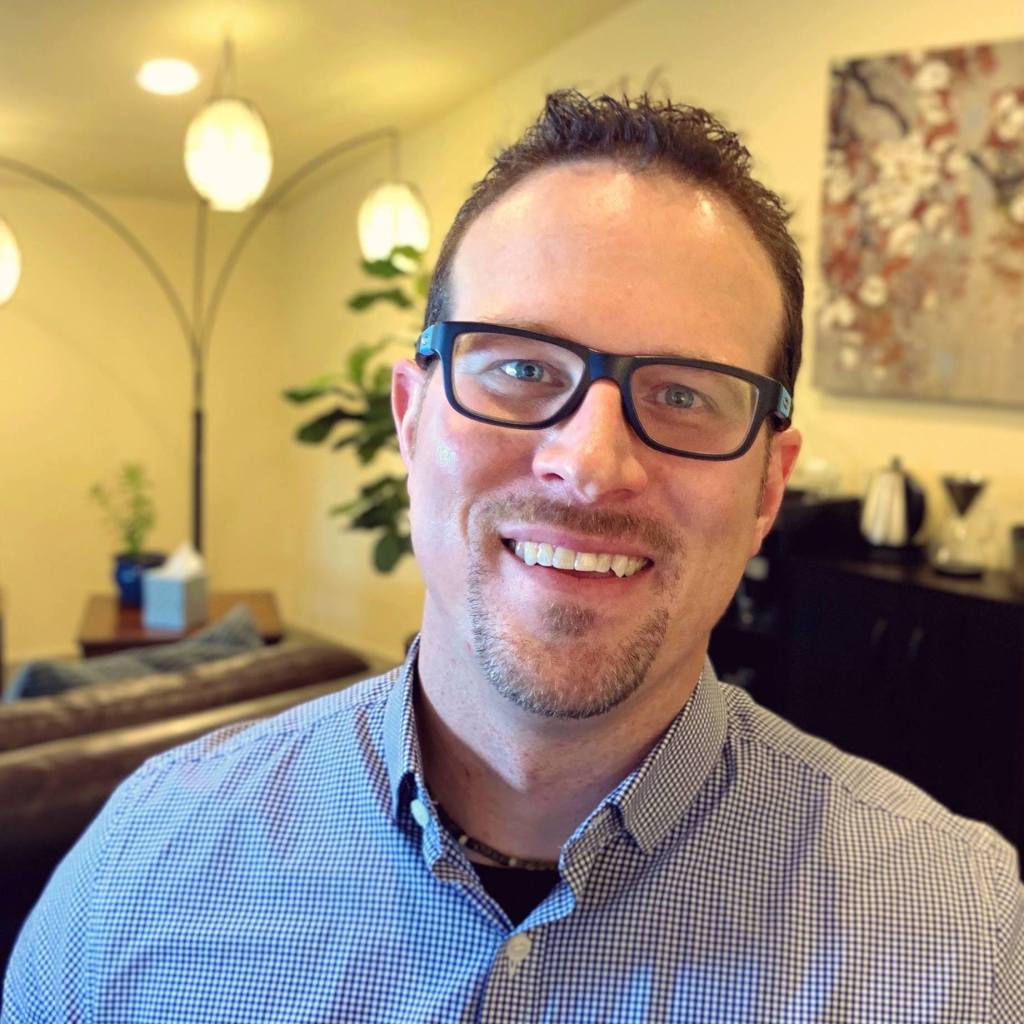
Janice Selbie: Divorcing Religion

Adverse Religious Experiences, Atheism, Deconstruction, Deconversion, Podcast, Religious Abuse, Religious Trauma
Click to play episode on anchor.fm

My guest this week is Janice Selbie. Janice is a Registered Professional Counselor (RPC) in Canada helping people through religious trauma syndrome. Janice is the director of the Conference on Religious Trauma. Janice’s personal story of fundamentalism, tragedy and eventual freedom is inspiringly and honestly told on the episode.

Was it possible that everything I had believed had been wrong?

CORT2020 is sponsored by the Secular Therapy Project (a division of Recovering from Religion) and by Journey Free, which is Dr. Marlene Winell’s organization.

Use the discount code GA036  for $60 off a standard ticket.

Janice also provides a workshop called “Divorcing Religion” using the analogy of divorce to help people out of fundamentalist religion.

It might take a tragedy (or more than one) to shake you loose from your cognitive dissonance.

This episode is another in the series of mental health professionals who specialize in religious trauma, religious abuse and the emerging term Adverse Religious Experiences.

Book Recommendations

Janice’s “extimony” has recently been featured in a compilation book called Daring to Share: Deception to Truth:

https://www.amazon.com/Daring-Share-Deception-Diana-Reyers/dp/1999401042

Links

Conference on Religious Trauma
https://cort2020.com/

Twitter:
https://twitter.com/Wise_Counsellor
https://twitter.com/divorcereligion

Secular Therapy Project
https://www.seculartherapy.org/

Journey Free
https://journeyfree.org/

Interact

Series on Adverse Religious Experiences
https://gracefulatheist.wordpress.com/category/adverse-religious-experiences/

Send in a voice message

Support the podcast
Patreon https://www.patreon.com/gracefulatheist
Paypal: paypal.me/gracefulatheist

Attribution

“Waves” track written and produced by Makaih Beats

Brian Peck: Room To Thrive

Adverse Religious Experiences, Deconstruction, Deconversion, Podcast, Post Theism, Religious Abuse, Religious Trauma
Click to play episode on anchor.fm

My guest today is Brian Peck. He is a licensed clinical social worker (LCSW) who specializes in religious-based trauma in his private practice and who helps guide individuals through their deconversions with evidence-based practices online. His practice is called Room to thrive and Brian describes it as “secular therapy for human well being.” It is trauma-informed therapy and coaching.

Brian has had a huge impact on me and my thinking. It was a great pleasure to get to pick his brain. You can hear me learning in real-time during our discussion.

If you have survived trauma (of any sort), your nervous system did exactly what it needed to do to survive.

This episode is another in an ongoing series of mental health professionals who specialize in religious trauma, religious abuse and the emerging term Adverse Religious Experiences.

We humans need community to survive.

Links

Room To Thrive
https://www.roomtothrive.com/

Twitter
https://twitter.com/RoomToThrive

Facebook
https://www.facebook.com/RoomToThrive/

Viral “Trauma is not your fault (period)” post
https://www.facebook.com/RoomToThrive/posts/2496151297329417

How and Why We Believe
https://lifeaftergod.org/059-how-and-why-we-believe-part-1/

Interact

I quote Brian in my article on the Steps of Deconversion
https://gracefulatheist.wordpress.com/2017/12/03/deconversion-how-to/

Adverse Religious Experiences series
https://gracefulatheist.wordpress.com/category/adverse-religious-experiences/

Send in a voice message

Support the podcast
Patreon https://www.patreon.com/gracefulatheist
Paypal: paypal.me/gracefulatheist

Attribution

“Waves” track written and produced by Makaih Beats

Laura Anderson: Adverse Religious Experiences and Religious Trauma

Adverse Religious Experiences, Deconstruction, Deconversion, Podcast, Religious Abuse, Religious Trauma
Click to play episode on anchor.fm

My guest is Laura Anderson. We discuss religious abuse, religious trauma and the difference between them.

Abuse is the thing that happened to you.
Trauma is the experience that your body or nervous system has as a response to the thing that happened to you.

Laura is a Licensed Marriage and Family Therapist in the State of Tennessee, a Professor of Psychology and an Approved Supervisor through the American Association of Marriage and Family Therapy (AAMFT). She has a Master of Arts in Marriage and Family Therapy and is in the final stages of completing my completing her Ph.D. in Mind-BodyMedicine at Saybrook University. Laura specializes in complex trauma, religious trauma, religious abuse, and purity culture.

Laura has developed a manual for mental health professionals on Adverse Religious Experiences and Religious Trauma which is available on her website. This is a resource for both mental health professionals and those who have experienced adverse religious experiences themselves. Use the discount code: RELIGIOUSTRAUMA15 for $15 off the price of the manual.

This episode is another in an on going series of mental health professionals who specialize in religious trauma, religious abuse and the emerging term Adverse Religious Experiences.

Links

Website:
https://www.lauraandersontherapy.com/

Twitter:
https://twitter.com/ms_elleanderson

Instagram:
https://www.instagram.com/ms_elleanderson/

Interact

On the show, I mention my writing on the steps of deconversion and “doubling down” that can be found here:

https://gracefulatheist.wordpress.com/2017/12/03/deconversion-how-to/

Send in a voice message

Support the podcast
Patreon https://www.patreon.com/gracefulatheist
Paypal: paypal.me/gracefulatheist

Attribution

“Waves” track written and produced by Makaih Beats

Brady Hardin: The Life After

Atheism, Critique of Apologetics, Deconstruction, Deconversion, Humanism, LGBTQ+, Podcast, Podcasters, Religious Trauma
Click to play episode on anchor.fm

My guest today is Brady Hardin. Brady is the co-host and creator of the Life After Podcast. Brady’s story of deconstruction is a painful one. He dedicated his life to ministry at 14. He discovered he was gay, was honest about it and committed to never acting on it. He got married to a woman. He was doing everything “right,” everything that was expected of him.

My biggest “sin” was to believe that the Holy Spirit actually changes people from the inside out and makes them more like God.

Then he got divorced (you have to listen to understand why), was kicked out of ministry, lost his best friend and had his son taken away. He described himself as “God’s only forgotten son.” This was where his deconstruction started.

Why am I the only one trying to do the Holy Spirit’s work for the Holy Spirit? He needs to do something. The ball is in his court.

Today Brady is an openly gay man, a humanist and a deconstruction super star. You can find him on the Life After podcast, on Twitter and Facebook helping others through the deconstruction and deconversion process. Brady is dedicated to raising awareness of Spiritual Abuse, Religious Trauma, and Indoctrination.

I can gaslight myself to be even more indoctrinated or I can take a second, get my head above water and realize: my logic has been drowning this whole time because I have been putting conclusions before evidence and trying to shove these narratives into real life instead of observing what is actually there and working off of that.

In the episode, Brady breaks down how narratives affect our lives. The Evangelical narrative is restrictive and repressive. But we can choose our narratives: a narrative of freedom, self-expression and inspiration.

[Narratives are] what we are using now, with honesty, as atheists and with responsibility to tell our own stories.

Update:

Links

Twitter:
https://twitter.com/BradyHardin

Facebook:
https://www.facebook.com/thelifeafterorg/
Community group:
https://www.facebook.com/groups/thelifeafter/

The Life After
https://www.thelifeafter.org/

Interact

Send in a voice message

Support the podcast
Patreon https://www.patreon.com/gracefulatheist
Paypal: paypal.me/gracefulatheist

Attribution

“Waves” track written and produced by Makaih Beats

Karen: Deconversion Therapy

Atheism, Deconversion, Podcast, Podcasters, Religious Trauma
Click to play on anchor.fm

My guest today is Karen, the co-host and creator of the Deconversion Therapy Podcast. Karen is a comedian, a writer, and now a podcast host. She grew up attending Evangelical schools from grade school to Bible college.

Everyone is good at something. I was good at being a Christian.

Karen was so dedicated to Christianity she became a missionary with YWAM. After attending DTS, she and her husband moved to Thailand.

With hindsight what I got called to was adventure, meaning, purpose, travel and helping people.

Honest laughter from the Thai women she was working with shook Karen up enough to recognize maybe they were fine without her Western Jesus after all. Later after reading Bart Ehrman’s Misquoting Jesus, Karen further deconstructed when she discovered the premise of her missionary work, Mark 16:15 “Go into all the world and preach the gospel to every creature,” was not in the original manuscripts.

Karen’s best advice to Christians:

Don’t research. It is bad for your faith.

Along, with her co-host Bonnie, Karen uses humor, sarcasm, self-deprecation and occasional snark to eviscerate the silliness of Evangelicalism. Their podcast is Deconversion Therapy.

We can laugh at this stuff. We are OK.
You can laugh at this. You are going to be OK.

Links

Website:
https://deconversiontherapypodcast.com/
Deconversion Therapy Link Tree:
https://linktr.ee/deconversiontherapy
Instagram:
https://www.instagram.com/deconversiontherapy/
Facebook:
https://www.facebook.com/Deconversion-Therapy-Podcast-378017629443177/
Facebook Community Group:
https://www.facebook.com/groups/302187740481879/
Twitter:
https://twitter.com/The_DeConverted

Book Recommendation

Interact

Deconversion
How To Deconvert In 10ish Easy Steps

Send in a voice message

Support the podcast
Patreon https://www.patreon.com/gracefulatheist
Paypal: paypal.me/gracefulatheist

Attribution

“Waves” track written and produced by Makaih Beats

Alice Greczyn: Dare to Doubt

Atheism, Bloggers, Deconversion, Podcast, Religious Trauma, Spirituality
Dare to Doubt
Click to play on anchor.fm

This is Alice’s first interview on the podcast. To hear her discuss her current book, Wayward – Spiritual Warfare and Sexual Purity, check out her latest interview.

My guest today is Alice Greczyn. Alice runs the Dare to Doubt website dedicated to millennials who are detaching from harmful belief systems.

Alice tells her story growing up with purity culture, Christian Courtship and Alice’s nearly arranged marriage. She describes being an atheist while surrounded by “LA spirituality”. She tells the story of cult-like acting classes.

As a Christian, she felt she had to fake spiritual experiences because others around her seemed to be having them but she never seemed to hear from god. Her honesty stopped her from claiming spiritual experiences she knew were not real. While watching the Jesus camp documentary, she asked herself, “how many of them are faking it?”

Alice recognized that other spiritual paths still required faith. She could not accept them because she could no longer lie to herself. She had grown to recognize when she was trying to lie to herself to “make things real.”

I became not so great at lying to myself, I recognized when I was trying to make something real.

Dare to Doubt walks the tricky line to be welcoming to atheist and those just beginning to dip a toe outside of the belief waters.

I built the site that I wanted and that I needed and that I wished I could have found when I was deconverting.

Alice is interested in studying why there are not more out women atheists and what causes non-believing women to hesitate to identify as atheists.

1% of women identify as atheist, I need to come out of the closet.

Alice recommends the Secular Therapy Project to find a therapist who will not push spirituality on you while you recover from your religious trauma.

I feel so much more love and so much more peace as an atheist than I ever felt as a Christian.

Links

Alice’s Social Media

https://twitter.com/alicefood
https://www.instagram.com/alicegreczyn/

Dare to Doubt

https://www.daretodoubt.org/
https://twitter.com/daretodoubt
https://www.instagram.com/DaretoDoubt/

Resources

Recovering From Religion
https://www.recoveringfromreligion.org/

Secular Therapy Project
https://www.recoveringfromreligion.org/the-secular-therapy

Alice’s Book Recommendation

Dr. Marlene Winell
Leaving the Fold: A Guide for Former Fundamentalists and Others Leaving Their Religion

GAP

Interact

Send in a voice message to the podcast:
https://anchor.fm/gracefulatheist/message

Support

Support the podcast
Patreon https://www.patreon.com/gracefulatheist
Paypal: paypal.me/gracefulatheist

Attribution

“Waves” track written and produced by Makaih Beats
http://freemusicarchive.org/music/Makaih_Beats

Attribution-NonCommercial-ShareAlike
https://creativecommons.org/licenses/by-nc-sa/3.0/us/

Transcript

NOTE: This transcript is AI produced (otter.ai) and likely has many mistakes. It is provided as rough guide to the audio conversation.

David Ames  0:11  
This is the graceful atheist podcast Welcome welcome. Welcome to the graceful atheist podcast. My name is David and I am trying to be the graceful atheist. Welcome back to the podcast. I hope you've missed me as we're on the summer schedule, which is roughly every other week. I do hope you will consider rating and reviewing the podcast in the Apple podcast store to Help others discover the podcast. I'm very excited about the interviews that I have lined up over the next couple of months so continue to tune in to hear people's stories of deconversion and their work in the deconversion space. My guest today is Alice Greczyn. Have the dare to doubt blog. On the dare to doubt blog Alice is focused on millennials who are detaching from harmful belief systems. Her blog has a number of resources for people going through the doubting, deconstructing and de converting process. As you'll hear in the interview, Alice describes the blog as what she would write to her younger self what she needed what she wanted when she was going through the deconversion process. In my conversation with Alice, we hit a number of subjects including religious trauma syndrome, guilt about former gullibility, purity culture, Christian courtship analysis, almost arranged marriage that was the beginning of her doubts. Before I start the interview, just wanted to make two comments. One is we talk about the Foursquare church. And I mentioned that it is Aimee Semple McPherson who started the Foursquare church, I couldn't think of her name, when we're in the middle of conversation, just want to make sure that that was clear. And then also, just to apologize to Alice. As I went through the editing process, I realized that I had interrupted her and derailed her a couple of times, she recovers quite nicely, and handles that with grace. I greatly appreciate Alice's honesty and her heart for people. And I think that comes through really well in this interview. So I hope you enjoy Alice Greczyn.

Welcome to the podcast.

Alice Greczyn  2:31  
Thank you so much for having me.

David Ames  2:34  
Alice I have found out about your blog online, your blog is called dare to doubt and I just really impressed with the work that you're doing there. You've got a number of resources on there for people who are going through the doubting the deconstructing the D converting process. And I was just really anxious to have you on so I'm really glad you're here.

Alice Greczyn  2:55  
Thank you so much. I really appreciate it. Very cool.

David Ames  2:58  
So before we get into the work that you do, I really like to hear your story I call our both our spiritual testimonies and our deconversion stories, our origin stories, it really tells a lot about who you are as a person of what that process was like. So tell us, what was your faith tradition growing up? And when did the doubts start to creep in?

Alice Greczyn  3:20  
Oh, man. Yeah, lately I've been thinking of in my head has died again stories instead of born against. But like it's once you're through that died again. It is born again an entirely different way. Yeah, so my origin story The so I was born into a Christian home. I never remember accepting Jesus. He was just always there. God was always there. By the time I was born, my parents were involved with the Foursquare Church, which has its roost and Pentecostalism for those who don't know. It's a very holy spirit friendly thing. And then, when I was a toddler, my parents were missionaries in Asia for a little bit less than a year. I don't remember a whole lot. And then when we got back to the states, my dad pastored, a Foursquare church for I want to say almost a couple of years in Illinois, and that's where I spent most of my childhood in Rockford, Illinois, when I was about nine or 10. I don't know if you've heard of this. It's a little niche. There was this spiritual revival movement that started sweeping over the world called the Toronto Blessing. Some people call it the renewal or the Father's blessing or the laughing revival. There were a lot of names for it, but my parents were very moved by the conferences that they attended. And there it was like the Pentecostal was notched up to like 10 with people like having seizures, rolling around and praying in tongues and having visions and ecstatic dancing and weeping for days and yeah, uncontrollable laughter like very, so. i My parents always told me that we were nondenominational. As an adult, I've looking back I'm like, Oh, I think the media classified us as evangelical. And then Christian media outlets views the term charismatic. So, but I always grew up being like, Oh, we're just Christians. We're just nondenominational. You know, my parents were very, very adamant that you couldn't pin God, he was so mysterious, so big, so multifaceted that to, like, try to put him in the box of a denomination was kind of limiting the possibilities of love and the movement of the Holy Spirit. So that's a that's a sort of nutshell version of like the definition, I guess, or lack thereof of my faith background.

David Ames  5:42  
So I have I have a fair amount in common there. Although I didn't grow up as a Christian. I became Christian. In my late teens, I was in an Assemblies of God, church, which is kind of kissing cousins to Foursquare.

Alice Greczyn  5:53  
Totally. I had a lot of friends who were Yeah.

David Ames  5:56  
I had a lot of friends in in Foursquare. And my favorite story from that is the local Foursquare when I was growing up would have when things got really rolling, they'd bring out this thing they called the river, which was this giant ribbon that was like four feet wide, and like 20 feet long, and they'd be flowing it up and down, and people were dancing. Anyway, that's my, that's my favorite. Spirit charismatic story. So I relate.

Alice Greczyn  6:22  
Oh, man, it is so filled with terms like that, like jumping into the river being cleansed by the fire. It's all like fire and river and holy rain and yeah, burning and refining oil. Like there's there's so many firewater terms

David Ames  6:35  
I find the community in Do you remember, the name is escaping me. But the Foursquare was started by a woman who called herself a prophet. I am blanking on her name. I'm sure someone can tell us. But anyway, that's kind of I always found that. Interesting. I think we'll get into the topic here in a minute about women in the church and women in atheism. But the Foursquare church was was started by a woman. And I always felt like that my denomination was uncomfortable with that. I thought that was interesting. Yeah. Did you ever you know, were you interested in doing ministry worship those kinds of things? Or was that or were you?

Alice Greczyn  7:11  
Yes, I was. So to kind of pick up from from that point, when the Toronto Blessing revival kind of hit on my family's life took a big detour, my parents felt called by God to give up worldly employment, to sell our house and most of our belongings, hit the road and follow him living by faith that God would provide. And I'm sure you're familiar with a Bible verse about Look at the birds of the air, if your heavenly Father feeds them, don't you think that much more He'll feed you. And so it was very, sometimes I like to say they call it living by faith. For me, it was homelessness. For a period, I totally understand where their hearts were, I shouldn't say that I'm learning to more understand where their hearts were, as we've, as we've been talking about it more as adults from the different places that we're at now. But it was it that was a period and then it ended with us settling when I was a teenager in Kansas City, Missouri, which is where the more Evan Jellicle thing kind of took off. And of course, when I was a teenager, that's when the purity culture aspect is drilled into us, as you know, when when you found God as a teenager, so I was homeschooled my whole life. So the only outlet I had for friends was through my youth group, right? No man, very many people who were not Christians or involved in the church in some way. So as a result of that many of my goals as a young adult became geared toward ministry, I wanted to be a missionary and I graduated high school early, I got my GED, because I was homeschool. I wanted to be a nurse. And so I was doing all the prereqs for nursing school with the plan to join YWAM the Youth With A Mission. And or so they have a discipleship training school in Perth, Australia with like a health care emphasis that I was intrigued by then I was also looking into Mercy Ships, which is like Doctors Without Borders, but Christian addition.

David Ames  9:09  
Right? I've had friends in both of those industries. Yeah.

Alice Greczyn  9:14  
Yeah. So that was that was that was the plan. And then as a teenager, I was approached by modeling scouts, who kept wanting me to get into the modeling industry somehow, and my family and I were living in Colorado, when I was 16. We moved around a lot. Okay. And so at this point, we're in Colorado. I'm 16. I don't think there's any way my parents are gonna let me start modeling at all, because it's just so worldly. And then, of course, as a female, I mean, men too. Absolutely. But you're selling sex. Yeah, so I don't know. I just never thought there'd be a way I was even sure I wanted to do it. I my own feelings were so conflicted. They viewed it as a door God was opening. They're like, you know, maybe this is like God's gonna provide money for all All the rest of the things I was like totally interesting. Yeah, it was interesting. And I think they, they they knew that maybe I could have a lucrative future in there and at the very least, like, what did I have to hurt by doing it? Then I have my own inner wrestling tooth. Oh, man, like, what if this is a door Satan's opening? It feels so good. You know, I get to play dress up and be pretty. I had this whole complex about being like a wayward woman. Oh, no. But it seems like, you know, if God didn't want me to do it, maybe maybe the door wouldn't be open and simultaneously the doors were closing for nursing and then other path. And of course, I, I was looking at life through an entirely mystical lens back then.

David Ames  10:42  
Yeah, science. These are things are pointing you

Alice Greczyn  10:45  
Oh, yes. Nothing occurs without coincidence. And so everything is either an open door or a closed door, you know, there's no uncertainly no personal will, in that, at least for me. My parents found God as adults. I grew up in it. And we've had interesting conversations about the differences, even just neurologically speaking like that, that can lead to but anyway,

David Ames  11:07  
can I just touch on that real quick. That's been a very much a reoccurring theme of late. As I mentioned, I came to this in my late teens. And I feel like I was spared the brunt of the trauma that I see a lot of people that go through, who are raised in particularly very conservative evangelical Christianity as children. And even part of my deconversion story was when my daughters were old enough to start thinking about baptism. I was deeply conflicted about this. This is what I was all the way into. I was a full blown believer, but there was something about it that felt really wrong to me, these children who couldn't possibly understand the decision that they were making, being encouraged by myself and my wife to go through baptisms. So anyway, I just feel like that's, that's definitely an interesting point, that those of you who were grown up in it as a child, when you're taught as a five year old, that these things are literally true. That's, that's hard to shake, even in your adulthood. Now,

Alice Greczyn  12:07  
it is, it is definitely because I think when you're an adult, you, you can better pick and choose what parts you're going to go with and what parts you don't like. For example, I recently found out my mom never believed in hell. And for me, that was like very much the bottom line of my faith. And the reason I stayed in it for so long. She just she's like, you know, for me, it was all about the love, you know, and like, I just kind of tuned those parts out. And she was kind of shocked that I couldn't do the same. And I was like, I never knew that about you. First of all, back then. Everyone else around me was telling me these things. Yeah. So and I don't think she realized how much of that fear based indoctrination was being instilled in her kids. She's since expressed, you know, she might have tried to shield us a little bit more, at least offered a balanced alternative perspective. But yeah, that's one of the differences between someone finding faith as an adult versus that is all you know. And like I said, being homeschooled, it was that extra insular layer of not really getting to meet or talk with people about any alternative, right? Any alternative way of life?

David Ames  13:17  
I will just say that I again, I relate more to your mom's experience. And, yeah, when I came to it, I was very much I call myself a grace junkie, right? The reason the reason I became a Christian was the grace that I saw in the New Testament and in Jesus specifically. And I was looking around the church going, Why do you think this? Why do you think, and I very much did the same thing where it's like, hell on the negative sides, I just minimized and I focus very much on the love and, and I now recognize, it's just one more way I'm privileged. You know, that spared me, the harder parts that I've seen many people that have to go through, again, trauma from trying to refer.

Alice Greczyn  13:59  
But you know, I would imagine, too, that you have a different set of challenges, because we mentioned we were discussing briefly, you know, the atheism community, sometimes at least we were first exposed to it is so very combative, and ridiculing. And I would imagine that unique set of challenges that someone who does find faith as an adult faces would include, like, why didn't you see it the first time, you know, like, why didn't you see the signs you you? You know, you hadn't drunk? You weren't raised on the Kool Aid, so to speak. So like, why did you ever run to it? And that also, I would imagine, could you know, if, as in the case of yourself, you do eventually leave that also, later on in your life as an adult? It's, I don't know I'm sure that has its own its own version of unique specialized trauma, deconstructing whatever word you want to use.

David Ames  14:51  
That's, by the way very good. Judo, you've just pushed it back onto me. I think it'd be a good podcast. Host I just didn't answer that I talked about a lot that what is unique to the deconversion process in general. And then mine specifically is a sense of almost shame or guilt for having been gullible in that I should have known better and really releasing that letting go of you. No, it was more about the community, it was more about my needs to be a part of a group to feel belonging. Those were the drivers that pushed me pushed me into that, but definitely felt poke fun at myself for you know, yeah, I should have figured that out a little sooner, because I was in it for 27 years or so. So it was a long time before I figured things. Yeah.

Alice Greczyn  15:38  
Oh, man. So a couple of themes that have come up so far in our conversation, keep reminding me of what I've been learning about cults, and I was gonna try to steer clear of using this word around. Yeah, discussing about Christianity, because I know it's very inflammatory. And I certainly do not think that all expressions of faith automatically mean they're cultish. Not at all. However, I do think, you know, we're talking about the difference between finding faith as an adult or a child, I've been learning in the cult community, there's like first generation cult member and second generation cold member, as opposed to adults who joined a destructive group, you know, after their mind had already had a chance to develop and then feeling like you should have known better I find that even with kids that were raised in religion or in a particular spiritual path, a lot of them just like many cult members, join another faith slash cult. And then when they leave the second time, they feel even more angry with themselves for having been duped again. Like I know people who one of my good friends he grew up in Calvary Chapel, right? Yeah. And were reaped heaps of shame on himself. When years later, after having left that he found himself in an acting class, Colt. They exist. Many bones to pick with acting classes, because of that my all of my red flags start going off. Yeah, because it's a very emotional, vulnerable place. That reminds me a lot of charismatic, weird Christianity.

David Ames  17:14  
Any, you make an excellent point that any group can have an authoritarian bent, and especially if you have a leader who wants to wield that power, work against the vulnerability and the honesty of the people, the members of that group, it can be anything,

Alice Greczyn  17:30  
all in the name of goodness, of course. Right, right. Self improvement, you know, or surrender, you know, and it's so, so easy to exploit that even unintentionally. I think many people who lead destructive groups freely do not have bad intentions. And that's something that I think, I know, for myself, I've gotten a lot of peace from acknowledging and it's helped lessen a lot of the anger and confusion was like, Oh, of course, they had good intentions, right? Everyone does.

David Ames  18:02  
That's a human experience. Yeah,

Alice Greczyn  18:05  
I think very few people knowing we are like, You know what, let's see how we can exploit people use their emotions against them take advantage of their vulnerability and make money. Well, like, I don't I don't think that that mindset is this common?

David Ames  18:19  
I totally agree. Yeah. And I think for many people who do grow into ministry, pastors and lay leaders, when they gain that sense of power it unwittingly you know, they're they didn't intend to wield it against people. But that's what winds up happening. Right? So I think we've we've skipped ahead just a little bit, I want to circle back just for a moment. I want to get to where when did the doubts start to creep in, but maybe you've got more story to tell of the faith experience as well.

Alice Greczyn  18:47  
So this is good practice for me to learn to tell my story. So my chronologically, my brain has the tendency to like to jump around. So I would say so I moved. So modeling led to an acting opportunity in Los Angeles. Again, I saw it as a door guard was opening. So I moved out to LA a month before I turned 17. That first year, I started booking right away, which at the time, I did not really know how lucky I was to even just have an agent or a manager. Many people live in LA for years before they get those things. And I started working. So the biggest turning point for me was what felt like an arranged marriage. Oh my so that same year when I was 17, a guy from my youth group in Colorado also moved to LA. Now we were both we were both from the same church. We both grew up in purity culture me a little bit more so than him it would seem and all of the Christian courtship books from I kissed dating goodbye to one God writes your love story by Eric and Leslie woody like all of the Christian courtship books I've ever read said very clearly how my love life was gonna play out like, right? Rule number one, you absolutely don't date. You don't encourage lust. You don't have lustful thoughts. You don't look at men or women lustfully. You don't, you know, like, once you do start a courtship, you wait until it's the person that God's revealed as your future spouse, and then God's will, is affirmed through other elders that he places in your life. So it's not like you just have to rely on your own self to know, oh, maybe this is the person that my flesh wants to marry. And I'm just gonna say, God put on my heart that this is my spouse, right? It's affirmed by other elders in your life. And like often your parents if you have godly parents, or maybe youth pastors. So for me, living in LA, this guy from my youth group, back in Colorado comes out, we become really good friends we've never dated. And one day he started acting a little jealous, over some guy friends that I was hanging out with, what is going on, man, you know, like, what, what's going on? He's like, Well, God showed me that your future wife just shocked and just just shocked, because and I, of course, believed him. Like, it's it's so easy in retrospect, to look back and be like, how would How did I believe that? You know, but I was primed for that revelation. Yeah. And I knew he would not say something like this lightly. And to this day, I think he totally believed and was sincere that that was the revelation at that time. And long story short, he called my dad to ask his blessing. My dad gave it and said he heard from God. So this guy heard from God, my dad had forgotten the guy's mom heard from God, that we were supposed to get married. And I was like, wow, it must be you know. And while I am feeling utterly shattered inside, because I was told that if you are faithful to your future spouse, and if you do, obey God, and let him write your love story, he's going to reward you with like, the most amazing wild romance beyond all your dreams, right? I completely believed it. And when it this reveal was this guy that I cared very much for as a friend, but had no romantic feelings for whatsoever I was. I it's hard to articulate in words, how stunned I was and also how betrayed I felt because I couldn't acknowledge the betrayal to myself, because that would mean that God had tricked me. Or that I felt tricked by God. Because you know, God doesn't trick you. It's selfish wants that make us think that. So it's, it was just a total mindfuck of emotions.

David Ames  22:41  
I bet yeah, man, you know,

Alice Greczyn  22:43  
is this is this a test from God? Is this like, when he told Abraham to slay his son is God just trying to see if I'm willing, and maybe I don't have to marry this guy, like, I don't know. Like, it was just all of my programming just was at war with itself and, and it was so hard for me to even know what my heart wanted. So I would say that that was the first time I really felt shaken and doubts came into play because it was like, Is this really God? It definitely seems to be really God. He told three different people. I'm the only one he didn't tell. But that made sense to me because God had never told me anything interesting. I had never felt God I had never heard from God. Well, everyone around me all growing up was feeling love or having visions or praying in tongues. I faked it. For me, ever, not once, and I would desperately tried to make it real. Like I thought one time when a friend prayed over me and youth group, I cried, because of what she was saying. But because I associated displays of emotion like laughter and crying with the touch of God, I thought, oh, maybe maybe this is God touching me. And in my heart, I knew. No, I'm just crying because I'm in a really rough place right now. All my friends love is really moving to me, my friend, but I was desperate to try to try to look for any sign that maybe God wasn't leaving me out. Because that was part of my own complex as a Christian was always feeling like I'm doing all the right things. I was such an auntie anxious girl, I was the best Christian I could possibly try to be and like I repented for so many of my thoughts and everything, like I was just so so earnest and

David Ames  24:24  
connect, can I jump in here and just respond to a couple of things, couple of things that you say that really, really speak volumes and one is I've heard this before of you're fully dedicated. You're trying to do everything right. And you have you've watched the people around you that are experiencing something that they're there that they are claiming is God and you're not feeling that and it's it's actually your honesty that's driving you not to fake it all the time. Or to accept something that is less than deeply profound because you're looking for The truth, then you're looking for the real thing, then you're recognizing that it isn't there. So that I just find incredibly ironic, and then to the story of the relationship is fascinating and that everyone else had heard from God, quote, unquote, doing. Except you. And I wonder how many people have experienced that. And I think that's probably, that happens probably on both sides, but probably more for women, where the men in their lives are saying, Oh, this thing is from God and feel completely obligated to something that you have no emotional attachment to. And that just must be a terrifying insight.

Alice Greczyn  25:43  
It is terrifying. It didn't feel terrifying in theory, because it was all I knew. And I should also clarify, my mom had not heard this from God. But by that point, my mom had stopped going to church. So it was easy for my mind to invalidate her because it was like, Well, you don't even go to church anymore. So of course, Satan might be using me because my mom is actually the reason why I ended up getting out of that engagement. Okay. It lasted for two months. And the whole time I just faked happiness. Like I don't think I've ever acted harder. And

David Ames  26:22  
you can accept the me.

Alice Greczyn  26:24  
I don't think I was doing a very good job because the guy that I was betrothed to he could sense something wasn't quite right, because I didn't want to do premarital counseling, which is, you know, par for the course and Christian courtship. And I was trapped. I was on a trip with my family away from him. And my mom just came up to me one day, and she's like, like, are you happy? Like, you don't seem happy? Self? And I was like, No, I'm totally fine. You know? And she's like, you know, do you, you know, you don't have to marry. And I'm like, tears. Yeah. Because I couldn't lie to my mom, you know, like, she knew she, she knew something. But even then, I still wondered if Satan was using her to deter me from the, from the path that God had so clearly laid out and triple confirmed. So, you know, I, my mom, even though I'm so grateful to her now, it still took me a month after that conversation to find the courage to leave because my mom's version of God at that point was the God that would not want me to marry a man I didn't love. But the Bible is full of stories of girls who had to marry men they didn't love. I still to this day, can't think of a single Bible story where the girl married a guy because she loved him. Maybe the Chi love lust at her like Jacob and Rachel or whatever, but we don't know how Rachel felt about him,

David Ames  27:50  
right?

Alice Greczyn  27:52  
I don't know. It's, um, it's so I don't know that just it wasn't that my ideas of God, even when I did believe in him, never quite panned out to be what I thought that they would be. And so my arranged marriage felt like nothing different. It was just extra painful, because it's a life commitment. Well, long story short, I finally find the courage to break up with a guy and I good rehab. Thank you. I still wasn't 18 Yet, I was still 17. And like, I'd never had a boyfriend and I felt I felt so terrified in the months that followed, because I deliberately gone against God's very clear well, and I was sure that Satan was going to get me at any minute because I'd gone against God's plan, which meant Satan could now get a foothold on my life if he wanted to. And I thought maybe I'd get cancer. I thought maybe I'd get in a car crash. I live in LA. So I thought maybe an earthquake will come punish me, you know, in salt. very egotistical sounding in retrospect, like, oh, yeah, God's gonna make an earthquake happen just because of me.

David Ames  29:01  
No, but you know, again, I've heard that kind of thing over and over. I remember people would say, I didn't do my Bible study today. And that's why my car broke down. Yeah, I'd be like, what god are you serving? Doesn't make it even as a Christian. I thought that's insane. Yeah. But I don't mean to say that about you. But I mean, I, I appreciate that. That is the kind of environment that it's a kid you grew up, you make those connections, and you feel like, you know what, I'm gonna get punished if I don't do the right thing? Well,

Alice Greczyn  29:32  
it's cause and effect at its most magical thinking form. You know, who's there? Obviously, it's like cause and effect but through the lens of mysticism and meaning and signs and, you know, God's Will versus Satan's will like, it's not at all. It's to this day. I have difficulty sometimes. I should say, to this day, I sometimes catch that same wiring that sort of black and white thinking mentality that I have really made an effort to try and just take note of and let go and try to look for the gray areas more. And I've become quite comfortable with it now. But it took me a long time I've been, I stopped believing in God 12 years ago. So I've been out for a little bit now. And even though leaving that arranged marriage was ultimately what got me to doubt, three year It wasn't until three, three and a half years after that, that I was unable to sustain faith at all completely. And so I would say that ending my betrayal was when I ended my relationship with evangelical Christianity or charismatic Christianity. And for a long time, I really wanted to be a liberal Christian. I wanted to be a progressive Christian, I wanted to be the kind of Christian that that believed that God loved gays, and they were gonna go to heaven to see that, that I didn't have to go to church and I didn't go to church. For a long time, my faith was still really important to me. I allowed myself to explore other spiritual paths as well like Buddhism, Taoism, Hinduism, Judaism a little bit more, because Judaism and Christianity are very similar in some regards, at least Old Testament wise.

David Ames  31:12  
And there's more openness for questioning and Judaism. I can I can see, I can see where some people might be attracted to that. Yeah,

Alice Greczyn  31:18  
sure. Sure. Yeah. And then you know, your, your LA, kind of spirituality that yeah, crystals and chakras and stuff like that past life therapists, I definitely saw one. Just just trying to open my mind and let myself learn about things that I'd never let myself learn about before. Because it was all if it wasn't from the Bible, it was a temptation of the devil. So I never let myself learn and I love to learn. It's my, it's my purest joy is when I'm learning something that I find fascinating. So I let myself do that. And along the way, there were some things that I really wanted to be true for me, I really wanted to be a Buddhist, or I really wanted to be a Taoist. I, those those really spoke to me for some reason, and Wicca to like nature worship, but for me, they all required faith. And for me, the bottom line was, I became not so great at lying to myself anymore. When I knew when something was not true for me. And I knew, because I recognize the muscles that I trained when I was trying to make it. So when I was trying to twist my gut feelings to justify whether I am feeling God or a spirit or a connection or something to the Divine, you know, I could tell when I was bullshitting myself. Yeah, I'm so good at it. And like I said, I was just not so good at it anymore, which I which freaked me out. But one day when I was about 20, or 21. So what it was for me that like really close the door on faith for me was I started watching this documentary called Jesus Camp.

David Ames  32:59  
Or, you know, I haven't seen it, but I'm vaguely familiar with it. Yeah, go ahead and describe it for us.

Alice Greczyn  33:03  
So Jesus Camp is a documentary that mostly follows these kids in Kansas in I think, Kansas City, or Missouri, near near there in the Midwest, watching just 10 minutes of that documentary, and I couldn't even watch anymore, I was shaking, because it was like watching my childhood, I was watching these kids with their hands raised and tears streaming from their closed eyes. I was wondering how many of them are faking it, because adults are not going to go away and leave them alone until they get until the kids give the performance that's expected of them, right? Maybe for some kids, they really are having some sort of genuine, mystical experience. But you know, they can't, I know I wasn't, so I can't I wonder,

David Ames  33:44  
I do want to be really careful. I do believe that there are people who truly have a, an experience of some kind, my argument is that they are attributing it to the wrong thing, right? They're attributing it to an external entity to a God, when in fact, it is the environment. It's the peer pressure around them. It's, you know, what have you and the human mind is easily primed. It's easily manipulated. And but I guess what I want to say is that, that people do have real experiences. I think your experience was also valid in that you were recognizing that this thing wasn't real. And maybe had a little more self awareness. Right. But I just want to make sure that we're not making a blanket statement over everyone. For example, just to be clear, my wife is a believer, and she's very much you know, her it's so real to her. And the reason I have not really, I don't go after her on on her faith at all is that it is such a foundational part of who she is. And it is a daily reality for her. I'm very cognizant of because I love her her for who she is. And that is a part of her to accept that part of her and to Love her in her entirety right?

Alice Greczyn  35:02  
That is so beautiful. I just have to say that is so beautiful, both on the part of you and your wife, who are unequally yoked.

David Ames  35:10  
That's exactly right. Yeah, it's a challenge I don't want to make. I don't want to make it sound like it's all roses and figs. You know, it's hard. It's very hard. I'm sure I'm sure that's the subject of an entire other podcast. But I want to I guess what I'm trying to get to is, I've talked to so many people now. And both are true, right? People that have had an experience that so feels so real to them, that they cannot distinguish it from what we might describe as reality. Absolutely, yeah. And people like yourself, who are in the middle of the same sets of peer pressure, the same emotional influencers and going, Yeah, this isn't quite right. And so both of those are in the spectrum in between is all possible.

Alice Greczyn  35:52  
Yeah. I 100%. Agree.

David Ames  35:55  
I totally derailed you. Sorry about that.

Alice Greczyn  35:57  
Oh, no worries at all. I totally agree, I think and that was actually one of the biggest parts of my healing was learning about mystical experiences I've come to call them and or some people call them religious experiences or psychedelic experience. Yeah. The kind I'm I say mystical experiences as a broader blanket. I have had psychedelic experiences that have shown me for the first time, even just an inkling of what everyone else was getting to experience on like, Oh, this is what it is. And as I've done a lot of research into the neuroscience of faith and spirituality. It's everything you just said is totally validated like we are, we're, I think some of us are more susceptible to having spontaneous, sober mystical experiences. Like no, no magic mushrooms involved. Yeah. And some of us are just not wired for that. And that doesn't mean there's anything wrong with you. It doesn't mean you're broken. It doesn't mean you're a sinner, because I always thought there was, it must be because there's some mystery sin in my life, right? Even though I was such a good kid. Yeah, I was a brat sometimes. But I was such a good kid guys. And like, I felt like man, it must just be some, some hidden sin that like I was hidden even for myself. And that must be why God's not touching me.

David Ames  37:11  
This is part of the trauma as well as that, you know, if things go well, and you do good, it's God gets credit. And if things don't go, well, it's your fault. You've done it wrong. In your part, you're totally putting that on yourself. Or you're experiencing

Alice Greczyn  37:25  
that credit is a one way street. It's yeah, it's, it's painful. My point is, I 100% agree with you that I think some people genuinely are having a mystical experience, while others like myself are faking it. And when I was watching Jesus Camp, that documentary, it just brought back all of that pain of never feeling God's love and always feeling rejected and left out. And, and it made me like I said, I couldn't finish it. I didn't finish that documentary until years later. But that was what made me get I got really angry for several weeks, maybe even a couple of months. And I was just so angry. And even though I looked at other spiritual paths, by then, like I said, they all required face, faith of some sort. And to me, Faith means something that you accept as truth without really believing it without really being convinced of it without knowing it. It's a book, it's, it's a, that's why it's called faith. It's a, I could tell like, I was like, oh, man, like am I just, I'm just leaving one facing for another facing. And none of it feels true to me. And I just needed to be honest about that. And I got, I gave God his last test. And he failed. Yeah. Then after that, it was like, about a month of exhilarating freedom followed by years of therapy. Burn, like, I felt so high on life. Like during the first month that I became an atheist, basically. And because I could wear whatever I wanted, I didn't have to worry about anything. I never ever wanted to feel the emotion of shame ever again. And after that, I started having, like suicidal panic attacks. And I had no idea why I did not correlate that to leaving my faith that this was in, like 2007 or 2008. I didn't learn about religious trauma syndrome, until like, 2013. I want to say 2013 or 2014. All I knew was that I needed help and have and the Christian mentality in me tried to tell me, of course, is what happens you know, this is Satan attacking you because you left God and there were a few moments that I could tell my heart wanted to relapse back into faith me like Okay, God, I'm sorry, I do believe in you. But again, I could not lie to myself anymore because I knew I was lying. I don't think faith is a choice. I know many people do. That's just not been my truth. I chose and chose and it was just never real to me. I think some people can choose and something is real to them. It's just, I never had that luxury but Path, okay, because I am so much happier where I am now. And I am so I feel so much more love and so much more peace as an atheist than I ever felt as a Christian ever.

David Ames  40:13  
Yeah, no, that's amazing to touch on what you just said there, I've always said that belief is not a choice. And I know there are some, you can get into the philosophical weeds, but just on an assert on a practical level, you are either convinced of a thing that it is true, or you're not convinced. And you can be somewhere in between that, you know, in the process one way or the other. But you really don't have the choice, you could no no longer you know, the question is suppose to say a Christian is, okay, choose to believe in Islam. It's just not possible, you can't volitionally decide, I'm going to believe this thing. And so reverse is also true. When we come to a point where we can no longer believe and I love the language you use, you said you could no longer sustain faith, I believe is the way he said it. That's how I felt like I couldn't, I couldn't keep the plates spinning. I was trying so hard to keep the plates spinning to make this thing work. And I went through the read through the Bible again, about two years before, just you know, reading apologists, I was trying so hard. And your story sounds very familiar, right? Like you've trying to do the right thing. And yet, it's just not work. And at some point, you have to admit yourself, I don't believe totally. And

Alice Greczyn  41:24  
the only thing that that reassured me when I would have those moments of anti doubt, I guess we'll call it like no longer doubting my faith, but doubting my decision to leave. The what calms me down, was reminding myself, you know, what, if there is a God, that loves me, if this God is real, then he gets it, he understands that this is just my journey right now. And after all, if he really did want to make himself known to me, and he's all powerful, and he could, if he could have and chose not to, then he has to understand that this is the result of that. And, of course, I was still terrified, because I was no longer acting on faith. And like that was that was the requirement to get into heaven. And then I thought, when I would get angry again, I was like, You know what, I don't want to believe in that kind of God and where the fuck him one way to get into heaven, you know, that is not the kind of gun No, that's not a God of love. And so I would have these conversations with my Christian self and my non Christian self and, and using the Bible for both arguments. I love that I love I love to this day utilizing the Bible or other spiritual texts, or non spiritual texts to argue and counter argue, because I really like to feel like I can understand something. There's so little in life that can actually be a process of trying, understanding to my own mind satisfaction when possible.

David Ames  42:58  
Yeah, let's touch on one more theme that you brought up. And that is, often people go through what you've described, where, okay, I'm no longer an evangelical Christian, maybe I'm a liberal Christian, or maybe I'm a Buddhist, or maybe I'm a Dallas. And I felt like, I came crashing through those pretty fast like, for me, it was just just my personality. I have described it as you know, when you see a movie, and somebody's hits every balcony on the way down, before they hit the ground, I felt like I just came crashing through those things. All the way to the ground of science as an epistemology is understanding how do I figure out what's true and what's not? And for you, it was it was the recognition that each of those things still required this idea of faith? How did you figure that out? How did you acknowledge to yourself that this was the same thing,

Alice Greczyn  43:49  
because they all had an afterlife theory and a set of rules for how to get there. Buddhism believed in reincarnation, and the rules for how to get there was accrue. Same with Hinduism as accruing good karma. Granted, there's many, many different denominations, or branches of Buddhism and Hinduism and all of that, you know, I'm making very broad statements right now. But for me, the bottom line of any faith is, or any spiritual path is boiled down to a belief in an afterlife and how to get there. Yeah. And that I just, I could not convince myself of I could not convince myself that A, that there is an afterlife and be that these people knew that this was when they get there any more than these people over here knew that this was the way to get there. So it completely canceled themselves out. Now, I was able to look at, let's say, the good parts of all of these different faiths and spiritual paths, and some of them did resonate with some sort of truth because to me, they're just common sense.

David Ames  44:49  
Right? You know,

Alice Greczyn  44:50  
maybe don't steal like, yeah. Not because you're going to accrue bad karma or because it's a sin, but because As you know, it's just, it's, it's just not nice and it has consequences. It makes people angry. It's being dishonest and I feel yucky about myself when I'm dishonest. I don't need any other metaphysical incentive to be a good person, it makes me feel shitty when I'm not so good person. That's my own definition of a good person. Because like I was saying earlier, everyone has good intentions, myself included. All we can do is to be honest with ourselves about what's true for us and what's not, and also give ourselves permission to change. I wouldn't be here today if I didn't. And I always still give myself permission to change. It's hard for me at this point to imagine that I'll believe in something again, in a classically spiritual or religious sense. But it can happen say I have some horrible accident, I have a near death experience. And I am convinced, yeah, now I've read a lot of accounts of, because that's one of the things that fascinates me are people who have had near death experiences and out of other out of body experiences, it definitely intrigues me, but I love I still love exploring spirituality and things like that, but through the lens of looking at it. Less is something we need to take on faith and more is something that Ooh, we just haven't quite figured out the scientific tools to measure the sort of experience yet and quantify it and and explain it. So to me, it's just a mystery to be solved. Not anything that proves that there's something more it's like, of course, there's something more like, but I don't think we need to get mystical about it. Yeah, it's just there's so much that's unknown.

David Ames  46:36  
Yeah, we don't understand consciousness yet. No. And something is deep in consciousness as a near death experience or a religious experience. It's like, of course, we don't understand it.

Alice Greczyn  46:47  
But that doesn't make it God that doesn't. Exactly. That doesn't make it something you have to take on face that makes it something that we get the joy or burden of figuring out if we want to, unfortunately, a lot of us want to and I love reading their research. If I could do school over I would definitely go into neuroscience. And I'd love to work in the field of neuro theology, which is just the mind science of faith.

David Ames  47:14  
I think you should do that.

Alice Greczyn  47:18  
It's a fascinating field. Yeah, I love learning about it as a hobbyist.

David Ames  47:23  
So we set off Mike and I joked that you're famous to me because of dare to doubt. It turns out that you are also an actress. So I wanted to touch briefly on the bubble of Hollywood, you kind of hinted at that, that there's definitely a Hollywood spirituality. And I'm just curious, are you out as an atheist to in Hollywood? And is there any back pressure about that for for your work?

Alice Greczyn  47:49  
Oh, good question. Oh, man, this is something I'm sort of in the midst of right now. So thank you for asking. So give me an A chance to kind of articulate that kind of going through your question step by step. I feel like I only recently came out as an atheist this year. I did start dare to doubt and I wrote one of my blogs was called the a word. Because for a long time, I said I was agnostic. And again, I couldn't bullshit myself. Just agnostic Why am I so scared of this atheist label? Yeah. And there it's when I really asked myself of course, it's very clear why I'm there's there's reasons that I knew and reasons that I didn't know about why I was reluctant to use the label of atheist. The first ones being oh, it just sounds so angry. I happen to really love a lot of angry atheists. I love Richard Dawkins and I'm so grateful to Bill Maher and Christopher Hitchens. Like, like I so deeply, deeply value the place and the voice that and I adoringly say this that angry atheism has Yeah, however feel because it's so validating and I kind of looked at I kind of look at it like stand up comedy, which is just fueled by anger and depression. It is. Sometimes you do need it to come out that callously so the point is made because speaking for myself, I watched Bill Maher's Religulous shortly after I left Christianity, and when I was looking at it, I was like, wow, like these poor Christians. He's mocking them so harsh and ridiculing them so harshly, you know, and you can tell they don't know how to mentally keep up with him or articulate their their responses and I felt bad, but the post Christian and he was like, yeah. It was like it was like he was the cynical little cheerleader affirm my decision and my doubt and affirming the logic that I always saw and didn't dare to question and so I think that I think that there is a time and place for that. However, there's like, a lot of people are very good way I feel allergic to the word God. A lot of people are very allergic to the word atheist. Yeah. And I understand that not just because of angry atheists or whatever, but because I think people are offended by that label for many reasons that get very deep and subconscious, in my opinion, because say you've lost someone say you're still a Christian. And I tell you, I'm an atheist, I don't know, maybe you've just lost your mother last year, right? You're comforted by thinking she's in a better place right now. And I'm saying, Oh, I'm an atheist, essentially saying, She's not there, dude. Yeah, she's not in a better place. Even if you're not consciously aware of that thought, feeling like, that's what I'm attacking. I can't help but think that it must be reverberating through your sense of comfort and make sense of the world in some level. And so I think that's another reason I steered clear that for a long time, because it was like, Ooh, you know, like, I do understand the role that faith plays and in the human painting, and I think that it's often I do see the good parts of faith, the comfort, I think, I think faith is at its best. Faith serves us best, in times of deep pain when we need comfort. And I think grief, what's more painful than than grief? So it was really hard for me to kind of be honest and say now, but I'm an atheist. And I was like, why can't I just say, I'm an agnostic, that's sort of the same thing. It's like, I am agnostic. And I look at it very literally, agnostic means like, without knowing and then a theist is like, without belief in gods or deities. And one can say, I'm both like, Well, yeah, I don't I don't know. I think everyone's an agnostic, because no one really knows anything. But it still felt like a pussyfooting way for me to hide my lack of beliefs. And when I learned that only 1% of women especially identify as atheists, I was like, Oh, my gosh, I need to come out of the closet. Yeah. Because that I know, for a fact through my own personal relationships, that there are many females who do not believe in anything who are not even spiritual. They are atheists, but and I respect, if that's not a word they're comfortable using for themselves, that's totally fine. But part of the reason it wasn't comfortable for me, and maybe why it's not comfortable for them is because it's still not safe to be an atheist. And I was shocked when I read when I was reading my article, the a word, I found that like, people distrust atheists more than rapists. Yeah,

David Ames  52:30  
I was like, what? That's crazy. And I was like,

Alice Greczyn  52:34  
Oh my gosh, we need to de stigmatize this because it's like, I'm an atheist, and I'm a very loved person. And like, I, I love to give love and like I, I think boil what it boils down to is people still associate spirituality with morality, and a lack of spirituality or faith, thereby must mean you have a lack of morality. And of course, that's not true. Yeah. But I in order for me to feel like I could really have a voice in that conversation. I needed to be open about it. I needed to be honest and be kind I recognize this is like old Christian mentality coming back up, but live the example. A living example of not Christ's love, but of

David Ames  53:15  
atheists. That's right. Yeah.

Alice Greczyn  53:19  
I, so that's what gave me the courage to kind of come out and, and say that so I mean, good, close friends and family members have know that I'm an atheist, but I did. I was not public about it until this year. And even now, like, it's not like in my Instagram bio, exactly. Yeah. No, I understand that flag necessarily, but I certainly don't shy from it either. If someone asks, you know, yeah, I'm an atheist, I think for a long time to I was really scared of adopting any label because I was afraid it would inhibit my sense of freedom to grow and change my mind. And I felt like I fell off such a pedestal of my own making when I left Christianity, that I was really scared to adopt another label when I might change more. And you know, it's like, okay, so I change more, you know, what, what's so wrong with that, you know, they change again, I change again, and yeah, fortunately still live in, in a condition where language semantics verbal expressions to say try and describe these like very big, big ideas and feelings. Like we're so limited feel so if the word atheist kind of sums up accurately for me where I'm at, then that's what I've gotten comfortable using.

David Ames  54:30  
Yeah, yeah, no, I think I go through the same kind of mental gymnastics right like so the moniker I use is graceful atheists that could easily be graceful humanist, right, identify much more as a humanist than an atheist but the the sense of the need to de stigmatize the word. Yeah, it's part of the reason and you bring up the very interesting idea that there are so many fewer women who identify that way. And probably because of astigmatism both outside of To the atheist community and and inside. Yeah, I love how you said the angry atheists have a lot to say. And it's it's valuable. And it's useful. But it's not all that there needs to be to say. And so I think so, what attracted me to the dare to doubt blog and the work that you're doing is, and what I'm trying to do with the podcast as well is to say, You know what, human beings are three dimensional, we are not Vulcans, we're not purely rationalists, we have to have something more than just a five point argument. To say that you can live life you can be a moral person, you can have all and belonging and love, and all the things that a person finds within religion outside of it. Yeah, and we need to expand the horizon of what is possible, and what other people perceive of being secular of being non religious.

Alice Greczyn  55:55  
Yeah, yeah. Yeah, I definitely agree that I think there needs to be, and there is, but it needs to be talked about more. Such a vast diversity within atheism, the way there isn't any religious or non religious group. You know, there's there's different branches of atheism, if you will, different denominations. Yeah, yeah. Oh, yeah. Yeah, I think it's interesting to me why, looking at why there's not as many women in the atheist movement, I think that there are, they're not often given the voice or the platform that some men have clearly had the opportunity to have. Yeah, I think also, there's a lot of data to support that women in general, and I hate gender stereotypes, but because there are always always exceptions, but in general, the data seems to show that women do tend to genuinely be a little more faithful, or have the capacity for spiritual belief than males do that that's, which I find very interesting. And I'd like to examine more. And I mean, of course, this research is filled with holes. It's like, well, short kind of controlled studies were there and how do they measure? Were people being honest with themselves and the answer the questionnaire, but will will work? But it's interesting to me. And I would like to over the next few years, like, try it, that's like, in my curiosity research project. Yeah, that's one of them is trying to understand why are there not more out women atheists? Yeah. And, you know, I've heard stories of there being a lot of misogyny in the atheist community. And you know, maybe that maybe that does genuinely play a role. I feel like, I don't know, like, I try not to focus on that too much. Yeah. And to just be who I am, and try to encourage other people to be who they are. And it's interesting, because with dare to doubt, I have tried very hard to make it feel as best as I can, welcoming to both an atheist and both someone who's just just beginning to dip a toe outside of the belief waters, right. And I think it's a very, very tricky balance to find. Because if I want to make it feel welcoming to to someone who's who say, maybe just starting to question and being like, Oh, I don't know if I believe in this part, I believe in this, but not this, they might feel very alienated by something on my site that says atheist or secular, right? And think that oh, no, this is an anti religion agenda. I can't go here. That's tricky, because like you said, I also want to be honest about my atheism, while holding space for other people to be honest about wherever they're at whether that means they under the atheist themselves, or they find a version of Christianity or Mormonism or Islam. That's just more true to them. Yeah. And they just had doubts about maybe a particular thing. It's been a tricky thing to navigate. I think at the end of the day, I just built the site that I wanted, that I needed when I was in my early 20s that I wish I could have found. That's awesome. Because, like you because like so I mentioned, I was in therapy for three years, this was before religious trauma syndrome had a name. I was combing through therapists bios and looking up where they went to school because I was desperately trying to see like, are you a Christian? Are you are you an atheist? Like, are you going to hurt me more? Are you going to invalidate my pain by telling me oh, well, have you tried praying about it? It's like I've had that happen. therapists have, you know, they don't say they're Christians on their site. But then I go in there, and, you know, the Christian in them wants, sees like a lost sheep and wants to bring them back to the flock. You know, it's, it's their only human, you know, and so it's hard, I think, to separate as much as people might have the best of intentions to I think it's very hard to separate your faith from your practice in such in that kind of setting. How can you especially when a person who needs the therapy is coming to see about these crises of faith issues. So it was really important to me and still is to this day, to find a therapist who has not gone to a Christian school. And I know this is very unfair, because I know a lot of atheists might go to a Christian school because the education maybe is better or whatever. But for me I mean, it's just something I've accepted about myself, it could be a button, I don't want to not trust the therapist I'm seeing. So if I have any doubts that maybe I could question their credibility, because maybe XYZ, I won't be able to trust them. And then why am I spending my money and time? Yeah. So I'm really happy to find that there are a growing networks of secular therapists, recovery from religion has probably done they they have the biggest resource that I know of with what they call the secular therapy project. Yes, that I feature on dare to doubt. I'm so happy that that exists. Now. I don't think it existed 12 years ago, when I needed therapy. And so I'm really excited to help other people find these things that maybe they don't even know they're looking for yet. Like, I didn't really know that I wanted a secular therapist until I saw a couple that weren't. And then I was like, Oh, my gosh, like, I don't want to therapy altogether. But is every therapist spiritual? You know, like, I, like I get what they have in common there. You know, a lot of spiritual practices want to help heal people in the psyche and stuff. So I, they're kind of it's therapy is very similar to ministry.

David Ames  1:01:10  
Yeah, exactly. And they're empathic people. Yeah. And I was gonna say, Alice, I've known you for one hour. And I can tell that you're an incredibly empathic person as well. Just to say that your work shows that as well. I think in your writing, you take great pains to make it welcoming to people who, they're never going to look up an atheist site, right. But they might admit, I'm having doubts, and they're gonna find your sites. And I think in your writing, there's empathy, there's sympathy, you've gone through it as well. And you express that very well. And I'm very hopeful that that people will find your site. Thank you. You've already mentioned that you've got that resource page, which I've been meaning to do myself for a long time, but you've done it. So well. How did you determine what you were going to put on the resource page, like were these things that you use yourself? Or were that through referrals?

Alice Greczyn  1:02:00  
So a lot of them I have not used myself because what I endeavor to make with Derrida doubt, so to back up a little bit, I started out knowing that I can't please everyone. I need to please myself, first and foremost, because that's how I'll come up with something authentic and original. It was important to me that it not just be for Christians, because a lot of the other sites that I have found out there are faith or former faith specific. And I think that that's great. I didn't find a I didn't find very many, like one site helps all sorts of things. And my site is not going to help all there's, there's way too many belief systems out. Sure. When I was putting on my business cap and leaving my heart cap aside for the moment, I was like, Okay, what do I hone in on to make this site's demographic, more clear and specific, so I'm writing to that one person. Like I said, it was my younger self that I ended up wanting to make the site most for knowing that there's so many other people out there who are exactly where I was. Yeah, so writing to my younger self really helped me focus that, okay, I'm writing to, it's welcoming to anyone, I want everyone to feel like they can go, but it was more millennial centric. Also, when I learned a lot of the data, showing that, you know, millennials, like my I'm 33, and my generation is the first girl with the Internet. And that I think has so many is probably the number one reason I would theorize why so many of us are leaving church more than any other generation previously, we just have so much more information and alternatives at our literal fingertips. And so I was like, okay, that will help me narrow the demographic a little bit. Right now I have, I think, five different belief systems, that I have resources for people who are in stages of doubt, Christianity, Judaism, Islam, Mormonism, and Amish, because that one, for some reason is just always been close to my heart. The sixth one is broadly Eastern religions and spirit and inspired groups, because that covers everything from Transcendental Meditation to harmful yoga cults. Yeah. And the pages that I'm working on building right now, slowly, but surely are a Jehovah's Witness and Catholicism, and there will be more too, but those are the ones that I'm mainly focusing on. And so I did not need all of these resources myself because I was not raised a Muslim. But I find and this is so interesting to reflect on. But I find that when I started dare to doubt, and I started getting more involved in the online community of ex believers, which I was not really previously I have so much almost more in common emotionally with the ex Muslims than I do the ex Christians for some reason. Oh, interesting. I don't know why this is. Yeah, I was because I noticed like the people that I'll that I'll follow from my dear to doubt Twitter. I it's so it's so interesting, like, I'm not sure. I've been trying to think like, why why is it that this really speaks to me in a way that this ex Christian stuff doesn't? You know, it's like, of course, they both do on some level. And I wouldn't say that I identify with all of ex Muslim things by any means. You know, that was not that was not my experience, but I don't know, it just it's I've been trying to find my place in this online. X believer space. Yeah. It's a harsh world out there, man.

David Ames  1:05:31  
It's sure it's like, it's

Alice Greczyn  1:05:36  
I did not know what I was getting into. With dare to doubt in that regard. And the social media regard like it's intense. It's been very educational. Yeah, my boyfriend's had to hear me talk about the Twitter atheist wars. I'm like, I don't know about this space. Like, this is so interesting to me, you know, I feel I once said, and some comment on something that I made on Twitter that all of us are so different. We were so diverse as believers, we're all going to be very diverse as ex believers. But it's very interesting to me to observe the tendency still within all of us to fight for identity and a set a code of conduct that we can claim.

David Ames  1:06:14  
Yeah, and who our enemies are, and who

Alice Greczyn  1:06:17  
our enemies are. My the next Pete blog piece I'm working on is kind of about that, like, finding my space, finding the sort of atheists that I want to be in this space. And if you say I'm in real life, like I don't like to get into big debates with people, right. You know, like, I love a good honest conversation. I love some sparring. If someone's down, like, I'll go there with you. Yeah, you're gonna need to really prove that you're that you really want that because I will. And, you know, I don't want to make people feel I don't like when people make me feel dumb. I don't want to go out of my way to people feel dumb, when I am not aware, it's to the best of my awareness. You know, like, I know, I'm going to offend people, I know, I'm going to hurt people's feelings. That's okay with me. As long as I know that I've done the best I can. And I don't know, like I find it's just a it is a tricky space to navigate. I think people are in very different stages of healing, very different stages of detachment, very different stages of identity and coming to peace with their past and also deciding what kind of future they want. Because they're trying to find what space they're gonna have for themselves and where they fit. And so it is it is very interesting. bouncing back and forth between my two Twitter feeds my actress one and then my dare to doubt one. Yeah, totally different. emotional experience. On a casual proves on my phone. Yeah, you know, and it's, it's like, there's a lot of heat out there. And so understandably so, you know, I don't mean, to come down on on any of that, you know, I have so much compassion for it. And I know, I will indulge in it sometimes. Yeah. I will tweet something I regret, you know, and I go, I don't know, I think one of my lessons that I've been trying to work on for myself, is being okay, with offending people. It's really painful for me, you know, it's like, part of it is the Oh, but I want people to like me, but it's also more than that. It's like, Yeah, we all like to be liked, but like, I really don't want to offend people, you know, like,

David Ames  1:08:27  
not intentionally not on purpose.

Alice Greczyn  1:08:30  
You know, and so it's a, it's sometimes hard for me to feel like I can be my true self and be share who I am. Even though that's what I so encourage of others, because I know I can take it, but sometimes I feel like other people might not be able to take me like, oh, man, but I have to be bold and, and be myself anyway. And I'm trying to get more comfortable with knowing that I will offend people. Yeah, painful process. But it's because it also feels too good. It's like Ooh.

David Ames  1:09:04  
I always I always say I love Twitter. I love Twitter, but it is the best and the worst of humanity all at the same time. And that Twitter draws out of me, the worst of me as well. I'm all about talking about the secular grace, this idea of taking taking the idea of grace but bringing it in without without the religious connotations that we need to love each other. Right? It's really that simple. And yet, there are definitely times where I get dragged in. I'm gonna argue I'm gonna be I'm gonna be an asshole. I'm gonna do it. Yeah, so like Twitter. Definitely. There are many times where I think, okay, I need to just not look at that for a while. Yeah,

Alice Greczyn  1:09:45  
no one just step away. Like, it's so easy to get involved, you know, and like, even when you think you're just sticking up, or just trying even when you think you're trying to be gentle about something like I don't know, maybe I try to ask myself like, is this going to help? You know more than it or like, I don't know, I can't really be the judge of that. But

David Ames  1:10:03  
you're already way ahead of everybody else though. Just asking that question. So before we wrap up, I wanted to ask just a couple more questions. One we've kind of intimated about we're talking hinting about online communities and the fragility that exists there. Just because we've left with religion does not mean we don't need to belong somewhere to have a sense of community. Where have you found community for yourself? And do you have any recommendations for people going through the process?

Alice Greczyn  1:10:32  
First of all, I love that question. So I find my sense of community through my biological family and my chosen family, I'm still very close to my parents, and I have four younger siblings, very close with them as well. I have a sister who lives out in LA with me now, the rest of them are kind of scattered all over. And then my chosen family, my my nearest and dearest friends, you know, I can count them on less than two hands, but they're like, their family to me. And I think that's all that, at least to my awareness, I'll have to think about this more. But that's all the community that I'm aware that I really need. When I left Christianity, and when I stopped when I became an atheist and stop looking at spiritual paths altogether. I was and remain very leery of groups very leery of community in general. Ah, okay. I don't I don't like the word community, to

David Ames  1:11:23  
be honest. Interesting. Yeah.

Alice Greczyn  1:11:25  
I was always told, Oh, it's about community. You know, we're very, my dad was very fond of saying, you know, churches, wherever. It's right here in the living room, you know, it's about community and, like, we didn't call potlucks potlucks, we call them common meals, because it was community meals. Oh, community is just one of those words that you know, I yeah, it used to be a trigger for word now it's it doesn't trigger me anymore.

David Ames  1:11:48  
But that's a really interesting perspective that I imagine many people still feel feel so that's that's fascinating.

Alice Greczyn  1:11:55  
I don't I don't like I don't like groups. I don't like anything where there's lots of people gathered I think hierarchy is in human nature hierarchy will form in groups and I don't like groups I don't like leadership. I've had a friend a very well meaning wonderful wonderful friend be like, I'll go with you to atheist church Sunday. Also sweet of her because she's not an atheist, but she was like, meeting me on my level. And I thought that was like, such a kind gesture on her part. But I was thinking like, oh, no, I have zero interest in going to any church period. I guess like, I don't want to go to any gathering like I don't know I like I've gotten you know, bring it back to the LA thing a little bit LA is so infamously spiritual and with all of these weird wacky little spiritual things, you know, from the Manson group on the more extreme end, you know, Cabal ism, which Madonna kind of made popular and not not on purpose, but you know, in the early 2000s, whatever, like LA is a very, it draws creatives, it draws artists, it's a city built on the entertainment industry and so it draws very sensitive types that are usually more metaphysically inclined, and I most of my friends, believe in something right? I do have some some friends that are a little more like me, that would fall into a more atheist category but for the most part, even within what I would say is my community my family out here like it's, it's still spiritually diverse, and it's taken a lot of conscious effort on my end to recognize my triggers and and to work on them by self induced exposure therapy. For one, also constantly reminding myself like this is not personal This is not personal. This is not personal, right? We'll talk about you know, having a moment with God or having some sort of spiritual or mystical experience it would sometimes still tap into that nerve of like, how come I never got that you know, like, how come your God is so selective about who he she them it whatever, you know, it's it took me a long time to be comfortable in this la spiritual space. With with where I'm at, and I'm, I'm so grateful that I would not say I am healed. I don't think that such a thing exists. But I would say I'm in a much much better stronger place where I'm able to not be as reactionary to the triggers when they are inadvertently stepped on like when a friend does the word God or Jesus, I'm not like, like, yeah, instantly writing you know, like freaking out. Now it's sort of it's become amusing to me actually. Not not amusing in like a patronizing sense, but just like, how fascinating like that is really, like, Tell me more. Like I'm a little more intrigued now, because I feel so safely removed from it at this point and conquer as threatened. Now someone is actively trying to convert me, or is telling me I'm gonna go to hell like, yeah, that'll push some buttons for a long time, but I'm sure that would push them button stuff. Yeah. Does that answer your question?

David Ames  1:15:00  
So yeah, yes, definitely. And so one one more question. We talked about the resources you have on your blog. But what specifically for you, did you find the most useful? Was there a book? Was it therapy was there? Yes. What was really meaningful for you in the deconversion process?

Alice Greczyn  1:15:17  
So, for me, secular therapy. And I found an amazing therapist who really helped me a lot. I tried like four or five before I found him, but I ended up seeing yours. And, you know, neither of us knew about religious trauma syndrome, but he still knew how to help me with what I now know were the effects of that which like I said, for me were suicidal ideation, panic attacks, self harm, breaks and psychosis, I was having auditory hallucinations and like just a lot of dissociative states, just my psyche was just just shattered. Wow. And it took a long time for me to to knit myself back together. And so the help of therapy for sure. And then when I did learn about religious trauma syndrome, I immediately had to find out like, Who is this psychologist that came up with this Dr. Marlene? Well, I will always be so infinitely grateful to for giving a name to the experience I was going through and what I know so many others go through and I read her book. Leaving the fold in the fold. Yeah, I read it right away. And I was just weeping throughout. And I by that point, I'd been out for several years. And I recognize ways that I've already begun to heal. But it also showed me like, oh, man, I still have like, so much further to go and but it really, and I may always and that's that's okay with me. It's it's part of my it's part of my fabric and and I embrace it. And if it allows me to help other people also going through that, then I'm, I'm so happy to be able to have that that privilege. But yeah, I would say so I feature Dr. Wells work, her website journey free, where she I have not done one of her retreats yet. But I mentioned she offers group retreats for people reclaiming themselves. And I think her book leaving the fold is her own background as Christian. But I think that it speaks to the deconstruction deconversion process of anyone. So her work is featured heavily on dare to doubt because I started nerded out this year, 12 years after I needed it, I guess I can't say that I've used many of the resources that are on the site myself, many of them are new. I didn't know about the secular therapy project I didn't know about recovery from religion and honestly again, getting back to my aversion to community this extends to online space to when I think on time I didn't want I was never curious about x Christian groups or meetups with other fellow X angelic goals or anything like I I was just like, No, no, no, no. Now I'm coming to a place where I'm again, I'm I feel more open to approaching it from the more curious amusement of a more like sincere like, oh, you know, like, I do very much want to hear other people's stories. I'd love yours if you have time. But yeah, I do. It's the it's the group label or community. There's something in there that I that I definitely recognize as baggage. There's something in there that even though I recognize how much an online community has helped other people in your process, that was not my journey. My journey was much more one on one with a therapist, which felt much safer to me. Yeah, I think a lot of my my issues that came up in therapy were I don't I have a very difficult time trusting people. I feel bad saying that but I do feel like a lot of us do. And I think I think that's why I was so reluctant to get involved in any space, whether in real life or online where it was like, oh, man, we're just more people. And same with like acting classes like I was saying earlier, like a lot of acting classes even reminded me of cults or women's groups. I can't tell you how many women's things I've been invited to whether it's like a full moon women's party. Yeah, what I am so creeped out by those I'm like, so much but no it's so it's so strange to me. I the rationalist to me is like oh humans like to gather we'd like to have order and hierarchy and do things as groups. And the other part of me is like, why do I need to know that? No, that's that's there's nothing but dangerous to me. It's it's interesting. I can't I still can't tell which is wisdom and which is fear, right? My reaction to not wanting to get involved with groups. I like one on one relationships. I like connecting with people one on one. I like healing in a more one on one setting. Yeah. Introverted by nature. So I think I'm just I'm just not a group person in general. Yeah, me

David Ames  1:19:53  
too. And this is actually why I started the podcast was like, I recognize I needed some of this for myself. Yeah, And I've watched I've watched the online communities just crumble, you know, and just the four or five years, you know, I've seen probably six or seven different communities crash. Yeah, part of it is that I'm convinced that, you know, online is gives us a simulacrum of community it gives it gives you part of it, but not all of it. And so I love the way you say, the family you chose, right, your friends, is your community. And I actually think that that is the healthier direction to go. So this has been great. But I want to give you an opportunity to tell people how they can reach you. What's your online presence? What's the devout sites?

Alice Greczyn  1:20:38  
Yes. So you can find dare to doubt at dare to doubt.org no numbers just dare dare to do you. bt.org. And that's the same thing for Instagram and Twitter at dare to doubt. I keep trying to make a Facebook page for it. But Facebook keeps kicking me out. I don't know why.

David Ames  1:20:58  
Maybe I'm on Facebook, too. Yeah,

Alice Greczyn  1:21:01  
yeah, it's yeah, whatever. But for now, you can find dare to doubt on Twitter and Instagram. And then for myself, my personal slash acting slash reading all the other things I'm into on Instagram is at Alice Greczyn. That's my name. And it's spelled a Li, C E, G, R E, C is in cat z is in zebra y. And as a Nancy, it's polish, but it's really easy to pronounce just like the girls first name Greczyn. And then on Twitter, I'm Alice food, which is even easier.

David Ames  1:21:30  
This is where you'll discover that Alice is actually really famous.

Alice Greczyn  1:21:36  
I haven't worked as an actor in a few years, like it's a, I had a really lucky streak in my 20s. And like my early my late teens, early 20s. And so most of the fanbase I have is still from that way back then. And just really loyal fans who have followed me to all the other places My life has gone, I still auditioned for acting less more. So I'm focused on a lot of other things right now, including dare to doubt. Yeah. But I'm also just waiting to kind of grow out of the awkward phase where you're too old play a teenager, but still too young looking to believe the doctor can't quite play grown out yet. It's like I am a grown up. But I fortunate enough to look young enough to play for younger roles. So it's getting out of that awkward stage writing it out.

David Ames  1:22:24  
Well, good luck to you on all fronts. Again, I just want to really encourage all the listeners that dare to doubts an amazing resource. It's incredibly well produced to I don't know if you're doing all your technical work.

Alice Greczyn  1:22:35  
I am. Thank you.

David Ames  1:22:39  
It's beautiful. It's got it's well organized. Very, very well done. I'm a tech guy. I'm impressed. The design aesthetic. Everything is great about it. So thank you so much. Yeah, so check that out. So Alice, thank you so much for being on the podcast.

Alice Greczyn  1:22:51  
Thank you so much for having

David Ames  1:22:59  
final thoughts on this episode? While this was a fun one, you could tell that Alice is very good at connecting with people and a couple of times there She reversed the roles and asked me some questions. And you could tell that she's very good at that. I think that kind of heart comes through in her writing on the dare to doubt blog, and is more than clear in this interview. Her story of a near arranged marriage was incredible. I can't imagine having the kind of social pressure and the purity culture, Christian courtship pressure that she must have been under. It was fascinating that she talks about the Jesus Camp documentary that was a spark for her deconversion. I also loved the way she said that she felt like she had to fake spiritual experiences, because the people around her appeared to be having some kind of experience that she didn't feel it was real. And as I pointed out to her in the interview, I think that's because of her honesty. It's the honest ones who are unable to pretend like something less than the real thing is real. Several quotes come to mind. She says, I became not so great at lying to myself, and she began to recognize when she was trying to make things happen. She recognized that all the other spiritual paths also required faith, and she could not live herself anymore because she knew she was lying to herself. And I love this quote the most I feel so much more love and so much more peace as an atheist than I ever felt as a Christian. And finally, I'm very thankful for the work that Alice does because of what she described herself that very few women identify as atheists. And yet there are probably many, many non believing women who just are uncomfortable with that term. And I think someone like Alice makes that a tangible and approachable reality. Women can recognize themselves in her work. And I think she's a great ambassador, and a bridge for maybe the non believing women who are uncomfortable coming all the way to say that they are atheists. And even more those women who might find themselves in a situation where they are faking it till they make it, they don't really believe and yet they are going through the motions. This hopefully, will give them the freedom to say, I don't believe I'm an atheist. I related so much when she talked about her distrust for communities and groups, I find that is difficult, even though I am convinced that we need that as human beings that we need to find communities is hard to do after you've gone through the deconversion process. And maybe you've been hurt by a community, it was really interesting to hear that even in just an acting class, you can have the same kind of bad behavior that you might see in a church. And it seems like we don't go through a podcast episode without mentioning the recovery from religion, organization. If you need someone to talk to, for any reason, can give them a call, and somebody will be on the line to chat with you. As Alice mentions, the secular therapy project, which is a part of the recovery from religion organization, is a way for you to find a therapist that you can guarantee is going to be of a secular mindset and is not going to impose a faith tradition on you. So if you're looking for a therapist, that is definitely a way to start. We'll have links in the show notes. As well as Alice's dare to doubt blog itself. There are a number of resources she has on her site, and we'll have links for that as well. I do ask you to go and check out the dare to doubt site. It's well worth your time. I want to thank Alice for being on the podcast and for her honesty and vulnerability and her willingness to put herself out there for others to benefit from her experience and wisdom. I hope you enjoyed this episode. Look forward to upcoming episodes in the next couple of weeks. I hope you'll join me next time on the graceful atheist podcast time for some footnotes. The song is a track called waves by mkhaya beats please check out her music links will be in the show notes. If you'd like to help support the podcast, here are the ways you can go about that. First help promote it. Podcast audience grows it by word of mouth. If you found it useful or just entertaining, please pass it on to your friends and family. post about it on social media so that others can find it. Please rate and review the podcast wherever you get your podcasts. This will help raise the visibility of our show. Join me on the podcast. Tell your story. Have you gone through a faith transition? You want to tell that to the world? Let me know and let's have you on? Do you know someone who needs to tell their story? Let them know. Do you have criticisms about atheism or humanism, but you're willing to have an honesty contest with me? Come on the show. If you have a book or blog that you want to promote, I'd like to hear from you. Also, you can contribute technical support. If you are good at graphic design, sound engineering or marketing. Please let me know and I'll let you know how you can participate. And finally financial support. There will be a link on the show notes to allow contributions which would help defray the cost of producing the show. If you want to get in touch with me you can google graceful atheist or you can send email to graceful atheist@gmail.com You can tweet at me at graceful atheist or you can just check out my website at gracefulatheist.com. Get in touch and let me know if you appreciate the podcast. Well this has been the graceful atheist podcast My name is David and I am trying to be the graceful atheists. Grab somebody you love and tell them how much they mean to you.

This has been the graceful atheist podcast

Transcribed by https://otter.ai

Kathleen B. Shannon: Religious Trauma

Adverse Religious Experiences, Podcast, Religious Trauma, Secular Grace, Spirituality
Kathleen B. Shannon on Religious Trauma
Click to play episode on anchor.fm

We throw around the term religious trauma but what exactly does the term actually mean?

On today’s show, my guest is Kathleen B. Shannon. Kathleen is a physiotherapist. She is a Licensed Mental Health Counselor in Washington state and a Listened Professional Counselor in North Carolina. I asked Kathleen to be on the show to talk about religious trauma from an expert’s perspective.

What does psychology have to say on the subject and what does she sees in her practice?

We discuss Kathleen’s experience at bible college, religious trauma, outrage exhaustion and what Kathleen calls equanimity.

Kathleen’s advice for those deconstructing:

Find a space that is safe to ask the questions, preferably one where they will not give you the answers.

— Kathleen B. Shannon

Links:

Connect with Kathleen B. Shannon:

http://kbshannon.com/
http://spiritualtraumarecovery.com/
https://www.facebook.com/spiritualtraumarecovery/

Shout outs:

I want to give Mandy Nicole (@ThatMandyNicole) credit for coining the term “Prayer Reflex.” Mandy coined the term after the recording of the show but it eloquently describes a feeling I was attempting to articulate in the episode.

Ryan Bell (@ryanjbell) for pointing me to A Great Big World’s song, “Say Something,” as perfectly describing the deconversion experience.

RHE:

The intro points out that we recorded the conversation with today’s guest, Kathleen B. Shannon, before the passing of Rachel Held Evans on May 4th, 2019. The absence of mention of Rachel and her work would have felt awkward. So, I make a few statements about Rachel’s impact on the world of progressive Christianity and I read a statement from Kathleen about Rachel’s impact on her.

Rachel Held Evans’ family’s Go Fund Me page:

https://www.gofundme.com/supporting-rachel-held-evans

Attribution:

“Waves” track written and produced by Makaih Beats

Support the podcast
Patreon https://www.patreon.com/gracefulatheist
Paypal: paypal.me/gracefulatheist