This week’s guest is Andrew Pledger. Andrew has spent nearly his entire life in the Independent Fundamentalist Baptist Church—where the KJV rules and women do not.
Andrew was homeschooled K-12 with a mildly white Christian nationalist curriculum, no sex education and no diverse friendships.
“If you’re not subjected to different worldviews and ideas, how can you even think critically about your own?”
For years, Andrew’s mental health suffered, but there were no resources for him. He was told that he wasn’t “reading the Bible enough” and “needed to get closer to God.”
“I was very emotionally dependent on those religious rituals…bible reading, praying, confessing…it has that emotional release because you believe that it’s really doing something.”
In college, Andrew knew he needed professional help but at a fundamentalist Christian college, there was only “biblical counseling”. The first two years were excruciating. Eventually, however, with a little community and a lot of research, Andrew took his mental health into his own hands.
“It was really the first time I started listening to…and trusting myself.”
He started asking difficult questions about the Bible, and it was not long before the foundations began to crumble.
“Is the Bible actually inerrant? Is it perfect? Are the stories original? Is this really inspired by God?”
Since leaving Christianity, Andrew has lived out secular grace. He is spreading awareness about toxic religion and working toward becoming a religious trauma therapist. His personal experience of freedom compels him to help others find the same freedom.
“Trauma is a horrible cycle that needs to be stopped. We really need to do what we can…”
This week’s Deconversion Anonymous guest is Bethany. Bethany grew up in the Pacific Northwest, attending an Assemblies of God church. It was an insular experience of their brand of Christianity against the world.
The older Bethany got, the scarier the church doctrines—eternal torment, losing one’s salvation, the Apocalypse, faith healing that doesn’t always work and even demons under her bed.
“[My dad and his friends] were warriors for Christ, going out into the world fighting evil forces, but as a child, it was so scary to me…”
Bethany was a conscientious and sensitive teen. She ardently believed what she was taught and would believe even if it led to martyrdom.
“…[My parents and church] weren’t that extreme; I felt like I became really extreme.”
In college, Bethany got exposed to reformed theology and progressive Christianity. She began to think, “There is no, ‘God says,’ or ‘Scripture says.’ These are all interpretations.”
After college, Bethany moved to California. She immediately joined a church, but it wasn’t the same. She was no longer tied to it the way she had been; she finally had space to think for herself.
“It felt more like I had been indoctrinated my whole life, a constant stream of indoctrination…and then I finally got a break.”
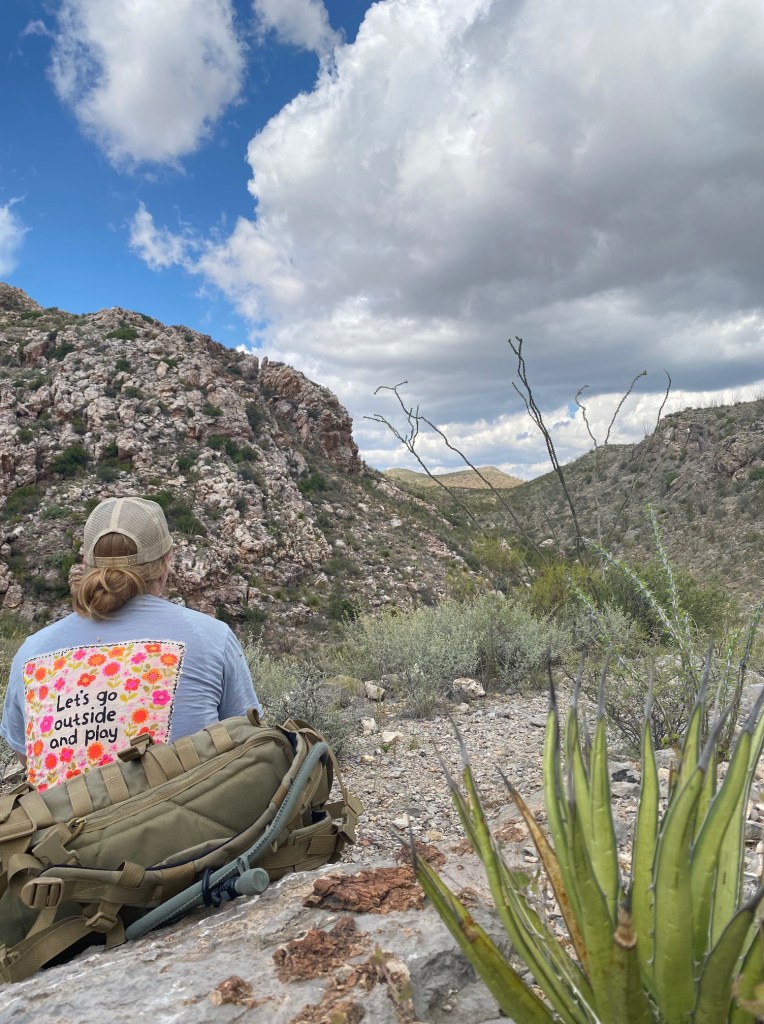
In California, Bethany’s been able to think, hike, read and realize who she is without outside influence, but it hasn’t been easy. She’s been afraid and uncertain, still haunted by some of her old beliefs. But she is free and life is full even while she is still “in process.”
“Maybe I’m worthwhile in myself, and I can have strength and autonomy in myself.”
This week’s guest is Meghan Crozier, the writer behind The Pursuing Life blog and co-host of Thereafter Podcast. Meghan grew up in an Evangelical Free church and she was “all in”.
“I had my bible on my desk in middle school…so people knew that I was a Christian.”
After high school, Meghan attended a Christian university, signing a pledge to become a missionary. Her life turned out differently, and it took years to be content with that. Now, however, she is extremely thankful she never became a missionary.
At the beginning 2020, when so much was changing in everyone’s lives, she clung to her faith. She journaled. She prayed for an hour daily and read her bible every morning.
“I don’t know what to do, so I’m going to pray through this. I’m going to try to figure this out.”
As the year progressed, she began to see other aspects of her church that she could not unsee—homophobia, gaslighting, ableism. Then the January 6th insurrection happened, and her church’s response to this disturbing event, Meghan knew she had to reconsider almost everything her life.
“I’m a Person of Faith…ish.”
Meghan now holds her Christianity very loosely. She’s found community and connection through running half-marathons, social media, and her blog and podcast. Meghan is an important voice in the deconstruction world, influencing people with both the spoken and written word.
“You have such a window into so many different pieces of faith change and deconstruction and discovering yourself.”
“Waves” track written and produced by Makaih Beats
Transcript
NOTE: This transcript is AI produced (otter.ai) and likely has many mistakes. It is provided as rough guide to the audio conversation.
David Ames  0:11
This is the graceful atheist podcast. Welcome welcome. Welcome to the Bristol atheist podcast. My name is David and I am trying to be the graceful atheist. Please consider rating and reviewing the podcast on the Apple podcast store and rate the podcast on Spotify. subscribe to the podcast wherever you are listening. The Facebook community continues to be a thriving place for people to connect every Tuesday night at 530 Pacific 830. Eastern there is a get together to discuss this week's episode. So if you are listening to the show and you have a very very strong reaction, and you want to talk about it with somebody, come join Facebook group facebook.com/group/deconversion links will be in the show notes. Special thanks to Mike T for editing today's podcast. On today's show, my guest today is Meghan Crozier. Meghan is a professor at a community college in the Pacific Northwest. She has a blog called The pursuing life that began as a Christian blog and has developed into a deconstruction blog. She is the co host of the thereafter podcast with Courtland where they discuss deconstruction and their experiences within evangelicalism. Meghan is a really important voice in the deconstruction community. She has a huge Twitter following and she hosts a weekly Twitter spaces on Monday mornings at 6am Pacific 9am. Eastern that is really filling a need and creating community within the deconstruction space. Here is Meghan Crozier to tell her story.

Meghan Crozier Welcome to the graceful atheist podcast.

Meghan Crozier  2:07
Yeah, thanks for having me.

David Ames  2:09
This has been a fun connection. Arlene who does our community management for our our Facebook group reached out to you she'd heard you on a number of podcasts and I think on a discord connection and asked you to if you'd be interested in being on the podcasts. And when she mentioned you. I was very interested. And now that I've listened to a bit of your work and read a bit, I'm fascinated by your position and all this. As I was thinking about this conversation, I was thinking we're kind of very close on the other side of the fence from each other so close. We can reach over and shake hands, right? Yeah, absolutely. So you are definitely still a person of faith. But you have been in the deconstruction world now for a bit. A bit of your bone a few days. You have a blog called pursuing life. And you're the co host of the thereafter podcast. Yes, yep. Fantastic. And then you're a bit of a Twitter phenom. It seems that you seem to have a pretty big following there as well.

Meghan Crozier  3:14
Yeah, I mean, it's it's too bad. You can't get paid to tweet you know. It, it's fun. And it somehow it works for me. I don't know. I love community on Twitter. So for sure.

David Ames  3:27
That's awesome. That's awesome. So let's jump in and I want to hear about your story. We often begin the conversation with what our faith tradition was growing up. So I'd like to hear what that was like for you. Was it meaningful? What was it like?

Meghan Crozier  3:42
Yeah, so my story starts where a lot of stories start, right. I grew up evangelical. I was in a non denominational church. Actually, it was an E Free Church, but we were we were modeled largely after Willow Creek Community Church. I grew up in the Midwest, we were very close proximity wise to Willow. And I was I was all in man. I was the student leader in my youth group and I was at the pole See you at the pole. You know, I was there I had my Bible on my desk in middle school, you know, so people knew that I was a Christian and and I went to a Christian college so I went to North Park University in Chicago, they're affiliated with the evangelical Covenant Church. And I didn't grow up covenant but I just fit right in and yeah, so I was very closely almost became a missionary. I studied Spanish in college and for a lot of reasons that led me to becoming a bilingual teacher instead, which I'm so thankful for I'm so I'm so grateful that I missed that missionary mark, because yeah, it's a whole thing. And

David Ames  4:56
we've we've heard one or two horror stories. Yes. Yeah,

Meghan Crozier  4:59
yeah. I really and it's funny because one thing that I write about sometimes is I signed a pledge at Urbana in Urbana Conference, which is a huge missions conference through university to become a missionary after college for one to three years. And it took a long time to feel like becoming a teacher was okay, and that I hadn't missed this, you know, path that God was supposed to have me on and, and all of these things, and it's kind of a mindfuck how I thought that becoming a teacher was such a, you know, not the path or the right path for me. And looking back, I'm like, oh, man, I'm just so glad that I never was a missionary.

David Ames  5:41
It amazes me how we treat teachers just in general, like, but specifically, you know, you comparing that to being a missionary, you know, it's quite a noble profession. It's really, really important. So, yeah,

Meghan Crozier  5:55
yeah, yeah. And, and so one thing that happened during the pandemic is I wrote through my story, I had time, and I was, I was, I was trying to process you know, I was teaching at the time, and I was trying to process the shift that I was going through, because, you know, for my husband, we were all working at home, but he just, you know, he was at a computer already. And he just did it at home. And for me, I had to totally change everything. And I had to learn, you know, how to teach online, I was teaching first grade in Spanish. And so it was a lot. And so I initially started with writing, and I was trying to process and I really at first clung to my faith that was, you know, I was like, Okay, I don't know what to do. So I'm going to pray through this. I'm going to try to figure this out. And I wrote a memoir, and it was a memoir of prayer. And it was very evangelical. And it was, you know, I kind of called it from college to COVID. And I had prayed for, to like, for two years, I had prayed for an hour a day. And I was trying to trace these arcs of these prayers through, you know, 20 years later, and how I ended up as a teacher instead of a missionary and in the Pacific Northwest, and, oh, I might have written about the Prayer of Jabez. Like it was, there was some cringe stuff in there.

David Ames  7:16
Sure. And it all makes sense time. Yeah.

Meghan Crozier  7:19
Yeah. And people loved it. I, you know, people I went to church with it, my parents in my, you know, family and friends were like, wow, this is so good. And I just didn't sit right with me. And it something was off about it. And, and the more I was reading the Bible, I'm like, there's some really, really messed up stuff in here. And I am, this is not okay. And, and I was, you know, I have a whole healing story with my daughter that people tried to really push, you know, pray for healing. And she has a whole genetic condition, which is a whole thing. But and she's fine. But people tried to say, she was healed for what she wasn't. And so there was just a lot of stuff happening in messages that I was in a lot of political stuff happening that I wasn't comfortable with. And so I just that I mean, slowly, bit by bit, started to really question things. And, you know, you say, you're still a person of faith, and I'm like, I'm a person of faith ish.

David Ames  8:18
Okay, all right. Yeah, you get to label yourself, that's fine. I really want to I want to explore, and if it's too personal, please say no, but this, the social pressure about healing, is, if you're not involved as an objective point of view, you know, you can see that there's a bit of manipulation there. But the as the person who is being prayed for, or the person who's the parent of the person who is being prayed for, there's a lot of social pressure to say, oh, yeah, it's a little bit better. It's incrementally better. And like, you can see how, you know, if we're being kind, well intentioned, care and hope, can lead to ultimately becoming wise, you know, basically something that that just isn't true. I wonder if you just explore that a little bit like, what was it that difficult for you as a parent?

Meghan Crozier  9:09
Yeah, for sure. And so I mean, yeah, this is not a private personal thing. This I'm absolutely willing to share about this. But when, when my daughter was a baby, we found cysts on our kidneys. And we had no idea what it was. And so we went to a small group that it was almost like there was excitement about, oh, there's this mystery medical condition that we don't know what it is. And like, let's pray for this. And, you know, I was in therapy because it was scary. Because, you know, a doctor had said, like, she could be fine her whole life or she could be on dialysis by the time she's two. And that was scary, right? And so we were navigating that and going to doctors and going to clinics and trying to figure that out. And in the midst of that. We have people playing praying healing for her and we are in the Pacific Northwest. We're not far from Bethel. Well, we had people say you should get take her to Bethel. And we're like, oh, we're gonna take her to doctors. And, I mean, they didn't, we didn't have pressure to not go to doctors. But then every doctor's appointment became this framing of okay, well, this is have grown, but her kidneys are still well, God is working on those kids, you know, and it was just the framing of what is happening. And when she was five, we finally we had an MRI, we did a diagnosis, she has a condition called tuberous sclerosis, and she has a very mild form of that condition. And many kids, adults live with this condition. And there's a range of severity. And there's a lot of kids that have that are on the autism spectrum. And, and so there was a lot of messaging of, Wow, thank God, she's not this, or thank God, it's not this. And I was not comfortable with that messaging, because I'm like, there are very whole people that are living with different versions of this, this condition. And, and I cannot chalk my child up to and say, like, Thank God, she's not this person, because I felt like that was just so I guess ablest I have that terminology. Now, for it at the time, I was like, something's wrong about this, you know,

David Ames  11:24
you know, again, on this side of deconstruction, I find it fascinating that it's never considered the opposite side of that coin. So your daughter was incredibly lucky to have a, a low severity version of this. Sorry, if lucky, is probably the wrong word. You know, what I'm trying to say that it wasn't, it wasn't more severe. And yet, you're now aware of people who have significantly more severe versions of this. And, and so that, you know, or given the example of COVID, right, you know, people who haven't had COVID aren't aren't able to recognize, you know, that there are people who will have very severe versions of COVID, or the, you know, they just had a cold, right. Thank God. Yeah. You know, and not, you know, recognizing the statistics, and particularly on the the subject of poverty. For those people who are well ensconced in the middle class, it's, it's very easy to think, Oh, well, you know, God loves me, without recognizing, you know, how many people who are praying every day to have food on the table on they don't have it?

Meghan Crozier  12:27
Right? Absolutely.

David Ames  12:38
I feel like I pulled you off off your storyline a little bit. But so the writing of the book looking at prayer over time, your daughter's illness, you started to have some pretty serious questions. And and let's take it from there.

Meghan Crozier  12:52
Yeah, I would say you know, a lot of people ask what pulls what was what pulled the first thread for you. And for me, I was watching an evangelical megachurch, locally, I'm in the Pacific Northwest, I said that. But locally, we did a huge series on race. And that was it was great. Our pastor, you know, he it was almost like a docu series. He had traveled to Charleston, South Carolina, he had traveled to, you know, Montgomery, Alabama, and there was a lot of really good stuff in that. And then, you know, there was a lot of chatter about well, he's not afraid to lean into difficult topics. And I was like, what does that mean? And I discovered that his prior church, he had preached a very well known series called God in homosexuality, and dove into that, and I was, you know, it was the first time that me as you know, assists at White woman really saw what was being asked of the queer community. And so I saw, I watched him go through, you know, you know, you have three options. If you're queer, you can be celibate for life, you can force yourself into heterosexual marriage, and that might be fine. Or you can, if you, you know, do live into your full identity, you're just really not living God's plan for you. And so I started to just started to listen to myself for the first time and say, hold on. And as I started to share with other people, the reaction was so wild. And I was like, Wow, there's so much homophobia and what and, and I, it's hard to say that now. And now because I have so many queer friends now. And I and I just think I was blind to it for so long. And there were so many ways that I just fit right into what was being asked of people in the evangelical church. And so I just really didn't wake up to the exclusion and the hate and now I see the depth of the harm and how far it goes. And I've, of course, you know, looking at colonization and all these other things. It just opened the door for me.

David Ames  14:54
Yeah, I think that a lot of the missional you know, seeker friendly churches don't realize that by by not being positively affirming, they are non affirming. And they feel like they can get away with ignoring the issue. Don't Ask Don't Tell kind of thing. And yet they are causing harm. Active harm.

Meghan Crozier  15:16
Yeah. And I think, you know, well, I mean, I could talk about that forever. But I will just say that what is happening to is, there are parents that are being pressured to disown their children, when they come out as queer now, and I just, I see things like that happening. And it's like, okay, you can either choose God, or you can choose your child, what are you going to do? Because your family is just here for now. So, you know, God is eternity. And the messaging is so awful about that. And, and, you know, you see what the damage that it does to people trying to sort through their identity and, and, you know, growing up with messaging that says, you know, I'm, I'm inherently wrong for being this way. And so yeah, it's, it's infuriating.

David Ames  16:01
Yeah. I am amazed by how many says hit people, one of the major factors of their deconstruction is the treatment of the LGBTQ community. And in that, you know, it's not their personal experience, necessarily, but that they begin to recognize the humanity of this person is being is being minimized, it's being reduced in the same way that racism does. And, and that that is such a catalyst for people to begin to reevaluate. And why I find that fascinating is it's really a moral argument, one that from the evangelical point of view we shouldn't be able to make. And yet it is very strong. I feel like I didn't really understand the term righteous anger until about 2016. And then it was like, Oh, this is what, that's what that feels like. Yeah, kind of having a sense of this is wrong. Justice is not being served here. And something is missing.

Meghan Crozier  17:04
Yeah, absolutely. And I think that in the context of what was happening politically, I mean, I this is going to be tallied on how new I am to deconstruction. But I will just say, I was still going to this mega church, when somebody reached out and said, hey, you know, there's a progressive church in Portland that that has some of your same deal breakers, and I've seen you write about this. And after January 6, I watched both online, and I was in I was, I've never been one of those people. That's like, if your pastor doesn't preach about this on Sunday, walk out, just do it, you know, but it just, I think, the watching what had happened on Wednesday, January 6, and then going to church and having this like, lovely talk on making good habits. And, you know, making sure that you sometimes it might be helpful if you read your Bible before you drink your coffee, so that you know you get that time in and then going to this progressive Church Online and just having space held to say, how were you feeling on Wednesday? How are you feeling right now? Let's talk about that. And I was like, whoa. And that was that was the last time that I had opened that, you know, the Facebook page for that mega church because I was like, I you know, I think I'm just gonna just admit that I'm deconstructing and so yeah, I'm new in this.

David Ames  18:29
Ya know, I can hear that a little bit. Yeah, that it's also the that exciting time where you, you know, at some point, I call this the permission to doubt phase right? Or the information seeking phase where, like, up until this point, you have a lot of things happen to you, that cause you to question, but at some point, you take the kind of proactive step like, Alright, I'm gonna take, I'm gonna take responsibility for this, and I'm gonna go learn some things and decide what I believe or don't believe it's terrifying. But it can also be really, really exciting.

Meghan Crozier  19:01
And I mean, exciting is a word. I mean, it can be like, it's, I wouldn't recommend somebody to just like, hey, this is an exciting journey. But yeah, it's magical, airy, maybe. And, yeah, it's it's work.

David Ames  19:26
On that note, you know, we throw the word deconstruction around. I have a definition in my head. I'm curious how you define it. And is that something that you are recommending is a strong word, but is that something that you're you're active for people online to begin questioning that kind of thing?

Meghan Crozier  19:45
Cool. Yeah, that's the L. That's a two parter. So yeah, deconstruction. I probably have a different definition by the day. But I really believe it's a process of leaning into those doubts that you have have an understanding and, and really, you know, for me starting to understand that the inherited faith that you've had your whole life might have been, you know, you might have been taught an interpretation of something. And that, you know, there are other interpretations out there, you might realize, oh, there's other faith traditions out there that, you know, better match what I'm looking for, and what my value system is, and what my deal breakers are. And, you know, for some people, there's people that say, you know, this is not for me, and, and so I really feel like it's an ongoing, never ending journey. I really push back when people say I've deconstructed but I, you know, I think I'll, I'll say this is kind of when I started deconstruction, and it's, it will probably be going on forever. I still use the term progressive Christian, I hold it very loosely, there are times when I wonder if it's just to stay comfortable, because it's scary to let go of that. And so, but I'm willing to admit that and sometimes I say agnostic, Christian. But yeah. And then I on the second question, I was recently in a conversation on Twitter spaces about this where the question was, should we be evangelistic about deconstruction? And even though that phrasing kind of sucks, and people said that, which is fair,

David Ames  21:27
I hate that sentence. But anyway, yeah.

Meghan Crozier  21:29
But, you know, it's a shortcut to asking the question, right. And so it's a language to speak, some of us speak. And so there was a lot of really good conversation about, you know, not trying to push people out of their faith or what you know, their value system, but yet wanting to really point out the harm, and really help people understand, hey, this is super homophobic, and this is super queer phobic. And this is super colonizing, and, you know, and all of the things and help people understand and the harm towards women. And you know, my dad and I have had conversations where I'm like, your experience in the church has been a lot different than mine, as a woman who grew up in purity culture. So I mean, and that's, you know, we can go there, if you want.

David Ames  22:27
I think that unless you want to head down that road, I think what I'm more interested in is, it sounds like you were active. I don't know if you'd say leadership. But you know, you were a voice in the Christian world, right, writing a book, you had people that were listening to you, I believe your blog was originally more Christian oriented. I'm curious what the response was, as you began to change, and publicly so

Meghan Crozier  22:52
yeah, so once I wrote my book, I started to kind of explore what what will I do with this, and the blog came after the book, and there are posts on my blog that are not public anymore, about prophecy, and it's great. And, but I knew that if I wanted to be an author, I would have to build a platform on social media, I did not have that. And so I started this the pursuing life, which I still hold to that name. And I think there's something to be said about an ongoing pursuit of truth and what matters. And so it you know, it was interesting, because I did have initially connections with, you know, people I went to college with, or people that used to be my mentors, or people I was in small group with, and slowly as I started talking about pro choice things, and, you know, being queer affirming, and things like that, I would get messages. It was like, interesting thing that you said, Are you and, you know, pro and with a lot of language that I don't even want to say, because it's super nasty, and I and just so dehumanizing. And but then on the flip side, I would have like a neighbor that would reach out quietly and be like, Hey, I've been reading these blog posts that you're putting on Facebook, and I went through this, and I feel so seen. And, you know, I or, you know, I really feel like I could talk to you about this, can I let you know, and it was like, that was the beauty of it. Because even though it was hard to have people, you know, be so assuming about things and not want to have a conversation, but just kind of direct me away from what I was talking about. It was beautiful to really connect more deeply with some people in my life and then new people and you know, you can see now there's, I've been part of building community. And so it started as platform building and now I really see it as community building. Wow.

David Ames  24:56
Yeah. Fantastic. I definitely want to talk about community Need, I'm gonna pause there for just a second and say, I think an answer to the question earlier about being evangelistically. Towards deconstruction, I always think that my goal is not to make more atheist or more deconstruction, my goal is to be the place to land for those people who have already began that process, right? Or those people who can no longer live with it at all. And to be that safe place. And yes, just by being public, you know, you're putting it out there. There's there's some element but I feel like like your neighbor, there are many, many people sitting in pews questioning themselves and, and feeling alone and isolated, and not realizing that there's this huge wave of people who have been going through the same thing been asking very similar questions. And and I think the answer to that is community so yeah.

I know that you've been doing like clubs, clubhouse and Twitter spaces and things of that nature. How did that come about? And how's that been working for you?

Meghan Crozier  26:14
So interesting. Really early on some when I was, you know, still kind of trying to figure out well, what was going on, somebody reached out and said, I feel like clubhouse would be a good medium for you just the way that you are and the way you want to connect with people. And immediately after I joined somebody from my profile, my friend teal, short, he lives in Chicago, and he lives in an intentional community. And he's a progressive Christian. And that's how I had identified on my profile. And he was like, I really feel strongly about community. But it's so hard right now with the pandemic. And I just What would you think about having a weekly room to pull people together to talk about stuff, and it was beautiful, and the conversations were amazing. And we had our first our first night was about LGBTQ ally ship or something like that, which now I look back, and I'm like, wow, I really said that, huh? Like I called myself an ally, I would okay. But it turned into this beautiful community, there's something to be said about live audio conversations that aren't being recorded. There's nobody trying to one up or get likes or retweets, and just kind of come there. And through that, I connected with some other people that and I was on some deconstruction panels. And it was so early. I mean, this was January of 2020. This was, you know, I told you, I mean, this was just a couple of weeks after the insurrection where I was still kind of processing. So I always say, you know, I will be moderating the clubhouse room on music. And, you know, I would say something like, God, I can't listen to worship music anymore, because it's so triggering for me, because the organizations that put out what I used to listen to were complicit in this insurrection. And I would mute they would go on, and I would be like, on the floor, sobbing, like, what am I gonna do with me, like, what music is gonna carry me like, I had so much grief over the loss of things that comforted me that I, it was hard, but I was processing it in community. And that kind of led to Twitter spaces. And what I do now, and I have, you know, deconstruction, bookclub discord and things like that. And then, you know, that's how I connect with Courtland. And they started co hosting their after pod and, and I just became this thing where, and I think people saw that authenticity, and they were like, I, I don't know if people resonated or connected or what, but I think just knowing they weren't alone. And that's a powerful thing, I think.

David Ames  28:46
Absolutely. I think my experience so far has been, you know, once people find some community at all, they read, and they begin to say, Hey, I feel this way about this thing. And 10 people come along and go, Oh, that's me, too. That that experience, that recognition of one story being told by someone else, is incredibly cathartic and has some healing elements to it.

Meghan Crozier  29:12
Yeah. And I will say one other thing is, and I share this a lot, and it's just a small piece of it. I was also I taught for 15 years, and I was leaving my teaching career at the time, too. And so I was just unraveling everywhere I was, you know, going through faith change, career change. And so I think, too, I was very vocal about not being a person that had all the answers. And I think that's, that's the thing that draws people in sometimes is like, Okay, who I have totally put all my hope in these pastors that I thought had all the answers for so long, or this church that I thought had all the answers to this faith tradition, and it's I think there's something comforting about being in community with people that don't try to make it seem like they have all the answers and you They're totally together whole people. You know, I'm super vocal about therapy too. So

David Ames  30:05
we're very pro therapy here on the podcast.

Meghan Crozier  30:08
Yeah. I love it

David Ames  30:19
I want to talk briefly about the thereafter podcast I listened to when you were interviewed on the show. And then, you know, a bit later their second season, you became the co host. I'm curious what that process was like, because as a, you know, again, I haven't listed a lot of them. But from my perspective, it was like, here have this podcast, they just handed you the reins, which is great. But I'm curious, like, were Was that something you were looking for? And how has that been for you as as an outlet?

Meghan Crozier  30:49
You know, I had thought it would be fun to have a podcast, I didn't really know why or would or, you know, I'm glad I didn't do it when I was writing my book, you know. And I have become good friends with Courtland. And that's a whole thing too. I think I've made some I write about this, sometimes I've made some really close friends that are men, and that has, its new and I really fiercely advocate for it is possible to be friends with people and close with people that aren't your partner and have good healthy communication about boundaries and, and know, you know, where things are at. And, and I love it. And I think you know, there's this messaging for so long that you should just not be close with anyone that's not your partner. And so anyway, Carolyn and I had become good friends. And his first season was awesome. But his co host wasn't going to continue on for the second season. And so I, you know, just kind of happened, I was kind of like, Hey, I'm thinking about doing this. And we had a conversation that was like, what if, what if this is what it looks like, and started to kind of have talks and there was a, I run, I have this big goal to run a half marathon in every state. And so I was flying through Denver, and he came to the airport and we sat down and had dinner together and talked a little bit about it. And, and I love it, I it's just been so fun to sit down like you're doing I'm sure the you know, and have people share their journeys and have people you know, process and you see so many you have such a window into so many different different pieces of faith change and deconstruction and discovering yourself and all of those things. And so it's been really fun to connect with people. And also like, it's just yeah, it's it's a, it's a fun thing.

David Ames  32:44
You guys, I sound like you've been doing it forever. It's very well produced. Courtland has that radio voice thing going for him? sounds it sounds, it's a great podcast. So I recommend it. So we'll definitely links in the show notes for people to find that

one of the episodes that I listened to you in Portland, we're talking about the evangelical response to deconstruction. And this has been one of those things where I find it so infuriating that I hold back a lot like, you know, I've gone on some friends podcast, to vent and to be less than graceful. To say how bad it is, I've interviewed a couple of people who are in the evangelical world who consider themselves experts on deconstruction. And what I find most often is that you can tell they've never actually spoken to someone who is in the middle of deconstruction or or, or, you know, deep on the other side. So I'm curious from your perspective, what you think of the evangelical response to this moment in time that we are having?

Meghan Crozier  34:04
Well, I'll say this, I think a lot of the people actually might have spoken to people at deconstruction, but they've never listened to people. Yeah, yeah. And I so I think that there's a lot of pastors that look around and they see this hashtag or they see you know, videos, or they see people unpacking and, you know, like me, people are living their journeys out loud. And they it's like, they want to jump in there like I want to, I want to have a pulse on what's happening here and so they bring their hot takes, you know, there's the matt Chandler that says, people just think it's a fad and that it's sexy and they never had to pay to begin with and Joshua Ryan Butler had his for reasons people deconstruct and, and it was, you know, it's, it's to be cool to for street cred, you know, and it's, it is is infuriating, it feels because this journey is so personal. And because the first time I sat down with the the pastor at the faith community I've been part of and said, I'm going through deconstruction, and he was like, take care of yourself. Like, this is like really, you know, be kind to yourself. And it's like, he knew, you know, and these people that are making their hot takes, it's like, you have no idea how how much grief there is on this journey, you have no idea how hard this is. I mean, I, I said, I'd be like sobbing on the floor. Like, you just have no idea because it was because I was reading the Bible and, and seeing, you know, David fight, like winning over wives for you know, as part of a war prize and things like that. And I was like, no, like, I just, I could not, I could not do it anymore. And, and I and a lot of them are, you know, white men that have a lot of benefits from their position, and you know, and keeping their position. And so it is it's infuriating. And what's even more frustrating is those people that I mentioned earlier, that have you know, pushback on the things that I say they'll send me articles, and they'll be like, Hey, I saw this article in Christianity Today, about deconstruction. And it really made me kind of understand a little bit more, and I just want to be like, no, like, please, it does not make you understand a little bit more. And so that's the frustrating part. Because I think Christians that are trying to understand what's happening to their friends that are leaving the church are reading this stuff, and they're like, oh, okay, I feel comfort and like they never had true faith to begin with. And it's like, no, no, that's not it. And so I think there's, it's it's really false messaging, and it is very infuriating.

David Ames  36:51
In my Kinder moments, I try very hard to understand the position that particularly pastors are in. And having both sides of understanding both sides of that equation, I realize you realize that the very thing they are recommending, get closer to God read the Bible more, pray more, are the things that most people in deconstruction are doing, they have doubled, they have tripled, they have quadrupled down. They are working, you know, to maintain their faith, and they are being dragged away, kicking and screaming. And that's the part that they don't seem to understand. And I think you've said it really well that it is really a grief process. It is the process of losing many, many things, the intimacy of a relationship with God, the community, friendships, family, in some cases. And so while you're going through this grieving process, and someone is saying from a pulpit that you were never a real Christian, it's pretty, pretty devastating, pretty hurtful.

Meghan Crozier  37:52
Yeah. And I think, you know, to tell somebody that's healing from religious trauma. And I would say, my journey is like fear, like, you know, when I say that, I just, I have so many folks and community that I'm in community with that have had more severe trauma than I have in all of this space. But to tell somebody that's going through very severe trauma, you need to find healing from trauma in the institution that traumatized you. That I mean, it's just it's so bypassing of what's really going on and and or they say, it's really not trauma or it's really not, you know, what you're saying it is or it isn't that bad. And I think that you know, which is gaslighting? And then or they're just, this is my favorite. Why What about the good that happens from it that like people try to say like, but but this pastor even though he was an abuser, like there were he wrote some really good books, and it's like, no, like, no. So yeah, I they just don't get it. They really don't. And they're not listening to people that are hurting.

David Ames  39:06
You mentioned earlier that you person of faith ish. So I'm curious, what are the things and you also talked about, you know, what music will carry you through things? So what what are the things that you now find as spiritual however, you'd want to define that spiritually fulfilling for you?

Meghan Crozier  39:27
Yeah, so it took me a long time to close my Bible. I you know, and I, there was I had been during the pandemic, I had been had this habit of journaling and reading my Bible, and I, you know, and Enneagram one, it was just like, he liked to follow rules and have that kind of thing. And I was in therapy, and I was constantly saying, This is so triggering for me, this is so hard for me and my therapist was like, what if you didn't read your Bible? And I was like, what would I do in the morning? She was like, What if you read other things, and I started reading Brene Brown and I started, you know, reading other things. And then I started, you know, reading authors of color and queer authors and just really having more routine and structure around that instead of you know, that instead of trying to force myself through something that was not healthy for me. And I also started a vinyl collection. And I just really was like, I'm gonna reclaim what the role that music has in my life, because I am a runner, I run to music, I ran to playlists, and I needed to have a I have things that I resonated with. And so that has been amazing. And it's funny, because I, I read a lot, and I have not dug into all the theological, all of it, you know, like, all of the things and so Christians will try the Theo bros, you call him on Twitter, try to come at me with, you know, do you really think like, what do you think about hell? And what do you think about, you know, all of these things, the resurrection, and I'm like, you know, I don't really know right now. And I'm actually okay, not knowing that's not something that I'm sitting with, you know, trying to understand I'm okay, just kind of setting it aside, and really just saying, I don't know. And that's very infuriating. You know, I talked about having a, like sex positivity, and people get real mad that I, you know, push back on people trying to preach abstinence. And they're like, that is the biblical sexual ethic. And I'm like, Really, it's not. And they get so furious, because they want to tell me that I'm not a Christian. And I'm, like, you know, believe whatever you want to believe, like, you have no way of having, you know, deciding what I am or what I'm not. Right. And so I think, you know, like I said, I have that label ish. And I don't know it, well, I have it forever. I don't know, do I, you know, am I uncomfortable with it? Not really, but it's not something that I will ever hold grip onto, like I have in the past.

David Ames  42:02
And one of the things we've talked about on the podcast is that, you know, you own the privacy of your own mind, and no one has access to that you choose to reveal what you want to to people who are safe and trustworthy, and you don't owe anybody else, anything else. So they have no access to that.

Meghan Crozier  42:22
Well, and I do think that the way that I approached my faith is what I mean, you know, my co host, Courtland for the podcast is an atheist. And I mean, it's what has given me the opportunity to have these beautiful friendships with people of all different faith traditions, or non faith post faith traditions, or non faith traditions, you know, and so I think, you know, the fact that I hold it loosely, I don't feel this urgency to try to convert other people to what I believe in. And I, I love listening to what's meaningful to other people, right. And so if somebody's finding meaning in other traditions, I love it, I'm here for it, I want to read about it, I want to learn about it.

David Ames  43:08
So selfishly, you've mentioned running a few times. I'm a runner, and I, I talk about all the time that you know, I don't meditate I run. And it is so important to me as a as mental health. And I know that that is also a privilege that not everyone will be able to run, but I recommend that people do something, some kind of exercise something, get out of the house, move around, get out in the sunlight, that kind of thing. That's really, really good for you. So I'd be curious if that is that's meaningful for you. And tell tell us about the half marathons in every state.

Meghan Crozier  43:44
Yeah, so it's, you know, it's just kind of a fun hobby, but half marathon, I just feel like it's a good distance. For me, it pushes me to have those, you know, 789 10 mile runs on the weekends, but and you know, kind of stick to a schedule on the weekdays. That are it's a little shorter, and do it more doable. I've done a couple marathons, it kind of tears up my body a little bit too much. But I'm gonna say this because it has been part of my deconstruction is trying to navigate this. And so I think it's an important piece. For a long time running was very tied to my spirituality. I felt like it was, you know, God gave me the strength to get through that run. I was listening to worship music on the run, I was crossing the finish line to I'm no longer a slave to fear, you know, and it's just a coup. So I will say this, sometimes what I do, just to try to I live in the Northwest, and so to try to knock out some of those East Coast states. I will run a back to back half marathon. So I'll do one on Saturday and one on Sunday. I just did that last October. I did West Virginia and Maryland. And it's so what I do is kind of a typical training cycle, but I'll do double long runs on the weekends. And so I'll run on Saturday and Sunday. And I had this experience when I was training for that Um, West Virginia, Maryland, where I spent, you know, a weekend running. I'm not fast, I don't go for time I wouldn't be able to run, you know, for half marathons a year or six or whatever if I did. But I had this weekend where I went out on a Saturday morning, I was running for like, a couple hours. I went out on a Sunday, I was running for a couple hours, and I got in my car, and I was just like, sobbing. And I was like, What is going on here? And it was like, I felt like I got my body back. Like, I felt like I did that. Like, I felt like I worked hard. I got up, I hit the trail. I did it. I was listening to podcasts, and audiobooks. I listen to all kinds of things. And it was all for me. And it wasn't this. Like, I was like, Finally, I've reclaimed the role that this has in my life too, because I felt like I worked hard. And I knocked it out. And I did a great job. And I slayed you know, and I was like, wow, that was amazing. And so I think that's what running has done for me. And you know, whether I'm consistent every day, not really I've you know, and it's also helped me learn to not be perfectionistic about something because I'm like, you know, if I walked or in a race, that's fine. If I you know, if I don't go running on Monday, and I hit it on Tuesday, that's great, too, you know, so it has been it has been life giving for me.

David Ames  46:18
Definitely for me, too. And in my case, age knocks out the need for speed there. I just want to be able to keep doing it, you know, yeah. Great mechanism for listening to podcasts as well. So for sure. Meghan, thank you so much for for being on the podcast, I want to give you a moment here to share all the myriad of things that you're doing. How can people get in touch with you or interact with some of your work?

Meghan Crozier  46:44
Yeah, well, the best place to find me is on Twitter. And I am super responsive. DMS, comments, things like that. And so I'm at the pursuing life on Twitter. Check out the podcast. We love hearing from people that have listened to episodes and connected there after pod on Twitter. They're after podcasts on Instagram, and it's on all the platforms you can listen to. And I do have a blog, the pursuing life.com website. I'm kind of working on revamping it. Like I said, there's some older stuff that I'd love to update, edit, respond to. And keep an eye out because I have some writing things in the works. But yeah, like live conversations. We do Twitter spaces every Tuesday morning at 6am. Pacific Northwest time and so are Pacific time. I just must love to say the Pacific Northwest. Times. Sorry, I just I really do like it here. But don't tell anyone because we're good. But yeah, and I mentioned a deconstruction. Discord that's open, people can jump in. So if people want to see what that's about, they can send me a message and I can get them the link. And I think yeah, I think

David Ames  47:57
that covers it. That's awesome. Thank you so much for being on the podcast.

Meghan Crozier  48:01
Yeah, thanks for having me.

David Ames  48:10
Final thoughts on the episode. Meghan is truly fascinating in that she is in some ways in the early stages of deconstruction, when I said it's exciting, she pointed out that it's also very difficult that it's work. And at the same time she has become a central voice within the extra angelical deconstruction community. It's always fascinating when someone deconstructs in public the way that Meghan has, she began as a Christian blogger and was writing a memoir about prayer. And then to go through the questioning phases and identifying what you no longer hold to be true. Obviously, in Meghan's case, a lot of embracing the LGBTQ community recognizing the racism within evangelicalism, and the harm that comes from that, as I mentioned in our conversation, that that's truly a moral argument. And it is weird in many ways for us on this side of deconstruction to be making a moral argument. When evangelicals act as though we have no moral standing. I was deeply touched about Meghan's daughter, and I appreciate her being willing to share what could be a very painful part of her life with us. I am struck over and over and over again from people's stories about the dark side, the dangerous side of the concept of prayer for healing and the social pressures that a person is under to say, Yes, something is better. And especially if it was your child. I can't imagine the kind of suffering that that would cause I'm very glad to hear that her daughter is doing well these days. I appreciate Meghan's honesty and saying that she's a person of faith ish that she sometimes calls herself a progressive Christian, she sometimes calls herself an agnostic Christian. That is kind of what I've been trying to capture this early part of the year is those people who are really in the middle of it, although my core audience does tend to be the D converted, deconstruction is a part of that process. And not everyone will land in deconversion. But it is good to hear voices who are processing. Right now, in the middle of those kinds of questions. I have now quoted Meghan several times, in reference to my saying that many of the hot takes on deconstruction show that those thought leaders, quote, unquote, have not ever spoken to someone going through deconversion. And she corrected me and I thought this was really insightful. It's not that they haven't spoken to people who are going through deconstruction, it's that they haven't listened to them. And I imagine that you listener can relate to that, that it's very hard to be heard when what you are trying to tell them is threatening to their identity to, in some cases, their livelihood, and something that is so deep as faith. One of the most important things that Meghan is doing is that deconstruction voice against evangelicalism against the backlash from evangelicalism towards those of us who have deconstructed or deconstructing, I think that is an important role that Meghan is fulfilling. I want to thank Meghan for being on the podcast, I appreciate the vulnerability, talking about grief, talking about her experience with her daughter, talking about the work that deconstruction is, we need to hear that we need to understand that it is a process of grief, it is at times and existentially difficult time in one's life. I appreciate Meghan's honesty, and I think she is a significant and important voice within the deconstruction community. Thank you Meghan, for being on the podcast. I'm all over the board on a secular Grace thought of the week I have several things that are just popping to mind having read listened to Meghan's interview. First is the true downside to prayers for healing. And those of us who were a part of a charismatic or Pentecostal faith tradition, or had a more full gospel perspective within a Baptist or Reformed theology, will have that experience of the expectation as someone has prayed for you that you are prompted to say, Yes, I feel better the headache is gone. So much of the apologetic argument about healing is questionable not because I think people are lying, but because the kinds of studies that have been done on healing are very rarely double blind, scientific studies. And therefore the people who were the subjects have a motivated reason to say that they got better. And therefore those kinds of studies are just not valuable. But really, what I wanted to talk about is the pain of being the person who is ill put the pain of being the person who is disabled, the pain of being the parents of the person who is ill. What begin is well meaning and well intentioned, and trying to show care can turn very quickly into something painful, and something that induces suffering. So much better to be like Meghan, and just to be present with someone as they are going through difficult times. As you've heard me talk about losing my father in law, I've recently learned from a nephew of mine a really powerful way to try to be present for someone who is going through grief or some suffering, and that is to ask them, Do you want to talk about it? Do you want to have space? Or do you want to be distracted? And that's really powerful. Because sometimes if we just say, What can I do for you, the person who is in the middle of grief of some suffering, doesn't have the emotional capacity to tell you what it is that they want, but they can answer those simple questions. It's a practical way of being present. Letting them know that you care without putting social pressure on the person who is in need to have to say the right thing or do the right thing or live up to some expectation. The other thought I had was about the evangelical response to deconstruction and how we respond to that response. As I mentioned in the episode, I get very, very frustrated that that, especially for very public evangelical leaders, and again, they show as Meghan pointed out, that they have not listened. I've said before that if they truly did understand us, they would be condemned. instructing themselves. And in some ways that relieves the burden, that we know that we won't be able to convince them, because we wouldn't have been convinced double. And if they did understand they would be on their own deconstruction path. Having said that, I do think it's very important that we represent deconstruction and deconversion, atheism, secular humanism, agnostic, whatever label you choose for yourself, that we are moral, that we do have a sense of purpose and meaning that all of the shortcut dismissals from the evangelical response are incorrect. And one of the ways that we do that is by doing so in public, I don't expect everyone to have a podcast, I don't expect everyone to have a blog. But for those of you who do, or are interested in doing so, every little bit, makes an impact. The last thought is about the community that Meghan is creating with the Twitter spaces on Monday mornings. You've heard me go on and on about community about the deconversion anonymous Facebook group, but also we are nearing the end of the pandemic. And we need to begin to look toward a in person connection. And I just encourage you to think of ways that you can create community, wherever you are. As I keep saying, we've got a long slate of really amazing interviews coming up we have Marla Tobiano coming up, we have April, a joy from Instagram fame, Ryan will kowski who is a secular humanist hospice chaplain, we have community member Bethany coming up and also Luke Jansen of the recovering evangelicals podcast. So I'm excited to share all of those, we do have a bit of a backlog. If one of those people you're really excited about don't panic, if it doesn't come out in the next week or two, it will be there. And until then, my name is David, and I am trying to be the graceful atheist. Join me and be graceful human beings, it's

time for the footnotes. The beat is called waves for MCI beats, links will be in the show notes. If you'd like to support the podcast, you can promote it on your social media. You can subscribe to it in your favorite podcast application, and you can rate and review it on pod chaser.com. You can also support the podcast by clicking on the affiliate links for books on Bristol atheists.com. If you have podcast production experience and you would like to participate podcast, please get in touch with me. Have you gone through a faith transition? Do you need to tell your story? Reach out? If you are a creator, or work in the deconstruction deconversion or secular humanism spaces and would like to be on the podcast? Just ask. If you'd like to financially support the podcast there's links in the show notes. To find me you can google graceful atheist. You can google deconversion you can google secular grace, you can send me an email graceful atheist@gmail.com or you can check out the website graceful atheists.com My name is David and I am trying to be the graceful atheist join me and be graceful human beings

this has been the graceful atheist podcast

Transcribed by https://otter.ai
This week’s episode is Natalie. Natalie grew up in a traditional Christian household, one of six kids. Living in the South and attending a Southern Baptist church most of her childhood and adolescence, however, left a bad taste in her mouth.
“[At church, integration] was never talked about. It was a complete separation of community and religion, and yet the missionaries would come and show their slides about the brown people in South America and Africa that we were ‘saving.’”
One place she found solace? Books. Natalie was an avid reader from a young age and reading authors like Judy Blume opened her eyes to a whole good and happy world outside of her Christian bubble. Fictional, though it was, that world made her wonder, “How can [my family] be so unhappy and still have these beliefs about this religion?”
“Reading was really the gateway for me to questioning everything.”
Natalie escaped the South at seventeen for a few years and began seriously examining her childhood faith. Even as she was questioning her beliefs, she had to move back in with family. It wasn’t long amidst the chaos that she needed to escape again. After a quick and clandestine wedding, she and her husband moved.
“The further I got from my family, the easier [questioning] became until…I woke up one day and realized I hadn’t thought about a god for a long time.”
It’s been a while since Natalie deconverted, and she has lived a fulfilling life, with both happy and hard times. Today, seeing those who are deconstructing their faith, she empathizes deeply .
“You have to take everything you’ve been told most of your life and run it through a ringer to see what’s true…And a lot of it doesn’t survive.”
This week’s guest is Carlene. She grew up in the Independent Church of Christ—a cappella music, wholly male leadership, baptism before heaven and Biblical inerrancy.
One church teaching that took up too much emotional energy was the constant push to be baptized. She was told, “You’ll feel so much better when you do it. You’ll feel so clean.” But it felt inauthentic to publicly say, “I’m a sinner,” when she didn’t feel like that was true.
Carlene’s home life was similar to church life—patriarchal, authoritarian, traditional and conservative. Carlene was an obedient child who did not question authority, so she remembers a healthy, happy childhood. Her two sisters, however, remember profoundly different childhoods.
In high school, Sunday school lessons were always about “staying pure.” Her boyfriend started going to church with her, and they followed the rules and were eventually baptized at the same time. It wasn’t long, however, before Carlene’s beliefs would become real to her.
Carlene’s boyfriend went into the military and was sent to Afghanistan. She prayed and prayed for his safety, and at the time it seemed like he had returned home safely. They got married and have learned over time that there are both visible wounds and invisible.
While in college, Carlene first learned about evolution. It was this plus friends coming out as gay, working as a police detective and eventually the election of Donald Trump that, over many years, made her question again and again what she had always been taught.
It was “the death of a thousand cuts,” and it took almost a decade, but Carlene is now atheist, finding a glorious sense of awe and wonder in nature without Christian beliefs “taking up space and living rent-free” in her mind.
This week’s episode is a compelling discussion between David and past podcast guests Jimmy and Colin. They take a deep dive into how The Truman Showmirrors the long, painful journey of deconstruction—realizing the story you’ve been told isn’t quite what it seems, pushing back little by little, and then sometimes leaving completely, walking out the door and into the darkness.
“You never had a camera in my head.”
They consider it all:
The induced trauma and fears
Infantilization
The constant gaslighting
The creation and controlling of relationships
And the lies–a completely fabricated life.
All done to “love him, protect him.”
“He wanted what was real more than was presented to him.”
Jimmy
They each bring their own stories to the table, stories of courage and uncertainty and a desire for truth, stories that resonate with many people. Like Truman, we can lean in when what we’ve believed no longer lines up with what we’re experiencing. We can be curious, ask questions and see where that journey takes us.
“It is a painful process, and it is scary. But also there’s more on the other side that is very fulfilling.”
Hannah and Jose Click to play episode on anchor.fm
My guest this week is Hannah Ramos. Hannah grew up in an Independent Fundamentalist Baptist family, one of ten homeschooled children. Dissuaded from going to bible college, she waited for her Prince Charming. When Jose showed up to speak at her church, she knew he was “God’s choice” for her as a husband.
Very early in their marriage, Jose took over as pastor of a Spanish speaking church. Everything seemed to be going according to God’s plan, until three years later when Jose admitted to Hannah that he no longer believed. Suddenly, she found herself in an unequally yoked relationship.
For six years, Hannah focused on her own faith and raising their three children as believers, and they loved one other through this time. Jose supported Hannah’s faith, and Hannah had given up on changing Jose’s mind. Hannah had the space to begin to question her own faith.
Her children innocently asked her to explain the Trinity, and they were not satisfied with her answers. She read through the Bible, asking, “But is this true?” She no longer could assume that it was. Finally the pat answers Hannah received no longer satisfied her, and she admitted to herself that she also no longer believed.
To Jose’s amazement (and slight disbelief), Hannah revealed that she was no longer a Christian. Today, they are closer than ever, and their children are free to decide for themselves what they believe. Hannah has found a peace she did not think was possible.
My guest this week is Phil Quagliariello who blogs at Phil Q Musings. Phil grew up moving around often as PK in Independent Fundamentalist Baptist Churches and attending Christian schools even into college. Unfortunately, he saw the dark side of ministry when his father was removed from a church by its board for being too “new fangled.”
Phil eventually found himself in Calvary Chapel churches. They were were more exegetical, more focused on the Bible. He married and they both were worship leaders. Phil led worship for the service in which he was introduced to the idea of the “Emergent Church.” His marriage did not last, and Phil found himself seeking a church experience that was more authentic and “did not suck.” He found a faith community that met in the basement of a bar, and at first, it was satisfying.
Phil remarried a woman with two children. These children and the children they have together became the light of his life. When he became a father, he began to recognize the trauma of his upbringing: the fear of punishment and the fear of Hell. He focused on being parent who does not use fear as a weapon.
Phil began to seriously doubt Evangelicalism during the 2016 election. But he still hung on to the church experience until the Jan 6th insurrection when he could no longer call himself an Evangelical, a Christian or even a believer.
Phil has a particularly thoughtful answer to how he finds meaning in his life now.
Jack and Higgins Click to play episode on anchor.fm
My guest this week is Jack Robertson, host of the Musings of an ADD Mind podcast. He grew up with a deeply evangelical Southern Baptist mother, always going to church. As a teenager, he became decidedly religious himself until a confidant revealed a secret. They let the entire youth group know that he was having sex with his girlfriend. He then stopped attending church for a while.
Late in his 30’s, Jack became heavily involved in an Oklahoma City based megachurch. He read through the bible three times, but Jack always had questions.
“In the Exodus story god is the bad guy, not Pharaoh. If man was created in god’s image, then wicked pre-flood people that were so evil [that] he needed to destroy the world, would be a reflection of him.”
Jack asks himself now: Did I really believe or was it my ADD hyper-focus on Christianity that kept me in for so long?
After a friend asked him to pray about a job interview, it hit him, “How would god decide? Go with whoever had the most friends pray? The person whose friends prayed the most? Use a prayer version of a ‘comment winner generator’?”
Later, during a deep dive into Mesopotamian history, Jack realized it was all just stories.
“It is weird that history cemented my deconversion, but I guess that’s just me.”
Lastly, the results of the 2016 US election and his son coming out as bi-sexual finalized his decision. He could no longer believe.
My guest this week is Emily. Emily grew up in an Evangelical Free Church in the rural Midwest. She was on the Cubbies-Sparks-AWANA track. Around age 10, Her dad switched careers, went into ministry and she became a pastor’s kid. Her early childhood church experiences were fairly positive, but from a young age, she struggled with a severe fear of hell and the rapture.
The youth group setting was horribly unsuited to a sensitive introvert like Emily. She was miserable, being forced to attend churches where she didn’t know anyone except her parents. This discomfort in Christian circles continued into college.
After college, Emily spent a year in London working on a master’s degree. She immersed myself in the city’s amazing performing arts scene and met a lot of people with totally different backgrounds and beliefs to hers. That year expanded her horizons; when she moved back to the US, she pursued a career in performing arts administration.
For the first few years after grad school, Emily wasn’t ready to reject everything, saying she didn’t believe in God. However, she had no interest in going to church, praying, reading the Bible, etc. Then the 2016 election happened. She watched with horror as Christians whom she loved and admired went all-in for Trump. At that point, she wanted nothing more to do with Christianity.
[The White Evangelical embrace of Trump] turned my indifference that I had had towards Christianity into a feeling of disgust. I want nothing to do with this. I was so disillusioned and just repelled by it.
In the past 2-3 years Emily has really done the hard work of figuring out what she believes now and addressing the harm that her Christian background has caused. Emily has had to work through the baggage of purity culture as she is in her first long term relationship.
Therapy with a focus on religious trauma has been helpful; Emily is discovering who she is–relishing the arts and experiencing the joy of being a human being.
I’m so much happier now that I’ve left Christianity. As someone with a deep appreciation of the arts, I’ve found so much joy in embracing the beauty that humans create – music, theater, literature, etc. – without the need to glorify God as the source of inspiration. I love being able to navigate relationships and shape my life on my own terms, rather than trying to fit into the prescribed narrative that evangelical Christianity boxes people into. I also like sleeping in on Sundays!






 gracefulatheist.com