Ask Arline Anything 2022

Atheism, Autonomy, Deconstruction, Deconversion, Humanism, LGBTQ+, Podcast, Podcasters, Purity Culture, Race, Secular Community, Secular Grace
Listen on Apple Podcasts

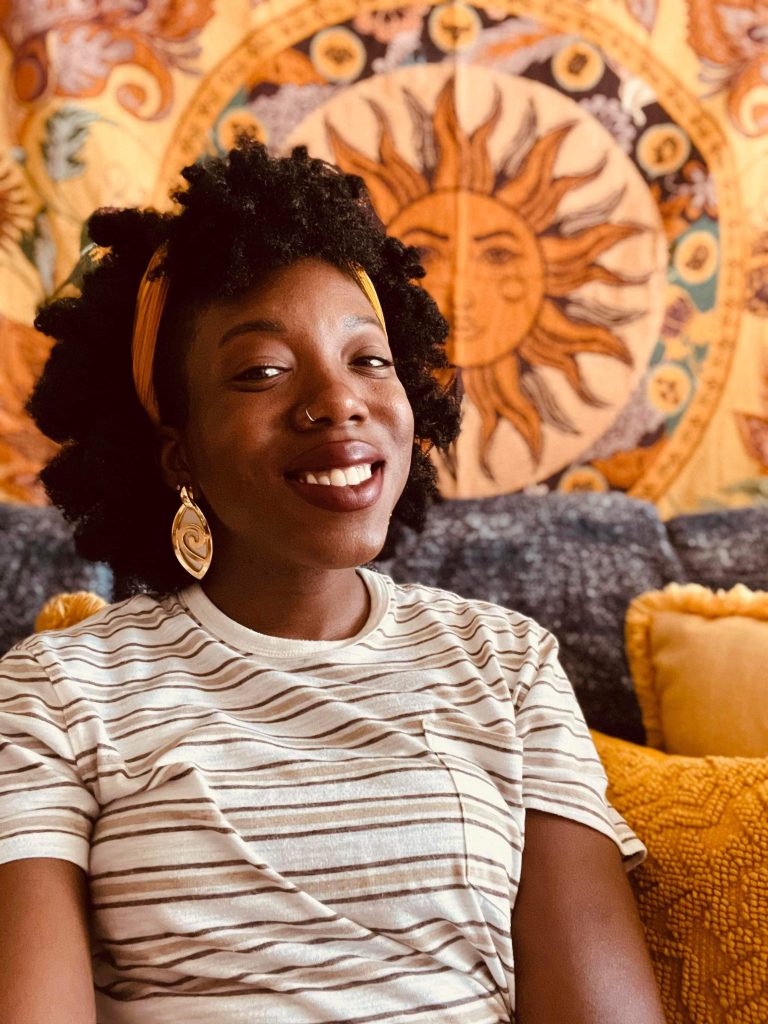
AMA? Try AAA. Ask Arline Anything. This week’s guest is your community manager, Arline. Arline tells us what she has learned from managing the community and interviewing guests. She explains how her views have changed on Christianity and fundamentalism after deconversion. She let’s us know what makes her mad and what gives her hope. She reveals her love language(s).

Join me in thanking Arline for all the work she does for the community and the podcast. Let her know she is appreciated.

Quotes

There is a lot of empathy, with the emotions, the anger frustration, the sadness, the grief and the happiness.
That “I am such a better person now, and wow, I never expected to feel like a better person having left Christianity.”

Watching my kids grow up and not having to micro-manage my kids. I can just let them grow into who they are going to. But I don’t have to have these strange bizarre expectations on my children.

Young people are not going to be able to be told the Bible is inherently true.
They can literally google everything

The younger people give me hope. Their ability to push back on adults. Their ability to think for themselves and learn how to think critically.

The farther away religious people get from fundamentalism. The better their religion will be and the world in general. Fundamentalism just harms.

Anyone with whom I share values, I can try to hear them.

Everyone in the group that I have met! I am so thankful for this group. So many kind people, so many lovely people from whom I can learn things. The deconversion [anonymous] group is great. I love it.

I did not know that I needed it until I had [the group]. It is fabulous.

Recommendations

Podcasts

Pass the Mic
https://thewitnessbcc.com/category/podcasts/pass-the-mic/

Sex and Psychology Podcast
https://www.sexandpsychology.com/podcasts/

Ten Percent Happier
https://www.tenpercent.com/podcast

The Happiness Lab with Dr. Laurie Santos
https://www.pushkin.fm/podcasts/the-happiness-lab-with-dr-laurie-santos

Books

#AmazonPaidLinks
Every book by Kate DiCamillo

Interact

Join the Deconversion Anonymous Facebook group!

Deconversion
https://gracefulatheist.com/2017/12/03/deconversion-how-to/

Secular Grace
https://gracefulatheist.com/2016/10/21/secular-grace/

Support the podcast
Patreon https://www.patreon.com/gracefulatheist
Paypal: paypal.me/gracefulatheist

Podchaser - Graceful Atheist Podcast

Attribution

“Waves” track written and produced by Makaih Beats

Transcript

NOTE: This transcript is AI produced (deciphr.ai) and likely has many mistakes. It is provided as rough guide to the audio conversation.

--------------------------------------------------

0:00:11 David Ames: This is the Graceful Atheist podcast. Welcome. Welcome to the Graceful Atheist Podcast. My name is David and I am trying to be the Graceful Atheist. I want to thank the brave people who have started the ball rolling on Patreon. Thank you. To Peter, Tracy, Jimmy and Jason. Much appreciated. We are about to become a part of the Atheist United Podcast Network. That will include having ads on the podcast and in order to give you an opportunity to have an ad free environment, I have started the Patreon account.

0:00:47 David Ames: For those of you who have already become patrons, I'll be sending out an email shortly with the RSS feed, which is the way you can tell your podcaster to point to the podcast without ads. But I do want to make it clear that everyone else will still get the podcast. There will just be ads on it. Please consider joining the deconversion anonymous Facebook group. The holidays can be a really tough time if you are new to Deconstruction.

0:01:12 David Ames: New to Deconversion and it's a great place to connect with other people who are feeling and experiencing exactly the same thing. You can find it@facebook.com groupsdonversion. Special thanks to Mike T for editing today's show. On to today's show. My guest today is your community manager, Arline. Arline has been an integral part of the podcast and especially the community. We would not have the thriving Deconversion Anonymous community if it were not for Arline and her tireless work.

0:01:52 David Ames: Arline also helps out with copy editing and she just handles a lot of things on the back end. So as always, I'm incredibly grateful to all the people who participate to help make the podcast and the community as special as it is. This is an AMA or ask me anything style episode and so I ask Arline about what makes her angry, what makes her hopeful, and what she's learned from being a community manager, interviewing guests and watching the Christian nationalism that is playing out in our politics today.

0:02:29 David Ames: Here is Arline to answer lots of questions. Arline. Welcome back to the Graceful Atheist podcast.

0:02:42 Arline: Hello David. I am really excited to be here.

0:02:44 David Ames: It's a little ridiculous to welcome you to something that you are a major part of. First thing, right off the bat, I wanted to celebrate with you a couple of victories. You started the Deconversion Anonymous Facebook group approximately a year ago. I think it was October of 2021. We're at somewhere in the neighborhood of 535 members as of today, which is astonishing. And as well as the podcast has been done really well. We just crossed our 200,000 mark for downloads.

0:03:15 David Ames: Downloads is a terrible metric to look at, but it does give you a sense of the growth. So it took probably three years to get to the first hundred thousand and so we did this in less than a year. Oh, wow, people are paying attention. You may recall when we were talking about doing the community group. That one of my goals was that we didn't just devolve into angry antichristian memes and just all venting. We wanted to allow space for venting, but we also wanted to allow for people to feel comfortable there if they were questioning that kind of thing.

0:03:51 David Ames: I think from my perspective, it has been, again, astonishing success, much more than I could have hoped for. And you are absolutely the reason why that is. So my first question to you is how do you do it? How is it that we have a successful community and it hasn't devolved into just angry antichristian memes?

0:04:16 Arline: Yes, well, I've thought a lot about this. Like you said, there's over 500 members. That still blows my mind. That still blows my mind totally. But how have we not devolved into chaos? I I think there most of the people in the group are acquainted with the graceful atheist podcast. So the vibe of the graceful atheist podcast, the way that you have interviewed people, the space you've given people to tell their stories, has drawn an audience of people who are also looking for that.

0:04:54 Arline: I've heard numerous people say, I was looking up atheist podcasts or I had deconverted and I wanted to find some podcasts to listen to that weren't just angry about everything and unkind who had podcasts that were just didn't make them feel some kind of way made them angry. You've drawn that audience, which then joins the Facebook group. And then I think the people who there are people in the group who are not don't even listen to the podcast go, oh, wait, this is associated with the podcast. Like, they have no idea, but they come into the space and they may post something or they read what other people have posted and they know the group is not going to be super inviting of the really angry, unkind stuff.

0:05:47 Arline: Now we totally have space. People post. Like they'll put, this is an angry post. And they just need to vent. They just need to tell how they're feeling. And people are like, yup, I get it. I empathize, I've been there. Here's a little bit of what I've gone through. And so there's the empathy and the space for all the emotions, the sadness, the grief, the fear, the uncertainty. People who are still Christians wanting a space to just like, how did you guys get here?

0:06:17 Arline: What happened? And so when people come into the group, curious or hopeful or just lonely, it's already the people in the group. I haven't done anything magical. The people in the group have created an atmosphere of just being, welcome to wherever you are. Here's a space that you can land. And it has been so I don't know what the word is, like, beautiful to watch and just see how people interact with each other.

0:06:49 Arline: And it's also been fun because there are the funny memes that people post and it's been a neat experience to watch and to be able to be a part of and get to know people.

0:07:03 David Ames: Yeah, and I do want to be clear that anger is a completely valid part of the process and we do need safe spaces to be able to communicate that. But again, I just think it needs to be commended that that's not the only thing that we're doing there, that there is a level of compassion and empathy, like you say. And what I think is just really beautiful is that someone will say, I'm having a hard time with X this thing and ten people come along and go, oh man, me too.

0:07:33 David Ames: That feeling of I'm not alone is so powerful. And as we've discussed before, the deconstruction deconstruction process is a lonely process and to just find your people is really amazing.

0:07:47 Arline: Yes, myself included. Lots of people don't have in real life friends who have gone through this. They're either still in church world, which is difficult with its own things, or they may have friends who are not believers, but they've never been believers. So all the weird stuff that we believed and did, all the grief of losing things that we used to believe, that we held so dear, all those different kinds of things, it's just harder. They can empathize with the emotion, but they don't understand necessarily those actual experiences.

0:08:24 Arline: And so, yeah, just finding a spot online where you can see that, yeah, I'm not alone, I'm not crazy, I'm not in this without anybody at all because yes, it feels like that in real life because you just may not have that. A lot of people don't have that.

0:08:51 David Ames: So you've done a number of things within the community. You lead a weekly discussion about the podcast episode, you've done sex and sexuality focused groups, you've done just social hangouts. What do you find the most useful, what do people respond to the most and what do we want to do new over the next year?

0:09:12 Arline: Yes, the Tuesday night podcast discussion. It's a lot of fun in that. Well, I'll say this, it's kind of like church world where you have like 20% who come to all the events and do all the things and then you have the rest who participate but don't necessarily come to all the little things. So you have the same people ish that come every week. It gives our guests who come who are on the podcast a chance to elaborate on things or just know other people empathize with.

0:09:49 Arline: Yes, I went through that same thing and it's we've had some very serious, like deep conversations and we've also had like just fabulous fun conversations on Tuesday night. And that, I think, has been it's added people to the group who've been people who've been on the podcast and then they join the group to be able to come to the Tuesday night thing and they get to connect with people on more than just now I'm in the group kind of level, like actually get to know some people.

0:10:20 Arline: So that's been a lot of fun. The sex and sexuality, like purity culture, people up. And so we have another podcast or a few different just random sex and sexuality type podcasts where they have nothing to do with graceful atheists that are just experts discussing different things, whether it's what's therapy like for the LGBTQ community what's it like to start having sex in your 30s, rather when you have no sexual experience, which that resonates a lot with people who've come out of purity culture.

0:11:02 Arline: What's it like to be in a sexless marriage? I mean, so many different just random topics that we listen to the episode, there's a few people in the group who are part of kind of figuring out what might be a good fit for us to listen to and then have more expertise in the area than I do. And then, yeah, we just talk. And again, we may learn stuff from the podcast, but just getting to hear each other's stories, getting to know that you're not alone, you're not the only 30 something who's like, oh, no, I've only had sex with my husband or my wife.

0:11:42 Arline: I've never realizing that I've always been attracted to people of the same gender, but I had no idea what to do with that. I mean, just so many different things and knowing you're not by yourself. And then as far as let's see the hangouts, those are literally that someone joked, this is our fellowship time.

0:12:02 David Ames: Pretty much it is.

0:12:04 Arline: Bring your own coffee. Yes, bring your own coffee, grab a drink. And we do. We've done. Just random icebreakers. People come with deep questions sometimes. I've been thinking about this, and it really is just to get to know people in the group. And that specific one has been during the day for those of us in the United States, so that we have not figured out how to get Australia, New Zealand, Europe, the UK and the United States all in one social event.

0:12:35 David Ames: Yes, exactly.

0:12:37 Arline: That's fine. But it at least opens it up for people over in Europe and the UK. All of these things have been successful attempts of just getting people to know each other getting people to know each other a little bit more deeply than just posting on the wall. Because I've talked to lots of people who posted on the wall, but the people that I've personally been able to chat with more like this, like face to face, you start to build a closer friendship.

0:13:15 Arline: And there's an event coming up soon for people in North Carolina, people who are all there, they formed their own hail it's all get together thing because there's like seven or eight people that are all in North Carolina. And it's like, this is such a neat these little events have been to help people connect a little more deeply with people and they've been a lot of fun. As far as in the future, we've talked about possibly having maybe some discussions specifically on for want of a better term, some people are like, oh, I don't love the term unequally yoked marriages or relationships.

0:13:58 Arline: Parenting, what's it like when one is a Christian, one's not, or when you've only been Christian so far and now all of a sudden neither of you are believers. And what does parenting look like? What does it look like being single? You've come out of purity culture and you're single and you're like you want to make wise choices, but what does it look like? You don't have someone telling you what wise choices look like for single people.

0:14:23 Arline: So just lots of different it sounds strange, but like the same stuff that the church tries to give you space to discuss, but we're not going to tell you what to do. It's just like here's a space where we can see what does some research say or what are my personal anecdotal experiences say, and then everybody is able to just figure out what will work for them without people having to tell them what they need to do or don't need to do.

0:14:55 Arline: Shooting on each other. There's a person in the group who uses that phrase, don't shoot on people, don't shoot on people, don't shoot on yourself. Yeah, I like it.

0:15:06 David Ames: So, quick plug. For those of you listening, if any of those topics sound interesting and you'd be willing to run a group, you get in touch with Arline and we can make that happen.

0:15:16 Arline: Yes, absolutely.

0:15:17 David Ames: I think that is one of the fun things that goal for me, again, is that the church provides a place for people to use their hobbies talents. We can call them gifts if we want to call back, but whatever, right? Like the things you're good at, the things you're interested in. And I think the secular world that's what's missing is that there just are very few places to exercise things that you're probably not going to be able to make a living doing those things, but you're good at them and you want an opportunity to do it. So this is one of those things and that's going to be really exciting.

0:15:49 Arline: Yes. And if there are topics that we haven't thought about that it seems like a few people have posted about this in the group, maybe this is something we get to like, please send me. I am always open to Facebook messages, DMs and Instagram. I can hear those and we can talk about it and see.

0:16:16 David Ames: I'm curious, Arline, for yourself being more personal, do you feel like this fulfilled the community need for yourself as a community manager? You're kind of on stage a bit. I know a little bit about that, yes. Do you still get something out of this and then how have you changed by doing this work?

0:16:39 Arline: What do I get out of it? Yes. How do I explain this? I was still friends with a few Christians at the beginning of this year, but they were relationships where it's like they were not bad people. But it was not good for me. It was just not the best relationships to continue to be in. Because of the group and the friendships that I've made in the group, I was able to see those in real life friendships for what they were and be able to let go of them without thinking, oh my gosh, I am going to be literally alone other than my husband.

0:17:26 Arline: Now, I do have some friends who are still Christians, but they live in different places and they have never been evangelical.

0:17:38 David Ames: Sure.

0:17:39 Arline: They're not the Christianity that we really need to like that needs more deconstructing and pulling apart. Our values are still the same. We have things in common that have not changed. But having the friends that I've made in this group, just people that I know I can send a message to, I can send a Facebook message and just be frustrated or irritated and they can just hear me and empathize and then we can talk a little bit or not.

0:18:16 Arline: Yes, it has filled that. I feel like I'm just rambling, but yes, it has filled that need for community, for friendships, the different little hangouts getting to have my love language is I guess that's a little Christianse, but love language is like having deep discussions with a few people. So, like, I've always loved small groups, book clubs, things like that. So having those times during the week where I can have that and then I can go back to my husband and my family, my kids, who my husband is like, I don't want to have deep discussions about books that you've read that I don't want to read.

0:18:56 Arline: He's like, I love you so much and I'm so glad that these other people exist in your life because I don't have to feel like, oh, no, he's not meeting some kind of need or my friends aren't because I have friends now who are into similar things now being part of the community. Yes, I've built some good friendships. I have fantastic discussions with people. I'm learning from people that used to in church world, I had to be in like, White Lady Mom Bible study world and the men were in whatever man Bible study world they were in.

0:19:34 David Ames: Yeah.

0:19:35 Arline: And there was such little overlap that now I know I can send a message to one, to someone who is an expert in whatever the thing is that I talked to and I can just ask them a question and it's just a different experience and it's wonderful. What was your other question?

0:19:55 David Ames: How have you changed?

0:19:58 Arline: I am much more confident than I used to be. Now I say that I can lead little children like on paper, I'm an early childhood teacher, so I can hurt all the small kids, all the kids, all the cats. Yeah, adults were terribly intimidating to me. I had never been in positions of hurting adults, mixed groups because I was a teacher. So it's mostly women then in Church, Florida, it was always women and so I've had to reach out to different people in the group who are really good at that.

0:20:34 Arline: I've had to watch YouTube and learn all the things, so I've grown more confident in doing those things. But it's been definitely a huge learning experience. I've never done anything like this before, but it's so, I guess a little humbling, but in a good way. Like, I've learned a lot and getting to interview people, that was not something I'd ever thought. I've never crossed my mind, ever. And now I'm like, I want to be like David when I grow up.

0:21:08 Arline: But the neatest experience is getting being able to just hear people's stories and let them talk. Love it so much.

0:21:15 David Ames: That is my next question. For listeners who don't know, our leans played a number of roles, but one of which was just finding people to be interviewed. And then I think there was one person who said, well, why don't you arlene interview me? And you asked me if that was okay. And I was like, yeah, that's great. And this has turned into such a great thing that I've got atheist in my title and that might be scary for some people and there are going to be people that are going to be willing to open up to you in a way that they might not to me.

0:21:48 David Ames: So if you want to just expand, you basically answered it, but a little bit more on what has it been like conducting the interviews, being the one behind the mic?

0:21:58 Arline: It's much more intimidating because I enjoy hearing their stories. Well, I guess for me, really the intimidating part is trying to figure out how to make it flow and I want them to just talk. But also sometimes people tell their whole story and it's been like ten minutes and I'm like, oh, okay, now I have to figure out how to pull some more. Let's go back to this. But I have learned a lot and gotten to know people online very closely.

0:22:36 Arline: People that I've gotten to be much closer friends with after hearing their stories and just the things that we have in common, the things that I've had a few people that they would say come back to me in a few more months. Like, I'm not ready, I want to tell my story, but I'm not ready. And so for me, telling my story was therapy. It was so good for me, I wanted to get it all out there whenever I did it.

0:22:59 Arline: But other people, it's very intimidating, it's very scary. It's like now it's like someone in my family may listen to it, someone may hear. There's so much nuance with when people want to tell their story and they do want to get it out, but all the consequences they could possibly face. It's definitely helped me have a lot more compassion for people whose family or friends or spouse are part of the reasons why they want to tell their story but can't tell their story yet because my family have mostly not all, but mostly just kind of nominal Christians. So they were just like, okay, whatever you believe is they didn't care.

0:23:48 Arline: And so I didn't have a lot of push back, and so I just didn't realize how many people yes, it's hard for them to get out there and tell their story when they want to.

0:23:57 David Ames: I'm curious if you feel this I'm trying not to lead the question, but there's a deep intimacy in doing one on one interviews in a way that definitely not in a group, but even somehow you're hearing the heart of their life story. What has that experience been like as far as really getting to be from my perspective, it's a gift to be told someone's life story.

0:24:26 Arline: Yeah, I didn't know how to explain that, but yes, I feel like I know the people so much more deeply now. Most of the people that I've interviewed, not all of them, but well, it's only been a few people, but only one or two of them did I not know beforehand were recommended to me, and I just sent them a message. But others, we had talked and talked, and so I knew a little bit of their story. But, yeah, they sit there and they're looking at you, and they're telling some of the hardest things that have happened to them.

0:24:56 Arline: And, yeah, it's a gift. Like, they're so vulnerable, vulnerable with their story, with their whole selves. And they have to trust me a lot. They have to trust us to be able to open up and tell their story in ways that people often want to tell as much of the story as they can. They also want to try to honor certain people in their family. They also think, like, in the mother, where it's like, people should have behaved better if they wanted you to write or speak nicely about them.

0:25:35 Arline: But yeah, it's a very deeply intimate experience. Yeah, that's a good word. I couldn't think of a word for it a gift.

0:25:51 David Ames: All right. Another really kind of broad question that I just want you to run with is grace was a major part of my Christianity. It stuck with me through the deconversion process and obviously the grace lathe. I know what I mean when I talk about it, but I also know that it turns lots of people off. But I'm curious, what does it mean to you? What does it mean to be a graceful person from your perspective?

0:26:17 David Ames: Forget what I've said. I'm curious what you think it means and how you do or do not try to live that out.

0:26:23 Arline: Yeah, I love you say that at the end of the episode. Join me and be a graceful human being. I love that.

0:26:28 David Ames: Yes.

0:26:31 Arline: I think it means for me, giving people our family calls it giving people the generous story, which does not come naturally to me. Assuming the best in a situation or giving people a generous story, assuming the best. Remembering that, I guess the common humanity how do I say this kindly to myself, I can be very judgmental, like inside my mind about other people's choices that they make and just reminding myself of like, if I had their DNA and their life experiences, I would think and do exactly the same way that they're doing.

0:27:18 Arline: And so I feel like that's what grace is to me. Extending the love and compassion and empathy to others that I would like them to extend to me. And also extending that grace to myself. Because thinking back to when I was a Christian, it was a lot of like, kill your sin, kill your sin, kill your sin. So treating myself in a way that I would treat other people is also part of being a graceful human. And even which Joe Simonetta, who was just on the podcast, the way he talked about just respecting the environment, the idea of we're all interconnected, literally all interconnected and the choices we make on this planet, affect the planet and affect our children and all that, I feel like that's what grace is. I don't even know if I remember the correct definition of grace. But yeah, just all those kinds of things empathy, kindness, generous stories for people, remembering the common humanity of all of us and things like that.

0:28:30 Arline: I think that's what grace means to me.

0:28:32 David Ames: I don't know if you have the same experience, but on this side of deconversion, deconstruction, whatever you want to say, the manipulation from and we'll focus on Christianity here, but traditional religious figures in general is so blatant now to me. I'm curious if that's your experience. And what I want to ask is what have you learned about Christianity on this side of deconversion?

0:29:00 Arline: Oh, heavens. Well, here's one thing I have learned. The values that I had as a Christian are a lot of the same values that I have now. So I can still hear black Christians speak. Like I followed Jamartispie and some other the Holy Smoke movement. I'm not sure if they're Christian or not, but they're fantastic on all the stuff that they do and these different black believers that our values are still so similar.

0:29:32 Arline: But white American Christianity again, hashtag, not all. We all know that I cannot hear. But even as a Christian, looking back at my little Facebook memories that come up, I have been trying to call out and call in the racism, the misogyny, though. Well, the misogyny I didn't learn till later. Let me take that back because I thought it was biblical to be patriarchal and all that stuff, but definitely the homophobia and the racism for years.

0:30:03 Arline: Like, what is wrong with you people? Why can you not how can you vote this certain way that harms entire groups of people and see the way Jesus interacted with the poor, the immigrant, the lonely, all these people? So what have I learned about Christianity? The music is manipulative. I did not realize that. I learned a little bit of the brain stuff of how yeah, it's basically trying to get you high so that then you can listen, your brain is ready to receive the message.

0:30:40 Arline: That just makes me feel gross thinking and then that the white supremacy was, like, baked in from the beginning of American Christianity. White Christianity, even before whiteness was invented, like, the idea of whiteness existing, it was the idea that European people were just inherently superior to all other peoples. Baked in from the beginning. The misogyny I didn't realize. I started kind of realizing it while I was still a Christian.

0:31:20 Arline: I had a friend at the time who she came out of a part of Christianity where women could be pastors. And I thought that was just not heresy. But you all just are interpreting the Bible wrong. Since then, reading books like Cassandra Speaks and the Making of Biblical Womanhood, which is written by a Christian. She's a Christian. Author. Historian, I think. And just seeing, yeah, it's baked into the pie.

0:31:48 Arline: Just so many things that at the time I saw or just didn't like, how things just don't feel quite right to you, something's not quite right. But I was taught parts of those things were biblical, and so I had to believe them even if I didn't like them. What other things have I learned? I had already years ago, when Derek Webb was still a Christian, but making his own music, he was calling out the Republicanism and white Christianity being mixed together so much.

0:32:23 Arline: And I I feel like he was like a prophet. Like he called it way before anyone else was paying attention to it. He had a couple of albums that were just explicit about what was happening. And now we're seeing it. It's been happening this whole time. There's all these books being written about how the politics and the Moral Majority and all this kind of stuff is all mixed together. So it was happening.

0:32:50 Arline: We just didn't know about it because we didn't have social media. Now it's a lot more difficult for people to keep secrets, right? Other people can just find out. I say that I have also learned that there are different realities existing in the United States. So I said the phrase January 6, and someone in my family was like, what? What does that mean? And I was like, I don't understand why you don't he had no idea because that.

0:33:23 Arline: In his news world is not a phrase right and it's framed differently. It's a longer story.

0:33:38 David Ames: We got a couple of related questions to this new view on Christianity. So you live in the south? Yes. What is the experience of being a you know, on this side of deconversion? I think it's safe to say that you're a bit more liberal in your politics and living in the south, both from a you're no longer a Christian and from the political aspect.

0:34:02 Arline: When I was still a Christian, I had a little bit of because my politics went more liberal way before. That was way back when I was in college, I think I took a sociology class and was like, wait.

0:34:22 David Ames: I.

0:34:22 Arline: Don'T really believe or agree with a lot of what I had been taught was I was supposed to vote. And so I was like, oh, I can throw it out. But I also did not grow up in a church. I have learned since learned that people grew up learning that Democrats were literally demonic. Like there was this whole movement I had no idea that existed. I did not grow up in that. So I could throw out become more liberal in my politics and didn't have any kind of spiritual problem with it.

0:34:49 David Ames: Because you live in the south where not being a Christian is kind of a big deal and politically maybe a little bit different. Like, what is that experience?

0:34:57 Arline: When I was still a Christian, my friends could hear me. They could hear my thoughts on things. Yeah, but obviously maybe they were right and Democrats and we are demonic because apparently left Christianity true.

0:35:12 David Ames: They have a point.

0:35:14 Arline: Maybe it really is a slippery slope then. I did have some influence in conversations with the moms that I was friends with, I now do not have any kind of influence. I say that also thinking though, multiple times I think back to when I tried to I didn't call people out. I was like, hey, can we have a conversation about this? I feel like there's some information maybe you're missing. Whether it's on racism, that's usually my thing is the antiracist world. That's where I've had the most conversations with other white people, white women, but no one was interested.

0:35:55 Arline: And so maybe I didn't have as much influence as I thought of it. I'm not sure. But as far as just people around me, everyone just assumes you go to church. So unless I explicitly say anything, they just assume I'm a Christian and then I try when someone says something. I have noticed since 2016 in multiple encounters with people that there's a feeling of entitlement amongst more conservative white people to be able to say whatever they want and not expect there to be consequences just in interpersonal situations.

0:36:38 Arline: And they assume I'm going to agree with them, like, oh, here's a whitelist they just assume that my beliefs are going to be similar to theirs, and I try to go, wow, that's interesting. From my understanding, blah, blah, blah, blah, blah, so that maybe they'll go, I haven't thought of that. I have no idea if they go, I've never thought about that. I don't like debate or anything like that. But I've had different conversations with people where I've just tried to ask some questions and see maybe to get them to think a little bit more about whatever the political thing is.

0:37:19 Arline: But for the most part, people just unless you have a conversation, people assume that we go to church, that we vote Republican, that we look like them, so of course we do the same things. And it is really nice when you meet someone that looks like me, and the conversation is completely different than I've expected. And there are plenty of people who maybe have different ways of thinking about politics, because a lot of it I don't necessarily understand, that I've been able to learn from, but I have to be honest, most of those have not been in real life. People those have been online friends that I who are in parts of the United States and so have just very different experiences.

0:38:10 Arline: But, yeah, people just assume things about you and don't usually engage in conversations a lot, not deeper conversations.

0:38:25 David Ames: You've brought up the topic a number of times, and I just want to explore it a little bit about becoming more aware of white privilege, your own personal experience, and kind of you've just described what systemic racism is, right? Like, that you get the assumed pass, so to speak, and don't have to justify anything. You've just really eloquently described that. I'm curious about timing. Was that something that you discovered prior to deconversion, or is that grown even greater after the fact for you? Where did that growth come from?

0:39:03 Arline: Oh, that's a that's a good question. For me, in my I guess beginning to pay attention was in 2014 when the Ferguson protests were happening, when Darren Wilson police officer killed Mike Brown. In my Facebook feed, where lots of the CVS is burning and people are riding, that just kept coming up. And then a friend of mine who is a black woman, she happened to post something from Twitter that was from what's called Black Twitter.

0:39:39 Arline: And I clicked on it to go see, and it was like kind of an on the ground conversation about what was going on. And it was like, here's where we're meeting for these protests, here's where we're meeting at this place. And it was just like 90% of what was happening were peaceful protests. And that was the first time I went, Wait, maybe something's not quite I don't know that I've ever would have paid attention.

0:40:06 Arline: I want to say, yes, of course I would have eventually paid attention, but that I know was because I've told her. Since then, you changed the trajectory of my understanding of the world. Yeah. So from that moment was the first, like, okay, something's a little different in the United States that I'm not understanding, that I haven't been taught. And at the time, I thought it was God telling me, but however it was, I realized I just needed to sit back and learn some stuff because I wanted to go save the world, which imagine a white person wanting to go save the world.

0:40:44 Arline: But I was like, okay, I just need to learn stuff I don't even know. I was listening to Jamartispie's podcast past the mic, and he Christian, so I was already learning from black Christians. And they were and so I was like, okay. I looked up every person I had never read, from IDA B. Wells to Angela Davis. I looked up different theologians. I was like, I just need to understand. I looked up just Googled things like police brutality. I started following all these different people online.

0:41:18 Arline: And I think for me, sitting back and being willing to listen to what had happened for 500 years in the United States, and what was just literally happening to people in real time forced me to have to pay attention. It was like, I can't unknow these things now. And so that was a long time ago now. And according to my Facebook memories, I can't remember the years, but there was like I remember when oh, I can't remember his name.

0:42:04 Arline: Trayvon Martin, when George Zimmerman murdered him. I just remember thinking, this is terrible. You don't do this. But that was it. My mom and I just argued about it. There was nothing more. But then it was like Tamir Rice, and it was just person after person, women, men, and just kept hearing all these names. And I was following all these people, and I was like, where? It broke my heart. I got a private message from a black woman that I've been friends with for years. She was like, Arline. Nobody else, none of the people we were in college ministry with are saying anything about this.

0:42:37 Arline: Everybody's silent. And we go to church on Sunday, and we're all together, and they don't say anything about what's happening to black human bodies, their brothers and sisters. They don't say anything at church. They don't care. They care about people's salvation and all that stuff, but not their real selves. And it made me sad to know where were all the other Christians, white Christians? So that's how mine got started.

0:43:07 Arline: And it's been just a lot of learning, a lot of really seeing that. Like I said earlier, it was just baked in from the beginning into white American Christianity. It was necessary in order to enslave entire populations of people. It was necessary to destroy human life and take land from indigenous peoples. I mean, it was just these things had to be mandated by God. If they were not mandated by God, we can't justify these horrible things. That we are doing.

0:43:45 Arline: And yes, I know I always assume there's going to be the like, but some Christians were abolitionists. Yes, thank you.

0:43:51 David Ames: I realize that the percentages were tiny. Whenever they make those arguments, the percentages relative to everyone else were very small.

0:43:59 Arline: When you can name John Newton, william Wilmore Force, that other Garrison guy, then okay, fair. When you can name, then there weren't that many people who were platforming because it was unsafe to them. They had to decide. We look at the civil rights movement, the strategic ending of lives, of human life, of leaders, so that they would stop asking that they have the inherent rights that are written down in all those fancy papers that dead white guys put together.

0:44:39 David Ames: Yeah, I don't want to take over here, but like my wife and I read a book by a black Harvard professor whose name is going to escape me, we'll have to do it in the show notes about the Declaration of Independence. Now, that's very problematic, right? But the prologue, the opening bits of that are so inspiring. They are so incredible about the equality that we state as Americans. We say this is what we believe in, and we have failed to live up to that even a little bit, including in the rest of that document.

0:45:15 David Ames: It's amazing that in the same document there's these beautiful, soaring ideals and also the embodiment of the opposite of that against the Native Americans at the time and things of that nature. I want to share one more thing to wrap up this conversation. You and I both were interviewed by Robert Peoples. He has been one of my favorite people that we've been able to interview. And I forget how he phrased the question to me, but it was similar.

0:45:51 David Ames: To what I just asked you in that. And my honest answer was, I felt I feel so naive. My former self, I feel so naive. And one breaking point for me was when Henry Lewis Gates, who was also a Harvard professor, was arrested in 2009 on his doorstep. He had forgotten his keys or something, was trying to get into his house. He was arrested, harassed. I don't know if he was fully arrested, but very much harassed and had ID on him, had his address, the place they were at.

0:46:24 David Ames: And that was the first time where I saw on Facebook, it's kind of the opposite of what you described earlier, people assuming that you agree with them. I assumed that everyone else understood that that's racist. And when I saw that some of my hometown people thought that because he raised his voice that he was out of line in some way, I was utterly shocked. I was just utterly shocked. For me, it has been and again, this is bad, right? This is a character flaw.

0:46:56 David Ames: But the breaking down of my naivete, of what I believed in all those ideals, I thought that's what america was about and just having the proof day in and day out, particularly during the 2010 of just having it proven to us that we are not over the racism that is inherent within the United States. It's just it's just painful and and.

0:47:19 Arline: Grieving, and it's like Ibrahim X Kendi, whose books I can highly recommend, he talks about racism like rain. He's like, It's just always raining. It's just always raining. And we don't even know it's raining because we have lived in the rain the whole time. And he says, when you realize or when someone else points out, hey, you just said or did something that was racist or this is a racist belief, if something like that happens, they're just handing you an umbrella so that you can go, oh, whoa, I didn't even notice.

0:47:53 Arline: Now I can notice this thing. And it isn't that people are all one thing or another. It's that we've just been swimming in it for our entire lives. And if it doesn't affect us, we don't even know we're supposed to pay attention to these other things that are happening. Because I can literally run into Walmart with my sunglasses on and a hoodie and a run back out, and no one's going to think, no one's going to say anything.

0:48:24 Arline: And it's also my responsibility, with the privilege that I have, to leverage as many other voices, as many other black men and women, especially women, especially women and other people of color women, women, their voices so that people can learn from people that we just haven't learned from because other groups have taken up a lot of the space.

0:48:51 David Ames: So semi related to this or the whole subject of what we've learned about Christianity. I'll ask the question and then I'll set it up. What makes you angry? The reason I asked the question is one of the things I've learned through this process is that my experience was pretty easy both inside Christianity and coming out of Christianity and that it was not easy for many, many people. You've already mentioned purity culture, but now that you've been a part of this community, you've listened to other people's stories, you've interviewed some people.

0:49:23 David Ames: Do you ever get angry for them? In proxy? For them, yes.

0:49:34 Arline: For me, anger is more accessible than grief and sadness. And I'm sure there's stuff I need to deal with in therapy. But yes, when I talk to black women who have not been heard, when I talked to were harmed, I experienced sexist remarks and things and a lack of access to leadership or whatever. If I had wanted things like that, I've never experienced the sexual harassment or the physical emotional harm done to a lot of women.

0:50:18 Arline: And another thing, I don't know if it makes me angry. It just makes me sad. The number of people that their sexuality was just more nuanced and they've spent their entire life not being able to do anything with that part of their body. They're part of themselves, if that makes sense. Yeah, I don't know if that makes me sad or angry or both. Probably the things that make me angry are when I think about all the when I hear people talk about the time they feel like they wasted all the years, that they could have just done things differently, done things in a more free way, in a more way that really honored their whole selves rather than having to squash that's how our family says, having to squash part of themselves instead of being able to live out of that.

0:51:26 Arline: The anger, it's still a lot of just the terrible okay, politics. There you go. That makes me furious. I was trying to think of the stories that I've heard from people, but most of when I hear the people hear people's stories, it makes me sad for them. The anger comes when I watch videos of the foolishness that comes out of white Christians mouths who also hold power in our country, in our states and stuff.

0:52:01 Arline: That just infuriates me. And it infuriates me knowing how many people can't hear my or other people's voices, to say, hey, this is Christian nationalism. This is bad. We need to stop this. They can't hear that because I'm not a Christian anymore. So I can't know what I'm talking about for sure, even though I really feel like a lot from the people I've talked to in the deacon version group. These were the Bible readers, these were the studyers.

0:52:31 Arline: These were the ones who were praying for all the things to make it happen. These are the ones who were trying to call people out, call people in, make things better. And not all of them finally gave up because I didn't leave Christianity because of that. Mine was completely different. But who wanted to glorify God, glorify Jesus, however they want to say it as Christians, and we're just like, screw this.

0:52:58 Arline: People didn't want to change. People didn't want anything, don't want things to be different if they're holding power, why would you want things to change? Why would you want other people to have more power if that means that you may not have all the power?

0:53:13 David Ames: You kind of answered one of my last questions. What are the commonalities and maybe the differences that you've seen in people's stories from your perspective? So from doing the community management and a few interviews as well. So one of them I think you've highlighted there is that it tends to be the most dedicated of Christians that are on the side of deconstruction. Deconversion. But anything else that pops to mind that.

0:53:41 Arline: 2016 always seems to pop up very often, and then 2020 for the people who have deconverted more recently, of course, Trump. And then the response to the pandemic, the way churches dealt with that, the conspiracy theories, you know, all that kind of stuff. Yes, lots of people have talked about that again, purity culture. Just realizing that I don't know, not even just purity culture, but just I don't know how to say this. People learning from people like Renee Brown and others about psychology and just learning that they're not sinful, they're not crazy, they're not filling the blank with whatever.

0:54:27 Arline: The thing is it's your limbic system taking over or it's just learning physiological things about their own bodies that explain what they used to think was whatever the sin. Fill in the blank with the sin. Because that's another thing that recently I've talked to someone about, is there used to be so many rules that you had to follow that you were always struggling. And now when there are just fewer rules, there are fewer rules to break without being micromanaged by a magical deity in the sky.

0:55:08 David Ames: Even that word struggle, I'll find myself trying to start to use that word, and I think that is a bad word. That's not a good word.

0:55:18 Arline: Because you couldn't just outwardly want to do the flagrant, terrible, sinful thing. You had to struggle with that's, right. I've given a lot of people, just even if they can't empathize with the experience of other people in the group, there's a lot of empathy with the emotions, the anger, the frustration, the sadness, the grief, the happiness. Like, oh, my gosh, I am such a better person now. And feeling like, wow, I never expected to feel like I was a better person.

0:55:56 Arline: Now on the other side of having left Christianity.

0:56:10 David Ames: So the flip side of what makes you angry, what gives you hope about this group, about secularization, about America, about your own life? What gives you hope?

0:56:21 Arline: What gives me hope? Oh, gosh. In my own just little personal life, we have a pond in the backyard, and we have Canada geese that come and the seasons. Just knowing that right now everything's starting to die, and it is beautiful, but it's going to be bare and miserable for a while. But spring will come. That natural, literal hope. There will be life again in the spring. That for me personally, that's a thing.

0:56:52 Arline: Watching my kids grow up and not having to micromanage my kids, I can just let them grow into whoever they're going to guide them, all that good stuff. But I don't have to have these strange, bizarre expectations on my children. And then the world secularization, oh, I read people like, oh, gosh, I'm going to say his name wrong. Noah Harare. You've all. Noah Harari. Who wrote sapiens? Yes. I've ordered the graphic we have the graphic novels for the kids.

0:57:28 Arline: He has a children's book, like his willingness to say a lot of the hard things about what we're doing right now to the planet and to ourselves and how we have to be able to cooperate. That's the most important thing in order for us to be able to continue into the world. He gives me a lot of hope that maybe we can do these things. Things that give me hope. Knowing how many young people are not just going to young people are not just going to be able to be told the Bible is inherently true and then be like, okay, right, they can literally Google everything.

0:58:12 Arline: They do not need information from us. They just need to know how to interpret all the information that they're getting. And so seeing the young people see that things like compassion and kindness and cooperation and love, all these things are so important to them and they're willing to push back on the adults in their lives and say, like, know what you're saying is bullshit. I'm going to treat my friend with respect.

0:58:36 Arline: They're not inherently bad because of their queerness or their color or whatever. The younger people give me hope. Their ability to push back on adults, their ability to think for themselves and hopefully learn how to think critically. I think we could go in a good direction in the future. I also think we might kill ourselves in 100 years. I have no idea. But I can try to be hopeful. I love the higher the increase of the nuns and the duns and the people who may still be some version of Christian or another religion, but just want it to be like loving and not trying to harm people.

0:59:20 Arline: All of that gives me hope that the farther away religious people get from fundamentalism, the better their religion, I think, will be. And just the world in general, fundamentalism just harms it harms so many people. So yeah, getting away from that, lots of stuff. Those things give me hope. That was a good question because I am not always like I literally have to have an app say, what are you grateful for today?

0:59:51 Arline: So that I can pay attention and think hopefully about the world. And gratefully.

1:00:06 David Ames: Arline, is there a topic that we didn't hit or that I didn't ask that you had prepared for and want to get out of this episode?

1:00:15 Arline: I don't think so. I do want to give tons of recommendations, not right now, but we can put them in the notes only because that's again, my love language. That's my second love language. Great discussions and then sharing resources. When someone says I thought of you and this was the book or the podcast I thought of, I'm like, I feel loved.

1:00:41 David Ames: Well, I tell you what, I've got a recommendation for you, sweet. Since you are open to listening to some black Christian voices. Tyler Merritt went to my Bible college. We probably had some overlap. I don't think we ever met one another. He had an Instagram go viral during 2020 and he has just a really interesting perspective and he is kind of providing that transition layer. He's definitely in evangelicalism, but he is saying to wide evangelicalism this is racism in a really good way.

1:01:16 David Ames: And he has written a book that is his memoir. And I might have to get the actual title in the show notes, but definitely recommend him.

1:01:24 Arline: Okay, yeah. Anyone with whom I share values, I can try to hear them. I can try to hear them.

1:01:33 David Ames: Yeah. Are there any of your recommendations you want to do on Mike?

1:01:39 Arline: Well, I'll do this. The Sex and Psychology podcast with Justin Lee Miller. That's the one that we get a lot of our stuff, our little Wednesday night or Wednesday night conversation that we get a lot from. And he has all the therapist like letters behind his name. I don't know what all he is, but he's fantastic. He has a book, Tell Me What You Want, and it's about sexual desire. And that podcast is just even if you didn't necessarily grow up in purity culture, but you've simply just wonder what life is like for people who have had a, quote, normal, whatever you would consider normal, even though he would say, no, don't use that word, sex life, it's just a fantastic resource. It's a really good podcast and I've learned a lot of stuff and I did not grow up in purity culture.

1:02:33 Arline: I was already thrown away, as my daddy would have said, when I got started going to church. So I wasn't part of all that. But it has a lot of excellent content.

1:02:48 David Ames: Fantastic.

1:02:48 Arline: And someone in the Deconversion group that I met told me about that, and he's someone that I want him to be on the podcast one day. He's fantastic. Everyone in the group that I've met, I'm so thankful for this group. So many kind people, so many lovely people from whom I can learn things. It's just deconversion group is great. I love it.

1:03:09 David Ames: We'll just say here again, if you are interested in being interviewed and you would prefer for Arline to interview you, that is definitely on the table and you should reach out to Arline. You can also email me and we'll make that happen. Arline, mainly I want to say to you thank you. The work that you have done is just invaluable. We'll get into some of it when we're going to reverse this. You're going to interview me in the next week's episode, but I just don't have the time for these things. We would not have the Deconversion Anonymous group if it weren't for you. So thank you so much for all the work that you do.

1:03:42 Arline: Yes, you're too kind. I love it. I did not know that I needed it until I had it.

1:03:54 David Ames: Final thoughts on the episode. That was a lot of fun. It was fun having the conversation. It was fun relistening to the conversation. And it has been a blast to work with Arline. I know that many of you who are part of the Deconversion Anonymous community group know what a vital and important part of our community Arline is. And as I said there at the end, we wouldn't have it without her. I do not have the time.

1:04:24 David Ames: So we are all incredibly lucky to have Arline in our corner, working to build our community. In fact, I was talking to Evan Clark about the future move to the Atheist United Podcast Network, and I was saying that I have these fabulous volunteers and he was definitely envious. So I want to begin by just saying, thank you, Arline, for all the work that you do. I know it's more than just community management, the copy editing, outreach to people online, and the thousand things that I don't even know about.

1:04:58 David Ames: We'd love you and thank you for all the work that you have done. There are lots of things that jump out from the conversation. My favorite part of the conversation was about anger and hope. The anger coming from the systemic racism and misogyny and anti LGBTQ elements of Christianity. But I want to point out here what character it shows in Arline that she was seeing that early, she was seeing that as a believer, and that that is what slowly led her out of Christianity.

1:05:33 David Ames: She still has empathy for people who are in the middle of things, and she is modeling secular grace in the community. I love that she talks about the hope about spring, that things do return, things do get better, watching her children grow up and not having to micromanage them, letting them be who they are, and the empathy that she sees expressed within the group. And again, I see that as a direct result of Arline's leadership and example.

1:06:07 David Ames: I want to thank Arline for all the work that she's done, the community management, the interviews, the outreach, for being on the podcast and continuing to show us what honesty and empathy looks like. Thank you, Arline, for being such an integral part of the podcast. The secular Grace thought of the week. Is a return to one of my. Favorite subjects, and that is participation in the community. Again, I could not do the podcast without people like Mike, who does the editing, without people like Arline, who we've just spent an hour or so talking about how much impact that she has, people like Ray, who's doing the memes for us with the quotes from each episode.

1:06:57 David Ames: One of the things that I want to provide, or at least facilitate, is a place for people to use their hobbies, their talents, dare I say gifts in some way that makes them feel good and benefits the community. In church, this could be abusive and exhausting and burnout prone. No one is asking for that level of commitment. But if there is something that you do well, and it would benefit the Deconversion Anonymous community or the Graceful Atheist podcast, we want for you to participate and we want for you to have the opportunity to do something.

1:07:39 David Ames: In the secular world, there are a number of roles. That we could fill. As Arline mentioned, we've got a number of different topics, including unequally yoked relationships, secular parenting, and a myriad of others that still need people to lead groups within the Deconversion Anonymous community. If you're interested in doing that, that'd be great. I could definitely use someone who is more social media focused to take some of that burden off. We already have a couple of the components. Like I say, Ray doing memes and things, but if you want to just manage the social media presence of the Graceful Atheist podcast, I'd be very interested in having you do that.

1:08:20 David Ames: If you are into audio production and want to do more of the music intros outros, more highly produced segments, things of that nature, I'd be really interested in that. I've been talking with Nathan about automating some work to make the podcast into simple video on the YouTube channel. But there's a lot of potential there. If somebody wanted to do more video, more robust video work there. The intro outro music that I currently have is Creative Commons licensed.

1:08:55 David Ames: I would love to have a license free bit of music. As I have said in the past, I'll be honest, I'm super picky about the music. I want it to be gospel, hip hop with a beach. So that one. I'd want to work with you directly, but if you're interested and you have those talents, that would be fantastic. The point I want to make is there are lots of different ways that you can participate with the podcast and the community and don't hold back.

1:09:23 David Ames: When I first spoke to Arline in. Her humility, she didn't know if there. Was anything that she could do to help, and she has turned out to be integral to what we do here. I know there are more of you in the community that maybe feel like you haven't been asked yet or you're not as confident or you're an introvert. This is that moment. I am asking you for help. We can all do something amazing and spectacular together.

1:09:54 David Ames: Reach out to me, email me at Graceful Atheist@gmail.com and we will make something happen. Next week is my ask me anything. Arline interviews me and asks the questions that the community came up with and then we're going to take a two week break. What you'll notice is that basically Christmas and New Year hit the weekend days that I would normally release podcasts. So we're just going to take the holidays off.

1:10:21 David Ames: We're going to kick off 2023 with Evan Clark of Atheist United. I just did that interview. That's an amazing interview. I think you're going to see why I'm interested in becoming a part of that organization. He's already provided a couple of different introductions and there will be more coming, so more opportunities for interviews, more opportunities for me to be interviewed. I'm very excited about that partnership.

1:10:43 David Ames: So 2023 is the year of Atheist United. Until then, my name is David and I am trying to be the Graceful Atheist. Join me and be graceful human beings. Time for the footnotes. The beat is called waves from makai beats. Links will be in the show notes. If you'd like to support the podcast, you can promote it on your social media. You can subscribe to it in your favorite podcast application and you can rate and review it on podcaster.com.

1:11:20 David Ames: You can also support the podcast by clicking on the affiliate links or books on Gracellatheus.com. If you have podcast production experience and you would like to participate with the podcast, please get in touch with me. Have you gone through a faith transition and do you need to tell your story? Reach out if you are a creator or work in the deconstruction, deconstruction or secular humanism spaces and would like to.

1:11:47 David Ames: Be on the podcast, just ask. If you'd like to financially support the podcast, there's links in the show notes to find me. You can Google Graceful atheist, you can Google deconversion, you can Google secular Grace, you can send me an email Graceful atheist@gmail.com or you can check out the website Graceful Atheist.com. My name is David and I am trying to be the graceful atheist. Join me and be graceful human beings.

1:12:28 David Ames: This has been the graceful atheist podcast.

Nicki Pappas: As Familiar as Family

Adverse Religious Experiences, Autonomy, Deconstruction, ExVangelical, Hell Anxiety, Missionary, Podcast, Podcasters, Purity Culture, Quiver Full, Race, Religious Abuse, Religious Trauma
Listen on Apple Podcasts

Content Warning: Spiritual, physical and sexual abuse. Depression, post-partum depression, infertility and suicidal idealization.

Arline guest hosts interviewing author and podcaster, Nicki Pappas. Nicki Pappas is a writer who critiques the evangelical establishment that shaped her. She’s the author of As Familiar as Family: Leaving the Toxic Religion I Was Groomed For. She’s also the host of the Broadening the Narrative podcast where she interviews guests who are broadening the narratives she was taught within white evangelicalism. She has three young children with Stephen Pappas, her steady partner in the chaos since 2010. Through her work, she desires to spark hope in the world around her and live out an embodied faith.

Links

Website
https://www.nickipappas.com/

Instagram
https://www.instagram.com/broadeningthenarrative/

Broadening the Narrative Podcast
http://broadeningthenarrative.blogspot.com/

#AmazonPaidLinks

Recommendations

Podcast

Existential
https://coreyleak.podbean.com/

Books

#AmazonPaidLinks

Quotes

I wasn’t ready for Rachel Held Evans but I read her.

Who am I if I am not going to church?

And over the next few months I really got to spend a lot of time with myself and was, ‘Oh, I really like myself apart from a church … and like the person who I’m getting to know.

Curiosity and compassion

I feared I was gonna fall apart. And that was when I was like,

‘Okay so we can actually leave church and I’m not gonna fall apart because I have something better than my trust placed in [pastor].

I trust me. I trust myself.’

Interact

Join the Deconversion Anonymous Facebook group!

Deconversion
https://gracefulatheist.com/2017/12/03/deconversion-how-to/

Secular Grace
https://gracefulatheist.com/2016/10/21/secular-grace/

Support the podcast
Patreon https://www.patreon.com/gracefulatheist
Paypal: paypal.me/gracefulatheist

Podchaser - Graceful Atheist Podcast

Attribution

“Waves” track written and produced by Makaih Beats

Jessica Moore: Becoming You

Autonomy, Bloggers, Deconstruction, ExVangelical, Hell Anxiety, Missionary, Podcast, Purity Culture
Listen on Apple Podcasts

Content Warning: sexual abuse, rape, spiritual abuse

This week’s guest is Jessica Moore, a life coach focusing on purity culture. Jessica grew up in a non-denominational Christian in Salt Lake City Utah surrounded by Mormons. She felt both the pressure to evangelize and be proselytized.

Jessica went to an unaccredited Christian college where she first began to have doubts. She wound up traveling to Israel and seeing life on both sides of the Palestinian/Israeli border. She experienced the reverse culture shock coming back to the United States.

Jessica put a lot of pressure on herself to be a “godly woman.” Purity culture had a damaging impact on her life.

The focus of her work now is helping people recover from purity culture and religious abuse.

Links

Website
https://jessicamoorecoaching.com/

Series of Expansion blog
https://jessicamoorecoaching.com/blog

Instagram
https://www.instagram.com/becomingyou.coaching/

Recommendations

Marketing the Messiah
https://amzn.to/3XACtYv

Quotes

I put a lot of pressure on myself to be a godly women

Purity culture is a list of don’ts. It does not give you integrity or knowing your worth as a person.

I was not taught my worth. Obviously, I was taught I wasn’t worth anything until Jesus died for me.

[A “word” from God about shame] It felt special to me at the time, because I did carry shame.

My very black and white world turned very mucky gray.

I was on a quest to be a powerfully godly woman. I was just starving for that. What everyone else had, I wanted that too.

I had this strong devotion what was it all for

When I think about it, it wasn’t so much my faith in Jesus, it was trying to hold on to this good girl persona that was being challenged.

Oh my gosh, Jesus isn’t real!

I can’t even say I lost my faith, it really just dissipated.
It was like trying to grab a cloud and you can’t. It was gone.

Interact

My appearance on the I Was A Teenage Fundamentalist podcast https://pod.link/1558606464/episode/f8067a71cf74f38205420663954fceaf

Join the Deconversion Anonymous Facebook group!

Deconversion
https://gracefulatheist.com/2017/12/03/deconversion-how-to/

Secular Grace
https://gracefulatheist.com/2016/10/21/secular-grace/

Support the podcast
Patreon https://www.patreon.com/gracefulatheist
Paypal: paypal.me/gracefulatheist

Podchaser - Graceful Atheist Podcast

Attribution

“Waves” track written and produced by Makaih Beats

Transcript

NOTE: This transcript is AI produced and likely has many mistakes. It is provided as rough guide to the audio conversation.

David Ames  0:11  
This is the graceful atheist podcast. Welcome, welcome. Welcome to the rescue atheist podcast. My name is David. And I am trying to beat the gracefully. We have a whole lot of housekeeping. So I'm going to jump right in. Number one I was recently on the I was a teenage fundamentalist podcast with Brian and Troy. That was an amazing time. Please go check out their podcast, it is fantastic. They will be on this podcast in January of 2023. I'll have links in the show notes. The big news is that we are very likely to join a Podcast Network. The way that affects you is that this podcast will begin to have ads in the near future. In anticipation of that move, I wanted to give people the opportunity to have an ad free experience as well. And Patreon is the easiest way for me to do that. So at the end of 2022, I'm going to turn off the anchor.fm monetary support. If you have been giving to the podcast there that is just going to stop. If you're interested in supporting the podcast and or you just want to hear the podcast without ads in 2023 and onwards, please join at patreon.com/graceful atheist. Mighty had the week off, so any editing complaints, send them my way. onto today's show, I first have to provide a content warning here. There is the discussion of sexual abuse, rape and spiritual abuse. If you're in a vulnerable spot, this episode may not be for you. My guest today is Jessica Moore. Jessica is a life coach helping people bridge the gap between religious programming and the freedom and becoming you. You can find her work at Jessica more coaching.com sells has a blog there, you can find her on Instagram at becoming you dot coaching. And Jessica is really focused on the damage that purity culture does to a person and recovering from that. Here is Jessica Moore to tell her story.

Just come on. Welcome back to the graceful atheist podcast.

Jessica Moore  2:41  
Thanks, David. Great to be here.

David Ames  2:43  
Yeah, I say back because Jessica and I had recorded this conversation once. And unfortunately, the audio didn't work out there. So this is round two for for Jessica and I but all the better to spend time with you. So

Jessica Moore  2:57  
yeah, maybe I'll be a little more eloquent.

David Ames  3:00  
We will we will both try to be yes. We will start with the same question that we started with last time, which is what was your faith tradition? like growing up?

Jessica Moore  3:11  
Yeah. So I grew up in a non denominational church. And I also grew up in Salt Lake City, Utah. And I think I asked you this before, have you been to Utah?

David Ames  3:23  
I have? Yes. Okay. And yeah, as I mentioned before, the it's a world unto itself, like even that, you know, to go to a bar, you have to be a member. Right. So very interesting things there. Yes.

Jessica Moore  3:36  
Yes. Such an interesting. Yeah, it's such an interesting bubble. It's its own little states. And I didn't really realize that until I moved away. But yeah, and I bring up Utah because it is such a heavily Mormon state, the state or the churches run by this, no, the state is run by the church. That's how that goes. And that also was even though I didn't grew up in the Mormon church, it was still very heavily influential in my life. So with a non denominational church, I mean, we, I grew up in church was fun. Like I when I think back on my background on my own, it was such a good time as a kid, and we met in a community rec center. And we had to set up every week and tear down every week. It was a lot and both of my parents were involved. But it just kind of was I was there ever since I was two years old, probably Yeah, to from 18 years old. And so it was like it was my home, my second home, my community. And I think, you know, when I think back on what I was taught in terms of my faith, I don't think a whole lot of it actually really influenced much of like, how serious I took my faith later in life. Okay, what I was taught was very kind of basic, very simple in terms of just, you ask Jesus into your heart so that you can go to heaven for eternity. Then here's the rest of how you just, you know, be a good person. And that seems pretty easy to me and my Oh, no problem. Now that doesn't go without hell, anxiety, rapture anxiety, that was still very, very prevalent in my life. But I can definitely connect the dots of this feeling of the pressure to spread the word. You know, it was very important to me that I all my family and friends made it into heaven. But what what was kind of conflicting was like with Mormons, I saw that they were different that were really that I was kind of the odd man out, it was, you know, all of my friends were Mormon. And it wasn't until I think I was in eighth or ninth grade where I finally met a Christian, and she thought that I was Mormon. And it was pretty funny, but Oh, yay. And we're still great friends now. So

David Ames  6:02  
yeah, okay.

Jessica Moore  6:04  
But what was interesting is I kind of grew up. I did ask questions of like, well, why is it that we're the right ones, and Mormons are wrong, because to me, all I ever saw was, you were a Christian, or you were Mormon, or you are an angry atheist. That was it. Like, that's all I had no other knowledge of different religions at all. I didn't even know that there were different, you know, denominations. I just thought, you know, we were it. Right. But what was also kind of funny is I also felt like, I had the cool religion. Yes, I, we, we had parties, and we could do things on Sundays, uh, we drank coffee, and it was okay, if you had a beer. And, you know, and my youth group, you played laser tag, and then here's the Mormons over here, where they and I could go to church in my pajamas if I wanted. And here's the Mormons that like, had to dress up and look super nice. And their church was super boring, and two hours long. And I was like, Okay, well, I felt good about being a Christian. But I also was really confused. Like, why is everyone Mormon? And we're not like, why are more people joining our side, you know, so it was kind of this interesting. Like, I was happy to be a Christian. But I was also very confused. And I didn't like standing out. And I think I remember, I don't know, probably five times in my life as a kid, like my friends kind of figuring out that I wasn't Mormon, and they'd be like, you're not Mormon? No. But you're so good. I never knew what to do with that. I'm like, Well, I believe in Jesus. And I, oh, well, you're practically Mormon then and. Okay. So it was just kind of like I got by, you know, and again, that was just simple. It was like, okay, I can blend in enough and also just have my cool little religion. And that was the other thing, too, that I thought was cool is we never called ourselves a religion. It was a relief. So that felt more like, why are y'all doing what we're doing?

David Ames  8:05  
You talked about like, feeling the weight of the salvation of the people around you. Yeah. Family members, probably your friends as well. But growing up next to a dominant religious sect, the LDS church. Did you also feel like you were the, the target of proselytizing so that they wanted you to become a Mormon?

Jessica Moore  8:25  
Yes. Yeah. There was that too. I'd say around. When I was in junior high. I, that's when I really started to understand like, okay, yeah, like Mormonism is like, huge, because they're at each public school. They had their separate Mormon seminary building on the campus. And they, they had a class period to go there. And I got asked to go like, ditch my own class, like, probably math. Who needs math? Math or biology? What are those? And you know, they would be like, you should just sneak into our class. And so I would, because I'm like, Well, I'm kind of curious. What is it that you guys do in this little secret building here? And, and it was very obvious to the I don't know if they were like bishops or they weren't. They weren't school teachers. I don't know who they were. But the the Mormon leaders, I guess at the in the seminary building, they knew I wasn't Mormon, they didn't recognize my face, because you just know everyone. And they're like, oh, like, are you? What do you know? What are you doing here? Am I Oh, I was told to come check it out. And they had no problem that I was missing my own class. And it's just so funny to me. I'm like, Huh? Like they never they're like, well, welcome. Welcome to my class and like, you have no problem that I'm literally ditching school right now. Yeah. So there was a little bit of that. And I did go to there. I did go to Mormon church a couple times. And just to kind of see like, why am I missing out on something here? And I did have a couple friends that were interested in coming to my church and they were so uncomfortable. And I think that, you know, it was it was very foreign. And you know, and I think that was kind of cool. Like, we were both trying to just see what you know what each other was what our lives were like. But I did come out on the other end of though I was a target. I was like, no, sorry, I still have the cultured. Eye bulging. But yet, there were things like, you know, my my parents drink coffee, Mormons don't drink coffee. And so I would hide my parents coffee machine when I had friends over. And I just, I didn't Yeah, I just didn't want it to be a topic. I didn't want to be not necessarily the target of someone like, preaching at me. Right? Because again, they kind of were like, Oh, you're you're practically Mormon. Anyways, you love Jesus. So, but it was more of like, I just didn't want to stand out anymore. So I would hide the certain

David Ames  10:56  
understood. Yeah, yeah. Especially like middle school. I mean, the whole thing is you just want to blend in with it. I wanted to just say a couple of things. One, my background is obviously evangelicalism as well, but Mormonism played a role in my deconversion because I discovered that I have this whole family wing, who are LDS members, and I did I was unaware of Oh, wow. And doing kind of like a just some due diligence exploration of okay, well, what did the what are these family members believe? What was striking about it is the LDS and just as strongly the the depth of their faith, the commitment that they have, I recognize, like, ah, that that seems familiar. And yet the things they believed in were so radically different. It was this moment for me where I recognize ah, I think they're crazy, but they think I'm crazy. And that was just that was a lightbulb moment for me, right? Like,

Jessica Moore  11:49  
yes, yes, exactly. It's like, okay, well, we still have this devotion. And we still are very passionate about like, I mean, honestly, it was just to be good, be this good person, be kind be loving. And then when you got deep down into the theology of it's okay, like we Yeah, we're both seeing like, we're both you know, crazy or whatever. But that was enough for me to be like, no.

David Ames  12:14  
Yeah, just one last comment here. I've also had the opportunity to interview some Mormons. Me Logan, in particular has the podcast ex Mormon, ology that was really fascinating to hear her describe, you know, from the inside, because I think as evangelicals we were trained, we knew all the reasons why Mormonism was false. Well, you know, Amy knew all the reasons why evangelicalism was false. Right? And it's just interesting to, to hear someone from a different religious culture, and all the propaganda really, that we tell each other.

Jessica Moore  12:46  
So true. Yeah, it's definitely a training up like you get I remember, closer into like, youth group when it was like, okay, the kiddie stuff is done, you know, you're not playing games and singing songs anymore. This is more of like the apologetics and all have, you know, my youth group, we were like, how do we, you know, kind of give an answer to when we're being asked of like, why we think we're right, and to also share, like, why Mormonism was wrong. And that was it is pretty fascinating to kind of be trained up in that way, where, you know, faith then becomes not faith, it's more of a system. And yeah, it's, it's so fascinating, that whole part of just like, Oh, here's, here's an answer you can give and then be like, Okay, I'm gonna take that and remember that and dish it out when it's time.

David Ames  13:36  
And then in the time period of Age of Reason, round that middle school time, was this something that you took on for yourself a sense of faith for yourself? Or did you you feel like you were doing that? Because your parents wanted you to? What was that like for you?

Jessica Moore  13:49  
I think it was definitely more for myself. Yeah, I think I inherently just always wanted to be good and be this good person. And so when I hear that I needed saving, and here's how you can show that you are saved or that you're born again, or that you love Jesus. That felt good to me. I was like, oh, okay, like I would do anything to show that. And so that's kind of what I guess faith was less about what Jesus did for me, it was what I could do next for Jesus, right? And then, fast forwarding a little bit to my second year of college, I decided to go to this Bible school. And this Bible school wasn't really it's not accredited school, it was more of a gap year. They focus a lot on just a guest speakers came in and talked about certain parts of the Bible, your identity in Christ, and a lot of outreach, service, ministers trips, that kind of thing. And at the time, when I was thinking about going, really my motive wasn't because oh, I want to get closer to God. I kind of felt like I already had that. Like I knew the Bible stories you pray, you're good Like, that's kind of how simplistic my faith was. And I felt good about that. Really, my motive was it was at Winter Park, Colorado, and I could go snowboarding. I was like, Oh, I

David Ames  15:13  
doesn't ever really want to do that.

Jessica Moore  15:17  
Oh, and I just did not like school. I didn't like college. So I was like, Oh, this is a win win here. I can win brownie points with God and go snowboarding. This is great. Yeah. So I go there. And this is kind of the start of where faith became more complicated. But it also was the start and foundation of me kind of forming into this more radical sold out devoted Christian, where when I say the simple, basic, you know, say a prayer and your good, that wasn't it anymore. Things became a little I don't know, fundamental is the right word. But that's kind of what it seems like. And so I'm at this school, and when we're digging into the Bible, but a little bit more, and it was like, kind of, again, I thought I knew I thought I knew all the Bible stories, like I grew up in this. So like, what can I know? Or what what can I what new thing that I learned? And so this guy, this teacher at the time, I think we were reading about the resurrection story. And I'm like, again, what's new here? But it was just kind of the way of how he was dissecting every verse. I mean, Bible teachers do this, right? Like, it's like a page within a page, I can find something to like, really dig deep. And I remember just staring down at my Bible and just kind of being like, what is this? Like? It just felt so bizarre and kind of this moment of like, if anyone who did not grow up a Christian were to be told this, this would sound totally bizarre. And I kind of started freaking out a little bit of like, did I just spend 10 grand to get involved in a cult? It was kind of this moment of like, oh, gosh, I don't know if I believe in this. Like, it just felt so intense and heightened. And we were diving deeper into these topics that I never did in church, where it was whether like, Can Can you lose your salvation? And, you know, what does? How do you know if someone has the Holy Spirit? And no, you can't just say a prayer. That's not good enough, you have to do way more. And then it was kind of men and women's roles. And I was like, wow, okay, this got really more intense. This is not, this is new to me. And for a while, I started to kind of not believe it anymore. But I really don't know if I, if I can, like that's something started to become problematic. But leaving wasn't an option for me. I mean, I think it could have been an option, but I made it not an option. I'm like, No, I people financially supported me, I cannot dip out now, like, I'm only a month in. And so I made it work. And I would talk to the Bible teachers and being like, Okay, I've heard this all my life, that it's about a relationship, where the heck did we get that? Like, I don't see the word relationship in the Bible. And so it's things like that of just the certain the Christianese, you know, the language that we've used for so long that became so normal that I'm like, Well, where did we get that? And eventually, like, I just, you know, it's kind of that saying, you are, who you are, who you surround yourself by, and I was surrounded by 40, something Christians and these leaders that I really was looking up to, and in the middle of nowhere in the mountains, and so it was like, I had no other influence no other, like we lived and, and studied in the same spot, you didn't go anywhere else. And so it was kind of like, I made it work. And I folded basically, and

David Ames  18:46  
the school is very small, so 40 ish people you're talking about. So I mean, that, that does feel a little claustrophobic and maybe a little bit like, you know that. So that is kind of the experience of you knew that. If you really expressed the doubts that you were having that maybe that would be bad, right? Yeah, that there was a lot of reinforcement.

Jessica Moore  19:05  
Yes, lots of reinforcement. And I did share at one point of like, hey, like, I'm kind of struggling here. Like, I thought this was a lot more easier. And like, I thought I knew everything there was to know about the Bible, and I'm figuring out that there's not and so again, I think I was kind of that target of like, oh, well, this is great. She's the perfect project here. And I also was, you know, I have this personality of, you know, I don't want to I don't want to stand out I don't want to be the odd one out and so now that's different now, I don't mind but I'll say what I think. But at the time, I was like, Yeah, okay, yeah, fix me do what I need to do, because I just did not want to be the odd one out again. Yeah.

David Ames  19:45  
I do want to be clear here that I am not being critical of that. I know exactly what that feels like. Going along to have everything smoothed out. I think that's actually a good description of why religion is propagated so easily and so often is that you want to be a part of the community. And the community says, If you want to be a part of the community, you have to believe these things, and in this way, and you have to behave this way. Yes. And because we're social creatures, we need each other, we just are willing to do that, right? Like that is a normal human thing to do. So I don't want you to beat yourself up about it or anyone listening? Who has been through that same experience?

Jessica Moore  20:21  
Yeah, no, that's such a good point. It is kind of like, yeah, it's not our fault. It is very much and there's certain language that is used. It's just very compelling. Yeah, that's how that happens. And especially if there's no other voices that are maybe pushing against that, of course, that's going to happen. And when you are just starving for community friends, something to be or hope, you know, whatever it is, if you're, you know, for people that just hit rock bottom, or whatever, and they hear about this great God, of course, like why wouldn't they? Yeah, so yeah, it is pretty fascinating. Yeah, so I was there at that school for two years. One as a student, the other on I was a staff member. And that was a whole different deal. But again, just very much just trying to play the part be the part I wanted to, and I believed in the part. And I can kind of see now just how much I was trying to be like this very devoted, godly woman that seemed to be kind of like this badge of honor. Like, that's the achievement you want is to be the super powerful woman of God. And I was like, Okay, that seems like what people want. And I'm going to do that. And so after that school, I lived in Denver, and I was, you know, involved in all the things church youth group was a worship leader. Little missions trips, all of that. And that's when it like, kind of that that bubble disappeared a little bit where I'm like, oh, there are other influences here. So it was kind of like I was teetering between, again, kind of like trying to find, well, I wasn't even trying to find this, but it was kind of like I stumbled upon like, the cool Christians, I'm using air quotes here. And just like, it was like, Okay, I'm not being like super fundamental, here's these friends where, you know, we can have a couple beers at the bar and then go pray in the parking lot. This sounds great. Like this is, you know, it was like the best of both worlds of where you can not be of the world, you know, but in it and still be your Christian self. And this radical person. That was much of my kind of like my early 20s, mid 20s, of just, again, being so involved in the church and giving it my all and I never really like watch TV, if I wasn't watching TV, I was watching a sermon, or just really being devoted into Bible studies and just being on this huge quest of being this godly woman. And, and then it, it came to a point where I ran into a situation with someone who was my friend, and, and I'm not sure how much I need to do like, like a trigger warning, necessarily, but we'll

David Ames  23:15  
do that at the top of that show. Okay, in the intro, so yeah, you can just tell your story.

Jessica Moore  23:20  
Okay. So, yeah, I had a lot of pressure on myself to, again, be this perfect Christian, not mess up. And I don't know if that's necessarily something that I was taught, I still kind of go back and forth on that, like, who told me that it was that just me or, you know, what happened there, but I did put a lot of pressure on myself. And there was a moment where my my friend at the time, I was raped by him. I'm so sorry. Thank you. And it's hard to say that word because my situation feels a little difficult to use that word. But the reason why I bring this up is because within purity culture, I feel like we're given a list of don'ts, and especially what I was taught, especially within that school was like, you know, don't do this, the certain boundaries, like you know, kind of like this ladder of what was allowed and it's like, Okay, after this many months, you can hold hands after this, you know, just like this whole step. And you're given a list of don'ts, but you're not given any sort of integrity or knowing your worth. As a person. It's just kind of don't cross that line. Because God said so, and again, I just kind of was like, okay, like God said, So and is either you don't do it or you'll regret it. And, you know, regret sounded terrible. So I didn't want to do that. So I followed this list of don'ts as best as I could up until I was up at this situation that I didn't know how to get out of and again, I don't think purity culture really is sets you up for the preparing yourself for these kinds of situations. It's like, okay, I didn't, I still didn't do this. But yet I had no words to stand up for myself or get out of a situation. The only thing and I remember this so vividly out at one of the women's classes was because of course, in women's class back at that school, it was all about how to be you know, submissive wife, godly woman. Yeah, purity, culture, sexuality. And so I remember, you know, don't don't put yourself in those situations. If you, you know, you could be tempted, and if you are tempted, flee, literally run. And I think about that advice. And I'm like, that doesn't. That doesn't work.

David Ames  25:44  
Yeah. I want to be explicit here as well. And just say that, and I remember this from our first conversation, and I think you are being so careful with your words. And I think it's okay to just say it was right. If you did not give consent before or during doesn't matter. You didn't give consent. That's rape. Right. And I appreciate the care with which you are trying to describe this. But I think that's a bit of a vestige of that Evangelical, thinking that in some way, you might have been at fault. And you're not, right. You said, you said no, at some point, or even if you didn't even verbalize it, you just internally you were you were done. That was it like, yeah, it's okay. That is abuse. Right. And I just want to be clear on my end, that that's the way I see it.

Jessica Moore  26:32  
Thank you. I do appreciate that. It is. Yeah, it's it's fascinating to like, not be able to say the word in terms of because, you know, we do have this certain picture of what rape is whether it was violent or something. And that wasn't, that isn't my story. And so, my story is, is that I was in a situation where I did say, No, my body froze up. But it wasn't respected. And, you know, did I fight back? No. Because again, I froze. And I think that's a very common response, especially when you're not taught anything else was like, Okay, I was taught to, you know, to not do this, and I tried now what, so I was not set up for any kind of success, and my body froze, and, yeah, and so that is, there was no, it was not consensual. And so, you know, but at the same time, it was like, Oh, well, I shouldn't have put myself, I shamed myself. It was like, Oh, I shouldn't have put myself in this situation in the first place. Like, because that's kind of what we're taught is like, women are the temptation and men's minds are the monster. So it was like, well, it was my fault anyways, and so it kind of like I did blame myself. And I still fight that, even though it's been, I don't know, seven or eight years. And I, it's kind of, it's amazing, the the programming, whether it be through religion, purity culture, or just kind of like our society today of how they have defined rape, or whose fault it is, you know, that kind of thing. It's like, it does still go deep of like, where I do find myself like, Oh, that was probably my fault. And it wasn't, right. So I bring that up, not, you know, of course, I again, I'm trying to be careful, but I bring it up, not in terms of like, you know, it's funny, like, I didn't think this would be a huge part of my story. But after I started deconstructing purity culture, I'm like, oh, no, this is huge. Like, I and I, after I've heard many stories from other people, men and women, I'm like, Oh, this is a thing, like we were not taught, like, what we were taught about abstinence is not correct. I have no problem with someone choosing to be abstinent, it's the way of not giving any sort of value to the person. Right? I was not taught my worth. Obviously, I was taught that I wasn't worth anything until Jesus died for me. But anything else of like, no. Knowing your values, having any kind of sexual integrity is not offered to you. It's just don't do this. And then you're also promised if you keep your virginity, then you'll have a great marriage. And it's also not true. So there's, there's so many things that I can now see within the purity culture, teachings of just how false and the myths that they are. And when I think about my story, and how I really did want to wait for marriage and when that was taken away. Yeah, it was. I thought, Okay, well, now this is my burden that I need to make, right? And so me and that guy we did pursue a relationship and and you and I even have a little bit confession over him when I think like I, after some of conversations that I've had with different men, how purity culture affected them, and I'm like, man, yeah, that probably wouldn't have happened if he was also taught that like, he's not a monster and also what consent is. Yeah. And you know, I mean, I don't I, you know, I don't know, a whole lot of like his. He did say sorry, after. And so it was kind of like, that's how we could pursue a relationship together. And to me it it was like, Well, this is how we make this right. Like, because we were both hoping to save for marriage, and we didn't. So now we got to get married. Yeah. So yeah, I tried really hard to that felt like, this is how I make it right with God was to beat with my abuser, I guess.

David Ames  30:55  
I appreciate Jessica use telling the story so much, because I think you're totally right. I think a lot of people have had at least similar if not almost identical situations and, and have that same sense of obligation to continue a relationship with someone that with hindsight, you can now see was an abuser?

Jessica Moore  31:16  
Yes. Yeah. Yeah, there's lots of studies that I've read about now of just like the the connection between people who may be mostly women that will continue in abusive relationship, and a lot of their background is in religion, and so or some sort of theology. So I can totally see that. And, thankfully, that relationship did not work out and have moved on, but that shame of like, oh, I messed up, you know, I'm dirty. I am this deflowered rose, chewed gum, all the things that I was taught of, and, you know, was given these visual presentations of, definitely stuck with me of like, well, this is what it is. And I never really told anyone and, and then eventually, I started open up to some friends, because, you know, it was like, I wasn't a virgin anymore. And there were some that really were just, you know, were so kind and letting me know that this wasn't my fault. And even though at the time, I still never called it rape, I didn't call it rape till about two years ago. And so I was like, okay, and that felt really comforting. And then there was a couple of friends that just, you know, thought they could, God could heal me and make me a virgin again. Because that is, you know, that's the goal here is that's how you show that you're this devoted Christian is keeping your virginity.

David Ames  32:41  
What an absurdity that virginity has any any meaning at all to anyone at any time. Like, yeah, so so absurd.

Jessica Moore  32:50  
So absurd. And, and heard lots of, you know, stories, rather, like, oh, I, you know, God restored me and, okay, and I guess and so it was just kind of this weird conflict of like, I think I'm okay, because I also was, like, I, I know, it wasn't my fault. Or I guess I had more of a concept of grace. And that, like, I'm not this failure, but I also was, I will now I really need to be careful because, you know, that's a slippery slope I can see now and when they say you can be tempted, it's true is whatever.

David Ames  33:23  
Again, I want to just acknowledge human beings are sexual beings, and particularly in our late teenage and 20s like, there's just biology is moving you towards having intimate connections with another human being and might, it just seems so absurd on this side of things to to make that bad or evil, right? You know, when it's just like that. It's truly to be human is to connect with another person in that way, right?

Jessica Moore  33:51  
Yes, but only after marriage David. Yeah, it's like, oh, you can only you know, after the altar, you're all good. Yeah. Yeah. And, and no wonder like, it can cause such turmoil for people. You know, you're you're fighting yourself, you're fighting these natural things for so long. And it's like no wonder that causes problems especially with women. They struggle you know, after like, with vaginal dryness, like just this, you know, it's very painful intercourse and or pelvic floor issues, whether they're being intimate or not, and it's because it's just this locked up situation and then when the time comes, it's like, you know, you can't just flip a switch in your brain like Oh, it's okay now like your body is not you've been fighting against it for so long. Like it's not going to just respond to being everything's okay now. And I don't know too much about like, you know, the the physical effects for males, but I can speak to women.

David Ames  34:54  
We have had a couple of stories where male partner is almost asexual, and, and a lot of that is the purity culture leading up to that, and they just aren't as interested in in sex. And so, you know, in the header example, the woman is ready, you know, it's her wedding night, she's ready to go. And the man isn't so like, I don't know, you know, I wouldn't know what the statistics are, but it definitely can affect everyone. Yeah. Oh, absolutely. Just as you say, if you spend your entire life suppressing that, and then all of a sudden, oh, I'm just gonna turn this switch. And now I can I can turn this on human beings don't work that way. No,

Jessica Moore  35:30  
no. Yeah, the the physical or any other residual effects of purity culture are pretty damaging. Yes. And so after kind of, like, you know, this situation of being with this, this friend, and you know, we pursued a relationship, then we didn't, after we had broken up, I was like, Okay, I am on this quest is just gonna be me and God. Now, I don't care about this person. And I'm not going to try to make it right. Because I think that took a lot of my mental space of just really trying to make this work. And just feeling like, I got to do this. And once it just finally ended, it was like, okay, you know, what, me and God, my first love, whatever. And I think I kind of started to want to discover more of like, what was truth? Because I think through the mix of all of this, I'm also being introduced to different forms of spirituality in terms of, well, Christian spirituality. And it was kind of like, you know, there's the fundamentals. There's the ones that, you know, we're the progressive Christians, there's the prosperity gospel. And so it was kind of like, I was just on this quest for truth. And what felt good to me, and not really what felt good to me, but I just wanted to see what was right. Not just kind of be like, Oh, this feels good. To me, it should be more like, No, this feels right. It needs to be right for you to that's kind of where my motive was. And so I tried different churches, just kind of like the trendy churches, you know, the ones with the pastors have got the skinny jeans and leather jackets and fog machines. And then I went to Bethel, visited Bethel for a week or two and saw more of kind of like that charismatic. And that's where I also sought healing for restoring my virginity. And it was kind of wild, that was a huge, I don't know, a whole door of understanding of like, oh, is this how God can work of just people shaking on the floor, and someone would always come up and say, I have a word for you. And like, oh, my gosh, God wanted me to tell you this. And it was kinda like, Oh, God can speak this way. So it was a lot of just trying to discover new things and kind of get outside of my box a little bit. But not too much. Because it was like, well, some of what I saw within like the Bethel culture, it was, they didn't use scripture enough, in my opinion, where it was like, Oh, you're a little, you're a little out there. Maybe you should plug some theology. And there are some doctrine, it was just kind of interesting. I forget what their like mission statement is. But it's, you know, the supernatural school of ministry, and a whole lot of people having a prophetic word for you. Just something always like they're channeling something. huge emphasis on physical healing. And yeah, just kind of like, to me, it was like a bunch of fortune tellers, or at least pretend for tellers kind of thing. And so I had, like, quite a few people come up to me and who didn't know me and just like, God just told me something I need to tell you. And it kind of felt magical. And what was so funny is like the words that I was given, there wasn't really anything super profound or specific to me, it was just like, God really wants you to know that he that he loves you and like, your shame is gone. And the shame that you carry, and I'm like, that could really be anyone. Or you know, and so it didn't. Really Yeah, yeah. And and so if it, it felt special to me at the time, because I did carry shame. Yeah. And so it was like, Oh, wow, cool. But yet, it was kind of this mix of like, super charismatic, but to me, it was like, Oh, you still need a little like scripture in there. There wasn't a whole lot in from my perspective. And so I wanted to step out of my box a little bit, see how it is that God, you know, may work in other areas, and maybe I'm closed off too and but yet, I didn't want to step too much into that because scripture was really important to me. So it was kind of like this mix of just trying to figure out what else is out there. Saw this Bethel experience and had lots of people pray over me and they have a lot of emphasis again on like physical healing. So they prayed for my physical healing as to become a virgin again, and that just kind of felt really odd to me because it was like, not that I didn't want that, but it didn't seem important where I was like, now it's done like, you know Yeah, there were some things were like, that doesn't resonate. But so there was the Bethel kind of experience. And then I decided to go to Palestine, and Israel. Okay. So my next quest was to see how it was that God worked in other countries where I wanted to see like how it was that, yeah, just just to be a part of people's world and put myself in their shoes. And so I go to Palestine, and my very black and white world turned very mucky gray. Okay. And, you know, and I thought, oh, what better way to get closer to Jesus and, you know, go to the holy land exactly where he walked. But that part of like that magical, the biblical sites just really faded, because that that part of the world is so heavily in conflict. And I think we all know that, and I did not know that at the time, very little. So I walked into, you know, quite the storm there. And feeling kind of confused where it was like, I just thought this would get it, this was going to be my moment of God, really, I think I was searching for like this light bulb of this vessel or channel just to really open and like God was always going to speak to me. And I would know really well, again, my quest of just being this like really powerful, godly woman. Like I honestly, it sounds very vain. But I just was starving for that what seemed to like what everyone else had, I wanted that too. And so, but while I was in Palestine, I lived with a Muslim Muslim family in a refugee camp. Then I lived on the other side, in Jerusalem, with a Jewish American family. And then I went back to the Palestinian side and lived with a Palestinian Christian family. So I kind of got a mix of everything. And that was really important to me of just like, Yeah, well, like, again, what is truth? What's going on here, and I'm so grateful I had the opportunity being with like, the Muslim family, it was, I felt very comfortable, like they didn't like try to, you know, convert me. And that was never their focus. And they just really wanted me to be involved, you know, involved with their family. And that was great. And then when I got into the other side with, like, the living with the Jewish family who was from America, you know, it was that this particular woman, my host, it, she was this yoga teacher. And she was all that she was like very much about peace and harmony. And she had said, you know, but Palestinians are poison, and we need to have an ethnic cleansing. And I was just like, whoa, and I don't think she knew that I had lived with Palestinians.

David Ames  42:44  
Right. Assuming that you would be on her side.

Jessica Moore  42:48  
Yeah. Right. Especially, you know, being American, and, you know, we're all for Israel or whatever. So I think that was, that was really challenging. I'm like, what that sounds conflicting here, where you, you say you're about peace and harmony, but yet you're willing to kill off these people because you think the land belongs to you. And so, yeah, very, very challenging. And then going back to the Palestinian side, and being with these Christian Palestinians, and how much they you know, I mean, there was definitely a language barrier, but they were kind and loving. And you they're just trying to get by while they're, you know, on, they're held under occupation. And so it was just kind of it was so intense. And then coming back into that, I thought, Oh, maybe I need to be this Palestinian activist, I just really didn't know what was next. But I knew that I was not the same. And so I also was under the impression that no Christian knew about this. When I shared like, my story, my perspective, like oh, my gosh, like Palestinians, like their homes are being taken away, Jewish settlements are being built on them. And like, that's not okay. Like, you know, there's a wall there, you know, all these things. And one of my Christian mentors at the time, she was a who I thought she was gonna be, oh, my gosh, that's, that's awful, you know, right, whatever. She said, Oh, well, you know, according to, I don't know, according to Scripture, yes, the land does belong to them and belong to the Jews. And I was like, I mean, that just put a knife right through my heart where I was like, what, like, that was so confusing to me. I'm like, Have I been fooled this whole time where I was kind of, I wasn't trying to have a bias, but it happened. And I was kind of becoming more of this, you know, on the Palestinian side, where I saw things that were really rough, you know, being under occupation, and I saw them get tear gassed. You know, I saw their homes get bulldozed, and I then I come back to my American home and I hear Yeah, that's what's supposed to happen according to Scripture. And I'm like, what like if I could not imagine speaking in front of my Palestinian friends be like, you know, I'm so sorry this is happening to you. But according to Scripture, This was supposed to happen. Like, how can we do that in the comfort of our own home? Of course, like, yeah, it's no problem when we're not a part of it. But it was just, that was kind of my first opening to theology and doctrine over people, right. And I did not want to be a part of that. And so I left the country again, like three months after that and went to Ecuador. And because again, it was still this, like, I want to see God work in other places than my American, because it was starting to become very like, yeah, the Americans got their own form of little Christianity going on here.

David Ames  45:42  
And this is quite an education, you're getting right, like, yes, really seeing humanity and culture, and even God and a different picture in each of these different cultures.

Jessica Moore  45:52  
Yeah, right. It was definitely an overload there. I tend to do that. But I saw I go to Ecuador, and I lived actually with a missionary family. But they did things kind of different, where they didn't live on like their, their separate for a lot of missionary communities. They've got their own separate land. And I forget the word for that. But you know, it's kind of like their own gated community. But these missionaries, they were very much about like, no, we want to be in with the people. We want to live in the city when we want to, you know, we're not trying, they weren't really trying to start a church or convert anyone. They were just wanting to, of course, like, you know, spread the gospel in some way. But it was like, setting up the other Ecuadorians to it was kind of like building up Ecuadorian leaders. They didn't want to be the leaders. But I mean, at the time, I was like, oh, that sounds a lot better instead of trying to be this white savior. But I can look back now like now, there's still a little bit of yc.

David Ames  46:47  
It turns out, it's difficult to escape your own culture and wanting to distribute your culture to other cultures. Yes,

Jessica Moore  46:55  
yes. And that was the thing. And you know, it was kind of it was great. I mean, Ecuador is I was living in the Amazon. And that was pretty intense. The jungle is very intense. It is the anti sexy, I'll tell you that. very humid, all of that. But again, just kind of observing, I wasn't really trying to change anything. And I couldn't speak very fluent Spanish, or even kind of there. They have like Spanish mixed with their jungle tribes. And so I really couldn't contribute in that way. It was just, I just kind of wanted to live in a different culture, see what was going on observe and but I was like, kind of the helping hands for the mission. They had two daughters. And so it was kind of like, I was not the nanny, but just, you know, helping hands for the family. And that was great. But there was also things that I took away of like, I don't see how scripture things that I was taught how they can be applied to this culture. Like, for example, I'm just gonna give monist modesty, like, Here are these people in the middle of the jungle, and they're literally wearing strings, like, yeah, thin strings. And a body is just a body. It's not sexualized, nothing, and they can walk around, basically naked. And that's not a problem. But yet, if I were to say, oh, modesty, you know, they're not modest. They need to cover up because being naked as a sin, it was like, Well, wait a second, like that doesn't that doesn't match up here. So how is it that it's a sin in my culture? You know, where I grew up? I hear you are in the jungle. And it's not. So there was I mean, that sounds kind of like an elementary comparison there. But it was kind of like me noticing that certain scripture cannot be applied to every culture, right? So it was like, What are we doing here?

David Ames  48:42  
You're experiencing that firsthand, right? If you're in 90 degree weather with 98% humidity, and oh, that's a rational thing to do is yes, that was little floating around as possible.

Jessica Moore  48:54  
Where strings that makes so much sense. Yeah. Yeah. So it was kind of like, yeah, there was just some things where I'm like, Well, how is it like, if we think God is also this powerful God, and He wants everyone to know Him and to go to heaven? Why is it always Americans that are going into these places? And isn't God big enough to, you know, meet or show up in the jungle? Like how he apparently did with Paul, you know, it was kind of like, where are we getting this, that we need to do this for other people? And why is it all I mean, I know that there's also other missionaries in other countries, but it's no big deal, you know, American families. I was just kind of confused of just like, I feel like if God really wanted these Ecuadorians to go to know more about him, he would have provided another way maybe or it was like, but we're still trying to change their culture. We're still trying to Americanize them and that just didn't feel right. So I come back and definitely had to do a whole lot of I was there for six Hans and had to do a little bit of you know, that the reverse culture shock is very real. And yeah, it took some time to kind of like debrief and be like, Okay, I've had these two experiences here, one in the Middle East one in South America, what do I and here I am in America, church just doesn't feel right anymore. Like I could not stand there anymore with these fog machines and worship music and, and our problem seems so petty. And I was just like, I can't, I can't do this. And so this is kind of where my my views like I still held on to my faith, and I still believed in Jesus and God, but yet the other things of what felt like I needed to do whether that be go to church, or even like my prayer, life change, where I'm like, these, all these problems seem really petty now, like, I can't, and that's where it was, like, you know, I'm not even going to worry about evangelizing anymore sharing the gospel, it was just I wanted to stay in my lane of like, I don't know the answers anymore. Where at first, I felt like I was pretty certain on, you know, whether I could tell if someone was saved or not. I don't care. You know, I'm not God, I'm backing off. And I'm just, I'm just gonna stay in my lane. Yeah. And so that's kind of where I was for a while of just, you know, I feeling very comfortable. And, well, I shouldn't say very comfortable, but just kind of riding. riding the wave of being a Christian had my thoughts and opinions not feeling great about church necessarily, or even how to read Scripture anymore. But I was like, you know, you and me, God, I got this and, but also feeling like way more open to having relationships with people that weren't Christian and opening up my bubble a little bit, because for so long, it was just this Christian bubble. And I was a barber for a long time. And yeah, for eight years and, and at first, like what I was doing here, it was like, that was gonna be my mission that like, this is how I get to spread the Gospel. Just how embarrassing. Like, just No, just cut hair. Because yes, because that's your job. You don't have to make it into a ministry. Yeah. And so but through that, like, I've met such great people, and that's where I was starting to recognize like, just because you're a Christian doesn't mean squat. Like it just I'm meeting these people who are so kind, loving, who, who don't claim to know Jesus or go to church, and they were loving, open and accepting. And I'm like, Okay, what is this? Like? What have I been taught here of like, I think I've heard this from your guests as well, it was like you are you're taught you have like this secret to life. And like you, you can tell when someone else is a Jesus follower. It's like, oh, and you're kind of formed that club a little bit. It's Clicky. And I just didn't want I didn't like that. I didn't want to be part of that. And I'm finding all these other great people that still, you know, are very loving. But I think there was still kind of a prejudice where I'm like, you would be so much better if you knew Jesus. You're so close. Kind of like how I viewed Mormons, too. When I was younger, I've just been like, Oh, you've got it, but you're not quite there. That's still followed me. Now more at which I think all of this has kind of been the start of deconstruction a little bit, but kind of more of like, okay, this is where it really, my deconstruction journey started was, I was starting to date and I was becoming more open to that. And because my standards were pretty high have they had to be a Christian and I had to be this super. I don't know, I think I was maybe looking for a pastor, but just someone that was so devoted to Christ. Yeah. And I was also told just throughout the years of just like, oh, it would take such a strong leader to lead you, Jessica. I don't even mean I'm like, What am I doing? Like, I thought this was the goal here. Like I thought, like, I'm supposed to be this godly woman isn't that what's appealing, but apparently was pretty intimidating for some dudes, so

David Ames  54:07  
just want to comment on that, like, you took it very seriously. And you had a sense of responsibility to spread the gospel. You know, whether I don't know if you put that in terms of ministry for yourself, but even talking about cutting hair as as ministry. Yeah. You know, women are taught to do all this to be ministers, right? And then at the very end to say, Well, no, but you can't actually lead. And that is just ridiculous, right?

Jessica Moore  54:31  
Yes, it was just kind of like, well, what the heck am I doing then? What am I wasting my time on? Yeah, it was like, doo doo doo. And then once the time actually comes, like, just so I meet this guy who is now my boyfriend, and he is not a Christian. And hello, oh, boy, you know, but I was like, I'm just gonna, you know, I just kind of wanted to date without this pressure of like, is he the one because I think that's also a huge part of, you know, what we're taught in purity culture or whatever is like You got to know right away. And so I dated and he is this awesome person and he was, quote unquote, pursuing me the right way. And he was respecting my boundaries and all these things. But yeah, he just had one thing missing. He wasn't a Christian. The longer I was dating him, the longer you know, people really started to chime in and was a hey, you know, you're really playing with fire here. You, you know, are you sure you want you don't forget what you really want. And you know, meaning this, you know, not being unequally yoked basic, right. Yes. And, and I still felt like I was like, Yeah, that's true. Like, I know, well, I thought at the time, like marriage, or any kind of relationships can not work. Unless you have Jesus in them like that I had no other knowledge of how relationships work. It was just if you believe in Jesus, and you are you have relationship with Jesus, both of you, you're gonna be great, you're gonna be golden. And that is so not true. And but that was like the only glue that would work. And so I did break up with him for a few weeks. And he was like, no, no, no, what's going on here? And it was just kind of like, I had to share, like, oh, I can't be with you. Because yada yada, you're not a Christian. And he was like, Well, you've never asked me and so then comes this journey of me trying to convert him. And me converting him kinda was the start of D converting me basically. Right. And he really did try, like we met with pastors, and we, he read the Bible. He said the prayer, I told him what to say. And I'm and on the other end of me just like pleading, asking God, like, why aren't you reaching him? And why aren't you answering him? Like he's trying so hard? Whether it was his motives was to be with me, it was like, come on, like, Don't you want this person to know you? And so it was kind of like, it wasn't so much of like, I came to this point like, well, maybe God isn't real. It was more of maybe what I've been taught of how someone knows Christ is not true, then that kind of started the the domino effect of like, well, if this might have been like a manmade myth, what else is?

David Ames  57:19  
Yeah? What a dangerous question. Yes, yeah. And I

Jessica Moore  57:23  
went to therapy. And just because there, there was a lot going on, and I didn't think it would have anything to do with my religious programming. But she read right through that. She kind of was pointing out some things of like, well, where why can't you be with someone who doesn't believe the same things you do as well, because we can't be unequally yoked. And she was kind of challenging that again, of, well, how do we know that's talking about marriage? And I was like, Oh, you're right. And so it was kind of like this domino effect of? Yeah, well, we're all just kind of taking scripture and interpreting it however we want to. And I really appreciate that my therapist was able to do that. Because I mean, on her bio, of how I found her, it says, Christian, and so that's how I picked her. But really, I don't know if if in person, she would describe herself as that maybe, I mean, she was definitely more liberal and opened my eyes. But if I wouldn't have just picked up, just a normal therapist, like Christian had to be in front of it, because I wouldn't have thought I could trust them. And so I'm grateful. I know, I'm so lucky to have found a therapist who was who could challenge my thoughts. And I trusted that, and she was more liberal. And so that's kind of how some of the things of like, yeah, what I was taught, just seeing that, like, yeah, maybe they really aren't true. And then also just kind of like, seeing more of where I've maybe had more spiritual abuse, and gaslighting and just some of the language I was using within my sessions. She kind of was like, hey, you know, some of the things you're saying kind of sound like someone who might have been brainwashed. And honestly, that felt, I don't know what a normal response would have been. But it was kind of like, Oh, thank goodness, like, yeah, because all of this inner turmoil or what I was searching for it, just, you know, the the intensity and devotion that I had, and still never feeling like I was measuring up or something was off. And for her to say, Hey, this is, you know, I think, you know, there may have been some brainwashing or programming or conditioning going on. It was like, Oh, that makes so much more sense now. Right. And of course, that had to do a lot of undoing. And so that kind of came the process of recovery and going through that process of all deconstruction of what we do have just kind of like the grieving process the the trying to figure you feel like you're it's your first day on Earth again, and yeah, it took a couple years after that. I'm just really that grieving part of like, wow, I had such strong devotion. What was it all for? Right? And then you just start to learn how to be trying to figure out what is normal. And what is truth outside of this bubble that you were taught. It's kind of like I heard your guys's episode on The Truman Show. That's exactly what it feels like it just, you're like, Whoa, there's this whole other world and I don't know how to function in it. Yeah, that was kind of the chink in the armor there of just being with my, my boyfriend and trying to convert him. And he asked really legit questions. And when I couldn't answer them, I think there was a lot of things of like, oh, my gosh, I should know this. And, yeah, there was just a whole lot of a mix with of trying to convert him yet. Here I am deconstructing, and so still trying to hold on tight to my faith. But really what I was trying to hold on to, when I think about it, it wasn't so much my faith in Jesus, it was trying to hold on to this good girl persona. And that was being challenged. And then from then on, I can't even say that I lost my faith, it really just kind of dissipated. It was like trying to grab a cloud and you can't it was gone. And then it was digging a little deeper into okay, maybe these manmade rules aren't true. So now what do I do about the Holy Spirit? What is that? And what do I do about this whole Jesus character then like, because I really thought that I had this personal relationship. And I had watched this documentary on, I think it's on Amazon Prime, but it's called Marketing Jesus. Okay. And so good. It was really fascinating, just kind of like watching. I think that's kind of where I got my first history lesson of how the Christian church even started and how even Jesus came about and digging deeper into Bart Ehrman. And just Yeah, knowing more of like, how did we get how did we build this character base? Yes. How did we build this Jesus? And I remember so vividly, I've just kind of like that was kind of like the last thing of like, okay, what do I do about Jesus? I figured out about these No, not totally figured out. But I've kind of made peace a little bit about these certain rules that I was following that aren't true. The Holy Spirit, what do I do about this Jesus? And when I found this perspective of how maybe we are how over history and over time of how this Bible was created, how Jesus was, came about all this, I was just kind of like, oh, my gosh, Jesus isn't real. And I mean, now I like, you know, did you live? Do you know, I don't know. It doesn't really matter to me right now. But it was kind of that part of like, feels like I was I learned about Santa Claus again. That you're that Santa? Yeah, I think in that moment, it was that was kind of like, okay, I really don't believe this anymore. And I can't deny maybe there's a higher power, I don't really, I don't care. I mean, I think there are certain ways to connect in spirituality, such a broad term. And I think that's the beautiful thing about it. And because Christianity gave me spirituality in certain form, and that really just put it in a box. But when you take that box away, spirituality can be anything. And I think that can be really fun. And useful or not, you don't have to use that and or deal with that and or be a part of your practice spirituality.

David Ames  1:03:36  
Jessica, you've done a lot of work after this deconstruction process for you, you have a life coaching that is specifically around religious recovery and spiritual views, as well as purity culture, we have a blog, just like you to talk about the work that you've done, kind of on this side of deconstruction.

Jessica Moore  1:03:54  
Sure, yeah. Thanks for asking about that. So, you know, life coaching and deconstruction, I don't know if everyone needs a coach necessarily, because again, I think deconstruction is, you know, it's so personal, you don't even know that you're doing it. And until you kind of through it, you're like, oh, that's what that was. But my coaching is to kind of help with that whole process of what to do after you've questioned some of those things. And now, just that moment of where you feel stuck of, how do I go forward, and also just kind of picking apart of how religious programming can still show up in your life, whether you're still part of church or not, kind of like the codependency or the people pleasing, like that's still very prevalent that can start in religion, and it doesn't just go away. The other part of with coaching, it's not so much like a new mindset, but just digging a little deeper as to how trauma or the certain things can be stored in our body and how to kind of move through that. And so that's a huge part of what I do, and especially with impurity culture, I'm very obviously Within my story that's very important to me of just educating of like, okay, how do we have healthy sexuality? Again? How do we have autonomy over ourselves? And what does that look like and learning how to communicate those things with, you know, partners and or prospective people. And so it's kind of, yeah, that whole new world of what we're learning how to be human again. And so, yeah, that's a lot of what I do, and just hoping to be a person that sometimes I wish I would have had someone along with me in my deconstruction journey, who could have walked me through those things. So that's not always a fit for everyone. I think a lot of people are different, and they can move forward, and they're good. And but for anyone who just feels a little stuck, needs help with understanding how religious programming may affect you negatively, but also, like, there are things that can show up that are maybe good things, you know, to kind of not throwing it all out. But just noticing how some good things could have come from it if that's what the person wants. And making peace with your past, I think is a huge part. And knowing how to move forward in the futures is a huge part of what I do in coaching and going through those stages of recovery with the confusion and the Yeah, making peace and learning how to in the stages of grief and how to release some of these things, I think is a huge part of the healing journey. So yeah, it's been very fun. I'm really enjoying it and hope to help more people

David Ames  1:06:34  
along the way. Fantastic. Yeah, we say so often that it's such a lonely, isolating process to go through so somebody can reach out to you and have someone to just say, Yeah, I've been there. That makes such a huge difference. Just anymore. I want to give you an opportunity to tell people how they can get in touch with you. What's the website? How can they find you?

Jessica Moore  1:06:53  
Sure. Yeah. So my website is Jessica Moore coaching.com, my Instagram is becoming you dot coaching. Yeah, you can find me there on some of the religious recovery and coaching stuff on that. And my blog is called series of expansion, but it's also on my coaching website. So that's a great way to connect with me, you can email me or DM me, whatever.

David Ames  1:07:15  
Awesome. We'll definitely have links in the show notes for that. I want to thank you personally for doing this conversation twice. Thank you so much. I really, really appreciate you giving us your time.

Jessica Moore  1:07:25  
Yeah, thank you. Thanks for giving me a second chance.

David Ames  1:07:33  
Final thoughts on the episode. One of the ideals that drives this podcast is brutal self honesty and vulnerability. And Jessica really brings that to the table in this conversation. Jessica's story is fascinating from beginning to end, the growing up in Utah, Salt Lake City around Mormons and feeling like she was on the outside. The experience of feeling both the pressure to evangelize the Mormons around her, as well as being a target of proselytizing is just absolutely fascinating. Then going on to, in effect, be a missionary in various parts of the world, including Israel on the Palestinian side and on the the Israeli side, going to South America, and then the culture shock of coming back to the United States. That really would give you a feel for the diversity of humanity and would make the confines of Christianity very difficult to remain in. Jessica is also very honest about putting pressure on herself to be a godly woman that she felt from an early age, he needed to be this picture of a godly woman she had in her mind, and she was driving towards that at all times. The purity culture that taught her these things is also what was so damaging, the lack of sex education, the lack of understanding and then of course, the natural desire for young people to connect with each other intimately led to a scenario where she did not give her consent, and I have no problem calling that rape. I grieve for Jessica and that experience and I grieve even more because I know that she's not alone that she is not the only one who has gone through this that probably many people listening to her story are thinking me too. And I agree for that. The hope in Jessica story is that coming out of purity culture, she can recognize the absurdity of the purity culture the absurdity of caring about virginity at all the absurdity of trying to live up to an impossible standard and seeing yourself as somehow less than human. Another focus of this podcast Just the embracing of our humanity that includes our sexuality includes our emotions and includes what the church can sometimes call sin. It is all of us, all of us as a human being that makes us whole and embracing that and accepting that is secular Grace loving oneself is secular grace. Near the end there, Jessica mentions an Amazon Prime video called marketing the Messiah. links in the show notes, I did watch that it is really pretty good at especially talking about the anonymous nature of the Gospels. The fact that Paul and his writings are written first. And Paul has a vision of Jesus, and so that we rarely do not have eyewitness accounts of Jesus in the New Testament at all. If that's your kind of thing, check that out. I want to thank Jessica for being on the podcast and especially for the vulnerability and the honesty that she brings to the table. You can find Jessica's work at Jessica more coaching.com. She's on Instagram at becoming you dot coaching. Thank you, Jessica for being on the podcast. The secular gray slot of the week is about grief. Last week was Thanksgiving in the United States. I talked about gratitude, and how important that is an attitude of gratitude. And I like these segments to be kind of honest, like what I'm feeling in the moment and I'm right now I'm feeling grief. I'm feeling grief about the shootings in Colorado Springs, the shootings all over the United States, the fact that people are dying for no good reason, the LGBTQ community and the grief that they are going through. I'm grieving having listened to Jessica's story, and hearing the damage that purity culture has done to people hearing the experience of what is rape and the grief that many people have experienced in a scenario just the same as Jessica. I feel grief for the last time the wasted effort. I feel grief for feeling so gullible. As I said before, when we were believers, we had something we could do in these scenarios, we could pray and we no longer have that crutch to lean on. So we must lean on one another. My encouragement to you is to join the community on Facebook dot com slash groups slash deconversion. Become a part of that community. Consider yourself if you are able to start a meetup.com meetup in your area and just get two or three people together and talk about your experience and maybe even your grief. As I said in the intro, we're about 99% You're going to become a part of the atheist United Podcast Network. That does mean that we will have ads on the podcast beginning in 2023. So that you have the opportunity to have an ad free experience I have started a Patreon account patreon.com/graceful Atheists if that is something you are interested in, please join that if you are currently giving via the anchor.fm and stripe that will stop at the end of 2022 I don't think that you will have to do anything to change that I will be able to stop it on my end. Next week is Arlene interviewing Nikki papas. And then the following weeks will be me interviewing Arlene and then Arlene interviewing me and then we'll take a break and begin 2023 with the discussion about the atheist United Podcast Network and joining there. Until then, my name is David and I am trying to be the graceful atheist. Join me and be graceful human.

Time for the footnotes. The beat is called waves for MCI beats, links will be in the show notes. If you'd like to support the podcast, you can promote it on your social media. You can subscribe to it in your favorite podcast application. And you can rate and review it on pod chaser.com. You can also support the podcast by clicking on the affiliate links for books on breast atheists.com. If you have podcast production experience and you would like to participate podcast, please get in touch with me. Have you gone through a faith transition? And do you need to tell your story? Reach out? If you are a creator or work in the deconstruction deconversion or secular humanism spaces and would like to be on the podcast? Just ask if you'd like to financially support the podcast, there's links in the show notes. To find me you can google graceful atheist. You can google deconversion you can google secular race. You can send me an email, graceful atheist@gmail.com or you can check out the website graceful atheists.com My name is David and I am trying to be the graceful atheist. Join me and be graceful human beings

this has been the graceful atheist podcast

Transcribed by https://otter.ai

Arline Interviews Ben and Ang

Agnosticism, Autonomy, Deconstruction, ExVangelical, LGBTQ+, Podcast, Purity Culture
Listen on Apple Podcasts

Ben and Ang have been married for seventeen years. They met as tender home-schooled church-kids. They married young, and the church’s “formula” worked well for a while.

They were mostly happy and went on to have kids of their own. But little things from childhood would pop up now and then—purity culture shame, fear of emotions, fear of the end of the world…

In June of 2016, the shooting at Pulse nightclub “broke” Ang, and she knew she had to find a different way forward. By 2017, they both were out of church—Ben trying to save their marriage; Ang trying to save herself.

Now, Ben and Ang are navigating a new and more intimate life together. They’re both agnostic, defining agnosticism a little differently from one another, but they both agree—this life is most important, and it must be lived to the fullest!

Links

Instagram
https://www.instagram.com/buildanadventure/

Recommendations

Podcasts

Deconversion Therapy podcast
https://www.deconversiontherapypodcast.com/

Books

#AmazonPaidLinks

Quotes

“If I have any religion, my religion is Empathy.”

—ANG

“I went from thinking that religion was a kind and helpful tool that could get you through life to very terrified.”

—ANG

“If it wasn’t for [Ang] going through [her own journey], I would probably still be at the same church doing the exact same thing I’ve been doing my whole life because that’s all I know.”

—BEN

“That’s part of the design of a lot of modern-day religion. They don’t want you to ask questions because then you might not want to go anymore.”

—BEN

“…it wasn’t that I wanted to stop believing. It was that I wanted to save myself.”

—ANG

“I made a choice—even if it meant my salvation, and it did—I said, ‘I choose to live right now.’ I had to save my own life.”

—ANG

“We love our Sundays!”

—BEN

“We love Sundays. I feel more at peace now on a hike in the woods than I ever felt in a church.”

—ANG

“There’s this ‘church formula’ where if you do this, this, this and this, your life’s going to be great and everything’s going to be wonderful. We were doing all those things, but we were struggling…”

—BEN

“To step back and look at it from the outside, you can really see that things aren’t how [the Church portrays] it to be.”

—BEN

“They either sell you on the promise of a great life and a great eternity in heaven or they try to scare you with an eternity in hell.”

—BEN

“In my little mind, I thought, If they can’t see me; they can’t hurt me.”

—ANG

“…gray is my favorite color because life is in the gray. It’s not all black and it’s not all white.”

—ANG

Interact

Join the Deconversion Anonymous Facebook group!

Deconversion
https://gracefulatheist.com/2017/12/03/deconversion-how-to/

Secular Grace
https://gracefulatheist.com/2016/10/21/secular-grace/

Support the podcast
Patreon https://www.patreon.com/gracefulatheist
Paypal: paypal.me/gracefulatheist

Podchaser - Graceful Atheist Podcast

Attribution

“Waves” track written and produced by Makaih Beats

Heather Wells: Trustworthy

Authors, Autonomy, Captive Organization, Deconversion, ExVangelical, LGBTQ+, Podcast, Purity Culture, Religious Abuse
Trustworthy: A Journey from American Christianity to Freedom
Listen on Apple Podcasts

This week’s guest is Heather Wells, author of Trustworthy: A Journey from American Christianity to Freedom. Heather grew up in a happy Christian home, attending a variety of churches—from “Women cannot wear pants,” to “There are drums!”

She married at eighteen and expected to have a similarly happy marriage as her parents, but no matter how hard she worked—both literally and metaphorically—that was not going to happen. Heather felt like a spectator, watching the men around her plan her life.

It took years of a one-sided marriage, churches refusing to help and zero answered prayers for Heather to realize she had to be her own savior. Once she had a well-paying job and more education, she no longer needed others to rescue her or her family.

Heather now enjoys a life that is her own and no one else’s. She is the trustworthy one. She can look to herself—her own intuition, her own knowledge and education—for what is best for her. That is a sweet gift that no one can take from her.

Contact

trustworthy.wells@gmail.com

#AmazonPaidLinks

Quotes

I have the freedom and confidence to call myself, Trustworthy.

“…the men were deciding my fate. I was just a bystander.”

…I tried to trust God, and I prayed a lot.

It’s a little easier for women to be financially trapped, especially coming from the Christian background where training in other skills is not always encouraged for women. So what else are they going to do?

…I started to think, Is this a cult that I’m in? because if we can’t consult with anybody else or counsel with anybody else and they don’t want me to visit certain people…”

…the scales fell off of my eyes and I began to see things for what they were…I had been praying for so long and there had never been an answer.

If God has this plan for my life, and I’m just ‘with the wrong people,’ why should that get in the way of an all-powerful god. That doesn’t really make sense.

Once I had financial security, that’s when I could drop all of the weight: I’ll be okay…Now, I can support myself and my children.

The further I stepped away from region, my world got bigger and bigger and bigger.

…Christianity often teaches you not to trust yourself.

Even if it feels as though everything has been stripped away from me, and it looks like there’s nothing left, I can be something…I’m going to be something amazing and beautiful and imaginative. I just need to give myself the chance…

Interact

Join the Deconversion Anonymous Facebook group!

Deconversion
https://gracefulatheist.com/2017/12/03/deconversion-how-to/

Secular Grace
https://gracefulatheist.com/2016/10/21/secular-grace/

Support the podcast
Patreon https://www.patreon.com/gracefulatheist
Paypal: paypal.me/gracefulatheist

Podchaser - Graceful Atheist Podcast

Attribution

“Waves” track written and produced by Makaih Beats

Arline Interviews Treasure

Autonomy, Deconstruction, ExVangelical, Musicians, Podcast, Purity Culture, Spirituality
Treasure
Click to play episode on Apple Podcasts
Listen on Apple Podcasts

This week’s guest is Treasure, interviewed by Arline, the Deconversion Anonymous community manager. Treasure grew up in the Seventh Day Adventist tradition. Her whole family was focused on ministry. Treasure is a singer and was continually asked to sing for every church she attended. She was focused on mental health issues and ministering to people in need.

In 2020, Treasure began to quietly question her faith and then began the slow painful process of deconstruction. Though she still loves hymns, even music–once a joy–has become “confusing” due to the obligation to perform for churches and feels like a “job”.

Treasure has found spiritual and community fulfillment in her current spiritual practices of meditation, intentional journaling and yoga, including sound bowl healing. She is also a participant in the Deconversion Anonymous Facebook group where she says, “It is safe to vent.”

Quotes

Does prayer work?

Why am I here?

I am OK with not knowing.

You don’t have to unpack it all.

Once…the mind is stretched, it cannot go back to its original form. It just can’t.

Recommendations

How to be a successful adult

Interact

Join the Deconversion Anonymous Facebook group!

Deconversion
https://gracefulatheist.com/2017/12/03/deconversion-how-to/

Secular Grace
https://gracefulatheist.com/2016/10/21/secular-grace/

Support the podcast
Patreon https://www.patreon.com/gracefulatheist
Paypal: paypal.me/gracefulatheist

Podchaser - Graceful Atheist Podcast

Attribution

“Waves” track written and produced by Makaih Beats

Julia: Deconstruction of a Doctor

Adverse Religious Experiences, Agnosticism, Autonomy, Deconstruction, Deconversion Anonymous, ExVangelical, Hell Anxiety, Podcast, Purity Culture, Religious Abuse, Religious Trauma
Click to play episode on Apple Podcasts

Content Warning: miscarriage; traumatic birth; mental health problems; hell anxiety 

Listen on Apple Podcasts

This week’s guest is Julia. Julia is the clever mind behind the Instagram account, @painfulpostchristianprayers . 

Julia grew up in a German mostly-atheist home. The hostility, however, she saw for religion made it all the more appealing. As she came of age, she found herself confirmed in the German Lutheran church but attending and loving a very American Baptist church. Julia was all-in but soon found some doctrines were a bit much, especially the teachings about Hell.

For years, Julia threw herself into American Church World. She read the entire Bible, went to university to become a missionary doctor, met her spouse at church, even read Joshua Harris’s books. But life has a way of forcing some to wonder–Is the God I believe in really is as kind as I’ve been told. 

After one trying event after another, Julia could no longer see God’s “goodness, and she started to see through the “incredibly ridiculous explanations” people gave when God did not come through.

Julia is in a different place now. Her online presence provides an outlet for the anger that had been pent-up for so long, and it has also brought her community. She is far from alone; thousands are waking up to the empty promises of Christianity. 

And that is what is what humans truly need—not a distant, pretend deity but real human connection and relationship.

Quotes

“I’d prayed The Prayer…like, twenty times or so because I was never sure if it worked.”

“This Christian role that I was trying to press myself into was really causing me to be in a really bad place…”

“I think this is happening because I wasn’t faithful to god.”

“I felt like I couldn’t trust God anymore to do what he, supposedly, was suppose to do—namely protect his kids!”

“That’s what I am looking for, I am trying to find a god I can love, and I cannot love this one because he is abusive.”

“I came in touch with my longing for that god. I wanted it to be true … and I didn’t. “

“Everything works in that theological framework until it doesn’t.”

“It’s not just a belief system. It’s an abusive relationship with an abusive deity.” 

“I tried to salvage my faith … but the slippery slope is really as slippery as they say.”

“It just all came apart in my hands until nothing was left”

Links

Painful Post-Christian Prayers
https://www.instagram.com/painfulpostchristianprayers/

Recommendations

Online deconversion communities

https://www.facebook.com/groups/deconversion

Podcasts

The Phil Drysdale Show podcast
https://www.phildrysdale.com/theshow/

Books

Wayward by Alice Greczyn

Leaving the Fold by Marlene Winell 

#AmazonPaidLinks

Interact

Alice Greczyn
https://gracefulatheist.com/2021/01/31/alice-greczyn-wayward/
https://gracefulatheist.com/2019/07/25/alice-greczyn-dare-to-doubt/

Join the Deconversion Anonymous Facebook group!

Deconversion
https://gracefulatheist.com/2017/12/03/deconversion-how-to/

Secular Grace
https://gracefulatheist.com/2016/10/21/secular-grace/

Support the podcast
Patreon https://www.patreon.com/gracefulatheist
Paypal: paypal.me/gracefulatheist

Podchaser - Graceful Atheist Podcast

Attribution

“Waves” track written and produced by Makaih Beats

Cooper: Deconstruction of a Mother

Adverse Religious Experiences, Autonomy, Deconstruction, ExVangelical, Podcast, Purity Culture
Click to play episode on Apple Podcasts
Listen on Apple Podcasts

This week’s guest is Cooper. Cooper grew up deeply immersed in church world. From a young age, she was devoted to God and obedient to her family. In high school, life threw her a curve ball, but she continued faithfully loving Jesus and doing what she believed to be best. 

Parenthood, marriage, church life and military life all, in different ways, knocked her feet out from beneath her. Every year it seemed like something was more difficult, more uncertain, and the church didn’t stepping up with the support she needed.

After years of questions without satisfying answers, Cooper finds herself a woman—more than just a wife and mom—with options and freedom to choose her own life. She may not have the answers to every question, but she’s okay with that. She and her children keep moving forward, empowered now to love one another without sacrificing themselves.

Quotes 

“Looking back…I was so broken, and I thought that should be celebrated.”

“It was…‘Any of your natural instincts? Completely disregard them because they’re sinful, especially because you’re female.’”

“I thought anytime anything would go wrong in my life, it was punishment.”

“I had been told, ‘If you walk in these ways, God is going to bless your life, so I just thought we were immune to everything.”

“Our story is like Jesus or Jerry Springer, depending on your view of the world.”

“I was like, ‘No more God. No more church…I need a break’”

“There isn’t this male entity that’s just waiting for me to mess up and show me why I should have done it his way.”

“I definitely want to raise my kids with…altruism, empathy and genuine love for people but also knowing that they don’t have to take crap from people.”

Interact

Join the Deconversion Anonymous Facebook group!

Deconversion
https://gracefulatheist.com/2017/12/03/deconversion-how-to/

Secular Grace
https://gracefulatheist.com/2016/10/21/secular-grace/

Support the podcast
Patreon https://www.patreon.com/gracefulatheist
Paypal: paypal.me/gracefulatheist

Podchaser - Graceful Atheist Podcast

Attribution

“Waves” track written and produced by Makaih Beats

Jenny McGrath: Embodied Sexuality

Adverse Religious Experiences, Autonomy, Podcast, Purity Culture
Click to play episode on Apple Podcasts
Listen on Apple Podcasts

This week’s guest is Jenny McGrath. Jenny is a licensed mental health counselor, a somatic psychotherapist, and a movement educator specializing in religious trauma and sexual abuse. She believes “in the power of story and the wisdom of the body.”

Jenny’s work stems partly from her evangelical upbringing in Colorado Springs. She was steeped in the world of purity culture. Her work also comes from a broad understanding of the history of purity culture—women’s disembodiment, trauma, gender erasure, systemic racism and more. 

Jenny guides and support others in their journeys to liberation and hope after years of harm and trauma. She is truly living out secular grace! 

Tweet-Worthy Quotes

“A lot of times in psychology, we’re looked at as though we are ‘floating heads’…that’s not enough. We are deeply embodied beings.”

“I really wanted to be good…and I dedicated myself to it.”

“…started to unpack more of the systems—white supremacy and Christian supremacy—and how they impact the body.”

“…these insidious messages: Your body is dangerous. You are dangerous. Cover it up.”

“[Purity culture] for young women is this crazy-making experience. You are completely sexualized while being told, ‘Don’t be sexual.’”

“Young white women are really taught to be objects of sexuality. We aren’t taught to be subjects of sexuality.”

“I always view healing not as just individual, but I think especially as white-bodied folks, our healing needs to also look at how we’ve also been complicit in systems of harm.”

Links

Counseling website
https://www.indwellcounseling.com/

Embodied Sexuality Course
https://www.indwellmovement.com/embodied-sexuality

Purity Culture Research Collective
https://puritycultureresearchcollective.com/

Recommendations

Podcasts

Straight White American Jesus podcast
https://straightwhiteamericanjesus.com/

Books

The Purity Myth by Jessica Valenti

Virgin Nation by Sara Moslener

Shameless by Nadia Bolz Weber (progressive Christian perspective)

#AmzonPaidLinks

Interact

Secular Grace
https://gracefulatheist.com/2016/10/21/secular-grace/

Deconversion
https://gracefulatheist.com/2017/12/03/deconversion-how-to/

Deconstruction
https://gracefulatheist.com/2017/12/03/deconversion-how-to/#deconstruction

Attribution

“Waves” track written and produced by Makaih Beats

Transcript

NOTE: This transcript is AI produced and likely has many mistakes. It is provided as rough guide to the audio conversation.

David Ames  0:11  
This is the graceful atheist podcast. Welcome, welcome. Welcome to the graceful atheist podcast. My name is David, and I am trying to be the graceful atheist. Please consider telling someone about the podcast if you have a favorite episode or a story that really impacted you let a friend or family member know about that, show them the podcast and show them how they can listen to it in an app. We continue to have the deconversion anonymous Tuesday evening hangout after the podcast release. The guest from the previous week generally is available for you to ask further questions, so please join the deconversion anonymous Facebook group at facebook.com/groups/deconversion. Special thanks to Mike T for editing today's show. On today's show, my guest today is Jenny McGrath. Jenny is a licensed mental health counselor. She works from a trauma informed perspective and she has a focus on embodiment. Her particular expertise is for those who have suffered trauma because of purity culture. And as a content warning, we will be talking about the trauma induced by purity culture and religious trauma. Jenny is a part of the purity culture of research collective. And Jenny has a course called embodied sexuality that helps people walk through recovery from religious trauma and purity culture trauma. You can find Jenny's website at indwell counseling.com. As well as finding the embodied sexuality course at indwell movement.com. Here is my conversation with Jenny McGrath.

Jenny McGrath, welcome to the graceful atheist podcast.

Jenny McGrath  2:08  
Thank you so much for having me really excited to be here.

David Ames  2:12  
I'm glad you're here. I'm gonna let you talk more about your credentials, but you're a licensed mental health counselor. And you have focused on purity culture, and specifically the embodiment of one sexuality, you want to give us the five minute overview of your work. And we'll we'll dive in deep in a bit. But just the overview here.

Jenny McGrath  2:32  
Absolutely. Yeah. So I'm a licensed mental health counselor, and I do somatic psychotherapy. So I really help folks integrate kind of more traditional talk therapy with their bodies. A lot of times in psychology, we're looked at as if we're floating heads, and especially in trauma research, what we've seen is that that's not enough. We are deeply embodied beings, and especially when we've experienced trauma, the body just needs to be engaged. And so I do that in different ways, both just through simple breathing exercises and somatic exercises in session. And then I also do classes and courses to help folks understand their connection with their bodies.

David Ames  3:21  
That's amazing. Yeah, I know that the kind of the bleeding edge on mental health at this point in time, is that recognition that we've kind of ignored the body and that the nomenclature is the traumas held in the body. Is that the perspective you're coming from?

Jenny McGrath  3:36  
Absolutely, yeah. And especially as you mentioned, I work primarily with folks who are working through religious trauma or religious sexual shame. And for many in that world, myself included, most of our life, we were told our body didn't matter, or our body was sinful or terrible. And so there's even just so much ingrained messaging and beliefs and disconnect from the body that takes a lot of time to heal and to rediscover what it means to be human what it means to be a body, when we've learned so many skewed messages for a really long time.

David Ames  4:14  
Yes, the flesh is evil, the flesh is weak. Yeah, you know, there are some definite parallels you know, with the the podcast, the message that I've been trying to get out from the get go is embracing one's humanity. That includes your physicality, that includes your sexuality, that includes your emotions. And on the other side of the fence, the atheist rationalist side of the fence has been very focused on the brain and the mind as well and ignoring the rest and so definitely, we try to take the whole picture the whole human being into effect. So you are the perfect guest here.

Jenny McGrath  4:51  
I love that. Oh, great. Yeah.

David Ames  5:02  
So what I'd love to start with is a little bit about your story. So I understand that purity culture affected your life as well.

Jenny McGrath  5:10  
It did. Yeah, I grew up in Colorado Springs. And so for a lot of folks who understand fundamental evangelicalism, that might sound like a familiar place, yes, it really was the height of a lot of purity culture, rhetoric, Colorado Springs was the birthplace of the original Purity Balls. And so I was very steeped in that world. And I am the youngest and the only girl, I have three older brothers. And so I think I was uniquely impacted by the messages of purity culture, I think everyone is impacted by the message is a purely cultural, regardless of gender. And so for me, I really wanted to be good in that system. And I really dedicated my life to it. So much so that when I was 19 years old, I moved to Uganda to be a missionary. Wow. Yeah, and spent several years there. And it was actually my journey with my body. That kind of started to shift course for me, after a few years, my body really shut down with vicarious trauma with my own undealt with trauma. And so I wasn't sure if I would be able to go back to Uganda, I actually initially went to grad school, to learn how to work in Uganda long term, and how to try to make it sustainable. And that was kind of my goal. And then through my grad school experience was where I think for me, I started first questioning race, and what it meant for me as a white woman as a 1920 21 year old to step into Uganda as an expert, and why that was okay. And, and it really started to not become okay for me over the years. And then that really started to unpack a lot more of the systems of white supremacy and Christian supremacy, and how they impact the body. And so I've been in private practice for over six years now. And most of the clients that I work with are also on some level, either deconstructing or just trying to sort through what they believe, versus what they've been told that they should believe most of their lives. One of

David Ames  7:47  
the things that I mentioned fairly often is that I came to Christianity in my late teens, 16 or 17 years old, and I had already had sexual experiences, I already had kind of a sense of self. And I feel like that protected me from some of the most damaging elements of purity.

Jenny McGrath  8:06  
Totally, my first response was lucky. Yeah.

David Ames  8:10  
So maybe as a beginning question, then what are some of the damaging messages that one receives, especially as you know, maybe a person going through puberty within this purity culture?

Jenny McGrath  8:22  
Totally. Um, I think, you know, purity culture, sets up binary rhetoric. And so it has very, very specific gender social norms and constructs for who are quote unquote, men and who are, quote unquote, women. And so right off the bat, there is just a ratio for folks who are non binary or who are transgender, there really is no languaging for them in this world. And so for people who are cisgender men, or who are socialized as men, you know, they receive so many messages that they are out of control animals, that they're not going to be able to control themselves. And they're also, you know, I think the subtext for that is that there's often not a lot of responsibility taught. There's not especially because, you know, purity culture wasn't only in evangelicalism through Reagan and onward. And then, through George W. Bush, there was a lot of abstinence only education taught in public schools, that was kind of put there because of purity culture. And one of the main tenants of that is this idea that you can't teach kids about consent, because if you teach kids consent, they're going to have sex, so just don't do it. And so what that does is creates another binary of sex or no sex. IX and there is no language for sexual abuse. There's no language for unwanted sexual contact. And so a lot of times, then the messaging that cisgender women or those who are socialized as women here is that, you know, especially white women, I will add also, this is also very racialized in the system where white women are these bearers of innocence and purity. And young girls. 1211 are told, you know, don't dress too sexy. You know, I remember in seventh grade, I was lined up in a hallway with a group of girls, and we were 11. And we had to put our arms down. And if our fingertips went below our shorts, we've added the tension. And it was just these like, insidious messages all the time, like your body is dangerous, you yourself are dangerous. So cover it up, you know, these messages of like, frame only your face, make sure like nothing else in your body is appealing. And so it really set up a lot of harm for obviously, all genders. And then you know, the flip side of that is that often there was these ideas that have a long history in our country as well, where there was no place for women of color. Within purity culture, often black women were socialized, or not socialized, but they were stereotyped as being hyper sexual, or lascivious. And so purity culture really does emphasize this idea. And what this trope of what I call the young white woman, and how there's this really small, rigid idea of what that means, and how you are supposed to perform racially and gendered within that system.

David Ames  12:00  
Interesting, because I was just listening to a podcast. This is critical with Virginia Heffernan where they were discussing public pools and one of the big racial issues was when they went from gender segregated to gender integrated was when racism just exploded, and they didn't want to have black men and white women together in kind of that intimate setting. So let's expound upon that you've, you've said in your work, there's this intersection of sexism and racism. And let's just talk about more about that.

Jenny McGrath  12:32  
Yeah, definitely. So I, you know, in my research and my work I look at, I kind of trace the trope of young white women really through early us days, you know, there were the messages that you couldn't rape and enslave to women, because black women always wanted to have sex. And so the the ways in which white women and black women were pitted against each other, and that always led to disproportionate harm of bodies of color. And what I want folks to also understand is that white women are also harmed in that system, the more implicit and subtle harm, but it ends up being a really dis embodying experience when your whole life is about how you perform in that system. And so we see this trace through, you know, in 1950, and there was the film, Birth of a Nation that had white men in black face sexually assaulting white women. And after that we see huge uptick in in lynchings and in violence against black communities. And so the ideology of quote, unquote, protecting young white women has always been used to harm bodies of color in the United States.

David Ames  14:05  
Yes, this seems like just one more way in which the systemic racism rears its ugly head in the United States and Western culture in general.

I want to focus a little bit on the impact on women, we've already acknowledged that this affects all genders, all of the spectrum of genders. You know, for boys, it's that boys will be boys and they're kind of let off, let off the hook and treat it as though they are uncontrollable. But for women, specifically, there's a another level of burden. So you were describing being 11 years old and having to put your arms down. There's a sexualization of an 11 or 12 year old young girl, she hasn't even thought about sexuality, and yet, maybe, maybe, maybe not. But you know, and suddenly, all of all this sexuality is placed upon her. You want to talk about what that is like for young women?

Jenny McGrath  15:05  
Yeah, absolutely. It's this crazy making experience where you are completely sexualized. While you're being told, don't be sexual. And so everything about you is about your life, your value your worth, your future has been hinging on the social construct of your virginity, while you're also not receiving comprehensive sex education to even understand how virginity itself is a social construct. And so there's so many messages that then sever oneself from their body. Because if I'm in my body, you know, young white women are really taught to be objects of sexuality. They aren't taught, we aren't taught to be subjects of sexuality. And so even in a lot of the youth group messaging, or the abstinence only often when there were conversations about masturbation, they were only focused on young boys or young men. And there was never an idea or a thought that that would be something that young women might want to explore or enjoy. And so a lot of times that compiles this shame for folks who are in a female body and do have a sexual desire. Because in that world you're taught kind of sex is something you're supposed to endure, it's not really supposed to be something you want or you enjoy. It's really to, you know, keep your husband satisfied. And so when you have your own ideas, or fantasies or desires, that becomes so disorienting and so confusing. Even more, so if you are not a straight woman, and if you're a queer woman, and there's no education for that being normalized are okay. And so for most of the folks that I work with, in my own journey, a lot of what is kind of the norm is the certain level of dissociation. When I ask my clients, you know, what types of things do you like? Whether that sexual or not, it is a really common phrase that I hear this say, I don't actually know what I want simple things like do you like pizza? You know, like, there is an and I tell people, we don't come into the world not knowing what we like, you know, the first thing we do is scream if we're cold, or hungry, or tired, or we want to be held. And so we've really learned that as a super young age, often, how to disconnect and how to have this aspect of everything's fine. I'm okay. And we don't really know what's going on in our insides often.

David Ames  18:02  
Yeah, that is amazing. Again, as I mentioned, you know, coming to it late, one of the things that was shocking to me, as I started to do these interviews was how much impact this has had on I'll be talking to a 35 year old, right 30 year old and you can see the trauma literally that they have lived through. And I just wasn't prepared for that. I was naive, I was ignorant, you know, and it has been an education to, to talk to people about their experiences.

Jenny McGrath  18:34  
Yeah, Yep, absolutely. You know, and it was primarily girls who received purity rings or Purity Balls, you know, I I had a purity ring. None of my three brothers had a purity, right?

David Ames  18:48  
It was suspiciously so

Jenny McGrath  18:52  
totally, yeah. And so they're really, you know, and these were, we received these when we were 1112 13. Often, without even fully understanding what we were committing to or what we were consenting to, because we didn't know we didn't really have much language for it. And so for a lot of folks, it's kind of just the water we swim in. And it is deeply traumatizing, as you're saying. And a lot of folks don't even realize that because it's for those of us who grew up in that world. That's all we knew. And that's all we saw modelled. And so it's kind of like, oh, this, it takes more work to kind of the frog in boiling water, you know, just step out and be like, what was that? Yeah.

David Ames  19:51  
You've touched on a few times the lack of sex education. It's my understanding that even as it pertains to abortion rates and things like that, that solid sex education, access to reproductive health care, all of those things reduce abortion rates, and yet the abstinence only crowd and the anti abortion crowd, do the opposite of that such that we have, of course, ignorance. Of course, a 16 year old who's never had sex education has no idea how sex works. And so you're going to have unplanned pregnancies, you're going to have that more often? Because they don't know. They don't know what they don't know.

Jenny McGrath  20:31  
Yeah, absolutely. Yeah, there is the you don't know what you don't know. And also, there's the sense in that world that you can't admit that you want to have sex. So having a condom on hand is planning that you want to have premeditation. Exactly, it's so much more, okay, quote, unquote, to say, oh, my gosh, it just happened. I don't know why we were just in a room together. But to say like, Yes, I actually put thought into this. This is something I desire. Yeah. And you're absolutely right. You know, the places that have the highest abstinence only education are the places that often have the highest teen pregnancies, unwanted pregnancies, STI rates, because there isn't information. And usually abstinence only education is really correlated with access to contraceptives, as well. Places that really value the whole person, including sexuality and providing for that often have more access to healthy and safe and affordable contraceptives, whereas in the United States, we do not.

David Ames  21:59  
One of the things, Jenny that I've heard you talk about is the potential for people to over respond. So they come out of purity culture, and they have all this new freedom. And in some ways, it's like, you know, the person has been had Arrested Development, right, and they are coming as an adult, as if they were a teenager, and they can, they can overreact a bit, I wanted to just mention that, again, no judgement about this at all. But to say that, we also need to be wise about our sexuality.

Jenny McGrath  22:30  
Totally. Yeah. And it's such a complex area, you know, because hypersexuality can also be a symptom of sexual abuse. It's one of many ways in which someone who has had experiences where they didn't have agency, they didn't have consent looks for what we call trauma mastery. And there's kind of this unconscious, visceral sense of maybe this time, maybe this time, maybe this time, yeah. And we really keep trying to find spaces where we feel empowered. And often when we do make disembodied or impulsive choices, that ends up doing the opposite of what we want. And so I love what you said, like no judgment, I think it starts with understanding, it makes sense, you know, either from a trauma lens, or even from just a compensatory effect. Yeah. Really, yeah. And for some folks, I do think that that can be sort of a delayed developmental stage where they didn't get to, we didn't get to have the exploration, the experimentation at ages that we could do that in a smaller, safer community. And so sometimes that might happen later, and it might come with more risks. And so that's why I think it's so important for folks to understand, you know, how to use protection, how to have conversations about STI status, how to talk about consent, and making sure you feel safe with someone, and things that take a little more time to develop. So that is that can be part of the developmental phase. And then over time, usually that can kind of work itself into a sexuality that feels like it's integrated into all of who the person is.

David Ames  24:39  
Jenny, you've mentioned a couple times doing research and I understand you're a part of the purity culture research collective. So I wanted you to talk about about that. What does that organization do and what is the research aspect of the work that you do?

Jenny McGrath  24:53  
Yeah, absolutely. Yeah. So we are a collective of Professor as scholars, therapists, artists, activists, a group of folks who came together around this issue of purity culture, and so you know, some folks in our group such as Professor Sarah Maas Lindner has written the book virgin nation, which is one of kind of the Bible's I say that for purity culture. And then we have, you know, just folks that are continuing to do ongoing research. And so my aspect of the research comes out of my own experience, and out of just this phenomenon that I've witnessed, and it's the trans nationalizing of purity. And so I was one of many young white women who decided to be missionaries, who grew up in this world, and especially missionaries in Uganda, that was a very big focus in the early to mid 2000s. And so I'm looking at why, how was the rhetoric and the socialization that we received? How did that prime us when we heard about organizations such as Invisible Children, that there were, you know, I know, so many women? And as I've been telling folks about my research study, one of the most common responses I have is that is so weirdly niche. And I just had 12 People come to mind,

David Ames  26:38  
right? Exactly.

Jenny McGrath  26:42  
But there are folks researching all different things like the intersection of purity culture, and eating disorders, the intersection of purity, culture and racism, how an effect within evangelicalism lends itself to covering up sexual abuse. Looking at crisis pregnancy centers, and their correlation with purity culture, it just is such an amazing group that I'm really honored to be a part of. That's, that's amazing. Yeah, it's really exciting.

David Ames  27:17  
And then what is the output of that? Do other other counselors consume that? Does academia consume that? Who who is the the other end of that research?

Jenny McGrath  27:26  
Yeah, so right, for me personally, or for the whole? For the collective? Yeah. So we're all it's all very different. Um, so some of us are professors at universities. And so their research goes to their students to their publications. Some are artists and their work goes to whoever gets to see that and witness that. Those of us who are therapists that ends up being one of our specialties, we do have kind of an offshoot of the purity culture research collective, is the post purity healing project. And so that is compiling different healers and therapists or body workers who are helping folks who experienced purity culture, because part of our our collective is this funny, mish really specific thing that actually the more we dive into, really touched so many people, whether they grew up in evangelicalism or not, and so we're still young, we're a couple years old, but still learning like, how and what we can contribute to those who were impacted. So it's all very exciting.

David Ames  28:47  
Very cool. You say something that's really important there that obviously we are focusing on the Christian aspect of this, but honestly, it's kind of Victorian era sexual politics that have been around for a very long time. And it is, you know, if you think of kind of all the tropes of the 50s, that young young people just weren't educated about sexuality, and were making mistakes as they went along. So you could imagine people that are older in their 60s 70s that could still have been affected by this purity culture.

Jenny McGrath  29:18  
Absolutely. Yeah. I mean, one of the things that I often like to point out is that our first permanent settlement was Virginia, named after the virginal status of a long obsession.

David Ames  29:52  
Okay, so let's turn to more of your particular practice. I understand that you have a project at For lack of a better term called Sexual embodiment, or embodiment, why am I saying this wrong?

Jenny McGrath  30:06  
Embodied sexuality? Okay, yes,

David Ames  30:09  
you have the embodied sexuality course. And I want to delve into that. What is that? Like? What would participant experience if they went through that?

Jenny McGrath  30:18  
For sure, yeah, the embodied sexuality course really came out of over six years of having different and very similar conversations with my clients around their bodies, around understanding why we were socialized to the way that we were socialized. And so the embodied sexuality course really is, what I would say is more of a process course. So I think there are courses out there that are very content oriented, and this course does have a ton of content. But it is really emphasizing allowing someone to be in the process of engaging the course material. And I it's not therapy, it doesn't put me in a therapeutic relationship with someone. But I have created the course out of the therapeutic relationships that I've had for the last six years, to really help folks get to go through unpacking the impacts of purity culture of abstinence only education, on their bodies, on their lives on their communities. And so there's nine different modules that include, you know, one is a 90 minute lecture with a ton of reading about the history of purity. Like we were just saying, these old tropes that you can trace back for 1000s of years. Because I think it's so important for folks to understand, our sexuality doesn't exist in a vacuum. There are reasons that we feel the way we do about what we like what we don't like. And often those are because of external messages, not actually because of the way that we feel, right. And so then I also have modules on trauma and understanding how sexual abuse and sexual trauma impact our relationship to our body and our sexuality. There's a module on pleasure, and exploring what that looks like, especially for female bodied folks who never had that curiosity or not that they didn't have that curiosity. It just wasn't allowed. Yeah. And so it's, it's really meant to be a fully comprehensive, I call it the sex education we never received, plus a lot more plus kind of helping understand, you know, why and how these racist and sexist ideas have been so strong. And I always view healing, not as just individual, I think, especially as white bodied folks, our healing needs to always look at how we've also been complicit in systems of harm. And so this course is really about individual healing and collective liberation. How do we allow ourselves to be more become more free, in service of a world that's more free that allows all bodies to feel safe and free?

David Ames  33:46  
Jenny, I've had multiple people asked me to do a podcast on purity culture, and I've been super nervous about doing it because I've seen it done wrong. Right. I've seen it done the overreaction side of things. Yeah. And so I really appreciate the expertise that you have brought to this subject. And the matter of fact, way that we can discuss sexuality. I think that in itself is just a model that sexuality is such a normal part of being a human being we can talk about it in a normal way. I just really appreciate that. I want to give you a moment to let people know how they can reach out to you how, as maybe as a counselor, but also how to be a part of the second embodiment, of course.

Jenny McGrath  34:29  
Yeah, for sure. So my counseling website is indwell counseling.com. And then the course website is indwell movement.com. And one thing I want to say about the course if that's all right, is that you know it is our highest priority that the course get to as many folks that need it. And so while the course is priced for the value because of the dozens of hours of content much less the hundreds of hours that went into it. We are committed that anybody who wants the course will have access to it and not be prohibited due to lack of funds. So just want to put that out there for folks who've heard our conversation today. And think this sounds really like something I need. Feel free to go to indwell movement.com. And let me know if there is anything I can do to help you in in your process and your journey of healing because I think it's so, so important and so valuable.

David Ames  35:34  
Jenny McGrath, thank you so much for being on the podcast.

Jenny McGrath  35:37  
Thank you so much for having me.

David Ames  35:45  
Final thoughts on the episode. As I said, there at the end, I am very thankful to Jenny for coming on and discussing the topic of purity culture, and sexuality and embodied sexuality. This is a topic that has been requested on a number of occasions. And I've really been looking for the right person to come and talk to us about that. So I really appreciate the expertise that she brought to the conversation. I want to give a shout out as well to the purity culture research collective and the work that they are all doing. I think that's amazing work. I think it's a understudied area, as well as religious trauma in general. And what Jenny is doing and what the collective is doing is amazing work. I really appreciated Jenny's matter of fact discussion about sexuality, about purity culture, about the trauma that is induced from purity culture. To quote Jenny, these insidious messages, your body is dangerous, you are dangerous, cover it up. Another quote from Jenny purity culture for young women is this crazy making experience you are completely sexualized while being told don't be sexual. And my heart is broken, as usual to hear about the way that particularly young women, but people within fundamentalist religious context in general, and the purity culture experience, the trauma that a person experiences. What that would do to a person going through puberty, going through their teenage years is just devastating, and my heart is broken. For those of you who have suffered through that journey also represents hope, though, that we can reclaim our bodies, we can reclaim our sexuality, reclaim our autonomy and individuality and move forward and progress and work through these things. I also appreciated Jenny's unpacking of the intersection of sexism, purity, culture, and racism, and how that has impacted historically disparate groups of people, as well as the myths around young white female purity and the paternalistic protection of young white women. But the damage that that does not only to the people of color, but also the young white women themselves. So I really appreciated her highlighting that and digging into that as well. The quote of the conversation has to be, and this is quoting Johnny, women are really taught to be the objects of sexuality, we are not taught to be the subjects of sexuality. I think that really hit me the most as a heterosexual man having lived within the Christian context and that subjectivity never being in doubt, the boys will be boys excuses, and the focus of men as being the subjects and the women as being objects. And begin to experience that autonomy of becoming your own self as a woman and taking over your own sexuality. And your own body has got to be one of the greatest elements of deconstruction and deconversion. Jenny was absolutely the perfect guest to discuss purity culture, and I really, really appreciate what she brought to the table here. You can find Jenny at indwell counseling.com. And you can find her embodied sexuality course at endwell movement.com. And of course, we will have those links in the show notes. I want to thank Jenny for being on the podcast and bringing her expertise and giving us some hope that we can overcome the messages that we may have internalized, and we can be a whole human being at the other end. Thank you Jenny for being on the podcast. The secular Grace Thought of the Week is about embracing the fullness of our humanity. That includes our sexuality, our gender, our internal identity, our bodies, our emotions, and all of those things holistically make us a human being. And it is a continual process of embracing that, and deconstructing, and jettisoning the messages that tell us that any part of ourselves is bad, or unrighteous, or less than human in any way. This truly is the message of the podcast that almost all religious traditions, we tend to focus on Christianity, because it is a super easy target. But virtually all of them diminish one's humanity in one way or another. You've heard me be critical even of meditation in the past, and my reason for that is that people talk about meditation as if they are doing it wrong. They will say things like, I love to meditate, but I'm not very good at it. What I want to get across to you is that any message that suggests that you are not good enough, isn't true. The entire point is that when we accept our humanity, accept ourselves for who we are, to give ourselves secular grace. This enables us to recognize these insidious messages that are just not true. Because we are no longer seeing ourselves as incomplete, unrighteous, unhealthy, unfit, all of these messages are to the detriment of our own humanity. And this simple message of you are a human being and that deserves dignity, respect, love, community, and self respect. And if you can get a handle on that, you begin to see all the other messages that would suggest otherwise then become obvious and easy to reject and get rid of. My hope for you is that you embrace your own humanity and let go of the baggage of the past. That is the end goal of deconstruction and deconversion. Next week, we have Adria, Adria, has expertise in international development and education. And she reached out to me because we've had so many missionaries on she wanted to challenge the idea of missionary work and the inherent racism that is underneath that and the audacity, much like what Jenny recognized in herself, of traveling to another country and suggesting that you know, more than the local people know. So look forward to that next week. Until then, my name is David, and I am trying to be the graceful atheist join me and be graceful human.

Time for the footnotes. The beat is called waves for MCI beats, links will be in the show notes. If you'd like to support the podcast, you can promote it on your social media. You can subscribe to it in your favorite podcast application, and you can rate and review it on pod chaser.com. You can also support the podcast by clicking on the affiliate links or books on Bristol atheists.com. If you have podcast production experience and you would like to participate podcast, please get in touch with me. Have you gone through a faith transition? And do you need to tell your story? Reach out? If you are a creator, or work in the deconstruction deconversion or secular humanism spaces and would like to be on the podcast? Just ask. If you'd like to financially support the podcast there's links in the show notes. To find me you can google graceful atheist. You can google deconversion you can google secular race. You can send me an email graceful atheist@gmail.com or you can check out the website graceful atheists.com My name is David and I am trying to be the graceful atheist join me and be graceful human beings

this has been the graceful atheist podcast

Transcribed by https://otter.ai

Arline Interviews B

Agnosticism, Autonomy, Deconstruction, ExVangelical, Podcast, Purity Culture, Secular Community
Listen on Apple Podcasts

This week’s guest is B. B grew up homeschooled in a large evangelical household and spent nearly thirty years in the church, determined to fit in.  He felt like leaving for a while, never having belonged, and then in 2016, he knew it was the end for him. He hit the door running. 

One of the most destructive forces within his Christian upbringing was Purity Culture. Since deconverting, he’s learned that he isn’t alone when it comes to loving yourself and exerting your autonomy. B’s story is one of great evolution and freedom.

Tweet-Worthy Quotes

“…I thought, It’s real to everyone around me. It should be real to me. I need to keep trying. If it’s not real to me, then something’s wrong with me.”

“I had been edging towards the door, and 2016 got me walking full-speed towards the door.”

“…consciously making that choice to say, ‘I’m not going back. I’m done.’…it was the biggest relief.”

“Now I feel free not to care. Is there a god? I don’t know, but more importantly to me, I don’t really care.”

“I sat down and looked at that picture and thought, I really like this picture. That was a whole new feeling. I had never felt that way.”

Podcast Recommendation

Go Home, Bible. You’re Drunk
https://www.irreverent.fm/show/go-home-bible-youre-drunk/

Links

B’s Instagram
https://www.instagram.com/happyinmyownskin/

Interact

Join the Deconversion Anonymous Facebook group!

Deconversion
https://gracefulatheist.com/2017/12/03/deconversion-how-to/

Secular Grace
https://gracefulatheist.com/2016/10/21/secular-grace/

Support the podcast
Patreon https://www.patreon.com/gracefulatheist
Paypal: paypal.me/gracefulatheist

Podchaser - Graceful Atheist Podcast

Attribution

“Waves” track written and produced by Makaih Beats