Beth: Deconstruction from the Moral Majority

Deconstruction, Dones, End Times, ExVangelical, Podcast, Politics, Spiritual But Not Religious
Listen on Apple Podcasts

This week’s guest is Beth. Beth grew up in a fundamentalist Christian home that revered James Dobson, Jerry Falwell and all those who created the “Moral Majority.” Her father was a pastor whose sermons centered on the End Times and protecting their families from the “shifting culture,” (read: all the movements happening in the 60’s and 70’s). 

As a teen, she lived a double life, keeping plenty of secrets from her parents. However, as a young adult, followed all the rules with the expectation that the “umbrella of God’s protection” would take care of her. It didn’t.

It took decades of trying to do what was “right” and watching the promises of the Church come to naught before she finally took the leap out of Christianity. She now identifies as SBNR—spiritual but not religious. Beth is now able to trust her own judgment and make decisions that are best for her. No “umbrella of protection” needed. 

Recommendations

Podcasts

Do Hard Things with Glennon Doyle

Indoctrination

Trust Me

A Little Bit Culty

Straight White American Jesus

Books

Untamed by Glennon Doyle

Leaving the Fold by Marlene Winnell

Any book by Anne Lamott

Shameless by Nadia Bolz Weber

You are Your Own by Jamie Lee Finch

Interact

Join the Deconversion Anonymous Facebook group!

Graceful Atheist Podcast Merch!
https://www.teepublic.com/user/gracefulatheistpodcast

Support the podcast
Patreon https://www.patreon.com/gracefulatheist
Paypal: paypal.me/gracefulatheist

Deconversion
https://gracefulatheist.com/2017/12/03/deconversion-how-to/

Secular Grace
https://gracefulatheist.com/2016/10/21/secular-grace/

Attribution

“Waves” track written and produced by Makaih Beats

Transcript

NOTE: This transcript is AI produced (otter.ai) and likely has many mistakes. It is provided as rough guide to the audio conversation.

David Ames  0:11  
This is the graceful atheist podcast United studios Podcast Network. Welcome. Welcome. Welcome to the graceful atheist podcast. My name is David and I are trying to be the graceful atheist. Please consider reading and reviewing the podcast on the Apple podcast store, rate the podcast on Spotify, and subscribe to the podcast wherever you are listening. We have our merchandise store on T public where you can get your graceful atheist and secular Grace themed items. The link will be in the show notes. If you're in the middle of doubt, deconstruction, the dark night of the soul, you do not have to do it alone. Join our private Facebook group deconversion anonymous and become a part of the community. You can find us at facebook.com/groups/deconversion. Special thanks to Mike T for editing today's show. On today's show, or lean interviews, today's guest Beth Beth grew up during the time of the Moral Majority. She was a PK. She went through a quote unquote rebellious period during her youth, but came back to the church to try to do everything right. It wasn't until decades later that she was able to deconstruct her faith and experience the freedom on the other side. Here is our Lean interviewing Beth.

Unknown Speaker 1:43
Beth, welcome to the graceful atheist podcast.

Beth 1:46
Thank you very much. I'm really happy to be here. Yes,

Arline 1:49
I'm excited to hear your story. You and I've chatted a little bit through the deconversion anonymous Facebook group. And yeah, I'm glad to get to hear your whole story. So we usually begin, just tell us about the religious environment that you grew up in. Okay,

Beth 2:05
well, I was born into a pastor's home and independent fundamental Baptist pastor's home. Oh, wow. And so it's all I ever really knew. And I'm the third of four children. I'm very extroverted came to the planet very curious, asking lots and lots of questions. I was born in a small town in central Florida. But in 1959, my dad took a pastoral calling to an Independent Baptist Church in the Atlanta area. Okay, so he was the pastor of that church, if you can believe it in this day and age, for 44 years. Wow. It relocated three different times in the Atlanta area. But it was always in that area. So the landscape of my childhood was just centered on the church, and our version of Christianity. My dad networked with other Independent Baptist pastors in the Atlanta area in the 1960s. Most of those people were Bob Jones University graduates. And quite frankly, anyone who had any connection to BJ you was just considered auto approved. That was the that was just the gold standard for the fundamental Baptists at that time. And so he basically took his cues on the way we should all be living our lives on the sermons he preached from Bob Jones University from Jerry Falwell, who kind of came to prominence in the 70s. And you know, he eventually started the Moral Majority. And then James Dobson came out with his, you know, parenting books, strong willed child, which I was considered to be, and I'm sure my parents were not wrong about that. Just to be honest, but in his preaching, the sermons were a lot about protecting your families from the shifting culture, and you know, kind of railing about things in politics. And there were a lot of sermons on Hell, the evils of rock and roll communism and the Red Scare, teaching about in times, you know, lots of scary sermons from the book of Revelation. And we were taught that the second coming of Christ would be at any moment. So the most important thing that you could do was to speak to every single person you encountered whether you they were a total stranger or not, and say to them, if you died tonight, do you know if you would go to heaven? And if not, I'll tell you how you can be sure if that and that was the way people in my church were taught to be. And even though I was extroverted and loved people, I always felt embarrassed to do that it felt really intrusive to me. It was difficult for me to get on board with that. And, you know, I questioned everything. And it really was not appreciated. I was in public schools up through the seventh grade before our parents started putting us in private Christian schools. So in our home, and in our church, you know, there were very strict rules around our behavior, the way we could talk, that way we could dress the media we could consume, and we were never really taught any type of boundaries, or self awareness, other than the fact that be aware, you're very simple. That, you know, yeah, that that's what the self awareness was, was all I'm focused on. So I was saved, and baptized by the age of five. So I guess I had a really long list of sins by that. I

Arline 6:04
know, right? Like little children have no concept of Oh, my heavens.

Beth 6:09
Yeah. Yeah, you know, like talking back to your mothering, and having to get a spanking, those were the deep sins from those times. And that Independent Baptist church movement was really growing in the southeast at the time. And that was also during the rise of the civil rights movement, the women's movement, the anti war movements. And so because of all those things, being in the news, we did as a church and a family, a lot of othering of people who just weren't like us. And the whole tone of that really lacked compassion, and you know, just about for anyone who was different than us. And for me, I was just fascinated by other people who weren't like us. You know, so like, occasionally in elementary school, if that got to go to a friend's home, or go to a sleepover or something like that, with a family that wasn't like ours, I was just fascinated, and love to see that, oh, they don't go to church. But wow, they're the nicest sweetest people. And that was just very curious to me. I thought that's very, very interesting. And then when in when I got into the 70s, and became a teenager, all of those strict rules were harder and harder to deal with.

Beth 7:28
Yes, I imagine you were there, my dad was so big on trying to keep us from watching the wrong things on TV, that back then when my mother would go get the weekly groceries, she would buy that little TV Guide magazine. And it would tell you a little synopsis of all the shows that are going to be on the major networks for the next week. And she would hand it to him when she got home from the grocery store. He would take out a ballpoint pen, sit down, flip through it, read every synopsis and write the word no, very large. The process. And that's how we knew when we turned on the TV and we picked up the TV Guide. What we could and mostly could not watch.

Arline 8:14
I was gonna say he picks no instead of like, here are the things you can watch. It's here the lot. Yeah,

Beth 8:21
exactly. Yeah, yeah, it was definitely all about that. That's for sure. And also to there was this pressure that because we weren't a preacher's children, then we were being watched by everyone in the church. And you know, when you're an adolescent, that is just the worst. Feeling, you know, it's you must be a good testimony. You know, you can't embarrass your dad, you can't embarrass the church.

So we're along the way. And they're Bill Gothard. You know, he came to the fore, and his first conferences in those early 70s. It wasn't called IBLP. Yet, it was called the Institute in basic youth conflicts. That's what it started as, uh huh. And he came to Atlanta, and he did these big conferences, I think down at the Civic Center, if I recall correctly, so there were lots and lots of conservative churches in the area that came to hear him speak and I was made to go to two of those conferences as a teenager. And, and the the main thing I remember was all that emphasis on the authority structure of the umbrella protection. Yes, yeah, that's covered in shiny happy people on Amazon Prime about the IBLP called, so everything about that was authoritarian. It was misogynistic and It just reiterated, like the conditioning I had from birth that as a female, because I was female, it was just my place to submit and, and stay in my place. And then I would be safe and all would be well in my world. So I was never prepared for anything else. As as a female, my sister and I were not taught how to manage finances. We were not taught to be ambitious about anything, you know, hopes and dreams, because that was already laid out for us in the Bible as to what our place was going to be. We were told that if we did go to college, the only purpose would be to find a husband and you didn't even have to worry about graduating. It's just all about finding someone to marry. Because it's that person's job to take care of you. Yes. You know that you don't really need your own agency. That that's that's just a bridge too far. Oh, wow. Yeah. So basically, I did what a lot of teenagers do, and oppressive situations, I just lived a double life. You know, I sang in the choir on Sundays and top children's church, but I was sneaking out of my parents house in the middle of the night to be with my friends. I was looking for all kinds of ways to get around the rules. I basically took the list of things they told me I could not do and I just made it my to do list. Yeah, and I basically checked off every box before I was 18. All right, there you go. Hey, they they put it on a list?

Arline 11:32
Yeah. And that's the thing. That's the whole thing with like, the forbidden fruit when you literally say here, here is a church tree that I'm going to sit in the middle of a garden and then tell you not to eat that tree. That's like parenting 101. You don't? You don't do that. Yeah, that's right.

Beth 11:47
That's right. So as a result of that, when I was 17, and in between my junior and senior years of high school, I got kicked out of my Christian high school. Oh, wow. I remember along with, along with, with two boys that I had actually run away with to Colorado one summer. Oh, wow. Yeah. While my parents were ironically, at a youth ministry, preaching to teenagers. Oh, wow. Yes. Yes. And yes, it did get their attention. I imagine it did. Yeah. And when when we were found, and I was retrieved, you know, wasn't 18 yet. And because I, I messed up my senior year of high school, I basically was told that, you know, they had to watch me all the time. I had to finish my senior year of high school through back then, you know, there was no online thing. So you had to do that through like, a through the snail mail, correspondence school. Take your classes. So I did that. So I finished my senior year in three months in the fall of 1973. So my parents told me that because I was going to graduate by Christmas time that I had to go to a Christian college in January of 74. And they first said, our first choice for you is Bob Jones. And I busted out laughing and said, I won't last three days. And, and they and they knew it. They knew that. And then my dad found out about this very small, independent Bible believing College in Florida, that a pastor friend of his was on the board of and he asked me if I would be willing to go there. And I said, Yes, because I was just in anywhere but here mode. Yeah. Yeah. So that's what I did. And honestly, it was just so good to be away from all of that drama and scandal that I had caused. And, and and so, you know, I really did enjoy my time in college. I really did. Yeah, yeah, I did enjoy that. I did actually graduate. But I also did meet my first husband there. And yeah, he he kind of like you. He didn't grow up as a Christian. But he did come to faith when he was in college living overseas, and so that's why he came to a Christian college.

So we ended up getting married and starting her family. You know, we had three children born very close together in the early 80s. So they were super busy years and my husband was actually working at our alma mater at that Christian college while he was getting advanced degrees, a masters and a PhD and And, and because I was running a household and have three little kids, I just did part time jobs as I could. And I shuffled them around and ran the home, and we were very active in the church, and you know, how you want your kids in the program since that, so that becomes your social life, you know, becomes your whole life. And, and so we did that, where he worked, they did not pay well at all. So we, we really struggled financially, and it was just a constant source of stress. And, you know, I was always praying, you know, and doubling down on all of that, you know, that, Oh, I knew God would take care of us all of that, but it was just so hard. And as he added to his education, you know, you should make more money based on that. Right. And it just was not happening to the level that it would have, you know, outside of it being a small ministry. And, you know, as our children get a little older, you know, our, in our marriage, we started having conflicts over our parenting styles. And in his work environment, at that Christian College, which it no longer exists, the school went out of business several years ago. The leadership had changed over. And a couple of I call them Bo Joe's Bob Jones students. Were running it. And yeah, there was some, yeah, it just the way that they work, they were just harsh. They were harsh. And, and they didn't seem to care that much about how little all these people with young families were getting paid. And but that was somehow supposed to be spiritual, because this was God's work, and all your rewards will be in another life. There

Arline 16:49
you go. They don't have to tell you a whole lot, because this isn't what this is about. This is about serving the kingdom. And yeah, yep.

Beth 16:57
Yep, that's exactly what it was like. And so you know, I just kept thinking, well, we're doing this for God. And you know, so it's almost like a magical thinking is going on. After a while in your brain. You know, that you think that prayer, and just, oh, maybe I just need to go to another Bible study. read another book. Yeah.

Arline 17:15
All of that. I mean, what are their options? They don't give you any other options. It's just getting the word pray, being community, getting the word pray and being community. There's they don't give you anything else. Fasting? Sometimes. Yeah.

Beth 17:28
Yeah. I mean, that's just the way it was. And then when the early 2000s, rolled around, he left his job there. And he got a very well deserved position in a secular college. And I was so glad to see that. And with our kids who were now all living away at college, I thought we might be able to reset our relationship, you know, just have a different time. But that was not going to be, which was such a shock to me. Oh, no. And I was absolutely stunned, you know, by the fact that he told me that he just didn't want to be married anymore. And I'm sorry, you know, at a time when you know, and so it was just really shocking. And, you know, the fight flight, freeze fawn reactions to trauma. I'm a freezer. Yeah. And I just stand when it comes to trauma. And yeah, I was just stunned because I didn't know how I was going to live my life. Because, you know, I thought there was this story that I can see the end of Yep. Of how things were going to go. Now, he did agree to go with me to a Christian therapist. Honestly, I think that therapists let it let us go to therapy too long. Like, I think he probably could tell in the first few sessions that there was no way we were staying together. Yeah. But, but part of it too, was me digging in. I just would not accept the D word. You know, I just It wouldn't go inside my brain. And there was in the Christian circles we were in that was a huge shame to go through a divorce, man. That was considered a big deal. So anyway, unanswered prayers again, right. So these were the cognitive dissonances. Right, that were happening along the way. And, and probably the biggest thing about me for the divorce at the time, because of the circles we were in, I just felt like a failure. And I felt like a cliche, you know, the midlife crisis happened. Ah, I say, yeah, right. Right. Cuz I was around 48. At that time, I should say we were

we did divorce. And I found myself on my own was something I'd never thought would happen to me. And, you know, I was just grieving I was facing You know, oh, it's up to me what I do next? Oh, wait a minute, God, God, I'm sure God's gonna be in there with me. And we're gonna do this together, you know. And so, I stayed in church, you know, I mean, I had doubts about all of this, but it was just all inside of me, you know, that I was holding inside. And we had been a really visible family in our church, there was a church of about 1500 people. And I thought I had 1500 friends, you know. But basically, what I found out was that I have maybe five left from that church. It was so weird to come to that realization about that. Yeah, that if everything's going great. Yes, you're, you're, you're in the in crowd. Right? That is definitely the way it felt to me. So I started looking for another church. And I found this little Presbyterian Church USA, in our town. And I slipped in there one Sunday on the back row. And the the service was, it was a progressive Church, which I wasn't used to, but the whole service was so refreshing. And I thought to myself, Oh, I'll never be in leadership in church again, because I've got the big D up on the shoulder, you know. But as I kept going and meeting people, I found out that the current interim pastor had been divorced. And I'm like, say what? Oh, wow. Yeah. Rebels? Oh, oh, oh, yeah. I mean, I was just and then women were behind the pulpit to participating. And it was such a shock to my system. And I was like, wow, this is incredible. So as that got to know people, and they found out my background, they were like, you know, you should be tapped to be an elder and the short story is they, they really kind of put me up on spiritual crutches. Really lovely people. And they did, you know, affirm my gifts and, and I decided to become an elder in the Presbyterian Church, USA. And I did that, and it just felt good to me. All of that was good to me. And, you know, nobody there saw me as damaged. You know, yeah, the way that I did the way that I had felt they were wonderful. And I wished I had stayed there. But what happened was some, some college friends of mine told me that a new church had started in the area. It was a P with a PC, a pastor. So the Presbyterian Church in America is a much more conservative. They're a break off from the PC.

Arline 22:40
Yeah, we were part of that. And we learned, because we were PCA. You had to learn how the bad PCUSA people had had gone rogue and believed all this crazy stuff. But we were the true church. And the conservative. Oh, yeah. So I'm familiar with the, a little bit of that.

Beth 22:57
Yeah. Yeah. So that's really, really, yeah, it was interesting. And I really was taken with the new young pastor of that church, I got really involved. And I actually ended up leaving my PCUSA church to go be a part of that little Turk. So that was kind of interesting. But I did meet lovely people there. It was an interesting experience. But I think it kind of held me back from broadening my horizons, because I made that decision.

Over time, you know, after I helped my youngest child who had graduated from from college to move to San Francisco to start her career, when I came home, from that trip, you know, I was just feeling very alone, you know, in spite of the fact that I was working, and I have my church friends, and you know, and then kind of a perfect storm started to form that I completely misread. So basically, what happened was an old friend from my Christian High School, contacted me and said, Oh, do you remember this mutual friend of ours from high school? Well, he's also divorced. Would you like me to connect? You know, you too. And the short story is, I said, Yes, sure. Why not? You know, so I started talking to that guy, and emailing and then talking on the phone, and then he came to see me and we started dating and our relationship moved very, very quickly. And we seemed very, very compatible. And instead of doing my due diligence about him, I really rushed into it because I'm thinking, God's answer my prayers. He's open this door, and it's my turn for happiness. And of course now I know that's just you know, all those chemicals in you that high you get from a new

Arline 24:54
love relationship in a new relationship energy. Yep, exactly.

Beth 24:58
That's exactly what it was some apart, but I kept thinking, you know, like, he seemed to be so compatible spiritually. We were praying together. We were reading Scripture together, we, because we had known each other when we were younger, we remembered each other's families, he didn't seem to be a stranger. You know, it's that kind of situation. And so I married him with, you know, after not, not a lot of time, just few months. And, like, for six years, I was with someone who actually had very serious mental health issues. And, and they presented very gradually. And so there were like, lows, you know, and then highs, and the lows, and then highs. And so I thought the highs were from my prayers, those were my answer prayers, when things when things would get better along the way. And, you know, he had a lot of things he had been hiding from me about his past. And so I would get information in a slow drip. Sometimes it was things that would come in the mail to him, or some phone call he got where he kind of had to tell me stuff. And it took a while to figure it out. But I discovered he had a he had a criminal past for domestic violence. Oh. And it was just such a shock. And I so I felt very embarrassed. I felt stupid, I felt ashamed. You know, that I gone into this marriage that I had rushed in. And then I'm thinking, oh, wait a minute, God, this was supposed to be a God thing. What's going on here? And so I did what I usually do when I feel traumatized, I kind of froze, I kind of felt paralyzed. And I just doubled down on my prayer. Like, I thought that would be a shield. That was, you know, going to protect me, you know, from it. And, you know, it ended after a very threatening encounter with him, where for my own safety, I had to sneak out and stay with some friends. But while I was did that a couple of days later, he died in our home by suicide. Oh, oh, gosh. Yeah. So you talk about wondering where God was? Yes, exactly. Yeah.

Arline 27:19
Like all all the praying and the waiting and the wandering, and then a traumatic event like that happening. And it's all the questions, you have all the questions. Yeah.

Beth 27:29
And then, of course, I stayed in freeze, because that was a whole new level. It was, it was such, it was such a shock. It was so awful to deal with, it happened in the home we shared. Thankfully, I was with friends. So I wasn't the person who actually discovered, you know, him. It was my friend who told me to go outside when he discovered him. And so it was really, really tough. And, you know, I did get to have some therapy sessions after that about grief and so forth. But I mainly just did what I usually do and just kept going, working. I'm very task oriented. You know, just trying to get my bearings again, in life after going through all of that, and just also was questioning myself like, How in the world did I get here? How to get this situation? Yeah. Yeah, it was really rough. And then I started having strange physical symptoms of a almost feeling paralyzed. I actually landed me in an ER when I got to where I currently stand. And basically, it was my body holding trauma. Yeah, unprocessed trauma. And thankfully, the emergency room I went to it didn't take that long for the doctors and nurses to figure that out. That that's what was going on with me. So, a real a real beginning of healing came for me when I stopped attending church entirely. And I realized, Sunday's Sundays are wonderful, right? I had spent literally my entire life never having just a Sunday for how I wanted to spend it. And so I just got back into my body is what I did, I rested a lot. I went to yoga, all the more I started meditating, you know, I started to then not feel as slowly because I was like, Oh, I'm here for me. Oh, I started enjoying my own company. Yes. And I realized that the relationship that I had neglected my entire life was the one with me.

Arline 29:46
Because you're taught from the time that you're a little bit, especially as a female, you need a man to take care of you and do this for you and do that for you. And, and there's no relationship with yourself. I haven't thought of it that way. Yeah, exactly, yeah. Yeah,

Beth 30:01
yeah, I'm like, I'm actually a person with her own thoughts, needs, wants all of that. And I just started feeling more alive with that realization, and realizing that I had my own inner wisdom, that I've always been intuitive. And, you know, that's why I kind of identify as spiritual because I've always gotten vibes about other people. But I wasn't that great with knowing what my own vibes were. Yeah, which was, which was kind of interesting. But I was just grateful to be alive and to be able to feel safe again. And so I just embraced the personal agency over my life, and felt so free. So I prioritize the relationship with me and I have vowed to never abandon her again. Oh, yeah. And it's, it's been amazing. And I've also had just learned how to set boundaries, because I cannot make that vow to myself if I don't set boundaries.

So I realized I had a dream I had filed way in my brain that someday I wanted to move to Northern California, and live near my daughter in her family. And so I realized, why not? Yeah, so I relocated here six and a half years ago, and I absolutely love it. I haven't, I've never looked back. I've never regretted it. I'm far away from all the rest of my, my family, who all live in the east, but, but this is a place I belong. And I think about it every day, there's so much natural beauty, I love hiking. I love walking I love. I mean, there's such diversity out here among people, people from all over the world. And it's so fun to hear people's stories and build relationships. It's just really an incredible joy. So I'm grateful for my three great kids and my grandchildren. I also have a really good relationship with my first husband. Oh, good. So I don't like to call him my ex, I actually refer to him as my husband. And, you know, he and I are really good friends. I mean, we have a lot of history, right? That goes back to our, our 20s. And we share children and grandchildren. So I'm very grateful that you know, in that sense, we are still a family. It took a lot of doing to get there in my heart, but I got there. And it's been a good thing for our whole family. And then the online communities have been great between podcasts. And like, I'm not a person who posts a lot online. But I'm more stalking on Facebook, even in our deconversion group. I do more reading, they're responding. And I love that I love that opportunity to do that. And so I would say my, my deconstruction could be described as death by 1000 cuts. You know, over time it came became very clear to me that you know, very little in life can be reduced to the binary of any kite that's good or bad, right or wrong. Instead, everything is nuanced and complex, right? Yeah, I mean, so curiosity and ambiguity and just observing, I mean, and letting things be what they are. It's a much more peaceful way to live. And so I'm much less anxious than I used to be. And just more open, and the stories of other people endlessly fascinate me, which is why I absolutely love podcasts like gap, for sure. So I get, you know, I don't like labels, but I guess I am an SB nr spiritual but not religious. Yeah, I don't attend church, although I work for one. I work for a very progressive PCUSA church support staff. And I actually love what they do in social justice, and in the communities out here. They're great, very, very inclusive in every way. It's just a joy to watch that. I have very supportive and loving relationships with some of my nieces and nephews who have D converted. And I treasure our conversations because I can have different conversations with them than they can have with other family

Arline 34:35
members. That makes sense. Absolutely. Yeah. Yeah.

Beth 34:39
And so my other my siblings are all still, you know, practicing Christianity. And so it's just not a topic any of us ever talks about with one another. Although I'm sure they all talk about me because I've always been in the one in the family who thought otherwise. So like, like when Sharon announced at the age of 60, she was moving to California, I'm sure they all rolled their eyes and said, and who else would do that? And our family? Just staying on brand. I love it. I love it. Yes. So I do want to say that I can't help realizing that over the past few years, it's become super obvious to me, that those that are bent on destroying our democracy, and forcing Christian beliefs on all people are actually a product of the past two generations of evangelicals, especially those of the fundamentalist tight. Yeah, that makes sense. And as I've seen that happening, and unfolding, you know, I didn't see that one coming. I really didn't. Because, you know, back then it seemed fringe. And now it's moved into the mainstream. And so I just thought it would say that, because it's, it's quite startling to me, that that is happening right now. And that it's related to how I was raised.

Arline 35:58
Yeah. Right. Because before the internet, yeah. You know, well, I grew up a generation below you. And it's like, I didn't grow up in the church. So I didn't see all of that. Now, I did still see that because I grew up in the south of the United States. I saw that just cultural version of, you know, patriarchy, white supremacy, all those kinds of things. Like it was just part of our culture. But yeah, seeing now, like, the House of Representatives, like just different people that are that have so much power, so much power, that a long time ago, long time ago, I would have thought, okay, these people are just crazy people that go to my parents to my cousin's church, my parents church, and now it's like, no, these are their children, or these are those same people. And they have power and money and in very, very, they can harm entire groups of people. And it's yeah, it's scary. And like you said, it's a product of those generations. Many generations. It

Beth 37:01
is. Yeah, I mean, they found out that if they played the long game, it was gonna pay off some day. And that's this is this is what's happened. It was the long them playing the long game, and hanging in there and digging in and and indoctrinating their children and the next generation indoctrinating their children.

I wanted to mention a couple of quotes that I really love. One of them is from the late David, Boeing. Religion is for people who fear hell, spirituality is for people who've already been there.

Arline 37:44
Oh, that's interesting. I like that. I have mixed emotions about the word spirituality, but I can see what he's saying. Yeah,

Beth 37:52
yeah. Yeah. I find it. I mean, that was very resonant. For me. It was something I read online, and I went, wow. And then I know that you and I both. I know you love Mary Oliver. Yes. As do I. And of course, I do love the question. What will you do with your one wild and precious life? Because this is it. This is all we get? Yeah, it's our shot. Yeah. And I believe that and so I want to make the most of it,

Arline 38:20
right. Yes. So yeah, so what does spirituality look for look like for you? Like, what does that look for? For you?

Beth 38:28
For me, it looks like loving kindness. It looks like being open and listening to others and just sitting with being holding space for people to hear their stories. I love it. Yeah, I and, you know, I mean, I I delved a little bit. I mean, I'm, I'm a little hippie dippie. You know, yeah, she's got white sage, she burned some times and crystals that I just love looking at and holding in my hand. Yeah, I don't really think they have powers, but they are of the earth and we are of the earth. So

Arline 39:05
who knows, it's all connected. We're all connected in some kind of, it doesn't have to be supernatural way. But like, I don't know how to, I don't know, science well enough to articulate things like that. But it's like, if, if bad things happen to the insects, us way up here thinking we're above all the rest of the animals will be affected. Like if stuff happens to the soil and stuff happen. I mean, we're just, we're so much more connected than we realize. And you have scientists who make it sound very intellectual. And that's awesome. Please be intellectual. And then you have people that that are called, like, woowoo. But it's like, I don't want to say they're saying the same things. Because you're not saying the same things. And at the same time, we're still all interconnected. And like, I don't know, I don't know. I can't articulate it very well. But, but I understand what you're saying. Yeah, we

Beth 39:56
came from the earth and we're going back to it nobody just getting out of here alive. That just that yeah, that is that is just a fact. And so, you know, I've obviously got more runway behind me than I have ahead of me. So I want to make the most of, of all that is ahead of me. And, and I'm just very grateful to be you know where I am at this point on my journey. Yeah, it's been an interesting one. Yeah. So thank you so much. Yes.

Arline 40:30
Thank you for being willing to tell your story. I have a couple more questions. You mentioned hiking and walking and being able to nature how what any other things that just bring all and wonder and those kinds of experiences for you?

Beth 40:46
Well, I absolutely love reading. And I love documentaries, you know? Oh, yes. Yes. It's really kind of a weird spectrum with me, because I like for example, I can really get into true crime. But then I can switch over to stand up comedy and enjoy it. I can't I love it very, very much as it is. Well, it's well, and also to it's all storytelling, right? Yeah, yeah. We're storytelling, meaning making people. That's what humans are. Yeah. And so I do love that too. I really, you know, I've always enjoyed music very, very much is what my degree was in years and years ago, you know, back in the day, but yeah, I mean, I'm just really well, I can tell you some authors, I'm kind of taken

Arline 41:37
by but I was gonna ask, do you have recommendations, podcasts, books, music, anything that was valuable to you while you're deconstructing or? Yeah, that you just want to share? I'm here for any recommendations.

Beth 41:48
Yeah, it was some of the podcasts that I'm really into right now or we can do hard things which is Conan Doyle's with her wife Abby and her sister Amanda. In fact, she had Nadia bolts Webber on

Arline 42:00
today. I haven't

Beth 42:01
listened to the episode. Is that to get up stone such good episode, and I love one called indoctrination, because it's by a psychologist named Rachel Bernstein. So she has most most of her guests have been in cults of sorts. But she also has included a lot of evangelical Christians in store. She even had Marlene when Nell from leaving the fold, you know, on there, and marlenas book was very helpful to me. Then there's one called trust me, which is also about being in cults. And the two hosts of that one of them was raised in an evangelical group. And then there's one called a little bit culty. Yes.

Arline 42:40
Is that Amanda monto? No, that's,

Beth 42:43
that's Sarah Edmonds and Nikki Russell who were in Nexium. Okay, they live in Atlanta. Oh, okay. Yeah, and then straight white American Jesus. They just do such a good job with that weekly roundup of connecting the dots back to evangelical Christianity with all the all the things happening in the world. I find that really interesting. So a loved one and Doyle and untamed in particular, I I've read all her books, okay. In fact, the first one I read was when she was still a Christian.

Arline 43:19
Oh, it's some love book. I felt like she had a book about love whenever she was where

Beth 43:23
she had one about, about marriage. Yeah, about marriage. And then that was just for her marriage ballparks. Right?

Arline 43:29
I've only read untamed I, I have confession. I don't love memoirs. Like I like podcasts where someone's telling their story, but I don't want to read 500 pages of their story. But somehow I read untamed and I loved it. I was like, this. Yes. It was spoke to me. I guess that's the phrase people use.

Beth 43:49
Yeah. Oh, but it really I mean, it's so affirming. Yes. So women. Yes. Yeah. So that really? I mean, that's kind of how I was born was untamed, I guess, in anything by Annie Lamott. Anne Lamott, girl,

Arline 44:03
oh, she's just I've read, I've read all of her books as well. And she, yes. All things in the mind. Go ahead.

Beth 44:11
Yeah, I mean, I reread her books. I've read every one as well. And I, I agree, read them. I mean, she's just incredible. And she lives like 30 minutes from where I live. I would love to see her someday. That's on my list.

Arline 44:24
I know, she still goes to church, just show up at our church and be like, hey, oh,

Beth 44:28
yeah. Yeah, that's tricky to do. Yeah. And then Nadia Bolz Weber I love her. Now her book on I think it was called shame about sex. It's really, really good. Big. Yeah, because she really wrote it for those raised in purity culture. And even though nobody called it purity culture. When I was a teenager, it was still purity culture. It was this. There was a lot of taboo around sex. Yeah. You know, outside of marriage, for sure. And then a Jamie Lee Finch wrote a book called you are your own. And that was really a helpful book for me too. Super, super encouraging. And I really, she used to have a podcast that I listened to, I don't think her podcast is still going on. But those were all things. I mean, there's a lot, but I did try to curate down a few to share, thank you for sharing, but I just appreciate so much, you know, the format of this podcast, and, you know, the the spirit that it is done in because it's not about us and them.

Arline 45:40
No, it's just people's stories. It's about

Beth 45:43
stories. So that's the best. And I really, really love that. So I really appreciate the opportunity. I feel very honored. So thank you.

Arline 45:53
I'm honored that you one of the most beautiful things about doing podcasts like this is people honor you with their stories like, and so thank you for doing this. Thank you for being willing to tell your story. And I know, people will relate to it. And you'll find information in the deconversion anonymous Facebook group because people already know you're gonna be like, yay. So yeah, thank you so much, Beth, for telling your story. Yeah,

Beth 46:17
thank you, Arline. I really appreciate it.

Arline 46:25
My final thoughts on the episode. I love hearing people's stories that span multiple decades, like people who've, I don't know, it just shows no matter how long you've lived. What you've been convinced is true. For however long like things can change. People can stay open to changing when there's new information. Beth tried for years and years and years to make the God thing work. And it didn't work. She did all the right things. She said all the right prayers. She participated in the right activities. She was super conservative. She was super liberal. And just all the cognitive dissonance little thing after a little thing like she said death by 1000 cuts. Over time you just realized like it doesn't work. And she was willing to be okay with that and deal with whatever grief or sadness or loss of community that came out of that. And now she's in a place where she knows her own thoughts. She knows her own desires, hopes, dreams. She's living in embodied life. She has her Sunday's free like there's just so much freedom. So much joy and happiness that she's been able to find without religion without God. And her spirituality is good for her. And it's good for others. Loving Kindness, inner connectedness and holding space for people to exist without judgment. Like those are all good things. Oh, good things to bear. Thank you again for being on the podcast. I really appreciate your your authenticity, and your willingness to like, just tell so much of your story. I appreciate it.

David Ames 48:18
The secular Grace Thought of the Week is pluralism. Best story reminded me and and current headlines have reinforced how much we need pluralism. Contra, what Mike Johnson current speaker of the House says the separation of church and state is both good for the church and good for the state. And whenever those two things begin to mix with one another, bad things happen. I grew up in the 80s and saw the Moral Majority begin to acquire political power. At the time, it seemed somewhat innocuous. Today I have a completely different view. The Christian nationalism that is apparent within the politics of government is dangerous and needs to be called out. pluralism is hard though, pluralism means we do accept other people's voices. But we run into the problem of the paradox of tolerance. The only thing we cannot tolerate is intolerance. Until next time, my name is David and I'm trying to be the graceful atheist. Join me and graceful human. The beat is called waves by MCI beads. If you want to get in touch with me to be a guest on the show. Email me at graceful atheist@gmail.com for blog posts, quotes, recommendations and full episode transcripts head over to graceful atheists.com This graceful eight This podcast part of the atheists United studios Podcast Network

Transcribed by https://otter.ai
Christian Lomsdalen: Norwegian Humanist Association

Humanism, Nones, Philosophy, Podcast, Politics, Secular Grace
Listen on Apple Podcasts

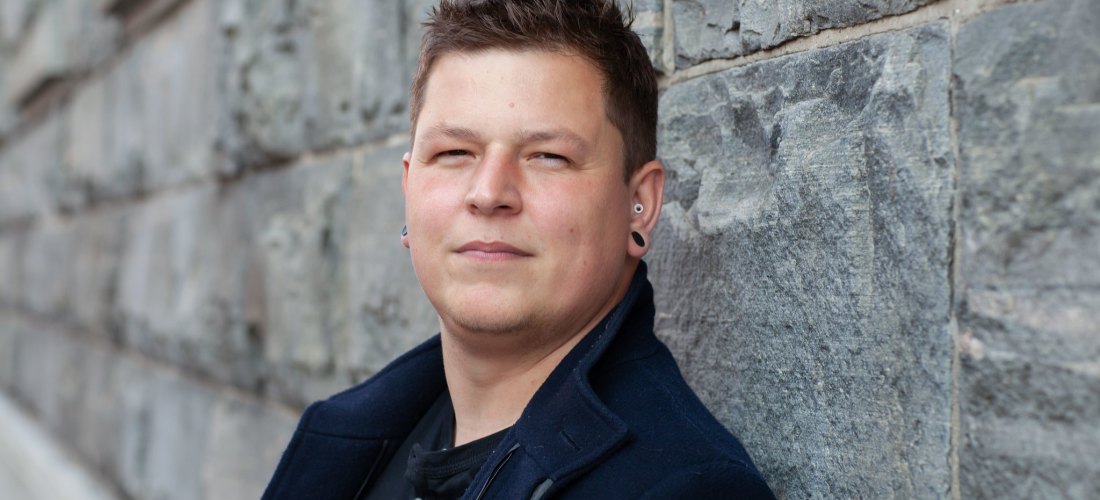
This week’s guest is Christian Lomsdalen. Christian is the current president of the Norwegian Humanist Association and a Ph.D. candidate at the University of Bergen studying the didactics (science) of religion.

Christian grew up in an ordinary Christian Norwegian family as “Christmas Christians”. He went to church for Christmas and other holidays, and that was about it. 

“I identified as a Christian…a quiet liberal Christian, probably. I guess a lot of the evangelicals in the United States probably wouldn’t have recognized me as a Christian.”

Around eighteen, Christian realized he didn’t believe in God, though he read the Bible and liked the stories. Since then, however, he has lived a humanist life. 

Christian shares many of the differences between Norway and the US, tackling religion and politics. The Norwegian Humanist Association is doing great work, and it’s a good model for other countries moving forward.

Links

Norwegian Humanist Association
https://www.human.no/

Quotes

“I read the Bible—tried to read it—and it was one of the things I read when I was bored…I had the encyclopedia, and I had the Bible, and I read them both.” 

“I identified as a Christian…a quiet liberal Christian, probably. I guess a lot of the evangelicals in the United States probably wouldn’t have recognized me as a Christian.”

“I really liked the stories; I still have favorite Bible stories…but I realized that I did not believe in the concept of God…”

“I think [deconstruction] is a nice word. I think it describes the process that I was going through…It was a slow deconstruction.” 

“My experience is that religion is not something that the state should do. It’s not a task for the state, and to give preferential treatment to one religion is principally wrong.” 

“…rituals and ceremonies are one of the glues of society; all humans do all kinds of small rituals…”

“All human traditions exist and are created in a context and evolve in a context, and that means when a secular thought system appears and evolves in a Christian context, it will have Christian values and Christian thought systems that are part of it…”

“One generation goes a lot to church and the next generation goes on some important dates during the year and the next generation [goes] even less…”

“Young families are not even ‘Christmas Christians.’ They are rather secular and that is quite a shift in thirty or forty years…

#AmazonPaidLinks

Interact

Join the Deconversion Anonymous Facebook group!

Deconversion
https://gracefulatheist.com/2017/12/03/deconversion-how-to/

Secular Grace
https://gracefulatheist.com/2016/10/21/secular-grace/

Support the podcast
Patreon https://www.patreon.com/gracefulatheist
Paypal: paypal.me/gracefulatheist

Podchaser - Graceful Atheist Podcast

Attribution

“Waves” track written and produced by Makaih Beats

Transcript

NOTE: This transcript is AI produced (otter.ai) and likely has many mistakes. It is provided as rough guide to the audio conversation.

David Ames  0:11  
This is the graceful atheist podcast United studios podcast. Welcome, welcome. Welcome to the graceful atheist podcast. My name is David, and I'm trying to be the graceful atheist. Thank you to all my Patrons for supporting the podcast. If you too would like an ad free experience of the podcast support the podcast at any level on patreon.com/graceful atheist. If you are in the middle of doubts, deconstruction, the dark night of the soul, you do not have to do it alone. Join our private Facebook group deconversion anonymous and become a part of the community. You can find us at facebook.com/groups/deconversion. Special thanks to Mike T for editing today's show. On today's show, my guest today is Christian Lomsdalen. Christian is the president of the Norwegian Humanist Association. It's one of the largest humanist associations in the world. You can find that at human dot and oh, he's also a PhD candidate for the University of Bergen. He studies the didactics or science of religion. And he's very, very focused on human rights. And what you're about to hear very interestingly, the rights of religious people within Norwegian and worldwide society. Here is Christian Lomsdalen to tell his story. Christian loves Dalton, welcome to the wrestle atheist podcast.

Christian Lomsdalen  1:49  
Thank you, David, thank you so much for having me on.

David Ames  1:52  
I appreciate you reaching out to me, I'm going to do just some highlights of your CV, but if you could fill in the details, you're the president of the Norwegian Humanist Association. You're a PhD candidate, I understand you're also a high school teacher. But tell us just briefly about yourself what you do. And we'll get into the details later.

Christian Lomsdalen  2:10  
Well, thank you, David. For my well paid the part of my life I work as a PhD candidate for the University of Bergen, which is the second largest university in Norway. Here I studied didactics of religion or science of religion, it could be used both terms for Yeah. And I do a PhD on the right to be exempted on religious, philosophical or lifestance grounds from activities that are part of the school day. So that is what I do for my professional life.

David Ames  2:47  
We need to publicize that here in the States as you can imagine, yes. Okay.

Christian Lomsdalen  2:52  
I'm trying now to write an article in English about how this right works in the Scandinavian countries. So I'm looking forward to completing data and having something to publish publish in English as well.

David Ames  3:05  
Okay. Yeah, we will be looking forward to that.

Christian Lomsdalen  3:09  
And, as you said, I'm the president of the Norwegian Humanist Association. We are the largest Humanist Association in the world, with now 135,000 members. Amazing. So that is the largest per capita and in real numbers, so okay. That is, it's something that I take a little pride in, it's

it's good to be able to be from what is rather a small country, but be a large organization in this aspect and to contribute to other people, other countries, groups, humanist groups. That is,

David Ames  3:52  
I think that's absolutely amazing. And Norway is leading the way here. So yeah, I think that's fantastic. Christian, we, you know, on the podcast here, we generally tell kind of our personal stories. So before we jump into the all the work that you do, I'd really like to hear, what was it like for you growing up? Did you have a religious tradition at all? And what was that?

Christian Lomsdalen  4:14  
I grew up in what is the kind of normal way to grow up in Norway? Or at least it was with my generation, it has been a shift for a new generation. So I will be talking maybe more about that later on. But for me, I grew up in what we call Christmas, Christian family. Yeah, our family that goes to church on in Christmas and does not do very much religion outside of that, but at the same time, I felt that that was how my religion growing up was and this is Lutheran Church, of course, for those who need to know my placement in the church map but Uh, we pray the evening prayers every day we celebrated most of the Christian holidays and so on. So to say that we were just Christmas Christians is probably a lie. But it's it's how I perceived it at a time. But when reflecting on this, I noticed that we did actually participate a lot in different Christians aspects. When I grew up, so I took, for example, the confirmation. I don't I'm not sure if that is a big tradition in the United States.

David Ames  5:37  
It is more so in the Catholic Church and some of the more liturgical churches, there might be more confirmation experience. It's less so in the evangelical world, but I think people understand the concept.

Christian Lomsdalen  5:51  
I liked the term liturgical church. Yes, yes. I'll turn my lights. Yes, yeah. Because the Norwegian state church, or former state church, we can discuss whether which one is true, okay. But in the Norwegian state church, it's quite liturgical. And the main church political party in the Norwegian state church is very liturgical. So that is good.

So, here, we have confirmations and most of the teenagers do this. So when I participated in my confirmations, I was living in Spain, but going to the Norwegian church in Spain.

David Ames  6:41  
Oh, interesting. Okay.

Christian Lomsdalen  6:43  
And well, I participated, I was identified as a Christian during this time, and being one of the more active Christians that took this confirmation, a lot of my co conference, they did not care a lot about the religious part of this, but I read the Bible tried to read it. And I, it was one of the things that I read when I was boards. I read the Bible. Interesting, okay, I had the encyclopedia, and I had the Bible, and I read them both like, through and through a couple of times, just because I was bored. Interesting. Okay. So I identified as a Christian at this time, and that was how I view the world quite liberal Christian, probably, I guess a lot of the invading evangelicals in the United States probably wouldn't recognize me as a Christian.

David Ames  7:35  
Yeah. They'd be sending you to hell, Christians.

Christian Lomsdalen  7:40  
Probably, yeah. Some of the Norwegian wellness as well.

David Ames  7:43  
Okay. But you took it relatively seriously by, you know, again, even the statement that, you know, you read through the Bible, you took that seriously, and maybe your other conference had not, that would also be very true in the United States that lots of people who sit in pews every week, I've never actually read the Bible. So it was internally, something you took on seriously? Or was it more following the the traditions?

Christian Lomsdalen  8:13  
On this part, I guess I was more active than a lot of my family. So I guess it was internalized anyways. And I think it's unfortunate that more people that grew up in a Christian background does not read the Bible, and because it's quite an interesting book to read. Yeah.

David Ames  8:33  
Absolutely.

Christian Lomsdalen  8:35  
And during the time reading it and reflecting on the some of the topics, but I realized after I called after a time that I really liked the stories, I still have favorite Bible stories, and I like a lot of the message in some ways. Still, but I realized that I did not believe in the concept of God, as portrayed. I didn't believe in the entity of this God, existence. And then I realized that I had a quite academic point of view on how to view this religion and realize that I'm not here. I'm an agnostic or atheist. Okay.

David Ames  9:20  
Um, roughly how old were you when you kind of made that recognition?

Christian Lomsdalen  9:24  
I guess I was 17. I wanted to leave the Norwegian state church when I was 15. Already, but that was a political statement, because I didn't believe in churches to be belonging to the state. Okay, so I was opposed to this. Belonging but still identifying as a Christian and then realizing that I'm not a Christian when I was 17 or 18. It was a fluid transition. Or deconstruction.

David Ames  9:56  
Yes. Yeah. The hot word is deconstruction. Sure.

Christian Lomsdalen  10:00  
I guess it's a nice word because it, I think it reflects upon the process that I was going through at the time. Slowly and gradually, but it was. Yeah. Some of your other interviews that you had this with quite rapid deconstructions sometimes, yes. This was a slow deconstruction.

David Ames  10:20  
Yeah, I like to say that we tend to identify the first thing. And the last thing, you know, what started it and what ended it, but there's 1000 points in between. And I definitely have lots of people who will say that it was decades of that process. So you're not alone in that, that for some people. It's a very slow, slow process.

So you've hinted out a few times the the relationship between the church and state in in Norway, do you want to talk a little bit more about that whether or not it is considered the state church?

Christian Lomsdalen  11:03  
Yeah, so I actually really wanted because that is interesting for me. Okay. Yeah. And the Norwegian church has been a part of the Norwegian government on order Norwegian state for almost 500 years since the year 50. And 39. or there abouts. Okay. Yeah. So they claim a very long history as being a part of the Norwegian government. And so it has been established as the state church very firmly. And the confirmation that I was talking about earlier, was a bylaw, obligatory ceremony to participate in for all youth. And it was an exam that you had to pass to become a grown up. Interesting, okay. And if you didn't pass this test, you could actually go to jail. And you were not allowed to marry or become part of the military. And a lot of so it was very tightly joined together. And the Norwegian church did was not its own legal person until quite recently, only five, six years ago.

David Ames  12:16  
Okay. Wow, that is very, that's really recent. Okay.

Christian Lomsdalen  12:19  
Yeah. So and the government was the one that hired new bishops and decided who should be the bishops and it was very tightly joined together. But we had a reform about 15 years ago, which, in in Italy, it was decided that it should be more separation between state and church, okay. And in this process, in this reform, the Norwegian government decided that this church should do the hiring themselves. I think that is a basic human rights for religious organization to decide upon their own leaders. And it was decided that it should be its own legal entity, and that it should be more disconnected from the Norwegian state. But at the same time, they have kept its own provisions in the Constitution in the Norwegian constitution. And the Norwegian constitution works differently than the American one, we actually change the text of the original Constitution with us, we does not just add amendments to it. So we change the text. Okay. But we still have this provisions in the Constitution that gives certain rights to the region's church or the church of Norway, as it's called. That is not the same for the other church churches or lifestance communities and so on and so forth. But it does say that all the rest of us also should get support financially in the same manner as the Norwegian state church. So we are also for some part included in this. Okay. But they say the politicians claim that they have separated church and states and at the same time they have their own, the Norwegian church has its own provisions in law in the Constitution that for my party says that this is a state church really still but a more disconnected state church.

David Ames  14:33  
I see. Okay. My immediate question is, Are most of the Norwegian politicians a part of the Norwegian church? Or are they open about that? Is that a thing that that they, you know, they represent or,

Christian Lomsdalen  14:47  
as you mean, compared to the American party? Yes. Where nine out of 10 is a member of a church or a believer? Yeah. No, we do. not actually know a lot of this, but because it's they do not have to report it and the Polit, the newspaper doesn't ask the politicians, are you a Christian or no. So it's not something that is considered important, and it's considered quite private. But we see that a lot of members of parliament are also members of church boards and so on. So we know that, at least some of them are there some there's some crossover, yeah, some crossover. But it's mostly tradition, we have a couple of political parties, which values the state church quite highly. And for some of them, it's because we want to control this Norwegian state church, and we want to make it progressive or something. Okay, for others, it's to defend tradition, and some use more Christian rhetoric about why they want to have this church that is the biggest one, give it its own provisions in law and so on.

David Ames  16:08  
So it sounds to me like both on the liberal end of the spectrum and on the conservative and there are politicians who might want to have that control.

Christian Lomsdalen  16:16  
Absolutely. That is a quite good reading of what I.

David Ames  16:30  
Like you, when I was a Christian, I was very concerned about separation of church and state, I felt like was important, both for the church and for the state. I'm curious, both when you were a Christian, and now as a humanist, why is it bad that the Church and State are connected to one another?

Christian Lomsdalen  16:53  
I think my arguments about this has changed from when I was a Christian. And but at the same time, it's quite similar, because my experience is that religion is not something that the state should do. It's not, it's not a task for the state and to give preferential treatment to one religion is principally wrong. And it might be good reasons why they want to have this regulation or control over the state church. And there's absolutely good reasons why someone would like to do that. But I think that is also wrong to this day church. I think this reduces the their fundamental human rights as believers as Christians, that the Norwegian government has some specific decisions, that is just for them. And this might be beneficial for them. And it might give them some possibilities that they wouldn't have and responsibilities that they wouldn't otherwise have. But at the same time, it does say that if the Norwegian Church wants to be undemocratic, because that is one of the tenants in the law, that they have to be democratic, and that they have to be nationwide. They cannot decide that they want to be a smaller organization with more limited scope, and that they want to have, for example, the bishops to be the final burden on everything. They cannot do all these like theologically based changes to their organization that all other lifestance communities, all other philosophical communities, all other religious communities can do to their organization. So I think this is a limitation on their religious rights.

David Ames  18:57  
Yes, yeah, exactly.

Christian Lomsdalen  19:00  
We try. I humor myself with this argument sometimes, because I find it kind of funny that I, as a humanist, am concerned that the Norwegian state church members do not have their full religious rights. And we can discuss the term religious rights as well.

David Ames  19:18  
Yeah, let's get into that in a second. What the parallel I want to make in the United States is I have this conversation with believers around me all the time. You know, imagine it, I don't know how it is in Norway. But in the United States, there are many, many denominations, that can be quite radically different from one another. And I'll point out if this denomination that you don't agree with if they gained political power, how would you feel if they began to say that your version of Christianity isn't valid and could enforce that with law or police or what have you, you would like that, and so that is thus the need for secularism or pluralism. And for the state to not have its fingers in religion.

Christian Lomsdalen  20:05  
And that is quite important. But at the same time the Norwegian system is built in such a way that this the church, even though it's a state church, they do not sanction what is the correct form of religion? So we wouldn't have some of this. But at the same time, the Norwegian state definition of what is our religion and what is our religious communities and who to gain support from the Norwegian state is quite Lutheran. Okay, okay. So, this means that, for example, the Vegan Society, even though they have been declared i lifestance, veganism is a lifestance. And we see the same in the United Kingdom. Okay, they cannot, they haven't been able to create the Norwegian Vegan Society, lifestance community, because they do not do lifestance activities. Interesting, all right. Because that is supposed to be ceremonies and teaching of the young and spreading the word and all of these things, and they do not do it in the proper Lutheran way. And that undoes the Norwegian state Church's way of doing things becomes the norm and recipe for all the others.

David Ames  21:38  
So back to a bit about religious rights, I imagine you're recognizing that this is kind of a human right as well, the ability for us to choose what we believe or don't believe and how we practice that religion. And if we look at history, that has been kind of a big deal.

Christian Lomsdalen  21:56  
Absolutely. And especially with the history of the United States in mind, this is a difficult subject, and it shows how important it is. Absolutely, this is a human rights issue. And when I'm saying religious rights, I'm limiting the the aspect of the human rights to just those that are related to your religion, and lifestance. And that is also a shorthand for saying that life stance and philosophical convictions also is a part of the same grouping. And I have some members of my organization that are quite annoyed with me for not always using lifestance instead of religion when I'm talking about this, because that could make it easier to remind the politicians that this is regarding all worldviews, both secular and religious.

David Ames  22:55  
The language is hard when we when we're discussing traditions and communities add, you know, things that that don't necessarily have a, let's say, theistic or supernatural element to them, but but they have. And I think we're going to, you're going to describe to us what the humanist society is, like, that have ceremonies and have a community built and a sense of being a group. And so yeah, it's hard to say is this a religion or not? And that word is just over over wrought with, with baggage.

Christian Lomsdalen  23:32  
Yes, and this is especially troublesome or telling that religious scientist or this, the scientists that do science of religion, have a lot of definitions for what their religion is and what the lifestance If they do not agree upon that. So in some regards, we could argue that secular worldview would also fit the same bill, but those I don't think those definitions is the best ones. Okay. But as the lifestance community, the Norwegian humanist associations, we work a lot with ceremonies, that is the biggest part of our daily work. My son is now going to the humanist confirmations. And he is that is because he's 15 and almost all teenagers at the age of 15 in Norway, go to these confirmations. It has changed a lot it doesn't involve a test and it's not state obligatory anymore and and you can choose a religious one or a secular one. Even a lot of them we even have a shamanistic confirmations, some places but Norwegian Humanist Association has the biggest non Christian non religious confirmation variant in Norway. So we Yeah, make the confirmations for about a third of the Norwegian youth. Okay, wow. So it's a lot of teenagers, or it's 15,000 to give it a number, so it's a very small American town.

David Ames  25:20  
But it sounds like culturally, that Norwegians want that ceremony that that is that's been a part of the process, whether it used to be religious and now a secular. Is that true?

Christian Lomsdalen  25:31  
That is absolutely true. And this is a tradition that is quite solid in the Norwegian societal framework. It's something that everyone does. And we have argued sometimes that one of the reasons that the church still has so big portion of the teenagers doing their confirmation of work is that we have provided a good alternative for those who just does not want the religious experience. And that means that it still is something that everyone does, even though the numbers of believers in the Norwegian community has gone from about 60 70% When I was born, till about a third of the population at the moment, wow. Okay. So even though the number of believers and it is especially true in the youngest parts of the population, because it's an age divide here as in the United States, even though this number of believers among these teenagers is so low, a lot of them still go to the Christian confirmation, because this is something that historically won't just do. Yes, yes. Okay. So we have these ceremonies ceremonies, and we have a naming ceremonies are welcome to the world ceremonies, we could use different names, and of course, funerals and weddings. So at the moment, I have been trained as a wedding celebrant. Okay, I'm going to be trained as a funeral celebrant this fall. Okay, but I already done my first funeral. Ah, interesting. That was a televised funeral. Really?

David Ames  27:21  
Wow. Okay. I think that's so important. Christian, I think some of my intellectual heroes in the secular world, talk about the need for ceremony and, and tradition. And to have secular versions of those. And I think that is, maybe part of the success of the humanist organization in Norway is that you are providing those, you're giving them a way to act out their life stance. And I think that's really, really critical.

Christian Lomsdalen  27:52  
And I really do like the name of your podcast, David. Thank you. The graceful atheist and for me, some part of this is part of doing this ceremonies and doing all of this like community work, that is a key part of this, because rituals and ceremonies are truly one of the glues of society. Yes. And we all humans do all kinds of small rituals, if it's the coffee in the morning that I bring to my wife every day, yeah. Or it's, every Saturday, we have pizza, and we are having the family dinner, or every summer we go to this place somewhere. And we have always been going there, all of this small rituals. And then we have the large rituals, for example, the Fourth of July in America or the 17th of May, which is the National Day in Norway, the constitutional day in Norway. And this is part of the glue of society and it's really important to have this even though one is an atheist and shouldn't really need this kind of illogical thing.

David Ames  29:12  
Yeah, and I think the the argument that that we try to make here is that these are human needs. The reason that there are religious examples and almost all cultures is that human beings need that connection with one another and tradition and ceremony and ritual, provide a way to literally physically act that out that is meaningful for human beings.

Christian Lomsdalen  29:38  
It is so fun to do this like this for ceremonies that is the the core of our ceremonies. It's so important to have a proper send off for the or goodbye to the ones that have died. And what really makes me sad is when there's no no One left to do this ceremony and to remember the life of somebody, because when one does not have a life after this one or believe in life, yeah, it's really necessary to remind ourselves of the importance of this human being that we do not have with us anymore and to remember them and all the good things they did, and all the less fortunate things they did. Yeah. So that is important to me and for our organizations. Wonderful.

David Ames  30:42  
I want to ask you a wide open question. And we can go any direction you want with this, the term humanism, I think people experience that in different ways, right? For some, it's very academic, it's maybe even anti religious. For some, it is more about, you know, connection with people. I'm curious for you personally, Christian, and then for Norwegians, what is humanism mean?

Christian Lomsdalen  31:07  
And you are quite right, it's like quite a difficult word, David to four to establish what it is because on the one hand, it is both academic term for I'm a humanist in my study in work because religious science is placed within the humanities. In that means, I'm a humanist. In Norwegian history, as well as in the European history, the humanism we talk about in history is more or less the Christian humanists, the evolvement of the Christian humanist man, this had a quite big place in Norwegian history, it was established as an important and existing framework. So in the Norwegian when the Norwegian Humanist Association was established in 1956, they chose to you use the word human ethicist, okay, are these humanist and ethical union I think is the word in best translation in American, which meant that we were that separated it from the Christian humanist term, and may established its own term that we could fill with what we needed it to be filled with, which was a secular humanism, okay. But at the same time, this has evolved a lot in the Norwegian context. So that now we more frequently uses the term humanism when we are talking about humanism as a term. And some of the strongest proponents of the Christian humanism, are quite angry with us for using their words, as a way to talk about our thing. Yes, and I feel that this is quite different things, even though they are quite similar, although their origin word the reasons for the world to be and the origins of everything is quite different in these two aspects. So on our Facebook page, the most contested posts are the one where we write humanism and write about our form of humanism. And a lot of people are writing on the Facebook pages, and commenting that this is not humanism. I'm a Christian humanist. And why use this word? I'm not a I'm not a humanist ethicist. I'm a humanist. The real thing do not monopolize our word.

David Ames  33:48  
Interesting. Interesting. So you're studying religion? So I'm curious, you know, when I talked to the equivalent of, of what you just described, maybe Christian humanists, although they probably wouldn't use that terminology in the States. But they want to say that humanism is stealing from Christianity, the moral framework, ethical framework, what have you from a, you know, studying of religion point of view, is that true? Do you think that humanism under a different name predates Christianity? What are your thoughts there?

Christian Lomsdalen  34:23  
I think that this is absolutely stealing from the from Christianity. Okay. Okay. And I have really no problem with it. Yes. Okay, but I think you make an important point, David, that you say that humanism even predated Christianity because I really do think that that is correct Christianity borrowed from traditions and thought systems that existed when Christianity was founded or appeared. Humans and at the same time, And this evolved in a context of traditions and points of view, its society that it was founded in. And at the same time, humanism as it exists in Western Europe, Northern Europe, United States has evolved from a cultural contexts. And for example, we I have been listening a lot to Tom Holland, for example, and his book dominion. And it seems like you're surprised that secularism or atheism comes from a Christian background. And this is the big finding, and all the Christian media has used very big headlines about this, this atheist historian that has discovered Christianity and its its reasons to create humanism. But this is not something new, right? All human traditions exist in a context and is created in a context and evolves in a context. And that means that when a human when a secular thought system appears, is evolved in a Christian context, it will have Christian values or thought systems, that is part of it, some of it will evolve further away, some of it will have experienced smaller evolutions, and it will be quite different. And some of it will be quite close, and quite similar. But this is not something new. This is basic cultural science.

David Ames  36:45  
Yes, yes.

Christian Lomsdalen  36:48  
So I'm not sure what the Christians that proposes this argument, because I hear it a lot as well, in the Norwegian context. I'm not sure what their goal is of this, do they want me to become a Christian just because some of my values and some of my ways to think is the same? Do they think that that will make me a Christian? And that will make me realize that I was a Christian all along? Yeah. Because I'm not really sure of the end points of what they have this argument, I'm, that makes me quite dumb fund.

David Ames  37:26  
I'm fascinated by it as well, I think, the way I have been framing things of late, and I've stolen this from multiple people, but is that everything is secular, that human beings are the source of religious traditions. And so religious traditions themselves are secular as well. And that, just as you say, this is the normal cultural evolution that takes place when people are together over time. And just that's just what happens.

Christian Lomsdalen  37:52  
You have traditions and they evolve. Exactly.

David Ames  37:56  
Exactly. Yeah. And, you know, I find like, the argument that humanism has stolen from Christianity, it's almost like, well, you know, that's, that's my ball, I get to keep that and you don't get to play with. There's almost that, you know, kind of, I don't want to say childish, but you know, a way of saying that's ours, and that's not yours in a way that just doesn't recognize the complexity of human culture.

Christian Lomsdalen  38:21  
And I think that that is a very good point. And to some degree, I think that this is a way for them to try to invalidate my, my worldview, on the basis that they had this part of this first. But at the same time, I think they should be rather proud of themselves. Because this means that their religion, their worldview, their religious worldview, have succeeded in such to such a large degree, that I as a secular person, includes this part of their worldview, as a part of my worldview, even though I don't believe in other parts of their worldview. And this is the same for the confirmation ceremonies, because a lot of Christians in Norway or some, it's less every year, are angry that we use the word conformations. Okay, because this is a Christian word they say. I would say that they stole it from the Roman Empire. So who steals from that they succeeded so much in making this tradition, an integral part of the Norwegian culture. They should be really proud that we use this word. Yeah. Yeah, it's like a point. It's more problematic than for us that we use this word really? Yes. Yeah. Yeah. But Latin words, fortunately have a lot of meanings in different ways. We use it in the way to strengthen the use not to confirm some

David Ames  40:00  
Ah, okay. Interesting Yeah.

Christian are there are some topics that I haven't asked about that you definitely wanted to bring up?

Christian Lomsdalen  40:17  
What I think is important to notice that you have seen the shift in American religious framework or the religious map, it has changed a lot during the last years. And to some degree, the American context is a few years behind on how many religious people there are, how many non religious people there are, because America is a more religious place than Europe. Yes. And in the Norwegian context, around 30% now says that they are a believing Christian, or that they believe in God. And even then a region churches members say that it's around the same. So even within the church, a lot of people are reporting that there are non believing, which has given quite interesting rhetoric from the Norwegian state church of late when they have been arguing that we do not place our members in A or B categories, and we value them as much and they want obviously want to belong to the Christianity, because while they are members, even though they do not need to be. This change in the religious landscape means that I felt that I grew up in a quite normal religious home, when I grew up, as I said in the beginning, and at the same time, I think that my children or not my children, it's hard to use the precedent of the Norwegian Humanist Association as an example, as a part of a normal Norwegian religious family. Okay, okay. But the Norwegian family normal family would not participate a lot in the church community, as of now, because, and this is a trend that I heard on their religious podcast, as well as unbelievable that some one generations goes a lot to church, and the next just goes to church, some important dates during the year, and then the next generation, even less than I think this has happened a lot in Norway. So at the moment, I would really believe that young families is not even Christian Christmas Christians. They are rather secular. And that is quite a huge shift in this 3040 years for where I have been alive. And that is quite interesting.

David Ames  42:56  
Yes, in the United States, and I don't have the statistics right off the top of my head, but the people who select none of the above nuns and O N. E. 's, are becoming the largest bloc of lifestance, let's say, people in the United States, which is quite a transformation from previous eras. So I think we're definitely looking at Europe in the UK for the secularization process that that you all have been through for some time now, almost for guidance, as we tried to figure out how what does this look like within what was formerly a very religious culture.

Christian Lomsdalen  43:34  
But what is quite interesting for an American situation is this notion that or the belief that no politician will ever get into office as an atheist or a secular person, or it will just be from some liberal districts. And this is quite strange for me as a Norwegian to hear about because we had our first more or less openly atheist Prime Minister in the 50s.

David Ames  44:04  
Wow, okay. Yeah. Yeah.

Christian Lomsdalen  44:07  
And this is not something new and he was buried in the same place or his ceremony for his funeral was in the same place as I conducted the funeral I conducted in the town hall of the Capitol. And this was, I'm not sure if anybody first a lot about that. He had a non religious funeral service, even though this was in the mid 80s.

David Ames  44:34  
Yeah, I think for right now, the I think there are many non religious politicians, but they have to hide. So I just very small handful, will say that they are agnostic. I actually think that one of the ways forward for us is to have a more formal sense of a humanist presence. Yeah, exactly. Yes. You know, for the politics. She needs to be able to say because the when when an American hears atheist they hear God hater immoral nihilist. And so I think a way forward is for a politician to say I am a humanist, I have an ethical stance, I, you know, I care about people, and that that might be the it for the future, a way for more secular politicians to hold their ground and and still be able to be elected.

Christian Lomsdalen  45:29  
And that is probably the reasons why you have graceful atheists.

David Ames  45:37  
Yes, yeah. Yeah. That Yeah, well, the podcast started because I just needed somebody to talk to I was feeling pretty lonely. So yeah.

Christian Lomsdalen  45:46  
But at the same time to show that you can be a moral human being that makes good decisions and care for? Well, your neighbor is an important part of establishing that this is a possibility that well does not seem to exist in America at the moment for politicians. Exactly. So I think that you what you do with highlighting the graceful ways to be an atheist is important.

David Ames  46:17  
Well, thank you so much, I really appreciate that.

Christian, can you tell us how people can learn more about the Norwegian humanist? I keep saying the wrong thing? It's not society, its association Association. Thank you. Sorry about that.

Christian Lomsdalen  46:40  
Oh, it's not that important.

David Ames  46:43  
And more about you? How can they find you?

Christian Lomsdalen  46:45  
If they want to learn more about the Norwegian Humanist Association that you can visit our webpage and it's quite easy in English, it's the most the USA it's human.no. So human dot Norway. Fantastic. Okay, that is the easy way to find the Norwegian Humanist Association. And you would have to scroll all the way to the bottom of the page and choose English. Okay, because that is not that easily accessible.

David Ames  47:15  
Actually, I wasn't, I was looking at it today in Chrome, and it'll just translate it for you. And it does a pretty decent job at that. Also,

Christian Lomsdalen  47:23  
we and the best thing about that is that you can read all the Norwegian pages, which are a lot of more Norwegian pages than English pages on this web page. So you will learn more actually, if you visited with the automatic translation than just visiting the Norwegian the English page,

David Ames  47:42  
we'll definitely have that in the show notes. Christian, I want to thank you so much for being on the podcast. This was a lot of fun. I always find it fascinating to compare culture. There's there's lots of similarities even and some differences. And I think that we all learn from that process. So thank you so much for being on the podcast.

Christian Lomsdalen  47:59  
Thank you so much for having me my

David Ames  48:05  
final thoughts on the episode. Christian was a fascinating person to speak with. Not only is he studying religion, from a teaching, didactic scientific point of view, but also the president of the largest Humanist Association in the world in Norway. And what Norway is doing is absolutely amazing that they are focusing on the human needs for community to have ritual in your life and give people the opportunities to act out their philosophical life states. I appreciate so much talking with Christian and hearing a different perspective, the European perspective that is definitely different than the United States, but also having very common ideas, the need for the separation of church and state for both the good of the state and the good of the church. And I find it fascinating that Christian is focused on the rights of religious people, including the politicians, and I think this is maybe what evangelical Christians don't get the most is that pluralism and secularism is actually good for everyone involved. I believe that history proves that out what evangelical Christians see as taking away something like school prayer, it doesn't occur to them that if you wanted to come and have a Wiccan ceremony or Satanic Temple ceremony, that would be difficult for them to swallow within a school. But by separating Church and State everyone is more free. I want to thank Christian for being on the podcast for telling his story, his personal story as well as the Norwegian story, giving us an A glimpse into what a more secular society can be like, one that embraces the rights of religious people and non religious people, and gives them the opportunities to live out their philosophical life stance. Thank you, Christian so much for being on the podcast. The secular Grace Thought of the Week inspired by Christian is about the human need for ritual. Two of my favorite books are, Kristen augments Grace without God and saucer seconds. For small creatures such as we, in both books, both women make the argument that human beings need to come together and physically act things out about their beliefs about their philosophies about their life stances to us Christians term. Sasha makes this explicit about births, coming of age, marriages, deaths, in the marking of time, things like birthdays, all of these things are really deeply important to us as human beings. And because they have almost always been wrapped up in religious tradition, on this side of deconversion, we can sometimes feel like they no longer apply to us. Or as Jennifer Michael hex coined in the Wonder paradox, dropped by and lie. In other words, we sometimes find ourselves at funerals and weddings that are religious, and yet we feel deeply uncomfortable. With all three of these authors suggest for us to do is to create our own traditions to reinterpret existing traditions to make rituals in our lives that are meaningful to us. And I love the way that Christian talks about this, our philosophical lifestance Or again, to use Jennifer Michael hex terminology, a graceful life philosophy, or in my words, secular grace. Next week, our lien interviews Kyler, that'll be a great conversation. Until then, my name is David, and I am trying to be the graceful atheist. Join me and be graceful human beings. The beat is called waves by MCI beads. If you want to get in touch with me to be a guest on the show, email me at graceful atheist@gmail.com for blog posts, quotes, recommendations and full episode transcripts head over to graceful atheists.com. This graceful atheist podcast, a part of the atheists United studios Podcast Network

Transcribed by https://otter.ai

Black American Authors You (Perhaps) Didn’t Know Were Humanists

Authors, Blog Posts, Humanism, LGBTQ+, Politics, Race

As a Christian, I was limited in who I could read and learn from—a short list of dead white men and an even shorter list of living white women and men. Since leaving religion, I’ve opened my mind and heart up to writers from America’s past and present, and it’s been good for me.

Writing their own legacies in the face of injustice and hate—often at the hands of God-followers—these authors offer an abundance of humanist wisdom. After all, if no gods are coming to save us, humanity’s future is up to us. It’s up to all of us. 

James Baldwin

Go Tell It On the Mountain

The First Next Time

Ta’Nehisi Coates

Between the World and Me

The Water Dancer

Frederick Douglass 

The Narrative of the Life of Frederick Douglass

My Bondage and My Freedom

Langston Hughes

The Collected Poems of Langston Hughes

The Ways of White Folks: Stories

Zora Neale Hurston

Their Eyes Were Watching God

Tell My Horse

Alice Walker

The Color Purple

In Search of Our Mothers’ Gardens: Womanist Prose

–Arline

AmazonPaidLinks