Derek Webb: The Jesus Hypothesis

Agnosticism, Deconstruction, Deconversion, ExVangelical, Musicians, Podcast, Podcasters, Secular Grace, The Bubble
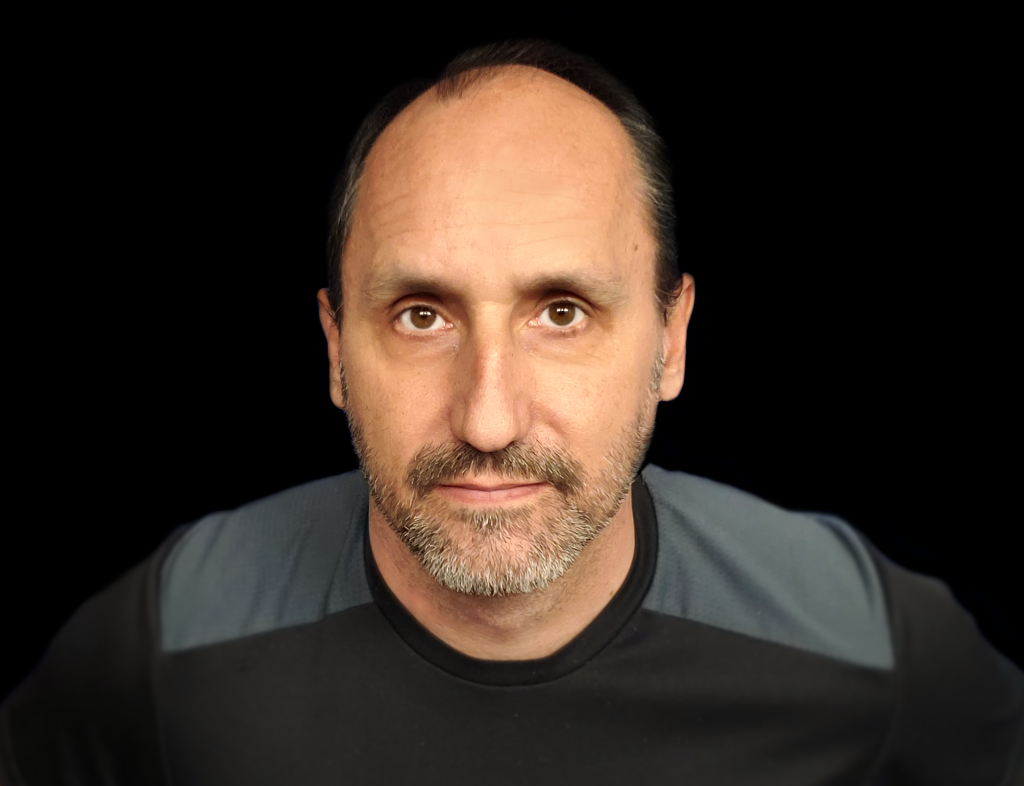
Derek Webb
Click to play episode on Apple Podcasts
Listen on Apple Podcasts

This week’s guest is Derek Webb, musician, song writer and public deconstructor. For 10 years, Derek was a member of the Christian rock band, Caedmon’s Call. He then went on to a solo career where he focused on self reflection in his art. During that time, Derek began to desconstruct. He did so publicly in his music and on social media.

Where I find myself, strangely, being more tolerant, or loving or accepting than god is.
Where I feel like I am making apologies for the god of the universe who is supposedly all love.

For Derek’s Fingers Crossed album, “the tale of two divorces,” Derek made himself available to his audience for criticism. He and his team turned this into the podcast, The Airing of Grief. What could have been a public expression of anger and hostility at Derek’s change of heart, wound up being people describing their own deconstruction. It was a poignant reminder that we are not alone in this process.

Wouldn’t you rather lose all of it if the it that you have currently is not a real thing?

Derek’s next album, Targets, is a joyous and rebellious rock celebration of deconstruction. Derek’s current project, The Jesus Hypothesis, takes a second look at his former theological beliefs. For this project, Derek has made himself even more available to his audience by live streaming the writing and recording process for his Patreon supporters.

Because if it is not real I want to know that,
if it is real I want to know that,
and if something else is real I want to know that
and I feel like I know a little more than I used to know
in terms of what is there and what’s not
at least what rings true to me.

Derek is the perfect guest for the podcast as his art, music and personal style exemplify both having an honesty contest and Secular Grace.

Derek’s Website
https://www.derekwebb.com/

The Airing Of Grief
https://www.theairingofgrief.com/

Instagram
https://www.instagram.com/derekwebb/

Patreon
https://patreon.com/derekwebb

Interact

Join the Deconversion Anonymous private Facebook group and become a part of the community!
https://www.facebook.com/groups/deconversion

Is it just that I had the wrong image of god?
https://gracefulatheist.com/2016/11/17/is-it-just-that-i-had-the-wrong-image-of-god/

The Bubble
https://gracefulatheist.com/2018/01/15/the-bubble/

Deconversion
https://gracefulatheist.com/2017/12/03/deconversion-how-to/

Secular Grace
https://gracefulatheist.com/2016/10/21/secular-grace/

Support the podcast
Patreon https://www.patreon.com/gracefulatheist
Paypal: paypal.me/gracefulatheist

Podchaser - Graceful Atheist Podcast

Attribution

Transition music by Derek Webb from the Fingers Crossed album

“Waves” track written and produced by Makaih Beats

Transcript

NOTE: This transcript is AI produced (otter.ai) and likely has many mistakes. It is provided as rough guide to the audio conversation.

Summary
0:11 David’s goals for this year.
2:09 Introduction to Derek Webb.
5:05 Derek’s work in this deconstruction space is not a thing that you detach from.
8:47 What was your faith tradition as a child?
11:56 What was it like growing up in a church?
15:53 Young Life Camp is a fun deal.
24:56 The pressure of being a professional Christian and representing the church.
28:00 Great failure gives you the opportunity to do an audit of the presumptions that you have about invisible reality and about invisible unknowable things.
30:22 What is real and what is code language?
34:00 I wish I could tell you that your way isn’t ok, but I can not.
38:22 Making yourself vulnerable and owning the change.
46:07 Taking some responsibility for his own story.
50:08 Having your fans be a part of the process through Patreon.
54:11 What it’s like to be a fly on the wall of a record.
57:59 The job of an artist is to look at the world and describe what you see.
1:01:52 Deconstruction of the church from deconstruction of God.
1:09:56 How to break these things apart and not think you’ve done it just because you are not a part of the evangelical political party anymore.
1:13:37 Why you shouldn’t fear deconstruction, the only danger is not questioning.
1:17:21 Would you rather lose all of it if what you have currently is not a real thing?
1:20:56 Final thoughts on the episode.
1:24:53 The connection part of secular grace is the human connection. The church loves the idea of radical confession, but when you start doing it in a literal
David Ames  0:11  
This is the graceful atheist podcast. Welcome, welcome. Welcome to the graceful atheist podcast. My name is David, and I'm trying to be the graceful atheist. Please consider rating and reviewing the podcast on the Apple podcast store. And now you can rate the podcast on Spotify.

We made it to 2022. I remember the feeling of intense optimism at the beginning of 2021. And we are in the midst of the Omicron surge. So any of that enthusiasm is slightly tempered. But I do have some goals for the year for the podcast. I'm actually very interested in being on other podcasts. So if you happen to have your own podcast and like to hear me talk about secular grace or humanism, reach out to me. A second goal for the year that I've been thinking about lately is to be slightly more palatable for the Christian. My guest today is Derek Webb. And I think he does an incredibly good job of being a bridge between evangelical Christians and deconstruction. Even the title of the podcast has atheist in it is probably going to frighten away most believers. But one of the goals for this year is to at least engage a bit more, not in a debate style. But as always, in an honesty contest. If you are a believer, and you would like to be on the podcast and talk with me, I'd be very open to that prospect. Please get in touch with me at graceful atheist@gmail.com. Special thanks to Mike t for the first round of editing for today. I also did a bit of editing and the mix in with Derek's music. onto today's show. My guest today is Derek Webb. Virtually all of my listeners will probably already know who Derek is. But Derek was the lead singer for Caitlin's call for about 10 years, which was a very successful Christian rock band. And then he went on a solo career. And during that time, he went through his own deconstruction process. What Derek has done that is pretty amazing, is be really open, vulnerable and honest about that process with his audience, not only in his music, but also online and in various other media. Derek is the perfect guest for this show, because almost all of his work is about being brutally self honest about an honesty contest about vulnerability about transparency, showing the world where he's currently at and not hiding any of that. It was The Truman Show episode that Jimmy and Colin were on where Colin shared a story about seeing Caitlin's call when he was 18. A friend of Derek's heard that episode mentioned it Derek and Derek reached out to me, I'm very thankful that Derek reached out to me and I think this is a great conversation. In preparation for this. Both Jimmy and Collin suggested a number of things for me to listen to, obviously much of Derek's music from fingers crossed and targets and various other albums. But the one that had the most impact on me was his podcast, the airing of grief, which I highly recommend, and there will be links in the show notes. Derek's current project is called the Jesus hypothesis. And if you become one of Derek's Patreon supporters, you can actually be a part of that process. Derek will go into detail about that. You can find all of his music and all of his projects that Derek web.com will have those links in the show notes. Here is my conversation with Derek Webb.

Derek Webb, welcome to the graceful atheist podcast.

Derek Webb  4:27  
It's a pleasure. Great to be here with you.

David Ames  4:29  
Hey, I really appreciate you actually reached out to me after hearing an episode where a really good friend of mine Colin talked about what a moment it was for him. He was actually at a Caedmon’s Call concert. And you guys were doing a cover of a secular song and he had this context moment. Like, oh, wait, you know, music is just powerful, just by itself and, and he literally told himself now you know, Colin today, you know, said if I'd only and that the lead singer would someday be post evangelical or whatever term you want to use. Yeah. And have a huge audience for that, that what you know what that would have done for him as an 18 year old kid, so. So thank you so much, Derek, for being willing to come on the show.

Derek Webb  5:16  
Absolutely. Well, I appreciate you responding and being open to it. I mean, I'm, as we were talking just a few minutes ago, like I'm, I really care about the space, I really care about my friends who are still in the evangelical world, I care a lot about my friends who are kind of journeying on the outskirts and in no man's land around it. And it's, it's, as you know, what I'm sure your listeners know, it's like, it's not a thing that you detach your care, you don't you don't stop caring about it. Because it, it's still so much about where, where I've come from, and it's so much of the language that's so familiar to me and so much, and so much of our lives and families and colleagues and co workers and everybody is they're all on some they're on the spectrum somewhere, with some experience of invisible reality and some opinions about it. And so I don't see you don't stop thinking about it. And so it's funny, it's one of those things you just gets really hard to kind of get away from ultimately, you can detach your belief system from it, but you still have an awareness of it, and I still have a care for it. And so I always whenever I find people who are doing good work and holding additional space for people to think about this, I immediately, you know, want to listen, I want to contribute, I want to be part of it. You know, so I, so we when I saw what you were doing, what you're up to, and what great conversations that seemed like you were having, I just immediately reached out, and I'm so glad you responded. So thanks for having me.

David Ames  6:47  
Yeah, absolutely. Yeah, we're definitely the whole podcast, I think we're started to just say you're not alone. You're not crazy. Like there's plenty of us who have gone through this. You don't have to go through it alone. That's exactly it. Yeah. Yeah. One more piece of context that I think is important is that due to age, and when I became a Christian, when I stopped being a Christian and style, I actually have wasn't familiar with your music, yet very much prior to actually getting in contact with you. But what I am a huge fan of Derek, is your work in this space in this deconstruction space. So Colin, gave me a list and Jimmy to both both the people that were on that episode gave me a list of things to go listen to, oh, I absolutely adored, I listened to the first season of the airing of grief. Yes, man, what a powerful piece of work. That is, I really

Derek Webb  7:42  
appreciate it. Well, it sounds very much like what you're talking about. I mean, it was one of those ones, we want some friends and I determined that like, Oh, we're going through it. We felt like once we started to process our way through and out of a lot of kind of evangelical mindset. And just once we start, you think that what you're going through, everybody's going through and you think that when you discover something everyone just discovered it. And actually that's not true. It's most things you're coming into a moment with and you're kind of suddenly in the stream with it. And but there was just like you're saying that we were realizing how many people felt as though they were doing it by themselves and alone and isolated. And, and because the church is so good at congregating and about congregating themselves around ideas about things. And so once you're detached from that, there's just the lack of congregation. And that is that and you suddenly feel as though it's like all the files on your computer still being there. But all the directories being gone. Like you can't find your way to anybody or anything or any. And so you feel like you're all alone. And that was the main reason that we wanted to do that. Because we thought, because I had just put out this, this fingers crossed record, which was my kind of document of deconstruction that I had just gone through. And when and when people were responding to it, they seemed not to be responding to it so much as they were using it as an opportunity to do the same thing I was doing on the record, which is to tell their stories of what they had been through and where they had landed. And we thought Man, there clearly just needs to be more space for this more safe space for people to be welcomed to tell and bring their stories for the benefit of all the folks who don't feel brave enough to come or strong enough or maybe ready to come and bring and tell their stories. Just an order that everybody knows that they're not alone doing it. So I really resonate. Exactly. That was that was our exact same motivation for doing it. Yeah, I

David Ames  9:37  
always say that. That's the magic, right is somebody's telling their story. And the listener goes, you're telling my story. Yeah,

Derek Webb  9:43  
you hear your story come out of somebody else's mouth. And that's so deeply comforting. Yeah, absolutely.

David Ames  9:47  
I do want to come back to more of your work and we'll focus on sharing a little bit but I'd really like to hear your story. So the way that my guests often we begin with is like What was your faith tradition growing up? What was that? Yeah.

Derek Webb  10:02  
Yeah. So I grew up in the American South my whole life. I've always lived in the South. I was born in Memphis, Tennessee. I lived in Texas for a while. And I'm now back in Tennessee in Nashville and have been for about 20 years. And so anybody who knows what that is shorthand for knows that I grew up with immersed in the language of evangelical Christianity. At least that was my expense. I actually, as I'm saying, and I realized that's obviously not everyone's experience, but that was an inevitability in everywhere I grew up was, there was the presumption of at least an understanding of evangelical Christian faith, if not a full practice. So and I grew up going to church my my mom, grew up Baptist. My dad grew up Catholic. Okay. And so they raised me and my brother Methodist, because I feel like they thought that was maybe the compromise. I got so yeah, that yeah, as they both moved to the middle, they they found the the middle points for both in United Methodism, apparently. So anyway, that's how I grew up, I was confirmed that 13 In the Methodist church, we weren't super involved. My parents were not real religious. But they did feel as though like a lot of parents, especially who were having kids in the late 60s and 70s, felt it was important to bring their kids up in church and to at least show up on a Sunday. And, and I was in the part of Memphis where we lived the the really good school, the school that I that I wound up going to was a private Christian school connected to the church where we went, so Okay, so zero to sixth grade, I was in a private school at at a United Methodist Church in Memphis, which is where we also attended. So I mean, I was there, you know, seven days a week. Right? I mean, I really was because I went to school there too. And, you know, grew up going to chapel, at least a few times a week, if, if not more, and, and also walking through the sanctuary to get around to most of the other parts of the school, you know, so really, really, really, into the end of that. And it was mostly for me, I think, well, you don't know how you're experiencing it. When you're that age, you're coming up with it that way, because it's just part of the inevitable framework, it's just part of the context you're in and you don't know your life without it. Even if it means nothing to you from a spiritual discernment standpoint, it's just it's more this is just all part of what it is and what we're doing. And it's the water use women, it is the water swimming. And that's exactly right. And until you get out of it for a second, you have no idea you even in water, you just it's like the oxygen you're in. And so I did. So that's kind of how I grew up. And as I mentioned, I got confirmed as you do when I was 13, and to the end of the church, and they give you a Bible and I don't know if I don't remember if they kind of declare you it's your kind of a full member of the congregation in church. At that point. I don't know what that got me really. I remember being baptized at that time. And then when I was in high school, wound up by that time I was in Houston, and a lot of friends, the Baptists, especially the Southern Baptists are really strategic in the way that they really what they do is they they put a lot of their money and intention into youth programs, because they know that that's how you get families. And so you know, why evangelize one at a time when you can bet evangelize a junior high kid and get six, because you're gonna want to put all their siblings and their parents. And so that's a smart strategy. And so there's just the most kick ass youth programs you can ever imagine going on in the suburb of Houston, where I was and so I was getting pulled into a lot of Baptist churches. I remember like, wow, what's going on with the but like, every other week, and my friends are dragging me into some Baptist Church for some cool and it's legitimate, pretty cool thing, I guess, you know.

And anyway, so there wasn't anything that really seemed to take root for me until the middle of high school when I wound up involved with a high school parachurch organization called Young Life. Oh, yeah. Not church affiliated yet. And that was real big at my high school, their high school parachurch organization. So, or at least at that time, they were mostly just high school. And they and young life, at least in my area did a really good job. Of every one of these organizations or institutions have strategies, they have strategies. They'll have an approach and young lives, at least in my area. It was to kind of go after the cool kids because if because if you get the trendsetters and the tastemakers you're gonna get all the rest because they want to be like those kids. But my particular the particular young life leader in southwest Houston, was also this really quirky, nerdy, kind of intellectual guy and he was is nothing like the cool kids that he was recruiting so to speak. But so I really personally resonated with him and connected with him because I was kind of a quirky or I was not, I was none of those things. I mean, I was not popular or athletic or, or performed academically or anything like that. But I really resonated with his with his mind and how his mind worked. And he was really super smart and fascinating and funny. And so anyways, I got kind of pulled into that deal. And that was, that was kind of the first point where I felt like it was something I was really choosing. And that was where I think I would have said, I had an experience at a young life, summer camp, and their properties are magical, honestly, they're like, they're like the the Disney level of detailed intention. And all of their camps. They're really amazing. I mean, they do just a great job. It's there. It's so much fun. It's such a fun deal. And it's like, an every bit of it is combed over and intentional. And I love that about it actually, I'm so wound up at a between my sophomore and junior year, is that right? I wound up at a young life camp. And I had heard this pitch many times. I mean, it's like, I was so familiar with it, just the whole, like, the four spiritual laws like, Okay, here's how the world works. Here's what God broke. And here's what was done about it. And here's your choice. You know, it was like, here's the deal. And I knew it super well. And I probably felt at that time, like it was something I had already kind of taken a position on, even passively because I knew I had been baptized and gone through my little classes or whatever, in Methodist church when I was when I was younger, but they they take you through in the and they kind of set you up and it's like it. And having worked with young life in in a few for a few years after that I you definitely get a set, you get a pretty good view of how the sausage is made in terms of the intention around like, Hey, we're going to send me this message, and then this one, and then this one, and we're going to leave them with that one until the next night where we're going to offer this one. And it's like, it's, you know, it's good communication. It's well, it's well thought out, you know, and, and to be perfectly frank, I had chased a girl there. It's probably the reason that I was willing to go to that camp in the first place. And, you know, you see everybody making the decision, you see the hands going up, you see the people go into the front. And I was like, You know what, I think I'm, you know, I don't know, like, I'm going to for whatever reason, I mean, I didn't, as I really tried to think back to the experience that I had, it was one of those, okay, we're going to let them sit with. But here's what happened. And here's where you lost connection to God, and here's why it happened. And they kind of leave you with that weight and that heaviness until the whole next night. And the next night, they say but something was done about and here's what you do. And here's the opportunity to come and choose and decide whatever it is and and then they kind of send you out into the beautiful hills of Colorado to think about that and then come back and they're gonna see who made a decision. And they said whatever the one thing though is you don't go back to your cabins we don't want you going back to your cabins just go out and find a space under the stars. So of course, I was such a contrary kid, I was such a discipline case all through that all those years. That of course, I went straight back to my cabin and hid so that counts was coming to make sure there weren't kids hanging out in cabins. And I they came in didn't see me and left but But I went back and decided, you know, I think I'm gonna go ahead and own a decision about this. I think I don't know that I made this anything happened. It was just like, I think it's time I'm just gonna, I'm pretty down with this. I like these people. I like this thing. I kind of feel like I belong here a little bit it. It was giving me some things I really needed. At that time. I didn't have really in a lot of friends. I've been I've been in the music since I was single digits but and I've been in a lot of bands, a lot of bands all through high school and stuff. But I was I was in between bands right then. And that's like the story I'm kind of leaving out. It's not it's not really super relevant. But the band that I'd been in for a lot of years that was a big part of my identity had ended right before that summer. It was a big a big thing. For me personally, music is a big part of young life because they do these young life clubs every like Monday night, during the school year. And they have guys up in the front strumming acoustic guitars. And they immediately wanted me to come and do that because they you know, it's smart, it's good if they find a way to give you kind of a job to do that makes that that kind of goes to your strengths. And that certainly did for me and I it was fun. Like suddenly, I had a place to play music again. That was part of my identity. Again, I liked that friends and a whole like, it's just like, here's like, just the whole package just on a platter. You just kind of come and be part of it. And then you just get to all the benefits of it. It's amazing. And so I was like I liked it. So I was like yeah, I'm gonna I think I'm gonna hang with this. And so I think I'm gonna go ahead and, and give it's, it's funny. I felt like I was kind of giving him something I was giving them as like, I want to show up as a number for these folks. Because I like this. I like this thing and this guy has done a pretty good job and he's a good speaker and I mean, he didn't tell me anything I hadn't heard and it wasn't especially moving you even it was just, I was like, you know, I'm gonna, I'm gonna go up there because I think that would make them feel awesome. Like, you know, like, I want them to know that what they're doing matters. And so I'm going to show you know, and so I'm going to, I'm going to, you know, say that that's where my flag goes in the ground, even though it's probably it probably been years before if that happened at all. And so, so that was my experience came back and then and I was really into that. So the rest of height, so I had two whole years, plus summers to, you know, off at camps and stuff to, to really, for that to really take root. And that was a really important thing. It was a it was a you know, a lot of friends and a lot of memories and a lot of, you know, trips out to Colorado and ski trips and all kinds of stuff after that. And even for a minute for a hot minute considered maybe even working with young life and kind of running want to being like the one of these young life leader guys. And it just looked fun. It looked like a cool thing. You had to have a college degree, any degree in anything to do it. And I knew I wouldn't ever have that because I barely got out of high school. I was not, I was just I did. I didn't have any interest in that. And because music was my life, I started playing guitar when I was like seven or eight years old. And it's the only thing I've ever really been good at. And it was, and it was my whole life. So I blew school off constantly to revert to practice and then eventually in bands and, and that was my whole life. And so I knew I wasn't going to be getting I wasn't gonna be going to college. Okay, but anyway, so I hung with you online for a while even even you know that first summer after my senior year, and I thought, but where it kind of turns is so what would have been my freshman year of college just after that is when I met and connected with the folks who who we started Caitlin's call together. So Caymans was the band that I was in for about 10 years, right out of high school, so met those people. And that's its own story, too, but met those people. And we started playing music together. And we all had a pretty quick sense that this had potential. There was really something here we were really on to something and in a very Malcolm Gladwell, Ian kind of sense, we had a lot of advantages that other other bands weren't having around that time. And the way we were able to record our music and, and sell our music, and we were able to tour a little bit. We were in Texas, there's a bajillion colleges. And that's, and so just a lot of things fell our way made it really easy. And we found a lot of success at that wound up signed to Warner Brothers. And, and suddenly, that was a 10 year career. And what was interesting, it was just, you know, two years previous, that I had had this experience, that really, as I look back I I mean, I'm also kind of a closet intellectual. So I was loving and really falling in love with the, the academic side of all of this. And I loved I realized how much my brain loved the jigsaw puzzling of systematic theology. Tell my story, Derek. Yeah, yeah, so I so I really responded to that. And I think what I really had mostly, during my more mature, I would say, you know, years of belief was kind of a love affair with the language and a love affair with the structure. And with the theology and with making it all make sense. And being able to have answers and being able to kind of figure out some of that stuff, I loved it and loved debating it and loved, you know, honestly, I'm framing it in such a positive light, what I should really say is I loved like, weaponizing it, that's, that's, you know, I really, because I probably had some kind of a chip on my shoulder coming out of an experience where I was never seen as smart at all. And I think I was I just wasn't smart in a way that was being in any way noticed, or measured by any of the schools that I was going to or anything like that,

David Ames  23:37  
I think we can safely say that's true.

Derek Webb  23:39  
Well, but you know, I mean, and so so I so I think I had this kind of insecurity, deep insecurity about my intellect and, and so I was kind of a coming out of my shell a little bit from an intellectual standpoint, and really loving how my mind really wrapped itself around all of the systematic theology side, I was really studying all that studying the history instead. And I loved the idea of knowing a little more about that than the average Christian like, and I really, and I would start to infuse that in the songs I was writing and had a vehicle to do that, because by that time, we were practically professional Christians, because we wound up on a Christian imprint label of Warner Brothers, and then wound up actually skipping to a different record label. The point being, that, you know, we were suddenly generating, you know, Christian media, we were generating the, you know, influential Christian content or something. Although we were we didn't really know what we were doing or talking about it. We were just give you know, and that's kind of what you learn is like the people who are who have those voices. They're not necessarily the people who know anything or know anything more than you do. They're just the people that for whatever reason, I've been given the opportunity to speak loudly and, and volume is not an indicator of anything. Yeah. And so anyways, wound up for 10 Good years writing songs I was half of the songwriting for Caymans. Okay. But then there's also the added weird layer and pressure of being, as I said, kind of a professional Christian at that point. And representing something about that. And, and there's some rules that wind up getting kind of applied to it in terms of what you can and can't write songs about and things like that. So I can imagine that all winds up interesting. And again, I'm wired. So contrary that I wind up really going for most of the things you're not supposed to be writing stuff about. And that's what differentiates, I think, eventually my songwriting in the band, and then around the beginning of the to around 2000 or so is when I went out on my own as a solo artist, and did see myself as something of a disrupter, I think, in the, at least in the space of what was typically being produced and covered from a subject matter standpoint of Christian art, or whatever I, it was a small, it's a small space, but I, I was willing to kind of self sabotage to take on some of the issues I thought that the church didn't want to talk about, or things that I would see is. So I mean, that's really the things that I went after, because I'm wired that way. At least my my early solo career, I made a, I made a career out of really nine on the hand that fed me during all those years and interesting. So, and I think a lot of during a lot of those years, I think folks who were paying attention and listening to the music, seemed to have some suspicion that I was against the church or that I was out to criticize the church, when really the I didn't see that at all. I, I was ultimately in my own crosshairs. And I mean, you only you write about what you know. And what I knew was my own heart and the way that I felt and looked at the world and saw that, that sort of thing. And so that's ultimately what I was writing about. But I did try to broaden it out for the benefit of folks who I thought, you know, maybe needed to be shaken up a little bit like I did, and, but I only mentioned that to say that later, when I did go through, you know, a legitimate deconstruction, deconversion, whatever you want to call it. There are people who said, You see, we always knew because way back then he was so critical of the church and this and that, that we knew that he must be on some road to ruin or something I was like, actually, like I was writing about the church because I loved it so much, because I really wanted to see it thrive and prosper and succeed or whatever, at its mission. And but then then eventually, I guess it would have been around 25th, teen ish, went through some bumps kind of in my personal life, went through a divorce. And just had a moment to kind of take inventory a little to do an audit of all of the presumptions that I had had for many years, many of which went all the way back to that those early years, you know, of being a new Christian high school, and then being in Caymans and some of that, and loving the theology and all that stuff. It gave me an opportunity Anyway, great failure will do this. And it's one of the great, it's one of the great things about failure is it gives you the opportunity to kind of do an audit of the presumptions that you have about invisible reality and about invisible, unknowable things and visible like God unknowable, like the future to really think more critically about those things. And are they providing me a particular comfort right now, as I'm not just practicing Now it's showtime, like, now I'm really needing them to show up and either be meaningful and comforting. Either the ideas, or the actual expression of the ideas, which is going to be the body, the church, the people? How is it all going to? How's it all going to shake out now that the rubber is hitting the road? And it turns out that I'm not just a hypothetical, Senator, I'm an actual one. Interesting, because the church loves when you talk about the church loves the idea of radical confession, and really confessing your sins, one to the other, and to really be open about that and get gritty. And really, they love that in the hypothetical, but when you start doing it in the literal is when they start getting panicked. And when they start backing away and eventually communicating. I mean, it's like the, the it's like they, they really want you doing it, but then they want you doing it on their terms. And they want you doing it in a way that, that no one possibly could at a moment in a moment of crisis. Because you're you're not collected and you're not. You're trying to survive. So you can't help the way it may come out of you at any given time. And that's interestingly the point where the church really leaves a lot of folks. Yeah. Which is so fascinating to me, because it's like, Well, isn't this what we've been practicing for, though? Is this what we open? We've all been rehearsing for this moment. And now that I'm going to come to you with more than just the idea that I'm a center of I'm going to come to you with like, Oh, I I actually am there's no there's no escaping it anymore. And this is the moment like you would think that this would be the thing we've all been waiting for. And this is the thing we're built for. And now we're ready to really, you know, drop me into the machine. then the machine does its thing. And that's not it's like I was a wrench in the gears and the thing and it's like it had to spit me right out and and it's like you ironically you stopped making sense to the congregation when you start doing the one thing that apparently is the thing that everyone supposedly has in common there. It's like going to an AAA meeting and getting kicked out when they find out that you're actually a drinker. Yeah, it's like it. I thought, that's why we were all here. I thought that was the only one thing we had in common. And the reason we were gathering so why are you shocked? I mean, and I was writing songs even about like, one of my best known songs during my early solo career was a song called wedding dress. And the chorus of it is I'm a whore, I do confess, and I put you on like a wedding dress and run down the aisle, it's, you know, I'm a product with no way home, and I put you on like a ring of gold and rundown the, it's like, I wasn't false advertising I wasn't making. I mean, I was trying to tell you, you know, like, you just weren't listening or didn't believe me, or what was it. And so it was around that time. And that big audit that I mentioned, is when I just didn't find any of those things, particularly comforting or even really necessary, and really needed when I was really needed to survive. And as I was going through, you know, the hardest things I've gone through in my life, and really needing some a framework to be able to look at it and have it makes sense. And I needed something beneath me to catch me and I needed something to lean my weight around on. And all the things that I had, that I had brought with me, they just turned out not to be real things, they just they I would lean my weight over and just fall right to the floor. And they just, it wasn't a real thing. It wasn't really there. And so I immediately what I'd spent 35 or 40 years constructing and tweaking and working on like a Harley, as it turns out, was not a real thing. And I needed to, you know, build a quick parachute on during the freefall. And that kind of became the lighting the fuse on kind of where I am now, you know, and trying to make my way into like, Okay, well, what is real then? Or what can I discern as?

What can I find? What can I What can I test and, and find in terms of the way the world works, and, and what's really going on. And it was such a gift to be split up from this language that I was so committed to, and I've worked so hard on for so many years to, because you realize how much of it makes no sense. And how much of it is just kind of some weird code language that you're speaking with a small group of people, many of whom are not really taking it out for a spin to find out what it's really made of, it's like the same way that you can't really get a clear sense of the quality of the boat you're in while you're in it. Because you are in every way incentivized to believe that it can hold your weight, and that it is equal to the waves you're going to hit. It's not to your throne from the boat, and you can get up out of body, you know, vantage point of it, you can say oh my god, like that's what I've been in, like, that's barely a two by four, I mean, how in the world, or you come down and put your feet down and realize that you don't need a boat, because you the waters two feet deep, or whatever it is, it's like, whatever it is, those moments can be a great gift and, and then as you start to pull that thread, you just realize, oh, the whole thing just comes apart. For me, the whole thing really just came apart. And it was so good. Because there were so many things. It's so interesting, I swear to God, I'm going to stop soon. So you can talk to you but But you start to realize that there are so many things that you associate with this view of the world that you deep down you you knew didn't make sense. It's like, it's like when my friends from other religions or faiths or my friends who seemed to have lifestyles that were in contention with my view of the world, my Muslim friends, my might just my general secularist friends, my, my agnostic friends, or my my gay friends, my you know, they would come and we would talk about whatever the dilemma was. And I remember many times saying I think this is common. I wish it was like that I wish I could tell you that your way isn't okay way and that you can get to God and be saved that way. I wish I if it was up to me, I would I wish I could say that that your lifestyle and your behavior and your choices. That all that could just be okay. And that I that. I wish I could say that. Yeah, but unfortunately I can't because I don't have that luxury because here's where it says this is where I find myself strangely being more tolerant or loving or accepting or welcoming than God is right. And that's a strange like when I feel like I'm making apologies for the God of the universe who is supposedly all love. And yet I'm you know, making apologies on his behalf saying I what am I what am I supposed to do? Like? I wish he was as loving as I was but apparently he's not. Yeah, and things like that. So it's like, it gives you a chance to reframe and rethink some of those things. And let me say this, because I can already hear, although I'm suspicious that many of your listeners are, you know, will, will at least relate, I'm sure there are those who I would need to hear me say, and I want them to hear me say that I own 100%, that all those things I'm describing, all of those things could be a result of my wrong view of Evangel Christianity and my bad practice of it, or having being on the wrong side of it, or the wrong brand of it, or the or, you know, constructing a God out of all the wrong things and making it into the one that makes the most sense to me, and then saying, that's the only one I mean, and I even said, There's a song on the fingers crossed record that says, you know, either you're not real or I'm not chosen, you know, and maybe I'll never know. And either way, my hearts broken, you know, because it's like, in other words, I don't know, maybe this quasi reformed, very conservative, theologically conservative God, that it was the only one that made sense to me, is just the wrong one. And maybe I need to be an atheist of that God to find a real one, if there's one to be found. I am permanently uncertain about these things. And I'm not saying that I'm that I'm right. I'm just I just know that I was wrong before. Right. And I'm probably wrong again. But at least I'm detached from my certainty about it. If anyone's saying well, right, but you're the god you're describing. I don't believe in that God either. And I think that you're, and you know what you could be right. And I'm certainly not saying that all, this couldn't be my fault. I'm sure that it is. But for me, it was a good thing to be able to have the opportunity to go through and really pull all those things apart. And I think the only way I was able to do that was to have to land in it. And fine, and to blow right through it like to land in like a net that was supposed to catch me and find out that was air below me, I think was a great thing. Because then I was like, Oh, well, good to know. Yes. Because if it's it, because if it's not real, I want to know that. And if it Israel, I want to know that. And if something else is real, I want to know that. And I feel like I know a little more than I used to know in terms of maybe what's there or what's not, or at least what rings true to me.

David Ames  37:26  
I want to focus on the radical honesty that you mentioned. And specifically that you were mentioning, like isn't that what we're supposed to be doing is to reveal our humanity to one another and to experience grace?

Derek Webb  37:44  
truth will set you free, you know? Yeah, exactly, precisely.

David Ames  37:46  
On the podcast, we talk about secular grace, we talk about doing an honesty contest, rather than intellectual debate and honesty contests, and about trying to connect with each other. And I think you've just very eloquently described all of those things. I want to take that a step further. And just say, one of the things that I admire about your deconstruction work is the radical honesty. So you did the airing of grief and your original intention was to let people just bitch at you right to say, to say, Why did you do this to me directly? It didn't turn out that way. But you made yourself vulnerable, and owned the change that you made you understood the potential hurt that might have been there. And you put yourself out there and I just, I can't commend you enough for that work.

Derek Webb  38:38  
Oh, I really appreciate it. Well, yeah, so that so for for your listeners who don't know that area, grief was a podcast that some friends and I did in the year that that came right after the fingers crossed records. So just because I'm sure that just for people who don't know that it can get confusing. When I during my years, the last 20 something years of making solo music up until 2017 was when fingers crossed came out all of my records up till then we're dealing with not exclusively, I wouldn't have called myself a Christian artist. I don't think there's any such thing. There are Christian people who make art and their art has the fingerprints of their beliefs all over it, you can't avoid that. But I was never I never thought of myself as a vocational minister. I was not. That's not why I was doing it. I'm a professional singer and songwriter. But, but a lot of my work I was very I was always very preoccupied with spirituality and with especially looking in a critical way at the church that I did love and care about and consider myself a part of that's that's a brief, very brief description of kind of what my ethic was over many years. 2017 is where the hard pivot you know that the heart corner were that I took where the fingers crossed record was I kind of called it the the tale of two divorces. It was kind of my both horizontal and vertical divorce. I went through both In one year, and that record is kind of the the soundtrack for that. And so it was a bit of a record scratch moment for people who'd been with me for a long time. And because at that time, there would have been a good 20 years that they might have been with me. And in all likelihood, we're in some similar place to where I was maybe critical of, but ultimately loving and considering themselves part of the evangelical church. And so, and as I mentioned before, we, when I did that record, it seemed that people were using the record as a Rorschach to tell their own, ultimately, their own deconstruction stories, because when people would try to tell me what they thought of the record, they would just wind up telling me their story, right, which I really loved. And that's why my friends, I thought, okay, you know what, let's do this. Like, apparently there are not there. And again, this was back in 2015, or no, no, it was a 2017 2017. Maybe there are already plenty, but for at least these people, they seem to not have a safe place to tell these stories. So they're telling them to me, and I think there are a lot of people would be deeply comforted to hear these stories. And to hear, as you mentioned before, like their story, someone else, someone hearing their own story coming out of the mouth of another person, which means that they're not alone. And they're not crazy. And so our idea was, what if we just set up essentially, like a telephone number, and you can just call it and I'll spend 10 minutes on the phone with you, and you can just tell me your story. And just tell me, what your where you've been and what we'll we'll we'll bleep your name out. And we won't, you know, it'll, it'll be semi anonymous, and you can just kind of air your grief about your spirit, you know, your spiritual journey or whatever. And there were some people who aren't who did use it as a, as a means of evangelizing me or just telling me how generally heartbroken and angry they were at me for providing soundtrack for their lives up until that point, and then departing from that from their story, which I understand and that's fine. But ultimately, we did a handful of seasons of just collecting these deconstruction stories and kind of assembling them back by topic, and then releasing them for people as a means of comfort and feeling welcomed and included. And, and not alone, right. And I learned more than anybody did. I mean, because I was so new to it. And so to hear the stories of some people who had been going through a deconstruction or been through already a deconversion, decades before, and to hear it to hear their wisdom and what was on the other side of it, and to hear what something like reconstruction looked like for them, right, was really helpful. And it was I feel like I got the best end of the deal, hearing getting to hear all those stories, but it was a pretty overwhelming response. And I'm definitely proud of that work. I'm glad it's I'm glad it's there. We don't we're not doing it anymore. But I'm glad it's there for people to find if they find it, especially comforting. Yeah.

David Ames  43:03  
Yeah, and I don't mean to be stuck on the past here.

Derek Webb  43:06  
No, not at all.

David Ames  43:08  
If I were to grossly oversimplify. Fingers crossed, reads to me as I wish I could stay in. I can't. And I'm sorry about that. Targets feels a bit more of I'm out. What now how do I how do I reconstruct what what is life look like now. But that leads us to your current project, which is called the Jesus hypothesis. And I want you to talk about it, but it sounds like you're just revisiting some of the questions with a different perspective. So you want to tell us

Derek Webb  43:39  
about Yes. Yeah. So that's very well said I appreciate it. I appreciate you checking those things out. And yeah, so fingers crossed I mentioned and that's kind of the tail to divorces targets was directed came after and that was kind of like Okay, I think we've I think I've paid my my dues here now. I think I'm done grieving. I don't want that to be the hallmark of I don't want that to be the to be the grid through which I'm having to look at this forever. It's just I'm always pulling that thing apart. I'm always leaving a thing I want to go towards a thing now like I want to, I want to be not just repulsed, but compelled like I don't want to just be repelled I want to be you know, and so targets was more of a kind of defiantly joyous, yes, you know, record about unbelief, and also finding love again, it's about falling in love. And I'm remarried now for several years. And, you know, so it was it was it was I needed some joy and some the sound of joys to finances, rock and roll. So it's a very rock and roll record. Yeah. So Jesus hypothesis is the new project and I and the reason that I came around to, to doing this and what it's kind of about or what I'm trying to accomplish, was realizing that while I did go through a pretty intense kind of audit deconstruction, whatever process and I like the language of audit better because it's like that feels like a thing that's meant to be done. On regularly Yeah, rather than there's this exhausting, reconstruct it now deconstruct again and build it back up and tear back down. It's like my solution or whatever to that potential exhaustion was to just stop constructing why are we constructing like, the term belief is so problematic to me because of all the connotation around it like, I don't have anything anything in my life, I would put the weight of the term belief on anymore, I don't believe anything. Instead, rather than constructing and deconstructing, I'm going to my, the idea that was in the language I like is I'd rather hypothesize in real time, and whatever continues to ring true and work, I will continue to bring with me, but I want to be in a position to come in to new information and abandon it in a second if it stops making any sense that I think is a pretty decent failsafe from what had happened before happening again, like I don't want to become a fundamentalist about agnosticism, right? Or atheism, I don't, I want to remain open, and I want to hear everything, and I want to weigh everything out. And, and so that was part of it. The other big part of it was, as I mentioned, before, trying to take some responsibility, and own some of my own story. And maybe that being the biggest part of why I've gone through what I've gone through, and not even really at being the fault of a particular brand of evangelicalism, or God, or Jesus or the church or whatever, but I want to own it. My initial trip through the china shop, as the deconstructing it was I you know, I went in there with an axe and I chopped some some stuff down and I, it's what I needed to do. I think that's the way a lot of people feel initially about it. But I was taking some pretty broad strokes. And what I realized is that as I would have conversations with my wife, with my friends, inevitably, about invisible reality, about religion, about spirituality, about all of it, when I would shift into that gear, and start to talk about Jesus, God, the Bible, church, whatever, fascinatingly, I would go right back to where I was, in terms of how I thought, what all my opinions about all that stuff, I would fall right back into it and start defending the castle again. And so my friends would joke with me and say, you say you don't have a dog in the fight. But we're in this really, we're in this long conversation about talking about all this stuff. And you're come off like a reformed, agnostic, like, what's your deal? Like? It's like us, you say, you're not part of it. But it's almost like you're still defending this particular view of all this interesting. And I was like, oh, that's awful. Like, that means every time I go back to think about it, I'm revert I'm reverting, I'm going back into previous opinions that are just don't have any up to date thinking around them. And it's like, so maybe the thing that I previously took a, you know, an axe to, I need to go back and take a scalpel to, and I need to get specific and I need to get focused and I what I need to do is put, not just Okay, great theism. Okay, I've put that on trial, I've already come out of that a little bit from from a broad standpoint, now I need to go in and go after Reformed theology. And I need to go after my particular things, and I need to I need to surgically remove all that stuff and get it detached from it, so that I can just go back and even have thoughts about God, Jesus, the Bible, the church, and have them be in any way objective in 2021 2022, without having to only see them through my the narrow view of the way I've always seen them. Yeah, I need to go to look at them fresh, so that I can at least have better thoughts about them, and have some objectivity about them and put them in some kind of context. So that's really what this new record is, it's me going back and revisiting all of those specific presumptions, and putting all that stuff up on trial, working my way through my particular view of all of it, and just hypothesizing about it and saying, Okay, what if I was to allow myself because these are not things that I allowed myself previously. What if I was to and this will sound rude, very rudimentary to many of your listeners, but just just to say it, what if I allowed myself that inerrancy does not have to be part of the fixed system? What does that now allow to happen? What if I go in with a fundamental distrust of the apostle Paul, that's the majority of the New Testament what is that allowed to be possible now? What if I go through and in other words, what if I changed some of my rules and slowly go through and untangle all those things and then just look at all of it shit, there might be a lot of really interesting insightful things to learn and there might be some things I want to bring with me and there might not I don't want to give daddy all the control by being angry at daddy for the rest of my life. It's like so I want to go in and own it and I want to go in and and and look more critically at it. So that's kind of what this new record has is, is me going through and really pulling that stuff apart.

David Ames  50:07  
Yeah, that sounds awesome. And then you're doing one other really interesting thing. And that is that you are having your fans be a part of the process. So you'll actually do a session with your Patreon viewers, and they're able to interact with you on some level and then basically get inside your head as your as your yes.

Derek Webb  50:27  
Because, yes, because I thought that the people who had been with me this long and I do I have the way I kind of manage my relationship to the people who most deeply resonate with the songs and the questions and they've been with me the longest where who who care that much, or we apparently have that much in common where we really deeply resonate, you know, we're connected, is through this community platform called Patreon. And it's just a way for people to support to regularly micro support me, and then just have total access to everything all the time, you know, just and, and so everybody kind of gets what they need out of the deal. And it's a really beautiful thing. And so anyways, and that's been my thing for a handful of years now. And so my patrons, you to me feel like a safe group, because they really know me, I've spent a lot of time with most of them. It's, it's a manageable group, it's like four or 500 people. It's not, it's not 1000s of people, it's and so these are people who many of whom I really legitimately know, some of whom I talk to once a month on Zoom for about 20 minutes. So it's like, and I have for years and like we really know each other. And I do like private online shows for them all the time that we have q&a, and we talk and we have discord discussion groups. And so I feel I felt safer offering this to them. And I've always been a very private processor creatively. And I like nobody, my wife, my best friends don't hear the songs until I have obsessed over every conjunction. But with this, I thought you know what this would be, especially if I'm calling it a hypothesis if I'm experimenting, I think it might be interesting for folks who care and who want to see that, to really go with me through the whole process and really understand literally everything about this record and the songs and the decision making and the content and the themes. And so I started with no songs and I said, Okay, I'm going to live stream the entire process, and archive it to so you can go back and you can catch up. And then you can come with me and you can be live with me and and I've done maybe 18 or 20 songwriting live streams. I started with no songs I've got about 10 songs now that I'm not done writing. And I literally you can go back and you can literally watch me out of out of thin air. Like come up with and commentate my way through every melodic choice, every chord choice, every lyric choice, and just commentate my way through everything. I'm thinking, I've got multiple stereo cameras in my studio. And I just sit here and I just talk my way through it. Yeah, and I'm doing and now that we're in the recording phase, I'm doing that with the recording as well. We got cameras running, I'm actually doing the vocal takes and performing and we're doing it. So when the record is done, it'll come out sometime next year, I don't know exactly what the schedule is coming up, we're done with it yet. But this you'll be able to hear the song finished and then go back and start and watch the whole song appear out of thin air over time. And it just felt like this was a good record to, to offer that if to pull the curtain back for people who cared. And especially for people who might benefit to hear the literal thought progression all the way through. So they could really understand every one of those lines, every one of those lyrics. And so it would just enhance potentially their experience with the songs to wear when they're listening to it. I've been the only person who when I'm performing songs or talking about songs or hearing some of the songs, I have the memories of Oh, I remember where I was I remember that moment. I remember what I was thinking about the book I was writing when I wrote that I remember what like right when that appeared It was now there will be four or 500 other people who will have those memories with me of having been there when that happened. And they'll know exactly where I wasn't what I was thinking about what I was reading and, and it'll, if that helps them going through what they're going through. I thought that would be such a fascinating thing to try. Yeah. And so far, it's been amazing. It's been really fun. It would be very overwhelming for anybody who is not a big fan. But if it is the kind of thing that you're into, I'm just happy to have the document of it. And so that's kind of the way we've been doing it. And it's been pretty interesting. So Well, I

David Ames  54:26  
think you're on the cutting edge. I think that you're blazing a trail here that probably people will follow you.

Derek Webb  54:33  
Oh, well I appreciate it. It feel it makes it makes the creative process, the real time creative process of making the thing, the art just as much as the product of the result of that process, which most of the time, a record by the time somebody hears it. They've really missed all the magic, I mean of the thing appearing and the thing happening and the inspiration and everything that goes into it in the blood, sweat and tears. You get to hear the product of a process, but you don't Get to actually observe the process. And I just think, you know, records that have been important to me over the years, what I wouldn't give to have been a fly on the wall. And I've gotten to been with the artists when they were when it was happening. And to see the moment when they sang that vocal that I have now obsessed and listened to 1000 times and know every nuance of, and I just thought, I don't presume to be one of those types of artists. But for the handful of folks who connect with what I make, in that way, I would love for them to have that. And and and I'm always just trying to find, especially in the the world of digital art, and where there's no scarcity left in the world of digital music, it's like to create something that you had to kind of be there for and to and ultimate to enhance your experience of something that is that has no scarcity anymore, you can at least have a different experience of it and a heightened experience and enhanced experience of it. Yeah, you know, if you wish to, I liked that idea. And it is it feels like me making it is kind of so for these handful of people, the experience of going through this with me, is going to kind of be the art, it's that the album, so to speak for them is going to be this whole real time experience that we're having together. Right. And them honestly seeing where it's going before I do and knowing what it's about before I will, because they have the objectivity. I'm like right here, I'm like, right against, I don't know, I don't see it, I'll be the last one to see it. They don't take me months, it's always happens once the record comes out months later, when I've detached from the experience of having made it and I can just kind of forget a lot of that process and just listen to it more objectively, is when I get a sense of Oh, shit, like that's really revealing in a way I didn't realize deep, you know, but I don't usually get that till later. But these folks are going to know it long before me. And I also just love I love when art takes risks. I think that art is one of the few places left in culture where you can take real risks, and you can be really, and that can make something really beautiful. And I love artists to take risks. And I'm always looking for ways to take creative risks, I think great things happen. Because it keeps you as a creator on the edge of your seat it keeps it keeps you as a as a viewer listener, supporter at the edge of your seat. So I love the idea of it being something that for me, after 25 years of doing this as my job felt like risk taking and that that I immediately responded to I had the idea of doing it this way and immediately thought this could be awful. Like I could try it and I could literally not be able to do it right? Because I've been so private, what if I'm sitting in front of a camera, and I'm seeing how many people are watching and I'm like, just can't do it. What if I just can't do it. Because you do depend on something external to kind of happen, you know, you, you stand there with the key on the kite, but the lighting doesn't strike. There's nothing, nothing, nothing worth watching. And so luckily, it has worked, which I think is more a testament to the support that I received from these people and my trust in them. Yeah, you know, so anyway, but it has been fascinating. So it's been really fun,

David Ames  58:00  
very, very, very cool.

On the topic of art, or something that Colin was getting at and that an obvious observation as the bleeding of love song in the human secular sense and a worship song to God. In some ways, you're also doing with fingers crossed the divorce and deconversion at the same time, the flip side of that coin that's really interesting to me. Yeah. Is that something intentional?

Derek Webb  58:42  
That's a great question. The only way I know that the only way I know to answer it is to say that like I have always considered it my job and the job of an artist. And this is just a definition I like and you can people can use it if they if they like and they don't have to, is to look at the world and describe it. Look at the world tell us what you see. That's that's the job of an artist, it's really that simple. That is always that's always been the ethic of the mind, that's always been my creative ethic always. And it's interesting to me that sometimes when I have looked at the world to describe it, it has come out like something that would sound like a worship song. Sometimes it will come out as something that sounds critical of a worship song, sometimes it will come out as it comes out so many different ways. And yet it's the same process is producing all of it and, and, and the reason is because everything in that the reason I like that that as a job description is it's all variables. The world is constantly changing, that I am observing, I am constantly changing as I observe it. So I could even stand in the same exact spot look at the same exact thing and describe it a completely different way or not describe it at all not find any particular meaning in it. And I and that so something about really adhering closely to that ethic has kept me Be really honest, and it's kept me or it's proven, it's presented me with the opportunity for honesty, right. And so that has been fascinating to me to to note for me to know that I'm always going at it the same way, I'm always this is the same approach I always take. And yet look at what radically different things are happening over time. And I think I am really committed to that I'm really committed to really boxing out around the creative moments. And I hope this is what my patrons are observing in these sessions or whatever is like, I'm very committed to putting whatever perceived complication or trouble arises from something I may be writing at any given time, what may be coming out of me, vulnerably, I didn't even time putting those, you know, in the mail for the future for me to have to deal with, and really boxing out around the actual creative moment to make sure that at least it comes out vulnerably, honestly, so that by the time it's captured, I just don't want to have projected any kind of insecurity onto it. In the moment of inception, I really work hard to make sure even if if it presents tremendous trouble for me later, I'd rather say You know what, it's not my problem right now, to worry about what the consequence of me saying this is going to be right for my friends, for my family, for my fans, for anybody, I just need to say if this is what's coming out of me, I need to I need to be both bodyguard and midwife to it and really make sure it gets out and it gets out completely and the most the most concentrated pure version of it that I can as quickly as I can, and then just have to deal with that later. And so I just kind of always push consequences create the consequences of creative decisions, just pushing those into the future. Until they're just, there's nothing I can do about it. And it's like, oh, well, here's, here's this song. And I don't know, I don't know how I let myself get away with writing. Now having my marketing business hat on, like, Yeah, this is super problematic. But, you know, I, I can just all I can do is go back and get mad at the artists who wrote it. But I think that's a good tension, especially as a solo artist to create for yourself. Because yeah, there's a point at which I'm gonna have to be concerned about, okay, who is this for? And how do I market it to those people? How do I try to set it up to find the people who I think it's for and who do I, and you know, it's what I do for a living, it's how I make money. So I'm going to have to, I'm going to have to use whatever I've made back here, I've got to use that to separate people from their money, because that's how I eat Yeah. So if I over alienate everybody, I'm just going to work myself right out of the job. And maybe that's, you know, that and I've gotten very comfortable with a cycle of self sabotage where it's like, I feel very comfortable shedding a third of my audience annually, I think that's a pretty healthy thing. And and gaining a new third of people who are more immediately resonant with what I'm making. Now. I think that's a just a probably a very natural, healthy consequence of honesty. In the arts, you know, it's like it you have to, you can't be mad at people who don't like what you're doing now, you have to be grateful they were ever there. And then have them clear those seats. So somebody else can come sit in those seats. But I'm happy having no more fans, just having the number generally that I have had for the handle painful years that I've had them, and some of them clearing out to make room for new folks. And that's kind of the way I rationalize it and do it.

David Ames  1:03:30  
And you're growing as a human being and changing not just from a faith position, but just as you grow as an adult in general. Absolutely. To be able to express those experiences. Yeah.

I have absolutely stolen one of your guests on the airing of grief. It said something that just bowled me over. And if you know who it is, you can tell her thank you for me. Okay. But she disambiguated deconstruction of the church, from deconstruction of God. Yes. And if I were to take it just one step further, I'd say. There's just multiple layers of deconstruction, deconstruction in the Bible, inerrancy, deconstruction, theology, deconstructing the church, and then maybe the last thing to go is deconstructing God. And I'm just curious for you personally. Yeah. Did those happen in any particular order for you?

Derek Webb  1:04:28  
Yeah, I really appreciate you asking. Because I do think that's insanely important. And I feel like what you're describing that more granular deconstruction is essentially what I'm doing now. Like, I thought I was done, you did it, and it happened, and it's done. So now I am deconstructed. But as it turns out, you know, everything must always get more complex there. There you must apply more complexity to everything all the time, and break it down into further smaller pieces and smaller pieces and smaller pieces. And I think that's kind of what I'm allowing myself to do now. It was big picture now it's small picture and you Yeah, that was a great feature of those conversations, especially in that first season. It's something I picked up on and probably learned from the same person that you heard it from. And then it wound up being. For me language, I brought with me in the most conversations with folks who were part of our podcasts. And that was, like, it was interesting, how many times somebody would tell me their story. And then as we start to have a conversation about it, when they were kind of ready to talk about it, rather than ready to tell me, once they were done kind of telling me we were, we would just be discussing it. It's, it's, it was so interesting and ironic to me how many people, I was kind of talking back into faith, because I was like, okay, that's fascinating. I hear all those parts of your story. But for me at the time, I remember quick on my feet at that time, I'm breaking it into kind of three categories. You're not ever deconstructing even broad deconstruction, you're not you're not, there's not one thing you're deconstructing, there's the the idea of the church like the the institution, and the cultural voice of the church that exists kind of in the world, there's that. And your relation to that there is the literal expression of the Church, which is like Christian people, proud of fellow practitioners of Christianity, there's that. And then there's capital god, there's like, the idea of the all good, all powerful Maker of all things to whom you must be reconciled by way of blah, blah, blah, blah, blah. So there's like, there's these three things, and a lot of people would really have a lot of issues with the first two. But I wouldn't hear a lot about the last one. In their story. I was like, what sounds like, you have basically figured out that you don't belong, you don't resonate with or identify, either socially or politically, with the institution of the church anymore, that's a great thing, it's a great thing to be free of, because that just oversimplifies and reduces everything. And that's no good. And so I even if you were part of it, I would say to not be part of it anymore, because you just you're letting categories, do all your thinking for you. And that's and have all your conversations for you. And that's not healthy, it's not good. And then beyond that, it sounds like maybe you don't particularly identify or have been failed by, or particularly hurt by the individuals, the expression the actual community, the the congregants, that's totally fair, that's just your experience. But I don't know that that necessarily has a lot to do maybe with it, maybe maybe this is where you now get to start, as you said, thinking about how does all that bear or does it at all, on the way you feel about God as an idea, and maybe even your understanding of God, as an idea being uniquely informed by the Bible, maybe that's the thing you need to go pull apart so that you can have a better, bigger, broader, more abstract idea of God in order to determine if that's even a thing that you agree with, or resonate with. Because like, there's a song on the new record on G's hypothesis, that's called some Gods deserve atheists. And that's a, that's a phrase I've had for a super long time way, before I D converted, I had that phrase, because it was like, right, if I'm, the likelihood that the God that any individual is believing in is mostly a construction of their own ideas, is very high. Because Because like we are most likely the majority of God, as we see, it has got to be mostly a construction of it's, it's, it's, it's our own, it's our own ransom letter that we've kind of compiled of a lot of crap that we've cut out of a lot of magazines, it's like, a lot of Bibles, and a lot of experiences and a lot of relationships, like we've kind of pasted this thing together. And if you're rejecting that, and saying, I'm an atheist or an agnostic to that, well, that's fine. And that doesn't really have anything to do with anything other than you learning how you are distinct from everything that's behind you. But it's like, that kind of maybe has nothing to do with whether or not there's some benevolent, creative energy in the universe, and whether or not you can fit it into the skin of the God of the New and Old Testament. I mean, that's an important thing to think about. But that's not the whole conversation. And so that's the beginning of the thing, not the end of the thing, in my opinion, you know, because you immediately call something by a different name and loose it from all of the constraints that you've put on it. And now you're dealing with a whole other thing that needs a whole fresh, you know, exercise of thought around it like oh, well, because, you know, like, for me, the one thing that's come back around as maybe something I think I believe in or something I think is a feature of reality that I can discern that I think I can observe and test and does is cause and effect. Cause and effect I think is an actual thing. I actually do think and you can call that, you know Kismet? You can call that luck. You can even frame that into the law of attraction that what you put out comes back energy that you invest returns manifestation. I all that could be boiled down to cause and effect. And I do think that's a feature of reality. I do beyond that. I don't know. So the point being, I think it's extremely helped Want to break these things apart and not think you've done it? Just because you've decided you're not a part of the American Evangelical Church, political party anymore? Yeah, it's like, that's a great thing to do. It's a great start. But just because I want you to be thorough, and I want you to be healthy, and I ultimately want you to believe whatever rings true to you. And I don't have any problem with that. Maybe don't assume that baby Jesus went out with that particular bathwater, like, maybe you need to now start thinking about those things separate from you feeling like you're beholden to this particular political language, or rigid theological worldview, or whatever it is, it's like, it's important to break those things apart, and to make sure that you thought about them separately, right. And that was a lot of the encouragement we tried to bring to the airing of grief conversations was, like, I hear you really thoroughly doing it with this, but not with these two, right, or maybe with these two, but not with that one, you know, so don't move faster than you're ready to move, like you've really thought a lot about and really have a clear, you've settled with this. But like, maybe that just frees you up to really think more critically about this other one, and don't run so fast. And so far, like, be where you are, and move at your own pace. And, and I think that was, at least for me helpful to say, Oh, I don't have to, because some people won't go all the way there because they're like, oh, but if I do this, I mean, all of it's gotta be it's all or nothing at all has to go or I can't keep any of it's like, no, no, no, God doesn't get everything in the divorce. Like, there's a lot of things you could bring with you that those could be your things, you don't lose all of that stuff. You can bring love of enemy, love of neighbor, you can bring love of creation in the world. And I mean, you can bring all kinds of things with you that you thought belonged or whatever to your previously held worldview. Those can be your things that cannot be part of your own reconstructions scenario, you know, but so I so that's a great point. And I think I learned that from the folks who we were talking to in the podcast and hearing, it was just an observation, hearing them do it. And they realize you know what, that's not all of it, though, right? You're talking about this facet and that facet, but there's at least three if not a dozen, but there are the big three, you know, there's the group of people, the institution, and then like the dude, those all those all deserve their own

David Ames  1:12:16  
deconstruction. Yes. And for sure, you know, I'm doing just that right, this idea of secular grace, bring that with you. Of course, I'm absolutely stealing the intuitive obviousness that former evangelicals will recognize what we're talking about.

Derek Webb  1:12:31  
Yep. And if there's language that's helpful, and that is particularly beautiful, that you that we do find in the pages of the Bible. Well, then let's see if that some of that poetry is helpful. And then let's bring that with us. Absolutely. Let's do that. Yeah. Like, we're not going to allow some particular view of it, deprive us from benefiting from it if there's benefit to be had. And so I don't want to be afraid, I want to fear no information, right? I want to fear no language, there's no such thing as like, we tell our kids all the time, there's no such thing as bad words. They're not good words and bad words, there are only words and the meaning that we assign to them, and the ways that we use them. And so if I need to, if I if I particularly love certain poetic language, or philosophical language in the Bible, I don't want to feel like I don't I no longer suddenly have rights to that or something doesn't belong to somebody else. If I want to bring that with me and make that part of the language that I'm, again, kind of putting together to bring with me that that helps me then then I have every right to do that. And so do you. Yeah, I'm glad. I'm glad to hear that. And I'm glad to hear that that's part of the work that you know, that the community is doing.

David Ames  1:13:49  
As we wrap up here, Derek, one of my observations is that you provide a bridge for the Christian who is in the early part of deconstruction. I've always wanted to be that, but I think my audience has turned out to be the D converted. Yeah, primarily, it's people on the other side, and how do we live and thrive now? Yes, but I really appreciate the voice that you have and how necessary it is, man. And I want you to expand on one quote of yours you have shared in the past that you shouldn't fear deconstruction, The only danger is in not questioning at all. That's exactly right. And I'd like you to expand on that and like and let's assume for a moment that maybe I have a handful of listeners who are still believers who are just beginning those questions.

Derek Webb  1:14:36  
Yeah, that is the quote like that. Because if it turns out to not be true, wouldn't you want to know? And because if it turns out to be true, don't you want to know like, and so rather than to make some big decisions about languages and concepts when you're young, and then just never think about it again, just go on second. Well, you know, that's it, I've done my thinking about that stuff. And so here's my, these are my talking points. And here's the scripture verses that back it up, and I'm kind of done thinking about that, like, that's not a great healthy way to, to go forward and to be, you know, to be a person, here's my, my sweet dog contributing is very strong, very strong feelings about this. But yeah, so the point being that the only real danger is in not pulling the thread, because and I've even heard, you know, like, what's the language like God God is, is bigger than your doubts, or you got it, you know, God, God can handle your questions and your doubts and, and is, you know, arguably arguably bigger than whatever your doubts and questions are. But so either we believe that, so what what I would say is like, don't delay, don't if the stakes are high. And so there's an urgency, I think, that I would like to leave people with, to really fully engaging with yourself and these in these conversations, to really get to the bottom of it. In other words, pull the thread and pull it and one of things I love about John Shelby Spong, who is one of my favorite theologians, he's a, an Episcopal, I think he's a bishop. And he's, I've just gotten into his books in the last few years, and he's really tremendous. I've really loved his writing Jesus for non religious is a fantastic book for the believer or non believer, in my opinion, because he has such tremendous historical treatment of so much of the Bible, and so much I've really enjoyed his work. But in the beginning of that book of JSON religions in the introduction, he says, and I believe it when he does this, that his goal is to pull the thread and follow it and follow it wherever it goes, no matter where it goes. Even if it leads him completely out of all belief and faith and all, then you have to be committed to going all the way there. Yeah. And so I would just Yeah, so pull the thread continue pulling it up, because the only danger is not pulling it in order to somehow keep yourself in a state of Arrested Development to where you don't go on to realize, because maybe there is a better, more beautiful, more believable, more intensely fulfilling version of God or whatever it is, on the other side of pulling that thread just a little, maybe you're underselling, maybe your maybe your view of inversion of God, for those who are believers and fearful of losing all of it? Wouldn't you rather lose all of it? If the issue that you have currently is not a real thing, a thing that you have constructed? That cannot save you that cannot bring a fruitful, abundant life? For you? Wouldn't you rather get past that? Wouldn't? Wouldn't you rather be an atheist to a false god to find a real one? Is it Don't you think that risk is worth taking you, we have to be an atheist to every god that we find until we come up against a real one. Yeah, and and so you have to continue to do that you have to throw every false god under the bus, every false Savior onto the cross until we find ourselves to one that we have to reckon with. And that is the pursuit, that is the pursuit of all theology, that is the pursuit of all zealous believers. And so in my opinion, yeah, that the danger is in not doing it, the danger is in putting your head in the sands of certainty and saying, I will not think about it, because I'm so afraid of losing it. If your mere thought of it, could lose it for you, my invitation to you is that you've already lost it. If your god cannot, can't bear even the weight of the simplest tug at the thread, then it's not a real God who can save you. And so you need to be free of it. And you need to get on the pursuit towards a real God if there's one to be found, and to know God, if there's none to be found. But I would rather see you pursue your way all the way into truth, or, you know, at least feeling intellectually satisfied, then again, to just bury your head in the sand of certainty, and to be free of the preoccupation with certainty, ultimately, because when it comes as again, to invisible things like God, or unknowable things like the future certainty, we're just not going to be trading uncertainty, unfortunately, it's just it's not a thing, we're going to be able to be certain amount there is, no one can claim certainty on any side of this argument. Nobody can. We're finite human beings. That's right. So be free of that. And then pull as hard as you can for as long as you can on that thread. And just see where it takes you. Yeah, that's always been my encouragement in my in my invitation, because I see again, the only real danger is not pulling it. Because then you're just never going to know what can be known. And I don't I personally can't live that way. I need to know what can be known. Yeah. And there's more to know every day. And the further you pull, the more the light shines upon an even greater new questions. Yeah, there's even more thread to pull and so I'll run behind that to the day I'm dead, you know.

David Ames  1:19:54  
Wow, that is so incredible, and a great place for us to wrap up. Derek, how can we People find your music. How can they become a patreon? Let us know how they

Derek Webb  1:20:03  
Yeah, Derek web.com is just the probably the easiest, d e r e k w e BB Derek webb.com. And I'm just at Derek Webb everywhere you know on social media and wherever you go look. And that's, that's where you'll find me. I would love for people to come and hang with our little motley crew of folks. And you know, we've got 30 year faithful believers, we've got people who never believe in the first place, we've got people who have come in or out of it in the last six months, we've got everything in between. And me never knowing where I'm at, and doing it live in front of everybody. So it's like it's a, it's a pretty warm welcome place. I would love for folks to, if any of the music can provide any soundtrack to any part of your life, I would be honored to be found. So I think that's probably your best bet.

David Ames  1:20:46  
Yeah. And we'll definitely have links in the show notes. So

Derek Webb  1:20:48  
great. Great. Great.

David Ames  1:20:50  
Derek, thank you so much for being on the podcast.

Derek Webb  1:20:52  
Yeah, it's a pleasure is great. Thank you again, for answering my email. Already, I really appreciate getting to do this, I hope we can talk get some time Absolutely.

David Ames  1:21:18  
Final thoughts on the episode, I did this interview and the turnaround very quickly within one week, and I feel like I'm still processing this conversation, there was so much to it, it is so dense, I think you can hear that I am holding back a lot as because in my mind, Derek's time was very valuable. And I wanted to get him on mic recorded as much as possible. I have a lot of thoughts, I don't think I will be able to capture them all here. I think Derek is a quote machine. And you should go back and listen to this two or three times to try to capture all of the things that he says, I appreciated the analogy of not being able to discern the quality of the boat while you're in it. This is a lot of what I talked about when I talked about being in the bubble, that you cannot gain perspective on the ideology you are within, until you take at least a half step back. And that is sometimes the biggest challenge. But I also really appreciated him talking about the new project that Jesus hypothesis. In that context, he says I would rather hypothesize in real time, and whatever continues to bring true and work I will continue to bring with me. But I want to be in a position to come into new information and abandon it in a second. If it stops making any sense. That I think is a pretty decent failsafe from what had happened before happening again. Ultimately, holding what we believe to be true lightly as being willing to incorporate new information is the new epistemology the new way of thinking the new way of discovering what is true, that will lead us to closer and closer approximations of the truth. The last quote of darex is definitely my favorite talking about what do you have to lose by asking the questions of deconstruction that you either find out that is true, which would be great. Or you find out it's not true. And then you have learned something? Hate says Wouldn't you rather lose all of it, if the it that you have currently is not a real thing? And I think that really summarizes the question at hand for all of us who have gone through some doubt, who might be in the middle of doubt. For me, this was the question, did I care about truth? Or did I care about defending my faith, and I fell on the side of caring about truth. And being willing, as Derek says, to pull on that thread for as long as it takes as far as it goes. And in my case, it came to the end of theism. It came to the end of my Christianity, it became for me to atheism and humanism. If there was any daylight between Derek and I, it would be that I think he gives too much credit to the concept of the versions of Christianity. So he said an early on in the conversation, it could be a result of him having the wrong view or the wrong practice. This reminds me though, of how many times we as D converts have been told, Well, I wouldn't believe in that God, either. You're believing in the wrong way. If you believe like I did, or the God that I believe in, you would have real faith and it would all be different. And so there really is no winning that battle. I think at some point, it is okay to say I'm open to new proof to new information. But I have closed the book on the versions of Christianity are the versions of theism, and I can move on. So I think Derek gives almost too much credit to them here. I'm thinking of the Christian leaders more than the average A person in the pew because that's just in my mind a manipulation tactic. And I think Derek can be more assertive about where he's actually at on that particular topic. I want to thank Derek for being on the show, he absolutely lived up to the honesty contest. That seems to be the hallmark of all of his work. And I highly suggest that you check out his music, check out the airing of grief, become his Patreon and discover the Jesus hypothesis and participate in that process as well. Derek web.com is his website. And I will have links to all of these things in the show notes. The secular Grace Thought of the Week is about the sea of ABCs of secular spirituality, the connection part, the human connection, a quote from this episode from Derek, he says, it turns out that I am not just a hypothetical sinner, I'm an actual one. The church loves the idea of radical confession. They love that in the hypothetical, but when you start doing it in a literal is when they start getting panicked. Now, of course, I don't believe in sin, I think you're not broken, you're human. But what I do believe in is that human connection, and you could potentially use the term confession of connecting and being vulnerable with another human being and in a trusting, loving relationship, sharing those deepest secrets that you have as a cathartic process. I wanted to talk about secular grace so much during this conversation, but again, I didn't want to interrupt Derek much, but to just to say that, as Derek mentioned, we can take what we like from Christianity, and in his words, God doesn't get everything in the divorce. We can take this concept of loving one another agape love, of sacrificial, proactive love for one another, and try to live that out in our lives, without the need for a supernatural belief system. This is the bit that I am trying to bring with me and to share with you. I honestly believe this is what transforms people. Love motivates us on a level that is very, very deep. Our need for being known, being accepted being loved is very, very deep. So if we can be that for one another, we can have a radical impact on the people around us and ultimately, the community and our society. As I mentioned at the top 2022 got a lot of goals, including being on other podcasts, I want to reach out to more Christian believers. We will have people like Matt Oxley who I also think is doing a good job of being that bridge in between. We have Carlene coming up who was on the holiday episode and Judah coming up who I mentioned in the Ask me anything, that I'm reaching out to various other slightly more well known secular humanist thinkers, and hopefully we'll have more of those on the show as well. If you happen to know anyone you'd like to hear on the show, either believer or or humanists, please refer me to them them to me and try to get us in contact. I'd really appreciate that. Until then, my name is David, and I am trying to be the graceful atheist. Join me and be graceful.

Time for the footnotes. The beat is called waves for MCI beats, links will be in the show notes. If you'd like to support the podcast, you can promote it on your social media. You can subscribe to it in your favorite podcast application, and you can rate and review it on pod chaser.com. You can also support the podcast by clicking on the affiliate links for books on Bristol atheists.com. If you have podcast production experience and you would like to participate podcast, please get in touch. Have you gone through a faith transition? And do you need to tell your story? Reach out? If you are a creator, or work in the deconstruction deconversion or secular humanism spaces, and you'd like to be on the podcast? Just ask. If you'd like to financially support the podcast there's links in the show notes. To find me you can google graceful atheist. You can google deconversion you can google secular grace, you can send me an email graceful atheist@gmail.com or you can check out the website graceful atheist.com My name is David and I am trying to be the graceful atheist. Join me and be graceful human beings

This has been the graceful atheist podcast

Transcribed by https://otter.ai


Jack Robertson: Deconversion Story

Deconversion, ExVangelical, LGBTQ+, Podcast, Podcasters, Purity Culture, Religious Trauma
Jack and Higgins
Jack and Higgins
Click to play episode on anchor.fm
Listen on Apple Podcasts

My guest this week is Jack Robertson, host of the Musings of an ADD Mind podcast. He grew up with a deeply evangelical Southern Baptist mother, always going to church. As a teenager, he became decidedly religious himself until a confidant revealed a secret. They let the entire youth group know that he was having sex with his girlfriend. He then stopped attending church for a while.

Late in his 30’s, Jack became heavily involved in an Oklahoma City based megachurch. He read through the bible three times, but Jack always had questions.

“In the Exodus story god is the bad guy, not Pharaoh. If man was created in god’s image, then wicked pre-flood people that were so evil [that] he needed to destroy the world, would be a reflection of him.”

Jack asks himself now: Did I really believe or was it my ADD hyper-focus on Christianity that kept me in for so long?

After a friend asked him to pray about a job interview, it hit him, “How would god decide? Go with whoever had the most friends pray? The person whose friends prayed the most? Use a prayer version of a ‘comment winner generator’?”

Later, during a deep dive into Mesopotamian history, Jack realized it was all just stories.

“It is weird that history cemented my deconversion, but I guess that’s just me.”

Lastly, the results of the 2016 US election and his son coming out as bi-sexual finalized his decision. He could no longer believe.

Links

Website
https://www.podpage.com/musings-of-an-add-mind/

Facebook page
https://www.facebook.com/musngsofanaddmind/

Interact

Deconversion Anonymous Facebook group
https://www.facebook.com/groups/deconversion

Jon Steingard
https://gracefulatheist.com/2021/01/03/jon-steingard-the-wonder-and-the-mystery-of-being/

Deconversion
https://gracefulatheist.com/2017/12/03/deconversion-how-to/

Secular Grace
https://gracefulatheist.com/2016/10/21/secular-grace/

Support the podcast
Patreon https://www.patreon.com/gracefulatheist
Paypal: paypal.me/gracefulatheist

Podchaser - Graceful Atheist Podcast

Attribution

“Waves” track written and produced by Makaih Beats

Stephanie: StephUp and Deconstruct

Deconstruction, Podcast, Podcasters, Purity Culture
Click to play episode on anchor.fm
Listen on Apple Podcasts

My guest this week is Stephanie, the host of the StephUp Podcast where she “delve[s] into different topics to learn more about the world and more about ourselves.” Stephanie had me on her podcast to delve into atheism.

In this episode, Stephanie describes her journey of deconstruction of Christianity, politics and conservative culture. She is focused on caring for people and shedding racism, sexism and abusive behavior within and without the Church.

Stephanie lives up to the honesty contest while describing: the burden of a “relationship with God,” purity culture and being single in the Church, and her disappointments with Church leadership. Ultimately, I believe Stephanie is an important voice of change within the Church.

Links

StephUp Podcast
https://stephuppodcast.com/

What Should Dragon Do?
https://www.stephanieannwebb.com/

Instagram
https://www.instagram.com/stephup_podcast/

Twitter
https://twitter.com/steph_ann_webb

My interview on the StephUp podcast
https://podcasts.apple.com/us/podcast/lets-talk-about-atheism-with-the-graceful-atheist/id1527866039?i=1000530710497

Interact

Jon Steingard interview
https://gracefulatheist.com/2021/01/03/jon-steingard-the-wonder-and-the-mystery-of-being/

Deconversion
https://gracefulatheist.com/2017/12/03/deconversion-how-to/

Secular Grace
https://gracefulatheist.com/2016/10/21/secular-grace/

Support the podcast
Patreon https://www.patreon.com/gracefulatheist
Paypal: paypal.me/gracefulatheist

Podchaser - Graceful Atheist Podcast

Attribution

“Waves” track written and produced by Makaih Beats

David: That’s Questionable

Agnosticism, Critique of Apologetics, Deconstruction, Deconversion, Podcast, Podcasters
Listen on Apple Podcasts

My guest this week is David. David is the son and grandson of pastors. He does has have good memories of growing up in the church and he credits his parents with restraint. As an adult, he became more fundamentalist. He was a Southern Baptist and went through a very strong Calvinist phase.

It seems like that if an all knowing god was to inspire the writing of the most important book ever in the history of mankind it would have been something that would have been preserved to where we could look at the originals and it would have been something that was consistent. And I don’t see that.

David taught apologetics classes. He delved into apologetics to qualm his own questions. But teaching apologetics on topics like the Trinity led to more doubt not less. It was a re-read through the Bible where he began to recognize the god of the Bible is not a loving one. The full implications of Reformed theology began to have horrifying implications.

We you are deconverting like I did, I was weeping before the lord asking him to give that belief back to me
and
he didn’t.

Ultimately, David deconverted and now calls himself agnostic. Today David is the co-host of the That’s Questionable podcast.

It’s amazing how much more peace I feel on this side of the decision than on the other side.

Links

Website
http://thatsquestionable.net/

Instagram
https://www.instagram.com/thatsquestionablepodcast/

Twitter
https://twitter.com/thatsquestiona1

Interact

Nominate and Vote for the Graceful Atheist Podcast on the Podcast Awards
https://www.podcastawards.com/app/nominations

Deconversion
https://gracefulatheist.com/2017/12/03/deconversion-how-to/

Secular Grace
https://gracefulatheist.com/2016/10/21/secular-grace/

Support the podcast
Patreon https://www.patreon.com/gracefulatheist
Paypal: paypal.me/gracefulatheist

Podchaser - Graceful Atheist Podcast

Attribution

“Waves” track written and produced by Makaih Beats

Daniel Kelly: When Belief Dies

Atheism, Autonomy, Deconstruction, Deconversion, Hell Anxiety, LGBTQ+, Podcast, Podcasters, Purity Culture, Unequally yoked
Listen on Apple Podcasts

My guest this week is Daniel Kelly, the new co-host of When Belief Dies. Daniel began as a Charismatic Christian, moved to an Orthodox Christian church and eventually was at a Bible church that preached through every verse in the bible.

Daniel was a dedicated Christian working in a Christian non-profit helping those with disabilities. His mother had MS when he grew up so he was focused on helping his family through difficult times and did not always get to be a kid.

I believed I had to be perfect and I had to be helpful to everyone in order to be valuable.

Daniel’s feminism and belief in the humanity of the LGBTQ community, led to moral objections to some of the harder Biblical passages that do not uphold the humanity and full autonomy of everyone. His serious investigations into theology and the Bible were some of the early seeds that led to deconversion.

The grief Daniel experienced leaving the faith and the loss were profound. He lost his faith, his community, the health of his relationship and on top of that the pandemic hit. He was isolated and alone. He experienced “Hell Anxiety” and worried he was a “vessel of wrath.” The first year after deconversion was one of the most difficult of his life.

He made it through and today he is the co-host of the When Belief Dies podcast. He is building healthy relationships and restoring family relations. He is experiencing the freedom to love people unconditionally.

Links

When Belief Dies Podcast
https://whenbeliefdies.com/

Recovering From Religion
https://www.recoveringfromreligion.org/

Secular Therapy
https://www.seculartherapy.org/

Interact

Sam and Daniel interview me
https://gracefulatheist.com/2021/05/23/sam-and-daniel-interview-david-ames-the-graceful-atheist/

Daniel and I interview Sam
https://podcasts.apple.com/us/podcast/when-belief-dies-bonus-inquisition-daniel-kelly-david/id1516058806?i=1000522850337

Tris Mamone’s Finding Faith in Secular Grace
https://www.splicetoday.com/writing/finding-faith-in-secular-grace

Deconversion
https://gracefulatheist.com/2017/12/03/deconversion-how-to/

Secular Grace
https://gracefulatheist.com/2016/10/21/secular-grace/

Support the podcast
Patreon https://www.patreon.com/gracefulatheist
Paypal: paypal.me/gracefulatheist

Podchaser - Graceful Atheist Podcast

Attribution

“Waves” track written and produced by Makaih Beats

Transcript

NOTE: This transcript is AI produced and likely has many mistakes. It is provided as rough guide to the audio conversation.

David Ames  0:11  
This is the graceful atheist podcast. Welcome welcome. Welcome to the graceful atheist podcast. My name is David and I am trying to be the graceful atheist. Please rate and review the podcast on pod chaser.com or the Apple podcast store and subscribe wherever you are listening. Also, please consider voting and nominating the podcast on the podcast awards.com spirituality and religion category. Special thanks to Mike T for editing today's episode. onto today's show. My guest today is Daniel Kelly. Daniel is the new co host of when belief dies with Sam Davis. Daniel and Sam interviewed me on an episode a few weeks back and Daniel and I interviewed Sam that went on when belief dies a few weeks ago as well. Daniel has recently appeared on the when belief dies podcast as the ongoing co host. I got the opportunity to interview Daniel and hear his story firsthand here. And it is an amazing story. Daniel began as a more of a charismatic Protestant, he went to an orthodox church for a while, he really got serious about theology and studying. And some of those seeds lead to future doubt. Daniel also expresses the incredible grief and loss of the deconversion processes. This occurred for him shortly before the beginning of the pandemic, and the experience of the loss of community was profound and difficult. And it just reminds us to tell you that you don't have to go through this alone. If you need to talk to someone immediately recovering from religion.org has a chat hotline and you can talk to someone right now. Secular therapy.org also has a list of secular therapists that we highly recommend. But now here's my conversation with Daniel Kelly.

Daniel Kelly, welcome to the graceful atheist podcast.

Daniel Kelly  2:30  
Thanks very much, David, looking forward to chatting to you again.

David Ames  2:33  
Yes, absolutely. So we're gonna acknowledge here that the timing is interesting, you are a host of when belief dies with Sam. And you actually were on when you and I interviewed Sam, and that aired on when belief dies. But you are just now i'll probably as people are listening to this coming on as the CO hosts for that podcast. So the timing is just a little different based on the delay that you guys have had. But I'm really excited to have you here today to hear your story. So as much of your story as we can tell. And then at the kind of near the end there. We'll we'll talk more about your work on the podcasts. So let's begin with what was your faith tradition growing up? What was that? Like? Were you a really serious Christian?

Daniel Kelly  3:19  
Yeah, so I grew up in a Christian household. And it was a far more charismatic, you know, gifts of the Spirit kind of church that I grew up in. And, you know, obviously, as a kid, that's all I knew, sort of went along with it. But as I sort of entered into my teenage years, I found this magical thing called theology. And I absolutely loved it. You know, I had a copy of Wayne Grudem, systematic theology, and I'd worked my way through the entirety of it. And, and I found that the church that I grew up in, I became more skeptical of the cultural Christianity. And I, I started to question, well, you know, is this true? Or is this just what people want to be true? And I found in theology like, okay, no, no, I'm actually accessing the truth. That's, that's sort of how I viewed it. And I went around to a bunch of different churches in the end in the local area. And I really struggled. It felt like they all sort of had this culture of Christianity. But you know, having these these theological conversations that I was reading about in all my, my textbooks just wasn't going on. And I really struggled with that. So, curiously, I ended up at an Eastern Orthodox Church.

David Ames  4:52  
Oh,

Daniel Kelly  4:54  
I can't wait, which, you know, was tiny because it's, it's it's Scotland. This is not a The images that you didn't expect much orthodoxy around, but I fell in love with it. You know, obviously, there was just such a different type of worship. But it felt older, it felt ancient. And alongside that, you know, they introduced me to a lot of the, the early church fathers, people like basil couristan Athanasius, these sort of people and, you know, discovered the work of Augustine as well. Okay, who, as I was engaged with Reformed theology was a key part of so you know, that there's some really great teaching there as well. So I absolutely loved, absolutely loved the place and yeah, but eventually I moved out of Scotland, I went to work for a Christian charity down in England, in Yorkshire. and rent a bit there, I had the same struggle finding a church, you know, I couldn't find an Orthodox Church with the same sort of culture. You know, there were very other few Christians who would had any knowledge, real knowledge of Orthodoxy, nevermind, Orthodox themselves. You know, I wasn't fully orthodox myself, I wasn't fully part of that church. But I kind of, I would have said, I had the heart of an orthodox while the mind of a reformed Christian and okay, you know, this was my Christian project to find what what was the true Christianity at the very core of it, because the Orthodox claim to hold on to the original Christianity, the reformers were trying to bring it back to the original Christianity. So I want you to get at that sort of eternal truth.

David Ames  6:45  
Now, and you're telling my story, theology being an important part, I often say that Jesus, the Jesus of the, the Gospels, one my heart, you know, I've come for the sick and not the Well, that was like, I'm there Right? At but it was the ology, and specifically systematic theology and college for me that was like that one my mind. And like, I think I've remained a Christian, for much longer than I would have had not had that theological background, and it kind of gave you the playground the, to work with that to have a kind of an never ending puzzle to work with and engage with the intellect. And in some way, the question that I have for you is, I think it's relatively unique, relatively rare, let's just say, to go from a more Protestant to beginning to look at an Orthodox Church. What were the differences? And was was that striking to you? In some way I am, where I'm getting at is, I think many people remain myopic in their own cultural Christianity to use your term and don't, and then they can be shocked when they go, even to the church down the street. Right. So what was that experience? Like?

Daniel Kelly  8:03  
Yeah, I mean, I guess the curiosity too, called First and foremost, and just, I guess, because it was outside of my culture, all I could get out of it was the more things that I could understand and things that I could intellectually engage with. But also, there's the sort of the, like, because the liturgy is that they use an orthodoxy is so old. Yeah. And you're surrounded in that room with all the different icons of these, you know, Heroes of Christian faith. There's, there's almost a timelessness to it. And it's, it's closer to, you know, I can't get along with meditation now, which is weird, because in that Orthodox liturgy, it almost feels like a meditative state. And the, you know, to describe it emotionally, it's sort of like the walls fall away, and you're there with the Church throughout, not just throughout the whole world, but throughout all time. And that sort of connects you into that wider story, which I guess because I was on that intellectual journey, trying to uncover sort of more historical intellectual Christianity, that sort of experience alongside it sort of coincided with that. So yeah, it was kind of foreign and I just asked so many questions, which, obviously, they were more than happy to, like, ya know, why do you kiss icons, and, and all these sort of things. But, you know, at the core of, of, particularly that church, there was sort of a strong core of teaching theology and understanding the truth and holding fast to the truth that has been inherited throughout the generations. And I was more of that side of things that I really enjoyed going along and engaging with time again again.

David Ames  10:17  
So one more thing that I relate to, and I'll try to get you back to where where I interrupted you. I talked a lot about when I was at Bible college, you know, we would have our dining commons would be open 24 hours a day, and you'd literally be in there at four in the morning having some deep theological conversation. And when I got out of college, the hardest thing for me the most difficult thing was that people did not want to have four hour conversations at three in the morning. And ironically, coming full circle, a lot of the work I'm doing today is people want to have these deep conversations, right, and and when we find each other, that's really exciting. And so I definitely feel like you're a kindred spirit, if I can use that term. In that in that regard. And then secondly, to get us back to where I interrupted you, you were talking about moving and trying to recapture lightning in a bottle and that I relate to that as well, like when you are forced to go to a different church, even within your own denomination, you don't always find the same feel that you're looking for, you have a sense of what you want to be there. And when it's not there, it's can be disorienting.

Daniel Kelly  11:34  
Yeah, absolutely. And, you know, I very quickly sort of came to this recognition that denominations, men, virtually nothing, every single individual church had kind of its own culture. And, and it was very few, that actually really, I felt captured that, right, that desire for truth, over and above what was comfortable. And, you know, part of the culture. And you know, when I was when I was in Bradford, it took a couple of years. And eventually I went along to a church where they taught the entire Bible from, I mean, the entire Bible, like literally, their sermons for this week, we're reading chapters one and two. Next week, we'll read chapters three and four, right? Not a single verse was missed, you know, The Good, the Bad, and the ugly. And this was what I struggled with so much, you know, working at a Christian charity, where you're surrounded by all these different types of Christians. And, you know, the Philo theologian me with, every single time someone says, For I know, the plans I have for you, plans for you to prosper. It's, oh, it made me so angry. I mean, I laugh No, because obviously, my interpretation was just as much of a reading into that passage, you know, saying it's a promise of price does, as there's is no, you know, there is a, a funny arrogance that I know, viewed by for myself with that I had then. But you know, it the way that people used the Bible more like a scrapbook, where you took out your favorite passages, and just held to that, rather than, no, actually, that's, this, this book engages with the hardest and darkest themes of life. And, and we should be engaging in embracing of that. So I eventually found the church and it was, you know, a far more conservative, fundamentalist church, then I was used to, you know, as much as I was quite a strong Christian, I was also quite lefty, in my politics, and I'd grown up with a feminist ideology, you know, as as the standard. And so going along to church were some of the I'm I'm then having to challenge myself as well, you know, when they started to teach about complementarianism. And all of a sudden, I'm like, I'm not comfortable with this. Yeah. But at the same time, the challenge came back. Well, while I was trying to escape cultural Christianity, you know, am I just dismissing what the Bible actually says, in favor of the culture that I grew up in? And so eventually, you know, I tried to convince myself of that, and various other things along the way.

David Ames  14:39  
Interesting. In some ways, it's your moral intuition that is getting in the way, right. You have a sense of the equity for women in particular, and when that is getting challenged, you're having this moral reaction to that and having in your words to kind of overcome that.

Daniel Kelly  14:59  
Yeah, absolutely. and you divide. I remained part of that church for six years, you know, I learned a lot there, you know, they were really intensive with the teaching of sort of biblical theology and sort of reading the entire book I, you know, I felt like I learned a lot. But yeah, there was always that discomfort. And well, I felt like I could really get along with and except the people in my church, sometimes the, the wider community when we went along to conferences, because the other thing was, obviously I, I always struggled with LGBT issues as well. And, you know, going along to a conference where I'm being told, oh, you should support this legal campaign to against gay marriage, you know, it was always this really uncomfortable like me, because, you know, I didn't have this disgust response to sexuality, about, you know, the vast majority of people have been attracted to be women. There were exceptions. And I just went, but you know, I was, I was a very good Christian boy, and I repressed everything. I was just one more thing on the pile, and, you know, it. But at the same time, this, I could see the disgust response coming out of people. And that's was driving their theology rather than, for me, it was a reluctant. Well, God has said this, and I can't question that. It's, it's clear, right? And we have to submit to God, but it was this very reluctant. So yeah, these these sort of, to moral issues around, you know,

David Ames  16:55  
human beings, as human

Daniel Kelly  16:57  
beings. It's so much easier though. I don't have to hold this conundrum in my head. Yeah. So So these, these really came out quite strong. So what happened is, I got a job offer down in London, and it was a great opportunity. And obviously, London had many, many churches, most of which were considered good ones, within our circles, and so you know, where you could get good teaching. And so yeah, so mid down there. And I saw obviously, stepping back into a secular workplace, having been in this Christian community where I worked at a Christian workplace, and went to church. And, you know, by this point, 95 to 99% of my social circle was Christian.

David Ames  17:57  
Right. Okay.

Daniel Kelly  17:59  
You know, it was actually really quite hard to break out of it. A lot of the time. And literally, I'm, I'm in the office the first week, and it will, it would have been actually, three years ago, almost to the day. No, because, of course, very first, you know, one of the first things that happens as I'm meeting some people, and they give me this rainbow iced cupcake

David Ames  18:23  
for a price. Okay?

Daniel Kelly  18:26  
And I'm just stood there holding this cupcake going, Oh, crap, what do I do? Can I eat the cupcake? If this cupcake, am I betraying my Christian values? Am I betraying their values? Like, and, you know, I kind of had an intellectual answer to this. And obviously, I was not someone who's shouting this from the streets, and I had very clear, gay marriage should be legal, you know, God's law is something separate, and, you know, all this sort of thing. But still the idea that, actually no, I'm, I'm now actually working alongside and engaging with people on a regular basis, who are homosexual, gay, bi, trans, you know, and I want to engage with them. And I want to, you know, I started to really go, how am I going to explain this, if it if it ever needs to come up? And how am I gonna talk about this? And also, because I'd taken a job where I was managing policy, and sort of the development of of debt advice. I, I knew that a lot of my policies really impacted women. And I was reading an amazing book by women called Caroline criado Perez, called Invisible women talking about the biases that are built into sis stones and places by men, because we just assume, well, how we live our lives. It's how people live their lives. And so therefore, women are sort of missed out.

David Ames  20:14  
It's, it's built into medicine and technology and in almost every facet of our lives. Yeah.

Daniel Kelly  20:21  
Yeah. I, I love this book. And obviously for me, this was a massive challenge. And it was, it was that that that made me go. I'm also uncomfortable when I read passages in the Bible, where I could come up with an apologetic, you know, I could I could use every hermeneutic trick in the book. Well, you know, and, but more and more, I started to read the Bible a bit more with the anthropological lens, you know, and there were some other dates, which we'll get to, but the passages where I was reading, where was it an easier and more sensible position, or made more sense, that actually the passages that related to women, were coming from men with that perspective, versus coming from a god with the omniscient expected perspective, right. And obviously, you know, if there are some truly horrendous passages in the Bible in relation to this, and, you know, there's those passages like numbers five, where I could provide an apologetic for it, I could just about squeeze it out so that I couldn't hold to that passage and try and argue that not only could I answer it, but I could show how it was a good thing. In terms of purity, and the importance of Jesus's genealogy and things like that. But at the same time, why what if I was wrong? If I was wrong, then I was holding on to passages and declaring them as good and perfect when actually, they're saying something that that's deeply problematic.

David Ames  22:22  
Could you refresh me? Numbers five, I'm sorry, I don't have an off the top of my head.

Daniel Kelly  22:29  
Yeah, no worries. So numbers five is a tricky passage, where, effectively if a woman is suspected of sleeping with a man who is not her husband, then she would be brought in front of a priest who would take some holy water and some dust from the tabernacle, mix it together and force it to her to drink. And if apparently, according to the verse, if she's not set forth, the man should be fine. And she will be, she will go on to give birth. If, however, she has slept with another man, then she will be cursed. And the description of the curse is that her womb will swell, and her thigh will fall away. And when you take that sort of a theological reading of that text, you can sort of say, well, first of all, this is really important, genealogies are absolutely vital to the Israelites, and we're going to rely on those genealogies by the time we get to Jesus. And, you know, it's, uh, they're about to enter into the holy land. And it's not just any water or any dirt, this is holy substances. And so what we see here is God is in complete control. And it's as the purity and the holiness of his presence touches this awful depravity.

David Ames  24:01  
And, again, I don't know off the top of my head, probably not a lot of mention of the man who was involved in this scenario. No, no.

Daniel Kelly  24:14  
Whereas obviously, if you read it from an anthropological perspective, her womb will swell after she's supposedly just had sex with another man. But if she's innocent, she will go on to give birth, you know, probably doesn't take much to read in between the lines here. And that's problematic on a number of levels because obviously, this is not by her consent, she is brought to the priest by her husband. So the thing is, is you can try and push that apologetic, but the question for me is, but what if I'm wrong, but if I'm wrong, this isn't something people are acting out Obviously, I don't, I don't think any Christians are trying to find the tabernacle to write fulfill this, but it's still part of that moral framework of this. This is what God commands, this is the importance of purity. Even that word now sends a bit of a shiver down my spine, knowing how it's been used, especially in the context, particularly of sex and women. But, yeah, that that question really loomed large and became just more and more problematic.

David Ames  25:43  
You know, we'll just acknowledge here, the obvious fact that throughout Christian history, women have borne the brunt of being blamed for men's failures. In other words, they are treated as the Jezebel, they're treated as the temptress when it's ultimately the, the men within that culture that have been the problem. And, and even to today, they're complementarianism of today. The problem is, it's not acknowledging that the men are the problem. And I would, you know, would have included my previous self in this as well, of just, you know, a buying into that culture at any level.

Daniel Kelly  26:21  
Yeah, yeah, absolutely. I guess, like, I guess I had, like, these were things that were really niggling away at me. And they were way more problematic, because I felt like, Okay, I actually have to talk to people. And if this ever comes up, how am I going to respond, but at the same time, there was also more, the more boring and technical stuff that just was weighing on top of me, because, you know, I, I kind of always had this really funny relationship with Genesis that I just could not get my head around. And obviously, there's, this is a classic, you know, Christian problem, in terms of what genre is, is Genesis, because, you know, when I read it, you know, there were there were clearly elements of poetry in here. And my main argument was always, this is teaching theological truth like that is its core purpose, rather than, yeah, if you were there with your eyes, this is precisely what you would see. At the same time, there was always this question of, well, how did the New Testament off authors then look back at the Old Testament? And how did they read it? And I kind of got myself into this, a bit of a loop in terms of, you know, I want it to read the Bible for truth. And that meant understanding the author's intent and what, what they meant by it in their time and place. And so now, trying to figure out well, actually, it seems like both Jesus or Paul reference Adam, as a real human, and even some of Paul's theological arguments, are based on Adam being a real man. It seems to really struggle. And obviously, to a certain extent, while you know, the ancient readers of these texts were not scientists, they don't think in the way that we think now, at the same time, when they see this big, long list of people and how long they lived, they believe that that's how long they lived. That was kind of the 10. And it's, to a certain extent, I was struggling to figure out how do I match up this special revelation of God and how he's revealed himself through the Bible, verses? Well, what we observe in the world. And then Paul did something weird in the book, in this letter to the Galatians, where he says, Oh, the promise was made to Abraham. And it said to your offspring, singular, rather than plural, except that doesn't. It just doesn't. I tried to read a number of apologetics on on this and trying to figure out how to understand it. But you know, effectively Paul is taking this promise that was made to Abraham and showing how it relates to Jesus. And to, like, I didn't have a problem with the theological points he was making, but he was, he was stretching this passage and changing it to fit what he wanted it to see. As opposed to the clear reading that the author of Genesis had, you know, you know, even like Abraham is his name was originally Abraham, which meant father, and then Abraham father of many, and his offspring will date number this Stars. So Paul's assertion here that the singular rather than plural actually cuts against the entire narrative that was there, right by the original author. And so it all came to a head when, you know, I was reading one day, First Timothy, chapter two in it, it was another passage about women submitting to their husbands. And it were more around teaching in the church, sorry. And so women were not to teach in the church, because Adam was created first than Eve, which, you know, was this doctrine of created order, and it was quite common use by complementarians, and was kind of the thing that I'd accepted. But then he goes further and says, Oh, and Eve was deceived. But Adam wasn't. And once again, and you know, when I read the original story in Genesis, it's like, it's not really there. Yes, she is deceived, but I don't say with her, and then he eats the fruit. And if if she's deceived, well, then at least she she was just mistaken. Adam was just in pure rebellion, like, surely that's the bigger problem here like, yes, yeah. And then he goes on, oh, well, but she'll be saved through childbirth. What do you mean by that poll? I don't know that you've just thrown that in there with very little clarity, and how am I meant to take this passage? And go, Yes, this is good. This is helpful. Or do I take this passage as well, actually, you know, he's, he's a male, and he's living in a patriarchal society. And this is their interpretation. And even, you know, doing some reading around, you know, well, are women more easily deceived? Or is there any literature to support such a position? And the answer that, that I found, sort of reading through a few studies was quite effectively, a kind of yes, in that women are more likely to be victims of deception. But that's because they're more likely to have people try and deceive them. Because of us this morning, you've easily deceived. It's a vicious circle.

David Ames  32:26  
Yeah. So it's a self perpetuating cycle. Yeah, exactly.

Daniel Kelly  32:29  
But not because of anything intrinsic to that. It's, it's, it's society actually creating its own message. So. And that was just like the pinch point where both this technical concern of I can't make sense of this, and how it was then being used to create this narrative, which, yeah, despite constantly trying to tell myself, well, I can't judge God. The more and more I was considering it, and also, I, I read this obscure philosopher called zero, you call who was also a theist and a Christian and had sort of thought about different ways of morality. Ultimately, my moral contact I still had responsibility for, and to me that the cost of being a Christian, as a cisgendered, heterosexual, white male, was virtually nothing like it was it, you know, I probably will look back now and say, Actually, there were a few things, I missed out on problems and huge, but in comparison to the cost that it demands of others, it was too great. And, you know, for me, I was worried that one day I would become a father. And, you know, if I had a daughter, what would I teach her? If she came home one day and said, I don't think I'm a girl, or right, I'm attracted to girls, which even tell me these things. How much damage could I do? And I think the best image of I've found for this is like before I could flip a coin and if, if God existed, great, I win. If he didn't find a rot in the ground, no, no harm, no foul. And it looked a lot more like I was just a roulette table, putting it all on one number. And they weren't even my chips that I was playing with.

David Ames  34:50  
Wow, that is an amazing analogy. I want to respond to a number of those things. I don't want to take away from any of it but like, you know, I have daughters. In what through my deconversion, kind of prior to them becoming young women, so like, you know, I feel like I was able to get around that and really embrace them for whatever they chose, but definitely had the same concerns of when I was in the faith, you know, like, my daughters were whole, complete autonomous human beings, and I was gonna fight for them. And there was no way I was gonna diminish who or what they could become. So I definitely feel that

the other thing I want to touch on, and I don't know if I've, if I've mentioned this yet on Mike, but I recently have done like a Bible study, my wife and some friends. And it's interesting because it is going through the Old Testament. And it was reminding me of some of my Bible college training. So you have these two ideas, you use the word hermeneutics, which is how we interpret things. But the other word that is really important is exegesis, which has nothing to do with Jesus and said, Gee, and there, it just means interpreting the text, as the original author meant, and as the original readers and hearers would have understood it to mean. And then a third concept that is either very heavily implied or sometimes overt is this idea that you read the Old Testament in light of Jesus. And as I'm sitting here, you know, as an atheist, with my family, it was kind of this epiphany moment, like, wait a minute, you can't do both of those things. You can't do exegesis correctly, and do and read it in light of Jesus. And so what you highlighted earlier, and I want to compliment you, first of all, for being one of the most detailed person, people. That is very specific, Daniel. But what you highlighted was not only our propensity to read into the text, our current culture, but Paul's tendency to read his culture into the Old Testament text. And that is the thing that where we where we get, we break down. And my simple example of this is when I had mer Simka, on who's an Orthodox Jewish person. He pointed out that Isaiah 5553, rather, it has not only nothing to do with Jesus, it has nothing to do with the Messiah, as you know, so that just to give you perspective on the original hearers, didn't hear, Oh, this is talking about the Messiah, that now as an atheist, it's easy. This is a human document. These, as you've said, multiple times, every one who is an author of a biblical text is writing a theological document, they are making theological points, they are making a theological points within the culture that they are living in and on, you know, this side of faith that it's so much easier to just accept it, as it is. I recognize it for all of its flaws and some of the wisdom that's there as well, and, and then not be obligated to accept every word of it as literal truth.

Daniel Kelly  38:12  
Yeah, I think obviously, like, just because I'm saying this is not a divine book doesn't mean that you have to strip away its humanity as well. You know, you've read through Ecclesiastes, and you're just thinking, were you friends with John pulsar? I mean, you're just having this existential breakdown. And if you just at the very end, it's gone. Well, you know, life must be absurd, you know, we could have just had the early existential is, but instead, it finishes or therefore sort of gods, but you know, actually,

David Ames  38:48  
which many people believe is tacked on?

Daniel Kelly  38:52  
Yeah, it's brilliant. I think, you know, you can see some real humanity in it. And I think when you do appreciate it as such, and I think this is sort of, you know, I guess, you know, sort of stuff that was gonna touch on but, you know, obviously, coming out of Christianity, I just wanted to destroy it all. And to a certain extent, I believe this, you know, it's a lot of my learning, since I guess I've, I've actually come to appreciate more of, you know, this is a human story, and it's created by humans. And for that, I can just appreciate that. It's going to have all the characteristics of humanity. In all its brightest and, and darkest points along the way.

David Ames  39:44  
Yeah. To drive this point home just a little further, you know, in the last 10 years, just the last 10 years, we have gone through dramatic cultural changes with the acceptance of LGBT marriage. trans people are having a racial reckoning of the systemic racism within Western cultures in particular. And, you know, so that even in my lifetime, you know, I can read something from the 90s and think, oh, man, that's problematic. So, no wonder you're reading a document that's 2000, you know, 3000 years old, it's going to be problematic. And if we don't just accept it, that this is these are human beings who are flawed there in their context and their setting, that is just always going to be a terribly frustrating process. And then if you add on top of that, trying to interpret it as literal and authoritative truth, that's where things go deeply, deeply wrong.

Daniel Kelly  40:45  
Yeah. Yeah, absolutely. Absolutely.

David Ames  40:56  
You've hinted here that, you know, you have kind of this, this Reckoning and you kind of want to burn it all down, which I think is, first of all, a very natural response. I think that is, I think everyone goes through that for at least a certain amount of time. But what were those first few months, that first year, what was that like for you?

Daniel Kelly  41:18  
Yeah, it was, it was scary. It was great. Scary. You know, it was not even. I can't remember exactly when, but not long after that. I was just the in the house. And my wife turned to me, as she quite often would. She was reading first Timothy chapter two. And she was wondering what Paul meant by a when she'll be saved through childbirth. And it was this weird coincidence, but I was just caught in the headlights of it. And I all I said was, I don't know, I moved on, because it was truthful. But I, I didn't know what else to say. And I was scared. I was scared of what would happen if I said much more. And, you know, I was still going to church every Sunday for a good few months, probably about six months, in the end. But when you when I kind of made that shift from a dating Christian to a doting atheist, you see so much more. When you observe from the outside, and you see in, because in my, in my job, I was having to learn a lot of behavioral science things as well. You can see it in the songs, you can see these little nudges towards submit submit. Yeah, Jesus is the only answer. So if you leave, you're gonna be in trouble. Yeah. In in the sermons and, you know, this will satisfy you for a bit, but you'll need to keep coming back. It's yeah, you just see so much more

David Ames  43:12  
that you cannot unhear the manipulation. Yeah,

Daniel Kelly  43:15  
yeah. And it got harder and harder. And obviously, I was, I was just feeling like a fraud. Because I still had all the knowledge. It's like the skill set hadn't just disappeared to be able to read a passage and bring to light various historical facts, and it's different interpretations away stuff up. So I could still do stuff. And yet at the same time, I was going to believe it. But I don't, you know, this, this had been my entire life. And, you know, I'd only just moved, I had not long moved to London, this is probably a good year, after I'd moved down, this is going on and I'm I don't know what, what exists outside of that community, but I just couldn't do it anymore. And I eventually started to tell people and obviously, you know, I felt a lot of people responded with pity, mostly. Obviously, there were, there was suspicion as well. I got a dozen books just sent to be without any notice no one that wants, like, no one was really willing to have a sit down conversation with me. And, you know, especially because I done quite a lot of reading. I knew that. And, you know, I kind of had my arguments as to why I don't think this is either right or healthy. Right. You know, I was afraid of speaking. And, you know, for me atheists were Richard Dawkins or Christopher Hitchens. They were the smug, snarky Oxford men.

David Ames  45:08  
Yes.

Daniel Kelly  45:11  
He were just mean. And I didn't want to be that they were still my friends. There were still people I wanted to connect with. But at the same time, you know, and also looking back, I projected a lot of anger. Because, you know, I was angry with who I was, as a Christian, I was angry with the way I dated, I was angry with the fact that I'd laid aside my moral intuitions under this, oh, well, I can't question God's I need to accept the truth I need to, uh, not really, I felt engaged with these things properly. Like, why had they not asked these questions sooner? These weren't passages that I hadn't read before I knew them. But Why hadn't I asked these questions in these ways? And also, you know, if someone had turned to me and said, I'm no longer a Christian, you know, my response, technically, as a Calvinist was, well, actually, that kind of means you probably weren't a Christian in the first. Yes, I know, I'm so sad there is this walking, talking contradiction to my former beliefs, and, you know, or, you know, something else has gone wrong. And so, of course, I am angry at myself. So I'm angry at other Christians. And I also feel that there was some rejection. I mean, I went for a walk with a close friend of mine, somebody was really close with and who I had talked a lot through my Christian journey, you know, they were originally a Christian, but they were this very liberal, free flowing, God is just love, kind of Christian. And I had taken them and turn them into this former evangelical Christian. When I tell them, you know, I'm bombarded with, you know, well, what have you been reading? Who Who have you been speaking to? How? How could you come to believe something so evil and arrogant? Wow. And, you know, when when they said that to me, I wasn't surprised. I wasn't shocked. I, I wasn't angry with them. I was angry at myself, because I heard like, behind those terms, I knew the thinking that was there. And I was hearing back. Things I had to create. I had indoctrinated, and I pray, I hated it. And those words haunted me for for a long time.

David Ames  47:55  
Man, Daniel, I can't tell you how well you are expressing this idea. I think that there the guilt that we feel for what our former selves have said and done. And you know, and you have the kind of the literal experience of having a friend kind of mirror that back to you. That's pretty intense. That's a pretty intense experience, I think, I think part of this deconversion process, or post deconversion or however you want to say it is forgiving yourself. You know, like, a few episodes back, I talked about, you know, you did the best you could with the information that you had. That was your understanding at the time. And all of us have said terrible, terrible things that we wish we had back. Right. When we were living within that bubble.

Daniel Kelly  48:48  
Yeah, yeah, absolutely. And, yeah, it took me a long time to get through that and also to get through, you know, how I then responded to all this, because, you know, a few months later, I I wasn't connected into the church, you know, unfortunately, my wife and I separated. You know, we, yeah, it just went through an incredibly dark time. I felt so completely isolated. Because most of the social interaction I was getting was at work, which kept me busy, but after a while and going through, yeah, just a really difficult place. I recognized actually, I'm, I'm really struggling here. I need. I need a new community. I need people around me who are going to support me because I didn't. I didn't know who my friends and family I could truly trust because they were all Christian. I felt they were all You're going to judge me. And some of that was true, some of that wasn't. But that's how I really felt in that time. So I had to go out, I had to go out of the house, so I needed to engage with people, I need to breathe the same air as them.

David Ames  50:19  
On this foreshadowing

Daniel Kelly  50:21  
was March 2020. Wow, yeah. Yeah, perfect timing, of course, as as prime minister, Boris Johnson comes out and says, You will stay at home, you will save lives, protect the NHS COVID is here, don't go anywhere. And, yeah, it the isolation definitely came at the worst possible time. And they got a lot worse. And, you know, it's, it's hard and weird to describe what I went through at that time, because I just really wasn't healthy. And in all this, as much as I have my reasons, you know, I was fairly confident that I had left my faith for, for good reasons. At the same time, I still had my moments of doubt. And, you know, those moments of panic, and I'm fear of being wrong, especially when, you know, as someone who was a Calvinist, it is kind of weird, because you look back, and then if we contextualize everything, you know, either I was mistaken the entire time. Or actually, I'm forsaken. Like, the every, every prayer that I made, every time that I felt like I was relying on God, and you know, he was the one person I could trust. I mean, what was he doing? Was he just laughing at me? Was he was the second by me, like, what, what was that? If I'm wrong, you know, why am I left in this situation? And then, you know, I, if you've ever talked to me about hell, as a Christian, I would have given you a very long talk about how Dante's Inferno is not canon. Be very careful about what we think about this topic. But at the same time, obviously, there is there is a motif, and there are passages like and, you know, especially for me, you know, the second John, it talks about people who would be deceivers, and they would speak against Jesus and, and I didn't want to be one of those people. That even though I did, because I was so angry, and but I didn't know what to do. Because if I open my mouth, I would be guilty. And you've got passages and revelation of a wine press, where you know, that people are, are thrown in, and Jesus tramples them to death until the blood runs for 200 miles. You've got Romans nine, where it talks about vessels of wrath. And this was, this was like the passage that really just was constantly in my mind, because it, it talks about people being prepared for destruction being set up so that and the kicker for that was the vessels of wrath were prepared for destruction, so that God's glory might be known to his first vessels of mercy. And, you know, for me, in those moments of panic in those moments where I'd got things wrong, you know, it would feel like, okay, this is what God created before. God created me so that I would have this moment, I would start to speak out and tear it, my friends and family so that in the final day, he would have this long list of things that goes, see, you're, you're nothing but that's their sort of wrath and I'm going to crush you to the cheers and adoration of your friends and family.

David Ames  54:42  
That's dark down. Yeah, yeah.

Daniel Kelly  54:46  
And I knew this wasn't rational. And I think that that was the that was the thing that really got to me because I'm usually this calm and collected, rational kind of person like these Yeah, these horrible fears were, were something else. And you know, there were things that I try and tell myself, it's like, well, you're not, you're not scared of Allah, you're not scared of these other gods with other forms of hell, why? This is the indoctrination, and you just need to work past this. But at the same time, obviously, and I was aware of that also, it was no coincidence that a lot of this is happening with the isolation. And with that, cutting off of off people, and this, this disconnect from, you know, the huge social circle that I had. And I couldn't even I felt like I couldn't even turn to my youth work colleagues or or some of the few non Christian friends that I have. Because if I then had to say, Well, I believe this, they've got sorry, you believed what?

David Ames  56:15  
Can I just acknowledge the, the incredible amount of loss that you're experienced. So those of us who have believed before we are losing the intimacy of a God, who knows that every hair on our heads, we lose that we lose, as you mentioned, 95% of your social circle was were Christian. So you lose, you lose that that was the end of a marriage. So that's got to be devastating. And then on top of all of that, the pandemic is happening. I mean, I just You're breaking my heart down, you're like, I feel for you how I know what it's like to go through parts of that. And you were having all of that at one time. That is absolutely incredible.

Daniel Kelly  57:02  
It was bad timing. Certainly. You know, I, I did. I did find my way through it, though. And I guess I and even through the darkest times, there was always something I was always driving myself for, as I knew there was a way through, and I could kind of find that way. I wish I'd gone for therapy at that time. I really should have. That was, that was a mistake. Because yeah, I was on the edge. And in a really unhealthy and unnatural for me, state coming out of it. But you know, a couple of things that start to help. So, you know, because for me, for some reason, in my head, there was still this idea that people don't lose their faith. Or the people that did didn't act. Like even though I had lost my faith, it still felt like I must be the only person that's true. And then I just thought, I wonder if like, I went onto YouTube. And I think I just typed in former Christian. And I started watching videos, I remember coming across a guy called drew in his channel, genetically modified skeptic, a great atheist activist. And I remember seeing his videos, hearing a bit about his story, seeing him critique other atheists for the same things that I was like, Yeah, that's what I don't like about it. And sort of demonstrating a bit more of a actually as atheists, you can have empathy, as well as intellectual rigor. And I'm like, yes. Okay. Yes, that's, that's, that's it. And a various bunch of other people, including, you know, going on to Facebook one day, and a friend of mine, Sam, put up that he was going to be on unbelievable. And I thought, oh, Sam, that's cool. I wonder what atheists you'll be debating because I've just been watching some of those episodes. Until he put up another post that was recommending Alex O'Connor's video and I was like, hang on a bit, Sam. I did a bit more looking. And I came across his blog and his podcasts, and we had worked at the same Christian charity. And basically, it's gone our separate ways. When I moved down to London. It's it's funny looking back at his texts, then we're just texting back. I'll be praying for you as you move into iron and all these things. That's hysterical. I know all of a sudden, it's like, I know someone who has gone through this like, Yeah, and so I reached out to salmon. Obviously, we started talking again. And, you know, obviously a couple of months later, that's when we then actually said, Hey, do you fancy joining me on when belief dies? When obviously, I've moved past quite a lot of this. So yeah, so that was, that was great. And also, obviously, Sam introduced me to your podcast and hearing other people sort of engaged with the real, the real loss that does come with, you know, I don't mind using the phrase losing your faith, because it is a loss in some way. I would, I would wish atheism on everyone. Yeah. The journey? I mean, yeah. On the one, you know, that's sort of a paradox. But yeah, I find that incredibly helpful. But also, I think, what was what was really important for me was just before lockdown, I think it must be in the weekend, or just two weeks, weekends before my dad has come down to London see me? Because, you know, he just really wanted to talk. And obviously, you know, I was so nervous, coming up to this. And my dad just reassured me that, you know, they still loved me, though, the, this wasn't going to change that. And as much as they'd said that when I first told them, there was still a lot of doubt, that actually that was true. But he said, I've just got one question. Do you think I'm stupid for believing in God? And it's kind of funny, because of all the questions like, it seems weird that it wasn't a question about me, but just sort of insecurity about this. It kind of took all the pressure off of

David Ames  1:02:03  
Yeah, like, that's an easy one to answer. Yeah, no.

Daniel Kelly  1:02:07  
I don't think I was stupid for 20 years, and then suddenly got intelligent. That's not how I think this works. Right. Exactly. Yeah. But I was able to talk about everything with them, and actually just really recognize No, I was, I was still loved by them. I was not a failure. As a son. Yeah. And yeah, eventually went forward for some therapy, to work some things through. Because obviously, like, I was so aware, that sort of this, this journey I'd been on that was, was more than it should have been. A, I knew it was irrational, there was something that all of this was was really setting off. In me, there's real insecurity. And, you know, even when my dad came down to visit, you know, he had said to me, you know, his, his, his main worry was that him and my mom had been bad parents, and that they hadn't done the right thing. And obviously, you know, my instant response was to reassure them and say, No, you guys were loving parents, I know you did your best. But at the same time, you know, my mom had multiple sclerosis. As I was growing up, my dad used to work Saturdays, and all the other days of the week, basically, because we had to keep a roof over our head, we eventually had to lose our house. That's why I work in debt advice, because I actually know the journey of Song of what it's like to grow up in a house that's actually really burdened with debt and to go through that journey. But he would work Saturdays, so the only day we have together as a family was once a Sunday. And that was the one time we be able to spend together. And also just recognizing that, you know, a lot of the behaviors and patterns that I had about myself had grown during that time when I had to be super independence. And when I needed to that sort of comfort, actually, my faith had provided that to me as a such a young child. You know, I and it reinforced some unhelpful things as well. You know, I believed I had to be perfect and I had to be helpful to everyone in order to be valuable. And of course, you know, my faith men, you know, yeah, you you, you have to suppress the desires of the flesh, you need to serve people. And in the end, you'll you'll hear from God Well done my good and faithful servants, you know,

David Ames  1:04:57  
all you have to do is be superhuman, and it's, it's okay. Yeah, absolutely.

Daniel Kelly  1:05:01  
And, you know, I think, sort of working through that journey sort of realizing that, you know, and this wasn't overnight, but through a long process, so of recognizing, you know, as a, as a little kid, I, I could not comprehend my mom's multiple sclerosis, I can understand that, I couldn't understand really, why my dad had to work so many hours, or why my brother needed extra support, you know. So when I couldn't get sort of the support that I did need, uh, you know, it was sort of this message of, I had created this narrative for myself, Oh, it must be because I'm ugly and broken. You know, I'm a vessel of wrath. And when I could really connect with the kids that had gone through that and reconcile some of that stuff, all of a sudden, this fear of judgment, this fear of, from Gods sort of, came into context of actually just been taking these destructive narratives that I've lived with my entire life and my faith, it's provided some cover to some things, it depends, some things that sort of provided half answers to, and all of a sudden, it was all just coming up, and I just had to work through it. And I needed to take the time to understand myself a lot more. And thankfully, I had plenty of time for that. Thanks. Thanks to COVID.

David Ames  1:06:45  
I think as we wrap up, I think it's really something very deeply important that you just described, and that is, when you are giving out to someone else, and you recognize someone who has been in the place that you've been, and you feel empathy and compassion, and you can then recognize that you are deserving of empathy and compassion and, and attention when you were a kid as well. So So for me, it's drug and alcohol and the family and being the family hero, it sounds like for you, you know, the, you know, a serious illness and the need for your dad to work all the time. But regardless, in the long run, you aren't getting the attention that you needed and deserved. And when you see that in someone else, yeah, that that light bulb goes off. And it's like, oh, you know, they did the best they could. It's not there's not an attack against your parents in any way. But you can also acknowledge that you deserve that you needed that. And it wasn't there.

Daniel Kelly  1:07:49  
Yeah, absolutely. And that was the thing like, hearing, hearing that from my dad, I know, sort of their recognition of that. And they wanted better as well. It was it was they were doing the best they could and I'd always wanted to support that message. But recognizing that and recognizing just okay, yeah, I need to change the way I think about myself, because, yeah, I've carried that along the entire time. And the faith was my coping mechanism. So when that was stripped away, you know, looking back, it's like, I can see why I fell apart just so much during that time.

David Ames  1:08:31  
Wow, Daniel, I cannot tell you what a powerful story this is, your story is going to really impact some people out there the hell anxiety that, in your words, you know, thinking of oneself as a vessel of destruction, I think is very, very common. And it's an area that can take years for people to overcome as they deconstruct and D convert. So I thank you so much for the vulnerability that you've shown and the depth of your story. I'd love the detail. That's been it has been wonderful having you on

Daniel Kelly  1:09:08  
Grant. Thanks very much for having me.

David Ames  1:09:17  
Final thoughts on the episode. Daniel has an amazing story to tell. And he tells it so very well. I really appreciate Daniel telling his story here. One of the ironies of deconversion is that it's very often that a person has a moral feeling of the wrongness of what Christianity teaches, and that that is one of the precipitating events that leads to deconversion. And in this case, Daniel having an understanding of feminism and the autonomy and wholeness of women and LGBTQ community members, as he was going all the way through the Bible that that was one of the As triggers for him, The irony being that Christianity tries to claim whole ownership of morality, and suggest that non believers don't have any moral framework. And this is just demonstrably untrue. The other thing I thought was really fascinating is talking about Paul's interpretation of the Old Testament, and the recognition that this is not a new phenomenon. There is no way to approach the Bible without interpreting it. So everyone has an interpretation of the Bible, including Paul himself. And that realization can be really freeing, in that you aren't rejecting some deities, word off the mountain, you're rejecting someone's interpretation of the claim that that comes from some deity. And as I recently said, on another podcast, whether or not there is an objective morality, and that's a whole other conversation, you should be terrified of anyone who tells you that they know what it is, and you should do what they say. Bottom line, that is the most dangerous thing has ever happened in history as any one group or any one person who says, They know what's right, and you need to do what they say. Daniel also expressed this idea of the guilt that we feel about the way we used to talk to people the things we might have said the things we might have done, he recognized when he told his friend that he had he converted. And his friend saw that as arrogance. What was brilliant about Daniel is he recognized that he would have done the same, that's the humility that we need to get to. And that's the secular grace, we need to get to that we would have done the same. So how we handle the conservative believers in our lives, needs to be with grace. And that is really, really hard, and it is unfair, but that is the way it is. And then Daniels experience of so much loss, all at the same time. Going through deconversion, losing the community, he said 95% of his social group were Christians having marital difficulties right then probably because of the process of deconversion. And then all on top of that 2020 hits, and we're all isolated. So I just grieve for Daniel, and I'm so thankful that he has made it through. It is a difficult process. I'm not gonna lie to you, it can be very lonely. Part of the reason we do this podcast is to say that you are not alone. And as I mentioned at the top of the podcast, if you need immediate assistance, recovering from religion.org, has an online chat, I believe you can even get on the phone there. Reach out to them, somebody can talk to you right right now, as well as secular therapy project.org, which has a number of secular therapists who you could talk to you you can talk through this process with someone so you do not have to go through this alone. I want to thank Daniel for being on the podcast for sharing his story with such vulnerability and how articulate he was going into specific verses in numbers add Second Timothy at the specific reasons why he had to reach some intellectual honesty. Thank you, Daniel, for being on the show. Remember, you can catch Daniel on the when belief dies podcast with Sam Davis. He is an excellent co host. You can hear he and I interviewing Sam on the Wimba leaf dies podcast from a few weeks ago. And you can hear Sam and Daniel interviewing me on this podcast a few weeks ago as well. So I will put links into the show notes for all of these things. So you can hear more from Daniel. For the secular Grace Thought of the Week, I want to give a shout out to Tris Ramon, they wrote an article about self grace, after having read some of my work about secular grace. And this ties into what Daniel talked about as well, having felt gullible, how could I have believed these things feeling guilty? How could I have said these things. And it's just really important to recognize that the first person you need to forgive is yourself. I've realized how trite this is this sounds so sacrimoni Sweet, and I appreciate that. But the reality is, that's true. You cannot continue to beat yourself up for previous versions of yourself, the mistakes that you may have made, you can make amends if that's helpful, and you can forgive yourself and you can move on and grow as a human being. So the secular Grace Thought of the Week is to have self grace. I have a bunch of interviews lined up in the very near future. But due to scheduling issues, there is a possibility that we may go to an every other week for a while. I'll see what I can do. We'll see if I get things lined up properly and we'll try to continue that once a week. But one of the things I said to myself when I began this podcast is that I wouldn't beat myself up if I couldn't live up to once a week, which is really challenging, right? That's a lot of work. So we're going to do our best Mike and I and I've got again several interviews scheduled and we will try our best to get those out to you as fast as possible. Until then, my name is David, and I am trying to be the graceful atheist. Join me and be graceful human beings.

Time for the footnotes. The beat is called waves for MCI beats, links will be in the show notes. If you'd like to support the podcast, you can promote it on your social media. You can subscribe to it in your favorite podcast application, and you can rate and review it on pod chaser.com. You can also support the podcast by clicking on the affiliate links for books on brisket atheists.com. If you have podcast production experience and you would like to participate, podcast, please get in touch with me. Have you gone through a faith transition? And do you need to tell your story? Reach out? If you are a creator, or work in the deconstruction deconversion or secular humanism spaces and would like to be on the podcast? Just ask. If you'd like to financially support the podcast there's links in the show notes. To find me you can google graceful atheist. You can google deconversion you can google secular race. You can send me an email graceful atheist@gmail.com or you can check out the website graceful atheists.com My name is David and I am trying to be the graceful atheist join me and be graceful human beings

this has been the graceful atheist podcast

Transcribed by https://otter.ai
Amy Rath: NoneLife

Agnosticism, Deconstruction, Deconversion, ExVangelical, Humanism, Nones, Podcast, Podcasters, Secular Community, Secular Grace
Click to play episode on anchor.fm
Listen on Apple Podcasts

My guest this week is Amy Rath, the host of the NoneLife podcast. NoneLife is dedicated to all those who check “None of the above” for a religious category and who do not feel comfortable being categorized any other way. The podcast is inspiring us all to do good in the world and to live an ethical life.

I’m Amy, and I’m a “none.” A what?  Well, it took a lot of searching for me to find this term, but it fits perfectly.  A “none” is someone who doesn’t belong to any particular religion.  There are likely as many reasons for being a “none” as there are individuals, so we’re a hard group to label.  Nones might be atheists, agnostics, former-members-of religions, humanists, etc. etc. etc.

Amy grew up a dedicated Catholic and was “all in.” In her late teens and early twenties she felt better “just not believing in anything.” In 2019 she discovered the term “None” as in “None of the above” and had a sense of “coming home.” “Finally there is a name for what I am.” She had found her people.

Amy is a shameless heathen who tries to remember that it’s rewarding to be nice to others. She’d prefer not to create a cult, but don’t test her.

Amy started the NoneLife podcast so that others could discover this sense of finding themselves sooner. She has become an important and inspiring voice for Nones the world over.

The concept of celebrating an ethical life absent organized religion has been on my mind for years.

Links

Website
https://nonelife.org/

PechaKucha presentation
https://www.pechakucha.com/presentations/practicing-decency

Interact

Deconversion
https://gracefulatheist.com/2017/12/03/deconversion-how-to/

Secular Grace
https://gracefulatheist.com/2016/10/21/secular-grace/

Support the podcast
Patreon https://www.patreon.com/gracefulatheist
Paypal: paypal.me/gracefulatheist

Podchaser - Graceful Atheist Podcast

Attribution

“Waves” track written and produced by Makaih Beats

David Ames: Graceful Atheist interviewed by Sam and Daniel

Atheism, Critique of Apologetics, Deconversion, Humanism, Naturalism, Podcast, Podcasters, Secular Community, Secular Grace, secular grief
It me.
Click to play episode on anchor.fm
Listen on Apple Podcasts

This week I am being interviewed by Sam and Daniel from the When Belief Dies podcast. The focus is on what I have changed my mind about since beginning work in the secular community. We discuss the following topics:

This episode is a sister episode to Daniel and me interviewing Sam on When Belief Dies. Both episodes are dropping at the same time. You can see me in the YouTube version interviewing Sam.

Music

If you are interested in producing music for the Graceful Atheist Podcast, the sound I am looking for has a strong baseline and beat with gospel church organ, potentially with R&B or Gospel vocal samples. Here is a playlist to inspire you to Gospel R&B Beats. Get in touch.

Corrections

There were several places in the episode where I forgot names. I’ll mention them here.

It is Tim Sledge who talks about “exceptions to the rule of faith” in his book, Goodbye Jesus.

It is Carolyn Golden, Psy.D. who discusses attribution and schema on the Life After God podcast
Episode: How and Why We Believe
https://lifeaftergod.org/059-how-and-why-we-believe-part-1/

Brian Peck is quoted multiple times. Here is my interview with Brian:
https://gracefulatheist.com/2019/11/14/brian-peck-room-to-thrive/

Links

When Belief Dies
https://whenbeliefdies.com/
https://linktr.ee/whenbeliefdies

Interact

My Deconversion Story

Telling my deconversion story on Voices of Deconversion
http://voicesofdeconversion.com/home/2017/11/22/027-david-ames-part-1-jesus-tells-his-mother-to-stop-drinking-her-dramatic-conversion-impacts-david-grace-was-foundational-as-a-christian-became-a-youth-minister-hes-now-the-graceful–wmm4s

Deconversion
https://gracefulatheist.com/2017/12/03/deconversion-how-to/

Secular Grace
https://gracefulatheist.com/2016/10/21/secular-grace/

Support the podcast
Patreon https://www.patreon.com/gracefulatheist
Paypal: paypal.me/gracefulatheist

Podchaser - Graceful Atheist Podcast

Attribution

Photo graphic design by Logan Thomas, Beyond Belief

“Waves” track written and produced by Makaih Beats

Transcript

NOTE: This transcript is AI produced and likely has many mistakes. It is provided as rough guide to the audio conversation.

Summary
0:11 Welcome to the show.
5:19 What’s changed in David’s understanding of grace?
10:36 The importance of finding people who are in a similar situation to you.
16:37 Discovering that you’re not alone is the first step.
22:22 The experience of awe is a deeply human experience.
26:31 The best things about religion are the people.
33:50 What has changed about the deconversion process?
39:10 How to deal with cognitive dissonance and cognitive biases.
44:04 What is the process of deconstruction?
50:32 What are some of the crucial things that can help people move from that step of starting to live in a place of unbelief?
58:03 David’s thoughts on the idea that humanism pre-dates Christianity and Christianity borrows from humanism.
1:06:36 Recognizing humans are mammals.
1:11:06 David’s problem with most conversations.
1:18:16 The slow increase of your standard for evidence and why that’s necessary.
1:23:25 Life after death is not just a religious thing. Humans are obsessed with the idea secular or otherwise.
1:30:00 Finite human lifetimes make them precious.

David Ames  0:11  
This is the graceful atheist podcast. Welcome, welcome. Welcome to the graceful atheists podcast. My name is David, and I am trying to be the graceful atheist. As usual, please consider rating and reviewing the podcast on pod chaser.com or the Apple podcast store, and subscribe to the podcast wherever you are listening. Every so often, I beg for some community involvement in the podcast and the work of secular grace. And I'm gonna do that again here. As you know, Mike T has been editing the podcast in 2021. He's been doing an amazing job. It gets a break this week, but he'll be back in the editor seat next week. And Logan from beyond belief is helping me out with some graphic design work. And one more area that I'm really interested in expanding on for the podcast is the music. I have loved the waves track from Mackay beats, that's been amazing. But there is some licensing restrictions with that music. So I am putting out the call to see if anyone is out there who's interested in producing a piece of music for me. For the podcast, of course, you would get credit, maybe a tiny little amount of money to help defray that. However, I am going to be very, very, very picky. I have a particular style, I have a particular sense of what I want, which can be encapsulated in saying gospel r&b with a beat. I am going to add a Spotify playlist that has a bunch of songs that would inspire this kind of idea. And if you are interested in doing some music production for the intro for segways please get in touch with me. Graceful atheist@gmail.com This is a long episode, but I will ask that you hang on to the final thoughts a section where I will talk about my first attempt at a Twitter spaces conversation about deconversion. On today's show, today's show is a little different. And I'm actually the subject I have as guest posts today, Sam and Daniel from the when belief dies podcast. And they are interviewing me. So you're going to get probably more than you want me answering questions. I first want to thank Sam and Daniel for participating in this venture. This turned out better than I expected. As the host, I don't always get to spend 15 minutes explaining my thoughts on a particular subject and I get to hear. So this turned out to be more successful even than I expected. Dropping at the same time on when belief dies is Daniel and I are interviewing Sam. So these two podcasts, this one you're hearing right now and the one that is dropping on when belief dies are kind of sister episodes. And why that is interesting is you can see the diversity of thought. Sam and I are good friends. We think a lot of like on a lot of subjects. But there's also little bits of daylight between us. And we explore that in both of these episodes. If you actually want to see my face, the version of Daniel and I interviewing Sam is also on YouTube, you will immediately understand why I do audio. But you can check that out. If you are interested. Please hang on to the final thoughts section and I will talk more about the episode that you can hear on when belief dies. Obviously links will be in the show notes for Sam's podcast and YouTube. Lastly, I do want to acknowledge that I talk a lot in this episode. In fact, I think I overwhelmed Sam and Daniel I apologize to them. They asked a question that I almost ignore that question and go on for 20 minutes. I am definitely a bit self indulgent in this episode, I get to speak my mind. And that was a lot of fun. I was so excited. I think you're going to hear that in this conversation. So without further ado, here is Sam and Daniel interviewing me.

Sam and Daniel, welcome to the graceful atheist podcast.

Sam Devis  4:31  
Thanks, man. It's great to be here.

Daniel  4:33  
Yeah, it's great to be on the show.

David Ames  4:36  
So just to be clear, this is Sam from when belief die. So this is your second time on the podcast. You're coming back and Daniel is the new co host of when belief dies. And we're going to do something a little bit different today. Today, Sam and Daniel are going to interview me and later subsequently we will do an interview where I interview them which will release on when belief dies. This interview here is on my podcast. And so I'm literally going to hand the keys over to Sam and Daniel and I will be the one answering the questions. So Sam and Daniel, take it away.

Sam Devis  5:10  
Thanks, man, I feel like I've stolen your car. I'm gonna drive it into a wall now. First of all, it's an absolute pleasure to do this. It's been something that's been on my mind for quite a while to kind of year to have this conversation and to push into a basically what's changed since since these podcasts began? Like, what's, what shifted our mindset? And how have we began processing stuff. So I think just to kind of kick it off, I mean, I would be really interested to hear I know kind of you talk about secular grace, lots on your new podcast. And it's a fantastic thing that I've obviously been heavily influenced by. But I want to kind of get your take on that. David, what's changed in your understanding of secular grace? How's that grown? or diminish? What's what's different these days?

David Ames  5:50  
Yeah, let me let me describe what it is very quickly. And then I can tell you how my mind has changed on that a bit. It's hard to tell my story without talking about my mom's story. For listeners, they may know, my mother was drug and alcohol addict, grew up with that, you know, most of my life, and in my teen years, is when she got clean and sober. And it was it was Jesus, she had a dramatic epiphany been a life changing kind of event. So my early spirituality was really heavily influenced by the 12 steps. It really was the humanistic elements of the 12 steps that spoke to me the most, it was this idea of confessing to one another really, you know, opening yourself up being vulnerable about some deep, dark secrets, and the catharsis that one feels in that experience. And I would occasionally ride along and go to an AAA meeting or something, and you would have this person speaking. And they're describing terrible things, terrible, terrible things that they had done, and the remorse that they they feel for having done those things. And then the group shows love back to them. And so I was literally watching this in real time, what it is like for human beings to give grace to one another. So that's really the bottom level of what I mean by secular grace. I think people experience this when they go to therapy, they get kind of radical acceptance isn't another way to describe it. But this feeling of catharsis of I can get off my chest, these things that have caused me shame, these things that are that I doubt about myself that make me feel lesser than. And so what I'm proposing the secular grace is, is just being proactive about this, that we engage with the people, we care about our friends and our loved ones, that we are intentionally vulnerable with one another, and that we are radically accepting of one another. And, of course, I don't mean, you know, airing your dirty laundry, do not do this on Twitter and Facebook, that is not what I mean. I mean, your best friend, right. And when we talk about also the deconversion process, we feel like I am the only one who's gone through this, I'm the only one who is not pulling Christianity off. I'm the only one who is failing to do what is right. And then you discover when you tell someone else, I'm not the only one. And it's that, that experience. So that was a long way to describe a secular grace. What has changed in my mind is the recognition of the dark side of grace. I have often said that when I mentioned the term secular grace, people either get it, or no amount of description will help. But what I've learned is the traumatic experiences that some people have inside Christianity, that grace entails this idea of you're a sinner, you're worthless, your your righteousness is dirty rags. And for particularly for people who grew up with that, as children, and who are now in their 30s, and 40s are feeling the fallout from that internalization of I'm a dirty, bad person. And because I came to Christianity a little bit later, I had just enough buffer to feel a little protected from that. I had that sense of, I'm a sinner. Don't get me wrong, I definitely that was definitely a major part. But I was overwhelmed by the sense of grace, overwhelmed by the sense of acceptance of by God. And so now what I'm trying to convey is, it turned out to be the people in my life all along who were giving me that grace, and now we can give that to each other. But I'm acknowledging that the part of the change is that people can have kind of traumatic association with the very word grace. And I want to make clear not to burden people further with it. Oh, you should also be so kind, not angry and this kind of thing, particularly, Brian Peck has said, how valuable anger is to escape that trauma or escape an abusive relationship or an abusive situation. And again, all of these things, you know, is where I've grown to recognize. Maybe secular grace is the long term goal. But the immediate needs are safety, protection, being whole being accepted yourself, right? Before you get to the point where maybe you're able to give that secular Grace out.

Sam Devis  10:36  
That's really interesting, kind of like, I've got a got a good friend. He's from Poland, actually. And he kind of talks about Christianity within they're sort of like a communist mindset, he does my Christianity very much kind of like being being the thing that breaks your leg, and then gives you the crutch to kind of help you get on, it's almost like here's, here's the grace, you can you can just keep going now you've not broken your leg.

It's this idea that I guess kind of finding people who are in a similar situation to you and able to kind of empathize and have a a meaningful conversation where you realize that you aren't alone, like you aren't some sort of isolated being out on the peripherals, you're actually very much included in the whole, but you just weren't aware of that for a while. So would you kind of say that, that that's, that's quite a big part of that was actually that sometimes people can feel like they're at the fringe or having to, like try and reconcile things in their minds. But actually, as they kind of focusing on begin to open up more about their anger, or about their pain about their abuse, or trauma or whatever language you want to use, they're actually begin to realize that there is a, there is a massive group of people that are actually very much already around them and willing to accept them in would you kind of say, that's much more what you're looking at now, David?

David Ames  11:47  
Yes. And of course, this ties into the deconversion and deconstruction aspect of the podcast in that within the church, you're allowed to doubt just so far. And then you're given some answers that you are expected to accept wholeheartedly. And when you don't, when those answers begin to sound Pat to you, and you are asking deeper questions. And you go through this merry go round of doubling down, you know, reading the Bible, more praying more, being in accountability groups, you know, talking to the pastor or talking to people who you respect their spirituality, and you're getting the same pat answers over and over again, and you aren't satisfied with those anymore. You can internalize that and begin to feel like, it must be me, I'm the bad person in this scenario. And so this is a great example. And so the minute you start to give yourself permission to doubt a bit, and go look like maybe a query on the internet, follow somebody on Twitter, or watch a YouTube video or listen to a podcast like when belief dies, or the grateful atheist podcast, that can be just a dramatic revelation that you are not the only one out there. And so this is a very specific context of the application of secular grace. But you've hit the nail on the head, Sam, that it can be applied anywhere, I imagine that people that return from military service or a warzone or have PTSD from a car crash, you know, it's finding your people, the people that have had some similar experience, who you don't have to defend yourself. I know, the word has been abused and ridiculed. But this idea of safe spaces, right, if you're a member of the LGBTQ community, just being in a place where you can communicate about that without having to defend it. If you're a person of color, or a historically disparaged group, and just being around other people who understand that they get it intuitively, you don't need to explain why that is necessary. All of that are profound examples of secular grace.

Sam Devis  14:02  
Yeah, that's beautifully said, I've, I've often kind of wonder whether this is quite a new phenomenon. I mean, like only really, in the last 100 years or so we've we've began to kind of understand what sort of like post traumatic stress disorder as we began to understand sort of the the sort of ongoing negative consequences of abuse, or, as you mentioned, someone coming back from war and having to deal with this or trauma, they've experienced these sorts of long, underlying psychological and emotional difficulties that we can come across. And actually, I think, as my opinion and feel free to push back on this, but I kind of feel like as we begin to reconcile within our own minds, that we are almost kind of not broken, but but very, very able to be caught up within a certain sort of mindset, we begin to be able to actually think through who we are and what that means for us. And we actually begin to learn more about our own kind of hearts and our own minds and how we can begin to journey out of those situations. So would you say, David conscious pushing into secular Grace probably for the final time now? Like how How do you think people have been able to understand that space within the sort of atheist community and the deconstruction community? And how are they able to move through it to actually be able to accept it, bring it in and then become sort of who they could be due to their ability to process effectively? Does that make any sense?

David Ames  15:20  
Yeah. Can I respond to one thing, not in your question? And then come back to the question? Yes. I don't mean to point fingers at you, but you were struggling for a word, and you use the word broken. I specifically talk about that you are human, not broken. And I think this is the Chinese finger trap of Christianity is highly reflective people who are aware of their own limitations, find Christianity, Christianity tells them Yes, you are, in fact broken. They're honest with themselves about their limitations, or their foibles, or what have you. And they internalize that idea of I'm broken. I just like to have really hammer that the human experience is imperfect the human experience is to error. Right? I mean, the the things that we are frustrated about ourselves, were anxious or fearful, or, or ashamed. That is the human experience. And it goes back to that secular grace of finding other people who have experienced the same thing. Coming back to your question, and let me make sure that if I've got it correctly, you're asking how people move from kind of the trauma to being more proactive? Is that the heart of your question?

Sam Devis  16:35  
Yes. I don't want to use the term less broken. But yeah.

David Ames  16:40  
Time, I really, I wish that I had a magic wand to say, what does this but I think that first step, the discovery is the hardest one. Because again, before you have found that there is a world out there of people who have had the same experience, you feel isolated alone. As soon as that happens, you begin to hear other people's stories. One of the things I love about doing the podcast is just getting this huge range of diverse stories from different perspectives. And someone's going to react to a hardcore Calvinist who is, you know, a woman who's dealing with complementarianism in a way that they are not going to react to my Pentecostal upbringing, and what have you, right? Like, there's just, those are two different experiences. So telling those different stories you can you have that someone I imagine, here's someone's story and goes, Ah, that was me, I thought that way. So that first, that first hurdle is the big one, right? Just recognizing that, that you're not alone. And then I think, is a process of, of learning. So many things have been off the table, you have been discouraged, for finding information outside of the bubble. Anything that was disconfirming, or even therapy is looked down upon in many Christian traditions, a science depending on again, your faith tradition may have been disparaged, or the full conclusions of science are diminished in some way or another. So learning that there is this broad body of human wisdom collected over the centuries of people attempting to answer the very same questions that you have. I think that, again, it's that feeling of I'm not alone. I often recommend this book. This is doubt the history by Jennifer Michael Hecht. My listeners probably heard that 1000 times I'm gonna say it again. And what that did for me personally was, you have that feeling of I'm alone, I'm the only one then you. Maybe if you d convert on your own, some people like in my case, it's pretty isolated. For myself as well. Then you think, Oh, I'm the only one who's ever D converted. I'm the only one who's experienced this. And a book like that goes through the history of doubters and they're you come from a long line of doubters. These questions have been asked for millennia, and ironically, many of the same pat answers the attempts to defeat those questions also are millennia old. And so once you recognize this answer I'm getting that doesn't sound satisfying, wasn't satisfying to Lucretius wasn't satisfying to Epicurus wasn't satisfying to job. We just we forget that we've been asking these questions forever. So again, recognizing you're not alone, finding out that other people have asked these questions, the learning more questions to ask maybe the questions you haven't even thought of yet. I say you know, explore science explore ethics. What are you interested in? You don't have to do this from a rationality bro perspective. But if you're into meditation, go do that. If you are into sports or exercise, go do that. You know? Find a book club, find something where you're just expanding beyond the bubble that you used to be in. And then last, I think, is when you feel, and this is just time, but when you wake up one day and you go, Huh, I don't feel terrible about this anymore. That is the moment when you can start asking yourself, what happens next? What can I do? What can I give back to the world? I sometimes refer to the first interview that I ever did, I did with Steve hilliker on voices of deconversion. If you go back and listen to that, I was thrashing about, what am I going to do with all of this profound insight, you know, or, or, you know, derivative insight that I had, I had to do something with it. And obviously, this podcast is the end result. The other thing I like to tell people is that one of the first things we did was this thing called secular Hangouts. And I used to explicitly say, we will have six seated when we have people who are a part of this, who are not content creators. And my point there was, you do not have to be a podcaster, or a YouTuber, a blogger, or what have you, to give back to the world, there are 1000s of things that you can do. And it is discovering what your particular talents are. I sound like a youth pastor here, but like, you know, find out what you are good at what you can give back with. And I guarantee you that that experience will give you a sense of purpose and meaning and will be as beneficial to you as it is the people that that you are giving to.

Sam Devis  21:39  
It's beautifully said, I think I just want to kind of push into one more area of this, which I think could be quite interesting to explore. And if it's too much, let's just park it and move on. But right at the beginning, you obviously talk about your mum and your mom's experience within the sort of 12 STEP program and kind of you know, that sort of grace elements to it. Obviously, she believed that that's was Jesus, that was God and stuff. And also you've kind of how you're talking about grace doesn't involve that anymore. And I'm not really got an issue with that. But what I'm more interested in is, is what do you think your mum experienced? In those moments that? Yeah, what do you think she experienced? And is it actually just the word grace rather than secular or Christian? Or is it just Grace rather than secular? And, you know, what is it that you that you think now that your mum experienced?

David Ames  22:22  
Yeah, so there's a couple of layers to that. I'm gonna set the grace bit aside, because I think we might get back to that. But I want to talk about the experience, one of the most important things that I've learned over the last years was a podcast on life after God that Brian Peck again, hosted. And he had a couple of his colleagues in psychology and forgive me, but I don't have her name right off the top of my head, I will put this in the show notes. But she talked about this idea of attribution. And this idea of we have these schemas. So we have this experience of awe. And we've been in the schema, the context of Christianity, and we've been told that I have this experience of awe, and that's God. And the mistake there is the attribution. So the experience of awe is a deeply human experience. And I mean, that in the naturalistic sense, a natural experience for human beings, you can elicit this, by going out into the mountains, being on the ocean, whatever it is, that induces all and you may be looking at the Milky Way in a dark sky is just absolutely awe inspiring. That is the human experience. And it is the attribution of a deity and external deity. That is the the mistake. So when I talk about what happened to my mom, and really to me, too, because I, as I mentioned, was in a Pentecostal tradition, when I eventually got to church, had many experiences that I at the time, interpreted as the Holy Spirit. So from my mom's experience, she had a, again, epiphany is the right word of experiencing God and in hearing God, hearing, sensing, I don't know to how literal she would have described herself but there's a verse in Deuteronomy, choose this day, whether you will live or die, and she understood that she was dying. This was a moment and an opportunity for her to change. I also with 2020 hindsight, recognize that the idea of an ever present God who is literally watching you is very, very helpful for a person in those early stages of recovery from an addiction. Because the very hardest part of coming out of addiction is that first short period of time the first days the first hours the first weeks, the first months are ridiculously challenging, they are incredibly challenging your body is literally fighting you at every stage. If you've ever been on a diet, if you've ever tried to fast, you know exactly what I'm talking about here, your body is literally fighting you telling you do this thing, do it right now drop everything. There's been psychological studies where people will they cheat last they lie last, you know, when they know they're being observed than when they know they are not being observed. So, so having a sense of literally a god observing you. So I think that had a huge part of this as well. But to tie this, tie this up kind of the heart of your question, one of my very, very early doubts long before deconversion. But one of the things that really made me stop and go, Huh, was several years later, my mom went to a dentist appointment. And they gave her a very strong concoction of I believed Valium, but something enough to knock her out. And when she came home, even after the medication had worn off, she was describing having an epiphany, as she was describing having another experience with Jesus. And it was, again, a very early doubt, I didn't hadn't given myself very much permission to really think about this deeply. But I, I was skeptical, I was like, Come on, Mom, you're under heavy amount of value. You have to know that that was affecting your experience at that moment in time. And what I'm trying to get across now, with all of this 2020 hindsight, is that's what it always is. If you're in the middle of a Pentecostal service, and the music's going, and people are raising their hands, and everybody's yelling and screaming, you're high on your own supply, you are having a dopamine experience. And I've come to understand that I can explain all of my spiritual experiences, I can explain my mom's experiences in very natural, perfectly human explanations. And if there is a natural explanation that tightly fits the data. That's the best explanation. Does that answer your question? I've been talking for a long time.

Sam Devis  27:17  
Yeah, no, that's good. I think the the only kind of thing I wanted you to pick up on then was the sort of kind of grace, whether it's Christian secular humanism, or just grace on his own life, how would you how would you fit that?

David Ames  27:29  
Thank you for reminding me, I keep quoting and I'm going to just keep doing this. James Croft, who is the Ethical Society of Missouri leader. And he recently went to the open DivX conference that was about basically a ecumenical look at spirituality. But after that conference, he in a tweet, just literally 280 characters was able to capture something that I've been attempting to describe for years. And he said, The secular entails the religious, and what I believe he means and what I definitely mean is, if I'm correct, if the natural is what we experience, religion is a human experience. Religion is absolutely a human cultural phenomena. It is something that we want, we want to collectively as Anthony Penn says, collectively search for meaning and truth together. That's religion. And we add on spiritual elements, we add on a metaphysic. That may or may not be true. But what I'm trying to argue is that religion is a very natural thing for humans to do. So having set that up? Absolutely. It is just grace. What I'm trying to differentiate when I say secular, is that I do not mean in a spiritual direction in a metaphysical direction towards a deity, an external mind of some kind. It is between human beings. My argument is that the best things about Christianity the best things about religion in general, are the people in 2020. If you're a believer, what do you miss by watching streaming church service? Is it God missing? Or is it the people? Do you miss being at the potluck? Do you miss being shoulder to shoulder with one another and coffee afterwards chatting about your week? It is the human element. That is what gives us that grace. Even when we talk about the elements of confession, confessing one sin and accountability. It's still really you experienced that more with other human beings than you do alone in your prayer closet. And so what I'm saying is, it's been the human beings they are the magic. They are the spirituality. They are the the thing we've been seeking. We are the thing we've been seeking all along.

Daniel  29:59  
Awesome. So it's a people shaped tool rather than God shaped tool.

David Ames  30:04  
I've said those exact words we do not have, we have a people shaped hole that absolutely is spot on

Daniel  30:22  
for you, as you've know, left behind faith as you've adopted this natural worldview, how do you engage with something like spirituality? Because it seems to be that people either go one of two ways. It's either though that's, that's behind me that's all fictitious, and I can't even touch this stuff. And others sort of find a, a different kind of spirituality, a more personal a more psychological one, where have you sort of found yourself in that?

David Ames  30:57  
That's a great question. I've multiple times on the podcast, have struggled with just the verbiage. The word spirituality is going to scare half the odd or not half. But you know, a portion of the audience is going to be like, I don't want anything to do with that. Whether that is because they are hardcore atheists, or whether they have been burned so badly, by either the church or a new age experience, or what have you, they're just don't want anything to do with the word spirituality at all. On the other side of the equation, I've got listeners who are actively, you know, still seeking in some way or another, they are not, they are not closed off to a metaphysical spirituality, something beyond the natural, something transcendent from the natural. For me, I like to just be very clear that when I use the term spiritual soul, I am talking about very human things, very naturalistic things. So when I talk about spirituality, I talk about all which we've briefly touched on already this, that all is absolutely 100%, a human experience, and also a physical one, in that there's been neuroscience where you know, they can wave a magnet over your head, and you experience God, right? If that's possible, then that indicates very, very strongly a physical experience of what we often term as spiritual. So all as something that I think we should seek after, and that will be different for each person, that might be meditation. For me, it is, again, being out in nature, looking at the cosmos, having the literal experience of being small, and witnessing something larger than myself. And I think these are really important, I think humility, falls out of the experience of awe, that humility is the correct response to recognizing the true relative state of you as one individual, and humanity as a whole, or the cosmos as a whole, right? It's a natural response. The B and the ABCs is belonging. I think we're witnessing this in real time in the UK and the United States of our tribal nature as human beings, that we need to belong to a group. This is the real challenge for secular people on the other side of deconversion is, you know, we found each other online, there's there's lots of online connectivity, but finding one another in real life, breathing the same air after COVID is really important. And I'm hopeful that we can facilitate that a bit more as we move on. We've had this discussion about recognizing you're not the only one, going through a deconversion process, even that gives you a sense of belonging. I think, in the mid 2000s, with the four horsemen, there was a huge movement of atheists. Now, I have some criticisms about that, I think that they made some mistakes, they made some errors, but there was suddenly a, Hey, I'm an atheist, and like that meant something you belonged to something and, and prior that, that you may have been very unwilling to say that or it was a much smaller group of people who were open and out about that. whatever label you care to use for yourself, whether you're an agnostic, whether your spiritual and not religious or religious but not spiritual, wherever you're at, you can find a group of people who you can have a sense of belonging with. And then that last one is the secular Grace concept is that connection. And this is that human to human connectivity of being vulnerable with another person and then accepting the vulnerability of someone else with grace, kindness, active listening. One of The things that is kind of the heart of this podcast is, I'm just listening. And sometimes I'm the first person that someone is telling their deconstruction deconversion story too. And you guys don't the listener, you don't get to see the video, but I can see in their eyes, like one of the reasons I have video on is that there's this human connection taking place. And even if, you know, they don't break down in tears, that's not my goal. But I can see that like, the catharsis as they're telling that story, I hope that you can hear it. But it is just that another human being recognizing their story recognizing the experience that they have had. So these ABCs, this idea of secular spirituality, I think does provide a sense of wholeness, a sense of, I'm okay, I'm gonna make it a sense of, I'm not broken. My humanity is normal. I'm well within the bounds of normality. I'm not alone in this, to answer a question you haven't asked. But back to Sam's question about what has changed. I had Bart Campolo, on who really challenged me on this to basically say, you know, I was trying to say, you know, this, I think this is universal, these ABCs of spirituality. And he was like, no, not everybody. Growth element for me is to recognize that some people, the idea of spirituality, whether secular or not, is just a no go, it's a, they're not going to be interested ever. And I think that's okay. If you're satisfied with your life, and you have a sense of purpose, and meaning on your own, whatever you call that, that's absolutely fine. One of my criticisms of some spiritualities that can be secular or not, is the almost proselytizing nature of them. So ironically, what I'm saying is, I think this is a valid secular spirituality, but take it or leave it is absolutely does not affect me, if you don't think it works. You don't find it interesting or compelling. Wonderful, that's fine.

Daniel  37:33  
Well, I mean, just to move on from there, because, you know, you're absolutely right, in terms of that connection. And I think what has been so fantastic in your podcast is sort of having all these different stories, which, you know, for me, as I was listening to them, I could recognize elements in people's stories. Like, yes, that's exactly it. That was, that was my experience. And we we sort of see these, these patterns, these the similarities across some of these deconversion stories. I mean, what for you Have you really learned about the deconversion process? As you've had all these different conversations with people?

David Ames  38:15  
Yeah, I'll start with what I've learned over the whole time, and that is that the experiences are radically diverse, because the people are radically diverse. People come from completely different faith traditions, that had a different focus or a different barrier to entry or barrier to exit. Some people experience trauma in this process, in the church itself, that some people don't, that some people it's a very rational process of truth seeking. And for some people, it's emotional. For some people it's it's a moral disagreement or argument. Early on, I wrote a blog post called How to de convert in tennis, easy steps, and the title was supposed to be tongue in cheek. Unfortunately, it's one of those things where it's kind of an important posts, so I've kept it. I haven't renamed it yet. But that was my early attempt to describe some of the process that happens. And to describe how your sense of cognitive dissonance or your cognitive biases are playing in each step of this game, again, I'll just reiterate that I've learned over the years that any attempt to classify to delineate steps is kind of a fool's errand and in that sense, it is admittedly wildly incomplete and inaccurate. And at the same time, I think that it does convey something that like you just said, down You know, that tries to get at common experiences that people have. And it talks about these moments of what I call precipitating events, right like this, this can be, for me that one of the precipitating events was what I just described with my mom going to the dentist, wait a minute, that can't be right. I've heard a number of analogies for these AMI, Logan says putting that on the shelf, right? I'm just going to, I can't deal with this right now I'm just going to put that on the shelf. Another analogy that that I've heard is the exceptions to the rule of faith. However you describe these, it's just these moments throughout your believing life where something does not quite add up, it is a blip in the matrix. And you probably aren't prepared to deal or cope with that yet. But you acknowledge that that's not quite right, and you move on with your life. And eventually, you have a lot of these. Eventually, there are so many of them that you can't keep track of them. And I call that the critical mass stage, at this point, you are really feeling the exhaustion of cognitive dissonance. It is wearing you down, you may not be conscious of that fact. But you are experiencing it. And this is what often Christians will call the dark night of the soul. Right? This is the real doubt. And you're going to come out the other side and have a deeper faith once you've learned these apologetics strategies. But what if, what if those answers aren't sufficient to you? And this next step I call permission to doubt and I love X christian.net has a post about this and they called it curiosity kills the cat. I love that that absolutely captures it. The moment you say to yourself, you're not saying I'm an atheist, yet, you're not saying I'm not a Christian yet, you're just saying, Alright, these doubts are real, I'm gonna go look, I'm gonna go check out a YouTube video, I'm gonna go read a blog post, I'm going to read a book that is maybe slightly critical of Christianity, or Islam or Hinduism, or whatever your faith tradition is. It's just that first step. And I can see in my life, long before deconversion started to follow an atheist or to just to hear what they had to say. I read Sam Harris's book, a letter to a Christian nation very early, thought he was an angry atheist and had no I didn't want anything to do with them, right. But I was willing to do those things. And prior to that, I wasn't. That is a slippery slope, I got bad news for you. Once you start that process, it is very hard to stop. And eventually, you have to come to grips with this. This is what I call that deconstruction phase. And I do use the words deconstruction and deconversion. as separate technical terms, a lot of people, I think, overlap those. In other words, I don't think they're synonyms. I think deconstruction is on the way to deconversion. And it is also possible to live in a deconstructed faith and still be a believer, indefinitely for as long as you care to do so. deconstruction is the process of becoming less fundamentalist, it is the process of determining within your own faith tradition, what is true, what is metaphorically true, and what is flat out just not true at all. But I think that deconstruction is a step towards deconversion that for those of us who do finally come to a point to say, I no longer believe, at all, deconstruction was just a point in time. along that process. I used to say that I hadn't deconstructed and that was just full blown lies. My theology liberalized my interpretation of the Bible. I don't think I was ever a hardcore an artist, because I just didn't think that was sustainable. But I gave was authoritative. It had a strong authority and that weekend for me over time, as as I learned more and more things that were in the Bible that just weren't historically accurate in any way. And one of the last steps for me was acknowledging this idea of a soul of having something metaphysically different than my body. Went as I was recognizing that, you know, if I take medication, if I have a lack of oxygen, if I get hit in the head too hard, that I affects my personality, it affects who I am as a person, and ultimately could lead to death. And that seems not to be separate from my physical body. For me, that was the moment and boom, I was done. Back to the 10 steps. So deconstruction was one of those steps, I talked about a liminal phase that you can be, you literally can be in between one day, I'm a believer the next day, I don't, that can go on for an indeterminate amount of time. But eventually, for those of us who do D convert, you may have a moment of what I call self honesty, of recognizing, I have to admit to myself, that I no longer believe. And just a quick note, that's my preferred way to describe this, I hate saying I lost my faith, I know where it was. I admitted to myself that I no longer believed, I admitted to myself, that the intensity of the claims of Christianity that I believed, weren't upheld by the evidence, weren't supported by even a modicum of Skeptical Inquiry into what the Bible has to say into comparative religion. For me, it was about recognizing that I thought of Mormons, I thought of Scientologists, I thought of the Heaven's Gate people as crazy. Right, that's insane what they believe. And it was a moment of recognition that they think that what I believe is insane. And it is, it is just that breakage of one's myopia of only looking at your faith tradition of only looking at what you believe, and taking even a tiny step back to look at the slightly bigger picture. That has a devastating effect. My recommendation for everyone, if you are in the middle of a deconstruction process, is listened to apologists of other faiths of other traditions. Listen to a Mormon apologist, listen to a Scientologist apologist, listen to a Hari Krishna apologist, listen to an Islamic apologist, what you will be shocked by is both the similarities and differences, there will be very, very similar arguments coming to radically different conclusions. And if they are using the same argument, coming to a different conclusion, there may be a problem with the argument. And so again, I just recommend, take a step back, do a comparative religion class audit one, right? It will do wonders for your ability to look at it outside of the bubble right outside of that reinforcing bubble. There are some more more steps, but you can go check out the blog post, ultimately concluding with what we talked about earlier of coming to a point of what can I do now? Not just purpose and meaning for me, but what can I give back to the world? What can I do to positively impact the people around me? That was a very long answer to your question, Daniel.

Daniel  48:18  
No, it was, it's fantastic to to hear just an articulation of that process. Because, yeah, I think as I've listened to the various episodes, you sort of see that there's a buildup, there's a discomfort. And I think there's often a misconception amongst many people of faith that always something bad happens, and that cause people to question. And usually what I see is, there is a change. But usually it's because that change means that some of the answers which worked in the past, just don't work anymore.

David Ames  48:55  
Thank you for bringing that up. I had neglected to mention that, particularly when you tell your story to a believer in your life, or a pastor, even worse, they are going to focus on whatever the last straw was the thing you mentioned of, and then I decided I no longer want to, and they are going to blast whatever that last thing was right. But what is really important to recognize is that anytime we change our mind, in particular about something so profound as one's religious beliefs are one's identity. That is a very long process. It was not one thing. It was 1000 things. And my favorite analogy of this is the idea of a phase transition. If you raise the temperature in a pot of water, it looks the same for a very, very long time until it starts to bubble and eventually turns in to a steam. What we tend to focus on is that bubbling and steam part of the story, when in fact that temperature has been raising for a very, very long time, small, incremental imperceivable changes in your opinion have been occurring. And so even I, in telling the story earlier was talking about pinpoint moments are pinpoint ideas that changed for me, but it was truly 1000s of changes of mind that led to that moment of, I no longer believe.

Daniel  50:32  
And I guess, you know, obviously, there's a lot more in your blog about the different steps. But I think obviously, for most people, the actual step of, I no longer believe, and I'm going to start living a life that reflects that lack of belief, because, you know, for myself, and I've heard that for many others, there's sort of that, that phase where you're going to church, and you feel that like a little bit of an outsider. And then that next step of actually telling people, I no longer believe, and it's often sort of the most difficult part of the journey, although, as you say, it will be so varied in terms of the different experiences for different people, some might feel instant relief and release from that. others it may be a more difficult process, you know, in terms of from what you've seen from other people, what are some of the crucial things that you, you think can help people move from that step of starting to live in that place of unbelief and coping with some of the social changes that brings through to the point where we talked about earlier where it's sort of okay, now, how can I help others?

David Ames  51:47  
Daniel, I'm glad that you brought that up, we are back to the blogpost a bit, I talked about being in and out of the closet, you might have that moment of recognition, the moment of clarity moment of honesty, I no longer believe, and it can take a very long time before you tell another human being. And I actually recommend that you do take as much time as you need, I really like to point out, safety is number one. So if you are a young person, and you live in a very religious household, where potentially you could be kicked out or you know, have negative consequences, you are under no obligation to tell someone, if you live in a country where admitting that you don't believe is physically insecure for you. You only have to be honest with yourself, you owe no one, anyone else anything. I recommend that you are internally honest with yourself that you don't lie to yourself anymore, that you recognize how you had been fooling yourself. Having said all of that, telling another human being is deeply catharsis, back to our discussion of secular grace and that connection, it might be easier to tell a perfect stranger, I don't recommend that you on day to do the Facebook posts to the world, that's a bad idea. And you should take a long time to consider the impact. And it may be that eventually you want to tell friends and family who are believers, that is a fraught process, they have done none of the process that you have they've done none of the deconstruction they've done. None of the doubting none of the research, none of the work yet, and you're going to hit them out of the blue, with what to them is the most devastating news they can imagine. So you should be ready. Again, back to what Brian Peck talked about. If this is an abusive relationship, you don't owe them anything. And you don't need to tell them anything. If it's a relationship that you want to keep, that you feel is valuable, eventually, you probably should be honest with that person. And you will probably have to be the bigger person. I hate to tell you that. But that is the truth. Because it's going to come at them from out of nowhere, and they are not prepared, how to handle that. It's a very rare person who can hear that news and immediately be just accepting, right? I recommend telling a good friend if you happen to have a secular friend that's personalized start with if you are really lucky, and you know someone who's gone through a deconversion process, man run to that person, you know, buy them a beer or coffee or the beverage of their choice, and spend three hours with them. It will do wonders for you. And then this idea of being public about this. I kind of I call back to what I said earlier about content creators. You don't have to be public. You don't have to be a non believer or an atheist or an agnostic on the internet. That isn't your job, right. Many many, many people the vast, vast mature already who have either D converted? Or were non believers from the get go. Don't talk about it almost ever. So you don't need to wear I am an atheist t shirt every day right? is good if you are able to be honest, in a scenario if somebody asks you, you know, if you're at a cocktail party and someone says, you know, do you believe, it'd be great if you eventually come to the point where you feel comfortable enough to say, No, I don't. And maybe that will prompt a conversation. But again, you don't owe anyone. So I do think that that telling another human being is a significant step in the process to wholeness for you as a human being. And then, one more step towards what you were talking about getting to a point where you're giving back is doing some research, doing all the things that have been off the table, reading some ethics, reading some philosophy, reading, some science, and even reading the ancient texts of other faiths. Again, this idea of, we were so myopic, that we could not recognize the human wisdom in other faiths. And now I'm not saying that other faith traditions, texts are authoritative in any way or divine in any way. I'm just saying, the collective wisdom of humanity over the millennia is worth taking a look. At we have all been winging it, we've all been trying to answer these questions forever. And learning about how other people or other cultures have attempted to answer these questions in the past can be very useful. Lastly, I think is that looking for a group to belong with, if all you can do is online, great. And my recommendation is to try to find more than just a text base, like, you know, there's 1001 Facebook groups, and they're wonderful. But if you can say, Hey, can you you know, join a zoom call with me for a half hour or an hour, just I just need to vent that will go a long way to feeling her to feeling connection, to feeling like a whole human being. And my hope is post COVID-19 Post lockdowns and things that more secular communities thrive. There are a number of examples of these like Sunday Assembly, various ethical societies. meetup.com is a great way you can just query deconversion, you can query atheists you can query deconstruction. And you might find groups that are virtual right now that eventually will become in person groups. And I highly recommend that as well. And again, back to this idea of you grow as a human being. What I'm suggesting is not new, it's not special. We grow as a human being. And at some point, we recognize I have something valuable to give to other people. When that recognition occurs, you find ways to give back you find out what it is that you can do, and go do it.

Sam Devis  58:03  
So powerful, I find the whole idea of you giving something back is potentially you being involved in these groups when you're ready to. And as you say, it's been really hard being remote and stuff. I know I've recently joined a recent joined a foraging group, and it's impossible to do forging virtually so at some point, it'd be nice to actually be able to do that in person.

I kind of wanted to move the conversation on to humanism, which is something that you've spoken about before. David, I know you've got views on the selfish, obviously, this is why I want to push into it. Something that I've been wrestling with recently, I kind of want to push into that, and then we can kind of you can take over and let me know. Your thoughts essentially, is the idea that humanism could be I'm not saying it is I'm saying it could be so we can have the conversation but it could be rooted in some regards within a sort of Christian framework. So obviously, I don't mean kind of just a classic. You know, everything is right within Christianity, therefore humanism is right, correct. What I mean is the idea of loving other people to the extent of self sacrifice, the idea of kind of, of grace, as we view it as today in the 21st century. And lots of different things than humanism could be viewed to be kind of like linked to the sort of early church and the way they expressed love and unity and caring for the poor and all these sorts of things which were looked on with kind of like a bit of confusion and bewilderment like why are these people so obsessed with orphans or whatever like this doesn't make sense these people have no meaning within our culture. So why are we given the meaning and the humanism obviously I can I can look back before Christianity a humanist has its roots in these things as well but I kind of felt humanism really blew up and especially today, sort of 21st century humanism we see. Feels very Christian. It feels very sort of Christian without any kind of Christ in it at all. And I want to get your take on on what you think humanism is, where its bedrock is placed, and How, how it's linked to this idea of Christianity.

David Ames  1:00:03  
I thank you for asking that question. I think that's really interesting. And I'm going to answer from two different perspectives. So one is John Gray's criticism of humanism, that says just what you said that we are borrowing too much from Christianity, that humanism can tend toward a teleological progressivism meaning that things are just constantly getting better that they improve over time. And then secondly, I'm going to answer the apologetic criticism that humanism borrows from Christianity and Christianity invented these things. So first John Grace idea, I always feel like I'm late to the party to things, I feel like I was late to the party for humanism, and that I am kind of trying to define humanism on my own terms, which is really just what I was doing in Christianity. So I'm just doing the same bad habits over and over again. First of all, let me just say one of the goals of my work is to bring humanity into humanism. You've heard me in a derogatory sense, talk about rationality bros. And there is an element of humanism that, and I jokingly, I love professors, but jokingly say, conjures the professor with a tweed jacket at Oxford, right? You know, pontificating from his high tower. And that's wonderful. I love philosophy, I love I love Oxford. I love all those things. But I also want to express the fullness of the human experience. This involves our intuition, our emotions, our daily experiences, I want a humanism that lives breathes, sweats and bleeds, right. And so that's what I'm trying to get at when I talk about secular grace. Back to the criticism about the teleology, in that I don't recognize that humanism. I am progressive in my my politics, but I am, in particular, in the last few years, the first to tell you that every movement forward, quote, unquote, that we see as a forward movement is not guaranteed to stay that way, that we could lose what we have any minute for any reason that there is nothing guiding this. And with all due respect, and apologies to Martin Luther King, Jr. If the arc of the moral universe is bending towards justice, it does so only to the extent that we bend it, and it is susceptible to springing back at any second. So when John Gray criticizes the teleology that is, in some versions of humanism, I don't recognize that at all. What I think is important is that after that deconversion process, and recognizing that human beings are of the greatest worth. And I'll mention here just briefly, I just assert that I'm not trying to justify that in a philosophical sense. I'm just taking that as given. That's my axiom. And then I live my life based on that axiom. But given I take that as an axiom, then what do I do with that? How do I love people? How do I respond to people, but nothing about that suggests that I will be successful, nothing about that suggests that that justice will prevail. Nothing about that suggests that racism and hatred and tribalism and war will stop tomorrow, nothing about that. But what has changed is I now have a deep, profound personal sense of responsibility for my tiny part in that process. Whereas before, there was a sovereign God, it was God's responsibility for justice, not mine, I was incapable of bringing about justice. I'm still incapable of bringing about justice, but I still feel the weight of my responsibility in doing so. So that's the atheistic critique. What I hear often from the apologist is humanism is derivative. It gets everything from Christianity. And the short answer to that is, so what shouldn't Christians be happy about that? I find that I find this a really bizarre argument to start with, right. I freely admit that when I use the term grace, I am borrowing people's understanding from Christianity. As I said earlier, when I say the term secular grace, people either get it immediately, and that is something they want or don't want, or I couldn't explain if I had five hours to explain it to you. And I am borrowing on their intuitions from having learned what grace means within the Christian context. I'm tacking on that secular part. I could call it humanistic grace, human grace in some other way, right. But I unashamedly borrow that I could make the argument I do make the argument that This isn't derivative. I think it's a huge claim that Christian apologists make when they say that. No other cultures valued human life until Christianity, that is a claim that can be tested. I am not a historian. So I'm not going to weigh in too deeply. I am deeply skeptical of that claim. I think we could find pockets of cultures that deeply valued human life. Maybe they didn't write it down. We don't we, you know, we don't know that. So in that sense, I think that is an unfair reaction. But my first response is really the one that's the most important. So what what I've been saying is, back to James Croft, that the secular entails the religious that religion is a human phenomena. If religion is a human phenomenon, and Christianity is a human phenomenon, whatever wisdom is entailed there, I'm going to take without guilt whatsoever and use it without feeling like I have to take all of it, I can acknowledge all the bad parts of Christianity, and take the good parts. Because I'm not obligated to live within that framework. Number one, I find that argument really weird from the Christian perspective, and then two, I don't care much. And three, I fully acknowledge that I steal from people's understanding of what grace means. And I don't feel bad about it.

Sam Devis  1:06:36  
was watching a video recently on Twitter as you do? And it was this video of these three gorillas, right? There was this, this is mom gorilla that was holding this like this little baby down and there's dad grills coming up the baby. And it was just basically blowing raspberries onto the baby gorillas tummy. And they're all giggling, all of them will often heads off. And I was like, Oh, sugar, I'm a gorilla, because that's precisely what I do. And there was something in this this sweetly, she said, like there's something human about this. And Daniel, a little while ago was sharing this story about basically this, this group of whales that were swimming along, and they're all going this sort of like swimming in this way that isn't normally expected. And basically, after kind of looking at them, they realized that one of the mothers had a dead baby under under her arm, I don't know what they're called fin. And they're all going along, basically together. And there's a really unusual pattern of behaviors, almost like they were mourning or grieving the loss of this young one. And I just find this like this, like so for me. I'm like, of course, my children have value and worth and humans have value and worth and I want to go, where does that come from? And obviously, that used to be going obviously, God gave it to us. That's the obvious answer. But the more I explore the world, the more I kind of go, Okay, this there seems to be this innate desire in all of us to, and I still think it's subjective, but there's this innate subjective desire within all of us to find that joy, and that comfort and that almost humaneness within that which we call family or friend, it's, it's incredible, really, when you when you look at this world,

David Ames  1:08:05  
two really important things one, my family loves to watch nature shows. And I'm constantly amazed at the mammalian human nature, right? At the beginning of PBS has nature, they show a clip of a mama monkey, with a baby monkey, and the baby monkey starts to dive off off a tree limb and she reaches out and snatches its leg back. And like the exasperation in the expression of the mama, and it's just such a parental aspect, it just brings So and then, you know, every time they show with a lioness and her cubs, and the cubs are irritating the snot out her and it's just, it's such you, every parent can recognize these things. It's so we, we can deeply recognize our human experience within the mammalian kingdom. It's just it's amazing. So, so that, and then I wanted to just jump off a little bit about wanting to have value for our own humanity for our children's humanity. I kind of threw this line away earlier about that. I just assert that. Again, an argument that I find really bizarre, that we often have with believers, particularly apologists, is they are effectively saying, you can't justify being good to other people, you can't justify human value. And to which I think, What a bizarre thing to say, shouldn't you rejoice that I see value in other human beings? Shouldn't that be the goal? What Why aren't you like excited to come alongside with me? And regardless of our metaphysics and justification, love people, let's go do good in the world. I just I find it utterly bizarre. I have no problem working with a believer, a pastor an Imam, anyone who Who wants to do good, and love people and actually affect suffering in the world? I am 100% behind those people, I do not care what your metaphysic is, right? So it is bizarre to me that the argument is that we can't justify this, but this is constant. So having said all that, one of the things that I've really come to learn is when people do convert as particularly the rationally minded, very, maybe slightly more educated tend to lean towards the philosophical bent. And what I see when you go deeply down that road, is everyone is trying to find the metaphysic that is self justifying. Christians make the argument that God is a brute fact, naturalist make the argument that the physical universe is a brute fact, I leaned towards that naturalistic argument, but I am almost as unconvinced by the philosophical arguments for naturalism, as I am for the philosophical arguments for theism. And my point is, everything has axioms, everything has a presupposition. And my problem that I have with most conversations is that those presuppositions and axioms are on both sides of the conversation. But they are unstated, they are not explicit, they are implicit. And so we are talking past one another. So what I like to do is just say, here are my presuppositions. I think the physical universe exists, I think humans have value. Now, what do we do, right, and jump from there. And you could spend a lifetime trying to argue to justify those positions, and only convince people who already agree with you. And I want to be very clear, this is nuanced, what I'm trying to say, if you're a philosopher, that's wonderful, that's important work. Don't get me wrong. But for the vast majority of us who are not philosophers, that isn't our job, you don't need to spend the time wasting trying to justify why you think people are valuable. Just accept that and move on. So again, I just want to be super clear here for the very, very smart philosophers who are listening to the podcast, you're doing great work. I'm not saying don't do that. I'm saying that isn't my job. My job is trying to express the humanity of humanism and how we can apply it in the real world. That's what I do.

Sam Devis  1:12:34  
Cool. It's really interesting. I think this is this sort of about isn't it's about hearing, hearing your views and how things have either been really reinforced or shifted and changed. I think that's really powerful.

You've mentioned a few times actually, that sort of the way that we view the sort of landscape of faith or the landscape of even deconversion to some levels, which is almost like a cathedral where, where we're looking at this pillar, we're looking at this sort of stained glass window or trying to lay the rug down a different way. But actually, more often than not, is the thing that this cathedral was built upon. That is the sort of area you want to dig into and, and explore. And I wonder, could you kind of just pop that open for us and explain that a little bit more, David?

David Ames  1:13:22  
Yeah, I've tried to express this analogy a few times. And thank you for the opportunity. What I'm trying to convey in this is that Christianity is a deeply compelling idea. It's a deeply compelling story. And I've talked about before, the idea of laying your life down for someone you love, whether that comes from Christianity or predates, it really doesn't matter. But we inherit that in in Western culture that is so deep in our psyche. And I often refer to, you know, if you watch any movie about a dog, I mean, it's just absolutely conveying sacrifice. And, you know, any movie about war, you know, pulling your body out, you know, just recently lovely Netflix show, built on a very controversial short, short story called stowaway, that's called stowaway. And in the Netflix version, the female astronaut sacrifices herself. And it's just what I'm trying to get out of this is so deep in our psyche, that when you then tell the story of Jesus dying on the cross, it speaks to us at this deep level that we're just unconscious of where it intuitively reaches out to us in a way that is deeply compelling. And so I use this analogy of the cathedral to say that Christianity is like this beautiful cathedral. It has flying buttresses and turrets and stained glass windows. And it's just, it's just beautiful. It's deeply compelling. And some of the conversations that we have on this side of the conversion with believers This is arguments over, where, you know, should this turret be here on the west side or should be on the east side, we're arguing about this miracle or that miracle, we're arguing about speaking in tongues, or Calvinism or in this maybe goes back to John Grace criticism, we are ceding the grounds to the Christian by having the argument in their space, we are debating the cathedral. And the point that I want to make is that the cathedral is beautiful, we can acknowledge the cathedral is beautiful, and also acknowledged that the foundation has problems, the foundation is built on things that are not true. And the claims that Christianity makes, and the evidence that they provide to back up those claims don't match. But what I'm trying to say here is nuanced. I'm not saying that there is no evidence, I'm saying the evidence, such as it is, is completely incapable of matching the intensity, the uniqueness of the claim. Often, apologists will want to have it both ways. While Jesus was an itinerant preacher, in the rural parts of Israel, of course, we don't have much documentation about him. Oh, but the documentation that we have clearly clearly indicates that the resurrection took place. And the dearth of contemporary historical evidence is negative evidence, right? It's not proof, but it is negative evidence. And so we have to take that into account. The fact that, since the enlightenment, we have been trying to prove miracles, we've been trying to prove anything supernatural, ESP, there are huge incentives to do. So. The Templeton Foundation is set up purely to give grants to people who can try to prove spiritual things in any way or another. I can tell you that from a scientific perspective, they have not been successful. And again, huge sums of money are at stake here. That is not that the incentives are not there. And imagine if they had imagine if a double blind study about intercessory prayer showed a significant a statistically significant change. Imagine what you would hear from believers, that would be the first thing they told you every time you talk to them. The fact that they cannot do that is because there is no statistical significance. If they know about it, it's the placebo effect or no better than the placebo effect. And if it's double blind, there's no effect whatsoever. And so that is negative evidence. It is disconfirming evidence, and we need to take that. So my point is that we can acknowledge the beauty of the internal story of Christianity, and also acknowledged that the claims that it makes are not backed up by evidence. And if you come to the point where evidence is important to you, you might be justified in rejecting the claims of Christianity. I came to that point. And I think one of the descriptions of deconversion is the slow increase of your standard for evidence. I can't help but quote it. I've been reading I'm almost done with Carl Sagan ins demon haunted world. And before I had read this, I you know, I talked to Randall browser. And you could just hear the vitriol from Randall Randall. I don't want to put words in his mouth, but he does not like curl. So I didn't get it. I was like, I don't get why, right. And now that I've read this book, I get it. He just dismantles the apologetic arguments. And he's not even addressing Christianity directly. He's addressing specifically the analogy of the potential existence of aliens, which is possible, but we have no evidence for he addresses things like New Age claims, homeopathic claims. And he talks about the excruciating ly high standards that science has, for what things are true, and why that's so necessary. And so one of the things I want to say to the apologetic classes, the question is not why is my standard of evidence so high? I'm not being unfair to you. I'm trying to be consistent. The things that I accept as true have high degrees of evidence for them. And the question is, why isn't your standard that high? Imagine if theism was true. And a god was intervening in our lives on a daily basis, what that world would look like if we had evidence of an interventionist theistic God You wouldn't be a question you wouldn't have to doubt. That is not the world that we live in. That's one of the things that I that I say is my God, the God that I've used to believe in. And the reason I don't believe in that God anymore is that he was bigger than the apologist. God, the apologists have neutered God, they have God in a box they have God is they understand him, and they can explain away every disparity, every question that you have has an explanation, that God that I thought of as real, was infinite, all powerful, all loving, intervened in our lives, conducted miracles. But as I became willing to acknowledge the reality of the world that I lived in, I had to acknowledge that that is not the world that I actually see.

Daniel  1:21:05  
One, and this might be quite a difficult question. But obviously, for a lot of people have one really key thing that comes from their faith is how they deal with the topic of death, had to deal with grief, how they how they deal with collective trauma, I mean, even even now, we're sort of recording this near the end of COVID lockdown, or at least what we hope is the end of COVID lockdown. But I saw that, as it started, the Google search term for prayer spiked. And, you know, it seems a lot of anthropologists have looked at sort of how times of trauma, both on an individual and the collective scale seems to drive this drive people towards faith. So now coming out on the other end, and looking from that sort of secular that human, our human natural position, how do you engage with questions like death and grief,

David Ames  1:22:10  
I want to just respond very quickly to the 2020 COVID-19. I will be very fascinated over the next 10 years to find out, the D conversions go up. But I don't doubt at all that also, many more people will become religious, that it is kind of an either or you either do one or the other. We are looking for comfort. And again, to talk about the cathedral. It is comforting. I'm not I'm not trying to pretend like it isn't. It is comforting to believe that God has your back that he's going to protect you. Someone I love very dearly, often will say, Oh, this good thing happened because I prayed about it. And I don't challenge them. But in my mind, the first question I asked myself is what would you have said, if that hadn't happened? What would you have said if something deeply negative happened instead. So we tend to count the hits and not count the misses when it comes to that. I believe that many, many more people will become religious as well. It'll be very curious to see the studies over the next 10 years. The topic of death, I think is so deeply important. I wrote a blog post called the beginning of religion is death. And this was a few months after I lost my mom. So I D converted in 2015 and 2016 I lost my mom. So it was very real. This is not a philosophical debate. It was the utter lack of being able to fool myself into any comforting thoughts whatsoever. She was gone, I no longer will ever get to speak to her again. I no longer will ever hear her voice, hear her laughter be frustrated and mad at her I will never again have any of those experiences because she is gone. And the full weight of that hit me with a few years hindsight, I recognize that that also meant I was able to grieve I was able to let go of her. I love in Sasha seconds book. The book is for small creatures such as we she talks about, we kind of experience two deaths, the physical death that we experience. And then the last person who knew us who dies. You know, this idea of, of life after death is kind of true like we live on my mom lives on in my memory. I tell stories about my mom to my children. They have some sense of her. They knew her as young children as well. They have some sense of her. But someday, they will grow up and they will die. And their children will only have stories about my mom and someday those stories will Just stop, and no one will remember her, I someday will go down in obscurity and no one will have any idea who I was or what, what I had to say. And this is psychologically very, very, very difficult to accept. Number one, that that I will cease to be that I will no longer be living, that my personhood will stop, that there is no life after death. And to that, the massive odds are that no one will know my name in 100 years, that I will die in obscurity. A second death as it were. The thing I want to acknowledge, again, going back to the cathedral is, this idea of life after death is so profoundly human. When believers sometimes say that, that religion is in every culture, and every time and in every people group, and that kind of rationalist atheists have argued against that I often just agree with them. I think you're right, because it's a deeply comforting thing. And I think the beginning of the ideas of religion is coping with those two things, I will cease to be, and my loved ones have ceased to be and I will no longer ever get to see them again. These are hard, hard truths. And we are looking for anything to make that more comfortable. What I want to bring up here is that this is not just a religious thing, I've been really struck and actually took notes about this. Lately, I'm a huge, huge sci fi fan. So I'm constantly like, looking for the latest, dreaming sci fi movie. And over the last few years, I've been struck by how many sci fi very secular non religious, sci fi movies are about getting to see your loved ones after death. Just to name a few. Jason seagulls, the discovery was this idea of a machine that could attach to a dead person and you could, it was trying to revive them. And that turned out to be just the, in the in the movie physics, it just turned out to be just their memories. But it was this deep needs to be able to talk again with your loved ones. Movie just recently on Amazon Prime called archive where the idea that conceit is that you have archived the consciousness of someone after they die, and you get to say your goodbyes for some extended period of time, before they are turned off. Time travel movies recently, there's one called diverged, where it was all about the guy in this post apocalyptic environment going back to the world where he was able to see his wife and children. Kind of teeny bopper movie that I loved with called the map of tiny, perfect things, which I'm gonna spoil, which ultimately turns out to be the driving impetus is a young woman who is reliving the same day that she loses her mother, her mother dies that day, and she's reliving the same day her mother dies every day, I'm all breaking down in tears thinking about this. And my point is that we have this deep need and the such profound love for the people in our lives, that we cannot accept that they are gone. And I get it, I'm empathetic. But what I'm trying to say is that the truth will set you free, that dealing with that grief, accepting the reality of the true loss, accepting the reality of of your own mortality, accepting the reality of the likelihood that you are going to die in obscurity someday, is deeply freeing. I'm not obligated to feel one way or the other about it. I can be sad, I can be angry, I can rail I can. I can feel anything I want. And I don't need to protect God in this process and say that my mom's in a better place. I don't need to protect things that I know are not true. I can just grieve. I can experience sorrow. And I can grow through that. We talked about earlier, growing as a human being. I am different. Now. I have grown as a human being after losing my mother, and it has prepared me for future losses. I don't want those I desperately want not to lose anyone. But the reality is that I will and I will be gone someday and being able to just be prepared for that is a human experience. It's a deeply important one.

Sam Devis  1:30:00  
Yeah, this is such a powerful and potent thing to be processing. I've been quite flipping with it recently and been talking about on the podcast with Daniel actually. So it won't be out for quite a while. But um, this idea that it all ends in a box. It sounds brutal when you say it, right, it sounds absolutely brutal. But actually, I think it helps you get get things into perspective a little bit more and to begin to actually work out what's important. And you know, where you want to spend your time because your time is really the only resource that you can't get more of in this world. Like, it's actually it is what is one of the things that you won't be able to, yes, store away and spend at some future date, right, you got to go to use your time today. And as soon as you get your head around that concept, you can begin to actually start living more in the now which is actually a really powerful thing, I'm sure convinced that when you guys talk to me, David, I'm going to hand back the keys to the car. I hope it's not too battered and smashes. We've wrapped it around the park a bit. But um, yeah, there you go. It's been so good talking. And I've, I've really enjoyed. Yeah, hearing your reflections and stuff. So yeah, there are the keys. Thank you.

David Ames  1:31:05  
I am gonna respond to just two things really quickly, two things that you said that really interesting that the acceptance of your mortality does bring things into stark relief. I think, again, believers make the argument that, well, if it doesn't continue on forever, then it's not worth anything. And the opposite is true. I have a much more immediate, imminent sense of my love for my family and my friends, because I know it won't last forever. And then too, there's this sense that by scientific or naturalistic view of the world will destroy your sense of wonder, and I find the opposite to be true. I am constantly amazed at the wonder of nature. We talked about recognizing the parental aspects of mammals, like just that's just amazing, you know, would you when you try to ponder the distance to the nearest star to us other than the sun, Alpha Centauri is four light years away, that there is no concept of now, both on Alpha Centauri and here at the same time, is mind boggling. I mean, I live in a constant state of wonder, the experience of hearing people's stories, having the gift of sometimes people telling me their story for the first time is Wonder inducing in me. And I just think my listeners think thank you, guys. But thank you for the opportunity to share all these stories with you today.

Daniel  1:32:34  
Thanks very much, David. Thank you.

David Ames  1:32:43  
Final thoughts on the episode, I'm actually not going to talk about this episode, I'm going to talk about the SR episode that is dropping on when belief dies. As I mentioned, there is a diversity of thought out in the world. I think it's important to highlight that. So Sam from wind to lift eyes, and I have a lot in common, we talk a lot about secular grace, both of us find it really important to be kind to the people that we are interviewing, even if they are believers or theists, then we have similar approaches. But there is daylight there. So longtime listeners, you will know about my skepticism towards meditation, you might also hear some of my skepticism about psychedelics and that kind of thing. These are things that are really important to Sam. And so the interview that Daniel and I do interviewing Sam, we delve into these, and Sam gets to explain in detail why those things are important to him. Obviously, I highly recommend when the leaf dies podcast in general, and this episode, in particular, you need to go check that out, it really does complement the episode you just listened to. I want to thank Sam and Daniel for participating in both conversations. This has been amazing. As I said at the outset, this turned out even better than I anticipated. I really appreciated the opportunity to really express myself and feel like I got it all out there. This last week, I tried out Twitter spaces for the first time and I titled it deconversion talk. I sat there by myself for about 10 or 15 minutes and I was just about to give up when a couple of people popped in and out. And there was definitely a bit of awkwardness as I was trying to figure out how to get people to participate because they didn't know they were signing on for that they thought they were just signing on to listen. One brave soul. I just want to thank her very much for responding and being willing to talk to me. And we got rolling in a conversation. She told me a bit about her deconversion experience. And it was one of those amazing connections that just out of the blue. And by having two of us talking then other people joined. Other people started participate. We had a few people who just listened but it was great And that was spontaneous. I gave a couple of hours notice, but I doubt that anyone showed up because they had seen that message, I think people just show up because they see it in the app. So the things that I learned are, I need to have at least one other person to begin the conversation with so that we jumpstart the conversation and people can join and just listen if they want. And then they can be invited to speak if, if that's interesting. And then the other is maybe to find a specific time. That is always the challenge as a lot of my free time is spent producing the podcasts. But I'm going to look for more opportunities to do this kind of thing. But the last thing I want to say here is that I just encourage you to do the same. There's nothing special about me. You can host these kinds of things as well. And whether it's on Twitter or YouTube or whatever platform you prefer. What I really recognize is the hunger and the need for people to connect. If that can happen between strangers who don't know each other and in an hour's conversation, then it is amazing if that were an ongoing, planned process. So I would encourage you to do the same. Maybe I'll join your Twitter spaces hang up. Until next time, my name is David and I am trying to be the graceful atheist join me and be graceful human beings.

Time for the footnotes. The beat is called waves for MCI beats, links will be in the show notes. If you'd like to support the podcast, you can promote it on your social media. You can subscribe to it in your favorite podcast application. And you can rate and review it on pod chaser.com. You can also support the podcast by clicking on the affiliate links for books on restful atheists.com. If you have podcast production experience and you would like to participate, podcast, please get in touch. Have you gone through a faith transition? And do you need to tell your story? Reach out? If you are a creator, or work in the deconstruction deconversion or secular humanism spaces and would like to be on the podcast? Just ask. If you'd like to financially support the podcast there's links in the show notes. To find me you can google graceful atheist. You can google deconversion you can google secular race. You can send me an email graceful atheist@gmail.com or you can check out the website graceful atheists.com My name is David and I am trying to be the graceful atheist join me and be graceful human beings

this has been the graceful atheist podcast

Transcribed by https://otter.ai

Caroline Schwabe: My Beautiful Cyborg

Deconstruction, Podcast, Podcasters, Religious Trauma, Secular Grace, Spirituality
Click to play episode on anchor.fm
Listen on Apple Podcasts

I begin every streaming interview with a question, “hi, can you hear me?” Never has an affirmative answer to such a mundane question been so profound as it was with this week’s guest, Caroline Schwabe. Caroline had progressive hearing loss and eventually could no longer speak on the phone even with hearing aids. Almost by accident, she was referred to a Cochlear implant program in Canada during a routine hearing test. January 28, 2018, was her last deaf day. She has been on a three-year journey of rediscovery after receiving a Cochlear implant.

I’m deaf-not-deaf.

Along with her husband, Andreas, Caroline co-hosts a podcast called My Beautify Cyborg about her Cochlear implant journey. It describes the hopes and fears leading up to surgery and the joy and rediscovery after turning on the implant. Caroline’s gratitude and joy is infectious and comes through in each episode.

Caroline and Andreas had experienced major disappointments and hurts from the Church. At the same time she was going through the implant process, both she and her husband were slowly leaving the Church. If not a full blown deconstruction, they have been asking very hard questions and wrestling with the answers. This episode is unique in that there are two parallel stories: one of regaining hearing and one of questioning one’s faith.

Podcasts have played an out sized role in Caroline’s rediscovery of hearing and language recognition, including this one.

Links

My Beautiful Cyborg
https://mybeautifulcyborg.com/

Links for Cochlear implant information
https://mybeautifulcyborg.com/links/

Interact

Deconversion
https://gracefulatheist.com/2017/12/03/deconversion-how-to/

Secular Grace
https://gracefulatheist.com/2016/10/21/secular-grace/

Support the podcast
Patreon https://www.patreon.com/gracefulatheist
Paypal: paypal.me/gracefulatheist

Podchaser - Graceful Atheist Podcast

Attribution

“Waves” track written and produced by Makaih Beats

Transcript

NOTE: This transcript is AI produced and likely has many mistakes. It is provided as rough guide to the audio conversation.

David Ames  0:11  
This is the graceful atheist podcast. Welcome welcome. Welcome to the graceful atheist podcast. My name is David, and I am trying to be the graceful atheist. As always, please consider rating and reviewing the podcast on pod chaser.com or the Apple podcast store, and subscribe to the podcast wherever you are listening. Special thanks to Mike T for editing today's show. On today's show, at the beginning of every streaming interview that I do I say something along the lines of Hi, can you hear me? Never before has the affirmative answer to that mundane question been more profound than in the case of my guest this week. Caroline's Schwabe. Caroline's progressive hearing loss was expected due to family history, but no less devastating. The expense of hearing aids and testing and all of that work was daunting. And she was beginning to lose her ability to be in a conversation. She couldn't speak on a phone anymore. Until that is she became eligible for a cochlear implant, which transformed her life. Along with her husband on dress, Caroline co hosts a podcast called my beautiful cyborg that is about her journey of hearing loss and the cochlear implant and the regaining of her hearing. Caroline is about to tell us that story. But intermixed with that is devastation about her husband wanting to attend seminary and that falling through, and various church failures that affected them deeply. So in the midst of regaining her hearing, Caroline was also in some forms of deconstruction. The thing I want you to listen for, and the emphasis is on the word Listen, is the joy that Caroline expresses. When I'm trying to talk about secular grace, it is about thriving, not just surviving, and Caroline is thriving. And you can hear the joy for life, the joy for regaining her hearing, the joy for the simple things that she had at one point in time lost and has now regained. Here's my conversation with Caroline Schwabe.

Caroline's Schwabe, welcome to the graceful atheist podcast.

Caroline Schwabe  2:48  
Thank you, David. Thanks for having me.

David Ames  2:51  
I will acknowledge here that we have had previous conversation and we may refer back to that a few times. But Caroline, you have such a very unique story that I'm gonna let you get into in just a second. But what was really kind of tugged at my heart. It was telling me that my podcast and other podcasts that deal with faith deconstruction was such a major part of of your life. So I'm kind of just teasing here. We'll get to why that is. But let's begin with what was your faith tradition.

Caroline Schwabe  3:27  
I was born to German immigrants to Canada, and they raised they baptized us kids into the Lutheran tradition. So I grew up going to Sunday school and got involved with the youth there. My parents weren't really involved in the church, weirdly, but I enjoyed it. I actually, the Sunday school thing was kind of the obligation that my parents wanted to fulfill their baptismal promises that they made during my baptism. But as I got a little bit older and got involved with VBS, it was all me I wandered over to the church by myself and I, and in terms of the youth group stuff, I got involved on my own too. And, you know, I, I just liked it. There was a sense of community and I liked the tradition. I liked the ritual, actually, of church, and just the feeling of being there with people that I knew and just I was kind of a spiritual kid, if that makes sense.

David Ames  4:29  
It makes complete sense. Yeah.

Caroline Schwabe  4:30  
Yeah. I kind of had deep thoughts when I was even just a little girl. And, um, and then just carried on with that through high school and stuff. And when I was 19, I went to like the first national Canadian Lutheran church youth gathering that was in in Thunder Bay. And I had met this guy at the sandwich machine, and I was like, I'm not here to be boys. Yeah, I'm gonna go now and And my friend and I were sitting in the bleachers at Lake had University and we heard this unbelievable beautiful piano music just resonating through the auditorium there. And I was like, Where's that coming from? So we, the two of us ran down to the piano was this guy had just met at the sandwich machine. And he's playing this just gorgeous music. And someone like rang the lunch bell, and everybody disappeared. And it was just me and this guy sitting at the piano. So I, I actually settled up next to him. And I played piano at the time, too, had taken, like the, the more regimented route to playing music. So I read music, and I practiced, and then I would be able to perform a piece but only after several weeks of practicing and learning. And this guy was just playing. He's he says, oh, yeah, it's original. I'm like, What do you mean, it's originally so I wrote it. And he had these beautiful hands, and I couldn't believe he was single. So we fell in love immediately. And Andreas and I got married apart me engaged the very next day. So we were engaged very, very quickly. And, you know, when as, as we have talked about that, it's been really interesting, because the day after we were engaged, so like, the third day of knowing each other. We all just sort of laying it all out and telling each other the things that might be we were trying to be very, very honest. Okay. And, and so he told me some stuff. And I said, Yeah, well, I'm probably going to be deaf one day, too, because my mom's deaf and it's genetic. And it's on her side of the family. And he's like, Oh, by the time that's happening, they will come up with a solution for that. Okay. So he, and and that gives me some comfort, you know, knowing that he was okay with it, and that there would be something for that later.

David Ames  7:04  
Right? Can we just acknowledge that that's a pretty big deal. That's a pretty Yeah, after three days of knowing each other, you're engaged, and you drop the bomb that you have genetic propensity towards deafness.

Caroline Schwabe  7:19  
You know, I agree with you wholeheartedly. And at that moment, because it was such a big part of my life. I mean, my mom was just deaf. So that was just normal for me. Yeah. It's really hard for me to explain. But to me, it didn't seem like the worst thing in the world or a big deal. It was like, when this does come about, you're going to have to learn to deal with that, like, we're going to figure out how to communicate. And I'm going to read lips just like my mom does. And I'm going to probably have hearing aids and all this stuff that, to me was kind of normal, it was just had always been part of my life. Obviously, from the time I was born, so my mum was a little older. She was 36 when she had me and so by then she was already wearing hearing aids. And I didn't know any other way to go through life, but to have someone in my life with hearing impairment. So yeah, I do absolutely acknowledge it now, but at the time, at the time, I didn't think too, too, too much of it. So anyway, he was pretty brave. Yes, in that regard. And he also told me, and we were both very much on the same page in terms of our faith and our approach to life and our outlook on the future and just the things that are important in a marriage. So he told me, he wanted to go to seminary and be a pastor and I was interested in going to university and working towards becoming like a deacon s or what they call it in the Lutheran church at that time was a parish assistant. Okay. So and that was like the Lutheran Church Missouri Synod was was the the sort of mother organization from which the Lutheran church Canada had been born. So in case anyone's interested, that's the flavor of Lutheran. Yeah,

David Ames  9:20  
no, I think that's important, right? Like the the diversity of faith backgrounds is important. And so there's going to be somebody out there who's, you know, Missouri citizens or candidate literally from Canada. They're going oh, that's my story.

Caroline Schwabe  9:35  
That's exactly right. And you know, it does make a difference in terms of some of the, the understanding of faith and theology and all that stuff. So when I moved out here, the plan was that we would work for a couple years and then Andres would go to seminary and then we would be a pastor and I would be pastor's wife, you know, usually plays piano and teaches Sunday school and helps out in the church. And so I'd basically be a church worker, whether I liked it or not. And I was I was all up for that. So that's, yeah, that's where we came from. But I don't know if you want to go into how we left the church right away, or Yeah, I

David Ames  10:21  
think just because I know a little bit of the story. The plan to do seminary didn't pan out exactly the way you intended. Correct. So you want to tell a little bit about that story?

Caroline Schwabe  10:31  
Yeah, yes. And no. Because it was a pretty, it's a pretty terrible strike. So we saved up all our money, and we made all the necessary arrangements to take that step and go to school. So we moved, and Andreas quit his job. And he was ready. And it was, he was supposed to start right away. And he went in to the seminary for something I don't even know what and they said, Oh, you're just on time, the President just waiting to see you. Or, sorry, the one of the deans, okay. And he's like, I don't have a meeting. And they said, Oh, yeah, you do. You went in. And they. Now I just need to preface this with all of the years that everyone we knew, had encouraged Andreas to go into the ministry. These were people from the Concordia University where he had attended, where he was he had graduated from these were parents and family, friends, these were professors at the seminary itself, anyone within our churches, I mean, it just goes on and on. Every single person encouraged him to go into the seminar. And he goes, he goes into this unexpected meeting. And he's told that his application has been declined. And they and they wouldn't tell him the reason. So I think that a lot of listeners might be able to understand just how devastating that news would be. This is the future that we have been dreaming about for at least five years. We were already married five years by this time. This is the only thing we've ever intended to do with our life together. And now we're being told that that's not going to happen. And not only not only is it impossible, but there's no there's no reason that we're going to tell you Ouch. Yeah. Andreas. I mean, I think it's very understandable that he struggled tremendously. And so did I just kind of went through life like a zombie for the next little while, and he suffered all sorts of physical and emotional difficulties from, you know, anxiety and nausea and sleeplessness, and just suicidal thoughts. And I mean, he was quite devastated.

David Ames  13:13  
Yeah, justifiably so. Yes.

Caroline Schwabe  13:15  
Yeah. And I think for my, I can only really speak to what I was thinking at the time, but I remember, I was angry, but more so I just felt a sense of powerlessness. I was like, you know, there are these powers that be these lead, quote, leaders of the church. And they clearly pull all the strings here. And I'm just a little it's gonna say, peon member, like, I'm just a plebe. And I, you know, I can change things in my household, and I can have an impact on things that happen on my street and in my community. And, you know, maybe even in my congregation, but after that, I just felt a sense of, Wow, I'm just, I'm powerlessness here in this situation. And so I made a decision for myself in order to protect myself that I would no longer get involved in any of the politics of the church. So or, or even really get into any of the committees and leadership. So I did teach Sunday school. I think I sang in the choir a couple times and sort of, I don't want to say a state at the periphery, but I didn't get into the meat, the nitty gritty of church stuff. I kind of I closed my heart a little bit at that point. I was just so injured.

David Ames  14:42  
Understood. Understood. Yeah. So you said explicitly that the the people in your lives were, you know, pushing Andrea not pushing. We're encouraging Andrei is to go to seminary. Did you also both of you have a sense that God was guiding you to do that?

Caroline Schwabe  15:00  
I certainly did for myself, like I, more than anything to be honest, I wanted to be a mom, and, and raise kids. And that didn't work out either, by the way, but that's another story. So I can't speak for Andreas, I know that his faith was very deep and very strong. And he was very committed to not only his, his faith, and his, you know, personal faith life, but also to the church in quotes that the church the you know, we believe that or sorry, it's hard to change your language when you change your thinking about spiritual things. So when I say we, I mean, the tradition in which I grew up the Lutheran tradition, they, yes, believe that all believers are the church. So Right. And that's the quote, but there's also that concept of the institution, so the Lutheran Church in Canada, and then we have sin, it's within. And you know, that there's, there's always going to be church politics. So that's what I'm talking about. Andreas was very, you know, involved and committed to the organization as well.

David Ames  16:19  
Right. I guess the the impetus of my question is, there's an element of feeling rejected, feeling rejected by the organization. But there's this added layer of this is supposed to be something that that God is guiding you to do. And so there might have been, and I'm curious what your experience was a sense of God rejecting you as pastors.

Caroline Schwabe  16:45  
I know that he's most certainly felt rejected by the organization. And I think that we always, to be truthful, I think that we've both of us have always kind of separated in our minds. And in our hearts, there is a difference. There's the organization and the earthly. That's the best word organization of these people that believe the same thing. And then there's, there's your personal faith in what you believe, who you believe God to be. So I didn't personally feel rejected by God, I was like, this world, this earth thing, and these people are Turks. And there's something wrong here. And you know, you talk about, in general, it's I was like, yeah, there's still you're still gonna find problems in the church, because it's made up of people and people are sinful. And that's, you know, that's always jammed on you throw it is how sinful we are. Yes, so it wasn't a huge surprise that oh, there's, it's not perfect. So that I always kind of wrote it off to that. I didn't, like I said, I didn't personally feel the sense of rejection from God. And I don't think Andres did, either. But I can't really answer that question for him. I know, he was devastated. And he was very depressed. And he certainly felt he has had lasting repercussions from that. In fact, he has PTSD from that incident, because of that sense of rejection, like, just shame and self hatred, and lots of really ugly stuff that came out of that. And I suppose that must tie in with his sense of who he is, and his value as a person. But again, I think maybe one day you're gonna be chatting with him as well. And

David Ames  18:38  
yeah, absolutely. And I'm sorry, to it feels like this was a very leading question. And I didn't mean for it to be that way. So I think I read you loud and clear. That was devastating enough as he is. And so Oh, yeah.

So you mentioned earlier, you were kind of feeling like a zombie for that time period after that. Is this the beginning of the hearing loss as well?

Caroline Schwabe  19:10  
Yeah, I'm actually the hearing loss started a little bit before that. So I was only we were only married for a year or so I was 21. By the time I had my first pair of hearing aids, and that hearing loss continued as the years went on. So my hearing just degenerated year after year, I would get tested regularly, and we would spend we spent an awful lot of money on hearing aids which is really important you need to aid your hearing if you if you have a loss. What happens is if you don't aid a hearing loss, your brain kind of forgets to understand to be able to interpret words and so it's a use it or lose it type of situation here. Yeah, and Andres was very encouraging And, in fact, he was most often the one who said, hey, it's time we need to, to upgrade your hearing aids. He convinced me to get my first pair of digital hearing aids all those years ago. And I didn't believe that they would be that different than analog AIDS. But he played a clip online of sound recorded through these new swanky new digital hearing aids. And I said, I said out loud, I call bullshit. And he said, Caroline, let's just, let's just try it. And we're talking about a lot of money we're talking about,

David Ames  20:36  
and you're young, and you'd probably don't have the cash on hand for that kind of thing.

Caroline Schwabe  20:39  
No, it was always a burden. But we that's what I'm saying. He was very, very supportive and always said, like, nothing's really more important than this, Caroline you, you need to be able to hear to function and to have the kind of life that we enjoy. So a social life, and just, you want to give yourself the best chance. So we did we bought those aids, and, um, you know, just to kind of give you an idea, we're talking about $7,000 for a pair aids back then. It's a lot of money. So it was a big decision. But yeah, it was great. And to be truthful, also, that was the last pair of hearing aids, that made a big difference for me, because my loss just continued over the years. And by the time I was 1448, it was time to get a new pair again, and both of us that, like, we're going to spend a lot of money again, and is it really going to help? Because I've already got the best, most powerful aides available right now. And I'm suffering,

David Ames  21:50  
right. And you said, I think specifically 15% speech recognition in ideal conditions, that's kind of where you were at?

Caroline Schwabe  21:59  
Yeah, can you imagine that. So just to give you an idea of how this works. When you go for hearing test, you they put you in a sound booth. So ideal, right, like you should be able to hear a pin drop in there. But as a hearing impaired person, you don't. So you're sitting there and they do the series of beeps, and you just click a clicker every time you hear a beep, and those those tests are fine. But then they do a word recognition test. And they start where you can still see them. Okay, so my word recognition, when I could read lips was actually pretty good. It was like in the 90 percentile. So 94 or something like that. But the minute they covered their mouth, and I could not see the words

David Ames  22:47  
cheaters

Caroline Schwabe  22:49  
it was, I hated it, it was the most frustrating thing is like failing a test, but you've got no chance of passing it in the first place. So yeah, 15%. And in my left ear and 11% in my right ear, for Yeah, so it was really, really crappy and awful. And I will also mention just that, since since we're talking about faith in the church and all that it was no secret in our congregation that that I had hearing loss. And Julius would advocate for me and try to get them to put a new sound system in and because I mean, I wasn't the only one. There were lots of all these in our congregation, mostly all these people. And, you know, hearing loss is invisible. He can't see it, I look fairly normal somewhere. And there's, there's no visible disability there. And a lot of times, those of us who do you struggle with hearing, it gets embarrassing after you ask two or three times, pardon me. So you, you, you, unfortunately, adopt this bad habit of faking it. So you're not and you smile a lot and you laugh on cube and everybody else laughs even though you didn't get what was said. So the problem is that we make it worse for ourselves because we make it look like we're normal. And we can hear when really, that's not what's happening. And we're being left out of social situations and any conversation and I couldn't hear the sermon. I couldn't hear anything that was going on at church. So the one accommodation that was made for me was that a few pastors would print up the sermon, and I could follow along while they preach. So that was like the only accommodation that ever happened for me in church, for my hearing loss. But we did keep going to church even after the seminary thing and we kept going and we kept going because we were faithful and we wanted to do the right thing. Yes, you know, so yes, the hearing loss just continued and it just go Kept deteriorating. In the meantime, we got really involved with cycling and kayaking. And we had this other group of friends. And yeah, it was great. It was actually a good time of life and a weird time life because I was getting different differ, but our group of circle of friends was getting bigger and bigger. And it was really exciting. And we would go on these beautiful kayaking trips to like Vancouver Island, Pacific Rim National Park, I mean, take a gang with us. And, and, and I did these crazy bike races and endurance. It was like, sort of an interesting time really, to be not able to hear but so physically active and socially, actually engaged, right? So our friends were pretty good. They would try to include me and make sure that I knew what was going on. But it's it's really hard, because like I said, people forget it's invisible.

David Ames  26:01  
Forgive me, sometimes I like to find an analogy of just my own experience. And I don't mean to minimize in any way. My experience trying to learn another language. When I speaking to a native speaker, it isn't so much that I don't know the words, it's that my brain doesn't pick up the sounds they're making. And I wonder if it's analogous. Is it similar?

Caroline Schwabe  26:25  
Well, you mean being deaf? Well,

David Ames  26:28  
I mean, yeah. Again, obviously, this is a totally different thing. Make that 100%? Clear. But But yes, the loss of speech recognition specifically, yeah, you're hearing something. But it isn't translating into words for you.

Caroline Schwabe  26:43  
Yes, it that is a lot what it's like, and it's also there are so many Monty Python sketches and others. Oh, if you think about Charlie Brown's teacher, wah, wah, wah, like you're just you're hearing some sound. But no, consonance. That was my experience. And in fact, in fact, when I took my hearing aids out towards the end of my deafness, which sounds weird, but we'll get to it. I took I took my hearing aids out, and I remember going

I would make all the constants and I got nothing. Oh, wow. There was just silence. And I thought, Wow, I'm so like, How can I be this? And how can I be this Dev? Without even realizing that I'm here that I got this death now?

David Ames  27:51  
Right? It snuck up on you.

Caroline Schwabe  27:54  
It sneaks up on everybody. We're sadly, the person experiencing the hearing loss is always the last one. To know it. It's always a family member or colleagues or somebody who says, you know, something's going on, you know, you're not catching what I'm saying. And I know people try to be gentle about it, but the person with the hearing loss is going to deny it. Left, right and center. Yes, there they will, every time. And so I was no longer in denial. I just didn't realize how little I was catching despite, despite the frustration, and the isolation and the difficulty following any instructions, just as an example. There was so much it was so obvious. And yet when I couldn't even hear continents at all, it was still pretty striking. So to answer your question, it is like another language. It's like just hearing someone with marbles in their mouth or someone brushing their teeth and trying to say something to you. You're like, Oh, I know you're speaking but those sounds aren't making words. Right? Okay, that's what it's like. So you there's no information being transmitted. The only information I got was through lip reading, and body language. And I was pretty good at it. I mean, I was working through this whole entire time. I was serving tables in hotel restaurants. That's what I have been doing. For for my work for all my life. And so to think that I manage that is actually kind of remarkable. I just have found a million coping mechanisms. And just so many people asked me, How did you do that? How did you work as a server while you were Dev? And I tell everybody well, first of all, this the the Clients are sitting. So they're fixed. They're in a fixed spot. One of my pet peeves with certain people get up and walk around and then ask me for stuff. I'm like, you have to face me and speak clearly, we don't understand what you need right now. Anyway, they would, they would be in a seat, and I could move myself around to the place that I could see their lips and understand. And usually people, when they put their order in to their server, they'll point to the item on the menu. So I would you always use that as a clue. And just several other things that I made work for me and my colleagues were always really wonderful and helpful and understanding and compassionate. So that was, that was good, too.

David Ames  30:42  
What I always hear when I hear someone describe the compensating mechanisms that they have to do for whatever they're overcoming, is what a genius you had to be, like, how many other forms of information you are gathering, in order to make, like you say, information out of that data?

Caroline Schwabe  31:00  
Yeah, I received a few compliments from some dear friends before it's like, my one girlfriend in the States. She was in Seattle. And she said, Caroline, I think you're brilliant. I mean, I don't know how you can come up with considering how little information you're getting. You're still able to carry a conversation. I mean, wow. And later on, that wasn't even possible anymore. i One of the things that happened during a hearing test once Andreas came with me, and he sat with the hearing a practitioner who was doing the test at the time. And during the word test. I was you know, bombing Right. And, and this, you're supposed to say, whatever you can hear. So if you only get a portion of a word, say that word. The the practitioner says the word ditch. Okay. And I find your laughing I know what you think. But I heard I just didn't care. I just didn't know what he said. So I hear I said girge. Like, I just was like I heard Gert So ever since that day Andreas and and he just about fell off their chairs laughing at this made up word that I came up with. And so anytime I misheard a word after that, we would say, oh, yeah, Gert, like it was just, you heard something that wasn't actually said. And then sometimes the conversation can go on this tangent. And you start talking about this other subject that you thought you heard, I thought we were talking about this. And so I carry on that conversation, and you're going on in a completely different direction. When really were originally, you're talking about another subject entirely.

David Ames  32:49  
I can relate to this from just family members who were older, who the same thing, you're having a conversation with them. And it veers off some direction. You're like, I don't know how we got here, but I'm going with it. I'm going to wing it. Good for

Caroline Schwabe  33:02  
you. Good for you. Because that is the correct thing to do. Just go with it. Yeah, it's absolutely embarrassing when you when that happens. I recall several incidents when in a social situation, that's what happened and it and just mortified. And I think I just didn't say anything for the rest of the night. Because, you know, you feel so stupid, even though it has nothing to do with intelligence. You're just absolutely buried in this. Being being mortified that you you've made this horrific social error. I'm gonna give you one example because I think it's funny. This is Long time ago, and I was on a Skype call with my mother in law. And we were discussing the this 25th anniversary that we were going to put on a dinner for Jason's sister, and talking about the dinner menu and blah, blah, blah. And I hear mom saying, oh, yeah, because they have they have chickens. And I can just let it go. And we continue talking about the menu in the day and all of that. And at the very end of the conversation, I said, Well, Mom, what about the chickens? Andreas turns very slowly looks at me. And he's like, I'm completely out of my mind. What are you talking about Caroline, and Andreas had this way over the years of being able to sort of memorize everything. Every conversation we're having every every sound in the room, he would just somehow make like a mental record of that of the the audio. And so he after looking at me like I was insane. Went through the conversation with ah, they have tickets, they have tickets for Friday night for a choral performance or something. And same thing I felt like such an idiot like How did I get chicken out of tickets? But we're talking. So one of the things that, you know, I like to say is, hey, context really is important. And especially when you're talking to somebody who cannot hear, if you just say, we're talking about the date now, okay, so we can't do it Friday, because they have tickets, it got it as a hearing impaired person, you just, you're so lost all the time. So just if somebody just takes that one minute, to catch you up, and give you some context, do you have a hope of going forward? Right and being included?

David Ames  35:43  
Okay, I think we've got a bit of a visceral feeling for that hearing loss, obviously, not to the depths that you experienced, but we're starting to get a picture for that. We're going to get to very quickly here how technological solution that has changed your life. But before we get there, a quick question about faith. Obviously, you've had the devastating experience of being rejected by the seminary. But did you associate the loss of hearing as with with your faith in a negative way? Or or was it just not an issue?

Caroline Schwabe  36:20  
It was it had nothing to do with that? I am, to be honest, no, I, it was one of those. So I'm kind of a positive person, just generally, I'm, I'm happy. Just in general, I like to embrace the beautiful things in life. And so I always said, you know, I couldn't have picked a better time in history to be deaf. If I have to be deaf. This is a good, this is the time to do it. I don't have to use a big horn. Right, right. Not only not only do we have sophisticated amplifiers that we put into our ears, these hearing aids and they become they're getting better and better all the time. Technology's advancing, but also, we use email, we use texting, every pretty much anything you want to watch is going to be closed captioned, or you can find a way to get it closed caption. So there are all these tools that we can tap into. And I always just said to myself, Oh, there's worse things in life, you know, and frankly, it blows me away that I didn't even realize the devastation. You know, you, you realize that in hindsight, that oh, man, my life was a disaster, like, maybe not a disaster, but

David Ames  37:46  
it was suffering.

Caroline Schwabe  37:47  
It was suffering. And I do remember at one point, I said, I suggested to Andres, that we go to the Deaf Church, because I was like, I can't. I'm not part of the hearing world anymore. But I'm not really part of the deaf community, either. So I felt really stuck and trapped between two worlds. So at that point, yeah, I felt I felt the devastation, but I would say that I leaned on my faith where I, I, it wasn't a reflection of God or anything. It was just life. It was just the burden I had to bear. And I didn't realize how heavy that burden was until later. Till now. Right?

David Ames  38:43  
So obviously, we're, you're able to hear me this conversation

Caroline Schwabe  38:52  
I have to take every single time I have a video or a phone call now. It I get a charge out of it. It's thrilling to me that I can do this. You get just you know, to highlight how great that is. I also have to just mention, I couldn't make a phone call to make an appointment. Just like I just need a dentist appointment. Andreas, can you please call the dentist so that I can make an appointment? And it's this rigamarole every single time and then also just a little complaint? In general, there are these webs a lot of places will say Oh, you can book online. So you go you click to book online. And you know what the message that comes back is Oh, thank you. Thank you for your appointment request. Someone will phone you shortly to confirm and abort to set up the appointment. I'm like that is now what's called booking online. I was so pissed off every time that happened, including my hearing aid practitioners face I was like, Are you effing kidding me? Seriously. You deal with Deaf people all the time. You This is bullshit So I actually ended up getting the the personal phone number mobile number of the receptionist, the lead receptionist, and she would just she and I would just email or text back and forth. I was like, this is really stupid. This is not catering to your client. Oh, but anyway, so that's just my little pet peeve there that I had to mention. It's just ridiculous.

David Ames  40:36  
So do you want to tell us then about the technological solution and how that changed your life?

Caroline Schwabe  40:41  
Yeah, absolutely. It's the most exciting and it's the thing I love to talk about most. So as I mentioned earlier, and I'm 48, and it's time for a new pair aids, oh, man, here we go again. And this time, we just really didn't have the seven to $8,000 to drop. So we decided that we would pop in at Costco, and they do have a really decent Hearing Center and a lot of Costco locations. So we ran in there to see if maybe they had some less costly solutions. And I booked a hearing test with a really lovely girl, who I did not notice had any hearing impairment, but she did. Okay, her name is Melanie and she is Alberta's second pediatric cochlear implant team 30 years ago, and she made my appointment. And she also is the art She is a certified audiologist. And she is the person who did my testing. And at the end of the testing, she asked me if I would mind whether she did a few more tests. And I said not at all, you know, yes, please. Right. And then she asked me one question. She said, Do you still use the phone? And I started just tears rolling down my face. I'm like, Nope, can't do that anymore. And she very gently said, Caroline, I, I'd like your permission to refer you to the cochlear implant program at the Glenrose hospital. It's called the Glenrose rehabilitation hospital. It's like the only hospital in Alberta devoted to rehabilitation. So I was walking out of there thinking, This feels like hope. Well, I I didn't know I was deaf enough to potentially qualify for a cochlear implant, because anything I'd ever learned up until then was that you had to be completely like, like 99% Zero sound. So the way that hearing is measured is by they call it thresholds. So, you probably need a typical hearing person requires 20 dB of sound to to hear to understand any that that information coming in. As you lose hearing, you require higher DBS. So my audiogram indicated that I required 75 to 80 dB of sound just to perceive it. Which which means, I mean, that's really pretty tough.

David Ames  43:19  
Something to me, like I know that's relatively loud,

Caroline Schwabe  43:23  
at DVS. quite loud. And then if you anyway, so it occurred to us at that moment walking out of Costco, wow, we've arrived at this place where we're that depth. And I say we because Andreas and I have always, he's always shared his hearing with me. You know, he's always been been there to help me as we engage in any social interactions. And he's always just made every effort to help me, as I've continued here, and so that was amazing. That was May 2017. And through the summer, I was invited to the Glenrose. I was, you know, the appointments were just made for me, I just showed up. And there's a series of testing that they do. First, I should say that after my first hearing test at the Glenrose, I was approved to enter the program, meaning now we're going to test you further. It looks like you could benefit from a cochlear implant, but now we're going to find out whether that's true because there's there are several factors that could cause an issue or just problems that might mean that you would not be a good candidate. So they did all that testing through the summer. And by the fall, we received news that I was indeed approved. As a candidate, so now, I'm going to get a cochlear implant. And this news was riveting. I mean, we, we were hopeful, but you, you always kind of hold back that bit of hope. Because you could still be rejected from the program, you could still be, they could find something in the way that your physiology is, or they do. Like they test the way your synapses fire in your brain and says anything, could be something that would mean an implant would not be beneficial for you. So when we got that news that I was actually accepted as a candidate, we were just floored, and I was immediately, profoundly grateful. And I said, we have to do something to express that gratitude. So that night, we started a podcast. And it's just, it's called my beautiful cyborg. And we just started talking about how we were feeling about going into this journey, what the process was, and we were basically doing a play by play about every appointment and every new thing that came up and everything we learned about the journey and, and I was still deaf at the time. So the fact that I got through those podcast discussions is kind of remarkable in itself. I mean, we we recorded, oftentimes, we would record an hour and a half and get maybe 20 minutes out of it maybe. Right, right, because I would just do that thing where you go off on another tangent or I just miss your the question. Yeah, it was, it was challenging, but really exciting to see.

At the same time, that year, all that year, Andreas, had been writing a blog. And it was pretty controversial. And I have to backtrack a little bit to the beginning of 2000. I think it was 17, it might have been 16. So he might have already been writing that blog for some time. But the Lutheran church, Canada, Alberta, British Columbia district, had this church extension fund. And you might be familiar with that type of thing. And some of our listeners might might be familiar with that. So it's where members invest money into this fund, where the churches can access for things like building a new building, or perhaps a church extension, or, you know, those types of projects that banks aren't really happy to lend churches money for. And what happened was this fund in Alberta, British Columbia had been mismanaged. So, so greatly to the point that they had lost $80 million of investors. Wow, yeah. And these are old, faithful Christians who are just giving their money to the church for for God's work. And a lot of people that was, for a lot of investors, this was the retirement fund. This was this was, what they how they were gonna, you know, get to stop working, or whatever. And they had a lot of trust in this thing, in this this organization that was supposedly caring for their cash. And so, Andreas blog was a source of information for the victims of this crisis, this financial crisis, and he was not loved at all, by the leadership in the church. In fact, he received David he received death

David Ames  49:02  
threats, oh, man,

Caroline Schwabe  49:04  
he was cajoled. He was he they, you know, various people tried to get him to stop this blogging and and then on the other side, the victims were calling them and emailing and trying to get more information and really being supportive of him. And this went on for a long time. And we kept going to church. Despite this thing, and this, this, the the, the church did nothing for the victims, you know, they they didn't reach out to them at all. They weren't even they were halfway honest about like the first letter that they received from the Senate was get this that the investment had a sufficient cash shortage. And what does that even mean? Are they even into bankruptcy? Right? So bankruptcy protection. And so, needless to say, we were upset about this. And, and it was a big deal in our something that we talked about a lot at home. And eventually, right around the time that I was receiving more information about my implant, the Lutheran church Canada had its national convention in Kitchener, Ontario, and my family, I grew up in Toronto, in Mississauga, Ontario. So I went to see my family, while Andreas went to the convention. And when he came back to me, from the convention, he was like despondent, he was just, I couldn't believe I've never seen him like this before. And he said, a motion was made to discuss this financial loss. And it wasn't even seconded. They won't talk about it, they won't talk about it. And I looked at Andreas and I said, I wouldn't be part of any organization that treats people this way. Not a community League, not a social club. Not a work organization. I we have we are leaving the church, we have to leave the church. And this wasn't a brand new novel idea. I mean, we had suffered, we had suffered all kinds of just negative situations in the church, even after the seminary incident. So it's not it's not like this was a novel idea that it was time for us to leave.

David Ames  51:36  
But this was kind of the straw that broke the camel's back.

Caroline Schwabe  51:40  
Absolutely. And that's exactly what it has it what it was, and we hadn't yet informed our congregation. So but we knew we were on the way out. So mid December, my surgery was booked for December 12. And shortly before that, like a week before, our then pastor came to do a house visit, and just check in with me do a little prayer before surgery, right? And he said, Well, Caroline, you must be You must be feeling some fear, you must be a little bit afraid, because any surgery, you know, has its risks. And I say, You know what? I'm not really scared. This isn't. This is something that I'm choosing to go into. It's not I don't mean surgery, because I have cancer, I need surgery, because I want the best tool, the best, the very best technology to give me a chance of hearing better, and improving my my life in general. And I'm not really I'm not really afraid, well, he's basically trying to convince me that I should be afraid. And I said, You know what, Pastor, if I, the worst thing happens, and I die on the table, well, then I guess that means I get to go to heaven, and I'm gonna here. And if I make it through the surgery, and my implant is activated, I get to hear so either way, it's like a win win. I'm really excited about this, this is the best thing that's ever happened to me. And honestly, he was confused. He just didn't know where to what to do with that. It was it was a short visit. And he took off. And so I had to convince him that there was no no reason to fear here. Which is bizarre to me.

David Ames  53:27  
Sounds like just utterly lacking in empathy to, you know, to read what you were trying to express was your experience in that moment, rather than his his idea of what it might be?

Caroline Schwabe  53:40  
I agree, and at the same time, I think it would be I think that would be a difficult thing for anyone to hear. I think that, you know, if you're a good friend of mine, or if you're, you know, Andreas said that was hard for him to hear too. Because what I was saying was, If I die, I'm willing to take the risk of death to get my hearing. I mean, that's, that's pretty profound. Yeah. That tells you how bad it was.

David Ames  54:11  
I think you're hinting at what a dramatic moment this is for you literally contemplating. Even dying, almost feels worth it to you at that point in time. What was the experience going through the surgery or and even before we turn on, so to speak, the switch? How did that feel?

Caroline Schwabe  54:31  
The surgery is kind of a blip. Like anyone who goes through the experience is terrified of the surgery like you're just you just are your, your body reacts to you. And every single recipient recipient that we've talked to, has had the same story. You usually get sick, like four days, three, four days before surgery, because you're so stressed out and you're and the lead up is is exciting, and you're anticipating what it's going to be like I can of course, you can't imagine, and there are no promises when you go in to receive an implant as to what how much you will benefit from the implants, there's a great variety of outcomes, they're getting better and better and better. And so you the chances of it being an improvement were excellent, really, really good. But there's still no guarantee. So the physical aspect of it, I mean, I could go into the, there was a little bit of pain, but discomfort and some tinnitus, and some, you know, you feel isolated, because you you're as deaf as you you've ever been, right? What happens is through the surgery, you'll typically lose any residual hearing you might have. So now you have zero sound coming into the ear that's implanted. And that was the case for me. So it was a very quiet seven weeks and seven weeks is very long between surgery and activation. But because it was December, Christmas was in there. And the schedules were kind of all over the place. So typically, from surgery, to activation, it's around four weeks, three to four weeks, you know, they let the scar the incision heal up a little bit so that you can put the processor onto this. So there's an internal component, and an external processor that is attached magnetically to your head through so there's a magnet in the head and a magnet on the processor opposite magnets, and they just attach easily. Yeah. So that seven weeks goes by what we tried to keep ourselves busy. With like some crafting projects, Andres bought a 3d printer, which he has used extensively and become really proficient. And so but we pretty much hunkered down. We were at home for the majority of that time. And I did work for part of it too, which was a challenge. I know. Crazy. But anyway, you do what you would you need to do, right? And the lead up to activation is just so exciting. And you're just dreaming. I remember thinking it's like, knowing that you're going to pick up your brother who you haven't seen for 25 years, and you're gonna see him at the airport again, he can't wait to see that dear, beloved person again. And as like, I can't wait to meet my hearing again. What's it going to be like? And how much am I going to get? And what's it going to sound like and oh, you're just full of hope and anticipation. And on the 28th of January 2018. Andreas held up a piece of paper in front of his mouth. And he said, boat, car, dog house a couple of words. And it's Marley doing this. We know I'm gonna get zero. I can. I don't know what you're saying. Yes. And you said it's just we just need to do this just because January 28 2018 was my last Deaf Day. Wow, the 29th They turned on my implants. So now I've got sound coming in. And it was unbelievable. First of all, the sound when you're first activated is not like anything that you've ever, ever ever heard before. It's just completely foreign. And I don't know how to describe it to you. It's, it's, it's like an otherworldly sound. But as time goes on, and your your brain makes an adjustment, and mine did it very, very, very quickly. Within a couple of hours, I was eight I was perceiving words. And in fact, I have some accessories that come with my implant and my processor. So I I'm we're having this conversation right now, using a phone clip that transmits the data via Bluetooth to my processor and that's how I'm hearing so I'm not wearing headphones. And I'm I'm just dreaming to my head.

David Ames  59:31  
So is so amazing.

Caroline Schwabe  59:34  
It really is and and the other thing I have is called a Mini Mic. It's called the mini my to buy cochlear and I can attach it to someone's lapel and they can be quite a distance away and I'm just getting it's a microphone so it's streaming directly to my head also. So Andres took the Mini Mic out into the hallway app activation like at the audiologist at the Glenrose and he In the hallway with the door closed, and I'm hearing him saying random numbers, and I'm getting the numbers. Wow. So he's the day before he's standing right in front of me and I can't get any single word. And after with my implant, I'm hearing random numbers. Without seeing. It's just absolutely incredible. By that evening, I was able to hear every word streamed to my implant that we were, we were watching a YouTube video about sound and hearing and actually concerts for hearing for cochlear implant recipients. And I remember thinking, I'm getting all the words, but I, they're just like, it was just a wash, but they were just kind of, I'm hearing them all, but I'm not getting any meaning. So, so I thought to myself, I'm going to have to just memorize, remember, memorize a sentence so that Andreas believes that I can hear this. So I'm in the kitchen streaming. And I heard the words spectral and temporal resolution. And I run into the living room. I said, Andres, she just said, spectral and temporal resolution. I don't even know what that means. And he just looked at me like, it was just unbelievable. I don't know how else to express that was like a light switch from one day to the next. I was deaf. And then I could hear Yeah. So after that, I had a hard time sleeping. I didn't want to go to bed because I just want to be listened to. Right. Especially having conversations with Andrea's so we would stay up till one in the morning. And I mean, I had to get up at 430 to go to work, you know, the next day. But it didn't faze me. I was I was on adrenaline.

David Ames  1:01:57  
I think a really interesting story you told in our first conversation was, you had the first experience of talking to one another in bed at night with a light off.

Caroline Schwabe  1:02:07  
It was actually in the living room. But yeah, okay. No, that's okay. Yeah, but same thing. Like, can you imagine there's no such thing as pillow talk, and all of a sudden there is Yeah, yeah. Wow. So yeah, we're in the living room. Because we have long conversations. Now. We just can't. So why wouldn't we? Almost like getting to know your spouse again? For the second time, and it was time. Yeah, it was time for me to like, really, I think it was midnight, and he's just turn the light off as a signal like, time to go to bed. It's it. We've been doing this for hours and hours, and you need some sleep. But I could still hear it. Just stayed. And we just kept talking. I think it was another hour and a half before I finally said, Well, how can you believe we just did that? Yeah, we just had a conversation in the dark. Yeah. I mean, maybe for hearing people that sounds ridiculous, because that's just normal. But it's not normal when you're deaf, and you can't talk between rooms. And now we can just think, or just as an example, I'm preparing some food in the kitchen. And I can now I can have a conversation while I do that, where it that was completely impossible before I would have cut my fingers off, for sure. Guaranteed. So it's anything I was doing, I needed to stop and face the speaker and try to understand what they're trying to tell me. Right. So our life has changed in tremendous, beautiful ways. But the other thing that changed was that I did continue to try to listen to music when I couldn't hear. I just cranked up the volume as loud as it would go, whether I was wearing earbuds or if it was like a speaker in the kitchen. I would just it was blaring all the time. And we listened to familiar songs. So that I would just know I would my brain would fill in a lot of the sounds right? But music with music with my CI was a completely new world. In fact, it was a little bit disappointing at first because I couldn't quite I didn't recognize certain songs that were very familiar to me.

David Ames  1:04:21  
Interesting. Yeah.

Caroline Schwabe  1:04:22  
Because I was only able to hear a portion of the song and now I was getting all of it. Right. So just to give you an example, it's like seeing a class picture and, and, and you're zoomed in on one face and then all of a sudden you can see the whole the whole class. Yeah. So that does not look the same. And it takes the brain a little bit of time to be able to put everything in place. And then once I got music, I got a handle on music, which took probably three months. I mean, I got music pretty quickly. Yeah, but it just got better. Better and better to the point where it felt like now I'm just listening to music normally like you do, right? Which is also pretty remarkable for CI recipients a lot of times they never get there. But after that, I started listening to podcasts. Yes. And wow, this was a, it just opened up a whole, completely new world for me. I hadn't listened to the radio for years and years and years. Now I get to listen to the things I'm interested in. And, specifically, you know, ideas about life and impressions of the world and just learning I was voraciously consuming podcasts and loving every second of it. And I would wake up in the morning and wonder what I'm gonna get to listen to today. What can I get me ears? Yeah. So. So I felt like there was this, this huge learning curve happening. And my brain was just opening up. And I felt like I was coming back to life. In fact, I caught myself saying at one point, before I was alive, like it just it was a slip of the tongue, though. Wow. And what I meant was before my implant. So that's the kind of difference that it made to me.

David Ames  1:06:28  
Can we say here that one of the things that the podcast as a podcast as rather than just music is for that speech recognition. And you had gone through that seven weeks being totally deaf as well. And so you were kind of relearning how to understand speech?

Caroline Schwabe  1:06:45  
Yes, I was getting that quite a bit, just from my daily life. Because Andreas and I do talk a lot. And also, I was working. So there was a lot of conversation happening with my guests. And I was so excited, I would talk about my implant to anybody that would listen. But you're absolutely right, that it was excellent practice for a speech comprehension. And in fact, I was struggling with the phone. And listening to podcasts most certainly helped me become more adept with hearing on the phone, through Bluetooth streaming. So after several months of, okay, first of all, after a failed attempt at using the phone, or several failed attempts, I just had a limited understanding. And it was it was very challenging. Then I listened to podcasts for probably three months straight, like every second of the day. And then I tried the Phone Clip again. And it was like almost like magic, almost instantaneous, I was able to make a phone call normally, without any problems. So that was definitely a rehab tool, as well. One of the weird things about CI sound is that often, in the beginning, especially there's no discrimination between male or female voices. So that was something I was working on with podcasts, because often there's two people like to a co hosts talking. And so I was learning how to decipher the informant, the format of the voice, so the character of the voice of the person speaking and yeah, it was, it was a really exciting, beautiful time. Unfortunately, at the beginning, I was looking for Christian podcasts. So I listened to a lot of sermons early on. And, and that was, you know, but it was just all sort of more the same. And as we began to grow in our understanding of the world, and just our take on life. And the further away we got from our active involvement in the church, the more I started feeling liberated, intellectually. So I felt I no longer felt the constraints that the church tends to put on people about what we're permitted to exactly engage in and what we're permitted to learn about. Yeah. So I was like, first of all, the one of the pastors that I was listening to ended up being fired by his congregation. I mean, it was a huge debate. I don't even it was so bad I thought, oh, yeah, just another one of those guys. Wow, why was I listening to his garbage when he's actually just a shitty person? Yeah, he's a shitty person.

David Ames  1:09:44  
Yes. file now free to say that. Yes,

Caroline Schwabe  1:09:48  
completely. Yeah. So in in that liberty in that freedom. I started exploring and I think Andrea suggested, the mind shift. podcasts and you were a guest on their podcast. So that led me to the graceful atheist podcast. And since then I've been listening to several others as well. But one of the things that struck me very deeply and very profoundly was that I felt comforted by so many things that you had said, specifically, one time, in the the anonymous Jeremy episode, I remember you saying, now if you feel foolish for believing this stuff, don't beat yourself up. Like, you know, if you have these regrets, or something, basically, that was what you were saying. And I was just bawling in the backyard listening to this. Because at that moment, I was I was filled with regret about all these years that I had, I don't want to say wasted, but certainly considering constrained myself by continuing in this organization that we cultured, and I realized then that I felt so liberated to just love without any condition, and not feel the necessity weirdly to be judgmental of people. I could just love them as they are, where they are, how they are exactly who they are. Yeah,

David Ames  1:11:30  
I know, I know exactly what you mean. Like, you don't anticipate that that is going to be one of the results of letting go of religious dogma as, Wow, I can just love people, and there's no restraint, there's no guilt, there's no feeling obligated to correct something like, and that is incredibly liberating and freeing.

Caroline Schwabe  1:11:51  
It's, it's wonderful. And you're right, you don't anticipate that you. In fact, it's it's a fearful thing. And that's the other thing that I've benefited by, through through various podcasts and specifically yours, that there's no need to feel that guilt anymore. There's no, you're just sorry, I sort of lost track of what I was gonna say. But what I'm, what I'm really getting at is that sense of freedom and liberty. That's what I was gonna say, actually, you're fearful and you're scared, because you're gonna lose this thing that you clung to, for all these years. Yeah, whatever that thing is, whether it's the ritual or the community, or the other the habit, frankly, of just having this faith tradition, or the practice that you do, you're just used to doing that, and you do it. And that's the way that you live. And that's what you that's how people that's their impression of you that your church going person and all this other stuff this. So it's really actually scary to leave, and to take that big step. But you're right, that liberty and the freedom that comes from that, too, is off the charts. So not only is my life completely brand new in terms of this hunger for every single sound. But also, the shackles have been shattered and reduced and just they're off, right? There's no limits. Ah, and so I was listening just this morning to your most recent episode, and you were talking about the concept of meditation. And I have to say that the kind of attention I'm able to pay to certain sounds that I get just in regular life, that type of thing that you probably or most people would probably just walk by, right? Is is very, very striking. So I'm on my way home one day, walking down the street, and it's spring, probably March after activation, and the snow is melting. And I'm walking by a storm drain and I stop in my tracks. I'm like, Ah,

David Ames  1:14:25  
this is so beautiful. Yes. Just listen to

Caroline Schwabe  1:14:29  
trickling her land to plunk. Yeah. And oh, it was just the most magnificent sound hearing the water running down the storm drain like this ugly thing, this horrible, ugly thing. Or we have these old old doorknobs in our home. They're the crystal doorknobs that we're in old homes, and we just kind of think they're cute, so we kept them. But you know there's a spring in a doorknob. So I get up really early in the morning and I'm I'm just exceeding the bedroom. So I'm trying to not make any sound for Andrea so that he can just keep sleeping. And I'm slowly turning the knob back to close the door. And at the very end, there's this barely audible and yes. Tell somebody that makes it being like it's a beautiful spring sound. So these are the kinds of things that I would almost call that a type of meditation. So I spent all this time just contemplating all the beautiful, magnificent things that that come to us by sound waves. And I want to say, like, it's soul touching. And I know this is an atheist. But But it's interesting, because you guys talked about the soil this morning to on the episode that I listen to this morning. And it was the Depo bit deepest level of experiencing. And I thought to myself, there's something about sound and music. That is, that is soul touching, it is the deepest level of what we can experience in this life. And I can't really emphasize that enough, like, when you don't have it, you don't know you're missing it. But let me tell you, in this situation, when I'm getting back, it's just so striking her moving. Sound is. And I have to think about that more. And, you know, I feel as though I'm at the very early stages of if you want to call it a deconversion there's there's a lot of stuff going on in, in our understanding of who we are as human beings, and part of this beautiful universe. Yeah. And I have a lot more work to do, in terms of, you know, everybody talks about how it takes years and years to get through a D conversion process. And I really believe that wholeheartedly because, yeah, it's already been a couple years. And I feel like we have a long way to go yet.

David Ames  1:17:28  
I think you're at an exciting point in that you have all the questions. And and there's nobody telling you, you have to come to these conclusions. You get to go explore it, just like you've explored the new soundscapes that you're experiencing the music, the podcasts, the intellectual pursuits that you are interested in now, there is nothing that stops you from exploring your curiosity to find out and so I absolutely respect. You know, you don't need to come on the podcast and say I'm a hardcore atheists, you know, wherever you're at, you're asking really important, deep, profound questions. And wherever you land is exciting and up to you. That's the exciting part.

Caroline Schwabe  1:18:11  
It really is. And just that opportunity, I feel as though not only am I finding myself, again, through my hearing, but also I'm finding myself again, in in the context of faith, faith, or whatever you want to call that. Because I know that it's difficult to choose the right words for that journey.

David Ames  1:18:37  
Yes. Well, and the episode you were referring to as Michael Mahvash. And we basically, that's what we were talking about is that like, these words are useful for a reason they express something about the human experience. And even if I personally stripped them of supernatural elements, they still function in some way or another. And so it's hard to express things without them. So

Caroline Schwabe  1:18:59  
I agree. And also, you know, we get, we get in those habits of using lots of words that are associated with the church. And so it's tricky sometimes to just shift them or think about them differently. But But you're right, absolutely. They are useful. And I'm grateful for that.

David Ames  1:19:16  
Yes, Caroline, this has been an amazing story, I have to tell you absolutely unique. One of the most interesting stories that I've heard, and I appreciate, I can't tell you how grateful the I Am, that this podcast has done anything been any part of your discovery of your hearing of the new areas of intellectual pursuit that you can explore in any comfort that that is giving you I just am incredibly grateful for that. I would be remiss if we didn't give you an opportunity to do a bit of a public service announcement announcement about about hearing loss. What would you tell People that is important for them to do.

Caroline Schwabe  1:20:04  
Thank you for that opportunity, I think it's extremely important. So the first thing that I think it's just so important is just get your hearing tested. Even if you don't feel that you experienced any loss at all, it doesn't hurt just to know where you're at, it doesn't physically hurt at all, it doesn't cost a lot of money. And if you find out, you've got great hearing, good for you, go get tested again in a couple years. And just make sure that's still the case, it's really important hearing health affects us in a multitude of ways. It's it's physiological, psychological, social, emotional. Also, as I mentioned, if you don't eat last year, you could run into a lot of trouble, including having a greater propensity to dementia and other cognitive issues in the future. So get your hearing tested, just just be mindful of it. And if you do have any hearing loss, find a way to aid that, find a way to make it happen to get yourself a pair of hearing aids, not only will you appreciate being more connected, but also those around you will appreciate the fact that you can communicate better get your hearing tested. It's an also, if I may two things, I guess when you get your hearing tested, it's very important. But also, if you're ever in a situation, where you think, Oh, that's really loud. Or if your ears are ringing the next day. Please, please don't, don't do that. Again, like learn from that experience. If you're if you're having ringing in your ears, you have put yourself you've traumatized your ears, right. So protect your hearing, make sure that you're going to be wearing earplugs when you're in that kind of environment. If you go to a concert or anything like that. It's more valuable than I can tell you.

David Ames  1:22:05  
Right here. Yeah, I hear that literally. If you the listener are interested in hearing more of Caroline's story, and I think the the wonder and the awe of the process that you went through, you can check that out at my beautiful cyborg, the podcast. And I believe that's just available on all podcasting systems. Yes,

Caroline Schwabe  1:22:29  
it is. And there's also a blog that is available to read, especially if you do have hearing loss and you struggle with podcasts. That's a good way to go. Or I know oftentimes, it's a family member that hears about the podcast or the blog, and then that person refers the hear the person with a hearing impairment to the blog, and then they can read about it that way, because the whole story is pretty much there, too.

David Ames  1:22:55  
That's amazing. And we will of course have links in the show notes for you. So Caroline, thank you so much for sharing your story.

Caroline Schwabe  1:23:02  
Thank you David, too. It was a joy to chat with you today. And I really appreciate our conversation. Thanks.

David Ames  1:23:13  
Final thoughts on the episode? Wow. Caroline's is an amazing story. And Caroline is an amazing person. I cannot imagine what it would be like to lose one of my senses. And then to regain it. Imagine the gratitude that you would feel Caroline expresses that gratitude and that joy for life, joy for listening to the creak of a door or the drain of a sewage system. That's the kind of joy I want in my life. And I am inspired by Caroline. I greatly appreciate the honesty with which Caroline tells her story. I was lucky enough to have a conversation with both her and Andreas earlier before the recording of this episode. And the devastation of the rejection from the church leadership Andreas trying to go to seminary and their hopes for going into ministry. The devastation of the financial failure of the church that they were a part of came through so deeply they were crushed by these events. No wonder you begin to ask some questions. I do want to make it clear. Even Karolina and I discussed that maybe the word deconstruction is a bit too strong of word. I think Caroline still believes on some level. And that's okay. As I said near the end of the episode, she's getting to ask those questions and go search for the answers and follow wherever that search leads. That's the exciting thing is that nobody is telling her or you where you need to land. I also find it fascinating that the hearing loss wasn't the real beginning of deconstruction. It was in some ways after she regained her hearing with the cochlear implant, and listening to podcasts. And from Caroline's first email to me through our first conversation and the conversation you've just heard, I am incredibly humbled, and incredibly grateful that this podcast played even the tiniest part in helping Caroline through that process of language re acquisition. I love the story of podcasts being a major part of her life, as she learns to hear again, regain proficiency at language acquisition. Caroline, thank you so much for being on the podcast. This was an amazing conversation, and I have been deeply affected by it. Thank you to both you and Andreas for your honesty, and your willingness to tell your stories. The secular Grace Thought of the Week is about gratitude. I love the way that Caroline expresses such great gratitude and joy in these very small things. The creek of adore the click of a knob while it turns the water in a storm drain. These wonderful things surround us all the time, and yet we don't see them or hear them or acknowledge them. I often say that is very difficult sometimes to be grateful for the big things to really feel gratitude for big things like like the privilege that you may have, or the house that you live in or the job that you have. But the little things can have a profound impact on your attitude of gratitude. Being thankful for waking up in a warm bed on a Saturday morning, being thankful for talking to your partner until midnight, being thankful for the rain falling on your face. Being thankful for being out in nature and hearing the wind blow through the trees. These little moments if we can stop and acknowledge them, will greatly impact our attitude of gratitude. I for 1am Grateful for Caroline, I am grateful for you the listener, I am grateful for those of you who write me your stories and who are willing to come on the podcast and tell your stories that I get to be a tiny part in that process for you is incredibly humbling. And I am eternally grateful for that. Thank you. As always, I have some amazing conversations that are coming up. As I've mentioned before, I have Sam and Daniel interviewing me, I've just finished editing that. And I'll be interviewing Sam and just a little bit. And so both of those will be out shortly on our respective podcasts. I've recently interviewed Michael from Reverend bones who has a new album out called Escape from heaven. Michael is an activist focused on the damage that purity culture does to everyone. And that was an amazing conversation. And then I just recently had a conversation with Amy Rath, who runs the nun life podcast, which is a great podcast please check it out. She is amazing and inspiring. And I can't wait to share all of these conversations with you. Until then, my name is David and I am trying to be the graceful atheist. Join me and be graceful human beings. Time for the footnotes. The beat is called waves for MCI beats, links will be in the show notes. If you'd like to support the podcast, you can promote it on your social media. You can subscribe to it in your favorite podcast application. And you can rate and review it on pod chaser.com. You can also support the podcast by clicking on the affiliate links for books on Bristol atheists.com. If you have podcast production experience and you would like to participate podcast, please get in touch with me. Have you gone through a faith transition? And do you need to tell your story? Reach out? If you are a creator, or work in the deconstruction deconversion or secular humanism spaces and would like to be on the podcast? Just ask. If you'd like to financially support the podcast there's links in the show notes. To find me you can google graceful atheist. You can google deconversion you can google secular race. You can send me an email graceful atheist At gmail.com or you can check out the website graceful atheists.com My name is David and I am trying to be the graceful atheist. Join me and be graceful human beings

this has been the graceful atheist podcast

Transcribed by https://otter.ai

Michael Marvosh: Conversations That Matter

Agnosticism, Atheism, Authors, Deconversion, Humanism, Naturalism, Philosophy, Podcast, Podcasters, Secular Grace, Spirituality
Click to play episode on anchor.fm
Listen on Apple Podcasts

My guest this week is Michael Marvosh. Michael is the podcast host of Dead Man’s Forest and is working on his book Reality Knows the Truth: The Art and Artifice of Being Human. Michael and I discuss what it means to be human and the human experience of spirituality.

Michael tells us his deconversion story that he no longer sees as deconversion. He describes his rediscovery of a rational spirituality.

I feel simultaneously connected and alone and that is part of being human.

Michael and I hit a broad range of conversation topics including having conversations that matter, models vs reality, A.I., Death Cafes, vision quests, blind spots and podcasting.

It was truly a conversation that mattered.

Links

Contact Michael
mm@michaelmarvosh.com

Website
https://www.michaelmarvosh.com/projects

Dead Man’s Forest
https://www.deadmansforest.org/

Reality Knows the Truth: The Art and Artifice of Being Human 
About Rational Spirituality–a way of looking at the world with a balance between ancient wisdom and modern reason.
https://michael.ck.page/d36a3d2338

Death Cafe
https://deathcafe.com/

Interact

Secular Grace
https://gracefulatheist.com/2016/10/21/secular-grace/

Deconversion
https://gracefulatheist.com/2017/12/03/deconversion-how-to/

Support the podcast
Patreon https://www.patreon.com/gracefulatheist
Paypal: paypal.me/gracefulatheist

Podchaser - Graceful Atheist Podcast

Attribution

“Waves” track written and produced by Makaih Beats

Leah Helbling: Women Beyond Faith

Atheism, Autonomy, Deconversion, Humanism, Podcast, Podcasters, Purity Culture, Secular Grace
Click to play episode on anchor.fm
Listen on Apple Podcasts

My guest this week is Leah Helbling. Leah is the host of the Women Beyond Faith podcast and an incredibly important voice in the secular community. Leah has a long history of secular community building. Post-deconversion she started a chapter of Women Beyond Belief. She now is a team leader of Bart Campolo‘s Cincinnati Caravan. “Leah is often referred to as ‘The Great Connector‘”

Finding Freedom on the Other Side.
One Story at a Time.

Leah and I discuss the gift of being present when someone tells their deconversion story. Leah shares her deconversion story which includes overcoming the purity culture and complementarianism of Evangelicalism. It also includes the unwelcoming atmosphere in the secular community for women and what she is doing about it. We talk about podcasting and what motivates us to do the work. Finally, we talk about building secular community.

Links

Women Beyond Faith
https://womenbeyondfaith.buzzsprout.com/

Facebook
https://www.facebook.com/womenbeyondfaith

Instagram
https://www.instagram.com/womenbeyondfaith/

Cincinnati Caravan
https://www.cincinnaticaravan.org/

Recovering From Religion
https://www.recoveringfromreligion.org/

Search for secular community on meetup.com
https://www.meetup.com/

Interact

Deconversion
https://gracefulatheist.com/2017/12/03/deconversion-how-to/

Secular Grace
https://gracefulatheist.com/2016/10/21/secular-grace/

Podchaser - Graceful Atheist Podcast

Support the podcast
Patreon https://www.patreon.com/gracefulatheist
Paypal: paypal.me/gracefulatheist

Attribution

“Waves” track written and produced by Makaih Beats