Jimmy: Deconversion Anonymous

Atheism, Deconversion, Deconversion Anonymous, Podcast
"memento Mori, 'To This Favour' by William Michael Harnett" by Bob Ramsak is licensed with CC BY-NC-ND 2.0. To view a copy of this license, visit https://creativecommons.org/licenses/by-nc-nd/2.0/
“memento Mori, ‘To This Favour’ by William Michael Harnett” by Bob Ramsak is licensed with CC BY-NC-ND 2.0. To view a copy of this license, visit https://creativecommons.org/licenses/by-nc-nd/2.0/

My cell phone has a skull on it, to remind me that death is coming and I better live now. If you are not going to live now, when are you going to live?

Listen on Apple Podcasts

This week’s show is a Deconversion Anonymous episode.

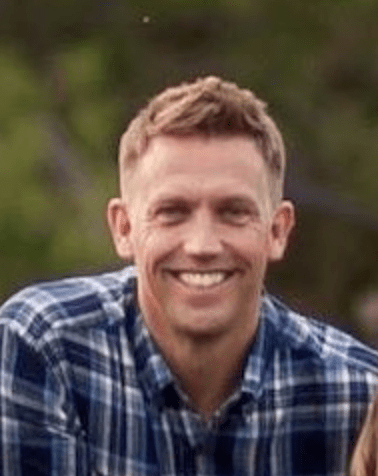
My guest this week is Jimmy. As early as the beginning of 2020 Jimmy was still in the closet trying to determine how he would come out as an atheist and humanist. By mid February he had told his family and was bracing for his church to find out. Jimmy was a serious and dedicated Christian drawn to Calvinism by family and the intellectual rigor.

It wasn’t that I was running away from it. But I think at that point I had internalized that I wasn’t a believer …
I realized I was going to have to come out at some point. I couldn’t maintain a charade.

As the years went by and his attempts at self-betterment were not realized he began to be drawn by the pragmatism of Stoicism. He eventually realized that counseling would be beneficial, though this had so far been off the table. Through these active measures he began to see some success at self-betterment.

[Stoicism has] this very pragmatic approach to making yourself a better human …
[Stoicism] hit me at a time when I needed something.

Jimmy’s chief concern was not damaging the relationships with his believing friends and family. He was very careful to show them he loved them and had no contempt for their faith.

It is one of these things where I think, this has got to be a band-aide I am ripping off and not a cancer I am injecting into my family. And I am going to do my darnedest to make sure that this works and that they know I love them.

I love these people How can I not harm them? Or how can I minimize the harm?

Jimmy is eminently quotable so here are more quotes from the episode

I had a long list of potentially scary things that could happen … I wanted to see it in writing to remind myself why I am trying to be careful and it is because of people I love. The best people I know are die hard Christians. The would die for their faith. Like I would have 10 years ago.


So I don’t want to harm these people and I don’t to make them think that I think they are idiots … I don’t want to conjure up of images of Christopher Hitchens sneering at them whenever they look at me.


The whole feeling alone thing. That is just hard. All the people you really care about you can’t tell

Jimmy’s book recommendations

  • A Guide to the Good Life: The Ancient Art of Stoic Joy, by William B Irvine
  • Why I Believed: Reflections of a Former Missionary, by Kenneth W Daniels.
  • Jayber Crow, by Wendell Berry
  • How (not) to Be Secular, by James KA Smith
  • Blue Remembered Earth, by Alastair Reynolds

Interact

Deconversion How To
https://gracefulatheist.wordpress.com/2017/12/03/deconversion-how-to/

Send in a voice message

Support the podcast
Patreon https://www.patreon.com/gracefulatheist
Paypal: paypal.me/gracefulatheist

Attribution

Image Credit
“memento Mori, ‘To This Favour’ by William Michael Harnett” by Bob Ramsak is licensed with CC BY-NC-ND 2.0. To view a copy of this license, visit https://creativecommons.org/licenses/by-nc-nd/2.0/

Audio Credit

“Waves” track written and produced by Makaih Beats

Ray Gilford: Deconversion not so Anonymous

Deconstruction, Deconversion, Deconversion Anonymous, Podcast, Spirituality

This week’s show is a Deconversion Anonymous episode.

My guest this week is Ray Gilford. Ray grew up more of a cultural Christian. His family believed but did not push him. In college, without community and looking for friendship predatory evangelism took advantage of him. Ray worked hard at being a Christian but wanted something deeper. He learned Hebrew and Greek in an effort to find “True Christianity.” He remained a Christian for 32 years.

I was always looking for more.
That’s nice but what is beyond that?

Eventually, he deconverted realizing that Christianity did not live up to its promise. Ray now says he practices Pagan, metaphysics and spiritualism. Though this is a different path than most of my guests what is interesting about Ray’s metaphysics is that id does not preclude miracles and yet Ray still found Christianity wanting.

Links

Blog
galacticwanderlust.com

Twitter
https://twitter.com/StellarWndrlust

Interact

Deconversion Anonymous
https://gracefulatheist.wordpress.com/category/podcast/deconversion-anonymous/

Deconversion
https://gracefulatheist.wordpress.com/deconversion/

Deconversion How To
https://gracefulatheist.wordpress.com/2017/12/03/deconversion-how-to/

Send in a voice message

Support the podcast
Patreon https://www.patreon.com/gracefulatheist
Paypal: paypal.me/gracefulatheist

Attribution

“Waves” track written and produced by Makaih Beats

Dr. Anthony Pinn: Humanism and Race

Atheism, Authors, Book Review, Communities of Unbelief, Deconversion, Humanism, Podcast, Race, Secular Community, Secular Grace
Click to play episode on anchor.fm

My guest this week is Dr. Anthony Pinn. Dr. Pinn is the Agnes Cullen Arnold Professor of Humanities, the Professor of Religious Studies. the Founding Director of the Center for Engaged Research and Collaborative Learning Rice University, and the Director of Research of the Institute for Humanist Studies. Dr. Pinn has written a number of books on the intersection of humanism and race. In this episode, we discuss his book, When Colorblindness Isn’t the Answer.

We spend so much of our time making fun of and belittling theists.
That’s not very productive.
You don’t transform the world that way.

I learned quite a lot from Dr. Pinn. Both about humanism and the experience of black humanists. Ultimately I was challenged to change my behavior, to “do my homework,” and to understand that it will take dismantling of white supremacy in humanist communities in order to gain the great benefits that diversity brings.

This sort of fundamental change this movement towards diversity and equity means giving up comfort.
You cannot request comfort and say you are interested in change.

Throughout his book(s) and in the interview Dr. Pinn calls on our humanist values to be less ignorant, to include black and other historically disparaged voices, and to develop our own vocabulary and ways of experiencing awe without calling on theistic traditions. “We can do better.”

[Our] goal should not be removing religion …
Religion is really simply a way of naming our effort to come to grips with who what when and why we are …
But it seems to me, the larger more compelling goal is decreasing the harm that we do in the world.

Links

Website
https://www.anthonypinn.com/

Twitter
https://twitter.com/anthony_pinn

Books
https://www.anthonypinn.com/books

Interact

Critique of Apologetics
https://gracefulatheist.wordpress.com/critique-of-apologetics/

Deconversion
https://gracefulatheist.wordpress.com/deconversion/

Secular Grace
https://gracefulatheist.wordpress.com/secular-grace/

Send in a voice message

Support the podcast
Patreon https://www.patreon.com/gracefulatheist
Paypal: paypal.me/gracefulatheist

Attribution

“Waves” track written and produced by Makaih Beats

Transcript

NOTE: This transcript is AI produced (otter.ai) and likely has many mistakes. It is provided as rough guide to the audio conversation.

David Ames  0:11  
This is the graceful atheist podcast. Welcome, welcome. Welcome to the graceful atheist podcast. My name is David, and I am trying to be a graceful atheist. First off, I just want to thank my newest monthly supporters. Again, I want to say the caveat that in a time of COVID-19, and the economic problems that we are facing, unless you happen to have literally expendable cash on hand, I'm not asking for you to support but it does help, we will go back into the podcast. Anyway, I want to thank new supporters, Libby n. And James T, along with Joel Wu and John G. Thank you for your support. The first thing I'm going to do with the money that comes in is to pay MCI beats for the rights to the waves track. It is currently being used as a creative commons. I will be purchasing that so that MCI receives some support as well. If you find the podcast useful or helpful, I would ask that you please rate and review it in the Apple podcast or wherever you get your podcasts. I have a bit of exciting news. My wife Michelle and I have been talking about deconstruction lately. I don't want to get too excited to hear that I don't think that she's changing her mind in any way. But she rightly points out that after we went to Bible college together, the two of us went our separate ways. And when we came back together and eventually got married, we had both gone through ministry a bit of burnout, and ultimately, what she now calls deconstruction. And she's right. We've also recently been listening to the Michelle Obama podcast and one of the first episodes is Michelle Obama and Barak talking with one another. And I commented about how cool their rapport is with one another. And I jokingly said, We should do that some day. And it was her idea, my wife, Michelle, to do an episode, and it was also her idea to request questions from you, the audience. So I know that there are many of us out there that are in relationships where one partner has either D converted or deconstructed in some way and the other partner is still very much a believer. We jokingly sometimes call this the unequally yoked club from Captain Cassidy's blog role to disbelief. If that's your experience, I would ask that you would send me and my wife in some questions about our relationship how we are or not making it work. And you can do so either via email graceful atheist@gmail.com Or you can send me a voicemail on the anchor app or through any recording device and send it in through email. Michelle and I will answer those questions on the episode that she and I are going to record shortly. On today's show. My guest today is Dr. Anthony Pinn. Dr. Pinn's resume is a thing to behold but I'll hit the highlights here on his website. He is the Agnes Colin Arnold professor of humanities at Rice University. He's the professor of religious studies. He's the founding director of the Center of engaged research and collaborative learning at Rice University and the director of research at the Institute for humanist studies. Beyond that Dr. Pinn has written a tremendous body of work on humanism and race. Today, he and I discussed the book when colorblindness isn't the answer, humanism and the challenge of race, and we will have links in the show notes for Dr. Anthony Pinn's books. I learned a tremendous amount from this book, not just about the issues that black humanists face, but about humanism itself. Obviously, the most challenging part of the book is on the issues of race. And what Dr. Pinn does brilliantly in the book is The uses the very values that we humanists say we hold dear to point out where we have fallen down where we have been hypocritical, where we have not applied those values when it comes to the topic of race. I cannot do justice to the full argument that Dr. Pinn puts forth. So without further ado, here's my conversation with Dr. Anthony.

Dr. Anthony Pinn. Welcome to the graceful atheist podcast.

Anthony Pinn  4:50  
Thanks for having me.

David Ames  4:52  
Dr. Pan I'm very excited to have you on I feel like I can't quite do justice to your CV but some of The titles that you have in your bio, the Agnes Colin Arnold professor of humanities, the professor of religious studies, the founding director of the Center for Engaged research and collaborative learning at Rice University, and Director of Research of the Institute for humanist studies. Does that do you justice at all?

Anthony Pinn  5:17  
Yeah, that's fine. Thank

David Ames  5:19  
you. And you've written just a, an enormous body of work, a number of books that began with a book entitled, Why Lord, suffering and evil and Black Theology. You've written a book with your with your mom, as I understand it, the fortress introduction to black church history. And then the book that we'll be discussing today is when colorblindness isn't the answer, humanism and the challenge of race. What I'd like to begin with is your experience of faith and maybe what gets you from growing up in a religious household to writing a book like, Why Lord, not suffering?

Anthony Pinn  5:56  
Well, I grew up in Buffalo, New York, and a portion of my family was deeply religious, my mother's side of the family. So church was part of our week. We started out attending a Baptist church in Lackawanna, it's outside of Buffalo. Bethlehem Steel was the anchor for Lackawanna. Okay. My grandfather was a deacon in this small Baptist Church. And that's the church we attended. My mother eventually decided that was not the place for us. And so we started attending a non denominational church, maybe five minutes from our home in Buffalo. That church was very small, so small that the senior minister was also my Sunday school teacher. One Sunday, we're sitting in a circle in his office, and he asked a question, and what do you want to be when you grow up? And so you heard the typical things while your Doctor President, when he got to me, I said a minister. And I wasn't quite certain wise that it perhaps it had something to do with the kind of status that ministers have in the community, right, that there was something about the minister that marked out future that marked out visibility, importance, and I claimed it and his response was, okay, we start next week. Yes. And so as a little kid, might I'm lining the hymns, offering prayers, opening the doors of the church. And this goes on for a while. And eventually, I'm ordained a deacon in the African Methodist Episcopal Church, oldest black denomination in the country. And as a deacon, I can marry Barry and baptize, right, went to college in New York City, in part because I wanted to get out of Buffalo. I just didn't think I could be myself my best self, and buffalo. There was just something about it that that wasn't to my liking, right. And so I went to New York, and park to get away from Buffalo, but also because the person who had been the pastor of this church, it was a fairly new pastor, young guy was also moving to Brooklyn, he'd been given a large church in Brooklyn, and I'm in New York, I'm working at this church, and I'm in college. And my assumption was, I'm going to change Colombia for the Lord, right that yeah, power of the Lord is going to transform this place. But these people didn't believe as I believed, for the most part, and they weren't nervous about it. Right? I'm thinking they're going to hell. And they're thinking, what should we do this weekend? Right, that they're, that just weren't fearful of hellfire. And something that was particularly troubling for me as these folks who did not claim belief in Christ often treated me better than people who did say, they loved the Lord and they were leading they were living in accordance with the Lord's will right often treated me better than those folks. I'm working in Bedford Stuyvesant at this church, and if this is the early ad, so crack cocaine, gang gaming, a hold on Big City Life, right. And so I'm encountering young people who are having a easier time planning out their demise and thinking in terms of a bright future, and nothing that I had in my theological bag made any difference. So over the course of time in New York, it became increasingly difficult to preach this faith to believe this space, when it seemed to make no substantive difference in life that I was answering the questions people didn't ask and condemned questions that they did. Hold here, right. And so my, my sense of faith, my sense of God is radically changed. Changing. But I needed to get out of New York after college because people needed Reverend Pinn to have answers, not questions, right. And I didn't have answers. I was finding it extremely difficult to hold on to this faith. Still interested in ministry, but a very different form of ministry. It was a form of ministry that understood the church as an occasion to make change in the physical lives of people, right to make a difference in daily life that this church was the occasion for that it wasn't about personal salvation, it was about social transformation. I went off to seminary in Cambridge, Massachusetts, still interested in church, but a very different sense of church. I'm working at a church in Roxbury, and that's Roxbury, late 80s Not Roxbury, 2020. It's not a highly place, it's the place struggling, okay. And I'm encountering again, kids who are having an easier time thinking about their demise than their future who understand wearing the wrong color in the wrong neighborhood could result in death for whom Economic Opportunity revolved around selling crack on the corner, not college. Yeah, right. And the faith had nothing that was on this. And so it reached a point, I'm finished the Master of Divinity program, I'm moving into the Ph. D. program. And it reached a point where I had to make a decision, I could not continue to participate in an institution that I did not think that any worldly good, I could not preach a theology that I no longer believed. I could not invite people to be close to a God that I wasn't convinced was there. And so I was willing to be a lot of things, but I was not going to be a hypocrite. So I decided I needed a different way to be of service. I contacted the minister in charge of the church and told him I would not be returning, I contacted my bishop to surrender my ordination. And I left. Wow. And for a while I wasn't quite certain what to call myself. I knew what I wasn't. Right, Christian. But for me, it wasn't simply that Christianity was faulty. From my vantage point, theism was faulty. So it wasn't a matter of moving from Christianity to a different theistic tradition, none of it, I thought had any substantive ability to make a difference in the world. But with time, I came to call myself a humanist in terms of what I do, and an atheist in terms of what I no longer hold to be true.

David Ames  12:34  
Wow, so much is there I think what is really interesting is you're describing the failure of theistic traditions to meet real world problems, to meet people where they're actually out. And the flip side of this, and I see this definitely in your work, and it's something that I'm constantly trying to get across as well is that I want humanism to be blood, sweat, and tears boots on the ground, something that is living and breathing and actually touches people's lives. And you've touched on on this already, and we'll talk about it from your book, but you differentiate between religion and theism. Could you expound on that a little bit?

Anthony Pinn  13:14  
Yeah, theism is the belief in God or gods. Religion is something different from my vantage point, religion is a kind of quest for a complex subjectivity. That is to say, religion is a wrestling with the who, what, when, where and why we are questions, you don't need God or gods for that. You just need to be committed to a desire for meaning, right? And I get a lot of resistance from from some humanists and a lot of atheists when it comes to issues of, of meaning, right? That we are not seeking meaning we are not ritually driven. But of course, we are right. Folks who go to the American Atheist meeting every year, sit and listen to talk, have a certain procedure for listening to talks are involved in ritual. You don't have to have God rituals, repeated activity and founded space. Atheists have ritual. Humanists have ritual. And so my argument is, ism is one thing, but religion is really simply a way of naming our effort to come to grips with who, what, when, where and why we are.

David Ames  14:21  
I love that because, you know, I think ironically, sometimes theists will say that atheism or humanism is a religion and I think, yeah, and like it's, you know, we often as as particularly the atheist community will respond with, you know, horror at that statement. And yet, really, just as you've described as a way of organizing people to come together to seek meaning with one another. That's not a bad thing necessarily.

Anthony Pinn  14:45  
No. I think my from my vantage point, I think humanists and atheists surrender language too quickly. Right, simply because theists have claimed terminology doesn't mean they own terminology. Right? Right, and that there may be some elements of the vocabulary, that grammar that is still useful for us that allows us to explain and explore the all we feel when we encounter the world, that sense of wonder, is it restricted to theist? Right? The atheist and humanist ought to be able to understand themselves in relationship to something that is much more profound and bigger. And that might simply be a larger arrangement of life. Right? A larger sense of community doesn't have anything to do with God or gods. Right.

David Ames  15:39  
As I mentioned to you Off mic, you know, I use this term secular grace. And what I mean by that is that the thing that we need most the thing I think, that is just hardwired as a human being, is to feel known to be understood to be loved to be accepted. And we actually get that from one another. It's my having conversations like this, it's my deep friendships, it's my significant others relationships. It's, it's our interaction with one another that we derive meaning from. And that's really what I'm trying to do with this idea of secular grace and again, sounds exactly like what you're describing. The book we're going to discuss today is how colorblindness isn't the answer, and humanism and the challenge of race. Clearly, this moment in time, after the killing of George Floyd, the number of black Americans who have died at the hands of police, Breanna Taylor, the list is so long that it's ludicrous. And one thing that I am definitely concerned about is how humanism can participate in Black Lives Matter and be again, boots on the ground and something real, something meaningful. And when I asked you which book I should read in preparation for this, this is this the book that you suggested, and boy, it is it's a profound moving book, it is challenging on every level, we'll get into that a little bit, what I'd like to do is just, I want to tell a little bit about my experience of reading the book, and then we will go through the questions that you pose throughout it. My feeling of the book is that the first half of the book is questions you've been asked 1000 times that out of exhaustion, you finally wrote these down to say, read the manual. I'm from the tech world, we do things called frequently asked questions and RTFM means I spent the time to put this down on paper, please go look at that rather than wasting time. Maybe that's unfair. But it strikes me as the exhaustion of black people in general being asked to explain what should be abundantly obvious to everyone. That was my experience of the first half. The second half I think you are posing, or suggesting to humanist in particular, the questions we ought to be asking ourselves the questions that would provide a meaningful change or a meaningful interaction to help black people in America. So maybe we could go through some of those questions. And you can explain just a little bit about about each of those. Sure. So in that first section, where we're these are kind of the questions you probably have been asked 1000 times and in some ways they they reveal an ignorance maybe of the questioner. But at the same time, you're you're gentle in suggesting that you understand why, particularly white humanists might ask these questions. But So beginning with, why does your community embrace religious traditions that have been used to do harm?

Anthony Pinn  18:44  
Well, what we need is a much more complex understanding of how let's take Christianity, for example, how it is functioning within the context of black communities, that on some level, sure, blacks embracing it, are embracing strategies that were meant to dehumanize. But you cannot explain a Nat Turner, Gabriel Prosser or Denmark vz, that way, who argued that this same religion required them to physically fight for their freedom, and if folks had to die in the process, so be it right. So here is a kind of revolutionary stand that this same Bible, the same doctrines motivated them to make change. Can't think of the civil rights movement and have such a narrow understanding of how religion has functioned within African American communities, regardless of how one might think about it. Religion was a factor. And it wasn't passive. Right. So religion, on one level, used to harm blacks, but there are also ways in which blacks have actively tried to reshape the Stockman so as to provide a sense of their own humanities. It's a complex story, right? But it seems to me coming from humanists and atheists the better question in this is this, why hasn't humanism been more attractive? Rather than blaming victims? Let's look at this orientation and figure out why it hasn't been more attractive, in part because humanists and atheists spend so much time dogging out religion and the religious and not as much time offering people a safe place to land, right. And if you're talking about African Americans, you are talking about a population that already faces double jeopardy, at least double jeopardy. And so to claim humanism, or atheism is to add another way in which you are despised, and what do they get for their effort? Nothing other than a critique of the churches they've

David Ames  20:59  
left, right?

Anthony Pinn  21:02  
And it requestion is about their culture. Right, so the question is, why hasn't humanism been more attractive?

David Ames  21:10  
Right? I wanted to touch on just a couple of things that you bring up in this section. I love the way that you describe I use the word earthy several times and you're describing a humanism as earthy and I love that you used the Blues as an example almost of anti spiritual is kind of the the opposite of spirituals. And, you know, I, you mentioned Willie Dixon's coochie coochie man, and my all time favorite is muddy waters mannish boy, which is also a reference to Bo Diddley's. I'm a man which is a part of it. It's a reference to Willie Dixon's. And I've never thought of those as manifestos of humanism. But as soon as you said it, it clicked. Like, it is the opposite. It's it's a breaking away from the religious constraints.

Anthony Pinn  22:01  
Yeah, right. And so in the same way, you have folks who use Christianity as a way to counter Christianity, think think in terms of Ida B. Wells, who was deeply religious, deeply Christian, and extremely critical of violence against African Americans, right. She provides a profound critique of lynching and terms of the blues you have someone like Ma Rainey or Bessie Smith, who celebrates black bodies that are otherwise despised, that celebrates the pleasures that black bodies give other bodies, and a larger society where these black bodies are demonized, despise, and destroyed. Right? So you get on one hand, the blues, critiquing theism, but on the other hand, you have the blues, critiquing anti black racism and dehumanization through a celebration of black life.

David Ames  22:57  
And, in fact, the mannish boy is about saying, I'm a man. Very famous pictures from the civil rights movements of black men with signboard saying, I'm a man to say, I'm a human being I exist in this world, I'm embodied here,

Anthony Pinn  23:13  
rightfully occupying time and space.

David Ames  23:16  
Absolutely. Yeah. The other other thing that I think that this touches on with the the blues, and obviously has been a part of the black culture of the black experience is kind of outsmarting the white culture around them that all the way back into slavery of being able to have the songs where they're passing on information, passing on hope, what have you, in a way that is coded such that the white people around them are not getting that and it strikes me that the blues isn't anyways, is that as well, during that civil rights time period?

Anthony Pinn  23:50  
Yeah, there's something deeply poetic about it, you have a population, using the language forced upon them. Right, a language that was initially used to belittle them to dehumanize them, right to construct them as something that as as other and here you have the them using it to critique that very system to celebrate themselves to critique that very system, and why it's not even recognizing what's taking place.

David Ames  24:21  
So let's go on to the second again, this is a question that just are not a question, but a statement that sometimes people make that again, may reveal some ignorance. And the idea is humanism is driven by reason and logic. So it doesn't see race as a biological reality, that should determine any significant dimension of life. And yet it does, correct.

Anthony Pinn  24:42  
Right? It is not a biological fact. But it is a social fact. And it's a social fact that can be deadly. And so humanists and atheists don't gain ground by simply saying, it isn't biologically real. It isn't about us and simply pointing the finger at the religious right, pointing the finger at theists saying, Well, if we didn't have religion, we wouldn't have these problems, which is just it's not true, right? It is not true, that we can turn to the enlightenment that so many humanists and atheists uncritically embrace, and you find a deep anti black racism from folks who are not claiming church, they're claiming reason,

David Ames  25:25  
right?

Anthony Pinn  25:27  
And so there's, you know, we have to move away from the assumption that humanism and atheism are prophylactic against nonsense. This is not the case that humanists and atheists can be just as racist, as fundamentalist Christians can be.

David Ames  25:44  
Right. Yeah, it's interesting, I think, the experience of deconversion of having had a faith, a theistic faith and then becoming a humanist. I feel like that what one of the things I bring from that experience is some humility. I've had the experience in my life over and over again, of being wrong, deeply wrong, profoundly wrong about the most important questions in life. And I think that one of the great criticisms of the atheist community is that they are blinded by their own sense of the power of their own reason. And I think that what we need as a community and Titan, the entirety is some humility, about recognizing that our reasoning didn't go haywire. It can lead to, you know, undergirding racism, rather than defeating racism, it can lead to terrible atrocities, if you think of the time of Eugenics and things of that nature. So you know, reason can go terribly, terribly wrong. And we need a quite a bit of humility as we come to this, to have other people challenge our own reason and be willing to say, I might be wrong.

Anthony Pinn  26:57  
And I think humanists and atheists often have a misguided and go, mind that the end goal for too many is the dismantling and removal of traditional forms of religion, right, getting rid of this stuff. It seems to me a better end goal is radically decreasing the harm that theists and non theists do in the world. Right? Right, that the end goal ought to be the development of ways of living that are more nurturing and healthy for the larger web of life. And if folks want to continue to go gather for worship services on Friday, Saturday, Sunday, so be it. But it seems to me the larger more compelling goal is decreasing the harm that we do in the world.

David Ames  27:47  
Couldn't agree more, again, just alleviating suffering, providing the environment for people to thrive. That should be the goal of humanism. I've loved the way you much throughout the book, you kind of speak to humanist ideals or thinking and turn them in such a way that particularly white humanists are forced to look at themselves. One of the ways that you do that, as you describe how we humanists, or atheists will long for spaces in which they can talk about the atheist bias within the world. And then you point out the need for cultural spaces for black Americans, black humanists to have the same, right that they the exact same way that we need to have a space where we feel safe and comfortable, we can talk to one another. And we're understood, we don't we're not going to be misconstrued that black humanists need exactly the same,

Anthony Pinn  28:43  
right, right. A space in which we can catch our breath space in which we don't have to explain why we're angry.

David Ames  28:55  
The third question that people might ask human is would be of great benefit to your community, wouldn't it if only we could get more of you involved?

Anthony Pinn  29:04  
And the question again, one, why isn't it more appealing? Yeah. And secondly, when I get that question, for me, the answer is a question. More of us for what reason, right, that often what humanist organizations, humanist communities want, are more shades of the same. That is to say they want African Americans to come but don't change anything. Right? Right, just fit in, don't change anything. And it seems to me if we're really serious about diversity, it means fundamental structural change, right? So organizations have to then reinvent themselves so that they are compelling with respect to this range of participants, radically rethinking leadership and leadership structures, radically, reimagining communities of concern, radically rethinking our vocabulary and our grammar, right that this requires a tremendous amount of change. And it seems to me that what humanists and atheists have to become aware of is this, that this sort of fundamental change this movement towards diversity and equity means giving up comfort. You cannot request comfort, and say you're interested in change,

David Ames  30:29  
right. And, as has been commented on in a number of contexts, the feeling of bringing a subjugated group up to equity can sometimes feel by the group that's in power as a loss of something a loss of power or what have you. And we have to be willing to include a diverse group of voices, including in leadership roles, including in a being voices for our movement, that includes a wide variety of perspectives.

Anthony Pinn  31:03  
It means recognizing and wrestling with something that so many would rather ignore white privilege, right, that this has to be acknowledged and dismantled, that all of this has been set up for the benefit of a certain population that has to be rethought and rearranged. And that can't be done, if the demand is to remain comfortable.

David Ames  31:28  
That's a good segue, the second half of your book you are suggesting to the humanist the questions that we ought to be asking ourselves, and the first one is about the nature of privilege. The idea here is an end, let me quote here, white privilege isn't about having wealth. No, it's about the positive assumptions that follow and inform the life of white Americans. It's the often unspoken and unrecognized access to the workings of social life that come with a membership card of whiteness. What of this privilege, are you, me, US willing to surrender in order to promote equality, and justice and what is gained by doing the right thing regarding the negative effects of privilege, I want to linger here just a little bit, and just mention a bit of personal story. I have a slightly complex relationship with race in that my father's side of the family, I have a Mexican American grandfather and Spanish American grandmother, which makes me you know, genetically three quarters white. And yet my father's side of family is very culturally Mexican American, very, you know, they were Catholic. They were Gatos, they were you know, cowboys, really. So me and several of my cousins, you know, when whenever we get back together, we talk about how it what it's like to have to be wise we are, I mean, in all ways I pass as white, but to also have this part of part of our lives and, and I sometimes think of it that I haven't experienced racism myself, but I feel like maybe through a dim glass darkly, I have a sense of something that's out there. And I say all that to say this, that. Even with that dim perspective, the events of the last year, including up to including your book, were revelatory in breaking down my naivete. By a twist of fate. My last name is very Anglo, and not Mexican sounding, understanding. And so I know how many times I've had the benefit of the doubt that the career that I have now, you know, I worked my butt off, but I absolutely understand how many points along the way. Privilege played a role in allowing me to be where I am today. So again, just to set that all up to say, I think that white America, in 2020 is going through, as you mentioned, uncomfortable, but a process of learning of recognizing, in a new way that the modern day suffering that black Americans are going through in a way that we were probably trying to lie to ourselves to hide, to minimize to rationalize to, to ignore. And now we are unable to ignore it is in our faces and it must be addressed.

Anthony Pinn  34:38  
Yeah. And it's not about purity, right. I mean, that doesn't exist. And so it's not simply a question of lineage. It's a question of social perception. How is one perceived socially, right? That makes a world of difference how one is perceived socially can be deaf clearly. How to the relative Those of George Floyd, right and this word we're clear on. And so we make a mistake when we assume that white privilege is synonymous with economic advantage. That is not the case. But even how economic struggle gets mapped out and articulated, differs. So it's often the case for African Americans are struggling economically, the popular conversation is they just don't want. They're unwilling to work to get. But for whites, it's a matter of the system being unfair, right? So they are not understood as being inherently flawed, right. Whereas African Americans based upon white privilege and anti black racism are understood as embodying the problem. For whites, the problem is external to them. And we often and there's an added dilemma there, that we often try to get at this through the individual. And that doesn't work. Right? We're not talking about Jim Smith over here, versus Robert Jones over there. It's systemic, as a group, whites have done so much better than any other group. And there is privilege in place unspoken social privilege in place that makes that the case. So it's not a one, one, it's not the end of it. We're not talking about this on the level of the individual. We're talking about this on the level of communities.

David Ames  36:37  
I think that's the word systemic is the revelation that feels like White America is experiencing right now is, and let me be clear, black people have been saying this forever. It's not. And we're gonna get to that we have no no excuse, right? There is no ignorance is not an excuse. But that the visceral experience of seeing the system work against black people, black bodies, black lives, is again, unendurable at this moment in time. It should be. Yeah, yes,

Anthony Pinn  37:15  
it should be. But it's, it's surprising the number of people for whom this isn't a turning point.

David Ames  37:24  
I feel the burden of having now read your book. Again, you don't give any space for ignorance as an excuse. But even having read your book, it feels like I am more compelled now. To be more vocal to be more outspoken. Again, I feel guilty about all that, that it takes. It takes something like this, but I'm trying to be honest here to bring out what it feels like this experience of trying to learn to try to be less ignorant. In this chapter, you you make one provocative statement that I'd like you to expand upon, you say that the term people of color is not helpful. Why do you say that?

Anthony Pinn  38:08  
It isn't helpful, because when we use that phrase, we mean everyone other than white people. Right, so what it does, from my vantage point, is allow whiteness to remain normative. Because then there's whiteness, and everything else that has been othered. Right? So it allows whiteness to remain normative. It also suggests that white people are not raced. When every population is raced, the difference is some populations are raised to their disadvantage, and others are raised to their advantage. And so this idea of people of color, again, allows whiteness to remain normative, that allows whiteness to go unchallenged, and allows whites to remain invisible when it's convenient. And it renders everyone else hyper visible. And so it seems to me more authentic to our history, to say people of a despised color. Or we can do what's even better than that. And that is to recognize how bulky and awkward our language is, and specify groups

David Ames  39:28  
to enumerate them to list them out to call them out by notice that you in many times do you refer to the Native Americans as well in your book that as also a despised group that has been deeply affected by white supremacy deeply hurt deeply affected,

Anthony Pinn  39:46  
and in ways that we we have often been rendered invisible, right. We don't often talk in terms of the land we occupy. And how we got that land right Even so even despise populations existing within geographies that were violently ripped away from others, right. So there's this animosity, this racism, this anger, this violence is layered, right. And we often fail to acknowledge that.

David Ames  40:25  
And it's interesting the way that we the education system as well that we just gloss over. Even the way we teach about slavery, the way we talk about states rights, quote, unquote, the way we talk about Manifest Destiny, the way we are taught these things is whitewashed. To begin with, I'm definitely more and more aware of that as time goes on of the simplicity, in the way that we we talk about our history without acknowledging deep problems.

Anthony Pinn  40:57  
Yeah, yeah.

David Ames  41:00  
So again, another of your your posed questions, setting that up, knowledge is a certain form of power. And humanists read and study, they work based on logic. And with much energy they suggest that theists do likewise, logic and reason rule the day, the question is, how much of this call for knowledge information is applied to the issue of race, and racism. And again, this is where I've mentioned that, you know, this book was uncomfortable, every time my inclination was to squirm a bit and to look for excuses or to find a way out, you very effectively stop that from occurring. But again, I love the way that you are using the humanist ideals to say, you need to face this truth, if you say that knowledge and study and and understandings important than race has to be at the near the top of that list.

Anthony Pinn  41:52  
Yeah, the number of humanists and atheists who believe that ignorance on this issue is okay, right, that ignorance should stop the conversation? Well, I just don't really know anything about this. That is unacceptable from a population that understands itself to be deeply committed to reason, logic and learning that learn something about this, right and stop assuming that African American humanists and atheists have some obligation to teach on this. Right, if that is the case, if we have to deal with these with toxic attitudes, toxic understandings toxics arrangement, then we ought to receive hazard pay. Yes, it seems to be humanists and atheists rather than saying, I don't know, and patting themselves on the back, or to say, I don't know, and start reading. The materials are easy to find so many of them on our New York Times bestsellers list, you define, exactly. Get them read them learn. Yeah. Because humanist communities cannot say they are taking seriously African Americans, for example, and learn nothing about us.

David Ames  43:18  
Using the idea that the value of education and saying that we have no excuse that the information is available, and that should be a top priority of humanist organizations is providing or pointing to black humanist voices to learn.

Anthony Pinn  43:37  
Yeah, and I think, in addition to that, we've reached a point where white humanists have to take some accountability and responsibility for this, because black humanist didn't create the problem, we suffer from it. And it seems to me that white humanist have to also start talking about the need for change and addressing strategies. So we ought to be able to go to these large gatherings of humanists and atheists and have more than the usual suspects talking about racism. The population that benefits from it should be publicly trying to dismantle it.

David Ames  44:21  
There are lots of parallels to the deconversion experience of the systemic part of systemic racism means that it is so culturally ingrained. It's like asking a fish what is wet feel like? We as humanists should be better at recognizing when we have failed to see the wetness to see the systemic racism and yet, that is just as pervasive within humanist organizations as it might be envious or just secular environments.

Anthony Pinn  44:53  
Again, we have a commitment to learning. Right? We have a commitment to discovery we have have a commitment to critical engagement. So we ought to be able to get our thinking on this, right?

David Ames  45:07  
Absolutely. I think one of the notes that I took reading this chapter was Do your homework. Just yeah, to the to the overachieving kid, you know, do your homework. We know what we need to go learn and where it find it. We just need to do it. Yeah, yeah. On to the next section here, you describe difference as an opportunity. And you say that quotes, more shades of the same end quote, is a comforting strategy, because it highlights the familiar while giving the pretense of difference. Its natural, but unproductive default position when racist the topic or the challenge? And the question, what kind of racial justice work? Might you find and promote if differences understood differently?

Anthony Pinn  45:55  
My understanding is the way in which US society is framed, the way it is constructed, it's very logic is premised upon a sense of difference as a problem to solve, right, that we've got to move from all these different things to one unified thing. And that is just poor thinking, right? It seems to me, we really ought to reach a point within humanist circles in which we understand the value of difference the way in which different gives us opportunity to adjust and to rethink our assumptions that it provides a certain type of strength that provides opportunities that don't emerge, if everything and everyone is the same. Yes. So just in terms of practical elements, so rather than bringing in African American Humanist into our organizations, and assuming they should just blend in, recognize that in bringing in African American humanists, we're called to change our organizations, that their presence provides an opportunity to rethink what we've been doing.

David Ames  47:04  
Yes. And it occurs to me that we often talk about diversity as almost like a checkbox, like we need to have diversity, check whether it's done or it's not done. And yet, what you're making a compelling argument for is the the benefit of diversity. And it strikes me that there's a strong parallel between the ethos of the scientific method, which kind of relies on almost antagonistic skepticism, in order to better come to closer to the truth, a closer approximation to reality. And in a similar analogous way, the diversity and competing ideas, computing, cultural perspectives, competing life experiences, can help a group come to a better understanding of how to live life to thrive, to be human in this world. Yeah. The last section, and I love this, this was so this was so much fun for me learning from unlikely sources. So you talk about hip hop culture and the built in diversity that's within the hip hop culture. You say that, you know, some people can come to the hip hop culture and say, Well, why is it violent? Why is it so materialistic, that kind of thing, but you say, a better question is, what can we learn from hip hop?

Anthony Pinn  48:27  
You know, I mean, because to to raise the question of why is it so violent? Right? Why is it so antagonistic? Why is it so committed to dollars? doesn't distinguish hip hop from the larger arrangements of economic life in the United States? Right? What's the difference? Right? Can we say the same thing about so many other organizations and development, right, that that doesn't make Hip Hop unique? And so I bring up hip hop for a couple of reasons, one, to reinforce the necessity of discomfort, right that this is not a population that humanists and atheists necessarily turn to, although we share quite a bit so for example, hip hop culture, develops within a context of black and brown despised young people trying to come to grips with the world. Humanists and atheists understand themselves as being despised disliked within us society. Yeah, right. So we share that, right. But whereas hip hop has grown from that point, to become internationally, influential Hip Hop shapes, popular imagination, it shapes our vocabulary and grammar, it shapes our aesthetics. It seems to me rather than getting on board with a traditional critique of hip hop, we humanists and atheists who are also despised might want to ask the question, what are they doing right that we're doing wrong? Right and just look systematically and strategically at how hip hop culture has grown. So for example, one of the things that hip hop culture has done that we have not effectively done is develop a vocabulary and grammar that is organic. That speaks from and to us. We've not really done that night. So hip hop culture has developed a way of naming and communicating the world that is organic. And in part, what they've done is highly poetic. And by that I mean, they have destroyed language in order to free to express a different reality. Right? We have not effectively done that. Right. So again, my argument is simply we need models of successful transformation. And Hip Hop culture provides one of those models it has done over the course of a relatively short period of time, what we have been unable to accomplish in almost 200 years.

David Ames  51:04  
Along the lines of the point, you were just making you say this, that humans are still playing by the rules offered by theists. And that there's almost a sense of the humanist is asking to be liked, please like me. And so we're still using the theists language, we're still defining ourselves in opposition to the essence. So I think what you're trying to say is, we need to be creative and create our own vocabulary, our own way of talking about the world and about ourselves. That is not just within the confines of the theists game,

Anthony Pinn  51:37  
we need to be proactive rather than reactive, that we spend so much of our time together, making fun of and belittling theist, right. That's not very productive.

David Ames  51:51  
Yes, no, it is not.

Anthony Pinn  51:54  
You don't transform the world that way.

David Ames  51:58  
Some of the points that you draw from the hip hop community, we'll just touch on them and ask you to expand on them this idea of thick diversity. What did you mean by that?

Anthony Pinn  52:09  
Well, within hip hop, it seems to me you have a significant appreciation for a range of beings a range of expression, a range of ways to occupy time and space. Right? There isn't one way there is all of this, all of these possibilities, these conflicting and competing ways that all constitute an element of hip hop culture. Right? Well, it seems to me humanists and atheists have been too preoccupied with trying to boil things down to one way of being right that atheists do this. They're concerned with church and state, not gay rights, right? They're concerned with this. They're not concerned with that humanists are concerned with these issues, not those issues. Humanists talk this way they conduct themselves this way they think about ritual this way, we need a greater sense of diversity, and difference, right, a greater sense of what our culture has the capacity to hold.

David Ames  53:15  
Right. Another thing that you point out is the significance of the ordinary and live this I'd like to but please expand upon it.

Anthony Pinn  53:23  
And it seems to me one of the things you get in hip hop is a profound appreciation for the ordinary, the mundane markers of life, the mundane elements of pleasure, and engagement. And I think that sort of appreciation would give humanists and atheists a different way of valuing ritual, and the production of meaning. Right, that none of this is lost on hip hop culture. And so it seems to me it provides humanists and atheists with a way of gaining greater clarity concerning the web of life, and the role we can play and nurturing that.

David Ames  54:13  
Again, to maybe play off of the theist for a second, the what's interesting about this is that theism in many ways is the denial of our humanity. It is saying that our natural passions are wrong, that it's trying to make us less human in some ways. And I think this idea of significance of the ordinary is to embrace one's humaneness. Right, and to, to revel in some ways in that that earthiness to use that internal use.

Anthony Pinn  54:44  
Yeah, I wouldn't, I wouldn't say it's a denial of our humanity. I would say it's a distrust of our humanity. Okay. Right. It's the assumption that it's the assumption that we have necessity are going to do the wrong thing that we start out Behind, right. And in that thinking there is a preoccupation with rejecting anything that might constitute an opportunity for sin, this kind of distrust of ourselves anything that might lead us down the wrong path. It seems to me that what we have with hip hop is what we have with the blues, a celebration and an appreciation for connection, togetherness for the messy nature of life, right that both of them the hip, hip hop, and the Blues have a deep appreciation for the messy arrangements, the messy nature of life.

David Ames  55:40  
Right. One of the last things you mentioned here is and I love the way that you frame this call it measured realism. Can you expand on that for me?

Anthony Pinn  55:51  
Yeah, it seems to me that, I'd argue it makes sense for theists to be hyper optimistic, radically optimistic in terms of possibility. Because from their vantage point, they don't wrestle alone, right there. They're not trying to change the world alone. There is a cosmic force that shapes the universe that is on their side, so they can be highly optimistic, right? That is not the case. For humanist and atheist, it's just us. And history demonstrates, we are likely to get it wrong. But it also demonstrates we have the capacity to start over to try to get it right. And so what I'm calling for is a sense of that messiness, the way in which we are prone to get it wrong, that all we have is human accountability and responsibility, and that alone won't win the day. Right. So I one of my favorite thinkers is Albert Kumu. And I like witty, I like the way in which he frames the myth of Sisyphus that he argues that Sisyphus is not defeated by this ongoing chore given to him by the gods, right, he's going to be responsible for rolling this rock up the hill forever. And this was supposed to break him for commu. He says, No, he is not broken by this he reaches a point of lucidity of awareness, he becomes better he develops a better understanding of his circumstances. And that alone is the when one must imagine Sisyphus happy. And so what you get from Kung Fu, and I think this is absolutely right, is a need to understand that our struggle is perpetual. That we will find ways to do harm. Our struggle is perpetual. And so I want this measured realism is a move away from outcome driven strategies.

David Ames  57:46  
Right, I want you to expand on that as well. Yeah. So rather

Anthony Pinn  57:49  
than so what would you get with the civil rights movement, for example, and even more recent conversation 2020 conversations is, if we get our actions, right, if we think properly, and we act properly, we can transform the world. I don't know that that's the case. So rather than the kind of hope that that generate, I'd much prefer to think in terms of persistence. Right? I don't know that we will fundamentally change any of this. But we do this work, not because we know we will, when I leave that a theist, we do this work, because it's the last best option. Regardless of whether or not it wins the day, it's what we can do, that perhaps the best we can do is to generate a loud and persistent no to injustice, and measure our success by the persistence and the volume of that no perpetual rebellion. I don't think humanists and atheists ought to be talking about transformation the way he is talking about it, right? Because we're not working with the same tools, right?

David Ames  58:59  
Because I want to hear criticisms of the things that I hold, dear. I think one of the criticisms that is out there from secularists about humanism is that there's some implicit teleology that there's something that's drawn from Christianity. And what I find interesting is that that is not what I think at all, I think it's precisely because we don't know that everything is going to turn out okay. That we must feel compelled to do something to do the right thing. Because there's no teleology, nothing is driving the moral arc of the universe in the right direction. We have to go out there and try to bend it to be a part of that process to be a one of those voices.

Anthony Pinn  59:43  
Yeah, we don't. Yeah. I don't think that it's teleological in nature and that we don't assume that there is purpose behind any of this. Right, right. The universe has no particular purpose for us. I alberca. Mu is correct. We ask the universe questions and answer with silence, right, it is not here for us. It has not generated some sort of purpose driven existence for us. From my vantage point, what we have is an unreasonable level of optimism that history should demonstrate this level of optimism with respect to human activity. And human capacity for change isn't reasonable?

David Ames  1:00:28  
Yes, history is painful when it's looked at unfiltered. Absolutely. If

Anthony Pinn  1:00:33  
anyone, if we just look at the the history of this country, there is no justification for that high level optimism. We have continuously gotten it wrong. And we move from Obama to Trump. We have continuously gotten it wrong. Yeah.

David Ames  1:00:53  
So I think we've gotten through your book at this point, I have a handful of questions that I legitimately just want your take on the question that I brought to the table before reading the book that might also be naive. And we've answered it to some degree is the broader question of why why humanism has failed to capture hearts and minds in general, not just the black community. But then to frame that just a little bit. I went through the this, you know, loss of faith experience. And the first things that you find are, you know, the four horsemen, you find debate culture, you find hostility towards Christianity, which is justified, don't get me wrong, it's all that is justified. And I felt all that and, but it took a while to find kind of humanist voices talking about what do we do now? So okay, you know, we we now understand what we don't believe, what do we believe? And and what do we value? What do we find out? What do we do about it? And I find like that those voices, they're all out there that people like yourself, there are lots of podcasts. There's lots of tons of books. But those aren't the first things that people find. So how is it that we have failed to be compelling to the nuns? Let's say that

Anthony Pinn  1:02:07  
NES? I think, because we by and large, had we offered little that is constructive. Right? When we tried to develop a language of life when we try to develop community and, and rituals of meaning, we often strayed into something that is fear, some light think in terms of ethical culture, or the UAE, right, that we haven't developed ways of thinking of speaking and doing that are uniquely us, we do so much of this by negation. Why would that be compelling?

David Ames  1:02:45  
Yeah, I think we have a lot of work to do. You point out in the book, the humanist tendency to look uncritically at particularly Enlightenment thinkers, particularly when we look at the founding of America and slave owners who wrote our founding documents. I'm also reading at the same time, Daniel Allen's our declaration and finding the beauty of the egalitarian nature of that document. And we're also in the moment in time in which Hamilton just came out on on Disney plus. And so I think it's on everyone's minds, how ought we to look back at what there are some very humanist ideas built into some of the America's founding documents? How should we be looking at those?

Anthony Pinn  1:03:36  
Right, so here's the example I often give that I don't know very many humanists, or atheists or free thinkers or skeptics who don't have deep appreciation for Thomas Jefferson. And while they should, embracing Thomas Jefferson, bringing him into our various movements, also brings in sexual violence and anti black racism. Right, so we have to have a kind of critical and informed appreciation for these figures, right, what we often do is shift into a kind of celebration that ignores shortcomings. And so it seems to me and embracing these figures. We are then held accountable to do two things. Recognize the anti black shortcomings within our our movement, our thought, the gender bias within our thought, right, and do better. But we have to get to that point, right. But we It seems to me to many humanists, and atheists still want to think about our movement outside of the confines of anti black racism and other forms of social injustice. Not recognizing that these things are deeply embedded in a humanist understanding of the world, whether one's thinking about David Hume or, or Thomas Jefferson or the list goes on, right, it is deeply embedded, and we have an obligation to wrestle with that.

David Ames  1:05:15  
Right. And even the Constitution itself has amendments, we can do better. We can rethink, and better.

Anthony Pinn  1:05:22  
Yeah, because it My attitude is the constitution in and of itself is a fantastic document. It celebrates a wonderful experiment. It just didn't include everyone. Right? And then moving to include everyone requires not just a shift in the language of that document, but it requires structural change in the country to accommodate those new ideas.

David Ames  1:05:50  
One last question that I have for you. And again, this is me being a bit vulnerable. I think, my hesitancy to address the topic of race is a balance of not wanting to be performatively woke, and to not make it about me, which I know I'm guilty of that in this conversation. I'm still learning. And I, you know, I want to know how to be a better ally how to participate, how to be a voice that supports black lives, and yet doesn't make it about me doesn't make make it about Yeah, my wokeness my, yeah, my experience. What advice do you have for me or people like me,

Anthony Pinn  1:06:38  
I think there are several things that are important here. One is to be in conversation with the community of concern. Ask that community of concern, how you can be helpful, what you should be doing, get your marching orders, and be quiet. And by that I mean to say, you don't get to lead anything here. Right, right. If you're committed to addressing anti black racism, find an organization find a community, ask what you can do. And don't assume you get to be in charge of anything. Right. That's how that's one way. You keep it from being about you. Because you're just you're getting your instructions, and you're doing what this community says would be helpful, and you're leaving it at that. I'd also say finally, it requires avoiding the litany of what folks have done, right? Right. So don't don't ask to be a part of a movement. Don't ask to be an ally, and then rehearse all of the wonderful things you've done to make a difference,

David Ames  1:07:48  
right? Absolutely. Well, thank you, Dr. Pinn. You have been incredibly gracious with your time. Oh, my pleasure sharing your wisdom. Can you tell people how they can get in touch with you and your work?

Anthony Pinn  1:08:01  
Yeah, you can. Most of my stuff is available on my website. It's just Anthony pen.com. Or you can follow me on Twitter that's at Anthony underscore pen. Those are probably the best two ways to reach me.

David Ames  1:08:16  
Fantastic. Thank you, sir. I appreciate it so much.

Anthony Pinn  1:08:19  
Thank you. Thank you.

David Ames  1:08:27  
My thoughts on the episode, some of the conversations that I get to have change me, this is very much one of those conversations, I cannot unsee the arguments that Dr. Pinn has made both in his book, and in our conversation. I hope you can hear during our conversation I was attempting to be honest. I also realized that in many ways, I was also making it about me and the exact way that I was trying not to do but I hope if you happen to be a white humanists that you could hear what needs to change what needs to be learned, what excuses that we would tend to move towards no longer apply, based on the argument that Dr. Penn is making. I want to thank Dr. Penn for his graciousness in giving of his time, sharing of his wisdom and being patient with yet another white person talking to him in ignorance. I am a little less ignorant. Having had this conversation you haven't read this book I highly recommend not only the book when colorblindness isn't the answer, but all of Dr. Pinn's work. I am profoundly changed even in the way that I understand humanism in general, not just specifically about race. In talking with Dr. Penn. I'll highlight here the distinction between religion and theism. The point that Dr. Pinn is making is what we actually want as humaneness is to come together and community and to find meaning and purpose and wonder together. And that kind of is a definition of religion. So it isn't religion that we have a problem with it is the supernaturalism it is theism it is believing in something that doesn't have evidence. I'm also fascinated by his discussion of using the theists vocabulary and the desire for some in the atheists or humanist community to be liked. It's almost like we are we're trying to get the theists to not agree with us, but to like us somehow. And in that sense, we are using their vocabulary and we are playing by their rules. I'm inspired by Dr. Pinn to see how we can have a humanism that is boots on the ground that develops its own language that develops its own way of speaking about its own way of reaching out to the world and effecting actual real change of alleviating suffering, of making the world a better place without referring to theistic or teleological frameworks. Lastly, I'll just say that we as humanists, and those of us who are not a member of a historically disparaged group or race, need to do our homework, we know where that information can be found. And we need to go do that we need to have empathy to recognize someone's experience that is not our own. The history of black people telling the white community about the systemic racism that they were experiencing that horrific tragedies that they have faced, throughout at least all of American history, if not well beyond that. And the unfortunate truth is that the white community has typically ignored this 2020 has made that impossible. My naivete over the last 16 years or so watching the election of President Obama and then the violent response to that has broken down that naivete on a daily basis, to the point where I think how could it possibly be worse, and yet, every day something new occurs? Even just recently, there was a discussion on Twitter, it was a philosophical discussion that really isn't pertinent. A black mathematician, chose to share the memes of hatred and racism that in his direct messages from people, I just horrified and knew I couldn't believe it. If this killing of George Floyd hasn't shocked us, I don't know what will. So my secular Grace Thought of the Week is do your homework, go find a book from a black author from a disenfranchised, disparage group, read it, empathize with it, try to put yourself in that person's shoes. Try to understand why they might be angry, try to understand why people might riot people might be so mad that they go to the streets, what drives a person to be angry. We should recognize this above all other people as atheists and humanists, the entire x Evangelical community is about the anger that is felt having grown up in an oppressive culture. We should understand this more than anyone else. And yet, we often don't apply that when it comes to race. Do your homework. As I mentioned in the intro, I'll be talking with my wife, Michelle, about our relationship on mic coming shortly. And if you have any questions that you'd like to pose to one or both of us, I'd ask that you please send that in, either as a voice message or as just an email at graceful atheist@gmail.com. Until then, my name is David and I am trying to be the graceful atheist join me and being a graceful human being.

Time for some footnotes. The song has a track called waves by mkhaya beats please check out her music links will be in the show notes. If you'd like to help support the podcast here are the ways you can go about that. First help promote it. Podcast audience grows it by word of mouth. If you found it useful or just entertaining, please pass it on to your friends and family. post about it on social media so that others can find it. Please rate review the podcast wherever you get your podcasts. This will help raise the visibility of our show. Join me on the podcast. Tell your story. Have you gone through a faith trend? position you want to tell that to the world? Let me know and let's have you on. Do you know someone who needs to tell their story? Let them know. Do you have criticisms about atheism or humanism, but you're willing to have an honesty contest with me? Come on the show. If you have a book or a blog that you want to promote, I'd like to hear from you. Also, you can contribute technical support. If you are good at graphic design, sound engineering or marketing, please let me know and I'll let you know how you can participate. And finally financial support. There will be a link on the show notes to allow contributions which would help defray the cost of producing the show. If you want to get in touch with me you can google graceful atheist where you can send email to graceful atheist@gmail.com You can tweet at me at graceful atheist or you can just check out my website at graceful atheists.wordpress.com Get in touch and let me know if you appreciate the podcast. Well, this has been the graceful atheist podcast My name is David and I am trying to be the graceful atheists. Grab somebody you love and tell them how much they mean to you.

This has been the graceful atheist podcast

Transcribed by https://otter.ai

Joel Furches: Why Christians Become Atheists

20 Questions With a Believer, Atheism, Critique of Apologetics, Deconstruction, Deconversion, Podcast, Podcasters, The Bubble
Click to play episode on anchor.fm

My guest this week is Joel Furches. Joel is a Christian and a psychologist researching topics of religion. He has a BA in psychology an MA in education, and he is working on his PhD in Behavioral Analysis. He he has focused on conversions and deconversions and has written a well researched article entitled: Why Do Christians Become Atheists? A Case Study.

The people I find most likely to adopt the label atheist and deconvert are the people who tied their identity most importantly to the Church.

Joel and I discuss his research and walk through his model of deconversion. We discuss the “Market place of ideas” and “The Christian Bubble.” We define the terms disaffiliation, deconstruction and deconversion.

I would advise intellectual humility and the ability to say “I don’t know” about things.

Joel’s advice for Christians who are seeing more deconversions:

[What] I would say to Christians in general is that it is not their responsibility to re-covert [the deconvert].
They have not failed because this person deconverted and they will probably not succeed in re-converting them.
It is to respect the person who has deconverted, respect their experience. Give them the right that any other human being would have which is to defend their views. And interact or engage in those views as important.

Links

Joel’s Website:
https://joelfurches.com/

Switching Sides
FB: https://www.facebook.com/Deconversionstudies/
Twitter: https://twitter.com/SidesSwitching

Why Do Christians Become Atheists? A Case Study
https://hubpages.com/politics/Why-do-Christians-Become-Atheists-A-Case-Study

Perez, S. and Vallières, F., 2019. How Do Religious People Become Atheists? Applying a Grounded Theory Approach to Propose a Model of Deconversion.Secularism and Nonreligion
http://doi.org/10.5334/snr.108

Interact

Deconversion How To
https://gracefulatheist.wordpress.com/2017/12/03/deconversion-how-to/

Send in a voice message

Support the podcast
Patreon https://www.patreon.com/gracefulatheist
Paypal: paypal.me/gracefulatheist

Attribution

“Waves” track written and produced by Makaih Beats

Leighann Lord: Very Funny Lady

Atheism, Authors, Humanism, Podcast, Podcasters, Secular Grace, YouTubers
Click to play episode on anchor.fm

My guest this week is Leighann Lord, comedian, author and podcast host. She has traveled the world doing comedy and has been on VH1, Comedy Central and HBO. She has co-hosted on Neil Degrasse Tyson’s Start Talk Radio and on CFI’s podcast, Point of Inquiry. She hosts her own podcast, People With Parents. She has written two books: Dict Jokes and Real Women Do It Standing Up.

Leighann went to Catholic school growing up and is now a humanist activist. Leighann was awarded the 2019 Humanist Arts Award for her work as the New York City face of the African Americans for Humanism outreach campaign sponsored by the Center for Inquiry.

[First attending humanist gathering]:
I had my discovery and my sincerity.

We talk about humanism and what it can add to the conversation about race in America. Leighann handles my naivete with grace and elegance while still pointing out the world is a complicated place and racism is a persistent problem in America.

What [BLM is] doing, I believe is the work and ideal of humanism.
Which is human beings realizing that they have a stake.
You want to light a candle? That’s great we still going to have to get in here and do this work.
And to me that is humanism.
Human beings trying to be better humans.
Actually doing the work.

Leighann’s podcast, People With Parents, deals with the role reversal of taking care of elderly parents. It is also a raw and real look at grieving the death of parent. We discuss secular grief and the need to be more public about grief as non-believers.

[Regarding grieving a loved one] Everyone is there for you week one. And most of them are saying the absolute wrong thing.
So while you are trying to grieve you are also busy being angry.

We geek out about comedy and how it can let truth sneak past our defense mechanisms. Leighann shares her top five comedic influences. She talks about first seeing Marsha Warfield on stage, “I didn’t know we did this. Which tells you the power of role models.”

Leighann’s comedy specials which are available on YouTube, Spotify, Pandora and Amazon Prime have much to say about living in 2020 though they were recorded a few years ago. They cover race, religion, sexism, sex, wealth disparity, and the lack of education in the current administration.

You realize nobody changes their opinion or even starts to hear your side when your finger is in their face.
That’s just not how humans work.

Links

Website
http://www.VeryFunnyLady.com

Instagram
https://www.instagram.com/leighannlord/

Twitter
https://twitter.com/leighannlord

People With Parents Podcast
http://www.veryfunnylady.com/people-with-parents-podcast

YouTube
http://youtube.com/c/LeighannLordComedy

Books
http://tinyurl.com/LeighannsBooks

Interact

Secular Grace
https://gracefulatheist.wordpress.com/2016/10/21/secular-grace/

Send in a voice message

Support the podcast
Patreon https://www.patreon.com/gracefulatheist
Paypal: paypal.me/gracefulatheist

Attribution

“Waves” track written and produced by Makaih Beats

Bart Campolo: Humanize Me

Authors, Communities of Unbelief, Deconversion, Humanism, Podcast, Podcasters, Secular Community, Secular Grace
Bart Campolo
Click to play episode on anchor.fm

My guest this week is Bart Campolo. Bart is the host of the Humanize Me Podcast. He is the author of “Why I Left, Why I Stayed.” Along with his famous Evangelical father, Tony Campolo, Bart is the subject of John Wright’s documentary: Leaving my Father’s Faith. If that is not enough, Bart is also the Humanist Chaplain at the University of Cincinnati.

Bart and I discuss graceful ways of talking with people with whom we disagree, having conversations that are difficult that touch on religion, race and politics and changing one’s mind. I point out that Bart has been particularly public with some of these conversations, including a book and documentary with his dad, Tony Campolo, a podcast episode with his son, Roman, where they disagree on the hope or lack thereof for our species and a recent podcast episode on race. In short, Bart wears his heart on his sleeve and lives his life out loud with humility, honesty and grace.

We discuss humanism and the burden of being hopeful. Bart pushes back on my assertion that everyone needs awe, belonging and community. According to Bart different people need different amounts of each of those things. At the same time, Bart is facilitating a healthy secular community in Cincinnati providing just those things for the lucky few who attend. They put it this way:

  • Commitment to loving relationships
  • Making things better for other people
  • Cultivating gratitude and wonder in life
  • Worldview humility

I normally have a few quotes from the episode, but as I was writing them down it became a transcript. Bart is eminently quotable. Listen to the show to find out. I will leave you with just one which you will need to listen to the show to understand:

Show your work!

Be sure to listen to the end for a funny story I tell that relates to Bart’s father, Tony Campolo, during my time at bible college.

Links

Website
https://bartcampolo.org/

Podcast
https://bartcampolo.org/humanizeme

Documentary
https://campolofilm.com/

Book

Humanize Me Podcast episodes that give context to this conversation:
With Roman: https://bartcampolo.org/2020/04/510
On BLM: https://bartcampolo.org/2020/06/515
With Leah: https://bartcampolo.org/2020/07/516

Documentary

Interact

Secular Grace
https://gracefulatheist.wordpress.com/secular-grace/

Deconversion
https://gracefulatheist.wordpress.com/2017/12/03/deconversion-how-to/


Send in a voice message

Support the podcast
Patreon https://www.patreon.com/gracefulatheist
Paypal: paypal.me/gracefulatheist

Attribution

“Waves” track written and produced by Makaih Beats

Transcript

NOTE: This transcript is AI produced (otter.ai) and likely has many mistakes. It is provided as rough guide to the audio conversation.

David Ames  0:11  
This is the graceful atheist podcast. Welcome, welcome. Welcome to the graceful atheist podcast. My name is David, and I am trying to be the graceful atheist. As always, I'm going to ask if you enjoy the podcast, please rate and review. In the apple podcast store or wherever you listen to this podcast. It helps others find the show. On today's show, my guest today needs no introduction. But I'll attempt one anyway. Bart Campolo is the son of the famous evangelical preacher Tony Campolo. He is the podcast host of the humanize me podcast. He is an author of the why I left and why I stayed book, he is the subject along with His Father in John rights, leaving my father's faith documentary that's available on Amazon Prime. He is also the humanist chaplain at the University of Cincinnati. As you're going to hear, BART has had quite an influence on me personally, finding his voice post deconversion was really important. I've talked a lot about the debate culture that's out there, the pure rationality, the ivory tower perspective of many atheists, and how unsatisfying that is after about 15 minutes. So finding someone who was talking about a humanism that was boots on the ground, loving people, real blood, sweat, and tears, humanity was really important. And that does have a deep and profound impact on what you hear here on this podcast. It's also hard to overstate the impact of finding the son of Tony Campolo, to have D converted, I don't waste much time in my conversation with Bart bringing this subject up. But for those of you who maybe have been atheists all your life, Tony Campolo is huge in the evangelical community. And so finding Bart Campbell, oh, his son had D converted and was a humanist, was just like finding an oasis in the middle of a desert. Suffice to say, this is one of my favorite conversations that I have had so far. One of the great things about doing this podcast is I get to speak with people that I have a great deal of respect for, and Bart is certainly in that category. I'll stop fanboying out here. Now, I do want to point out that a couple of humanized me podcast episodes will inform this episode, they are almost assumed knowledge in our conversation, and so I'll just highlight them here. One is an episode a few months back where Bart Sun Roman really challenged Bart on a previous podcast episode that he had done in which he was a little less than hopeful about the continuation of the species of human beings. Roman really laid into him on this. And what's important about this is that BART allowed this to take place in public. As I've stated before, many times, the ethos of this podcast is about brutal self honesty. One of the subjects that BART and I discussed is having our minds changed, having our minds changed by other people. And the second episode that you should probably listen to is the June 15 episode on facing up to collective trauma in which he discusses Black Lives Matter and ways that BART himself needs to change his mind. And finally, a third episode, the July 1 episode with Leah Helbling, who by the way, is the podcast host of women beyond faith, which is excellent. But in that Leah and Bart discuss the Cincinnati humanist group, there are four ideals that that tried to live up to. And that is a commitment to loving relationships, making things better for other people, cultivating gratitude and wonder in their lives and world view humility, and that's the one that BART talks about in this episode, but never uses that term. And so it might be a little confusing. Whether you listen to those before you listen to this podcast episode, or afterwards, they will help to bring in the context of what we discussed. I often write down quotes from people during an episode and I found myself basically doing a transcript this episode. It is target rich for quote, mining, if that is your thing. BART has just some amazing turns of phrase here that I think are really important. I want you to pay attention. I want you to listen to this Episode more than once it is that good. I need to add one more thing. I also have learned that the day after BARTON I recorded this session, Bart's father, Tony Campolo had a stroke. I just want to wish him well. And the family well salutes to you all hope a speedy recovery for Tony Campolo. Please also stay to the end of the episode in my final thoughts area, I'm going to tell a funny story that I had in Bible college that relates to Tony Campo. Without further ado, I give you marched Campbell.

Hello, welcome to the graceful atheist podcast.

Bart Campolo  5:47  
Well, thank you, David. It's nice to be here.

David Ames  5:49  
I really appreciate you taking the time to talk with me. You bet. So for the one or two people in the universe who listen to this podcast who don't know who you are, you are the humanist chaplain at the University of Cincinnati. You are the podcast host of the humanize me podcast. You're an author of why I left and why I stayed and you were part of the documentary with your dad, leaving my father's face, which is on amazon prime these days. Is that correct?

Bart Campolo  6:17  
All of those things are true. Yes.

David Ames  6:18  
So one of the things that I've noticed, I've only been doing this for, you know, a couple of years, but you start to hear people say things back to you that you've said before. So the first thing I wanted to say to you is you're probably going to hear a lot of things that are your way of saying things. Because if anything, this podcast is an homage to your work.

Bart Campolo  6:37  
Oh, what a nice thing to say. Thank you so much.

David Ames  6:40  
I really, really appreciate it. So you had suggested a possible topic. And that kind of has not on me overnight. So let's start with that. And that is this idea of gracefully, talking to people with whom you have serious disagreements. And just recently, you've had a number of conversations that have been really interesting, of course, your book and the Amazon Prime story is with your dad, which must have been a very difficult conversation in the beginning. And then recently, you had a conversation with your son, where you had some disagreements. So talk to me a little bit on the on the podcast. Yeah, yeah, on the podcast. So talk to me a little bit about how you approach talking to people with whom you disagree?

Bart Campolo  7:26  
Well, you know, this is a strange moment in our world, and in our country. Like, you can't, there's no way to overstate that. This is a weird, weird moment. And, and I think what's happening is, is that unexperienced that I've had a lot around spirituality, which is like, how do you talk to somebody who really sees the world differently in such a way that it's almost like they're, they're in a different universe than you are? Like, they have a different set of rules, and a different kind of worldview? I think like that's happening in this country to everybody politically, that it used to be that Democrats and Republicans were sort of different flavors of the same coffee, you know, and there was a sort of an understanding like, oh, yeah, like, we share the same goals. But we have different sort of intuitions about how to get there. But it's now so polarized that it's sort of like, if you don't see the world the way I do, I think you're bad. Yeah. And I'm afraid of you. And, and our media is such that we have not only different worldviews, but different facts, like, literally, we get our information from different sources, and it looks very different, you know, and now now around race. Yeah, there's this conversation that's happening about race. And what I'm finding is, is that in this kind of a setting, it is really hard to have a speculative conversation with somebody. And by that, I mean, where you go, like, Hey, I think it might be this way. And the other person was like, oh, no, I think you're really missing this point. But like, they sort of assume that you want to be corrected, and that you're a good person who, who maybe has a different has a wrong angle, rather than you racist, or you fascist or you know, you person that hates America, or, you know, there's a sense in which it's very hard to have a conversation right now, where you can float an idea without fear of being judged, you know, where you can go like, right now I'm seeing it this way. And then also where you can listen to the other person and go like, Oh, that makes sense. Okay, and change your mind. Right? And I feel like I got a head start on those conversations because When I left the Christian faith, you know, all the most significant people in my life, were still in it. And so I had to figure out a way to talk with those people. And it wasn't an option to go like, well, we just won't talk about Christianity, or we just won't talk about faith, yes, because like, that was the center of their lives. And that is the center of many of their lives. And my pursuit of goodness on the other side of faith is at the center of my life. Like it's not, for me pursuing loving kindness as a way of life. That's not like a peripheral issue. For me. It's the center of everything. Exactly. And so we're not going to talk about our spiritual lives, if you will, even though my spirituality is secular. If we're not going to talk about that, we're not going to be very close.

David Ames  10:47  
Yeah, you would lack an intimacy with the people that you love, if you weren't talking about these things.

Bart Campolo  10:52  
So in some ways, it's a little bit like that with like, I live in a black neighborhood. And if we're not going to talk about race, then we're not going to be very close. Yeah. And so we have to find a way to talk about this thing, even though it's really fraught, and it's really painful. And I need to be open to changing my mind. And I think that that's the thing, that if there's anything I've learned, over the last 10 years, since I left the faith, it's been about what are some of the rules of engagement for that kind of conversation?

David Ames  11:35  
Yeah, very interesting. So just a topic or an idea that is a part of this podcast is what I call secular grace. And it's this idea that I observed while I was a Christian, that what we really needed was Grace with each other with human to human. And then through the deconversion process, I realized that well, actually, yes, that's really critically important. We need to be not only loved but accepted by one another without feeling judged. And it really does feel like that is something that we need for this moment in time. The thing that I find interesting about you and your work is that you tend to do this very publicly. So again, I mentioned the conversation you had with Roman, but also just recently, you did, but you're on your podcast about Black Lives Matter and the ways that you need to learn. And so it's approaching it with humility, from your own side to be willing to recognize that, yes, I'm probably wrong in some areas, and I need to learn. And at the same time, being loving or having a loving conversation in which everyone can participate.

Bart Campolo  12:45  
You know, I think, I think one of the crucial moments for me, and this is back in my Christian days, but like, I was working with three or four friends on a big youth project, we were organizing, we got a huge grant from the Pew Charitable Trusts, and we were trying to put together this program, and we had put it together and the guys, these guys that were buddies of mine, were working on this one part, I was working on another part of it. And at one point, they came to me and they said, Listen, you need to let us go, we need to take this money, what's left of it. And we've got the thing going and, and the thing that you're doing isn't like we need to separate. And I was furious. I felt like they were so ungrateful. I had gotten this grant, I had hired them all on, and now they wanted to kick me to the curb. And, and we went down, and we were in this huge argument about it. And, you know, what was funny was like, there was race involved in this one of them was black, one of them was Hispanic. And they were the strongest voices. And there was a sense in which they were saying, like, you know, this is a program for inner city, young people, like we know what we're doing you what you're doing is a whole different thing. And it's taking away from the project. And now, the short is we're in this huge knockdown drag out argument. And the good news for me is I hold all the cards. I'm the one in control of the money. And, like they're asking me for something or demanding something, but like, I can fire them all. I can do whatever I want. Yeah. But in the middle of the meeting, like as they're as they're arguing, I sort of almost yell back at them. So what you're saying is, and I repeat their arguments, I mean, you're saying this, because of this, because of this, and they and one of them goes, That's right.

David Ames  14:32  
Yes, yeah.

Bart Campolo  14:35  
And all of a sudden, it hit me. They were right. Like, I put it together. Like, in my own words coming out of my mouth. I was like, Wait, that's true that oh, my gosh. And I sat there for a long second. I looked him I said, Oh, I get it. Oh, so you're saying this, right. And he goes, Yeah, that's what he said. And I said, Oh, that makes sense. And one of them looked at me and said, like, what are you trying to do here? What's the game? I was like, no, no, I get it now. You're right. And you let it go. And one of the guys in the room, I still remember this friend of mine named Chris Rock looked at me and he said, I've never seen this happen in my life. And I said, What? He said, I've never actually watched somebody changed their mind in real life, in real time. Yeah. But you just changed your mind.

David Ames  15:35  
It is incredibly rare and publicly.

Bart Campolo  15:38  
But what was weird about it was, is that all the flood of love that flowed into that room? Like those guys loved me in that moment. And if state like they would all they're all loyal to a fault to me now. Yeah. And there was such an exhilaration of going like, Oh, I was wrong. And like, changing my mind meant I took a step closer to being right, or to being good to being in the truth. And for the life of me, David, I don't understand why we don't teach kids when we beat them in an argument to go like, how does it feel to be truer than you were? Or like, when we win an argument, I don't know why we don't stop. And instead of going like, Haha, I beat you go like, Oh, my gosh, you did it. Yeah, you did it. Because changing my mind, or having my mind changed for me by the evidence or by somebody else's better argument, to me is like the ultimate expression of my human potential. Like every human advancement, every bit of progress, everything good that's happened in our species, has been the result of somebody going like, I was wrong.

David Ames  17:03  
Yes, exactly.

Bart Campolo  17:06  
Like, oh, wait, so all the punches don't revolve around the earth? Or, oh, my gosh, you mean, all this differentiation of species like, complexity grows out of simplicity, not the other way around? You go like, this is a mate. It's all about changing your mind. Yeah. And so for me, what I found in that moment, and it found subsequent to that, is that the ultimate, like, in a sense, what strengthens us, what makes us feel powerful, is not when we have the ability to, to manipulate or to change other people to bend them to our well. But when we have the ability to change ourselves, yes. And so for me, I guess early on in the game, I sort of figured out like, Oh, this is real power. And this is real security. And this is also like, very selfishly, you want to get people to like you let them change your mind. Yeah. Like be open to them changing your mind. And what's interesting, too, is is and then they become more open to you change in their mind.

David Ames  18:21  
Right, you've built some trust.

Bart Campolo  18:24  
So for me, that's the key. I have this wonderful quote from Alan Alda, where he says, like, I have this radical idea that if I'm not open to letting you change my mind, I'm not really listening to you. Hmm. And I think so much of the conversation I see going on right now is one person's talking the other person not even listening. They're only listening to try to craft what they're going to say in response, but like, there's no openness to having their mind change. They're just, they're just looking for like, how do I return to this? Nobody's listening?

David Ames  18:54  
Yeah. Ironically, we, as the converts have the experience of discovering that we were mistaken, discovering that we were wrong on something deeply fundamental. In some ways, we have a leg up to have that kind of humility when we go into a conversation.

Bart Campolo  19:15  
Some of us do. I mean, one of the big questions when somebody loses their faith or deconstructs or however you want to describe the process, whether it's passive or active, and because in many ways, you know, my mind changed, I didn't change it. Right. You know, if I could have stopped the process halfway through, I probably would have it would have saved me a lot of time and trouble

David Ames  19:41  
and money. Yeah. And so you know, and so

Bart Campolo  19:43  
somebody's people are feel very betrayed by you when you leave the faith. And you know, I'm always at great pains to say like, Hey, like, I'm really sorry that this is hurting you but like, it wasn't my choice. This happened to me right now. I have to figure out how to make the most of it, but like, it's not that I won't Believe in God, or I refuse to believe in God. I can't I don't, you know, and I'm unable to. But the real question is, when that happens to you, some of us end up that ends up being a liberation into a new kind of in enthusiasm and a new kind of opportunity to live in, because we replace that worldview with another one that sort of inspires us to want to keep growing and to keep loving, and to keep building connections, like, we create a new religion in place of the old one. And for some people, it's just, it's just a loss. And so I think that having your mind changed, feels really different. If it gets changed from something into something else, and that something else is freer, and more vibrant, and fits better. And I think it's very different. When you have your worldview gets broken. And you, you just sit there with the broken pieces, trying to figure out how to get back what you've lost. Yeah. And so you know, that's why I'm very, very cautious about undermining somebody's Christianity, because there's no guarantee that if you undermine their faith in God, that they will then turn into a vibrant, enthusiastic humanist, there's a very real chance that they will just be broken.

David Ames  21:33  
Yeah, and that is actually something that I say, on this podcast, often that I just have no desire to try to take away the faith, particularly from the people that I love, who I perceive aren't ready, they would be asking questions if they were ready. And so I have all the patience in the world, with the people that I love and their faith,

Bart Campolo  21:55  
unless they're hurting people with it, or unless they're hurting themselves with it, you sometimes see that, like, there are people for whom I'm like, Listen, you know, that's, that's hurting you, baby. Yes, you know, people for whom that narrative always cast them in the loser light. And in the, in the failure light. And so there's another way of looking at the world. There's another way of of living. But yeah, when you see somebody who's sort of bearing fruit in that Christian world, and you'd like, Yeah, but it's, it's, it's insanity that none of it makes sense. There's no evidence for it. Okay. But be careful, because you take away their illusion, they may not be able to piece together a reality that works for them. Yeah. In this moment, I think the essence of the big thing is there are a bunch of us that have changed our minds for the better, or have experienced sort of like, the thrill of going like, Oh, I was wrong. And the sort of sense of power and the security that it gives you because you go like, Oh, what that means is like, maybe if I'm wrong about something else, like I'll figure that out, too. Or maybe, maybe there's a way in which this bad relationship that I'm in hate. Some of it might be my fault, or maybe that terrible conversation that we had. If it's all about them, I have no control. But like, if I have a part to play, maybe I can make it better. Yeah. And so once you have that experience, like there's almost like a giddiness that says, Please help me understand, like, what am I doing in this conversation that's making me so angry. And I think that that's for me, the key to the whole thing is, is that when I fight like it when you talk about like, there was this episode that I did with this guy, Michael Dowd. And it was about kind of what's going on in the world and sort of collapse Aryan thinking, and Michael Dowd, and I got going on that stuff, and I can get going on that stuff. And my son called me the next week, he's like, I hated that, that it was a horrible thing. And like, I ended up bringing him on the podcast, and he just rip me to shreds on this podcast. Yeah. And the thing is, is if you listen carefully to the podcast, what you'll see is, is that we're arguing about the thing. But we're also having a meta conversation about how we're talking to each other. And that's the thing is that like, even when he and I are really on the opposite side of the issues, say my dad, like, this is like a thing that we've learned is that you still need to have a conversation that says, Listen, when you use that really calm voice, it really bothers me, like, could you just or, you know, like, you're not letting me finish my sentences. And I need like, you gotta let me finish here. And so then we're not talking about the collapse of the world or about global warming, then we're talking about how are you talking to me? And how am I talking to you, right? And on that conversation. Roman and I are both committed to like, oh, we want to have a good conversation. And so like, if I'm messing up the conversation, tell me and that's the first place where you can give ground and get easy. If somebody says, I don't like the way you're too talking to me like, Oh, I'm sorry.

David Ames  25:02  
Yeah, that's, that's easy to change. It's an

Bart Campolo  25:05  
easy place to give ground. But that's also the place where you demonstrate you, my friend, are more important than winning this conversation, you may not be more important than the issue that we're talking about. But you're more important than this conversation about that issue, right? It's more important that we live to fight another day, as a team or as a family or as a friendship than me winning this no one battle is worth losing that war. Yeah. And you demonstrate that when you're willing to modify the way you talk.

David Ames  25:41  
So I want to kind of synthesize what we've been discussing here. And I want to ask you directly as a humanist chaplain, and, you know, you have a famous dad, and you have this platform on your podcast, in a moment, like now in the middle of COVID-19, in the middle of race relations, the tragedy of George Floyd, the problems with police departments, all the things that we're experiencing in the United States, you mentioned all the politics and we can't talk to each other. Do you feel a responsibility to be hopeful to be a prophet of hope, a proclaimer, of hope.

Bart Campolo  26:25  
It's funny, because I think that people, people often will say to my family, Bart's such a positive guy, you know, he's such a positive guy, and my family just laugh. And they just go like, Oh my gosh, like, this is the most relentlessly negative person ever, like, who explained you why this car won't work, why this new piece of furniture won't work? Why are vacations going to suck? Like, I struggle with negativity in real life? Yeah. And so I think for precisely that reason, perhaps I've become a student of hope. And I do feel a responsibility to be hopeful, but to be hopeful, in a way that like, I'm hopeful, but not optimistic, like optimistic, says, I think everything's gonna work out. And I don't, I don't think there's any reason to think everything will ever work out like anybody who comes telling me that like, in the end, if we, you know, if we use their system, or if we buy into their religion, like there will be eternal Nirvana at the end of it. I don't believe in eternal nirvana. I don't believe in Utopia. Yeah, I think the conflict is baked in. I don't even know if the species makes it out of here alive. The universe just keeps churning. And at some point, I think we get turned into my commitment to humanism is like, this is the species I'm part of this is my tribe. And as long as we're here, I want to make the best of this human experience. I love the human experience. I'm not saying it's eternal. I'm not saying it'll ever be perfect. I'm just saying like, I'm committed to it, right? So my hopefulness is not about utopianism. My hopefulness is this idea of like, things probably won't work out. But in the midst of them not working out. I think that what I do might make a difference for somebody. I think I have some agency here, I think I might be able to offer some comfort, I think I might be able to prolong our time a little bit. I think I might be able to make things brighter on the corner where I live. And so I think what happens is sometimes in the face of these large issues, people go like, listen, nothing I do, makes a difference. Like there's nothing I can do about it. These issues and these forces at work in our society are beyond my control. And like yeah, that's, that's true, but you still have agency, you still can make a difference. There's still something you can do that matter. Yeah. And so I do feel an obligation to tell that story. Right. And try to, in a sense, motivate people to make the most of this opportunity. Yeah, I mean, when you leave Christianity some people are like, Well, if there's no heaven and there's no heaven, we don't live forever, then what's the point of all this anyway? Like if if nothing lasts, why bother? And I go, like, you have this moment? Yeah. Like this. This matters. Like yeah, like this day matters. And I feel like that's, that's the same reality where you go like, well, if I can't really affect the whole system, if I can't change everything for the better than what's the point I got, like, ah, but because this day matters, this moment matters. This person matters. And they matter because you care about them. Yeah. So I do feel, I do feel dry. Part of it is I have to talk my self into acting hopefully every day. And so part of it is, you know, just like that preacher who's in the pulpit saying, pornography is the great evil and we must fight against sexual immorality. And you're like, Hey, I wonder what I wonder what's on his computer? Yeah. Because the ones that rail against it the loudest it's because like they're struggling with it. And so like, when you see somebody like doing like the super upbeat, warm, fuzzy hopeful, humanize me podcast, you go, like, I wonder if that guy has a heart of darkness? Of course he dies. Of course he dies. Yeah. Yeah. And he's preaching to himself. Yeah.

David Ames  30:38  
Well, I think when you did the conversation with Roman, one of my comments was that you are at the top of your game, when you are talking about hope. And it may be barks, that because we lack that we lack that kind of leadership in the world, there are very few voices who are proclaiming hope. And so I think maybe that was what Roman was reacting to, is when you are not hopeless, but less hopeful, that that is kind of diminishing, somehow the work that you do.

Bart Campolo  31:11  
Yeah, he's sort of like, we count on you. We Hey, buddy, we're counting on you. This is what yeah, we need you in the family. Like, this is what like, we need you like be you gotta be your best self for us. Yes, yeah. And I think that that is as good a reason as any, I think for a lot of people that are struggling in this COVID thing, and struggling in this racial moment, is that part of the problem of being caught off from each other is that it's the other people that tend to motivate us to do our best. Yes. And so when we get isolated, a lot of times we lose momentum, because you know, all this idea of self interest to the contrary, human beings are a tribal species, and we're motivated by one another, and by our concern for one another. And, you know, that's sort of our evolutionary trick, that that's how you get people to, like, give it up for the tribe, and, you know, to make great sacrifices is, is you build into them a sense of like, that my destiny is wrapped up with yours. And that, you know, in a sense, like, I'm more concerned about my DNA going forward than I am about my body. What do you think, which is a very sciency way of saying it, but like, what it says is like, you know, I'm part of something bigger than myself. Yes. And when you leave religion, people call it Oh, I missed that. I missed that sense of being part of the Kingdom of God being part of a larger destiny. And it's critical, like, you know, there's this other story about, you know, about life sort of emerging out of nothing, like out of the elements, and organizing itself into a place of consciousness and meaning. And then discovering a pathway that says that, like, love is the ultimate survival skill, like you actually are part of something much bigger than yourself. Yeah. And actually, if you check your impulses, to breathe, and to have sex and to eat, and to find shelter, like they are all wrapped up in, and not just surviving, but propagating this way of life, right. And this form of life, and so yeah, you know, what, you cut people off from each other, and you cut them off from literally the thing that makes life worth living.

David Ames  33:36  
So we've been dancing around it just a little bit. I find after deconversion you know, the first thing that you see online is a lot of what I call debate culture, very, Christians are wrong, and atheists are right and, and it took me a while to find the humanist voices like yourself. Tell me, what does humanism mean for you? Why do you use that label at all? And just define it for me?

Bart Campolo  34:04  
I'll yeah, that's, that's a good question. Because like, I'm not, you know, for somebody who's like a fairly well known humanist like, I'm not really that comfortable with the term. Okay. Winston Churchill once said, democracy is the worst form of government except for all the others, right? And I tend to think like humanism is the worst thing to call myself, except for all the others. Like, I don't call myself an atheist, even though I am one. Because atheist means without God, and I live my life without any kind of connection or consciousness or, you know, belief in God. But when you see the word atheist in our culture, a lot of times people interpret that as against God or against people who believe in God, right? And so like, I don't want to be associated with that. I'm not one of those angry people that wants to tear it all down. And I have a lot of respect for what believing in God did for our species. It was a stage along the way. Yeah, it was the best story we had at the time. And a lot of the good stuff that we have now, in fact, the ability to conceptualize a world without God, that stuff got hammered out by people who are educated in the universities built by the wave and God. You know, so I'm a great respecter of what brought me here. So anyway, I don't want to be called an atheist agnostic. I know what it means is like, doesn't know or sort of, again, technically, I am agnostic, like, I can't prove that there is no God, or that, that I can't even prove that this universe isn't a simulation in somebody else's computer model, right? We're not all in the matrix. I can't prove that definitively. Yeah. So I am agnostic. But again, like it makes it sound like I'm not sure. And I'm really sure about what I value. And I'm really sure about the way I'm living my life. And like, I'm not like paralyzed by uncertainty. So I don't use that word, right? free thinker. Like, I understand, like, that's a lovely term. And like, I aspire to be a free thinker. But like, come on, you don't have to, you don't have to study cognitive biases very long. Yes. Or anthropology very long to know, like, even the fact that I don't believe in God, I can't take really credit for it. Right. Like I was raised in such a way that I am able not to believe in God, if I had been raised in a different place. If I had a different brain, if I had a different cultural mindset. I wouldn't like, I can't even take credit for the way I think. So yeah, no, I'm not going to call myself a free thinker. I wish it was. And skeptic, again, makes it sound like I'm walking around the world looking for things to take issue with or trouble with. And again, like, technically, skepticism is kind of like a scientific word. And it's a good thing to be sure. But in the end, what I want to communicate to people is like, yeah, I don't believe in God, but I'm really committed to life. And in particular, I'm really committed to human life and to try to make as much meaning as I can, in the context of this human life by loving other people. And so like, humanist is kind of the it least connotes the idea. Like, it's not what I don't believe in that defines me. It's what I am committed to. Right. And if somebody says, so you're committed to humanity, I got like, yeah, yeah. Yeah, that would be my ultimate commitment. Right? Yeah. So you know, calling myself a humanist, like I said, is better than all the others. But like, if you asked me to define humanism, I would go like, Oh, man, it's like Christianity. Like, there's 1000. You know, there's as many different forms of Christianity as there are Christians, Bret, to me, when I realized that I had to figure out how to get on without God, you know, I sort of like, well, I don't, I started to sort of go like, I want to make the most of this life, it still feels really like a privilege to have it. And I did some research and I looked around, and I read a bunch of books by people and kind of came to the conclusion like, you know, loving relationships is the thing. Like the people that live their lives, the longest and sort of die. The happiest are people that have a handful of loving relationships, and that spend their lives doing things to make things better for other people and have a sense of gratitude and, and cultivate that and that like, like, the more grateful I am, the happier I am. And so like, I came to the place where I was like, that's what I want to pursue. So if somebody says to me, what's your humanism, because I'll let you know, a humanist is somebody who like is really committed to loving relationships and making things better for other people, and cultivating gratitude and wonder in their life. And who's smart enough to recognize that like, just because that works for them, doesn't mean it would work for everybody. Right? Exactly. And so that's my definition of humanism. Like, like my little fellowship here in Cincinnati, the Cincinnati caravan, those four values, like, we ran them up the flag and a bunch of people secular people were like, that sounds ridiculous. That sounds like Old Time Religion, like, you know, and then a bunch of other people were like, Oh, my gosh, that's what I've been looking for. Like I miss, I missed that sense of focus. So it's like, we're going to be a community that helps each other pursue loving kindness as a way of life. And they were like, count me in. Yeah, like, Okay, so for us, that's our humanism, right? But like for somebody else, it means something very, very different.

David Ames  39:23  
So yeah, man, you've touched on several things there. What I talk about a lot is that just because we no longer have a particular set of metaphysics does not mean that we don't need each other that we don't need community that we don't need to have a sense of belonging that we don't need to experience all we need all those things. Those are hardwired human needs.

Bart Campolo  39:43  
But you know, David, different people need different amounts of them. That's interesting. Yeah. See, when I came out of Christianity, the Christianity went first. But the fundamentalism stayed with me a lot longer. And I went from thinking that Jesus was the one true Path to going like, I got to figure out what the one true path is. And like I was, you know, I became convinced it was this like commitment to like community, and that human beings were tribal species and stuff like that. And then I started meeting like, autistic people, you know, yeah, or people that had, you know, had been traumatized by certain kinds of relationships. And they were like, Yeah, I don't want to, like, I don't want to venture into that. And these people, were still finding ways to be connected to something, some of them to music, some of them were connected to other humans in an indirect way, like, they would stay alone in their room coding, and create things that would be helpful to other people, but they didn't want to talk to those people.

David Ames  40:43  
Right? I can relate.

Bart Campolo  40:46  
And so all of a sudden, like, not all of a sudden, but slowly, it dawned on me, you're still a fundamentalist part, you still want to come up with a way of life that works for you, and then suggest that that's what all human beings need. You know, at this stage in the game, that's part of my, I guess, you would call it worldview humility, where I go, like, think of about a bell curve, you know, where like, most people are in or close to the center of it, I'm gonna go like, I think for the vast majority of human beings, this business of like, a handful of loving relationships, and a sense of doing something that makes things better for other people and is meaningful, and a sense of gratitude. I think that will work for a lot of people that, but I'm not here to impose it on anybody, because I know that there are people for whom that wouldn't be the right. Cocktail, that wouldn't be the right formula, right. And so, I think there are a lot of different ways to make meaning. This is the one that sort of works for me. And so when I meet people that are struggling, and they're sad, I tend to say to them, Hey, this is the thing my friends and I are doing, and it's working for us, like, maybe this would work for you. But when I see somebody who's happily moving through life, in a different way, I am not prone to go like, Listen, you really need to, you know, like, I'm telling you, you, you're fooling yourself, you're not really happy behind that computer screen, you really won't be happy until you're more like me,

David Ames  42:11  
right? Okay, so I'm taking that all in. And I totally agree with you. In fact, one of the things that I talked about whenever I talked about humanism is the beauty of it is that you can choose not to do that. Unlike more enforced religious doctrines, humanism allows for the great diversity within humanity. Yeah, because

Bart Campolo  42:34  
you're because somebody's doing it a different way, isn't an implicit challenge to mind. Like in Christianity, if somebody's thriving outside of Christianity, that's a problem, because my religion teaches that you can't thrive outside of Christianity. So I have to find a way of explaining like this, my dad used to do with me when I first left the faith. He's he just kept trying to like, poke holes in my humanism, and sort of go, this can't be working for you. Because if this works for you, it implicitly challenges my sense that without Jesus life is meaningless, right? And at one point, I finally Dad, it's like you want my humanism to fail? And the thing is, like, do you think if you convince me that without believing in God, I'm bound to be suicidal and miserable? Do you think that will make me believe in God again? Wow. And he said, he said, No, I said, Yeah, I can't believe in God that makes it. Like, it doesn't make sense to me. So I said, If you convince me that I can't find meaning without God, all you will do is convinced me that I am a hopeless wreck of despair. And that kind of backed him off a little bit, is what it says, like, you need to hope that there's meaning outside of Christianity, or else your son is doomed. Right. And I think as a humanist, I need to do the same thing. I need to hope that there are multiple ways because there are a lot of people for whom this way of thinking like there are a lot of people who are hardwired to believe in a supernatural force. Yes. And they're not able not to. And so we better hope that there's a way for those people to thrive. And there's a way for those people to feel a sense of joy in their lives. Yeah. Because otherwise, we have nothing to offer them. And so I like the thing is like, it's not threatening to me when somebody thrives by another path, right? It doesn't bother me, you know, my evangelism. I'm not looking to talk anybody out of anything that's working for him. I'm looking for people who their shit is not working. The stuff is just not working. And those are the people that I'm like, Look, you've tried all these other things. Have you tried this thing? Because here's a way of living. Here's a way of looking at the universe that might work. for you.

David Ames  45:01  
I want to tee up kind of a last idea teed up, David. You hit on this and that what you just were talking about, we often hear from particularly apologists, right? I often make the distinction between the regular believer in the pew and the apologist, but they're often trying to invalidate humanism or anything outside of Christianity. Of course, we come along as humanists, and we say, you know, there may not be inherent meaning in the universe, but we as human beings are meaning makers. And we find somehow, you and I, and many others have found a way for that to be really deeply, profoundly useful, purposeful, meaning making. How is it that that you make meaning how do you teach others to make meaning?

Bart Campolo  45:55  
Oh, that's, that's your that's your question. Yeah, question. Oh, thanks.

David Ames  46:01  
Yeah, just an easy one for the on the way out. Yeah.

Bart Campolo  46:05  
It's funny when you mentioned apologist, I just got a note from somebody that there's evidently this apologist out there. I guess she's fairly well known. Her name is Alyssa Childers. He sent me this interview that she was doing in which she talks about me. And, and I thought she was gonna say crappy things about me. And he said, No, no, what she says is, she says, she doesn't understand progressive Christianity, because she's like, if you don't believe in the resurrection, and you don't believe that, you know, God made the world in seven days. And if you don't believe in the virgin birth, she said, I like BarCamp Hola, because like, he admits it, like if you don't believe in it, in a sense, you probably should stop calling yourself a Christian. Right? But but then I listened to a little bit more of what you said, and I and I'm apologist, they just freaked me out. Because what she basically said is like, the great thing about apologetics is, is that it convinces you that God is real, even if there's no evidence, even if you don't feel anything, even if God never answers a prayer, like but you still know it's real. And I just thought, gosh, you know, lady, you and I are wired differently. That is not a selling point for me. Yeah. So but the thing is, is that we see people make meaning in different ways. And I think that the thing that troubles me the most, is not when somebody is making it in a way that doesn't make sense to me. But when somebody seems to have no appetite for meaning, when somebody is seems unmotivated, when they are listless when they're when they're willing to just exist, rather than to live. My one of my favorite send off lines is Maurice Sendak, in his last interview with Terry Gross before he died, he just told her how much he loved being alive and how much he had had a great time and how much he loved knowing her. And he said, Terry, I'm never going to talk to you again. So let me just say it to you. Live your life. Live your life, live your life. And, you know, it broke her down and broke me. Yeah, you know, because there's a sense in which there's a purposefulness to that there's a sense in which don't let your life just happen live it. You know, and so, the question, I think that's always, even before I became a humanist, even when I was in Christianity working in the inner city was, how do you give somebody an appetite for life? That doesn't have one? And I wish I could say I knew the answer. What I do know is this is that when I was a kid in math, they would they would do these tests, and they would give you the question. And then they would say, you know, like, what's the, what's the square root of this? You know, or what's the quadratic formula? And then they would always be like, show your work? Right? Like, it wasn't enough to put down the answer. You had to show how you got there. Yeah. And I think that I see a lot of people like you, like me, who seem to be living their lives. And the question is, are you willing to show your work? Are you willing to, to articulate the process? You know, are you willing to talk about how you find the books that you read? Not just the books you read, but like how you found it? Right? And are you willing to talk about like, the hard conversation you had with your mom? Are you willing to share about your battle with depression? And are you willing to talk about not just what you love, but why you love it? Like it takes a lot of effort to explain to a child, why we're going to go on the trip that mom planned for us this on Saturday, even though none of us really want to go home because Mom, mom put a lot of effort into planning it, and we're not going to let her down. We're going to go and we're going to make it a good time. And it takes a lot of effort. To explain to kid like, why you sometimes do something you don't want to do, because you care about the person who planned it. Right? It's easier just to say to the kid, I'm Dad, you're the kid, get in the car we're going. And sometimes that's appropriate. But then you got to circle back and say, Hey, can I tell you how that worked? Can I tell you why I did that? Sometimes why I did the wrong thing. But sometimes why I did the right thing and why it matters. In my experience, people develop an appetite for something like coffee, not just when they taste it, but when somebody explains to them why they love it, and what to look for. And, you know, or fly fishing, or bicycle racing, or whatever it is, it's somebody has to not only sort of go like, Look, isn't this cool, but they have to say to you, this is what I love about it, this, look at the nuance here, like, you're not going to notice this, but there's actually a difference between that tire and this tire. And that's why we pick that tire for this kind of race. And they may not end up loving bike racing. But that's how you teach people what it is. To be passionate about something, to be interested in something to develop a taste for something. And frankly, I don't care what you develop a passion or a taste for nearly as much as I as I want you to have one. And so I think if I was a young parent, again, I'm a grandparent, so I'm getting to do it a little bit over. If I'm a friend of somebody who's discouraged, you're depressed, I think there's a tendency to want to talk at that person and tell them what they need to do. And I think you're probably better off showing your work, showing the work of being alive. And talking about it openly, and becoming articulate about why you do the things you do and why they mean something to you. And to that end, I'm gonna give you a book recommendation. Oh, it's gonna freak you out. Okay, okay. And it's the best book I've read in the last week. But it's a classic. I just finished reading Albert Camus, the plague, okay, it is a particularly apt book during the COVID-19 thing, although the plague he's talking about is the bluebonnet plague. And these people are locked down in a village and they can't get out. And people are dying, left and right. And the doctor at the center of it, is the true humanist, who makes meaning out of thin air, and figures out what really matters. And in the book, and I won't give you the trick ending, okay, because it's worth getting to, what I will tell you is, is it in the book, there's a sense in which the great skill of the writer is, is that the doctor shows his work. He shows what it takes to care at a time when it would be so easy to despair. And I think I think it's a beautiful example of what I'm talking about. I think one of the most humanizing things we can do for other people, is to show our work.

David Ames  53:09  
I think that is a great place to stop, I'm going to keep that BART show your work, I'm going to for sure. Be telling other people about that as well. Bart, let people know how they can get in touch with you.

Bart Campolo  53:21  
Listen, there's only one thing I do that has any significance outside of my little community here in Cincinnati, and that's my podcast, humanize me. And it's a place where I, I bring on other people and talk. And I'm always like, trying to find out from other people what they have to teach me about making the most of this life. And I'm glad that you listen to it, David, I'm glad you like it. I'm always glad when people like it. And for a lot of people they get on they go that guy's way too earnest, I can't stand them, I have to turn them off. That boy reminds me of a youth pastor. And it triggers me. But for those of you that can stomach it, that's probably the thing I do that has the most oath. And I send out a little email every week when I send out the podcast. That's my little sort of our daily bread devotional. And from what I can tell from the feedback that I get, there's a subset of human beings for whom that stuff is helpful. Yeah, and if you go to humanize me.com, like there's a place where it says contact Bart, the emails all come to me and I answer them slowly, but I do. So yeah, I'm grateful to you for for letting me into your circle and letting me meet your people. And if any of them are interested, I'm easy to find, as you know, but it is really good to talk with you. Thanks so much. That has

David Ames  54:37  
been that's been a great conversation Bart, I really appreciate you giving me your time. Thank you so much. All right.

Final thoughts on the episode. As I said in the intro, if I began quoting Bart here, I would just restate the entire thing. Listen to the episode. Start again. It's fantastic. I'll just really harp on show you work. That is something that I literally have written up on my whiteboard to remind me it is a simple idea that has been haunting me for the past week or so after we recorded this episode. And it will affect the way that I parent my kids from now on. That's all I can say about that. The one thing I think that is interesting from our conversation that I'll point out here is Bart pushing back on me about what I call the ABCs of secular spirituality, all belonging and community, he pointed out that not everybody needs these things or not everybody needs them in the same degree or amounts. And that's important for me to hear that like I do think that that is a an important human need. But it doesn't mean that everyone needs it in the same way that I do. I'm assuming that if you're listening to this podcast that you think those things are important to some degree or another. But there are many secular people, many atheists out there who it sounds too much like religion, that sounds too much like their former church experience. And it could even be triggering or it could be drama inducing. So I just want to acknowledge that and I think that that's very true. While I will continue to talk about the secular ABCs of spirituality, I will do so with greater humility, the the worldview humility that BART talks about. I want to thank Bart for the amazing humility, integrity, honesty, Grace, with which he handles himself in public, as well as on this episode. I want to thank him for doing the work that he does for being hopeful in his home of hopelessness, and for admitting when he makes mistakes. And being willing to change his mind. I think all of that is an incredible example. And that is BarCamp. Polo showing his work. Thank you Bart. Again, I want to say I hope a speedy recovery for Tony Campolo after the stroke that he had on June 20. I hope that the Campillo family that all of you are well barked. I didn't bring this topic up because we had a short amount of time for our recording session. But I did want to tell this crazy story. I was in Bible college and very conservative Bible College in the 90s. And my roommate was a huge, huge fan of Tony Campillo. At the time, Tony was very famous for a provocative statement that he made in a speech, and I'll quote it here, quote, I have three things I'd like to say today. First, while you were sleeping last night, 30,000 kids died of starvation or disease related to malnutrition. Second, most of you don't give a shit. What's worse is that you are more upset with the fact that I just said shit than the fact that 30,000 kids died last night. As you might imagine, that had quite an impact on people. So in Bible college, I have a roommate, who was enamored with this statement who decided in chapel to quote, Tony, verbatim, as you can imagine, this did not go well. I just wanted to share that with you. It's a memory that is emblazoned in my mind. Thank you Tony for saying that. As always, my name is David and I am trying to be the graceful atheist join me and be graceful human beings. Time for some footnotes. The song has a track called waves by mkhaya beats, please check out her music links will be in the show notes. If you'd like to help support the podcast, here are the ways you can go about that. First help promote it. Podcast audience grows by word of mouth. If you found it useful or just entertaining, please pass it on to your friends and family. post about it on social media so that others can find it. Please rate review the podcast wherever you get your podcasts. This will help raise the visibility of our show. Join me on the podcast. Tell your story. Have you gone through a faith transition? You want to tell that to the world? Let me know and let's have you on? Do you know someone who needs to tell their story? Let them know. Do you have criticisms about atheism or humanism, but you're willing to have an honesty contest with me? Come on the show. If you have a book or a blog that you want to promote, I'd like to hear from you. Also, you can contribute technical support. If you are good at graphic design, sound engineering or marketing? Please let me know and I'll let you know how you can participate. And finally financial support. There will be a link on the show notes to allow contributions which would help defray the cost of producing the show If you want to get in touch with me you can google graceful atheist where you can send email to graceful atheist@gmail.com You can tweet at me at graceful atheist. Or you can just check out my website at graceful atheists.wordpress.com Get in touch and let me know if you appreciate the podcast. Well, this has been the graceful atheist podcast. My name is David and I am trying to be the graceful atheists. Grab somebody you love and tell them how much they mean to you.

This has been the graceful atheist podcast

Transcribed by https://otter.ai
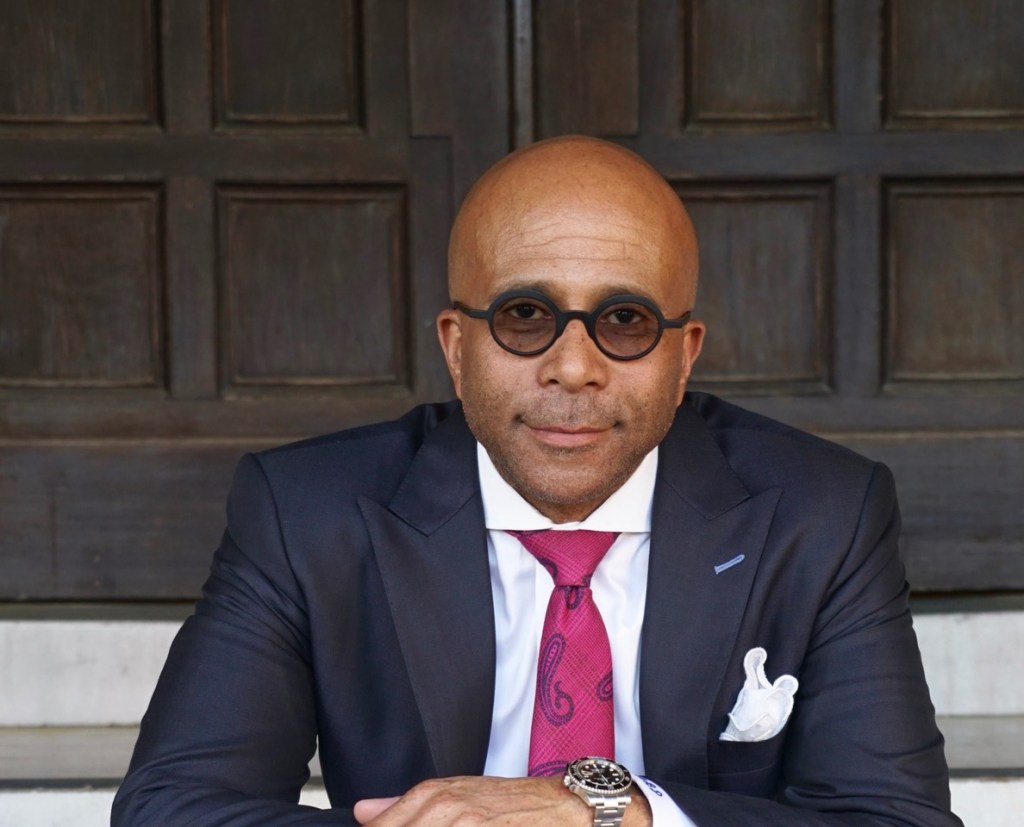
Bryce Harrington interviews the Graceful Atheist

Atheism, Deconversion, Humanism, Podcast, Secular Grace
Bryce Harrington
Click to play episode on anchor.fm

My guest this week is Bryce Harrington. Bryce and I have been colleagues off and on at a couple of different companies over the years. But most importantly he and I had a seminal discussion back in 2012 while killing time in an airport. At the time I was a dedicated Evangelical Christian and Bryce has been a life long atheist. Even though I had an ulterior motive at the time Bryce was kind, gracious and genuinely curious as he wanted to understand how and why I believed. As you will hear, ironically, my former believing self changed Bryce’s view of religious people.

And so I went through a lot of my childhood with this kind of weird relationship with religion. It was like, I just didn’t get it, it didn’t make any sense to me. And everyone around me seemed to be just totally bought into it. And I just didn’t understand why.

Fast forward to today, I told Bryce I had deconverted last year. He was shocked and amazed and wanted to understand how I had changed my mind and why I was doing the podcast. This turned out to be a really fun and interesting conversation that I am glad to be able to share with you. We did not pre-plan the questions. What you hear is Bryce’s genuine curiosity. He may have a career in podcast interviews.

I felt very alone. Everyone else in my family that I knew was religious but I couldn’t share with them at all about these questions that I had or these feelings.

We also get to hear Bryce’s story. The isolation and loneliness he felt growing up the only non-believer in his community. That sense of isolation lasted for much of Bryce’s life. I think many of you who are life long atheists or who have just recently deconverted will be able to relate.

You certainly should not be rude to other people but you should also not pretend to be somebody that you are not just for someone else’s sake.
And I have found myself in that role from time to time and it is very uncomfortable.

Interact

Hell is the Absence of God (thought experiment)
https://gracefulatheist.wordpress.com/2017/06/04/review-hell-is-the-absence-of-god/

Secular Grace
https://gracefulatheist.wordpress.com/secular-grace/

Deconversion
https://gracefulatheist.wordpress.com/deconversion/

Send in a voice message

Support the podcast
Patreon https://www.patreon.com/gracefulatheist
Paypal: paypal.me/gracefulatheist

Attribution

“Waves” track written and produced by Makaih Beats

John Marriott: A Recipe For Disaster

20 Questions With a Believer, Atheism, Authors, Critique of Apologetics, Deconversion, Podcast
Click to play on anchor.fm

My guest this week is John Marriott. We are talking about deconversion from the Christian perspective. John is the Director of Global Learning and teaches in the department of Philosophy of Religion and Ethics at Biola University. John did his PhD dissertation focused on deconversion from Christianity to atheism. He has written a book on deconversion called “A Recipe For Disaster,” which is directed to the Church on the ways they are setting up believers to lose their faith.

I define [faith] as having enough reasons for a hope worth acting on.
I think there enough reasons for me to act on this [faith].

I first came across John’s work in an interview he did with Randal Rauser. I was struck by the honesty and clarity that he had in describing deconversion. In particular this quote:

Something similar underwrites a significant percentage of deconversions. The biblical narrative that once easily fit within their childlike understanding of reality began to get squeezed out as they matured in their understanding of reality. The stories in the Bible about miracles, witches, giants, demons, etc. began to feel as out of place as Santa. To resolve the problems they may seek answers that will allow them to continue to believe in such things as adults in the 21st century. This is the experience not just of those who deconvert but all educated, reflective Christians today. I suspect that even for those that do remain Christians, the cognitive dissonance never completely goes away, it just has been reduced to a level that allows them to continue to believe. For deconverts however, the cognitive dissonance is not sufficiently assuaged by apologetics. It grows despite their efforts and reaches a tipping point. As in the case with Santa, the only way to resolve the tension is to admit what they know is true. God does not exist.

John proved to be as honest in person as he is in his writing. He met me in an honesty contest and we found points of agreement on what it is like to deconvert. Even though we disagree on the conclusions we were able to have a vital conversation.

The reason why I believe it is there is enough evidence for me that I find it persuasive. I don’t find the counter-arguments conclusive so there is sufficient and adequate reason for me.
But why do I find it sufficient and adequate? That is the real question.
And to answer that question it is so complicated:
there are personal reasons
there are sociological reasons
there are emotional reasons
of course there are some rational reasons
but at the end of the day we’re are so much more than mere Cartesian thinking machines.
To be able to say well “I am a Christian because its the truth and it is true because the evidence points in that direction so clearly and I have reasoned it out this way.” Is I think naive in how we actually go about forming our beliefs.

This is a 20 Questions with a Believer episode. John and I take turns asking each other questions and then crucially allowing the other person to answer.

Links

Website
https://www.johnmarriott.org/

Randal Rauser interview
https://www.christianpost.com/voice/the-problem-of-christians-becoming-atheists.html

Books

Interact

Deconversion and How to Deconvert
https://gracefulatheist.wordpress.com/deconversion/
https://gracefulatheist.wordpress.com/2017/12/03/deconversion-how-to/

Send in a voice message

Support the podcast
Patreon https://www.patreon.com/gracefulatheist
Paypal: paypal.me/gracefulatheist

Attribution

“Waves” track written and produced by Makaih Beats

Transcript

NOTE: This transcript is AI produced (otter.ai) and likely has many mistakes. It is provided as rough guide to the audio conversation.

David Ames  0:11  
This is the graceful atheist podcast. Welcome and welcome to the graceful ideas podcast. My name is David and I am trying to be the graceful atheist. It has been a number of hard weeks, the tragic killing of George Floyd has shaken up my country and forced all of us to re evaluate our implicit biases. I just want to say up front that it should not be necessary to say black lives matter. But it is black lives matter. It should not be necessary to say that the police should de escalate rather than escalating violence. But it is much of what I talked about here with secular grace and humanism is about putting people over ideology. And the number one thing that we should recognize is when people are being hurt, the ideology is wrong, not the people who are demanding justice. For my international listeners, excuse me for a moment to being US centric here. Our nation is founded on the idea that equal justice under law is available to everyone. And when we recognize that that is not happening, we need to respond. Before we get into today's show, I just want to read a few statements from our founding documents and what I think are great humanist expressions of human dignity and human rights. We the People of the United States in order to form a more perfect Union, establish Justice, ensure domestic tranquility, provide for the common defense, promote the general Welfare, and secure the Blessings of Liberty to ourselves and our Posterity, do ordain and establish this Constitution for the United States of America. From the preamble of the Declaration of Independence, and I'm gonna use the original language here, so forgive the use of some of the archaic language. We hold these truths to be self evident, that all men are created equal, that they are endowed by their Creator with certain unalienable Rights, that among these rights are life, liberty and the pursuit of happiness. That to secure these rights, governments are instituted among men, deriving their just powers from the consent of the governed, that whenever any form of government becomes destructive of these ends, it is the right of the people to alter or to abolish it, and to institute new government. laying its foundation on such principles and organizing its powers in such form, as to them shall seem most likely to affect their safety and happiness and from the UN Declaration of Human Rights, whereas recognition of the inherent dignity and have the equal and inalienable rights of all members of the human family, is the foundation of freedom, justice and peace in the world. Whereas disregard and contempt for human rights have resulted in barbarous acts, which have outraged the conscience of mankind and the advent of a world in which human beings shall enjoy freedom of speech, and belief and freedom from fear and want has been proclaimed as the highest aspiration of the common people. Whereas it is essential if man is not to be compelled to have recourse as a last resort to rebellion against tyranny and oppression that human rights should be protected by the rule of law. Article One, all human beings are born free and equal in dignity and rights. They are endowed with reason and conscience and should act towards one another in a spirit of brotherhood. People over ideology, people are being hurt. People have had their rights trampled upon. People have been unjustly imprisoned, Black Lives Matter. On today's show, my guest today is John Marriott. John is the Director of Global Learning and teaches in the Department of Philosophy of Religion and ethics at Biola. University. He did his dissertation on deconversion from Christianity. So today's show is about deconversion. From the Christian perspective, John has also written a book called a recipe for disaster in which he is describing the way the church sets people up for deconversion. What drew me to John is a level of honesty from a believer and in some ways, an apologist that I haven't seen anywhere else. And I want to be clear here, John is very much a Christian and very much wants to convey the need for everyone to believe in Jesus and the God of the Bible. At the same time, he seems to recognize the humanity of those of us who have D converted, and rather than straw man arguments against us. He almost defends us and the reasons why we might de convert, we'll get into the details of his argument, which ultimately is an argument to the church. I mentioned multiple times and interview between Randall Rosler and John Marriott. That is the thing that stopped me in my tracks and made me go out and reach out to him and I'm gonna read you just the paragraph that stopped me. He was making the analogy of the way children lose their faith in Santa Claus. And again, I want to preface this by saying John is not saying that, from his perspective that God is like Santa Claus. But he says something similar underwrites a significant percentage of Deacon versions, the biblical narrative that once easily fit with their childlike understanding of reality began to get squeezed out as they mature, and their understanding of reality. The stories in the Bible about miracles, which is giants, demons, etc, began to feel as out of place a Santa to resolve these problems, they may seek answers that will allow them to continue to believe in such things as adults in the 21st century. This is the experience not just of those who do convert, but all educated reflective Christians today, I suspect that even for those that do remain Christians, the cognitive dissonance never completely goes away. It just has been reduced to a level that allows them to continue to believe for D converts. However, the cognitive dissonance is not sufficiently switched by apologetics. It grows despite their efforts and reaches a tipping point. As in the case with Santa, the only way to resolve the tension is to admit what they know is true. God does not exist. Again, I really want to preface this that John himself is not making this argument. He is just defending what D converts go through. Having said that, amen. This is one of the most accurate descriptions of deconversion that I have ever heard from a believer. And, again, that made me appreciate John, reach out to him. My conversation with John was fantastic. What you will hear is that neither of us spends very much time arguing against the other person, we spend a lot of time trying to find the common ground, it turns out we have quite a bit. I think this is the epitome of an honesty contest of the kind of thing that I often try to do on the podcast. If you are listening, and you think I didn't press John hard enough. You're right. i That wasn't my goal. My goal was to hear John's argument and full. I did present my perspective, my experience, and I felt that John was equally as graceful. And I appreciate that. I seems like I am saying this every episode these days, but the audio quality in this episode is not up to par. If this is the first time you're hearing the podcast, please don't judge the entire podcast by this episode. The audio quality was not good. Unfortunately, John's mic was too hot. And as well, because of the state of the world these days and everyone using Zoom every minute of every day, we had a lot of internet breakout. And in fact, I want to apologize to John, there are a couple of moments where he's making spiritual points. And I want to make clear that I didn't intentionally edit these out, but we lost two or three of these points due to internet connectivity problems. I plan to have John on the podcast again Sunday, he has another book coming out that I will be reviewing and when that day comes, we'll make sure that we get the audio in better shape. Having said all that, here's my conversation with John Marriott.

John Marriot Welcome to the graceful atheist podcast.

John Marriott  9:26  
Oh, thank you. It's very good to be here. I really appreciate the invitation.

David Ames  9:29  
Yeah, I was, as I was saying, I really appreciate that you have engaged with me, I emailed you and you were very responsive. And I appreciate that. Want to start by telling the listeners who you are just a little bit of your CV that I've seen, you're the Director of Global Learning, and you teach in the Department of Philosophy of Religion and ethics at Biola University. But the really interesting thing about you is that you did your dissertation focused on deconversion from Christianity to atheism, and you have written a book called a recipe for disaster. Fill that out of bed a little bit more about yourself and why you are interested in deconversion.

John Marriott  10:04  
Yeah, I do work at Biola, which many of your listeners will know is an is an evangelical Christian University in Southern California. And my role there is I oversee, we have two distance learning centers, we call them the centers for intercultural study. One is in Switzerland, one is in Thailand. And we also run one on campus and in that department, as the director for global learning is to make sure those are unwell. And I also teach in a part time role in a couple of different departments at Biola. One is undergrad philosophy. And then one is the philosophy of religion. It used to be called philosophy, religion and ethics notes. It's called Philosophy of Religion at Talbot School of Theology. And I've been doing those now for about for about 10 years, I did do my dissertation and on deconversion. And it started out by I was looking at the I was on the internet one night, and I came across a website that cataloged people who have stories of people who had left the faith, and I was so intrigued by this, the more that I went down the wormhole of the internet, I found that there were literally 1000s of deconversion narratives online. And I thought, well, that's a fascinating area of research, I would really like to know why it is how it is, and what's the impact of people in the lives of people who have left a faith that is one that I hold. And so that's how the whole thing got started.

David Ames  11:28  
Yes. So, you know, that's fascinating being on the other side of that, finding people that are interested in this. And part of what made me reach out to you, John, was I ran across an article, an interview you had done with Randall rouser, and I appreciated the honesty with which you described D converts. And so maybe to begin the conversation, I would say, there's been a rash of very high profile D conversions lately of high profile, worship leaders, authors, Christian authors, written link, the famous YouTube guys. And one thing that I'm fascinated by is the apologetic responses to these, there is, I imagine from your perspective, justifiable concern. But I often think these apologists have never spoken to a D convert clearly, because they are arguing against a straw man that doesn't appear to exist. From my perspective, from the interviews I've done, and my personal experience. Why do you think that is? When what is your approach when you are talking with our studying D converts?

John Marriott  12:36  
That's a really good question. And because of the like you put it out the rash of well known people who have left the Christian faith and the responses that have have come from that, I put some time into thinking about this. And I really think it's, I think that there are two issues. I think there are two driving factors in this. And the first one, I think, is that Christians who remain in the faith are humans, just like everybody else. And I think that there is a natural knee jerk reaction that comes that wants to ascribe maybe blame to these people, whether it's moral blame, or just poorly understood Christianity to begin with, we were never truly in the face. Actually, you know, that it came out that they weren't Christians, because of the fact that they decided to leave. And I think that that's a natural reaction that just about any group has when someone leaves their group. Sometimes it's called the No True Scotsman fallacy where they say, Well, you were never really a Christian at all. And I think that the the human part of the people who make this argument comes out of a certain sense of maybe a little bit of fear, fear that says, Well, if these people who seem to be the great examples of faith, if they can lose their faith and leave, then maybe it can happen to me too. And I don't like that thought, and it causes me a lot of turmoil inside. So the best way to deal with that is to say, well, you know, they weren't actually really Christians, and I really am one, and they aren't. And so that's why they left now, I've seen this actually happened to a gentleman who was quite active in the atheist movement. And he was on he works online, he worked for a well known blog site, and he reconverted back to his Christian faith. And the same thing was said about him was that, wow, he never really adopted him. So I think this is a very natural human tendency. I think the second thing is though, when it comes from Christians, there might be a theological component that's driving it as well. And especially for someone who comes out of Joshua Harris, his background because from a more reformed perspective on Christianity, there is this belief that if you really are born again and God has saved you, then you will persevere to the because he keeps you. And if you can't lose your salvation, sometimes it's called eternal security. And if someone leaves, then it just shows that they were never really saved. And there are lots of Christians who would believe that and it is certainly a defensible, biblical doctrine. There's enough passages in the scriptures that say things like they went out from from among from us, because they were never of us in first, John. So I think those are the two driving factors. There's the human fear component, and then there is the theological component.

David Ames  15:33  
Right? Yeah, a lot of that resonates with me. And first, I want to acknowledge that absolutely. I think the atheists side that we are just as guilty of the No True Scotsman fallacy as as Christians can be, just from a personal story, and I think this is what I want to bring to the conversation is, you know, my personal experience, it's always a really bizarre conversation to have with a believer in which I find myself in the position of defending my former faith. So that often that blame is happening, where is if I'm speaking to somebody who's reformed, you know, and I happen, maybe I say, I'm more of our Minion background that well, that's, that's, that's why you didn't understand the sovereignty of God. If it's the reverse, well, you weren't born again, you didn't make a decision for Christ. If a person is Catholic, and you're speaking to an evangelical or vice versa, you just didn't know you were in the wrong tradition. And you just wind up in these conversations where you're like, I'm not interested in defending that. But just to start at Ground Zero to say, you know, I was a person of real faith. And I think I said in my email to you, what I focus on are typically adult deconversion people who have lived some good portion of their life deeply, profoundly impacted by their faith, and who subsequently are no longer able to believe. And just starting at that ground zero. Sometimes it's challenging, particularly from an apologetic perspective.

John Marriott  16:58  
Yes, I can understand that. And I am troubled when I see someone like Joshua Harris, or Marty Sampson, or Rhett and Link, and there's this latest gentleman from the band Hawk Nelson, who made an announcement. It's troubling to me that there is such a quick diagnosis as to why this happened. And a number of websites will start writing up policies of life and interview their friends and ask them questions about whether or not they've been going on for. And I don't find much of that helpful, because most of the time, the people who are doing writing these articles, and sometimes they're just well known, high profile Christian thinkers, don't know these people at all, I have never talked with them have never engaged with them don't know them on a personal level. And someone reached out to me from an apologetics organization last year, when Joshua Harris lost his faith, and my response to them was I don't know, Joshua Harris. I don't know why he did what he did. I don't know what his underlying reasons were. And I don't think it's helpful. I think it's helpful. In in a, in a sort of a research broad picture, to be able to say, here are the general reasons that the converts give, here are the general processes that they go through. And I think that can be helpful, but I don't think it's helpful to then say, so here's why this person lost their faith, or here's why that person lost their faith. I just, I think it's doing some sort of a diagnosis from a distance that we're not qualified to make.

David Ames  18:41  
Exactly. And we can't read minds. So there's no way to the particular set of circumstances that lead somebody to change their mind,

John Marriott  18:48  
the best diagnosis I think I've ever read. And I think this is a fair one is the BART Campo lo Tony Campo lo documentary and book one, which is, that's called why I left and why I stayed and it's for your listeners, if they're not familiar, Bart Campo is the son of Tony Campo, this very well known evangelical preacher, and an evangelical leader, and his son, worked with him for 20 years doing inner city ministry preaching the gospel and living a very sacrificial life serving the disenfranchised and the marginalized, of the inner city of Cincinnati. And it got to the point, though, that BART eventually lost his faith. He said that he wasn't that he would not believe but he just couldn't believe any longer. And in the book, why I left, why I stayed, they interact with one another. And Tony will say, here is my take on Bart's deconversion. And I think that there's something to be said, for a father's take on watching his son who is known for a long time. So I think this is something that played into his loss of faith. But unless it's someone in that sphere, I don't think saying very much specific about anybody is helpful. It's morally most likely just speculation.

David Ames  20:00  
Absolutely. I'd like to turn now to your book, you have specifically five ingredients you call them for your recipe for disaster. And I'd like you to just give us the highlights of what those five ingredients are. Maybe you could tell us how those might apply to either a BART Campolo, or the gentleman from Hawk Nelson.

John Marriott  20:22  
They don't know, Bart, and they don't know the gentleman from Hawk Nelson. So it's it's kind of challenging to be able to say, this is what, you know, this is why they did what they did. But it seems to me that when you when you step back in when When people found out that I was writing a book on deconversion, and I did my dissertation on deconversion, they always asked the same question. And you could probably guess what that is, and it's why do people lose their faith? And I understand the reason why people want to ask that question. They want to know what they can do differently. But it's, it's never one reason why people lose their faith, right? There's never one reason why people become Christians. And there's never one reason why people lose their Christian faith. And so I decided to try and make the case that it's more of a of a recipe. And you could apply the recipe in some way to the reason why people become Christians, too. But when it comes to losing their faith, it seems as though there is a certain set of ingredients that all recipes have, there's a preparation of those ingredients. And then there's a cooking environment. And the synopsis of the book is that the ingredients are the personality traits that seem to be typical of people who wrestle with faith. The preparation is the poor ways that the Christian church or parents or mentors have have worked with those individuals. And then the cookie environment is the secular world that the environment of the United States or Canada or the West, that is becoming increasingly secular, right. So that's the three parts to the recipe. And so you're asking specifically about the ingredients. And so in short, it seems as though there's a handful of characteristics, that people who end up leaving their faith or even people who identify as non believers who have not gone through a deconversion process seem to typically have in high numbers. And that would be there is a tendency for people who lose their faith to be above average in intelligence. Now, this is sort of debated, there are some people who will say, look, the statistics that show that and the studies that show that aren't actually all that accurate. There are other studies that say that maybe people who lose their faith are more analytic. And people who who are believers are more intuitive in their reasoning processes. But that has actually nothing to do with intelligence. But there are a number of studies out there that can't be ignored that seem to point in the direction that people who are non believers have high intelligence. The second thing was that they possess a personality trait, which is sometimes called being open to new experiences, psychologists identify at least five major they call them the five big personality traits that people seem to have that they're born within that they have throughout their entire life. And one of those is being open to experience. And that just means that if someone says, Hey, there is someone giving a talk down at the Student Union about some new position on something, you say, Oh, I'm interested in that I'm up for it. Let's go listen. Hey, skydiving next week, and you want to try that yeah, I'm open, tend to lose faith to be score quite high in. And this is seen in both Europe. And in the United States, hein stripe is a researcher over in the UK, in Germany. And he's done a cross Atlantic study on people who have D converted, and one of the things that they have in common is that there really is this open to experience category that they score high. And he also found that there is an anti authoritarian and anti fundamentalist feeling that many of these folks have, they don't like being told what to do. And they don't like submitting to, to authorities that they find to be overbearing. A fourth one is that there's a high degree of tolerance for ambiguity, which means that, you know, if, if you're in a faith that is very locked down and very narrow and has all of the i's dotted and T's crossed, and says you this is exactly the way that the world is. If you score high in the in the personality trait of of having a high tolerance for ambiguity and uncertainty, you're gonna have a hard time maintaining that faith because you're going to be able to see the tensions that exist in the gray, and be inclined more to want to live in that. But you're being called to live in a faith that is very black or white. And then lastly, the inability to process and reconcile difficulties with their faith. And this comes out of work done by a scholar named James Fowler, a number of years ago, and he wrote a book called stages of faith. And he says, there are six stages that people of faith of any kind go through. And stage three is stage three, four, and five are the important ones. And so stage three is a person who is in stage three, when and he defines most people in most churches in the United States at stage three, when they don't think that any other worldview that other than theirs is a descriptor of reality, it's more of a, you know, a blissful ignorance. It's not an arrogance, it's just an ignorance the world just is the way their worldview describes it to them. And that seems to make sense. There's no cognitive dissonance. But you know, if you get exposed to other people and other views, then you might move into stage four, where now you're starting to recognize that there are tensions between the reality that you have been taught and the reality that, you know, stage five, is when you somehow managed to go through stage four and go back to stage fright and move up to stage five, were you able to live with the tensions of your worldview, and you realize that not everybody has to see the way the world that you do and that everyone's worldview has some tensions. And so you kind of chill out and are and say, Okay, I can handle this. It seems as though people who lose their faith are unable to push through from stage four to stage five for whatever reason, and this is not a criticism, it just seems like, this is where they're at. Because Fowler says that stage four can be so mentally taxing and exhausting. But you can't go back to stage three because the genies out of the bottle you can't go back to and, and you can't fight and find way too many to hold your faith because you use the only other option you have left. And so those seem to be the characteristic ingredients of people who ended up leaving the faith.

David Ames  26:24  
Again, why I reached out to you is that this resonates with me, I want to point out and say, the obvious care not because your first element is about intelligence. And in fact, I think that might be the one I would challenge. In that I've said often that this is rarely about intelligence. And in particular, because the person that I was, as a believer, used, you know, whatever intelligence I have, and that didn't change, when I became a D convert, one of the things I wanted to engage with you about is I see it as kind of these waves that take place, you begin with the very highly analytic type of people and people that at eight or nine years old, they say, You know what, I can't accept this, right, and they never become believers at all, then you have, you know, maybe a second order group of people that do have faith for some period of time. But again, they have kind of an analytic to them. In my case, I think the technical work that I do just being wrong often and error correcting constantly. I think this is what this bug is. And no, that's not what it was, I was wrong. Okay, let's try a different thing. Error Correction just brings out about, but I think what we're beginning to see now, and maybe the thing that is concerning from your perspective, is a kind of a third wave of people where, because the gate has been open, so to speak, there is more of an intuitive, or a more of, like I've seen apologists accused people of Well, it's because of their feelings that they're now D converting. And I think there's a small grain of truth there, right like that. It's become publicly acceptable on some level. And so you're starting to see people who maybe aren't that hardcore analytic perspective that are coming to this deconversion. Does that resonate as true to you?

John Marriott  28:17  
Or? Yeah, I really think it does. I am becoming more persuaded that when it comes to maybe moral issues, that it is almost an intuitive moral gut instinct that directs the rationality and the reason. And then that almost circles back and justifies for us, the position that we are almost already inclined towards heading towards because it doesn't maybe line up with our, our values. Let me give you an example. One of the there's a researcher in Hong Kong, his name is Terry, who we viewed and followed for three years 623 Chinese Christians he interviewed I think, was about 900. At first, and then other people he put through a battery of tests, then he got 623 of those who identified as Christians. And then he followed this, those 623 Throughout the next three years, and intermittently had them redo the same kind of tests, personality tests. What he found was that there were 623 people out of that 900 That became Christians. And then after three years, 188 had left and they were no longer Christians. And what he thought what he found was very interesting is is that when you look at the values that those people who left the faith had before they became Christians, they scored high in characteristics in values such as self determination, power. hedonism was another one that they scored high in low in benevolence low in tradit seat, you know, in the respect for tradition, and so his he didn't draw this final conclusion, but he did say that that, because the there was there was a bit of a longitudinal aspect to this study, that there are certain predictors in the values that people hold as to whether or not they will retain their faith because at some point, they might realize that the values that they have, and the values of their faith don't really line up. And then if that's the case, it's it's much easier just from a human perspective. And I'm not criticizing anybody for doing this, because we all do it, to start to find reasons for why we think intellectually, that it's probably not true. Right? You always have, I've always had these doubts in the back of my head about the Trinity in the resurrection anyway. And now you're telling me, you know, as a Christian, I need to submit to this and to submit to that, and to believe this, and this is an important value. I don't think this is true anymore. So I think that's the case for a lot of people, right. I think that Jonathan Hite, the researcher out of UCB, and I think he's at NYU, now with us at Stanford. He argues that the elephant in the rider, the rider thinks that it's the owl, that He's directing the elephant, but really, it's the elephant who's deciding where he wants to go for the most part and and our moral gut level intuitions operate on the subconscious deep level, and almost make those decisions in the moral areas for us before it gets to a reason. And then our reason sometimes justifies it. So I'm not sure how far I think that holds. But I do think that there's some truth there. Which is why the whole part about whether who's smarter than this debate might not really matter all that much.

David Ames  31:33  
I totally, totally agree. And in fact, you mentioned Jonathan Hite, I feel like I'm swimming in this zeitgeist right now about questioning our own reasoning, and that our reasons tend to be post hoc rationalizations of decisions that we make based on moral intuitions. You've got thinking fast and thinking slow with Danny Kahneman. You've got the enigma of reason. You've got Solomon's the knowledge illusion, and then Jonathan heights, the righteous mind, and all of those seem to be pointing at, you know, we think we are much more rational than than we are as human beings. And so I would agree with you that and one of the one of the ways that I say this is when I tell my deconversion story, and I'm giving the reasons. I'm also aware that some of that is constructed that it's some of it is post hoc, it is how I feel about it. It's my pine sight perspective. But in the early days, I really tried hard to remember what was I thinking, literally, from the days leading up before when I finally kind of admitted to myself, what was I consuming? What was I thinking about? That kind of thing? And I've lost track of that? Yeah, in all honesty, right? I can give you a detailed discussion of the reasons. But I am also strongly aware of the post hoc nature of that, oh,

John Marriott  32:53  
I had a former student, not my personal student, but he was a university student reached out to me and say, Hey, I don't believe anymore. And I'd like to get together with you and have a discussion about our different worldviews. And I knew that the question that would come from him eventually would be so why do you believe like, I don't believe it anymore. But you do. So give me your reasons. And I knew for him it was going to be all cognitive, right? I knew he would want to know, what's all the reasons. And as I thought about it, I realized, I mean, I will tell him the reasons the reason why I believe it is because I think that there is enough evidence for me that I find it persuasive. I don't find the counter arguments conclusive. And so there is sufficient and adequate reason for me. But why do I find it sufficient? And adequate? That's the real question. And to answer you that question, I would have, I would say it's so complicated, because there are personal reasons. There are sociological reasons. There are emotional reasons. Of course, there are some rational reasons where I think I'm trying to do my best to evaluate the truth. But at the end of the day, we are so much more than just mere, you know, Cartesian Thinking Machines, that to be able to say, Well, I'm a Christian, because it's the truth. And it's true, because the evidence points in that direction. So clearly, and I have reasoned it out this way is, I think, naive in how we actually go about forming our beliefs. And so I agree with you on this. Now, that opens up a whole nother can of worms, right? Like then, how are we supposed to determine what is the truth if our reasoning is kind of isn't always that valuable? But I guess that would be time for another discussion.

David Ames  34:31  
Absolutely. We may have to have a second discussion. I'm curious, just if you agree or disagree, I often try to describe this as something that happens to me and I hear lots of other D converts describe it as well, that there came a point in which my choice was engaged, my volition was engaged and I began to go do some research. But up to that point, it was things happening to me, right? So I wonder if you agree that belief or lack of belief, or or disbelief is really not a choice entirely that all these sociological and environmental factors and genetic and nurture factors all come into play all at the same time.

John Marriott  35:14  
Yes, I definitely agree with that I will qualify it in in a minute. But I do think that belief for the most part is involuntary. I don't think that you can force yourself to believe in something that you are overwhelmed with evidence for the contrary, I do. I think that if I were to force myself to believe in Santa Claus, I would be lying to myself, and I would know that I was lying to myself. There's not even a positive case that can be made for the existence of Santa Claus, like I think that there can be for the existence of God. Now, some people might say, Well, no, I think they're actually equivalent. But it at least for me, they're not equivalent. But I do think that, for the most part, belief happens to us it's involuntary. From my worldview, and my perspective, I have to open up some space for there to be some responsibility for our beliefs. And I don't think I don't want to say that we are completely determined from all these subconscious and environmental factors that bring us to a particular conclusion. I want to say that I think those shape and form and impact us and are way more powerful than what we realize, I think we are often, you know, like swimmers who are swimming in a current, and the current is actually taking us where it wants to go. And we think that maybe we're actually the ones determining where we're going by the direction of our swimming. But I don't want to say that it's fully determined, because I think that there is a personal responsibility that we have, like you said, to investigate and to think and to come to certain conclusions on things. And then from my biblical worldview, I do think that there are other factors going on there as well. Right. So you know, as a former Christian, that there would be this idea that Jesus says things like, you know, people love darkness more than John writes and says, you know, people love the darkness more than they love the light. All of those would kind of come into how I think about this, but I agree with you that belief for the most part is involuntary.

David Ames  37:16  
Okay. Yeah. And I think part of what is making our conversation you and I work here is that I appreciate and understand that you are fully convinced. And I think that you understand that I am not convinced. Yeah. And so like, it isn't about, you know, trying to undermine your reasons for why you're convinced or vice versa, right. So we just we are where we're at, and we're having the conversation. Oh, and,

John Marriott  37:41  
and I appreciate that. And for full disclosure for everyone who's listening. When David reached out to me, one of the things I said was, look, I'm not I don't consider myself an apologist. And I don't find that interaction to be very helpful. And I'm not very, not very good at it. You know, I'm not I'm not a good quick thinker on my feet. But the other part of it, why I'm not really a great apologist is because you mentioned you said, you know, I know that you're fully convinced, and and the reason why I'm not a great apologist is because I'm not fully convinced. I think when it comes to faith, I define it as having enough reasons for a hope worth acting on. And so I think that there are enough reasons for me to act on this and to step up every day, and act that out and put one foot ahead of the other and continue. I am more convinced than others. And if I read a read Christopher Hitchens, I start to feel squeamish inside. And so I think it's helpful, you know, for the listening audience to know that, I think that that's okay. I think that we can undulate in our confidence, depending on circumstances, or I'm just a very weak believer. I don't know,

David Ames  38:51  
I think you're very honest. And again, that is what really drew me to engage with you is, I can't tell you how rare just what you just said is, very often, people speak in absolutes, including from my side. And I think just acknowledging that we're all trying to figure this out. And we all have the information that we have, and we're convinced, or we're not convinced, I want to make sure that we don't lose track of time here, I want you to have some more time to talk about. So you've discussed the ingredients. And then you have two other concepts, the preparation and environment environment you've mentioned is the secularization of the culture. So we'll kind of leave that to the side. What is the preparation in your recipe that you're describing? And how do you feel the church has done on that? What is your recommendation to the church to change what they're doing?

John Marriott  39:40  
Right? Well, I think that there are four things that seem to come up quite a bit in my interviews with people and reading narratives of people who have lost their faith and the four very briefly are this is that their people get over prepared. And by that I just mean many folks are told and in a suit And I don't even blame them for assuming this because this is what they've been told. And you we generally trust those who are in our authorities over us. They say, Look, this is Christianity. And unfortunately, it's not Christianity, what they're given what they're given is often a very bloated, very fragile, very inflexible House of Cards, kind of faith that says, All of these things are essential and have to be true. And if you pull out one, the whole edifice is going to come crashing down. And so you have to believe in literal six day creation, because the entire Bible rests on literal six day creation, you have to believe that the Bible is absolutely inerrant. And that is the foundation of your faith. Because if there's one error in it, then why trust any of it, because it's God's word, you should just throw the whole thing out. And it's not even just those, those are the primary ones, but then there are others, you know, like that the baptism has to be this way, and that women have to have this kind of a role. And what folks don't realize is that, I think, well, it's justifiable to have secondary and tertiary third level beliefs, I think what is helpful is to believers, and so this time raising my kids, these are the essential beliefs of Christianity. And I know that you could debate what those are. But I will point back to early creeds of the church, where the early church is a unified body, you know, before these various schisms, and they'll say, like, here are the 10 essential things to be an orthodox kind of, within the parameters of the community, Christian. And so as long as someone has that sort of a sociological view of Christianity, that I that I think is the one that needs to be passed on, and then to go deep on those beliefs, but for the most part, like I interview people, and they almost always come on to these very conservative fundamentalist backgrounds, who don't think that being any other kind of Protestant is okay, who thinks that Eastern Orthodox are all going to hell, you know, all Catholics are, are going to hell. And I want to say that that's way over preparing them that you're giving them something in Korea, Christianity for them, and making them carry this huge Wait, when they don't have to now, if you do, just give them the pared down essentials version, and then tell them listen, you need to think well about secondary issues. And third level doctrines like you should think about those things. That doesn't guarantee that they're still going to that they're going to stay in the faith. It's just one less impediment that sets them up for a crisis. Right. So that's number one. Number two is being underprepared and underprepared. I just mean, the Bible is a book that's been that's written, you know, even if you just go back to the time of King David, it is as far in the past to us, as 5500 is in the future to us, right. So we really have to help in the church, we really have to help people who pick up the Old Testament and look at it from an I don't mean this in a negative way. But from our modern moral sensibilities and understanding of the universe, we often tend to read through those lenses back into the Old Testament and see it as this just whacked out understanding of talking snakes and naked people in a garden, and floating axe heads and donkeys that are talking and all of genocidal sort of violence that's asserted assumed. I don't think that we've done a very good job of helping people think well, about the nature of the Bible. And let me just give you one sort of classic one, just one really quick example, then I'll give you the next one. So, you know, my, my, my daughter is in the third grade right now, just going into the fourth grade, and she will learn higher level math next year. And then after that higher level and higher level and higher level, and if she sticks with it, by the time she's done University, she will know enough math, that if she majors in it, she will love math to be able to see the rock. She'll understand the physics. But she will probably have the same Sunday School understanding of Adam and Eve story in the Garden of Eden. Right? It never seems to get nuance levels of understanding helped to be seen in a different kind of a light that seems to be able to make more sense in a 21st century world of science and technology, and also at the same time trying to be faithful to the text. Right. So I don't think that so I think it's very challenging and very difficult for students who go to UCLA to go to a church that takes that that would say they have a high view of the Bible. And that reads the stories in Genesis and maybe a fairly literal sort of maybe not nuanced, simplistic way, and talking about snakes and naked people and all that stuff in the garden. And then they go off to their physics class at UCLA, and they're figuring out how to beam their voice to outer space to a satellite and then to their friend on the other side of the world instantaneously. How do you hold these two in you know, intention? At some point you go I don't get it. So that's The second one, I don't think we've done a good job. I think you're underprepared. And quickly the last two, ill prepared is when I think and this is someone will certainly could argue this with me, but is when I think that young people specifically, are given a set of expectations and assumptions about what they can expect from God, or what God's going to do for them or what Christians should be like, or what it means to believe the gospel. And it's a very poor understanding and a very poor concept. And that sets them up for expectations that don't get fulfilled. And then that sets them up for for disappointment. I can't tell you how many people who I've met who have said, you know, God didn't come through for me, God didn't do this. God didn't do that God didn't intervene. And why am I suffering arises hardship going on? And then I will ask them just nicely, like not trying to be argumentative, but just wanting to know. But are you familiar with any of the passages in the Bible that talks about people suffering and what to expect and suffering will happen and that Jesus suffered, and, and this just seems to be a foreign concept to them, because they have this Americanized view of Christianity that we should be prosperous, and we should succeed, and that nothing should ever bad should happen. And that if I'm good to God and follow Him, then God's gotta God has to have my back and has to do what I expect him to do. And so there's that. And then the last piece is, is that they're painfully prepared, and that is when when Christians just really treat them poorly. Right, judge them, criticize them, have no patience with them, demonstrate hypocrisy, all of those are the kinds of ways that I think that people who have this particular set of of ingredients are negatively affected by by those of us in the church. Yeah, I

David Ames  46:40  
think I have interviewed probably people in most of those categories, that would point to, you know, they wouldn't frame it that way that that was kind of the thing that led up to a deconversion for them. So you and I exchanged some emails. So I've hinted at where I'm going with this. But I'm curious what you think, for a person who does have a nuanced perspective on the Bible, who has, I know kind of what's trendy right now as Mere Christianity, you know, CS Lewis's perspective on, it's about the resurrection, it's about what Jesus did that kind of thing. And yet they still they find themselves unable to believe that the resurrection occurred, right. So so rather than looking at the tertiary issues, looking at the main thing, as they, as the apologist says, If I am unable to believe that the resurrection occurred, Am I justified in not believing in God's existence?

John Marriott  47:37  
Yes and no. Right? So of course, I'm answering this from my own worldview, sir. And so let me give you the Yes, part first, I think that in order to be rational, we need to form beliefs in the proper way. I don't think that a belief is necessarily inherently rational or irrational. Maybe there are some very rare exceptions. But I think that for belief to be rational, it needs to be formed in the in the proper way. And part of that proper way is having some reasons and having some, some arguments to support it. And so if someone comes to the position where they say, I've looked at all the evidence that I've looked at all of the reasons, and I am unconvinced, then then I think that there is a certain amount of there's there's not a culpability there, right? Because because there is this part, where if you aren't convinced you you don't have control over necessarily what you believe. Right? You just don't, you can be in some sort of willful, state of to varying degrees of self delusion, I suppose. And that's, that's possible. But I think no, so on the face of it, I would say no, of course not. If you're not, you're not responsible if you come to this conclusion. And because you don't think the reasons are good. But then there would be from, from one biblical perspective, and I try and qualify that by saying one biblical perspective, because there's not necessarily just dance but I think that that would say you would be the part where Paul would say things like in Romans one where he uses the word that God has revealed himself to the degree that people are without excuse and the word he used there, you might well know is the word of Pollack, yeah, that there without any kind of defense because for what has been made manifest of God can be known by them because he's clearly revealed himself. And then Paul goes on to say, in the created order, and then in just consciousness as it were itself. Then he says, the reason why they don't see this they're not convinced of the reasons or because of this propensity and this desire to not just to sin but to fail to recognize God as an authority in in their life, and in Ephesians, he makes the same kind of argument where he says, you know, their, their, the blindness of the hardness of their hearts is really the reason why there is this, this ignorance that he uses that term in, in the belief in God, and specifically the God of that he's talking about the God of the Old Testament, the god of Jesus. So. So on that regard, if I'm a Christian, and I take the Bible as my final authority and criterion for truth, then I would say that, yes, there is a certain amount of culpability there because the Bible says that, that you are responsible for that. Does that make sense?

David Ames  50:37  
Yeah. And again, you know, having been a former Christian, I know exactly where you're coming from. That's why again, so one of the features of both the the interview article which I will have links in the show notes, by the way, for the listeners, and I've only unfortunately read the first chapter of your book I plan on reading the rest of it, is that you seem to be very generous and acknowledging the deep converts are really seeking after truth. They're trying to be they have integrity, about their intellectual honesty, they are trying to resolve cognitive dissonance. And I think I put that question to you this way, there's a way of reading your work, which seems to make the skeptic look really good. And if you read it in kind of a negative way, or almost, it's almost negative towards the believer, I'm very curious if you've gotten any pushback from either University, or pastors or people of faith from your work.

John Marriott  51:36  
Well, I'm a I'm a small fish in a very large pond. And so

I think my royalty check from that book, but my wife and I dinner at a low end restaurant. So

I don't think I think I'm sort of off the radar. In most cases now. The it has been some people who have read it and have it. I think that I want to listen to and that I, I'm concerned about. One criticism comes from a particular theological perspective. And this one, I think, is, from their perspective, I understand where they're coming from. And so will you they say, since a Christian cannot lose their salvation, John Marriott has just gone out and interviewed a whole bunch of people who were never Christians, right. And then taken from that information, distill that down into advice on how to keep non Christians just churched. Keep them in the church. But But still, they're not Christians. Yeah. And so I hear that I need to do a better job of explaining what I'm doing there. I have had some people say, look, you've given away too much in your emphasis on the essentials and having, you know, in pushing people to to go deep into affirm, you know, the kind of creedal statements that have always been part of his historic faith. Are you saying that it doesn't matter if someone believes that Abraham offered up Isaac, is that just fair game, you can just ignore large swaths of the Bible because the Bible doesn't talk about the Creed's don't talk about things in the Bible. And I think, Oh, I thought that was kind of a given that, that didn't have to be said that you should still take the Bible seriously. And that it is a criterion for truth, you know. So there, there has been that I try in I, you know, I'm writing as an insider. And I'm writing as an insider in in, hopefully a way that offers a corrective and I want to be gracious and charitable to those who have left, because I've seen how oftentimes they how they feel. And the impact in their life has been quite startling, for at least the first while. And so I'm trying to write as a social scientist, as opposed to a theologian. And from a social scientists perspective, I think that yeah, we haven't always done a great job in in the way that we've engaged with people. And I do think that, and this is where I could maybe get in a bit of trouble. I do think the apologetics industry has oversold the case for the truthfulness of Christianity and has not done it has done a disservice because you go in and look at bookshelves in a Christian bookstore, you'll find titles like Evidence That Demands a Verdict. And the verdict is not in question, right? Like it's so clear that it demands a verdict or beyond reasonable doubt. That's another book title. Yeah, without a doubt, that's another book title. And I think these may, might sell but you're really setting up people for a crisis of faith, because if it was all beyond any kind of reasonable doubt, it would seem as though there would be no room for it whatsoever. And it seems as though God is relationship, not one that is just built on the end of a logistic syllogism. So that's kind of why I try it. Be a little bit more compassionate to those who have left the faith. Now, I also want to say just in balancing that out, I've interviewed a lot of people who I can who I mean, as far as I can tell, after the interview, I walked away and said, Wow, they sure had an axe to grind, or they didn't want to be Christians to begin with, or they never truly understood what was, you know what Christianity was, like, when I hear someone say, Well, I prayed a prayer, you know, and, and I pray that prayer, and that's what made me a Christian. And then, you know, they say, oh, and then I found out that I couldn't just do whatever I wanted, whenever I wanted. And I was supposed to submit to the Lordship of Jesus and all that kind of stuff, then I say, okay, yeah, there are people like that out there. But not everyone is like that out there.

David Ames  55:45  
Yeah, again, I want to acknowledge as well that, you know, people either choose not to continue their faith or to investigate it, or, you know, the the idea of just the examined life, you know, people that aren't interested in that there are certainly people that are that are like that, again, anecdotally, the people that I tend to talk to, really did, they worked very hard that, in your words, submitting to the Lordship of Christ, of trying to live out that faith doubling down as the doubts came, and yet still found that the House of Cards came down.

John Marriott  56:21  
Yeah. And those would be the people that I would have interacted with, at least I tried to interact with doing my dissertation. And those are the two people who are trying to interact with now. Because those are the ones I think that are certainly the most interesting, right? It's easy to say, that guy, you know, by his own testimony was never truly serious. And it was never deep in his life. And it was maybe an intellectual kind of ascent. But but then I was just talking with a friend of mine, who is a pastor at church. And he said, he said, Yeah, I know, a fella who I went to seminary with, and he was a pastor for like, 20 years. And he no longer believes he's lost his faith. And when I talk with him about it, he's heartbroken over it. He says that belief, you know, unbelief happened to him. It wasn't something that he sought. And I think that that's really interesting to figure out why that happens. And if I ever do, then that'll be the book that gets all the attention. It's so complicated, and people are so you know, people are so complex.

David Ames  57:35  
Yeah, I resonate with that. I think if you ever engaged with people from, say, the clergy project, which is a number of people who are or were in roles of leadership in the church, who have subsequently D converted, that you would find a very common thread through their of trying very, very hard to do the right thing and still finding that they were unable to do so. One of the my last few questions is, is it just because the statistics are available that we tend to focus on the 20 year old who walks away during college, I very rarely see either research or books written about adult D conversions. Why is that? Is it just that there's no data available for that?

John Marriott  58:19  
That would be my first guess my second guess would be that, you know, I think I think a piece of why deconversion happens that's really hard to quantify. And I think that this is a controversial statement. But I do think that when psychologists talk about something that's called like, they call it a false self, I think this concept of false self is, is sometimes at play. And a false self is not. It's not a pejorative term. It's a term of censure, there's no criticism of a false self. The false self is just the self that grows up believing what they think they're supposed to believe in doing what they think that they're supposed to do. And at some point, they realize that that might not be who they really are deep down in their core and, and at some point after that they become strong enough and mature enough and emotionally developed enough to be able to say, Hey, this is not who I am. I think maybe a parallel could be when people maybe know at a young age that their same sex attracted, but yet they believe that it's wrong, they think that it's wrong, they would, you know, they don't act on it. They may not even admit it to themselves. But at some point, they become an independent, strong, psychologically stable, emotional person. And then they go, Oh, this is actually who I really am. And I think that that process probably happens for most people in their, in their 20s in their, you know, post adolescence, when they start to gain independence and think a little bit more for themselves and realize this is what I believe this is what I think. And so maybe that's why we see more folks who deconversion leave whatever faith tradition there is around that period of time, because they're also leaving home and being exposed to all kinds of different thinking and different ways of living and worldviews? Well as the older we get, it seems like we become more thinking unless we're working really hard. And there probably are less people who are going through that may be false self to authentic self transition at that point in life. Now, I just want to say one other thing is that I'm not exactly sure what I think of the false self authentic self kind of transition. But it does seem to me that if you can remove any kind of sort of moral condemnation from those terms that they might connote, there might be actually something there.

David Ames  1:00:42  
Yeah, it's interesting. And again, one of the things I appreciate it and your work was, you know, you talked about integrity, you talked about authenticity, all of those things, really, maybe it's my ego talking, but really resonated. It's like, Yeah, I mean, those are the reasons. You know, that's what led me to, at some point in time, give myself permission to go look for answers outside of the bubble, so to speak. And ultimately, that led to deconversion. If you have any questions for me, we could do that now.

John Marriott  1:01:13  
Oh, sure. How about? Let's see, I didn't have any questions thought out. And I'm sure that you probably recounted this other places. But I'm curious as to what would have been the intellectual reasons that when of faith that you conclude, like you said, you know, I either don't think there's sufficient evidence here to warrant belief, or I think it's just untrue. What were some of those?

David Ames  1:01:39  
Yeah, so it's hard to summarize all of it. I think that there were two key concepts that started to fall apart at the same time. One was, I began to question dualism, itself, right, the idea of something other than the natural and specifically as it came down to the soul, you know, what were my reasons for believing that I have an eternal soul, that is something other than this body, that will go on after I die, that started to fall apart for me. And then, simultaneously, you know, and and again, I know this is post hoc, but like, around the same time, I was thinking about what were my reasons for believing that the resurrection occurred. And as I started to question kind of the one that about the physical nature of who I am as a person, the other started to fall apart as well. I went to Bible college, I wouldn't call myself into having been an apologist, but I liked philosophy. And I liked apologetic arguments. And I found those things interesting. So it wasn't that I had not examined these things very deeply. But there was a part of me that always said, someone smarter than me has proven this or has better evidence or something somewhere. And so when I finally gave myself permission to go seek that evidence, I was a bit horrified to find the weakness of the apologetic arguments. So to be fair, I can totally appreciate you know, someone who looks at the historical record that we have, and comes to the conclusion that the resurrection occurred, there's enough evidence for them. For me, it's an extraordinary event. It's it's the most important event in all of history and all of the universe. And that not to have a lot more evidence. And so that doubt began to erode. What formerly would have been pretty rock solid faith. And the more I thought, someone smarter than me, somewhere has got this nailed down. And I kept looking and kept looking, kept looking, and really didn't find it. That summarizes it in effect, but I just could, I found that I could not believe the resurrection occurred anymore. And for me, I agree with Paul, either Jesus rose from the dead, literally a man who was the God man on earth, died and rose again. Or if that didn't occur, this is all worthless, right? And so when I admitted to myself that I didn't believe that the resurrection occurred, I was done that, you know, I wasn't interested in going to seek out progressive Christianity or various flavors of other theologies or what have you. I just knew I'm done. And then very, very quickly, I realized, I'm a naturalist, right? I didn't know what that word really meant, you know, but now I understand that. Yeah, I think, you know, I think the physical world is is what is and that science is the way that we discover that. And back to just really quickly, one more thought is, again, that error correction, I was willing to be wrong. And I talked about deconversion as kind of the ultimate repentance. What I'm saying is, I was deeply mistaken about the most important thing on earth. Right and it was coming to me See that I believed something that I then subsequently believe did not have sufficient evidence to hold true.

John Marriott  1:05:07  
Right. So that sounds to me different, a little bit different than what one of my assumptions about loss of faith is. And so tell me if you if you think that you're a bit more of an outlier, or if what I'm assuming is incorrect. There's a gentleman out here at Claremont and his name is Phil Zuckerman, I'm not sure if you know his name. He's written a handful of books on on this faith exit and, and secular societies and things like that. And he has in his book on faith exit, a section called one of the main reasons why people leave the faith is he calls it acquire incredulity syndrome, by which he means that over time, like, it's like the death of 1000 cuts, to the point where at some point, you just realize like, Oh, it's just completely gone. Like it's, it's, I just don't believe anymore. And it wasn't, wasn't one thing that did it. It wasn't one crisis moment of faith. It wasn't finding one error in the Bible, but it was this whole kind of, there's a pile of straws, and eventually the one straw broke the camel's back. And, and that's why they ended up kind of losing their faith, your sense to be a little bit different, or is there more of a backstory to yours?

David Ames  1:06:28  
I relate more to what you're describing there. A good friend of mine, who I interviewed Matthew Taylor, very succinctly said this. And he said, You know, I suddenly became aware that I no longer believed, and he said the suddenly is describing my awareness. The process took years. And I really relate to that, that, in hindsight, I can see steps along the way of, you know, liberalizing opening up my worldview more again, I always was a bit of a pop science geek. So it's not like that was a new thing. But like, really recognizing that I felt, from an epistemological point of view, that scientific method has at least greater authority, if not the most, and that that had deep implications about the positions that I held.

John Marriott  1:07:20  
Oh, so. Yes, so that sounds really similar to what you said it Matthew Taylor. Yeah. Matthew Taylor. Yeah. So when Matthew Taylor describes it as a sort of a sudden awareness, that sounds a bit like the journey that CS Lewis took into Christianity where he says, he was sort of, you know, he was kicking and screaming all the way. And then, you know, over time, he found himself realizing that he believed and he describes it as he was on a motorcycle. And he was riding from one point place in Cambridge, I think, to another place in Cambridge. And, and he says, he realized that when he got after it was all done. He was on the motorcycle, he hadn't crossed over to a position of belief. But he knew by the time he got off that motorcycle, it dawned on him, and he was suddenly aware that he actually did believe. And it seems as though yes, this is a similar kind of a process of how he came to faith and how many people exit out of faith, which is why I think that proof loss is very often a, there's a something that happens to people as opposed to something that they're willfully going out and trying to find rest rationalizations or justifications to get rid of

David Ames  1:08:28  
two things I want to respond to that. One is I agree that just changing one's mind about some deeply held belief. It has that characteristic. And I will put in the show notes, a TED talk from a lady who describes it and uses the analogy of a phase transition the way water goes from liquid to solid or, or the other direction into a gas. And that it's not that the temperature has been static and then suddenly changes. It's that you know, the temperature can be rising or lowering. And if there's this moment of phase transition that takes place that can from the human perspective, have a sense of suddenness about it. Yeah. And yet that process of the temperature changing has been going on for a period of time.

John Marriott  1:09:14  
That's a great, that's a great illustration. That's a great example. I'd like to see that. What is she talking about, by the way, in the TED Talk? Is

David Ames  1:09:20  
it about changing, just changing one's mind? Oh, okay. I will definitely I will pass that along to you and email after this conversation, and we'll have it Oh, great. Yeah. Great. And then one other thing I wanted to point out is I've written a kind of a tongue in cheek blog post about the process of the deconversion. But that describes this, right? The first three phases are like, what I call precipitating events, things that just any little thing, a blip in the matrix, something that causes you to stop just long enough to valuate to think about some deeply held assumption. A second step is what I call a critical mass that that might be the analogy of the dark night of the soul, right? There's enough of those precip tedding events that they've mounted, and you have to take it very seriously at that point, and that the third step in there is kind of giving yourself permission to ask the questions. And that's the order in which I experienced it, right? Like these things happened to me, I didn't, you know, I didn't have any control over those. And at some point, I decided, I want to go find out for myself, and I'm gonna go figure this out, wherever the truth lies.

John Marriott  1:10:24  
Yeah. And I think that's probably pretty consistent with the the people who I, who I believed had somewhat mature faith, faith that was fairly informed, and then eventually left it it was usually that's sounds like the process that they went through, there are others who did not have that kind of quality to their faith. And, and it was simply maybe a matter of, well, I have to, I'm supposed to believe, and believe is the same as certain. And now I've got this doubt in my head. So I don't believe anymore. So I'm no longer a Christian like, those are those folks. I mean, they're important. And certainly, their experience matters. But that's not as interesting to me as people like yourself who have had a massive change from a faith that from, from all indicators was genuine and real and meaningful and deep. And and I think that that's really where the interest lies in this whole discussion.

David Ames  1:11:25  
Yeah. So yeah, John, I hope that maybe you and I can continue to work together. You know, if you have people that you are interested in interviewing, my back catalogue has got some fascinating characters in it. Sure. I do think we are wrapping up on time here. So I want to give you an opportunity, people, I think, will be shocked and amazed to hear your honesty and the way that you are approaching this, how can they find you? How can they interact with you? How can they find your book?

John Marriott  1:11:52  
Oh, thanks. Well, first, let me just say that the approach that I do take is is one that, you know, I don't see you as my enemy. I see us as being in two different ideological camps. But those are ideological camps. And that neither one of us is absolutely certain and knows for sure that either one of us is right or the other one is wrong. And so we are kind of in the same boat together trying to figure this stuff out. And I've come to one conclusion, you've come to another. But that does not negate the fact that we're dealing with the same questions. And even if I do think that you've come to an erroneous conclusion, in minds, right, I'm still called to love you as somebody who is made in the image and likeness of God and to treat you with dignity and respect. And so that's how I try and come at this. I'm not interested in getting into apologetic arguments with people about why they're wrong. And and if someone wants to ask me why I think what I do, I'm happy to, to say that, but my explanation and my, my apologetic skills will only go so far. And I don't expect them to to persuade really, to be super swayed very many folks. But having said that, I do have a website, and it is WWW dot johnmarriott.org. And Marriott is like the Marriott Hotel, two Rs, two T's, and John has DOH. And I have a book that is mostly directed to those folks who are in the church, the recipe for disaster. But I have another one coming out with Abilene Christian University Press. It'll be out next year, and it's called the anatomy of deconversion. And what I did was I took all of my interviews with all of the folks that I did in my dissertation and put it into kind of a popular slash academic book that looks at is grounded in the testimony and the words and the stories of people who have lost their faith. And so the first part of the book is, is all that it's the reasons the process the impact, how people mitigated the impact, how they impacted their family life, their intellectual life, their emotional life. Surprisingly, the dissertation itself was called the cost of freedom, because the vast majority of people who are interviewed said, while losing my faith was really hard, but it was worth it. Because I felt like I was set free. Right. So I raised the issue in the book at the very end that it's incumbent upon Christians to ask what kind of faith are they passing on to people if they think that once people leave it, they say hoof relief, right, so so that one actually is probably the one that may be more interesting to folks who are on the other side of the deconversion line, and that that'll be out in a year, but you can find all that kind of stuff on my website. And of course, as a Christian, I would like to try and do things to help people maintain their faith, but to do so in a way that is that has integrity and isn't just sort of some cheap kind of keep them in just for the sake of numbers or something like that. So thank you.

David Ames  1:15:01  
Well, thank you, John, for sharing your research and your insights. And again, mostly for your honesty and the grace with which you have described the deconversion process.

John Marriott  1:15:13  
Well, thank you. And likewise, I really, I really appreciate the discussion. I really appreciate. It was really enjoyable, and I'd be happy to do it again.

David Ames  1:15:24  
Sounds good. We'll have to plan. Okay.

Final thoughts on the episode? Well, that was an amazing conversation with John Marriott I, again, appreciate so much his honesty and the gracefulness with which he had the conversation. I'll point out again that neither of us spent very much time arguing with the other person, we didn't spend a lot of time pointing out the points of disagreement, we did find a number of places where I think we have a mutual understanding, even though we would come to radically different conclusions. I want to say here unequivocally that I understand that John is very much a person of God, and that he believes in Jesus Christ, and that he believes that all people should be Christians. But what I appreciated about him is his generosity with the way that he talks about and interacts with de converts, such as myself, I never felt like I was being talked down to. And I hope that he felt likewise, having said that, I think that what John has to say to the church is really, really powerful, mostly because it is honest, and it is a somewhat accurate perspective on what D converts go through. I want to highlight one particular quote from the conversation. And I encourage you to if you missed it, to go back and listen to the full context, make sure that I don't leave anything out here. But he says the reason why I believe it it is it being Jesus in the resurrection, is there's enough evidence for me that I find it persuasive. I don't find the counter arguments conclusive. So there are sufficient and adequate reason for me. But why do I find it sufficient? And adequate? That is the real question. And to answer that question is so complicated. There are personal reasons. There are sociological reasons, there are emotional reasons. Of course, there are some rational reasons. But at the end of the day, we are so much more than mere Cartesian thinking machines to be able to say, Well, I'm a Christian, because it's the truth. And it is the truth, because the evidence points in that direction. So clearly, and I have reasoned it out this way, is I think, naive, and how we actually go about forming our beliefs. And, again, this level of honesty is incredibly refreshing and also incredibly revealing. I understand that John would argue for the opposite side that atheists D convert has equally complicated reasons for deconversion. But if we can all agree that the beliefs that we come to are based on complicated reasons, many of which are outside of our control, we might have the humility to have better conversations with one another. I hope that my conversation with John was one such conversation. Now hope you appreciate it. I hope you will reach out to John, I actually hope you will go buy his books as well. Give those books to the believers in your lives, so that they might understand why and how you went through your deconversion. from a Christian perspective, I think that would be really valuable. I will have links in the show notes for John and his books, I do encourage you to go purchase them. John, thank you. I want to thank you for being on the show and sharing with us your research, your wisdom, and your generosity. I hope to have another conversation or more than one more conversation with you in the future. And I hope that you will hear from some of my listeners some encouraging words of identification with the way you have described D converts. Until next time, my name is David and I am trying to be the graceful atheists join me and be graceful human beings. Time for some footnotes. The song is a track called waves by mkhaya beats please check out her music links will be in the show notes. If you'd like to help support the podcast here are the ways you can go about that. First help promote it. Podcast audience grows it by word of mouth. If you found it useful or just entertaining, please pass it on to your friends and family. post about it on social media so that others can find it. Please rate and review the podcast wherever you get your podcasts. This will help raise the visibility of our show. Join me on the podcast. Tell your story. Have you gone through a faith transition? You want to tell that to the world? Let Nino and let's have you on. Do you know someone who needs to tell their story? Let them know. Do you have criticisms about atheism or humanism, but you're willing to have an honesty contest with me, come on the show. If you have a book or a blog that you want to promote, I'd like to hear from you. Also, you can contribute technical support. If you are good at graphic design, sound engineering or marketing, please let me know and I'll let you know how you can participate. And finally financial support. There will be a link on the show notes to allow contributions which would help defray the cost of producing the show. If you want to get in touch with me you can google graceful atheist where you can send email to graceful atheist@gmail.com You can tweet at me at graceful atheist or you can just check out my website at graceful atheists.wordpress.com Get in touch and let me know if you appreciate the podcast. Well, this has been the graceful atheist podcast My name is David and I am trying to be the graceful atheists. Grab somebody you love and tell them how much they mean to you.

This has been the graceful atheist podcast

Transcribed by https://otter.ai

Richard Swan: London City Voices

Atheism, Communities of Unbelief, Deconversion, Humanism, Podcast, YouTubers
Richard Swan: Director of London City Voices
Click to play episode on anchor.fm

My guest this week is Richard Swan. Richard grew up Catholic, became an Anglican and then moved on to Pentecostalism. He was a worship leader and an active member of the Christian music scene including touring as Graham Kendrick‘s choir director.

He began to notice that regardless of his person life the people responded in worship under his leadership. This began his questioning which eventually led to his deconversion.

It seemed to be working and I didn’t like the fact that it was working because it didn’t make sense to me.

Post-deconversion, Richard is now the director of London City Voices, a non-religious community choir.

London City Voices is so much more than your average London choir… We are a community, a group of friends, an increasingly-large group of drinking buddies… and we are also a dynamic non-religious, non-audition community London choir.

Richard has figured out how to use his passion for music to build a secular community. In our conversation, we talk about the power of music to bring people together, how it can be manipulated and what it takes to be a community builder.

Church can give us a little window on [ the human response to music]. If it’s linked to your belief system it can have an even bigger impact. Or not because maybe your a humanist and you just bloody love music and that is no less of an experience.

Links

Website
https://www.londoncityvoices.co.uk/

YouTube
https://www.youtube.com/channel/UCCE7166Y1HBO7_lh7_yjE4g

Twitter
https://twitter.com/LondonCityVoice

Facebook
https://www.facebook.com/groups/412432238841455/

Interact

Deconversion How To
https://gracefulatheist.wordpress.com/2017/12/03/deconversion-how-to/

Send in a voice message

Support the podcast
Patreon https://www.patreon.com/gracefulatheist
Paypal: paypal.me/gracefulatheist

Attribution

“Waves” track written and produced by Makaih Beats

Amy Logan: Exmormonology

Atheism, Deconstruction, Deconversion, Mormonism, Podcast, Podcasters, YouTubers
Amy Logan
Click to play episode on anchor.fm

This week’s guest is Amy Logan. Amy is the podcast host of Exmormonology. She is a certified life coach who helps people through exiting Mormonism, deconstructing and thriving in a post-faith life.

Amy was the perfect Mormon girl. She did everything right. She attended BYU. She was married in the Temple. When she discovered a book covering the full history of Mormonism she began to have doubts. Until she had what she describes as the “moment,” sitting in her car crying her eyes out with the realization that she could no longer call herself a Mormon.

If the church is true, it has nothing to fear,
and I get to figure this out.
It was at that moment I gave myself permission.

She continued on for a while trying to maintain some semblance of belief. She tried to “hang on to Jesus.” But eventually that crumbled too.

Its all bullshit.
Everything single thing I believed and held sacred and true it is not real, it just isn’t real.

Today, Amy helps those who have also left the Mormon church live full and healthy lives. Exmormonology is not just for those who have left Mormonism, it is for anyone who has gone through a faith transition.

I knew life was never going to be the same.
But I didn’t know that it could be better at that point.

Links

Amy’s website:
https://amyloganlife.com/

Exmormonology podcast:
https://amyloganlife.com/category/podcast/

Twitter:
https://twitter.com/amyloganlife

Instagram:
https://www.instagram.com/amyloganlife/

YouTube:
https://www.youtube.com/channel/UCWLNS7aHLgQ6UaiJVX8yrDw

Truman Show: ending clip

Interact

Deconversion How To:
https://gracefulatheist.wordpress.com/2017/12/03/deconversion-how-to/

Send in a voice message

Support the podcast
Patreon https://www.patreon.com/gracefulatheist
Paypal: paypal.me/gracefulatheist

Attribution

“Waves” track written and produced by Makaih Beats