Or so wrote William Shakespeare. But in the late 1990s–at least according to Evangelical Christians–hell was full to overflowing and yearning for more souls. The Satanic Panic was in full swing.
Here are some stories from our Facebook community. It’s almost unbelievable what religious people will teach their children.
Here’s a story my church friend’s mom told us as kids: “Once with my girlfriends, we decided to do the thing where you chant ‘light as a feather, stiff as a board,’ and then altogether you are able to lift one of your group with just your index fingers! We did it in the front yard at dusk, and as soon as we started, we saw a creepy man in a cape walking towards us down the sidewalk. We all screamed and ran inside to pray to Jesus, and that’s why you shouldn’t play with the demonic, kids!”
My grandmother used to tell me stories about when the “demons” had a hold on my bio dad. My aunts would get in on it, too. They would tell me how you could see the demon in his eyes and they could hear it roam the house when he slept. And that they prayed it out of him and saw it leave his body. She would tell of many times she banished demons in the name of Jesus. Really he was just on coke. But even in my 20s, when she would tell these stories, they horrified me so much that I slept with a lamp on for years.
In the Charismatic part of Christianity, they tell you superstition is bad and just letting the Devil make you afraid. On the other hand, your words have power, so don’t say anything like “I feel sick” because that’s a “negative confession.” So you’re supposed to feel victorious over evil and also afraid to say the wrong thing.
I was told never, ever to fall asleep listening to secular music because demons could attach themselves to you.
Also, there was grave spiritual danger if you read the horoscope placemat while eating in a Chinese restaurant. Also applied to fortune cookies.
Familiar spirits. You can inherit curses and demons you’re not even aware of, and did nothing to deserve, from the sin of any ancestor way back to whenever.
My mother taught us that Barbies, the radio, secular music of any kind, the Simpsons, Harry Potter, and My Little Pony were all “Satanic”. If I dare to even speak to her regarding horoscopes or the occult, she starts “speaking in tongues” over me. It’s insanity.
I used to have vivid nightmares of demons creeping around outside my room. One of them was about a demon who was lit up staring with large white eyes into my bedroom at night. There was so much talk of spiritual warfare in our house and it was all very much believed so that demons seemed very real. They could come in on books, words, items, music, friends who weren’t as holy.
There were only certain ways to get rid of demons, so I had many exorcisms performed. There were also inherited curses from ‘sins of the forefathers’ which could have demons attached.
Demons could also plague you from sins committed by people who lived in the house before you or even on the ancient land it was built upon. Demons, demons everywhere ‘prowling like a raging lion waiting to devour us.’
I knew people who believed in inherited family demons. Nowadays I call that generational trauma and epigenetics.
There were unforgivable sins and suicide was one of them. I lived in fear that I’d accidentally kill myself and not go to heaven
We lived in half-fear, half-anticipation of the End Times. Our particular group believed that we’d be living through the ‘great tribulation’, fighting antichrist soldiers, doing miracles, and even having energy beams coming from our fingers. There were children’s comics depicting all this and other stuff, very inappropriate for kids. At some point, I guess they decided this wasn’t enough so they came out with new ‘prophecies’ about how we were getting a ‘new weapon’ called ‘the keys of the kingdom.’ Prayer, praise, and all those ‘classic’ weapons were good and all, but we had the new stuff.
If any of these superstitions resonate with your past, you are not alone. Comment below with your own stories! Also, check out our private Facebook group for more conversations like these.
This week’s guest is Ben Reed. Ben grew up in the Church of Christ with a cappella music, no clapping, no raised hands, no prophecies, no miracles, but also no demons.
“Compared to the more charismatic denominations, the Church of Christ is pretty boring…I think that’s kind of why I stayed so long because it wasn’t that exhausting.”
Ben’s years in the church were good—no cognitive dissonance or serious trauma—until 2020.
“It wasn’t until Covid hit that I really started waking up, and I saw how Christians were acting about the masking and the vaccines, and I was thinking, Do you not see the moral implications and the examples that we are supposed to set here?”
By 2022 and a chance encounter with some Mormons, too many questions were surfacing. Cheekily thanking “the gods of atheism,” Ben is now able to ask questions and expect serious evidence before he can be convinced of something.
It seems that “the promises of Christianity are found outside of it”.
“Compared to the more charismatic denominations, the Church of Christ is pretty boring…I think that’s kind of why I stayed so long because it wasn’t that exhausting.”
“I remember…[believing] that ‘being your highest power is terrifying,’—being an atheist—and now that I’m on the other side, I’m like, This is pretty great!”
“There are no thought crimes anymore. That’s a relief.”
“It wasn’t until Covid hit that I really started waking up, and I saw how Christians were acting about the masking and the vaccines, and I was thinking, Do you not see the moral implications and the examples that we are supposed to set here?”
“All that ‘All Lives Matter’ says [in the context of Black Lives Matters] is, ‘Well, what about me?’”
“It just baffles my mind that Christian parents believe that there is an eternal hell of ‘eternal conscious torment’ that their kids have a chance of going to, yet they still are like, ‘Yeah! Let’s have like, four kids!’”
“In my opinion, if hell is real, then humanity needs to die out as soon as possible to prevent more people from going to hell.”
“Would the apostles have died for a lie? Of course not! Nobody dies for a lie! Well, actually, plenty of people die for lies.”
“I just started looking for more evidence to prove the Bible, and it wasn’t really working.”
“I was like, I can’t make myself believe anything even for a minute. You can’t make yourself believe…”
“I realized how flippantly we would dismiss the ‘evidences’ of other faiths while giving our own the benefit of the doubt.”
“Why should I, a human, whom God claims is foolish, have to defend all these terrible things, not to mention do all this patchwork for this book he supposedly left us…?”
“The promises of Christianity are found outside of it.”
“I’m not opposed to anything being true, what I am opposed to is bad reasoning.”
“…Jesus said, ‘My yoke is easy; my burden is light.’ Frankly, I have no idea what that means because Christianity is a hard burden to bear.”
“At a certain point during my questioning, I started thinking, Is this our God? If his plan is so perfect and his message is so divine, why are there so many problems with it? Why is this my responsibility…Why can’t it just be self-evident?”
“Waves” track written and produced by Makaih Beats
Transcript
NOTE: This transcript is AI produced (otter.ai) and likely has many mistakes. It is provided as rough guide to the audio conversation.
David Ames  0:11
This is the graceful atheist podcast United studios podcast. Welcome, welcome. Welcome to the graceful atheist podcast. My name is David and I am trying to be the graceful atheist. I want to thank my latest patrons supporter Curtis, thank you so much for supporting the podcast. You too can have an ad free experience of the podcast by becoming a supporter on patreon at patreon.com/graceful atheist. If you are doubting having the dark night of the soul or deconstructing, you do not have to go through it alone. Join our private Facebook group and become a part of the community. You can find us at facebook.com/groups/deconversion

Two weeks ago we had Holly Laurent on the podcast. She is the comedic mind behind mega the podcast. nega is an improvised satire in the world of a fictional mega church and they are releasing a comedy investigative miniseries inside the world of their own show. It is called The Rise and Fall of twin hills. The Rise and Fall of twin Hills is a hilarious riff on the self important truth seeking that happens around church scandals, and the twisted psychology of those who are inside them. This mini series is chock full of ridiculous scandal. If you think that the real megachurch pastor improprieties we've seen over the last few years are bad. Get ready for the outlandish high jinks of Pastor Steve Johnson. If you're a fan of great comedy parody or just a lighthearted take on deconstruction, then go check out mega and their new mini series that started on May 21. There are a few episodes out already. So look up mega now and follow them you're not going to want to miss the rise and fall of twin hills. It's on Apple, Spotify or wherever you get your podcasts.

Special thanks to Mike T for editing today's show. On today's show, my guest today is Ben Reed. Ben grew up in the church of Christ tradition. He was very dedicated participating in an event called lads to leaders and winning the speaking competition on numerous occasions. And he began to have doubts as he got some space away from the church. One of the nagging problems for him was that he had studied apologetics and he began to see the weakness of the arguments of apologetics then eventually met Andrew Knight friend of the podcast and co host of still unbelievable. Now on this side of deconversion Ben is doing well and is glad to no longer have the burden of Christianity. Here is Ben Reed telling his story.

And read Welcome to the grateful atheist podcast.

Ben Reed  3:18
Thanks for having me, David. It's great to be here.

David Ames  3:20
Ben, it sounds like we have a mutual friend in Andrew Knight. Andrew is one of the CO hosts of the still unbelievable podcast. He's a great human being. And you reach out to me and you were saying that he was one of the people that helped you out along the way. So I first just wanted to say thank you to Andrew, like, continuing to be such a great human being. So

Ben Reed  3:41
I second that he's a great guy. He helped me put into words, I guess the swarm of thoughts that I was having during my deconstruction and ultimate deconversion. So big props to him. Give him a pat on the back.

David Ames  3:57
Yeah. You know, we talked just to wrap this up, like, you know, we talked so much about actually participating doing something within the community. And I think Andrew is just a great example of of doing that. So anyway, we're not here to talk about Andrew, we're here to talk about you. Obviously, the first question that we always ask is, what was your faith tradition growing up?

Ben Reed  4:19
Yeah, so I grew up, like Andrew and I in the church of Christ, which is an evangelical denomination that, ironically believes it's not a denomination, right? They believe and every denomination, I guess, has this sentiment, but they the Church of Christ believes that they're probably the only ones going to heaven. I believed that when I was in the church,

but I'll just run down for the listeners, just some of the notable beliefs or teachings just to get some more context for those who aren't really familiar. So the Church of Christ obviously I've already said it doesn't build What's the domination it believes it is the church. Baptism completely Essential For Salvation. That's the point at which your sins are forgiven. So if you die in a car wreck on the way to get baptized Well, tough cookies, we're going to hell. Yeah. Yeah, like there are no worship bands, it's all acapella. Which I actually really enjoyed the acapella worship is beautiful. There's no clapping, no hand raising. It's led by a song leader. So just one person on stage always a man. And I actually still listen to hymns. I know, some D converts have a hard time after they leave, listen to that stuff. Listen to that stuff, because it can be triggering, but I like they've got some hits. Yeah, I've, I still enjoy them. But also, there are no earthly headquarters like the Baptist Convention or the Vatican. every congregation is separate from each other. And each one of them are led by a group of elders who are in charge of the deacons and the ministers. We don't use the word Pat. Well, they don't use the word pastor. Now we anymore.

David Ames  6:15
Yeah, that's hard. The language is hard, isn't it? Yeah.

Ben Reed  6:20
But they don't use the word pastor. It's ministers. And so it's usually the preacher and the youth minister. Okay. It's practically a sin to visit any other denomination. There are no modern day miracles, no visions, no prophecies, no demonic possessions. And they are young earth creationists. So okay, all of these things are based off of a very strict and narrow interpretation of the Bible, a phrase that I heard, every now and then in the church was, we speak where the Bible speaks and our silence where the Bible is silent.

David Ames  6:54
Okay, and I've heard that phrase. I saw

Ben Reed  6:57
a comment on Reddit that I thought was funny, and I'll share it it said, if it's not appropriate in a murder trial, it probably won't fly in the church of Christ. Which I thought was hilarious. Right. But I mean, it's like it's very conservative. Like, there's no like shouting or like, amen. Brother. Like, it's, it's, it's very, very boring, honestly. So as far as my experience, I have very fond memories of my time in church. Okay, yeah, I grew up at a church of about 1000 people, which is very large for a church of Christ. In the Bible Belt. It's actually in a very educated part of Alabama, which sounds like an oxymoron. But educated people are in Alabama.

David Ames  7:50
I'm sure yeah.

Ben Reed  7:53
But like, I went to church with literal rocket scientists. One guy who was really big into apologetics, who claims to be a former atheist, like, I guess, Lee Strobel, from the case for Christ. Yeah, he has his doctorate in nuclear engineering from MIT. So that kind of gives you an idea of like the people that I went to church with and grew up around. So combined with like the education level and, like, we didn't believe in demonic possession, modern day, demonic possession. It wasn't like that superstitious of a congregation. Got it. There was hell anxiety, of course, because they believe in eternal conscious torment. But, but that was probably it. And compared to like, the more charismatic denominations, the church of Christ is pretty boring.

I think that's kind of why it I stayed so long is because it wasn't that exhausting. I did experience health anxiety, like when I was a teenager, and I'll get to that, but like, I feel like charismatic stuff. It just sounds so much more exhausting. There's a demon around every corner and you can't, like you know what I mean? Constant spiritual warfare. But anyways, growing up my My family never missed a worship service ever. twice on Sunday, once on Wednesday, we were there. I went to VBS. As a kid, I helped prep for VBS. I was went to all the church camps, the church of Christ Church camps. We did this thing called lads to leaders. I don't know if you've heard of that. But it's a it's geared towards, like elementary through high school. And it's a convention every year where it's meant to create new leaders in the church, lads to leaders and like, tell it Looking at it from the outside, it's like super weird, but it was just normal. Basically what happens is you compete against other kids in acts of worship for a trophy. second, or third. So, and this this was to the this was to create leaders. And so there were events like Song leading speech, that was my forte, I won first place a few times, place pretty much every year. And there's like, 1000s of people doing this. So like, it wasn't just like, so let's see, there was a Bible bowl, and like puppets, securing of Scripture where you would memorize all these verses and like, get a plaque for it and stuff like, and looking back. It's like, like, even if God Israel, it's like, that's not cool. Like. Like, yeah. And there's like an award ceremony. Yeah. Yeah. So anyway, but I do have fond memories of that. As weird as it is. It was a good time. Because we were,

David Ames  11:05
that is definitely the first time I've heard about that. So that is,

Ben Reed  11:10
it's interesting. Yeah. Church of Christ.

David Ames  11:12
And I'm assuming from the name that it was only boys as well. Is that true?

Ben Reed  11:17
So to be more progressive, they did. Lads to leader slash leader. In the competitions, you can't, there was no, it was It wasn't co ed. So you had girls song leading, and boys song leading and everything was fine, except for your Bible ball team, which was like Bible trivia. And if you like it was a test, a written test, and you would study a book. And so like, there were girls and boys on the same team. And there was actually also debate, which I thought was a good skill. So like the tissue good skills, like I'm not afraid of public speaking anymore, because of lotsa leaders. They have a debate event for for these kids. So I mean, it could be beneficial. So like, I don't think my upbringing was totally bad. Like, I don't think I was traumatized, like a lot of people have experienced in the evangelical world. But anyways, like, in sixth grade, I was baptized. So like I said earlier, that's essential. That's the point at which you're a Christian. So you got to hear belief, repent, confess and be baptized for the forgiveness of your sins? Or else you're not a real Christian?

David Ames  12:43
Oh, my immediate question that I like to ask people, you know, sixth grade, still relatively young. But was it real for you personally? Was this something you were just going through the motions for? Or did you have an internal sense of this?

Ben Reed  12:54
So I knew that people my age around me, we're doing it at church. And so I felt like, oh, well, now's my time, but I didn't really get it. And to be honest, my parents don't have that strong of faith. So they tried, they tried to teach me and they brought me to the family minister. And he talked to me and the family minister. told my dad like he's ready. Okay. But funnily enough, and I was gonna get to this actually. So it's funny you asked this. I got baptized twice. When I was 17. When I was I was in high school. I started I had like a spiritual, I guess awakening where I really got into apologetics. Really. I mean, I read the Bible every day, deep prayer every night before I went to bed. And, and I was all in. And I started thinking, and what happened? The reason I got into that is because right before that, I was like, I don't think I knew what I was doing when I was like, in sixth grade, getting baptized, like, I don't remember any like conviction. And it's like, I'm scared. I'm gonna go to hell. And I was talking to my youth minister about it at a time and he's like, you should be fine. I'm thinking like, Dude, we can't risk we got to watch it. So you're just still like, oh, yeah, might be fine. Yeah, it's easy for you to say you're not the one going to hell like

David Ames  14:28
I love it. That's amazing. Yeah.

Ben Reed  14:31
But no, but I was like, I was bawling my eyes out because I was so scared. And he, he, he was like, if you want me to baptize you again, I'll baptize you. And so yes, I'll do it. So and that was just like a it was a really off the cuff thing that happened. Like after school one day. I just like texted my mom saying, I'm gonna go talk to my youth to the youth minister after school today. And so like school is right next to the church building. So I just walked over and like, okay, yeah, it was so really like, I don't know, I only had church friends, I didn't really have school friends. So like, I only hung out with church of Christ people. Not even like denominational friends. But the other activities that I did like throughout the youth group, I was on every retreat. I went on the youth mission trips, by the time I was a senior I, I was like a big leader. In my youth group, a lot of people looked up to me, and this was a youth group of about, like, 100 kids. So like, pretty big, especially our church of Christ. So funny, weird memory that I have from. So like purity culture, obviously is big in evangelicalism. And it's in the press who, I guess they don't have as many rituals, like the Purity Balls, and the purity bracelets and stuff like that, or rings or whatever. Definitely not chastity belts. Thanks, thank goodness, but the we did a guy girl retreat every few years. And this is my first one was when I was 15. And I'm 28 now, but let's see, the guys go somewhere, and the girls will go somewhere. And you know what they're going to talk about sex. And they, the youth minister during one of his lessons, he's he suggested to us teenagers that whenever we start dating a girl, we essentially enter it like we write up a contract with the girl's parents saying that we will not have sex with them until we are 15 I was

like, that seems a little excessive. was in his 40s? Like, yeah, so weird. I wouldn't feel comfortable. Like, I feel like it would be less awkward if they walked in on us.

Anyways, but like, I went to college, I was active in the church of Christ Christian Student Center, like we had our own building, and I was active in church that throughout college. I would, during the summers, I would come back home to my home church and be a counselor in the middle school guys cabinet camp. for like three years after college, I chaperoned on a few youth trips. And I was actually at one point for two years, I was also a small group leader for the senior guys in the youth group. And I actually remember in that small group, I remember telling them, that being your highest power is terrifying. Like being an atheist. And now that I'm on the other side, I'm like, this is pretty great. This is really nice. Yeah, I mean, obviously, like not the hot like highest power, I guess, in the spiritual sense. Obviously, like I follow the law, you know, I pay my taxes, but like you but more of like a moral sense. Like, there are no thought crimes anymore, which that's a relief.

David Ames  18:19
Yeah, there are a number of myths that Christians tell themselves about atheists, Adam,

Ben Reed  18:24
and I believed them. And a man. I used to think that well, and like one of my friends when I confessed to her just recently, she was like, so would you consider yourself an atheist or like, Well, I told her I've been telling people I'm agnostic, just because atheist is such a scary, scary, scary word to. to Christians. Yeah. And it seems to them so definitely a and it's it's almost to them. What they hear is me saying there is no God. Yeah, well, no, that's not what I'm saying. I just say, it hasn't been proven. Yeah. And but for their sake, I just say agnostic. Because I, I'm trying to whenever I have this, have these conversations with or like this confession, with Christians, if I feel compelled to. I do my best to get rid of the or prevent them from thinking that I'm an angry atheist or like, right, or, like, I do my best to prevent from them stereotyping me. Because I'm still very I still listen to them. And I still agree with them on some things. And I willing to say, Hey, I understand where you're coming from. And to some extent, I agree on this point and that point, but like, so it's even though I did go, I mean, it was a sharp decline, which we'll get into that. Sure. But, yeah, that I guess so that sums it up. Uh, like after college, we have a big actually young professionals and college group at my home church. And I don't know, like, after college, it was like, I just don't really care as much about like hanging out with these people. And that was kind of the that made that was not really a big deal. But that was, I guess, the very tiny baby step towards atheism. But I wouldn't say that that's that's like, the people really wasn't a problem for me even with like, like, I never got why? Well, I never, I never agreed with people who were like, well, this person was mean to me. So I'm leaving, which I get, I get why people do it now that I'm on the other side. But when I was in, I was like, that's not justified, you're supposed to go to them, like, so it's actually sinful for you to also leave, lead, leaving conflict unresolved conflict unresolved. Because there's two things that are said in the Bible. It's if you think your brother has something against you, you got to go talk to him, and vice versa, whoever basically whoever, since there's something wrong first, they have to go to go to the other. And my, my mom was one of those where I was having to tell the child was having to tell her, like what the Bible says. And that was really frustrating, too. But, yeah, so that's, I would say the answer for question number one. Okay.

David Ames  21:47
So you've already hinted at, maybe the first baby step was not going to that group or Endor church for a little bit, but what are some of the things that began to break through this bubble? Yeah, so

Ben Reed  22:01
I mean, don't get me wrong, I would still go to like class and like Bible class. And like, I was, I was still every worship, like, like, going to church, like skipping church was not an option for me, ever. For I. Yeah, so got and that's kind of actually a big thing in the church of Christ. Like, other denominations seem to not think it's big as big of a deal. But in the church of Christ as far as like from, from my experience, it's a big deal. Okay. Especially like the the standard that I held myself to. So I didn't want to be guilty of forsaking the assembly, like it says in Hebrews,

David Ames  22:41
right? Yeah.

Ben Reed  22:45
So like, as with a lot of even Joe X, angelic goals and atheists, I mean, the Trump stuff, started it. And for some, that was like the that was the breaking point. For me. Actually, it wasn't the breaking point. It wasn't until COVID Hit that I really started waking up. And I saw how Christians were acting about the masking and the vaccines. And I'm thinking people, do you not see the moral implications in the example that we are supposed to set here? Let's say that it is all staged. These other people don't think it is. It's the same thing as

like Paul said, when don't eat meat around the people who aren't comfortable eating meat.

But they didn't see it like that. It's the I don't see how it's not the same thing. And I was like, and I mean, I worshiped online alone in my apartment. I'm an introvert. I live by myself have so for many years, throughout college, and even now, but I just worked worshiped alone during that time in my apartment watching online because I was like, y'all, it's too early to go back. I mean, they were smart about it. They had a mask. They had two services. So it's masking required and masking optional. Interesting. Okay. Well, you will but they were trying, I guess. Yeah, they weren't as militant about it as like, I guess, the Greg locks of the world like in Nashville. I don't know if you know about Greg. Greg lock.

David Ames  24:29
I'm familiar. But yeah, he's he's a very aggressive preacher. That online presence. Yeah.

Ben Reed  24:36
Yeah, so but just that and like, the Black Lives Matter, stuff that happened around like George Floyd. And like, the whole, like, black lives matter. Well, no, all lives matter. Like, okay, yes. But like, the only reason people are saying black lives matter is because of what's happening to Black Lives. All Oh, all lives matter says in that context is, well what about me? Like, you know what I mean? What about me? Don't forget about me? Like, yeah, it does nothing and Christians. I saw a lot of them just on social media, it's just like the spreading the misinformation, and the hate. Or the I mean, excuse me the Christian love. But so they call it but like it was just really discouraging. And so like, even after all that, I still wouldn't even consider myself a, what you call a progressive Christian like some people are because I still thought homosexuality act homosexual activity was wrong, not not being attracted to the same sex. I didn't believe that was wrong. But I was like, What difference does it make it that can get married? Like, who cares, you're, they're still gonna have sex like, it does not matter. We're making a fuss about this stuff. And just just like the culture war stuff that just seems really petty, like use this as a teaching moment for your children quit trying to control everything. And so like it was that and like, also, like, I realized they didn't want kids. And I know that's kind of it's kind of like an off the topic thing. But like, I was thinking, like, I just don't just the idea that they could grow up and go to Hell, or like, even Well, I mean, that's not to say like, be a negligent parent. But like, I understand, like, it just baffles my mind that Christian parents believe that there is an eternal hell of eternal conscious torment

David Ames  26:47
that their kids, their kids have a chance of going to yet they still are like, Yeah, let's have like four kids. Like, that's interesting. That is, I had never really put it in that that framing that is really interesting. Yeah. Because,

Ben Reed  27:01
like, in my opinion, if hell is real, humanity needs to die out as soon as possible to prevent more people from going to hell, because and this is something that Andrew and I talked about. Basically, humanity is on a conveyor belt, there's people dying, and there's people being born. And it's been just churning for years and years and years. And as they drop off that conveyor belt, when they die, some are going to a lot of them are going to hell. And I think as a small minority, you're going to heaven. So if God's real and He knows this is happening, he knows the population of Hell is ever increasing. Why doesn't he stop it? To prevent more people from going to hell? Like he used Andrew use the phrase hasten the end, why hasten the end? Why doesn't he hastened the end? And then like, it's it just doesn't doesn't make sense to me. So yeah, like, I don't want kids and now like, like, without the whole marriage thing, and like dating, I feel free, so much freer to like, just date, someone who I like, rather than Okay, I like you. But what are your beliefs? And what are your mind new beliefs? Like? It's just I, yeah, it's almost like, we have to be on the same page about everything. And it's just exhausting.

David Ames  28:21
It's like a negotiation, you have to negotiate like, the beliefs, you know, what's acceptable, what's not acceptable? Yeah. Yeah.

Ben Reed  28:28
And like, let's say I met a girl, like, from a denomination. Well, great. Now this is gonna be a steep hill of conversion, trying to get convinced her to convert to the Church of Christ, because I'm sure not going to the Baptist Church. But like, Now, I could just I could do it, anyone I want. And that's so freeing and, and if I like, do find a partner, like I don't even know if I'll get married. I mean, the only reason I think I would get married is for the tax benefits, which is I don't think it should be that way. But that's the way it is right now in this country. So like, but aside from that, like it's just it doesn't there's it doesn't seem like there's a point to marriage. But I don't know if people have different opinions on it. So it's whatever. I don't know. Not that much. I'm not a staunch opponent of marriage, but I don't really see the point as much anymore.

David Ames  29:25
And for sure, coming out of a more a higher control environment where marriage would be an absolute it's entirely justified to begin questioning that like what what have we inherited culturally that we want to keep and what do we not want to keep?

Ben Reed  29:48
So I'm getting now here is the point at which everything started to fall. Okay. This happened last year 2022 During like February through April ish. Okay, some so I was living after college, I moved back to my hometown. And I was living there for a few years and and I currently live in the town of my alma mater that I live in, went to college, and I'll get to that later. But um, so it's about an hour away from home. But anyways, I was sitting at home one day in my apartment. And some Mormons came to my door. And I mean, you know, there's feel like they're missionaries. It's usually two guys. They actually weren't on bikes. They had drove a car. But, but they were in there get ups like the short sleeve white shirt and their name tags. Elder blank and elder Thing One and Thing Two. But the, like, I know that the the story of Joseph Smith, I mean, roughly like, so it wasn't, it wasn't scary to me. I like I like I said earlier, like, I know apologetics. I know, the arguments like glad it's in Galatians. Paul said that, if even if an angel comes to you with a different gospel, he has to be accursed. Yeah. So I use that against them. And they kind of wiggled around it, you know how they do. And like, I welcomed them into my apartment. And we actually, like, I started studying with them, just so and I was like, Guys, I'm going to be a hard sell. But like, I think that if the Book of Mormon is true, I would need to change but you just got to convince me. Yeah. Because I was using that as an opportunity to like, show them the target Christ. Right. Right. So they were, we were they were giving me some arguments and stuff like that. And at one point, they bless my home.

David Ames  31:53
Okay. Nothing happened.

Ben Reed  31:55
But let's see. So Oh, yeah, actually, funnily enough, they bless my home, and then my rent went up. So that's why I moved. All right. Thanks, guys. Thanks, guys. But the let's see, their argument that got me was they said that, like, you know, the story about Joseph Smith and he developed a following. Basically, the the peace followers and him, they essentially ruin their reputations and society, based off of the story. And the Mormons, the Mormon guys said, would somebody do that for a lie?

David Ames  32:43
And very familiar. Yeah.

Ben Reed  32:46
I've very familiar Yeah. And I, the more I got to like looking I was, they gave me a lot of like, readings to do and like talks to listen to from some of the higher ups and over in Utah. And I was like, I was always like, Hey, I'm open to it. I'm very open minded. I tried to be and, and none of it was working. I kept telling them like this praying for like it for the for the Mormon message to be revealed to me. Like it's not it's not changing, reading a passage from the book of Mormon, like, it's not really doing anything for me. But that argument, the who would die for her not to who would die for a lie, but who would ruins who would do something negative against themselves? Or a lie? Yeah. I started think like, my first thought when I and this was just in my thoughts after they had left was so I was just supposed to believe this stuff, because people 150 years ago chose to ruin their lives over it. Yeah. But then I thought, or I realized, oh, that's what we say about the resurrection claims. And like, would the apostles have died for a lie? Of course not. Nobody dies for a lie. Yeah. Well, actually, plenty of people die for lies. Yeah. All the time. Yeah, like, I mean, like, most notably, like, I mean, if you've heard anybody who's heard the word, or the phrase drinking the Kool Aid, that's, that comes from a cult that Jim Jones called. And they drank kool aid based off. They were convinced based off of a lie and the Kool Aid. It was not really kool aid, but it was poisoned. And

David Ames  34:27
yeah, that's a literal example of being willing to Yes, yeah.

Ben Reed  34:31
And like 911. I mean, I'm sure like, I mean, they did it because like jihad, you know, they were Islamic terrorists. And I'm sure I mean, they were probably very sincere. They sincerely believed this stuff so much that they were willing to die in a fiery plane crash for this. And all Christians know that Islam is a lie, obviously. You know what I mean, those hijackers died for a lie. So plenty of people die. And that was really The what started the slide for me. And then I moved over to this new city where I'd lived during college. And like, and I started getting in, I guess engrained into a new congregation here. And I started like meeting some people. But thankfully, like, so this happened, I moved May of 2022. And by late June, I had just stopped going to church. Okay, and for like, that was a by June. I like it, I had so many doubts in my head that Sunday was rolling around, and I was like, am I going to go to church? Can I do that I just, I can't go to church, I cannot add for the first time in my life. I just did not go and I had no excuse to go. Like, whereas other times, it's like, oh, well, I'm sick. And that was that was like, like, it had to be a pretty high bar for me to miss church. Like, even when I was completing my MBA, like, I was swamped with studying, and I would still go to church, like, so it was a big deal for me. And so the things that I just started, like, looking for more evidence to prove the Bible, and it was like, it wasn't really working. And then I started just to check it out. I started looking at like atheistic stuff. And like Tiktok was getting had gotten really popular during the pandemic when everybody was quarantined, and like, so now it's a really popular app for like atheists and extra angelical 's and their arguments just made so much more sense. And it's such an easier thing to believe, than having to do all these mental gymnastics of about this guy raising from the dead. And this is not even a recent thing happened 2000 years ago, supposedly like, and there was one tick tock that I saw, that kind of made me step back and think about like, he was talking about how you can't choose your beliefs. And I had never thought about that before ever. I always implicitly believed it simply because in order for something to be quote, unquote, morally justified, like damnation to be morally justified, you have to have the choice to believe in Christ because that your belief in Christ is essentially what gets you that it gets you in Heaven. Not to mention baptism, I guess, if you're part of the church of Christ, but like, but generally speaking, the belief that got you into heaven, and I was like, I can't make myself believe anything. I can't wait even for a minute.

David Ames  38:01
Yeah, you can't make yourself believe you cannot force Allah, that Allah

Ben Reed  38:05
is real, and that Islam is the true religion.

I actually got in touch with so that lads salitre stuff. He was a coach of mine for one of the events that we were doing years ago when I was a kid. And I looked up to him, he's like, 13 years older than me. And he became an atheist, like, 10 years ago. And that was kind of a shocker. Yeah. And he's like, he like me. He was one of the last people, anyone to anyone would have ever suspected to have become an atheist. And, but this was like, a long time ago. And I got in touch with him through Facebook, while I was like questioning all these things. And like, Hey, man, I know, it's been a while I'm reevaluating my beliefs. And I hope it's not too personal, personal of a question, but like, What made you start questioning? And he started listing some of the stuff and it's like, it's the same stuff. Because like, like, I realized how flippantly we would dismiss the, I guess, quote unquote, evidences, even though I don't consider them evidences, we would flippantly dismiss the evidences of other faiths while giving our own own the benefit of the doubt. Exactly. Well, that's, that's a double standard. So if we give them all the benefit, the benefit of the doubt, well, then they're all true, but they can't all be true because they all claim to be correct. So we had to put them all under the same amount of scrutiny. So I had to approach my own beliefs for as from from the standpoint of, I'm seeing this from a neutral place, right, would I be convinced, and I couldn't get myself back up to where I was. And I guess Parsh part of it is Like, I mean, I don't know, just me being like, not a typical evangelical like, I, like, I don't vote Republican anymore. Like I don't you know what I mean? Like, yeah. And like just I don't think everyone like having guns everywhere is such a good idea. That kind of stuff and like Yeah. And so like it's hard to relate to it was hard to relate to Christians even when I was over here. And there's like a high concentration of churches of Christ in the area that I'm in in Alabama. And so thankfully, this is what's really good. I was able to leave with very minimal, like, nobody noticed nobody said anything.

David Ames  40:45
Okay. All right. Well, yeah, that has something to be thankful. And

Ben Reed  40:48
I'm so thankful for that, which I don't know. It could be it could be viewed in a good or bad light. In the good light. It's like, I'm glad I didn't have to deal with all the like, Come back, come back. And shame on you. Like, you're never you know, you were never a real Christian and stuff. Like, fortunately, they didn't do that, because they didn't really know me that well. But also, from the bad point of view. It's like, wow, y'all didn't reach out to me. Y'all are supposed to shame on y'all. What would Jesus think? What would Jesus do? You got the bracelet I've seen on us seen it on you. Like, you know,

David Ames  41:26
yeah, I've talked a lot about that. I expected to get lots of questions from people. And it's been deafening silence. Like no, like, no, no one has any interest in engaging me and why? You know why? Well, I think few

Ben Reed  41:39
people do, like truly engaging, I feel think I think few Christians do. Yeah. Like, it's a hard topic, because it's like, oh, like, I don't, they don't they don't know what to say they really don't.

And so now we'll get to me confessing to my family. Okay, yeah. Yeah. So like, I had just moved to this new city. And my mom, like, I hadn't told anybody, I hadn't gone to church for a few weeks at this point. And it was like, in July. At this point. My mom texted me. And I hadn't told her soul. Oh, let me back up. So all through all this time, like all summer, and like, even into the fall, like I was talking to this guy, who had turned into a to a into an atheist. And he was like, taught we had like, multiple, like, calls about this. We even he even came over and like, got lunch with me. And the way we were talking about it so much. And he was a huge help to me,

David Ames  42:51
Ben. Yeah, you have to know like, how lucky you are. So many people go through this entirely alone. So like, it's fantastic that you have somebody to be able to talk to you. That was great.

Ben Reed  43:01
Well, and yeah, for the most part, I would say it had it was alone. Like I didn't tell anybody from church, that I was doing this actually, I did tell one person, it was my old youth minister, I'm still friends with him. Although I think our friendship might be different now, just because he knows for his in his eyes agnostic, not atheist. But like, I had a few calls with my youth minister, and I was just like, I'm really struggling here. I just can't I was talking about all the bad things in the Bible. And he was bringing up like, Well, what about context? And

David Ames  43:40
a, what context? Are these things? Okay, man. Yeah, they're not Yes. Like,

Ben Reed  43:45
I cannot it gets to a point where they just start to defend slavery and hell, almost as if they're a good thing. And like, it's just like, Okay, why should I a feeble human who guy claims is foolish have to defend all these terrible things not to mention, do all this patchwork for this book that he left supposedly left us that's, that's quite a mess. I mean, it's, it's, it's more problematic than a fixer upper. You know what I mean? And we're definitely not making a profit off of it. But like, well, actually, some churches are. But anyways, my youth minister was like, as the first to know about my questioning that was the first Christian I told and my mom texted me and my mom and I have never had especially like high school and college like ever since then, like, my mom and I have never really had a great relationship. I don't like I just tried to be cordial with her. But she and I are just totally different people. And so I I mean, I get it like, I'm her son. I'm her baby. I'm her. I'm her firstborn. So like, of course, like, yeah, she cares about me. And I do appreciate that. But like her faith is weak, and it is weak. She does not know why she believes what she believes. And my dad, I think, knows more, but there is, I never really looked up to them as sources of like, spiritual guidance. And, like, my youth minister was the guy that I looked up to, and even he couldn't, like, he tried, but it just wasn't helpful. So my mom, I keep getting off track. But my mom messaged me, Hey, your brother, and a few guys from church are going on a retreat this weekend, you should go with them. And this was after I had already, like stopped going to church and stopped believing I was like, Okay. And I was like, well, now is probably the best time if there's ever going to be a good time, because I'm not going to like, I'm not going to prolong this lie, or a facade with them at least. And so I gave her a call. And it breaks my heart just because it's when she answered, she was happy to. She was like, happy that I was calling. And I was like, oh, man, you don't know what I'm about to tell you. Yeah. And I started telling her this stuff, like, I was, like, I'm doing I've been doing a lot of studying. And I, I don't think the Bible is true. And I went on and elaborated. And she, she was like, I just cannot handle this. I can't stomach this. And so we had to kind of in the call, but like, she's also one she's not very good at like hard conversations, either. So she like she can't she can't handle like conflict well at all. So that certainly doesn't help. So like, since then, she hasn't really talked to me about it. She's gotten people from church to call me about it. And she thinks that other people can do a better job than her. Which, interestingly enough, one of those people is who is an elder at that at my home church is the dad of That Christian turned atheist. That was talking Yeah, so super, like but but they don't know that I contacted the atheists. Because I'm because like, it's one of those things where I don't want to give them a I don't want to make them more afraid than they already are. Because like, Oh, Ben that went out. He got in touch with him. Like, that's that guy. He He fed him all these lies and convinced him but like, the thing is, it's like I'm living in this small town of like, 40 to 60,000 people and the church. It's like, the church of Christ is on every corner. So it's not like I moved to this big city and Obinze chasing after the lust of the flesh. No, if anything, my faith should be strengthened here. And it didn't. It's not like the classic tale of like moving to the big city and just forgetting your faith. No, no that at all. I didn't really want it to happen. I didn't really have a choice. But so I call I told my mom, and then I gave an individual call to each one of my family members, my, my mom first and my brother, a brother. His first reaction was like, Well, do you think you need a Savior? And I was like, well, hold up. We haven't even proven there's a God. Yeah, it's like, Savior you'd like to. So that was a whole mess of debate. But then I told my dad because he had gotten home and like, I think, saw my mom crying. And so I was like, I was like, I guess Mom told you like, I'm not really convinced anymore. And and then he he, I'll just, just for the sake of this conversation, I'll give the name of the atheist just his first name just because, or actually, I'll just give a pseudonym. His name is Steve. And, and they the Christian turned atheists. And as my dad was listening to me, as I was telling him this he's like, would you say that it's the same kind of doubts that Steve had. And that like so this is a big deal in our church like growing like, because this is like, very few people made like such an exit from being so devoted, like teaching class and stuff like that to non religious at all. And so that's one reason why I think they got in touch with the elder dad that called me and then I got in touch to my mom totally gave my number to the sweet lady. Bless her heart. That's what we say in the south. But bless her heart Um, she she was texting me and just preaching to me and I was like, Kim, I appreciate you. Like, she's so sweet. Her heart is full of nothing but good intentions. But she's delusional. Like, like this, this preaching stuff isn't working for me.

David Ames  50:23
I get it right. Like they think they're doing something good or unkind for you. Yeah.

Ben Reed  50:27
Yes. Oh, bad. She, she said, I told her I was like this happened as a result of me searching for better answers. And she came back with something like, I know, you may have been searching for, quote, better answers. But just know that God is the best answer. Like that there was like just a really big sermon points, like, and at a certain point, I was like, I appreciate that you feel the need to reach out and care for me, and I feel very I've just, I'm thankful. But I don't think these texts are helpful or productive. I'm just not convinced the Bible is true. And I think that any attempts to convince like any attempts to bring me back is an uphill battle. And she thankfully, she didn't press much harder. She was like, Okay, I understand. But that was, that was straight up annoying. And I don't know, I told my sister that that lady got in touch with me. And my sister was like, she would she would make the run to and my sister is still a Christian. That's, she chose her. That's, I don't know what she was thinking.

The thing is, like growing up, my parents didn't really talk about a ton of like church stuff growing up, like they tried every now and then. But it just wasn't like, I felt like I was the spiritual leader of the family, not my dad. And I think my brother was probably going through that phase now, because my brother is really on a spiritual high right now. And I wouldn't be surprised if he stays in, but we'll see. He just has a different personality than me. But yes, I mean, like, it's like, I think they did a good job of raising a functional member of society. And like, as a Christian, like, I was still really respected. And my family is still respected in the church too. But I'm glad they don't talk about church outside of church. Whereas when I was in church, I was think I was so anxious. I was like, Y'all need to be talking about this so much more. This is so important. And I feel like I'm the only one who cares about this. And what a blessing it is. Now. Yeah, from the gods of atheism, I guess,

David Ames  53:02
one of the things that your story reminds me of is when one of my my guests, Jenna said, she had this moment of realization that the answers were satisfying to the faithful. But the answers weren't satisfying to her. And, you know, what do you do with that? Right? And I think that's kind of what you're describing is all of these people who are satisfied with the answers are trying to give you the answers. They're satisfied with that you are not satisfied with those. And so it's it. It's how do you handle that? How do you how do you be the bigger person and be caring for them, even when, even when what they're doing is a bit abusive? A bit a bit manipulative? That kind of thing?

Ben Reed  53:44
Yeah, I've had to be the bigger person. I've had to be more Christ like the now. But

David Ames  53:50
Exactly, yeah.

Ben Reed  53:51
Which is so ironic, though, is I say, Now, the promises. Well, this is kind of not really related. But I just came to my head. I say this now. The promises of Christianity are found outside of it. And I've never felt more free. I'm happy. I have friends. Like I didn't really have like, I realized how forced friendships were in the church. Because like, now, that's not to say like, a lot me a lot of people genuinely do have good friends. I didn't have a ton of like, genuine friends that I could count on that I felt like I could count on okay. It was more like a bunch of acquaintances. But back to the satisfying answers thing. apologetics is a big thing, and I think they're satisfying enough to keep people in. But not enough to convince people to join. And as a last ditch effort, I listened to things on YouTube. For those who want to look it up and not give Lee Strobel book royalties, there's an audio book of the case for Christ. It's 12 hours. I listened to it. I don't know if the royalties go to them or not, but it's not like they're a channel related to him, it seems. But anyway, I don't know if that's I don't know if I'm endorsing piracy. Nevermind.

David Ames  55:20
No, it's all good.

Ben Reed  55:23
But I listened to it. And man, my eyes just roll the entire time. It's bad. Like, it's I don't want to say he. Yeah, I don't want to say he wasn't a true atheist because that would be a No True Scotsman fallacy. I just doubt how of how skeptical he really was. Because the the if the questions he asked to those believers, which that's another problem, he only asked believers, he didn't ask like staunch atheists. Right? The in these interviews, like if those questions that he asked qualifies skeptical being, like staunchly skeptical, we get it together, man. Like, it's just it's bad. Yeah. I tell people this when I'm, like, I heard I have this answer prepared. I'm not opposed to anything being true. What I am opposed to is bad reasoning. Yeah. In the case for Christ. There's a lot of things like archaeology and oh, well, this place is mentioned in the Bible. And we still see that we still see that it's here today. So therefore, miracles happen, that kind of thing. But

David Ames  56:40
it's a non sequitur. Oh, exactly. Yeah. Like,

Ben Reed  56:42
okay, well, we could take a trip to New York City. There might be a person named Peter Parker there. Yes. He might even work at a newspaper. That doesn't mean Spider Man's real people. Okay. Like, it's just got total non sequitur. Yeah. That's a that's a really, that's a good good word, or good phrase of it.

The apologetics company that I grew up with was apologetics press. It is an exclusively Church of Christ. apologetics company, okay. And so like, if you have like we had, so he's a big celebrity in the church of Christ Kyle, but so he he'll go around and you can look them up on people. The listeners can look him up on YouTube. He debated Bart Ehrman and Dan Barker, actually some pretty big names. And, okay. Kaaba has a weird, really weird cadence. And I actually went to church with him for a bit but he's like a celebrity and like, so that apologetics press stuff. It's like the the typical apologetics stuff, along with why the Church of Christ aren't the only one gets going to heaven. But like that, also, looking back, helps me realize how silly it all is. Just looking at it from this atheistic point of view. I went back like growing up, I watched the debates between William Lane Craig and Christopher Hitchens, Bill Nye and Ken Ham. Kyle, but and Bart Ehrman and Barker. I was always on the Christian side. And it's so weird to see it from another point of view now. A big point in the Bill Nye call. Bill Nye and Ken Ham debate was during the q&a when a question or it was a Krishna answer a question or asker? I don't know. asked, what would it take to convince each of you of the other side's points of point of view? And some some people in the audience may have already seen this debate, but maybe you have to but Ken's answer was in an Australian accent. I'm not going to do it. But he said, like, Well, I'm a Christian. And basically he just said it. He just went on a bunch of like tangents about how he's a Christian like he believes the Bible is the Word of God. And then Bill Nye came back with evidence. I believe it if there's evidence, yeah, that's pretty telling. Exactly why. Yeah, and and I'm so like, I just find it so interesting. Like how Jesus said, My yoke is easy, and my burden is light. Frankly, I have no idea what that means. Because Christianity is a hard burden to bear. You know? Yeah. And the weight off my shoulders is the weight that they say will be lifted off your shoulders. When you're forgiven of your sins, at a certain point, during my questioning, I started thinking like, Is this our God? Like if his plan is so perfect, and like his message is so divine? Why are there so many problems with it? Why is this my responsibility to defend these things? Why can't it just be self evident? It's like, Christians, like preachers like, and Christians will spout all this nonsense about how God can do XY and Z for you. But when it comes time for him to do that, it's like, you can't put yourself in God's shoes. You can't you're you're playing God right now. Don't Don't question him like, Okay, if not now, when? Like, you know what I mean? It like the whole, the whole reason I was comfortable questioning is because I believed I had the Holy Spirit, Jesus said that the Holy Spirit will guide you into all truth will, okay. Right? I guess he has.

David Ames  1:01:09
I think you summed it up so well, and that the promises of Christianity are found outside of it. Like I feel the same way that the very things that led me to Christianity led me out the need for truth, for humility for self honesty, all of those things, led me in and led me out.

Before as we're wrapping up here, Ben, I do want to hear about what is meaningful for you on this side of things. You've talked a lot about the freedom that you feel, but like, you know, what, books, other podcasts, YouTube channels, that kind of thing?

Ben Reed  1:01:49
Yeah, so I've been I need to get to reading on some books I've been meaning to. But YouTube channels tick tock, and I'll listen to stuff and some podcasts, namely, the graceful atheist, I'm going to plug it just because I think it's great. I appreciate all of the listeners on here, continue to listen. But the beliefs that are not podcast, I think is really great. The Atheist Experience on YouTube, it's a Colin show, for theists and it just kind of helps you get a good gauge of like, how ridiculous Christians are and how I kind of like use their arguments against them. Also, like I mean, I think tick tock Christy Burke and Eve was framed was a really good let's see. Matt Dillahunty, which he's a big name in the atheist world. He has his own YouTube channel, he does the atheist debates Patreon project, which he basically it's just basically these monologues and he's just talking about certain argument claims of Christians and how they're problematic. And that's another thing too, claims are not evidence. But anyways, as far as the resources, also just go back and look at some of the stuff that you used to believe. Like, for sure me the case of Christ was like, the nail in the coffin. Ironically, it was not the slam dunk. I was told that it would be.

David Ames  1:03:30
Yeah, ironically, Ben, I had that same experience, my best friend, the one thing he asked me to do is to read case for Christ. And I had already I was already semi familiar with it. I was like, Sure. Great. Like, yeah, and I was like, this did not have the effect that you thought it

Ben Reed  1:03:46
was shame on you. But let's see. Yeah, the beliefs that are not really helped and believe it or not, has a YouTube channel to that has like separate videos from the podcast. Born, born again, again, was really good. It was a short lived podcast, but I think it's really good. Oh, Paula GIA on YouTube. Prophet of Zod forest Val chi for younger any younger Earth creations, create creationists out there who are believing in evolution for the first time. Let's see. Oh, on testimony on tick tock. That's all I can think of off the top of my head. But he was really helpful in he used to be a Mennonite. And he actually, he used to be a Mennonite and he worked on the Star Wars movies, which I'm a big fan of. Yeah, so super cool guy. He's up in Canada. But

David Ames  1:04:44
yeah, and if anybody knows Paul, reach out to him. I've been meaning to have him on but just as

Ben Reed  1:04:49
also, for the listeners, there's the line is a YouTube channel hosted by Jimmy snow. And so like some of these names that I've been mentioning, are on it Like, it's like a rotating cast of all these people, and they're alive. So it's really good. Also, Dave Warnock has a show that I called into once. Okay. Yeah. So, yeah. Other than that, that's all I can think of right now. Okay, I should have written down. But

David Ames  1:05:17
no worries. We'll try it. We'll put we'll try to get a list together and get get that on the show notes. So awesome, man, really appreciate you telling us your story. Thank you for being on the podcast.

Ben Reed  1:05:26
It's been a pleasure. Thanks for having me.

David Ames  1:05:33
Final thoughts on the episode? I really appreciate Ben's story. It reminds me a bit of my own. Ben was very knowledgeable. He had studied apologetics. And when you begin to see the flaws in the arguments, even if you believe the conclusion by faith, but you see the strain that it takes to uphold those apologetic arguments, it begins to take its toll. And that's what happened with Ben. Another similarity is the experience with the Mormons. Although I didn't speak to Mormons directly. I had Mormons in my family and when I went to investigate, what is it that they believe? I found it very interesting. I didn't know that there were, in effect, signed testimonials. You could call that an affidavit about Joseph Smith and his claims. And when you compare that to the kind of apologetics about the Gospels and statements like Paul's the 500, who saw Jesus after the resurrection, who did not sign affidavits, it begins to shed light on how bad those arguments are. By appreciate that Ben actually had Mormons into his home and to engage in that this is what began his real doubt. This is sometimes called the outsider test for faith when you can see your own faith from the outside. If you hear someone tell a story about a young teenage girl who gets pregnant, and is quickly betrothed, and the claim that that girl was impregnated by God, does that sound realistic to you, as an outsider, not even a little bit inside the bubble, it makes total sense. I also want to give a shout out to Andrew Knight, the co host of the still unbelievable podcast. Andrew is an amazing person. And I was so glad to hear that Ben had connected with Andrew, who could help him along that way. Ben also had a friend of his who had deconstructed ahead of him who he could bounce ideas off of. And as I said in the episode, he was incredibly lucky to have that. And I will always quote Jenna as saying, I realized that they were satisfied with their answers. And I wasn't satisfied with their answers. And that is so much my personal experience. And it sounds like it was Ben's as well. I want to thank Ben for being on the podcast and for telling his story. Really appreciate it. Thank you so much, Ben. The secular Grace Thought of the Week is about curiosity. I think a common theme for many of us who deconstruct and especially those of us who go all the way and deconversion is an insatiable need for finding out the truth, that sense of curiosity of what is true and what isn't. And I don't think that ends after deconstruction, it is important that we as human beings continue to learn we continue to grow, rather than being locked into a particular pattern or way of thinking. I think this goes way beyond just religion. It affects politics, it affects culture, it affects relationships. Now, I want to be clear here, I'm not saying that all tradition is bad in any way. I think tradition is good. We've talked a lot about the need for ritual for human beings. It's the ability to question it, the ability to be curious and look behind the curtain. And if you find that the people around you are trying to stop you from doing that, there is your sign that you need to dig deeper. Be curious. Next week are lien interviews Benji, not to be confused with Ben. You'll want to check that out next week. Until then, my name is David and I am trying to be the graceful atheist. Join me and be graceful human beings. The beat is called waves by MCI beats. If you want to get in touch with me to be a guest on the show. Email me at graceful atheist@gmail.com for blog posts, quotes, recommendations and full episode transcripts head over to graceful atheists.com This graceful atheist podcast The ABS United studios Podcast Network

Transcribed by https://otter.ai
This week’s guest is Stephanie, a Deconversion Anonymous group member. Stephanie grew up in the Assemblies of God church as a Missionary Kid. Her younger years held all the trappings of white American evangelicalism, from conservative Christian school curricula to a paralyzing fear of going to hell forever.
“The ‘hell belief’? It’s a sticky one.”
Stephanie’s beliefs, however, had been set on precarious foundations: Christians are good and everyone else is bad; the Bible is true and inerrant; the Earth may look old, but it is only thousands of years old. Stephanie made friends outside the church as a young adult, and these new relationships plus great documentaries and books cracked open the bedrocks of her faith.
It’s been a long time since she deconverted, and she is living a life she loves by loving others without reservation. This is true secular grace, Humanism 2.0.
Quotes
“I have always felt strong emotions when I was participating in any of these very charismatic services, a lot of crying, a lot of emotion, but I’m not one of those people who really felt like I was talking to God, that He was talking to me. I was wishing desperately to feel that, [though]…”
“I had a very severe fear of hell.”
“I was jealous of the Baptists because they had the thing called ‘eternal salvation,’ that once you were saved you were always saved.”
“The ‘hell belief’? It’s a sticky one.”
“You can’t raise a kid in one culture and then drop them off in another and that be okay…You can’t do that to a child.”
“If you don’t hold to the [inerrancy of the Bible] very strongly, you can hold onto your Christian beliefs much longer.”
“If you are raised that the Bible is inerrant—We stand on it firmly!—and then you [hear] all this evidence that it’s just not inerrant…then it all just kinda tumbles in on itself.”
“It’s over. I don’t believe. I don’t believe any of it. It was just a quiet moment inside my head with no fanfare, no tears, no nothing…”
“I can hold out that there’s a possibility that some sort of entity out there may or may not have sparked everything, but I don’t see any evidence for it, and I’m not wasting mental energy on it.”
And then last fall, I finally managed to get a position as a nurse scientist where I helped design studies help other nurses put studies together, help them look for evidence, help them critically evaluate the evidence. I love my job. I can think of nothing better than I could do.
“Waves” track written and produced by Makaih Beats
Transcript
NOTE: This transcript is AI produced (otter.ai) and likely has many mistakes. It is provided as rough guide to the audio conversation.
David Ames  0:11
This is the graceful atheist podcast United studios podcast. Welcome, welcome. Welcome to the graceful atheist podcast. My name is David, and I am trying to be the graceful atheist. I want to thank my latest patrons on patreon.com Melissa and Susan, thank you so much for supporting the podcast. I also want to thank my existing patrons Joseph John, Ruby Sharon, Joel, Lars Ray, Rob, Peter Tracy, Jimmy, Jason and Nathan. Thank you to all my Patrons for supporting the podcast. If you too would like to have an ad free experience of the podcast you can become a patron at patreon.com/graceful atheist. If you are doubting or deconstructing, you don't have to do it alone. Please join our private Facebook group deconversion anonymous. You can find it at facebook.com/groups/deconversion Special thanks to Mike T for editing today's show. On today's show, my guest today is Stephanie. Stephanie is a missionary kid she grew up in Brazil. At 18 She was dropped off back in the United States where she experienced a lot of culture shock. Stephanie admits that she was not very much of a Christian humanist. Her deconstruction and deconversion began with simple things like nature shows and science shows. Stephanie was a nurse for many years she went on to become a nurse scientist where she does research and supports her nursing staff. And today she is very much a humanist and concerned about secular grace and caring for people. Here is Stephanie to tell her story. Stephanie, welcome to the graceful atheist podcast.

Stephanie  2:10
Yes, thank you for having me.

David Ames  2:12
Stephanie, I appreciate that. You. You reached out to me. I think you had heard me on the I was a teenage fundamentalist podcast and I told a bit of my story. And it sounds like it touched a chord for you. And you reached out.

Stephanie  2:25
Yes. And at that point, I started listening to your very first podcasts and it. I mean, I listened to a lot of podcasts. And I listened to a lot of nonbeliever podcasts, and this one has just really aligned best with my way of looking at things.

David Ames  2:47
That's awesome. Thank you. Yeah. I cringed a little bit when people start with the first ones. The first ones were ROVs

Stephanie  2:55
were but hey, I've gotten I've been kind of kept. Whenever I have spare time I catch up on them. And I'm up to I'm up to like about a year ago, I can see like enormous progress. But heart was always there. And that's what kept me coming back and listening.

David Ames  3:14
Well, thank thank you for saying that. I do feel that that the core idea of secular grace, the core ideas of caring for each other. And through this process, not having people go through it alone was there from the get go, whether we executed well on it or not. So we're not here to talk about the podcasts. We're here to talk about us. As we as we always do want to hear about your faith tradition, when you were growing up.

Stephanie  3:39
My faith tradition growing up was a sin was Assemblies of God, just very, very always in the Assemblies of God. My mother literally went into labor as they were heading out the door to go to church where my dad was pastoring

David Ames  3:56
Okay, okay, so you were a PK as well? Yes,

Stephanie  3:59
I was, uh, yeah, I was a PK. But I don't have memories of that. Because we left. My father felt a, you know, call to the ministry. And when I was about two and a half years old, my parents moved our family to Brazil. They were Assemblies of God, missionaries there. I'm gonna try to think it's 3040 years, something like that. Oh, okay. Yeah, it was I want to say it was probably 40 years because hey, I was two years old. When it started. My middle brother was already with us. My youngest brother was born in a hospital in the Amazon region of Brazil. So that was a challenge. My parents, we live for a short time in the Amazonian region, but the vast majority of their the time that I grew up was in the southern Part of Brazil which is very urbanized, big city, certainly was not technologically up to the US and had lots of poverty. But it was a very modern city. And in fact, it was probably more of a big it was much bigger city than I've ever lived in and even till now. So it was big city living when people think that you're out in the jungle.

David Ames  5:23
No, no was that the experience of like the, forgive me if I get the term wrong, but the favelas like the very shanty kind of housing

Stephanie  5:32
was favelas were just all over? Yeah, it just wherever there was land that nobody was protecting, a shantytown would set up. And that was part of life, if there were floods, the favelas were getting washed away. And I didn't really even understand that. And I also, even though my parents in the US lived a very meager lifestyle. I mean, missionary work doesn't pay well, in Brazil, because of the way that just what you can buy. With more with less money. We were considered upper middle class, we were we were way wealthier in Brazil than we were in the US making the same amount of money. And therefore we had a lot of luxuries that we didn't have in the US. We had a maid who worked like, I don't know, 50 hours a week, and we paid her better than any of the other maids. But we still didn't pay her a lot. Yeah. And she lived in one of the shanty towns close to our house. That was generally kind of how it was those were the folks who wanted to come work for us. So my faith tradition was assemblies to God, we were. We were braised Assemblies of God, I had a salvation experience when I was six. for what that's worth, yeah,

David Ames  6:57
okay. Yeah, deep sinner at that time. Yeah.

Stephanie  7:03
I knew that it was very important. My parents who made it very clear that this was important, but they are really wonderful people, they really, were never going to be like, on my case, to do all the things that needed to be done. They really thought that it needed to be something that you wanted to do. So I give them great credit for that. As I grew up in Okay, so the missionary thing works different with different denominations. The one that we were with you were generally in your country of ministry for four years, and then back in the US for one year to visit all the churches touch base, tell them what you're doing and pass out those pledge cards. Yeah. Which was a lot times the child's duty, the children's pledge cards and stamped nicely at the front,

David Ames  7:53
just to jump in here. I don't think most people understand that. People who haven't done missionary work themselves that missionaries have to raise their entire salary themselves. And so it's like a politician, you have to, you have to raise your own money in order to go to the country. And that can be super challenging.

Stephanie  8:13
Well, that's for some of the missionaries, not those lazy Baptists. I say this very tongue in cheek, but the Baptist some and I don't know which set of Baptists because there's so many flavors, but in general, they have like a missionary fund that everyone contributes to and then I mean, it sounds really communist, I think, yeah. So yeah, but the Assemblies of God made you raise your funds individually, and you could not go back to the field if you had not hit your goals, and made your budget, which is wise. Because plenty of other people that are at the Assemblies of God mission is very well run. It's a very organized, we got to see lots of bad from other missionaries with a bigger denominations. And that's it's a really well organized mission organization. But we would come back to the US we tended to live in the southeast

it was around, oh, when was it? 1112 years old, that I had a big praying through at the Michigan School of missions that we would go to holy hill of Springfield, Missouri, and I received the baptism in the Holy Ghost with speaking in tongues. I wasn't even going to say anything to my parents, but my brother's ratted me out. I just it was a very personal thing. And our parents just were very respectful that yes, we had nightly devotions we do I had intense religious instruction from them, they they did all these things, but they did not push these items. I never had pressure from them to do any of these things.

David Ames  10:13
And just a real quick question was did that feel real internally to you that felt like,

Stephanie  10:18
I always have experienced strong emotions in when I was participating in any of these very charismatic services, a lot of crying, a lot of emotion. But I don't I'm not one of those people who really felt like I was talking to God. He was talking to me, I was reaching desperately to feel that and I believed other people were feeling it. I believe that what they they felt something I couldn't. I couldn't tell you that it was something for me. But I also knew I really needed to do this. My parents particular belief was that you needed to be saved. Baptism in the Holy Spirit and water were optional, but very, very good options. Very strongly recommended options.

David Ames  11:12
Yes, for the listener, who may not have grown up in the Assemblies of God, like it really is. You're kind of a second class citizen. If you if you don't speak in tongues. Yeah,

Stephanie  11:22
yeah. I mean, they need to at least Yeah, you need to, as far as like, the experience of glossolalia. As I came to find out it is later. I don't believe I was making it up. But I do believe that it was a psychological reaction, a kind of group. Think type thing. Because I never experienced some people do experience it when they're not in groups. I did not. That was not my normal prayer. preteen, I wasn't good at that. I tried to follow a lot of routines of developing my spiritual life, my my relationship with Christ, I was very good at doing all the things I needed to do. I would read the scriptures, I would pray on a very regular basis, even when I didn't want to, because I knew I needed to, because I had a severe fear of hell. Okay, theory severe fear of hell. And as you know, with the Assemblies of God, they, I was jealous of the Baptist because they had that thing called eternal salvation. That once you saved you were always saved. I came to find out that that's a little bit nuanced man to understand. But I, you know, there was, there were people that were getting rededicated to Christ all the time, because they had fallen away. And you know, what, if the rapture happened, they were getting left. And so anytime my mind would be wandering, and I wasn't really good with my relationship with Christ, I would be terrified. I would cry to God to please save me. Forgive me for my sins. Yeah. I literally used to have a thing as I'm sitting on a plane taking off, because you, some people do have existential moments then. And I'm like, Okay, no, this is a good time to make sure I'm good with God. Salvation back, just in case, we're not good god checking in, forgive me my sins in case we go down.

David Ames  13:27
It really does. Like, with hindsight, you realize that it is fear based, that it's driven by fear. And that's not really a great way to live.

Stephanie  13:38
No. And so I started struggling with really severe anxiety in my middle teens. I believe it was somewhat prompted by the thought that I was finishing my coursework pretty early, which was in the accelerated Christian education system, which is a whole different topic that I can't even get into. But, yeah, it's on par with Abeka. If that's all you're very, very conservative Christian curriculum with extremely slanted Christian nationalist views, didn't know that that was a thing. But yes, it was there. And I was going to leave my parents and I was going to have to go back to the US because it wasn't really a thing that you stayed in the country with your parents.

I really relied on them to feel okay with God. And I was starting to have a lot of doubts. And I have really struggled to try to think what started these doubts. When did they start because they did? Definitely, were not always with me. I was a very solid believer as a child as a young teen. And I did actually hear somebody speaking on your podcast. stuff about the ancient Oh Akkadian gods or something. And one of them was L and I'm like, oh, you know what? When I was in my mid teens, I was a vigorous book reader. I was reading a James Michener book. Yes, I loved those things. Called the source and it was about you know, if you know, James Mitchell, he does vast historic fiction covering decades, if not centuries, and this book covered the the beginnings of even I think it had like prehistoric humans, like non human human creatures. And it covered like the first people who started to realize religion and one tribe meeting another tribe, and the one tribe believed in this spiritual B, they call it L. And how this woman brought the belief of God and I kind of wonder if that didn't start to make me think like, wait. Yeah, yeah. I don't know I now looking back, because the time was pretty coincidental that it would have been around that time that that would have been the probably the first time I would have ever encountered any kind of literature that would have caused any doubt because I was very sheltered. I read only the things that I was doing. And James Michener is good, you know, all these books. So I wonder if that had something to

David Ames  16:32
do with it. So I read all kinds of secular stuff. So I read a lot of fantasy novels and science fiction novels. It It amazes me now in hindsight how almost all of that genre, or those genres have elements of critique of religion, that I was somehow I have this deep in the bubble, I was I was somehow able to say, well, that's not that's not what I've my relationship with God. And I was able to just push it off to the side and ignore. And you know, now with hindsight, it's like, wow, that was just a major theme and all of that literature.

Stephanie  17:04
Yes, I need to get into some of those. Because yes, it is. And I became very good at eventually locking down those bad thoughts. Because it led to pathological paralyzing anxiety. I could not, couldn't function. I couldn't go to school. I couldn't do anything except cry. I mean, it was really like at night when things would quiet and the thoughts would crowd in. And I was most terrified of going to hell, because if you don't believe in God, you're going to hell, the hell belief. It's a it's a sticky one. Yeah, it doesn't. You know, and I, there was a lot of me that believed I should believe in God. But I was struggling, I wouldn't say I lost my belief in God. At that time, I was just wracked with doubts, right? Yeah. And that kind of persisted. Until I was probably 16, my youngest brother had a very bad health scare. He had a rice syndrome. And he was he was bad off. And I saw my parents really struggling with that. I mean, they, they were, I mean, as you might imagine, they're in a foreign country, and their child is having a severe health crisis. And so he did pull through that, and I'm just like, I, I gotta get my stuff together. I can't, I can't. And I know that my anxiety and psychological condition was distressing my parents intensely. And they were thinking about having to leave Brazil and not come back until I was fixed or whatever. And I did share with my mother that I was having doubts about God. And she took it pretty well, because it wasn't like I said, I don't write. Anyway, we, I just decided, You know what? I'm done with the doubts, I believe, and any thoughts that rise up in your head. I've never been good at meditation, but it's almost like what they tell you about meditation about like, kill that thought. That blocked focus, kill that thought focus. I was able to do that. For a long time. I was able to pull through that and graduate from high school and then yes, then my parents left me and they left me in the US as an 18 year old who was really probably not ready for that. But

David Ames  19:42
can I ask it what you know? If you grew up in your teen years in Brazil, was their culture shock coming back to the US?

Stephanie  19:50
Ah, that is probably the one thing that I do. I am a little bit upset with my parents because they thought All the other missionary I don't think they realized how big of a deal that is. You can't raise a child in one culture and expect to drop them off in another culture and be okay. Yeah, it's, it's, uh, I mean, now with all that I know about, you know, development, child development, mental development, the contact I have with, with psychology that's just that you can't do that to a child. Not on it not expect big problems. But I pulled through it. I did have to go live with my aunt. Oh, yes. So I tried to attend the southeastern Assemblies of God college. I think it's a university now. But whatever, that last year.

David Ames  20:45
That sounds familiar. Yeah. And then now my university no longer exists.

Stephanie  20:51
That lasted a whole two weeks before I started having panic attacks. And just needed to go somewhere where I had support and I landed with my favorite aunt. And I mean that completely my mother sister who took me in and took an extra child and to take care of, and I lived in a closet in her her kids play room. And that was that was good. That was good. I had support. I had someone who loved me and could just provide a it was still extremely hard. It was extremely hard. I was trying to go to college, I was somewhat succeeding. I was poor. I was very faithful in a local Assemblies of God church. I was, in fact, I drew incredible strength from that. I I heard somebody talking recently, and they're like, and man, I was at the church to three times a week and I'm like, slacker. God. That's not enough. Sunday, twice on Sunday. And then Tuesday, youth service, then Wednesday prayer service. And then hopefully, there's a Friday get together small groups. So that was my level of need that could I you know, I don't I didn't know what I was doing. But I was seeking that community support to cure rounded. And it helped. It helped me It helped me have a community that I needed. I had lost all my other community.

David Ames  22:29
Exactly. You're literally alone. You know, I know your aunt supporting you. But yeah, you have no community. And so obviously would reach out for for that. And there it is on a plate.

Stephanie  22:39
Yeah, there it is on a plate. And you know, they were good people. And I had a lot of social capital as a missionary kid. Okay. That was worth a lot. I mean, missionary kids aren't known as screw ups. They're known as like, really good kids. And I was I was a really good kid. And I was well accepted. There. But that was I remember one time my car broke down. I was in the middle of nowhere, not anything bad. And I had the phone number for the pastor of this church. And I called him at 11 o'clock at night, and he came and picked me up and took home and ask zero questions, then, I mean, that's that I had support. I had support. I was attending college, I felt like I might want to do nursing, because that was a degree that I could get in a couple of years, and I had an interest in medicine.

Nursing turned out to be a really good fit for me. I got my associate degree there, you can enter nursing with an associate degree. I worked at the local hospital. I did well in that as time passed. So now I'm in my early 20s, I started looking back I probably had more community developing with my work friends, and I started pulling away from church. Also because night shift work does not Yeah, Night Shift and weekend work does not always match well with the with the hospital job. So I wasn't out of the church, but I was I was not attending four or five times a week. I was maybe going to Sundays a week, a month, two Sundays a month, which is terrible by my previous standards.

David Ames  24:39
Yeah. And you're not getting that reinforcement. So we talk a lot about the need for that reinforcement for it to work.

Stephanie  24:47
Absolutely because I feel like I had one of the slowest deconstructions ever, okay. And I would not say that I was having any knew doubts about God at this point I still was I was very firm in my belief and I was not readdressing them. I got a little bit adventurous felt like I might want to date or whatever. took up travel nurse jobs and wound up in Texas and found a man and married him. I know that's a lot. happened like that. Yeah. Okay. And almost that fast. And yet, we're still married 20, almost 25 years.

David Ames  25:31
Congratulations. Yeah, let's go. Yeah, yeah.

Stephanie  25:36
So when I came to when I met the husband, Patrick, I was I convinced myself that he was a good Christian who had struggled with his faith in the past. And I completely do not put any fault on him for miscommunicating that you hear what you want to hear? Yeah, I heard he went to a Christian university. I heard he wanted to be a missionary when he was young. I heard he led all these different ministries with his parents. I heard that he had some doubts after his father died. But you know, he worked through them. And he spoke Christianese.

David Ames  26:17
It was, yeah.

Stephanie  26:19
It wasn't until we had been married, I think two solid years that he said, No, I am really not sure there is a God. And that that devastated me. But I, I was just convinced that he was a Christian. Now we weren't churchgoers. We had looked at churches, we had tried different churches. He grew up Church of Christ, they're not really into the super charismatic stuff. And so we would try different places. We really liked the Liturgy of the Presbyterian churches, that was nice, but nothing, never. We just never hit with a place. And so we're just kind of out of church. And he also decided to get a degree in nursing. And we we know that you get paid and paid best when you work nights and weekends. That did not match well with going to church.

David Ames  27:20
And you do what you have to do, right? Yeah.

Stephanie  27:22
I mean, yes, it did pay well, and we weren't that dedicated to. I was still very much believing I was a Christian. I would still every few months have the panic moments of God, I'm so sorry for my sins, please. Re up my salvation. Please. i It wasn't really until I went back to school when I was pretty much 40 years old to get my bachelor's degree, and they required a whole bunch of liberal arts degree or liberal arts courses, including a world religions course. Which is astounding when you start doing that. But as a preamble to that I had read a book just for my own entertainment. The Infidel by il en Hirsi Ali. That's her. And she gives an excellent account. I know that she you know, today has some issues that whatever her book was very good for me. Yeah, yeah, he gave a very detailed account of how she became a very dedicated, fundamentalist Muslim, and her personal journey, becoming close to God Allah and it was identical to what we Christians are supposed to do and very confusing to me. It really planted a deep seed. I don't think I came out of that. But I came out of that book with like, wait a minute, I need to look at some things you can't develop a close relationship with the wrong god. Not possible. That's something something some part of this equation is wrong. And I don't know maybe, you know, maybe we're worshipping the same God. But then how is she doing it wrong the whole time. And yet she's developing this close personal relationship with the right God I took there was too many questions. Yeah. And I that bat put a severe blow on my faith but it also been a long time so I wasn't that close to the church. So this wasn't so like personally traumatizing okay, because I had the distance at this point to be okay with it. I was in a safe place. My husband was not a believer.

David Ames  30:00
All right, you had rooms in question further if you needed to.

Stephanie  30:03
Right, so and so then I take the world religions course. And I'm just like, Okay, everybody, the big thing that I got out of that is no, no, no, the Buddhists really aren't trying to be evil, that people who have their elder based worships, they're really trying to do all the same good things that Christians are trying to do. You mean, we're all just trying to be good. I don't understand this, because it was pretty inherent in my religious education that all these other people are just demonic and evil. And they they want to do bad. In Brazil, there's a strong spiritist movement, which is a it's a religion that has risen from the tribal religions of Africa along with some kind of 19th century spiritualist beliefs. And you know, what I come to find out later, they're really just trying to get close to their ancestors in a series of gods, but to us, all they did was get together and invite demons to possess them. And it's just a whole different perspective that No, no, we're all just trying to get to be good.

And then I had to take ethics, okay, which was a whole review of different philosophies so that you could understand where ethics arose. And it was just shocking that all these ancient Greeks were thinking about such serious things. And I have never, I've never been introduced to that in my AC e curriculum for are not going to talk about anything outside of the Bible, or people who specifically addressed the Bible. So it was it was mind blowing to, to have that thought about what is good. And I'm like, but good is God. Yeah, yeah. And it's like, no, no, but why is God good? Is he is good. Is God good? Because he has to comply with some good ethic that existed prior to him overs God, good, because what he says is good is good. And that was a mind blowing thought. I mean, literally felt my brain kind of exploded inside my head. I'm not joking. I had a physical sensation,

David Ames  32:47
I believe here. Yeah, that is, that's quite a quite a moment.

Stephanie  32:51
And at this point, I've kind of abandoned the God of the Bible. And I'm just holding on to some deistic belief of some sort, not not even like a liberal, I had a super quick, liberal Christianity phase like it didn't it didn't materialize to anything. And then my husband starts playing Bart Ehrman videos, and that that's probably what did in all the God of the Bible, because, you know, it's one thing if you get raised in a church with pretty easygoing views on the internet and the inerrancy of the Bible, if you don't hold to that very strongly, then you can hold on to your Christian beliefs much longer, in my opinion. I agree. Yeah. If you are raised that the Bible is an error, we still don't stand on it firmly. And then you provide all this evidence that will but it's just not.

David Ames  33:53
It's demonstrably not. Yes. It's,

Stephanie  33:55
it's not even like up to for debate with anybody who's done any kind of minimal study. Well, then it just kind of all tumbles in on itself. Because I, I built my belief on the inerrancy of the Bible, and that it was accurate and historically accurate. So that that was a big thing. But I still wasn't like really sure about all the evolution stuff and all the age of the Earth things. And there are a few more documentaries and one boring documentary about the layers of silt in the ocean that just clearly demonstrate the age of the Earth and the progression of creatures that get deposited and I'm like, Okay, now it's over. I don't believe I don't believe any of it. And it was just a quiet moment inside my head with no fanfare, no tears, no nothing. Just don't get out. No, none of that. None of that. I mean, I can hold out the possibility of there being some sort of entity out there that may or may not have sparked everything, but I don't see any evidence for it. And I'm not wasting mental energy on it. It's not important to me, I don't. And I don't I had, so I was probably around 42 Or three. In fact, I just found a Facebook look back post from 2012, where I had just passed my ethics exam. Okay. And that was like, Okay, that was right at the beginning of the end. And within about a year, it was over. And it was all over. I had no more. No more supernatural beliefs. I I had finished by 2013, I had finished my bachelor's in nursing. I fell in love with research. Love it. That's apparently a weird thing for nursing, I felt compelled and encouraged by my wonderful husband to pursue a PhD in nursing so that I could do research. Yeah, that was a long, hard battle. If you get a legitimate PhD, in Obi Wan. It's it. It's hard. Anyway, I defended back in 2019. And then last fall, I finally managed to get a position as a nurse scientists where I helped design studies help other nurses put studies together, help them look for evidence, help them critically evaluate the evidence, I love my job, I can think of nothing better than I could do.

I will bring up the I got to change bosses when I come to the new job. And she has been an amazing boss. Heavily demonstrated by the fact that right after I got hired on I got a call. So September, I started the new job. November I get a call from my our text from my sister in law who lives in the town where my parents live and saying your dad's taken a turn for the worse. Dad had been suffering with vascular dementia for two or three years, not very long. Apparently, it's a very rapidly progressing form of dementia, which I had witnessed. And it was so fast for what I have been able to see as a nurse over the years. So I got a call, he's taken a turn for the worse his hospice nurses worried that it may be today. And I'm like, Okay, I'm coming. And I booked my plane ticket, right there. And then I notified my manager who said, Go, Go be with your family. Don't worry about it. Do not worry about it. She was amazing. That's not the attitude that most bedside nurses get exposed to. They're like who's going to cover your shift?

David Ames  38:10
Right, right.

Stephanie  38:13
I recognized how valuable that was. And I arrived on a Tuesday and that had rallied just a little bit. But he wasn't really able to speak. And I knew that he was close. He had been kind of sick for two weeks. But he can't be as debilitated as he was in come through. Even like I think he had a mild viral something and it triggered one more stroke, because he would have strokes off and on. And then he just couldn't. He couldn't swallow and he was struggling to breathe. Anyway, I spent. So I arrived Tuesday and Friday afternoon, I saw very serious signs. Before I get there, I still am not out to my family directly. I have I have shared with my middle brother that I consider myself closest with him. That I mean, we share my husband and I shared that we went to like American Atheist convention. I think we didn't have to come out and say, Hey, we don't believe in God. I think that was pretty clear. You know, and me participating and talking about the things we were there doing. But I never revealed any of that to my parents. And I don't want to hurt them. Yeah, I don't want to hurt them. And my father by the time I was kind of really realizing my lack of belief. He was already suffering from dementia and I just don't know how much I don't want his just couldn't burden him.

David Ames  39:55
It's definitely I don't know how much of my story you know as well but I have this Same experience, I lost my mom about a year after my deconversion. And I was unable to tell her there just wasn't the right moment. It didn't happen. You know, I sense that it would have done more harm than good for her. Right? And when you actually care about the other person and sometimes unburdening yourself isn't the right move. And like, there's nothing to feel guilty about. There's what I'm saying. So,

Stephanie  40:23
no, I don't feel guilty, I feel like I did the right thing. I feel like I do have that strong. I did, as time passed after my end of my Christianity, I don't even know if I would call it a deconversion. It was a very slow death. I do have a personal ethic. And I do identify as a humanist. Not only that, but I don't think that I was a Christian humanist, I don't think I was a good humanist. My beliefs were very driven by extreme right wing politics, I was very judgmental, I was very black and white, I did not accept Shades of Grey, I wasn't that nice of a person, I don't think I have moderated that and tried to look at people as individuals who have their quirks and bumps, and are still people who need help. So as I, so I did start identifying as humanist, we actually, I think I am currently a member of American Humanist Association, we went to a few meetings in our area, didn't really bond with the folks there, they were a bit older than us. And then the pandemic hit, of course, so that kind of, I don't think we've gone back since then.

Wanted to navigate this time with my family in a caring way. I mean, who does it but I was trying to be very balanced between accepting all their needs to be very Christian and very event, evangelical during this, my father's dying process. And knowing that there's, there's no need to even get into this. And part of that is going to be me participating in some of these things. So as I'm sitting there, helping mom educating her on what I'm seeing as the dying process, I, you know, would give different advice on nursing care, she'd derive great comfort from me being there and having some enhanced knowledge. As the last moments approached, I saw signs of impending death. And I I gathered the family and said, I think this is it. I think he's, I think he's at the very end. So right now, just talk to him. I mean, they had been doing so all along. Sure. I said, you know, whatever, whatever you think would make him happy do that. And my aunt and Mother start seeing singing old gospel classics, and, you know, in nice harmony, which they were two little PK, so they tell you that and we're all joining in, there's prayers going up, but there's mostly just singing and telling stories. And they, you know, don't you think dad's going to be thrilled to go up and hug Cassie? who passed away two or three years? Isn't that wonderful? He always loved her and I'm just participating in the Congress. I'm not what why am I gonna like rain on this parade this? I don't have anything. I'm going to go Yes. Like, He'll be so happy. Not because I'm trying to be deceitful because I'm trying to comply, provide comfort and be in the moment with everybody. And it truly even though it was very sad. I truly don't believe my father was suffering any. And I truly believe that. That's the way I would want to

David Ames  44:23
go. I surrounded by your loved ones. Absolutely. Yeah.

Stephanie  44:27
And I told them that I said it when it's my time to go. I want to be surrounded by all my family who loves me the most singing to me telling me what great stories. Yeah, there are really good deaths, but they're better deaths. And I think he had a pretty good one.

David Ames  44:47
And I think you played a major role in that. Like, you know, just being there comforting mom, you know, having some real practical advice. Yeah. First of all, I'm very, very sorry for your loss. I know and how devastating that is. I know that you mentioned Off mic that you just heard the episode where I talked about my my father in law and I had with not as intensely attached because it was a father in law. I loved him dearly, but But obviously, I don't want to compare in that way. But like having the sense of being there for the family, allowing them to express their faith in the way that they did. And just being supportive, like physically helping us where I could that kind of thing. And, like you say, Man, that is, you want to be surrounded by the people that you love when you're when your time?

Stephanie  45:36
No, that's we have not found out how to make death optional at this point. And so I'm very pragmatic. When and if it's my time to go, I want it to be as free of pain as possible. Don't be surrounded by my family love, and you may, yeah, yeah. And we had excellent hospice care. They this this one hospice nurse, he was kind of hilarious. Well, he was a Yankee. So first of all, and he had a tough, crunchy outer layer. But when it was time, he was the most supportive person possible. And he would speak to my mother at the appropriate level, very frank, honest, but on a layman's terms, and when I told him my experience in nursing, he spoke to me in very precise medical terms. And we collaborated very thoroughly on his end of life care on dosing him with morphine and him giving me some safe parameters to raise his dose or hold off or whatever. And whatever decision we made. We were supported. And so I couldn't ask for more from the hospice staff. They were amazing. But I really felt that I was able to be a support to them. And I mean, they said that, and then that goes further, because I actually my husband, one, he's had multiple previous careers, and one of them was a funeral director. I know a little bit about the funeral business, and the psychology of funerals. And you know, the important thing is that funerals are about the people that are here.

David Ames  47:33
Exactly.

Stephanie  47:34
Yes. They say that in a completely Christian environment. Yeah, yeah. Because that's who's paying their bills. And so I recognize that as mom plan, dad's funeral, this funeral is for her, right. And it's going to make her happy to do what she believes he would have liked. But it's for her. It's for her, and it's for my brothers. And it's for me, and my dad loved him some old fashioned hymns and church camp songs. And so we came up with a list of songs. And they planned that his service would be truly a celebration of life, with mostly concentrated on singing, all his favorite songs. And they tried, they called one of the older men who hadn't been up in pulpit doing music ministry, and forever, because he would do it very old fashioned. They, they called all the old choir members, because this church is trying to modernize and they've gotten rid of the choir. So I mean, I don't care. Yeah. Anyway, they did all the multipart singing, and I got up in there, and I sang all those songs. I think that's participated. Because to me, that was my way of paying tribute to my family. And I hope that they don't misinterpret that I have actually thought a lot. When my father started showing signs that he was going to deteriorate in a matter of a couple of years rather than decades. I kind of started thinking, if I don't ever think I would come out to my father and tell him that I believe in your God. I can see that happening with my mother for many reasons. She's, she's very, very fundamentalist and her beliefs, but they actually raised us, telling us that we were always allowed to ask questions. And we were always allowed to respectfully address anything that we wanted to and I'm sorry, but I listened to that. And that's where I wound up was questioning everything. But I could see myself talking to her about this one day it wouldn't be right away. Sure. She's grieving me But if it ever came up, I would be comfortable sharing that with her. I think it would break her heart. So I'm probably not going to be the one who goes there. But if it gets brought up to her, that's okay. Anyway, I, I think that the process of my father dying was much easier for me to navigate than it would have been otherwise, because I chose to take a hand and being his caregiver. And that may have been a defense mechanism. I don't know. But it felt natural. And it was appreciated.

David Ames  50:50
Well, and I think a couple of things, the participating, then physically participating, it's why why ritual is still important, right, right, is a part of the grieving process. And so being a part of that the before, the, during the after, is a part of that grieving process. And, and I think one of the great ironies of deconversion is that we actually get to grieve, we don't have to say to ourselves, well, they're in a different place, and better, right, we can just mourn the loss of that person and celebrate their life. And, and there's something much healthier about that as a grieving process than then pretending that they're still still with us somehow.

Stephanie  51:30
I mean, I feel that is such a huge difference. Because it changes the way that my husband and I relate to each other, we choose to do things that make us happy. And we don't like, back when I was a, I was a non humanist Christian, I would just decide to be mad and not talk to him for a while. And now I look at that and go, that is a week of our tiny little time and a half together, that has been just, I just decided not to take it. That's stupid. You know, and not that I'm not going to be mad if I need to be, I'm going to deal with it. Because that is just stupid. We only get a blip of life. The ones who live to be 90 years old, we only get a blip of light. And I want to, I want to fully experience that. And because I do feel committed to humanist principles. Part of that is my nursing profession. I want to pass joy to as many people one of the big things I do in my job now is sitting down with nurses who want to fight want to look at doing a research study or want to look at doing an evidence based practice project. They're terrified of the process. And a, I understand. Yeah, I used to be there and be come sit with me, and I'm gonna, I'm gonna take this beer out. If it's the only thing I do today, I want to take the fear of this away from you. Because I've got you, and you can do this.

David Ames  53:22
That's amazing. Like, I think, you know, mentoring, especially in your expertise is such a valuable thing. You're passing on knowledge you're supporting and enabling their success, and then what they do that affects people's lives literally physically. So that's a profound piece of work you're doing.

Stephanie  53:42
Yeah, I had some fears. When I was leaving the bedside nursing job. I worked in the NICU. That's very gratifying. We, I've worked with the majority of the babies I worked with were on their way to recovery. And it was a very gratifying work. And you do get at you know, you can get into a whole debate about altruism. Is there any true altruism, I kind of don't believe there's true altruism, I think we all do good things, even if it's to make ourselves feel good. And that's probably why I did a lot of the things in nursing that I did is it's so gratifying and instant reward. And I'm worried about moving into a role like this. I'm moving away from the bedside and I'm not going to be sitting there making the babies happy again. Am I going to because I know that that's important to my ego, to my you know, that Freudian type of ego and I have been so rewarded. Working in this role. I get that interpersonal reward from working with the nurses and working with other people in the departments but I I truly see that and I see the fear melt away. I mean, I've had a lady in here Monday, that was like almost paralyzed. But she had a project she really felt strongly about, like, Tell me more. Oh, this is cool.

David Ames  55:16
That's awesome. Yeah, that's fantastic.

Stephanie  55:19
That that is very rewarding to me. I look forward to a long career doing this, but hasn't been made. So

David Ames  55:27
well. Definitely you have the my vote for humanist of the year I think that got some incredible work that you're doing. I loved your story. I think the element of just the evidence piling up and just being willing to accept that even down to you know, a documentary about the sediment, right, like just being able to let that absorb and get past the protections and is so profound, and I think many many people are going to hear their themselves in your story. So thank you so much for telling your story on the podcast.

Stephanie  56:00
Well, thank you for having me.

David Ames  56:07
final thoughts on the episode. Stephanie found this podcast by hearing me on sister podcast, I was a teenage fundamentalist. What all of us have in common is the Assemblies of God and a Pentecostal background. What makes me slightly different is that I didn't grow up with that. I became a Christian in my teenage years, and thus avoided some of the things that Stephanie describes in this episode. That real honest fear of hell, and hell, anxiety and that lingering in her words, she says, The hell belief is a sticky one, that was a struggle for her to get over. I really love Stephanie story that a nature show talking about silt layers, and the obvious implications for the age of the Earth, began her deconstruction. Stephanie clearly has a scientific mind. She loved doing nursing, but then continued on in her education, getting a PhD and becoming a nurse scientist, where she supports other nurses. That inquisitive mind, I think, was always working and maybe doubting her story is not unfamiliar that she was doubling down and forcing herself to believe and ignoring her doubts through most of her life. I love her description of her deconversion she says it's over. I don't believe I don't believe any of it. It was just a quiet moment inside my head with no fanfare, no tears, no nothing. It can be that simple. I'm so glad that now Stephanie has the freedom to love people that prior to her deconversion she was more judgmental. And that's all part of being within the bubble of Christianity. Stephanie's heart comes through here in this interview that she actually really cares about people going into the nursing profession and and now as a nurse scientists supporting nurses, you can hear how much she cares about people. And I am so glad that the concepts of secular grace and humanism are now meaningful for Stephanie, as she can embrace the people around her and love them without hesitation. I want to thank Stephanie for being on the podcast for being so honest and vulnerable for telling her story. Thank you so much, Stephanie, for being on the podcast. The secular great start of the week is the freedom to love people. We say this all the time. But one of the great ironies of deconversion and deconstruction is being released from the feeling of obligation or the perception of obligation to be judgemental to hold some imagined moral line, such that we held people at bay, we held people away from us, and we mark them as others, all the while as Christian saying that we loved people, and that God loved him. This side of deconversion, you begin to recognize how judgmental we have been, we have to have a bit of grace with ourselves as well and not to beat ourselves up about that. But the exciting part is then the ability to just embrace the humanity and others. And ultimately, I think this is what humanism is, this is what the acknowledgment of human rights is, is the Express statement that all human beings have value, that we assert it so that we recognize that everyone is worthy of love and respect and acceptance. And we don't need to play mental gymnastics to say that we hate the sin but love the sinner. We can just love people and people are complicated, but that's okay. This is the core idea of secular grace that we embrace. As our humanity so that we can embrace the humanity and others and that we can truly love them. We've got some wonderful interviews coming up. Up next is our Lean interviewing cat. After that, I interviewed Joanna Johnson, who's written a book called silenced in Eden, and many more lined up after that. Until then, my name is David, and I am trying to be the graceful atheist. Join me and be graceful human beings. The beat is called waves by Mackay beads. Do you want to get in touch with me to be a guest on the show? Email me at graceful atheist@gmail.com for blog posts, quotes, recommendations and full episode transcripts head over to graceful atheists.com This graceful atheist podcast a part of the atheists United studios Podcast Network

Transcribed by https://otter.ai
Is the book of Revelation a prophecy of future catastrophe? Is it a book of hope? Or is it a book of violence and wrath?
In Armageddon, Bart delves into the most misunderstood—and possibly the most dangerous—book of the Bible, exploring the horrifying social and political consequences of expecting an imminent apocalypse and offering a fascinating tour through three millennia of Judeo-Christian thinking about how our world will end.
Bart’s work has been a part of many of our deconstructions. In my interview with Bart, we get to hear his faith transition. We learn from his New Testament expertise. But most surprising of all, we learn what a nice guy he is.
Quotes
Even if you think the Bible is inspired. Even if you think this is a book written by God in some way…it means God inspired a book; he didn’t inspire a jigsaw puzzle—which means, you read it like a book, and if you read a book, you don’t cherry-pick it.
The argument may seem far-fetched, but it is the kind of reasoning meant to appeal to people who are ready to be persuaded, not to skeptics.
Apocalypses are first-person narratives of highly symbolic visionary experiences that reveal heavenly secrets to ex- plain earthly realities.
Far more people revere the Bible than read it
Parts of our Western cultural heritage that are driven by traditional apocalyptic thinking have encouraged fatalism and inaction in the face of our crises.
The overwhelming emphasis of Revelation is not about hope but about the wrath and vengeance of God against those who have incurred his displeasure.
I just got to a point … it wasn’t a big thing like John had a different christology from mark it wasn’t that kind of major thing. it was more like, “this little detail, if I am just being honest with myself and surely god wants me to be honest with myself and if it turns out that I am right about this if it is true then god wants me to know the truth, this little detail is wrong. I don’t want it to be but it is a contradiction.
Once I came to that little chink in my armor then I started realizing that the bible might not be inerrant. It opened my eyes. It took a long time. It was a very painful process for me to move away from that. Because I was afraid of going to hell, I was afraid of losing my community, I was having arguments with my mother, This is not good.
Within Evangelical tradition truth is really important. There is also a sense within the evangelical tradition that there are ways to find the truth. It is not just believing something. When you have students studying it at a serious Evangelical school they are taught you have to look for the evidence but once you open up the door to evidence you also open up the door to people disagreeing.
This is not a book of hope it is a book of violence
“The thing about fundamentalism is that nobody calls themself a fundamentalist. The fundamentalist is always the guy to the right of you.”
“I started thinking [in college] that the world’s a bigger place than I had imagined as a fundamentalist Christian.”
“If you want to understand the Gospels, you have to understand how ‘ancient biographies’ work. They don’t work like our biographies…”
“The deal is: Jesus died and his disciples started convincing people that he was raised from the dead, and the people they convinced, convinced other people who convinced other people who convinced other people and this goes on for forty or fifty years.”
“Most people don’t read the Book of Revelation; it’s just too bizarre and weird. They can’t make heads or tails of it, so they give up. The only people who really delve into it, tend to be fundamentalists and conservative evangelicals who are using it to show what’s going to happen in our near future.”
“When you get to the Book of Revelation, there’s nothing about ‘giving and service.’ It’s about destroying the enemy. Forget ‘Turn the other cheek.’ Forget ‘Love your enemies.’ You hate your enemies and you hate what they do and you punish them.”
“God tortures people in the Book of Revelation and everyone gets thrown into a lake of burning sulfur, [and then] brought back to life so that they can be destroyed in a lake of fire.”
“[Apocalyptic literature] is its own genre…When you’re reading a science fiction novel, you know you’re not reading a front-page article in the New York Times. It’s a different genre…An apocalypse is an apocalypse, which means you have to know how apocalypses work if you’re going to understand any one of them, including the Book of Revelation.”
“Waves” track written and produced by Makaih Beats
Transcript
NOTE: This transcript is AI produced (otter.ai) and likely has many mistakes. It is provided as rough guide to the audio conversation.
David Ames  0:11
This is the graceful atheist podcast United studios podcast. Welcome, welcome. Welcome to the graceful atheist podcast. My name is David, and I am trying to be the graceful atheist. I want to thank my latest Patron on patreon.com. Susan, thank you so much for supporting the podcast. I also want to thank our ongoing supporters, Joseph John Ruby, Sharon Joel, Lars Ray, Rob, Peter Tracy, Jimmy and Jason, thank you so much for your support. We're doing interesting things with the support money. We're using the Zoom account for the Tuesday night Hangouts. We had to change to a new recording software as a number of the COVID era are locked down era tools that were free are no longer free. We're putting that support money to good use. If you find yourself in the middle of doubt and deconstruction, you do not need to do it alone. Please join our private Facebook group deconversion anonymous. You can find us at facebook.com/groups/deconversion. On today's show, my guest today is Bart D. Ehrman, the UNC Chapel Hill New Testament scholar who has written a number of popular books. Many of my guests have talked about how books by Bart Ehrman started their deconstruction process. Bart's new book is Armageddon. What the Bible really says about the end. This was a fantastic conversation I really enjoyed having Bart on, he turns out to be just a very nice person, as well as being a challenge to the evangelical perspective of Christianity. Even as a non believer, what Bart pulls out of the New Testament is an interesting perspective on the Jesus of the Gospels versus, in this specific case, the Jesus of Revelation, which is a God of wrath and violence. Either way, it is a challenge to modern evangelicalism. Here is my conversation with Bart D. Ehrman.

Welcome to the graceful atheist podcast.

Bart D. Ehrman  2:31
Well, thanks for having me.

David Ames  2:33
Bart. I know I'm not going to do you service here on your CV, but you are the best selling author of a number of books, including Misquoting Jesus, Jesus before the Gospels, the triumph of Christianity. Your new book is Armageddon, what the Bible really says about the end. I'd like you to maybe just mention your work at the University of North Carolina and what your academic credentials are.

Bart D. Ehrman  2:55
Yeah, sure. So after high school, I went straight to Moody Bible Institute and had a three year degree there. And then I went to Wheaton College, where I majored in English, actually. But I took Greek there and decided to go to Princeton Theological Seminary, where the expert in Greek manuscripts taught Bruce Metzger. He was a world expert in this and I wanted to do that as an evangelical to study Greek manuscripts. Yeah, I did my master's degree there with him. I wrote a master's thesis under him. And then I stayed and did my PhD there and wrote my PhD dissertation with him. And so my credentials are I have a PhD from Princeton Theological Seminary, in New Testament studies, with a dissertation in the field of analyzing Greek manuscripts. So while I was finishing my PhD, I got a position teaching position at Rutgers University in New Jersey, and I taught there for four years. Then in 1988, I came to Chapel Hill, North Carolina. So now I teach at UNC Chapel Hill. I've been here since 1988. And I teach both undergraduate students usually introductory stuff dealing with the New Testament or the historical Jesus or the Gospels, and I teach PhD students, usually, some New Testament stuff, but a lot more on Christianity after the New Testament period, with mainly the second and third centuries of Christianity with the PhD students.

David Ames  4:19
Is that all Bard? Is that all? That's that's quite quite the quite the bone a few days. Very, very well done. I was saying to you off, Mike, that a number of listeners, I think have been impacted by your work. Many of the listeners are evangelicals or former evangelicals, and in particular, the doctrine of inerrancy of Scripture is a rough one to get over and reading your work has helped a lot of people to just seek the truth in a different way, in many ways has led to various degrees of deconstruction. I think what they would be interested in and what I'm interested in hearing is a bit about your own personal story of faith. What was it like for you as a young person in Faith and then what that trajectory that leads you to now?

Bart D. Ehrman  5:03
Yeah, well, so I was raised in a Christian home, we were not Evan Jellicle, we went to the Episcopal Church, and I was an altar boy and the Episcopal Church. Soon as I could be up till through high school, when I was in high school, when I was 15, I started attending a Youth for Christ group. And after a period I ended up becoming a born again, Christian. I asked Jesus into my heart and committed my life to Christ as his as my Lord and Savior. And I became very serious of angelical. And that's why I went off to Moody Bible Institute, you know, as an Evangelical, I mean, basically, I was a fundamentalist. I mean, the thing about fundamentalism is that nobody calls themself a fundamentalist. Fundamentalist is always the guy to the right of you. When I was a moody, we actually didn't mind calling ourselves fundamentalists, we thought we subscribe to the fundamentals, you know, literal virgin birth, little resurrection for the dead six day creation. I mean, these are the fundamentals of the faith. And so we subscribe to them. We were kind of proud of it. At moody, of course, they taught that the Bible is completely inerrant. There is no one set view of why it's inerrant. It wasn't, most did not think that God had dictated to the authors, because, you know, there were some there are smart people, there were smart people out there, they, they knew that when you read this stuff in Greek, there are different writing styles and different. And, you know, they knew that math was different from John, they certainly knew all that. But the words were from God, ultimately, in some way. And they were inerrant. There were no mistakes of any kind in the Bible, not just in what it taught about theology, or belief, or salvation or Christ. But what it taught about science, you know, or what to talk about history. I mean, it's just historic, this is all really happened, the way it's described. So that was my view. And I maintain that, through Wheaton, although I started, started moving a bit away from that my two years of Wheaton, just because I was taking all sorts of classes in other things. I was majoring in English literature and reading a lot of literature, reading philosophy, studying intellectual history, how thought developed over the years. And, and so I, you know, I started thinking that the world's a bigger place than I had imagined, as a fundamentalist Christian. I went to Princeton seminary, as I said, to study Greek manuscripts. And I had no plan at all of changing my beliefs. I was not going to be a non become a non of angelical. These are all bunch of liberals, what did they take? I would take a Bible class, you know, I'm talking about a contradiction between Luke and Mark. And I say, this case, you see, I don't know why so blind. He seems like he's obviously blind, what does he know? And so went on for that like that for a while. But I ended up, you know, I was reading the gospels in the New Testament in Greek. And I was reading the Old Testament in Hebrew. I learned Hebrew too, and, and I was studying it intensively. And at one point, I just got to a point where it wasn't a big thing. It wasn't like, you know, John has a different Christology. For mark, it wasn't that kind of major thing. It was more like, this little detail, you know, if I'm just being honest with myself, and surely God wants me to be honest with myself, and, and if it turns out that I'm right about this, then you know, if it's true, then God wants me to know the truth. This little details wrong. This is just a contract into that I just, I don't want it to be but you know, I it is a contradiction. Once I came to that little like little chink in my armor, that I started realizing that the Bible might not be inerrant. And it opened my eyes. And it took a long time. And it was a very painful process for me to move away from that. Because I was afraid of going to hell, I was afraid of, you know, losing my community, I was afraid I was having arguments with with my mother. I mean, it's like this is not good. It's painful.

David Ames  8:56
It's really interesting to hear you say the same words that I hear from many of the people that we interview of just that it's difficult, even when you have admitted to yourself to then begin to take steps to remove yourself because you're losing so much and that there's so much cost at hand.

And for you, you're slightly more public figure. I think you've also had the added burden of the vitriol of Evangelicals over time. What has that been like for you like as you write these popular books that are on some level or another textual criticism?

Bart D. Ehrman  9:50
So what really gets my of angelical opponents upset, especially among the scholars, evangelical scholars, is that the scholars know that the kinds of things I'm writing about our things that are just widely known in the academy. They just they take a different view of it, but the material I teach you know about how there are so you know, 1000s and 1000s of mistakes among the copies of the New Testament, or that Matthew and Mark really do contradict each other in places where the John really does have a different understanding of Jesus, just act as not historically reliable, Paul did not write some of the letters described to him. These things sound radical to people who are of angelical, who just have never heard of any such thing. And they think this crazy guy, Chapel Hills making stuff up. And I gotta tell you, this is stuff that anybody who goes to a major seminary or divinity school in the country, that's not an Evan Jellicle school, but if they go to Princeton, or Duke, or Harvard, or Yale, or Chicago or Vanderbilt, they'll hear this is what they learn. And they may go off to take a church and their congregation, they don't tell anybody this, but they know it. Yeah. And so when I get the vitriol, I just say, Well, okay, I mean, you know, you're not, you're not really just attacking me, you're attacking the whole establishment of biblical scholarship in the modern world.

David Ames  11:09
Right, exactly. reading your book reminds me of my time at Bible college, I was actually at a Evangelical, very small, actually, Assemblies of God, a school that no longer exists Bethany college at the time, which was Bethany college. So very, very conservative. But I always say that my professors did too good a job, I actually, I really do feel like I learned good critical thinking I learned about good exegesis, I learned about good hermeneutics. Something that you repeat multiple times is that we have to understand what the original author intended to say to the original readers. And that always informed the way that I handled the Bible. But I think it's something that's important that you've just described. And it's true, in my case, too, is that you talked about God would want you to be honest. And I always say that the seeds of leaving Christianity are within Christianity, the need for truth, trying to be humble, trying to be honest, all of those things tend to lead away as as truth is found outside.

Bart D. Ehrman  12:12
Yeah, it's an interesting point. Because the of course, within, within the evangelical tradition, truth is really important. And there's also a sense within the evangelical tradition, that there there are ways to find the truth. And that they are, it's not just, it's not just believing something within in Scotland, when you have students, you know, her studying at a serious of angelical school, you know, they're taught, you've got to look for the evidence. But once you open up the door to evidence, you also open up the door to people disagreeing. I always took comfort in the idea that the St. Augustine was, was a strong advocate of the idea that all truth comes from God. You know, all truth is God's truth. And so that if you, if you change your mind, and you realize, you know, just what I believed was not true, then you're not opposed to God, you're on God's side. That for me, that was very comforting when I was moving away from my Evan Jellicle faith.

David Ames  13:29
I wanted to mention that about two years ago, probably I interviewed a student of yours, or you were on his dissertation board, at least in mills. Yes, that if you remember in

Bart D. Ehrman  13:40
norm, well, I've been corresponding with him. Oh, very good. Yeah.

David Ames  13:44
great person to talk to. I loved my conversation with him very, very smart. And one of the conversations we talked about was the Gospels and whether or not it's kind of fair to say that they are hagiographies. He made the argument that as a genre is somewhat equivalent to biographies or biopics that we think of today. And I wonder if you think that that's, is that fair, or unfair to say? And what are kind of the implications of that?

Bart D. Ehrman  14:11
For a long time, scholars thought that the gospels were a genre unto themselves, scholars wouldn't put it like that, they'd say they were souI generous, and that they were their own thing. And probably about 40 years ago, some scholars started looking around and thinking, you know, it's really rare for a genre just to kind of sprang up out of nowhere. And, and they started looking at broader themes. And there was their debates about what what kind of genre were the Gospels like, and the majority of you now is pretty much what you just said that the Gospels are a kind of ancient biography. But the but the important point is and Ian would completely agree with this is that we're saying ancient biographies. And if you want to understand the Gospels, you have to understand and how ancient biographies work because they don't work like our biographies. And so but they was a it was a common genre. There were biographies of religious people. We had biographies of people who were their biography, their allegedly accounts of their lives, where they have incredible supernatural births. And they're fantastic teachers, and they can do all sorts of amazing deeds, and they're taken up to heaven when they die. And so you know, that that kind of biography is not prevalent, but that kind of biography does exist, as do biographies of, you know, normal people in the ancient world.

David Ames  15:38
sounds very familiar. Yeah. I guess where I'm driving out, and I didn't mean necessarily to put you on the spot. But when you have a New Testament scholar, it's you got to ask these questions. Is it fair to say that the Gospels are anonymous? And if they are, is it unfair to say that they are effectively hearsay?

Bart D. Ehrman  15:56
In my mind, there is no, it's not a debate whether they're anonymous, they are anonymous. The authors do not tell us what their names are. We have titles on our gospels, but the authors didn't put the titles on their gospels, the Gospels, the oldest manuscripts we have they have titles on them. Matthew's Gospel is called, according to Matthew. That's the title. That's a title, an author gives a book. According to me, the book, I mean, when I wrote my book, Armageddon, that's that just came out. I didn't call it according to BART. It's called Armageddon, you give it a title. Yeah. So if you say, according to somebody, what you're saying is, this is the version according to this person they went, they would think about this. Yeah. And so the deal with our Gospels is that they are all written in Greek, by Greek speaking Christians. They're almost always dated to after 70, of the Common Era. So 7080 90, and they're by Greek speaking Christians who did not live in Israel. And so the question two questions are well, could they have been Matthew, Mark, Luke, and John? And I doubt it? I don't think so. But also, then, if they weren't disciples of Jesus, where'd they get their information? Right. And so I don't think I usually call it hearsay. But it's, it's that the deal is Jesus died and his disciples started convincing people that he was raised from the dead. And the people that convinced convinced other people who convinced other people convinced other people, and this goes on for 40 or 50 years. And that entire time, the only way to convince somebody to believe in Jesus is to tell stories about him. Right. And so by the time somebody in Ephesus has heard a story about Jesus, it's probably gone through, you know, even if it's like in the year 50, probably gone through 10 or 20, or 100. People before he gets it. Right. Historians would would agree, most historians agree, look, the Gospels do have historically reliable information in them. And they have material that's been exaggerated, and some material that is not historical at all. And the trick is finding which is which.

David Ames  17:56
And by the way, I 100% agree with that. I know that the other side of the spectrum that you deal with is the mythicism side that would want to suggest that there was no historical Jesus and that I think, is equally invalid if you if you want

Bart D. Ehrman  18:11
to Oh, you think you think you have angelical tax can be vitriolic Christ what?

David Ames  18:40
Well, let's let's talk about the book, then the new book is Armageddon, what the Bible really says about the end, I've got a quibble with you. I feel like the heart of the book, from my reading is, you're really doing this compare and contrast of the Jesus that John of Patmos is describing in Revelation versus the Jesus of the Gospels in many ways, and you're really asking the reader to come to a conclusion on that, to do these things line up. And it really isn't about the end at all. And in fact, you start with that futuristic interpretations of revelation or not really what it's about.

Bart D. Ehrman  19:18
Okay, so yeah, it's absolutely true that that's where I end the book I end the book with comparing Jesus and and the author of the apocalypse genre Patmos, the idea of the book is that I want to show how revelation has been interpreted. And what I point out is that most people don't read the book Revelation is just too bizarre and weird. And they, they might start but they just can't make heads or tails of it. And so they give up. The only people who really delve into it tend to be fundamentalists and conservative evangelicals, who are using it to show what's going to happen in our near future, that the signs are now being fulfilled. So liberal, historic Local scholars like it, you know, where I went Princeton Theological Seminary scholars there or any of the major divinity, any major Christian, biblical scholar who's not an very conservative Evangelical, doesn't accept that interpretation. Instead, the traditional liberal interpretation that's been around for a long time. It's not a liberal interpretation. It's a historical interpretation. But liberal Christian scholars look at it and say, Look, this is a historical account. It's not a futuristic account. But the theological take of these people is that the book Revelation is a message of hope. And that it's not literally predicting what's going to happen in 10 years from now. It's, it's, it's a metaphorical description of God being in control of this world, and ultimately, God's going to prevail, so that those who suffer now will will be rewarded for their suffering. And so if they just hold on, there'll be fine. And so it's a message of hope. So for years, of course, you know, when I was a fundamentalist, and even when after, you know, when I was an Evan Jellicle, I thought it was predicting the end of the world. And I realized I was wrong. And for many, many years, I held this other view, that it's a book of hope, that it's God's showing that he's going to help those who are suffering. Now, I taught it that way. I started, I came to Chapel Hill in 1988. I taught at that way until about four years ago, I always thought that and and so in my book, the first part of the book takes apart the idea that a futuristic interpretation, and I tried to show why that's not just a bad interpretation, or a wrong interpretation. But it's, it's caused huge damage in our world, right and affected things you wouldn't expect. But I did, it had does. But then the second half of the book is taking on this idea that it's a book of hope. Because that's where the Jesus, John John of Patmos comes in, because I tried to show this is not a book of hope. This is a book of violence. It is revenge, and vengeance and blood and violence. And Jesus is getting Jesus died as an innocent victim, but now he's coming back for blood. And so the reason for doing that is because if it's not a futuristic interpretation, then the other the default is, well, it's a message vote. I tried to that's not right, either. That's why I tried to show

David Ames  22:21
you also talk about the book, The Late Great Planet Earth. And the reason I want to talk about this is that I actually became a Christian in around roughly around 1988, in that in that neighborhood. And I had no idea how much influence that book had I never read it. I've never happened to read it. But now reading your book, I realized, oh, that's what people were. That's what people referring to, and no one ever mentioned it. Maybe we'll get to it specifically, but like the the idea of helicopters and nuclear weapons being represented in Revelation, I heard those kinds of rumors, and then I would read it and not see that. And I wondered who thought of that? Can you talk about how much influence that book had on fundamentalism?

Bart D. Ehrman  23:08
It's hard to calculate how much influence it had in the 1970s. As I pointed out, in my book, the entire decade of the 1970s, the best selling work of nonfiction, apart from the Bible, in the English speaking world, was the Late Great Planet Earth for the entire decade. The best sun, we're have not I'm talking about talked, not talking about Christian fiction. I'm not talking a religious book, I mean, the best selling. And so this thing was massively important. And everybody in my time, I was at Moody in the mid 70s. And we all you know, we just bought it, we literally bought it, but we actually we agreed. This is what's going to happen. And the Bible says so. And so. Yeah, so it was hugely influential. And it paved the way for other things, including, for example, in the 1990s, the Left Behind series, which, when the author Timothy Delahaye, died. So a few years ago, there had been 80 million copies of that thing. So and again, people just read and say, Oh, that's what the Bible says.

David Ames  24:11
Right? Exactly. Yeah. Yeah. What a very common theme of people's deconstruction stories is not only hella anxiety, but also rapture anxiety. You know, they'll talk about being a little kid and coming home to an empty house for a moment and panicking, like Yep, pretty cool thing to do to children. But yeah, it sounds like you'd like those books. That way of interpreting revelation had a really deep impact on people particularly, again, children who were raised.

Bart D. Ehrman  24:42
Well, it also crept into popular Christian culture outside of that book when I think it was 1972 This movie came out. This is a very low budget movie night to it's called thief in the night. Everybody my generate everybody who was a teenager Evan Jellicle saw it about 20 times. And it was about, you know, the rapture having happened, and the people who were left behind, and it just scared the daylights out of all of us. And all of my friends who saw that just about every one of them tells the story of thinking that it had happened, you know, they come home after school in the mom's not there's Oh my god. And yeah, it's really damaging for some of you.

David Ames  25:24
The one of the things that leapt out at me, in your book, you point out that the idea of, of the rapture kind of has things backwards, that in the gospels, when Jesus is talking about one will be taken and one will be left, that it's more in reference to something like the last plague, where the ones who are left are the ones who are saved, the ones who are taken or the ones who are destroyed. And that really kind of blew my mind.

Bart D. Ehrman  25:49
Yeah, ya know, the play the COVID thing is a good example of it. I wish I had thought of that. But But it's, you know, people we have, you know, when I was in heaven, Jellicle we have all of these passages, right, that we refer to as clearly talking about, about the Rapture. And there's a passage in First Thessalonians four that everybody leaps on, but also this one in Matthew that you're mentioning where it says there'll be, you know, two people in the field will be taken, one will be left to women grinding grain, one will be taken one will be left there, yeah, okay. That's the rapture, the Son of Man comes, and they can take some out of the world. You know, after I gave up on a view, I actually started reading these passages carefully. And all you have to do is just read a few verses before this. Because right before this, he says that it's gonna be like, in the days of Noah, everybody in the world was taken, except for Noah died in the flood. So being taken is not good. You want to be left behind?

David Ames  26:51
Yeah, I love I love that. Because I think you know, particularly any evangelicalism, you know, that has always interpreted the opposite direction. I think that's what I still appreciate about actual scholarship and actual good exegesis of biblical text is, there's actually more there than we even give credit to it at times, just as a piece of literature.

Bart D. Ehrman  27:14
My book got published last week, and I, I've been getting emails from people saying, but you know, what about, you know, Matthew 24? You know, what about, you know, have you thought about these? Actually, if you've read my book, you will have seen that.

David Ames  27:31
Yeah, you may have spent a little time thinking about this.

You also talk about the consequences. So we we often say beliefs have consequences. And sometimes we say that eschatological beliefs have long range, deep consequences. And you go into a bit of that of, of the political, and just world health implications of people having this futuristic interpretation of Revelation.

Bart D. Ehrman  28:14
Yeah, I talk about several things because I want I want people to realize that this isn't just an issue for evangelicalism who get massively disappointed when it doesn't come when they think it will. That is, that is a problem. But there are there are issues that affect everybody in the world, actually. Because because of this view that that revelation is predicting the imminent future that the rapture is coming soon. A couple a couple of things, I will want to mention one thing, in particular, that isn't necessarily a problem, but it's something you wouldn't expect. This belief that the rapture is coming soon, is what has guided us foreign policy toward Israel. Right. And it's, you wouldn't you wouldn't imagine that. But the reality is that the Evan Jellicle support and for for Israel in America has always been very, very strong as it was in England when the Evan Jellicle movement was strong there in the 19th and early 20th centuries. And it's because of angelical. I've always interpreted interpreted biblical passages in Ezekiel and Jeremiah and other places, where the prophet talks about the people of Israel coming back to the land. They've always interpreted since the early 19th century, they've interpreted that as referring to Israel becoming a sovereign state again, Israel was destroyed as a nation in the second century. And it wasn't until 1948 that it became a sovereign state again, and in my book, I show that in fact, Christian Zionism, where Christians were supporting Israel, Jews going back to Israel, predated what we think of as Zionism for a long time. Before Jews were doing it, but the evangelicalism may not know this, but know the the leaders do and the historians do. One of the reasons for really supporting Israel now isn't just because of the issue of of oil or stability in the Middle East or needing a democracy there. It's those things are big, of course. But the real reason evangelicalism are ultimately in support of Israel is for eschatological reasons having to do with when Jesus can come back. This isn't a connected with a book of Revelation, it's connected with the book of Second Thessalonians. In Second Thessalonians, two, we're told that the end isn't coming right away. The author is saying Don't you know, don't don't panic, it's not going to can't happen yet. There's something that has to happen first, the man of lawlessness is being held back. And once once the restraint is lifted, he's going to take over and he's going to enter into the temple of God, and he's going to declare himself God. And so this is this is the antichrist figure. You're not called the Antichrist there, but that's who the Antichrist figure. Well, evangelicalism looked at that verse and said, Wait a second, the Antichrist can't go into the temple of God, there isn't a temple of God. That's the it's on the Temple Mount. And that's where the, the Islamic Dome of the Rock is, to rank for the temple for the temple for the Antichrist going to the temple, the temple has to be rebuilt. But that means that Israel has to control the Temple Mount, and for them to control the Temple Mount. And they've got to take out the Dome of the Rock. Whoa, well, they can't do that on their own. They need any support. We need to help them and so we have to support Israel. So I mean, it's a very, it's a very troubling idea that, that Israel has to destroy the dome on the rock. I mean, you talk about World War Three. Of course, that's what they want. World war three, but I mean, it's not good. And, and so that's, that is behind the idea of supporting Israel in the F angelical. Cap. And it's not an accident that Trump moved the embassy from Tel Aviv to Jerusalem. I'm not taking a stand on this. I'm not taking a stand on that. Or on the Israeli Palestinian issue. I'm not saying anything political at all. I'm saying the reason evangelicalism wanted Trump to do that, is because Israel has to take over all of Jerusalem, and it has to take off all Israel, including the occupied territories.

David Ames  32:29
Right, so very deep implications. I was also struck by the beginning of this idea, you tell a little story, about 19th century English person where a woman had bequeath to these oak trees, and she says, These oaks shall remain standing, and the hand of a man shall not be raised against them until Israel returns and is restored to the land of promise. And that kind of escalates out from that small little thing to what you've just described.

Bart D. Ehrman  32:59
It's a I described this whole scenario in the early 19th century with a man named Louis Wei, W, a y that nobody's heard of, but oh, man, if it hadn't been for him, you wouldn't have had this strong support for the return of Israel. He converted, converted to this idea that the Bible's prophesying that Israel will return, you wouldn't have had Christian support for Zionism. And I show in my book that actually you wouldn't have fundamentalism, which, which arose in the 1890s, what we think of as fundamentalism rose in 1890s, as a direct offshoot of this early Christian Zionism that Lewis way started.

David Ames  33:47
I mean, I think that's what makes history fascinating is you can kind of trace things back to some seminal seed that has vast implications. Just

Bart D. Ehrman  33:55
you just have no idea just the smallest thing can lead to something else to something else. And then whammo, oh, my God, I mean, so it ended up affecting the world. It's quite astonishing.

David Ames  34:25
As you mentioned the second half of the book, you talk about why revelation really isn't the hopeful a book that some people take it as well. I can't tell you the times I've heard you know, I've read to the back of the book and we win, you know, talk a little bit about why that isn't the the the right interpretation as well.

Bart D. Ehrman  34:44
Well, it's certainly hopeful for a very slim group of Christians, not all Christians. In the book Revelation, a lot of the Christians end up in the lake of fire like everyone else. It's interesting. I hadn't really noticed this, but I started when I started really deeply studying revelation. You know, I've studied it since I was 17. I've studied it for 50 years, but I decided to really go all out about five years ago. And I never realized the word hope does not occur in the book Revelation. The term love of God never occurs in the book of Revelation. God is never said to love anyone. The followers of Jesus are not just the faithful, they're called the slaves. They're slaves. And so you start doing word studies of Revelation. And you don't get you know, mercy and, and forgiveness and hope and love, you don't get words like that. Vengeance and wrath and blood and, and the book itself says it's about the wrath of God and His lamb. When John writes his book, John of Patmos, whoever he is, he doesn't identify himself as John the son of Zebedee, he doesn't say he's One of Jesus disciples, he's, he's somebody named John is a common name. And he's on the island of Patmos off of the west coast of what's now Turkey. And he says that he's writing he tells us, he's writing to Christians in seven churches, in Western Asia Minor. So basically long, near the coast of western Turkey. He names the churches, and he threatens them, that Christ is going to take away their salvation because they're not acting well. And he details what it is that their problems are. And he issues some horrifying threats against Christian teachers. These aren't not not outsiders, who are, you know, teaching apostasy or teaching. But insiders, teachers in the church who God Christ is going to go in to destroy. And so anybody who agrees with John's understanding of Christianity, who has precisely his theology, and precisely his practices, they will be given the future kingdom of God. Everybody else, every pagan who's ever lived, every Jews ever lived, every non Christian has ever lived, everyone, every Christian, who doesn't believe like John, who's ever lived, is going to be sent into the lake of fire. So not very helpful, not helpful. And it's not, I have to say that on the liberal end of the spectrum, I mentioned that, you know, liberal Christian scholars tend to see this as a book of hope. And they, and there are entire scholarly books written claiming that the book of Revelation is not violent. And I think that's crazy. I don't know what version they're reading. At. But they say that Christ is introduced in the book, as they say, they say, which is, they say something wrong to begin with, which is, they say the first image of Christ is the Lamb that was slain. I say that's wrong, because it's not the first image of Christ in the book. But they say, since the guiding image of the book is Christ as the one who is the innocent victim, then, in fact, what the book is teaching is, is non violence, and that it's teaching that, that God isn't violent, and that people shouldn't be violent, because it's the innocent victim of Christ, that is the leading image. And oh, boy, is that wrong? This this lamb that was slain, shed his blood, innocently. And now he's out for revenge. And it explicitly talks about him coming out for revenge. And it says that he's the one who, who unleashes all of the catastrophes that hit the Earth, the lambdas. Right? It's not a pretty picture.

David Ames  38:31
Now, you also point out that many Christians will say, they're uncomfortable with the Old Testament, because God appears to be a God of wrath and the Old Testament, but he is the God of love in the New Testament, and you challenge that a bit, in particular with Revelation.

Bart D. Ehrman  38:45
Well, you know, the thing is, the God of love is in the Old Testament, too. So I kind of cut it both ways, because it's true. There are I detail some rather wrathful stories in the Old Testament that most people don't know. Most people would know about the battle of Jericho and how they read it, they'll see how horrible it is because the troops of Israel go in and are told to kill every man, woman and child in the city of Jericho. The children, yep, slaughter them. But that's not even the most violent one. And so the story in that part of the Old Testament, but I do talk about the God of wrath and the Old Testament, but it's also important to recognize that the God of love is in the old testament to the idea that you should love the Lord your God with all your heart, soul and strength. That's Deuteronomy, the idea you should love your neighbors yourself. That's Leviticus. God is both a God of wrath and a God of love and the Old Testament, when people say that the God of the New Testament is very different because he's the God of love. Whenever anybody asked me that, I just tells me that I just asked them whether they've read Revelation lately. Are you kidding me? There's no love of God here at all. It's all about his wrath, and it says it is. So yeah, it's a false dichotomy. And I think it's it's really common anti Jewish thing, it's a way of saying, well as Jews, I live by God, we have a God of love, you know, so we're superior to those Jews. And yeah, okay. Your last book isn't so loving.

David Ames  40:10
Yeah. When I tell my story I talked about a couple of years before my deconversion, I did another read through the Bible. My wife would comment that I seemed angry. And, and I realized with hindsight that I was reading it for the first time with, without their grace colored glasses on without the rose colored glasses and really reading the text for when it said, again, the whole thing from from from beginning to end. Yeah. And seeing that there is a fair amount of wrath throughout throughout the scriptures, and even, you know, analyze and Sapphira being destroyed, you know, on the spot feels a bit capricious. The line in your book that just I absolutely love, I'm going to steal this and use this all the time is, far more people revere the Bible than read it. Yeah. Why do you think that is? Why is it that that people say they're committed fundamentalist believers don't actually read the texts themselves?

Bart D. Ehrman  41:07
Well, you know, I used to so I teach, you know, I teach in the south UNC Chapel Hill. And Chapel Hill is not known as a bastion of conservative thought, it's my part of the world is but the faculty at UNC tend to be politically liberal. And, and my students come from a range of places, but mainly around North Carolina, and most of them have been raised in Christian households. And one of the reasons they're taking a New Testament class is because they're thinking, you know, how hard can it be? was a barrel. Right? So, so I begin the class, first day of class, I haven't done this for a while I used to do it. I did about 350 students in the class, I'd say, all right. So you know, this isn't a class on religion, I'm not going to be trying to convince you of theology, I'm not going to try and convert you to something or D convert you but I am interested in your background. How many of you would agree that the Bible is the inspired Word of God? VO everybody would everybody would just about everybody would raise their hand and say, Okay, great. So I said, Now, how many of you in here have read the Harry Potter books? Oh, my God, okay. How many of you read all of the Bible? Scattered hands? few hands. Okay, look. So, you know, JK Rowling's great. And, you know, I can see why you'd want to read a book fire. But if God wrote a book, we just want to see what he had to say. You're telling me that you think God wrote the Bible, and you're not interested in reading it, tell you if I thought the creator of the universe wrote a book, I'd want to read it.

David Ames  42:41
Exactly.

One other thing I want to pull out as well is near the end of your book, you talk about Jesus talking about how he would judge and he would judge based on those who have done to the least of these good things, and that the many people will come and say, Lord, Lord, I did miracles in your name, but they didn't. They weren't kind they didn't feed the poor that didn't visit the prisoner. And you are contrasting that to just the needs to believe a certain set of ideas. Another intellectual hero of mine is Jennifer Michael Hecht. She has written the book doubts, wonder paradox, a bunch of others. She talks a lot about how Christianity became about belief. And therefore the other side of the coin was always about doubt that those two things are inseparable, then I'm just interested in you know, as your interpretation of the New Testament, is it about belief, or is it about practice?

Bart D. Ehrman  43:51
My sense is that early Christians did not differentiate those two, the way we do, I think that it was understood that believing Jesus and worshipping Jesus went hand in hand. And it was understood that if you didn't believe correctly, then you weren't worshipping correctly. And if you didn't worship correctly, you weren't believing correctly. Okay? Also, it was understood that if you are a true follower of Jesus, you will live according to how God wants you to. And that if you if you if you have bad belief in Jesus, you're going to be behaving inappropriately. And so, but where the connection falls apart is the early Christians didn't think that necessarily that being good, was going to be good enough. Because they didn't think anybody was was good enough. What I argue in my book is that when Jesus talks about something like say, The Good Samaritan, you know, he doesn't praise the Samaritan for his religion or his beliefs. He praises him because he helps somebody in need. And when he separates the sheep In the goats in Matthew 25, the sheep are welcomed into the kingdom of the Father. Because they've fed the hungry and they gave, gave drink to those who are thirsty, and they visited those who are lonely and they, they took care of people in need. And the sheep are surprised they're going to be entering this kingdom, I said, Lord, because Jesus says, if you've done it, to me, you've done to the least of these others, and they said, Lord, we've been around seen you. That's it, people who don't even know who Jesus is, and they get into the kingdom. Whereas, you know, the goats don't help the poor, the needy or, and so they get cast out. And so it's not based on believing in Jesus. These people didn't know Jesus is how you live. But a lot of people think, you know, of course, I mean, Christianity became the thing about became a thing of belief, you had to believe the right things. And you had to acknowledge Jesus as your Lord and Savior, and you had to agree to X, Y, and Z. And then you get that parable that you mentioned, that story that Jesus says, he says, you know, at the end, Many will say to me, Lord, Lord, and which means, you know, they're gonna say, Look, Lord, we, you know, we've confessed you, we've worshipped you, and Jesus, you haven't done the will of my Father, out of here. Whoa, for Jesus has all being a person who cares for those in need, and does something to help those who are poor and hungry and homeless. That's what that's what matters to to Jesus himself. But in Revelation, it's not that at all. It's not, it's that has nothing to do with it. It has, it means being a member of the church, being a believer in Jesus, a follower of Jesus who worships Him in the way John dictates otherwise.

David Ames  46:46
You also talk about the theme of dominance in in Revelation, and that that has direct implications to our current times as well.

Bart D. Ehrman  46:55
Boy, does it. So, you know, it's one of the contrasts, I think, between Jesus and John of Patmos, Jesus, Jesus insisted that his followers not lorded over others, that they, that they serve others, Jesus said that He himself came not to be served, but to serve and to give his life as a ransom for others. He tells his followers that they should sell everything and give to the poor, he praises his disciples for leaving everything for the sake of the kingdom. So this is a this is a message of giving a message of service, you get to the book, Revelation, there's nothing about giving and service. It's about destroying the enemy. I mean, forget turn the other cheek, or forget Love your enemies. You know, I mean, you you hate your enemies, and you you hate what they do, and you punish them and God, God, of course, destroys all of them. After torturing them. I mean, there's torture, God tortures people in the book, Revelation. And everybody gets thrown into a lake of burning sulfur while they're they're brought back to life so that they can be destroyed in the lake of fire. This is so this this vision of what it means to be a true follower of God or even a true follower of Jesus is completely different. In one you're not supposed to dominate and the other is all about domination. I, I don't think it's consistent at all with what Jesus said. I mean, John, John, of course, John of Patmos understood himself to be a very, very committed Christian, a very avidly committed Christian, I'm not sure Jesus would have recognized him as a follower.

David Ames  48:56
I would be remiss if we didn't at least talk about what is a proper way to tackle revelation, whether you're a believer or you're a non believer, but you're interested in actually finding out what it actually says,

Bart D. Ehrman  49:09
well, a lot of people are afraid of the book because of the symbolism and how just strange it is. Most people who use revelation use it as a kind of a way to, to, to mine for gold nuggets. You know, you don't, you don't take the whole thing. You kind of find a piece here a piece therapy's there. And actually, it's more like a jigsaw puzzles, how I talk about it in my book, you know, you think that the Bible is filled with pieces of a puzzle that will describe what's going to happen at the end. So you take a verse from Zechariah, then a book from verse from Revelation, Then something from Daniel then so Informatica and some from Revelation, and you're taking this little saying, or this verse, And you stick them all together, and you end up with how Lindsey like great plan. And so what I what I argue in the book is that even if you think the Bible is inspired, you know, even if you think that this is a book written by God Odd in some way, whether God has inspired the authors, it means that God inspired a book. He didn't inspire a jigsaw puzzle he could have, but he didn't. And so it means you read it like a book. And if you read a book, for one thing, you don't cherry pick it, you don't you don't open a book and read, you know, a line on page 222. And then another Line and Page 13, and another line of 58. And you put them together to say, that's what the author meant. You start at the beginning, and you start reading, and you go to the end, and you try to understand what the themes are, what the motifs are, what the topics are with the arc of the narrative is, and you do that, if you do that, actually, Revelation is not complicated to understand in terms of the narrative, the basic narrative is fairly easy. And I laid out in my book so people can see, you know, actually, yeah, okay, this is happening here, then this than this, the difficulty comes with the symbolism. Because it's not a normal narrative, like a gospel where you can pretty much see what Jesus is saying and doing. It's, it's very, very symbolic. The deal with reading a book is, if you're reading a book that was written in the 1600s, you've got to understand what was happening in the 1600s. To understand the book. If you're reading a Jane Austen novel, you need to know need to know what was going on in the early 19th century. If you're reading Charles Dickens novel, you need to know what's going on in Victorian England, you need to understand their context, or you're just going to, you're going to misunderstand it. And what I what I show in the book is that historical scholars have long known that the book of Revelation is a kind of book that was being written at its time, it seems like a weird one off Ross, it's like the only thing like we've ever, oh, my God, this is so weird, this must have been inspired by God, because who could come up with this, you know, that kind of thing. And, in fact, we have lots of books like that, in Jewish and Christian circles from the time that are not in the Bible, that help us understand how this genre worked at the time. And one of the things in this genre is that they're always about some prophet who has a vision, either has a vision of heaven, or has a vision of the future. And the vision is weird and bizarre with these wild beasts, and these catastrophes, and this cosmic disasters, and all this stuff's going on, and your head spinning. And the prophets head is spinning, too. And what almost always happens is, there's a angel standing by to explain it to him. Yeah, gotta pay attention to this angel. So when you're interpreting the Book of Revelation, you read it like a book, you put it into historical context, and you look for the clues the author himself has left. And the clues, once they get explained to you, you'll see Oh, my God, that's what it is. And so it is not difficult to figure out who the beast from the sea is, the Antichrist figure in the book, Revelation is not hard, the angel gives it away. But people who just read a verse here or there, and they don't see the whole package. So in my book, I tried to explain how historians have understood the book, and and how they put it in its own context, to try and understand what John was trying to communicate it to his own readers. One big mistake is to think he was writing for 21st century America. He was not he was writing for Christians and seven churches of Asia Minor. And presumably, he wanted them to understand what he had to say.

David Ames  53:27
Last question, you mentioned in the book, how people have interpreted the beast since you mentioned it to be whoever their political foe is, at the moment. And it strikes me that the history of biblical interpretation kind of is that we each come to the text with our own context. And it's hard not to read our context into what we think the original author meant, if you were interested in trying to figure out what the original author meant, and what the original hearers heard, what is kind of a method? How would you go about that?

Bart D. Ehrman  53:57
Yeah. Well, you know, so the beast is an interesting thing, because, you know, it's not the beast number is 666. In chapter 13, it's interesting. We have some manuscripts, by the way that say that the beast number is 616. And we don't have the original copy of Revelation, we have these copies from hundreds of years later, and most say 666, but some of the early ones say 616. That's interesting. But then the B shows up again in chapter 17, that's the great whore of Babylon is sitting on this beast. And in both cases, he has seven heads and 10 horns and you think, what in the world how do I, how am I supposed to understand this? But when you get when you get to chapter 17, John says the same thing. He sees this horror of Babylon, so she's got she got a name written on her head Babylon, the Great Mother of horrors. She's bedecked in fancy clothes, very expensive, rich clothes. She's sitting on this beast with seven heads and 10 horns and, and she's got jewelry and gold and silver and she's filthy rich, and she's here. holding in her hand a golden cup that's filled with the abominations of her fornication. And she's drunk with the blood of martyrs. And, and John saying, What is this, and the and the angel explains it to him. And it's so easy to unpack it in the ancient world. They've done it like that. He says, The angel says that the the beasts that has seven heads, the seven heads represent the seven hills, that the woman is seated on to woman seated on seven hills. The woman's named after a city, it's a city in Babylon the Great when the Old Testament Babylon was the city that destroyed Jerusalem and burn the temple, in John's de Rome was the city that burned that destroyed Jerusalem and burned the temple. This woman is seated on seven hills. Rome was the city built on seven hills, that's what it was called in the ancient world. And people still call it today, the city built on seven hills. And in case you still don't get it at the end of the chapter, the angel says, The woman is the city that is dominating the entire Earth. That's wrong. This is like it's a no brainer, she's dropped for the blood of the martyrs because Rome had started persecuting Christians, especially under the Caesar Nero, who executed Christians and shed their blood. She's filthy rich, because Rome has taken all the money from the provinces. And it's enriched itself. And so you go back to chapter 13, where this beast first occurs, and he's called 666. And it's the number of a man and we're told that one of the heads had suffered a mortal wound, but recovered one of the heads of the beast. So what is his man and mortal wounds 666? Well, from 17, you know, this is Rome, it's the beast is Rome. The head 666, the head of Rome, that first persecuted Christians was Nero, the Emperor Nero in the year 64. When the angel says that the number of the beast is six, six exits the number of man what he's referring to, might seem, it's going people today, don't do it this way. Because people like to say, you know, in early 20th centuries, Kaiser Wilhelm, or later was Hitler or Mussolini. When I was in college. No, there was a book written saying there was the Pope, another book wrote, and then saying it was Henry Kissinger. Lately, it has been Saddam Hussein. Now it's Putin. You know, you pick your person, and you figure out how it's 666. But you read it in John's context, where the enemy is Rome, and the Beast is identified as Rome later. And Kaiser Nero, okay, what's going on the number of the beasts he says the number of man in the Greek and Hebrew languages like other ancient languages, they didn't have separate alphabetic and numerical systems. So we have we use roman letters ABCD, but we use Arabic numerals, they use their letters of their alphabet for the numbers. So in Hebrew, all F is the first letter, so that's one, beta is two gimel, three goes up till you get to 10, then the next one is 20, then 30 than 40, then you get up to 100. And that's 100 200 300. So every letter has a numerical value. And so when it says the number is the number of a man, it means that the letters in this man's name, add up to six, xx, okay? Just what are you saying? Well, if you spell Caesar Nero in Hebrew letters, it adds up to 6x, six. But there's an interesting variant on that. Because in Hebrew, you could say Kaiser named Ron with a noon at the end our n, or you could say Kaiser Nero, without the N, without the noon, the noon is worth 50. So that with it, it's 666. And without it, it's 616, as in some of the manuscripts. This is, so this is talking about Caesar Nero. So you say how do you interpret it, you look at the clues in the text, and you put them in their historical context. And if you have any trouble, then you read a historical scholar.

David Ames  58:55
Yeah. Yeah, I think the lesson from this is the it's so confusing to us, because we're out of context. But in context, it's not subtle at all.

Bart D. Ehrman  59:05
It's not subtle at all. And you know, a lot of people thought, well, you know, John's doing this, because he doesn't want to get arrested, the authorities will find out, he's written this book, and then there'll be in big trouble. And that's why it's all so secretive. And I don't think that's the reason at all, actually, because anybody in the Roman world who heard that this horror, Babylon was sitting on a beast with seven heads that has said, the seven hills of the city, so this is not hard to figure out, anybody would write it out. But the reason he's writing such secret of language is because it's an apocalypse. Apocalypse is a divine revelation of the secrets that makes sense of this world. And so it's got to be secretive. So it's got to be mystical and weird. And so all of these apocalypses are like that. They're mystical and weird.

David Ames  59:47
And that's its own genre.

Bart D. Ehrman  59:49
It's a genre. It's a genre. It's just like we have short stories and novels and limericks and epic poems, and it's, every genre has a way of doing it. And so when you Reading in a science fiction novel, you know, you're not reading a, you know, front page article in The New York Times. It's a different kind of genre. And a short story isn't a limerick. And so, an apocalypse is an apocalypse, which means you have to know how apocalypses work, if you're going to understand any one of them, including the book Revelation.

David Ames  1:00:20
Bart Ehrman, you've been incredibly generous with your time, the new book is Armageddon, what the Bible really says about the end. I want to give you a couple of minutes just to promote the other work that you do understand that your blog the proceeds is for that go to a nonprofit. You also have your podcast. tell people how they can find your work.

Bart D. Ehrman  1:00:38
Yeah, well, let me I'll enter the blog because it's the one that's really important to me. But so I do have a podcast, a weekly podcast that's called Misquoting Jesus, Bart Ehrman, and it's not meant to mean you can misquote Jesus along with Bart Ehrman. The podcast is misquoting it with Viagra. And so every week, we talk about half an hour 45 minute interview. Great, great interviewer, Megan Lewis, and we talk about important things related to the New Testament and early Christianity every week. It's part of a larger business that I've started called the part urban professional services. If people go to Bart ervin.com, I've done I do courses, I do lectures and courses for purchase. I've got one coming up on April 15, that even if people don't come to it, they can purchase it. This will be a lecture, a 50 minute lecture on will you be left behind a history of the rapture and with q&a and with additional reading if you if you purchase it, but then courses on you know everything from the book of Genesis to the Gospels and and some of these rate lecture courses that people can hear me talk about this stuff. So let me just say about the blog, though, because the blog is near and dear to my heart. I've done it for nearly 11 years now. I post five times a week, or six times five or six times a week, between 12 114 100 words a day. Wow, on everything having to do with the New Testament, Jesus gospels, Paul, early Christianity, persecution martyrdom, women are up to Constantine and beyond. And people can comment on my posts. And I answer every question I get. And I've done this for 11 years. There's a fee to join a small membership fee to join. But as you said, David, I, I don't keep any of this money myself. I give all of it to charities, mainly dealing with hunger and homelessness. And so last year, last year, the blog raised over $500,000 Wow. So for me, it's kind of a service to the community and to the world because we give money to international relief agencies. So people should check it out. Because you know, it's not a large fee, and it contributes to a really good cause. And you get to hear about biblical scholarship or New Testament early Christianity scholarship.

David Ames  1:02:55
It's a win win and you're heaping burning coals on the heads. Bart Ehrman, thank you so much for being on the podcast.

Bart D. Ehrman  1:03:04
Thanks for having me.

David Ames  1:03:11
Final thoughts on the episode. The thing that strikes you upon meeting Bart Ehrman is how nice a person he is. He was incredibly gracious with his time, he was incredibly gracious with my naive questions. I'm incredibly jealous of the people who get to have him as a professor, he reminded me so much of the best parts of Bible College and actually digging into the text of the New Testament in a way that is respectful and also critical. And I think Bart handles that really, really well. I think Bart struck something very important when he talked about truth and evidence. I'll quote him here. He says, within the evangelical tradition, truth is really important. And there is also a sense within the evangelical tradition that there are ways to find the truth. It isn't just believing something. When you have students studying it at a serious evangelical school, they are taught you have to look for evidence. But once you open up the door to evidence, you also open up the door to people disagreeing. I think that's incredibly insightful. I think all of apologetics is the attempt to bring evidence to the table. But once you have evidence as your guiding light as your standard, it will inexorably inevitably lead you away from the claims of Christianity. This goes back to what we talked about last week in that the truth will set you free. I know that for many of you Bart's books were the beginning of the deconstruction process, the beginning of letting go of inerrancy of Scripture, the beginning of letting go of the authority of Scripture. And now having the opportunity to interview Bart, I understand why he's so respectful, that even while he is tearing down the dogma or the stringent fundamentalism. He's also doing it with care, compassion and love of the text that is deeply attractive, deeply, deeply attractive. Which brings us to his current book, Armageddon, what the Bible really says about the end. It's a striking difference in that he is pulling out the violence and the wrath of the New Testament, which we don't often think of the dominion theology comes out of Revelation. Bart is tying all of our modern issues with Christian nationalism and evangelicalism to the book of Revelation. And it's skewed view, relative to the Gospels of who Jesus is. I was also just absolutely amazed to discover my ignorance about how Lindsay's book The Late Great Planet Earth. Probably many of you have read that it just so happens that I didn't. But as I said, so much of the interpretation of revelation by evangelicals comes from that book. And it was enlightening and intriguing to read, Bart, show us what the book actually says, about the time of John of Patmos and early Christianity. And ultimately, he compares and contrasts that Jesus of John of Patmos writes about in Revelation versus the Jesus who is in the Gospels and that is a stark contrast. The book is out now it is amazing. Go check it out. Read it. Do check out Bart's podcast Misquoting Jesus with Bart Ehrman Bart's blog, which is at Urban blog.org. The proceeds for that basically do what Jesus talked about in Matthew 24, to feed the hungry to house the poor. So please support Bart and become a member on his blog today. You can also find the courses that he mentioned at bought at BART ehrman.com. If you'd like to dig into the study of the New Testament, I want to thank Bart for being on the podcast for giving us his time for being so gracious with my naive questions. Thank you so much, Bart, for all the work that you do. It is incredibly appreciated by me and the community of these listeners. The secular Grace Thought of the Week is obviously inspired by Bart. Last week we talked about the truth will set you free. This week, I want to talk about doing good in the world. What I'm talking about with secular grace is often very practical, what we do for one another, how we connect with each other. I actually want to read a sliver of the Matthew 24 reference that we made a few times. Then the King will say to those on his right come you who are blessed by my Father, inherit the kingdom prepared for you from the foundation of the world. For I was hungry, and you gave me food. I was thirsty, and you gave me drink. I was a stranger, and you welcomed me. I was naked, and you clothed me. I was sick, and you visited me. I was in prison, and you came to me. Then the righteous will answer him saying, Lord, when did we see you hungry and feed you or thirsty and give you drink? And when did we see you a stranger and welcome you or naked and clothe you? And when did we see you sick and in prison and visit you? And the King will answer them truly I say to you, as you did it to one of the least of these my brothers, you did it to me. Interviewing Bart reading Bart's book, I was struck again about what attracted me to Jesus to begin with. And this is it, that it was ruthlessly practical that what Jesus had to say was about doing Christianity, not believing things, and historical Christianity. And evangelical Christianity specifically has warped that into a set of dogma and beliefs. And the point I want to make is that from a secular Grace point of view, we can do these things. If you want to say that you are a follower of Jesus, this is the way you would do it. By feeding the hungry, housing the house less and generally caring for people and their practical needs. The great irony that many of us who have deconstructed and D converted is that we find we can be better Christians as non believers than we were as believers. And I think this is another one of those opportunities to do good in the world without having the baggage that comes along with the dogma and historical tradition. So many good interviews coming up including A number of community members, Holly Laurent from the mega Podcast coming up. Until then, my name is David and I am trying to be the graceful atheist. Join me and be graceful human being. The beat is called waves by MCI beats. Do you want to get in touch with me to be a guest on the show? Email me at graceful atheist@gmail.com for blog posts, quotes, recommendations and full episode transcripts head over to graceful atheists.com. This graceful atheist podcast part of the atheists United studios Podcast Network

Transcribed by https://otter.ai
This week’s guest is Stacie, the creative mind behind the @apostacie on Instagram and the co-host of @skeptichaven on Youtube.
Stacie grew up in charismatic churches, believing what she learned about and experienced at church was normal—from speaking in tongues to full-on demonic oppression. It wasn’t until Stacie was an adult that she began to seriously question her upbringing. After watching a Reformed-Christian documentary about the Charismatic church, the questions started coming.
“I made the promise to myself: If I had questions, I was going to find the answers to them.”
Now, she uses her online platforms to reach both atheists and doubting religious folks. Her compassionate wisdom is helping so many people.
“Basically I didn’t think that I had a choice but to be Christian because that was how I was raised. It was: This is the Truth. Why would I not serve [God]?”
“…looking back I can see all the anxiety from the time I was a young child, especially with spiritual warfare, always believing there were supernatural forces, whether they were demons or angels. That causes a lot of terror in a small child.”
“I made that promise to myself: If I had questions, I was going to find the answers to them.”
“I thought, If I’m going to do this, I have to know I’m not going to go to hell for it.”
“I would listen to [sermons] like I was someone hearing them for the first time. I was like, This sounds like a fairy tale. This sounds very ridiculous. I don’t know if I would believe this, if I wasn’t raised in it.”
“To find out there’s this big, huge, amazing community of people [deconverting]…you have this connection instantly. It’s like: You get what I’m going through. You know what I’m going through. You know the words I am saying!”
“For anyone out there…who’s having doubts: Don’t be afraid to continue exploring those doubts. Don’t go to your pastor. Go to someone else who’s neutral.”
“Waves” track written and produced by Makaih Beats
Transcript
NOTE: This transcript is AI produced (otter.ai) and likely has many mistakes. It is provided as rough guide to the audio conversation.
David Ames  0:11
This is the graceful atheist podcast United studios podcast. Welcome, welcome. Welcome to the graceful atheist podcast. My name is David, and I am trying to be the graceful atheist. As always, thank you to my patrons. If you too would like an ad free experience of the podcast, please become a patron at any level at patreon.com/graceful atheist. I wanted to highlight our blog. Jimmy and our lien from the community have been participating in writing on the blog and I'm just really excited about the work that they are doing. Please check out the blog at graceful atheists.com/blog If you are questioning, doubting, deconstructing, or D converting, you don't have to do it alone. Please join us at the deconversion anonymous Facebook group at facebook.com/groups/deconversion. Special thanks to Mike T for editing today's show. onto today's show. Our lien interviews today's guest Stacey. She goes by the moniker apostasy which I think is just amazing. You can find her on Instagram @apostacie and she is the co host of Skeptic Haven on YouTube. We'll of course have links in the show notes. Stacey stone story is amazing. She began in a more Pentecostal charismatic environment Word of Faith. She eventually went to a more Reformed churches. Her and her husband and her family were excommunicated multiple times. Apparently, she talks about health anxiety, a fear of literal demons and angels, and then going through a really investigatory timeframe where she was searching for the truth. She saw a documentary from the reformed perspective against the charismatic movement. She saw documentaries about multilevel marketing as cults, but it was ultimately the response to COVID within the Christian community and deconstructing her belief in the devil, and hell itself that led to hurt deconstruction and deconversion. Here is our Lean interviewing Stacy.

Arline  2:23
Hi, Stacey, welcome to the

Stacie  2:24
graceful atheist podcast. Hi, thank you for having me.

Arline  2:28
Now, you have a fantastic Instagram presence. And a friend sent me your information was like you need to check her out. And I I love it. I have not just learned a lot but like laughed, and I really appreciate the work that you're doing. Usually we begin with just tell us about the religious environment that you grew up in.

Stacie  2:49
Sure. So my name is Stacy. And well, first of all, I live in Canada. So the west coast of Canada near Vancouver just for context of locations. And I grew up mainly in a charismatic environment, Pentecostal word of faith, so very much believing in the supernatural, the healing, speaking in tongues, prophesying, if you were to see kind of the pastors and preachers on television that pray for people, and they're being slain in the Spirit, that's sort of the environment that I grew up. And it was very much quote unquote, normal for for church services, in my, my formative years, and throughout my teenage hood, so very much, you know, spiritual warfare was a huge part of that as well. So not something that I recommend for people, but that's what I thought was normal for Christianity and believing in God.

Arline  4:15
I was part of the Calvinist part of Christianity. So we totally just, yeah.

Stacie  4:23
Well, it's interesting, because I don't know if you know this about me, but later, actually, that's super interesting that you are out of Calvinism, because I would love to hear your story later on. But when I was leaving Christianity, that is kind of the stepping stone. That was that was what I left. That was my way out of Christianity as I dabbled in Calvinism. Wow. Yeah. So about in 2019 I came across a documentary called American gospel. I don't know if you're familiar with when I have not seen it. Okay. Well, it is a documentary that is a Christian documentary. But it is from a reformed perspective, kind of exposing the charismatic Word of Faith theology. Okay. And when I saw that documentary and 2019, that is, I feel like that's where my deconstruction sort of began. I felt like my world had been turned upside down, because I thought, everything that I had grown up believing about God and Christianity, and Jesus, I felt this was all a lie, because it exposed speaking in tongues, and just how ridiculous it was and how it's not biblical and how it was. It gave scripture backing up how that was only meant for that time period. And so I leaned into that reformed perspective quite heavily. And I thought, well, if, if I've had Christianity wrong, I need to figure out the right kind of Christianity. So I went into kind of the Calvinism side, and I thought, well, this is the closest to the Bible. So I wanted to be correct in my theology. And so I thought, well, I didn't think Christianity was wrong at that point. So I found a Reformed Church. And I started listening to a lot of Reformed preachers and reading a lot of Reformed books and getting involved into into that side. And I feel like I just went from one culty, Christianity to another culty Christianity. And that is the last bit of church experience that I had. And yeah, it's interesting that you have that background, because I don't have a ton of experience in it. I can't really speak from a Calvinist perspective a lot, because I don't have a ton of knowledge on it. But that is the last church that we were a part of. And, yeah, they are bizarre. They are very much legalistic, what I was always told about. So you were told that we were probably bizarre in our own way of being heavily into the Holy Spirit and like, wacky, probably, but I was told growing up, oh, they don't have the Holy Spirit. They're dry. They're legalistic.

Arline  7:55
But you guys are right. That was.

Stacie  8:00
So there's a bit of it's so weird how it's just everyone's kind of pointing fingers. Like you don't have it. Right. You don't have it? Right. And it just, yeah, I fell right back into that like, Okay, well, no. The charismatic people are right now. I'm right. So it's, it's so there's just so much to it. But the church that we left, that was the first time I ever experienced becoming a member of a church formally. Oh, wow. Yeah. And then being called out with church discipline. And

Arline  8:39
that's definitely a thing in the world, I think.

Stacie  8:43
And so when we left and yeah, we got excommunicated, and publicly called out many times over last last year, 2021, and over their live stream on YouTube, and not just us, but our children's names too. Not that not them calling out our kids, but basically naming our children because of our quote unquote, sin. So that was harsh. But yeah, anyways

Arline  9:26
so you grew up charismatic, did it work for you in your teens and 20s? Like, was life like it was all working fine, or?

Stacie  9:35
Well, I mean, I guess that's all I was used to. Oh, that was all I was used to. So I don't I didn't think there was any other way of I. Basically, I didn't think I had a choice of not being a Christian. Because that's how I was raised. I it was, this is the truth. Why would I not serve? Jesus? I felt like people who didn't were just either blind. They didn't have their eyes open to to it, or they were just ignorant. And I felt sorry for them. I, so I just didn't see any other way to live. And yeah, I wouldn't have ever chosen not to. Because I, I fully believe what I was living was the truth I wouldn't have committed to it for so long if I didn't believe what I was doing was right. So yeah, even though it was not easy, because I brought on a lot of now I'm looking back and I can see all the anxiety. From the time I was a young child, especially with, like the spiritual warfare aspect with always believing that there were supernatural forces, whether it be demons or angels. That causes a lot of terror to a small child,

Arline  11:14
children up to a certain age, they don't know the difference between real and pretend. Know Exactly. And then when things we teach them, and we were guilty of it when our kids were little, we were reformed. But we, we liked Hillsong music, we didn't literally go to his church, but like, listen to Mark Driscoll is preaching, and he had spiritual warfare stuff. Okay. And so we did believe that there were invisible forces doing things. Of course, we were teaching our kids that because that's, that was what we were convinced was true. Looking back, I do not have any, I didn't grow up in the church, I became a Christian in college. So I am very thankful to hell. But I'm looking back, I did not have any experiences that I can't now just explain by my brain thinking that these things are true. And since I believed that they were true, I saw things through that lens. Like, did you do you have experiences having grown up in the charismatic church? Do you have experiences that now you look back and you're like, like, how would you define them? Or explain them now? From when you were younger?

Stacie  12:25
Yeah, there were there were times where, see, I was told by I have a lot of stories of me being a toddler, seeing things in the spirit realm. I don't remember those things. But it's interesting, because I have a lot of memories from that age. Like, I have a really good memory from the time I was one and two and three years old. Wow. But all these stories that happened at that age, I don't remember them taking place. So I, I don't know if they were just sort of fed to me like, oh, did you see this? Oh, is that what like, I don't know if that's true. But I just grew up always thinking, Oh, I used to see in the spirit realm and a toddler. And it was mostly my grandmother who kind of influenced that, oh, stories. And then as I grew up, having a lot of anxiety. Sometimes she would be the person that I would go and asked, please, can you pray with me? I'm just feeling like, just not right. I think I'm being attacked by Satan. You know, I think anxiety was not the word that I would have used back then. Always. This is an attack because I'm such a strong Christian, the devil knows that. He needs to take me down.

I tell this story somewhat often, because I think it really gives a picture of sort of the mind frame that I had, but I remember sleeping over at her house when I was in grade eight. So I was probably 13 or 14. And I just said can you please pray with me because I just feel really oppressed. But that was the Word and she said, Sure. I can pray with you. So she did. And after she was done praying for Satan and his demons, just leave me alone. She basically said, okay, but just remember, now that he's, he's left you alone. If you let him come back to bother you. He's gonna bring back seven times the amount of demons.

Arline  14:57
I remember the story that This idea comes from Yes. Right from the Bible where sweep your house clean. And then yeah, that's yeah.

Stacie  15:07
And I was like, Oh, great. Okay. So I felt a lot of pressure to make sure I wasn't opening any doors to the enemy. So I'm, you know if anyone is a former Christian though, they'll recognize these little catchphrases and Buzz phrases. But so here I am at 13. And I thought, Okay, well, I didn't really do anything that was wrong. I never I knew what Christians considered doors that would, would open to the devil or give him a foothold, which would be right. That's all the words. I don't know how to say them. Not in Christianese. But I understand. Yeah. And so I didn't read my horoscope, even if I had like a 17 magazine, I would rip that page out because I didn't even want it in my house. I, I wouldn't, I would really censor the movies or TV shows, if they were doing a scene on television or safe. The teenagers came across a Ouija board, I would shut that scene off. Because I didn't even want that to be something that would open the door. And they could come through my television screen. Right. So I was very, very careful about what I watched. And so when anxiety came back, because anxiety always does it wasn't the devil or his demons. I was petrified. Great. Now I let them back. What did I do wrong? And now they're going to come back and it's going to be seven times stronger. So I was terrified. Yeah.

Arline  16:53
And that makes your anxiety worse. Because lately, so it feels like seven more came because now it's

Stacie  16:59
because you're just freaking out. And then you have that guilt of what did I do? Yes. What the word that I open? Yeah,

Arline  17:09
it has to be your fault. So then you have more anxiety? Because now you're trying to figure out like,

Stacie  17:14
exactly, yeah, hey, Stacy, I had a lot of just my mind was always racing, your mind was always going and that continued up. I mean, I now I'm on anxiety medication, because good for you. It helps, right? But even just leaving that environment helped. Tremendous, I'd say 80% of my anxiety just left from leaving that environment and leaving that way of thinking, and deconstructing spiritual warfare, and just realizing that's not a thing. And I began deconstructing that without even realizing that was what I was doing when I came across that documentary. And so when I, when I watched that in 2019, I answered a lot of questions that I had about the Bible and about Christianity that I had been raised in. And I promised myself then that I would never not allow myself to find answers to questions that I had, because even though it was a Christian documentary, it answered a ton of questions about the craziness of the charismatic Pentecostal faith, right. And so I started doing major deep dives into that and finding out well, when did speaking in tongues become part of the church again, and when did this happen? And when did like the Foursquare church become the Foursquare church? And I started really investigating all these things. And now I'm like, Okay, that is kind of like a deconstruction, of finding out the roots of all of these things. I also believed in the rapture my whole life, I had the kind of fear of, you know, when is Jesus gonna come back, even though, I had a bit of an excitement towards that, there's still a lot of anxiety, especially when roll events start taking place. And you know, people who kind of subscribe to that mindset. They are always looking at the news. And anytime there's a war or a rumor, or they're like, this is it and I've heard that for my entire life. Yeah, yeah. And so that was sort of the next thing that I do. instructed without realizing it, and I thought, okay, I don't think I believe in that anymore. And I was still a Christian. I was more reformed, but I was like, No, I don't think that I'm, I believe in the rapture, I don't think this is something that's going to take place, or at least a pre tribulation rapture, which means, if anyone doesn't know what that is, it's Jesus come back, collects the true Church, and then there's going to be like a seven years of absolute chaos. And basically, hell has broken loose on earth, and it's survival of the fittest, so to speak. So I stopped believing in that. And, you know, found out where that kind of theology came from. And it's like, okay, well, I feel better. So, yes, I really made myself that promise, if I have questions, I'm going to find out the answer to them. And so it just kind of naturally progressed from there. And it was in the summer of 2021, where we moved away from our, our family, our church, our whole circle, we move four hours away. And once we moved, I was kind of free. In my head, I wasn't surrounded by all of the propaganda, I guess. I had myself very well insulated. By everything, Christian. Yeah. And when we moved, it was like, Oh, I can sort of listen to these podcasts, or, you know, like, when we were living in where we lived before I was this, like, very Christian woman, and I spent all day listening to sermons. So all day, that's all that I had on AI. And so, you know, like, you start to have doubts. So it's like, feed your faith, you know? And, yep, that's what you would do. And so, but when we moved, I was kinda like, I don't want to do that. I want to, I want to listen to other things, I want to start kind of exploring. Just, it wasn't even like I was looking to, like, deconstruct by faith that wasn't even it, it was just sort of like, oh, this podcast is kind of interesting. And then it kind of got me thinking, Oh, well, that actually makes a lot of sense. And another one would sort of get suggested or recommended, and it kind of went from there. And it wasn't even anything really to do with Christianity, I was really interested in in like, swell kind of cults and not just like, like religious cults, but even like multi level marketing call, yes, political call. So I was listening to a lot of those podcasts, and sort of seeing the similarities between those and religion. And that's when the wheels really began to turn.

I also was seeing a lot of just the Christian response to COVID. And that was also a huge eye opener to me. And it all just kind of went from there. It was not really like one specific moment, but it was, I just say it was the fall of 2021, where it all just popped open like a can of worms. And it was exciting. At the same time, like, because I had gone through times in the past, where I would have major, major doubts and just think this is all ridiculous, but I would keep it inside. I wouldn't say anything to anyone. And I knew how to kind of get through it. And come out on the other side without losing my faith. And one of the ways was, it's like I would just kind of think my way in a circle. And I'd be like, well, this doesn't seem true. This just sounds ridiculous. And then I'd come back around and think but when it comes down to it, I believe that there is a devil because I was so afraid. Oh, wow. And I thought, Well, I'm afraid of going to hell. I'm afraid of a of the double. I can't believe in a devil and not believe in Gods so I'm just back at square one. Okay. i Yeah, I have to just believe in God, then. You have

Arline  24:54
to stop this like okay, yeah, exactly. No farther.

Stacie  24:58
That's exactly it. So I would I've kind of like, take the next step in my brain, take the next step and then be like, but if I believe there's a devil, and I believe that more some times, and the fear of that, and that would just stop me dead in my tracks, and then I'd be like, Okay, well, I give up. Yeah. Okay, I can't believe in the devil and not believe in God. So, wow, yeah. And so I really, in order to go any further in my questioning of things, and my search and my doubts, I thought, if I'm going to do this, I have to know I'm not gonna go to hell for this. And I know a lot of people, that's sort of the last thing that they, they get rid of, for me, it had to be the first thing. And so I, I talked to my husband. And I just asked him, I was like, I'm just so nervous about finding out certain answers to questions. Because what if I'm sitting, and I, I commit the unpardonable sin? And then that's it, I'm doomed. I'm gonna go to hell. Yes. And he never like, everyone always asks me, Well, what did your husband feel? What's his belief system? So he was a very supportive husband who had a he, he always thought it would be great if there was a heaven, and he would love to go if it existed, but he has a very analytical scientific mind that just, he's like, there's not enough proof for me, but he was very supportive in my faith.

Arline  26:44
So was he not a believer while you guys were married? Or

Stacie  26:49
I think he was just really good at at being supportive, and all of that, but he just was like, No, this is, but I didn't really know because he never really liked he didn't challenge me on anything. He just, he's amazing. So that's awesome. When I would go to him, and at this time, he just offered me these little like, pieces of of encouragement or advice. He never like, nudged me, or was like, yeah, do this, go for it, like, stop believing he was just like, just use caution. Don't, don't go overboard. Because this was my whole identity. He didn't want me to, like, lose my faith, and then spiral and be like, well, now what you know,

Arline  27:35
it can go really badly really quickly. Because it is a scary thing, especially if this is like you said, this has been your identity for your entire life. And we're fed the idea that like without Jesus or without God, we we have no purpose. We have no meaning everything you know, you're nothing to be thankful for. You know, everything falls apart. It doesn't. That's all just lie, they have to sell you that idea. So you'll stay because it's kind of just boring. Well, I'm coming out of Calvinism. We were boring, you guys, you're not boring.

I am curious, I'd like to go back. How did you go from listening to sermons super godly woman to watching that documentary? Oh, but

Stacie  28:25
you said it was a Christian, it was a Christian document.

Arline  28:29
You weren't necessarily asking questions or anything. You just happen. You watched it. And then you started asking questions. Part of

Stacie  28:35
watching that documentary was, I was a huge Hillsong listener. And I was really big on like, the emotional music and all of that, but I was like, I really wanted to get to like, the heart of like, God, and theology. And like, I was starting to really think, Kay, these people sound like they're worshiping themselves. And that's not what I'm here for. So I started to just really look into their music and and, excuse me, not just them, but also like Bethel and elevation, and all those really big, big Christian names, right? And I was just like, these, these people are just, they're in it more for themselves. They're not in it to bring people to, to know the gospel. And, and so I came from it from that perspective. Yeah, so I stopped listening to all all Christian music in general, because I was listening to all the lyrics. And I was like, No, I sound like I'm singing about myself more than I'm thinking about God. And that's not what I want to do. So that's how I found that documentary. Yeah, it was. I was Just wanting to just be really pure in my worship. So, for people who tell me you are never a real Christian, I'm like, Okay, well, first of all, that's such a straw man.

Arline  30:14
Yeah, straw man. missive. It's like, I can't think anymore. This is making me uncomfortable. I have to just dismiss your whole story. Yeah,

Stacie  30:23
exactly. And I'm like, No, if you had any idea, but whatever. If that makes you feel better, you can no. Yeah, but I'm like, No, if you had any idea, like, I dedicated everything, to finding out who God was. And that's all I ever wanted to do. And it led me here. In the end.

Arline  30:45
Yes, I can empathize with that. The listeners of the podcast have heard bits and pieces of my story over and over. But um, he realized he could no longer believe he didn't choose to stop believing like he just realized I cannot His thing was I can't worship the God of the Bible. All the stuff I've been told is true. Like, I just can't square it with reality anymore. And that burst my little bubble because it's like, okay, well, now what a were Calvinist, he can't lose his salvation. But I know he had always been a Christian. So that we're, I'm having to figure that out. And so I needed to make it make sense. So then I go on my own journey, trying to figure out like, what do I believe? What do I think is true? And it led me to now I'm an atheist, like, I don't believe there are supernatural things. And all of it was just all of it was in my head. I was telling some people last night like, my daily life is almost exactly the same as it was when I was a Christian. But my brain is so much more quiet. Yes. Yes. The anxiety the I didn't have as much. No, I did have a lot of what I thought was demonic oppression. When there are lots of rules to break, you're constantly worried about, you're breaking the rules. Exactly. So yeah, I can empathize with being like, I was trying to be the best. I was trying to bring my husband back to Jesus. I was trying to, like explore more parts of Christianity. I had friends who had come out of charismatic churches. So I was trying to like, learn from them. Seventh Day at Venice, and I was like, Oh, this is so great. And then slowly, I started remind mine went through like Catholicism to then learning more Buddhism to then realizing like, actually, all this stuff is much more helpful than all the things I was doing. And then, by 2019, the end of 2019, I was like, Yeah, I think it's all made up. And yeah, I like it. And people will say, Oh, it must not have been, it must have been just head knowledge. And I'm like, if you saw the Tupperware full of journals, you would know this is not this was not had. No.

So you spent 2021 What's happened since then? What's happened since then?

Stacie  33:06
I know, it's, it's 2021 was not that long ago. But, like thinking back, I really feel like the deconstruction did we got begin in 2019. Even though I did like without realizing it. I kind of gave it that last hurrah. 2019 finding that Reformed Church and and then, yeah, it was it was the fall of 2021. And it was like, I know people say it's like, okay, it's not like you wake up one day, and you're like, Okay, I no longer believe but it was, it was a pretty short time period from the doubting again, because I would come around every couple, like every year or so I would feel these doubts, but from the time it started, again, to the time, I was like, Nope, this is all made up. It was about two months from now. Yeah. And but I had felt for a long time. This is just so ridiculous. Because when I would break it down in my head, and I would sometimes listen to it, like even to sermons, I would listen to them. Like I wasn't a Christian. I would listen to them like I was someone else hearing them for the first time. And I'd be like, This sounds like a fairy tale. This sounds very ridiculous. I don't know if I would believe this if I wasn't raised in it. Yeah, and yeah, so there were just little things, especially in the Old Testament, that once I realized or discovered that I like the story of Noah's Ark, because I was also told probably like you as a Calvinist, the Bible is infallible, inerrant, you can trust it. There's, there's nothing in it. That is not true. And so I believed every word of it, I believe every story that you could take into history. Very scalably, unfortunately, but I didn't really have any reason to question those things. Right.

Arline  35:35
Yeah. It's taught to you as though it really happened.

Stacie  35:39
Yeah. So once I heard that, that Noah's Ark myth, in other mythologies that predated it, that's when it was just like, holy cow. Yeah. And that, to me, is a very interesting thing that I even believed that that was true, because I was also kind of told that, like, I was a young earth creationist, so the fact that I even was like, even though that didn't square up, totally, because I still, that I had a big question mark over it. I kind of sort of subscribe to it. But I still had a lot of questions over the whole six that I was like, I don't know how that works. But sure. But then hearing this predated and it was in like the Epic of Gilgamesh, yes. And then hearing, you know, there's a lot of different cultures around the world that have a no, a flood myth to them. And they all have a similar, they all have a similar vein of like, the gods were angry, and they save one part one family and everyone, and I was like, Okay, if that story, if that story is not true, that means none of this is true. And I can't trust anything written in it. And that was just, that was kind of that moment for me of if one thing is a lie, then it's all a lie. And because that's just, I don't know, it just, you can't be like, Okay, well, it's just this one thing is a lie when you're told it's infallible the entire thing. So from there, that was sort of my like, cake, go for it, you have, like, I gave myself permission to just go for it. And then what I was saying earlier about my husband is and deconstructing Hell was, this quote that he told me when I was just like, I'm really afraid of going to hell I'm afraid of sending is he saw this quote on Twitter a couple of days prior to this conversation we had, and it said, Life is a spark between two identical eternities, the one before birth, and the one after death. And it was like this, like, this weight on my shoulders just like left because I thought, Oh, my goodness, before I was born, was an entire eternity. And I have no concept of what that even was, there was no, like, I wasn't in a paradise. I wasn't burning in the lake of fire. There was literally nothing. So I thought, why wouldn't it be the exact same? And I feel like, after living my whole life being so afraid of like, Oh, I really don't want to go to how it was just gone from that quote, and I was like, thank you so much for sharing that with me. Oh, my gosh, you have no idea. Like, I just thanked him and thanked him. And he's like, you're welcome. Because he didn't believe in it. But I was just like, You have no idea what you just did for me. And he's like, okay, that's no problem. Like, can you please send me that? Can you like, wherever it was? Can you send me that I need and so I kept it on my phone as my back ground screensaver because I just needed to look at it and remind myself I kept it on for like, three or four months and just every time I looked at my phone, I was like, you can you can question everything. There's no hell, it's just like before you were born. That is awesome.

Between that and finding out about the Noah's Ark myth, and just, I was like, Kay, I think I'm pretty much out. And from there, I just find everything I learned so fascinating. Every one I listened to who has been in the same situation. And I started seeking out stories like this of other people giving their accounts, because the next thing I wanted to do was know, who has been in this situation? Have there been other people? And were they feeling the same way that I'm feeling? And so I started just connecting, without them knowing, just listening. And just wanting to know, Okay, who else has gone through this? Because I didn't really know, if there was other people, well, obviously, there were, but it's not something you hear about when you're in the church at all, at all. And so to find out, there's like this big, huge, amazing community of people that are just, like, once you know, someone that's come through it, it's like, you have this connection, instantly. And it's like, you get what I'm going through, you know, what I'm going through, you know, the words that I'm saying, as words. And it's just, like, it's so amazing. So, that's why like, I love sharing this, because if you know if I can help people, if people connect with me, it's like, awesome. I'll be your friend. Because you, you do lose people too, in the process. It's hard stuff.

Arline  41:39
Yes, I've heard that. Often people stop believing long before they leave the church simply because you know, you're going to leave your community, you're going to be alone. And it is very necessary for the church. Well, I don't know that they can do it anymore. But used to to make it feel like there isn't going to be community, if you leave, there's no other place, you can get this now. People know, there are so many places that I can get the needs met, that I used to get from church. Now I know there are so many other places that I can get those thinking back to the anxiety conversation, mental health help, yes, the church does not corner the market on your spiritual world. Like this is all BS, I can go therapy, embodied therapy, I mean, you can find so many different places to get the help in the community that you need. And it does not have to be in church anymore.

Stacie  42:35
No, I don't think they really have any idea. Unless they are, you know, a licensed professional, they don't know how to handle mental health at all. And, you know, I used to think, Okay, I should only talk to Christians for counseling, but that's not even true, because they're only going to you know, point you in one direction for everything. So, no, step outside that.

Arline  43:05
So, here you are now, how do you find community? How have you been able to connect with people? Have you in real life because I have not in real life?

Stacie  43:15
But no, I have thought because we have moved away from but even then, my whole my whole community was was Christian, Christian, Christian. And other than my, my in laws on my husband, we have my husband's family. They aren't necessarily Christians. But they live where we used to live so we don't see them often. Unfortunately, they would have been the only people that I still would have had and they they've rallied around me for sure. But I don't have any in person connections besides my husband, my kids and my amazing mom. Yeah. And then that's that's plenty for me right now. Like it's, it's amazing. But other ways of finding community is online has been the most powerful resource if you're not sure of where to start online, there's YouTube shows are amazing. There's a lot of live YouTube shows that you can watch throughout the week. And wow, there's a lot and I watch you know, I don't watch them all. But if I'm, if I'm doing dishes or something or cooking dinner, I'll turn them on and then there's a live chats and so you get to know people that way. And there's also I was just on recovering from religion. Their Zoom meeting last month. I didn't even know about that until I was on their show. And they do like a weekly Zoom meeting. And it's amazing because it's like, it's like a group therapy in a way they have a guest, guest speaker, and I was their guest speaker, but then you can ask questions to the speaker at the end of the show, and you can have your camera on, and you can see the people that are there. And that was really awesome. And then, of course, there's just, you know, you can connect on Instagram and tic toc. And, you know, there's just so many ways to get to know people who have gone through the same thing. And so I've really utilized that and connected with people and made some really good online connections. And so when I do, I also host, a weekly YouTube show. And that's been a lot of fun. And getting different guests on as well. And yeah, so it's been, it's been a really fulfilling journey, one that I wasn't expecting to, to, then have it go this route. But yeah, so I find just online has been huge. And then if you are in the States, I have not, but they do have conferences throughout the year in different locations. So depending on where you live, you can also just go and meet different people at conferences, and I would love to attend one at some point, but you can, if you are familiar with different YouTube shows or or different activists through social media, a lot of them attend, but you can you can either meet them, but also other people who are there just to attend and then make those connections. So we have

Arline  47:09
not the graceful atheist podcast we have not had in real life meet up things yet. But there are some people in the deconversion anonymous Facebook group who all live in North Carolina. And so they just set up their own thing. And they all met and hung out and ate. And I was so jealous. I'm in Georgia. I was like, oh, it's only eight hours away. But um, but yeah, people, it's just like building the online friendships. And then you get to meet people that you can meet in real life. And then, like you said, the conferences like they're just, we live in a time where geography no longer, I guess, like, prohibits us from building community? Yeah, I have friends that I talked to so consistently, and like we haven't met in real life yet, but like they are there they are true good friends,

Stacie  47:58
I really, really, really are.

Arline  48:09
Well, I've really enjoyed this, is there anything, Stacy that I have not asked that you that you want to talk more about?

Stacie  48:17
I just think that if anyone out there who listens to these types of shows, and if you're just listening because you either are skeptical of people's stories, or you're questioning yourself, don't be afraid to continue exploring those doubts. And I also think, don't go. This is just my own advice that I did for myself. Don't go to your pastor, I think go to someone else who's neutral or because they're just going to steer you back to what they want you to believe. I purposely didn't when I started having doubts. I didn't want to talk to our pastor because I thought he's just going to tell me what he wants me to know. That's not what I

Arline  49:09
want. It's the same stuff we've heard over and over.

Stacie  49:13
Exactly. I already knew the resources he was going to give. But don't be afraid to ask the questions. You're not doing anything wrong. There is no such thing as blasphemy of the Holy Spirit or the unpardonable sin. That's just a way to control you into submission. And I heard it was either Seth Andrews, or I think it was Seth Andrews, but he did a really good kind of blurb on that that I recorded and I'm going to share it on my Instagram but yeah, it's just it's a way that the church has controlled people is just Putting up this like, No, you don't even know what that is. Everyone's kind of in question. What is blasphemy of the Holy Spirit? It's this invisible thing that you're just afraid of? Yes,

Arline  50:11
it's it's it's this vague enough. Well, vague, but like scary enough. It is a Bible verse Jesus said is so like somehow, yeah, it has power Bakley there's a former guest named Lars, who he often talks about how Christians and you know, we were one of them. Oh, yeah, of course. Believe that, like words are just magic. Like, if you just say these words, or if you've read these words, or if they're written out somehow, there's magical power that will harm you or benefit, you know, however. And yeah, so it's like if Jesus said it, and it's written down, even if I have no idea what that means. Then I need to take it

Stacie  50:50
seriously. Yeah. But you don't? Yeah, so don't let just because they're written down in this book bound by leather called the Holy Bible, it's, who cares. And another thing that I really realized when I started really looking at some of these stories in the Bible is they're really grotesque. And there's a reason why you're not told to turn to them on a Sunday morning. You know, we're, we're always told, let's turn to this, and it's the same ones over and over again, you're not told to turn to the ones where, you know, the guy throws his daughter out to get rate continuously, and then she's chopped up and sent to the 12 tribes of Israel. You know what I mean? Like, you're not told because it's, if someone brings a guest, and they're like, what the actual What are you talking about? So? Just, yeah, just, it's, it's not this holy, magical book. It's literally an old

Arline  52:04
table. There's some cool stories like my boys, and I like some of the cool stories, of course, you know, they're like, they, they always well, my older one, he was, I don't remember how old he was when we realized that we couldn't believe anymore, but he was old enough that like, he had just kind of learned to read. And he would read his little Jesus story book Bible because we were good. Calvinists.

Stacie  52:29
Yes. We had that.

Arline  52:32
And, and then we would read the real like real Bible, the grownup Bible. And he was like, Wait, I didn't know David cut off Goliath his head, like, why don't get to miss that. Like, because you know, and now now, it's nice, because we can, we can read those like myths, although there aren't a lot of children book myths of those stories. But we can also read Greek stories and Roman and Norse mythology, and we can just indigenous peoples, and just enjoy the stories for their coolness factor. Without and I don't have to be afraid of them. I don't have to worry that it's gonna lead my kids astray. They just, we can just enjoy. Just read them. Yeah, and alums and stuff. And then, and just go on with our lives. And it's fun.

Stacie  53:20
Yeah, that was one thing I felt with my kid that was always like, no, don't look over here. No, don't look over. No, no, no, no, no. It was just this constant. Like, I have to keep you focused. And looking at only this. And that was a lot of stress, too.

Arline  53:36
I didn't realize and that my older son again, when I did, because we were homeschool. We're a homeschool family. And at one point, I guess this was in 2019. Yes, it was in 2019. I was like, I don't want to do Bible store. I don't want to read this right now. Like I don't even know if I believe and he was like, okay, that's fine. You know, he has no like baggage, he just looks or whatever. And he's also like, sweet another thing we don't have to do for school. Yeah, but whenever I finally was like, Baby, I think it's all made up. I don't think it's true. He goes, so I don't have to believe in the Noah story. And I was like, no, why? And he was like, I didn't like all that all the animals dying and all the people getting left. So this whole time he had this little like, thing. He didn't love that. He had to believe because it was supposed to be true that and then I think it was the next Christmas he goes and I don't have to believe that King Herod killed all those babies. I was like nope braziers. Like all these things. I had no idea he was tucking away. Now he did like the David killed Goliath by cutting. Totally dug that part. Oh, keep that one. But um, you just don't know how like,

Stacie  54:49
how it affects. It affects our kids. Totally. Wow. That's very profound. Kids are great. They are. They are

Arline  55:07
Do you have any recommendations, podcasts, books, anything that helped you on your journey or where or that you're reading now that have been or listening to? Yeah,

Stacie  55:18
I all, you know, I always like to recommend Seth Andrews, a new atheist. I think he, he comes across just so kind and compassionate in everything he says. He grew up a Christian as well. And he converted. Actually, I think he was around the same age I was. And so his book was the first book that I read. It's called D converted. I was just looking for books at the library, again, just Has anyone else written about this as I've gone through this, and I found his book had no clue who he was had no clue. He had a podcast, nothing. I just wanted to read a story. And I came across his and it was just captivating. And I love his his show. So the Thinking Atheist on YouTube. And he's, he's fantastic. He's so kind. And I listened to even shows of his from 1012 years ago, they're still relevant and they've helped in my, in my journey. And, yeah, there's just there's so many different people that you can just look up their names on, on YouTube, Dave Warnock. His book, I just finished reading a memoir called childish things. And he's another amazing person that I admire. He's become kind of a friend to He's so kind. And, yeah, just, there's a lot of just phenomenal people. And I also like, David, and I think his name is David Mack. You pronounce that David McAfee. He has some really great books as well. Mom, Dad, I'm an atheist, and he has some really good books for children as well. Really good. And I check them out of the library, David McAfee, a couple about different religions and different gods and I got those for my oldest son to read.

Arline  57:29
We actually have I think we have those they look like little stick people that kind of, like, cartoony or colored Yeah, yeah. In pertaining to we've, we've read the belief book. Okay. I think you got Yeah, and we haven't read the second one yet. That's what we do for school now. Yeah. And just to like a shout out idea that we we did with the book, you get to create your own religion, like make up your own. Cool. Yeah. So it was fun. They, we, you know, what, are our followers going to sacrifice? What, what are some of our rules, where, where do they worship? What do the temples look like? And it was such a fun thought experiment with the kids. Our whole family did it. It was, it was a lot of fun. And you know, you have a seven year old who's like, pizza, they're sacrificing their pizza, you know, and then I'm like, I want them to be a nature because I loved it. It was just it was a neat. It's a neat experiment. It's those are those are cool books.

Stacie  58:27
Yeah, super cool. So yeah, I recommend those, especially if you have kids that need to kind of want to expose them to just gently especially if you're a D converting and you've exposed them to religion. Yes. It's a nice way of sort of like here. Here's some information for you. Especially, you know, my son, he's 10. And my oldest and so he really enjoyed them. When he read the first one, he was like, Can you give me the second one? I was like, yeah, it's on hold. I'm waiting to pick it up at the library. So yeah, those are good ones. And I'm actually really thankful that I've had the opportunity to just chat with Dave Warnock and David McAfee on our show and Seth Andrews, I get to chat with him next week. So

Arline  59:19
that's exciting.

Stacie  59:22
So, yeah, but they are, they are some of my favorites. Just because I've talked to them. It's just, they're wonderful people.

Arline  59:32
So that's great. Well, we will put all of these, all of these in the show notes so that people can just click and find things. How can our listeners connect with you online,

Stacie  59:45
sir? Well, you can follow me on Instagram. Add me on Facebook. Follow me on Tik Tok or Twitter. So my my screen name my screen name is a POS to see, but it's it's my name. So a p o s t A C i e. Thank you. And then I'm also yeah, like I said a co host on secular soapbox once a week. So if you search skeptic Haven on YouTube. That's, that's the network. And we have a bunch of different shows and I co hosts a secular soapbox with Michael Wiseman. So okay, yeah. Well,

Arline  1:00:34
Stacey, thank you so much for this. This was a lot of fun. You, I really enjoyed hearing your story.

Stacie  1:00:40
Thank you. I really enjoyed meeting you and sharing my story. So thanks for having me.

Arline  1:00:52
My final thoughts on the episode that was just simply lovely. Oh, I enjoyed that so much. Stacy is so kind and so thoughtful in everything that she said, I just I loved it was such a wonderful conversation. Seeing other people seeking after truth. She wanted to know, are these things true that was so important to her. And so she pursued that knowledge, and eventually had to stop keeping herself from moving forward with questions. And being too afraid of what those answers might be. And when she did that, it led so many places she didn't expect but to the word she is fulfilling to a fulfilling life. And I just love it. It's wonderful is so inspiring. Oh, I don't know how to use non Christian II type language. But it is it's inspiring to see to see people doing that. I very much empathized with what she talked about when it came to the anxiety. It is amazing and sad. How much anxiety how much our brains are just constant and our bodies are constantly concerned about so many things. When you are a religious person, are you glorifying God, you're not glorifying God, well, maybe I am or is that the devil? Or is this my flesh? Or is this me just constant, constant constant. And how when you leave that it's not necessarily immediate, but like, slowly your brain and hopefully also your body can slow down and calm down. Live in the present, enjoy the life that you have. Do the things that need to be done without all that added anxiety and worry and oh, it's just so much. So yes, Stacey, thank you so much for being on the podcast. This was just a lovely, lovely conversation.

David Ames  1:03:02
The secular Grace Thought of the Week is my two favorite words, error correction. Stacy story reminded me again that the brittleness of in particular the doctrine of inerrancy but dogmatic doctrine in general, and the brittleness of any ideology that cannot be questioned. The reason there are droves of people deconstructing and leaving the church is that there is no subtlety allowed. No nuance allowed, no doubt allowed. And when one begins to doubt, even a tiny little thing, a small doctrine, the House of Cards begins to come down. Both Stacey and an upcoming guests named Stephanie, really remind me of the opposite of this, of the investigating of the finding of truth, the comfort of resting in evidence. The scientific method is not about believing in science, it's about the process. The process is not believing things that don't have sufficient evidence and being skeptical. And keep in mind here, I don't mean cynical, I mean, skeptical, Show me the evidence. And that applies to so many areas of our life, not just religion, but the onslaught of advertising that we are put under on a daily basis. Even bad science, the medical claims that come out all the time about this diet or that fad, more coffee, less coffee, more drinking alcohol, less drinking alcohol, all of those things tend to be bad examples of science but the better the example of science that it is the more double blind, the testing the number of people who have been in the study, the longer it has gone on, the more you can trust that and the irony of coming out of Christianity is that we are told we can trust that we can rest in Jesus in dogma. And the truth is, as we come out of that when we start doubting that, and we can no longer trust that we can rest in things that have evidence, we can rest in the process of the scientific method. We can rest in things that we can be critical of, and still stand after that criticism. I'm very excited next week is my interview with Jennifer Michael Hecht and her book The Wonder paradox. It's an amazing book, please go check that out that will be released in early March. The week after that we have our four year anniversary officially March 14th is the anniversary of the podcast and I have our lien, Mike T. Jimmy, Daniel, and Colin on to talk about our favorite movies, books, podcasts that talk about deconversion or secular grace in one way or another. I also want to hint at I'm in negotiations right now to do a crossover promo and have Holly from the mega podcast on to interview I'm super excited about that. I hope that comes to fruition. That will be in early April if it happens. Until then, my name is David and I am trying to be the graceful atheist. Join me and be graceful human beings. The beat is called waves by MCI beats that you want to get in touch with me to be a guest on the show. Email me at graceful atheist@gmail.com for blog posts, quotes, recommendations and full episode transcripts head over to graceful atheists.com. This graceful atheist podcast a part of the atheists United studios Podcast Network

Transcribed by https://otter.ai
Say you’ve realized you no longer believe, gone through some of the typical stages of deconversion, and are ready to move on with your life, when, Whammo! You’re blindsided by some old feeling from your previous life.
“Why do I still fear Hell?” “Why am I still afraid of being Left Behind?” “Why do I still feel guilty when I stay home from church?” “Why do I still feel guilt around sex? I’m a grown-up, for crying out loud.”
This is one of the hardest things I’ve found day-to-day about being deconverted. I don’t believe any more, but my body doesn’t seem to have got the message.
There’s a lot I can say on this topic, but number one is this:
It takes time.
It takes time to deprogram what took decades to program in the first place. It takes time to get used to who you are today and who you are becoming. It takes time to figure out how to navigate a world where you don’t have a book (or a publishing industry, church, etc.) telling you how to think. It takes time to find new art, new music, new friends, new habits, and new…everything.
I don’t say these things to be overwhelming, though I know from experience it can be. For now, I hope you can be patient with yourself. Be kind. You’ve been through a lot, and it’ll take time.
It’s been several years since I realized I no longer believed, and I can tell you: it gets better. There’s a wide, wonderful world of truly incredible people, experiences, places, ideas. This whole world is now open to you.
Content Warning: Spiritual, physical and sexual abuse. Depression, post-partum depression, infertility and suicidal idealization.
Arline guest hosts interviewing author and podcaster, Nicki Pappas. Nicki Pappas is a writer who critiques the evangelical establishment that shaped her. She’s the author of As Familiar as Family: Leaving the Toxic Religion I Was Groomed For. She’s also the host of the Broadening the Narrative podcast where she interviews guests who are broadening the narratives she was taught within white evangelicalism. She has three young children with Stephen Pappas, her steady partner in the chaos since 2010. Through her work, she desires to spark hope in the world around her and live out an embodied faith.
I wasn’t ready for Rachel Held Evans but I read her.
Who am I if I am not going to church?
And over the next few months I really got to spend a lot of time with myself and was, ‘Oh, I really like myself apart from a church … and like the person who I’m getting to know.
Curiosity and compassion
I feared I was gonna fall apart. And that was when I was like,
‘Okay so we can actually leave church and I’m not gonna fall apart because I have something better than my trust placed in [pastor].
Content Warning: sexual abuse, rape, spiritual abuse
This week’s guest is Jessica Moore, a life coach focusing on purity culture. Jessica grew up in a non-denominational Christian in Salt Lake City Utah surrounded by Mormons. She felt both the pressure to evangelize and be proselytized.
Jessica went to an unaccredited Christian college where she first began to have doubts. She wound up traveling to Israel and seeing life on both sides of the Palestinian/Israeli border. She experienced the reverse culture shock coming back to the United States.
Jessica put a lot of pressure on herself to be a “godly woman.” Purity culture had a damaging impact on her life.
The focus of her work now is helping people recover from purity culture and religious abuse.
“Waves” track written and produced by Makaih Beats
Transcript
NOTE: This transcript is AI produced (otter.ai) and likely has many mistakes. It is provided as rough guide to the audio conversation.
David Ames  0:11
This is the graceful atheist podcast. Welcome, welcome. Welcome to the rescue atheist podcast. My name is David. And I am trying to beat the gracefully. We have a whole lot of housekeeping. So I'm going to jump right in. Number one I was recently on the I was a teenage fundamentalist podcast with Brian and Troy. That was an amazing time. Please go check out their podcast, it is fantastic. They will be on this podcast in January of 2023. I'll have links in the show notes. The big news is that we are very likely to join a Podcast Network. The way that affects you is that this podcast will begin to have ads in the near future. In anticipation of that move, I wanted to give people the opportunity to have an ad free experience as well. And Patreon is the easiest way for me to do that. So at the end of 2022, I'm going to turn off the anchor.fm monetary support. If you have been giving to the podcast there that is just going to stop. If you're interested in supporting the podcast and or you just want to hear the podcast without ads in 2023 and onwards, please join at patreon.com/graceful atheist. Mighty had the week off, so any editing complaints, send them my way. onto today's show, I first have to provide a content warning here. There is the discussion of sexual abuse, rape and spiritual abuse. If you're in a vulnerable spot, this episode may not be for you. My guest today is Jessica Moore. Jessica is a life coach helping people bridge the gap between religious programming and the freedom and becoming you. You can find her work at Jessica more coaching.com sells has a blog there, you can find her on Instagram at becoming you dot coaching. And Jessica is really focused on the damage that purity culture does to a person and recovering from that. Here is Jessica Moore to tell her story.

Just come on. Welcome back to the graceful atheist podcast.

Jessica Moore  2:41
Thanks, David. Great to be here.

David Ames  2:43
Yeah, I say back because Jessica and I had recorded this conversation once. And unfortunately, the audio didn't work out there. So this is round two for for Jessica and I but all the better to spend time with you. So

Jessica Moore  2:57
yeah, maybe I'll be a little more eloquent.

David Ames  3:00
We will we will both try to be yes. We will start with the same question that we started with last time, which is what was your faith tradition? like growing up?

Jessica Moore  3:11
Yeah. So I grew up in a non denominational church. And I also grew up in Salt Lake City, Utah. And I think I asked you this before, have you been to Utah?

David Ames  3:23
I have? Yes. Okay. And yeah, as I mentioned before, the it's a world unto itself, like even that, you know, to go to a bar, you have to be a member. Right. So very interesting things there. Yes.

Jessica Moore  3:36
Yes. Such an interesting. Yeah, it's such an interesting bubble. It's its own little states. And I didn't really realize that until I moved away. But yeah, and I bring up Utah because it is such a heavily Mormon state, the state or the churches run by this, no, the state is run by the church. That's how that goes. And that also was even though I didn't grew up in the Mormon church, it was still very heavily influential in my life. So with a non denominational church, I mean, we, I grew up in church was fun. Like I when I think back on my background on my own, it was such a good time as a kid, and we met in a community rec center. And we had to set up every week and tear down every week. It was a lot and both of my parents were involved. But it just kind of was I was there ever since I was two years old, probably Yeah, to from 18 years old. And so it was like it was my home, my second home, my community. And I think, you know, when I think back on what I was taught in terms of my faith, I don't think a whole lot of it actually really influenced much of like, how serious I took my faith later in life. Okay, what I was taught was very kind of basic, very simple in terms of just, you ask Jesus into your heart so that you can go to heaven for eternity. Then here's the rest of how you just, you know, be a good person. And that seems pretty easy to me and my Oh, no problem. Now that doesn't go without hell, anxiety, rapture anxiety, that was still very, very prevalent in my life. But I can definitely connect the dots of this feeling of the pressure to spread the word. You know, it was very important to me that I all my family and friends made it into heaven. But what what was kind of conflicting was like with Mormons, I saw that they were different that were really that I was kind of the odd man out, it was, you know, all of my friends were Mormon. And it wasn't until I think I was in eighth or ninth grade where I finally met a Christian, and she thought that I was Mormon. And it was pretty funny, but Oh, yay. And we're still great friends now. So

David Ames  6:02
yeah, okay.

Jessica Moore  6:04
But what was interesting is I kind of grew up. I did ask questions of like, well, why is it that we're the right ones, and Mormons are wrong, because to me, all I ever saw was, you were a Christian, or you were Mormon, or you are an angry atheist. That was it. Like, that's all I had no other knowledge of different religions at all. I didn't even know that there were different, you know, denominations. I just thought, you know, we were it. Right. But what was also kind of funny is I also felt like, I had the cool religion. Yes, I, we, we had parties, and we could do things on Sundays, uh, we drank coffee, and it was okay, if you had a beer. And, you know, and my youth group, you played laser tag, and then here's the Mormons over here, where they and I could go to church in my pajamas if I wanted. And here's the Mormons that like, had to dress up and look super nice. And their church was super boring, and two hours long. And I was like, Okay, well, I felt good about being a Christian. But I also was really confused. Like, why is everyone Mormon? And we're not like, why are more people joining our side, you know, so it was kind of this interesting. Like, I was happy to be a Christian. But I was also very confused. And I didn't like standing out. And I think I remember, I don't know, probably five times in my life as a kid, like my friends kind of figuring out that I wasn't Mormon, and they'd be like, you're not Mormon? No. But you're so good. I never knew what to do with that. I'm like, Well, I believe in Jesus. And I, oh, well, you're practically Mormon then and. Okay. So it was just kind of like I got by, you know, and again, that was just simple. It was like, okay, I can blend in enough and also just have my cool little religion. And that was the other thing, too, that I thought was cool is we never called ourselves a religion. It was a relief. So that felt more like, why are y'all doing what we're doing?

David Ames  8:05
You talked about like, feeling the weight of the salvation of the people around you. Yeah. Family members, probably your friends as well. But growing up next to a dominant religious sect, the LDS church. Did you also feel like you were the, the target of proselytizing so that they wanted you to become a Mormon?

Jessica Moore  8:25
Yes. Yeah. There was that too. I'd say around. When I was in junior high. I, that's when I really started to understand like, okay, yeah, like Mormonism is like, huge, because they're at each public school. They had their separate Mormon seminary building on the campus. And they, they had a class period to go there. And I got asked to go like, ditch my own class, like, probably math. Who needs math? Math or biology? What are those? And you know, they would be like, you should just sneak into our class. And so I would, because I'm like, Well, I'm kind of curious. What is it that you guys do in this little secret building here? And, and it was very obvious to the I don't know if they were like bishops or they weren't. They weren't school teachers. I don't know who they were. But the the Mormon leaders, I guess at the in the seminary building, they knew I wasn't Mormon, they didn't recognize my face, because you just know everyone. And they're like, oh, like, are you? What do you know? What are you doing here? Am I Oh, I was told to come check it out. And they had no problem that I was missing my own class. And it's just so funny to me. I'm like, Huh? Like they never they're like, well, welcome. Welcome to my class and like, you have no problem that I'm literally ditching school right now. Yeah. So there was a little bit of that. And I did go to there. I did go to Mormon church a couple times. And just to kind of see like, why am I missing out on something here? And I did have a couple friends that were interested in coming to my church and they were so uncomfortable. And I think that, you know, it was it was very foreign. And you know, and I think that was kind of cool. Like, we were both trying to just see what you know what each other was what our lives were like. But I did come out on the other end of though I was a target. I was like, no, sorry, I still have the cultured. Eye bulging. But yet, there were things like, you know, my my parents drink coffee, Mormons don't drink coffee. And so I would hide my parents coffee machine when I had friends over. And I just, I didn't Yeah, I just didn't want it to be a topic. I didn't want to be not necessarily the target of someone like, preaching at me. Right? Because again, they kind of were like, Oh, you're you're practically Mormon. Anyways, you love Jesus. So, but it was more of like, I just didn't want to stand out anymore. So I would hide the certain

David Ames  10:56
understood. Yeah, yeah. Especially like middle school. I mean, the whole thing is you just want to blend in with it. I wanted to just say a couple of things. One, my background is obviously evangelicalism as well, but Mormonism played a role in my deconversion because I discovered that I have this whole family wing, who are LDS members, and I did I was unaware of Oh, wow. And doing kind of like a just some due diligence exploration of okay, well, what did the what are these family members believe? What was striking about it is the LDS and just as strongly the the depth of their faith, the commitment that they have, I recognize, like, ah, that that seems familiar. And yet the things they believed in were so radically different. It was this moment for me where I recognize ah, I think they're crazy, but they think I'm crazy. And that was just that was a lightbulb moment for me, right? Like,

Jessica Moore  11:49
yes, yes, exactly. It's like, okay, well, we still have this devotion. And we still are very passionate about like, I mean, honestly, it was just to be good, be this good person, be kind be loving. And then when you got deep down into the theology of it's okay, like we Yeah, we're both seeing like, we're both you know, crazy or whatever. But that was enough for me to be like, no.

David Ames  12:14
Yeah, just one last comment here. I've also had the opportunity to interview some Mormons. Me Logan, in particular has the podcast ex Mormon, ology that was really fascinating to hear her describe, you know, from the inside, because I think as evangelicals we were trained, we knew all the reasons why Mormonism was false. Well, you know, Amy knew all the reasons why evangelicalism was false. Right? And it's just interesting to, to hear someone from a different religious culture, and all the propaganda really, that we tell each other.

Jessica Moore  12:46
So true. Yeah, it's definitely a training up like you get I remember, closer into like, youth group when it was like, okay, the kiddie stuff is done, you know, you're not playing games and singing songs anymore. This is more of like the apologetics and all have, you know, my youth group, we were like, how do we, you know, kind of give an answer to when we're being asked of like, why we think we're right, and to also share, like, why Mormonism was wrong. And that was it is pretty fascinating to kind of be trained up in that way, where, you know, faith then becomes not faith, it's more of a system. And yeah, it's, it's so fascinating, that whole part of just like, Oh, here's, here's an answer you can give and then be like, Okay, I'm gonna take that and remember that and dish it out when it's time.

David Ames  13:36
And then in the time period of Age of Reason, round that middle school time, was this something that you took on for yourself a sense of faith for yourself? Or did you you feel like you were doing that? Because your parents wanted you to? What was that like for you?

Jessica Moore  13:49
I think it was definitely more for myself. Yeah, I think I inherently just always wanted to be good and be this good person. And so when I hear that I needed saving, and here's how you can show that you are saved or that you're born again, or that you love Jesus. That felt good to me. I was like, oh, okay, like I would do anything to show that. And so that's kind of what I guess faith was less about what Jesus did for me, it was what I could do next for Jesus, right? And then, fast forwarding a little bit to my second year of college, I decided to go to this Bible school. And this Bible school wasn't really it's not accredited school, it was more of a gap year. They focus a lot on just a guest speakers came in and talked about certain parts of the Bible, your identity in Christ, and a lot of outreach, service, ministers trips, that kind of thing. And at the time, when I was thinking about going, really my motive wasn't because oh, I want to get closer to God. I kind of felt like I already had that. Like I knew the Bible stories you pray, you're good Like, that's kind of how simplistic my faith was. And I felt good about that. Really, my motive was it was at Winter Park, Colorado, and I could go snowboarding. I was like, Oh, I

David Ames  15:13
doesn't ever really want to do that.

Jessica Moore  15:17
Oh, and I just did not like school. I didn't like college. So I was like, Oh, this is a win win here. I can win brownie points with God and go snowboarding. This is great. Yeah. So I go there. And this is kind of the start of where faith became more complicated. But it also was the start and foundation of me kind of forming into this more radical sold out devoted Christian, where when I say the simple, basic, you know, say a prayer and your good, that wasn't it anymore. Things became a little I don't know, fundamental is the right word. But that's kind of what it seems like. And so I'm at this school, and when we're digging into the Bible, but a little bit more, and it was like, kind of, again, I thought I knew I thought I knew all the Bible stories, like I grew up in this. So like, what can I know? Or what what can I what new thing that I learned? And so this guy, this teacher at the time, I think we were reading about the resurrection story. And I'm like, again, what's new here? But it was just kind of the way of how he was dissecting every verse. I mean, Bible teachers do this, right? Like, it's like a page within a page, I can find something to like, really dig deep. And I remember just staring down at my Bible and just kind of being like, what is this? Like? It just felt so bizarre and kind of this moment of like, if anyone who did not grow up a Christian were to be told this, this would sound totally bizarre. And I kind of started freaking out a little bit of like, did I just spend 10 grand to get involved in a cult? It was kind of this moment of like, oh, gosh, I don't know if I believe in this. Like, it just felt so intense and heightened. And we were diving deeper into these topics that I never did in church, where it was whether like, Can Can you lose your salvation? And, you know, what does? How do you know if someone has the Holy Spirit? And no, you can't just say a prayer. That's not good enough, you have to do way more. And then it was kind of men and women's roles. And I was like, wow, okay, this got really more intense. This is not, this is new to me. And for a while, I started to kind of not believe it anymore. But I really don't know if I, if I can, like that's something started to become problematic. But leaving wasn't an option for me. I mean, I think it could have been an option, but I made it not an option. I'm like, No, I people financially supported me, I cannot dip out now, like, I'm only a month in. And so I made it work. And I would talk to the Bible teachers and being like, Okay, I've heard this all my life, that it's about a relationship, where the heck did we get that? Like, I don't see the word relationship in the Bible. And so it's things like that of just the certain the Christianese, you know, the language that we've used for so long that became so normal that I'm like, Well, where did we get that? And eventually, like, I just, you know, it's kind of that saying, you are, who you are, who you surround yourself by, and I was surrounded by 40, something Christians and these leaders that I really was looking up to, and in the middle of nowhere in the mountains, and so it was like, I had no other influence no other, like we lived and, and studied in the same spot, you didn't go anywhere else. And so it was kind of like, I made it work. And I folded basically, and

David Ames  18:46
the school is very small, so 40 ish people you're talking about. So I mean, that, that does feel a little claustrophobic and maybe a little bit like, you know that. So that is kind of the experience of you knew that. If you really expressed the doubts that you were having that maybe that would be bad, right? Yeah, that there was a lot of reinforcement.

Jessica Moore  19:05
Yes, lots of reinforcement. And I did share at one point of like, hey, like, I'm kind of struggling here. Like, I thought this was a lot more easier. And like, I thought I knew everything there was to know about the Bible, and I'm figuring out that there's not and so again, I think I was kind of that target of like, oh, well, this is great. She's the perfect project here. And I also was, you know, I have this personality of, you know, I don't want to I don't want to stand out I don't want to be the odd one out and so now that's different now, I don't mind but I'll say what I think. But at the time, I was like, Yeah, okay, yeah, fix me do what I need to do, because I just did not want to be the odd one out again. Yeah.

David Ames  19:45
I do want to be clear here that I am not being critical of that. I know exactly what that feels like. Going along to have everything smoothed out. I think that's actually a good description of why religion is propagated so easily and so often is that you want to be a part of the community. And the community says, If you want to be a part of the community, you have to believe these things, and in this way, and you have to behave this way. Yes. And because we're social creatures, we need each other, we just are willing to do that, right? Like that is a normal human thing to do. So I don't want you to beat yourself up about it or anyone listening? Who has been through that same experience?

Jessica Moore  20:21
Yeah, no, that's such a good point. It is kind of like, yeah, it's not our fault. It is very much and there's certain language that is used. It's just very compelling. Yeah, that's how that happens. And especially if there's no other voices that are maybe pushing against that, of course, that's going to happen. And when you are just starving for community friends, something to be or hope, you know, whatever it is, if you're, you know, for people that just hit rock bottom, or whatever, and they hear about this great God, of course, like why wouldn't they? Yeah, so yeah, it is pretty fascinating. Yeah, so I was there at that school for two years. One as a student, the other on I was a staff member. And that was a whole different deal. But again, just very much just trying to play the part be the part I wanted to, and I believed in the part. And I can kind of see now just how much I was trying to be like this very devoted, godly woman that seemed to be kind of like this badge of honor. Like, that's the achievement you want is to be the super powerful woman of God. And I was like, Okay, that seems like what people want. And I'm going to do that. And so after that school, I lived in Denver, and I was, you know, involved in all the things church youth group was a worship leader. Little missions trips, all of that. And that's when it like, kind of that that bubble disappeared a little bit where I'm like, oh, there are other influences here. So it was kind of like I was teetering between, again, kind of like trying to find, well, I wasn't even trying to find this, but it was kind of like I stumbled upon like, the cool Christians, I'm using air quotes here. And just like, it was like, Okay, I'm not being like super fundamental, here's these friends where, you know, we can have a couple beers at the bar and then go pray in the parking lot. This sounds great. Like this is, you know, it was like the best of both worlds of where you can not be of the world, you know, but in it and still be your Christian self. And this radical person. That was much of my kind of like my early 20s, mid 20s, of just, again, being so involved in the church and giving it my all and I never really like watch TV, if I wasn't watching TV, I was watching a sermon, or just really being devoted into Bible studies and just being on this huge quest of being this godly woman. And, and then it, it came to a point where I ran into a situation with someone who was my friend, and, and I'm not sure how much I need to do like, like a trigger warning, necessarily, but we'll

David Ames  23:15
do that at the top of that show. Okay, in the intro, so yeah, you can just tell your story.

Jessica Moore  23:20
Okay. So, yeah, I had a lot of pressure on myself to, again, be this perfect Christian, not mess up. And I don't know if that's necessarily something that I was taught, I still kind of go back and forth on that, like, who told me that it was that just me or, you know, what happened there, but I did put a lot of pressure on myself. And there was a moment where my my friend at the time, I was raped by him. I'm so sorry. Thank you. And it's hard to say that word because my situation feels a little difficult to use that word. But the reason why I bring this up is because within purity culture, I feel like we're given a list of don'ts, and especially what I was taught, especially within that school was like, you know, don't do this, the certain boundaries, like you know, kind of like this ladder of what was allowed and it's like, Okay, after this many months, you can hold hands after this, you know, just like this whole step. And you're given a list of don'ts, but you're not given any sort of integrity or knowing your worth. As a person. It's just kind of don't cross that line. Because God said so, and again, I just kind of was like, okay, like God said, So and is either you don't do it or you'll regret it. And, you know, regret sounded terrible. So I didn't want to do that. So I followed this list of don'ts as best as I could up until I was up at this situation that I didn't know how to get out of and again, I don't think purity culture really is sets you up for the preparing yourself for these kinds of situations. It's like, okay, I didn't, I still didn't do this. But yet I had no words to stand up for myself or get out of a situation. The only thing and I remember this so vividly out at one of the women's classes was because of course, in women's class back at that school, it was all about how to be you know, submissive wife, godly woman. Yeah, purity, culture, sexuality. And so I remember, you know, don't don't put yourself in those situations. If you, you know, you could be tempted, and if you are tempted, flee, literally run. And I think about that advice. And I'm like, that doesn't. That doesn't work.

David Ames  25:44
Yeah. I want to be explicit here as well. And just say that, and I remember this from our first conversation, and I think you are being so careful with your words. And I think it's okay to just say it was right. If you did not give consent before or during doesn't matter. You didn't give consent. That's rape. Right. And I appreciate the care with which you are trying to describe this. But I think that's a bit of a vestige of that Evangelical, thinking that in some way, you might have been at fault. And you're not, right. You said, you said no, at some point, or even if you didn't even verbalize it, you just internally you were you were done. That was it like, yeah, it's okay. That is abuse. Right. And I just want to be clear on my end, that that's the way I see it.

Jessica Moore  26:32
Thank you. I do appreciate that. It is. Yeah, it's it's fascinating to like, not be able to say the word in terms of because, you know, we do have this certain picture of what rape is whether it was violent or something. And that wasn't, that isn't my story. And so, my story is, is that I was in a situation where I did say, No, my body froze up. But it wasn't respected. And, you know, did I fight back? No. Because again, I froze. And I think that's a very common response, especially when you're not taught anything else was like, Okay, I was taught to, you know, to not do this, and I tried now what, so I was not set up for any kind of success, and my body froze, and, yeah, and so that is, there was no, it was not consensual. And so, you know, but at the same time, it was like, Oh, well, I shouldn't have put myself, I shamed myself. It was like, Oh, I shouldn't have put myself in this situation in the first place. Like, because that's kind of what we're taught is like, women are the temptation and men's minds are the monster. So it was like, well, it was my fault anyways, and so it kind of like I did blame myself. And I still fight that, even though it's been, I don't know, seven or eight years. And I, it's kind of, it's amazing, the the programming, whether it be through religion, purity culture, or just kind of like our society today of how they have defined rape, or whose fault it is, you know, that kind of thing. It's like, it does still go deep of like, where I do find myself like, Oh, that was probably my fault. And it wasn't, right. So I bring that up, not, you know, of course, I again, I'm trying to be careful, but I bring it up, not in terms of like, you know, it's funny, like, I didn't think this would be a huge part of my story. But after I started deconstructing purity culture, I'm like, oh, no, this is huge. Like, I and I, after I've heard many stories from other people, men and women, I'm like, Oh, this is a thing, like we were not taught, like, what we were taught about abstinence is not correct. I have no problem with someone choosing to be abstinent, it's the way of not giving any sort of value to the person. Right? I was not taught my worth. Obviously, I was taught that I wasn't worth anything until Jesus died for me. But anything else of like, no. Knowing your values, having any kind of sexual integrity is not offered to you. It's just don't do this. And then you're also promised if you keep your virginity, then you'll have a great marriage. And it's also not true. So there's, there's so many things that I can now see within the purity culture, teachings of just how false and the myths that they are. And when I think about my story, and how I really did want to wait for marriage and when that was taken away. Yeah, it was. I thought, Okay, well, now this is my burden that I need to make, right? And so me and that guy we did pursue a relationship and and you and I even have a little bit confession over him when I think like I, after some of conversations that I've had with different men, how purity culture affected them, and I'm like, man, yeah, that probably wouldn't have happened if he was also taught that like, he's not a monster and also what consent is. Yeah. And you know, I mean, I don't I, you know, I don't know, a whole lot of like his. He did say sorry, after. And so it was kind of like, that's how we could pursue a relationship together. And to me it it was like, Well, this is how we make this right. Like, because we were both hoping to save for marriage, and we didn't. So now we got to get married. Yeah. So yeah, I tried really hard to that felt like, this is how I make it right with God was to beat with my abuser, I guess.

David Ames  30:55
I appreciate Jessica use telling the story so much, because I think you're totally right. I think a lot of people have had at least similar if not almost identical situations and, and have that same sense of obligation to continue a relationship with someone that with hindsight, you can now see was an abuser?

Jessica Moore  31:16
Yes. Yeah. Yeah, there's lots of studies that I've read about now of just like the the connection between people who may be mostly women that will continue in abusive relationship, and a lot of their background is in religion, and so or some sort of theology. So I can totally see that. And, thankfully, that relationship did not work out and have moved on, but that shame of like, oh, I messed up, you know, I'm dirty. I am this deflowered rose, chewed gum, all the things that I was taught of, and, you know, was given these visual presentations of, definitely stuck with me of like, well, this is what it is. And I never really told anyone and, and then eventually, I started open up to some friends, because, you know, it was like, I wasn't a virgin anymore. And there were some that really were just, you know, were so kind and letting me know that this wasn't my fault. And even though at the time, I still never called it rape, I didn't call it rape till about two years ago. And so I was like, okay, and that felt really comforting. And then there was a couple of friends that just, you know, thought they could, God could heal me and make me a virgin again. Because that is, you know, that's the goal here is that's how you show that you're this devoted Christian is keeping your virginity.

David Ames  32:41
What an absurdity that virginity has any any meaning at all to anyone at any time. Like, yeah, so so absurd.

Jessica Moore  32:50
So absurd. And, and heard lots of, you know, stories, rather, like, oh, I, you know, God restored me and, okay, and I guess and so it was just kind of this weird conflict of like, I think I'm okay, because I also was, like, I, I know, it wasn't my fault. Or I guess I had more of a concept of grace. And that, like, I'm not this failure, but I also was, I will now I really need to be careful because, you know, that's a slippery slope I can see now and when they say you can be tempted, it's true is whatever.

David Ames  33:23
Again, I want to just acknowledge human beings are sexual beings, and particularly in our late teenage and 20s like, there's just biology is moving you towards having intimate connections with another human being and might, it just seems so absurd on this side of things to to make that bad or evil, right? You know, when it's just like that. It's truly to be human is to connect with another person in that way, right?

Jessica Moore  33:51
Yes, but only after marriage David. Yeah, it's like, oh, you can only you know, after the altar, you're all good. Yeah. Yeah. And, and no wonder like, it can cause such turmoil for people. You know, you're you're fighting yourself, you're fighting these natural things for so long. And it's like no wonder that causes problems especially with women. They struggle you know, after like, with vaginal dryness, like just this, you know, it's very painful intercourse and or pelvic floor issues, whether they're being intimate or not, and it's because it's just this locked up situation and then when the time comes, it's like, you know, you can't just flip a switch in your brain like Oh, it's okay now like your body is not you've been fighting against it for so long. Like it's not going to just respond to being everything's okay now. And I don't know too much about like, you know, the the physical effects for males, but I can speak to women.

David Ames  34:54
We have had a couple of stories where male partner is almost asexual, and, and a lot of that is the purity culture leading up to that, and they just aren't as interested in in sex. And so, you know, in the header example, the woman is ready, you know, it's her wedding night, she's ready to go. And the man isn't so like, I don't know, you know, I wouldn't know what the statistics are, but it definitely can affect everyone. Yeah. Oh, absolutely. Just as you say, if you spend your entire life suppressing that, and then all of a sudden, oh, I'm just gonna turn this switch. And now I can I can turn this on human beings don't work that way. No,

Jessica Moore  35:30
no. Yeah, the the physical or any other residual effects of purity culture are pretty damaging. Yes. And so after kind of, like, you know, this situation of being with this, this friend, and you know, we pursued a relationship, then we didn't, after we had broken up, I was like, Okay, I am on this quest is just gonna be me and God. Now, I don't care about this person. And I'm not going to try to make it right. Because I think that took a lot of my mental space of just really trying to make this work. And just feeling like, I got to do this. And once it just finally ended, it was like, okay, you know, what, me and God, my first love, whatever. And I think I kind of started to want to discover more of like, what was truth? Because I think through the mix of all of this, I'm also being introduced to different forms of spirituality in terms of, well, Christian spirituality. And it was kind of like, you know, there's the fundamentals. There's the ones that, you know, we're the progressive Christians, there's the prosperity gospel. And so it was kind of like, I was just on this quest for truth. And what felt good to me, and not really what felt good to me, but I just wanted to see what was right. Not just kind of be like, Oh, this feels good. To me, it should be more like, No, this feels right. It needs to be right for you to that's kind of where my motive was. And so I tried different churches, just kind of like the trendy churches, you know, the ones with the pastors have got the skinny jeans and leather jackets and fog machines. And then I went to Bethel, visited Bethel for a week or two and saw more of kind of like that charismatic. And that's where I also sought healing for restoring my virginity. And it was kind of wild, that was a huge, I don't know, a whole door of understanding of like, oh, is this how God can work of just people shaking on the floor, and someone would always come up and say, I have a word for you. And like, oh, my gosh, God wanted me to tell you this. And it was kinda like, Oh, God can speak this way. So it was a lot of just trying to discover new things and kind of get outside of my box a little bit. But not too much. Because it was like, well, some of what I saw within like the Bethel culture, it was, they didn't use scripture enough, in my opinion, where it was like, Oh, you're a little, you're a little out there. Maybe you should plug some theology. And there are some doctrine, it was just kind of interesting. I forget what their like mission statement is. But it's, you know, the supernatural school of ministry, and a whole lot of people having a prophetic word for you. Just something always like they're channeling something. huge emphasis on physical healing. And yeah, just kind of like, to me, it was like a bunch of fortune tellers, or at least pretend for tellers kind of thing. And so I had, like, quite a few people come up to me and who didn't know me and just like, God just told me something I need to tell you. And it kind of felt magical. And what was so funny is like the words that I was given, there wasn't really anything super profound or specific to me, it was just like, God really wants you to know that he that he loves you and like, your shame is gone. And the shame that you carry, and I'm like, that could really be anyone. Or you know, and so it didn't. Really Yeah, yeah. And and so if it, it felt special to me at the time, because I did carry shame. Yeah. And so it was like, Oh, wow, cool. But yet, it was kind of this mix of like, super charismatic, but to me, it was like, Oh, you still need a little like scripture in there. There wasn't a whole lot in from my perspective. And so I wanted to step out of my box a little bit, see how it is that God, you know, may work in other areas, and maybe I'm closed off too and but yet, I didn't want to step too much into that because scripture was really important to me. So it was kind of like this mix of just trying to figure out what else is out there. Saw this Bethel experience and had lots of people pray over me and they have a lot of emphasis again on like physical healing. So they prayed for my physical healing as to become a virgin again, and that just kind of felt really odd to me because it was like, not that I didn't want that, but it didn't seem important where I was like, now it's done like, you know Yeah, there were some things were like, that doesn't resonate. But so there was the Bethel kind of experience. And then I decided to go to Palestine, and Israel. Okay. So my next quest was to see how it was that God worked in other countries where I wanted to see like how it was that, yeah, just just to be a part of people's world and put myself in their shoes. And so I go to Palestine, and my very black and white world turned very mucky gray. Okay. And, you know, and I thought, oh, what better way to get closer to Jesus and, you know, go to the holy land exactly where he walked. But that part of like that magical, the biblical sites just really faded, because that that part of the world is so heavily in conflict. And I think we all know that, and I did not know that at the time, very little. So I walked into, you know, quite the storm there. And feeling kind of confused where it was like, I just thought this would get it, this was going to be my moment of God, really, I think I was searching for like this light bulb of this vessel or channel just to really open and like God was always going to speak to me. And I would know really well, again, my quest of just being this like really powerful, godly woman. Like I honestly, it sounds very vain. But I just was starving for that what seemed to like what everyone else had, I wanted that too. And so, but while I was in Palestine, I lived with a Muslim Muslim family in a refugee camp. Then I lived on the other side, in Jerusalem, with a Jewish American family. And then I went back to the Palestinian side and lived with a Palestinian Christian family. So I kind of got a mix of everything. And that was really important to me of just like, Yeah, well, like, again, what is truth? What's going on here, and I'm so grateful I had the opportunity being with like, the Muslim family, it was, I felt very comfortable, like they didn't like try to, you know, convert me. And that was never their focus. And they just really wanted me to be involved, you know, involved with their family. And that was great. And then when I got into the other side with, like, the living with the Jewish family who was from America, you know, it was that this particular woman, my host, it, she was this yoga teacher. And she was all that she was like very much about peace and harmony. And she had said, you know, but Palestinians are poison, and we need to have an ethnic cleansing. And I was just like, whoa, and I don't think she knew that I had lived with Palestinians.

David Ames  42:44
Right. Assuming that you would be on her side.

Jessica Moore  42:48
Yeah. Right. Especially, you know, being American, and, you know, we're all for Israel or whatever. So I think that was, that was really challenging. I'm like, what that sounds conflicting here, where you, you say you're about peace and harmony, but yet you're willing to kill off these people because you think the land belongs to you. And so, yeah, very, very challenging. And then going back to the Palestinian side, and being with these Christian Palestinians, and how much they you know, I mean, there was definitely a language barrier, but they were kind and loving. And you they're just trying to get by while they're, you know, on, they're held under occupation. And so it was just kind of it was so intense. And then coming back into that, I thought, Oh, maybe I need to be this Palestinian activist, I just really didn't know what was next. But I knew that I was not the same. And so I also was under the impression that no Christian knew about this. When I shared like, my story, my perspective, like oh, my gosh, like Palestinians, like their homes are being taken away, Jewish settlements are being built on them. And like, that's not okay. Like, you know, there's a wall there, you know, all these things. And one of my Christian mentors at the time, she was a who I thought she was gonna be, oh, my gosh, that's, that's awful, you know, right, whatever. She said, Oh, well, you know, according to, I don't know, according to Scripture, yes, the land does belong to them and belong to the Jews. And I was like, I mean, that just put a knife right through my heart where I was like, what, like, that was so confusing to me. I'm like, Have I been fooled this whole time where I was kind of, I wasn't trying to have a bias, but it happened. And I was kind of becoming more of this, you know, on the Palestinian side, where I saw things that were really rough, you know, being under occupation, and I saw them get tear gassed. You know, I saw their homes get bulldozed, and I then I come back to my American home and I hear Yeah, that's what's supposed to happen according to Scripture. And I'm like, what like if I could not imagine speaking in front of my Palestinian friends be like, you know, I'm so sorry this is happening to you. But according to Scripture, This was supposed to happen. Like, how can we do that in the comfort of our own home? Of course, like, yeah, it's no problem when we're not a part of it. But it was just, that was kind of my first opening to theology and doctrine over people, right. And I did not want to be a part of that. And so I left the country again, like three months after that and went to Ecuador. And because again, it was still this, like, I want to see God work in other places than my American, because it was starting to become very like, yeah, the Americans got their own form of little Christianity going on here.

David Ames  45:42
And this is quite an education, you're getting right, like, yes, really seeing humanity and culture, and even God and a different picture in each of these different cultures.

Jessica Moore  45:52
Yeah, right. It was definitely an overload there. I tend to do that. But I saw I go to Ecuador, and I lived actually with a missionary family. But they did things kind of different, where they didn't live on like their, their separate for a lot of missionary communities. They've got their own separate land. And I forget the word for that. But you know, it's kind of like their own gated community. But these missionaries, they were very much about like, no, we want to be in with the people. We want to live in the city when we want to, you know, we're not trying, they weren't really trying to start a church or convert anyone. They were just wanting to, of course, like, you know, spread the gospel in some way. But it was like, setting up the other Ecuadorians to it was kind of like building up Ecuadorian leaders. They didn't want to be the leaders. But I mean, at the time, I was like, oh, that sounds a lot better instead of trying to be this white savior. But I can look back now like now, there's still a little bit of yc.

David Ames  46:47
It turns out, it's difficult to escape your own culture and wanting to distribute your culture to other cultures. Yes,

Jessica Moore  46:55
yes. And that was the thing. And you know, it was kind of it was great. I mean, Ecuador is I was living in the Amazon. And that was pretty intense. The jungle is very intense. It is the anti sexy, I'll tell you that. very humid, all of that. But again, just kind of observing, I wasn't really trying to change anything. And I couldn't speak very fluent Spanish, or even kind of there. They have like Spanish mixed with their jungle tribes. And so I really couldn't contribute in that way. It was just, I just kind of wanted to live in a different culture, see what was going on observe and but I was like, kind of the helping hands for the mission. They had two daughters. And so it was kind of like, I was not the nanny, but just, you know, helping hands for the family. And that was great. But there was also things that I took away of like, I don't see how scripture things that I was taught how they can be applied to this culture. Like, for example, I'm just gonna give monist modesty, like, Here are these people in the middle of the jungle, and they're literally wearing strings, like, yeah, thin strings. And a body is just a body. It's not sexualized, nothing, and they can walk around, basically naked. And that's not a problem. But yet, if I were to say, oh, modesty, you know, they're not modest. They need to cover up because being naked as a sin, it was like, Well, wait a second, like that doesn't that doesn't match up here. So how is it that it's a sin in my culture? You know, where I grew up? I hear you are in the jungle. And it's not. So there was I mean, that sounds kind of like an elementary comparison there. But it was kind of like me noticing that certain scripture cannot be applied to every culture, right? So it was like, What are we doing here?

David Ames  48:42
You're experiencing that firsthand, right? If you're in 90 degree weather with 98% humidity, and oh, that's a rational thing to do is yes, that was little floating around as possible.

Jessica Moore  48:54
Where strings that makes so much sense. Yeah. Yeah. So it was kind of like, yeah, there was just some things where I'm like, Well, how is it like, if we think God is also this powerful God, and He wants everyone to know Him and to go to heaven? Why is it always Americans that are going into these places? And isn't God big enough to, you know, meet or show up in the jungle? Like how he apparently did with Paul, you know, it was kind of like, where are we getting this, that we need to do this for other people? And why is it all I mean, I know that there's also other missionaries in other countries, but it's no big deal, you know, American families. I was just kind of confused of just like, I feel like if God really wanted these Ecuadorians to go to know more about him, he would have provided another way maybe or it was like, but we're still trying to change their culture. We're still trying to Americanize them and that just didn't feel right. So I come back and definitely had to do a whole lot of I was there for six Hans and had to do a little bit of you know, that the reverse culture shock is very real. And yeah, it took some time to kind of like debrief and be like, Okay, I've had these two experiences here, one in the Middle East one in South America, what do I and here I am in America, church just doesn't feel right anymore. Like I could not stand there anymore with these fog machines and worship music and, and our problem seems so petty. And I was just like, I can't, I can't do this. And so this is kind of where my my views like I still held on to my faith, and I still believed in Jesus and God, but yet the other things of what felt like I needed to do whether that be go to church, or even like my prayer, life change, where I'm like, these, all these problems seem really petty now, like, I can't, and that's where it was, like, you know, I'm not even going to worry about evangelizing anymore sharing the gospel, it was just I wanted to stay in my lane of like, I don't know the answers anymore. Where at first, I felt like I was pretty certain on, you know, whether I could tell if someone was saved or not. I don't care. You know, I'm not God, I'm backing off. And I'm just, I'm just gonna stay in my lane. Yeah. And so that's kind of where I was for a while of just, you know, I feeling very comfortable. And, well, I shouldn't say very comfortable, but just kind of riding. riding the wave of being a Christian had my thoughts and opinions not feeling great about church necessarily, or even how to read Scripture anymore. But I was like, you know, you and me, God, I got this and, but also feeling like way more open to having relationships with people that weren't Christian and opening up my bubble a little bit, because for so long, it was just this Christian bubble. And I was a barber for a long time. And yeah, for eight years and, and at first, like what I was doing here, it was like, that was gonna be my mission that like, this is how I get to spread the Gospel. Just how embarrassing. Like, just No, just cut hair. Because yes, because that's your job. You don't have to make it into a ministry. Yeah. And so but through that, like, I've met such great people, and that's where I was starting to recognize like, just because you're a Christian doesn't mean squat. Like it just I'm meeting these people who are so kind, loving, who, who don't claim to know Jesus or go to church, and they were loving, open and accepting. And I'm like, Okay, what is this? Like? What have I been taught here of like, I think I've heard this from your guests as well, it was like you are you're taught you have like this secret to life. And like you, you can tell when someone else is a Jesus follower. It's like, oh, and you're kind of formed that club a little bit. It's Clicky. And I just didn't want I didn't like that. I didn't want to be part of that. And I'm finding all these other great people that still, you know, are very loving. But I think there was still kind of a prejudice where I'm like, you would be so much better if you knew Jesus. You're so close. Kind of like how I viewed Mormons, too. When I was younger, I've just been like, Oh, you've got it, but you're not quite there. That's still followed me. Now more at which I think all of this has kind of been the start of deconstruction a little bit, but kind of more of like, okay, this is where it really, my deconstruction journey started was, I was starting to date and I was becoming more open to that. And because my standards were pretty high have they had to be a Christian and I had to be this super. I don't know, I think I was maybe looking for a pastor, but just someone that was so devoted to Christ. Yeah. And I was also told just throughout the years of just like, oh, it would take such a strong leader to lead you, Jessica. I don't even mean I'm like, What am I doing? Like, I thought this was the goal here. Like I thought, like, I'm supposed to be this godly woman isn't that what's appealing, but apparently was pretty intimidating for some dudes, so

David Ames  54:07
just want to comment on that, like, you took it very seriously. And you had a sense of responsibility to spread the gospel. You know, whether I don't know if you put that in terms of ministry for yourself, but even talking about cutting hair as as ministry. Yeah. You know, women are taught to do all this to be ministers, right? And then at the very end to say, Well, no, but you can't actually lead. And that is just ridiculous, right?

Jessica Moore  54:31
Yes, it was just kind of like, well, what the heck am I doing then? What am I wasting my time on? Yeah, it was like, doo doo doo. And then once the time actually comes, like, just so I meet this guy who is now my boyfriend, and he is not a Christian. And hello, oh, boy, you know, but I was like, I'm just gonna, you know, I just kind of wanted to date without this pressure of like, is he the one because I think that's also a huge part of, you know, what we're taught in purity culture or whatever is like You got to know right away. And so I dated and he is this awesome person and he was, quote unquote, pursuing me the right way. And he was respecting my boundaries and all these things. But yeah, he just had one thing missing. He wasn't a Christian. The longer I was dating him, the longer you know, people really started to chime in and was a hey, you know, you're really playing with fire here. You, you know, are you sure you want you don't forget what you really want. And you know, meaning this, you know, not being unequally yoked basic, right. Yes. And, and I still felt like I was like, Yeah, that's true. Like, I know, well, I thought at the time, like marriage, or any kind of relationships can not work. Unless you have Jesus in them like that I had no other knowledge of how relationships work. It was just if you believe in Jesus, and you are you have relationship with Jesus, both of you, you're gonna be great, you're gonna be golden. And that is so not true. And but that was like the only glue that would work. And so I did break up with him for a few weeks. And he was like, no, no, no, what's going on here? And it was just kind of like, I had to share, like, oh, I can't be with you. Because yada yada, you're not a Christian. And he was like, Well, you've never asked me and so then comes this journey of me trying to convert him. And me converting him kinda was the start of D converting me basically. Right. And he really did try, like we met with pastors, and we, he read the Bible. He said the prayer, I told him what to say. And I'm and on the other end of me just like pleading, asking God, like, why aren't you reaching him? And why aren't you answering him? Like he's trying so hard? Whether it was his motives was to be with me, it was like, come on, like, Don't you want this person to know you? And so it was kind of like, it wasn't so much of like, I came to this point like, well, maybe God isn't real. It was more of maybe what I've been taught of how someone knows Christ is not true, then that kind of started the the domino effect of like, well, if this might have been like a manmade myth, what else is?

David Ames  57:19
Yeah? What a dangerous question. Yes, yeah. And I

Jessica Moore  57:23
went to therapy. And just because there, there was a lot going on, and I didn't think it would have anything to do with my religious programming. But she read right through that. She kind of was pointing out some things of like, well, where why can't you be with someone who doesn't believe the same things you do as well, because we can't be unequally yoked. And she was kind of challenging that again, of, well, how do we know that's talking about marriage? And I was like, Oh, you're right. And so it was kind of like this domino effect of? Yeah, well, we're all just kind of taking scripture and interpreting it however we want to. And I really appreciate that my therapist was able to do that. Because I mean, on her bio, of how I found her, it says, Christian, and so that's how I picked her. But really, I don't know if if in person, she would describe herself as that maybe, I mean, she was definitely more liberal and opened my eyes. But if I wouldn't have just picked up, just a normal therapist, like Christian had to be in front of it, because I wouldn't have thought I could trust them. And so I'm grateful. I know, I'm so lucky to have found a therapist who was who could challenge my thoughts. And I trusted that, and she was more liberal. And so that's kind of how some of the things of like, yeah, what I was taught, just seeing that, like, yeah, maybe they really aren't true. And then also just kind of like, seeing more of where I've maybe had more spiritual abuse, and gaslighting and just some of the language I was using within my sessions. She kind of was like, hey, you know, some of the things you're saying kind of sound like someone who might have been brainwashed. And honestly, that felt, I don't know what a normal response would have been. But it was kind of like, Oh, thank goodness, like, yeah, because all of this inner turmoil or what I was searching for it, just, you know, the the intensity and devotion that I had, and still never feeling like I was measuring up or something was off. And for her to say, Hey, this is, you know, I think, you know, there may have been some brainwashing or programming or conditioning going on. It was like, Oh, that makes so much more sense now. Right. And of course, that had to do a lot of undoing. And so that kind of came the process of recovery and going through that process of all deconstruction of what we do have just kind of like the grieving process the the trying to figure you feel like you're it's your first day on Earth again, and yeah, it took a couple years after that. I'm just really that grieving part of like, wow, I had such strong devotion. What was it all for? Right? And then you just start to learn how to be trying to figure out what is normal. And what is truth outside of this bubble that you were taught. It's kind of like I heard your guys's episode on The Truman Show. That's exactly what it feels like it just, you're like, Whoa, there's this whole other world and I don't know how to function in it. Yeah, that was kind of the chink in the armor there of just being with my, my boyfriend and trying to convert him. And he asked really legit questions. And when I couldn't answer them, I think there was a lot of things of like, oh, my gosh, I should know this. And, yeah, there was just a whole lot of a mix with of trying to convert him yet. Here I am deconstructing, and so still trying to hold on tight to my faith. But really what I was trying to hold on to, when I think about it, it wasn't so much my faith in Jesus, it was trying to hold on to this good girl persona. And that was being challenged. And then from then on, I can't even say that I lost my faith, it really just kind of dissipated. It was like trying to grab a cloud and you can't it was gone. And then it was digging a little deeper into okay, maybe these manmade rules aren't true. So now what do I do about the Holy Spirit? What is that? And what do I do about this whole Jesus character then like, because I really thought that I had this personal relationship. And I had watched this documentary on, I think it's on Amazon Prime, but it's called Marketing Jesus. Okay. And so good. It was really fascinating, just kind of like watching. I think that's kind of where I got my first history lesson of how the Christian church even started and how even Jesus came about and digging deeper into Bart Ehrman. And just Yeah, knowing more of like, how did we get how did we build this character base? Yes. How did we build this Jesus? And I remember so vividly, I've just kind of like that was kind of like the last thing of like, okay, what do I do about Jesus? I figured out about these No, not totally figured out. But I've kind of made peace a little bit about these certain rules that I was following that aren't true. The Holy Spirit, what do I do about this Jesus? And when I found this perspective of how maybe we are how over history and over time of how this Bible was created, how Jesus was, came about all this, I was just kind of like, oh, my gosh, Jesus isn't real. And I mean, now I like, you know, did you live? Do you know, I don't know. It doesn't really matter to me right now. But it was kind of that part of like, feels like I was I learned about Santa Claus again. That you're that Santa? Yeah, I think in that moment, it was that was kind of like, okay, I really don't believe this anymore. And I can't deny maybe there's a higher power, I don't really, I don't care. I mean, I think there are certain ways to connect in spirituality, such a broad term. And I think that's the beautiful thing about it. And because Christianity gave me spirituality in certain form, and that really just put it in a box. But when you take that box away, spirituality can be anything. And I think that can be really fun. And useful or not, you don't have to use that and or deal with that and or be a part of your practice spirituality.

David Ames  1:03:36
Jessica, you've done a lot of work after this deconstruction process for you, you have a life coaching that is specifically around religious recovery and spiritual views, as well as purity culture, we have a blog, just like you to talk about the work that you've done, kind of on this side of deconstruction.

Jessica Moore  1:03:54
Sure, yeah. Thanks for asking about that. So, you know, life coaching and deconstruction, I don't know if everyone needs a coach necessarily, because again, I think deconstruction is, you know, it's so personal, you don't even know that you're doing it. And until you kind of through it, you're like, oh, that's what that was. But my coaching is to kind of help with that whole process of what to do after you've questioned some of those things. And now, just that moment of where you feel stuck of, how do I go forward, and also just kind of picking apart of how religious programming can still show up in your life, whether you're still part of church or not, kind of like the codependency or the people pleasing, like that's still very prevalent that can start in religion, and it doesn't just go away. The other part of with coaching, it's not so much like a new mindset, but just digging a little deeper as to how trauma or the certain things can be stored in our body and how to kind of move through that. And so that's a huge part of what I do, and especially with impurity culture, I'm very obviously Within my story that's very important to me of just educating of like, okay, how do we have healthy sexuality? Again? How do we have autonomy over ourselves? And what does that look like and learning how to communicate those things with, you know, partners and or prospective people. And so it's kind of, yeah, that whole new world of what we're learning how to be human again. And so, yeah, that's a lot of what I do, and just hoping to be a person that sometimes I wish I would have had someone along with me in my deconstruction journey, who could have walked me through those things. So that's not always a fit for everyone. I think a lot of people are different, and they can move forward, and they're good. And but for anyone who just feels a little stuck, needs help with understanding how religious programming may affect you negatively, but also, like, there are things that can show up that are maybe good things, you know, to kind of not throwing it all out. But just noticing how some good things could have come from it if that's what the person wants. And making peace with your past, I think is a huge part. And knowing how to move forward in the futures is a huge part of what I do in coaching and going through those stages of recovery with the confusion and the Yeah, making peace and learning how to in the stages of grief and how to release some of these things, I think is a huge part of the healing journey. So yeah, it's been very fun. I'm really enjoying it and hope to help more people

David Ames  1:06:34
along the way. Fantastic. Yeah, we say so often that it's such a lonely, isolating process to go through so somebody can reach out to you and have someone to just say, Yeah, I've been there. That makes such a huge difference. Just anymore. I want to give you an opportunity to tell people how they can get in touch with you. What's the website? How can they find you?

Jessica Moore  1:06:53
Sure. Yeah. So my website is Jessica Moore coaching.com, my Instagram is becoming you dot coaching. Yeah, you can find me there on some of the religious recovery and coaching stuff on that. And my blog is called series of expansion, but it's also on my coaching website. So that's a great way to connect with me, you can email me or DM me, whatever.

David Ames  1:07:15
Awesome. We'll definitely have links in the show notes for that. I want to thank you personally for doing this conversation twice. Thank you so much. I really, really appreciate you giving us your time.

Jessica Moore  1:07:25
Yeah, thank you. Thanks for giving me a second chance.

David Ames  1:07:33
Final thoughts on the episode. One of the ideals that drives this podcast is brutal self honesty and vulnerability. And Jessica really brings that to the table in this conversation. Jessica's story is fascinating from beginning to end, the growing up in Utah, Salt Lake City around Mormons and feeling like she was on the outside. The experience of feeling both the pressure to evangelize the Mormons around her, as well as being a target of proselytizing is just absolutely fascinating. Then going on to, in effect, be a missionary in various parts of the world, including Israel on the Palestinian side and on the the Israeli side, going to South America, and then the culture shock of coming back to the United States. That really would give you a feel for the diversity of humanity and would make the confines of Christianity very difficult to remain in. Jessica is also very honest about putting pressure on herself to be a godly woman that she felt from an early age, he needed to be this picture of a godly woman she had in her mind, and she was driving towards that at all times. The purity culture that taught her these things is also what was so damaging, the lack of sex education, the lack of understanding and then of course, the natural desire for young people to connect with each other intimately led to a scenario where she did not give her consent, and I have no problem calling that rape. I grieve for Jessica and that experience and I grieve even more because I know that she's not alone that she is not the only one who has gone through this that probably many people listening to her story are thinking me too. And I agree for that. The hope in Jessica story is that coming out of purity culture, she can recognize the absurdity of the purity culture the absurdity of caring about virginity at all the absurdity of trying to live up to an impossible standard and seeing yourself as somehow less than human. Another focus of this podcast Just the embracing of our humanity that includes our sexuality includes our emotions and includes what the church can sometimes call sin. It is all of us, all of us as a human being that makes us whole and embracing that and accepting that is secular Grace loving oneself is secular grace. Near the end there, Jessica mentions an Amazon Prime video called marketing the Messiah. links in the show notes, I did watch that it is really pretty good at especially talking about the anonymous nature of the Gospels. The fact that Paul and his writings are written first. And Paul has a vision of Jesus, and so that we rarely do not have eyewitness accounts of Jesus in the New Testament at all. If that's your kind of thing, check that out. I want to thank Jessica for being on the podcast and especially for the vulnerability and the honesty that she brings to the table. You can find Jessica's work at Jessica more coaching.com. She's on Instagram at becoming you dot coaching. Thank you, Jessica for being on the podcast. The secular gray slot of the week is about grief. Last week was Thanksgiving in the United States. I talked about gratitude, and how important that is an attitude of gratitude. And I like these segments to be kind of honest, like what I'm feeling in the moment and I'm right now I'm feeling grief. I'm feeling grief about the shootings in Colorado Springs, the shootings all over the United States, the fact that people are dying for no good reason, the LGBTQ community and the grief that they are going through. I'm grieving having listened to Jessica's story, and hearing the damage that purity culture has done to people hearing the experience of what is rape and the grief that many people have experienced in a scenario just the same as Jessica. I feel grief for the last time the wasted effort. I feel grief for feeling so gullible. As I said before, when we were believers, we had something we could do in these scenarios, we could pray and we no longer have that crutch to lean on. So we must lean on one another. My encouragement to you is to join the community on Facebook dot com slash groups slash deconversion. Become a part of that community. Consider yourself if you are able to start a meetup.com meetup in your area and just get two or three people together and talk about your experience and maybe even your grief. As I said in the intro, we're about 99% You're going to become a part of the atheist United Podcast Network. That does mean that we will have ads on the podcast beginning in 2023. So that you have the opportunity to have an ad free experience I have started a Patreon account patreon.com/graceful Atheists if that is something you are interested in, please join that if you are currently giving via the anchor.fm and stripe that will stop at the end of 2022 I don't think that you will have to do anything to change that I will be able to stop it on my end. Next week is Arlene interviewing Nikki papas. And then the following weeks will be me interviewing Arlene and then Arlene interviewing me and then we'll take a break and begin 2023 with the discussion about the atheist United Podcast Network and joining there. Until then, my name is David and I am trying to be the graceful atheist. Join me and be graceful human.

Time for the footnotes. The beat is called waves for MCI beats, links will be in the show notes. If you'd like to support the podcast, you can promote it on your social media. You can subscribe to it in your favorite podcast application. And you can rate and review it on pod chaser.com. You can also support the podcast by clicking on the affiliate links for books on breast atheists.com. If you have podcast production experience and you would like to participate podcast, please get in touch with me. Have you gone through a faith transition? And do you need to tell your story? Reach out? If you are a creator or work in the deconstruction deconversion or secular humanism spaces and would like to be on the podcast? Just ask if you'd like to financially support the podcast, there's links in the show notes. To find me you can google graceful atheist. You can google deconversion you can google secular race. You can send me an email, graceful atheist@gmail.com or you can check out the website graceful atheists.com My name is David and I am trying to be the graceful atheist. Join me and be graceful human beings

this has been the graceful atheist podcast

Transcribed by https://otter.ai
This week’s guest is the content creator, @boundless_and_free. Boundless grew up in a good Christian home, attended a PCA church and believed all was well in her life. She would later learn the term CPTSD and understand that her “good Christian upbringing” was not quite what she’d thought.
In college, Ms. Free first experienced anxiety and depression but had no vocabulary for it. (The Church rarely discusses these things.) It wasn’t until the “perfect life” she’d been promised began to unravel that she realized she needed a different way to understand both “god” and herself .
Now, as a “parts work” therapist, she helps others on their own journeys. Her personal experience of the divine centers around the ways that humans are connected to one another and the universe.
Once again—whether someone leaves religion and becomes an atheist or continues on a spiritual journey—the real purpose in life comes from connecting with other people. We are all in this together, and we each get one life to leave this world better than we found it.
A Course in Miracles by Foundation for Inner Peace
Instagram profiles
@thejeffreymarsh
@jystsaysk
@aftergodsend
@francescafemme
@christenacleveland
@thepracticeco
@drlauraanderson
@reclamationcollective
@hillarymcbride
@methodsofcontemplation
@blackliturgies
@stewartdantec
@kevinjamesthornton
@abraham.piper
Quotes
“I should have been being a teenager, and here I [was] thinking about predestination.”
“…because, of course, if you’re a Christian, you can’t get depressed!”
“I spent every morning praying. I had done all the devotionals…What did I have to be depressed about? I just couldn’t understand it.”
“I look back now at my sweet, young self and think, Honey, what do you mean you have nothing to be depressed about? Look at all the things!”
“So many people in the church don’t talk about mental health.”
“[Depression] has a strong connection to what’s happening inside your body. It’s not just something you can snap out of; it’s not just a mood.”
“[Anxiety and depression] are very connected. They’re often two sides of the same coin.”
“When my body was starting to break down…its way of telling me something was wrong. It was trying to get my attention.”
“My body is this big source of wisdom…this guide that can teach me.”
“We tried really hard to follow the rules [of purity culture], and it had a cost. It had a cost for a lot of people.”
“We were alienated from our bodies. We were told this home that we live in—this beautiful trustworthy home…was bad and wrong and would lead us astray.”
“…a lot of what was keeping me in church was the fear of leaving.”
“I hope I’ll always be in a place of curiosity and wonder for the rest of my life.”
Content Warning: miscarriage; traumatic birth; mental health problems; hell anxiety
This week’s guest is Julia. Julia is the clever mind behind the Instagram account, @painfulpostchristianprayers .
Julia grew up in a German mostly-atheist home. The hostility, however, she saw for religion made it all the more appealing. As she came of age, she found herself confirmed in the German Lutheran church but attending and loving a very American Baptist church. Julia was all-in but soon found some doctrines were a bit much, especially the teachings about Hell.
For years, Julia threw herself into American Church World. She read the entire Bible, went to university to become a missionary doctor, met her spouse at church, even read Joshua Harris’s books. But life has a way of forcing some to wonder–Is the God I believe in really is as kind as I’ve been told.
After one trying event after another, Julia could no longer see God’s “goodness, and she started to see through the “incredibly ridiculous explanations” people gave when God did not come through.
Julia is in a different place now. Her online presence provides an outlet for the anger that had been pent-up for so long, and it has also brought her community. She is far from alone; thousands are waking up to the empty promises of Christianity.
And that is what is what humans truly need—not a distant, pretend deity but real human connection and relationship.
Quotes
“I’d prayed The Prayer…like, twenty times or so because I was never sure if it worked.”
“This Christian role that I was trying to press myself into was really causing me to be in a really bad place…”
“I think this is happening because I wasn’t faithful to god.”
“I felt like I couldn’t trust God anymore to do what he, supposedly, was suppose to do—namely protect his kids!”
“That’s what I am looking for, I am trying to find a god I can love, and I cannot love this one because he is abusive.”
“I came in touch with my longing for that god. I wanted it to be true … and I didn’t. “
“Everything works in that theological framework until it doesn’t.”
“It’s not just a belief system. It’s an abusive relationship with an abusive deity.”
“I tried to salvage my faith … but the slippery slope is really as slippery as they say.”
“It just all came apart in my hands until nothing was left”


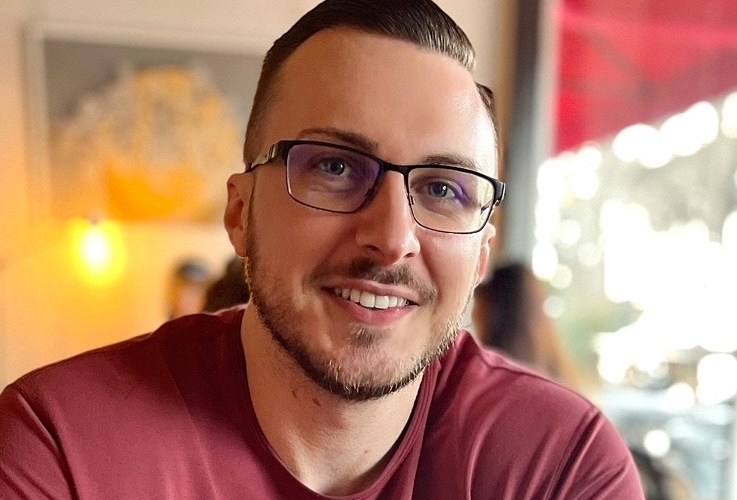







 gracefulatheist.com