Stephanie Stalvey Artist

Artists, Deconstruction, ExVangelical, Podcast, Purity Culture
Listen on Apple Podcasts

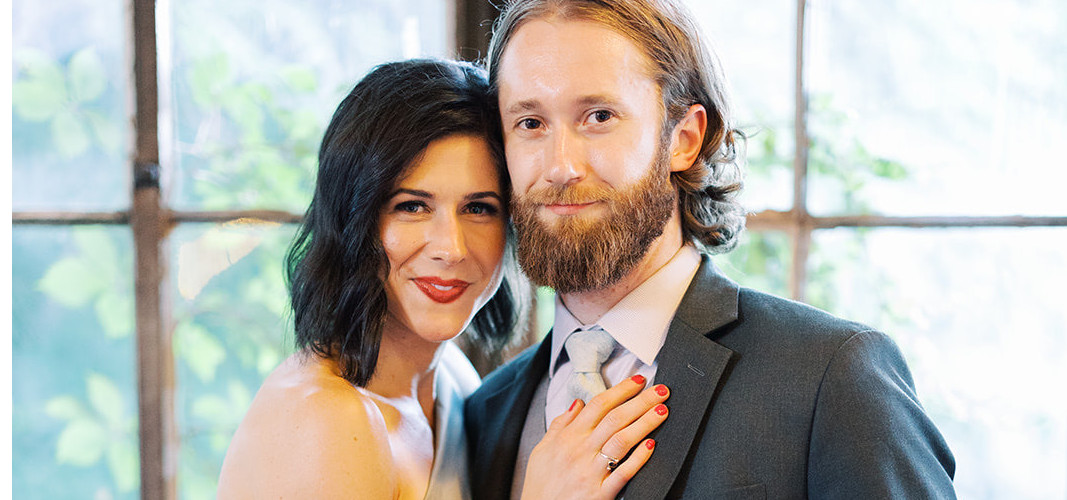
This week’s guest is artist Stephanie Stalvey. You can see her full bio here.  She is the artist behind Instagram’s @stephanie.stalvey.artist.

Stephanie was a “90’s church kid” attending various evangelical churches when she was young. She took her beliefs seriously, and it wasn’t until her twenties that a sudden loss forced her to question whether life was as simple as she’d been taught. 

When Stephanie became a mother, she truly left fundamentalist religion. “I needed to let God expand into whatever God might be.”

Now she lives without a label, allowing her values and beliefs about humanity and divinity to change as she changes.

Her art speaks to those of us who’ve left religion, reminding us that “…we are, in our hearts and in our inner essence, good and pure and sacred and not depraved.”

Links

Website
https://stephaniestalvey.com/

Instagram
https://www.instagram.com/stephanie.stalvey.artist/

Recommendations

Blankets by Craig Thompson

#AmazonPaidLinks

Quotes

“As I’ve grown up, particularly as I’ve become a mother, it kind of makes clear the parts [of childhood] that were really like drinking poison but then they’re also attached to every good memory you’ve had…”

“…deconstruction, as we call it…it’s learning to think about things in a more nuanced way, less black and white.”

“Becoming a parent was the end of fundamentalism for me.”

“If [Christianity] is supposed to be ‘the antidote to shame,’ then why are people dying of shame?” 

“Kids, especially when we’re very young, we need the opportunity to be real, to be difficult, to be angry, to be demanding, and to still know that we have safety and security from our parents…”

“You can’t really have both. You can’t say that God is a good parent whose unconditional love and mercy is going to heal the wounds of humanity with the same punitive, authoritarian paradigm that inflicted those wounds in the first place.”

“[Becoming a mother] was, for me, a truly sacred experience, a holy experience.” 

“It was so important…to give myself permission to just be and to be able to ask myself questions that don’t have a predetermined answer…”

“I needed to let God expand into whatever God might be.”

“…we are, in our hearts and in our inner essence, good and pure and sacred and not depraved.”

“I believe that it is in the presence of compassionate witness that the parts of us that are the most destructive and the most nasty have the opportunity to heal.”

“I think that by letting myself shed all of this bullshit about ‘biblical literalism’…I could finally see and actually be in more true alignment with the principles of Jesus that I value.”

“Things don’t have to be literal to be true.” 

“[God] is a word that means such different things to different people.”

“I think people heal when they have permission to be fully honest and know that they are not bad. I think that intimacy cannot be coerced or forced or else it becomes oppressive and unconditional love isn’t an ultimatum…”

Interact

Graceful Atheist Podcast Merch!
https://www.teepublic.com/user/gracefulatheistpodcast

Join the Deconversion Anonymous Facebook group!

Deconversion
https://gracefulatheist.com/2017/12/03/deconversion-how-to/

Secular Grace
https://gracefulatheist.com/2016/10/21/secular-grace/

Support the podcast
Patreon https://www.patreon.com/gracefulatheist
Paypal: paypal.me/gracefulatheist

Podchaser - Graceful Atheist Podcast

Attribution

“Waves” track written and produced by Makaih Beats

Transcript

NOTE: This transcript is AI produced (otter.ai) and likely has many mistakes. It is provided as rough guide to the audio conversation.

David Ames  0:11  
This is the graceful atheist podcast United studios podcast. Welcome, welcome. Welcome to the graceful atheist podcast. My name is David and I am trying to be the graceful atheist. Thank you to all my supporters on Patreon. If you too would like an ad free experience of the podcast become a patron at patreon.com/graceful atheist. If you're in the middle of doubt, deconstruction, the dark night of the soul, you do not have to go through it alone. Join our private Facebook group deconversion anonymous, you can find us at facebook.com/groups/deconversion we have merch if you would like to have a T shirt that is about secular grace or the graceful atheist podcast mugs, notebooks, all kinds of things check it out. Arline has set up our merchandise shop the link will be in the show notes. Special thanks to Mike T for editing today's show. On today's show, our lien interviews this week's guest Stephanie Stalvey, Stephanie is an amazing artist she grapples with motherhood, purity culture, sex family, her own personal deconstruction process and her own spirituality. You can find her on Instagram at Stephanie dot Stalvey dot artist. Stalvey is spelled s t a l ve y. There will be links in the show notes. Here is our Lean interviewing Stephanie Salvi.

Arline  1:52  
Stephanie Stalvey, Welcome to the graceful atheist podcast.

Stephanie Stalvey  1:55  
Thank you. I am so excited to be here.

Arline  1:58  
You and I have tried a few times to get up there and have this conversation. So I'm super excited. Let's see I got back on Instagram like October 2021, I think and I somehow found you and I have followed you since and I'm so thankful that you're on the podcast, your artwork, everything is so great. And you, you are a guest that I've had repeated. I've had a few people say hey, can you get Stephanie Salvi on the podcast? Hey, can she be on the podcast? So yes, your artwork is? is known. So to our audience.

Stephanie Stalvey  2:27  
Oh, that's so cool. I'm so so excited. That's nice to hear.

Arline  2:32  
The way we usually begin, it's just tell us about your spiritual the religious environment of your childhood.

Stephanie Stalvey  2:38  
Oh, wow. Okay, the religious environment and my childhood. Yeah, that's why I feel the need to make this entire long form comic is to try to explain it. Yeah. So I was I was born in 89. In like the Midwest, right. So I have been like thinking a lot about what it meant to be a Christian in America, in the Midwest in the late 80s. And, you know, just what that meant, psychologically, for me, and my siblings, everything. So that is kind of like, I don't know, the beginning of where I started making these comics was to explore that. But my dad was, at the time, he's worked like in some capacity in ministry since I was born. But at that time, he was in like, his role as like the president of a international missions organization. So it was like church planting, church leadership, and also international missions. So we would do like some summers in like, the Ukraine, church planting that kind of stuff. And my dad was one of the people who like, I don't know, in the late 70s was like born again, on a college campus type of type of thing, which I think is really common. And he came from like, an abusive household in Detroit. You know, just like a lot of pain and dysfunction in his childhood. So then, when he's kind of introduced to this particular like, born again, like very proselytizing version of Christianity in college, like I think it offered him a way to you know, use his gifts and connect with people and have, you know, social structure and there's a lot of ways in which it was like really good, I guess. My mom, on the other hand, was like, raised by my grandfather, who was a Methodist pastor, Priest, everyone We call the Methodist. But he was also like a chaplain. Army chaplains. So yeah, and they were like, opposite of abusive childhood. My grandparents on my mom's side were like the best sweetest Indiana people but she's so she had like kind of the raised Methodists, which is like kind of a more mild I think version than what my dad had. So then by the time that I was born and my, my sisters are raised, like in the 90s, we were just whatever it is called Christian, right. So it's like kind of a homogenization of everything. My I have like this brilliant friend, Dr. Michael Thompson, who he wrote an article about this, in particular, how like in the 1970s these figures like, how Lindsey and Francis Schaeffer, like one of the major things that they did was to create that homogenization of Christianity where like, as before, you would have like these separate ways of identifying, you know, your Christian identity. But then, like, after this, it was just like, No, there is Christian and there is not Christian. And it kind of like takes away the option that there's any other way to like, understand or practice your faith, which I think is really interesting. I definitely think that that kind of continued, and that was my experience, even in my 20s I think my version of that was probably like gospel coalition, right. Like, you know, God was like, you know, Chandler and Piper and Tim Keller and Driscoll and all these guys. Yeah. Hello, Barry. Yeah. Oh, yeah. All Yeah, I'm sorry. Morning. But, but yeah, the way that they were talking about it, it's just like the gospel, right. There's not, there's not any other version. But then I guess, I went to a Christian Elementary School. And then, like, when I was like, 11, we moved from Ohio to Orlando. My dad, you know, we had some hard years, like our family had some hard years. And we kind of got cut off from the church that we had been in since I was a kid. Found a new church. And yeah, so we joined like a new church here when I was maybe 1413 or 14. And then my dad got involved there. And my mom worked in childcare and we were very involved in that church. And yeah, it's just a lot of a lot of wild experiences there. We had. Actually, the the pastor of the church, he end up taking his own life after this really kind of Yeah. Public and terrible, like extramarital affair, things that was just like all the shame that surrounded it. And, yeah, it was like, it was extremely something that, you know, someone we'd loved and had to mourn. But it also, I think, that was a really big moment of reckoning for me where I had to sit and say, I think all of this is a lot more complicated than than I've ever been allowed to think it is. Yeah, that was like in my very early 20s. And yeah, I think that this entire the entire process for me, it's just been gradual. It's been gradual. So when you asked, you know, what was the environment, it's hard because it's kind of touches everything. But that's what I'm interested in thinking about recently.

Arline  9:38  
For the most part was growing up in the church like, good memories, hard memories, or just a lot of both.

Stephanie Stalvey  9:45  
Yeah, it's hard because it's my only memories. That's fair. Yeah. Yeah. So that's another thing that I'm interested in. Thinking about in the work is As I've you know, grown up, and particularly as I've become a mother, it kind of makes clear the parts that were really I mean, just like drinking poison. But then they're also attached to every good memory that you've ever had a bunch of really positive things that like, enrich to you and every person who loved you into existence. So there's nothing about the process of deconstruction, as we call it. That is easy. And I think that's the reason for it is that it's just, it's just not complicated. It's learning to, or it just is complicated. And it's learning to think about things in a, you know, more nuanced, way less black and white. Yeah.

Arline  11:01  
And it's like thinking, you mentioned Matt Chandler. You know, he, he made the offhand comment in one of his sermons that we're doing this where we've deconstructed because it's trendy, it's cool, it's sexy, and it's like, no, we're, yeah, we're pulling apart, something that some of us have been taught since we were babies. It's our whole community. It's our family. It's our, I mean, like, just all the things that are most important to us. Like, no one's doing this, because it's the cool thing to do. So, so when did you you said it's was a it's been a long thing, like, when did you were there questions that you started asking or anything specific that happened to kind of start you going okay, something's not right.

Stephanie Stalvey  11:43  
Yeah. Wow. Yeah. That's interesting that you mentioned that about Chandler I listened to that man speak. Like, it has to be hundreds of hours. I had this. Okay, you know, when they had like, the old iPods that like, you know,

Arline  12:06  
the mp3 players?

Stephanie Stalvey  12:07  
Yeah, there's a church every year on there.

Arline  12:12  
I had all the John Piper sermons to run to I was running. I'm supposed to be jogging. I was listening to this foolishness. Sorry, I interrupted you.

Stephanie Stalvey  12:20  
Go ahead. No, please, that. I, I understand. I understand. The most recent comment that I made actually was like, included some of the quotes from the explicit gospel that he wrote, whenever that was, like, 2011 or something. I'm not sure I read it. I know what Yeah, yeah. So like, one of the things that he said, and I remember just feeling like scared to have doubts when when I heard this part, you know, because he would always just like, kind of mock and humiliate in order to like be funny, I guess. But it was something about like you, you're the bat, you're the kid in the backseat of the car, a four year old in the backseat of the car, you're gonna scrutinize how God governs. Do you know how small you are, you know how insignificant you are? And, you know, it's like the laughter in the audience after that. And I wanted to make that comment because I'm a mom now. Sorry. Okay. It just makes me so angry. Yeah, that this kind of stuff got told to us because, you know, follow the logic if we're the four year old in the back of the car. Who is who's humiliating us for having questions? What kind of a parent is so threat threatened by a child's by anything a child might do? So yeah, becoming becoming a parent was I think, really. It was the end of it, kind of fundamentalism, for me in my mindset, but it had been years before that, that I'd been kind of thinking about things that I want to say that when when my pastor took his own life, which was maybe 11 or 12 years ago now. That's when I first started to ask myself Okay, we have this It's kind of like a script within the church for how to explain when something like this happens, whenever there's a scandal or you know something, it comes out that another pastor has done something or has a secret life or struggling with addiction or is having an affair or whatever it might be. We, we say like, oh, well, this was an individual sin issue, right? This was separate from the system this has it's not indicative of anything dysfunctional in the way that we're running church. This is this one particular guy. And it just didn't work for me. Like if I knew it wasn't true. I knew that you couldn't just like, explain away, well, he wasn't a real Christian or something like that. And I just said, if, if this is supposed to be the antidote to shame, why are people dying of shame? Why? And, you know, it seems to me that there were just a bunch of people who are genuinely trying their best operating within a system that wasn't working. And so, I mean, I started to let myself ask these questions. I think that there were, you know, years that I had to let myself be angry. And and I think I was I was angry about the way that a lot of my family's best intentions to be good and do what was right. Were steered in the direction of something. So that like, ended up hurting us all. So like, you know, when my parents were young, and they wanted to be the best kind of parents, they could like every other Christian parents in the 80s. They go by the books by the Christian people, who are what James Dobson Focus on the Family. And they instructs my mother who would never have hit us, to spank us and to do these like punitive things. Because that's what God needs you to do. You know? Yeah, so so once I became a mom, which my son is about to turn four. It was just, I mean, it's such a transformative experience in so many ways, but the definition of love could not be anything less. For me, after that, there was no, there was no way. And, you know, I, I was learning and reading a lot about secure attachment. In, you know, the developmental early years, and kind of the way that kids, especially when they're very young, we need the opportunity to be real, to be difficult, to be angry, to be demanding. And to still know that we have safety and security and love from our parents that our parents is not going to leave. And way the insecure attachment kind of forms when a child learns that they have to suppress their own difficult emotions in order to avoid being screened at hid abandoned humiliated. And, you know, I just kind of mapped that on to well, this is, this is kind of the paradigm, this is the framework that has been applied to God, I think. And you can't really have both, you can't say that God is a good parent whose unconditional love and mercy is going to heal the wounds of humanity with the same punitive, authoritarian parent paradigm that inflicted those ones in the first place. Yeah,

Arline  19:37  
like 100% Everything you just said, like my, my husband, he realized he couldn't believe anymore before I did. And His thing was after he had become a dad, like he was like, I shouldn't feel like I'm being a better parent to my children. Because, like the way we were taught because again, we're Calvinists John Piper monstrous Got all the things was like, God has predestined some people to go to hell forever and we have to be okay with that. As like, what my husband's big thing was, God could do harm to our whole family and we would have to be okay with that because God is always doing what's best. And it's like, this is not loving, like no matter how many different ways we tried to make it, work it that's not loving. And, and I for a long time was trying to make it make sense. I was like, Okay, maybe weren't maybe Calvinism is not right. Let me find another version. And it was just like, we couldn't look at the way the world was, in the way Christianity said God was and make it and make it make sense.

Stephanie Stalvey  20:43  
My heart just like hurts hearing it.

Arline  20:46  
Yeah, it was, it was very, it was very emotional for my husband. Like it was really, really, it was really hard for him. Mine was different. Like my realizing I couldn't believe it's different.

So becoming a mom, like, how may I ask if you don't mind? How did that transform you beyond just physically like, talking about becoming a mom the, like, I see in your artwork, and we're going to totally get to your artwork, but like we I see in your artwork, just the divinity of a woman's body and like the ability just so much. So yeah, how did? How did all of that change? You? Particularly? Yeah,

Stephanie Stalvey  21:29  
no, thank you. Um, yeah, it's, it was for me. A truly, I mean, sacred experience, a holy experience, it continues to be. But it's the most it's the most incredible thing for your body to create a human being. And for then your body to sustain and nourish that human being. So it's like, by my, my milk, my blood, my tears, this, this soul, this human being has come to life. And it just felt I was hearing kind of like the words of the sacrament, my body broken for you. But then I was I was thinking about it all these different levels on like, a, kind of, like a cosmic level. I when he was young, I read through, you know, some some cool 1970s Like feminist literature, like, the great cosmic mother and stuff about like, prehistoric Metro focals societies, and you know, God, God as a woman as womb. And I just, it felt, yeah, it just, it felt like the kind of transcendence that doesn't bring you out and away from your body, but deeper into it. Yeah, and, and I think, for me what that was to, I became a mother kind of at the very end, or I think I became pregnant at the very end of a long season of pain and mourning. And I mean, even just like, kind of a nihilistic perspective towards life. I was, I didn't know the way out and, and don't think that in a way like that, becoming a mom did. It broke me back open in this like, really spiritual way, I think. And I felt his full permission to just like, be as earnest and honest as possible. We brought we brought him back to church when he was little. Because we're, we're sitting there is like, the middle of the night and breastfeeding. Tommy, is I'm talking with my husband, and I'm like, Should we bring him to church? He's like, I'm surprised that you want to and I'm like, Well, I don't want to deny him anything. You know, and again, you have that kind of push and pull where there's all of these. There's all these things that I think are profoundly just like good for humans like Community and ritual and meaning and I don't the faces, the the traditions, all of this stuff is just, it's human. It's, it's in us and we do need it. And I think that for the past, like, however many years it was before he was born, I was just so aware of the way that those needs are those hunger, that hunger for the divine, that hunger for tradition, made me vulnerable to manipulation, and heartbreak and fanaticism and radical thinking, you know, that it makes those that hunger that human hunger makes us susceptible to that kind of stuff. But the hunger is still there. And I still, you No, need to eat a human. Yeah. So it was it was a painful experience, because we, we brought him back. And it's a bunch of loving people. And I'm, you know, they're cuddling your baby, and they're watching him and I'm sitting in the, in the auditorium. And the person is talking about how our sin makes us unworthy of the love of God, and there's no bigger small sin. And even my, even my little kid, this was the quality of a might little kid taking a book that isn't hers and writing her name in it. Even that sin is enough to keep her out of heaven. Yeah, and I just we got back into the parking lot got into the car and I just cried and I said, I can't I can't have him growing up thinking I'm bad. I can't have him grow up thinking I deserve to be put to death. Yeah, I won't. It's not he isn't it's not true. I won't let him hear it. And then I started like letting myself access the the points of pain and my own childhood where I was a little girl who heard that. And, you know, I, I remember being in second grade in chapel and hearing the same thing about you know, Jesus died the death you deserve to die. And like meditating on the crucifixion as something that ought to happen to me for my you know, whatever it was in second grade, my willfulness my disobedience, my tongue. And going back into the classroom, and just pinching my arm as hard as I could and saying, This is This is nothing compared to what you did take this pain. Oh, wow. Yeah, and I just, I've had to just go back to that little girl and just continually show her a lot of love. Yeah.

Arline  28:26  
Yeah. And we have to read reparent ourselves, like parents, our own little selves. Like, I didn't grow up in the church. But I grew up in a in a home where I was just kind of the third will my dad really, if they were going to have kids, he wanted to have a boy he didn't really want. So it was just kind of I was just kind of extra. And so it's like, I have to go back to little Arline, sometimes and just be sweet with her the way I would like, I saw a meme. My kids say, Mom, you're always the means everything's so amazing. But it was just talking about how we become the parent we needed when we were kids. Oh, yeah. Like, yes. Like you for your for your baby. Not always not a baby anymore. Your four year old now, like, you're able to be the mom that that sweet boy needs in a way that that, you know, it's crazy. Being a parent, it's hard. It's difficult. There's so up and down. But like the love you have for him and your ability to to know from inside your body. What this is not good. I can't let my baby grow up believing these things. Because you know what that harm is like?

Stephanie Stalvey  29:41  
Yeah, yeah. I think it's, it's been complex for me too, because I resisted because I'm, you know, my mom was an incredible mom. And so I'm like, Well, I don't need that. I don't need that. But I think everybody does, you know, because everybody's paying ants are human beings. And, and, you know, when I'm with my four year old, and you get triggered by the tantrums of your four year old, I will, I'll feel a little Stephanie. I'll feel four year old Stephanie try to say, I got this, I'll handle this. I'm gonna go toe to toe with this kid to step in and say, Actually, I'm a grown up. I'm self regulation. So let me take. I literally I do I have conversations I can recommend like, Ooh, there she is. There's four year old.

Arline  30:41  
Yeah, emotional regulation. Like it's hard. I, oh, my goodness. This is what we need as parents, all the other stuff you can figure out. But if you can just stay calm, who have your when that sweet little prefrontal cortex that is not fully developed, goes just offline, you got to we've got to stay online, we've got to stay.

So may I ask, Where are you now? I get all the beautiful, like divine feminine vibes from your artwork. And I'm just totally like, projecting. So tell me where are you now as far as spirituality? Or are you anywhere?

Stephanie Stalvey  31:30  
Oh, yeah. Yeah. Thanks. Um, so for going back to like that car in the parking lot. Where I was like, I can't do this. I think too. I was talking to my husband. If anybody reads pure, they know how perfect my husband is. He's. But I was just like, I don't know what I think. I don't know what I believe. I don't know what I am. I don't know how to identify, I don't have a label. And I'm, I don't know if I should bring into the church or not. And I'm scared. And he just said, you don't have to know. You just don't have to know right now. It's okay, we can just be. And it was just so important for me to hear that. To just give myself permission to just be and to be able to actually ask questions that don't have a predetermined answer that I don't have to get to. I don't have to make myself thinks something or another in the end. And I needed to let God expand into whatever God might be. And and so yeah, I'm, I'm just a very naturally really curious person. And I spent a lot of time reading and exploring and through things like therapy actually, kind of what we're talking about similar to like parts work, right. I don't know if you're familiar.

Arline  33:22  
Are you familiar with boundless and free on Instagram? Yeah. Oh, yeah. Yeah, yeah. Tony George has been on the podcast. So she, she acquainted me with parts work and things like Yeah,

Stephanie Stalvey  33:33  
so it's like, Richard Schwartz internal family systems. And it's this idea that we have these different parts of ourselves with different motivations. And so that kind of became a theme in my work, too, I have, you know, try to illustrate to the part of me that's just like wild and rebellious versus the part of me that is more like a like a good girl like a loyalist. But part of my healing has been about recognizing the value of each part. Stop being demonizing and being at war with different parts of myself, and getting in touch with what I think is the self like the true self. So I, I think that this is a this is like a spiritual belief of mine, that that we are in in our hearts in the inmost essence of the human heart is is good, is pure and sacred and not depraved. And I believe that it is in the the presence of compassionate witness, that the parts of us that are the most destructive and the most nasty, have the opportunity to heal and transform and For a long time, that parts of me that, you know, I thought were just sinful, and I needed to cut them out, and I needed to go to war with them, when I was able to approach them and say, I don't want to kill you, I don't hate you. Even if you are doing something that is not helpful, that it's not right, whatever it might be, I don't hate you. That was that was something that allowed me to soften to witness the pain that they were carrying to see who they were protecting, which usually whatever behavior they were engaging in, at one point, kept me alive. And so I could see this is how this is how I was, I stood up and defended you when you were to. And you know, I could just honor these parts of me. And I think that we honor them from from the self, which is, which is the part of us that I think is divine, I think that it's like the DNA of God. I do. And you know, it's, it's interesting, I'm now at this point, I'm not going to church. I am very much like letting myself to label this kind of like just communion with with God as, as I feel you know, it's. But it's interesting, because I think that the fundamentalist framework that's just so got its hands around religion that it seems like it's the same thing as religion. It kept me from being able to actually see like the parts of Christianity that from the time I was younger than most dear to me, which is kind of the same thing with the image of God as Jesus touching the flesh of a person that everyone else has decided is disgusting, and disposable. And just not telling them to do anything different but saying, I, I am willing to touch you and witness your pain and empathize with you and I'm not interested in dehumanizing you, or telling you that you're bad or wrong or to change or something. And that that being the place by which we heal. And so I think that by kind of letting myself shed all of this bullshit about biblical literalism, and like, you know, just like the patriarchy, patriarchal hatred of poetry and archetype and parables, frankly, you know, good point. Yeah, yeah. Yeah. You know, and I'm an artist so that's kind of like my thing, like, things are not they don't have to be literal to be true. Also, you know? So I think that once I kind of shed those things I could finally see and like actually be in more true alignment with the principles of Jesus that I value. And I went back and I'm like, Okay, well, in kind of the evangelical world or in the fundamentalist world, Jesus is reduced to the role he plays in the salvation equation. He's the one who dies you know, yes life his life and his teachings are like very relevant to them it's he's just like Jesus dies to absorb the wrath so that you don't have to go That's all he is. And it you know, so then you you miss anything that he said and that's I think the way that so much of Western Christianity was able to end up like becoming the thing that put Jesus to death but yeah, I think that we just, we find God in the mystery of, of so many other things. I think that is a word that just means such different things to different people like I think it was like Alan Watts who said You know, he he was kind of like in the 60s would interpret like Eastern real religious ideas are kind of like a more western audience. But he's like when a Christian is talking about Lord Adonai, he's talking about the boss, he's talking about the one at the top of the political power structure to whom obedience is due. Whereas like, the Hindu is talking about God, they're talking about the inmost essence of all life that dances the universe into existence. Whereas, you know, like, I was speaking before, like, ancient humans, I think, actually, we're able to get in touch with archetypal kind of representation of, of God as a woman as a boom. And, and yeah, I think I'm doing what I said before, like, we're, I'm trying to step lightly. And like, be cautious because I am aware of how the hunger for God does make us more susceptible to manipulation like cult, like behavior, and it's not just in Christianity, it's absolutely not. Not at all. Oh, yeah, it's like, in all kinds of, of spaces. And I've even been like, since in like, these kind of more like New Age bullshit. Things and, and I just want to be aware of it. But I'm also I also am a human being and need sanctuary and connection and meaning. And for me, right now, like you, when I, when I'm meditating on the way in which I'm connected to every other person, and the way in which every other person is, is important and valuable, and, and sacred in this way that doesn't change and worthy of love. And when I am participating in this eternal mystery of love that's when I feel close to God, I would say

Arline  42:41  
I guess I identify as a humanist or an atheist. But everything you say, like, we have this need for community for connecting to the natural world to other people. There are rituals that are meaningful to Pete like that. We have Sasha seconds book, small creatures, such as we she's like, just because we're humans, and maybe gods and goddesses, they they don't exist. But yeah, rituals, we need rituals, we've always had them and they've always been helpful to us. And, and yeah, there's just so much that, like, you were saying, the church has kind of cornered the market on community and ritual and tradition and all these things. Whereas really, we need to figure out, like, how can we find those things without having to also sell our souls and values to morals that are just immoral, like things, beliefs that are harmful? You know, all that. And, yeah, I love that you've been able to figure out like, what works

Stephanie Stalvey  43:45  
for you? Well, I mean, I don't think I've figured it out. I think I'm very much in process. Like, this isn't like, Oh, before, and now it's now everything's okay. I think it's, I think these kinds of conversations, even like between the two of us who like have experienced so much of the same things in the same hurt and can connect in that way and and talk and wonder and share and witness each other. I think that that's part of it. For me, I think that's been part of what has been helpful. And and like I was saying about fundamentalism, not being you know, necessarily like the content of your beliefs, but almost like a style of thinking. Yeah, I try to be aware of that too, as I'm like exiting. Fundamentalist thinking that I don't replace it with like, well, here's the new thing that I cannot question and here's the new people that are bad and here's the new you know, just doctrine and way to preach. I don't think I think that the point is about being intellectually, right. And that's what happened with fundamentalist Christianity is that like, they say You're saved by faith, but it's faith in the right thing. It's faith in the right set of ideas. And yeah, I think that I think there's more to it. I think that people heal when they have permission to be fully honest. And know that they are not bad. I think the intimacy cannot be coerced, or forced, or else it becomes oppressive. And unconditional love isn't an ultimatum. So if I want those things, I want to, you know, move towards intimacy with myself with the divine with the people in my life. I have to switch to, to something more liberated, and unmoving, you know, and fluid. Something more akin to a dancer and unfolding. It's different season to season and it's okay. It's okay.

Arline  46:25  
I need to be reminded of that. Because yeah, I can very much see myself becoming convinced something else is right. Like, even even after I went through what one of our former guests calls rage learning, it was like, here's everything I was not allowed to be taught, I'm going to learn it all. And my husband, he was like, You're starting to sound like a fundamentalist atheist? And I was like, Oh, that's a really? Oh, you know, like, I had to sit with that for a little bit. And, like, you know, realize I was, because, yeah, fundamentalist submit comes in a lot of different forms. But it is, it's like, this is the correct thing. And I can't learn or hear from anything else. And I was like, I don't want to be like that. I want to be able to read. Like, I don't know, there's a, there was a dance of the dissident daughters. Like, that was part of my deconversion reading, reading that book. And I was like, hold up, like, I've never thought about God in this way. And this was when I was still a Christian. So I was like, I was on my way out, but I didn't know I was on my way out, I don't think right. But it's like, I would need to be able to like hear from Sue Monk Kidd and her story, and I still need to be able to like read. I don't know, Bertrand Russell. I'm just coming up with names, you know, and be able to hear from people who have come to different conclusions or like you said, are just willing to let things stay fluid so that I don't become like nope, now I'm correct in a different way like that. Yeah. It's it's prideful. It's it's unhelpful and unhealthy. Yeah.

Stephanie Stalvey  47:59  
I think that's in the in your title of your podcast, who is graceful atheist is that you know, just like fundamentalism doesn't just belong to religion. Grace and into kindness and empathy and compassion doesn't just belong to God and your like belief in God or whatever. Yeah, I think that it matters how we treat one another and I you know, I don't want to dismiss like pursuit of what is true and good because I think that's you know, 100% important I don't want to discount that. So like doing the the rage learnings and stuff that I I think it's important it's important part of the process and, and it's good to keep pursuing learning stuff. I mean, that's what what being a human is, but I think that the core principles that I've arrived at are ones that hold space for people at all different points in their life and for the different parts of myself as they come up so the one that's like that wants to dig her roots down more into something traditional and the one who wants to you know, tear tear things down or, or pull them all apart. You know, they're all valuable each one of them. I can listen to and care for each one of them. Like we said, like inner children. Doesn't mean that I have to do whatever they're telling me but I'm not scared of them anymore. I love that

Arline  50:06  
Tell us about your artwork for anyone who is not already familiar with your comic or your other artwork. Like, tell us all about it.

Stephanie Stalvey  50:15  
Okay, yeah. Well, we

Arline  50:19  
will link to everything in the show. We will we will send everyone your way.

Stephanie Stalvey  50:24  
Yeah. Ah, okay. So I mean, I've just I've been an artist forever. And, you know, lifelong art kid and I went to art college and got an art degree that I took out too much money for and inhaled a bunch of paint fumes. Wild Times, but But yeah, I've always loved comics. I've always been making comics in one form or another. I really love how intimate they are. How can like accessible and personal and almost like camp? I really I love that they're like low art that they're not like gallery art. I love everything about comics. But yeah, when when my baby was little I started painting a lot more with like wash and watercolor because oil paint was like, you can't have that around a baby and probably shouldn't have around yourself but toxic painting more like small and at the time. Yeah, I was to like, the great cosmic mother, the the womb of the world. I am, you know, we are born off the Earth. This is you know, all the stuff that's still true. The Mother, Mother Earth is as our mutual home, we are children of the universe. getting back in touch with nature, there's so much but we can talk for years and years. Animals, all these kinds of stuff going through my through my brain. And I'm, you know, I have to process it through my art through painting about it. That's how I do it. That is, it's, it's how I synthesize my current reality. It's also how I meditate on what I think is beautiful and true. There's just a high to it. Like, I mean, artists know. But then I started making comics, too. I think I started making church kids in like 2020. So I just I had this image in my head, the the first one I made was that that one that black and white comic, where were the church kids, and we were raised. Without gradients, everything is black or white. And what it means to grow up with these ideas of things being so absolute, what does that mean now that we've woken up in the whole world is Shades of Grey. And so I was like, Well, this is visual, I need to visit this. And then I just started writing. And I was like, I just need to write everything. That it that being a church kid was at this point, like I had no idea that there was like a online deconstruction community. I just started posting my comics, and you know, it's just wild, they kind of took off. And so most recently, I've been posting like a serial comic about my experience with purity culture. I love it. I love it so much. It's so great. What do you what do you like about it? I don't know what to talk

Arline  53:44  
about it? Well, for me, my husband and I didn't grow up in the church. We became Christians in college. So we got like, bits and pieces of like, of course we read. Not I kiss dating the bikers, because we're already in college we read boy meets girl, I guess was the other one that he wrote. Oh, yeah, I know. And that was like, the courtship book and like, all that kind of stuff. So we got that kind of stuff where like, I wasn't supposed to initiate he was fat, blah, blah, blah, all that mess. Anyway, and I was like, I already had a bad reputation. People were like, are you sure that God has? And he's like, Yes, I'm sure. And now we've been married 18 years and like is like being married. So anyway. Oh. And overall, it was fun. But um, the comic like I just, I love like I how do I say this? So I don't love memoirs, but I love comic book version memoirs. So I've read like Raina tell Jimmy or stuff, and I've read some of Shannon Hale stuff and she grew up Mormon but she's still Mormon, but she grew up woman. And so it's like, just seeing knowing that you and your hubby are so married and seeing like how gracious he was and how patient he was and how and the way like it breaks my heart also the watching like your little inner diet or mine. The log of like, what am I doing? Should I be doing that? And it's just like, This poor girl was having to go through so much more than just like, figuring out how to date because that's just hard enough as it is. And so it's just and it's beautifully done. The artwork is beautifully done. And like you said it, I imagine it's taken off, because so many people have had such similar experiences high school, and college and oh,

Stephanie Stalvey  55:28  
yeah, everybody, and it's, but yeah, I find that like, when I can just sort of forget how many people are reading it and just say, oh, like, let me tell, like the truth. stuff that happened. And, you know, if some, if it's something that I think is, like, funny looking back, like, I think it's worth, like laughing at some of this, because it's, it's kind of absurd. So I wanted to make something that like, was a little bit sexy. Um, I'm getting some parts that I think might be just for Patreon. But I wanted to make something that's like a little bit sexy, a little bit funny, but also really earnest. And just, like, actually, mortgages actually say like, what happened. And when I do that, it's crazy. People are like, this, this is also what happened to me and then we can find each other in the comments end up being so cool. And I get connected to so many other people that either like went through it or they're still kind of like processing awful, traumatic things that are still affecting their life and their, their marriage in their relationships. And I I think that the comic is cool, too. Because it's a way that I can make something that I'm like a really uninterested in like preaching anything. You know, I don't want I don't want to be some kind of like, suppose it expert on anything. I just want to tell my story. Yeah. So yeah, it's fun. And, and I'm kind of, I'm working on that being like, like, pure being basically, part of what will hopefully be like a longer form, memoir that all kind of, yeah. Yeah, I'm a school teacher. And it's just about to be summer. So for that. For me, that's gonna mean just like, back to the drawing board, literally. Like, I'm just gonna be drawing. Summer. But yeah, it's really cool. There was a good 10 week stretch where I posted 10 pages a day, and are not day cheese. Oh, my God, no, no, no, that would be completely impossible. But you know, let myself not be a machine and take my time when I need to. But I want to get back to like a more consistent schedule, because it's fun to just as an artist to like, make something and then immediately be able to share it. Like, I feel like I'm back in high school, like drawing in the margins and like passing it to somebody be like, check this out. I just made this.

Arline  58:32  
So we have a few more minutes. Do you have any recommendations, books, podcasts, or their artists or their people telling their stories, any, any recommendations for our listeners that have had things that have helped you? Oh, my gosh, that you just love and want to share with others?

Stephanie Stalvey  58:49  
I just love. Um, whoa. If you like my comics, you probably already like Blankets by Craig Thompson. It's the most brilliant thing I've ever read.

Arline  59:05  
I'm not familiar with this. So this is great.

Stephanie Stalvey  59:07  
Oh, he does. Okay, so it's like, I think he wrote it in 2003. But it's a graphic memoir, and it's similar. It's about his first love. But then he also kind of leaves in his childhood and kind of his relationship with his brother. I think it's Wisconsin. He grew up but it's also fundamentalist Christianity, and it's it's his process of coming of age, and it's just achingly beautiful. And I think that if anybody like knows Craig Thompson, they probably can see like, what an influence. He wasn't even if like the way I draw. Okay, if you haven't already, like go get that. Blankets. So really incredible book. That's really beautiful.

Arline  1:00:00  
Well, Stephanie, thank you so much like this is just this has been such a lovely experience. I'm so glad I got to see you face to face on here. And then our audience gets to hear your story. This was so beautiful. Thank you so much.

Stephanie Stalvey  1:00:13  
Oh, I think you're just so lovely and wonderful. And I want to, you know, take you out there how? Keep talking?

Arline  1:00:22  
Yeah, yes. I would love that. I'm always here for coffee.

Stephanie Stalvey  1:00:26  
Yes, no, thank you so much. This has been a great conversation. It's been really nice to have the chance to say it out loud in order. I'm not used to

Arline  1:00:38  
it out loud. Yes, it's it's almost therapeutic to just get it all out at one time.

Stephanie Stalvey  1:00:43  
Yeah. Arline, you just give me a free therapy session.

Arline  1:00:47  
Nice. All right, Stephanie. Have a fabulous weekend. Thank you.

My final thoughts on the episode. Oh, this was such a lovely conversation. Stephanie, telling her story. You can see the love, like you can hear the love she has for her family, for her husband, for her baby for her own self. Like it's just absolutely beautiful. And the processing that she goes through when she's trying to understand like, things that happened in her past things that are happening today, relationships, all that like, it comes out so beautifully in her artwork. It's just it's all it's also moving. The way she portrays motherhood is just absolute perfection it it's incredibly moving. For me as a mama. I loved this conversation. It reminded me of something Jimmy wrote on the blog, I think he was he was talking about different worldviews and life philosophies and all these different ways we can see the world and it's just, it's beautiful when we can take from all different kinds of truths that we have found throughout the world, not necessarily from nonfiction things, but like just truth that we have seen or experience or read about in the world, pull that together to create a life or philosophy of life that is good for ourselves. And it's good for the world around us and for the people. And like that's what secular grace is is what humanism is, is just doing, feeling thinking as many different ways as possible. What is good? I don't know even the word good feels like not enough. And it can also be very trite. But yeah, I love what Stephanie is putting out into the world. I loved hearing your story. This was a lovely, lovely interview, I loved

David Ames  1:03:00  
the secular gray started the week is about connection. Whenever I'm on someone else's podcast I talk about the ABCs of secular spirituality. That is all belonging and connection. The connection part is what we heard in this conversation with Arline and Stephanie to people deeply connecting about important things and learning from each other and feeling literally feeling that bond between them. My personal view is that our longing for the divine for the transcendent for God, what have you is really a longing for connection with other people. We've said before, a number of times, the human condition is the need to be known and the need to be loved. And it is when we connect with one another that we are known by another human being that we feel the most fulfilled and spiritually satisfied, for lack of a better term. Next week, we have returning guests Daniel Daniel is an active member of the deconversion anonymous Facebook group. He is also a social scientists with a background in psychology in addiction and various other fields. He and I are talking about the psychology of apologetics. You are not going to want to miss this one. That is up next week. Until then, my name is David and I am trying to be the graceful atheist join me and be graceful human beings. The beat is called waves by MCI beads. If you want to get in touch with me to be a guest on the show. Email me at graceful atheist@gmail.com for blog posts, quotes, recommendations and full episode transcripts head over to graceful atheists.com This graceful atheist podcast From the atheists United studios Podcast Network

Transcribed by https://otter.ai

Benoit Kim: Discover More

20 Questions With a Believer, ExVangelical, Mental Health, Podcast, Podcasters, Purity Culture, Race
Listen on Apple Podcasts

This week’s guest is Benoit Kim. He is a “Veteran, Penn-educated Policymaker turned Psychotherapist, & Podcaster at Discover More.” Benoit is a Christian, creating space for deep and meaningful conversations and stories.  The Discover More podcast is a show for independent thinkers with an emphasis on mental health. Benoit is currently a forensic clinician at Project 180.

Links

Discover More Podcast
https://www.discovermorepodcast.com/

YouTube
https://www.youtube.com/@DiscoverMorePodcast

LinkTree
https://kite.link/DiscoverMore133

Quotes

“People just want to be heard”

“This force of life…this container of life is larger than our will, larger than what we think our life should be versus what it actually is.” 

“I was 24 at the time, and that was the first time I had to confront my limited mortality: Holy crap. I may die.

“At the end of the day, humans are meaning-making machines…”

“There is no such thing as ‘useless emotions’…They all serve a purpose.” 

“Self-discovery, curiosity, explorations, personal developments? Those are all products of privileges. If you don’t have privileges, then you’re surviving…”

“Passing a policy is not the same thing as implementing a policy.” 

“The macro is comprised of the micro…Hurt people hurt people. Period.”

“Change takes time.”

“You may get hurt again, but if you don’t try, that’s the biggest regret.”

“I don’t have ‘bad or good’ in my paradigm of vocabulary. Does it serve you or not serve you?”

“Stress is the number one trigger that activates all mental illnesses.” 

“Stories are not just content. Stories are these lived, visceral experiences that become embedded genetically into our minds…”

“…storytelling stays as this timeless avenue to really connect people…”

“There are a lot of contributing factors to why psychotherapy works, but I think the essence of all mental health is this feeling that you are not alone.”

Interact

Graceful Atheist Podcast Merch!
https://www.teepublic.com/user/gracefulatheistpodcast

Join the Deconversion Anonymous Facebook group!

Secular Grace
https://gracefulatheist.com/2016/10/21/secular-grace/

Deconversion
https://gracefulatheist.com/2017/12/03/deconversion-how-to/

Deconstruction
https://gracefulatheist.com/2017/12/03/deconversion-how-to/#deconstruction

Support the podcast
Patreon https://www.patreon.com/gracefulatheist
Paypal: paypal.me/gracefulatheist

Podchaser - Graceful Atheist Podcast

Attribution

“Waves” track written and produced by Makaih Beats

Transcript

NOTE: This transcript is AI produced (otter.ai) and likely has many mistakes. It is provided as rough guide to the audio conversation.

David Ames  0:11  
This is the graceful atheist podcast United studios Podcast Network. Welcome. Welcome. Welcome to the graceful atheist podcast. My name is David and I am trying to be the graceful atheist. I want to thank my latest writer and reviewer on the Apple podcast store S S. Thank you so much for leaving your review. Please consider rating and reviewing the podcast on the Apple podcast store, rate the podcast on Spotify, and subscribe to the podcast wherever you are listening. Thank you to all my supporters. If you too would like to have an ad free experience of the podcast please become a patron at patreon.com/graceful atheist. Are you in the middle of doubts deconstruction, the dark night of the soul. You do not have to do it alone. Please join our private Facebook group deconversion anonymous and become a part of the community. You can find us at facebook.com/groups/deconversion We now have merch if you'd like to have a secular Grace themed graceful atheist podcast theme t shirt mug and various other items. Arline has done the work to bring up a shop for us. The link will be in the show notes. Please check it out and get your merch today. Special thanks to Mike T for editing today's show. On today's show, my guest today is Benoit Kim. Ben was the host of the Discover more podcast. It focuses on independent thinking and mental health. Benoit himself is a forensic clinician in psychology. And he brings to bear his wide ranging life experience including being French Canadian, having gained citizen in the United States by serving in the army. He was educated in and worked in policymaking for some time, until he decided that that wasn't what he wanted to do with his life. He wanted to help people. And so he went into psychology. Benoit is a believer, but he has shed the fundamentalism, we get into the how purity culture has affected his life. And finally, we touch on a subject that's important to Benoit and one that I need to be honest, I'm skeptical about and that is the use of psychedelics in a clinical format. I want to be clear here that then law presents the evidence in a compelling way. But the difference between using psychedelics within a clinical environment with a trained psychiatrist is significantly different than doing so on one's own. I'll leave it at that. Here is Ben walk in to tell his story. And walk him Welcome to the graceful atheist podcast.

Benoit Kim  2:59  
David, thank you for having me on on this rainy weather in Los Angeles at least.

David Ames  3:04  
Yeah, yeah. So I'm up in the Pacific Northwest and I have sunshine. So we've we've traded weather. Yes, we did. Benoit, I'm gonna let you talk about your own CV. There's a lot to it. If you could introduce yourself, tell people like what you're doing. I'll say up front that you're a podcast host of the Discover more podcast, we're gonna get into some of the things where we are very similar, I think and maybe some of the differences. But go ahead and introduce yourself to the listeners.

Benoit Kim  3:30  
So here's my 40,000 foot overview. So yeah, my name is French. I'm probably one of the few French Korean American you will meet. And for the longest time on Facebook for 10 plus years, I was the only Benoit Kim. So I spent the first half of my life in four different countries in three different continents. I was born in Paris, and then I moved to Korea, which is my ethnicity. And I lived in China for a while before I went to a boarding high school in California. And that was the induction of my faith into this Lutheran High School. Okay, and well, I'm sure we'll get into it where I think that was the first time I became allergic to these Lutheran indoctrinations of what is what what they deem as Greece for the team as faith what they deem as a good Christian air quotes versus the actual execution of that faith and this gracious lifestyle that I very much admire. And so now Currently, I work as a psychotherapist at USC, I accepted my new offer into the reentry populations working with just the populations who have mental illnesses. And I'll be working with them to hopefully to restore their sanity and for them to read, implementing the society because as we both know, recidivism extremely high, at least in Los Angeles is about 70%. And I'm a former policymaker I went to graduate school at University of Pennsylvania, which is a number one school at the program at the time. I went there and not to brag about the procedure of the school per se since I worked a lot to shed that layer of the false self of this prestige. But it's more about the fact that I went there for the sake of making impact because I believe in different vehicles for changes as a therapist, as a lawyer, as a physician, etc. But as a policymaker, you can impact 1000s and 1000s. Because I held this utilitarian philosophy for the longest time. But through a lot of the dirty politics compromising soul for the sake of impact, I took my hopefully my third and last career pivot in the last seven years into the clinical fields two and a half years ago. And my clinical interest in psychotherapy, in addition to psychedelic therapy, which speaks to my own healing journey, because psychedelics allow me to heal through my own sexual trauma, if you have opportunities to go down to because I'm very passionate about especially Men's Health and men's sexual health, which is not very often talked about. Okay.

David Ames  5:41  
Excellent. Wow, there's a lot to unpack. And hopefully we can get to, I'll just say immediately that on the podcast, and a reoccurring theme has been the impact of purity culture, in particular on people as they, as they deconstruct that, that affects them. Even in the context of marriage, right, even after from a Christian perspective, sex is supposed to be a good thing, they can still find problems that follow them into marriage, from that purity culture, so as well as other people who have experienced sexual trauma events as well.

Man, you've hinted at a lot there, I want to focus just a little bit on the journey of faith for you. One of the questions we start with often is, what was your faith tradition growing up,

Benoit Kim  6:35  
I appreciate you picking up what I'm putting down, which is an indication of a seasoned podcaster. But I have a lot to say because I feel like faith first and foremost ebbs and flows. Of course, spirituality ebbs and flows, which is a seasonality of life. However, as you talked about purity culture is like this very big box. And I think It confines a lot of those who really upholds not just faith per practice that religion, or practice organized religion versus just believing this higher entity. I was born into Christian Christianity. My parents are my mom's a Catholic, devoted, I don't like denominations. I don't like the label. Because as the Bible talked about, religion isn't flawed. But men is, therefore religion becomes flawed, just like Jesus spent a lot of his effort trying to dismantle and fight the temple, so to speak. So I was born into that faith. However, I think a lot of people fail air, quote, to convert from their childhood faith to adulthood. Whether that stress has by their life, reality says about life, the grief and the loss, or as tragedies, which is inherited to life by suffering is part of life. Christian faith aside, so I think that was my first taste into the perceived Christian faith versus the execution of Christian faith through the boarding High School just alluded to. It's like, it's a Lutheran High School, okay, I won't name the school, where they're a lot more conservative, a lot more orthodox, so to speak. And one thing that really, I think catalyzed is my whole conversations with myself and others about what it means to be a good Christian. Was I remember, I remember her name, her name was faith, very synchronistically. Yeah. And she was a senior, and she experienced pregnancy. In high school, and one thing that all crazy a lot of Christians, and especially Lutheran orthodox branches, talk about is pro life, pro life, pro life. And so through whatever conversations or faith, she chose to keep the baby, but then I found out a few months later that she was expelled two months before graduation. Wow. Okay. And I think that was the first time I really contemplated about what is this mean? That they're indoctrinating their teaching of all these biblical messages, all these truth, and all these important things by this Messiah who was a perfect human, and the perfect God that walked the earth, yet, in reality, they're expelling this 17 year old who made probably the one of the hardest decisions in our life, to keep that baby or her faith. Yeah, the rewards she gets his getting expelled two months before she bought a graduate, which obviously sparked a lot of other GED other processes, and I was very much disheartened by that. But to answer your question, I think that was the first catalyst about this just faith conversation. And I think for the first time, I realized it's bigger than just what people teach us on the schools.

David Ames  9:34  
I definitely think this is one of the similarities that we have is a focus on Grace. I'm going to be on your podcast, I'll tell my story there. But just for context, you know, I came to Christianity late in my in my teenage years, and I call myself a grace junkie I was having read the New Testament, I thought that hey, this is what and when I got to church for the first time, like for real for the first time, I thought, hey, they seem to have missed this part of the message. They seem to have forgotten that he came from the poor and the sick and not the well, not not the perfect and holy. So I think that's a deep similarity in our journeys here.

Then while then I'd like to hear just a little bit more than as you get out of the boarding school and go on with the rest of your life, I understand you had a plan to do policymaking and a few other things. You've also been in the army. Tell me about some of those experiences.

Benoit Kim  10:33  
Yeah, I tell a lot of people that I'm 30 now, but I feel like I lived 10,000 lifetime, and in the last decade, which is a deep privilege, because I'm alive here to tell the story. So as an Asian American, I think I was part of this statistics where I was raised by a tiger mom, I was raised under this belief, that achievement at all costs, mental health isn't real, doesn't matter. Just work hard, put your head down. And whatever will happen, will will succeed. So I had all these three year five year seven year and meticulous plan, I'm a very cognitive and very heavy, and I like to front load, and I like to organize everything. But ironically, contrary to my high school faith journey, I think through this, a lot of pain teachers, as I call them, I think God taught me to surrender, that this force of life that we call is this container of life is larger than we are, it's larger than our will larger than what we think life should be versus what it actually is. But I joined the Army, because that's how I became a naturalized citizenship. I became a reserve army just after the combat training in the summer, through this specialized language program, because I'm multilingual. So it's like a linguist program based on warfare needs. And then through that, at the time, it was relatively peaceful. When I joined, it was 2015, I believe. So there wasn't a lot of things going on. We're coming from the post Bush era, right things relatively calm during the Obama era as well. And then 2017. I don't know if you remember, but Mr. Trump and Kim Jong Un at the time, that had a excuse my French thick measuring contest? Yes, I have a red blood cell. And no, I have a red blood cell. No, mine's bigger, etc. So our unit was one of the 12 units to get someone to get deployed to North and South Korean border. And I was 24 at the time. And that was the first time I had to confirm my limited mortality, that holy crap, I may die, because he was perceived as extremely high tension. And the tension was escalating for like months, so a lot of speculation about is this war through etc. And that's, I think that's when I really questioned my faith as well, because I was like, God, why have though forsaken? That's a very common saying in the Bible, and otherwise, and that's how I really felt. And they also catalyzed my first major depression. Like I said, because of my tiger mom, I didn't believe in mental health. Somehow, whatever I wanted to do a Will my power through and I was able to achieve it. Sure. There's obstacles. There's the micro pains and sufferings and teachers, of course, but I've never experienced this dramatic shift of my internal landscape. Going from this, someone who feel I could do most things to Holy crap, I don't have my life in control, I may die in the next nine months, whatever the timeline is, but then through it, we can talk more about but through different ebbs and flows, I really realized that was God's way of instilling what Surrender means, because as you know, errorCode, high achievers, people who are very heavy, we have way of intellectualizing everything to our own benefits. And somehow, I think God found ways to humble me more because at the time, I was more prone to hubris, I really thought I'd had it all I could do whatever I set my mind to suppose through this faith, I'm God's child, I can do all things through Him. But of course, it's over spiritualization

David Ames  13:54  
and just being a 20 something, man, but yes, I definitely remember thinking, Yeah, I know it all.

So definitely, I think one of the things that makes you interesting as a podcaster is having a couple of fairly dramatic life experiences that made you reevaluate the importance of life, the importance of mental health, the importance of being the self aware of the self achiever in you and recognises you needed a little self grace. Talk to me a bit about how that you get from the hubris and the gold, achievement oriented personality to a bit more humility and a bit more self grace.

Benoit Kim  14:45  
I wish the answer is more it's a rosier don't I'm about to share, but in actuality, just when you're faced by the tidal waves of life, you just humble you learn to be humbled the life humbles you, because I truly believe whether you believe in synchronicity, spirituality, the source, oneness, God, whatever language you want to touch it as that I believe it as God, I think God or life tries to teach the same lesson. Until you learn that lesson. I think he hits you that with a seamless and over and over again. So for about three, four years, I didn't truly become humble. Like the humility wasn't ingrained in my essence. Until the third fourth year, I realize Holy crap, God, I see what you're trying to teach me. And through that shifts inevitably became more receptive to feedback, just to accept this truth that life is just unknowable. And I think CS Lewis, famous Christian philosopher, he's like a mystic and a lot of people's. I mean, the guy's phenomenal. I think he talks about one of the fundamental characteristics of God is the unknowability. The moment you can know and grasp what God is called, loses its essence. And I think you can make that same statement about the universe and the source. And I think it's unknowability that I really had difficulty with. Because why isn't pattern recognitions useful, because it allows you to feel a sense of delusions or illusions control about the future. But the past is not predicted, the past does not predict the future period. So I think that's how I was able to go from this mid 20 kid who I got it all to learning about the heart, the hierarchy of ignorance, the more you know, the more you know, nothing. And so through that, and just a lot of the tidal waves of life. And through a lot of introspection, which is my personality trait shout out to my parents, to how a journal, I'll meditate. And I'll really think about what just happened to me and sort of create a space in my life to review the archives of my behaviors, and actions. And is what I'm doing serving me is that allowing me to show up the way I'm proud of the way God is proud of, to my friends, to my partner, to my work, etc. But it was not this straightforward, linear journey, because I think a lot of people have this illusion that life is linear, as you know, they will life isn't a linear NatHERS feet journey. And I think I just accepted the non linearity, nonlinear idea of life. And I think God played a big role, the way I perceive it, as at the end of the day, humans are meaning making machines. And I think that's the meaning I'm I chose actively to equip my life with and the lane I walk. And that's why I'm very open with different type of conversations, I have a lot of atheist friends, because at the end of the day, you find a meeting that is fitting in your life, the continuum of life you walk in, and that can either serve you or it does not serve you.

David Ames  17:42  
Yeah, it's interesting in in just that answer, you've went over a number of things where we disagree. And the one that we do agree on is, is that people are meaning makers. And we there's some this the other thing I think is interesting about your story, I do think that each of us must come to a point where we recognize that fact, and there's no way to share that with someone else. I recently had Jennifer Michael hex, it's a beautiful writer. She's written a number of books, one called doubt, once called the The Wonder paradox. But we talked about that a lot that almost every generation as a society, and each individual has to go through this process, a bit of self discovery, a bit of the humbling process, a bit of recognizing that we make meaning in this life and embracing that and moving forward. And maybe not everyone makes that pass that recognition and experiences that but it's a very significant human experience.

Benoit Kim  18:37  
You know, if I may, I think a lot of people forget this truth, that self discovery process that you alluded to, requires a pause, and an inflection point, so to speak, like the pandemic, a lot of people call it a great pause. Of course, it's it's a lot of tragedies happen. A lot of people died. So I hate finding silver linings in such a tragedy. At the same time. Our brains are about 3 million years old, give or take. So it's been optimized, evolutionarily speaking. So it's like with emotions, there is no such thing as useless emotions. That's why I talk a lot about my my clients, anger, grief, sadness, they all serve a purpose, just like happiness, excitement and joy. They all serve a purpose. The positive negative dichotomy of emotions is what we actually then as but Delos of purpose. Likewise, our brains allowed us to create this autopilot modes, right? Thinking Fast and Slow by Daniel Kahneman, Nobel Prize winning cognitive psychologist, he talks about system one thinking is an evolutionary optimize. So we can just go go go, he doesn't really require to think, but if you have to think about 12 times 15, you have to wait a minute, you have to pause and really think that and I want to, I'm quite a meta thinker. So I want to tie that into the question or this discussion we have. Were likewise without these Eriko sufferings there's so many humans are allergic to who we want to prevent suffering? Which is pretty laughable because we didn't choose our birthright. We're only here, David, because our parents grandparents made a certain decisions at a certain point in the timeline that allowed us to be born. So if if we didn't even choose to be born, what gives us any rights to have this? hubris, this belief that we can actually influence or exert power over life? And so to that point, I think, yes, self discovery. And yes, I think through this self discovery, many people go from converting charter faith to adults of faith. In my case, there are a lot of ups and downs are in your case, who choose to do convert, whilst upholding this grace or gracefulness essence that I think, is probably the reason why you're so open to talk to a lot of Christians and believers, because some people do have that, but I think requires a pause. And I think that pause often comes with pain.

David Ames  20:53  
It's interesting, you mentioned the pandemic, if you just go back through the back catalogue. A huge number of guests will talk about that that was that was the moment they were out of the context. And they began to question what they had been taught. So again, I'm positive on on pauses.

I want to return back to your personal story a bit because you you I think, got the entire education to do policymaking as an extension of what you were doing in the army, I believe, and then subsequently decided that that wasn't the thing you wanted to do. So let's talk about about that, like what that was like, and then what the, what changed your mind.

Benoit Kim  21:37  
That's another shining example, about the surrender piece I think God had me on for the last quite a few years. So I really believed in the avenue of policymaking, because I recognize the power of the privilege of education, not just in my life, but also my parents is life as well as immigrants, they only got to where they are because of the education they've been given. And self discovery, curiosity, explorations personal developments, those are all byproducts of privileges. If you don't have privileges, then you're surviving. And you don't have the ability to seek out podcast row yourself, this growth junkies as I am. So that's the privileges itself. But so I got into policymaking and you hear hear things, right? You're like, oh, a lot of people stray away from their intended path, they become part of the problem, because that's the only way. But once again, the hubris that means I know I'm different, I will be able to successfully overcome and conquer this monstrosity of policy grille locking system. Unlike the millions came before me who failed even Obama he talks about in his autobiography, The Promised lands. So I thought, no, I could do it. And I got into policymaking. And being a pen was a pretty conducive environment. And that's when I really realized the reason why Eric would prestige is important is not the name volume, but the environment that you're in. For the first time in my life. I was not the first in my class, like high school was pretty effortless for me. Things came pretty easily for me, just cognitively speaking. But then when I was at Penn, I realized I was not the lowest coefficients, but I was either the average or everyone else was above me. But I think that was my growth mindset. I heard work where I wasn't deterred by that. I wasn't envious. I saw that as amazing as holy crap. I could be esoteric. I could have these philosophical or whatever conversations and people get it. It's like us playing podcasting. Right. So you say tennis, you throw a ball, I catch it, and I give it back. It's like a give and take process. So and extend that into policymaking where at least at the NGO, non governmental organization, our work as a policymaker, a lot of people are paying graduates. So there is that this understanding that you'd have this air, quote, cognitive ability, the CV to be here, but I think that's when this policymaking became tricky, because I realized a lot of people who are in that field came from a very privileged background. And they had a theory, like they had a great grasp, in theory, but not in the pragmatic implementations or what that means, right? Because passing a policy is not the same thing as implementation of policy. It's a timeless gap that we still grapple with in 2023. And I saw some of that within the policymakers are quote, circle. But then the real difficulty for me was realized, I am not different from anyone else came before me. I'm just the same. And it's also a systematic issue because to implement any changes, you have to compromise, you have to make trade offs, you have to make deals, and it's not about what I want. It's about what you have to do. Like David, if I asked you if you can make a minor moral compromise minor, but you're not killing anyone. You're not stealing any Think you may lose a few hours of sleep. But in return as a product of that you can impact 4000 marginalize folks. Would you do that? You're probably see yes,

David Ames  25:11  
yeah, no. And I understand that policymaking must be 1000 of those kinds of compromises a day. So yes, I understand.

Benoit Kim  25:18  
Yeah. So that's what I saw. And I realized through iterations of that, if I have to make that compromise today, I'll be fine. But what about next week? What about a month? What about a year, just like cigarettes and addictions, nobody start with a pack of cigarettes. First time you start with the first, nobody started with six bottles of wine, you start with the first glass of wine. And I think I saw this iteration process. And I'm very good at system thinking. So I disability to sort of zoom out from the moments and momentum and this Go Go Go mode. And I really have to think for myself that can I resist this force of policy for the sake of air, quote, utilitarian impacts, and I realized I don't want to sacrifice my soul. I don't want to sacrifice my essence of who I am. The integrity and the moral compass outside of religion, that I uphold the early there to my conditioning, and my upholding is not all conditioning is bad, you can keep some conditioning in the program, some that's not serving you. And that's when I dealt with. And I turned 28, about two and a half years ago to really so with that, and I chose to depart from policy. But I was fortunately able to create a policy and truancy aspect in Philadelphia. And that was really cool working with a black and brown youth. So I still uphold the law of gratitude. And I still smile when I think about some of those experiences. But it is so difficult beyond what people even imagine and the complexity is infinite.

David Ames  26:43  
Yeah, in particular, the just the system's inertia and your you know, one person trying to move a mountain. Yeah, I can really I can really appreciate that.

You went on to want to focus on psychology psychotherapy. Tell me why what was it about that that intrigued you?

Benoit Kim  27:10  
There are a lot of confusing factors. And also to preface I didn't work in I wasn't a congressman's i Sure i spent a few years in policy Bose mainly to city level, I worked with some state folks for grants and funding sake. But I do want to preface by saying that I'm still very limited by the experiences, I'm just speaking about my own experiences. So please don't come find me after the fact. I think there's a lot of contributing factors to policy issues, socio economic, political, whatever language you want to add on to it. But from my experience, at least in Philadelphia, which is the poorest major cities, they contend with Chicago, back and forth, they have one of the highest crime rates, and they have the highest illiteracy rates in all of major cities. So through that container and experiences, I realized a lot of the political issues and the societal issues I was deeply passionate about, were simply the byproduct of lack of mental health intergenic intergenerational trauma, like their trauma genes, epigenetics, like people who go through a lot of hardships, like in the black communities, that trauma gets encoded epigenetically, which is a change of DNA expressions, genetics is that DNA genomes, and I saw that into poverty. But often it's the combinations of many of those factors. And I think mental health and emotional health became the through line, that I saw a lot of the political issues I was working with, at least in city of Philadelphia. So I realized, wow, I think myself included, and many folks forget that the macro is compressing them micro. And so you have to address the individual trauma component because hurt people hurt people, period. So I think I had to decide, do I want to stay in the macro realm? Or do I want to go to micro which is individual work, and there's so many opportunities, and there's so many directions you can take, but through my interest in psychology, emotionality, because I think how we behave, our behaviors are often the manifestations of how we feel internally, views internal reality it's manifests externally, right. So because of that, I did a lot of research and I chose the social work, which is a discipline I choose. But whether it's LMFT, sizes, whatever. Y'all do psychotherapy, you just different approaches and different modalities.

David Ames  29:34  
If you're willing, I said I wasn't gonna push you in this direction. But let's, I'm going to if you're willing, how did therapy or psychotherapy apply to you personally? And was that a part of the decision to go down that road?

Benoit Kim  29:45  
I think it's twofold. So I as I alluded to earlier, my first experience, and my first taste of mental health was through my major depressions catalyzed by my deployments, this looming deployment of potential Life and Death, which is a lot for a 27 year old to bear because there is not a lot of opportunities in life to confront your mortality unless you have like near death experiences, car accidents, etc. So that was a first right so I was recommended the army to see a counselor. But I only saw her once because I was very apprehensive. I didn't I was a skeptic, I didn't believe in mental health, right. But I did experiences otter consuming darkness, a imagery I can think about and I share on my podcast sometimes is like the bottomless pit and Dark Knight Rises three were were Wayne was stuck in this bottomless pit, and no one ever escaped beforehand. But with his big plot armor, he was the first human to escape. And now of course, he became this hero's journey became this Batman triumph, etc, right? I wasn't Batman, I didn't have this, I didn't have his fiscal policies, or his money or the plot armor. So I felt stuck in that bottomless pit. And this feeling of stuckness is where a lot of people attribute depression feeling like if it's major depression, so that was one. But I think the real change with psychotherapy and the potential of it and why I became to believe it. So I went from a Skeptic to Believer even after my major depression, because change takes time period, especially such a dramatic shift of internal psyche, from not believing to believing or believing to not believing in your case requires a lot of processes was my sexual trauma, where I feel comfortable sharing because I was healed through that through the power of psilocybin therapy, which is magic mushrooms, and I'm very well versed in psychedelic research. So I'm both practitioner, and I'm also researcher, and also consumer research, was in college, I had a sexual trauma with this individual. And without the gory details, it really contributed to my insistence that hookup culture became very vindictive, because I didn't always want to save my virginity for my wife, because who knows life is very long, but I wanted to at least save it for this special someone. And this person wasn't the special, someone got it. And yeah, I was roof feed, and I woke up on the other side with their trauma. So because of that I spent majority of my early 20s and mid 20s. Just on it wasn't I didn't want to commit sure the commitment issues collegially I couldn't commit. Because most people with commitment issues, it comes down to this feeling of lack of safety and relationships, why trauma. So that's how I was I was in superficial relationships, couple months at a time, a couple of weeks at a time never wanted to commit because of the fear of being hurt again. And into 2017. When I came across this healer, who facilitated me through this psilocybin therapy, of course, it is still illegal on a federal level. But there's some exciting research and we're making some significant headway. So under this Aerocool psychedelic Renaissance we're in and within a worth eight hours, David. So remember, I spent six years harboring resentments, anger, rage towards this individual. And that extended towards all female and all woman just internally because it's traumatic response into within seven to eight hours. I had this song after the guided psychedelic therapy where I literally thought to myself, I was like, Oh, I wonder how she's doing. Should I reach out and message her saying that I forgive her now forgiving her act of forgiving her by giving myself that permission to move on with my life. I think that's why forgiveness is hard because you feel stuck. I never reached out it was too much work. I forgot her last name. So I never did that. But going from this dramatic shift of unable to AERCO move on with my life relationally to this place of forgiveness and grace, by forgiving her and I forgive myself. And through that I was able to recommit to relationships, we accept the fact that you may get hurt again. But if you don't try that's the biggest regret. Because I tend to live my life minimizing regrets. I don't really believe in optimal decisions because there's constant opportunity costs being here. We're not outside what's raining outside for me, but it's sunny outside Yeah, into recently six months ago. I'm happily engaged to my fiance after three and half years. Congratulations and thank you thank you and that to me is what healing is where it allows me to recommit and have faith and relational container that we call romantic relationship once more into now being happily engaged with my future lifelong partner. So it's been quite a quite a journey with mental health and psychotherapy to say the

David Ames  34:49  
least Yeah, wow.

Yeah, so let's let's chat brief About the psychedelic side of things, and I want to preface it by saying, everything we do at this podcast is about gathering evidence. And I understand there's some fairly compelling evidence that I'll give you in a moment to discuss that psychedelics within a clinical environment is quite effective for in particular things like PTSD and other traumatic events like such as yourself. I think the thing that that I caution is as an A not you, but other people. Other people, I think, are a bit too Cavalier. Because what is kind of wink wink, nudge nudge under the hood is yeah, you can, you can go, you know, take LSD or magic mushrooms on your own and have this experience on your own. So there's a vast gap between doing something on your own versus in a clinical environment with trained people who can walk you through, ultimately, the experiencing of that trauma and the letting go of that trauma. So a couple things I'd like you to address one. Let's talk about the research for a second from your perspective. And then do you share my my hesitancy to blanket recommend psychedelics?

Benoit Kim  36:13  
100%, I think we live in this era of I call it Eriko motivation for analysts, incessant motivations, inspirations, all these advices. That's out of context. I don't give advices anymore, because you have to contextualize everything. And you have to ask what is the context? So yes, and a reference point that just came to my mind as you were sharing is alcohol. So I've been sober from alcohol for about three years, because he became a point of the service in my relationship, actually. So I've been sober from that since. Two, I have nothing against alcohol. It played a role in my life. I don't have bad or good in my paradigm of vocabulary. I just, there's a serve here. There's an officer if you are bringing that up, because alcohol is the only drug because it's a poison, chemically. That in America, if you tell people you don't drink, people ask you, why not? Not even? Why don't you mockery? Why? He told them, You don't smoke weed, or you don't smoke cigarettes? Oh, good for you. Yeah. I want to start with that. But I'm bringing this up. Because, like I said, I have the opportunity to spend mine first half my life in Europe, and Asia, and all causes a lot more nor not just the more normative, but people start drinking at an earlier age. But if you look at the incidence of blackout, drunk driving all of these tragedies associated with drinking is significantly less than America. And I think it comes down to not the substance, but the utilizations in education around it. Like in Europe and Asia, most family and households will introduce you to all kind of more subtle, incremental stage, you have a sip of wine, you have a couple of beer with your family, especially with your dad, which is a lot of containers I'm familiar with. And then over time, based on the education's and this in a controlled setting up in a home, you get to gradually increase your tolerance or your exposure, or your alcohol intake. And you do that across society, right? Whereas in the America, we don't have that. Yeah, people get fake IDs, people binge drink. People go go crazy when they're turned 21, public drunkenness. I was one of those. So I had a public drunkenness on my record for a while until it was explained a long time ago. So that's one thing I wanted to share. But yeah, I do agree that it has to be approached very, very cautiously because there are some red tapes. And now I'm sure we'll segue into the research aspect and the clinical implications and why it's so efficacious as a molecule, as a healing modality is if you have heart disease, if you have mental illness in your family, and mental illness and mental health are different mental health is the overarching umbrella. And that mental illness is within that umbrella, just like physical health is not cancer. But cancer falls into the umbrella of physical health likewise, so if you have schizophrenia, bipolar disorder, borderline personality, disorder, etc, in your family, because of research shows about 20 to 30%, of mental illness is genetics. What that means is 20 and 30% of people with Family Mental Illness history, that genes these Dormans until it gets triggered by stress. Stress is the number one trigger that activates all mental illnesses. And when one's mental illness is activated, it's irreversible. That means you have that for the rest of your life. Right. So if you have any of mental illness history in your family, it has to stay away because psychedelics has been documented to trigger psychosis or a psychotic episode. So that's one and two heart disease. People with heart issues or heart disease in your family, you also have to stay away because it's not conducive to So there are red tapes, and it has to be consulted with medical doctors. I'm not a medical doctor, this is not medical advice. But you have to seek, you have to safeguard against potential implication, because you can have too many ibuprofen, it will have adverse effect, but ibuprofen when taken appropriately, it has almost virtually zero setup. It's extremely safe, right. But if you take in too many, you could cause some serious heart issues and etc, heart failures. Likewise, with psychedelics, it's the same thing. When you approach it safely through education's the research, and I don't mean just Google browsing or asking, telling me everything about I don't mean that but I mean, actual research and actual consultation with professionals, he can have some amazing, amazing efficacy is and I'm sure we can talk more about.

David Ames  40:50  
Again, I don't want to get into my story too much, but just context a lot of drug and alcohol addiction in my family. My rebellion was like, I'm not going to drink. So I'm actually, you know, sober by choice and have been since 16. And I completely relate to you like, when I tell people that, you know, they think, Oh, is it religious? And it's like, no. So it is you are the odd person out, I've had to work out the social graces of you know, occasionally buying around for people just to be, you know, be a part of the group, I enjoy being with friends, you know, even if they are drinking, that's fine. I don't hold it against people. But it was definitely not something for me.

The other aspect of growing up around drug and alcohol is, you know, I've talked to people on psychedelics, I've talked to people on various other drugs. And one of the things I joke about is I've never come away from one of those conversations thinking, wow, that was really deep. And I just want to contrast that with what might happen in a clinical scenario where someone is guiding you through the experience. And so I'm definitely open to the research and the data that suggests that that is, can be a positive experience. And the last thing I'll say is, for myself, I've got also a bunch of mental health issues, including several of the things that you mentioned. So my father, I, I believe had schizophrenia. My mother, I believe she had personality disorder of one kind or another undiagnosed. And so for me personally, that would never be an option. So just to have that out. So again, let's give you an a chance to talk about some of the research here as well.

Benoit Kim  42:42  
Thanks for sharing. I appreciate you sharing. Some of those disorders and personalities that we talked about are some of the most stigmatized in America due to Hollywood portrayal. Big surprise what you're saying Hollywood does not portray these realistically. So I appreciate you sharing that nonetheless. So also, I want to preface by saying that most of our research is from with John Hopkins maps. These are not the research I conducted. But I'm consuming and these are the sources I usually go to. And of course, Rick Doblin the founder and the CO executive director at maps, which is a psychedelic research center under the John Hopkins Hospital is extremely credible resource, and they are the pioneer and a leading effort in the psychedelic Healing Center, or in the psychedelic healing effort around. So they just completed their third clinical trial, sponsored and funded by FDA. So it's extremely credible. Even our old, outdated government agency department, like FDA has recognized because to documented evidence, it's just, it's too compelling, as you said earlier, so they're a third trial finish, so that data is coming out. So I'll be speaking mainly about the second clinical trial that was completed about a year ago, give or take, so the data is out there and also I'm very well versed in most meta analyses. Meta analysis just means it's extremely credible has a lot of authority. And this cross references multiple different sorts of clinical settings and data points. So it's like a consolidations of most researches just for educational sake. So if you I want to start somewhere else with numbers because I think number stick it's very simple number is affects us. So effect size is the if you've taken statistics or whatever effect sizes like a generally speaking how effective the dosage or the study substance is. So more common substances that people are aware of SSRI or SSDI, which is an antidepressant. It's very common, it works for some does not work for many. The effect size of SSRI or antidepressants is about 0.3 which means it's minor reflectiveness because study shows that about 30 minutes to an hour of rigorous running or workout produces the same amount of serotonin. As SSRI serotonin is the happy molecule as we as we collectively say it is right. So as you can tell it works, and definitely now for all, and then about MCT. Magnetic conversion therapy is one of the most effective treatment for depressions, like chambering treatments, resistant depressions, or EMDR is about 0.8, which means it's very, very great moderate to very strong evidence. Psychedelic therapy, David is 1.2 effect size. Wow, yeah, which is four times the effectiveness of SSRIs. And about a third more significant and more efficacious than MCT, or other some of the more very strong evidence base therapy like CBT, and so on. So that's the effect size, I want to start there. And the study I'm about to quote is the second clinical trial with John Hopkins, the FDA approved, they recruited I think, 110 participants after parsing after bedding after eligibility, like the health cautionary that we just talked about. And these are the people with complex PTSD, treatment resistant depression, what that means is these people have been on medications like SSRIs, they have been seeking psychotherapy for a decade, 10 years. So these are not skeptics, these are full believers of mental health. But they continue to battle with ongoing complications and suffering by their symptoms, despite being treated for them. So these are the criteria. So the eligibility the bar is extremely high to enter this realm of control study clinically, and not to turn this into a neurobiology lecture. So I'll share some of the high bullet points where it's a two year longitudinal study. Because I ketamine, which is considered as Special K like the entry drug for psychedelics, it does not give you these crazy illusions. In fact, it's very mild. You just feel this deep relaxations. Now, just for people who are listening to us for the first time, it's the only approved psychedelic substance for clinical usage, but it's over applied. What I mean by that is, it works. But according to meta analysis, and the most cutting edge research, the sustained efficacy for ketamine is about one to two weeks. What that means is it does improve your emotional well being it does decrease your symptoms, etc. But after about one or two weeks, it diminishes and you have to reapply. And at least in LA ketamine is about $280 an hour. So it's extremely expensive. The entry point is very high economically, so it's not sustainable for many people. And so for a psychedelic, I'm alluding to psilocybin, MDMA, which are the main molecules for PTSD are some of the symptoms we talked about, or the diagnosis we talked about. It has at least two years of sustained efficacy. So two years after the completion of this study, 86% of the participants that are alluded to, they no longer exhibited any symptoms that eligible them for have this diagnosis. In other words, 86% of these participants who've been medicated for 10 plus years, who've been seeking therapy for 10 plus years, no longer have any depressive or PTSD symptoms, that when they got retested for diagnosing sake, like diagnostic assessment, they didn't even qualify for PTSD, or depression. And it's I'm not talking about symptom reduction. Here, I'm talking about a complete eradication of the root disease itself. And until now, EMDR is a very, very great trauma modality. But psychedelic therapy is the only known modality that has the ability to have this effect size, with this ability to eradicate some of these symptoms that have plagued so many people.

David Ames  48:48  
Okay. All right. Well, I think you've done an excellent job of presenting presenting the evidence, I will let the audience you know, take that as as it is, and with a grain of salt and do some research on their own as well.

I do want to talk a bit about some of our similarities and differences. One of the things that I think so we already talked about. Grace we've talked about, we don't need your neither of us drink. Anything I thought was just really interesting as we both did, America, I'm curious what I although I'd never was in the military, I'm huge into national service. I think that the civic engagement of Americans is so low. I'm a big believer in America. I'm curious what your experience was, and maybe I'll share briefly what mine was as well.

Benoit Kim  49:39  
That's why it's awesome. I don't think I've ever heard you. I did some research for your upcoming episode next week. But out of the I came across that information. So I was a part of Teach for America, which is part of the sub branches under AmeriCorps. I think there's so many categories within AmeriCorps itself, because it's sure Yeah, so Mine was a state AmeriCorps program under Teach for America. And so that was the entry point for me to go to nonprofit, which I didn't mention earlier. Like I said, I feel like I live so many lifetimes, I forget some of the experiences I've had, especially the under the current Busy, busy chapters in life that I'm currently in. But so that was my entry points to Philadelphia. That's how she got there. And another thing I didn't share, it's not on my CV is I used to be in private sector because I studied Economics and International Relations and undergraduates. And so I got into management consulting, but I left that race very soon. So it's not even on my CV, I often forget, I was in private sector for a very, very brief blip of my life. And so I knew I needed to get into nonprofit because proceeds does not transfer. And what's considered prestigious in one field. The other field has complete disregard, of course, because it's very contextualized. So I did all my research and I realized, what's a consistent threat. I sort of alluded to this earlier to allow me to be where I'm at in life, education. So that's the focus I'll it's the focal point I wanted to approach and tackle. And I did a lot of research and I realized Teach for America is one of the accelerator programs, it pays for a lot of your certificates. And it has a great reputation, like Michelle Obama used to talk a lot about it during her first lady days. So you know, Brenda effect, Oh, Michelle Obama, must be legit. I applied I got into and then I taught in inner city, Philadelphia, I taught middle school, I taught sixth, seventh and eighth graders. And it was a it was called around bay around the Institute of Science and Technology, not the gorilla around Bay, but around Bay in Swahili means brotherhood. So it was a first Afro centric charter school in all of Pennsylvania. What that means is, it's all Africans, and not just African Americans, but there are some Africans, we actually speak Swahili in school, we have all these principles that we practice, like morning circles to afternoon rituals for brotherhood, sisterhood, etc. So that was my experience. And to be honest, as a veteran, as someone who had some profoundly challenging experiences in my life, to say the least, because I've always had like three near death experiences in the last six, seven years. When I look back to my teaching time, teaching these kids who come from the most horrendous family backgrounds, addictions, domestic violence, sexual abuse, death, drive by shootings, the list goes on almost on a, like a daily basis. It's that rough of a neighborhood that come from Yeah. I thought I was going to be the Congress teacher with this accolades. This fancy CB going to teach them about the subjects I was teaching. Very stereotypically, I was teaching math and social studies. So I'm just going to embrace my stereotype. What the little that I know, in actuality, the expectation was me the subject experts teaching these kids who lack the opportunities. In reality, I learned more about life, and grit, humility, Grace from these 128 kids that I taught, I think, sure, I taught them some linear equations graph, a couple of subjects I, that I don't even know what purpose it serves in life anymore. But some of the lessons I learned from them, and just this ability to show up, despite these horrific challenges over and over again, and still show up to school, as good friends as whatever. And I was like, wow, I will never forget some of the moments I shared. And I get emotional thinking about this, because like they represents such this anti fragility, because there's resilience, and there's into fragility, which means the rebounds, you get back to even stronger threshold than where you started. And just this crazy, display day to day for how much hardships they go through. And you can never tell some of this reality they live under until they ask you or until they tell you. And yeah, I realized we don't all we don't always have to wear our pain and trauma on the sleeves. Which is not to go off the rails. But I feel like we're in this interesting culture. We're in oscillated too hard. 10 years ago, nobody ever talks about emotions. Now that's all they ever talk about. And emotions are important. But since that's not all, like you have to confront your trauma, you have to know work. And I think these kids who didn't know mental health from black and brown communities, who have the most significant hardships, they even now when I think about but they're just so gracious, so understanding, so forgiving, so loving. So some of the pillars I've learned I still care today, but I attribute a lot of my gratitude and just this profound, profound just thankfulness towards my americorps teach America experience

David Ames  55:00  
Excellent. Again, I won't go into too much depth, but I was working not in an inner city, but small sized city with the probation department. So kids that had either been in juvenile hall for some time and were on probation, or were in probation schools, basically, after kind of continuation schools, you get to a little more intensity in a probation school, and saw everything from heroin addiction to parents on meth, and kids just trying to make it work. You know, same thing that I think these were just amazing individuals that were surviving incredible odds. And I've related a lot to it, because again, grew up with drug and alcohol, and my family, and it was a definitely a life defining job, if you will, for two years of my life. So I'm a huge proponent of America, regardless of where you serve, Peace Corps, the same thing, you know, just again, back to having a sense of civic obligation, something like you know, like to give back. Right, and I really part of your story that I love is the naturalization through military service, participating in AmeriCorps and you know, clearly you're you're also giving back. And I think that should be tied into university education, right, like baver, pay for some of the or all of the, you know, your university education, and then you serve for a couple of years in in one capacitor and others, I think, just as a no brainer for helping America to heal a bit.

Benoit Kim  56:38  
Could I ask you a question, please? Yes. So when I think back to some of my white peers in the teacher America program, a lot of them had this not barrier, but this limited belief that their skin tone or doing the city will not allow them to build rapport and build relationships with some of these students they serve, at least in Philadelphia, even outside my school is predominantly black and brown. I don't know the predominant population, your work whether you serve, but do you feel like your personal lived experiences transcended your skin tone, your zip code, where you came from, and that allows you to sort of really work and build relationships with some of the youth that you're working with?

David Ames  57:19  
Yes, and I think we could go into really deep waters, regarding race, because I'm mixed as well. So my dad's side is Spanish, Mexican with Native American. And that's and my mom's side is, is just very Caucasian. But I actually remembered a new word recently Mestizos, which is the mixed, you know, from Mexico's embracing of the Spanish heritage people within Mexico. And that's it, right, but that's me. So I am obviously very white passing, and I'm culturally Caucasian, as all get out. And so I've always had this weird experience of observing racism around me and not being the subject of that racism. But to answer your the heart of your question. Absolutely. The you know, in particular, the experience of being a child of an alcoholic and a drug addict, was one to one right, like, that applied directly. And as a general rule that, you know, try to get get through to kids at the same time, like myself, I think they were also very guarded and protective. And that didn't always work. But no, I didn't see that as a particular barrier. The population was white, Hispanic, very small, Asian community as well. So

Benoit Kim  58:37  
yeah, I don't usually do leading questions, but I sort of can gauge what the answer could be. Because I think that's a pretty ubiquitous across these AmeriCorps programs where the lived experiences transcends these other perceived barriers, but it just did tie that into podcasting. I think that's why I love the art of long form podcast name, because stories outlive all of us. I think it's a deep, profound privilege that we have the opportunity to hold space and have these platforms, at least for me started as a passion project. Now it's a business to uphold these stories. And I think people underestimate with this tick tock cultures, everything's 15 seconds or less, highly scripted, highly rehearsed. I think people forget the power of stories, because stories are not just content. Stories are reflections of these lived visceral experiences that become embedded genetically into our minds. And we found them as very viscerally powerful, that we feel called to share these stories to other people. But I think you can go beyond podcasting America or whatever other containers but from my experience, my limited 30 years experiences, I think storytelling studies continuously as this timeless avenue to really connect people away from their skin color, race, zip codes, your socio economic statuses, and that's why I think stories are so powerful because As to my knowledge, almost Sapiens or humans are the only species that have the ability to retell our lived experiences to others.

David Ames  1:00:09  
And I think some of what I think we're both doing, but this podcast in particular is letting people tell their stories. And many of my guests, I didn't have that experience, I had a different experience. And it is the diversity. It's the literal diversity of the stories that someone else is out there going. Wow, you know, Jenny is telling my story, Bob is telling my story. You know, like, I think we sometimes don't know what we don't know. Because we haven't experienced that and letting listening to other people's stories, we get a peek into other people's experience.

Benoit Kim  1:00:42  
Yeah, I tried to create connection with mental health, every opportunity, I get professional hazard. But to tie that into mental health, David, there's a lot of contributing factors to why psychotherapy worse, but I think the essence of all mental health is this feeling that you are not alone, that you already have this profound realization that you are now walking this path of life by yourself. Because this perceived solitude or perceived loneliness, is in a lot of senses, contributes to depression, feeling depressed, and I can't even tell you how many men clients of mine, who told me Oh, you're just gonna talk about feelings, you're not going to change me and you're not going to fix me. You're right. I'm not here to fix you. I'm just the navigation system, an avenue of explorations for thought content, your emotionality, etc. But just by creating space to hold these experiences in a clinical container, or like you on this podcast, because secrecy, there's a lot of stigma around your, your guests and the people you try to create space for, which is the reason why I reached out in September last year, that you're gracious enough to respond recently for connect here, officially. But people underestimate and I cannot emphasize this enough that I want to put this in a messaging board where just feeling hurt, feeling seen. Those two things alone can dramatically improve your emotional well being and mental health. And because none of us live on islands, even if you live in an actual Island, there's villages, there's tribes. And I really, really believe that healing and grounding takes a village. And if more of us can get our stories out there, even in this realm of stories overload content overload, just it's not it's not even about getting your stories heard by others more about knowing that your stories are being seen. And there are other people walking similar path with different contexts. But pain is ubiquitous. Doesn't matter who you are.

David Ames  1:02:50  
Benoit, I want to give you a chance to talk about the Discover more podcast, maybe tell us the story leading up to starting it. What are you trying to accomplish there?

Benoit Kim  1:02:59  
That's a vast question. I'm still figuring that out. In my year 3.5, but the genesis of was very simple, pun intended with the Bible. So in early 2019, I saw the early rise of podcasting through Joe Rogan, Tim Ferriss, some of the greats are doing amazing podcasting for the right reasons, I believe, I've always been I've always felt this loneliness said going into Elijah's talks about this perceived loneliness. I've ever since I can remember I read the secret when I was 13. I've been reading I've been I've always been a ferocious readers. And I realized I don't just love one thing. I love a lot of different things. I love human psychology. I love politics. I love physics. I love all of these economics. But I always felt this loneliness where I feel like a lot of people couldn't relate to my esoteric or wide ranging interest. So if I tried to have these conversations, I could tell people tune out, or they're not as engaged or they're very straight up this interested at times. So I thought, Oh, am I am I weird? And of course, there's jack of all trades, master of none. I disagree. I think you could be Jack of all trades, and Master of some. I don't think it's mutually exclusive. But yeah, I thought I must be I must be the weird one. I overthink I have all these interests and nobody can relate until podcasting. were heard through podcasting and realize Holy crap, there is this people that have 4000 miles away from me, or riding the facility in my city or America, who have the exact same interest, who are actively holding spaces to have these immersively engaging conversations with other amazing people, like high caliber aside, just people from academic backgrounds, professors, psychologists, business owners, athletes, and I was like, Wow, I'm not alone. And I'm not the weird one. After all, maybe I just represents a smaller subset of populations, cognitively so that's one. But yeah, I started is just to capture some of these public conversations like every single one of us have had those Erico profound conversations to in the morning, maybe over a sip of wine or 20 sips of wine. But how often do we remember those conversation? I didn't. So I had a co founder of who we later departed about a year ago to create a differences. But yeah, he was somewhere just similar. We met in the gym five in the morning, and we could just talk about almost everything under the moon. It was almost like a podcasting sessions. Every time we will talk, we'll have hours on it. And so I thought, why don't we create a public catalogue and capture some of these conversations, it was a very self serving very pure, and simple reason and intentions. But then over time, I realized the once again, full circle, it's the beginning of this conversation, this hierarchy of elements were just 24 at the time, what do we know about this world? But what do we know? So we've shifted the format to more interview based, and we started having the people we deemed as interesting, because even now, like my show has amounted to a certain accolades. I've had a couple amazing milestones, which I'm very grateful for. But I still uphold this Northstar, so to speak, or this compass from my podcasting where I want to do this in perpetuity. I want to do this for at least 10 years, I have seven more six and a half years more to go. So to do that, I have to stay in the game for as long as I can. And to stay the course I have to do what I feel interesting, intrinsically first. Right, right. There's intrinsic motivation goes a far away. I share that because I still want to have the people that I find interesting, not just what the analytics or what the listenership says. And I try to ask a few personal selfish questions to fulfill my own selfish desires. Because I have to be engaged in these conversations. Like, I reached out to you because I was a I never heard about the deconversion process until I came across your podcast. I never heard about the term graceful atheist. It seems like a very oxymoron, right? Like intentional, societal propaganda. If you're an atheist, you can be graceful grace is exclusive rights by the religions, etc, etc. So I genuinely have a lot of questions to ask you, which you will experience next week? Yes. So I saw a poll, that same intention, even now, miles away from where I started, but at the end of day, I want to elevate the stories that I think need to be elevated the most. And I want to have conversations and learn from some of not just the best or smart, but really interesting people. Because I think through these collective Conversations, I'm hopefully imparting this message that we all share more similarities than not, yeah, because I think that is the key ingredient to hopefully one day, moving through and resolving this extremely polarized, these deep cosmic divide between the left and the right, whatever language you want to divide. And I think a lot of that comes down to this lack of conversations. We are no longer having conversations as human beings face to face. It's just not happening. Different political ideologies, your merger, your except for right. We just label them under his whatever boxes arbitrarily. And yeah, those are some of the intentions i saw pulled. But it's honestly like therapeutic for me. I live for these conversations, the SEO, the marketing, the other stuff. I hate those. It's just part of the process. But I love having these conversations. And it's almost like food for thought.

David Ames  1:08:30  
Yeah. Wow. A couple things. I want to respond to that. One, again, to quote Jennifer Michael, heck, she talks about how doubters, and believers have more in common than the vast middle. The vast middle doesn't care. He hasn't thought about it, right, and the doubters, and then the true believers have thought about it a lot. And so I do appreciate this kind of conversation I talked a lot about after I left Bible college, still Christian for many years afterwards, but I missed immediately, the 2am conversations in the dining hall, where whoever random person happened to be in there, you get into these deep, meaningful conversations, and I completely missed that. And so similar to you, like part of this is selfishly for me, so that I get to have these conversations, because that is part of my mental health. That's something that I need is to have meaningful conversations, even with people with whom I disagree. And I think that I couldn't agree more that that is part of what is absolutely missing, that we don't talk to one another anymore and respect the humanity of each other and so on. So, so I appreciate appreciate you being on.

Benoit Kim  1:09:43  
Yeah, you're 27 years of understanding. You've been a Christian for 27 years. deconversion and another set from dining hall 2am conversations. Some of the deepest conversations I've had is an aeroplane. We call that we call that the passenger seat confession right? Because I will never see you again. So I'll just Yes, exactly. You're radically honest with you because I have this perceived safety net of never having crossed paths again. And of course, that's true most, but I still remember some of the most interesting and deep, insightful conversations on the plane. And I think that speaks to once again to tie into full circle where we all have a lot to share. And I think as long as you can identify those people, because I do feel like on a societal level, I'm very deeply concerned about the rise of superficiality rise of superficial conversations. Right, this conversation with Dr. David Rudd, is a former president at University of Memphis, tenured psychologist, top psychologists in the world. And he does talk about that even with his distinguished academic career and as a president of a large university. He does see this correlation with the rise of superficiality along with the rise of mental health issues. And I think we have to actively combat that because it's only going to get worse and short from content, as you saw on YouTube, everything just pushing out with the rise of Tik Tok and I do really feel like deep, meaningful sociality or social relationships is often predicated and dependent on deep, meaningful, intentional conversations.

David Ames  1:11:26  
Then walk him the podcast is discover more? How can everyone find you? How can they find the podcasts? How can they find out more about you?

Benoit Kim  1:11:34  
I don't have any books to promote. So if you found any interest or any value in some of the conversations we have today with David, and yeah, this is just Hi, I'm in real life. And I love these conversations. And truly Nothing excites me more than when a listener reaches out. Or I can connect with you offline to ask more questions. Don't just follow me ask me difficult questions, heavier questions. That's how I keep my brain active because Alzheimer's, my biggest fear, a little quick disclosure, but if you find any interest, I invite you to join me on my discover more journey on the podcast, discover more. It's a play on words. Hopefully, you're discovering more value from the actual container of the episode that you tune in. But it's also more of a call to action that I invite you to and I challenge you to discover more about on your own accord that you found interested in. If your interest was piqued by anything we talked about today. Do more discovering, do more research on your own. That's critical thinking thinking about thinking. So it's two bits to full about my name, and you can find me Apple podcast, Spotify, etc, etc. And if you're more of a visual learner, my in person studio is recently completed with full fully stocked media setup. So I invite you to check us out some of the cinematic effort we tried to put into these videos more and more on YouTube at discover more podcasts. And if you want to connect with me on social media, it's also discovering more podcasts, or drew the line at tick tock so I don't have a presence.

David Ames  1:13:00  
I respect that. I respect that. Mike Kim, thank you so much for being on the wrestling atheist podcast.

Benoit Kim  1:13:06  
Thank you for having me on for your thoughtfulness and the thoughtful questions.

David Ames  1:13:16  
Final thoughts on the episode. As Ben while said, it's as if he has lived 10 different lives. He has so much life experience at such a young age. It is quite impressive. Then whilst podcast discover more is wide ranging on all the various topics that he is interested in, and it has a particular focus on mental health. Because I'm me, and part of what this podcast is about is skepticism. I have to acknowledge here that both Benoit and his podcast veer into the areas that I would consider pseudoscience at times. At the same time, I think Benoit himself is dedicated to learning and discovering the truth. And I wouldn't have him on this podcast if I didn't believe that he has something important to say. Ben was discussion of being in the policymaking field and acknowledging the compromises that one would have to make nearly on a daily basis, I thought was profound. His move towards clinical psychology and the desire to help people as well as what he's doing with the podcast to normalize mental health and focusing on a growth mindset, I think are very, very important. And Benoit is uniquely qualified to speak on those issues. On the topic of psychedelics, if you're a longtime listener to this podcast, you'll know that I am super skeptical, and at best ambivalence, the point that I made in the conversation that I have spent a fair amount of time with people on these very psychedelic drugs as well as a number of other drugs. And the experience for the person subjectively is profound and deep and meaningful, and the experience for the sober person is not. Having said that we also at this podcast, believe in evidence, and there is very compelling evidence that in a clinical environment, with trained clinicians, psychedelics can have a positive impact in certain areas. The reason I haven't talked on this subject until now is that many of the voices out there, including people, like Sam Harris, I think are way too Cavalier. And they're not talking about the potential downsides and risks and limitations. And Benoit was able to articulate those downsides, risks and limitations, while also being a proponent. So I really appreciate the perspective that he brings and the research that he has done. But finally, I will say, be skeptical. Do some of your own research. If this is an area that you feel like would be helpful for you. Seek out professional help, don't do this on your own. Finally, it's obvious that Benoit is a Christian, but I really appreciate that he was willing to come on this podcast. I am actually going to be on the Discover more podcast in a few months. And both of those conversations were really fun and helpful. And it was good communication. And I hope that Benoit and I can be examples of what it is like to speak with people who don't necessarily agree. We were able to find our common ground, what I call secular grace, I think Benoit is describing in a different way, about caring for people. And that's really what matters. That's the core part that makes a difference. You can find the Discover more podcast wherever you find your podcasts, as well as on YouTube. Check out Benoit and the Discover more podcasts. I want to thank Benoit for being on the podcast for sharing his personal story, sharing his life philosophy, sharing his experience and expertise. Thank you so much Benoit for being on the podcast. The secular Grace Thought of the Week is listen to people. My favorite quote from this conversation with Benoit is people just want to be heard. And this is coming from a clinical psychologist, someone who someone who professionally has been in counseling sessions has done work with in sometimes very extreme mental health issues. And this is something that I believe very, very deeply. This is what I think this podcast is about. And Benoit said this as well, that people feel like they are alone, that they're the only one experiencing whatever the thing is. And this is what this podcast has been about to say you are not alone in your deconstruction in your questions in your doubts. So those of us who have gotten through deconstruction, some of us who have gone through deconversion, and we're on the other side, and we want to live a graceful life. We need to be willing to listen to sit down and hear people but more importantly for the person with whom we are speaking for them to feel heard. Not that we are just waiting to respond and correct but that that person feels like we understand them. My deep feeling is that the human experience is the need to be known. And in some ways we are trapped within our own minds subjectively. The more we communicate with other human beings and feel heard feel known, the more whole as a human being we become. Next week, our Arline interviews Stephanie Stalvey. Stephanie is the amazing artist on Instagram @stephanie.stalvey.artist. Her artwork is around family, being married, having children sacks, just the whole experience. It's absolutely beautiful. It's a long running series that tells us a long story. You're definitely not gonna want to miss this next week. Until then, my name is David and I am trying to be the graceful atheist. Join me and be graceful human beings. The beat is called waves by MCI beats. If you want to get in touch with me to be a guest on the show. Email me at graceful atheist@gmail.com for blog posts, quotes, recommendations and full episode transcripts head over to graceful atheists.com This graceful atheist podcast part of the atheists United studio This podcast network

Transcribed by https://otter.ai
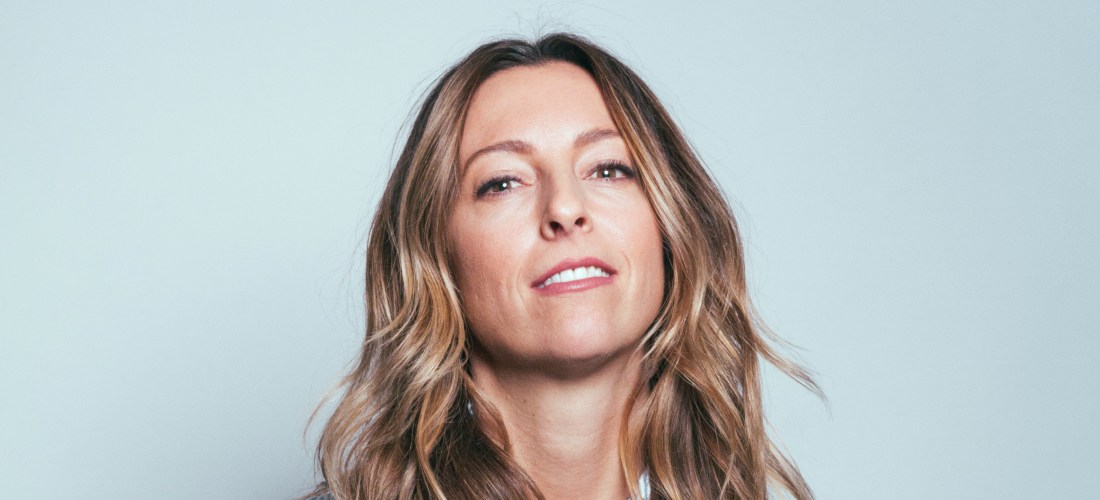
Kyler: CPTSD

Adverse Religious Experiences, Deconstruction, ExVangelical, Mental Health, Podcast, Religious Abuse, Religious Trauma
Listen on Apple Podcasts

Content Warning: Sexual abuse, spiritual abuse, severe mental health disorders

Kyler’s story is one of “beauty from ashes”. He lives with dissociative identity disorder, a category of CPTSD. Kyler is one distinct personality in the “system”. The adults in his life abused him as a child—would not keep him safe—and so his brain stepped in and made a way to survive. 

Kyler watched the church fail him and his family over and over, refusing to help or even acknowledge the abuse and trauma. 

“This person who has PTSD has no clue where it’s from, has all this trauma, pain, and hurt…and the church just wants to throw Bible verses and actually doesn’t want to help you.” 

Today, Kyler is a completely different person than when he was young. He’s now free to embrace his whole self without shame and fear, and the future looks radiant. 

Links

988
https://988lifeline.org/

Recovering From Religion
https://www.recoveringfromreligion.org/

Secular Therapy Project
https://www.seculartherapy.org/

Recommendations

“Go have actual conversations with people.” 

Stormlight Archive series by Brandon Sanderson

Quotes

“If you want to lose your salvation…go to bible college. It’s the best way to do it.” 

“For me, deconstructing wasn’t so much…moments of research…it was more, moments of watching the church—for years—fail everybody, fail me, fail my family, just completely fail.”

“This person who has PTSD has no clue where it’s from, has all this trauma, pain, and hurt…and the church just wants to throw Bible verses and actually doesn’t want to help you.” 

“Fuck God’s plan.” 

“How can [God] say, ‘I have created you. I have a plan for you. I’ve done all these things!’ And then just go, ‘Oh well. I was there, but I didn’t do anything about it.’ That’s not a loving, caring god. That’s just a psychopath who enjoys watching things.” 

“Where [God] was real or not, whether he was the creator of the universe or not, I really didn’t care and I don’t care. I would rather, in a sense, burn in hell than spend eternity with that.” 

“[God] will never get another ounce of my praise.”

“It was amazing to see that when we just decided, ‘I’m done being a Christian,’ how much easier life got. Our anxiety dropped. Our depression dropped. Self-worth went up.”

“It’s really funny to see the non-christian community be more loving and more like what Jesus would have been than the Christian community ever was.” 

“[In fiction, you] journey with these characters, love these characters, cry with these characters, rejoice with these characters, and it gives you a space outside of trauma, a space outside of the shit that is the world sometimes…”

Interact

Join the Deconversion Anonymous Facebook group!

Graceful Atheist Podcast Merch!
https://www.teepublic.com/user/gracefulatheistpodcast

Deconversion
https://gracefulatheist.com/2017/12/03/deconversion-how-to/

Secular Grace
https://gracefulatheist.com/2016/10/21/secular-grace/

Support the podcast
Patreon https://www.patreon.com/gracefulatheist
Paypal: paypal.me/gracefulatheist

Podchaser - Graceful Atheist Podcast

Attribution

“Waves” track written and produced by Makaih Beats

Transcript

NOTE: This transcript is AI produced (otter.ai) and likely has many mistakes. It is provided as rough guide to the audio conversation.

David Ames  0:11  
This is the graceful atheist podcast United studios Podcast Network. Welcome, welcome. Welcome to the graceful atheist podcast. My name is David, and I am trying to be the graceful atheist. I want to thank my latest supporter on patreon Jean, thank you so much for supporting the podcast, as well as existing patrons Curtis, Melissa, Susan Joseph, John Ruby, Sharon Joel, Lars Raymond, Rob, Peter, Tracy, Ginny, and Jason. Thank you all for supporting the podcast, it makes a big difference. If you are interested in having an ad free experience of the podcast, you too can become a patron at any level at patreon.com/graceful atheist. I'm very excited to announce that we now have merch. Our lean has gone through all the work to set up a merchandise shop with various logos for the graceful atheist podcast. You can get T shirts, mugs, and all kinds of things. The link will be in the show notes please check that out. Please consider joining our private Facebook group deconversion anonymous and become a part of the community. You can find us at facebook.com/groups/deconversion. Special thanks to Mike T for editing today's show. On today's show. First a content warning. Today's episode includes sexual abuse, spiritual abuse, and very complex mental health disorders. If you would find that difficult in any way, you may want to sit this one out. Arline interviews our guest today Kyler. Kyler suffers from dissociative identity disorder which is a form of SI PTSD. And this stems from the sexual abuse that he experienced as a child as well as the spiritual abuse that he experienced. In Tyler's words, his story is one of beauty from the ashes. Here is Kyler telling Arline his story.

Arline  2:18  
Kyler Welcome to the graceful atheist podcast.

Kyler  2:21  
Thank you for having me. I appreciate it.

Arline  2:23  
I'm excited to hear your story. You and I have actually connected in real life through your wife. And yeah, I'm excited to hear your story. You and I were just talking before we started recording. Is there any background you want to give before I you know before I say okay, what Tell me about your spiritual life growing up?

Kyler  2:43  
Yeah, so I think that, like it's going to be kind of up to like my story kind of almost has two stories, in a way because so 2018 I was diagnosed with dissociative identity disorder, which for some people know it as multiple personalities. It's also sits in the C PTSD category, versus just PTSD. And so my story is a little different, because the first part of my life is almost seen from one perspective. And the second part of my life is kind of seen from another just via the way DoD works. And so there's kind of this what's the word I'm looking for? It's just it's just to kind of different perspectives where it's kind of like an on off switch in a way.

Arline  3:43  
Okay, I think people are going to resonate with your story regardless of yeah, oh, this, this will be awesome. See PTSD, but what does that students that's,

Kyler  3:53  
that's this essentially is essentially complex, PTSD, post traumatic stress syndrome. So that's kind of what they take something like di D, which is a diagnosis that PTSD fits in, but it's more so complex. It's just a complex version of it.

Arline  4:14  
Okay, I've heard and tell me if I'm wrong. I've heard Laura, Dr. Laura Anderson say, CPT, PTSD is like, there isn't a beginning and an end. It just, it's not like there's a traumatic event. It's like this. You can't know for certain when it started and ended.

Kyler  4:31  
Yeah. So where is it CPTSD like so specifically with DoD is usually an extended period of abuse, whether that's sexual, spiritual, physical. Oftentimes, it comes from the sexual abuse side versus the other ones, but it can. So it's an extended period of abuse, usually at a young age and so that That's so that's where you can't really pinpoint a day and go on this day. You know, it's just a build up of trauma.

Arline  5:12  
Okay, that makes sense. Okay. Well, Kyler thank you again for being here and tell us about the religious environment that you grew up.

Kyler  5:20  
I think I was one of those, like homebred Christians, you know, in a way, where, you know, you're the son of a wannabe worship leader, who's the son of a pastor, right? And I grew up very, you know, church from the beginning, baptized at a young age, all of that kind of BS that goes along with that, right. And so we started so like the first part of our, I guess life as a as a child was very much in the Nazarene church, which is kind of a lose your salvation. If you sin, don't ask God for forgiveness, you're probably sick and die, you're probably going to hell kind of deal. Oh, wow. Like not even like a you don't even get like a 24 hour kind of grace period, you know? Yeah, yeah. It's it's definitely a you know, every Sunday is a call to the altar every Sunday, you got to, you know, it's not quite Catholic, where, you know, you have to go in and talk to a priest, but very much a, you know, Sunday at the altar call, make you feel guilty. Then we, then we jumped on the reform train.

Arline  6:41  
So that's a big jump,

Kyler  6:42  
it is a big jump right to go from one to the other. Part of that is due to my parents getting kicked out of most of the churches we went to, for some reason, and I have my guesses as to why we got kicked out. But I'm not quite. I'm not quite sure. The reasons why we always had to leave. The few that I can remember, were mostly them yelling and screaming at people as we kind of left kind of deal. But then we went to Calvary Chapel, which Chuck Smith kind of this in the 70s I think it was kind of started evangelizing to the hippies kind of deal. And they're very, I looked up the word because I wanted to know what it was expository teaching. So instead of doing Yeah,

Arline  7:37  
it's not topical with like, you just go through the whole

Kyler  7:40  
book. All that fun stuff. So that's kind of the environment we grew up in as a kid in early adult was this kind of homegrown Christian you didn't really have a choice you were kind of saved out of you know, just living in a Christian home quote unquote, Christian home

Arline  8:09  
Am I right? Were you homeschooled also

Kyler  8:12  
Yes. Yeah. So homeschooled was added on to that so that adds a whole nother layer of Yes. We were we weren't like the you know, the long skirt. You know, homeschoolers, we like to think of ourselves as the cool homeschoolers when we were okay, but yeah, homeschool added a whole nother level. So obviously all my education came from a biblical background and a biblical you know, topics and you know, all the curriculum is biblical, all that stuff. So,

Arline  8:53  
oh, yes, you are not the first homeschool adult homeschool kid to be on here. Oh, heavens.

So is this high school college like, what's what's happening

Kyler  9:11  
all the way up until high school. We, in a way dropped out of school, but also didn't we had enough credits technically, to graduate but our mother would not let us and so she wanted us to do a whole nother year. And we said fuck that we're gonna do it. We weren't they. I didn't move with them. And I did the real stupid thing and went to Bible College.

Arline  9:41  
Oh, also not the first one.

Kyler  9:45  
I've gone to college. If you want to lose your salvation for anybody listening, that's a Christian go to Bible college is the best way the best way to do it.

Arline  9:53  
And why do you say that?

Kyler  9:55  
The the amount of Jesus that they throw at you is like like drinking from a fire hydrant. And so you just kind of get one you start to, I think dive into more of the the history of the Bible and you start to find more questions, or you start to learn about the Greek and all that and you start to go, Wait a second, this. This doesn't. That doesn't make sense. Like, yeah, as a regular Christian, I think you can just kind of see the top layer of things and not dive too deep. When you start to get into like, where did this come from? Where did that come from? You start to go ahead. Does that make sense?

Arline  10:44  
Yeah, that makes sense. I, I did not go to Bible college, I was not a Christian. I didn't grow up in it or anything. I became a Christian in college at a public university. So the heathens were all around me. But Jesus found me. And so I did not have that experience. But I have heard multiple people talk about like, you learn how to study the Bible. You learn exegesis, and hermeneutics and all this stuff, and then all of a sudden, it's there more questions come that don't have really satisfying answers,

Kyler  11:16  
have no satisfying answers. The problem is you, you start to realize that it's just a book written by people. And you start to really get into these questions that there the Bible College is trying to teach you one way, but you're starting to look at and go, but you don't have an answer to any of these other questions. I'm asking, right, like, I get what you're trying to teach me. But let's, let's hold up here and answer this question. And they're just like, ah, you know, trust God, and you're like, No, that doesn't work.

Arline  11:48  
And it's like this weird. Use logic and Bible study tools and all this on the one hand, but then when the questions get too difficult, it's like, Oh, you just have to trust the Lord. Like, I don't have a rule gets to pick Yeah, who gets to pick? Which questions get answered? And do I

Kyler  12:03  
use logic? And what do I do? That's probably what got me into the most trouble as a kid in the church to was always wanting to, to ask the why question, right of why, why this? Why that?

Arline  12:16  
Okay, so you went to Bible College? did was it? Was it a good experience? Was it not a great experience?

Kyler  12:23  
It was, it had, it was a lot of bad on some good, I think, I think they were like, it was bad to the point where like, the person of the Bible college, tried to get go as far as like controlling things like the, the relationship I was in with Lily, my wife at the time, when I would ask questions about our personal life and intimacy and you're just kind of like, oh, wow, it's kind of none of your, your business, you know, what I would do, but surprisingly, the missions trip that we did at the end was the best experience of Bible college that there was, it was a really cool experience for us. We went to Kyrgyzstan when it was overthrowing its government. And so we were there as the riots were happening and as as this government was being overthrown, so it was pretty cool to experience some of those things it was kind of like a nice this is the real world kind of experience looking back you know, obviously in the moment it was this great ministering opportunity right we're oh man the Lord blah blah blah this and that.

But looking back now I can go so it was a real world moment for us to just kind of go

learn a lot and look at the world and I think a different point of view it's kind of how I view that moment now versus you know, the Christian way you would view it in the moment

Arline  13:59  
Yeah, that's that's huge that's a country that does not come up in American news very often to know anything about what's happening so that's awesome that's

Kyler  14:08  
it's technically a third world country so it was there were some cool experiences of getting to see these nomadic people and getting to drink glacier water right out of mountains kind of do a natural hotsprings kind of thing but like the outside looking in it was it was a big I think real world moment for a very delayed you know, young man at the time

Arline  14:35  
Yeah, because homeschooling to Bible college to yeah completely different culture in a different on a different continent everything

Kyler  14:43  
yeah

Arline  14:52  
so you said that was at the end of Bible college

Kyler  14:55  
that wasn't the in the Bible College.

Arline  14:56  
Were you in literally married yet had or what happened? Next out

Kyler  15:00  
So, we got engaged while I was at Bible College. And so we had been dating for a while. And Bible college only kind of happened because I had planned to play baseball my whole life, but blew my knee in, in high school. And so kind of lost all the opportunities. I had to play baseball. And so we were kind of dating, we were dating, went to Bible college got engaged, and they got married the next year, I believe, yes, we got married the next year.

Arline  15:39  
You have to check the timeline.

Kyler  15:40  
The jag the timeline is terrible with dates, I'm terrible with dates due to just like numbers. And the a timeline for me can get very mushed up and very messy. Just due to the way D ID works, so

Arline  15:56  
Okay, so the DI D diagnosis did not come, you said till 2018. So what's happening in between these years? Like, is Christianity still working for you?

Kyler  16:05  
So this is kind of where I think the added that for me, deconstructing wasn't so much. Like these moments of research or moments of like, it was more a moment of watching the church for years fail everybody and fail, me fail, my family fail.

Just completely fail. And so during this time, there were there would have been three kids born. So two kids born, one was born after my diagnosis.

There was a lot of, I think, pain and hurt and anger on my side, and not knowing where to direct it. And not knowing where to, and not getting the answers out of the out of anybody, church world. Nothing. There were there was a suicide attempt, in a way, a very, not so much more of a suicidal ideation that was with the plan, and with a desire to do. I did have two attempts as a teenager that obviously failed. I'm not very good at it.

You know, look, you know, hindsight. 2020 I'm glad that I'm not over three. With that. So there were you know, there was a psych ward visit, and lots of attempted therapy. And then and then finally in 2008, some are sorry, 2018. There were the right people in the right place to kind of step in and help with what was going on. Good.

Arline  18:07  
And so you said Christianity had been working for you. But you said the deconstruction, you said the church was failing people was it just personally or so

Kyler  18:15  
a little bit of there were several things so failing, in the sense, so we went to a church here in Atlanta, that was very, I'm gonna say yappy. So lots of people who, you know, had money, and lots of people who now not works based, but we're looking at it you could definitely there it was more of a like, throw your money at people instead of helping prosperity gospel, not so much prosperity gospel as much as you just have all these rich people who said, Well, why don't I just give money to these people instead of actually going to? I see. You know? So one of the big ways that we mean Lily got failed, the church failed, I started to fail us on the beginning was our second oldest son getting diagnosed with anxiety and Asperger's. And the church had no answer or care to help us. They watched us constantly sit outside the sermons because he couldn't be in them. He couldn't we couldn't take him to childcare. And they just didn't do anything about it. It just didn't care. You know, and so we sat silently suffering in the church while they just kind of did their crap and let us get out there and didn't didn't do anything other than try to tell us you all you let your kid cried out or, you know, that kind of thing. And so and then it also failed in the form of, you know, wanting to get messy with people who Were messy, right? They, they wanted to be a church, they wanted to be a place that you know, let messy people join. But they, they wanted you to join so you could become right. So you could change they didn't want to. I think they tried to deal with your mess, and all the shit and all the baggage that you carry, but they really had no answer for it. And they just wanted to point you to this counselor, this Bible study or this men's group or this and it's like, no, I've got questions about why I was, you know, sexually assaulted by 10 plus men that I don't, I don't really give a crap about your, you know, your Bible study I want to, but which, at the time, you know, I didn't exactly know about all of this, because the way di D works is, it will suppress those memories. And so I'm this, you know, person who has PTSD has no clue where it's really from, has all this trauma, and pain and hurt and has no clue what it's from. And the church just wants to throw Bible verses and stuff at you doesn't want to help you. And so, that was kind of the the, the biggest failing kind of happens after we got our diagnosis of di D. So that comes a little later in the story. But the failing where I kind of lost my shit on this church and pulled every every elder and the pastor side that I knew, cussed them out and said, screw you happened a little later in the storyline

so what kind of happened was I I struggled a lot with depression, self harm. Just feeling like a worthless piece of shit. Really, honestly, and not really knowing why and life that why have these feelings. And we kind of had this, we had the car wreck. And that kind of brought forward for the for us at the moment that there's these people in our head talking. And they're different people than who I am. Right? Okay. I don't recommend the movie. But the movie split, we were watching and afterwards, the personality at the time when that's us. That actually happens in our mind, like, what's happening in this movie that that happens. And so we started to walk down kind of a path of seeking how to get help for that we had gone to a, a Christian therapist, who the next few people I'm gonna talk about if more Christians were like them, we'd still probably be Christian. Like, the type of people where you can actually see love and kindness and just general want to help you right? Like if if the church was like them, holy shit. They would move the mountains that they think they could, right. And they would be the the force for good that they think that they are. We did a personality test before we had our diagnosis. And the guy was like, I need you to do another one. And we're like, okay, and we did a second one. And it didn't match up. Oh, wow. Yeah. And so he was like, as a as just a counselor. He couldn't exactly diagnosis with DD multiple personalities. But he was like, Yeah, I think you I think you might have this right. And we just kind of blew it off because it wasn't until after the wreck and after Valentine's Day of 20 2018 where we got our official diagnosis. After we went to the psych ward again and got a diagnosis the at the same church we're at that was treating us like crap, right? They brought in a new counselor, who was actually educated was actually schooled on trauma and schooled on therapy and all of these things, right, like an actual licensed professional was brought into. And she was amazing. She took the she was willing to I might get emotional here but she was willing to take the message ship that was us and go let me let me fix let me help you Not let me throw money at you. Now let me I mean, the the amount of time she put into us was amazing, you know, and I have nothing, nothing bad to say about her, right? Like, she never did anything in my eyes that she really was, like I said, if more people were like her more people were like the other counselor, I think there's a chance we'd still be a Christian, right? Maybe? Probably not. We asked him any questions. So we get diagnosed with our di, D, and then we get on medicine. So we got on a ton of antidepressant and, like, help medicine to help with sleep. And from there, this is kind of where the story takes a little bit of a, here's the second view on our life, because now enters all of these personalities, people who are, you know, different ages, different genders, different sexualities in our mind, right, same same body, but it's almost like you've have 10, roommates, 13, roommates sharing headspace, but living with one body, right. And it was very chaotic for a long time. When you have personalities who are now able to be themselves, and they feel pain, they feel anger, they don't necessarily want to be married, they don't want to be a father. Or they're nonverbal. They don't talk they're, you know, they're within a DI D system called littles. And so they're, you know, five, six years old, they don't they're not, they don't have to communicate these things, right? They just know that they want to a stuffed animal. And to be comforted. They don't know what they don't, they don't want to raise children, right. And so you it switched from it's kind of weird, because Kyler is actually the the person that was hosting at the time up until we had d&d host being the main person who runs the system, or the main person who you see in front of you every day, who does your day to day things, it can look very different. For everybody who has the ID, right, the way a host works can be the person who just does your daily tasks to the person who, who is, you know, out there, the majority of the time for us, it was the latter. He was more of a Christian. And he was more he was the one who Lily really dated, and Lily really, in a way fell in love with. And it had been his life that had been being lived, essentially up until that point. So enter all of these other people who want to have their own lives, including myself, right? And I know that can be a little confusing the whole Kyler and me being I still go by Kyler because it just makes the most sense, right. But I do go by a different name internally in the head, in this system. But it you know, Kyler decided, in a way to leave to just be done as an as an altar. And that kind of threw a big wrench into things in life, right? Because here you have me, who is a part of a system has not necessarily been I've been there the whole time. I've seen all this stuff. But I've seen it from an internal point of view. And I don't believe in God at all. So here's where that kind of switch was of he's gone. I want nothing to do with the with the church. And this kind of came after a very close friend of ours at the time, their daughter was molested within the church by somebody in the church and it was swept under the rug. And I still to this day have immense anger over it like to watch people I respected at the time or were respected at the time to watch and it was it was swept under the rug because the teenager that did it was the son of the best friend of the pastor.

Unknown Speaker  29:51  
Okay, and

Kyler  29:54  
I found out because obviously it's one of my closest friends at the time. It's his daughter, right like there's no Like, he was afraid, I think, at first to tell me because he knew I was gonna lose my shit. And I did. I watched them, let this family fall off the face of the earth and just say, Fuck you, we're just gonna leave you, we're gonna cover this up, we're gonna let you bleed dry, and we're not even going to check on you. We're not going to see how you do and we're not going to make sure your daughter has you know, therapy, we're just going to kind of sorry, that happened, blah, blah, blah, just trust God

when I found out, I individually pulled aside every elder, this was me and Kyler at the same time doing this as in a way of, I think just pure anger of calling, you know, called them out as cowards, as poor leaders. As you know, why would you let you have a wolf in sheep's pen? You're supposed to be the shepherd. How dare you, you know, kind of do Real men don't do this kind of thing. Like, you want to be some real Christian man. Go fuck yourself. Right? Like, and when I say I knew all the eldership I knew all the eldership like, we were. I didn't know we were always that guy. That was friends with everybody but never quite ourselves. The elder Right. Which I'm so glad we never were but and then the pastor in the same thing. pulled him aside, told him he was a coward. How dare you cover this up? You know, how do you get this quiet, and not help this fan, I was more upset about the helping the family than I was the keeping it quiet. I just kind of assumed that that always happens in a church. Right. But the whole the whole, just letting the family that suffered. Get hurt was too much for me. And that was kind of my me as somebody as an altar. would never, you know, even if I had been considering Christianity at the time, I never would have after that. Right? And then to see Kyler at the time, that was his just kind of like the world sucks. I'm done with it moment. You know why? Why? You know, we've asked all these questions. We've not gotten the answers. When we get answers there. Just trust God trust, you know, it's God's plan. Fuck his plan, you know what I mean? Kind of be like, yeah, if that's his plan, I want nothing to do with it. Right? If his plan is to let children be molested, if his plan is to let go, you know, the glory of himself come out. Because somebody's dad couldn't keep it in their pants, then fuck him. Like, I really want nothing to do with that. And so that's, you know, that's kind of the breaking, I guess the moment for us where we were just done. We just just just as a, as a whole, as a system. We just this, this was the biggest failure you could have is to let this little girl get treated that way and then not do anything for her. I spent my whole life having nobody there. You know, you know, my questions for the church, you know, through this time, right? We were asking earlier about, you know, what was going on during this time? Part of this, my questioning was, Where was Jesus? When I was being molested? Where was he? Was he sitting in a room watching me? Because if so, that's, that's just why why would why can't How can you say you're right? How can you? How can you say I have a plan for you, I've created you. I've, I've done all these things and then just go, Well, I was there. But I didn't do anything about it. Right? That's not a loving, caring God. That's just a psychopath, who enjoys watching things. You know? If somebody did that, as a human being, they go to jail. Right? Absolutely. Why would I worship somebody like that? Right? And so, I don't know, if we just decided, like, you know, what I was saying earlier about how some people do the research, right? And they discover God's not real or they, you know, they, they have these moments. That kind of lead. I just, I more or less decided I wanted nothing less to do with God. And I wanted nothing more I wanted. I wanted to be as far away from his plan, quote, unquote, or his Um, desire designed for me, you know, as I could, because that was that's just bullshit. Whether he was real or not whether he was the creator of the universe or not, I didn't care. I don't care. You know, I would rather in a suits burn in hell than spend eternity. With that. You know what I mean? Yeah, no,

Arline  35:25  
I very much understand that that was a big part of my husband's deconversion was just realizing like, if I'm a better parent, than the god I'm supposed to think is like, all good and all knowing and wise and loving. But I treat my children way better than he treats his creation like, this isn't I should not have better morals be more ethical than the god I'm supposed to worship? And he's like, even if God is real, I don't I'm not going to worship him. He's not worthy of it.

Kyler  35:54  
Yeah, no, I definitely. I said that same boat of just like, you'll never get another ounce of my praise my, you know. And, you know, it's just, and then, you know, then you add on to knowing what I learned in Bible, what we learned in Bible college, knowing what we knowing that there was just never these answers that we asked all these questions. Oh, this doesn't make sense. Why? Why were you allowed to sleep with your daughter in this part of the Bible, but now you can't hear? Like, why were you? You know, all these things? Like, you know, that just, there's Adam and Eve, they're the first creator. And then like, their kids go off and meet other people. Where did they come? Yeah,

Arline  36:38  
wait, yeah.

Kyler  36:40  
Are we gonna just skip where they created? Did these kids? Do you know that these kids have to have sex with their parents to have other kids to grow more? Like, just, if you read the Old Testament, it's fun to read and all that right. It's probably the scariest book you could ever read is the Old Testament.

So you just add on in all of that, and we just decided we were done. And then about, I would say, probably about three years ago is really, three years ago is where I as an author started hosting and started taking over right, that's 2020, kind of during the crazy pandemic, where I think everybody nowadays has a story of how they're like how it changed their life, right? Everybody seems to have a cool, crazy, or a fucked up story right? Up 2020. That's where I kind of really started to become who I am today. We stayed on our medicine up until about until about six months ago, I think it was now we were just on such a high dosage that we couldn't, we either had to change medicines, we could do more, or we had to figure something else out because we were on so much Anna depressants and so much. But it was amazing to see when we just decided I'm done being a Christian. How much easier life got just our anxiety dropped, our depression dropped our you know, self worth went up, skyrocketed. And not in a cocky way just in like, Oh, I'm actually worth something. I'm not this, this piece of shit that needs this person to tell me every day that I'm, you know, his and loved by Him, right? Like I in myself can just be this. This loved person. And we watched our happiness go up, we watched our joy continued to rise, we watched it was a transition for us and other parts to come out. Right? It was a transition to go from being you know, just alters in the head to now having to run the show. And having to manage that and having to having to figure out how that was going to work with other parts. And a lot of it came down to just wanting to be the dad that we didn't have for these kids that we had in the house. Right? Not wanting to see them grow up and then you know, Lily, just being fucking amazing and pouring herself into us and being there for us. And, you know, lots of people, you know, our, our mother in law. Father in law, stepped up in ways that became parents where we didn't have them, right. Friends stepped in and just said, Hey, I like you no matter what you choose, right like, I, you know, having people embrace the the DI D side of our life is I think also what kind of helped was just they were just like, oh, not none of the Christians would have. Actually when we were a kid, we had a kind of an incident that happened. And I won't get into details of that, because it's kind of gruesome. But one pastor actually tried to tell us we had demons inside of us. Yeah. And so I would imagine

Arline  40:31  
that I mean, what other explanation?

Kyler  40:35  
You don't remember doing this for three hours long. But you did it was a demon, obviously. Right. And so, you know, tried to have those cast Alamy and prayed Atomy and removed and all that I'm so sorry. Well, I didn't work obviously. Now, we

Arline  40:50  
first had to think about little, little Kyler

Kyler  40:53  
was I was a teenager at the time, so I wouldn't as little but I definitely the abuse for me stopped at like, the sexual abuse for me. Because there's, there's sexual abuse, there's spiritual abuse within the church, and pastors and that kind of stuff. There's physical abuse from my mother and verbal, like, emotional abuse from her. That kind of was on and off, but also, she was being abused by him. We refer to him as dipshit. So I have to pause every time I say. That's why because we just call it dipshit. So the abusive dipshit, you know, that stopped at like about 15 When we put them in the hospital for taking his knee out in a fight. And we were just done with it. And it just kind of kind of stopped after that.

Arline  41:45  
Yeah, you can only abuse someone as they're growing up until they, yeah, are, yeah, grown men.

Kyler  41:52  
And, you know, Kyler at the time, didn't remember doing that to him. Whereas, you know, parts in the head came out as protector and said, Listen, now we're done. We're just Yeah. And so, so up until 15th. The abuse is where it kind of stopped and it was, it was kind of just him as a teenager. But he shared us with other people. And we were also be inspired doctor, we were abused by people within the church too. So youth pastor, music pastor, worship leader, I should say, at the time and and then several other smatterings of just I guess random abuse I don't know. I don't know if once you're abused you just kind of have this target on your back that makes you look like oh, that kid probably would let me do something to him without you know saying anything right. I was going somewhere with this but it completely just escaped my brain as to where I was going but

Arline  42:58  
it's okay you were you were just going back to think give some more backstory to the abuse like where all that had happened.

Kyler  43:08  
It was kind of a you know, a lifelong thing until we were so you have all this childhood abuse that you can't I never really told you I'm a bucket of trauma. Which is funny because you've got this you've got this childhood abuse and then you've got the shit that just happens is bad luck shut the atmosphere as adult you blow you blow your knee twice you lose a you have a miscarriage that tears that rip you to shreds right literally we had a miscarriage I was on a flight the next day to find a place to live here we move here the job I was moving here for leaves me says Now we're not actually going to hire you but they go under completely under so we didn't get reimbursed for anything so we're just kind of stuck here in Atlanta and you just start to it just all starts to kind of add up right a car wreck just we had we owned a house that just seemed to plumbing just seemed to never want to work it just it just kind of was all you know you have all this stuff that as you get older is kind of adult stuff but you pile that on with the childhood stuff and it just plumbing overflowing into your sink becomes a way bigger deal than what it should be you know yeah and that kind of goes back to to some of the church stuff is like they were never willing to like help you with that they just want to throw money at you. I'll just get this fit here here's money to go do this here's my to do that never wanted to come in and you know help but

Arline  44:46  
yeah, giving up their time and their energy versus just throwing money which

Kyler  44:51  
is amazing to see the the non Christian community almost feels the not the opposite. Now that they won't get money but man Yeah, but it's like oh, You got a problem with your 3d printer? Cool, let's let's hang out. Let's figure it out. Let's get it done like, Oh, you got a problem with your, your plumbing? Oh, I know somebody let's come over and help you get it fixed right which is it's really funny to see the non, I'm gonna call it the non Christian community be more loving and more like what Jesus would abandon the Christian community ever, ever was.

Arline  45:23  
man Yeah

So where are you now spiritually like, What? What? What do y'all believe or not believe?

Kyler  45:39  
I don't know. That's like,

Arline  45:42  
but isn't it nice to just not know and you don't have to have an answer. That's the

Kyler  45:46  
I think that's, that's where I'm at is I'm comfortable? Like people would be like, you know why ask you? Well, why don't you want to know what you believe? No, I don't actually, I think that allows me to be a more open minded person. And allows me to have better conversations with humans and better conversations with individuals just, I don't come from a prejudiced or a pre notion of what I believe and saying, what No, it's this. So when you talk with someone who's Muslim, or Jewish, or you talk with someone who's, you know, a witch, or a Wiccan, or, you know, all these things, you can really just have a good conversation about getting to know them and what they believe. And you don't have to worry about trying to convert them to anything. And I'm okay with them. And I'm okay to be wrong, too. I'm okay with if, like, if I died today, and I was wrong. Okay, cool, right? Once saved, always saved, right? If you're not Nazarene. And so I just like, I've kind of go with the flow, right? Like, I believe that there's probably I don't know if it's energy or spiritual or what, but obviously, there's something right whether did somebody Yeah, like, did somebody create us? And then just walk off? Did somebody is there someone who is a god, but maybe isn't omnipotent? Is there nobody? Was it the Big Bang? Did we just kind of randomly come out of nowhere? I don't know. You know, yeah. And I also don't know that I have the energy to care. Like,

Arline  47:32  
that's true. There's so many other things, more pressing things.

Kyler  47:37  
I rather I rather go play catch in the backyard with my son, then fuss over or worry about creation or existence or, which is funny because we just, if you would have known, if somebody from our past saw who we were today, they'd be shocked that I wasn't willing to sit and apologetics was a big part of who we were. We could argue like, it's funny, because that's probably part of, of what led us to ask why a lot was we just maybe so we could we get out think pastors at a young age, apologetically, I could, you know, I could put pastors in their place apologetically, as some 10 year old, who's got some guy from seminar, who I know understand more about the Bible, and I can argue it better than you can, and I can disprove your Nazarene or your Baptist or your nondenominational belief. Easily, right. So if you saw me now, if you saw this guy who just kind of doesn't care, obviously, you wouldn't understand what the D ID thing, right? But you also you'd be I think you'd be shocked because I just, it's so hard after like, after, after all of that crap, you just want to be, you just kind of want to take a break. Like, maybe one day, I'll get to a point where I want to look at, or read books about spirituality or want to, you know, dive into, you know, energy or, you know, crystals, I don't know, but the way that their options,

Arline  49:25  
yeah,

Kyler  49:26  
but and it's like, you know, we're all if you think about it, we're all you know, Christians call it prayer. Scientists call it one thing, you know, other people call it, you know, putting it into existence, you know, it's all it's all the same. It's just a matter of kind of what perspective you come from, with it. And for me, I'm just at a point where I think it's better for my life for us as a human for us as a father for us as a partner to just not spend time diving into it because it's just exhausting, right? To try to try to know what you believe right to know what you know. And to know. It's just I'd rather just have fun conversations like this about belief and about, you know what you think, then try to figure out and pinpoint exactly what I believe. Yeah,

Arline  50:17  
I love it

is there anything I should have asked that I didn't ask that you wanted to talk about? We have a few more minutes. Yeah, I feel like I rambled

Kyler  50:33  
a lot. But I think I don't know if there's anything you should have asked that would assume you did something wrong. But no, I think that it's our story is hard to tell, because the DI D throws this wrench into it of like, he, you're not who you were back then. Right. And so you have this whole story that almost can be crumpled up and thrown out the window, because I'm not that person. And I came in as a host as an altar at the time when we needed to just step away from the church and we needed to not be and I was I have no no qualms being that guy and going, Oh, fuck you. were gone. Like, I'll pull us out of any situation and just be like, and that we're good. Forget it. So I think, you know, for us, it was it's just sad to see. The church, it's always sad to see the church fail people in the mental health perspective, right. Mental health is such a big deal. And it feels like the world could be at a better mental health place if Christians would take on a better view of like the therapist who who helped us if the Christians had that view. Oh, my goodness, man, what a what a place we'd be in right now. We'd be in a great place. But everybody would I think. So it's, you know, it's hard to watch sometimes I think and look back and go. The worst part is when you look back and go, Man, Did I really say that at one point in time in life like that? I really fucking tweet that. Like, did I did I, you know? And I think so the other thing I kind of wanted to talk about too, is I think, I used to be very homophobic. And a lot of that came from, I think, a couple things. One, you were raised in the 90s. Right? I was so everything was gay. You desegregate everything.

Arline  52:44  
Right. Yeah. It was an insult. Yeah, it was,

Kyler  52:46  
you know, if or if you didn't like it, it was just gay. Right? Yeah, I grew up, you know, because they're a Christian. So obviously, you're told Adam and Eve, not Adam and Steve, right. And then you add on trauma from men. And so all you see is men who, like men are bad men who like men do bad things, right. And thankfully, at our first like, job we had was Starbucks, we constantly had to work with these two gay guys, and they were very willing to take our crap. And let us ask some questions. And let us let us talk about it a little bit. And let us just kind of realize that not all cats are black. Right? And the logical the logic puzzle, you know, that just because these people did that, and actually the gay community aren't the ones that actually it's the ones that pretend to be straight. Yes, that are the ones that do the harm. Right? Harming children. Yeah. And so for, I think, after, you know, we've grown to be very big supporters of the LGBTQ plus community. Within the last, you know, 10 plus years, I think even III think even Kyler coming up with starting to realize and see those things and, you know, you loved the, or you hated the, what was the Hate the sin not the sinner, kind of crowd was, that's how he used to look at homosexuality, but I think, you know, as we've healed and as we've grown, we've been able to, to become very passionate supporters for that community and, and even, you know, find it pretty hard with nowadays, political stuff going on, you know, to not to not feel the the feel what they're going through and stuff and so it It was, it was really hard, I think at first to overcome that. But as we walked out of the church, it became a lot easier to embrace that community to love that community to almost feel like they're the better community. In a way, the more loving community, the more the Kinder community. And so it was. It's been nice to, to also look at communities and people differently and go, Oh, wow, I got this wrong. And you know, wow, that that tweet in that Facebook post pops up in your history right in Facebook, and you're like, like, Oh, yes. Did I really say this at one point in time in life? Like, man, I'm sorry to ever saw that, you know?

Arline  55:49  
Yes. Yes. The stuff we believe the stuff we preach the stuff we thought about ourselves and others, it's Facebook memories are not always fun, sometimes are wonderful, but

Kyler  56:01  
rarely, rarely for us. Are they? Are they? Okay, they tend to bring back some stuff, you know, it's like, they don't for us, you know, we didn't know. So at the time when we got married dipshit was in our wedding. Right? And so like, I can't look at any of our wedding pictures without getting triggered and stuff like that. So, yeah, it's it sucks. But going back and looking at those times, you just, you just you want to vomit or be like, Man, I suck. So hard. Yeah, I'm so glad I'm not bad anymore. Right? Yeah,

Arline  56:37  
you're a different person.

Kyler  56:39  
I'm so glad I'm converted from being converted.

Arline  56:42  
I like it. Kyler thank you so much for for telling your story. Last question. Do you have any recommendations that have helped you in any part of your journey podcasts, YouTube videos, books, anything?

Kyler  56:55  
I think the majority of my helping has has been, go go have conversations with actual people, and other books, podcasts and all that are great. But like, for us, it was getting into the nitty gritty with real people. And, you know, surprisingly, I guess I will say this, if you've ever read the Brandon, if you've not read the Brandon Sanderson series Stormlight Archives, right? That's a big, that's a, that's the nerdy part of our journey would be those books gave us an outlet to, to cry to feel. And that deals heavily with PTSD and actually has a character that has dissociative identity disorder in it. And there's a part in one of the books where we just I think it's the hardest I've ever cried in my life. And it was actually a pretty healing moment for us to just to read it and see it, right. So fictional books, yeah, I guess a bit, but a lot of talks with close friends or, you know, people just loving us. People not giving a shit, that we're this weird person with multiple personalities that they just, they just want to get to know us and maybe even some of the personalities. You know, Kennedy also. Yeah, I guess I'm not the most learned of people on on your podcast, but for me, it was fictional books and conversation with people, I think is what I recommend.

Arline  58:31  
Now, I love it conversations with people like how I'm a huge advocate for reading fiction, because there are people who will only read nonfiction, which blows my mind. Like, I just think about fiction books. Like for me, things like Jane Austen written, you know, over 100 years ago, still funny and still clever, because people act the same way like the same societal things and issues and so, so fiction is a fantastic way to understand yourself and other people.

Kyler  58:58  
Yeah, well, and fiction to fiction that's not written within, like, the world we live in. Now that's written in its own kind of world, and that space is never going to get it's never going to get outdated. Right? Like, it's never gonna have like, well, that doesn't make sense now, because we have TVs kind

Arline  59:14  
of thing right? Oh, that's interesting. That's a good point. Yeah, it just

Kyler  59:17  
kind of stays in its own time frame. And so you can you can get lost in these worlds. And people like Brandon Sanderson and that and multiple other alters he just happens to be my favorite. Give you a space to get lost in and heal at the same time. And to get lost in and journey with these characters. Love these characters. Cry with these characters rejoices characters, and it gives you a space outside of trauma gives you a space outside of the ship that is the world at times to just kind of go. Let me dive for five hours into this book. Love it, find a place to just kind of heal it and enjoy.

Arline  1:00:01  
Yes. Oh, I love that explanation about fiction. That's yeah, I love it. Well, thank you so much for being on the podcast and have a fabulous day. Kyler

Kyler  1:00:11  
Thank you. Appreciate it

Arline  1:00:20  
my final thoughts on the episode. I am really thankful for Tyler's authenticity, his transparency, his willingness to tell their story. It breaks my heart when I think about like him when he was little. And as a teenager and the the abuse suffered. I don't even know the reasons you know, you don't. You don't always know the why things happen. What adults were thinking when they did these things, or allowed these things to happen. But like, who he is now who is grown to be and the partner that he is that dad. It's amazing. What getting away from religion getting away from abuse. It's amazing how hold and full and happy and even clear minded. One can be calm, when you don't have all the extra anxiety of Why is God not taking care of me? Where is God in the middle of this? Why hasn't God done something? How is this loving? Like it's just it's so much and it's amazing what our brains like the lengths our brains will go to to keep us alive. Here his mind did so much to keep him alive when he was little as he got older into adulthood. And it is just amazing. Our bodies. They're just amazing. Yeah, to keep him alive. I think I think my takeaway for myself personally is just a another reminder of how great fiction can be for people. Just being able to have a world that you can get away to, even if it looks like our world, or if it's completely different on a different planet or in this made up realm. It's good for us to be able to go places and like he said, weep and rejoice and have all the emotions, but it's safe to be afraid, but it's safe. Fiction is just wonderful, amazing movies, books. Any kind of wonderful stories, true stories also. Anyway, thank you again, Kyler. For being on the podcast, I'm honored that you would tell your story.

David Ames  1:02:57  
The secular Grace Thought of the Week is simply reach out and get help. Many of the faith traditions that we have been a part of have dissuaded us from seeking therapy or psychological help of one form or another Kyler story represents that he was unable to get the help that he needed until he was on his way out. I simply want to say that that there are many ways to find help. If you are experiencing suicidal ideation, call 988 immediately within the United States and get immediate help. If you're in the middle of deconstruction and you need someone to speak to you can speak to someone immediately from the recovering from Religion Foundation, both web based and on the phone. Links will be in the show notes for that. And then finally, if you're looking for a secular therapist, I recommend the secular therapy project. You can find therapists in your area, as well as telemedicine who are not going to tell you to pray harder. Please, if you find yourself in a place where you need help, reach out and find help. Next week, we have Benoit Kim, who is the host of the Discover more podcasts. Ben was not the traditional guest for this podcast. He and I disagree on a number of things, including the fact that he is a Christian as well as his very strong interest in psychedelics in a clinical psychological setting. But at the same time, we have a lot in common what I would call secular Grace Benoit is interested in helping people become the best that they can be. It is a fascinating conversation and I hope that you will check it out next week. Until then, my name is David and I am trying to be the graceful atheist join me and be graceful human beings. The beat is called waves by MCI beats. Do you want to get in touch with me to be a guest on the show? Email me at graceful atheist at Gmail dot Calm. For blog posts, quotes, recommendations and full episode transcripts head over to graceful atheists.com. This graceful atheist podcast, a part of the atheists United studios Podcast Network

Transcribed by https://otter.ai
Holly Laurent: The Rise and Fall of Twin Hills on the Mega Podcast

Artists, Comedy, Deconstruction, ExVangelical, High Demand Religious Group, Podcast, Podcasters, Religious Trauma, Secular Grace
Listen on Apple Podcasts

This week’s guest is comedian and writer, Holly Laurent. See her full bio and work here

Holly tells a bit of her story, growing up in a fundamentalist evangelical household. From the fear of demons to eternal conscious torment, Holly is still dismantling the indoctrination. In comedy, she’s found a way to express her “voice that always got [her] in trouble” as well as an accepting community, something she struggled to find in the church.

Her podcast Mega has a new five-part mini-series parodying the downfall of an infamous Mars Hill pastor. Episode 1 of “The Rise and Fall of Twin Hills” drops May 21. It’s going to be a crazy ride!

Links

Holly’s site
https://www.hollylaurent.com/

Mega the Podcast
https://www.megathepodcast.com/

Instagram
https://www.instagram.com/hollylaurent/
https://www.instagram.com/megathepodcast/

Quotes

“Sometimes laughter helps during certain types of hurt, and sometimes it doesn’t.” 

“I speak English and I speak Evangelical…”

“Nobody listens when you’re on a soapbox, but if you can make someone laugh, it can be really disarming…it opens up the possibility that there could be some reciprocity.” 

“I may be in the messy part forever.”

“My healing, my path is not linear. I feel like it’s more shaped like the milky way…”

“I see a lot of similarities between ‘preaching and teaching’ and performing.”

“The word that, I think, really defined the first three decades of my life is…fear.” 

“I think real love is a lot like truth, it liberates, so I’m trying to get better at recognizing cages.”

“If I can make you laugh, you’re in the palm of my hand a l little bit because at the very least, you’re listening…”

“Comics are supposed to be the truth-tellers.” 

“I want comedy to be my higher power.” 

“If having to be more intentional with our language and our content is what’s required at the moment, great! That’s a new challenge.”

“…the cognitive dissonance of trying to maintain and push a narrative of a god that’s both an authoritative, genocidal dictator and also have it be ‘the most loving, the most incredible love that you’ve ever had in your entire life!’”

“Everyone played their part perfectly so that I could play the game. The Church and my parents, everyone…they believed it so deeply that I did…”

“One of my biggest indictments of Middle American Christians is that they are theologically illiterate; they do not know what’s in their book and I do.”

“I think that’s what all these ‘Jesus and John Wayne’ dudes are…big man-children.”

“I don’t need and want love. I am love. I have love. I am this love.”

“What improv and comedy taught me is that deep, active, conscious listening is a posture and willingness to be changed.”

“Love yourself and be love, rather than need love…and we’re going to make things better!”

Interact

Join the Deconversion Anonymous Facebook group!

Deconversion
https://gracefulatheist.com/2017/12/03/deconversion-how-to/

Secular Grace
https://gracefulatheist.com/2016/10/21/secular-grace/

Support the podcast
Patreon https://www.patreon.com/gracefulatheist
Paypal: paypal.me/gracefulatheist

Podchaser - Graceful Atheist Podcast

Attribution

“Waves” track written and produced by Makaih Beats

Transcript

NOTE: This transcript is AI produced (otter.ai) and likely has many mistakes. It is provided as rough guide to the audio conversation.

David Ames  0:11  
This is the graceful atheist podcast United studios Podcast Network. Welcome. Welcome. Welcome to the graceful atheist podcast. My name is David, and I am trying to be the graceful atheist. Thank you to all my Patrons for supporting the podcast. If you too would like an ad free experience of the podcast become a patron at patreon.com/graceful atheist. If you're in the middle of doubt, deconstruction, the dark night of the soul, you do not have to do it alone. Join our private Facebook group deconversion anonymous and become a part of the community. You can find us at facebook.com/groups/deconversion

This week's guest is Holly Laurent the mind behind mega the podcast mega is revealing a brand new series that is absolutely out of this world. Mega is an improvised satire in the world of a fictional mega church, and they are releasing a comedy investigative miniseries inside the world of their own show called The Rise and Fall of twin hills. The Rise and Fall of twin Hills is a hilarious riff on the self important truth seeking that happens around church scandals and the twisted psychology of those who are inside them. This mini series is chock full of ridiculous scandal put it this way. If you think that the real megachurch pastor improprieties we've seen over the last few years are bad. Get ready for the outlandish high jinks of Pastor Steve Judson. If you're a fan of parody and satire or a comedic take on what it's like to be in the middle of deconstruction, then go check out mega and their new mini series that comes out May 21. The first episode of the mini series The Rise and Fall of twin Hills is out now go check it out. You can find them on Apple Spotify or wherever you get your podcasts.

Special thanks to Mike T for editing today's show. On today's show. My guest today is Holly Laurent. She is the comedic mind behind mega the podcast. Mega parodies the experience of the evangelical world with heart compassion, and satire at the same time, Holly's brand of comedy and her words is doing comedy at the height of her intelligence and connecting with the audience on a deep level. Holly is one of those amazing people who can use comedy to communicate to break down barriers to get past people's defenses because she's being honest and raw in that comedy. You're gonna hear that now in this interview, that Holly brings the self honesty to the table. That is what makes her such a great communicator. Here is Holly Laurent telling her story. Holly the rot Welcome to the graceful atheist podcast.

Holly Laurent  3:16  
Very happy to be here. This is my favorite stuff to talk about. And I don't even know what your questions are. Yeah.

David Ames  3:25  
Well, for like the two people listening to my podcast who don't know about mega, can you give them the introduction to your podcast?

Holly Laurent  3:33  
My podcast is a comedy and it's called mega and it is an improvised satire from the staff of a fictional megachurch, where we parody the power powerful systems and structures in place in terms of the what I consider kind of corny and cheesy mega world backdrop. Yeah, and and every single episode, we have a different comic who comes on and plays a different person who exists in that world. And we it's and we just improvise together and find a lot of really fun stuff. We laugh a lot. And one of the most interesting things that has come about from this podcast is it has brought me into a really delicious world of really wonderful people of you know, X van Jellicle 's and people who are deconstructing and like a really lovely supportive community that I was not even aware of before my podcast and which is really really lovely and it's sort of surprising to us at Mega that we have the audience we do because I think half of our audience is is kind of Christians who I don't know are probably like We're the cool Christians we can laugh at ourselves. We I'm not sure I'm not sure what they're thinking. But and and a lot of people who find themselves on the other side, people who have moved to being evidence based people and Have faith based people or however they describe themselves. So, um, I think, yeah, we have, the feedback I hear a lot is that so many people find it to be incredibly therapeutic to be able to laugh about some of this stuff. And you know what, sometimes I hear from people who are like, I go through periods where I can't listen to my gut because I don't find it funny. And if I'm hurting, sometimes it sometimes laughter helps during certain types of hurt, and sometimes it doesn't. And so we actually have our Patreon episode that comes out every week is called a mini. So we have the mega and we have the Mini and in the Mini, we just play ourselves, we are ourselves, we're not playing characters, and we kind of deconstruct all the ideas that our characters are we're wrestling with in terms of content that comes on the weekend episodes of purity culture, or scandal in the church and how people of faith navigate that, but the way we approach it is that we it's very Christopher Guest in its tone, I guess. It's very much like a mighty wind or Bastien show or a show like that. We're, we're playing to the top of our intelligence and sincerely playing characters, who are deep believers, and I believe we're playing them very lovingly, and we're really humanizing them. And we're exploring that point of view that me and my co host Greg grew up with, I really got it hammered. Hammered. It got hammered home, to say the least. And so I use my bilingual. I speak English and I speak evangelical. Yeah, I use my my by link quality. I think I made up a word to, to just create a specific backdrop that is really fun. comedically, you know, a lot of like, more specificity kind of creates, like a universality in terms of comedic language. So yeah, we have, we have a really good time with it. And I've enjoyed playing both sides of being the believer exploring that point of view, in a comedic way that, at the very least, makes people laugh, or hopefully even might help people. And it's really for us, I come from a tradition of improv and comedy where the, the way I believe the best way to make a statement about something or the best way to create a conversation is to be the thing that you have commentary about. And because nobody really listens when you're on a soapbox, but if if you can make someone laugh, a lot of times it can be really disarming. And then you're actually listening or opens up an opportunity for there to be some reciprocity or kind of a, an open, open dialogue. And I really don't have any interest in punching down at believers and taking swipes at individuals. I really, I really am kind of a I agree with. Oh, man, what's his name? I'm having a pothead moment. George Carlin. Yes, I really agree with George Carlin that like I love people, I don't like groups. And so I'm not I'm not punching down at any individuals in any way, shape, or form. I'm really intently, intentionally punching up at the power structures that really do kind of seek to control people and to oppress people. And that I really believe these systems cause deep harm, some harm that is becoming known to some and some harm that is not even detected at this point, which is really insidious. And so that might be placing a lot of responsibility on to a half hour comedy, but yeah, but seriously, that's where I am.

David Ames  8:52  
Yeah, my drop, we're done thanks.

I want to circle back to a lot of things that you just said. But I really do first want to hear just a bit about your personal story. What was like for you, as a believer when you really were a believer and growing up and so and then maybe lead us through? When the doubts came and what that was like for you?

Holly Laurent  9:25  
I really always struggled. It's hard to say because of revisionist history and memory being very, not trustworthy.

David Ames  9:38  
But honest about that fact. Yeah. Yeah.

Holly Laurent  9:41  
But you know, like, every time you revisit a memory, it's like you open up that folder, make some notes, cross out some old stuff, make some changes and put it back on the shelf and that memory keeps evolving through time. And I keep changing I mean, I'm, I'm always changing like if we had this conversation on a different weak, I'm positive, the conversation would be very, very different. Yeah. And I'm really in that messy. And I may be in the messy part forever. I never have felt like, ah, Hive, like, like a long jump you where you land in the sand and you're like, ah, that's where my feet are. Mark those two footprints that is me now it's all over. Yeah, I really, I really feel like my healing. And my path is not linear. I feel like it's more shaped like the shape of the Milky Way galaxy where it's just kind of a swirling thing with like, arms that shoot out, and then it comes back into the center and then shoot out again, and just a swirling kind of mass. That's what I feel like emotionally and intellectually. But the way I can describe to the best of my ability, my memory of having grown up with a very, I was in a high demand, religious environment in terms of sort of a fundamental evangelical culture. Both of my grandfather's were pastors, my so both my parents are preachers, kids, I'm a preacher's kid. My dad is currently the pastor of a mega church, but used to be an itinerant evangelist that was traveling around the country bringing the Good News of the Gospel to high school assemblies and mega churches and county fairs and you name it. And before that my parents had one of the first ever Christian rock bands. And so they in their day were considered very edgy and controversial. And, you know, should you be singing about Jesus? And it sounds like the Grateful Dead? Is that a problem? It was a problem for a lot of Christians. So my parents were kind of considered I think, yeah, some like for runners in the evangelical movement that has brought us well, Trump frankly, that that's all I do blame them emotionally. But yeah, they were kind of at the beginning of that like hold Jesus movement and you know this countercultural Geez long haired Jesus dude who loves you, like you've never been loved before. And a lot of their generation I think, really needed to feel some kind of that love. They came from parents who didn't talk didn't touch didn't affirmed in anything. And man were they just starved for love, at least my dad was. And he that that message really gripped him and transformed his life. And now it really feels almost like a love addiction or something. Really trying to know how to best navigate navigate this relationship now based on where I've come. And until a few years ago, maybe five years ago, I wasn't even like publicly speaking about what I believed because I was so afraid they would hear it.

David Ames  12:57  
Right? Do I have this right that you actually traveled with your dad at one point when he was doing the itinerant preaching?

Holly Laurent  13:03  
Yeah, like, as a kid, I would go on the road with him a lot. Because if I didn't, we would never see each other because he just that was his, like, kind of full time thing. So like, in summertime, like if he was going to be the chaplain at like a youth group, you know, summer camp, he would take me along for the week, and I would be wandering around the, you know, camp, looking at all these like Christian Church kids, you know, go to chapel every night and learning canoeing during the day. And I got a perspective of both sides of the curtain. You know, my father being a human being behind the curtain, and then being this really charismatic, storyteller, counselor, communicator. People really, really responded to him. And so I watched the power of that performance. I think it's probably it sounds crude for me to call it a performance but like, at its deepest essence, I just don't think it's, you know, an accident or it's a coincidence that I also became a performer because I see a lot of similarities in it in terms of preaching and teaching and, and performing.

If I had to really sum up, I am a, an extremely highly sensitive person, just very, very, very sensitive. So a lot of the messaging I was hearing there was all the love of like, it's a love like you've never known. It's a perfect love. It's an unconditional love. All of that I was getting that but it didn't matter as much as all the messaging of simultaneously demons and eternal torment of Hell, and what I grew up believing was reality, which was my entire reality was based on God and Satan, Heaven and Hell, angels and demons, and the stakes were fucking high. Because it is all eternity. I mean, I remember as a kid just wishing, like why couldn't? Why couldn't he just like, annihilate us? Like just pure annihilation would be compassionate, you know? Like, why do I have to be an eternal torment and gnashing my teeth for all in all eternity infinity, a sideways eight, that's forever of gnashing teeth for how will I have teeth left, you know, like a little kid mind was just so terrified. And the word that really defines, I'd say the first three decades of my life was fear, just just so. So afraid. So, so, so, so afraid. And all of that, you know, to this day has been stuck in my gut and my hips. And I'm having to do a lot of work now, like physically and in terms of embodiment, and realizing that I have completely dissociated from my body because it was so sinful, and dangerous and tempting and going to drag me straight to hell. And so I didn't enjoy. I didn't enjoy it. Yeah. Oh, my God. Pleasant. Yeah. No, I because I was so I'm creative, and imaginative and sensitive and emotional. So like, every time I had night of sleep paralysis, which was a lot like I had so many nightmares and stuff, but I would get sleep paralysis, and I really thought they were demonic attacks, right? I could feel like a huge, like, you know, demonic Talon coming out of the sky, the size of my body and putting its point into my mouth, like during a during a sleep paralysis episode, and I watched my dad cast out demons, as a kid with eyes rolled back and foaming at the mouth and guttural noises. And it took me well into my 20s. Before I was like, oh, people have seizures at music shows. And that is the sound of a grand mal seizure, not a demon that is responding to the powerful name of Jesus being spoken in its presence. So there was a lot of there was a lot of there is still a lot of dismantling of a lot of reactivity that I think I have to all of that. It's really hard sometimes to have a compassionate and understanding view of someone who is still in the church and experiencing it as a good thing. Because to me, it feels like, oh, that abusive relationship I used to be in where, you know, they seem to be beating the shit out of me all the time. What like, well, I guess they're being good to their new girlfriend. You know, like, yeah. Yeah, so there's a lot of cognitive dissonance, like all all of us who've kind of been through that stuff.

David Ames  18:01  
You know, several things, you know, pop out of just that discussion. One is that I think, adults Christians, I say that it's not that they take Christianity too seriously, it's that they don't take it seriously enough. And what you're describing is, as a child, you are taking it literally and seriously. And experiencing the trauma from that. And I think adults are able to compartmentalize and, yeah, you know, like, we believe this, but, and a child is not right, the child's getting the main line of that and experiences the full brunt of it. And children suffer from that. And it sounds like, you know, unfortunately, that this was pretty painful for you.

Holly Laurent  18:42  
It was and the hard thing about that, too, is that that's, that's just going to be an individual journey, because there's really no telling them or helping them understand that. I'm just a, I'm just a stark, raving liberal feminist who's pissed right at a, at a really lovely program, you know, in their mind, and that's okay. It's also like, same thing, you can't control the narrative after a breakup. Yeah, their friends are gonna think you're an asshole and your friends are gonna think they're an asset. You know, it's like,

David Ames  19:19  
yeah, that's a good analogy. I like that, actually. Because that's, yeah, that's very close to the reality. Yeah.

Holly Laurent  19:25  
Yeah. So I think yeah, there's so much work to be done and I'm always doing it

I had a friend recently tell me that she was talking about in her relationship, her partner is sort of ruminating and talking about her parents all the time, and the the abuse and the destruction and all of that, and as I was listening to my and describe that I was like, Oh, is that me? And then I, and then I was watching a rerun of succession recently. Do you watch succession?

David Ames  20:10  
You know, I haven't yet yeah, no, I'm familiar with it. But oh, it's so good.

Holly Laurent  20:16  
I really like it. It's but but there was a, it's basically like a parody of the Murdoch family, you know, controlling like conservative news and being like horrible, horrible people. And actually, that is like damaging the earth and like creating real, real problems. It's not just damaging humans is damaging the entire planet. But but there was a scene that stuck out to me when I was watching it recently to where the eldest son of Rupert Murdoch, of the Rupert Murdoch character was in a new relationship with a woman and she said to him, you talk about your data a lot. And I was like, Huh. And I've noticed that because my friend who, who I was discussing this with was like, I think that thing that you're ruminating about all day long, that is sort of like running your thoughts, and running the programming in your mind. That's your higher power. And I'm, like, interesting. Yeah, I really, I'm really working on changing my thoughts now being more intentional, trying to be more mindful, and looking for ways to continue to liberate myself. Because I do think the the message of the Gospel according to most Christians is love. But since I didn't experience that, then I want to do a breakdown of what love is. So what is love? Because if, if, if, if the story they gave me of what love is, really created some harm. Let me return to what love is, then because what is it and it might be a different definition for every single person who describes it. But there are certain things I believe to be true about love. And one is that I think real love is a lot like truth in that it, it liberates it, it liberates. And so I'm just trying to get better at recognizing cages. And, and, as a kid, I remember having real infinite thoughts, at least to me felt like bigger thoughts than the limitations of our own per sections in our in the language that we speak. Like, I remember, as a kid, when I learned the alphabet, I was like, Okay, that's interesting. Now I know, 26 of them, I can't wait to learn the rest, because I figured it went on into infinity, right? Like, like the way they say color does, like, but we, but our ability to see it stops at violet. So we essentially can see three colors and their variations. And we think that's it. But it goes on, and on and on and on and the spectrum. And I remember my brain being like that. I remember, I remember, our neighbors had kittens, and we were playing with the kittens. And they were like, this one's a girl. This one's a boy, this one's a girl. And I remember having the thought, that's weird that they're all only boys and girls. Yeah, because I figured that gender went on forever. Right? Right. And why would there only be two of all the you know, and, and, and then I remember those outside forces of socialization and education, coming in, and immediately limiting my ability to think and speak and everything became about limits. And I think the limiting nature of Bible based teaching. And I mean, if you really start, I think if you really start to break it down, it's it's everywhere, like I at one point, in terms of a high demand religion, discovered that the Cage had never been locked, and that I could push the door open. And I could come out. And I think for a long time, I pushed the door open. And I would come out in short, little stents and little experiments and then go back in Yeah, at least sleep in there at night. Until the day when I realized, like I, I can run, I can just run and be free and never go back to that cage. But I look around and I'm like, oh, man, if you start breaking it down, and this is kind of why I want to go get my PhD in linguistics, because I really think there's that that at its essence that so much of our human angst is because of the limitations of the language we speak and our ability to think and the the ways in which we believe lies and we stay trapped and caged. Because if you look everywhere, the cages are everywhere. It's like oh, late stage capitalism. Cage. Yeah, our education system can cage like, policing that is a cage. Like there's so many of us. I remember having that thought as a kid. I remember thinking about money and being like, I think money is the problem, like money because everything revolves around money, like money is the actual problem. And then I grow up into this day. I'm like, yeah, that is still the absolute problem. That's the problem. Anytime a good movie gets made, it's despite the money people not because of the money people. It's just, I know, I'm like, really? I don't hear a

David Ames  25:35  
couple things. One, like, please go get your PhD in linguistics, I think I think you're on to several things there. You know, there's there are those theories about even just speaking multiple languages, that you have a different perspective on things, I think there's definitely something there about being a human being and being trapped in language.

I do want to hear though, about, you know, in your 20s, you're recognizing that it was about fear, or maybe in your 30s. And you're able to go out out of the cage for a little while, like, what was that experience? Like, you know, what were the things that let you be free that led you escape as it were?

Holly Laurent  26:18  
Honestly, I owe a debt of gratitude to comedy, I would say comedy. Well, I found myself in a little improv theater in Chicago, where I started to feel community connection and acceptance, belonging, you know, I'm just going to every improv class I can take and getting jumping in every show I can. And I remember distinctly, in the beginning of my life in comedy, I remember thinking, I can't really be cast out from this. And that was a big fear that lived inside of me with imposter syndrome and all of this stuff within Christendom. Of, of I always was like, Oh, I'm a pervert. I'm disgusting, because I'm thinking things. I'm not supposed to think I'm longing for things I'm not supposed to long for oh, no, I'm a disgusting, wretched pervert. And, and I'm going to be found out I'm going to be cast out. I mean, think about it, the very first story, I mean, besides Eve, acting on her own will and then not just destroying everything for her but for all humankind forever. Not just that story of a beginning. But even predating that story is Lucifer who reading Paradise Lost recently, I was wondering if Lucifer is actually a sympathetic character, because yeah, to to question absolute authority is a good thing. And, and to demand absolute authority with annihilation as the only other option. Well, again, annihilation would be kind, compassionate. And again, why why a huge question I have is why why not destroy Lucifer, and all of the fallen angels. And what I also discovered for reading Paradise Lost recently is that most of our ideas of Satan and the devil are actually from Milton and not from the Bible, there's actually very little in the Bible. And, and I kind of, I kind of, I'm related to Lucifer in Paradise Lost when better to better to reign in Hell than to be a slave in heaven. Like, that idea is really interesting. And I think there's a cool conversation to have there. And honestly, it's always been my natural bent. I'm very anti authoritarian. People tell me it's because I'm Aquarius. I don't know enough about all that shit to speak to it. But, but I have I've always been very my mid and that's just, I don't know, I don't even know what personality is per se, but it's always been. My natural instinct is to if you're my boss, if you're a cop, if you're in charge, or whatever, my natural instinct was always to be like, fuck you. Yeah. Like, and, and so.

David Ames  29:09  
I have not been terribly good with authority figures either. So yeah, right.

Holly Laurent  29:12  
Yeah. I'm like, and not that I want to be one. I just don't want to live in your fucking cage. So I, yeah,

David Ames  29:24  
couple things. I'm gonna jump in here and just say we recently had a guest, Audrey, I think it was who talked about for her the deconstruction was deconstructing the devil? It reminds me of your story, and not like, you know, demons were very real in our growing up faith tradition. And it wasn't until she said, Oh, the devil is not real, that it wasn't God that wasn't real. But it was the devil being not real that her deconstruction process began and in earnest at that point, and so I think that's interesting that that that parallel with people who grew up in a more charismatic environment that it's just recognizing that oh, wait, this is kind of a story. You know, this isn't actually All and then being able to yeah, go and move forward.

Holly Laurent  30:03  
I relate to that. I think that was a big part that was a big Jenga piece that when removed helped the topple go down quicker. Same for me was Audrey I think it was I remember two things in college when I when I discovered that people in charismatic sects of all world religions speak in tongues. I was like, hold up. Hold the fuck up. Yeah. Wait, what? And even like in satanic, I even learned that in satanic rituals. They speak in tongues, and I was like, Okay, wait, wait, wait, wait, wait, wait, wait, wait, wait, like that was a huge moment for me where I was like, Oh, wait, is this from the inside out? And not from the outside in? Because otherwise, the Holy Spirit is working with Satanists? And, and also, yeah, I had a philosophy professor handed me a book called The Myth of Satan and asked me to write a paper on it. And I was like, offended by the very title. Yeah. And but yeah, that was a big one. That was a really, really, really big one.

David Ames  31:00  
Yeah, interesting. Since I'm here thinking about I think it might have been Stacey and not Audrey, but credit to both of them. Interesting idea.

I do want to segue to comedy. And then first just introduce myself to you like I was the kid of my grandparents had HBO when I was way too young watching Richard Pryor and George Carlin you've already mentioned, and we're Robin Williams, and, you know, some of these early guys and you know, comedy was just built into my life all of my best friends from growing up is because we would just cap on each other the you know, like that we like we showed love by tearing each other apart incessantly. And so comedy has always been beloved to me. And I think that satire is such a deep way to communicate the subtleties of being a human being and, and so I find what the work that you're doing both as improv and satire, super fascinating and that you said it already earlier that it is a way to get beyond people's defenses. So I want you to just talk about what was comedy like for you? How did you get introduced to it? And like, when did you start to do improv?

Holly Laurent  32:18  
I was forced into improv in college because of an acting class I was in where the, my, my teacher had just done a Paul Sills workshop over the summer and brought back improv to our college campus and was like, we're gonna be doing improv this semester. And I was like, oh, no, I hate that. And then I was so scared of it just because I had such crushing low self esteem. And everything in improv is you and so I did was so afraid of being judged for anything that came out of my mouth. And so of course, having to face that drag. So I moved to Chicago because I kind of thought of it as the sort of Mecca of improv at that time, definitely, like long form, was really having its kind of punk rock heyday, when I was in Chicago, so I signed up for every class I could and just was like, Okay, let's face this fucking dragon. And then, of course, in so doing, I discovered my little inner weirdo, my little comedic voice, that I had been telling to shut up for a really long time, because I thought it was the unacceptable side of me. It took me about 10 years, I remember, I was working at the second city, I improvised every single day and did every single show and class and tour and everything I could for a decade in Chicago, and finally got to the national touring company of the Second City. And then within three months of that got put on the mainstage cast, and then was able to write and run three different reviews for three years on the main stage where I was doing eight shows a week, six days a week, my absolute dream, like Please Don't pinch me, I never want to wake up. And it was inside of that, where I was improvising every single night and being paid for it and having equity insurance at the time was so and it was somewhere in an in an improv set. Where I was in a an, I was in a scene with one of my best friends in the whole world, Edgar Blackman, and we were improvising. And I felt this thing come from my deepest, deepest waters. And it came it was a sensation that came up inside my body. That happened simultaneously to a big laugh that I had just got from the room. And as I felt that really big laugh. I felt it affirm that deepest voice of like I realized that that laugh had come from me being in flow and unconscious. and allowing my little inner weirdo to speak. And that's when I stopped trying to improvise. And I just started allowing myself to drop into that flow better and not do it like him or her them. But me, and and that voice the voice inside of me that was always going to get me in trouble. And so I had to keep it under such lock and key speaking of cages, when I kind of started to let her out, I think that began the transformation inside of me that I guess I could call healing. I struggled to call it healing, but just changing, transforming, becoming, allowing myself to become the creature that I am. I guess that sounds sort of highfalutin, in a way, that's

David Ames  35:57  
your word progress. Yeah. Why for more

Holly Laurent  36:00  
progress, rather than the thing? I thought I was supposed to be all the shoulds which are should just equals suffering. Yeah. And so and so you know, there's lots of like, with comedy, I think. There's so many interesting things like the live comedy is my favorite, because it's a little bit like being on a surfboard waiting for the sets of waves to come in you. You're improvising, like in stillness, stillness, stillness, but you're watching, like, the waves. The waves that come to a surfer, are very similar, I think, to the waves of laughter that come to comic. And so you start to read those waves and figure out how to manage the plastic water at when do you want like little ripples? And then when do you want the big ones? And do you have the patience and guts to stay flat for a while to get a way bigger, more satisfying wave? Or do you want to? So all that stuff is really fun for me of like, tinkering around with like, what is funny? What is improv funny? What is sketch funny? What is film funny, what is live funny? What is funny, that works the next night. What is funny that only works in that one moment that I think that comedy The way it's interesting because I've I've done a lot of research into why a lot of men think women aren't funny, and so much of it is like a deep unconscious. A lot of people think that laughter is there's a primal thing that happens. When we are laughing together, we're showing each other our teeth, which is a very like primal animal thing, when you show your teeth to each other. And that there might be something that is happening intrinsically in. Because we've all been raised in such a misogynistic and patriarchal society, like there's something where men really don't like that, if I can make you laugh, essentially, in that moment, I have controlled your body in a way you're a little bit out of control that like, like, that was a like surprise and a physical response that was out of your control. So maybe you don't want a woman controlling you in that way. Or maybe you only want a female to be, I don't know, fucking sexy and alluring or whatever. And comedy feels like it's too much of a leadership role in the moment or whatever. But um, but I, I think what's happening is, if I can make you laugh, you, you're in my head in the palm of my hand a little bit, because at the very least, you're listening, which is the main thing that no one is doing now in our like, highly divided times. And I have learned through incredible failure, I have learned that as you're reading those waves of laughter and you're timing those out and figuring like what ones to ride and how to keep moving the room that a conversation starts to take place, this reciprocity of ideas, and it's a time where you can slip in, you know, comics are supposed to be the truth tellers, like just pointing things out shining a light in that dark place, shining a light in that dark place. How do we feel about this? Doesn't this seem kind of bizarre? And I think the the really interesting thing to me, is when the audience gives you the nose, the laughter a lot of times is yes. And the like, ooh, the grunts and groans and the hisses are our nose. And I'm, I've learned to now always look for those nose because I'm like, oh, okay, now we're getting to something like that. Okay, why don't you like that? And what I've learned is once you get those No, no, no, no, not they're not there. No, no, no, you back up, motherfucker. I I've learned I've learned that when they tell me to back off of something, that I've found an important thing. And so I don't often push past that point. But then I start to dance on that line and be like, well, then here's where let's then let's talk about this. What else is here? Yeah. Because yeah, I think the goal is that you leave a comedy show, feeling a little less alone and maybe a little less caged.

David Ames  40:38  
Don't want to get into too deep of water skier, but I am interested in your opinion on you know, I think comics today talk about they kind of complain that they can't make certain jokes. And I think you're right, that there's an element of comedy, that is to say the thing that is uncomfortable for everyone to hear, and a bit of truth telling. And so how do you balance that for yourself? Like, like you say, maybe not crossing the line, but going up to it?

Holly Laurent  41:04  
Yeah, it's a tricky time. It's a really tricky time. Because, you know, in the same way, the stock market has to reset itself. So does comedy, you know, like, and speaking of prior, like, some of that content is so harmful.

David Ames  41:19  
Oh, yeah. Oh, yeah. No, yeah, I've served basically everyone I mentioned are super problematic and 2023 eyes. Absolutely.

Holly Laurent  41:26  
Definitely. And I talk about this all the time with a lot of my friends in comedy have like, huh, like, you remember how I used to start this? That one set? Yeah, I wouldn't use that word anymore. You know, like, like, yikes. And I kind of follow Sarah Silverman's ideas in that regard of like, in certain ways, you know, holding someone's jokes from the 90s are, the odds are anytime holding that against them is like trying to show you know, Shaq a picture of him as an eighth grader and be like, You were only 510 You were only 510 You were only 510? Why are you trying to be 510? And he's like, I've grown. Yeah, yes, that was me then. But I've grown and I've, I, I really look for that in the artists that I listened to and promote and, and take in. Because as we know, looking at comedy right now, there's a lot of really, I'm looking at a lot of mostly white guys, but not all, but above a certain age that are there. So I'm so disgruntled. And I'm like, You know what? And I'm like, Come on, man. Grow, grow. Keep growing. And but you see it everywhere. Like it's the same problem with you know, Fox News, parents and liberal kids like what at whatever point you circle the wagons then I guess it's just that's all you're gonna get from them is is where they draw the line. But i really i i really like I just heard a friend of mine Mike yard do a set at the cellar in New York, where he told a joke about like, you know, all the school shootings is a real problem in this country, we have a real problem and it doesn't seem to be going away. And I feel like we need to get creative and look at what might be perpetuating this real problem. And he was like, and I just want everyone to think about I'm butchering this Forgive me, like, look, let's look at the candle industry. Because everyone goes and buys candles for these like vigils afterwards, and the candle companies are making out like crazy. And he and the audience kind of gave him a like, No, we're not allowed to laugh about school shootings. And he stopped in the moment I was watching him do this clip. He was he's talking about me. He's like, No, that's a good joke. Like that joke is okay, the target of that joke. Like, we're not laughing about dead kids. Right? You have to understand target. And I really don't have any good feelings right now about people who target marginalized groups that are suffering. It really hurts me because I guess, you know, I want comedy to be my higher power and um, you know, there's I guess there's cognitive dissonance to like, you know, when you ask a Christian like, how they feel about you know, the mass genocide of like Noah's Ark and like what why the two by two cute animal story and not like all the dead floating bodies of the entire world, even though I'm like I think that was probably a region that got flooded. Yeah, that to the writer was the whole world. But anyway,

David Ames  44:51  
I do think it comes back to you talking about punching down and or, excuse me, punching down and you know, punching up towards power structures as opposed To the marginalized and the disaffected. And that seems like a pretty bright line, that's obvious to anyone who's listening for most of the time. But I agree with you that we are having a bit of a reset right now, particularly in comedy.

Holly Laurent  45:13  
And it probably it needs to, you know, I mean, look at all the comics that we grew up on, using language and saying things and targeting groups that we really do need that reset. So even if that does make everyone in comedy, even the well meaning people, like get in trouble and get canceled and get all that like it, it's worth sticking with the conversation, wrestling and grappling with it, and trying to keep going and elevating comedy to the height of your intelligence with a sensitivity to that, because I mean, I even remember back in my training, like a lot of teachers being like, you know, going blue is, you know, sometimes if you get a dirty joke that hits really hard, it's great. It's worth it. But for the most part, just defaulting into going blue is it's just hack, it's lazy. And so if if having to be more intentional with our language, and our content, is what's required of the moment, like, great, that's a new challenge, give me the sandbox of like, sensitivity and transformation and evolution, over continuing to let something I believe in do harm, like, which is exactly my indictment of the church and people who, you know, remain part and parcel of a murderous, harmful commerce in the name of love, who really, I mean, if you look at all those individuals who are in church every week, and each individual deeply believes like, this is a good thing. Yeah. And, and every comic who is, you know, pushing their, their, their content, they deeply believe that thing, or it's deeply hitting a nerve in them that is, you know, making them obsess about it or whatever. But, like, it's funny, like, you mentioned, Robin Williams, like, when Robin Williams appeared in LA on the scene, like all the standups were like, fuck him that's not stand up. They were like, What is he doing? It's not it's not, you know, he's, he's not. And then he, but he's Robin Williams, you know, like we have to, we have to let each thing like, grow and transform and evolve and stay alive. And I think that's probably a lot of the suffering in and the angst inside Christendom right now is the the cognitive dissonance of trying to maintain trying to continue to push a narrative of a God that is both, like an authoritative, genocidal dictator, essentially, don't hold that. Also hold that and also have it be like the Most Loving, the most incredible love that you've ever had in your entire life. Yeah,

David Ames  47:56  
I love the way you say, to do comedy at the height of your intelligence. That's the kind of comedy that I that I enjoy. And I imagine that improv must be that every second that you are on stage

as a segue here, I want to hear the the formation of mega the podcast. So how did this idea come about? How did you collect the various comedians that have participated and just tell us the story about mega?

Holly Laurent  48:29  
Mega, um, kind of got forced on me? Okay, um, well, not really, I want to do a podcast and I pitched a whole bunch to this network, and they weren't going for anything. And then I had this in my back pocket. And I was like, I was kind of at a point where I was like, I don't want to, I don't want to think or look at or talk about that world anymore. Like, it was such a massive part of most of my life, and I'm really trying to move in a new direction. And but they were like, No, that's the one that's it, make that and so I kind of created a show Bible and like, named the church and the world and the ministries and sort of like, designed the format of it, and I recorded a pilot and and then it just kind of grew into itself on his own. And then during the pandemic, it kind of saved my ass because it allowed me to when the pandemic hit, I was used to performing multiple times a week and that had been for for 20 years, I'd been doing that and so then to not be performing anymore, was a real blow and so mega kind of continued to itch that scratch and then it also kind of introduced me to this new really kick ass community and the way we get guesses we just because of having come up in the improv scene, we just know so many incredibly funny people. And so we just started begging and borrowing from our friends. In the geniuses of their minds and having a guest on every single episode and, and yet it kind of became this thing that I'm glad I'm really glad and grateful to it, because I think it forced me to stay reckoning with that part of my history and continuing to try to have compassion for it and myself. And who knows, you know, sometimes if I get really metaphysical and get in, like, get stoned, I think like, you know what, maybe in the journey of my soul, I don't even know if I believe in any of the Buddha's stuff. But like it, let's say, for the sake of thought argument like that there is a journey of the soul. And let's say that you kind of do pick your thing. And let's, you know, I wish I hadn't picked the United States of America, I wish, I think there would have been cooler eras and places. But but let's say to put some agency in my soul, like, let's say, I picked this. And let's say I picked high demand mind control called to see if I could learn how to think and find and find it on my own No, no, and, and explore the gray and not stay cozy in the black and white. And so I guess, if I, it, let's say that to give myself some agency and not be a victim of it, let's say something like that happened metaphysically, then then then what? What does it mean? Because I guess I did. Do it. At least I got out of this cage. And so what's what does that mean? It doesn't mean keep uncovering cages? Does it mean? I don't know, I don't know. But I did have a high thought recently of like, well, I guess, if in that scenario, there's anything maybe productive from exploring it as a as a thought experiment is, maybe it can give me gratitude for where I came from, rather than angst and resentment. Because everyone played their part perfectly. So that I could play the game. You know, like, the church and my parents and everyone like the fundamentalism and all the like, because, like, they believed it so deeply that that I did, and, and so now, it's really tricky to be in loving relationships with people who fundamentally see reality differently than me. That's really tricky. And it's also a part of why I'm so interested in linguistics. And I should be spending the rest of my life learning as many languages as I can, because our ability to think is based on the language that we speak. So I think somebody who speaks 10 languages can think 10 times more than me. And that's really interesting to me, because a huge part of it is I'm like, is this semantics with me and my dad, I made a, I made a comedy short, I made a film that I wrote, directed, called brought to you by Satan, where I explore the idea of like, is it just semantics? You can can me and my dad look at the exact same thing and what I what he sees, he would describe as a powerful stronghold of Satan. And what I see as I stare at the exact same thing is addiction and abuse. Yeah, and who knows, when you're caught in the talents of addiction and abuse? Maybe it does feel like a powerful stronghold have an invisible monster. I just, I just don't know.

David Ames  53:41  
I really, I really think that, you know, that internet meme a few years ago, the dress, you know, that just shocked people that their their perception was different, that one group of people were seeing a blue and one was seeing gold and just could not believe each other that there's no way you can't possibly be experiencing it that way. One of the things that I talk about a lot is that a deep human need is to be known to be understood. Yeah. So you were talking about love, I think a definition of love is my ability to be authentically me and your ability to be authentically you and to connect somewhere in the middle of that, that's kind of love for me. But it's that feeling of you're both having, like you just said the same experience. But your dad sees it as a powerful, lovely experience of love and then transcendence and connection with other believers and you see it as a trap, and pain and trauma and and nothing good there. And, you know, and it's like, how do you reconcile those two perspectives? And I don't know, I, I guess me waxing philosophically. I think it is more than that semantics. But one of the things that we gain being on this side of the bubble is what by previous guests, Alice Greczyn said it really well, I'm no longer good at fooling myself. I've gotten less good at fooling myself. It's not that I'm impervious to fooling myself, but I'm less good at it now, having been in the bubble, and now out of it, and like, there's something to be said for being aware or self aware enough to recognize I can feel myself I know what that felt like, felt very real for a long period of time. And now I don't want that anymore. And so I'm on the lookout to make sure that I don't do that again.

Holly Laurent  55:33  
Yeah. And I recently heard someone say that attempting to change someone's mind is non consensual. And I was like, oh, yeah, yeah, yeah. And and, and maybe that brings us back to the power of comedy and storytelling, which is that it that is a place where it is a consensual connection. Yeah.

David Ames  56:04  
So back to Vega for a second. You hinted at this, that, you know, first of all, it's spot on, right. Like, I mean, you know, again, I know everybody's listening has heard mega but if just in case you hadn't, right, you guys are playing full tilt. Christianese if evangelical that's at it kind of peak. What is almost difficult to satire, you know, you're doing it at this peak level. But there's a sincerity to it, there's a heart to it, that it doesn't feel cruel. It feels very honest. And more to my questions to you is like, how does this not hurt you? How are you able to do this on a weekly basis and not have that be? Re traumatizing for you yourself? Let alone maybe one or two listeners out there?

Holly Laurent  56:51  
Oh, what a compassionate question. I really appreciate that. And the honest answer is that it does hurt me sometimes I hear things tumble out of the voice of my character that bother me and hurt me physically. And I'm really I'm doing really intentional work right now trying to get into into my body as a human being a lot of embodiment work. I'm in a class right now called embodiment and embodied sexuality. I'm taking a dance class, which is absolutely terrifying for me dances and most the most like never, not in a million years. It's it's I don't even like to go to weddings, because I'm like, Oh, is there going to be dancing? Because I'm so awkward and self conscious. And I don't know what to do. I don't know how to dance. I don't feel like I have rhythm. I'm so insecure, I'm all these things. And so I'm like doing all this work to try to safely come back down into my body. And sometimes when I hear my character, Halle say stuff, I feel pangs in my body. I'm like, Oh, I don't know, I and I've introduced other characters where I play Halley's Sunday, which is an adolescent male version of, it's basically me playing me as a teenage boy. And I really like those episodes. And I'm like, can I just change characters? Because, because his name is de and he comes in as the skeptic and he's really wrestling with it on an emotional level and stuff and Hallie, my main character is, is toxically positive and completely trapped in a cage. And I'm trying to, I have tried to play a really long game with her of like, of her slowly, kind of getting a little bit fucked up by her deep knowledge of the Bible, because one of my biggest indictments of most middle American Christians is that they are theologically illiterate, and that they do not know what is in their book. And I do. And I, you know, took Greek in college and used to be able to translate the New Testament and I have really dedicated myself to grappling with this. And I feel like a lot of believers have not and so so with my character, I'm trying to use her deep dedication to biblical truths as a, as a seed that is starting to grow inside of her, trying to play it as a really long game of slowly breaking her down, because this podcast won't go on forever. And we are going to end it at some point. And I'm like, How do I want to end it? And, and I'm feeling it in my body to comedically of like, oh, I, I used to, I used to chuckle at a lot of things, she said. And now if I'm feeling physical responses to those ideas, even though I'm perpetuating these ideas in a comedic way, again, it's it's that is your higher power, the thing you're focusing on, you know, and so how much do I want to give it and all of that and saying, like, when people tell me like, sometimes they go through periods where it's hard to listen to mega like, that hurts me to even though I completely understand. Yeah, I completely understand. And I'm like, it hurts me to say it sometimes, too. Yeah, so I don't know. I don't know. It's a dance. Real dance. We recorded it but and I'm trying to find new ways of playing that long game with her exploring other characters. And then yeah, we have a mini series that is a spin off that's coming out that we're gonna be able to play other characters too. And that's going to be really fun. It's it's a parody of the story of Mark Driscoll this toxic, authoritarian style white guy who started a church and then spectacularly exploded it with his own toxicity. There was a Christianity Today, podcast that came out last year, I guess it was massive. Yeah. Where they detail the it's called The Rise and Fall of Mars Hill about this spectacular explosion of a megachurch. And so we're gonna parody that because we got a so and, and so far, I think it's gonna be four or five episodes in total. And I've been working on editing the first episode, and it's really funny. And man, it is really, I think it's like, because it's a different format, we're able to take like, much stronger swings, and we're, we're being way more risky with it. And that, that excites the hell out of me. And I'm, and I'm really, really, really excited about it. So it's, it's all good, because it's helping me. You know, gestate whatever, whatever thing is next, you know, I feel like what you're doing with this podcast is going to lead you to the next thing you do. Sure. No, yeah. So yeah.

David Ames  1:01:48  
So Holly, this is how dedicated I am. I went and listened to the rise and fall of Mars Hill in preparation for this conversation. Wow, what did you think of everything super painful? Yes,

Holly Laurent  1:02:01  
it's painful, right?

David Ames  1:02:02  
There's just a couple of things I wanted to bounce off of you. So one is to give a little bit of credit, you know, the Christianity today, you know, does try they make the attempt to be self aware and to self criticize their movement. So and that's about as much praise as I'm going to give them because they also show throughout this, including the host, Mike Cosper. I just complete blindness to the larger factors right? It's not just that Mark Driscoll is an asshole it's that the structures are dangerous and and hurting people. And then the other thing that I just found deeply painful was the the advertising in between. So in this podcast that is about criticizing celebrity pastors, it'll this pop on this celebrity pastor podcast come join me doing it. It's just Oh my God, it was painful. It was.

Holly Laurent  1:02:55  
That's bananas.

David Ames  1:02:57  
Yeah, just the whole talk about read the room. Oh, totally. Yeah. So you know fascinating project all the way around and I really look forward to listening to how you guys parody it so

Holly Laurent  1:03:08  
Oh, well, you sweetheart. I mean, I really hope that when our our version The Rise and Fall of twin Hills comes out yeah, that you will I pray that it will graft over it will skin graft over all the burns for the Mars Hill one. I it's it's so interesting. I full disclosure, David, I think I only got through two or three episodes because I can imagine because my brain started leaking out of my ears when I got to hear his voice from the pulpit. I I was so filled with rage again that I was like, this isn't good for my body. I'm getting filled with cortisol.

David Ames  1:03:49  
Yeah. Yeah, I think a few times, you know, I'd be listening to it with earphones. And I, you know, be walking around the house doing chores or something. I'd be like, Oh, come on. Family members would be like, what I'm like nothing. I'm just just listening to a podcast.

Holly Laurent  1:04:06  
I know. So I think you'll really like I don't want to give it away. But it's my favorite thing is that we give in our in our party, we give the Mark Driscoll character who is the lead pastor, the fictional lead pastor of twin hills, our church, Steve Johnson. We we really give him a home man. It's so funny. We come up with a pretty great way to expose to expose him as both an absolute degenerate and also a big fucking baby. Yeah, yeah, I think that's what all of these Jesus and John Wayne dudes are. I think they're big man children and I have over the course of mega I have dedicated myself so deeply to continuing to stay in scholarship like this Listening to Bart Ehrman all the time trying to educate myself about New Testament knowledge, context, understanding of the Scripture understanding like original manuscripts understanding how text has changed understanding, you know, the act, what does it actually say? What does the Bible actually say about homosexuality, about Satan about all these things, like I've dedicated myself so deeply to it. And lately, I've found myself at a point where I'm like, this could change, but I'm like, I don't care anymore. I don't care what's in the Bible. I don't care what it says about homosexuality, I could give a fuck, like, I am looking for love. I'm looking for, again, liberation. And excavating that isn't really doing it for me. And I'm afraid it can keep me kind of angry and in resentment rather than gratitude. And I'm really looking for ways to change my thinking and my higher power or whatever you want to call it. And it's interesting even the word atheist day. God damn it, it's centers Christianity, it still has them centered. It's on our it's on our dollar bills is on in our Constitution. It's in all it's just so centered all the time anyway, that I'm like, how do I move away from that as center and continue to feed myself with things that remind me that that system made me want love, and need love and look for love and feel like I needed it so desperately. And that made me a vibration on this planet of need and scarcity. And that's also what I was experiencing. And outside of it, I'm like, Oh, I don't need and want love. I am love. I have love. I am this love. Like, I have it. Okay, I feel it. I'm trying to send out vibrations of like, there's love here. If someone was flying over and they were wearing like, like, love, like goggles, like green light goggles or whatever, they would see a little beacon like, down where I where my body is right now on this earth. It's like being warm. Like, there's love here like, I'm love. And so what I want to draw is, is I want to draw love to me by being love. Not by being a desperate sad, fearful, angsty, lonely, frightened kid who who is grasping for God, or a community that is promising that if you if you play your cards, right, I want to be like, You know what, fuck these cards. Yeah, I'm not playing this game. I'm gonna go. I'm gonna go. I'm gonna go play another game. And again, I'm in the messy part of that. I haven't like, I haven't arrived anywhere. And maybe you and I should talk in a year and see if we're both completely different people. Yeah.

Do you have any better words that you use? Like, uh, not better words than atheism? But like, more words?

David Ames  1:08:31  
Yeah, this whole podcast is what I call about secular grace. Right? And then yeah, this is this is the idea that the, you know, the horizontal, I recognize that. What we love about grace, the agave, when the love in the Bible is, is actually people connecting with each other. And when you start to look at even miracle stories, right, even miracle stories, often it's like, oh, well, this first responder showed up out of nowhere and saved me or you know, or this nurse took the time to help me out or this person gave me $10 When I was hungry, there's always another person involved. Right? And it's this is just the recognition that it is human beings being good to one another. That is the is the thing that we crave is the love that we've that we've been trying to describe and, and go after. Yeah, I agree with you. The language is hard. I call myself a humanist, but that can be misconstrued as well. You know it I don't think there are good words for it. So I use a whole bunch and I you know, I say yes, I am an atheist, but that is kind of boring. It's that what I believe in is people right? Like I believe in people and that's the thing that you need to know and so I'm constantly on the lookout for better words as well. So if you find any let me know.

Holly Laurent  1:09:51  
Because we are really limited we're not only limited to like the our perceptions and our senses, like we're, you know, we're living in three dimensions and And we have five senses. So that's all pretty. That's a pretty tight sandbox. Yeah, yeah. So like, there's a, I don't know, there's part of me that's like, there might be something. I don't know. I don't know what the, you know, the Hadron Collider in CERN, you know talks about the God particle. And you know, I wish they wouldn't call it the God particle. But there is something that is binding everything and I agree with you that it's connection. And I think that's actually at the heart of your, the thing you're scratching out with comedy is like, comedy is just connection. It's, it's, it's human connection. Yeah, and, and surprise, it's basically like you're connecting with me for a few moments. And then I'm gonna make you breathe differently by little elements of surprise, as we're connected. And yeah, and I think that's what improv is. And I used to always tell my improv students back when we still had improv theaters and training centers, before the pandemic like that improv is just about connection. It's about you. I tell everyone on my first and the first class all the time, and they never believed me. But I'm like, I'm going to tell you the secret to improv, and you won't believe me. But if you do this every day for 10 years, it something will kick in and you'll be like, oh, yeah, that's that's true, is that the secret of improv is listening. That's it. It's just listening. And people's biggest difficulty is getting over that hurdle. Because your inner monologue is so loud, because you're so self conscious when you're being observed. And when then when you're putting pressure on yourself to be funny, and low, literally on stage. And on stage, which is, you know, obviously, it's the Seinfeld joke of people would rather be in a casket than giving the eulogy. But like, so it's you're overcoming all these like great fears, or you're not overcoming your you're working inside, have great fears, and doing it anyway. And, but it is about listening. It's just about listening, if you just breathe and listen to what your partner's saying and respond to it. And then it just becomes a multi layered, like listening exercise where you start to have to listen to yourself, listen to that inner weirdo. Listen to that, like that, that whatever that little deepest, authentic spark of you is like listening to that, listening to the audience and listening to your scene partner. And if you can combine those levels of active conscious listening, because most of us, I think, we we confuse we think listening is the way we the way we listen is actually waiting, we're waiting for our turn to talk. Yeah. And waiting for your turn to speak is not listening, like deep. What improv and comedy taught me is that like deep active conscious listening is a posture and a willingness to be changed. Interesting, and, and that is listening. And when two people are are doing that, they are connected. And then that connection is the spark that makes magic and makes us laugh.

David Ames  1:12:59  
Well, I think I think we have to wrap there because I think you've just described describing comedy in the same way that I talked about. What we're trying to do here on the podcast is like, you know, in these interviews, as people are telling their story, there are moments that you've talked about the wave, right, I can feel the moment of oh, that was that was good, that's going to connect with the audience. Right? And it's, it's generally about being honest and vulnerable. And, again, authentically yourself. So I'm going to take that from you and, and run with it. So thank you. Thank you for that. We're not certain about the release date for the for the parody. So I will hear from your publicist when that is and we'll publish you know, we'll make that abundantly clear. Intro and outros. But how can people reach you? How can people find mega how can they connect with you?

Holly Laurent  1:13:50  
My website is Holly lauren.com. And same on Instagram, but Mega podcast.com and mega podcast on the socials. And yeah, I have all my I have that brought to you by Satan shortfilm on my website and all that. So yeah, listen, rate and review mega it helps us so much. And move love yourself and start to be love rather than need love, and we're gonna transform this place. We're gonna we're gonna make things better. Yeah, at least we'll have a little bit better of a human experience for we're not exactly sure why we're here. But here we are. And if we can help each other and help ourselves suffer a little less, then I say hell yeah to that and thank you David for such a thoughtful, lovely conversation. I really really dig you and I really have enjoyed this and the pleasure has been mine and anything that you take from this I feel like that's a gift And I'm so happy to give give it to you. So all the best.

David Ames  1:15:04  
That's awesome. And I might take you up on a year from now let's check in with this dude again.

Holly Laurent  1:15:08  
Okay, I would love it. This is my favorite shit to talk about. I can, I could go on and on and on and on and on. And maybe I'll be like starting my, my linguistic program by then yeah, I'll be writing a dissertation on the nature of reality as defined by language.

David Ames  1:15:30  
Final thoughts on the episode. My all time favorite interviews are with comedians. I've had. Karen Alia, from the deconversion therapy podcast. I've had Leon Lord who's a stand up comedian. And now Holly Laurent from Mega the podcast. These are always my favorite interviews because I think comedians have insight into human nature that is at least significantly better than the average pastor. What I think makes Holly in particular very good at satire and comedy, is the honesty that she brings to the table. Her story is gut wrenching, growing up traveling with her dad in evangelical circles, recognizing it as performance. Her seeing herself because she was a woman as threatening and bad. She talked about as a child, demons were real. And the trauma of that is evident, even today, but it's that realness. It's that honesty that makes her improv so powerful and so good. I think that's why mega the podcast is so ultimately successful. Although it's absolutely critique and satire. There's also heart and compassion and recognition in the characters. The first episode of the new mini series, The Rise and Fall of twin Hills has just dropped. I'm going to be checking that out shortly. But the the subject matter, the rise and fall of Mars Hill about Mark Driscoll is very target rich. So I expect that it's going to be absolutely amazing. And you should check it out. I want to thank Holly for being on the podcast for being rigorously self honest, for sharing with us her story and her comedy and her incredible mind. I love the way she said she does comedy at the height of her intelligence. We're going to talk about the human connection part in the secular Grace section of this podcast. But thank you so much, Holly, for being on and sharing your story. The secular Grace Thought of the Week is human connection. How could it not be? As I've said, Now, repeatedly, I'm a huge comedy fan. And it is so powerful to hear Holly talk about comedy and improv in particular is about that connection that improv is about listening, active listening, instead of just waiting for your turn to speak with a in her words, a posture of being willing to change. That's brilliant. Holly said, connection is The Spark. And she talks about anticipating and riding the waves of laughter and being willing to sit in the quiet time before that happens to get the better laugh. I just love everything about that conversation and her perspective there. What this podcast the graceful atheist podcast is about is human connection. So many things that we call spiritual, are just about human connection. When you think back on your church experience, what were the good things? Was it the sermons? Was it going to the building? Or was it the potluck? afterwards? The coffee breaks, going to IHOP with friends? Was it somebody who cared about you when you were sick, and they came to your house and brought you food? The entire point of secular grace of my brand of humanism is that it is human beings being good to one another. That is this spark, that is this thing that we are searching for. It's what we are referring to when we say connection in the transcendent sense. I don't mean to imply that it is mundane. But I do mean to be explicit that it is not transcendent. It is just people. And that's fantastic. You don't have to believe anything. You don't have to force yourself to accept unwarranted truths. You can just love people and be loved by them and experience that sense of transcendence, that sense of spark, and connection. Next week, Arline interviews Shifra that's going to be an amazing conversation. Until then, my name is David, and I am trying to be the graceful atheist. Join me and be graceful. The beat is called waves by MCI beats. If you want to get in touch with me to be a guest on the show, email me at graceful atheist@gmail.com. For blog posts, quotes, recommendations and full episode transcripts head over to graceful atheists.com. This graceful atheist podcast, a part of the atheists United studios Podcast Network

Transcribed by https://otter.ai

Kelly: You are Enough.

Adverse Religious Experiences, Autonomy, Deconstruction, Deconversion, ExVangelical, LGBTQ+, Podcast, Purity Culture
Listen on Apple Podcasts

This week’s guest is Kelly. Kelly was raised as a daughter in a traditional evangelical household, “indoctrinated from diaperhood.” 

They grew up perfectionistic, depressed, timid, and anxious, given Christian cliches about ‘God always being with them’ through their depression. Who they really needed were queer, whole, mentally healthy adult mentors.

“There was a dizzying array of mental exercises I had to engage in to keep the faith.” 

Today, Kelly is living their truest life with wisdom and compassion. It’s been said that we become the person we would have felt safe with as a child, and Kelly has done that beautifully. 

Recommendations

Marla Taviano’s books

Dirty rotten church kids podcast
https://www.irreverent.fm/show/dirty-rotten-church-kids/

Deb is Done GAP Episode
https://gracefulatheist.com/2022/06/26/deb-is-done/

Paul is Done GAP Episode
https://gracefulatheist.com/2022/07/03/paul-is-done/

#AmazonPaidLinks

Quotes

“I didn’t know it then, but it turns out being told that you’re depraved, sinful, and worthy of literal death…really fucks with a person.”

“What I thought was being moved by the ‘Spirit of God’ was actually being caught up in the emotion [of the music.]” 

“I held onto God and my faith [after coming out], trying to find an interpretation of Christianity that would let me live my life openly and free as my authentic self…”

“There was a dizzying array of mental exercises I had to engage in to keep the faith.” 

“There were too many holes. I couldn’t patch the holes.” 

“I had lost the safety of the evangelical church but what I had found was myself.” 

“I find myself now wanting to learn more. I want to learn about all religions…I want to know everything that I was told not to learn about…”

“…when you take God out of the picture, you’re just loving people…”

“I think, maybe, that’s the whole point of life: We go through life just becoming a little bit more ourselves and continue learning and evolving.” 

“I’ve had more spiritual, connected experiences in concerts than I’ve ever had in church.” 

…instead of reflecting God’s character or kingdom, I hope that my life reflects genuine unabashed freedom…”

“At the end of the day, you are the only one who can save you.” 

Interact

Join the Deconversion Anonymous Facebook group!

Deconversion
https://gracefulatheist.com/2017/12/03/deconversion-how-to/

Secular Grace
https://gracefulatheist.com/2016/10/21/secular-grace/

Support the podcast
Patreon https://www.patreon.com/gracefulatheist
Paypal: paypal.me/gracefulatheist

Podchaser - Graceful Atheist Podcast

Attribution

“Waves” track written and produced by Makaih Beats

Transcript

NOTE: This transcript is AI produced (otter.ai) and likely has many mistakes. It is provided as rough guide to the audio conversation.

David Ames  0:11  
This is the graceful atheist podcast United studios podcast. Welcome, welcome. Welcome to the graceful atheists podcast. My name is David, and I am trying to be the graceful atheist. I want to thank all of my patrons who support the podcast on patreon.com. If you too would like to have an ad free experience of the podcast become a patron at patreon.com/graceful atheist. If you are going through deconstruction, doubt the dark night of the soul. You do not need to do this alone. Please join us in our private Facebook group deconversion anonymous, you can find that at facebook.com/groups/deconversion. Special thanks to Mike T for editing today's show. On today's show, Arleen interviews today's guest Kelly. They were a very sensitive child in their words, empathetic, anxious, deeply feeling and people pleasing. Kelly began questioning at a very young age, they were contemplating eternity and that was terrifying to them. They tried to be the good Christian girl and continue to double down on Christianity throughout their life. Kelly came out as gay in her adulthood. Now Kelly recognizes that they are enough. And their message is that you are enough. Here is Arline's interview with Kelly.

Arline  1:50  
Hi, Kelly, welcome to the graceful atheist podcast.

Kelly  1:52  
Hi, Arline. Thank you. Thank you for having me.

Arline  1:54  
You and I connected through a relative of yours who is super wonderful. I love her so much. Yes. And I'm excited to hear your story. Yeah, I'm excited to tell it. So usually we just begin with tell us about your religious environment growing up. Sure.

Kelly  2:11  
Well, I grew up in a family of five. My parents, my older brother and my sister and me. I'm the youngest of the family. Evangelical Christianity and the evangelical interpretation of the Bible was the only correct version in our household. Since I was in diapers, basically, I was indoctrinated into what I now view as the cult of evangelicalism. My my family brought me to Sunday school, where I was very timid child, I sat quietly paying close attention to those felt storyboards, they used to tell us watered down digestible Bible stories. But if I now now I think if I actually knew the real versions, I probably would have cried out of sadness or fear. I was a very sensitive child. But they told us that our Heavenly Father in the sky was our closest, closest connection. He was always there for us. They told us about heaven with its streets of gold and their mansions where all we did was sing praise songs to God for how great he was. And most importantly, we'd have eternal life, to see our past on family members and friends again, and I colored pictures of what I imagined heaven to be. And I proudly show my mom who encouraged my love of Jesus, and memorize Bible verses like the good little Christian girl that I was that they trained me to be. And I proudly rattled off books of the Bible and during prizes for my steadfast, childlike faith. What I didn't tell a soul about was the tail spin that my brain sent me and as I sat in the backseat of our family minivan, around age seven or eight thinking about the endless eternity, that was heaven. It didn't give me those feel good, warm and fuzzies but instead care scared me. shitless and how could we just live forever? Doing the same, doing the same song and dance and I mean, that literally as well as figuratively, for for eternity? What does eternity even look like? Also, why aren't other people freaking the fuck out about this? I push this anxiety deep into a dark corner of my self. I plunged myself into serving God, whatever that looks like with all of my heart and my soul in my mind calling back to that other that Bible verse we all know so well. As I was taught, on some occasions, I asked my mom what if Muslim This and Christians as Christians are actually the same. And I thought this was kind of me poking the holes at Christianity at a very young age. And I asked her what if we just had different names for God? Maybe they call him a law, maybe we call him Jesus. And she said, this was not true. She assured me this was not true. But she couldn't explain it to me how she knew it wasn't true, but she assured me that it was the truth. From Sunday school I graduated, I leveled up to the main search service where I took copious sermon notes on how on how I should have a child I was due to my sinful nature, but it was okay because of how great God was. And I didn't know it then. But it turns out that being told you're depraved, sinful and worthy of literal death. If it wasn't for God, stepping into send His Son to save the day really fucks with the person, especially the empathic, anxious, deeply feeling people pleasing kid that I was. Fast forward to youth group. During my teen years where I was taught about how my body was not my own. It was God's obviously, I learned to view my body as dangerous, a weapon that could be used to lead my brothers in Christ to stumble, whatever that means. And we got divided into boys and girls groups non binary was not a thing back in the early 2000s. We learned about purity culture course we didn't call it purity culture at the time, we called it remaining pure for marriage, modesty, saving our bodies for our future husbands. And I wanted to add in a side note that the gays also did not exist in evangelical spaces in the early 2000s. So any feelings that I might have had as a child I was taught to repress those deeply, which I'll talk about a little later, we took earnest notes on how to be godly women of God that were committed to following Him with all of our life. And apparently that translated into girls being required to wear one piece suits on summer retreats while our brothers in Christ walked around topless, like they were Jesus's disciples reincarnate. I eagerly signed up for summer and winter retreats, raising my arms, crying, being led by the music falling to my knees. What I thought was being moved by the Spirit of God was actually being caught up in the emotion that is purposefully communicated via the music and the melodies and all the chords and the build up of the guitar and I belted out Hillsong, which some of you might know what hell so yeah, yeah, it's a curse in classic Chris Tomlin the newsboys, which I probably attended their concerts by the way. I traveled to Louisiana with my youth group after Hurricane Katrina in early 2006. And it was to gut houses for God as what we call it really, and to spread the gospel to the lost souls of New Orleans. I was pretty chicken, I was too shy, too timid to get into actual conversations with people about God or about how they needed him and needed eternal life to be saved, but would listen at all and kind of jealousy. As my youth group acquaintances piously testified to strangers on the streets. I wanted that I wanted that bold faith, I want it to be that. So I pursued it. My junior year of high school I attended weekly Fellowship of Christian Athletes meetings, singing in earnest at 7:10am Every Thursday in the library, and fervently praying with my friends for a revival to spread through the hallways of my high school. Whatever that meant, at the time I thought it was converting everyone to evangelical Christianity the interpretation that I knew to be correct. I circled the school on see what the poll day which we're all familiar with, see what the poll, walking laps and laps and laps as many as I could with two of my friends, as we belted out prayers for our lost friends and classmates and teachers.

In March 2006 I was coming to the end of my junior year in high school. My family had never been financially well off. My dad was frequently away on business trips or working long hours. We didn't talk much my dad and I but I was a teenager. And I didn't talk to my parents much anyway. One night when the whole family was home around dinnertime, my mom told my siblings and me that we needed to have a family meeting. Because there was something they needed to tell us. I immediately thought that they tell us that my dad had lost his job. Or that she needed to that my mom needed to get a job to support us further. Instead, my dad told us that he had been cheating on my mom. And in a matter of seconds, my world collapsed in upon itself as my dad turned into a stranger before my eyes, I crumpled into the sofa, and I sobbed as my mom helped me. And it was kind of as if we were suspended and a movie, I watched my dad, walk to the door, collect some bags and walk out the door with my aunt and uncle, my Aunt Deb and Uncle Paul, who actually were on the podcast previously, he never lived in our house again, and that events would change our relationship forever. I leaned hard on my close circle of Christian friends after collapsing on the floor in tears during youth group worship, and I frequently would leave the service to talk to my friends in my youth pastors office. In short, it was an event that turned my world upside down and made me dig deeper into my faith. It's interesting because my older brother and sister looking back, they took very different paths than I did. My brother and sister were also involved in the youth group, but my brother kind of pulled away from youth group and Christianity after high school age, and I saw how he processed the divorce and separation which was kind of going out with his friends and kind of distracting himself and my sister distracted herself with getting into relationship and to relationship after another that were toxic. And I dug my heels in I dug deeper into leaning on God and leaning into my faith. senior year of high school was met with apathy. But I persisted with being president of Fellowship of Christian Athletes and in college, I immerse myself into church and Bible study, it's a cover up the excruciating pain and abandonment that I felt. Throughout my high school and college years, I felt intense flashes flashes of attraction for my female friends, and it terrified me. Like I said earlier, being gay and evangelical spaces is not a thing. It does not exist. It wasn't in the evangelical playbook. It was not a part of God's plan. So my feelings would bubble up, and they would come to the surface and I would freak out and I push them so hard down that I eventually now know, as internalized homophobia, I immerse myself in and it took over my whole worldview like a like a invasive weed. I spent my college years in post college years going on one date after another with one man after the next, some blind dates, some dates set up from friends of friends. Some of them led to second dates, but most of them ended in one. I could never figure out what I did. I thought there must be something wrong with me. Or like my friends love to tell me you just haven't found the right man yet. So you just haven't met him yet. He's out there somewhere, just keep the faith. So I believe them. And I kept trying. Towards the end of 2018. After a well meaning man tried to make physical moves with me on a first date, my body froze. I awkwardly found myself pulling away and everything in my body was yelling, Kelly, run. But instead, I stayed with him in his house as he asked me questions about what was going on in my head. And just like I was taught in my evangelical upbringing by people pleasing training kicked in, and kept me solidly in that space. I wanted to run, but I couldn't. After about 30 minutes, I told him I had to leave. I made up an excuse, and I left and I cried the whole way home. And I think back wondering why my body had such a visceral reaction. And the only thing I can point to is because I realized in that moment, that I hadn't been able to listen to my body and spirit everything was telling me Kelly protect yourself. Pretty Head to your heart protects your soul, do what you know to do. And I couldn't move I was frozen

in spring 2019, I couldn't pretend to be the straight version of myself anymore. And I came out as gay in March 2019, to my older brother, with tears in my eyes, my voice shaking and 29 years worth of tears of closeted tears streamed down my face. And he cried, too. I was so nervous with how he was going to react, but I knew in my heart that he was going to be a safe space, because as I mentioned, he had deconstructed from Christianity long before I had and I knew he was affirming of gay people. And I knew I would have a soft place to land with him. And he said over and over how much he loved me and how he was proud of me. And I will never forget that moment. I held on to God. And my faith, trying to find an interpretation of Christianity that would let me live my life openly and free as my authentic self. But my older sister, she's two years older than me. When she rejected that part of me. I eventually told her that I came out. I hadn't originally texted her called her because again, in my heart, I knew that she wouldn't be a place to land for my for my soul. But she told me outright that she did not approve of me being gay and living what she called the gay lifestyle. One of my friends, I kind of viewed this as a breakup, she broke up with me. This was one of my best friends. Yeah, one of my best friends from college after a decade's long friendship, called me. This was right before the pandemic happened January 2020. Saying that we were going down two very different paths in life. And she ended it with that. And I told her, okay, I guess I'll talk to you later, and we never talked again. So three years later, and that hurt that hurt like hell. Christians all around me, were turning their backs on Me, which left me confused and hurt. How could they be there for me? How could they love me and still reject this fundamental part of me. I thought they should be thrilled for me, because I was finally living without shame. And I was finally living openly as myself. And it made sense to only rejoice if one of my friends had done the same thing. I can only think how happy I would have been for them. But instead, I was met with rejection. And I asked myself, isn't that God's whole plan for us? Isn't that supposed to be his plan for us to live freely and in the fullest versions of ourselves and in complete and utter freedom? Isn't that the plan, but because I didn't follow their idea of the Bible. Because I was choosing to act on what they told me was my sinful thoughts. They couldn't affirm me. And the something, there's something extra that stings a little bit. Harder is the I love you, but I cannot love this part of you and your decision to live it out. It's the whole trope of love the sin or love the sinner Hate the sin. And I would almost rather take the outright rejection of my sister that she had handed to me one that wasn't rooted in a base of love for me even as a human. I think she at one point loves me when I was playing the straight me but she made it clear on two distinct occasions that she holds no love for the queer me. The straw that really unraveled my belief in God was prayer. I spent years of my life following my hands, my Aunt Deb and my grandma to Wednesday night prayer services, fervently praying on bent knees for dozens of sick and elderly and children dying of leukemia and lost jobs and family members gone astray. And the whole time I believed that, if there were enough of us gathering together as it says in the Bible, if even two or more of you are gathered in my name, that your prayers will be heard, if we prayed earnestly enough if, if we meant it with our whole heart that God would answer Are our prayers. But the boy with leukemia died, and the elderly were still sick, and my dad still lost his job. And my parents marriage still fell apart. There was a dizzying array of mental exercises that I had to engage in to keep my faith and I know you probably have done a lot of the same in our listeners have done a lot of the same. Doesn't God give us the desires of our heart? Or is it that our desires don't fit into the magic formula of his will? Or is it because Adam and li ne have sinned? So now we're fucked no matter what we pray for? Or is it that God's ways are higher than ours? And so they are not to be questioned? is Satan interfering? And preventing the prayers from being answered? Is our freewill holding God back from doing anything? I saw this Tiktok comment recently that said, God's omniscience and freewill actually can't coexist. Because of his omniscience, God didn't give Adam and Eve a choice. Actually, he knew what they do even before He created them. God knows whether you're going to heaven or hell before you even exist. That's not free will. And I've gotten into several conversations with some of my friends who are still practicing Christians. And I see my past self in them as I see themselves kind of working through these these mental exercises and trying to to rationalize something that can't be rationalized because when it comes down to it for me, there were too many holes, I couldn't patch the holes.

D converting was a slow burn for me over the years. I had had thoughts of, of our suspicions that I might be gay. As like I said, as early as high school when I didn't have crushes on the boys I was supposed to have crushes on. And as that continued into high school, and I dug deeper into my faith. In the back of my mind, doubts that crept to the forefront were impossible to ignore. I had to address those, I would say in mid to late 2020. That was when I could no longer hold on to my Christianity and the irrefutable truth that I had held to so solidly for 30 years of my life at this point. It was scary. I lost friends. As I mentioned, one of my best friends from college for our decades long friendship dissolved immediately. I lost the safety of the evangelical community. But what I found was myself, and I had the intellectual curiosity that I had been carrying with me, my whole life and true wonder and awe as I became more and more delightfully uncertain of just about everything. And I didn't feel fear or misery or isolation. It's interesting, being a D, convert D convert from Christianity and my family, I am not formally outs as ex Evangelical, in my close family. My Aunt Deb and Uncle Paul, and my brother and one of my cousins are the only people in my family that are ex angelical that have deconstructed their, from their Christianity and now identify as agnostic or atheist. And it used to bother me for a long time that I wanted to have this close relationship with my mom being a being a child of divorced parents, in your late teens, it fucks with you on a different level than being a child because I now I'm working through abandonment from my from my dad, I now can't relate to my mom through our common our once commonly held faith. And it has bothered me the past couple of years that I can't really connect with her anymore. We have no common thread anymore. So I would say and maybe people listening can relate to this that I'm struggling with where to find common ground with her and how to in 2023 How to have meaningful and profound connections with her when we no longer share the fundamental belief that Jesus is the Son of God that He came to die for our sins, that Christianity is the base of our lives anymore. So there's not really a solution that I can see at this point. Maybe my mom will hear this episode and realize that I am in this new space. And she will probably more than that. I've seen her on occasion after occasion, say, Kelly, I'm praying for you.

So the biggest challenge that I am finding myself facing now is finding true connection with my mom, because she is in her 60s. Now she has lived as an evangelical Christian her entire life. And now suddenly, I don't have a common ground with her. I don't have this shared faith, this shared worldview anymore. And it's interesting because my aunt who has deconstructed in her late 60s and early 70s, I've seen her her entire worldview shift. And I had always thought to myself, Oh, there's no way there's no way people can ever change when they are so deeply immersed in a worldview and in a faith. And I've seen that happen with my aunt and my uncle. And they have done a complete worldview shift. And I look at my mom, and I see the difference between her and I being this glaring discrepancy of intellectual curiosity. And I find my now wanting to learn more, I want to know about all religions, I want to know about atheism, I want to know about mysticism. I want to know everything that I was told not to learn about as a child and a teenager, and a young adult. And I look at my mom who lost her mom, April 2020. And that was the for that for her that was the loss of her her world in a huge sense. And I think the primary reason that she can't be intellectually curious, is because if she were to be intellectually curious, that would rock the foundation of her world, just like my world was turned upside down, when I realized that my dad wasn't the person who I thought he was when I was young. And I can't fault her for that. And I now find myself trying to connect with her and trying to love her in a way that is not so founded in Christianity, and it's, it's a weird thing when you're taught your whole life to love people as as God has loved you. And now when you take God out of the picture, you're just loving people. And this is a common theme. For a lot of people who have deconstructed is now I feel like I can see people for who they are. And I can love people for who they are truly at their core instead of loving them because a book told me to love them or because somebody's words told me to love them. And I'm trying to take the same approach with my mom, it's just that I haven't figured it out. So any any advice is welcome in that area. I'm finding myself trying to, to find meaningful connection with her and my other family members as well. But I'll be honest, it is an elephant in the room. We about faith. We don't talk about politics. As many evangelicals do, she is. She is deeply entrenched in the Republican conservative party, and I'm very much a progressive. Leftist, too, and she voted for Trump twice, and I did not at all so I have to find common ground with her and learn how to have deep profound conversations where I'm still making connections with her, but I'm not upsetting her entire worldview, which I haven't figured that out

Arline  29:46  
yet. Yes, I can. Oh, so many things that you've talked about, but this specifically, my real mom, I have a stepmom who raised me and my I've always just called her my real mom. That's just how we have used it and And it's similar like used to, we're both Christians and we had now we had completely different understandings of Christianity. She was more of the prosperity gospel, Jesus was wealthy, apparently, I'm gonna just like, Yeah, I had no idea. And, you know, TD Jakes and other people I can't think of right now. But so her theology was very different. But we both love to Jesus, we both, you know, the Bible is God's word, you kind of the basics, and we could connect on that. And then, over time, closer to 2016, it was like, wow, we really have completely different values. Now, we both still love Jesus, but it was just, our values were so different. And trying to find that common ground was hard, then. And now it's like, I do not have any kind of great advice for. For us, we've had to talk about things that, sadly, are not super meaningful and deep. And I've had to kind of spread my relationships out more where I find those things from other people. Because I would keep running into that Emma and my stepmom has passed away. So like, what she and I, you know, we had issues because every parent and kid has issues, but it was, I don't know, it's hard to explain. But yeah, I've had to kind of spread out my getting those relational needs met from more different people, so that I don't, you know, put them all on my husband or put them all on family members. And that has been jarring at times to remember that like, oh, this may not be a thing. And it may be one day, things like you talked about Deb and Paul like things can totally change that you don't see but you don't see coming but um, but please continue. Yeah,

Kelly  31:53  
yeah. Um, so that's kind of where I am currently. Yeah. Is I what you're saying resonates a lot with me. I'm having to find community outside of my immediate family and I rely heavily on my atheist and agnostic friends. A lot of them were also previous evangelicals. So they know a lot of the indoctrination that we experienced growing up and I'll be honest, that's that's a bitch to unravel.

I'm still unraveling purity culture, and how insidious that is. I just kind of on a side note, I didn't really realize how much of an impact that would have on my life, I thought I'll be able to flip a switch and I'll and I'll be okay. But I'm still finding myself now. It's, it's, it's hot. It's different because I've come out later in life. So I'm but I'm still finding myself unable to to make that switch. I'm still having feelings of shame come up, I'm still working through living out my truest version of myself. And I think maybe that's the whole point of life is just where we go through life just becoming a little bit more ourselves and we continue learning and we continue evolving and changing and it's hard it's it's it's not like somebody handed me a guidebook after coming away from evangelical Christianity saying this is how to D convert one on one like you mentioned earlier, like, We're all just trying to figure this shit out. Like we're not we're not able to follow the the, the the Word of God anymore, like we used to. So we are now finding ourselves in Facebook groups, or listening to podcasts, and we're making connections with people online because we don't have those connections and our quote unquote, real lives. So yeah, now I'm trying to going back to the purity culture thing. I'm trying to chip away now at this indoctrination, and I'm, I'm turning to my left and to my right and asking my friends, like, Have you experienced this? And they're like, yeah, yeah, we are still we're still working through the the teaching this. It's not just teaching though. I want to just stress how insidious it is just because it permeates different areas of our life that we just weren't even aware. Arab. So, yeah, going back to the to the community and just how important that aspect has been. When I first D converted, I did feel isolation, I felt that now that I didn't have a church to go to I didn't have the the ritual of the waking up on Sunday and going to the service and singing worship songs and spending time in that space. I almost was having to reinterpret what Sunday looks like. And at first, it was jarring. And I felt guilty. Because again, that's that good old evangelical Christian guilt that you are supposed to be dedicating your Sunday to the Lord. And if you're sleeping in and you're watching TV, that's you better have a good excuse, you better be sick, you better be dying, because you absolutely should not be doing that. But then I think with the, with the beginning of COVID, and we were now having church online, and I think me as well as a lot of other people were discovering that this might not be as great as we were told, this might not be the be all end all. Having community in a church on a Sunday, I'll be quite honest, I've had more spiritual, connected experiences and concerts than I've ever had in church, post deconversion. I've felt the Spirit move as it were singing along to one of my favorite French rappers with the with the group of 1000s that I had in my youth group services as a 14 year old 15 year old. And I can see clearly now as clearly as clear goes, you know, life is always muddy, nothing's black and white anymore. When you've D converted, everything's kind of in that fuzzy gray. But I can see clearly now that what I was told, which I was taught to take at face value, and never question to hold tight to was purposeful. They and when I say they, I mean youth pastors, main pastors, Bible study leaders, the collective they, they were telling us these things to keep us on the straight and narrow. And what was what was the what was the straight and narrow what were the straight and narrow was following the bible as we see it to be interpreted as, save yourself for marriage, live live in accordance to God's design, man and woman and then build a life with your husband and and have children and and you will be carrying out God's will. So you can see and I can see how impossible it would have been for me to authentically live as a queer person in that space. I think now looking back, if I had come out in college, I would have had no one. I relied entirely on my Bible study community and my church community and my roommates and my hall mates who are Christians, that was my entire world. If I had come out, then I would have had no one. And none of my family had D converted at that time. That wasn't even an option. That wasn't even a blip on the radar. That was I thought for sure I'm I'm going to either be a nun because the whole dating men thing wasn't working out. So obviously, none are missionary. Those are the only two options or I find myself forcing heteronormativity on myself and marrying someone who I wasn't in love with.

I got to the point where I could not compromise anymore. And the long and short of it is is that I have no regrets. I have no regrets for coming out when I did. The only regret and I'll be honest shame at some point is and not knowing that there was ever another way that there was never another path presented to me as a young queer kid. I think about how, and just decide no. So I'm a teacher, I also have been a mentor to gay and queer kids in my school. And I think about how lucky they are to have someone to look towards and to see someone modeling what it looks like to unashamedly and so openly live out who they are, which is what I tried to do now is just to be myself and to be genuine and to encourage my students to do the same with with with their lives. And I think about how drastically different my life would have looked like, if, as a 11 year old preteen, I would have had a Bible Study leader who was queer, who would have said, Kelly, you know what, you don't have to do this straight thing. That's not you. You're clear, and you're wonderfully made, and who the fuck knows who made you, maybe it was God, maybe you just appeared one day doesn't really matter. But you are you and there is no one else you should be. And I want my life to reflect instead of, you know, reflecting God's character or kingdom, I hope that my life reflects genuine, unabashed freedom. And that my testimony, quote, unquote, is that you are perfectly made the way you are, and you deserve to take up space. You deserve to fight for the things that bring your heart joy. You should never let anyone tell you that you are less than, and that you need someone to save you. Because at the end of the day, you are the only one who can save you. And I tell myself that now at 33, almost 34, to my nine year old self to my 10 year old self to my 17 year old self, you are enough for you. You never needed a god. You never needed saving from an outside source, you were always enough.

Arline  42:47  
I just want to like sit and let all your affirmation just like wash all over me. I'll be 40 In a few months. And it's like, I did not grow up in the church. But I spent my entire adult life from time I was 18 on believing the opposite of everything that you just said. And the times I have to reparent my little little Arline. That's her color. Arline. I just talked a little Arline and remind her. Yeah, everything that you just said, because even not growing up in the church, I still grew up in a patriarchal home, girls were valued less. And I was an only girl. So like I was just kind of a third wheel. And so yeah, just like I want our listeners to just pause, take this little chunk out where you're speaking and just like let it let it be true because so many of us who especially if you grew up in the church, but are Christians or I don't know about other religions, but there's just so much shame and internalized, whatever is against yourself. Like for me it was internalized misogyny, like how much I thought less of women I thought less of myself I thought less of girls and the things I believed that were just wrong, like they were just wrong.

Kelly  44:12  
I do want to speak a little bit on the importance of mental health and how it relates to my story growing up. So I do think there as as far as many insidious things as the church taught me, one of the most insidious things was God will save you from sadness. He will deliver you from oppression. If your faith is is strong and you and you put your entire trust in Him and that God can conquer anything, anything that you're going through as far as like mental health wise or, or physical health or anything. And I mentioned earlier, going to prayer meetings and fervently praying on hands and knees as a five year old, six year old seven year old. And I believed that I believed that I just needed to have faith. And if God wasn't responding, that means my faith wasn't enough. And let me tell you how that fucks with you because that puts the entire weight of the world on yourself now. Now you're saying to yourself, I need to be better. I need to read my Bible more. I must not be praying enough. I must not be witnessing to my friends at school enough. How else could these things be explained? How else could I explain going through all this shit? What's What's this all for? So I think about when I was when I was itty bitty, and we're talking like 567. And I know now that I had anxiety, I had anxiety as a kid. And that anxiety manifested itself as perfectionism, it manifested itself as obsessive compulsive tendencies, depression, there will be times when I would, I would be sitting on the sofa as like a sixth grade or seventh grader. And I would I would be so distraught I would be I would be crying, I would have my hair and like kind of veiled in front of my face, like picture the girl from the ring, like I would use my hair as a curtain like a room. And my mom would Cove come over to me and be like, Kelly, like, what's what's wrong? And I said, Mom, like, my friends don't care about me. And she said, How do you know that? And I said, I just No. And she was she was obviously taken aback by this because why would why would a kid even bring up something like this? Obviously, I had friends, I had friends that were that were loving to me, and that were always in my corner. But I was convinced to my in my soul in my being that my friends didn't care about me. And I now know, of course, that was anxiety. Of course, I was experiencing depression because of that anxiety. And because of my OCD, perfectionist tendencies, and there was no intervention. My mom didn't reach out for help professionally. Her solution was prayer was we need to pray about this. We, we need to surround you with with strong Christian role models. We need to we need to spend times on time on our knees in prayer because obviously, the devil is tormenting you. Satan is tormenting you. And he is he is infecting the thoughts of your mind. And this harkens back to what I mentioned earlier about God being omniscient. Well, is God all powerful? Or isn't he can can he stop Satan from putting these these thoughts in my head or campaign? And if he's not doing anything, well, what a shit dad that is like, who would let their child suffer in torment for years of my life. And I'll be honest, that a lot of my depression growing up was now I recognize internalized homophobia. And I was being forced to live a straight lifestyle when I was clearly queer. But to think about all that anxiety, and all that turmoil that I experienced as a kid, and no fault to my mom, because she didn't know better, but she did nothing. And no one stepped in on behalf of little Kelly. And I found myself growing up, thinking that I just need to be a better representor of God, I need to be, I need to be more in the word I need to be more faithful. And if I'm if I just do ABC 123, then maybe I'll get there. Maybe I'll maybe I'll wake up one day and find that God has lifted by depression that God has lifted these anxious thoughts from my mind that that God has made me straight. Because I can't tell you so many, so many prayers, I prayed to be straight. So many so many. But that never happened. God didn't lift the anxiety. He didn't lift the depression. And let's also talk about the fact that God could only be a he and never could be a day which boggles my mind to this day. How spirit could have a penis but you never know. But, you know, that never happened. That never happened. And I have to say like, it couldn't have happened any other way that I continually went to bat for God. I've heard a lot of guests on here talk about being an apologist and defending the word and defending God's character because God is untouchable God's ways are higher than ours. So we who are we to question Who are we to question?

So, I spent all this time running circles in my mind, for this being who I'd never seen, by the way, who I was told was always there for me holding me, but I couldn't feel anything. If anything, it was it was the worship music and the Hillsong and the newsboys that were holding me way more than anything else. But I was told that this this, this being was, was always going to be there for me. But where was he? Where were they? Throughout my whole life, I'd experienced so much, and God was nowhere to be found. And my family who are still in that evangelical space, being very well versed in being in apologetics, I would say, God did answer your prayers, but they didn't look like what you thought they would look like. There's any answer, there's an answer. There's always an answer. Yeah, there's always an answer. But sure, you might have to live in torment in your depression for decades. That's just God's plan for you, because he needed you to trust him more. Obviously, that was the only explanation. Of course, you had to live with internalized homophobia and force heteronormativity. Because you had to rely on God. Of course, you couldn't rely on a partner, you had to rely on God. You couldn't trust your body, your body is evil, your body is sinful. Of course, you had to trust God, of course, they had to be the ultimate answer, because you are not enough. And again, that's coming back to my other comment of being enough. But now, looking back, there was just so many times where I can point to tying this back into the mental the mental health piece, like there were so many points where I could have said to myself, you need to talk to a counselor, you need to see a doctor for the effects of depression that it's having on your body. You need to examine why you withhold food from yourself why you look at your body as as being not enough. And you you need intervention you you need someone you need someone and God is obviously not doing it. He's he's just not he's he's leaving you high and dry on this one.

Arline  53:07  
The Christianity I was a part of, we had just kind of a catchphrase of like, we follow a suffering Savior. So like, Why could we expect anything different? And it was very much suffering was glorified. Like yes, very much a thing.

The way you're able to tell your story is just absolutely beautiful. I have a couple more questions, but Okay, anything else you want to, to talk about that you haven't had a chance to yet. Um,

Kelly  53:44  
just to restate my appreciation on the side of deconversion for evolving and learning and giving myself grace, the name of this podcast, I love it so much because I'm constantly reminding myself that I deserve grace. I am deserving of the grace that I withheld from myself all these years. I deserve the celebration for who I am. I deserve the uplifting that I would have given God that I now give myself because now I'm pretty sure that God is me. I am God. We are all we are all divine. That's kind of where I've landed right now. I'm kind of in like a mystic state. And it's not too late. It's not too late to be fully embodied. It's not too late to to come out of indoctrination and to find freedom on the other side

Arline  55:09  
almost said Amen.

Do you have any recommendations for listeners books, podcasts? Anything that has been helpful to you?

Kelly  55:24  
Yeah, yours? Yeah. So I love Marla Tatiana. Both of her books loves so much. Yeah. Her poetry just does something speaks something to my soul. And I find myself just constantly like taking photos and like passing them on to all of my friends. And this one and this one and have you oh my god, like it's just so amazing. But yeah, I found a lot of solace. In her books, I found a lot of solace in this podcast. Dirty Rotten church kids is another one of my favorite podcasts, which is more of like a tongue in cheek comic relief.

Arline  56:10  
There is plenty right now coming out. Thank you so much for being on the podcast. Kelly. I really really enjoyed it. Thank you so much, Eileen.

My final thoughts on the episode, Kelly's ability to tell their story with compassion for their little self, little Kelly, compassion for their self now. Moving forward learning staying curious. Just so much grace, so much love and kindness for themselves. And for others. This was a really good episode for my own heart. The way Kelly was able to just speak truth. I don't know how I'm trying to articulate this. It was just it was just beautiful. Their story reminded me how there's no timeline for coming out to your family and friends with any information that is going to, to make the other people sad. These are our stories. These are our truce, these are our lives. And we owe it to nobody else. To come out as an agnostic as an atheist as not no longer a Christian no longer religious, as a queer person, as any is non binary trans to anything. We owe it to no one to come out on anyone else's timeline but our own, and to not even come out. Like we're all on our own journeys. And nobody. Nobody has a right to hear anything from our stories. If that's not what we know is best for us. So Kelly, thank you again for being on the podcast. This was this was good for me.

David Ames  58:12  
The secular Grace Thought of the Week is you are enough. Inspired by Kelly, as well as previous guests, Robert peoples who frames it as to be human is enough. I want to quote Kelly here I thought their way of framing this was really important. They said it turns out that being told you are depraved, sinful and worthy of literal death if it wasn't for God stepping in to send His Son to save the day, really fucks with the person, especially the empathetic, anxious, deeply feeling people pleasing kid that I was. You may or may not feel like you were a sensitive, deeply feeling child but many of us were damaged by the doctrine of total depravity for even faith traditions that didn't frame it in those terms. This idea your righteousness is as filthy rags. Part of that deconstruction process is to discover oneself to recover your own humanity to reject the framing that we are bad by nature, that we are evil by nature, that we are broken by nature, to accept the human condition that includes both great qualities like empathy and love and grace, as well as selfishness and bitterness and anger. That is what it is to be human. Kelly's message and Robert peoples message is that is enough. You are enough. You can walk away from that damaging message and accept your own humanity. As always, we have lots of amazing interviews coming up. We have Stephanie cat, Joanna Johnson, who has written a book called silenced in Eden Until then, my name is David and I am trying to be the graceful atheist. Join me and be graceful human beings. The beat is called waves by MCI beats that you want to get in touch with me to be a guest on the show, email me at graceful atheist@gmail.com. For blog posts, quotes, recommendations and full episode transcripts head over to graceful atheists.com. This graceful atheist podcast, a part of the atheists United studios Podcast Network

Transcribed by https://otter.ai

David Hayward: Naked Pastor

Artists, Authors, Deconstruction, ExVangelical, Podcast
Listen on Apple Podcasts

This week’s guest is David Hayward, also known as The Naked Pastor. David is “a pastor turned artist painting, drawing, and thinking about what it takes to be free to be you.” 

For over a decade, David has been creating online spaces for anyone “interested in deconstruction, spiritual journeying, freedom of thought, or looking for your authentic self.” His personal story and the wisdom he’s gained over the years continue to speak to those of us who have completely left religion and those who still believe. 

For more information, be sure to check out David’s website and follow him online!

Links

Website
https://nakedpastor.com/

Instagram
https://www.instagram.com/nakedpastor/

David’s Books
https://amzn.to/3lm9oSr

Recommendations

#AmazonPaidLinks

More from David Hayward
More from Esther Perel
More from Gabor Maté
More from Cormac McCarthy
More from Carlo Rovelli

Quotes

“So one of the big things that we do when we deconstruct if we keep going in the deconstruction or the deconversion direction, is we demystify everything, everything has to be demystified. De-magical-ized I don’t know what the word is. De-supernatural-ize everything.
… So one of the things we do when we deconstruct, is that magical thinking has to go.”

“I wanted to pull back the curtain and let people see what the life of a real pastor is like. I wanted to be totally transparent and honest and vulnerable and open…That’s why I chose ‘Naked Pastor.’”

“I just had a moment where I saw the connectivity and the oneness, the unity of all things. It was a profound instant where I saw the unity of everything…From that moment on, I experienced a profound peace of mind that I’d been seeking for my whole life…”

“…the inner life of a person which includes, mental, emotional, psychological, everything…All that, to me, is ‘spiritual’.”

“For me, my deconstruction started way back in seminary when I started questioning the inspiration of Scripture.”

“[My wife and I] had to come to the realization that it wasn’t compatibility of belief that held us together. That wasn’t the glue…There was love and mutual respect, wonder and appreciation for this person who isn’t exactly like you. That is what made our marriage better.”

“[Marriage is] an agreement for each of us to grow, and to make space for one another and constantly adapt to that growth.” 

“I don’t label myself. The can of food is very comfortable with its contents. It doesn’t need the label…The label is for other people, slapped on, so I can put you in the right place on the right shelf. And we do that with human beings. We put a label on people so we know where to put them.”

“My home is in Christianity, but I have cottages everywhere.”

“I appreciate my roots, but I’m not going to let them limit me.”

Interact

X-Shaped Hole In Your Heart
https://gracefulatheist.com/2023/02/08/the-x-shaped-hole-in-your-heart/

Join the Deconversion Anonymous Facebook group!

Deconversion
https://gracefulatheist.com/2017/12/03/deconversion-how-to/

Secular Grace
https://gracefulatheist.com/2016/10/21/secular-grace/

Support the podcast
Patreon https://www.patreon.com/gracefulatheist
Paypal: paypal.me/gracefulatheist

Podchaser - Graceful Atheist Podcast

Attribution

“Waves” track written and produced by Makaih Beats

Transcript

NOTE: This transcript is AI produced (otter.ai) and likely has many mistakes. It is provided as rough guide to the audio conversation.

David Ames  0:11  
This is the graceful atheist podcast United studios podcast. Welcome. Welcome. Welcome to the graceful atheist podcast. My name is David, and I am trying to be the graceful atheist. Thank you to all my patrons on patreon.com. If you too would like an ad free experience of the podcast and receive the occasional bonus episode, please become a patron at any level on patreon.com/graceful atheist. Our Facebook group deconversion Anonymous is trying to be a safe place to land for those people who are doubting, questioning, deconstructing, and even D converting. Please join us at facebook.com/groups/deconversion Special thanks to Mike T for editing today's show. On today's show, our lien interviews Our guests today, David Hayward, the naked Pastor David deconstructed very early relative to the rest of us, suffered the pain of leaving ministry, and has since become an artist and an author. He is very well known for the cartoons he draws that are biting commentary on the church, as well as freeing and embracing the diversity of humanity. David has written a number of books, including a book for partnerships that have a disparity in faith or lack thereof called till doubt do us part. His most recent book is called flip it like this is a book of cartoons, some of his great work, one of his earlier works, I also really appreciate his called questions are the answer. You can find David at naked pasture.com. There'll be links in the show notes for his website and his books. Here is our Lean interviewing David Hayward.

Arline  2:08  
Hi, David, welcome to the graceful atheist podcast.

David Hayward  2:12  
Thank you. Thanks for having me on your show. Good to be here. Nice to meet you early.

Arline  2:16  
Nice to meet you. I'm, I'm excited. I followed your work on Instagram over the past couple of years. And it's funny, it's clever. And it is extremely timely, often and I'm always impressed with the work that you do. I've learned a lot also.

David Hayward  2:34  
I appreciate that. Thanks very much. It's good to hear positive things back from people that you know, I'm doing some work that people appreciate. I don't always hear it that way. But I'm really grateful when I do.

Arline  2:48  
Yes, I can imagine the the pushback that you would receive for some of your work. But um, the way we always begin is just tell us about the spiritual environment of your childhood.

David Hayward  3:01  
I grew up in a I would say a Christian home I when I was born, I was baptized Anglican when I was a baby. I'm in Canada. So that would be if you're in the States, I would be Episcopal. And I grew up in a home where my father worked for the Ontario Provincial Police where he was transferred quite a bit every couple of years. So we moved a lot in in Ontario, Canada. And so we never, we never graduate. We never gravitated towards the same church denomination we are whatever was convenient and closest or, you know, most fun or most fruitful, you know. So I grew up in a home that was Christian, but at the same time not devoted to any one denomination. And some people think that's a handicap but for me, I saw it as an advantage where I I didn't feel like I needed to stay in the Anglican Church or wherever I ended up. And I always found myself gravitating towards churches that I felt had the most space for me to grow. And to become my most authentic self and even as a pastor I found myself gravitating towards churches that were were a good environment for me and my family to become our truest self. So, you know, I, I was like I said it was we were Anglican. We went into the United Church. We were in the Catholic Church. We were in the Baptist Church, Pentecostal church. I went to a Pentecostal Bible college. I went to an evangelical seminary, got my master's, I got ordained as a Presbyterian minister, and then I switched to vineyard, which is where I ended my ministry and vineyard for people who don't know it's kind of a it's an evangelical move. then kind of a mixture of Baptists teaching and Pentecostal kind of experience. So that's where I ended up. And I, you know, I met my wife at Bible College. We served in the ministry together for many years, roughly 30 years. And then I left the ministry in 2010. And decided to see if I could make my blog naked pastor, full time gig. And it worked. So that's what I do now.

Arline  5:31  
Wow. Very cool. So was there anything specific that led you out of ministry? Or was it just that seemed to be the next right choice for you?

David Hayward  5:39  
Well, it didn't feel like the right choice. But it was because I no longer felt I had the freedom to grow, were in the direction I wanted to grow. So I was starting to get, you know, phone calls from head office and things, suggesting I toned down my cartoons or my posts, and maybe run things through them first for approval. And that's just not the way I live my life. My most fundamental drive, I think, is personal freedom to be who I am. And, you know, that was a huge infringement on that personal freedom of mine, even as a pastor. So that happened that started happening in around 2009. And then in 2010, was when I finally realized I had to go my own way.

Arline  6:32  
So you were already writing you're already drawing? Were you already like, on Instagram? So I am, as of 2020, was when I was like, I don't think I was 2019. I don't think I believe all this stuff anymore in mind, my husband realized he couldn't believe in 2017. And that sent me on a journey and then 2019 And so that's when I first even got on the internet, want to on the internet, but on social media to be like, am I the only person who's gone through this? So it's only been a few years that I'm familiar with your work, but all the way back to 2010? Or before that you were already online and your church people didn't love your online presence?

David Hayward  7:11  
Well, I I started blogging as as naked. pastor.com. And in 2000, sorry, 2005. I started a blog. Yeah, around 2004 2005. I started blogging as naked pasture. And at that point, I'd already been painting and stuff. But I would post written blog posts and I would share my paintings, landscapes mostly. And I it was in 2006, I think where I had been following a cartoonist online, and I thought it just suddenly dawned on me, hey, why don't I try drawing cartoons and see what happens? And they took off. And so I decided to make cartoons, my primary means of communication. And you know, a lot of fun. I thought it would last maybe a month, because I challenged myself to draw one every day until I ran it. But here I am. Many, many years later, still drawing cartoons. And pissing people off.

Arline  8:16  
I love it. I love it, pissing people off and also making the rest of us go like, that is such a clever way to say that, like, that's exactly what I was thinking. And, and it's so concise. And it's, in my personal opinion, way more interesting than like a tweet, where it's just words, but like, the pictures are fantastic.

Going back, where did make it pasture? Where did where did the moniker come from?

David Hayward  8:47  
I started out as David hayward.ca, which stands for Canada. And then I saw that's kind of boring, and I really wanted.com And so I, I called my blog, Church pundit.com. And after a while, I thought, Gee, that sounds kind of pretentious, and kind of boring. And so I for some reason, I searched for naked pasture.com Because at that time, like the naked chef, oh, geologist, and he could true thought that was kind of cool. And I had inadvertently entered into a auction for the, for the URL astra.com Because some months later, I got an email saying Congratulations, you won the auction and my stomach just dropped because I thought oh, how much you know? Like 70 bucks, like nobody wants it. Right. I got a good pastor.com Because I was a pastor at the time. And blogs are a lot of pastors blogging at the time. And you know, talking about theology and about their church services and their sermons and their premium coffee and doughnuts and Bible studies and home groups and leaders and worship, all that stuff. And I wanted to pull back the curtain and let people see what the life of a real pastor is like. And I wanted to be totally transparent and honest and vulnerable and open. And so that's why I chose naked pastor. It's just me being totally out there, unadorned and raw and real. And, you know, for the first while, I mean, I started in absolute Oblivion, like nobody heard about me or anything, and even my own congregation was like, why would we read your blog when we have to listen to you every week already? So I was under the radar for for many years, but it was when I started drawing the cartoons. And they started to, they started to get noticed. And, you know, I was a little bit you might call progressive in my thinking, and might have been, might have been associated with progressive Christianity at that time. But in 2009, I had a profound sort of epiphany moment where it was very mystical experience, no, no chemicals or mushrooms involved. It was just, I just was had a moment where I saw the connectivity, and the oneness, the unity of all things. It was just a profound instant, where I just saw the unity of everything. And that there's one reality that we all share. But we all have different perspectives and opinions and descriptions of of that one reality. And I just sort of naively started sharing that in my blog. That's when I started getting in trouble because it was being seen, it was being interpreted that I was deviating away from orthodoxy at that point. And, yeah, naturally, and I was a bit naive, because for me, it was a very profound, liberating experience, where from that moment on, I experienced profound peace of mind that I'd been seeking for my whole life, I finally experienced that peace of mind, Theologically speaking, ever everything was at rest. And I was excited to share this experience of peace of mind and freedom. And, but it, it made quite a few people unhappy. And it was in 2009, when I started getting in trouble. And people started concern and, and I knew my time was up. And sure enough, it was a year later when I left.

Arline  13:00  
So what did leaving leaving the ministry look like? Was that like, leaving belief Bible god, like? Because I've heard Derrick Webb has said before, you know, we deconstruct different things, but that, you know, the God of the Bible, or the Bible or church, and there's so many different things, but none of it necessarily leads to any specific place. So I'm curious, like, what did that look like?

David Hayward  13:24  
That's, I really agree with what you just said. deconstruction doesn't necessarily lead you to any certain place. And I emphasize that all the time, because there is quite a few movements out there trying to steer people to certain conclusions. And that, to me, undermines the whole purpose of deconstruction was which is basically questioning your beliefs and, and becoming spiritually independent. So, and by spiritual, I'm not necessarily invoking any divinity or supernatural what I when I, when I say spiritual, I'm talking about the inner life of a person, which includes mental, emotional, psychological, everything, all that combined, to me, is spiritual. It's kind of in the kind of a union kind of a field to it to me. Yeah. So I believe and I've said this for a long time, I think for Christians or believers, there's two different deconstructions one is theological and one is ecclesiological. So there's a theological deconstruction when you question your beliefs and, you know, it's kind of like the blue or the red pill to see how far down the rabbit hole go. And you can keep going. The other one is ecclesiological, where you deconstruct your relationship to the church. And my observations are that people who deconstruct Ecclesia logically don't necessarily deconstruct theologically. So I know a lot of people who left the church who are just as dogmatic and fundamentalist they were in In the church, deconstruct the illogical often their relationship with the church has to change. That makes sense. Yeah. Yeah. It's like any relationship really like your I, I'm assuming you're still married, I'm married when I my mind about very important issues that affects the relationship. So it's the same with people. When they change their minds theologically, it's going to affect the relationship to the church.

So for me, 2009 that moment, profound flash of insight moment for me, was the conclusion or the culmination of decades of theological anguish. It's for me, my deconstruction started way back in seminary when I started questioning the inspiration of Scripture. And it took that long for everything to kind of, it was kind of like the final piece of 1000 piece puzzle just sort of snapped into place, the picture came into view, and it was done. Then I had to leave the ministry, which meant leaving the church for me. And that was a whole other ball of wax that happened pretty quickly. But it took but my theological deconstruction took decades, whereas my ecclesiological deconstruction happened overnight, and, and it took Lisa and I, a couple of years to find your feet again, that was a really rough period of time. To the point now, where we're, we're doing great, we're better than we've ever been, ever. But it took a lot of negotiating to figure out how to navigate those really, really tumultuous times.

Arline  16:51  
Yeah, I can empathize my husband. We met in college ministry like that. So like, we were, we were Calvinists. So it's like John Piper, my Mark Driscoll, Matt Chandler, this, that's our world for a long time. Oh, yeah. Yeah. Neither of us grew up in the church. So we did, we at least had some sense of self when we became Christian. So we didn't have I've, you know, interviewing people and just getting to know people. The things people have to pull apart from what they were taught when they were little, tiny kids. I mean, it's just this whole other experience. But um, our everything was based off of Jesus and the Church and all that. And then 2017, you know, he would we become parents and just things start changing for him, to where he's like, I don't think I can believe in the God of the Bible anymore. And I'm like, so yeah, that tumultuous time where it's like, the, I was told, marry a godly man, find my bow, as you know, like, and then everything will just go wonderfully. And, and at least, you know, just so many promises that they make you. And they do say, you know, marriage isn't for making you happy. It's for making you holy, and all this stuff. But it was still like, I just had expectations that we were always going to be Christians.

David Hayward  18:07  
And I gotta write that. Cartoon out of that. I'm sorry.

Arline  18:13  
Yes, that some of the little one liners that pastors can come up with. But yeah, so I can empathize with just that time of being married and things are just so vastly different than you ever expected. And it was scary for us. It took it was about two years before I was like, and he never tried to D convert me like it was never, it was never like evangelizing for not believing it was just, I just had to figure out well, especially being Calvinists, he can't lose his salvation. So like what what has happened? So yeah, I can empathize with that experience.

David Hayward  18:49  
No, it was it was such a profound experience for Lisa and I, that I wrote a book about a called till death do us part when changing beliefs change your marriage? Oh, wow. Yeah. Because it's happening a lot. There's not many resources out there for couples. Most books for marriage are you need to be compatible, and you need to believe the same things and hold the same value. Whereas Lisa and I suddenly we're on. We're not on the same page anymore. Are we even in the same chapter? Are we in the book? Are we in the same library? You know, so it was it was really difficult to figure out how to be married again.

Arline  19:31  
Yes, we will make sure all of your resources are in the show notes. We have a Facebook group deconversion anonymous, is the name of it. It's based off the episodes that we do. And there are lots of, you know, for want of a better term term, unequally yoked marriages and we have people who one yet one has D converted, the other hasn't and it's hard for the believing spouse to understand we have a least one person in the group who is still a Christian, but their spouse has D converted. And he was just looking for like somebody else who no longer believes I'm not sure how he found the Facebook group, but who know who no longer believes to help him understand his wife. It's so hard on marriages, it's so hard on both both people. And we only usually have one or the other in the group. But um, yeah, yeah, there aren't a lot of resources. You're exactly right. There aren't.

David Hayward  20:28  
Yeah, but I think it's a great opportunity for us to grow as individuals, when our spouses change on such a dramatic level, like Lisa and I, we've been married now we're going on through 43 years, holy, very nice.

Arline  20:42  
And

David Hayward  20:45  
we, like I said, are better now than we've ever been. Because, you know, we grew along side by side for so many years. And we were serving in the church together. And it was kind of like our lives were kind of mirroring each other. And then when that happened, though, she decided to go to university, she was 48 years old, she decided to go to university and get a nursing degree. And so she's a nurse. And I decided to, I went and taught at a university for a couple of years. And then it was in 2012, when I thought, I'm going to see if I can make make a pastor go. And it worked. But we, our lives now were so very, very different. And our beliefs were different and everything. So it was tricky. But we come to the realization that it wasn't compatibility, a belief that held us together. That wasn't the glue, we always kind of assumed it was. There was love and mutual respect, and wonder and appreciation for this person who isn't exactly like you. And that, for me is what made our marriage better.

Arline  22:06  
David Ames, the main interviewer, the the actual graceful atheists, that's his, that's his moniker. He he and his wife, she is still a believer. And he has said the same thing. It's like, it's love. It's respect. It's honoring and loving her whole self. And she loving him. Not like because we were told in that well, that my husband and I were told in the church that yes, Jesus and you having the same beliefs, even very particular theological agreement, is what's going to hold you together. And so when you don't have that, you think, oh, no, there isn't anything left. And then you just slowly for me, I just watched Donnie be the same husband be the same person he'd always been. And I was like this, nothing. Our values haven't changed. Nothing has changed. I, I expected things to get crazy. But yeah, you're exactly right. It's respect and love.

David Hayward  23:01  
Yeah, it goes back to that. That vision I had in 2009, or experience where I saw the oneness of all things. That there's one reality but a zillion thoughts. So when Lisa changes her thoughts, she's still Lisa, kind of like the river out front of my house. It's very deep and wide, and not a deep, deep level, it's still the kind of cases River, the surface does all the time. But that doesn't change the fact that it's still the same river. And so, you know, our beliefs are like that. I think they're constantly changing and moving or thoughts are changing and moving. And, but at a deep and fundamental level, I'm still me and Lisa still hurt. I remember the first time I saw the Solon Bible College walk into the cafeteria was like, it wasn't, Oh, my goodness, she believes in the substitutionary atonement. No, I it was totally different than the attraction that happened with theology or belief. That came later, but we got back to that primary wonder for each other. And which comes before belief, you know?

Arline  24:21  
Yes. Because you don't know anything about her when you first meet someone, you know?

David Hayward  24:27  
Yeah, I mean, isn't that marriage though, when when you marry someone, you're you're not saying I'm going to marry you never change. Basically, you're saying never grow up. Never become more self aware. Never peel back the layers of your own onion within to become a deeper person, because I wouldn't be able to handle it. It's the opposite. It's like you, you go deeper into yourself and become more self aware and more of an individual individuated person more Have an authentic individual. And I will love that. I will love you for that. And, and so that to me is what marriage is the agreement for each of us to grow and to make space for one another and constantly adapt to that growth.

Arline  25:18  
Yes, I agree completely. 21 year old Arline should not be in 40 year old Arline's body doing life? Absolutely not I, Oh, heavens, poor little young.

Thinking back to that time, that hard time when y'all were married. And for people who are listening, what are some of the things that you guys found to be most helpful when, when you had different beliefs, differing beliefs?

David Hayward  25:55  
Well, there's the obvious ones, and that is therapy finding a good counselor. Or, for us, also, I believe in the value of a good coach, if you can find one. They're more expensive. Yeah, find one. That's good as well. Hopefully, you've got a few friends around that love you both, and can provide a safe space for you guys. And then there's each other. And this, this is the hard part, this is where you sit down with one another, and you have the hard conversations. And, you know, the very uncomfortable squirming kind of conversations. And so that, to me, is is the most important thing. Like Lisa and I went into this transition, this traumatic transition, kind of with tools in our belt already. We'd already been to marriage retreats, and marriage weekends, and we'd already been for marriage counseling several times. And we've read a lot of books on marriage and relationships and love and had already had our government communication skills down. So that when we went into this situation, we weren't caught off guard completely. And we had tools at our disposal. I remember, a few years ago, this was before COVID, we were in a room with a bunch of couples, and we ended up talking about marriage for some reason, or whatever. And I said, well, has anybody here been to like a marriage weekend? Or a marriage retreat? No. Nobody's been to a marriage. Well, anybody here been for marriage counseling? Nobody? Well, has anybody here read a book on marriage? Nobody. So it when when a crisis comes to, to their relationships are totally unprepared. You you learn the skills of how to be married. Hopefully you you have them those skills before a crisis. It's hard to you know, as they say, drain the swamp when you up to your ass and alligators.

Arline  28:22  
That's very true. So my first thought is the hubby and I had also been to marriage retreats. And we we had read but what I had read the books, he's not a book reader, I'd read the books and then give him that, you know, too long didn't read kind of stuff. But there are some problematic things in Christian marriage books. So are you saying like, just the the basic things that are this is universally probably helpful in interpersonal relationships, communication, listening, all those kinds of things. Like just having those.

David Hayward  28:59  
Yeah, so when people ask now about marriage books, I recommend mine for one part, but then there's people like David snark, who wrote passionate marriage, which is, I think the best book on marriage out there. There's Esther Perel.

Arline  29:17  
Yes, she's fantastic.

David Hayward  29:19  
Yeah, there's Gabor Ma Tei. There's other people writing about relationships out there, who I recommend to people. It's, it's really, really it's just about being interested in human growth, and makeup and psychology and depth. Even reading Carl Jung and dream interpretation and, you know, understanding the Anima and the Animus and, you know, the female aspect for the male and the male aspect for the female and all that all those kinds of things are just little tools that we use to understand ourselves better. The shadow side of ourselves, for example, learning how to integrate that rather than reject that, like Christianity tends to want to do. So yeah, it's, there's there's a lot of books out there. And a lot of information to help people in their marriage, relationships or in other relationships. Yeah. And so like the David snark book, passionate marriage has been around for many years. But it's one that I recommend all the time. And even if you just read that one and study it intently, it's, it's your 90% there, you know, it's just a resource.

Arline  30:52  
And I wasn't expecting to have a whole lot of this discussion. But how about for couples, I've seen different discussion in our Facebook group. One of them is like, Oh, well, you have D converted, or I have, I have d converted, and I don't want to do this anymore. Now whether there's more to it, you know, we don't know that just seems to be something that's been brought up where one spouse is like, this can't work because you're not a Christian, or I'm not a Christian anymore.

David Hayward  31:22  
So one of the big things that we do, when we deconstruct if we keep going in the deconstruction or the deconversion direction, is we demystify everything, everything has to be demystified, the magical lies. I don't know what the word is. The supernatural is everything. You know, for many of us, Christians, we grew up in a Christian culture or became absorbed in a Christian culture that said, marriage is forever. And, and, you know, God's blessing and God and all this stuff. And it was all, you know, very scary, sacred, you couldn't even have sex with somebody, because they would take part of your soul with them. And, you know, save yourself for your spouse, because otherwise you're giving your soul parts of your soul away at all to do all this magical thinking, right? So one of the things we want we deconstructed is that magical thinking has to go. And there's another book too, John did her Joan did her on the Year of Magical Thinking, fantastic, but

Arline  32:33  
it's on my TBR list, actually, oh, it's so good.

David Hayward  32:38  
And where she, she spent a whole year she lost her husband, in a whole year, magical thinking. And that book meant so much to me, because it it described my deconstruction that I was, you know, I, I've never seen a miracle. And I grew up in a Christian culture that believed in miracles. So I could, I've never, nope, sorry, I have never seen a miracle. And, you know, I've seen people say, Oh, my head suddenly feels a little bit better. So suddenly, my right nostril, like, breathe through my right nostril. I see that all the time, or, I've never seen a real miracle. And, and so just that kind of thing. So it's the same with marriage, where I really do believe a lot of couples come to that place where they start deconstructing, or one does and the other doesn't, or whatever, and they're like, I don't want to do this anymore. And when you remove that magic, the sacredness, the holiness, you know, God, divinity, all this kind of scary punishment and eternal torment, when you remove all that, it might make absolute sense at that moment for them to go their separate ways. Some couples got married, because they were prophesied to that they should get married, some couples got married, because that was the only way they could have sex. So he just got married, because, you know, their parents made an agreement, you know, and they get to the point where they're saying, I I'm not invested in this, I don't really love you the way I think I should love you. You know, so some people are married, that shouldn't be and, and there's some people who are married that don't have to be and and then there's some people who are married who go through this struggle, where they want to remain married, but they don't know how I want to help those couples do that. In my book, I do have a few chapters in there about you know, maybe maybe it is time to go your separate ways and that's okay. That's totally okay. And, and, and that's fine. It could be heartbreaking for one or the other. But yeah, that happens a lot.

Arline  34:49  
Yeah.

So If you are pastor turned artist, you're doing your drawings. Time is going by, even after you've left the church, like, are your beliefs still changing? Like, are you what, what? What do you believe? Now I was looking, I was thinking back to all the cartoons I've seen. I was like, I have no idea. I know he's calling out the church and calling in the church, and it's fabulous. I have no idea what this man believes. So it's curious, what, where are you now spiritually? Like, what? So? Or is there a label?

David Hayward  35:32  
No, there's not a label. I don't label myself because Nice. Anna food is very comfortable with its contents. Uh huh. It doesn't need to label it, you know, it could be Irish Stew, let's say. And just totally comfortable with being whatever the label is for other people that they slammed on, they can buy who you are, and put you in the right place on the shelf. And we do that with human beings. We slap a label on people, so we know where to put them how to talk with them. Or not? No, I don't, I don't use a label. I say I My home is in Christianity, but I have cottages everywhere. I also have. Christianity is in my DNA. I mean, I was baptized. When I was a baby in the Anglican Church, I was circumcised by a Jewish rabbi when I was eight days old. You know, I was my parents were very, very religious. And all like I, I grew up in that whole whole culture. But so my, it's in my DNA. I also say I appreciate my roots, but I'm not going to let them limit me. So I I'm at that place. Like I said, when that when that happened to me in 2009, realizing that there is one reality with many experiences interpretation, so to say I'm a Christian is basically to cut myself off from all of those other interpretation, interpretations and expressions and articulations. One reality, I feel I'm more at one with everyone. And, you know, for me, Christian, Buddhist, Muslim, Jewish, atheist. They're all just perspectives on the same reality. And one, some might feel one's more right than the other, but no one has a corner on the truth. No one has the whole pie. They're all different interpretations of this one reality. This one reality is the pie. And we all are somewhere in there, you know. And so when I, when somebody says, Are you a Christian, yes or no, I'm saying, well, let's unpack that. Like, what does that mean? And immediately most people are like, Okay, you're fudging you know, you're getting squirmy, you're like jello, trying to nail jello to the wall? Because most people who are believers need that yes or no? Yes. Whereas most people who aren't they're agnostic, or they're atheist, or, or whatever, they don't need that. Yes or no. As much. Oh, so for me, I'm, I'm also there's another reason to, I want to be very careful. So yeah, on the one hand, I do not have a statement of faith. I, I could not write a theology book. Because it isn't a true the true expression of my myself or what I think best reflects reality. But also, I don't want people to say, I believe what David Hayward believes, if I follow David Hayward, you know, it was a cluster. So I really avoid providing anything that caught could cause somebody to want to do that. So, you know, there's people out there writing, theology or spirituality, and people say, I'm going to follow them. I like the way you know, and for me, because what what is at the core of my I said this earlier, my fundamental drive is my, my, I want to be free to be my authentic self. And so how that interprets in the world is, I want you I want our lien to be have the freedom to be her authentic self. Wherever that ends up. You could end up a Calvinist again or a believer or a non believer or an atheist. I do want care. I honestly don't care. And I honestly don't think it matters. In the great scheme of things. What matters is that you eat that freedom to be who you are freely. That to me is what's the most important thing, work no matter where you end up. And so when I talk about deconstruction, I'm very very careful to a I'm emphasize that this is your journey, you're taking the steering wheel of your own life, and you get to drive wherever you want. That, to me is the most the most important thing. I love that. Yeah, a lot of people find that really encouraging. Or like, I feel I'm free I can, I can decide how to be spiritual or not. But for other people find it very, very frustrating because a lot of people want directions, they want a map with a destination. That to me is, is not life.

Arline  40:36  
No, no, I can agree now used to I, I needed someone to like, lead me and tell me and tell me maybe what to believe maybe that really was part of it. Just what to believe, and give me the Bible study and other things. And, and I've heard this from from other people as well, leaving the church leaving Christianity. It's like, Oh, crap, I have to figure out like, what I believe what are my values? What does like I love the little like, devotional size kind of books. I was like, I didn't know the word day book. I was like, I don't what do I read in the morning? Do I have to read things in me was just so many little things and huge things. How are we going to parent the boys, we have two boys. You just have to you have to figure it out on your own. And it's, it's a lot, it's wonderful. And it's but it can be a lot, I can see people being like, you know what, I'm just gonna go back and be in my little square. And they tell me what to do and what to think, like,

David Hayward  41:36  
happens all the time. It's like when we left home, I remember when I first left home, when I was 18, I went to college. It was it was very exciting. There was a it was a lot of fun, but I had to learn how to you know, pay bills, buy growth, make, you know, make a home, you know, meet women, get married, figure out how to, you know all that stuff and eating and scary. And it's the same spiritually, where we get to the point where we need to be, be able to take care of ourselves and decide that. And this, to me is where the church has really dropped the ball and insists it knows how you should be living. And the church not loves nothing better than to hear you say, I need you to tell me what to believe. And that, to me is the exact opposite of spiritual maturity, where we say I'm going to decide how to be spiritual. Thanks very much. It's like walking into a buffet. You get to decide what to eat, you know, by now what's healthy for you and what's not healthy, but maybe you want a night off you, you want to enjoy some pie and some, you know, barbecue ribs and mashed potatoes with gravy. And you know, you want to enjoy all that stuff sometimes. But you're allowed to, it's the buffet, you're an adult, you get to choose. I mean, when you take your little kids, you give them what you think they need. When they get a little bit older. They said Can I have some red JellO too, and you put a little bit of red yellow on there. But then as they get older, they start choosing what they want. Even sometimes you let them load the plate with junk. And eventually though, when they leave your home, they're on their own, and they're going to want and they have to figure out what's healthy for me and you know, what's not? What do I what do I not want? So I think that's just what it means to become spiritually independent.

Arline  43:53  
I love Yes, the idea of people getting to choose what spirituality or religion or any of that looks for them. A lot of your cartoons are very much like calling out often. It's not explicitly white evangelicalism, but if it's talking about racism, white evangelicalism, homophobia that is pervasive in church world as a whole, but when people's religions and choices are causing harm, like how does what are your thoughts on that?

David Hayward  44:26  
So this is kind of a biblical analogy for using it but it's a good one. My cartoons are kind of like a double edged sword. They, on the one hand, encourage people say people of color, First Nations LGBTQ women, children, heretics, you know all the marginalized people. They're encouraging to them. Uplifting, valid Dating affirming. The other edge of the sword though is where I, I go after any beliefs or system or, or policies or whatever that violate those freedoms that I think those marginalized people shouldn't be enjoying just like us. So that's, that's why my cartoons kind of have this sort of double edged. So some people love my cartoons, and other people hate my cartoons. But one is it's lifting up the those who are marginalized, persecuted. Rejected. And on the other hand, it goes after people and systems and beliefs that do persecute and marginalize and reject,

Arline  45:55  
which, from like thinking back to when I was a Christian, and even now, like just singing about Jesus that was kind of religious people hated him, because he called them out. And everybody else loved him, like, you know, and so you're in good company.

David Hayward  46:12  
Yeah, yeah, they say,

Arline  46:15  
Do you have any current projects you're working on? Or future ideas project? Well,

David Hayward  46:20  
I've got I just came out with this book here. Flip it like this? Oh,

Arline  46:23  
that's right. I have some Yeah, I've seen that.

David Hayward  46:26  
It's my new cartoon book. Believers and atheists alike. No, it's my best stuff cartoons. And I have literally 1000s of cartoons, but there's, it's full of my best stuffs. And there's like 15, never before seen, it just came out. So if you want to pick up, it's wherever books are sold, like Amazon, in the books, there's a noble, etc. You can get it at your local bookstore, but people are having fun, you know, accidentally leaving this in their guest room or mailing it to their ex pastor or, you know, I love it. That's hilarious. Yes. But I'm continuing to do my stuff online. Every day, I'm posting times a day, I have an online community like you do, but mine's called The Last Supper. is for people deconstructing and courses and there's interaction in our Facebook group as well. So yeah, I'm very busy every day doing this stuff. Yeah, that's awesome.

Arline  47:29  
It makes my heart happy. Like we just had before we're recording this we just had, I was a teenage fundamentalist the guys, Brian and Troy from that podcast, and they have a Facebook group that's just like space for people recovering from religion, Rachel Hunt has been on here from the support groups. I mean, there's just so many more spaces online and in real life, for people who just, you know, you leave church or you're just asking questions, and you don't, you don't have anybody, and it can feel so, so isolating and so lonely. And so that's awesome that you guys are doing that. That's,

David Hayward  48:07  
it's weird. I started talking about deconstruction, which is a French Derrida coined the word deconstruction, the philosopher, but I started using it in 2006, in reference to reliefs, I started talking more and more and more about it. And then, in 2012, when I launched the lasting supper, I targeted people who were deconstructing and needed a safe place to do that. And we felt very, very isolated and alone out there in the world. Now, it's everywhere. Like you say, there's tons of Facebook groups and other communities sprouting up all over the place. So it's pretty cool.

Arline  48:55  
Yeah, I had, um, a church friend. And her mom was really bothered by like, knowing the work that I was doing, being part of the graceful atheist. And my friend, I mean, she's still a Christian. She was like, Mom, when people used to leave the church, where did they go? She's like, I don't know. She was like, Yeah, this is just like, creating space for people who before they didn't have anywhere to go, they were alone. And I was like, Yay, thank you for like, you know, speaking truth, but it is like before, people just left and I can't remember it was recently on the podcast. I can't remember who said it. But like, in the past, or like, when you become a Christian or become some spirituality, religion, it's usually done in a group. There's some kind of community become part of a college ministry or youth group or whatever. Not always, but most of the time. But when you start asking questions, often, it's just you, or it may be like you and one other person and so it can feel extremely isolating. So that's awesome. What you guys have been doing this for a long time. That's fabulous. I know a

David Hayward  49:57  
very long time. Yeah, that's still going so great.

Arline  50:08  
I have asked a few other people. Do you think there's hope for like American 21st century white evangelicalism like church myths? Do you think there's hope for it to like change and be redeemed? Or do you think it's like, no, just dismantle it, and we got to start back over? Like, I'm just or or, I mean, those are not the only two options, but what are your

David Hayward  50:28  
thoughts? Well, I think the church is here to stay in some shape or form. The church has a resiliency to it, that survives all kinds of programs and programs and persecutions. And it has a, you know, some people like say, well, it's no better than a cockroach, you know, just keep surviving. It could also be people's, you know, ability resiliency to bounce back or to rebel or to meet if they want, you know, where we've seen in the past where the church has been made illegal, and there's underground movement start and so on. So I think the church is here to stay, whether whether they're good or bad, healthy or unhealthy, or there's people there's going to be some healthy expressions of it. And there will also be unhealthy expressions of it. I think American white, white male American evangelicalism is scary. I'm, I'm, but I'm of the opinion of the opinion that such right wing kind of conservative ism is always a reaction to progress. And so I think as long as we progress, and were open and inclusive and fair, and just will continue seeing the uprise zing of resistance to that. I think progress is like the gas pedal, and conservativism is the brake pedal, and the harder you press the gas, the harder they're going to put on the brakes. And I think that's human nature. I think we're going to continue seeing that, that the more progress we do see, the louder the resistance, and even more violent the resistance might might become, which is scary. So that's what I'm seeing happening. This evangelicalism right now in the West is a reaction to to progress. I

Arline  52:54  
was with family this weekend, and I have a family member. Most of my family is very conservative, southern white people. And they, some of them fit the stereotype not all, but um, one of my family members, he and I were sitting and talking and he's just the kindness and gentlest man. But he's so scared of, you know, he knew the trigger words like woke ism, he's so scared of that He's so scared of immigrants so scared, just fill in the blank and it was like, it was my first time seeing someone who wasn't like angry and mean about it. He was just scared of everything. And it was just like bizarre revelation of like, everything I kind of already knew this but like everything that that I have seen with conservative especially like white males and women like I was in white lady Bible study world so like, women too, but um, it's just afraid of everything afraid of like you said progress anything changing anyone else getting rights that they haven't had, and, and there's such this overlap of church world and conservatism and it's

David Hayward  54:04  
yeah, it's, it's icky. Very icky. Yeah, no, I I have friends or people in my family too, that are super super conservative in Canada. And they're otherwise lovely, lovely people, but they're, they're scared they're they have weird conspiracy theory ideas about what's happening. And but then I do know people who are conservative and hateful like they're just nasty would use violence or bullying to achieve their goals. And but that's that's like a fearful reaction as well.

Arline  54:51  
They go into fight or flight. Yeah, we're seeing that for sure everywhere. Last thing, do you have any any recommendations? podcasts, books, YouTube channels, Instagram accounts, anything that you're like,

David Hayward  55:06  
Oh, that's funny. I was telling you earlier. I'm not a podcast listener three times a week for podcasts. But I have this weird thing where I can only do one thing at a time. Yeah, so I'm a painter, for example. So when I'm painting, I can listen to music. But if I listen to a podcast, I'll be painting and all sudden stop, because I have to concentrate on what's being said. So I might as well just sit there and read the book, which of course, you can't do and peanuts. I tried, I tried audible at Christmas time. And I worked really hard to get through one book. But just sitting there, I just have to sit there like a lump on a log just staring into space listening. So it's really weird. Even when I'm running. I run naked, they say, without any gear, you know, just by putting clothes on and shoes. But no, you know, no headphones or music or anything. I just enjoy nature. So but for books, I'm a more of a nonfiction guy. But I do really love Cormac McCarthy. And he just came out with a new book called The passenger. So I'm reading that right now. He's the one who wrote No Country for Old Men and The Road and

Arline  56:30  
road. I've read the road I haven't read it's other stuff. That was

David Hayward  56:33  
horses. Yeah. The road and that changed my life, that book. But I read I read quantum physics. I just finished reading. Isaacson's biography of Einstein. I read Slavoj ejack Living philosopher, right now. I'm reading, you know, some mystical literature, you know, like, like Rumi, or Meister Eckhart or others find that when you're reading quantum physics, you're reading mystic CISM, you're reading philosophy, they all sort of start sounding the same. That's the, that's the, they're, they're sort of, they've sort of caught a glimpse of that one reality and they're, and they're using their language, either mystical, philosophical, or scientific or whatever to to describe this, this one reality so that that's where I'm reading right now.

Arline  57:42  
Whenever I D converted, I did. I was like, what are the things I have not learned? So I was like, I'm gonna learn evolution. I want to learn anthropology, like all these different things that I had just been gently nudged. You probably don't need to take that class or whatever. I wanted to learn these things. And the more I learned about certain scientific things I listened to I like audiobooks, astrophysics for young people in a hurry by Neil deGrasse Tyson, I couldn't read the grown up one, because it was like way over my head. But I listened to the young people's one. And I was like, this is fascinating. And it was narrated by LeVar Burton. So clearly, it was going to be wonderful. And I learned so much stuff. I was like, there's so much just mind blowing science. I love the mystical, like, I love Rumi and I've read a few other people I can't think off the top of my head, but like I love the feel of all that but and I love how science there's so much all inspiring science that it was like, I don't have to go beyond this anymore. Like there really is so much science that which I don't understand a lot of it. But yeah, it's just there's so much all in wonder in this world. And I love it. I love it so much.

David Hayward  58:58  
One of my favorite books, it's in my top 10 books of all time, is Carlo Rovelli, who's an Italian physicist, seven brief, I've read that. I can read a lovely little book, beautiful, get the heart for that. You'll treasure it your whole life kind of thing. But you reminded me of something. When I left the church, I stopped reading theology. I am zero interest in reading theology. Because I was in the deep end, I read. I read all the theology. So what I discovered is I was so much in my head that I had to figure out how to get into my body. And so I'm really, I become a little bit of a health freak hedonist. What a Christian would call a hedonist because I enjoy pleasure and my body and and working out out and running and breathing exercises and cold plunges and stretching. And you know, like all these things just get out of my head just to get out of my head, because I lived in my head for my whole life and it got me nowhere. So, so I'm just enjoying, like and Lisa and I go for, you know, where we can forest bathing, where you go for long walks in the woods and like, it's just, it's wonderful and it's guilt free, shame free, beer free. It's wonderful. Just just being out of your head and into your body and enjoying life. It's it's great.

Arline  1:00:44  
I love it. I love it so much. Well, thank you again, David, for being on the podcast. This was fantastic. I learned a ton and I really really enjoyed this conversation.

David Hayward  1:00:53  
Thanks, Arline. Me too. I enjoyed it

Arline  1:01:02  
my final thoughts on this episode. So I tried not to fan girl. But I was really excited about this interview because his little drawings and say little drawings that sounds condescending, but like his very cleverly put together concise stick people drawings are so fantastic. I've I mean, they just they call people out for the foolishness that harms people. They're uplifting, they're kind. And again, they're just so clever. And so I really enjoyed this episode. I loved getting to know, David more. I didn't realize how many he's written multiple books. He also does watercolor and his beautiful landscape paintings. And he's just an artist and a mystic at heart. That plus just the wisdom and intellect that he brings. Like, it's impacted so many people, myself included, and I'm thankful for his his presence online, and the work that he has been doing for decades now. I just I love it. It was so good. So much fun. I look forward to just seeing more things the naked pastor will be doing.

David Ames  1:02:23  
The secular Grace Thought of the Week is it is our humanity that connects us. One of our bloggers Jimmy recently wrote a post talking about the X shaped hole in our hearts. I've talked about this a lot that the suppose it God shaped hole in our hearts is really our need for connection with one another. I truly believe that the connection that we seek is relationship is love for one another. And I mean that in the least mystical way possible to take the demystification the deconstruction one step further. I don't think there's anything terribly mysterious about this. I think it just is our need for each other. Our need to be known by one another, our need to be loved by one another. Our humanity is our connection. And I have done the interview with Holly law rock from the mega podcast that is going to be sometime in April or May. Also upcoming in April, I'll be interviewing Darrel Ray of the recovering from Religion Foundation. And we have a number of community members that will be on the show as well. Until then, my name is David and I am trying to be the graceful atheist. Join me and be graceful human beings.

The beat is called waves by MCI beats. If you want to get in touch with me to be a guest on the show. Email me at graceful atheist@gmail.com for blog posts, quotes, recommendations and full episode transcripts head over to graceful atheists.com. This graceful atheist podcast part of the atheists United studios Podcast Network

Transcribed by https://otter.ai

Stacie: Apostacie

Atheism, Deconversion, ExVangelical, Hell Anxiety, Podcast, YouTubers
Listen on Apple Podcasts

This week’s guest is Stacie, the creative mind behind the @apostacie on Instagram and the co-host of @skeptichaven on Youtube.

Stacie grew up in charismatic churches, believing what she learned about and experienced at church was normal—from speaking in tongues to full-on demonic oppression. It wasn’t until Stacie was an adult that she began to seriously question her upbringing. After watching a Reformed-Christian documentary about the Charismatic church, the questions started coming.

“I made the promise to myself: If I had questions, I was going to find the answers to them.”

Now, she uses her online platforms to reach both atheists and doubting religious folks. Her compassionate wisdom is helping so many people.

Links

Instagram
https://www.instagram.com/apostacie/

Skeptic Haven
https://www.youtube.com/c/SkepticHaven

Recommendations

Thinking Atheist podcast & YouTube

Deconverted by Seth Andrews

Childish Things: A Memoir by Dave Warnock

Mom, Dad, I’m an Atheist by David McAfee

The Belief Book by David McAfee

The Book of Gods by David McAfee

#AmazonPaidLinks

Quotes

“Basically I didn’t think that I had a choice but to be Christian because that was how I was raised. It was: This is the Truth. Why would I not serve [God]?

“…looking back I can see all the anxiety from the time I was a young child, especially with spiritual warfare, always believing there were supernatural forces, whether they were demons or angels. That causes a lot of terror in a small child.” 

“I made that promise to myself: If I had questions, I was going to find the answers to them.”

“I thought, If I’m going to do this, I have to know I’m not going to go to hell for it.”

“I would listen to [sermons] like I was someone hearing them for the first time. I was like, This sounds like a fairy tale. This sounds very ridiculous. I don’t know if I would believe this, if I wasn’t raised in it.”

“To find out there’s this big, huge, amazing community of people [deconverting]…you have this connection instantly. It’s like: You get what I’m going through. You know what I’m going through. You know the words I am saying!

“For anyone out there…who’s having doubts: Don’t be afraid to continue exploring those doubts. Don’t go to your pastor. Go to someone else who’s neutral.”

Interact

Deconversion
https://gracefulatheist.com/2017/12/03/deconversion-how-to/

Secular Grace
https://gracefulatheist.com/2016/10/21/secular-grace/

Support the podcast
Patreon https://www.patreon.com/gracefulatheist
Paypal: paypal.me/gracefulatheist

Podchaser - Graceful Atheist Podcast

Attribution

“Waves” track written and produced by Makaih Beats

Transcript

NOTE: This transcript is AI produced (otter.ai) and likely has many mistakes. It is provided as rough guide to the audio conversation.

David Ames  0:11  
This is the graceful atheist podcast United studios podcast. Welcome, welcome. Welcome to the graceful atheist podcast. My name is David, and I am trying to be the graceful atheist. As always, thank you to my patrons. If you too would like an ad free experience of the podcast, please become a patron at any level at patreon.com/graceful atheist. I wanted to highlight our blog. Jimmy and our lien from the community have been participating in writing on the blog and I'm just really excited about the work that they are doing. Please check out the blog at graceful atheists.com/blog If you are questioning, doubting, deconstructing, or D converting, you don't have to do it alone. Please join us at the deconversion anonymous Facebook group at facebook.com/groups/deconversion. Special thanks to Mike T for editing today's show. onto today's show. Our lien interviews today's guest Stacey. She goes by the moniker apostasy which I think is just amazing. You can find her on Instagram @apostacie and she is the co host of Skeptic Haven on YouTube. We'll of course have links in the show notes. Stacey stone story is amazing. She began in a more Pentecostal charismatic environment Word of Faith. She eventually went to a more Reformed churches. Her and her husband and her family were excommunicated multiple times. Apparently, she talks about health anxiety, a fear of literal demons and angels, and then going through a really investigatory timeframe where she was searching for the truth. She saw a documentary from the reformed perspective against the charismatic movement. She saw documentaries about multilevel marketing as cults, but it was ultimately the response to COVID within the Christian community and deconstructing her belief in the devil, and hell itself that led to hurt deconstruction and deconversion. Here is our Lean interviewing Stacy.

Arline  2:23  
Hi, Stacey, welcome to the

Stacie  2:24  
graceful atheist podcast. Hi, thank you for having me.

Arline  2:28  
Now, you have a fantastic Instagram presence. And a friend sent me your information was like you need to check her out. And I I love it. I have not just learned a lot but like laughed, and I really appreciate the work that you're doing. Usually we begin with just tell us about the religious environment that you grew up in.

Stacie  2:49  
Sure. So my name is Stacy. And well, first of all, I live in Canada. So the west coast of Canada near Vancouver just for context of locations. And I grew up mainly in a charismatic environment, Pentecostal word of faith, so very much believing in the supernatural, the healing, speaking in tongues, prophesying, if you were to see kind of the pastors and preachers on television that pray for people, and they're being slain in the Spirit, that's sort of the environment that I grew up. And it was very much quote unquote, normal for for church services, in my, my formative years, and throughout my teenage hood, so very much, you know, spiritual warfare was a huge part of that as well. So not something that I recommend for people, but that's what I thought was normal for Christianity and believing in God.

Arline  4:15  
I was part of the Calvinist part of Christianity. So we totally just, yeah.

Stacie  4:23  
Well, it's interesting, because I don't know if you know this about me, but later, actually, that's super interesting that you are out of Calvinism, because I would love to hear your story later on. But when I was leaving Christianity, that is kind of the stepping stone. That was that was what I left. That was my way out of Christianity as I dabbled in Calvinism. Wow. Yeah. So about in 2019 I came across a documentary called American gospel. I don't know if you're familiar with when I have not seen it. Okay. Well, it is a documentary that is a Christian documentary. But it is from a reformed perspective, kind of exposing the charismatic Word of Faith theology. Okay. And when I saw that documentary and 2019, that is, I feel like that's where my deconstruction sort of began. I felt like my world had been turned upside down, because I thought, everything that I had grown up believing about God and Christianity, and Jesus, I felt this was all a lie, because it exposed speaking in tongues, and just how ridiculous it was and how it's not biblical and how it was. It gave scripture backing up how that was only meant for that time period. And so I leaned into that reformed perspective quite heavily. And I thought, well, if, if I've had Christianity wrong, I need to figure out the right kind of Christianity. So I went into kind of the Calvinism side, and I thought, well, this is the closest to the Bible. So I wanted to be correct in my theology. And so I thought, well, I didn't think Christianity was wrong at that point. So I found a Reformed Church. And I started listening to a lot of Reformed preachers and reading a lot of Reformed books and getting involved into into that side. And I feel like I just went from one culty, Christianity to another culty Christianity. And that is the last bit of church experience that I had. And yeah, it's interesting that you have that background, because I don't have a ton of experience in it. I can't really speak from a Calvinist perspective a lot, because I don't have a ton of knowledge on it. But that is the last church that we were a part of. And, yeah, they are bizarre. They are very much legalistic, what I was always told about. So you were told that we were probably bizarre in our own way of being heavily into the Holy Spirit and like, wacky, probably, but I was told growing up, oh, they don't have the Holy Spirit. They're dry. They're legalistic.

Arline  7:55  
But you guys are right. That was.

Stacie  8:00  
So there's a bit of it's so weird how it's just everyone's kind of pointing fingers. Like you don't have it. Right. You don't have it? Right. And it just, yeah, I fell right back into that like, Okay, well, no. The charismatic people are right now. I'm right. So it's, it's so there's just so much to it. But the church that we left, that was the first time I ever experienced becoming a member of a church formally. Oh, wow. Yeah. And then being called out with church discipline. And

Arline  8:39  
that's definitely a thing in the world, I think.

Stacie  8:43  
And so when we left and yeah, we got excommunicated, and publicly called out many times over last last year, 2021, and over their live stream on YouTube, and not just us, but our children's names too. Not that not them calling out our kids, but basically naming our children because of our quote unquote, sin. So that was harsh. But yeah, anyways

Arline  9:26  
so you grew up charismatic, did it work for you in your teens and 20s? Like, was life like it was all working fine, or?

Stacie  9:35  
Well, I mean, I guess that's all I was used to. Oh, that was all I was used to. So I don't I didn't think there was any other way of I. Basically, I didn't think I had a choice of not being a Christian. Because that's how I was raised. I it was, this is the truth. Why would I not serve? Jesus? I felt like people who didn't were just either blind. They didn't have their eyes open to to it, or they were just ignorant. And I felt sorry for them. I, so I just didn't see any other way to live. And yeah, I wouldn't have ever chosen not to. Because I, I fully believe what I was living was the truth I wouldn't have committed to it for so long if I didn't believe what I was doing was right. So yeah, even though it was not easy, because I brought on a lot of now I'm looking back and I can see all the anxiety. From the time I was a young child, especially with, like the spiritual warfare aspect with always believing that there were supernatural forces, whether it be demons or angels. That causes a lot of terror to a small child,

Arline  11:14  
children up to a certain age, they don't know the difference between real and pretend. Know Exactly. And then when things we teach them, and we were guilty of it when our kids were little, we were reformed. But we, we liked Hillsong music, we didn't literally go to his church, but like, listen to Mark Driscoll is preaching, and he had spiritual warfare stuff. Okay. And so we did believe that there were invisible forces doing things. Of course, we were teaching our kids that because that's, that was what we were convinced was true. Looking back, I do not have any, I didn't grow up in the church, I became a Christian in college. So I am very thankful to hell. But I'm looking back, I did not have any experiences that I can't now just explain by my brain thinking that these things are true. And since I believed that they were true, I saw things through that lens. Like, did you do you have experiences having grown up in the charismatic church? Do you have experiences that now you look back and you're like, like, how would you define them? Or explain them now? From when you were younger?

Stacie  12:25  
Yeah, there were there were times where, see, I was told by I have a lot of stories of me being a toddler, seeing things in the spirit realm. I don't remember those things. But it's interesting, because I have a lot of memories from that age. Like, I have a really good memory from the time I was one and two and three years old. Wow. But all these stories that happened at that age, I don't remember them taking place. So I, I don't know if they were just sort of fed to me like, oh, did you see this? Oh, is that what like, I don't know if that's true. But I just grew up always thinking, Oh, I used to see in the spirit realm and a toddler. And it was mostly my grandmother who kind of influenced that, oh, stories. And then as I grew up, having a lot of anxiety. Sometimes she would be the person that I would go and asked, please, can you pray with me? I'm just feeling like, just not right. I think I'm being attacked by Satan. You know, I think anxiety was not the word that I would have used back then. Always. This is an attack because I'm such a strong Christian, the devil knows that. He needs to take me down.

I tell this story somewhat often, because I think it really gives a picture of sort of the mind frame that I had, but I remember sleeping over at her house when I was in grade eight. So I was probably 13 or 14. And I just said can you please pray with me because I just feel really oppressed. But that was the Word and she said, Sure. I can pray with you. So she did. And after she was done praying for Satan and his demons, just leave me alone. She basically said, okay, but just remember, now that he's, he's left you alone. If you let him come back to bother you. He's gonna bring back seven times the amount of demons.

Arline  14:57  
I remember the story that This idea comes from Yes. Right from the Bible where sweep your house clean. And then yeah, that's yeah.

Stacie  15:07  
And I was like, Oh, great. Okay. So I felt a lot of pressure to make sure I wasn't opening any doors to the enemy. So I'm, you know if anyone is a former Christian though, they'll recognize these little catchphrases and Buzz phrases. But so here I am at 13. And I thought, Okay, well, I didn't really do anything that was wrong. I never I knew what Christians considered doors that would, would open to the devil or give him a foothold, which would be right. That's all the words. I don't know how to say them. Not in Christianese. But I understand. Yeah. And so I didn't read my horoscope, even if I had like a 17 magazine, I would rip that page out because I didn't even want it in my house. I, I wouldn't, I would really censor the movies or TV shows, if they were doing a scene on television or safe. The teenagers came across a Ouija board, I would shut that scene off. Because I didn't even want that to be something that would open the door. And they could come through my television screen. Right. So I was very, very careful about what I watched. And so when anxiety came back, because anxiety always does it wasn't the devil or his demons. I was petrified. Great. Now I let them back. What did I do wrong? And now they're going to come back and it's going to be seven times stronger. So I was terrified. Yeah.

Arline  16:53  
And that makes your anxiety worse. Because lately, so it feels like seven more came because now it's

Stacie  16:59  
because you're just freaking out. And then you have that guilt of what did I do? Yes. What the word that I open? Yeah,

Arline  17:09  
it has to be your fault. So then you have more anxiety? Because now you're trying to figure out like,

Stacie  17:14  
exactly, yeah, hey, Stacy, I had a lot of just my mind was always racing, your mind was always going and that continued up. I mean, I now I'm on anxiety medication, because good for you. It helps, right? But even just leaving that environment helped. Tremendous, I'd say 80% of my anxiety just left from leaving that environment and leaving that way of thinking, and deconstructing spiritual warfare, and just realizing that's not a thing. And I began deconstructing that without even realizing that was what I was doing when I came across that documentary. And so when I, when I watched that in 2019, I answered a lot of questions that I had about the Bible and about Christianity that I had been raised in. And I promised myself then that I would never not allow myself to find answers to questions that I had, because even though it was a Christian documentary, it answered a ton of questions about the craziness of the charismatic Pentecostal faith, right. And so I started doing major deep dives into that and finding out well, when did speaking in tongues become part of the church again, and when did this happen? And when did like the Foursquare church become the Foursquare church? And I started really investigating all these things. And now I'm like, Okay, that is kind of like a deconstruction, of finding out the roots of all of these things. I also believed in the rapture my whole life, I had the kind of fear of, you know, when is Jesus gonna come back, even though, I had a bit of an excitement towards that, there's still a lot of anxiety, especially when roll events start taking place. And you know, people who kind of subscribe to that mindset. They are always looking at the news. And anytime there's a war or a rumor, or they're like, this is it and I've heard that for my entire life. Yeah, yeah. And so that was sort of the next thing that I do. instructed without realizing it, and I thought, okay, I don't think I believe in that anymore. And I was still a Christian. I was more reformed, but I was like, No, I don't think that I'm, I believe in the rapture, I don't think this is something that's going to take place, or at least a pre tribulation rapture, which means, if anyone doesn't know what that is, it's Jesus come back, collects the true Church, and then there's going to be like a seven years of absolute chaos. And basically, hell has broken loose on earth, and it's survival of the fittest, so to speak. So I stopped believing in that. And, you know, found out where that kind of theology came from. And it's like, okay, well, I feel better. So, yes, I really made myself that promise, if I have questions, I'm going to find out the answer to them. And so it just kind of naturally progressed from there. And it was in the summer of 2021, where we moved away from our, our family, our church, our whole circle, we move four hours away. And once we moved, I was kind of free. In my head, I wasn't surrounded by all of the propaganda, I guess. I had myself very well insulated. By everything, Christian. Yeah. And when we moved, it was like, Oh, I can sort of listen to these podcasts, or, you know, like, when we were living in where we lived before I was this, like, very Christian woman, and I spent all day listening to sermons. So all day, that's all that I had on AI. And so, you know, like, you start to have doubts. So it's like, feed your faith, you know? And, yep, that's what you would do. And so, but when we moved, I was kinda like, I don't want to do that. I want to, I want to listen to other things, I want to start kind of exploring. Just, it wasn't even like I was looking to, like, deconstruct by faith that wasn't even it, it was just sort of like, oh, this podcast is kind of interesting. And then it kind of got me thinking, Oh, well, that actually makes a lot of sense. And another one would sort of get suggested or recommended, and it kind of went from there. And it wasn't even anything really to do with Christianity, I was really interested in in like, swell kind of cults and not just like, like religious cults, but even like multi level marketing call, yes, political call. So I was listening to a lot of those podcasts, and sort of seeing the similarities between those and religion. And that's when the wheels really began to turn.

I also was seeing a lot of just the Christian response to COVID. And that was also a huge eye opener to me. And it all just kind of went from there. It was not really like one specific moment, but it was, I just say it was the fall of 2021, where it all just popped open like a can of worms. And it was exciting. At the same time, like, because I had gone through times in the past, where I would have major, major doubts and just think this is all ridiculous, but I would keep it inside. I wouldn't say anything to anyone. And I knew how to kind of get through it. And come out on the other side without losing my faith. And one of the ways was, it's like I would just kind of think my way in a circle. And I'd be like, well, this doesn't seem true. This just sounds ridiculous. And then I'd come back around and think but when it comes down to it, I believe that there is a devil because I was so afraid. Oh, wow. And I thought, Well, I'm afraid of going to hell. I'm afraid of a of the double. I can't believe in a devil and not believe in Gods so I'm just back at square one. Okay. i Yeah, I have to just believe in God, then. You have

Arline  24:54  
to stop this like okay, yeah, exactly. No farther.

Stacie  24:58  
That's exactly it. So I would I've kind of like, take the next step in my brain, take the next step and then be like, but if I believe there's a devil, and I believe that more some times, and the fear of that, and that would just stop me dead in my tracks, and then I'd be like, Okay, well, I give up. Yeah. Okay, I can't believe in the devil and not believe in God. So, wow, yeah. And so I really, in order to go any further in my questioning of things, and my search and my doubts, I thought, if I'm going to do this, I have to know I'm not gonna go to hell for this. And I know a lot of people, that's sort of the last thing that they, they get rid of, for me, it had to be the first thing. And so I, I talked to my husband. And I just asked him, I was like, I'm just so nervous about finding out certain answers to questions. Because what if I'm sitting, and I, I commit the unpardonable sin? And then that's it, I'm doomed. I'm gonna go to hell. Yes. And he never like, everyone always asks me, Well, what did your husband feel? What's his belief system? So he was a very supportive husband who had a he, he always thought it would be great if there was a heaven, and he would love to go if it existed, but he has a very analytical scientific mind that just, he's like, there's not enough proof for me, but he was very supportive in my faith.

Arline  26:44  
So was he not a believer while you guys were married? Or

Stacie  26:49  
I think he was just really good at at being supportive, and all of that, but he just was like, No, this is, but I didn't really know because he never really liked he didn't challenge me on anything. He just, he's amazing. So that's awesome. When I would go to him, and at this time, he just offered me these little like, pieces of of encouragement or advice. He never like, nudged me, or was like, yeah, do this, go for it, like, stop believing he was just like, just use caution. Don't, don't go overboard. Because this was my whole identity. He didn't want me to, like, lose my faith, and then spiral and be like, well, now what you know,

Arline  27:35  
it can go really badly really quickly. Because it is a scary thing, especially if this is like you said, this has been your identity for your entire life. And we're fed the idea that like without Jesus or without God, we we have no purpose. We have no meaning everything you know, you're nothing to be thankful for. You know, everything falls apart. It doesn't. That's all just lie, they have to sell you that idea. So you'll stay because it's kind of just boring. Well, I'm coming out of Calvinism. We were boring, you guys, you're not boring.

I am curious, I'd like to go back. How did you go from listening to sermons super godly woman to watching that documentary? Oh, but

Stacie  28:25  
you said it was a Christian, it was a Christian document.

Arline  28:29  
You weren't necessarily asking questions or anything. You just happen. You watched it. And then you started asking questions. Part of

Stacie  28:35  
watching that documentary was, I was a huge Hillsong listener. And I was really big on like, the emotional music and all of that, but I was like, I really wanted to get to like, the heart of like, God, and theology. And like, I was starting to really think, Kay, these people sound like they're worshiping themselves. And that's not what I'm here for. So I started to just really look into their music and and, excuse me, not just them, but also like Bethel and elevation, and all those really big, big Christian names, right? And I was just like, these, these people are just, they're in it more for themselves. They're not in it to bring people to, to know the gospel. And, and so I came from it from that perspective. Yeah, so I stopped listening to all all Christian music in general, because I was listening to all the lyrics. And I was like, No, I sound like I'm singing about myself more than I'm thinking about God. And that's not what I want to do. So that's how I found that documentary. Yeah, it was. I was Just wanting to just be really pure in my worship. So, for people who tell me you are never a real Christian, I'm like, Okay, well, first of all, that's such a straw man.

Arline  30:14  
Yeah, straw man. missive. It's like, I can't think anymore. This is making me uncomfortable. I have to just dismiss your whole story. Yeah,

Stacie  30:23  
exactly. And I'm like, No, if you had any idea, but whatever. If that makes you feel better, you can no. Yeah, but I'm like, No, if you had any idea, like, I dedicated everything, to finding out who God was. And that's all I ever wanted to do. And it led me here. In the end.

Arline  30:45  
Yes, I can empathize with that. The listeners of the podcast have heard bits and pieces of my story over and over. But um, he realized he could no longer believe he didn't choose to stop believing like he just realized I cannot His thing was I can't worship the God of the Bible. All the stuff I've been told is true. Like, I just can't square it with reality anymore. And that burst my little bubble because it's like, okay, well, now what a were Calvinist, he can't lose his salvation. But I know he had always been a Christian. So that we're, I'm having to figure that out. And so I needed to make it make sense. So then I go on my own journey, trying to figure out like, what do I believe? What do I think is true? And it led me to now I'm an atheist, like, I don't believe there are supernatural things. And all of it was just all of it was in my head. I was telling some people last night like, my daily life is almost exactly the same as it was when I was a Christian. But my brain is so much more quiet. Yes. Yes. The anxiety the I didn't have as much. No, I did have a lot of what I thought was demonic oppression. When there are lots of rules to break, you're constantly worried about, you're breaking the rules. Exactly. So yeah, I can empathize with being like, I was trying to be the best. I was trying to bring my husband back to Jesus. I was trying to, like explore more parts of Christianity. I had friends who had come out of charismatic churches. So I was trying to like, learn from them. Seventh Day at Venice, and I was like, Oh, this is so great. And then slowly, I started remind mine went through like Catholicism to then learning more Buddhism to then realizing like, actually, all this stuff is much more helpful than all the things I was doing. And then, by 2019, the end of 2019, I was like, Yeah, I think it's all made up. And yeah, I like it. And people will say, Oh, it must not have been, it must have been just head knowledge. And I'm like, if you saw the Tupperware full of journals, you would know this is not this was not had. No.

So you spent 2021 What's happened since then? What's happened since then?

Stacie  33:06  
I know, it's, it's 2021 was not that long ago. But, like thinking back, I really feel like the deconstruction did we got begin in 2019. Even though I did like without realizing it. I kind of gave it that last hurrah. 2019 finding that Reformed Church and and then, yeah, it was it was the fall of 2021. And it was like, I know people say it's like, okay, it's not like you wake up one day, and you're like, Okay, I no longer believe but it was, it was a pretty short time period from the doubting again, because I would come around every couple, like every year or so I would feel these doubts, but from the time it started, again, to the time, I was like, Nope, this is all made up. It was about two months from now. Yeah. And but I had felt for a long time. This is just so ridiculous. Because when I would break it down in my head, and I would sometimes listen to it, like even to sermons, I would listen to them. Like I wasn't a Christian. I would listen to them like I was someone else hearing them for the first time. And I'd be like, This sounds like a fairy tale. This sounds very ridiculous. I don't know if I would believe this if I wasn't raised in it. Yeah, and yeah, so there were just little things, especially in the Old Testament, that once I realized or discovered that I like the story of Noah's Ark, because I was also told probably like you as a Calvinist, the Bible is infallible, inerrant, you can trust it. There's, there's nothing in it. That is not true. And so I believed every word of it, I believe every story that you could take into history. Very scalably, unfortunately, but I didn't really have any reason to question those things. Right.

Arline  35:35  
Yeah. It's taught to you as though it really happened.

Stacie  35:39  
Yeah. So once I heard that, that Noah's Ark myth, in other mythologies that predated it, that's when it was just like, holy cow. Yeah. And that, to me, is a very interesting thing that I even believed that that was true, because I was also kind of told that, like, I was a young earth creationist, so the fact that I even was like, even though that didn't square up, totally, because I still, that I had a big question mark over it. I kind of sort of subscribe to it. But I still had a lot of questions over the whole six that I was like, I don't know how that works. But sure. But then hearing this predated and it was in like the Epic of Gilgamesh, yes. And then hearing, you know, there's a lot of different cultures around the world that have a no, a flood myth to them. And they all have a similar, they all have a similar vein of like, the gods were angry, and they save one part one family and everyone, and I was like, Okay, if that story, if that story is not true, that means none of this is true. And I can't trust anything written in it. And that was just, that was kind of that moment for me of if one thing is a lie, then it's all a lie. And because that's just, I don't know, it just, you can't be like, Okay, well, it's just this one thing is a lie when you're told it's infallible the entire thing. So from there, that was sort of my like, cake, go for it, you have, like, I gave myself permission to just go for it. And then what I was saying earlier about my husband is and deconstructing Hell was, this quote that he told me when I was just like, I'm really afraid of going to hell I'm afraid of sending is he saw this quote on Twitter a couple of days prior to this conversation we had, and it said, Life is a spark between two identical eternities, the one before birth, and the one after death. And it was like this, like, this weight on my shoulders just like left because I thought, Oh, my goodness, before I was born, was an entire eternity. And I have no concept of what that even was, there was no, like, I wasn't in a paradise. I wasn't burning in the lake of fire. There was literally nothing. So I thought, why wouldn't it be the exact same? And I feel like, after living my whole life being so afraid of like, Oh, I really don't want to go to how it was just gone from that quote, and I was like, thank you so much for sharing that with me. Oh, my gosh, you have no idea. Like, I just thanked him and thanked him. And he's like, you're welcome. Because he didn't believe in it. But I was just like, You have no idea what you just did for me. And he's like, okay, that's no problem. Like, can you please send me that? Can you like, wherever it was? Can you send me that I need and so I kept it on my phone as my back ground screensaver because I just needed to look at it and remind myself I kept it on for like, three or four months and just every time I looked at my phone, I was like, you can you can question everything. There's no hell, it's just like before you were born. That is awesome.

Between that and finding out about the Noah's Ark myth, and just, I was like, Kay, I think I'm pretty much out. And from there, I just find everything I learned so fascinating. Every one I listened to who has been in the same situation. And I started seeking out stories like this of other people giving their accounts, because the next thing I wanted to do was know, who has been in this situation? Have there been other people? And were they feeling the same way that I'm feeling? And so I started just connecting, without them knowing, just listening. And just wanting to know, Okay, who else has gone through this? Because I didn't really know, if there was other people, well, obviously, there were, but it's not something you hear about when you're in the church at all, at all. And so to find out, there's like this big, huge, amazing community of people that are just, like, once you know, someone that's come through it, it's like, you have this connection, instantly. And it's like, you get what I'm going through, you know, what I'm going through, you know, the words that I'm saying, as words. And it's just, like, it's so amazing. So, that's why like, I love sharing this, because if you know if I can help people, if people connect with me, it's like, awesome. I'll be your friend. Because you, you do lose people too, in the process. It's hard stuff.

Arline  41:39  
Yes, I've heard that. Often people stop believing long before they leave the church simply because you know, you're going to leave your community, you're going to be alone. And it is very necessary for the church. Well, I don't know that they can do it anymore. But used to to make it feel like there isn't going to be community, if you leave, there's no other place, you can get this now. People know, there are so many places that I can get the needs met, that I used to get from church. Now I know there are so many other places that I can get those thinking back to the anxiety conversation, mental health help, yes, the church does not corner the market on your spiritual world. Like this is all BS, I can go therapy, embodied therapy, I mean, you can find so many different places to get the help in the community that you need. And it does not have to be in church anymore.

Stacie  42:35  
No, I don't think they really have any idea. Unless they are, you know, a licensed professional, they don't know how to handle mental health at all. And, you know, I used to think, Okay, I should only talk to Christians for counseling, but that's not even true, because they're only going to you know, point you in one direction for everything. So, no, step outside that.

Arline  43:05  
So, here you are now, how do you find community? How have you been able to connect with people? Have you in real life because I have not in real life?

Stacie  43:15  
But no, I have thought because we have moved away from but even then, my whole my whole community was was Christian, Christian, Christian. And other than my, my in laws on my husband, we have my husband's family. They aren't necessarily Christians. But they live where we used to live so we don't see them often. Unfortunately, they would have been the only people that I still would have had and they they've rallied around me for sure. But I don't have any in person connections besides my husband, my kids and my amazing mom. Yeah. And then that's that's plenty for me right now. Like it's, it's amazing. But other ways of finding community is online has been the most powerful resource if you're not sure of where to start online, there's YouTube shows are amazing. There's a lot of live YouTube shows that you can watch throughout the week. And wow, there's a lot and I watch you know, I don't watch them all. But if I'm, if I'm doing dishes or something or cooking dinner, I'll turn them on and then there's a live chats and so you get to know people that way. And there's also I was just on recovering from religion. Their Zoom meeting last month. I didn't even know about that until I was on their show. And they do like a weekly Zoom meeting. And it's amazing because it's like, it's like a group therapy in a way they have a guest, guest speaker, and I was their guest speaker, but then you can ask questions to the speaker at the end of the show, and you can have your camera on, and you can see the people that are there. And that was really awesome. And then, of course, there's just, you know, you can connect on Instagram and tic toc. And, you know, there's just so many ways to get to know people who have gone through the same thing. And so I've really utilized that and connected with people and made some really good online connections. And so when I do, I also host, a weekly YouTube show. And that's been a lot of fun. And getting different guests on as well. And yeah, so it's been, it's been a really fulfilling journey, one that I wasn't expecting to, to, then have it go this route. But yeah, so I find just online has been huge. And then if you are in the States, I have not, but they do have conferences throughout the year in different locations. So depending on where you live, you can also just go and meet different people at conferences, and I would love to attend one at some point, but you can, if you are familiar with different YouTube shows or or different activists through social media, a lot of them attend, but you can you can either meet them, but also other people who are there just to attend and then make those connections. So we have

Arline  47:09  
not the graceful atheist podcast we have not had in real life meet up things yet. But there are some people in the deconversion anonymous Facebook group who all live in North Carolina. And so they just set up their own thing. And they all met and hung out and ate. And I was so jealous. I'm in Georgia. I was like, oh, it's only eight hours away. But um, but yeah, people, it's just like building the online friendships. And then you get to meet people that you can meet in real life. And then, like you said, the conferences like they're just, we live in a time where geography no longer, I guess, like, prohibits us from building community? Yeah, I have friends that I talked to so consistently, and like we haven't met in real life yet, but like they are there they are true good friends,

Stacie  47:58  
I really, really, really are.

Arline  48:09  
Well, I've really enjoyed this, is there anything, Stacy that I have not asked that you that you want to talk more about?

Stacie  48:17  
I just think that if anyone out there who listens to these types of shows, and if you're just listening because you either are skeptical of people's stories, or you're questioning yourself, don't be afraid to continue exploring those doubts. And I also think, don't go. This is just my own advice that I did for myself. Don't go to your pastor, I think go to someone else who's neutral or because they're just going to steer you back to what they want you to believe. I purposely didn't when I started having doubts. I didn't want to talk to our pastor because I thought he's just going to tell me what he wants me to know. That's not what I

Arline  49:09  
want. It's the same stuff we've heard over and over.

Stacie  49:13  
Exactly. I already knew the resources he was going to give. But don't be afraid to ask the questions. You're not doing anything wrong. There is no such thing as blasphemy of the Holy Spirit or the unpardonable sin. That's just a way to control you into submission. And I heard it was either Seth Andrews, or I think it was Seth Andrews, but he did a really good kind of blurb on that that I recorded and I'm going to share it on my Instagram but yeah, it's just it's a way that the church has controlled people is just Putting up this like, No, you don't even know what that is. Everyone's kind of in question. What is blasphemy of the Holy Spirit? It's this invisible thing that you're just afraid of? Yes,

Arline  50:11  
it's it's it's this vague enough. Well, vague, but like scary enough. It is a Bible verse Jesus said is so like somehow, yeah, it has power Bakley there's a former guest named Lars, who he often talks about how Christians and you know, we were one of them. Oh, yeah, of course. Believe that, like words are just magic. Like, if you just say these words, or if you've read these words, or if they're written out somehow, there's magical power that will harm you or benefit, you know, however. And yeah, so it's like if Jesus said it, and it's written down, even if I have no idea what that means. Then I need to take it

Stacie  50:50  
seriously. Yeah. But you don't? Yeah, so don't let just because they're written down in this book bound by leather called the Holy Bible, it's, who cares. And another thing that I really realized when I started really looking at some of these stories in the Bible is they're really grotesque. And there's a reason why you're not told to turn to them on a Sunday morning. You know, we're, we're always told, let's turn to this, and it's the same ones over and over again, you're not told to turn to the ones where, you know, the guy throws his daughter out to get rate continuously, and then she's chopped up and sent to the 12 tribes of Israel. You know what I mean? Like, you're not told because it's, if someone brings a guest, and they're like, what the actual What are you talking about? So? Just, yeah, just, it's, it's not this holy, magical book. It's literally an old

Arline  52:04  
table. There's some cool stories like my boys, and I like some of the cool stories, of course, you know, they're like, they, they always well, my older one, he was, I don't remember how old he was when we realized that we couldn't believe anymore, but he was old enough that like, he had just kind of learned to read. And he would read his little Jesus story book Bible because we were good. Calvinists.

Stacie  52:29  
Yes. We had that.

Arline  52:32  
And, and then we would read the real like real Bible, the grownup Bible. And he was like, Wait, I didn't know David cut off Goliath his head, like, why don't get to miss that. Like, because you know, and now now, it's nice, because we can, we can read those like myths, although there aren't a lot of children book myths of those stories. But we can also read Greek stories and Roman and Norse mythology, and we can just indigenous peoples, and just enjoy the stories for their coolness factor. Without and I don't have to be afraid of them. I don't have to worry that it's gonna lead my kids astray. They just, we can just enjoy. Just read them. Yeah, and alums and stuff. And then, and just go on with our lives. And it's fun.

Stacie  53:20  
Yeah, that was one thing I felt with my kid that was always like, no, don't look over here. No, don't look over. No, no, no, no, no. It was just this constant. Like, I have to keep you focused. And looking at only this. And that was a lot of stress, too.

Arline  53:36  
I didn't realize and that my older son again, when I did, because we were homeschool. We're a homeschool family. And at one point, I guess this was in 2019. Yes, it was in 2019. I was like, I don't want to do Bible store. I don't want to read this right now. Like I don't even know if I believe and he was like, okay, that's fine. You know, he has no like baggage, he just looks or whatever. And he's also like, sweet another thing we don't have to do for school. Yeah, but whenever I finally was like, Baby, I think it's all made up. I don't think it's true. He goes, so I don't have to believe in the Noah story. And I was like, no, why? And he was like, I didn't like all that all the animals dying and all the people getting left. So this whole time he had this little like, thing. He didn't love that. He had to believe because it was supposed to be true that and then I think it was the next Christmas he goes and I don't have to believe that King Herod killed all those babies. I was like nope braziers. Like all these things. I had no idea he was tucking away. Now he did like the David killed Goliath by cutting. Totally dug that part. Oh, keep that one. But um, you just don't know how like,

Stacie  54:49  
how it affects. It affects our kids. Totally. Wow. That's very profound. Kids are great. They are. They are

Arline  55:07  
Do you have any recommendations, podcasts, books, anything that helped you on your journey or where or that you're reading now that have been or listening to? Yeah,

Stacie  55:18  
I all, you know, I always like to recommend Seth Andrews, a new atheist. I think he, he comes across just so kind and compassionate in everything he says. He grew up a Christian as well. And he converted. Actually, I think he was around the same age I was. And so his book was the first book that I read. It's called D converted. I was just looking for books at the library, again, just Has anyone else written about this as I've gone through this, and I found his book had no clue who he was had no clue. He had a podcast, nothing. I just wanted to read a story. And I came across his and it was just captivating. And I love his his show. So the Thinking Atheist on YouTube. And he's, he's fantastic. He's so kind. And I listened to even shows of his from 1012 years ago, they're still relevant and they've helped in my, in my journey. And, yeah, there's just there's so many different people that you can just look up their names on, on YouTube, Dave Warnock. His book, I just finished reading a memoir called childish things. And he's another amazing person that I admire. He's become kind of a friend to He's so kind. And, yeah, just, there's a lot of just phenomenal people. And I also like, David, and I think his name is David Mack. You pronounce that David McAfee. He has some really great books as well. Mom, Dad, I'm an atheist, and he has some really good books for children as well. Really good. And I check them out of the library, David McAfee, a couple about different religions and different gods and I got those for my oldest son to read.

Arline  57:29  
We actually have I think we have those they look like little stick people that kind of, like, cartoony or colored Yeah, yeah. In pertaining to we've, we've read the belief book. Okay. I think you got Yeah, and we haven't read the second one yet. That's what we do for school now. Yeah. And just to like a shout out idea that we we did with the book, you get to create your own religion, like make up your own. Cool. Yeah. So it was fun. They, we, you know, what, are our followers going to sacrifice? What, what are some of our rules, where, where do they worship? What do the temples look like? And it was such a fun thought experiment with the kids. Our whole family did it. It was, it was a lot of fun. And you know, you have a seven year old who's like, pizza, they're sacrificing their pizza, you know, and then I'm like, I want them to be a nature because I loved it. It was just it was a neat. It's a neat experiment. It's those are those are cool books.

Stacie  58:27  
Yeah, super cool. So yeah, I recommend those, especially if you have kids that need to kind of want to expose them to just gently especially if you're a D converting and you've exposed them to religion. Yes. It's a nice way of sort of like here. Here's some information for you. Especially, you know, my son, he's 10. And my oldest and so he really enjoyed them. When he read the first one, he was like, Can you give me the second one? I was like, yeah, it's on hold. I'm waiting to pick it up at the library. So yeah, those are good ones. And I'm actually really thankful that I've had the opportunity to just chat with Dave Warnock and David McAfee on our show and Seth Andrews, I get to chat with him next week. So

Arline  59:19  
that's exciting.

Stacie  59:22  
So, yeah, but they are, they are some of my favorites. Just because I've talked to them. It's just, they're wonderful people.

Arline  59:32  
So that's great. Well, we will put all of these, all of these in the show notes so that people can just click and find things. How can our listeners connect with you online,

Stacie  59:45  
sir? Well, you can follow me on Instagram. Add me on Facebook. Follow me on Tik Tok or Twitter. So my my screen name my screen name is a POS to see, but it's it's my name. So a p o s t A C i e. Thank you. And then I'm also yeah, like I said a co host on secular soapbox once a week. So if you search skeptic Haven on YouTube. That's, that's the network. And we have a bunch of different shows and I co hosts a secular soapbox with Michael Wiseman. So okay, yeah. Well,

Arline  1:00:34  
Stacey, thank you so much for this. This was a lot of fun. You, I really enjoyed hearing your story.

Stacie  1:00:40  
Thank you. I really enjoyed meeting you and sharing my story. So thanks for having me.

Arline  1:00:52  
My final thoughts on the episode that was just simply lovely. Oh, I enjoyed that so much. Stacy is so kind and so thoughtful in everything that she said, I just I loved it was such a wonderful conversation. Seeing other people seeking after truth. She wanted to know, are these things true that was so important to her. And so she pursued that knowledge, and eventually had to stop keeping herself from moving forward with questions. And being too afraid of what those answers might be. And when she did that, it led so many places she didn't expect but to the word she is fulfilling to a fulfilling life. And I just love it. It's wonderful is so inspiring. Oh, I don't know how to use non Christian II type language. But it is it's inspiring to see to see people doing that. I very much empathized with what she talked about when it came to the anxiety. It is amazing and sad. How much anxiety how much our brains are just constant and our bodies are constantly concerned about so many things. When you are a religious person, are you glorifying God, you're not glorifying God, well, maybe I am or is that the devil? Or is this my flesh? Or is this me just constant, constant constant. And how when you leave that it's not necessarily immediate, but like, slowly your brain and hopefully also your body can slow down and calm down. Live in the present, enjoy the life that you have. Do the things that need to be done without all that added anxiety and worry and oh, it's just so much. So yes, Stacey, thank you so much for being on the podcast. This was just a lovely, lovely conversation.

David Ames  1:03:02  
The secular Grace Thought of the Week is my two favorite words, error correction. Stacy story reminded me again that the brittleness of in particular the doctrine of inerrancy but dogmatic doctrine in general, and the brittleness of any ideology that cannot be questioned. The reason there are droves of people deconstructing and leaving the church is that there is no subtlety allowed. No nuance allowed, no doubt allowed. And when one begins to doubt, even a tiny little thing, a small doctrine, the House of Cards begins to come down. Both Stacey and an upcoming guests named Stephanie, really remind me of the opposite of this, of the investigating of the finding of truth, the comfort of resting in evidence. The scientific method is not about believing in science, it's about the process. The process is not believing things that don't have sufficient evidence and being skeptical. And keep in mind here, I don't mean cynical, I mean, skeptical, Show me the evidence. And that applies to so many areas of our life, not just religion, but the onslaught of advertising that we are put under on a daily basis. Even bad science, the medical claims that come out all the time about this diet or that fad, more coffee, less coffee, more drinking alcohol, less drinking alcohol, all of those things tend to be bad examples of science but the better the example of science that it is the more double blind, the testing the number of people who have been in the study, the longer it has gone on, the more you can trust that and the irony of coming out of Christianity is that we are told we can trust that we can rest in Jesus in dogma. And the truth is, as we come out of that when we start doubting that, and we can no longer trust that we can rest in things that have evidence, we can rest in the process of the scientific method. We can rest in things that we can be critical of, and still stand after that criticism. I'm very excited next week is my interview with Jennifer Michael Hecht and her book The Wonder paradox. It's an amazing book, please go check that out that will be released in early March. The week after that we have our four year anniversary officially March 14th is the anniversary of the podcast and I have our lien, Mike T. Jimmy, Daniel, and Colin on to talk about our favorite movies, books, podcasts that talk about deconversion or secular grace in one way or another. I also want to hint at I'm in negotiations right now to do a crossover promo and have Holly from the mega podcast on to interview I'm super excited about that. I hope that comes to fruition. That will be in early April if it happens. Until then, my name is David and I am trying to be the graceful atheist. Join me and be graceful human beings. The beat is called waves by MCI beats that you want to get in touch with me to be a guest on the show. Email me at graceful atheist@gmail.com for blog posts, quotes, recommendations and full episode transcripts head over to graceful atheists.com. This graceful atheist podcast a part of the atheists United studios Podcast Network

Transcribed by https://otter.ai

Anne: So I Persisted

Deconstruction, Deconversion, ExVangelical, LGBTQ+, Missionary, Podcast
Listen on Apple Podcasts

This week’s guest is Anne. Anne grew up in an English family whose Christian history goes back generations. As a young child, Anne and her twin took their beliefs seriously, even the damaging ones.

Her parents’ divorce shook her up, though. Her family had been “that Christian family,” and it felt like her parents had become strangers. Still, she clung to her faith throughout her teens and twenties. 

Anne married young, meeting an American missionary while in Scotland, but it seemed her partner wasn’t as devout as she’d hoped. His was on his own journey through deconstruction, but she didn’t want to see it. 

In her thirties, Anne began to acknowledge the questions and the psychological distress she’d had for years.  “It’s almost like this pressure had been building and building and building and finally it broke through, and I just thought, What if it’s not real? I had not allowed myself to ask that question.”

It took a little googling, excellent therapy and other people’s deconstruction stories for Anne to see that she no longer believed. It’s been freeing for her to see the world as it really is. No more “magical thinking.” 

She and her partner are asking whole new questions, and it’s growing and changing them in ways they never could have imagined. 

Recommendations

Rob Bell’s podcasts and books

Coming Out with Lauren and Nicole

Exvangelical

We Can Do Hard Things with Glennon Doyle

Quotes

“I often equated feelings of anger with sin—feeling angry is sinful.”

“I think a lot of it was magical thinking. I really wanted it to be true.”

“Looking back, I think there was a lot of clinical anxiety and depression…[but to] me, everything was a spiritual problem.” 

“Everything was a spiritual fight, so…if I felt bad, then maybe this is a test from God!…It made me double-down rather than thinking something’s wrong.”

“It felt like praying was escaping to a magical place where I felt like things were going to get better, but that was the opposite of how to heal myself.”

“It’s almost like this pressure had been building and building and building and finally it broke through, and I just thought, What if it’s not real? I had not allowed myself to ask that question.”

“It was a total ‘on the road to Damascus’ experience. It was like, all of a sudden I could see. I could see the real world.”

“I feel like the hardest thing to undo is this feeling of ‘badness.’” 

And so I persisted. And I persisted in spite of negative feedback.

Interact

You are not broken, you are human

Join the Deconversion Anonymous Facebook group!

Deconversion
https://gracefulatheist.com/2017/12/03/deconversion-how-to/

Secular Grace
https://gracefulatheist.com/2016/10/21/secular-grace/

Support the podcast
Patreon https://www.patreon.com/gracefulatheist
Paypal: paypal.me/gracefulatheist

Podchaser - Graceful Atheist Podcast

Attribution

“Waves” track written and produced by Makaih Beats

Transcript

NOTE: This transcript is AI produced (otter.ai) and likely has many mistakes. It is provided as rough guide to the audio conversation.

David Ames  0:11  
This is the graceful atheist podcast

United studios Podcast Network. Welcome, welcome. Welcome to the graceful atheist podcast. My name is David and I trying to be the graceful atheist.

Please consider rating and reviewing the podcast on the Apple podcast store, rate the podcast on Spotify, and subscribe to the podcast wherever you are listening.

Thank you to all my patrons, if you too would like to have an ad free experience of the podcast become a patron at any level at patreon.com/graceful atheist. And as a quick note, where we're spending the money, I'm using a tool called otter AI to get transcripts of our episodes. So now the show notes have transcripts as well. I am trying to backfill those that's going to take a while to get to all of them. But this is a great way for Google and SEO to pick up the website. Thank you to the Patrons for making that happen. The deconversion anonymous Facebook group continues to thrive if you are looking for a safe place to doubt, to question to deconstruct and even D convert find us at facebook.com/groups/deconversion.

Special thanks to Mike T for editing today's show. On today's show. My guest today is an content warning that N gets into her mental health including anxiety, depression, and suicidal ideation. If you need immediate help, you can call 988 in the United States and get immediate assistance. We also talk about being very pro therapy, you can reach out to recovering from religion if you want to discuss elements of deconstruction and deconversion. As well as reaching out to the secular therapy project to find an ongoing therapist and grew up very serious about her Christianity took her Christianity even more serious than her parents. She continued to believe that God would participate in her life. She went to why wham, she chose missionary style work. Even in her secular occupation. She was constantly trying to live up to the standard of Christianity. Things began to break down as after she was pregnant, and the pandemic hit. And she was out of context of church, the key line of the entire episode as she says, and so I persisted, she continued to try to double down to make it work. And yet it did not work out in the end.

Here is Anne to tell her story.

Anne, welcome to the graceful atheist podcast.

Anne  2:57  
Thank you. It's great to be here. And I'm really excited to be able to tell my story and thank you for this opportunity. I really, I really think it's great what you're doing.

David Ames  3:07  
I very much appreciate it. I really think that this is the the magic is hearing people tell their stories. And and I promise you that there will be people that recognize themselves in your story. So I'm excited to hear it. I understand you've already prepared an answer for this. But you know that our first question is what what was your faith tradition growing up?

Anne  3:26  
Okay. Yeah, I tried to think how to how to summarize this. I guess the very short answer is that from my dad's family, I inherited this fairly conservative and evangelical

And I, I, I'm fairly sure from kind of limited stories that have been told that it goes back actually to my great great grandfather around there, who was apparently an alcoholic who lived in a very kind of deprived life. And apparently he was out in the streets and heard a call to repent from the Salvation Army and kind of immediately dropped to his knees and repented. Okay, and that's apparently where this this comes from. And since then, everyone, everyone that I know in my family has been an extremely kind of committed Christian in that sense. And so his son or grant son, I'm not sure he was a pastor for the Manchester City Mission during the Second World War. And, and his son, my granddad, I knew very well and was always very, very serious about his faith, kind of have memories of going to his house. And he would have like the study guides to each of the books of the Bible lined up in order, okay? And yeah, like after church would be like discussing the sermon very seriously. And, you know, that kind of thing. So that's where my dad, where my dad kind of came from and what was handed down to me.

David Ames  5:28  
Okay. And, like a question that I like to ask is, did you feel a personal faith? Did you have a sense of this was something that you believed or that it was just handed to you from your parents. So

Anne  5:41  
I did. Strangely enough, it was only after I D converted that I really realized that this was a family thing. Like, I always had the sense that I had converted, okay. And it goes back to a very young time in my life. And we were going along to a church a time when there was this. And it sounds so old fashioned and ridiculous that it makes me laugh. But it was this group, this couple who traveled around with an accordion, and songs with actions for children, and they do these missions. And they came to our church and did this mission, where I guess it was like, every evening for a week or something, okay, yep. And they were all like, you know, children's songs, and then they would do the altar call at the end. And my parents must have given me the option to go or not, and I have a identical twin sister. And she had gone to this last session, and I chose not to, and I was kind of convicted, I must have been about four or five, I was convicted that, you know, I, she'd gone and responded to this call. And every all the parents were talking about the children that had gone up and gone to the front and said the prayer. And they'd given us these tracks that I carried around with me for for my entire childhood. It was inside my NIV Bible. Interesting, that was falling apart. And this tract has picked had pictures of hell in it. You know, it was really like outlining, like, you know, sin, hell, this prayer that you have to pray. And so that evening, I asked my twin sister. You know, please remember the exact prayer, I want you to do it exactly how they did it, but you do it for me. So that was my kind of conversion experience. And I was I took it very seriously.

David Ames  7:47  
It sounds very much. Yep. And then, you know, throughout your childhood and into like, The Age of Reason, was it still like a major part of your life at that point?

Anne  7:59  
It was. So I guess a detail that feels like in retrospect was probably relevant is that that conversion experience happened at a time when our family had quite a tragic thing happened, which is, so my, my parents were very, very young. When they had me and my sister, in fact, they were kind of teenagers, like, weren't married, and they got kicked out of the church youth group for it. Oh, no. Okay. When they when they found out it was twins, apparently, it turned from being a sin to a gift from the Lord. Everything was fine. Yes. So. So that was kind of the origin story of our family. So they were pretty young. But when we when me and my sister were about four, we had a baby sister who only lived for about a month, and then she sadly died. So we were obviously very young and too young to be able to appreciate that. But in the work that I've done since I, I feel that there was something about the way that I responded to this message about sin in the the environment that I was in, and I think I felt it was easy to feel that I was bad, because I was surrounded by a lot of very intense kind of emotions associated with obviously extreme grief. And I see. So I think I really internalize that.

David Ames  9:47  
So on top of the fact that Christianity kind of tells you that you're bad that you're a sinner, were you also feeling like, because you were around this grief that maybe somehow it was your fault. Is that what you were feeling or

Anne  10:00  
I think I felt that I didn't feel it was my fault. But I think I felt that, you know, if I invoked bad reactions in people, it made me bad. Or if I had bad feelings they were they were bad. So I often equated feelings of anger with sin, for example, feeling angry is sinful.

David Ames  10:21  
Got it? Okay. So the adults around you are in grief and probably not responding in the most healthy manner. And if you've elicited that response, you felt like that was on you in some way?

Anne  10:32  
Yes, yes. Okay.

David Ames  10:33  
So, okay.

Anne  10:35  
Yeah. So I think I think, you know, that's something that I I thought about in retrospect, but obviously, at the time, you know, you've kind of experienced it as a child, you just kind of absorbing it all.

David Ames  10:50  
Yeah, absolutely. It's all very, very real when you're a child, and especially if someone tells you that hell is real, and gives you a graphic depiction of it in a in a track tends to leave a mark on a child.

Anne  11:03  
Yeah, and for a long time, but you know, I was, I really believed that God would judge the soul of my sister, and I would never know if she had gone to hell or heaven, but God would make the right choice. And it wasn't till a couple of decades later, that good friend, who was also a Christian said, Well, of course, your baby sister's going to heaven. And I kind of thought, oh, but you know, at the time, like you say, kind of taking it on as a child, it all is kind of internally sync it consistent in some way. Yeah. So, yeah, so I guess that probably played into it. And the other aspect of that was that it felt like the church was what we fell into, like, they, you know, the very few memories I have of that time, include, you know, my mum being really, you know, grieving and, and weeping in church and the church ladies coming in taking us away and looking after us. So it felt like they were they were the safe place where we landed. And so that's, we always saw them that way.

David Ames  12:20  
Yeah. And again, I think it's important to recognize the human need for community and sounds like the church responded in a time of need for your family in that aspect.

Anne  12:32  
I think so. Yeah. Yeah. And, and our family also, always, the I saw my parents always having a very kind of generous and fun loving way of looking out and to the world. And my mum tells stories that when we were babies of Jehovah's Witnesses tend to the door, she'd say, take a baby, take a bottle, and you can sit here and talk to me while you feed a baby. And then she, and then she gives them the number of, oh, I have a good friend who you know, left the Jehovah's Witnesses. And now as a Christian, if you ever want to leave, you can take the number. And we had all those kinds of people in our church who had all sorts of backgrounds. And we even had in one very deprived place that we went to church, we had kids turn up without their parents, and my parents kind of took them under their wing and turned out they have a lot, I had a lot of social problems. And we kept in touch with that family. And we and I even visited one of them in prison with my parents, because, you know, that was that level level of social issues. And my parents kept in touch with them and and kind of, yeah, they sought you could tell those that kind of mission orientation, you know, the appeal to them?

David Ames  14:01  
Well, I think you can encapsulate it with the social gospel concept for some of the evangelical listeners, you know, there are versions of Christianity that are more focused on feeding the poor, you know, housing, the house less said in visiting the prisoners, that kind of thing. And so, there are some people who actually do try to do what Jesus literally talked about. And it sounds like that's the environment that you that you grew up in.

Anne  14:27  
Yeah, yeah. Suddenly, suddenly start with at least Yeah, okay.

So we were involved in a lot of different organizations. We used to go on like Christian family holidays where we'd stay in, you know, big old house with other Christian families, and there was tons of things like that. And, you know, I really had the sense that we were, we were always in this small Churches so they always used to welcome us because like, my mum would be happy to do the Sunday school and, you know, the we would join the Sunday school and they'd ask us to play Mary in the, in the Nativity or whatever. And so I always I thought we were that Christian family and, you know, it was all good. And then my parents got divorced, and very quickly remarried. And it was I was 12 at the time, okay. And it was like a really devastating shock to me like it really. I felt like I'd been betrayed, because I had these very strong convictions, like at that age, it was very black and white for me. Yeah. And so, the other thing was that because my mum didn't come from a Christian family, she had kind of converted around the time that she met my dad. And because my grandparents on my dad's side, were very kind of devout and very kind of serious. I think, well, that was the way it was explained to me anyway, they decided that the story would be that my mum had left and, you know, she'd note basically left, and just kind of abandoned the whole Christian life at the same time. So she did everything that she didn't do when she was 19 and pregnant and a Christian.

David Ames  16:36  
I say,

Anne  16:39  
Well, maybe not everything. But to me, to me, it seemed like wild living.

David Ames  16:45  
And you know, that, that's honestly, though a common thing, right? People who lost some of their teenage time or young adult time to the restrictions within Christianity, they come out the other side, and they go a little bit wild, and maybe maybe not make the wisest choices.

Anne  17:04  
Yeah, yeah. And, and so we went with her, and we were, you know, some distance away from my dad. But really, it made me double down in my faith. And so me and my sister at that point, we were living in a different town. We were actually near my mom's family, but none of them were that just tall. And we kind of independently like, went to church hopping found a church and would go along, every every week. All right.

David Ames  17:37  
Wow, you guys were really dedicated. Yeah,

Anne  17:39  
we were Yeah. And yeah, we didn't have any kind of mentor or any kind of like connection. And, honestly, I think it made me feel quite disconnected, because it was very weird attending this very family, church without your parents, okay. People, I almost felt like people didn't quite know how to treat us like we were doing. We were kind of quiet. Nobody asked and nobody said anything. And we just went along every week. And we would walk there because obviously we can try. Yes, yeah. So yeah, we'd walk down the hill every morning and, and then like, walk back up again. And we didn't really have a lot of Christian friends, because in England at that time, you know, as you will know, like, the kind of state religion I suppose the Church of England is, was extremely loosely kind of held on to by most people. So they might be christened as a baby, and they might get married in church, that might be very common, but other than that, most people they might call themselves Christian, that that's really kind of it

David Ames  18:55  
more and more of a cultural moniker rather than a internal thing.

Anne  18:58  
Yes. Yeah. And we certainly would see them as in need of being saved, like absolutely kind of thing. So yeah, so we felt like I grew up feeling kind of isolated in that way, because it was rare that I would have friends that would understand at all right, kind of evangelical background. So yeah, me and my sister went on this kind of journey. And we ended up that was the first time that I was exposed to charismatic Christianity actually, through through the we went to this Methodist, kind of this Methodist church, we talked all around we've been to Baptists, Anglicans, you know, in the past after after these kinds of small evangelical churches, but we ended up in this Methodist Church because just because it was in walkable distance, and they took us along occasionally to this end. I'm very charismatic church, and I don't actually know what denomination it was. But it was the first time I really experienced it. And I think the first time I experienced it, I just felt like, I felt scared. But I interpreted it as a sign that then maybe that's because this is something that it's almost like, I felt scared, therefore, is something that I should do. Because maybe like, the the maybe like, the devil would make you scared. And maybe this is like it. So this is maybe something that like, hey, you know, maybe this is more spiritual, more, and I was all about anything that would lead me to be more spiritual, more kind of closer to God more, whatever. And we moved a lot growing up. So that's kind of part one reason why this story hops around a lot. I went to kind of eight different schools and Oh, wow. Yeah, I've moved about 30 times in my life altogether. So it's one that was kind of throughout. Yeah, yeah. So anyway, we ended up moving somewhere in the south of England, which has a lot traditionally has a lot more kind of evangelical Christians. And we ended up getting hooked in the new school with like a little group of people who were quite kind of on fire with the very kind of eclectic backgrounds, okay. And that we were kind of tangentially connected the sole survivor, which runs a big festival that's quite well known in the UK, but also has a fairly small church in Watford. And they are very charismatic kind of think, connected to the kind of Toronto Blessing movement. Federation's. In name Anglican, but somebody went, and somebody went to Toronto, and then somebody came back, and there was this kind of like movement within that little group.

David Ames  22:09  
In those kind of early days, especially after the Toronto Blessing a lot of churches that are denominations that you wouldn't expect, took on some charismatic elements, probably because of that. And if you start to trace all the lines of the church history, and you know, you can tie things back to events like that, like you say, a pastor goes and experiences something like that, and wants to bring it back to their church, even if their denomination isn't known for that.

Anne  22:36  
Right? Yes, yeah. And I know that my parents were influenced by Billy Graham, as well. So that was another thing that came over from the States. Even though we were in these little very, like English places, there was a, there was influence, right, and these different movements.

So yeah, I ended up going to one of the festivals in the summer. And I really think I just was very, like tortured teenager, wanting to not miss out on anything and wanting to be so kind of close to God. And I was still quite scared of these charismatic kind of things going on. But I ended I think I tried so hard, it was so intense, that I had this kind of experience, where I felt this new sense of being in this kind of spiritual realm and being close to God. And so that was kind of another chapter in the life of kind of. And, and it's funny, because when I look back, when I was much younger, I would read these books that my parents had on the shelves that were from, I think 70s 60s, maybe even earlier, the kind of missionary books so there was, well, that's how I think there was the Cross and the Switchblade. Yeah, okay. They can't David Wilkinson, I think. And then there was Brother Andrew, who like smuggled Bibles into behind the Iron Curtain. And there are all sorts of miraculous stories in those books. So although my family did not really have those charismatic beliefs, or they wasn't happening at church, I had it in my, in my mind that kind of miraculous Sure. And so I did definitely at that, from that point, really kind of started to believe in God speaking directly to me and things, but I didn't have any looking back. I didn't have like I said, I didn't have like a mentor. My dad wouldn't have held those kinds of beliefs. My grandparents certainly didn't. So it was quite internal internalized. Yeah. And I think that when I look back, I think a lot of it was Magic of magical thinking. Yeah, now you realize, yeah, yeah. And I really want this to be true.

David Ames  25:08  
I think you've hit on something that's really important that if the children can take on something much more seriously than even the parents do. And so it sounds like not to question their faith in any way. But like you were taking it, another step forward, right, another another step deeper, as it were, of more more truth more reality in your life. And even though that wasn't your parents experience, this was becoming yours. And I think that's relatively common as well.

Anne  25:37  
Absolutely, yeah, definitely see that. Yeah, in many ways, I really felt I had feelings of resentment towards my mum for leaving, because I saw her as a rebel. You know, I remember her telling me at one point that she had thrown away the Bible, because it was like it was shouting at her from the shelf. And to me, that was a sign of, you know, maybe there was something demonic going on. Right. Okay. It was how I interpreted it, obviously now, I don't think that, you know, it really, it made me will often protect my faith and feel that I had to

David Ames  26:20  
double down. Okay. Roughly, how old are you at this point?

Anne  26:24  
So I was having these kinds of experiences and sole survivor and things around 1718. Okay. Okay. Yeah. So we're coming up to kind of finishing school and deciding what to do next. And I'm very much feeling like God speaks directly. And this crazy thing happens, which is that I am a chaotic, messy teenager, and I happen to have a leaflet about a YWAM Youth With A Mission Discipleship Training School, lying on my bedroom floor. And I am applying for universities to get into vet school, which is very competitive. And I'm getting these rejections. And I'm thinking, what am I going to do, I'm planning to reapply next year if I don't get in, and it's all kind of stressful. And then one day, I just kind of look down and see this leaflet. And of course, it's a direct like, word from God, it's a message. It's a message from God. I know, all I've wanted is to be a missionary on adventures, like all like, like, all I wanted, like these stories in these books. And

David Ames  27:42  
yeah, sounds like

Anne  27:44  
great. That's it, that that's exactly what I'm gonna do. So I did get into vet school, but I actually postponed for a year because my heart had already, like, totally fallen for the idea of going and training to be a missionary. So I postponed for a year and I went there. And it was a weird year a little bit because, well, firstly, I went to Scotland and I went to Scotland because that's where the leaflet was advertising. But I learned afterwards that useful, the mission is really global. And I could have gone to Hawaii or India or anywhere in the world. But I went to Scotland.

David Ames  28:22  
It's a long way to go really? Yeah.

Anne  28:27  
And it also happened to be just a couple of weeks after 911 happened as well. Okay. All right. And of course, a lot of Americans went there are a lot of Americans who wants to go and discover their Scottish roots and travel to Scotland. And, you know, it was an adventure for them. But of course, when we arrived, there was a lot of like, nobody knew exactly what was happening with air travel and things. So we ended up doing our mission that originally could have been anywhere in the world. We ended up doing that in Scotland as well. Okay, I see. And so there was a couple of months of training, which was like these lectures and a lot of kind of prayer sessions very charismatic, a lot of a lot of pressure to speak in tongues, a lot of like, looking for the miraculous and really like people making projections about kind of about suddenly seeing the whole town like saved and things like that. And I was just very, like, taking it very seriously. And it just so happened that there was this American guy there who looked kind of like this in retrospect, he looked kind of like good looking American Jesus, like you have the long hair and you had the bright blue eyes. White Jesus. He was he was white Jesus. And of course like my dreams. Like, fulfill, because all I wanted was this like Christian man and like this missionary life. And so one thing led to another, and we ended up getting married like very, very young. Same as my parents really, I'm really against the will of my parents, my parents were very strongly against. And we also did not have very much money, or like, everything was very much kind of in the moment. And so the way it worked was that we basically, were in a long distance relationship for a year. And then he hopped on a plane, and we moved into a single room basement in the middle of London.

David Ames  30:48  
Okay. I imagine that was a shock. Yeah.

Anne  30:52  
Neither of us had any previous relationship experience. Yeah. No support from my parents, his parents were a long way away and thought that he needed to become a man and be responsible now. And that was that was Yeah, so that was kind of an I had this like, vision that we were going to be this kind of missionary family. And we were going to travel the world. And, in fact, I really wanted to live in that location in London, because it was very socially deprived. Okay. And I had been going during my first year of university, when we'd been in this long distance relationship, I'd gotten involved in this, really in a city church that had this big Salvation Army mission, where they said homeless people and like treated dread, drug addicts, and homeless people in the basement. And then that was really like, I was really drawn to that. And they really wanted so much to kind of forgot to use me. And so we ended up doing that I ended up volunteering us in the first year to get involved in a, a summer mission. Like on top of my veterinary school. We were involved in this summer mission, which I decided that God was leading us to plan, which involved hosting young people to go door to door, which we did. And then on top of that, the same summer, I also planned and found funding for a trip to Central Asia to go and explore being missionaries. So I was kind of like,

David Ames  32:30  
wow, well over a little over

Anne  32:33  
a little over achieving. Yes,

David Ames  32:36  
exactly. Yeah.

Anne  32:38  
And this is where the I think the first real cognitive dissonance really came in. Because in reality, my husband had already begun the process of D, of deconstruction, okay. And I was completely unable to see it or recognize it. Because I did not want to see it. But also, he didn't believe that God spoke in that way. And again, I couldn't see it because I didn't want to. And so every time we'd have like this feeling, I have this feeling like I was forcing these things. And I didn't feel it didn't feel spiritual. It didn't feel like God was answering, it didn't feel like there was no fruit that I expected from this level of commitment. Like I had gone against my parents, I had taken this risk. I knew nobody who'd got married at that age, because like I said, it wasn't there wasn't a normal part of my culture. So none of my friends, it was crazy thing to do. Okay, so my friends, I think, so we didn't have any network and that sense of other married couples. And on top of that, there was a lot of them. And I guess the word is psychological distress, I think, because we were dealing with adjusting to a huge life transition.

And so my partner, it was the first time living in the country, first time living in an inner city. It was the first time managing a budget, really. And we were in this very enclosed space. And like I said, no prior relationship experience at all. And so, I think, you know, there was a lot looking back again, I think there was a lot of like, clinical anxiety and depression, and neither of these us even had the thought to reach out for help. I don't think we even we didn't even kind of categorize it as a medical problem. Like to me everything was a spiritual problem. Virtual fight. And so yeah, it's kind of shocking to me looking back now, I recognize a lot of distress. And I remember as going to a Christian conference, and we were surrounded by other students, and I remember coming to in the morning, really having suicidal thoughts. But I didn't even really recognize it. I just thought that's, that's strange. But I was, think psychologically, I was looking for an escape, because it felt I think the cognitive dissonance of being in this, like, we were, like I said, at a Christian conference, we were signing up to everything Christian, and yet nothing felt like I was getting any feedback from anywhere, anything good was coming out of it.

David Ames  35:57  
You know, I do think that this is important, as well as that the most faithful, that people who take it the most seriously suffer from it the most, because God made these promises, and you believe that God is going to come through and going to be there for you and then participate in the ministry that you feel called to. And then nothing happens or reality, just normal reality hits. And it's this deafening silence. And that can be really traumatizing and difficult to get through.

Anne  36:29  
Yeah, yeah, absolutely. Yeah, I didn't have an eye everything was, like I said, as a spiritual fight. So in some ways, when I felt bad, I felt like well, you know, maybe this is a test from God. And it's going to come later down the line, that fruit, and so maybe double down rather than thinking something's wrong, I signed that I need to do more. And so I persist it. And I persisted, in spite of, in spite of like, a lot of negative feedback that like, this reality was not going to emerge. And I tried to make things happen a lot. And I thankfully, both of us graduated from university, which I'm really grateful, but and feel credibly grateful, listening to other people's stories that I was, have had access to a lot of education, that has been very much secular. But I what I did is every chance I got to make my career closer to being a missionary, I took that option. Right. So I went back. Yeah, after being a vet for a couple of years, I went back to university to study epidemiology with this idea that like, if I can't go and be initially I was like, I'll go and be a vet overseas, and I'll use my veterinary training to bring good news to like, livestock farmers and and when it I just wasn't getting the kind of enthusiasm from my partner. And so I went back and trained to do epidemiology thinking that if I can't go and do that, maybe I can do some kind of public health research that will allow me to travel and in and I actually did that I ended up doing a PhD, which involves me doing fieldwork in Central Asia. Okay. Okay. And I, I also traveled quite a bit during that time, again, I was very lucky. And everywhere I went, I would go and find the church. And in places where it wasn't, you know, they didn't have where it wasn't acceptable to be overtly Evangelical, I would use my contact networks to find the advertised church. And I would go so I went to those churches and like China, Kyrgyzstan, Kazakhstan, India. I went to a lot. And I also felt like maybe I was being a missionary, like I carry a Bible and I remember I left a Bible somewhere in the in the like an apartment that I rented, and things like that. But again, it felt like I was making it happen, and like doors weren't opening and I still wasn't getting the enthusiasm from home and things are still difficult.

And then, I ended up after I finished my PhD, I ended up accepting a job as a postdoc researcher in the States. Okay. And so we moved I dragged my reluctant partner back to the states and promised he was only committing to a year

David Ames  39:59  
okay, Uh, yeah,

Anne  40:01  
within the year I was pregnant. And, and kind of the rest is history. But I do think that was an important part in my deconversion because it removed me away from everything I knew on the Christianity that I knew. By that stage, by the way, we've just set taking the steps to more or less charismatic and more. More liberal Christianity and churches, mainly to keep my partner happy if I'm honest, yeah. But increasingly, I felt that sick feeling like the sick feeling that something made me feel uncomfortable, but I never would have labeled it. But I remember the day when a friend shared something on Facebook about how women should be really equal to men. And I remember kind of thinking, yeah, do you know I actually think that? Yeah. And and I had insisted, as a 19 year old that we would that we I wanted the old fashioned vows where I promise to obey. Very seriously. Yes. So there was a kind of, there was a move to more liberal sure things. And trying to accommodate and find like, what, what would work and what felt right. And then when we came to the States, I, we tried to find a church that felt right. And a lot of it was because my partner was really falling away, and really not wanting just had no enthusiasm to go to church. And, and some of it was health related, like he could find excuses. But really, he just didn't. And so I was often going on my own. And it felt very foreign, which was a really weird feeling. Because church had always felt like the place where I understood the language. And I understood the culture. Yeah, and then just going to a church in America, I felt like, I don't, I feel uncomfortable. And I experienced situations where I felt like people were superficially trying to, like, bring me into the church. Yeah. And that felt really uncomfortable, because like, I was the one who was like, the most saved. Like, and yet, I felt like this outsider. And it all felt very, like superficial. And I noticed, it was like, I was noticing that it had a lot to do with money. And also, obviously, I was going for a time with a very young baby. And I was realizing that when you're there with a baby on your own, it's limited how much you can really interact during a service, you're just trying to keep a baby happy for the whole service. And then you're exhausted and not able to do much or suddenly for me for the rest of the week, either. So then it was like my role changed. And I felt like I was the one in need. And yet, whenever I asked for help, I felt like that was just a way for them to get me in.

David Ames  43:04  
And I can feel what you're describing, like. So there's several things happening at the same time, just what you described, obviously, being a mother with a baby is one element. But coming to the United States had to have been a culture shock, like you say that the language of church was different. But even more than that, like you're beginning to have that cognitive dissonance and that need to church hop or to find something that feels right. And then it just doesn't is so painful is so it hurts so bad. And like, that is really common. I hear that all the time. I know that I've experienced that myself as well that you're looking for the thing that you know, should exist, and you can't find it. And then on top of all of that, like you're describing, you've been the giver and here you find yourself in a place where you need and recognizing the superficial nature of the response. So oh, man, I can feel for you that that was a rough spot to be in.

Anne  44:01  
Yeah, yeah, it was. And then the pandemic came. Yeah, I think before the pandemic came, I really hit a low spot mentally with the small baby. I was on a work visa. And so I had no option but to carry on working. And I come from a culture where it's normal to take a year off after you have a baby but this was kind of six week deal. And no, not much support around and trying to match up like where is God's plan or purpose in all of this. It just feels so far removed from what I was trying to get to and I've tried so hard to stay on course yeah.

And so I started experiencing like signs of over clinical depression at that point. And I had access. Yeah, I had access to free clinical psychotherapy, which again, so grateful for it through my job. And so I was able to go along. And that was huge for me. Because she did not, it was it was just very skilled, very professional.

Really good therapy. And she didn't touch the religion thing, because I remember her asking your what does it mean to you? And my response was, it's everything. Yeah, it's everything. And I remember her asking, you know, you've had kind of a difficult time what, but you're kind of resilient. What, what are your resilience factors? And I said, Jesus, and my twin sister.

David Ames  46:04  
Like, interesting.

Anne  46:06  
Yeah, she didn't. She didn't press that further. But she just simply like, did the, you know, the, whatever. They're kind of like, psychotherapy kind of tools, and listening and things like that. And I started to feel like, a lot of it was to do with internalizing things. And I remember having a moment when I felt like, when I was praying that I was actually doing was like, working my way out of my bad feelings. Okay, I started to feel like that's the opposite of what my therapist is trying to get me to do. I like felt like praying was like escaping to a magical place where you felt like things is gonna get better. And that's the opposite of how to heal myself. Yeah. And so I kind of, without even thinking about it, I just kind of thought, I've got to stop doing that for a bit, I need to actually be present, and work through what's actually going on, then I think that was a step. And there was no thought of leaving Christianity or anything. I just felt like I was just following my intuition, purely, I think. And then the pandemic.

David Ames  47:24  
First, let me just say how insightful that was, and self aware to recognize that to begin with, is really quite impressive, honestly. And I know there's the pandemic probably makes things much worse, but just acknowledging that, that it is a bit of fantasy, it is a bit of Magical Thinking prayer is and then to the need to remain in reality and deal with the emotions that you're experiencing, or the depression or what have you. It's really quite insightful.

Anne  47:53  
Thank you. I appreciate that. And it took me a long, long time together. I mean, we're talking about like, 30 years after convention. Yes. Yeah. And I honestly think that one of the reasons I was able to get to that place, because I was so far removed from my place of origin. And I also think that it was because my therapist created a kind of safe place, like I felt some level of safety of emotional safety. That allowed me to do that. But I remained as far as I was concerned, a Christian. Yeah. And I never had conversations with my partner about him D converting, even though he kind of, well, I don't know if he would say D converting so much as deconstructing. But he, I think he knew that I couldn't deal with it. And I subconsciously knew that I couldn't deal with it either. And he was incredibly gracious in that respect, that he did not push me. And he was able to kind of contain it himself, okay. And then, basically, anyone who's kind of been through the academic system will know that, as a postdoc, you're always on temporary funding, or you kind of you don't really have job security. And so with the small child and the pandemic, we also needed to find a job. And I had been kind of like, looking low key, but it all kind of came to a head. When I had I had this offer in the midwest of a permanent job as an assistant professor, that would be the like the way for us to finally have this kind of stability and security. And so we came here and so bizarrely, we've come to this place that is just surrounded by these huge Churches, they literally put messages in my mailbox. And it's so strange. And I hear people talking about church when I'm like in a restaurant or something, which is so bizarre to me. And I can almost like I can spot them. I'm like, Oh, they're Christians, I can see. See the way the smiley, I can tell by the T shirts. Yeah. And instinctively I had this like, reaction to the mega churches in the big churches, I just could not stomach it. And I tried zoom church for a little while for, like, Anglican church that I just felt like, what's the point of trying to do a zoom church with a small child, and yeah, just pointless. And then, one day, I had this distinct memory, I have this distinct memory. I was just on my laptop, just kind of, I guess, doing that kind of Googling, zoom, zoom, Facebook, whatever thing. And I just kind of, it's almost like this pressure had been building and building and building. And finally it broke through. And I just thought, what if it's not real? Wow. And I had not allowed myself to ask that question.

I was too scared. Like, I know, when people had questioned theology earlier on. I'd felt like kind of sick feeling like I can't do that to the idea of like, there being no help had been so disorientated. I just feel this kind of dizzy feeling. Yeah. And but at that moment, I just felt like, Oh, that's a question. Yes. And I immediately, you know, just immediately googling these like words. I didn't have the word deconversion or deconstruction or anything. I just started Googling and I came across how I should have written down her name that she's well known in this community have has kind of written a book called leaving the fault.

David Ames  52:15  
Yes, Marlene? Well, that's right. Yes. Yeah, I

Anne  52:19  
came across her YouTube video of her, her story of how she kind of D converted. And it was almost like, as soon as I asked the question, I knew the answer. It happened that fast. Yeah. And so yeah, I just did lots of research. But I had this, it was total, kind of like, on the road to Damascus experience, I felt like I felt like all of a sudden, I could see, I could see the real world, I could see everything and like, the weight is just kind of gone. I was like, free. I was just able could discover just kind of living without the weight of the, what is God telling me? What should I be doing it? And my, you know, I think that was the main thing for me a feeling like I was not on this spiritual track, but I still wanted to be. Yeah.

Um, and so yeah, that was really like the main thing that happened. But that opened the gateway to like, a lot of discussions. So that have been very,

in a way kind of as life changing in terms of it's allowed us to discuss the reasons why we got married, and why certain things have been so hard and allowed us to discuss well, do we want to stay married? Like, and in a completely a way that just was not possible?

David Ames  54:01  
You're being honest with each other?

Anne  54:03  
Right? Yeah. Yeah. And I also kind of, I think I also discovered that I am not. I had always just assumed that I was this very normal, straight Christian. And now I'm kind of more feeling like, I'm probably bisexual and doesn't have like, you know, that doesn't necessarily change a lot. But it's like, something that I would for all these years. I never even asked the question, right, because it was not even a thought that

David Ames  54:44  
was allowed. Right? Right. You can't even think that thought,

Anne  54:48  
right. Yeah. And so that feels like it feels like there could be more to come down the road like it still feels quite early. It's kind of Who, maybe it's coming up to two years. But it feels like this kind of these kind of surges of like, realizing that I'm freer than I felt like I was for so long,

David Ames  55:18  
it's almost being introduced yourself, right, you get to suddenly be authentically yourself, whatever that may be. And the discovery process of taking off the layers of kind of mental protection that you have been carrying around up until that point, I always say it's terrifying and absolutely wonderful. That you that this discovery process that it sounds like you're still kind of in the middle of so

Anne  55:45  
yeah, absolutely. Yeah. And I feel like the hardest thing to undo is this feeling of, of badness, you know, like, and I feel like that might be something that I am still working on, like in therapy, and just in my, the way that I'm processing and trying to kind of move through this is trying to separate myself from those beliefs that were introduced. So Young. Yeah. And, and to realize that, I don't have to, like be trying really, really hard not to be bad.

David Ames  56:29  
Yes. What, you know, what we've talked about on the podcast a lot, the idea of secular grace of humanism, for me is about embracing our humanity. And religion takes that away. Not all religions, most, most traditional religions take that away, they strip you of your humanity and tell you that you're bad that you're no good. And like, so I think a part of this coming out of it is, is embracing who you are, and accepting yourself for who you are without having to have these external expectations placed on you. And that, again, can be very freeing, and also very scary.

Anne  57:09  
To Yeah, yeah, absolutely. And I feel again, so lucky that I'm able to access therapy, the good therapy here as well. And also that I have a career that's not really reliant on my face, right. Which allows me to have it allows me to have a domain of life, which wasn't dominated by the Church, which I think it was healthy for me.

David Ames  57:39  
Absolutely. So we are very pro therapy here and often recommend the secular therapy project for people to find therapists beyond therapy. What other things have been helpful for you any any particular books or podcasts other than this one information that you found? Inspiring or useful?

Anne  57:59  
Hmm, yeah. I mean, I think I, a lot of the things that I've found just by following, you know, your podcast and others, has led me to similar things that have been mentioned before. Now, I didn't mention that in the early days. Before I deconstructed I found Rob Bell really helpful.

David Ames  58:22  
Okay. Yeah.

Anne  58:25  
As a kind of stepping point. Yeah. And also an he has a podcast and lots of books. Also, let me think I'm terrible at remembering things. I have actually opened up my

David Ames  58:42  
that's fine. Take a second time. Right now.

Anne  58:46  
Yeah. So I won't mention all the bisexual podcasts that I've been listening to you because maybe it's niche, but maybe it's not.

David Ames  58:56  
Please do go ahead. Yeah.

Anne  58:58  
Oh, my gosh, there's a ton of so there's one called coming out with Lauren. And they call and a lot of the people they speak to have a religious background. A lot of them don't. Yeah, but the ones that do you really see that intersection between you know, the oppression from religion and the oppression from society and figuring out who you are. And I just love hearing people's stories. That's one of the things that I love about this podcast. Yeah. So the coming out with Lauren and Nicole is kind of like that, but for for quite a queer people. Fantastic. Yeah, I love expand Jellicle I love I love Glennon Doyle's podcast. We can do hard things, which I put in the kind of category of like, self help a little bit. Yeah. And I'm not like, I don't believe everything they say. Like, I don't think we should make a new religion out of self help. Right, but I find it I also find a lot of humor. mentality in the podcast. I like that. Yeah. And yeah, and it feels like it feels like that thing of like being in a small group and being able to buy your soul.

David Ames  1:00:09  
Yes. Yeah, exactly. Yeah.

Anne  1:00:12  
Yeah. Well, then my real kind of go twos,

David Ames  1:00:18  
I think. Okay. Yeah, yeah. And I can't tell you how much of your story that I related to like just a lot of touch points along the way. And you were incredibly eloquent, I could feel what you were feeling. And again, that's the magic. That's what we're trying to get to. I talked about an honesty contest you came, you came with that honest, authentic part of your story telling your story. So I just want to thank you so much for being on the podcast.

Anne  1:00:47  
Oh, well, thank you so much for this opportunity. Yeah, once again, I just think it's great what you're doing. And I think it helps people on so many levels. So thanks for

David Ames  1:01:00  
final thoughts on the episode. And so I persisted, that is such a great line with with a nod to Elizabeth Warren, but captures that desire to double down, I'm going to make this work. I love Anne's honesty, she, as I said, there at the end, I could really feel the experiences that she was going through as she told her story, I think you the listener are going to have felt that as well. And it is the honesty of telling one story that really is the profound part of this work. There are so many elements of Anne's story that are incredible, growing up and being more serious about Christianity than her parents getting married to another why Whammer the focus on more social gospel actually reaching out and helping people picking her careers based on the missionary effect. Ultimately, going into epidemiology and traveling the world and experiencing other cultures. And then the depression and anxiety that she experienced as she was at the beginnings of the deconstruction process. And her pregnancy and the pandemic so much happening at the same time. As many other guests have said the being outside of the context of church having to have zoom church or streaming church begins to allow one to reflect and and it. My favorite part of her posts. deconversion is the hardest thing to do is the feeling of badness to separate from beliefs introduced when she was young. And she realized she doesn't have to really try really, really hard not to be bad. She's just a human being. And that's okay. She discovered her bisexuality, she's becoming herself. I want to thank you and for being on the podcast and again for telling your story with rigorous honesty, with passion and letting us feel what your experience was like. Thank you, Anne, for telling us your story. The secular Grace Thought of the Week is you're not broken, you're human. I have a blog post of the same title. From the early days of the blog. I'm going to link that here, but ends discussion of letting go of the feeling of badness of the need to constantly be on guard to feel judged. The human experience is difficult. The human experience can be tragic at times, the human experience can be joyful and wonderful. But Christianity in particular, and traditional religions in general have a tendency to warp that normal human experience and to say that it is because of one's brokenness, it's because of one's unrighteousness. And that message is internalized, particularly for those of you who grew up with a more traditional religious background, and that is very difficult to shake. The core message of the podcast has always been embracing your humanity and the humanity of others. And that includes the human foibles the Nui the the desire for more the mistakes and the human error is all a part of being a human being and it can be a meaningful part of your life. As soon as you're not fighting yourself. You are not broken. You are human. Next week, we have our Lean interviewing Stacey who goes by apostasy love that moniker still. The week after that is my interview with Jennifer Michael Hecht. And the following week will be the four year anniversary of the podcasts. So March 14 is officially the anniversary of the podcast. Please join us as we celebrate we're going to talk about our favorite movies and television programs and books that have elements of deconversion or killer grace on them and it was a blast to have that conversation. Check that out. Until then, my name is David and I am trying to be the graceful atheist. Join me and be graceful human beings. The beat is called waves by MCI beats. If you want to get in touch with me to be a guest on the show, email me at graceful atheist@gmail.com. For blog posts, quotes, recommendations and full episode transcripts head over to graceful atheists.com This graceful atheist podcast part of the atheists United studios Podcast Network

Transcribed by https://otter.ai

Audrey: Deconversion of an American Christian

Autonomy, Deconstruction, Deconversion, ExVangelical, Podcast, Purity Culture, The Bubble, Unequally yoked
Listen on Apple Podcasts

This week’s guest is Audrey. Audrey spent her childhood and adolescence deep in American Christianity. 

In college, she took a course in “biblical perspectives,” and she had many questions. She would shelve the cognitive dissonance for years, though, pretending that everything was fine. 

After years of experiencing church from the inside and working around more “secular” people, the uncertainty could no longer stay buried. “Something just wasn’t right.”

Audrey is an atheist now, but deconversion is fresh. The past guilt and shame still come up at times. She’s reconnecting with her body and mind, though, and loving the woman she is—the woman she’s always been.

“It’s so incredible how once I stepped away from christianity, how I was able to gain a better understanding of how to actually take care of myself.”

“All I wanted to do was be a Woman of God. I had my future planned out: I was going to find a husband at college, be the perfect godly woman, and he was going to be the man that was going to lead me in Christ.”

Quotes

“I was so oblivious to the bubble that I grew up in.”

“Those things I’d buried started to rise up again.”

“There was so much cognitive dissonance that I don’t think I could verbalize to you what doubts I was struggling with. It was just ‘something wasn’t right.’”

“Fuck being equally yoked!”

“To be able to off-load all of the things that I had been dealing and also find solace and comfort in mutual doubts with somebody—and not just somebody—my husband.”

“In my upbringing, from my perspective, being a good Christian was the ultimate for my parents. That was the definition of a good child—a good Christian, so I was like, Okay. That is what I’m going to be.

“I have never felt more free in my whole entire life…I was walking around without feeling guilty for every little decision I made.”

“The last year of my Christianity, I feel like it can be boiled down to: I am just believing this because I’m scared of the alternative.”

“I can be a decent human and it not be connected to a deity.”

“I really, really love the person that’s underneath [all the layers]. The confidence I have found in myself, owning my femininity, owning who I am, taking up space in the world, no longer subscribing to that dialogue…of a ‘sweet Christian woman.’” 

“I have control over the information I care to share. I have control over how I present that information. I have control over my reactions and the words that come out of my mouth. I have zero control over what that person on the other side wants to say…I don’t need to concern myself now with what they think of me because it’s none of my business.”

“Well-being is not ‘your relationship with the lord.’ Well-being is how you’re taking care of your physical body, how you’re taking care of your mental body.”

“It’s so incredible how once I stepped away from Christianity, how I was able to gain a better understanding of how to actually take care of myself.”

Interact

Join the Deconversion Anonymous Facebook group!

Deconversion
https://gracefulatheist.com/2017/12/03/deconversion-how-to/

Secular Grace
https://gracefulatheist.com/2016/10/21/secular-grace/

Support the podcast
Patreon https://www.patreon.com/gracefulatheist
Paypal: paypal.me/gracefulatheist

Podchaser - Graceful Atheist Podcast

Attribution

“Waves” track written and produced by Makaih Beats

Transcript

NOTE: This transcript is AI produced (otter.ai) and likely has many mistakes. It is provided as rough guide to the audio conversation.

David Ames  0:11  
This is the graceful atheist podcast United studios Podcast Network. Welcome, welcome. Welcome to the graceful atheist podcast. My name is David, and I am trying to be the graceful atheist. Please consider reading and reviewing the podcasts on the Apple podcast store. You can rate the podcast on Spotify, and subscribe to the podcast wherever you are listening. Thank you to all my patrons if you too would like an ad free experience become a patron at any level at patreon.com/graceful atheist.

We are trying to create a safe place to land to ask questions to doubt to deconstruct in our private Facebook group deconversion anonymous. Please join us be a part of a community so that you do not have to go through this alone. You can find it at facebook.com/groups/deconversion

Special thanks to Mike T for editing today's show. On today's show, Arline interviews Our guests today Audrey. Audrey is one of those people who was fully dedicated completely within the bubble. She went to camp every year including becoming a counselor and began to see how the sausage was made. She also participated in ministry and her experience working at the church also caused her to begin to doubt. It turns out that her husband had de converted ahead of her. And there was some tension there. But when she finally told him that she was having doubts, she felt much better. She felt that her and her husband became closer. Audrey talks about telling her parents her mom specifically and how hard that was. I think you're gonna love Audrey story here is our Lean interviewing Audrey.

Arline  2:21  
Welcome Audrey to the graceful atheist podcast.

Audrey  2:24  
Hi, thanks for having me.

Arline  2:27  
Yes, I'm excited. You and I connected shortly after I did my episode on the podcast. Yes, I heard you. Yes, you and I had some some church things related. And you and I were able to talk and so I'm excited to hear your story.

Audrey  2:44  
sYeah, for sure. Yeah, I heard I heard you on the podcast. And when you talked about where you lived and where you came from, I just thought I'm gonna reach out to her because I feel like we have some similarities. And I was just at a point where all of this was just starting to unfold. And I knew that it would be or I thought it would be beneficial for me to just chat with somebody who had been through it because it was all so new. And I just didn't even know I don't know, it was felt kind of like the rug had been pulled out from under me. And I was like grappling for something to hang on to somebody to give me some kind of advice. I was like, I'm gonna reach out to Arline and you were kind enough to immediately respond. So thank you, because that was very, very helpful for me.

Arline  3:30  
Oh, you're too kind. Yes, I, I enjoyed it. It was my first experience. Like I had talked to David during my episode. But there was no deconversion anonymous Facebook group yet. I had maybe found some other podcasts. But I had no idea that other people near where I lived. Were also going through this. So it was it was good for me. It was good to have that conversation. So yes, we usually start tell me about the spiritual environment that you grew up in.

Audrey  3:58  
Yeah. So to your point. The reason why I wanted to reach out is because you were from the old state of Georgia. I was like, I want to talk to a fellow southerner. It's been interesting, born and raised in Georgia, born and raised in just a small suburb north of Atlanta. I guess not small, pretty big, pretty big. Metro Atlanta is pretty big. But I still live here just further north. So not in the same suburb that I grew up in, which I'm very thankful for. Because I am the kind of person that does not like going to the grocery store and see people that I know and I got to a point where, you know, growing up in the summer working in the same area, I worked at a church in the same area. So it's just every single where every single place I went, I saw somebody I knew and I'm so happy that my husband and I are now 20 minutes further north because I don't run into those familiar faces in in the grocery store, um, but yeah, so fake background, I guess. Well, where should we begin? Definitely, I'm born and raised in a Christian household, from the very beginning pretty much popped out a Christian, I guess. I remember, I'm the youngest of. So I guess I'll just start with my family in the background. I'm the youngest of three brothers. So I, there's my family definitely. sort of formed who I am today, by being the only girl. Both my parents are still together. My mom and I grew up really close to just being the only girl in the family but born and raised into a very, very conservative household I was. But I didn't really realize it, you know, because when, in when you're in the bubble, or when you are born into a conservative family, you tend to hang out with other conservative families. And yet, homeschooling is a whole thing in and of itself, which is its own bubble. So you don't really realize this until you get outside of it. But I was homeschooled until about fifth grade. And then my mom put us all into school in the same year. So we're all two years apart. So I was fifth grade, my brother above me with seventh grade, my brother above him was ninth grade. And then my brother above him was 11th grade. So I'm not envious of my eldest brother, who was homeschooled pretty much all the way through. He did a few schools here and there. So wasn't it was definitely split up. And for the majority of his high school, he was at a private Christian school. But for my brother and I are the two youngest kids. So me and my brother, who's two years older than me, we got put into a very small Presbyterian Christian school. So it was basically, if you can the equivalent of like homeschooling, but the church version where you actually go, it was like, the place where other people that were homeschooled, went to school. If that makes sense, the graduation from homeschool. So still very, very sheltered environment. It was a Presbyterian school.

I think the name covenant was in the name.

Yes, very much. So. And I should mention to go back just a second, I went to a sort of a one day a week hybrid program in the third and fourth grade, which was also it was a classical school. And it was also Yep, it was also Christian. So education thus far has been all entirely Christian. And then, in eighth grade, when my brother graduated from the school that we both went to, it was only up it was K through eighth. So he went to a bigger private Christian school down the road, which was, you know, entirely a new experience for him, because going from homeschooling to just to give you an idea, the school that I went to in middle school, fifth through seventh grade was there was about 20 people in my grade. And we were divided into two homeroom classes, you know, 10 and 10. So very, very tiny. Yes. And then, so he, when he was finished with eighth grade, he went on to the bigger private Christian school that had, you know, probably like 8200 people per grade. So that's, even though people listening to this that might have gone to a public school, that seems so tiny, I actually ended up going there. The plan was for me to follow him and go there in high school, but I just, I wasn't having the greatest experience in my middle school environment. So I just went ahead and transferred. And that was a completely new experience for me again, all the while. Christian, Christian, Christian, Christian school, Christian, small school, bigger Christian school, throughout this whole time period of mine developmental years. I was in this bubble, that it was cool to be a Christian. And like, the more the more Christian you were, the cooler that you were. So it was definitely there were incentives outside of just what the Bible said to sort of walk the walk, if that makes sense. And I'm trying not to get too much into the nitty gritty here, but I feel like it's kind of important to bring some con Next up sort of my developmental years, because I'm in my later 20s Now, but that was, you know, elementary, high school, early college, you know, all of that was in this bubble, and it was all it was cool to be a Christian. Right. So, um, anyway, so that's kind of my schooling and into high school. Definitely the, the vibe, I should say, at the bigger Christian high school that I went to was, you know, it's cool to be a Christian. You know, definitely in a group of friends where, you know, the kids that maybe didn't, didn't follow the way if you will, or kind of rebellious work, gossiped about, you know, rumors were started that kind of thing. So, I definitely set myself up in the group of friends that was not rebellious, but also, you know, not super uptight, but just in that comfortable, sort of, I guess, it's hard to bring vocabulary to it. But it was just this element of, we're all Christians, we talk about it, it's cool if you're a Christian. And if you're not, you're going to be gossiped about, or if you choose to do things that are quote, unquote, like against what the right way to do things is, then you're going to be considered rebellious or a black sheep, or you're gonna get a rumor mill started about you. So God forbid, quite literally, you know.

All throughout elementary, middle and high school, my parents, you know, wanted us all to be involved in church wanted us to be involved in the youth group. And I one more aspect, and I think this is probably the most one of the most important aspects of my sort of developmental years for forming my faith was I was a camper. So I went to church camp every single year, and it wasn't affiliated with my church, so to speak, it was can I say the name? Is that okay? That's, I feel like it might, some people listening might even resonate, but I went to camp called Kanak in Missouri, and not super popular in my state of Georgia. But so many people from Texas, Arkansas, Colorado, all the surrounding states were Frequenters there, and this camp was, you know, the best thing that ever happened to me in my elementary school mind, it was just so cool. I remember going there the first year. So I started going there when I was eight years old. Yeah, yeah. So the way that camp works is that it's one you know, the big name, but with the big name, there's several camps spread out in the same area in Missouri, that based on age group, and duration that you want to go and sort of your focus. So I went started out in like the elementary age camp, then went to the middle school age camp, and went to the high school age camp, and then was a counselor. So all in all spent about 13 summers, wow, my life at this camp. And, you know, the more and more and packed that the more and more issues I have with things that I learned at this camp. But I remember going when I was eight, and talk about it was cool to be a Christian, you know, this camp, it was an app like a sports camp, but you know, all under the guise of evangelical Christian ism, I guess, if you will. So the whole goal was you know, how many people can we get in the doors and how many kids can we get to pray the prayer and then like, fire them up to go home and then spread the gospel and all that, you know, whereas now I just, it blows my mind really, and some of the experiences that I had there I quite frankly, look back on it and I'm just like, there was a coat it was it was a cold. It was so secluded, you know, when you go there, you don't have your phone. You can spend I was at Canberra one summer for a whole month. So as a high schooler being at a camp without your phone you know, it's it's weird because you go and you know, it's healthy in a way to you know, but just be out in nature and there was parts of it that I loved. The now looking back back on it. That was so it was like every summer I would go and it would be like a reboot to my fate that reboot to my bit the reboot to my bit. So every year it was, you know, I get reminded of why I believe in this. And this is so incredible. And not to mention, all the while and I'm trying to get to sort of a very vital part of my story was that, you know, my mom, my mom and I, and I had my dad really, I had this incredible desire to please my parents and what they wanted me to be and I knew that my parents loved you know what I learned at camp and I remember my mom saying something to me in high school, just she goes, you're just when you get home from camp, you're just better I don't know how to explain it, but you're just better. You know, I don't really know exactly what she said. But how do you interpret that you know, as a, as a high schooler, she said something along the lines of You just have this better demeanor, you seem just more kind and all of this stuff. And I'm thinking in my head, all right, well, better try to be exactly the way that I am. When I get home from camp all year long. I don't know what that even means, or how to interpret that. But it just kind of became this thing of all wrapped up in I left camp. But I also loved the fact that my parents loved that I went and it was like this, this whole toxic feedback loop, I guess, of just wanting to please them, but also, you know, enjoying the camp in and of itself. But that is sort of where my I would guess people might remember this term, you know, my fire for the Lord was sort of kick knighted, you know, and you see the counselors, the older Christian college girls and how awesome they are. And you're just like, I want to be just like that. And then you know, you get on the other side of it. And I worked at the camp for four summers as well. And it kind of de romanticize it it sighs did a little bit for me. D romanticized it a little bit. For me just being on the other end of things and seeing how things were run by the leadership and seeing the attitudes of people behind the scenes, that kind of thing. So with a little bit of a bad taste in my mouth, and maybe if I could pinpoint sort of, I don't know how to say it. Where I started maybe asking questions, but but I didn't want to admit that I was just kind of seeing the other side of things, you know, and then, you know, reshelving that not wanting to get into it, it like I could feel something and I don't even know if I knew how to verbalize it. But and I don't even think I could pinpoint when this happened. But maybe towards the last summer so I was probably I guess this would be summer going into my sophomore year of college. Okay, I have no summer going into my junior year of college would have been my last summer working there. And I would say you Yeah, questioning a little bit. I'm just I left with a bad taste in my mouth is what I would say. But if I could really so, you know, I feel like I'm skipping around here but that's my long intro to elementary, middle school high school, then I go to college. You know, still camper Audrey still coming from a Christian high school, all I wanted to do is just, you know, be a woman of God, you know, had my future planned, I was going to find a husband at college and, you know, be the perfect godly woman and he was going to be the man that would lead me in Christ and all the things and didn't really think about like a career much. I know that sounds so cliche, but I knew that my quote unquote, heart's desire was to just be a mother. So that's what I was paying attention to working at a summer camp, working with kids, I was a nanny, you know, it just it makes me angry. And I don't want to be angry. But I think back on it, I'm just like, if I had just had a little bit more of my own opinions that my own drive and I didn't try to morph into what the Christian community wanted me to be. And I'll get into that a little bit, but I'm trying to be concise with my background here. So I feel like if I could pinpoint sort of when the beginning maybe that first thread you know, got pulled from from the stitching I took Biblical perspectives class in my freshman year of college. So I should mention that I went to a Christian college that I was going to. Yeah. So I went to a Christian college called Samford University, you might have heard it in Birmingham just for a year, though, I went for my freshman year. And that was where, you know, my heart was set. It was basically like my high school but bigger.

Basically, like the the college version of where I went to high school and looking back on it, I'm just wondering why in the hell, I wanted to do that. But anyways, did it went and I took a biblical perspective class at Stanford. And you know, still remember where I sat in the class, I remember my professors name, it was just the first time in all of my years of education, that someone took the time to teach me, it wasn't just biblical perspectives of just a Christian perspective of the Bible. But this class taught me perspective, other religions and other people's perspective of the Bible. And that was so eye opening, and I am so appreciative of that professor, because the way that she chose to teach the class was from a completely unbiased place. You know, I think that she is a Christian, and I'm not really sure where she is today. But she was, she had a grace about her. That was never, she never came from a place of condemning or laughing at other people's perspectives. And that was very different for me, because I actually came from in my high school courses, we were required to take Bible classes every year, but also our junior year, we took an apologetics class. And my professor, I guess, teacher, was very, very, very biased and very judgmental, and kind of like, would give the perspectives of other people for the sake of teaching us the arguments. And he was very good, he was very good at teaching us how to argue and do it well, but it's funny, my husband and I were actually just talking about this is a very good app, because we went to the same high school, but we took the same course, actually, I'll get into him, he's also part of my story, but it was just always from a place of look at what these other people believe how silly is this, how ridiculously stupid of them to have this perspective, and of course, as a malleable, you know, 16 year old, and not to mention, that teacher was like, the Cool Teacher, you know, that all the students looked up to, so if it comes from Him, you're gonna kind of if you're a robot that follows what you're told, You're gonna mimic his sort of attitude about other people's worldviews and perspectives, which is so toxic, and there's so many things wrong with that, which I could spend the whole time venting my frustration about that. And my issues with teachers, you know, pushing their own, not teaching but pushing their own opinions on to a very impressionable aged students. But so then to go from him to the professor at Stanford, that was very much so this from an unbiased teaching place, was just very helpful for me. And at the time, I maybe wouldn't have said the word helpful, it was very confusing and very frustrating to sort of deal with that, and not understand what was happening, but the reality of it was my brain was actually starting to work. And I was maybe seeing things from the other side and being frustrated with the fact that, you know, on one hand, this is how I was born and raised. And this is what I was trained to believe in, and this is the stuff that I was robotically, you know, told to spit out when people would ask me what my faith was in the God that I served and whatnot, and then on the other hand, I would see other people's perspectives and be like, that doesn't really seem all that weird or silly to not believe in Christianity or even hearing, you know, people that might be Islamic or Buddhist in coming from their perspectives of the Bible and seeing the core relation between, you know, their religious upbringing and what their perspective is in seeing how there's lots of commonalities in religions across the world and things of that nature. But when you're born and raised in good old Georgia, and there's a church on every corner, of course, the religion that I believe is the right one, right? How could it be any different, right? It's so silly to believe in anything else. Obviously, I'm kidding. But that is just, that was the first the start of it. And then it became one of those things where, so this was probably 1920 year old Audrey, and I just, I shelved it, I was too frustrated, and too confused, and probably a little bit too immature to actually wrestle with it. And it was a lot more comfortable for me to just pretend that I found closure, but I really did it, if that makes sense. So I came to a point in my faith where I told myself, well, look at your life, Audrey, look at all of the things that you have been blessed with, look how fortunate you've been to, you know, grow up in a family that could afford to send you to a school like this, or, you know, afford to send you to a summer camp, that that wasn't even, you know, something that I mentioned, but of course, it was predominantly a white Christian summer camp. So if that is any, and it also was not free. So that's any indication of the camp campers in the families and the kind of people that were there, and the kind of people that ran the camp. So I just, I was so oblivious to the bubble that I grew up in. And I, you know, I used to be embarrassed to admit that, but life is a journey, and I'm, you're learning every day, you know, and I can't help that. I can't help the background that I came from, but I can proceed in a different way. So

Arline  27:24  
we know better, we can do better.

Audrey  27:26  
Exactly. When you know better, you can do better. And so from all that, I just realized that. Okay, look at my life, look at all of the things that I've quote, unquote, been blessed with and how things have quote unquote, worked out like, of course, that's the sovereignty of God. Of course, he exists, of course, you know, how can he not and that sounds very naive, you know, saying that from where I was to where I am now, but that was kind of what I fell back on. It's like, okay, I have a lot of questions. But it seems like God has been utterly faithful in my life. So I'm just going to cling to that. And I'm just going to sort of bury all of the concerns that I have that cognitive dissonance, right. So that went on for a while.

Flash forward, took a little bit of a break from school. My junior year decided that I wanted to pursue songwriting, which is kind of a hobby of mine, but I for a year took just a break and moved out to Nashville and was on my mat. Yeah. During that time, I reconnected with someone who went to my high school and we actually started dating. We were not I actually dated one of his good friends in high school. And then we reconnected later because I transferred from Sanford to Kennesaw, which is a school near close to where I live now. But during that time, started dating Mason, my husband. And then I took a break from school, went to Nashville, highly recommend anyone who is of college age to just take a year and do it completely on their own because I feel like even though at the time still a Christian still trying to pursue my faith with the Lord but just to kind of be on your own it. You know, some of those things I buried started to rise up again. Being a waitress out in Nashville writing songs being in a completely secular world, you know, going from a Christian High School to Christian College, then transferring to a massively secular or university was the best thing that I did, but at the time didn't know. Right? So slowly starting to become way more ingrained in the secular world, and having secular friends and all of that. So maybe those things I buried might start to rise up again. I remember just still dealing with some questions. And I actually when I saw I was in Nashville for a year. And then when I moved back, I decided I wanted to come back to where I'm from. And when I came back, I actually got a job working at a church as a, I guess my title was intern, which I have issues with, because I was paid. But I was, but not that internships can't be paid. But I was an intern, I think it was youth group intern was maybe my technical title on my contract. However, I called myself the student ministry coordinator, because that was, quite frankly, I was the student ministry, there was it it was a very small church in the student ministry, it was very small, and they just needed to hire someone part time to sort of establish a ministry, it really and I, so that was very, I was there. My contract was for two years, it was part time. And the job itself was very administrative. So it was kind of, you know, that typical female church role of, you know, they females work on the staff, well, they work in the children's ministry, and they do admin, you know, or the same thing for the student ministry, I was admin, I was never considered, you know, the pastor or anything like that, because I didn't have those credentials. However, it was required of me to teach lessons every Sunday and leave Bible study, but I was just strictly, you know, the coordinator.

Arline  32:11  
The requirement of having testicles, really does put a damper on things are some of this

Audrey  32:18  
exactly, and unfortunately, I do not have balls. So I was the intern or the coordinator or what have you. Um, but this church is very small. I was. At the time I was working there, there was only four people on staff. So including that. Yeah, so it was a pastor worship, Pastor me, the student ministry, and then another person who was definitely the church wouldn't have run without her. The admin gal that was pretty much the pastor's right hand, everything, you know, fell on her pretty much is what I would say. And I never knew what she was paid, but I bet you wish she was undefeated. But, so that was ultimately very unfulfilling. And I just, I would never have said that, you know, when I was in it, but looking back on it I felt the whole time that I was there, that I wasn't doing a good job. Because I it didn't come natural to me to you know, part of being a student ministry coordinator or leader or what have you is, you know, showing up to things for the students on random weekends and going to their homecoming and sort of being in their life and I'm sure people listening to this can resonate with that, you know, that cool youth group gal or guy that showed up to your homecoming pictures or went to your high school events just to say hey, and you know, be in your life. And I was very much so I would that was not natural for me, you know, going to grab a coffee with a student. It's just it wasn't I didn't love it. And I always felt very conversation felt very forced. I don't think anybody that was on the other side of those coffee dates when we would have said that but it was never I was never I never felt fully comfortable. Doing those kinds of outreach things. It felt forced, it felt in genuine like, the whole purpose in meaning behind me meeting for coffee with you is to really, you know, how's your heart?

Arline  34:48  
It's not I like this person. We're friends. Let's hang out and do a thing it here is part of my job and part of my job is hanging out with these kids but I've checked off this box I did this I went to this soccer game like that, that isn't loving, it doesn't feel loving.

Audrey  35:05  
Absolutely, I couldn't have said it better myself, it just being on the other side of it, having that church paycheck, you know, all the things that you do seem very and genuine. And I use this word before, but just like working at the camp, kind of de romanticized camp, for me, working at the church completely de romanticize the church for me. And that really was where the threads started pulling a little bit more and a little bit more. And I the whole time that I was there, I was wrestling with this, you know, I feel like I'm pouring out and pouring out and pouring out, but no one is pouring into me, I feel completely drained. I'm not really connecting to what I'm doing here, because I feel like it's coming from a place of engine Uranus. Yes, while I did form relationships with some, you know, high school girls and students that I still today, you know, think of in love, I don't reach out to them just because I don't think that that would be appropriate, just for where I am. And I don't have no idea where their worldviews are. And obviously, they're all older, probably college age now. But it's just looking back on it coming from this place of how can I lead you in love and guide you in love if I don't really feel connected to what I'm supposed to believe in? I was just impostor syndrome, like I, this is not. I'm not connecting here to what people are telling me to connect to. And then on top of that, I am required to now teach it to these people that I are young and impressionable. But I'm not really connecting to it. So how am I even supposed to teach it to them? So I got to the end of my contract, and I that was it, I was just like, Okay, I'm gonna leave all the while I had been getting my personal training certification, this was back in 2017 2018, getting certified as a personal trainer. So Little did I know that would completely set off the trajectory of you know, what I do now in my career, but fell in love with that whole industry. So that's kind of what I pivoted to after working at the church. And I had been training part time because the job at the church was also part time. So two part times make a full time. I was a busy gal. But all that today, the contract ended. Right around it. August of the pandemic of 2020. Oh, wow. So yeah, so I did the whole youth group thing from March to August, like virtually, which was a disaster. I was trying to pivot and figure out, you know, how to navigate that. And then of course, came to the end of my contract. And that was it for me, and, to be honest, took quite a long hiatus from going to church. And I knew when I my contract was up that I would I wanted and needed a break for myself almost like my own sabbatical. Because I had been pouring out so much. And I was just like, I don't even want to go to church. I just want to take a break. I'll listen to the podcasts, I'll listen to sermons, what have you, but I don't want to set foot in church for quite a bit

so it was throughout that process, that things kind of changed a little bit foggy for me, I guess is what I would say things became a little bit foggy.

Arline  39:17  
And what do you mean, what does foggy mean?

Audrey  39:20  
I would say I, I feel like a huge frustration and almost like a burden is that I, I always carried around so much Christian guilt. And I hated that, that during that period where I took time off from going to church, I was wracked with guilt for doing that. And dealing with that frustration and feeling like starting to feel disconnected. But not minding. Not good Going to church was a chore for me. And so finally it got to the end of those eight months or what have you. And I was like, okay, Sunday's the day, I'm gonna go, we're gonna go to church, I'm going to try something new, I definitely didn't want to go to the church that I had worked out. So I actually tried to go to the Woodstock City Church, because my husband and I are actually moving close to the church, not for the church. But we were in the process of moving out of our apartment to a, we were building a new construction home. So I knew that we were going to be in this area. So I started just perusing seeing what kind of churches were out here and started going there. My husband actually never went with me, even though, I asked him if he wanted to come, but again, never wanted to pressure him. So again, that was what I was wrestling with kind of like, maybe he doesn't, you know, want to do this anymore. I'm a little bit confused, because I thought, you know, I had this whole idea that we were going to be, you know, the Christian family and our kids in the church and all this stuff. So I was kind of dealing with a little bit of fear that I didn't know where he was. And so you know, months go on, I would infrequently visit the church, but I guess foggy just meant, I started dealing with frustration and doubt and almost jealousy of, you know, he sleeps in on Sunday, and doesn't feel bad about not going to but we weren't really having conversations about it, but I was jealous I want to sleep in but I have this Christian guilt. So I have to drag my ass out of bed, and you know, get up and go and then not really feel anything from what I just heard. You know that that whole you want to emotionally I'm uh, I was very much you know, I'm a singer and, you know, creative. So worship was a big thing for me and you want to feel that Holy Spirit, you know, rush of fire and you know, what have you but just stuff wasn't sitting right for me. And so I eventually, I remember distinctly sitting down with him at dinner. And I keep I keep using the phrase stuff didn't sit right with me and not really getting into the detail. Because at the time, that was all it was I it was so much cognitive dissonance, that I don't even think I could verbalize to you what doubts I was struggling with. It was just something wasn't right. So I feel like once I get past this portion of my story, I'll be able to explain the things that didn't sit right with me. But at that point, it was just like that feeling of something's not right here.

Arline  43:06  
Something's not right.

Audrey  43:08  
Something's not right here. And I don't know what it is. But I remember we were at dinner, my husband and I and we had just come to see our house for like, the last time before we like moved into. It's very, it was definitely like the closing of a chapter the newness it was very timely, but we were at dinner. And I remember going into the dinner with this. This plan to sort of ask him where he was in terms of his fate. And you know, how he was what that has turned into, because I've noticed that you haven't really wanted to come to church with me and that kind of thing. And I don't really know what happened, but it was like, I opened my mouth to start to say that. And then it was it became a conversation of I've actually been really struggling like, is this something that I want to do? And he was like, eyes wide like, Oh, finally like, Oh, yes, talk about this, because he was all the while Little did I know having his own deconversion and didn't want to say it to me, because, you know, every you know how that goes. One person's a Christian one versus not what's that going to do to our relationship? This is something that really matters to her, you know, and I don't want to I think ultimately his heart and I so appreciate and love him for this. But he didn't want to persuade me he didn't want to be the reason why I decided that I wasn't a Christian anymore. My husband

Arline  44:47  
was the same way like he told me we had what we called our one on ones because that was like our like time to talk about the hard stuff happening in you know, marriage, parenting work, whatever. And he told He could not believe anymore. And multiple people have said on the podcast, you don't suddenly decide not to believe you just realize, I don't think I believe the same. And he told me, but yeah, he didn't want to tell me anything more or keep having conversations because he was afraid he didn't want me to go through because it was very important to me to go through what he went through. He didn't want to talk to the boys about it, because they were young and impressionable. And he did. But because he loves us, He cares about us. Now, we did fight, because I was like, if it's not true, then you need to tell us because I was not I did not take it kindly. Whenever he then led me that, you know, that's my own story. But yes, I understand. You don't want the other person to go through what you know, destroy the thing that they love. Yeah,

Audrey  45:49  
exactly. Exactly. And I think I still relate to you in that way of, except for the fact of the matter of I was already kind of unraveling when we had that conversation. So thankfully, I will i am just, I'm very, very, very happy with the timing of that, because I feel like spirit, serendipity right. That we were able to sort of both open up? Well, I don't want to say both of us, because he obviously had been going through silently for a couple of years, which I you know, that that I feel for him in that I can't I don't know what that's like, so I am. I'm so grateful that he's stuck around right? Here. I am like working at a church all the while I'm like, you want to come to church on Sunday? He's probably like, Hell, no, I don't want to go to church. But I love you. So I guess you know, but again, he would, thankfully was not super open at the time. Because I couldn't have handled it, I really don't think that I could have handled it. And he was wise enough to know that it was not the right time. So when I opened my mouth to have a conversation about are you a Christian? Because I am actually turned into a conversation. Are you a Christian? Because I actually am not sure I am either. Which I just I don't know, it was almost like, I think it's kind of interesting to think about. It was like one side of my brain knew the conversation that I was supposed to have with him. And the other side of my brain knew the conversation that I needed to

Arline  47:33  
have with. That's interesting. Yeah.

Audrey  47:36  
My mind knew that something wasn't right. But the Christian side of me, the Audrey, you have to be a dedicated what godly woman like you need to talk to your husband about where he is in his faith, because this is this is going to be an issue in your marriage or whatever. And the fact of the matter. No, it's not, you guys need to just get on the same page here, because both of you are going through it and you're not talking about it. So that just kind of the floodgates opened. And I would say that Mark did a very significant date for me, but also like, my relationship with my husband comes in, completely changed in the best way. Because, yeah, because I no longer was like dealing with this. Oh, we're not, you know, equally yoked or that. I hate that term. Now, just like wool makes my makes me nauseous, really. But like, there was no longer that. Okay, how do I phrase this in the Christian bubble that I was born and raised. And most a lot of people listening to this might relate to this, there's like a standard, there's a way that your marriage should look like and the way that you should portray yourself to other fellow Christians. And if I was looking at our relationship, outside looking in, did not meet that standard. So I was the word is concerned, too, go from a dinner, being concerned and then to leave a restaurant being like, oh, my gosh, I have a peer, a fellow person that I can finally like, unburden all of my doubts to and not feel condemned or judged. And I'm also you know, fuck being equal to whatever that means. Like, I love this man. And there's nothing It was almost like for me there was this like barrier between us. And you know, he's gonna he's probably gonna listen to all of this first time, but there was like this wall that that I was this wall of concern. And that's the only way I know. And then it was like once I was able to eliminate that wall of concern, there was no longer a barrier between us. And I just felt it's so interesting because you didn't have that Bible verse like you. You become one

Arline  50:17  
that you felt that happened,

Audrey  50:19  
right? It was in that moment, that I finally felt like, oh my god, this is my person, and it had nothing to do with a deity. It was just like, Oh, finally, I feel like I can take a deep breath. And that was amazing. And that was like, I would say that conversation was, you know, I've been referencing like a slow thread unraveling. Or people have said, you know, the statue has crumbled, or the foundation starts getting chipped out, shut down, shut down, and then once it crumbles, or once that scarf unravels, there's, it's quite frankly, impossible to put back together. Right? Yes. So, after that night, I would, I would say that was the statue crumbling for me.

I have felt like the past year of my life, I have met myself for the first time. And the Audrey that existed underneath the I am an onion essentially, like referencing Shrek, I feel like my whole entire life, I had been putting on layers of myself to fit a mold that everyone in my Christian bubble wanted me to be, especially my parents. And what are reference? A huge part of my unraveling was the realization that I didn't choose this belief system, this belief system was I was born into it. And it was quite literally force fed to me from the time that I could talk. And then not until I'm 28 years old, or 27, I don't even know how not into my upper, you know, upper 20s had this realization of not only was I forced by this religion, but it was so wrapped up in pleasing the people that were in charge of me, even after they weren't in charge of me anymore. How twisted is that? And obviously, I love my parents and I did the best they could, they really did with with their worldview. They loved me in the best way that they knew how to, and they still do. But I think it's very important. And it was very important for me to recognize and find out through therapy, etc. that a large part of what I was trying to be back to that onion, that those layers, I was trying to appear to be the person that they wanted me to be. Yeah. And because of that, those layers hid the root of who I really am my opinions, what I care about, you know, what I actually think is right, and just, you know, it was almost immediately after having the conversation with my husband, I was like, Okay, no more sermons for me, I immediately started looking up, you know, atheists podcast,

Arline  53:53  
you just jumped like,

Audrey  53:55  
immediately, literally, I have not listened to a worship song or a sermon since that dinner. So I immediately jumped. That's actually how I found this podcast, which I am so thankful for, because that's been a big part of my deconversion as well, but I started listening to it's called Voices of deconstruction by Steve hilliker. I don't know if that name sounds familiar, but I quite literally found the podcast just I think I typed in like deconversion in the search bar, and Spotify is how I find a lot of my podcasts anyway, just like a keyword. But I typed deconversion in my search bar, and found his podcast and I started listening. And I remember the very first girl that he interviewed or the very first podcast that I listen to, um, he interviewed a bisexual girl and she was talking about, you know, just with her sexuality and how she said the phrase, I couldn't subscribe to her religion. That didn't allow me to love all people. Oh, wow. And I was just like, I was running, but I almost stopped. It was just like, holy shit. What have I been doing? Like, just wanted to weep because that's that. That's it for me. Like, if I could boil it all down, I don't want to subscribe to I mean, there's a million other things at this point now that I could say this is it for me this is it for me this is it from that I think we all can relate to that of there's just a slow unraveling of in this in this in this and I, I think I felt shared full transparency before we started that I was like, a little bit unprepared because I feel like there's just so many things that I am gonna forget to mention. And it might take me a while to get to the point of my of my deconversion. But I remember hearing her say that. And, you know, she was sharing how she, you know, had struggled with her sexuality. And then when she, you know, obviously was able to go through the process of de converting and accepting herself for who she was, and being bisexual and all of that. It just was so eye opening for me. And honestly, I doubt a little bit for a while of just feeling horrible for subscribing to a worldview that as much as I said, it didn't matter. At the end of the day, there's that rhetoric, it does depend on what set of religion of Christianity that you belong to. But there's that rhetoric of that I don't even want to say it because it makes me want to throw up but the love the sinner Hate the sin. The phrase, it's like, That doesn't even make sense. Like, if you're hating a part of who someone is at their core, then you're hating them. Like it's not, you can't separate the two. And so I think that was a huge thing. For me. It's like, okay, I immediately know to be a Christian. I just like had this moment of Yeah, that's not who I am anymore. Absolutely not. And I have never felt in the week of like that dinner with my husband and the week following. I felt like I was floating on air. Like I had never felt more free in my whole entire life. To get to a point where I was walking around and not feeling guilty for every little decision that I made or questioning. I think for me, a huge thing was I always wanted to you know, be in the Lord's will and do what he wanted for my life. So every single every damn decision was prayed about, you know, and gosh, that is tiring. It's exhausting.

Arline  58:07  
I remember when I consciously I didn't I didn't know I was deconversion. I didn't know you don't know what's happening. You just, you're just you're just asking questions or whatever. I remember when I was like, I don't think I'm gonna pray about stuff anymore. And I don't remember exactly why I decided that. But it was like my brain like my I have ADHD. So my brains already busy. But it was just like, my brain just slowed down. And I was like, Have I really been causing this this whole time? Like, the just constant hamster wheel inside my mind of I need to pray about this. Is God gonna answer? What's God's answer going to be? Do I need to read in the Bible? Do I need to look for signs? Do I need to ask them? I mean, like, and then it was just like, I'm done. And my brain just slowed down? Absolutely. Yes.

Audrey  58:55  
I feel like when I made that decision of, yeah, this isn't working for me anymore. I felt like I was able to take a deep breath for the first time in my whole entire life. Like to really know, it was like 100 pounds had been on my ribcage and I didn't know the difference. You didn't know. I didn't know what it felt like to walk around without 100 pounds on my ribcage. And so when I was able to take that deep breath, it was like, I was just realizing so many things about my upbringing, so many things about my past so many belief systems and neurological pathways that I had, like, two that started to unravel. That's a huge one. I'm just like, catching yourself in these thought processes of guilt and then being realizing, Oh, I don't need to feel guilty about thinking that, you know, or doing that, you know, and also I think for me, it was at the end For the last kind of year of my Christianity, I feel like it could be boiled down to I'm just believing in this because I'm scared of the alternative. Yeah. And I shared that with my husband. And he said something to me at that dinner. He said, I said, You know what, what happens when we die? That's really scary. What if, you know, I don't want to go to hell. And he was like, what if when you die, you just die. And that's it, you're just dead, you pretty much disintegrate and you lived your life. And there's nothing that happens after. And I was like, that sounds really good actually. Like, I like that. And whereas a year before, that might have terrified me to think God, eternal life doesn't exist. And then to be in a place with where I believe now is that, you know, I don't claim to know everything, I know that there are things that we can explain. And that is, I'm happy to just kind of leave it at that. And I will never say that, like, my belief is the absolute correct belief, because I just don't think that anybody really knows. But I'm happy to believe that when I die, I just die. And I am okay, I'm satisfied with that. And honestly, it's super free, because it just is more motivation to live a life that I really am, I love and enjoy. I agree. It's like now

Arline  1:01:31  
this life is way more important. So let's, you know, whatever the things that we value, let's be sure that we do them. Exactly.

Audrey  1:01:39  
And I think a huge thing for me was that realizing, I, there's this sort of this dialogue, and this way of thinking, as a Christian, at least from my background of like, life is just a drudgery, life is something that you have to kind of get through to get to the good part, which is heaven. Like, we're servants, we're bond servants of Christ. And this is just the, this is like the time we have to surf in order to get that mansion in the sky. And so, first of all, it's a horrible, sad way to approach life my opinion, because then you're just living your, you know, 75 Hopefully yours that you have on this planet in this sort of mindset of I'll just get through it, you know, just get through it. And now it's like, no, I have, I have maybe 55 solid, good more years on this earth, and I'm going to try to milk it for all it's worth.

The other thing that I was, quote unquote, scared about was that argument you always hear of like, what it's making you be a good person, if you're not a Christian, you know, it's like I can, I can be a decent human, and not be connected to a deity. And I can also there are aspects of Christianity that I can value and that I can teach to my kids, not the religious aspect of it. But you know, I think it is a wonderful thing to be a person of integrity. I think it is a wonderful thing to be a person who, you know, is honest in the in in his kind. But I don't have to say, you know, this is the Bible verse that tells you that you need to do that right.

Arline  1:03:43  
Now we we still use the phrase, love your neighbor as yourself. And that's why you have to brush your teeth, children, like you're going to be around your friends and you love them. Please brush your teeth. It's Jesus. Like, this is why we love our neighbor.

Audrey  1:04:04  
Yeah. All right. Um, so all that to say, I'm definitely spent about a year sort of detoxing, I guess, if you will, from the Christian garb. The Christian diet that I had been on for my life, really, honestly, that's the best way of saying it. Like I put my Bible in a box in the attic when we moved in. Haven't gone up there since. Like, I don't maybe I'll get to a place where I want to go, you know, from a different perspective, sort of read and just for information sake, but I have just been, you know, eating up all the podcasts and listening to all the things that I would have felt guilty for listening to before are, you know, really just diving into everyone else's, everything outside of the bubble has been for the past year. And it's just been super enlightening. A bit disturbing. To realize the brainwashing that I went through. I know that sounds that that term is kind of thrown around. And it seems like harsh, but in reality is a little bit brainwashing, you know, to be, you know, put through. And so that sort of crumbling started last October. And I, I knew I wanted to come on this podcast, but I because I had this, this community has meant so much to me. And I felt like, maybe I'll share my story, because I feel like there's a lot of people out there that might have a similar one. And just like a lot of people that have been on this podcast have said the same thing. And I've related to a lot of people. So I was hoping that, you know, maybe someone would hear this and say, Oh, my gosh, I went to summer camp to and that you never know. But I wanted to take a year to just sort of, like I had mentioned earlier, unwrap the onion, D layer myself and figure out who I actually was the center of all of the outer clothing and layers I had put on to fit the mold that people wanted me to be. And I really, really love the person that's underneath all of that. And the confidence that I have found in myself back to how I was saying I needed to take this year to detox. I took a whole year to process because I knew that I want to tell my mom, but I didn't want to tell her as it was happening. I wanted it to be this has happened this is where I am now. So take that and process it how you will because

Arline  1:07:15  
yeah, Audrey, you are not responsible for how they respond, which is something else. So I have had to learn as a full grown adults. Yes, that is my responsibility.

Audrey  1:07:27  
That has been such a huge source of battle for me and realization that I have control over information that I care to share. I have control over the way I present said information, I have control over my own reactions and the words that come out of my mouth, I have Zerbo control over what that person on the other side wants to say how they want to react, also their own thoughts that are in their head that I don't know, I don't need to concern myself of what they now think of me because it's none of my business.

I have had two best friends from the time I was in eighth grade at that private Christian school until now. And I told them as kind of like my prep to tell my mom, I also waited a year to tell them and that was really difficult. At least in my story. That was what I was the most terrified of doing. Because I had grown up in this bubble and every, every my community, everybody was a Christian. So I got to this point of like, what do I do? You know, how do I move forward? I know that the second that I tell my two best friends, it's going to completely change the dynamic of our relationship. Because we are best we have been best friends. But a lot of that friendship has been deep talks about our faith in our Christian unity. And that was sort of the thread that connected us. But telling them I was like, Okay, once I told her, I felt like I could be my authentic self. The reason why that was this is such an important part of my story is because my relationship with my mom, very much so really correlates with my relationship with God because it was like, Oh, wow. We've been very close, but a huge sort of foundation of our closeness in our relationship with our spirituality. And I think she and I connected because my dad's not super outspoken about his faith, and none of my brothers really We're and so for us to have that mutuality and connection there. And then also to see, you know, always hear from her, like, you're just the daughter, I always wanted, and I love you so much. And I'm so happy that you're the person that you are, you know, hearing that my whole life and then sitting down to dinner with my mom and saying to her, you know, how do you tell somebody something that you know, is going to break their heart? Yeah. Without a doubt, it's not like, Oh, I hope this doesn't affect her. It's, this is going to affect her in a major way. And it is going to affect our relationship, it's going to affect the dynamic that I have with my parents right now. So I sat down with dinner with her. Well, I had it all out, laid it on the table. I had, I went into the conversation, trying really hard to not have any expectations of the way that she was going to respond, because I didn't want to sort of set myself up for disappointment and failure. You know, I'm so sat down with dinner, waiting on the table. At first, I remember her saying, you know, it just seems so saddened to me, you're not one to make a rash decision, you know, like, like, Mom. It's been a year. Since I have decided I want to tell you, so it's definitely a year of me mulling this over officially. But it's been about three, four years in the making, I'd say. So this is where I am now. It was probably the most emotionally draining conversation I have ever had in my life. I told her that in this is just all because of the closeness that we shared. And the foundation of our love, I guess. And I remember, there was two pivotal things. One of the things that and maybe someone out there listening to this is struggling with knowing how or when, or if to tell their parents if that's like a difficult thing. And this is true, just for me, it might be true for someone else. But my mom loves me, my dad loves me. I had to come to a realization of, okay, I know my mom. And I know that I know her heart. And I know that once I share this with her, while it will change our dynamic, she's not going to stop loving me. So there's really and you know, if she does it, my business is none of my business. So I kind of had to had that, quote, unquote, come to Jesus meeting with myself, to use that terminology. And I shared it with her. And at the end of the conversation, I'm a big apologizer I understand that I'm learning that to apologize to Yep, that word sorry, has been a battle for me my whole entire life. And something I'm trying really hard to only say when it is appropriate for me to say. And at the end of the conversation, I said, you know, mom, everything in me right now wants to say sorry for something. But I'm not. And I hope that we can move past this. But, you know, I know you're going to need to take your own time to sort of process and it's new for you. Well, it's not new for me. So that's kind of where we left it. I asked her that she would tell my dad, because I didn't really feel like I felt like I owed it to tell my mom because of our relationship. My dad and I had never really had a super close spiritual relationship. So I didn't really feel like I and I also knew that he would not react the way that my mother did. And he is very my dad is very conservative, very, this is the way that you do it. And if you do it differently from this, then you're wrong and you're stupid. Yeah, so So kind of close minded there. I haven't asked her how he responded. Ultimately, my family's pretty conservative and it is interesting to go from being the perfect child to now kind of watching the vibe of I am the black sheep which I've never been in my whole entire life. But then also, I came to the realization that like we had been saying earlier that night after I shared with my mom, I thought that I was going to immediately feel this sense of like, relief. And my drive home, of course, I was bawling, because I just like, it was like a release for me, but a work home and I was like, why do I still feel just kind of icky. And it was because my brain was diverting to those neurological pathways of I want to please her, I want to please her. And also, I caught myself thinking, I hope she doesn't think a BNC about me, I hope she doesn't think this about me, I hope she doesn't think this about me. And then I got eyebrows like, whoa, whoa, whoa, whoa, it doesn't matter. It does not fucking matter what she thinks about me anymore. I'm my own woman. I am really happy with the woman that I have started becoming right. I love my mom. We love her so much. I love my dad, I love my family. And I know that they loved me in the way that the best way that they knew how. But now I have to kind of remove myself, take a step back and accept that their perception of me has now changed. And it's not in my business, and I can still love them. And I can accept the the secret elbow nudges in the side eyes, and what have you, and what might come when we start having kids and the problems that might, you know, ensued from that dynamic. But I'm so happy with

the trajectory of this deconversion. While it has been incredibly challenging. I don't know, I just would encourage other people that if there are things that they're afraid to sort of tap into or unravel because of fear. Just do it bit by bit, you know, go in a little bit. And you might find that, okay, this is scary, but I'm feeling better. I feel like I'm finding clarity. And it's just interesting to I'm trying to wrap up here, but I think a huge part, not only mentioning, you know, the development of self confidence and just becoming sure of who I am, but my whole 2022 I set out to reconnect with my body. Because there's such a disconnect when you're, quote, unquote, living that Christian in that Christian perspective of, you know, that verse like the the adorning of your body or whatever. The you know, there's so much a highlight on you or your soul. And that's it. And I have lived my entire life in my head. And I I should have mentioned this earlier, but I'm a wellness specialist, I'm I said, I'm a trainer. So my my profession is very much so in the body. And I also just recently got my yoga certification. So I would say yoga has been a huge, huge lifesaver.

It's so incredible, how once I stepped away from Christianity, how I was able to gain a better understanding of how to actually take care of myself, because beforehand, taking care of myself just meant working on my relationship with the Lord.

Arline  1:19:14  
Anything more be selfish.

Audrey  1:19:16  
Exactly, exactly. And now that I am in, or self care is selfish, you know, that kind of mindset, that kind of dialogue and now that I'm on the complete opposite spectrum, where I actually tell people all day or on how to take care of themselves and remind them to take care of themselves. It's just been it's been great. What else say and it's just, uh, you know, I am every day, sort of unraveling bits and pieces of my past and dealing with them as they come and taking deep breaths and trying not to be angry you And, you know, learning who I am, and tragically beautiful.

Arline  1:20:10  
It's amazing. And that was 28 years. It's been one year, you know, it's a journey. And there's so much to grieve so much to be angry about too much to move past. So I mean, it just, there's not a here's the timeline. And this is how things will work out.

Audrey  1:20:24  
Exactly, exactly. And I am thankful though, that it, it has happened when it has happened because my husband and I don't have children yet. We might kids. But I'm really happy that I am going to be able to, you know, right from the beginning, not have to deconstruct or not have to teach them something that I don't really, you know, believe in anyway. And also, I'm excited to give them the freedom to decide whatever they want to

Arline  1:20:55  
leave it. We homeschool and it's been fun to see like, I used to be really scared of like, Greek mythology, Roman mythology, indigenous wisdom, you know, these ancient stories, because they were so similar to the ones I was supposed to tell them are true stories. Oh, yeah. So we would just kind of like say, there are other stories, and then we would just move on. And now it's like, we can just read anything and talk about it. And it's so fun. And we can we can, we can love all these stories of how the birds used to talk and the animals used to talk and all you know this, God ate this other god and then spit out humans like it's so fun, like, and we can just enjoy it without having to be afraid of any of it or thinking of it's true. We can just and the boys of course, you know, they're going to like anything that says, you know, one God ate another god and then spit out?

Audrey  1:21:46  
Yes, I mean, absolutely. I can't wait like some of the things that I was sheltered from as a child. I cannot wait. Like one thing. This is kind of silly. But Harry Potter not allowing me. Yep, I so to this day, I'm almost embarrassed to say like, I have never watched a Harry Potter movie, maybe one. And I've never read a Harry Potter book. But the reason now I'm holding out because I want to like read them to my kids and experience that for the first time and like, let them love it. Because obviously, it's a great series from everyone and their mother. But he's like that. And even this is, again, another thing that I'm embarrassed about. But I've learned evolution for the first

Arline  1:22:31  
time. I did to I'm a decade older than you Yes, I

Audrey  1:22:35  
understand. That is how sheltered my education was in I was that made me angry. Because how can you choose what you want to believe in if you're not even taught the other part? So that's huge for me is like I am definitely my kids education is going to be well rounded. It's going to be from a Christian perspective, because I think that'd be some damage. So that is another thing that I'm just like, Okay, I went to the museum. I think it's like the Natural History Museum in Georgia. I can't remember it's in Atlanta, but they have like, a fun Fernbank yes, they had this event called Night at the Fernbank. And it was so fun because it's like, they shut down and they serve alcohol. And so it's like you go and you can walk through the museum and just get a drink at each station. I went with our group of friends but I was there like reading everything like guys, this is amazing. And they're all like yeah, pretty cool stuff. We learned it back and didn't know about this faultline in Georgia. How I know that that is someone who's probably listening to this thinking this girl is completely sheltered. But it's true. Like I I didn't have the opportunity. And nor nor did I have the confidence in myself to go and seek out the other people's perspectives. It was I only knew one way and I was too afraid to veer from the one way that I knew. So yeah, all that to say, teach your kids evolution, folks.

Arline  1:24:24  
Audrey, this has been so lovely. I have enjoyed this so much. Thank you. Thank you for telling us your story. This has been wonderful.

Audrey  1:24:33  
Thank you for letting me I hope that this might be helpful to maybe one soul out there. So I I do appreciate thanks for dealing with my ramblings.

Arline  1:24:44  
There will be lots of people who can relate to to a lot of your story. It's it's wonderful. It's always amazing to me. Everybody's story is unique and so many things overlap. So many things. So, thank you again for being on. Thanks for having In

my final thoughts on the episode, Audrey was an absolute delight to speak with. I know her story is going to resonate with lots of people who she's becoming now, realizing that the person she is now is the person she always was. But she was unable to be that woman able to be that little girl. She had to cover up in layers, like an onion, like an artichoke, but like it's being peeled back. And she's realizing who she is. And the confidence she's gaining, exerting her presence, no longer apologizing for just existing, but being able to be her whole self, her true self like, this is an absolutely beautiful thing. And I know that there are so many men and women, women, especially, but also men, who know what it's like to spend decades of your life being somebody else, because that's what God's will is for your life, or that's what your church says is best for you. That's what someone else has put on you. And being able to have the freedom to change and to I guess, unlearn so many things to reveal your true self. That's a good thing. It's a beautiful thing. And the world needs more of those people. And so, again, Audrey, thank you so much for telling your story and letting me be a part of hearing it.

David Ames  1:26:45  
The secular great start of the week is about radical acceptance. I've been thinking about this from last week's guests, Taylor Yoder, this week's guest Audrey and my discussion on the beyond atheism podcast with Nathan Alexander and Todd Tavares. A lot of the conception of secular grace comes from some of my experience with 12 steps when I was very young, and my mom was in early recovery. And it was about watching someone tell their story. Sometimes horrifying stories, sometimes stories that talked about really, truly hurting people. And then washing that group of people love and accept that person. And what I'm not saying is that they condone it, they weren't saying it was okay. They weren't saying it was right. They were saying that they loved that person. And they were gonna love them through their recovery process in that context. I'd been pulling that out into secular grace, in the recognition that we as human beings need to feel accepted, to feel loved. And a couple of things that Audrey and Taylor said, Taylor last week said, after she d converted, she realized that, you know, there was no one following her around judging her. And Audrey talked about just the guilt that she felt that constant guilt. And it is letting go of the Christian conception of sin and the guilt and the sense of being judged constantly, not just by God up above, but from the community of faith that you belong to. The experience of coming out of that and being authentically yourself. And this doesn't mean that you don't make mistakes, To err is human. To forgive is also human. It is the human experience that we are not perfect, and that's okay, and we can embrace ourselves and our humanity. Everything about this podcast has been about embracing our own humanity and bracing the humanity of others. Once we have come to a wholeness for ourselves, we can give that away we can be the person who hears the story from someone else and loves them through it. We have some great episodes coming up. We've got community members, and as well as Stacey who goes by apostasy, which I just absolutely love. And then in early March, we have Jennifer Michael Hecht, and we're going to have our four year anniversary podcast where we're going to talk about movies we like that talk about secular grace and deconversion. In fact, if you're out there, send us your recommendations on movies and TV shows that have a element about secular grace or deconversion. Until then, my name is David and I am trying to be the graceful atheist. Join me and be graceful human beings. The beat is called waves by MCI beats Do you want to get in touch with me to be a guest on the show? Email me at graceful atheist@gmail.com for blog posts, quotes, recommendations and full episode transcripts head over to graceful atheists.com. This graceful atheist podcast, a part of the atheist United studios Podcast Network

Transcribed by https://otter.ai

Taylor Yoder: In the Trenches of Deconstruction and Deconversion

Atheism, Autonomy, Deconstruction, Deconversion, ExVangelical, Podcast, Purity Culture
Listen on Apple Podcasts

This week’s guest is Taylor. Taylor grew up in a small church in a small town, surrounded by Christianity. She had family devotions at home and a private-Christian-academy curricula at school.

By twenty-one, however, she moved out and stopped attending church completely. Her “personal relationship with Jesus” was more important than church-going. 

While watching a loved one live with cancer and then face death, Taylor’s faith gave her hope and meaning, until it didn’t. Depressive episodes came for a while and Taylor knew she needed to get mentally healthy. 

Once her head was “out of the fog,” and she began reading the Bible again, she was shocked at what she read. It had been there all along, but now she could see. “[People said,] ‘Well you just need to dig deeper in the Bible.’ It had the complete opposite effect.”

Now Taylor has let go of many childhood beliefs. She doesn’t have all the answers. but she has peace—a peace that hasn’t come from supernatural help but from doing her own inner work. She is her own savior, no one else. 

Links

Instagram
https://www.instagram.com/skeptical_heretic/

Recommendations

Watching online debates

Encouraging myself rather than praying

You are Your Own by Jamie Lee Finch

Genetically Modified Skeptic

Religion for Breakfast

#AmazonPaidLinks

Quotes

“I feel I am currently in the trenches of deconstruction and deconversion.”

“While digging deep to heal my trauma, it got really hard and it is strange to say, the happier and more at peace I became with my healing the more I doubted my faith.”

“This is such a hard time for me but I have found that talking about this out loud is very helpful to me,
as I can not do that often since every single family member I have is a serious Christian.”

“It felt like I really didn’t have to deal with [death and grieving] because I was given this idea that life is just very temporary and the big part of life is going to be after we die…”

“The second I started healing and unpacking stuff, I had the motivation to really look into my faith and my religion and start asking questions…I was like, Wait. I did this on my own. I helped myself, and that’s the only reason I got better.”

“[People said,] ‘Well you just need to dig deeper in the Bible.’ It had the complete opposite effect.”

“Well, that makes sense why [Christians need apologetics] because some of the stuff is awful.”

“I started looking at my earthly father versus my heavenly father, and I was like, The stuff that God is doing and threatening to do, my dad would never do to me.”

“[Not having to have all the answers] gives me the opportunity to keep learning about stuff and also learn from my experiences.”

“Taking all my morals and thoughts from the Bible stopped me from growing as a person.”

“I wasn’t willing to give up my true morals and values just to stay part of that community.”

“Religion really pushed me to be critical of myself…and I was doing that to others.”

“I can mess up as a human without it being this inherently evil thing. I can just mess up and make mistakes and that’s okay.”

“For me, if the Bible wasn’t correct, everything else was just done for me. Whether there was a god or not didn’t really matter…”

Interact

Heather Wells interview mentioned in Taylor’s interview:
https://gracefulatheist.com/2022/11/06/heather-wells-trustworthy/

Join the Deconversion Anonymous Facebook group!

Deconversion
https://gracefulatheist.com/2017/12/03/deconversion-how-to/

Secular Grace
https://gracefulatheist.com/2016/10/21/secular-grace/

Support the podcast
Patreon https://www.patreon.com/gracefulatheist
Paypal: paypal.me/gracefulatheist

Podchaser - Graceful Atheist Podcast

Attribution

“Waves” track written and produced by Makaih Beats

Transcript

NOTE: This transcript is AI produced (otter.ai) and likely has many mistakes. It is provided as rough guide to the audio conversation.

David Ames  0:11  
This is the graceful atheist podcast United studios podcast. Welcome, welcome. Welcome to the graceful atheist podcast. My name is David, and I am trying to be the graceful atheist. Thank you to all my patrons on patreon.com. And thank you to my newest patrons Sharon, Ruby, John and Joseph. If you too would like an ad free experience of the podcast, please become a patron at any level at patreon.com/graceful atheist. The deconversion anonymous Facebook group continues to thrive. We are trying to be a safe place to land to doubt question deconstruct and even reconvert the Tuesday night podcast discussions are now happening on Zoom. So please come and be a part of the community and part of the Hangouts. You can find that at facebook.com/groups/deconversion. Friend of the podcast Matthew Taylor, who is the co host of still unbelievable was recently on the premiere Christianity podcast unbelievable with Justin Brierley. And he did an amazing job talking about Mike De Virgilio those uninvented. Matthew is stellar in that discussion. I just wanted to shout him out and have you all listen to that episode. I'm going to be featured on the beyond atheism podcast in the next week or two. They were on this podcast in November and they have returned the favor so look out for that episode as well. Special thanks to Mike T for editing today's show. On today's show, my guest today is Taylor Yoder. Taylor describes herself as being in the trenches of deconstruction and deconversion. Taylor grew up as a person of faith she had a personal sense of her relationship with Jesus. But watching her father die of cancer, she began to ask more questions. She looks out to apologetics to find those answers, but the answers she found were very weak. And then Trump and ultimately the pandemic took place and Taylor found herself in the trenches of deconstruction and deconversion. You can find Taylor on Instagram at skeptical underscore heretic. The link will be in the show notes. Here is Taylor Yoder to tell her story.

Taylor Yoder, welcome to the graceful atheist podcast.

Taylor Yoder  2:45  
Thanks for having me, David.

David Ames  2:46  
Taylor, I loved your email to me, you said that you were currently in the trenches of deconstruction and deconversion. And that's kind of the sweet spot for the podcast. So I'm excited to hear your story. We always begin with what was your faith tradition growing up? And what was that like?

Taylor Yoder  3:05  
So growing up as a child, I went to a church called Maranatha brother in church. And during that time period, I would say like during elementary school years, I was also going to private Christian school. And then my dad was very adamant about, you know, bringing devotionals to like the home and stuff. So every night after dinner, we would have a routine of doing devotions after after dinner, and that that's a constant my life until I moved out. And then when I got a little older, my around middle school, my parents one do switch to public school and they switched to a non denominational church. I think they thought we I think the non denominational church they did because I think they saw at least me I don't know about my brother struggling a little bit. And the first church we're in. So we went to non denominational church. I was good for a while I was excited because I could wear jeans. That was like my first real excitement. I didn't have to dress up anymore. And so that was good at first. Then a little bit into it, it got pretty rough in the way that I had. ended up liking one of the I mean, as much as you can like someone at 13 years old. boy who was the son of the two youth leaders at that church and something I don't really remember it was so long ago when I was so young. I just remember something had happened where like, I guess I didn't really like him anymore and things kind of went awry after that.

David Ames  4:57  
Oh no, you have the audacity to break up with the youth,

Taylor Yoder  5:02  
I didn't know what I was getting myself into that young. But yeah, that was actually the first time the the whole purity culture thing kind of hit me in the face because I got called like a horror and youth group and I didn't know what that meant. Like, I had never, I had never, I never, like, I never knew what that word meant I had, I was like, I don't know, I barely knew boys at that point. But it got bad after that point, because his parents didn't like me, then the whole youth group, he was so involved with the youth group that, you know, they kind of followed his lead type thing. So then eventually, I was old enough to leave the youth group, thank God because I didn't want to be there anymore. And my youngest brother joined the youth group at that point. And I remember he came home and told me like, they told me that I shouldn't grow up to be like you and hopefully I don't grow up to be like you. And I was like, Oh, that's

David Ames  6:05  
nice. Wow, wow, that is so terrible.

Taylor Yoder  6:09  
That was like my first I guess, bad experience with like, the Christian community. But then thankfully, after that, my dad allowed me to pick my own church. So I was able to pick a church, that so my friends went to, and I felt more comfortable. So that was good for me, because I felt like I could feel I felt way more of a connection when I got to pick for myself. Because my dad's role was like, you know, as long as you live in this house, you have to go to church. So I was like, okay, I'm okay. And then I moved out of my parents house around 20, like, 21 years old, I think. And after that, I kind of didn't go to church anymore. Church wasn't really important to me. And I think a reason for that is my dad always emphasize the, like, personal relationship with God. I don't even really know what that means anymore. But like, at the time, I felt like I knew what I meant. Um, so yeah, that's kind of all there was with that.

David Ames  7:10  
So I mean, that's a pretty god awful experience with purity culture, but did you? Like you say, who knows what it actually means a personal relationship. During that time? Did you have a sense of a connection to to God?

Taylor Yoder  7:24  
Um, yeah, I was thinking, Yeah, I think I really did, especially when, when I was moving out, my dad had, um, we found out he had stage four glioblastoma, and that, you know, it was terminal. And that, thanks. And he, and that was, that was hard. But I think at the time, it actually made my faith stronger, because I really clung on to the idea of, you know, seeing him again, and that he was gonna go to like, a good place. And I feel like, in a way, it really put a bandaid on grieving, even like after he passed, it was a big, like, it felt like I didn't really have to deal with it, because I was given this idea that life is just very temporary. And the big part of life is going to be after we die. So I, I feel like what I know now, I would have cherished a lot more moments. Back then, like, while he was sick and stuff, but um, yeah, during that time was hard. And then my mother during that time also had a very bad drug addiction. And during, when my dad was got sick, it was kind of like, this time where we're like, okay, she's either gonna, you know, change and get better for the sake of my father or it's going to explode and it definitely exploded.

David Ames  8:50  
Taylor I, by the way, I can, I can relate. I've got many stories. My mother as well. So very similar.

Taylor Yoder  8:58  
Yeah. I never really had a good relationship with her. It was kind of weird. I lived in the same house with her my whole life, but I, she like, was a mess in her room all the time. But I didn't realize what was going on and tell us about like 1718 Even though I saw her go to rehabs, but I didn't know what they were. I know that sounds strange. But I just, I wasn't aware. I knew something was going on. But I was never really told. But so during that time, when my dad was sick, things got so bad with her that we actually like, I got a townhouse for my dad to live in to kind of hide him from my mother because he had he had gone so long without having any peace in his life because my mom that like, we just wanted to give him the gift of like dying and peace essentially. Okay, so she was like, actively trying to find him and it felt it felt really intense. Like some days it felt cruel, and in other ways were like, you know, he's put up with so much he's done so much in his life that he deserves this type of piece at the end. So that's what we decided. And then after he passed away, I just ended up not like speaking to her anymore at all, I think the last conversation with her was she said, You have to forgive me and you have to keep me in your life or you're not like a true Christian. And that was kind of like the last like straw with it, because I felt like it was another form of manipulation, like attacking my face

so the past like five or six years, that's when it happened. Like about six years ago. I feel like I was just kind of in this weird period where I was super depressed, but I just, that's just kind of how I lived because I was used to it at a certain point, it was just like, my, the standard for me. And then the past, like, couple of years, it got really bad to the point where I was like, Okay, I need to be in therapy, I need to maybe be in medicine or get on medicine. And so I did that. And it was very strange. Because the second I like started healing and like unpacking stuff. I miss had the motivation to look like really look into my faith and my religion. And start asking questions. As in before, when I was really depressed, I felt like I needed that religion, like I needed it to make me feel better. And like now that I was feeling better, I was like, wait, I did this on my own, like I helped myself. And that's the only reason I got better.

David Ames  11:47  
Yeah, and that can be both really empowering and a little bit terrifying. Yeah.

Taylor Yoder  11:52  
Yeah, yeah, it was definitely terrifying. But those past like four or five or six years, I had struggled with it, because I'm, while I'm going to school, I'm also working at Starbucks. So I came from like a really small town. And Starbucks is obviously like really liberal. And I got to work with all sorts of people, all different genders and sexualities, and just everything you could think of. And I felt so strange feeling like I couldn't fully accept the people I was working with, like eight hours a day, every day. And I it didn't feel right to me. So stuff started changing for me in the way that I was like, I was told, like on paper, these are my morals, or these are my values, but I didn't feel that way. And I was like cherry picking to the point where there was like, hardly anything left. And then I realized towards the end, I was like, ashamed to call myself a Christian. I was embarrassed. I can relate. Yeah. I was like, Do I really belong to a community? If I'm embarrassed to say that I'm part of that community? is what I was asking myself. So yeah, that it got to that point. And then so like I said, when I started actually being in a good headspace to investigate about how I really felt because I actually had the energy. I just like, couldn't believe what I was finding, like, I was honestly just researching in the Bible. And people my family had told me that I told them, I felt kind of weird about things. And I didn't really know what was going on there. Like you just have to dig deeper in the Bible. And I was like, Well, okay, but it had the complete opposite of So, yeah, and I just, I felt so I don't know, I felt so shocked. Like, there were so many things I was reading and finding out that I felt so like, I felt like I was crazy. I was like, Why didn't anybody say anything about all of these things that are awful?

David Ames  13:54  
Yeah, you know, I think for a long time, I was aware of, you know, some of the things that were in the Bible that were awful. And I always thought, well, somebody smarter than me, someone else knows how to explain this or like, you know, understands this. And I had very similar experience to you in that when when I went, I finally on my own went to go look for okay, what are these answers? It was just, it was amazing. It was turtles all the way down. You know, there was no substance to it. And like, it was just shocking to discover that.

Taylor Yoder  14:27  
Yeah. And I didn't even know like, I was researching a lot. But I didn't even know what apologetics was like that was I never knew what that was. And I was like, Well, that makes sense why they need that because some of this stuff is like awful. And not only that, but I got really specific into like translations and stuff. And when I started doing that, the whole idea of hell like really fell apart for me because I also was hanging out with my friends when I am one of the one of them it was June one them is Jewish. And I was asking the questions I was like, so why don't if you believe in the Old Testament, why do you why don't you believe in hell? Because hell is in the Old Testament. And he was like, No, it's not. I was like, What do you mean? And he was like, yeah, it's not that was added later. And I just, it's like, it just, that was like the straw that broke the camel's back. I was like, Okay, wow. And then I also thought about, like, how many times I had heard that, like, the Jewish people were God's chosen people. And I was like, if they don't believe this, then how am I believing this kind of thing?

David Ames  15:36  
Yeah. Yeah, that is definitely with hindsight, again, you know, to think about how often Christians oppose Jewish theology. And yet they're simultaneously saying, These are the chosen people. And I, that is just a bizarre, a bizarre way of thinking,

Taylor Yoder  15:54  
right? It's very bizarre. Yeah, so like, when I was researching that, and like, the origins of like, hell, and just different ideas in the Bible, I was like, wow, I was seeing how a lot of it was taken from like, Greek mythology and things like in the New Testament, and that just felt like a kind of, like, people taking ideas from other, like religions or stories, and it, it just, it felt so off, but at the same time going through this thing, and I'm sure a lot of people described this, it was honestly really scary. It was a lot of emotions at once. But the reason I was holding on to faith for I feel like a long time was because of my dad. And my dad was just such a good guy and important person in my life, that the idea that I wasn't sure if I would see him again, or where he was, or what he was doing was really intense for me. And I was talking to a friend about that, actually. And he, he looked at me and was like, Taylor, you're gonna have to grieve your data all over again. And I just like, it came, I came to that realization, I was like, wow, like, you're right. And I really don't want to do that. But like, I feel like I have to. And, but then in that process, also, I felt like I didn't really grieve him the first time because of what I said about, I feel like sometimes Christianity puts the bandaid on grief, where it's just kind of like, this is temporary. Yeah.

David Ames  17:24  
This is a common theme that, yeah, you aren't allowed to grieve the loss, because you have to say all the right things that you know, they're in a better place, and what have you and, and just like you say, then, at some point in time, you experience grief on another level, when you let go of the idea of heaven.

Taylor Yoder  17:45  
Yeah. And that level felt real, because to me before, it was kind of like numbness and some sadness, but the second time felt very real, very deep, intense feelings. But it also felt good to finally feel those feelings, because I think they were there the whole time. But it was hard to feel them with that kind of ideology, I guess.

David Ames  18:07  
I do think that's the point is that, as human beings, we have to grieve, we have to feel the feeling of loss, and experience that and go through it. And when we're masking that when we're pretending, like that's invalid in some way, it doesn't make it go away, it just postpones when that's going to hit you.

Taylor Yoder  18:27  
Right? And like when I feel like when you see other Christians around you being like, it's okay, this is temporary, you're just like, okay, and it's just kind of a like, convincing yourself type thing.

Like along with that, when I was because I had been thinking about my dad a lot during this process, I thought about, you know, what a good dad he was, what a good relationship we had. And then I started looking at my earthly father versus my heavenly Father. And I was like, yes, stuff that God is doing, or the stuff that God had done and is threatening to do, my father would never do to me, I feel like my, my father was like, I felt true unconditional love from him. So I knew what it was like to have a good relationship with my father. So the relationship with God felt like abusive, because it it didn't feel the same. And I also couldn't. I couldn't grasp the understanding of having to fear someone you love like saying that you should fear God and also love him that felt weird and not right to me because I couldn't think of one example in my life where I was afraid of someone and also just love them so deeply. And so like that, that was a big idea. That was like that was a big thought for me growing up was everyone seemed okay with the concept of being afraid of someone and but then Somehow, out of the goodness of their heart, just choosing to love them. And I'm like, but I feel like we just love him because we told him to get out. So it felt Yeah, not genuine.

David Ames  20:10  
Well, and you're being you were being honest with yourself, right? Yeah, I think it's easy to not be honest with yourself and just follow along with what what you're told,

Taylor Yoder  20:19  
right? The whole deconstruction thing was also scary for me, because every single person in my family is a very strong, devout Christian, even like, all of distant relatives, like every single relative that I have. So I was like thinking to myself, Do I really want to go down this path and be the first person in my family to be this kind of giant like, elephant in the room every time we get together, like, I'm the one who doesn't believe. And this was all around the same time. It's like the Christmas and Thanksgiving that just came up. And all of a sudden, us all praying in the same room together felt so strange. I was like, I've done this my whole life. And now it was like, so weird.

David Ames  21:05  
Can I ask, who knows? Have you talked to people? Is that something that you've been public about? Or

Taylor Yoder  21:10  
I'm not really but like, at this point, I'm okay with like, I'm starting to be like, I will only kind of talk about it with people who ask. But um, I talked to it about some with my sister, who's a very devout Christian. And she tried to answer some questions for me, but she was also truthful in the way that she's like, I don't have all the answers for this, which like, I appreciated that. And I did end up getting a debate on Christmas super fun, and with some of my aunts, and my brother, and I did I know my aunt is very devout Christian. So I wanted to know, like, I was curious, it wasn't kind of It wasn't to, you know, say this isn't true. I just wanted to know, you know, her answers for things, but kind of what I feel like I got was a circle of, you know, God is God, I will never understand him. And then I said, well, then can I not question him? They're like, Oh, no, well, you can I'm like, But how, how can I if I will just never understand and write, I just, the questions didn't satisfy anything, it kind of felt like it was just blind faith, which I knew, like growing up, and for some reason, all of a sudden, it was like a shock to me, but it's because I wasn't really like looking into it.

David Ames  22:28  
There's a term for that the discussion ending phrases, like, God is above our ways, you know, like, it just stops the conversation, and it protects the believer from actually having to dig any deeper, right? You can Google this kind of thing, but like there's, you know, lists of those, and you start to recognize them when you're in a conversation with someone. And, you know, it's debatable whether or not you're going to, you know, move that person. But you can recognize it for yourself, ah, this conversation has been shut down, you know, not not take it personally, that it's, you know, it's not about you. It's right there on faith.

Taylor Yoder  23:05  
Yeah, exactly. There are a couple of things that now that I'm starting to realize that there are a couple of things that Christians will say that, that you're right, they're like conversation, Enders, I'm like, Yeah, well, there's nothing else I can say past that, because they don't really want to engage in that type of conversation. And I understand because it's hard, and it's difficult. And I think one thing they struggle with is that I'm okay with not knowing things like they think because I don't believe in God, I'm gonna have an answer for the other things, but I don't, but I, I'm growing a lot more comfortable with that rather than believing in God. Because I feel like either way, I don't know. Anyway, so

David Ames  23:46  
that is incredibly wise. The thing that is so important to understand for the people who are listening that are in the middle of, as Taylor says, the trenches of deconstruction is that the believers will ask you to have a fully formed philosophical argument for non belief or, or what have you. And you don't have to have that you don't have to know you just you can acknowledge that you no longer believe what you've been told, without having a full set of answers that are complete and perfect. And you can then go on to discover what it is that you believe and why and you have time in other words, but the believers in our lives want to say, No, you've got to have you have to have an answer for this. And not knowing is yeah, like that's actually humble and, and realistic.

Taylor Yoder  24:33  
Yeah. And I feel like it gives me the opportunity to always be, like learning about stuff and also learning from my experiences, because I felt like taking all of my morals and values and thoughts from the Bible kind of stopped me from growing as a person because I felt like my thoughts and values and morals were almost kind of always morphing with how much I knew and how much I listened to other people. little interest. And I didn't want that growth to stop. And I felt like if I kept believing in the Bible, it would stop that. And I wasn't really interested in that. And on top of that, my family was very, and I know you hear this a lot in your podcast, but I'm, the Donald Trump thing did change a lot. For me. It was, it was very strange. But it made me realize that was like a realization I had where I wasn't conservative anymore. And I was like, I can't be a part of this. But there's such a strong people act as if there's a really strong relationship between being a Republican and being Christian. So I felt like a fraud at that point, because I'm like, here I am saying, you know, gay marriage is good, and abortions are fine. But I'm also being told I can't really be a true Christian and believe those things. So that was part of it too. And I'm not willing to give up, I guess, I wasn't really willing to give up my true morals and values, just to stay a part of like that community. And that faith.

David Ames  26:09  
Again, the two things over the last six years or so that come up as themes constantly is the acceptance of Donald Trump by the evangelical community. And then the pandemic being away from church and the combination, that one two punch of things has really affected kind of an entire generation of people. And that theme comes up on the podcast over and over again.

Taylor Yoder  26:34  
Yeah, and like, I felt like the one part I did like about Christianity was, was about being good to people and helping people. And it felt like with that type of change with the Donald Trump thing, and some other political things, it felt like there was no room for that anymore. It felt like it was like a us again, or me against the world type of thing. And that's not how I felt. And I was realizing, with discussions with people I was surrounded by that my empathy or wanting to accept people was looked at as such a like weakness. And I felt the opposite about it. So that was definitely really frustrating. But I just, that was difficult. Because I had also, at the same time, I was also volunteering at the rescue mission. And what I saw an experience there was like, the closest I'd ever felt to a type of God was like, actually being able to help and interact with these people and like a sense of community. And that was like, that was huge for me. But it also changed my mind about a lot of things because I'm like this. This is the type of person I want to be, and not what the Christians in my life are telling me that I need to be instead.

David Ames  28:03  
The major theme of the podcast is what I call secular grace. And you've just eloquently described it, that when you were participating, helping other people and you feeling that connection, feeling a part of something bigger than yourself feeling like you were giving that secular grace, right. And then there's nothing spiritual or you know, Transcendence about that. That's just humans being good to other humans. And we get to keep that is the thing I want to say right? After deconstruction, you're a human being, you experience all you experience connection with other people, you experience community, and all of those things are the best parts of what church were, and you get to keep all that.

Taylor Yoder  28:44  
Right. Right. Yeah, yeah, that's, that's also something I struggled with was, you know, being told, as I grew up, and I'm sure a lot of Christians experienced this was like, you know, atheists don't know where to get, or they can't really have good morals, or they can't really pull from anything, because they're not being told to. And that also didn't sit right with me, because I'm like, why do we have to be told to be a good person, like, just so that we don't like, suffer the consequences instead of like, just wanting to. So then my view changed of like, I almost felt like the atheist doing it from the good of their heart were better in a way because they weren't doing it for really any kind of gain. And that's why I felt as well. So that was big for me.

David Ames  29:34  
Again, back to the apologetics. I think another thing that we say on the podcast is, you know, if you want to be good to people, you want to be kind to people and do good in the world. And your justification is Christianity, more power to you go do that. My justification is that human beings have value. So let me go do that right instead of arguing with each other's justifications and in regards to morals, specifically the apologists will say that non believers don't have justification or grounding for their morality. And my point is that neither do they. Right I like I can, I can have the conversation with with that person and point out that they are just as subjective as they're claiming that I am. So like, That conversation is just a waste of time, right? We're all human beings. We're all winging it. We're all we're all figuring it out as we go.

Taylor Yoder  30:27  
Right? Exactly. Yeah, I, I was just a lot more interested in that when it came to the religion. But like I said, the more I was reading the Bible, I saw like less of that it felt like, or, you know, any sort of contradictions to it? Or, you know, and like I said, the the biggest part for me was I'm like studying to go into mental health. And I thought to myself, I'm like, How can I truly be a good therapist, if I have all these biases, and I, and I, I mean, I know everyone has biases. But if I kind of have this judgmental thought process, because I felt like, religion really pushed me to be overly critical of myself, and I'm sure that had a lot to do with like depression and stuff like that, because I was constantly just nitpicking at everything I did. Because I think those kinds of teachings that lead you to think you're inherently bad is going to do that. And then, once I was doing that to myself, I was doing that to others. And I'm like, Can I really accept people and love people and help people with their mental health have this is how I'm thinking of them? And I just felt like the answer was no. I felt like I couldn't be a Christian and also be a good therapist one day, if that's what I end up doing.

David Ames  31:42  
And that's surprising, right? Like, the the expectation is, or what we're told in the bubble, is that you can't love people without Jesus. And so I think part of why this is this process is so difficult is you are discovering that you are able to love and care for people better outside of the bubble without Jesus as it were. Right. And that's surprising.

Taylor Yoder  32:09  
Yeah, it definitely was surprising for me. But then, with all of that, I felt a extreme sense of freedom and like a weight off my back. And the way that I didn't have like an invisible ghost following me around being like, Oh, you did that wrong, you did write that wrong. And I'm like, Oh, my God, no one's following me around anymore. This is great. Like, I can just, I can mess up as a human without it being this like, inherently evil thing. Like I can just mess up and make mistakes. And that's okay. Because I felt like I always was trying my best. But when I did make any kind of mistake, or mess up, it was like this huge thing that I was taught that I was just inherently wicked, and it was sinful, instead of it just being part of being human. And that really took some weight off my shoulders for sure.

David Ames  32:59  
Yeah, absolutely. I don't think Christians appreciate how damaging the concept of sin is. And for anyone who is self critical, or even self aware, that feedback loop can be really, really dangerous. And the dark side of the concept of grace within Christianity is that you have to really lean into I'm a sinner, and that does deep damage to people. And again, one of the difficult parts of deconstruction is letting go of that and accepting yourself as just being human. Right? Right, the extension of that as accepting other people in their humanity flaws, and all

Taylor Yoder  33:37  
right. Another part that it was kind of relieving to me is I never really, I felt as if I never really fit the Christian woman expectation and the way that I never, I was never really big into getting married, I was really never big into getting kids not to say that stuff will never happen. But I think that it'll probably happen later in life for me, and it's not my, like, main goal in life. And then also, I'm pretty stubborn. I'm not a submissive person at all. So I always feel kind of weird, because a lot of women in my life, you know, that was a role like they, I mean, they, they had careers and stuff, but they, you know, the husband was the leader, and you know, having kids was like the greatest gift and stuff and, and it is a great gift. It just, I felt like I was being kind of the odd man out by just like not really caring about those things right now. Because another thing with I feel like that happens with purity culture is people getting married pretty young. And I'm like, Yeah, and I'm like 28 now and I feel like some people in my family are looking at me like, What are you doing? Like? Yeah, and it's hard. It's kind of hard to tell them that I'm not even really trying to do that because it seems like it's It's not right with how I grew up. But so that's kind of difficult.

David Ames  35:04  
Yeah, and again, a very, very common theme of purity culture, damaging people. And two things. One, the immense pressure to get married, especially if you're in a relationship with someone because of sex and the guilt and shame that's put on on you. And a sense of like, you need to be breeding for Jesus kind of thing, you know, is is definitely in that message. That's inescapable as well.

Don't know if you heard a few months ago, my conversation with Heather wells, she wrote a book called trustworthy. And it's her memoir of getting married young and having kids young. And she's kind of describing the flip side of the coin, of your experience of actually doing the thing that she was supposed to do, but also being a very strong woman also wanting to needing to, to lead and felt felt like she was held back and trying to live up to that impossible standard. Yeah, so it hurts everybody, regardless of what you choose, right?

Taylor Yoder  36:11  
Yes, yeah, I've definitely heard a lot of stories like that. And I am glad that I wasn't pressured to the point where I felt like I needed to do that, like right away. Because I feel like my family, they don't really outright say it. It's just kind of like a, you know, reoccurring theme. But then I also started thinking about, you know, if I were to have my own children, how would I want to raise them and stuff like that, and the idea of telling them about hell at such a young age, because I was, I was also thinking about how I was like, wow, in the Christian community, there's no kind of age for you to finally learn about how it's like, as, at least how I grew up is just like, as soon as they can, as soon as they can form a thought you can tell them about it. And I'm like, wow, that's really intense, because they're shielded from Ms. Everything else, at least how I grew up, and then but this like, really massive, terrible thing is like, told to them so early, and I'm like, yeah, that feels wrong. And it feels like something I couldn't bring myself to do. And I also was thinking about, like, if any of my kids you know, ended up being gay or transgender, I'm like, I wouldn't be mad about it. So if I was a Christian, I would have to pretend to care. And I'm not going to pretend to care about it, like, in a negative way.

David Ames  37:32  
In just like you described your relationship with your dad and how much he loved you and was showing you unconditional love. If you choose to have children, someday, you will feel that that just is a thing that happens to us when we have kids. And yeah, it is unimaginable to you know, threaten them with hell or, or make them fearful that just it it doesn't compute. I don't understand how that is a thing, right? But it is it is damaged many, many young people who have grown up with that because kids take it as literal and the adults can have some separation from it. But our five year old can't write five year old that is a real thing. That is a threat waiting over their head.

Taylor Yoder  38:13  
Right. And I also didn't want to be if I had a daughter I also didn't want to teach her that her value as a person is like tied to her purity because it feels it feels so wrong and like I'm already objectifying her at that point. And it I don't know I just I can't imagine doing that. So that's where I'm like if I'm not willing to also raise my children and the like Christian way then I don't really have any business and like staying with something like that. So yeah, along with that was the was the idea given to me that like you know, the unequally yoked thing and not you know, marrying someone who's an atheist and that was always really hard for me because of like, what I said how my values and morals changed I was way more likely to end up with an atheist so the thought of like having to date a Christian man or you know end up with a Christian man was like really stressing me out at that point, because I was like, we're not gonna have anything in common at least. Yes, yeah. Normal Christian man. I

David Ames  39:23  
feel like Yeah, and you know, back to the pressure to be married, often the pool of available partners is very small. Some people you know, they grow up in one church and they never they never leave that church and in they feel obligated to select from that very small candidate pool of people and there's a big wide world out there. Right. You know, like, you know, recognizing what you do and do not like in a partner is a huge part of growing up and becoming an adult and if outside pressure, is is trying to tell you tell you What you like that is doomed to failure?

Taylor Yoder  40:02  
Right? And like, yeah, I, I have definitely seen people like get married because they feel like it's the right thing to do. And they really struggle. And I'm not saying you're not going to struggle, either way, but it's just definitely not a place I wanted to be at. But also I thought I thought about, it seems so normal to me growing up. But I thought about the idea that it's almost like Christians feel like getting married is less of a commitment than having sex or living together. And I was like, this feels all backwards. This feels like you should be doing some of those things before you commit to somebody because that's less of a commitment than marriage. Right? I feel like marriage is like one of the biggest commitments but they want us to do they want us to get married before any of those things. And that terrified me, because I'm like, I don't want to know. I don't want to not know what it's like to live with someone before I get married to them. That sounds awful. It sounds scary. Yeah, it feels like a gamble.

David Ames  41:04  
Again, back to Heather wells, and sexuality, like, you know, you don't know if you, you and that partner or get together well, sexually or not. And that's a big deal. That's a major part of a partnership. And so yeah,

Taylor Yoder  41:17  
yeah, it's funny to me that I feel like, they act like some sexual compatibility is just like a fake made up thing, or they just like, don't even think of it. Like, I've never heard of that. But I'm like, No, it's definitely a very real thing. And I feel like, you know, the struggle, like those struggles can happen, you know, if you get married in the, like, the, the traditional Christian way. And also, one thing I had, I learned about while researching and listening to different stories is like, how hard it can be for couples who you know, stay abstinent stay, like, completely away from sex or sexual thoughts. And they get married later on down the road. And it's like they, they have trouble doing it, or they have trouble getting to a point or being intimate with somebody. And that made a lot of sense to me, because I'm like, you, you tell your body and your brain to completely shut down from those things. And then one day, you're like, Okay, turn back on. You're good. Like, I feel like it doesn't doesn't work that way. So it made a lot of sense to me. Exactly. Yeah, that changed my mind a lot about about a lot of things too.

David Ames  42:29  
I guess I want to ask a couple questions, clarifying Was there a particular moment or not moment, but like a realization that you no longer believe? Did you say to yourself, at some point, I think I'm gonna I'm gonna leave Christianity.

Taylor Yoder  42:44  
Um, so like, like I said, before with my job and stuff, I feel like part of that was a really slow burn in the way that I was. Picking things that I wanted, and like throwing away things that I didn't. Yeah, but when I really did start doing the research is the translations were like a huge thing for me. I don't know why. But like, I was very concerned about if the Bible was translated correctly, and if we were getting the right information, and because for me, if the Bible wasn't correct, everything else was just, it was done for me. Like whether there is a God or not, it doesn't, it didn't really matter, because we didn't know the exact way of how to do things or what he would do or what he was like. So when I started to get into translations and research about it, and then, like I said, with the translation of hell, that's kind of when it was done for me, because I felt like that was the one thing kind of clinging me to it was the idea that I could go to hell. And if you believe in hell, it's an absolutely terrifying place. And even the thought of it, I feel like would keep you in your religion or your face. And if that was kind of falling apart for me, I'm like, Well, I don't, I don't even have to do this. Like, I don't have to do anything I can, I can choose what I'm doing. And that was huge for me. Like I was very happy to learn about the health stuff. So that really helps me out.

David Ames  44:15  
And then it I'm sorry to even go here. But you can say no, this is too deep, but like, how are you feeling about the acceptance of the loss of your dad is the loss of the idea of having more painful, less painful,

Taylor Yoder  44:29  
um, I feel like it was really painful at first and I definitely did have a lot of like hard days and hard nights and I definitely have been like, thinking about him more than ever, but I am not wanting to completely discredit the idea that we'll see each other again, like I have no idea. Okay. So the idea that we might see each other again is there for me and honestly, and then on the other side of the spectrum, if it's just like absolutely nothing. I'm becoming more okay with that because I You know, everybody dies, the end comes for everything. It is hard some days, but in other times I'm like, I don't know, it kind of feels good not to have the pressure because I'm like, what if I go to hell, and he's in heaven and whatever, like, because I feel like Christians like to believe they they know for sure which one they're going to. But even if you believe in it, I feel like most people aren't completely sure, or else that health anxiety and stuff would not be there. So it feels better for it to be unknown, honestly.

David Ames  45:30  
Yeah, it might Yeah.

Taylor Yoder  45:33  
It is strange thinking about, because my dad definitely lived out his life. Like, that was his entire life. So thinking about that can make me upset in the way that he did. Like, everything he thought he should all the time. And that's how I ended up like it ended up for him, which was it was pretty rough at the end. So that kind of makes me angry thinking about it. But you know, that's just part of it.

David Ames  46:02  
And again, Taylor, I'm very sorry for your loss. I know how difficult that must be. Thank you.

I want to hear a little bit about the other side of I know, you're you say you're kind of still in the middle of things, with a bit of acceptance of this deconstruction for you. What is giving you meaning, what is what is been helpful for you on this side of that?

Taylor Yoder  46:32  
Yeah, so like, research for me really helps. I like to, a lot of times, I'd like to hear unbiased things I know nothing is completely unbiased. But I do like to hear from both sides. Like I listened to a lot of debates, that helps me. And I notice a lot of times I will, this is funny, but I will start praying. And I don't even realize I started doing it. Because it was such a habit for me, like, at the end of the night, or like, whatever, I would just start praying. And sometimes when I go to sleep, I automatically start it. And then I kind of stop and I'm like, what are things that I could say to myself that like, encouraged me or make me feel good about where I'm at. And that, I guess it's like a form of meditation. I've never really done meditation, but it kind of feels that way. Just kind of talking myself through things. And that kind of helps, because I feel like I was kind of talking to myself the entire time but, but wasn't really utilizing it. And it's, I feel like it's good to check in with yourself. And now I'm like, actually using it to check in with myself. And I feel like it's extremely beneficial. I also read, I know it's a pretty popular book. Do you are your own by Jamie Lee Finch was pretty good for me. Yeah, just kind of like wrecking, like even just the title got me excited. I was like, wow, I didn't really I always thought of it like, we weren't our own. I even thought about that with my dad. I'm like, well, he wasn't really mine. I can't be upset that, you know, God took him back type thing. But even the title, and the entire book was pretty empowering. Because I'm like, I can, like take things back for myself and choose. Like for myself, which was a pretty big deal for me. And I was pretty excited about that. Very cool.

David Ames  48:23  
Taylor, thank you for telling your story. This is this has been amazing. I think, as I said at the beginning, this really is this kind of the sweet spot of the podcast, I think a many, many people are going to relate to your story. Do you have any recommendations you have for us?

Taylor Yoder  48:40  
Yeah, I am. Like I said, I kind of like listening to like factual things. So there are two YouTube channels I really liked the one is genetically modified skeptic and the other one is religion for breakfast. Sometimes they're not all about Christianity, but they're very good if you're like wanting to do so stuff on the research side of things. So I found that really helpful. And then but besides that the born again, again, podcast, I know that they're like, done with that now, but just read or listening through that really did help me because they were also like a younger couple. So that helped me too. And then like, just being very honest and transparent was pretty helpful.

David Ames  49:19  
Those are great recommendations. Taylor, thank you so much for being on the podcast. Yeah, thank

Taylor Yoder  49:24  
you so much for having me.

David Ames  49:30  
Final thoughts on the episode. I really appreciate Taylor's story. I think the loss of a loved one the loss of a parent is incredibly impacting and she had the added worries of mental health and drug issues with her mother and trying to protect her father from that in his last days. My heart really goes out to her how difficult the time that must have been. I'm struck As always at how the most faithful look to apologetics to find answers and how unsatisfying, apologetic arguments are. That is that doubling down impetus to Jesus harder and make it work to keep the plates of faith spinning. For many people, it is inevitably leading towards deconstruction. deconversion Taylor story also includes the impact of purity culture, both on herself and people that she knew the role of women was a ridiculous restraint for her. We continue to hear from people who have been devastated by purity culture. Her story of participating in feeding the homeless, and experiencing community and awe was a perfect demonstration of secular grace. That is exactly what secular grace is, it is loving and caring for people and feeling that sense of belonging within a community. And Taylor exemplifies that quite well. My favorite part about this interview is Taylor describing the huge weight lifted off her back and the freedom that she felt, she says, I didn't have an invisible ghost following me around telling me how I had done things wrong. She said, No one is following me around anymore, I can mess up as a human without it being this inherently evil thing, I can just mess up and make mistakes. And that's okay. Reminder that Taylor has an Instagram called skeptical underscore hair tech find her there, the link will be in the show notes. I want to thank Taylor for being on the podcast for telling her story, and sharing with us being in the trenches of deconstruction and deconversion. And surviving. Thank you, Taylor. The secular Grace Thought of the Week is the surprising nature of the human ability to love. In the conversation with Taylor, that topic came up. It is only surprising because Christianity tells you that you cannot love people without Jesus. And yet Taylor's description of recognizing that she couldn't be the therapist or the type of therapist that she wanted to be, and be a Christian because she would be judging the people instead of actually caring for them. It is that recognition on this side of deconversion that we can embrace our humanity for ourselves, we can embrace the humanity of everyone around us, and in all of its beautiful diversity, without having to feel like we are obligated to judge. And as I pointed out in the conversation, that is surprising if you grew up in the bubble of evangelical Christianity or some other traditional faith tradition. And the main thing I want to get across here is that religion doesn't own grace. Religion does not own gratitude. Religion does not own all, religion doesn't own community. And if you really want your mind blown, Christianity doesn't own Jesus. By looking critically at the words of Jesus in the New Testament. We can take what we want, and leave the rest. Coming up, we have a number of community members. In early March I'll have the episode with Jennifer Michael hacked about her book, The Wonder paradox, as well as our four year anniversary, which is officially March 14, but we will release an episode on March 12. Just celebrating the four years of the podcast. And after that we have our Lean interviewing David Hayward, the naked pastor, really looking forward to that. Until then, my name is David and I am trying to be the graceful atheist. Join me and be graceful human beings. The beat is called waves by MCI beats. If you want to get in touch with me to be a guest on the show. Email me at graceful atheist@gmail.com for blog posts, quotes, recommendations and full episode transcripts head over to graceful atheists.com This graceful atheist podcast part of the atheists United studios Podcast Network

Transcribed by https://otter.ai