My guest this week is Bryce Harrington. Bryce and I have been colleagues off and on at a couple of different companies over the years. But most importantly he and I had a seminal discussion back in 2012 while killing time in an airport. At the time I was a dedicated Evangelical Christian and Bryce has been a life long atheist. Even though I had an ulterior motive at the time Bryce was kind, gracious and genuinely curious as he wanted to understand how and why I believed. As you will hear, ironically, my former believing self changed Bryce’s view of religious people.
And so I went through a lot of my childhood with this kind of weird relationship with religion. It was like, I just didn’t get it, it didn’t make any sense to me. And everyone around me seemed to be just totally bought into it. And I just didn’t understand why.
Fast forward to today, I told Bryce I had deconverted last year. He was shocked and amazed and wanted to understand how I had changed my mind and why I was doing the podcast. This turned out to be a really fun and interesting conversation that I am glad to be able to share with you. We did not pre-plan the questions. What you hear is Bryce’s genuine curiosity. He may have a career in podcast interviews.
I felt very alone. Everyone else in my family that I knew was religious but I couldn’t share with them at all about these questions that I had or these feelings.
We also get to hear Bryce’s story. The isolation and loneliness he felt growing up the only non-believer in his community. That sense of isolation lasted for much of Bryce’s life. I think many of you who are life long atheists or who have just recently deconverted will be able to relate.
You certainly should not be rude to other people but you should also not pretend to be somebody that you are not just for someone else’s sake. And I have found myself in that role from time to time and it is very uncomfortable.
My guest this week is John Marriott. We are talking about deconversion from the Christian perspective. John is the Director of Global Learning and teaches in the department of Philosophy of Religion and Ethics at Biola University. John did his PhD dissertation focused on deconversion from Christianity to atheism. He has written a book on deconversion called “A Recipe For Disaster,” which is directed to the Church on the ways they are setting up believers to lose their faith.
I define [faith] as having enough reasons for a hope worth acting on. I think there enough reasons for me to act on this [faith].
I first came across John’s work in an interview he did with Randal Rauser. I was struck by the honesty and clarity that he had in describing deconversion. In particular this quote:
Something similar underwrites a significant percentage of deconversions. The biblical narrative that once easily fit within their childlike understanding of reality began to get squeezed out as they matured in their understanding of reality. The stories in the Bible about miracles, witches, giants, demons, etc. began to feel as out of place as Santa. To resolve the problems they may seek answers that will allow them to continue to believe in such things as adults in the 21st century. This is the experience not just of those who deconvert but all educated, reflective Christians today. I suspect that even for those that do remain Christians, the cognitive dissonance never completely goes away, it just has been reduced to a level that allows them to continue to believe. For deconverts however, the cognitive dissonance is not sufficiently assuaged by apologetics. It grows despite their efforts and reaches a tipping point. As in the case with Santa, the only way to resolve the tension is to admit what they know is true. God does not exist.
John proved to be as honest in person as he is in his writing. He met me in an honesty contest and we found points of agreement on what it is like to deconvert. Even though we disagree on the conclusions we were able to have a vital conversation.
The reason why I believe it is there is enough evidence for me that I find it persuasive. I don’t find the counter-arguments conclusive so there is sufficient and adequate reason for me. But why do I find it sufficient and adequate? That is the real question. And to answer that question it is so complicated: there are personal reasons there are sociological reasons there are emotional reasons of course there are some rational reasons but at the end of the day we’re are so much more than mere Cartesian thinking machines. To be able to say well “I am a Christian because its the truth and it is true because the evidence points in that direction so clearly and I have reasoned it out this way.” Is I think naive in how we actually go about forming our beliefs.
This is a 20 Questions with a Believer episode. John and I take turns asking each other questions and then crucially allowing the other person to answer.
“Waves” track written and produced by Makaih Beats
Transcript
NOTE: This transcript is AI produced (otter.ai) and likely has many mistakes. It is provided as rough guide to the audio conversation.
David Ames  0:11
This is the graceful atheist podcast. Welcome and welcome to the graceful ideas podcast. My name is David and I am trying to be the graceful atheist. It has been a number of hard weeks, the tragic killing of George Floyd has shaken up my country and forced all of us to re evaluate our implicit biases. I just want to say up front that it should not be necessary to say black lives matter. But it is black lives matter. It should not be necessary to say that the police should de escalate rather than escalating violence. But it is much of what I talked about here with secular grace and humanism is about putting people over ideology. And the number one thing that we should recognize is when people are being hurt, the ideology is wrong, not the people who are demanding justice. For my international listeners, excuse me for a moment to being US centric here. Our nation is founded on the idea that equal justice under law is available to everyone. And when we recognize that that is not happening, we need to respond. Before we get into today's show, I just want to read a few statements from our founding documents and what I think are great humanist expressions of human dignity and human rights. We the People of the United States in order to form a more perfect Union, establish Justice, ensure domestic tranquility, provide for the common defense, promote the general Welfare, and secure the Blessings of Liberty to ourselves and our Posterity, do ordain and establish this Constitution for the United States of America. From the preamble of the Declaration of Independence, and I'm gonna use the original language here, so forgive the use of some of the archaic language. We hold these truths to be self evident, that all men are created equal, that they are endowed by their Creator with certain unalienable Rights, that among these rights are life, liberty and the pursuit of happiness. That to secure these rights, governments are instituted among men, deriving their just powers from the consent of the governed, that whenever any form of government becomes destructive of these ends, it is the right of the people to alter or to abolish it, and to institute new government. laying its foundation on such principles and organizing its powers in such form, as to them shall seem most likely to affect their safety and happiness and from the UN Declaration of Human Rights, whereas recognition of the inherent dignity and have the equal and inalienable rights of all members of the human family, is the foundation of freedom, justice and peace in the world. Whereas disregard and contempt for human rights have resulted in barbarous acts, which have outraged the conscience of mankind and the advent of a world in which human beings shall enjoy freedom of speech, and belief and freedom from fear and want has been proclaimed as the highest aspiration of the common people. Whereas it is essential if man is not to be compelled to have recourse as a last resort to rebellion against tyranny and oppression that human rights should be protected by the rule of law. Article One, all human beings are born free and equal in dignity and rights. They are endowed with reason and conscience and should act towards one another in a spirit of brotherhood. People over ideology, people are being hurt. People have had their rights trampled upon. People have been unjustly imprisoned, Black Lives Matter. On today's show, my guest today is John Marriott. John is the Director of Global Learning and teaches in the Department of Philosophy of Religion and ethics at Biola. University. He did his dissertation on deconversion from Christianity. So today's show is about deconversion. From the Christian perspective, John has also written a book called a recipe for disaster in which he is describing the way the church sets people up for deconversion. What drew me to John is a level of honesty from a believer and in some ways, an apologist that I haven't seen anywhere else. And I want to be clear here, John is very much a Christian and very much wants to convey the need for everyone to believe in Jesus and the God of the Bible. At the same time, he seems to recognize the humanity of those of us who have D converted, and rather than straw man arguments against us. He almost defends us and the reasons why we might de convert, we'll get into the details of his argument, which ultimately is an argument to the church. I mentioned multiple times and interview between Randall Rosler and John Marriott. That is the thing that stopped me in my tracks and made me go out and reach out to him and I'm gonna read you just the paragraph that stopped me. He was making the analogy of the way children lose their faith in Santa Claus. And again, I want to preface this by saying John is not saying that, from his perspective that God is like Santa Claus. But he says something similar underwrites a significant percentage of Deacon versions, the biblical narrative that once easily fit with their childlike understanding of reality began to get squeezed out as they mature, and their understanding of reality. The stories in the Bible about miracles, which is giants, demons, etc, began to feel as out of place a Santa to resolve these problems, they may seek answers that will allow them to continue to believe in such things as adults in the 21st century. This is the experience not just of those who do convert, but all educated reflective Christians today, I suspect that even for those that do remain Christians, the cognitive dissonance never completely goes away. It just has been reduced to a level that allows them to continue to believe for D converts. However, the cognitive dissonance is not sufficiently switched by apologetics. It grows despite their efforts and reaches a tipping point. As in the case with Santa, the only way to resolve the tension is to admit what they know is true. God does not exist. Again, I really want to preface this that John himself is not making this argument. He is just defending what D converts go through. Having said that, amen. This is one of the most accurate descriptions of deconversion that I have ever heard from a believer. And, again, that made me appreciate John, reach out to him. My conversation with John was fantastic. What you will hear is that neither of us spends very much time arguing against the other person, we spend a lot of time trying to find the common ground, it turns out we have quite a bit. I think this is the epitome of an honesty contest of the kind of thing that I often try to do on the podcast. If you are listening, and you think I didn't press John hard enough. You're right. i That wasn't my goal. My goal was to hear John's argument and full. I did present my perspective, my experience, and I felt that John was equally as graceful. And I appreciate that. I seems like I am saying this every episode these days, but the audio quality in this episode is not up to par. If this is the first time you're hearing the podcast, please don't judge the entire podcast by this episode. The audio quality was not good. Unfortunately, John's mic was too hot. And as well, because of the state of the world these days and everyone using Zoom every minute of every day, we had a lot of internet breakout. And in fact, I want to apologize to John, there are a couple of moments where he's making spiritual points. And I want to make clear that I didn't intentionally edit these out, but we lost two or three of these points due to internet connectivity problems. I plan to have John on the podcast again Sunday, he has another book coming out that I will be reviewing and when that day comes, we'll make sure that we get the audio in better shape. Having said all that, here's my conversation with John Marriott.

John Marriot Welcome to the graceful atheist podcast.

John Marriott  9:26
Oh, thank you. It's very good to be here. I really appreciate the invitation.

David Ames  9:29
Yeah, I was, as I was saying, I really appreciate that you have engaged with me, I emailed you and you were very responsive. And I appreciate that. Want to start by telling the listeners who you are just a little bit of your CV that I've seen, you're the Director of Global Learning, and you teach in the Department of Philosophy of Religion and ethics at Biola University. But the really interesting thing about you is that you did your dissertation focused on deconversion from Christianity to atheism, and you have written a book called a recipe for disaster. Fill that out of bed a little bit more about yourself and why you are interested in deconversion.

John Marriott  10:04
Yeah, I do work at Biola, which many of your listeners will know is an is an evangelical Christian University in Southern California. And my role there is I oversee, we have two distance learning centers, we call them the centers for intercultural study. One is in Switzerland, one is in Thailand. And we also run one on campus and in that department, as the director for global learning is to make sure those are unwell. And I also teach in a part time role in a couple of different departments at Biola. One is undergrad philosophy. And then one is the philosophy of religion. It used to be called philosophy, religion and ethics notes. It's called Philosophy of Religion at Talbot School of Theology. And I've been doing those now for about for about 10 years, I did do my dissertation and on deconversion. And it started out by I was looking at the I was on the internet one night, and I came across a website that cataloged people who have stories of people who had left the faith, and I was so intrigued by this, the more that I went down the wormhole of the internet, I found that there were literally 1000s of deconversion narratives online. And I thought, well, that's a fascinating area of research, I would really like to know why it is how it is, and what's the impact of people in the lives of people who have left a faith that is one that I hold. And so that's how the whole thing got started.

David Ames  11:28
Yes. So, you know, that's fascinating being on the other side of that, finding people that are interested in this. And part of what made me reach out to you, John, was I ran across an article, an interview you had done with Randall rouser, and I appreciated the honesty with which you described D converts. And so maybe to begin the conversation, I would say, there's been a rash of very high profile D conversions lately of high profile, worship leaders, authors, Christian authors, written link, the famous YouTube guys. And one thing that I'm fascinated by is the apologetic responses to these, there is, I imagine from your perspective, justifiable concern. But I often think these apologists have never spoken to a D convert clearly, because they are arguing against a straw man that doesn't appear to exist. From my perspective, from the interviews I've done, and my personal experience. Why do you think that is? When what is your approach when you are talking with our studying D converts?

John Marriott  12:36
That's a really good question. And because of the like you put it out the rash of well known people who have left the Christian faith and the responses that have have come from that, I put some time into thinking about this. And I really think it's, I think that there are two issues. I think there are two driving factors in this. And the first one, I think, is that Christians who remain in the faith are humans, just like everybody else. And I think that there is a natural knee jerk reaction that comes that wants to ascribe maybe blame to these people, whether it's moral blame, or just poorly understood Christianity to begin with, we were never truly in the face. Actually, you know, that it came out that they weren't Christians, because of the fact that they decided to leave. And I think that that's a natural reaction that just about any group has when someone leaves their group. Sometimes it's called the No True Scotsman fallacy where they say, Well, you were never really a Christian at all. And I think that the the human part of the people who make this argument comes out of a certain sense of maybe a little bit of fear, fear that says, Well, if these people who seem to be the great examples of faith, if they can lose their faith and leave, then maybe it can happen to me too. And I don't like that thought, and it causes me a lot of turmoil inside. So the best way to deal with that is to say, well, you know, they weren't actually really Christians, and I really am one, and they aren't. And so that's why they left now, I've seen this actually happened to a gentleman who was quite active in the atheist movement. And he was on he works online, he worked for a well known blog site, and he reconverted back to his Christian faith. And the same thing was said about him was that, wow, he never really adopted him. So I think this is a very natural human tendency. I think the second thing is though, when it comes from Christians, there might be a theological component that's driving it as well. And especially for someone who comes out of Joshua Harris, his background because from a more reformed perspective on Christianity, there is this belief that if you really are born again and God has saved you, then you will persevere to the because he keeps you. And if you can't lose your salvation, sometimes it's called eternal security. And if someone leaves, then it just shows that they were never really saved. And there are lots of Christians who would believe that and it is certainly a defensible, biblical doctrine. There's enough passages in the scriptures that say things like they went out from from among from us, because they were never of us in first, John. So I think those are the two driving factors. There's the human fear component, and then there is the theological component.

David Ames  15:33
Right? Yeah, a lot of that resonates with me. And first, I want to acknowledge that absolutely. I think the atheists side that we are just as guilty of the No True Scotsman fallacy as as Christians can be, just from a personal story, and I think this is what I want to bring to the conversation is, you know, my personal experience, it's always a really bizarre conversation to have with a believer in which I find myself in the position of defending my former faith. So that often that blame is happening, where is if I'm speaking to somebody who's reformed, you know, and I happen, maybe I say, I'm more of our Minion background that well, that's, that's, that's why you didn't understand the sovereignty of God. If it's the reverse, well, you weren't born again, you didn't make a decision for Christ. If a person is Catholic, and you're speaking to an evangelical or vice versa, you just didn't know you were in the wrong tradition. And you just wind up in these conversations where you're like, I'm not interested in defending that. But just to start at Ground Zero to say, you know, I was a person of real faith. And I think I said in my email to you, what I focus on are typically adult deconversion people who have lived some good portion of their life deeply, profoundly impacted by their faith, and who subsequently are no longer able to believe. And just starting at that ground zero. Sometimes it's challenging, particularly from an apologetic perspective.

John Marriott  16:58
Yes, I can understand that. And I am troubled when I see someone like Joshua Harris, or Marty Sampson, or Rhett and Link, and there's this latest gentleman from the band Hawk Nelson, who made an announcement. It's troubling to me that there is such a quick diagnosis as to why this happened. And a number of websites will start writing up policies of life and interview their friends and ask them questions about whether or not they've been going on for. And I don't find much of that helpful, because most of the time, the people who are doing writing these articles, and sometimes they're just well known, high profile Christian thinkers, don't know these people at all, I have never talked with them have never engaged with them don't know them on a personal level. And someone reached out to me from an apologetics organization last year, when Joshua Harris lost his faith, and my response to them was I don't know, Joshua Harris. I don't know why he did what he did. I don't know what his underlying reasons were. And I don't think it's helpful. I think it's helpful. In in a, in a sort of a research broad picture, to be able to say, here are the general reasons that the converts give, here are the general processes that they go through. And I think that can be helpful, but I don't think it's helpful to then say, so here's why this person lost their faith, or here's why that person lost their faith. I just, I think it's doing some sort of a diagnosis from a distance that we're not qualified to make.

David Ames  18:41
Exactly. And we can't read minds. So there's no way to the particular set of circumstances that lead somebody to change their mind,

John Marriott  18:48
the best diagnosis I think I've ever read. And I think this is a fair one is the BART Campo lo Tony Campo lo documentary and book one, which is, that's called why I left and why I stayed and it's for your listeners, if they're not familiar, Bart Campo is the son of Tony Campo, this very well known evangelical preacher, and an evangelical leader, and his son, worked with him for 20 years doing inner city ministry preaching the gospel and living a very sacrificial life serving the disenfranchised and the marginalized, of the inner city of Cincinnati. And it got to the point, though, that BART eventually lost his faith. He said that he wasn't that he would not believe but he just couldn't believe any longer. And in the book, why I left, why I stayed, they interact with one another. And Tony will say, here is my take on Bart's deconversion. And I think that there's something to be said, for a father's take on watching his son who is known for a long time. So I think this is something that played into his loss of faith. But unless it's someone in that sphere, I don't think saying very much specific about anybody is helpful. It's morally most likely just speculation.

David Ames  20:00
Absolutely. I'd like to turn now to your book, you have specifically five ingredients you call them for your recipe for disaster. And I'd like you to just give us the highlights of what those five ingredients are. Maybe you could tell us how those might apply to either a BART Campolo, or the gentleman from Hawk Nelson.

John Marriott  20:22
They don't know, Bart, and they don't know the gentleman from Hawk Nelson. So it's it's kind of challenging to be able to say, this is what, you know, this is why they did what they did. But it seems to me that when you when you step back in when When people found out that I was writing a book on deconversion, and I did my dissertation on deconversion, they always asked the same question. And you could probably guess what that is, and it's why do people lose their faith? And I understand the reason why people want to ask that question. They want to know what they can do differently. But it's, it's never one reason why people lose their faith, right? There's never one reason why people become Christians. And there's never one reason why people lose their Christian faith. And so I decided to try and make the case that it's more of a of a recipe. And you could apply the recipe in some way to the reason why people become Christians, too. But when it comes to losing their faith, it seems as though there is a certain set of ingredients that all recipes have, there's a preparation of those ingredients. And then there's a cooking environment. And the synopsis of the book is that the ingredients are the personality traits that seem to be typical of people who wrestle with faith. The preparation is the poor ways that the Christian church or parents or mentors have have worked with those individuals. And then the cookie environment is the secular world that the environment of the United States or Canada or the West, that is becoming increasingly secular, right. So that's the three parts to the recipe. And so you're asking specifically about the ingredients. And so in short, it seems as though there's a handful of characteristics, that people who end up leaving their faith or even people who identify as non believers who have not gone through a deconversion process seem to typically have in high numbers. And that would be there is a tendency for people who lose their faith to be above average in intelligence. Now, this is sort of debated, there are some people who will say, look, the statistics that show that and the studies that show that aren't actually all that accurate. There are other studies that say that maybe people who lose their faith are more analytic. And people who who are believers are more intuitive in their reasoning processes. But that has actually nothing to do with intelligence. But there are a number of studies out there that can't be ignored that seem to point in the direction that people who are non believers have high intelligence. The second thing was that they possess a personality trait, which is sometimes called being open to new experiences, psychologists identify at least five major they call them the five big personality traits that people seem to have that they're born within that they have throughout their entire life. And one of those is being open to experience. And that just means that if someone says, Hey, there is someone giving a talk down at the Student Union about some new position on something, you say, Oh, I'm interested in that I'm up for it. Let's go listen. Hey, skydiving next week, and you want to try that yeah, I'm open, tend to lose faith to be score quite high in. And this is seen in both Europe. And in the United States, hein stripe is a researcher over in the UK, in Germany. And he's done a cross Atlantic study on people who have D converted, and one of the things that they have in common is that there really is this open to experience category that they score high. And he also found that there is an anti authoritarian and anti fundamentalist feeling that many of these folks have, they don't like being told what to do. And they don't like submitting to, to authorities that they find to be overbearing. A fourth one is that there's a high degree of tolerance for ambiguity, which means that, you know, if, if you're in a faith that is very locked down and very narrow and has all of the i's dotted and T's crossed, and says you this is exactly the way that the world is. If you score high in the in the personality trait of of having a high tolerance for ambiguity and uncertainty, you're gonna have a hard time maintaining that faith because you're going to be able to see the tensions that exist in the gray, and be inclined more to want to live in that. But you're being called to live in a faith that is very black or white. And then lastly, the inability to process and reconcile difficulties with their faith. And this comes out of work done by a scholar named James Fowler, a number of years ago, and he wrote a book called stages of faith. And he says, there are six stages that people of faith of any kind go through. And stage three is stage three, four, and five are the important ones. And so stage three is a person who is in stage three, when and he defines most people in most churches in the United States at stage three, when they don't think that any other worldview that other than theirs is a descriptor of reality, it's more of a, you know, a blissful ignorance. It's not an arrogance, it's just an ignorance the world just is the way their worldview describes it to them. And that seems to make sense. There's no cognitive dissonance. But you know, if you get exposed to other people and other views, then you might move into stage four, where now you're starting to recognize that there are tensions between the reality that you have been taught and the reality that, you know, stage five, is when you somehow managed to go through stage four and go back to stage fright and move up to stage five, were you able to live with the tensions of your worldview, and you realize that not everybody has to see the way the world that you do and that everyone's worldview has some tensions. And so you kind of chill out and are and say, Okay, I can handle this. It seems as though people who lose their faith are unable to push through from stage four to stage five for whatever reason, and this is not a criticism, it just seems like, this is where they're at. Because Fowler says that stage four can be so mentally taxing and exhausting. But you can't go back to stage three because the genies out of the bottle you can't go back to and, and you can't fight and find way too many to hold your faith because you use the only other option you have left. And so those seem to be the characteristic ingredients of people who ended up leaving the faith.

David Ames  26:24
Again, why I reached out to you is that this resonates with me, I want to point out and say, the obvious care not because your first element is about intelligence. And in fact, I think that might be the one I would challenge. In that I've said often that this is rarely about intelligence. And in particular, because the person that I was, as a believer, used, you know, whatever intelligence I have, and that didn't change, when I became a D convert, one of the things I wanted to engage with you about is I see it as kind of these waves that take place, you begin with the very highly analytic type of people and people that at eight or nine years old, they say, You know what, I can't accept this, right, and they never become believers at all, then you have, you know, maybe a second order group of people that do have faith for some period of time. But again, they have kind of an analytic to them. In my case, I think the technical work that I do just being wrong often and error correcting constantly. I think this is what this bug is. And no, that's not what it was, I was wrong. Okay, let's try a different thing. Error Correction just brings out about, but I think what we're beginning to see now, and maybe the thing that is concerning from your perspective, is a kind of a third wave of people where, because the gate has been open, so to speak, there is more of an intuitive, or a more of, like I've seen apologists accused people of Well, it's because of their feelings that they're now D converting. And I think there's a small grain of truth there, right like that. It's become publicly acceptable on some level. And so you're starting to see people who maybe aren't that hardcore analytic perspective that are coming to this deconversion. Does that resonate as true to you?

John Marriott  28:17
Or? Yeah, I really think it does. I am becoming more persuaded that when it comes to maybe moral issues, that it is almost an intuitive moral gut instinct that directs the rationality and the reason. And then that almost circles back and justifies for us, the position that we are almost already inclined towards heading towards because it doesn't maybe line up with our, our values. Let me give you an example. One of the there's a researcher in Hong Kong, his name is Terry, who we viewed and followed for three years 623 Chinese Christians he interviewed I think, was about 900. At first, and then other people he put through a battery of tests, then he got 623 of those who identified as Christians. And then he followed this, those 623 Throughout the next three years, and intermittently had them redo the same kind of tests, personality tests. What he found was that there were 623 people out of that 900 That became Christians. And then after three years, 188 had left and they were no longer Christians. And what he thought what he found was very interesting is is that when you look at the values that those people who left the faith had before they became Christians, they scored high in characteristics in values such as self determination, power. hedonism was another one that they scored high in low in benevolence low in tradit seat, you know, in the respect for tradition, and so his he didn't draw this final conclusion, but he did say that that, because the there was there was a bit of a longitudinal aspect to this study, that there are certain predictors in the values that people hold as to whether or not they will retain their faith because at some point, they might realize that the values that they have, and the values of their faith don't really line up. And then if that's the case, it's it's much easier just from a human perspective. And I'm not criticizing anybody for doing this, because we all do it, to start to find reasons for why we think intellectually, that it's probably not true. Right? You always have, I've always had these doubts in the back of my head about the Trinity in the resurrection anyway. And now you're telling me, you know, as a Christian, I need to submit to this and to submit to that, and to believe this, and this is an important value. I don't think this is true anymore. So I think that's the case for a lot of people, right. I think that Jonathan Hite, the researcher out of UCB, and I think he's at NYU, now with us at Stanford. He argues that the elephant in the rider, the rider thinks that it's the owl, that He's directing the elephant, but really, it's the elephant who's deciding where he wants to go for the most part and and our moral gut level intuitions operate on the subconscious deep level, and almost make those decisions in the moral areas for us before it gets to a reason. And then our reason sometimes justifies it. So I'm not sure how far I think that holds. But I do think that there's some truth there. Which is why the whole part about whether who's smarter than this debate might not really matter all that much.

David Ames  31:33
I totally, totally agree. And in fact, you mentioned Jonathan Hite, I feel like I'm swimming in this zeitgeist right now about questioning our own reasoning, and that our reasons tend to be post hoc rationalizations of decisions that we make based on moral intuitions. You've got thinking fast and thinking slow with Danny Kahneman. You've got the enigma of reason. You've got Solomon's the knowledge illusion, and then Jonathan heights, the righteous mind, and all of those seem to be pointing at, you know, we think we are much more rational than than we are as human beings. And so I would agree with you that and one of the one of the ways that I say this is when I tell my deconversion story, and I'm giving the reasons. I'm also aware that some of that is constructed that it's some of it is post hoc, it is how I feel about it. It's my pine sight perspective. But in the early days, I really tried hard to remember what was I thinking, literally, from the days leading up before when I finally kind of admitted to myself, what was I consuming? What was I thinking about? That kind of thing? And I've lost track of that? Yeah, in all honesty, right? I can give you a detailed discussion of the reasons. But I am also strongly aware of the post hoc nature of that, oh,

John Marriott  32:53
I had a former student, not my personal student, but he was a university student reached out to me and say, Hey, I don't believe anymore. And I'd like to get together with you and have a discussion about our different worldviews. And I knew that the question that would come from him eventually would be so why do you believe like, I don't believe it anymore. But you do. So give me your reasons. And I knew for him it was going to be all cognitive, right? I knew he would want to know, what's all the reasons. And as I thought about it, I realized, I mean, I will tell him the reasons the reason why I believe it is because I think that there is enough evidence for me that I find it persuasive. I don't find the counter arguments conclusive. And so there is sufficient and adequate reason for me. But why do I find it sufficient? And adequate? That's the real question. And to answer you that question, I would have, I would say it's so complicated, because there are personal reasons. There are sociological reasons. There are emotional reasons. Of course, there are some rational reasons where I think I'm trying to do my best to evaluate the truth. But at the end of the day, we are so much more than just mere, you know, Cartesian Thinking Machines, that to be able to say, Well, I'm a Christian, because it's the truth. And it's true, because the evidence points in that direction. So clearly, and I have reasoned it out this way is, I think, naive in how we actually go about forming our beliefs. And so I agree with you on this. Now, that opens up a whole nother can of worms, right? Like then, how are we supposed to determine what is the truth if our reasoning is kind of isn't always that valuable? But I guess that would be time for another discussion.

David Ames  34:31
Absolutely. We may have to have a second discussion. I'm curious, just if you agree or disagree, I often try to describe this as something that happens to me and I hear lots of other D converts describe it as well, that there came a point in which my choice was engaged, my volition was engaged and I began to go do some research. But up to that point, it was things happening to me, right? So I wonder if you agree that belief or lack of belief, or or disbelief is really not a choice entirely that all these sociological and environmental factors and genetic and nurture factors all come into play all at the same time.

John Marriott  35:14
Yes, I definitely agree with that I will qualify it in in a minute. But I do think that belief for the most part is involuntary. I don't think that you can force yourself to believe in something that you are overwhelmed with evidence for the contrary, I do. I think that if I were to force myself to believe in Santa Claus, I would be lying to myself, and I would know that I was lying to myself. There's not even a positive case that can be made for the existence of Santa Claus, like I think that there can be for the existence of God. Now, some people might say, Well, no, I think they're actually equivalent. But it at least for me, they're not equivalent. But I do think that, for the most part, belief happens to us it's involuntary. From my worldview, and my perspective, I have to open up some space for there to be some responsibility for our beliefs. And I don't think I don't want to say that we are completely determined from all these subconscious and environmental factors that bring us to a particular conclusion. I want to say that I think those shape and form and impact us and are way more powerful than what we realize, I think we are often, you know, like swimmers who are swimming in a current, and the current is actually taking us where it wants to go. And we think that maybe we're actually the ones determining where we're going by the direction of our swimming. But I don't want to say that it's fully determined, because I think that there is a personal responsibility that we have, like you said, to investigate and to think and to come to certain conclusions on things. And then from my biblical worldview, I do think that there are other factors going on there as well. Right. So you know, as a former Christian, that there would be this idea that Jesus says things like, you know, people love darkness more than John writes and says, you know, people love the darkness more than they love the light. All of those would kind of come into how I think about this, but I agree with you that belief for the most part is involuntary.

David Ames  37:16
Okay. Yeah. And I think part of what is making our conversation you and I work here is that I appreciate and understand that you are fully convinced. And I think that you understand that I am not convinced. Yeah. And so like, it isn't about, you know, trying to undermine your reasons for why you're convinced or vice versa, right. So we just we are where we're at, and we're having the conversation. Oh, and,

John Marriott  37:41
and I appreciate that. And for full disclosure for everyone who's listening. When David reached out to me, one of the things I said was, look, I'm not I don't consider myself an apologist. And I don't find that interaction to be very helpful. And I'm not very, not very good at it. You know, I'm not I'm not a good quick thinker on my feet. But the other part of it, why I'm not really a great apologist is because you mentioned you said, you know, I know that you're fully convinced, and and the reason why I'm not a great apologist is because I'm not fully convinced. I think when it comes to faith, I define it as having enough reasons for a hope worth acting on. And so I think that there are enough reasons for me to act on this and to step up every day, and act that out and put one foot ahead of the other and continue. I am more convinced than others. And if I read a read Christopher Hitchens, I start to feel squeamish inside. And so I think it's helpful, you know, for the listening audience to know that, I think that that's okay. I think that we can undulate in our confidence, depending on circumstances, or I'm just a very weak believer. I don't know,

David Ames  38:51
I think you're very honest. And again, that is what really drew me to engage with you is, I can't tell you how rare just what you just said is, very often, people speak in absolutes, including from my side. And I think just acknowledging that we're all trying to figure this out. And we all have the information that we have, and we're convinced, or we're not convinced, I want to make sure that we don't lose track of time here, I want you to have some more time to talk about. So you've discussed the ingredients. And then you have two other concepts, the preparation and environment environment you've mentioned is the secularization of the culture. So we'll kind of leave that to the side. What is the preparation in your recipe that you're describing? And how do you feel the church has done on that? What is your recommendation to the church to change what they're doing?

John Marriott  39:40
Right? Well, I think that there are four things that seem to come up quite a bit in my interviews with people and reading narratives of people who have lost their faith and the four very briefly are this is that their people get over prepared. And by that I just mean many folks are told and in a suit And I don't even blame them for assuming this because this is what they've been told. And you we generally trust those who are in our authorities over us. They say, Look, this is Christianity. And unfortunately, it's not Christianity, what they're given what they're given is often a very bloated, very fragile, very inflexible House of Cards, kind of faith that says, All of these things are essential and have to be true. And if you pull out one, the whole edifice is going to come crashing down. And so you have to believe in literal six day creation, because the entire Bible rests on literal six day creation, you have to believe that the Bible is absolutely inerrant. And that is the foundation of your faith. Because if there's one error in it, then why trust any of it, because it's God's word, you should just throw the whole thing out. And it's not even just those, those are the primary ones, but then there are others, you know, like that the baptism has to be this way, and that women have to have this kind of a role. And what folks don't realize is that, I think, well, it's justifiable to have secondary and tertiary third level beliefs, I think what is helpful is to believers, and so this time raising my kids, these are the essential beliefs of Christianity. And I know that you could debate what those are. But I will point back to early creeds of the church, where the early church is a unified body, you know, before these various schisms, and they'll say, like, here are the 10 essential things to be an orthodox kind of, within the parameters of the community, Christian. And so as long as someone has that sort of a sociological view of Christianity, that I that I think is the one that needs to be passed on, and then to go deep on those beliefs, but for the most part, like I interview people, and they almost always come on to these very conservative fundamentalist backgrounds, who don't think that being any other kind of Protestant is okay, who thinks that Eastern Orthodox are all going to hell, you know, all Catholics are, are going to hell. And I want to say that that's way over preparing them that you're giving them something in Korea, Christianity for them, and making them carry this huge Wait, when they don't have to now, if you do, just give them the pared down essentials version, and then tell them listen, you need to think well about secondary issues. And third level doctrines like you should think about those things. That doesn't guarantee that they're still going to that they're going to stay in the faith. It's just one less impediment that sets them up for a crisis. Right. So that's number one. Number two is being underprepared and underprepared. I just mean, the Bible is a book that's been that's written, you know, even if you just go back to the time of King David, it is as far in the past to us, as 5500 is in the future to us, right. So we really have to help in the church, we really have to help people who pick up the Old Testament and look at it from an I don't mean this in a negative way. But from our modern moral sensibilities and understanding of the universe, we often tend to read through those lenses back into the Old Testament and see it as this just whacked out understanding of talking snakes and naked people in a garden, and floating axe heads and donkeys that are talking and all of genocidal sort of violence that's asserted assumed. I don't think that we've done a very good job of helping people think well, about the nature of the Bible. And let me just give you one sort of classic one, just one really quick example, then I'll give you the next one. So, you know, my, my, my daughter is in the third grade right now, just going into the fourth grade, and she will learn higher level math next year. And then after that higher level and higher level and higher level, and if she sticks with it, by the time she's done University, she will know enough math, that if she majors in it, she will love math to be able to see the rock. She'll understand the physics. But she will probably have the same Sunday School understanding of Adam and Eve story in the Garden of Eden. Right? It never seems to get nuance levels of understanding helped to be seen in a different kind of a light that seems to be able to make more sense in a 21st century world of science and technology, and also at the same time trying to be faithful to the text. Right. So I don't think that so I think it's very challenging and very difficult for students who go to UCLA to go to a church that takes that that would say they have a high view of the Bible. And that reads the stories in Genesis and maybe a fairly literal sort of maybe not nuanced, simplistic way, and talking about snakes and naked people and all that stuff in the garden. And then they go off to their physics class at UCLA, and they're figuring out how to beam their voice to outer space to a satellite and then to their friend on the other side of the world instantaneously. How do you hold these two in you know, intention? At some point you go I don't get it. So that's The second one, I don't think we've done a good job. I think you're underprepared. And quickly the last two, ill prepared is when I think and this is someone will certainly could argue this with me, but is when I think that young people specifically, are given a set of expectations and assumptions about what they can expect from God, or what God's going to do for them or what Christians should be like, or what it means to believe the gospel. And it's a very poor understanding and a very poor concept. And that sets them up for expectations that don't get fulfilled. And then that sets them up for for disappointment. I can't tell you how many people who I've met who have said, you know, God didn't come through for me, God didn't do this. God didn't do that God didn't intervene. And why am I suffering arises hardship going on? And then I will ask them just nicely, like not trying to be argumentative, but just wanting to know. But are you familiar with any of the passages in the Bible that talks about people suffering and what to expect and suffering will happen and that Jesus suffered, and, and this just seems to be a foreign concept to them, because they have this Americanized view of Christianity that we should be prosperous, and we should succeed, and that nothing should ever bad should happen. And that if I'm good to God and follow Him, then God's gotta God has to have my back and has to do what I expect him to do. And so there's that. And then the last piece is, is that they're painfully prepared, and that is when when Christians just really treat them poorly. Right, judge them, criticize them, have no patience with them, demonstrate hypocrisy, all of those are the kinds of ways that I think that people who have this particular set of of ingredients are negatively affected by by those of us in the church. Yeah, I

David Ames  46:40
think I have interviewed probably people in most of those categories, that would point to, you know, they wouldn't frame it that way that that was kind of the thing that led up to a deconversion for them. So you and I exchanged some emails. So I've hinted at where I'm going with this. But I'm curious what you think, for a person who does have a nuanced perspective on the Bible, who has, I know kind of what's trendy right now as Mere Christianity, you know, CS Lewis's perspective on, it's about the resurrection, it's about what Jesus did that kind of thing. And yet they still they find themselves unable to believe that the resurrection occurred, right. So so rather than looking at the tertiary issues, looking at the main thing, as they, as the apologist says, If I am unable to believe that the resurrection occurred, Am I justified in not believing in God's existence?

John Marriott  47:37
Yes and no. Right? So of course, I'm answering this from my own worldview, sir. And so let me give you the Yes, part first, I think that in order to be rational, we need to form beliefs in the proper way. I don't think that a belief is necessarily inherently rational or irrational. Maybe there are some very rare exceptions. But I think that for belief to be rational, it needs to be formed in the in the proper way. And part of that proper way is having some reasons and having some, some arguments to support it. And so if someone comes to the position where they say, I've looked at all the evidence that I've looked at all of the reasons, and I am unconvinced, then then I think that there is a certain amount of there's there's not a culpability there, right? Because because there is this part, where if you aren't convinced you you don't have control over necessarily what you believe. Right? You just don't, you can be in some sort of willful, state of to varying degrees of self delusion, I suppose. And that's, that's possible. But I think no, so on the face of it, I would say no, of course not. If you're not, you're not responsible if you come to this conclusion. And because you don't think the reasons are good. But then there would be from, from one biblical perspective, and I try and qualify that by saying one biblical perspective, because there's not necessarily just dance but I think that that would say you would be the part where Paul would say things like in Romans one where he uses the word that God has revealed himself to the degree that people are without excuse and the word he used there, you might well know is the word of Pollack, yeah, that there without any kind of defense because for what has been made manifest of God can be known by them because he's clearly revealed himself. And then Paul goes on to say, in the created order, and then in just consciousness as it were itself. Then he says, the reason why they don't see this they're not convinced of the reasons or because of this propensity and this desire to not just to sin but to fail to recognize God as an authority in in their life, and in Ephesians, he makes the same kind of argument where he says, you know, their, their, the blindness of the hardness of their hearts is really the reason why there is this, this ignorance that he uses that term in, in the belief in God, and specifically the God of that he's talking about the God of the Old Testament, the god of Jesus. So. So on that regard, if I'm a Christian, and I take the Bible as my final authority and criterion for truth, then I would say that, yes, there is a certain amount of culpability there because the Bible says that, that you are responsible for that. Does that make sense?

David Ames  50:37
Yeah. And again, you know, having been a former Christian, I know exactly where you're coming from. That's why again, so one of the features of both the the interview article which I will have links in the show notes, by the way, for the listeners, and I've only unfortunately read the first chapter of your book I plan on reading the rest of it, is that you seem to be very generous and acknowledging the deep converts are really seeking after truth. They're trying to be they have integrity, about their intellectual honesty, they are trying to resolve cognitive dissonance. And I think I put that question to you this way, there's a way of reading your work, which seems to make the skeptic look really good. And if you read it in kind of a negative way, or almost, it's almost negative towards the believer, I'm very curious if you've gotten any pushback from either University, or pastors or people of faith from your work.

John Marriott  51:36
Well, I'm a I'm a small fish in a very large pond. And so

I think my royalty check from that book, but my wife and I dinner at a low end restaurant. So

I don't think I think I'm sort of off the radar. In most cases now. The it has been some people who have read it and have it. I think that I want to listen to and that I, I'm concerned about. One criticism comes from a particular theological perspective. And this one, I think, is, from their perspective, I understand where they're coming from. And so will you they say, since a Christian cannot lose their salvation, John Marriott has just gone out and interviewed a whole bunch of people who were never Christians, right. And then taken from that information, distill that down into advice on how to keep non Christians just churched. Keep them in the church. But But still, they're not Christians. Yeah. And so I hear that I need to do a better job of explaining what I'm doing there. I have had some people say, look, you've given away too much in your emphasis on the essentials and having, you know, in pushing people to to go deep into affirm, you know, the kind of creedal statements that have always been part of his historic faith. Are you saying that it doesn't matter if someone believes that Abraham offered up Isaac, is that just fair game, you can just ignore large swaths of the Bible because the Bible doesn't talk about the Creed's don't talk about things in the Bible. And I think, Oh, I thought that was kind of a given that, that didn't have to be said that you should still take the Bible seriously. And that it is a criterion for truth, you know. So there, there has been that I try in I, you know, I'm writing as an insider. And I'm writing as an insider in in, hopefully a way that offers a corrective and I want to be gracious and charitable to those who have left, because I've seen how oftentimes they how they feel. And the impact in their life has been quite startling, for at least the first while. And so I'm trying to write as a social scientist, as opposed to a theologian. And from a social scientists perspective, I think that yeah, we haven't always done a great job in in the way that we've engaged with people. And I do think that, and this is where I could maybe get in a bit of trouble. I do think the apologetics industry has oversold the case for the truthfulness of Christianity and has not done it has done a disservice because you go in and look at bookshelves in a Christian bookstore, you'll find titles like Evidence That Demands a Verdict. And the verdict is not in question, right? Like it's so clear that it demands a verdict or beyond reasonable doubt. That's another book title. Yeah, without a doubt, that's another book title. And I think these may, might sell but you're really setting up people for a crisis of faith, because if it was all beyond any kind of reasonable doubt, it would seem as though there would be no room for it whatsoever. And it seems as though God is relationship, not one that is just built on the end of a logistic syllogism. So that's kind of why I try it. Be a little bit more compassionate to those who have left the faith. Now, I also want to say just in balancing that out, I've interviewed a lot of people who I can who I mean, as far as I can tell, after the interview, I walked away and said, Wow, they sure had an axe to grind, or they didn't want to be Christians to begin with, or they never truly understood what was, you know what Christianity was, like, when I hear someone say, Well, I prayed a prayer, you know, and, and I pray that prayer, and that's what made me a Christian. And then, you know, they say, oh, and then I found out that I couldn't just do whatever I wanted, whenever I wanted. And I was supposed to submit to the Lordship of Jesus and all that kind of stuff, then I say, okay, yeah, there are people like that out there. But not everyone is like that out there.

David Ames  55:45
Yeah, again, I want to acknowledge as well that, you know, people either choose not to continue their faith or to investigate it, or, you know, the the idea of just the examined life, you know, people that aren't interested in that there are certainly people that are that are like that, again, anecdotally, the people that I tend to talk to, really did, they worked very hard that, in your words, submitting to the Lordship of Christ, of trying to live out that faith doubling down as the doubts came, and yet still found that the House of Cards came down.

John Marriott  56:21
Yeah. And those would be the people that I would have interacted with, at least I tried to interact with doing my dissertation. And those are the two people who are trying to interact with now. Because those are the ones I think that are certainly the most interesting, right? It's easy to say, that guy, you know, by his own testimony was never truly serious. And it was never deep in his life. And it was maybe an intellectual kind of ascent. But but then I was just talking with a friend of mine, who is a pastor at church. And he said, he said, Yeah, I know, a fella who I went to seminary with, and he was a pastor for like, 20 years. And he no longer believes he's lost his faith. And when I talk with him about it, he's heartbroken over it. He says that belief, you know, unbelief happened to him. It wasn't something that he sought. And I think that that's really interesting to figure out why that happens. And if I ever do, then that'll be the book that gets all the attention. It's so complicated, and people are so you know, people are so complex.

David Ames  57:35
Yeah, I resonate with that. I think if you ever engaged with people from, say, the clergy project, which is a number of people who are or were in roles of leadership in the church, who have subsequently D converted, that you would find a very common thread through their of trying very, very hard to do the right thing and still finding that they were unable to do so. One of the my last few questions is, is it just because the statistics are available that we tend to focus on the 20 year old who walks away during college, I very rarely see either research or books written about adult D conversions. Why is that? Is it just that there's no data available for that?

John Marriott  58:19
That would be my first guess my second guess would be that, you know, I think I think a piece of why deconversion happens that's really hard to quantify. And I think that this is a controversial statement. But I do think that when psychologists talk about something that's called like, they call it a false self, I think this concept of false self is, is sometimes at play. And a false self is not. It's not a pejorative term. It's a term of censure, there's no criticism of a false self. The false self is just the self that grows up believing what they think they're supposed to believe in doing what they think that they're supposed to do. And at some point, they realize that that might not be who they really are deep down in their core and, and at some point after that they become strong enough and mature enough and emotionally developed enough to be able to say, Hey, this is not who I am. I think maybe a parallel could be when people maybe know at a young age that their same sex attracted, but yet they believe that it's wrong, they think that it's wrong, they would, you know, they don't act on it. They may not even admit it to themselves. But at some point, they become an independent, strong, psychologically stable, emotional person. And then they go, Oh, this is actually who I really am. And I think that that process probably happens for most people in their, in their 20s in their, you know, post adolescence, when they start to gain independence and think a little bit more for themselves and realize this is what I believe this is what I think. And so maybe that's why we see more folks who deconversion leave whatever faith tradition there is around that period of time, because they're also leaving home and being exposed to all kinds of different thinking and different ways of living and worldviews? Well as the older we get, it seems like we become more thinking unless we're working really hard. And there probably are less people who are going through that may be false self to authentic self transition at that point in life. Now, I just want to say one other thing is that I'm not exactly sure what I think of the false self authentic self kind of transition. But it does seem to me that if you can remove any kind of sort of moral condemnation from those terms that they might connote, there might be actually something there.

David Ames  1:00:42
Yeah, it's interesting. And again, one of the things I appreciate it and your work was, you know, you talked about integrity, you talked about authenticity, all of those things, really, maybe it's my ego talking, but really resonated. It's like, Yeah, I mean, those are the reasons. You know, that's what led me to, at some point in time, give myself permission to go look for answers outside of the bubble, so to speak. And ultimately, that led to deconversion. If you have any questions for me, we could do that now.

John Marriott  1:01:13
Oh, sure. How about? Let's see, I didn't have any questions thought out. And I'm sure that you probably recounted this other places. But I'm curious as to what would have been the intellectual reasons that when of faith that you conclude, like you said, you know, I either don't think there's sufficient evidence here to warrant belief, or I think it's just untrue. What were some of those?

David Ames  1:01:39
Yeah, so it's hard to summarize all of it. I think that there were two key concepts that started to fall apart at the same time. One was, I began to question dualism, itself, right, the idea of something other than the natural and specifically as it came down to the soul, you know, what were my reasons for believing that I have an eternal soul, that is something other than this body, that will go on after I die, that started to fall apart for me. And then, simultaneously, you know, and and again, I know this is post hoc, but like, around the same time, I was thinking about what were my reasons for believing that the resurrection occurred. And as I started to question kind of the one that about the physical nature of who I am as a person, the other started to fall apart as well. I went to Bible college, I wouldn't call myself into having been an apologist, but I liked philosophy. And I liked apologetic arguments. And I found those things interesting. So it wasn't that I had not examined these things very deeply. But there was a part of me that always said, someone smarter than me has proven this or has better evidence or something somewhere. And so when I finally gave myself permission to go seek that evidence, I was a bit horrified to find the weakness of the apologetic arguments. So to be fair, I can totally appreciate you know, someone who looks at the historical record that we have, and comes to the conclusion that the resurrection occurred, there's enough evidence for them. For me, it's an extraordinary event. It's it's the most important event in all of history and all of the universe. And that not to have a lot more evidence. And so that doubt began to erode. What formerly would have been pretty rock solid faith. And the more I thought, someone smarter than me, somewhere has got this nailed down. And I kept looking and kept looking, kept looking, and really didn't find it. That summarizes it in effect, but I just could, I found that I could not believe the resurrection occurred anymore. And for me, I agree with Paul, either Jesus rose from the dead, literally a man who was the God man on earth, died and rose again. Or if that didn't occur, this is all worthless, right? And so when I admitted to myself that I didn't believe that the resurrection occurred, I was done that, you know, I wasn't interested in going to seek out progressive Christianity or various flavors of other theologies or what have you. I just knew I'm done. And then very, very quickly, I realized, I'm a naturalist, right? I didn't know what that word really meant, you know, but now I understand that. Yeah, I think, you know, I think the physical world is is what is and that science is the way that we discover that. And back to just really quickly, one more thought is, again, that error correction, I was willing to be wrong. And I talked about deconversion as kind of the ultimate repentance. What I'm saying is, I was deeply mistaken about the most important thing on earth. Right and it was coming to me See that I believed something that I then subsequently believe did not have sufficient evidence to hold true.

John Marriott  1:05:07
Right. So that sounds to me different, a little bit different than what one of my assumptions about loss of faith is. And so tell me if you if you think that you're a bit more of an outlier, or if what I'm assuming is incorrect. There's a gentleman out here at Claremont and his name is Phil Zuckerman, I'm not sure if you know his name. He's written a handful of books on on this faith exit and, and secular societies and things like that. And he has in his book on faith exit, a section called one of the main reasons why people leave the faith is he calls it acquire incredulity syndrome, by which he means that over time, like, it's like the death of 1000 cuts, to the point where at some point, you just realize like, Oh, it's just completely gone. Like it's, it's, I just don't believe anymore. And it wasn't, wasn't one thing that did it. It wasn't one crisis moment of faith. It wasn't finding one error in the Bible, but it was this whole kind of, there's a pile of straws, and eventually the one straw broke the camel's back. And, and that's why they ended up kind of losing their faith, your sense to be a little bit different, or is there more of a backstory to yours?

David Ames  1:06:28
I relate more to what you're describing there. A good friend of mine, who I interviewed Matthew Taylor, very succinctly said this. And he said, You know, I suddenly became aware that I no longer believed, and he said the suddenly is describing my awareness. The process took years. And I really relate to that, that, in hindsight, I can see steps along the way of, you know, liberalizing opening up my worldview more again, I always was a bit of a pop science geek. So it's not like that was a new thing. But like, really recognizing that I felt, from an epistemological point of view, that scientific method has at least greater authority, if not the most, and that that had deep implications about the positions that I held.

John Marriott  1:07:20
Oh, so. Yes, so that sounds really similar to what you said it Matthew Taylor. Yeah. Matthew Taylor. Yeah. So when Matthew Taylor describes it as a sort of a sudden awareness, that sounds a bit like the journey that CS Lewis took into Christianity where he says, he was sort of, you know, he was kicking and screaming all the way. And then, you know, over time, he found himself realizing that he believed and he describes it as he was on a motorcycle. And he was riding from one point place in Cambridge, I think, to another place in Cambridge. And, and he says, he realized that when he got after it was all done. He was on the motorcycle, he hadn't crossed over to a position of belief. But he knew by the time he got off that motorcycle, it dawned on him, and he was suddenly aware that he actually did believe. And it seems as though yes, this is a similar kind of a process of how he came to faith and how many people exit out of faith, which is why I think that proof loss is very often a, there's a something that happens to people as opposed to something that they're willfully going out and trying to find rest rationalizations or justifications to get rid of

David Ames  1:08:28
two things I want to respond to that. One is I agree that just changing one's mind about some deeply held belief. It has that characteristic. And I will put in the show notes, a TED talk from a lady who describes it and uses the analogy of a phase transition the way water goes from liquid to solid or, or the other direction into a gas. And that it's not that the temperature has been static and then suddenly changes. It's that you know, the temperature can be rising or lowering. And if there's this moment of phase transition that takes place that can from the human perspective, have a sense of suddenness about it. Yeah. And yet that process of the temperature changing has been going on for a period of time.

John Marriott  1:09:14
That's a great, that's a great illustration. That's a great example. I'd like to see that. What is she talking about, by the way, in the TED Talk? Is

David Ames  1:09:20
it about changing, just changing one's mind? Oh, okay. I will definitely I will pass that along to you and email after this conversation, and we'll have it Oh, great. Yeah. Great. And then one other thing I wanted to point out is I've written a kind of a tongue in cheek blog post about the process of the deconversion. But that describes this, right? The first three phases are like, what I call precipitating events, things that just any little thing, a blip in the matrix, something that causes you to stop just long enough to valuate to think about some deeply held assumption. A second step is what I call a critical mass that that might be the analogy of the dark night of the soul, right? There's enough of those precip tedding events that they've mounted, and you have to take it very seriously at that point, and that the third step in there is kind of giving yourself permission to ask the questions. And that's the order in which I experienced it, right? Like these things happened to me, I didn't, you know, I didn't have any control over those. And at some point, I decided, I want to go find out for myself, and I'm gonna go figure this out, wherever the truth lies.

John Marriott  1:10:24
Yeah. And I think that's probably pretty consistent with the the people who I, who I believed had somewhat mature faith, faith that was fairly informed, and then eventually left it it was usually that's sounds like the process that they went through, there are others who did not have that kind of quality to their faith. And, and it was simply maybe a matter of, well, I have to, I'm supposed to believe, and believe is the same as certain. And now I've got this doubt in my head. So I don't believe anymore. So I'm no longer a Christian like, those are those folks. I mean, they're important. And certainly, their experience matters. But that's not as interesting to me as people like yourself who have had a massive change from a faith that from, from all indicators was genuine and real and meaningful and deep. And and I think that that's really where the interest lies in this whole discussion.

David Ames  1:11:25
Yeah. So yeah, John, I hope that maybe you and I can continue to work together. You know, if you have people that you are interested in interviewing, my back catalogue has got some fascinating characters in it. Sure. I do think we are wrapping up on time here. So I want to give you an opportunity, people, I think, will be shocked and amazed to hear your honesty and the way that you are approaching this, how can they find you? How can they interact with you? How can they find your book?

John Marriott  1:11:52
Oh, thanks. Well, first, let me just say that the approach that I do take is is one that, you know, I don't see you as my enemy. I see us as being in two different ideological camps. But those are ideological camps. And that neither one of us is absolutely certain and knows for sure that either one of us is right or the other one is wrong. And so we are kind of in the same boat together trying to figure this stuff out. And I've come to one conclusion, you've come to another. But that does not negate the fact that we're dealing with the same questions. And even if I do think that you've come to an erroneous conclusion, in minds, right, I'm still called to love you as somebody who is made in the image and likeness of God and to treat you with dignity and respect. And so that's how I try and come at this. I'm not interested in getting into apologetic arguments with people about why they're wrong. And and if someone wants to ask me why I think what I do, I'm happy to, to say that, but my explanation and my, my apologetic skills will only go so far. And I don't expect them to to persuade really, to be super swayed very many folks. But having said that, I do have a website, and it is WWW dot johnmarriott.org. And Marriott is like the Marriott Hotel, two Rs, two T's, and John has DOH. And I have a book that is mostly directed to those folks who are in the church, the recipe for disaster. But I have another one coming out with Abilene Christian University Press. It'll be out next year, and it's called the anatomy of deconversion. And what I did was I took all of my interviews with all of the folks that I did in my dissertation and put it into kind of a popular slash academic book that looks at is grounded in the testimony and the words and the stories of people who have lost their faith. And so the first part of the book is, is all that it's the reasons the process the impact, how people mitigated the impact, how they impacted their family life, their intellectual life, their emotional life. Surprisingly, the dissertation itself was called the cost of freedom, because the vast majority of people who are interviewed said, while losing my faith was really hard, but it was worth it. Because I felt like I was set free. Right. So I raised the issue in the book at the very end that it's incumbent upon Christians to ask what kind of faith are they passing on to people if they think that once people leave it, they say hoof relief, right, so so that one actually is probably the one that may be more interesting to folks who are on the other side of the deconversion line, and that that'll be out in a year, but you can find all that kind of stuff on my website. And of course, as a Christian, I would like to try and do things to help people maintain their faith, but to do so in a way that is that has integrity and isn't just sort of some cheap kind of keep them in just for the sake of numbers or something like that. So thank you.

David Ames  1:15:01
Well, thank you, John, for sharing your research and your insights. And again, mostly for your honesty and the grace with which you have described the deconversion process.

John Marriott  1:15:13
Well, thank you. And likewise, I really, I really appreciate the discussion. I really appreciate. It was really enjoyable, and I'd be happy to do it again.

David Ames  1:15:24
Sounds good. We'll have to plan. Okay.

Final thoughts on the episode? Well, that was an amazing conversation with John Marriott I, again, appreciate so much his honesty and the gracefulness with which he had the conversation. I'll point out again that neither of us spent very much time arguing with the other person, we didn't spend a lot of time pointing out the points of disagreement, we did find a number of places where I think we have a mutual understanding, even though we would come to radically different conclusions. I want to say here unequivocally that I understand that John is very much a person of God, and that he believes in Jesus Christ, and that he believes that all people should be Christians. But what I appreciated about him is his generosity with the way that he talks about and interacts with de converts, such as myself, I never felt like I was being talked down to. And I hope that he felt likewise, having said that, I think that what John has to say to the church is really, really powerful, mostly because it is honest, and it is a somewhat accurate perspective on what D converts go through. I want to highlight one particular quote from the conversation. And I encourage you to if you missed it, to go back and listen to the full context, make sure that I don't leave anything out here. But he says the reason why I believe it it is it being Jesus in the resurrection, is there's enough evidence for me that I find it persuasive. I don't find the counter arguments conclusive. So there are sufficient and adequate reason for me. But why do I find it sufficient? And adequate? That is the real question. And to answer that question is so complicated. There are personal reasons. There are sociological reasons, there are emotional reasons. Of course, there are some rational reasons. But at the end of the day, we are so much more than mere Cartesian thinking machines to be able to say, Well, I'm a Christian, because it's the truth. And it is the truth, because the evidence points in that direction. So clearly, and I have reasoned it out this way, is I think, naive, and how we actually go about forming our beliefs. And, again, this level of honesty is incredibly refreshing and also incredibly revealing. I understand that John would argue for the opposite side that atheists D convert has equally complicated reasons for deconversion. But if we can all agree that the beliefs that we come to are based on complicated reasons, many of which are outside of our control, we might have the humility to have better conversations with one another. I hope that my conversation with John was one such conversation. Now hope you appreciate it. I hope you will reach out to John, I actually hope you will go buy his books as well. Give those books to the believers in your lives, so that they might understand why and how you went through your deconversion. from a Christian perspective, I think that would be really valuable. I will have links in the show notes for John and his books, I do encourage you to go purchase them. John, thank you. I want to thank you for being on the show and sharing with us your research, your wisdom, and your generosity. I hope to have another conversation or more than one more conversation with you in the future. And I hope that you will hear from some of my listeners some encouraging words of identification with the way you have described D converts. Until next time, my name is David and I am trying to be the graceful atheists join me and be graceful human beings. Time for some footnotes. The song is a track called waves by mkhaya beats please check out her music links will be in the show notes. If you'd like to help support the podcast here are the ways you can go about that. First help promote it. Podcast audience grows it by word of mouth. If you found it useful or just entertaining, please pass it on to your friends and family. post about it on social media so that others can find it. Please rate and review the podcast wherever you get your podcasts. This will help raise the visibility of our show. Join me on the podcast. Tell your story. Have you gone through a faith transition? You want to tell that to the world? Let Nino and let's have you on. Do you know someone who needs to tell their story? Let them know. Do you have criticisms about atheism or humanism, but you're willing to have an honesty contest with me, come on the show. If you have a book or a blog that you want to promote, I'd like to hear from you. Also, you can contribute technical support. If you are good at graphic design, sound engineering or marketing, please let me know and I'll let you know how you can participate. And finally financial support. There will be a link on the show notes to allow contributions which would help defray the cost of producing the show. If you want to get in touch with me you can google graceful atheist where you can send email to graceful atheist@gmail.com You can tweet at me at graceful atheist or you can just check out my website at graceful atheists.wordpress.com Get in touch and let me know if you appreciate the podcast. Well, this has been the graceful atheist podcast My name is David and I am trying to be the graceful atheists. Grab somebody you love and tell them how much they mean to you.

This has been the graceful atheist podcast

Transcribed by https://otter.ai
My guest this week is Richard Swan. Richard grew up Catholic, became an Anglican and then moved on to Pentecostalism. He was a worship leader and an active member of the Christian music scene including touring as Graham Kendrick‘s choir director.
He began to notice that regardless of his person life the people responded in worship under his leadership. This began his questioning which eventually led to his deconversion.
It seemed to be working and I didn’t like the fact that it was working because it didn’t make sense to me.
Post-deconversion, Richard is now the director of London City Voices, a non-religious community choir.
London City Voices is so much more than your average London choir… We are a community, a group of friends, an increasingly-large group of drinking buddies… and we are also a dynamic non-religious, non-audition community London choir.
Richard has figured out how to use his passion for music to build a secular community. In our conversation, we talk about the power of music to bring people together, how it can be manipulated and what it takes to be a community builder.
Church can give us a little window on [ the human response to music]. If it’s linked to your belief system it can have an even bigger impact. Or not because maybe your a humanist and you just bloody love music and that is no less of an experience.
This week’s guest is Amy Logan. Amy is the podcast host of Exmormonology. She is a certified life coach who helps people through exiting Mormonism, deconstructing and thriving in a post-faith life.
Amy was the perfect Mormon girl. She did everything right. She attended BYU. She was married in the Temple. When she discovered a book covering the full history of Mormonism she began to have doubts. Until she had what she describes as the “moment,” sitting in her car crying her eyes out with the realization that she could no longer call herself a Mormon.
If the church is true, it has nothing to fear, and I get to figure this out. It was at that moment I gave myself permission.
She continued on for a while trying to maintain some semblance of belief. She tried to “hang on to Jesus.” But eventually that crumbled too.
Its all bullshit. Everything single thing I believed and held sacred and true it is not real, it just isn’t real.
Today, Amy helps those who have also left the Mormon church live full and healthy lives. Exmormonology is not just for those who have left Mormonism, it is for anyone who has gone through a faith transition.
I knew life was never going to be the same. But I didn’t know that it could be better at that point.
My guest this week is Dr. Clint Heacock. Clint is the host of the Mindshift Podcast that focuses on reconstruction after deconstruction. Clint grew up in the Church of Christ with parents who followed the Bill Gothard method of child rearing. Clint now describes this as cultic practices.
What I need to do is discover the authentic Christianity … and then I wasn’t able to do it.
After pursuing a PhD in Theology in the U.K. while teaching Clint began to recolonize the disparity between what he believed and what he was teaching. The problems with the bible became too much. At the time Clint was hosting a podcast called “Preacher’s Forum.” The content had become too radical for its audience. He then changed the podcast into Mindshift and as his listeners have told him, he began deconstructing in public.
Only when you physically remove yourself and psychologically remove yourself, that’s when you start to think critically.
Clint has has had a focus on cult studies, Christian Dominionism and Christian reconstruction where politics and religion meet. He has had various experts in these fields on his podcast.
Best advice: Get yourself educated
Most important Clint has a heart for people. Just because we no longer are religious does not mean we lose our sense of pastoral care.
“Waves” track written and produced by Makaih Beats
Transcript
NOTE: This transcript is AI produced (otter.ai) and likely has many mistakes. It is provided as rough guide to the audio conversation.
David Ames  0:11
This is the graceful atheist podcast. Welcome, welcome. Welcome to the graceful atheist podcast. My name is David and I am trying to be the graceful atheist. As always, if you like what you hear, please consider rating and reviewing the podcast and the apple podcast store or wherever you get your podcasts that makes the gristle atheist podcast visible to more people. Please also consider letting a friend or family member know about the podcast. I've recently had very fun stories of people introducing the podcast to others. And that is really, really exciting. I hope you're doing well in your social distancing. And hopefully the isolation is not too much reach out to each other and connect with people intentionally during this time of isolation. onto today's show, my guest today is Dr. Clint Heacock. Clint is the podcast host of the mind shift podcast that focuses on reconstruction after deconstruction, post religion. I love this conversation with Clint, you're going to hear both of us talk about a pastoral perspective that we are now using in the secular community. I love the tone of the mind shift podcast and what Clint is doing there. He has specifically focused on cults and dominion theology and the way that politics and religion have come together in the western world today. We also discuss if there's any daylight between the concepts of deconstruction and deconversion. All in all, we have a really good time, and I hope you'll enjoy my conversation with Dr. Clint Heacock. Here's our conversation.

Dr Clint Heacock welcome to the Graceful atheist podcast.

Clint Heacock  2:08
Thank you for having me, David.

David Ames  2:09
Hey, I appreciate it. I've been following your work for some time. Now. I've listened to your podcast, you're the host of the mind shift podcast, I know you're doing a lot of blogging on medium these days. Give us just the five minute overview of the work you're doing there.

Clint Heacock  2:25
Oh, man, we only have five minutes. So

David Ames  2:29
we'll have some time at the end to keep

Clint Heacock  2:30
it short. My podcast is really about helping people to reconstruct after they've deconstructed their religious beliefs. So they've left their faith. And that has led me into a lot of areas. I started out exclusively focusing on kind of the X Evangelical, and which is my backstory, coming out of evangelicalism. But it's led me into all sorts of other fields like cult psychology, Christian reconstructionism, dominion theology, the Christian right Christian nationalism, because that's, that's part of my story, too. So it's part of my reconstruction to understand the way it works, I guess. And it all sort of ties together. So I'm a former Bible college teacher, I was I was in academics for years. So for me, I love to research things. And so as a teacher, I just have to share them. So that's really the heart of what I do. I just want to be a kind of a teacher. It's my outlet, my creative outlet. And you know, if it helps one person, happy days,

David Ames  3:34
I hear you know, I feel the same way about this podcast. This is as much for me as it is anyone else. Like I have to have some expression of all this some way to get this off my chest because otherwise you go insane. So you have to. So you've already hinted at it, but part of what I wanted to have you on is to give you a chance as well, to tell your story. You mentioned evangelicalism, but I'm not sure I know exactly. The factors and you grew up in and what that trajectory looked like.

Clint Heacock  4:02
Well, I was raised in Seattle, Washington. I live here in the UK. Now we've been here about 14 and a half years actually came over here to do a PhD. Yeah. And that's what that's what brought us over here. We luckily we've been able to stay on. So we've this is going to be our home now. You know, we're expatriates and all the rest of it. Right? But I grew up in Seattle, Washington in a really now I would I would say it's a fundamentalist cult, because it was the church was a church of Christ. That was the denomination, okay, but they subscribe to the Bill Gothard which at the time was called the Institute in basic youth conflicts. And so, everybody, not everybody, but our church strongly encouraged everybody, let's say, to attend his seminars, which we did. My family did. I remember going as a kid, 1314 years old, taking notes. And my parents raised us we had a very large family. They raised us according to his teachings, which now I see why me that they're very toxic If I say it's a cult, it is a fundamentalist Bible cults. And so I've done that's kind of part of the cult psychology interest in of mine is I started researching the inner workings of the Gotthard Empire, and quickly came to see that it was a cult to then I realized I was raised in a cult. Yeah. Okay, what does that do? You've got a an the best advice I've heard from many, many ex cultists, and cult experts and psychiatrists is to get yourself educated, educate yourself on what the essentially what they did to you. And so that's kind of where I'm at with this journey. And so yeah, I think I was raised in a very toxic theology. Right? It was the teaching that you had to be baptized in order to be saved as a Christian. So I was baptized ended up getting baptized three times.

David Ames  5:52
Yeah, yeah. That'll make it work. Yeah,

Clint Heacock  5:55
the first time I was about 10, or 11. I'd seen that movie a thief in the night, back in the late 70s. And it terrified me that I was going to be left behind in the rapture, as a many, many, many, many people have reported that experience as young children being absolutely traumatized. And so I went to the pastor, and I said, I need to I need to become a Christian. He said, let's get you baptized. And that was the first you know, so every time I'd get baptized, because I was failing, in my view, as a Christian, so I'd get baptized again. And again, because I was so desperate to make sure that I had it right. Yeah, no, I didn't want to be left behind in the rapture.

David Ames  6:35
I really find this interesting that it's the people who care about it the most. someone like yourself, you really honestly wanted to make sure that you were doing everything properly and correct. Hmm, maybe it was based out of some fear, but it was still a lot of desire to do the right thing. Absolutely. And then that tends to be the people who experience the most trauma at the back end of this. It's true people who

Clint Heacock  7:01
care the most we really wanted to get it right. And besides the theology taught that if you didn't believe the absolute correct, right things, you were one of those people that stood a good chance of being left behind in the rapture. Wow. So in our case, I would say now, what they call the good news of the gospel was not good news at all. Because that opened me up into a world of absolute anxiety, stress, pressure, what they call religious group velocity, which is constantly monitoring ever, it's an obsessive compulsive type thing. But it's instead of OCD, washing your hands 1000 times a day. You're you're watching every thought that you think and every action that you do, and everything, you know, because God's always watching you. And anything that you do might, you know, make you a candidate for being left behind, or not being a Christian? So I probably pray the sinners prayer, you know, 1000s of times, because I just was every night I'd lay there in bed and think, Oh, my God, you know what, if the rapture happens tonight, I better make sure that I'm covered, because I read it again. And that's what led me to keep getting baptized because I was convinced that I wasn't a Christian. And, you know, the formula hadn't worked the first time. And then the second time, and then the third time. Just keep trying. Yeah, definitely. Crazy.

David Ames  8:24
Sounds like you were very dedicated as well, you ultimately went on to seek an education in theology as well. Yeah. All right.

Clint Heacock  8:31
And now I see it, I went to Bible college, I did two masters degrees, and I did a PhD. And I realized now a lot of my motivation, at the time, I didn't see it that way, then. But I was it was to genuinely help people avoid the same kind of pitfalls that I had fallen into. Growing up in church, I was determined, I was going to go to Bible college, then I was gonna go to seminary, I was going to study the Greek study the Hebrew, really take a deep dive into the Bible and theology so that I could explain it to other people in a clear and helpful way. Right, which led me into becoming a pastor and then a Bible college teacher. Because I mean, I am a teacher at heart, I can't help but that's how I'm wired. It's true. And so for me, it was a natural fit, you know, what better thing to teach than the Bible, preach it. And if I could help somebody by my explanation of a particular passage, or Old Testament, New Testament book or whatever, then I was doing my job as a pastor as a spiritual leader. And I see that now that's that was my drive to be a pastor, which, ironically, is a lot of the same drive that I have now. I'm still kind of pastoring people. Weirdly, there's a lot of ex ex pastors out there that say the same thing that we still feel like we're doing pastoral work, it's just we're not we're not preaching the Bible or leading people to Christ anymore.

David Ames  9:54
Yeah, you know, I often say that, you know, when we when we lose our faith, that doesn't mean that we don't need Eat, connection and belonging and in some cases pastoral care, right? community, it's a human need that we have. And that's the best of religion is how it can bring people together. Obviously, we're talking about the darker side of things. But I'm very fascinated. And we'll maybe talk about this a little bit later of how we recreate the best parts of that in a, a more secularized environment.

Clint Heacock  10:28
Absolutely, it's true that one thing that church, on some levels they do well, and that is offer community. Yeah, you know, someone Someone said once that it's, it's a ready made community, you just have to slot into it. It's all there. It's all the pieces are there. Once you do the right thing, say the right things, whatever the denomination, or tradition has you do get baptized or get confirmation or you know, Bar Mitzvah, or whatever your rite of passage is? Yeah, then you're accepted. And it's a wonderful thing to be part of a community of people that believe the same things you do more or less, and you're accepted. And you're you do have community I mean, I have I had, and still do have some wonderful friendships and relationships from the church. When I was a pastor, and before I was a pastor, you know, so I don't take that lightly. But like you said, we as humans, we need it. Yeah, exactly. The church is offering it, so why not just slot into become a Christian?

David Ames  11:28
You know, just briefly my story, you know, I was at a really a cultural, Christian, my, my family were, they were believers, but it was very passive. And when my mom got clean and sober, and she had a kind of an epiphany experience, then we got very, very religious, very fundamentalist. And, you know, I sometimes point out the difference between the people who were raised in it, like if you were raising as a child, the trauma inducing nature of their fear of the rapture, or the fear of going to hell, if you know, as a child, how do you grapple with that, versus even just being a teenager when I converted? You know, I had some sense of who I was as a person and some ability to this is all hindsight, you know, but some ability to separate that and to recognize, that was a little less trauma experience. For me personally, I know, you've talked to lots of people on your podcast. Have you noticed that at all? Have you talked to people that converted at different ages? Yes, in

Clint Heacock  12:28
fact, I have a bunch of recordings, I haven't had time to edit them down into a complete episode. But I was going to do a study on the differences between first and second generation, religious people, not just limited to Christianity, but cults as well, wherever religions that they were a part of, as you say, there's there is a massive difference between first what they call first and second generation religions or cults. And the biggest difference that I found is that for people who come into it later in life, they develop a process. It's where Robert lifts, and he's a psychologist that did a lot of seminal work on cults and brainwashing. He describes it as this process called doubling, where you almost create a second self, and you have to fit into the group. And you have your authentic self, which is the real you. And then you have the religious self that you almost have to create. They live side by side in a way to fit into the group and, you know, be accepted in that wonderful community. We were talking about the difference between first generation or people second generation who were raised in it, they only ever had the religious identity. That's all we had. So I never experienced doubling, because I never had any other personality other than the religious one. So that's a whole different journey out because it was my whole worldview was I believed it. My parents said it was true. The pastor said it was true. These are authority figures that I trusted, I believed them. Why would they lie to me? They weren't lying to me. They were they believed it. Right. They were convinced. Yeah, they were committed. They I'm not I'm not saying they misled us intentionally. But the damage was done nonetheless. And so disentangling from that is, in some ways, a lot more difficult than someone who? Well, it's a different journey, I should say. It's not not about ease of transition. Some people have a much harder time on either path.

David Ames  14:20
Yeah. You know, the thing that I'm relating to the most here so for me, I recognize that doubling and my life I've, I was convinced that the church didn't understand grace. As you can see, I've carried over some of those ideas into the secular world. But ironically, when I became a Christian, I thought, you know, I read particularly the the Gospels, and I thought, Man, this concept of grace is so amazing, and it's just that the people who have been in church for so long they forgotten. I just don't remember how powerful this is. And I thought, and I again, I relate to the teacher thing, if I just teach them if I just have the right words, you know, they're gonna get it, things are going to be different. And one of the things I recognize eyes was that people were not their authentic selves, there was the need to present an image. Because if they were honest, they would be judged. And it wasn't possible to be your authentic self. And my theory was that that's what we're where we needed to get to was the ability to have enough acceptance and grace that we could be our authentic selves with each other sorted out, that wasn't going to work. But

Clint Heacock  15:27
it was a horrible failure. I can Yeah, that was, yeah, I can resonate with that, because that was kind of my philosophy of ministry, as a pastor. And then later, when I taught, I taught for about eight years in a Bible college, over here in the UK. And that was really my driving focus for my students, because they were all heading into ministry. And so I was always teaching them that they need to be raising up men and women to be the person God made them to be. That was my kind of thing, you know, and to be your authentic self. And I didn't see the irony is, of course at the time, but I was on that same trajectory, of trying to encourage people to be real to be themselves, blah, blah, blah. But as you say, most churches are not safe. Yeah, they're not a safe space. So you can't afford to be real. Because as you say, you could be judged, you can be ostracized, that's the dark side of that lovely community, we were talking about, where one minute you're in it, and then you enter into the cult psychology, which again, lifted calls the dispensing of existence, you don't have the right to exist, because you've questioned things or you've bucked the status quo. So you're gone. You're out of here, right? And that's how it works. You're shunned.

David Ames  16:36
Yeah, and that shunning that that's the loss of that community that is devastating to people? Absolutely. I think the reason that people stay in for so long, even when they begin to have doubts is the idea of walking away from that community is a huge mountain to climb.

Clint Heacock  16:54
Well, and part of that is to the sub, the sunk cost fallacy. There's I think that's operative as well, as well as the cognitive dissonance. You get to that point where you've put so much into the thing that you can't you can't envision envision any other options other than to stay in right now. Maybe it's gonna get better. Yeah, it has its downsides. And there's people that gossip and backstab and some horrible things happen. And I got burned here and there, but look at the money I've spent, look at the time I've invested. Yeah. And that's part of the deconstruction and reconstruction piece for people that spent, you know, I mean, look at me, I spent decades spending money and spending incredible amounts of time going into schools, and studying and teaching and writing and doing all this stuff for what, you know, for what, yeah, the only thing I have to show for it, someone said to me the other day that the one good thing about all the background that you've got is that it allows you to speak knowledgeably about theology and Bible and you can, you know, talk about this stuff from from an informed perspective. I'm not an insider, and outside or looking in, we were part of the system. So we know what we're talking about. Yeah,

David Ames  18:06
if only that respect were given, I think. Yeah, I think we're often seen as the, you know, wolves in sheep's clothing. And so anything you say is just dismissed.

Clint Heacock  18:17
Well, and we're, uh, we're like, ironically, we're in the midst of this Coronavirus, but it were seen as like a contagious virus. I think people that leave the church, especially that were high profile leaders, and I talked to Tim sledge, he wrote the book, goodbye Jesus and all that. But he was a megachurch pastor out of Houston, Texas, I mean, guys that were profile high profile like him. They have vilified him left, right and center, because they kind of have to, you know, when of high profile person stuff like Josh Harris, the guy who wrote I kiss dating goodbye, he repudiated it all. And then they ripped him to shreds. You know, there's been several high profile people that have left recently and you read the articles in the Facebook posts, man. They have to say there they were never a Christian in the first place. And you know, all that.

David Ames  19:08
It's it. Yeah, it's definitely terrible. I wonder what you would say to those people like what does any deconversion or any deconstruction, those high profile ones, in particular, say to the people who are still in the bubble?

Clint Heacock  19:23
That's a hard one because it's it's part of that cult psychology. I don't think evangelicalism as a whole is a cult. It's too broad. It's too diverse. It's not a monolith. But there are many, many, many cultic tactics and psychological mind control things that go on within churches. So you have to realize that you're talking to people who, to some extent, are in a bubble. That something that Rick Ross says he's a cult expert. He said that when you're in the bubble, and you're receiving their downloads, it's very very hard to think critically. Only when you physically remove yourself and psychologically remove yourself and unplug as it were from the system and stop receiving their downloads. That's when you start to think critically. But if you're in the midst of the what million what liftin calls milieu control, you're in the milieu that's being controlled by the people at the top. You know, you're literally under their control. Yeah, we never saw it that way. I'm sure you know, when we were part of the system.

David Ames  20:29
Yeah, definitely. I mean, I've heard what you've just said there in different terms before that did an interview with Cassidy who's the blogger behind roll to disbelieve. And part of her deconversion story was prayer group that they were trying to start. And they only had three people and they were in some closet and a college and you know, didn't have the context. She realized in that moment that she was trying to create the feeling of God's presence, and that it wasn't there. That snap for her. That was the thing that broke her out of the bubble where she could see, oh, it depends on the context. Or in your words, the Milu. You know that? Yeah, it's an environment that you're in whether this makes sense or not.

Clint Heacock  21:14
Absolutely. And the next, these are all what Robert liftin, he has these eight markers of cults. milieu controls, the first one, the second one is mystical manipulation, which is exactly what you were just describing. When you go into, let's say, a church, you don't realize that you're entering into a milieu or a context that is being you're being manipulated. And it's creating an environment with music and the lighting and the ambiance. And the preacher, and the whole context is manipulated in such a way to make you feel and to you, you are literally on a genuine emotional journey. You really are. There's no question about it. The music is unbelievable, especially in some of these churches where they've got fantastic worship bands. I mean, yeah, like Hillsong, or Yeah, I mean, it's a full on professional concert, you're you're going to see a band that's every bit as good as any professional band is going to be on stage in a major stadium. Yeah, musically, professionally, and they are at the top of their game and they can play the crowd and move you from fast, upbeat tempo songs to slower, more introspective songs, the lighting comes down. Yeah, man, it's it is it is genuinely moving. There's no question about it. But what they do is they ascribe that to God, as you said, and then here comes the sermon. And here's 3040 minutes of rah rah Jesus indoctrination. Few more songs, and you're pumped up. And but it's a religious addiction, because you have to go back the next week to experience the same high, you know, you're always chasing that experience. And so you've got to come back to church and get it again.

David Ames  22:50
Yeah, definitely. And I think music is such a human connection. For us. It is, when we participate in a shared musical experience. That is a really bonding moment, right now, as we're recording, you know, we know that COVID-19 is an epidemic, a pandemic. And the things that we see that go viral are people out on their verandas, you know, singing with each other,

Clint Heacock  23:12
right, like the Italians singing across to each other.

David Ames  23:15
Exactly. It's like that is just something that we need to do. It really is, in a way the religion has kind of hijacked that and taken over,

Clint Heacock  23:24
that made use of it. And absolutely, I mean, I played in worship bands for years, I'm a drummer, and I felt that emotional, you get that connection with the audience. If, if you hit the pocket, kind of like a thing, where you know how it is, if you're playing live, whether you're playing rock and roll, or blues or worship music, if you hit in the right, the notes with the crowd, as it were, they get into it. And there's this symbiotic relationship between you and the audience. And I mean, I can remember many times where the worship leader would turn and, you know, let's go around again, let's go around it because yeah, there's something happened in here. You can see the audience really getting moved emotionally. And so let's play another bar. Let's play another verse. Let's, you know, keep the chorus going. And we would just flow with it. And we would say at the time, well, we were flowing with the Spirit, man. That's what it was all about. We were just, you know, the Holy Spirit took over and we were just riding the wave and I play in a rock and blues band. I felt the same thing playing AC DC songs. Yeah.

David Ames  24:25
Exactly.

Clint Heacock  24:26
We used to end our set with the song from Rocky Horror Picture Show, the time warp, you know, and that always went down just as big as any worship song in a church, you know? Yeah. Nothing like seeing like 400 Bikers doing the time warp dance. At a biker rally. Yeah, totally. It's amazing. And it has nothing to do with the Holy Spirit.

David Ames  24:46
Right? It literally is resonance. Right? It's that like people their emotions are feeding on one another and there's a resonant quality to that and it's feeding back to the musicians and theatre just it's a positive feedback loop. You

Clint Heacock  25:00
This, and it's a wonderful thing. You know, if you're a musician, you know how it feels. There's a high from playing on stage live. And there's a high from being in a crowd. That's where the band is really killing it. We've all been to concerts, secular concerts, I'm sure where we've seen bands that just blew our minds. Yeah, you know, and it was an emotional experience to see that, especially when you have a band that you've really loved for years, and then they come to town, and you've never seen them live before. Like, oh, man, I got tickets to see these guys. They just exceeded your expectations, you know, and you're on a high. Yeah, and it absolutely is. So you can replicate that in the church? Absolutely.

David Ames  25:39
I realized that we've kind of gone way out of order here. And I do want to return to some of these subjects. But I want to just real quick, don't want to lose track of what for you personally. klant were the cracks that started to form the doubts that ultimately lead to deconstruction for you. Well, I

Clint Heacock  25:56
see it now. I didn't see it at the time I see it now as the cognitive dissonance was surfacing. And maybe that was my authentic self somehow in there, even though I was mostly that religious, still was the real me going, Hey, this doesn't add up. And I can remember, even in Bible college, I felt like a hypocrite because I was preparing for ministry. And I had doubts. But I didn't want to stand up in front of an audience or a classroom of students, teaching them something that I felt that I didn't believe in or wasn't working for me personally. And I really wrestled with that problem. For years. I remember going to mentors at Bible College and Seminary and talking to pastors and saying, What's going on here? Because I don't I'm not sure I'm buying this product that I'm supposed to be selling. And I can see that now was it wasn't because it wasn't working. Right. But I could never admit that to myself. I just thought it's something wrong with me. It's always the problem, isn't it? Where doubt gets thrown back onto the doubt or something's wrong with you. It's never God's fault. Obviously, it's not the fault of the Bible, you're just not interpreting it correctly, or whatever your theology isn't right? Or maybe you've got hidden sin your life. There's 1,000,001 reasons why it might not be working. But it's never God's fault. Going back to what you said, I really wanted to get it right. I do not want to feel like I'm a hypocrite standing in front of a crowd, telling them to believe something and that it should change your life. When I myself wasn't doing half the stuff I was telling my congregation to do.

David Ames  27:27
Yeah. And I've had people on who tell the story where they wanted God to change them they wanted, they were asking, you know, change me I live recognize that this isn't the best I can do help me. And then it was the recognition of that not happening, that there was no assistance, there was no helper available to assist them in changing.

Clint Heacock  27:49
Yeah, going back to my experiences I was talking about as a kid kept why kept getting baptized because I was begging and pleading God to help me as you just described, and no help was forthcoming. For example, I was I was in the purity culture. That was another part of the toxicity of the doctrine. And I've realized this now a lot of kids raised in the purity culture, they have to suppress their sexuality. So they turned to pornography as an outlet. So I became addicted to pornography. And of course, I knew that was wrong. I felt horrible about that. At least I knew I wasn't having actual physical sex, which was slightly better. But then I was, you know, turning to porn. Yeah. And that was a sin. So I mean, I begged and pleaded, and I've heard many stories of kids like me who did the same thing, asking God to take it away to help me nothing. And why isn't he interested in helping you to become that perfect Christian or perfect kid who doesn't sin? Why? Why not? Give me some help? Throw me a bone. Yeah, nothing.

David Ames  28:53
I totally get you. I think that on all levels, the repression of normal human sexual desire is destructive, right? It doesn't matter. You know, how you wind up dealing with that, whether that's porn, and I think the church would be so much better if they just said, Yeah, masturbation is normal. You should you should do that. If you want. There'll be a whole lot fewer problems, you know, like, but they can't, there's no way they can. They can't say that.

Clint Heacock  29:20
I mean, I remember going to pastors conferences, we used to go to the Oregon coast that go to these weekend long pastors conferences. And by about the end of the Sunday evening session, it was 40 or 50. Pastors in a room, and they were broken down. And most of them were confessing all kinds of sins. And the biggest one is pornography. And, you know, masturbation, yeah, asters who could never ever admit that to their own wives for one thing, or certainly not to their congregation. Can you imagine that? High profile pastor went up and said, Look, people I've been watching porn for years. I'm addicted to it. I got a real problem and they'd be out in most cases Yeah. So fast.

David Ames  30:02
I was fascinated by it when I was in the middle of, you know, I went to a Bible college purity culture was very much part of that. I was just honest with myself, I was, you know, like, I'm going to master. And I would definitely be, you know, I'd feel guilty and I would confess, and that whole cycle, but something the back of my mind was like, this is normal, the statistics on men in particular, but but women to just well over 50% of the whole population, this is just a normal thing. Some tiny part of me recognize that it was just ludicrous to beat myself up over something that was just a normal human thing.

Clint Heacock  30:40
Absolutely. And you could analyze it, from what we talked about the perspective of doubling your religious self is at war with your authentic self, your authentic self saying, Hey, this is normal, religious selves go, No, it's a sin. It's wrong. You need to confess and repent and get right and stop doing it. Throw away the magazine, stop getting online, stop looking at porn, you know, you've got to get it right and stop and suppress that sexuality until you get married. And you're supposed to be a virgin on your wedding day bla bla bla, that's the culture.

David Ames  31:12
I know that lots of the listeners will be very familiar with that. I know how destructive that is.

Clint Heacock  31:18
It is I just wrote an article on Medium about that, because we did a bunch of talking on it years ago with some people in a Facebook group. And I kind of stumbled across a bunch of these comments that I had archived. And I was reading through him about, you know, I asked the question in this group, what damage has the purity culture done to you this x evangelical group, and I got a shocking array of responses. I just started cutting and pasting them anonymously and putting them in a Word document. And it was like 10 or 12 pages long. And I thought, Oh, my God, I gotta do something with this. So I put this article together talking about specific instances of damage that the purity culture does to us sexually, psychologically, etc, etc. It's quite shocking. When you actually stand back and look at what it does. Yeah. And that's all part of the church's toxicity. No, yeah. Wow.

David Ames  32:07
To again, circle back just a little bit to the personal. So you recognize that there was a disparity between what you were teaching and what you were acting out or what you believe? What did that result in? Did you walk away from that teaching gig? How did that look?

Clint Heacock  32:22
I got made redundant. As they say, in this country, I got laid off from the teaching gig. Through no fault of my own. It was a case of the college that I was teaching for. I'd been there about seven or eight years, they ran into huge debt. And so they laid a bunch of us off, most of us lost our jobs without any warning, we just were gone. Just like that. I got home from my last day of teaching, just before Christmas, ironically, to get a letter on my table, saying your services are no longer. Merry Christmas. Oh, and by the way, they said, Do you know the college is in financial trouble, you wouldn't mind donating your final month's pay. Oh, my goodness, help us get through this shortfall. After we've just laid you off. I could not believe that. They actually said that. Yeah, I'll give you my last month's salary when I don't have a job to go to now. Thank you very much. I see now that did me a favor. But that was quite shocking. I mean, I cannot imagine a company doing something like that to an employee. Yeah, you lay somebody off and then turn around and say, Oh, you wouldn't mind donating your final month's pay to help us out here. But it was a Bible college.

David Ames  33:32
That is incredibly tone deaf, very tone deaf.

Clint Heacock  33:36
And I wrote a I wrote an email to the head of the college saying, I cannot believe you know that you've done this. And you've you're asking me to give you my last month's pay. And I said, I've been there eight years. And that's how I found out I don't even have a job anymore. And his response was equally tone deaf. He said, Well, actually, you shouldn't be upset. You were never actually an employee. You were a contract. lecturer. What's the problem? We just didn't renew your contract? What are you so upset about?

David Ames  34:03
Man? That's insane. So

Clint Heacock  34:06
deafness? Unbelievable. What do you see? You're never an employee here. What are you so pissed off about? What just you know? You're not coming back. And that's it. Period. What's the problem? Wow, I don't know. Eight years of teaching for nothing. That's terrible. Yeah, it really is.

David Ames  34:23
So what made you decide to start to go to the dark side a bit, to start expressing your deconstruction out loud to blog about it and whatever your first steps were? Well, what happened that

Clint Heacock  34:35
it was the actually the podcast that I started, I've changed the name now it's mine ship podcast, but originally, four years ago, it was called the preachers Forum Podcast. Okay. That was my last gasp of trying to reform the church. So I had gone through this cycle of reading progressive Christians, jettisoning a lot of my fundamentalist evangelical conservative dogma. As, and that was the journey I was on, I was like, Okay, I'm gonna help the church get relevant kind of like you said, your, your path of Let's help the church discover grace. I was that's what I was teaching my students, I was having them question things, and exposing them to a lot of progressive ideas and pushing the limits a little bit. But then I see now that was my journey. I'm way out. Because as I was jettisoning the pieces, eventually there was nothing left. But that journey was to really one last push to kind of reform the church. What I realized is, they didn't want to hear it. Nobody wanted to hear they were not listening. You know, I was just an angry ranting ex pastor who was still a Christian though. And then as I went down the line further and further and further, I realized, I've got nothing left. So that's when I realized that the idea of the preachers forum totally doesn't fit. The name doesn't fit. The brand name doesn't work. It's nothing about what I am standing for. So I changed it to the mind shift podcast. And that's where I guess someone said to me, you're basically you've deconstructed in front of an audience, right? Over the three or four years, that's kind of what I've done. I've entered the name, the preachers form reflects my own journey out. That was the last straw. But the last thing for me was actually the 2016. Evangelical Trump support. Yeah, when I saw that, I said to myself, I'm no longer ever going to call myself a Christian. I don't want to have anything to do with it. That was the final straw. I was done. I said, I don't want to have anything to do with that movement. evangelicalism. Yeah, maybe that's an overreaction. But to me, events have borne out the fact that it's a completely bankrupt system in many ways. I mean, there's some great Christians out there, no doubt, I'm not throwing all the baby out with the bathwater. But for a lot of people, that was their last straw.

David Ames  36:57
Like my wife is still very much a believer. And she was just crushed by, by that and continues to be crushed every time we see an evangelical who, then is not just a political thing here, but blindly supports Trump. So I know that that has affected the numbers of people huge numbers, that led them to deconstruction. I want to segue here just briefly and ask you your motto of the podcast as reconstruction after deconstruction, can I get your definitions of both of those words? What are those mean to you?

Clint Heacock  37:30
I would say that the deconstruction part is when people question their deeply held beliefs, you know, on a very worldview level type of thing. And it's very traumatic, it's very scary. There's a lot of emotions associated with it, because it was something that we believe wholeheartedly, like we've been talking about. If we were in the system, especially people that were in any form of leadership in the church or in a religion, it's really hard to question those things. Yeah. What what it's a case I think a lot of people's story is when that cognitive dissonance, that dissonance becomes too much. Yeah, like you said, the cracks, you cannot paper over the cracks anymore. Eventually, the walls are falling down. 50 layers of wallpaper won't, won't hide the structural flaws in the building.

David Ames  38:20
Yeah. So I've got an article that's similar to one that you've written, but that talks about this process. And I begin with unexpected events happen, something makes you think about this. But then as you go along, there stack up and you hit some critical mass point at which just what you've described, you can no longer pretend anymore, that there isn't a problem.

Clint Heacock  38:41
You can't do it. And going back to the cult psychology, that's a lot of people. There's a lot of ways to quell the cognitive dissonance. Christianese is a good one. And that's what we use in the church, you know, sort of pithy statements, platitudes, Bible verses that cover and those are sort of that wallpaper covering the cognitive dissonance. We don't understand why things happen. You see in it right now, with the Coronavirus, the COVID-19. Look at the various Christian responses to it. They are scrambling to try to come up with some answers, because there isn't any. Why is this happening? Because they are holding to the presupposition that God is all powerful. God's in control of everything. What the hell is going on here? I mean, seriously, is it a judgment? Is it a satanic attack? Is it they've got to come up with something? And so you see all sorts of people that are walking around quoting Psalm 91, Faith conquers fear and I don't have to wear a mask, I can disregard it all because God's gonna protect me. That's straight, loaded languages. liftin calls it it's thought terminating cliches, and that's what it is. And that's what I did for a long time. As you say the weight finally though, got too much. And I can see now that the progressive Christians was part of that journey. You guys like Brian McLaren and Rob Bell and Donald Miller, because they helped me to see that I was part of a formulaic religion. And once I saw that, I thought, my God, I have been practicing a religion that's been reduced to a formula, what I need to do is discover the authentic Christianity, and then I wasn't able to do it. Okay. It's sort of like Easy Rider, you know, the two guys that go off on their Harley's to try to rediscover the real America, and they can't find it. It's not there, right, it ain't there. And then the end, they end up getting killed, you know, so it doesn't end well.

David Ames  40:38
This is really where I wanted to go. This is a really interesting thing that you've just said, trying to find the authentic Christianity and then not being able to find it. And I want to preface this by saying that I try to avoid falling into the angry atheist, the New Atheists perspective, there's part of me that gets pulled that direction to just say, you know, just the story you just told, you know, you will have someone standing in front of a tornado strewn Street and their houses destroyed, but they survived. And they'll be like, well, thank God,

Clint Heacock  41:08
the Bible is untouched, sitting on the nightstand.

David Ames  41:11
100 people are dead in this massive destruction. But you know, I made it out. So that's great. The ability to miss all of that. But my point is, I want to be this idea of secular grace to be graceful to recognize where people are at, which includes various levels of progressive Christianity, various levels of deconstruction. And I'm confessing my faults to you that I times I can be critical and to try to overcome that. But what you just said is just really fascinating to me in that we have lots of progressive friends who are who are trying to live that out. I'm trying to find that authentic Christianity. What would you say to them?

Clint Heacock  41:49
That's a good question. Because I had a conversation recently with Dan Koch, who's a progressive Christian. And we went around and around, we had a really good, respectful dialogue. It wasn't an argument. And I come from the same perspective as you I'm not trying to talk anybody out of their thing or into anything, I will have a respectful dialogue, as long as anyone wants to talk with me. Absolutely. And the question that I posed at the end of it all, I mean, we there's no question, but that the church, and I'm generalizing, but you know, including Catholicism, and sure, there's so many abuses, there's no question about it. There's sexual abuse, there's pedophilia, there's spiritual abuse and religious trauma syndrome, and you can have a laundry list, hell induced PTSD, anxiety, depression, etc, etc, etc. And that's caused by the church. So I said to Dan, whose fault is it? Because is it God's fault that all this is so messed up? Or is it the fault of humanity who took something that was pure, and then corrupted it? What we need to do is get back to that pure faith? You know, and I think that was my, my journey, as you said, for a long time. I was hoping to find that sort of X Chapter Two church. Yeah. Oh, community. And that was what I taught my students to aim for. And now I realized that I think I never found it, you know, but for the progressive Christian, I have a hard time supporting some of that I get where they're coming from, I think, because I was on that same pasture. Sure. But I couldn't reconcile it with all the damage that was being done by the church. And I thought, you know, after four or five years of trying to get people to see my point of view, and nobody wanted to listen. I'm done. I'm not I'm not beating my head against the wall here. Yeah.

David Ames  43:37
I guess the reason I bring this up is, there's definitely part of me that still just wants to say, let it go. You're hurting yourself by trying to make this work. And my argument is this, that if, like, if you do the Thomas Jefferson thing, you rip all the miracles out of the Bible. If you take one more step and take all the archaic morality out of the Bible, you're left with a pamphlet that says you ought to be good to people. Right? And that's about it. And that the baggage that comes with traditional Christianity actually holds people back. And again, I'm recognizing that maybe that's being too critical. And people meet people where they're at and what their needs are. But there's part of me that definitely just wants to say, you can be free from this. And we can recognize what we need from one another as human beings. We still need to have community we still need to have a sense of awe. We need to have a sense of beauty of something even bigger than ourselves, if you will, but that doesn't need to be supernatural. But nature and humanity provides all of those needs. And this is ultimately my argument that even in the church, it was still just humanity that was providing those needs, right with musicians like yourself. It's the pastor's doing. You know, they're at the bedside. I'd have somebody who's dying, feeding the hungry, actually sure the action on the ground was the miracle. It's the people that are the magic.

Clint Heacock  45:09
One, as you said, look at the examples from church history, what you just were articulating the difference between you go back 100 years, the difference between classic liberal theology and the fundamentalist background, the end of the 19th century up till about 1940s 50s, into the 60s, even where the Liberals tried to accommodate their Christian faith with modern science. And they were saying kind of the same thing. Let's take biblical criticism as an example. You know, all this stuff that was questioning the authorship of the Bible and the Pentateuch, did Moses write it and on and on and on? And they said, Yeah, we believe what these scholars are finding in the text, we don't think it's every word was written by an inspired Prophet and all the rest of it, whereas the fundamentalists, they doubled down. And so we see those two streams, where the liberals, a lot of them did end up as atheists because they finally said, There's nothing left.

David Ames  46:02
There's nowhere to go. Yeah. Yeah. That ultimately leads me to the next question. I talked to you before we got on Mike about, is there a daylight between the concept of deconstruction, and deconversion. And usually, when I use the term deconversion, I mean, the letting go of faith of any kind of recognizing that it's basically the natural world is what we have. And I guess the point for me was the last two things I held on to the bitter end, where the concept of a soul and the resurrection, and when I realized that I had no reason no evidences no reliable reasons to hold on to those any longer. That was the thing that I was just done. At that point. I wasn't interested in going and exploring other religious traditions, I wasn't looking at other sects of Christianity. I was just done. And I'm curious if you think that most people deconstruct at some point and then fall off a cliff, or is it possible to just keep keep deconstruction going indefinitely? Sure.

Clint Heacock  47:02
Well, looking at my example, you know, when I was talking about reading progressive Christians, I was deconstructing I was questioning a lot of things I was my mind was being blown. Like I said, when I when I discovered that Christianity that I was falling was a formulaic religion, that blew my mind. But I was still very much a Christian. However, I jettisoned a tremendous amount of stuff from my past, that I thought was absolutely indispensable. And then I realized was not only not indispensable, it was actually quite damaging, and harmful to my own mental health and the way I lived my life and treated other people, but I was still very much a Christian. So like you said, that's, you could say, That's deconstruction, you're questioning, questioning, questioning. A lot of people do that, and then never leave Christianity, or whatever religion they're a part of. They question things. They jettison things. They don't believe certain things anymore. They might believe different things now, but they still consider themselves a Mormon, Jehovah's Witness, whatever. But like you say that if you're going to define deconversion, as the point where you say, I am no longer a Christian or whatever, I walk away, I'd repudiate the whole thing. I'm not trying to salvage anything. I'm not trying to save anything. Yeah, I am done. That's that's best must be the difference between deconstructing and de converting. And maybe one doesn't always inevitably lead to the other, but it certainly can. For a lot of people that has

David Ames  48:30
sure I definitely recognize very similar to you. You can say liberalizing, but I'm also fascinated by the Mere Christianity, Christians who say, wow, you know, these little minor doctrinal differences, they don't really matter. You know, it's really about, it's about the cross about the resurrection. But I feel like I did that I went to that edge where I was just hanging on to the resurrection has to be real the way it stated or I agree with Paul, that this is all worthless. We're the most to be pitied. Right. And, and it was when I fell off that cliff where I realized, yeah, that it wasn't true. I thought it was and I was mistaken.

Clint Heacock  49:09
Well, and one thing we haven't really touched on, it kind of mentioned it with the liberals. But the question of what Bible are you talking about? Because that's a whole huge problem. Yeah, that I'm sure we could get into somewhere else. But, you know, that's one thing that I was struggling with increasingly, because the more I studied the Bible as a scholar, and I finally I did my PhD on the book of Ezekiel. And one of the things I discovered about Ezekiel was, of course, there was the big debates as to the scholarship of Ezekiel that you need to write the book, blah, blah, blah. And I realized no, it was it was compiled from a bunch of different sources, and that that's the consensus of most scholarship, but certainly in the Old Testament, and there's a lot of questions about the New Testament. And that led me to think, Okay, this fundamentalist conservative view of the Bible, and therefore the interpretations that are drawn from that view of the Bible. Will cannot possibly be consistent, because the text doesn't support that it really doesn't. Scholarship has shown definitively, that is not the case. And there's a lot of questions around the Gospels and the historicity of Jesus. You know, so if you can argue about who Jesus was and what Jesus taught, and we need to recover the true Jesus, which Jesus, right, which gospel? Yes, you know, there's significant discrepancies. One of the things I used to have my students do when I was teaching New Testament, but I would make them study three different passages from Matthew, Mark, and Luke, that were parallel passages giving the same account of an event. And I would have them list all the similarities and all the differences between the three. And there was a huge list of discrepancies. And that blew their minds, because they were like, know that they all have to agree they cannot possibly disagree. And I'd say, Well, what do you do with that? Right? Which account is right? Which account is historical? And it's all historically true, but it cannot be because they contradict each other in key details. So who's right which one's correct? You know, there's cognitive dissonance for you. Yeah. So, after that class session, a lady came up to me and said, Are you a Christian? And I said, What do you Why would you say that? The Bible college, just because you're having this question the Bible, and that Christians don't do that. Yeah. So that was her go to answer.

David Ames  51:25
You know, I often say that my Bible college teachers did their job too well. Hmm. In that, you know, my college experience, at least in the classroom was really good. It was critical thinking it was a bit of textual criticism, it was they didn't take it too far, but a little bit, but they know they would recognize that, yep, the Gospels are anonymous, they are hagiographies, you know, they were acknowledged that much, right. And then the new hand wave about well, it's still authoritative and similar enough. But my point is that they, you know, they conveyed the idea of good exegesis of good study of good hermeneutics interpretation of good, recognizing, you know, what it meant to the off the original author and the original hearers. And when you start to go down that road, and you recognize, as you've said, many books of the Bible are compilations that have multiple authors that have multiple time periods represented, that have multiple theological perspectives that are trying to be a service, you know that when you get to that point where you're just kind of honest with the text itself, that that's what it is, it's very, very hard to then maintain that this is some kind of supernatural developed product as it were

Clint Heacock  52:39
inspired product. That's the inerrant mistake, free, error free. Look at for example, if you just take a straight reading of the text, you end up with a God in the Old Testament, who commands genocide. Yeah. And he commands laws in the Book of Leviticus and Exodus and other places that are absolutely horrific. We would repudiate them today as human rights violations on all kinds of levels. And so you go wait a minute, if that's the same god of the New Testament, that you're worshipping in a church every Sunday? What about that? Yeah, how can you worship a God who commanded genocide on multiple occasions? And that's the same guy you're singing about and worshiping on a Sunday? What? This doesn't make any sense. And that's just a straight reading of the text. Now, of course, there's a million answers. I studied it myself, the Odyssey, the problem of evil, you know, there's a million reasons why Gods let off the hook. And it's not his fault and blah, blah, blah. But that's bullshit. Yeah, he commanded His people to kill men, women, children, animals, slaughter him without mercy. Yeah, we would condemn that as a war crime today, we sent the Nazis to the gallows for that, for killing millions of Jews in World War Two. And that's just the same scale, maybe not as industrialized the course. But same principle.

David Ames  53:59
Yeah, for sure. You know, about two years before my deconversion I read through the Bible. And my wife, you know, she'd say, you're angry, why are you angry? At the time, I had no idea why. Now, with hindsight, I recognize I was reading it straight through it all, including the boring parts, including Ezekiel, including the prophets including, and it's horrifying, what it actually says, you know, so if you I always recommend, you know, if you're a believer, read the Bible. Read it. That will make an atheist study. Yeah. The only thing I request is that you see it for what it actually says rather than that's what most people do is they interpret it in light of it for my case, I previously have interpreted all in light of grace, right? Well, God was judgmental because he was bringing the Hebrew people together, you know, needed to keep purity and what have you, but, but when I started to let go of that I took the rose colored glasses off and just I read the text, what does it say? That was devastating. It was absolutely devastating.

Clint Heacock  55:05
It is. And that was part of my, the shocking journey going through Ezekiel, you know, reading the book from a theological point of view, then I started reading it as a narrative text. That's what blew my mind. It's actually a story about this prophet who's in us in Babylon with these exiles. And he's trying to get through to them and all this. And at one point, God comes to Ezekiel and says, according to text, tomorrow, your wife's going to die, I'm going to kill your wife, and you will not be allowed to mourn for her as a some sort of object lesson to your fellow exiles here in Babylon. And God killed Ezekiel, his wife, and he wasn't allowed to shed a single tear. And that's horrifying. Yeah, if that's true, you know, narrative of historical, whatever. But I mean, that's what the text says, man. What the hell as equal, he was the good guy. That's exactly what he was doing. was obeying. He was doing everything got all the ridiculous things God was telling them to do. And God kills his wife. What kind of a monster is that? The same guy who destroys Job's life or allow Satan to over a cosmic bet with the devil. That job never finds out about? I mean, if that's the God of the Bible, I don't want to have anything to do with that. God, that's what did it for me? Yeah, no way.

David Ames  56:29
I can definitely relate. I feel like we've done a pretty good job of bashing the Bible and says, I want to turn the corner just a little bit and talk about first of all, like, do you consider yourself an atheist? You pick a term that you identify with? Is there agnostic?

Clint Heacock  56:44
I'd say I'm more of an agnostic, I think, definitely D converted. Okay, I'm not a Christian. There's no question about that. I don't call myself a Christian. But I'm not sure I have a lot of problems with that. God, like I've been saying, it seems pretty clear. I get passionate when I was talking about Yeah, because I have a lot of questions. If that God exists, the one of the Bible, there's some serious problems, right? I want some answers to those questions, you know, and I'm not getting them. I ain't getting them, you know? And so, I'm not sure if there is a God out there. If the if he does exist, wow, we've got some serious issues to deal with. So I could see the appeal of saying, Yeah, that's probably better off saying it's all made up. And if there's no God, right, I'm an atheist and sack the whole thing off.

David Ames  57:36
So then I want to use you know, the most generic term that I you know, I often use the word secular to be very generic. I don't necessarily mean atheistic, right, but just not religious. In your life and your quote, unquote, secular life now, how do you find community? What do you find meaningful? How do you experience all?

Clint Heacock  57:58
I find community Yeah, wherever you can really. It's around shared interests. Ironically, a lot of the things that we did in the church, yeah, music, motorcycles, American football in this country, it was what we call it. I played American football for eight seasons. I coach now, for about the last five years, I've been a coach. So my fellow coaches, the players, the team, that is my I used to say, That's my church. You know, we were we live in North Wales here. We're part of a community of it's a biker club. So we play music, and we have hundreds of people come we do rallies here where I live with bikers from all over the country. I mean, that's community, but it's around shared interests and passions, and, you know, things like that. So that's where I find it. Next, and I, my students, where I teach at the college here in England, I teach carpentry and multi skills to military veterans. And I always end up with some amazing friendships that come out of that, out of the classes that I teach. I keep in touch with people, you know, so it's things that I'm passionate about, I guess.

David Ames  59:05
Yeah, that's awesome. Can you give me the top three ish books that have been the most meaningful to you through this process or after this process?

Clint Heacock  59:14
The top one would have to be Robert Lipton's thought reform in the psychology of totalism, which opened my eyes to the whole cult psychology, and then I started relating that to evangelicalism. The second one I think would be take back your life by Janya law college and Madeline Tobias. Okay, which is a very good book about exactly what it says on the tin, you know, yeah, take that's the reconstruction piece, which we never actually talked about, but it's where you start to take back everything that was lost, stolen, smash destroyed from your old self, right? How did how do you do that? The next book, I would have to say now I'm reading with holy terror, Conway and Siegelman. which opened me up to studying the religious right, the rise of the religious right in America, which then led me into studying dominion theology, and which is part of my backstory coming out of Christian education, which is Christian reconstructionism. So those are three of the top books I would recommend.

David Ames  1:00:19
Excellent. I do recognize we missed a lot of the reconstruction stuff. Do you want to talk about that briefly? Like, what what for you was reconstruction? What do you what would you recommend for people that they're looking for when they are in the process of reconstruction?

Clint Heacock  1:00:34
The biggest piece of advice, and I've heard this, I asked the same question every time to someone who's Yeah. X religious person, they always say the same thing. They say education is the number one thing, educate yourself. And that's what I've been doing. That's why those books I recommended, were all books that changed my life from a reconstruction point of view, because they helped me to identify areas in my life where I had been controlled and manipulated and was part of that cult psychology. And I was a pawn in a bigger game in a way. And I wasn't seeing it at the time. But now I can look back and actually identify the various tactics that were used on me and many other people in the system. And I know it's true, because I've heard I've heard it from many, many, many, many, many people that say, that's what happened to me. You're describing my experience, right. And that helps me to start to disempower what they did to us and say, Okay, if I can name if I can point my finger to the actual tactic, then I can start to figure out how it affected me psychologically, then I can start to rebuild. And that's the journey I'm really on.

David Ames  1:01:47
Man, one of the things you just said, there really resonates with me as well. One of the purposes of me doing the podcast is for me, that recognition, when Clint you're telling your story, and I'm just like, Ah, I totally, I totally loved the resume. And like, and, you know, I have guests on that just happens consistently. And then I hear from people who are listeners, and they say, Oh, that person was telling my story. And they all are unique, every story is unique. But there's these brines that just everyone recognizes this. I went through that phase, and that was part of my story.

Clint Heacock  1:02:22
That's, and that's why the community is a huge piece. So the education is one, finding a supportive community, wherever that is, what we've been saying is that it's critically important, we need community as humans. And it's important if you're coming out of your faith, your religion or a cult, to find a group of supportive people that are, they don't have to be from the same story that you had. But we find that typically, like ex Jehovah's Witnesses, ex Mormons, ex evangelicals, they tend to band together because yeah, they all they all get it. Yeah, you know, they came out of the same destructive cult or whatever. And so yeah, they resonate. And there, they can offer the support that only a person coming out of that particular context can give. And so that's what's really important is to find that community.

David Ames  1:03:13
Absolutely. I wanted to give you just a minute to plug the work that you're doing, I understand, you've been doing a lot of blog posts on medium, one of which we discussed on seekers and skeptics a bit about the number of different ways that people go through deconstruction, tell us about the work that you're doing these days.

Clint Heacock  1:03:32
That's true. I've been doing a lot of work, as I was saying, on cult psychology, as well as Christian reconstructionism, dominion theology, the religious rights, so I tend to seek out people on the show that are experts in the field or authors. I've just got an episode coming out with Katherine Stewart, who wrote the book, The Power worshipers just came out in March. And she talks about the rise of Christian nationalism in America and the world really, and I'm chasing down other people to have on the show that are experts in Christian reconstructionism dominion theology, because I find a lot of people don't know much about that. Right? And they're very under informed as to what's actually going on. Again, not just in America, that's the most clear example but we're seeing it in Brazil and other places, where there's alliances with evangelicalism from a political point of view, and their agenda is really quite chilling. They want to establish a theocracy. And it's gonna become like a Handmaid's Tale type thing. And that's really not it's not an overstatement. Actually, quite scary.

David Ames  1:04:39
You know, and I live in the state so I see Betsy DeVos and you know, that like everything is moving that direction, then what's fascinating to me, it's it's absolutely special pleading. Christianity gets all these perks and but if you were to say, well, mosques should also get money rebuilding or something like no way that's not going to happen. So we have a couple completely abandoned separation of church and state. Exactly.

Clint Heacock  1:05:02
We have Bible studies led by Ralph drove injured in the White House in Congress weekly. The Congress, they're fine with that Mike Pence drops in absolutely fine. Trump has an evangelical advisory board. And someone said, Well, why doesn't he have a Muslim advisory board? Right? Why does he have a Scientology advisory board? Yeah, they should be in accordance with the terms of religious freedom and religious tolerance in America. Every religion should be equally represented. But why is it only these particular evangelical Dominionists that get to get these Bible studies and all these influences in the Trump administration? So that is affecting legislation right now? Today? They have a vision and they are working to make it happen.

David Ames  1:05:48
Yeah. And your mind shift podcast? I know. There's a few podcasts out there. They have that name. How do they find your podcast? If they're looking for it?

Clint Heacock  1:05:58
That's true. Because it's funny. I my wife actually suggest that name. And I kind of didn't realize at the time, there's about three or four. I changed the name, I did all the work. And then I went on there to iTunes, about Oh, my God, there's like four miles. Yeah. What have I done? Then for a minute there? I thought I might be in trouble. That's like copyright issue. Nobody said anything. So I'm kind of playing it safe. But yeah, if you look for my name, basically, I'm the only one that has Dr. Clint, hey, click on it. You'll find me there. That's me. The other ones tend to be like education podcasts, and there's one from a church. So I thought that was kind of interesting. Maybe they'll end up listening to a sermon, and think that it's me. Don't get the wrong mindset podcast. That's your head. You think what's this guy's he's preaching a sermon all of a sudden?

David Ames  1:06:54
Well, I just wanted to thank you for being on the podcast. And we talked briefly about still having kind of a pastor's heart and really, still acting that out. I hear that in you, I hear that in your work. It's very clear that you care about people. That's what this podcast is all about is how do we care about people more? I think the work that you're doing helping people to recognize the cultic nature of their previous faith is really, really important. Thank you so much for being on the show and sharing all that wisdom with us.

Clint Heacock  1:07:25
Yeah, thank you so much, David, for being a great host. I want to have you as a guest on mine ship podcast. So we need to talk about how we can make that happen to

David Ames  1:07:34
that sounds great.

Final thoughts on the episode, there were so much resonance between Clinton I think we have very similar experiences and very similar perspectives on the post religious life and how we connect with one another how we maintain the human needs in community was just a great conversation to have with him. I thought the conversation about the potential difference between deconstruction and deconversion was really interesting. I know I sometimes come across as the stronger atheist. And it's important for me to remember that deconstruction is definitely a part of that process. I'm very much interested in meeting people where they are at, and not necessarily having them conform to what I think they should be thinking. So wherever you are in your deconstruction or reconstruction, I hope you'll listen to the podcast and enjoy it. I'm also fascinated by the work that Clint is doing and specifically the people that he has interviewed in the expertise of cults, the overlap of evangelicalism and cultic, like practices is fascinating. And as Clint himself said, it's not to say that all of evangelicalism is a cult, but there are practices which can be more or less cultic, and manipulative. recognizing those manipulations is important. I highly recommend that you check out the mind shift podcast and in particular, some of those episodes that focus on the ways in which cults manipulate people and see if you recognize some of those things from your faith tradition. Clint really touched on something when you remove yourself from the context, he said psychologically and physically. That's when you're able to get some space to start critically thinking, and that critical thinking may lead to deconstruction. And finally, I think his best advice was get yourself educated. Knowledge is really the key when we are in the bubble. And depending on how high demand the religious tradition you were a part of, there may be many resources or sources of information that were not allowed that were verboten, and now there are no restrictions. I highly recommend that you read everything read the Bible read apology. As I read atheists read everyone and come to your own conclusions, the entire point is that now, you are free to seek information and interpret it in light of reality, rather than in light of a body of dogmatic tradition. I want to thank Clint for being on the podcast and for sharing his heart for people. Again, I resonated so much with him being kind of a former ex pastor or ex teacher, at least of wanting so badly to convey the right things. And then ultimately, that being a part of what led to our own deconstructions in my case, full blown deconversion. Thank you, Clint, for the work that you do, and I hope that everyone will go out and listen to the mind shift podcast, I will have links in the show notes for that. I hope you will stay tuned. I have a number of exciting episodes coming up. I've already done the interviews. I'm really excited about them. One is Amy Logan of the ex Mormon ology podcast. Another is Richard Swan, who is the director of the London City voices. If you haven't heard of them, you got to check this out on YouTube. It is amazing the community that he has built, they sing pop songs and choir. And then they go out to the pub afterwards and hang out with each other. It's amazing the community that he's building there, stay tuned for those episodes coming up shortly. And as Clint hinted at the end of the episode, I will be joining him on his podcast we've already done that interview, and that will be released in the next few weeks. Until then, as always, my name is David and I am trying to be the graceful atheist join me in being graceful human beings. Time for some footnotes. The song has a track called waves by mkhaya beats, please check out her music links will be in the show notes. If you'd like to help support the podcast, here are the ways you can go about that. First help promote it. Podcast audience grows it by word of mouth. If you found it useful or just entertaining, please pass it on to your friends and family. post about it on social media so that others can find it. Please rate and review the podcast wherever you get your podcasts. This will help raise the visibility of our show. Join me on the podcast. Tell your story. Have you gone through a faith transition? You want to tell that to the world? Let me know and let's have you on? Do you know someone who needs to tell their story? Let them know. Do you have criticisms about atheism or humanism, but you're willing to have an honesty contest with me? Come on the show. If you have a book or a blog that you want to promote, I'd like to hear from you. Also, you can contribute technical support. If you are good at graphic design, sound engineering or marketing? Please let me know and I'll let you know how you can participate. And finally financial support. There will be a link on the show notes to allow contributions which would help defray the cost of producing the show. If you want to get in touch with me you can google graceful atheist where you can send email to graceful atheist@gmail.com You can tweet at me at graceful atheist or you can just check out my website at graceful atheists.wordpress.com Get in touch and let me know if you appreciate the podcast. Well this has been the graceful atheist podcast My name is David and I am trying to be the graceful atheists. Grab somebody you love and tell them how much they mean to you.

This has been the graceful atheist podcast

Transcribed by https://otter.ai
My guest this week is David Johnson, the co-host and creator of the Skeptics and Seekers podcast and blog. David is a former Church of Christ member and a pastor’s kid. He was baptized at 7, leading the church in song at 7, preaching at 12, the youth leader at 15 and assistant minister at 21.
Was I the real thing? Pathologically so.
His deconversion process began as he examined the Church of Christ’s doctrine against musical accompaniment in worship. He says “the little things, were the big things.” And if the little things were wrong, what else might be wrong?
You know, I think we might be wrong about that [instrumental accompaniment]. And that was hard for me. It was hard in a way that I am not going to be able to express. For me, if we were wrong about musical instruments, we were wrong about everything.
It was so hard for me to say, not out loud mind you, “I don’t believe there is a god.” And then to say it out loud … alone in the woods where no one can hear.
Today David uses an unabashed polemic approach to counter-apologetics to reveal the problems with Christianity and faith in general. You can find him on his Skeptics and Seekers podcast and on his appearances on Justin Brierley’s Unbelievable? podcast. You can read the book he co-authored in response to Justin Brierley: Still Unbelievable!
The damage I did on the other side [as a believer] keeps me up at night.
My guest this week is Sarah. Sarah is a co-author of the book “Still Unbelievable!” She is a regular poster on the Unbelievable? discussion boards. Sarah has a unique blend of down to earth perspective and an intellectual rigor.
In some respects, it is like being skinned alive layers of belief are being pulled away.
Sarah grew up a Christian. She was a part of the Shepherding Movement which is now considered a cult. She has moved from the Anglican church, to (British) Baptist, and then to Charismatic Vineyard churches. Until she began to research her own faith. What she found was an utter lack of evidence and a confusing morass of conflicting information.
You are giving god CPR. You really are trying to keep it alive with the best intentions
She describes her search for validation as “going forensic” as she studied apologetics, philosophy, cosmology and evolution. Ultimately, she could not keep god on “life support” and she is now an agnostic.
Love is a good way to live your life. Love is the point. We’ve only got this present moment. That is all we know for certain.
My guest this week is Sam, the blogger behind When Belief Dies. Sam is also starting an upcoming podcast of the same name. Which will include his friend Dave who remains a believer with questions. They will tackle the difficult questions about Christianity with mutual respect and curiosity.
Belief was my life.
Sam was a very dedicated to Christ and to his church. He was in the process of becoming an elder when depression and doubt led to deconversion. Sam tried to appease his doubt with apologetics to no avail.
Christianity is a hope giving mechanism … that doesn’t mean these things are actually true.
Now Sam uses his insights post-deconversion to help others who are doubting and in the process of deconverting.
My guest this week is Stephen Barry. Stephen was a Seventh Day Adventist who deconverted while attending college studying theology. When he was exposed to other ideas and other people even within his own faith tradition, this small amount of scrutiny led to deconversion.
I was waiting for that … something; fasting and praying, ask and you shall receive.
After losing the community of the black church, Stephen has found secular community. Though he notes we have a long way to go to be more inclusive of people of color in the secular community.
No voice is going to tell you the meaning of life, you need to go out there and make your own meaning.
Stephen is a musician and a music critic. He blogs about this love of music with great insight on Tublr. We discuss explicitly spiritual music and how we interpret it post-deconversion.
Now I am just more comfortable being who I authentically am.
My guest this week is Jessica Hagy. Jessica is the artistic and comedic genius behind the blog, Indexed. She has recently written a book titled, The Humanist Devotional. Jessica is an artist, an author, a comedian, a marketing and social media guru.
Get as humble as you can.
Jessica grew up secular and calls herself a humanist. It is not that she rejected the bible, but rather that there was so much more for her to learn. In the episode she uses the analogy of a library card as granting access to the world’s knowledge. Access that she took advantage of.
Small talk can get big fast.
We walk through her 10 steps on how to be an interesting person and re-imagine them as how to find meaning and purpose as a humanist.
“Waves” track written and produced by Makaih Beats
Transcript
NOTE: This transcript is AI produced (otter.ai) and likely has many mistakes. It is provided as rough guide to the audio conversation.
David Ames  0:11
This is the graceful atheist podcast. Welcome, welcome. Welcome to the graceful atheist podcast. My name is David, and I am trying to be the graceful atheist. I want to start with a brief comment about the current events in the secular world. The hosts of Good Mythical Morning Rhett and Link have both published their deconstruction stories on their podcast Ear Biscuits, I highly recommend that you go take a listen to that. beyond just their very public deconstructions, as well as other high profile former Christians who have come out as either D converted or deconstructed has prompted a fair amount of hand wringing amongst the believers and apologists in particular. And I just wanted to state here that many of the hot takes we hear from the apologist class, about why people do convert are just dead wrong. And I propose to you if you are a believer, or if you are an apologist, that you talk to people who have deconstructed their faith, or D converted, and ask and listen, rather than asserting the reasons that you think people did convert. My podcast is full of many people telling their stories of deconversion. Listen to these stories, listen to the very common message of very dedicated believers trying to follow God to the best of their ability, and finally having to admit to themselves that it does not work and they no longer believe. I personally think that adult deconversion so not someone in their young adulthood in teenage and early college years, but somebody who has lived out their faith for some time, it was a life altering faith and life defining faith. And that type of person. D converting, says a great deal about faith and religion more than apologists give it credit. So I'll just leave this open. If you are curious about what makes people D convert, you should actually ask one of us and I will make myself available. Please contact me at graceful atheist@gmail.com If you're interested in having discussion, or coming on the podcast to have that discussion. Now onto today's show. My guest today is Jessica Hagy. Jessica is an artist, a cartoonist, a comedian, and author and a social media guru. She does her artwork on the wildly popular blog indexed, check out her blog at this is index.com. Today we discuss two of her books. One is called the humanist devotional. And it was her mentioning this on Twitter that prompted our conversation. And a second book that she wrote several years ago called How to be interesting. Before we get to that conversation, I just need to note here that during the editing process, I noticed that during this conversation I come across as very mansplaining. And I just want to apologize to Jessica, I think Jessica is an amazing artist. She's incredibly talented, and her work speaks for itself. The only thing that I'll note here is that Jessica grew up secular and never had a faith experience herself. And so there are many times in which I was tying it back to what I perceive is my core audience, those people who have D converted or deconstructed from a fundamentalist faith, be the judge for yourself. Jessica is amazing. And her work is amazing. And if you need to stop this podcast to go look at her work, you should do that. Otherwise, I now give you my conversation with Jessica Hagy.

Jessica Hagy, welcome to the Graceful atheist podcast.

Jessica Hagy  4:14
Thank you for having me. Good to talk to you.

David Ames  4:17
Occasionally, once in a while, Twitter is a good thing. This might just be one of those good things I happen to see, I believe was the Friendly Atheist advertising the fact that you had just now written a new book called the humanist devotional. Yeah, I tried to keep my ear to the ground about humanism and those kinds of things. In like 15 minutes, we established that we would do an interview together. But I have to admit that I was entirely ignorant of your work. So I went out and looked at all of your work. And it turns out, you are a cartoonist, an artist, an author of multiple books. A hugely successful blogger, a poet, you have a TED talk. You're a man Half geek, a comedian, a marketing guru, an observer of humanity, a social media ninja, and effectively nerd crack cocaine and making us all look bad.

Jessica Hagy  5:11
A lot of adjectives to Trump,

David Ames  5:13
is there anything that you cannot do?

Jessica Hagy  5:16
I cannot dance or sing.

David Ames  5:20
Tell us briefly about the books, you've written some of your work, you know, in your own words,

Jessica Hagy  5:24
yeah, a lot of the work I do focuses on using graphs and charts and that sort of visual format to tell stories and to get ideas across. Because it seems like there's sort of a visual grammar embedded in sort of lines and directionality, that adds a lot of punch to really any sentence you throw at it. So it's a format I've had a lot of fun with. And I started doing this sort of work in around, Gosh, 2006. So in internet years, I'm like, a billion years old and should be fossilized. But I put up a blog of that called indexed, and then index became a book in around 2008. And another book came out in around 2012, which is how to be interesting, which is done the same sort of formatting and things like that. And that did really well. And then I picked up the Art of War, which is really, really weird. It's like 300 sentences. And I thought, like, these are captions, and they need images. So I illustrated the art of war. And that was another book that came out. And then I did, I've been illustrating other people's books like crazy since then. And then the humanist devotional is one that just came out now, which is one of those things like there are all these devotionals and daily readers, and they're all sort of very Christian centric. Yes. There are a lot of other goofy nerd people out there who would just kind of like to read something that's philosophical without being religious. So I put this together, which is 366 different meditations. But they're daisy chained in sort of alternative Venn diagrams. And even talking about my work, you can probably hear people out there being like, what the heck like, but it's one of those sorts of, once you see it, you get it formats. And that's, that's what I'm up to now.

David Ames  7:18
Yeah, I wanted to address right off the bat that we have the impossible task of trying to describe a visual medium in words, which is just Yeah. So for my listeners, just go out and Google indexed or Jessica Hagy, and you'll find it immediately. And I find like, it's kind of deceptively simple, particularly that a graph or the Venn diagram, art is packed with information. And it's almost like a joke, right? There's a setup. And then there's a moment aha moment where you get it. Yeah. And then I've also seen that you've you've actually done kind of as you've presented your work on stage. It is almost comedic. It's almost like you're doing comedy work. Yeah.

Jessica Hagy  7:58
Cuz explain sort of talking my way through a diagram. And then you hear people in the audience like, get it? Yeah. And the time lag between showing it and the weird giggle is that like, wonderfully awkward, like, I know it's coming. I just have to wait for everybody to kind of look up and, and read the thing. Yes, yeah, that's always been one of my like, most awkward, but I kind of own it, because I know the punch line is coming. If I don't say anything, sort of moments.

David Ames  8:24
The reason I mentioned you being a comedian is that's a real skill, the the timing and the delivery of the patience to let the audience catch up to what you have presented visually is a really, it's very good.

Jessica Hagy  8:38
Thank you. It was one of those. It's, I just started drawing things and not really being present in a live space while they're being absorbed. And the first couple of times I did it, I was sort of like, what is going to happen here? Really fun, or people are just going to look at me like crazy person. Yeah, out of here. That's awesome.

David Ames  8:57
I wanted to ask, just from an artistic point of view, I've heard other people or other artists talk about the freedom of constraints. Yeah. So you kind of set out this constraint of being on an index card and just talk about that a little bit to make it easier to to make it harder.

Jessica Hagy  9:15
Honestly, the the sort of generation of this started when, way back in 2006, I, I was working as an advertising copywriter. And I heard that everybody needs a blog. Every writer needs a blog, but everybody was doing these sorts of like, this is what I had for breakfast this morning. Graham like made that almost sexy. And I didn't want to do that. But I had access to free office supplies at work. And I was just like these little index cards, I can just like squirrel these away and fiddle with them. And I just started taking notes on them and I was using them for taking notes at class at night. I was getting my MBA because writing Victoria's Secret taglines was running my brain. And I was just trying to figure it out like Have something to do with things. And the graphs were a lot of school. And they were the opposite of everything I did in my day to day life. And I just started sort of using them as an escape doodle. Yeah. And then I was just like, and I can fit three index cards on a scanner. And that's three things. So I thought I'd kind of like snuck around by grabbing a really small format.

David Ames  10:24
I want to get more to your work, and specifically the humanist devotional, but I'm curious what your story is, where as far as leader, did you grew up? Was there any religion in your home, were you always a humanist, um,

Jessica Hagy  10:35
I grew up with my dad converted to Catholicism to do the wedding for my mom. And she had us in Catholic school. But I also had a library card. So that didn't, those two veins of information gathering didn't quite match. And I remember doing the due up the stand up confirmation move, where you have to stand in front of the microphone and swear that you believe everything. And I did that. And I was just like, I felt so dirty. And I was just like, I'm out. I'm, that was that was bad. That was bad news. That was a bad feeling. And I'm just gonna keep reading my library books. And that's just how I've been

David Ames  11:21
very cool. My podcast is very much targeted at people who did have a faith into their adulthood. Yeah, and who subsequently recognize that it isn't true. But the thing that rings true to me about that statement you just made is I went to Bible college, and in college, it was all about, you know, learning to think critically, and to question things. And immediately afterwards, to be, you know, certified to get the first step towards becoming a pastor was the sign on the dotted line, you believe these things, you will preach these things. X, Y, and Z. And I felt just exactly as dirty. Even though I was very much a believer at the time. So it's interesting, interesting point of honesty there.

Jessica Hagy  12:05
That nagging feeling of like, Wait a minute. Yeah, I think sometimes you see, like, some kids are really like, of course, like, whatever, just go for it. Like, how could you worry about this? And it's like, I worry about everything. I overthink everything. How can you not overthink this large piece of stuff that they're like telling you all the time? Like, how can you not like fiddle with, like, what's behind it? So anyway, that's just one of my neuroses, that probably led me down this path. So Well, I think

David Ames  12:35
and asking the big questions, and you're trying to put those out in a meaningful art, both artistic and philosophical kind of way, is really interesting combination.

Jessica Hagy  12:49
Yeah, I remember one time I was, I don't know, like eight or 10. Like, I just figured out how to ride a bike. And I was like, why am I me? Wow, like, such a dumb, why am I need? And then like, the next the next week, we had, oh, this is how genetics works. And you're just like, whoa, like, there's an answer to every stupid question I've ever had. There is an answer out there. And that was just the most like, if I can ask that kind of question to myself and have it haunt me, and then get an answer to it. I can find everything I can just find out like, it's gonna be okay.

David Ames  13:26
Yeah. So let's talk about the the book, the humanist devotional, a little bit, again, just some of my story I what I found really profound, after what I call D, converting, losing my faith, and really doing what you've just described, exploring science, exploring philosophy, was the discovery of the age of these questions that humanity has been asking and attempting to answer these questions since the beginning of recorded history since before that, and really, I felt very rooted in kind of a historical tradition of question askers. And so I really feel like that's kind of a bit of the heart of your, your book here. But talk to me about the decision to make this book and what are the sources that you drew upon?

Jessica Hagy  14:10
So I was listening to a lot of lectures on philosophy, like historical, how did this civilization become thinking like this? And how did that idea spread around the world? Or how did it not? Or who picked up what, from where, and I was just like, that was a really fascinating sort of interesting way to think about, oh, this idea is really built on 7000 years of other ideas that have all like fallen into it. And I always love quotations and how they sort of distill things like you can get an entire philosophy that took 7000 years distilled in one sentence, like, what is that like? Oh, that's, that's such a cool sort of like linguistic chemistry. And I had the, the Yale book of quotes, which is like the official quotes, and I always had like little note cards in there. I didn't write in it, but it was just full. And then I was looking around in a used bookstore and I found other I found Bartlett's, I found the Forbes book of quotations, I found another couple really old ones, like, you know, they're good when they're like, yellowed. You open them up. And I was like, okay, so you can't search the internet for quotation. So you also get like, Abraham Lincoln loves to twerk. And that just, nothing's real. So you have to go to these like, original source books, and going through those. And then I just started sort of picking out the ones that I liked, or what really echoed, really, to me, I'm putting them in order. And that's how the book came around. So it's a lot of things distilled, and a lot of things reorganize, and hopefully they get redistilled. Like the watercycle. Like, it rains, and it falls down and it comes back to something else. So yeah, that's what I tried to do.

David Ames  15:56
And then you've described you kind of hinted at it, or at the intro of the breakdown of a sentence that there is a form to that. And that's that's part of the way that you draw this art.

Jessica Hagy  16:07
Yeah, I think the the sentence as an object for people is, it's so useful, it can say a lot of things. And yet it can have wiggle room for interpretation, and that interpretation, sort of accordion motion of how does this sound to your ear? And how does it look on the page? And how does one sentence contradict another sentence and let them both be true. And so that was I was part of the fun of putting these together in the arrangement that I ended up putting them in,

David Ames  16:37
I noticed that your style changes from time to time. So the humanist devotional is not exactly like index, and the Art of War is not exactly like I have the other the other two. Is that just exploring new Artistic Media?

Jessica Hagy  16:51
A lot of the things that I do are, I wonder if I could tweak it a little bit. And so I fit in with my own format, just to see maybe if it's something new or something different? And a lot of the times it's okay, you've done that. Now, what are you going to do? It has to be a little bit different, or it's not fresh enough to sort of like sell out to the public. But if it's a total divergence, then it's like, that's not you. Right. I'm sort of keeping that knitting going with like switching up the stitches.

David Ames  17:22
Interestingly enough, today's message in the humanist devotional is really on point. And there's two quotes, Abbie Hoffman sacred cows make the tastiest hamburger. And Arthur C. Clarke. How inappropriate to call this planet earth, when it is clearly ocean. And then your Zinger is sudden realizations can make previously held ideas seem silly. I had already marked this one out as something I wanted to chat with you about because it describes the feeling of deconversion. So precisely. Now, I realized that's not a part of your particular experience. But for those of us who go through it as this huge paradigm shift in which all of our sense of reality has has changed. Sometimes that feels instantaneous. Sometimes that is drugged out over a long period of time. But this captures that so well, sudden realizations can make previously held ideas seem silly. I mean, that just encapsulates it entirely.

Jessica Hagy  18:21
Thank you. You know, one of the things about putting this together was every page has to resonate with the people who read it. Yes. And so nothing could be too specific as to a certain certain feeling and yet had to be big enough that it would be understandable. Do you know what I mean? That sort of how can this really be a real shock for you to open up the book and really feel related to it on any day that it works? And I did when I was working in advertising. I wrote a lot of horoscopes for different brands oh god yeah, yeah. So remember to

David Ames  19:00
make you feel dirty.

Jessica Hagy  19:03
I feel okay the worst thing I wrote a lot of marketing for JPMorgan Chase and subprime housing market and around 2004 2006

David Ames  19:12
So it's all your fault yes.

Jessica Hagy  19:15
I can't believe in hell because I but the idea that you got that distinct like this feels like something I've actually experienced like thank you like that's what I was really going for to get. Every time you open the book up it should speak to you but that it should speak to everyone but you specifically and use and all of that and so that makes me feel great that it's

David Ames  19:41
stuck. But I see what you're tying it together with a little bit of the idea of a horoscope it's it's broad enough, that that we see ourselves if they did the Rorschach test, we see ourselves in it and we we connect it to our own personal story.

Jessica Hagy  19:57
Yeah, but that's another weird linguistic trick. like is when it's when the sentence begins with, you know that all of a sudden, the people are like I do, okay. And even before you get to the next part of the sentence, they're already sort of bought in, and the second person really pulls that through. And I think when you put any sort of book or object together, if it's always you're thinking of the reader, as you, you're here with me, I'm thinking about this, how would you feel? And that's like, I got far enough away from my own sort of like authorial perspective on this, that I was always in the readers mode. And that felt really good, especially working with other quotes. I was always sort of an outside observer. And that made editing it a lot easier, if that makes sense to

David Ames  20:44
kind of and actually sparks another question of, how do you think of yourself? Do you think of yourself as an artist or an author or something else,

Jessica Hagy  20:55
I always just have artist and writer because I, I draw and I use words so heavily. And everything is really sort of linguistically and poetically inclined, even if it is drawn or painted, or presented in a format that's not typical, like block of

David Ames  21:13
text, right? In our email exchange, you said something really, I thought was beautiful. One of the things I wanted to do with the humanist devotional was present humanism as a more optimistic way of thinking, as opposed to a philosophy that's merely an opposition to religion. Oh, yeah. So again, that really resonates with what I am trying to do. But let's explore that idea. What did you mean by that?

Jessica Hagy  21:38
So even thinking about just talking about our own sort of, how did you had a serious break and or reorganization of your entire life when you left your religious scenario? And I think mine was more of a just like, huh, man, these other things, right? And it was, it was never like, this is terrible. And you should stop, you should stop this. It was more just like, well, I, I found this other really cool book and like, I'm going to read that instead. And so the instead was always more appealing and uplifting. It offered something, as opposed to just be like, No, I don't like this. And a lot of the atheism spaces are really sort of not up with thinking but down with religion. Yeah, that doesn't feel good to me. Yeah,

David Ames  22:24
I should have said this ahead of time. But any criticisms of atheism are welcomed, because I criticize it all the time? I think this is exactly part of the problem is if we are just purely in opposition to you know, that's silly. That's just not a very interesting position to take.

Jessica Hagy  22:44
No, and it's it makes it makes a very small mindset, like, can't you can't grow from a point of no, yeah, you can grow from a point of, I want to see what happens in this petri dish. But you can't grow from I'm just going to set this building on fire like that. Yes, that's it just makes people uncomfortable. And it doesn't offer them anything like uplifting, right? And you can be uplifting in any sort of way.

David Ames  23:13
Yeah, you know, I think that's, that's a really good way to describe your work, not just the humanist devotional, that even index there is a hopefulness in there, there's something inspirational about the work that you do, whether that's I don't know, if it's intentional. I think if

Jessica Hagy  23:29
I'm going to draw something or write something it can be, it can be a little bit snarky. Like, this is an odd subject. Yes. But also like, but in the context of the world, like, it's kind of fun. Yeah, there's, there's, I mean, even true, evil is absurd. And it's evilness, right? So the capturing the absurdity and the sort of wonder of stuff is my default setting, I think.

David Ames  23:53
So I had said to you about for me, the way I try to encapsulate this is to put the humanity back into humanism. And so one of the things that I found, again, as as this was a discovery as an adult, imagine just, you know, waking up one day and discovering this, you know, huge world, that library card of these writers and philosophers and just reveling in that. Yeah. But one of my criticisms of humanism is that it tends to be kind of locked in the intellectual high tower, right? It's this from a philosophical point of view, you know? And it's a debate culture and it's, so I'm really interested in in talking about humanism as normal people as a as a regular human being with emotion and feelings, and it feels like that resonates with your work as well. Yeah, and

Jessica Hagy  24:43
but so much of just reading philosophical texts. I mean, that stuff is chewy. You just you open it up, and you're just like, that paragraph is gonna take me three days to really sort out in my brain what this guy's talking about like okay, I know So this is important and foundational, I should understand it, but really like, what does it mean day to day real people real feelings? Like, what's the soundbite and I hate to be so like, short attention span theater about it. But really like, what is the what is the main chunk that I can carry with me and interpret into other ways and so much of philosophy and religion and arguments like that? It's good to know and good to understand and all of that. But the the human to human conversation isn't like, ancient Greek arguments. Yes.

David Ames  25:39
I'm trying to decide, should I quote back to you some of the things and get your spin on them, or I love a few of these, like, what is valuable is not new, and what is new, is not valuable. Every generation has to relearn everything their ancestors already figured out that one really? Oh,

Jessica Hagy  25:57
yeah, going through just like 10s of 1000s of quotes. And when you find one that's just like, that is sticky. And that is, that's some real, real juicy stuff there. And the things you said, were not 12th grade linguistic acrobatics, of vocabulary and things like that. They're really straightforward observations. And that's the kind of stuff that really works for me, because you can take those apart and put them back together and really present them and let them do the work for you.

David Ames  26:30
I wanted to talk about just from a creative point of view, almost a confessional on my part. I am kind of the stereotypical white ish guy, who when I went through this transition, I thought, Oh, I have so much to say to everyone. And the fascinating thing was coming to recognize, again, the oldness of these questions, the oldness of even the answers that I find so compelling today are so derivative, I find that though I am still obsessed with the idea of expressing things in some unique way expressing it in a in a non derivative way. Is that something that you try to do as well?

Jessica Hagy  27:10
Yeah, it is. One of the things like the more I read, the more I feel like I haven't had an original idea in 1000 years sort of thing. Yeah. And when you are just sort of bombarded with something. And then you're, I'll be doodling out things or thinking about the next thing. And I'll be like, Did I read that somewhere? Did I have that thought myself? Is that something I've accidentally stolen? And translated into my weird format? Like, what? Where did that come from? And then I'll have to sort of google myself to make sure I'm not plagiarizing other people on accident, like three years later, or something. And it's one of those. Thank goodness, there's Google, because you do realize that everything is so interconnected, and people are always doing these different things. But I think you can't, it's always going to be like a weird Xerox, right, like you make a photocopy gets a little mocked up, you do it again, like the JPEG falls apart, something changes. So you might feel like you're being derivative, or you're not, or you're not having an original idea, but you are in your own way, like you're having an idea with your spin on it. Always.

David Ames  28:14
Yeah, and I you know, culture is inescapable. So we are swimming in the ideas of our peers, and those have gone before us. So in some sense, absolutely. Everything is derivative. It's nothing new under the sun. But we are definitely putting our own spin on things as we try to put something out in the world.

Jessica Hagy  28:34
I think I think that is one good thing to think about. And I think, the process of learning something, it's a new idea in your head, like there's an actual chemical reaction that's brand new, when you learn something, even if 100 People are sitting in a classroom, I don't think the idea will stick in everyone's brain in the same way. Right? That makes sense. Like if even on like a basic chemical level, your idea is your idea the way you've learned it with your memory and the whole thing, right? So fiddling with art is comforting in that respect, which is at least it came out of my brain after it went through the like diagnostic system of all my senses and things like

David Ames  29:15
one of the things I find interesting, or I attempt to do is to do what you've described to distill some idea into a sentence. And I actually find that another thing that Twitter is reasonably good at is forcing you to put an idea into it's the simplest form you can you only have certain number of characters. Unlike you, however, I can't do that on anything close to a daily basis, you are producing just a tremendous volume of work. It amazes me. So how do you keep How do you continually come up with these ideas?

Jessica Hagy  29:47
Part of its fun and part of it sort of the great spite driven capitalist machine, which is you have to prove yourself over and over again every day. And I'm sort of like I can and I will And then I just keep making things. And the more things I make, the easier it is to make them if if the habit forming function of that has any use. But yeah, I've been I've been drawing these little graphs and charts and now it's almost a secondary dialect for me.

David Ames  30:18
So I'm wondering if you would be willing, I, I know your book, How to be interesting is several years old. And I have to admit that I haven't actually read it. But the various summaries of it, it strikes me that your 10 steps are not only about how to be interesting, but they also somewhat answer the question how to have meaning in your life. Yeah, I wonder if you'd be game if we could talk through some of those and see how they apply to humanism?

Jessica Hagy  30:50
Oh, sure.

Yeah, that's a, that's a good notice. Thank you.

David Ames  30:55
I saw some summaries of the 10 steps. And then I've seen a couple of YouTube videos of you describing it. And I was just struck by how these 10 steps also force a person to consider what they find important in their life. So if we can't, we'll just go through some of them. So step one is go exploring. What does that mean to you, and then we'll talk about how we can apply it.

Jessica Hagy  31:19
I think so many times when people are feeling stuck, or bland or blah, they're not moving, and they're not letting themselves think about new things. And they're not letting themselves sort of go and find out. And it's it's that feeling of like, you've got a library card, you can open up anything you can you got Google, you can check anything out, you can go outside and watch people like, even going to a mall and watching people can become an artistic career if you're just if you just sketch. And that really was the first like, Well, what do interesting people do? And the answer is kind of something. It doesn't really matter what the something is, as long as you care about it and have a love for it and have a curiosity about it.

David Ames  32:03
For people, again, probably not my target audience who were former, let's say evangelicals, or fundamentalists in one way or another. One of the very exciting things is that some ideas, some some sources of information were off limits whether that was overt, overt or implied, that means they're valuable. Yeah, exactly. So this one again, really speaks to me of, you know, I just went through this voracious reading process. In the first couple of years of reading anything, I could get my hands on it. So this idea of exploring, not only physically going to different places, but also the exploration of ideas of things that might have been off limits at one point in time going, Yeah,

Jessica Hagy  32:45
I can take that even, like, even down a closer sliver, but in advertising, people would be like, well, I can't I don't have any ideas today just don't have any ideas. I'm just gonna read some of the annuals, like the advertising annuals of the award winning stuff. And it's like, you can't think about advertising. So you're gonna think about advertising some more like no, like, read something else, or like do talk to people who aren't in advertising and that just like the insularity of any organization, crew, religion, anything that builds that sort of sense of, Well, this is what we do, right? This is what we think about all the time. And there's so many wonderful, interesting people out there who don't know about what you do at all. And there were all the fun stuff is,

David Ames  33:30
this resonance is great. So I've talked a lot about this idea of being in a bubble. So when I was a believer, it was hermetically sealed, right? Everything was self referential and self reinforcing. And anything that wasn't self reinforcing, was rejected was thrown out of the bubble. And so this exact idea of you know, you're in this box, and the only way to get out of that box is to start looking outside of the box. And those ideas outside of the box will show you how small that box was.

Jessica Hagy  34:01
Yeah. And I think there, there are some people that you meet, and you're just like, how did you become that person? Like, how did you make a life for yourself? Like, cutting out paper puppets? Like, how did you become master? Like, what? Tell me how this happened? Or sometimes even just like, How did my accountant become an accountant? Like, how does this happen? How do these people find these things? And I mean, everybody has some sort of weird bubble that they're in or weird non bubble or, and then the bubbles collide. And you're just like, I can learn so much from this weird puppet master and this accountant and we should have dinner all the time.

David Ames  34:39
Yes. So the Step Two for how to be interesting and we're trying to apply it to finding meaning is the one that I really love is share what you discover. So we've done this exploration and now we should give it away.

Jessica Hagy  34:54
Oh, no, I think somehow I've segwayed right into that, but that's where your bubbles like meet each other and You're just like, did you know that? One of the crazy weird facts? And I think I found this on Twitter too, is that when you get scurvy and this is kind of gross, okay. Yeah. But when you get scurvy, one of the pieces, the main fundamentals of the vitamin A or C, or whatever it is that the lack of is scurvy. Every wound you've ever had reopens? I did not know that. Whoa, can you imagine? Like,

every

stubbed toe, every zit every, every little wound, like your body has that as a memory, and it's still encapsulated in you. And it's only held together by a lemon every now and

Unknown Speaker  35:43
I reading that I'm just like, Did you guys know? And people are like, no, but

Jessica Hagy  35:50
and then all of a sudden, like a weird conversation starts happening about like, well, I did this. And did you know that this happens. And one thing that happens when you get a tattoo is that tattooing is in your lymph nodes forever. And just like conversations that way? Yeah. But the conversations that you end up having eventually did become really personal. And really sort of I learned this or I felt this one way, just by talking about random information. Yeah, if that makes sense, like small talk can get big fast.

David Ames  36:19
It totally does. Again, I'm sorry to keep being self referential here. But this podcast, I often am interviewing people who have gone through a similar faith transition into myself. And there's many, many commonalities, but there's always something unique. There's always some special twists that their particular story has. And I find that the telling of one story is this super cathartic experience. The other thing I've learned through this process is people want to tell their story. So when you just ask them, what's your story, they just explode and begin telling their story. That

Jessica Hagy  36:57
that is really true. And one of the things about I that I got asked a lot, when How to Be interesting came out was, well, what do you do if you're shy? And you don't want to meet people like, well, one, you don't have to be outgoing to be extremely fascinating. And the other thing is, if you want to be interesting, no more things. And the easiest way to do that is just ask somebody else about themselves, and people will tell you.

David Ames  37:19
Alright, so step three is do something, anything?

Jessica Hagy  37:24
Yeah, I think that idea that you have to be really good at anything, is a bad place to start, because nobody's really good at anything when they first start doing it. Right. And so there's the idea that if you just keep keep on practicing, or keep practicing, you'll become an expert and able to help other people do it, or you'll become really knowledgeable in one thing, and you will develop a love for what you're good at by actually doing something you're bad at if that, if that lines up.

David Ames  37:57
I had to definitely like get over. Like, you know, I know what a really good podcast sounds like a really well produced one. Yeah, this is not it. I have to get over myself of you know, it's not going to be perfect. But I can I can do it this well. So I'm just gonna do it and see if anybody's interested. And it turns out, yeah, there's a few people. Gosh, what

Jessica Hagy  38:18
was it there was this beautiful thing that was on, there's a YouTube video that has 4 million hits of how to open a can. Somebody needs what you somebody needs your information, like put it out there, like just do it. Like just, you'd be amazed, like, people will find you. And it's so cool.

David Ames  38:38
To tie back real quick to step two, one of the things I often encourage people to do is write down their story, you know, they don't have to put it on a blog if they don't want to or something, but just write down the experience that they have gone through. And you can do you can apply that to anything, you know, you've had a great vacation, write it down for posterity, so that five years from now you can look back and say, Hey, that was a really good vacation. So again, your step is do anything, something about just the act of creating of doing something is just a really positive thing.

Jessica Hagy  39:09
Yeah. And it's the idea of an exercise. So physical exercise, mental exercise, artistic exercise, social exercise, like there is a strengthening that happens, the more the more it's done, or just the act of doing it and saying, You know what, I went for a run. Am I a runner? Now? I painted a picture. Am I a painter now? And it's like, Yeah, take that and run with that. Go. Do it again.

David Ames  39:35
Yes. Your fourth step is embrace your weirdness.

Jessica Hagy  39:39
Yeah, I mean, the whole idea of if you're going to be interesting, you have to have some prickly part that stands out on the sphere. That is your identity, like, there has to be a hook or an angle of you that is slightly different. And people's idea of what is slightly different is amazing. So like you're like in your head past life, standing out in one way, or asking one weird question could define you forever. And that would be, that would be the, the weird part of you that you'd be known as, and you know what that's dig into that, like, see where that takes you, because that's something other people have noticed is already off about you. And not off in a negative way, just often, uh, not exactly the same as everyone else.

David Ames  40:27
So two things I want to say about that one as it applies to, again, deconversion when you're in in that bubble, people begin to feel shame. They feel like, there's something wrong with me because I'm different, right? Or why can't I fit in? Why can't I go along with everyone else seems convinced by this, but I'm asking these questions, and you know, what's wrong with me? Embrace that move on. Go with it, let it

Jessica Hagy  40:51
it's not, it's too because our entire culture is all about, like, icons. And people who do one amazing thing and people who stand out and are amazing. And also at the same time, like, absolutely encourages conformity so much. And it's just like, look, it's going to be that loop. And you're either going to fit in precisely at all times everywhere. And that will stress you fuck out for the rest of your life, because it's impossible. Or you might as well just run with the thing that is a little bit. Not exactly like everybody else. And you'll get credit for it.

David Ames  41:26
And we don't remember people who conformed.

Jessica Hagy  41:30
No, and if we do remember them, it's because there are a lot of them, and they frighten us like Children of the Corn style.

David Ames  41:38
Your step five is have a cause.

Jessica Hagy  41:42
Yes, you've got to believe in something bigger than yourself. You can't be it's just you being like, I'm going to be the best at this, this and this, you're not because you're not doing something that actually matters. And once you find something that actually matters, then one, you don't have the excuse that you can give up on yourself because it's bigger than you. And two, it actually we'll be bigger than you because it's not all wrapped up in just you.

David Ames  42:12
This one I think is really pertinent for this idea of meaning, again, as you come out from having this prepackaged idea of what your purpose in life is to suddenly realizing I have to figure out what my purpose in life is. That's incredibly freeing, but it's also terrifying, right?

Jessica Hagy  42:33
The big feelings are also are good and bad at the same time.

David Ames  42:36
Yeah. So this idea for me for a cause I recognize, hey, I can use I can repackage these, the skill set of connecting with people talking with them. empathetic, I can repackage that and I can, it's just a different audience now. Now it's an audience of people who are leaving their religions in the middle of it. But again, I encourage people just it doesn't have to be that it can be anything you can find what you're passionate about what you're interested in and go after it.

Jessica Hagy  43:03
Yeah, I mean, people build lives around amazing things, their entire societies about foraging for mushrooms around here, I'm in, I'm out in Seattle, and the people who are experts in that are experts in literally life and death because you can get a bad one and like your livers gone in an hour. Yeah. Or they're just the details and the like the passion for foraging for mushrooms. Maybe they will save the world or maybe dog rescue will save the world or Gosh, what's that weird parable where the guy's walking down the beach after the storm when all the starfish are out there? Oh, I'm not sure I know. Like all these all these dying starfish went up and he starts pitching them into the sea. And this other guy walks by and goes well, you can't see him all the guys like when I say this one. Yeah. And like, it's such a like, hokey little Hallmark story. Doesn't get me every time because it's like, yeah, just do my one thing that like, feels good to do it. And you did something good. So

David Ames  44:07
yeah, you don't have to be limited by perfection. Do do what you can do.

Jessica Hagy  44:13
Well, nobody's ever been perfect. So

David Ames  44:17
your Step six is minimize the swagger.

Jessica Hagy  44:21
Yeah, I think the one thing that everybody I've ever met who's really really wonderfully interesting is not me, me, me I did all this. It's more like this is a cool thing. And the cool thing is a big umbrella for other people to go into. And therefore they're not off putting and they get to do more things because they have more they attract more friends and fun stuff and the whole bit of it and the self reference before action all the time will just hold you back like what if people see me or what if this or what I'm that or anything and it takes the fun out of so much.

David Ames  44:58
I talked about epistemic humility that, who it's this sense of, I already know things that limits you from learning new stuff. So when you embrace the fact that you are an ignorant, limited human being, and there's this vast array of things to learn it, so if you can start with, I don't know, and I want to, there's all these things that you can go explore and learn.

Jessica Hagy  45:25
Oh, yeah, it or that you've met those people who are like, Don't you know who I am? Or what is this? And they are not fun. They're not going to be like, well, let's go find out or what is that? Or they're not going to ask any questions.

David Ames  45:40
So again, I think this one applies to some of the negative aspects of the atheist community in that some of the off putting nature of that is that it is about intellectual dominance. Oh, yeah. I'm the smartest person in the room and bow down to me kind of thing and it isn't appealing.

Jessica Hagy  45:58
And it's so dead ended. It's an absolute dead end of just like, Well, I figured this out. Well, then. Okay, move on. You have nothing to talk about.

David Ames  46:09
Let's see, Step seven is give it a shot.

Jessica Hagy  46:13
Yeah, I think that is that really is the willingness to try things. And that's the whole guy's got 4 million hits on a can opener, like, go for it. And the worst thing that can really happen is that you don't do anything. And then you're sitting in your chair like, well, I don't I have anything to do. And just like, because you didn't do anything in the first place. Yeah, you might as well just take a job, like, not even a big one. Just something.

David Ames  46:39
Yeah. And sometimes just realizing that, you know, if you attempt something, the worst thing is that the worst possible outcome could be that it fails. You've learned something.

Jessica Hagy  46:49
Yeah. You've learned how not to fail in that. Exactly. And that's exactly

David Ames  46:54
my work. It happens to be in technology. And it is a humbling process. It is mostly did this thing work. Now, did this thing work? No. It is a iterative process of failure to figure out what the right solution is to something. And yeah, that if you were hung up on making a mistake, you would be frozen in inability to do anything. Oh, that's

Jessica Hagy  47:19
yes, I have a so I have a six year old and getting him to draw things. At first was really hard until I was like, it's just art. It's just paper, you make one and then you make the next one different. And he's like, Oh, he's like, it's all practice. Like, it's all practice all of it. Like, there's no final and he's just like, okay, and now he draws like crazy monsters have weird things and cuts up snowflakes. And because it's all practice, and just kind of thinking of that iteratively like that, but it's so freeing, because it's not failure, then if it's just, we're gonna figure out something else. And we'll just keep going.

David Ames  47:56
Absolutely. Number eight is hop off the bandwagon.

Jessica Hagy  48:02
Yeah, I mean, this talks, probably the most directly

David Ames  48:06
to you. Yes.

Jessica Hagy  48:08
And I think to once, if everyone's like, I have to be this exact person, this, I have to be fashionable in this certain way. These are the hot topics, these are the hot things, then you're never going to become the mushroom hunting extraordinaire, that you are destined to be the very fashionable things that all your friends or everyone's told you to do. And if you look at just the billions of things that you could spend your life really investigating, none of them are trendy, none of them for long. And you might as well do what is actually fun and interesting to you. And it doesn't have to be what everybody else is super into.

David Ames  48:51
Absolutely. And the beauty of the internet these days is that if you have some niche interest, there's probably 100 200 people out there who are interested in that.

Jessica Hagy  49:03
And they probably have like extraordinarily good like group chats that can be like I found this weird problem. Can you help me with it? And they're like, yeah, like my father in law is into vintage tractors. And the vintage tractor repair community is intense and tightly knit and they know some really cool stuff. Just like oh, well, that's how you rebuild the ball bearing setting or whatever it is. On a 1949 This kind of tractor and I'm just

David Ames  49:32
wow. Yes, that's awesome. That's awesome. For sure. This one applies to the target audience here. You know, you're going with the flow, you're going with what everyone thinks so to speak, and you're in your bubble. And it is that moment of what does it look like if I if I hop off bandwagon where the revelation of reality kind of hits you. So Step nine, is of direct one grow a pair?

Jessica Hagy  49:57
Yeah. I mean, a pair of whatever you've got or whatever. To me personally, yeah, but that is really that's just stand up for for yourself. Like don't don't let yourself be steamrolled. Just be assertive about what you care about and what you need. And don't let the world abuse you.

David Ames  50:16
So again, this kind of going back to taking risks and recognizing that each person has something unique to share with the world, and that's valuable.

Jessica Hagy  50:25
100% and because of the, there's the drive for conformity, and stay in line and know your place, and don't be insubordinate, don't be superior, don't be anything, just be invisible, seen and not heard until you're 110. But the idea that everybody does have a little bit of something that comes in handy is how civilization happens, right? Yes. If everyone just like sat and like plowed the field, well, who's gonna harvest it? Where's the food coming from? Where's the water? How did the house get put up? Where's the fire, like, everybody has different jobs, even if you just break it down to very primitive needs.

David Ames  51:05
The last one is kind of related is ignore the skulls.

Jessica Hagy  51:10
Yes, I think every kid that's ever been a little bit odd or a little bit interesting or artistic or curious or precocious or not good at something enough is going to get scolded into conforming and abandoning whatever it is that they love. There's a book called orbiting the giant hairball, by a guy who used to, I think it was Hallmark. And he drew greeting cards and things. And he would go into classrooms and teach kids art. And he would ask the first graders, how many of you are artists? And they'd all raise your hands. Yeah. And if you went into like, the seventh grade and say, How many of you are artists? And you might get one like, half raise hands, right? Like, what the heck happened? That, that is how we are that we beat artistic stuff out of kids. And if we're beating artistic things out of kids, what other interesting skills have we just smoothed out by the time they're not even to puberty? Right. And that's just an unlearning how to be well behaved is tough.

David Ames  52:21
Well, and again, this one applies pretty directly to the target audience hear of you will have your detract detractors, when you come out to say that I no longer believe you will definitely get people who are not going to be very happy about that. And to tell you why you're wrong. Yeah. And it's very important to realize that, you know, to kind of expect that that's going to happen and to be prepared for it and to recognize that you can stand your ground, and you don't deserve abuse, you know, you can say no to people, and you can shut them out if you need to. So,

Jessica Hagy  52:54
yeah, any any self assertion will probably be met with some pushback of any kind. I, I believe in this No, well, I love these people. No, I want this No, like you're and if you just listen to all the knows you'll, you'll live in denial about everything in your life. All the little brain chemicals will just be like, but I have ideas,

David Ames  53:19
then you'll never get off to step one to just starting go exploring. Just wanted to say a story for just totally reinventing your work there.

Jessica Hagy  53:29
No, I think that's beautiful that I really liked that that book can apply entirely to how to out yourself as a free thinker. Like that's, that's beautiful,

David Ames  53:39
and find meaning in life. Is there a question that I haven't asked, is there something that you'd like to share that, that I haven't prompted? Well,

Unknown Speaker  53:48
oh, gosh, no, but I was always I always wonder about

Jessica Hagy  53:52
other people, and how they came to sort of thinking about how they come to think and what was like, was there like an absolute moment you had?

David Ames  53:59
I have somebody that I have interviewed on the show, and a guy named Matthew Taylor, and he said it beautifully. He said that I suddenly realized I no longer believed and the suddenly refers to my realization, not the process. The process took years. Yeah. Wow. And another way of describing it is kind of a phase transition. Right? So all these things are bubbling under the surface, these little changes, you're getting bumped by ideas and other thinkers that are nudging you around and then and then there's this precipice moment and which, for me, personally, it was very sudden, for me it was, oh shit, I don't believe anymore. Like, I literally had that moment in time. For other people that's very slow drudging doubt that just, you know, claws out them for years upon and so, as we've discussed, people are unique. They have a different experience. Mine was slowly allowing secular right and thinkers to kind of explore. And I have the this idea, hey, my faith is so strong that it'll stand up to scrutiny. Spoiler alert, it did not. So when I took seriously the questions of a secular thinkers, and what is sometimes called the outsider test for faith and looking at my particular faith from a perspective of even another branch of Christianity, I looked at Mormonism briefly. And I thought, well, this is crazy. Oh, they think I'm crazy. Oh, yeah. That was another kind of chink in the wall. And it's definitely incremental. But that realization can be very sudden.

Jessica Hagy  55:41
Wow, that's amazing.

David Ames  55:44
Good question.

Jessica Hagy  55:45
Well, congratulations on getting through all that. Because anytime you grapple with anything that changes like who you are identity wise. God, that's so huge.

David Ames  55:56
It is kind of a big deal. Yeah. I'm continually amazed the people that I interview their stories, I had a pretty easy, right, I live in a relatively liberal area. And but people like you know, in the Bible Belt, where the entire culture is centered around Christianity, and for those people who come out. It's an entirely different experience. And I'm just profoundly humbled at their bravery, their ability to be true to themselves.

Jessica Hagy  56:24
Yeah, that is, wow, that's just a deep, a deep, heavy thing to carry.

David Ames  56:29
Yes. So the book we've been discussing is the humanist devotional, we've also discussed how to be interesting. You've also done a book on the art of war. How can people get in touch with you? How can they get in touch with your work? How can they find you?

Jessica Hagy  56:45
You can find me at Jessica Hagy dot info that has links to most of my things, or they can find me how you found me on Twitter. I'm just at Jesse Nagy. And if you Google index, you'll probably find me pretty easily too.

David Ames  56:58
Absolutely. And I recommend the Twitter account, because you get almost daily, I think it's daily new infographic almost every day.

Jessica Hagy  57:06
Yeah. Because now that RSS is dead, or went out. You better post your stuff everywhere. So that's my hub.

David Ames  57:16
Jessica, thank you so much for sharing your time and your artwork with us.

Jessica Hagy  57:20
Thank you so much for talking.

David Ames  57:28
Final thoughts on the episode. Again, I just want to apologize for being mansplaining. And for recontextualizing, or reinterpreting Jessica's book, How to be interesting. It is an incredible book on its own. Under her original point of how a person can be interesting. I found it interesting that it did apply to how to find meaning in one's life as a humanist. So I think it worked in both ways. But again, my apologies to Jessica. Jessica is amazing. And her artwork is amazing. And the just raw intelligence that comes across in her work is something to behold, please go buy her books, and check out her blog at this is index.com. The humanist devotional is a beautiful thing, you should definitely go by that, as well as her book, How to be interesting. I particularly loved her analogy of the library card. So instead of just rejecting the Bible, her argument is that there are so much more wisdom to be found out in the world, so much more knowledge to be gained. In all of the great literature and science. All of the books that are in the libraries of the world are worth reading, and that information is worth gathering. The library card is a wonderful metaphor for gaining the new knowledge when you come out of the bubble, you are suddenly free to go explore ideas to go learn new information, and read and experience sources that were off limits before. And that is an incredible freedom. I am very jealous of Jessica that she was able to have that experience from a very young age and she was so wise and mature to recognize that early. I also really appreciate Jessica's admiration for the stories of regular people that she says at one point that small talk can get big fast. So just going out and talking to people and having them tell their stories is a profound experience. And for those of us who have D converted telling our deconversion stories is a cathartic experience. But reach out to the people around you and ask them to tell you their stories that both will be an experience for you And a profound thing for the person who gets to tell their story. That is the secular Grace Thought of the Week. Again, I want to thank Jessica Hagy for being on the show. By we'll have links in the show notes for her books and her blog, as well as her social media contacts. Until next time, I am David and I am trying to be the graceful atheist please join me in being graceful human.

Time for some footnotes. The song has a track called waves by mkhaya beats, please check out her music links will be in the show notes. If you'd like to help support the podcast, here are the ways you can go about that. First help promote it. Podcast audience grows it by word of mouth. If you found it useful or just entertaining, please pass it on to your friends and family. post about it on social media so that others can find it. Please rate and review the podcast wherever you get your podcasts. This will help raise the visibility of our show. Join me on the podcast. Tell your story. Have you gone through a faith transition? You want to tell that to the world? Let me know and let's have you on? Do you know someone who needs to tell their story? Let them know. Do you have criticisms about atheism or humanism, but you're willing to have an honesty contest with me? Come on the show. If you have a book or a blog that you want to promote, I'd like to hear from you. Also, you can contribute technical support. If you are good at graphic design, sound engineering or marketing? Please let me know and I'll let you know how you can participate. And finally financial support. There will be a link on the show notes to allow contributions which would help defray the cost of producing the show. If you want to get in touch with me you can google graceful atheist where you can send email to graceful atheist@gmail.com You can tweet at me at graceful atheist or you can just check out my website at graceful atheists.wordpress.com Get in touch and let me know if you appreciate the podcast. Well this has been the graceful atheist podcast My name is David and I am trying to be the graceful atheists. Grab somebody you love and tell them how much they mean to you.

This has been the graceful atheist podcast

Transcribed by https://otter.ai







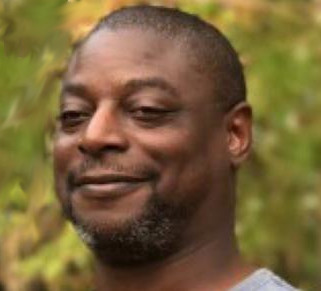



 gracefulatheist.com