This week’s guest is Seth. Seth was the oldest child in a large homeschooling family who attended attended mostly non-denominational churches. He was always studious and had read through the Bible multiple times before adulthood.
In high school, Seth made his faith his own and dove deeply into Youth Earth Creationism. He studied at a state university and a few years after graduation began work at The Creation Museum.
“It was a dream come true for me but also turned into not-a-very-good experience…”
While living near the museum, Seth was introduced to a fringe religious movement he describes as “Messianic Judaism meets evangelicalism meets conspiracy theories.” In the Hebrew Roots movement, Seth discovered teachings he’d not encountered before and some doubts began to creep in.
[Sharing the gospel] I went into detail on all the doctrine and as I was saying I realized I wouldn’t believe it if I were hearing it from somebody else.
Over the next year, Seth continued to experience conflicts between YEC and Hebrew Roots. The two ways of thinking were at odds—flat earth or round, scientific cosmology or the broken body of a leviathan?
My faith “tendon” was getting stretched and stretched and stretched.
There was a point … it felt like part of my brain just broke and almost in an instant I realized I couldn’t believe anymore.
By 2020, Seth realized he was an atheist, no longer able to convince himself to believe again.
So, finally realizing that I didn’t believe and admitting to my self I was an atheist was some of the most terrifying moments of my life on an emotional level.
“I was climbing up that slope the whole time, getting closer and closer to God and then…I stepped over the edge, and I just plummeted.”
This week’s guest is Anne. Anne grew up in a loving and happy Christian home in a large city where her father pastored a small reformed church.
“We were cloistered as this little wonderful diverse congregation.”
As a teen, her faith was very real to her, and a few years later, she attended a Christian college, but struggled mentally and physically.
“I was trying to figure out what made me a christian aside from the fact that…I didn’t drink, I didn’t smoke, I didn’t blah blah blah.”
Anne left that school and attended a Bible college, but she quickly realized she would be excluded from most ministry opportunities because of her gender.
“I thought, ‘You know? What is out there for me?’”
After a short and sometimes insulting experience in children’s ministry and then a sickness that went on for man years, Anne felt like God had “benched” her, but she continued praying and hoping.
“I was such a magical thinker…”
Over the next many years, Anne’s family met one obstacle after another—toxic or cult-like churches, physical and mental illnesses, Christians backing Trump and even loved ones passing away. Finally, she couldn’t take any more.
“I couldn’t hear from God…I couldn’t worship. I couldn’t hypnotize myself with the piano. I couldn’t do anything…[I was] done.”
Then during the Pandemic, Anne read a single book that made her stop and think for a moment. Then, her questions started coming and couldn’t be stopped. From the outside, it may seem like Anne’s deconversion was quick, but she had given God plenty of time to reveal himself.
“Waves” track written and produced by Makaih Beats
Transcript
NOTE: This transcript is AI produced (otter.ai) and likely has many mistakes. It is provided as rough guide to the audio conversation.
David Ames  0:11
This is the graceful atheist podcast. Welcome, welcome. Welcome to the graceful atheist podcast. My name is David, and I am trying to be the graceful atheist. Consider telling a friend about the podcast share an episode that you've been in, or an episode that really touched you and that will grow the podcast. This Tuesday nights, we will have another deconversion anonymous hangout that will discuss the podcast and have this week's guests so please join us the Facebook group deconversion anonymous, join that first and then Tuesday night Come and meet many of the people who are part of the community. Special thanks to Mike T for editing today's show. On today's show, my guest today is Anne, and has been a part of a number of different faith traditions beginning with Dutch Reformed Calvinists background, she worked with her father in an inner city missions Church in New Jersey, she's been a Baptist, she's been a charismatic in Foursquare and Assemblies of God, and eventually was in an organization called streams. That was very cult like, and the common theme throughout Ann's life is her leadership ability, her desire to do God's will her attempt to live out the Christian ideal, and yet tragedy besets her and she is held back by the role of women and ultimately is a part of a cult where things begin to unravel. And she begins to recognize the flaws in evangelicalism and that it no longer is workable for her. To sum up. Mike T's response to me was when is an going to write a book, it is that kind of story. So without further ado, here is an to tell her story.

And welcome to the graceful atheist podcast.

Anne  2:13
Thank you. It's great to be here. David,

David Ames  2:16
I appreciate you jumping on short notice. You're a part of our community deconversion anonymous, and I put out the call I needed I needed an interview and you are right there. But I am super excited about your story in particular, because I think adult D conversions are much more telling. And just as a quick example, I had a Christian research organization reach out to me and asked me about you know that I have any Gen Z's that I could refer them to which I would have said no anyway, but I pointed out to them that you know, if you're Gen Z, you're supposed to be questioning everything. You should really be looking at adults and why they have changes of heart whether deconstruction or deconversion. So anyway, I don't want to give away thanks. So let's, let's hear your story. And we'll begin with what was your faith tradition? Growing up?

Anne  3:07
All right. So I am Dutch and I grew up in a Christian Reformed Church. So very Calvinist, yeah, um, I come from my father was a pastor, my grandfather, his dad was a pastor in the Christian Reformed Church. When we go way back, we even found some Jewish roots that that one of our forefathers was a rabbi. So you know, there's a long line of Bible teachers and scholars in the family. Yeah, I guess. Yeah. So my parents met at Calvin College, and my dad took a took a ministry opportunity in Paterson, New Jersey, which is right outside of New York City called inner city, it was in a mission. And he started a church in this mission. So they were giving out bread and soup to people on the streets. And he came and his job was to make it a church. And he did. And it was a it was a wonderful Inner City Church. It was, it was full of diversity, primarily African American, a little bit of Hispanic, you know, a few people from all over the world. And this was during the 60s. So as a civil rights movement, and all of the, all of the, you know, we shall overcome and all the civil rights movements were going on and we were cloistered as this wonderful, diverse congregation. It was it was fantastic. I mean, my mom and dad were great. My dad was the picture of love and acceptance. No judge mentalism. He helped all who had needs he was he was a fantastic preacher. He was just the real deal and everything. You know, and so it was a wonderful, wonderful experience. I felt loved and embraced. And, you know, it was great. It was Yeah, I can't even say it enough. Yeah.

David Ames  4:58
I think that you know, you You've probably heard me say, but I think it's important to recognize there are so many good things about being a part of a community being, you know, loved by people beyond your parents, you know, all of those things can be quite good. Obviously, we have people in the audience who have had more traumatic experiences when they were young, but it sounds like yours was really positive, got exposed to different cultures as well. And so that sounds really interesting.

Anne  5:25
Yeah, yeah, we grew up singing all gospel music, black gospel music, you know, um, but at the same time, I went to Christian school, and the Christian School was, again, a bunch of cushy foreign people, all these Dutch immigrant kids who had moved to America, and we're second third generation. And they were more from the suburbs, they were more Republicans, whereas we were Democrats, they were more just, it was just kind of like this culture clash between what I was experiencing at church and what I was experiencing in school. And I had a hard time ever really fitting in anywhere in a way, you know, because the kids in my church, I went to the same schools and the kids in my school, I went to the same churches, and there I was kind of straddling the middle. Right. So I found that kind of hard. In a way, it was a very secular upbringing in the sense that the school didn't act very Christian. You know, we were there were the partiers, and you know, the druggies. And you know, all of that was still going on, you had a few people in there that were the Holy Rollers that I just didn't want to have any part of, because, you know, they were little dresses and carried their Bibles with them and had this weird smile on their face. Like they were in a cult. You know, I'm, I wasn't a partier, but I wasn't a holy roller. I was just kind of one of those middle line, kids, you know, just trying to get through. Yeah. And my family was very, they weren't strict about you know, what we wore, I wear bikinis and two tops, you know, we weren't all caught in the purity culture. This was kind of before that. I didn't have a curfew. You know, my parents didn't care what we watched on TV, I had all the latest records, I listened to meatloaf or everything else, you know, it just it didn't matter. It was all it was all good.

David Ames  7:24
What time period are you growing up as the 70s or late or

Anne  7:28
I grew up in? I was born in 61. So this is a 60s and 70s. So you know, I'm a total teenager during the FlowerPower movement and the hippie movement. And you know, like, behind that, and it was a Yeah. It wasn't Yeah. But you know, I, so I wasn't, you know, we had we read the Bible, every meal. We had devotions after every meal. I know, my dad would read the Bible after our dinner. And we don't lay around in the floor and listen to the Bible stories. And you know, talk about I'm going to laugh about things like, maybe God is set aside and Isaiah Isaiah, like, he's on the toilet. And then we thought that was the funniest thing. We want to hear that verse over and over again, crazy things like that. But I do think that the Christian Christianity influenced my growing up in a few ways, because my dad was absent a lot. He had, there were a lot of needs. And he was, you know, one of those pastors that met everybody else's needs and left it to my mom to raise us. And, you know, later on, he had a come to Jesus about that, and, you know, repented, and we had a hug, and you know, but if that was hard, because my dad was kind of more of the, my dad was the My mom was a strict disciplinarian. And my dad was the kind of listener, right, the pastoral care guy. So I was more like my dad. And I was, you know, kind of ADHD a little bit out there. I was emotionally impulsive, and my mom to her to be a Christian, especially a pastor's daughter with strict obedience. And I didn't fit that bill. So I got a lot of, you know, it wasn't easy. Yeah. It wasn't easy on me. And, and, you know, it's not till now that I look back on it, and I go, Oh, ah, you know, but then I just stuck. There was something wrong with me. I wasn't I wasn't good enough. I wasn't perfect enough. I had to be a perfect little Christian, you know. And, wow, I remember this one example. I was five years old. And my little best friend from school came to church with her grandmother, her grandmother was playing the organ. And she was sitting with me in the church pew and they were having communion. And when that communicate by we pretended to take the bread and we pretended to drink the cup, and my mother read me the riot act, she was furious, and I was in such trouble. I was five. Now she looks at it and she says, What was I thinking, you know, but back then it was serious business and I had blasphemed God You know,

David Ames  10:01
yeah, I think it's so hard because kids take those things so seriously. And, and you know, Christianity in general is saying that, you know, you're a bad person. Like, that is the message and right when a kid starts to internalize that pretty young, that's not very healthy.

Anne  10:17
Yeah, I didn't, I mean, I did and it wasn't healthy. I did, you know, have my whole Jesus acceptance when I was four, like, everybody else four and five. And, you know, it really came down to my Sunday school teacher who was also my babysitter who was a sweet little old grandma, who just loved Jesus and told us about how much she loved Jesus. And, and she had a little, that little picture of the white, you know, Jesus gave it to me, and I'm like, oh, I want him to come into my heart, you know, and that was it. So, yeah, I had all of that going up. But, but I wasn't, you know, I wasn't, I wasn't a holy roller. You know, I just kind of got by with what I could get by with and did my thing. So that was my growing up years.

David Ames  10:59
In the Christian school where you mentioned, it was a little more secular. But did you have Bible classes? There was Was there a religious track? But yeah, definitely,

Anne  11:06
we definitely had Bible classes. We, you know, had chapels. All our songs were Christian songs, you know, it was, you know, it's Christian, but, but it didn't, it didn't feel like beat you over the head Christianity, you know, it's just kind of like Christianity was part of it. And it was more of a, because it was more of a Calvinist kind of thing. It was more world life view. Right. So God was a part of every part of your life, but we didn't have to beat it into everything. You know, like, our history class didn't have to be all about God. And you know, you didn't even talk about God and your history class. So it was it was more of I thought, a balanced kind of environment. Yeah.

David Ames  11:52
And then, because of five year olds, not really capable of making that kind of decision. When do you identify the time where you you decided for yourself that you wanted to be a Christian?

Anne  12:02
Um, I think that would probably, well, I did make profession of faith, which was also a CRC thing. You at one point you, you take all your catechism classes and you spit, you know, you spit back all of the doctrine from John Calvin, the Heidelberg Catechism, and then you become a full fledged member. And that's when you can now take communion and not get in trouble for I was about 16 When I did that,

David Ames  12:32
okay. Okay. And again, I guess what I'm trying to get out is internally, was that real for you? Was that something that was important to you personally? Or were you just kind of following along?

Anne  12:42
No, it was very real. To me. It was very real to me. Um, I remember crying when my father was asking me questions. And he actually had a picture of me sitting there with all the council members and church people around me. And it was it was very emotional. Yeah. Very real. Yeah. So then I graduated high school, and I wanted to go to decorating school. Because I was an artist, I just really loved decorating. And my mom was like, No, you have to go to Calvin College, because that's where we went. And that's where everybody goes, and that's what's going to be good for you. So I go off to Calvin College, and I wasn't ready. I didn't want to be there. I struggled through college. I was there for two years. And I struggled because I don't know. I mean, there were all kinds of things going through me at that time. But I would go there skinny, I'd meet a lot of guys, you know, that's why I was. And I have all these boyfriends. And then as time went on, I started to gain weight because of the college food. And then my love, life started to shrink. And then I started to get miserable, and I developed an eating disorder. And then I would throw myself under the, you know, the blanket of God. And I would go into the prayer rooms, and I would just pray and pray and pray. God helped me God helped me and they always had two little prayer rooms in the dorm basements, they were all dark, and they put up little Christian posters. And they had like black lights in there. And they had a little bench and most people went in there to make out yeah, not me. I went in there to pray. So half the time I'd be in this little prayer room and then right in the prayer room next door with this thin wall, I'd hear some couple going at it, you know, and I was just praying, oh, God, you know, help me, help me be a better person and blah, blah, blah. So, um, each time like after the first year of college, I went back home, I got into Overeaters Anonymous, I lost all my weight. I went back to college again, all skinny again. All these boyfriends all these friends started to get away. Guy became a compulsive Overeater. Again, I was skipping half my classes that I didn't like, like biology. I was getting A's in my art classes. And I just, you know, I was just unstable. I was just so unstable. But, you know, I'd go out partying on the weekends and then on Wednesday nights out same prayer meeting and I just couldn't get my grounding, you know. Um, so I went back to New Jersey after two years, everyone just wanted me out of college, the professors encouraged. My grandparents, everybody was like, you just go home, you're a mess, you're a hot mess. So, I went home, and started working as a graphic artist got my weight back down, you know, I was now happy because I was back in my church that was loving and wonderful. And but then I realized I didn't have any friends anymore. My age, my friends, were all gone. I needed to meet people. So I ended up in a non denominational church in their young adults group, because that's where you're gonna get to meet people. Right? Right. So that's where I encountered more of the fundamentalist kind of faith. You know, they really drove home having daily devotional time, that was not something we ever really talked about in the CRC. Yeah. I got to see all this wonderful movies like a thief in the night and all those awful things. And I was more fascinated than terrified because we didn't adopt that view. And the CRC were more Amil. So, but at the same time, I thought, What if they're right, and this happens, and it you know, was a little scary. And, um, I was, I was, you know, just kind of getting to know that there were different expressions of faith that were going on.

In the meantime, I met a guy through a friend and he was a non Christian, and I started dating him and I fell in love with him. He was just the nicest guy. He, he was better than any of the Christian boyfriends I had ever had. Yeah, I was much more moral and consider it and wonderful than anybody. Okay. So things were going on. My parents were cool with it. It was all cool. And then one day my grandparents came to visit and this is my dad's parents. My grandpa was a pastor, my grandma was the most influential adult in my life. She loved me and spoiled me and wrote me letters. And, you know, she came and she said, Oh, no, no, no, you can't you can't date a non Christian.

David Ames  17:18
Grandma,

Anne  17:22
I was in trouble with grandma. She wrote me a letter, I read it, I, you know, I prayed about it. And that's when I felt God telling me to break up with my boyfriend. And so three days before my 21st birthday, I dumped this poor guy breaking his heart and mind. It was a terrible scene. And all I could say to him was, it's because you're not a Christian, you know, and which, Wow, that really went over big with his mom. And so I started digging deeper into my faith. And I was reading my Bible all the time. I started going through my dad's library and reading like Burke off and all of these bobbing and all of these doctrinal, you know, things, and I was studying doctrine. And I was trying to figure out what made me a Christian, aside from the fact that all I did was, I didn't drink and I didn't smoke, and I didn't wobble, blah, you know, I didn't know section, you know, this kind of thing. So I was trying to figure it all out. And I was really miserable. And my dad said to me, you know, you when I am miserable, I serve, which obviously, he did, because that's all he did. And so he got me involved in the church serving. And so I was running the youth group, and I was always doing the music and all this great stuff in church, but I got more involved. And at that point, the, the youth pastor at that time, and my father and my mother, and one week and all said to me, have you considered going to reformed Bible College? And I was like, ah, that's where all those Holy Rollers. Oh, my God, you know, just the whole thought of it just choked me. Yeah. But three people sent it to me in one weekend, so that must be God, right? I mean, obviously, it's not. So, we happen to be going out to Michigan, for my grandparents wedding anniversary, the same one that made me break up with a non Christian. And RBC was there. So I checked it out. And I sat there the whole time with my arms crossed. And you know, the girl has showed me around was the epitome of a holy roller. And I just, I just was like, God, I can't do this. Yeah. But somewhere during those fundamentalist times in the young adults group, I had decided that God's will and my will were two different things. So God would never want me to do something I wanted to do. So if I didn't want to do it, that must be gods but guess what I went. Here was a choice that I saw I was working as a graphic artist. I could have moved on to New York City and worked at an ad agency and made a lot of money and really been fulfilled. And instead, I went to Bible college, you know, like, get the most worthless degree you can possibly.

David Ames  20:12
Tell me about it? Yes.

Anne  20:17
So for three years, it was a four year school, but I could transfer two years from Calvin, I managed to find some of the classes I did fail and transfer them over for credits. And I actually had a really good time in Bible college, I made some really good friends. I excelled in my studies, I had a lot of fun, I loved doctrine and theology, I ate it up it was, it was a really positive experience. And I was really good at what I did. I had three professors pull me aside and talk to me. The first one was my sociology professor who told me I was going to write books, because she loved the way you know, my words were in writing. I was like, wow, cool, you know. And then another professor pulled me aside and said, You're so great at teaching, I'm going to, you're going to be writing curriculum materials. I'm like, well, that's cool. Well, yeah. And then the third woman, she was about ready to retire. She was 65. She was a very, you know, powerful woman. She pulled me aside and she said, I hate to tell you this, but you're a woman. And you're not gonna have any future ministry.

David Ames  21:22
Wow. spoke the truth out loud there.

Anne  21:29
She said, It's not right. It's not fair. But you've got nothing. Maybe you should go to Calvin College and get an elementary ed degree, you know, and I was just like, oh, cuz See, my dad always taught that women should be in church office. Yeah, my dad was advocating for that. And so here I am in this environment where there's so many of the guys they're like, No, you're a woman, you should be quiet, you know, and, and they'd be speaking up in class and pontificating. And if a woman talk, they just like not even listen. I mean, they were all so high on their laurels. And I was bound to prove them all wrong, right. But that was kind of a really moment of truth. I thought, you know, what is there out there for me?

David Ames  22:11
Okay. Wow. Yeah. Yeah, so interesting. I, again, not like I think Bible College was a positive experience for me too. Same thing theology was, I just loved that. And I joke that the professors did too good a job of teaching basically critical thinking, and you know, so it's interesting, but the elements of being a strong leader and a woman that keeps coming up on people that I've been interviewing, and the struggle to know that that's something you're really good at, and that the systemic nature of the culture you're in is not going to allow you to do that. It must be really frustrating.

Anne  22:52
It was it was frustrating, and I didn't take limitations. Well, you know, I was gonna challenge him every way I could, you know, I still had that youthful zeal. And so, um, yeah.

So after I graduated, I ended up going to Yosemite National Park, as in the Christian ministry, in the national parks movement, and I lead worship in the campgrounds and in the little chapel there for the summer, really fun, you know, met people from all over the world. And at that point, there was a church in Boca Raton, Florida. It was a huge PCA church that contacted me out of the blue, they had seen my picture in the banner, which was the cushy foreign publication. And so I was, you know, in Christian ed, and they said, Would you consider being our director of children's ministries, so I didn't have any job lined up. They flew me out from California to Florida. They they loved on me with the palm trees in the ocean and the pools and the I mean, it was gorgeous. And then the key lime pie and, you know, they just presented their best foot forward to me, this was a huge PCA church that was following Willow creeks model of evangelism. And, you know, we were like really close over there to Coral Ridge, which was, you know, Kennedy's Church and the evangelism movement, and they were all tied in together. And so this was a huge church that had over 1500 people at that time, that was like a mega church, because that was a long time ago, and 500 kids under fifth grade, fifth grade, and under that I would be responsible for all the programs. Wow. And I loved Florida, and they treated me really well. But there was this Clank in my gut that was like, I don't want to do this. So guess what, that must be God's will. Right. Woman and Yeah, they'll let me do children's ministries. So I took the job moved out there. And I was on the pastoral staff, you know, with all the pastors, except that they'd all go out to lunch without me because they were the boys club. And I was just the woman doing the children's ministries. And when I got there, the ministry was it was a hot mess. They had a woman before me was an elementary school teacher, and she didn't know anything about administration and a church kind of setting. So I took all my knowledge from Bible college, and I was good friends with my Christian Ed prof there, and I'd call them all the time and what books do I read. And I went in just revamped that whole program in a couple months, like I had, they couldn't get volunteers. I had 150 volunteers lined up. I had the nurseries running. Well, they were sterilizing all the toys. I had all the children's ministries running like Lego good shit, right? And then I decided, Okay, now that I have this all done, now, I want to really teach these kids to love Jesus, like I learned to love Jesus. So I'm working really hard on that. And I'm, I'm doing I'm using all my creative gifts and getting all this great worship going. And you know, I just thought it was just, I was just getting to get going. And at one point, in one of the pastoral meetings that I was in, I said that to the senior pastor, I said, you know, I really want to see these kids get a little better education. We've been using the same curriculum, long time, I'd like to change that curriculum. I'd like to embellish these programs. And he looked at me and he said, he said, that is not your job. Your job is just to get volunteers. Oh, wow. I was like, whoa, whoa, he goes, I just want you to keep those kids out of the service. That was it. Yeah. And I was, I was just stunned. I mean, my mouth was hanging open. I'm like, I don't get it. I mean, first of all, growing up as a preacher's kid, and my dad the way it was, I could suggest anything. And my dad would say, Hey, that's a great idea. Let's do it. You know, this guy, he just he just just pulled me and one second flat. Well, I was going to on the, I've always been going around denominations, I was going to an Assembly of God church on Wednesday nights for the Wednesday night service. This kickin the Holy Spirit, you know, when I was in college, I should mention this, I was going to a charismatic Christian Reformed Church. So I had gotten, you know, a real full picture of what it was like to, you know, worship and experience the Holy Spirit and pray in tongues, and, you know, all that stuff. So, um, I was going to this Assembly of God church, and this woman was sitting next to me that night, this was just after it happened. And I didn't know I didn't know where I didn't know anyone there. She looks at me. And she says, God tells me that you work with children. And God tells me that the senior pastor just just took the wind out of your sails. And I'm just like, No one knew me there. I was. So I was towns away, you know, and she says this, and I just start crying, you know. And she prays with me, and I thank her. She says, God says, he's on your side. This is you know, and I'm like, okay, you know, good. So I go back feeling a lot better. And the senior pastor calls me in his office, and he says, you know, he says, I've seen you sitting out there with my secretary crying once in a while, I was adjusting to living there and stuff. And it was so different being in this huge white. Oh, like, there was one black woman in there that she was my friend. All like, coming there in this high wealth situation coming from this little inner city place, you know, so, um, he says, I think this isn't the right place for you. Yeah, and I'm looking at him. And he goes, I will. I want you to think about that. And it was time for Christmas vacation. He says, you can stay through June and then we'll find somebody else. We won't mention it to anybody said, Okay. I go home. I'm thinking about and I'm praying about it. I come back after Christmas. And I go into the Sunday school classroom, all these women come up to me, Oh, I hear you're leaving. And I was like, what? First of all, I had the morale so good there that they gave me a money tree for Christmas. They rolled up 20 and $50 bills and put them on this tree for me. They loved me. And they're like, you're you're leaving. And I just I didn't even know what to say. Come to find out the senior pastor had gone to the woman's group of 150 people and announced it.

David Ames  29:35
Oh, no.

Anne  29:39
And from that point on, I was lame duck. So from January through June, I was they took away my office. I had an office with all the other pastors with Windows and beauty. They stuck me in the closet behind the sanctuary. Oh Allah. Yeah, yeah, I had I had no voice I had no ability to do anything. The only thing good about being over there was there was a piano. So I just played a piano all day because I had nothing else to do. It was humiliating, and horrible. You know,

David Ames  30:13
I think what's particularly fascinating about this is that they recruited you. Yes. You know, what were they? I guess they must have thought that they were getting a docile person who would just, you know, do the bare minimum or something. But But clearly, you were ambitious and wanted to make an impact in in the world. And so it seems like, they must have been very threatened once you got on staff, and they saw that you you actually wanted to make real changes and be a leader.

Anne  30:43
Right? I think so. Yeah. Yeah. But it was, it was really hard on me, because I felt well, God, why did you let this happen? You know, I've done everything to honor you. And how could you let this happen? Yeah, you know, in the meantime, in those last five months, I fell in love with someone who didn't fall in love with me. So I had this hole, and then someone fell in love with me who I didn't fall in love with. I mean, this whole big disaster, right.

So I go home in June with my tail between my legs. I went back to Michigan, actually, I didn't go home to New Jersey and got back with my old roommate and went back into my old charismatic Christian Reformed Church where, you know, I love to them there and just kind of puddled for a while, okay. Then I got a job at RBC, the School of the Holy Rollers where I want to attend, they hired me as admissions coordinator, they made a job for me, they said, Hey, our Director of Admissions needs help. You know, you're here, you're dynamic. I think you could go recruit, you're, you know, you've been to school with all these people, you know, the school. And so I had the dream job. I mean, this was my dream job, I get to fly all over the US and Canada, all on their dime. Stay in these hotels, eat in restaurants. I talked to churches, and pastors and youth groups and schools, Christian schools. I loved it. I loved it. The director of admissions was also working on this whole program called students serving students, which was where you'd get some of the students and you did music and drama and just programs for youth groups, okay. And I was all about that, because I was all into the music and drama and the art and stuff. And so we started leaving a lot of worship in the school, and I was looking for a revival, like I was experiencing at church. And we, we do these great programs out, you know, all over the place. He left after one year, and then I was in charge, but they didn't want to give me the job because I was a woman. Here now I'm acting director of admissions with still the admissions coordinator pay, you know, and, um, but I grew that program, I started I actually made five students serving students programs of five students each, and I sent them out to all kinds of local churches, and then we go on, like trips to Florida for spring break. And you know, it was just, it was so cool. We were in Florida, Colorado, British Columbia, doing these things. And I loved it. I was in my element. I was preaching, you know, in these churches, not their sermon, but I was doing my own style of preaching. And I felt like I was thriving as a woman, and the perfect dream job, you know. So, then, unfortunately, well, at that point, I met the man who was going to become my husband. And he was in seminary because I really thought I had to marry a pastor, you know, because that's what we do. And so he was in seminary, he was working as a youth director at a church. And with my hours during the day and his hours working the evening as a youth director. He wouldn't come over to my house till 11 o'clock at night, half the time, right. But I had to be up at eight o'clock for work the next morning. I burnt the candle at both ends and I got mono, okay. And it never went away. Oh, like it didn't go away. It progressed to a chronic condition. They diagnosed me with chronic epstein barr virus, recurring Epstein Barr Virus. That was right when chronic fatigue syndrome was coming out as the Joby disease. Okay, and I had it, I was sick, I couldn't get out of bed. I couldn't do my job. I was just laying there. This was right after we got engaged. And we got married when I was sick, so I just kept hoping I would get better. I'm like my big joke was we spent our whole engagement in bed But it was that way. Yeah. So I had to quit my job. I kept trying to go back to it. And I couldn't do it. I didn't have I didn't have any energy, I used to say was like an 80 year old woman. But now that my mom is in her 80s, I realized I was more like 150 year old under the ground woman, I even push the door open, you know, and we didn't know what was wrong with me. And I was having all these tests. And, you know, we just couldn't get answers. The doctors couldn't do anything. And the meantime, my husband graduated from seminary and became a chaplain, and he was going through CPE, Clinical Pastoral Education program. And he was working in a hospital. So he would go to this hospital all day and be with these sick and dying people. And then he'd come home and look at his wife, who was basically sick and dying. And, you know, we didn't know what to do with me. So that was really stressful. And again, I was like, God, where are you? I was, you know, I was preaching your word. I was out there ministering. I had a great prayer movement going on. I was praying with all kinds of people. I was seeing miracles, I thought, I you know, and and I was just like, why did you bet me? You know, you just benched me. And so I would go up for prayer every week at church where these very astute, amazing prayer warriors would pray over me. I'd go to their prayer thing on Wednesdays and just get prayer and prayer and prayer. And I never get healed. Nothing ever happened. I never felt better. And people started giving me quote words from God, like, the joy of the Lord is your strength. And I was like, I can't even frickin live my flicked my head off the pillow, the joy of the Lord is my strength. But I was like, Okay, I'll try to be more joyful. Maybe that's gonna kill me. And then someone said to me, once you know, your husband, he's behind you, and leadership, because you're so bold and outgoing, and he's quiet. And, you know, I think God is trying to suppress you, so that he can raise your husband up.

David Ames  37:05
Wow. Wow.

Anne  37:08
Yeah. And then I'd hear things like, um, God wants you to be a human being not a human doing. You know, you have to learn to just rest in God and not always be doing something. And, you know, that's probably where you're getting your self esteem. And, you know, God doesn't want this. And so people would just throw those things at me. And I took it all. I took it all. Yeah, I go to healing services at different churches, I'd see people supposably get fillings in the shape of a Holy Ghost. And I couldn't get out of bed, you know? And, uh, like, I don't get it. You know, Why, God? Why did you bench me? You know, yeah. We were pretty much starving because my husband and CP wasn't making any money. I was living off my disability. Thank goodness, we had that grant was really cheap back then, in the middle of the inner city of Grand Rapids. But we weren't making ends meet and my husband and I were fighting he was going CP has a way of stirring up everything in your past. So he's got everything stirring up in his past. By the way, he's a preacher's kid, too. And it's all stirred up and everything's just getting out of hand. And we're fighting and I'm sick in bed. And life is just how we can't pay any bills. And he's thinking we can't pay bills, because I'm spending money. And I'm like, Look, we don't have any money coming in. You know, it's bad first year stuff on dope, you know? So he finally decided to take a position in a church as an interim pastor. So there's this church in Michigan, we go over there, he takes it. I don't go to church a whole lot because I was just too sick to go to church. And honestly, I didn't like listening to sermons. I thought they were boring. Boring, but I thought the Holy Ghost will take care of that. You know, as soon as he gets the Holy Ghost, he'll be on fire and I'll be fine. Yeah, I'll just pray it through. This is I was such a magical thinker, David. I mean, when my parents told me Santa Claus didn't exist. I didn't believe them. I used to look for him. I mean, I was that person that knew that God could do anything that I asked, you know, and I was not losing faith in God. Even though I had gone through bad church experiences. I was sick. It was all I could do it you know?

Basically, the upshot of the deal is that were there 14 months they want to call a pastor there, he had he's on what they call a duo, which means that they call him or the other guy and they vote. And there was a family in the church that he had angered because he told the mama in charge to stay out of her kids marriage situation, right. And that whole clan hated him, you know, so they never came to church. urge but they came to church that one Sunday to make sure he didn't get that job voted him right out right at this, but I wasn't that upset because that same Sunday we were going to find out if he also would get a church in Virginia. And they he was on a mono there. So I was like, Well, of course they're gonna call him there's only one person there. Well, by the end of the night, we found out that we were jobless. Homeless had nothing. Here we were. I was sick. We had nothing.

David Ames  40:29
That's devastating. Yeah, that's amazing.

Anne  40:32
Yeah, yeah. But I still trusted God. So we had a big white dog packed all our belongings or big white dog into a truck and ended up house sitting in a tiny little house somewhere for some people that were in Florida, put all our stuff in their basement, and lived in that house for a few months, while my husband scrub toilets. For a job, that was what he did. And, um, but still, I you know, knew God was gonna turn around it was gonna be okay. And then it's just that I feel like it's just such a long story. But um, upshot of the deal is he decided to become a prison chaplain. And we were able to get some stability, then get some income. I had two kids, even though I was sick. I had two girls. He went off to be the chaplain, and I was home. And we were just kind of struggling to get through, but we were doing it. You know, it was I bought a house, it was all good. And then he wanted to go back to church. He's like, Oh, I can't get church ministry out of my mind. I want to go back to a church. So he takes this Church in New Jersey. And I was all about it. Because I was like, well, it's in New Jersey, I'll be by all the people I love, this will be cool. And it was a church at war. It was a church that had run out their last seven pastors. It was a church that 150 years ago had caused the first pastor of the church to kill himself because he was treated so poorly. And we walked right into the middle of it. Yeah, it was the worst situation possible. I mean, his preaching got good. But um, it was bad. I right away, took over the worship team, which was the worst idea in the world because worship, of course, was the hot topic. I started a prayer group, we got involved in the river and all the revival movements that were going on, went to Toronto went to light the fire nation, we did everything to bring revival to this church, right. That was the goal. If we bring revival, it's all going to be okay. Yeah. And the main protagonist in that church was out on his yacht all summer. And he came back to find the church of 65 now had grown to 150 people, new young people who were following us and not him. And he blew the church apart. And they started a concerned committee. And they started all these rumors and lies. And I mean, there were things thrown around, like, no amount of prayer is gonna save this church when I get through with it. Or you're gonna be walking over my dead body before I leave this church or I mean, it was not like anything I had ever seen in my whole entire life.

David Ames  43:17
That's wild. Yeah. That that is not hiding the fact that that's a power trip, you know?

Anne  43:26
No, there was one experience where one night where my husband was on council, and he called me and he said, Don't let anyone in the door. And I'm like, why? And he goes, we had this big explosion at council meeting, and these people ran out. And, um, he goes, I'm afraid they put a bomb in the car. I mean, that's how bad it was cuz their son lived down the street, and he had bombed the church at one point, and we were like, thinking he was gonna put a bomb in our car. It was bad. It was bad. Yeah, yeah.

During that time, too, I got involved with streams ministries, they were doing courses called hearing God 101. And I was like, we need to go to this because we need to hear God because we're, you know, I mean, I was doing Jericho marches around the church. You know, pastors were dominant blowing their show Fars, every charismatic leader in the community was on board, you know, it was it was crazy. If anyone had, we had gathered the priests and prophets and apostles from the whole area, and they were praying on our behalf, you know, yeah. So, um, yeah, nothing happened. People ran us out. ran us out. My dad, you know, he was so optimistic. We used to call him every day. Guess what happened today? What happened? You know, and he'd be like, what happened today and we tell him to go I can't even I can't even believe it. So, but he always had something positive to pray and then one One Thanksgiving, I was home and he had nothing to say absolutely nothing. And I was like, Whoa,

David Ames  45:07
bad side.

Anne  45:09
Bad side, I had this dream that I lost my youngest daughter in the church and I was flying all over looking for. And I went into this bathroom full of kids and this kid snuffed a candle of my nose, you know, burned me, and I heard what I felt like was the audible voice of God say to me, Do not lay your children on the altar for this church. And I was that was it. I was out. Yeah. But I had laid my kids on the altar. I was praying all day and sending them in front of the TV. I was fasting. I was skinny as a rail. I was, you know, like, I was going to save this place in prayer. If it was the last thing I did. Yeah. And at that moment, I just stopped at all I just stopped. My kids became my top priority. Fortunately, they were still very little. And I gathered them and we went to a vineyard church and left my husband at the church to preach and make the money.

David Ames  46:01
Right.

Anne  46:02
Okay. Okay. And those people were mad. Oh, they were mad that I wasn't there. And what about my tithe? Where was my tithe going? And you know, my husband was like, she doesn't even have any calm. Right? Right. So it was about six months, it took my husband to be able to pull himself away from that. And the meantime, I had gathered a really good group of friends at the vineyard and fit right in, we loved it. Our kids were all friends, we're in this community again. And then Tom just joined me there. And we felt welcome and loved there. And then they asked us to stay and play to church, because we had such a good, you know, community going. And we just said we couldn't we just were tired. We were just beat up, you know, yeah, beat up. I mean, I told you a very abridged version of what happened in that church, but you got to trust me, it was the worst thing ever,

David Ames  46:55
I believe you.

Anne  46:59
One guy said to one guy said to my husband, he goes, You know what? They want you on that cross upfront. They're not going to be happy to leave a pound of flesh. Well come to find out years later, the reason they were so persistent on running out all the pastors, and in fact, the pastor after us ended up in the mental institution. And my dad warned him, he said, Don't go to that church, and that guy didn't listen to him. So um, the reason they had done that was because they were sitting on a pot of gold, because it was a church outside New York City on 11 acres of land, right? Yes, what that property was worth. And guess who was gonna get that money? If that church died? They got it. They got millions and millions of dollars. I found this out a few years ago. Yeah, they pocketed all that money. And I was sick. Yeah. I was sick.

David Ames  47:53
I can imagine.

Anne  47:54
I mean, I was like, God, you know, what about Ananias and Sapphira? I don't get it. You know, I was waiting for people to drop dead. I was waiting for God to strike people and smite them and you know, make them sick and die. I was waiting for it. I was believing for it. You know, that sounds bad. But you know, it was it was to me, it was all a spiritual warfare. And God had to win, you know? Yeah. But God didn't when we again were unemployed and homeless. Yeah.

So we ended up going to Massachusetts living in a little half a duplex, eating at the food bank had no money freezing eating noodles for every meal. I was homeschooling the kids, they were like three and five at that point. So y'all go. And it was it was kind of horrendous. And then my husband finally got a job and it paid like 18,000 a year and we still didn't have any money. Catholic Charities brought Santa Claus the real Santa Claus this time to our house for Christmas and gave our kids toys and and we got involved in a Foursquare church. So now we're going to Foursquare church.

David Ames  49:14
Yeah. All the bases here.

Anne  49:17
I had been to every kind of church right? We've been Baptists for a while everything. So we get to this Foursquare church and the pastor I try out for worship team and the pastor is all about worship, and he doesn't want me in and I'm like, devastated. I'm like, why? And he goes, I don't know. I just didn't feel it was God and I was just like, God now you're not even gonna let me leave worship, you know, or play the keyboard or anything. And and, um, he left to the pastor left a few months later, and they got a new pastor and tryouts were again, and I got on and I was on the great worship team, and we were having so much fun and great community. And that pastor came to visit the church and I was nervous as I'll get out because I'm like, Oh crap, you know, here I just he told me I was no good. And now you know, I'm playing and I was a wreck. Well, apparently I was not the only one on the worship team that felt that way. But that Pastor during worship, kneeled on his face and repented and started crying. And he got up to preach. And he said, there were people I kept from using their gifts. And I was wrong. And that just touched me, you know, that really touched me that he was repented enough and good enough to do that. Right. All right, so long story short, now, I'm going to those streams, ministries, things, you know, they're having now to hearing God to a one, which is understanding dreams and visions, and then another course, and I'm taking these courses, and I always had dreams and visions, and I want to grow in all my charismatic abilities, you know, because I didn't get that in my CRC background. Yeah. And, um, John Paul would pray for us all and give us words and you know, I started having dreams about streams. And lo and behold, someone gave them a mountain in New Hampshire to come to New England, and they were going to form a prayer Mountain, 24 hours of prayer and worship streams is going to come out, John Paul was going to come out and I was like, I got to be a part of the smooth god, I gotta be. And I was having words and dreams. And I started emailing them to the ministry. Pretty soon I was talking to John Paul. Pretty soon he gave me a job. I was like, Oh, my gosh, I got a job. But my husband is like, No, I am not leaving my job for ministry. There is no way we're gonna be homeless unemployed, yet another time, right. And so my husband and I are fighting and I'm like, this is a move of God, I have to be a part of it. I mean, we have to do this. And my husband is like, No, not unless I get a job in New Hampshire with this same company. Well, it took them about eight months, but he got one. And we moved up to New Hampshire, and I was so happy. I was like, Oh, my gosh, we're going to the promised land, and I'm dancing and jumping. And finally, I'm gonna find my spiritual calling. You know, it was really hard for me to be married to a pastor who he didn't have the same leadership abilities as I did. His was his was different. He was more of a team leader. He was he wasn't the dynamic preacher. He was more quiet and subtle. He didn't do things the way I thought they needed to be done. And we clashed over that, because I was frustrated. And he'd be like, You should be the pastor then. And I'd be like, they won't let me I'm a woman. You know, it was hard. He finally gave up his credentials, because our marriage can handle it. You know, it was marriage, her or ministry? Yeah. Wow. So this was my chance he could work and stay at a ministry and I could shine, you know, and I came on that staff and I wanted to be teaching courses. And, you know, and but, you know, I knew that in these charismatic ministries, you have to prove yourself. So the first job they gave me was to work the database in a closet, here I am in a closet again, you know, on these computers, and it was awful. But I just did it with a smile. I was so happy to be there. I was one of the first people up there. And, you know, I was close to John Paul, and everybody that was up there. And you know, and I just felt like a big way. And, um, and one day someone came in that wanted to move there. There were always people that wanted to move there. It was like God was calling everybody in. And these people said, Hey, do you have a realtor? And I said, Oh, yeah, I use this guy, Joe. He was great. And John Paul was in the office, they said, No, everyone in our office uses Vicki. And I thought, well, that's weird. You know, we didn't use Vicki and I said, Oh, but Joe gives really good gifts. And he goes, he gave gifts to and I said, Oh, but But Joe, blah, blah, blah. And he goes, Well, Vicki, blah, blah, blah, blah, and we have this little thing. And I'm just thinking we're just talking right? To that he didn't talk to me for three months, three months, because I challenged his authority. But I didn't know it, because I didn't know the rules. You know, and and I didn't play by those rules. And my dad was certainly not an authoritarian leader. And you know, I was like, I don't get it. So um, it was so weird, because I was trying to figure out what I did to offend him, but I couldn't figure it out. No one ever talked to me about it. And then one day, we were at this fireside chat, he would do these things called fireside chats. We didn't actually have a fireside, but he would sit there in the room with all of us and we would like kind of gather at his feet, so to speak, and listen to his great wisdom from God and all his words from God. And, and, um, he said, You know, God tells me not to speak to people sometimes in order to punish them. Oh, wow. Yeah. And I'm like, I think he's so and about me, hmm. But I still I just didn't get it. Um, and little by little people would come and I train them in their job and I'd worked my way up till now I was running the events not running completely it was on a team of people who ran the events and, and, you know, got the airline tickets and I've started to travel all over again. So here, it's like, I'm getting my old RBC job back. I'm traveling. I'm, you know, speaking in front of people and giving words in front of people. It's just like this really great thing. I feel like Yay, I'm back to the promised land. I am. You know, it's so good. I'm fulfilled again. Now, mind you, I'm still fighting with chronic fatigue at this time, because I was sick. I was sick in bed for the first five years, and then I was sick for another 25. And it's still kind of dogs me, but um, I'm managing and it's all going really well and everything's going great. Okay, so they call David Hayward. Do you know David Hayward?

David Ames  55:58
Yes. Not personally. But yes.

Anne  56:02
They call him to be the pastor. And so you know, initially I was leading the worship in the worship services. And then David and I were leading the worship, and then they call Trevor, a worship pastor in. And then I was part of the worship team. And it was just so much fun because it was on the worship team, in the church and in the conferences. So everything's going great. I'm happy as a clam. I love David. You know, he's a good friend of mine, Mitch and Jeanne, you know, or they're, they're good friends. And one day, John Paul calls a meeting for everybody on staff, very important meeting, he sits us all down. And he says, God has revealed to me that the reason I am sick because he was getting a lot of colds. That Let's not mention, he was traveling non stop 24/7, you know, on planes, and you know, never sleeping. God has revealed to me that there's division and conflict in the camp, and that's why he's striking me ill. Oh, yeah. And I was in fairy land. I had no idea the stuff that was going on right now. No idea. And I'm, and I'm just looking at him like, huh, yeah, I know, you're sick as you travel, you know. And all these people start repenting and getting to his feet, and they're piling on his knees, and they're crying at his feet. It's like Mary Magdalene, at the feet of Jesus. And they're just repenting. And oh, we're so sorry. And they're praying for him. And he's just sitting there just taking all this adoration and love. And the next day, David Hayward confronted him and said, that's just not cool. Now, you are setting yourself up as God basically and taking all the adoration and that's that spiritual abuse. You know, he called it well, you can imagine how furious JP was after, you know, see how mad he was at that realtor encounter, right? Yeah, imagine how furious, furious, he was at this. And he he fired. David right on the spot. Mitch, Jeanne were fired. The two other people that worked with me in the in the events thing, Mitch was over the events, they, they quit, they're like, I'm out of here, you know, and then I was like, my world was spinning, what's going on? What's going on? This was going so well, I don't understand it. So come to find out that things were going on, you know, because people were having suggestions. And he felt his authority was challenged, when there was all this stuff going on. But they were keeping me out of it because they knew I needed the job. And you know, they just wanted me to be safe. And, um, but then it all broke out. And I was devastated. Because these were the people I was close to, you know, David was my good friends. And you know, Mitch and Jeanne and them and, and, and I was just like, oh, man, but Mitch said to me, just keep your head down. Don't make any trouble. Just try to get through this and keep your job. But it was really hard because it turned into a place of slander, the talking and the way that they slandered them was just awful, right? And we were basically told to shun them all. Okay, um, but I didn't, I didn't shun them. They were my friends. And when David left, they packed up their car to leave, you know, their truck and everything because they bought a house out there and everything. And we went to help them move. You know, we went there, and Mitch and Jeanne were there but nobody from the church was there. No buddy from the ministry was there. Nobody, and one person drove down the street. And he looked at us and he said, What are you doing here? And we said, we're helping the move, you know, and they were just like, whoa.

So, it wasn't long after that, that John Paul said to me, well, We need a new pastor. Maybe we should look at your husband. In my husband's mind, he's like, there is no way in hell, I'm in the middle of this.

David Ames  1:00:12
Wise, man wise.

Anne  1:00:15
No way. But he didn't want to come right now and say that because I was working there and he didn't want to jeopardize my job. So we went out for lunch with all of them. And they kind of got to know Tom and talk to him. And Tom was just not biting. He was biting on nothing. And the two days later, John Paul meets me in the office by the coffee machine, and I'll never forget it. And he said to me, yeah, so that was very interesting going out to lunch with you. He said, Your husband is probably at least one or two years away from being able to be in ministry. God's told me this show, Yes, God has shown me that he, he doesn't know how to lead. He doesn't know how to be a leader. And that's the reason that you're getting fat because I was gaining weight, lifelong struggles. Yeah, this is this is the reason that your husband isn't in ministry. And that your children are damned. Your children are damned.

David Ames  1:01:19
Yeah. I'm like,

Anne  1:01:20
hello. You know, I had the best little girls. They were the best little girls in the church, and they were damned about them. Yeah. And I cried, and I said, thank you. And I took it because it must be a word from God, because it's John Paul, you know, I must be God. And I go back and work and I'm crying. And you know, I just can't get myself together. At the end of the day, the President calls me into the office with now the guy who is now my boss, who was the the shipping guy, he made him my boss suddenly, because I couldn't just do it because I was a woman. And they call me in the office. And the President says to me, I understand you got a word from JP today? And I'm like, Yeah, and I start to cry. And then I apologize for crying. I say, I'm sorry. I thought I must be getting my period or something. And he goes, No, it's because it was a true Word of God. He said, we've understood you have a problem with authority. Oh, dear. Ah, and you know what he cited that time, I had the little exchange about the realtor with John Hall in the office at the beginning of time. Yes. And I'm like, there it is.

David Ames  1:02:33
Super petty, very, very bad.

Anne  1:02:36
Yes. And then he has some other stupid thing. And then he said to me, so we're gonna let you continue to work the events, but we're gonna not gonna let you go anymore. You're not going to be able to go to the events and I just thought, Oh, the writing's on the wall. You know, because there's, you set up an event and there's always, you know, shooting that you have to do when you get there because something fell through the cracks. They're going to just fire my ass, and that's gonna be the end of it. Yeah. And, and he said, and we want a marriage counselor, you, we went to marriage counseling to teach Tom how to be a leader and how you should be submissive. Wow. Well, now that my whole job is riding on it, all my husband's fault, you know, because he's not a leader, and I'm crying. And, you know, I left there, I went home, I cried the whole way home. And, um, and I said, I'll give you two weeks. I have to think about it. I need to think about it for two weeks. So he said, Okay, so at the end of two weeks, I quit. You know, I was like, I can't do this. But Tom was like, I want to see what happens. I'm curious of what kind of dynamics are gonna happen over there. And so I stayed on the worship team, I stayed doing worship, I stayed being friends with them. And um, this went on for a couple of months, I was miserable. We did a worship seminar at a church. It wasn't a church. It was at one of the conferences, and I was up there leading with other people and worship was a dud, everything was a dud. And I looked at some of the people there and I knew that they were there. Because of me. I knew that they were open to that ministry, because they came there because I was and they knew my background, and they trusted me. And I thought, I can't do this anymore. Yeah, I can't do it. That way. That night, on the way home, we hit a moose. Oh, wow. We hit a moose. It came out of nowhere. It hit the part of the just the actually the mirror the rearview mirror of the car, and and shattered the glass. And so Trevor, the worship leader, and I was sitting here and we were just covered with glass, and he just kept driving. We got back and found out that was just not cool. And the booths hit another car. There was an accident, he might have charges against him. And it was this whole thing that's the bottom line was the next day John Paul went to that conference and said, God came to me in prayer and asked me if I would give up some of my staff to him and let him take them home. But I prayed and said no and and they were saying and they were spared. So now I was alive because he prayed and spirit. Yeah, you know, and I was like, This is bullshit. And I quit. I quit that day. I was like, I don't care what they do. I'm not going back. Okay. And then I was shunned. Yeah, yeah, I was out of there. Nine months is only lasted. I wish it was probably like a cult, you know, I was shunned. And I didn't know why. Nobody was calling me. They even had a concert in our clubhouse where we lived. And I went, because I thought, I'm not going to let anyone keep me out of this concert. And no one would talk to me. They all looked at me with these terrible looks. A year and a half later, a friend of mine from there who had shunned me called me and said they came after her. And she apologized to me. And she said, John Paul had gone to everyone on staff and said things slandered us to death. were horrible. People were sick. We have a bad marriage with Bebo, but he just slandered us and made up all this crap. And everyone believed it. Because I had too much charisma in the office. I had too much control. John Paul said that to me. He said, I see you there's leadership, and you can steer a ship that's sinking. And you know, but you've got to be careful. Well, he had to do damage control. And he came back and just killed me. Yeah. So when I found that out, I wrote him an email. I sent him an email. I said, How dare you and I just never heard from him again. You know, never.

Yeah, so that was the end of that. We ended up moving to North Carolina, my husband started again, in ministry in a church, it was a church plant that had been dying. We just closed down the church, basically, because it wasn't going to work. Then we tried to get involved in other churches, and we were really good friends with the pastor and wife and they got fired from their church, which caused a whole nother thing in us and PTSD from our church experience. And, and, you know, I was like, this is a whole bullshit. So we started we went into another church that was just really big week to slink into the back not know anybody not talk to anyone, I didn't want to know the dynamics in a church because I could see all the crap going on, you know, and, and, you know, the just a biblical sermon, and that's what we did. Ya, um, and that lasted for a little while, and then we went back to New England to be my parents, and I just couldn't go to church anymore. I just stopped. I just, I was like, I can't do it. i There's, I can't do it.

David Ames  1:07:38
I think that's actually more common than you think that people start to realize that they're having, you know, reaction PTSD, like you mentioned, they're having a reaction and they just can't go in the building anymore. And they don't even know why really, right. But yeah, right.

Anne  1:07:52
Right. You know, um, yeah, it was just bad. In the meantime, we found out my youngest daughter was autistic. That's why we're having trouble with her. And she was going into depression and maybe bipolar. My husband was falling apart. Our marriage was falling apart. My other daughter went to college. And then my father dropped dead, baby. Oh, no, I'm so sorry. Thank you. He was 77 just dropped in, in a restaurant. Gone. No warning, gone. Man, it rocked my world. I mean, it just killed me. Right, it killed me. And he was the picture of all that was good and true and righteous. And, you know, I still believed in God, I still believed in the goodness of God, I just couldn't go into the church, you know. And then my father was taken away. And then every, I couldn't hear from God anymore. I couldn't worship. I couldn't hypnotize myself with a piano. I couldn't do anything. You know, I just was just, I was just floored. Um, a year after that, I decided to go to art school. And so I was getting my Master's in Fine Arts, and I was learning great critical thinking skills. I mean, if you want great critical thinking skills, you go to art school with a whole bunch of people from different backgrounds and everything. And it was just a fantastic experience. And during that whole thing, I was working on my art, I was working through my dad's grief, you know, grief for my dad, and and all his ministry and all my background and all my church stuff, and I just was working through all that great opportunity to work through it. But a year after my dad died, my aunt, my dad's sister found out she had ovarian cancer. She was like a mom to me. She was the one who took care of me in Michigan, and um, we went through this suffering of watching her just die, so we're still grieving my father. Now we're grieving my aunt. And um, and then my best friend called me and said she had stage four breast cancer. Oh guy, and she was someone that I Got a visit every year in California for three weeks I get out of the winter here. And you know, just I could be myself there and have fun. And so she's dying. And we went through my those two cancers. My aunt died, we later arrest during this time, of course it's 2016. And Trump gets into office and that caused me and a whole lot of like, like, I don't get it. I mean, when he was going for the white evangelical vote, I'm like, they're not going to be fooled. Like God did that just do me and I'm going through all this and I'm just like, spinning and how could this be? And then my sister dropped dead, my little sister 53 dropped dead of a heart attack. And that killed me worse than my father. I mean, plus, my mother was a wreck. She almost died of heartbreak in the first few weeks. And, um, I, I couldn't even buy this time. I'm just spinning. You know, I lost my dad, my aunt, my sister, my friends dying. And I'm just spitting Trump's into office, everything else go ahead basket. I you know, the stupid COVID Comes right? My daughter gets COVID the first week it comes, I'm having headaches, I find out I have high blood pressure, which my right away makes me think I'm gonna die like my sister. I'm in this existential crisis. I can't pray, I can't talk to God, I can't do anything. And then, um, I find out I have a brain tumor. And it's called a pituitary adenoma. And it's a tumor on your pituitary gland. And it's operable, it's usually benign. So they're like, well just watch it. Well, they watched it for six months, just one, one thing, they said it's growing rapidly, you have to have brain surgery. So they go in and give me brain surgery during COVID. Two weeks later, I have a gallbladder attack that puts gall stones in my bile duct. But I don't know it because I don't want to go to the doctor because it's COVID. And I just had brain surgery, crawling around on the floor for four weeks just crying and not eating until my husband says get to that doctor. And I go to the doctor, find out I have to have my gallbladder out. So I've surgery, emergency surgery with that, and then another surgery to remove the gall stones, all of this in seven weeks time. During that time, my best friend died of breast cancer. Oh, man. And I of course couldn't, you know, didn't get to say goodbye really? I sent her flowers. But you know, yeah. And I'm just done, you know, just like done. Can't can't, can't do a thing just done. And I'm not even praying anymore. Because I'm like, What is the use, nothing is happening. I, you know, I don't get it.

So sometime during that time, Christian dummies book, Jesus and John Wayne came out. And my brother had to interview her. And it was just after the book came out, like the first like, it just came out that day. And so I was listening. And it was like, Oh, I like this woman. So my mother bought the book. And we both read the book. And that's when everything started to come into place for me, because I could see almost my whole Evan Jellicle upbringing, right, and all the bookstores and all the conventions and all the stuff and authoritarianism. And all that stuff that was going on was right there on the pages. And I could see how suddenly, all these people from church thought that Trump was their God, you know, and I was like, because I didn't get it. And I saw the whole thing. And I went, Oh, and the light bulb went on. And I started to see that there were so many things built into the system that were destructive and damaging in so many ways, you know, for the, with the racism and everything, you know, down to the very core of everything, the women's issue, everything, misogyny, you know, LGBTQ community, everything. And so I read this book, and the light bulb went on, and that's when I started listening to different podcasts. And

David Ames  1:14:19
there was your first mistake, that was my mistake, because

Anne  1:14:22
then I'm like, I started listening to straight white American cheeses. And I was like, Yeah, I'm getting into this, you know, and then somehow I stumbled on board again, again, and they were talking about they were they did one on Noah's Ark. And I'm like, What do you mean Noah's Ark is it was how could that not really, you know, and then they're talking about worship and they're talking about they have no system and I'm like, You're kidding. Because I was addicted to being hypnotized in worship. I was the one on the floors dancing and praising it, you know, and I and honestly, I did it to myself all the time. I just would play the piano and just, I was you err, I was all when and, um, and I was like man, and then someone mentioned Bart ermine. And so I started listening to some of his stuff. And this was what cracked me. It was when he said, The gospels, Matthew, Mark, Luke and John weren't actually written by Matthew, Mark Luke. I, I thought that they were, you know, this was I thought this was God's infallible Word in Aaron, and that these were eyewitness accounts, and they weren't. And then what's to say that anything they say is true. And then I just started listening to everything and all the deconstruction stories that I found you and I found other people and I just gobbled it up. You know, after my sister died, I was listening to podcasts, but they were all about near death experiences. I was listening to that stuff and all these New Age podcasts. And as soon as this happened, I flipped, and I started listening to all deconstruction stuff. And you know, um, yeah, that's where I am now.

David Ames  1:16:02
Okay. Yeah, that's, that is a lot. Again, just I am very sorry for the grief that you've suffered not. I mean, obviously, in the last several years of all the people that you've lost, but grieving the ministry as well, that that you had, clearly the desire to help people and to, you know, build community and help people thrive. And that opportunity just kept being taken away from you. So that is a grief process of that loss as well.

I'm curious, at this point, how are you finding community? I know, I know, you're part of the deconversion anonymous, but like, do you have friends that have gone through some deconstruction as well? And you know, how are you? How are you at this point handling that?

Anne  1:17:01
I do? It's kind of amazing, because in art school, I developed a really great community, right. And then when we moved, we moved to this old house, this old homestead, and in this community, and it was very embracing town where everybody has these old primitive homes, you know, and they started having parties. And, you know, I was invited to other parties, and we just became friends with everybody. And then in that party scene, we became friends with this group of musicians. And this group of musicians totally took us in when they realized that I was a musician, too. And he only took us in. And there was a couple in there. In fact, the guy is downstairs helping my husband put a water heater on right now, that had also been raised in the Christian faith and been doing worship leading forever. And they both had deconstructed. Okay, and so we were introduced to each other as pastors kids, and we were looked at each other like, Oh, crap. Yeah, like this person, we ventured through, get to know each other and found out we had this similar deconstruction story. So, you know, we get together with him every three weeks, and we just laugh and talk. And you know, and look at all the ridiculous things we once believed, you know, that we don't anymore. So I actually feel very much like I have community.

David Ames  1:18:20
That's awesome. That's awesome. Yeah. And then you've mentioned a handful of podcasts and the book, Jesus and John Wayne, any any others that I'm not talking about this one. Any other podcasts that you'd recommend for someone who find them finds themselves in a similar situation like, like that has helped you?

Anne  1:18:38
Um, well, first, let me just say that I was in the lasting supper, David Hayward Scroop forever. And I think David Hayward is a wonderful deconstruction, you know, he's just wonderful. And he's great. And he's the real deal. And he's a good friend of mine. And I love him to bits. And so

David Ames  1:18:52
well, maybe you can introduce me to David and we can get David on the open welcome.

Anne  1:19:00
Well, I'll talk to him I already texted him this morning. He said, Is it okay, if I say your name and the story? He's like, Sure, go ahead. So um, yeah, David, you know, I would definitely recommend David. I have been listening to I think deconversion Anonymous was another podcast I was listening to. I listened to on YouTube harmonic atheist because I like to listen to their stories. Sometimes I'm listening to what is myth vision, you know, depending on who he has on there that's helpful anything bar ermine. You know, I've listened to a lot of debates, you know, between Christians and bar and you know, those have been kind of interesting. I love on YouTube Dark Matters 20 What is it 25 or whatever, you know, I love that that all the animation you know, holy Kool Aid. Yeah, I mean, I just kind of search around I think there's one now x well x seven jello coals. And I mean, I always have This crazy list going on, cuz I listen to the podcasts when I go to sleep. And then if I miss something I just read, listen, you know, so some of the podcasts, they have to be not too dynamic. Like, I don't think I could listen to myself going to sleep because, you know. But yeah, there's so much out there on YouTube and podcasts.

David Ames  1:20:20
Well, that's great. And I really appreciate you telling your story. That was, I think what's really important that people hear is how dedicated you were how often you tried even it wasn't like, I think the evangelical response to deconstruction is these weak people, you know that at the slightest, you know, difficulty there out. And it's like, clearly, that was not the case you struggled through through a lifetime of attempting to do ministry with hurdles putting you in your way the entire time. So I thank you for that honesty. Thank you for being on the podcast. Yeah, my pleasure. Thank

Anne  1:20:59
you for having me.

David Ames  1:21:04
Final thoughts on the episode. I can't help but hearing and story as tragedy that she wanted so badly to do God's will. And she felt gifted. And she was trained to be a leader. And yet the role of women in the church consistently limited her and ultimately led to shootings and being kicked out of churches and being rejected by the very people who said that they loved her. And then the physical aspects of her life as well, the chronic fatigue, and ultimately at the end, their brain tumor, and a gallstone and just all of the physical ailments that she's had to go through. But this often is the beauty of deconstruction, as she's describing reading Jesus and John Wayne and recognizing herself and the culture that she'd been bounced to for all of her life within evangelicalism and suddenly recognizing the corruptness of that and how she no longer had to be bound by that that freedom is amazing. And it is wonderful to hear in Anne's voice, where she is now. Last week's guests, Ursula and this week's guest and have a lot in common in that they are very big personalities, very strong leaders, and they happen to be women and being forced to enhance case stay in education. And then even when she got the role that was specific to children's education, she was limited in what she could do there, there was just constant limitation. I can't imagine the level of frustration that that must create for a person who is as gifted as both Ursula and an R. It also astonishes me that the church at large evangelicalism specifically is trying to do things with one hand tied behind their back, they're stopping 50% of the population from truly 100% participating. And that just astonishes me from a logistical and tactical point of view. It's it's dumb, on every single level, and it's horrifying and abusive on many other levels, and I am just brokenhearted, to hear how and had to deal with those limitations. In a story of astonishing things, the most astonishing thing for me was her description of the streams ministry and John Paul, and had the off hand comment of it was cult like, I don't think it was called like it was a cult. That is the definition an overbearing leader who demands loyalty and a level of obedience and subservience that has nothing to do with Christianity has nothing to do with leadership. I'm really glad that and got herself out of that scenario, that that sounded really, really bad. So in any scenario in which you find yourself with a leader who is demanding that level of loyalty, it's time to get out. I want to thank and for telling her story. She has quite the story to tell I agree with Mike t, you should write a book and as soon as you write it, I'll buy it. So and we'll promote it here on the podcast. Thank you, Anne, for telling your story with such truthfulness and passion and your big personality comes straight through and thank you for being on the podcast. The secular Grace Thought of the Week is related to but not directly about and in that I mentioned at the beginning of the interview that I had been reached out to you by a Christian media organization that was doing research about Gen Z's and deconstruction. And I've been struck by this really ever since I went through my own decastro And then deconversion, that the focus has always been on the 20 Somethings who are leaving the church. I don't want to be anti scientific here, of course, the statistics are going to be much, much, much larger for people in their 20s. Because, as I said, when you're in your 20s, you're supposed to be questioning everything. When you're a teenager, you're supposed to be questioning everything that is, by definition, what young adulthood is what I think is much more interesting. And what I think the church has ignored to their peril is what are sometimes called the Dunn's adults 40s 50s 60s, even that have lived an entire lifetime within the Christian frame, and who subsequently deconstruct and de convert, that is a much more telling canary in the coal mine, that seems to me is being utterly ignored. If the statistics that I get about the podcast are to be believed, that would suggest that most of you are at least in your 30s. And most of the listeners here are adults. And so it astonishes me how the statisticians and the church itself has ignored this group of people and berated things like the extra angelical movement. This is the second week in a row that I'm giving some atheist advice to pastors. Talk to the adults who are deconstructing the Brealey. Listen to them, ask them why they've had a change of heart, what kinds of things would make a person change their mind after decades of being a Christian? And then really listen to the answer. And if you are that person who has lived an entire lifetime of Christianity, and you're the one questioning and you're the one where it feels like God's not listening, and tragedy is around you in every direction. I need you to know that there are many of us out here, myself and all of my previous guests community on the Facebook group deconversion anonymous, who have gone through this, we've experienced it, we know what it feels like. And you don't have to be alone. And you are not alone. I just wanted to mention, for those of you who are parents, the the mothers out there, Happy Mother's Day. I know that's kind of saccharine sweet. And it's one of the things I used to really dislike about this particular Sunday in church all the time. But I want to acknowledge you, you do amazing things. You are the foundation of society and you're also leaders and teachers and amazing human beings. So thank you, and Happy Mother's Day. Until next time, my name is David and I am trying to be the graceful atheist. Join me and be graceful human. Time for the footnotes. The beat is called waves for MCI beats, links will be in the show notes. If you'd like to support the podcast, you can promote it on your social media. You can subscribe to it in your favorite podcast application. And you can rate and review it on pod chaser.com. You can also support the podcast by clicking on the affiliate links for books on risk of atheists.com. If you have podcast production experience and you would like to participate podcast, please get in touch with me. Have you gone through a faith transition? And do you need to tell your story? Reach out? If you are a creator, or work in the deconstruction deconversion or secular humanism spaces and would like to be on the podcast? Just ask. If you'd like to financially support the podcast there's links in the show notes. To find me you can google graceful atheist. You can google deconversion you can google secular race. You can send me an email graceful atheist@gmail.com or you can check out the website graceful atheists.com My name is David and I am trying to be the graceful atheist join me and be graceful human beings

this has been the graceful atheist podcast

Transcribed by https://otter.ai
This week’s guest is artist Ursula Schneider. As a child, neither her charismatic church nor her unstable home were safe for her. There was a lot of mental illness at home and Ursula often felt abandoned by the church. Their family was simply “too much.”
“I look back and everything is so clear about why it went the way it went, but as a child you don’t understand…”
Ursula grew up, married young and began going to church again. As an adult, she needed something real to her. She saw that something in the women at church, so she dove right in—daily prayer, bible studies, women’s retreats, all of it.
“I guess what I believed was that, if I did enough of the things that I was being told to do, the feeling would follow…”
But Ursula kept bumping up against a certain church doctrine: women cannot teach men. She was a gifted leader and teacher but church after church kept her out of the pulpit.
“That is literally what you get told: ‘You’re listening to the doctrine of demons if you think it’s okay for you as a woman to be able to teach men.’”
At the last church she attended, Ursula faced the greatest challenge yet to her faith. Over the span of a few months, she and her husband went from being well-respected leaders to losing their entire community.
Ursula went through a depressive state and cried out to God, but no answer came. Over the next few years, Ursula would make beautiful art, write for herself and continue to question her religious beliefs.
“What happens when you start to question some of these closely held doctrines…is that things really do start to unravel.”
Since leaving, Ursula has dabbled in other faiths, wondering if any will fit her. Nothing has yet, but she is learning and growing as a whole person. She no longer has to squash part of herself or silence her own curiosity.
“…as I go through life, and I try on new ideas, each of them has something to offer me that’s valuable.”
Ursula’s art and writing empower others to exist as their whole selves in the world and to see beauty and inspiration in the world around them.
Ursula Schneider art exhibition through May 25th 2022, at D&R Art Gallery and Studio in Tucson, AZ.
My story is, I suppose, the story of a sincere seeker who, it turns out, is actually a huge threat to the organization of the church structure. Silly me, I thought the church was the place to be a seeker, but it turns out that they don’t want seekers, they want adherents. I was never a very good adherent in hindsight. But I gave my whole life to the church because I misunderstood that reality and in return, the church did its level best to silence me completely.
This week’s guest is Andrew Pledger. Andrew has spent nearly his entire life in the Independent Fundamentalist Baptist Church—where the KJV rules and women do not.
Andrew was homeschooled K-12 with a mildly white Christian nationalist curriculum, no sex education and no diverse friendships.
“If you’re not subjected to different worldviews and ideas, how can you even think critically about your own?”
For years, Andrew’s mental health suffered, but there were no resources for him. He was told that he wasn’t “reading the Bible enough” and “needed to get closer to God.”
“I was very emotionally dependent on those religious rituals…bible reading, praying, confessing…it has that emotional release because you believe that it’s really doing something.”
In college, Andrew knew he needed professional help but at a fundamentalist Christian college, there was only “biblical counseling”. The first two years were excruciating. Eventually, however, with a little community and a lot of research, Andrew took his mental health into his own hands.
“It was really the first time I started listening to…and trusting myself.”
He started asking difficult questions about the Bible, and it was not long before the foundations began to crumble.
“Is the Bible actually inerrant? Is it perfect? Are the stories original? Is this really inspired by God?”
Since leaving Christianity, Andrew has lived out secular grace. He is spreading awareness about toxic religion and working toward becoming a religious trauma therapist. His personal experience of freedom compels him to help others find the same freedom.
“Trauma is a horrible cycle that needs to be stopped. We really need to do what we can…”
I believe in you. I believe in people. I believe in change, and if any change is going to happen, we have to do it. There is no savior coming to save us that responsibility is ours.
This week’s guest is Robert Peoples of Affinis Humanity. Robert grew up in a Black Baptist church in New Jersey. When he was young, he enjoyed church but was an inquisitive child with many questions and no satisfying answers. As a teenager, Robert looked for answers outside the church—from Thomas Paine to Allah to the Buddha.
“When I read The Age of Reason, that set my trajectory on a whole different path.”
By 18 years old, Robert could no longer believe in anything supernatural. His understanding of the world came from philosophy, history and science. This was incredibly difficult for his family, but they continued to faithfully love and support him.
“[My mom] said, ‘Why don’t you believe in something?…’ I said, ‘I can’t…this is based on critical thinking.’”
One frustration Robert has with the Black church community is that it works to change unjust systems but then uses phrases like, “We couldn’t have done this without God.”
“It makes us co-dependent on…benevolent white leaders in power, for God to somehow change their hearts and change their minds.”
In recent years, Robert has been working with a political non-profit to ensure the “separation of state and church” and to change unjust policies. Human suffering is caused less by individuals “in need of heart change,” and more by systemic racism, homophobia, classism and other inequities.
“You can’t think transcendental thoughts. You can’t think about leaving religion…when you can’t eat, when you’re about to evicted…when you have no support.”
In the midst of all the work to be done, Robert is hopeful. He is effecting change in the world and reminding others that “to be human is enough.” He stands in awe of the beauty of nature, his daughters and this short life. His story is one of world-changing secular grace.
“The Book of Life opens up each and every time I wake up in the morning. I write my own book.”
[Humanism] has increased my love for humanity exponentially. I no longer love people with conditions.
“Waves” track written and produced by Makaih Beats
Transcript
NOTE: This transcript is AI produced (otter.ai) and likely has many mistakes. It is provided as rough guide to the audio conversation.
David Ames  0:11
This is the graceful atheist podcast. Welcome, welcome. Welcome to the graceful atheist podcast. My name is David, and I am trying to be a graceful atheist. Please consider rating and reviewing the podcast on the Apple podcast store, rate the podcast on Spotify, and subscribe to the podcast wherever you are listening. Do to poor planning on my part and not at all related to the Christian holiday next weekend, we will not have a new episode. I had an interview that fell through and I did not have a buffer. The team was fully ready to produce another podcast and yet I didn't have an interview ready to go. So for next weekend, which does happen to be Easter. I have a few recommendations for you one, after you've listened to this episode, Robert Peoples of Affinis Humanity. Listen to it again. Robert is absolutely amazing. I'm also going to recommend three episodes that capture a lot of what you hear in Robert story today about humanism that is alive and proactively loving. The first is Jennifer Michael Hecht from way back in 2019. She wrote the book doubt a history. I have quoted that 1000 times it's an amazing conversation, and she is absolutely amazing. Next up is Anthony pin of Rice University. Robert and I talk about Anthony in this episode that I believe is back in 2020. Anthony has written a number of books on humanism, as well as the perspective from the black community, a really significant voice within humanism. So go back and check out that episode. And finally Sasha Siggins episode where she talks about her book, small creatures such as we, these three and Roberts episodes today that you're listening to represent secular grace and the kind of humanism that I am trying to espouse. So during your Easter weekend, jump back into the back catalogue and hear some great interviews from the past. Special thanks to Mike T for editing today's episode. onto today's episode. My guest today is Robert Peoples. Robert is the founder of affinest humanity which is an organization that is trying to promote secularism in Arizona. Their motto affinis is Latin for affinity a natural attraction to a person, thing or idea. Our mission is to alleviate religious discrimination for secular communities in education, business and government. Robert also participates with the Secular Coalition for Arizona. They recently had secular day Arizona, where they spoke and talk with legislative leaders in Arizona about secularism and the need for secularism. We discuss secularism as pluralism, the needs to recognize that even for believers, separation of church and state is good for the church as well as the state. Robert represents secular grace in so many ways, he is a humanist who is focused on loving people caring for people for representing a proactive love. And Roberts motto for finesse humanity is to be human is enough. I cannot tell you how deeply impacted I am by that simple phrase. I will be meditating on that for years to come. Robert is a quote machine. I will try to capture a handful of those quotes in the extended show notes on the blog. Listen carefully to what he has to say Robert is an amazing person. Here is Robert peoples to tell his story.

Robert Peoples Welcome to the graceful atheist podcast.

Robert Peoples  4:20
Thank you. I appreciate being here. Thank you. Thank you for reaching out.

David Ames  4:24
So Robert, you are the leader of an organization called Affinis Humanity whose mission statement is to alleviate religious discrimination for secular communities and education, business and government. I understand you've just participated in the secular Day at the Capitol and Arizona. Is that correct? That is correct. Yeah. And so I'm really excited to hear about your work and in the secular community. I tell you what, man, your tagline. To be human is enough. Just gets me. That is you have spoken to me This atheist soul I can tell you with with that, with that statement, this podcast, we talk about secular Grace a lot. And I think that you and your work embodies that. And as I mentioned off, Mike, you have made me a fan of yours. So I'm just really excited to have you on.

Robert Peoples  5:16
I'm honored, I'm honored. Thank you for that.

David Ames  5:19
So we're going to spend the first half talking about your personal story. And then probably the second half, we'll we'll get into all the things that you're doing with your work in the secular community. Let's start where we often do, what was your faith tradition growing up? What was that like for you?

Robert Peoples  5:34
Ah, so I grew up. I'm originally from New Jersey, currently reside in Arizona right now. And I grew up in a Baptist household, I grew up in a Baptist church. Actually, it was called union Baptists. I can't even I can't believe I still remember the name of the church. And, you know, and unlike some other unlike a lot of other people that have experienced, you know, the RTS, the religious trauma syndrome connected with religion, I did not, I liked going to church. I liked the people, I like my friends. And I even sung in the choir. And however, I always had a lot of questions. I was always very inquisitive about things. And a lot of those questions couldn't be answered sufficiently. And when I was about about 13 years old, I started having a lot of questions. And my mother was saying, you know, you need to talk to the pastor, you need to talk to the deacon about this. And I said, I did, but it just doesn't sound right. It doesn't feel right, I need to do a little bit more digging. So my cousin, my first cousin, he said, You know what, Robert? I'm gonna give you a book, man. I want you to read the Age of Reason by Thomas Paine. Oh, wow, I was 13. When I wrote. I was 13. Right? My mother always instilled reading in me at a very early age. You know, she and so I was very thankful for that. And you know, in a classroom, she didn't want me to be the kind of kid where the teacher called on you to read a paragraph, I would shy away from it. So she really instilled heavy reading in me at an early age. And I have to tell you, David, when I read the age of reason, that set my trajectory on a whole different path. And so from there, I told my mother, you know, I want to study Islam for a little bit. She said, Okay. Well, I work with some doctors, and there is a mosque in Princeton University. And so if you want to learn Islam, you're going to learn true Islam, you're going to learn how to speak Arabic and the whole nine, and so I was doing a lot. And an Arabic went to the mosque for about two years. And I said to myself, Okay, I get it. Now, I want to learn Buddhism. She knew a doctor that went, there was a Buddhist, a couple, and there was a Buddhist temple in Princeton University. So I study Buddhism for a couple years. And so about that time, I was about 1718 years old, and I said, you know, I have a pretty good foundation of what all of these belief systems are, you know, not so much Buddhism, because actually, Buddhism is actually atheistic in nature, right. It doesn't have a central godhead, you know. There's a saying that goes, if you ever see the Buddha on the side of the road, kill it. Because that's not the Buddha. Right? You are. Right. Okay. Yeah. And about 1718 years old, I said, Okay. I'm an atheist. I'm an atheist. And my mother had a hard time with that. The rest of my family had a hard time with that. But I did not face any. I was not ostracized I was not treated any differently. So I don't have any you know, horror stories regarding that. She said, Why don't you believe in something even if I want you to be a Christian, but even if, if you stayed a Muslim, right, just just just believe in something? And then I said, I, I can't because this is based on critical thinking. It's not based on emotion. No one in the church hurt me. The pastor didn't hurt me. People weren't mean to me. This was based on critical thinking this was based on just academic research, history, science. And, you know, I made that declaration. And so I got out very early. You know, it wasn't I wasn't like in my, you know, because I'm, you know, I'm in my late 40s Now, and so I wasn't in my 30s These are 40s When I decided to deconstruct, I started deconstructing in my teens. So good for me, right? Because I didn't have to wrestle, you know, with the psychological trauma of that. And so yeah, that's that's how I was raised up, man, I was raised up as a as a hardcore Baptist. And, you know, my mother is still a Christian to this day, but her eyes have opened up to a lot of different issues that we've talked about throughout the years. And so yeah, you know, that's kind of like my journey started out early man.

David Ames  10:35
Yeah, that's awesome.

I always say that I think for precocious kids, somebody who can read the Age of Reason 13 is Christianity and just, you know, more fundamentalist religion in general is just a really hard place to be, you know, especially you're asking questions to the deacon, and you're just not getting the answers that you want. And so, man, proud of you to, you know, grow through that and not and not fold under the pressure. What I find now on this side of deconversion, is the recognition of just the social pressure of religion, even like your mom saying, just believe in something. There's that social pressure of that concern, that you believe in something?

Robert Peoples  11:29
Absolutely. And I didn't tell you during my teenage years, I was also reading Nietzsche. You know, Ludwig Feuerbach, serene Kierkegaard Oh, I was heavy into, I went down to philosophy matrix. And so, you know, I just wrestled with a lot of things very, very early. And then I would say to anyone, you know, that is deconstructing to start implementing philosophy in your life, because it teaches you how to think not what to think. Yeah, you know, and that really helped me out, David,

David Ames  12:06
that's awesome. You have a, it's either Instagram or tick tock, where you talk about the reverse engineering of theology by using the tool of philosophy, just like you say, how it teaches teaches you how to think, absolutely, oh, that is so much fun, I'm super jealous, I didn't come to philosophy until much later in life. And I really, really wish I would have been exposed to it earlier.

Robert Peoples  12:31
Hey, but better, but a better, you know, mean, better to grasp it, you know, now than later, you know, it's, it's something and I blame our, our educational system for that, you know, because in a lot of, you know, European schools, you know, they're teaching philosophy and grade school, and here in America, and we're not introduced into philosophy, and so we want to take it almost as an elective in college, they don't teach that in high school in this kind of America, you know, so, you know, so a lot of us just missed the boat with that, you know, if you don't seek it out, you're not going to learn it.

David Ames  13:08
And then just one more comment about your story, I think, how important it is the step back, and the look at comparative religions. So you did it the real way you went and actually studied each of those religions, but even just taking a class, just to be able to recognize the similarities and differences. There are cultural differences, you know, radical cultural differences, but there are so many similarities as well, that it is incredibly difficult when you look at it as a whole, all of humanity and all of the religious beliefs that humanity has added over time to say, Well, mine is correct. And all the rest of them are incorrect.

Robert Peoples  13:46
Absolutely. And, you know, and what comparative religions, the, you know, the lesson programs teaches us as well as that, you know, we are kind of restricted in this box of geography. You know, if I grew up in Iran, if I grew up in Iraq, I'd probably be a Muslim. Yeah, right. If I fought, you know, if I grew up, you know, in China, you know, China's predominantly an atheistic country. Right, I would have been born an atheist, right, my parents would probably be secular, inherently. Right. So basically, our belief systems are based on our geography. Really? Yeah. Yeah. You know, comparative religions teaches you that like, Okay, over here, over there, and it's like, Oh, okay. So it's just by happenstance that I was a Christian in my early years, based on you know, and also based on the fact that, you know, 80% of African Americans in America are Christian of some sort. Yeah. So that, you know, that leads to, you know, a whole other history, you know, dealing with the Atlantic slave trade and all that, you know, so there's like a lot of rich history. that so?

David Ames  15:08
Let's address that, you know, so I've heard other black atheists talk about being a minority of a minority, you know, how difficult is it to be a black atheist, you know, within your own community within the atheist community? You know, are there extra challenges, there

Robert Peoples  15:27
are huge challenges. I could say, emphatically that coming out to one's family in the black community, as gay is better than to come out that you're an atheist. Homosexuality is more embraced, than you coming out saying that you don't believe in a God in the black community. It is it is hard. You know, you know, years ago, even you know, when I was dating, I would have women say to me, you know, you're a great guy, you know, you're a great guy, but I'm just I'm looking for God fearing man. You know, you know, but good luck, you know, good luck on your dating journey. And, and I'm like, wow. So it doesn't matter how someone treats you doesn't matter how a man treats you, you know, you're more consumed with his theological background with his belief system, than just treating you like, a great human being. You know, that's, that's unfortunate. I've lost friends, friends that I've because I shoot poor, like, I love shooting pool. And, you know, you know, friends that I've met just at the pool hall. And you know, we talk about a lot of things. And one person in particular, I knew for two years, and all of a sudden, religion came up. And I said, Oh, yeah, I'm not religious. He was like, Oh, so you're just, you're just spiritual. Now, it's more than that. It's a little more than that. I'm an atheist, you know, I'm an atheist, and, and, and I'm a humanist, as well. And he said, What, well, how do you? How do you think you got here? I said, evolution. And slowly but surely, he distanced himself from me. And that happened several times. years, just, you know, just being friends. You know, and that one thing, one thing, it just, you know, had me shunned. You know, and, you know, that was, that was difficult, you know, but I gained so many more friends, so many more like minded individuals, you know, and so, it made up for that, but, yes, being a unicorn, yes, being, you know, a black male who's an atheist who was also a feminist who was also for human rights. Yeah. I am in like, the fraction of a percent in this country, you know, and so, yeah, it's, it's, it's difficult, you know, and I'm gonna just say this. By mine, by me being an atheist, by me being a humanist. For what it's worth, I've been embraced more David, by the white American community, then I have my own because of this, and, and I don't say that lightly. I, that took a lot for me to just say that. That took a lot for me to say that and, but it's true, but But now, especially being on social media now, especially Instagram, more and more black people, more and more people of color in general are coming forward and expressing their ordeals with societal religiosity, and it's given me hope, you know, it's really given me hope and so yeah, it's it's difficult, you know? It's very difficult. But But now, it's, I'm okay. You know, I'm okay. I'm okay with it because I have a huge support base. And I have people that love me, and I, I wouldn't change my decision for the world

David Ames  19:56
you have, you know, mentioned a few times I think in Instagram and tick tock to normalize black atheism and, and I think you and your voice, you know, it's more than just atheism, it's the humanism in it, it's the humanity, it's a loving people part that I think is what will reach religious communities, right? Like, that's what's gonna reach in and say, Hey, there's a way that you can live and be kind to person without having to have a religious faith.

Robert Peoples  20:25
And I definitely agree with that. That's why a lot of times when I, when I have conversations with people and people question, you know, my belief system, or even lack thereof, I always start out, I used to always start out with the whole, you know, atheist conjecture. But over the course of a few years, I lead off with humanism, because I, basically, I, I live my life, you know, I identify by what I do believe in, versus what I don't believe in. And I think, like you said, that opens up ears a little bit more when I say I believe in you. I believe in people. Right? I believe in change. And if any change is going to happen, we have to do it, there is no savior coming to save us, that responsibility is ours. And people tend to perk up their ears just a little bit more. When when when they hear that because let's be honest, you know, all atheists aren't humanists. Right? Right. You can't write you can't you can't be a racist and be a humanist. I know, I know, atheists that are races, right, you can't be a humanist, and be homophobic. I do know atheists that are homophobic. Right? And so, you know, so the two aren't, you know, mutually exclusive, you know what I'm saying? And so, I like to lead with humanism, because that kind of lays the foundation, when I have a conversation with individuals.

David Ames  22:03
Awesome. Let's expand on that, how did you discover humanism? Who are some of your humanist influences?

Robert Peoples  22:12
Oh, well see, I know, you know, I know a lot of people have, have issues with, with Nietzsche, you know, in his, you know, Neo holistic, you know, views on on life, you know, it could be a little dark. But for me, he was the ultimate humanist for me. He critiqued religion so much, but it wasn't just out of just critiquing it, just to create arguments. He cared about how it affected people. And I was put on to him by my cousin, who also put me on to Thomas Paine. And but for more kind of modern, I guess you could say, mentor that who I never met. Oh, hitch, Christopher hitscan. See, oh, man, for me, he was the epitome of of humanism, or if it was anyone that I could, that I could have met, you know, before his departure on this Earth, it would have been all hitch, you know, he and I, and I liked his, his his veracity, you know, he didn't mince words. And I think one of the reasons why, you know, humanism and secularism has not really created a foothold in the government and businesses in education is because we're still, we're still dancing around eggshells, because we don't want to offend the sensibilities of religious, right, we still kind of want to give this kind of soft answer. And, you know, you can't go for the jugular vein all the time, right, but you have to stand your ground, right? It's like something what Malcolm X once said, he says, I have more respect for a man who lets me know where he stands, even if he's wrong than one who comes like an angel and is nothing but a devil. Right? I don't care if I think that you're wrong or right. But stand on something. Right, make a decision make an executive decision. And I loved hitch for that hitch did not care and especially in this era of evangelicalism, this Christian nationalism that is basically warped into fascism. They're bold, they are bold. I mean, you we have legislators that are saying, hey, You know incest and rate they're you know no they're they're not exempt from from the abortion hey if your rate gas one it's a gift from God look at it as a gift from God they're they're saying what they want to say they're bold but us as humanists us as atheists assists secularist we're still kind of like No, no, you shouldn't say that. That's against the Constitution. The First Amendment says we have to be a little bit more aggressive and how we attack this evangelicalism that is arrested our government we have to be a little bit more even on the verge of being a little bit more militant about it, but militant with love. Right, right. Militant with love. And so yeah, oh, hitch. Yeah. Oh, hedge you know, old time Nietzsche, but modern Oh, hitch for me. Oh, hitch was the ultimate humanist for me.

David Ames  26:14
I want to hear your thoughts on how humanism can or cannot be, in your opinion, a benefit for the black community? Do you see that as something that the black community is missing? Or needs? Or is that just something that has been helpful to you personally?

Robert Peoples  26:34
I think it is essential. In my opinion, I think it is a mandate for black America to get out of the situation that it's in. Um, I believe that societal religiosity has hampered the progress of black people in this country. It has made us docile, and how we are treated, because, hey, don't worry about what happens to you here. You're going to be in the great bind by forever, just life is just temporary, don't worry about what people do to you. And that message has been destructive. Ah, as Bob Marley once said, you know, if you knew what life was worth, you would look for yours on Earth. And now you see the light, you stand up for your rights. And once we realize that heaven is what we create here. Heaven is what we create generationally. Once we understand that, and we break the chains of religion, we'll be able to see life differently. And we'll be able to move differently, other than just marching. Because David, let's be honest, marching hasn't helped, you know, for society to say, well, you know, what, just dress a certain way, you know, just dress professionally? Well, MLK was assassinated. So he wore suits, so that doesn't help. Protesting hasn't held, if anything, things have gotten worse. And a lot of it is because we're still arrested, mentally arrested. And this form of religiosity where we're just like, it's going to get better. God has it. It's in God's plan. If we you know, we may not understand it now, but we just have to just be be strong about it. Instead of doing the work ourselves and it pains me to, to see my people just dragged through the mud and not promote action because we're waiting on a savior to make everything okay. You know, there's something to say psychologically about when, as a child, no matter how much you studied, as an athlete, no matter how much blood sweat and tears you spent, and practicing, getting injured, studying the playbook, you then say all of this couldn't have been accomplished without the power of God. You have set your own abilities aside your own abilities aside, to give all of the glory to what and what that does to us is it makes us codependent on and I'm gonna be honest, it makes us codependent on but Neverland, white leaders in power for God to somehow change their hearts and change their minds. That is what religion has us doing, waiting on benevolent white leaders that don't really care about us, that God is going to change their heart, we have to not be so concerned about changing hearts, we need to be concerned about changing policy. I don't care what you think about me. But you're going to change this policy. And if something happens, you're going to be held lawful for that. And so that's why I believe humanism is an absolute necessity. And, and it has to be something else as well. I can't say, leave this religion alone. Come on to the side of humanism. But we're not offering anything. Let's be honest, the church has had a head start. Yeah, the church is communal, David, right. I mean, hey, if you need a job, so and so as a, as a VP at this bank, hey, they can get you a job. Oh, you want a mortgage? Oh, you know what? So and so was a loan officer. I mean, the church is a one stop David. And so for me, for us to say leave that communal, rest Haven, and then come to the side of humanism. Okay. What is there on that side? What's the benefit? I'm struggling? What do you have to offer? Do you have any outreach services? What do you have to offer? And so you know, when we're talking about, you know, like Maslow's hierarchy of basic needs, you can't think transcendental thoughts. You can't think about leaving religion and thinking about humanism, and the philosophical connotations of what that means when you can eat, when you're about to be evicted, when you're about to be foreclosed. When you have no support. But you can go to the local church and get support. We have to do better. We have to create organizations that help people. And that will make humanism very much attractive. Because where people, right, humans are communal creatures. Yeah. You see, we have to have something else besides philosophy in order to bring people in. And that's my that's my take on that man.

David Ames  32:33
Yeah, I had Anthony pin on Rice University. And he talked about he's great. Yeah, he's great. He's amazing. Yeah, it talks about something very similar of like, we need to have a soft place to land for for people coming out of religion in general. And then the black community in particular, you know, like you say, resources, the community that all of those things that that's what I'm driving, trying to build, you know, like, how can we build community that could meet the real world needs of people in the world that that the church has been doing for millennia, right, then? And that's when I think humanism becomes functional? As it were, right?

Robert Peoples  33:16
And you know, what I want to be I want to be a part of that. Hey, you know, let's, let's, let's brainstorm. You know, like, let's, let's brainstorm and create, you know, like, national organization with it. Like you said, you know, humanism has to be functional. Yeah. It can't just be in the head.

David Ames  33:35
Yeah, exactly. I sometimes talk about like, I want to humanism that bleed, sweats and cries, like, you know, that we've had it so much so that it's the philosophers talking and their white towers. And you know, I'm much more interested in what it's like to, you know, you're going to be evicted and you're hungry, and you've got four children. What do you do then? That's, that's what actually matters. That's what actually counts and how do we how do we apply the principles of humanism in that environment?

Robert Peoples  34:05
Oh, excellent. That that's you hit the hammer on the nail with that one.

David Ames  34:17
I want to talk more about secularism that isn't necessarily something that we talk a lot about on the podcast. So what is secularism to you? And then that'll be a springboard for you talk about Affinis Humanity and what you're doing with that work?

Robert Peoples  34:34
Oh, okay. So yeah, so the so the terminology secularism, you know, it's there, there's duality that exists within the term, right? It has a dual meaning, right. So the political meaning is anyone who believes and upholds the separation of church and state. So actually, you could be a Christian. But if you believe in the separation of church and state by political definition, you are secular by nature. If you're a Muslim, and you believe in the separation of church and state, you are secular. Now, of course, just like any other words, words evolve over time throughout history. And so now secularism has become more attached to individuals that have no religious affiliation. Right? It has evolved into that. But I think people should always keep in mind that it has a dual meaning and I am willing to work with anyone that is for to separation of church and state, I don't have to agree with your theological base. But if you believe in the separation of church and state, we can work together. You know, and, and so and that, you know, brings me to, you know, how I got connected, actually, with the Secular Coalition for Arizona. lobbyists, extraordinaire, Tory ro Berg reached out to me on Facebook, I've been living in Arizona for about 13 years. And about a little over three years ago, she just messaged me and said, Hey, have you ever heard of the Secular Coalition for Arizona? Like, No, I've never heard that organization. So I started digging, and I'm like, wow, they're a 501 C four. They're a political nonprofit. Wow, with a lobbyist. Wow, that just blew my mind. And so I met with the chair, and I was a part of the organization for a few years, you know, and so that really started getting me and getting me aware of the politics that go on with trying to implement this at Woody in Handmaid's Tale society, within the government. And it just blew my mind. I performed the secular studies there where I would speak with a roomful of lawmakers, senators, House of Representatives, and we would just have a closed door session on what it means to keep Arizona secular. And sometimes emotions flared, right? Yes, you have people you got Christians in there, you got hardcore Christians in there. You You know, you have some senators, you know, Senators that are atheist. Right. And they're and, but at the end of the day, everyone was respectful. And I learned so much about that. And so that really kind of fueled my desire to really get into the government aspects of that, before that. I was into the schools, and I'm still into schools. I have to tell this story. So I have a friend and he's, he's a principal at a school here in Gilbert, Arizona. And if anyone knows about Gilbert, Arizona, it is very well, Mormon occupied heavily. And so a friend of mine, she has a daughter, and she was the class president. And so she said, Robert, I want you to come to my school and talk about what it is to be a humanist. I said, okay, so of course, I had to talk at a meeting with the principal and a meeting with the superintendent as well. And he said, Okay, Robert, I'm gonna tell you now, you know what territory you're in, you're in Mormon. You have a very small box to operate under a very small box to operate. There are going to be fires. I know that they're going to be fires. I just want them to be manageable. So you got a small box to move in? Got you. Yeah, went in there. I did about a two hour presentation. When I asked everyone, you know, what is their you know, if they would like to share what is their belief system or lack thereof? I would say about 75% Were like, I'm atheist. I'm agnostic. I'm bisexual and agnostic. I'm gay, and I'm a secularist. I'm a human. I'm like, Whoa. I'm sort of preaching to the choir, so to speak here, right. And of course, you had other ones that were Mormon. Right, sir. And q&a came up, they asked a lot of questions. And at the end of the day, I received about I don't know maybe about 3040 emails from parents saying, Thank you for your presentation and the name of that presentation. It's almost like self fulfilling prophecy almost ready, if I can say that right? The presentation was to be human is enough.

David Ames  40:07
Yeah.

Robert Peoples  40:09
And that was, you know, that was wow, maybe six years ago. Okay. Yeah, you know, and so, so I was in so I went to other several schools was very well received. And then of course COVID had to show its head. And so that kind of interrupted the flow of a lot of things. But from school, then I wanted to get into business and then government. And that's when the whole secularism bit came about and serving on the board with this wonderful organization really opened up my eyes really educated me on a lot of things. Got me connected with lawmakers, even though we might not see eye to eye. I made a lot of progress with him, and influenced a lot of policies that they created. There's still a lot of work to be done. But yes, I just want to let people know that are, you know, atheists humanists, that it's okay, if someone believes in a god or if they're religious, work with them if they uphold the separation of church and state, because in the grand scheme of things, we all need each other. I don't, we don't have to agree with one another. But the key thing is to understand I don't have to agree with you. But I want to understand your perspective. And to me, that's more important than agreement.

David Ames  41:35
I love it. Yes, absolutely. Yeah, quick story on that, you know, I think, even as a Christian, I was very much for the separation of church and state, because it's both good for the church, and good for the state. So when I, when I went through deconversion, and that was just an obvious, obvious thing that, you know, that's important to uphold. And, and I think within 2016, we had a real world example of that as kind of Christian nationalism came to the front stage. And I watched, my, my wife is still very much a believer. And when I watched her grieve, you know, how Christianity was being manipulated politically. And I think that's just a testament to why separation of church and state is important, even for believers, because it may not be your brand of Christianity that is being represented politically.

Robert Peoples  42:27
And that's something that we we consistently and perpetually brought up in the chambers of lawmakers is that, you know, what, like you said very eloquently, your brand of Christianity may be looked down upon. Yeah, you know, so a secular society is best for everyone, for everyone. And it's just, you know, I mean, you know, peer reviewed studies have shown that, you know, and the the Happiness Index report that comes out by the United Nations, the most happiest countries in the world happened to be the most secular.

David Ames  43:07
Yeah.

Robert Peoples  43:10
Right. You know, children who grow up in secular households exude higher levels of empathy than religious children.

David Ames  43:20
Yeah, interesting, which would shock a lot of people.

Robert Peoples  43:24
But if you think but if you really dig and being, you know, coming from an ex Christian background, you know, you know, both of us, you know, we can kind of understand why that is, right, because it's a level of accountability. If I do you wrong, if I commit a wrong to you, I can't go into my closet, and pray about and say, Well, you know what, God forgave me. I don't care if you don't forgive me, my Lord forgave me. So I'm gonna go on with my life. As a person who is a non believer, I have to rectify the wrongs that I committed to you. I can't go in my closet, and ask God for forgiveness. I have to come to you, man to man, woman, a woman and say, I'm sorry, how can I fix this? So it makes sense about the empathy being higher with children that have no religious affiliation? It makes sense.

And I have a question for you if I can ask you

David Ames  44:32
to. Yeah, please. Yeah. Go said Your wife

Robert Peoples  44:35
is still a Christian is still a believer. How? I'm curious, how do you how do you to navigate through through through this ordeal?

David Ames  44:45
That's a whole podcast in itself. You know, well, I'll tell you, it's your tagline. To be human is enough in that, you know, I recognize, first of all, how much I love my wife and I embrace all of her humanity, which includes her faith. But it's very hard, right? Like I don't want to pretend like it isn't difficult we we have a number of listeners to the podcast that are in what we call unequally yoked relationships. And it is challenging, it is hard. But we have recognized we've been able to communicate to one another that we we love each other for who we are, and that we're committed to the relationship and that we want to work through, we both want to work through it that that really helps. And so not every relationship, I think will survive through this unequally yoked thing. But one of the things that made me want to start the podcast was to differentiate from some of the atheist voices out there that were, you know, burn the bridge on your way out and go out in a blaze of glory, right? Yes, yeah. Yeah, there are some relationships you want to keep, obviously, not abusive ones, or psychologically or physically or anything like that, but once it you want to keep and so one of the messages that I wanted to have was, this secular Grace includes the believers in our lives to to not see believers as dumb or ignorant or what have you. But to remember what it was like to be convinced I was 100% convinced Robert 100%. And so I can't, you know, see that as lesser than or less intellectual or something like that. And so, again, my whole thing is about embracing humanity, embracing my humanity, embracing the humanity of others, that includes and entails other leaders.

Robert Peoples  46:38
I like the I like, you know, the whole you know, secular grace, you know, atheist grace, you know, because I do see that a lot. I see a lot of ad hominem attacks. Yeah, well, actually attacking people's character, because they, they're still a Christian, or they believe in some god of some sort. And, you know, we we've all been, I mean, at least for me, I think the majority of us the reason the number one reason we were Christians in the first place was because we were indoctrinated ever since we've had a rattle in our hand and a pacifier in our mouth. I mean, I mean, you know, our brains are, you know, that the human brain doesn't fully develop until about 25 years old. So imagine you're an infant, you know, and you're experiencing all this stuff. And it's like, no wonder, like, no wonder people are struggling, you know, and me knowing that, you know, I can't commit ad hominem attacks to believers, because I know why they believe I know why they're resistant to information because the indoctrination man, the tentacles of indoctrination, are deep, and they reach far. And that's why religious trauma syndrome is a thing. You know, and some people never, you know, some people will forever deconstruct, some people will never reach a conclusion. Right? They will always struggle with the residuals of their, you know,

you know, deconstruction of their religiosity, they will always I know, people that tell me, you know, Robert, I know,

hell doesn't exist. I know, it doesn't exist, but you know, what, every once in a while, I raise an eyebrow, and I get a little nervous. Isn't that something you know, that it doesn't exist, but because of the level of indoctrination that you've experienced as a child, the residuals are still there, even though you know, it's not real, you still have a physical reaction to it. Man, that's that's heavy I almost I've really not almost I'm gonna be a be hitch in this moment. Not almost, it is a form of psychological child abuse. It is a form of psychological child abuse. Children should be raised in a neutral setting and let them decide let them decide what they want to do. Yeah, you know so yeah, I I don't go for that when when people attack people's character for I don't I don't stand by that.

David Ames  49:14
I can tell from from the things I've read and listened to of yours. So yeah, yeah, back to the comparative religion you know, imagine if we did Middle School comparative religion class that you know, as children, the age of reason, they get, you know, exposure to more options and you know, would be able to make their own choices quite a bit better. So, absolutely.

Robert Peoples  49:45
What, because I talked about what kind of led me down that trajectory of, of embracing atheism and humanism humanism more importantly, what led you on that path is as as As a former Christian, what transition in your life that started you questioning your own belief system?

David Ames  50:08
Man, again, this could be an entire podcast. With 2020 hindsight, I recognize that I was a religious humanists, right, like I was all about grace, I came to Christianity in my teens. So I feel like I had a little bit of a sense of my own self without that childhood indoctrination, but I stayed in it for 27 some odd years. So it wasn't, it wasn't that I got out of it easy. But I always was focused on people. And I felt like the, the attractive part of Jesus was, I came for the sick and not the well, and, and, you know, and the attack on hypocrisy of the religious leaders. And that's what drew me to Jesus. And that was the thing that I thought it was supposed to be about. And it was, you know, years of watching other people not feel that same way or not think of Jesus the same way and be more focused on rules and not having sex and, you know, things that just didn't feel as important, right, like that, you know, was about caring for people. And so early, early on, you know, I had friends who were gay, where I recognized you, I can't, I can't hate this person. I love this person. That was one one part of it intellectually, for sure. You know, I deconstructed long before I knew what deconstruction was right? I had let go. literalist interpretation I had let go of even the authority of Scripture had really lost, lost all of it there near the end, I tell a story about reading through the Bible, in a year, a year or so before I D converted, and my wife would be like, you're angry? Why are you so angry? I, you know, that was that I, you know, I was I was reading it without the rose colored glasses on for the first time. And it was painful what I was seeing there. And so I talked about this in a, an article I wrote called, How to D convert in 10 Easy Steps as a joke. But you have this moment where you give yourself permission to doubt permission to go and seek information outside of the bubble. And I feel like that happened to me, roughly a year before a deconversion. For me, and I just started to allow myself to hear outside voices, you know, the occasional article would come up from an atheist perspective, and I'd find that I didn't disagree with them entirely. Things like the separation of church and state all of those things. But I always like to say it was 1000 things, not just one. Those are some of the mileposts along the way. But I had a oh shit moment. I was reading a Greta Kristina article that was talking about the lack of the existence of a soul. And I realized I agreed with that. And I was like, Oh, shit, I I don't believe and I was done. There was no progressive Christianity. For me, there was no anything else, I finally was able to just say, you know, kind of my skeptical personality, my need for answers that I think you have eloquently described for yourself as well. I was just going to embrace that. And let's go find, you know, the science and the philosophy that has, you know, evidence and argumentation and things that that felt like I could press on them really hard and be really skeptical, and they would still remain true, right? And how unlike that was for my faith where it felt like I was betraying God by testing him by asking questions and things like that. So that's the quick that's the quick version. Again, I could tell the a very long, long version of it, but

Robert Peoples  53:56
Oh, no, I appreciate that. David, man, like you said about doubt, man. You know, how does the quote go? All great truths start out as blasphemies. Yes. Right. It's it's that it's that doubt, doubt is the beginning of wisdom. Yes, you know, and that's something that the church really teaches against. And so yeah, man, thanks for Wow, thanks for sharing like when you said you were done done, and that was listening to what you were saying you were base you were deconstructing for years, you know, so that's when you came to that conclusion. Like kind of very easily like, Oh, I'm, I'm Dun dun dun. Because you had the years of not even knowing that you were really deconstructing

David Ames  54:39
I had no idea I was completely ignorant. That's what was happening, but that's exactly what was happening. Yeah.

Robert Peoples  54:44
Oh, that's good stuff, man. Good stuff.

David Ames  54:56
We've been talking about a lot of things, some of them negative one. I want to I hear a little bit about you have a, an Instagram where you talk about the benefits and the joy of being on this side of deconversion. Just like to hear you expound on that for a bit like, what is it like for you today that you've left kind of the religious bonds behind?

Robert Peoples  55:21
You know, I? Wow, I can I'll lead it with a with a quote from The Hitchhiker's Guide to the Galaxy

was a Douglas Adams right? You know, why is it that we can't look at a garden as beautiful without thinking that there are fairies at the bottom of it too? Yeah, that I'll open up with that. The benefits of walking away from religion and the benefits of humanism is it has increased my love for humanity exponentially. I no longer love people with conditions with conditions on their sexual orientation, their conditions on their ethnicity, their conditions on their gender, I can walk out of my house, and I look at the hummingbird differently. I'm in all, when I see a hummingbird, I'm in all when I when I see ants, when I'm walking on the street, I'm always looking down. Because when I look at ants, which are the strongest insects probably alive that can lift to 50 to 100 times its body weight. Can you imagine if we could do that as a human? I'm, I'm six, five about 225 Can you imagine me lifting 100 times my own bodyweight. You know, I'm, I just have such a reverence for nature around me. Um, I can wake up in the morning, and I don't have to, I don't have to go to a book. You know, I don't have to go to archaic scriptures to lead me. The Book of Life opens up each and every time I wake up in the morning, I write my own book, David. I can love people, regardless of their belief. You know, before when I was a Christian, I wasn't around people who didn't believe I looked at them like they were crazy. Now, even as a non believer, I can look at a Muslim as a Christian because I have a lot of Christian friends, I have a lot of Muslim friends. And I love them even still, I may not agree with them, but it doesn't impede upon the love, I exude for them. And it's such a bag of heavy bricks just to lay down knowing that I'm not going to be here forever, that I'm not going to be in this, you know, heavenly firmament, forever. There is there is peace and tranquility, knowing that my life is finite, because it allows me to love life more. I don't want to live forever. I want to do things where I know there is a limited capacity. I have an expiration date in this world. And so that allows me to try to make as much of an impact as I can, every day of my life. And I enjoy life more because it's finite. I want to say I love my daughters more man, I I love the fact that you know, you know what, I'm probably going to outlive you but I'm gonna make sure that I have the greatest impact I have in your life. Accountability, David, um, if I do it wrong, I'm going to remedy it. I'm going to bring rectification to the issue and to see someone look at me like, wow, that took a lot for you to come forward. I don't know. If I could have done that. I would probably have had to pray about it. Talk to my church leaders. The Accountability. If I'm wrong, I'm wrong. That's it. You know, and so those are those are some of the benefits of of humanism matches of reverence and an appreciation for life and humanity. Man,

David Ames  1:00:07
I could not have said it any better. That was amazing. Well, Robert, I am just profoundly impacted by your work, to be human is enough is going to stick with me for four years, I'm going to be quoting you on that one. So I hope that you and I can become friends, I hope that we can do more work together, I'd love your work, I want to give you an opportunity to tell people, how they can reach out for you to you how they can contribute to your work, how they can find you.

Robert Peoples  1:00:38
Oh, absolutely. Everyone you can, you can go to my website to learn more, it's affinishumanity.org. It's a f f i n is just a little a little side note. So affinis is the Latin derivative of the word affinity, which means a natural attraction to a person thing or idea. And my attraction is to humanity. Thus, humanism, you can find me on Instagram affinis, humanity, and also Facebook, the same and Tik Tok as well. I finished humanity. And I like to I like to hear from everyone. And yes, David, we must, you know, when social media works, it works right and our connection to just to to extend past this podcast, you know, I mean, I want to really, you know, connect with you and just brainstorm about, you know, some of the things that you were speaking about, you know, bring bringing the functionality to humanism to society to real world issues. And I'm all for that man. And so, yes, let's, let's stay in touch.

David Ames  1:01:54
Absolutely. And Robert Peoples thank you so much for being on the podcast. Hey, I

Robert Peoples  1:01:58
appreciate you, man. Thank you.

David Ames  1:02:06
Final thoughts on the episode? To be human is enough. Robert has captured secular grace in that phrase, I literally will be thinking about that phrase for the rest of my life. It is such a simple way to capture it and it has deep meaning. For humanists, it has deep meaning for anti racism. It has deep meaning for being a human being, period. Like Robert said, when social media works, it really works. I really appreciate this connection. I do want to thank our Lean for prodding both Robert and I to connect with one another, our lean our community manager for the deconversion anonymous Facebook group. Roberts work touches so many of the things that I care about, as we mentioned the secular grace and beginning with humanism and loving people without conditions. I need to quote him here at least once he says I believe in you. I believe in people. I believe in change. And if any change is going to happen. We have to do it. There is no savior coming to save us that responsibility is ours. And Roberts work in secularism, if for any reason that word secularism is bothersome to you think of pluralism, really, that's all we're saying is that no one ideology, whether it's religious, economic, philosophical or cultural dominates in a political sense, such that all other ideas are shut down. And the example is, like I mentioned with my wife, who was very much a Christian, but watched as a version of Christian nationalism, and not the Christianity that she would endorse, gains political power. You cannot guarantee that even if you are a believer that the version of Christianity that gains political power will be your version. And even if it is your version, you cannot guarantee that it will maintain that power. And so secularism or pluralism, the marketplace of ideas and ideologies, where there is freedom of speech, there is no religious test for for political office is an ideal, and it is both good for the church and it is good for the state. I love the work that Robert is doing in Arizona promoting secularism that is boots on the ground doing the hard work. I truly loved the way that Robert talked about reverse engineering theology with philosophy and how important philosophy was to him, even as a young man Starting with Payne's Age of Reason, and going into Nietzsche, and Kierkegaard and the existentialists, I can sometimes be negative towards the philosophy bros. But I need you to understand how much I appreciate philosophy and how important it is. It forces us to think deeply and critically about what we think, and why what we believe and why. And to be able to articulate an argument for it. It is incredibly important. And like Robert, I encourage everyone to dig in and learn philosophy. I very much appreciated Roberts willingness to talk about race that can be such an uncomfortable subject. And I appreciated the level of honesty that he brought to the table talking about not being accepted by his own community, and how hard that is. I also appreciated how much he recognizes that humanism can add to the black community. And Robert is such a powerful voice to spread that message and to spread a message of loving people without conditions. I want to encourage you to check out Roberts website affinishumanity.org, the links will be in the show notes. He has t shirts available, I think you can support him financially and the work that he's doing. He's also participating in the Secular Coalition for Arizona, we'll have links in the show notes for that as well. Please reach out to Robert and support the work that he is doing. Robert is a quote machine, go back, listen to this. I've listened to it twice already. He is an amazing human being and has such wisdom to share. I'm very glad that I got to meet Robert, I hope that he and I will have an opportunity to work together again. I want to thank Robert for being on the podcast for sharing his wisdom for sharing his love for humanity for sharing his joy in humanism and the freedom that he experiences in that. Thank you, Robert for being on the show. The secular Grace Thought of the Week is just to expound upon, to be human is enough. I'm not sure that I can adequately expand on on this. It is so profound in its simplicity. So much of what I am trying to say with secular grace is about embracing our humanity. When I say humanity, I mean our foibles, our weaknesses as well as our strengths as well as our intellect and rationality. So much of religion tries to deny our humanity that our normal human desires and wants are evil and wrong. You know, who we love or what color our skin is, and what we think in our private thoughts get categorized and moralize so that we turn in on ourselves and begin to hate ourselves. So much of what I want with secular grace is for us to be able to embrace ourselves as human beings and embrace one another as human beings. And that does include the human beings who believe in a theistic God, it does include human beings of a different race. It includes human beings have different gender identities and sexual orientations. It includes and people of religions other than Christianity, it includes people of other cultures. It is so easy to other eyes, the people with whom we disagree or who are different from ourselves and to deny their humanity. So my challenge to you is to recognize the humanity even in the people who you find difficult to love. This is secular grace. As I mentioned, we're going to take a break next week for your Easter holiday. Please re listen to this episode four or five times. I mean, really, this Robert is an amazing person and has so much to say. And then if you want to go into the back catalogue, and the links will be in the show notes to Jennifer Michael hacked Anthony pin and Sasha seconds episodes I highly recommend those for a secular Grace holiday weekend. Until next time, my name is David and I am trying to be the graceful atheist. Join me and be graceful

It's time for the footnotes. The beat is called waves for MCI beats, links will be in the show notes. If you'd like to support the podcast, you can promote it on your social media. You can subscribe to it in your favorite podcast application, and you can rate and review it on pod chaser.com. You can also support the podcast by clicking on the affiliate links for books on Bristol atheists.com. If you have podcast production experience and you would like to participate, podcast, please get in touch with me. Have you gone through a faith transition? Do you need to tell your story? Reach out? If you are a creator, or work in the deconstruction deconversion or secular humanism spaces, and would like to be on the podcast? Just ask. If you'd like to financially support the podcast there's links in the show notes. To find me you can google graceful atheist. You can google deconversion you can google secular grace, you can send me an email graceful atheist@gmail.com or you can check out the website graceful atheists.com My name is David and I am trying to be the graceful atheist join me and be graceful human beings

this has been the graceful atheist podcast

Transcribed by https://otter.ai
This week’s guest is Luke J. Janssen, M.Sc., Ph.D., M.T.S., Professor Emeritus, Dept. Medicine, McMaster University, and co-host of the Recovering Evangelicals podcast. He is a scientist in medical research. During a faith crisis he began taking courses on theology which turned into an M.T.S degree.
I’ve been face-to-face with faith and science my whole life.
Luke tells his story in four 15 year phases: his early years as a nominal Reformed Christian, his young adulthood as a Pentecostal/Charismatic fundamentalist, a desconstruction phase, and where he is now, with a “small part of him that won’t let go” and a belief in a creative force.
It is just that I couldn’t pretend anymore. I just couldn’t pretend that I was a believer. I just simply didn’t believe.
Luke and his co-host, Boyd Blundell, cover many aspects of desconstruction on the Recovering Evangelicals podcast. They discuss various apologetic and scientific arguments and honestly reveal what they do an do not believe now and why.
Recovering Evangelicals … for those who were once very comfortable in their Christian faith until the 21st century intruded and made it very hard to keep on believing; … for those who are intrigued by science, philosophy, world history, and world religions, and want to rationalize that with their Christian theology; … for those who found that’s just not possible, and yet there’s still a small part of them that won’t let it go.
“Waves” track written and produced by Makaih Beats
Transcript
NOTE: This transcript is AI produced (otter.ai) and likely has many mistakes. It is provided as rough guide to the audio conversation.
David Ames  0:11
This is the graceful atheist podcast. Welcome, welcome. Welcome to the graceful atheist podcast. My name is David, and I am trying to be the graceful atheist. As usual, please rate and review the podcast on the Apple podcast store, rate the podcast on Spotify, and subscribe to the podcast wherever you are listening. Special thanks to Mike T for editing today's episode. onto today's show. My guest today is Luke Jensen. He is the co host of the recovering evangelicals podcast. The tagline for the podcast is for those who were once very comfortable in their Christian faith until the 21st century, intruded and made it very hard to keep on believing. Luke is a scientist who's done medical research at the university level. And he also has a master's degree in theology. And as his website describes, he has been face to face with faith and science and that debate for all of his life. As you're going to hear as he tells his story, he has gone through multiple phases, faith and deconstruction. At the latter half of the conversation, we try to dig into what he does believe currently, and that is a journey in and of itself. You can find Luke on the recovering evangelicals podcast on all the major platforms. Luke's website is lukejjanssen.wordpress.com. That is lukejjanssen.wordpress.com. And I will have links in the show notes. A special thanks to Joe a mutual listener to both the graceful atheist podcast and recovering evangelicals for getting us all together. I got introduced to Luke and Boyd, his co host, and I really appreciate that. Thank you, Joe, for reaching out. Here is Luke Johnson to tell his story.

Luke Jensen, welcome to the graceful atheist podcast.

Luke J. Janssen  2:20
Thank you for having me.

David Ames  2:21
Hey, Luke. So we had a mutual listener of ours, Joe who introduced us, he was a big fan of you and Boyd's podcast recovering evangelicals, and this one, and so that would be great for all of us to get together. And so far, our email exchanges, I really am fascinated by the work that you and board are doing. I've gotten a chance to listen to a handful of those episodes. And again, just really impressed with the level of openness and rigor that you guys handle those questions. And so I think it's gonna be a lot of fun to have you on. I want to give you just a couple of seconds to hear to say, who you are like your like your your resume, so to speak of where your education was, and things of that nature.

Luke J. Janssen  3:06
Okay. And I'll just comment as well on that, that Joel bringing us together. He's basically sent an email to the three of us, you, myself and Boyd, and he just said, well, to us, at least he said you should go and Dave show. Yeah. And we went we looked at each other when Dave show who's and the now your email was CCD in there, but your email is graceful atheist@gmail.com. And so we just thought that was a moniker that was a name. For a month, we didn't know who Dave was. And then some of the things happened with oh, that's who DAVE Yes. Yes. So it was great. So to answer your question, then, so I'm 6061 years old, went to university worked as a, as a scientist in a lab for just about 30 decades, just over 30 decades. And I'm now retired from that. I just wanted to move on to other things. And the work that we did was in the in the era of asthma, looking at cell function, that sort of thing.

David Ames  4:02
Interesting. All right. And you have a master in science, Master's in theological studies and a PhD in pharmacology and physiology. Is that correct?

Luke J. Janssen  4:13
Yes. And actually, you know what, now that I think about it, I'll have to talk about the MCS later on, because I forgot to even mention that. But yes, so in, I did my Master's and PhD in medical sciences. And that's what that formed the basis of my career for 30 years. And it was near the end of that, that I was going through this faith crisis. And amongst other things, I thought, you know, what, I'm gonna take some courses on campus here. And one course became three became 30. And then I thought, you know, get a masters and MCs so there you go.

David Ames  4:39
That's, that's awesome. Yeah, I think blade refers to that. You know, he says, the type of person Luke is he just went and got a master's in theology.

Luke J. Janssen  4:47
Well, it was easy because it's on campus. I didn't have to go far and then as an alumnus, as a member of the of the university I could take the course of for free Okay, so it was easy, but it was hard work. I will say

David Ames  5:06
Well, we're here to hear your personal story. And you have really interesting story of faith transition going kind of in multiple directions. But let's begin where we always do with the faith tradition you grew up or what was, what was your faith, like when you were young?

Luke J. Janssen  5:20
Right? I'll break my life up into four different parts. It just seems to be that what happened to my life, fell out over 15 year blocks. The first of which then was obviously when I was a kid, we grew up in a Christian reformed setting, which for the listeners who may not know what Christian reformed is, we were very Dutch and very Calvinist, I think a lot of people will know Calvinism is all about Yeah, I found that to be, it was more of a social identity, that group that I was in there. And again, remember, I'm just a kid, I'm less than 15 years old. But it was more of a social identity, it was just an in group, it was the place where your friends were your co workers, where a lot of your family members were there. And so it was just the place you were, it was the society, the social group that you were part of. And I wouldn't really say at least for me, as such a young kid, it wasn't a personal commitment to a worldview or a religion. But it was a very formative part of my life. It it shaped my initial views on who God is, or what God was, God was a very angry god, a very judgmental God. Obviously, he was absolutely in charge. And it also shaped how he saw humans how I thought I was led to believe that he saw humans, humans are utterly evil to the core. Not much good for anything else, but burning in hell. So And how was very prominent in the thinking when I was a kid again, and I think to some extent, I can see generally speaking in the Reformed faith, it also meant that I was utterly young earth creationist, I just took the Bible, literally, but then again, not that I spent a lot of time in the Bible, it was just when things were said, or you hear from the sermon from the the pastor at the front, you just took it at face value. And again, it just wasn't a particularly personal thing with me, it was just the water that I swam, and that was the first 15 years of my life.

David Ames  7:11
Okay, I guess my question then to you is, did you internally have faith at that point in time? Or was it truly just cultural at that point?

Luke J. Janssen  7:21
It would, it was very much cultural and not a personal thing. I certainly had beliefs and values that were shaped by that community, and I live my life by it. Well, that's not totally true. There are many times they didn't, but you, you strove to abide by the social norms, that sort of thing. But it was not a personal thing. Certainly not a personal relationship. Okay. But even to say that it was a personal belief. I don't know that I would say that,

David Ames  7:47
okay. That's actually relatively similar to me. I grew up in a nominally Christian family, you know, they were believers. But that wasn't talked about much we didn't go to we didn't go to church. And so, my grandmother, I remember this this moment. So clearly, I was about 13, or 14. And my grandmother realized that I didn't know what the apostles creed was, like, she just about died of shame, like she had failed. And so I kept asking, like, you know, who is this God character anyway, kind of thing. And it wasn't until my late teens, that I became very serious. But anyway, proceed. So what happens after this?

Luke J. Janssen  8:24
Okay, so then the next 15 year block of my life from 15, to 30. And it really begins with my parents, again, my parents were Calvinists. They were Dutch, and they both grew up in that whole system. But they had a major conversion experience. And I'd say this is they both had a major conversion experience. But it seemed to be more dramatic with my father. He had the from what he tells us, as I understand his background, he wrestled really deeply was religious issues, especially the idea of being one of the elect. This is one of those ideas that Calvinists are big on that, basically, some people have chosen to go to heaven, and some are chosen to go to hell. And that's just the way it is. It's nothing more to it. And he, my father really wrestled with that whole idea of being one of the elect, as opposed to the ones going to this very fiery hell. And he was deeply fearful that he was one of those assigned to hell. Now, I'm not clear on all the details, but what I do know is that he did have a very profound personal experience. It was a deeply religious experience. And it literally changed him overnight. He was a different person because of that. became very passionate about his new faith, which I'll now call the charismatic or Pentecostal faith. I mean, it took a few years for to really evolve fully into that Pentecostal charismatic. I'll use the word phenotype. Yeah. But certainly, it was a very sudden, emotional, profound commitment to this new kind of faith and it became the only thing that he could talk about even to this day. So that's what happened to him. And again, that was roughly when I was 15 years old. For a few years, I resisted that he of course would be one to take while he did take, take the kids to these various fellowships, various church groups, home study home groups. Every Friday night, we went to this one place called visa UK a very charismatic kind of a place. And I was very resistant to that for a couple of years. Until it basically was coerced into an all say, joining the team and air quotes there. It's it's an experience, I'm not sure how much really to get into, except to say, at one moment, I was completely against being, you know, joining this faith that he held. And just because of the circumstances that I won't get into the detail, it was basically I was pushed against my will into this new faith. Now, I don't want to just, I'm not going to put the blame all on him. I did accept that new worldview. I did. I did pray the prayer, say the words and became a Christian. And from that moment on, I was committed. But I do have to say that though the way to happen was rather coercive. And that's really all that I'm going to say. So bottom line is I've resisted for a number of years and now all of a sudden I dove in headfirst and I became one of them as well. I think I was sincere. I do think looking back on myself as a 18 year old I was committed. I sincerely held that belief. And I became Uber involved. I taught and was involved in the Sunday school groups, college and career group. I was part of that I was in a Christian rock band. This is hilarious, because I was a keyboardist even though I have absolutely to this day do not have any experience whatsoever with Keith Morgan's. I just simply had enough money to buy a synthesizer and I now became the keyboard is for this Christian rock band, which you know, toured for about a year didn't last long, but it came from the summer camp, and we played every year at the summer camp. But there you go, yeah. Went on all kinds of evangelists, evangelistic campaigns, if our church would, you know, have something going reaching out into the neighborhood or, you know, bringing your friends to Sunday, Sunday school, where their college and career group. There was one year that Billy Graham came to our city Hamilton in 1988. And so I was part of that.

David Ames  12:16
Okay, that's probably a big deal.

Luke J. Janssen  12:19
Yeah, so so very much I was, I was all in and I was serving, I played my guitar. I did play guitar. I didn't play the keyboard, but I played the guitar for youth group for worship services, that sort of thing.

So that's me being involved there. But then let's talk about what you know, what did that what did this mean? I went to church twice on Sundays, and at least once midweek, that midweek would be say the Wednesday night Bible study or the Friday night youth group and college and career, that sort of thing. So three days a week, if not others. And they were very emotional services, especially, you know, as you know, if the service is two or three hours long, which today is unbelievably long, but during the last half hour, things got really emotional, a lot of a lot of emotions, and especially the Sunday night service, that's really what it was all about is just driving towards that final hour, where a lot of emotions were being poured out. Went to revival meetings to various healing meetings. You know, I'm sure people have heard of Benny Hinn, there's a few others but Jesus festivals, there was the the, the folk gospel businessman conferences, they also had their events. And I was all always part of that. I was pretty committed, needless to say, and I bought into that for the first five to 10 years for sure. And what did I buy into? So I read the Bible, literally, I saw it is absolutely inerrant and infallible. Which obviously meant then that the creation accounts, they were literal. That's the way it happened six days, I was a young earth creationist. And I even started to write a book at that time. So now we're, you know, in the in, I'm past my undergrad, university experience, and getting into my postgraduate experience, where I was starting to write a book that would finally prove to the world that young earth creationism was true. And you're listening, you'll remember those days, I said, lots of coffee, lots of lunchtimes, with bread talking about young earth creationism, and I was working on this book, which needless to say, never happened. Yeah. Interesting. And it's not just the creation accounts that it took literally, of course, there's the destroyed Israel coming out of Egypt. That whole story I took literally, yeah, if you've seen the 10 commandments with Charlton Heston, Charlton, has you seen that movie? That's what was in my head? Yeah. And many of the stories, the Old Testament, the teachings of Paul, all these things I just took at face value, what it said on the page, I just took it that way, right? I was absolutely certain that we were in the end times. You know, that whole beast and the Antichrist thing. Speaking in tongues was part of it as well. The another thing that I refer often to the cosmic Vending Machine God, basically whenever you need something, you just pray for it, whether that be a healing, whether it be passing a test, or, you know, people often refer to getting a parking space, that kind of thing. Well, I believe in this cosmic vending machine, God, you just asked and expected to get it.

David Ames  15:21
I love that analogy that that really captures kind of the the attitudinal position towards oh, I need a parking spot.

Luke J. Janssen  15:30
Yeah. And it never occurred to us. It certainly does now, but never occurred to us that we expected God to answer that kind of a request, but not you know, this kid who's got brain cancer or, you know, kids. It's more heartbreaking when it's breaking when it's kids, but kids starving in Ethiopia, God wasn't paying attention to them, but he would find me a parking spot that just never occurred to us at the time. Now, having said that, I, part of my background there, part of my, what I grew up with, was this belief in miracles. And I I'm not sure really, I can't really remember whether I believe them or not, I certainly went to those kinds of meetings. I went along with it, not just went to it, but went along with the whole idea. But I'm not sure I can say I really believe that. Because the fact is, I didn't pray myself for healings. i If I really believed in it, then I would have done that. And I don't remember ever praying for myself or for other people for their healings. I mean, certainly not. You know, the whole. Well, there you go. Yeah, Demons, demons were everywhere. That was also part of my background, in the Pentecostal circles, we are always and that's going to play into the third part of my life where I reject the whole thing. We'll come back to that. And then the last thing that I believed in at that time, and it was a last thing that I can get rid of, that I had to wrestle through was this idea of the personal relationship. The whole idea that, you know, God is my, my, my personal buddy. And Jesus is my personal buddy. And, you know, I believe that wholeheartedly. But from time to time, if you asked me at that time, I would express some frustration that it was kind of hard to really see how it worked. Just didn't live. I didn't, didn't experience that personal relationship. In our podcast, we did a number of episodes that deal specifically with that. And maybe if your listeners are curious, you can see what I mean by that. But so there you go. Yeah. So those are the things that I believed that's the church I went to we saw the church down the road, we had this euphemistic expression the church down the road, which was basically, you know, any Baptist Church, and things like that. They were second class Christians. We were the true Christians. Oh, gosh. And of course, and of course, you know, Catholics, they weren't even Christian. Going to Hell, yes. That was what we absolutely believed. Yeah. So here's the thing is we're getting close to my 30s. The second the end of the second part, 15 year block of my life. All these uncertainties began to accumulate questions that were being raised, there was cracks forming in the wall, contradictions and mistakes that I read in the Bible, they just were becoming a bit of a problem a bit too much of a problem. I mean, I say, when I saw these contradictions or mistakes, even when I was in my 20s, I noticed them and you just quickly filed them away. But now they're beginning to sit in my brain a little bit longer. And I was beginning to puzzle with them, until I've quickly filed them away. Yeah. And here's the other funny thing that I do remember, at the time feeling odd about the idea that even though I was very Evangelical, evangelistic, I was also always, you know, not always, there were many times I was telling my friends or again, when I worked with the when I volunteered with the Billy Graham crusade, I would tell people about my face and about what I thought they needed. But, and I know I'm not sure I've articulated this, but I do remember thinking to myself, certainly become a Christian, go to church, but don't go to my church. My church is whacked. I want to be kind of a Christian. I honestly did think that even though I went there for years, and clearly, you'd think that means that I believed a good bit of it. I do remember thinking to myself, when I'm talking to people witnessing is the word that we use when I was witnessing to friends are telling other people. I was always thinking do go to church but Dakota mind because it'll weird you out. That's fascinating. Interesting. Yeah. It's funny that it never bothered me at the time. Yeah, yeah. But it did still attend for many, many years, even as these doubts and questions and concerns were building. And I do remember now, for stepping to the present here. I do remember reading your how to D convert article, David. And these are all steps that I read in there that these are all classic deconversion stories, people who are fully committed. And then one question after another begins to build and and then, as your article then talks about the whole deconversion idea. We also boy I also talked to Brian McLaren in one of our episodes about the same sort of thing. It's the exact same sequence of events. So that's the end of the second half of my life.

David Ames  20:18
So again, you know, it's it's I know, we're going to we're going to diverge at some point. But it is interesting, the number of parallels, I think you and I are contemporaries, and two things that really struck me. My first real church experience, first of all, was my my mother, who had a dramatic epiphany and a transformation from drug to drug addicts to functioning human being that that was my impetus to become a believer. I was all in, I felt like I had a personal relationship with Jesus. So that's slightly different. But Pentecostalism was the first exposure that I that I had in the 80s timeframe of Frank Peretti. And there's demons under every boy. Yeah, that whole. So that could definitely relate to that. So and then, you know, a long period of time of attending church, but having questions and not knowing at the time that the word was deconstruction, right like that, that, you know, I slowly began to see, well, this can't be an Eric, because there are problems. And like, and grappling with that, but but still absolutely remaining unbeliever for a few decades in my case. So right.

Luke J. Janssen  21:24
Now, I'm curious. And if you want take this out of the final cut, I'm curious, you said that you said you did have a personal relationship. I'll say that I claimed to have had one, but it didn't feel it. And here's the funny thing. There were times where I would begin to feel something and then it really is, yeah, I'm just creating these feelings. I'm just, you know, crip, tensing these muscles. And it's through the breathing and through various things. I'm beginning to feel something and I was smart enough to know at that time, you know, what, I'm just creating this feeling. And I didn't want anything to do with that. Did you have more than that?

David Ames  21:57
Yeah. So you know, it's, I think you've probably had the same experience. When we're talking to say, an evangelical today, you have this weird experience of kind of defending your former faith. And so I'm going to do, I'm going to do a bit of that, obviously, my perspective has changed today. But I had this sense of conscious contact is what I used to call it right. I was not terribly disciplined to have prayer time, half an hour out of the day, that kind of thing. But I felt like I had continuous contact as it were. So I know that you talked about feeling I definitely had a feeling of connection to God and a feeling of of relationship. How I interpret that today is radically different. But, but at the time, that's what I experienced.

Luke J. Janssen  22:42
Right? And no voice is obviously now. The other thing, I mean, I would hear people say, but I feel,

David Ames  22:49
you know, feel, you know, like the the language is so hard to pin down. But like you feel guidance, you feel a sense of God wishes this or that, that kind of thing. Yeah. As opposed to, you know, literal voice, right.

Luke J. Janssen  23:10
Okay, so I'll jump into the third quarter of my life. And I'm going to call this a slippery slope phase, which everyone can relate to that expression. You've heard it all the time. In your article to deconstruction, how to deconstruct article, I think you call this the critical mass stage. Yeah. And so here's an interesting story. I said that I was gonna come back to demons, which demons was one of the things that we believed in. And I said that played into the ending of this part of my life. I can distinctly remember that one Sunday that we were in that Pentecostal church I was going to at that time, and I think many of your listeners are going to know the name. Benny Hinn, faith healer, he had a brother or has a brother, Henry Hinn, and I'm pretty sure it was Henry, they both did the same kind of thing. But Benny certainly rose to very big fame. But I think this one was a service being led by Henry hand. And I just, I just remember in this service, again, in the background, over the over the weeks, months years, leading up to this, I was beginning to have less and less conviction about what we were doing. But in this particular service, as he was winding up, you know, turning the crank to get the emotions primed up. He had a stand up, put our hands to the front of the church, put on our palms to the front of church and said, Okay, now we're going to Castle, the demons from the North. Now, I want you to turn around, we're going to Castle, the demons from the south. And then we had to cancel the game from the east and from the west. And I distinctly remember leaning over to my wife, and even though I would still say I was a well certainly wasn't full fledged believer, and even to some extent, Pentecostal, I remember leaning over and said, We're not coming back here again. This is this is too much. This is whacked. Yeah. And we didn't. I think I was only there once again, years later when I was there for a funeral for a friend of mine who was there and otherwise we never went to that church, let alone we never attend Did Pentecostal churches and that sort of thing after that? It just was there was too much emotion and too much weirdness, I understand. Yeah. So we started going to another church and actually several churches, we had to find a place. And I'll just characterize them I was basically Baptist, because I think a lot of your listeners will get a sense of what a Baptist church is like. And that's the kind of place that we went to. At that time, I still saw united and Anglican churches, they were basically dead churches. That's what I would have said at that time that he was dead churches. But we'll go to these other churches that are certainly not on the other end of the of the spectrum, the Pentecostal type. And it was during this time, once we left that, we did find a church that we attended for quite a while for a decade at least. And I was quite happy there. But these questions were beginning to accumulate during that time and really accumulate with a vengeance with force. And I'm going to break those up into three different I'll call them forces or influences on my life. The first which would obviously be science. I was a scientist, I went to university, worked in the university and use science in my life. And it was at that time, and again, I was a young earth creationist again, at that time, every new dinosaur fossil, every new discovery of another evolutionary adaptation, when I learned about them finding basic building blocks of life in meteorites, and I read about what, so Stonehenge and Sumerian tablets, that sort of thing. Every time I read about these things, the all confronted the beliefs that I grew up with, they all challenged my faith. It was certainly the young earth creationism that I grew up with. Yeah. And it was just a constant onslaught. And I found myself developing this split brain mentality, I had the Monday to Friday brain that I took to work. And I might even use words like evolution and adaptation, that sort of thing. I will use them but I certainly didn't really think that way. And then this Sunday brain that I had, that was a whole different worldview, young earth creationism, creationism still, and I really maintained that kind of dichotomy for a long, long time, the Monday to Friday brain and the Sunday brain are two different parts of my thinking. And I kept them very compartmentalized. And I know that that's not, it's a short term strategy, it's not going to last very long, you can only hold that kind of dissonance for so long. And, and so we'll come back to that. And that's the one of those three influences in my life. The second one then would be the morals and ethics that I read about in the Bible. The classic list of things that seem to bother so many people, the Canaanite slaughters, the ones that are included, often included, apparently innocent women, children, animals, the completely male oriented thinking of so many stories and values, you see, you sell a slave, and if the slave is male, you can get this much money. But if it's a female, you get half as much or if a child dies, you get more for a son and a daughter, and so many other ways, there was very much this male oriented thinking, and a blatant discrimination against women and slaves and foreigners and children. And It puzzles me now, I don't know why I didn't see those kinds of discriminations before, or at least they didn't bother me. Somehow they made sense. I don't know what else to say about that. One of

David Ames  28:23
my observations was, obviously Grace was a major part of my Christianity is, and I'm continuing in a secular fashion. But I talked about how I had Grace colored glasses on when I went over that Scripture. And it wasn't until I like took those Grace colored colored glasses off to just read it, the text as it is, and just see what it actually says that the horror of what is Is there really struck me.

Luke J. Janssen  28:51
Yeah. I guess what I was doing, I guess I'm saying the same thing you just did. In my own words, I just think it was again, my biblical literalism working against me, I believe those stories as real events, the stories of the Canaanites slaughters as an actual events. In other words, it was a God ordained event. I just use it because that's what the Bible told me. And I realized now that these are very much stories that people told. But that was another influence that began to chip away at my my faith system, the morals and ethics, the biblical morals and ethics actually ruined my faith

and then the third one was world religions, which for decades, I believe that any other world religion was was well, you can't call them demonic but we would have there there this satanic Islam, long list of world religions that you just dismissed us completely. Well, certainly non Christian, but more than that satanic because we will use those kinds of phrases that back when I was still young and naive and very foolish. But here's the thing. My job as a scientific research researcher took me into contact with so many people of these other faiths and religions, even going to their houses for dinner, going to conferences and rooming with them sometimes. And it's, it's embarrassing to admit that what I found was I was very confronted with the idea that these people were not the evil monsters I thought that I was expecting, right? I expected these to be very different people that were just night and day different from me. And they were wicked to the core. And what I found, though, was that these people were fundamentally good, they were sincere, they were kind and compassionate. And when we did talk about religion, they were not offensive. And the funny thing was that they were also just trying to be right in the eyes of a God that they believed they were just trying to be good. Yeah. And what really brought this part this influence, this destructive influence in my life, what really brought it to a boil was reading a book, I read lots of books, but this one in particular, I know it hit me like a hammer in the center of my face, Kite Runner by Colette Hossaini. And very briefly, basically, the story is of a kid who grows up in Muslim Afghanistan in a modern setting, I think was like the 1990s or something. This kid makes a decision. He's only he's a young teenager, I think he's 12, I think, when this happens, betrays a friend, which leads to some horrible consequences. And, and then this haunts the kid, right from the moment it happens for his whole life, and then the rest of the book. I mean, that's the first chapter, I think. And then the rest of the book is him as an adult trying to reconcile, not only to find this friend and to apologize, and to get forgiveness and reconciliation, but he's also going through this journey to reconcile with a God that he knew the only one he knew, which happened to be a law. And again, he grew up in a setting this, Afghanistan, Muslim iscan Stan, where there was no other story paints that as if there was no other Christian influences, it was just Muslim. And so this kid, now a man is just trying to get reconciled with God, whom he calls a law, because that's the only god he ever knew. And it struck me as I was reading the story. And still in this, this Christian phase of my life, I was thinking, as much as this kid just wanted to get right with God, too bad, he's going to hell because he's Muslim. And, and then it dawned on me that this is I couldn't tolerate this anymore did not seem right. The kid just wanted to be right with Allah and wanted to apologize to a friend. But he was going to hell because he wasn't a Christian. And I just couldn't justify that anymore. That really was the nail in the coffin on that part of my life.

David Ames  32:43
Well, we talk a lot about that. It's not one thing. It's 1000 things. And we often focus on the first thing and the last thing. Right, right. And yet there are many points in between that, but so it sounds like this was one of the last things for you the straw that broke the camel's back, so to speak.

Luke J. Janssen  33:00
Well, certainly one of the last things that basically had me beginning to say, You know what, I'm not sure I'm a Christian anymore, that's for sure. But but it was a long list of questions that finally got me to well, we'll come to that in moments. So it did start a whole cascade of changes in my thinking questions that I now actually started asking with vigor, I didn't just kind of quickly ask me that and realize, oh, I don't want to go there and file them away. So I actually began to deal with some of these. And it was a long, hard journey of deconstruction, you know, with air quotes, that what people usually think of deconstruction, meaning just taking a sledgehammer and breaking everything, which I now have learned, deconstruction can mean, a very, excuse me, can mean a very different thing. Sure. Maybe we'll talk about that later on. But I started going out for coffee with friends with people I respected and was asking these questions and trying to reconcile them trying to have them make sense. And I just found myself giving up ground on so many things that I once believed with full conviction. And so what kinds of things naturally obviously one of the first things to go I think the first thing to go would be this, the inerrancy and infallibility infallibility of the Bible. How could that not happen? All these stories that I took at face value, and now I'm saying they could not have happened, it doesn't make sense. It's not right, you know, again, getting back to the canine Canaanite slaughters. So that was one of the first things that that definitely went, I stopped reading the Bible literally. We can talk more about that later. Things like atonement theology, I was very much I grew up Calvinist and for a long time I had I held this idea for decades held this idea of original sin, and that whole idea of Heaven and Hell and reward and punishment. Christian exclusivism though the whole idea that Christianity is the only way to get to heaven, and then that one of the other things I already mentioned this, but it was one of the last things that I had that I found myself wrestling with was that personal relationship even into my 40s and 50s, I still thought I'm supposed to have this and I just was not able to experience it not able to realize it. Without generating it myself. That's the thing. I think I could have been someone who would say, Yep, I feel that personal relationship. But I would know deep inside, I'm just generating as a friend of mine, as a friend of mine calls that the warm the warm fuzzies just generating the warm fuzzies. And then I call that God. And that was one of the last things that I've finally had to let go of. And it took me so long to get rid of that. That idea.

David Ames  35:34
I think people will relate to that. Yeah. Yeah. And I know there's a more to the story. I'm anticipating that but yes,

Luke J. Janssen  35:40
well, so now we're getting nearer to the end of that third 15 year span of my life, I found it necessary that I had to accept that I was no longer a believer. Definitely agnostic, that's for sure. But I've not wasn't quite comfortable calling myself an atheist. I wouldn't call myself an atheist. And that's because I'm a scientist, scientist says, Well, if you if you say this, you have to mean it in the meaning of the word. And to me an atheist is somebody who knows that there is no God. And I can't, I couldn't say that, then we can come back later to the fact that I still can't say that.

The interesting thing was leading up to that admission that okay, I'm not a believer, I'm certainly an agnostic, leading up to that there's all this fear of walking to the edge, and you know, the panic and the uneven uncertainty of coming to that. But once you do make that step, it was just a feeling of liberation. I just found that. Now I can now I can breathe easy. I can, I can be honest with myself, for starters, and I can, there was a joy and a peace. Let's put it that way. I actually enjoy MP. So I've given up this faith that I'd had for 40 or more years,

David Ames  36:55
we talked about just the release the you know, best self honesty, you lose the need to defend your Faith anymore. And yeah, there's some very interesting things that happen. And the irony is how evangelistic it sounds when you try to describe it, you know, like, literally, you know, scales falling from one's eyes kind of thing,

Luke J. Janssen  37:18
right? No, Dave, in your show? Do you? Have you had people talk? Or have you talked about this allegory of Plato's cave?

David Ames  37:25
I'm very familiar with that. I don't know that. We've talked about it a lot on on the podcast. So if you want to give the listeners just a brief overview,

Luke J. Janssen  37:33
okay, so and the reason I'm doing this is because this is now I'm feeling that in my life, in that part of my life, I was feeling this whole Plato's cave experience. Yeah. So very briefly, I haven't really thought to do this. But let me just try. So in Plato's cave, you've got this guy stuck in a cave, he's chained, and he's just seeing shadows on a wall, cast by some fire or something like that. And he just sees shadows, doesn't make sense. He's looking at it. And things don't make sense. But he eventually managed to get free, which allows him now to walk around the cave. And then he sees that these shadows are actually just, they're just shadows of A, he had been building an image of what the shadows meant. And now he knew what those shadows were all about. He knew what was creating the shadows, he saw it from from a whole different angle, He then proceeds to walk out of the cave. In the process, as he gets to the top of the cave and breaks out in the sunlight. Now he's absolutely blinded, and he's scared to death, because he can't see anything, doesn't know where he's going. But eventually, he, his eyes accommodate, he can now see clearly, things as they really are not no longer just shadows on a wall, in the cave. But now he sees the sky and the trees and everything around them. And he sees what things are really all about. And there's this feeling of of elation of joy. And then he realizes I should go back into the cave and get my buddies out of that cave. Yeah, and so so that's where I found myself at this point in my life that I had walked up to that edge with such fear and uncertainty, and the blindness of, you know, if I let go of this, and I let go of that, there's nothing there to catch me. And I didn't know what to do. But once I finally did, there was that feeling of, of release, you use word release, and joy and peace. And then I did feel that I wanted to go back and tell the people that I've been going to church with about, you know, what, all these things were talking about. Maybe there's a different way to look at these things. And I really began to as so I started a blog called reaching back into Plato's cave. I wanted to reach back to them and help them pass that those questions that we're all dealing with. Yeah. So that was very much a decision that I made to finally say, you know, what, I don't believe all those things. So in that sense, I'm not a believer, and I'm definitely agnostic. And I just want to clarify, I often want to clarify, I want to say this to people I'm talking to. I'm speaking now to two different groups of people, the ones who are Christians and the ones who are atheist. To the ones that are Christians. I want them to know that this is not a rejection of a faith. I have had, because it's not that I just chose to stop believing, and certainly not motivated by wanting to have a different lifestyle, you know, the whole sex drugs and rock and roll thing. It's just that I couldn't pretend anymore, I just couldn't pretend that I was a believer, I just simply didn't believe, at least not all the things that I used to believe. And so a lot of Christians will become judgmental. At this point, some Christians will become judgmental at this point. As if I had a choice, I didn't have a choice, I didn't just know that the faith was real. And I chose to believe differently, I just couldn't believe it anymore. And then the other thing I want to say is to the to the atheist, and it's, it's one thing to say that you can give up a lot of these faiths, but it doesn't mean that you have to reject the whole thing. And I just simply dropped the things that I couldn't hold anymore, which was a lot of things, I'll admit. But there still were some things that made sense to me, they still do, and I hope we can talk about some of those. We're in the fourth quarter of my life that I'll be getting to

David Ames  40:58
Yeah, I you know, I said this loop to you off Off mic. And I'm just gonna say it here that that really the podcast, as I started, it was for those people who, when they looked around at what they had left, it was so little, that what remained was so little that they maybe they don't call themselves atheists, but they they don't say that they're more than agnostic in some way or another right like that. They can't they there's nothing left for them. That was my personal experience. But I want to acknowledge that people go through the deconstruction process and land in different places, there's a wide spectrum available to people. And one of the things that I find exciting about that is that that people get to go and explore, to learn to find out what they believe and why. And that's ultimately their autonomous decision that they get to make, right. And so I just want to make sure that that's clear from my end that although the podcast does generally focus on the D convert, where I'm acknowledging there's a pretty wide spectrum for people to experience.

Luke J. Janssen  42:05
Good. So now I'm sure there's listeners that are wondering, well, then what do you still hold on to? The one thing that I just could not shake is the idea that there's this, there is a creative force, a life force. And that's simply because again, I'm a scientist. And so when I look under the microscope, and and see what cells can do, when I look at it through a telescope, and to see what's out there, it just leaves a feeling in me that there's something bigger out there. And I just, I can't believe that this whole thing is just some crazy cosmic accident. I just can't go there. Now, I know that some people call that a God of the gaps. And I have often wrestled with the fact I've been against people, not against people, I've been against the arguments that are based on a God of the Gaps argument. I'm just against those. And that's the thing I said, all I'm doing is holding on to a God of the gaps. But I'd been corrected on that partly through some thinking. But I'll be honest, it was also in a lot of these podcast episodes that I've done with Boyd and there was a an episode we did with Steven Freeland to chemo that they're more recently as well, where the point is made. It's not that it's a God of the gaps. I'm not using it as an explanation of things. It's more it's a sense of awe, there's this awe in looking at the stuff under a microscope or at the end of a telescope, and just being in awe and just feeling that there's something bigger out there. I have no evidence that there is no God, I don't have evidence that there is a God, this is not my evidence for God, when I look through the microscope, I don't say, well, that's proof that there's a God, I'm not saying that. I'm just saying, there's an awe that there's something bigger called the life force, a creative force. And it just makes more sense to believe that, that there's this creative life force, rather than this is just a cosmic accident. That's where I stand on that whole idea.

It just makes believing certain things make more sense. For me, it's more intellectually satisfying. Again, it's not proof. For God. It's not proof that we exist for a purpose. But I also don't have definitive proof that there's no God or that we don't have a purpose. If you're going to be adamant on this, you have to acknowledge that. In this case, you're you're making a choice. I don't know that anybody has proof that there is no God or that we're not here for a reason. They don't have that proof. They just, I would say that they should acknowledge that they're making a choice to believe that and I just choose to believe that there is something bigger out there, and that we do exist here for a purpose for purpose that there is meaning to our existence. And I know that some believers will, will have problems with me referring to God as a creative life force. But here's the thing. I've moved past the idea of God is a personal God. A personal Buddy, He's not someone more closer to me than my neighbor or even than my wife, he's not a personal Buddy, he is he so I'm using, I'm using pronouns he, as if God is a person, and that's again, something that boy and I've talked a lot about in our podcast, God is not a person, he's not a he or a she or an IT, he's, he's it God is way beyond personification. And, and certainly I would call God a life force or credibly force in a lot of other things.

David Ames  45:29
You know, it's interesting, I just want to jump in here. If you're if you ever get a chance, go back and listen to marriage Simka a, I did a an interview with an Orthodox Jewish person. And, man, the language you're using right now sounds almost exactly for what he was talking, you know, the the kind of a, the core of being, that being itself kind of force of being as it were, I'm struggling to use the language, but it just what you just said really struck me as very similar to potentially Jewish thinking,

Luke J. Janssen  46:01
right? So I hang on to this idea that there is something bigger out there. And if I find out, I'm wrong, I don't feel I've lost anything. And even as I say those words, I don't want thinking, I don't want people thinking that I'm just, you know, the Pascal's Wager idea, I'm not just choosing to believe because it's in the hopes of being right about getting into heaven, I'm quite comfortable with finding out that we only have our life here on earth, and that there's nothing more after that I don't need to have a reward of heaven. For making this choice. I just choose based on what I see and what it feels that there is something bigger out there. And well, I certainly don't believe in the whole health thing, that's for sure. I grew up with and believed in this idea for 50 years, the idea that God hates humans, because we're so sinful, and that there's nothing he can do but just burn us up or even worse, torturous for an eternity, I find that I can't believe that. I do believe that people can create their own hell here on Earth. And I'm working my way through parsing the words of Jesus, when he's talking about hell, that he's talking about people creating hell on earth. And it goes both ways, I think you can create Hell on Earth, you can also create heaven on earth, if we can just get it together, okay. And that's where this whole meaning making thing comes together, I just choose to play in a team that's all about making meaning, making a difference, learning how to get along, learning how to love learning how to make things better, that's just a choice I made to be on a team. And if there's an afterlife, and there's a heaven, that's great, but I don't need that to make this choice.

David Ames  47:31
So it's really interesting, Luke, because I use a lot of the same language without the underlying metaphysics. And I'm not trying to argue here, I just want you to understand where I come from, from my perspective that human beings are meaning makers, we make meaning that is part of what it means to be human. And this concept that we talked about on the podcast of secular grace is that human beings need to be accepted, we need to be known, we have a deep seated needs to be known by one another. We are social creatures. And this idea of secular grace is a proactive love, call it agape if you want. But just that that is the attitudinal direction that we should be facing is loving one another. I know that's not original, I appreciate that I'm stealing that. But that, from my perspective, there's no underlying transcendence necessary for all of that to remain true. That all is a human experience, that that all of these things can be natural. So it's fascinating how close you and I are, is what I think you're a great guest. This is this has been this is a great conversation. So I really appreciate it.

I think my question that leaps out is, what is the Bible for you now? So there's a lot of deconstruction that's happened. You have this sense of the creative force. So what does that? What does that say about the Bible? What does it mean to you now?

Luke J. Janssen  49:02
For me the Bible. So I use an analogy. And in fact, I'm trying remember we use it recently in an episode, but for the longest time, that's right, it was it was an episode we did with Peter ends. And I asked him, What do you think of this analogy? For although the longest time I had this idea of the Bible as the user's manual, you know, you've got the user's manual for your car or for your stereo system. It's a manual. It's written by the maker of the product that we're talking about. And it's written to the people who are going to buy this product and how this is how you use it. Here's what you do and that sort of thing. That's what I thought the Bible for decades. I thought that's what the Bible was written by God is, you know, I might have been had to admit, okay, yes, sure. There was a human holding the pen, but basically, God's moving his fingers God's whispering in his ear, or is putting the thoughts in his head. And it's a it's a book written by God giving given to us humans to tell us how to live. And I've since realized, that's not realized. I've since come to accept the fact that it's not a user. As manual, it's rather a diary or a notebook. The whole idea that humans for millennia for 1000s of years have been have been looking up at the sky, feeling that there is this bigger thing out there trying to make sense of it, writing down their notes, writing down the stories that they told. Some of those stories are intended to tell us, okay, here's what happens when you do things this way. And here's how you could look better. Some things are written to basically say, here's how we did it, because we thought we were right. And boy, were we wrong. Now, now they're not that boy, were we wrong is not even admitted implicitly in the story. There's a lot of stores in the Bible that people look at and go, How can that be in that Bible? And I think it's there because the people at the time, this is what they did. And you look, we can now stand back and look at what they didn't realize how it just goes, it just goes downhill from there. So a lot of words to say, I now see the Bible as much more if not, well, largely, you diary or a notebook written by humans. And we get to look at those diaries and notebooks and take some lessons from them. And, and to some extent, we're writing back into those books when we interpret those biblical books. I mean, let's face it, a lot of the things that are written in the Bible have been interpreted so, so hugely differently. And that's why we have so many Christian denominations, they take the same passages and personal differently. And that's what we're now doing. We're taking those scriptures, looking at what those people wrote down and how they saw things and we're now applying our meaning to what they wrote down as if that's what those people meant all along. That's a lot of words to say where I see the Bible now.

David Ames  51:36
And it's okay if you I'd like to dig just one step further. In that do you see the Christian bible as special or different from say, the Koran or the Bhagavad Geeta, Geeta, or any of the other collections of human wisdom that are out there?

Luke J. Janssen  51:52
Only special in that that's what I grew up with. Okay. It's full of strange stories. It's full of, of, of disturbing stories, and it's full of things that I'll call untruth. I have looked at pieces of the Bhagavad Gita pieces of the Quran. So I'm not an expert on those and my point. My point is this. They contain a lot of truths. They may contain a lot of untruth, I don't know what those are. So I'm not going to say that they do. But I'm led to believe that they contain some untruths, and some disturbing stories. And but then so does the Bible. I mean, I will never deny that the Bible has a lot of very disturbing stories and a lot of wrong ideas, to be honest. So here's an example of what I'm talking about. The Israelites, if you if you take this Bible at face value, it talks about the Israelites having just come out of Egypt, they've been wandering around for a while, they're now setting up a religious system in the desert, and they're looking forward to getting into Canaan. And we're given these laws, presumably from God. And one of the first things they ask about is, well, what do I do when I need to sell my kid into slavery? And there's some words there that talk about what they need to do when they sell to kids into slavery. What do you do with a raped woman? And the solution there, presumably from God was, well, you have to make that woman marry her rapist, and there's no opportunity for divorce. There were opportunities, opportunities for divorce and other situations. But here in this case of rape, no, there wasn't. How can I? I can't say that that was God speaking. I think that was a human speaking a male speaking, were a bunch of males speaking. And that would be an example of what I'm talking about. When I say that there are things that are wrong in the Bible. Okay. And I think the Bible is intended to force us to ask some really hard questions and begin to look past the words. And really, yeah, actually, that's not the best way to do things.

David Ames  53:40
Where I think we agree is that I think the the collections of human wisdom are a particular group of people in a particular time writing about how they made sense of the world, how they interacted with one another. And what 21st century eyes, that can be horrifying. So yeah, I think from the anthropological point of view of just kind of having kind of a step back and saying, trying not to just judge it, but to recognize that's, that's what they thought at that time. And we can take what we we think is useful, and rejects critically, what we find to not fit in the 21st century anymore.

Luke, another topic that I was interested in, I heard you allude to it in relatively recent episodes of the podcast, but I was never able to go back to the the archives to hear the detail is that you wrote a book about the soul. And so I'd be really interested to hear what your perspective is on the concept of a soul.

Luke J. Janssen  54:43
So that actually came out of my studies when I did this master's of theological studies. Again, I want to say that I didn't just decide to get an MTS, I first took a course in Genesis what to do with Genesis because I wasn't a scientist and I did not know what to do with that whole creation account. So I took that course and then another and another until it finally became a degree. Now during that time taking all those courses, one of the things I began to learn, it really became so blatantly obvious to me and certainly is now was how thinking developed over time, I used to have this mentality that, you know, the Old Testament people believed this way, if you can't see me in the, in the audio, but I'm holding my hands as if I'm holding a basketball. This is what the Old Testament believed about things. The Old Testament, the ancient Hebrews believed about things. And then there was a change in thinking when Christ came on the scene. And now the New Testament again, have their new basketball. And they see things differently. But I really saw how thinking changed over 1000s of years. And in particular, on this topic of the soul and the afterlife, I realized that the very ancient Hebrews had a very different view completely different than what you might read about later on in the Old Testament, or certainly the New Testament, and certainly compared to now. And what also became apparent was that the changes in the thinking coincide when you when you take into account when these different books of the Bible are written. Some are written well. So we can argue about exactly when they're written, but certainly some are written from the point of view of many, many 1000s of years ago, say 6000, or 4000 years ago. Some of them were written from a context that's more like say three or 4000 years ago. And when you look at the at the timing of the changes in the thinking, when different books, the Bible convey a whole new understanding of the soul and the afterlife. They coincided with when these ancient people, the ancient Hebrews were in one context or another, they spent 400 years in Egypt, for example, they had a certain view, let me back up even further. So before they were in Egypt, they were Babylonians. Abraham was a Babylonian and we know about what the Babylonians believed. And there's hints of what a Babylonian, a Hebrew wise Babylonian faith look like some things that Abraham did, and people around him talked about, you can see now this base Babylonian influence. And they very much had a Babylonian look on what the soul was like and what the afterlife was like, then they end up in Egypt, and they're there for four or 500 years 430 You can hear different numbers. But the bottom line is they're in there for for almost five centuries. And if you look at anybody today, who comes from an immigrant family, and they are second or third generation in a new country, like Canada, or the US, those second or third generation kids are so North American eyes compared to their parents and grandparents who are so old school from the old country. Yeah. And there's a complete difference in just the course of a couple generations. Now you'll look at these ancient Hebrews they've been in Egypt for for almost 500 years, they're completely Egyptian eyes. And you can see that now in what they talk about. When we're referring to the soul in the afterlife. Then there's this encounter with the Zorro, Zoroastrians, the Persian Empire, Daniel, Daniel sees a whole has a whole new perspective on the soul and the afterlife. And it's largely because of his his contact with the Persians and the Zoroastrian faith. And then you come certainly Greek Greek thinking absolutely changed the way the ancient biblical writers saw the soul and the afterlife, it became a very platonic view on the soul in the afterlife. And then then you come to Paul and Paul was a completely Hellenistic Jew, and sees things very differently. And now we're today 2000 years later see the soul in the afterlife completely different yet again? Yeah. So that was the that was the generation of that book. It was a lot of learning. It was not a particular course, it was certainly was not my thesis while I was doing that master's degree, but it was an accumulation of all kinds of examples that I came across where the thinking of the ancient biblical writers how that thinking on all kinds of issues just changed over hundreds or 1000s of years.

David Ames  59:02
And for you, personally, what was what would your position be on the soul?

Luke J. Janssen  59:07
So that's what the book is about. And we did a number of episodes on that. And I'm just actually editing right now, as we speak. I'm editing an episode that will come out in a number of weeks where we talked about that. For me, the soul is an emergent property of the brain. Now, what is an emergent property? Basically, it's it's, it's a property that emerges out of basic constituents that you would not have seen those things there if you just looked at those basic constituents. So for example, I'm going to just try to quickly come up with analogies. You look at artificial intelligence or virtual reality. You can play virtual reality and you feel you're in a whole new virtual, you're in a whole new reality. But that's only because of a lot of circuits, a lot of software, a lot of electrons, and all the things are coming together to produce a whole new experience. And out of that emerges of unexperienced you can't it's a lot potential, if you don't have words for people will talk with civilizations that a civilization is based on people, people are built on organs. Organs involve chemicals, chemicals involve protons and electrons. And at each of those stages, you can't predict a civilization when you just look at the electrons and protons, neutrons. You can even predict the molecules. And then once you have molecules, you can predict the civilization all these things are emergent properties of, of the basic constituents. So the brain, the soul is an emergent property of a whole lot of nerves, a whole lot of reflex pathways, a whole lot of neural processing. And from that is an experience of what it what's going on around you who am I, I see myself immersed in a world where I am situated in a, in a social setting, I'm a member of a family and a social group, and a country all have these things feed into my personal experience of what is real to me. And that's to me, what the soul is all about the soul is what defines you, it defines your hopes, your fears, it defines your memories, all of these things, and we can route those in. The neural processing is an emergent property of that neural processing.

David Ames  1:01:24
One more question on this. I didn't I didn't see us going this direction. But I'm really you're just you just make me very curious. To me, you've just described consciousness. So are those synonyms for you? And I guess the ultimate question is at death, does the soul continue on for you?

Luke J. Janssen  1:01:42
Okay. First of all, no, I would not call consciousness and soul or mind or personality, the same thing, consciousness is just an awareness. And so even bacteria will have an awareness of a chemical gradient, for example, or light source, they have that conscious awareness. And so that would be consciousness. Now, soul and mind and personality certainly would include consciousness. It's one of those fundamental ingredients, they lead to a personality and a mind and a soul.

David Ames  1:02:11
Can I Can I jump in and just correct? How about sentience? Is that a better word?

Luke J. Janssen  1:02:16
Okay, so I haven't thought about that. So sentience, and and sentience is, you know what? I have to think about that that day, because sentence would be I think, it is a property, but I'm thinking more it's like a, it's an action of some kind of like, it's more of an action word to me, whereas soul to me is an experience. It's a it's a property. Okay. So there's overlap, I'd have to think about that one day.

David Ames  1:02:42
Okay, great. Yeah. Hey, I succeeded. I got you to think.

Luke J. Janssen  1:02:47
Now, you said, What does that mean for the afterlife? So Christians will talk about the resurrection, but he'll talk about the resurrection. And I firmly believe if you're going to believe in the resurrection, I don't know that there is I don't know that there's an afterlife, I really don't know. I honestly don't know that there's an afterlife, I believe it's possible, I have no idea what it looks like. But if there is they talked about this resurrection body, that body can look like anything. It doesn't have to be this physical body that I currently own today, which is a completely different body than they had 20 years ago. And let alone 40 years ago, I've had many bodies, and they've all looked very different. I know, we all grew up and by the you had five is not what you had 15 or 30. You get the idea. Yeah. So. So this emergent property that I call the soul works in the body that I now have, the nerves that I have, and the pathways that are ingrained in my brain. But in theory, those could be embodied in something else. People today talk about being embodied in a computer when you talk about transhumanism and, and being loaded up into the where they call it the metaverse, they talked about that. And it's something that actually they actually could believe would be possible. And in theory, if they could upload all your memories, all of your experiences, your preferences, the laws, you grew up with the values, you held all these different things. I would I would struggle to say that's not me that was embodied up there. If they had all those qualities and all those things of me, it'd be hard to say, well, that's not me. And then of course, that raises all kinds of other weird philosophical questions. So I think I've answered your question, David. Yeah, the afterlife could be a reimbursement in something doesn't have to be this biological body and probably wouldn't be a computer but who knows what it could look like.

David Ames  1:04:39
I lied to you just a second ago. I've got one more question along this line. Because and I'll set the context for so for me personally. The last two things to go were the concept of a soul, my soul, specifically mine. Right, not just not just theoretically, but the idea that I have something that that will transcend to death. went for me. And the second are the really the truly the last thing for me was the resurrection of Jesus himself as a literal event. So I'm curious if you believe that Jesus was physically, literally resurrected from death, true death.

Luke J. Janssen  1:05:16
Right. Okay, so I will take both of those. Let me start with the first one, though. So I think people will struggle with the idea that I talked with the soldiers being just an emergent property, especially the Christian believers amongst your listeners, and who here this will struggle with that whole idea. And yet, all you need is a brain injury, and you become a different person. There's stories, and people always pull out the story of Phineas Gage, people have a grandmother who's got Alzheimer's, and all that really is is a brain injury. And they recognize that that person is becoming less of who they once were. And sometimes they become a different person, they suddenly start acting and doing things that are completely different. Lots of stories of people having other forms of brain injury and becoming a whole different person. It's just bizarre. And the point is, if there really was a separate thing called Soul, write a thing called the soul that was writing in your body, you could have a brain injury, and that soul should still be there. But it's not. It's totally dependent on the brain, the machinery. So that's, we could go on at length about why I hold this view. But okay, so enough on that, yeah. Now back to the Jesus resurrection thing. Again, I don't know, I'm still wrestling through where I stand on who God is, whether he's an interventionist God. Certainly, to me, God represents a whole lot of moral values, good and love and that sort of thing. But whether he's an interventionist I don't know, if he were, if I could somehow be convinced that he were, I could see him looking down on these humans and saying, You know what, they could do things better here, I know this, the I have a better will for them. I'm going to send someone down there. Now, before I go any further, this is not I'm not going down the path where I'm going to send somebody down there. So I can rip him apart and spill his blood and pay for since that's not what I'm getting at. I think rather, if he were an interventionist God, he could send somebody in and say, Hey, guys, there's a better way. And here's how you do it. Get along, forgive, you know, that kind of thing, all the values that Jesus stood for, and which is why he was killed. And if that were the case, if this Jesus was either, you know, well, if this Jesus was there for that reason, and was killed for that reason, I could also imagine an interventionist God saying, You know what, now they've killed them, they've really done it, I'm going to bring them back, partly to put a spotlight on this guy, this guy is not just another guy who died from some good values. Here's a guy who stood for the values that I want these humans to finally get into their heads. And I'll put a spotlight on that. I would believe that such an interventionist God could conceivably be raising from the dead. So I haven't answered your question. I can't say yep, I believe that that's what happened is consistent with. I'm obviously not done wrestling through those questions. But I want to be honest with myself, and on the one hand, say, okay, look, I can't say that. I know that that's what happened that there was this interventionist God who did raise Jesus after Jesus made the point. Hey, guys, here's how to live. I'm not going to say I absolutely believe that. But on the other hand, I can't say well, I'm not going to say, it's not it's not possible because even as a scientist, I'm going to know that there are things that are now possible that were not possible. 100 years ago, we do things now today that are routine. We bring people back to life. We resuscitate, we don't we don't resurrect we resuscitate people, we do all kinds of things that are that were impossible. And now we realize, well, we just didn't know all the rules. We didn't know all the physical laws. And so I'm not going to deny that it's entirely possible. I can't say no, it's impossible. I just don't know how to say yes, it happened beyond saying, Well, I want to believe that it did.

David Ames  1:09:03
I think that's very honest. So thank you for, for letting me dig deep there. I definitely want to spend some time though, on your podcast recovering evangelicals. So I want to begin that with how did that come about? What what was the impetus and and how did you avoid Connect?

Luke J. Janssen  1:09:22
Okay, so again, I begin all those questions when I was in my 30s 40s, began a lot of questions. And eventually it became a blog site. And I started the blog, a lot of these questions, reaching into Plato's cave. And, and then that transformed into a podcast because one of the people that I had coffee with was this boy who happened to be at the time he was a no, not at the time. I knew him as a kid in the youth group. I was one of the helpers I used sponsor. I worked with our youth pastor and helped run the youth program with him. He did all the work. We were helpers, but boy was one of the kids in there and And, and then years later, I mean, I haven't even stopped to think how many years later, I then encountered Boyd again, that same youth leader brought the two of us together. Boyd and I, we had coffee he was there as well, we actually was a beer and french fries and that kind of thing, that scandal there. But that's where I had a good long chat with this boy. And he began to clarify a few things for me. And at the same time, at that particular time, I was wondering about doing a podcast. And it just turned out that, you know, the everything conversion, I began doing this podcast with this boy who I knew from long before, one of the reasons I wanted to work with Boyd said, he has a whole different background. Mine is very scientific with some little bit of religious an MTS degree. Whereas boys is very much philosophical and theological, he had that training. And he's a very sharp guy very quick in his mind. And I really thought, you know, this is the kind of guy that I can work with. So that's how the podcast started. So now I'm just going to very quickly do the blurb from my my podcast, so it's recovering evangelicals, I just want to point out to anyone who's trying to find it. We did start this podcast in January 2020, with that name recovering evangelicals. And just over half a year later, another group started with the same name on Facebook, recovering evangelicals. And then it was about a year later. So now, one year after I started, then another person started with a podcast called The New Evangelical, the new evangelicals, podcast, and the new evangelicals community. So a little bit of overlap there. And then another person came up with recovering evangelical podcast, she had the singular, we had the plural, but otherwise, it's the same name. So just want to call attention to the fact that there's at least four groups with very similar names. And we were there first.

David Ames  1:11:51
Yeah, I'm giving you credit, then. Okay. So maybe just give my listeners overview of some of the topics you cover. And, and then we'll get into maybe who your audience is.

Luke J. Janssen  1:12:02
Okay. So what we what the goal of the podcast is to just deal with questions that make it hard to believe it. And it's called recovering evangelicals, we've had a number of times a number, a number of episodes, where we explain why we call it that people who are trying to recover from evangelicalism, or even people who are trying to recover evangelicalism because we think evangelicalism is very, very broken today. So we're targeting those people who come from an evangelical background, or at least want to hear about that. And people who either have left behind, they've just given up on belief entirely, or people who are struggling with it. Maybe some people, some listeners are ones who are who are fully committed to the faith themselves, but they're working, they may be youth workers and working with kids who are asking these questions. So. So a lot of words to say, our goal in this podcast is to deal with those really tough questions. And we deal with ones like, you know, Original Sin and atonement theory, that personal relationship that I referred to earlier, we'd have a number of episodes to deal with that directly. Things like heaven and hell, or controversial things. young earth creationism for sure we deal with a lot, but things like intelligent design, religious trauma we have dealt with in the past, those are the kinds of topics that we have covered.

David Ames  1:13:17
Yeah, great. And I'll just say that you guys tackle these issues with a high degree of rigor. So you come prepared, there's clearly research that has been done. I appreciate that you, you know, you bring the scientific perspective. And Boyd has the, the philosophical background as well. And you both have a theological background. And so it's, it's exceptionally well done, and I'll give you give you props for that. So.

Who do you see as your audience who are the people who are listening?

Luke J. Janssen  1:13:55
Well, I kind of alluded to that. So there are people who have moved from one version of Christian belief into another, or they moved out of Christianity into an entirely different religion. We've I've heard from them as well. Some people who see themselves as agnostics, and some who are outright atheists, one of the most recent while this goes back, I'm going to take a guess. Five or 10 episodes. So to go we had somebody in particular who has just moved on from the Christian faith. A great guy I loved doing that episode with him. He and Redfern is his name.

David Ames  1:14:26
He has been on the podcast I love him. Yeah.

Luke J. Janssen  1:14:31
And and so we want to reach out to those people as well. Some of those people just we use this phrase scratching the itch. These people who even though they've left behind, they haven't left behind. They still come back whether they're aware of it or not. Well, the fact that they're listening to our podcast means that they aren't coming back to it. But they're just often finding themselves thinking these questions, they come back to scratch the itch. And so those are the people that we're talking to.

David Ames  1:14:58
Luke, this has been An amazing conversation, I think you and I could talk for hours upon end. If ever we are in the same town at the same time, I would love to have coffee or beer or whatever, so that we could chat and spend a few hours. I hope this isn't the last time that we work together. But thank you so much. I do want to give you just one last chance to you how can people reach out to you? Where can they find the podcasts, that kind of thing?

Luke J. Janssen  1:15:21
Well, they can email me at lukejjanssen@gmail.com. Or go to the podcast, which is at Luke J. jensen.wordpress.com. Excellent. Didn't do that too fast. They can find me on Facebook, of course. And we have a private discussion group which people can join. We do ask a couple questions, three questions, and a lot of people asked to join and they don't ask questions, well, then they don't get in. So we just want to know a few things about these people, we

David Ames  1:15:47
do something very similar. I appreciate. Luke, thank you so much for telling your story. Good to be here.

Final thoughts on the episode. As you can hear, Luke is a really interesting person who has lived on that edge of science versus faith for all of his life. I've said this before, I really find it fascinating the number of people who have a young earth creationism as a part of their primary faith tradition. So here I mean, you know, Luke talks about not being fully committed as a younger person, and then eventually making a personal commitment, but having that be a foundational part of one's theology, and a very strong emphasis on the inerrancy of the Bible. Between those two things really are the main cracks that happen, that as a person tries to hold on to the inerrancy of Scripture and a young earth creationism, against the overwhelming evidence to the contrary, begins that process of deconstruction for many, many people. I appreciated Luke's honesty and talking about his younger years and not being entirely in and his description of his deconstruction of letting go of that inerrancy letting go of young earth creationism, as well as his honesty in still believing in something that he cannot look at the complexity and the beauty of life and not have adhere. I don't want to put words in his mouth, but not have an author or a designer of some kind or another. As I mentioned, throughout my conversation with Luke, it was fascinating to me, how close he and I are. And yet, I am comfortably on the other side of deconversion. And he maintains faith. On some level, I don't know that he would call himself a Christian any longer, but he has some sense of the Divine, something transcendent. I appreciate the tone of the recovering evangelicals podcast that they are very much trying to do what I'm trying to do in being an open, safe place for people to land. I think I'm on one side of the fence, and they're on the other side of the fence. But we're really trying to do the same work. So I appreciate it very much. I want to recommend for those of you who are interested in some of the apologetic arguments and what that sounds like from people who still maintain some level of faith, but who have deconstructed and let go of an evangelical fundamentalist perspective on the Bible. It is very interesting. As I mentioned, it's very rigorously done with a lot of research and intelligence, with Luke bringing the scientific perspective and Boyd bringing a philosophical and theological perspective. And like some of my guests who are in deconstruction, but would not say that they are D converted. They are working it out. And they are working it out on Mike in public. And I think that's really fascinating and interesting to listen to. So I can't recommend enough the podcast recovering evangelicals. You can find them wherever you find your best podcasts. You can also find Luke at lukejjanssen.wordpress.com. That's lukejjanssen.wordpress.com. And of course, we'll have links in the show notes. I want to thank Luke for being on the podcast and for sharing his story with honesty and being willing to dig deep. There is a potential at some point in time for me and a few other people being on the recovering evangelicals podcast. We'll see if that pans out. But thank you Luke for being on the podcast. I really appreciate it you and your story. Secular Grace Thought of the Week is it is also okay to be d converted to be done. I think for those in my audience who have crossed that Rubicon and They call themselves non believer or non theist or, or even an atheist or what have you, it's less about knowing that there is no God, the way that Luke framed it, and more about being done trying to find evidence for something that no evidence has been found for yet. I've intentionally had a number of guests who are deconstructing who are not de converts, to hear that voice to hear that side of the conversation. But one of the primary reasons for this podcast is to provide cover for those of us who say there is no more, there is no baby in this bathwater, and I am done. That is okay. I completely respect the agnostic position and not being willing yet to make that call. I think a much larger proportion of people who begin deconstruction are in that space where it's much more of an agnostic point of view. But I just want to make clear that if you are a listener, and again, you don't have to use the word atheist, but you no longer believe that a god or transcendence or supernaturalism exists. You are not alone, and you are okay. Next week, we have Robert peoples of the affinis project, Robert has done a tremendous amount of work in moving secularism forward in Arizona. He is a humanist and has a secular Grace perspective on life. And I'm excited for you to hear his story. Until then, my name is David and I am trying to be the graceful atheist. Join me and be graceful human.

Time for the footnotes. The beat is called waves for MCI beats, links will be in the show notes. If you'd like to support the podcast, you can promote it on your social media. You can subscribe to it in your favorite podcast application, and you can rate and review it on pod chaser.com. You can also support the podcast by clicking on the affiliate links for books on Bristol atheists.com. If you have podcast production experience and you would like to participate podcast, please get in touch with me. Have you gone through a faith transition? And do you need to tell your story? Reach out? If you are a creator, or work in the deconstruction deconversion or secular humanism spaces, and you'd like to be on the podcast? Just ask. If you'd like to financially support the podcast there's links in the show notes. To find me you can google graceful atheist. You can google deconversion you can google secular grace, you can send me an email graceful atheist@gmail.com or you can check out the website graceful atheist.com My name is David and I am trying to be the graceful atheist join me and be graceful human beings

this has been the graceful atheist podcast

Transcribed by https://otter.ai
This week’s Deconversion Anonymous guest is Bethany. Bethany grew up in the Pacific Northwest, attending an Assemblies of God church. It was an insular experience of their brand of Christianity against the world.
The older Bethany got, the scarier the church doctrines—eternal torment, losing one’s salvation, the Apocalypse, faith healing that doesn’t always work and even demons under her bed.
“[My dad and his friends] were warriors for Christ, going out into the world fighting evil forces, but as a child, it was so scary to me…”
Bethany was a conscientious and sensitive teen. She ardently believed what she was taught and would believe even if it led to martyrdom.
“…[My parents and church] weren’t that extreme; I felt like I became really extreme.”
In college, Bethany got exposed to reformed theology and progressive Christianity. She began to think, “There is no, ‘God says,’ or ‘Scripture says.’ These are all interpretations.”
After college, Bethany moved to California. She immediately joined a church, but it wasn’t the same. She was no longer tied to it the way she had been; she finally had space to think for herself.
“It felt more like I had been indoctrinated my whole life, a constant stream of indoctrination…and then I finally got a break.”
In California, Bethany’s been able to think, hike, read and realize who she is without outside influence, but it hasn’t been easy. She’s been afraid and uncertain, still haunted by some of her old beliefs. But she is free and life is full even while she is still “in process.”
“Maybe I’m worthwhile in myself, and I can have strength and autonomy in myself.”
This week’s guest is April Ajoy, viral Tiktok’r, youTuber and podcaster. She is a “recovering conservative humorously detoxing religion.”
April had a unique childhood. She was homeschooled and spent half of each year in Pentacostal spaces and the other half traveling with her family, singing and evangelizing.
Her parents were evangelists and her grandfather was a pastor of a megachurch, so even as a young person April saw cracks in the traditions and beliefs. She didn’t see them as systemic, though, only random, separate incidents.
“[I was taught] don’t ask too many questions because if you ask too many questions, one day you’re going to wake up and become an atheist and go to hell.”
Over the next decade, tragedy hits April’s family and God does not step in to thwart it, a family member comes out to her and she realizes she cannot continue believing much of what white Christianity has painted as “good news”.
“I found myself not wanting to be around Christians…not being able to know what parts of my Self I could present until I could figure out what kind of Christian I was dealing with.”
Today, much of April’s childhood beliefs have been dissected and thrown out, but she is loving others in a much deeper way. She still considers herself a Christian and is fighting injustices in her own creative way.
“Humor is how I cope with trauma.”
On social media, April tackles all the difficult subjects—white supremacy, misogyny, purity culture, the absurd things evangelicals post online and more! She brings levity and fun to serious topics in a way that will make you laugh out and that is good medicine.
“Waves” track written and produced by Makaih Beats
Transcript
NOTE: This transcript is AI produced (otter.ai) and likely has many mistakes. It is provided as rough guide to the audio conversation.
Summary
0:11 Welcome to the show.
2:12 What was the faith tradition that you grew up with?
6:04 Being a pastor’s kid.
10:51 The biggest thing that opened my eyes was my dad’s death.
14:13 What it was like to be an outsider in the Christian world.
20:17 On the day the Supreme Court ruled in favor of gay marriage.
25:04 The seeds of deconstruction are within Christianity itself.
27:41 Did you go to assemblies of God schools?
34:01 If you’re a Christian and you don’t like Trump, you get kicked out of the club.
41:10 Is satire intentional? How does it change people’s minds?
44:22 The role of women in the church and gender roles.
50:07 The sexy deconstruction commercial.
55:52 How EvangelicalIsh came to be.
1:00:59 Where can you find April?
1:04:46 How do we know what we know is true?
David Ames  0:11
This is the graceful atheist podcast. Welcome, welcome. Welcome to the graceful atheist podcast. My name is David, and I am trying to be the graceful atheist. Please consider rating and reviewing the podcast on the Apple podcast store, rate the podcast on Spotify, and subscribe to the podcast wherever you are listening. Please remember that we have the deconversion anonymous Facebook group where people are connecting with one another who are going through deconstruction and deconversion. And we typically have a Tuesday evening discussion of the previous week's podcast so come and join that facebook.com/groups/deconversion Special thanks to Mike T for editing today's episode. onto today's show. My guest today is April joy. April has a very large following on Tik Tok and Instagram. She began doing satire videos of evangelical culture and her experiences growing up in evangelical culture and went viral almost immediately. April was the real deal. She was the daughter of an evangelist she traveled around. She sang in many churches with her father. She worked for CBN she went to very conservative colleges. She's a very interesting story of someone who was deep in the evangelical world, and even just a few years ago, would have considered herself an evangelical. Since then she has deconstructed. She is currently the co host of the evangelical ish podcast, and continues to do satirical videos on Tiktok and Instagram. Here is April Ajoy to tell her story.

April Ajoy, welcome to the graceful atheist podcast.

April Ajoy  2:19
Hi, thanks for having me.

David Ames  2:21
Hey, we want to give credit to our Arline who is the deconversion anonymous Community Manager for reaching out to you thank you to Arlene for bringing this connection. April, what I've learned about you so far is that you have a pretty large Tiktok and Instagram following you do comedy and satire about growing up evangelical or evangelical culture of today. You're also the co host of evangelical ish. And you guys are how would you guys describe yourself as progressive Christians? Is that what you would say?

April Ajoy  2:47
Yeah, probably. We're all in kind of different places. And Christian is kind of like a cringe word sometimes. But yeah, I guess if we were putting us in a camp, progressive Christian would probably fit.

David Ames  3:02
You all are working it out, though. Yeah.

April Ajoy  3:04
We're working it out. We're on a journey. Yeah.

David Ames  3:07
So we will talk more about your work the latter half. But I want to begin with your story. And we often begin with what was the faith tradition that you grew up with?

April Ajoy  3:15
Sure. So I grew up my my parents were evangelists, more Pentecostal, nondenominational. I think my grandfather, who was also a pastor was Assemblies of God. Okay. So we kind of but we left Assemblies of God and had dinner, non denominational churches, but pretty close to Assembly of God.

David Ames  3:41
That happens to be the tradition that I in my late teens that I converted into, so Ooh,

April Ajoy  3:47
we probably have some, we probably have some things we could talk about. Um, yeah, so but yeah, Pentecostal, but I had a unique when I say it out loud, it feels weird. But my so my dad was an evangelist, and my mom would seeing like before he would preach in churches all over America and all over the world. So growing up, I was homeschooled for most of it until like random years, like I randomly went to seventh grade public school and high school, on and off, but we would travel in a motorhome. And so we would be visiting a different church, probably for half the year growing up. So I was in like, hundreds of different churches of all types of denominations, which my dad was pretty Pentecostal, but we'd still go to like some Methodist and Baptist churches. So kind of good taste, if at all.

David Ames  4:38
Can I interject there? And just Yeah, please. So I think that is definitely unique and that many people grew up in a single church. They really have this, not just the monoculture of evangelicalism, but the monoculture of their specific church. Growing up, did you gain some insights that you have some did you notice the differences between the churches as you went from Sunday to Monday.

April Ajoy  5:01
Yeah, I mean, we would obviously if we're like, oh, we're speaking at a Baptist church this week, because I would sing before my dad would preach to you. We'd like, you know, kind of tone it down a little bit. Like, we knew our audience, right? Um, but yeah, like, I mean, there were like inside jokes of, you know, the you gotta beat the Presbyterians to the restaurant because they get out before the Pentecostals. You know, just like dumb things like that. So yeah, I did notice some differences. And I think having the exposure to so many different denominations, I never, I never fully bought into. Like, we're the only ones that have it. Right. Right. Okay. Like, I believe that we had it right, and that these people had it wrong, but I wasn't as dogmatic about it, like with the different denominations, because I met so many people from different denominations who were nice. Yeah. Um, so yeah. And I don't know, I don't know how far you want me to go. But

David Ames  5:59
let's, yeah, so you you were traveling with your dad, you would sing before he spoke? Yeah. And you were able to see a lot of different churches.

April Ajoy  6:07
Yes, it but also so my grandfather was a pastor of a pretty large church in the Dallas, Texas area, in the night in the 80s. And 90s. had about 4000 members, which is pretty big for back then. And so my dad was also the CO pastor. So when we were home, because I'm originally from Dallas, when we were home, my dad would speak at that church. So I also, I was kind of a half pastor's kids. I have like the PK, like, you know, people all up in your business, like experience plus the being in different churches every week. So yeah, fun, fun time.

David Ames  6:42
I bet. I've had a lot of pastors kids talk about that. Having to hold the family secrets and how pain?

April Ajoy  6:50
Yes, yes. And I think I think I still deal with that. Sometimes trying trying to unlearn it's just like caring way too much of what other people think. Because so much of being a pat, like a pastor's family is not necessarily doing the right thing, but at least appearing like you're doing the right thing.

David Ames  7:09
That's wild though.

And then how about like, when you were in your teen years, were you still like, was it first of all, let me ask the question. Was this something that, that you believed yourself? Or was it something that was just passed on to you by your family?

April Ajoy  7:30
Yeah, I mean, it was passed on, but I definitely believed it. I was full on I was in it. I wanted to pretty much take over my dad's ministry when I grew up and being, you know, felt called to be in full time ministry myself at different times. So yes, I definitely believed it. And then in high school, we had moved to Florida, but we did. This is this is one of my receipts, because now when I speak out against stuff, I get a lot of comments that are like, You were never really a Christian. And so one of my receipts is I'll play me singing an original song that I wrote called America, St. Jesus on the Jim Baker show.

David Ames  8:09
Okay, yeah, that's

April Ajoy  8:12
okay. Yeah, here I am. I mean, this is a weird brand of Christian but still Christian. Um, so we did that in high school, my dad wrote a book called America sage Jesus, and was on the Jim Baker show for it. And we did a three month caravan, where we drove a 40 foot bus that had America sage, Jesus written all over it from South Florida to California, and then back and then up to DC. And back. And that was wild, right? Especially when we drove up and down the Las Vegas Strip, like several times, because my dad thought it was funny. In a bus that said, America stage Jesus everywhere. Yeah. So and I remember like, I should have been way more embarrassed than I was, but I was like, 16 min. Like, this is so cool. And normal.

David Ames  8:56
Yeah. Interesting. Yeah. Yeah, it was not. It was not so cool, ya know? And so, like, at what point do you start to see some cracks?

April Ajoy  9:10
Yeah, so I think I had seen cracks pretty much my entire life, seeing behind the scenes, seeing, you know, hypocrisy and just people being crappy. And, like, I, I had seen plenty of bad things, but somehow was able to have enough cognitive dissonance to like, somehow separate it from the whole, like, these are just one offs, you know, like, oh, that person just is deceived or being led of Satan. Like, that's not it's not a systemic thing. It's just bad people. You know, like, nobody's perfect. So anytime you have people involved in a church, it's not going to be perfect. So you kind of find ways to justify, like, just seeing bad things happen. So I had like, you know, little questions here or there. But you're kind of you see what happens to other people that really question and then they wait make up an atheist, like I remember, like, this is not this has been said to me many times. I don't know if my family actually but like in Sunday school and stuff, they're like, Don't ask too many questions. Because if you ask too many questions one day, you're gonna wake up and you're gonna be an atheist, you're gonna go to hell, like that quick. So I'm like, oh, okay, I guess I just won't ask these questions. So you just kind of learn to when questions pop up, you just kind of don't think about it. You just move on. Because they demonize people that

David Ames  10:30
Yes. Like me, you know, that go to? Yes, yes.

April Ajoy  10:34
Yes, yes. Because no, because obviously, you couldn't come to those conclusions on your own, you have to be led by Satan. And Satan's involved somehow.

So the probably the biggest thing that opened my eyes was my dad when I in 2011. So a little over 10 years ago, got cancer. And when he when we caught it, it was stage four. And I had never really dealt with cancer, like I knew of people that had had cancer, but they were not close to me. So being Pentecostal, we like, just knew that God was going to heal my dad, and it was just not going to be a thing. And he still went through radiation and chemo, but it was so far advanced that he passed within four months of being diagnosed. And there so there were like two things that really woke me up in this scenario, because I think this was by far the biggest change, and then the rest, the rest of things kind of fell into place, like over the next 10 years. But one just wrestling with the question of like, okay, I've been taught, you know, name and and claim it, you know, as long as you have enough faith, God's gonna answer your prayer. And I knew that I had enough faith, like, I was probably living in denial, but I was just like, No, my dad's gonna be healed. So I was wrestling with the fact that, okay, so that's not true. And then to Christians were just really the way that they responded both when my dad had cancer. And then after there were all these Pentecostal ministers that we hadn't heard from in years, suddenly would just like, show up to my dad's hospital room like and like they wanted to have. They wanted to be the ones to get credit for, like saying the quote, unquote, healing prayer. And it just kind of became a little bit of a circus to where we just stopped letting people in. And then we were being blamed for like, being out of God's will, because we wouldn't let these people come in and pray for my dad. And then when my dad died, these people saying like, Oh, well, that's because you didn't let us in. Or because we didn't have enough faith or because my dad was out of God's will, or because there was some unresolved sin in the family that so there were just like, all of these excuses coming from Christians that were really painful, because we were also going through a huge loss. And I don't know, it was just kind of, I saw a dark side of Christianity that was happening, like directly to me and my family, and then people trying to blame me. For my dad's death, oh, my goodness, which I bought in like, different ways of like, oh, maybe it was, like, maybe God was using this to wake me up. And, you know, like, just like, really dark things that are very hard to wrestle with. And so that kind of led to, I immediately started questioning and deconstructing, like, my more Pentecostal beliefs, but I was still very much like, you know, diehard Republican, because in my mind, if you were a Christian, you are a Republican, they went hand in hand. So, so yeah, that was probably the first thing that that started the path. So it was like a theological issue around healing, that kind of jump started the whole thing. And then 10 years later, and now here I am,

David Ames  14:08
I don't want to make this about me at all. But I just just to say, I just lost my father in law to cancer. It was very similar. We, we found out in November, and we lost them in at late in late January. And of course, of course, I'm not a believer, and I was trying to support my very, very believing family. And the, the observation kind of as an outsider is the hollowness. The platitudes, you know, there is an element of denial, you know, being in denial. And now I'm watching the that real grief as they process the loss and anyway, I'm very sorry for your loss.

April Ajoy  14:47
Thank you, and I'm sorry for your loss. I know. It would be interesting now. Like with like, what I believe now going through like great, not that I would no one wants to go through loss, but just seeing how I process it. Because another thing I noticed As to I don't know if you've seen this, but there's a lot of almost lying to yourself, like people would be like, very dismissive of our pain and be like, Oh, well, you know, he was healed. Like, God gave them the ultimate healing, because he's in heaven now. And you know, and I kind of bought on to that too, for a while, because it was kind of what kept me going. But it was just like, you know, just kind of gaslighting a little bit. Yeah. Yeah, like, like, oh, like, Oh, God didn't heal my dad. No, he did. Like, that was not the prayer that I asked for.

David Ames  15:32
And you know, and just to acknowledge, again, like, when you are the one who has experienced the loss, this is your data. It may not be you know, other than your mom, any other figure in your life who's more important. And they, I don't know, the minimization of your grief when they say something like that, right? That just the lack of empathy, the total lack of empathy is painful. Yeah.

So obviously, grief and the way that the Christians handled, your grief was leading to a lot of questions and you kind of said, there's this 10 year process, but give us a little insight into what what that looked like. Like what yeah, what in particular?

April Ajoy  16:22
Sure. So there are obviously other things that had happened. I found myself I probably used to be more of an extrovert and I found I found myself moving to be more introverted. I was going to Regent University at the time, which is Pat Robertson school. You were the real Yeah, I

I later worked for Pat Robertson, was a producer for 700 Club

Interactive. Wow. So yes, I have. It's been a journey. So but yeah, so I find myself like not really wanting to be around Christians like not feeling. I found myself like not being able to know what parts of myself I could present. Yeah, until I figured out what kind of Christians I was dealing with. Interesting.

David Ames  17:11
Yeah, yeah. Code switching in the Christian world.

April Ajoy  17:14
Yeah, like, I like at Regent like I had, I had already deconstructed alcohol. So I was drinking, like, not like getting drunk or like, anything crazy, because I'll still go look Christian. But, you know, like, and drink wine and stuff like that. And I remember like, trying to figure out what other Christians that region drink, you know, and be like, hey, yeah, my favorite story of Jesus is when he turned water into wine. Right? This is like gauge. Exactly. Yeah. And it was alcohol, not grape juice, right? Because there are those that are like, No, it was grape juice back then it wasn't really alcohol. Okay. Okay. We take everything literal, except that

David Ames  17:53
right? Yeah, I remember that in the assemblies. Yeah, for sure.

April Ajoy  17:58
Yeah. So the next, the next big thing that happened was one of my brothers have two brothers who I'm really close to, because we're only a year and a half apart, they're twins. And we grew up in the same childhood. So I'm very close to them. And one of those brothers came out to me about six years ago, as gay. And he had new since he was in middle school, but just had begged God to take it away. And one of the things that I had been taught growing up was that people choose their sexuality and choose to be gay, and it's just the worst thing that you could do, you know, like, turned over to a reprobate mind, it's an abomination. Like we, my church did not like gay people. And so and when he told me he was, like, just sobbing, because I was the first and he had told him he was 26 at the time, and had kept that secret for that long. And so I like immediately, immediately changed. Like, I had kind of already been questioning that but I never had a personal reason to really dive into why I believed what I believed. Right. And so you know, my brother coming out to me because I knew him and it wasn't some fictitious you know, nameless group of people that you hear about from the sermon it was my brother

David Ames  19:27
love that person. Yeah, you know, right.

April Ajoy  19:28
I love that person. So I was like, Okay, it's definitely not a choice I believe you and he had originally cuz he's still a Christian to had this originally came out saying he wanted to be celibate because he still believed it was a sin and but that like couldn't change and I was still there and I was like, okay, yeah, and probably at the time, it was easier to swallow because he said he wanted to be celibate because I still just having that ingrained in you and indoctrinated into you that that is sinful and then it will send you to hell like it was though it took it took some time to unlearn all of that your theology. But yeah, so that that was six years ago. And then I do remember though that and this was before my brother came out. I was working at CBN, like I mentioned earlier, and I was in a cubicle. And it was the day that Supreme Court ruled in favor of gay marriage. So I'm sitting in my cubicle at CBN and doing little breaking news goes off like It's like Supreme Court rules, whatever. And you see on video all celebrations happening all over the country, right? Yeah. But in that room, you would have thought someone like blew up our studio, like, the lady next to me was like, I kid you not goes Dean Supreme Court rules favor of gay marriage. She goes, Oh, Jesus, come quick, evil gays are taken. And people just thought, like, even then, and I had not even deconstructed but I was like, You people are crazy. Like, this is not. Y'all need to calm down. This. This seems like a huge overreaction.

David Ames  21:12
I've always been fascinated by this concept of the gay agenda, where it's like, here's a disenfranchised group of people who have no power in society has, you know, repressed them and, you know, somehow they are taking over the world in some way or another. It's ridiculous.

April Ajoy  21:30
Oh, yeah. It's, there's so many Boogie man's Yeah, it's it. Like, that's, that's what I realized, too. Looking back to there's just, it's just they say they're against canceled culture. But they are the ones that cancel all of the things. Yeah. Like, it's, yeah, I was always we were always in a fight some kind of fight against some kind of culture war that we pretty much we're making up in our heads, right.

David Ames  22:03
And so like, how does this resolve itself? So obviously, you know, some major milestones? So major questions? Where did you land? Where do you feel like you are these days?

April Ajoy  22:15
Sure. So, um, I, I've deconstructed quite a bit, it's kind of a buzzword these days. I would still consider myself a Christian. But I don't know I just because I feel like that closely, would resemble where I am. But I don't really hold to a lot of the evangelical beliefs. Yeah, if any of the, if any of those. So like, I believe in the teachings of Jesus. And I would say that I follow the teachings of Jesus, because I think that the the story, it's a beautiful story. And there's really good to be had of just like being selfless, and taking care of the marginalized and loving your neighbor and doing all the things that I don't see the evangelical church doing much of. So but like, I don't believe in hell, like an eternal conscious torment. Right. And honestly, once that one left, it was kind of, I've kind of landed on, you know, there's a lot that I don't know, and I'm still figuring it out. But I, the biggest difference now, between where I was, is I don't feel this pressure and this need to know, because when I was in evangelical spaces, I had certainty. And I had a very black and white way of thinking of this as absolute truth. And this is right, and this is absolutely wrong. And it's exhausting living in that binary. But in some ways, it's, it's easier because you can put things in boxes, and you don't have to think about it. Like it doesn't, you don't have to use a lot of logical thinking or critical thinking, because people just tell you what to think. And you just put things in black or white. That's right. We're now I'm kind of just living in the messy gray. And I don't know, like, I'm just finding myself being okay to not know and being okay. In this kind of, you know, I don't have to have an answer for everything. Because at the end of the day, especially when we're talking about spiritual, our spirituality, and God and like these really high level questions that we've all had at certain points in our life, none of us know. Yeah, like, you know, like, none of us had have died, and then like, come back to life, you know, to tell us like, Oh, I was in heaven for years, or I was reincarnated or, you know, all these different belief systems and like, good, none of us know. But I think that's okay. And just trying to be respectful of everyone's beliefs were before it was like, I didn't respect other people's beliefs because I knew that I am the like, What I know is correct. You know, people call me now I reminded and I would take it as a compliment, like, well, I can afford to be narrow minded because I'm right. Yeah, yes. So

David Ames  25:06
one of the things, a common theme that comes up is the seeds of deconstruction or deconversion, or whatever are, are within Christianity itself, that the push for humility, the push for honesty, the seeking after truth, all of those things tend to lead slightly outside of Christianity. And I think you're a really good example of that of just kind of struggling to figure out which bit which bits do I keep? Which bits needs to go than that? Yeah, I'm really challenging.

April Ajoy  25:36
Oh, yeah. When I think and I have said this before. And I remember like on a podcast, I think that other co hosts. But I think another big difference, too, is growing up in the church, especially in evangelical spaces, because so much of it is about presentation. And in like playing a good Christian role, that I was trying really hard to be a good Christian. And that made me a bad human. Sometimes, where now I've shifted it. And like, I just want to try to be a good human like to all people and by default, I, I feel like I've I'm actually a better Christ follower, like better Christian in that regard. But yeah, like, there's just, there's a lot of cognitive dissonance that you have to have to be in really extreme evangelical spaces. Like, for example, I was always taught growing up that, like, doesn't matter what you do, God loves you, and God will forgive you. And like, it seriously, doesn't matter. Like it's our relationship. It's a relationship, not religion, even though we were like, so religious. Like it's a relationship, it's not religion, it's based on grace only, like God forgives you of all your son's like, just because he loves you like, it's great that it you don't have to do anything to earn it. But then on the flip side, I grew up being like, don't steal cookie out of the cookie jar, you kids, because Jesus might come back, and then you're not going to make the rapture. And it's like, this, you all these scare tactics, like, Well, don't do this. And don't do that. Don't do that and follow all these rules, you know, just in case. And it's like, well, which is it? Is God, Does God love me? And is it completely by grace? Or is it works, and you live in this balance of it somehow being both and somehow, it like you? I don't even know how I justified it in my head. But I did and was just like, yes, it's by grace. But also you have to follow all of these rules that we're adding to the Bible, which is not like as if the Bible didn't already have too many rules. There's extra ones, especially at Assemblies of God. We have this saying for all had sinned and fallen short of the Assemblies of God. Yes.

David Ames  27:41
Exactly. Yeah, totally.

April Ajoy  27:42
Yeah. Did you go to Assemblies of God schools,

David Ames  27:45
I did college. So I went to a very small assemblies, college that no longer exists. California, very, very theologically conservative, very politically conservative, as well. And I talked about I joke that the irony was that I had fantastic professors. And I joke that the professors did too good a job, they really taught me critical thinking. They taught me really good biblical interpretation, and exegesis, and hermeneutics and all those things. And a lot of that is what led to, you know, many years down the road, which led me to going, this isn't true anymore. And yeah, yeah. So that was quite an experience.

April Ajoy  28:25
Yeah, I've some of the pushback that I get, which I get a lot from current evangelicals. say like, oh, well, I just went to school and got a liberal education and Satan use that. Yeah. I'm like, Yeah, I went to two Assemblies of God schools for undergrad and then I went to pat robertson school for grants. Yeah. I don't know what kind of liberal indoctrination you thought I was getting.

David Ames  28:49
That's right. Yeah. Like I worked in the tech field and have for many years now, but my my Bachelor's is in church leadership. Not a terribly marketable

April Ajoy  29:01
now. You probably really good at stacking chair.

David Ames  29:04
Exactly.

April Ajoy  29:07
Good stack a chair. That's right. All right. Yeah. Go ahead.

David Ames  29:11
Please. This is your story.

April Ajoy  29:13
Oh, no, I was just going to tell you a fun. It's not really fun. But one of the Assemblies of God schools that I went to, in Texas, stupid, like ridiculous rules. I could I could rail on the school forever. I only lasted a year. And I was still like evangelical at the time. But they had a purity week. So this school had chapel every single day, on a normal week. But on purity week, they had chapel morning and night. And it was mandatory that you had to go to all of them. And at the very end, they gave an altar call for everyone to come forward to pledge their purity in front of God and in front of all of your student body and they gave out these cards that you would vow to save yourself for marriage and you would check whether you were a virgin or a secondary.

David Ames  29:59
Oh my goodness. But

April Ajoy  30:02
it was so cringy. But all of us went forward because they also would like, they would take note of who wouldn't go forward because that's who then you'd have to keep an eye on to potentially kick out, you know, they were being devious. So

David Ames  30:15
yeah, they last thing on their college front is that it was simultaneously you know, the the time period where you're becoming an adult. And and it was infantilizing, because it was, you know, we're gonna wrap you in this bubble. And and if you break any of these rules, you're out of here, like Yeah, so I have very bittersweet memories of college time. Yeah.

I do want to segue more to your work. And so I'd like to hear the beginning of your decision to start to be a public figure or to start to make public commentary about evangelicalism. How did that come about? And and talk about some of the work that you do?

April Ajoy  31:03
Sure. So back in 2016, when Donald Trump began to run, and at that point, I would have still called myself an evangelical and a Republican in 2016. But although my person was Kasich, so a lot of people would have called me a rhino at the time, so I was definitely more like moderate, like moderate, right.

David Ames  31:27
Quick comment, like I was, I was telling all of my Christian friends, why aren't you voting for kissick? Like he is? Absolutely the Christian guy. Why aren't you? Oh, for sure. It made no sense to me whatsoever. What why Trump? I don't get it.

April Ajoy  31:40
No, I, you know, what? Neither do I still I still to this day, do not get it. Like I understand the background of it. Like I like I get it. But I also don't get it. I'm like, how do you not see? So anyway, so Trump, like I don't even need to go into detail. We all lived, we all lived through that no need to re traumatize us all. So I started just kind of seeing friends and family mainly mainly from church because I was friends with a lot of people from like, my dad's church, and just different churches, ministry, whatever. Really jumping on the Trump bandwagon. And so in 2016, would not vote I was a never Trumper. So did not vote for Trump, but also at that point, had a lot of unlearning to do still when it came to Democrats. So I also did not vote for Hillary because it was just like, Oh, my conscious. So I voted third party. And I would like make little posts like, hey, we could you don't have to vote for the Republican like, hey, Christians, like, you don't have to do that. You know, if your conscience won't let you vote for Trump, like, right, you don't have to. And I started getting just so much pushback, so much hate from, from church people. And I wasn't even saying anything necessarily really negative about Trump, I was just giving people permission to like, vote the other. And I even would say like, you can be a Christian and vote for a Democrat. And this idea that you can't is stupid, that people got very mad, very, very hard about that. They're like, like, yeah, so anyway, so I would kind of I wrote a couple blog posts, and I would post on Facebook every once in a while. But it just got really exhausting having to deal with the pushback that I would get from people that I know, especially like, a couple of people had said to one of my brothers, and my mom, too, and to me, so there's like different people that said this, that my dad would be disappointed in me because I didn't vote for Trump, like my late father. So I was just like, Man, y'all are worshipping this man, and I do not get it. So we survived few years. 2020 happens the pandemic, we're all stuck at home. I hear about this tick tock app, kids are talking about it. Like what is that a teen dancing app? I don't know. But it's a pandemic. And I'm stuck at home with my two little kids and my partner. So I download Tiktok. And just because I was bored, and I started making some mom videos, and then one day, and it was made 2020 I made one video that basically the the message was if you're a Christian, and you don't like Trump, you get kicked out of the club. Yeah. And it went really viral and got like almost a million views at the end. So, but I was surprised because most of the people that I was getting comments from like, yeah, I got some hate. But the majority of the comments were like, Oh, my gosh, me too. I thought I was the only one. And so I found like 1000s of Christians who didn't like Trump, but had never vocalized it because they were scared of, you know, all the pushback I was getting of being ousted and just the hate that you get from going against the grain. And so it just kind of became a thing. I was like, oh, there's there's like a need here. So I started making more political slash Christian content. went and kind of really accelerated my deconstruction, just kind of I was like, Okay, I'm going to take this year because I was home just had extra time on my hands like, and I'm really going to look at a lot of other like topics that I've never thought about like hell, and the rapture and racism, which was a huge one. Especially because like George Floyd and locally, we had some Black Lives Matter protests that I went to a lot of them and that seeing some of the like worship leaders and pastors that showed up to counter protest us in our in our protest was just to move a Confederate statue to our local museum. So not even not even destroy it. Like we wanted to move it to a museum. And the people thought we were Marxists trying to take over this town. It was, it was ridiculous. They, but yeah, but But one time, one of the local Baptist pastor showed up with his big ol Bible, and was preaching at us at the Black Lives Matter side. And one of the one of the things that he said in his sermon was that we needed to repent because the color of sin is black. Oh, dear. Oh, like, what, and then like, so in video of that went somewhat viral. And so people were accusing him of being racist, which he was. So then he went Facebook Live for like an hour, and just double down and was like, I'm not racist. It's impossible for me to be racist, because I'm a Christian. And and then he was like, I have a black friend. Like, he's all that typical stuff, like, oh my gosh, and so just realizing like, oh, the racism, so I also started digging into the just the history of the church and history of just Christianity in general, and how historically, we've been quite problematic. You know, but we don't ever hear it. We're all like growing up, especially being homeschooled. And with a Becca or Bob Jones curriculum, you know, Christianity was always portrayed as good, never bad. You know, so there's just, I just had to start speaking out more so that I just started making more and more content, and started gaining more people. I honestly, like, I kind of got a big audience on accident. It was just, you know, just finding an outlet. Really, it was an outlet to release some frustration that I was feeling from. Oh, just the world, like even even thinking back to the time when Trump was president. Like, I get anxious. Like, every day, I was watching the news. Is this the day we go into World War Three?

David Ames  37:35
No, seriously, the existential angst that I felt for that, you know, five years or so was so long? Unbelievable.

April Ajoy  37:45
Yeah, yeah. Yeah. So it was just like, yeah, it was awful. I would hate to, I get anxious thinking about 2024. And when I see all these people talking about Trump again, I'm like, I can't No.

David Ames  37:58
Just one more comment, like, Trump is so easy to make fun of, but I am, I'm still astonished. I'm old enough to have grown up in the 80s. When, you know, Russia was the big, bad, evil, and the movement towards the Republican Party moving towards pro Russia. Following Trump was astonishing to me. So I mean, you know, obviously, all these other things were ridiculous, the level of racism, I my naivete was shattered. You know, I had an early post where I was like, Listen, you all know that racism comes along with it. Maybe you're not a racist, but Trump is. So if you're supporting him, you are supporting racism. And I got just this huge blowback. And I thought, I was like, you know, then there was my ignorance of not recognizing that this had always been true. All right, but yeah, but just there's so many things that is just astonishing that the conservative group of people sold out every principle they said they held in. Sorry, you got Yeah, you got me.

April Ajoy  39:02
Why do you think that was my biggest, you know, dirt? Like I honestly probably would have considered myself an evangelical until about a year ago, okay. Because I was just like, holding on, because I, I think too, when your whole life, my whole life was that and up until, like we had moved to, we'd moved recently during Trump and I had always worked as either a worship leader at a church, like any church that I was a part of, I was a leader and at some point, and I had resigned my most recent worship leader, position, like right before the pandemic. And so we were still going to church weekly, until the pandemic forced us not to even and we still streamed it, you know, so I do think there was something of one yeah, these these people that I had respected and thought were voices for God and you know that that meant it when they said love your neighbor and you know, things that I believed and listened to and even though I was problematic and very Republic And, you know, had some racism that I had to deal with. Like, I at least wanted to, like, do good, right, you know, like that, you know, like do the right thing. And then seeing all these people somehow justify doing terrible things. You know, you mentioned how supporting Trump is like supporting racism. I had made the comment, I think it was after. I think it was after that one debate where he was debating Biden, and he told the proud boys to stand by or what, whatever he said. And I was like, God, can we stop supporting this man now? Like, he couldn't clear like, that's an easy, that's a softball answer. There's an easy answer, and he didn't do it. And then I got so much pushback. And people mean, like, Donald Trump's the least racist person, like name, name, one thing racist he's ever done. And I was, like, easy, and then I like literally name 10. Thanks. Sure. Because I was like, I'm gonna own this answer. I named 10 things with with sources of this and and to see them somehow justify those things not being racist. Or then they're like, well, Biden is worse. I'm like, Oh, my gosh, I cannot I cannot handle these people. anymore. I'm an ex Evangelical, I want no part of this group.

David Ames  41:19
Like that's, that's fun. Yeah. Awful.

So another topic I want to talk about. And then I think what we'll do is we'll just we'll cover some of the specific items that you you tackle in your videos. Sure, is comedy in general, is satire. And, you know, was that in the use of satire? Intentional? Do you see that? How does it actually change people's minds? That kind of thing? Let's talk sure comedy as the media.

April Ajoy  41:53
Yeah. So I've always considered myself just, I don't know, a funny, funny ish person. I like comedy. Humor is just how I cope with trauma in general, like I can, I can laugh about dark things. And most people feel like oh, my goodness, I'm just dealing with trauma. So that was part of it. But it wasn't necessarily intentional, but I just kind of realized there's enough people who are vocal about the evangelical church, like in a in a serious, really, you know, intellectual way. And I just have so many ridiculous experiences that I was like, I feel like I could just, like, portray this in a comedic way, and maybe exaggerated slightly, although a lot of the stuff I do like, isn't even exaggerated. It's like, it's hard to make satire these days. Because reality is at, like, just out of this world. Yeah, but one thing that I've kind of realized is that with comedy, sometimes it can get a message across, that's a little more palatable. Where if, you know, if I go at someone and like, Trump supporters are idiots, you know, like, immediately turned out like, you know, no one's gonna listen to me anymore. But if I show in a sketch them saying completely contradictory statements in a conversation, you know, then it's like, oh, oh, is that? Is that how we sound? Which to be fair, most of them still won't get it? Or if they do, they're like, well, Democrats are worse. You know, baby killer, whatever, whatever the Yeah, the next thing is, yeah, I found that it also comedies a little subjective to so I actually get myself in trouble sometimes, because I'll do something, you know, comedic, making fun of a certain mountain, no ideology and evangelicalism. And there are people who are still evangelicals that that will find it funny. And then start following me thinking that I'm just an Evangelical, or they took it like a slightly different way. And then like, and then they see my other stuff, and then they get really mad, and then I like sailed a little too close to the sun there.

David Ames  44:06
I always think of Steven cold air when he did his original show. There was an aspect of people not really understanding that he was doing satire. There were lots of conservatives that followed his work. And so it sounds like that similar, but the same kind of thing happens to you.

April Ajoy  44:22
Yeah, yeah. Yes, it does. And you like specific groups, like I'll call I've called out Bethel. I don't know if you're familiar with Bethel Bill Johnson. Yeah. Which in California. Big. I've had issues with Bethel even before I fully deconstructed but anyway, I made a video where I specifically called out like, all the weird things that Bethel has done, and it landed on like reformed side of Tiktok. Like the Calvinists of the world, and they were loving me. They were like, yes, yes, I completely agree. And then I was like, ah, you know, there's misunderstanding here like I am not you. You are probably medic two. So it's like finding these weird things because like, I call out a bunch of different things. So that'll land on certain sides of Christianity that like, yes, love it follow. And then they're in for a rude awakening. They're like, Oh, I expected more out of you. Okay, I'm sorry to disappoint.

David Ames  45:17
If you don't mind, what I'd like to do is go over just some of the topics that you've tackled. And then you can talk about maybe specific videos you did, or just where your head was at on. Yeah, one of the themes that I think just jumps out at me looking at at your work is the role of women in church. So you're both making fun of the limitations the church puts on them, and then the the roles that women choose for themselves.

April Ajoy  45:43
Yeah, so like, growing up in the church, there's a lot of misogyny, whether intentional or not, I mean, I didn't even grow up in a complementarian Church, which is, you know, the belief that there are very specific gender roles that men have must always be the heads and women are beneath them, and must serve them and submit to their husbands blah, blah, although that existed around where I was. But the not in in besides just gender roles, putting the pressure on the woman for how she dresses, like I found a picture of me recently, from when I was like, 19, I was at church, and it was 100 degrees in Texas, and I was outside in a sweater. Yeah, I had a sweater over my like, and I was just like, like, it was a sleeveless dress, because it was 100 degrees. But I had a friggin sweater over it. Because exposed shoulders. You know, I couldn't I didn't want a man just stumble from looking at my shoulders. Because somehow that's my problem. You know, so So and which that's a very prevalent problem still today is, you know, I mean, I don't know if you saw the Brian suave tweet that was going viral last week, where he was just where he was putting the pressure on the woman, he was saying that women should never post anything about their body. That's right. And, and his examples that he gave, were having a newborn, and show a weight loss journey. I'm like, like the idea. And I remember to getting weird books at church when I would nurse my child. Like when I had a baby, even though I was covered. Yeah, it's like, oh, a man is gonna think of your breast because you're nursing a child and like, Okay, I have breasts. I'm a woman like, like, how is that my fault? I'm feeding my child. So yeah, and it's just super toxic. And it's something and purity culture, specifically, is probably something that I've that has been the hardest to unlearn for me. Because even today, and I'm in my 30s, like, if I were as something that just reveals too much like a crop top or an reveal too much, let's like old way of saying, you know, that's just like, show some skin. Yeah, like at all. Yeah, like, I get like self conscious. Like, initially, I'm like, oh, shoot, I probably like I get anxious about it. So I'm getting better. Because I want to wear what I want to wear. But it's still so ingrained that my initial reaction is like, oh, shoot, I can't I can't show that. Like, that's, that's too much.

David Ames  48:23
Purity culture was second on my list. And, uh, two videos that I want to comment on, or have you comment on was, the one was if we talk to boys, the way we talk to girls about how they dress, where you flipped the roles at genius? And then the other is the recent response to the John Cooper ridiculousness. Or it wasn't maybe not John Cooper, but the deconstruction being sexy. Oh, yeah. Where you just made it funny, but like, you know, you you're being provocative, and it's showing how ridiculous that is. So if you'd like to comment on either of those,

April Ajoy  48:57
yeah, sure. So the the male one, it was a duet of another woman who had she did the cont she was doing the audio but I was acting as the boy because I do think if if the church treated men, like purity culture, the way that they treated women, you know, because we I was very tall. So I was constantly having asked to wear pants and like 100 degree weather at church camp because my legs were too long. An employee could see my legs like well I have them I do have legs all the way up to you know, right so like the reverse of that and and like also I was at youth camp in high school one of these camps I went to and all the girls whether we were in a one piece bathing suit or not had to wear T shirts over it, and the boys could go topless. Yeah. Like so it's just I do think if they had flipped it you know and made boys like always have to cover up and because women are so visual women are visual creatures. Because lust after, after your bad, like, I feel like it would be nipped in the bud so fast, you know, like, like, oh, that's stupid. We're not doing that. So there's a huge double standard there. And then the sexy deconstruction so that was kind of a first I made that one wanted to be funny and actually my partner he came up with the idea to like, shoot like a sexy commercial for sexy deconstruction, which was based off Matt Chandler chasseur. In Texas. Yeah. Who said that? That deconstruction is just like a sexy thing to do, nowadays, which is it's just it's laughable the different things they I've seen different evangelical pastors like the way they try to diminish deconstruction and like, discount it. The the I've heard that we just want street cred, that we're doing it because we just want to live in sin, that we are ushering in the times that deconstructionist were actually the ones in charge that started slavery. And then that it's sexy, like, yeah, like, okay, so they're coming up, you could just listen to us, you could just like, listen, we're telling you why. It's none of those things.

David Ames  51:14
An episode that's coming up on my podcast is Megan Crozier. I made the comment that all of the hot takes from pastors about deconstruction show that they have never talked to someone who's actually deconstructed, and she corrected me and she said, No, they've talked to them, they just haven't listened. And I thought that was really a brilliant insight that, you know, they show that they are just looking for a response, they haven't actually listened to anyone who has gone through this kind of doubt process.

April Ajoy  51:43
Right? Right. Yeah. And they and I kind of get where they're coming from, because that's their livelihood. You know, if everyone deconstruction leaves the church, like they're out of a job fair, which is, you know, I'm at this point, I feel like an Evangelical Church is so toxic that it just needs to burn and like, go away. You know, the, they don't like that. But yeah, like they were Did you see that? There was a Christianity Today article, I think just yesterday, very recently, that was like, the title of it was, wait, are you deconstructing? And it's a pretty long article about deconstructing and what it is, and the extra angelical I don't know movement, whatever you wanna call it, and they did not interview one single person that is deconstructing? Or is an excellent Jellicle. Like, how do you write an entire piece on it and not talk to one person on that side like this? They just keep patting each other on the back like, oh, yeah, they're just being led by Satan. No. Yep. They're just want to live in that sin. Like, I never go anywhere. Like what sin? What sin Am I living? I'm married. I have two kids. I'm pretty much at home most of the time. Like, please inform me of myself.

David Ames  52:55
Like I'm the most boring person.

April Ajoy  52:58
Yeah, what is my sinful lifestyle?

David Ames  53:03
Like, we could go on forever. The more you tackle racism, the evangelical response to critical race theory. It's the new Boogeyman. And it's the new. Yeah. Anti mask. The COVID response.

April Ajoy  53:19
Oh, that that one pisses me off. So you had one job? Yeah. Like, love your neighbor? Like, that's not hard. Yeah. Oh, I saw someone tweet this the other day that I don't remember who it was. But they were saying, you know, because all these people that are anti mascot, they do it because they're patriots, you know, the like, yeah, I would. Like you claim you would take a bullet for your country, but you won't wear a mask for your neighbor. Like come on. Come on.

David Ames  53:45
It is phenomenal how a direct reading of Jesus's teaching within the New Testament is contravened by many of the responses of evangelicals. It's it is just oh

April Ajoy  53:57
yeah, no, it doesn't make any sense. I talked to a pastor's wife one time about I don't even know it was like a comment. And she was talking about something violence that you know, we're gonna have to take up our arms and defend our rights and and someone had commented like Well, what about Jesus saying turn the other cheek, you know, lay down your sword and, and she said and I quote, turn the other cheek is not meant to be literal. Like okay. All right. You take everything else literal. Yes. Except for that and the wine. skip those.

David Ames  54:39
You also tackle which I love the like the Tick Tock pastor or youth pastors like response. You've got some really good videos on that. You've tackled Christian influencers, and like the essential oil sales salesperson.

April Ajoy  54:55
There's so many it's like endless content. Yeah.

David Ames  54:58
And then you've got another I'd like one thing that you do is called the things I saw Christians post where you just take direct posts from from Christians and respond to them and I just read

April Ajoy  55:08
on that one feels like revenge for for all the things that people have said to me on Facebook I'm like, oh, okay, I'm just gonna blast you on tick tock but I do block out the names because I don't want to be people used to mass report my account so actually got permanently banned one route back in November. Yeah, cuz people mass my they'll mass report it and hopefully tic TOCs change it but the way the algorithm works like if you get so many reports, it'll automatically just take your site down. So I'll have videos that get taken down from bullying and just because they get mad, but usually usually tick tock restores it. But yeah, so but I'm back. I didn't hold me down long.

David Ames  55:52
That's amazing. Yeah.

Let's take a few minutes to talk about evangelical ish. I'll be honest, I haven't been able to see a lot of them. But I watch your like review year and the review episode. And you guys talked a lot about how cathartic it was for you as CO hosts. So maybe tell us how it came about, and what that's been for you?

April Ajoy  56:21
Yeah, so about a year ago, we started evangelical ish and I met there two pastors on Tik Tok for one of them is still a current worship pastor is but left their Evangelical Church and is now in an affirming progressive church. And then the other one still does like a weekly, online, Zoom community type church. But as a former somebody's of God pastor, and we actually met them on tick tock just because the nice thing about tick tock is based on what you like, and what kind of content you make, it serves you more of that. So you can be on like a deconstruction X van Jellicle kind of space on tick tock, and you find people that are very similar to you. And so I met them a little over a year ago, maybe a year and a half ago now. And we were just talking because, you know, they were building their audience kind of on similar themes. And we're like, how do we, like there's such a need for community and one thing that I hear a lot is things that people miss once leaving evangelicalism is that community feeling of seeing the same people every week, you know, seeing people, just people that you may not be very close to, but they see your kids grow up. And there's just kind of a this community that's built in on the theme on the podcast. Yes. Yeah. Yeah, yes. And so how lonely it can be, you know, once you leave those spaces, you know, because like, like, for me, I, my conviction is like, I can't support an evangelical church anymore, because I don't, I don't see enough good there for that to be worth my time. And I feel like I would be complicit in a lot of harm. So like, that's my conviction. Like, I just can't do it, even though I do miss those communities. And so we were just talking like, well, what could we do to at least try to make that space. So we started evangelical ish, which is, it's a podcast, but we record them all live. And so we do it live on YouTube. So we have a live chat. So people are chatting, and then we started a Facebook, like private group for whoever wants to join, just so people can kind of meet other people and find people close to them. So we've kind of been able to build somewhat of a community, like I wouldn't say it matches in person, but you know, it's still a pandemic. So not that we'd be doing that anyway.

David Ames  58:37
I've been living in that pension to have like, you know, trying to facilitate community, but like, okay, but still, we need to do it online right now. Because, right, it's not not as good for sure. But it's, it's better than nothing.

April Ajoy  58:49
Yeah, but I think there's there's just been something really healing and like sharing stories with each other and hearing other people's stories, you know, people in our group, they'll share kind of their deconstruction story and where they are. And it's just, it's built this community, not based on judgment, because I feel like, like, I had been in similar spaces, like in the church when I had questions. But when you bring genuine questions to like, small groups and church, it's so easily like, given a Christianese answer, you know, like, oh, well, God just works in mysterious ways. Or no, well, you know, you just need it. You just need to believe a little bit harder, you know, just it's blind faith, you got to have that blind faith. And we're in this group of people, people just like, you know, I don't I don't know. I don't have an answer to that. But you're not alone. And I think just the you're not alone piece has been just really nice and healing in some ways, and just seeing other people who have been deeply hurt and that's why people like Matt Chandler saying the deconstruction of sexy is so laughable because we're talking about really existential crisis for a lot of people like questioning everything I've ever believed in my entire life losing that community. Like, really, it's really hard. And you know, and I think that's another reason why I do. Like, why I make my page about it humorous, is because if you I don't know if you saw the Stephen Colbert clip that was going around where he was talking about why he does comedy that he like, takes power away from the sadness if you can laugh about it. And then I was like, that's really profound, because I do feel like that's kind of where I come from, like, yeah, this stuff is really harmful, and it's done a lot of damage. But it was also really weird as crap and we shouldn't be able to laugh about it a little bit, because it's so ridiculous. And so I think it also just brings like, laughter is good medicine in general. So just being able to laugh about just some of the ridiculous stuff, which is getting harder to laugh about because reality is blurring with satire these days, but yeah,

David Ames  1:00:57
well, I love your work. You've made a fan of me. I want to give you an opportunity to tell people how they can find your work where do they need to look?

April Ajoy  1:01:06
Sure so you can find me on Tik Tok or on Instagram at at April Ajoy that's April spelled the normal way and then Ajoy AJOY, and then I'm on Twitter at April Ajoy are because April joy has taken and I'm not salty about it.

David Ames  1:01:23
That's awesome. I will also make sure that the links in the show notes for that. But

April Ajoy  1:01:27
yeah, yeah. Or and yeah. And if you want to listen to my podcast, I co host it's called evangelical ish.

David Ames  1:01:32
Excellent. All right. Thank you for being on the podcast. Yeah.

April Ajoy  1:01:36
Thank you so much for having me.

David Ames  1:01:43
Final thoughts on the episode? Well, I absolutely love April's approach and her comedic take. I think satire is an incredible tool for communicating truth. It gets past people's defenses and allows them to see the ridiculousness without their defenses being up. My apologies for being a little giggly throughout this entire episode. I love comedians, comedians are my favorite guests to have an April is just absolutely amazing. I think that April's story is important because she was so deeply involved in the evangelical world. Having gone to high profile evangelical colleges, both an undergraduate and graduate school, having traveled around with her evangelist father and saying, having been on the Jim Baker show, having worked for CBN she was all in she was 100% in even calling herself an evangelical up to around 2016 or so. And for someone like that, to deconstruct it is a giant sign pointing to the problems within evangelicalism. And from my perspective, Christianity itself. Many of the topics that APR addresses on Tiktok and Instagram are about patriarchy, and misogyny and nationalism and the problems that are self evident within evangelicalism. You can hear the effect that purity culture had on April and that she's still working through that to this day, as it has had an effect on many of us. You've heard me say multiple times why I started the podcast was that right? As I was D converting there were so few voices out there that were not debate oriented and hostile. And the opposite of a Theo bro was a rationality bro and that environment. And so I am so convinced that things like comedy are the right tools to communicate what the ex van Jellicle is have to say about their experience growing up in evangelicalism. And I think April is at the top of that game. She's an incredibly important voice, communicating the problems within evangelicalism. Please do check out April's Tik Tok and Instagram, April Ajoy, April Ajoy. And you can also find her on Twitter. Also check out her podcast evangelical ish, which is, as we said in the conversation, the three co hosts are really working it out Where where are they at this point in time. Of course, there will be links in the show notes. I want to thank APR for being on the podcast for sharing her sense of humor and honesty. And her incredible story. Thank you April. The secular Grace Thought of the Week is a hard segue and really isn't related to my conversation with April. But it has been on my mind for the last week so I needed to share it with you. And this is the idea of epistemic vigilance, which sounds like a big word but it just means being very Careful and intentional about how we know what we know. And there are three areas where that's incredibly important. The obvious one is the topic of the podcast, which is we have been told that a transcendent supernatural world exists with a theistic, personal God who is in control of everything. And is that true? And how do we know if that is or is not true? What's the process we go through to determine whether that is the case or not? That's actually not what I want to talk about here. I really want to talk about the world that we currently live in, and the amount of disinformation that is out there. A simple example being a recent deep fake video of Solinsky telling his troops to stand down. The technical world is moving rapidly towards the ability to create video and audio That sounds almost indistinguishable from the person that they are faking, in this case, Solinsky. If you think that fake news is bad today, it is about to get much, much, much worse. And we will all need to learn to have epistemic vigilance to wait to let video and audio be analyzed to make sure that it's not fake to make sure that it is valid. But as you can imagine, a deep fake video comes out, it goes out on Twitter, it becomes incredibly viral to one side or the other. And then three hours later, the analysis comes out saying no, this was fake, and that doesn't go viral. And so trying to manage this information is a nearly impossible task. So what we need to do as individuals is have epistemic vigilance. And the third area that's been on my mind, I don't even know how to describe this third area other than to say the heterodox leaning, quote unquote, centrists. If you listen to podcasts like I do, there are very many left leaning or right leaning podcasts. But then there's a group of people who have set themselves up as centrists, but they are specifically heterodox in their approach. So the best example of that is there's a huge spate recently of disinformation about COVID-19 from various podcasts that are not quite against vaccines, but saying that there's too much of them. They're the people saying, two months ago, when we were in the middle of an Omicron wave that it was time to stop masking. It's that kind of thing, where they specifically take the counter position from the scientific community from the public health community. This is deeply concerning to me, because I can see how seductive This is to many people, including many friends of mine, including possibly some of you listening. I want you to have epistemic vigilance. If it sounds like somebody has a bone to pick. They do if they're going against the scientific consensus that public policy consensus. Be deeply skeptical. We don't take our skeptical hats off. Just because it is a secular person or, or someone who sounds very smart, or someone who sounds like they're an expert in in a particular field. We still need to have epistemic vigilance. All right, I will step down from my soapbox now. Next up, we have Bethany from our community, Bethany is incredibly bright. She's incredibly interesting, and I can't wait to share her story with you. And the week after that, we have Luke Jensen, from recovering evangelicals. And I will be interviewing Robert peoples of the affinis project, which I can't wait to share with you as well. A project focused on humanism and justice. Until then, my name is David and I am trying to be the graceful atheist. Join me and be graceful human beings. Time for the footnotes. The beat is called waves for MCI beats, links will be in the show notes. If you'd like to support the podcast, you can promote it on your social media. You can subscribe to it in your favorite podcast application, and you can rate and review it on pod chaser.com. You can also support the podcast by clicking on the affiliate links for books on restful atheists.com. If you have podcast production experience and you would like to participate podcast, please get in touch with me. Have you gone through a faith transition? And do you need to tell your story? Reach out? If you are a creator or work in the deconstruction deconversion or secular humanism spaces and would like to be on the podcast? Just ask you If you'd like to financially support the podcast, there's links in the show notes. To find me you can google graceful atheist. You can google deconversion you can google secular race. You can send me an email, graceful atheist@gmail.com or you can check out the website graceful atheists.com My name is David and I am trying to be the graceful atheist. Join me and be graceful human beings

this has been the graceful atheist podcast

Transcribed by https://otter.ai
This is the three year anniversary of the Graceful Atheist Podcast. Thank you to everyone who has listened and participated. Special thanks to Mike T and Arline for their work on the podcast over the past year.
This week’s guest is Ryan Mulkowsky. Ryan grew up Independent Fundamentalist Baptist. He made a “profession of faith” when he was nine years old and was reading Christian apologetics before he was twelve. By fourteen, Ryan was “licensed” by the church and started teaching the kids.
However, Ryan’s mental health suffered during adolescence. Whether at home, school or church, no place was safe for him to grow and change—strict dress codes, young-earth creationism, white-centered history books and virtually no sexual education.
“I constantly felt like anything that was happening to me was because I was a sinner or because I was depraved or something was wrong with me.”
Ryan went to one university that was even more conservative and strict than his high school, left and graduated from another with a degree in apologetics. But Ryan knew he wanted to be with people.
“I realized that the majority of the apologists have this disposition. They have zero interest in talking to people. They just like to debate, and they just like to lecture.”
Soon Ryan was introduced to healthcare chaplaincy, and for the first time, saw people up-close in great physical and emotional need. He was also introduced to other religious faiths—Buddhism Orthodox Judaism and progressive Christianity.
“That’s when a lot of my beliefs started disintegrating and dissolving and coming apart was when I was a chaplain and a resident.”
Ryan is a now a secular humanist, married with a family and working as a grief coordinator for Hospice. His life has both meaning and purpose without religion. He is living out secular grace by providing comfort and peace in some of humanity’s most vulnerable moments.
“That’s where the beautiful stuff is. That’s where the human, raw, real, unfiltered but so damn beautiful and sacred stuff is.”
She grew up in a loving home and didn’t realize she was in a “white Christian bubble.” Her church was almost all-white, her hometown almost completely white, and then after high school, Marla attended an even smaller completely white, conservative Christian college.
“I was all-in. [Faith] was all there was to life. That was the focus, the center. My faith was everything to me.”
Marla’s first inkling that something was missing came when she read the book, The Hole in Our Gospel. She had read the Bible many, many times over the years, and here was a new revelation—2,000+ verses about helping the poor?
four-letter words if you’ve never lived inside / the bubble of evangelical Christianity it / might surprise you to find that l-o-v-e / and p-o-o-r were new and controversial subjects for me / at age 35
Less than a decade later, while she and her family were part of a multiethnic church plant, Marla began to see more “holes” in Christianity, namely racism and white supremacy. Her eyes were slowly beginning to open.
“Once you start to uncover things, it really is a slippery slope or ‘the unraveling’…It’s all connected. You can’t stop.”
Since 2015, Marla has been back and forth to Cambodia, written a book of poetry, started an incredibly popular bookstagram, been through a painful divorce, connected tons of people to one another and is still sharing her knowledge and wisdom with her followers.
“I feel that there are so many Christians who just go along in their happy little lives and nothing really rattles them, and nothing really happens. So they’re not forced to question things or consider things…”
In her search for truth, Marla asks, “Is this loving to my neighbor?” She may not be certain what her beliefs are right now, but she does believe that love is what will change the world.
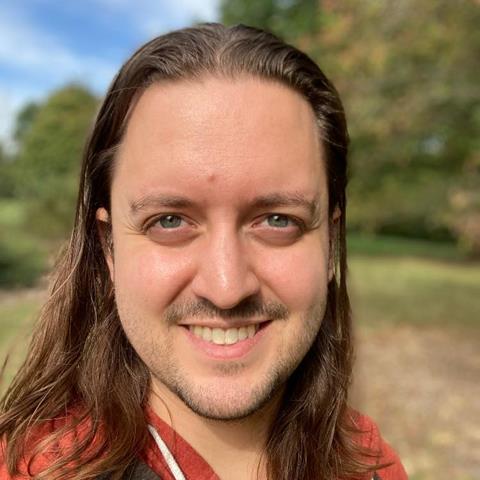


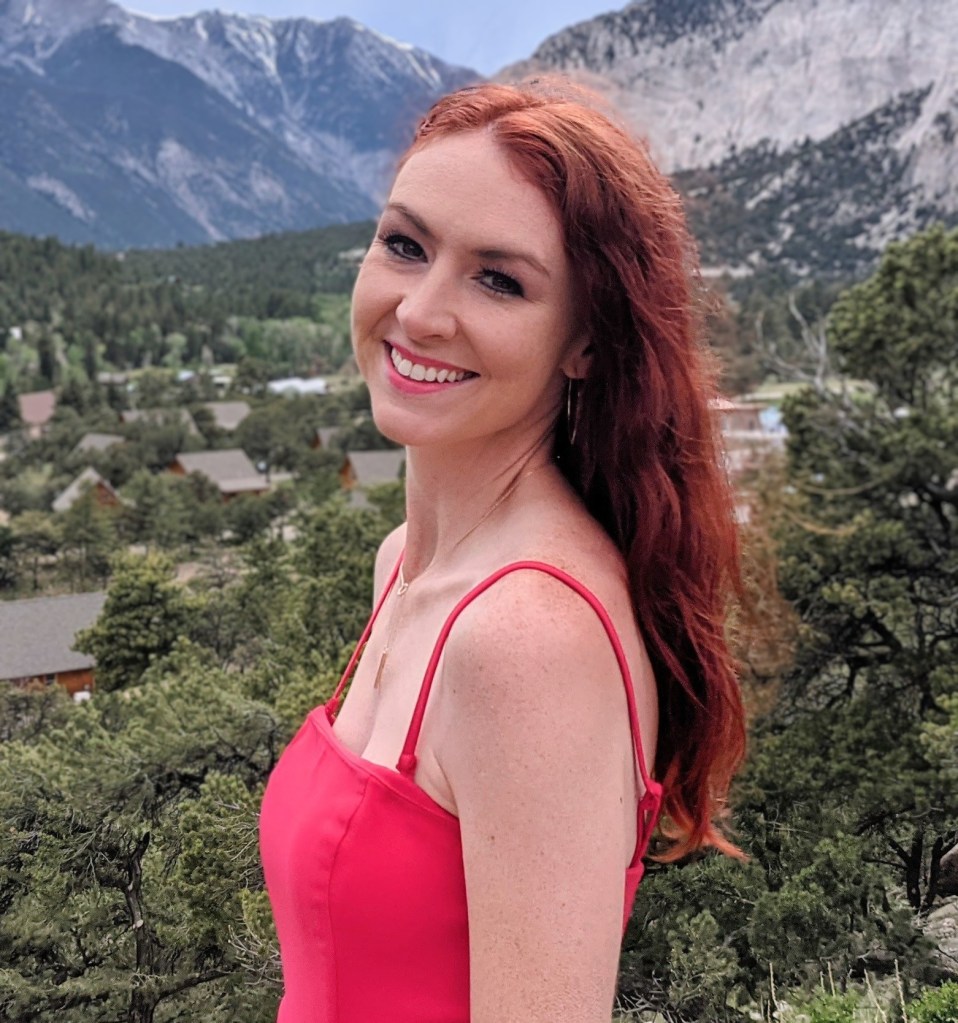


 gracefulatheist.com