Hey There Benji

Adoption, Deconstruction, Podcast, Race
Listen on Apple Podcasts

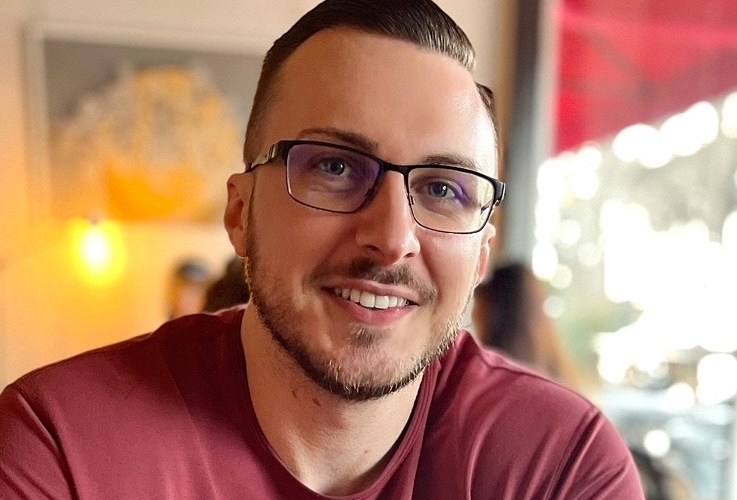
This week’s guest is Benjamin Faye, also known as @heytherebenji.

Benji was adopted when he was young and during middle school, his adoptive parents suddenly “wanted a spiritual life” and started going to church. 

His life as an adoptee was difficult. Benji questioned whether he belonged in the family and things only got worse as he got older. His adoptive parent became abusive and in his early twenties, he had to leave. 

He hoped the church could be the place he could question and process his grief and uncertainty but it wasn’t. 

“…on some level, I knew that…there would be no room for me to process [my questions]. It would just begin and end with Jesus, and it’s very, very difficult to have a conversation when there’s a preset ending to it.”

Benji and his partner moved from church to church, hoping to find where they could fully belong. Skip ahead to 2020 and all the covert racism that has always been in the background of white evangelicalism became blindingly obvious. They both had to get out. 

Today, Benji is using his online platform to share his own story and to be a place of find empathy and compassion. His work is a great example of living out secular grace.

Links

Instagram
https://www.instagram.com/heytherebenji/

TikTok
https://www.tiktok.com/@heytherebenji

Important Things with Ben and Carole

Patreon
https://www.patreon.com/important_things

Quotes

“It’s varying states of uncertainty in oneself.”

“…on some level, I knew that…there would be no room for me to process [my questions]. It would just begin and end with Jesus, and it’s very, very difficult to have a conversation when there’s a preset ending to it.”

“I’m an eternal optimist…if somebody’s going to find the silver lining, it’s going to be me.” 

“It was that Genesis 50:20 thing where, like, ‘What the enemy meant for evil, God meant for good,’ and that’s the thing I told myself for the next five years…”

“On some level, you grow up understanding the power dynamic, and so if you’re the only Black person calling out racism in a white space, they will turn on you—and this is true in both liberal and conservative spaces.”

“I eventually began to shut down and was basically reliving my teenage years in my late twenties because I wasn’t safe anymore. I really wasn’t safe at all. I was told that I could be…but I couldn’t.”

“Looking back now…it’s a cult. I know that now just because of how it functioned, the way there was this, almost-deification of the leader and that the leader couldn’t really do anything wrong, wasn’t really held accountable for anything.” 

“It was survival mode all the time; fight or flight all the time.”

“What started to become clear: our pastor was, in effect, gaslighting our friend using our words. That’s when I knew that I was done.” 

“That following Sunday…was just another day, and there was such a relief to that. It was almost as if my body was like, Thank you. This is what we’ve been needing for a really long time…” 

“The more I listened and the more I watched [stories of deconstruction], the more I was like, Oh! So there is a name I can attach to this in-between place. There is this space that exists where people just aren’t sure about stuff.” 

“The more digging into it I did, the more I began to detangle things—the more I became ashamed for how I’d treated the LGBTQ community, the more I realized how functionally racist a lot of the theology was, and that it really wasn’t just one church.” 

“I got to a point where deconstruction meant letting some things fall apart, really letting everything fall apart and try to figure out who I am while in the wreckage.” 

Interact

Join the Deconversion Anonymous Facebook group!

Deconversion
https://gracefulatheist.com/2017/12/03/deconversion-how-to/

Secular Grace
https://gracefulatheist.com/2016/10/21/secular-grace/

Support the podcast
Patreon https://www.patreon.com/gracefulatheist
Paypal: paypal.me/gracefulatheist

Podchaser - Graceful Atheist Podcast

Attribution

“Waves” track written and produced by Makaih Beats

Transcript

NOTE: This transcript is AI produced and likely has many mistakes. It is provided as rough guide to the audio conversation.

David Ames  0:11  
This is the graceful atheist podcast United studios Podcast Network. Welcome, welcome. Welcome to the graceful atheist podcast. My name is David and I am trying to be the graceful atheist. Please consider rating and reviewing the podcast on the Apple podcast store, rate the podcast on Spotify, and subscribe to the podcast wherever you are listening to. If you find yourself in the middle of doubt, deconstruction, the dark night of the soul, you do not have to go through it alone. Join our private Facebook group deconversion anonymous, you can find us at facebook.com/groups/deconversion Special thanks to Mike T for editing today's show. onto today's show. Our lien interviews today's guest Benji of Hey there Benji fame on Instagram. Benji was adopted, his adopted parents became religious, he found himself in the middle of a religious context that he threw himself into, he became a worship leader. But as time went on, things were not good with his adoptive parents. And things were not great within the church as well. Things like the inherent racism within the church became obvious to Benji over time. Now Benji uses his online presence to help people who are also going through the deconstruction process, you can find him on Instagram at Hey there, Benji, here is our Lean interviewing Benji.

Arline  1:53  
Hi, Ben, do welcome to the graceful atheists podcast.

Benjamin Faye  1:55  
Thank you for having me.

Arline  1:57  
I'm super excited you and I connected often on last year, and then recently we are living vaguely near one another. And so this is this is exciting. I'm excited to hear your story in a few weeks, I'll be able to hear your partner story. And this is great, I'm glad you're gonna be able to be on. So usually how we start is just tell us about the religious environment you grew up in.

Benjamin Faye  2:22  
Sure. So I'm, I'm strange in the sense that I didn't get into a religious environment until I was, you know, in my tween adolescent years into my teenage years. And so in some ways, I came into it with a real understanding of what was going on. I know a lot of people probably, you know, they grew up in it. And that's all they know. But I still remember life before it. So, and I think it happened because of my adoptive parent was starting to get back into church themselves. They were sensing a need for spirituality in their life. And they started bringing me and my younger brother to church. And yeah, so that's kind of how it started. It was a really weird start. Because like I mentioned, I didn't come from that. I came from kind of an a religious thing. And then was kind of dropped in the middle of this world with its own contexts with its own kind of, you know, reference points and didn't really understand it. I came to understand that later, certainly. But it was very strange in the very beginning.

Arline  3:33  
I did too, I did not become a Christian or become really acquainted. Well, in high school, my mom started taking us to church or taking me to church, I say us it was my she forced my dad to come to. So she started making us go to church. But college was when for me it became like a real thing that I cared about and everything. It was kind of an A religious background. Like I knew God created things or believed that but like, it was just kind of this vague thing that it wasn't important. So your tween and teen years did you get involved in like a youth group? Or how did you end up going into church?

Benjamin Faye  4:07  
Well, so initially, it started with like a boys mentoring program. I I didn't grow up with a male figure in the home. So my adoptive parents thought maybe this will be the thing to kind of put him in this. And plus I was having some struggles at that time. Just with school and with just I guess we can call it behaviorally. In my head there are air quotes around it simply because a lot of it comes back to stuff that was happening in the environment that I was living in. So it was something that was kind of feeding on itself and but I was sort of being outsourced to other people rather than it was almost as though the issue was me rather than the environment. And really that's what the Vichy was the environment. Of course, I wouldn't find that out in for another 10 or 20 yours but as you do, but But yeah, so it started off as boys mentoring. And then you know, getting involved with the worship team, that kind of thing. That's how I got involved. So it wasn't like a youth group thing necessarily.

Arline  5:16  
It's amazing what you learn in your like 20s and 30s, that it wouldn't have been really helpful a decade before to have understood that. It isn't your fault or behaviors, responding to the environment that you're in, you're doing the best you can with the resources you have as a kid. Exactly. Yeah. So then what? So how was high school after high school?

Benjamin Faye  5:37  
High school years were hard. Emotionally because of that, because it was like, I thought I was a Christian, I was never fully sure. I think Christianity has this way of making you like, re up every week. And I don't know what it's rededicate yourself so and then you know, the goalpost keeps moving all the time. So you're never really sure if you're a real Christian or not, because it's like you're getting this part, right. But then I saw you live in like this when you're bla bla, bla bla, you know, and so there's always this kind of like looking over your shoulder, which shouldn't happen in a loving relationship. But it's what we were sold was the loving way to spur each other on and good works as it were. Yep. So teachers were hard, because you're just trying to figure out who you are. And in the middle of trying to figure out who you are, you're still wrestling with, am I enough to be considered a Christian? So it's varying states of unsure varying states of uncertainty within oneself. And so my, my teachers were tough ones, because I felt myself always on the fence, wanting to be committed, because I want to belong somewhere, as you know, I'm an adoptee. So you really, like few things in the world matter more than belonging somewhere. And it's very easily to become destabilized in that way. Because you started off on really shaky ground by virtue of the fact that you came to, you know, cognizance away from what was your birth parents? Or what was your birth reference? You know, you're starting off on shaky ground, you know, you. You don't come to realize it fully until you get older. But all that trauma starts to come to bear, the older you get. And so a lot of my teenage years and really into my 20s was trying to prove myself, trying to figure out, you know, where I belong to proving I belonged in the places I was already in, and being put in positions and a lot of ways to where I had to prove that I'd want where I was always in. So that was very, very difficult for me. But I always had music. I was a musician. So I was able to speak that language. And that's kind of how I got through. And that's how I was able to prove my worth. It would eventually become very tiring, because it was based on what I did, rather than where it was. But I was happy for the 10% of belonging where I could find it.

Arline  8:09  
Yeah, if that's the way that you can get that belonging and feel like you're part of something that's a human need. And then you put adoption on top of that, where like you said, you're starting off with, do I belong? Because I didn't, did not belong before. And now I'm here and do I belong here, plus, the church. And as a church, you know, this is an extremely diverse, the whole entire world's version of churches is so different, but like, there's a lot of using people for their gifts, until you are just completely burned out. You don't have anything to give. And yeah, finding your worth in that. That's hard. Because I mean, how else are you finding your worth? If that's what they value, right?

So did you go into college? Did you start work? Like, what what were your 20s? Like? Yeah, so

Benjamin Faye  9:03  
I went into college, still playing on worship teams, playing in a gospel group, that kind of thing. playing concerts, playing shows, doing all that kind of thing while I was still in school. And it was interesting time vary up and down. It's like you start to figure some things out. But other things still kind of elude you. You're still not sure who you are, you're still not really settled in that. And in my early 20s, I actually was contacted by my biological family, and I hadn't really been connected with them in years, and that caused a lot of excitement, also a lot of conflict. Conflict, not only within but also conflict, I believe, within my adoptive family. I think they wanted to be supportive of it, but it's almost like it was almost kind of weird. And I don't think they know they knew a whole lot about my adoptive family and If they did, they didn't tell me. So I'm trying to figure out who I am, I'm in this in between place. Um, at the time, things are starting to come very, very strained with my adoptive parent. So all of what little comfort that I come to cultivate was starting to become stripped away at that time, and I was looking for it somewhere else. But now I'm being bombarded with this new family, you know, where some of them look like me. Some of them have my last name, some of them, you know, have stories about things that I was involved in that I don't remember. I remember getting a letter from my brother, who was in the army at the time it was in Afghanistan, and was like asking me what my interests were. And I'm like, Oh, wow, like, it's a weird thing to meet your brother. It's a weird thing to have all these experiences that you know, 2324 years old, however old I was. So if I had to put a word to it, my 20s, at least the early part of my 20s, were extremely chaotic. Just because I couldn't make heads or tails of anything. But this is a point in the time in time in your life where, you know, in a capitalistic sense, you're supposed to figure out what you want to do with the rest of your life,

Arline  11:15  
for the rest of your life, not just now like, for when ever and ever.

Benjamin Faye  11:20  
When I was in high school, one of the gym teachers would say, what you do the next four years determines the next 40. Which I mean for high school is a bit intense. Because, you know, just in terms of relationships, my graduating class was 593. I don't know if I still talk to anyone from high school. with any regularity. I barely remember not right, I barely remember what I learned in high school, and even college to some extent. So but you're supposed to have all that stuff sorted out. But it's like, I don't even know who my family is. Yeah. You know, and then what is the role of God and all this? Did God orchestrate this? And if so, then why is it feel so unsettled? Like where is the goodness of God and all this confusion? So yeah, it was it was a lot.

Arline  12:15  
It is a lot. Did you have church people around you? Did you have friends, any college ministry any kind of support

Benjamin Faye  12:23  
during this time, so I was in church, but I don't. I didn't really tell anybody about this type of stuff. Okay, mainly because I didn't trust a lot of the people around me, it doesn't mean that we're bad people. It's just, you know, who you can go to certain places with, and you know, who you can't. And the people I could go to go to for this type of stuff. Were out of church, there were people I met at college, people who I'm still friends with to this day, you know, 1015 years after the fact. People who I could say, Yeah, this is really hard, or blah, blah, blah. But I, but on some level, and I've always been more emotional, I've always been more on the sensitive side. And a lot of the men in my life were not, they just didn't function in that way. And so it made things very hard, because there was always an expectation of me, where I felt like there was to function like the other men. And if I didn't, then you know, you just don't, necessarily. And that was in family that wasn't church, it was just, you know, there was all these things about being manly men in church, but it never really felt right to me. I knew I was a man. And I knew that's how I saw myself. But the characterizations surrounding that manliness never really fit to me. So most of my friends, you know, as I got older, were women. And that's still true, actually. Because they cut a lot of them can kind of go to those places a lot more easily than a lot of men can, in a general sense.

I knew that I couldn't go to a lot of church people, really any church people with what I was dealing with. Because even though I didn't have a language for it, then I knew that they would find some way to spiritualize it. And on some level, I knew that that would water it down and make it more confusing. Like there would there would be no room for me to process it. It would just begin and end with Jesus. And it's very, very difficult to have a conversation that way. When there's a preset ending to it. You know, there's a lot of churches that will tell you that they have an open door policy or they're or they'll say, you can talk about anything as it but the understanding is as long as it begins and ends with Jesus. You know, so if it comes to A situation where you're questioning theology. You know, if you, if the end result is always going to be Jesus, then you're not free to ask questions, because questions mean you can land anywhere. And so I think on some level intrinsically, I knew I couldn't go there, because I knew that they would try to tie some bow on it. And that would make it feel inauthentic. Of course, I didn't know that. And so I just thought I was being quiet and shy and in a way sinful, because you should be able to share this is family. But if the thing about family in that context is it's kind of thrust upon you rather than it more so than it is felt in a lot of ways, and a lot of ways. Something that's preset for you relevant, something that's allowed to kind of exist organically. So while there were ways in which I felt accepted, it felt like it was based on what I do more than who I am.

Arline  16:02  
You can have built in community, which can work out wonderfully in church, and you can have thrust upon you community where it's like, you just need to trust these people and tell them all your business and it's like, I can't our bodies know, something's not right about this situation. This is not a safe place. Like, and I don't know that. We know those words, you know, years ago, these are, these are newer vocabulary, safe places and things like that, but your body knows, like, you know, something's not right. So, so what happened next? Yeah.

Benjamin Faye  16:34  
Um, so I mean, the early 20s were kind of a crazy time, I was still involved in church. I met my partner, Carol, we met at a church service. And, you know, we started dating really quickly got engaged really quickly. Yep. And, but it was, it wasn't because the church forced that on us. We just really, really fell for each other really quickly. And it was, it was interesting, because we were long distance. So she was in school, she was at art school in San Francisco. And I was back on the East Coast. And we grew up two hours from each other. So she's from New York, I grew up just outside of Philadelphia. So we're, you know, Northeastern people. But that was another relationship that really was helpful in having a place to go with a lot of these emotions, because when things were getting really bad, with my adoptive parent, that was one person who I could talk to about it. And to that point, my adoptive parents, I don't really know what happened. Little things would upset them. I was living at home during the time I was in college, because I went to a community school nearby, because it was what could be afforded. And little things like brooms not being clean, you know, or, you know, things like that became huge things. And suddenly, you know, I was being away from home, going out doing things that you normally do in your early 20s. And that was causing friction for some reason. And, you know, the phrase, the refrain I hear the most one time, when I went out for my birthday, I came back to grab some stuff to hang out. I think I'm sleeping over at a friend's place or something like that. And they just kind of went off on me. They didn't know where I was going. They didn't know what my plans were anything like that. Which again, I was in my 20s not sure why there needed to be a whole lot of that. But the thing they said was you're changing and I don't think it's for the better. And it felt like I was shifting and evolving as a person. And maybe they were struggling to have a handle on it because they had control all that time. Or I don't know, I have no clue what that was about. But it was a really, really difficult time. And, like just random outbursts that were really hard to take and it made the environment even more unsafe than it already had been because it was never really safe in an emotional way.

It never was but it got even less so progressively as time went on.

So I remember being the evangelical that I was praying after an outburst saying okay, God, if I'm not supposed to be here anymore, then my next then the next outburst will be my assigned to go didn't really have a whole lot of recourse, just a whole list of maybe a friend with an apartment, you know, nothing like that. And so a few days later, sure enough, another outburst happens. So I gather maybe two days worth of clothes, and I put it into the The front pouch of my guitar case, I go to class that morning, throw my stuff down at my friend's place. And I never slept another day in the house again. I crashed at my friend's place. And I said, I texted my adoptive parent. I said, Hey, I can't come back. I just can't do it. They called me I didn't answer. The rest of the family kind of was very concerned. And they were like, what, what's going on? And so some of them were like, Yo, what's happening? And I was able to speak to them, you know, to tell them what was going on. And then I had a cousin who was nearby where I was staying, and they came to see me. And I told them what was going on and what I experienced. And there were a lot of statements from that conversation that stay with me, but the one that stayed with me the longest was, to be honest, I'm amazed, she stayed that long.

Arline  20:55  
So family knew that your home life was not safe.

Benjamin Faye  21:01  
I don't know what they knew. But I knew that. But what I understood after that conversation, was that I wasn't the only family member to have some sort of friction. And so what they told me, they told me about some incidents that had happened. And they told me about how the family really felt about my adoptive parent about how they weren't as close as they seemed. And that there was just a lot of stuff, a lot of water under the bridge that lived there for 3540 years. And I was just kind of in the middle of it, meaning that I was being raised in the home. Nobody said anything. And I don't know if that was to maintain normalcy for me. Or for what but it's a hell of a way to find out that you're not on an island. Yeah, so that was going on

I was still serving you still on a worship team still. Yeah, every so all that's happening, sort of recap, meet and get engaged to my partner. Meet my biological family for the first time as an adult. Like really meet them. I had kind of seen them when I was about six years old, but didn't really remember have any memories. So this was the first time I really getting the skinny on things. I spoke on the phone with my biological mother for the first time in years. All this stuff was going on in college, still expected to get grades of some sort. And then also serving every Sunday. And eventually, all of it just became too much. And one night, when we were the worship team that I was playing on was playing at another person's birthday service type of thing. I started feeling really strange, like almost disembodied, strange. And they said they took home early. And the following morning, I began experiencing what are known as anxiety shakes, which is where the stress becomes so much that your body can't take it. And you literally start, you literally lose control of your body. And I shook for probably WV anywhere from 24 to 36 hours. I don't remember the exact, but it was somewhere in between that time. So I went to the hospital the next day and went there twice in the same day, because they gave me Ativan to settle me and even with the Ativan, I was still shaking. So it was the confluence. It was the confluence of not only what had happened very immediately, but all the things I had felt all those years before and didn't have an outlet for it. And eventually, my body just couldn't take it. And so that so that night when I went to the for the second time. Most of my family was out of town. There's just Thanksgiving weekend. So they were out of town doing something different. But my adoptive parent was still in town. And I didn't tell them what was going on. Because I don't think anybody did. This, none of my friends did I don't think I think I may have told the family member or something like that. I didn't tell my adoptive parent. Because on in a lot of ways they were the reason I was in the hospital to begin with. So I'm like I'm not going to you know, I'm not going to make the situation worse for me. Someone contacted them however. And once they had my friends were there they finally got a calm, they tell They tore into the room like a bat out of hell basically like, Hi, what's wrong with you? Those are the first, you know, first couple of words. Hi, what is wrong with you, like angrily. And my theory is that I think they were angry that they weren't told, because they felt entitled to that information. Entitlement is a big theme. And, and they went and talked to my doctors and just kind of made a bit of a scene and did exactly like they basically proved exactly why I didn't want to tell them what's going on. Eventually, my cousin asked me to have a meeting with my adoptive parent, which I realized now was not a good idea. Because there have been some situations in my past that I now understand as abuse. And so it was essentially asking me to face my abuser, and it didn't go well. And they ended up kind of taking my adoptive parents side and waterways. And so it kind of was a visceral confirmation of what I'd already always kind of known, which is that I can trust you, but to a point. So eventually, I was, you know, still at that friend's place, me and that friend had a falling out, had to jump to another friend's place, but I only had a little bit of time to be there. And so one of my biological sister who I just connected with, offered a place down in Florida. And so and it was, it was an opportunity that made sense, but at the same time, it was very scary, because I'd never lived anywhere else. I'd never been on my own really. And I was engaged to this person that was in the Northeast. And I didn't know when I'd be able to see them again, it was just kind of a mess, but ended up going anyway. And that was a whole situation. Just because what I was told was going to happen when I got to Florida didn't really happen. I was told that there'll be a place for me to stay at least read asleep. But what I wasn't told was that while they were sleeping, they were going to be evicted from that place. And they didn't tell me. So three days into being in Florida, I'm in a hotel with like six other people. But all the while, I was still looking for a church.

Arline  27:26  
So you're still leaving, hoping you're asking, I'm still

Benjamin Faye  27:29  
help. I'm an eternal optimist. So I'm just like, you know, there has to be some, if anybody's gonna find a silver lining, it's going to be me. So I'm like, I'm trying to find you know where God is. And this, maybe you're doing something in me, maybe you're testing me for something, maybe something bigger is coming down the line that I need to be prepared for. Trying to just reframe it and make it different things in my head. And so when I got there, I started working. And this was the beginning of my classroom teaching life. I was working with the Boys and Girls Club, teaching fourth grade and doing music teaching and things like that. And one of the teachers that worked there was a worship pastor at old at another church. And so they invited me to come play at their church at that time. And so I went did it went really well. And they offered me a room in their in their house still just basically run out. And it really ended up working out really nicely because it was down the street from I was working so did that. But I would come to find out that the church was not didn't have the most savory practices. And what I mean is that they were running a scam, essentially. Okay, like a very obvious one. The worship pastor sat me down when I was telling me about how their father who was the pastor of the church, we rarely ever saw had made friends with a prince from the Middle East. And on that Prince's deathbed, they gave them the certificates of deposit. And that they were worth billions and billions of dollars that needed to be released at a certain time. And what they did was they wrote to people in and they said, Hey, we have access to all of this money the President knows about and all these people know about it. That's supposed to be released at a certain time. We want to give you that money. But before we give you that money to do the things you want to do, whether that be start a business or start a nonprofit or whatever. You have to come every month and take these almost like courses. You know, to kind of train you for this kind of thing. And, of course, these things cost money naturally. So again, we every month, so on any given Sunday, our church wouldn't have more than 20 people in it. At the end of the month, we would fill to capacity. So it will be like people flying in from out of town, this will be like, you know, 850 people, all of them paying 100 $200 per person. And you add that up after a while, you know, to put it up, put it this way, they were I went to their house once they were living in Ronald Reagan's old house. So they, yeah, it was a huge house. So, and I tried to reframe it in my mind of like, okay, maybe God can still move through this. But you know, I would look up articles and see like, Oh, you were your, your pastor is being investigated in Texas for doing the same thing they're doing here. And I'm pretty sure they shut down not long, you know, like, not long after I left.

And somewhere in the middle of that, Carol, my partner wanted to come down and be with me because they were just over school and things like that. And I was trying to prepare for them. And I've been saving money and was putting money away and was like, looking for apartments and things like that. I ended up losing all of that money. Because the teacher that I moved in with, they didn't own their home. And I can't find out that they were only a substitute teacher, which meant that they didn't have a settle settle thing in the summer. And so all of my money went to just keeping the lights on and keeping the refrigerator running and all that stuff. And so, but now my partner's coming. Yeah. And so you know, it, we come down, we get married, and you know, but it's really, really rocky. Jumping from place to place, staying with family in town, that kind of thing. But still serving, we end up going to, like, that's one of the things that is consistent about that period of time is that we always served. Like, it didn't really matter when it came to Sunday morning, we were at church. Like there's almost there almost wasn't another possibility our minds. Yeah. And so, you know, we found a local church began serving on the worship team there. Did that for a long time, there were ups and downs. ended up homeless for a while. And that has to do a lot with like, you know, my paperwork growing up, my birth certificate and muscle security cards, didn't have the same names on them.

Arline  33:06  
Paperwork dictates being able to get a place to live and being able to get jobs and everything.

Benjamin Faye  33:11  
So I was out of work for like two years, just trying to sort that out. And so And of course, that raises questions about you know, your, your, you know, adoption and things like that. And so, I was trying to sort all that out, still serving in between all that I get an opportunity to surprise my biological mother who hadn't seen me since I was a child. So, my sister and I and our family drive up to Philly to go see her. Of course, she's like crying. And it's a whole big moment. And some of my siblings who hadn't seen me since I was really little. I mean, they look to me like, they'd seen a ghost. And I come to find out come to see their side of the story of what a life had been like without me. Part of the reason they looked at me that way, was because they weren't completely convinced I was alive. For a lot of my life. I kind of just disappeared, and they didn't really some of them didn't really know. My biological mother would send up balloons on my birthday every year, because like, almost like a memorial because they thought I was dead.

Arline  34:15  
Oh, wow. Do you know why like what the story was, that's where

Benjamin Faye  34:19  
things really got interesting. So at this point, I am in my mid 20s at this point. And so I remember sitting at a table and my bio mom, she just starts pouring out, basically all the stuff she's essentially wanted to tell me for years. So that's when I find that out. That's when I find out about how I came to be in my adoptive parents care. I was told the story that you know, my biological mother was too sick to take care of me. And so I had to come With my daughter parent, which I mean, you know, when it comes to having a biological parent with issues of substance abuse, that's about as softly as you're gonna land the plane. But there was no update to that story. And when I spoke to my bio mother, I told her basically that that was the explanation. And I was expecting for that sir story to match with what I've heard. And then I started watching her face as I told the story. And it changed like, there was an excitement, she was happy to see me. But there was a frustration that started to come over her face. And she asked me to repeat it. And so I did, and she mentioned is that that's not what happened. And so come to find out that, number one, my adoption was not legal. I was never supposed to be taken across state lines. But I was raised across state lines. Nobody had given my biological mother was high during a lot of the pregnancy and during the birth, and had left the hospital briefly like me for a day or so. Just in that stupor. But no, but when she came back, her child was gone. And nobody explained to me why,

Arline  36:20  
Oh, wow. Oh, Vinci.

Benjamin Faye  36:23  
And apparently, there was a confrontation between my bio and adoptive mother, where my bio mother found her, and basically said, Where is my child, and they came to this agreement, where my biological mother would be a part of my life. And so there was a meeting when I was very, very young. And where I got to meet her, but I don't have a whole lot of memories about it. I was five or six years old at the time. And so I didn't really have a lot of memories of it. And that was supposed to be an ongoing thing. But when my biological mother tried to make good on it, she she was met with lawyers, basically saying, if you tried to contact him, we will see you. Oh, wow. So we didn't have to be separated. Obviously, it wouldn't have meant the same thing. Because she wouldn't have been my mother. And there's a lot of arguments to be made that she probably couldn't show up for me in that way. Because she was still sorting herself out. However, what she told me was that the guilt of not handling my situation, exacerbated her drug use, because she couldn't deal with and other tools for it. So either way, it wasn't my adopted mother's call to make or not depends for call to make. And so I'm sitting there, just like, you know, my entire life history, like 2526 years of history is undone in 45 minutes to an hour. Not knowing how to make heads or tails of any of it. And to be honest, you know, it's been almost 10 years, I still don't really make heads or tails of it. It's just a lot still. I remember growing up, I remember after that conversation, I just went up to a bedroom nearby, I just cried. Because I'm like, What, Where do I come? What does any of this mean? Yeah, because you're now having to start to entertain some possibilities about the reality of the relationships of the people that you grew up around. And it was one of those moments where it's like, I don't see God in this. But there, it was that sort of Genesis 5020 thing of like, what the enemy meant for evil, God meant for good thing. And that's kind of the thing I told myself for the next, you know, five years, or whatever. And I just kind of tried to push it away, tried to push away the fact that it all hurts. And there were other things on that trip that really, like I understood the degree to which my biological father did not want me around. I understood and even my half siblings, like his kids, kind of resent my existence. For a lot of reasons, I was I was their dad's kid that was born out of wedlock, basically. And that, like my existence was a signal for the end of their parents marriage basically. And so like, whether it's fair or not, I'm a symbol for that. So being in an environment where they're in the house, and they don't even look at me, knowing full well who I am, you know. So that stuff, you know, really, really shook me up

As soon thereafter, we started going to a new church. And this was the last church, we would end up going to. Because this is where the churches were was really where the crap hit the fan for us. And it was really where we began to question openly things about church. Because the thing about it is that we had been, since we've gone to forgotten Florida, we had been in predominantly white spaces.

Arline  40:32  
So like, what we think of white Evangelical, like mega churches, small churches, traditional, well, you said your worship team, so it was more.

Benjamin Faye  40:40  
So it was one of those multicampus churches. So like, the way that elevation functions, were they have, you know, one shirt for many campuses, there was one of those in Florida. And so we did that for a long time portable church. So it was like a church campus, essentially, that we were serving. And then the next trip we went to was one church that was a part of multiple churches, like a network of churches all over the United States and across the world. They were very, very mission focused, they were very much about, you know, reaching the lost and doing short term impact teams and things like that going around the world. That was their whole bag. And so eventually, you know, we started going there. And it was out of need, because of the homelessness issue. We've been bouncing around for so long. And you know, it had benefits being there. And we were able to get back on our feet. And, you know, I was able to get my problems sorted out with my documentation and was able to get started, started working a lot and nonprofit serving people serving homeless communities. And so there were things that were starting to be redeemed in my life. And so I thought, okay, yeah, this is where it turns around, this is what God's getting the redemption, this is all starting to spin. And there were things that really did change for for the better in that space. But it was there that I really started to understand. Or maybe it fully admit that there was a lot of racism in white, even though it was basis. And I think on some level, you know, because because when you're black, like are really when you're a person who functions as a person of color, you're, it's just kind of background information. You It's, I explained it in another podcast, I explained it as almost like, seeing McDonald's, when you're on a road trip, it registers as like, that kind of background information. You've seen it before, but it just flies by you. Because it has to because you're outnumbered. And on some level, you grow up understanding the power dynamic. And so like, if you call it if you're the only black person calling out racism in a white space, they will turn on you. It can be dangerous very quickly, can be dangerous very quickly. And this is both in conservative and liberal spaces. Because with within conservative spaces, they don't like talking about racism in some liberal spaces, they feel like they've done enough. So you calling them out is like, you know, basically, like I'm trying Isn't this enough, you know, like, like they feel like they like. So it's very different. But it's two extremes of the same white supremacy. It's two extremes of the same power dynamic in the hierarchy. So you kind of understand when and where you cannot speak about certain things. But certainly, in one church, I had heard the parent of the pastor say, while I was in the car that Barack Obama didn't have the real black experience because he went to Harvard. But then, in this new church, when I would explain my fears about being outside after dark, because of all the unarmed killings of black men, by police, the thing I was told was, well, if you're doing the right thing, you shouldn't have a problem. Or being told, or being subjected to a diatribe about Black Lives Matter, and how evil it is and how black people don't actually experience racism, unprovoked while being driven home from worship practice, stuff like that. But you push it away because this is your family. And now since people have helped you get out of homelessness now you like almost like owe them somehow. And so there's all these

Arline  44:33  
entitlement. You mentioned earlier, this feeling of entitlement. Exactly, exactly.

Benjamin Faye  44:37  
And so, you know, there's a lot of suppression and a lot of things that happen. There was one moment when we when I lost my job, got in a car accident, and Carol got really sick, like hospitalized sick in a really short amount of time. And we were on the verge of losing our apartment and so we went to our church leaders and said, Hey, this is what's going on. And they basically rebuked us for not being fiscally responsible. And basically allowed us to lose our apartment. Because they felt they said that God was teaching us a lesson. To this day, it's difficult for us, it's all

Arline  45:19  
about individual. Your personal thing that you did, yes, I understand

Benjamin Faye  45:24  
more, certainly from from from a conservative standpoint, a lot of conservatives don't like, actually have this belief that people of color, specifically black people aren't working hard enough, or aren't trying hard enough or so right. After dealing all this stuff I was being essentially told, Well, you know, because you're not getting a W job immediately. You're not, you know, you're not trying hard enough, basically saying, like, have you tried, and I told them, like, McDonald's told me, No, I'm trying to do all these things to you know, and be like, we get it, but you're still not trying hard enough. And there was always hammered. Like, you know, if you don't work, you don't eat, if you don't work, you don't eat, they were saying I was lazy. That's what they were saying. And it was me just trying to adjust to everything that was around me. But being told no, you have to, like do this, do this, do this, do this. And it was all based on what their assumptions were about black people going into it. And they didn't really know me. Um, so I spent a lot of time living with that tension. But trying to pretend like it wasn't there. For the, for just the betterment of our experience there. Because I've talked too much about it, then people would tell me, like, you know, we'll go ahead and hash it out with him, you know, Matthew 18, handled like a brother, and I'm thinking to myself, but they're not going to listen to me, because this is what the assumption is, this is the assumption that they're making while having all the information. So, you know, but it was like, being subjected to gaslighting on the other side of it, too. So, you know, eventually I began to shut down, and just was basically reliving my, my teenage years, you know, in my late 20s, because I wasn't safe anymore. And I never, I really wasn't safe at all. I was told that I could be, I was told, like, you know, open door policy, and this is church, and you should be able to share with my family, but I couldn't. And that I would get penalized for that, too. That Oh, he wouldn't show up to share this or wouldn't share that. It would just it felt like everything was being legislated.

Fast forward now to 2020 Everybody's inside. And the pastor, you know, looking back now, there's an extreme, it's a cult. And I know that now just because of the way things functioned, the way there was this almost deification of the leader, and that the leader really couldn't do anything wrong, the leader was never really held accountable for things. Didn't know that then. But, uh, yeah. I always thought it was rare that they kind of held the leader on this pedestal all the time, and treated them almost like they were right in that aisle seat at the right hand of God. And the leader is really, really, really pushed living really close together, everybody lives really close together. So the entire Church lived within three to five miles of each other. Anything more than that, then somebody might say something to you.

Arline  48:35  
Wow. Yeah, that's a little bit guilty gather,

Benjamin Faye  48:39  
like gathering randomly, or sometimes, you know, with very little notice, if you're not there, or if you don't show up to a couple of gatherings. Somebody might call you. Okay, what's going on? You know, having finances meetings to see how if your finances are in order, that kind of stuff. So, yeah, they they sold it as though like, you know, nobody else is doing church like this. We have, like, we're doing it better. We're doing it differently than everybody else, you know, always comparing themselves to Bethel and opera room and, you know, saying like, you know, they have this special thing, but we have like it way more holistically than they do you know, that kind of thing. So 2020 rolls around, and we're all home. And the pastor's not doing well handling it with Emily well, because they like it when everybody's together. They just a very big on that. But for me having such a resume was a break you

Arline  49:36  
to say that so many people were like, this was this. It was nice. I didn't expect it to be so nice to not be a break

Benjamin Faye  49:43  
is so nice, because, you know, by that point, I was on the worship team. I had risen to the level to where I was a music director on that worship team. Oh, wow. So you know, I was always guiding the songs, telling people where to go on stage, you know, just just doing that type of stuff. And it was nice because it felt like some part of you was getting recognized. But it was like the most obvious part of me, like, you didn't have to work very hard to get to that place, you know, and so, but hey, it kept me involved, and it kept me It kept people off my back. So, you know, I was like, you know, this is how I survive fine. Again, didn't know that then I just thought that this was my calling. But, you know, it was survival mode all the time, fight or flight all the time. So to be in a situation where I woke up in a Sunday morning, didn't have to wake up super early, didn't have to plug stuff in. You didn't have to fake mingle with everybody, you go outside and be sociable. When you didn't want to. I didn't have to, you know, during worship time, I could go get coffee. And nobody would say anything to me about it. You know, it was it was just nice. And so I was like, okay, I can do this. I can handle this. Even though the situation that NIST that necessitated, this is awful. I can, you know,

I can get down with this, basically. And then we started hearing about ahmaud, arbery. And George Floyd, and breonna, and all these names. And it was a really interesting time in American history, because nobody could say they didn't see it. Everybody was home.

Arline  51:31  
Everybody's saw it, everybody, so many people who would not have paid attention. Otherwise, yeah, we're forced to finally see it. Yeah.

Benjamin Faye  51:39  
And a lot of churches begin speaking about it. Churches within our network began speaking about it passionately, well, about the frustrations of black and brown people and why they shouldn't have to keep doing this over and over and over and over again. Of course, that momentum would not last. But it's what it's what I commonly referred to as black square energy, where you put it up for a little bit, and then forget about it. And that was the summer of black square. But there was a noticeable silence from our leadership. And our church was relatively small, this was maybe 300 people. But Carol and I represented, I don't know, 20% of the black population, just by ourselves. So just the two of us. So there were maybe 10. And one of the one of the other people who were there we became we were fairly good friends with who was black. And they remember that they hadn't this up and they were like, Hey, is it weird to talk to any of y'all that like, our Leadership isn't talking about this? I said, it's, it's not weird, but it's a problem. And so, like, we formulated a plan to talk to leadership about it, and but we said, Okay, we'll give them one more Sunday's grace. And we'll say if they don't deal with it at all, yeah, then we'll say something that Sunday rolls around, don't stay at work. And so we said, Okay, we're going to talk to the worship director, who was kind of the passionate right hand man. And we're going to talk to them because they're a lot easier to talk to and deal with. So that night, we were going to do that, and just kind of gearing our minds up for it. And then the pastor calls us out of the blue. And they say, Hey, you know, I heard that there's this thing going, there are these things going on? Apparently, they they didn't know that all these shootings have happened. They said they didn't own a TV. And I've been I was in their house once and or a couple of times, and they don't own TV for real. But even if you don't own a TV, someone you know, does. So it feels like there's there's very little reason why you shouldn't know about this. Unless you're no one they tried to push it away.

Arline  54:15  
And yes, exactly.

Benjamin Faye  54:18  
And so there was a little bit back and forth about that. And they said basically, we're not going to address it. We're not going to talk about it at all. And their rationale was if we start talking about this, then everybody's gonna expect us to talk about everything if in their words, if we talk about this thing that we're gonna have start start talking about the gay thing. And we don't want to do that. What what they said was what will allow you to do we'll release you to have a prayer knights about it. Which is basically them giving us power without any power at all. They want you to have the feeling of like, you know, doing that, but they're not I'm going to back it in any way, shape or form. And I knew that was a cop out. And the more they talked, the more enraged, enraged I became. And my wife had it on speaker and we just, I had to walk out of the room a couple of times, because I was fuming. And he literally told them, like, look, we don't feel safe to talk about these things. In this space. We just don't. It's a real thing affecting our lives, and we can't talk about it. And they appeared to hear that and we said, Okay, now we said, our piece, hung up the phone, and I was ready to leave. I was done. I was, you know, I was not having it. And Carol had to kind of calm me down and say, Hey, why don't we just try this? You know, let's not do anything drastic. Let's just, let's, let's just see what happens. You know, let's try this. And so, like, you know, begrudgingly, I was like, Okay, fine. Whatever, we'll try it. But I don't like it. I think it's BS.

45 minutes later. That friend, I was I told you that I, they called us and they said,

the pastor just was just yelling at me for an hour. And that about the same thing about because apparently earlier that night, there had been a meeting. And some folks had spoken up about the shootings, and why there was a discussion about them. And he went off and all of them. The pastor basically accused them of having a spirit of accusation. And just, you know, it's always the devil has always demonstrated accusation, that kind of thing. And so, he then called again, and then just went off about it. But in doing so, he told our friend that we said that it was safe to talk about these things. Oh, which is in direct contrast to what we just told them. Yeah. So this, what started to becoming clear, as our friend was talking was that our pastor was in effect, gaslighting our friend using our words. And that's what I knew I was done. I was willing to give a try for another couple of for like, for like, you know, for about an hour. And then I got that phone conversation that was done. And it took Carroll a little bit more convincing. But the next day, like they'd had a dream that night, and they were like, yeah, it's time to go.

So within the next couple of weeks, we had begun talking to other friends who were wrestling with leaving.

Because of what had happened, they were people who were at that meeting where he went off and called, you know, on the whole spirit of accusation tangent. And they were all we were all kind of just our support group for each other. Just trying to sort out our feelings, not knowing what any of this means, because it feels like we're in this in between space. hadn't even really gotten into a theological discussion, as of yet, you know, about whether or not we'd stay in church or what, but we were just sort of all trying to sort it out together. The following Sunday, the pastor starts saying things about how having side conversations breaks down family. And it became clear, oh, my God, he's taking a shot at us. Yeah. And so it was a thing of like, how the hell do you know we're talking to each other? Eventually, we all all those of us who are kind of on the fence about leaving, or we're about to leave how to dinner. And that's when I found out that the pastor has a lot of dairy, say, flying monkeys, meaning. So Flying Monkeys is a term when a narcissist, or somebody like that has a bunch of people doing the work for them in a way. That's a very loose term, but it can be interpreted a few different ways. But basically, you have like these discipleship moments with other people in your church, where you share things with them, and then you pray through them and things like that.

None of those things are ever private. All of those things get fed back to the pastor.

And so on Sunday mornings, when it seems like wow, like, you must really be hearing from the Lord because I've talked about this in my discipleship meetings are blah, blah, blah, really, they were being fed that information all week. So they can kind of build an aggregate from all of that information. Didn't know that And so somebody was telling them that we were all talking. Eventually, we all left at different times Carol and I left first. And I would get text messages from people being like, you know, please reconsider leaving, you know, we're reading wide awake, please. Blah, blah, blah, blah, we need you. And, you know, my I never answered back because I think was like, you know, if you've, if you wanted to treat me, well, you would have and it shouldn't have taken my walking away for you to realize, like, yeah, like, You're not mad, it happened, you're mad, you got caught in a really obvious way. And so we ended up leaving that following Sunday was very interesting, because it was the first time in 20, some odd years that either of us just got up on a Sunday. And that's what it was, it was just another day. And there was such a relief about that. It was almost as if my body was like, thank you. This is what we've been needing. for a really long time, we can just say it now. And eventually, the pastor would go on the following week, the pastor would go on a tirade. After a few of us left, and like, all lives matter on screen yelling really loud. They would later destroy that footage when we tried to bring it up to their leadership. So the church we're going to as part of a bunch of churches, and the major church was the one we spoke to you. And the major church basically said, we can't do anything about it, because we're really not their leadership. They just pay for the name and the rights to the name. And you know, we don't have any real oversight over

Arline  1:01:58  
them. Gotcha. So already, they're just enforcing their their name.

Benjamin Faye  1:02:04  
So, okay, we basically creek without a paddle, we, I told them these horrifying things that have happened to us over the years and everybody a different story, but very, very sick, but like flavors of the same thing. And they just kind of said, Oh, well. And it really rattled me, because it was like, this isn't the way it's supposed to be done. And for a while there, I was willing to believe that maybe someday down the road, I'd find a church that was healthy. But at that moment, I just needed to be done. That was that. And that was just my thing. Carol has a whole different thing venture she'll tell you about. But, you know, I just needed to be done, I needed to kind of just turn things off for a while. Because I had been just bled dry. For years and years and years for my talents. For my vulnerability, being told it was on me to fix everything. Only for it to become very obvious that I wasn't the problem. But that it didn't matter. All while fighting for social justice online. But not seeing any of it in my real life. And so that back half of 2020 It was a I was in a really dark place. Emotionally, I just felt used and unsupported and all of these things. To the point where it's a minor miracle that I got to 2021 Honestly. Like, like sending rambling messages to my friends in the middle of the night because I don't have to tell them goodbye. Like that kind of thing. Yeah, and right when it was on that line of I don't know what anything means anymore. Because I defined my life by this one thing for so long, and it doesn't feel like any of that matters anymore. That's when I started stumbling across, you know, as if, by serendipity I started stumbling across a lot of accounts that were discussing this thing called deconstruction.

The more I listened in the more I watched, the more I was like, oh, so there is a name I can attach to this in between place. Yeah, like there is this space that exists where people just aren't sure about stuff. And so I like I just kind of soaked it all in. And I think just the discovery of that, and just wanting to see, like pulling it that just the pulling on that thread literally kept me alive. And the more digging into it, I did, the more that I began to detangle things, you know, the more ashamed I had been for the way I treated the LGBTQ community, the more I had realized how functionally racist a lot of the theology is, not just, and that it really wasn't just one church. Because I began to see the way that Bethel responded. And how many of them, were convinced that Trump was the guy and that they were saying this, while a black girl was leading worship, without understanding while singing songs and making albums, with, you know, black artists to almost offset the idea that they might be racist, only to hear stories of people of color who had left that space, who were like, Oh, my God, you know, and then Sean Foyt doing, what he was doing, and all like, and just recognizing that a lot of churches whether obviously, or not ascribe to this thinking, yes. But this was all I've ever known. And so I had gotten to a point where I was like,

I could try to figure this out. I could try to sort out a way to make this work.

But I'm so tired. That it almost doesn't even make sense anymore. Like there's almost more life and letting it go. And so I just decided that I was like, You know what, I can do all the digging, I want to I can learn how to read things in Aramaic, and listen to all these scholars and all these people talk about it. None of this changes the fact that the gospel is no longer simple. It's not an open as shut as this person died for you. And now you need to be gracious for this thing that you didn't even know is happening. Which began to see more and more abusive as I unpacked it, because you already get enough of that, as an adoptee. This situation that you didn't ask to be in, you were thrust into and now you need to be thankful. Because you have a roof over your head and you have food. And I'm thinking to myself, in what healthy situation is that ever shakey was not feeding me on the table for any of you. Yeah, like, like, we need to, let's unpack that. And I just gotten to a point where deconstruction meant just letting some things fall apart. really letting everything fall apart. And try to figure out who I am. Whilst in the wreckage. And as I was doing that, I was thinking through my story and how much I lived through while at that church, and I started to write down my experiences. And I was going to share it, but I was scared. And I didn't want people to come after me and things like that. Because there had been situations where other people who had left have been getting messages from people and we're trying to meet with other people and being in like yelling at people. And it was just it was a bad situation. Like people were very, very angry about people leaving. So I was scared. But after a while, I was like, You know what, I don't have anything to lose. So, in 2021, I put out a thread on Instagram, called, you know, why I left my church and it was supposed to be a series of three threads. I put the first one out. And it got this really enormous reaction. And suddenly I started being contacted by people who had left that church way before I got there and said, Oh my God, you are speaking to something that I've not been able to talk about. And then people who had left while I was there people who you know, I was told left because they were bitter and just couldn't you know, all this other stuff. have, you know, we're like, yeah, that's what happened to me. Yeah, that's what happened to me. Yeah. Or oh, man, that didn't happen to me specifically, but I underst. I know exactly, you're talking about blah, blah, blah, because I would use code names for the people that I was referring to. And they were like, I know this person. And they played along and kept the anonymity going. And what started as three threads became eight. And I told my told the whole story, basically, and people who hadn't talked in a while, because some of them were told to lie about the other person. And they had been friends before that. We're reconnecting in the comment sections. And sharing stories. And it became this really open space for people to share. What I didn't know was that people at the church got wind of it. And were like, and people who I blocked. And so they were literally, like, people who were still connected to me, were like taking screenshots and sending it to them. And they were talking about it in their small groups, and like it started some stuff. Oh, wow. So it caused like a minor ripple over there. And is led to some conversations, amongst other people. One of my friends, I'm fairly certain still uses it as a reference. Now, when I put that thing out two years ago, yeah. So I think that was the introduction of me beginning to heal from that specific situation, but really to take an honest look at evangelicalism from an outside lens from from relented, who's been in it, but now it's sitting on on the other side and saying, Okay, well, what is life like, now, for me, What is life like, you know, really examining those things, and it opened the door for me to examine that publicly. And a lot of people started to come to my page, you know, from that, and just reach kind of processing this stuff in real time. So at the time, I put that out, I think I had maybe 600 followers on Instagram. As of now, it just after that, it just started growing really fast. So as of now we're at somewhere around 5500 followers. Just really organically just by word of mouth. And like people began hearing about what I was doing. And really, it's like me just processing through this stuff, and writing it and posting and sharing thoughts about that objectively, but also talking about other things. So my page had become a resource for a lot of, you know, anti racist commentary. Because that would be I would do reels about how the word woke came to be, and what it actually means Yeah, or, I did one about Christian academies and how it was founded on the back of segregation, and how that dovetails within, you know, so and then I became friends with people in the space, I became friends with Tim from New Haven jungles. And, you know, he and I did a whole post on work. And that drew a lot of people to my page as well. So I kind of found myself in this space of creating, you know, post Christianity, if you will, about what it's like to be in this space now. Not just as a person who was even as an Evangelical, but also as a black person. Because Christianity is so much a part of the black experience, like just culturally, to not to actively choose to not be a part of that, is there's a certain degree of sacrilege that, you know, that that kind of taps into? Because like, What do you mean, it's like, that's what we do. But it it just kind of becomes unhealthy for me. So I find I function in a really strange space where I'm not limited to just talking about religious stuff, I can talk about racism, I can talk about, you know, the political systems within that. And sometimes I can have a lot of fun. You know, within those spaces, too, I do something on my page called 90 minutes of never getting back where I literally just, you know, watch a terrible movie and like, live Instagram story through it. And sometimes that dovetails with, you know, Christianity. I did, I did a Kirk Cameron movie, like a month or two ago. So, you know, we're actually I did another movie called I'm in love with the church girl, which kind of taps at that kind of theology as well. So sometimes it's a fun look at you know, just as a measure of healing, like if we like, we spend too much time crying over this stuff, maybe let's laugh about it sometimes, too. And that kind of leads me to present day where I've kind of stumbled into being a content creator. I didn't think I would be doing this. This way. I always liked the idea and thought it'd be fun and could be a way to engage myself creatively, but I certainly didn't think it was a thing where people will be asking about podcasts or asking about like my expertise on things that are I never saw coming at all

Arline  1:15:18  
as someone who has like learned a lot from your page on my said retweeted What is it when you share Instagram postings, repost it there you go okay, repost but um yeah, I've learned a lot. I've laughed. I've loved I loved the stuff that you did with Tim Whitaker. That was a good like, it's just people are learning and those of us who are willing to like sit and take it in and learn and share it with others and yes, like you said, you're an eternal optimist like the future can look very different. The future can look very different. So I am thankful work that you're doing how can people connect with you online Benji, like how can they find you and and see all the great stuff you're posting?

Benjamin Faye  1:16:01  
So I would say the front door is Instagram. I am over there at Hey there, Benji.

Arline  1:16:07  
All this in the notes? Yes.

Benjamin Faye  1:16:09  
Hey, there, Benji there. I'm also here. They're binging on Tik Tok. I'm on Twitter at underscore Heather Benji, Carol and I do a podcast called important things I've been in Carroll. So you can find that on, on wherever you get podcasts, Apple, Spotify, that kind of thing. But we also do a Patreon version of it as well. So that's at patreon.com/important_things. And that helps us out a whole lot. Especially now. We've been it's been a really interesting season for us. I'm just coming off of being really sick with long COVID For about two months, and had to literally forfeit my job because of it. So it really helps when people join. And so yeah, those are really the main places you can find me.

Arline  1:16:55  
Ben, do you thank you so much for doing this. I am I am honored that you would share your story. And I know our audience will not just learn a lot, but empathize with a lot of things that you talked about. So thank you again for being on the show. Absolutely. Thank you for having me.

My final thoughts on the episode. I feel like the word family was just weaponized. In Bingi situation, it just seemed like whether at home, having been adopted and being expected to be thankful that you have been put into this wonderful situation and don't question it. Don't expect anything different. Like weaponizing the word family there and then or the concept of family weaponizing family at church like this is your family. We wouldn't do that. Like trust us. You belong here you fit in here. family and belonging and love and relationships are all things that humans absolutely need. And when they're used against us like that is just, I don't know the epitome of of harmful for children, for adults for any of us. Like I'm so honored that Bindu would would share his story. And it's amazing to watch as he called himself an eternal optimist. So watch him be able to tell his story with authenticity and grace toward the people who've been in his life. And at the same time seeing the things that were harmful. And it's beautiful to see someone who's been through so much consciously move into spaces where he can help others grow and become better people. Like it's humanism at its finest. And I personally am thankful for the the content that Benji creates. Thanks again, Benji for being on the podcast. This was really good for me and really honored that you would share your story.

David Ames  1:19:04  
The second leg race Thought of the Week, inspired by Benji is humanism as anti racism. First, we obviously have to acknowledge that throughout history, both humanists and atheists have had their fair share of racism, but the core ideas within humanism. And the secular grace that we're trying to espouse here on this podcast is the opposite of that. It is the embracing of our humanity and the humanity of others. Much of the civil rights era and beyond time period, the black community was saying, I am a man, I'm a human being something that should not need to be said, but must be acknowledged. The idea of secular grace is embracing the humanity of others. It also requires acknowledging that my experience is not universal, that someone with different color of skin may experience the world in a different way. As Benji knocked about it was the background noise that just was always there. I think this goes beyond just racism as well to discrimination in general. As we get to know people who have a different life experience a different cultural background, sexuality, gender orientation as we know them as a human being, it is very, very difficult to hate a person. It is as we keep people as others, that we are able to hate them. While embracing your own humanity, embrace the humanity of others, and love them with secular grace. Next week, we have Christian Loms Dahlan who is the president of the Norwegian Humanist Association. I think you're really going to enjoy this conversation. The differences between the United States and Norway are pretty dramatic. And they have things like coming of age rituals within humanism. It's a really interesting conversation. Check that out next week. Until then, my name is David. And I am trying to be the graceful atheist join me and be graceful, human. The beat is called waves by MCI beats. If you want to get in touch with me to be a guest on the show, email me at graceful atheist@gmail.com for blog posts, quotes, recommendations and full episode transcripts head over to graceful atheists.com This restful atheist podcast part of the atheists United studios Podcast Network

Transcribed by https://otter.ai

Ben Reed: Deconversion from Church of Christ

Atheism, Critique of Apologetics, Deconstruction, Deconversion, doubt, Hell Anxiety, Podcast, skepticism
Listen on Apple Podcasts

This week’s guest is Ben Reed. Ben grew up in the Church of Christ with a cappella music, no clapping, no raised hands, no prophecies, no miracles, but also no demons.

“Compared to the more charismatic denominations, the Church of Christ is pretty boring…I think that’s kind of why I stayed so long because it wasn’t that exhausting.”

Ben’s years in the church were good—no cognitive dissonance or serious trauma—until 2020.

“It wasn’t until Covid hit that I really started waking up, and I saw how Christians were acting about the masking and the vaccines, and I was thinking, Do you not see the moral implications and the examples that we are supposed to set here?

By 2022 and a chance encounter with some Mormons, too many questions were surfacing. Cheekily thanking “the gods of atheism,” Ben is now able to ask questions and expect serious evidence before he can be convinced of something.

It seems that “the promises of Christianity are found outside of it”.

Recommendations

Belief It or Not podcast
https://thesonarnetwork.com/belief-it-or-not/

@eve_wasframed on TikTok
https://www.tiktok.com/@eve_wasframed

@kristi.burke on TikTok
https://www.tiktok.com/@kristi.burke

@untestimony on TikTok
https://www.tiktok.com/@untestimony

Paulogia on YouTube
https://www.youtube.com/@Paulogia

Matt Dillahunty on YouTube
https://www.youtube.com/@SansDeity

Prophet of Zod on YouTube
https://www.youtube.com/@ProphetofZod

The Atheist Experience on YouTube
https://www.youtube.com/@TheAtheistExperience

Quotes

“Compared to the more charismatic denominations, the Church of Christ is pretty boring…I think that’s kind of why I stayed so long because it wasn’t that exhausting.”

“I remember…[believing] that ‘being your highest power is terrifying,’—being an atheist—and now that I’m on the other side, I’m like, This is pretty great!

“There are no thought crimes anymore. That’s a relief.”

“It wasn’t until Covid hit that I really started waking up, and I saw how Christians were acting about the masking and the vaccines, and I was thinking, Do you not see the moral implications and the examples that we are supposed to set here?

“All that ‘All Lives Matter’ says [in the context of Black Lives Matters] is, ‘Well, what about me?’”

“It just baffles my mind that Christian parents believe that there is an eternal hell of ‘eternal conscious torment’ that their kids have a chance of going to, yet they still are like, ‘Yeah! Let’s have like, four kids!’”

“In my opinion, if hell is real, then humanity needs to die out as soon as possible to prevent more people from going to hell.” 

Would the apostles have died for a lie? Of course not! Nobody dies for a lie! Well, actually, plenty of people die for lies.”

“I just started looking for more evidence to prove the Bible, and it wasn’t really working.” 

“I was like, I can’t make myself believe anything even for a minute. You can’t make yourself believe…”

“I realized how flippantly we would dismiss the ‘evidences’ of other faiths while giving our own the benefit of the doubt.” 

“Why should I, a human, whom God claims is foolish, have to defend all these terrible things, not to mention do all this patchwork for this book he supposedly left us…?”

“The promises of Christianity are found outside of it.”

“I’m not opposed to anything being true, what I am opposed to is bad reasoning.”

“…Jesus said, ‘My yoke is easy; my burden is light.’ Frankly, I have no idea what that means because Christianity is a hard burden to bear.” 

“At a certain point during my questioning, I started thinking, Is this our God? If his plan is so perfect and his message is so divine, why are there so many problems with it? Why is this my responsibility…Why can’t it just be self-evident?

Interact

Join the Deconversion Anonymous Facebook group!

Deconversion
https://gracefulatheist.com/2017/12/03/deconversion-how-to/

Secular Grace
https://gracefulatheist.com/2016/10/21/secular-grace/

Support the podcast
Patreon https://www.patreon.com/gracefulatheist
Paypal: paypal.me/gracefulatheist

Podchaser - Graceful Atheist Podcast

Attribution

“Waves” track written and produced by Makaih Beats

Transcript

NOTE: This transcript is AI produced and likely has many mistakes. It is provided as rough guide to the audio conversation.

David Ames  0:11  
This is the graceful atheist podcast United studios podcast. Welcome, welcome. Welcome to the graceful atheist podcast. My name is David and I am trying to be the graceful atheist. I want to thank my latest patrons supporter Curtis, thank you so much for supporting the podcast. You too can have an ad free experience of the podcast by becoming a supporter on patreon at patreon.com/graceful atheist. If you are doubting having the dark night of the soul or deconstructing, you do not have to go through it alone. Join our private Facebook group and become a part of the community. You can find us at facebook.com/groups/deconversion

Two weeks ago we had Holly Laurent on the podcast. She is the comedic mind behind mega the podcast. nega is an improvised satire in the world of a fictional mega church and they are releasing a comedy investigative miniseries inside the world of their own show. It is called The Rise and Fall of twin hills. The Rise and Fall of twin Hills is a hilarious riff on the self important truth seeking that happens around church scandals, and the twisted psychology of those who are inside them. This mini series is chock full of ridiculous scandal. If you think that the real megachurch pastor improprieties we've seen over the last few years are bad. Get ready for the outlandish high jinks of Pastor Steve Johnson. If you're a fan of great comedy parody or just a lighthearted take on deconstruction, then go check out mega and their new mini series that started on May 21. There are a few episodes out already. So look up mega now and follow them you're not going to want to miss the rise and fall of twin hills. It's on Apple, Spotify or wherever you get your podcasts.

Special thanks to Mike T for editing today's show. On today's show, my guest today is Ben Reed. Ben grew up in the church of Christ tradition. He was very dedicated participating in an event called lads to leaders and winning the speaking competition on numerous occasions. And he began to have doubts as he got some space away from the church. One of the nagging problems for him was that he had studied apologetics and he began to see the weakness of the arguments of apologetics then eventually met Andrew Knight friend of the podcast and co host of still unbelievable. Now on this side of deconversion Ben is doing well and is glad to no longer have the burden of Christianity. Here is Ben Reed telling his story.

And read Welcome to the grateful atheist podcast.

Ben Reed  3:18  
Thanks for having me, David. It's great to be here.

David Ames  3:20  
Ben, it sounds like we have a mutual friend in Andrew Knight. Andrew is one of the CO hosts of the still unbelievable podcast. He's a great human being. And you reach out to me and you were saying that he was one of the people that helped you out along the way. So I first just wanted to say thank you to Andrew, like, continuing to be such a great human being. So

Ben Reed  3:41  
I second that he's a great guy. He helped me put into words, I guess the swarm of thoughts that I was having during my deconstruction and ultimate deconversion. So big props to him. Give him a pat on the back.

David Ames  3:57  
Yeah. You know, we talked just to wrap this up, like, you know, we talked so much about actually participating doing something within the community. And I think Andrew is just a great example of of doing that. So anyway, we're not here to talk about Andrew, we're here to talk about you. Obviously, the first question that we always ask is, what was your faith tradition growing up?

Ben Reed  4:19  
Yeah, so I grew up, like Andrew and I in the church of Christ, which is an evangelical denomination that, ironically believes it's not a denomination, right? They believe and every denomination, I guess, has this sentiment, but they the Church of Christ believes that they're probably the only ones going to heaven. I believed that when I was in the church,

but I'll just run down for the listeners, just some of the notable beliefs or teachings just to get some more context for those who aren't really familiar. So the Church of Christ obviously I've already said it doesn't build What's the domination it believes it is the church. Baptism completely Essential For Salvation. That's the point at which your sins are forgiven. So if you die in a car wreck on the way to get baptized Well, tough cookies, we're going to hell. Yeah. Yeah, like there are no worship bands, it's all acapella. Which I actually really enjoyed the acapella worship is beautiful. There's no clapping, no hand raising. It's led by a song leader. So just one person on stage always a man. And I actually still listen to hymns. I know, some D converts have a hard time after they leave, listen to that stuff. Listen to that stuff, because it can be triggering, but I like they've got some hits. Yeah, I've, I still enjoy them. But also, there are no earthly headquarters like the Baptist Convention or the Vatican. every congregation is separate from each other. And each one of them are led by a group of elders who are in charge of the deacons and the ministers. We don't use the word Pat. Well, they don't use the word pastor. Now we anymore.

David Ames  6:15  
Yeah, that's hard. The language is hard, isn't it? Yeah.

Ben Reed  6:20  
But they don't use the word pastor. It's ministers. And so it's usually the preacher and the youth minister. Okay. It's practically a sin to visit any other denomination. There are no modern day miracles, no visions, no prophecies, no demonic possessions. And they are young earth creationists. So okay, all of these things are based off of a very strict and narrow interpretation of the Bible, a phrase that I heard, every now and then in the church was, we speak where the Bible speaks and our silence where the Bible is silent.

David Ames  6:54  
Okay, and I've heard that phrase. I saw

Ben Reed  6:57  
a comment on Reddit that I thought was funny, and I'll share it it said, if it's not appropriate in a murder trial, it probably won't fly in the church of Christ. Which I thought was hilarious. Right. But I mean, it's like it's very conservative. Like, there's no like shouting or like, amen. Brother. Like, it's, it's, it's very, very boring, honestly. So as far as my experience, I have very fond memories of my time in church. Okay, yeah, I grew up at a church of about 1000 people, which is very large for a church of Christ. In the Bible Belt. It's actually in a very educated part of Alabama, which sounds like an oxymoron. But educated people are in Alabama.

David Ames  7:50  
I'm sure yeah.

Ben Reed  7:53  
But like, I went to church with literal rocket scientists. One guy who was really big into apologetics, who claims to be a former atheist, like, I guess, Lee Strobel, from the case for Christ. Yeah, he has his doctorate in nuclear engineering from MIT. So that kind of gives you an idea of like the people that I went to church with and grew up around. So combined with like the education level and, like, we didn't believe in demonic possession, modern day, demonic possession. It wasn't like that superstitious of a congregation. Got it. There was hell anxiety, of course, because they believe in eternal conscious torment. But, but that was probably it. And compared to like, the more charismatic denominations, the church of Christ is pretty boring.

I think that's kind of why it I stayed so long is because it wasn't that exhausting. I did experience health anxiety, like when I was a teenager, and I'll get to that, but like, I feel like charismatic stuff. It just sounds so much more exhausting. There's a demon around every corner and you can't, like you know what I mean? Constant spiritual warfare. But anyways, growing up my My family never missed a worship service ever. twice on Sunday, once on Wednesday, we were there. I went to VBS. As a kid, I helped prep for VBS. I was went to all the church camps, the church of Christ Church camps. We did this thing called lads to leaders. I don't know if you've heard of that. But it's a it's geared towards, like elementary through high school. And it's a convention every year where it's meant to create new leaders in the church, lads to leaders and like, tell it Looking at it from the outside, it's like super weird, but it was just normal. Basically what happens is you compete against other kids in acts of worship for a trophy. second, or third. So, and this this was to the this was to create leaders. And so there were events like Song leading speech, that was my forte, I won first place a few times, place pretty much every year. And there's like, 1000s of people doing this. So like, it wasn't just like, so let's see, there was a Bible bowl, and like puppets, securing of Scripture where you would memorize all these verses and like, get a plaque for it and stuff like, and looking back. It's like, like, even if God Israel, it's like, that's not cool. Like. Like, yeah. And there's like an award ceremony. Yeah. Yeah. So anyway, but I do have fond memories of that. As weird as it is. It was a good time. Because we were,

David Ames  11:05  
that is definitely the first time I've heard about that. So that is,

Ben Reed  11:10  
it's interesting. Yeah. Church of Christ.

David Ames  11:12  
And I'm assuming from the name that it was only boys as well. Is that true?

Ben Reed  11:17  
So to be more progressive, they did. Lads to leader slash leader. In the competitions, you can't, there was no, it was It wasn't co ed. So you had girls song leading, and boys song leading and everything was fine, except for your Bible ball team, which was like Bible trivia. And if you like it was a test, a written test, and you would study a book. And so like, there were girls and boys on the same team. And there was actually also debate, which I thought was a good skill. So like the tissue good skills, like I'm not afraid of public speaking anymore, because of lotsa leaders. They have a debate event for for these kids. So I mean, it could be beneficial. So like, I don't think my upbringing was totally bad. Like, I don't think I was traumatized, like a lot of people have experienced in the evangelical world. But anyways, like, in sixth grade, I was baptized. So like I said earlier, that's essential. That's the point at which you're a Christian. So you got to hear belief, repent, confess and be baptized for the forgiveness of your sins? Or else you're not a real Christian?

David Ames  12:43  
Oh, my immediate question that I like to ask people, you know, sixth grade, still relatively young. But was it real for you personally? Was this something you were just going through the motions for? Or did you have an internal sense of this?

Ben Reed  12:54  
So I knew that people my age around me, we're doing it at church. And so I felt like, oh, well, now's my time, but I didn't really get it. And to be honest, my parents don't have that strong of faith. So they tried, they tried to teach me and they brought me to the family minister. And he talked to me and the family minister. told my dad like he's ready. Okay. But funnily enough, and I was gonna get to this actually. So it's funny you asked this. I got baptized twice. When I was 17. When I was I was in high school. I started I had like a spiritual, I guess awakening where I really got into apologetics. Really. I mean, I read the Bible every day, deep prayer every night before I went to bed. And, and I was all in. And I started thinking, and what happened? The reason I got into that is because right before that, I was like, I don't think I knew what I was doing when I was like, in sixth grade, getting baptized, like, I don't remember any like conviction. And it's like, I'm scared. I'm gonna go to hell. And I was talking to my youth minister about it at a time and he's like, you should be fine. I'm thinking like, Dude, we can't risk we got to watch it. So you're just still like, oh, yeah, might be fine. Yeah, it's easy for you to say you're not the one going to hell like

David Ames  14:28  
I love it. That's amazing. Yeah.

Ben Reed  14:31  
But no, but I was like, I was bawling my eyes out because I was so scared. And he, he, he was like, if you want me to baptize you again, I'll baptize you. And so yes, I'll do it. So and that was just like a it was a really off the cuff thing that happened. Like after school one day. I just like texted my mom saying, I'm gonna go talk to my youth to the youth minister after school today. And so like school is right next to the church building. So I just walked over and like, okay, yeah, it was so really like, I don't know, I only had church friends, I didn't really have school friends. So like, I only hung out with church of Christ people. Not even like denominational friends. But the other activities that I did like throughout the youth group, I was on every retreat. I went on the youth mission trips, by the time I was a senior I, I was like a big leader. In my youth group, a lot of people looked up to me, and this was a youth group of about, like, 100 kids. So like, pretty big, especially our church of Christ. So funny, weird memory that I have from. So like purity culture, obviously is big in evangelicalism. And it's in the press who, I guess they don't have as many rituals, like the Purity Balls, and the purity bracelets and stuff like that, or rings or whatever. Definitely not chastity belts. Thanks, thank goodness, but the we did a guy girl retreat every few years. And this is my first one was when I was 15. And I'm 28 now, but let's see, the guys go somewhere, and the girls will go somewhere. And you know what they're going to talk about sex. And they, the youth minister during one of his lessons, he's he suggested to us teenagers that whenever we start dating a girl, we essentially enter it like we write up a contract with the girl's parents saying that we will not have sex with them until we are 15 I was

like, that seems a little excessive. was in his 40s? Like, yeah, so weird. I wouldn't feel comfortable. Like, I feel like it would be less awkward if they walked in on us.

Anyways, but like, I went to college, I was active in the church of Christ Christian Student Center, like we had our own building, and I was active in church that throughout college. I would, during the summers, I would come back home to my home church and be a counselor in the middle school guys cabinet camp. for like three years after college, I chaperoned on a few youth trips. And I was actually at one point for two years, I was also a small group leader for the senior guys in the youth group. And I actually remember in that small group, I remember telling them, that being your highest power is terrifying. Like being an atheist. And now that I'm on the other side, I'm like, this is pretty great. This is really nice. Yeah, I mean, obviously, like not the hot like highest power, I guess, in the spiritual sense. Obviously, like I follow the law, you know, I pay my taxes, but like you but more of like a moral sense. Like, there are no thought crimes anymore, which that's a relief.

David Ames  18:19  
Yeah, there are a number of myths that Christians tell themselves about atheists, Adam,

Ben Reed  18:24  
and I believed them. And a man. I used to think that well, and like one of my friends when I confessed to her just recently, she was like, so would you consider yourself an atheist or like, Well, I told her I've been telling people I'm agnostic, just because atheist is such a scary, scary, scary word to. to Christians. Yeah. And it seems to them so definitely a and it's it's almost to them. What they hear is me saying there is no God. Yeah, well, no, that's not what I'm saying. I just say, it hasn't been proven. Yeah. And but for their sake, I just say agnostic. Because I, I'm trying to whenever I have this, have these conversations with or like this confession, with Christians, if I feel compelled to. I do my best to get rid of the or prevent them from thinking that I'm an angry atheist or like, right, or, like, I do my best to prevent from them stereotyping me. Because I'm still very I still listen to them. And I still agree with them on some things. And I willing to say, Hey, I understand where you're coming from. And to some extent, I agree on this point and that point, but like, so it's even though I did go, I mean, it was a sharp decline, which we'll get into that. Sure. But, yeah, that I guess so that sums it up. Uh, like after college, we have a big actually young professionals and college group at my home church. And I don't know, like, after college, it was like, I just don't really care as much about like hanging out with these people. And that was kind of the that made that was not really a big deal. But that was, I guess, the very tiny baby step towards atheism. But I wouldn't say that that's that's like, the people really wasn't a problem for me even with like, like, I never got why? Well, I never, I never agreed with people who were like, well, this person was mean to me. So I'm leaving, which I get, I get why people do it now that I'm on the other side. But when I was in, I was like, that's not justified, you're supposed to go to them, like, so it's actually sinful for you to also leave, lead, leaving conflict unresolved conflict unresolved. Because there's two things that are said in the Bible. It's if you think your brother has something against you, you got to go talk to him, and vice versa, whoever basically whoever, since there's something wrong first, they have to go to go to the other. And my, my mom was one of those where I was having to tell the child was having to tell her, like what the Bible says. And that was really frustrating, too. But, yeah, so that's, I would say the answer for question number one. Okay.

David Ames  21:47  
So you've already hinted at, maybe the first baby step was not going to that group or Endor church for a little bit, but what are some of the things that began to break through this bubble? Yeah, so

Ben Reed  22:01  
I mean, don't get me wrong, I would still go to like class and like Bible class. And like, I was, I was still every worship, like, like, going to church, like skipping church was not an option for me, ever. For I. Yeah, so got and that's kind of actually a big thing in the church of Christ. Like, other denominations seem to not think it's big as big of a deal. But in the church of Christ as far as like from, from my experience, it's a big deal. Okay. Especially like the the standard that I held myself to. So I didn't want to be guilty of forsaking the assembly, like it says in Hebrews,

David Ames  22:41  
right? Yeah.

Ben Reed  22:45  
So like, as with a lot of even Joe X, angelic goals and atheists, I mean, the Trump stuff, started it. And for some, that was like the that was the breaking point. For me. Actually, it wasn't the breaking point. It wasn't until COVID Hit that I really started waking up. And I saw how Christians were acting about the masking and the vaccines. And I'm thinking people, do you not see the moral implications in the example that we are supposed to set here? Let's say that it is all staged. These other people don't think it is. It's the same thing as

like Paul said, when don't eat meat around the people who aren't comfortable eating meat.

But they didn't see it like that. It's the I don't see how it's not the same thing. And I was like, and I mean, I worshiped online alone in my apartment. I'm an introvert. I live by myself have so for many years, throughout college, and even now, but I just worked worshiped alone during that time in my apartment watching online because I was like, y'all, it's too early to go back. I mean, they were smart about it. They had a mask. They had two services. So it's masking required and masking optional. Interesting. Okay. Well, you will but they were trying, I guess. Yeah, they weren't as militant about it as like, I guess, the Greg locks of the world like in Nashville. I don't know if you know about Greg. Greg lock.

David Ames  24:29  
I'm familiar. But yeah, he's he's a very aggressive preacher. That online presence. Yeah.

Ben Reed  24:36  
Yeah, so but just that and like, the Black Lives Matter, stuff that happened around like George Floyd. And like, the whole, like, black lives matter. Well, no, all lives matter. Like, okay, yes. But like, the only reason people are saying black lives matter is because of what's happening to Black Lives. All Oh, all lives matter says in that context is, well what about me? Like, you know what I mean? What about me? Don't forget about me? Like, yeah, it does nothing and Christians. I saw a lot of them just on social media, it's just like the spreading the misinformation, and the hate. Or the I mean, excuse me the Christian love. But so they call it but like it was just really discouraging. And so like, even after all that, I still wouldn't even consider myself a, what you call a progressive Christian like some people are because I still thought homosexuality act homosexual activity was wrong, not not being attracted to the same sex. I didn't believe that was wrong. But I was like, What difference does it make it that can get married? Like, who cares, you're, they're still gonna have sex like, it does not matter. We're making a fuss about this stuff. And just just like the culture war stuff that just seems really petty, like use this as a teaching moment for your children quit trying to control everything. And so like it was that and like, also, like, I realized they didn't want kids. And I know that's kind of it's kind of like an off the topic thing. But like, I was thinking, like, I just don't just the idea that they could grow up and go to Hell, or like, even Well, I mean, that's not to say like, be a negligent parent. But like, I understand, like, it just baffles my mind that Christian parents believe that there is an eternal hell of eternal conscious torment

David Ames  26:47  
that their kids, their kids have a chance of going to yet they still are like, Yeah, let's have like four kids. Like, that's interesting. That is, I had never really put it in that that framing that is really interesting. Yeah. Because,

Ben Reed  27:01  
like, in my opinion, if hell is real, humanity needs to die out as soon as possible to prevent more people from going to hell, because and this is something that Andrew and I talked about. Basically, humanity is on a conveyor belt, there's people dying, and there's people being born. And it's been just churning for years and years and years. And as they drop off that conveyor belt, when they die, some are going to a lot of them are going to hell. And I think as a small minority, you're going to heaven. So if God's real and He knows this is happening, he knows the population of Hell is ever increasing. Why doesn't he stop it? To prevent more people from going to hell? Like he used Andrew use the phrase hasten the end, why hasten the end? Why doesn't he hastened the end? And then like, it's it just doesn't doesn't make sense to me. So yeah, like, I don't want kids and now like, like, without the whole marriage thing, and like dating, I feel free, so much freer to like, just date, someone who I like, rather than Okay, I like you. But what are your beliefs? And what are your mind new beliefs? Like? It's just I, yeah, it's almost like, we have to be on the same page about everything. And it's just exhausting.

David Ames  28:21  
It's like a negotiation, you have to negotiate like, the beliefs, you know, what's acceptable, what's not acceptable? Yeah. Yeah.

Ben Reed  28:28  
And like, let's say I met a girl, like, from a denomination. Well, great. Now this is gonna be a steep hill of conversion, trying to get convinced her to convert to the Church of Christ, because I'm sure not going to the Baptist Church. But like, Now, I could just I could do it, anyone I want. And that's so freeing and, and if I like, do find a partner, like I don't even know if I'll get married. I mean, the only reason I think I would get married is for the tax benefits, which is I don't think it should be that way. But that's the way it is right now in this country. So like, but aside from that, like it's just it doesn't there's it doesn't seem like there's a point to marriage. But I don't know if people have different opinions on it. So it's whatever. I don't know. Not that much. I'm not a staunch opponent of marriage, but I don't really see the point as much anymore.

David Ames  29:25  
And for sure, coming out of a more a higher control environment where marriage would be an absolute it's entirely justified to begin questioning that like what what have we inherited culturally that we want to keep and what do we not want to keep?

Ben Reed  29:48  
So I'm getting now here is the point at which everything started to fall. Okay. This happened last year 2022 During like February through April ish. Okay, some so I was living after college, I moved back to my hometown. And I was living there for a few years and and I currently live in the town of my alma mater that I live in, went to college, and I'll get to that later. But um, so it's about an hour away from home. But anyways, I was sitting at home one day in my apartment. And some Mormons came to my door. And I mean, you know, there's feel like they're missionaries. It's usually two guys. They actually weren't on bikes. They had drove a car. But, but they were in there get ups like the short sleeve white shirt and their name tags. Elder blank and elder Thing One and Thing Two. But the, like, I know that the the story of Joseph Smith, I mean, roughly like, so it wasn't, it wasn't scary to me. I like I like I said earlier, like, I know apologetics. I know, the arguments like glad it's in Galatians. Paul said that, if even if an angel comes to you with a different gospel, he has to be accursed. Yeah. So I use that against them. And they kind of wiggled around it, you know how they do. And like, I welcomed them into my apartment. And we actually, like, I started studying with them, just so and I was like, Guys, I'm going to be a hard sell. But like, I think that if the Book of Mormon is true, I would need to change but you just got to convince me. Yeah. Because I was using that as an opportunity to like, show them the target Christ. Right. Right. So they were, we were they were giving me some arguments and stuff like that. And at one point, they bless my home.

David Ames  31:53  
Okay. Nothing happened.

Ben Reed  31:55  
But let's see. So Oh, yeah, actually, funnily enough, they bless my home, and then my rent went up. So that's why I moved. All right. Thanks, guys. Thanks, guys. But the let's see, their argument that got me was they said that, like, you know, the story about Joseph Smith and he developed a following. Basically, the the peace followers and him, they essentially ruin their reputations and society, based off of the story. And the Mormons, the Mormon guys said, would somebody do that for a lie?

David Ames  32:43  
And very familiar. Yeah.

Ben Reed  32:46  
I've very familiar Yeah. And I, the more I got to like looking I was, they gave me a lot of like, readings to do and like talks to listen to from some of the higher ups and over in Utah. And I was like, I was always like, Hey, I'm open to it. I'm very open minded. I tried to be and, and none of it was working. I kept telling them like this praying for like it for the for the Mormon message to be revealed to me. Like it's not it's not changing, reading a passage from the book of Mormon, like, it's not really doing anything for me. But that argument, the who would die for her not to who would die for a lie, but who would ruins who would do something negative against themselves? Or a lie? Yeah. I started think like, my first thought when I and this was just in my thoughts after they had left was so I was just supposed to believe this stuff, because people 150 years ago chose to ruin their lives over it. Yeah. But then I thought, or I realized, oh, that's what we say about the resurrection claims. And like, would the apostles have died for a lie? Of course not. Nobody dies for a lie. Yeah. Well, actually, plenty of people die for lies. Yeah. All the time. Yeah, like, I mean, like, most notably, like, I mean, if you've heard anybody who's heard the word, or the phrase drinking the Kool Aid, that's, that comes from a cult that Jim Jones called. And they drank kool aid based off. They were convinced based off of a lie and the Kool Aid. It was not really kool aid, but it was poisoned. And

David Ames  34:27  
yeah, that's a literal example of being willing to Yes, yeah.

Ben Reed  34:31  
And like 911. I mean, I'm sure like, I mean, they did it because like jihad, you know, they were Islamic terrorists. And I'm sure I mean, they were probably very sincere. They sincerely believed this stuff so much that they were willing to die in a fiery plane crash for this. And all Christians know that Islam is a lie, obviously. You know what I mean, those hijackers died for a lie. So plenty of people die. And that was really The what started the slide for me. And then I moved over to this new city where I'd lived during college. And like, and I started getting in, I guess engrained into a new congregation here. And I started like meeting some people. But thankfully, like, so this happened, I moved May of 2022. And by late June, I had just stopped going to church. Okay, and for like, that was a by June. I like it, I had so many doubts in my head that Sunday was rolling around, and I was like, am I going to go to church? Can I do that I just, I can't go to church, I cannot add for the first time in my life. I just did not go and I had no excuse to go. Like, whereas other times, it's like, oh, well, I'm sick. And that was that was like, like, it had to be a pretty high bar for me to miss church. Like, even when I was completing my MBA, like, I was swamped with studying, and I would still go to church, like, so it was a big deal for me. And so the things that I just started, like, looking for more evidence to prove the Bible, and it was like, it wasn't really working. And then I started just to check it out. I started looking at like atheistic stuff. And like Tiktok was getting had gotten really popular during the pandemic when everybody was quarantined, and like, so now it's a really popular app for like atheists and extra angelical 's and their arguments just made so much more sense. And it's such an easier thing to believe, than having to do all these mental gymnastics of about this guy raising from the dead. And this is not even a recent thing happened 2000 years ago, supposedly like, and there was one tick tock that I saw, that kind of made me step back and think about like, he was talking about how you can't choose your beliefs. And I had never thought about that before ever. I always implicitly believed it simply because in order for something to be quote, unquote, morally justified, like damnation to be morally justified, you have to have the choice to believe in Christ because that your belief in Christ is essentially what gets you that it gets you in Heaven. Not to mention baptism, I guess, if you're part of the church of Christ, but like, but generally speaking, the belief that got you into heaven, and I was like, I can't make myself believe anything. I can't wait even for a minute.

David Ames  38:01  
Yeah, you can't make yourself believe you cannot force Allah, that Allah

Ben Reed  38:05  
is real, and that Islam is the true religion.

I actually got in touch with so that lads salitre stuff. He was a coach of mine for one of the events that we were doing years ago when I was a kid. And I looked up to him, he's like, 13 years older than me. And he became an atheist, like, 10 years ago. And that was kind of a shocker. Yeah. And he's like, he like me. He was one of the last people, anyone to anyone would have ever suspected to have become an atheist. And, but this was like, a long time ago. And I got in touch with him through Facebook, while I was like questioning all these things. And like, Hey, man, I know, it's been a while I'm reevaluating my beliefs. And I hope it's not too personal, personal of a question, but like, What made you start questioning? And he started listing some of the stuff and it's like, it's the same stuff. Because like, like, I realized how flippantly we would dismiss the, I guess, quote unquote, evidences, even though I don't consider them evidences, we would flippantly dismiss the evidences of other faiths while giving our own own the benefit of the doubt. Exactly. Well, that's, that's a double standard. So if we give them all the benefit, the benefit of the doubt, well, then they're all true, but they can't all be true because they all claim to be correct. So we had to put them all under the same amount of scrutiny. So I had to approach my own beliefs for as from from the standpoint of, I'm seeing this from a neutral place, right, would I be convinced, and I couldn't get myself back up to where I was. And I guess Parsh part of it is Like, I mean, I don't know, just me being like, not a typical evangelical like, I, like, I don't vote Republican anymore. Like I don't you know what I mean? Like, yeah. And like just I don't think everyone like having guns everywhere is such a good idea. That kind of stuff and like Yeah. And so like it's hard to relate to it was hard to relate to Christians even when I was over here. And there's like a high concentration of churches of Christ in the area that I'm in in Alabama. And so thankfully, this is what's really good. I was able to leave with very minimal, like, nobody noticed nobody said anything.

David Ames  40:45  
Okay. All right. Well, yeah, that has something to be thankful. And

Ben Reed  40:48  
I'm so thankful for that, which I don't know. It could be it could be viewed in a good or bad light. In the good light. It's like, I'm glad I didn't have to deal with all the like, Come back, come back. And shame on you. Like, you're never you know, you were never a real Christian and stuff. Like, fortunately, they didn't do that, because they didn't really know me that well. But also, from the bad point of view. It's like, wow, y'all didn't reach out to me. Y'all are supposed to shame on y'all. What would Jesus think? What would Jesus do? You got the bracelet I've seen on us seen it on you. Like, you know,

David Ames  41:26  
yeah, I've talked a lot about that. I expected to get lots of questions from people. And it's been deafening silence. Like no, like, no, no one has any interest in engaging me and why? You know why? Well, I think few

Ben Reed  41:39  
people do, like truly engaging, I feel think I think few Christians do. Yeah. Like, it's a hard topic, because it's like, oh, like, I don't, they don't they don't know what to say they really don't.

And so now we'll get to me confessing to my family. Okay, yeah. Yeah. So like, I had just moved to this new city. And my mom, like, I hadn't told anybody, I hadn't gone to church for a few weeks at this point. And it was like, in July. At this point. My mom texted me. And I hadn't told her soul. Oh, let me back up. So all through all this time, like all summer, and like, even into the fall, like I was talking to this guy, who had turned into a to a into an atheist. And he was like, taught we had like, multiple, like, calls about this. We even he even came over and like, got lunch with me. And the way we were talking about it so much. And he was a huge help to me,

David Ames  42:51  
Ben. Yeah, you have to know like, how lucky you are. So many people go through this entirely alone. So like, it's fantastic that you have somebody to be able to talk to you. That was great.

Ben Reed  43:01  
Well, and yeah, for the most part, I would say it had it was alone. Like I didn't tell anybody from church, that I was doing this actually, I did tell one person, it was my old youth minister, I'm still friends with him. Although I think our friendship might be different now, just because he knows for his in his eyes agnostic, not atheist. But like, I had a few calls with my youth minister, and I was just like, I'm really struggling here. I just can't I was talking about all the bad things in the Bible. And he was bringing up like, Well, what about context? And

David Ames  43:40  
a, what context? Are these things? Okay, man. Yeah, they're not Yes. Like,

Ben Reed  43:45  
I cannot it gets to a point where they just start to defend slavery and hell, almost as if they're a good thing. And like, it's just like, Okay, why should I a feeble human who guy claims is foolish have to defend all these terrible things not to mention, do all this patchwork for this book that he left supposedly left us that's, that's quite a mess. I mean, it's, it's, it's more problematic than a fixer upper. You know what I mean? And we're definitely not making a profit off of it. But like, well, actually, some churches are. But anyways, my youth minister was like, as the first to know about my questioning that was the first Christian I told and my mom texted me and my mom and I have never had especially like high school and college like ever since then, like, my mom and I have never really had a great relationship. I don't like I just tried to be cordial with her. But she and I are just totally different people. And so I I mean, I get it like, I'm her son. I'm her baby. I'm her. I'm her firstborn. So like, of course, like, yeah, she cares about me. And I do appreciate that. But like her faith is weak, and it is weak. She does not know why she believes what she believes. And my dad, I think, knows more, but there is, I never really looked up to them as sources of like, spiritual guidance. And, like, my youth minister was the guy that I looked up to, and even he couldn't, like, he tried, but it just wasn't helpful. So my mom, I keep getting off track. But my mom messaged me, Hey, your brother, and a few guys from church are going on a retreat this weekend, you should go with them. And this was after I had already, like stopped going to church and stopped believing I was like, Okay. And I was like, well, now is probably the best time if there's ever going to be a good time, because I'm not going to like, I'm not going to prolong this lie, or a facade with them at least. And so I gave her a call. And it breaks my heart just because it's when she answered, she was happy to. She was like, happy that I was calling. And I was like, oh, man, you don't know what I'm about to tell you. Yeah. And I started telling her this stuff, like, I was, like, I'm doing I've been doing a lot of studying. And I, I don't think the Bible is true. And I went on and elaborated. And she, she was like, I just cannot handle this. I can't stomach this. And so we had to kind of in the call, but like, she's also one she's not very good at like hard conversations, either. So she like she can't she can't handle like conflict well at all. So that certainly doesn't help. So like, since then, she hasn't really talked to me about it. She's gotten people from church to call me about it. And she thinks that other people can do a better job than her. Which, interestingly enough, one of those people is who is an elder at that at my home church is the dad of That Christian turned atheist. That was talking Yeah, so super, like but but they don't know that I contacted the atheists. Because I'm because like, it's one of those things where I don't want to give them a I don't want to make them more afraid than they already are. Because like, Oh, Ben that went out. He got in touch with him. Like, that's that guy. He He fed him all these lies and convinced him but like, the thing is, it's like I'm living in this small town of like, 40 to 60,000 people and the church. It's like, the church of Christ is on every corner. So it's not like I moved to this big city and Obinze chasing after the lust of the flesh. No, if anything, my faith should be strengthened here. And it didn't. It's not like the classic tale of like moving to the big city and just forgetting your faith. No, no that at all. I didn't really want it to happen. I didn't really have a choice. But so I call I told my mom, and then I gave an individual call to each one of my family members, my, my mom first and my brother, a brother. His first reaction was like, Well, do you think you need a Savior? And I was like, well, hold up. We haven't even proven there's a God. Yeah, it's like, Savior you'd like to. So that was a whole mess of debate. But then I told my dad because he had gotten home and like, I think, saw my mom crying. And so I was like, I was like, I guess Mom told you like, I'm not really convinced anymore. And and then he he, I'll just, just for the sake of this conversation, I'll give the name of the atheist just his first name just because, or actually, I'll just give a pseudonym. His name is Steve. And, and they the Christian turned atheists. And as my dad was listening to me, as I was telling him this he's like, would you say that it's the same kind of doubts that Steve had. And that like so this is a big deal in our church like growing like, because this is like, very few people made like such an exit from being so devoted, like teaching class and stuff like that to non religious at all. And so that's one reason why I think they got in touch with the elder dad that called me and then I got in touch to my mom totally gave my number to the sweet lady. Bless her heart. That's what we say in the south. But bless her heart Um, she she was texting me and just preaching to me and I was like, Kim, I appreciate you. Like, she's so sweet. Her heart is full of nothing but good intentions. But she's delusional. Like, like this, this preaching stuff isn't working for me.

David Ames  50:23  
I get it right. Like they think they're doing something good or unkind for you. Yeah.

Ben Reed  50:27  
Yes. Oh, bad. She, she said, I told her I was like this happened as a result of me searching for better answers. And she came back with something like, I know, you may have been searching for, quote, better answers. But just know that God is the best answer. Like that there was like just a really big sermon points, like, and at a certain point, I was like, I appreciate that you feel the need to reach out and care for me, and I feel very I've just, I'm thankful. But I don't think these texts are helpful or productive. I'm just not convinced the Bible is true. And I think that any attempts to convince like any attempts to bring me back is an uphill battle. And she thankfully, she didn't press much harder. She was like, Okay, I understand. But that was, that was straight up annoying. And I don't know, I told my sister that that lady got in touch with me. And my sister was like, she would she would make the run to and my sister is still a Christian. That's, she chose her. That's, I don't know what she was thinking.

The thing is, like growing up, my parents didn't really talk about a ton of like church stuff growing up, like they tried every now and then. But it just wasn't like, I felt like I was the spiritual leader of the family, not my dad. And I think my brother was probably going through that phase now, because my brother is really on a spiritual high right now. And I wouldn't be surprised if he stays in, but we'll see. He just has a different personality than me. But yes, I mean, like, it's like, I think they did a good job of raising a functional member of society. And like, as a Christian, like, I was still really respected. And my family is still respected in the church too. But I'm glad they don't talk about church outside of church. Whereas when I was in church, I was think I was so anxious. I was like, Y'all need to be talking about this so much more. This is so important. And I feel like I'm the only one who cares about this. And what a blessing it is. Now. Yeah, from the gods of atheism, I guess,

David Ames  53:02  
one of the things that your story reminds me of is when one of my my guests, Jenna said, she had this moment of realization that the answers were satisfying to the faithful. But the answers weren't satisfying to her. And, you know, what do you do with that? Right? And I think that's kind of what you're describing is all of these people who are satisfied with the answers are trying to give you the answers. They're satisfied with that you are not satisfied with those. And so it's it. It's how do you handle that? How do you how do you be the bigger person and be caring for them, even when, even when what they're doing is a bit abusive? A bit a bit manipulative? That kind of thing?

Ben Reed  53:44  
Yeah, I've had to be the bigger person. I've had to be more Christ like the now. But

David Ames  53:50  
Exactly, yeah.

Ben Reed  53:51  
Which is so ironic, though, is I say, Now, the promises. Well, this is kind of not really related. But I just came to my head. I say this now. The promises of Christianity are found outside of it. And I've never felt more free. I'm happy. I have friends. Like I didn't really have like, I realized how forced friendships were in the church. Because like, now, that's not to say like, a lot me a lot of people genuinely do have good friends. I didn't have a ton of like, genuine friends that I could count on that I felt like I could count on okay. It was more like a bunch of acquaintances. But back to the satisfying answers thing. apologetics is a big thing, and I think they're satisfying enough to keep people in. But not enough to convince people to join. And as a last ditch effort, I listened to things on YouTube. For those who want to look it up and not give Lee Strobel book royalties, there's an audio book of the case for Christ. It's 12 hours. I listened to it. I don't know if the royalties go to them or not, but it's not like they're a channel related to him, it seems. But anyway, I don't know if that's I don't know if I'm endorsing piracy. Nevermind.

David Ames  55:20  
No, it's all good.

Ben Reed  55:23  
But I listened to it. And man, my eyes just roll the entire time. It's bad. Like, it's I don't want to say he. Yeah, I don't want to say he wasn't a true atheist because that would be a No True Scotsman fallacy. I just doubt how of how skeptical he really was. Because the the if the questions he asked to those believers, which that's another problem, he only asked believers, he didn't ask like staunch atheists. Right? The in these interviews, like if those questions that he asked qualifies skeptical being, like staunchly skeptical, we get it together, man. Like, it's just it's bad. Yeah. I tell people this when I'm, like, I heard I have this answer prepared. I'm not opposed to anything being true. What I am opposed to is bad reasoning. Yeah. In the case for Christ. There's a lot of things like archaeology and oh, well, this place is mentioned in the Bible. And we still see that we still see that it's here today. So therefore, miracles happen, that kind of thing. But

David Ames  56:40  
it's a non sequitur. Oh, exactly. Yeah. Like,

Ben Reed  56:42  
okay, well, we could take a trip to New York City. There might be a person named Peter Parker there. Yes. He might even work at a newspaper. That doesn't mean Spider Man's real people. Okay. Like, it's just got total non sequitur. Yeah. That's a that's a really, that's a good good word, or good phrase of it.

The apologetics company that I grew up with was apologetics press. It is an exclusively Church of Christ. apologetics company, okay. And so like, if you have like we had, so he's a big celebrity in the church of Christ Kyle, but so he he'll go around and you can look them up on people. The listeners can look him up on YouTube. He debated Bart Ehrman and Dan Barker, actually some pretty big names. And, okay. Kaaba has a weird, really weird cadence. And I actually went to church with him for a bit but he's like a celebrity and like, so that apologetics press stuff. It's like the the typical apologetics stuff, along with why the Church of Christ aren't the only one gets going to heaven. But like that, also, looking back, helps me realize how silly it all is. Just looking at it from this atheistic point of view. I went back like growing up, I watched the debates between William Lane Craig and Christopher Hitchens, Bill Nye and Ken Ham. Kyle, but and Bart Ehrman and Barker. I was always on the Christian side. And it's so weird to see it from another point of view now. A big point in the Bill Nye call. Bill Nye and Ken Ham debate was during the q&a when a question or it was a Krishna answer a question or asker? I don't know. asked, what would it take to convince each of you of the other side's points of point of view? And some some people in the audience may have already seen this debate, but maybe you have to but Ken's answer was in an Australian accent. I'm not going to do it. But he said, like, Well, I'm a Christian. And basically he just said it. He just went on a bunch of like tangents about how he's a Christian like he believes the Bible is the Word of God. And then Bill Nye came back with evidence. I believe it if there's evidence, yeah, that's pretty telling. Exactly why. Yeah, and and I'm so like, I just find it so interesting. Like how Jesus said, My yoke is easy, and my burden is light. Frankly, I have no idea what that means. Because Christianity is a hard burden to bear. You know? Yeah. And the weight off my shoulders is the weight that they say will be lifted off your shoulders. When you're forgiven of your sins, at a certain point, during my questioning, I started thinking like, Is this our God? Like if his plan is so perfect, and like his message is so divine? Why are there so many problems with it? Why is this my responsibility to defend these things? Why can't it just be self evident? It's like, Christians, like preachers like, and Christians will spout all this nonsense about how God can do XY and Z for you. But when it comes time for him to do that, it's like, you can't put yourself in God's shoes. You can't you're you're playing God right now. Don't Don't question him like, Okay, if not now, when? Like, you know what I mean? It like the whole, the whole reason I was comfortable questioning is because I believed I had the Holy Spirit, Jesus said that the Holy Spirit will guide you into all truth will, okay. Right? I guess he has.

David Ames  1:01:09  
I think you summed it up so well, and that the promises of Christianity are found outside of it. Like I feel the same way that the very things that led me to Christianity led me out the need for truth, for humility for self honesty, all of those things, led me in and led me out.

Before as we're wrapping up here, Ben, I do want to hear about what is meaningful for you on this side of things. You've talked a lot about the freedom that you feel, but like, you know, what, books, other podcasts, YouTube channels, that kind of thing?

Ben Reed  1:01:49  
Yeah, so I've been I need to get to reading on some books I've been meaning to. But YouTube channels tick tock, and I'll listen to stuff and some podcasts, namely, the graceful atheist, I'm going to plug it just because I think it's great. I appreciate all of the listeners on here, continue to listen. But the beliefs that are not podcast, I think is really great. The Atheist Experience on YouTube, it's a Colin show, for theists and it just kind of helps you get a good gauge of like, how ridiculous Christians are and how I kind of like use their arguments against them. Also, like I mean, I think tick tock Christy Burke and Eve was framed was a really good let's see. Matt Dillahunty, which he's a big name in the atheist world. He has his own YouTube channel, he does the atheist debates Patreon project, which he basically it's just basically these monologues and he's just talking about certain argument claims of Christians and how they're problematic. And that's another thing too, claims are not evidence. But anyways, as far as the resources, also just go back and look at some of the stuff that you used to believe. Like, for sure me the case of Christ was like, the nail in the coffin. Ironically, it was not the slam dunk. I was told that it would be.

David Ames  1:03:30  
Yeah, ironically, Ben, I had that same experience, my best friend, the one thing he asked me to do is to read case for Christ. And I had already I was already semi familiar with it. I was like, Sure. Great. Like, yeah, and I was like, this did not have the effect that you thought it

Ben Reed  1:03:46  
was shame on you. But let's see. Yeah, the beliefs that are not really helped and believe it or not, has a YouTube channel to that has like separate videos from the podcast. Born, born again, again, was really good. It was a short lived podcast, but I think it's really good. Oh, Paula GIA on YouTube. Prophet of Zod forest Val chi for younger any younger Earth creations, create creationists out there who are believing in evolution for the first time. Let's see. Oh, on testimony on tick tock. That's all I can think of off the top of my head. But he was really helpful in he used to be a Mennonite. And he actually, he used to be a Mennonite and he worked on the Star Wars movies, which I'm a big fan of. Yeah, so super cool guy. He's up in Canada. But

David Ames  1:04:44  
yeah, and if anybody knows Paul, reach out to him. I've been meaning to have him on but just as

Ben Reed  1:04:49  
also, for the listeners, there's the line is a YouTube channel hosted by Jimmy snow. And so like some of these names that I've been mentioning, are on it Like, it's like a rotating cast of all these people, and they're alive. So it's really good. Also, Dave Warnock has a show that I called into once. Okay. Yeah. So, yeah. Other than that, that's all I can think of right now. Okay, I should have written down. But

David Ames  1:05:17  
no worries. We'll try it. We'll put we'll try to get a list together and get get that on the show notes. So awesome, man, really appreciate you telling us your story. Thank you for being on the podcast.

Ben Reed  1:05:26  
It's been a pleasure. Thanks for having me.

David Ames  1:05:33  
Final thoughts on the episode? I really appreciate Ben's story. It reminds me a bit of my own. Ben was very knowledgeable. He had studied apologetics. And when you begin to see the flaws in the arguments, even if you believe the conclusion by faith, but you see the strain that it takes to uphold those apologetic arguments, it begins to take its toll. And that's what happened with Ben. Another similarity is the experience with the Mormons. Although I didn't speak to Mormons directly. I had Mormons in my family and when I went to investigate, what is it that they believe? I found it very interesting. I didn't know that there were, in effect, signed testimonials. You could call that an affidavit about Joseph Smith and his claims. And when you compare that to the kind of apologetics about the Gospels and statements like Paul's the 500, who saw Jesus after the resurrection, who did not sign affidavits, it begins to shed light on how bad those arguments are. By appreciate that Ben actually had Mormons into his home and to engage in that this is what began his real doubt. This is sometimes called the outsider test for faith when you can see your own faith from the outside. If you hear someone tell a story about a young teenage girl who gets pregnant, and is quickly betrothed, and the claim that that girl was impregnated by God, does that sound realistic to you, as an outsider, not even a little bit inside the bubble, it makes total sense. I also want to give a shout out to Andrew Knight, the co host of the still unbelievable podcast. Andrew is an amazing person. And I was so glad to hear that Ben had connected with Andrew, who could help him along that way. Ben also had a friend of his who had deconstructed ahead of him who he could bounce ideas off of. And as I said in the episode, he was incredibly lucky to have that. And I will always quote Jenna as saying, I realized that they were satisfied with their answers. And I wasn't satisfied with their answers. And that is so much my personal experience. And it sounds like it was Ben's as well. I want to thank Ben for being on the podcast and for telling his story. Really appreciate it. Thank you so much, Ben. The secular Grace Thought of the Week is about curiosity. I think a common theme for many of us who deconstruct and especially those of us who go all the way and deconversion is an insatiable need for finding out the truth, that sense of curiosity of what is true and what isn't. And I don't think that ends after deconstruction, it is important that we as human beings continue to learn we continue to grow, rather than being locked into a particular pattern or way of thinking. I think this goes way beyond just religion. It affects politics, it affects culture, it affects relationships. Now, I want to be clear here, I'm not saying that all tradition is bad in any way. I think tradition is good. We've talked a lot about the need for ritual for human beings. It's the ability to question it, the ability to be curious and look behind the curtain. And if you find that the people around you are trying to stop you from doing that, there is your sign that you need to dig deeper. Be curious. Next week are lien interviews Benji, not to be confused with Ben. You'll want to check that out next week. Until then, my name is David and I am trying to be the graceful atheist. Join me and be graceful human beings. The beat is called waves by MCI beats. If you want to get in touch with me to be a guest on the show. Email me at graceful atheist@gmail.com for blog posts, quotes, recommendations and full episode transcripts head over to graceful atheists.com This graceful atheist podcast The ABS United studios Podcast Network

Transcribed by https://otter.ai

Shifra: Out of Hasidic Orthodoxy

Autonomy, Deconstruction, High Demand Religious Group, Jewish, Podcast
Listen on Apple Podcasts

This week’s guest is Shifra Lowen. Shifra grew up in a small, well-controlled Hasidic community in Canada. As a girl, Shifra wanted to do everything according to the rules of their village. At the same, she desperately wanted forbidden things, like a kitten or a pet bird.

At 17, her marriage was arranged to someone she knew and even liked, and Shifra was on Cloud 9 for a while, though suspicious of her own happiness. Then her husband did something unthinkable.

“…Imagine my shock and fear when I found out that my husband visited a library.” 

Visiting a Jewish library was only the beginning of Shifra’s world coming apart, but slowly she would realize it was all for good—for the good of their whole family. 

Years later, after much learning and growing, Shifra and her family are thriving, living in accordance with their own values and not someone else’s rules.

Links

Instagram
https://www.instagram.com/yiddishe_/

YouTube
https://www.youtube.com/@shifralowen

Patreon
http://www.patreon.com/ClaraWasserstein

Recommendations 

Finding Our Way Podcast
https://www.findingourwaypodcast.com/

Quotes

“I was told from a very young age that libraries are a bad thing.”

“What greater danger—in a sheltered community—than to be aware that there is something else outside of this little bubble that they’ve created for you?”

“We were not told about mental health, nothing…I just understood that there was something else going on.” 

“Now take this to the next level, when things really got hard: Imagine my shock and fear when I found out that my husband visited a library.” 

“One day, my brave little boy had enough, and he ran away from Heder…Once he had the courage to run away, he gave me the courage I needed.”

“…my husband’s first transgression, so to speak, of trying not to hit our children had started us on the journey of liberation.” 

“Imagine what happens if a whole family leaves a [small religious community], they open up a door for other people to do that!” 

“The most joyous day of my life, aside from the day I got married, was the day that I was able to see my kids, the first day of school, going into a place where…they’re going to have the childhood that we wished to give them, that we never had.” 

“…I do not consider myself an atheist; I do consider myself an atheist of the cruel monster-god that I was taught.” 

Interact

Join the Deconversion Anonymous Facebook group!

Deconversion
https://gracefulatheist.com/2017/12/03/deconversion-how-to/

Secular Grace
https://gracefulatheist.com/2016/10/21/secular-grace/

Support the podcast
Patreon https://www.patreon.com/gracefulatheist
Paypal: paypal.me/gracefulatheist

Podchaser - Graceful Atheist Podcast

Attribution

“Waves” track written and produced by Makaih Beats

Transcript

NOTE: This transcript is AI produced and likely has many mistakes. It is provided as rough guide to the audio conversation.

David Ames  0:11  
This is the graceful atheist podcast United studios podcast. Welcome, welcome. Welcome to the graceful atheist podcast. My name is David, and I am trying to be the graceful atheist. Thank you to all my Patrons for supporting the podcast. You too can have an ad free experience of the podcast by becoming a patron at patreon.com/graceful atheist. If you're experiencing doubt, the dark night of the soul or deconstruction, you do not have to go through it alone. Join our private Facebook group deconversion anonymous and become a part of the community. You can find us at facebook.com/groups/deconversion

last week's guest was Holly Laurent, she's incredibly funny and she is the comedic mind behind mega the podcast mega is an improvised satire in the world of a fictional megachurch. They've just released the first few episodes of a comedy investigative miniseries inside the world of their own show called The Rise and Fall of twin hills. The Rise and Fall of twin Hills is a hilarious riff on the self important to seeking that happens around church scandals and the twisted psychology of those who are inside them. This mini series is chock full of ridiculous scandal. If you think the real mega church pastor improprieties we've seen over the last few years are bad. Get ready for the outlandish high jinks of Pastor Steve Jetson. If you're a fan of great comedy parody or just want a light hearted take on deconstruction, then go check out mega and their new mini series that started on May 21. Look up mega now and follow them. You're not gonna want to miss the rise and fall of twin hills. It's on Apple, Spotify or wherever you get your podcasts.

Special thanks to Mike T for editing today's show. onto today's show. Our lien interviews today's guest Shifra Schiffer grew up in Hasidism, a very orthodox Jewish tradition. She was very highly constrained and what she could do. A part of this theology was that any pleasures experienced now in this world would be subtracted from those in paradise. So no pets, and no seeking after pleasure. She talks about hitting the lottery in an arranged marriage, her husband turned out to be a great person. Her and her husband began to, in our words, deconstruct asceticism, her husband's great sin was going to the library, one of her husband's other deconstructed ideas was that of not spanking their son. And the culmination of that came when their young son was being abused at school. And in the schools, the teacher Raby would have a lot of power, and ultimately was using corporal punishment against shivers will, and that brought things to a head and she has this great line where she says, so if you come to think about it, my husband's first transgression, so to speak of trying not to hit our children, has started us on the journey of liberation. Today, Shiva has more spiritual but not religious. She has a YouTube channel at Shifra Lowen. As well as an Instagram, @yiddishe_, of course, links will be in the show notes. Here is our Arline interviewing Shifra.

Arline  3:53  
Shifra Welcome to the graceful atheist podcast.

Shifra Lowen  3:56  
Hi, thank you so much for having me. Really excited to be here.

Arline  4:00  
I'm excited to get to know you better you and I connected last year when I was on an Instagram Live with Robert affinis, who's also been on the podcast. And you and I connected after that. And we've chatted off and on in shared books. And so I'm excited to hear your story.

Shifra Lowen  4:15  
Thank you so much. I really appreciate it. So I was born in the US actually. But my parents moved to Canada when I was a little baby. So my story starts in a little village outside of Montreal. Okay, back. And I was raised very sheltered. Hasidic in a Hasidic. So, my education was in a religious school so we didn't have like secular studies. Like Rick curriculum in a public school, we had our own censored version of Whatever it is, we had to learn if it was geography, if it was phonics, whatever it is, they hired people to censor out pictures of television, of dogs stuff like that. Yeah. Yeah. Yeah. So I vividly remember, as a second grader, I think it was when we still had those goetia books, the second year books for reading, and there was a full like, picture book, basically. So it was a picture of a dog and a family enjoying their pet. And it felt so I don't know, like, otherworldly, you know, to have a dog to enjoy, like, it sounded. So I don't know if I if I wished to be in that story. But it was like an adventure to find out things that did not exist in my world. You know, in our world, there was no such a thing as a pet. We were not allowed to have dogs or cats, because they are not a kosher animal. A bird is allowed, supposedly, but in our community, people did not have any pets at all. And the funny thing is, one of the other reading books had like a whole family of kittens that were born. And I was so jealous. Yeah, I literally wish that I could have a kitten. And I came home to my mom. And I don't know if I begged her something. But she was like, right away, adamantly saying like, this is not allowed for us. And she told me that when she was growing up, and she visited her grandfather, they had a little bird in the like, in a cage in the house. And she I don't think she promised me to buy a bird. But I wish that one day, she would at least a bird you know. So back to the censoring the books. So as I grew older, it became a lot more strict to not expose the children to anything outside of the world of this little village. And we only had Jewish reading books that speak about doing good deeds that are all, like part of the religious curriculum, but just in in the English language, you know. Okay. So basically what happened is, I was told from a very young age, that libraries are a bad thing.

Arline  7:48  
Oh, wow. That would make sense, though, because they can expose you to everything that you're not allowed to

Shifra Lowen  7:55  
access. It's a source of information, like what greater danger in a sheltered community than to be aware that there is something else outside this little bubble that they created for you, right? Yes, absolutely. So I still remember as a kid, this huge poster that was in the hall of the school, I might, I must have been in first grade. And I hardly could read what it said. But I asked someone and they explained to me that it said that libraries are forbidden. And even the ones that call themselves Jewish libraries, because next to Taj, the little village that I was raised in terrier stash, like a half an hour away is Montreal, and they have a Jewish public library where even religious Jews come to find some reading material for the kids. But this community was very strictly Hasidic, and they were very against going to a library altogether. So on that poster, as a one as a grade, one student, I've just like, took that in so seriously, like it said clearly that it's the trap of the devil and like you should stay away.

As I grew older, I was a very diligent student took in everything very seriously. And I actually started writing songs to glorify this lifestyle, because I believed in it so wholeheartedly, and I wanted so badly to encourage people to stay on the right path. And not just to stay on the right track, but like to give themselves away for God like, because what we were told is that this world was not ever meant to be enjoyed. It's just a passageway. and it's a place to acquire our rightful place in paradise. So basically, every moment of our lives has to be dedicated to accumulate as many good deeds as we can. For every good deed will earn us more joy in paradise. And even more. So, if you are enjoying on this world, then it will be subtracted from your. In other words, it wasn't like taught in a straightforward way like, yes, it was very cleverly taught to the kids in a way where when you say to somebody, something straightforward, they have a chance to question it right? And to think like, does that make sense. But when you say to somebody something subconsciously, if it's like, between the lines, and they just constantly repeat this message in different ways, then it becomes accepted as natural. Like, this is the wage just it's

Arline  11:13  
that's a fascinating point. I don't know that I could have ever articulated it that way. But yeah, you you hear messages, they're not explicit, like, I don't know, that I ever heard, I went to Christian churches don't know that I ever explicitly heard. If you do X, you will go to hell forever. But all the messaging around Hill gave me the impression that there are certain things if I did those, we didn't necessarily believe in losing our salvation, which you know, the all these little phrases that you learned, and whatever the religion you're in, but I knew there were certain things that were definitely off limits, and no one necessarily had to explain it. So I know what you mean, as far as they don't say it explicitly, because like you said, then you can question it. And they do not want you to question it.

Shifra Lowen  12:00  
Sure, not? No. And actually, my husband was told, like ever, even like the time that spent swallowing your saliva has to be dedicated for studying Torah. Otherwise, you're going to pay a price, you know. So that's like a whole nother level that the boys are taught a very different way than the girls were in separate schools. Like, you can't even call the school. It's like a learning center or whatever. But they call it a school. For the girls and the boys, they call it a hater. For the longest time, I've been so conditioned to try to find joy in serving God, and trying to encourage others about the joy they will merit for sacrificing their life for God. And then, at 17, my marriage was arranged. And I got married to a wonderful young man who happened to be the brother of my best friend. Okay, so I was lucky that yeah, it was set up, like very many people in the community, got married to somebody in New York. And for me, I had actually, somebody who lived in my neighborhood, I was already familiar with a family. I already liked the guy because he seemed to be a very kind hearted person. So I was like, not just open to the idea, but I was actually excited to be part of my friends, family and all that

we got to meet for somewhere between 20 and 35 minutes. I don't remember exactly. Obviously, you know nothing about life, you're so sheltered. So what the discussion is, it's just an official date, to say that you met your future partner, because the law in the, in the scripture or whatever says that you are not supposed to marry somebody before you see them. Hence, if they if they are ugly, and you hate them, and it's not fair to them, that you're you're gonna stay married, and, you know, so basically, we had a we had a date, but we didn't talk about our lives together. We just spoke about scripture, stuff like that, you know? And I remember this glorious feeling like while he was talking like something felt so right, like, I felt like at home with him, you know, like it felt safe. And for the first time, I was like, after after the after the arrangement was set like yeah, out, there's there's a ceremony where you break a break plate and you shout, mazel tov. So it's like to celebrate that this engagement should be complete and and it's also to commemorate the broken temple. It's a whole it's a whole custom the way they they do the marriage arrangements. And what happened was I felt very much like I finally have somebody who I feel I can ask anything. That's awesome. Because growing up, some things were off limits, but it felt like this person is so safe for me. I was like, overjoyed. I was so grateful. The way my my arrangement happens. It was really, really like, I don't know if it's one in a million that like, really you have somebody you can click with because it's, it's it's randomly paired up, like there's a matchmaker, and they just see if the family is matched. So it's like really not. Wow, yeah. It's really not so simple. So as I was saying, I was overjoyed. And we got married. And I was so ecstatically happy that I felt guilty coming to school, I worked at the school at the time, I felt guilty coming to school every day, and like seeing that people have the regular kind of life that I've lived till now. And I wanted them to have this kind of joy that I

Arline  16:34  
have. Oh, wow. Yeah, that makes sense.

Shifra Lowen  16:38  
And then my mother got concerned because she saw me like, literally glowing. And she was afraid that my bubble is gonna bust I'm gonna come down from from space, and I'm just gonna wake up to a different kind of reality. So she actually warned me she's like, like, I shouldn't not not only her, I remember my cousin also telling me like after the seven days of celebration, like the bells stop ringing, ringing and it's like, all the glory fades. And I was like, I didn't know what she was talking about. And then my mother was like, I saw the concern on her face. And she was like, sometimes it takes like, three months, and then you come down from the clouds. The honeymoon was, I was laughing in my heart, because to me, it made no sense. Like, I know, who am I married? I'm overjoyed to be with this person. I can try I feel safe with them. I feel at home with them. Like what better thing can? Like? Can I wish for like, Why? Why are you thinking that this has to go wrong? You know? Yes. Yeah. But even though she didn't understand who I married, she ended up being right, because marrying this guy in a place like Tosh was a recipe for disaster. Oh,

Arline  18:13  
no,

Shifra Lowen  18:14  
because he did not fit the mold. He did not. He was not a person who was going to thrive in this environment. So something had to give

it started being really, really hard, because in that culture, the expectation of a young man is to wake up extremely early, go to prayers. If if you have work like in some families, the newly wed husband can go to work. But most families, they have to sit and learn at least for the first year or two. In colo so you got to be staying in cola all day and just be very, very good learner, like study the Talmud all day long and stuff like that. And my husband, he had a very troubled childhood like traumatic, like next level, very abusive and domestic. Like a lot of turmoil, basically, his parents were fighting constantly and and it's no big surprise because his father grew up in a home that was like straight out of the Holocaust. His father's father spent six years in the Holocaust he was actually a gendarme. Outside of the Auschwitz crematoriums, he had to carry the bird bodies. The Yeah. Like that's that's the that's the level of trauma that was brought into his family. Obviously, his wife was also from Berlin, she witnessed the Christiana. And that was my husband's father. Yeah. And it was an arranged marriage. So obviously, not everybody's as lucky as me. And he married the oldest of 15 kids who came from a very traumatic home as well. Her older brother had fallen down as a kid and hit his head and was not functioning properly. And she always had to not just take care of this big family of 15 kids, but also had to cope with taking care of that child. And she was uprooted from her childhood, home at the age of 11, leaving all her friends behind all her family and her most beloved grandfather, everything behind because her father believed that staying in Israel was a sin, and they have to move to England. There are a group of people called the Torah Carta. Okay. And they go protest against the State of Israel. Okay, because they believe that you cannot live in Israel, and celebrate the State of Israel, as long as the Messiah hasn't come.

Arline  21:43  
Oh, okay, because it's the Messiah who will reinstate Israel, not like government, people

Shifra Lowen  21:48  
are correct, because there are three warnings, curses, or whatever it's called, vows that that God made that you should not take back by force, Israel, something like that. In any case, take a child who has been through so much trauma, match them up with another child who grew up straight out of the Holocaust, and forced them to live together. While they are incredibly incompatible. Yeah, you can just imagine what kind of disaster that was not just that, in this community. There was no such a thing as birth control. So she had one child after the other literally, when my husband was seven years old. He already had six siblings.

Arline  22:39  
Oh, my heavens, as a mom, and how difficult having little tiny kids was for my mental health, and I only had two. That's a lot on your body and your mind and your family. And that's a lot. Oh, my heavens.

Shifra Lowen  22:54  
Yeah, he was seven or eight years old. And he literally was the oldest, the only son of six sisters. So as I said, he came from so much trauma. Yeah, he was suffering from depression. And from what they diagnosed as OCD. And he was supposed to in that state function as if nothing is going on, as if he had not gone through any trauma and just function like a robot wake up at this in this hour. Go to the synagogue, get there on time for study. He was such a devote devoted member of the community. But his his body didn't cooperate with all these demands, you know. So that's like the smallest challenge that we had, but it was a big one, nonetheless. So it was a constant. What is it called like? Juggling? I was going to school hoping that he's going to have a left to synagogue by the time I get home, to prepare lunch. And then I prepared lunch and everything. And I was so excited if I found that his bed was empty, because sometimes the depression was too strong. And obviously he so then you had and I did not know about anything, right? We were not told about anything about mental health, nothing. But I just grasped I understood that there was a lot more going on and I didn't like think oh, he's lazy. That's that's not what how it was. So that was a good thing. Yeah, that's good. And when I got home, and he was there, I was devastated obviously. But even if he wasn't there, I would call him up ask if he's coming home for lunch because that was the hour that I had off from work at school. The school was just around the corner. And I was waiting You're waiting. And he was, I would call him to the cola. And he will say, yeah, he's on his way. But maybe he was still in the middle of prayer that he had to finish. But he couldn't share with me because he was so stressed and worried about that. So he's on his way, and then he didn't arrive. So there was always this kind of juggling because he had to finish his obligations in the synagogue before he got home to eat. He couldn't eat before he finished prayers and all that. And I had to get back to school. So we were like, missing each other. And I had warmed up the food and then, gosh, it's gonna be cool. By the time he gets home. Like, that was like the beginning. Right? When when when the bubble was busted, and it was all thanks to the structure. It was nothing with us, right? Yes, it was because of the unrealistic high demands that were put on this young couple. Right? Yeah.

Now take that to the next level, when things really got hard. imagine my shock and fear when I found out one day that my husband visited a library.

Arline  26:20  
So I was thinking, you're about to say you're pregnant, or Oh, my gosh, she had an affair. Buddy went to a library, which is just like this.

Shifra Lowen  26:31  
I love the example for your give. Yes, yes. Yes, exactly. That, exactly that if I was pregnant, that would have been a joyous occasion, because in the community, like, if you're not pregnant by by the year, then something is wrong. And you gotta go to the doctor and check if it's a bit at a bad sign, you know,

Arline  26:51  
oh, my goodness. But he went to a library. Oh, now a Jewish library, which has Jewish ivory, but okay, but we're at least you know, at least he didn't go see all the, all the the heathens with their public library. Okay.

Shifra Lowen  27:06  
So that was like a shock. Yeah. And at the same time, it was maybe exhilarating to because, like, teetering on the edge, like, like, like, I love the thrill of like, not staying in the stagnant. Like, box, you know, so, I was happy that he was actually introduced to the library by his dad. Oh, wow. And I was only worried that my family shouldn't find out because that would be terrible, you know, like, he would be considered like, something is wrong with him. So I'm gonna fast forward to when I had my first child turned three years old. Okay, my husband comes home one day. And he's like, since our child is already three years old, we're starting to teach them the laws and like, all the things that he they should do making a prayer before the food and after the food and, and not touch any of the electronics on on Shabbat and stuff like that. I want us not to hit our children. So I love the smile, you're looking at it. That's so beautiful. And I was horrified. I felt like he just fell off from the moon. And he's coming to me with this outrageous idea. That makes no sense at all. Because like, how else will I ensure that I do right by my children? My teachers have taught us and if you do not hit your children, they will grow up wild animals. How can I sacrifice and jeopardize the future of my children? And they will not grow up to the God fearing. Good people? If I do not hit them. Okay,

Arline  29:17  
I have a question real quick. So, at this point, did you know what he had grown up in yet? Or did you not know any of it?

Shifra Lowen  29:26  
Yes, I did know a little bit like even now, how much is there that? I don't know. Right? But like, Yeah, I had an idea. Yeah.

Arline  29:33  
Okay. So you didn't know that. The reason I ask is thinking of what he's coming from when it comes to hitting children. But I also my husband and I very much were taught that we needed to hit our children in order to make sure that they knew they were under authority and obeyed the first time and all this stuff. And so, anyway, go ahead. I want to hear how this plays out.

Shifra Lowen  29:57  
So thankfully, my husband is like them. Almost a patient teacher, like he, right away knew that my resistance, and my anger was not because I didn't love our children just as much as he did. It was because of this fanaticism that I was raised with. And he just needed to find a way to open my eyes and explain it to me. That's exactly what he did. So he patiently explained to me, he showed me in the holy books, how the rabbi's say that you got to treat your child in their younger years, with so much care and to even spoil them in the first five, six years of their life. Because that's the foundation of the person they become. Give them so much love and and shower them with, like, all the comfort that you can. So that was a relief for me that I am backing in the holy books, even though it's very radical to my family, but at least I have something I have a ground to stand on. Right. So I agreed. But obviously, I had no reference point like how do you discipline a child without hitting that stormy journey? Like? Not easy at all? Because you don't have a library to find parenting books from right.

Arline  31:29  
Oh, yes. Good point. Yeah.

Shifra Lowen  31:32  
So basically, it was not easy.

Eventually, we're going to skip a big part of the story where my husband was ostracized, and persecuted in the community, a whole long, traumatic experience. Eventually, we moved away from that little village of carrier stash. And we moved to Montreal.

Arline  32:05  
Oh, wow. That has to be a huge culture shock.

Shifra Lowen  32:08  
It was actually inside of a Hasidic community in Montreal. So the culture was not yet so drastic.

Arline  32:18  
So it's, it's changed, but not quite correct

Shifra Lowen  32:22  
as drum like, it was a relief that I was not under the nose of so many villagers who could see my business every second of every day, I was like, starting a new life felt more liberated. I'm outside in the world, I can just walk into a pharmacy, I remember that first night after the moving truck left. And I had to pick something up from the pharmacy, I literally felt as if I had just went on adventures to Safari or something, you know, like, my goodness, I could walk the aisles and just meet with people from all walks of life. And just like, just be, you know, like, I don't have people staring down like, it's like free, like, like, you just have a chance to be in the world not like boxed in somewhere, you know. So basically, I enrolled my kids in a Hasidic school in Montreal in a Hasidic hater, my boys. That's a whole long story as well, because at first, my husband wanted to send them to a place where they can learn English. And I was not ready for that, because I felt I needed my parents moral support, I really needed my mom's moral support, even though we didn't talk much, but just knowing that she's on my side, and not to alienate her with such a big, like, drastic change. You know, she already was very, not happy about how my husband was conducting, you know, things and, and the community had, like, really carried his name through the mud and all that. So I really needed her still very much. And I couldn't afford that kind of big step, you know? Yeah. So I put them into a hider. That was supposed to be very good, according to the chief rabbi in Montreal. And in the beginning, it sounded like it wasn't wonderful. My son came home smiling. He had things that he didn't have in touch they in the summer, they had daycamp, which was not something that existed in touch at the time. I was in seventh heaven, things are finally working out. I could breathe a sigh of relief. So I thought the beginning of that school year of that hater year was after the High Holidays, and obviously, they came was over and he got a new teacher who was very strict. And he did not come home very happy. But I was in denial and left just hoping that I'm like praying that things will somehow sort themselves out because I cannot cope now with any new hurricanes, you know, I had enough. My ship was almost broken. I can, you know? Yeah. And then he came home one day and he said his Rebbi, which is what they call the teacher and hider Robbie slapped him in the face.

Arline  35:25  
Oh, wow.

Shifra Lowen  35:28  
So I was horrified to hear that because I had specifically made sure to keep close contact with Robbie, check in with him every week or second week, because I was told growing up that when you have a contact with Robbie or the teacher, then they pays close attention to your child. And that's the way to, to make sure that your child is well taken care of. And this rabbit has ensured we every single week your child is a an amazing kid. He's at Sadek. He's the best kid in class and all that. Like, how does that happen? Yeah, yeah. So I called up the rugby that night. And I tried to be diplomatic about it. But I was very firm. Like, I wanted to know, like, what's going on here? You know, I didn't say it that way. I was like, I'm so shocked, because you're telling me that my son has a tattoo. But then he came home today. And he said, You slept and like, what I want to understand what's going on? And he's like, Oh, no, don't worry. Don't worry. It was just that the kids were so rambunctious, it was like, right before pouring. They're so excited. And I had to discipline them. So I made him an example. Just don't worry. Tell your child. He's still excited. He's still the best kid in class. I hardly touched him. I hardly touched him. That was this great. House. Thanks. So angry, but like I do here, you know, like, hopefully this guy got the message, right? Don't hit my child. Obviously, he didn't. So this continues to happen again and again. And anything that I did I call the administrator. it only got worse because the rabbit was angry at my child for telling his mother literally had to beg my child to go to school or basically not beg. I almost forced the child. I promised him good things when he comes home and it was horrible. Because like literally forcing my my child into the lion's den he was every day that something happened in class. He was traumatized. Even if it wasn't him. That's being kid. Like just watching the kids getting hit. Yeah. And one nice to he, my brave little boy finally had enough. And he ran away from hater. Oh, wow. So I was home, minding the in the kitchen and stuff. And suddenly the door opens. And I'm like, that's early, one or two o'clock, like what's going on, and I see my son in the door. And that was it. Once he had the courage to run away, he gave me the courage that I needed. Because I did not have the booth to make that decision to take on another like, unimaginable task of finding him a school in a place that I knew nothing about. Like I had just arrived. I had nobody to ask. I did not know how to go about anything. And now that he had the guts to run away from hater, it was like, yes. Thank you. We're not ever sending this child back to that theater again. Yes, yeah. It was a wonderful feeling of like, being able to tell my child we are going to find you a better place a better school like rain or shine, we will have to figure this out. So if you come to think about it, my husband's first transgression, so to speak, of trying not to hate our children, has started us on the journey of liberation. Oh, wow. Because this child was not raised in a place where it was normalized to be hit. Although I did from time to time still hit my kids. I did lose it sometimes. But it was not a thing that was okay. That it is the way it's supposed to be. Right. And that gave him the courage to No, no, this teacher was wrong. He had parents who believe that was wrong, right? Even if they did selves messed up.

So, thinking of how much that courageous step of my husband to have the patients and explain to me why this is important? Actually, this freed me for life. Oh, wow. It saved our whole family. Yeah. Because what happened afterwards was even more challenging and more scary. Because the community started rallying against and that's not the whole community, per se. But like the leaders, the activist, the ones, the agents that are in charge of taking care that the the the bubble stays completely closed.

Arline  40:56  
They were

Shifra Lowen  40:58  
trying everything they could to stop us from leaving this bubble. Imagine what happens if a whole family leaves a place like that. And they open up a door for other people to do that. Yes, absolutely. Yep. So they put everything they could into this case, we became a case, right. And they basically went and made a claim against us to Child Protective Services. Oh my gosh, because after a while that we were trying to find a school we didn't find because they made sure to tap our phones, which I didn't know about. And they were calling the schools to tell don't accept our their kids, they're crazy. They don't know what they want from their life. Like, don't start with this family. It's like a bad a bad idea. So we were left without any options within the religious community. And that was the goal. And when the child protective services got the claim that my child is being isolated and abused, and blah, blah, blah, blah, blah, and a whole long list of lies. They had to investigate. So they sent us a letter that we should respond. But because I was constantly warned by the activist in the community, that child protective services will come after you your children will be taken away, we have already been living in this trauma that people will take our kids from US legally, we were told it's possible to do that. Because in Canada, there's a law that if the grandparents are denied access to the children, and the children are used to having the grandparents in their life, then they can claim that you're abusing your child at home. I don't I don't remember all the details. But it was serious. I knew that I had no language to defend myself, I hardly knew a word of English. Like I could tell you. I like the color red. But I couldn't express my thoughts, eloquently like to try to understand how to find the words to say what I want to say, right. And I knew that they did, they had everything in place to make sure to fight me on this, right. So for a long time, I've lived with this fear. And now when I got this letter was written in handwriting, no letterhead. So I was like, Oh, this is just the what they call in the community, a posh Courville it's just a random guy trying to scare me. And I got a second letter. And this time it was typed up. But the names of the kids were like, so hilariously spelled, like instead of Le mela that was Ella jumbo like, like, a stupid mistake that didn't make sense that if it's a government agent, they should have my names in the records and not mess it up like that. Right? Wrong, actually, because CPS does not necessarily check the registry of the Medicare. You know, it's like they're two different departments. So they just write down whatever the person who call tells them. It's, you know what I mean? If they make a claim, you know,

Arline  44:31  
and they spell things as best they can. Okay, I see.

Shifra Lowen  44:34  
So what happened was, I didn't take that letter seriously either. Then I got a third letter. And this time it had a letterhead and it was typed up, and it said, If you don't call us up as soon as possible, we will have to go to court and get a warrant. Wow. So I had no clue what a war weren't was I was a girl who grew up in a sheltered community like carrier stash, but I didn't know what court was. Yes. So I came to my husband very frightened. And I'm like, they want to take us to court. And I was like, literally, almost like trembling, right? And my husband called me down. And he's like, What are you worried about? You're not in the wrong here. You are protecting your child, you just tell the judge the truth. Okay, so I breathe. And I'm like, okay, but what's still there? They're saying, like, I have to call them and he's like, so call them what's, what's the problem with that? And I'm like, I don't know, I don't want to call them. I already had experience in the community so many times that when you give a finger, they take a hand, I don't want to open the door to that kind of abuse. I don't know who it is. I don't trust them, you know? So my husband says, so don't call them like, what's the worst that can happen? Oh, dear. I didn't know what a warrant was. So what's the worst that can happen? They're gonna take us to court. Okay. I'll tell the judge what's going on, right? obviously wrong. And one nice day, there were police banging on our door. Oh, wow. Open up. This is the police. And I was convinced that it was people from the community pretending to be the police. So first of all, I knew from my end that you should never open the door for the police. Because once you open the door, you allow them to interrogate you, legally, you have a right to refuse to open the door. So I told them, I am allowed to refuse to open doors and said, okay, but we're going to have to break down the door. So stay away. Because they're starting. And I'm like running into my bedroom, picking up the phone and calling 911 people are breaking into my my house. I thought it was speaker from the community. So I was as I was holding the phone, talking to 911. My bedroom door opened up, and whom do I see? blue uniform police. So here I had escaped trauma from a community hoping I came to the city where there is some kind of accountability, you can just do with people what you want, like in the community, right? If you're in danger, you can call police. And now who are those who are attacking me? People who are supposed to protect me? Yeah. Thankfully, because I had that experience I can. I can't really grasp but I can have a glimpse of an idea what people of color go through, right? Because it was never meant to protect them. But for me, that was the most traumatic day of my life. Because everything was like topsy turvy, everything, like my whole my whole world turned upside down.

So thankfully, I kept my calm and I explained to them, I showed them the letters, I explained to them what was going on. So that was a miracle that I was able to hold it together and they saw my kids were happy. There was no abuse going on. They were like, okay, so Okay, so now everything is understood. You're gonna cooperate with us? Yes, sure. Of course, now that I know that it's real, you know, that it's real. Yeah. And eventually, I did find a school for my children. A whole long story with that, because the Child Protective Services didn't want to close the case so fast. Oh, haul, long story. I'm not gonna get into it. But the most joyous day of my life, aside from the day that I got married, was the day that I was able to see my kids. The first day of school, going into a place where they are actually going to be allowed to be kids are actually going to be able to have an education that helps them that gives them tools in life. They're going to have the childhood that we wish to give them that we never had, you know. That's awesome. Yeah, so I must point out because this podcast is called graceful atheists that I do not consider myself an atheist. I do consider myself an atheist of the cruel monster God that I was taught. I see. So that's in short, and I do love a lot of the things that I was thought in my childhood that I now recycled and I'm using it to enrich my life instead of stifling my life. You know,

Arline  50:08  
there are things within Christianity that like things Jesus said or things I learned at church that like I can, I can keep some of those things. There's a singer named Derrick Webb and he was on the podcast, and he said, God doesn't get everything in the divorce. You know, like, we should be able to keep some of it. So yeah, so where are you now as far as what what does spirituality look like for you? What is? What does it look like for your family? Like, where's your hubby at work?

Shifra Lowen  50:37  
So I wouldn't say that my hubby believes in God, or my kids believe in God, you're gonna have to ask them. I'm just talking about me. I believe in a benevolent God, I don't call it God. I call it the universe. It's just because it's triggering. You know, I understand. Yes, we are members of a community. That's called Reconstructionist. Judaism. So we love it there because the focus is not on the rituals, like my husband made me realize while I was still living in carrier stash, how people are not important, only the rituals are important. Like, you take the parchment that the Torah is written on is a lot more revered than actual human. Wow. You know, yeah. So so that's what really excited me about this synagogue, that it's not about the rituals, the rituals are aside ornaments, so to speak. We celebrate the holidays, for me, the High Holidays, whatever it is, but it's the focus is not that you have to get those things exactly. As a certain way. You know, the focus is community. And that's what I love. I love community, I grew up in a little village. So there's nothing I love more, you know? So there is such an option of having your cake and eat it too.

Arline  52:04  
Oh, that's awesome. Yeah, we talk a lot on the podcast about community is a human need, like we are mammals, and we need other we need other people around us. And there are a lot of people who stay in whatever their religion is, simply because if you leave, you will not have anybody, you may not have anybody, even different people that I've interviewed and heard their stories on the podcast. Like finding people in real life is still hard. They have lots of found lots of people online, but finding just in real life people is difficult. So that's awesome that you guys have a synagogue that where your values align, instead of being in conflict.

So Shifra Is there anything that I have not asked that you that you would want to talk about that I haven't hit on?

Shifra Lowen  53:02  
There's so much to talk about, but I don't want to like waste another hour because like we can't pack it all in? I'm writing a book right now. And the interesting thing is that you just mentioned about the loneliness. I recently uploaded a short video on my YouTube channel, which is on my name on my legal name. Clara Wasserstein, actually, but you can also Google Shifra alone, and you're gonna find it as well. Basically, I shared my journey from utter isolation how I found community again after having lost my faith in humanity. Yes, yeah. And how I was shocked, actually, because after 12 days, I didn't even expect it. Then I opened my channel and I see it has over 4000 views already. It's like such a basic human need, right? Connection is such a basic human need. And people are unfortunately, we live in a world where loneliness is so rampant because of this. What is it called? pretense of connection that we have on social media? That is like really not the way that we were meant to be connected in real life? You know? So people are, I don't know, it's like starving for connection, basically.

Arline  54:20  
Yes. Yeah, I agree. Do you have any recommendations, books, podcasts, YouTube channels, anything that has been helpful to you over the years or is right now just something you're loving?

Shifra Lowen  54:31  
So right now something that I'm really loving is a podcast called finding our way. It's by Prentice Hemphill. I really love how it grounds me it's really has a unique perspective on things that are happening in the world. And she interviews like, I don't think that they are still continuing the podcast. I think it had like, two or three seasons during COVID And she's interviewing changemakers and real incredible trailblazers. So it's phenomenal. Like it feels healing to me to listen to that podcast. I'm not a podcast listener, like, it sounds unfair that I'm on a podcast. But I'm not like, I don't really listen to podcasts often. And that's one that I really love to go back to.

Arline  55:23  
That's wonderful. Well, thank you again, so much for, for being willing to tell your story and for your authenticity. And thank you again, Shaffer, I really enjoyed this.

Shifra Lowen  55:35  
I really enjoyed it as well, thank you.

Arline  55:43  
My final thoughts on the episode, I really appreciated Schiff for his willingness to, to hear new ways of thinking about things. So when her husband mentioned, not using physical discipline with the kids, like this was a completely new thing than anything she'd been taught her entire life. But she trusted her husband's judgment, they were willing to have a conversation, he was patient with her and like, her kids are growing up in a situation where they know their parents will, will fight for them, and not fight with them, love them care for them. And just do things differently. Because because it's better rather than sticking with the things they always knew. Because that was just tradition. And the willingness of her and her husband to venture out find a new school for their kids to join a completely new synagogue, a new version of Judaism that aligns with their values that isn't in conflict with the things that they hold dearest, is just awesome to be able to watch a family to hear about parents who are willing to do whatever they can for their kids, even if it flies in the face of everything they've ever known. So Shifra thank you so much for being on the podcast, it was such a little light. We had lots of crazy internet issues, but we made it work and it was wonderful. And I really, really appreciate you being on

David Ames  57:24  
the circular Grace Thought of the Week is about freedom or autonomy. Often in the segments, I say, the truth will set you free. But here I want to talk about the freedom that we experience on the other side of deconstruction or the other side of deconversion. Obviously, the great irony is that within our religious traditions, we are told that freedom comes by being committed to our tradition being committed to the community being committed to the belief system, being committed to Orthodoxy. And the irony on this side is that letting go of that orthodoxy letting go of that, restraining tradition, we actually experience real freedom. Another way that freedom is misused is in the hard right sense of rejecting any sense of obligation to community writ large, or the world in general. I do think on this side of deconstruction, we become members of the community of the world. We have escaped the high demand traditions that we are a part of, but then we can voluntarily embrace our commitment to humanity in general and the people around us out of our secular Grace out of our concern for people, rather than the obligation of the tradition. Next week is community member Ben, you're not gonna want to miss that episode. Until then, my name is David, and I am trying to be the graceful atheist. Join me and be graceful human beings. The beat is called waves by MCI beats. If you want to get in touch with me to be a guest on the show, email me at graceful atheist@gmail.com for blog posts, quotes, recommendations and full episode transcripts head over to graceful atheists.com. This restful atheist podcast part of the atheists United studios Podcast Network

Transcribed by https://otter.ai

Holly Laurent: The Rise and Fall of Twin Hills on the Mega Podcast

Artists, Comedy, Deconstruction, ExVangelical, High Demand Religious Group, Podcast, Podcasters, Religious Trauma, Secular Grace
Listen on Apple Podcasts

This week’s guest is comedian and writer, Holly Laurent. See her full bio and work here

Holly tells a bit of her story, growing up in a fundamentalist evangelical household. From the fear of demons to eternal conscious torment, Holly is still dismantling the indoctrination. In comedy, she’s found a way to express her “voice that always got [her] in trouble” as well as an accepting community, something she struggled to find in the church.

Her podcast Mega has a new five-part mini-series parodying the downfall of an infamous Mars Hill pastor. Episode 1 of “The Rise and Fall of Twin Hills” drops May 21. It’s going to be a crazy ride!

Links

Holly’s site
https://www.hollylaurent.com/

Mega the Podcast
https://www.megathepodcast.com/

Instagram
https://www.instagram.com/hollylaurent/
https://www.instagram.com/megathepodcast/

Quotes

“Sometimes laughter helps during certain types of hurt, and sometimes it doesn’t.” 

“I speak English and I speak Evangelical…”

“Nobody listens when you’re on a soapbox, but if you can make someone laugh, it can be really disarming…it opens up the possibility that there could be some reciprocity.” 

“I may be in the messy part forever.”

“My healing, my path is not linear. I feel like it’s more shaped like the milky way…”

“I see a lot of similarities between ‘preaching and teaching’ and performing.”

“The word that, I think, really defined the first three decades of my life is…fear.” 

“I think real love is a lot like truth, it liberates, so I’m trying to get better at recognizing cages.”

“If I can make you laugh, you’re in the palm of my hand a l little bit because at the very least, you’re listening…”

“Comics are supposed to be the truth-tellers.” 

“I want comedy to be my higher power.” 

“If having to be more intentional with our language and our content is what’s required at the moment, great! That’s a new challenge.”

“…the cognitive dissonance of trying to maintain and push a narrative of a god that’s both an authoritative, genocidal dictator and also have it be ‘the most loving, the most incredible love that you’ve ever had in your entire life!’”

“Everyone played their part perfectly so that I could play the game. The Church and my parents, everyone…they believed it so deeply that I did…”

“One of my biggest indictments of Middle American Christians is that they are theologically illiterate; they do not know what’s in their book and I do.”

“I think that’s what all these ‘Jesus and John Wayne’ dudes are…big man-children.”

“I don’t need and want love. I am love. I have love. I am this love.”

“What improv and comedy taught me is that deep, active, conscious listening is a posture and willingness to be changed.”

“Love yourself and be love, rather than need love…and we’re going to make things better!”

Interact

Join the Deconversion Anonymous Facebook group!

Deconversion
https://gracefulatheist.com/2017/12/03/deconversion-how-to/

Secular Grace
https://gracefulatheist.com/2016/10/21/secular-grace/

Support the podcast
Patreon https://www.patreon.com/gracefulatheist
Paypal: paypal.me/gracefulatheist

Podchaser - Graceful Atheist Podcast

Attribution

“Waves” track written and produced by Makaih Beats

Transcript

NOTE: This transcript is AI produced and likely has many mistakes. It is provided as rough guide to the audio conversation.

David Ames  0:11  
This is the graceful atheist podcast United studios Podcast Network. Welcome. Welcome. Welcome to the graceful atheist podcast. My name is David, and I am trying to be the graceful atheist. Thank you to all my Patrons for supporting the podcast. If you too would like an ad free experience of the podcast become a patron at patreon.com/graceful atheist. If you're in the middle of doubt, deconstruction, the dark night of the soul, you do not have to do it alone. Join our private Facebook group deconversion anonymous and become a part of the community. You can find us at facebook.com/groups/deconversion

This week's guest is Holly Laurent the mind behind mega the podcast mega is revealing a brand new series that is absolutely out of this world. Mega is an improvised satire in the world of a fictional mega church, and they are releasing a comedy investigative miniseries inside the world of their own show called The Rise and Fall of twin hills. The Rise and Fall of twin Hills is a hilarious riff on the self important truth seeking that happens around church scandals and the twisted psychology of those who are inside them. This mini series is chock full of ridiculous scandal put it this way. If you think that the real megachurch pastor improprieties we've seen over the last few years are bad. Get ready for the outlandish high jinks of Pastor Steve Judson. If you're a fan of parody and satire or a comedic take on what it's like to be in the middle of deconstruction, then go check out mega and their new mini series that comes out May 21. The first episode of the mini series The Rise and Fall of twin Hills is out now go check it out. You can find them on Apple Spotify or wherever you get your podcasts.

Special thanks to Mike T for editing today's show. On today's show. My guest today is Holly Laurent. She is the comedic mind behind mega the podcast. Mega parodies the experience of the evangelical world with heart compassion, and satire at the same time, Holly's brand of comedy and her words is doing comedy at the height of her intelligence and connecting with the audience on a deep level. Holly is one of those amazing people who can use comedy to communicate to break down barriers to get past people's defenses because she's being honest and raw in that comedy. You're gonna hear that now in this interview, that Holly brings the self honesty to the table. That is what makes her such a great communicator. Here is Holly Laurent telling her story. Holly the rot Welcome to the graceful atheist podcast.

Holly Laurent  3:16  
Very happy to be here. This is my favorite stuff to talk about. And I don't even know what your questions are. Yeah.

David Ames  3:25  
Well, for like the two people listening to my podcast who don't know about mega, can you give them the introduction to your podcast?

Holly Laurent  3:33  
My podcast is a comedy and it's called mega and it is an improvised satire from the staff of a fictional megachurch, where we parody the power powerful systems and structures in place in terms of the what I consider kind of corny and cheesy mega world backdrop. Yeah, and and every single episode, we have a different comic who comes on and plays a different person who exists in that world. And we it's and we just improvise together and find a lot of really fun stuff. We laugh a lot. And one of the most interesting things that has come about from this podcast is it has brought me into a really delicious world of really wonderful people of you know, X van Jellicle 's and people who are deconstructing and like a really lovely supportive community that I was not even aware of before my podcast and which is really really lovely and it's sort of surprising to us at Mega that we have the audience we do because I think half of our audience is is kind of Christians who I don't know are probably like We're the cool Christians we can laugh at ourselves. We I'm not sure I'm not sure what they're thinking. But and and a lot of people who find themselves on the other side, people who have moved to being evidence based people and Have faith based people or however they describe themselves. So, um, I think, yeah, we have, the feedback I hear a lot is that so many people find it to be incredibly therapeutic to be able to laugh about some of this stuff. And you know what, sometimes I hear from people who are like, I go through periods where I can't listen to my gut because I don't find it funny. And if I'm hurting, sometimes it sometimes laughter helps during certain types of hurt, and sometimes it doesn't. And so we actually have our Patreon episode that comes out every week is called a mini. So we have the mega and we have the Mini and in the Mini, we just play ourselves, we are ourselves, we're not playing characters, and we kind of deconstruct all the ideas that our characters are we're wrestling with in terms of content that comes on the weekend episodes of purity culture, or scandal in the church and how people of faith navigate that, but the way we approach it is that we it's very Christopher Guest in its tone, I guess. It's very much like a mighty wind or Bastien show or a show like that. We're, we're playing to the top of our intelligence and sincerely playing characters, who are deep believers, and I believe we're playing them very lovingly, and we're really humanizing them. And we're exploring that point of view that me and my co host Greg grew up with, I really got it hammered. Hammered. It got hammered home, to say the least. And so I use my bilingual. I speak English and I speak evangelical. Yeah, I use my my by link quality. I think I made up a word to, to just create a specific backdrop that is really fun. comedically, you know, a lot of like, more specificity kind of creates, like a universality in terms of comedic language. So yeah, we have, we have a really good time with it. And I've enjoyed playing both sides of being the believer exploring that point of view, in a comedic way that, at the very least, makes people laugh, or hopefully even might help people. And it's really for us, I come from a tradition of improv and comedy where the, the way I believe the best way to make a statement about something or the best way to create a conversation is to be the thing that you have commentary about. And because nobody really listens when you're on a soapbox, but if if you can make someone laugh, a lot of times it can be really disarming. And then you're actually listening or opens up an opportunity for there to be some reciprocity or kind of a, an open, open dialogue. And I really don't have any interest in punching down at believers and taking swipes at individuals. I really, I really am kind of a I agree with. Oh, man, what's his name? I'm having a pothead moment. George Carlin. Yes, I really agree with George Carlin that like I love people, I don't like groups. And so I'm not I'm not punching down at any individuals in any way, shape, or form. I'm really intently, intentionally punching up at the power structures that really do kind of seek to control people and to oppress people. And that I really believe these systems cause deep harm, some harm that is becoming known to some and some harm that is not even detected at this point, which is really insidious. And so that might be placing a lot of responsibility on to a half hour comedy, but yeah, but seriously, that's where I am.

David Ames  8:52  
Yeah, my drop, we're done thanks.

I want to circle back to a lot of things that you just said. But I really do first want to hear just a bit about your personal story. What was like for you, as a believer when you really were a believer and growing up and so and then maybe lead us through? When the doubts came and what that was like for you?

Holly Laurent  9:25  
I really always struggled. It's hard to say because of revisionist history and memory being very, not trustworthy.

David Ames  9:38  
But honest about that fact. Yeah. Yeah.

Holly Laurent  9:41  
But you know, like, every time you revisit a memory, it's like you open up that folder, make some notes, cross out some old stuff, make some changes and put it back on the shelf and that memory keeps evolving through time. And I keep changing I mean, I'm, I'm always changing like if we had this conversation on a different weak, I'm positive, the conversation would be very, very different. Yeah. And I'm really in that messy. And I may be in the messy part forever. I never have felt like, ah, Hive, like, like a long jump you where you land in the sand and you're like, ah, that's where my feet are. Mark those two footprints that is me now it's all over. Yeah, I really, I really feel like my healing. And my path is not linear. I feel like it's more shaped like the shape of the Milky Way galaxy where it's just kind of a swirling thing with like, arms that shoot out, and then it comes back into the center and then shoot out again, and just a swirling kind of mass. That's what I feel like emotionally and intellectually. But the way I can describe to the best of my ability, my memory of having grown up with a very, I was in a high demand, religious environment in terms of sort of a fundamental evangelical culture. Both of my grandfather's were pastors, my so both my parents are preachers, kids, I'm a preacher's kid. My dad is currently the pastor of a mega church, but used to be an itinerant evangelist that was traveling around the country bringing the Good News of the Gospel to high school assemblies and mega churches and county fairs and you name it. And before that my parents had one of the first ever Christian rock bands. And so they in their day were considered very edgy and controversial. And, you know, should you be singing about Jesus? And it sounds like the Grateful Dead? Is that a problem? It was a problem for a lot of Christians. So my parents were kind of considered I think, yeah, some like for runners in the evangelical movement that has brought us well, Trump frankly, that that's all I do blame them emotionally. But yeah, they were kind of at the beginning of that like hold Jesus movement and you know this countercultural Geez long haired Jesus dude who loves you, like you've never been loved before. And a lot of their generation I think, really needed to feel some kind of that love. They came from parents who didn't talk didn't touch didn't affirmed in anything. And man were they just starved for love, at least my dad was. And he that that message really gripped him and transformed his life. And now it really feels almost like a love addiction or something. Really trying to know how to best navigate navigate this relationship now based on where I've come. And until a few years ago, maybe five years ago, I wasn't even like publicly speaking about what I believed because I was so afraid they would hear it.

David Ames  12:57  
Right? Do I have this right that you actually traveled with your dad at one point when he was doing the itinerant preaching?

Holly Laurent  13:03  
Yeah, like, as a kid, I would go on the road with him a lot. Because if I didn't, we would never see each other because he just that was his, like, kind of full time thing. So like, in summertime, like if he was going to be the chaplain at like a youth group, you know, summer camp, he would take me along for the week, and I would be wandering around the, you know, camp, looking at all these like Christian Church kids, you know, go to chapel every night and learning canoeing during the day. And I got a perspective of both sides of the curtain. You know, my father being a human being behind the curtain, and then being this really charismatic, storyteller, counselor, communicator. People really, really responded to him. And so I watched the power of that performance. I think it's probably it sounds crude for me to call it a performance but like, at its deepest essence, I just don't think it's, you know, an accident or it's a coincidence that I also became a performer because I see a lot of similarities in it in terms of preaching and teaching and, and performing.

If I had to really sum up, I am a, an extremely highly sensitive person, just very, very, very sensitive. So a lot of the messaging I was hearing there was all the love of like, it's a love like you've never known. It's a perfect love. It's an unconditional love. All of that I was getting that but it didn't matter as much as all the messaging of simultaneously demons and eternal torment of Hell, and what I grew up believing was reality, which was my entire reality was based on God and Satan, Heaven and Hell, angels and demons, and the stakes were fucking high. Because it is all eternity. I mean, I remember as a kid just wishing, like why couldn't? Why couldn't he just like, annihilate us? Like just pure annihilation would be compassionate, you know? Like, why do I have to be an eternal torment and gnashing my teeth for all in all eternity infinity, a sideways eight, that's forever of gnashing teeth for how will I have teeth left, you know, like a little kid mind was just so terrified. And the word that really defines, I'd say the first three decades of my life was fear, just just so. So afraid. So, so, so, so afraid. And all of that, you know, to this day has been stuck in my gut and my hips. And I'm having to do a lot of work now, like physically and in terms of embodiment, and realizing that I have completely dissociated from my body because it was so sinful, and dangerous and tempting and going to drag me straight to hell. And so I didn't enjoy. I didn't enjoy it. Yeah. Oh, my God. Pleasant. Yeah. No, I because I was so I'm creative, and imaginative and sensitive and emotional. So like, every time I had night of sleep paralysis, which was a lot like I had so many nightmares and stuff, but I would get sleep paralysis, and I really thought they were demonic attacks, right? I could feel like a huge, like, you know, demonic Talon coming out of the sky, the size of my body and putting its point into my mouth, like during a during a sleep paralysis episode, and I watched my dad cast out demons, as a kid with eyes rolled back and foaming at the mouth and guttural noises. And it took me well into my 20s. Before I was like, oh, people have seizures at music shows. And that is the sound of a grand mal seizure, not a demon that is responding to the powerful name of Jesus being spoken in its presence. So there was a lot of there was a lot of there is still a lot of dismantling of a lot of reactivity that I think I have to all of that. It's really hard sometimes to have a compassionate and understanding view of someone who is still in the church and experiencing it as a good thing. Because to me, it feels like, oh, that abusive relationship I used to be in where, you know, they seem to be beating the shit out of me all the time. What like, well, I guess they're being good to their new girlfriend. You know, like, yeah. Yeah, so there's a lot of cognitive dissonance, like all all of us who've kind of been through that stuff.

David Ames  18:01  
You know, several things, you know, pop out of just that discussion. One is that I think, adults Christians, I say that it's not that they take Christianity too seriously, it's that they don't take it seriously enough. And what you're describing is, as a child, you are taking it literally and seriously. And experiencing the trauma from that. And I think adults are able to compartmentalize and, yeah, you know, like, we believe this, but, and a child is not right, the child's getting the main line of that and experiences the full brunt of it. And children suffer from that. And it sounds like, you know, unfortunately, that this was pretty painful for you.

Holly Laurent  18:42  
It was and the hard thing about that, too, is that that's, that's just going to be an individual journey, because there's really no telling them or helping them understand that. I'm just a, I'm just a stark, raving liberal feminist who's pissed right at a, at a really lovely program, you know, in their mind, and that's okay. It's also like, same thing, you can't control the narrative after a breakup. Yeah, their friends are gonna think you're an asshole and your friends are gonna think they're an asset. You know, it's like,

David Ames  19:19  
yeah, that's a good analogy. I like that, actually. Because that's, yeah, that's very close to the reality. Yeah.

Holly Laurent  19:25  
Yeah. So I think yeah, there's so much work to be done and I'm always doing it

I had a friend recently tell me that she was talking about in her relationship, her partner is sort of ruminating and talking about her parents all the time, and the the abuse and the destruction and all of that, and as I was listening to my and describe that I was like, Oh, is that me? And then I, and then I was watching a rerun of succession recently. Do you watch succession?

David Ames  20:10  
You know, I haven't yet yeah, no, I'm familiar with it. But oh, it's so good.

Holly Laurent  20:16  
I really like it. It's but but there was a, it's basically like a parody of the Murdoch family, you know, controlling like conservative news and being like horrible, horrible people. And actually, that is like damaging the earth and like creating real, real problems. It's not just damaging humans is damaging the entire planet. But but there was a scene that stuck out to me when I was watching it recently to where the eldest son of Rupert Murdoch, of the Rupert Murdoch character was in a new relationship with a woman and she said to him, you talk about your data a lot. And I was like, Huh. And I've noticed that because my friend who, who I was discussing this with was like, I think that thing that you're ruminating about all day long, that is sort of like running your thoughts, and running the programming in your mind. That's your higher power. And I'm, like, interesting. Yeah, I really, I'm really working on changing my thoughts now being more intentional, trying to be more mindful, and looking for ways to continue to liberate myself. Because I do think the the message of the Gospel according to most Christians is love. But since I didn't experience that, then I want to do a breakdown of what love is. So what is love? Because if, if, if, if the story they gave me of what love is, really created some harm. Let me return to what love is, then because what is it and it might be a different definition for every single person who describes it. But there are certain things I believe to be true about love. And one is that I think real love is a lot like truth in that it, it liberates it, it liberates. And so I'm just trying to get better at recognizing cages. And, and, as a kid, I remember having real infinite thoughts, at least to me felt like bigger thoughts than the limitations of our own per sections in our in the language that we speak. Like, I remember, as a kid, when I learned the alphabet, I was like, Okay, that's interesting. Now I know, 26 of them, I can't wait to learn the rest, because I figured it went on into infinity, right? Like, like the way they say color does, like, but we, but our ability to see it stops at violet. So we essentially can see three colors and their variations. And we think that's it. But it goes on, and on and on and on and the spectrum. And I remember my brain being like that. I remember, I remember, our neighbors had kittens, and we were playing with the kittens. And they were like, this one's a girl. This one's a boy, this one's a girl. And I remember having the thought, that's weird that they're all only boys and girls. Yeah, because I figured that gender went on forever. Right? Right. And why would there only be two of all the you know, and, and, and then I remember those outside forces of socialization and education, coming in, and immediately limiting my ability to think and speak and everything became about limits. And I think the limiting nature of Bible based teaching. And I mean, if you really start, I think if you really start to break it down, it's it's everywhere, like I at one point, in terms of a high demand religion, discovered that the Cage had never been locked, and that I could push the door open. And I could come out. And I think for a long time, I pushed the door open. And I would come out in short, little stents and little experiments and then go back in Yeah, at least sleep in there at night. Until the day when I realized, like I, I can run, I can just run and be free and never go back to that cage. But I look around and I'm like, oh, man, if you start breaking it down, and this is kind of why I want to go get my PhD in linguistics, because I really think there's that that at its essence that so much of our human angst is because of the limitations of the language we speak and our ability to think and the the ways in which we believe lies and we stay trapped and caged. Because if you look everywhere, the cages are everywhere. It's like oh, late stage capitalism. Cage. Yeah, our education system can cage like, policing that is a cage. Like there's so many of us. I remember having that thought as a kid. I remember thinking about money and being like, I think money is the problem, like money because everything revolves around money, like money is the actual problem. And then I grow up into this day. I'm like, yeah, that is still the absolute problem. That's the problem. Anytime a good movie gets made, it's despite the money people not because of the money people. It's just, I know, I'm like, really? I don't hear a

David Ames  25:35  
couple things. One, like, please go get your PhD in linguistics, I think I think you're on to several things there. You know, there's there are those theories about even just speaking multiple languages, that you have a different perspective on things, I think there's definitely something there about being a human being and being trapped in language.

I do want to hear though, about, you know, in your 20s, you're recognizing that it was about fear, or maybe in your 30s. And you're able to go out out of the cage for a little while, like, what was that experience? Like, you know, what were the things that let you be free that led you escape as it were?

Holly Laurent  26:18  
Honestly, I owe a debt of gratitude to comedy, I would say comedy. Well, I found myself in a little improv theater in Chicago, where I started to feel community connection and acceptance, belonging, you know, I'm just going to every improv class I can take and getting jumping in every show I can. And I remember distinctly, in the beginning of my life in comedy, I remember thinking, I can't really be cast out from this. And that was a big fear that lived inside of me with imposter syndrome and all of this stuff within Christendom. Of, of I always was like, Oh, I'm a pervert. I'm disgusting, because I'm thinking things. I'm not supposed to think I'm longing for things I'm not supposed to long for oh, no, I'm a disgusting, wretched pervert. And, and I'm going to be found out I'm going to be cast out. I mean, think about it, the very first story, I mean, besides Eve, acting on her own will and then not just destroying everything for her but for all humankind forever. Not just that story of a beginning. But even predating that story is Lucifer who reading Paradise Lost recently, I was wondering if Lucifer is actually a sympathetic character, because yeah, to to question absolute authority is a good thing. And, and to demand absolute authority with annihilation as the only other option. Well, again, annihilation would be kind, compassionate. And again, why why a huge question I have is why why not destroy Lucifer, and all of the fallen angels. And what I also discovered for reading Paradise Lost recently is that most of our ideas of Satan and the devil are actually from Milton and not from the Bible, there's actually very little in the Bible. And, and I kind of, I kind of, I'm related to Lucifer in Paradise Lost when better to better to reign in Hell than to be a slave in heaven. Like, that idea is really interesting. And I think there's a cool conversation to have there. And honestly, it's always been my natural bent. I'm very anti authoritarian. People tell me it's because I'm Aquarius. I don't know enough about all that shit to speak to it. But, but I have I've always been very my mid and that's just, I don't know, I don't even know what personality is per se, but it's always been. My natural instinct is to if you're my boss, if you're a cop, if you're in charge, or whatever, my natural instinct was always to be like, fuck you. Yeah. Like, and, and so.

David Ames  29:09  
I have not been terribly good with authority figures either. So yeah, right.

Holly Laurent  29:12  
Yeah. I'm like, and not that I want to be one. I just don't want to live in your fucking cage. So I, yeah,

David Ames  29:24  
couple things. I'm gonna jump in here and just say we recently had a guest, Audrey, I think it was who talked about for her the deconstruction was deconstructing the devil? It reminds me of your story, and not like, you know, demons were very real in our growing up faith tradition. And it wasn't until she said, Oh, the devil is not real, that it wasn't God that wasn't real. But it was the devil being not real that her deconstruction process began and in earnest at that point, and so I think that's interesting that that that parallel with people who grew up in a more charismatic environment that it's just recognizing that oh, wait, this is kind of a story. You know, this isn't actually All and then being able to yeah, go and move forward.

Holly Laurent  30:03  
I relate to that. I think that was a big part that was a big Jenga piece that when removed helped the topple go down quicker. Same for me was Audrey I think it was I remember two things in college when I when I discovered that people in charismatic sects of all world religions speak in tongues. I was like, hold up. Hold the fuck up. Yeah. Wait, what? And even like in satanic, I even learned that in satanic rituals. They speak in tongues, and I was like, Okay, wait, wait, wait, wait, wait, wait, wait, wait, wait, like that was a huge moment for me where I was like, Oh, wait, is this from the inside out? And not from the outside in? Because otherwise, the Holy Spirit is working with Satanists? And, and also, yeah, I had a philosophy professor handed me a book called The Myth of Satan and asked me to write a paper on it. And I was like, offended by the very title. Yeah. And but yeah, that was a big one. That was a really, really, really big one.

David Ames  31:00  
Yeah, interesting. Since I'm here thinking about I think it might have been Stacey and not Audrey, but credit to both of them. Interesting idea.

I do want to segue to comedy. And then first just introduce myself to you like I was the kid of my grandparents had HBO when I was way too young watching Richard Pryor and George Carlin you've already mentioned, and we're Robin Williams, and, you know, some of these early guys and you know, comedy was just built into my life all of my best friends from growing up is because we would just cap on each other the you know, like that we like we showed love by tearing each other apart incessantly. And so comedy has always been beloved to me. And I think that satire is such a deep way to communicate the subtleties of being a human being and, and so I find what the work that you're doing both as improv and satire, super fascinating and that you said it already earlier that it is a way to get beyond people's defenses. So I want you to just talk about what was comedy like for you? How did you get introduced to it? And like, when did you start to do improv?

Holly Laurent  32:18  
I was forced into improv in college because of an acting class I was in where the, my, my teacher had just done a Paul Sills workshop over the summer and brought back improv to our college campus and was like, we're gonna be doing improv this semester. And I was like, oh, no, I hate that. And then I was so scared of it just because I had such crushing low self esteem. And everything in improv is you and so I did was so afraid of being judged for anything that came out of my mouth. And so of course, having to face that drag. So I moved to Chicago because I kind of thought of it as the sort of Mecca of improv at that time, definitely, like long form, was really having its kind of punk rock heyday, when I was in Chicago, so I signed up for every class I could and just was like, Okay, let's face this fucking dragon. And then, of course, in so doing, I discovered my little inner weirdo, my little comedic voice, that I had been telling to shut up for a really long time, because I thought it was the unacceptable side of me. It took me about 10 years, I remember, I was working at the second city, I improvised every single day and did every single show and class and tour and everything I could for a decade in Chicago, and finally got to the national touring company of the Second City. And then within three months of that got put on the mainstage cast, and then was able to write and run three different reviews for three years on the main stage where I was doing eight shows a week, six days a week, my absolute dream, like Please Don't pinch me, I never want to wake up. And it was inside of that, where I was improvising every single night and being paid for it and having equity insurance at the time was so and it was somewhere in an in an improv set. Where I was in a an, I was in a scene with one of my best friends in the whole world, Edgar Blackman, and we were improvising. And I felt this thing come from my deepest, deepest waters. And it came it was a sensation that came up inside my body. That happened simultaneously to a big laugh that I had just got from the room. And as I felt that really big laugh. I felt it affirm that deepest voice of like I realized that that laugh had come from me being in flow and unconscious. and allowing my little inner weirdo to speak. And that's when I stopped trying to improvise. And I just started allowing myself to drop into that flow better and not do it like him or her them. But me, and and that voice the voice inside of me that was always going to get me in trouble. And so I had to keep it under such lock and key speaking of cages, when I kind of started to let her out, I think that began the transformation inside of me that I guess I could call healing. I struggled to call it healing, but just changing, transforming, becoming, allowing myself to become the creature that I am. I guess that sounds sort of highfalutin, in a way, that's

David Ames  35:57  
your word progress. Yeah. Why for more

Holly Laurent  36:00  
progress, rather than the thing? I thought I was supposed to be all the shoulds which are should just equals suffering. Yeah. And so and so you know, there's lots of like, with comedy, I think. There's so many interesting things like the live comedy is my favorite, because it's a little bit like being on a surfboard waiting for the sets of waves to come in you. You're improvising, like in stillness, stillness, stillness, but you're watching, like, the waves. The waves that come to a surfer, are very similar, I think, to the waves of laughter that come to comic. And so you start to read those waves and figure out how to manage the plastic water at when do you want like little ripples? And then when do you want the big ones? And do you have the patience and guts to stay flat for a while to get a way bigger, more satisfying wave? Or do you want to? So all that stuff is really fun for me of like, tinkering around with like, what is funny? What is improv funny? What is sketch funny? What is film funny, what is live funny? What is funny, that works the next night. What is funny that only works in that one moment that I think that comedy The way it's interesting because I've I've done a lot of research into why a lot of men think women aren't funny, and so much of it is like a deep unconscious. A lot of people think that laughter is there's a primal thing that happens. When we are laughing together, we're showing each other our teeth, which is a very like primal animal thing, when you show your teeth to each other. And that there might be something that is happening intrinsically in. Because we've all been raised in such a misogynistic and patriarchal society, like there's something where men really don't like that, if I can make you laugh, essentially, in that moment, I have controlled your body in a way you're a little bit out of control that like, like, that was a like surprise and a physical response that was out of your control. So maybe you don't want a woman controlling you in that way. Or maybe you only want a female to be, I don't know, fucking sexy and alluring or whatever. And comedy feels like it's too much of a leadership role in the moment or whatever. But um, but I, I think what's happening is, if I can make you laugh, you, you're in my head in the palm of my hand a little bit, because at the very least, you're listening, which is the main thing that no one is doing now in our like, highly divided times. And I have learned through incredible failure, I have learned that as you're reading those waves of laughter and you're timing those out and figuring like what ones to ride and how to keep moving the room that a conversation starts to take place, this reciprocity of ideas, and it's a time where you can slip in, you know, comics are supposed to be the truth tellers, like just pointing things out shining a light in that dark place, shining a light in that dark place. How do we feel about this? Doesn't this seem kind of bizarre? And I think the the really interesting thing to me, is when the audience gives you the nose, the laughter a lot of times is yes. And the like, ooh, the grunts and groans and the hisses are our nose. And I'm, I've learned to now always look for those nose because I'm like, oh, okay, now we're getting to something like that. Okay, why don't you like that? And what I've learned is once you get those No, no, no, no, not they're not there. No, no, no, you back up, motherfucker. I I've learned I've learned that when they tell me to back off of something, that I've found an important thing. And so I don't often push past that point. But then I start to dance on that line and be like, well, then here's where let's then let's talk about this. What else is here? Yeah. Because yeah, I think the goal is that you leave a comedy show, feeling a little less alone and maybe a little less caged.

David Ames  40:38  
Don't want to get into too deep of water skier, but I am interested in your opinion on you know, I think comics today talk about they kind of complain that they can't make certain jokes. And I think you're right, that there's an element of comedy, that is to say the thing that is uncomfortable for everyone to hear, and a bit of truth telling. And so how do you balance that for yourself? Like, like you say, maybe not crossing the line, but going up to it?

Holly Laurent  41:04  
Yeah, it's a tricky time. It's a really tricky time. Because, you know, in the same way, the stock market has to reset itself. So does comedy, you know, like, and speaking of prior, like, some of that content is so harmful.

David Ames  41:19  
Oh, yeah. Oh, yeah. No, yeah, I've served basically everyone I mentioned are super problematic and 2023 eyes. Absolutely.

Holly Laurent  41:26  
Definitely. And I talk about this all the time with a lot of my friends in comedy have like, huh, like, you remember how I used to start this? That one set? Yeah, I wouldn't use that word anymore. You know, like, like, yikes. And I kind of follow Sarah Silverman's ideas in that regard of like, in certain ways, you know, holding someone's jokes from the 90s are, the odds are anytime holding that against them is like trying to show you know, Shaq a picture of him as an eighth grader and be like, You were only 510 You were only 510 You were only 510? Why are you trying to be 510? And he's like, I've grown. Yeah, yes, that was me then. But I've grown and I've, I, I really look for that in the artists that I listened to and promote and, and take in. Because as we know, looking at comedy right now, there's a lot of really, I'm looking at a lot of mostly white guys, but not all, but above a certain age that are there. So I'm so disgruntled. And I'm like, You know what? And I'm like, Come on, man. Grow, grow. Keep growing. And but you see it everywhere. Like it's the same problem with you know, Fox News, parents and liberal kids like what at whatever point you circle the wagons then I guess it's just that's all you're gonna get from them is is where they draw the line. But i really i i really like I just heard a friend of mine Mike yard do a set at the cellar in New York, where he told a joke about like, you know, all the school shootings is a real problem in this country, we have a real problem and it doesn't seem to be going away. And I feel like we need to get creative and look at what might be perpetuating this real problem. And he was like, and I just want everyone to think about I'm butchering this Forgive me, like, look, let's look at the candle industry. Because everyone goes and buys candles for these like vigils afterwards, and the candle companies are making out like crazy. And he and the audience kind of gave him a like, No, we're not allowed to laugh about school shootings. And he stopped in the moment I was watching him do this clip. He was he's talking about me. He's like, No, that's a good joke. Like that joke is okay, the target of that joke. Like, we're not laughing about dead kids. Right? You have to understand target. And I really don't have any good feelings right now about people who target marginalized groups that are suffering. It really hurts me because I guess, you know, I want comedy to be my higher power and um, you know, there's I guess there's cognitive dissonance to like, you know, when you ask a Christian like, how they feel about you know, the mass genocide of like Noah's Ark and like what why the two by two cute animal story and not like all the dead floating bodies of the entire world, even though I'm like I think that was probably a region that got flooded. Yeah, that to the writer was the whole world. But anyway,

David Ames  44:51  
I do think it comes back to you talking about punching down and or, excuse me, punching down and you know, punching up towards power structures as opposed To the marginalized and the disaffected. And that seems like a pretty bright line, that's obvious to anyone who's listening for most of the time. But I agree with you that we are having a bit of a reset right now, particularly in comedy.

Holly Laurent  45:13  
And it probably it needs to, you know, I mean, look at all the comics that we grew up on, using language and saying things and targeting groups that we really do need that reset. So even if that does make everyone in comedy, even the well meaning people, like get in trouble and get canceled and get all that like it, it's worth sticking with the conversation, wrestling and grappling with it, and trying to keep going and elevating comedy to the height of your intelligence with a sensitivity to that, because I mean, I even remember back in my training, like a lot of teachers being like, you know, going blue is, you know, sometimes if you get a dirty joke that hits really hard, it's great. It's worth it. But for the most part, just defaulting into going blue is it's just hack, it's lazy. And so if if having to be more intentional with our language, and our content, is what's required of the moment, like, great, that's a new challenge, give me the sandbox of like, sensitivity and transformation and evolution, over continuing to let something I believe in do harm, like, which is exactly my indictment of the church and people who, you know, remain part and parcel of a murderous, harmful commerce in the name of love, who really, I mean, if you look at all those individuals who are in church every week, and each individual deeply believes like, this is a good thing. Yeah. And, and every comic who is, you know, pushing their, their, their content, they deeply believe that thing, or it's deeply hitting a nerve in them that is, you know, making them obsess about it or whatever. But, like, it's funny, like, you mentioned, Robin Williams, like, when Robin Williams appeared in LA on the scene, like all the standups were like, fuck him that's not stand up. They were like, What is he doing? It's not it's not, you know, he's, he's not. And then he, but he's Robin Williams, you know, like we have to, we have to let each thing like, grow and transform and evolve and stay alive. And I think that's probably a lot of the suffering in and the angst inside Christendom right now is the the cognitive dissonance of trying to maintain trying to continue to push a narrative of a God that is both, like an authoritative, genocidal dictator, essentially, don't hold that. Also hold that and also have it be like the Most Loving, the most incredible love that you've ever had in your entire life. Yeah,

David Ames  47:56  
I love the way you say, to do comedy at the height of your intelligence. That's the kind of comedy that I that I enjoy. And I imagine that improv must be that every second that you are on stage

as a segue here, I want to hear the the formation of mega the podcast. So how did this idea come about? How did you collect the various comedians that have participated and just tell us the story about mega?

Holly Laurent  48:29  
Mega, um, kind of got forced on me? Okay, um, well, not really, I want to do a podcast and I pitched a whole bunch to this network, and they weren't going for anything. And then I had this in my back pocket. And I was like, I was kind of at a point where I was like, I don't want to, I don't want to think or look at or talk about that world anymore. Like, it was such a massive part of most of my life, and I'm really trying to move in a new direction. And but they were like, No, that's the one that's it, make that and so I kind of created a show Bible and like, named the church and the world and the ministries and sort of like, designed the format of it, and I recorded a pilot and and then it just kind of grew into itself on his own. And then during the pandemic, it kind of saved my ass because it allowed me to when the pandemic hit, I was used to performing multiple times a week and that had been for for 20 years, I'd been doing that and so then to not be performing anymore, was a real blow and so mega kind of continued to itch that scratch and then it also kind of introduced me to this new really kick ass community and the way we get guesses we just because of having come up in the improv scene, we just know so many incredibly funny people. And so we just started begging and borrowing from our friends. In the geniuses of their minds and having a guest on every single episode and, and yet it kind of became this thing that I'm glad I'm really glad and grateful to it, because I think it forced me to stay reckoning with that part of my history and continuing to try to have compassion for it and myself. And who knows, you know, sometimes if I get really metaphysical and get in, like, get stoned, I think like, you know what, maybe in the journey of my soul, I don't even know if I believe in any of the Buddha's stuff. But like it, let's say, for the sake of thought argument like that there is a journey of the soul. And let's say that you kind of do pick your thing. And let's, you know, I wish I hadn't picked the United States of America, I wish, I think there would have been cooler eras and places. But but let's say to put some agency in my soul, like, let's say, I picked this. And let's say I picked high demand mind control called to see if I could learn how to think and find and find it on my own No, no, and, and explore the gray and not stay cozy in the black and white. And so I guess, if I, it, let's say that to give myself some agency and not be a victim of it, let's say something like that happened metaphysically, then then then what? What does it mean? Because I guess I did. Do it. At least I got out of this cage. And so what's what does that mean? It doesn't mean keep uncovering cages? Does it mean? I don't know, I don't know. But I did have a high thought recently of like, well, I guess, if in that scenario, there's anything maybe productive from exploring it as a as a thought experiment is, maybe it can give me gratitude for where I came from, rather than angst and resentment. Because everyone played their part perfectly. So that I could play the game. You know, like, the church and my parents and everyone like the fundamentalism and all the like, because, like, they believed it so deeply that that I did, and, and so now, it's really tricky to be in loving relationships with people who fundamentally see reality differently than me. That's really tricky. And it's also a part of why I'm so interested in linguistics. And I should be spending the rest of my life learning as many languages as I can, because our ability to think is based on the language that we speak. So I think somebody who speaks 10 languages can think 10 times more than me. And that's really interesting to me, because a huge part of it is I'm like, is this semantics with me and my dad, I made a, I made a comedy short, I made a film that I wrote, directed, called brought to you by Satan, where I explore the idea of like, is it just semantics? You can can me and my dad look at the exact same thing and what I what he sees, he would describe as a powerful stronghold of Satan. And what I see as I stare at the exact same thing is addiction and abuse. Yeah, and who knows, when you're caught in the talents of addiction and abuse? Maybe it does feel like a powerful stronghold have an invisible monster. I just, I just don't know.

David Ames  53:41  
I really, I really think that, you know, that internet meme a few years ago, the dress, you know, that just shocked people that their their perception was different, that one group of people were seeing a blue and one was seeing gold and just could not believe each other that there's no way you can't possibly be experiencing it that way. One of the things that I talk about a lot is that a deep human need is to be known to be understood. Yeah. So you were talking about love, I think a definition of love is my ability to be authentically me and your ability to be authentically you and to connect somewhere in the middle of that, that's kind of love for me. But it's that feeling of you're both having, like you just said the same experience. But your dad sees it as a powerful, lovely experience of love and then transcendence and connection with other believers and you see it as a trap, and pain and trauma and and nothing good there. And, you know, and it's like, how do you reconcile those two perspectives? And I don't know, I, I guess me waxing philosophically. I think it is more than that semantics. But one of the things that we gain being on this side of the bubble is what by previous guests, Alice Greczyn said it really well, I'm no longer good at fooling myself. I've gotten less good at fooling myself. It's not that I'm impervious to fooling myself, but I'm less good at it now, having been in the bubble, and now out of it, and like, there's something to be said for being aware or self aware enough to recognize I can feel myself I know what that felt like, felt very real for a long period of time. And now I don't want that anymore. And so I'm on the lookout to make sure that I don't do that again.

Holly Laurent  55:33  
Yeah. And I recently heard someone say that attempting to change someone's mind is non consensual. And I was like, oh, yeah, yeah, yeah. And and, and maybe that brings us back to the power of comedy and storytelling, which is that it that is a place where it is a consensual connection. Yeah.

David Ames  56:04  
So back to Vega for a second. You hinted at this, that, you know, first of all, it's spot on, right. Like, I mean, you know, again, I know everybody's listening has heard mega but if just in case you hadn't, right, you guys are playing full tilt. Christianese if evangelical that's at it kind of peak. What is almost difficult to satire, you know, you're doing it at this peak level. But there's a sincerity to it, there's a heart to it, that it doesn't feel cruel. It feels very honest. And more to my questions to you is like, how does this not hurt you? How are you able to do this on a weekly basis and not have that be? Re traumatizing for you yourself? Let alone maybe one or two listeners out there?

Holly Laurent  56:51  
Oh, what a compassionate question. I really appreciate that. And the honest answer is that it does hurt me sometimes I hear things tumble out of the voice of my character that bother me and hurt me physically. And I'm really I'm doing really intentional work right now trying to get into into my body as a human being a lot of embodiment work. I'm in a class right now called embodiment and embodied sexuality. I'm taking a dance class, which is absolutely terrifying for me dances and most the most like never, not in a million years. It's it's I don't even like to go to weddings, because I'm like, Oh, is there going to be dancing? Because I'm so awkward and self conscious. And I don't know what to do. I don't know how to dance. I don't feel like I have rhythm. I'm so insecure, I'm all these things. And so I'm like doing all this work to try to safely come back down into my body. And sometimes when I hear my character, Halle say stuff, I feel pangs in my body. I'm like, Oh, I don't know, I and I've introduced other characters where I play Halley's Sunday, which is an adolescent male version of, it's basically me playing me as a teenage boy. And I really like those episodes. And I'm like, can I just change characters? Because, because his name is de and he comes in as the skeptic and he's really wrestling with it on an emotional level and stuff and Hallie, my main character is, is toxically positive and completely trapped in a cage. And I'm trying to, I have tried to play a really long game with her of like, of her slowly, kind of getting a little bit fucked up by her deep knowledge of the Bible, because one of my biggest indictments of most middle American Christians is that they are theologically illiterate, and that they do not know what is in their book. And I do. And I, you know, took Greek in college and used to be able to translate the New Testament and I have really dedicated myself to grappling with this. And I feel like a lot of believers have not and so so with my character, I'm trying to use her deep dedication to biblical truths as a, as a seed that is starting to grow inside of her, trying to play it as a really long game of slowly breaking her down, because this podcast won't go on forever. And we are going to end it at some point. And I'm like, How do I want to end it? And, and I'm feeling it in my body to comedically of like, oh, I, I used to, I used to chuckle at a lot of things, she said. And now if I'm feeling physical responses to those ideas, even though I'm perpetuating these ideas in a comedic way, again, it's it's that is your higher power, the thing you're focusing on, you know, and so how much do I want to give it and all of that and saying, like, when people tell me like, sometimes they go through periods where it's hard to listen to mega like, that hurts me to even though I completely understand. Yeah, I completely understand. And I'm like, it hurts me to say it sometimes, too. Yeah, so I don't know. I don't know. It's a dance. Real dance. We recorded it but and I'm trying to find new ways of playing that long game with her exploring other characters. And then yeah, we have a mini series that is a spin off that's coming out that we're gonna be able to play other characters too. And that's going to be really fun. It's it's a parody of the story of Mark Driscoll this toxic, authoritarian style white guy who started a church and then spectacularly exploded it with his own toxicity. There was a Christianity Today, podcast that came out last year, I guess it was massive. Yeah. Where they detail the it's called The Rise and Fall of Mars Hill about this spectacular explosion of a megachurch. And so we're gonna parody that because we got a so and, and so far, I think it's gonna be four or five episodes in total. And I've been working on editing the first episode, and it's really funny. And man, it is really, I think it's like, because it's a different format, we're able to take like, much stronger swings, and we're, we're being way more risky with it. And that, that excites the hell out of me. And I'm, and I'm really, really, really excited about it. So it's, it's all good, because it's helping me. You know, gestate whatever, whatever thing is next, you know, I feel like what you're doing with this podcast is going to lead you to the next thing you do. Sure. No, yeah. So yeah.

David Ames  1:01:48  
So Holly, this is how dedicated I am. I went and listened to the rise and fall of Mars Hill in preparation for this conversation. Wow, what did you think of everything super painful? Yes,

Holly Laurent  1:02:01  
it's painful, right?

David Ames  1:02:02  
There's just a couple of things I wanted to bounce off of you. So one is to give a little bit of credit, you know, the Christianity today, you know, does try they make the attempt to be self aware and to self criticize their movement. So and that's about as much praise as I'm going to give them because they also show throughout this, including the host, Mike Cosper. I just complete blindness to the larger factors right? It's not just that Mark Driscoll is an asshole it's that the structures are dangerous and and hurting people. And then the other thing that I just found deeply painful was the the advertising in between. So in this podcast that is about criticizing celebrity pastors, it'll this pop on this celebrity pastor podcast come join me doing it. It's just Oh my God, it was painful. It was.

Holly Laurent  1:02:55  
That's bananas.

David Ames  1:02:57  
Yeah, just the whole talk about read the room. Oh, totally. Yeah. So you know fascinating project all the way around and I really look forward to listening to how you guys parody it so

Holly Laurent  1:03:08  
Oh, well, you sweetheart. I mean, I really hope that when our our version The Rise and Fall of twin Hills comes out yeah, that you will I pray that it will graft over it will skin graft over all the burns for the Mars Hill one. I it's it's so interesting. I full disclosure, David, I think I only got through two or three episodes because I can imagine because my brain started leaking out of my ears when I got to hear his voice from the pulpit. I I was so filled with rage again that I was like, this isn't good for my body. I'm getting filled with cortisol.

David Ames  1:03:49  
Yeah. Yeah, I think a few times, you know, I'd be listening to it with earphones. And I, you know, be walking around the house doing chores or something. I'd be like, Oh, come on. Family members would be like, what I'm like nothing. I'm just just listening to a podcast.

Holly Laurent  1:04:06  
I know. So I think you'll really like I don't want to give it away. But it's my favorite thing is that we give in our in our party, we give the Mark Driscoll character who is the lead pastor, the fictional lead pastor of twin hills, our church, Steve Johnson. We we really give him a home man. It's so funny. We come up with a pretty great way to expose to expose him as both an absolute degenerate and also a big fucking baby. Yeah, yeah, I think that's what all of these Jesus and John Wayne dudes are. I think they're big man children and I have over the course of mega I have dedicated myself so deeply to continuing to stay in scholarship like this Listening to Bart Ehrman all the time trying to educate myself about New Testament knowledge, context, understanding of the Scripture understanding like original manuscripts understanding how text has changed understanding, you know, the act, what does it actually say? What does the Bible actually say about homosexuality, about Satan about all these things, like I've dedicated myself so deeply to it. And lately, I've found myself at a point where I'm like, this could change, but I'm like, I don't care anymore. I don't care what's in the Bible. I don't care what it says about homosexuality, I could give a fuck, like, I am looking for love. I'm looking for, again, liberation. And excavating that isn't really doing it for me. And I'm afraid it can keep me kind of angry and in resentment rather than gratitude. And I'm really looking for ways to change my thinking and my higher power or whatever you want to call it. And it's interesting even the word atheist day. God damn it, it's centers Christianity, it still has them centered. It's on our it's on our dollar bills is on in our Constitution. It's in all it's just so centered all the time anyway, that I'm like, how do I move away from that as center and continue to feed myself with things that remind me that that system made me want love, and need love and look for love and feel like I needed it so desperately. And that made me a vibration on this planet of need and scarcity. And that's also what I was experiencing. And outside of it, I'm like, Oh, I don't need and want love. I am love. I have love. I am this love. Like, I have it. Okay, I feel it. I'm trying to send out vibrations of like, there's love here. If someone was flying over and they were wearing like, like, love, like goggles, like green light goggles or whatever, they would see a little beacon like, down where I where my body is right now on this earth. It's like being warm. Like, there's love here like, I'm love. And so what I want to draw is, is I want to draw love to me by being love. Not by being a desperate sad, fearful, angsty, lonely, frightened kid who who is grasping for God, or a community that is promising that if you if you play your cards, right, I want to be like, You know what, fuck these cards. Yeah, I'm not playing this game. I'm gonna go. I'm gonna go. I'm gonna go play another game. And again, I'm in the messy part of that. I haven't like, I haven't arrived anywhere. And maybe you and I should talk in a year and see if we're both completely different people. Yeah.

Do you have any better words that you use? Like, uh, not better words than atheism? But like, more words?

David Ames  1:08:31  
Yeah, this whole podcast is what I call about secular grace. Right? And then yeah, this is this is the idea that the, you know, the horizontal, I recognize that. What we love about grace, the agave, when the love in the Bible is, is actually people connecting with each other. And when you start to look at even miracle stories, right, even miracle stories, often it's like, oh, well, this first responder showed up out of nowhere and saved me or you know, or this nurse took the time to help me out or this person gave me $10 When I was hungry, there's always another person involved. Right? And it's this is just the recognition that it is human beings being good to one another. That is the is the thing that we crave is the love that we've that we've been trying to describe and, and go after. Yeah, I agree with you. The language is hard. I call myself a humanist, but that can be misconstrued as well. You know it I don't think there are good words for it. So I use a whole bunch and I you know, I say yes, I am an atheist, but that is kind of boring. It's that what I believe in is people right? Like I believe in people and that's the thing that you need to know and so I'm constantly on the lookout for better words as well. So if you find any let me know.

Holly Laurent  1:09:51  
Because we are really limited we're not only limited to like the our perceptions and our senses, like we're, you know, we're living in three dimensions and And we have five senses. So that's all pretty. That's a pretty tight sandbox. Yeah, yeah. So like, there's a, I don't know, there's part of me that's like, there might be something. I don't know. I don't know what the, you know, the Hadron Collider in CERN, you know talks about the God particle. And you know, I wish they wouldn't call it the God particle. But there is something that is binding everything and I agree with you that it's connection. And I think that's actually at the heart of your, the thing you're scratching out with comedy is like, comedy is just connection. It's, it's, it's human connection. Yeah, and, and surprise, it's basically like you're connecting with me for a few moments. And then I'm gonna make you breathe differently by little elements of surprise, as we're connected. And yeah, and I think that's what improv is. And I used to always tell my improv students back when we still had improv theaters and training centers, before the pandemic like that improv is just about connection. It's about you. I tell everyone on my first and the first class all the time, and they never believed me. But I'm like, I'm going to tell you the secret to improv, and you won't believe me. But if you do this every day for 10 years, it something will kick in and you'll be like, oh, yeah, that's that's true, is that the secret of improv is listening. That's it. It's just listening. And people's biggest difficulty is getting over that hurdle. Because your inner monologue is so loud, because you're so self conscious when you're being observed. And when then when you're putting pressure on yourself to be funny, and low, literally on stage. And on stage, which is, you know, obviously, it's the Seinfeld joke of people would rather be in a casket than giving the eulogy. But like, so it's you're overcoming all these like great fears, or you're not overcoming your you're working inside, have great fears, and doing it anyway. And, but it is about listening. It's just about listening, if you just breathe and listen to what your partner's saying and respond to it. And then it just becomes a multi layered, like listening exercise where you start to have to listen to yourself, listen to that inner weirdo. Listen to that, like that, that whatever that little deepest, authentic spark of you is like listening to that, listening to the audience and listening to your scene partner. And if you can combine those levels of active conscious listening, because most of us, I think, we we confuse we think listening is the way we the way we listen is actually waiting, we're waiting for our turn to talk. Yeah. And waiting for your turn to speak is not listening, like deep. What improv and comedy taught me is that like deep active conscious listening is a posture and a willingness to be changed. Interesting, and, and that is listening. And when two people are are doing that, they are connected. And then that connection is the spark that makes magic and makes us laugh.

David Ames  1:12:59  
Well, I think I think we have to wrap there because I think you've just described describing comedy in the same way that I talked about. What we're trying to do here on the podcast is like, you know, in these interviews, as people are telling their story, there are moments that you've talked about the wave, right, I can feel the moment of oh, that was that was good, that's going to connect with the audience. Right? And it's, it's generally about being honest and vulnerable. And, again, authentically yourself. So I'm going to take that from you and, and run with it. So thank you. Thank you for that. We're not certain about the release date for the for the parody. So I will hear from your publicist when that is and we'll publish you know, we'll make that abundantly clear. Intro and outros. But how can people reach you? How can people find mega how can they connect with you?

Holly Laurent  1:13:50  
My website is Holly lauren.com. And same on Instagram, but Mega podcast.com and mega podcast on the socials. And yeah, I have all my I have that brought to you by Satan shortfilm on my website and all that. So yeah, listen, rate and review mega it helps us so much. And move love yourself and start to be love rather than need love, and we're gonna transform this place. We're gonna we're gonna make things better. Yeah, at least we'll have a little bit better of a human experience for we're not exactly sure why we're here. But here we are. And if we can help each other and help ourselves suffer a little less, then I say hell yeah to that and thank you David for such a thoughtful, lovely conversation. I really really dig you and I really have enjoyed this and the pleasure has been mine and anything that you take from this I feel like that's a gift And I'm so happy to give give it to you. So all the best.

David Ames  1:15:04  
That's awesome. And I might take you up on a year from now let's check in with this dude again.

Holly Laurent  1:15:08  
Okay, I would love it. This is my favorite shit to talk about. I can, I could go on and on and on and on and on. And maybe I'll be like starting my, my linguistic program by then yeah, I'll be writing a dissertation on the nature of reality as defined by language.

David Ames  1:15:30  
Final thoughts on the episode. My all time favorite interviews are with comedians. I've had. Karen Alia, from the deconversion therapy podcast. I've had Leon Lord who's a stand up comedian. And now Holly Laurent from Mega the podcast. These are always my favorite interviews because I think comedians have insight into human nature that is at least significantly better than the average pastor. What I think makes Holly in particular very good at satire and comedy, is the honesty that she brings to the table. Her story is gut wrenching, growing up traveling with her dad in evangelical circles, recognizing it as performance. Her seeing herself because she was a woman as threatening and bad. She talked about as a child, demons were real. And the trauma of that is evident, even today, but it's that realness. It's that honesty that makes her improv so powerful and so good. I think that's why mega the podcast is so ultimately successful. Although it's absolutely critique and satire. There's also heart and compassion and recognition in the characters. The first episode of the new mini series, The Rise and Fall of twin Hills has just dropped. I'm going to be checking that out shortly. But the the subject matter, the rise and fall of Mars Hill about Mark Driscoll is very target rich. So I expect that it's going to be absolutely amazing. And you should check it out. I want to thank Holly for being on the podcast for being rigorously self honest, for sharing with us her story and her comedy and her incredible mind. I love the way she said she does comedy at the height of her intelligence. We're going to talk about the human connection part in the secular Grace section of this podcast. But thank you so much, Holly, for being on and sharing your story. The secular Grace Thought of the Week is human connection. How could it not be? As I've said, Now, repeatedly, I'm a huge comedy fan. And it is so powerful to hear Holly talk about comedy and improv in particular is about that connection that improv is about listening, active listening, instead of just waiting for your turn to speak with a in her words, a posture of being willing to change. That's brilliant. Holly said, connection is The Spark. And she talks about anticipating and riding the waves of laughter and being willing to sit in the quiet time before that happens to get the better laugh. I just love everything about that conversation and her perspective there. What this podcast the graceful atheist podcast is about is human connection. So many things that we call spiritual, are just about human connection. When you think back on your church experience, what were the good things? Was it the sermons? Was it going to the building? Or was it the potluck? afterwards? The coffee breaks, going to IHOP with friends? Was it somebody who cared about you when you were sick, and they came to your house and brought you food? The entire point of secular grace of my brand of humanism is that it is human beings being good to one another. That is this spark, that is this thing that we are searching for. It's what we are referring to when we say connection in the transcendent sense. I don't mean to imply that it is mundane. But I do mean to be explicit that it is not transcendent. It is just people. And that's fantastic. You don't have to believe anything. You don't have to force yourself to accept unwarranted truths. You can just love people and be loved by them and experience that sense of transcendence, that sense of spark, and connection. Next week, Arline interviews Shifra that's going to be an amazing conversation. Until then, my name is David, and I am trying to be the graceful atheist. Join me and be graceful. The beat is called waves by MCI beats. If you want to get in touch with me to be a guest on the show, email me at graceful atheist@gmail.com. For blog posts, quotes, recommendations and full episode transcripts head over to graceful atheists.com. This graceful atheist podcast, a part of the atheists United studios Podcast Network

Transcribed by https://otter.ai

Josh de Keijzer: After God’s End

Agnosticism, Atheism, Bloggers, Deconstruction, Philosophy, Podcast, Post Theism, Scholarship, Secular Grace
Listen on Apple Podcasts

This week’s guest is Josh de Keijzer, PhD. Josh writes at After God’s End: Fragments of a Post-Christian narrative  

Josh grew up in an evangelical home in the Netherlands. He knew his family was “set apart,” different from the mainstream Dutch culture. 

“I realized…I had been brought up as an evangelical…We were always part of a minority. ”

As a teenager, Josh took his faith seriously, so he had a hard time with the adults in the church. Their actions did not line up with what they believed, and the hypocrisy was rampant. 

Josh had always wanted to visit the US and was able to attend university and seminary in the States where the questions really began. 

“[I was at] a solidly evangelical seminary but there were plenty of people who did a lot of questioning. I have to credit them for opening my eyes…”

Josh’s questions led him out of the Christian church, but he hasn’t given up on spirituality. Josh’s life has meaning as he lives with compassion and love for others. Always a beautiful thing to behold. 

Links

Substack
https://joshdekeyzer.substack.com/

Instagram
https://www.instagram.com/aftergodsend/

Recommendations

#AmazonPaidLinks

Quotes

“I realized…I had been brought up [in the Netherlands] as an evangelical…I realized that we were always ‘set apart.’ We were always part of a minority. ”

“I really hated worship music. I’ve always hated it.” 

“[I was at] a solidly evangelical seminary but there were plenty of people who did a lot of questioning. I have to credit them for opening my eyes…”

“I was given white privilege even as a foreigner.”

“[Justification by faith, now] simply refers to an immaterial fantasy in order to avoid material responsibilities.” 

“Systemic thinking does not come easy for evangelicals.” 

“I call myself a radical theologian but not a Christian.”

“Even though I’m not a Christian, I’m not against religion.”

“Basically 99.9999% of all god concepts are neurotic constructs to drive us away from ourselves, and so, therefore, I’m not too excited about religions.”

“If religions go, then you get something else. You get ideology, and all ideology is just as bad.” 

“That’s the problem with religions and ideologies. They are not just glasses for how we see the world; they are our eyes, our instrument for understanding…”

“Knowledge is social and perspectives are transmitted socially.”

“There is no meaning in life, and you need to accept that before you can create meaning.” 

“…once you leave the Christian faith you don’t have to become an atheist. Atheism is often another version of a committed point of view about which we cannot say anything for certain…”

Interact

Join the Deconversion Anonymous Facebook group!

Deconversion
https://gracefulatheist.com/2017/12/03/deconversion-how-to/

Secular Grace
https://gracefulatheist.com/2016/10/21/secular-grace/

Support the podcast
Patreon https://www.patreon.com/gracefulatheist
Paypal: paypal.me/gracefulatheist

Podchaser - Graceful Atheist Podcast

Attribution

“Waves” track written and produced by Makaih Beats

Transcript

NOTE: This transcript is AI produced and likely has many mistakes. It is provided as rough guide to the audio conversation.

David Ames  0:11  
This is the graceful atheist podcast United studios Podcast Network. Welcome welcome. Welcome to the graceful atheist podcast. My name is David and I am trying to be the graceful atheist. Please rate and review the podcast on the Apple podcast store, rate the podcast on Spotify and subscribe to the podcast wherever you are listening. If you are doubting deconstructing going through the dark night of the soul, you do not have to do that alone. Join our private Facebook group deconversion anonymous and be amongst friends. You can find us at facebook.com/groups/deconversion Next week's guest is Holly Laurent from the mega podcast. Holly and the mega podcast crew are amazingly funny. And now they're about to do a special series that you're gonna love. Mega is an improvised satire in a world of a fictional mega church, and they're releasing a comedy investigation mini series inside the world of their own show called The Rise and Fall of twin hills. The Rise and Fall of twin Hills is a hilarious riff on the self important truth seeking that happens around church scandals and the twisted psychology of those who are inside them. This mini series is chock full of ridiculous scandal put it this way. If you think that the real mega church pastors improprieties we've seen over the last few years are bad. Get ready for the outlandish high jinks of Pastor Steven Judson. If you're a fan of great comedy parody or just want a light hearted take on deconstructing the harmful beliefs we know so well then go check out mega and their new mini series that comes out on May 21. My favorite past episodes have awesome guests like Cecily Strong and Louie Anderson. So look up mega now and follow them. You're not gonna want to miss the rise and fall of twin hills. It's on Apple, Spotify or wherever you get your podcasts. Special thanks to Mike T for editing today's show. On today's show, our lien interviews. This week's guest Josh de Keijzer. Josh calls himself a radical theologian. He no longer calls himself a Christian. You can find him on Instagram at after God's end. And he brings a really interesting perspective to the table. Josh is Dutch the discussion that Arline and Josh get into reflects on the differences between the Netherlands and the United States. Near the end, Arline and Josh talk a bit about post modernism. And Josh begins to describe something that I would call secular grace. Here is our lien interviewing Josh de Keijzer.

Arline  2:54  
Hi, Josh, welcome to the graceful atheist podcast.

Josh de Keijzer  2:57  
Thank you, Arline.

Arline  2:58  
I'm super excited. A past guest, Tony, George sent me your information and said, Hey, he may want to be on the show. And I reached out and I was already following you on Instagram. So I was excited when you said yes. And yeah. I'm excited to hear your story. So the way we usually begin is just tell us about the religious environment that you grew up in and tell your story.

Josh de Keijzer  3:21  
Okay. Well, thanks for inviting me on the podcast. And I'm excited to tell a bit about myself. I'm, I'm from the Netherlands. And I have studied in the United States from 2009 to 2017. So it was a long time. an MA in, in Christian thought and then a PhD in systematic theology. Oh, wow. And so I left America, actually, I wanted to stay in America and teach at a college but the whole theology thing in academia was collapsing. So an early sign an early sign of, I would say the de Christianization, or the upcoming de Christianization of the US anyway, so I had to leave and and after returning to the Netherlands, I was unable to make the significant meaningful theological connections. So my academic life finished with me leaving America and now I'm a copywriter and enjoying it very much and taking on bigger names, and bigger jobs. And I'm a ghost writer. Now I write books for companies and for people. And I'm always able to throw in quite a bit of my theological heritage, even though I'm no longer a professing Christian. Anyway, so I started by being born in the Netherlands a long time ago in the 60s. He's, and it was only much later, let's say, you know, toward the end of my stay in America, that I finally realized that I had been brought up as an evangelical as an American Evangelical. Oh, wow. And specifically, you have to attach evangelical to, to the nomenclature because I realized that growing up as a Christian, we were always set apart. We were part of a minority. And we had our network of people. We were not alone, as a family and as a church. But we also didn't really fit into the wider scheme of things. We were strangers in a strange land. Yeah, so later, I realized that's because I was an American Evangelical. And so I've always had a deep interest in America. I also had family in states in the Seattle area, my uncle and and emigrated to the United States in the 60s. So it was kind of an infatuation like America was the real deal. That's where that's the origin of my faith, and, and the whole shebang. So I grew up as an American Evangelical, and we met American missionaries who would come over to Europe, and we, my father was very much in love with an organization that originated in America by the name of Operation mobilization, okay. And he always wanted to join that organization. But he didn't. But eventually, I did. And I spent a couple of times with a couple of years with Operation mobilization on their, on one of their ships, initially, until it sank in South America, and then stuck around for a total of eight years with that organization. During that time, I also wrote a course for like, missionary awareness. So, you know, if deeply, deeply invested, and later I did my bachelor in, in theology, and biblical studies, and then eventually I ended up in, in advertising as a graphic designer, and later as an art director, but I wasn't really satisfied intellectually, I guess. And so it feels like I had an intellectual awakening. And then we're talking like, early 40s. But the intellectual awakening was accompanied by a renewed interest into sources of my faith and the foundations of my Christian faith. So I, I got deeply interested in apologetics, and which is the defense of the Christian faith. A lot, lots of that in the US. And I applied to go to seminary in applied for a seminary in the US for my Masters, and then got admitted at a Christian thought program. And by then I'm in my 40s. So that's where I come from.

Arline  8:02  
Yes. Wow. Okay. I'm curious. What is you said, you guys were set apart. You are clearly like this American version of evangelicalism. What is the like religious look of the Netherlands? Or is that it's very broad, or is it very secular? I have no idea.

Josh de Keijzer  8:18  
Oh, the Netherlands is very secular. Okay. So we experienced our de Christianization moment in the 60s and the 70s. And by the 80s. Basically, nobody went to church anymore, but nobody is not entirely fair. There are still, you know, a bunch of Catholics in the south. We have strong roots in Calvin Calvinistic reformation. But it's, it's only present mostly as a cultural cultural memory. And it is not a there. So we have our Bible belt to like you have in the in the US, we have our Bible Belt. It's really like a narrow strip that crosses the entire nation is like this, where the very conservative people live. And as an Evangelical, I did not belong to them. I had a allegiance elsewhere.

Arline  9:22  
So what did your upbringing look like? Like, was it Church on the weekends church on Wednesday night? That's what I think of evangelicalism, like the more modern music, or was it traditional? Was it at your home to that was another thing

Josh de Keijzer  9:35  
that started to house church in? Oh, wow. The late 60s. And I still have fond memories of that, you know, I don't ascribe to that faith anymore. But fond childhood memories of you know, all the interesting stories of the things that happen there. But yeah, it's very much a kind of a brother in church, met at a house and later at a A synagogue that was no longer in use in our town, gathered a group of people, I think the maximum number of members at one point was at 88, or something, usually much smaller. But there were a lot of a lot of hypocrites around. And let me nuance that because we're all hypocrites we cannot get by in life without being hypocritical. But there's, there's just like the basic level of hypocrisy. And then there is next level hypocrisy where people really try to achieve objectives with sneaky by sneaky means. And I've met a lot of dead men a lot of that. And so as a teenager, I struggled with my faith, because I liked all the music of the world. And I like punk music and new wave, you know, if we're talking about the 80s, and I was a member of a band, I was a singer and a keyboard player. And on the, on the other hand, the faith thing. So I struggled with that. And now when I look back, I realize that even back then, the hypocrisy that people had, and not just general hypocrisy, but people who try to con my parents and, and put them down and just did humiliate them. And replace them. I guess it really did something to me at a subconscious level. I know that I always hated worship music, I just hated it. And luckily, being the pianist at church, you know, you hit along and you turn all those songs, either in jazz or, you know, whatever you fancy you improvise around the song. And so that was the fun part. But actually, I really hated worship music. I really hated it. I've always made it. Interesting, right? Was that, like an early rebellious response? I guess. So I guess like did, this didn't work for me.

So and then later, when I, I came to the US to study theology, I was invested at a sort of an intellectual, from an intellectual point of view, looking that, you know, if you can nail down the intellectual foundation of Christianity, then you don't have to worry about the worship styles and stuff that I don't really care for. But then at least you were making a contribution at a very fundamental level, that kind of, I think that was my objective. And so he can make your contribution that way intellectually. But the culture never appealed to me.

Arline  12:42  
Oh, that's fascinating. I liked a little bit of both of it. Like I also have good memories, I did not grow up in the church. But my years in church, for the most part, were good. But I did I liked the Hillsong music, but I also liked the reading all the dead white guy books like So thinking back to when you were young, and you're talking about being rebellious, like young people take their often will take their beliefs very seriously. Like if Jesus really is the only way to God and like all the stuff that you're being taught is true. When you see people's lives not be changed, and the way they treat your family and the hypocrisy. It's much harder to like, make it work. Because it's like, if there really is a Holy Spirit, who's supposed to be changing people, why am I seeing this kind of behavior from these people, especially the adults that you're supposed to look up to? And things?

Josh de Keijzer  13:32  
I was not self differentiated enough. So in my view, it was just like, my dad was being beleaguered by evil men. Yeah, of course, that's not what Christians were like. So there was something wrong and maybe it was the devil. You know, he was he was waging a spiritual warfare here. And oh, good. Those lines. Yeah. So I think I think my rebellious ness is more at a subconscious level. And my hatred for worship music was a sign of that. It was it was a sign of things to come.

Arline  14:04  
Ha, that's funny. That's funny. So yeah, so what happened? Were there small things that happened that you started losing your belief? So we're

Josh de Keijzer  14:12  
no, no, no, not at all. So I struggled with my faith, but I was committed and I remained committed. And by the time I had my intellectual revival, or whatever you want awakening, I was, I was still firmly committed to the Christian faith, and already gone through a couple of phases of, like, recommitment or deepening or whatever you want to call it. I don't care. But so no, the questioning started only at the seminary. That's where I started going haywire from the Midwest, and I'd finally kind of achieved my dream. And so it was at the the Walhalla of Christianity, so to speak, you know, my, my blend of Christianity and And so now I have come to the truth right now. Now I would figure it all out. But then we were. And this is a personal anecdote, so I'm not going to go too deep into it if you don't mind. But in my family situation, stuff went really bad. Between me and my wife. It resulted in me living alone on campus. For the rest of my stay in America. Okay, so that was a first dent. And I'm like, so How was this possible? You know, the Lord guided us it was God's will. God knows everything, he knew that this was going to happen. So how can God make this happen? Why couldn't he have prevented us from going because then this wouldn't have happened bla bla bla. So you know, the questions start coming. And I guess my I also met people at that seminary, it was a thoroughly solidly evangelical seminary. But there were plenty of people who did a lot of questioning, and to credit them for, you know, opening my eyes, like, Hey, you can think differently. You don't have to be a mentalist. And one of the one of the major insights was, and it wasn't my first year that I realized, hey, look, you can describe certain things as sin, you know, or rich people need to repent and and get right with the Lord. But you can also do family marriage therapy, and then help them see where it comes from, and not sin, and they start feeling much, much better in the Lord. So that kind of I realized that. So I struggled along and try to embrace some some like postmodern notions, blah, blah, blah. But the big change for me came. In my second year, I had a black classmate, and she posted something on on Facebook, and one evening, where narrated how she had been stopped by the police in her own her own neighborhood. And police had told her, Hey, you drove through red light? And she had answered, No, I didn't. And then I said, okay, but next time, you know, you better be careful. And so she narrated that. And suddenly, it dawned on me, comparing myself with her situation. There she was in her own country, in her own name, having to experience these things on a regular basis. And here I was, as a foreigner, in America, driving my sports coupe, vehicle, speeding everywhere, all the time, under any circumstance, not just not worried. It's like, it's not in my mind that I should be worried about the police. And if I would have been stopped by the police, I would have thrown my hands in the air and say, I'm sorry, officer, I'm not from here. I'm from Europe, and we drive differently. I was just not thinking what I was doing. I'm sorry, it would have just let me get off. But hey, if you're a black, it's a different story. Ah, even even in the northern parts of the Midwest, and, and so I realized what was going on I was I was given white privilege, even as a foreigner, and I was living it out subconsciously, like all these other white people around me. And she was not having that, any of that. And she had to be careful in her own neighbor. So that set off a chain reaction. I finally started seeing racism from like, from the inside. I was already pretty much aware of it, but I started seeing it from the inside. And next I realized that racism played a large part in how things were being done at my seminary and university, because they have diversity committee. Oh, sure. And guess who was on the Diversity Committee of this all white seminary? X, black person? Why Asian person Z? And who is the president of the committee? Asian background, Professor, okay. Yeah, like African American professor. And so they were allowed to do their little thing in their little corner. As long as the rest of them could just go on doing what they were doing.

Arline  19:24  
It didn't look like anything was actually going to be changed or accommodated.

Josh de Keijzer  19:29  
at a deep level, not at a deep level. I see. And, and then, of course, you start hearing the voices and it started it's with like, a theologian, like what's his name? Nevermind, nevermind, his name doesn't matter. Like a very moderate, pretty conservative theologian who had a Hispanic background. We noted that you know, in history, the history of theology See that many decisions were made out of concerns of power, and over truth. And so you started, I started seeing more and more of that, and it became more and more uncomfortable.

And so I would say that racism was the big, the big chain, the big changer for me. Because how is it possible there you have a seminary, and we all have the word of the Lord. The Bible is God's absolute word contains God's absolute truth. And you know, we are so lucky to have it and to understand how it works. And so let's expound the Bible, the word, let's do a little bit more of Bible study or systematic theology, and you know, can get doctrinally righteous. But at the same time, they these very people were not able, and still, to this day, and 10 year from now will not be able to address the latent, not just even latent, blatant racism in their city. So what then broke?

Arline  21:10  
Again, it goes back to like, for me, at least I understood that the Bible, the Holy Spirit, all these different spiritual things were supposed to change people's lives. And when you watch people who have privilege and power, use those things for more privilege and power, and not to take care of the groups of people that when I would read the gospels, and even the Old Testament prophets, it looked like this is the stuff that God cared about. Now, I have a very, you know, a different perspective on lots of lots of parts of the Bible now, but Jesus seemed to hang out with the disenfranchised people. And yet, we watch, especially white American evangelicalism literally keep power and privilege for themselves and not not want anything to change, because why would they want things to change? Because then other people might have privilege and power and they don't? They don't want to have to share anything. It's, yeah, but it doesn't make any sense. Because you think that they're being changed by this magical supernatural stuff?

Josh de Keijzer  22:16  
Yeah. And so the funny thing is that, that I realized at one point that the entire theological structure structure, the way theology is set up, is a setup, to avoid the moral consequences of, of the gospel, whatever the gospel may be, I don't know. I don't know what the gospel, but it is, it's insane. So it always talks about the personal sins, and and it always addresses the vertical relationship between a believer and God. And so it's a very sterile kind of faith, justification by faith. For instance, when Luther first coined that that term, in the early 1600s, early 16th century, when he first coined that term, it was a revolutionary term. And it meant justification as in just pneus, as injustice for free. What does it mean technical term, as a technical term and evangelical theology, it means to get off the hook with God. So God is opening the invisible realm, blah, blah, blah, and nobody knows what happens. But magically, you're off the hook. So it's a real term, it doesn't it basically doesn't mean anymore. It's anything anymore. It simply refers to a to a non material fantasy, in order to avoid material responsibilities.

Arline  23:50  
That makes a lot of sense of I've heard it said that. I can't remember the name of the book, but it was it talked about the difference between how white American Christians and black American Christians and again, you know, there's nuance of course there's nuance, interpret the Bible, and there's this with white evangelicalism, especially, and maybe other other types of white Christianity, I'm not sure but it's very individualistic. Like anytime Paul's talking, it's not talking to y'all to use my like Southern Georgia. It's not y'all, it's just you individually. So then as long as you have done your vertical thing to deal with God, it doesn't matter the people that you've harmed. And then whereas with black Christianity, there's a much more a deeper understanding of the like, systemic things that are harming entire groups of people and because they've been part of being harmed by the system set in place. I used to wonder like, how do we help Christian when I was still a Christian like how do we help white Christians see this, but it was a chasing after the wind to use like a Bible phrase because I saw very little desire For to understand anything differently than what they did understand.

Josh de Keijzer  25:03  
There is there is no desire on the part of white evangelical Christians in America, by and large, because there are some there are some

Arline  25:12  
hashtag, not all I know.

Josh de Keijzer  25:15  
But it is very disappointing. It is deeply disheartening. And I have close friends at that particular seminary who are still close friends of mine. But when Philando Castile was shot by that police officer that happened in my street, by the way, I used to walk every day. It's a very long street, and I love to love that St. Larpenteur Avenue in Minneapolis, St. Paul, actually, anyway, so my friends for white hot, because the people were assuming things about the police officer, and things were not fully investigated. So they were white hot about the police officer being on what do you call that in English? Like leave, like afraid of leave, I think. But they could not muster enough indignation for you know, the shooting of a, of a of a black person

Arline  26:17  
who had done everything he was supposed to in that situation.

Josh de Keijzer  26:21  
I heard I heard audio. That's It's sickening.

Arline  26:26  
I had family who their perspective went straight to well, why was the woman recording? And it was like, because otherwise we would have never known what actually happened, like this poor lady has to has to like, extra traumatize herself to record this. And it was just, I couldn't understand. Sorry, I have a hard time articulating this, I couldn't understand how someone being just pointed, like murdered by the police officer was not the like, clearly this is a terrible thing that we need to figure out what's going on. I don't understand why it's not understandable.

Josh de Keijzer  27:07  
But for me, it highlighted my evangelical friends inability to, to understand or to even. And it's not like they hated blacks, those people? Well, they love black people. They had a very good friendship with our neighbor in seminary, he was black, you know, in time, they can't see it, and they're not willing to see it. And it's mind boggling, mind boggling.

Arline  27:29  
Have you noticed, I noticed this in the church. And I know that the worship of whiteness goes way outside the church like this is not just a church thing at all. But white church people that I knew, could have black friends, and even use that as an excuse to never deal with any kind of thing that they may have done that was racist, or see racist policies. But they could use that as an excuse. But it was like this bizarre I can separate you guys from the way that I vote or the way that I, you know, believe about police brutality, or I don't know, capitalism, I mean, anything, there's so many different things that, did you see the disconnect that people

Josh de Keijzer  28:11  
totally, I cannot figure it out, except that maybe as you when you're an evangelical you Your world is, in a sense, very simple. Because everything is your personal relationship with Jesus. And everything is seen from that perspective.

Arline  28:30  
And that little individualistic, individualistic approach, so

Josh de Keijzer  28:34  
you're not able to even understand the systemic nature of politics and the socio economic realities that surround you. All you can think of, we need to, you know, one issue here, to make sure that the Christians come back in power so we can do, can make sure that the Lord's will is done in this country that was founded as a Christian nation. But it's like, even there, the thinking is extremely simple minded. And systemic thinking does not come easy for evangelicals. And I know because I struggled to develop it, you know, at a later

Arline  29:11  
I was part of the group for a long time

thinking about Christian nationalism, what do you see happening over here with the Christian nationalism and trying to take back America and and all that stuff?

Josh de Keijzer  29:34  
Yeah. So I was I, I left the US in 2017. So I've had one year or good eight months of Trump. And I didn't know how quickly to leave the place. Yeah, because it was it was becoming a very scary place. And I think America is a scary, very scary place. And there's something deeply ironic and I I tend to revert back to the evangelical movement because I'm, I've been part of it for so long. So, in a weird way, I still identify with them, like I talked about us, you know, which is because I'm an evangelical but so what they're the weird thing is this. They are they are warning against an apocalypse and impending destruction of the world. And, and by their actions and voting in an absolute moral and moral monster, they are actually bringing about the demise of their own nation. Oh, wow. That's, that's how I see that I could completely exaggerate things here. But if I read some of the American media, not all the time, but there are people who say similar things like we're really sliding to chaos, anarchy, if we're not careful, and look at how polarized the American society currently is, there's even like Sean Hannity, and what's his name? Oh, cut of what did he call it? Breaking up the nation, they have a term for it. Civil War is that whatever euphemism of nation of states breaking away from from the off, you know, I

Arline  31:24  
know seceding, but I don't know. I don't know if that's the right

Josh de Keijzer  31:28  
thing. But that's not the term they're using. Yeah. This, my goodness, where you guys go on with this.

Arline  31:34  
It's sad, because there's this strange inability to see the idea of patriotism and love of nation, also bringing about what feels like the destruction of the nation that you say that you love them. But, you know, the nation that they love, I think is this mythical white supremacist world that I don't know that it's ever existed, at least

Josh de Keijzer  32:00  
for those are fantasy, people are always fighting, nostalgic fantasy.

Arline  32:05  
And if you live your individualistic little Christian world, then if your daily life is fine, it doesn't register that you're perfect. When you go and you vote, and you believe they do these different things, you're participating in what can make things way worse. But it depends on also your thoughts of what's worse, because for us, that sounds worse. But the idea of, you know, women having power over their own bodies, black and brown people having access to resources to like upward mobility, and more wealth, and all these different things that sounds bad to them. And it's, I don't understand it, I have a hard time.

Josh de Keijzer  32:42  
What I find very interesting is that evangelicals who always warned against post modernism, who Be careful post modernism, because that's like devaluation of absolute truth. They are the most postmodern idiots I've ever seen. But then postmodern thought is a great, then they are postmodern idiots. latently lie to you, when you confront them. It's something about Trump or they will ignore it. Now we keep talking about Trump, Trump is a little bit out of the picture, perhaps I don't know. But like the public debates that are going on, like there's been, there's often an obvious proof for for something, they will just deny it or they will, they will flock behind Fox News and and espouse those the lies that are going on there. So I find that very, very weird and ironic.

Arline  33:36  
That's fascinating. I hadn't thought about that. But that makes sense the idea of relative truth, because I remember learning that, that that was bad. You just don't believe that. Of course, there's objective truth. And yet here we are with those Saint very, very many of those same Christian people perfectly fine with ignoring objective truth, or believing whatever, what is it confirmation bias, whatever they are, whatever will already agree with what they've heard, which I know we're all guilty of. I know that's true.

So like, where are you now? What are like, metaphorically like, where are you now? What what are you doing as far as? Are you on a spiritual journey? Are you out you're done, or we were?

Josh de Keijzer  34:26  
What happened? Because of my family situation, I could not simply return to the Netherlands in 2012. And so in 2011, I applied for a Ph. D. Program at the same city. And I got in, amazingly, and it was a mainline Lutheran seminary. Oh, wow. And I have to say that was a breath of fresh air. And though I'm no longer I don't see myself as a Christian anymore. but I still like Lutheran theology, and of course Lutheran theology. There's two conservative kinds and that are not so interesting. But liberal Lutheran theology or if you will, radical Lutheran theology or where it intersects with liberation theology or feminist theology. I have to say it's it's fantastic, fantastic theology. And I did my research on Dietrich Bonhoeffer, who is famous in the in the US a claim by different different factions of Christianity. But in order to understand Bahnhof rebel, I had to study Luther. So I had been back to the 16th century. And I discovered a minority report and Luthers theology, even though he said about, or initiated the Reformation, which became super big, of course, it's probably fair to say that his discovery or his invention, if you will, imagination of justification by faith, and the theology that came to be known as the theology of the cross is actually kind of a minority report in, in Christianity and as pumped up here and there. And it is always the story not of power. So the main story, the main narrative of Christianity is always about power. And how you secure power, either by apostolic succession, because then the first pope got the keys from Peter, who got the keys from G. JC, right? That's right, yeah. So that works. And then the other ways to say, the word of the Lord, we have the word of the Lord, and it gives you knowledge of how things work. So those have been two main strategies in Western Christianity to hold sway over the masses, and power and gain political power. But the Minority Report says something very different than it's as if Jesus is God's self revelation, which we all are suggesting is, then we can be safe, we're safe, it's safe to say that whatever God is, is always going to be contrary to our expectation, because there you have a baby in the manger, making dirty diapers, you know, he could die anytime he's in a manger. So he has poor parents, and he becomes a man of, of with, with a lot of grief and suffering in his life, and he dies on it. That's God. So the god, you thought was sitting on the throne, the true nature of that God reveals itself or himself or herself as brokenness, weakness, as death. And so and so that kind of theology can never come to a consensus about this is the right doctrine or the right dogma, it is ongoing searching, that tries to subvert every constructed makes, because every construct you make is already like trying to domesticate the idea of God. That's very interesting theology. And I still like a lot of it, even though I'm no longer a Christian. And some of the best thinkers in Europe have come from that tradition. Think of Kant and Hegel and Heidegger, not that the role morally clean people, but very interesting people, and they have set the course on Nietzsche. He has a Lutheran background Kierkegaard. So I really liked a traditional LOD I still do. And then toward the end of my studies, I came in touch, I was introduced to radical theology. And unlike the name suggests, radical theology is not theology. It is not, it's not a discourse that helps us connect with God. But it is the discourse that takes every god concept, and it says, Oops, look at that wrong, something is wrong here. It started with the death of God theologians in the 60s if you've heard of them. That was an entire movement at that time of a theologians that said that God had died. And what they meant is God died culturally, or the way we do theology, we cannot do that anymore, or Christianity is over and things have to go radically different. And so that movement has continued. And it is, again, a minority report, because in the holes of official theory, theology dumb, that's it's not recognized. It's not talked about. It doesn't have it doesn't get a place. But that theology is very radical. It's very subversive, antithetical, and it is, and that's the beautiful thing of it. It's a perfect tool to actually analyze society as such, and to analyze ideologies and it has The routings in continental philosophy, like strong links, but the thought of Jacques Derrida, the French philosopher who came up with the notion of deconstruction, which even extra angelical took over and turn to something else. And strong connections with the Slovenian philosopher, Slavoj Shishak, who started is also fit, very influential in Europe. But it has a lot of connections with practical theology. And so it's exciting stuff. And I traveled down that path. And so I call myself a radical theologian, I guess. But I'm not a Christian.

Arline  40:42  
I am familiar with some of those names. Mostly just the names. I don't know much more than that. But that's fascinating. I love it.

Is there anything I should have asked, but I did not ask that you want to talk about?

Josh de Keijzer  41:04  
Well, let me just say that, even though I'm not a Christian, I'm not against I'm not against religions or anything. But religions are complex. ancient ways are usually ancient ways, complex ways of understanding reality, and bringing in morals and finding answer for questions. But because we as human beings, when we become self aware, and self conscious, and we become aware of the nature of our life, lives as meaningless. And as has eventually ending, we get this anxiety that drives all human beings, we devise strategies to avoid our end and to avoid facing the darkness in the eyes. And so that religions conform to, to the anxious human being, and then becomes a tool that is unhealthy. And so basically 99.999 of all God concepts, are neurotic constructs to, to drive us away from ourselves. And so therefore, I'm not too excited about religions. But okay, if religions go, what do you get, you get something else, which is ideology. And ideology is just as bad. It's just got under a singular name. And it is the same drive to or away from ourselves and away from our fate. And as we anxiously avoid our fate fee, we try to trample on our people and lord it over other people seek wealth and seek diversion, and run away from the truth.

Arline  42:41  
Yeah, it seems like if we're harming others, and we're, I don't know what the word is that I'm looking for, like so attached, maybe that's attached to the ideology, or the religion, anything that gives us meaning or just answers questions that we that we have. And we can't detach ourselves from it long enough to ask any probing questions. All the while harming other people and harming ourselves. Like, that's not good. No, like, no matter what, what version of that, whether it's an ism, you know, a secular ism, or a, or a religious thing? Yeah, it's, it's true, it's

Josh de Keijzer  43:20  
that but the problem is that both with religions and ideologies, we are not able to, to understand reality, apart from it, there's just no way for us to do it. So during, during the years that I wasn't even Jellicle Christian, like actualizing, that God would not exist was not an option. It's not that I could not say, Okay, let me just play the atheist here, and there is no battle. I can conceptually do it. But from deep from within, I was not able to conceive the world as possible. Out of God. That's fascinating. Yeah. And so ideologically, if you look at capitalism, for instance, people who are are not haven't thought about this long enough and haven't done the hard work. They cannot envision a world where the free market does not reign supreme. It just, it's not conceivable, then how should we do it? You mean, it should become ease, you know? It's not conceivable, even though they can conceptually talk about it. And so that is the problem with ideology and religion. They are not some they're not just glasses through which we look at the world. But there are basically our eyes there are our our main instrument for understanding our reality. And, and they're often very unhealthy. They're, they're anxiously driven, and we can see it. So we think we're normal people, or we think we're decent churchgoers, or we think we're, you know, we're pursuing a career in society, but All the while they're just driven by it is deep in this thing deep down in us.

Arline  45:05  
Do you know and this, this is me thinking of the fly? What are your thoughts on like, how do we help people not think in such a? Well, if it's not this absolute thing, then it will only be this other absolute this binary thinking, like helping people have nuanced. Do you have any idea how we do that? Or is it like? Well, it's not really our responsibility to do that to other people.

Josh de Keijzer  45:25  
Yeah, it's possible by forging friendships with people who think different from you. Because knowledge is social. And so perspective, perspectives are transmitted socially. And that is a very good thing. And also, I think we should be brutally honest about reality. And so I tend to say like, there's a lot of people who would say life is meaningful. Life is not meaningful, there is no meaning in life. And you need to accept that before you can create meaning.

Arline  46:02  
Oh, that's fascinating. Yeah. I think humanist I think it's what I would, I guess, put myself under. And so yeah, I believe, you know, humans, we make meaning out of things. Even when I was a Christian, I was, like, theoretically fine with when I died, I died. Like I didn't, I wasn't, you know, didn't feel any kind of way about that. In theory, and you know, I never got so sick that I might possibly die. And it was, it came, you know, face to face with it. But yeah, that's an interesting idea that we have to realize that life does not have meaning before we can begin to make meaning.

Josh de Keijzer  46:37  
Yeah. And so what drives that? Is this, the moment we become self aware, so we become to realize, so Mommy, are you going to die? The child asking that question. And, yeah, one day, I will put this a long way off. And then will I also die? Yeah, but that's a long way off, it's not going to happen anytime soon. Still, that moment is the moment where the conscious human being becomes, you know, her true self. So you need to you need to face that you need to not run away from it. And it makes sense, once we can accept the main Oh, yeah. So this is what I was gonna say. So what makes meaning for us is, we try to turn the world, or COVID into ourselves. So we become the center of the universe, and make everything evolve around us. And that's how we think we create meaning. I'm sure it works to some extent. And I'm not saying we're super selfish beings. I'm not saying that. But it's just it's an orientation, like the self has to be the center, the self has to achieve longevity or eternity. Immortality, if not, for real, that may be in the books I write, you know that that kind of thing. The memories, the things I leave behind are the ones I love.

But once you can let go of self, and kind of can accept that you're finite. So like, throw yourself in that abyss of darkness, and accept that, that even though it's maybe 30, or 40 years old, except it is now. And once you can do that, then you can return to life. And then say I have a surplus on my back, that's my life that I just lost. And I don't need to center it anymore. And so then you can start centering other people. And when you center other people, I guess to the common word for that is love. And when you when you use your life, your surplus for developing of others, and you don't care whether you're remembered, or you don't care, whether you're rich or poor, you just don't care. Because you've already lost your life. And then when you invest in others, then you find the meaning of life. Because the meaning of life is to live difficult word, EXO centrically or outside of yourself. But that's something that because of our evolutionary upbringing, your evolutionary origins, we can do, our self consciousness forces us to center ourselves in anxiety. And once we can overcome that we be find the meaning of life to help others to be there for others to give love.

Arline  49:26  
Part of me, you know, having been a woman in the Christian world for a long time, it's like, but that's what we did for all that. That's what I did. You know, it's like, and that's what you did.

Josh de Keijzer  49:37  
That's totally unhealthy.

Arline  49:39  
Yeah, that yes, the not being able, like Brene Brown, I don't know if you're familiar with her work, she talks about the most compassionate people are people with boundaries, people who can like give and give and give and then say no, I cannot give any more I need to be able to take care of my own self are really

Josh de Keijzer  49:56  
saying this, because that is the absolute necessary addition to what I'm saying? Because yes, you're right. Healthcare comes first. But I'm talking about is not like, you know, just be the least just serve you. I'm not saying that.

Arline  50:15  
Oh, yes, I know. I know. It's, it brings up that same feeling. But I know what you're saying. And you're not the first use of Internet who are like, loving other people taking care of other people like, because there really is a lot of truth behind that. Well, I was gonna say pour yourself out for people, oh, Christian Christianese comes out all the time.

Josh de Keijzer  50:35  
But yeah, that's not what I mean. It's just like, if you live decentered, then it's basically the Buddhist tradition, once you can see yourself. So it's like Jesus tradition and the Buddhist tradition coming together. Because Jesus said, If you want to gain your life, you have to lose it. Because like, what does it mean? What does it mean? What does it mean? And then quickly, Christians turn it into you needs to be born again and saved. You actually, you don't need salvation, you need loss. But the Buddhist tradition is like, once you can understand that you are an illusion, here, you're an illusion, and you can let go of the desires. And then everything is sold. There's no problem anymore. But healthy boundaries, so but this weird error is that there is a component there of self care. And you can only truly love others when you are able to take care of yourself. I agree. I agree to that.

Arline  51:33  
Yeah. Do you have any recommendations, podcasts, books, anything that you read, as you were deconstructing or that you're reading now that you're like, This is so influential in my life?

Josh de Keijzer  51:48  
So I'd like to bring up one book, no three books. One is then sort of the academic version. That's the Palgrave Handbook of radical theology. Okay. And it's not a cheap one. But it brings together so thinkers over a period of what 50 years in the area of radical theology, and what I like about radical theology so much is like, Okay, once you leave the Christian faith, you don't have to become an atheist. Atheism is often another version of a committed point of view, about which we cannot say anything for certain so why? And so it's like, radical theology charts, of course, beyond the division between theology faith on one end, and atheism on the other. Although it can be quite atheistic, in its in its own way. Then two other books. So one is a book that recently came out and I haven't read it yet, but the the author asked me to review her book for her. And the author has had her Hamilton. And she's, and the book is returning to Eden a field guide for the spiritual journey. So I thought it was so nice to mention that.

Arline  53:04  
Okay, yes, it has popped up a few different places in my Instagram. So I have been hearing about this book, and it makes me curious. Yeah.

Josh de Keijzer  53:13  
And so I think it is a way for Christians who can no longer be Evangelical, to still do something meaningful with a biblical text and find a new way of making meaning out of it through a mythological interpretation, I think that's what I'm, that's my take on it. And then the third book is interesting. It's called safer than the known way, a post Christian journey, by Maria, Francesca French. And she is, uh, she actually was in my seminary. So we're friends. And I'm also I just did a review on her book. And so her story or her, her narrative in that book is very much like my own. It's post Christian. It is radical theology. And it charts of course, beyond the division, or the end and antithesis between atheism, and Christianity. And so I think that's a very interesting book for, for people who are done who are really done with religion. And that might be a good book to

Arline  54:17  
pick up. And I have found there lots of people who they're done with religion, but they might still love Jesus, they might still, you know, have an end for so many people being a Christian was such a huge part of their lives for so long. That it is you know, it's not always something you can just throw away like, the language is still there. The some of the feelings are still there. Now, sometimes it needs to be like, and we're done, like completely. But yeah, that's not always the thing. So I've heard of the second author or the Maria author, and then yeah, returning to Eden has popped up a few different places recently. So it makes me curious. Okay, how can people find you online? That's how I found you. How can others find you?

Josh de Keijzer  54:57  
Yeah, so I have an Instagram work out after God's end, where I usually post things that would make any Christian angry. Which are expressions of my anger towards Christianity.

Arline  55:13  
Yeah, I very much get it. I recently just posted to my like personal Facebook, I need a women's like Facebook thread where we can just be angry sometimes together, and I've had three people be like, I'm here for it. And so we have our little group that just, sometimes you just need to be angry with some other people. And then you feel a little bit better. Yep, I understand. You're right, you're

Josh de Keijzer  55:36  
right. And other than that, as a theologian i, okay, I call myself a radical theologian. But on the other hand, I don't call myself a theologian anymore. I've, I've an interesting career now as a freelance copywriter. Maybe I'll call myself a philosopher. I do that sometimes. That I tell people I studied philosophy of religion, which is actually very true, as far as my PhD is concerned. But I'm a copywriter. So I could give you my account, or mentioned my accounts, but they are. I'm on LinkedIn there. But I write a lot of Dutch these days, because I've written 1000s of pages in English. But no matter how much I try, it's never going to be as good as my touch. That makes sense.

Arline  56:24  
Yeah. I'm enjoying honing

Josh de Keijzer  56:27  
my skills as a Dutch copywriter. And who knows, I will, you know, pick up a book idea and work on it at some point.

Arline  56:36  
That's awesome. Well, Josh, thank you so much for doing this. I had a delightful time getting to know you better. I appreciate it.

Josh de Keijzer  56:43  
Thank you, Arline. That was a great conversation.

Arline  56:52  
My final thoughts on the episode, I really enjoyed that discussion. I love that Josh is using his platform today to just be a space to get his anger out. But also to let other people know that they aren't alone, that you can deconstruct the fundamentalist or conservative Christianity that you grew up with, or that you've believed as an adult. And there are places for you to go. There is radical theology, feminist theology, womanist, theology, queer affirming theology, like there's so many other ways to look at the Bible, or Christianity or Jesus and still love those things, and appreciate them in a new way. I personally have thrown it all out in in fine without there being gods or goddesses or any kind of thing like that. But everyone needs somewhere that they can, that they can land if they want to land somewhere. And so this is good that this exists out on Instagram, and the online community that you're able to build on Instagram really is amazing. And so I'm glad Josh is doing that. And I've learned a lot from his page. And I know other people have learned a lot and will continue to learn. And so Josh, thanks again for being on the podcast.

David Ames  58:19  
For the secular Grace Thought of the Week, I really can't help myself but talk about the post modernism and secular Grace aspects of Josh's story. I've found it just amazing, having been a part of the church when the idea of being postmodern to have truth be relative, the will to power to be a negative thing, something that was decried from the pulpit constantly to find ourselves in a moment where the church seems to have embraced this entirely. Unwittingly, they would never obviously call themselves postmodern they use post modernism as an epitaph. The other interesting thing about that is that the way that post modernism is used colloquially by the church is incorrect. Interestingly enough, post modernism is really important for those of us who have gone through deconstruction and deconversion. And it's more than Derrida and the original idea of deconstruction, that had nothing to do with religion. But more so the idea of modernism, modernism was about having answers, answers to life's questions, authorities that could be trusted. And post modernism was a departure from that the recognition that those authorities could be mistaken, were in fact mistaken, that the answers that we were satisfied with weren't good enough. In Dana Freibach-Heifetz's book titled Secular Grace, she draws a direct line from the enlightenment to post modernism to see secular grace, and that in her mind that progression is a healthy and natural one. Obviously, that's something that that I agree with. But I appreciate when I hear someone else articulate secular Grace without using those words. I think Josh was describing that a focus on loving people even serving people to use that churchy word is a part of this proactive love that I call secular grace. Next week is Holly Laurent from the mega podcast. Holly is amazing to talk to. She is a fantastic comedian, and I think you're gonna love that. And also check out the rise and fall of twin hills, a satirical look at powerful pastors within the pretend world of the twin Hills Church on the Mega podcast. Check that out as well. Until then, my name is David and I am trying to be the graceful atheist. Join me and be graceful human beings. The beat is called waves by MCI beads. If you want to get in touch with me to be a guest on the show, email me at graceful atheist@gmail.com for blog posts, quotes, recommendations and full episode transcripts head over to graceful atheists.com. This graceful atheist podcast part of the atheist United studios Podcast Network

Transcribed by https://otter.ai

Joanna Johnson: Silenced In Eden

Agnosticism, Authors, Autonomy, Book Review, Deconstruction, Podcast, Purity Culture
Listen on Apple Podcasts

This week’s guest is author Jo Lloyd Johnson. Jo grew up in a “non-denominational charismatic commune”. She spent her adolescence in various churches, but they weren’t as “Spirit-filled” as she was taught they could be.  

She married young and the first years of marriage were difficult–alcohol abuse, church-shopping, and the difficulties that come with having young children. 

She and her husband needed the church to be a place of deep and meaningful relationships. 

“When we started seeing church as a social club [with no depth], we were like, ‘No. This is not what we thought it was…’”

By 2018, Jo realized the Church was steeped in Patriarchy. She was fine with “a woman’s place” until she wasn’t. 

Jo has used writing as a way to process the trauma and emotions she’s experienced and her book, Silenced in Eden, is helping others on their own journeys.

Links

Instagram
https://www.instagram.com/jolloydjohnson/

Silenced In Eden
https://amzn.to/3nBRBYy

Louder Than Silence
https://louderthansilence.org/

#AmazonPaidLinks

Recommendations

Books

Girl at the End of the World by Elizabeth Esther

Undertow by Charlene Edge

Unfollow by Megan Phelps-Roper

#Churchtoo by Emily Joy Allison

Sex and God by Darrel Ray 

Know My Name by Chanel Miller

Podcasts

Dirty Rotten Church Kids podcast
https://www.irreverent.fm/show/dirty-rotten-church-kids/

I was a Teenage Fundamentalist podcast
https://www.iwasateenagefundamentalist.com/

#AmazonPaidLinks

Quotes

“Those who came before can help those who are in it now.” 

“I literally tried to be perfect.”

“We’re either Virgin Mary or a whore. That’s the Bible’s idea of women.”

“I [was] a people pleaser. I [was] a female in a Christian church; that’s what I’m trained to be. From birth.”

“I am not quiet, so that was the problem.”

“I didn’t fit the mold of what the Church told me I was supposed to be.”

“I’m super blessed that when my thread pulled, a different thread for [my husband] pulled.” 

“All Churches are people playing happy, people playing [at]…a facade…”

“When we started seeing church as a social club [with no depth], we were like, ‘No. This is not what we thought it was…’”

“I love the idea of ‘Human helping Human.’” 

“Writing, for me, is processing my feelings.”

“Memoirs were my lifeline at the beginning of leaving [Christianity].”

“Through trauma and through being female and a child, I wasn’t given a voice…I was silenced.”

Interact

Join the Deconversion Anonymous Facebook group!

Deconversion
https://gracefulatheist.com/2017/12/03/deconversion-how-to/

Secular Grace
https://gracefulatheist.com/2016/10/21/secular-grace/

Support the podcast
Patreon https://www.patreon.com/gracefulatheist
Paypal: paypal.me/gracefulatheist

Podchaser - Graceful Atheist Podcast

Attribution

“Waves” track written and produced by Makaih Beats

Transcript

NOTE: This transcript is AI produced and likely has many mistakes. It is provided as rough guide to the audio conversation.

David Ames  0:11  
This is the graceful atheist podcast United studios podcast. Welcome, welcome. Welcome to the graceful atheist podcast. My name is David and I are trying to be the graceful atheist. Thank you to all my patrons who support the podcast. You too can have an ad free experience of the podcast by becoming a patron at patreon.com/graceful atheist. If you are doubting deconstructing, or de converting, you do not have to do it alone. Our private Facebook group deconversion Anonymous is trying to be a safe place to land. Join us at facebook.com/groups/deconversion Special thanks to Mike T for editing today's show. onto today's show. My guest today is Joanna Johnson. Joanna has written the book Silenced in Eden. That is a memoir of her experience growing up as a dedicated Christian. experiencing sexual trauma is a young child growing up within a family and extended family of Christians trying to fulfill the expectations of being a Christian trying to go into ministry. The purity culture she experienced the sexism and repression were common throughout her life. Jo is an obvious leader and that showed throughout her Christian journey as she was a leader in various places but always was held back. You can find her book Silenced and Eaden on Amazon. Of course, there'll be links in the show notes. But before we begin, I want to read a statement from Jo Silenced and Eaden is meant to be a voice for all who have been silenced and encourage others to speak their painful truth. Because of this $1 from each book sale will go to the nonprofit Louder Than Silence. Louder Than Silence exists to provide survivors of sexual violence with the community and resources needed to gain hope and healing. They focus on paying for EMDR trauma therapy, hosting workshops and retreats providing self care kits and much more. Their biggest dream is that survivors know that they are not alone and have a foundation of support among other survivors as they navigate their journeys together. If you are a survivor of sexual trauma, I would very highly recommend that you reach out to Louder than Silence. And thank you to Jo for making that a part of her book sales. Here is Joanna Johnson telling her story.

Jo Johnson, welcome to the graceful atheist podcast.

Joanna Johnson  2:44  
Thank you. Thanks for having me.

David Ames  2:46  
Jo, you have written a really powerful book called Silenced in Eden, it is a memoir. It's really raw and honest. And we're gonna get to hear a bit of that story as you tell us here today. Thank you for reaching out, first of all for wanting to be on the podcast and I'm excited. You're here.

Joanna Johnson  3:04  
Thank you. Yeah, I love what you do. I love the the thing I love most about this podcast is it's people who have D converted or deconstructing reaching out and like helping other people who are in it. And like that was the whole motivation of writing for me was this idea that like we those who came before can help those who are in it now.

David Ames  3:29  
Yes, yeah, exactly. Jo, since your memoir is your story, we're basically going to go over the book in telling your story. But as we always talk about what was your faith tradition, when you were growing up?

Joanna Johnson  3:41  
Yes. So I did prepare for that one. So I was I am a grand pastor's grandkid. Okay, so my grandpa was a pastor. He started a non denominational charismatic commune. So it was a church but then people also started living together. And just like with both charismatic we had spent praying in tongues, we had my grandma would often see angels worship time would never have like a end to it. It would just go as long as it went. But my grandpa passed away. I was only four. So the church ended when, when his shortly after him. And then we were in the world of Calvary Chapel. And first Baptists and my parents it was kind of like the desert to them, because here they are these very Spirit moving, and then they're in dry.

David Ames  4:52  
Yeah. That's quite a change. Yeah, yes.

Joanna Johnson  4:56  
Very, very big change for them. So when I was 16, I actually stumbled on to a nondenominational charismatic church. Okay. And so I, of course, when I went there, I was like, hey, this feels really familiar, right? This seems like what my parents have been telling me, You're just supposed to be like, because you have very little memory before five. So I didn't really know, I just saw their Christianity and then the Christianity that was in front of me, and it didn't, like, line up the same. So I knew that there was a spiritual NISS or a charismatic pneus to their faith, but I didn't see it in in the church practice that I was growing up in. Right. Got it. Okay. Okay. So when I see that at 16, I like, this is what they've been telling me about and call it like, clamored onto it. And that became my entire life. Yeah. So at 16 and, you know, 16 years trying to find yourself, you're in high school. I had my like, six months of rebellion. And then I was like, Okay, I'm going to be perfect. Yeah, I literally tried to be perfect. And so, charismatic church became my life. I actually did two years of an unpaid internship, where I actually paid to go, like to work for them right or free. paying them also. And that was where I met my husband. Okay. Yeah, so, Christian, Christian. Everything was church. We were doing leadership together. He ends up on staff at church. Okay, we're we're courting or dating. Purity culture, right? Well, we're also Hardy kind of human in love for the first time ever. So we fumble the ball, right? We don't make it to the altar before we make it under the sheets, if you want to say

David Ames  7:17  
yes, yeah.

Joanna Johnson  7:27  
It's funny now, just the last like two years, somebody told me to read the great sex rescue. I don't know if you've read it. So it's a Christian book about like, from a Christian author, but it's talking about how purity culture, Christian idea of sex actually leads at it statistically showed leads to bad sex. Yeah. And like, I think, especially for women, because we're not allowed to have a sex drive in Christian, whatever. And I do try to talk about that a little bit in the book, like, we're either Virgin Mary or a whore. Like, that's the Bible's idea of women. So, now, so my husband and I, you know, we have sex before marriage. And now looking back, I'm like, I'm really happy we did. Yeah. Yes. Because I am a victim of childhood sexual assault, which disconnects you from your body? Christianity, which tells you your feelings are bad and your you are bad. disconnects you from your body. And so as we as me and my husband, at the time fiance, are trying to ignore our body but not doing it well. Right. Right. I it was the first time in my life, I realized now where I was able to connect with my body. Okay, and I realized, like, if I would have done the Christian way of being perfect, ignoring your body's urges, then you say a little promise. You end up half it like you're supposed to then that night, right? It's like, okay, yeah, on, turn everything on. All of a sudden it goes from zero to 100. And so knowing my own personal like trauma, that probably would have destroyed me, it would have destroyed our marriage. I don't know if if having sex and knowing my bodies, whatever, like I'm not ready yet. I don't know how I would have been able to heal. Like I know that would have been more damaging is what I'm saying. Right, right. So now I can look back at our first time with happiness. But sadly, I didn't have that this realization while we were in it, right? Yeah, yes. So while we're in it, we would have you know, it was pleasurable and then it was shameful. Immediately after, right, right. So, so it was. So Anyways, long story short. He, the church has this pre marriage counseling, counseling.

David Ames  10:43  
Yeah. Yeah,

Joanna Johnson  10:45  
exactly. Counseling by people who are not trained to be counselors. Well, the last one is on our last meeting was on our purity. And my husband spills the beans. Right? We are no longer pure.

So two weeks before our wedding, he gets fired. Oh, wow.

David Ames  11:17  
Yeah, you're Yeah, you're so you're already engaged. The church knows that you're getting married? We both are honest. Yeah. And in in marriage counseling, or in premarital counseling, you admit that or your husband admits that you've had sacks? And they fire? Unbelievable?

Joanna Johnson  11:33  
Yes, absolutely. Which, yeah, again, just like, Let's load the shame on us. And, yeah, so we ended up having to, like, move in with his parents, because that was his income. And so it started out our marriage really rough. And at that time, the pastor meets with us and she's like, okay, you can do X, Y, and Z for nine months. And then we'll talk about coming back on staff. And I'm like, Okay, let's do that. I'm like, Okay, I know how to try to be perfect. I will go back to trying to be perfect. Where, where my husband's like, no, like he's mad. He feels like a failure. Also, they took away like, we were in ministry, we were he was on staff, we already had multiple outreach things going on. And they just dropped all of them or took them away and handed them to someone else. So he's really hurt by that. And does it at the time is just like, forget everything, right? So we're on two very different ends of the like, reactionary spectrum. He starts drinking heavily. And I'm begging him to go to church. Right. That's how we start our marriage. Yeah. I feel like I end up pregnant pretty quickly mothering my daughter, well, my husband's still in this angry but not really dealing with it. That's the problem with alcohol. Right, is that you're not feeling the feelings. You're not. He's not deconstructing, he's not deciding what stays and goes. He's just mad. And numbing the mad, right. Sure. All the pain, the pain under it? Yeah, yes. Right. Because anger, I've learned is a second emotion. Right. So there's the hurt that he's hiding from. Um, so we're in that for a while. We start we actually find a it's funny, we call it the church, the church to point out because it was a church, that was birthed out of leaders that left the first church I found at 16. So in the end, it ends up being the same problems, right. But at the time, it's a lot easier to blame the one pastor, right. And even we hear this a lot with deconstructing and de converting. It's like, Oh, you got hurt by one person. But then you're for those of us who have left like, I guarantee it wasn't one person, right? Yeah, it was. It was multiple people it was you start to realize it's a system that is harmful. So at the time, we didn't know that it was the one pastor.

David Ames  14:55  
Sure. Yeah. It's easy to identify that way and I think you've expressed it really well. So far, just to say that purity culture, which is a major theme throughout your whole book separates us from our our bodies and our desires in very natural, normal things, and we're suppressing that. And as I've just been coming to learn that many, many people are affected by that. And even what you were describing that having to go from zero to 100, right off on the wedding night, so to speak. It does not work for many people. No, it

Joanna Johnson  15:28  
doesn't. Yeah, and the heartbreaking is I've heard stories of people who ignore that, like, I've heard both right. I've heard men who are gentle enough to be like, Oh, you're not ready. Okay, well, tonight we won't, and we're going to enjoy whatever level of intimacy we can have. Right. I've also heard the horror stories, where it is traumatizing. And the man is promised I get to have sex on this night. So I will with or without your

David Ames  16:03  
participation. Yeah. It tends to be better with the participation.

Joanna Johnson  16:11  
Yeah, on all blends, right. Yeah, for all people involved. And that's where, like, I know, with my background, that that would have destroyed. And it's funny because my husband is the most overly aware of my arousal and feelings. And I would joke with him that he was more connected to me than I was.

Speaker 3  16:35  
Oh, interesting. Okay, yeah. And not just physically like,

Joanna Johnson  16:39  
he will tell me when something's about when something emotionally is bothering me. Because I'll start to get I am so disconnected from my feelings that it usually takes a week, something will happen and I'll like ignore it or not realize, like that, that bothered me. But I'll start to get short with people. I'll start to get irritable, I'll start whatever. And he'll be like, Jo, something's something's going on. Take a moment figure out what's under neath here. Something hurt your feelings or something's wrong. But so yeah, I would just joke that he is more connected to my feelings than I am working on that though. Yeah.

David Ames  17:24  
Day to day by day, okay.

Joanna Johnson  17:34  
So anyways, we ended up back at a church. And he spent five years stone sober, starts preaching at church, okay. We're at a Calvary Chapel at the time. starts, he'll, he'd preached like, you know, pastor wants a day off or whatever. And then there was a church close by, that had a pastor situation where they needed a pastor. So we go there a couple of times to oh, I'll share this Sunday. Well, they ended up offering him a pastor ship. Okay. As well, yeah, I mean, fairly, it was like, you know, we interviewed for it type of thing. went to dinner with the elders, blah, blah, blah. But it's the Calvary Chapel. And we I grew up nondenominational, right? Where women are, at least pretending to be equals. Right. Okay. Are not head pastors, but they can be pastors, right. They can share at the pulpit, they can help lead a ministry. So like, at 16, I was leading a small group, and I'm trying to think if I ever I mean, I pray on the mic. I don't know if I ever liked it a sermon on the mic. I actually, that's I did I did do a sermon on the mic to a smaller group anyways.

David Ames  19:17  
But you were you were a leader in the church, though. You were a leader.

Joanna Johnson  19:21  
And, and a leader in the church and and acknowledged, I guess, yes. And so he's offered this pastor ship at a Calvary Chapel. And I remember this conversation with him. I'm like, Would I be able to like, even share my testimony? Like, from the pulpit? And he's like, I don't, I don't know. Maybe not. And so the book is Silenced and Eaden, right. So the whole theme is that I had a hard time voicing my feelings voicing for myself. So he's literally saying If I take this job, you will have no voice. Right? And he so he says, I don't think so. Can you? Like are you okay with that? And I'm a people pleaser, right? I'm a female in a Christian church. So that's what I trade.

David Ames  20:18  
Yes. People from Chinese. Yes. Yes.

Joanna Johnson  20:21  
From birth I come out. Yeah. So I couldn't answer him. Because I knew the answer. I'm supposed to say right. The people pleasing answer of Yes, of course, babe. I'm totally fine with that. But in me, I was like, screaming No, no, I'm not okay with that. No, you can't lead and lead without me. You can't tell me to stay silent. And it, it took me a moment to be like, okay. Okay, what do I say here? And for me, that was the little string that just unraveled everything. Okay. Yeah. That was the moment where I was I No, no, you can't I cannot okay with that. No, I'm not okay, that this is normal in any church. No, I'm not okay, that women are expected to watch the children and help you right sermons because I had written most like, helped him work on most of them. And then, okay, I have no voice like, yeah, I was like, No. And so yeah, it was interesting. It was like, an eye opening of the patriarchy of my whole life. Okay. I had been at until that point, I was fine with a woman's place, right? I was, I mean, for me, I am really nurturing. So the idea of like, oh, you get to be a mom, like, okay, that's fine. I love people. I love taking care of people, I can gladly be a mom. I am not quiet. So that was the problem, right? In the what the church I went to when we were like 16 women were a lot of, I would say they were arm candy. Like they would be able to pray and lead and whatever. But they were was it was Southern California. They were gorgeous. They wore high heels. Then there was me where I was like a punk rocker, I had a studded belt. And I would jump in the I would jump in a mosh pit. Like, I didn't fit the mold of what the church told me I was supposed to be. But I could definitely be a nurturing mom, like, I could do that. And so I do feel like for me, when I got married, it was like this. I got mold. I was like, okay, I can try to fit in this right? I can be a mom, I can be supportive. I can be a people pleaser, like I can fit in this mold. And that was the moment where like, the mold broke. I can't do this anymore. Yeah, we're done. And I'm super blessed that we, when my thread pulled a different thread for him pulled.

David Ames  23:28  
Oh, okay. I want to pause just for a second, because one of the things I want to mention is how common this message is that strong personality women who have natural born leadership qualities, and they find themselves trapped in you know, you can do church, you can do children's ministry, or you can, you know, do director of education, but you can't preach in front of the congregation. And it amazes me, especially outside of the bubble, right on this side of deconversion that so many denominations are losing half of their talent pool. Right off the bat, like I just think tactically, it's stupid. And then obviously the devastating consequences. If you are in fact a woman and you have these leadership qualities and you feel just completely contained and unable to use those gifts to use the Christianese. Right. It's absurd. It's a complete absurdity. So

Joanna Johnson  24:28  
it is and it's also crazy, because you said half but statistically, women are there's more women in church than there are men. Right. Good point. Yeah. So it's funny. It's like you have more women, but those are the ones you want to say they have no place so they have no you know, yeah. So that's a funny reality.

David Ames  24:58  
I digress there so you both are Pulling on different strings, but the sweaters are unraveling.

Joanna Johnson  25:04  
We're unraveling. So for him, he did a sermon on I'm not sure exactly what it was. Maybe it was the Holy Spirit. I just remember he got really into the word spirit, and, and hell. And he had an I do put this in the book, he had an experience where he goes in, and he was at work. He was doing insurance claims to get to go into someone's house who had a flood. And the person was clearly a drug addict. The house was in decay. Like, there was trash all over the house. It was. And the guy was looked nearly skeletal like he's just wasting away. And my husband was like, This guy is in hell. Yeah, like that. That's hell, I don't know how else to explain it. But that's hell. And so he did a deep dive into the word hell. And literally everything that love wins from Rob Bell, like II without reading the book came to all of the same like, this is how the Bible explains how the hell isn't even really in the Bible.

David Ames  26:26  
It really isn't a thing. Yeah.

Joanna Johnson  26:30  
So that was one of the things for him. That was like, Wait a second. And it was funny, because during that, that time, it was like 2018. We would have like, I would share this, you know, this doesn't fit in my Christianity anymore. It'd be like, Well, what about this? This doesn't make sense. And then I'd be like, Wait, well, you can't question Oh. And then I'd be like, Wait, that actually makes sense. And then the Spirit, okay. There's actually no diff difference of the word holy spirit or spirit, our spirit. And so it was just one of those things where it was interesting, he would have one thing that had bothered him, right, that didn't sit in his gut. And it would come up, and then I would be like, Wait, you can't question that. And then I listen. I'm like, Oh, that makes sense, actually. Right. Vice versa.

David Ames  27:24  
You both were sliding down that slippery slope together.

Joanna Johnson  27:27  
Well, it was funny, because there was definitely times where I'd be like, I'd grab him and be like, catch up. Now, yeah. But yeah, so clearly, he decided not to become a pastor. And for him, at that time for him, the we were at a church. The pastor who was was there had had some inappropriateness with a younger secretary or something. Okay. Something where the powerplay would be unethical as well than just an affair, right. And I don't think it was an actual affair. But the point was that something was icky. And the pastor left. And the congregation was really sad and lost. And my husband went to the elders is like, you know, I don't see why you guys are still having like a Sunday service. Like, why don't we go back to like a house church, try to build this community back where we heal, whatever hurt has been done. And, and then we'll start church, like, once we feel like, that process is over. And they were all like, no, we want to have our Sunday service. We want to print our pamphlets we want to, and for both me and him were like, This is playing church. Yeah, this is a show. There's no real depth. There's no community here. Is this what church really is? And so it was that realization of like, okay, for them churches, this is a band that shows up, and people fill in a room, sing a song, here's something we like, right? Well, we want a younger pastor, because we want you to bring some life. Okay, we want you know, and it's just this. There was just not the depth anymore.

David Ames  29:31  
You passed over very quickly that, you know, he didn't become a pastor. But but in the book, I think you really described that both of you are pretty dedicated to ministry, you that's like your vision for your life is ministry. So my question is, when you made that decision, did you think you would have already started deconstruct enough that it wasn't traumatic, or was it or was that a loss of a sense of like your purpose in life at that point?

Joanna Johnson  29:58  
Yeah. So when we started, do deconstructing it was a? Yeah, I think we had already gotten to the point where this doesn't feel right like this, this, this church is not just that this church is broken, maybe all churches broken. There we go. Okay, got it. So once we had that, yeah, once we had that piece of like, wait, I think that this church is showing us what all churches, all churches are people playing happy people playing a hole. And it's actually maybe it's really just a facade, and there's not the depth that we want it to have. Right? Because yeah, the reality was for us. Church was the deeper, like, we both came to church and like, got dedicated when we were in high school. And it was our whole life. And it was where we had friends, it was where we had these emotional experiences. So it was, for us always was relational. Like, we wanted to do ministry, because I mean, all these young people that we care about are dying and going to hell in our minds. So we need to save them all. And there was I'm not sure if it was on your guys's group deconversion anonymous, it probably was, but there was one about it was the social media post about if people, people really thought if Christians really believed in hell, then they would constantly like it would break their hearts. Yeah, something like that. And I remember being like, that was me. Okay, I was, I was the Christian who literally like I remember, staying certain nights, staying up until two in the morning crying over people that I thought were gonna go to hell. I was the person who was like, I can't let these people I care about or anyone go to hell. Because I hate people in pain. Like, I would rather be the one in pain. Let me have the pain, don't let them have the pain.

So I think that for my husband, Josh and I, we, what what we liked about Christianity that we had was the depth, the interconnectedness. So when when church became this plastic shell of a I don't know what you'd call it, like a social club. Right? When we started seeing church as a social club, we're like, No, this isn't what we thought it was. So I don't want to lead something. That's that. Right. Okay. So it was a lot easier to leave the idea of ministry at that point? Oh, yeah, I do think that there's been, for me specifically, that is something that I still feel the loss of. But it's been like, sometimes there's things where you're like, oh, I don't want that. But then you don't realize like, what you're missing now? Sure. I don't know if that makes sense. But it's, I guess I didn't feel the loss while deconstructing, but I feel it now.

David Ames  33:34  
Yeah. Yeah, we talk a lot about that, you know, there are good aspects of church, right. It's the built in community, you know, people that are there who care about you when you're sick. Hopefully, they come and bring you food and you know, ask about your children and maybe babysit for you. And all those things like having that interconnectedness is really important as a human being. And there are not great solutions for that in the secular world. So like, there's definite aspects of that. And then that does just what you're describing, again, your natural talent as a leader to want to be a part of that to foster more community to bring people together. And maybe not having the venue to do that in a secular world is a loss. And we can we can acknowledge that and recognize that that's, it's, it's sad.

Joanna Johnson  34:21  
Yeah, looking at. It's interesting once the cards fall, and you look back, and you can find certain points of your life where you're like, oh, that never sat well with me, or that's why I did that. And so now I look back and I'm like, Oh, well, that's why. When my husband and I went to the church, 2.0 they were doing, we started, we were in a small group. And the small group wanted to go over Sunday's notes. So we'd hear a sermon on Sunday. And then we talk about it on Tuesday, whatever. Sure. And I remember going to the, the leader and I was like No. This strong dominant woman was like, No, we shouldn't do that. And I asked him, I was like, why don't we all take turns and share our testimony? Why don't we all take turns and share part of our life and why we're Christians. Because I want that connectedness I want to learn about these people sitting in a room that I'm trying to have, quote, fellowship with, right? I want to get to know them. I don't want to talk about the pastor's five point message, I want to get to know my person next to me. And, and he let me do that or let us do that. And the people who are in that group have said, like, that was the best small group we ever have been a part of. And so it's interesting. Now I'm like, Oh, I wanted that I saw the surface, and knew that there was surface SNESs already and was trying to find depth. So it was like, I already knew that something was off. Right? I already knew that there was something wrong in the church, I was just trying to tweak it to still make it work for me.

David Ames  36:09  
Right. This also reminds me of what I call church shopping, that you start, there's some nagging thing that's missing, and you start to look around like, Well, maybe it's over here, or this denomination or this tradition. And you're just you're looking to fulfill the thing that, you know, ought to be there but isn't add it that is the beginning of the end, right. It's, it's going to end in tears.

Joanna Johnson  36:32  
It can be it's interesting when my so you know, I said my grandfather's church ended. I was really young. And then we would we went to Calvary Chapel. We went to first Baptist, like, during that entire time, my dad was desperately church shopping. Okay. Okay. He would like we would have the church would go to and then on a random Sunday, he would just show us up at some other church because he was not happy. And, and I don't know if he's been happy in a church since my grandpa's church. Right. But he's still at church.

David Ames  37:10  
I understand. Yeah. But I imagine that nagging feeling is still there. It might be if he were aware of that unable to articulate it.

Joanna Johnson  37:19  
Right. It might be. Yeah, that's an interesting idea. Maybe, maybe you're right. Maybe it's still there. And he's just a little more resilient in his faith than I was some.

David Ames  37:32  
Yeah, yeah. Yeah.

Joanna Johnson  37:41  
So yeah, we left that behind. And I, it's interesting. I'm trying to think when like, it was really done. Like, deconstruction is such an interesting thing. And it wasn't until really recently that I would even say deconversion. Okay. Yeah. Because yeah, it was. It was. And there's also the level of like, coming out of the closet. Right. It's deconstructing is like, Okay, well, you're just asking questions. You're still a Christian. You're still with us. You're still in our tribe, you're still a part. And hopefully, you'll come back to the truth. Right. deconversion is like I, you're out?

David Ames  38:37  
Yes. Exactly.

Joanna Johnson  38:39  
Yeah. Yeah. And I even recently, I had that like, Well, Ted, what are you a person? I'm a first time well said. Yeah. Yeah. So it Yeah. And recently, so there was a time where I was like, Okay, I'm done with the term Christianity. I feel like it's done harm to me. I feel like it's done harm to many cultures. And my husband was kind of like, yeah, I understand that. But wouldn't tell me where he was at. And that was, that was hard. I was like, okay, am I alone in that? Are we are we good? And then, very recently, he was like, yeah, no, I don't think I would call myself a Christian either. And I was like, Oh, cool. Okay, we're on the same page. I thought I had just gone all the way down the hill, and you were still up, right? They're not gonna move. Yeah, so for me, I'm really glad that we rode that ride together. It wasn't super easy. Because there like I said, like there were times where he'd question something and I wouldn't, or he would want to go to church on you know, Easter and Christmas or at one point he was talking about like going once a month just because this is These stories that we grew up with, it's part of our culture, right? It's, my parents are still Christian culture, our culture is Christian, basically. And so he was like, I don't know if I'm okay with like, my kids not knowing Adam and Eve and Noah's Ark and. And I was like, Well, can I tell you why each one of those I don't want my kids to know? I'm okay with my daughter's not hearing that Eve was the reason sin came into the world. Yeah, I'm fine with that one. I'm okay with my kids not hearing that. God flooded the whole earth and only saved this handful of people. Like I'm, I'm actually totally fine. Not having any of that. And, yes, that was a funny time where he was like, and it was, it's so ironic to me to because for those four years of him, self numbing and me, pulling him into church, like I was the one being like, Come on, baby. This is our raft. This is our safety net, like God is everything. And and so it was ironic when the shoe was on the other foot, and he was like, Jo,

David Ames  41:24  
just once in a while. Right.

Joanna Johnson  41:28  
But yeah, as of now we're both I guess we'd call I'd call. I think we'd say agnostic. I I do think that the secular humanist is probably more where I would land. I love the idea again, like with this podcast, I love the idea of human helping human.

David Ames  41:51  
Yes, yeah. Yeah, the labels are not important. Like, you know, it's, it's sometimes helpful as a shorthand to talk to one another, but but really, we're just talking about caring about people. And it really is that simple. And like, we make it too complex. And I think that the side of the podcast that is important is embracing your own humanity. So we've talked about in this conversation, you know, one's own sexuality, your own desires, your connection to your body, all of those things that have been denied you through your life. I think that part's important. And then whatever label you put on, it just isn't so

Joanna Johnson  42:28  
great. I definitely agree. And it's funny, on this side of deconversion, because, like, in my childhood, upbringing, an atheist was like, Oh, yeah. Like, I remember my dad talking. At one point when I was I think I was in like, fourth, fifth grade, they started doing evolution at school. And, surprisingly, at the time, I was at a public school, my parents had shifted gears a little because at first, we were homeschooled. And so because I was at a public school, and they tried to get me out of this, the science of evolution, they asked the teacher even if I could do something else, right, because evolution is evil. So when the school said No, his work, my dad's work around was putting on young earth movies when I got home. Okay. I would literally go to school, right? And then at home, be given school of just young earth school. And so I think it was in that time when I first heard what an atheist was, of course, it's from a Christian idea of an atheist, where's your, they don't believe in anything? They hate to God. And so it is a funny because now I'm like, like, especially with this podcast, like, like, Well, this looks a whole lot more loving and kind, but this is an atheist.

David Ames  44:06  
Yeah. That's what we're playing with. I mean, that's why, you know, I've said many times, you know, I could have called this the graceful humanist, you know, like, but it was kind of intentional to say, you know, to break down that stereotype a bit. And, you know, like I I've said to what, I meet somebody, I don't go Hi, I'm an atheist.

Joanna Johnson  44:28  
Turn around. Yes, it turned around because when you're a Christian, it says, Hi, I'm a Christian.

David Ames  44:33  
Exactly, exactly. Yeah. If someone does ask I will talk about secular humanism and you know, if we get deep then I'll start talking about secular grace and you know, my conception of that that can

Joanna Johnson  44:43  
I love it I love that you did choose atheist I because I think there is like, taking what Christianity for for those who are de converting has like tainted and turned it into something evil, right. And being like Hear this is it not? It's not evil. It's not scary. It's not bad just is yes

David Ames  45:15  
Well, you said very kind things about the podcast what other resources, podcasts or books or people? Have you found really helpful throughout this process?

Joanna Johnson  45:24  
So when I first started looking into my specific upbringing, I started obsessing about like, books on people leaving and cults more specifically. So I read girl at the edge of the world and sorry, girl at the end of the world under tow, unfollow, so once that come to mind, some some books on people who left, which was why I was like I should I writing for me is processing my feelings I am so I'm so disconnected from my feelings that it's easier to type it or write it and, like see it on paper homos? Because I have a hard time seeing it in myself. But so when I started writing for my own therapy, if you want to call it, I was like, I should put this out because memoirs were what literally, like, were my lifeline at the beginning of leaving. Yeah. So those with some books. And then for podcasts. I'm like, I guess I'm picky. Yeah. I really like dirty rotten church kids. They're like my age group. Sadly, this is their last season, so I'm going to have to find something else. Yeah, this this is a podcast. I do listen to. I'm trying to think of as any other Oh, the fundamental. I grew up of Christian fundamentalists. Yeah, yeah. Oh, sorry. I was a teenage fundamentalist. Yeah, so some, but a lot of times, I'll just do books. Hashtag church to was when I read recently. Yeah, that one was really good. Gets into purity culture gets into how women are treated. And then if for specifically, like my book talks about the sexual abuse side, so Chanel, Miller's No, my name was it is an amazing book that I would strongly recommend for anybody who either wants to understand what sexual trauma does to the brain and a person or who have lived that. That book was amazing. But yeah, a lot of times I'll do books, like Audible books on audible or my like, go to Yeah, and I am on deconversion anonymous. Excellent. Recently, I read God and sex by the same guy who did the god virus. Okay. That book was like, blow my mind. Okay, okay. In the book, I, at the very end, I talked about how like, I felt like I hit a point where I stopped deconstructing everything. Like before, it was like I had a sledge hammer, and I was just pulling down everything, right? And I was like, hmm, maybe I'm at a point where I can like, get a broom. Start cleaning this up. Yeah. Okay. All right. And then and then I read that book, and I was like, okay, maybe I need another sledgehammer.

David Ames  49:04  
There's a bit more.

Joanna Johnson  49:07  
A little more cultural, you know, stuff that there's stuff that was like, clearly church, right? And then you can deconstruct that and then it's like, oh, okay, maybe there is some validated this gender stuff or this. Yeah, just the culture. And then I'm like, Oh, maybe I want to maybe I want to pull down some of this stuff, too. Exactly. That's where I'm at.

David Ames  49:32  
Okay, yeah, yeah, it is definitely a process and it can go on for a while.

I definitely want to give you a minute to talk about anything about the book how people will find the book. Let's just Let's just promote it.

Joanna Johnson  49:51  
Okay. Yeah, so the book is silenced and eaten. The books somebody people have asked me like why silence didn't even know So I was born in a Christian commune where they separate themselves. They tried to build their perfect Eden, perfect idea of God again, right? And through trauma, and through being female and a child, I wasn't given a voice. So as that's why it's silenced in Eden, I was silenced. And they thought it was perfect. They thought it was a garden. I explain Christianity or Christianity as like a perfectly kept garden, where everything has its specific place. And then realizing at one point, like, I'm not a garden, I'm kind of wild. Maybe I'm the forest.

David Ames  50:48  
I love that analogy.

Joanna Johnson  50:52  
So yeah, so yeah, the book talks about purity culture, it talks about patriarchy. For me, I spent my first 35 years being told what to do being preached at. So the book is not that, right? I'm not, I'm not saying this is what you should believe I'm saying, This is my, like, what I went through, this is my path of life. These are the things that when I was in Christianity didn't fit didn't seem to work didn't feel right. And then these are the things that I'm starting to be like, hey, this feels better. Hit this sits better. And so I try very much to be like, this is where I'm at. And hopefully, the reader can find things that resonates with them. But I'm not going to tell you what to think I can tell you, if there's a heaven or hell, that's that's you, like that's on you. But I'll tell you my experience with deconstructing hell, right? Yes, the book is on Amazon. So I partnered with louder than silence. Louder Than silence is an organization that fund raises to help women who have been sexually abused, get get EMDR therapy, so they pay for therapy. And they also do workshops. So I'm a I'm a part of one that starts actually just started. And the whole idea of the workshop is for victims to help other victims. So it's all ran by victims. And they have, you know, we talked about feeling your feelings, okay. Today, we're going to work on what emotions are coming up and how you know, so it's all but it's all human helping human? Yes. Yeah. And so for me, like when I that was when I was like, Okay, this is the organization I knew when I put the book out, like, I'm talking about a crazy subject, I want this to help that subject, I want to do something good with my messed up story, right? More than just promote myself or whatever, I want it to do something good. So $1 for every book goes to that organization. If you are a woman out there who has been victimized and you want to heal louder than silence has workshops, we meet for 12 weeks, you will meet other victims completely anonymous. And then they also will help with the cost of EMDR therapy.

David Ames  53:47  
That's awesome. Jo Johnson, you are the author of silenced in Eden, I can tell the listeners that you know the story is is very raw and, and real. And I appreciate that. I think just like what we're doing here on the podcast telling your story is so powerful people are going to read that and especially those who've been through sexual trauma will recognize themselves and hopefully gain some healing from that. So thank you, Jo, for being on the podcast.

Joanna Johnson  54:14  
No problem. Thank you so much for having me.

David Ames  54:22  
Final thoughts on the episode. As you could hear, Jo is an obvious leader and an outspoken voice to help people. I'm always amazed at that women who are held back who have a real sense of ministry in their lives and because of the sexism and patriarchy within the church are limited to the roles that they can take. Even her describing writing her husband's sermons is just amazing to me, and then not being allowed to speak in the pulpit. One of the core values of the pod Cast is rigorous self honesty. And my belief is that when we are deeply honest about ourselves and vulnerable, that that helps others. Jo exemplifies that in telling her story of the sexual trauma she experienced as a child, and the impact that that had throughout her life, as well as the impact of purity culture on her and the people that she has talked to that have been affected by purity culture, as well. I know many of the listeners might be in that category, if not in the sexual trauma category, as well. So I want to thank Jo for being vulnerable and telling her story, I think it's going to help many, many people. Again, I want to point out that Jo says that $1 From every book sale goes to louder than silence that helps survivors of sexual trauma and gives them a community to build from, there will be links in the show notes that you can find that if you yourself, have experienced sexual trauma, please reach out. The book is Silenced and Eaden. It is fantastic. I couldn't put it down. I read a lot of stories. I don't say this about every guests book. This was great. It was compelling. Jo really has a way of letting you feel the experience that she had. I want to thank Jo for being on the podcast and for being so vulnerable and telling her story. Thank you, Jo, so much. The secular Grace Thought of the Week is about that rigorous self honesty. If you've ever been in a 12 step program, you're going to recognize that phrasing. This is a core value for me. And I want to differentiate it from the way that truth is often used as a cudgel within Christianity, or even in the atheist community. There's a way of using the truth to beat people over the head as opposed to helping them to thrive. And so juxtapose that with what I'm trying to describe here about a rigorous self honesty, truthfulness with oneself. I often quote Alice Greczyn, who said that she stopped being good at fooling herself. And I love that I want us all to stop being good at fooling ourselves. And it begins with rigorous self honesty. And this applies very deeply for those people who are in the middle of their doubts, the middle of deconstruction, who are counting the cost of what deconversion might cost and terrified. All I can say is that within the sanctity of your own mind, be honest with yourself. The truth, in that sense, will set you free. Next week's guest is Josh, who goes by after God's end on Instagram, or lien interviews, Josh, definitely check that out next week. Until then, my name is David and I am trying to be the graceful atheist. Join me and be graceful human beings. The beat is called waves by MCI beads. If you want to get in touch with me to be a guest on the show, email me at graceful atheist@gmail.com for blog posts, quotes, recommendations and full episode transcripts head over to graceful atheists.com. This graceful atheist podcast, a part of the atheists United studios Podcast Network

Transcribed by https://otter.ai

Cat Delmar: Former Seventh Day Adventist

Deconstruction, Deconversion, Podcast, Purity Culture, Race, Spirituality
Listen on Apple Podcasts

This week’s guest is Cat Delmar. Cat grew up in a nominally Seventh-day Adventist family. The SDA churches, however, were anything but nominal. They had all the rules, from no caffeine to no pierced ears. 

“There’s a lot of control of the body [in Seventh-Day Adventism].”

At sixteen, Cat took ownership of her faith and started going to church on her own, but she never quite fit in. By her twenties, she realized that the difficult questions in adulthood don’t have easy “Biblical” answers. Before she knew it, she’s figured out that the SDA church doesn’t have the answers and that perhaps no one does.

Today, Cat doesn’t need solid answers. She finds peace within herself and in her connection with nature. Cat’s story is one you’ll want to hear!

Links

Instagram https://www.instagram.com/catmangrove/

YT https://www.youtube.com/channel/UC0T3Hv-yE0fjsJM2sepShxQ

Twitter: https://twitter.com/catmangrove

Medium: https://medium.com/@catmangrove

TikTok: https://www.tiktok.com/@catmangrove

Link Tree
https://linktr.ee/catdelmar

Quotes

“There’s a lot of control of the body [in Seventh-Day Adventism].”

“There was definitely this dark cloud of shame for getting my ears pierced at sixteen years old.” 

“[The Bible] is literally a bunch of fairy tales that we’re using to dictate people’s lives.”

“You aren’t supposed to lean on your own understanding…The damage of that? It has lasted for years.”

“Christians really have a monopoly on this doctrine that their way is the only way, and if you don’t believe this religion, you are going to hell!”

“I guess it was this ‘longing to belong;’ why I kept going back every couple of years…” 

“…you can’t apply what’s happening [in the Bible] to the twenty-first century. It just does not compute.” 

“This religion was forced on my people…[and it comes] with the racism, the sexism, the homophobia. All of those are intricately tied to the Christianity that was taught to my people, to really all Americans.” 

“‘Forget what you know and conform! So we can control you!’ I don’t even know if all pastors know that’s what they’re doing, but even if it’s not conscious, that’s what they’re doing.” 

“If Christianity is all about love and light and about peace, why do you have to wipe out other people’s religions?”

“The audacity of these fundamentalist religions to tell people that they know you better than you know yourself.”

Interact

Join the Deconversion Anonymous Facebook group!

Deconversion
https://gracefulatheist.com/2017/12/03/deconversion-how-to/

Secular Grace
https://gracefulatheist.com/2016/10/21/secular-grace/

Support the podcast
Patreon https://www.patreon.com/gracefulatheist
Paypal: paypal.me/gracefulatheist

Podchaser - Graceful Atheist Podcast

Attribution

“Waves” track written and produced by Makaih Beats

Transcript

NOTE: This transcript is AI produced and likely has many mistakes. It is provided as rough guide to the audio conversation.

David Ames  0:11  
This is the graceful atheist podcast United studios Podcast Network. Welcome, welcome. Welcome to the graceful atheist podcast. My name is David and I am trying to be the graceful atheist. Please consider rating and reviewing the podcast on the Apple podcast store, rate the podcast on Spotify, and subscribe to the podcasts wherever you are listening. If you are having doubts going through deconstruction, you do not have to do it alone. Join us in our private Facebook group deconversion anonymous, you can find us at facebook.com/groups/deconversion If we just met at the Portland pod calm 23 Welcome. I'm glad you're here. I hope you enjoy the podcast. And if you're a regular listener, I'm really glad you're here as well. Special thanks to Mike T for editing today's show. On today's show, our Lean interviews our guest today, Kat Delmar cat grew up in the Seventh Day Adventist Church, there was a lot of bodily control from everything from caffeine to purity culture. As Kat grew up, she realized that the pat answer she was given within the Seventh Day Adventist Church didn't fit the reality of the world she was living in. Today cat has a spirituality around nature and the fulfillment that she gets being in nature. Cat has an Instagram it is at cat mangrove, as well as a link tree and we will have the links in the show notes. Here is our lien interviewing cat Delmar.

Arline  1:57  
Cat Delmar. Welcome to the graceful atheist podcast.

Cat Delmar  2:00  
Thanks for having me. Happy to be here.

Arline  2:02  
Yes, I'm super excited. I have been following you on Instagram since sometime last year, I have no idea how I found you. I'm sure Instagram or someone else that I followed was like you would like this account. And yes, I've enjoyed your content. Yeah. So thanks so much for being online and putting great things out there.

Cat Delmar  2:19  
Yes. And thanks to the algorithm for bringing us together. Yes, every

Arline  2:25  
now and then I'm like, okay, I can I can be okay with this AI. This worked out for me. So we usually begin with just tell me the spiritual background that you grew up in?

Cat Delmar  2:37  
Sure, yeah. So I'm Kat and I grew up as a Seventh Day Adventist sect of Christianity. I was raised Adventist, and my dad was raised adventus. And you know, his mom and his dad. So at least on my dad's side, from his grandfather, all the way down to me and my sister, we've been Adventist. So you know, a few generations back. And the thing is, it's like my mom had to convert Adventism to marry my dad, I mean, had to convert. I say that kind of loosely. But for all practical purposes, yes, she had to convert. But my dad was really one that was raised that way. So because my dad was more culturally Ventus. And my mom kind of did it out of I would say obligation, not necessarily because she believed in it. There always was this kind of like tug of war, a little bit between the parents. So it was a pretty inconsistent, like situation with us like a pretty inconsistent rearing as far as religion was concerned, because for instance, Seventh Day Adventist, they refrain from working on Saturday or on the Sabbath. So from sundown on Friday to sundown on Saturday, you're not supposed to be going to work doing any labor like around the house. Some people don't even want to dry or go to restaurants or anything like that. pump gas on Sabbath. So they try to the people that really adhere to that Sabbath, they really try to get everything done during the week, so that by Friday, sundown they can start, you know, opening the Sabbath with prayer and all that stuff. We never really did that. Only sometimes when like family would come to visit or friends of my dad, you pretend to be a little bit more pious. But like Mexico, my mom often worked on Saturdays, but my dad really did not. My dad was pretty good about not working on Sabbath. And, you know, because my mom was working on Saturdays. My dad would kind of inconsistently take us to church, and then we kind of fall out of it. Take us and we go to Sabbath school then not go for months, like and then by the time that was during my childhood. And so then by the time my mom and my sister and I we moved away from South Florida to North Florida, we really weren't going to church at that point. Like, sometimes my dad would bring us whenever he would come to visit, or whenever we would go down to South Florida to visit, but it was really inconsistent as we were like in our preteen area, like that era.

Arline  5:18  
So how did your mom grew up? What was her religious background?

Cat Delmar  5:21  
Um, like, because they're both Jamaican. So, obviously Christianity is the predominant religion in Jamaica. I would say like Anglican Baptists like that kind of, like a general Protestant but probably more Anglican. Okay. Yeah, her, I would say her family wasn't as devout. Yeah, I think they would consider themselves Christians. Even back then they would consider themselves Christians. But from what I've heard from other family members, there was a little bit more of like religious syncretism, like there was, perhaps some people were practicing some Obeah, which is the Jamaican version, I guess, for lack of a better term than Jamaican version of voodoo. So there were some dabbling in that some religious syncretism, but mostly Christian.

Arline  6:07  
Okay, my family were kind of what nominal Christians like, you just go to church, I grew up in Georgia. And every one you just go to church, there's no, nobody really asks you whether you believe or take it seriously or care. It's just that's just part of what you do. Exactly. But then thinking about the like syncretism, there were certain just little superstitions that my family had that I thought, I feel like when I eventually become became a Christian in college, I thought, why are you superstitious about this? Like, how did this get pulled into your beliefs? This feels like it should be something that they would if someone else were superstitious, they would judge them for they're kind of superstitious stuff, but just little things that I wish I could think of an example. But just Yeah, strange things that it was like, you've combined this with something else. And you're okay with it. It didn't, didn't seem to bother anybody.

Cat Delmar  7:02  
Definitely, like, was my mom, she was always interpreting dreams. So if I said, I had a strange dream, she would take that as something superstitious and use whatever knowledge that she had about that, and interpret the dreams. So maybe it was something similar to that.

Arline  7:19  
Yeah, there were things like that, like, not necessarily dream interpretation, but my mom was funny about not talking about dreams if they were bad dreams, or not speaking certain words, like it was it was just strange things that didn't feel biblical. It was like it would conjure some kind of demonic thing, which, I guess some people could consider Christian, it just felt different. But I was also I became a Christian in college. Yes. And it was Calvinism and very, like, head knowledge type stuff. So it was different. I did not grow up in the church what what my family believed

so you guys moved to North Florida? You said your mom and your sister in you? Yeah. Was your dad in the picture? Or?

Cat Delmar  8:14  
Well, he stayed down in South Florida. And so we ended up having two houses, there was one down here and and one in North Florida. So it was kind of like, you know, latchkey kid, almost like a single motherhood situation. I went from, essentially a two parent household to now it was more like a one parent household. And, you know, I was young, and my mom was working. So, you know, my sister and I would be getting, I mean, we weren't getting ourselves up to go to school when we were very young, but we get ourselves up together. No, would be home when we got home from school. You know, making Kraft macaroni and cheese, like, I can't really eat that anymore, because I ate so much of it as a kid. And, you know, a lot of weekends spent, obviously not going to church because my mom was working, but a lot of boring weekends just left to our own devices. And so then by the time, like, as far as the adventure story is concerned, by the time I was like, 16 1516, and I had my permit. That's like, when I entered a different phase of my religious like, life, I guess. Because at that age, people are trying to people teens are kind of starting to contemplate like what life is and like, what the meaning of it is. And like what kind of person they should be, I guess. And so I was thinking, Oh, to be a good teenager, whatever young adult, I should start going to church by myself. So and my sister wasn't really interested in going to the Adventist church because I think by then, she huh, by then she kind of was on her own path. She's she's still a Christian, but she's a non denominational Christian. So by then she was already kind of kind of starting to leave You've Sunday Adventism. So I just went to church by myself, there was a local church in the area. And yeah, I kind of was pretty close with the people there. They were a few young people in the church, around my age and, and a couple of them are really nice because it was a very small church with a new pastor who was a young pastor. And so it felt a little bit like a family. Especially because yeah, my dad wasn't at home. And Mom was always at work. I was in a pretty rigorous high school curriculum. So that was nice to have, like, Oh, these are some people that maybe I can look up to. But you know, also when you're 16, you're starting to come into your own as a person and there's a rebellious nature that comes into play, when I'm not sure how rebellious it is to wear pants want to have a piercing or to just like little things like that became a problem. Because Adventist again, they're very conservative, not only with the Sabbath Keeping, but with like, dress, like they really don't use the years that tattoos are forbidden. There's a lot of control of the body. You know, I mean, we we know all about like purity culture, and that kind of stuff. Like that's something that I'm sure a lot of people on this podcast or other people in the deconstruction community talk about. Because yeah, there's a strain on the relationship with the body. Like even event is they don't want you to eat caffeine. And they follow a lot of the Leviticus dietary laws that even a lot of Jewish that I know don't follow most of the Jews. I know don't follow those rules. But Adventists are they add? They don't eat shrimp? No pork? No, Doc. You know, only animals that chew the cud and all that, like it's just all this extra stuff. Wow. Yeah, yeah, I was following all those rules. You know, I was a virgin, whatever. But I just wanted to get my ears pierced. And I remember having to hide my ear piercing because I felt like I was going to be shamed about I mean, they found out but there was definitely this, like dark cloud of shame for getting my ears pierced at 16 years old. Oh, my

Arline  12:17  
heavens are almost an adult. Yeah. And your ears pierced. There are so many, far worse things that teenagers would want to do. And I'm so sorry that there was such a cloud of shame for such a simple thing.

Cat Delmar  12:34  
Yeah, I'm so glad that I'm out of that. Like now like, I'm so glad I'm much older that I can just see it for what it is, which is yes. Did literally a

Arline  12:44  
bunch of made up stuff that someone thought we don't like this. So we're going to make a list of the things you can't do. Because we don't like these things. Yeah,

Cat Delmar  12:51  
it's literally a bunch of fairytales that we're using to dictate people's lives. And to control people, that's really what it's all about. It's about control. Like I said, control the body control of your mind, control your spirit, literally like and when I say spirit, I don't necessarily mean like spirit in the religious sense. I mean, like, your essence, who you are. So yeah, I just kind of got fed up with the control aspect. And there were a few people in the church that were like, vaguely racist. And I just, I just thought I was finding it to be boring. And just like, I didn't really fit in, like, I didn't want to be that devout. So, yeah, yeah. And also school was pretty rigorous. Like, as I was entering those last couple years of high school, I was like, I don't even think I have time for this. Because they're saying, don't don't study on Sabbath. I gotta study like, so that's another thing school. And that's kind of that was kind of a recurring theme. As I got a little older, but I just fell fell out of that situation

there was a, there was something else that actually happened as well. Um, two other things that kind of made me pull away. The pastor, he was from South Africa. And he was, like I said, a young pastor, he seemed pretty genuine, pretty, pretty kind. I did like him as a person. But there was some rumor about how he definitely didn't want to have a black wife because he was looking for a wife because he was about 40 Something and unmarried, and he was a white, South African, and somehow that became the rumor. And I was like, Okay, I know, I was 16 I didn't really understand much about racism at 16. I mean, I had some experiences that were racial, but I didn't understand like, society and like social the social construct of racism to well, like the system Demick situation. And I was like, this is weird, like, I'm a black person and this pastor is using race as a criteria for who's worthy of marrying him. So I was kind of all the way turned off by that. Yeah, yeah. And yeah. And then there was a deacon in the church, who, I don't know. If something happened one time at church camp, where like, we were eating breakfast, and he like, fed me some of his food. And I thought that was friggin weird.

Arline  15:30  
Yeah, that feels very bizarre. And it's not, you know,

Cat Delmar  15:35  
why? Like, what? Um, I don't think I even asked if it was, well, maybe I may have asked Is it good of whatever he was eating was like, I think it was applesauce with peanut butter and jelly or something like that, I think was bread with peanut butter and applesauce, or apple butter. And I don't think I've ever tried apple butter before. And he offered it to me, like with his forte and I and he fed it to you didn't let me just take it myself. Which, I don't know. Maybe I'm reading into it. But I wouldn't. I wouldn't do that to somebody at my big age. Now that I'm in my 30s I wouldn't feed a kid from my spoon feed them. Like a teenager. Maybe a young kid like a baby. But I just found that to be strange.

Arline  16:22  
That is strange. I felt uncomfortable. I don't even know how to wonder about it. Like that just feels bizarre. Yeah.

Cat Delmar  16:29  
I mean, it was giving me just unsavory vibes. So that was a good one. That was one of the last straws. And I was like, Okay, I'm out. Like, I don't feel comfortable. Yes.

Arline  16:39  
And before we started recording, you and I were just talking about how our bodies know things. And there is truth in like, when our bodies are like, some something doesn't feel right. We often not, they're not perfect, but we often need to pay attention to that.

Cat Delmar  16:53  
I'm so glad you mentioned that. I've had a hard time with that, like all my life. And literally my upbringing was such that you're supposed to not lean on your own understanding. I've literally that's one of the most quoted phrases in the Christian community. And like the damage of that it has lasted for years. And even though I'm more aware, I still because I have really good intuition. And it's got better. But I still second guess my intuition because of that upbringing, where like, I'm not supposed to trust my humaneness? Because that's evil.

Arline  17:29  
Yes, because that's evil. We're supposed to trust other humans who apparently aren't evil and know things because they have heard from God or even, even like, I think back to the times of when it's, we were told to read the Bible more or pray more. If we could only know if it was from God, if it went in line with the things we already believed, from the people around us. And the way we have been told to interpret the Bible in it still, it still came down to other people's interpretation of the Bible, or what prayer is or however, but But it never occurred to me to trust my own judgment. And question the other people's judgment, if that makes

Cat Delmar  18:16  
sense. Yeah, definitely, definitely, like, as if some people have revelations or have access to revelations that I don't have access to. It's just it's a power structure. It's, it's all about securing power. Because if they're the ones that have preferential access to these revelations, then they can delegate out and dictate what everyone else is supposed to do, because everyone else is beneath them, because they don't have access to these insights or whatever.

Arline  18:49  
And I think back to, like, we believed in we were Presbyterian for most of the time, but as an adult, and we believed in what, what was it called? Oh, the priesthood of all believers. So we believed that like everyone had access to God's revelation, like nobody was above, but someone like John Piper or Matt Chandler, or the pastor or just anyone if they said something and interpreted scripture, it was, even though we weren't supposed to think it was probably more holy and more correct. We still did. They were celebrity pastors, they knew all the things. So yeah, our functional theology was very different than what we said we actually believed. For sure.

Cat Delmar  19:31  
And that kind of reminds me of how like, even if we kind of zoom out a little bit to Christianity as a whole Christians are really I mean, I have more Sprint's of Christianity, but from what I've seen, Christians really have a monopoly on this doctrine that their ways the only way and if you don't believe this religion, you're going to hell

So and by that time by 16, I was already thinking to myself, I just don't think that's true. Because what about people that are, you know, living in I don't know, Bangladesh, or, or on a deserted island somewhere in Ghana, not deserted, but like some island that doesn't have access to missionaries or whatever? Are they just going to hell? Because they didn't hear about the European version of Christianity? How does that even make sense? Why would the only divinity if there is such a thing? Why would that be just relegated to just this little area of the Middle East? And so it just, it was starting to make sense. And I even talked to one of my aunts about this, who was an advantage on my dad's side, and she's like, yep, well, I don't think those people are going to help you there. So even she, as an as a pretty decently developed event, didn't believe that you had to believe in Christ to go to heaven or whatever. So I was already starting to think that by the time I was in my mid teens,

Arline  21:10  
yeah, I was going to ask, were you asking questions outwardly, as a team? Were you asking other people? Or was or were these just internal questions that you were curious about?

Cat Delmar  21:20  
Well, I think the main thing they asked about was, yeah, what if you don't believe what if you're, you're coming from somewhere where you don't you don't have access to this particular doctrine? And even like, Yeah, my dad said, Oh, in the Bible, it says, you know, God will wink at you. Or there's, there's some I forget where exactly, I had my Bible years. But yeah, that there is this idea, this ideology that you will receive some type of mercy. Because you just didn't know. Oh, like if you're a baby, or if you're from somewhere that doesn't have access to this information.

Arline  22:02  
Okay, we had, I don't know, if we had a name for it. We had a similar idea for people with like, cognitive special needs. It was like, Well, God will somehow reveal himself, you know, or babies or children and even elderly people, anyone who, I guess was not just neurotypical adult who can understand all the theological things were well, we're sure God will take care of that somehow. Yeah, yeah. Like, we'll just make up something we don't know. So we'll just have something.

Cat Delmar  22:30  
Just to shake your question down. Yes,

Arline  22:33  
yes, we really don't want to have to think through all the mental gymnastics of how we can possibly make this work.

So you said you're in your 30s. Now, so what were your 20s? Like? Was it still working? Christianity still working?

Cat Delmar  22:53  
Well, okay. So I took a break from the Adventist Church, probably for the rest of high school. And then once I got to college, I was like, Okay, maybe we can try this again. So, and I don't know, I guess it's this like longing to belong, why I kind of went back every couple of years and tried to be a little bit more devout. So you know, I got into college, college is very difficult. Academically, and then just being on my own, just having the independence and having to navigate friendships and relationships in a more complex way. Like I just did not have the skills for that. Because again, harkening back to the religious upbringing, you're not really told about. I mean, the Bible is not. I'm not saying that there aren't any good principles in there. But you can't apply what's happening there. To the 21st century. It just does not compute. You know, so it just, yeah, so it doesn't doesn't answer a lot of the burning questions and like the practical situations that you might get into, like, it's not really well applied. So in college, I, there were a lot of events there because there were a lot of Caribbean Americans and a lot of Caribbeans tend to be Adventist, so I did not know that. Yeah, yeah, for sure. For sure. Especially like Jamaicans so when I got into college, I was rooming with a roommate that was a high school classmate of mine and she was a Christian and but like a non denominational Christian. And you know, kind of more conservative, right wing leaning as much as you can get 18 at 18. You're just following what your parents tell you to do. Okay, like I was too. And now I have my own thoughts, obviously. And you know, I've able I've been able to flesh them out a little bit more because I've had more experience, which is used more kind of on that side, and in the very, very beginning of college. After the first couple of months I experienced the sexual assault Oh, and oh, yeah, yeah, yeah. So my whole world kind of like got turned upside down. And I think I wasn't like going to church in the very beginning of college. But after that, I was like, okay, maybe I can try to get in cool with these adventus go to church go to their potlucks join their club, but they have to have events or whatever. And I met, again, a couple of nice people that were around my age that were, I think, genuinely good people. And they were just trying to their best, and they're young and young and dumb. We're all young and dumb. But again, I was going through that sexual assault, and are these people that I can really talk to about that? No. Are they going to blame me? Yes. So it's like, I really couldn't relate to them. And I don't think they could really relate to what I was going through as far as like, the trauma that I experienced. So and you know, I didn't have a car. So to get to the church was all due on the other side of town. So I would have take the bus that only ran every hour on a Saturday. And if some event ran late, then I was going to be SOL. And even some weird things happened. Like I remember I had dreadlocks in the very beginning of college, or I started them. Like, in the very beginning of college, and I remember one of the guys in the church, he said to me, you know, like what, what man is going to want to have a wife or girlfriend that has dreadlocks. Meanwhile, all the girls love my hair, like, like, the girls are always touching my hair, they love the hair. But But this man who is a black man, a dark skinned black man, he says to me that my dreadlocks are not appropriate for to be a woman to be a wife.

Arline  26:52  
That is, I don't know exactly that experience. But I don't even know how to articulate my question. You know, like, he has the privilege of being a man. But he also understands the systemic, like with racism. And yet here he is feeling this is okay, to tell you how you should do your hair, because that's because it matters what some imaginary future spouse may be remotely interested in. I'm so I'm sorry, I don't I don't know how to

Cat Delmar  27:21  
what to say. It leaves a person speechless. Like kind of to hear these things. And for me to even repeat it back. I'm just like, wow, like, if someone were to say that now I would just rip them a new one verbally, you know, because I've been able to come up with clap backs as as I've gotten older. But when I was younger, I was just so shocked. And again, you know, having this religion, it teaches you to be modest, and to be quiet to shut the EFF up. You know, you're a woman, you're places to be quiet. So even though I didn't really fully believe those things. I wasn't fully invested in that, in that doctrine. It's still had an effect on me to be quiet and to not rock the boat and to not be controversial. And then it's the it's the self hatred piece for me as well, because and I learned more about my history as as time went on, but being a person of African descent of West African descent, because I know that Ethiopians have a different relationship to Christianity than West Africans do.

Arline  28:27  
Ethiopian Christianity is very old, isn't it? It's much older, very much, much older. Okay, that's

Cat Delmar  28:32  
much older. Christianity didn't come to West Africa until the Portuguese brought it there. And like the 15th century, I believe. So this religion was was forced on my people. And, and it comes with the racism. You know, the sexism, the homophobia, like all of those are intricately tied into the Christianity that was taught to, to my people, to really all Americans. I mean, you know, in the Americas, it's really the same thing. We're all we're indoctrinated with this BS. So then for someone to say that to me. I mean, it's just par for the course for this religion. Like how could he be uplifting me as a woman as a woman as a black woman as someone that has dreadlocks? That's not fitting into the status quo? How could he How could he uplift me? He's literally been fed his entire life. A racist, homophobic, sexist. Prejudice prejudicial doctrine. Yeah, so it's not it's an I was shocked back then. But I'm not surprised now. Yeah, it's just another arm. But what we've been taught is just another arm of, of supremacy. That's what it is. Christianity, the way it's functioning the West. I'm not saying all Christians are this way. Oh, yeah. But it is an unconscious bias. And it's and they're unconsciously being too Hot. This rhetoric, they're not even aware of it. Even if they have good intentions, they think they have good intentions.

Arline  30:07  
We're swimming in it, we have no we don't. We don't even know that it's there until someone points it out. And then as as a person, like, as a white person, I have a choice. I can be super fragile and embarrassed and like, have all my feelings and center them and be like, because it's what I want to do. Oh, my goodness, I just got embarrassed because this person called out something that I said or did, or I can be like, okay, they are showing me that I have been swimming in this. And now I either pay attention to it or I don't. But moving forward, what no better do better. No better do better. Or worse.

I don't know where you were headed. You were?

Cat Delmar  30:54  
Yeah. So this is me in college. And it kind of remind me of something a quick tangent, but then I'll bring it back to college. I'm pretty good at staying on task pretty good. But it just reminds me because we're talking about how we're swimming in this. And it's not really I don't think any white person, black person, Asian person, Spanish version, you know, purple goo, whatever, should feel like, well, I'm just the scum of the earth, because I am what I am. But we all have a responsibility to like you said Know Better do better. But for instance, the other day, I went to a church service, because my cousin had a baby dedication for her baby. And I was going there to support my my cousin, and my family. It was at a nondenominational church, a pretty large one, I would even consider probably a mega church. And the sermon was racist, it was homophobic to a predominantly sexist. He even talked crap about progressive Christians. And he's saying this to a predominantly Hispanic and black American slash Caribbean American congregation. And everyone was like, yes, Pastor. Yes, say that. We're enjoying this like repeating what the pastor was saying. Because I didn't want to repeat what the pastor was saying, because I wasn't in agreement in agreement with what you were saying, my aunt hit me with a pen that she had in her hand, she hit me because I wouldn't repeat what the pastor was saying. So again, talk about swimming, it's swimming in hatred. Yeah, and someone has to be put down. For other people to be elevated, that is the Western Christian, theocratic way, like that is Christian supremacy, we got to put these people down, to lift ourselves up, we have to have an enemy to rally around. So Let's rally around, let's talk crap about you for being from the Caribbean. You know, if you practice any sort of voodoo, whatever your piece of crap, you're not going to be saved unless you come to this site and do what we tell you to do. To practice this religion in this way, that has nothing to do with your culture, forget what you know, and conform so we can control you. I mean, I don't even know if all pastors know that's what they're doing. But even if they're not conscious, that's what they're doing. They're trying to get you in line to forget yourself, so that you don't feel anything. You don't feel that you're being that hate is being, you know, spat at you from the Pew. You just, were just, everyone was just internalizing these hateful messages. Imagine what that's doing to their bodies to their souls, their minds, hearing those messages day in and day out. I was aware, but I was literally having a panic attack in in the church at the time.

Arline  33:54  
Who because again, your body knows it. And it makes you wonder how disconnected the congregation members have to be from their own bodies, their own consciousness, their own, like your own morality, to be able to just suck it all in and think it's good and think this is good and right.

Cat Delmar  34:13  
Sometimes it really just hits me like how sinister and insidious all of this is. And the thing is, sometimes it's difficult to feel these feelings everyday because I have a job to do. I've got to take care of myself. But when I'm in those quiet moments, maybe when I am in the shower, or before bed, sometimes it really gets to me, or I'm driving, you know, on a dark road or whatever and Movie Night. I'm like, this is really actually evil, that the goal of these people, even if they don't know it, is to make us feel disconnected from ourselves. Because when you're disconnected from your natural spirituality, that is when it's very easy to subjugate you. That's one of the ways to subjugate somebody is to disconnect them from their natural spirituality.

Arline  35:02  
I love that. What do you mean by that? Because, yeah, what do you mean

Cat Delmar  35:06  
that to disconnect them? Well, to disconnect them from their connection to themselves and to their desires, to their physiology for one because like you said, these people, maybe they weren't noticing their heart racing or their breathing, breathing, quickening, maybe those maybe those anatomical responses were suppressed for me. I was like, wow. I'm also like, he talked about how nature was evil. So when I say natural spirituality, I even mean like your connection to actual nature. Because he was he talked about how crystals were evil. Hello, crystals grow on the ground? How are those evil? What? How does it make sense? He talked about how Hurricanes were evil. They're a natural phenomenon that has no consciousness or like, you know, he was like, so what? Like, it doesn't even make sense. Like, how could he even say that he's not, he's not a meteorologist or anything like that. He was just, he was just going off in about incense was evil. So is perfume evil to? Who gets

Arline  36:19  
to decide which versions of different things are good and which ones are bad?

Cat Delmar  36:25  
Exactly? If instance, is evil, how come holy water is not? You know, if Mala bees are evil, why are Catholic prayer beads? Okay? It's just, it's like, there's a lot to me. There's a lot of witchcraft and Christianity, a lot of magical workings in Christianity, but it's their version. That's okay. Yeah, kind of like the superstition. Just like a superstition. The Christian ones are okay. You know about the angels and the demons and all that stuff. That's okay. But if it has any sort of indigenous African sway to it, that's evil, is because they don't want you to actually connect to your roots and to connect the land. Why do you think we have so many people fighting about? Or how about this? Why do you think we have so many people? Yeah, fighting so that we don't know America is real history. Why are the American Indians all but erased from general society? It's, I'm not trying to be a conspiracy theorist. I'm really not because my place is not really in the political realm. I really more about like, if, if what I say can help somebody, undo some of the brainwashing that they've experienced, then, then I feel like I am fulfilling my purpose. Because I don't want anyone to have to go through what I went through for as long as I did. And just the ramifications, you know, especially like, yeah, the physic ramifications just like trusting my body. Eating Disorders, it was a lot, a lot most physical. Yeah, eating disorders, you know, sexual assault, maybe that would have been prevented if I were more grounded in myself. You know, I have a fiance now. And I know a little bit of our tangent, I'm trying to get back to like, where we were talking. But yeah, with my fiance, I sometimes have a hard time. Oftentimes, I have a hard time being intimate, in in the moment with this person. Because I've been taught that this is wrong, this is evil. We're bad. Like I can't even I can't even mesh with this person the way I want to. Because, again, that disconnection from self was a byproduct of this religious upbringing. And I will be damned if my relationship has issues because of this stupid, religious upbringing.

Arline  38:59  
You are not alone in that. And I'm sure you're aware how many people assume a little bit older than you. But it's like, there's a generation plus of us who our marriages and our sex lives and our just friendships, relationships, monogamy, non monogamy, so many things that people are like, I'm just trying to figure this out. Because I spent the first 20 years of my life being told there's good there are good things and there are bad things. There are holy things in there are simple things. And suddenly now I'm like, Oh, I don't believe any of these things. But but they don't just magically go away. When you change your thinking. It doesn't it doesn't work that easily.

So how did you get where you are now?

Cat Delmar  39:52  
Okay, so, um, so in college, essentially. So I'll kind of fast forward now. So in college I broke away from that group of adventurers that I was kind of hanging out with. And because I couldn't, I wasn't living in my body. Because I didn't know how to, I would do a lot of things to self medicate. And that lasted for years. Although I'm a decently intellectual person, you know, I'm, I'm a little bit of an academic, but I'm also not like a type a weirdo. But yeah, I want to be a smart person, I want to have a career, whatever. So in college, I struggled in college, because with that sexual assault, I couldn't focus on school. So obviously, I turned to alcohol, I turned to to abusing drugs. I turned to sex with people that I wasn't happy with, that I didn't have a real connection with. Because the thing is, I'm not a person that's like, oh, you know, non monogamy is a bad thing, or serial dating is a bad thing or anything like that. I don't, I think you have to do what is edifying to you. But for me, I was trying to fill the void. I was trying to numb myself out. And so I ended up moving back down to South Florida and taking some classes in order to apply for medical school. But I ended up switching so that I could go to vet veterinary school. So I was taking my classes and just trying still trying to figure it out. And then I got into veterinary school. But I hear I'm struggling string struggling, I wasn't healed. You know, I still was self medicating. So that the veterinary school and you know, I'm alone, you know, in the Midwest, it's cold, I have no family. I am. It was not a very diverse school, like I was in a class of like, 160, something I was the only person with two black parents. So you know, so it wasn't very diverse. There were a lot of microaggressions. There's a lot of racism. And it's a lot of prejudice there in Midwest. And I remember all those shootings of unarmed people were kind of making the news cycle more regularly, like he was, that's when it really like and then I would say like the mid 2010. That's when it really started hitting the news cycle a lot more. And it was very disheartening, because I felt like the Christians that I knew, because that's kind of when I started trying to go back to the Adventist church one more time, because there were a few of the Adventist churches in the area. And there was one that had a young pastor. It was a predominantly African American church. And I was like, Ah, I guess I'll try this one out. And of course, he did speak to some of these issues of police brutality. But the classmates that I had that were that were Christians, they were very conservative and didn't think he's brutality was a real thing. They just weren't safe people to talk about about these issues, you know, politics or not like they weren't safe, and they didn't seem to have much sympathy or empathy. For what I was going through, like, my Luckily, I had my dog, like, that's my soul dog. He got me through, like, and that's why I became a veterinary in the first place because I don't know animals, they just have this light about them. They're just so pure. Even the ones that are trying to kill you, in the clinic. Are friggin pure. Like, I know, you're trying to check me out right now. But it's fine. Yeah, it's like, there are times where he was all I had, like, I'm just crying, crying on to him. His face is what with my tears. So I was like, okay, these people are supposed to be Christians are supposed to be all about love. And wasn't Jesus supposed to be about justice about the little person? Supposedly, but I'm not feeling that at all. Right now. I'm feeling very isolated. And I just don't think these people, whatever doctrine they believe, I don't think that is aligned with who I am as a person, my heritage, like my, my values. And so that's when I was like, okay, like, I need to start researching maybe more about, like, what were Jamaicans like, what did they believe? Maybe indigenously

Arline  44:14  
like, oh, wow, yes,

Cat Delmar  44:17  
you believe the indigenous people of Jamaica, but also like, the Africans, like, What were their belief systems? What What were they taking from like, what what kind of things were maybe preserved? Because that's another thing if Christianity so I'm all about love and light, and about peace. Okay, so why do you have to wipe out other people's religions? Why do you have to, you have to make Obeah illegal and punishable by death in Jamaica, if you're all about love, and light and peace? Why did you take these Native American children and forced them into these boarding schools, take them away from their families, and try to make them mold them into whatever you want them to be? That's not right. Hmm, part of Western Christianity has been about erasing histories and creating new dogmas and new standards. So in that, it pissed me off like so much like how much of our history was taken away? And like, where maybe all of us where this nation could be now. Generally, if we did have we didn't have this overarching I know there's no main religion United States, but there's a de facto religion in this Christianity.

Arline  45:37  
Christianity, I think, at least for now is still the majority. Yeah, know how it's changing or anything.

Cat Delmar  45:43  
Still the majority for sure. So yeah, sometimes that just pisses me off so much. I was thinking about that in in veterinary school. And so I researched more about that. And I talked to some people that were more like indigenous practitioners like that practice, Voodoo or practice of nature be spirituality, or they practice witchcraft and things like that. And I was like, Okay, this is more edifying to me, because it, it speaks to the connection with nature, it's uplifting to people of all genders, and all races, all sex orientations. It's really about looking within and not just like taking what someone tells you. And when I say, like nature based spirituality. I'll use that as the catch all because a lot of things fall under that. Yeah, it's really about looking within during your shadow work. And not just taking what someone tells you as truth, like you, it's about finding your own truths, through through your experiences. And through opening yourself up to these experiences, taking that quiet time to meditate, or being out in nature, or to write or to read, listen to your body, body, paying attention to your breathing, feeling your heart. Like just those simple things that you don't need, or want necessarily some crystals or some stage, those things are are ways to get yourself into the headspace and to create a setting. But really, all you need is yourself, you know, to practice, to practice on a nature based spirituality.

So and so then over the years as like, like towards the maybe the end of my graduate studies, and then go up until now that's kind of what I've been trying to do. And that the pandemic helped a lot with that because it gave me a chance because I was struggling a lot like mentally still struggling. But the pandemic just gave everybody a chance to just sit down and shut the EFF up and to evaluate what was going on. Like, you know, why are you still self medicating, with bad relationships? Like you deserve more than that? I know that you weren't told that when you were growing up in this fundamentalist religion. But yeah, you deserve to say no, you deserve to do things that only feel good for you. You know, not everyone has access to your time or space. These are like radical thoughts for me. But yeah, the pandemic really gave me a chance to and connect with like minded people that also were on a similar path of like, internal work, shedding the lies that we were all fed as children.

Arline  48:36  
Now, were you able to find real people to have these conversations with or resist online? Because I know for me, it's been only for the most part online.

Cat Delmar  48:44  
Oh, well, yeah. Yeah, for sure. I think mostly online. But I do have I'm very lucky to have a few people that I know like IRL, like in real life, that are also kind of more on the nature based side there's like spiritual but not religious, that are just on on this earth to try to figure things out and to try to do the best that they can without dictating other people like what's the right way? Yeah. I have a few people in my life like that. You know, online like Instagram with the whole like, hashtag deconstruction and everything has been so helpful, because everybody's different like this podcast is the graceful atheist right? But there and there are people in the deconstruction community that yes, are atheists, agnostics, humanists, secularists, there are people that are still Christians, there are US Hindus, Buddhists, and X X then juggles of all sorts. But we all respect each other. And we're all just we're all invested in the idea that your spiritual path is yours and yours alone and no one else can tell you what's right for you. It just the audacity of these fundamentalist religions. tell people that they know you better than you know yourself. It's just, it's really so I feel like an obvious feeling of disgust right now when I think about it. But that's not what, you know, all of us that have kind of, you know, for lack of a better term woken up, the rest of us are like, you know, she's an atheist. She's doing her thing. She respects me, I respect her. That's the Yeah. And I always say, use this phrase, that's the reasonable conclusion that she came to, based on her life experiences. You know, my reasonable conclusion was nature based spirituality, because, you know, what, to me, water is life. So if anything's going to be God, it's going to be water. So that's kind of how I would sum up what I believe. But, yeah, so and that's what I can't. That's the conclusion that I came to, because when I was suffering and crying, and, you know, depressed, where did I go to find healing and defined edification, I took my kayak out, by myself exposed to the elements. And that's where I found peace. So that's what I came to. And that's me that I would not say, Oh, you have to be a sea witch to to be, you know, right with with the world like, no, that's just what I decided to

Arline  51:21  
do. And it makes sense. Thinking back to the ancient times, people worshipped the sun, they worshipped the seasons, they worshipped water. And it makes sense. I mean, these are the things like you said, that give you life. Without them, we will die. If we can't guarantee that the sun is going to come back in the springtime in a way that's going to make everything start growing, it's going to get warmer. That's bad for everyone. I love springtime, that's one of the things that gives me hope is just every spring, I know, like today, my boys and I went to the State Park. And we walked by some plant, I don't know, plant was a plant. But it had little buds. And I was like, ah, spring, like, I know, it's only February. And it's kind of a faux spring in Georgia where it's warm, and then it'll be cold again, but it's, it's like it's coming the birds, I can tell the birds are changing and, and getting excited about finding a mate. And I just love it. It. It sure totally makes sense. And it's funny, you know, the, the atheist world. We're very, like sciency. And we just like research and blah, blah, blah. But it's like, there is so much science and research behind like, oh my gosh, just go outside and be around trees, go look at water, just quiet yourself sit somewhere, that there aren't other people or there aren't buildings like you just there's there's so much truth in all have that it is very healing for our bodies and our mind. And yep, everything that you said definitely.

We're coming to a close. Is there there anything I should have asked cat that I did not ask that you would like to talk about? We have a few more minutes.

Cat Delmar  53:06  
Oh, I just have like one other thought, I guess. Because I do think that like my beliefs isn't for me, it feels. Not saying that it's concrete. But like, again, like you were saying, though, the water, the sun, all these things are things that we can rely on that we need to live. And there are things that I can touch and that I can access. Whereas, right so that to me that that is concrete in that we can physically access these things. A lot of the more lofty things like if I'm going to place like an actual deity onto it, those are things that are can't necessarily be proven, you know what I mean? So for someone to use their deities as not just a personal like totem, but to try to expand that to everybody else. And to try to make it fact, it just falls apart every single time. And maybe that's why I would maybe consider myself more of an agnostic theist. At this, at this juncture, just because I cannot say with certainty, where the heck we came from, why the heck we're here, or where we're going. I can't say that. And I say that to my mom all the time. Like we don't know where we came from. Where the heck did that Big Bang come from? Like, whatever created us, entity or whatever. It's beyond probably our understanding. It's beyond the time and space probably of this dimension. So I'm not even going to pretend to apply what I believe to every single universe and all time and infinity. So it is to me foolish for any religion, to again claim to be the only one And that's what I hold on to. Because once I started to think more along those lines, that's when I started to feel more freedom that I could leave. Seventh Day Adventism. Because they don't have they don't know the truth, none of us know the truth. They're just using this doctrine, because it's a way, it's popular enough, enough people are invested in this belief system, so enough people can be controlled with it. So that gives me some sort of peace that I know once I started to believe the way I do believe, that's when I was able to stop drinking, stop having relationships with people that were sucky for me that we're emotionally unavailable, you know, start working on my career and like being where I am now where like, I have money to eat, and I live in a nice enough place, and I can afford to bring my fiance from his country over a year, things like that. I wouldn't be able to do that if I were still being harmed, really just being harmed by this religious indoctrination. Yeah. So it's given me a peace, a taste of freedom. And I'm craving and yearning and reaching for that every day.

Arline  56:18  
I love it. That's awesome. I love it so much. Cat, how can people connect with you online?

Cat Delmar  56:23  
Okay, well, I have an IG. And so the name on there is Cat Delmar, but the handles at cat mangrove cat like the animal with like the chain. And so it has my link tree. So I have a Twitter and a little YouTube channel that I have a couple of videos, I might post a couple more. But I'm really not like a camera person. I like to write way more. But I have a couple of things I want to get out. And I rant a little bit in this interview. But I just feel like I wanna at least have a space where if someone has been feeling like me, like they're questioning Adventism or questioning their religion, like at least they can be like, Oh, so this person went through this, this and that. And they came to this conclusion. Cool. Alright, so it's possible. So yeah, the Instagram is probably the best. And then you can find all the links from there.

Arline  57:12  
That sounds great. And yes, we'll put everything in the show notes. So Kat, thank you again for being on the grace faith. Yes,

Cat Delmar  57:18  
no problem. Thanks for having

Arline  57:25  
me, my final thoughts on the episode. I really enjoyed this episode with Kat. This was a fun conversation. I love hearing how passionate she is the things that make her angry and frustrated and the things that that when she was younger, she had so many questions that couldn't get answered. They just they couldn't get good answers. And now she can think through things and ask questions, and wonder and seek all and hope and beauty, in nature in her own body in her relationships. Without the shame and guilt. The shame and guilt may still come every now and then. Because years and years and years of being indoctrinated with things like it doesn't just magically disappear out of your body. When you change your beliefs. That's just not it's not a true thing. But she is finding hope and beauty and wonder in the world. And it's fabulous. I just love it. This was a wonderful, funny, enjoyable conversation. And Kat thank you again for being on the podcast. It was a pleasure.

David Ames  58:40  
The secular Grace Thought of the Week is about meeting new people. If you've listened to the podcast at all, you know that I definitely an introvert. And all of us have just gone through an incredible amount of time during lockdown and COVID. And it just feels like we are now coming out of our cocoons for the first time. This weekend, I had the opportunity to go to pod camp in Portland, Oregon, where a bunch of independent podcasters got together and we got to share ideas with each other. This is the first time for a non work event that I've been in a public venue and it was amazing. I got to meet really very interesting people. And I also had the opportunity to share about the podcast with literally brand new people, people who had no context and see in many of the people that I got to speak with the sparkle in their eye. Just the title graceful atheist, the concept of secular grace, something that my motivated reasoning leads me to believe that people really want and people really need and it was really exciting to get to share with people who had never heard of the podcast at all, as well as share a bit of experience of building a podcast And what that is like. But the point I want to make is that we may need to make an effort, particularly those of us who are introverts, to connect with people to connect with people who we don't know, connect with people who are literally strangers. A little bit of effort on our part will go a very long way. Trust me coming from an introvert, it was absolutely worth it. We should make that a practice in our lives. I am very interested in in person connections with people who are in the deconversion anonymous Facebook group and or just people who have listened to the podcast. I really want to encourage you that if you are interested in all in starting something in your area meetup.com is super simple. You can just throw something out there meet at a library or a coffee house and you will be amazed at the connection that you will get. I'm trying to figure out how we can make this more practical and easier for people to do. I'm very much interested in your participation. Let me know your experience. If it works, what doesn't work. And let's see what we can do to help build human connection in the secular Grace Community. Next week is Joanna Johnson, who has written the book silenced in Eden. It is a painful story of sexual abuse and recovery as well as her deconversion you're not going to want to miss that. Until then, my name is David and I am trying to be the graceful atheist. Join me and be graceful human beings. The beat is called waves by MCI beats. Do you want to get in touch with me to be a guest on the show? Email me at graceful atheist@gmail.com for blog posts, quotes, recommendations and full episode transcripts head over to graceful atheists.com This graceful atheist podcast a part of the atheists United studios Podcast Network

Transcribed by https://otter.ai

Stephanie: Deconversion of an MK

Atheism, Deconstruction, Deconversion, Hell Anxiety, Humanism, Missionary, Podcast, Secular Grace, secular grief
Listen on Apple Podcasts

This week’s guest is Stephanie, a Deconversion Anonymous group member. Stephanie grew up in the Assemblies of God church as a Missionary Kid. Her younger years held all the trappings of white American evangelicalism, from conservative Christian school curricula to a paralyzing fear of going to hell forever.

“The ‘hell belief’? It’s a sticky one.” 

Stephanie’s beliefs, however, had been set on precarious foundations: Christians are good and everyone else is bad; the Bible is true and inerrant; the Earth may look old, but it is only thousands of years old. Stephanie made friends outside the church as a young adult, and these new relationships plus great documentaries and books cracked open the bedrocks of her faith. 

It’s been a long time since she deconverted, and she is living a life she loves by loving others without reservation. This is true secular grace, Humanism 2.0.

Quotes

“I have always felt strong emotions when I was participating in any of these very charismatic services, a lot of crying, a lot of emotion, but I’m not one of those people who really felt like I was talking to God, that He was talking to me. I was wishing desperately to feel that, [though]…”

“I had a very severe fear of hell.”

“I was jealous of the Baptists because they had the thing called ‘eternal salvation,’ that once you were saved you were always saved.”

“The ‘hell belief’? It’s a sticky one.” 

“You can’t raise a kid in one culture and then drop them off in another and that be okay…You can’t do that to a child.” 

“If you don’t hold to the [inerrancy of the Bible] very strongly, you can hold onto your Christian beliefs much longer.” 

“If you are raised that the Bible is inerrant—We stand on it firmly!—and then you [hear] all this evidence that it’s just not inerrant…then it all just kinda tumbles in on itself.”

It’s over. I don’t believe. I don’t believe any of it. It was just a quiet moment inside my head with no fanfare, no tears, no nothing…”

“I can hold out that there’s a possibility that some sort of entity out there may or may not have sparked everything, but I don’t see any evidence for it, and I’m not wasting mental energy on it.”

And then last fall, I finally managed to get a position as a nurse scientist where I helped design studies help other nurses put studies together, help them look for evidence, help them critically evaluate the evidence. I love my job. I can think of nothing better than I could do.

Interact

Join the Deconversion Anonymous Facebook group!

Deconversion
https://gracefulatheist.com/2017/12/03/deconversion-how-to/

Secular Grace
https://gracefulatheist.com/2016/10/21/secular-grace/

Support the podcast
Patreon https://www.patreon.com/gracefulatheist
Paypal: paypal.me/gracefulatheist

Podchaser - Graceful Atheist Podcast

Attribution

“Waves” track written and produced by Makaih Beats

Transcript

NOTE: This transcript is AI produced and likely has many mistakes. It is provided as rough guide to the audio conversation.

David Ames  0:11  
This is the graceful atheist podcast United studios podcast. Welcome, welcome. Welcome to the graceful atheist podcast. My name is David, and I am trying to be the graceful atheist. I want to thank my latest patrons on patreon.com Melissa and Susan, thank you so much for supporting the podcast. I also want to thank my existing patrons Joseph John, Ruby Sharon, Joel, Lars Ray, Rob, Peter Tracy, Jimmy, Jason and Nathan. Thank you to all my Patrons for supporting the podcast. If you too would like to have an ad free experience of the podcast you can become a patron at patreon.com/graceful atheist. If you are doubting or deconstructing, you don't have to do it alone. Please join our private Facebook group deconversion anonymous. You can find it at facebook.com/groups/deconversion Special thanks to Mike T for editing today's show. On today's show, my guest today is Stephanie. Stephanie is a missionary kid she grew up in Brazil. At 18 She was dropped off back in the United States where she experienced a lot of culture shock. Stephanie admits that she was not very much of a Christian humanist. Her deconstruction and deconversion began with simple things like nature shows and science shows. Stephanie was a nurse for many years she went on to become a nurse scientist where she does research and supports her nursing staff. And today she is very much a humanist and concerned about secular grace and caring for people. Here is Stephanie to tell her story. Stephanie, welcome to the graceful atheist podcast.

Stephanie  2:10  
Yes, thank you for having me.

David Ames  2:12  
Stephanie, I appreciate that. You. You reached out to me. I think you had heard me on the I was a teenage fundamentalist podcast and I told a bit of my story. And it sounds like it touched a chord for you. And you reached out.

Stephanie  2:25  
Yes. And at that point, I started listening to your very first podcasts and it. I mean, I listened to a lot of podcasts. And I listened to a lot of nonbeliever podcasts, and this one has just really aligned best with my way of looking at things.

David Ames  2:47  
That's awesome. Thank you. Yeah. I cringed a little bit when people start with the first ones. The first ones were ROVs

Stephanie  2:55  
were but hey, I've gotten I've been kind of kept. Whenever I have spare time I catch up on them. And I'm up to I'm up to like about a year ago, I can see like enormous progress. But heart was always there. And that's what kept me coming back and listening.

David Ames  3:14  
Well, thank thank you for saying that. I do feel that that the core idea of secular grace, the core ideas of caring for each other. And through this process, not having people go through it alone was there from the get go, whether we executed well on it or not. So we're not here to talk about the podcasts. We're here to talk about us. As we as we always do want to hear about your faith tradition, when you were growing up.

Stephanie  3:39  
My faith tradition growing up was a sin was Assemblies of God, just very, very always in the Assemblies of God. My mother literally went into labor as they were heading out the door to go to church where my dad was pastoring

David Ames  3:56  
Okay, okay, so you were a PK as well? Yes,

Stephanie  3:59  
I was, uh, yeah, I was a PK. But I don't have memories of that. Because we left. My father felt a, you know, call to the ministry. And when I was about two and a half years old, my parents moved our family to Brazil. They were Assemblies of God, missionaries there. I'm gonna try to think it's 3040 years, something like that. Oh, okay. Yeah, it was I want to say it was probably 40 years because hey, I was two years old. When it started. My middle brother was already with us. My youngest brother was born in a hospital in the Amazon region of Brazil. So that was a challenge. My parents, we live for a short time in the Amazonian region, but the vast majority of their the time that I grew up was in the southern Part of Brazil which is very urbanized, big city, certainly was not technologically up to the US and had lots of poverty. But it was a very modern city. And in fact, it was probably more of a big it was much bigger city than I've ever lived in and even till now. So it was big city living when people think that you're out in the jungle.

David Ames  5:23  
No, no was that the experience of like the, forgive me if I get the term wrong, but the favelas like the very shanty kind of housing

Stephanie  5:32  
was favelas were just all over? Yeah, it just wherever there was land that nobody was protecting, a shantytown would set up. And that was part of life, if there were floods, the favelas were getting washed away. And I didn't really even understand that. And I also, even though my parents in the US lived a very meager lifestyle. I mean, missionary work doesn't pay well, in Brazil, because of the way that just what you can buy. With more with less money. We were considered upper middle class, we were we were way wealthier in Brazil than we were in the US making the same amount of money. And therefore we had a lot of luxuries that we didn't have in the US. We had a maid who worked like, I don't know, 50 hours a week, and we paid her better than any of the other maids. But we still didn't pay her a lot. Yeah. And she lived in one of the shanty towns close to our house. That was generally kind of how it was those were the folks who wanted to come work for us. So my faith tradition was assemblies to God, we were. We were braised Assemblies of God, I had a salvation experience when I was six. for what that's worth, yeah,

David Ames  6:57  
okay. Yeah, deep sinner at that time. Yeah.

Stephanie  7:03  
I knew that it was very important. My parents who made it very clear that this was important, but they are really wonderful people, they really, were never going to be like, on my case, to do all the things that needed to be done. They really thought that it needed to be something that you wanted to do. So I give them great credit for that. As I grew up in Okay, so the missionary thing works different with different denominations. The one that we were with you were generally in your country of ministry for four years, and then back in the US for one year to visit all the churches touch base, tell them what you're doing and pass out those pledge cards. Yeah. Which was a lot times the child's duty, the children's pledge cards and stamped nicely at the front,

David Ames  7:53  
just to jump in here. I don't think most people understand that. People who haven't done missionary work themselves that missionaries have to raise their entire salary themselves. And so it's like a politician, you have to, you have to raise your own money in order to go to the country. And that can be super challenging.

Stephanie  8:13  
Well, that's for some of the missionaries, not those lazy Baptists. I say this very tongue in cheek, but the Baptist some and I don't know which set of Baptists because there's so many flavors, but in general, they have like a missionary fund that everyone contributes to and then I mean, it sounds really communist, I think, yeah. So yeah, but the Assemblies of God made you raise your funds individually, and you could not go back to the field if you had not hit your goals, and made your budget, which is wise. Because plenty of other people that are at the Assemblies of God mission is very well run. It's a very organized, we got to see lots of bad from other missionaries with a bigger denominations. And that's it's a really well organized mission organization. But we would come back to the US we tended to live in the southeast

it was around, oh, when was it? 1112 years old, that I had a big praying through at the Michigan School of missions that we would go to holy hill of Springfield, Missouri, and I received the baptism in the Holy Ghost with speaking in tongues. I wasn't even going to say anything to my parents, but my brother's ratted me out. I just it was a very personal thing. And our parents just were very respectful that yes, we had nightly devotions we do I had intense religious instruction from them, they they did all these things, but they did not push these items. I never had pressure from them to do any of these things.

David Ames  10:13  
And just a real quick question was did that feel real internally to you that felt like,

Stephanie  10:18  
I always have experienced strong emotions in when I was participating in any of these very charismatic services, a lot of crying, a lot of emotion. But I don't I'm not one of those people who really felt like I was talking to God. He was talking to me, I was reaching desperately to feel that and I believed other people were feeling it. I believe that what they they felt something I couldn't. I couldn't tell you that it was something for me. But I also knew I really needed to do this. My parents particular belief was that you needed to be saved. Baptism in the Holy Spirit and water were optional, but very, very good options. Very strongly recommended options.

David Ames  11:12  
Yes, for the listener, who may not have grown up in the Assemblies of God, like it really is. You're kind of a second class citizen. If you if you don't speak in tongues. Yeah,

Stephanie  11:22  
yeah. I mean, they need to at least Yeah, you need to, as far as like, the experience of glossolalia. As I came to find out it is later. I don't believe I was making it up. But I do believe that it was a psychological reaction, a kind of group. Think type thing. Because I never experienced some people do experience it when they're not in groups. I did not. That was not my normal prayer. preteen, I wasn't good at that. I tried to follow a lot of routines of developing my spiritual life, my my relationship with Christ, I was very good at doing all the things I needed to do. I would read the scriptures, I would pray on a very regular basis, even when I didn't want to, because I knew I needed to, because I had a severe fear of hell. Okay, theory severe fear of hell. And as you know, with the Assemblies of God, they, I was jealous of the Baptist because they had that thing called eternal salvation. That once you saved you were always saved. I came to find out that that's a little bit nuanced man to understand. But I, you know, there was, there were people that were getting rededicated to Christ all the time, because they had fallen away. And you know, what, if the rapture happened, they were getting left. And so anytime my mind would be wandering, and I wasn't really good with my relationship with Christ, I would be terrified. I would cry to God to please save me. Forgive me for my sins. Yeah. I literally used to have a thing as I'm sitting on a plane taking off, because you, some people do have existential moments then. And I'm like, Okay, no, this is a good time to make sure I'm good with God. Salvation back, just in case, we're not good god checking in, forgive me my sins in case we go down.

David Ames  13:27  
It really does. Like, with hindsight, you realize that it is fear based, that it's driven by fear. And that's not really a great way to live.

Stephanie  13:38  
No. And so I started struggling with really severe anxiety in my middle teens. I believe it was somewhat prompted by the thought that I was finishing my coursework pretty early, which was in the accelerated Christian education system, which is a whole different topic that I can't even get into. But, yeah, it's on par with Abeka. If that's all you're very, very conservative Christian curriculum with extremely slanted Christian nationalist views, didn't know that that was a thing. But yes, it was there. And I was going to leave my parents and I was going to have to go back to the US because it wasn't really a thing that you stayed in the country with your parents.

I really relied on them to feel okay with God. And I was starting to have a lot of doubts. And I have really struggled to try to think what started these doubts. When did they start because they did? Definitely, were not always with me. I was a very solid believer as a child as a young teen. And I did actually hear somebody speaking on your podcast. stuff about the ancient Oh Akkadian gods or something. And one of them was L and I'm like, oh, you know what? When I was in my mid teens, I was a vigorous book reader. I was reading a James Michener book. Yes, I loved those things. Called the source and it was about you know, if you know, James Mitchell, he does vast historic fiction covering decades, if not centuries, and this book covered the the beginnings of even I think it had like prehistoric humans, like non human human creatures. And it covered like the first people who started to realize religion and one tribe meeting another tribe, and the one tribe believed in this spiritual B, they call it L. And how this woman brought the belief of God and I kind of wonder if that didn't start to make me think like, wait. Yeah, yeah. I don't know I now looking back, because the time was pretty coincidental that it would have been around that time that that would have been the probably the first time I would have ever encountered any kind of literature that would have caused any doubt because I was very sheltered. I read only the things that I was doing. And James Michener is good, you know, all these books. So I wonder if that had something to

David Ames  16:32  
do with it. So I read all kinds of secular stuff. So I read a lot of fantasy novels and science fiction novels. It It amazes me now in hindsight how almost all of that genre, or those genres have elements of critique of religion, that I was somehow I have this deep in the bubble, I was I was somehow able to say, well, that's not that's not what I've my relationship with God. And I was able to just push it off to the side and ignore. And you know, now with hindsight, it's like, wow, that was just a major theme and all of that literature.

Stephanie  17:04  
Yes, I need to get into some of those. Because yes, it is. And I became very good at eventually locking down those bad thoughts. Because it led to pathological paralyzing anxiety. I could not, couldn't function. I couldn't go to school. I couldn't do anything except cry. I mean, it was really like at night when things would quiet and the thoughts would crowd in. And I was most terrified of going to hell, because if you don't believe in God, you're going to hell, the hell belief. It's a it's a sticky one. Yeah, it doesn't. You know, and I, there was a lot of me that believed I should believe in God. But I was struggling, I wouldn't say I lost my belief in God. At that time, I was just wracked with doubts, right? Yeah. And that kind of persisted. Until I was probably 16, my youngest brother had a very bad health scare. He had a rice syndrome. And he was he was bad off. And I saw my parents really struggling with that. I mean, they, they were, I mean, as you might imagine, they're in a foreign country, and their child is having a severe health crisis. And so he did pull through that, and I'm just like, I, I gotta get my stuff together. I can't, I can't. And I know that my anxiety and psychological condition was distressing my parents intensely. And they were thinking about having to leave Brazil and not come back until I was fixed or whatever. And I did share with my mother that I was having doubts about God. And she took it pretty well, because it wasn't like I said, I don't write. Anyway, we, I just decided, You know what? I'm done with the doubts, I believe, and any thoughts that rise up in your head. I've never been good at meditation, but it's almost like what they tell you about meditation about like, kill that thought. That blocked focus, kill that thought focus. I was able to do that. For a long time. I was able to pull through that and graduate from high school and then yes, then my parents left me and they left me in the US as an 18 year old who was really probably not ready for that. But

David Ames  19:42  
can I ask it what you know? If you grew up in your teen years in Brazil, was their culture shock coming back to the US?

Stephanie  19:50  
Ah, that is probably the one thing that I do. I am a little bit upset with my parents because they thought All the other missionary I don't think they realized how big of a deal that is. You can't raise a child in one culture and expect to drop them off in another culture and be okay. Yeah, it's, it's, uh, I mean, now with all that I know about, you know, development, child development, mental development, the contact I have with, with psychology that's just that you can't do that to a child. Not on it not expect big problems. But I pulled through it. I did have to go live with my aunt. Oh, yes. So I tried to attend the southeastern Assemblies of God college. I think it's a university now. But whatever, that last year.

David Ames  20:45  
That sounds familiar. Yeah. And then now my university no longer exists.

Stephanie  20:51  
That lasted a whole two weeks before I started having panic attacks. And just needed to go somewhere where I had support and I landed with my favorite aunt. And I mean that completely my mother sister who took me in and took an extra child and to take care of, and I lived in a closet in her her kids play room. And that was that was good. That was good. I had support. I had someone who loved me and could just provide a it was still extremely hard. It was extremely hard. I was trying to go to college, I was somewhat succeeding. I was poor. I was very faithful in a local Assemblies of God church. I was, in fact, I drew incredible strength from that. I I heard somebody talking recently, and they're like, and man, I was at the church to three times a week and I'm like, slacker. God. That's not enough. Sunday, twice on Sunday. And then Tuesday, youth service, then Wednesday prayer service. And then hopefully, there's a Friday get together small groups. So that was my level of need that could I you know, I don't I didn't know what I was doing. But I was seeking that community support to cure rounded. And it helped. It helped me It helped me have a community that I needed. I had lost all my other community.

David Ames  22:29  
Exactly. You're literally alone. You know, I know your aunt supporting you. But yeah, you have no community. And so obviously would reach out for for that. And there it is on a plate.

Stephanie  22:39  
Yeah, there it is on a plate. And you know, they were good people. And I had a lot of social capital as a missionary kid. Okay. That was worth a lot. I mean, missionary kids aren't known as screw ups. They're known as like, really good kids. And I was I was a really good kid. And I was well accepted. There. But that was I remember one time my car broke down. I was in the middle of nowhere, not anything bad. And I had the phone number for the pastor of this church. And I called him at 11 o'clock at night, and he came and picked me up and took home and ask zero questions, then, I mean, that's that I had support. I had support. I was attending college, I felt like I might want to do nursing, because that was a degree that I could get in a couple of years, and I had an interest in medicine.

Nursing turned out to be a really good fit for me. I got my associate degree there, you can enter nursing with an associate degree. I worked at the local hospital. I did well in that as time passed. So now I'm in my early 20s, I started looking back I probably had more community developing with my work friends, and I started pulling away from church. Also because night shift work does not Yeah, Night Shift and weekend work does not always match well with the with the hospital job. So I wasn't out of the church, but I was I was not attending four or five times a week. I was maybe going to Sundays a week, a month, two Sundays a month, which is terrible by my previous standards.

David Ames  24:39  
Yeah. And you're not getting that reinforcement. So we talk a lot about the need for that reinforcement for it to work.

Stephanie  24:47  
Absolutely because I feel like I had one of the slowest deconstructions ever, okay. And I would not say that I was having any knew doubts about God at this point I still was I was very firm in my belief and I was not readdressing them. I got a little bit adventurous felt like I might want to date or whatever. took up travel nurse jobs and wound up in Texas and found a man and married him. I know that's a lot. happened like that. Yeah. Okay. And almost that fast. And yet, we're still married 20, almost 25 years.

David Ames  25:31  
Congratulations. Yeah, let's go. Yeah, yeah.

Stephanie  25:36  
So when I came to when I met the husband, Patrick, I was I convinced myself that he was a good Christian who had struggled with his faith in the past. And I completely do not put any fault on him for miscommunicating that you hear what you want to hear? Yeah, I heard he went to a Christian university. I heard he wanted to be a missionary when he was young. I heard he led all these different ministries with his parents. I heard that he had some doubts after his father died. But you know, he worked through them. And he spoke Christianese.

David Ames  26:17  
It was, yeah.

Stephanie  26:19  
It wasn't until we had been married, I think two solid years that he said, No, I am really not sure there is a God. And that that devastated me. But I, I was just convinced that he was a Christian. Now we weren't churchgoers. We had looked at churches, we had tried different churches. He grew up Church of Christ, they're not really into the super charismatic stuff. And so we would try different places. We really liked the Liturgy of the Presbyterian churches, that was nice, but nothing, never. We just never hit with a place. And so we're just kind of out of church. And he also decided to get a degree in nursing. And we we know that you get paid and paid best when you work nights and weekends. That did not match well with going to church.

David Ames  27:20  
And you do what you have to do, right? Yeah.

Stephanie  27:22  
I mean, yes, it did pay well, and we weren't that dedicated to. I was still very much believing I was a Christian. I would still every few months have the panic moments of God, I'm so sorry for my sins, please. Re up my salvation. Please. i It wasn't really until I went back to school when I was pretty much 40 years old to get my bachelor's degree, and they required a whole bunch of liberal arts degree or liberal arts courses, including a world religions course. Which is astounding when you start doing that. But as a preamble to that I had read a book just for my own entertainment. The Infidel by il en Hirsi Ali. That's her. And she gives an excellent account. I know that she you know, today has some issues that whatever her book was very good for me. Yeah, yeah, he gave a very detailed account of how she became a very dedicated, fundamentalist Muslim, and her personal journey, becoming close to God Allah and it was identical to what we Christians are supposed to do and very confusing to me. It really planted a deep seed. I don't think I came out of that. But I came out of that book with like, wait a minute, I need to look at some things you can't develop a close relationship with the wrong god. Not possible. That's something something some part of this equation is wrong. And I don't know maybe, you know, maybe we're worshipping the same God. But then how is she doing it wrong the whole time. And yet she's developing this close personal relationship with the right God I took there was too many questions. Yeah. And I that bat put a severe blow on my faith but it also been a long time so I wasn't that close to the church. So this wasn't so like personally traumatizing okay, because I had the distance at this point to be okay with it. I was in a safe place. My husband was not a believer.

David Ames  30:00  
All right, you had rooms in question further if you needed to.

Stephanie  30:03  
Right, so and so then I take the world religions course. And I'm just like, Okay, everybody, the big thing that I got out of that is no, no, no, the Buddhists really aren't trying to be evil, that people who have their elder based worships, they're really trying to do all the same good things that Christians are trying to do. You mean, we're all just trying to be good. I don't understand this, because it was pretty inherent in my religious education that all these other people are just demonic and evil. And they they want to do bad. In Brazil, there's a strong spiritist movement, which is a it's a religion that has risen from the tribal religions of Africa along with some kind of 19th century spiritualist beliefs. And you know, what I come to find out later, they're really just trying to get close to their ancestors in a series of gods, but to us, all they did was get together and invite demons to possess them. And it's just a whole different perspective that No, no, we're all just trying to get to be good.

And then I had to take ethics, okay, which was a whole review of different philosophies so that you could understand where ethics arose. And it was just shocking that all these ancient Greeks were thinking about such serious things. And I have never, I've never been introduced to that in my AC e curriculum for are not going to talk about anything outside of the Bible, or people who specifically addressed the Bible. So it was it was mind blowing to, to have that thought about what is good. And I'm like, but good is God. Yeah, yeah. And it's like, no, no, but why is God good? Is he is good. Is God good? Because he has to comply with some good ethic that existed prior to him overs God, good, because what he says is good is good. And that was a mind blowing thought. I mean, literally felt my brain kind of exploded inside my head. I'm not joking. I had a physical sensation,

David Ames  32:47  
I believe here. Yeah, that is, that's quite a quite a moment.

Stephanie  32:51  
And at this point, I've kind of abandoned the God of the Bible. And I'm just holding on to some deistic belief of some sort, not not even like a liberal, I had a super quick, liberal Christianity phase like it didn't it didn't materialize to anything. And then my husband starts playing Bart Ehrman videos, and that that's probably what did in all the God of the Bible, because, you know, it's one thing if you get raised in a church with pretty easygoing views on the internet and the inerrancy of the Bible, if you don't hold to that very strongly, then you can hold on to your Christian beliefs much longer, in my opinion. I agree. Yeah. If you are raised that the Bible is an error, we still don't stand on it firmly. And then you provide all this evidence that will but it's just not.

David Ames  33:53  
It's demonstrably not. Yes. It's,

Stephanie  33:55  
it's not even like up to for debate with anybody who's done any kind of minimal study. Well, then it just kind of all tumbles in on itself. Because I, I built my belief on the inerrancy of the Bible, and that it was accurate and historically accurate. So that that was a big thing. But I still wasn't like really sure about all the evolution stuff and all the age of the Earth things. And there are a few more documentaries and one boring documentary about the layers of silt in the ocean that just clearly demonstrate the age of the Earth and the progression of creatures that get deposited and I'm like, Okay, now it's over. I don't believe I don't believe any of it. And it was just a quiet moment inside my head with no fanfare, no tears, no nothing. Just don't get out. No, none of that. None of that. I mean, I can hold out the possibility of there being some sort of entity out there that may or may not have sparked everything, but I don't see any evidence for it. And I'm not wasting mental energy on it. It's not important to me, I don't. And I don't I had, so I was probably around 42 Or three. In fact, I just found a Facebook look back post from 2012, where I had just passed my ethics exam. Okay. And that was like, Okay, that was right at the beginning of the end. And within about a year, it was over. And it was all over. I had no more. No more supernatural beliefs. I I had finished by 2013, I had finished my bachelor's in nursing. I fell in love with research. Love it. That's apparently a weird thing for nursing, I felt compelled and encouraged by my wonderful husband to pursue a PhD in nursing so that I could do research. Yeah, that was a long, hard battle. If you get a legitimate PhD, in Obi Wan. It's it. It's hard. Anyway, I defended back in 2019. And then last fall, I finally managed to get a position as a nurse scientists where I helped design studies help other nurses put studies together, help them look for evidence, help them critically evaluate the evidence, I love my job, I can think of nothing better than I could do.

I will bring up the I got to change bosses when I come to the new job. And she has been an amazing boss. Heavily demonstrated by the fact that right after I got hired on I got a call. So September, I started the new job. November I get a call from my our text from my sister in law who lives in the town where my parents live and saying your dad's taken a turn for the worse. Dad had been suffering with vascular dementia for two or three years, not very long. Apparently, it's a very rapidly progressing form of dementia, which I had witnessed. And it was so fast for what I have been able to see as a nurse over the years. So I got a call, he's taken a turn for the worse his hospice nurses worried that it may be today. And I'm like, Okay, I'm coming. And I booked my plane ticket, right there. And then I notified my manager who said, Go, Go be with your family. Don't worry about it. Do not worry about it. She was amazing. That's not the attitude that most bedside nurses get exposed to. They're like who's going to cover your shift?

David Ames  38:10  
Right, right.

Stephanie  38:13  
I recognized how valuable that was. And I arrived on a Tuesday and that had rallied just a little bit. But he wasn't really able to speak. And I knew that he was close. He had been kind of sick for two weeks. But he can't be as debilitated as he was in come through. Even like I think he had a mild viral something and it triggered one more stroke, because he would have strokes off and on. And then he just couldn't. He couldn't swallow and he was struggling to breathe. Anyway, I spent. So I arrived Tuesday and Friday afternoon, I saw very serious signs. Before I get there, I still am not out to my family directly. I have I have shared with my middle brother that I consider myself closest with him. That I mean, we share my husband and I shared that we went to like American Atheist convention. I think we didn't have to come out and say, Hey, we don't believe in God. I think that was pretty clear. You know, and me participating and talking about the things we were there doing. But I never revealed any of that to my parents. And I don't want to hurt them. Yeah, I don't want to hurt them. And my father by the time I was kind of really realizing my lack of belief. He was already suffering from dementia and I just don't know how much I don't want his just couldn't burden him.

David Ames  39:55  
It's definitely I don't know how much of my story you know as well but I have this Same experience, I lost my mom about a year after my deconversion. And I was unable to tell her there just wasn't the right moment. It didn't happen. You know, I sense that it would have done more harm than good for her. Right? And when you actually care about the other person and sometimes unburdening yourself isn't the right move. And like, there's nothing to feel guilty about. There's what I'm saying. So,

Stephanie  40:23  
no, I don't feel guilty, I feel like I did the right thing. I feel like I do have that strong. I did, as time passed after my end of my Christianity, I don't even know if I would call it a deconversion. It was a very slow death. I do have a personal ethic. And I do identify as a humanist. Not only that, but I don't think that I was a Christian humanist, I don't think I was a good humanist. My beliefs were very driven by extreme right wing politics, I was very judgmental, I was very black and white, I did not accept Shades of Grey, I wasn't that nice of a person, I don't think I have moderated that and tried to look at people as individuals who have their quirks and bumps, and are still people who need help. So as I, so I did start identifying as humanist, we actually, I think I am currently a member of American Humanist Association, we went to a few meetings in our area, didn't really bond with the folks there, they were a bit older than us. And then the pandemic hit, of course, so that kind of, I don't think we've gone back since then.

Wanted to navigate this time with my family in a caring way. I mean, who does it but I was trying to be very balanced between accepting all their needs to be very Christian and very event, evangelical during this, my father's dying process. And knowing that there's, there's no need to even get into this. And part of that is going to be me participating in some of these things. So as I'm sitting there, helping mom educating her on what I'm seeing as the dying process, I, you know, would give different advice on nursing care, she'd derive great comfort from me being there and having some enhanced knowledge. As the last moments approached, I saw signs of impending death. And I I gathered the family and said, I think this is it. I think he's, I think he's at the very end. So right now, just talk to him. I mean, they had been doing so all along. Sure. I said, you know, whatever, whatever you think would make him happy do that. And my aunt and Mother start seeing singing old gospel classics, and, you know, in nice harmony, which they were two little PK, so they tell you that and we're all joining in, there's prayers going up, but there's mostly just singing and telling stories. And they, you know, don't you think dad's going to be thrilled to go up and hug Cassie? who passed away two or three years? Isn't that wonderful? He always loved her and I'm just participating in the Congress. I'm not what why am I gonna like rain on this parade this? I don't have anything. I'm going to go Yes. Like, He'll be so happy. Not because I'm trying to be deceitful because I'm trying to comply, provide comfort and be in the moment with everybody. And it truly even though it was very sad. I truly don't believe my father was suffering any. And I truly believe that. That's the way I would want to

David Ames  44:23  
go. I surrounded by your loved ones. Absolutely. Yeah.

Stephanie  44:27  
And I told them that I said it when it's my time to go. I want to be surrounded by all my family who loves me the most singing to me telling me what great stories. Yeah, there are really good deaths, but they're better deaths. And I think he had a pretty good one.

David Ames  44:47  
And I think you played a major role in that. Like, you know, just being there comforting mom, you know, having some real practical advice. Yeah. First of all, I'm very, very sorry for your loss. I know and how devastating that is. I know that you mentioned Off mic that you just heard the episode where I talked about my my father in law and I had with not as intensely attached because it was a father in law. I loved him dearly, but But obviously, I don't want to compare in that way. But like having the sense of being there for the family, allowing them to express their faith in the way that they did. And just being supportive, like physically helping us where I could that kind of thing. And, like you say, Man, that is, you want to be surrounded by the people that you love when you're when your time?

Stephanie  45:36  
No, that's we have not found out how to make death optional at this point. And so I'm very pragmatic. When and if it's my time to go, I want it to be as free of pain as possible. Don't be surrounded by my family love, and you may, yeah, yeah. And we had excellent hospice care. They this this one hospice nurse, he was kind of hilarious. Well, he was a Yankee. So first of all, and he had a tough, crunchy outer layer. But when it was time, he was the most supportive person possible. And he would speak to my mother at the appropriate level, very frank, honest, but on a layman's terms, and when I told him my experience in nursing, he spoke to me in very precise medical terms. And we collaborated very thoroughly on his end of life care on dosing him with morphine and him giving me some safe parameters to raise his dose or hold off or whatever. And whatever decision we made. We were supported. And so I couldn't ask for more from the hospice staff. They were amazing. But I really felt that I was able to be a support to them. And I mean, they said that, and then that goes further, because I actually my husband, one, he's had multiple previous careers, and one of them was a funeral director. I know a little bit about the funeral business, and the psychology of funerals. And you know, the important thing is that funerals are about the people that are here.

David Ames  47:33  
Exactly.

Stephanie  47:34  
Yes. They say that in a completely Christian environment. Yeah, yeah. Because that's who's paying their bills. And so I recognize that as mom plan, dad's funeral, this funeral is for her, right. And it's going to make her happy to do what she believes he would have liked. But it's for her. It's for her, and it's for my brothers. And it's for me, and my dad loved him some old fashioned hymns and church camp songs. And so we came up with a list of songs. And they planned that his service would be truly a celebration of life, with mostly concentrated on singing, all his favorite songs. And they tried, they called one of the older men who hadn't been up in pulpit doing music ministry, and forever, because he would do it very old fashioned. They, they called all the old choir members, because this church is trying to modernize and they've gotten rid of the choir. So I mean, I don't care. Yeah. Anyway, they did all the multipart singing, and I got up in there, and I sang all those songs. I think that's participated. Because to me, that was my way of paying tribute to my family. And I hope that they don't misinterpret that I have actually thought a lot. When my father started showing signs that he was going to deteriorate in a matter of a couple of years rather than decades. I kind of started thinking, if I don't ever think I would come out to my father and tell him that I believe in your God. I can see that happening with my mother for many reasons. She's, she's very, very fundamentalist and her beliefs, but they actually raised us, telling us that we were always allowed to ask questions. And we were always allowed to respectfully address anything that we wanted to and I'm sorry, but I listened to that. And that's where I wound up was questioning everything. But I could see myself talking to her about this one day it wouldn't be right away. Sure. She's grieving me But if it ever came up, I would be comfortable sharing that with her. I think it would break her heart. So I'm probably not going to be the one who goes there. But if it gets brought up to her, that's okay. Anyway, I, I think that the process of my father dying was much easier for me to navigate than it would have been otherwise, because I chose to take a hand and being his caregiver. And that may have been a defense mechanism. I don't know. But it felt natural. And it was appreciated.

David Ames  50:50  
Well, and I think a couple of things, the participating, then physically participating, it's why why ritual is still important, right, right, is a part of the grieving process. And so being a part of that the before, the, during the after, is a part of that grieving process. And, and I think one of the great ironies of deconversion is that we actually get to grieve, we don't have to say to ourselves, well, they're in a different place, and better, right, we can just mourn the loss of that person and celebrate their life. And, and there's something much healthier about that as a grieving process than then pretending that they're still still with us somehow.

Stephanie  51:30  
I mean, I feel that is such a huge difference. Because it changes the way that my husband and I relate to each other, we choose to do things that make us happy. And we don't like, back when I was a, I was a non humanist Christian, I would just decide to be mad and not talk to him for a while. And now I look at that and go, that is a week of our tiny little time and a half together, that has been just, I just decided not to take it. That's stupid. You know, and not that I'm not going to be mad if I need to be, I'm going to deal with it. Because that is just stupid. We only get a blip of life. The ones who live to be 90 years old, we only get a blip of light. And I want to, I want to fully experience that. And because I do feel committed to humanist principles. Part of that is my nursing profession. I want to pass joy to as many people one of the big things I do in my job now is sitting down with nurses who want to fight want to look at doing a research study or want to look at doing an evidence based practice project. They're terrified of the process. And a, I understand. Yeah, I used to be there and be come sit with me, and I'm gonna, I'm gonna take this beer out. If it's the only thing I do today, I want to take the fear of this away from you. Because I've got you, and you can do this.

David Ames  53:22  
That's amazing. Like, I think, you know, mentoring, especially in your expertise is such a valuable thing. You're passing on knowledge you're supporting and enabling their success, and then what they do that affects people's lives literally physically. So that's a profound piece of work you're doing.

Stephanie  53:42  
Yeah, I had some fears. When I was leaving the bedside nursing job. I worked in the NICU. That's very gratifying. We, I've worked with the majority of the babies I worked with were on their way to recovery. And it was a very gratifying work. And you do get at you know, you can get into a whole debate about altruism. Is there any true altruism, I kind of don't believe there's true altruism, I think we all do good things, even if it's to make ourselves feel good. And that's probably why I did a lot of the things in nursing that I did is it's so gratifying and instant reward. And I'm worried about moving into a role like this. I'm moving away from the bedside and I'm not going to be sitting there making the babies happy again. Am I going to because I know that that's important to my ego, to my you know, that Freudian type of ego and I have been so rewarded. Working in this role. I get that interpersonal reward from working with the nurses and working with other people in the departments but I I truly see that and I see the fear melt away. I mean, I've had a lady in here Monday, that was like almost paralyzed. But she had a project she really felt strongly about, like, Tell me more. Oh, this is cool.

David Ames  55:16  
That's awesome. Yeah, that's fantastic.

Stephanie  55:19  
That that is very rewarding to me. I look forward to a long career doing this, but hasn't been made. So

David Ames  55:27  
well. Definitely you have the my vote for humanist of the year I think that got some incredible work that you're doing. I loved your story. I think the element of just the evidence piling up and just being willing to accept that even down to you know, a documentary about the sediment, right, like just being able to let that absorb and get past the protections and is so profound, and I think many many people are going to hear their themselves in your story. So thank you so much for telling your story on the podcast.

Stephanie  56:00  
Well, thank you for having me.

David Ames  56:07  
final thoughts on the episode. Stephanie found this podcast by hearing me on sister podcast, I was a teenage fundamentalist. What all of us have in common is the Assemblies of God and a Pentecostal background. What makes me slightly different is that I didn't grow up with that. I became a Christian in my teenage years, and thus avoided some of the things that Stephanie describes in this episode. That real honest fear of hell, and hell, anxiety and that lingering in her words, she says, The hell belief is a sticky one, that was a struggle for her to get over. I really love Stephanie story that a nature show talking about silt layers, and the obvious implications for the age of the Earth, began her deconstruction. Stephanie clearly has a scientific mind. She loved doing nursing, but then continued on in her education, getting a PhD and becoming a nurse scientist, where she supports other nurses. That inquisitive mind, I think, was always working and maybe doubting her story is not unfamiliar that she was doubling down and forcing herself to believe and ignoring her doubts through most of her life. I love her description of her deconversion she says it's over. I don't believe I don't believe any of it. It was just a quiet moment inside my head with no fanfare, no tears, no nothing. It can be that simple. I'm so glad that now Stephanie has the freedom to love people that prior to her deconversion she was more judgmental. And that's all part of being within the bubble of Christianity. Stephanie's heart comes through here in this interview that she actually really cares about people going into the nursing profession and and now as a nurse scientists supporting nurses, you can hear how much she cares about people. And I am so glad that the concepts of secular grace and humanism are now meaningful for Stephanie, as she can embrace the people around her and love them without hesitation. I want to thank Stephanie for being on the podcast for being so honest and vulnerable for telling her story. Thank you so much, Stephanie, for being on the podcast. The secular great start of the week is the freedom to love people. We say this all the time. But one of the great ironies of deconversion and deconstruction is being released from the feeling of obligation or the perception of obligation to be judgemental to hold some imagined moral line, such that we held people at bay, we held people away from us, and we mark them as others, all the while as Christian saying that we loved people, and that God loved him. This side of deconversion, you begin to recognize how judgmental we have been, we have to have a bit of grace with ourselves as well and not to beat ourselves up about that. But the exciting part is then the ability to just embrace the humanity and others. And ultimately, I think this is what humanism is, this is what the acknowledgment of human rights is, is the Express statement that all human beings have value, that we assert it so that we recognize that everyone is worthy of love and respect and acceptance. And we don't need to play mental gymnastics to say that we hate the sin but love the sinner. We can just love people and people are complicated, but that's okay. This is the core idea of secular grace that we embrace. As our humanity so that we can embrace the humanity and others and that we can truly love them. We've got some wonderful interviews coming up. Up next is our Lean interviewing cat. After that, I interviewed Joanna Johnson, who's written a book called silenced in Eden, and many more lined up after that. Until then, my name is David, and I am trying to be the graceful atheist. Join me and be graceful human beings. The beat is called waves by Mackay beads. Do you want to get in touch with me to be a guest on the show? Email me at graceful atheist@gmail.com for blog posts, quotes, recommendations and full episode transcripts head over to graceful atheists.com This graceful atheist podcast a part of the atheists United studios Podcast Network

Transcribed by https://otter.ai

Kelly: You are Enough.

Adverse Religious Experiences, Autonomy, Deconstruction, Deconversion, ExVangelical, LGBTQ+, Podcast, Purity Culture
Listen on Apple Podcasts

This week’s guest is Kelly. Kelly was raised as a daughter in a traditional evangelical household, “indoctrinated from diaperhood.” 

They grew up perfectionistic, depressed, timid, and anxious, given Christian cliches about ‘God always being with them’ through their depression. Who they really needed were queer, whole, mentally healthy adult mentors.

“There was a dizzying array of mental exercises I had to engage in to keep the faith.” 

Today, Kelly is living their truest life with wisdom and compassion. It’s been said that we become the person we would have felt safe with as a child, and Kelly has done that beautifully. 

Recommendations

Marla Taviano’s books

Dirty rotten church kids podcast
https://www.irreverent.fm/show/dirty-rotten-church-kids/

Deb is Done GAP Episode
https://gracefulatheist.com/2022/06/26/deb-is-done/

Paul is Done GAP Episode
https://gracefulatheist.com/2022/07/03/paul-is-done/

#AmazonPaidLinks

Quotes

“I didn’t know it then, but it turns out being told that you’re depraved, sinful, and worthy of literal death…really fucks with a person.”

“What I thought was being moved by the ‘Spirit of God’ was actually being caught up in the emotion [of the music.]” 

“I held onto God and my faith [after coming out], trying to find an interpretation of Christianity that would let me live my life openly and free as my authentic self…”

“There was a dizzying array of mental exercises I had to engage in to keep the faith.” 

“There were too many holes. I couldn’t patch the holes.” 

“I had lost the safety of the evangelical church but what I had found was myself.” 

“I find myself now wanting to learn more. I want to learn about all religions…I want to know everything that I was told not to learn about…”

“…when you take God out of the picture, you’re just loving people…”

“I think, maybe, that’s the whole point of life: We go through life just becoming a little bit more ourselves and continue learning and evolving.” 

“I’ve had more spiritual, connected experiences in concerts than I’ve ever had in church.” 

…instead of reflecting God’s character or kingdom, I hope that my life reflects genuine unabashed freedom…”

“At the end of the day, you are the only one who can save you.” 

Interact

Join the Deconversion Anonymous Facebook group!

Deconversion
https://gracefulatheist.com/2017/12/03/deconversion-how-to/

Secular Grace
https://gracefulatheist.com/2016/10/21/secular-grace/

Support the podcast
Patreon https://www.patreon.com/gracefulatheist
Paypal: paypal.me/gracefulatheist

Podchaser - Graceful Atheist Podcast

Attribution

“Waves” track written and produced by Makaih Beats

Transcript

NOTE: This transcript is AI produced and likely has many mistakes. It is provided as rough guide to the audio conversation.

David Ames  0:11  
This is the graceful atheist podcast United studios podcast. Welcome, welcome. Welcome to the graceful atheists podcast. My name is David, and I am trying to be the graceful atheist. I want to thank all of my patrons who support the podcast on patreon.com. If you too would like to have an ad free experience of the podcast become a patron at patreon.com/graceful atheist. If you are going through deconstruction, doubt the dark night of the soul. You do not need to do this alone. Please join us in our private Facebook group deconversion anonymous, you can find that at facebook.com/groups/deconversion. Special thanks to Mike T for editing today's show. On today's show, Arleen interviews today's guest Kelly. They were a very sensitive child in their words, empathetic, anxious, deeply feeling and people pleasing. Kelly began questioning at a very young age, they were contemplating eternity and that was terrifying to them. They tried to be the good Christian girl and continue to double down on Christianity throughout their life. Kelly came out as gay in her adulthood. Now Kelly recognizes that they are enough. And their message is that you are enough. Here is Arline's interview with Kelly.

Arline  1:50  
Hi, Kelly, welcome to the graceful atheist podcast.

Kelly  1:52  
Hi, Arline. Thank you. Thank you for having me.

Arline  1:54  
You and I connected through a relative of yours who is super wonderful. I love her so much. Yes. And I'm excited to hear your story. Yeah, I'm excited to tell it. So usually we just begin with tell us about your religious environment growing up. Sure.

Kelly  2:11  
Well, I grew up in a family of five. My parents, my older brother and my sister and me. I'm the youngest of the family. Evangelical Christianity and the evangelical interpretation of the Bible was the only correct version in our household. Since I was in diapers, basically, I was indoctrinated into what I now view as the cult of evangelicalism. My my family brought me to Sunday school, where I was very timid child, I sat quietly paying close attention to those felt storyboards, they used to tell us watered down digestible Bible stories. But if I now now I think if I actually knew the real versions, I probably would have cried out of sadness or fear. I was a very sensitive child. But they told us that our Heavenly Father in the sky was our closest, closest connection. He was always there for us. They told us about heaven with its streets of gold and their mansions where all we did was sing praise songs to God for how great he was. And most importantly, we'd have eternal life, to see our past on family members and friends again, and I colored pictures of what I imagined heaven to be. And I proudly show my mom who encouraged my love of Jesus, and memorize Bible verses like the good little Christian girl that I was that they trained me to be. And I proudly rattled off books of the Bible and during prizes for my steadfast, childlike faith. What I didn't tell a soul about was the tail spin that my brain sent me and as I sat in the backseat of our family minivan, around age seven or eight thinking about the endless eternity, that was heaven. It didn't give me those feel good, warm and fuzzies but instead care scared me. shitless and how could we just live forever? Doing the same, doing the same song and dance and I mean, that literally as well as figuratively, for for eternity? What does eternity even look like? Also, why aren't other people freaking the fuck out about this? I push this anxiety deep into a dark corner of my self. I plunged myself into serving God, whatever that looks like with all of my heart and my soul in my mind calling back to that other that Bible verse we all know so well. As I was taught, on some occasions, I asked my mom what if Muslim This and Christians as Christians are actually the same. And I thought this was kind of me poking the holes at Christianity at a very young age. And I asked her what if we just had different names for God? Maybe they call him a law, maybe we call him Jesus. And she said, this was not true. She assured me this was not true. But she couldn't explain it to me how she knew it wasn't true, but she assured me that it was the truth. From Sunday school I graduated, I leveled up to the main search service where I took copious sermon notes on how on how I should have a child I was due to my sinful nature, but it was okay because of how great God was. And I didn't know it then. But it turns out that being told you're depraved, sinful and worthy of literal death. If it wasn't for God, stepping into send His Son to save the day really fucks with the person, especially the empathic, anxious, deeply feeling people pleasing kid that I was. Fast forward to youth group. During my teen years where I was taught about how my body was not my own. It was God's obviously, I learned to view my body as dangerous, a weapon that could be used to lead my brothers in Christ to stumble, whatever that means. And we got divided into boys and girls groups non binary was not a thing back in the early 2000s. We learned about purity culture course we didn't call it purity culture at the time, we called it remaining pure for marriage, modesty, saving our bodies for our future husbands. And I wanted to add in a side note that the gays also did not exist in evangelical spaces in the early 2000s. So any feelings that I might have had as a child I was taught to repress those deeply, which I'll talk about a little later, we took earnest notes on how to be godly women of God that were committed to following Him with all of our life. And apparently that translated into girls being required to wear one piece suits on summer retreats while our brothers in Christ walked around topless, like they were Jesus's disciples reincarnate. I eagerly signed up for summer and winter retreats, raising my arms, crying, being led by the music falling to my knees. What I thought was being moved by the Spirit of God was actually being caught up in the emotion that is purposefully communicated via the music and the melodies and all the chords and the build up of the guitar and I belted out Hillsong, which some of you might know what hell so yeah, yeah, it's a curse in classic Chris Tomlin the newsboys, which I probably attended their concerts by the way. I traveled to Louisiana with my youth group after Hurricane Katrina in early 2006. And it was to gut houses for God as what we call it really, and to spread the gospel to the lost souls of New Orleans. I was pretty chicken, I was too shy, too timid to get into actual conversations with people about God or about how they needed him and needed eternal life to be saved, but would listen at all and kind of jealousy. As my youth group acquaintances piously testified to strangers on the streets. I wanted that I wanted that bold faith, I want it to be that. So I pursued it. My junior year of high school I attended weekly Fellowship of Christian Athletes meetings, singing in earnest at 7:10am Every Thursday in the library, and fervently praying with my friends for a revival to spread through the hallways of my high school. Whatever that meant, at the time I thought it was converting everyone to evangelical Christianity the interpretation that I knew to be correct. I circled the school on see what the poll day which we're all familiar with, see what the poll, walking laps and laps and laps as many as I could with two of my friends, as we belted out prayers for our lost friends and classmates and teachers.

In March 2006 I was coming to the end of my junior year in high school. My family had never been financially well off. My dad was frequently away on business trips or working long hours. We didn't talk much my dad and I but I was a teenager. And I didn't talk to my parents much anyway. One night when the whole family was home around dinnertime, my mom told my siblings and me that we needed to have a family meeting. Because there was something they needed to tell us. I immediately thought that they tell us that my dad had lost his job. Or that she needed to that my mom needed to get a job to support us further. Instead, my dad told us that he had been cheating on my mom. And in a matter of seconds, my world collapsed in upon itself as my dad turned into a stranger before my eyes, I crumpled into the sofa, and I sobbed as my mom helped me. And it was kind of as if we were suspended and a movie, I watched my dad, walk to the door, collect some bags and walk out the door with my aunt and uncle, my Aunt Deb and Uncle Paul, who actually were on the podcast previously, he never lived in our house again, and that events would change our relationship forever. I leaned hard on my close circle of Christian friends after collapsing on the floor in tears during youth group worship, and I frequently would leave the service to talk to my friends in my youth pastors office. In short, it was an event that turned my world upside down and made me dig deeper into my faith. It's interesting because my older brother and sister looking back, they took very different paths than I did. My brother and sister were also involved in the youth group, but my brother kind of pulled away from youth group and Christianity after high school age, and I saw how he processed the divorce and separation which was kind of going out with his friends and kind of distracting himself and my sister distracted herself with getting into relationship and to relationship after another that were toxic. And I dug my heels in I dug deeper into leaning on God and leaning into my faith. senior year of high school was met with apathy. But I persisted with being president of Fellowship of Christian Athletes and in college, I immerse myself into church and Bible study, it's a cover up the excruciating pain and abandonment that I felt. Throughout my high school and college years, I felt intense flashes flashes of attraction for my female friends, and it terrified me. Like I said earlier, being gay and evangelical spaces is not a thing. It does not exist. It wasn't in the evangelical playbook. It was not a part of God's plan. So my feelings would bubble up, and they would come to the surface and I would freak out and I push them so hard down that I eventually now know, as internalized homophobia, I immerse myself in and it took over my whole worldview like a like a invasive weed. I spent my college years in post college years going on one date after another with one man after the next, some blind dates, some dates set up from friends of friends. Some of them led to second dates, but most of them ended in one. I could never figure out what I did. I thought there must be something wrong with me. Or like my friends love to tell me you just haven't found the right man yet. So you just haven't met him yet. He's out there somewhere, just keep the faith. So I believe them. And I kept trying. Towards the end of 2018. After a well meaning man tried to make physical moves with me on a first date, my body froze. I awkwardly found myself pulling away and everything in my body was yelling, Kelly, run. But instead, I stayed with him in his house as he asked me questions about what was going on in my head. And just like I was taught in my evangelical upbringing by people pleasing training kicked in, and kept me solidly in that space. I wanted to run, but I couldn't. After about 30 minutes, I told him I had to leave. I made up an excuse, and I left and I cried the whole way home. And I think back wondering why my body had such a visceral reaction. And the only thing I can point to is because I realized in that moment, that I hadn't been able to listen to my body and spirit everything was telling me Kelly protect yourself. Pretty Head to your heart protects your soul, do what you know to do. And I couldn't move I was frozen

in spring 2019, I couldn't pretend to be the straight version of myself anymore. And I came out as gay in March 2019, to my older brother, with tears in my eyes, my voice shaking and 29 years worth of tears of closeted tears streamed down my face. And he cried, too. I was so nervous with how he was going to react, but I knew in my heart that he was going to be a safe space, because as I mentioned, he had deconstructed from Christianity long before I had and I knew he was affirming of gay people. And I knew I would have a soft place to land with him. And he said over and over how much he loved me and how he was proud of me. And I will never forget that moment. I held on to God. And my faith, trying to find an interpretation of Christianity that would let me live my life openly and free as my authentic self. But my older sister, she's two years older than me. When she rejected that part of me. I eventually told her that I came out. I hadn't originally texted her called her because again, in my heart, I knew that she wouldn't be a place to land for my for my soul. But she told me outright that she did not approve of me being gay and living what she called the gay lifestyle. One of my friends, I kind of viewed this as a breakup, she broke up with me. This was one of my best friends. Yeah, one of my best friends from college after a decade's long friendship, called me. This was right before the pandemic happened January 2020. Saying that we were going down two very different paths in life. And she ended it with that. And I told her, okay, I guess I'll talk to you later, and we never talked again. So three years later, and that hurt that hurt like hell. Christians all around me, were turning their backs on Me, which left me confused and hurt. How could they be there for me? How could they love me and still reject this fundamental part of me. I thought they should be thrilled for me, because I was finally living without shame. And I was finally living openly as myself. And it made sense to only rejoice if one of my friends had done the same thing. I can only think how happy I would have been for them. But instead, I was met with rejection. And I asked myself, isn't that God's whole plan for us? Isn't that supposed to be his plan for us to live freely and in the fullest versions of ourselves and in complete and utter freedom? Isn't that the plan, but because I didn't follow their idea of the Bible. Because I was choosing to act on what they told me was my sinful thoughts. They couldn't affirm me. And the something, there's something extra that stings a little bit. Harder is the I love you, but I cannot love this part of you and your decision to live it out. It's the whole trope of love the sin or love the sinner Hate the sin. And I would almost rather take the outright rejection of my sister that she had handed to me one that wasn't rooted in a base of love for me even as a human. I think she at one point loves me when I was playing the straight me but she made it clear on two distinct occasions that she holds no love for the queer me. The straw that really unraveled my belief in God was prayer. I spent years of my life following my hands, my Aunt Deb and my grandma to Wednesday night prayer services, fervently praying on bent knees for dozens of sick and elderly and children dying of leukemia and lost jobs and family members gone astray. And the whole time I believed that, if there were enough of us gathering together as it says in the Bible, if even two or more of you are gathered in my name, that your prayers will be heard, if we prayed earnestly enough if, if we meant it with our whole heart that God would answer Are our prayers. But the boy with leukemia died, and the elderly were still sick, and my dad still lost his job. And my parents marriage still fell apart. There was a dizzying array of mental exercises that I had to engage in to keep my faith and I know you probably have done a lot of the same in our listeners have done a lot of the same. Doesn't God give us the desires of our heart? Or is it that our desires don't fit into the magic formula of his will? Or is it because Adam and li ne have sinned? So now we're fucked no matter what we pray for? Or is it that God's ways are higher than ours? And so they are not to be questioned? is Satan interfering? And preventing the prayers from being answered? Is our freewill holding God back from doing anything? I saw this Tiktok comment recently that said, God's omniscience and freewill actually can't coexist. Because of his omniscience, God didn't give Adam and Eve a choice. Actually, he knew what they do even before He created them. God knows whether you're going to heaven or hell before you even exist. That's not free will. And I've gotten into several conversations with some of my friends who are still practicing Christians. And I see my past self in them as I see themselves kind of working through these these mental exercises and trying to to rationalize something that can't be rationalized because when it comes down to it for me, there were too many holes, I couldn't patch the holes.

D converting was a slow burn for me over the years. I had had thoughts of, of our suspicions that I might be gay. As like I said, as early as high school when I didn't have crushes on the boys I was supposed to have crushes on. And as that continued into high school, and I dug deeper into my faith. In the back of my mind, doubts that crept to the forefront were impossible to ignore. I had to address those, I would say in mid to late 2020. That was when I could no longer hold on to my Christianity and the irrefutable truth that I had held to so solidly for 30 years of my life at this point. It was scary. I lost friends. As I mentioned, one of my best friends from college for our decades long friendship dissolved immediately. I lost the safety of the evangelical community. But what I found was myself, and I had the intellectual curiosity that I had been carrying with me, my whole life and true wonder and awe as I became more and more delightfully uncertain of just about everything. And I didn't feel fear or misery or isolation. It's interesting, being a D, convert D convert from Christianity and my family, I am not formally outs as ex Evangelical, in my close family. My Aunt Deb and Uncle Paul, and my brother and one of my cousins are the only people in my family that are ex angelical that have deconstructed their, from their Christianity and now identify as agnostic or atheist. And it used to bother me for a long time that I wanted to have this close relationship with my mom being a being a child of divorced parents, in your late teens, it fucks with you on a different level than being a child because I now I'm working through abandonment from my from my dad, I now can't relate to my mom through our common our once commonly held faith. And it has bothered me the past couple of years that I can't really connect with her anymore. We have no common thread anymore. So I would say and maybe people listening can relate to this that I'm struggling with where to find common ground with her and how to in 2023 How to have meaningful and profound connections with her when we no longer share the fundamental belief that Jesus is the Son of God that He came to die for our sins, that Christianity is the base of our lives anymore. So there's not really a solution that I can see at this point. Maybe my mom will hear this episode and realize that I am in this new space. And she will probably more than that. I've seen her on occasion after occasion, say, Kelly, I'm praying for you.

So the biggest challenge that I am finding myself facing now is finding true connection with my mom, because she is in her 60s. Now she has lived as an evangelical Christian her entire life. And now suddenly, I don't have a common ground with her. I don't have this shared faith, this shared worldview anymore. And it's interesting because my aunt who has deconstructed in her late 60s and early 70s, I've seen her her entire worldview shift. And I had always thought to myself, Oh, there's no way there's no way people can ever change when they are so deeply immersed in a worldview and in a faith. And I've seen that happen with my aunt and my uncle. And they have done a complete worldview shift. And I look at my mom, and I see the difference between her and I being this glaring discrepancy of intellectual curiosity. And I find my now wanting to learn more, I want to know about all religions, I want to know about atheism, I want to know about mysticism. I want to know everything that I was told not to learn about as a child and a teenager, and a young adult. And I look at my mom who lost her mom, April 2020. And that was the for that for her that was the loss of her her world in a huge sense. And I think the primary reason that she can't be intellectually curious, is because if she were to be intellectually curious, that would rock the foundation of her world, just like my world was turned upside down, when I realized that my dad wasn't the person who I thought he was when I was young. And I can't fault her for that. And I now find myself trying to connect with her and trying to love her in a way that is not so founded in Christianity, and it's, it's a weird thing when you're taught your whole life to love people as as God has loved you. And now when you take God out of the picture, you're just loving people. And this is a common theme. For a lot of people who have deconstructed is now I feel like I can see people for who they are. And I can love people for who they are truly at their core instead of loving them because a book told me to love them or because somebody's words told me to love them. And I'm trying to take the same approach with my mom, it's just that I haven't figured it out. So any any advice is welcome in that area. I'm finding myself trying to, to find meaningful connection with her and my other family members as well. But I'll be honest, it is an elephant in the room. We about faith. We don't talk about politics. As many evangelicals do, she is. She is deeply entrenched in the Republican conservative party, and I'm very much a progressive. Leftist, too, and she voted for Trump twice, and I did not at all so I have to find common ground with her and learn how to have deep profound conversations where I'm still making connections with her, but I'm not upsetting her entire worldview, which I haven't figured that out

Arline  29:46  
yet. Yes, I can. Oh, so many things that you've talked about, but this specifically, my real mom, I have a stepmom who raised me and my I've always just called her my real mom. That's just how we have used it and And it's similar like used to, we're both Christians and we had now we had completely different understandings of Christianity. She was more of the prosperity gospel, Jesus was wealthy, apparently, I'm gonna just like, Yeah, I had no idea. And, you know, TD Jakes and other people I can't think of right now. But so her theology was very different. But we both love to Jesus, we both, you know, the Bible is God's word, you kind of the basics, and we could connect on that. And then, over time, closer to 2016, it was like, wow, we really have completely different values. Now, we both still love Jesus, but it was just, our values were so different. And trying to find that common ground was hard, then. And now it's like, I do not have any kind of great advice for. For us, we've had to talk about things that, sadly, are not super meaningful and deep. And I've had to kind of spread my relationships out more where I find those things from other people. Because I would keep running into that Emma and my stepmom has passed away. So like, what she and I, you know, we had issues because every parent and kid has issues, but it was, I don't know, it's hard to explain. But yeah, I've had to kind of spread out my getting those relational needs met from more different people, so that I don't, you know, put them all on my husband or put them all on family members. And that has been jarring at times to remember that like, oh, this may not be a thing. And it may be one day, things like you talked about Deb and Paul like things can totally change that you don't see but you don't see coming but um, but please continue. Yeah,

Kelly  31:53  
yeah. Um, so that's kind of where I am currently. Yeah. Is I what you're saying resonates a lot with me. I'm having to find community outside of my immediate family and I rely heavily on my atheist and agnostic friends. A lot of them were also previous evangelicals. So they know a lot of the indoctrination that we experienced growing up and I'll be honest, that's that's a bitch to unravel.

I'm still unraveling purity culture, and how insidious that is. I just kind of on a side note, I didn't really realize how much of an impact that would have on my life, I thought I'll be able to flip a switch and I'll and I'll be okay. But I'm still finding myself now. It's, it's, it's hot. It's different because I've come out later in life. So I'm but I'm still finding myself unable to to make that switch. I'm still having feelings of shame come up, I'm still working through living out my truest version of myself. And I think maybe that's the whole point of life is just where we go through life just becoming a little bit more ourselves and we continue learning and we continue evolving and changing and it's hard it's it's it's not like somebody handed me a guidebook after coming away from evangelical Christianity saying this is how to D convert one on one like you mentioned earlier, like, We're all just trying to figure this shit out. Like we're not we're not able to follow the the, the the Word of God anymore, like we used to. So we are now finding ourselves in Facebook groups, or listening to podcasts, and we're making connections with people online because we don't have those connections and our quote unquote, real lives. So yeah, now I'm trying to going back to the purity culture thing. I'm trying to chip away now at this indoctrination, and I'm, I'm turning to my left and to my right and asking my friends, like, Have you experienced this? And they're like, yeah, yeah, we are still we're still working through the the teaching this. It's not just teaching though. I want to just stress how insidious it is just because it permeates different areas of our life that we just weren't even aware. Arab. So, yeah, going back to the to the community and just how important that aspect has been. When I first D converted, I did feel isolation, I felt that now that I didn't have a church to go to I didn't have the the ritual of the waking up on Sunday and going to the service and singing worship songs and spending time in that space. I almost was having to reinterpret what Sunday looks like. And at first, it was jarring. And I felt guilty. Because again, that's that good old evangelical Christian guilt that you are supposed to be dedicating your Sunday to the Lord. And if you're sleeping in and you're watching TV, that's you better have a good excuse, you better be sick, you better be dying, because you absolutely should not be doing that. But then I think with the, with the beginning of COVID, and we were now having church online, and I think me as well as a lot of other people were discovering that this might not be as great as we were told, this might not be the be all end all. Having community in a church on a Sunday, I'll be quite honest, I've had more spiritual, connected experiences and concerts than I've ever had in church, post deconversion. I've felt the Spirit move as it were singing along to one of my favorite French rappers with the with the group of 1000s that I had in my youth group services as a 14 year old 15 year old. And I can see clearly now as clearly as clear goes, you know, life is always muddy, nothing's black and white anymore. When you've D converted, everything's kind of in that fuzzy gray. But I can see clearly now that what I was told, which I was taught to take at face value, and never question to hold tight to was purposeful. They and when I say they, I mean youth pastors, main pastors, Bible study leaders, the collective they, they were telling us these things to keep us on the straight and narrow. And what was what was the what was the straight and narrow what were the straight and narrow was following the bible as we see it to be interpreted as, save yourself for marriage, live live in accordance to God's design, man and woman and then build a life with your husband and and have children and and you will be carrying out God's will. So you can see and I can see how impossible it would have been for me to authentically live as a queer person in that space. I think now looking back, if I had come out in college, I would have had no one. I relied entirely on my Bible study community and my church community and my roommates and my hall mates who are Christians, that was my entire world. If I had come out, then I would have had no one. And none of my family had D converted at that time. That wasn't even an option. That wasn't even a blip on the radar. That was I thought for sure I'm I'm going to either be a nun because the whole dating men thing wasn't working out. So obviously, none are missionary. Those are the only two options or I find myself forcing heteronormativity on myself and marrying someone who I wasn't in love with.

I got to the point where I could not compromise anymore. And the long and short of it is is that I have no regrets. I have no regrets for coming out when I did. The only regret and I'll be honest shame at some point is and not knowing that there was ever another way that there was never another path presented to me as a young queer kid. I think about how, and just decide no. So I'm a teacher, I also have been a mentor to gay and queer kids in my school. And I think about how lucky they are to have someone to look towards and to see someone modeling what it looks like to unashamedly and so openly live out who they are, which is what I tried to do now is just to be myself and to be genuine and to encourage my students to do the same with with with their lives. And I think about how drastically different my life would have looked like, if, as a 11 year old preteen, I would have had a Bible Study leader who was queer, who would have said, Kelly, you know what, you don't have to do this straight thing. That's not you. You're clear, and you're wonderfully made, and who the fuck knows who made you, maybe it was God, maybe you just appeared one day doesn't really matter. But you are you and there is no one else you should be. And I want my life to reflect instead of, you know, reflecting God's character or kingdom, I hope that my life reflects genuine, unabashed freedom. And that my testimony, quote, unquote, is that you are perfectly made the way you are, and you deserve to take up space. You deserve to fight for the things that bring your heart joy. You should never let anyone tell you that you are less than, and that you need someone to save you. Because at the end of the day, you are the only one who can save you. And I tell myself that now at 33, almost 34, to my nine year old self to my 10 year old self to my 17 year old self, you are enough for you. You never needed a god. You never needed saving from an outside source, you were always enough.

Arline  42:47  
I just want to like sit and let all your affirmation just like wash all over me. I'll be 40 In a few months. And it's like, I did not grow up in the church. But I spent my entire adult life from time I was 18 on believing the opposite of everything that you just said. And the times I have to reparent my little little Arline. That's her color. Arline. I just talked a little Arline and remind her. Yeah, everything that you just said, because even not growing up in the church, I still grew up in a patriarchal home, girls were valued less. And I was an only girl. So like I was just kind of a third wheel. And so yeah, just like I want our listeners to just pause, take this little chunk out where you're speaking and just like let it let it be true because so many of us who especially if you grew up in the church, but are Christians or I don't know about other religions, but there's just so much shame and internalized, whatever is against yourself. Like for me it was internalized misogyny, like how much I thought less of women I thought less of myself I thought less of girls and the things I believed that were just wrong, like they were just wrong.

Kelly  44:12  
I do want to speak a little bit on the importance of mental health and how it relates to my story growing up. So I do think there as as far as many insidious things as the church taught me, one of the most insidious things was God will save you from sadness. He will deliver you from oppression. If your faith is is strong and you and you put your entire trust in Him and that God can conquer anything, anything that you're going through as far as like mental health wise or, or physical health or anything. And I mentioned earlier, going to prayer meetings and fervently praying on hands and knees as a five year old, six year old seven year old. And I believed that I believed that I just needed to have faith. And if God wasn't responding, that means my faith wasn't enough. And let me tell you how that fucks with you because that puts the entire weight of the world on yourself now. Now you're saying to yourself, I need to be better. I need to read my Bible more. I must not be praying enough. I must not be witnessing to my friends at school enough. How else could these things be explained? How else could I explain going through all this shit? What's What's this all for? So I think about when I was when I was itty bitty, and we're talking like 567. And I know now that I had anxiety, I had anxiety as a kid. And that anxiety manifested itself as perfectionism, it manifested itself as obsessive compulsive tendencies, depression, there will be times when I would, I would be sitting on the sofa as like a sixth grade or seventh grader. And I would I would be so distraught I would be I would be crying, I would have my hair and like kind of veiled in front of my face, like picture the girl from the ring, like I would use my hair as a curtain like a room. And my mom would Cove come over to me and be like, Kelly, like, what's what's wrong? And I said, Mom, like, my friends don't care about me. And she said, How do you know that? And I said, I just No. And she was she was obviously taken aback by this because why would why would a kid even bring up something like this? Obviously, I had friends, I had friends that were that were loving to me, and that were always in my corner. But I was convinced to my in my soul in my being that my friends didn't care about me. And I now know, of course, that was anxiety. Of course, I was experiencing depression because of that anxiety. And because of my OCD, perfectionist tendencies, and there was no intervention. My mom didn't reach out for help professionally. Her solution was prayer was we need to pray about this. We, we need to surround you with with strong Christian role models. We need to we need to spend times on time on our knees in prayer because obviously, the devil is tormenting you. Satan is tormenting you. And he is he is infecting the thoughts of your mind. And this harkens back to what I mentioned earlier about God being omniscient. Well, is God all powerful? Or isn't he can can he stop Satan from putting these these thoughts in my head or campaign? And if he's not doing anything, well, what a shit dad that is like, who would let their child suffer in torment for years of my life. And I'll be honest, that a lot of my depression growing up was now I recognize internalized homophobia. And I was being forced to live a straight lifestyle when I was clearly queer. But to think about all that anxiety, and all that turmoil that I experienced as a kid, and no fault to my mom, because she didn't know better, but she did nothing. And no one stepped in on behalf of little Kelly. And I found myself growing up, thinking that I just need to be a better representor of God, I need to be, I need to be more in the word I need to be more faithful. And if I'm if I just do ABC 123, then maybe I'll get there. Maybe I'll maybe I'll wake up one day and find that God has lifted by depression that God has lifted these anxious thoughts from my mind that that God has made me straight. Because I can't tell you so many, so many prayers, I prayed to be straight. So many so many. But that never happened. God didn't lift the anxiety. He didn't lift the depression. And let's also talk about the fact that God could only be a he and never could be a day which boggles my mind to this day. How spirit could have a penis but you never know. But, you know, that never happened. That never happened. And I have to say like, it couldn't have happened any other way that I continually went to bat for God. I've heard a lot of guests on here talk about being an apologist and defending the word and defending God's character because God is untouchable God's ways are higher than ours. So we who are we to question Who are we to question?

So, I spent all this time running circles in my mind, for this being who I'd never seen, by the way, who I was told was always there for me holding me, but I couldn't feel anything. If anything, it was it was the worship music and the Hillsong and the newsboys that were holding me way more than anything else. But I was told that this this, this being was, was always going to be there for me. But where was he? Where were they? Throughout my whole life, I'd experienced so much, and God was nowhere to be found. And my family who are still in that evangelical space, being very well versed in being in apologetics, I would say, God did answer your prayers, but they didn't look like what you thought they would look like. There's any answer, there's an answer. There's always an answer. Yeah, there's always an answer. But sure, you might have to live in torment in your depression for decades. That's just God's plan for you, because he needed you to trust him more. Obviously, that was the only explanation. Of course, you had to live with internalized homophobia and force heteronormativity. Because you had to rely on God. Of course, you couldn't rely on a partner, you had to rely on God. You couldn't trust your body, your body is evil, your body is sinful. Of course, you had to trust God, of course, they had to be the ultimate answer, because you are not enough. And again, that's coming back to my other comment of being enough. But now, looking back, there was just so many times where I can point to tying this back into the mental the mental health piece, like there were so many points where I could have said to myself, you need to talk to a counselor, you need to see a doctor for the effects of depression that it's having on your body. You need to examine why you withhold food from yourself why you look at your body as as being not enough. And you you need intervention you you need someone you need someone and God is obviously not doing it. He's he's just not he's he's leaving you high and dry on this one.

Arline  53:07  
The Christianity I was a part of, we had just kind of a catchphrase of like, we follow a suffering Savior. So like, Why could we expect anything different? And it was very much suffering was glorified. Like yes, very much a thing.

The way you're able to tell your story is just absolutely beautiful. I have a couple more questions, but Okay, anything else you want to, to talk about that you haven't had a chance to yet. Um,

Kelly  53:44  
just to restate my appreciation on the side of deconversion for evolving and learning and giving myself grace, the name of this podcast, I love it so much because I'm constantly reminding myself that I deserve grace. I am deserving of the grace that I withheld from myself all these years. I deserve the celebration for who I am. I deserve the uplifting that I would have given God that I now give myself because now I'm pretty sure that God is me. I am God. We are all we are all divine. That's kind of where I've landed right now. I'm kind of in like a mystic state. And it's not too late. It's not too late to be fully embodied. It's not too late to to come out of indoctrination and to find freedom on the other side

Arline  55:09  
almost said Amen.

Do you have any recommendations for listeners books, podcasts? Anything that has been helpful to you?

Kelly  55:24  
Yeah, yours? Yeah. So I love Marla Tatiana. Both of her books loves so much. Yeah. Her poetry just does something speaks something to my soul. And I find myself just constantly like taking photos and like passing them on to all of my friends. And this one and this one and have you oh my god, like it's just so amazing. But yeah, I found a lot of solace. In her books, I found a lot of solace in this podcast. Dirty Rotten church kids is another one of my favorite podcasts, which is more of like a tongue in cheek comic relief.

Arline  56:10  
There is plenty right now coming out. Thank you so much for being on the podcast. Kelly. I really really enjoyed it. Thank you so much, Eileen.

My final thoughts on the episode, Kelly's ability to tell their story with compassion for their little self, little Kelly, compassion for their self now. Moving forward learning staying curious. Just so much grace, so much love and kindness for themselves. And for others. This was a really good episode for my own heart. The way Kelly was able to just speak truth. I don't know how I'm trying to articulate this. It was just it was just beautiful. Their story reminded me how there's no timeline for coming out to your family and friends with any information that is going to, to make the other people sad. These are our stories. These are our truce, these are our lives. And we owe it to nobody else. To come out as an agnostic as an atheist as not no longer a Christian no longer religious, as a queer person, as any is non binary trans to anything. We owe it to no one to come out on anyone else's timeline but our own, and to not even come out. Like we're all on our own journeys. And nobody. Nobody has a right to hear anything from our stories. If that's not what we know is best for us. So Kelly, thank you again for being on the podcast. This was this was good for me.

David Ames  58:12  
The secular Grace Thought of the Week is you are enough. Inspired by Kelly, as well as previous guests, Robert peoples who frames it as to be human is enough. I want to quote Kelly here I thought their way of framing this was really important. They said it turns out that being told you are depraved, sinful and worthy of literal death if it wasn't for God stepping in to send His Son to save the day, really fucks with the person, especially the empathetic, anxious, deeply feeling people pleasing kid that I was. You may or may not feel like you were a sensitive, deeply feeling child but many of us were damaged by the doctrine of total depravity for even faith traditions that didn't frame it in those terms. This idea your righteousness is as filthy rags. Part of that deconstruction process is to discover oneself to recover your own humanity to reject the framing that we are bad by nature, that we are evil by nature, that we are broken by nature, to accept the human condition that includes both great qualities like empathy and love and grace, as well as selfishness and bitterness and anger. That is what it is to be human. Kelly's message and Robert peoples message is that is enough. You are enough. You can walk away from that damaging message and accept your own humanity. As always, we have lots of amazing interviews coming up. We have Stephanie cat, Joanna Johnson, who has written a book called silenced in Eden Until then, my name is David and I am trying to be the graceful atheist. Join me and be graceful human beings. The beat is called waves by MCI beats that you want to get in touch with me to be a guest on the show, email me at graceful atheist@gmail.com. For blog posts, quotes, recommendations and full episode transcripts head over to graceful atheists.com. This graceful atheist podcast, a part of the atheists United studios Podcast Network

Transcribed by https://otter.ai

Bart D. Ehrman: Armageddon

Authors, Bloggers, Book Review, Deconstruction, End Times, Hell Anxiety, Podcast, Podcasters, Rapture Anxiety, Scholarship
Listen on Apple Podcasts

This week’s guest is Bart D. Ehrman, the James A. Gray Distinguished Professor at the University of North Carolina at Chapel Hill. His new book is Armageddon: What the Bible Really Says about the End.

Is the book of Revelation a prophecy of future catastrophe? Is it a book of hope? Or is it a book of violence and wrath?

In Armageddon, Bart delves into the most misunderstood—and possibly the most dangerous—book of the Bible, exploring the horrifying social and political consequences of expecting an imminent apocalypse and offering a fascinating tour through three millennia of Judeo-Christian thinking about how our world will end.

Bart’s work has been a part of many of our deconstructions. In my interview with Bart, we get to hear his faith transition. We learn from his New Testament expertise. But most surprising of all, we learn what a nice guy he is.

Quotes

Even if you think the Bible is inspired. Even if you think this is a book written by God in some way…it means God inspired a book; he didn’t inspire a jigsaw puzzle—which means, you read it like a book, and if you read a book, you don’t cherry-pick it.

The argument may seem far-fetched, but it is the kind of reasoning meant to appeal to people who are ready to be persuaded,
not to skeptics.

Apocalypses are first-person narratives of highly symbolic visionary experiences that reveal heavenly secrets to ex-
plain earthly realities.

Far more people revere the Bible than read it

Parts of our Western cultural heritage that are driven by traditional apocalyptic thinking have encouraged
fatalism and inaction in the face of our crises.

The overwhelming emphasis of Revelation is not about hope but about the wrath and vengeance of God against those who
have incurred his displeasure.

I just got to a point … it wasn’t a big thing like John had a different christology from mark
it wasn’t that kind of major thing.
it was more like, “this little detail, if I am just being honest with myself and surely god wants me to be honest with myself
and if it turns out that I am right about this if it is true then god wants me to know the truth, this little detail is wrong.
I don’t want it to be but it is a contradiction.

Once I came to that little chink in my armor then I started realizing that the bible might not be inerrant.
It opened my eyes. It took a long time. It was a very painful process for me to move away from that.
Because I was afraid of going to hell, I was afraid of losing my community, I was having arguments with my mother,
This is not good.

Within Evangelical tradition truth is really important.
There is also a sense within the evangelical tradition that there are ways to find the truth.
It is not just believing something.
When you have students studying it at a serious Evangelical school they are taught you have to look for the evidence
but once you open up the door to evidence you also open up the door to people disagreeing.

This is not a book of hope it is a book of violence

“The thing about fundamentalism is that nobody calls themself a fundamentalist. The fundamentalist is always the guy to the right of you.” 

“I started thinking [in college] that the world’s a bigger place than I had imagined as a fundamentalist Christian.” 

“If you want to understand the Gospels, you have to understand how ‘ancient biographies’ work. They don’t work like our biographies…”

“The deal is: Jesus died and his disciples started convincing people that he was raised from the dead, and the people they convinced, convinced other people who convinced other people who convinced other people and this goes on for forty or fifty years.”

“Most people don’t read the Book of Revelation; it’s just too bizarre and weird. They can’t make heads or tails of it, so they give up. The only people who really delve into it, tend to be fundamentalists and conservative evangelicals who are using it to show what’s going to happen in our near future.” 

“When you get to the Book of Revelation, there’s nothing about ‘giving and service.’ It’s about destroying the enemy. Forget ‘Turn the other cheek.’ Forget ‘Love your enemies.’ You hate your enemies and you hate what they do and you punish them.” 

“God tortures people in the Book of Revelation and everyone gets thrown into a lake of burning sulfur, [and then] brought back to life so that they can be destroyed in a lake of fire.”

“[Apocalyptic literature] is its own genre…When you’re reading a science fiction novel, you know you’re not reading a front-page article in the New York Times. It’s a different genre…An apocalypse is an apocalypse, which means you have to know how apocalypses work if you’re going to understand any one of them, including the Book of Revelation.” 

Links

Website
https://www.bartehrman.com/

Blog
https://ehrmanblog.org/

Misquoting Jesus with Bart Ehrman Podcast
https://www.bartehrman.com/podcast/

#AmazonPaidLinks


Interact

Join the Deconversion Anonymous Facebook group!

Deconversion
https://gracefulatheist.com/2017/12/03/deconversion-how-to/

Secular Grace
https://gracefulatheist.com/2016/10/21/secular-grace/

Support the podcast
Patreon https://www.patreon.com/gracefulatheist
Paypal: paypal.me/gracefulatheist

Podchaser - Graceful Atheist Podcast

Attribution

“Waves” track written and produced by Makaih Beats

Transcript

NOTE: This transcript is AI produced and likely has many mistakes. It is provided as rough guide to the audio conversation.

David Ames  0:11  
This is the graceful atheist podcast United studios podcast. Welcome, welcome. Welcome to the graceful atheist podcast. My name is David, and I am trying to be the graceful atheist. I want to thank my latest Patron on patreon.com. Susan, thank you so much for supporting the podcast. I also want to thank our ongoing supporters, Joseph John Ruby, Sharon Joel, Lars Ray, Rob, Peter Tracy, Jimmy and Jason, thank you so much for your support. We're doing interesting things with the support money. We're using the Zoom account for the Tuesday night Hangouts. We had to change to a new recording software as a number of the COVID era are locked down era tools that were free are no longer free. We're putting that support money to good use. If you find yourself in the middle of doubt and deconstruction, you do not need to do it alone. Please join our private Facebook group deconversion anonymous. You can find us at facebook.com/groups/deconversion. On today's show, my guest today is Bart D. Ehrman, the UNC Chapel Hill New Testament scholar who has written a number of popular books. Many of my guests have talked about how books by Bart Ehrman started their deconstruction process. Bart's new book is Armageddon. What the Bible really says about the end. This was a fantastic conversation I really enjoyed having Bart on, he turns out to be just a very nice person, as well as being a challenge to the evangelical perspective of Christianity. Even as a non believer, what Bart pulls out of the New Testament is an interesting perspective on the Jesus of the Gospels versus, in this specific case, the Jesus of Revelation, which is a God of wrath and violence. Either way, it is a challenge to modern evangelicalism. Here is my conversation with Bart D. Ehrman.

Welcome to the graceful atheist podcast.

Bart D. Ehrman  2:31  
Well, thanks for having me.

David Ames  2:33  
Bart. I know I'm not going to do you service here on your CV, but you are the best selling author of a number of books, including Misquoting Jesus, Jesus before the Gospels, the triumph of Christianity. Your new book is Armageddon, what the Bible really says about the end. I'd like you to maybe just mention your work at the University of North Carolina and what your academic credentials are.

Bart D. Ehrman  2:55  
Yeah, sure. So after high school, I went straight to Moody Bible Institute and had a three year degree there. And then I went to Wheaton College, where I majored in English, actually. But I took Greek there and decided to go to Princeton Theological Seminary, where the expert in Greek manuscripts taught Bruce Metzger. He was a world expert in this and I wanted to do that as an evangelical to study Greek manuscripts. Yeah, I did my master's degree there with him. I wrote a master's thesis under him. And then I stayed and did my PhD there and wrote my PhD dissertation with him. And so my credentials are I have a PhD from Princeton Theological Seminary, in New Testament studies, with a dissertation in the field of analyzing Greek manuscripts. So while I was finishing my PhD, I got a position teaching position at Rutgers University in New Jersey, and I taught there for four years. Then in 1988, I came to Chapel Hill, North Carolina. So now I teach at UNC Chapel Hill. I've been here since 1988. And I teach both undergraduate students usually introductory stuff dealing with the New Testament or the historical Jesus or the Gospels, and I teach PhD students, usually, some New Testament stuff, but a lot more on Christianity after the New Testament period, with mainly the second and third centuries of Christianity with the PhD students.

David Ames  4:19  
Is that all Bard? Is that all? That's that's quite quite the quite the bone a few days. Very, very well done. I was saying to you off, Mike, that a number of listeners, I think have been impacted by your work. Many of the listeners are evangelicals or former evangelicals, and in particular, the doctrine of inerrancy of Scripture is a rough one to get over and reading your work has helped a lot of people to just seek the truth in a different way, in many ways has led to various degrees of deconstruction. I think what they would be interested in and what I'm interested in hearing is a bit about your own personal story of faith. What was it like for you as a young person in Faith and then what that trajectory that leads you to now?

Bart D. Ehrman  5:03  
Yeah, well, so I was raised in a Christian home, we were not Evan Jellicle, we went to the Episcopal Church, and I was an altar boy and the Episcopal Church. Soon as I could be up till through high school, when I was in high school, when I was 15, I started attending a Youth for Christ group. And after a period I ended up becoming a born again, Christian. I asked Jesus into my heart and committed my life to Christ as his as my Lord and Savior. And I became very serious of angelical. And that's why I went off to Moody Bible Institute, you know, as an Evangelical, I mean, basically, I was a fundamentalist. I mean, the thing about fundamentalism is that nobody calls themself a fundamentalist. Fundamentalist is always the guy to the right of you. When I was a moody, we actually didn't mind calling ourselves fundamentalists, we thought we subscribe to the fundamentals, you know, literal virgin birth, little resurrection for the dead six day creation. I mean, these are the fundamentals of the faith. And so we subscribe to them. We were kind of proud of it. At moody, of course, they taught that the Bible is completely inerrant. There is no one set view of why it's inerrant. It wasn't, most did not think that God had dictated to the authors, because, you know, there were some there are smart people, there were smart people out there, they, they knew that when you read this stuff in Greek, there are different writing styles and different. And, you know, they knew that math was different from John, they certainly knew all that. But the words were from God, ultimately, in some way. And they were inerrant. There were no mistakes of any kind in the Bible, not just in what it taught about theology, or belief, or salvation or Christ. But what it taught about science, you know, or what to talk about history. I mean, it's just historic, this is all really happened, the way it's described. So that was my view. And I maintain that, through Wheaton, although I started, started moving a bit away from that my two years of Wheaton, just because I was taking all sorts of classes in other things. I was majoring in English literature and reading a lot of literature, reading philosophy, studying intellectual history, how thought developed over the years. And, and so I, you know, I started thinking that the world's a bigger place than I had imagined, as a fundamentalist Christian. I went to Princeton seminary, as I said, to study Greek manuscripts. And I had no plan at all of changing my beliefs. I was not going to be a non become a non of angelical. These are all bunch of liberals, what did they take? I would take a Bible class, you know, I'm talking about a contradiction between Luke and Mark. And I say, this case, you see, I don't know why so blind. He seems like he's obviously blind, what does he know? And so went on for that like that for a while. But I ended up, you know, I was reading the gospels in the New Testament in Greek. And I was reading the Old Testament in Hebrew. I learned Hebrew too, and, and I was studying it intensively. And at one point, I just got to a point where it wasn't a big thing. It wasn't like, you know, John has a different Christology. For mark, it wasn't that kind of major thing. It was more like, this little detail, you know, if I'm just being honest with myself, and surely God wants me to be honest with myself, and, and if it turns out that I'm right about this, then you know, if it's true, then God wants me to know the truth. This little details wrong. This is just a contract into that I just, I don't want it to be but you know, I it is a contradiction. Once I came to that little like little chink in my armor, that I started realizing that the Bible might not be inerrant. And it opened my eyes. And it took a long time. And it was a very painful process for me to move away from that. Because I was afraid of going to hell, I was afraid of, you know, losing my community, I was afraid I was having arguments with with my mother. I mean, it's like this is not good. It's painful.

David Ames  8:56  
It's really interesting to hear you say the same words that I hear from many of the people that we interview of just that it's difficult, even when you have admitted to yourself to then begin to take steps to remove yourself because you're losing so much and that there's so much cost at hand.

And for you, you're slightly more public figure. I think you've also had the added burden of the vitriol of Evangelicals over time. What has that been like for you like as you write these popular books that are on some level or another textual criticism?

Bart D. Ehrman  9:50  
So what really gets my of angelical opponents upset, especially among the scholars, evangelical scholars, is that the scholars know that the kinds of things I'm writing about our things that are just widely known in the academy. They just they take a different view of it, but the material I teach you know about how there are so you know, 1000s and 1000s of mistakes among the copies of the New Testament, or that Matthew and Mark really do contradict each other in places where the John really does have a different understanding of Jesus, just act as not historically reliable, Paul did not write some of the letters described to him. These things sound radical to people who are of angelical, who just have never heard of any such thing. And they think this crazy guy, Chapel Hills making stuff up. And I gotta tell you, this is stuff that anybody who goes to a major seminary or divinity school in the country, that's not an Evan Jellicle school, but if they go to Princeton, or Duke, or Harvard, or Yale, or Chicago or Vanderbilt, they'll hear this is what they learn. And they may go off to take a church and their congregation, they don't tell anybody this, but they know it. Yeah. And so when I get the vitriol, I just say, Well, okay, I mean, you know, you're not, you're not really just attacking me, you're attacking the whole establishment of biblical scholarship in the modern world.

David Ames  11:09  
Right, exactly. reading your book reminds me of my time at Bible college, I was actually at a Evangelical, very small, actually, Assemblies of God, a school that no longer exists Bethany college at the time, which was Bethany college. So very, very conservative. But I always say that my professors did too good a job, I actually, I really do feel like I learned good critical thinking I learned about good exegesis, I learned about good hermeneutics. Something that you repeat multiple times is that we have to understand what the original author intended to say to the original readers. And that always informed the way that I handled the Bible. But I think it's something that's important that you've just described. And it's true, in my case, too, is that you talked about God would want you to be honest. And I always say that the seeds of leaving Christianity are within Christianity, the need for truth, trying to be humble, trying to be honest, all of those things tend to lead away as as truth is found outside.

Bart D. Ehrman  12:12  
Yeah, it's an interesting point. Because the of course, within, within the evangelical tradition, truth is really important. And there's also a sense within the evangelical tradition, that there there are ways to find the truth. And that they are, it's not just, it's not just believing something within in Scotland, when you have students, you know, her studying at a serious of angelical school, you know, they're taught, you've got to look for the evidence. But once you open up the door to evidence, you also open up the door to people disagreeing. I always took comfort in the idea that the St. Augustine was, was a strong advocate of the idea that all truth comes from God. You know, all truth is God's truth. And so that if you, if you change your mind, and you realize, you know, just what I believed was not true, then you're not opposed to God, you're on God's side. That for me, that was very comforting when I was moving away from my Evan Jellicle faith.

David Ames  13:29  
I wanted to mention that about two years ago, probably I interviewed a student of yours, or you were on his dissertation board, at least in mills. Yes, that if you remember in

Bart D. Ehrman  13:40  
norm, well, I've been corresponding with him. Oh, very good. Yeah.

David Ames  13:44  
great person to talk to. I loved my conversation with him very, very smart. And one of the conversations we talked about was the Gospels and whether or not it's kind of fair to say that they are hagiographies. He made the argument that as a genre is somewhat equivalent to biographies or biopics that we think of today. And I wonder if you think that that's, is that fair, or unfair to say? And what are kind of the implications of that?

Bart D. Ehrman  14:11  
For a long time, scholars thought that the gospels were a genre unto themselves, scholars wouldn't put it like that, they'd say they were souI generous, and that they were their own thing. And probably about 40 years ago, some scholars started looking around and thinking, you know, it's really rare for a genre just to kind of sprang up out of nowhere. And, and they started looking at broader themes. And there was their debates about what what kind of genre were the Gospels like, and the majority of you now is pretty much what you just said that the Gospels are a kind of ancient biography. But the but the important point is and Ian would completely agree with this is that we're saying ancient biographies. And if you want to understand the Gospels, you have to understand and how ancient biographies work because they don't work like our biographies. And so but they was a it was a common genre. There were biographies of religious people. We had biographies of people who were their biography, their allegedly accounts of their lives, where they have incredible supernatural births. And they're fantastic teachers, and they can do all sorts of amazing deeds, and they're taken up to heaven when they die. And so you know, that that kind of biography is not prevalent, but that kind of biography does exist, as do biographies of, you know, normal people in the ancient world.

David Ames  15:38  
sounds very familiar. Yeah. I guess where I'm driving out, and I didn't mean necessarily to put you on the spot. But when you have a New Testament scholar, it's you got to ask these questions. Is it fair to say that the Gospels are anonymous? And if they are, is it unfair to say that they are effectively hearsay?

Bart D. Ehrman  15:56  
In my mind, there is no, it's not a debate whether they're anonymous, they are anonymous. The authors do not tell us what their names are. We have titles on our gospels, but the authors didn't put the titles on their gospels, the Gospels, the oldest manuscripts we have they have titles on them. Matthew's Gospel is called, according to Matthew. That's the title. That's a title, an author gives a book. According to me, the book, I mean, when I wrote my book, Armageddon, that's that just came out. I didn't call it according to BART. It's called Armageddon, you give it a title. Yeah. So if you say, according to somebody, what you're saying is, this is the version according to this person they went, they would think about this. Yeah. And so the deal with our Gospels is that they are all written in Greek, by Greek speaking Christians. They're almost always dated to after 70, of the Common Era. So 7080 90, and they're by Greek speaking Christians who did not live in Israel. And so the question two questions are well, could they have been Matthew, Mark, Luke, and John? And I doubt it? I don't think so. But also, then, if they weren't disciples of Jesus, where'd they get their information? Right. And so I don't think I usually call it hearsay. But it's, it's that the deal is Jesus died and his disciples started convincing people that he was raised from the dead. And the people that convinced convinced other people who convinced other people convinced other people, and this goes on for 40 or 50 years. And that entire time, the only way to convince somebody to believe in Jesus is to tell stories about him. Right. And so by the time somebody in Ephesus has heard a story about Jesus, it's probably gone through, you know, even if it's like in the year 50, probably gone through 10 or 20, or 100. People before he gets it. Right. Historians would would agree, most historians agree, look, the Gospels do have historically reliable information in them. And they have material that's been exaggerated, and some material that is not historical at all. And the trick is finding which is which.

David Ames  17:56  
And by the way, I 100% agree with that. I know that the other side of the spectrum that you deal with is the mythicism side that would want to suggest that there was no historical Jesus and that I think, is equally invalid if you if you want

Bart D. Ehrman  18:11  
to Oh, you think you think you have angelical tax can be vitriolic Christ what?

David Ames  18:40  
Well, let's let's talk about the book, then the new book is Armageddon, what the Bible really says about the end, I've got a quibble with you. I feel like the heart of the book, from my reading is, you're really doing this compare and contrast of the Jesus that John of Patmos is describing in Revelation versus the Jesus of the Gospels in many ways, and you're really asking the reader to come to a conclusion on that, to do these things line up. And it really isn't about the end at all. And in fact, you start with that futuristic interpretations of revelation or not really what it's about.

Bart D. Ehrman  19:18  
Okay, so yeah, it's absolutely true that that's where I end the book I end the book with comparing Jesus and and the author of the apocalypse genre Patmos, the idea of the book is that I want to show how revelation has been interpreted. And what I point out is that most people don't read the book Revelation is just too bizarre and weird. And they, they might start but they just can't make heads or tails of it. And so they give up. The only people who really delve into it tend to be fundamentalists and conservative evangelicals, who are using it to show what's going to happen in our near future, that the signs are now being fulfilled. So liberal, historic Local scholars like it, you know, where I went Princeton Theological Seminary scholars there or any of the major divinity, any major Christian, biblical scholar who's not an very conservative Evangelical, doesn't accept that interpretation. Instead, the traditional liberal interpretation that's been around for a long time. It's not a liberal interpretation. It's a historical interpretation. But liberal Christian scholars look at it and say, Look, this is a historical account. It's not a futuristic account. But the theological take of these people is that the book Revelation is a message of hope. And that it's not literally predicting what's going to happen in 10 years from now. It's, it's, it's a metaphorical description of God being in control of this world, and ultimately, God's going to prevail, so that those who suffer now will will be rewarded for their suffering. And so if they just hold on, there'll be fine. And so it's a message of hope. So for years, of course, you know, when I was a fundamentalist, and even when after, you know, when I was an Evan Jellicle, I thought it was predicting the end of the world. And I realized I was wrong. And for many, many years, I held this other view, that it's a book of hope, that it's God's showing that he's going to help those who are suffering. Now, I taught it that way. I started, I came to Chapel Hill in 1988. I taught at that way until about four years ago, I always thought that and and so in my book, the first part of the book takes apart the idea that a futuristic interpretation, and I tried to show why that's not just a bad interpretation, or a wrong interpretation. But it's, it's caused huge damage in our world, right and affected things you wouldn't expect. But I did, it had does. But then the second half of the book is taking on this idea that it's a book of hope. Because that's where the Jesus, John John of Patmos comes in, because I tried to show this is not a book of hope. This is a book of violence. It is revenge, and vengeance and blood and violence. And Jesus is getting Jesus died as an innocent victim, but now he's coming back for blood. And so the reason for doing that is because if it's not a futuristic interpretation, then the other the default is, well, it's a message vote. I tried to that's not right, either. That's why I tried to show

David Ames  22:21  
you also talk about the book, The Late Great Planet Earth. And the reason I want to talk about this is that I actually became a Christian in around roughly around 1988, in that in that neighborhood. And I had no idea how much influence that book had I never read it. I've never happened to read it. But now reading your book, I realized, oh, that's what people were. That's what people referring to, and no one ever mentioned it. Maybe we'll get to it specifically, but like the the idea of helicopters and nuclear weapons being represented in Revelation, I heard those kinds of rumors, and then I would read it and not see that. And I wondered who thought of that? Can you talk about how much influence that book had on fundamentalism?

Bart D. Ehrman  23:08  
It's hard to calculate how much influence it had in the 1970s. As I pointed out, in my book, the entire decade of the 1970s, the best selling work of nonfiction, apart from the Bible, in the English speaking world, was the Late Great Planet Earth for the entire decade. The best sun, we're have not I'm talking about talked, not talking about Christian fiction. I'm not talking a religious book, I mean, the best selling. And so this thing was massively important. And everybody in my time, I was at Moody in the mid 70s. And we all you know, we just bought it, we literally bought it, but we actually we agreed. This is what's going to happen. And the Bible says so. And so. Yeah, so it was hugely influential. And it paved the way for other things, including, for example, in the 1990s, the Left Behind series, which, when the author Timothy Delahaye, died. So a few years ago, there had been 80 million copies of that thing. So and again, people just read and say, Oh, that's what the Bible says.

David Ames  24:11  
Right? Exactly. Yeah. Yeah. What a very common theme of people's deconstruction stories is not only hella anxiety, but also rapture anxiety. You know, they'll talk about being a little kid and coming home to an empty house for a moment and panicking, like Yep, pretty cool thing to do to children. But yeah, it sounds like you'd like those books. That way of interpreting revelation had a really deep impact on people particularly, again, children who were raised.

Bart D. Ehrman  24:42  
Well, it also crept into popular Christian culture outside of that book when I think it was 1972 This movie came out. This is a very low budget movie night to it's called thief in the night. Everybody my generate everybody who was a teenager Evan Jellicle saw it about 20 times. And it was about, you know, the rapture having happened, and the people who were left behind, and it just scared the daylights out of all of us. And all of my friends who saw that just about every one of them tells the story of thinking that it had happened, you know, they come home after school in the mom's not there's Oh my god. And yeah, it's really damaging for some of you.

David Ames  25:24  
The one of the things that leapt out at me, in your book, you point out that the idea of, of the rapture kind of has things backwards, that in the gospels, when Jesus is talking about one will be taken and one will be left, that it's more in reference to something like the last plague, where the ones who are left are the ones who are saved, the ones who are taken or the ones who are destroyed. And that really kind of blew my mind.

Bart D. Ehrman  25:49  
Yeah, ya know, the play the COVID thing is a good example of it. I wish I had thought of that. But But it's, you know, people we have, you know, when I was in heaven, Jellicle we have all of these passages, right, that we refer to as clearly talking about, about the Rapture. And there's a passage in First Thessalonians four that everybody leaps on, but also this one in Matthew that you're mentioning where it says there'll be, you know, two people in the field will be taken, one will be left to women grinding grain, one will be taken one will be left there, yeah, okay. That's the rapture, the Son of Man comes, and they can take some out of the world. You know, after I gave up on a view, I actually started reading these passages carefully. And all you have to do is just read a few verses before this. Because right before this, he says that it's gonna be like, in the days of Noah, everybody in the world was taken, except for Noah died in the flood. So being taken is not good. You want to be left behind?

David Ames  26:51  
Yeah, I love I love that. Because I think you know, particularly any evangelicalism, you know, that has always interpreted the opposite direction. I think that's what I still appreciate about actual scholarship and actual good exegesis of biblical text is, there's actually more there than we even give credit to it at times, just as a piece of literature.

Bart D. Ehrman  27:14  
My book got published last week, and I, I've been getting emails from people saying, but you know, what about, you know, Matthew 24? You know, what about, you know, have you thought about these? Actually, if you've read my book, you will have seen that.

David Ames  27:31  
Yeah, you may have spent a little time thinking about this.

You also talk about the consequences. So we we often say beliefs have consequences. And sometimes we say that eschatological beliefs have long range, deep consequences. And you go into a bit of that of, of the political, and just world health implications of people having this futuristic interpretation of Revelation.

Bart D. Ehrman  28:14  
Yeah, I talk about several things because I want I want people to realize that this isn't just an issue for evangelicalism who get massively disappointed when it doesn't come when they think it will. That is, that is a problem. But there are there are issues that affect everybody in the world, actually. Because because of this view that that revelation is predicting the imminent future that the rapture is coming soon. A couple a couple of things, I will want to mention one thing, in particular, that isn't necessarily a problem, but it's something you wouldn't expect. This belief that the rapture is coming soon, is what has guided us foreign policy toward Israel. Right. And it's, you wouldn't you wouldn't imagine that. But the reality is that the Evan Jellicle support and for for Israel in America has always been very, very strong as it was in England when the Evan Jellicle movement was strong there in the 19th and early 20th centuries. And it's because of angelical. I've always interpreted interpreted biblical passages in Ezekiel and Jeremiah and other places, where the prophet talks about the people of Israel coming back to the land. They've always interpreted since the early 19th century, they've interpreted that as referring to Israel becoming a sovereign state again, Israel was destroyed as a nation in the second century. And it wasn't until 1948 that it became a sovereign state again, and in my book, I show that in fact, Christian Zionism, where Christians were supporting Israel, Jews going back to Israel, predated what we think of as Zionism for a long time. Before Jews were doing it, but the evangelicalism may not know this, but know the the leaders do and the historians do. One of the reasons for really supporting Israel now isn't just because of the issue of of oil or stability in the Middle East or needing a democracy there. It's those things are big, of course. But the real reason evangelicalism are ultimately in support of Israel is for eschatological reasons having to do with when Jesus can come back. This isn't a connected with a book of Revelation, it's connected with the book of Second Thessalonians. In Second Thessalonians, two, we're told that the end isn't coming right away. The author is saying Don't you know, don't don't panic, it's not going to can't happen yet. There's something that has to happen first, the man of lawlessness is being held back. And once once the restraint is lifted, he's going to take over and he's going to enter into the temple of God, and he's going to declare himself God. And so this is this is the antichrist figure. You're not called the Antichrist there, but that's who the Antichrist figure. Well, evangelicalism looked at that verse and said, Wait a second, the Antichrist can't go into the temple of God, there isn't a temple of God. That's the it's on the Temple Mount. And that's where the, the Islamic Dome of the Rock is, to rank for the temple for the temple for the Antichrist going to the temple, the temple has to be rebuilt. But that means that Israel has to control the Temple Mount, and for them to control the Temple Mount. And they've got to take out the Dome of the Rock. Whoa, well, they can't do that on their own. They need any support. We need to help them and so we have to support Israel. So I mean, it's a very, it's a very troubling idea that, that Israel has to destroy the dome on the rock. I mean, you talk about World War Three. Of course, that's what they want. World war three, but I mean, it's not good. And, and so that's, that is behind the idea of supporting Israel in the F angelical. Cap. And it's not an accident that Trump moved the embassy from Tel Aviv to Jerusalem. I'm not taking a stand on this. I'm not taking a stand on that. Or on the Israeli Palestinian issue. I'm not saying anything political at all. I'm saying the reason evangelicalism wanted Trump to do that, is because Israel has to take over all of Jerusalem, and it has to take off all Israel, including the occupied territories.

David Ames  32:29  
Right, so very deep implications. I was also struck by the beginning of this idea, you tell a little story, about 19th century English person where a woman had bequeath to these oak trees, and she says, These oaks shall remain standing, and the hand of a man shall not be raised against them until Israel returns and is restored to the land of promise. And that kind of escalates out from that small little thing to what you've just described.

Bart D. Ehrman  32:59  
It's a I described this whole scenario in the early 19th century with a man named Louis Wei, W, a y that nobody's heard of, but oh, man, if it hadn't been for him, you wouldn't have had this strong support for the return of Israel. He converted, converted to this idea that the Bible's prophesying that Israel will return, you wouldn't have had Christian support for Zionism. And I show in my book that actually you wouldn't have fundamentalism, which, which arose in the 1890s, what we think of as fundamentalism rose in 1890s, as a direct offshoot of this early Christian Zionism that Lewis way started.

David Ames  33:47  
I mean, I think that's what makes history fascinating is you can kind of trace things back to some seminal seed that has vast implications. Just

Bart D. Ehrman  33:55  
you just have no idea just the smallest thing can lead to something else to something else. And then whammo, oh, my God, I mean, so it ended up affecting the world. It's quite astonishing.

David Ames  34:25  
As you mentioned the second half of the book, you talk about why revelation really isn't the hopeful a book that some people take it as well. I can't tell you the times I've heard you know, I've read to the back of the book and we win, you know, talk a little bit about why that isn't the the the right interpretation as well.

Bart D. Ehrman  34:44  
Well, it's certainly hopeful for a very slim group of Christians, not all Christians. In the book Revelation, a lot of the Christians end up in the lake of fire like everyone else. It's interesting. I hadn't really noticed this, but I started when I started really deeply studying revelation. You know, I've studied it since I was 17. I've studied it for 50 years, but I decided to really go all out about five years ago. And I never realized the word hope does not occur in the book Revelation. The term love of God never occurs in the book of Revelation. God is never said to love anyone. The followers of Jesus are not just the faithful, they're called the slaves. They're slaves. And so you start doing word studies of Revelation. And you don't get you know, mercy and, and forgiveness and hope and love, you don't get words like that. Vengeance and wrath and blood and, and the book itself says it's about the wrath of God and His lamb. When John writes his book, John of Patmos, whoever he is, he doesn't identify himself as John the son of Zebedee, he doesn't say he's One of Jesus disciples, he's, he's somebody named John is a common name. And he's on the island of Patmos off of the west coast of what's now Turkey. And he says that he's writing he tells us, he's writing to Christians in seven churches, in Western Asia Minor. So basically long, near the coast of western Turkey. He names the churches, and he threatens them, that Christ is going to take away their salvation because they're not acting well. And he details what it is that their problems are. And he issues some horrifying threats against Christian teachers. These aren't not not outsiders, who are, you know, teaching apostasy or teaching. But insiders, teachers in the church who God Christ is going to go in to destroy. And so anybody who agrees with John's understanding of Christianity, who has precisely his theology, and precisely his practices, they will be given the future kingdom of God. Everybody else, every pagan who's ever lived, every Jews ever lived, every non Christian has ever lived, everyone, every Christian, who doesn't believe like John, who's ever lived, is going to be sent into the lake of fire. So not very helpful, not helpful. And it's not, I have to say that on the liberal end of the spectrum, I mentioned that, you know, liberal Christian scholars tend to see this as a book of hope. And they, and there are entire scholarly books written claiming that the book of Revelation is not violent. And I think that's crazy. I don't know what version they're reading. At. But they say that Christ is introduced in the book, as they say, they say, which is, they say something wrong to begin with, which is, they say the first image of Christ is the Lamb that was slain. I say that's wrong, because it's not the first image of Christ in the book. But they say, since the guiding image of the book is Christ as the one who is the innocent victim, then, in fact, what the book is teaching is, is non violence, and that it's teaching that, that God isn't violent, and that people shouldn't be violent, because it's the innocent victim of Christ, that is the leading image. And oh, boy, is that wrong? This this lamb that was slain, shed his blood, innocently. And now he's out for revenge. And it explicitly talks about him coming out for revenge. And it says that he's the one who, who unleashes all of the catastrophes that hit the Earth, the lambdas. Right? It's not a pretty picture.

David Ames  38:31  
Now, you also point out that many Christians will say, they're uncomfortable with the Old Testament, because God appears to be a God of wrath and the Old Testament, but he is the God of love in the New Testament, and you challenge that a bit, in particular with Revelation.

Bart D. Ehrman  38:45  
Well, you know, the thing is, the God of love is in the Old Testament, too. So I kind of cut it both ways, because it's true. There are I detail some rather wrathful stories in the Old Testament that most people don't know. Most people would know about the battle of Jericho and how they read it, they'll see how horrible it is because the troops of Israel go in and are told to kill every man, woman and child in the city of Jericho. The children, yep, slaughter them. But that's not even the most violent one. And so the story in that part of the Old Testament, but I do talk about the God of wrath and the Old Testament, but it's also important to recognize that the God of love is in the old testament to the idea that you should love the Lord your God with all your heart, soul and strength. That's Deuteronomy, the idea you should love your neighbors yourself. That's Leviticus. God is both a God of wrath and a God of love and the Old Testament, when people say that the God of the New Testament is very different because he's the God of love. Whenever anybody asked me that, I just tells me that I just asked them whether they've read Revelation lately. Are you kidding me? There's no love of God here at all. It's all about his wrath, and it says it is. So yeah, it's a false dichotomy. And I think it's it's really common anti Jewish thing, it's a way of saying, well as Jews, I live by God, we have a God of love, you know, so we're superior to those Jews. And yeah, okay. Your last book isn't so loving.

David Ames  40:10  
Yeah. When I tell my story I talked about a couple of years before my deconversion, I did another read through the Bible. My wife would comment that I seemed angry. And, and I realized with hindsight that I was reading it for the first time with, without their grace colored glasses on without the rose colored glasses and really reading the text for when it said, again, the whole thing from from from beginning to end. Yeah. And seeing that there is a fair amount of wrath throughout throughout the scriptures, and even, you know, analyze and Sapphira being destroyed, you know, on the spot feels a bit capricious. The line in your book that just I absolutely love, I'm going to steal this and use this all the time is, far more people revere the Bible than read it. Yeah. Why do you think that is? Why is it that that people say they're committed fundamentalist believers don't actually read the texts themselves?

Bart D. Ehrman  41:07  
Well, you know, I used to so I teach, you know, I teach in the south UNC Chapel Hill. And Chapel Hill is not known as a bastion of conservative thought, it's my part of the world is but the faculty at UNC tend to be politically liberal. And, and my students come from a range of places, but mainly around North Carolina, and most of them have been raised in Christian households. And one of the reasons they're taking a New Testament class is because they're thinking, you know, how hard can it be? was a barrel. Right? So, so I begin the class, first day of class, I haven't done this for a while I used to do it. I did about 350 students in the class, I'd say, all right. So you know, this isn't a class on religion, I'm not going to be trying to convince you of theology, I'm not going to try and convert you to something or D convert you but I am interested in your background. How many of you would agree that the Bible is the inspired Word of God? VO everybody would everybody would just about everybody would raise their hand and say, Okay, great. So I said, Now, how many of you in here have read the Harry Potter books? Oh, my God, okay. How many of you read all of the Bible? Scattered hands? few hands. Okay, look. So, you know, JK Rowling's great. And, you know, I can see why you'd want to read a book fire. But if God wrote a book, we just want to see what he had to say. You're telling me that you think God wrote the Bible, and you're not interested in reading it, tell you if I thought the creator of the universe wrote a book, I'd want to read it.

David Ames  42:41  
Exactly.

One other thing I want to pull out as well is near the end of your book, you talk about Jesus talking about how he would judge and he would judge based on those who have done to the least of these good things, and that the many people will come and say, Lord, Lord, I did miracles in your name, but they didn't. They weren't kind they didn't feed the poor that didn't visit the prisoner. And you are contrasting that to just the needs to believe a certain set of ideas. Another intellectual hero of mine is Jennifer Michael Hecht. She has written the book doubts, wonder paradox, a bunch of others. She talks a lot about how Christianity became about belief. And therefore the other side of the coin was always about doubt that those two things are inseparable, then I'm just interested in you know, as your interpretation of the New Testament, is it about belief, or is it about practice?

Bart D. Ehrman  43:51  
My sense is that early Christians did not differentiate those two, the way we do, I think that it was understood that believing Jesus and worshipping Jesus went hand in hand. And it was understood that if you didn't believe correctly, then you weren't worshipping correctly. And if you didn't worship correctly, you weren't believing correctly. Okay? Also, it was understood that if you are a true follower of Jesus, you will live according to how God wants you to. And that if you if you if you have bad belief in Jesus, you're going to be behaving inappropriately. And so, but where the connection falls apart is the early Christians didn't think that necessarily that being good, was going to be good enough. Because they didn't think anybody was was good enough. What I argue in my book is that when Jesus talks about something like say, The Good Samaritan, you know, he doesn't praise the Samaritan for his religion or his beliefs. He praises him because he helps somebody in need. And when he separates the sheep In the goats in Matthew 25, the sheep are welcomed into the kingdom of the Father. Because they've fed the hungry and they gave, gave drink to those who are thirsty, and they visited those who are lonely and they, they took care of people in need. And the sheep are surprised they're going to be entering this kingdom, I said, Lord, because Jesus says, if you've done it, to me, you've done to the least of these others, and they said, Lord, we've been around seen you. That's it, people who don't even know who Jesus is, and they get into the kingdom. Whereas, you know, the goats don't help the poor, the needy or, and so they get cast out. And so it's not based on believing in Jesus. These people didn't know Jesus is how you live. But a lot of people think, you know, of course, I mean, Christianity became the thing about became a thing of belief, you had to believe the right things. And you had to acknowledge Jesus as your Lord and Savior, and you had to agree to X, Y, and Z. And then you get that parable that you mentioned, that story that Jesus says, he says, you know, at the end, Many will say to me, Lord, Lord, and which means, you know, they're gonna say, Look, Lord, we, you know, we've confessed you, we've worshipped you, and Jesus, you haven't done the will of my Father, out of here. Whoa, for Jesus has all being a person who cares for those in need, and does something to help those who are poor and hungry and homeless. That's what that's what matters to to Jesus himself. But in Revelation, it's not that at all. It's not, it's that has nothing to do with it. It has, it means being a member of the church, being a believer in Jesus, a follower of Jesus who worships Him in the way John dictates otherwise.

David Ames  46:46  
You also talk about the theme of dominance in in Revelation, and that that has direct implications to our current times as well.

Bart D. Ehrman  46:55  
Boy, does it. So, you know, it's one of the contrasts, I think, between Jesus and John of Patmos, Jesus, Jesus insisted that his followers not lorded over others, that they, that they serve others, Jesus said that He himself came not to be served, but to serve and to give his life as a ransom for others. He tells his followers that they should sell everything and give to the poor, he praises his disciples for leaving everything for the sake of the kingdom. So this is a this is a message of giving a message of service, you get to the book, Revelation, there's nothing about giving and service. It's about destroying the enemy. I mean, forget turn the other cheek, or forget Love your enemies. You know, I mean, you you hate your enemies, and you you hate what they do, and you punish them and God, God, of course, destroys all of them. After torturing them. I mean, there's torture, God tortures people in the book, Revelation. And everybody gets thrown into a lake of burning sulfur while they're they're brought back to life so that they can be destroyed in the lake of fire. This is so this this vision of what it means to be a true follower of God or even a true follower of Jesus is completely different. In one you're not supposed to dominate and the other is all about domination. I, I don't think it's consistent at all with what Jesus said. I mean, John, John, of course, John of Patmos understood himself to be a very, very committed Christian, a very avidly committed Christian, I'm not sure Jesus would have recognized him as a follower.

David Ames  48:56  
I would be remiss if we didn't at least talk about what is a proper way to tackle revelation, whether you're a believer or you're a non believer, but you're interested in actually finding out what it actually says,

Bart D. Ehrman  49:09  
well, a lot of people are afraid of the book because of the symbolism and how just strange it is. Most people who use revelation use it as a kind of a way to, to, to mine for gold nuggets. You know, you don't, you don't take the whole thing. You kind of find a piece here a piece therapy's there. And actually, it's more like a jigsaw puzzles, how I talk about it in my book, you know, you think that the Bible is filled with pieces of a puzzle that will describe what's going to happen at the end. So you take a verse from Zechariah, then a book from verse from Revelation, Then something from Daniel then so Informatica and some from Revelation, and you're taking this little saying, or this verse, And you stick them all together, and you end up with how Lindsey like great plan. And so what I what I argue in the book is that even if you think the Bible is inspired, you know, even if you think that this is a book written by God Odd in some way, whether God has inspired the authors, it means that God inspired a book. He didn't inspire a jigsaw puzzle he could have, but he didn't. And so it means you read it like a book. And if you read a book, for one thing, you don't cherry pick it, you don't you don't open a book and read, you know, a line on page 222. And then another Line and Page 13, and another line of 58. And you put them together to say, that's what the author meant. You start at the beginning, and you start reading, and you go to the end, and you try to understand what the themes are, what the motifs are, what the topics are with the arc of the narrative is, and you do that, if you do that, actually, Revelation is not complicated to understand in terms of the narrative, the basic narrative is fairly easy. And I laid out in my book so people can see, you know, actually, yeah, okay, this is happening here, then this than this, the difficulty comes with the symbolism. Because it's not a normal narrative, like a gospel where you can pretty much see what Jesus is saying and doing. It's, it's very, very symbolic. The deal with reading a book is, if you're reading a book that was written in the 1600s, you've got to understand what was happening in the 1600s. To understand the book. If you're reading a Jane Austen novel, you need to know need to know what was going on in the early 19th century. If you're reading Charles Dickens novel, you need to know what's going on in Victorian England, you need to understand their context, or you're just going to, you're going to misunderstand it. And what I what I show in the book is that historical scholars have long known that the book of Revelation is a kind of book that was being written at its time, it seems like a weird one off Ross, it's like the only thing like we've ever, oh, my God, this is so weird, this must have been inspired by God, because who could come up with this, you know, that kind of thing. And, in fact, we have lots of books like that, in Jewish and Christian circles from the time that are not in the Bible, that help us understand how this genre worked at the time. And one of the things in this genre is that they're always about some prophet who has a vision, either has a vision of heaven, or has a vision of the future. And the vision is weird and bizarre with these wild beasts, and these catastrophes, and this cosmic disasters, and all this stuff's going on, and your head spinning. And the prophets head is spinning, too. And what almost always happens is, there's a angel standing by to explain it to him. Yeah, gotta pay attention to this angel. So when you're interpreting the Book of Revelation, you read it like a book, you put it into historical context, and you look for the clues the author himself has left. And the clues, once they get explained to you, you'll see Oh, my God, that's what it is. And so it is not difficult to figure out who the beast from the sea is, the Antichrist figure in the book, Revelation is not hard, the angel gives it away. But people who just read a verse here or there, and they don't see the whole package. So in my book, I tried to explain how historians have understood the book, and and how they put it in its own context, to try and understand what John was trying to communicate it to his own readers. One big mistake is to think he was writing for 21st century America. He was not he was writing for Christians and seven churches of Asia Minor. And presumably, he wanted them to understand what he had to say.

David Ames  53:27  
Last question, you mentioned in the book, how people have interpreted the beast since you mentioned it to be whoever their political foe is, at the moment. And it strikes me that the history of biblical interpretation kind of is that we each come to the text with our own context. And it's hard not to read our context into what we think the original author meant, if you were interested in trying to figure out what the original author meant, and what the original hearers heard, what is kind of a method? How would you go about that?

Bart D. Ehrman  53:57  
Yeah. Well, you know, so the beast is an interesting thing, because, you know, it's not the beast number is 666. In chapter 13, it's interesting. We have some manuscripts, by the way that say that the beast number is 616. And we don't have the original copy of Revelation, we have these copies from hundreds of years later, and most say 666, but some of the early ones say 616. That's interesting. But then the B shows up again in chapter 17, that's the great whore of Babylon is sitting on this beast. And in both cases, he has seven heads and 10 horns and you think, what in the world how do I, how am I supposed to understand this? But when you get when you get to chapter 17, John says the same thing. He sees this horror of Babylon, so she's got she got a name written on her head Babylon, the Great Mother of horrors. She's bedecked in fancy clothes, very expensive, rich clothes. She's sitting on this beast with seven heads and 10 horns and, and she's got jewelry and gold and silver and she's filthy rich, and she's here. holding in her hand a golden cup that's filled with the abominations of her fornication. And she's drunk with the blood of martyrs. And, and John saying, What is this, and the and the angel explains it to him. And it's so easy to unpack it in the ancient world. They've done it like that. He says, The angel says that the the beasts that has seven heads, the seven heads represent the seven hills, that the woman is seated on to woman seated on seven hills. The woman's named after a city, it's a city in Babylon the Great when the Old Testament Babylon was the city that destroyed Jerusalem and burn the temple, in John's de Rome was the city that burned that destroyed Jerusalem and burned the temple. This woman is seated on seven hills. Rome was the city built on seven hills, that's what it was called in the ancient world. And people still call it today, the city built on seven hills. And in case you still don't get it at the end of the chapter, the angel says, The woman is the city that is dominating the entire Earth. That's wrong. This is like it's a no brainer, she's dropped for the blood of the martyrs because Rome had started persecuting Christians, especially under the Caesar Nero, who executed Christians and shed their blood. She's filthy rich, because Rome has taken all the money from the provinces. And it's enriched itself. And so you go back to chapter 13, where this beast first occurs, and he's called 666. And it's the number of a man and we're told that one of the heads had suffered a mortal wound, but recovered one of the heads of the beast. So what is his man and mortal wounds 666? Well, from 17, you know, this is Rome, it's the beast is Rome. The head 666, the head of Rome, that first persecuted Christians was Nero, the Emperor Nero in the year 64. When the angel says that the number of the beast is six, six exits the number of man what he's referring to, might seem, it's going people today, don't do it this way. Because people like to say, you know, in early 20th centuries, Kaiser Wilhelm, or later was Hitler or Mussolini. When I was in college. No, there was a book written saying there was the Pope, another book wrote, and then saying it was Henry Kissinger. Lately, it has been Saddam Hussein. Now it's Putin. You know, you pick your person, and you figure out how it's 666. But you read it in John's context, where the enemy is Rome, and the Beast is identified as Rome later. And Kaiser Nero, okay, what's going on the number of the beasts he says the number of man in the Greek and Hebrew languages like other ancient languages, they didn't have separate alphabetic and numerical systems. So we have we use roman letters ABCD, but we use Arabic numerals, they use their letters of their alphabet for the numbers. So in Hebrew, all F is the first letter, so that's one, beta is two gimel, three goes up till you get to 10, then the next one is 20, then 30 than 40, then you get up to 100. And that's 100 200 300. So every letter has a numerical value. And so when it says the number is the number of a man, it means that the letters in this man's name, add up to six, xx, okay? Just what are you saying? Well, if you spell Caesar Nero in Hebrew letters, it adds up to 6x, six. But there's an interesting variant on that. Because in Hebrew, you could say Kaiser named Ron with a noon at the end our n, or you could say Kaiser Nero, without the N, without the noon, the noon is worth 50. So that with it, it's 666. And without it, it's 616, as in some of the manuscripts. This is, so this is talking about Caesar Nero. So you say how do you interpret it, you look at the clues in the text, and you put them in their historical context. And if you have any trouble, then you read a historical scholar.

David Ames  58:55  
Yeah. Yeah, I think the lesson from this is the it's so confusing to us, because we're out of context. But in context, it's not subtle at all.

Bart D. Ehrman  59:05  
It's not subtle at all. And you know, a lot of people thought, well, you know, John's doing this, because he doesn't want to get arrested, the authorities will find out, he's written this book, and then there'll be in big trouble. And that's why it's all so secretive. And I don't think that's the reason at all, actually, because anybody in the Roman world who heard that this horror, Babylon was sitting on a beast with seven heads that has said, the seven hills of the city, so this is not hard to figure out, anybody would write it out. But the reason he's writing such secret of language is because it's an apocalypse. Apocalypse is a divine revelation of the secrets that makes sense of this world. And so it's got to be secretive. So it's got to be mystical and weird. And so all of these apocalypses are like that. They're mystical and weird.

David Ames  59:47  
And that's its own genre.

Bart D. Ehrman  59:49  
It's a genre. It's a genre. It's just like we have short stories and novels and limericks and epic poems, and it's, every genre has a way of doing it. And so when you Reading in a science fiction novel, you know, you're not reading a, you know, front page article in The New York Times. It's a different kind of genre. And a short story isn't a limerick. And so, an apocalypse is an apocalypse, which means you have to know how apocalypses work, if you're going to understand any one of them, including the book Revelation.

David Ames  1:00:20  
Bart Ehrman, you've been incredibly generous with your time, the new book is Armageddon, what the Bible really says about the end. I want to give you a couple of minutes just to promote the other work that you do understand that your blog the proceeds is for that go to a nonprofit. You also have your podcast. tell people how they can find your work.

Bart D. Ehrman  1:00:38  
Yeah, well, let me I'll enter the blog because it's the one that's really important to me. But so I do have a podcast, a weekly podcast that's called Misquoting Jesus, Bart Ehrman, and it's not meant to mean you can misquote Jesus along with Bart Ehrman. The podcast is misquoting it with Viagra. And so every week, we talk about half an hour 45 minute interview. Great, great interviewer, Megan Lewis, and we talk about important things related to the New Testament and early Christianity every week. It's part of a larger business that I've started called the part urban professional services. If people go to Bart ervin.com, I've done I do courses, I do lectures and courses for purchase. I've got one coming up on April 15, that even if people don't come to it, they can purchase it. This will be a lecture, a 50 minute lecture on will you be left behind a history of the rapture and with q&a and with additional reading if you if you purchase it, but then courses on you know everything from the book of Genesis to the Gospels and and some of these rate lecture courses that people can hear me talk about this stuff. So let me just say about the blog, though, because the blog is near and dear to my heart. I've done it for nearly 11 years now. I post five times a week, or six times five or six times a week, between 12 114 100 words a day. Wow, on everything having to do with the New Testament, Jesus gospels, Paul, early Christianity, persecution martyrdom, women are up to Constantine and beyond. And people can comment on my posts. And I answer every question I get. And I've done this for 11 years. There's a fee to join a small membership fee to join. But as you said, David, I, I don't keep any of this money myself. I give all of it to charities, mainly dealing with hunger and homelessness. And so last year, last year, the blog raised over $500,000 Wow. So for me, it's kind of a service to the community and to the world because we give money to international relief agencies. So people should check it out. Because you know, it's not a large fee, and it contributes to a really good cause. And you get to hear about biblical scholarship or New Testament early Christianity scholarship.

David Ames  1:02:55  
It's a win win and you're heaping burning coals on the heads. Bart Ehrman, thank you so much for being on the podcast.

Bart D. Ehrman  1:03:04  
Thanks for having me.

David Ames  1:03:11  
Final thoughts on the episode. The thing that strikes you upon meeting Bart Ehrman is how nice a person he is. He was incredibly gracious with his time, he was incredibly gracious with my naive questions. I'm incredibly jealous of the people who get to have him as a professor, he reminded me so much of the best parts of Bible College and actually digging into the text of the New Testament in a way that is respectful and also critical. And I think Bart handles that really, really well. I think Bart struck something very important when he talked about truth and evidence. I'll quote him here. He says, within the evangelical tradition, truth is really important. And there is also a sense within the evangelical tradition that there are ways to find the truth. It isn't just believing something. When you have students studying it at a serious evangelical school, they are taught you have to look for evidence. But once you open up the door to evidence, you also open up the door to people disagreeing. I think that's incredibly insightful. I think all of apologetics is the attempt to bring evidence to the table. But once you have evidence as your guiding light as your standard, it will inexorably inevitably lead you away from the claims of Christianity. This goes back to what we talked about last week in that the truth will set you free. I know that for many of you Bart's books were the beginning of the deconstruction process, the beginning of letting go of inerrancy of Scripture, the beginning of letting go of the authority of Scripture. And now having the opportunity to interview Bart, I understand why he's so respectful, that even while he is tearing down the dogma or the stringent fundamentalism. He's also doing it with care, compassion and love of the text that is deeply attractive, deeply, deeply attractive. Which brings us to his current book, Armageddon, what the Bible really says about the end. It's a striking difference in that he is pulling out the violence and the wrath of the New Testament, which we don't often think of the dominion theology comes out of Revelation. Bart is tying all of our modern issues with Christian nationalism and evangelicalism to the book of Revelation. And it's skewed view, relative to the Gospels of who Jesus is. I was also just absolutely amazed to discover my ignorance about how Lindsay's book The Late Great Planet Earth. Probably many of you have read that it just so happens that I didn't. But as I said, so much of the interpretation of revelation by evangelicals comes from that book. And it was enlightening and intriguing to read, Bart, show us what the book actually says, about the time of John of Patmos and early Christianity. And ultimately, he compares and contrasts that Jesus of John of Patmos writes about in Revelation versus the Jesus who is in the Gospels and that is a stark contrast. The book is out now it is amazing. Go check it out. Read it. Do check out Bart's podcast Misquoting Jesus with Bart Ehrman Bart's blog, which is at Urban blog.org. The proceeds for that basically do what Jesus talked about in Matthew 24, to feed the hungry to house the poor. So please support Bart and become a member on his blog today. You can also find the courses that he mentioned at bought at BART ehrman.com. If you'd like to dig into the study of the New Testament, I want to thank Bart for being on the podcast for giving us his time for being so gracious with my naive questions. Thank you so much, Bart, for all the work that you do. It is incredibly appreciated by me and the community of these listeners. The secular Grace Thought of the Week is obviously inspired by Bart. Last week we talked about the truth will set you free. This week, I want to talk about doing good in the world. What I'm talking about with secular grace is often very practical, what we do for one another, how we connect with each other. I actually want to read a sliver of the Matthew 24 reference that we made a few times. Then the King will say to those on his right come you who are blessed by my Father, inherit the kingdom prepared for you from the foundation of the world. For I was hungry, and you gave me food. I was thirsty, and you gave me drink. I was a stranger, and you welcomed me. I was naked, and you clothed me. I was sick, and you visited me. I was in prison, and you came to me. Then the righteous will answer him saying, Lord, when did we see you hungry and feed you or thirsty and give you drink? And when did we see you a stranger and welcome you or naked and clothe you? And when did we see you sick and in prison and visit you? And the King will answer them truly I say to you, as you did it to one of the least of these my brothers, you did it to me. Interviewing Bart reading Bart's book, I was struck again about what attracted me to Jesus to begin with. And this is it, that it was ruthlessly practical that what Jesus had to say was about doing Christianity, not believing things, and historical Christianity. And evangelical Christianity specifically has warped that into a set of dogma and beliefs. And the point I want to make is that from a secular Grace point of view, we can do these things. If you want to say that you are a follower of Jesus, this is the way you would do it. By feeding the hungry, housing the house less and generally caring for people and their practical needs. The great irony that many of us who have deconstructed and D converted is that we find we can be better Christians as non believers than we were as believers. And I think this is another one of those opportunities to do good in the world without having the baggage that comes along with the dogma and historical tradition. So many good interviews coming up including A number of community members, Holly Laurent from the mega Podcast coming up. Until then, my name is David and I am trying to be the graceful atheist. Join me and be graceful human being. The beat is called waves by MCI beats. Do you want to get in touch with me to be a guest on the show? Email me at graceful atheist@gmail.com for blog posts, quotes, recommendations and full episode transcripts head over to graceful atheists.com. This graceful atheist podcast part of the atheists United studios Podcast Network

Transcribed by https://otter.ai