
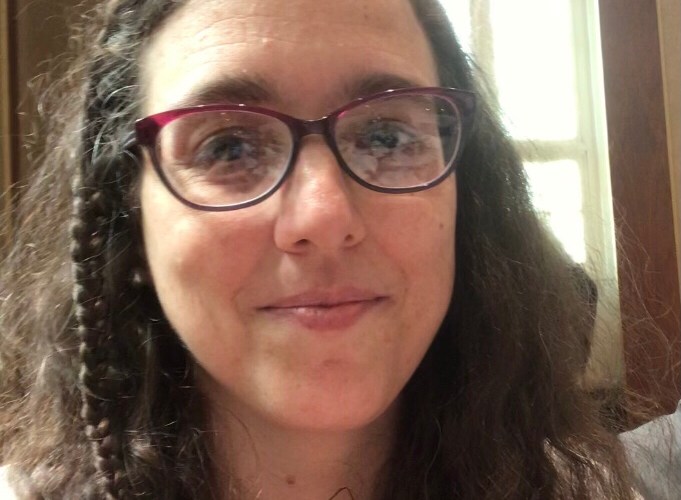
This week’s guest is Mandi. Mandi grew up in a mixed Jewish and Christian home, attending a Messianic temple. She loved every minute of it as a kid and cherishes her memories.
In high school and as a young adult, though, she began to ask questions, and as we’ve seen in religion time and time again, her questions were dismissed.
After incredible and full years of life—moving to Israel, returning to Georgia, joining an Orthodox Jewish community, getting married, and having children—she identifies as an agnostic atheist.
“It’s been so good for my mental health, to not believe, to stop praying.”
Recommendations
Small Creatures Such as We by Sasha Sagan
https://amzn.to/3LEfpE0
Sapiens by Yuval Noah Harari
https://amzn.to/3RHv35o
Annabelle and Aiden series
https://amzn.to/3ZKMVhx
Born Again Again podcast
https://linktr.ee/bornagainagain
#AmazonPaidLinks


Quotes
“The whole goal of the Messianic movement is to make Jews comfortable with Christianity…to get Jews to accept Jesus. The Messianic groups were started by Christians in order to proselytize Jews.”
“Most of the people who attend Messianic congregations aren’t Jewish at all…”
“In high school, I started asking more questions and becoming more critical of what I was being taught.”
“Slowly…I started really questioning things.”
“I…stayed up all night at least once or twice, reading through this booklet, and it…all just fell apart for me really, really fast.”
“I didn’t want to change all of my beliefs; I didn’t want to leave everything. That was not my goal at all…”
“I never would have described my upbringing as cultish, but once you start to leave? You see…just how much control they have over people.”
“I was praying and praying and praying and praying and felt like no one was listening.”
“When I realized, ‘Oh, Jesus can’t be the Messiah,’ I never thought to question God. I gave up the belief in Christianity but, ‘Of course, there’s a God!’”
“Just the Problem of Evil; that’s a big one for me.”
“I can no longer believe…To me, belief is just not a choice. You either do or you don’t.”
Interact
Join the Deconversion Anonymous Facebook group!
Graceful Atheist Podcast Merch!
https://www.teepublic.com/user/gracefulatheistpodcast
Support the podcast
Patreon https://www.patreon.com/gracefulatheist
Paypal: paypal.me/gracefulatheist
Deconversion
https://gracefulatheist.com/2017/12/03/deconversion-how-to/
Secular Grace
https://gracefulatheist.com/2016/10/21/secular-grace/
Attribution
“Waves” track written and produced by Makaih Beats
Transcript
NOTE: This transcript is AI produced (otter.ai) and likely has many mistakes. It is provided as rough guide to the audio conversation.
David Ames  0:11
This is the graceful atheist podcast United studios podcast. Welcome, welcome. Welcome to the graceful atheist podcast. My name is David and I am trying to be the graceful atheist. I want to thank my latest reviewer on the Apple podcast store Thank you know Tita for the kind words that you had to say you too can rate and review the podcast on the Apple podcast store, you can rate the podcast on Spotify and subscribe to the podcast wherever you are listening. If you would like an ad free experience of the podcast, please become a supporter at patreon.com/graceful atheist. Remember, we have your graceful atheist and secular Grace themed items at the T public merchandise store you will find the link in the show notes. Special thanks to Mike T for editing today's show. On today's show, Arline interviews today's guest, Mandi Mandi grew up in a Messianic Jewish environment. She eventually moved to Israel and took on a more traditional Jewish faith and really, really enjoyed the community within the Jewish community. She began to see some problems and eventually deconverted and now considers herself an agnostic atheist. Here is Arline interviewing Mandi.

Arline  1:43
Hi, Mandi, welcome to the graceful atheist podcast.

Mandi  1:45
Hi, thanks for having me.

Arline  1:47
Yes, I'm excited you and I have chatted off and on were in the same state. We have not met, but we are near each other. And so it's been nice to get to know you. And I'm excited to hear your story. So usually how we start is just tell us about your religious upbringing of your childhood.

Mandi  2:06
Okay, I grew up in Georgia, and I am the child of a Jewish mother. And my dad is not Jewish. And they decided really, because of my prompting, when I was in kindergarten, I came home from school and I said, Why does everyone go to church because again, we lived in Georgia bible belt. And they said, well, we don't go because you're Jewish. And we just don't do that. And so I said, Okay, I guess I just accepted it. But I think they know now that I have a kindergartener of my own, I guess they were feeling some, some parental guilt or something. So they decided to look for some type of a solution. And what they decided to do was to start attending something called a messianic synagogue, which is, it's actually, in, you know, from my perspective, now, it's really not a synagogue, it is. It is a place a congregation that mixes it's mostly Christian, and they mix some Jewish elements into it some Jewish tradition. And that's where they decided to start visiting. They chose that because my mom, she was, you know, she's from Brooklyn, she's very culturally Jewish. She was she would never have gone to a church. And my father grew up and he's from Georgia. He, he was a, from a Christian background. And this, you know, the, the fact that their beliefs were essentially Christian made him comfortable. So they decided, let's, let's try this out. So we started attending this congregation when I was five or six years old. And from like, if you were to just walk into this place, it would not look, it would not look like a church. There were no, there were no crosses, or any kind of outward Christian symbols. In fact, the whole goal of the Messianic movement is really to make Jews comfortable with Christianity. So they will avoid using overtly Christian terms like we would not say Jesus, we would not we would say, instead of Jesus, they would say, Oh, well, his name was just Shiva, which has a more you know, it's a Hebrew name. Um, it would just make potentially make, mostly unaffiliated, uneducated Jews feel more comfortable. And when I say uneducated, I'm not saying they're stupid. I'm just saying someone who didn't grow up with like a solid Jewish education. That's mainly the people they attract and they also attract a lot of people who are in a mixed Jewish Christian marriage. In fact, most of the people who attend Messianic congregations aren't in Jewish at all, but somehow are trying to discover, like the Jewish roots of Christianity are those all have Hebrew roots. But when they when they did get a Jewish person to walk through the doors, it's almost like, they got really excited. And they almost felt like, Oh, we got somebody. And so they would almost immediately put them in forward facing positions so that they would have more of a Jewish presence. Like they, they had my mother working in the gift shop very quickly after we started going there. Other people that I know were, regardless of their Hebrew ability, or were put into the service, the structure of the congregation, they use the tried to use Hebrew liturgy. But it was still focused around a sermon. And there was still, even though they were combining Jewish things, there was still like this altar call, and things that Christians would be familiar with. Because indeed, that was that was really the goal was to get Jews to accept Jesus. It was actually the Messianic groups were started by Christians in order to grow up to proselytize Jews.

Arline  6:21
Oh, wow, that's so icky. Like, that's just so gross. I had no idea. I just assumed it was Jewish people who had become Christian or had accepted use. I don't know the right way to say that. Yeah. And started it. Wow. That's, I'm not surprised why I'm surprised. I don't know how to say that. But yeah, go ahead.

Mandi  6:42
Well, I didn't, I didn't really view it like that, you know, at the time, and neither did my parents.

The couple who started the congregation I grew up, it was one of the larger ones. And he, the man was Jewish, and his wife wasn't. And that's kind of pretty much that was pretty difficult for for those kinds of places. I immediately, I mean, I was I was a little kid, but I just, I just loved it. I loved every second of being there. I had a really positive experience there as a young child. I also read from an early age. And so I was looking for answers. And if I couldn't, but couldn't get my parents to explain it to me. I was going to be finding it in a book. So one of the first things I did, I was in first grade. And I really was, I guess, dealing with the whole confusion of having a Jewish parents and a Christian parent. And so I found this book in the library. And it was called, are you there God, it's me, Margaret by Judy Blume. Now, other girls might have picked it up, because they were interested in, you know, development and everything. But the reason I was interested in the book is because the character has a Jewish and Christian parent. And that's really what I was looking for. And then my teacher was like, calling home. Do you know what your first grader is? Reading?

Arline  8:17
Oh, wow. Yeah, that is young for are you there God, it's me, Margaret.

Mandi  8:21
But I promise it was just the religious part I was interested in at the time. So and then I remember spending a good amount of time in the library just trying to find books about Judaism because I was so so interested in it. At that point, my, my mom's mom had already passed away didn't really have anyone to ask except for my mother. And so all of the Jewish books I can get my hands on as a little kid were novels about the Holocaust, or, you know, books about the Holocaust. And so I became like really obsessed, which probably freaked my mom out a little bit because it's it's a heavy topic for a young kid. But that's, that's what I would read about as much as possible. And so we continue to go to the congregation I have a younger sister three years younger than me. We were super involved and really identified. I never ever called myself a Christian. Although it's 100% What I was if you were looking at like what I believed or what I was taught to believe, I would call myself a Messianic Jew. And I was I was super proud of that. We started celebrating. Before we had gone to the congregation, we celebrated the only holiday we celebrated was Hanukkah. And that that's really the only I only knew I was Jewish when I was very little because we had a menorah. Next breakfast mystery because we were a mixed family. And I had a star David, and that was it. But once we started going to the congregation, you know if you don't know so much about Judaism My mom didn't know about a lot of these holidays, even though she grew up culturally Jewish. We started celebrating all kinds of holidays. And I just thought it was the greatest thing ever. My dad went along with it and was supportive. He was just interested in coming from a Baptist background, he was interested in my mom being saved. So, around this time, I had gone on a field trip. And I think my mom was a chaperone. And one of the teachers, you know, prayed the prayer with her. On this field trip, we were at a park, for lunch. And so even the teachers kind of, I guess, had their eye on their eye on my mom, because, you know, knowing she's Jewish, you kind of have a target sometimes for people to want to convert you. So anyway, she said that prayer, and we just continued going to this congregation for years. And I got super involved in the youth group there. Most of my friends, my really close friends were from there. And when I went, when I got a bit older, when I was a teenager, they started having these, or they always had them, but I started going to these conferences, because it's like such a small group compared to like other Christian denominations. We didn't really get to meet a lot of other Messianics where we lived. So we go to these conferences, there was a big one every year up in Pennsylvania, and went to some in Florida. And that was like a big thing to look forward to. And that's how I ended up meeting other a lot of other friends from other parts of the country.

Arline  11:48
So for the most part you enjoyed, did you call it synagogue? Or did you call it church? You call it synagogue?

Mandi  11:54
I called it temple? Which temple? Temple? Yeah, that's what we called it. That's a word that maybe reform or concert, maybe conservative Jews would use that term. But that's kind of where they got it from.

Arline  12:16
So you enjoyed it, and you believed it? Is this all the way into college young adult years? Or are you high school youth group?

Mandi  12:25
When I was in high school, I started asking questions and becoming a little bit more critical of what I was being taught. I don't I really wish I had a copy of this letter. I remember writing the youth leader letter with all of my concerns. And he was basically like, he wrote me, he wrote me back and was like, you know, he was dismissive of them. And for some reason, I wasn't able to kind of push past that. So I know it started then. But I don't remember what specific issues I was I was dealing with. So later, later on, when I was in that college and career age group. My parents were having some problems at home, it got increasingly chaotic. I feel like I had a normal childhood up until the point and then it just got really bad at home. And I got so bad that I ended up moving in with my friends family. One of my good friends, she had actually moved overseas for university, and I moved in with her parents, which I had known since I was like a little kid, so happens to be that this man, the her father was the Bible study teacher for the youth group I was in and it was college age and career age, like 20 Somethings basically, in this group. So I had moved in with them. I appreciated them at the time, you know, opening their, their home to me. And my see my parents, they were very supportive in that they let us they let us have the flexibility to, you know, make certain religious decisions, but I, my parents weren't as into maybe the theology of things. As I was, I was, I think I took everything to heart. I'm always I'm a pretty serious person. And so, I just want to go back a little bit and say, like, for instance, I started I started struggling again, with certain aspects of being Jewish and Christian at the same time. It was at that point, I had gone to one of these big conferences that the Messianic movement holds. It was down in Orlando, Florida. And it was at that point that I went to a class and I discovered that there was certain groups of Messianics that Were more, more Jewishly observant than my group was. And that was really fascinating to me. So when I say observant, I'm talking about, they were trying to keep the kosher dietary laws. They were trying to keep the Sabbath keep Shabbat. For us the way, the way I was raised, we had our meetings on Friday night, Endor Saturday. But we had no concept of like setting the entire day aside, and that it has certain spiritual aspects and like, like that it's a set apart family time, we didn't have that idea. And we would say, Oh, we, you know, we keep biblically kosher, so that what that meant was that we didn't eat pork or shellfish or other animals that you're not supposed to eat, according to, you know, Leviticus. But we would have no problem like having a cheeseburger in an Applebee's, for example, like we didn't, yeah, we didn't like buy kosher, we slaughtered meat. And we didn't observe the what they called the rabbinic the rabbinic tradition of separating meat and dairy. So it was, it was a step towards kosher, but it wasn't keeping kosher at all. So anyway, when I met this other group, they were trying to live almost as as if they were observant Orthodox Jews, while still holding on to the belief that Jesus was the Messiah. So I ended up going to a class, and it was a leader from one of those groups. And I had some questions. And afterwards, they said, the guy said, Oh, look, I gotta go to lunch. But the guy sitting behind you can answer any question you have. And I turned around, and I met him. And this is, this is my husband. That's who I'm married to today. Oh, yeah. So now he was part of this group that was trying to be more observant, and it happens to be that of, I don't think any of those people were born Jewish at all. So with a whole bunch of non Jewish people trying to live as if they were observant, Orthodox Jews, while holding on to certain elements of Christianity. And some of them were some of them, you know, they didn't believe necessarily in the trinity or things like that. But they did believe that, you know, Jesus slash Yeshua was the Messiah. And so afterwards, we ended up talking and comparing notes. And I was really, I was really fascinated by this. So I ended up spending more time with with Andy, who's now my husband, but at the time his group of people would like get all get together for the Sabbath. And they would look for kosher symbols and things like that on on food. And I was like, Whoa, this is, this is different. And he introduced me, he lived in South Georgia, I lived in North Georgia. And so he said, you know, you should really check out there's a whole religious Jewish community in Atlanta. And and you know, you'd probably like to spend some time there and maybe attend some classes or come for a Sabbath meal. And I was like, okay, so I was a little scared. But I was like, alright, well, we'll check it out. So now it's very common in an Orthodox Jewish community, for them to host a Sabbath meal invite guests. And that's, that's totally normal. But the whole idea of going to a stranger's home that I had never met before, it kind of intimidated me. And I was also, I was told most of my life don't have anything to do with Orthodox Jews, because they don't believe in Jesus and they don't have the truth. And they will trick you. And I was I was told a whole bunch of negative things about them. So but my curiosity overwhelmed me, and I ended up going anyway.

Arline  19:16
So your young adult, you've met Andy, you went to this thing in Atlanta? How did that go? How was that experience?

Mandi  19:23
It was really cool. We went to this lady's home. And no, I from her perspective, I have no idea what she thought about us, but I think they're pretty used to having non affiliated Jewish people come and experience this. I think they're more puzzled by why is this non Jewish boy wanting to come and experience Java's but for me. They were more than welcoming, very, very nice. I came and I saw the we lit Shabbat candles, which is a traditional Jewish thing to do something I was familiar with as well. And we walked to the synagogue and I experienced my first my first Orthodox Jewish synagogue service, which is very different for me, because men and women sit separately, there is a dividing wall between men and women call them a pizza. I just felt like I was wearing some type of a sign on my forehead that I didn't belong there. And someone was going to question me or kick me out. But it wasn't like that at all. Everyone was very, very nice. Afterwards, I was invited over to another family's home, to have dinner with them. And so I said, you know, I agreed, and we decided to go now one thing about Orthodox Jewish life is you don't drive on the Sabbath. So I actually knew that. And so I had parked down the road and walked to the synagogue, because I didn't want to, you know, break any rules openly. Anyway, so we walked to this family's home, it ended up being a really long walk. I didn't expect that. And anyway, we got there. And the people that they set us up with, were Hasidic Jews, they had a little bit of a different dress, you might imagine, like, you might have seen something on TV, with long black coats, tall, furry hats, long beards. So I was a little bit intimidated, but they were very friendly and very nice. It turned out that the people that we visited that first very first night ended up becoming very close friends of ours, down the road. But it went, it went well.

Arline  21:44
Good. Okay. So at any point, are you questioning or having anything happen? Or is this just like, life is going well, things are working well, Judaism, messianic Christianity, whatever you called it at the time is working well, and

Mandi  21:59
well, I went, and it was challenging my beliefs in that he was moving quickly away from anything Christian. And, you know, tried to convince me that, you know, it's not a correct belief to believe that, you know, Jesus was God that that Oh, wow. Okay, that that was a big move away from Orthodox Christianity, I guess. And but he was still holding on to the idea that he was, he was he was the Messiah, but that the correct way to live would be to live more like, Jesus would have lived as a Jewish person. And, and in his, in the minds of these people were thinking this way that might that would have included not only laws that were in the Bible, but laws that were rabbinic in nature that came along later, the customs and traditions that the Jewish people have developed over centuries. So. So that was happening as well. In the meantime, the people, the family I was living with were becoming increasingly concerned for me, because they saw some changes in my behavior, they saw me stop. I started wearing like, only dresses, and only skirts, and I started taking on some outward observances that are common in the Orthodox world. And I think they saw some of my reading material, which was a lot of, you know, Jewish books. And I lived in a that I had a bedroom that I was renting from them. And so they would like slip books under my door. apologetics type books like so they were worried for me. I didn't have the greatest relationship with my parents at the time. They were going through their own thing. But I slowly I started I started really questioning things. But in the meantime, I started dating Andy, and wanted, he was convinced I was he will say to this day, as soon as I met you, I knew we were going to get married. But I didn't really get that message. So I got it, but it was a few years later. So anyway, he he proposed we got engaged. I was young, I was in college, my my parents were like, No, you've got to finish college. Don't Don't do this and the people. The family I was living with are also concerned. In the long run, it ended up being a bit it was all too much I was taking on these observances not really Because I was convinced of them, but really for him, and that really, that was just, it was too much too fast. And it was, it was a scary thing. Because if you think about it from the Christian perspective, like he's playing with apostasy, and that was, you know, the whole health thing kind of freaked me out. I thought he was going to eventually convert to Judaism and leave Christianity behind 100%. So we ended up going our separate ways broke up, and I didn't see him for another five years. Oh, wow.

In the meantime, I continue living with the family, I was going to college. And eventually, things started to fall apart for me with the religion, I didn't have the word deconstruction at the time, because this was like, in the early 2000s. And I had picked up a copy of this booklet on one of my visits to the Orthodox community of Atlanta. But at the time, when I first picked it up, I was like, Oh, I'm gonna put this on the shelf. You know. I know Mormons call it the shelf. But I mean, like, literally, I put it on the shelf. And I was like, that's another day. So anyway, but it was it was like a, it was an anti missionary guide. And it was a, a book written specifically for people like me, or people who were trying to convince Jews to become Christians. And it basically, in a very, very few amount of pages. It explained that, that this was just there was no way that Jesus could have been the Messiah. And I picked that book up thinking, I'm going to disprove this and use this against them one day, because I was convinced of my, of the truth of my belief system. But anyway, I put it aside, well, eventually, something's, something's happened. And I decided, I think I'm going to read that book now. So this has been a few years since I picked it up. I had already had that experience with the Orthodox Jewish community of Atlanta. And while there was a lot of positive things, it was just overwhelming at the time. So I started reading. And I think it was probably, I feel like I've stayed up all night, at least once or twice, reading through this book. And it was just so obvious. Like, it just kind of all fell apart for me really, really fast. What I'm talking about is, from the Jewish perspective, when Jews say Messiah, and when Christians say Messiah, that often mean two different things. From the Jewish perspective, a messiah is not a God, not someone to be worshipped, but a king, who will fulfill certain, certain prophecies or ideas, but those included making the world like, you know, peace on earth, basically, and a rebuilding of the temple in Jerusalem and worldwide acceptance of one God, and you can look out your window and say, Oh, these things haven't happened yet. So, you know, how could the Messiah have come. And then it also the book, the book that I was reading, went through how Christians claim that Jesus fulfilled hundreds and hundreds of prophecies in the New Testament. But if you examine them very closely, you realize these actually aren't prophecies. And if in, he didn't fulfill them, that and also that he came from the wrong genealogy to be qualified to even be the Messiah. So based on those grounds, I became I'm slowly opening my eyes to the fact that, oh, what I was taught, might not be true. And that was really scary place to be in. I didn't want to change all of my beliefs. I didn't want to leave everything. That was not my goal at all. But I had no other place to turn. So I went to my Bible study teacher, which was the, the father of the family I was living with, and started asking questions on our little college and career class. And I thought, you know, this was the safe space, I can ask these kinds of questions. But I quickly discovered it was not such a safe space to ask these questions. I was told. I mean, it was just met with like real frustration and I wasn't trying to be antagonistic. I'm not that type of a person or at least, I really wasn't that type of a person back then. But I was told I can come to class if I'd like, but I had to keep my mouth shut. I couldn't. I couldn't do I couldn't bring any of this up anymore. Like it was he was so frustrated with me that at one point, like he just got up, slammed his Bible down and walked out of the room like that was it was so tense. And I was really just wanting someone to convince me of the truth of my current of my, you know, the beliefs I grew up in. So eventually I stopped attending that class. I really was looking for answers. And I was becoming increasingly worried that Oh, no, oh, no, oh, no, you know that that sinking feeling like, this isn't true. And I had believed it so wholeheartedly. So I decided, I went to the leader of the congregation, who remember he was a Jewish man. He was he did not have any sort of Jewish education, although they call themselves rabbis, it's really disingenuous. But he was very convinced of his, you know, he was very sure that I would come right back. He's like, Oh, we have the truth. You'll come back, you know? Yeah, I can answer your questions. But I'll go talk to so and so. And he'll can answer your questions. And then they didn't have the answers. And I was just pushed off. And so I realized, I realized that there was something wrong and I was told, you know, whatever you do, don't don't talk to those Orthodox Jews, because they will, you know, they'll guide you in the wrong way. I decided to anonymously write a letter to another messianic leader that did not personally know me, and ask all of my questions. I was really, really seeking. And she wrote back again, dismissing most of my questions and said, you know, what, just encouraging me not to look for answers from from anyone else other than that group. So at that point, I was like, what are they hiding? So I decided to go online. And I found a rabbi online and I started sending him questions and I was pleasantly surprised to realize that he was okay with that. He was like, Oh, you're a Jewish person who was raised messianic and you have questions, great ease, and he also encouraged me to keep asking questions of, of the Messianics. He didn't want me to, like stop talking to them or anything like that. Oh, you know, questions are good. Ask Ask away. If I can help you, I sent you some verses to read, he understood that a message from from our perspective. We didn't take, we took the Bible seriously in one regard, but we did not take the rabbinic tradition to be like the word of God or anything. So he was pointing me to certain Bible verses that would help me help convince me of Judaism. But by just using the the verses from the Bible

what ended up happening was, I stopped attending the congregation as much the people I lived with noticed, and they pulled me aside and the mother of the family sat me down. And she gave me this whole talk. Basically, telling me he she gave me a little parable about that she made up about like, what if you were engaged to the most wonderful man in the world, and then the bridesmaid started whispering to you that he was really a bad guy. And you listen to your that you listen to these bridesmaids, and you ended up, you know, losing out on marrying the love of your life. Basically, this was an analogy that she was trying to, you know, yeah, Jesus being a bridegroom type of a thing. And she told me if you do if you do this, you're playing with fire, and you will go to hell. I was, I was terrified. I mean, this is a scary thing. So at that point, I prayed and I said, God, can you just, can you just be patient with me? I've got to, I've got to figure this out. Just be patient with me. At the time, I was best friends with this guy. And he kind of saw the direction I was going in and he said, you know, even if you end up living in an Orthodox community, and you're wearing a wig, and you have 17 children and whatever, your friend, I'll be your friend no matter what. And I said, But, but what if they tell you to stop talking to me? And he said, Well, if they do that, then I have to obey my spiritual authority. And that's, this is kind of I never would have described my upbringing as cultish. But once you start to leave certain aspects of that and You know that just to how much control they have over people. When I, when I left, it all kind of fell apart overnight, I was literally kicked out of the place I was living in. They told me I didn't want me to be a bad influence on their children who were still living in the home, like literally threw myself on the front lawn out, like get out. I ended up going to live with my mother again. My best friend stopped talking to me overnight, because indeed, they did tell him, don't talk to her. My sister, and her new husband also stopped talking to me. I was not allowed in their home, I could not see their baby because Satan had obviously influenced me like they, they demonize me pretty bad. So I found myself in a very short amount of time living back with my mother with absolutely no, no friends anymore that that would talk to me. And I was I was really searching for, like, what am I going to do next? Because I had already had a bit of experience with the Orthodox community of Atlanta, I just saw so much truth and beauty in that I decided, hmm, that's, that's where I'm gonna go next. It never occurred to me that maybe I should give it some time and take a break. I needed to find the truth, I needed to find it fast. So I jumped headfirst into Orthodox Judaism. Within the next six months, I had gotten on a plane, I had moved to Israel, I become a citizen. And I was signed up to learn to study in seminary for Jewish women who grew up like unaffiliated, and not religious. So it was like a seminary for newly observant Jewish women. And I was I had always actually wanted to go to Israel. That was that was something that was very important to me. And I had, I had visited one time before, but I completely started over by moving by moving there.

Arline  37:25
How was that? I'm very surprised. I was not expecting this. So how was that experience? How long did you live there with these women?

Mandi  37:34
I lived there about a year I had planned on like never coming back. I had always been a Jewish person moves to Israel. It's called Making Alia. That's what I did. And I lived I lived I went to two different two different groups. I spent some time with. And it was really it was in some ways, it was like some of the best times of my life. Because I really, I had never been like on my own before. And I was really on my own because when I moved to Israel, I didn't really have anyone there. Like I mean, moving to another country on your own is a great, I mean, it was absolutely insane that I did that. But it ended up being a great experience for me. The groups I was a part of, they really were trying to show you the beauty of Jewish life and Jewish families and coming from what was now a broken family. My parents had split. That was very attractive to me to see these families coming together. Especially like we'd go and spend Shabbos with them on the Sabbath. And it was just it was it was beautiful. And I want I really, really wanted that. Most of the other young women in the seminary came from homes that were you know, they grew up Jewish, but they weren't religious. But I grew up like, in some ways, like super religious because but I have a different background. So I couldn't really relate to them as much but completely fell in love with living in Israel and took on all the observances of religious Orthodox Judaism very fast

when people heard my story, I was often asked to tell my story over over dinner, because people are always interested to hear like, you know, how did how did you come to, to this understanding, especially from your background. So some people thought it was a little bit unbelievable. Like that's really strange. You know, how did how did you? How did that happen? But um Oh, Overall, I was very warmly welcomed. Partway through one of these programs I was on I got an email, it was in December of 2006, I believe. I got an email from Andy. And he was the one I was I was previously engaged to. And he said, I'm going to be in Jerusalem for a couple of weeks. He was he was a teacher at the time. And he was going to be there for his winter break, he was going to be studying at a yeshiva, which is like a men's school. And I'd love to meet up with you. And I was like, oh, no, he's probably still somehow involved in all the Messianic Christian stuff. And I completely left that behind. But I mean, I wanted to see a familiar face from home. And I was interested in catching up with him. So we ended up meeting, we met over by the Western Wall, which if you've ever seen, like pictures of like, the Old City of Jerusalem, like the big golden dome is there. And then there's a wall, it's very special to Jewish people. We met over there. And we ended up going out to coffee, and he explained, but in the meantime, he had converted to Orthodox Judaism. So we were more on the same page at that point. Now, he was teaching, so he was only there for a short time, and I had planned on never coming back to the US. So I mean, I didn't see that working out. But it was kind of amazing how we had come full circle. And he didn't, he wasn't converting for me. But he was doing he was on his own journey, separately than me. And I was doing my own things, you know, not for him this time. But because I was convinced of the truth of it. Well, I want to back up a bit and say, one of the things they do is they put you through a seminar, where they basically try to use different proof texts to prove that Judaism is true. In the Torah. The narrative is that God revealed Himself to an entire nation of people being being the Jewish people. And that no, no, like, you couldn't put a lie over on that many people, if there's millions of people, you know, you couldn't possibly lie to that many people. And, and it could, you know, still exists to this day. So they, they, you know, that was one of the big ones. I I'm no expert, but it was, it's called the the Kuzari argument. Anyhow, so I, I was, I was 100% convinced and the truth of this, he was to what ended up happening, my father got sick. And I ended up coming back to the United States for what I thought was just a couple of weeks to, you know, see how he was used to be with him. It turns out, it was not as serious as they thought. But that was how I got back. In the meantime, my mother said, you know, you should probably call Andy and I, because she can see she, you know, could see this all working out. But I couldn't and because I was planning on going back to Israel. But anyway, I call them I listened to my mom called him. I was unsure because I just thought like, you know, what's the point I'm about to go back to Israel, there's no point in calling him but I did. And he was up there the next weekend. That next Sunday, he was up and we started dating again. It just, it just kind of it seemed as if it was was absolutely meant to be. We had such a common, we had a common background. We knew each other's families. And you know, we were we were on really on the same page and it came full circle. So we ended up we ended up getting married that next December. So about a year after we met up again at in Jerusalem. We got married, we lived in we lived in South Georgia. So he's from for a little bit of time, but we knew we needed to get to the Orthodox community. That's one of the things about a community super important and to maintain religious Jewish life. You really you really do want to be in that community for several different reasons. So we ended up moving to Atlanta, and we lived there for the lat for the next eight or nine years. And it was my mother, my mother said You know, I don't want to let you know I don't want to be an Orthodox Jew myself, but I can tell that makes you happy. I can tell that this is this is a good thing for you. My favorite parts of living that life were the were definitely the community. I mean, it's almost like living at all. Little Village inside of me, I made some really good friends there. And the only reason the reason we ended up moving out had more to do with had more to do with it's like super expensive to live in Atlanta and the rent prices were going up and up and up. But we live, we live there and got very, very close with a lot of people in the community of the rabbis in the we went to, you know, very involved with the synagogue. And the hardest thing for me during that time was we wanted, we wanted to have children, and it just was not happening. And so I just, I just thought this is this is never gonna be and I was sad about it. I mean, most religious Jewish families have, have big, a lot of kids and all the other people my age, most of them had had kids and I and I didn't, and I just kind of was quiet about it. But I was praying and praying and praying and praying, and felt like no one was listening. And so eventually, I got a call from a rabbi we've become close with. And he said, I just want you to know that there are resources out there. And to make a long story short, someone, and I'll never, I'll never know who this who this was, someone anonymously came forward and said that they would cover our fertility treatments for us. I I mean, that kind of generosity I just didn't know existed. And it was a lot of working with rabbis and doctors and everything. But we eventually had our first daughter. And that's, I mean, the Jewish community is not perfect. But one thing they do take, they do take care of each other. And that was, I mean, that was a kindness that I will never be able to repay.

So we had our first daughter, and shortly after that, we moved. Because of my husband's job, we moved out near where you are, I believe. And I was teaching at the time, I was teaching elementary school and my husband was teaching high school. And during that time we ended up it was a huge shock to to find out we were pregnant with our second daughter without having to go through fertility treatments. And, and it was it was wonderful. When, when we moved I really I was kind of kicking and screaming, I did not want to leave the community I that was something that I I felt like oh, I finally have my people again, I have my place. I know what to believe I felt like I had finally found that and I felt like oh, isn't it good to have all of those things settled before you have children that way? You know, you can tell them all the right things to do and all the right things to believe. So but that didn't work out. So we ended up just keeping you know, wouldn't because we didn't drive, we would you know, the Sabbath is something we have every single week. I'm you know, made big meal, big family meals and everything. And it's a day we turn our phones off all day we don't drive we're now if we lived in the community, we could go to people's homes and things like that, but we were out on our own. Not in a Jewish area. So we would just stay home. I would I basically I do a lot, you know as much as you can with little kids I read a lot on on those days. But it was and my husband would do all the all the prayers, which normally you would do with a group but he would do them on his own. And that's how we were we eventually made another move. It has been well I always wanting to be a university professor. So we ended up moving one more time. We're still still in Georgia, just a different area. And it was not too long after that, that you know, 2020 happened. And just I don't know. I think that being isolated gave a lot of us time to think and reevaluate. And I don't know. I don't I can't I still I would like to do this, but I haven't pinpointed where it all started for me. But I really started to question things then that the first time I went through, I feel like I've gone through like two phases of deconstruction at this point in my life. The first time I felt I realized when I realized, oh, Jesus can't be the Messiah, I never, I never thought to question God, I gave up the belief in Christianity. But of course, there's a God, you know, so I just never, I never questioned that. And then the second go round. That's what I, that's what I started to question. And I can't I can't even put my finger on what started, which started, it was probably a lot of YouTube channels and a lot of podcasts that I listened to and books that I was reading. I didn't want to admit it to myself for a long time. But I was becoming increasingly frustrated. Once I started allowing myself to think, think about certain things that I was hearing on these podcasts and reading about. I started looking through looking at the Scripture through a new lens, and certain things started to bother me, I started to have ethical issues with some of the things I was reading in the Torah. And that was, that was really surprising to me, because I guess you look at certain people as Oh, these are the heroes of our faith, these this is Moses, and this is David. And well, I didn't look at them. I mean, I wasn't, I didn't think they were perfect people by any means. And that really isn't emphasized in Judaism. Well, in certain asked certain types, certain circles, they can do no wrong, but I started having real issues with with certain things. And one of my pet issues is when, you know, the narrative is, you know, Moses is taking the Jewish people. gland and, you know, and commanding genocide and that, how in the world could there's, there's really nothing you can say to justify that, although people have tried, people have tried, I've listened to Christians tried to justify it. I've heard John Piper tried to justify it by saying, you know, if anything God does is good. And so that's it.

Arline  52:18
You know, just that, yeah, you just have to believe that, like, we're, we're just the clay and he's the potter and all that stuff. We? We can't question. Yeah,

Mandi  52:26
right. Right. Anyway, that that was that was a that was and still is a big issue for me. And, I mean, I can get there's, there's lots of other stories, but those types of those types of things are things I struggled with. And then just the problem of evil, is that for me is the big one. How could an all powerful, all good? God, who know all knowing God, not answer. I mean, my prayers were to to have a child, which was important, but certainly there's more important prayers out there that he was also ignoring. That that really, really bothered me. And I kind of kept all of this to myself. For a while I had little kids, I didn't have like a close friend group. I did meet some friends, like this was not something that we were going to be talking about over coffee or anything. So the only one I really opened up to us, my husband, and he. He, I don't know, I think he I think he realized the direction I was going in before I realized it and even said, I don't think you believe in God. And I said, What are you talking about? Of course I do. You know? And he's like, No, he could see it. And he, I could not admit this to myself for the longest time. And he, it's, it's been, it's been interesting. Thank Thank goodness he is. He's very patient. He's very understanding. We can have open conversations about these things. Not to say that they aren't hard conversations, but we can talk about it and we're open with each other. And he has a great sense of humor. I mean, we laugh about stuff, you know, call he'll call me a heretic all the time and stuff like that. So I think a sense of humor is is a healthier so, about a week ago, I was like, gotta tell him I'm gonna, I'm gonna talk to Arline. And he's like, the whole idea of of me publicly saying anything was a little scary for him. And so then he started listening to the podcast a bit and he said, these sound like really nice people. Wow, okay. Because you know the term at I just got such a bad rap. I've been listening to you guys for well over a year and other podcasts as well. And so I've kind of gotten over it. But you know, just that that's a scary, it's a scary word. And he just was like, Oh, okay. Not to say no, it's really, he's got a real amazing story himself. But he admits he's like, you know, I guess everyone's agnostic. So he, he's like, he's like, I guess I'm an agnostic theist. Whereas I'm, I'm kind of coming out on the other side of that.

Arline  55:43
So where are you now?

Mandi  55:45
Yeah, I can no longer believe and it was not there was not like one day where it'll happen for me. But I believe it, to me, belief is just not a choice. You either do or you don't, and I no longer I cannot, I cannot believe I have to say that it has. It has been amazing for my mental health. To give up, leaf to stop praying. It was is very hard when you're when I when I talk about praying, I'm talking about like personal prayer, and Judaism. You also have, you know, praying from a prayer book and things like that, which I never, I never really got super. I didn't get a lot from that, honestly. But, um, personal prayer, I certainly did. And I don't know, it's just been, I feel a lot of freedom. And I feel I felt I felt like I had a lot of anger I was holding on to I was very angry at God for a while, because I still believed in him. And once I realized that I no longer did, I got to let go of all that anger that I that I was holding on to. And I feel like it's it's done wonders for me, I feel happier. And and I can handle I mean, there's a lot of bad evil things in this world. But I can handle, I can almost handle knowing that. But knowing that someone created evil, which the Bible literally says that God created good and evil, and in the book of Isaiah, knowing that someone or believing that someone created that, and is watching that and is unwilling to help that but says, but says that he's all powerful, and then demands worship. I just can't I can't get behind that anymore.

Arline  57:38
No, absolutely. As a Christian, I was taught that like, without God, like, how do you explain things? How do you find meaning and all that, but really, it's like, all the evil stuff that happens, I would much rather it just be shitty things happen. It's arbitrary there, there isn't a reason it just really sucks. And humans do the best we can to make the best out of situations and to help one another. And that has, for me as well just been easier than trying to make it make sense and have meaning and all that. Right. As we wrap up. Is there anything I should have asked that you wanted to talk about that I that I didn't get to?

Mandi  58:17
Sorry, if I've been a bit rambley it's just going through, it's almost like sometimes when I think back on everything, I'm like, almost like reliving it real quick. So sometimes I get lost in my thoughts. So thank you for being patient with me. But um, the the other thing that I just wanted to bring up was raising children when you don't have all the answers. It's been, it's been eye opening. And right now I have a five and an eight year old and my five year old and eight year olds ask some really hard questions. And we talk about these things. And I knew I knew the day was gonna come when they asked me this, because but anyway, it came a few weeks ago, when we were sitting. We were about to it was. And by the way, I also I'm still keeping Chavez, I'm still keeping kosher and living a traditional Jewish life while also realizing that I don't believe anymore, and so I'm in a kind of a weird place and probably a transitional place. And I'm not sure where we're going to be in a year. But I'm, you know, we'll we'll do it all together. And I just wanted to be open. I didn't want to, I'm not going to lie to my children. But I also want them to have their own journeys as well. And so anyway, my my five year old, actually, she said, You know, I and we call God Hashem. It's a traditional Jewish way of saying, God, she said, I just stopping question was real. I said, Really? What makes you say that because I really I'm not pushing this on.

Arline  59:56
You want them to explain and you want to hear like what their thoughts are because They're probably way different than what we think they're going to go ahead.

Mandi  1:00:03
So she just said that, you know, he just seems too magical. I think he's just magical. And I just don't think that's a real thing. And I was like, Oh, I said, Well, it's okay. You're allowed to think whatever you want. And okay, so then I got through that first conversation. And then we had a few more variations of that conversation with my eight year old and, and then my eight year old just said, Do you believe in that show, and it was so direct, and I couldn't, I couldn't put it off anymore. And I just looked at my husband, and I was like, No. And her eyes got real big. And, and he's, and then he did he, my husband was like, Well, I think, I think she's going through a lot right now. And everyone questions things in their lives, and blah, blah, blah, he was trying to soften it a little bit, but I was able to just say no, and, and it was like a burden off my shoulder if I could be honest with my kids. And. And it's not like, I know, I know, some people who have come to this conclusion and overnight, like they stop, they stop keeping the traditions of Judaism. That's not going to happen with our family. Like, it's just too much of who we are. And there is a lot of value in tradition. One of the books that I an author's that I really liked is Sasha Sagan. And, you know, if you read her book, she'll talk about, you know, humans need for ritual and that there are there are benefits to this type of thing. How much we're going to how much I'm going to do this. That remains to be seen we? Yeah, we're not sure. Yet. Our current one of our current struggles is, is it better for us to go to a synagogue so that our kids are at least around other Jewish kids sometimes? Or is it better for us to stay home and just keep on doing what we've been doing? And we haven't really come to a conclusion yet. But it is important for us to pass on these traditions to our kids, it's part of their story part of your family story. But for me, like I no longer, I can no longer believe this. And so I guess you if I had to label myself, it would also be agnostic atheist.

Arline  1:02:30
Yeah. And that's one of the beauties of being outside of very firm beliefs is you don't have to have a label. Like, it's sometimes easier if someone asks and you can give a label but like, you don't have to have answers. You don't have to have it all figured out. And, and thinking about your kids, and you know, what will observing different rituals look like? Like your kids will evolve, you guys will evolve, your family will evolve. And you can keep what you guys love and throw out the stuff that you don't love. And it'll change in five years when your kids are older and they're not interested or maybe they are interested. It's nice to just have freedom, like you said earlier. Okay, so you mentioned Sasha Sagan, do you have any book podcasts, any recommendations for our listeners that have been helpful to you?

Mandi  1:03:19
Gosh, I read I read a lot. I wish I had written down a list. I like to read different religious memoirs. I've read there's a lot of in addition to a lot of the ones that anytime someone recommends a book on your podcast, I'll immediately like jot it down. And I understand put it on hold at the library from a library person. But I there's one called heretic and I could maybe give you I can give you the name and a medic sits on my shelf. That one, a life changing book for me. A lot of people mentioned this on your podcast is Sapiens by Yuval Harare, also an Israeli amazing writer. I want to read all of his other books as well. But I also read the graphic novel version of that and that was pretty cool.

Arline  1:04:12
Yes, we use that in our homeschool for history. Because it's so it's so well done.

Mandi  1:04:18
Yes, since my kids are pretty little I haven't actually read these books yet but I did put them on hold at the library and I'll oral by them if they if they don't come in soon. There's the Annabelle and Aiden series. Have you heard of that? Is a children's series.

Arline  1:04:32
We are bookish. I'm a snob when it comes to books. And so in my personal opinion, I'm sure they needed more money to make them better, but try them out and let me know what you think because I was not impressed. I like the idea behind Okay, the books. Okay, and then go ahead.

Mandi  1:04:50
That's okay. No, but that's something I'd like to check out because I my kids like a lot of, especially my oldest really is into books that I She's into nonfiction like if she wants to kind of know what's going on in the world. So. So anyway, books to be able to start conversations would be things that I'm looking for in the future. But a podcast, there was a short live podcast that's still available. There's I'm not recording any more called Born again again. And it was one, one couples deconstruction journey. And it's, there's, I think there's a Facebook group that goes along with it as well, that that was really, really good. And yeah, I can, I can give you a list if you want.

Arline  1:05:39
Okay, yeah. Between now in the release? Well, Mandy, thank you so much for being on the podcast, I really appreciate you taking the time out to tell your story. Thank you for having me.

My final thoughts on Monday's episode, I think the biggest thing that jumped out to me is when we'll first how complex it must have been to try to make some form of Judaism, plus Jesus. Plus just living in the United States without many different Jewish communities you could be a part of, and trying to make all of that work. The mental gymnastics it took for me to make Calvinism work, just evangelical Christianity in general. But having just all of that, that just seemed like so much, and the frustration when questions are dismissed. And that just seems to be part of any fundamentalist religious experience. You just can't ask questions, if you ask questions, it becomes too much for the people in charge, even if it's just the Bible Study leader. And it's not someone with a lot of power at the top of the church or the temple or synagogue. And maybe it's just because it becomes frustrating because they don't have the answers. And they just need you to be quiet so that they don't have to think about and critically examine what they believe. I don't know. That makes me curious what else underneath that. But um, the biggest thing that jumped out to me was when she said, belief is not a choice. Like you. You can't choose to believe something that you're convinced is not true, I can't suddenly believe that Santa Claus is real, I just can't. And yet, once you realize lots of people who've been on the show have talked about like, it wasn't that they set out to stop believing it says suddenly, they realize, I don't believe even if it's just part of their religious beliefs. They they can't force themselves to believe that part. And then of course, the unraveling begins. And for some, it's overnight. And for some it takes years and years. And like she said, it feels like she had two different phases of deconstruction. But it's beautiful to see where Mandi is now. And the freedom, the better mental health. Just feeling better, feeling happier, finding joy, when we're told a lot I don't know about in Judaism, but I know in Christianity, we're told a lot that you just can't find joy, you can't find hope you can't find any of these things. And so it's wonderful to see her on this side, finding joy and happiness and being open to whatever the future holds for her family. It's wonderful. So man, thank you again for being on the show.

David Ames  1:08:38
The secular Grace Thought of the Week is be bad at fooling yourself. One of my favorite quotes from Richard Feynman that we quote all the time is, the first principle is not to fool yourself, and you are the easiest person to fool. I bring this up because I've just noticed a few occasions outside of the context of religion where the same process of being in a bubble and having an apologetic around the topic keeps people from seeing the untruths. What are these that continues to bother me and has over the years is what is sometimes called the heterodox sphere. And it is the group of intellectuals who assert that they know more than the scientific community more than the public health community more than the government in particular. And from my perspective, the people who listen to these people are just as much in a bubble as your typical evangelical Christian. The point of this is to say that even if you have deconstructed even if you have D converted, that does not mean that you are incapable of fooling yourself. Here's the thing though, you're better at recognizing when you are fooling yourself now, when you are worried about not being considered a part of the community, because you have different opinions. That's the big red flag. and be willing to investigate and find the truth wherever it lays. All right, I actually don't know what is going to come up next week, I'm considering doing a solo episode, we may run another Arline's interview, I want to thank all of you who have reached out to me saying that you'd like to be interviewed. I very much want to get to you all. I have to point out that right now, my work schedule has been really demanding. And that's the reason why it's taken me a while to get back to everyone. Please be patient. I will try to get to you all. All that to say that I don't know what's coming up next week. So until next time, my name is David, and I am trying to be the graceful atheist join me and graceful The beat is called waves by MCI beads that you want to get in touch with me to be a guest on the show, email me at graceful atheist@gmail.com for blog posts, quotes, recommendations and full episode transcripts head over to graceful atheists.com. This graceful atheist podcast a part of the ATS United studios Podcast Network

Transcribed by https://otter.ai

 gracefulatheist.com