This week’s episode is Natalie. Natalie grew up in a traditional Christian household, one of six kids. Living in the South and attending a Southern Baptist church most of her childhood and adolescence, however, left a bad taste in her mouth.
“[At church, integration] was never talked about. It was a complete separation of community and religion, and yet the missionaries would come and show their slides about the brown people in South America and Africa that we were ‘saving.’”
One place she found solace? Books. Natalie was an avid reader from a young age and reading authors like Judy Blume opened her eyes to a whole good and happy world outside of her Christian bubble. Fictional, though it was, that world made her wonder, “How can [my family] be so unhappy and still have these beliefs about this religion?”
“Reading was really the gateway for me to questioning everything.”
Natalie escaped the South at seventeen for a few years and began seriously examining her childhood faith. Even as she was questioning her beliefs, she had to move back in with family. It wasn’t long amidst the chaos that she needed to escape again. After a quick and clandestine wedding, she and her husband moved.
“The further I got from my family, the easier [questioning] became until…I woke up one day and realized I hadn’t thought about a god for a long time.”
It’s been a while since Natalie deconverted, and she has lived a fulfilling life, with both happy and hard times. Today, seeing those who are deconstructing their faith, she empathizes deeply .
“You have to take everything you’ve been told most of your life and run it through a ringer to see what’s true…And a lot of it doesn’t survive.”
Will grew up in a Methodist church until high school, when he began attending youth group in what he now calls the, “cult church.” Years later, will he and his wife were still at that church, he would have a seemingly supernatural experience at his brother’s church in Florida. The decide to move, and not only was there a megachurch waiting for them, there was also Disney World!
Will and his wife dove right in! They served at the megachurch for about five years when his wife began to doubt her beliefs. Eventually, Will resigned himself to being alone in his faith.
“Just figured I’d be that church leader who has an unbelieving spouse.”
Slowly, however, Will’s fundamentalist beliefs shifted. He wanted to understand the Bible better, so he could understand his wife better. He decided to take off his “Jesus colored glasses,” and read the Bible differently. It wasn’t long before he had a number of issues with what he was reading.
Then enters the Republican nomination of Donald Trump. Will felt like he was in the “twilight zone,” not understanding how Christians were getting behind Trump.
“Plot twist: I was a follower of Christ; not a follower of Trump.”
He and his wife stopped going to the main services but were still in small group. The pastor met with Will to discuss “ministry,” but instead Will needed to pour out all his questions and concerns. The pastor dismissed them. It may not have been intentional, but it still hurt. A few months later, he knew he no longer believed.
“I was like, ‘God and I are done.’”
Today, Will uses Instagram to share what’s learned from the Bible.
“I know some shit about the Bible, and I would like to put that to some good use.”
He’s taking the “decades of useless Bible knowledge” he has to teach and challenge people, in hopes that his followers will outgrow him and move on to do amazing things.
Recommendations:
Sam Harris (books & podcast)
Bart Ehrman (books & classes on Wondrium)
Paulogia (YouTube)
Yuval Noah Harari (Books: Homo Deus, 21 lessons for the 21st century & Sapiens)
“Waves” track written and produced by Makaih Beats
Transcript
NOTE: This transcript is AI produced (otter.ai) and likely has many mistakes. It is provided as rough guide to the audio conversation.
David Ames  0:11
This is the graceful atheist podcast. Welcome welcome. Welcome to the graceful atheist podcast. My name is David and I am trying to be the graceful atheist. I want to thank my latest reviewer on the Apple podcast store. Thank you to Jay eight G I ll E. I appreciate the review on the Apple podcast store. You too can rate and review the podcast on the Apple podcast store or pod chaser.com. Thank you. For those of you who don't know yet, we do have the deconversion anonymous Facebook group that is a private Facebook group, there is a thriving community there, I really encourage you to participate. This will be the last episode for the 2021 calendar year, we'll have an episode that will drop on January 2. By doing every other week during the month of December, Mike and I have been able to have a bit of rest. So I hope you don't mind too much. Thanks to Mike t for all the editing in 2021. But he is off on this episode. On today's show. Today's episode is an Ask Me Anything episode. We did this kind of in a rush. I had asked for questions a couple of weeks ago, and people waited to about Wednesday of the week before I'm releasing this episode. So what you'll notice is I have some very long answers and some relatively short ones. And that it was to try to get everybody who asked the question in this is my first asked me anything. I am hoping to do more because I think this is an interesting format. So if you didn't get your question in this time around, please consider sending in a voicemail either recorded on your phone or you can use the anchored on FM app to send me your question. And I will just gather those together for the next round maybe several months from now. So today I'm going to respond to some direct questions, respond to some questions that I've had in interviews, and then a couple of other things that are just on my mind. I am going to have a bunch of links in the show notes. So when I make reference to something, I'll try to have a link for that in the show notes. So here we go.

Shiela  2:44
Hi, David, this is Sheila from Oklahoma. My question for you today concerns apologetics. When we were believers, we were taught to always be prepared to give a defense for the hope we have in Christ. Now that we are not believers, do you feel it is equally important to defend our unbelief in the same manner?

David Ames  3:04
That is an incredibly important question. And it's going to give me the springboard to talk about another topic that I think we need to discuss. But to answer you directly Sheila, the short answer is no. And I of course want you to learn as you go through this deconstruction process, or come out the other side of it. There are just many things you don't yet know and going and educating yourself is a vital part of that process. I'll probably be referring to this multiple times today. But I have an article called How to D convert in 10 steps. It's a joke title, unfortunately. But it does go through what I call the quest for answers stage where you are at a point where you're now free to go find out what things are true. And there are no topics which are off limits. So from that perspective, you should have an answer for yourself. But I really want to bring home that you don't owe anyone an answer or an explanation. And I want to be clear here, I'm not saying you should never take on criticism or have people question you, but that's important, like learning how to have those discussions is good. The point that I want to make, Sheila is that we're having this moment, particularly since 2016 and the advent of the ex banje articles as as just a whole exponential wave of people are leaving the church. We're now beginning to see a serious backlash, particularly from evangelicals and prominent pastors and apologists are constantly attacking deconstruction and they are using straw man tactics to minimize and rationalize why people are deconstructing, rather than looking at themselves looking at the theology Je the systems themselves, it is much easier to say you Sheila must never have believed, you must not have really known Jesus, you didn't have a relationship with God, you didn't have a born again, experience. You will have either believers in your life, pastors, leaders, and apologists who will come at you almost immediately and expect you to have an entire worldview on day one, that they will pick it that to try to undermine your deconstruction deconversion, because you don't yet have a complete meta ethical structure or an idea of where you get purpose and meaning. The Evangelical response to particularly X Vangel articles in the current wave, which I need to point out is only the current wave we've had, I think, multiple waves of people leaving the church, obviously, throughout all of history, but just in the last 20 years, you have the new atheists who, as much as I criticize him all the time, we're kind of a vanguard of saying, critique of religion is no longer taboo. You had late aughts, bloggers and early podcasts. The wave that we're in now is bigger than just intellectual issues. It's moral issues against the church. It is the embracing of the LGBTQ community, it is the denial of sexual abuse within the church, it is 1000 things that now lead a person to begin questioning. And as I say all the time, it is not one thing, it is 1000 things. And part of the difficulty is that from an apologetic point of view, they want to limit it to just a handful of things, a list of five or six items. Almost all of those will be blaming you for your own deconstruction. And it is a way for them to ignore the implication of these waves of people leaving. And to get a visceral feel for why. Imagine if the apologists and the leaders handled the death of a loved one in the same way they are handling deconstruction. When a person is in the middle of deconstruction, they have lost their best friend, they've lost the companion who knows them the best, the one who loves them unconditionally, they have lost in very real practical terms, a community, they may have lost family members and friends. It can be the loneliest and most grief inducing period of time in a person's life. And imagine if the apologists did that to someone who had lost a loved one. Well, you can't grieve because you don't have an accurate theology of the afterlife. You don't have an accurate theology of Heaven and Hell, or you don't have an accurate theology for salvation, whether or not your loved one was saved. Can you imagine? And that is the equivalent of what is actually happening. deconstruction is a grief process. So if by chance, there are any evangelical leaders who are hearing this, your response should be one of love, and not of trying to undermine the person's experience for why they are deconstructing. The analogy continues in the sense that when you are grieving the loss of a loved one, it is incredibly difficult to articulate that pain. When you're in the middle of deconstruction, you're probably the least capable of articulating what is happening and why. And my biggest problem with the apologists is that the few of them who have actually spoken to someone who has deconstructed at all often are talking to someone in the middle of it, and they are hearing grief. Not a complete meta ethical, philosophical grounding of why Christianity isn't true. I can't say it simpler than this early on in my deconstruction and deconversion. I wanted desperately for my Christian loved ones and friends to understand why. In fact, the first blog post that I ever did about my deconversion The first paragraph say, for my loved ones for so that you can understand why and how this happened over the last five to six years, having talked to apologists, I've talked to apologists who focus on deconstruction, I have talked to multiple friends of mine. And including my wife, I've come to the conclusion that it's virtually impossible for the believer to understand the real reasons why we do convert, because if they did, they would be in that process themselves. The real reason is that it's not true. If it were true, it wouldn't be D constructible. True things stand the test of scrutiny. Like I say, it's not one thing. It's 1000 things. They want to focus on. What we're able to articulate, you know, I had a moral problem with the church, not loving LGBTQ people. I was hurt by the church, and the leadership did me wrong and I left, or I could no longer accept the inerrancy of Scripture. They want to blame that right. It's not just one of those things, you question one thing and you begin to ask yourself, What else might not be true, and it is the domino effect of one thing after another, being shown to be untrue. At the end of the day, we deconstruct the Bible. We deconstruct theology, we deconstruct Christian morality, we deconstruct the church. And the last thing to fall for most people is deconstructing God. I no longer believe such an entity exists. And there's no way our believing loved ones, or the apologists can ever understand that, or they would be deconstructing themselves.

To tie this up in a bow, I want to refer to a number of podcasts and blogs of late that have addressed from the D converts point of view, the evangelical backlash. I was on Andrew and Matthew Taylor's podcast, still unbelievable A while back, and we did an episode called deconstructing deconstruction, where we looked at an apologists point of view on this and tore it apart. If you ever want to hear me be less than graceful, it's when I go on someone else's podcast and I can unload a bit. Still unbelievable. Just did a recent episode, actually two of them with Andrew, Matthew and guest David Johnson from the skeptics and seekers podcast, and that was really good as well going through that. Paula GIA from YouTube fame has just recently addressed this and he takes a look at a Babylon B video that was making fun of X angelical. And then finally, Blake Justine's podcast X angelical. He just recently addressed this as well as his is a bit more meaty it has got a lot of links and references to various evangelical leaders and apologists. And it's worth listening to as well. So clearly, we're having this moment where this topic is coming up. Sheila, I know I went way long on that question, but thank you for sending it in. And I hope that answered it for you.

Next up is Judah. Judah has just recently recorded an episode with me so his episode will be coming out in January. And Judah very helpfully was pushing me on the topic of grace and the dark side of grace. I've hinted about this often and generally just lightly touched the topic. But I liked the framing that Judah had. Judas question was particularly aimed at the way that grace is used within the Christian context. It is basically a Get Out of Jail Free card such that somebody can do atrocious, heinous acts against humanity, and just ask for forgiveness, and they are supposed to be entirely forgiven. Another context might be in the case of abuse where in the Christian context, one feels guilt or pressure to forgive the abuser. I'm thankful to Judah for asking those questions and for pushing me on this because I want to make that very clear. especially in the case of an abusive relationship or situation, you are under no obligation to forgive that person. And that is definitely not what I mean by secular grace. To say it succinctly secular grace is much more about being willing to accept the vulnerability of others. And likewise be vulnerable with one another. With people that we trust. I don't mean, the entire world on Facebook, or anyone who asked I mean, your best friend, I mean, your soulmate partner who's been with you forever, someone you trust with your life. Those are the kinds of people that it's important to be vulnerable with and to express your love for them. In the public sphere, it's about giving the benefit of doubt to people and not assuming that they are terrible human beings. I've already done a bit of that today, going after the apologists, but I actually work really hard at trying to see the humanity of people with whom I disagree vehemently. It's super easy to fall into the pattern of those people are bad, they are evil. Does that mean that I don't hold them accountable? Absolutely not. That's the point of Judas question. And the point that I want to make here. It is about love with justice, as I often tried to explain to some of my more conservative family members, if justice were truly blind, if the police officers who have shot and killed black men and women over the centuries, literally, but particularly of late, if they were held accountable, we wouldn't be having protests and the kind of civil unrest that we currently have. In my lifetime, since Rodney King, I've witnessed uncountable numbers of times where a person of color has been abused by the police and the police have gone either uncharged under charged, or acquitted, in cases where it seems fairly obvious that that should not have been the case. Of course, I believe in, you're innocent until proven guilty. That's a bedrock foundation. What I'm saying is, if there wasn't an obvious statistical disparity in justice, we wouldn't be having these kinds of conversations. So secular grace is not about letting people off the hook. In many ways, it is holding people to account. So particularly in the public sphere, secular grace is about Yes, give the benefit of the doubt, recognize the humanity of even those who you find atrocious, but hold them to account. Justice is important. In the private sphere, secular grace is amongst the consenting, you're not vulnerable with people who are a threat to you, you are only vulnerable to people you trust, literally with your life. The proactive part of secular grace is to be open to people who need some secular grace, who you don't already know or have a relationship with. I mean, this is just a restating of Be kind to one another. My guess is, there's nothing complicated there at all. I can tell you from watching the deconversion anonymous Facebook group that you all have figured this out, you are doing secular grace with one another in a way that I am just astounded by and I often have guests on who exemplify secular Grace better than I do, and I am blown away by this and love it. That's fantastic. So at the bottom of it all, it really is about loving people. And that does not mean letting them off the hook. Judah emailed me a second question that I'd like to address. He asks, Do you think there remains a place for the anti theists of the world? Do they serve a constructive purpose in any significant way? Or is it simply a stage of development? This is a really interesting question, because you could basically describe my work with the graceful atheists both the blog and the podcast and As trying to be the antithesis of anti theism. However, I have really good friends within the secular community who who believe very strongly that their work countering or doing counter apologetics is really important. And I think there is some small place for that. So let me explain. On the one hand, I'm diametrically opposed to the debate culture and the hostility. And in particular, I'm against treating believers as if they are stupid, because they believe my straightforward explanation for why I think that is that I am the same person I was when I was a believer as I am now. So to whatever extent I was intelligent, then I'm intelligent now or vice versa. And I was totally in 100%. And now I'm 100% out, I'm much more convinced that the community belonging happens first. And the beliefs come along afterwards. And that any one of any intelligence can fall into an organization or an ideology that from an objective point of view is untrue. And in fact, my understanding is that there's lots of research that would suggest that more intelligent people are better able to do so because they can rationalize and justify with more sophisticated reasoning than someone with slightly less intelligence. So it's actually the most dangerous thing you can do is say, I'm impervious to bad ideas, or cults or bad ideology. So my work is definitely not anti theism. And I have a blog post that says why I'm not an anti theist. And the primary reasons for that are I don't think people come to faith, nor do they leave faith purely for rational, intellectual reasons. That is a major factor that was a major factor in my deconversion. I generally speak about it primarily in intellectual terms. But it was a multifaceted process that included my intellect included, my intuition included, my emotions included my relationships and experiences. And it was a whole person who went through that process, not just a Vulcan rationalist. And so I think the pure focus on what I'll call hyper rationalism, or hyper rationalist, counter apologetics is noise in the vacuum. I ultimately think that apologetics itself is bad for believers. And so therefore, I also think counter apologetics is bad for all everyone involved. So the debate culture is the thing I was trying to be different from, because everybody in our uncle is doing that on YouTube and podcasts. At the end of the day, whether you think there's a role for anti theists or not, that area is definitely covered. And I don't think any more of us need to do that.

So if I were hard pressed, I would have to say that if it is done carefully, kindly and graciously, that some counter apologetics, which could be construed as anti theistic, are a good and okay, and probably necessary, but that for the vast majority of us just actually caring about people actually having a relationship with believers and showing them that we have morality and joy and gratitude and an ethical framework outside of Christianity, that's going to do more to break down their stereotypes and to make them think, then coming at them for why Pascal's wager is no good. In other words, I think love conquers over arguments. And secular grace is about loving people, including the believers in our lives. Judah, thank you for questioning me, and I want to make clear, explicitly stated on Mike, that I want constructive criticism, I want people to push on the ideas that I'm putting out there. There is nothing that cannot be criticized that I have to say, I imagine there will be large swathes of you who disagree with me on a number of points. And that's fantastic. I'm sliding into a slightly different topic here. But I want to point out that I am a pluralist. That's actually what secularism is it is about pluralism that no one ideology or person or group or organization has a law Knock on the truth, including me, and especially me. So that we are all working together to figure out a closer approximation to the truth. So please keep the constructive criticism coming. And to put my money where my mouth is, when I first started the podcast I explicitly had in mind that Christians could come on the program and criticize my humanism, or my atheism, not very many have truly taken that opportunity. But I'm saying it here. If you are a believer, and you have some constructive criticism, or want to actually dialogue, and again, I point out the difference between debate and what I call an honesty contest. But that door is open, you can reach me at graceful atheist@gmail.com.

Emily  26:06
Hi, David, this is Emily. Lately, I've been finding it a little hard to stay positive given that this pandemic is stretching into almost two years now. And the news from around the world can just be a bit depressing. And I was wondering, what gives you hope, when you're feeling down about the general state of the world? Thanks,

David Ames  26:25
Emily, thank you so much for the question. I wish I had a much better answer for this an answer that would make everyone have more hope in the world that we live in. But I want to be somewhat realistic as well. Also, I'm going to talk about gratitude in a another listeners question a little bit later. So gratitude is definitely a part of what keeps me grounded. So we'll talk about that in a different listener question. I think the main point I'd want to bring about is to think locally, we as human beings, we are super easily overwhelmed by things that we can't control. We have very little control over international politics, or even US politics, we have very little control over this pandemic. And when we feel out of control, we can start to lose hope. The truth is, we've never been in control of those things to begin with. And so we really haven't lost anything. But particularly as D converts, we can feel that loss of control, because we no longer have prayer to turn to. And that loss of a sense of something to do, can be really difficult to manage. This idea of thinking locally is about the things that you can change things you do have control over. I think one of the most insidious parts of the pandemic has been that the very thing that we need as human beings in the time of crisis, and the time of the pandemic, is to be with each other. And that's the very thing that causes the spread of the COVID 19 disease. And so we have to be very careful about selecting our pod of people that we are with. But I do encourage you to do that. Make sure that you have other human beings to be around that you know that they are vaccinated, and you're vaccinated, and it's a reasonable risk level for everyone involved to get together. I'd also say be proactive in connecting with people over zoom or any other digital communication mechanism. They are definitely a distant second to being physically in the room with somebody but it is better than nothing. So if you have a friend or loved one who lives far away, or where it would be an unreasonable risk to go visit that person, make sure that you're the one reaching out to say hi, hey, I need to talk I need to vent I need to connect with you because I love you and I miss you. Basically being proactive about our human connections, I think will help us to be hopeful as well. The pandemic in particular has been one of waves every time we think that things are getting better. In this case, we have a new variant. So we had delta and now we have Omicron. And that can be really challenging, but remembering that this too will pass. sounds trite. But you know, we know from the 1918 flu pandemic, we will get through this. It may take longer than all of us hoped for but it will eventually end and we will go back to some form of normalcy where we're able to connect with each other on a normal basis. In regards to the politics of the day, certainly within my lifetime, this feels like the most polarized and angry that we are at one another I for sure for myself feel more anger on political issues today and Since 2016, than I ever have in my life, I think the really important thing to try to remember and this is hard, and I'm speaking to myself more than, than the listeners here is to remember that these are human beings to that people that we are opposed to, even diametrically opposed to, it's super easy to fall into the trap of thinking that they are evil, that they're wrong. And they're terrible human beings. Rather than recognizing that they are human, they have had a set of experiences and a set of cultural influences that have led them to come to conclusions that I disagree with or that you disagree with. But recognizing their humanity, we might be able to build a bridge and have some communication. And you might be the person who changes their mind on something, rather than coming in hot and telling them you're wrong. You're stupid, you're evil, trying to understand why did you come to that conclusion? All of this to say that when we recognize these intractable problems, or really human problems, there's some hope there, right? People can change their minds, it is in fact possible. And you might have an influence on the people around you. I hate to be a broken record. But you know, why do I have hope? Because I believe in secular grace, I believe in people. If there's one thing that theistic religion and Christianity specifically do well, it is giving people a sense of hope. I think that hope is built on an untruth, that there is a divine entity who is in sovereign control of the universe. But there are some fictions that are helpful to human being. So having hope, in believing in people is what I do now. People can do atrocious things, I know that in reality, but to quote Joss Whedon against all evidence, I believe in people, and that gives me hope. We've seen how people can do the wrong thing. But people can also do beautiful loving and kind things. And let's be those people in the world. Let's seek out those people to be connected to. And let's try to influence others to do the same. I hope that was at least moderately hopeful, Emily, but thank you for the question.

Rick, and Mark asked a couple of questions in email. I thank Rick and mark for listening to the podcast and for emailing me this question. I did say ask me anything. So this is one I have had did not anticipate. They ask, Do I have a health care directive? And if I understand their email correctly, that's specifically about if I was unable to decide or speak for myself, would I object to prayers, religious ceremonies, or the reading of sacred texts and religious discussions? And I hate to disappoint you, Rick and mark, but no, I don't. And to be totally honest with you, I don't think I would. And I'll explain why. Constantly in my life, I don't know about yours. I have family and occasionally a friend who will say, I'm praying for you. And I could be mad at that I could bristle and be uncomfortable with that. But generally, what I say to that is Thank you. Because what I hear them saying is I care about you. And I'm thinking about you. Do I think prayer does anything? Absolutely not. But maybe it makes that person more concerned about me, maybe that person will take some action that would be helpful for me in the future. And so I just find that as an expression of their care for me. Likewise, both my previous pastoral experience and my being old and having lived through the loss of a number of loved ones, I found that funerals are for the living, they are not for the debt. So I have specifically said to my girls, that whatever makes them feel better. Whatever helps them to grieve is what they should do. I don't have any particular requests for my let's say, funeral. Just in case you also meant Do Not Resuscitate directive that I would consider that is something that I don't currently have. But it's something that I would consider in that if I truly were in a position where say my vital organs could be donated in a way and there was no hope of brain recovery. I would be willing to do that. But specifically in regards to denying the religious aspect of how Oh, my either hospital stay or funeral would be handled is really again, in my mind for the living or for the bereaved. And I don't care. Because it doesn't make any difference. It doesn't change anything. And it's just not a thing that I am terribly concerned with. So if you are concerned about that absolutely have that directive. And it sounds like maybe having those conversations with your family would be important as well. Rick and Mark, thank you so much for the question.

Jimmy  35:41
Hey, David, Jimmy here. I have a question about gratitude. Why is it okay to be grateful without being grateful to someone? I know you've mentioned, we don't need to be grateful to someone or something. And I know that that's essentially how I practice anyway. But the question occasionally bugs me.

David Ames  36:01
Jimmy, thank you so much for this question. Knowing you, I don't know that my answer will be satisfying, because I'm certain that you have already spent hours thinking about this from every possible direction. I'm just going to say that I think gratitude and specifically a practice of gratitude is incredibly important. That was maybe given to us for free in a theistic religion and Christianity. But recognizing that we have people and things to be grateful for, just that alone can give us some hope to refer back to Emily's question. I'm sure I'm repeating myself here. But something from the 12 steps from when I was 16 years old, has always stuck with me. And that is being grateful for the small things. And what that means is, it can be difficult to be grateful for big conceptual ideas like world peace, or the economy or climate or something that it just is bigger than ourselves. And it is a focus on the small and local. And my favorite example of this is I love to have a bunch of pillows, I have multiple pillows on my bed. And every time I go to bed at night, I squeezed into those pillows, and I think I am so grateful for these pillows, and it is such an absurdly small thing. And yet, I derive a tremendous amount of gratitude from that small thing. So find the small things that generate huge amounts of gratitude in you and be conscious of them. To the heart of your question, and even the way you phrased it, is it okay? Not to be grateful to to someone, I will refer back to my conversation with bryce Bryce was my friend who was an atheist when I was deep in my Christianity, and I was having a conversation with him about how grateful I was for my children. But I was trying to explain to him at the time, I was grateful to God for that. And now here I am on the other side of the fence. And I've learned that gratitude is both an experience that happens to us. And, as I mentioned, a practice that we can work out in our lives and discipline that we can have in our lives. And I generally say it this way, that the objects of my gratitude are both, too, and for the people in my life. So my wife, my two daughters, my family, my friends, including you, Jimmy, that I'm both thankful for. And to those people. I think what's so difficult for us as the converts is we were ingrained with this idea that if anything good happens to us, it's to the glory of God, and we should be grateful. And if anything bad happens, it was probably our fault. And that is the vicious cycle that we need to get out of, and having a practice of gratitude for very practical, real things. And being grateful to and for the people in our lives is a way of overcoming that limitation. Again, Jimmy, knowing you I am sure you've already thought of these things. And it's probably wasn't a terribly satisfying answer. But I hope it gives you a sense of gratitude in your life as well. Thanks for the question.

How did you inform your kids if you're changing views out of there, take it. Lars, thank you for the question. I'm not sure this will be very satisfying answer because one of the first conversations I had with my wife after I told her she said she wanted to be the one to tell my girls and I let her do that. But almost immediately afterwards, I was just very matter of fact with them. I'm an atheist. The thing I really made explicitly clear to them was that I loved them no matter what they believed that I would encourage them to explore their spirituality that I would back them up to go to church, I would drive them to church, I would buy Bibles for them, I would do whatever I could to support their spiritual growth. And I made that super, super clear. And then I've said this on the podcast before, but as they got older, I was explicit with them as well that I didn't want to teach them what to think or believe, but how to think. And one of the practices of that was critical thinking in non religious areas. So we would be watching TV and an advertisement would come on. And we kind of jokingly deconstruct the advertisement for what was the real message, what was being sold, what lies were being told that kind of thing, and it kind of became a family game. And so we practice critical thinking in all of these other areas that are less emotionally fraught. And as my girls have gotten older, we've had much more direct conversations. And I think they have had their own faith transitions, not necessarily to atheism, but they're definitely not where they were when they were younger. I'm not going to speak for them. I'm not going to say more than that. So again, that's not a terribly interesting story. But that is how I tell my girls.

Another interview that I did was with Matt Oxley, that episode also will be coming out in January. And Matt has a really interesting place in the spectrum of the work of deconversion. And deconstruction, Matt is really on the side of being there for the Christian, the believer, in the middle of the process, or very, very early on in the process, he does a really good job of speaking that language so that he can be listened to at all in a way that I think even the title graceful atheists would push people away. I'm aware of that. And I find it fascinating the work that Matt is doing. If you just took a surface view of Matt's work, you could be confused into thinking that he's still a believer, and he is not. But again, he speaks that language so well, that that could be unclear. And in some ways, he's almost referring to himself as a Christian, or at least walking out the teachings of Jesus. So the question that we discussed and I'd like to expand upon here is, is Christianity redeemable? And I think this is important topic, because each of us has to ask the question, should we be a progressive Christian? I think most of my audience is done with fundamentalist Christianity. But why aren't we progressive Christians? Why aren't we able to just live in the metaphor and continue to enjoy the community and the ritual aspects of Christianity? In some ways, I'm probably the wrong person to ask this question, because I feel like I really skipped past any concept of spirituality here. I mean, the supernatural kind, almost instantaneously, I had deconstructed Christianity. And the moment I admitted to myself that I no longer believe that a God existed. It's like I came crashing down to earth. And my epistemology is science. What we can test and what we can validate with data and criticism and what stands up to scrutiny is true, and what doesn't, isn't. And of course, there's a ton of philosophical questions that don't fall into that category. And I love philosophy, and I love debating those things. But I understand the difference between a philosophical discussion and a scientific one. And I like to use the terms true for things that actually have stood this test of criticism over a long periods of time. I digress. The question is, is Christianity redeemable? I said to Matt, and I've said other times that the most dangerous word in the English language is God. And the reason for that is that let's say you are a progressive Christian, and you don't believe in a transcendent, a supernatural being. But you use God as a metaphor. You say that as a communicator, and everyone who hears the word God will enter Corporate that the way that they understand God. Ironically, I think the 12 steps has this nailed down that God as you understand him, or everyone has their own conception, and there is no way to refer to the metaphor without bringing in 1000s upon 1000s upon 1000s of interpretations of God, so that the progressive Christian can say, God is the ground of all being and God is love. But the evangelical fundamentalist, here's the theistic God who judges people and sends them to hell. And there's no way as a communicator to disambiguate that if using that term, my opinion is that Christianity is similar, that the word Christianity, I've had Christians on who asked me, Are you sure you're not a Christian? Because I'm trying to walk out secular grace? And obviously, that has roots in Christianity? My answer is definitively No. I am not trying to be a Christian, I'm not trying to redeem or change Christianity. And here's the thing, Christianity has been tried, in more ways than can be counted with just the major parts of the Christian tree, Catholicism, orthodoxy, and Protestantism, and then a myriad of particular sects of Christianity within, particularly Protestantism. Half of those have always wanted to go back and really implement what Jesus had to say, to really be the followers of Jesus in the modern world. The problem is that Jesus had some great things to say he had some wise things to say. But the Bible and the New Testament are just full of cultural specifics. Once you take all the time to separate the cultural specifics from the Supra cultural elements, you wind up with a very, very small, ethical framework, be good to one another. That's about it. My point is that trying to do Christianity is unlikely to succeed without becoming just one more of the 1000s of denominations of Christianity. I'm trying actually to say that grace is a human concept. All religions are human concepts. But But my point is that grace itself is a human concept. And loving people is a human concept. And the great wisdom literature throughout history includes that, because we're all human. And we all need to be loved, we have a need to be loved and accepted. And families, relationships, communities work better, when we explicitly try to love one another. So that is a universal concept that is embedded in virtually every world religion. And I'm not adding anything new here, calling it secular Grace, I'm just delineating that there is no need for a supernatural element to act out grace. So I call it secular grace. And that is to distinguish it from the Christian conception of grace, which, as we talked about earlier, has a very dark side, in that it can forgive atrocities, which is not the point of secular grace. I want to make clear that I love what Matt is doing. And for those of you who are still believers, those of you who maybe have de converted, but you're still able to speak that language and you're close to believers, please continue to do so. I'm a pluralist. I think it takes all of us to do the things that we can do. In some ways, the work that I'm doing is pulling the secular community towards the humanity. I'm trying to put the humanity into humanism. And so in some ways, I'm pulling from that direction. And if other people like Matt Oxley people like Derrick Webb, who are pulling from the other direction, pulling Christians towards a secular grace, that's fantastic. We're all doing the best that we can. And that is really, really important. Thank you to Matt Oxley for bringing up the subject at all for doing the work that he does and for challenging me on this particular area

our community manager Arlene wrote in a few questions. She asks, what do you do for fun? And what are you passionate about? You've already heard me talk about running. Running is an identity. For me, I have run about 1200 miles every year for the last five or six years and lots more before that. It is the most important thing to my mental and physical health I can think of I feel incredibly grateful that the thing I enjoy doing is also physically healthy for me and mentally healthy for me. I used to race marathons, half marathons, things like that, I tend not to these days, I just enjoy running. In fact, I often say that running supports my podcast addiction. So my next thing that I'm passionate about is podcasts. I've listened to a ton of podcasts, I tend to listen to science and philosophy and politics, when I'm not listening to deconversion specific things. I am passionate about doing the graceful atheist podcast obviously, or I wouldn't do it. So I really enjoy that as well. I enjoy indoor rock climbing with my daughters, both daughters at different times in their lives have been interested in that. I'm not great at it. I love doing it. I think it's fantastic. And then what will be abundantly obvious to everyone is I'm a super nerd. So I really love science fiction, particularly movies and books. I consume a lot of science fiction and various media. I think really good science fiction really tells us more about what it's like to be a human being than it does about lasers and spaceships. And so I really like thinkI nerdy sci fi, so I'm super passionate about that. And I enjoy that. And lastly, Arlene asks, is there anything that you used to do that you'd like to do again, and I'm not sure if you meant this for the Christian point of view, but I'm gonna use an example of that. So I used to do a lot of public speaking, and I generally don't do so anymore. Occasionally at work, I do demonstrations, things like that. I've done a few like workshops, training people on a particular technology. But I'd like to do some speaking again, when we had Amy Rath, on from nonlife. She really inspired me to do like the lightning talk kind of concept. And as soon as we're done with COVID, I'd really like to do that again, I think. Whereas on a podcast, I can ramble like I am right now, in a presentation in front of people, you have to be a little bit crisper in your writing. And that would give me the inspiration to do that. Thank you, Arlene, those were great questions. Thank you so much for asking.

The last two questions are questions that I asked myself as I am doing the podcast. The first question is, is this religious? Or another way of asking it is, is humanism a religion. And for many of you, you may be screaming no at the top of your lungs, as you listen to this. And for many of us, leaving our religious traditions meant that we'd never wanted to have anything to do with the term religion ever, ever again. And there certainly within the secular community, a very, very strong, anti religious attitude. My perspective on this is a bit nuanced. So please do listen to the whole context of what I have to say here. I certainly think I would have fallen into that category of running away from religion in the early days of my deconversion. What I think I have learned since then, is the human needs to connect with one another. And to have a shared sense of meaning and purpose. I had Anthony pin on which was a great episode, I encourage you to go check that out. And he makes a very strong distinction between theism, which is a belief in a supernatural deity and religion, which he defines as the collective search for truth. I love that definition of religion. And here's another important point. James Croft recently said this on Twitter, but it's, I think, a common concept. Everything is secular. All religions are secular. All of it comes from humans. yanks, it is mundane it is religion may be the most human cultural artifact of anything. It is our drive to connect with each other and try to figure out how do we live in a chaotic universe? How do we live with each other, without killing each other? And how do we avoid falling into a nihilistic dark, deep pit of despair. All of those are human needs. And the scary word religion is a good way of accomplishing those. We've talked about secular Grace quite a bit in this episode, and I will refer you to my original blog post on the topic. I said there that the ABCs of secular quote, unquote, spirituality are all something that is a deeply human experience that has nothing to do with a supernatural realm. We can experience all in nature, we can experience all at one another, we can experience all at a talented athlete we experience or day in and day out. It is the context of our Christian indoctrination, or training or discipleship or what have you, that we interpret or to be a supernatural, theistic God. And as soon as you let go of that, you can not only enjoy awesome experiences, you can seek them out. I happen to like indoor rock climbing, and part of it is that I'm scared of heights. And I enjoy the experience of overcoming my fear of heights. It is an awesome experience. So the first ABC is is all. The second is belonging. And here, I mean, the collective belonging. This seems so obvious, in that the cultural context of the day, we have identities in our belonging, the most obvious one in the secular world is political identity. We are more polarized now than it feels like in my lifetime, although people like Ezra Klein point out that maybe earlier in my lifetime was the exception to the rule, and the polarization we're experiencing now as probably the norm or the reversion to the mean. But even within the secular community, there are divisions that you may not be aware of. But what I see as the basic humanism, of caring for people and fighting for human rights, and the freedoms and rights of people who have been historically disparaged in one way or another, and held down systemically, that seems like basic humanism, one on one to me, but there's a division within the secular community that is anti social justice warrior or anti woke, or any number of ways of describing that, that I'm on one side of that polarization, and I can't help it that is important to me. We belong to and have identity within groups. We are the D converted, we are the deconstructed, or the deconstructing, and that is an identity. Some of us identify as acts of angelical. If you're in the LGBT community, that is probably a major part of your identity. People even obsessively identify with a sports team, I have a few teams that I follow, and it cracks me up at how intensely I can identify with that group. The point is, we need to belong to one another. The thing that is important is finding healthy groups to belong to, I think what we're doing with deconversion anonymous, as a community is a healthy way of belonging to a group. And we should seek those out. The big thing that we lost as we left, our original faith tradition, is community having a sense of these are my people. And we need to go find who are your people? Who are my people? The obvious answer is that you are my people. The people listening to this now are my people. But it can be more than that. You can go be a part of a book club or a cycling group or a running club or the knitting circle or what have you something anything that you can be among other people who have a shared common goal with you And the final ABCs, of secular spirituality is connection. And this is the one on one human connection, this is your best friend, this is your significant other with whom you have spent significant amounts of time building trust. Again, as, as we talked about earlier, this is not just some random stranger off the street. This is someone that mutual trust and respect has built up over time. That connection of being vulnerable with another human being is profound. When you were going through puberty, probably talking about what was happening to you to your best friend was really cathartic. Admitting to your first crush, to a best friend was probably really, really cathartic. When you first told someone that you were having doubts, and if they handled it, well, that was probably really, really cathartic. The first time you say, I no longer believe to someone is incredibly cathartic. This is connection, that human connection. And we are hard wired to need this, to want it to seek it out. And we should, we should do so with eyes wide, open and critically and carefully. And we should proactively attempt to connect with one another. All of this is what I'm attempting to describe as secular grace, these ABCs of secular spirituality. Back to the question, is this religious? And I'm going to say yes, given the context of defining religion as the collective search for meaning, and what I've learned from people like Sasha Sagan, who wrote for small creatures, such as we, and much of what is in Carl Sagan is writings as well. And Catherine cosmonauts, Grace without God, not only do we need the community, the belonging, the connection, we also need ritual, like we talked about in the holiday episode about establishing new traditions, we are hardwired to need to call out major moments in our lives and physically enact a ritual to commemorate those moments in our lives. Sasha seconds book talks about birth, the Age of Reason, marriage, death, graduations, all of these things are moments in our life, where they are significant events, and we want and need to share those with each other. So given that as a definition of religion, yes, I think humanism is a religion. And yes, I think what we're doing with the community is religious. And that's okay.

If you find yourself screaming and running away as fast as you can right now, I hope to keep you I hope you understand the full context of what I'm saying. I am not saying something transcendent, supernatural, beyond nature, is occurring in any way. I am saying that all religions are human. And this is just another expression of that. I'm also not saying that everyone should be a humanist. Again, I'm a pluralist, I think we as a society, need to allow differing points of views, including points of views that we are diametrically opposed to. They should all be open to criticism, public criticism, and we should work out what is the most effective for us, as a society. I think that secular Grace has a role in the market of ideas and market of ethical frameworks. And I want to express that in the public forum. But I am open to criticism. And I understand that not everyone will find this meaningful or useful. And in fact, when I had Bart Campolo on the podcast, he basically was saying, not everyone cares about what I call the ABCs of spirituality that they don't care about spirituality at all. And some of you might find even me saying that this is religious to be offensive. And again, just ignore me on that topic, and I hope you'll continue to listen the The second question that I asked myself that I think is really important, is related to the first. And this is more personal. I'm going to ask the question, and please don't stop listening. I'll set the context. I asked myself, am I creating a cult? The obvious answer is no. But I think it's important for me to worry about that question. If you have ever been in pastoral work, or leadership in a church, if you've been a worship leader, or if you have your own podcast, or a YouTube channel, the experience of this modicum of fame and I am very realistic about how small how small this fame is, but is intoxicating. There's just no getting around it as a pastor, and when I was younger, in my 20s, and now as a podcaster, and someone who is attempting to express humanism, express secular grace, I am acutely aware of the intoxicating nature of having fans. Here's the thing. I rarely hear criticism, I mostly hear the very good things about the podcast, I get so many emails of people who say, I found your podcasts, I'm in the middle of deconstruction. It's a lifesaver. And of course, that's hyperbolic they, they'd be okay with that without the podcast. But that's why I do what I do is, I want people to know that they are not alone, that all of us have gone through this before them. And we can hold their hand through the process. But again, that has a pretty profound impact on a person and they can start to hear my voice as being authoritative. And that terrifies me. I want to have people challenge me constructive criticism, asking for clarity for me. In other words, I don't want it to be like it was as a pastor in the Christian church where a pastor often can get away with being unaccountable. I don't mean this in the Christian accountability sense, either. But what I mean is that I expect to be wrong, I expect to get it wrong. Often, I expect to say the wrong thing to do the wrong thing to maybe even hurt people, which would, would be the thing that would hurt me the most. And I need to know when I'm doing that, because I wouldn't do it if I were aware, aware of it. So this is just an open invitation for you to reach out to me, you can do so via email, graceful atheist@gmail.com You can DM me if you need to. But anything where you think I could learn from something, and I could grow as someone who is attempting to lead in this area of secular grace, feel free to do so. And I will take it with as much humility and self criticism as I can muster. So am I starting a cult? definitively not. I am acutely aware of the ability to fall into a cult of personality. In my discussions with our lane, about the community deconversion anonymous, I was very explicit about this is not about me, this is about people coming together and connecting with one another and practicing secular grace, caring for one another. I would just be a bottleneck. So not only do I not want it to be a cult of personality, I don't want to be the block for people to connect with each other. So all of this to say not only do I not want this to be a cult or a cult of personality, I want you to actively participate in making sure that it is not. Well this wraps it up for the first ask me anything and wraps this up for 2021. I definitely want to do more asked me any things in the future. So in the meantime, If you think of a question you want to have me pontificate upon. Or if you have a criticism that you'd like to hear me respond to, please send a recorded version of your question. You can do so on an app on your phone, or you could use anchor.fm to create a voice message for me. As 2021 wraps up, I definitely want to thank everybody who has participated in the deconversion anonymous community, I'm amazed at how that has exploded. I feel bad that I took so long to try to start it. I should have started it in 2020. But I want to also thank our lien so much for managing the community, as well as doing copy editing and just generally being incredibly helpful. I want to thank Mike T for editing we did 40 some odd episodes and 2021. That was a lot of work that Mike did. All of that was volunteer. Thank you so much, Mike, for all the work that you did. Thank you to Logan Thomas for redoing our graphic design, the logo and various images that we're using. And I'll do this as a plug again, I'm so much more interested in people participating in the podcast and the community in one way or another rather than, say giving money. So if there's a way in which you can participate, you have experience with PR, social media editing, Production Music, if you want to help Arlene with community management, all those things, we are looking for people to jump in. And in reality, as I've already admitted the religiosity, the Church provided a place for people to use their talents. I want a secular version of that to find where people can exercise the things they enjoy doing, the hobbies, their talents, and things of that nature. So we'd love to be the place where you can use your talents and gifts. So please reach out with that, and until January. My name is David and I am trying to be the graceful atheist join me and be graceful.

Time for the footnotes. The beat is called waves for MCI beats, links will be in the show notes. If you'd like to support the podcast, you can promote it on your social media. You can subscribe to it in your favorite podcast application. And you can rate and review it on pod chaser.com. You can also support the podcast by clicking on the affiliate links for books on Bristol atheists.com. If you have podcast production experience and you would like to participate, podcast, please get in touch with me. Have you gone through a faith transition? And do you need to tell your story? Reach out? If you are a creator, or work in the deconstruction deconversion or secular humanism spaces, and you'd like to be on the podcast? Just ask. If you'd like to financially support the podcast there's links in the show notes. To find me you can google graceful atheist. You can google deconversion you can google secular race. You can send me an email graceful atheist@gmail.com or you can check out the website graceful atheists.com My name is David and I am trying to be the graceful atheist join me and be graceful human beings

this has been the graceful atheist podcast

Transcribed by https://otter.ai
My guest this week is Mark Landes, a former Army officer working toward becoming a humanist chaplain. Mark grew up in the United Methodist tradition. He went to West Point, became an officer in the Army and hoped to become a chaplain.
It is surprisingly easy to not act on your hormones with a person of the opposite sex as a gay male when you are publicly declaring that you are not having sex before you are married due to your Evangelical Christian faith.
Mark’s army career is a fascinating tale in itself. He was stationed in West Berlin shortly before the fall of the Berlin Wall. Then during the Gulf War, he volunteered to go to Kuwait and experienced the first air raid of the Gulf War. Mark was also a gay man in the military, before the time of “don’t ask don’t tell,” when there were witch hunts to remove gay military members. He was investigated and removed with an “other than honorable” discharge.
I felt like I was letting down god, my family, my school. Everything was being taken away from me. It just seemed like my world was coming to an end.
Understandably, Mark went through time of deep depression. To make matters worse, when he returned to the states, he joined a 12 step group that was in effect group conversion-therapy. It is during this dark time that Mark began to question the reality of god. Through a years-long process, Mark deconverted, eventually admitting to himself he no longer believed.
I was holding on to the promise that god could help me, god could be there for me, and when I tried to speak to him, I didn’t get anything back, and that is is actually when I realized that what I had been doing this entire time is just talking to myself.
Mark has since become a humanist celebrant and has tried to get a Masters in Divinity to become a humanist chaplain. During the process, he began his “theological anthropology” which led him to tell his story. He now wants to get a Masters in Pastoral care and is hoping to create an “institutional chaplaincy” in the business world. This humanist journey began with him asking the question, “how can I make the world a better place?”
Eventually, I saw everything I did to go to West Point, become an Army officer, get a master’s degree in computer science, and rebuild my life was not supernatural, but the result of my hard work.
When I lost my faith, it felt like I lost my voice, too. I am a musician from a home of musicians.
My guest this week is Sara. Sara is “a musician from a home of musicians.” She grew up in an Assemblies of God church in a “vibrantly faithful home.” She spent her teen years in a “cool” Southern Baptist Church. She then spent some time in Acts 29 churches and Reformed theology. To round things out she attended a Presbyterian (PCA) church.
Sara started having doubts in college, but she was able to ignore them for some time. They eventually wore her down. Parenthood was the last straw. She realized she loved her son more than God loved anyone. God’s “hiddenness” was neglect that any parent could recognize.
They needed my free labor and I needed to be needed. … I was used to being needed.
Sara had been a worship leader. This usefulness kept her in the church longer than she would have otherwise. It also contributed to her deconversion as she saw what church was like “back stage.”
They said my voice was “clearly anointed by the Holy Spirit.” I went away thinking “no, I just spent four years and $60,000 learning how to manipulate you with it.”
Now Sara writes on her blog, Former Protagonist, about her deconversion experience. She is also exploring Humanism and loving her family.
My guest this week is Jason, the son of a pastor. He grew up in the independent Christian Churches, an offshoot of Church of Christ that allows music. He grew up doing “sword drills” and was a devout teenage believer. He participated in Bible memorization contests. He became a musician and participated in worship bands for years.
In Jason’s young adulthood he began to question his own interpretation of the Bible. Why was bad language bad? Why the limited role of women in the church? How could a loving god send people to Hell? Eventually, the disparity between the idea of a loving god and the reality of the world and the suffering of innocent children led to his deconversion.
Anything you do with the bible is interpretation.
Jason’s wife is still a believer though they both deconstructed from Evangelicalism and started participating in an Episcopal church. They are making an “unequally yoked” relationship work based on love, equality and mutual respect.
My guest this week is Chris Highland. Chris is an author of over a dozen books, he was a Protestant minister for 14 years and an Interfaith (collaborative, open-minded, inclusive) chaplain for 25 years. Currently a Humanist celebrant, he has a B.A. in Philosophy and Religion from Seattle Pacific University and an M.Div. from San Francisco Theological Seminary.
The more I interact with freethinking humanists and atheists the more great opportunities I see for building connections rather than breaking them down.
My highest compliment to Chris is that he has been doing Secular Grace for most of his life.
A revival of goodness and graciousness!
Chris shares his love of nature and beauty. We discuss humanism, nature and loving believing spouses.
I’ve never felt “called” to be an “atheist evangelist”. I don’t feel the need to convert anyone to my viewpoint or use all the mocking memes out there to prove what a great apologist for atheism I can be.
I don’t see religion going away, so I think it’s much more productive to find ways of working with those faith communities who are open to it, and those seculars who are open to it, than complaining about them top score AAA points or RRR points.
Additional music Dakar Flow – Carmen María and Edu Espinal
“Waves” track written and produced by Makaih Beats
Transcript
NOTE: This transcript is AI produced (otter.ai) and likely has many mistakes. It is provided as rough guide to the audio conversation.
David Ames  0:11
This is the graceful atheist podcast. Welcome, welcome. Welcome to the graceful atheist podcast. My name is David and I am trying to be the graceful atheist. As usual, please consider rating and reviewing the podcast on pod chaser.com or the Apple podcast store and subscribe wherever you are listening. I want to thank my newest supporter Andy all the way from Switzerland. Thank you so much, Andy. Andy has inspired me to set up a PayPal account, as I've had a couple of people asked over the years to be able to give to the podcast but not on a recurring basis. If you are interested in doing that. You can send money through PayPal paypal.me/graceful atheist. As always, I'm more interested in people's participation. If there are things you can do for the podcast, I'm interested in that more. But if you want to support financially, I will leverage that to make the podcast better on an ongoing basis. Thank you to all of my supporters over the years it is much appreciated. Special thanks to Mike T for editing today's episode. On to today's episode, my guest today is Chris Highland. He is the author of over a dozen books. He was a Protestant minister for 14 years he was a interfaith chaplain for 25 years. He is now a humanist celebrant, he blogs he has been featured on the rational doubt blog that Linda Scola runs, and he is a part of the clergy project as well. He has been very kind to send me two books from faith to free thought a natural journey. And nature is enough essays for free thinkers. I tell the story in our conversation, but I became aware of Chris's work on the rational doubt blog a couple of years ago, and thought to myself, Man, I really need to talk to this guy. And just recently he reached out to me, he had become aware of the podcast. It's just one of those times where here's somebody who has been saying the same things for decades that I've been trying to formulate over the last couple of years. As I say in the episode, Chris is doing secular grace. So I'm very excited to give you my conversation with Chris Highland.

Chris Highland, welcome to the graceful atheist podcast.

Chris Highland  2:47
Great to be here. Thank you,

David Ames  2:49
Chris, trying to summarize your bone a few days is quite impossible. I was unaware of the fact that you've written multiple books, 12 books, it sounds like you're a prolific essayist, you've written for rational doubts blog, and the citizen times. You're a speaker and instructor. You're a former minister, chaplain for 25 years and you're currently a humanist celebrant does that almost cover all the things that you do

Chris Highland  3:14
makes me so impressed with myself?

David Ames  3:19
I had become aware of your work a couple of years ago caught one of your articles on a rational doubts blog. And I immediately thought, wow, this is, you know, somebody who I have a lot in common with. And so it's been amazing, you happen to reach out to me just recently with a recent article of yours that was kind of along the same lines of a bit of criticism for the atheist community, and more importantly, how we embrace the believers in our lives, how we actually go about doing good in the world, rather than just debating one another and arguing. My summary for this concept is secular grace is the word that I use. And really, I'm just describing my brand of humanism, but my highest compliment for you is that you've been doing secular grace for most of your life, and I'm trying to just trying to catch up. So we will spend most of our time talking about your work. But I'd like to hear first, you know, you were a minister for a number of years. So clearly a very dedicated Christian. And now you're a humanist celebrant and a part of the clergy project to talk to us about your your faith tradition, and what what led to some doubts, and what was that process like?

Chris Highland  4:31
Well, yeah, thank you. That's a That's a loaded question and so many ways. I have tried to approach that description of the journey in many different ways over time, through writing and speaking and just a lot of thinking about and reflection, but it's it's kind of my own personal Exodus as I think of it, but at least it wasn't 40 years in the wilderness. Maybe it was a little bit actually. But yeah, I grew up in the Presbyterian Church in Seattle. And that was my upbringing and got involved in youth groups, from Baptists to evangelical to Pentecostal through the high school years and ended up going to an evangelical college. And the kind of the saving grace, so to speak. And that experience was that in this particular, evangelical college, there was a pretty good philosophy department, and good world religion teacher. So I took classes and really began to blow my mind expand my mind to way beyond Christian, beyond conservative Christian, realizing that there's a whole spectrum of beliefs out there, and it kind of set me going on a lifetime of, of discovery and investigation and what's out there. And and why should I ever think that my beliefs are any better than anybody else's? We're just a part of, I'm only a particle in the in the big ocean here. Yes. And then at my home church pastor in the Presbyterian Church to his, to his credit. In fact, I just recently reconnected with him. He's in his 80s now. And he encouraged me to go to the Seminary where he graduated from in the San Francisco Bay area. So I went down there, partially because it was Presbyterian, because that was my my roots, but also because of the graduate theological union and Berkeley that had, you know, very wide diverse faculty in different kinds of religious branches. So that was my, my ministry, education, my seminary education for the master's degree, but went on to find that the pastor of a church was just not going to fit me. And I kind of fell into chaplaincy, and that has shaped that shaped my my career, my vocation, whatever, whatever you want to call it for a long, long time. And what what made that really special for me and kind of blew my mind even even more, was that these were, these were interfaith chaplaincy. So even beyond ecumenical wasn't just Christian. It was Buddhist and, and Jewish, and Catholic, and Protestant, and Sufi, and a bunch of different kinds of flavors of faith. I kind of think of that as my, my seminary education after seminary, it was it was really getting in the trenches with with people who were mostly outcast, marginalized by by the church communities by all religious communities. And those were my that was my congregation for a whole long time.

David Ames  8:24
Interesting. Yeah. Yeah. I think one of the healthiest things that believers and non believers can do is, is have exposure to that interfaith community right to hear cultural diversity, religious diversity, the wisdom of various different traditions, and just just like you say, have the humility to recognize maybe I don't have all the answers,

Chris Highland  8:48
yes. And their wisdom. Wisdom is wisdom. And truth is truth. I mean, it just it doesn't really matter where it comes from. And, you know, even back in that evangelical college, one course I took one of our books that we were our textbooks, I guess, was the title of it was all truth is God's truth. And I thought, huh, that's already kind of breaking the mold a bit. All truth is God's truth. And now I would say, well, all truth is truth.

David Ames  9:24
Yeah, yeah.

Chris Highland  9:26
It really does open the doors and windows and, you know, that's, that's what it's all about to me.

David Ames  9:33
Yeah. I think one other point of similarity is I often say that my I went to a very tiny, very, very conservative evangelical college, but I often say that my professors did too good of job. I wouldn't say they were quite as open as what you were describing, but the they taught me critical thinking and an investigation into the Bible and good exegesis and good hermeneutics and And that laid the seeds that that later I think led me away from Christianity.

Chris Highland  10:05
Oh, yeah. Oh, yeah. Well, I took up somehow I took a year of Greek in college, you know, mainly to study the, the Christian scriptures. But what we did was we read a lot of classical things. So I was reading Socrates in Greek, before it was reading some of the New Testament in Greek. So, I mean, yeah, that can't help but open the landscape. In a lot of ways, you know, the, the little stream that I grew up with, really became a floodplain with with lots of streams of thought. And when, when one of my pious professors said, well, here, why don't you read Nietzsche? And it's kind of like, Well, okay. That's dangerous. But I did it. And I really enjoyed the, the engagement with, with things that made my mind expand.

David Ames  11:04
So I think you identify with the term free thinker more than some others. Whereabouts in time. Did you start to say, you know, I think I'm a free thinker now and not a Christian any longer?

Chris Highland  11:18
That's a great question. I think that I think it was through Susan Jacoby's book, you know, the free thinkers book that she came out with. So we're going back, you know, 15 years or so. And just reading that history of secularism, particularly in American context, pretty much convinced me Hey, if I'm not in that tradition, I sure want to be and it gave me Yeah, gave me an identity are a way to identify that wasn't based on a negative. So I will say that I, I do. I just feel much more comfortable with with a positive like that. And then saying atheist, you know, I really have in my life that it's been all about trying to build bridges be constructive, creative, open lines of communication, where possible, and to refer to myself as a non theist or non believer all the time. I'm not one of those. I'm not one of those, like going through life and saying, I'm not a Republican, I'm not a Republican. Yeah, it's like, that's not a, you know, it's not an identity to live with. I mean, I like what you're doing, because it's, it's focusing on a really positive aspect, that really, in my estimation, I think you feel the way same way I do. It's very important to, to interpret and reinterpret what, what nonbelief is about. So it's not all non non non all the time.

David Ames  13:00
Yeah, I absolutely felt it was important to have a positive statement. You know, so I personally liked the term humanism or humanist, yes, but I like to summarize it by just saying I believe in people. Yeah. You know, we were talking about wisdom earlier in that, you know, if from a more naturalists perspective, you know, religion is a natural phenomenon. It's a human cultural phenomenon. And so that, that wisdom is human wisdom, and we can borrow from it as much as we want.

Chris Highland  13:29
That's right. That's right. And I I'm attracted to that, too. In fact, a couple of years ago, I became a humanist celebrant. And that was partly to, you know, my identity for so many years was a chaplain, clergy person who could work with people of many different backgrounds. And so I kind of people ask, Well, what do you feel like you missed when you let left? All of that left the church left faith? And part of it is that role of being a professional helper, I guess. And so becoming a humanist celebrant really opened up the opportunity for me to be, you know, to perform weddings legally, and be a part of that. So I was working with an organization over the past couple of years. That was a consortium of of humanist celebrants and performing lots of weddings. And I've just found out Oh, a lot of couples were was just grateful. It could be that someone could work with them wasn't going to impose beliefs and celebrate love with them. mean, I mean, what better thing can you do?

David Ames  14:49
That's a pretty pretty good, pretty good deal. Yeah. For people who are in the clergy project, the personality type is someone who is wants to be a helper to be pastoral. And we don't need to be afraid of that term right to to be alongside someone as they go through their life events, the positive ones like getting married, or the birth of their children and the negative ones of losing losing a loved one. And so do you still feel that pastoral? Like, call if I could use the term?

Chris Highland  15:24
Yeah, yes, I do. I guess, at times, I've called myself a secular chaplain. I've kind of just played with that for a while. I, you know, it's not all about titles, of course, and I, I don't need to be a clergy person any longer. But I'll tell you, even though the word chaplain has deep roots in Christianity, that became such a part of my life, that that I respect that term. And, you know, I respect the person, even, you know, a person who's an evangelical chaplain or any other kind, you know, I have my critiques. And I have my own experience, what I think was the most effective what worked the best for the most people kind of utilitarian approach to chaplaincy. But, you know, we, we were always focused my, with my team, working with the chaplain team working with Chaplain assistants, in various settings, whether it was a county jail system, or on the streets and shelters, other places. It was, you know, we had a guiding principle, and it was presence, it was presence ministry, and it was simply being with people. So that takes away a whole lot of extra stuff that people feel like they've got to, you know, you have to have your own agenda. And you've got to be able to convince people and all that kind of stuff and pass along something. And, as I say, you know, becoming a chaplain was really a way to to begin an education that you cannot get in a classroom. It just can't and, and the people that have something to teach are the ironically, I suppose, or sadly, they're the ones that we're not listening to, because we talk too much, or we have our own agenda.

David Ames  17:47
So one of the things that I think, drew us to one another is that we have some criticisms of atheist culture, and particularly online atheist culture. I want to preface this conversation by saying that I think you know, you have plenty of Skeptic bone a few days. So we're not talking about not having a skeptical outlook. And the way I've said it is, you know, it, it's frustrating to me that immediately as people go through a process of, however you want to describe it, the loss of faith, questioning doubt. deconversion deconstruction, the first sources that they land on are going to be very debate oriented, a very aggressive, dismissive, you know, almost angry. And so you've, you've written a couple of these articles where you're saying, you know, does this actually benefit us having that stance towards other believers? Do you want to expand on that?

Chris Highland  18:49
Yeah, well, it's Yeah, I guess I pick up on these a words like, Well, other than the, you know, aihole. There's also just aggression, aggravation, anger, you know, an anti anti is a big one. Yeah. You know, if your whole your whole outlook is to be anti religion, particularly, in this context, I find that number one, I find that sad. Number two, I think that a person needs to look in the mirror and deal with their own stuff. And unfortunately, some of us who want to hold up on me, none of us like to look in the mirror about some of this

David Ames  19:35
stuff. Uncomfortable. Yeah.

Chris Highland  19:39
And so I think that's where some of the pushback is come toward my writing. But, you know, I'm, I'm married to a minister, my my wife is still in ministry. She's very progressive and and she's a teacher and a counselor. And we've been together a long Time. So she's seen me through this whole process and supports me. And that's an unusual story. I understand. That's an unusual story. But But I think what I like to point out to people, and sometimes it's a, I do it in a pointed way, holding up that mirror and say, look in the mirror. It's when people attack religion in general, or religious people in general, oh, they're all deluded. Oh, they're all just, you know, in a fantasy world, they're all really basically stupid idiots. And whenever I pick up on that, I say, well, Where's that coming from? Obviously, they've had a bad experience. And that's what they've learned about religion, that's, that's their experience of religion? Well, you know, I was once in a, in a little splinter of, of Christianity of one religion in the world, I was distant, a little tiny branch. Right. And that, as I've already said, it took a period of time to learn that there was a whole lot more. So I like to encourage, let's just put it this way, I like to encourage people to look in the mirror that and see that, okay, I am angry, I may be very justified to be angry toward my little group, right? Or a big group of it's the Catholic Church, or, you know, some bigger the Southern Baptists or something, I understand I get it, you had a bad experience, okay. So you can get all angry, you want to add that tradition. But, but when you start pointing the finger to make blanket statements, then you're talking about Quakers. And you're talking about progressives of a lot of different religion, you're talking about, you know, Catholic nuns who are doing running soup kitchens, and all of that, you know, a lot of good things going on, out there, in the name of religion, I'm not saying, you know, I'm not going to be a defender of, of everything to do with religion. You know, and I, and I have my own critiques. And I expressed those in a pointed way too. But I, I've done enough self criticism and self critique and self analysis, to know that, you know, it's kind of like calling myself a free thinker. Once again, it's focusing on what can we do to heal ourselves? What can we do to bring people together to deal with what really matters? Does theology matters so much to people that they got to argue about it all the time? You know, and, I mean, one of my neighbors, and I'm kind of exaggerating, it's down the road a bit from us is Franklin Graham. Wow, Billy Graham's empire, you know, is down the road from us here, where we live in North Carolina. And, you know, I could spend my time attacking him and say, See, that's what those Christians are doing? Well, that's not that's, that's only a small part of Christianity. And it's, it's not a healthy part of Christianity. And I've written letters to the paper about him, and I've written blog posts on their, some of their deception when it comes to the Samaritans person and all that. But, you know, I'm not going to waste my time, just attacking one branch of Christianity, one small branch of religion, or religion in general. I mean, what's the purpose?

David Ames  23:47
Yeah, man, several things that I want to respond to you there, I think, one of one of my observations of, of just friends of mine, so friends in the secular community, who, who's still very actively engaged with people online, and you know, in a in a fairly debate oriented style, so people that I care about friends of mine, that still do this, and I think it's part of the, you know, someone is wrong on the internet phenomenon. Right? It's just, you see something that you have a strong reaction to, and that actually should be your indication to slow down and think more. Before I throw anybody under the bus. This I do this too, right. I think that Twitter brings the worst out of me, I take a potshot at a apologist every once in a while, and I immediately think, why did I do that? You know, and there's trollish behavior by Christians and there's trollish behavior by atheists is one of the things that I like about your work and I'm gonna try to give a quote here. The more I interact with free thinking humanists and atheists that the more I see the great opportunities of for building connections, rather than breaking them down, and it's that change in focus right from correcting someone's mistaken belief, from your perspective, to seeing their full humanity and finding out which ways can we work together? One more. One more way of describing this is, you know, I think apologists often critique humanism to say, Well, you can't justify being good or doing good or goodness. And I think, why do you care? If we can do good together, and you have your justification, and I have my justification? Isn't that better for everyone?

Chris Highland  25:40
Yeah, yeah. Well, I mean, it does have to come back. I mean, humanism is great, because it's, it's about humans. And I'm a real nature guy. And I know you are too and a lot of this, we are common ground literally is, is the natural world. And we have to find ways of connecting. More people with that. That's one reason why I'm, I'm wearing my Yellowstone shirt today, to remind myself that, you know, the, the national park system, as I see it, in this country, is is made up of secular sanctuaries. I mean, this is the the secular answer to, to the church to sanctuaries is, and that's how John Muir and some of my, you know, my heroes might call them secular saints, sometimes, you know, people who have something to say about the natural world and want to draw people out kind of evangelists for nature. So, so how to do that in a way that that's inviting to everyone. And I love to, I love to say that I think this is responding to your question, let me know if it's not, but I can remember a time when I was in Yellowstone National Park, and I was observing a scene with a probably 100 other people. And it was a scene in a valley and there was a grizzly eating an elk. And there were bald eagles waiting to get their part of the snack. And then there was a moose that came running out of the woods chased by a wolf. And we all got to see that in one scene right in front of us in the wild in the wild. And he's kind of just I would just want to freeze that scene and say, okay, is that is that a Baptist over there? You know, is that a Catholic? Is that an atheist watching this scene? And it didn't matter? It's that sense of, it's that sense of awe and wonder and wildness, that I think, is really the core of our humanity. And why not? Keep urging, nudging us all toward that, instead of suddenly wanting to divide everybody up? Which is what religion tends to do? Why should atheism do that? Right? Why should atheism do the same thing that religion does breaking into this group and that group and getting and arguing and all that kind of stuff? There's a place for that, I honor a certain amount of what I hear from some of the more famous atheists the face of atheism out there. But I am concerned as you read in, in my one of my latest articles, I am concerned about what is the face of, of atheism? Partly because I want to, I wonder what is the face of free thought? What is the face of secularism? And if you ask people out there, you know, what do you think of or what do you think of if they only come up with these debaters and the agitators and the militants, and all those folks that are so anti religious, I want to say wait a minute, there's a whole bunch of us who aren't like that, right.

David Ames  29:20
One of the things I've observed is the nature of social media is such that provocative tweets or posts get a lot of attention. So if you say something about, hey, we ought to be kinder to one another and love one another. It's, you know, crickets. Nobody responds, but if you say this group is stupid, you know, retweets and likes and so I've been very cognizant of restraint of restraining my desire to, to score points. And again, sometimes sometimes I don't live up to that but that but I'm aware of that as as a phenomena and so much of what we see, both in books and YouTube and social media is that the scoring of points is raised above actually trying to connect with one another.

Chris Highland  30:15
Exactly, exactly. I've never been really a debater, I know I can, I can certainly I have a voice and I speak up and I write most of it, have my have had my shares of share of arguments and with people, but you know, a lot of this, I think David comes back to semantics. You know, I think I think choosing our words a little more carefully. Instead of speaking of religion, as I said, and some great broad brushstroke to say some religion, some religious people, some Christians, or as I said earlier, if you come out of some tradition that's been, you know, you feel like you've been abused, it's been at least a particular church you came from or whatever was, caused some trauma in your life and cause you agitation in your own life, then, then I understand you deal with that. But, you know, I like to bring up the possibility that someone could say, well, some in that church, now, I could probably spend a lot of time we could talk for an hour or more just about the Presbyterian Church, because that's what I grew up with. That's what I've known the best. That's what I was ordained in. I know that church probably better than any others. And I have a lot of criticisms. And here's the thing. I have a lot of friends, close friends and family who are members of the Presbyterian church now. Right, right. And so if I'm just going to say, well, Presbyterian, you know, the Presbyterian churches like this, well, someone's going to point out right away, and say, Well, Chris, don't you remember that other Presbyterian Church and what they were like, and don't you remember when they came out with this social justice statement? And they have these programs that are doing good in the community? So Oh, yeah, you're right. I forgot your right. So I forgot that I need to add a qualifier that says some Presbyterians. Yeah. You know, and so you do the same with with Christianity itself. You say, Well, yeah, there's a segment of Christianity that I have a real problem with, and I'm pushing on all the time, which is Christian nationalism, and some of that a member of the Americans United. And I, you know, I really believe strongly, we need to push, push back on all of that. But then I know a whole lot of other Christians who are anti that too. I don't want Christian nationalism either, right.

David Ames  33:26
So you mentioned that your wife is a minister, and my wife is very much a believer, and we are navigating that together. And, you know, as I've often tried to tell her is that I love her for who she is, which includes her beliefs, right, that makes her part of who it's part of who she is. And I think of my my in laws are some of the most generous, loving, caring giving people I've ever met in my life. And they are both theologically and politically conservative. Right. So I mean, we have some disagreements. But so to point out that there are very, very good people who are believers is just a statement of fact, and we don't need to feel like we need to tear them down in order to work with them.

Chris Highland  34:14
Right. Yeah. And I have a chapter in one of my more recent books on difficult conversations, and it relates a conversation with one of my family members. And, you know, she and I have some some very divergent thoughts. So these things, and we have some, some heated discussions, but we don't yell and scream, and we end by saying love you talk to you soon. Right. You know, and, you know, what's the problem with that? I mean, that really bothers some, some of the atheist circles that, that just think, well, you've just got to argue and argue and argue, and until you convince them well, that what is the difference between between being an atheist evangelist, and being a Christian evangelist, if you're just there to like you said to win, you gotta win, there's gonna be a winner and a loser. And then you can walk away saying, Great, I, I convinced them well, what did you convince them up that you're unable? Good for you.

David Ames  35:25
One more quote of yours. I think this is from your more recent article, let me see if I've got this prepped here. I don't see religion going away. So I think it's much more productive to find ways of working with those faith communities who are open to it, and those seculars who are open to it, and then rather than complaining about them to score points, the point I want to jump off on is I think in some ways, there is a unstated or implicit and sometimes overt implication that secularism will just overrun religion entirely. And I think I agree with you, you more, I think religion is a human phenomena. And so I think it's not going away anytime soon. And so, if secular, as secularists believed that their role is to eradicate religion, I think that's a fool's errand. Yes. So I'm curious, you know, in what ways do you see that, that we could be more interfaith as secular humanists or a secular person and interact with people of faith in a positive way?

Chris Highland  36:33
Yeah. Well, that's the That's the million dollar question, I think is what are we what are we going to do? What are we going to do now and into the future, when, you know, there are a lot of forces that want to fracture, fracture us and divide us? And really, David, I think it comes back to relationships. And, you know, I guess I get, some people probably get tired of hearing me say it, but I, you know, if someone has critiques of religion, but they've never talked to a Buddhist, or a Quaker, or even somebody in their own tradition, that that maybe wasn't in a small town in the Midwest or something, I don't know. Right? It comes back to relationships. I, I published a book a couple of years ago called Broken bridges. And it was, you know, really a collection of my, my essays that I write the columns are right for the Asheville citizen times. And the focus of that book, it wasn't a lot of, there weren't a lot of essays in there. But the focus was, you know, let's look at what's broken. And then let's make some decisions. Some bridges should just crumble and fall, let them go right now. Other ones might, maybe there's a way to repair those, but we're not going to be able to do it. One group of one faction of our of our culture or society is not going to be able to do it by themselves. So we have to find a way cooperate, and then then becomes that that real, free thinking moment when we say, well, maybe maybe a bridge over there would work better. Maybe we need to try something different. And what if that difference is, well, can we put aside our theological problems, our belief divisions, those broken bridges? Can we put those aside to finish this project, this program, work with these people deal with this issue, this this critical problem in our community, where it doesn't matter what you believe, or don't believe, right? That's, that's what intrigues me. And I will say that, you know, for 25 years of my life in those chaplaincies, I was working shoulder to shoulder with people that theologically No, I'm not there. I'm not going there. Right. But we didn't have the time. We didn't have the time to argue those things, or sometimes to even discuss them. It was it was okay, there's, there's that person over there who's dying on the street, what are we going to do for them? And then everybody adds their solutions to the to that issue, which might come down to that one person. And that's what that's what gets me charged up. That's what energizes me is not always focusing on the Broken bridges, but where where we can either repair or build a new one.

David Ames  40:00
Yeah, I, I love everything about what you what you said, let's get about the business of, of doing good in the world together collectively. And if we're just focusing on the parts that we disagree about, we aren't effectively doing good in the world. And if we can just accept one another as in the fullness of each other's human humanity, we can work together and have a positive effect on on the world.

Chris Highland  40:27
Yes, and I just want to add real quick here that I can already hear the criticisms because people say, Well, yeah, but you can't, I'm not going to work with those people are I can't, those people aren't going to want to work with me, maybe, you know, maybe that's true, that that's those, that's the broken bridges that maybe just need to crumble. But it might also be that, that you or I might not be able to, to make a connection, and build a relationship with that particular person, or that particular group or organization. But somebody else who has some, some, you know, relationships or connections that are already there, have some other way has some other way to make that connection. Let them do it. Right them do it if you if you can't stand Baptists anymore, because you came out of a tradition, where you just kind of you just can't stand it anymore. I'm not gonna deal with those people. Good, don't do it. But but others who, who are okay with that, and are open to that, and, and maybe have the time and the energy and the patience to try to try to build those bridges, let them do it. Right.

David Ames  41:40
I think sometimes we need to step back and be more explicit about what our goals are. And I think you've touched on briefly here already, but one of our goals ought to be more secularism, more pluralism, meaning in the non scary version of that, right. So we're not saying more people who are non believers, but rather, freedom of religion and freedom from religion, right, that's ability to truly allow people there to follow their conscience and, and still give all rights and privileges and citizenship to everyone. And one of the things I think that the problem is, is that we we approach it as a zero sum game, sometimes like we, like we have to win, atheism has to win in some way, instead of what I think our goal ought to be is acceptance of everyone. And then that is truly a marketplace of ideas so that the best solutions can fall out of that. Why do you think it is? Maybe like, just give you a an impossible question, why do you think it is that we as human beings, we want to put people in a box and add categorize them? And and say, this is the other and this isn't? That person's not on my team?

Chris Highland  42:58
Well, yeah, yeah, you're right, I'm not going to answer that. It's, it's, um, it does seem to be I mean, I guess we're tribal. And, you know, we want to identify somehow and with with one particular group of people, that gives us some, some way to make sense of our lives and give our lives meaning. And it's always the other, we don't understand them. We call them them. We don't want to deal with that group. Those people. And you know, what, what really changed me or let's just say, helped me evolve a more inclusive viewpoint is working with those folks who are marginalized the outsiders and, you know, working in a county jail for 10 years. You know, I was conducting seven gatherings a week, for 10 years in county jails, women, men, people and maximum security people and minimum security. And I had to go through some real change and you know, those people who are those people who are in jail, and I found out that there are some great people who end up in jail and some very hurt people who end up in jail and some very guilty people are in jail and some very innocent people who are in jail so I mean, just all across the board like that. And then the same on the streets working with people in the we do we all we always call them something that they don't have we say their home less home last. And, you know, we just we got to know people as people, right? Maybe they don't have a house. They don't have a permanent dwelling, but they're people. So it's I guess I'm gonna say it again. It's that relationship thing. It's like, it's like, Do you know any of them? Right? Know when when a family member told me a few years ago, they started complaining about, about gay people and all the gay marriage and gay, this and all. And I ended up saying, Well, what are your What are your gay friends telling you? That's a classic question. Yes. You know, and in applies in all these different areas people complain about all those people on the street. Have you ever talked to one of them? You know, do you know any of the names of those folks? And it does change things. So, you know, one of the things I'll say, to address your question, I think, David, is that the mentality we come to the world with? In other words, our worldview makes such a huge difference. If we see it as a battlefield. Right, where we're all you know, it's let's go out there and fight. We're the defenders, we're the defenders of reason and critical thinking and truth and all these things, you know, then I don't there's not going to be any hope for for people to ever work things out or find just find ways of working together. And you mentioned about, you know, should we be working on pluralism? Well, part of it for me is kind of flipping the question around saying, Well, where is the pluralism? Where is the cooperation already going on? And how can we participate in that. And I've seen it the most in interfaith communities. And I don't really like the word interfaith either. But it's a huge step forward from ecumenical which is just Christians working together, to people of different faiths working together. And then when when my wife was the director of a large Interfaith Council in the Bay Area, people like me were part of that, and and Wiccans. And some of the some of the, the Muslim members had a hard time with the Wiccans. And some of the, you know, hardcore, people of one faith didn't necessarily like the fact that I was there. And I would call myself a secular person. So so how do we, how do we look at a person and see a person instead of slap a label on them and say, well, let's go to the battlefield?

David Ames  47:58
So I've got a question about humanism. But I guess I first need to find out is, is humanism, something that you identify as, is that a thing you care about? Or is that not a term that you use?

Chris Highland  48:10
Yeah, well, as I mentioned earlier, you know, I am a humanist celebrant. So I guess I have to have some affinity. Well, I'm just gonna say that it's just it's just to me, it's just based on people being human together, practicing ethics. And, you know, whether people call it a religion or not, it doesn't really matter to me, because you as you brought up earlier, you know, I don't see religion disappearing, I see morphing, evolving, as it always has done. And if we're just talking about institutions, well, institutions come and go and leadership changes and dogma and creeds and everything, change over time. But the kind of religion I think we're talking about is is more what I get from people from some of the naturalists and scientists. You know, I love what Carl Sagan says about us. He, he used the word spiritual in spirit, and he didn't. He didn't throw that out. He didn't throw that the spirit words out with the bit with the Christian bathwater. And he went back to itself that I learned way back in college in Greek and looking at original languages that these some of these words came from very earthy, naturalistic things. It's a breath, it's the breath is the wind. Like you can't get more natural than that.

David Ames  49:39
Yeah, absolutely. Yeah.

Chris Highland  49:40
So that's human.

David Ames  49:42
Carl Sagan man, I can't say enough good things about him in that, you know, he so eloquently expresses hard science, and awe and wonder, and that's a that's a beautiful combination that is relatively rare.

Chris Highland  50:01
Oh yeah, I get to be with Neil deGrasse Tyson this evening and a Gathering Online gathering by the Center for Inquiry. Okay. Neil deGrasse Tyson will be speaking for an hour and live and so it'd be kind of, that'd be cool. Like, a mini Carl Sagan.

David Ames  50:22
That's right, he is carrying on the torch with cosmos. Yeah. Sorry, that was a bit of a digression on humanism, I often ask people who are active humanists. Why do you think humanism is, is so rare? Or people or the identification with humanism is so rare? Or another way of asking that is, why is humanism fail so badly?

Chris Highland  50:48
Alright, well, I was suspicious of it for quite a long time myself. Partially because I'm such a nature person. So when you talk about the focus is on human humans. Right? I thought, well, that's not enough, you know, I. And so I guess I defined myself one time as a natural humanist or something like that. I think once again, it comes back to how comfortable we are with certain labels. And then we I think we need to be able to define those labels in a way. That's why I keep coming back to will, how am I going to define better do a better job of defining free thought, and free thinking? So my wife and I have a couple of years ago, we went on the freethought trail up in up in New York, and went to Elizabeth Cady Stanton's home, and Robert Greene. Ingersoll is home. And you know, just kind of all over the map, literally, to see, well, where did these folks come from? What were they thinking? And why are they why were they free thinkers? How were they free thinkers, and what did they focus on? And it was always a humanistic endeavor. It was something to do with with freeing with literally freeing slaves, freeing women to be fully members of the, of our society, freeing our minds from, you know, any kind of restriction, whether it's political or religious, or whatever. So, you know, to me, it just it's a constant self reflection, again, to say, Well, what do I mean by this word? And so I don't, I don't always feel comfortable saying, Oh, yes, I'm a humanist. In fact, I'm gonna be teaching your class, I teach courses over here at the university, on free thought, and I always pick one of the one of these folks, you know, these voices like Ingersoll, and yeah, and others to Frederick Douglass and, and some of these last names like Francis right, and Lucretia Mott, and I love these people, because you dig back into those, those people and they end those lives and what they were talking about. And it they always have something for us today, to help us define and redefine what we mean by terms like humanism, right? And being humanistic. What does that mean? Does that exclude the natural world? Well, I certainly hope not. Because we're, we're a part of it. We are part of nature.

David Ames  53:33
Yeah, I I recently talked to a fellow podcaster named Sam Davis. And I mentioned that I feel like I came to humanism, late, I think we're already talking about sentient ism, you know, or, you know, the, you know, to broaden this to all levels of consciousness as it were, and, you know, to respect that. And so I definitely am very much open to that. And I think we've been talking about the nature part of naturalism. And that, you know, it's just important to recognize that we are, quite literally in a scientific, hard, naturalistic sense, interconnected with the entire ecology and that what we do to the environment, what we do to animals affects us so in a selfish way, we need to be concerned with that. So I never use humanism in the sense of excluding nature. But I think the thing that is important to me is people over ideology, right like that. I feel like we we focus so much on ideologies and those can be political, economic, religious, what have you. But when an ideology begins to hurt people is when it needs to be criticized and broken down. In my concern is we don't do a very good job of caring for one another. I talk about the homeless, you know, something so simple. My wife works with At the school district in a way that tries to help families that they are struggling with housing and that simple thing, having a place for a kid to go home to has a profound impact on that child's education. And you can make arguments all day long whether or not the parents are abusing the system. But that kid deserves the best opportunities possible. It's just something so simple as providing housing makes a huge impact. Yes.

Chris Highland  55:40
I do appreciate when they're more secular voices coming out, and kind of taking this word secular and turning it around and upside down, and shaking it and trying to say, Well, what what is this, you know, how to be humans, you know, living together on this planet, and not getting to, you know, adding my own thing to it, I would say just, we don't we shouldn't get too hung up in our philosophical, theological, political issues and, and identities and debates, in my opinion, because it just, it just takes away from I mean, that's what I was gonna say earlier, is it you know, it's fine to focus on humans, and the best part of humans in terms of humanism. But then, as you were just saying, it's, it can't be anthropocentric or anthropomorphic. And if we fall back into that, then we haven't made much progress.

David Ames  56:51
Right? When I went through my deconversion process, which was about 2015, and I started to think after the fact, you know, I think I want to speak into this world, I want to feel like I have something to say, I was very cognizant of trying to remember what it was like, as a believer. And I think, in our email discussion I mentioned, you know, I'm positive that it's not about intelligence, because I'm the same person, I was as a believer as I am now. So that, that helps ground you know, remove some vitriol remove some hostility towards believers. And then secondly, and this is where I want to get to with you. Because my wife is a believer, and much of my family and and friend group, are believers, that also helps ground me to remember that I love these people. And I, I respect them. And I think they are bright, intelligent, giving wonderful people. And you can stop me if this is too personal. But I wonder if you would talk just a little bit about what that was, like, where you went through a change of mind? How have you and your wife navigated that?

Chris Highland  58:01
Yeah. Well, as part of what I've been writing about recently, that kind of got some people agitated. You know, because I was really talking about education matters, education matters. And if somebody is bringing up a topic about something, and I just didn't study that, or that it wasn't covered in my education, I would just say, you know, I, I don't really know what you're talking about, or I'm ignorant in that area. Yeah. And I think we just need to be honest about that. So, you know, that is to preface the fact that my wife and I both went to very liberal seminaries that had a lot of interfaith connection, she went to Union Seminary in New York City, and I went to San Francisco seminary, so on opposite coasts, okay. But we both got steeped in liberation thought liberation theology, okay. And which made a huge amount of difference because it gets you kind of away from a Bible focus, to to an action focus to a social justice, focus. And both of us came out of that. So that was a parallel, right to begin with. So Carol is my wife and I like to tell the story, we both get very amused telling the story that my wife and I met carrying the cross and it was a good Friday service at a Presbyterian Church. She had heard of me, I'd heard of her. She was doing advocacy work with immigrants, and I was working on the streets as a chaplain. So we'd heard of each other. We're both Presbyterian ministers. We show up for this, this Good Friday service, and someone had created this Big I guess it was. I don't think it was Styrofoam, but I think it was some kind of pressboard cross or something. And about four or five of us carry that up the aisle into this Good Friday service. So we kind of, you know, that's how we we met. But it was, you know, that event, in a sense, meant something different to us than maybe even some of the other people who were carrying that cross. And people who came to that service focused on Well, this is Good Friday, it's all about Jesus. It's all about Christians. It's all about being in church, without looking around to see, well, who's not here, who's not attracted to this kind of thing. And how divisive is that cross? For so many people? Well, she and I understood that from the very beginning. So I think, you know, that gives you have kind of a long background, but it's really, it started with us doing liberation kinds of work, which meant being out with a people presents ministry, inclusive, working and a diverse environment with diverse agencies and nonprofits. And so she she started this interfaith group, I was already doing interfaith chaplaincy. So it was, it was a natural, in some ways for us. So I, you know, all along the way. It really was. It made us love each other, for what we were doing and, you know, what we will be might see in the future for us doing together, which was kind of starts with marriage. So we just decided that we get along pretty well together and think a lot of like, when it comes to these matters, and she has a lot of criticisms of the church, her own church, the denomination, religion in general. She is a member of Americans United as I am, she's she's gets really upset about Christian nationalism, and a lot of that real. Yeah, boy, I mean, there's so many ways to say, you know, what I mean, all the crap out there that comes from various religious groups. But once again, we both have a background, we both have, actually, friendships, with colleagues, and others from a, from a lot of different faiths. And so, and now she's gotten to know some of my connections in the, in the secular community as well. And so we, we've decided to make a life of it. And it works pretty well. We certainly have disagreements, but yeah, like everything else. We've been saying, you know, it's really a matter of, you know, do I want this relationship does she want this relationship? How do we make that work? I don't go to church with her. But I actually know the pastors of the church where she goes, and her mother goes there to the family church for years. And I liked those folks and a lot and get get this a lot of the people that go to that particular church read my columns every week, and they really liked them. So that tells you something right there. Yeah,

David Ames  1:03:38
yeah, definitely. One last thought here. I think that people like ourselves who have had a, a relatively long lifetime of faith and then subsequently find we no longer can believe I think we have a lot to offer to church groups, right like that, that they can learn something especially if we aren't being trying to be critical or trying to just tear them down.

Chris Highland  1:04:04
Yes, and that's that's the purpose of my my writing almost all of my writing, you know, my columns as well as the books in my in my blog posts and other things. I'm always writing about these things and I I often come back to what one reason I really enjoy John Muir so much living in California for years and I've been to his boyhood home in Scotland and you know, he's just a I would highly recommend him to people of faith to people without faith doesn't matter. And I one of his his most succinct statements is in his journals where he says, the best synonym for God is beauty. The best synonym for God is beauty. So if we just would all take that and live with it. What does that mean? Does that mean to deny that there isn't beauty, that there's a lot of ugliness, a lot of death and disease and terrible things going on in the world. It's not denying any of that. It's just saying, if you're going to talk about a creative force in the universe, or within ourselves, bring it back, bring it back to nature, natural beauty, and work with that somehow. So now, maybe that's better, better than free, thought free thinker, and humanist and all that stuff. You know, I'm a follower of beauty.

David Ames  1:05:37
That's amazing. I could not have thought of a better way to end up here. Chris, this has been an amazing conversation, can you let people know how they can get in touch with you. And then a topic we didn't touch on, but just maybe a plug for the clergy project? If we happen to have listeners that are working in the church in one way or another? I'm having doubts.

Chris Highland  1:05:55
Yeah. So yeah, both of those. Yeah, I can be, you can read my writing and connect with me through C highland.com, which I also call friendly, free thinker. So friendly, free thinkers, sea island.com. All my books are listed on there, all my writings, and the clergy project. That's the, you know, clergy project.org. And if anybody is an in any kind of pastoral work, or clergy person, who's kind of making the transition out, and you either out with that, or still have to kind of stay in the closet, clergy project is a great place to get support and connect and network with other people. So and that's, you know, you can you can be as, as hidden as you want to be on the clergy project now, a little over 1000 people, I think now members of it. Yeah, I've been there maybe, I think 10 years I've been a member.

David Ames  1:06:57
Okay. Wow, that's fantastic. Yeah,

Chris Highland  1:06:59
that's a good organization.

David Ames  1:07:01
Chris, thank you so much for being on the podcast.

Chris Highland  1:07:03
Thank you appreciate it very much.

David Ames  1:07:18
As you can hear, nature is very important to Chris his book, nature is enough. He is talking about searching for the ordinary wonders in our extraordinary natural world. This is a 15 second clip of the bird calls that I heard on a recent kayaking trip. The audio is terrible. But I was out there, I was listening. I was seeing nature and I was thinking about Chris, this is my gift to Chris.

Final thoughts on the episode. One of the very, very exciting things about doing this podcast is all of the frustration that I described about people who are going through a deconversion deconstruction process, finding the angry or louder, more argumentative, more debate oriented voices is becoming less true. Because I'm finding people like Chris Highland. I'm finding people like Troy more heart. I'm finding people like Bart Campolo and Leah Helbling. I'm finding people like Sasha Sagan, I am finding people like Reverend bones is harder to find us maybe. But we are out there. That is incredibly meaningful and exciting to me to find another voice out there who is doing secular grace. And even though that is not a term that Chris would have used prior to this conversation, that is what he's been doing. He was doing secular grace as an interfaith chaplain. And he is doing secular grace as a humanist celebrant. In his writing, what attracted me to his work is that he is expressing secular grace and several of those ideas are really important. One is obviously just about relationships, as he describes it is about our connection with other people. And that's what matters and winning points or arguments is not the point. We also I think, agree that if the end goal of the secular movement is more pluralism, and more acceptance and freedom of religion and freedom from religion. attacking people of faith is the wrong way to accomplish that goal. At one point, Chris says he is looking for a real Bible of goodness and graciousness, that is secular grace. I also appreciate Chris's relationship with his wife who is a minister. And the more voices we can have on that are people who are making an unequally yoked relationship work in a loving and kind, generous and humble way, the better we all are. So I think Chris and his wife are a great example of that. I want to thank Chris for being on the podcast for sharing all of his lived wisdom for sharing his secular grace. And I want to make sure that you are where you can find his website at sea highlands.com. Of course, I'll have links in the show notes. He has written a number of books, those are all available on his website. Many of his essays have been published in a few different media, including the rational doubt blog that Linda Scola runs Lindell Escola and Dan Dennett are a part of the clergy project that we discussed as well, I want to give a huge shout out to the clergy project. If you happen to be paid by the church in some way or another, and you are going through doubt clergy project is the place to reach out, they know what you're going through, they've been there. And as Chris mentioned, you can have the level of anonymity that you want. For the secular Grace Thought of the Week, I want to just emphasize Chris's focus on nature itself. He talked a lot about John mirror and beautiful places in California, like Yosemite, or the Grand Canyon in Arizona, places where you can go where you experience or at just the grandeur of nature itself. And one of the things that we mentioned is to be cognizant of our connection to nature, that evolution works in such a way that there is a web of interconnectedness amongst us and I mean, this in the most naturalistic, non woo way possible. We literally are connected to the ecology and we are connected to one another by interdependence, by relationships. And all of that is critically important, selfishly, for the human race to succeed, we need to take care of the environment, we need to take care of nature. I really appreciate Chris's focus on bringing out the wonder and beauty of nature itself. As always, we have some amazing episodes coming up next week is going to be Vanessa. And she describes her story as opposed to dramatic church syndrome. She's incredibly funny and humorous, and has beautiful laugh and a wonderful life story to tell. We're going to then take a break over the Fourth of July weekend. There'll be two weeks there one week without a podcast. And then when we come back, I'm going to have Thomas, who is actually a relative of a previous guest, Jimmy that we had on a number of months ago. So we get to hear a different side of that family story. And then after that, we'll also hear from Daniel, who is the co host of that when belief dies podcast, he was a part of the interview team that interviewed me for my recent episode, and he has been actively participating in that podcast, so look forward to that as well. Until then, my name is David and I am trying to be the graceful atheist. Join me and be graceful human beings.

Time for the footnotes. The beat is called waves for MCI beats, links will be in the shownotes. If you'd like to support the podcast, you can promote it on your social media. You can subscribe to it in your favorite podcast application, and you can rate and review it on pod chaser.com. You can also support the podcast by clicking on the affiliate links for books on Bristol atheists.com. If you have podcast production experience and you would like to participate, podcast, please get in touch. Have you gone through a faith transition? And do you need to tell your story? Reach out? If you are a creator, or work in the deconstruction deconversion or secular humanism spaces and like to be on the podcast? Just ask. If you'd like to financially support the podcast there's links in the show notes. To find me you can google graceful atheist. You can google deconversion you can google secular race. You can send me an email graceful atheist@gmail.com or you can check out the website graceful atheists.com My name is David and I am trying to be the graceful atheist join me and be graceful human beings

this has been the graceful atheist Podcast

Transcribed by https://otter.ai
My guest this week is Travis. Travis documented his deconstruction on the blog measureoffaith.blog. There Travis has documented his journey from a questioning but dedicated Christian to a doubting agnostic. He delves into the apologetics that were supposed to give him comfort but which ultimately led to loss of faith.
This is one of the more emotionally raw episodes. Travis opens up about his grief at the loss of his beloved father. His dad was an example of faith well lived and it had a profound impact on Travis. We discuss what secular grief is like after one no longer can be comforted by belief in life after death.
I have been feeling a little conflicted putting this information out there that can potentially help people lose faith because it was so important to someone like my dad. It makes me question whether I really want to be a participant for taking that away from someone.
These days Travis feels like he has said what he needed to say on the blog. His compassion and empathy is evident in that he is more concerned with caring for the people in his life than endlessly debating apologetics and counter-apologetics.
My guest this week is Amy Rath, the host of the NoneLife podcast. NoneLife is dedicated to all those who check “None of the above” for a religious category and who do not feel comfortable being categorized any other way. The podcast is inspiring us all to do good in the world and to live an ethical life.
I’m Amy, and I’m a “none.” A what? Well, it took a lot of searching for me to find this term, but it fits perfectly. A “none” is someone who doesn’t belong to any particular religion. There are likely as many reasons for being a “none” as there are individuals, so we’re a hard group to label. Nones might be atheists, agnostics, former-members-of religions, humanists, etc. etc. etc.
Amy grew up a dedicated Catholic and was “all in.” In her late teens and early twenties she felt better “just not believing in anything.” In 2019 she discovered the term “None” as in “None of the above” and had a sense of “coming home.” “Finally there is a name for what I am.” She had found her people.
Amy is a shameless heathen who tries to remember that it’s rewarding to be nice to others. She’d prefer not to create a cult, but don’t test her.
Amy started the NoneLife podcast so that others could discover this sense of finding themselves sooner. She has become an important and inspiring voice for Nones the world over.
The concept of celebrating an ethical life absent organized religion has been on my mind for years.
My guest this week is Michael, AKA Reverend Bones. Michael is an Australian singer/song writer whose latest album Escape From Heaven is about his faith transition out of Evangelicalism.
Sex, Drugs and Rock and Roll? I only did one.
Michael talks openly and honestly about how purity culture affected him and the religious trauma it produced.
I entered a period of 18 months or so of really profound depression which verged on suicidal ideation. One of the things with Christianity, I call it the Nihilism Nazgul …
Michael is now a climate activist and anti-purity culture activist. Michael uses his TicTok presence to speak out on these topics as well as the need for separation of church and state.
If you are interested in producing music for the Graceful Atheist Podcast, the sound I am looking for has a strong baseline and beat with gospel church organ, potentially with R&B or Gospel vocal samples. Here is a playlist to inspire you to Gospel R&B Beats. Get in touch.



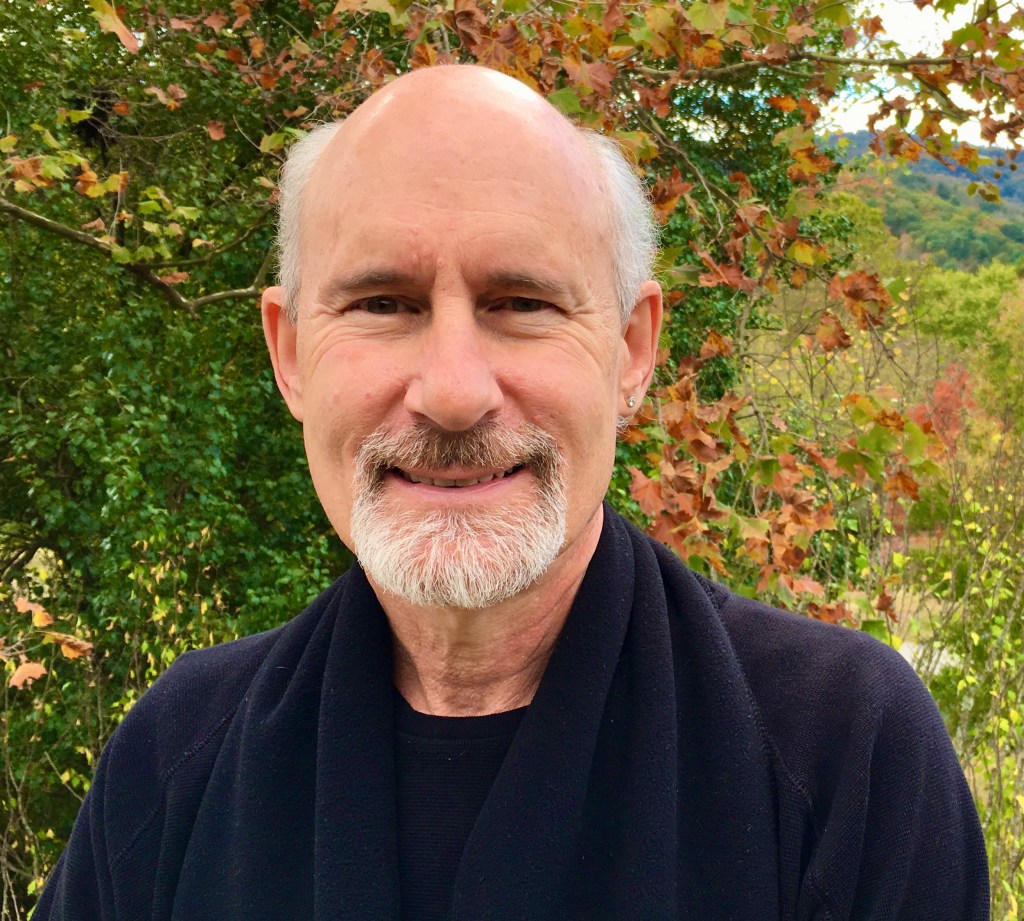





 gracefulatheist.com