Content Warning: Spiritual, physical and sexual abuse. Depression, post-partum depression, infertility and suicidal idealization.
Arline guest hosts interviewing author and podcaster, Nicki Pappas. Nicki Pappas is a writer who critiques the evangelical establishment that shaped her. She’s the author of As Familiar as Family: Leaving the Toxic Religion I Was Groomed For. She’s also the host of the Broadening the Narrative podcast where she interviews guests who are broadening the narratives she was taught within white evangelicalism. She has three young children with Stephen Pappas, her steady partner in the chaos since 2010. Through her work, she desires to spark hope in the world around her and live out an embodied faith.
I wasn’t ready for Rachel Held Evans but I read her.
Who am I if I am not going to church?
And over the next few months I really got to spend a lot of time with myself and was, ‘Oh, I really like myself apart from a church … and like the person who I’m getting to know.
Curiosity and compassion
I feared I was gonna fall apart. And that was when I was like,
‘Okay so we can actually leave church and I’m not gonna fall apart because I have something better than my trust placed in [pastor].
Content Warning: sexual abuse, rape, spiritual abuse
This week’s guest is Jessica Moore, a life coach focusing on purity culture. Jessica grew up in a non-denominational Christian in Salt Lake City Utah surrounded by Mormons. She felt both the pressure to evangelize and be proselytized.
Jessica went to an unaccredited Christian college where she first began to have doubts. She wound up traveling to Israel and seeing life on both sides of the Palestinian/Israeli border. She experienced the reverse culture shock coming back to the United States.
Jessica put a lot of pressure on herself to be a “godly woman.” Purity culture had a damaging impact on her life.
The focus of her work now is helping people recover from purity culture and religious abuse.
“Waves” track written and produced by Makaih Beats
Transcript
NOTE: This transcript is AI produced (otter.ai) and likely has many mistakes. It is provided as rough guide to the audio conversation.
David Ames  0:11
This is the graceful atheist podcast. Welcome, welcome. Welcome to the rescue atheist podcast. My name is David. And I am trying to beat the gracefully. We have a whole lot of housekeeping. So I'm going to jump right in. Number one I was recently on the I was a teenage fundamentalist podcast with Brian and Troy. That was an amazing time. Please go check out their podcast, it is fantastic. They will be on this podcast in January of 2023. I'll have links in the show notes. The big news is that we are very likely to join a Podcast Network. The way that affects you is that this podcast will begin to have ads in the near future. In anticipation of that move, I wanted to give people the opportunity to have an ad free experience as well. And Patreon is the easiest way for me to do that. So at the end of 2022, I'm going to turn off the anchor.fm monetary support. If you have been giving to the podcast there that is just going to stop. If you're interested in supporting the podcast and or you just want to hear the podcast without ads in 2023 and onwards, please join at patreon.com/graceful atheist. Mighty had the week off, so any editing complaints, send them my way. onto today's show, I first have to provide a content warning here. There is the discussion of sexual abuse, rape and spiritual abuse. If you're in a vulnerable spot, this episode may not be for you. My guest today is Jessica Moore. Jessica is a life coach helping people bridge the gap between religious programming and the freedom and becoming you. You can find her work at Jessica more coaching.com sells has a blog there, you can find her on Instagram at becoming you dot coaching. And Jessica is really focused on the damage that purity culture does to a person and recovering from that. Here is Jessica Moore to tell her story.

Just come on. Welcome back to the graceful atheist podcast.

Jessica Moore  2:41
Thanks, David. Great to be here.

David Ames  2:43
Yeah, I say back because Jessica and I had recorded this conversation once. And unfortunately, the audio didn't work out there. So this is round two for for Jessica and I but all the better to spend time with you. So

Jessica Moore  2:57
yeah, maybe I'll be a little more eloquent.

David Ames  3:00
We will we will both try to be yes. We will start with the same question that we started with last time, which is what was your faith tradition? like growing up?

Jessica Moore  3:11
Yeah. So I grew up in a non denominational church. And I also grew up in Salt Lake City, Utah. And I think I asked you this before, have you been to Utah?

David Ames  3:23
I have? Yes. Okay. And yeah, as I mentioned before, the it's a world unto itself, like even that, you know, to go to a bar, you have to be a member. Right. So very interesting things there. Yes.

Jessica Moore  3:36
Yes. Such an interesting. Yeah, it's such an interesting bubble. It's its own little states. And I didn't really realize that until I moved away. But yeah, and I bring up Utah because it is such a heavily Mormon state, the state or the churches run by this, no, the state is run by the church. That's how that goes. And that also was even though I didn't grew up in the Mormon church, it was still very heavily influential in my life. So with a non denominational church, I mean, we, I grew up in church was fun. Like I when I think back on my background on my own, it was such a good time as a kid, and we met in a community rec center. And we had to set up every week and tear down every week. It was a lot and both of my parents were involved. But it just kind of was I was there ever since I was two years old, probably Yeah, to from 18 years old. And so it was like it was my home, my second home, my community. And I think, you know, when I think back on what I was taught in terms of my faith, I don't think a whole lot of it actually really influenced much of like, how serious I took my faith later in life. Okay, what I was taught was very kind of basic, very simple in terms of just, you ask Jesus into your heart so that you can go to heaven for eternity. Then here's the rest of how you just, you know, be a good person. And that seems pretty easy to me and my Oh, no problem. Now that doesn't go without hell, anxiety, rapture anxiety, that was still very, very prevalent in my life. But I can definitely connect the dots of this feeling of the pressure to spread the word. You know, it was very important to me that I all my family and friends made it into heaven. But what what was kind of conflicting was like with Mormons, I saw that they were different that were really that I was kind of the odd man out, it was, you know, all of my friends were Mormon. And it wasn't until I think I was in eighth or ninth grade where I finally met a Christian, and she thought that I was Mormon. And it was pretty funny, but Oh, yay. And we're still great friends now. So

David Ames  6:02
yeah, okay.

Jessica Moore  6:04
But what was interesting is I kind of grew up. I did ask questions of like, well, why is it that we're the right ones, and Mormons are wrong, because to me, all I ever saw was, you were a Christian, or you were Mormon, or you are an angry atheist. That was it. Like, that's all I had no other knowledge of different religions at all. I didn't even know that there were different, you know, denominations. I just thought, you know, we were it. Right. But what was also kind of funny is I also felt like, I had the cool religion. Yes, I, we, we had parties, and we could do things on Sundays, uh, we drank coffee, and it was okay, if you had a beer. And, you know, and my youth group, you played laser tag, and then here's the Mormons over here, where they and I could go to church in my pajamas if I wanted. And here's the Mormons that like, had to dress up and look super nice. And their church was super boring, and two hours long. And I was like, Okay, well, I felt good about being a Christian. But I also was really confused. Like, why is everyone Mormon? And we're not like, why are more people joining our side, you know, so it was kind of this interesting. Like, I was happy to be a Christian. But I was also very confused. And I didn't like standing out. And I think I remember, I don't know, probably five times in my life as a kid, like my friends kind of figuring out that I wasn't Mormon, and they'd be like, you're not Mormon? No. But you're so good. I never knew what to do with that. I'm like, Well, I believe in Jesus. And I, oh, well, you're practically Mormon then and. Okay. So it was just kind of like I got by, you know, and again, that was just simple. It was like, okay, I can blend in enough and also just have my cool little religion. And that was the other thing, too, that I thought was cool is we never called ourselves a religion. It was a relief. So that felt more like, why are y'all doing what we're doing?

David Ames  8:05
You talked about like, feeling the weight of the salvation of the people around you. Yeah. Family members, probably your friends as well. But growing up next to a dominant religious sect, the LDS church. Did you also feel like you were the, the target of proselytizing so that they wanted you to become a Mormon?

Jessica Moore  8:25
Yes. Yeah. There was that too. I'd say around. When I was in junior high. I, that's when I really started to understand like, okay, yeah, like Mormonism is like, huge, because they're at each public school. They had their separate Mormon seminary building on the campus. And they, they had a class period to go there. And I got asked to go like, ditch my own class, like, probably math. Who needs math? Math or biology? What are those? And you know, they would be like, you should just sneak into our class. And so I would, because I'm like, Well, I'm kind of curious. What is it that you guys do in this little secret building here? And, and it was very obvious to the I don't know if they were like bishops or they weren't. They weren't school teachers. I don't know who they were. But the the Mormon leaders, I guess at the in the seminary building, they knew I wasn't Mormon, they didn't recognize my face, because you just know everyone. And they're like, oh, like, are you? What do you know? What are you doing here? Am I Oh, I was told to come check it out. And they had no problem that I was missing my own class. And it's just so funny to me. I'm like, Huh? Like they never they're like, well, welcome. Welcome to my class and like, you have no problem that I'm literally ditching school right now. Yeah. So there was a little bit of that. And I did go to there. I did go to Mormon church a couple times. And just to kind of see like, why am I missing out on something here? And I did have a couple friends that were interested in coming to my church and they were so uncomfortable. And I think that, you know, it was it was very foreign. And you know, and I think that was kind of cool. Like, we were both trying to just see what you know what each other was what our lives were like. But I did come out on the other end of though I was a target. I was like, no, sorry, I still have the cultured. Eye bulging. But yet, there were things like, you know, my my parents drink coffee, Mormons don't drink coffee. And so I would hide my parents coffee machine when I had friends over. And I just, I didn't Yeah, I just didn't want it to be a topic. I didn't want to be not necessarily the target of someone like, preaching at me. Right? Because again, they kind of were like, Oh, you're you're practically Mormon. Anyways, you love Jesus. So, but it was more of like, I just didn't want to stand out anymore. So I would hide the certain

David Ames  10:56
understood. Yeah, yeah. Especially like middle school. I mean, the whole thing is you just want to blend in with it. I wanted to just say a couple of things. One, my background is obviously evangelicalism as well, but Mormonism played a role in my deconversion because I discovered that I have this whole family wing, who are LDS members, and I did I was unaware of Oh, wow. And doing kind of like a just some due diligence exploration of okay, well, what did the what are these family members believe? What was striking about it is the LDS and just as strongly the the depth of their faith, the commitment that they have, I recognize, like, ah, that that seems familiar. And yet the things they believed in were so radically different. It was this moment for me where I recognize ah, I think they're crazy, but they think I'm crazy. And that was just that was a lightbulb moment for me, right? Like,

Jessica Moore  11:49
yes, yes, exactly. It's like, okay, well, we still have this devotion. And we still are very passionate about like, I mean, honestly, it was just to be good, be this good person, be kind be loving. And then when you got deep down into the theology of it's okay, like we Yeah, we're both seeing like, we're both you know, crazy or whatever. But that was enough for me to be like, no.

David Ames  12:14
Yeah, just one last comment here. I've also had the opportunity to interview some Mormons. Me Logan, in particular has the podcast ex Mormon, ology that was really fascinating to hear her describe, you know, from the inside, because I think as evangelicals we were trained, we knew all the reasons why Mormonism was false. Well, you know, Amy knew all the reasons why evangelicalism was false. Right? And it's just interesting to, to hear someone from a different religious culture, and all the propaganda really, that we tell each other.

Jessica Moore  12:46
So true. Yeah, it's definitely a training up like you get I remember, closer into like, youth group when it was like, okay, the kiddie stuff is done, you know, you're not playing games and singing songs anymore. This is more of like the apologetics and all have, you know, my youth group, we were like, how do we, you know, kind of give an answer to when we're being asked of like, why we think we're right, and to also share, like, why Mormonism was wrong. And that was it is pretty fascinating to kind of be trained up in that way, where, you know, faith then becomes not faith, it's more of a system. And yeah, it's, it's so fascinating, that whole part of just like, Oh, here's, here's an answer you can give and then be like, Okay, I'm gonna take that and remember that and dish it out when it's time.

David Ames  13:36
And then in the time period of Age of Reason, round that middle school time, was this something that you took on for yourself a sense of faith for yourself? Or did you you feel like you were doing that? Because your parents wanted you to? What was that like for you?

Jessica Moore  13:49
I think it was definitely more for myself. Yeah, I think I inherently just always wanted to be good and be this good person. And so when I hear that I needed saving, and here's how you can show that you are saved or that you're born again, or that you love Jesus. That felt good to me. I was like, oh, okay, like I would do anything to show that. And so that's kind of what I guess faith was less about what Jesus did for me, it was what I could do next for Jesus, right? And then, fast forwarding a little bit to my second year of college, I decided to go to this Bible school. And this Bible school wasn't really it's not accredited school, it was more of a gap year. They focus a lot on just a guest speakers came in and talked about certain parts of the Bible, your identity in Christ, and a lot of outreach, service, ministers trips, that kind of thing. And at the time, when I was thinking about going, really my motive wasn't because oh, I want to get closer to God. I kind of felt like I already had that. Like I knew the Bible stories you pray, you're good Like, that's kind of how simplistic my faith was. And I felt good about that. Really, my motive was it was at Winter Park, Colorado, and I could go snowboarding. I was like, Oh, I

David Ames  15:13
doesn't ever really want to do that.

Jessica Moore  15:17
Oh, and I just did not like school. I didn't like college. So I was like, Oh, this is a win win here. I can win brownie points with God and go snowboarding. This is great. Yeah. So I go there. And this is kind of the start of where faith became more complicated. But it also was the start and foundation of me kind of forming into this more radical sold out devoted Christian, where when I say the simple, basic, you know, say a prayer and your good, that wasn't it anymore. Things became a little I don't know, fundamental is the right word. But that's kind of what it seems like. And so I'm at this school, and when we're digging into the Bible, but a little bit more, and it was like, kind of, again, I thought I knew I thought I knew all the Bible stories, like I grew up in this. So like, what can I know? Or what what can I what new thing that I learned? And so this guy, this teacher at the time, I think we were reading about the resurrection story. And I'm like, again, what's new here? But it was just kind of the way of how he was dissecting every verse. I mean, Bible teachers do this, right? Like, it's like a page within a page, I can find something to like, really dig deep. And I remember just staring down at my Bible and just kind of being like, what is this? Like? It just felt so bizarre and kind of this moment of like, if anyone who did not grow up a Christian were to be told this, this would sound totally bizarre. And I kind of started freaking out a little bit of like, did I just spend 10 grand to get involved in a cult? It was kind of this moment of like, oh, gosh, I don't know if I believe in this. Like, it just felt so intense and heightened. And we were diving deeper into these topics that I never did in church, where it was whether like, Can Can you lose your salvation? And, you know, what does? How do you know if someone has the Holy Spirit? And no, you can't just say a prayer. That's not good enough, you have to do way more. And then it was kind of men and women's roles. And I was like, wow, okay, this got really more intense. This is not, this is new to me. And for a while, I started to kind of not believe it anymore. But I really don't know if I, if I can, like that's something started to become problematic. But leaving wasn't an option for me. I mean, I think it could have been an option, but I made it not an option. I'm like, No, I people financially supported me, I cannot dip out now, like, I'm only a month in. And so I made it work. And I would talk to the Bible teachers and being like, Okay, I've heard this all my life, that it's about a relationship, where the heck did we get that? Like, I don't see the word relationship in the Bible. And so it's things like that of just the certain the Christianese, you know, the language that we've used for so long that became so normal that I'm like, Well, where did we get that? And eventually, like, I just, you know, it's kind of that saying, you are, who you are, who you surround yourself by, and I was surrounded by 40, something Christians and these leaders that I really was looking up to, and in the middle of nowhere in the mountains, and so it was like, I had no other influence no other, like we lived and, and studied in the same spot, you didn't go anywhere else. And so it was kind of like, I made it work. And I folded basically, and

David Ames  18:46
the school is very small, so 40 ish people you're talking about. So I mean, that, that does feel a little claustrophobic and maybe a little bit like, you know that. So that is kind of the experience of you knew that. If you really expressed the doubts that you were having that maybe that would be bad, right? Yeah, that there was a lot of reinforcement.

Jessica Moore  19:05
Yes, lots of reinforcement. And I did share at one point of like, hey, like, I'm kind of struggling here. Like, I thought this was a lot more easier. And like, I thought I knew everything there was to know about the Bible, and I'm figuring out that there's not and so again, I think I was kind of that target of like, oh, well, this is great. She's the perfect project here. And I also was, you know, I have this personality of, you know, I don't want to I don't want to stand out I don't want to be the odd one out and so now that's different now, I don't mind but I'll say what I think. But at the time, I was like, Yeah, okay, yeah, fix me do what I need to do, because I just did not want to be the odd one out again. Yeah.

David Ames  19:45
I do want to be clear here that I am not being critical of that. I know exactly what that feels like. Going along to have everything smoothed out. I think that's actually a good description of why religion is propagated so easily and so often is that you want to be a part of the community. And the community says, If you want to be a part of the community, you have to believe these things, and in this way, and you have to behave this way. Yes. And because we're social creatures, we need each other, we just are willing to do that, right? Like that is a normal human thing to do. So I don't want you to beat yourself up about it or anyone listening? Who has been through that same experience?

Jessica Moore  20:21
Yeah, no, that's such a good point. It is kind of like, yeah, it's not our fault. It is very much and there's certain language that is used. It's just very compelling. Yeah, that's how that happens. And especially if there's no other voices that are maybe pushing against that, of course, that's going to happen. And when you are just starving for community friends, something to be or hope, you know, whatever it is, if you're, you know, for people that just hit rock bottom, or whatever, and they hear about this great God, of course, like why wouldn't they? Yeah, so yeah, it is pretty fascinating. Yeah, so I was there at that school for two years. One as a student, the other on I was a staff member. And that was a whole different deal. But again, just very much just trying to play the part be the part I wanted to, and I believed in the part. And I can kind of see now just how much I was trying to be like this very devoted, godly woman that seemed to be kind of like this badge of honor. Like, that's the achievement you want is to be the super powerful woman of God. And I was like, Okay, that seems like what people want. And I'm going to do that. And so after that school, I lived in Denver, and I was, you know, involved in all the things church youth group was a worship leader. Little missions trips, all of that. And that's when it like, kind of that that bubble disappeared a little bit where I'm like, oh, there are other influences here. So it was kind of like I was teetering between, again, kind of like trying to find, well, I wasn't even trying to find this, but it was kind of like I stumbled upon like, the cool Christians, I'm using air quotes here. And just like, it was like, Okay, I'm not being like super fundamental, here's these friends where, you know, we can have a couple beers at the bar and then go pray in the parking lot. This sounds great. Like this is, you know, it was like the best of both worlds of where you can not be of the world, you know, but in it and still be your Christian self. And this radical person. That was much of my kind of like my early 20s, mid 20s, of just, again, being so involved in the church and giving it my all and I never really like watch TV, if I wasn't watching TV, I was watching a sermon, or just really being devoted into Bible studies and just being on this huge quest of being this godly woman. And, and then it, it came to a point where I ran into a situation with someone who was my friend, and, and I'm not sure how much I need to do like, like a trigger warning, necessarily, but we'll

David Ames  23:15
do that at the top of that show. Okay, in the intro, so yeah, you can just tell your story.

Jessica Moore  23:20
Okay. So, yeah, I had a lot of pressure on myself to, again, be this perfect Christian, not mess up. And I don't know if that's necessarily something that I was taught, I still kind of go back and forth on that, like, who told me that it was that just me or, you know, what happened there, but I did put a lot of pressure on myself. And there was a moment where my my friend at the time, I was raped by him. I'm so sorry. Thank you. And it's hard to say that word because my situation feels a little difficult to use that word. But the reason why I bring this up is because within purity culture, I feel like we're given a list of don'ts, and especially what I was taught, especially within that school was like, you know, don't do this, the certain boundaries, like you know, kind of like this ladder of what was allowed and it's like, Okay, after this many months, you can hold hands after this, you know, just like this whole step. And you're given a list of don'ts, but you're not given any sort of integrity or knowing your worth. As a person. It's just kind of don't cross that line. Because God said so, and again, I just kind of was like, okay, like God said, So and is either you don't do it or you'll regret it. And, you know, regret sounded terrible. So I didn't want to do that. So I followed this list of don'ts as best as I could up until I was up at this situation that I didn't know how to get out of and again, I don't think purity culture really is sets you up for the preparing yourself for these kinds of situations. It's like, okay, I didn't, I still didn't do this. But yet I had no words to stand up for myself or get out of a situation. The only thing and I remember this so vividly out at one of the women's classes was because of course, in women's class back at that school, it was all about how to be you know, submissive wife, godly woman. Yeah, purity, culture, sexuality. And so I remember, you know, don't don't put yourself in those situations. If you, you know, you could be tempted, and if you are tempted, flee, literally run. And I think about that advice. And I'm like, that doesn't. That doesn't work.

David Ames  25:44
Yeah. I want to be explicit here as well. And just say that, and I remember this from our first conversation, and I think you are being so careful with your words. And I think it's okay to just say it was right. If you did not give consent before or during doesn't matter. You didn't give consent. That's rape. Right. And I appreciate the care with which you are trying to describe this. But I think that's a bit of a vestige of that Evangelical, thinking that in some way, you might have been at fault. And you're not, right. You said, you said no, at some point, or even if you didn't even verbalize it, you just internally you were you were done. That was it like, yeah, it's okay. That is abuse. Right. And I just want to be clear on my end, that that's the way I see it.

Jessica Moore  26:32
Thank you. I do appreciate that. It is. Yeah, it's it's fascinating to like, not be able to say the word in terms of because, you know, we do have this certain picture of what rape is whether it was violent or something. And that wasn't, that isn't my story. And so, my story is, is that I was in a situation where I did say, No, my body froze up. But it wasn't respected. And, you know, did I fight back? No. Because again, I froze. And I think that's a very common response, especially when you're not taught anything else was like, Okay, I was taught to, you know, to not do this, and I tried now what, so I was not set up for any kind of success, and my body froze, and, yeah, and so that is, there was no, it was not consensual. And so, you know, but at the same time, it was like, Oh, well, I shouldn't have put myself, I shamed myself. It was like, Oh, I shouldn't have put myself in this situation in the first place. Like, because that's kind of what we're taught is like, women are the temptation and men's minds are the monster. So it was like, well, it was my fault anyways, and so it kind of like I did blame myself. And I still fight that, even though it's been, I don't know, seven or eight years. And I, it's kind of, it's amazing, the the programming, whether it be through religion, purity culture, or just kind of like our society today of how they have defined rape, or whose fault it is, you know, that kind of thing. It's like, it does still go deep of like, where I do find myself like, Oh, that was probably my fault. And it wasn't, right. So I bring that up, not, you know, of course, I again, I'm trying to be careful, but I bring it up, not in terms of like, you know, it's funny, like, I didn't think this would be a huge part of my story. But after I started deconstructing purity culture, I'm like, oh, no, this is huge. Like, I and I, after I've heard many stories from other people, men and women, I'm like, Oh, this is a thing, like we were not taught, like, what we were taught about abstinence is not correct. I have no problem with someone choosing to be abstinent, it's the way of not giving any sort of value to the person. Right? I was not taught my worth. Obviously, I was taught that I wasn't worth anything until Jesus died for me. But anything else of like, no. Knowing your values, having any kind of sexual integrity is not offered to you. It's just don't do this. And then you're also promised if you keep your virginity, then you'll have a great marriage. And it's also not true. So there's, there's so many things that I can now see within the purity culture, teachings of just how false and the myths that they are. And when I think about my story, and how I really did want to wait for marriage and when that was taken away. Yeah, it was. I thought, Okay, well, now this is my burden that I need to make, right? And so me and that guy we did pursue a relationship and and you and I even have a little bit confession over him when I think like I, after some of conversations that I've had with different men, how purity culture affected them, and I'm like, man, yeah, that probably wouldn't have happened if he was also taught that like, he's not a monster and also what consent is. Yeah. And you know, I mean, I don't I, you know, I don't know, a whole lot of like his. He did say sorry, after. And so it was kind of like, that's how we could pursue a relationship together. And to me it it was like, Well, this is how we make this right. Like, because we were both hoping to save for marriage, and we didn't. So now we got to get married. Yeah. So yeah, I tried really hard to that felt like, this is how I make it right with God was to beat with my abuser, I guess.

David Ames  30:55
I appreciate Jessica use telling the story so much, because I think you're totally right. I think a lot of people have had at least similar if not almost identical situations and, and have that same sense of obligation to continue a relationship with someone that with hindsight, you can now see was an abuser?

Jessica Moore  31:16
Yes. Yeah. Yeah, there's lots of studies that I've read about now of just like the the connection between people who may be mostly women that will continue in abusive relationship, and a lot of their background is in religion, and so or some sort of theology. So I can totally see that. And, thankfully, that relationship did not work out and have moved on, but that shame of like, oh, I messed up, you know, I'm dirty. I am this deflowered rose, chewed gum, all the things that I was taught of, and, you know, was given these visual presentations of, definitely stuck with me of like, well, this is what it is. And I never really told anyone and, and then eventually, I started open up to some friends, because, you know, it was like, I wasn't a virgin anymore. And there were some that really were just, you know, were so kind and letting me know that this wasn't my fault. And even though at the time, I still never called it rape, I didn't call it rape till about two years ago. And so I was like, okay, and that felt really comforting. And then there was a couple of friends that just, you know, thought they could, God could heal me and make me a virgin again. Because that is, you know, that's the goal here is that's how you show that you're this devoted Christian is keeping your virginity.

David Ames  32:41
What an absurdity that virginity has any any meaning at all to anyone at any time. Like, yeah, so so absurd.

Jessica Moore  32:50
So absurd. And, and heard lots of, you know, stories, rather, like, oh, I, you know, God restored me and, okay, and I guess and so it was just kind of this weird conflict of like, I think I'm okay, because I also was, like, I, I know, it wasn't my fault. Or I guess I had more of a concept of grace. And that, like, I'm not this failure, but I also was, I will now I really need to be careful because, you know, that's a slippery slope I can see now and when they say you can be tempted, it's true is whatever.

David Ames  33:23
Again, I want to just acknowledge human beings are sexual beings, and particularly in our late teenage and 20s like, there's just biology is moving you towards having intimate connections with another human being and might, it just seems so absurd on this side of things to to make that bad or evil, right? You know, when it's just like that. It's truly to be human is to connect with another person in that way, right?

Jessica Moore  33:51
Yes, but only after marriage David. Yeah, it's like, oh, you can only you know, after the altar, you're all good. Yeah. Yeah. And, and no wonder like, it can cause such turmoil for people. You know, you're you're fighting yourself, you're fighting these natural things for so long. And it's like no wonder that causes problems especially with women. They struggle you know, after like, with vaginal dryness, like just this, you know, it's very painful intercourse and or pelvic floor issues, whether they're being intimate or not, and it's because it's just this locked up situation and then when the time comes, it's like, you know, you can't just flip a switch in your brain like Oh, it's okay now like your body is not you've been fighting against it for so long. Like it's not going to just respond to being everything's okay now. And I don't know too much about like, you know, the the physical effects for males, but I can speak to women.

David Ames  34:54
We have had a couple of stories where male partner is almost asexual, and, and a lot of that is the purity culture leading up to that, and they just aren't as interested in in sex. And so, you know, in the header example, the woman is ready, you know, it's her wedding night, she's ready to go. And the man isn't so like, I don't know, you know, I wouldn't know what the statistics are, but it definitely can affect everyone. Yeah. Oh, absolutely. Just as you say, if you spend your entire life suppressing that, and then all of a sudden, oh, I'm just gonna turn this switch. And now I can I can turn this on human beings don't work that way. No,

Jessica Moore  35:30
no. Yeah, the the physical or any other residual effects of purity culture are pretty damaging. Yes. And so after kind of, like, you know, this situation of being with this, this friend, and you know, we pursued a relationship, then we didn't, after we had broken up, I was like, Okay, I am on this quest is just gonna be me and God. Now, I don't care about this person. And I'm not going to try to make it right. Because I think that took a lot of my mental space of just really trying to make this work. And just feeling like, I got to do this. And once it just finally ended, it was like, okay, you know, what, me and God, my first love, whatever. And I think I kind of started to want to discover more of like, what was truth? Because I think through the mix of all of this, I'm also being introduced to different forms of spirituality in terms of, well, Christian spirituality. And it was kind of like, you know, there's the fundamentals. There's the ones that, you know, we're the progressive Christians, there's the prosperity gospel. And so it was kind of like, I was just on this quest for truth. And what felt good to me, and not really what felt good to me, but I just wanted to see what was right. Not just kind of be like, Oh, this feels good. To me, it should be more like, No, this feels right. It needs to be right for you to that's kind of where my motive was. And so I tried different churches, just kind of like the trendy churches, you know, the ones with the pastors have got the skinny jeans and leather jackets and fog machines. And then I went to Bethel, visited Bethel for a week or two and saw more of kind of like that charismatic. And that's where I also sought healing for restoring my virginity. And it was kind of wild, that was a huge, I don't know, a whole door of understanding of like, oh, is this how God can work of just people shaking on the floor, and someone would always come up and say, I have a word for you. And like, oh, my gosh, God wanted me to tell you this. And it was kinda like, Oh, God can speak this way. So it was a lot of just trying to discover new things and kind of get outside of my box a little bit. But not too much. Because it was like, well, some of what I saw within like the Bethel culture, it was, they didn't use scripture enough, in my opinion, where it was like, Oh, you're a little, you're a little out there. Maybe you should plug some theology. And there are some doctrine, it was just kind of interesting. I forget what their like mission statement is. But it's, you know, the supernatural school of ministry, and a whole lot of people having a prophetic word for you. Just something always like they're channeling something. huge emphasis on physical healing. And yeah, just kind of like, to me, it was like a bunch of fortune tellers, or at least pretend for tellers kind of thing. And so I had, like, quite a few people come up to me and who didn't know me and just like, God just told me something I need to tell you. And it kind of felt magical. And what was so funny is like the words that I was given, there wasn't really anything super profound or specific to me, it was just like, God really wants you to know that he that he loves you and like, your shame is gone. And the shame that you carry, and I'm like, that could really be anyone. Or you know, and so it didn't. Really Yeah, yeah. And and so if it, it felt special to me at the time, because I did carry shame. Yeah. And so it was like, Oh, wow, cool. But yet, it was kind of this mix of like, super charismatic, but to me, it was like, Oh, you still need a little like scripture in there. There wasn't a whole lot in from my perspective. And so I wanted to step out of my box a little bit, see how it is that God, you know, may work in other areas, and maybe I'm closed off too and but yet, I didn't want to step too much into that because scripture was really important to me. So it was kind of like this mix of just trying to figure out what else is out there. Saw this Bethel experience and had lots of people pray over me and they have a lot of emphasis again on like physical healing. So they prayed for my physical healing as to become a virgin again, and that just kind of felt really odd to me because it was like, not that I didn't want that, but it didn't seem important where I was like, now it's done like, you know Yeah, there were some things were like, that doesn't resonate. But so there was the Bethel kind of experience. And then I decided to go to Palestine, and Israel. Okay. So my next quest was to see how it was that God worked in other countries where I wanted to see like how it was that, yeah, just just to be a part of people's world and put myself in their shoes. And so I go to Palestine, and my very black and white world turned very mucky gray. Okay. And, you know, and I thought, oh, what better way to get closer to Jesus and, you know, go to the holy land exactly where he walked. But that part of like that magical, the biblical sites just really faded, because that that part of the world is so heavily in conflict. And I think we all know that, and I did not know that at the time, very little. So I walked into, you know, quite the storm there. And feeling kind of confused where it was like, I just thought this would get it, this was going to be my moment of God, really, I think I was searching for like this light bulb of this vessel or channel just to really open and like God was always going to speak to me. And I would know really well, again, my quest of just being this like really powerful, godly woman. Like I honestly, it sounds very vain. But I just was starving for that what seemed to like what everyone else had, I wanted that too. And so, but while I was in Palestine, I lived with a Muslim Muslim family in a refugee camp. Then I lived on the other side, in Jerusalem, with a Jewish American family. And then I went back to the Palestinian side and lived with a Palestinian Christian family. So I kind of got a mix of everything. And that was really important to me of just like, Yeah, well, like, again, what is truth? What's going on here, and I'm so grateful I had the opportunity being with like, the Muslim family, it was, I felt very comfortable, like they didn't like try to, you know, convert me. And that was never their focus. And they just really wanted me to be involved, you know, involved with their family. And that was great. And then when I got into the other side with, like, the living with the Jewish family who was from America, you know, it was that this particular woman, my host, it, she was this yoga teacher. And she was all that she was like very much about peace and harmony. And she had said, you know, but Palestinians are poison, and we need to have an ethnic cleansing. And I was just like, whoa, and I don't think she knew that I had lived with Palestinians.

David Ames  42:44
Right. Assuming that you would be on her side.

Jessica Moore  42:48
Yeah. Right. Especially, you know, being American, and, you know, we're all for Israel or whatever. So I think that was, that was really challenging. I'm like, what that sounds conflicting here, where you, you say you're about peace and harmony, but yet you're willing to kill off these people because you think the land belongs to you. And so, yeah, very, very challenging. And then going back to the Palestinian side, and being with these Christian Palestinians, and how much they you know, I mean, there was definitely a language barrier, but they were kind and loving. And you they're just trying to get by while they're, you know, on, they're held under occupation. And so it was just kind of it was so intense. And then coming back into that, I thought, Oh, maybe I need to be this Palestinian activist, I just really didn't know what was next. But I knew that I was not the same. And so I also was under the impression that no Christian knew about this. When I shared like, my story, my perspective, like oh, my gosh, like Palestinians, like their homes are being taken away, Jewish settlements are being built on them. And like, that's not okay. Like, you know, there's a wall there, you know, all these things. And one of my Christian mentors at the time, she was a who I thought she was gonna be, oh, my gosh, that's, that's awful, you know, right, whatever. She said, Oh, well, you know, according to, I don't know, according to Scripture, yes, the land does belong to them and belong to the Jews. And I was like, I mean, that just put a knife right through my heart where I was like, what, like, that was so confusing to me. I'm like, Have I been fooled this whole time where I was kind of, I wasn't trying to have a bias, but it happened. And I was kind of becoming more of this, you know, on the Palestinian side, where I saw things that were really rough, you know, being under occupation, and I saw them get tear gassed. You know, I saw their homes get bulldozed, and I then I come back to my American home and I hear Yeah, that's what's supposed to happen according to Scripture. And I'm like, what like if I could not imagine speaking in front of my Palestinian friends be like, you know, I'm so sorry this is happening to you. But according to Scripture, This was supposed to happen. Like, how can we do that in the comfort of our own home? Of course, like, yeah, it's no problem when we're not a part of it. But it was just, that was kind of my first opening to theology and doctrine over people, right. And I did not want to be a part of that. And so I left the country again, like three months after that and went to Ecuador. And because again, it was still this, like, I want to see God work in other places than my American, because it was starting to become very like, yeah, the Americans got their own form of little Christianity going on here.

David Ames  45:42
And this is quite an education, you're getting right, like, yes, really seeing humanity and culture, and even God and a different picture in each of these different cultures.

Jessica Moore  45:52
Yeah, right. It was definitely an overload there. I tend to do that. But I saw I go to Ecuador, and I lived actually with a missionary family. But they did things kind of different, where they didn't live on like their, their separate for a lot of missionary communities. They've got their own separate land. And I forget the word for that. But you know, it's kind of like their own gated community. But these missionaries, they were very much about like, no, we want to be in with the people. We want to live in the city when we want to, you know, we're not trying, they weren't really trying to start a church or convert anyone. They were just wanting to, of course, like, you know, spread the gospel in some way. But it was like, setting up the other Ecuadorians to it was kind of like building up Ecuadorian leaders. They didn't want to be the leaders. But I mean, at the time, I was like, oh, that sounds a lot better instead of trying to be this white savior. But I can look back now like now, there's still a little bit of yc.

David Ames  46:47
It turns out, it's difficult to escape your own culture and wanting to distribute your culture to other cultures. Yes,

Jessica Moore  46:55
yes. And that was the thing. And you know, it was kind of it was great. I mean, Ecuador is I was living in the Amazon. And that was pretty intense. The jungle is very intense. It is the anti sexy, I'll tell you that. very humid, all of that. But again, just kind of observing, I wasn't really trying to change anything. And I couldn't speak very fluent Spanish, or even kind of there. They have like Spanish mixed with their jungle tribes. And so I really couldn't contribute in that way. It was just, I just kind of wanted to live in a different culture, see what was going on observe and but I was like, kind of the helping hands for the mission. They had two daughters. And so it was kind of like, I was not the nanny, but just, you know, helping hands for the family. And that was great. But there was also things that I took away of like, I don't see how scripture things that I was taught how they can be applied to this culture. Like, for example, I'm just gonna give monist modesty, like, Here are these people in the middle of the jungle, and they're literally wearing strings, like, yeah, thin strings. And a body is just a body. It's not sexualized, nothing, and they can walk around, basically naked. And that's not a problem. But yet, if I were to say, oh, modesty, you know, they're not modest. They need to cover up because being naked as a sin, it was like, Well, wait a second, like that doesn't that doesn't match up here. So how is it that it's a sin in my culture? You know, where I grew up? I hear you are in the jungle. And it's not. So there was I mean, that sounds kind of like an elementary comparison there. But it was kind of like me noticing that certain scripture cannot be applied to every culture, right? So it was like, What are we doing here?

David Ames  48:42
You're experiencing that firsthand, right? If you're in 90 degree weather with 98% humidity, and oh, that's a rational thing to do is yes, that was little floating around as possible.

Jessica Moore  48:54
Where strings that makes so much sense. Yeah. Yeah. So it was kind of like, yeah, there was just some things where I'm like, Well, how is it like, if we think God is also this powerful God, and He wants everyone to know Him and to go to heaven? Why is it always Americans that are going into these places? And isn't God big enough to, you know, meet or show up in the jungle? Like how he apparently did with Paul, you know, it was kind of like, where are we getting this, that we need to do this for other people? And why is it all I mean, I know that there's also other missionaries in other countries, but it's no big deal, you know, American families. I was just kind of confused of just like, I feel like if God really wanted these Ecuadorians to go to know more about him, he would have provided another way maybe or it was like, but we're still trying to change their culture. We're still trying to Americanize them and that just didn't feel right. So I come back and definitely had to do a whole lot of I was there for six Hans and had to do a little bit of you know, that the reverse culture shock is very real. And yeah, it took some time to kind of like debrief and be like, Okay, I've had these two experiences here, one in the Middle East one in South America, what do I and here I am in America, church just doesn't feel right anymore. Like I could not stand there anymore with these fog machines and worship music and, and our problem seems so petty. And I was just like, I can't, I can't do this. And so this is kind of where my my views like I still held on to my faith, and I still believed in Jesus and God, but yet the other things of what felt like I needed to do whether that be go to church, or even like my prayer, life change, where I'm like, these, all these problems seem really petty now, like, I can't, and that's where it was, like, you know, I'm not even going to worry about evangelizing anymore sharing the gospel, it was just I wanted to stay in my lane of like, I don't know the answers anymore. Where at first, I felt like I was pretty certain on, you know, whether I could tell if someone was saved or not. I don't care. You know, I'm not God, I'm backing off. And I'm just, I'm just gonna stay in my lane. Yeah. And so that's kind of where I was for a while of just, you know, I feeling very comfortable. And, well, I shouldn't say very comfortable, but just kind of riding. riding the wave of being a Christian had my thoughts and opinions not feeling great about church necessarily, or even how to read Scripture anymore. But I was like, you know, you and me, God, I got this and, but also feeling like way more open to having relationships with people that weren't Christian and opening up my bubble a little bit, because for so long, it was just this Christian bubble. And I was a barber for a long time. And yeah, for eight years and, and at first, like what I was doing here, it was like, that was gonna be my mission that like, this is how I get to spread the Gospel. Just how embarrassing. Like, just No, just cut hair. Because yes, because that's your job. You don't have to make it into a ministry. Yeah. And so but through that, like, I've met such great people, and that's where I was starting to recognize like, just because you're a Christian doesn't mean squat. Like it just I'm meeting these people who are so kind, loving, who, who don't claim to know Jesus or go to church, and they were loving, open and accepting. And I'm like, Okay, what is this? Like? What have I been taught here of like, I think I've heard this from your guests as well, it was like you are you're taught you have like this secret to life. And like you, you can tell when someone else is a Jesus follower. It's like, oh, and you're kind of formed that club a little bit. It's Clicky. And I just didn't want I didn't like that. I didn't want to be part of that. And I'm finding all these other great people that still, you know, are very loving. But I think there was still kind of a prejudice where I'm like, you would be so much better if you knew Jesus. You're so close. Kind of like how I viewed Mormons, too. When I was younger, I've just been like, Oh, you've got it, but you're not quite there. That's still followed me. Now more at which I think all of this has kind of been the start of deconstruction a little bit, but kind of more of like, okay, this is where it really, my deconstruction journey started was, I was starting to date and I was becoming more open to that. And because my standards were pretty high have they had to be a Christian and I had to be this super. I don't know, I think I was maybe looking for a pastor, but just someone that was so devoted to Christ. Yeah. And I was also told just throughout the years of just like, oh, it would take such a strong leader to lead you, Jessica. I don't even mean I'm like, What am I doing? Like, I thought this was the goal here. Like I thought, like, I'm supposed to be this godly woman isn't that what's appealing, but apparently was pretty intimidating for some dudes, so

David Ames  54:07
just want to comment on that, like, you took it very seriously. And you had a sense of responsibility to spread the gospel. You know, whether I don't know if you put that in terms of ministry for yourself, but even talking about cutting hair as as ministry. Yeah. You know, women are taught to do all this to be ministers, right? And then at the very end to say, Well, no, but you can't actually lead. And that is just ridiculous, right?

Jessica Moore  54:31
Yes, it was just kind of like, well, what the heck am I doing then? What am I wasting my time on? Yeah, it was like, doo doo doo. And then once the time actually comes, like, just so I meet this guy who is now my boyfriend, and he is not a Christian. And hello, oh, boy, you know, but I was like, I'm just gonna, you know, I just kind of wanted to date without this pressure of like, is he the one because I think that's also a huge part of, you know, what we're taught in purity culture or whatever is like You got to know right away. And so I dated and he is this awesome person and he was, quote unquote, pursuing me the right way. And he was respecting my boundaries and all these things. But yeah, he just had one thing missing. He wasn't a Christian. The longer I was dating him, the longer you know, people really started to chime in and was a hey, you know, you're really playing with fire here. You, you know, are you sure you want you don't forget what you really want. And you know, meaning this, you know, not being unequally yoked basic, right. Yes. And, and I still felt like I was like, Yeah, that's true. Like, I know, well, I thought at the time, like marriage, or any kind of relationships can not work. Unless you have Jesus in them like that I had no other knowledge of how relationships work. It was just if you believe in Jesus, and you are you have relationship with Jesus, both of you, you're gonna be great, you're gonna be golden. And that is so not true. And but that was like the only glue that would work. And so I did break up with him for a few weeks. And he was like, no, no, no, what's going on here? And it was just kind of like, I had to share, like, oh, I can't be with you. Because yada yada, you're not a Christian. And he was like, Well, you've never asked me and so then comes this journey of me trying to convert him. And me converting him kinda was the start of D converting me basically. Right. And he really did try, like we met with pastors, and we, he read the Bible. He said the prayer, I told him what to say. And I'm and on the other end of me just like pleading, asking God, like, why aren't you reaching him? And why aren't you answering him? Like he's trying so hard? Whether it was his motives was to be with me, it was like, come on, like, Don't you want this person to know you? And so it was kind of like, it wasn't so much of like, I came to this point like, well, maybe God isn't real. It was more of maybe what I've been taught of how someone knows Christ is not true, then that kind of started the the domino effect of like, well, if this might have been like a manmade myth, what else is?

David Ames  57:19
Yeah? What a dangerous question. Yes, yeah. And I

Jessica Moore  57:23
went to therapy. And just because there, there was a lot going on, and I didn't think it would have anything to do with my religious programming. But she read right through that. She kind of was pointing out some things of like, well, where why can't you be with someone who doesn't believe the same things you do as well, because we can't be unequally yoked. And she was kind of challenging that again, of, well, how do we know that's talking about marriage? And I was like, Oh, you're right. And so it was kind of like this domino effect of? Yeah, well, we're all just kind of taking scripture and interpreting it however we want to. And I really appreciate that my therapist was able to do that. Because I mean, on her bio, of how I found her, it says, Christian, and so that's how I picked her. But really, I don't know if if in person, she would describe herself as that maybe, I mean, she was definitely more liberal and opened my eyes. But if I wouldn't have just picked up, just a normal therapist, like Christian had to be in front of it, because I wouldn't have thought I could trust them. And so I'm grateful. I know, I'm so lucky to have found a therapist who was who could challenge my thoughts. And I trusted that, and she was more liberal. And so that's kind of how some of the things of like, yeah, what I was taught, just seeing that, like, yeah, maybe they really aren't true. And then also just kind of like, seeing more of where I've maybe had more spiritual abuse, and gaslighting and just some of the language I was using within my sessions. She kind of was like, hey, you know, some of the things you're saying kind of sound like someone who might have been brainwashed. And honestly, that felt, I don't know what a normal response would have been. But it was kind of like, Oh, thank goodness, like, yeah, because all of this inner turmoil or what I was searching for it, just, you know, the the intensity and devotion that I had, and still never feeling like I was measuring up or something was off. And for her to say, Hey, this is, you know, I think, you know, there may have been some brainwashing or programming or conditioning going on. It was like, Oh, that makes so much more sense now. Right. And of course, that had to do a lot of undoing. And so that kind of came the process of recovery and going through that process of all deconstruction of what we do have just kind of like the grieving process the the trying to figure you feel like you're it's your first day on Earth again, and yeah, it took a couple years after that. I'm just really that grieving part of like, wow, I had such strong devotion. What was it all for? Right? And then you just start to learn how to be trying to figure out what is normal. And what is truth outside of this bubble that you were taught. It's kind of like I heard your guys's episode on The Truman Show. That's exactly what it feels like it just, you're like, Whoa, there's this whole other world and I don't know how to function in it. Yeah, that was kind of the chink in the armor there of just being with my, my boyfriend and trying to convert him. And he asked really legit questions. And when I couldn't answer them, I think there was a lot of things of like, oh, my gosh, I should know this. And, yeah, there was just a whole lot of a mix with of trying to convert him yet. Here I am deconstructing, and so still trying to hold on tight to my faith. But really what I was trying to hold on to, when I think about it, it wasn't so much my faith in Jesus, it was trying to hold on to this good girl persona. And that was being challenged. And then from then on, I can't even say that I lost my faith, it really just kind of dissipated. It was like trying to grab a cloud and you can't it was gone. And then it was digging a little deeper into okay, maybe these manmade rules aren't true. So now what do I do about the Holy Spirit? What is that? And what do I do about this whole Jesus character then like, because I really thought that I had this personal relationship. And I had watched this documentary on, I think it's on Amazon Prime, but it's called Marketing Jesus. Okay. And so good. It was really fascinating, just kind of like watching. I think that's kind of where I got my first history lesson of how the Christian church even started and how even Jesus came about and digging deeper into Bart Ehrman. And just Yeah, knowing more of like, how did we get how did we build this character base? Yes. How did we build this Jesus? And I remember so vividly, I've just kind of like that was kind of like the last thing of like, okay, what do I do about Jesus? I figured out about these No, not totally figured out. But I've kind of made peace a little bit about these certain rules that I was following that aren't true. The Holy Spirit, what do I do about this Jesus? And when I found this perspective of how maybe we are how over history and over time of how this Bible was created, how Jesus was, came about all this, I was just kind of like, oh, my gosh, Jesus isn't real. And I mean, now I like, you know, did you live? Do you know, I don't know. It doesn't really matter to me right now. But it was kind of that part of like, feels like I was I learned about Santa Claus again. That you're that Santa? Yeah, I think in that moment, it was that was kind of like, okay, I really don't believe this anymore. And I can't deny maybe there's a higher power, I don't really, I don't care. I mean, I think there are certain ways to connect in spirituality, such a broad term. And I think that's the beautiful thing about it. And because Christianity gave me spirituality in certain form, and that really just put it in a box. But when you take that box away, spirituality can be anything. And I think that can be really fun. And useful or not, you don't have to use that and or deal with that and or be a part of your practice spirituality.

David Ames  1:03:36
Jessica, you've done a lot of work after this deconstruction process for you, you have a life coaching that is specifically around religious recovery and spiritual views, as well as purity culture, we have a blog, just like you to talk about the work that you've done, kind of on this side of deconstruction.

Jessica Moore  1:03:54
Sure, yeah. Thanks for asking about that. So, you know, life coaching and deconstruction, I don't know if everyone needs a coach necessarily, because again, I think deconstruction is, you know, it's so personal, you don't even know that you're doing it. And until you kind of through it, you're like, oh, that's what that was. But my coaching is to kind of help with that whole process of what to do after you've questioned some of those things. And now, just that moment of where you feel stuck of, how do I go forward, and also just kind of picking apart of how religious programming can still show up in your life, whether you're still part of church or not, kind of like the codependency or the people pleasing, like that's still very prevalent that can start in religion, and it doesn't just go away. The other part of with coaching, it's not so much like a new mindset, but just digging a little deeper as to how trauma or the certain things can be stored in our body and how to kind of move through that. And so that's a huge part of what I do, and especially with impurity culture, I'm very obviously Within my story that's very important to me of just educating of like, okay, how do we have healthy sexuality? Again? How do we have autonomy over ourselves? And what does that look like and learning how to communicate those things with, you know, partners and or prospective people. And so it's kind of, yeah, that whole new world of what we're learning how to be human again. And so, yeah, that's a lot of what I do, and just hoping to be a person that sometimes I wish I would have had someone along with me in my deconstruction journey, who could have walked me through those things. So that's not always a fit for everyone. I think a lot of people are different, and they can move forward, and they're good. And but for anyone who just feels a little stuck, needs help with understanding how religious programming may affect you negatively, but also, like, there are things that can show up that are maybe good things, you know, to kind of not throwing it all out. But just noticing how some good things could have come from it if that's what the person wants. And making peace with your past, I think is a huge part. And knowing how to move forward in the futures is a huge part of what I do in coaching and going through those stages of recovery with the confusion and the Yeah, making peace and learning how to in the stages of grief and how to release some of these things, I think is a huge part of the healing journey. So yeah, it's been very fun. I'm really enjoying it and hope to help more people

David Ames  1:06:34
along the way. Fantastic. Yeah, we say so often that it's such a lonely, isolating process to go through so somebody can reach out to you and have someone to just say, Yeah, I've been there. That makes such a huge difference. Just anymore. I want to give you an opportunity to tell people how they can get in touch with you. What's the website? How can they find you?

Jessica Moore  1:06:53
Sure. Yeah. So my website is Jessica Moore coaching.com, my Instagram is becoming you dot coaching. Yeah, you can find me there on some of the religious recovery and coaching stuff on that. And my blog is called series of expansion, but it's also on my coaching website. So that's a great way to connect with me, you can email me or DM me, whatever.

David Ames  1:07:15
Awesome. We'll definitely have links in the show notes for that. I want to thank you personally for doing this conversation twice. Thank you so much. I really, really appreciate you giving us your time.

Jessica Moore  1:07:25
Yeah, thank you. Thanks for giving me a second chance.

David Ames  1:07:33
Final thoughts on the episode. One of the ideals that drives this podcast is brutal self honesty and vulnerability. And Jessica really brings that to the table in this conversation. Jessica's story is fascinating from beginning to end, the growing up in Utah, Salt Lake City around Mormons and feeling like she was on the outside. The experience of feeling both the pressure to evangelize the Mormons around her, as well as being a target of proselytizing is just absolutely fascinating. Then going on to, in effect, be a missionary in various parts of the world, including Israel on the Palestinian side and on the the Israeli side, going to South America, and then the culture shock of coming back to the United States. That really would give you a feel for the diversity of humanity and would make the confines of Christianity very difficult to remain in. Jessica is also very honest about putting pressure on herself to be a godly woman that she felt from an early age, he needed to be this picture of a godly woman she had in her mind, and she was driving towards that at all times. The purity culture that taught her these things is also what was so damaging, the lack of sex education, the lack of understanding and then of course, the natural desire for young people to connect with each other intimately led to a scenario where she did not give her consent, and I have no problem calling that rape. I grieve for Jessica and that experience and I grieve even more because I know that she's not alone that she is not the only one who has gone through this that probably many people listening to her story are thinking me too. And I agree for that. The hope in Jessica story is that coming out of purity culture, she can recognize the absurdity of the purity culture the absurdity of caring about virginity at all the absurdity of trying to live up to an impossible standard and seeing yourself as somehow less than human. Another focus of this podcast Just the embracing of our humanity that includes our sexuality includes our emotions and includes what the church can sometimes call sin. It is all of us, all of us as a human being that makes us whole and embracing that and accepting that is secular Grace loving oneself is secular grace. Near the end there, Jessica mentions an Amazon Prime video called marketing the Messiah. links in the show notes, I did watch that it is really pretty good at especially talking about the anonymous nature of the Gospels. The fact that Paul and his writings are written first. And Paul has a vision of Jesus, and so that we rarely do not have eyewitness accounts of Jesus in the New Testament at all. If that's your kind of thing, check that out. I want to thank Jessica for being on the podcast and especially for the vulnerability and the honesty that she brings to the table. You can find Jessica's work at Jessica more coaching.com. She's on Instagram at becoming you dot coaching. Thank you, Jessica for being on the podcast. The secular gray slot of the week is about grief. Last week was Thanksgiving in the United States. I talked about gratitude, and how important that is an attitude of gratitude. And I like these segments to be kind of honest, like what I'm feeling in the moment and I'm right now I'm feeling grief. I'm feeling grief about the shootings in Colorado Springs, the shootings all over the United States, the fact that people are dying for no good reason, the LGBTQ community and the grief that they are going through. I'm grieving having listened to Jessica's story, and hearing the damage that purity culture has done to people hearing the experience of what is rape and the grief that many people have experienced in a scenario just the same as Jessica. I feel grief for the last time the wasted effort. I feel grief for feeling so gullible. As I said before, when we were believers, we had something we could do in these scenarios, we could pray and we no longer have that crutch to lean on. So we must lean on one another. My encouragement to you is to join the community on Facebook dot com slash groups slash deconversion. Become a part of that community. Consider yourself if you are able to start a meetup.com meetup in your area and just get two or three people together and talk about your experience and maybe even your grief. As I said in the intro, we're about 99% You're going to become a part of the atheist United Podcast Network. That does mean that we will have ads on the podcast beginning in 2023. So that you have the opportunity to have an ad free experience I have started a Patreon account patreon.com/graceful Atheists if that is something you are interested in, please join that if you are currently giving via the anchor.fm and stripe that will stop at the end of 2022 I don't think that you will have to do anything to change that I will be able to stop it on my end. Next week is Arlene interviewing Nikki papas. And then the following weeks will be me interviewing Arlene and then Arlene interviewing me and then we'll take a break and begin 2023 with the discussion about the atheist United Podcast Network and joining there. Until then, my name is David and I am trying to be the graceful atheist. Join me and be graceful human.

Time for the footnotes. The beat is called waves for MCI beats, links will be in the show notes. If you'd like to support the podcast, you can promote it on your social media. You can subscribe to it in your favorite podcast application. And you can rate and review it on pod chaser.com. You can also support the podcast by clicking on the affiliate links for books on breast atheists.com. If you have podcast production experience and you would like to participate podcast, please get in touch with me. Have you gone through a faith transition? And do you need to tell your story? Reach out? If you are a creator or work in the deconstruction deconversion or secular humanism spaces and would like to be on the podcast? Just ask if you'd like to financially support the podcast, there's links in the show notes. To find me you can google graceful atheist. You can google deconversion you can google secular race. You can send me an email, graceful atheist@gmail.com or you can check out the website graceful atheists.com My name is David and I am trying to be the graceful atheist. Join me and be graceful human beings

this has been the graceful atheist podcast

Transcribed by https://otter.ai
Ben and Ang have been married for seventeen years. They met as tender home-schooled church-kids. They married young, and the church’s “formula” worked well for a while.
They were mostly happy and went on to have kids of their own. But little things from childhood would pop up now and then—purity culture shame, fear of emotions, fear of the end of the world…
In June of 2016, the shooting at Pulse nightclub “broke” Ang, and she knew she had to find a different way forward. By 2017, they both were out of church—Ben trying to save their marriage; Ang trying to save herself.
Now, Ben and Ang are navigating a new and more intimate life together. They’re both agnostic, defining agnosticism a little differently from one another, but they both agree—this life is most important, and it must be lived to the fullest!
“I went from thinking that religion was a kind and helpful tool that could get you through life to very terrified.”
—ANG
“If it wasn’t for [Ang] going through [her own journey], I would probably still be at the same church doing the exact same thing I’ve been doing my whole life because that’s all I know.”
—BEN
“That’s part of the design of a lot of modern-day religion. They don’t want you to ask questions because then you might not want to go anymore.”
—BEN
“…it wasn’t that I wanted to stop believing. It was that I wanted to save myself.”
—ANG
“I made a choice—even if it meant my salvation, and it did—I said, ‘I choose to live right now.’ I had to save my own life.”
—ANG
“We love our Sundays!”
—BEN
“We love Sundays. I feel more at peace now on a hike in the woods than I ever felt in a church.”
—ANG
“There’s this ‘church formula’ where if you do this, this, this and this, your life’s going to be great and everything’s going to be wonderful. We were doing all those things, but we were struggling…”
—BEN
“To step back and look at it from the outside, you can really see that things aren’t how [the Church portrays] it to be.”
—BEN
“They either sell you on the promise of a great life and a great eternity in heaven or they try to scare you with an eternity in hell.”
—BEN
“In my little mind, I thought, If they can’t see me; they can’t hurt me.”
—ANG
“…gray is my favorite color because life is in the gray. It’s not all black and it’s not all white.”
This week’s guest is the content creator, @boundless_and_free. Boundless grew up in a good Christian home, attended a PCA church and believed all was well in her life. She would later learn the term CPTSD and understand that her “good Christian upbringing” was not quite what she’d thought.
In college, Ms. Free first experienced anxiety and depression but had no vocabulary for it. (The Church rarely discusses these things.) It wasn’t until the “perfect life” she’d been promised began to unravel that she realized she needed a different way to understand both “god” and herself .
Now, as a “parts work” therapist, she helps others on their own journeys. Her personal experience of the divine centers around the ways that humans are connected to one another and the universe.
Once again—whether someone leaves religion and becomes an atheist or continues on a spiritual journey—the real purpose in life comes from connecting with other people. We are all in this together, and we each get one life to leave this world better than we found it.
A Course in Miracles by Foundation for Inner Peace
Instagram profiles
@thejeffreymarsh
@jystsaysk
@aftergodsend
@francescafemme
@christenacleveland
@thepracticeco
@drlauraanderson
@reclamationcollective
@hillarymcbride
@methodsofcontemplation
@blackliturgies
@stewartdantec
@kevinjamesthornton
@abraham.piper
Quotes
“I should have been being a teenager, and here I [was] thinking about predestination.”
“…because, of course, if you’re a Christian, you can’t get depressed!”
“I spent every morning praying. I had done all the devotionals…What did I have to be depressed about? I just couldn’t understand it.”
“I look back now at my sweet, young self and think, Honey, what do you mean you have nothing to be depressed about? Look at all the things!”
“So many people in the church don’t talk about mental health.”
“[Depression] has a strong connection to what’s happening inside your body. It’s not just something you can snap out of; it’s not just a mood.”
“[Anxiety and depression] are very connected. They’re often two sides of the same coin.”
“When my body was starting to break down…its way of telling me something was wrong. It was trying to get my attention.”
“My body is this big source of wisdom…this guide that can teach me.”
“We tried really hard to follow the rules [of purity culture], and it had a cost. It had a cost for a lot of people.”
“We were alienated from our bodies. We were told this home that we live in—this beautiful trustworthy home…was bad and wrong and would lead us astray.”
“…a lot of what was keeping me in church was the fear of leaving.”
“I hope I’ll always be in a place of curiosity and wonder for the rest of my life.”
This week’s guest is Treasure, interviewed by Arline, the Deconversion Anonymous community manager. Treasure grew up in the Seventh Day Adventist tradition. Her whole family was focused on ministry. Treasure is a singer and was continually asked to sing for every church she attended. She was focused on mental health issues and ministering to people in need.
In 2020, Treasure began to quietly question her faith and then began the slow painful process of deconstruction. Though she still loves hymns, even music–once a joy–has become “confusing” due to the obligation to perform for churches and feels like a “job”.
Treasure has found spiritual and community fulfillment in her current spiritual practices of meditation, intentional journaling and yoga, including sound bowl healing. She is also a participant in the Deconversion Anonymous Facebook group where she says, “It is safe to vent.”
Quotes
Does prayer work?
Why am I here?
I am OK with not knowing.
You don’t have to unpack it all.
Once…the mind is stretched, it cannot go back to its original form. It just can’t.
Content Warning: miscarriage; traumatic birth; mental health problems; hell anxiety
This week’s guest is Julia. Julia is the clever mind behind the Instagram account, @painfulpostchristianprayers .
Julia grew up in a German mostly-atheist home. The hostility, however, she saw for religion made it all the more appealing. As she came of age, she found herself confirmed in the German Lutheran church but attending and loving a very American Baptist church. Julia was all-in but soon found some doctrines were a bit much, especially the teachings about Hell.
For years, Julia threw herself into American Church World. She read the entire Bible, went to university to become a missionary doctor, met her spouse at church, even read Joshua Harris’s books. But life has a way of forcing some to wonder–Is the God I believe in really is as kind as I’ve been told.
After one trying event after another, Julia could no longer see God’s “goodness, and she started to see through the “incredibly ridiculous explanations” people gave when God did not come through.
Julia is in a different place now. Her online presence provides an outlet for the anger that had been pent-up for so long, and it has also brought her community. She is far from alone; thousands are waking up to the empty promises of Christianity.
And that is what is what humans truly need—not a distant, pretend deity but real human connection and relationship.
Quotes
“I’d prayed The Prayer…like, twenty times or so because I was never sure if it worked.”
“This Christian role that I was trying to press myself into was really causing me to be in a really bad place…”
“I think this is happening because I wasn’t faithful to god.”
“I felt like I couldn’t trust God anymore to do what he, supposedly, was suppose to do—namely protect his kids!”
“That’s what I am looking for, I am trying to find a god I can love, and I cannot love this one because he is abusive.”
“I came in touch with my longing for that god. I wanted it to be true … and I didn’t. “
“Everything works in that theological framework until it doesn’t.”
“It’s not just a belief system. It’s an abusive relationship with an abusive deity.”
“I tried to salvage my faith … but the slippery slope is really as slippery as they say.”
“It just all came apart in my hands until nothing was left”
Stay skeptical? This week’s guest is Thom Krystofiak, the author of Tempted to Believe: The Seductive Power of Claims About “The Truth.”
Thom grew up Catholic but as an adult began practicing Transcendental Meditation. He followed gurus and groups for decades but was never quite convinced of the more spectacular claims of TM.
Thom shares about his experiences in the TM movement and what pushed him out. He also discusses important questions people, regardless of their belief or skepticism, could ask themselves: What do I mean by truth? How do I find the truth? And how much does truth really matter?
Quotes
I am, by nature, a skeptical man. My skepticism shows no signs of mellowing, but grows sharper and deeper with time. And yet I have spent my life surrounded by believers.
[Is it] better to be fooled many times than to be a skeptical man[?]
Am I missing something?
“Why is that I’m not susceptible to any of the beliefs the people around me hold…”
“[Flying] wasn’t happening yet for us as individuals, but maybe if we put three thousand people together in one place…maybe that’ll be something!”
“…the rise of fake news and alternative facts and the more bizarre conspiracy theories…all of these things are based on beliefs and they’re based on beliefs that do not have evidence…’”
“Some of our greatest societal challenges…resonate with these same principles: How much does the truth matter, what do you mean by the truth and how do you find the truth?”
“It’s not just a matter of, ‘Do you accept evidence at all as a valid way of finding out what’s true?’…it becomes a much more difficult task of sifting through competing versions of evidence.”
“Some people have given—either themselves or others—the license to make things up…”
“Waves” track written and produced by Makaih Beats
Transcript
NOTE: This transcript is AI produced (otter.ai) and likely has many mistakes. It is provided as rough guide to the audio conversation.
David Ames  0:11
This is the graceful atheist podcast. Welcome, welcome. Welcome to the graceful atheist podcast. My name is David. And I'm trying to be the case with our community manager Arlene continues to run the Tuesday evening after the podcast drops hangout. If you want to be a part of that, please join the deconversion anonymous Facebook group at facebook.com/groups/deconversion. Special thanks to Mike T for editing today's show. On today's show, my guest today is Thom Krystofiak. Thom has written an amazing book called tempted to believe the seductive power of claims about the truth, quote, unquote. What Thom has done here is really describe what skepticism is, why it's necessary and how to be skeptical without being cynical, and without being a jerk about it. What I think you're going to find interesting is that Thom's religious experience, although he grew up a Catholic is really about his time in the transcendental meditation movement, and more from a new age point of view. So what's interesting is, he's bringing skepticism from that perspective. And he begins the book by asking the question, Am I missing something? And the book is really the answer to that. I loved this book, I this is the book that I wish that I had had when I was going through my own deconversion. I hope you enjoyed the conversation with Thom, and I hope you and to help you go out and get the book. tempted to believe. Here is Thom Krystofiak to tell his story.

Thom Krystofiak, welcome to the graceful atheist podcast.

Thom Krystofiak  2:06
Thank you, David. It's a pleasure.

David Ames  2:08
Thom, you've written a book called tempted to believe the seductive power of claims about the truth. And as I just mentioned to you offline, this could not be more timely. I said in previous promotion of this particular interview that if I were going to give it a subtitle, I would say it is skepticism without being an asshole. I might have been a little bit more catchy. Yeah. And that is kind of right in the lane of what we're trying to do here on the gristmill atheist podcasts. So you are incredibly welcome. So glad that you're here.

Thom Krystofiak  2:47
Thank you, thank you so much.

David Ames  2:49
What I'd like to do is begin with, you know, your personal journey and for lack of a better term, your spiritual journey and what that was like, and then we'll jump into the book after that. Okay.

Thom Krystofiak  2:58
Yeah, let me try to boil it down. as briefly as I can, you know, I did not go through a difficult deconversion process in my, in my life, I was raised as a standard Catholic, I went to Catholic schools all the way through high school, including Jesuit High School. But, and I of course, absorbed all that as you do as a child. And you're more or less, I'm more or less assume that was just the way things were. But, you know, my my leaving the church or leaving belief of that kind took place quite naturally. For me, it was just the way my mind started asking questions, even when I was, I suppose around 16. And then, strangely enough, one of the Jesuit priests sort of there were some liberal priests in our, in our school, he thought it was a wise thing and what was called theology class, to assign Sigmund Freud's the future of an illusion, which is, which is all about Freud's idea that religious beliefs were illusory. And here's the psychological reasons why. And that really spoke to me. But in addition to that, my own thinking just about how is it that we can possibly know all this really definite stuff about the nature of the universe, so that'll happen. And so it was, it was, it was graceful. For me. It was graceful both for me, and it was, it was treated gracefully by those in my life. You know, luckily for me, I didn't have a problem with my parents, you know, freaking out that, that I had left the fold that they had invested in, you know, in so many different ways, right? There weren't that kind of they were those kinds of people, so I didn't have that issue. Even my teachers at school they knew by the time of my senior year of high school, they knew where I was but they didn't cause trouble either. So I had a graceful exit, it was easy. Okay. Then what happened to me is when I was in college, I started for whatever reason, beginning to have a sense that perhaps there's something more to this reality than what the day to day that we're all in meshed in. Now, whether recreational drugs had anything to do with that, or whether it was just some sort of natural curiosity, I don't know. But I was interested in the possibility. And so when I heard various people in groups talking about ways to open to greater realities, I was intrigued. And I explored a few of them. But the one that got me was Transcendental Meditation. And the reason it got me ultimately, in the beginning, was because they had embraced scientific approach to verifying the benefits. Right. So I mean, the kinds of benefits let's put it this way, a scientific approach to to verifying some changes that happened into people and people who practiced TM. You know, they certainly couldn't verify the broader claims that they may have been interested in. But they, but they had that scientific attitude, they had done some pioneering research that was published in Science Magazine and Scientific American. And, and I will say that, that hooked me I said, okay, if I'm going to try something, this is the one. So that's what I did. I liked it, I liked the way it work, the effects it had on me. And so I, as, as the years of few years unfolded, I got seriously interested and became a trained teacher of Transcendental Meditation, which, you know, this is, as people may know, this is a, a program or a practice that was brought out to the world by Maharishi Mahesh Yogi. In the old days, I mean, some decades ago, a lot of people would recognize that name. These days, not so much, probably. But, you know, he was the guru of the Beatles, etc. That's the way he was always talked about in the press way back then, you know, millions of people learned all around the world, 10s of 1000s of people were teachers, it was a big deal. And as you can imagine, we we'd go, we were in the training was done in Europe, I was in Europe anyway, I was pursuing my own studies, but the trainings were generally in Europe, and they would last, you know, over the course of the entire training might be six months or more. And so you're completely enmeshed in this world of people who are absolutely enthused not just about the practical fruits of meditation, but about these ancillary claims that are more and more extraordinary about, about what the universe was about, and what human life was capable of, and so forth. And being in meshed in math for six months. And having, you know, you naturally have a desire to do well and be part of, you know, to be a good teacher and be part of this whole thing. I naturally was drawn to at least partial acceptance of some really extraordinary things. Now, I don't I don't think I ever became a full on believer in the sense that many people are believers and things about some of these claims. But they certainly enticed me and made me think they were possible. And so I'll just briefly mention a couple of them. So the the biggest thing that happened during the time I was doing that training was an advanced program was cut was brought out, in addition to the regular 20 minutes, twice a day of meditation, which was the whole thing in the beginning, an advanced program was brought out which was basically human levitation, the ability for the human being, to fly, not just some sort of internal thing that felt like you are floating but actually, the claim was, yes, we're talking, floating, flying through the air. And, and I was, you know, some people did it before I decided to try it, because, hey, why not? This is, this would be fantastic. If

David Ames  9:32
it was. Yeah.

Thom Krystofiak  9:36
You know, it's a little weird to say that I would even be willing to try it because it's so outrageous. No, that's such an outrageous claim. It flies in the face of just everything we know about physics and science. And that doesn't mean I don't rule things out is completely impossible if they fly in the face of current scientific knowledge. You know, there are things we can learn that we haven't learned yet, but this is pretty cool. pretty far out there. So, but nevertheless, I was far enough into it to say this is worth a shot. And some people had done it that I knew before I did a little bit before I did. And it came back with some, you know, reports that sounded like they were verifying the thing in some way. Anyway, so I jumped in and did it. And it was extraordinary. It was absolutely one of the most extraordinary things I've ever done in my life. And I think a lot of people might say the same, just the way the body reacted to this, essentially just a mental process. That was that was engaged. And it's, it's something that I think would be a great subject of scientific research exactly what is going on there where the body does some things it's never done before, in response to a mental stimulus. And so it was wild. It was incredible. It was energetic, but it wasn't flying by. It wasn't levitation by any match.

A couple of years later, after I had done this, and then come back, and I was teaching meditation, and here in the US, I, marshy put out the word that he wanted to gather 3000 people, this was in Amherst, Massachusetts, to do this technique of skill of yogic flying together for the first time in human history, you know, and I said, okay, at that point, I was willing to entertain the possibility that, okay, it wasn't happening yet for us as individuals, but if we put 3000 people together in one place, and we're all doing it simultaneously, maybe that will be something and something extraordinary. And, as I said, in the book, when I when when I did that, for the first time in that large group, I was expecting something to happen. You know, exactly what, who knows, but something really different from what had happened ever before. Right? And it did. So, you know, that's not to say there were it's not, it's a rich internal experience. It's something that people get value out of, and a number of ways by doing it. Maybe even some integration of brainwaves, and mind and body and all these things have been explored. But certainly it wasn't what the claim was, it didn't happen. Of course, it hasn't happened since. So that's one thing. And then my wife and I moved to a little town in Iowa called Fairfield, Iowa, which had about 9000 people at the time. And again, Maurice, she made up made the call in 1983, to say, let's get 7000 people into this little town of 9000. And all do this together. And that will really crack the world open. It wasn't so much, oh, we're gonna fly. Isn't that really cool? It was more. His focus was always what can we do as individuals that will affect the collective consciousness is the word he would tend to use the collective consciousness of the whole human race? Is there somewhat, and he certainly believed, apparently that, that, that that should be possible. And originally, the idea was, well, let's just get enough people to practice TM just to meditate, and that will change the world. And then as that wasn't happening fast enough, he said, Well, let's get this advanced group. And let's get them together. And then we'll see what can really happen. And so we said, Great, we quit our jobs, we moved down here along with 7000 people, it was an, again, a really amazing experience. And then, many of those people were encouraged later to stay, to form a permanent community to keep doing this together. And they built two large dome structures where the people would come every day and twice a day and do this. So the idea was, well, we'll keep doing this and then we will finally crack it all up. So this group here in Fairfield, that up maybe about 3000, stayed over time, not the first day, but they managed to arrange their lives so that, you know, they could somehow support themselves. Some entrepreneurs came started some businesses brought businesses, people managed to support themselves and got rolling here, and states, so maybe two to 3000. At the peak, we're here. And there's still probably 2000 here. And this group of people that I was now fully enmeshed in because I never lived in a community of two or 3000 people who believed a lot of very extraordinary things I'll just mention a few in a moment. And so all the people around me that I associated with believed a raft of things and these would be The one I already mentioned, you know, possibility of human levitation. Another one would be the fact that certain practices, they're called the Yagi O's, and in Sanskrit or an Indian lore, but these are basically just practices, performances can influence by performing some ritualized event, chanting some stuff in Sanskrit pouring some materials on some objects, you know, whatever the ritual was, that can eliminate problems change the course of, of a person's life accompany even as a society. And of course, the idea that a large group doing something together like this would like, like these practices would utterly transform human human life on a collective level. And belief in astrology, it's called Jyotish. Again, the Indian version is called Jyotish. But it's essentially just astrology, that it's a perfect predictive science. And on and on, so I'm surrounded by a belief in karma, you know, the fact that everything that's happening to us was because of things in past lives, or parent lives, and it's all highly orchestrated. And reincarnation, you go on and on. And this was the assumed coin of the realm among the people I was living with, including my wife. And I was curious about some of these things, but really not not a believer in any of any of them. Yeah. Especially, you know, as the flying, it became clear that wasn't really happening that one drifted, drifted away, even from my consideration that it's any kind of likely event at all.

So this was the origin of the book for me over the book that I wrote, because in my own internal exploration process, which was, why is it that I am not susceptible to these beliefs that everybody around me is holding to one extent or another in the early days, especially? And it was just a fascinating question. It wasn't just a intellectual academic thing, like, Oh, I wonder why it was also it wasn't like I had tension about it, or felt that I was horribly missing something. But I did wonder if I was missing something. Because a lot of a lot of these people were quite admirable, quite intelligent, etc, accomplished. And they managed to believe these things and found some sort of benefit in their lives from believing these things, apparently. And I wasn't. And so I'm going, what, what am I missing here? And so I just tried to dive into that, and exploration on many, many different fronts and different levels to see. Was I missing something? Or were they just applying criteria about reality that I could not subscribe to, due to lacks a lack of evidence, basically. And that, you know, that's essentially what I what I came to, and feel comfortable with. And that, to me, let me say one more thing that a major demarcation or separation that I make in the book is between something that someone chooses to have in their life because they like the way it feels, they just like, like having in their life, and making a definite claim about something about the universe or the world, or how human life works, a claim. So to me, a claim is something about, about an event that will appear in the material world, I claim that astrology will predict this in my life. Well, I want to see that prediction come true. It's a claim or the claim that you can levitate we want to see we need to see the levitation otherwise, let's not talk about it in that in that term. You know, if doing a certain spiritual practice or ritual is supposed to alleviate a problem, let's see does does that actually play out? And so yeah, my focus was on on claims. I'm happy to have people have whatever they want in their life that makes them feel satisfied as long as they're not bending the reality and making claims factual claims about the nature of human life, that really cannot be not only cannot be established, but all the evidence that we do have, seems to contradict it. And as as the years went on here, I mean, we've been here for 39 years. Yeah, so. So it's a long, it's a lifetime, you know. And during that time, many of the people, at least the people that are my closer friends, have had us not the same degree, necessarily, as I am in this journey, but a movement in that direction. And I'm pleased and happy to report that to some small extent, at least, some of the people who've have read my book have had some of that perspective solidified. And it kind of brought together some of the maybe thoughts they started having, but brought together in a more coherent way. That is, how do we want to look at this world? How do we want to evaluate claims about this world to make sure that they're, they're valid, and that they have substance,

David Ames  21:08
that so many things, I want to respond to their couple things, just just to say that one of the things I've really appreciated about the book is the humility and the kindness with which you describe some of these, in your words, off grid claims. And there's an empathy for the human condition and are and you know, the title of the book, tempted to believe that we are all tempted to believe in things that may or may not have enough evidence for it. Again, very much in line with what we're trying to do here with the podcast that just, you know, we're all human beings, we're all susceptible to these things. And, and yet, we are all after the truth, we're trying to find the truth. So I really appreciated that. One of the things I think, for my listeners is going to be interesting, my listeners tend to be former evangelical Christians, on some part of the spectrum from D convert from deconstruction, you're just doubting to full blown D converted atheists is that this comes at it from an orthogonal an angle, many of those evangelicals, when they were believers would have seen transcendental meditation as evil. And so it's, it kind of sneaks in past some of those defenses. And yet, I was amazed at the parallels, right? This is, again, the human condition. And last thing I'll say is, I also very much appreciated that you acknowledge the difference between the potential positive benefits of the experience and community versus a claim about the way the the universe actually works, and making a really hard bright line between those two. So for example, if you find, you know, performing the ritual of, you know, beneficial to you for your mental health, if you find meditation, or any of these, these kinds of practices, beneficial, more power to that person, not, that's fine. It's when the person begins to claim that this is affecting the world in some way that is beyond the realm of physics, that that's when we start to care about the truth.

Thom Krystofiak  23:09
Right? Well, that's great. And, you know, I appreciate your noticing what you're calling the humility in the book. And that has been an advantage. I just ran into someone at the grocery store yesterday, he goes, Thom, I love your book. And I didn't know she was reading it. And not not a close friend, but someone I an acquaintance. And she mentioned the same thing that compared to what what you often expect in books that are trying to deconstruct for former beliefs. You often have people like Richard Dawkins would be the extreme example of someone who is often described as caustic, and dismissive and so forth. And yeah, I mean, I didn't want to do that. And I don't feel that so. So that's cool. The one thing I didn't say yet that I want to say, and I think it's germane to what you were just speaking about is that, well, let's let's get into it this way, that the whole idea, the difference that you just summarized between doing something that feels beneficial, or that you'd like to have in your life, versus making a claim about how the universe actually works in observable ways. That's a that's a bright line. You know, that's a clear distinction. Some people many people don't care about the second thing. They don't care if it can be proven if there's evidence for it. They just clearly don't. And, and you go, Okay, well, is that all right? Is that is that just another way of being? And to some extent, I want to sort of go in that direction and be again generous to say, well, that's the way that's the way their life is going. And those are their values, but This is the other area that was not the impetus of my book, but sort of got sprinkled in as the time went on, with the rise of the incredible the rise of fake news and alternative facts and, and really bizarre, more bizarre conspiracy theories and so forth, and the divisive pneus. In our political sphere. All of these things are based on beliefs, and they're based on beliefs that do not have evidence. And these things are not a matter of, oh, well, this is someone's internal life, it's their spiritual life, or whatever it is. And, you know, we shouldn't be too concerned about what they're doing inside their own head.

But when it starts to manifest, as it really seriously has, not just in America, but really around the world, when these kinds of alternate realities, not based on facts start being treated as if they were facts, and building entire, you know, political movements on them. We've got problems. And so this is what started to become more apparent to me even though it wasn't part of my original impetus, that the same kinds of questions that we're talking about here about how you evaluate what's true or not, or whether it's important that you evaluate things in a certain way as to being true or false. Whether you apply the rigors of evidence and rational thinking or not. It it's it's become a matter of really deep societal importance outside the realm of religion or New Age beliefs or, or the kinds of things I was talking about in my background, well, outside of that sphere, as important as all those fears are, we have another big thing on our hands. And it's completely related, just as you said, even though my book is not talking about the typical journey that that a lot of your other guests and people have gone on, you found that it was resonant with some of those same same processes. Well, now we're having, to me, some of our greatest societal challenges outside of those realms, also resonate with the same principles, which is, how much does the truth matter? And what do you mean by the truth? And how do you find the truth? And, to me, the greatest challenge that we face, perhaps, is that people totally disagree about that. What's interesting, though, is there are people who go, especially in the spiritual realm go, I don't, I'm totally not interested in objective means of proving any of this. I have my own internal truth that I am totally solid and clear about, you know, that's one thing where you just sort of deny the applicability of any kind of objective truth you go. That's that's not that's not relevant here to me. And that's, that's a, that's a tough issue. But that's, that's mostly on the subjective or spiritual realm. When you get into these other societal realms, where people are arguing about what's true, or what isn't true. A lot of times the people who are saying really outlandish things,

Unknown Speaker  28:43
claim to have proof. They're

Thom Krystofiak  28:46
not saying, oh, proof doesn't matter. This is just the way I feel I have an intimate experience with Jesus Christ or with whatever. Don't talk to me about proving it's irrelevant. They're saying, No, we can prove this. Yeah. So if you, for example, I don't want to offend any particular groups that you have your listeners, but it's an obvious, obvious example, in our society. If, if Donald Trump or some or his fall, so many of his followers are going to say, the election was stolen, they don't say, I have a feeling the election was stolen, or, you know, my, my spiritual guide told me the election was stolen, they say it was stolen, and we have evidence, right, you know, and then they bring it to court. And of course, all the courts so far, have failed to agree that there was any kind of evidence, but nevertheless, the claim is made or a lot of conspiracy theorists will claim that they have evidence certainly the big one is the nine 911 truthers who, you know the idea that it was an inside job and it was totally put up fake thing. They'll put out reams of really impressive looking video discussions with some experts and so forth, proving that there's no way these towers came down in this way from from airplanes. And so this is what gets doubly difficult. Because it's not just a matter of do you accept evidence at all as a valid way of finding out what's true? They'll go, yes, of course we do. And we've got evidence. And then it becomes a much more difficult task of sifting through competing versions, right of evidence, and say, which one of his really holds up. And the problem is that none of us most of us are incapable of doing all of that background, evidential research or checking ourselves. And so we naturally have to ferret out which of the experts or authorities out there in the world are the ones that we have reason to think are reliable. And then we follow those. So this gets really thorny. And that's why the only the only hope I see is in a greater depth of education emphasis, I don't know if this will ever be happening in our educational systems, to the process of doing exactly that. How do you weigh how do you ferret out the the reliability of a piece of evidence of an authority of suppose it expert? You know, how do you weigh these things? You can't just take the one that feels?

David Ames  31:44
Exactly. And I you do talk about that a lot of just, and within the world of disinformation that basically, we just pick the paradigm that makes us feel the best. And that's no way to do this. I want to jump on this just for a second and say, This is why the book is timely for a number of reasons. You know, I think, you know, even beyond the political and the religious, you know, we're under an onslaught of advertising being thrown at us and with social media, and what have you that we are constantly evaluating claims, whether we know it or not, and being conscious of that, and having a standard is just deeply important. And in particular, and in time of disinformation. And in a time where technology is going to only get make the problem worse for the foreseeable future, that we will have more and more claims that we have to evaluate, having a sense of what the standard is for good or sufficient evidence is just absolutely critical.

Thom Krystofiak  32:44
That's right, and it's going as you say, it's going to get more and more intense. Speaking about social media, you know, you get, you get the problem of what are called Deep fakes, which are, there's, the better and better ability is of technology to create a video of you saying something that looks exactly like you're saying it even though you would never say that and never did. And so, it's going to go to a completely different level of difficulty, to tell the difference, and to see how any, any sort of authority is going to try to step in, to prevent some of these clearly wrong attempts to fool people. So it's, it's one thing in the old areas, you had stories, you know, if you go back 1000s of years, you had people telling stories about the origin of life, or some savior or some holy man. We, we basically had stories and that worked incredibly well. You know, you have billions of people subscribing to essentially stories that were created 1000s of years ago, or laid down 1000s of years ago, stories passed on were very potent, and they always will be, although, as we've been seeing, at least in in Western societies, for the for large degree, in more industrialized Western societies, that the grip of some of those religious stories has been greatly weakening, you know, in not true all over the world, but certainly true and like in Europe, and, and so forth. And even in the US among, among young, younger people. So some of these stories are not having the same potency that they had before. But but now we're gonna get a whole as you said, a whole onslaught of things, whether it be in advertising or even more, more dangerously, in those parts and those people who use social media to try to change your, your critical beliefs, about about things that really matter. It's one thing to convince you that this is the best bike to buy, you know, Hi, some advertising, you know, it's another thing to convince someone about the reality of some political claim or some or some factual claim, and to do it in a way that that you're completely incapable of, of yourself telling the difference. That is truly alarming. So, yeah, so it's not just a matter of individuals getting better at being able to tell the difference between some someone who's trying to fool him and someone who's giving them a good solid piece of information. It's, again, as I said, the question is going to be to what extent government or society is going to have to try to put some controls over this rampant growth in MIS misinformation that gets more and more sophisticated.

David Ames  35:50
And again, this is the I don't want to say argument. But the reason why skepticism is necessary. I think skepticism as a word has negative connotations, people think cynicism. And the thing I really related to you, and I think that my listeners will relate to is finding yourself what feels like alone? Why am I the only one who in your words is not susceptible to these these claims like that is the deconstruction deconversion experience, we find ourselves in this hermetically sealed bubble of people saying the same things, reinforcing the same things. We've heard the answers, we understand the answers, but the answers are not satisfying. And the the temptation is to say, maybe there's something wrong with me. And and yet, again, this entire book, and everything you're talking about here is about why skepticism is necessary. And that if the truth matters, you know, we can't we can't make someone value the truth. But if they do value the truth, there has to be some process some way of understanding, again, have good evidence or sufficient evidence, and can therefore be accepted or that need to be discarded.

Thom Krystofiak  37:02
Yeah, absolutely. It's an interesting process that you and your guests and others go through in terms of that, that we could say, a light a light bulb turning on or something, something inside being activated, to start to wonder about these things. And that that really is the essence, you know, it's like, do we wonder about what's true? I mean, obviously, all scientists have always wondered about what's true. That's that, that sense of, and they do it in a way that is, that is not constrained by necessarily what came before. It's not like, Oh, we've always been told that rocks fall, because it's the nature of things to go towards, you know, the center of the earth. You know, with no idea of gravity, just that it's the nature of things. And someone starts to wonder about that. You just have to wonder, how does, how does this really work? And what's really going on here, that, that light bulb coming on, which doesn't come on for some people? Yeah, it just, it just doesn't, they're, they're happy with, with the world that they're living in, and the beliefs and practices and community that they have, it's working, it's working for them? And it's only when a question comes up internally, to wonder about it and to ask certain questions. And I don't know how that exactly happens. But why it happens for some and not for others. Exactly. Yeah. It may just be that some people are temperamentally more open or ready to ask certain questions than others than others are.

I was on a podcast called Buddha at the Gas Pump, which is a fabulous thing. It's actually it's a friend of my longtime friend of mine, is behind it. He's interviewed like, I don't know, six or 700 people, and they tend to be people from the spiritual world, about all kinds of things. But he, he also had me on, and he was very forthright and discussing the kinds of things that we are. And anyway, as part of that, there was a group that he has, I don't know, maybe 15 People who email around on these questions. And it's fascinating because that group kind of bifurcates and some of them are strongly in the camp of I have had this experience which was so strong, and so opening or was clearly a direct perception of truth. But that's the end of it. That is just the end of it. and it has, there is it's not like they they're incapable of asking questions about all kinds of things, but they're not interested in asking questions about that.

David Ames  40:11
Right? Protected.

Thom Krystofiak  40:14
Yeah. And there's a difference between someone who's protected by, by a religious tradition, or the fact that their parents and their schooling and all of the people around them believe it. And it's, it's a whole community thing. And it's just been deeply bred into them. And someone who was absolutely sure, because they had some sort of awakened awakening experience. And, and they don't, and I keep, from now on then trying to get them to think about the idea that it is absolutely true and wonderful that they had this amazing experience. And it had great benefits in their lives, they feel freer, they feel wider, they feel, you know, less anxious, less concern, they feel more connected. These are all great things that anyone would love to have. So there's no question about it happened. You got these fruits. That's wonderful. Yeah. But there's an the tendency to want to claim things about the universe, about the nature of life in general, beyond the experience, and they it's almost always happens, that somewhat someone, even if they have an experiential basis, for some, some wonderful thing, they ended up wanting to make claims about the universe, like everything that consciousness was primary consciousness existed eternally, and it created a matter matter came out of consciousness, sort of like God, sort of like God, God was there eternally. And all this stuff that we see he just created somehow. Similarly with that, so they tend to go in that direction, even though it's that's a claim about things that goes way beyond anything that could ever be established. Right.

David Ames  42:14
You have some amazing quotes in the book. That's the other thing that I really appreciated about it is like this is well researched. And some of my favorites were from Fineman. The one that I've heard before, but just really struck me was, the first principle is that you must not fool yourself, and you are the easiest person to fool. I feel like that really expresses this. I think Neil deGrasse Tyson said it this way to relate to religion to what you just mentioned, that experience can trump evidence as we have to actually work fairly hard to overcome that feeling of experience that we've we've gained some insights about truth beyond just the the warm and fuzzies. And you know, the sense of awe. Last thing I'll say on this is just that it's the human experience to experience all and all as a good thing. It's when we start to attribute unverifiable or unfalsifiable claims based on that experience at all. Yeah, that's

Thom Krystofiak  43:12
right. I mean, the quantified men, you know that you're the easiest person to fool. Towards ties directly into the opening, you know, the opening aphorism in my book, you know, whether it's better to be fooled many times, yes, than to be a skeptical man. It's all about the fooling. And whether William James, I get into this a bit as well, William James, who explored spirituality and religion and psychic phenomena, as well as being the founder of American psychology. And philosophy really, is quite an amazing man. But, you know, when he wrote the book, or the essay called the will to believe he started it off with a preface, where he was saying, the person who, let's say, is going to be skeptical about about all these things, is, is is demonstrating that he's, he's afraid to be duped, he doesn't want to be duped. And he's saying he's putting that above some of the fruits that he could get, if you would just let it go. You know, this fear of being duped which is exactly, you know, kind of what, five minutes talking about to you know, the first principle is you must not fool yourself. Why not? Why not? is sort of the interesting question. That's the, the ultimate question, really, why not? And, you know, William James, I think he kind of went off the rails as far as I was concerned, because he was saying things like, Well, if you're always going to be skeptical, you're never going to get married. You're never going to take this new job that might have a risk in it. If you're always doubting everything. You're never going to do anything. In your life, and you go, Yeah, that's true. But that's all very pragmatic stuff. That's Those are choices that you make in your life. You know, whether you doubt whether this investment is going to be rewarding or not, is not the kind of doubt we're talking about. It's not the kind of skepticism we're talking about. We're talking about skepticism about claims about reality and how it actually works, not whether this woman is going to turn out to be the perfect wife for me. Right. So you know, so he ended up being really pragmatic when he was talking about doubt and faith and the will to believe, saying, We have to believe stuff. And of course we do. I believe that it's a good thing that I am, you know, this investment I just got in recently. I believe that's all right. I don't know. But I have a strong feeling that it will be a good idea. I don't hold back and go Well, I just don't know. I just don't know. So we're not talking to some kind of debilitating, absolute skepticism or doubt about everything.

David Ames  46:03
Right. I'm talking about solipsism. Yeah, exactly. Yeah,

Thom Krystofiak  46:08
we're only talking about when people make substantive claims about how things are, then make a difference that make a difference to the rest of her life goes. You know, that's where you might want to have some questions. Yeah.

David Ames  46:27
I wanted to circle back really quick to how some people who who make off grade claims say that they have evidence in my world, in my listeners world, that tends to be apologists. And there's a whole field of evidential apologetics that suggests that there is all of this evidence. And it's clear that it's basically, you know, circumstantial, hearsay, and embellished legend with kind of an objective point of view, when you're talking to that person, they are 100% convinced that they have evidence for the resurrection of Jesus, let's say, you know, there are historical record and, and so one of the, again, one of the experiences of, of deconstruction, deconversion, is when you begin to recognize, I no longer find that, that evidence such as this convincing, that isn't sufficient to the magnitude of the claim, I just want to like, talk about a bit more about the challenge of coping with people who are claiming they have evidence, but that evidence isn't sufficient for the claim.

Thom Krystofiak  47:34
Yeah. It's a matter of how much yeah, how much leeway you give this the sources of authority in your life. And how much leeway you give to the stories and, and the types of evidence, you know, generally, people who are believing in these, a lot of religious things and other off off grid claims, will give a great deal of leeway, you know, they will give the kind of spaciousness that they would never give, let's say in a court of law, or in some actual proceeding in their own practical life, where they're trying to nail down what really happened or what really is the truth. You know, I mean, Thomas Paine had that story, you know, that. If, if anybody were to come before a magistrate, with the four gospels accounts, which, about the resurrection, which have completely different details, and to some extent, contradictory details about precisely what happened when and who did what, you know, what is this? I mean, you can't possibly accept it, you go. There's something funny going on here. This isn't this isn't this isn't anything like an objective? evidential account? So? So yeah, it's, it's something some term that I use somewhere in the book was some people have granted either themselves or others the license to make things up. You know, you allow things to be declared and accepted as truth. Because of what they the fruits that they give you. And you give a lot of license to the quality of the evidence. Yeah, I've, I've certainly, I, you know, I always like to look at things like, Oh, someone and apologists trying to present the strongest proofs for God or something or for the resurrection. I always think they're going to come up with something really cool, you know, here that I can sink my teeth into. And I'm always I'm always dissatisfied, but I I have there something in me that wants us to, it's not like I want to believe in that sense. It's not like, Please convince me but, but I would, I love to I would love to be blown away. weigh, but the strength of evidence or the strength of an argument. You know, my wife always jokes with me. I don't happen to believe in UFOs, even though that's not that could be a physical reality. I mean, it could be, but I don't think we've got the evidence. I personally don't think we've got the evidence right now. And, but, but she knows that I would love to have a UFO land on my lawn? I would, I would love it. It's not like, no, no, no, I don't want to believe in that stuff. Right. I'd be happy to believe in it. Yeah, if there was good evidence. And so it's not that some people have a desire for belief or to believe certain things, and others don't. I have. I have I don't know about desire, I kind of have a desire to be to be confronted with a, an alien on a UFO. I mean, why not great, or, or a ghost or something? I mean, I don't believe in any of these things. But how cool would that be? Yeah, if it was really something I could sink my teeth into?

David Ames  51:11
Yeah, a few things about that. Like, I avoid talking to apologists, but when I do I point out that if you really could prove the point you're trying to make you can win a Nobel Prize, right? Like, you know, you discover alien intelligence, you know, you are a million dollar winner. They're like that, you know, all you have to do is have the evidence to back it up. And so I would love to see that kind of evidence for for something that was an amazing claim like that.

Thom Krystofiak  51:37
Yeah, I mean, you know, there's this guy, what's his name? Greer, the Disclosure Project? You know, that's an example of someone who has assembled huge amounts of military guys or intelligence guys are this that the other thing and all kinds of other fairly obscure evidence, but mounds of it, that it's totally convincing to large numbers of people? It's like this is it. This is evidence this is this is it? Yeah. But as you say, the truly convincing evidence is never forthcoming. Yeah. It's just not.

David Ames  52:22
You talk about a number of scientists that have, you know, a sense of wonder about the universe. And the immediate person who comes to mind to me is Carl Sagan. And his candle in the dark book, I think, really touches on this, you know, he tells the story of being a young boy, and just really being fascinated with UFOs and extraterrestrials and but his scientific nature took over and even though he would love to be able to have said, there are in fact, extraterrestrials, you know, he could not find the evidence to do so. And what I appreciated about Carl Sagan and I often say like, I'm a more of a Sega nite, atheist than a Dawkins, I guess, in the sense that I have this wonder at the cosmos, this wonder at the universe, and that, and he expressed that so so well, contrast that a bit with you also have a chapter where you talk about people who become dissatisfied, or with the scientific view of the world, and, and basically make a conscious choice to go from a more scientific view of the world to an off grid view of the world.

Thom Krystofiak  53:34
Yeah, no, that's great. I mean, the example of Sagan who is so great, someone who, as you said, was entranced with with some of these greater possibilities, like aliens and, and so forth, but couldn't go there unless the evidence allowed him you know, he was one of the strong guys involved with SETI, you know, the search for extraterrestrial intelligence. And, but if the evidence wasn't there, he couldn't do it. And yeah, I mean, people who get, I mean, one example in the book was, this was a long time ago, but the former president of Columbia, who just came out with this remarkable statement that that where science was going meaning mostly Darwinian theory at that time, was undermining some of his beliefs in the divine origin and so forth of everything. And he just came right out and said that I would, I would rather rest in my satisfying even if they'd be deceitful dreams. Science is is not going to do it for me. And that that's an interesting problem. You know, people will, will wonder whether a view that is based on reason and science Ansan looking for evidence, therefore necessarily putting aside a lot of the things that humanity has taken sustenance for, spiritually for, for millennia, what exactly that's going to do like, some people like Sagan are going to be a brilliant and full of awe and wonder and great people, no matter what other people, if you totally remove these sustaining beliefs that they have, or if somehow they they get weakened, or lost in them. We don't really know what what what that's going, what that's going to do. And so some people do question certainly question whether science, a scientific view, has enough stuff to offer the human psyche. Yeah, those who are enamored by the wonder of the universe and of life and, and evolution and, and at every scale, it's just so remarkable from the, from the farthest reaches of the cosmos down to the tiniest bits of matter, you know, it's all uniformly amazing and wonderful, and those who are susceptible to that kind of joy or or interest are well rewarded by that kind of interest. Some people are not character are not temperamentally or characteristically as susceptible or open to those kinds of joys and those kinds of rewards. And so this is, this is an interesting question that I don't have a solid answer to, you know, those who either tired of science or are not susceptible to the charms of science, whether they just need something else. And so the people I talked about in the book, one was the guy who's known as rom das now, who was Richard Alpert. He was a psychologist at Harvard, with Timothy Leary. And they both did LSD experiments at Harvard, and got thrown out for that reason. And Alpert, when he went to his, his, his dismissal meeting, or his review, or whatever, said, I'm not a scientist anymore. I'm giving up my badge. You know, I'd rather I want to, I'd rather go to India, which he did. Where, where there are these miracles being talked about? And I'd rather believe these miracles, then be a scientist and study, you know, bring out the data anymore. And, you know, there are people with that kind of orientation, that, that they they'd rather have, sort of an extreme example of, of what Barnard Columbia said, where he'd be happy in his deceitful dreams, if they were, if they could sustain him. You know, deceit is as far as being full deceit was not necessarily a problem for some people, if they get the fruits and this is, this is a whole other area of challenge. I mean, I think, I think there's probably, I don't know, what percentage of the people on this planet are, are enthused could be enthused by, and nourished by and by the joys of, of scientific knowledge or true revelation based on evidence about the way this amazing world actually works in our lives and our bodies in the universe. versus those who are, are a little bit cool on that, or cold on that. And once something else, once once some other they want the miracles they want. They want some stories, they want some, some rich, you know, mythology, that's, you know, another person I talked about in the book was Elizabeth Gilbert, who wrote, Eat, Pray, Love, that great best seller. And at one point in her life, she says, I'm tired of science, I'm tired of skepticism. I want to feel God in my playing in my bloodstream. And that's exactly what we're talking about here. That especially if she was depressed, your marriage broke, fell apart, whatever she was in a state of pain, and she's going I want the pain to go away. Yeah, I want something that will help get this make the pain go away and replace it with something else. And, you know, science won't necessarily always be able to step in when you have certain kinds of emotional and psychological pain. I mean, forget about pharmaceuticals or whatever. But I mean, in terms of scientific knowledge isn't going to unnecessarily come in and infuse you with all this joy, if you are truly in a needy, needy state emotionally, psychologically, so these are some of the other challenges to this whole.

David Ames  1:00:13
Yeah, for sure. And I agree with you that I think their new atheist perspective of the end of religion is ridiculous, that's never going to happen. I also found it interesting reading philosophical history that this question has been asked over and over again, what happens if we take the gods away? What, you know, what happens to society, you know, and the attempt to create civil religions and that kind of thing, the way that I, we try to approach it here is to say, you know, that, I think my conjecture is that our relationships with other human beings, is the point is the meaning in life, as it were, not that that the universe has meaning, but that, that we create that between us and that trying to provide some level of community for people to have had a soft place to land as they let go of some of these off grid claims. That's kind of what we're trying to accomplish here.

Thom Krystofiak  1:01:03
Absolutely. You know, and something I mentioned that people are probably aware of that. There's an interesting example of Scandinavia, which is the least religious least conventionally religious part of Europe, perhaps the world. They have really stepped away from there. They were, of course, Christian, primarily Christian, Jewish, whatever, but primarily Christian in the earlier times. And that has dropped away in Scandinavia to a degree that hasn't been seen in virtually any other society. And if you look at, there are studies that are done of the happiest cultures on Earth, the happiest countries, the the healthiest countries, meaning not just you know, their physical health, but their overall well being. Scandinavian countries are almost always at the top of those of those of those studies. And so, that to me, is now granted, people will say, Yeah, but you know, they're building on this history of Judeo Christian stuff of values. And, and sure they are, but so are all of us. I mean, we're all in Western societies, we're all in mashed in a society that has a lot of roots that way, and we're familiar with all that. And various stories that still resonate with us, you know, the story of the Good Samaritan, or whatever, that's a universal story that is just incredibly moving on an empathetic level. It's not, it's got nothing to do with, who is the god? Or what kind of God is it? Or what's what sort of deal does he have? It's just, here's a human being, how do you treat them, and, you know, but we're all enmeshed in these moral exemplars, whether it be from religious stories, whether it be from other stories, historical stories, you know, we all have plenty of stories, and plenty of examples, even just movies, books, whatever, where there's good people, and that resonates with us, or we know people, you know, we people in our own lives, who were just so touching that they were so loving, or caring or connected, and that resonates with us. And we resonate to with other people's needs and suffering. And so we have that basis. And so in Scandinavia, sure, you can say, yeah, they had Judeo Christian background, well, sure, we've all got all kinds of backgrounds, but what they've managed to do is take the fruits of those some of those stories or feelings and, and myths or whatever, and they're just in the background, they're part of their ethical life, probably. And they move forward without necessarily subscribing to these more outlandish or extraordinary claims about the universe. Without without the gods really without, so the question of what's going to happen without the gods, we don't know if it would always be like Scandinavia, but but Scandinavia being the premier example in the world. Right now. Is, is encouraging. It's encouraging.

David Ames  1:04:23
And just to wrap this up, one of my favorite definitions of religion is from Anthony Penn. And it doesn't require supernatural claims. It is the collective search for meaning. And so a sense of we are a community and we support each other and we care about each other and we are even pushing each other to good works as it were, you know, like it all of that is good. And it's only when we start to make, in your words, you know, claims about how the universe works, where the story becomes literal in some way. That that's the problem.

Thom Krystofiak  1:04:57
Yeah. When things sort of solidify I and solidify that way into discrete doctrinal claims, whatever, obviously one of the side effects of that throughout history has been wars fought over these doctrinal differences. I mean, you know, the idea that you have to take these wonderful aspects of human life and, and, and define them and say you must subscribe, or if you don't subscribe any longer, we're going to shun you, you know, these kinds of prac. This kind of adherence to the specificities of these discrete claims, has obviously been harmful in a whole bunch of ways. And if if it were possible to, to have religion in the sense of you just described it, which I think to some extent is what's going on and a lot of Scandinavia and elsewhere, is it would be, I think it would be a wonderful thing, it would be a win win, yeah.

David Ames  1:06:00
So heading towards wrap up here, you start the book with a couple of questions. Is it better to be fooled many times than to be skeptical? And are you missing something? We'll end with the beginning a bit here. But like how you resolve that for yourself, personally? How do you answer those questions? And again, I appreciate that's the entire book, people will go and buy the book.

Thom Krystofiak  1:06:22
Well, you know, the book is really a journey that's rather than the book being, I ask a question at the beginning, and then I answer it for the next 300 pitches, you know, it's more, let's, let's look into this. And so it's looking at it from this angle, from this angle from this aspect of history and this aspect of philosophy, this aspect of religion, this aspect of science, it's just looking at it from different facets and illuminating different ways of, of exploring the question. So it's in the book is an exploration rather than a declaration of my of my answer, but but in the last chapter, I think I say So after all that, yeah. Is it better to be fooled? And I admit that it is. It is, for me better to be fooled in certain circumstances. And I talk about that a lot. We don't need to get into it much. But I talked about that, that if if if I was in some horrific situation in the morphine had run out, and they could give me a saline solution, which has been proven to work as a placebo after you've gotten some morphine for a while, and then they give you saline for a while, and it works just about as well as the morphine because the body has that incredible response. Please fool me. Yeah, don't tell me. Sorry, Bob, the morphine is gone. Yeah. You know, I mean, fool me. But I go to some lengths to try to explain why that, to me is an acceptable kind of fooling. And the basic reason is that morphine is real. It's a real thing. It's not like an angel that they're telling me about, which I don't believe in, it's morphine. And that's real. And they're saying, this is morphine, they're fooling me about a specific fact, but not about the fact that morphine works, which is what's working in my brain. So there are ways that I'll be happy to be fooled, but they're more like that. They're more like these technicalities. No, I don't, I don't believe for me. And this is where it comes down to something, David, it's like, who are you? Are you a person who cares about the truth? Who cares to really feel grounded? In what am I doing here? In this world? Who What am I? What is all this? If those are questions that matter to you, then then being fooled about those things is completely off the table. It's completely unacceptable if that's, if that's a high priority for you to feel that here I am in these in these small number of decades on this planet? And do I is it important to me that I make my best efforts to really understand what is true, what is going on what this is, what life is, what all of this is how should I live my life, all of these things? If that's a critical priority, which it is for me, then the idea of being fooled about those fundamentals is completely a non starter. It's just and I you know, I understand that some people in my mind might be fooled about those things, or feeling great about it. Yeah, I'm not trying to take that away from them. I'm not pontificate. I don't go after my friends who are believers and just, you know, assault them with my skepticism. But, but, but for me, for anyone who is has that kind of orientation towards towards a grounding in reality, or grounding and truth, the kind that we're talking about, it's just not it's just not a possibility. And the second question, Am I missing Something I'm not missing something that I that I haven't clearly missing something that they have, you know, they've got some stuff that I don't know. But I mean, that's true all of us have people have stuff that you don't have one way or another. But the question is whether you would really want want that. And no, I'm not missing something that at this point in my life, I wish I had, I wish I had faith or I wish I could believe these claims that I can't find evidence for. Because they'll do something for me. I can't put those two together with the desire to be grounded in truth.

David Ames  1:10:38
The book is tempted to believe I want to give you just a second to be able to promote that how can people find the book and any anything else that you'd like to promote?

Thom Krystofiak  1:10:46
Okay, thanks. The book is just simply available on Amazon, both in terms of print, print, book and Kindle. So it's just Amazon, you can just say tempted to believe they will, unfortunately, Amazon always keeps older editions around once they've been published. And I did a preliminary version, mostly because I wanted to have some readers have a book in their hand, as I was finalizing it. Okay, so there was a preliminary version, which is still out there. This is this is the one with the dynamic blue cover with an incredible picture on it. It's not, it's not the one that with text only. And it's the one with, you know, all the reviews and so forth. So it's pretty obvious, tempted to believe on Amazon. And, you know, not necessarily terribly germane to the things we've been discussing here today, but some of my shorter writing over the years on a variety of topics. And other things is in my website, which is simply my last name, which is Krystofiak, which I will spell. It's, it's K, R, Y, S, T O, F, as in Frank, I A K. That's krystofiak.com. And then there's some things there that also talks about the book.

David Ames  1:12:03
Fantastic. And we will have those in the show notes. And I will try not to murder your last name again. Thom, thank you so much for being on the podcast. Oh,

Thom Krystofiak  1:12:12
it's been a great trip. Thank you.

David Ames  1:12:20
Final thoughts on the episode? I love this book. I loved this conversation with Thom, this is so important topic. Skepticism is it's it touches every area of our lives from the onslaught of advertising that we face every day to the misinformation and disinformation that political entities put out to apologetics. And this comes from all corners. It is not just Christian apologetics that I'm talking about. Thom comes from the Transcendental Meditation perspective, and having new age friends who are making in his words off grid claims. And I identified so much with the I feel impervious to these claims. Why is that? What is there something different about me. And so it's Thom's humility that comes through in the book in the conversation that is so profound. When you hear the word skepticism, the first thing that might leap to mind is really argumentative debate style cynics. And it is actually the exact opposite is humility, of recognizing the human condition and our susceptibility to believing things that we want to believe that we want to be true. And believing things that fit within our in group. And skepticism is actually from humility of recognizing I could be wrong. Therefore, I need some evidence to know whether this thing is true or not. The other thing that I think Thom does really well in the book, I'm not sure we completely got to it in the conversation is acknowledging the reality of the experience. These literally all inspiring experiences. Create in us a sense of having touch to the Divine, having touched the transcendent, having gained secret knowledge. When you have the experience, you can't help but make those connections. And part of skepticism is recognizing that it is our ability to fool ourselves as the Fineman quote says that is the problem. And so we are protecting ourselves by looking for objective evidence. But it is the empathy for the human condition that Thom has in the book that really speaks to secular grace, secular grace for our son elves when we believe things that don't have evidence and secular grace for those people, we'd love to believe things without evidence. The book is tempted to believe by Thom Krystofiak is amazing, you need to get this book you need to read it. It is one of those things that I'm telling you, we'll help you through deconstruction and deconversion. We will, of course have links in the show notes, as well as the link to Thom's personal sites. I want to thank Thom for being on the podcast and even more so for the book. I said to him Off mic that This truly was the book that I wish I had had when I was going through my deconversion. So thank you, Thom, for writing such an empathetic, humble and true book. The secular Grace Thought of the Week is about humility, about our own ability to fool ourselves. The Fineman quote is, the first principle is you must not fool yourself, and you are the easiest person to fool. If you really absorb that, if you really feel that viscerally. And for those of us who have gone through deconstruction and deconversion that should feel pretty real and present in our lives, you can begin to recognize when you are fooling yourself in lots of different contexts. I'd love a quote from Alice Gretchen when she was on, she said that she stopped being good at fooling herself. And I feel the same way. And if you are like me, and you find yourself skeptical, and you're like Thom and unable to accept claims without evidence, that is okay. It's actually a good thing. And it will protect you from, as we've already said, advertising, politics, disinformation, as well as religion, or supernatural claims. But it ultimately begins with, I could be wrong. And really knowing that and feeling that. So the skepticism that Thom is talking about, the skepticism that I'm talking about is less about saying where someone else is wrong, and more about recognizing where we have been mistaken. We have lots of great interviews coming up. We have got Julia from Germany, who is a doctor and at one point in time in her life, given up her medical career to participate in a healing ministry. And her deconstruction is just powerful and deep. We have Jessica Moore, who is a part of the deconversion anonymous Facebook group, and is now dealing with purity culture, and surviving the aftermath of purity culture, as well as a number of other interviews that are coming up that are gonna be fantastic. Until then, my name is David, and I am trying to be the graceful atheist. Join me and be graceful.

Time for the footnotes. The beat is called waves for MCI beats, links will be in the show notes. If you'd like to support the podcast, you can promote it on your social media. You can subscribe to it in your favorite podcast application, and you can rate and review it on pod chaser.com. You can also support the podcast by clicking on the affiliate links or books on Bristol atheists.com. If you have podcast production experience and you would like to participate podcast, please get in touch with me. Have you gone through a faith transition? And do you need to tell your story? Reach out? If you are a creator, or work in the deconstruction deconversion or secular humanism spaces and would like to be on the podcast? Just ask. If you'd like to financially support the podcast there's links in the show notes. To find me you can google graceful atheist. You can google deconversion you can google secular grace, you can send me an email graceful atheist@gmail.com or you can check out the website graceful atheists.com My name is David and I am trying to be the graceful atheist join me and be graceful human beings

this has been the graceful atheist podcast

Transcribed by https://otter.ai
This week’s guest is Cooper. Cooper grew up deeply immersed in church world. From a young age, she was devoted to God and obedient to her family. In high school, life threw her a curve ball, but she continued faithfully loving Jesus and doing what she believed to be best.
Parenthood, marriage, church life and military life all, in different ways, knocked her feet out from beneath her. Every year it seemed like something was more difficult, more uncertain, and the church didn’t stepping up with the support she needed.
After years of questions without satisfying answers, Cooper finds herself a woman—more than just a wife and mom—with options and freedom to choose her own life. She may not have the answers to every question, but she’s okay with that. She and her children keep moving forward, empowered now to love one another without sacrificing themselves.
Quotes
“Looking back…I was so broken, and I thought that should be celebrated.”
“It was…‘Any of your natural instincts? Completely disregard them because they’re sinful, especially because you’re female.’”
“I thought anytime anything would go wrong in my life, it was punishment.”
“I had been told, ‘If you walk in these ways, God is going to bless your life, so I just thought we were immune to everything.”
“Our story is like Jesus or Jerry Springer, depending on your view of the world.”
“I was like, ‘No more God. No more church…I need a break’”
“There isn’t this male entity that’s just waiting for me to mess up and show me why I should have done it his way.”
“I definitely want to raise my kids with…altruism, empathy and genuine love for people but also knowing that they don’t have to take crap from people.”
Content Warning: This week’s story includes references to physical and emotional abuse, mental illness and suicidal ideation. Listener discretion is advised.
This week’s guest is Jan. Jan grew up in a strict fundamentalist household but attended a loving church. That disconnect planted the first seeds of doubt.
She went off to a Christian university where she was told to expect “signs and wonders”, but they didn’t happen. Becoming a missionary wife was supposed to satisfy her “need to serve God” but it didn’t happen. Again and again, as she pursued God, she was let down.
Trauma, depression and unfulfilled promises slowly broke her, and even then, God didn’t show up. She had been doing it all on her own, and it would take a divorce and leaving the Church completely, for her to see that.
After finding care and support in therapy and “spiritual but not religious” communities, Jan now supports others struggling with mental illness. She is living a life filled with grace both for herself and others.
Banksy: London. There is always hope
Quotes
“I just kept believing it, because that’s the subtly of brainwashing…even though it has positive aspects, the problem is you’re not getting any other influences, not developing any critical thinking skills.”
“I kept putting doubts on the shelf…but the shelf kept getting heavier.”
“…[thinking] ‘Wow, something’s wrong with me. Nobody else is talking about [depression], so I must be the only one.’ That’s a hallmark for problems in mental health, when you think you’re the only one.”
“I got divorced and left the church. It was like jumping off a cliff with no parachute.”
“One of my quests is to just have adventure and have fun.”
“Find a compassionate person. Don’t be afraid to be vulnerable…know that it is not hopeless, you have choices and there are people waiting to point you in the right direction…”
This week’s guest is Matthew. Matthew grew up in the Pentacostal tradition and went from being a youth leader in high school to a full-time international missionary as an adult. He had all the right answers to all the important questions.
The missionary life, however, didn’t turn out as he’d expected. He and his team did everything in their power to tell people about Jesus but nothing supernatural was happening. Year after year, “the hiddenness of God” became too much for Matthew.
It hasn’t been easy for Matthew to arrive where he is now—living a freer life, not having to have all the answers, not having to wait for the supernatural to happen. He loves the people closest to him, enjoys his friends and acquaintances without judgment, and those small things are what can slowly change the world.
Tweet-worth Quotes
“For a long time, I was doing mental gymnastics to make things work…”
“I was asking everybody, ‘How do you know?!’ And all of the answers were so unsatisfying.”
“I’m trying really hard [to communicate clearly with my kids] and I’m not able. But God, by definition, is able but doesn’t seem to be trying very hard.”


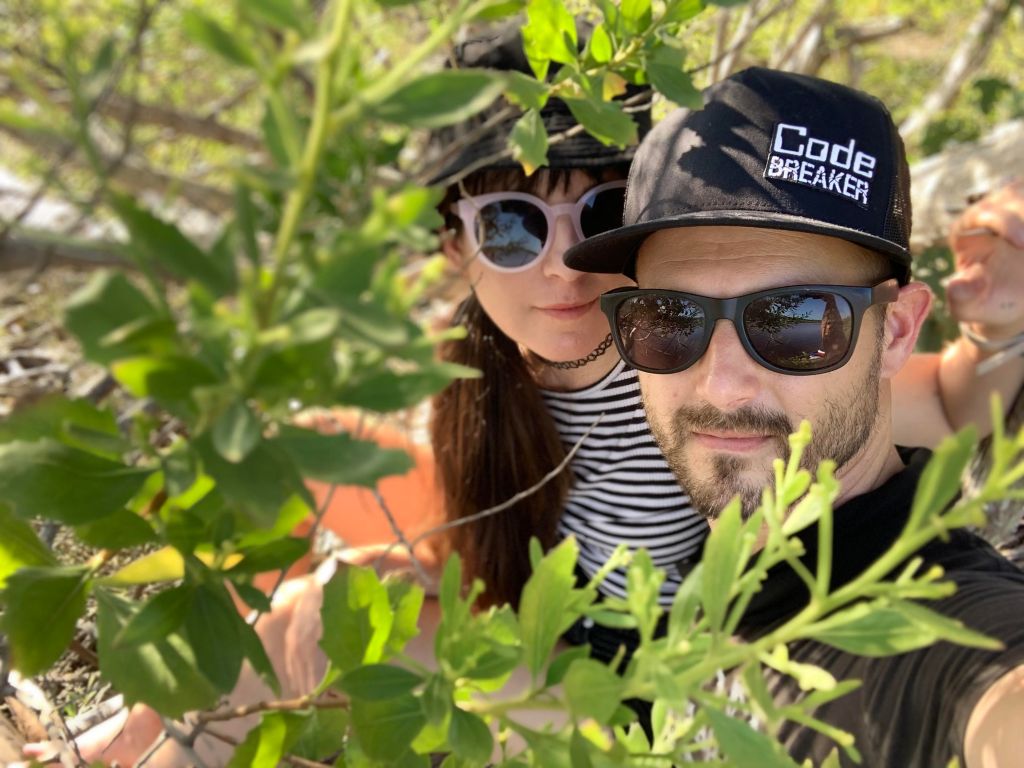


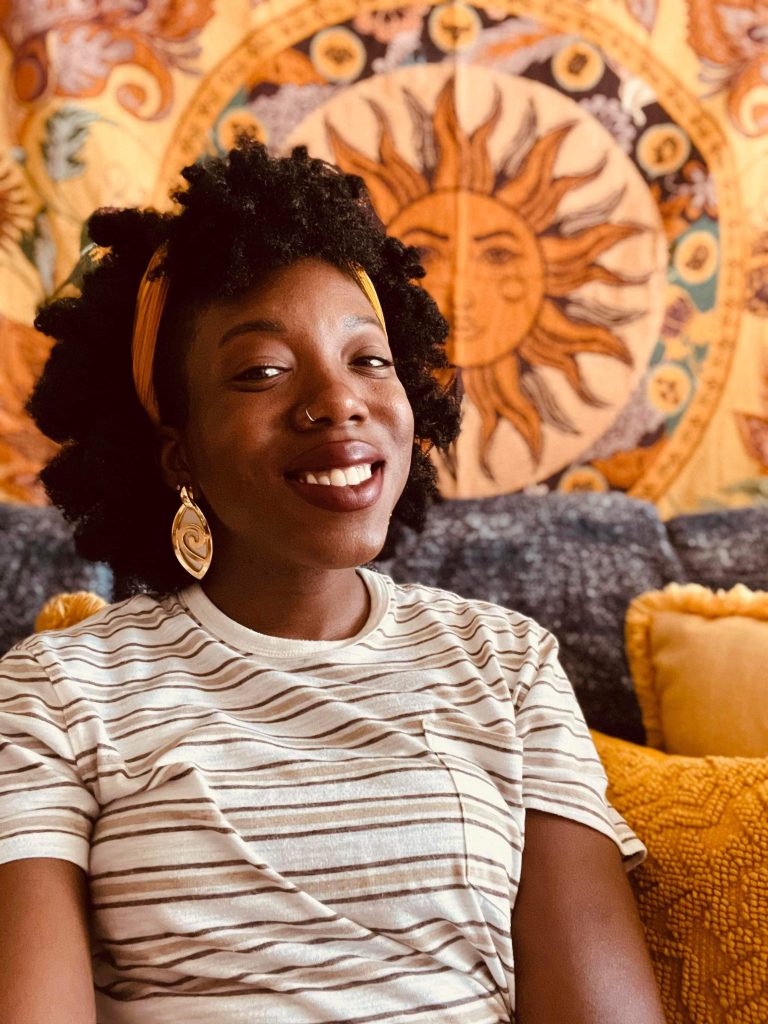





 gracefulatheist.com