Joanna Johnson: Silenced In Eden

Agnosticism, Authors, Autonomy, Book Review, Deconstruction, Podcast, Purity Culture
Listen on Apple Podcasts

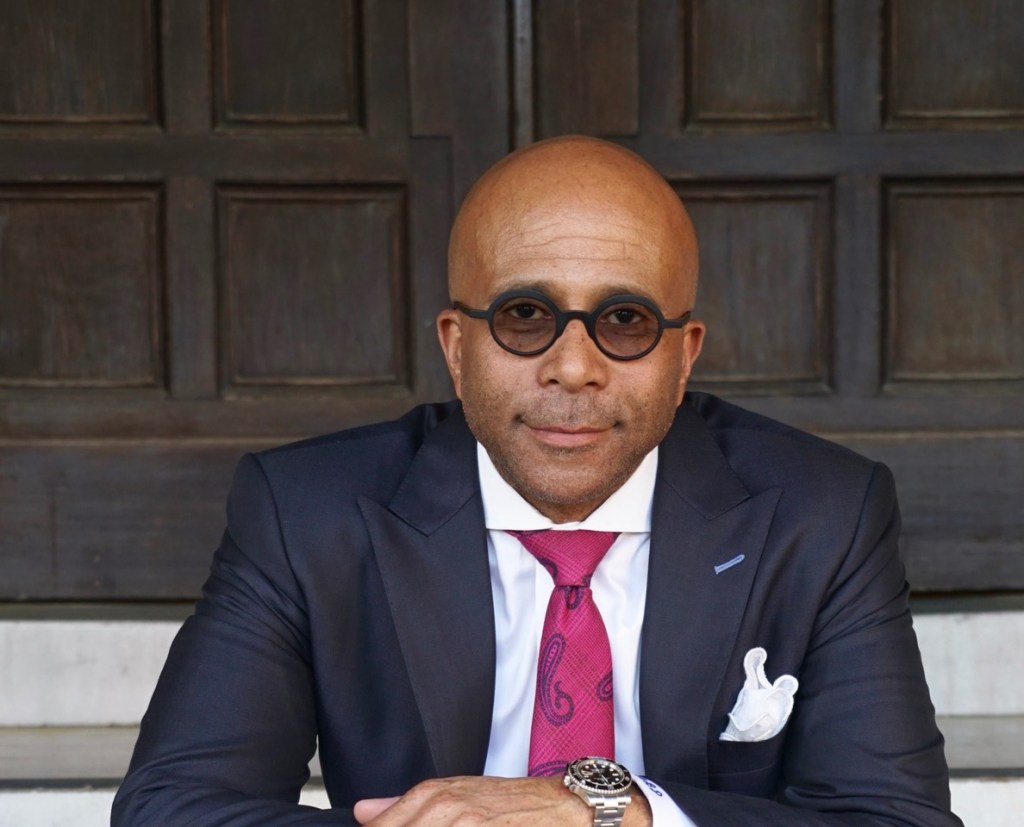
This week’s guest is author Jo Lloyd Johnson. Jo grew up in a “non-denominational charismatic commune”. She spent her adolescence in various churches, but they weren’t as “Spirit-filled” as she was taught they could be.  

She married young and the first years of marriage were difficult–alcohol abuse, church-shopping, and the difficulties that come with having young children. 

She and her husband needed the church to be a place of deep and meaningful relationships. 

“When we started seeing church as a social club [with no depth], we were like, ‘No. This is not what we thought it was…’”

By 2018, Jo realized the Church was steeped in Patriarchy. She was fine with “a woman’s place” until she wasn’t. 

Jo has used writing as a way to process the trauma and emotions she’s experienced and her book, Silenced in Eden, is helping others on their own journeys.

Links

Instagram
https://www.instagram.com/jolloydjohnson/

Silenced In Eden
https://amzn.to/3nBRBYy

Louder Than Silence
https://louderthansilence.org/

#AmazonPaidLinks

Recommendations

Books

Girl at the End of the World by Elizabeth Esther

Undertow by Charlene Edge

Unfollow by Megan Phelps-Roper

#Churchtoo by Emily Joy Allison

Sex and God by Darrel Ray 

Know My Name by Chanel Miller

Podcasts

Dirty Rotten Church Kids podcast
https://www.irreverent.fm/show/dirty-rotten-church-kids/

I was a Teenage Fundamentalist podcast
https://www.iwasateenagefundamentalist.com/

#AmazonPaidLinks

Quotes

“Those who came before can help those who are in it now.” 

“I literally tried to be perfect.”

“We’re either Virgin Mary or a whore. That’s the Bible’s idea of women.”

“I [was] a people pleaser. I [was] a female in a Christian church; that’s what I’m trained to be. From birth.”

“I am not quiet, so that was the problem.”

“I didn’t fit the mold of what the Church told me I was supposed to be.”

“I’m super blessed that when my thread pulled, a different thread for [my husband] pulled.” 

“All Churches are people playing happy, people playing [at]…a facade…”

“When we started seeing church as a social club [with no depth], we were like, ‘No. This is not what we thought it was…’”

“I love the idea of ‘Human helping Human.’” 

“Writing, for me, is processing my feelings.”

“Memoirs were my lifeline at the beginning of leaving [Christianity].”

“Through trauma and through being female and a child, I wasn’t given a voice…I was silenced.”

Interact

Join the Deconversion Anonymous Facebook group!

Deconversion
https://gracefulatheist.com/2017/12/03/deconversion-how-to/

Secular Grace
https://gracefulatheist.com/2016/10/21/secular-grace/

Support the podcast
Patreon https://www.patreon.com/gracefulatheist
Paypal: paypal.me/gracefulatheist

Podchaser - Graceful Atheist Podcast

Attribution

“Waves” track written and produced by Makaih Beats

Transcript

NOTE: This transcript is AI produced (otter.ai) and likely has many mistakes. It is provided as rough guide to the audio conversation.

David Ames  0:11  
This is the graceful atheist podcast United studios podcast. Welcome, welcome. Welcome to the graceful atheist podcast. My name is David and I are trying to be the graceful atheist. Thank you to all my patrons who support the podcast. You too can have an ad free experience of the podcast by becoming a patron at patreon.com/graceful atheist. If you are doubting deconstructing, or de converting, you do not have to do it alone. Our private Facebook group deconversion Anonymous is trying to be a safe place to land. Join us at facebook.com/groups/deconversion Special thanks to Mike T for editing today's show. onto today's show. My guest today is Joanna Johnson. Joanna has written the book Silenced in Eden. That is a memoir of her experience growing up as a dedicated Christian. experiencing sexual trauma is a young child growing up within a family and extended family of Christians trying to fulfill the expectations of being a Christian trying to go into ministry. The purity culture she experienced the sexism and repression were common throughout her life. Jo is an obvious leader and that showed throughout her Christian journey as she was a leader in various places but always was held back. You can find her book Silenced and Eaden on Amazon. Of course, there'll be links in the show notes. But before we begin, I want to read a statement from Jo Silenced and Eaden is meant to be a voice for all who have been silenced and encourage others to speak their painful truth. Because of this $1 from each book sale will go to the nonprofit Louder Than Silence. Louder Than Silence exists to provide survivors of sexual violence with the community and resources needed to gain hope and healing. They focus on paying for EMDR trauma therapy, hosting workshops and retreats providing self care kits and much more. Their biggest dream is that survivors know that they are not alone and have a foundation of support among other survivors as they navigate their journeys together. If you are a survivor of sexual trauma, I would very highly recommend that you reach out to Louder than Silence. And thank you to Jo for making that a part of her book sales. Here is Joanna Johnson telling her story.

Jo Johnson, welcome to the graceful atheist podcast.

Joanna Johnson  2:44  
Thank you. Thanks for having me.

David Ames  2:46  
Jo, you have written a really powerful book called Silenced in Eden, it is a memoir. It's really raw and honest. And we're gonna get to hear a bit of that story as you tell us here today. Thank you for reaching out, first of all for wanting to be on the podcast and I'm excited. You're here.

Joanna Johnson  3:04  
Thank you. Yeah, I love what you do. I love the the thing I love most about this podcast is it's people who have D converted or deconstructing reaching out and like helping other people who are in it. And like that was the whole motivation of writing for me was this idea that like we those who came before can help those who are in it now.

David Ames  3:29  
Yes, yeah, exactly. Jo, since your memoir is your story, we're basically going to go over the book in telling your story. But as we always talk about what was your faith tradition, when you were growing up?

Joanna Johnson  3:41  
Yes. So I did prepare for that one. So I was I am a grand pastor's grandkid. Okay, so my grandpa was a pastor. He started a non denominational charismatic commune. So it was a church but then people also started living together. And just like with both charismatic we had spent praying in tongues, we had my grandma would often see angels worship time would never have like a end to it. It would just go as long as it went. But my grandpa passed away. I was only four. So the church ended when, when his shortly after him. And then we were in the world of Calvary Chapel. And first Baptists and my parents it was kind of like the desert to them, because here they are these very Spirit moving, and then they're in dry.

David Ames  4:52  
Yeah. That's quite a change. Yeah, yes.

Joanna Johnson  4:56  
Very, very big change for them. So when I was 16, I actually stumbled on to a nondenominational charismatic church. Okay. And so I, of course, when I went there, I was like, hey, this feels really familiar, right? This seems like what my parents have been telling me, You're just supposed to be like, because you have very little memory before five. So I didn't really know, I just saw their Christianity and then the Christianity that was in front of me, and it didn't, like, line up the same. So I knew that there was a spiritual NISS or a charismatic pneus to their faith, but I didn't see it in in the church practice that I was growing up in. Right. Got it. Okay. Okay. So when I see that at 16, I like, this is what they've been telling me about and call it like, clamored onto it. And that became my entire life. Yeah. So at 16 and, you know, 16 years trying to find yourself, you're in high school. I had my like, six months of rebellion. And then I was like, Okay, I'm going to be perfect. Yeah, I literally tried to be perfect. And so, charismatic church became my life. I actually did two years of an unpaid internship, where I actually paid to go, like to work for them right or free. paying them also. And that was where I met my husband. Okay. Yeah, so, Christian, Christian. Everything was church. We were doing leadership together. He ends up on staff at church. Okay, we're we're courting or dating. Purity culture, right? Well, we're also Hardy kind of human in love for the first time ever. So we fumble the ball, right? We don't make it to the altar before we make it under the sheets, if you want to say

David Ames  7:17  
yes, yeah.

Joanna Johnson  7:27  
It's funny now, just the last like two years, somebody told me to read the great sex rescue. I don't know if you've read it. So it's a Christian book about like, from a Christian author, but it's talking about how purity culture, Christian idea of sex actually leads at it statistically showed leads to bad sex. Yeah. And like, I think, especially for women, because we're not allowed to have a sex drive in Christian, whatever. And I do try to talk about that a little bit in the book, like, we're either Virgin Mary or a whore. Like, that's the Bible's idea of women. So, now, so my husband and I, you know, we have sex before marriage. And now looking back, I'm like, I'm really happy we did. Yeah. Yes. Because I am a victim of childhood sexual assault, which disconnects you from your body? Christianity, which tells you your feelings are bad and your you are bad. disconnects you from your body. And so as we as me and my husband, at the time fiance, are trying to ignore our body but not doing it well. Right. Right. I it was the first time in my life, I realized now where I was able to connect with my body. Okay, and I realized, like, if I would have done the Christian way of being perfect, ignoring your body's urges, then you say a little promise. You end up half it like you're supposed to then that night, right? It's like, okay, yeah, on, turn everything on. All of a sudden it goes from zero to 100. And so knowing my own personal like trauma, that probably would have destroyed me, it would have destroyed our marriage. I don't know if if having sex and knowing my bodies, whatever, like I'm not ready yet. I don't know how I would have been able to heal. Like I know that would have been more damaging is what I'm saying. Right, right. So now I can look back at our first time with happiness. But sadly, I didn't have that this realization while we were in it, right? Yeah, yes. So while we're in it, we would have you know, it was pleasurable and then it was shameful. Immediately after, right, right. So, so it was. So Anyways, long story short. He, the church has this pre marriage counseling, counseling.

David Ames  10:43  
Yeah. Yeah,

Joanna Johnson  10:45  
exactly. Counseling by people who are not trained to be counselors. Well, the last one is on our last meeting was on our purity. And my husband spills the beans. Right? We are no longer pure.

So two weeks before our wedding, he gets fired. Oh, wow.

David Ames  11:17  
Yeah, you're Yeah, you're so you're already engaged. The church knows that you're getting married? We both are honest. Yeah. And in in marriage counseling, or in premarital counseling, you admit that or your husband admits that you've had sacks? And they fire? Unbelievable?

Joanna Johnson  11:33  
Yes, absolutely. Which, yeah, again, just like, Let's load the shame on us. And, yeah, so we ended up having to, like, move in with his parents, because that was his income. And so it started out our marriage really rough. And at that time, the pastor meets with us and she's like, okay, you can do X, Y, and Z for nine months. And then we'll talk about coming back on staff. And I'm like, Okay, let's do that. I'm like, Okay, I know how to try to be perfect. I will go back to trying to be perfect. Where, where my husband's like, no, like he's mad. He feels like a failure. Also, they took away like, we were in ministry, we were he was on staff, we already had multiple outreach things going on. And they just dropped all of them or took them away and handed them to someone else. So he's really hurt by that. And does it at the time is just like, forget everything, right? So we're on two very different ends of the like, reactionary spectrum. He starts drinking heavily. And I'm begging him to go to church. Right. That's how we start our marriage. Yeah. I feel like I end up pregnant pretty quickly mothering my daughter, well, my husband's still in this angry but not really dealing with it. That's the problem with alcohol. Right, is that you're not feeling the feelings. You're not. He's not deconstructing, he's not deciding what stays and goes. He's just mad. And numbing the mad, right. Sure. All the pain, the pain under it? Yeah, yes. Right. Because anger, I've learned is a second emotion. Right. So there's the hurt that he's hiding from. Um, so we're in that for a while. We start we actually find a it's funny, we call it the church, the church to point out because it was a church, that was birthed out of leaders that left the first church I found at 16. So in the end, it ends up being the same problems, right. But at the time, it's a lot easier to blame the one pastor, right. And even we hear this a lot with deconstructing and de converting. It's like, Oh, you got hurt by one person. But then you're for those of us who have left like, I guarantee it wasn't one person, right? Yeah, it was. It was multiple people it was you start to realize it's a system that is harmful. So at the time, we didn't know that it was the one pastor.

David Ames  14:55  
Sure. Yeah. It's easy to identify that way and I think you've expressed it really well. So far, just to say that purity culture, which is a major theme throughout your whole book separates us from our our bodies and our desires in very natural, normal things, and we're suppressing that. And as I've just been coming to learn that many, many people are affected by that. And even what you were describing that having to go from zero to 100, right off on the wedding night, so to speak. It does not work for many people. No, it

Joanna Johnson  15:28  
doesn't. Yeah, and the heartbreaking is I've heard stories of people who ignore that, like, I've heard both right. I've heard men who are gentle enough to be like, Oh, you're not ready. Okay, well, tonight we won't, and we're going to enjoy whatever level of intimacy we can have. Right. I've also heard the horror stories, where it is traumatizing. And the man is promised I get to have sex on this night. So I will with or without your

David Ames  16:03  
participation. Yeah. It tends to be better with the participation.

Joanna Johnson  16:11  
Yeah, on all blends, right. Yeah, for all people involved. And that's where, like, I know, with my background, that that would have destroyed. And it's funny because my husband is the most overly aware of my arousal and feelings. And I would joke with him that he was more connected to me than I was.

Speaker 3  16:35  
Oh, interesting. Okay, yeah. And not just physically like,

Joanna Johnson  16:39  
he will tell me when something's about when something emotionally is bothering me. Because I'll start to get I am so disconnected from my feelings that it usually takes a week, something will happen and I'll like ignore it or not realize, like that, that bothered me. But I'll start to get short with people. I'll start to get irritable, I'll start whatever. And he'll be like, Jo, something's something's going on. Take a moment figure out what's under neath here. Something hurt your feelings or something's wrong. But so yeah, I would just joke that he is more connected to my feelings than I am working on that though. Yeah.

David Ames  17:24  
Day to day by day, okay.

Joanna Johnson  17:34  
So anyways, we ended up back at a church. And he spent five years stone sober, starts preaching at church, okay. We're at a Calvary Chapel at the time. starts, he'll, he'd preached like, you know, pastor wants a day off or whatever. And then there was a church close by, that had a pastor situation where they needed a pastor. So we go there a couple of times to oh, I'll share this Sunday. Well, they ended up offering him a pastor ship. Okay. As well, yeah, I mean, fairly, it was like, you know, we interviewed for it type of thing. went to dinner with the elders, blah, blah, blah. But it's the Calvary Chapel. And we I grew up nondenominational, right? Where women are, at least pretending to be equals. Right. Okay. Are not head pastors, but they can be pastors, right. They can share at the pulpit, they can help lead a ministry. So like, at 16, I was leading a small group, and I'm trying to think if I ever I mean, I pray on the mic. I don't know if I ever liked it a sermon on the mic. I actually, that's I did I did do a sermon on the mic to a smaller group anyways.

David Ames  19:17  
But you were you were a leader in the church, though. You were a leader.

Joanna Johnson  19:21  
And, and a leader in the church and and acknowledged, I guess, yes. And so he's offered this pastor ship at a Calvary Chapel. And I remember this conversation with him. I'm like, Would I be able to like, even share my testimony? Like, from the pulpit? And he's like, I don't, I don't know. Maybe not. And so the book is Silenced and Eaden, right. So the whole theme is that I had a hard time voicing my feelings voicing for myself. So he's literally saying If I take this job, you will have no voice. Right? And he so he says, I don't think so. Can you? Like are you okay with that? And I'm a people pleaser, right? I'm a female in a Christian church. So that's what I trade.

David Ames  20:18  
Yes. People from Chinese. Yes. Yes.

Joanna Johnson  20:21  
From birth I come out. Yeah. So I couldn't answer him. Because I knew the answer. I'm supposed to say right. The people pleasing answer of Yes, of course, babe. I'm totally fine with that. But in me, I was like, screaming No, no, I'm not okay with that. No, you can't lead and lead without me. You can't tell me to stay silent. And it, it took me a moment to be like, okay. Okay, what do I say here? And for me, that was the little string that just unraveled everything. Okay. Yeah. That was the moment where I was I No, no, you can't I cannot okay with that. No, I'm not okay, that this is normal in any church. No, I'm not okay, that women are expected to watch the children and help you right sermons because I had written most like, helped him work on most of them. And then, okay, I have no voice like, yeah, I was like, No. And so yeah, it was interesting. It was like, an eye opening of the patriarchy of my whole life. Okay. I had been at until that point, I was fine with a woman's place, right? I was, I mean, for me, I am really nurturing. So the idea of like, oh, you get to be a mom, like, okay, that's fine. I love people. I love taking care of people, I can gladly be a mom. I am not quiet. So that was the problem, right? In the what the church I went to when we were like 16 women were a lot of, I would say they were arm candy. Like they would be able to pray and lead and whatever. But they were was it was Southern California. They were gorgeous. They wore high heels. Then there was me where I was like a punk rocker, I had a studded belt. And I would jump in the I would jump in a mosh pit. Like, I didn't fit the mold of what the church told me I was supposed to be. But I could definitely be a nurturing mom, like, I could do that. And so I do feel like for me, when I got married, it was like this. I got mold. I was like, okay, I can try to fit in this right? I can be a mom, I can be supportive. I can be a people pleaser, like I can fit in this mold. And that was the moment where like, the mold broke. I can't do this anymore. Yeah, we're done. And I'm super blessed that we, when my thread pulled a different thread for him pulled.

David Ames  23:28  
Oh, okay. I want to pause just for a second, because one of the things I want to mention is how common this message is that strong personality women who have natural born leadership qualities, and they find themselves trapped in you know, you can do church, you can do children's ministry, or you can, you know, do director of education, but you can't preach in front of the congregation. And it amazes me, especially outside of the bubble, right on this side of deconversion that so many denominations are losing half of their talent pool. Right off the bat, like I just think tactically, it's stupid. And then obviously the devastating consequences. If you are in fact a woman and you have these leadership qualities and you feel just completely contained and unable to use those gifts to use the Christianese. Right. It's absurd. It's a complete absurdity. So

Joanna Johnson  24:28  
it is and it's also crazy, because you said half but statistically, women are there's more women in church than there are men. Right. Good point. Yeah. So it's funny. It's like you have more women, but those are the ones you want to say they have no place so they have no you know, yeah. So that's a funny reality.

David Ames  24:58  
I digress there so you both are Pulling on different strings, but the sweaters are unraveling.

Joanna Johnson  25:04  
We're unraveling. So for him, he did a sermon on I'm not sure exactly what it was. Maybe it was the Holy Spirit. I just remember he got really into the word spirit, and, and hell. And he had an I do put this in the book, he had an experience where he goes in, and he was at work. He was doing insurance claims to get to go into someone's house who had a flood. And the person was clearly a drug addict. The house was in decay. Like, there was trash all over the house. It was. And the guy was looked nearly skeletal like he's just wasting away. And my husband was like, This guy is in hell. Yeah, like that. That's hell, I don't know how else to explain it. But that's hell. And so he did a deep dive into the word hell. And literally everything that love wins from Rob Bell, like II without reading the book came to all of the same like, this is how the Bible explains how the hell isn't even really in the Bible.

David Ames  26:26  
It really isn't a thing. Yeah.

Joanna Johnson  26:30  
So that was one of the things for him. That was like, Wait a second. And it was funny, because during that, that time, it was like 2018. We would have like, I would share this, you know, this doesn't fit in my Christianity anymore. It'd be like, Well, what about this? This doesn't make sense. And then I'd be like, Wait, well, you can't question Oh. And then I'd be like, Wait, that actually makes sense. And then the Spirit, okay. There's actually no diff difference of the word holy spirit or spirit, our spirit. And so it was just one of those things where it was interesting, he would have one thing that had bothered him, right, that didn't sit in his gut. And it would come up, and then I would be like, Wait, you can't question that. And then I listen. I'm like, Oh, that makes sense, actually. Right. Vice versa.

David Ames  27:24  
You both were sliding down that slippery slope together.

Joanna Johnson  27:27  
Well, it was funny, because there was definitely times where I'd be like, I'd grab him and be like, catch up. Now, yeah. But yeah, so clearly, he decided not to become a pastor. And for him, at that time for him, the we were at a church. The pastor who was was there had had some inappropriateness with a younger secretary or something. Okay. Something where the powerplay would be unethical as well than just an affair, right. And I don't think it was an actual affair. But the point was that something was icky. And the pastor left. And the congregation was really sad and lost. And my husband went to the elders is like, you know, I don't see why you guys are still having like a Sunday service. Like, why don't we go back to like a house church, try to build this community back where we heal, whatever hurt has been done. And, and then we'll start church, like, once we feel like, that process is over. And they were all like, no, we want to have our Sunday service. We want to print our pamphlets we want to, and for both me and him were like, This is playing church. Yeah, this is a show. There's no real depth. There's no community here. Is this what church really is? And so it was that realization of like, okay, for them churches, this is a band that shows up, and people fill in a room, sing a song, here's something we like, right? Well, we want a younger pastor, because we want you to bring some life. Okay, we want you know, and it's just this. There was just not the depth anymore.

David Ames  29:31  
You passed over very quickly that, you know, he didn't become a pastor. But but in the book, I think you really described that both of you are pretty dedicated to ministry, you that's like your vision for your life is ministry. So my question is, when you made that decision, did you think you would have already started deconstruct enough that it wasn't traumatic, or was it or was that a loss of a sense of like your purpose in life at that point?

Joanna Johnson  29:58  
Yeah. So when we started, do deconstructing it was a? Yeah, I think we had already gotten to the point where this doesn't feel right like this, this, this church is not just that this church is broken, maybe all churches broken. There we go. Okay, got it. So once we had that, yeah, once we had that piece of like, wait, I think that this church is showing us what all churches, all churches are people playing happy people playing a hole. And it's actually maybe it's really just a facade, and there's not the depth that we want it to have. Right? Because yeah, the reality was for us. Church was the deeper, like, we both came to church and like, got dedicated when we were in high school. And it was our whole life. And it was where we had friends, it was where we had these emotional experiences. So it was, for us always was relational. Like, we wanted to do ministry, because I mean, all these young people that we care about are dying and going to hell in our minds. So we need to save them all. And there was I'm not sure if it was on your guys's group deconversion anonymous, it probably was, but there was one about it was the social media post about if people, people really thought if Christians really believed in hell, then they would constantly like it would break their hearts. Yeah, something like that. And I remember being like, that was me. Okay, I was, I was the Christian who literally like I remember, staying certain nights, staying up until two in the morning crying over people that I thought were gonna go to hell. I was the person who was like, I can't let these people I care about or anyone go to hell. Because I hate people in pain. Like, I would rather be the one in pain. Let me have the pain, don't let them have the pain.

So I think that for my husband, Josh and I, we, what what we liked about Christianity that we had was the depth, the interconnectedness. So when when church became this plastic shell of a I don't know what you'd call it, like a social club. Right? When we started seeing church as a social club, we're like, No, this isn't what we thought it was. So I don't want to lead something. That's that. Right. Okay. So it was a lot easier to leave the idea of ministry at that point? Oh, yeah, I do think that there's been, for me specifically, that is something that I still feel the loss of. But it's been like, sometimes there's things where you're like, oh, I don't want that. But then you don't realize like, what you're missing now? Sure. I don't know if that makes sense. But it's, I guess I didn't feel the loss while deconstructing, but I feel it now.

David Ames  33:34  
Yeah. Yeah, we talk a lot about that, you know, there are good aspects of church, right. It's the built in community, you know, people that are there who care about you when you're sick. Hopefully, they come and bring you food and you know, ask about your children and maybe babysit for you. And all those things like having that interconnectedness is really important as a human being. And there are not great solutions for that in the secular world. So like, there's definite aspects of that. And then that does just what you're describing, again, your natural talent as a leader to want to be a part of that to foster more community to bring people together. And maybe not having the venue to do that in a secular world is a loss. And we can we can acknowledge that and recognize that that's, it's, it's sad.

Joanna Johnson  34:21  
Yeah, looking at. It's interesting once the cards fall, and you look back, and you can find certain points of your life where you're like, oh, that never sat well with me, or that's why I did that. And so now I look back and I'm like, Oh, well, that's why. When my husband and I went to the church, 2.0 they were doing, we started, we were in a small group. And the small group wanted to go over Sunday's notes. So we'd hear a sermon on Sunday. And then we talk about it on Tuesday, whatever. Sure. And I remember going to the, the leader and I was like No. This strong dominant woman was like, No, we shouldn't do that. And I asked him, I was like, why don't we all take turns and share our testimony? Why don't we all take turns and share part of our life and why we're Christians. Because I want that connectedness I want to learn about these people sitting in a room that I'm trying to have, quote, fellowship with, right? I want to get to know them. I don't want to talk about the pastor's five point message, I want to get to know my person next to me. And, and he let me do that or let us do that. And the people who are in that group have said, like, that was the best small group we ever have been a part of. And so it's interesting. Now I'm like, Oh, I wanted that I saw the surface, and knew that there was surface SNESs already and was trying to find depth. So it was like, I already knew that something was off. Right? I already knew that there was something wrong in the church, I was just trying to tweak it to still make it work for me.

David Ames  36:09  
Right. This also reminds me of what I call church shopping, that you start, there's some nagging thing that's missing, and you start to look around like, Well, maybe it's over here, or this denomination or this tradition. And you're just you're looking to fulfill the thing that, you know, ought to be there but isn't add it that is the beginning of the end, right. It's, it's going to end in tears.

Joanna Johnson  36:32  
It can be it's interesting when my so you know, I said my grandfather's church ended. I was really young. And then we would we went to Calvary Chapel. We went to first Baptist, like, during that entire time, my dad was desperately church shopping. Okay. Okay. He would like we would have the church would go to and then on a random Sunday, he would just show us up at some other church because he was not happy. And, and I don't know if he's been happy in a church since my grandpa's church. Right. But he's still at church.

David Ames  37:10  
I understand. Yeah. But I imagine that nagging feeling is still there. It might be if he were aware of that unable to articulate it.

Joanna Johnson  37:19  
Right. It might be. Yeah, that's an interesting idea. Maybe, maybe you're right. Maybe it's still there. And he's just a little more resilient in his faith than I was some.

David Ames  37:32  
Yeah, yeah. Yeah.

Joanna Johnson  37:41  
So yeah, we left that behind. And I, it's interesting. I'm trying to think when like, it was really done. Like, deconstruction is such an interesting thing. And it wasn't until really recently that I would even say deconversion. Okay. Yeah. Because yeah, it was. It was. And there's also the level of like, coming out of the closet. Right. It's deconstructing is like, Okay, well, you're just asking questions. You're still a Christian. You're still with us. You're still in our tribe, you're still a part. And hopefully, you'll come back to the truth. Right. deconversion is like I, you're out?

David Ames  38:37  
Yes. Exactly.

Joanna Johnson  38:39  
Yeah. Yeah. And I even recently, I had that like, Well, Ted, what are you a person? I'm a first time well said. Yeah. Yeah. So it Yeah. And recently, so there was a time where I was like, Okay, I'm done with the term Christianity. I feel like it's done harm to me. I feel like it's done harm to many cultures. And my husband was kind of like, yeah, I understand that. But wouldn't tell me where he was at. And that was, that was hard. I was like, okay, am I alone in that? Are we are we good? And then, very recently, he was like, yeah, no, I don't think I would call myself a Christian either. And I was like, Oh, cool. Okay, we're on the same page. I thought I had just gone all the way down the hill, and you were still up, right? They're not gonna move. Yeah, so for me, I'm really glad that we rode that ride together. It wasn't super easy. Because there like I said, like there were times where he'd question something and I wouldn't, or he would want to go to church on you know, Easter and Christmas or at one point he was talking about like going once a month just because this is These stories that we grew up with, it's part of our culture, right? It's, my parents are still Christian culture, our culture is Christian, basically. And so he was like, I don't know if I'm okay with like, my kids not knowing Adam and Eve and Noah's Ark and. And I was like, Well, can I tell you why each one of those I don't want my kids to know? I'm okay with my daughter's not hearing that Eve was the reason sin came into the world. Yeah, I'm fine with that one. I'm okay with my kids not hearing that. God flooded the whole earth and only saved this handful of people. Like I'm, I'm actually totally fine. Not having any of that. And, yes, that was a funny time where he was like, and it was, it's so ironic to me to because for those four years of him, self numbing and me, pulling him into church, like I was the one being like, Come on, baby. This is our raft. This is our safety net, like God is everything. And and so it was ironic when the shoe was on the other foot, and he was like, Jo,

David Ames  41:24  
just once in a while. Right.

Joanna Johnson  41:28  
But yeah, as of now we're both I guess we'd call I'd call. I think we'd say agnostic. I I do think that the secular humanist is probably more where I would land. I love the idea again, like with this podcast, I love the idea of human helping human.

David Ames  41:51  
Yes, yeah. Yeah, the labels are not important. Like, you know, it's, it's sometimes helpful as a shorthand to talk to one another, but but really, we're just talking about caring about people. And it really is that simple. And like, we make it too complex. And I think that the side of the podcast that is important is embracing your own humanity. So we've talked about in this conversation, you know, one's own sexuality, your own desires, your connection to your body, all of those things that have been denied you through your life. I think that part's important. And then whatever label you put on, it just isn't so

Joanna Johnson  42:28  
great. I definitely agree. And it's funny, on this side of deconversion, because, like, in my childhood, upbringing, an atheist was like, Oh, yeah. Like, I remember my dad talking. At one point when I was I think I was in like, fourth, fifth grade, they started doing evolution at school. And, surprisingly, at the time, I was at a public school, my parents had shifted gears a little because at first, we were homeschooled. And so because I was at a public school, and they tried to get me out of this, the science of evolution, they asked the teacher even if I could do something else, right, because evolution is evil. So when the school said No, his work, my dad's work around was putting on young earth movies when I got home. Okay. I would literally go to school, right? And then at home, be given school of just young earth school. And so I think it was in that time when I first heard what an atheist was, of course, it's from a Christian idea of an atheist, where's your, they don't believe in anything? They hate to God. And so it is a funny because now I'm like, like, especially with this podcast, like, like, Well, this looks a whole lot more loving and kind, but this is an atheist.

David Ames  44:06  
Yeah. That's what we're playing with. I mean, that's why, you know, I've said many times, you know, I could have called this the graceful humanist, you know, like, but it was kind of intentional to say, you know, to break down that stereotype a bit. And, you know, like I I've said to what, I meet somebody, I don't go Hi, I'm an atheist.

Joanna Johnson  44:28  
Turn around. Yes, it turned around because when you're a Christian, it says, Hi, I'm a Christian.

David Ames  44:33  
Exactly, exactly. Yeah. If someone does ask I will talk about secular humanism and you know, if we get deep then I'll start talking about secular grace and you know, my conception of that that can

Joanna Johnson  44:43  
I love it I love that you did choose atheist I because I think there is like, taking what Christianity for for those who are de converting has like tainted and turned it into something evil, right. And being like Hear this is it not? It's not evil. It's not scary. It's not bad just is yes

David Ames  45:15  
Well, you said very kind things about the podcast what other resources, podcasts or books or people? Have you found really helpful throughout this process?

Joanna Johnson  45:24  
So when I first started looking into my specific upbringing, I started obsessing about like, books on people leaving and cults more specifically. So I read girl at the edge of the world and sorry, girl at the end of the world under tow, unfollow, so once that come to mind, some some books on people who left, which was why I was like I should I writing for me is processing my feelings I am so I'm so disconnected from my feelings that it's easier to type it or write it and, like see it on paper homos? Because I have a hard time seeing it in myself. But so when I started writing for my own therapy, if you want to call it, I was like, I should put this out because memoirs were what literally, like, were my lifeline at the beginning of leaving. Yeah. So those with some books. And then for podcasts. I'm like, I guess I'm picky. Yeah. I really like dirty rotten church kids. They're like my age group. Sadly, this is their last season, so I'm going to have to find something else. Yeah, this this is a podcast. I do listen to. I'm trying to think of as any other Oh, the fundamental. I grew up of Christian fundamentalists. Yeah, yeah. Oh, sorry. I was a teenage fundamentalist. Yeah, so some, but a lot of times, I'll just do books. Hashtag church to was when I read recently. Yeah, that one was really good. Gets into purity culture gets into how women are treated. And then if for specifically, like my book talks about the sexual abuse side, so Chanel, Miller's No, my name was it is an amazing book that I would strongly recommend for anybody who either wants to understand what sexual trauma does to the brain and a person or who have lived that. That book was amazing. But yeah, a lot of times I'll do books, like Audible books on audible or my like, go to Yeah, and I am on deconversion anonymous. Excellent. Recently, I read God and sex by the same guy who did the god virus. Okay. That book was like, blow my mind. Okay, okay. In the book, I, at the very end, I talked about how like, I felt like I hit a point where I stopped deconstructing everything. Like before, it was like I had a sledge hammer, and I was just pulling down everything, right? And I was like, hmm, maybe I'm at a point where I can like, get a broom. Start cleaning this up. Yeah. Okay. All right. And then and then I read that book, and I was like, okay, maybe I need another sledgehammer.

David Ames  49:04  
There's a bit more.

Joanna Johnson  49:07  
A little more cultural, you know, stuff that there's stuff that was like, clearly church, right? And then you can deconstruct that and then it's like, oh, okay, maybe there is some validated this gender stuff or this. Yeah, just the culture. And then I'm like, Oh, maybe I want to maybe I want to pull down some of this stuff, too. Exactly. That's where I'm at.

David Ames  49:32  
Okay, yeah, yeah, it is definitely a process and it can go on for a while.

I definitely want to give you a minute to talk about anything about the book how people will find the book. Let's just Let's just promote it.

Joanna Johnson  49:51  
Okay. Yeah, so the book is silenced and eaten. The books somebody people have asked me like why silence didn't even know So I was born in a Christian commune where they separate themselves. They tried to build their perfect Eden, perfect idea of God again, right? And through trauma, and through being female and a child, I wasn't given a voice. So as that's why it's silenced in Eden, I was silenced. And they thought it was perfect. They thought it was a garden. I explain Christianity or Christianity as like a perfectly kept garden, where everything has its specific place. And then realizing at one point, like, I'm not a garden, I'm kind of wild. Maybe I'm the forest.

David Ames  50:48  
I love that analogy.

Joanna Johnson  50:52  
So yeah, so yeah, the book talks about purity culture, it talks about patriarchy. For me, I spent my first 35 years being told what to do being preached at. So the book is not that, right? I'm not, I'm not saying this is what you should believe I'm saying, This is my, like, what I went through, this is my path of life. These are the things that when I was in Christianity didn't fit didn't seem to work didn't feel right. And then these are the things that I'm starting to be like, hey, this feels better. Hit this sits better. And so I try very much to be like, this is where I'm at. And hopefully, the reader can find things that resonates with them. But I'm not going to tell you what to think I can tell you, if there's a heaven or hell, that's that's you, like that's on you. But I'll tell you my experience with deconstructing hell, right? Yes, the book is on Amazon. So I partnered with louder than silence. Louder Than silence is an organization that fund raises to help women who have been sexually abused, get get EMDR therapy, so they pay for therapy. And they also do workshops. So I'm a I'm a part of one that starts actually just started. And the whole idea of the workshop is for victims to help other victims. So it's all ran by victims. And they have, you know, we talked about feeling your feelings, okay. Today, we're going to work on what emotions are coming up and how you know, so it's all but it's all human helping human? Yes. Yeah. And so for me, like when I that was when I was like, Okay, this is the organization I knew when I put the book out, like, I'm talking about a crazy subject, I want this to help that subject, I want to do something good with my messed up story, right? More than just promote myself or whatever, I want it to do something good. So $1 for every book goes to that organization. If you are a woman out there who has been victimized and you want to heal louder than silence has workshops, we meet for 12 weeks, you will meet other victims completely anonymous. And then they also will help with the cost of EMDR therapy.

David Ames  53:47  
That's awesome. Jo Johnson, you are the author of silenced in Eden, I can tell the listeners that you know the story is is very raw and, and real. And I appreciate that. I think just like what we're doing here on the podcast telling your story is so powerful people are going to read that and especially those who've been through sexual trauma will recognize themselves and hopefully gain some healing from that. So thank you, Jo, for being on the podcast.

Joanna Johnson  54:14  
No problem. Thank you so much for having me.

David Ames  54:22  
Final thoughts on the episode. As you could hear, Jo is an obvious leader and an outspoken voice to help people. I'm always amazed at that women who are held back who have a real sense of ministry in their lives and because of the sexism and patriarchy within the church are limited to the roles that they can take. Even her describing writing her husband's sermons is just amazing to me, and then not being allowed to speak in the pulpit. One of the core values of the pod Cast is rigorous self honesty. And my belief is that when we are deeply honest about ourselves and vulnerable, that that helps others. Jo exemplifies that in telling her story of the sexual trauma she experienced as a child, and the impact that that had throughout her life, as well as the impact of purity culture on her and the people that she has talked to that have been affected by purity culture, as well. I know many of the listeners might be in that category, if not in the sexual trauma category, as well. So I want to thank Jo for being vulnerable and telling her story, I think it's going to help many, many people. Again, I want to point out that Jo says that $1 From every book sale goes to louder than silence that helps survivors of sexual trauma and gives them a community to build from, there will be links in the show notes that you can find that if you yourself, have experienced sexual trauma, please reach out. The book is Silenced and Eaden. It is fantastic. I couldn't put it down. I read a lot of stories. I don't say this about every guests book. This was great. It was compelling. Jo really has a way of letting you feel the experience that she had. I want to thank Jo for being on the podcast and for being so vulnerable and telling her story. Thank you, Jo, so much. The secular Grace Thought of the Week is about that rigorous self honesty. If you've ever been in a 12 step program, you're going to recognize that phrasing. This is a core value for me. And I want to differentiate it from the way that truth is often used as a cudgel within Christianity, or even in the atheist community. There's a way of using the truth to beat people over the head as opposed to helping them to thrive. And so juxtapose that with what I'm trying to describe here about a rigorous self honesty, truthfulness with oneself. I often quote Alice Greczyn, who said that she stopped being good at fooling herself. And I love that I want us all to stop being good at fooling ourselves. And it begins with rigorous self honesty. And this applies very deeply for those people who are in the middle of their doubts, the middle of deconstruction, who are counting the cost of what deconversion might cost and terrified. All I can say is that within the sanctity of your own mind, be honest with yourself. The truth, in that sense, will set you free. Next week's guest is Josh, who goes by after God's end on Instagram, or lien interviews, Josh, definitely check that out next week. Until then, my name is David and I am trying to be the graceful atheist. Join me and be graceful human beings. The beat is called waves by MCI beads. If you want to get in touch with me to be a guest on the show, email me at graceful atheist@gmail.com for blog posts, quotes, recommendations and full episode transcripts head over to graceful atheists.com. This graceful atheist podcast, a part of the atheists United studios Podcast Network

Transcribed by https://otter.ai

Bart D. Ehrman: Armageddon

Authors, Bloggers, Book Review, Deconstruction, End Times, Hell Anxiety, Podcast, Podcasters, Rapture Anxiety, Scholarship
Listen on Apple Podcasts

This week’s guest is Bart D. Ehrman, the James A. Gray Distinguished Professor at the University of North Carolina at Chapel Hill. His new book is Armageddon: What the Bible Really Says about the End.

Is the book of Revelation a prophecy of future catastrophe? Is it a book of hope? Or is it a book of violence and wrath?

In Armageddon, Bart delves into the most misunderstood—and possibly the most dangerous—book of the Bible, exploring the horrifying social and political consequences of expecting an imminent apocalypse and offering a fascinating tour through three millennia of Judeo-Christian thinking about how our world will end.

Bart’s work has been a part of many of our deconstructions. In my interview with Bart, we get to hear his faith transition. We learn from his New Testament expertise. But most surprising of all, we learn what a nice guy he is.

Quotes

Even if you think the Bible is inspired. Even if you think this is a book written by God in some way…it means God inspired a book; he didn’t inspire a jigsaw puzzle—which means, you read it like a book, and if you read a book, you don’t cherry-pick it.

The argument may seem far-fetched, but it is the kind of reasoning meant to appeal to people who are ready to be persuaded,
not to skeptics.

Apocalypses are first-person narratives of highly symbolic visionary experiences that reveal heavenly secrets to ex-
plain earthly realities.

Far more people revere the Bible than read it

Parts of our Western cultural heritage that are driven by traditional apocalyptic thinking have encouraged
fatalism and inaction in the face of our crises.

The overwhelming emphasis of Revelation is not about hope but about the wrath and vengeance of God against those who
have incurred his displeasure.

I just got to a point … it wasn’t a big thing like John had a different christology from mark
it wasn’t that kind of major thing.
it was more like, “this little detail, if I am just being honest with myself and surely god wants me to be honest with myself
and if it turns out that I am right about this if it is true then god wants me to know the truth, this little detail is wrong.
I don’t want it to be but it is a contradiction.

Once I came to that little chink in my armor then I started realizing that the bible might not be inerrant.
It opened my eyes. It took a long time. It was a very painful process for me to move away from that.
Because I was afraid of going to hell, I was afraid of losing my community, I was having arguments with my mother,
This is not good.

Within Evangelical tradition truth is really important.
There is also a sense within the evangelical tradition that there are ways to find the truth.
It is not just believing something.
When you have students studying it at a serious Evangelical school they are taught you have to look for the evidence
but once you open up the door to evidence you also open up the door to people disagreeing.

This is not a book of hope it is a book of violence

“The thing about fundamentalism is that nobody calls themself a fundamentalist. The fundamentalist is always the guy to the right of you.” 

“I started thinking [in college] that the world’s a bigger place than I had imagined as a fundamentalist Christian.” 

“If you want to understand the Gospels, you have to understand how ‘ancient biographies’ work. They don’t work like our biographies…”

“The deal is: Jesus died and his disciples started convincing people that he was raised from the dead, and the people they convinced, convinced other people who convinced other people who convinced other people and this goes on for forty or fifty years.”

“Most people don’t read the Book of Revelation; it’s just too bizarre and weird. They can’t make heads or tails of it, so they give up. The only people who really delve into it, tend to be fundamentalists and conservative evangelicals who are using it to show what’s going to happen in our near future.” 

“When you get to the Book of Revelation, there’s nothing about ‘giving and service.’ It’s about destroying the enemy. Forget ‘Turn the other cheek.’ Forget ‘Love your enemies.’ You hate your enemies and you hate what they do and you punish them.” 

“God tortures people in the Book of Revelation and everyone gets thrown into a lake of burning sulfur, [and then] brought back to life so that they can be destroyed in a lake of fire.”

“[Apocalyptic literature] is its own genre…When you’re reading a science fiction novel, you know you’re not reading a front-page article in the New York Times. It’s a different genre…An apocalypse is an apocalypse, which means you have to know how apocalypses work if you’re going to understand any one of them, including the Book of Revelation.” 

Links

Website
https://www.bartehrman.com/

Blog
https://ehrmanblog.org/

Misquoting Jesus with Bart Ehrman Podcast
https://www.bartehrman.com/podcast/

#AmazonPaidLinks


Interact

Join the Deconversion Anonymous Facebook group!

Deconversion
https://gracefulatheist.com/2017/12/03/deconversion-how-to/

Secular Grace
https://gracefulatheist.com/2016/10/21/secular-grace/

Support the podcast
Patreon https://www.patreon.com/gracefulatheist
Paypal: paypal.me/gracefulatheist

Podchaser - Graceful Atheist Podcast

Attribution

“Waves” track written and produced by Makaih Beats

Transcript

NOTE: This transcript is AI produced (otter.ai) and likely has many mistakes. It is provided as rough guide to the audio conversation.

David Ames  0:11  
This is the graceful atheist podcast United studios podcast. Welcome, welcome. Welcome to the graceful atheist podcast. My name is David, and I am trying to be the graceful atheist. I want to thank my latest Patron on patreon.com. Susan, thank you so much for supporting the podcast. I also want to thank our ongoing supporters, Joseph John Ruby, Sharon Joel, Lars Ray, Rob, Peter Tracy, Jimmy and Jason, thank you so much for your support. We're doing interesting things with the support money. We're using the Zoom account for the Tuesday night Hangouts. We had to change to a new recording software as a number of the COVID era are locked down era tools that were free are no longer free. We're putting that support money to good use. If you find yourself in the middle of doubt and deconstruction, you do not need to do it alone. Please join our private Facebook group deconversion anonymous. You can find us at facebook.com/groups/deconversion. On today's show, my guest today is Bart D. Ehrman, the UNC Chapel Hill New Testament scholar who has written a number of popular books. Many of my guests have talked about how books by Bart Ehrman started their deconstruction process. Bart's new book is Armageddon. What the Bible really says about the end. This was a fantastic conversation I really enjoyed having Bart on, he turns out to be just a very nice person, as well as being a challenge to the evangelical perspective of Christianity. Even as a non believer, what Bart pulls out of the New Testament is an interesting perspective on the Jesus of the Gospels versus, in this specific case, the Jesus of Revelation, which is a God of wrath and violence. Either way, it is a challenge to modern evangelicalism. Here is my conversation with Bart D. Ehrman.

Welcome to the graceful atheist podcast.

Bart D. Ehrman  2:31  
Well, thanks for having me.

David Ames  2:33  
Bart. I know I'm not going to do you service here on your CV, but you are the best selling author of a number of books, including Misquoting Jesus, Jesus before the Gospels, the triumph of Christianity. Your new book is Armageddon, what the Bible really says about the end. I'd like you to maybe just mention your work at the University of North Carolina and what your academic credentials are.

Bart D. Ehrman  2:55  
Yeah, sure. So after high school, I went straight to Moody Bible Institute and had a three year degree there. And then I went to Wheaton College, where I majored in English, actually. But I took Greek there and decided to go to Princeton Theological Seminary, where the expert in Greek manuscripts taught Bruce Metzger. He was a world expert in this and I wanted to do that as an evangelical to study Greek manuscripts. Yeah, I did my master's degree there with him. I wrote a master's thesis under him. And then I stayed and did my PhD there and wrote my PhD dissertation with him. And so my credentials are I have a PhD from Princeton Theological Seminary, in New Testament studies, with a dissertation in the field of analyzing Greek manuscripts. So while I was finishing my PhD, I got a position teaching position at Rutgers University in New Jersey, and I taught there for four years. Then in 1988, I came to Chapel Hill, North Carolina. So now I teach at UNC Chapel Hill. I've been here since 1988. And I teach both undergraduate students usually introductory stuff dealing with the New Testament or the historical Jesus or the Gospels, and I teach PhD students, usually, some New Testament stuff, but a lot more on Christianity after the New Testament period, with mainly the second and third centuries of Christianity with the PhD students.

David Ames  4:19  
Is that all Bard? Is that all? That's that's quite quite the quite the bone a few days. Very, very well done. I was saying to you off, Mike, that a number of listeners, I think have been impacted by your work. Many of the listeners are evangelicals or former evangelicals, and in particular, the doctrine of inerrancy of Scripture is a rough one to get over and reading your work has helped a lot of people to just seek the truth in a different way, in many ways has led to various degrees of deconstruction. I think what they would be interested in and what I'm interested in hearing is a bit about your own personal story of faith. What was it like for you as a young person in Faith and then what that trajectory that leads you to now?

Bart D. Ehrman  5:03  
Yeah, well, so I was raised in a Christian home, we were not Evan Jellicle, we went to the Episcopal Church, and I was an altar boy and the Episcopal Church. Soon as I could be up till through high school, when I was in high school, when I was 15, I started attending a Youth for Christ group. And after a period I ended up becoming a born again, Christian. I asked Jesus into my heart and committed my life to Christ as his as my Lord and Savior. And I became very serious of angelical. And that's why I went off to Moody Bible Institute, you know, as an Evangelical, I mean, basically, I was a fundamentalist. I mean, the thing about fundamentalism is that nobody calls themself a fundamentalist. Fundamentalist is always the guy to the right of you. When I was a moody, we actually didn't mind calling ourselves fundamentalists, we thought we subscribe to the fundamentals, you know, literal virgin birth, little resurrection for the dead six day creation. I mean, these are the fundamentals of the faith. And so we subscribe to them. We were kind of proud of it. At moody, of course, they taught that the Bible is completely inerrant. There is no one set view of why it's inerrant. It wasn't, most did not think that God had dictated to the authors, because, you know, there were some there are smart people, there were smart people out there, they, they knew that when you read this stuff in Greek, there are different writing styles and different. And, you know, they knew that math was different from John, they certainly knew all that. But the words were from God, ultimately, in some way. And they were inerrant. There were no mistakes of any kind in the Bible, not just in what it taught about theology, or belief, or salvation or Christ. But what it taught about science, you know, or what to talk about history. I mean, it's just historic, this is all really happened, the way it's described. So that was my view. And I maintain that, through Wheaton, although I started, started moving a bit away from that my two years of Wheaton, just because I was taking all sorts of classes in other things. I was majoring in English literature and reading a lot of literature, reading philosophy, studying intellectual history, how thought developed over the years. And, and so I, you know, I started thinking that the world's a bigger place than I had imagined, as a fundamentalist Christian. I went to Princeton seminary, as I said, to study Greek manuscripts. And I had no plan at all of changing my beliefs. I was not going to be a non become a non of angelical. These are all bunch of liberals, what did they take? I would take a Bible class, you know, I'm talking about a contradiction between Luke and Mark. And I say, this case, you see, I don't know why so blind. He seems like he's obviously blind, what does he know? And so went on for that like that for a while. But I ended up, you know, I was reading the gospels in the New Testament in Greek. And I was reading the Old Testament in Hebrew. I learned Hebrew too, and, and I was studying it intensively. And at one point, I just got to a point where it wasn't a big thing. It wasn't like, you know, John has a different Christology. For mark, it wasn't that kind of major thing. It was more like, this little detail, you know, if I'm just being honest with myself, and surely God wants me to be honest with myself, and, and if it turns out that I'm right about this, then you know, if it's true, then God wants me to know the truth. This little details wrong. This is just a contract into that I just, I don't want it to be but you know, I it is a contradiction. Once I came to that little like little chink in my armor, that I started realizing that the Bible might not be inerrant. And it opened my eyes. And it took a long time. And it was a very painful process for me to move away from that. Because I was afraid of going to hell, I was afraid of, you know, losing my community, I was afraid I was having arguments with with my mother. I mean, it's like this is not good. It's painful.

David Ames  8:56  
It's really interesting to hear you say the same words that I hear from many of the people that we interview of just that it's difficult, even when you have admitted to yourself to then begin to take steps to remove yourself because you're losing so much and that there's so much cost at hand.

And for you, you're slightly more public figure. I think you've also had the added burden of the vitriol of Evangelicals over time. What has that been like for you like as you write these popular books that are on some level or another textual criticism?

Bart D. Ehrman  9:50  
So what really gets my of angelical opponents upset, especially among the scholars, evangelical scholars, is that the scholars know that the kinds of things I'm writing about our things that are just widely known in the academy. They just they take a different view of it, but the material I teach you know about how there are so you know, 1000s and 1000s of mistakes among the copies of the New Testament, or that Matthew and Mark really do contradict each other in places where the John really does have a different understanding of Jesus, just act as not historically reliable, Paul did not write some of the letters described to him. These things sound radical to people who are of angelical, who just have never heard of any such thing. And they think this crazy guy, Chapel Hills making stuff up. And I gotta tell you, this is stuff that anybody who goes to a major seminary or divinity school in the country, that's not an Evan Jellicle school, but if they go to Princeton, or Duke, or Harvard, or Yale, or Chicago or Vanderbilt, they'll hear this is what they learn. And they may go off to take a church and their congregation, they don't tell anybody this, but they know it. Yeah. And so when I get the vitriol, I just say, Well, okay, I mean, you know, you're not, you're not really just attacking me, you're attacking the whole establishment of biblical scholarship in the modern world.

David Ames  11:09  
Right, exactly. reading your book reminds me of my time at Bible college, I was actually at a Evangelical, very small, actually, Assemblies of God, a school that no longer exists Bethany college at the time, which was Bethany college. So very, very conservative. But I always say that my professors did too good a job, I actually, I really do feel like I learned good critical thinking I learned about good exegesis, I learned about good hermeneutics. Something that you repeat multiple times is that we have to understand what the original author intended to say to the original readers. And that always informed the way that I handled the Bible. But I think it's something that's important that you've just described. And it's true, in my case, too, is that you talked about God would want you to be honest. And I always say that the seeds of leaving Christianity are within Christianity, the need for truth, trying to be humble, trying to be honest, all of those things tend to lead away as as truth is found outside.

Bart D. Ehrman  12:12  
Yeah, it's an interesting point. Because the of course, within, within the evangelical tradition, truth is really important. And there's also a sense within the evangelical tradition, that there there are ways to find the truth. And that they are, it's not just, it's not just believing something within in Scotland, when you have students, you know, her studying at a serious of angelical school, you know, they're taught, you've got to look for the evidence. But once you open up the door to evidence, you also open up the door to people disagreeing. I always took comfort in the idea that the St. Augustine was, was a strong advocate of the idea that all truth comes from God. You know, all truth is God's truth. And so that if you, if you change your mind, and you realize, you know, just what I believed was not true, then you're not opposed to God, you're on God's side. That for me, that was very comforting when I was moving away from my Evan Jellicle faith.

David Ames  13:29  
I wanted to mention that about two years ago, probably I interviewed a student of yours, or you were on his dissertation board, at least in mills. Yes, that if you remember in

Bart D. Ehrman  13:40  
norm, well, I've been corresponding with him. Oh, very good. Yeah.

David Ames  13:44  
great person to talk to. I loved my conversation with him very, very smart. And one of the conversations we talked about was the Gospels and whether or not it's kind of fair to say that they are hagiographies. He made the argument that as a genre is somewhat equivalent to biographies or biopics that we think of today. And I wonder if you think that that's, is that fair, or unfair to say? And what are kind of the implications of that?

Bart D. Ehrman  14:11  
For a long time, scholars thought that the gospels were a genre unto themselves, scholars wouldn't put it like that, they'd say they were souI generous, and that they were their own thing. And probably about 40 years ago, some scholars started looking around and thinking, you know, it's really rare for a genre just to kind of sprang up out of nowhere. And, and they started looking at broader themes. And there was their debates about what what kind of genre were the Gospels like, and the majority of you now is pretty much what you just said that the Gospels are a kind of ancient biography. But the but the important point is and Ian would completely agree with this is that we're saying ancient biographies. And if you want to understand the Gospels, you have to understand and how ancient biographies work because they don't work like our biographies. And so but they was a it was a common genre. There were biographies of religious people. We had biographies of people who were their biography, their allegedly accounts of their lives, where they have incredible supernatural births. And they're fantastic teachers, and they can do all sorts of amazing deeds, and they're taken up to heaven when they die. And so you know, that that kind of biography is not prevalent, but that kind of biography does exist, as do biographies of, you know, normal people in the ancient world.

David Ames  15:38  
sounds very familiar. Yeah. I guess where I'm driving out, and I didn't mean necessarily to put you on the spot. But when you have a New Testament scholar, it's you got to ask these questions. Is it fair to say that the Gospels are anonymous? And if they are, is it unfair to say that they are effectively hearsay?

Bart D. Ehrman  15:56  
In my mind, there is no, it's not a debate whether they're anonymous, they are anonymous. The authors do not tell us what their names are. We have titles on our gospels, but the authors didn't put the titles on their gospels, the Gospels, the oldest manuscripts we have they have titles on them. Matthew's Gospel is called, according to Matthew. That's the title. That's a title, an author gives a book. According to me, the book, I mean, when I wrote my book, Armageddon, that's that just came out. I didn't call it according to BART. It's called Armageddon, you give it a title. Yeah. So if you say, according to somebody, what you're saying is, this is the version according to this person they went, they would think about this. Yeah. And so the deal with our Gospels is that they are all written in Greek, by Greek speaking Christians. They're almost always dated to after 70, of the Common Era. So 7080 90, and they're by Greek speaking Christians who did not live in Israel. And so the question two questions are well, could they have been Matthew, Mark, Luke, and John? And I doubt it? I don't think so. But also, then, if they weren't disciples of Jesus, where'd they get their information? Right. And so I don't think I usually call it hearsay. But it's, it's that the deal is Jesus died and his disciples started convincing people that he was raised from the dead. And the people that convinced convinced other people who convinced other people convinced other people, and this goes on for 40 or 50 years. And that entire time, the only way to convince somebody to believe in Jesus is to tell stories about him. Right. And so by the time somebody in Ephesus has heard a story about Jesus, it's probably gone through, you know, even if it's like in the year 50, probably gone through 10 or 20, or 100. People before he gets it. Right. Historians would would agree, most historians agree, look, the Gospels do have historically reliable information in them. And they have material that's been exaggerated, and some material that is not historical at all. And the trick is finding which is which.

David Ames  17:56  
And by the way, I 100% agree with that. I know that the other side of the spectrum that you deal with is the mythicism side that would want to suggest that there was no historical Jesus and that I think, is equally invalid if you if you want

Bart D. Ehrman  18:11  
to Oh, you think you think you have angelical tax can be vitriolic Christ what?

David Ames  18:40  
Well, let's let's talk about the book, then the new book is Armageddon, what the Bible really says about the end, I've got a quibble with you. I feel like the heart of the book, from my reading is, you're really doing this compare and contrast of the Jesus that John of Patmos is describing in Revelation versus the Jesus of the Gospels in many ways, and you're really asking the reader to come to a conclusion on that, to do these things line up. And it really isn't about the end at all. And in fact, you start with that futuristic interpretations of revelation or not really what it's about.

Bart D. Ehrman  19:18  
Okay, so yeah, it's absolutely true that that's where I end the book I end the book with comparing Jesus and and the author of the apocalypse genre Patmos, the idea of the book is that I want to show how revelation has been interpreted. And what I point out is that most people don't read the book Revelation is just too bizarre and weird. And they, they might start but they just can't make heads or tails of it. And so they give up. The only people who really delve into it tend to be fundamentalists and conservative evangelicals, who are using it to show what's going to happen in our near future, that the signs are now being fulfilled. So liberal, historic Local scholars like it, you know, where I went Princeton Theological Seminary scholars there or any of the major divinity, any major Christian, biblical scholar who's not an very conservative Evangelical, doesn't accept that interpretation. Instead, the traditional liberal interpretation that's been around for a long time. It's not a liberal interpretation. It's a historical interpretation. But liberal Christian scholars look at it and say, Look, this is a historical account. It's not a futuristic account. But the theological take of these people is that the book Revelation is a message of hope. And that it's not literally predicting what's going to happen in 10 years from now. It's, it's, it's a metaphorical description of God being in control of this world, and ultimately, God's going to prevail, so that those who suffer now will will be rewarded for their suffering. And so if they just hold on, there'll be fine. And so it's a message of hope. So for years, of course, you know, when I was a fundamentalist, and even when after, you know, when I was an Evan Jellicle, I thought it was predicting the end of the world. And I realized I was wrong. And for many, many years, I held this other view, that it's a book of hope, that it's God's showing that he's going to help those who are suffering. Now, I taught it that way. I started, I came to Chapel Hill in 1988. I taught at that way until about four years ago, I always thought that and and so in my book, the first part of the book takes apart the idea that a futuristic interpretation, and I tried to show why that's not just a bad interpretation, or a wrong interpretation. But it's, it's caused huge damage in our world, right and affected things you wouldn't expect. But I did, it had does. But then the second half of the book is taking on this idea that it's a book of hope. Because that's where the Jesus, John John of Patmos comes in, because I tried to show this is not a book of hope. This is a book of violence. It is revenge, and vengeance and blood and violence. And Jesus is getting Jesus died as an innocent victim, but now he's coming back for blood. And so the reason for doing that is because if it's not a futuristic interpretation, then the other the default is, well, it's a message vote. I tried to that's not right, either. That's why I tried to show

David Ames  22:21  
you also talk about the book, The Late Great Planet Earth. And the reason I want to talk about this is that I actually became a Christian in around roughly around 1988, in that in that neighborhood. And I had no idea how much influence that book had I never read it. I've never happened to read it. But now reading your book, I realized, oh, that's what people were. That's what people referring to, and no one ever mentioned it. Maybe we'll get to it specifically, but like the the idea of helicopters and nuclear weapons being represented in Revelation, I heard those kinds of rumors, and then I would read it and not see that. And I wondered who thought of that? Can you talk about how much influence that book had on fundamentalism?

Bart D. Ehrman  23:08  
It's hard to calculate how much influence it had in the 1970s. As I pointed out, in my book, the entire decade of the 1970s, the best selling work of nonfiction, apart from the Bible, in the English speaking world, was the Late Great Planet Earth for the entire decade. The best sun, we're have not I'm talking about talked, not talking about Christian fiction. I'm not talking a religious book, I mean, the best selling. And so this thing was massively important. And everybody in my time, I was at Moody in the mid 70s. And we all you know, we just bought it, we literally bought it, but we actually we agreed. This is what's going to happen. And the Bible says so. And so. Yeah, so it was hugely influential. And it paved the way for other things, including, for example, in the 1990s, the Left Behind series, which, when the author Timothy Delahaye, died. So a few years ago, there had been 80 million copies of that thing. So and again, people just read and say, Oh, that's what the Bible says.

David Ames  24:11  
Right? Exactly. Yeah. Yeah. What a very common theme of people's deconstruction stories is not only hella anxiety, but also rapture anxiety. You know, they'll talk about being a little kid and coming home to an empty house for a moment and panicking, like Yep, pretty cool thing to do to children. But yeah, it sounds like you'd like those books. That way of interpreting revelation had a really deep impact on people particularly, again, children who were raised.

Bart D. Ehrman  24:42  
Well, it also crept into popular Christian culture outside of that book when I think it was 1972 This movie came out. This is a very low budget movie night to it's called thief in the night. Everybody my generate everybody who was a teenager Evan Jellicle saw it about 20 times. And it was about, you know, the rapture having happened, and the people who were left behind, and it just scared the daylights out of all of us. And all of my friends who saw that just about every one of them tells the story of thinking that it had happened, you know, they come home after school in the mom's not there's Oh my god. And yeah, it's really damaging for some of you.

David Ames  25:24  
The one of the things that leapt out at me, in your book, you point out that the idea of, of the rapture kind of has things backwards, that in the gospels, when Jesus is talking about one will be taken and one will be left, that it's more in reference to something like the last plague, where the ones who are left are the ones who are saved, the ones who are taken or the ones who are destroyed. And that really kind of blew my mind.

Bart D. Ehrman  25:49  
Yeah, ya know, the play the COVID thing is a good example of it. I wish I had thought of that. But But it's, you know, people we have, you know, when I was in heaven, Jellicle we have all of these passages, right, that we refer to as clearly talking about, about the Rapture. And there's a passage in First Thessalonians four that everybody leaps on, but also this one in Matthew that you're mentioning where it says there'll be, you know, two people in the field will be taken, one will be left to women grinding grain, one will be taken one will be left there, yeah, okay. That's the rapture, the Son of Man comes, and they can take some out of the world. You know, after I gave up on a view, I actually started reading these passages carefully. And all you have to do is just read a few verses before this. Because right before this, he says that it's gonna be like, in the days of Noah, everybody in the world was taken, except for Noah died in the flood. So being taken is not good. You want to be left behind?

David Ames  26:51  
Yeah, I love I love that. Because I think you know, particularly any evangelicalism, you know, that has always interpreted the opposite direction. I think that's what I still appreciate about actual scholarship and actual good exegesis of biblical text is, there's actually more there than we even give credit to it at times, just as a piece of literature.

Bart D. Ehrman  27:14  
My book got published last week, and I, I've been getting emails from people saying, but you know, what about, you know, Matthew 24? You know, what about, you know, have you thought about these? Actually, if you've read my book, you will have seen that.

David Ames  27:31  
Yeah, you may have spent a little time thinking about this.

You also talk about the consequences. So we we often say beliefs have consequences. And sometimes we say that eschatological beliefs have long range, deep consequences. And you go into a bit of that of, of the political, and just world health implications of people having this futuristic interpretation of Revelation.

Bart D. Ehrman  28:14  
Yeah, I talk about several things because I want I want people to realize that this isn't just an issue for evangelicalism who get massively disappointed when it doesn't come when they think it will. That is, that is a problem. But there are there are issues that affect everybody in the world, actually. Because because of this view that that revelation is predicting the imminent future that the rapture is coming soon. A couple a couple of things, I will want to mention one thing, in particular, that isn't necessarily a problem, but it's something you wouldn't expect. This belief that the rapture is coming soon, is what has guided us foreign policy toward Israel. Right. And it's, you wouldn't you wouldn't imagine that. But the reality is that the Evan Jellicle support and for for Israel in America has always been very, very strong as it was in England when the Evan Jellicle movement was strong there in the 19th and early 20th centuries. And it's because of angelical. I've always interpreted interpreted biblical passages in Ezekiel and Jeremiah and other places, where the prophet talks about the people of Israel coming back to the land. They've always interpreted since the early 19th century, they've interpreted that as referring to Israel becoming a sovereign state again, Israel was destroyed as a nation in the second century. And it wasn't until 1948 that it became a sovereign state again, and in my book, I show that in fact, Christian Zionism, where Christians were supporting Israel, Jews going back to Israel, predated what we think of as Zionism for a long time. Before Jews were doing it, but the evangelicalism may not know this, but know the the leaders do and the historians do. One of the reasons for really supporting Israel now isn't just because of the issue of of oil or stability in the Middle East or needing a democracy there. It's those things are big, of course. But the real reason evangelicalism are ultimately in support of Israel is for eschatological reasons having to do with when Jesus can come back. This isn't a connected with a book of Revelation, it's connected with the book of Second Thessalonians. In Second Thessalonians, two, we're told that the end isn't coming right away. The author is saying Don't you know, don't don't panic, it's not going to can't happen yet. There's something that has to happen first, the man of lawlessness is being held back. And once once the restraint is lifted, he's going to take over and he's going to enter into the temple of God, and he's going to declare himself God. And so this is this is the antichrist figure. You're not called the Antichrist there, but that's who the Antichrist figure. Well, evangelicalism looked at that verse and said, Wait a second, the Antichrist can't go into the temple of God, there isn't a temple of God. That's the it's on the Temple Mount. And that's where the, the Islamic Dome of the Rock is, to rank for the temple for the temple for the Antichrist going to the temple, the temple has to be rebuilt. But that means that Israel has to control the Temple Mount, and for them to control the Temple Mount. And they've got to take out the Dome of the Rock. Whoa, well, they can't do that on their own. They need any support. We need to help them and so we have to support Israel. So I mean, it's a very, it's a very troubling idea that, that Israel has to destroy the dome on the rock. I mean, you talk about World War Three. Of course, that's what they want. World war three, but I mean, it's not good. And, and so that's, that is behind the idea of supporting Israel in the F angelical. Cap. And it's not an accident that Trump moved the embassy from Tel Aviv to Jerusalem. I'm not taking a stand on this. I'm not taking a stand on that. Or on the Israeli Palestinian issue. I'm not saying anything political at all. I'm saying the reason evangelicalism wanted Trump to do that, is because Israel has to take over all of Jerusalem, and it has to take off all Israel, including the occupied territories.

David Ames  32:29  
Right, so very deep implications. I was also struck by the beginning of this idea, you tell a little story, about 19th century English person where a woman had bequeath to these oak trees, and she says, These oaks shall remain standing, and the hand of a man shall not be raised against them until Israel returns and is restored to the land of promise. And that kind of escalates out from that small little thing to what you've just described.

Bart D. Ehrman  32:59  
It's a I described this whole scenario in the early 19th century with a man named Louis Wei, W, a y that nobody's heard of, but oh, man, if it hadn't been for him, you wouldn't have had this strong support for the return of Israel. He converted, converted to this idea that the Bible's prophesying that Israel will return, you wouldn't have had Christian support for Zionism. And I show in my book that actually you wouldn't have fundamentalism, which, which arose in the 1890s, what we think of as fundamentalism rose in 1890s, as a direct offshoot of this early Christian Zionism that Lewis way started.

David Ames  33:47  
I mean, I think that's what makes history fascinating is you can kind of trace things back to some seminal seed that has vast implications. Just

Bart D. Ehrman  33:55  
you just have no idea just the smallest thing can lead to something else to something else. And then whammo, oh, my God, I mean, so it ended up affecting the world. It's quite astonishing.

David Ames  34:25  
As you mentioned the second half of the book, you talk about why revelation really isn't the hopeful a book that some people take it as well. I can't tell you the times I've heard you know, I've read to the back of the book and we win, you know, talk a little bit about why that isn't the the the right interpretation as well.

Bart D. Ehrman  34:44  
Well, it's certainly hopeful for a very slim group of Christians, not all Christians. In the book Revelation, a lot of the Christians end up in the lake of fire like everyone else. It's interesting. I hadn't really noticed this, but I started when I started really deeply studying revelation. You know, I've studied it since I was 17. I've studied it for 50 years, but I decided to really go all out about five years ago. And I never realized the word hope does not occur in the book Revelation. The term love of God never occurs in the book of Revelation. God is never said to love anyone. The followers of Jesus are not just the faithful, they're called the slaves. They're slaves. And so you start doing word studies of Revelation. And you don't get you know, mercy and, and forgiveness and hope and love, you don't get words like that. Vengeance and wrath and blood and, and the book itself says it's about the wrath of God and His lamb. When John writes his book, John of Patmos, whoever he is, he doesn't identify himself as John the son of Zebedee, he doesn't say he's One of Jesus disciples, he's, he's somebody named John is a common name. And he's on the island of Patmos off of the west coast of what's now Turkey. And he says that he's writing he tells us, he's writing to Christians in seven churches, in Western Asia Minor. So basically long, near the coast of western Turkey. He names the churches, and he threatens them, that Christ is going to take away their salvation because they're not acting well. And he details what it is that their problems are. And he issues some horrifying threats against Christian teachers. These aren't not not outsiders, who are, you know, teaching apostasy or teaching. But insiders, teachers in the church who God Christ is going to go in to destroy. And so anybody who agrees with John's understanding of Christianity, who has precisely his theology, and precisely his practices, they will be given the future kingdom of God. Everybody else, every pagan who's ever lived, every Jews ever lived, every non Christian has ever lived, everyone, every Christian, who doesn't believe like John, who's ever lived, is going to be sent into the lake of fire. So not very helpful, not helpful. And it's not, I have to say that on the liberal end of the spectrum, I mentioned that, you know, liberal Christian scholars tend to see this as a book of hope. And they, and there are entire scholarly books written claiming that the book of Revelation is not violent. And I think that's crazy. I don't know what version they're reading. At. But they say that Christ is introduced in the book, as they say, they say, which is, they say something wrong to begin with, which is, they say the first image of Christ is the Lamb that was slain. I say that's wrong, because it's not the first image of Christ in the book. But they say, since the guiding image of the book is Christ as the one who is the innocent victim, then, in fact, what the book is teaching is, is non violence, and that it's teaching that, that God isn't violent, and that people shouldn't be violent, because it's the innocent victim of Christ, that is the leading image. And oh, boy, is that wrong? This this lamb that was slain, shed his blood, innocently. And now he's out for revenge. And it explicitly talks about him coming out for revenge. And it says that he's the one who, who unleashes all of the catastrophes that hit the Earth, the lambdas. Right? It's not a pretty picture.

David Ames  38:31  
Now, you also point out that many Christians will say, they're uncomfortable with the Old Testament, because God appears to be a God of wrath and the Old Testament, but he is the God of love in the New Testament, and you challenge that a bit, in particular with Revelation.

Bart D. Ehrman  38:45  
Well, you know, the thing is, the God of love is in the Old Testament, too. So I kind of cut it both ways, because it's true. There are I detail some rather wrathful stories in the Old Testament that most people don't know. Most people would know about the battle of Jericho and how they read it, they'll see how horrible it is because the troops of Israel go in and are told to kill every man, woman and child in the city of Jericho. The children, yep, slaughter them. But that's not even the most violent one. And so the story in that part of the Old Testament, but I do talk about the God of wrath and the Old Testament, but it's also important to recognize that the God of love is in the old testament to the idea that you should love the Lord your God with all your heart, soul and strength. That's Deuteronomy, the idea you should love your neighbors yourself. That's Leviticus. God is both a God of wrath and a God of love and the Old Testament, when people say that the God of the New Testament is very different because he's the God of love. Whenever anybody asked me that, I just tells me that I just asked them whether they've read Revelation lately. Are you kidding me? There's no love of God here at all. It's all about his wrath, and it says it is. So yeah, it's a false dichotomy. And I think it's it's really common anti Jewish thing, it's a way of saying, well as Jews, I live by God, we have a God of love, you know, so we're superior to those Jews. And yeah, okay. Your last book isn't so loving.

David Ames  40:10  
Yeah. When I tell my story I talked about a couple of years before my deconversion, I did another read through the Bible. My wife would comment that I seemed angry. And, and I realized with hindsight that I was reading it for the first time with, without their grace colored glasses on without the rose colored glasses and really reading the text for when it said, again, the whole thing from from from beginning to end. Yeah. And seeing that there is a fair amount of wrath throughout throughout the scriptures, and even, you know, analyze and Sapphira being destroyed, you know, on the spot feels a bit capricious. The line in your book that just I absolutely love, I'm going to steal this and use this all the time is, far more people revere the Bible than read it. Yeah. Why do you think that is? Why is it that that people say they're committed fundamentalist believers don't actually read the texts themselves?

Bart D. Ehrman  41:07  
Well, you know, I used to so I teach, you know, I teach in the south UNC Chapel Hill. And Chapel Hill is not known as a bastion of conservative thought, it's my part of the world is but the faculty at UNC tend to be politically liberal. And, and my students come from a range of places, but mainly around North Carolina, and most of them have been raised in Christian households. And one of the reasons they're taking a New Testament class is because they're thinking, you know, how hard can it be? was a barrel. Right? So, so I begin the class, first day of class, I haven't done this for a while I used to do it. I did about 350 students in the class, I'd say, all right. So you know, this isn't a class on religion, I'm not going to be trying to convince you of theology, I'm not going to try and convert you to something or D convert you but I am interested in your background. How many of you would agree that the Bible is the inspired Word of God? VO everybody would everybody would just about everybody would raise their hand and say, Okay, great. So I said, Now, how many of you in here have read the Harry Potter books? Oh, my God, okay. How many of you read all of the Bible? Scattered hands? few hands. Okay, look. So, you know, JK Rowling's great. And, you know, I can see why you'd want to read a book fire. But if God wrote a book, we just want to see what he had to say. You're telling me that you think God wrote the Bible, and you're not interested in reading it, tell you if I thought the creator of the universe wrote a book, I'd want to read it.

David Ames  42:41  
Exactly.

One other thing I want to pull out as well is near the end of your book, you talk about Jesus talking about how he would judge and he would judge based on those who have done to the least of these good things, and that the many people will come and say, Lord, Lord, I did miracles in your name, but they didn't. They weren't kind they didn't feed the poor that didn't visit the prisoner. And you are contrasting that to just the needs to believe a certain set of ideas. Another intellectual hero of mine is Jennifer Michael Hecht. She has written the book doubts, wonder paradox, a bunch of others. She talks a lot about how Christianity became about belief. And therefore the other side of the coin was always about doubt that those two things are inseparable, then I'm just interested in you know, as your interpretation of the New Testament, is it about belief, or is it about practice?

Bart D. Ehrman  43:51  
My sense is that early Christians did not differentiate those two, the way we do, I think that it was understood that believing Jesus and worshipping Jesus went hand in hand. And it was understood that if you didn't believe correctly, then you weren't worshipping correctly. And if you didn't worship correctly, you weren't believing correctly. Okay? Also, it was understood that if you are a true follower of Jesus, you will live according to how God wants you to. And that if you if you if you have bad belief in Jesus, you're going to be behaving inappropriately. And so, but where the connection falls apart is the early Christians didn't think that necessarily that being good, was going to be good enough. Because they didn't think anybody was was good enough. What I argue in my book is that when Jesus talks about something like say, The Good Samaritan, you know, he doesn't praise the Samaritan for his religion or his beliefs. He praises him because he helps somebody in need. And when he separates the sheep In the goats in Matthew 25, the sheep are welcomed into the kingdom of the Father. Because they've fed the hungry and they gave, gave drink to those who are thirsty, and they visited those who are lonely and they, they took care of people in need. And the sheep are surprised they're going to be entering this kingdom, I said, Lord, because Jesus says, if you've done it, to me, you've done to the least of these others, and they said, Lord, we've been around seen you. That's it, people who don't even know who Jesus is, and they get into the kingdom. Whereas, you know, the goats don't help the poor, the needy or, and so they get cast out. And so it's not based on believing in Jesus. These people didn't know Jesus is how you live. But a lot of people think, you know, of course, I mean, Christianity became the thing about became a thing of belief, you had to believe the right things. And you had to acknowledge Jesus as your Lord and Savior, and you had to agree to X, Y, and Z. And then you get that parable that you mentioned, that story that Jesus says, he says, you know, at the end, Many will say to me, Lord, Lord, and which means, you know, they're gonna say, Look, Lord, we, you know, we've confessed you, we've worshipped you, and Jesus, you haven't done the will of my Father, out of here. Whoa, for Jesus has all being a person who cares for those in need, and does something to help those who are poor and hungry and homeless. That's what that's what matters to to Jesus himself. But in Revelation, it's not that at all. It's not, it's that has nothing to do with it. It has, it means being a member of the church, being a believer in Jesus, a follower of Jesus who worships Him in the way John dictates otherwise.

David Ames  46:46  
You also talk about the theme of dominance in in Revelation, and that that has direct implications to our current times as well.

Bart D. Ehrman  46:55  
Boy, does it. So, you know, it's one of the contrasts, I think, between Jesus and John of Patmos, Jesus, Jesus insisted that his followers not lorded over others, that they, that they serve others, Jesus said that He himself came not to be served, but to serve and to give his life as a ransom for others. He tells his followers that they should sell everything and give to the poor, he praises his disciples for leaving everything for the sake of the kingdom. So this is a this is a message of giving a message of service, you get to the book, Revelation, there's nothing about giving and service. It's about destroying the enemy. I mean, forget turn the other cheek, or forget Love your enemies. You know, I mean, you you hate your enemies, and you you hate what they do, and you punish them and God, God, of course, destroys all of them. After torturing them. I mean, there's torture, God tortures people in the book, Revelation. And everybody gets thrown into a lake of burning sulfur while they're they're brought back to life so that they can be destroyed in the lake of fire. This is so this this vision of what it means to be a true follower of God or even a true follower of Jesus is completely different. In one you're not supposed to dominate and the other is all about domination. I, I don't think it's consistent at all with what Jesus said. I mean, John, John, of course, John of Patmos understood himself to be a very, very committed Christian, a very avidly committed Christian, I'm not sure Jesus would have recognized him as a follower.

David Ames  48:56  
I would be remiss if we didn't at least talk about what is a proper way to tackle revelation, whether you're a believer or you're a non believer, but you're interested in actually finding out what it actually says,

Bart D. Ehrman  49:09  
well, a lot of people are afraid of the book because of the symbolism and how just strange it is. Most people who use revelation use it as a kind of a way to, to, to mine for gold nuggets. You know, you don't, you don't take the whole thing. You kind of find a piece here a piece therapy's there. And actually, it's more like a jigsaw puzzles, how I talk about it in my book, you know, you think that the Bible is filled with pieces of a puzzle that will describe what's going to happen at the end. So you take a verse from Zechariah, then a book from verse from Revelation, Then something from Daniel then so Informatica and some from Revelation, and you're taking this little saying, or this verse, And you stick them all together, and you end up with how Lindsey like great plan. And so what I what I argue in the book is that even if you think the Bible is inspired, you know, even if you think that this is a book written by God Odd in some way, whether God has inspired the authors, it means that God inspired a book. He didn't inspire a jigsaw puzzle he could have, but he didn't. And so it means you read it like a book. And if you read a book, for one thing, you don't cherry pick it, you don't you don't open a book and read, you know, a line on page 222. And then another Line and Page 13, and another line of 58. And you put them together to say, that's what the author meant. You start at the beginning, and you start reading, and you go to the end, and you try to understand what the themes are, what the motifs are, what the topics are with the arc of the narrative is, and you do that, if you do that, actually, Revelation is not complicated to understand in terms of the narrative, the basic narrative is fairly easy. And I laid out in my book so people can see, you know, actually, yeah, okay, this is happening here, then this than this, the difficulty comes with the symbolism. Because it's not a normal narrative, like a gospel where you can pretty much see what Jesus is saying and doing. It's, it's very, very symbolic. The deal with reading a book is, if you're reading a book that was written in the 1600s, you've got to understand what was happening in the 1600s. To understand the book. If you're reading a Jane Austen novel, you need to know need to know what was going on in the early 19th century. If you're reading Charles Dickens novel, you need to know what's going on in Victorian England, you need to understand their context, or you're just going to, you're going to misunderstand it. And what I what I show in the book is that historical scholars have long known that the book of Revelation is a kind of book that was being written at its time, it seems like a weird one off Ross, it's like the only thing like we've ever, oh, my God, this is so weird, this must have been inspired by God, because who could come up with this, you know, that kind of thing. And, in fact, we have lots of books like that, in Jewish and Christian circles from the time that are not in the Bible, that help us understand how this genre worked at the time. And one of the things in this genre is that they're always about some prophet who has a vision, either has a vision of heaven, or has a vision of the future. And the vision is weird and bizarre with these wild beasts, and these catastrophes, and this cosmic disasters, and all this stuff's going on, and your head spinning. And the prophets head is spinning, too. And what almost always happens is, there's a angel standing by to explain it to him. Yeah, gotta pay attention to this angel. So when you're interpreting the Book of Revelation, you read it like a book, you put it into historical context, and you look for the clues the author himself has left. And the clues, once they get explained to you, you'll see Oh, my God, that's what it is. And so it is not difficult to figure out who the beast from the sea is, the Antichrist figure in the book, Revelation is not hard, the angel gives it away. But people who just read a verse here or there, and they don't see the whole package. So in my book, I tried to explain how historians have understood the book, and and how they put it in its own context, to try and understand what John was trying to communicate it to his own readers. One big mistake is to think he was writing for 21st century America. He was not he was writing for Christians and seven churches of Asia Minor. And presumably, he wanted them to understand what he had to say.

David Ames  53:27  
Last question, you mentioned in the book, how people have interpreted the beast since you mentioned it to be whoever their political foe is, at the moment. And it strikes me that the history of biblical interpretation kind of is that we each come to the text with our own context. And it's hard not to read our context into what we think the original author meant, if you were interested in trying to figure out what the original author meant, and what the original hearers heard, what is kind of a method? How would you go about that?

Bart D. Ehrman  53:57  
Yeah. Well, you know, so the beast is an interesting thing, because, you know, it's not the beast number is 666. In chapter 13, it's interesting. We have some manuscripts, by the way that say that the beast number is 616. And we don't have the original copy of Revelation, we have these copies from hundreds of years later, and most say 666, but some of the early ones say 616. That's interesting. But then the B shows up again in chapter 17, that's the great whore of Babylon is sitting on this beast. And in both cases, he has seven heads and 10 horns and you think, what in the world how do I, how am I supposed to understand this? But when you get when you get to chapter 17, John says the same thing. He sees this horror of Babylon, so she's got she got a name written on her head Babylon, the Great Mother of horrors. She's bedecked in fancy clothes, very expensive, rich clothes. She's sitting on this beast with seven heads and 10 horns and, and she's got jewelry and gold and silver and she's filthy rich, and she's here. holding in her hand a golden cup that's filled with the abominations of her fornication. And she's drunk with the blood of martyrs. And, and John saying, What is this, and the and the angel explains it to him. And it's so easy to unpack it in the ancient world. They've done it like that. He says, The angel says that the the beasts that has seven heads, the seven heads represent the seven hills, that the woman is seated on to woman seated on seven hills. The woman's named after a city, it's a city in Babylon the Great when the Old Testament Babylon was the city that destroyed Jerusalem and burn the temple, in John's de Rome was the city that burned that destroyed Jerusalem and burned the temple. This woman is seated on seven hills. Rome was the city built on seven hills, that's what it was called in the ancient world. And people still call it today, the city built on seven hills. And in case you still don't get it at the end of the chapter, the angel says, The woman is the city that is dominating the entire Earth. That's wrong. This is like it's a no brainer, she's dropped for the blood of the martyrs because Rome had started persecuting Christians, especially under the Caesar Nero, who executed Christians and shed their blood. She's filthy rich, because Rome has taken all the money from the provinces. And it's enriched itself. And so you go back to chapter 13, where this beast first occurs, and he's called 666. And it's the number of a man and we're told that one of the heads had suffered a mortal wound, but recovered one of the heads of the beast. So what is his man and mortal wounds 666? Well, from 17, you know, this is Rome, it's the beast is Rome. The head 666, the head of Rome, that first persecuted Christians was Nero, the Emperor Nero in the year 64. When the angel says that the number of the beast is six, six exits the number of man what he's referring to, might seem, it's going people today, don't do it this way. Because people like to say, you know, in early 20th centuries, Kaiser Wilhelm, or later was Hitler or Mussolini. When I was in college. No, there was a book written saying there was the Pope, another book wrote, and then saying it was Henry Kissinger. Lately, it has been Saddam Hussein. Now it's Putin. You know, you pick your person, and you figure out how it's 666. But you read it in John's context, where the enemy is Rome, and the Beast is identified as Rome later. And Kaiser Nero, okay, what's going on the number of the beasts he says the number of man in the Greek and Hebrew languages like other ancient languages, they didn't have separate alphabetic and numerical systems. So we have we use roman letters ABCD, but we use Arabic numerals, they use their letters of their alphabet for the numbers. So in Hebrew, all F is the first letter, so that's one, beta is two gimel, three goes up till you get to 10, then the next one is 20, then 30 than 40, then you get up to 100. And that's 100 200 300. So every letter has a numerical value. And so when it says the number is the number of a man, it means that the letters in this man's name, add up to six, xx, okay? Just what are you saying? Well, if you spell Caesar Nero in Hebrew letters, it adds up to 6x, six. But there's an interesting variant on that. Because in Hebrew, you could say Kaiser named Ron with a noon at the end our n, or you could say Kaiser Nero, without the N, without the noon, the noon is worth 50. So that with it, it's 666. And without it, it's 616, as in some of the manuscripts. This is, so this is talking about Caesar Nero. So you say how do you interpret it, you look at the clues in the text, and you put them in their historical context. And if you have any trouble, then you read a historical scholar.

David Ames  58:55  
Yeah. Yeah, I think the lesson from this is the it's so confusing to us, because we're out of context. But in context, it's not subtle at all.

Bart D. Ehrman  59:05  
It's not subtle at all. And you know, a lot of people thought, well, you know, John's doing this, because he doesn't want to get arrested, the authorities will find out, he's written this book, and then there'll be in big trouble. And that's why it's all so secretive. And I don't think that's the reason at all, actually, because anybody in the Roman world who heard that this horror, Babylon was sitting on a beast with seven heads that has said, the seven hills of the city, so this is not hard to figure out, anybody would write it out. But the reason he's writing such secret of language is because it's an apocalypse. Apocalypse is a divine revelation of the secrets that makes sense of this world. And so it's got to be secretive. So it's got to be mystical and weird. And so all of these apocalypses are like that. They're mystical and weird.

David Ames  59:47  
And that's its own genre.

Bart D. Ehrman  59:49  
It's a genre. It's a genre. It's just like we have short stories and novels and limericks and epic poems, and it's, every genre has a way of doing it. And so when you Reading in a science fiction novel, you know, you're not reading a, you know, front page article in The New York Times. It's a different kind of genre. And a short story isn't a limerick. And so, an apocalypse is an apocalypse, which means you have to know how apocalypses work, if you're going to understand any one of them, including the book Revelation.

David Ames  1:00:20  
Bart Ehrman, you've been incredibly generous with your time, the new book is Armageddon, what the Bible really says about the end. I want to give you a couple of minutes just to promote the other work that you do understand that your blog the proceeds is for that go to a nonprofit. You also have your podcast. tell people how they can find your work.

Bart D. Ehrman  1:00:38  
Yeah, well, let me I'll enter the blog because it's the one that's really important to me. But so I do have a podcast, a weekly podcast that's called Misquoting Jesus, Bart Ehrman, and it's not meant to mean you can misquote Jesus along with Bart Ehrman. The podcast is misquoting it with Viagra. And so every week, we talk about half an hour 45 minute interview. Great, great interviewer, Megan Lewis, and we talk about important things related to the New Testament and early Christianity every week. It's part of a larger business that I've started called the part urban professional services. If people go to Bart ervin.com, I've done I do courses, I do lectures and courses for purchase. I've got one coming up on April 15, that even if people don't come to it, they can purchase it. This will be a lecture, a 50 minute lecture on will you be left behind a history of the rapture and with q&a and with additional reading if you if you purchase it, but then courses on you know everything from the book of Genesis to the Gospels and and some of these rate lecture courses that people can hear me talk about this stuff. So let me just say about the blog, though, because the blog is near and dear to my heart. I've done it for nearly 11 years now. I post five times a week, or six times five or six times a week, between 12 114 100 words a day. Wow, on everything having to do with the New Testament, Jesus gospels, Paul, early Christianity, persecution martyrdom, women are up to Constantine and beyond. And people can comment on my posts. And I answer every question I get. And I've done this for 11 years. There's a fee to join a small membership fee to join. But as you said, David, I, I don't keep any of this money myself. I give all of it to charities, mainly dealing with hunger and homelessness. And so last year, last year, the blog raised over $500,000 Wow. So for me, it's kind of a service to the community and to the world because we give money to international relief agencies. So people should check it out. Because you know, it's not a large fee, and it contributes to a really good cause. And you get to hear about biblical scholarship or New Testament early Christianity scholarship.

David Ames  1:02:55  
It's a win win and you're heaping burning coals on the heads. Bart Ehrman, thank you so much for being on the podcast.

Bart D. Ehrman  1:03:04  
Thanks for having me.

David Ames  1:03:11  
Final thoughts on the episode. The thing that strikes you upon meeting Bart Ehrman is how nice a person he is. He was incredibly gracious with his time, he was incredibly gracious with my naive questions. I'm incredibly jealous of the people who get to have him as a professor, he reminded me so much of the best parts of Bible College and actually digging into the text of the New Testament in a way that is respectful and also critical. And I think Bart handles that really, really well. I think Bart struck something very important when he talked about truth and evidence. I'll quote him here. He says, within the evangelical tradition, truth is really important. And there is also a sense within the evangelical tradition that there are ways to find the truth. It isn't just believing something. When you have students studying it at a serious evangelical school, they are taught you have to look for evidence. But once you open up the door to evidence, you also open up the door to people disagreeing. I think that's incredibly insightful. I think all of apologetics is the attempt to bring evidence to the table. But once you have evidence as your guiding light as your standard, it will inexorably inevitably lead you away from the claims of Christianity. This goes back to what we talked about last week in that the truth will set you free. I know that for many of you Bart's books were the beginning of the deconstruction process, the beginning of letting go of inerrancy of Scripture, the beginning of letting go of the authority of Scripture. And now having the opportunity to interview Bart, I understand why he's so respectful, that even while he is tearing down the dogma or the stringent fundamentalism. He's also doing it with care, compassion and love of the text that is deeply attractive, deeply, deeply attractive. Which brings us to his current book, Armageddon, what the Bible really says about the end. It's a striking difference in that he is pulling out the violence and the wrath of the New Testament, which we don't often think of the dominion theology comes out of Revelation. Bart is tying all of our modern issues with Christian nationalism and evangelicalism to the book of Revelation. And it's skewed view, relative to the Gospels of who Jesus is. I was also just absolutely amazed to discover my ignorance about how Lindsay's book The Late Great Planet Earth. Probably many of you have read that it just so happens that I didn't. But as I said, so much of the interpretation of revelation by evangelicals comes from that book. And it was enlightening and intriguing to read, Bart, show us what the book actually says, about the time of John of Patmos and early Christianity. And ultimately, he compares and contrasts that Jesus of John of Patmos writes about in Revelation versus the Jesus who is in the Gospels and that is a stark contrast. The book is out now it is amazing. Go check it out. Read it. Do check out Bart's podcast Misquoting Jesus with Bart Ehrman Bart's blog, which is at Urban blog.org. The proceeds for that basically do what Jesus talked about in Matthew 24, to feed the hungry to house the poor. So please support Bart and become a member on his blog today. You can also find the courses that he mentioned at bought at BART ehrman.com. If you'd like to dig into the study of the New Testament, I want to thank Bart for being on the podcast for giving us his time for being so gracious with my naive questions. Thank you so much, Bart, for all the work that you do. It is incredibly appreciated by me and the community of these listeners. The secular Grace Thought of the Week is obviously inspired by Bart. Last week we talked about the truth will set you free. This week, I want to talk about doing good in the world. What I'm talking about with secular grace is often very practical, what we do for one another, how we connect with each other. I actually want to read a sliver of the Matthew 24 reference that we made a few times. Then the King will say to those on his right come you who are blessed by my Father, inherit the kingdom prepared for you from the foundation of the world. For I was hungry, and you gave me food. I was thirsty, and you gave me drink. I was a stranger, and you welcomed me. I was naked, and you clothed me. I was sick, and you visited me. I was in prison, and you came to me. Then the righteous will answer him saying, Lord, when did we see you hungry and feed you or thirsty and give you drink? And when did we see you a stranger and welcome you or naked and clothe you? And when did we see you sick and in prison and visit you? And the King will answer them truly I say to you, as you did it to one of the least of these my brothers, you did it to me. Interviewing Bart reading Bart's book, I was struck again about what attracted me to Jesus to begin with. And this is it, that it was ruthlessly practical that what Jesus had to say was about doing Christianity, not believing things, and historical Christianity. And evangelical Christianity specifically has warped that into a set of dogma and beliefs. And the point I want to make is that from a secular Grace point of view, we can do these things. If you want to say that you are a follower of Jesus, this is the way you would do it. By feeding the hungry, housing the house less and generally caring for people and their practical needs. The great irony that many of us who have deconstructed and D converted is that we find we can be better Christians as non believers than we were as believers. And I think this is another one of those opportunities to do good in the world without having the baggage that comes along with the dogma and historical tradition. So many good interviews coming up including A number of community members, Holly Laurent from the mega Podcast coming up. Until then, my name is David and I am trying to be the graceful atheist. Join me and be graceful human being. The beat is called waves by MCI beats. Do you want to get in touch with me to be a guest on the show? Email me at graceful atheist@gmail.com for blog posts, quotes, recommendations and full episode transcripts head over to graceful atheists.com. This graceful atheist podcast part of the atheists United studios Podcast Network

Transcribed by https://otter.ai

Thom Krystofiak: Tempted to Believe

Agnosticism, Atheism, Authors, Book Review, Deconstruction, Deconversion, Naturalism, Philosophy, Podcast, skepticism, Spirituality
#AmazonPaidLinks
Listen on Apple Podcasts

Stay skeptical? This week’s guest is Thom Krystofiak, the author of Tempted to Believe: The Seductive Power of Claims About “The Truth.”

Thom grew up Catholic but as an adult began practicing Transcendental Meditation. He followed gurus and groups for decades but was never quite convinced of the more spectacular claims of TM. 

Thom shares about his experiences in the TM movement and what pushed him out. He also discusses important questions people, regardless of their belief or skepticism, could ask themselves: What do I mean by truth? How do I find the truth? And how much does truth really matter? 

Quotes

I am, by nature, a skeptical man. My skepticism shows no signs of
mellowing, but grows sharper and deeper with time. And yet I have spent my life surrounded by believers.

[Is it] better to be fooled many times than to be a skeptical man[?]

Am I missing something?

“Why is that I’m not susceptible to any of the beliefs the people around me hold…”

“[Flying] wasn’t happening yet for us as individuals, but maybe if we put three thousand people together in one place…maybe that’ll be something!” 

“…the rise of fake news and alternative facts and the more bizarre conspiracy theories…all of these things are based on beliefs and they’re based on beliefs that do not have evidence…’”

“Some of our greatest societal challenges…resonate with these same principles: How much does the truth matter, what do you mean by the truth and how do you find the truth?”

“It’s not just a matter of, ‘Do you accept evidence at all as a valid way of finding out what’s true?’…it becomes a much more difficult task of sifting through competing versions of evidence.”

“Some people have given—either themselves or others—the license to make things up…”

Links

Thom’s personal site
https://krystofiak.com/

#AmazonPaidLinks

Interact

Join the Deconversion Anonymous Facebook group!

Deconversion
https://gracefulatheist.com/2017/12/03/deconversion-how-to/

Secular Grace
https://gracefulatheist.com/2016/10/21/secular-grace/

Support the podcast
Patreon https://www.patreon.com/gracefulatheist
Paypal: paypal.me/gracefulatheist

Podchaser - Graceful Atheist Podcast

Attribution

“Waves” track written and produced by Makaih Beats

Transcript

NOTE: This transcript is AI produced (otter.ai) and likely has many mistakes. It is provided as rough guide to the audio conversation.

David Ames  0:11  
This is the graceful atheist podcast. Welcome, welcome. Welcome to the graceful atheist podcast. My name is David. And I'm trying to be the case with our community manager Arlene continues to run the Tuesday evening after the podcast drops hangout. If you want to be a part of that, please join the deconversion anonymous Facebook group at facebook.com/groups/deconversion. Special thanks to Mike T for editing today's show. On today's show, my guest today is Thom Krystofiak. Thom has written an amazing book called tempted to believe the seductive power of claims about the truth, quote, unquote. What Thom has done here is really describe what skepticism is, why it's necessary and how to be skeptical without being cynical, and without being a jerk about it. What I think you're going to find interesting is that Thom's religious experience, although he grew up a Catholic is really about his time in the transcendental meditation movement, and more from a new age point of view. So what's interesting is, he's bringing skepticism from that perspective. And he begins the book by asking the question, Am I missing something? And the book is really the answer to that. I loved this book, I this is the book that I wish that I had had when I was going through my own deconversion. I hope you enjoyed the conversation with Thom, and I hope you and to help you go out and get the book. tempted to believe. Here is Thom Krystofiak to tell his story.

Thom Krystofiak, welcome to the graceful atheist podcast.

Thom Krystofiak  2:06  
Thank you, David. It's a pleasure.

David Ames  2:08  
Thom, you've written a book called tempted to believe the seductive power of claims about the truth. And as I just mentioned to you offline, this could not be more timely. I said in previous promotion of this particular interview that if I were going to give it a subtitle, I would say it is skepticism without being an asshole. I might have been a little bit more catchy. Yeah. And that is kind of right in the lane of what we're trying to do here on the gristmill atheist podcasts. So you are incredibly welcome. So glad that you're here.

Thom Krystofiak  2:47  
Thank you, thank you so much.

David Ames  2:49  
What I'd like to do is begin with, you know, your personal journey and for lack of a better term, your spiritual journey and what that was like, and then we'll jump into the book after that. Okay.

Thom Krystofiak  2:58  
Yeah, let me try to boil it down. as briefly as I can, you know, I did not go through a difficult deconversion process in my, in my life, I was raised as a standard Catholic, I went to Catholic schools all the way through high school, including Jesuit High School. But, and I of course, absorbed all that as you do as a child. And you're more or less, I'm more or less assume that was just the way things were. But, you know, my my leaving the church or leaving belief of that kind took place quite naturally. For me, it was just the way my mind started asking questions, even when I was, I suppose around 16. And then, strangely enough, one of the Jesuit priests sort of there were some liberal priests in our, in our school, he thought it was a wise thing and what was called theology class, to assign Sigmund Freud's the future of an illusion, which is, which is all about Freud's idea that religious beliefs were illusory. And here's the psychological reasons why. And that really spoke to me. But in addition to that, my own thinking just about how is it that we can possibly know all this really definite stuff about the nature of the universe, so that'll happen. And so it was, it was, it was graceful. For me. It was graceful both for me, and it was, it was treated gracefully by those in my life. You know, luckily for me, I didn't have a problem with my parents, you know, freaking out that, that I had left the fold that they had invested in, you know, in so many different ways, right? There weren't that kind of they were those kinds of people, so I didn't have that issue. Even my teachers at school they knew by the time of my senior year of high school, they knew where I was but they didn't cause trouble either. So I had a graceful exit, it was easy. Okay. Then what happened to me is when I was in college, I started for whatever reason, beginning to have a sense that perhaps there's something more to this reality than what the day to day that we're all in meshed in. Now, whether recreational drugs had anything to do with that, or whether it was just some sort of natural curiosity, I don't know. But I was interested in the possibility. And so when I heard various people in groups talking about ways to open to greater realities, I was intrigued. And I explored a few of them. But the one that got me was Transcendental Meditation. And the reason it got me ultimately, in the beginning, was because they had embraced scientific approach to verifying the benefits. Right. So I mean, the kinds of benefits let's put it this way, a scientific approach to to verifying some changes that happened into people and people who practiced TM. You know, they certainly couldn't verify the broader claims that they may have been interested in. But they, but they had that scientific attitude, they had done some pioneering research that was published in Science Magazine and Scientific American. And, and I will say that, that hooked me I said, okay, if I'm going to try something, this is the one. So that's what I did. I liked it, I liked the way it work, the effects it had on me. And so I, as, as the years of few years unfolded, I got seriously interested and became a trained teacher of Transcendental Meditation, which, you know, this is, as people may know, this is a, a program or a practice that was brought out to the world by Maharishi Mahesh Yogi. In the old days, I mean, some decades ago, a lot of people would recognize that name. These days, not so much, probably. But, you know, he was the guru of the Beatles, etc. That's the way he was always talked about in the press way back then, you know, millions of people learned all around the world, 10s of 1000s of people were teachers, it was a big deal. And as you can imagine, we we'd go, we were in the training was done in Europe, I was in Europe anyway, I was pursuing my own studies, but the trainings were generally in Europe, and they would last, you know, over the course of the entire training might be six months or more. And so you're completely enmeshed in this world of people who are absolutely enthused not just about the practical fruits of meditation, but about these ancillary claims that are more and more extraordinary about, about what the universe was about, and what human life was capable of, and so forth. And being in meshed in math for six months. And having, you know, you naturally have a desire to do well and be part of, you know, to be a good teacher and be part of this whole thing. I naturally was drawn to at least partial acceptance of some really extraordinary things. Now, I don't I don't think I ever became a full on believer in the sense that many people are believers and things about some of these claims. But they certainly enticed me and made me think they were possible. And so I'll just briefly mention a couple of them. So the the biggest thing that happened during the time I was doing that training was an advanced program was cut was brought out, in addition to the regular 20 minutes, twice a day of meditation, which was the whole thing in the beginning, an advanced program was brought out which was basically human levitation, the ability for the human being, to fly, not just some sort of internal thing that felt like you are floating but actually, the claim was, yes, we're talking, floating, flying through the air. And, and I was, you know, some people did it before I decided to try it, because, hey, why not? This is, this would be fantastic. If

David Ames  9:32  
it was. Yeah.

Thom Krystofiak  9:36  
You know, it's a little weird to say that I would even be willing to try it because it's so outrageous. No, that's such an outrageous claim. It flies in the face of just everything we know about physics and science. And that doesn't mean I don't rule things out is completely impossible if they fly in the face of current scientific knowledge. You know, there are things we can learn that we haven't learned yet, but this is pretty cool. pretty far out there. So, but nevertheless, I was far enough into it to say this is worth a shot. And some people had done it that I knew before I did a little bit before I did. And it came back with some, you know, reports that sounded like they were verifying the thing in some way. Anyway, so I jumped in and did it. And it was extraordinary. It was absolutely one of the most extraordinary things I've ever done in my life. And I think a lot of people might say the same, just the way the body reacted to this, essentially just a mental process. That was that was engaged. And it's, it's something that I think would be a great subject of scientific research exactly what is going on there where the body does some things it's never done before, in response to a mental stimulus. And so it was wild. It was incredible. It was energetic, but it wasn't flying by. It wasn't levitation by any match.

A couple of years later, after I had done this, and then come back, and I was teaching meditation, and here in the US, I, marshy put out the word that he wanted to gather 3000 people, this was in Amherst, Massachusetts, to do this technique of skill of yogic flying together for the first time in human history, you know, and I said, okay, at that point, I was willing to entertain the possibility that, okay, it wasn't happening yet for us as individuals, but if we put 3000 people together in one place, and we're all doing it simultaneously, maybe that will be something and something extraordinary. And, as I said, in the book, when I when when I did that, for the first time in that large group, I was expecting something to happen. You know, exactly what, who knows, but something really different from what had happened ever before. Right? And it did. So, you know, that's not to say there were it's not, it's a rich internal experience. It's something that people get value out of, and a number of ways by doing it. Maybe even some integration of brainwaves, and mind and body and all these things have been explored. But certainly it wasn't what the claim was, it didn't happen. Of course, it hasn't happened since. So that's one thing. And then my wife and I moved to a little town in Iowa called Fairfield, Iowa, which had about 9000 people at the time. And again, Maurice, she made up made the call in 1983, to say, let's get 7000 people into this little town of 9000. And all do this together. And that will really crack the world open. It wasn't so much, oh, we're gonna fly. Isn't that really cool? It was more. His focus was always what can we do as individuals that will affect the collective consciousness is the word he would tend to use the collective consciousness of the whole human race? Is there somewhat, and he certainly believed, apparently that, that, that that should be possible. And originally, the idea was, well, let's just get enough people to practice TM just to meditate, and that will change the world. And then as that wasn't happening fast enough, he said, Well, let's get this advanced group. And let's get them together. And then we'll see what can really happen. And so we said, Great, we quit our jobs, we moved down here along with 7000 people, it was an, again, a really amazing experience. And then, many of those people were encouraged later to stay, to form a permanent community to keep doing this together. And they built two large dome structures where the people would come every day and twice a day and do this. So the idea was, well, we'll keep doing this and then we will finally crack it all up. So this group here in Fairfield, that up maybe about 3000, stayed over time, not the first day, but they managed to arrange their lives so that, you know, they could somehow support themselves. Some entrepreneurs came started some businesses brought businesses, people managed to support themselves and got rolling here, and states, so maybe two to 3000. At the peak, we're here. And there's still probably 2000 here. And this group of people that I was now fully enmeshed in because I never lived in a community of two or 3000 people who believed a lot of very extraordinary things I'll just mention a few in a moment. And so all the people around me that I associated with believed a raft of things and these would be The one I already mentioned, you know, possibility of human levitation. Another one would be the fact that certain practices, they're called the Yagi O's, and in Sanskrit or an Indian lore, but these are basically just practices, performances can influence by performing some ritualized event, chanting some stuff in Sanskrit pouring some materials on some objects, you know, whatever the ritual was, that can eliminate problems change the course of, of a person's life accompany even as a society. And of course, the idea that a large group doing something together like this would like, like these practices would utterly transform human human life on a collective level. And belief in astrology, it's called Jyotish. Again, the Indian version is called Jyotish. But it's essentially just astrology, that it's a perfect predictive science. And on and on, so I'm surrounded by a belief in karma, you know, the fact that everything that's happening to us was because of things in past lives, or parent lives, and it's all highly orchestrated. And reincarnation, you go on and on. And this was the assumed coin of the realm among the people I was living with, including my wife. And I was curious about some of these things, but really not not a believer in any of any of them. Yeah. Especially, you know, as the flying, it became clear that wasn't really happening that one drifted, drifted away, even from my consideration that it's any kind of likely event at all.

So this was the origin of the book for me over the book that I wrote, because in my own internal exploration process, which was, why is it that I am not susceptible to these beliefs that everybody around me is holding to one extent or another in the early days, especially? And it was just a fascinating question. It wasn't just a intellectual academic thing, like, Oh, I wonder why it was also it wasn't like I had tension about it, or felt that I was horribly missing something. But I did wonder if I was missing something. Because a lot of a lot of these people were quite admirable, quite intelligent, etc, accomplished. And they managed to believe these things and found some sort of benefit in their lives from believing these things, apparently. And I wasn't. And so I'm going, what, what am I missing here? And so I just tried to dive into that, and exploration on many, many different fronts and different levels to see. Was I missing something? Or were they just applying criteria about reality that I could not subscribe to, due to lacks a lack of evidence, basically. And that, you know, that's essentially what I what I came to, and feel comfortable with. And that, to me, let me say one more thing that a major demarcation or separation that I make in the book is between something that someone chooses to have in their life because they like the way it feels, they just like, like having in their life, and making a definite claim about something about the universe or the world, or how human life works, a claim. So to me, a claim is something about, about an event that will appear in the material world, I claim that astrology will predict this in my life. Well, I want to see that prediction come true. It's a claim or the claim that you can levitate we want to see we need to see the levitation otherwise, let's not talk about it in that in that term. You know, if doing a certain spiritual practice or ritual is supposed to alleviate a problem, let's see does does that actually play out? And so yeah, my focus was on on claims. I'm happy to have people have whatever they want in their life that makes them feel satisfied as long as they're not bending the reality and making claims factual claims about the nature of human life, that really cannot be not only cannot be established, but all the evidence that we do have, seems to contradict it. And as as the years went on here, I mean, we've been here for 39 years. Yeah, so. So it's a long, it's a lifetime, you know. And during that time, many of the people, at least the people that are my closer friends, have had us not the same degree, necessarily, as I am in this journey, but a movement in that direction. And I'm pleased and happy to report that to some small extent, at least, some of the people who've have read my book have had some of that perspective solidified. And it kind of brought together some of the maybe thoughts they started having, but brought together in a more coherent way. That is, how do we want to look at this world? How do we want to evaluate claims about this world to make sure that they're, they're valid, and that they have substance,

David Ames  21:08  
that so many things, I want to respond to their couple things, just just to say that one of the things I've really appreciated about the book is the humility and the kindness with which you describe some of these, in your words, off grid claims. And there's an empathy for the human condition and are and you know, the title of the book, tempted to believe that we are all tempted to believe in things that may or may not have enough evidence for it. Again, very much in line with what we're trying to do here with the podcast that just, you know, we're all human beings, we're all susceptible to these things. And, and yet, we are all after the truth, we're trying to find the truth. So I really appreciated that. One of the things I think, for my listeners is going to be interesting, my listeners tend to be former evangelical Christians, on some part of the spectrum from D convert from deconstruction, you're just doubting to full blown D converted atheists is that this comes at it from an orthogonal an angle, many of those evangelicals, when they were believers would have seen transcendental meditation as evil. And so it's, it kind of sneaks in past some of those defenses. And yet, I was amazed at the parallels, right? This is, again, the human condition. And last thing I'll say is, I also very much appreciated that you acknowledge the difference between the potential positive benefits of the experience and community versus a claim about the way the the universe actually works, and making a really hard bright line between those two. So for example, if you find, you know, performing the ritual of, you know, beneficial to you for your mental health, if you find meditation, or any of these, these kinds of practices, beneficial, more power to that person, not, that's fine. It's when the person begins to claim that this is affecting the world in some way that is beyond the realm of physics, that that's when we start to care about the truth.

Thom Krystofiak  23:09  
Right? Well, that's great. And, you know, I appreciate your noticing what you're calling the humility in the book. And that has been an advantage. I just ran into someone at the grocery store yesterday, he goes, Thom, I love your book. And I didn't know she was reading it. And not not a close friend, but someone I an acquaintance. And she mentioned the same thing that compared to what what you often expect in books that are trying to deconstruct for former beliefs. You often have people like Richard Dawkins would be the extreme example of someone who is often described as caustic, and dismissive and so forth. And yeah, I mean, I didn't want to do that. And I don't feel that so. So that's cool. The one thing I didn't say yet that I want to say, and I think it's germane to what you were just speaking about is that, well, let's let's get into it this way, that the whole idea, the difference that you just summarized between doing something that feels beneficial, or that you'd like to have in your life, versus making a claim about how the universe actually works in observable ways. That's a that's a bright line. You know, that's a clear distinction. Some people many people don't care about the second thing. They don't care if it can be proven if there's evidence for it. They just clearly don't. And, and you go, Okay, well, is that all right? Is that is that just another way of being? And to some extent, I want to sort of go in that direction and be again generous to say, well, that's the way that's the way their life is going. And those are their values, but This is the other area that was not the impetus of my book, but sort of got sprinkled in as the time went on, with the rise of the incredible the rise of fake news and alternative facts and, and really bizarre, more bizarre conspiracy theories and so forth, and the divisive pneus. In our political sphere. All of these things are based on beliefs, and they're based on beliefs that do not have evidence. And these things are not a matter of, oh, well, this is someone's internal life, it's their spiritual life, or whatever it is. And, you know, we shouldn't be too concerned about what they're doing inside their own head.

But when it starts to manifest, as it really seriously has, not just in America, but really around the world, when these kinds of alternate realities, not based on facts start being treated as if they were facts, and building entire, you know, political movements on them. We've got problems. And so this is what started to become more apparent to me even though it wasn't part of my original impetus, that the same kinds of questions that we're talking about here about how you evaluate what's true or not, or whether it's important that you evaluate things in a certain way as to being true or false. Whether you apply the rigors of evidence and rational thinking or not. It it's it's become a matter of really deep societal importance outside the realm of religion or New Age beliefs or, or the kinds of things I was talking about in my background, well, outside of that sphere, as important as all those fears are, we have another big thing on our hands. And it's completely related, just as you said, even though my book is not talking about the typical journey that that a lot of your other guests and people have gone on, you found that it was resonant with some of those same same processes. Well, now we're having, to me, some of our greatest societal challenges outside of those realms, also resonate with the same principles, which is, how much does the truth matter? And what do you mean by the truth? And how do you find the truth? And, to me, the greatest challenge that we face, perhaps, is that people totally disagree about that. What's interesting, though, is there are people who go, especially in the spiritual realm go, I don't, I'm totally not interested in objective means of proving any of this. I have my own internal truth that I am totally solid and clear about, you know, that's one thing where you just sort of deny the applicability of any kind of objective truth you go. That's that's not that's not relevant here to me. And that's, that's a, that's a tough issue. But that's, that's mostly on the subjective or spiritual realm. When you get into these other societal realms, where people are arguing about what's true, or what isn't true. A lot of times the people who are saying really outlandish things,

Unknown Speaker  28:43  
claim to have proof. They're

Thom Krystofiak  28:46  
not saying, oh, proof doesn't matter. This is just the way I feel I have an intimate experience with Jesus Christ or with whatever. Don't talk to me about proving it's irrelevant. They're saying, No, we can prove this. Yeah. So if you, for example, I don't want to offend any particular groups that you have your listeners, but it's an obvious, obvious example, in our society. If, if Donald Trump or some or his fall, so many of his followers are going to say, the election was stolen, they don't say, I have a feeling the election was stolen, or, you know, my, my spiritual guide told me the election was stolen, they say it was stolen, and we have evidence, right, you know, and then they bring it to court. And of course, all the courts so far, have failed to agree that there was any kind of evidence, but nevertheless, the claim is made or a lot of conspiracy theorists will claim that they have evidence certainly the big one is the nine 911 truthers who, you know the idea that it was an inside job and it was totally put up fake thing. They'll put out reams of really impressive looking video discussions with some experts and so forth, proving that there's no way these towers came down in this way from from airplanes. And so this is what gets doubly difficult. Because it's not just a matter of do you accept evidence at all as a valid way of finding out what's true? They'll go, yes, of course we do. And we've got evidence. And then it becomes a much more difficult task of sifting through competing versions, right of evidence, and say, which one of his really holds up. And the problem is that none of us most of us are incapable of doing all of that background, evidential research or checking ourselves. And so we naturally have to ferret out which of the experts or authorities out there in the world are the ones that we have reason to think are reliable. And then we follow those. So this gets really thorny. And that's why the only the only hope I see is in a greater depth of education emphasis, I don't know if this will ever be happening in our educational systems, to the process of doing exactly that. How do you weigh how do you ferret out the the reliability of a piece of evidence of an authority of suppose it expert? You know, how do you weigh these things? You can't just take the one that feels?

David Ames  31:44  
Exactly. And I you do talk about that a lot of just, and within the world of disinformation that basically, we just pick the paradigm that makes us feel the best. And that's no way to do this. I want to jump on this just for a second and say, This is why the book is timely for a number of reasons. You know, I think, you know, even beyond the political and the religious, you know, we're under an onslaught of advertising being thrown at us and with social media, and what have you that we are constantly evaluating claims, whether we know it or not, and being conscious of that, and having a standard is just deeply important. And in particular, and in time of disinformation. And in a time where technology is going to only get make the problem worse for the foreseeable future, that we will have more and more claims that we have to evaluate, having a sense of what the standard is for good or sufficient evidence is just absolutely critical.

Thom Krystofiak  32:44  
That's right, and it's going as you say, it's going to get more and more intense. Speaking about social media, you know, you get, you get the problem of what are called Deep fakes, which are, there's, the better and better ability is of technology to create a video of you saying something that looks exactly like you're saying it even though you would never say that and never did. And so, it's going to go to a completely different level of difficulty, to tell the difference, and to see how any, any sort of authority is going to try to step in, to prevent some of these clearly wrong attempts to fool people. So it's, it's one thing in the old areas, you had stories, you know, if you go back 1000s of years, you had people telling stories about the origin of life, or some savior or some holy man. We, we basically had stories and that worked incredibly well. You know, you have billions of people subscribing to essentially stories that were created 1000s of years ago, or laid down 1000s of years ago, stories passed on were very potent, and they always will be, although, as we've been seeing, at least in in Western societies, for the for large degree, in more industrialized Western societies, that the grip of some of those religious stories has been greatly weakening, you know, in not true all over the world, but certainly true and like in Europe, and, and so forth. And even in the US among, among young, younger people. So some of these stories are not having the same potency that they had before. But but now we're gonna get a whole as you said, a whole onslaught of things, whether it be in advertising or even more, more dangerously, in those parts and those people who use social media to try to change your, your critical beliefs, about about things that really matter. It's one thing to convince you that this is the best bike to buy, you know, Hi, some advertising, you know, it's another thing to convince someone about the reality of some political claim or some or some factual claim, and to do it in a way that that you're completely incapable of, of yourself telling the difference. That is truly alarming. So, yeah, so it's not just a matter of individuals getting better at being able to tell the difference between some someone who's trying to fool him and someone who's giving them a good solid piece of information. It's, again, as I said, the question is going to be to what extent government or society is going to have to try to put some controls over this rampant growth in MIS misinformation that gets more and more sophisticated.

David Ames  35:50  
And again, this is the I don't want to say argument. But the reason why skepticism is necessary. I think skepticism as a word has negative connotations, people think cynicism. And the thing I really related to you, and I think that my listeners will relate to is finding yourself what feels like alone? Why am I the only one who in your words is not susceptible to these these claims like that is the deconstruction deconversion experience, we find ourselves in this hermetically sealed bubble of people saying the same things, reinforcing the same things. We've heard the answers, we understand the answers, but the answers are not satisfying. And the the temptation is to say, maybe there's something wrong with me. And and yet, again, this entire book, and everything you're talking about here is about why skepticism is necessary. And that if the truth matters, you know, we can't we can't make someone value the truth. But if they do value the truth, there has to be some process some way of understanding, again, have good evidence or sufficient evidence, and can therefore be accepted or that need to be discarded.

Thom Krystofiak  37:02  
Yeah, absolutely. It's an interesting process that you and your guests and others go through in terms of that, that we could say, a light a light bulb turning on or something, something inside being activated, to start to wonder about these things. And that that really is the essence, you know, it's like, do we wonder about what's true? I mean, obviously, all scientists have always wondered about what's true. That's that, that sense of, and they do it in a way that is, that is not constrained by necessarily what came before. It's not like, Oh, we've always been told that rocks fall, because it's the nature of things to go towards, you know, the center of the earth. You know, with no idea of gravity, just that it's the nature of things. And someone starts to wonder about that. You just have to wonder, how does, how does this really work? And what's really going on here, that, that light bulb coming on, which doesn't come on for some people? Yeah, it just, it just doesn't, they're, they're happy with, with the world that they're living in, and the beliefs and practices and community that they have, it's working, it's working for them? And it's only when a question comes up internally, to wonder about it and to ask certain questions. And I don't know how that exactly happens. But why it happens for some and not for others. Exactly. Yeah. It may just be that some people are temperamentally more open or ready to ask certain questions than others than others are.

I was on a podcast called Buddha at the Gas Pump, which is a fabulous thing. It's actually it's a friend of my longtime friend of mine, is behind it. He's interviewed like, I don't know, six or 700 people, and they tend to be people from the spiritual world, about all kinds of things. But he, he also had me on, and he was very forthright and discussing the kinds of things that we are. And anyway, as part of that, there was a group that he has, I don't know, maybe 15 People who email around on these questions. And it's fascinating because that group kind of bifurcates and some of them are strongly in the camp of I have had this experience which was so strong, and so opening or was clearly a direct perception of truth. But that's the end of it. That is just the end of it. and it has, there is it's not like they they're incapable of asking questions about all kinds of things, but they're not interested in asking questions about that.

David Ames  40:11  
Right? Protected.

Thom Krystofiak  40:14  
Yeah. And there's a difference between someone who's protected by, by a religious tradition, or the fact that their parents and their schooling and all of the people around them believe it. And it's, it's a whole community thing. And it's just been deeply bred into them. And someone who was absolutely sure, because they had some sort of awakened awakening experience. And, and they don't, and I keep, from now on then trying to get them to think about the idea that it is absolutely true and wonderful that they had this amazing experience. And it had great benefits in their lives, they feel freer, they feel wider, they feel, you know, less anxious, less concern, they feel more connected. These are all great things that anyone would love to have. So there's no question about it happened. You got these fruits. That's wonderful. Yeah. But there's an the tendency to want to claim things about the universe, about the nature of life in general, beyond the experience, and they it's almost always happens, that somewhat someone, even if they have an experiential basis, for some, some wonderful thing, they ended up wanting to make claims about the universe, like everything that consciousness was primary consciousness existed eternally, and it created a matter matter came out of consciousness, sort of like God, sort of like God, God was there eternally. And all this stuff that we see he just created somehow. Similarly with that, so they tend to go in that direction, even though it's that's a claim about things that goes way beyond anything that could ever be established. Right.

David Ames  42:14  
You have some amazing quotes in the book. That's the other thing that I really appreciated about it is like this is well researched. And some of my favorites were from Fineman. The one that I've heard before, but just really struck me was, the first principle is that you must not fool yourself, and you are the easiest person to fool. I feel like that really expresses this. I think Neil deGrasse Tyson said it this way to relate to religion to what you just mentioned, that experience can trump evidence as we have to actually work fairly hard to overcome that feeling of experience that we've we've gained some insights about truth beyond just the the warm and fuzzies. And you know, the sense of awe. Last thing I'll say on this is just that it's the human experience to experience all and all as a good thing. It's when we start to attribute unverifiable or unfalsifiable claims based on that experience at all. Yeah, that's

Thom Krystofiak  43:12  
right. I mean, the quantified men, you know that you're the easiest person to fool. Towards ties directly into the opening, you know, the opening aphorism in my book, you know, whether it's better to be fooled many times, yes, than to be a skeptical man. It's all about the fooling. And whether William James, I get into this a bit as well, William James, who explored spirituality and religion and psychic phenomena, as well as being the founder of American psychology. And philosophy really, is quite an amazing man. But, you know, when he wrote the book, or the essay called the will to believe he started it off with a preface, where he was saying, the person who, let's say, is going to be skeptical about about all these things, is, is is demonstrating that he's, he's afraid to be duped, he doesn't want to be duped. And he's saying he's putting that above some of the fruits that he could get, if you would just let it go. You know, this fear of being duped which is exactly, you know, kind of what, five minutes talking about to you know, the first principle is you must not fool yourself. Why not? Why not? is sort of the interesting question. That's the, the ultimate question, really, why not? And, you know, William James, I think he kind of went off the rails as far as I was concerned, because he was saying things like, Well, if you're always going to be skeptical, you're never going to get married. You're never going to take this new job that might have a risk in it. If you're always doubting everything. You're never going to do anything. In your life, and you go, Yeah, that's true. But that's all very pragmatic stuff. That's Those are choices that you make in your life. You know, whether you doubt whether this investment is going to be rewarding or not, is not the kind of doubt we're talking about. It's not the kind of skepticism we're talking about. We're talking about skepticism about claims about reality and how it actually works, not whether this woman is going to turn out to be the perfect wife for me. Right. So you know, so he ended up being really pragmatic when he was talking about doubt and faith and the will to believe, saying, We have to believe stuff. And of course we do. I believe that it's a good thing that I am, you know, this investment I just got in recently. I believe that's all right. I don't know. But I have a strong feeling that it will be a good idea. I don't hold back and go Well, I just don't know. I just don't know. So we're not talking to some kind of debilitating, absolute skepticism or doubt about everything.

David Ames  46:03  
Right. I'm talking about solipsism. Yeah, exactly. Yeah,

Thom Krystofiak  46:08  
we're only talking about when people make substantive claims about how things are, then make a difference that make a difference to the rest of her life goes. You know, that's where you might want to have some questions. Yeah.

David Ames  46:27  
I wanted to circle back really quick to how some people who who make off grade claims say that they have evidence in my world, in my listeners world, that tends to be apologists. And there's a whole field of evidential apologetics that suggests that there is all of this evidence. And it's clear that it's basically, you know, circumstantial, hearsay, and embellished legend with kind of an objective point of view, when you're talking to that person, they are 100% convinced that they have evidence for the resurrection of Jesus, let's say, you know, there are historical record and, and so one of the, again, one of the experiences of, of deconstruction, deconversion, is when you begin to recognize, I no longer find that, that evidence such as this convincing, that isn't sufficient to the magnitude of the claim, I just want to like, talk about a bit more about the challenge of coping with people who are claiming they have evidence, but that evidence isn't sufficient for the claim.

Thom Krystofiak  47:34  
Yeah. It's a matter of how much yeah, how much leeway you give this the sources of authority in your life. And how much leeway you give to the stories and, and the types of evidence, you know, generally, people who are believing in these, a lot of religious things and other off off grid claims, will give a great deal of leeway, you know, they will give the kind of spaciousness that they would never give, let's say in a court of law, or in some actual proceeding in their own practical life, where they're trying to nail down what really happened or what really is the truth. You know, I mean, Thomas Paine had that story, you know, that. If, if anybody were to come before a magistrate, with the four gospels accounts, which, about the resurrection, which have completely different details, and to some extent, contradictory details about precisely what happened when and who did what, you know, what is this? I mean, you can't possibly accept it, you go. There's something funny going on here. This isn't this isn't this isn't anything like an objective? evidential account? So? So yeah, it's, it's something some term that I use somewhere in the book was some people have granted either themselves or others the license to make things up. You know, you allow things to be declared and accepted as truth. Because of what they the fruits that they give you. And you give a lot of license to the quality of the evidence. Yeah, I've, I've certainly, I, you know, I always like to look at things like, Oh, someone and apologists trying to present the strongest proofs for God or something or for the resurrection. I always think they're going to come up with something really cool, you know, here that I can sink my teeth into. And I'm always I'm always dissatisfied, but I I have there something in me that wants us to, it's not like I want to believe in that sense. It's not like, Please convince me but, but I would, I love to I would love to be blown away. weigh, but the strength of evidence or the strength of an argument. You know, my wife always jokes with me. I don't happen to believe in UFOs, even though that's not that could be a physical reality. I mean, it could be, but I don't think we've got the evidence. I personally don't think we've got the evidence right now. And, but, but she knows that I would love to have a UFO land on my lawn? I would, I would love it. It's not like, no, no, no, I don't want to believe in that stuff. Right. I'd be happy to believe in it. Yeah, if there was good evidence. And so it's not that some people have a desire for belief or to believe certain things, and others don't. I have. I have I don't know about desire, I kind of have a desire to be to be confronted with a, an alien on a UFO. I mean, why not great, or, or a ghost or something? I mean, I don't believe in any of these things. But how cool would that be? Yeah, if it was really something I could sink my teeth into?

David Ames  51:11  
Yeah, a few things about that. Like, I avoid talking to apologists, but when I do I point out that if you really could prove the point you're trying to make you can win a Nobel Prize, right? Like, you know, you discover alien intelligence, you know, you are a million dollar winner. They're like that, you know, all you have to do is have the evidence to back it up. And so I would love to see that kind of evidence for for something that was an amazing claim like that.

Thom Krystofiak  51:37  
Yeah, I mean, you know, there's this guy, what's his name? Greer, the Disclosure Project? You know, that's an example of someone who has assembled huge amounts of military guys or intelligence guys are this that the other thing and all kinds of other fairly obscure evidence, but mounds of it, that it's totally convincing to large numbers of people? It's like this is it. This is evidence this is this is it? Yeah. But as you say, the truly convincing evidence is never forthcoming. Yeah. It's just not.

David Ames  52:22  
You talk about a number of scientists that have, you know, a sense of wonder about the universe. And the immediate person who comes to mind to me is Carl Sagan. And his candle in the dark book, I think, really touches on this, you know, he tells the story of being a young boy, and just really being fascinated with UFOs and extraterrestrials and but his scientific nature took over and even though he would love to be able to have said, there are in fact, extraterrestrials, you know, he could not find the evidence to do so. And what I appreciated about Carl Sagan and I often say like, I'm a more of a Sega nite, atheist than a Dawkins, I guess, in the sense that I have this wonder at the cosmos, this wonder at the universe, and that, and he expressed that so so well, contrast that a bit with you also have a chapter where you talk about people who become dissatisfied, or with the scientific view of the world, and, and basically make a conscious choice to go from a more scientific view of the world to an off grid view of the world.

Thom Krystofiak  53:34  
Yeah, no, that's great. I mean, the example of Sagan who is so great, someone who, as you said, was entranced with with some of these greater possibilities, like aliens and, and so forth, but couldn't go there unless the evidence allowed him you know, he was one of the strong guys involved with SETI, you know, the search for extraterrestrial intelligence. And, but if the evidence wasn't there, he couldn't do it. And yeah, I mean, people who get, I mean, one example in the book was, this was a long time ago, but the former president of Columbia, who just came out with this remarkable statement that that where science was going meaning mostly Darwinian theory at that time, was undermining some of his beliefs in the divine origin and so forth of everything. And he just came right out and said that I would, I would rather rest in my satisfying even if they'd be deceitful dreams. Science is is not going to do it for me. And that that's an interesting problem. You know, people will, will wonder whether a view that is based on reason and science Ansan looking for evidence, therefore necessarily putting aside a lot of the things that humanity has taken sustenance for, spiritually for, for millennia, what exactly that's going to do like, some people like Sagan are going to be a brilliant and full of awe and wonder and great people, no matter what other people, if you totally remove these sustaining beliefs that they have, or if somehow they they get weakened, or lost in them. We don't really know what what what that's going, what that's going to do. And so some people do question certainly question whether science, a scientific view, has enough stuff to offer the human psyche. Yeah, those who are enamored by the wonder of the universe and of life and, and evolution and, and at every scale, it's just so remarkable from the, from the farthest reaches of the cosmos down to the tiniest bits of matter, you know, it's all uniformly amazing and wonderful, and those who are susceptible to that kind of joy or or interest are well rewarded by that kind of interest. Some people are not character are not temperamentally or characteristically as susceptible or open to those kinds of joys and those kinds of rewards. And so this is, this is an interesting question that I don't have a solid answer to, you know, those who either tired of science or are not susceptible to the charms of science, whether they just need something else. And so the people I talked about in the book, one was the guy who's known as rom das now, who was Richard Alpert. He was a psychologist at Harvard, with Timothy Leary. And they both did LSD experiments at Harvard, and got thrown out for that reason. And Alpert, when he went to his, his, his dismissal meeting, or his review, or whatever, said, I'm not a scientist anymore. I'm giving up my badge. You know, I'd rather I want to, I'd rather go to India, which he did. Where, where there are these miracles being talked about? And I'd rather believe these miracles, then be a scientist and study, you know, bring out the data anymore. And, you know, there are people with that kind of orientation, that, that they they'd rather have, sort of an extreme example of, of what Barnard Columbia said, where he'd be happy in his deceitful dreams, if they were, if they could sustain him. You know, deceit is as far as being full deceit was not necessarily a problem for some people, if they get the fruits and this is, this is a whole other area of challenge. I mean, I think, I think there's probably, I don't know, what percentage of the people on this planet are, are enthused could be enthused by, and nourished by and by the joys of, of scientific knowledge or true revelation based on evidence about the way this amazing world actually works in our lives and our bodies in the universe. versus those who are, are a little bit cool on that, or cold on that. And once something else, once once some other they want the miracles they want. They want some stories, they want some, some rich, you know, mythology, that's, you know, another person I talked about in the book was Elizabeth Gilbert, who wrote, Eat, Pray, Love, that great best seller. And at one point in her life, she says, I'm tired of science, I'm tired of skepticism. I want to feel God in my playing in my bloodstream. And that's exactly what we're talking about here. That especially if she was depressed, your marriage broke, fell apart, whatever she was in a state of pain, and she's going I want the pain to go away. Yeah, I want something that will help get this make the pain go away and replace it with something else. And, you know, science won't necessarily always be able to step in when you have certain kinds of emotional and psychological pain. I mean, forget about pharmaceuticals or whatever. But I mean, in terms of scientific knowledge isn't going to unnecessarily come in and infuse you with all this joy, if you are truly in a needy, needy state emotionally, psychologically, so these are some of the other challenges to this whole.

David Ames  1:00:13  
Yeah, for sure. And I agree with you that I think their new atheist perspective of the end of religion is ridiculous, that's never going to happen. I also found it interesting reading philosophical history that this question has been asked over and over again, what happens if we take the gods away? What, you know, what happens to society, you know, and the attempt to create civil religions and that kind of thing, the way that I, we try to approach it here is to say, you know, that, I think my conjecture is that our relationships with other human beings, is the point is the meaning in life, as it were, not that that the universe has meaning, but that, that we create that between us and that trying to provide some level of community for people to have had a soft place to land as they let go of some of these off grid claims. That's kind of what we're trying to accomplish here.

Thom Krystofiak  1:01:03  
Absolutely. You know, and something I mentioned that people are probably aware of that. There's an interesting example of Scandinavia, which is the least religious least conventionally religious part of Europe, perhaps the world. They have really stepped away from there. They were, of course, Christian, primarily Christian, Jewish, whatever, but primarily Christian in the earlier times. And that has dropped away in Scandinavia to a degree that hasn't been seen in virtually any other society. And if you look at, there are studies that are done of the happiest cultures on Earth, the happiest countries, the the healthiest countries, meaning not just you know, their physical health, but their overall well being. Scandinavian countries are almost always at the top of those of those of those studies. And so, that to me, is now granted, people will say, Yeah, but you know, they're building on this history of Judeo Christian stuff of values. And, and sure they are, but so are all of us. I mean, we're all in Western societies, we're all in mashed in a society that has a lot of roots that way, and we're familiar with all that. And various stories that still resonate with us, you know, the story of the Good Samaritan, or whatever, that's a universal story that is just incredibly moving on an empathetic level. It's not, it's got nothing to do with, who is the god? Or what kind of God is it? Or what's what sort of deal does he have? It's just, here's a human being, how do you treat them, and, you know, but we're all enmeshed in these moral exemplars, whether it be from religious stories, whether it be from other stories, historical stories, you know, we all have plenty of stories, and plenty of examples, even just movies, books, whatever, where there's good people, and that resonates with us, or we know people, you know, we people in our own lives, who were just so touching that they were so loving, or caring or connected, and that resonates with us. And we resonate to with other people's needs and suffering. And so we have that basis. And so in Scandinavia, sure, you can say, yeah, they had Judeo Christian background, well, sure, we've all got all kinds of backgrounds, but what they've managed to do is take the fruits of those some of those stories or feelings and, and myths or whatever, and they're just in the background, they're part of their ethical life, probably. And they move forward without necessarily subscribing to these more outlandish or extraordinary claims about the universe. Without without the gods really without, so the question of what's going to happen without the gods, we don't know if it would always be like Scandinavia, but but Scandinavia being the premier example in the world. Right now. Is, is encouraging. It's encouraging.

David Ames  1:04:23  
And just to wrap this up, one of my favorite definitions of religion is from Anthony Penn. And it doesn't require supernatural claims. It is the collective search for meaning. And so a sense of we are a community and we support each other and we care about each other and we are even pushing each other to good works as it were, you know, like it all of that is good. And it's only when we start to make, in your words, you know, claims about how the universe works, where the story becomes literal in some way. That that's the problem.

Thom Krystofiak  1:04:57  
Yeah. When things sort of solidify I and solidify that way into discrete doctrinal claims, whatever, obviously one of the side effects of that throughout history has been wars fought over these doctrinal differences. I mean, you know, the idea that you have to take these wonderful aspects of human life and, and, and define them and say you must subscribe, or if you don't subscribe any longer, we're going to shun you, you know, these kinds of prac. This kind of adherence to the specificities of these discrete claims, has obviously been harmful in a whole bunch of ways. And if if it were possible to, to have religion in the sense of you just described it, which I think to some extent is what's going on and a lot of Scandinavia and elsewhere, is it would be, I think it would be a wonderful thing, it would be a win win, yeah.

David Ames  1:06:00  
So heading towards wrap up here, you start the book with a couple of questions. Is it better to be fooled many times than to be skeptical? And are you missing something? We'll end with the beginning a bit here. But like how you resolve that for yourself, personally? How do you answer those questions? And again, I appreciate that's the entire book, people will go and buy the book.

Thom Krystofiak  1:06:22  
Well, you know, the book is really a journey that's rather than the book being, I ask a question at the beginning, and then I answer it for the next 300 pitches, you know, it's more, let's, let's look into this. And so it's looking at it from this angle, from this angle from this aspect of history and this aspect of philosophy, this aspect of religion, this aspect of science, it's just looking at it from different facets and illuminating different ways of, of exploring the question. So it's in the book is an exploration rather than a declaration of my of my answer, but but in the last chapter, I think I say So after all that, yeah. Is it better to be fooled? And I admit that it is. It is, for me better to be fooled in certain circumstances. And I talk about that a lot. We don't need to get into it much. But I talked about that, that if if if I was in some horrific situation in the morphine had run out, and they could give me a saline solution, which has been proven to work as a placebo after you've gotten some morphine for a while, and then they give you saline for a while, and it works just about as well as the morphine because the body has that incredible response. Please fool me. Yeah, don't tell me. Sorry, Bob, the morphine is gone. Yeah. You know, I mean, fool me. But I go to some lengths to try to explain why that, to me is an acceptable kind of fooling. And the basic reason is that morphine is real. It's a real thing. It's not like an angel that they're telling me about, which I don't believe in, it's morphine. And that's real. And they're saying, this is morphine, they're fooling me about a specific fact, but not about the fact that morphine works, which is what's working in my brain. So there are ways that I'll be happy to be fooled, but they're more like that. They're more like these technicalities. No, I don't, I don't believe for me. And this is where it comes down to something, David, it's like, who are you? Are you a person who cares about the truth? Who cares to really feel grounded? In what am I doing here? In this world? Who What am I? What is all this? If those are questions that matter to you, then then being fooled about those things is completely off the table. It's completely unacceptable if that's, if that's a high priority for you to feel that here I am in these in these small number of decades on this planet? And do I is it important to me that I make my best efforts to really understand what is true, what is going on what this is, what life is, what all of this is how should I live my life, all of these things? If that's a critical priority, which it is for me, then the idea of being fooled about those fundamentals is completely a non starter. It's just and I you know, I understand that some people in my mind might be fooled about those things, or feeling great about it. Yeah, I'm not trying to take that away from them. I'm not pontificate. I don't go after my friends who are believers and just, you know, assault them with my skepticism. But, but, but for me, for anyone who is has that kind of orientation towards towards a grounding in reality, or grounding and truth, the kind that we're talking about, it's just not it's just not a possibility. And the second question, Am I missing Something I'm not missing something that I that I haven't clearly missing something that they have, you know, they've got some stuff that I don't know. But I mean, that's true all of us have people have stuff that you don't have one way or another. But the question is whether you would really want want that. And no, I'm not missing something that at this point in my life, I wish I had, I wish I had faith or I wish I could believe these claims that I can't find evidence for. Because they'll do something for me. I can't put those two together with the desire to be grounded in truth.

David Ames  1:10:38  
The book is tempted to believe I want to give you just a second to be able to promote that how can people find the book and any anything else that you'd like to promote?

Thom Krystofiak  1:10:46  
Okay, thanks. The book is just simply available on Amazon, both in terms of print, print, book and Kindle. So it's just Amazon, you can just say tempted to believe they will, unfortunately, Amazon always keeps older editions around once they've been published. And I did a preliminary version, mostly because I wanted to have some readers have a book in their hand, as I was finalizing it. Okay, so there was a preliminary version, which is still out there. This is this is the one with the dynamic blue cover with an incredible picture on it. It's not, it's not the one that with text only. And it's the one with, you know, all the reviews and so forth. So it's pretty obvious, tempted to believe on Amazon. And, you know, not necessarily terribly germane to the things we've been discussing here today, but some of my shorter writing over the years on a variety of topics. And other things is in my website, which is simply my last name, which is Krystofiak, which I will spell. It's, it's K, R, Y, S, T O, F, as in Frank, I A K. That's krystofiak.com. And then there's some things there that also talks about the book.

David Ames  1:12:03  
Fantastic. And we will have those in the show notes. And I will try not to murder your last name again. Thom, thank you so much for being on the podcast. Oh,

Thom Krystofiak  1:12:12  
it's been a great trip. Thank you.

David Ames  1:12:20  
Final thoughts on the episode? I love this book. I loved this conversation with Thom, this is so important topic. Skepticism is it's it touches every area of our lives from the onslaught of advertising that we face every day to the misinformation and disinformation that political entities put out to apologetics. And this comes from all corners. It is not just Christian apologetics that I'm talking about. Thom comes from the Transcendental Meditation perspective, and having new age friends who are making in his words off grid claims. And I identified so much with the I feel impervious to these claims. Why is that? What is there something different about me. And so it's Thom's humility that comes through in the book in the conversation that is so profound. When you hear the word skepticism, the first thing that might leap to mind is really argumentative debate style cynics. And it is actually the exact opposite is humility, of recognizing the human condition and our susceptibility to believing things that we want to believe that we want to be true. And believing things that fit within our in group. And skepticism is actually from humility of recognizing I could be wrong. Therefore, I need some evidence to know whether this thing is true or not. The other thing that I think Thom does really well in the book, I'm not sure we completely got to it in the conversation is acknowledging the reality of the experience. These literally all inspiring experiences. Create in us a sense of having touch to the Divine, having touched the transcendent, having gained secret knowledge. When you have the experience, you can't help but make those connections. And part of skepticism is recognizing that it is our ability to fool ourselves as the Fineman quote says that is the problem. And so we are protecting ourselves by looking for objective evidence. But it is the empathy for the human condition that Thom has in the book that really speaks to secular grace, secular grace for our son elves when we believe things that don't have evidence and secular grace for those people, we'd love to believe things without evidence. The book is tempted to believe by Thom Krystofiak is amazing, you need to get this book you need to read it. It is one of those things that I'm telling you, we'll help you through deconstruction and deconversion. We will, of course have links in the show notes, as well as the link to Thom's personal sites. I want to thank Thom for being on the podcast and even more so for the book. I said to him Off mic that This truly was the book that I wish I had had when I was going through my deconversion. So thank you, Thom, for writing such an empathetic, humble and true book. The secular Grace Thought of the Week is about humility, about our own ability to fool ourselves. The Fineman quote is, the first principle is you must not fool yourself, and you are the easiest person to fool. If you really absorb that, if you really feel that viscerally. And for those of us who have gone through deconstruction and deconversion that should feel pretty real and present in our lives, you can begin to recognize when you are fooling yourself in lots of different contexts. I'd love a quote from Alice Gretchen when she was on, she said that she stopped being good at fooling herself. And I feel the same way. And if you are like me, and you find yourself skeptical, and you're like Thom and unable to accept claims without evidence, that is okay. It's actually a good thing. And it will protect you from, as we've already said, advertising, politics, disinformation, as well as religion, or supernatural claims. But it ultimately begins with, I could be wrong. And really knowing that and feeling that. So the skepticism that Thom is talking about, the skepticism that I'm talking about is less about saying where someone else is wrong, and more about recognizing where we have been mistaken. We have lots of great interviews coming up. We have got Julia from Germany, who is a doctor and at one point in time in her life, given up her medical career to participate in a healing ministry. And her deconstruction is just powerful and deep. We have Jessica Moore, who is a part of the deconversion anonymous Facebook group, and is now dealing with purity culture, and surviving the aftermath of purity culture, as well as a number of other interviews that are coming up that are gonna be fantastic. Until then, my name is David, and I am trying to be the graceful atheist. Join me and be graceful.

Time for the footnotes. The beat is called waves for MCI beats, links will be in the show notes. If you'd like to support the podcast, you can promote it on your social media. You can subscribe to it in your favorite podcast application, and you can rate and review it on pod chaser.com. You can also support the podcast by clicking on the affiliate links or books on Bristol atheists.com. If you have podcast production experience and you would like to participate podcast, please get in touch with me. Have you gone through a faith transition? And do you need to tell your story? Reach out? If you are a creator, or work in the deconstruction deconversion or secular humanism spaces and would like to be on the podcast? Just ask. If you'd like to financially support the podcast there's links in the show notes. To find me you can google graceful atheist. You can google deconversion you can google secular grace, you can send me an email graceful atheist@gmail.com or you can check out the website graceful atheists.com My name is David and I am trying to be the graceful atheist join me and be graceful human beings

this has been the graceful atheist podcast

Transcribed by https://otter.ai

Marla Taviano: Unbelieve

Authors, Autonomy, Book Review, Deconstruction, ExVangelical, Podcast, Secular Grace
Click to play episode on anchor.fm
Listen on Apple Podcasts

This week’s guest is Marla Taviano, author of Unbelieve: Poems on the Journey to Becoming a Heretic. Marla grew up in Middle America and moved across the globe and back, searching for God’s will for her life.

She grew up in a loving home and didn’t realize she was in a “white Christian bubble.” Her church was almost all-white, her hometown almost completely white, and then after high school, Marla attended an even smaller completely white, conservative Christian college. 

“I was all-in. [Faith] was all there was to life. That was the focus, the center. My faith was everything to me.”

Marla’s first inkling that something was missing came when she read the book, The Hole in Our Gospel. She had read the Bible many, many times over the years, and here was a new revelation—2,000+ verses about helping the poor?

four-letter words
if you’ve never lived inside / the bubble of
evangelical Christianity it / might surprise you
to find that l-o-v-e / and p-o-o-r were new
and controversial subjects for me / at age 35

From  Unbelieve: Poems on the Journey to Becoming a Heretic

Less than a decade later, while she and her family were part of a multiethnic church plant, Marla began to see more “holes” in Christianity, namely racism and white supremacy. Her eyes were slowly beginning to open.

“Once you start to uncover things, it really is a slippery slope or ‘the unraveling’…It’s all connected. You can’t stop.”

Since 2015, Marla has been back and forth to Cambodia, written a book of poetry, started an incredibly popular bookstagram, been through a painful divorce, connected tons of people to one another and is still sharing her knowledge and wisdom with her followers.

“I feel that there are so many Christians who just go along in their happy little lives and nothing really rattles them, and nothing really happens. So they’re not forced to question things or consider things…”

In her search for truth, Marla asks, “Is this loving to my neighbor?” She may not be certain what her beliefs are right now, but she does believe that love is what will change the world. 

Links

Instagram
https://www.instagram.com/marlataviano/
https://www.instagram.com/whitegirllearning/

Twitter
https://twitter.com/marlataviano

Amazon Paid Links

Interact

Join the Deconversion Anonymous Facebook group!

Deconversion
https://gracefulatheist.com/2017/12/03/deconversion-how-to/

Secular Grace
https://gracefulatheist.com/2016/10/21/secular-grace/

Support the podcast
Patreon https://www.patreon.com/gracefulatheist
Paypal: paypal.me/gracefulatheist

Podchaser - Graceful Atheist Podcast

Attribution

“Waves” track written and produced by Makaih Beats

Book Review: Scout Mindset with Jimmy

Atheism, Book Review, Deconversion, Philosophy, Podcast, Secular Grace

Listen on Apple Podcasts

The tricky thing about motivated reasoning is that even though it’s easy to spot in other people, it doesn’t feel like motivated reasoning from the inside.

Julia Galef

My returning guest this week is Jimmy. Jimmy and I review Julia Galef’s book Scout Mindset: Why Some People See Things Clearly and Others Don’t. We explore the book from two lenses: Deconversion and Secular Grace. Jimmy brings an intense focus on humility, self-honesty and truth seeking to the conversation. The perfect complement to Julia’s book.

The best description of motivated reasoning I’ve ever seen comes from psychologist Tom Gilovich. When we want something to be true, he said, we ask ourselves, “Can I believe this?,” searching for an excuse to accept it. When we don’t want something to be true, we instead ask ourselves, “Must I believe this?,” searching for an excuse to reject it.

In contrast to directionally motivated reasoning, which evaluates ideas through the lenses of “Can I believe it?” and “Must I believe it?,” accuracy motivated reasoning evaluates ideas through the lens of “Is it true?”

Julia Galef

Links

Jimmy’s first appearance on the podcast
https://gracefulatheist.com/2020/09/20/jimmy-deconversion-anonymous/

Scout Mindset: Why Some People See Things Clearly and Others Don’t
https://amzn.to/3nFCKd9

Why Buddhism is True
https://amzn.to/3nGnXyM

Humanist Ten Commitments
https://americanhumanistcenterforeducation.org/ten-commitments

Daryl Davis, who attends KKK rallies and has helped many leave:
https://en.wikipedia.org/wiki/Daryl_Davis

Books mentioned in the podcast

Interact

Deconversion
https://gracefulatheist.com/2017/12/03/deconversion-how-to/

Secular Grace
https://gracefulatheist.com/2016/10/21/secular-grace/

Support the podcast
Patreon https://www.patreon.com/gracefulatheist
Paypal: paypal.me/gracefulatheist

Podchaser - Graceful Atheist Podcast

Attribution

“Waves” track written and produced by Makaih Beats

Geoffrey Wallis: A Voice From Inside

Adverse Religious Experiences, Authors, Book Review, Captive Organization, Deconstruction, Deconversion, High Demand Religious Group, Jehovah's Witnesses, Podcast, Religious Abuse, Religious Trauma, The Bubble
Click to play episode on anchor.fm
Listen on Apple Podcasts

My guest this week is Geoffrey Wallis, author of A Voice From Inside: Notes on Religious Trauma in a Captive Organization. Geoffrey is Physically In but Mentally Out (PIMO) of the Jehovah’s Witnesses. After recognizing the religious trauma and the cognitive dissonance he was experiencing he found help through therapy. He remains within the Watchtower organization because it is a “captive organization” which enforces shunning by family members and friends.

Geoffrey’s book, A Voice From Inside: Notes on Religious Trauma in a Captive Organization, is an evenhanded look at life inside a High Demand Religious Group. Geoffrey shows Secular Grace in his documenting his personal experience. It is incredibly well written and interesting to read.

Links

A Voice From Inside: Notes on Religious Trauma in a Captive Organization
https://amzn.to/3BRvmjv

Website
https://www.wallisbooks.com/

I Got Out
http://www.igotout.org/

Interact

Nominate and Vote for the Graceful Atheist Podcast on the Podcast Awards
https://www.podcastawards.com/app/nominations

Deconversion
https://gracefulatheist.com/2017/12/03/deconversion-how-to/

Secular Grace
https://gracefulatheist.com/2016/10/21/secular-grace/

Support the podcast
Patreon https://www.patreon.com/gracefulatheist
Paypal: paypal.me/gracefulatheist

Podchaser - Graceful Atheist Podcast

Attribution

“Waves” track written and produced by Makaih Beats

Alice Greczyn: Wayward – Spiritual Warfare & Sexual Purity

Adverse Religious Experiences, Authors, Bloggers, Book Review, Deconstruction, Deconversion, Humanism, Podcast, Purity Culture, Religious Abuse, Religious Trauma
Listen on Apple Podcasts

My returning guest this week is Alice Greczyn. Alice has written a new memoir called Wayward: Spiritual Warfare & Sexual Purity. In it, Alice tells the harrowing story of growing up in an Evangelical family that attempted to live by faith. They moved from place to place believing the “Lord would provide.” Alice describes it as being “homeless.”

Alice came of age under the oppressive sexual and purity mores of the “Kiss Dating Goodbye” era. She tells the story of being shamed while on a YWAM mission trip to India for being “flirty.”

And that’s I think the greatest mind f*** of Christianity as a whole: these awful feelings are called love. They’re done in the name of love. My wires of love and shame and fear and guilt and self hatred were so crossed and it took me years to even see that wiring.

As an adult in her 20s, in a desperate but final act of faith, Alice tests God. God fails. And Alice begins the difficult process of letting go of faith. This is a dark time of panic attacks, depression and self-harm.

When we’re told God is love, and love feels like this horrible, self-hating guilt complex, what is love, how can we recognize good love?

With the help of secular therapy and the discovery of the term, Religious Trauma Syndrome, Alice began her recovery process. She studied the science of faith, neurotheology, and began to understand herself and those around her who still believed. In this new freedom, she rebuilt her life reclaiming her autonomy and discovering what real love feels like.

And again it [understanding neurotheology] alleviated the pressure. God wasn’t ignoring me. There was nothing wrong with me. I wasn’t broken. I wasn’t this chronic sinner who was just born defective and unable to feel the love of God because I didn’t have enough faith. It’s simply to be a matter of science and that’s how most things are to me.

On top of being an author, Alice is an advocate for those questioning their faith. Her organization, Dare to Doubt, is a resource for those who are no longer satisfied with their faith tradition’s explanations and demands.

Yet this demographic [millennial “Nones”] is also resilient. We are as brave as the martyrs we were raised to be. We are battling the spiritual war we were trained to fight. We’re just not on the side of religion, and believe us—no one is more surprised by this than ourselves. We are condemned, prayed for, and loathed as much as we are feared. But persecution was once our fuel. Our skin is thick with the courage to fight for truth as we see it, and where we once saw through dogma-colored glasses, we now see through the lenses of relativity, reason, and the validity of our own experiences. It is easy to dismiss us as bitter. It is understandable to write off our deconversions as desperate attempts at individuation and rebellion. It is compassionate to ask us why we left, instead of praying for us to rejoin.

From Wayward

Links

Wayward: Spiritual Warfare & Sexual Purity

Limited supply of signed copies
https://www.alicegreczyn.com/wayward-limited-signed-copy

Amazon
https://www.amazon.com/gp/product/1632993546/ref=as_li_tl?ie=UTF8&camp=1789&creative=9325&creativeASIN=1632993546&linkCode=as2&tag=gracefula-20&linkId=cce5b264f1fe651344a691f03654a7f5

Twitter
https://twitter.com/alicefood
https://twitter.com/daretodoubt

Instagram
https://www.instagram.com/alicegreczyn/
https://www.instagram.com/daretodoubt/

Dare To Doubt
https://www.daretodoubt.org/

Interact

Alice’s first appearance on the Graceful Atheist Podcast
https://gracefulatheist.wordpress.com/2019/07/25/alice-greczyn-dare-to-doubt/

Deconversion
https://gracefulatheist.wordpress.com/2017/12/03/deconversion-how-to/

Secular Grace
https://gracefulatheist.wordpress.com/2016/10/21/secular-grace/

Send in a voice message

Podchaser - Graceful Atheist Podcast

Support the podcast
Patreon https://www.patreon.com/gracefulatheist
Paypal: paypal.me/gracefulatheist

Attribution

“Waves” track written and produced by Makaih Beats

Transcript

NOTE: This transcript is AI produced (otter.ai) and likely has many mistakes. It is provided as rough guide to the audio conversation.

David Ames  0:11  
This is the graceful atheist podcast. Welcome welcome. Welcome to the graceful atheist podcast. My name is David, and I'm trying to be the graceful atheist. I want to thank my latest reviewer on the Apple podcast store. Irish heretic. Thank you so much for rating and reviewing the podcast. Please consider subscribing to the podcast wherever you get your podcasts. Special thanks to Mike T for editing today's episode. One of my favorite aspects of the podcast is when people write in to me and tell me their stories. The last week and a half or so I've received three just incredibly poignant emails from people who are in the middle of or long past a deconversion process and finding the podcast lets them know that they are not alone. That is, ultimately the entire point of what we are doing here is to say that many have gone before you, you are not alone. This is normal. This is human. Let's remind each other that we are not alone. I wanted to mention here that on the blog, gracefully atheist.wordpress.com. I now have a number of book recommendations and the links for those books are using the Amazon affiliate program. So if you happen to be interested in any of these books, and you buy them after clicking on the link on my website, I'll get a little bit back from Amazon, which will go to the production of the podcast. On today's show. My guest today is Alice Greczyn. Alice has written a new memoir called wayward it's a harrowing tale of growing up in an evangelical family that was attempting to live by faith being led by the Lord, which in Alice's words ultimately meant they were homeless for much of her growing up years. Alice grew up in the 90s under the influence of the book, kiss dating goodbye. There was a tremendous amount of sexual repression and idealistic views on courtship, dating, sexuality. And in her memoir, she goes through with just heart wrenching honesty, telling her story of growing up in that environment. As you're about to hear, Alice is an incredibly inquisitive intelligent person. She has since done a lot of research in neuro theology. And it's fun to be reading the book and she's telling a particular story, and her current self breaks in to point out the science of the situation. It ends with a lot of triumph, and ultimately, Alice's dare to doubt organization that helps people going through faith transitions. I highly recommend the book wayward it is an amazing book that is gripping. My understanding is that Alice has a limited number of signed copies available. If you are interested in a signed copy, you can go to alicegreczyn.com/wayward-ltd-signed-copy. Of course, I will have the link in the show notes. attentive listeners may recognize Alice's name. She was on the podcast way back in July of 2019. So if you enjoy this episode, you should go and look that one up as well. I'm very proud and excited to give you my conversation with Alice Greczyn.

Alice Greczyn, welcome to the graceful atheist podcast.

Alice Greczyn  3:59  
Thank you. It's such a pleasure.

David Ames  4:01  
So you have the dubious honor of being the first repeat guest. So you're back to the Oh, yay. Yay. Yeah, that

Alice Greczyn  4:11  
is awesome. What an honor.

David Ames  4:12  
Yeah. And you've written a book called wayward and it is absolutely amazing. You know, again, I get asked often to read books, and some of them are good, some of them are bad. But this was ripping. It made me blush. It made me want to scream out loud. I recognized myself. I felt paternalistic, like protection for you. Just just a range of emotions, but that is all down to your writing ability. So my first question to you, Alice is, is there anything you cannot do?

Alice Greczyn  4:47  
Thank you very much. I can't I can't sing or play music at all. I feel like I feel like I do a lot of things and I feel pretty confident that I can teach myself almost anything But I don't know if you if I put a little bit of power into it. But But music No. But thank you, I really appreciate your your kind words. I mean

David Ames  5:10  
a lot. So you are human,

Alice Greczyn  5:11  
after all, Oh, yes, very sorely human.

David Ames  5:15  
Just in case anybody doesn't know. So Alice has had a successful modeling career successful acting career, she started the dare to doubt organization that helps people transitioning through faith transitions, with lots of resources there that's dare to doubt.org. So you've just done an amazing number of things in your life. And now you are an author? No, I

Alice Greczyn  5:36  
am an author. And I have to tell you, as soon as I got my first shipment of hardcopy books, which just came in the mail a couple of days ago, my my boyfriend was asking, what's the part that I was looking to the most about actually getting to hold a physical copy of my book in my hands, and I thought about it and I said, being able to speak about this in past tense, because for so long, I've been writing a book or working on a book or in the middle of publishing a book. And now I get to say, I wrote a book, I'm an author. So it's a pretty fun feeling.

David Ames  6:09  
So I'm gonna start with the the title wayward is such an evocative, single word. Tell me what that means to you and why you chose it as a title.

Alice Greczyn  6:18  
Thank you. So wayward. For those who grew up reading the Bible. They may remember the wayward woman frequently mentioned in the book of Proverbs. And she's mentioned as in painted and very much the light of a harlot as a scandalous, scantily clad woman who stirs lust in men. In some verses, she's made out to be like she's married, and she's cheating on her husband and seducing men. In in the churches that I grew up in, though, I mainly just heard the wayward woman talked about as symbolic of everything that I was not supposed to be everything that women were not supposed to be, you are not to be sensual, you are not to be beautiful, you are not to be free. You are to be submissive, subservient, and chaste, and duty bound. And so for me, when I was thinking of titles for my book, wayward was a working title for a long time. And I always assumed that a publisher would change it, because I'm reading writing blogs, they're like, don't get attached to your title, you know, but, but my publisher loved it. And then I also came up with the subtitle, which is a memoir of spiritual warfare and sexual purity, and wayward, you know, in a secular sense waver, it also has connotations of being willful, of being rebellious of being, like a wayward child like a who just won't listen won't do what's expected of them. And so I liked that people who grew up with in religion would recognize it, possibly from the biblical references to the wayward woman. But I also liked it because it, it still says something to a completely secular reader of like, oh, it's, it's I like that it's a singular word. That hasn't been overused in the book market, because I did a bunch of research. And yeah, that's, that's how I came up with it. And that's what it that's what it means to me.

David Ames  8:08  
Awesome. You start off the book, talking about just the nature of a memoir and human memories. So you kind of acknowledged that this is your story, or your telling of the story, which includes a lot of your family. So yes, it's talking about that, like what what is it like to start to write a memoir and acknowledging that, you know, memories can be valuable?

Alice Greczyn  8:29  
I'm really glad you asked that actually, because as someone who reads memoirs, a lot all sorts of memoirs, I feel like there's not a whole lot that I can find anyway, about memoir, authors talking about the complex journey of writing a memoir, specifically how it relates to your loved ones that may appear in the book, whether their names are changed or not. And I did change quite a few names in wayward. So later on in my book, without giving away too much, I definitely get into a more neuroscientific look at faith and the effect of faith on the human brain. And some feedback that I got from earlier drafts was that it kind of seemed a little out from left field, like, Oh, why, why are we in a science book all of a sudden, but for me, understanding the science of mystical experiences truly was crucial to my healing and making peace with my religious past. And so I felt like having something at the beginning of the book, that is sort of a nod to neuroscience, where I talk about, you know, memory is fallible, and it changes as we need it to changes as other people influence it, and share their stories of what happened. And I mean, we've seen this, we see this happen all the time. And, for example, when there's a crime and police interview, say nine witnesses to the crime, people tell different stories, not because they're making things up, but because that's how their brain internalized it maybe the person was wearing a red jacket, but someone said no, it was blue. No, I'm pretty sure it was orange. Right? Memory really is some objective and there's so much to be explored. But I wanted that disclaimer there at the beginning because A, as I'm sure, as I'm sure you can imagine any listener or other writer can imagine, writing a memoir has definitely dredged up a lot of family stuff. And it's not been easy. Negotiating this venture with the people that I love, I am still close to my family. Unlike a lot of other memoir writers in my genre, my family and I are not estranged, I'm still very much in touch with them very close to them. And that made it a lot harder, it'd be a lot easier. In some ways. If my family had disowned me. And I don't say that my life would be easier. I want to watch my words here. But the publishing of this memoir would be easier. I understand now why people wait until their parents die, or they've been disowned before they publish a memoir. But there's so much love between my family and I. And despite how difficult it's been at times, they've remained very supportive. And I do try to make that clear. But that disclaimer there at the beginning is for them, but also for myself, and also for anyone who reads memoir, because I think myself included, it's very tempting to take an author's perspective as the cold hard truth, forgetting that this is the cold, hard truth to this person. Some things are objectively verifiable, like, where did we live in this year. But some things are not like someone's tone of voice or how I interpreted they meant for me to feel when they said something to me. And I wanted to I wanted to make clear that I take responsibility for how I interpreted things, whether it was things pastor said, my family said, the music I listened to, you know, this is how this is my narrative of what happened. And if you ask anyone in the story, very narrative, what happened, it will be different. And I feel like stating that upfront. I hope that does a service to memoir as a genre, because we all know of famous memoir, authors who have gotten busted for making things up. And yeah, part of me wants to cover my own ass and be like, disclaimer, I'm not saying this is the truth for everyone. But yeah, I think I think that that's what's beautiful about memoir, too, is it does ride that line between fact and fiction, and storytelling, and that little tiny, it's only like one paragraph or two long, I think there on the on the first page, I just wanted to own this as my recollection. And that way, people can just take everything that I say with a subjective grain of salt.

David Ames  12:28  
I just appreciate it like for me, I think we've talked about before, you know, the honesty is such a rock bottom and authenticity. And I just saw that throughout the book, as you were working to convey what you honestly felt and how you were honestly responding to the events around surrounding you. And as you say, you were still owning all of that you weren't, you weren't blaming other people. And I just really appreciated that. I try not to thank you. One more compliment. And then I want to talk about that neuroscience for a minute. Yeah, we got back in touch in discussion about Sasha Sagan. And actually your writing really reminded me of her book in one particular way. Very eloquent prose, you're wrapped up in the story. And then you'd have these moments where you would modern, Alice would break through. So you'd be describing, you know, the charismatic church worship event, and then you'd break through kind of modern? Well, neuroscience says that, that reminded me so much of Sasha. So very good compliment to you that I think your writing is great is a huge, all of that, including the storytelling and the kind of modern skeptic in you coming through, it was just amazing.

Alice Greczyn  13:41  
Thank you, that is a huge compliment. I really appreciate that.

David Ames  13:46  
So to talk about neuroscience, so it's kind of starting at the end a bit, the book kind of ends in, you know, semi triumphant, you're talking about taking control of your life back and we're gonna get to this in a minute, you know, handling the trauma after both your experience growing up in Christianity and then leaving that faith behind and and just you know, the physical problems that that you wound up having. But it ends triumphantly a view, discovering how you're going to seek meaning in your life, how you're going to have purpose and ultimately ends with a dare to doubt reference, which I just loved, I absolutely adored. Thank you. What are some of the things that you've learned from the study of neuroscience? I think you dropped the term neuro theology as well. What are those things? What have you learned from those things?

Alice Greczyn  14:34  
Oh, man, I feel like if first of all if I if I went back to school and did life over again, I honestly feel like neuro theology would be a field that I would deeply explore as much as my non mathematically inclined brain could. But yeah, I love it. So for those who don't know, neuro theology is sometimes defined as the neuroscience of spirituality or faith, my working definition for in the book And how I how I use it. It's the neuroscience of what are collectively called mystical experiences. And the way that I grew up those mystical experiences were called the Holy Spirit. So my, my background for most of my childhood was in charismatic Christianity, which is very emotive, very falling to the floor, being slain in the Spirit rolling around shaking, praying in tongues, prophesying, massive outpouring of laughter and crying, like it's a very, very demonstrative expression of Christianity that, that people will say is, is Spirit let, and I faked it. I think I talked about this before on your podcast, I faked it because I would go up to receive prayer and people would put their hands on my forehead and you know, pray over me in tongues and in English, and nothing would happen. I was hurt when I was really little by a pastor finally just like pushed me over, and it really hurt my neck for for a while. And not to mention, like psychologically traumatized me, because it left me with this complex of what's so wrong with me that God won't touch me himself that this man had to literally push me down on a flight of stairs because I wasn't falling over in the Spirit. And so to prevent anything like that from happening again, I decided that I needed to fake it. But caveat, I don't think everyone was faking it. I think a good number of people were, but later on in my book, when I am learning about the neuroscience of it, I'm like, What the hell was that? Because if not everyone was faking it. And I don't really think they were like people like my parents. What, what was that? And I learned that, that what I grew up being called being slain in the Spirit, or the holy, the Holy Ghost, was called so many things by other cultures, other religions in various times and places. Kundalini Yoga might be one of the more widely known parallels to it, where there's similar symptoms of entering basically a trance state, feeling electricity in your body. Speaking in tongues, you know, or glossolalia I don't know if I'm pronouncing that right. But yeah, and, you know, being touched on on the forehead, the third eye, like there's, there's so many others, like in Christianity, we would never say the third eye because that would be demonic. That's so Hindu derived. But you know, in other cultures there, there are these ecstatic trance states. And I call them soberly induced mystical experiences, because an acid trip is also a mystical experience, but obviously not soberly induced, you're ingesting a chemical substance or, or a plant derived substance. So I really needed to understand for my own well being and being able to move forward, what the Holy Spirit was what soberly induced mystical experiences were. And spoiler alert, we don't know, guys, we don't really know exactly, why is the human brain capable of doing this. But what I did learn was enough to put my mind at rest, that whatever this was, was not unique to Christianity, it did, it was not a testament to the power of God, it was not a testament to the truth being found only in Christianity, and furthermore, charismatic Christianity. And I think that, that that understanding, being able to see brain scan images of, say, Buddhist monks who are meditating or nuns who are chanting, and a lot of the research that I did outside of the book, because I only wanted to devote one chapter, but just in case it was too sciency. For some people, even though I know I know, a lot of others will really like it. It really brought me a level of peace, to be able to just see it. It's like, oh, no, this is not mystical at all. This is just chemicals firing off in our brain. These are just meetings of neurons. And what I learned is that oxytocin, serotonin and dopamine play a significant role in, in getting a person to an elevated opiate state. So there's there's several researchers that I quote in the book, and one of them is Dr. Michael pur singer, who has since passed away. But his work was really influential to me in understanding the the high of getting high on Jesus, which is totally possible. For some people. I don't think that everyone and I say this from my own experience, and also from talking to many other people who grew up like me, not everyone's capable of this. And we were taught that that meant that there was a sin in our life that was blocking us from feeling God or that we just didn't have enough faith. You are always the problem in Christianity. You are the center, it's up to you. And you know, God would have a miracle for you if you just had faith, but you have to be ready to receive it. And it's like, not everyone's wired for that, for whatever reason, whether it's genetic, I delved into a lot of the the genetic arguments for faith and also why some people genetically just aren't hardwired to be inclined that way that brought me a lot of peace to because, again, it alleviated the pressure of like, there was nothing wrong with me. God wasn't ignoring me. There was nothing wrong with me, I wasn't broken. And I wasn't this like chronic sinner who was just born defective, unable to feel the love of God, because I didn't have enough faith. It's simply to be a matter of science. And that's how most things are to me. And if not science that we can understand today, then then inspiration for the tools that we need to develop to understand them tomorrow. And in the future, I think that nothing can be I don't think that there's anything that needs to remain on. No, I think it's just a matter of time and tools. That is my opinion.

David Ames  20:31  
You know, it's interesting, I think my experience fell somewhere in between, like, I had some real charismatic experiences, you know, feeling of warmth, you know, breaking down in tears, and just feeling a, you know, presence. I was also always kind of an outside observer to myself, and recognizing when I was kind of faking it, and when I wasn't, but the thing that I really related to, as you were describing, kind of the charismatic experience is that there is almost an addictive quality of chasing after that experience, so that your experience with the Toronto Blessing and your parents experience and the charismatic experience in general often can devolve into chasing that feeling chasing that experience. And you've just described quite eloquently the science behind why that might be the case, the hits

Alice Greczyn  21:19  
of God or the Holy Spirit or whatever, whatever version of that you find and whatever your practice is, it is neuro chemistry, it is replicable. And it can become addictive, because it taps into the same part of the brain as drugs and sex like it can easily be it puts you in a new fork state. And there usually is a cutting down when you have a bunch of these neurons firing off just like when you when you might do a certain drugs say there can be a come down. And I remember seeing it a lot as a kid, like we go to these conferences or a revival, like, you know, a week long this or a weekend here. And I feel like my parents would just be on this high for like a week after when we got home. And then there could be a crash and who's to say what that crashes in my child mind. All I know is what I observed. Like I can't, I can't say for sure what my parents reasons were, but for the ups and downs of everything that I that I saw as a kid, but But it made a lot of sense to me learning about that, because I do think that a lot of people, like you said they keep chasing after that feeling because it supposedly it feels really good. I never felt it. Okay, all right. But it does seem like it feels really good. The closest that I came to feeling that and I wrote about this in the book was when I was 13. And I went to a friend's youth group meeting. And I cried there while my friend was praying over me. And I was crying because of the words that she was saying, and her prayer, the things she was saying made me feel so seen. And I was in such a lonely, depressed place. That it she saw me, not God she did. But in the language of God, and because I I grew up seeing people cry under the touch of God, I decided it must be God touching me through her and seeing me through her. And so because I was crying and so it made me feel like oh, God's really touching me because I'm crying. And it's like though I was just on an endorphin high and and my heart was just cracked open by confession and all of these other things and you're logically speaking, there's a lot mass hypnosis plays a large role in this too, and priming ourselves for those open, transformative mystical experiences. And I wouldn't go so far as to say that pastors and worship leaders are deliberately trying to hypnotize crowds to orchestrate mass cognitive experiences, as Dr. Peter Singer would say, but that is often the result. And I think I think music plays a very deep role in that because who hasn't been to even a secular concert and found themselves in sort of an almost like group hypnotic trance stay of just feeling good and everyone's swaying and raising their hands? And yeah, it's, it's a, I do think it can be addictive and easy to lose oneself.

David Ames  24:18  
So I feel like we would be doing a disservice to the book if we just focused on the hard science because there's so much humanity in the book, I think a theme that just comes through very strongly is the loneliness you experience as your parents moved you about from place to place and you refer to many friends throughout the time and you there's just a sense of, and don't take this the wrong way, but its sense of desperation, like you need that connection to that friend comes through. And then you mentioned when a friend prays for you and you're breaking down crying because that is an expression of love or stranger or somebody you just met. A young person, your same age, prays for you and expresses actual care and you Do you are breaking down? Because that's what you need. And then all the way at the end with the hindsight of the human connection that you were longing for it was it was that what you needed? Was that intentional? Or is that just so hardwired into the story? I don't think

Alice Greczyn  25:22  
that was intentional. But I'm glad that that translated, no. And I would not disagree with that I desperately needed human connection as as do we all and for those who don't know, like, in my book, yeah, my, my family moved around constantly, as I was growing up, and I was homeschooled my whole life. So I was always moving from one place to another, never really being able to have friends for very long. And I do think that ought to be all about sciences is explaining the how the what is is human connection, is love. Really, ultimately, I think, and it's, it's interesting, because today, especially working with dare to Tao, and in a lot of the secular spaces that I that I've that I've found years being one of them, humanism is such a recurring theme. And I remember somewhere in my book, towards the end, I like I write that people would say I'm anti humanist. And it's because I just don't think humans as a species are innately good. I just, we could all end tomorrow, and I'd be fine with that. Like, I could see us very much as we're just a virus on planet Earth taking up and not giving back a whole lot to Earth. But, you know, I that's like, there's so many ways to dive into that angle. And I do I, well, there's part of me, that very much sees it that way, I don't feel anti humanist because the other thing that I also write is, I think we I think most of us who are able have the choice to die, we always have the choice to kill ourselves. And when we don't, whether we consciously choose not to, or we just can't, it's never even crossed our minds, there's an act of choice to be here. And I think for me, I was very conscious of that choice. Because when I lost my faith, I lost my sense of meaning I lost my purpose, as many of us do. And I did not find comfort in in, in what I've come now to be known as humanism. At first I have now because I had to put a different lens on it in order for it to resonate deeper with me. But I think that in making that choice to stay alive, and in seeing ourselves objectively is just this, this primate animal that's just wired for connection, we just want to be loved. We want to be accepted. We want to be part of the clan, we want to cuddle, we want to have sex we want to eat, we want to feel good, we want to help each other. Those traits of humanism, I can totally get behind like those the love. And that is what keeps me wanting to live. Sorry if that sounds like Tanger does. In fact, I've

David Ames  27:45  
written down two quotes, if I can, if it's okay, yeah, yeah. For me, the key to happiness lay and wonder, instead of sending my mind into an answer lists, spirals trying to find out the meaning of life, maybe I needed to rephrase my quest as that I'm looking for meaning in life. And a little later on, I was taught to deny the pleasures of the flesh, I came to realize that the physical and material world I was told to fear and abstain from was the very thing that made me want to live, I think, right, that leapt off the page to me, like, that's exactly what I find is kind of the problem with many religions, not all of them, but like it is that it is denying the humanity the things that make us human, are the pleasures of the flesh as it were, like, and so when you're denying yourself all of those things, you're missing out on the goodness of life.

Alice Greczyn  28:32  
Yes, I 100% agree. I think it's, um, and I find this in non religious spiritual circles too. Like there's that that adage of we're a spiritual being having a human experience instead of we're human beings having a spiritual experience. I very much disagree with that. I don't, I don't believe in spirits. I don't believe in souls, I view that as a synonym for what I would call consciousness. And I'm inclined to suspect that consciousness is a product of the brain and that when our brains die, consciousness does, but I don't know, I'm open. You know, it's definitely a field that I that I like to explore. But again, I think, I think embracing my humanity and my flesh really was the antidote to my depression. Because there's so many years of hard wiring of us being taught to deny your flesh, you know, lean not on your own understanding, deprive yourself of pleasure, because pleasure is sinful. And it can lead to temptation of all sorts, whether it's the temptation to overindulge and drink or food or sex. And I spent so much of my young life living for the afterlife, as as did most of us, you know, that the afterlife, the spiritual plane is so much more important than this one. And that was, in my opinion, deeply, deeply, wrong, deeply harmful, and when I lost my faith I had to refine that in myself, I had to rediscover my flesh, I had to re reacquaint myself with myself with my body with my senses. I also right, right after I lost my faith and on wanting Lee became an atheist. I gave God a test. And he failed. That That same week, not even maybe a week or so later, I write that I, it was almost as though I lost my senses in a literal, in a literal way. My sense of smell was the only thing that I remember that I still had. But like I couldn't, I felt so numb. Of course, I could still hear things but like I didn't, I felt so removed. I was in like a dissociative out almost out of body state. And I had to relearn how to connect with myself. Because Christianity, for me, basically taught me how to be very disembodied how to not trust my gut, how to not follow my instincts and not use my mind and definitely not to indulge or gratify my flesh. And just because we don't believe in something anymore, as most of us know, does not mean that it leaves our body that doesn't leave our nervous system. And so, it was both exhilarating and terrifying to, to learn how to be in my body. Yes. Yeah. It's something that should be so basic. But it's, it's difficult. And I think I think a lot of it would be hard to explain to people who don't know otherwise. You know, it's like, how do we articulate that? That journey? Like what has it been like for you, I'm sure you've had moments where you've needed to reconnect with your body and learn how to listen to yourself and gratify yourself without pennants or guilt or shame. You know, it's such a, such an individual journey that I'm sure it's different for everyone. But I candidly share mine.

David Ames  31:49  
Yes, there are definitely parts that made me blush. For anybody who's a believer who might be listening to this, it is deeply honest, it is not sensational, for sensational sake, it is expressing what it is like to grow up, you talk about hitting puberty, getting your period, masturbation, you were deeply influenced by kiss dating goodbye and trying to navigate relationships. You have this idea of your future husband and protecting that in some way. And the part that really made me want to scream was that you mentioned the scene, you're on a missions trip with YWAM. And your friends are accusing you of being flirtatious. And I thought, Oh, just the negative peer pressure. And and again, the denial of just being a person of regular human being. We've kind of avoided things so far. But like, let's talk about what were some of the things that you later recognized as religious trauma from Marlene, what else book? What were some of those experiences for you that that were traumatizing

Alice Greczyn  32:54  
that that instance you just mentioned definitely was is one of them. So I was 15 when I went on a mission trip to India, through YWAM Youth With A Mission for those who don't know, they have like a teenage almost like teenage mission summer camp, sort of program called Mission adventures, or at least they used to this was in I believe it was the year 2001 Because 911 happened shortly after that. So 2001 I'm 15 We go to India and I'm a full on purity ring wearing like good little Christian girl never held a boy's hand never kissed a boy like totally saving myself and my future husband and write in letters, the whole the whole thing. I dressed very modestly and especially modestly in India, like we weren't allowed to show our shoulders, we all had to wear like baggy pants and long skirts. And three of the other kids who were in my youth group who were on the mission ship with me. One of them a guy basically confessed his feelings for me and wanted to get to know me better. And I was like, Oh, I don't date but thanks very awkwardly in my very inexperienced, blundering overly formal way. But then it came out that I was struggling with feelings for another guy in the youth group on this on the same mission trip. And I would have never acted on these feelings. Even if he liked me back. I wouldn't have dated him because I was I was waiting but I was I was wrestling with so much guilt over even having a crush on this guy.

David Ames  34:22  
You're 15 Yeah. Yeah. Is that

Alice Greczyn  34:30  
so normal? So number my hormones are raging and like I Yeah, you know, like I'm, I it's, it's totally normal. And I've been having crushes since I was like a little kid. But I in the in the book, I knew I focus on this one crush because he was probably the most significant crush that caused me the most. I caused myself the most guilt over it but but yeah, I so you know, I have feelings for this one guy, Zach. And but this other guy Luke likes me and I I don't want Luke to know that I like Zach, because I'm so mortified that even like him to begin with, and long story short, it all comes out. And then these three kids on the mission trip basically say that I've been flirting and sending mixed signals and distracting all the men in the whole team by by with my flirtatiousness. And I was so not a flirt guys, like I, I wasn't I was so and they they give instances like for example, on a bus ride from New Delhi up north to this other place, it was like an eight hour bus ride, the air conditioner broke. And it's so hot, it's like August in India. And I had these pants that would zip off into cargo shorts, like the long kind. These were not cute, sexy little convertible pants. These were like REI, like baggy, just you know, camping pants that were like long cargo shorts. I zipped off the lower half of my pants, guys. andalas scandalous. And furthermore, I put my feet up on the bus seat in front of me, which I was accused of doing it on purpose so that my legs will be right in front of my seatmate who happened to be a dude. And I was accused of trying to get him to notice me by like flaunting my legs in his face. And it could not have been further from the truth. I was so hot. I was just trying to stay conscious and cool off anyway. And like they were long cargo shorts. I was not like rolling them up all the way to my hips or anything like that. But and even if I had been so what right? But yeah, like thing instances like that. I just felt so I still to this day, like I'm flushing right now my body thinking about I don't think I've ever felt more ashamed than I did in that moment when those three kids were calling me out. And I don't think that they were consciously trying to come down on me and make me feel ashamed. I think that they were exercising what the Bible says to do, which is for Christians to call each other out on their sins and hold each other accountable. So that, you know, one black sheep doesn't ruin the whole flock at cetera. And I think, of course, it's ironic that this the shame conversation comes on the heels of one of the guys confessing his feelings for me. But it yeah, like I mean, there you go with like, victim blaming rape, culture, all of that stuff. It's always the girl's fault. She should have done more to guard her modesty.

David Ames  37:17  
And then here the religious layer is saying there's biblical precedent for saying this kind of thing. And totally and that's on that's laid on top of you your responsibility for the boys purity in some way or another, which is absurd and ridiculous.

Alice Greczyn  37:33  
Totally. And I ended up going to each male on that team and apologizing to them with a pastor accompanying me because God forbid, I believe.

David Ames  37:42  
Yeah, yeah, that also had me screaming. Yeah. Yeah, that just felt like again, I apologize for the paternalistic aspect of this but a sense of protectiveness for you. We're kind of friends we're internet friends, right? We don't really know each other. But we're, we're internet friends. And, you know, so I have a I've legitimately feeling like the pain that in the shame that you would feel and here's a female pastor, someone who should have known better, who is walking you around having you apologize to a set of boys and I just, I guess what I'm trying to say. Allah says, My heart was broken reading this book for you. And it just the downside, the negative side of purity culture isn't something that I personally experienced. And so when I read something so honest and forthright the way that you have written this, my heartbreaks, not just for you, but for many of the millennials that we see these days who are coming out of religion, Christianity, specifically down that purity culture, and of course they're traumatized. Of course they are.

Alice Greczyn  38:49  
Your Empathy means a lot to me, I've noticed I'm getting like watery eyes. I'm, I appreciate that and No apology necessary for any sort of paternal looking out for instincts that you have or felt. No, I hope that it resonates with people who went through things that were similar because I know I've found so much catharsis in reading other people's stories like that, like Linda Kay Klein's book pure, all about purity culture, from an evangelical Christian perspective, I was just sobbing all throughout that book reading story after story like mine, and far worse. And the shame is so so. So scarring, and I know of course, boys and men struggle with with shame to you know, like, it's, there's more hard data on how it's affected women in the long run. Maybe because physically, we we manifest more physical symptoms of it, but it's, it is absolutely debilitating. And I do hope that it'll help someone else know that this didn't just happen to you. So so many people have their own story of how they were shamed, even if not on purpose, because the true mindfuck of it is, is it's not called shaming someone. It's called love. Have and the woman youth pastor who was escorting me as I was apologizing to these men and boys. She was so it was it remains a little bit confusing but she was so gracious and reassuring to me like oh, don't beat yourself up about this, you know, like I had way more to repent for when I was your age and you know like I'm so impressed by what a godly young woman you are, like all of that, like it's like, but yet she was escorting me with this and and I was still doing I wouldn't say she made me do I honestly and I write this in the book, I honestly can't remember whose idea it was, it could have even been my own because I felt so bad. But surely an apology was necessary. Because if I've been this, this whore of Babylon and everyone's seen it, but me, then surely I need to own up to it. And she was there as like a chaperone figure who was reassuring me and like, comforting me and handing me tissues and telling me not to beat myself up. But they're with me doing this. And that's I think the greatest mindfuck of Christianity as a whole is these these awful feelings are called love. They're done in the name of love and my wires of love and shame and fear and guilt and self hatred were so crossed and it took me years to even see that wiring and I probably could have written a lot more about it in the book too but you know, had I had to cut it down to a book sellable size but but yeah, there's there's there's so much about and I think that I think it's something that I know I've seen a lot of X religious people struggle with are those wires and I write about in the book later how how that wiring affected my whole views on marriage on child rearing, because when we're told God is Love, and Love feels like this horrible like self hating guilt complex, what is love? How can we recognize good love? That's not to say that I didn't know good love. I did. You know, my parents deeply loved me and I I've had friends who have deeply loved me, but I had to, I had to relearn love, in a secular sense. And it was my secular friends as I was still a Christian, that showed me that that made me feel what it's like to feel just accepted. I never felt accepted in Christianity, because you're never good enough. You can't be accepted because you're wrong or sinful. And my secular friends when I was like, in my late teens, and I was living in Los Angeles, like, it was so discombobulating because I felt what I thought could be actual love. But it was not coming from a god source at all. And that was confusing, but also eventually incredibly liberating, because it made it made love accessible to me. It made love real to me. I didn't have to feel God to to know love. And that was huge for me.

David Ames  42:59  
One other aspect that comes out is you mentioned Luke already. But Luke, later in the book expresses a bit more than just some feelings. You want to tell a little bit of that story?

Alice Greczyn  43:10  
Yes, so Luke was one of the guys in India on the mission trip who, like he just said, confessed his feelings for me. And ended up being part of the night of shame, I'll call it. And fast forward two years later, I moved out to Los Angeles to because I believe God's opened the door for me to pursue an acting career. And I turned 17 A month after I moved to LA, because I was homeschooled, I'd already graduated from high school. So I was basically a very young adult. And I was here on my own, after my mom and siblings went back to Colorado and love to be here. And Luke, from Colorado, ends up coincidentally, in Los Angeles at the same time as me, and he was three years older than me. So I'm 17. He's 20. And he moved out here for something else and had family here. And we because I didn't really know anyone else in LA, he didn't either. We just became really, really good friends. And I reiterated to him at some point that, you know, like, I did not date we were definitely not dating, I could not have been more clear. And I didn't really feel like he was trying to date me. I thought we were just hanging out as friends. But I always felt such a burden to like beat boys over the head, making it crystal clear that there would be no misunderstanding, I wouldn't have to have a night of shame. Again, this is nothing. I mean, nothing. This is just platonic as platonic guests.

David Ames  44:36  
So I have teenage daughters. Yeah, they are objectively beautiful. And we have this conversation a lot, right? Like they want to have male friends. And, you know, I'm telling them from the boy perspective, you know, yeah, it's good that you are just as clear as you possibly can be. But it's a burden, right? It shouldn't be on them. It shouldn't be on you, but it is

Alice Greczyn  44:56  
it is and the grace that I can extend toward that In a secular sense as well, is we're just animals we're hardwired to, to breed and may and and, you know, at teenagehood, like most of us are already in our reproductive years. And I think that it's pretty natural for especially societally speaking for boys to be the pursuance. And therefore girls to bear the burden of having to clarify like, Nah, I don't, I'm not leading you on, I just want to hang out, you know, or, like, Y'all go to prom with you, but just as friends, you know, whatever it is. So yeah, it's a sucky burden. But I could I could just be like, well, it could just be one of those things in life. I don't know. I had that. Maybe it's just what I tell myself. So it feels less awful. Totally be that. But yeah, I. So yeah, couldn't have been clearer that you know, still saving myself for my future husband. And long story short, one day out of the blue, he, he, he's just like, God's show me or my future wife. And I just, I, I believed him completely, because who would make up something like that? And we both know, the world we came from, we both went to the same church, we both know the purity culture. And it's just not uncommon in that world for God to reveal who spouses are. And I've come across one question that people always ask, especially if they did not grow up, like me was like, essentially, in a graceful way, like, how did you fall for it? Like, why would they like clearly this guy is projecting his own motives and using God as a way to get you? I disagree with that. I think that I think that there was genuinely a part of him that genuinely believed that we were supposed to be together and that it was God's plan. Like he was a very godly young man, a great guy, a great friend. I loved him dearly, just not in that way. I did not. I was not attracted to him. I didn't feel romantic feelings for him. And I would guess that he did for me, but I would not say that he used God to cover up his ulterior motives. Like, I would think that would be false.

David Ames  47:00  
I think you're being kind but okay.

Alice Greczyn  47:03  
Yeah, maybe it was next. Maybe it was next. But I think I think he did believe that. And he came out one day, and I just went along with it. Because I think another thing that's important for people who, who have not yet read the book, or heard me on your other podcast episode, like I, just to make it again, clear, God never spoke to me. God always led my life through what he told other people, God spoke to my parents. God spoke to my friends, God spoke to my youth pastor. And I just by the time I was 17, I just gotten used to that I just gotten used to God never touching me. Never slay me with the spirit, never giving me a word, you know, or really putting something on my heart like I, I just accepted that for whatever reason. God didn't talk to me directly. Maybe he might one day, but patriarchy is a big deal in evangelicalism. And so God led my life through my dad. And it made total sense to me that God would lead my life and talk to me through my future husband. So that that for anyone who's wondering is why I went along with it, because it just wasn't surprising to me that God hadn't told me anything about marrying this guy, because God just didn't tell me anything. Period. And again, this was a very dear friend of mine, and I knew the sincerity of his faith. And I, I just was like, okay, and I thought it was also a very, I was struggling so many feelings of betrayal, not just from him as a friend, but also just I felt like God betrayed me because the promise of purity culture, right is that you you do all the right things, you save yourself. And then when God does lead you to your future spouse, it's going to be this epic love story that's like far exceeds your own fleshly imagination when you when you let God write your love story as the purity culture book by Eric and Leslie ludie stated, you know, he's God's going to reward that faith, he's going to reward your obedience. And so I thought that God's revealing of Luke being my future husband, it was jarring for so many reasons, but one of the main reasons was, but I don't have feelings for him. How can this be the epic love story that I was promised? I did everything right, God, I held up my end of the bargain. How can this be? And I felt like the answer that I told myself was, oh, well, this must be the fact that I don't love him that way, but have to marry him It must be God teaching me not to be shallow you know, it's shallow to want to be sexually attracted to someone it's shallow to that I'm that I don't care from that way and you know, it's it's or it's because I'm I couldn't stop masturbating. And so God's punishing my sin by making me marry someone that I'm not sexually attracted to like, that's what I that's what I thought. Yeah. And so I there's a way to justify everything. But that was my line of thinking. And yeah, that's, that's that.

David Ames  49:54  
So you know, stop me if I'm giving too much of the story away, but I also was cheering when your mom kind of sat you down and said he really challenged you. You know? Are you sure? Are you really, really sure. And you kept giving the answers you thought she might want to hear. And she kept pushing until you kind of told her the truth. So good for her man.

Alice Greczyn  50:14  
Yes. Oh, gosh, I know, I know, I'm if it had not been for my mom says. So here's the thing, guys, listeners or people who haven't read it yet. It wasn't just Luke, who was saying that God showed him that we were supposed to get married. My dad and Luke's mom also said the same thing. So there's an external confirmation of God's will, which was crucial to the whole courtship of purity culture, the external confirmation, especially from godly elders, like parents, affirms that you're on course with God's plan and not your own flesh. So my mom, however, did not hear from God that I was supposed to marry Luke. And yeah, she sat me down. And she could tell I was deeply unhappy. This was about two months into arbitrable a month or two into arbitrary level. And I, she could just tell, I lied to her. And I was like, No, I'm happy. You know, like, this is what you know, of course, I'm happy. He's a great guy, you know? And she could she's like, Are you sure though, like, and and I just crumbled into tears. I couldn't hide it from her anymore. And I'm so grateful that she, that she essentially like disobeyed what appeared to be God's plan, and gave me that out. And I also would like to say here, and I say this in the book, my mom had stopped going to church. By that point, my, she had already begun her own deconstruction at that point, although she would not have used that term. But that was also why I didn't trust her right away. It was because like, well, she's off the wagon, totally using her to tell my flesh what it wants to hear that I don't have to marry this guy. And so I still struggled. But ultimately, and it's not spoiling anything like I'm I'm not married, never have been I didn't end up marrying him. I broke it off. And it was the most terrifying thing I've ever ever done to this day.

David Ames  52:00  
Yeah, I think that's what what struck me is you write about it being the most disobedient, you would have ever been to God, that you felt so strongly that that confirmation from your dad, his mom, and he himself that you were disobeying God by, by not having feelings by deciding not to marry this person.

Alice Greczyn  52:23  
Yes. So So I think for sure I had I was, I believed at the time that I was a sinner just by being born, but also because I did struggle with things like lust, like, I don't know, just micro sins, nothing over like stealing, but just, you know, pride, whatever, whatever it was. And so I disobeyed God, sort of, you know, in my own heart and in private, but never in such an overt way, where it affected someone else's life, at least not that I'm aware of. And I felt like, it was so scary, because I wasn't just disobeying God's plan for my life, but his plan for Luke's life. And so I just, I thought, for sure, like, really, really bad consequences were going to happen because I was told, I was taught that God never punished us for our sins, He just allowed consequences to happen, which is the same fucking thing. So it's just semantics. Bottom line, when you go against God, bad things happen. And so I felt like for the first time in my life, I was deliberately and consciously stepping outside the umbrella of God's protection through my mind knowing deliberate sin of not going through with this plan, therefore opening myself up to Satan and all the hell that he would wreak on my life. And I, I was just waiting for it. i There was about like, a year after I ended my betrothal, where it was just what I now know is like major symptoms of religious trauma. But at the time, I just thought I was just waiting for Satan to get me and I it was anxiety, it was self harm. It was like disordered eating. It was it was self violence, it was just true mindfuck I would just I would be driving somewhere and I would just forget where I'm driving and just be crying on the side of the road, I was just waiting for the road to open up and swallow me whole and an earthquake as punishment for my son. And it sounds so weird to say now, but I genuinely believe that, that the consequences of my son would come and get me and I would I was gonna have to, to accept it. And you know, nothing bad happens. Of course, nothing bad happened. I moved on with life and eventually, but that was the turning point of my faith. That was where my deconstruction began, I would say was when I ended my betrayal. I was still a Christian for three years afterwards. But I was a different type of Christian I was starting to explore more liberal Christianity and I wanted desperately to believe that there was still God and he was still a God of love, and forgiveness, and I started focusing on those Bible verses. Was that told me what I wanted to hear that God was real all of my faith hadn't been a total waste my life did still have meaning and purpose and God but it was just a different type of God not the must obey me type of God it was the live your life Ecclesiastes sort of God

David Ames  55:17  
dearly love Ecclesiastes. Oh,

Alice Greczyn  55:19  
I do too. I still do I think of it as a very interesting philosophical book on like, what is the meaning of life? Nothing. It's all just smoke it spit into the wind. Like, it's like an ode to hedonism that for some reason still did not manage to get edited out of the Bible. But yeah, I was more I very much wanted to believe in God, just the Ecclesiastes version. And then even that just I couldn't hold that up anymore eventually.

David Ames  55:57  
You hinted at it earlier, you have kind of a moment of testing God. And one of the things I find fascinating about the vicious cycle of Christianity in particular here, but But faith in general, is by saying that you can't test God. You feel bad for doubting for wanting proof wanting something. So can you tell the story about the spice rack and kind of testing God a little bit?

Alice Greczyn  56:24  
Yes. So okay. So I, I reached a point I was 20. And my boyfriend at the time had sort of like innocently asked me like, Oh, why do you still believe in God anymore? And I was just stumped. And horrified at my stump Ignis, just like I don't know, I felt like I attributed to like, Oh, I'm just flipping out, because I feel put on the spot. But his question just, I couldn't shake it for weeks afterward. And we were watching was trying to watch this documentary called Jesus Camp. And it was so triggering to me, I couldn't make it even 10 minutes into the film, I had to stop it. And it brought up all this anger of like being ignored by God, because I saw these little kids doing what I used to do as a kid like having their hands in the air and crying all these grown ups were praying for them. And maybe some of them are knocking them over. I don't know. But it just, it was really triggering to me. And I was like, I need to know if God's real I can't, like I just couldn't shake it. And so one day, and you'd think something like this would would require like a big elaborate plan of like, how am I going to, like, I would have thought that I would have put a lot more thought into

David Ames  57:34  
it while being fleeces and things like that. Yeah.

Alice Greczyn  57:38  
I feel like I would have made something ceremonious about it or just, I don't know, but I just couldn't shake it one day I was just washing dishes at my sink, just totally mundane. And it was like a hot sunny afternoon and, and I just couldn't wander anymore. I was like, I just I have to test God now. And I had all these Bible verses screaming through my head about do not test the Lord your God. And I was like, I God if God's there he he's gonna get it. If he's really this God of love. He's totally going to have compassionate understand this is not coming from a place of pride or arrogance. This is coming from the most humble place of desperation of God, I want so badly to believe in you. You please, please, please make yourself known. It was not coming from a hottie like oh, yeah, of God's real do this. It wasn't like that it was it. I could not have felt more vulnerable or broken or desperate. And, and I figured, you know, even though it was wrong to test God, if he was really the God of love that I had believed him to be, he would understand and His grace and mercy would cover over any disobedience that that I was committing. And there was a spice rack on my counter. And I just happened to look over it and I was like, oh, man, like I just knew what my test had to be because my test had to be God. If you're real you need to knock over that jar of cinnamon. Because I need I need I needed God to know that like, he couldn't prove himself to me in a way that he chose it needed to be a way that I chose because I knew how slippery My mind was into making anything proof of God like I didn't want to hear my neighbor's doves and think like oh yeah, that's God answered me I didn't want to all of a sudden have a breeze blow through the window and be like, Oh, that's God answering me he does exist I could not afford that type of self convincing faith anymore. So and like you know, it's just a jar of cinnamon you know, this is the this is the God who's done so much more than that, you know turn people into whole pillars of salt and part of Oceans and you know, like all of that so I was like, This just has to be it and I waited and waited just my eyes glued to that jar summit and of course nothing happened and then I bargained with God you know the stages of grief I was in the bargaining stage like okay, it can be it can be another spice you know, knock over cumin knock over nutmeg, like any Okay? doesn't just just any any of that. And eventually I just realized just accepted like, nothing's happening. And it's it was such a weird, disquieting feeling of this slow admission for me of just like, holy shit. Like, there's no one there like, I'm, I'm just talking out loud, like, like, I'm just no one's listening. I just felt like I'm like a little kid talking to an imaginary friend and just all sudden realizing, Oh, they don't exist. And I but I and I felt like strangely, nothing, right? And that there's that numbness that I was talking about earlier, it was just sort of this like, like, I shouldn't be feeling so many feelings, like God was my whole life. And all of a sudden, he doesn't. I know, he doesn't exist. Like, I should be feeling more about this. And I couldn't. And the feeling caught up with me later.

David Ames  1:00:51  
Yeah, yeah, let's get to that. I just want to react to that really quickly. You've expressed something there that I've been trying to express about that those early stages. And I talked about the absence of a sense of absence, well said. And what I mean by that is, shouldn't it feel like something is gone. But the point is, it was never there to begin with. So you've just expressed something that I feel is really deep about the process of deconversion of recognizing, nothing has actually changed? Yes.

Alice Greczyn  1:01:23  
i It's like, how do you grieve someone who didn't exist, you know, when when a loved one dies in front of you or not even in front of you like, there, there can be a certainly a delayed reaction, but like that, it's like they were here, and now they're not. And that is very tangible. That is very obvious. But when you never felt or heard from God to begin with, and all of a sudden, it switches your mind is like, Oh, well, then that just means he's not there. It's like, but I've for 20 years, like been, or 21. I think it was 21. At this point. It was just it was just confusing, sort of. And yeah, I think you actually articulated just now better than better than I could, you know, it's the what did you call the absence of, of a sense of absence? Yes. And it was just the area's thing that I didn't. I didn't reconnect to my feelings again, until a week or so later, when I caught myself praying out loud out of habit. And I just like, froze, like, what, what am I doing? There's no one listening. And that's when the grief hit me. And it was just a spiral from there, guys for the next couple of years.

David Ames  1:02:32  
Yeah, so you talk about the process of trying to find a maybe not overtly secular therapist, but someone who wasn't going to be, you know, either new agey or Christian. You know, somebody who was going to actually help and you eventually do find that, but do you want to just talk about, you know, what did help you through what was very difficult time? It wasn't all sunshine and roses after your deconversion Oh, no,

Alice Greczyn  1:02:58  
I would have like Starbursts have fun and freedom and exhilaration sprinkled between like debilitating psychological trauma. I began having really bad panic attacks, that at the time, I didn't correlate to my loss of faith at all. I just thought I was going crazy out of nowhere, for some reason, because, and in large part in retrospect, I think, I didn't know about religious trauma, then I never talked to any other ex Christians. There, the internet wasn't what it is today, where you can just search a hashtag ex Christian and find a whole community. This was before, before Twitter and everything so and honestly, even if those things had existed, I would not have explored them. Because I think I would have been too afraid of people who were anywhere close to that world. I was so triggered by just the word God, it it like it wasn't even until a couple years ago that it wouldn't make me like flinch inside i since since doing dare to doubt I've, I've had to talk about God so much. And hear about God so much. So I feel pretty totally neutral about it now and good like I can, I can talk about this from a positive place. But for a long time, I just I just wanted to forget it. Honestly, I didn't, I didn't want to have any more power over my life. And so I think that was another reason I didn't attribute any of my post faith, depression, suicidal ideation or other struggles to my loss of faith, because that would be an admission that God still had power over me in some way, even though I no longer believed in him. So yeah, I it was really hard for me to find a therapist that I could that I felt I could trust. I've said before that I think I think that, at least in my experience that might be partly because I live in Los Angeles, which was a very woowoo spiritual kind of city. But I think therapy and ministry have a lot in common. I think the people who are drawn to pastor ship or minister professions, like therapists and counselors are people who genuinely want to help people. And so I think that there's a My experience a lot of overlap between the spiritual community and the psychological health community. And it was, if I felt spiritual vibes or saw spiritual books or a fucking crystal in the office of a therapist, I was like, no, no. Like, like no offense, but no, I because I in therapy you need if you're trying to get the most out of it, you need to be vulnerable, and you need to trust this person. And it's not to say that spiritual therapists are not trustworthy, they just weren't for me where I was at, or even Christian therapists, for that matter, you know, like, wherever, wherever you whatever is helping you grow. Like that's, that's your journey, you know, but for me and mine, I couldn't trust anyone that graduated from a Christian university, for instance, I would Google this shit, I would like look up, like, where did they go to school? You know, like, well, what is the Pepperdine stance? Oh, they went to Pepperdine? Nope. You know, like, it's like, I don't I don't care if it's because they have a good Psychology program. If their value system mentions God, nope. So I needed to know that I if I was going to go to therapy, it needed to feel very safe. And I did eventually find that with my therapist, it was very safe. And I was in therapy for three years, a little bit off and on, but mostly on following my deconversion, I probably would have still stayed in therapy, except I ended up booking a job that took me out of town for a long time. And then I was feeling a lot more level than and not to say that I haven't gone back to therapy at different points in my life. Since I have I am a big advocate of therapy, I totally understand why some people have an aversion to it. I think it's a because I've come across those therapists that I did not feel were a good fit for me. And if those were the only experiences with therapy I had, I probably be very anti it. But anyone who's wondering if therapy can help them. It's up to you. But I would advocate for just keep trying. And that's part of the reason I made dare to doubt is because I wanted to make it easier for people to find therapists, especially secular therapists who have who understand religious trauma, because I think, and again, you mentioned Marlene Brunel. And I certainly read about her work in my book, she wrote this book leaving the fold. And she is a therapist who is ex Pentecostal. And it's part of her mission now to help other therapists recognize signs of religious trauma and to be able to help them help their patients because I think it's natural for a lot of even secular therapists to recommend spiritual practices like meditation. I know many people who get a lot out of that, and I didn't it felt too much to me like prayer.

David Ames  1:07:33  
Yeah, I I'm a huge skeptic, as well on that, on that front. And one of the things I think you capture in the book, and you said this on our, our first episode together, you said, you stopped being good at fooling yourself? Yes, I couldn't lie to myself anymore. God, that's so good. And I feel the same way. Like, it is the seeking after an altered state. Now, if you're gonna, you know, if you want to get high or go get drunk, or what have you, fine. But, but there's, there's still an element of that spirituality where you're seeking some altered state. And for me, my humanism is about experiencing the humanity right, and not trying to be something other than human. And yes,

Alice Greczyn  1:08:16  
I just know, I just felt that in my body when you said it's like, yes, we don't need to try anymore. Right? We can just be yes. Yeah, no, because you're so right. I think that's part of that's the nail on the head of why spirituality doesn't really hold much of an appeal to me, like if the if there's a practice involved. Not only does it mildly, at this point, but it still does trigger me a little bit. And I'm like, Oh, this is my quiet time. I'm sitting down to meditate, you know, that it triggers me a little bit and like a prayer throwback. Not only that, but like it's not, I can, I can accept that. Some things aren't instantaneous. They do require a discipline and a practice before you start seeing the benefits of it. Anyone who's ever tried to work out regime knows that. But the difference between a mental exercise and a physical exercise, my muscles are sore when I work out, I know it's doing something. I don't know anything's happening. If I'm just sitting there, trying not to think and observe my thoughts of like, it's just a mindfuck. To me, I'm like, no, no, I don't I don't think this is for me. It's just not for me. But you know, Sam Harris is one of the most renowned atheists that we have. And he is a huge advocate of meditation. And I've done some of his guided meditations, thinking like, oh, maybe this one will, you know, feel safer to me and it definitely feels safer. It's just an i It's just still not something that I like to do on a regular basis. But I've just accepted that to me. Going for a beautiful hike, or cuddling with my cat and basking in the sun is so much more fulfilling. It's being in my body, it's being in my senses, because meditation is they say, you know, the number one thing, usually for a beginner in meditation is to focus on your breath. And in some ways that is very much like be in your body, but it doesn't work for me. Great for you. if that's helpful to you, but

David Ames  1:10:01  
yeah, and it might sound like we're bashing on that, but I what I like to say is you're an experiment of one, what works for you is a part of this self discovery process. And you know, if meditation is meaningful and valuable to you, that's fantastic. I joke about all the time that running for me is very meditative. You know, that's my thing. You know. So whatever works for the person is really where they should totally totally.

I do want to end just on a bit of the the triumphal bits that I mentioned. So you, you began, dare to doubt. I wanted to read you one more quote from this, you're talking about the millennial experience and to contextualize that often is the people who grew up with the kiss dating, goodbye and a lot of that spiritual purity burden. You say, Yes, this demographic is also resilient. We are as brave as the martyrs we were raised to be. We are battling the spiritual war, we were trained to fight. We're just not on the side of religion. And believe us, no one is more surprised by this than ourselves. We are condemned, prayed for and loathed, as much as we are feared. But persecution was once our fuel. Our skin is thick, with the courage to fight for the truth as we see it, and where we want saw through dogma colored glasses, we now see through the lens of relativity, reason and the validity of our own experiences. It is easy to dismiss us as bitter, it is understandable to write off our deconversion as desperate attempts at individual individuation and rebellion. It is compassionate to ask us why we left instead of praying for us to rejoin just just it's amazing. Allison's just totally beautiful. Thank you. Thank you. I appreciate that. So I've been talking to Alice Greczyn and her talking about her new book wayward, which should come out February 2, if I'm not mistaken. And this episode, if everything works out, right, we'll be out the day before. So I will have links in the show notes for your new book. That's exciting. How else can people reach you?

Alice Greczyn  1:12:11  
You can follow me on Instagram at Alice Greczyn it's just my name. I'm assuming you'll have a link where people can see the the Polish spelling of my name. So Alice Greczyn and then you can also find me on Twitter at Alice food. And check out dare to doubt two, if you're someone who's been deconstructing David, the graceful atheist is on their dare to doubt.org is a resource site, just Yeah, featuring different resources for people from different backgrounds. Right now. There's there's several different religious backgrounds that I have resources for if you're in the middle of deconstructing from any of them. But yeah, check out the book. And David, thank you so much for having me on here. Again. Always a delight to chat.

David Ames  1:12:51  
Absolutely.

Final thoughts on the episode? Well, my first thought is go buy this book. It is absolutely amazing. It is available on Amazon. I will have links in the show notes. And on my website. It is available on Alice's website, alicegreczyn.com/book. As well, from our conversation, I think you've got a really good feel for just how incredibly intelligent, passionate and articulate Alice is. And the book represents that as well. As I was trying to hint at the overwhelming feeling that I personally had while reading it was just a protection for Alice and feeling aggrieved and angry for her. But in the book, she does not come off as bitter in any way. This is a person's reflection back on an entire lifetime of the experience of growing up Evangelical, experiencing the negative sides of that environment. And then slowly but surely overcoming that. There are many difficulties along the way, including self harm and suicidal ideation. So this was not an easy process for Alice, which makes the book all that more poignant and powerful as she tears out her soul to tell you her story. I also want to encourage everyone to check out dare to doubt.org that is Alice's organization that is helping people go through faith transitions. She has a tremendous number of resources there. She has been much much better at that than I have. No matter which faith tradition you are coming from. She has resources for you, and that includes lots of non Christian religious backgrounds. I want to thank Alice for being on the podcast and for sharing. So powerfully her story and the book with us. As always, one of the main drivers for me is about honest V and self honesty and Alice represents that so, so well, I wish Alice all the best luck with the book, I hope that all of you listening will go out and buy it. And I hope to see more books from Alice in the future. Thank you, Alice. As I mentioned at the top of the show, I have just been amazed at some of the emails that I've gotten of late of the stories of people going through difficult deconversion processes. I just want to thank you for listening. I want to encourage all of the listeners as a community to have each other's backs. I am interested to hear from you if we need to provide some kind of online space for communication amongst the listeners, I have thus far been hesitant to do so based on the fact that virtually every podcast in this space has its own community, and I am not a particularly good community organizer. What I'd really be interested from hearing from you all is if there's someone who would be willing to admin, say a Facebook group or some other online group that would allow people to communicate with one another that would be able to do moderate and basically own that I'd be very interested in hearing that. Please get in touch with me graceful atheist@gmail.com We will continue to have some exciting episodes coming up, including my conversation with Mayor Simka and my conversation with Troy. Representing y'all means all as well as many others, so please look forward to those upcoming episodes. Until then, my name is David and I am trying to be the graceful atheist join me and be graceful human beings.

Time for the footnotes. The beat is called waves from MCI beats links will be in the show notes. If you'd like to support the podcast, you can promote it on your social media. You can subscribe to it in your favorite podcast application. And you can rate and review it on pod chaser.com. If you have audio engineering expertise and you'd be interested in participating in the graceful atheist podcast, get in touch with me. Have you gone through a faith transition? And do you need to tell your story? Reach out? If you are a creator, or work in the deconstruction deconversion or secular humanism spaces, and you'd like to be on the podcast? Just ask. If you'd like to financially support the podcast there's links in the show notes. To find me you can google graceful atheist. You can google secular grace, you can send me an email graceful atheist@gmail.com or you can check out the website graceful atheists.wordpress.com My name is David and I am trying to be the graceful atheist join me and be graceful human beings

this has been the graceful atheist podcast

Transcribed by https://otter.ai

Dr. Anthony Pinn: Humanism and Race

Atheism, Authors, Book Review, Communities of Unbelief, Deconversion, Humanism, Podcast, Race, Secular Community, Secular Grace
Click to play episode on anchor.fm

My guest this week is Dr. Anthony Pinn. Dr. Pinn is the Agnes Cullen Arnold Professor of Humanities, the Professor of Religious Studies. the Founding Director of the Center for Engaged Research and Collaborative Learning Rice University, and the Director of Research of the Institute for Humanist Studies. Dr. Pinn has written a number of books on the intersection of humanism and race. In this episode, we discuss his book, When Colorblindness Isn’t the Answer.

We spend so much of our time making fun of and belittling theists.
That’s not very productive.
You don’t transform the world that way.

I learned quite a lot from Dr. Pinn. Both about humanism and the experience of black humanists. Ultimately I was challenged to change my behavior, to “do my homework,” and to understand that it will take dismantling of white supremacy in humanist communities in order to gain the great benefits that diversity brings.

This sort of fundamental change this movement towards diversity and equity means giving up comfort.
You cannot request comfort and say you are interested in change.

Throughout his book(s) and in the interview Dr. Pinn calls on our humanist values to be less ignorant, to include black and other historically disparaged voices, and to develop our own vocabulary and ways of experiencing awe without calling on theistic traditions. “We can do better.”

[Our] goal should not be removing religion …
Religion is really simply a way of naming our effort to come to grips with who what when and why we are …
But it seems to me, the larger more compelling goal is decreasing the harm that we do in the world.

Links

Website
https://www.anthonypinn.com/

Twitter
https://twitter.com/anthony_pinn

Books
https://www.anthonypinn.com/books

Interact

Critique of Apologetics
https://gracefulatheist.wordpress.com/critique-of-apologetics/

Deconversion
https://gracefulatheist.wordpress.com/deconversion/

Secular Grace
https://gracefulatheist.wordpress.com/secular-grace/

Send in a voice message

Support the podcast
Patreon https://www.patreon.com/gracefulatheist
Paypal: paypal.me/gracefulatheist

Attribution

“Waves” track written and produced by Makaih Beats

Transcript

NOTE: This transcript is AI produced (otter.ai) and likely has many mistakes. It is provided as rough guide to the audio conversation.

David Ames  0:11  
This is the graceful atheist podcast. Welcome, welcome. Welcome to the graceful atheist podcast. My name is David, and I am trying to be a graceful atheist. First off, I just want to thank my newest monthly supporters. Again, I want to say the caveat that in a time of COVID-19, and the economic problems that we are facing, unless you happen to have literally expendable cash on hand, I'm not asking for you to support but it does help, we will go back into the podcast. Anyway, I want to thank new supporters, Libby n. And James T, along with Joel Wu and John G. Thank you for your support. The first thing I'm going to do with the money that comes in is to pay MCI beats for the rights to the waves track. It is currently being used as a creative commons. I will be purchasing that so that MCI receives some support as well. If you find the podcast useful or helpful, I would ask that you please rate and review it in the Apple podcast or wherever you get your podcasts. I have a bit of exciting news. My wife Michelle and I have been talking about deconstruction lately. I don't want to get too excited to hear that I don't think that she's changing her mind in any way. But she rightly points out that after we went to Bible college together, the two of us went our separate ways. And when we came back together and eventually got married, we had both gone through ministry a bit of burnout, and ultimately, what she now calls deconstruction. And she's right. We've also recently been listening to the Michelle Obama podcast and one of the first episodes is Michelle Obama and Barak talking with one another. And I commented about how cool their rapport is with one another. And I jokingly said, We should do that some day. And it was her idea, my wife, Michelle, to do an episode, and it was also her idea to request questions from you, the audience. So I know that there are many of us out there that are in relationships where one partner has either D converted or deconstructed in some way and the other partner is still very much a believer. We jokingly sometimes call this the unequally yoked club from Captain Cassidy's blog role to disbelief. If that's your experience, I would ask that you would send me and my wife in some questions about our relationship how we are or not making it work. And you can do so either via email graceful atheist@gmail.com Or you can send me a voicemail on the anchor app or through any recording device and send it in through email. Michelle and I will answer those questions on the episode that she and I are going to record shortly. On today's show. My guest today is Dr. Anthony Pinn. Dr. Pinn's resume is a thing to behold but I'll hit the highlights here on his website. He is the Agnes Colin Arnold professor of humanities at Rice University. He's the professor of religious studies. He's the founding director of the Center of engaged research and collaborative learning at Rice University and the director of research at the Institute for humanist studies. Beyond that Dr. Pinn has written a tremendous body of work on humanism and race. Today, he and I discussed the book when colorblindness isn't the answer, humanism and the challenge of race, and we will have links in the show notes for Dr. Anthony Pinn's books. I learned a tremendous amount from this book, not just about the issues that black humanists face, but about humanism itself. Obviously, the most challenging part of the book is on the issues of race. And what Dr. Pinn does brilliantly in the book is The uses the very values that we humanists say we hold dear to point out where we have fallen down where we have been hypocritical, where we have not applied those values when it comes to the topic of race. I cannot do justice to the full argument that Dr. Pinn puts forth. So without further ado, here's my conversation with Dr. Anthony.

Dr. Anthony Pinn. Welcome to the graceful atheist podcast.

Anthony Pinn  4:50  
Thanks for having me.

David Ames  4:52  
Dr. Pan I'm very excited to have you on I feel like I can't quite do justice to your CV but some of The titles that you have in your bio, the Agnes Colin Arnold professor of humanities, the professor of religious studies, the founding director of the Center for Engaged research and collaborative learning at Rice University, and Director of Research of the Institute for humanist studies. Does that do you justice at all?

Anthony Pinn  5:17  
Yeah, that's fine. Thank

David Ames  5:19  
you. And you've written just a, an enormous body of work, a number of books that began with a book entitled, Why Lord, suffering and evil and Black Theology. You've written a book with your with your mom, as I understand it, the fortress introduction to black church history. And then the book that we'll be discussing today is when colorblindness isn't the answer, humanism and the challenge of race. What I'd like to begin with is your experience of faith and maybe what gets you from growing up in a religious household to writing a book like, Why Lord, not suffering?

Anthony Pinn  5:56  
Well, I grew up in Buffalo, New York, and a portion of my family was deeply religious, my mother's side of the family. So church was part of our week. We started out attending a Baptist church in Lackawanna, it's outside of Buffalo. Bethlehem Steel was the anchor for Lackawanna. Okay. My grandfather was a deacon in this small Baptist Church. And that's the church we attended. My mother eventually decided that was not the place for us. And so we started attending a non denominational church, maybe five minutes from our home in Buffalo. That church was very small, so small that the senior minister was also my Sunday school teacher. One Sunday, we're sitting in a circle in his office, and he asked a question, and what do you want to be when you grow up? And so you heard the typical things while your Doctor President, when he got to me, I said a minister. And I wasn't quite certain wise that it perhaps it had something to do with the kind of status that ministers have in the community, right, that there was something about the minister that marked out future that marked out visibility, importance, and I claimed it and his response was, okay, we start next week. Yes. And so as a little kid, might I'm lining the hymns, offering prayers, opening the doors of the church. And this goes on for a while. And eventually, I'm ordained a deacon in the African Methodist Episcopal Church, oldest black denomination in the country. And as a deacon, I can marry Barry and baptize, right, went to college in New York City, in part because I wanted to get out of Buffalo. I just didn't think I could be myself my best self, and buffalo. There was just something about it that that wasn't to my liking, right. And so I went to New York, and park to get away from Buffalo, but also because the person who had been the pastor of this church, it was a fairly new pastor, young guy was also moving to Brooklyn, he'd been given a large church in Brooklyn, and I'm in New York, I'm working at this church, and I'm in college. And my assumption was, I'm going to change Colombia for the Lord, right that yeah, power of the Lord is going to transform this place. But these people didn't believe as I believed, for the most part, and they weren't nervous about it. Right? I'm thinking they're going to hell. And they're thinking, what should we do this weekend? Right, that they're, that just weren't fearful of hellfire. And something that was particularly troubling for me as these folks who did not claim belief in Christ often treated me better than people who did say, they loved the Lord and they were leading they were living in accordance with the Lord's will right often treated me better than those folks. I'm working in Bedford Stuyvesant at this church, and if this is the early ad, so crack cocaine, gang gaming, a hold on Big City Life, right. And so I'm encountering young people who are having a easier time planning out their demise and thinking in terms of a bright future, and nothing that I had in my theological bag made any difference. So over the course of time in New York, it became increasingly difficult to preach this faith to believe this space, when it seemed to make no substantive difference in life that I was answering the questions people didn't ask and condemned questions that they did. Hold here, right. And so my, my sense of faith, my sense of God is radically changed. Changing. But I needed to get out of New York after college because people needed Reverend Pinn to have answers, not questions, right. And I didn't have answers. I was finding it extremely difficult to hold on to this faith. Still interested in ministry, but a very different form of ministry. It was a form of ministry that understood the church as an occasion to make change in the physical lives of people, right to make a difference in daily life that this church was the occasion for that it wasn't about personal salvation, it was about social transformation. I went off to seminary in Cambridge, Massachusetts, still interested in church, but a very different sense of church. I'm working at a church in Roxbury, and that's Roxbury, late 80s Not Roxbury, 2020. It's not a highly place, it's the place struggling, okay. And I'm encountering again, kids who are having an easier time thinking about their demise than their future who understand wearing the wrong color in the wrong neighborhood could result in death for whom Economic Opportunity revolved around selling crack on the corner, not college. Yeah, right. And the faith had nothing that was on this. And so it reached a point, I'm finished the Master of Divinity program, I'm moving into the Ph. D. program. And it reached a point where I had to make a decision, I could not continue to participate in an institution that I did not think that any worldly good, I could not preach a theology that I no longer believed. I could not invite people to be close to a God that I wasn't convinced was there. And so I was willing to be a lot of things, but I was not going to be a hypocrite. So I decided I needed a different way to be of service. I contacted the minister in charge of the church and told him I would not be returning, I contacted my bishop to surrender my ordination. And I left. Wow. And for a while I wasn't quite certain what to call myself. I knew what I wasn't. Right, Christian. But for me, it wasn't simply that Christianity was faulty. From my vantage point, theism was faulty. So it wasn't a matter of moving from Christianity to a different theistic tradition, none of it, I thought had any substantive ability to make a difference in the world. But with time, I came to call myself a humanist in terms of what I do, and an atheist in terms of what I no longer hold to be true.

David Ames  12:34  
Wow, so much is there I think what is really interesting is you're describing the failure of theistic traditions to meet real world problems, to meet people where they're actually out. And the flip side of this, and I see this definitely in your work, and it's something that I'm constantly trying to get across as well is that I want humanism to be blood, sweat, and tears boots on the ground, something that is living and breathing and actually touches people's lives. And you've touched on on this already, and we'll talk about it from your book, but you differentiate between religion and theism. Could you expound on that a little bit?

Anthony Pinn  13:14  
Yeah, theism is the belief in God or gods. Religion is something different from my vantage point, religion is a kind of quest for a complex subjectivity. That is to say, religion is a wrestling with the who, what, when, where and why we are questions, you don't need God or gods for that. You just need to be committed to a desire for meaning, right? And I get a lot of resistance from from some humanists and a lot of atheists when it comes to issues of, of meaning, right? That we are not seeking meaning we are not ritually driven. But of course, we are right. Folks who go to the American Atheist meeting every year, sit and listen to talk, have a certain procedure for listening to talks are involved in ritual. You don't have to have God rituals, repeated activity and founded space. Atheists have ritual. Humanists have ritual. And so my argument is, ism is one thing, but religion is really simply a way of naming our effort to come to grips with who, what, when, where and why we are.

David Ames  14:21  
I love that because, you know, I think ironically, sometimes theists will say that atheism or humanism is a religion and I think, yeah, and like it's, you know, we often as as particularly the atheist community will respond with, you know, horror at that statement. And yet, really, just as you've described as a way of organizing people to come together to seek meaning with one another. That's not a bad thing necessarily.

Anthony Pinn  14:45  
No. I think my from my vantage point, I think humanists and atheists surrender language too quickly. Right, simply because theists have claimed terminology doesn't mean they own terminology. Right? Right, and that there may be some elements of the vocabulary, that grammar that is still useful for us that allows us to explain and explore the all we feel when we encounter the world, that sense of wonder, is it restricted to theist? Right? The atheist and humanist ought to be able to understand themselves in relationship to something that is much more profound and bigger. And that might simply be a larger arrangement of life. Right? A larger sense of community doesn't have anything to do with God or gods. Right.

David Ames  15:39  
As I mentioned to you Off mic, you know, I use this term secular grace. And what I mean by that is that the thing that we need most the thing I think, that is just hardwired as a human being, is to feel known to be understood to be loved to be accepted. And we actually get that from one another. It's my having conversations like this, it's my deep friendships, it's my significant others relationships. It's, it's our interaction with one another that we derive meaning from. And that's really what I'm trying to do with this idea of secular grace and again, sounds exactly like what you're describing. The book we're going to discuss today is how colorblindness isn't the answer, and humanism and the challenge of race. Clearly, this moment in time, after the killing of George Floyd, the number of black Americans who have died at the hands of police, Breanna Taylor, the list is so long that it's ludicrous. And one thing that I am definitely concerned about is how humanism can participate in Black Lives Matter and be again, boots on the ground and something real, something meaningful. And when I asked you which book I should read in preparation for this, this is this the book that you suggested, and boy, it is it's a profound moving book, it is challenging on every level, we'll get into that a little bit, what I'd like to do is just, I want to tell a little bit about my experience of reading the book, and then we will go through the questions that you pose throughout it. My feeling of the book is that the first half of the book is questions you've been asked 1000 times that out of exhaustion, you finally wrote these down to say, read the manual. I'm from the tech world, we do things called frequently asked questions and RTFM means I spent the time to put this down on paper, please go look at that rather than wasting time. Maybe that's unfair. But it strikes me as the exhaustion of black people in general being asked to explain what should be abundantly obvious to everyone. That was my experience of the first half. The second half I think you are posing, or suggesting to humanist in particular, the questions we ought to be asking ourselves the questions that would provide a meaningful change or a meaningful interaction to help black people in America. So maybe we could go through some of those questions. And you can explain just a little bit about about each of those. Sure. So in that first section, where we're these are kind of the questions you probably have been asked 1000 times and in some ways they they reveal an ignorance maybe of the questioner. But at the same time, you're you're gentle in suggesting that you understand why, particularly white humanists might ask these questions. But So beginning with, why does your community embrace religious traditions that have been used to do harm?

Anthony Pinn  18:44  
Well, what we need is a much more complex understanding of how let's take Christianity, for example, how it is functioning within the context of black communities, that on some level, sure, blacks embracing it, are embracing strategies that were meant to dehumanize. But you cannot explain a Nat Turner, Gabriel Prosser or Denmark vz, that way, who argued that this same religion required them to physically fight for their freedom, and if folks had to die in the process, so be it right. So here is a kind of revolutionary stand that this same Bible, the same doctrines motivated them to make change. Can't think of the civil rights movement and have such a narrow understanding of how religion has functioned within African American communities, regardless of how one might think about it. Religion was a factor. And it wasn't passive. Right. So religion, on one level, used to harm blacks, but there are also ways in which blacks have actively tried to reshape the Stockman so as to provide a sense of their own humanities. It's a complex story, right? But it seems to me coming from humanists and atheists the better question in this is this, why hasn't humanism been more attractive? Rather than blaming victims? Let's look at this orientation and figure out why it hasn't been more attractive, in part because humanists and atheists spend so much time dogging out religion and the religious and not as much time offering people a safe place to land, right. And if you're talking about African Americans, you are talking about a population that already faces double jeopardy, at least double jeopardy. And so to claim humanism, or atheism is to add another way in which you are despised, and what do they get for their effort? Nothing other than a critique of the churches they've

David Ames  20:59  
left, right?

Anthony Pinn  21:02  
And it requestion is about their culture. Right, so the question is, why hasn't humanism been more attractive?

David Ames  21:10  
Right? I wanted to touch on just a couple of things that you bring up in this section. I love the way that you describe I use the word earthy several times and you're describing a humanism as earthy and I love that you used the Blues as an example almost of anti spiritual is kind of the the opposite of spirituals. And, you know, I, you mentioned Willie Dixon's coochie coochie man, and my all time favorite is muddy waters mannish boy, which is also a reference to Bo Diddley's. I'm a man which is a part of it. It's a reference to Willie Dixon's. And I've never thought of those as manifestos of humanism. But as soon as you said it, it clicked. Like, it is the opposite. It's it's a breaking away from the religious constraints.

Anthony Pinn  22:01  
Yeah, right. And so in the same way, you have folks who use Christianity as a way to counter Christianity, think think in terms of Ida B. Wells, who was deeply religious, deeply Christian, and extremely critical of violence against African Americans, right. She provides a profound critique of lynching and terms of the blues you have someone like Ma Rainey or Bessie Smith, who celebrates black bodies that are otherwise despised, that celebrates the pleasures that black bodies give other bodies, and a larger society where these black bodies are demonized, despise, and destroyed. Right? So you get on one hand, the blues, critiquing theism, but on the other hand, you have the blues, critiquing anti black racism and dehumanization through a celebration of black life.

David Ames  22:57  
And, in fact, the mannish boy is about saying, I'm a man. Very famous pictures from the civil rights movements of black men with signboard saying, I'm a man to say, I'm a human being I exist in this world, I'm embodied here,

Anthony Pinn  23:13  
rightfully occupying time and space.

David Ames  23:16  
Absolutely. Yeah. The other other thing that I think that this touches on with the the blues, and obviously has been a part of the black culture of the black experience is kind of outsmarting the white culture around them that all the way back into slavery of being able to have the songs where they're passing on information, passing on hope, what have you, in a way that is coded such that the white people around them are not getting that and it strikes me that the blues isn't anyways, is that as well, during that civil rights time period?

Anthony Pinn  23:50  
Yeah, there's something deeply poetic about it, you have a population, using the language forced upon them. Right, a language that was initially used to belittle them to dehumanize them, right to construct them as something that as as other and here you have the them using it to critique that very system to celebrate themselves to critique that very system, and why it's not even recognizing what's taking place.

David Ames  24:21  
So let's go on to the second again, this is a question that just are not a question, but a statement that sometimes people make that again, may reveal some ignorance. And the idea is humanism is driven by reason and logic. So it doesn't see race as a biological reality, that should determine any significant dimension of life. And yet it does, correct.

Anthony Pinn  24:42  
Right? It is not a biological fact. But it is a social fact. And it's a social fact that can be deadly. And so humanists and atheists don't gain ground by simply saying, it isn't biologically real. It isn't about us and simply pointing the finger at the religious right, pointing the finger at theists saying, Well, if we didn't have religion, we wouldn't have these problems, which is just it's not true, right? It is not true, that we can turn to the enlightenment that so many humanists and atheists uncritically embrace, and you find a deep anti black racism from folks who are not claiming church, they're claiming reason,

David Ames  25:25  
right?

Anthony Pinn  25:27  
And so there's, you know, we have to move away from the assumption that humanism and atheism are prophylactic against nonsense. This is not the case that humanists and atheists can be just as racist, as fundamentalist Christians can be.

David Ames  25:44  
Right. Yeah, it's interesting, I think, the experience of deconversion of having had a faith, a theistic faith and then becoming a humanist. I feel like that what one of the things I bring from that experience is some humility. I've had the experience in my life over and over again, of being wrong, deeply wrong, profoundly wrong about the most important questions in life. And I think that one of the great criticisms of the atheist community is that they are blinded by their own sense of the power of their own reason. And I think that what we need as a community and Titan, the entirety is some humility, about recognizing that our reasoning didn't go haywire. It can lead to, you know, undergirding racism, rather than defeating racism, it can lead to terrible atrocities, if you think of the time of Eugenics and things of that nature. So you know, reason can go terribly, terribly wrong. And we need a quite a bit of humility as we come to this, to have other people challenge our own reason and be willing to say, I might be wrong.

Anthony Pinn  26:57  
And I think humanists and atheists often have a misguided and go, mind that the end goal for too many is the dismantling and removal of traditional forms of religion, right, getting rid of this stuff. It seems to me a better end goal is radically decreasing the harm that theists and non theists do in the world. Right? Right, that the end goal ought to be the development of ways of living that are more nurturing and healthy for the larger web of life. And if folks want to continue to go gather for worship services on Friday, Saturday, Sunday, so be it. But it seems to me the larger more compelling goal is decreasing the harm that we do in the world.

David Ames  27:47  
Couldn't agree more, again, just alleviating suffering, providing the environment for people to thrive. That should be the goal of humanism. I've loved the way you much throughout the book, you kind of speak to humanist ideals or thinking and turn them in such a way that particularly white humanists are forced to look at themselves. One of the ways that you do that, as you describe how we humanists, or atheists will long for spaces in which they can talk about the atheist bias within the world. And then you point out the need for cultural spaces for black Americans, black humanists to have the same, right that they the exact same way that we need to have a space where we feel safe and comfortable, we can talk to one another. And we're understood, we don't we're not going to be misconstrued that black humanists need exactly the same,

Anthony Pinn  28:43  
right, right. A space in which we can catch our breath space in which we don't have to explain why we're angry.

David Ames  28:55  
The third question that people might ask human is would be of great benefit to your community, wouldn't it if only we could get more of you involved?

Anthony Pinn  29:04  
And the question again, one, why isn't it more appealing? Yeah. And secondly, when I get that question, for me, the answer is a question. More of us for what reason, right, that often what humanist organizations, humanist communities want, are more shades of the same. That is to say they want African Americans to come but don't change anything. Right? Right, just fit in, don't change anything. And it seems to me if we're really serious about diversity, it means fundamental structural change, right? So organizations have to then reinvent themselves so that they are compelling with respect to this range of participants, radically rethinking leadership and leadership structures, radically, reimagining communities of concern, radically rethinking our vocabulary and our grammar, right that this requires a tremendous amount of change. And it seems to me that what humanists and atheists have to become aware of is this, that this sort of fundamental change this movement towards diversity and equity means giving up comfort. You cannot request comfort, and say you're interested in change,

David Ames  30:29  
right. And, as has been commented on in a number of contexts, the feeling of bringing a subjugated group up to equity can sometimes feel by the group that's in power as a loss of something a loss of power or what have you. And we have to be willing to include a diverse group of voices, including in leadership roles, including in a being voices for our movement, that includes a wide variety of perspectives.

Anthony Pinn  31:03  
It means recognizing and wrestling with something that so many would rather ignore white privilege, right, that this has to be acknowledged and dismantled, that all of this has been set up for the benefit of a certain population that has to be rethought and rearranged. And that can't be done, if the demand is to remain comfortable.

David Ames  31:28  
That's a good segue, the second half of your book you are suggesting to the humanist the questions that we ought to be asking ourselves, and the first one is about the nature of privilege. The idea here is an end, let me quote here, white privilege isn't about having wealth. No, it's about the positive assumptions that follow and inform the life of white Americans. It's the often unspoken and unrecognized access to the workings of social life that come with a membership card of whiteness. What of this privilege, are you, me, US willing to surrender in order to promote equality, and justice and what is gained by doing the right thing regarding the negative effects of privilege, I want to linger here just a little bit, and just mention a bit of personal story. I have a slightly complex relationship with race in that my father's side of the family, I have a Mexican American grandfather and Spanish American grandmother, which makes me you know, genetically three quarters white. And yet my father's side of family is very culturally Mexican American, very, you know, they were Catholic. They were Gatos, they were you know, cowboys, really. So me and several of my cousins, you know, when whenever we get back together, we talk about how it what it's like to have to be wise we are, I mean, in all ways I pass as white, but to also have this part of part of our lives and, and I sometimes think of it that I haven't experienced racism myself, but I feel like maybe through a dim glass darkly, I have a sense of something that's out there. And I say all that to say this, that. Even with that dim perspective, the events of the last year, including up to including your book, were revelatory in breaking down my naivete. By a twist of fate. My last name is very Anglo, and not Mexican sounding, understanding. And so I know how many times I've had the benefit of the doubt that the career that I have now, you know, I worked my butt off, but I absolutely understand how many points along the way. Privilege played a role in allowing me to be where I am today. So again, just to set that all up to say, I think that white America, in 2020 is going through, as you mentioned, uncomfortable, but a process of learning of recognizing, in a new way that the modern day suffering that black Americans are going through in a way that we were probably trying to lie to ourselves to hide, to minimize to rationalize to, to ignore. And now we are unable to ignore it is in our faces and it must be addressed.

Anthony Pinn  34:38  
Yeah. And it's not about purity, right. I mean, that doesn't exist. And so it's not simply a question of lineage. It's a question of social perception. How is one perceived socially, right? That makes a world of difference how one is perceived socially can be deaf clearly. How to the relative Those of George Floyd, right and this word we're clear on. And so we make a mistake when we assume that white privilege is synonymous with economic advantage. That is not the case. But even how economic struggle gets mapped out and articulated, differs. So it's often the case for African Americans are struggling economically, the popular conversation is they just don't want. They're unwilling to work to get. But for whites, it's a matter of the system being unfair, right? So they are not understood as being inherently flawed, right. Whereas African Americans based upon white privilege and anti black racism are understood as embodying the problem. For whites, the problem is external to them. And we often and there's an added dilemma there, that we often try to get at this through the individual. And that doesn't work. Right? We're not talking about Jim Smith over here, versus Robert Jones over there. It's systemic, as a group, whites have done so much better than any other group. And there is privilege in place unspoken social privilege in place that makes that the case. So it's not a one, one, it's not the end of it. We're not talking about this on the level of the individual. We're talking about this on the level of communities.

David Ames  36:37  
I think that's the word systemic is the revelation that feels like White America is experiencing right now is, and let me be clear, black people have been saying this forever. It's not. And we're gonna get to that we have no no excuse, right? There is no ignorance is not an excuse. But that the visceral experience of seeing the system work against black people, black bodies, black lives, is again, unendurable at this moment in time. It should be. Yeah, yes,

Anthony Pinn  37:15  
it should be. But it's, it's surprising the number of people for whom this isn't a turning point.

David Ames  37:24  
I feel the burden of having now read your book. Again, you don't give any space for ignorance as an excuse. But even having read your book, it feels like I am more compelled now. To be more vocal to be more outspoken. Again, I feel guilty about all that, that it takes. It takes something like this, but I'm trying to be honest here to bring out what it feels like this experience of trying to learn to try to be less ignorant. In this chapter, you you make one provocative statement that I'd like you to expand upon, you say that the term people of color is not helpful. Why do you say that?

Anthony Pinn  38:08  
It isn't helpful, because when we use that phrase, we mean everyone other than white people. Right, so what it does, from my vantage point, is allow whiteness to remain normative. Because then there's whiteness, and everything else that has been othered. Right? So it allows whiteness to remain normative. It also suggests that white people are not raced. When every population is raced, the difference is some populations are raised to their disadvantage, and others are raised to their advantage. And so this idea of people of color, again, allows whiteness to remain normative, that allows whiteness to go unchallenged, and allows whites to remain invisible when it's convenient. And it renders everyone else hyper visible. And so it seems to me more authentic to our history, to say people of a despised color. Or we can do what's even better than that. And that is to recognize how bulky and awkward our language is, and specify groups

David Ames  39:28  
to enumerate them to list them out to call them out by notice that you in many times do you refer to the Native Americans as well in your book that as also a despised group that has been deeply affected by white supremacy deeply hurt deeply affected,

Anthony Pinn  39:46  
and in ways that we we have often been rendered invisible, right. We don't often talk in terms of the land we occupy. And how we got that land right Even so even despise populations existing within geographies that were violently ripped away from others, right. So there's this animosity, this racism, this anger, this violence is layered, right. And we often fail to acknowledge that.

David Ames  40:25  
And it's interesting the way that we the education system as well that we just gloss over. Even the way we teach about slavery, the way we talk about states rights, quote, unquote, the way we talk about Manifest Destiny, the way we are taught these things is whitewashed. To begin with, I'm definitely more and more aware of that as time goes on of the simplicity, in the way that we we talk about our history without acknowledging deep problems.

Anthony Pinn  40:57  
Yeah, yeah.

David Ames  41:00  
So again, another of your your posed questions, setting that up, knowledge is a certain form of power. And humanists read and study, they work based on logic. And with much energy they suggest that theists do likewise, logic and reason rule the day, the question is, how much of this call for knowledge information is applied to the issue of race, and racism. And again, this is where I've mentioned that, you know, this book was uncomfortable, every time my inclination was to squirm a bit and to look for excuses or to find a way out, you very effectively stop that from occurring. But again, I love the way that you are using the humanist ideals to say, you need to face this truth, if you say that knowledge and study and and understandings important than race has to be at the near the top of that list.

Anthony Pinn  41:52  
Yeah, the number of humanists and atheists who believe that ignorance on this issue is okay, right, that ignorance should stop the conversation? Well, I just don't really know anything about this. That is unacceptable from a population that understands itself to be deeply committed to reason, logic and learning that learn something about this, right and stop assuming that African American humanists and atheists have some obligation to teach on this. Right, if that is the case, if we have to deal with these with toxic attitudes, toxic understandings toxics arrangement, then we ought to receive hazard pay. Yes, it seems to be humanists and atheists rather than saying, I don't know, and patting themselves on the back, or to say, I don't know, and start reading. The materials are easy to find so many of them on our New York Times bestsellers list, you define, exactly. Get them read them learn. Yeah. Because humanist communities cannot say they are taking seriously African Americans, for example, and learn nothing about us.

David Ames  43:18  
Using the idea that the value of education and saying that we have no excuse that the information is available, and that should be a top priority of humanist organizations is providing or pointing to black humanist voices to learn.

Anthony Pinn  43:37  
Yeah, and I think, in addition to that, we've reached a point where white humanists have to take some accountability and responsibility for this, because black humanist didn't create the problem, we suffer from it. And it seems to me that white humanist have to also start talking about the need for change and addressing strategies. So we ought to be able to go to these large gatherings of humanists and atheists and have more than the usual suspects talking about racism. The population that benefits from it should be publicly trying to dismantle it.

David Ames  44:21  
There are lots of parallels to the deconversion experience of the systemic part of systemic racism means that it is so culturally ingrained. It's like asking a fish what is wet feel like? We as humanists should be better at recognizing when we have failed to see the wetness to see the systemic racism and yet, that is just as pervasive within humanist organizations as it might be envious or just secular environments.

Anthony Pinn  44:53  
Again, we have a commitment to learning. Right? We have a commitment to discovery we have have a commitment to critical engagement. So we ought to be able to get our thinking on this, right?

David Ames  45:07  
Absolutely. I think one of the notes that I took reading this chapter was Do your homework. Just yeah, to the to the overachieving kid, you know, do your homework. We know what we need to go learn and where it find it. We just need to do it. Yeah, yeah. On to the next section here, you describe difference as an opportunity. And you say that quotes, more shades of the same end quote, is a comforting strategy, because it highlights the familiar while giving the pretense of difference. Its natural, but unproductive default position when racist the topic or the challenge? And the question, what kind of racial justice work? Might you find and promote if differences understood differently?

Anthony Pinn  45:55  
My understanding is the way in which US society is framed, the way it is constructed, it's very logic is premised upon a sense of difference as a problem to solve, right, that we've got to move from all these different things to one unified thing. And that is just poor thinking, right? It seems to me, we really ought to reach a point within humanist circles in which we understand the value of difference the way in which different gives us opportunity to adjust and to rethink our assumptions that it provides a certain type of strength that provides opportunities that don't emerge, if everything and everyone is the same. Yes. So just in terms of practical elements, so rather than bringing in African American Humanist into our organizations, and assuming they should just blend in, recognize that in bringing in African American humanists, we're called to change our organizations, that their presence provides an opportunity to rethink what we've been doing.

David Ames  47:04  
Yes. And it occurs to me that we often talk about diversity as almost like a checkbox, like we need to have diversity, check whether it's done or it's not done. And yet, what you're making a compelling argument for is the the benefit of diversity. And it strikes me that there's a strong parallel between the ethos of the scientific method, which kind of relies on almost antagonistic skepticism, in order to better come to closer to the truth, a closer approximation to reality. And in a similar analogous way, the diversity and competing ideas, computing, cultural perspectives, competing life experiences, can help a group come to a better understanding of how to live life to thrive, to be human in this world. Yeah. The last section, and I love this, this was so this was so much fun for me learning from unlikely sources. So you talk about hip hop culture and the built in diversity that's within the hip hop culture. You say that, you know, some people can come to the hip hop culture and say, Well, why is it violent? Why is it so materialistic, that kind of thing, but you say, a better question is, what can we learn from hip hop?

Anthony Pinn  48:27  
You know, I mean, because to to raise the question of why is it so violent? Right? Why is it so antagonistic? Why is it so committed to dollars? doesn't distinguish hip hop from the larger arrangements of economic life in the United States? Right? What's the difference? Right? Can we say the same thing about so many other organizations and development, right, that that doesn't make Hip Hop unique? And so I bring up hip hop for a couple of reasons, one, to reinforce the necessity of discomfort, right that this is not a population that humanists and atheists necessarily turn to, although we share quite a bit so for example, hip hop culture, develops within a context of black and brown despised young people trying to come to grips with the world. Humanists and atheists understand themselves as being despised disliked within us society. Yeah, right. So we share that, right. But whereas hip hop has grown from that point, to become internationally, influential Hip Hop shapes, popular imagination, it shapes our vocabulary and grammar, it shapes our aesthetics. It seems to me rather than getting on board with a traditional critique of hip hop, we humanists and atheists who are also despised might want to ask the question, what are they doing right that we're doing wrong? Right and just look systematically and strategically at how hip hop culture has grown. So for example, one of the things that hip hop culture has done that we have not effectively done is develop a vocabulary and grammar that is organic. That speaks from and to us. We've not really done that night. So hip hop culture has developed a way of naming and communicating the world that is organic. And in part, what they've done is highly poetic. And by that I mean, they have destroyed language in order to free to express a different reality. Right? We have not effectively done that. Right. So again, my argument is simply we need models of successful transformation. And Hip Hop culture provides one of those models it has done over the course of a relatively short period of time, what we have been unable to accomplish in almost 200 years.

David Ames  51:04  
Along the lines of the point, you were just making you say this, that humans are still playing by the rules offered by theists. And that there's almost a sense of the humanist is asking to be liked, please like me. And so we're still using the theists language, we're still defining ourselves in opposition to the essence. So I think what you're trying to say is, we need to be creative and create our own vocabulary, our own way of talking about the world and about ourselves. That is not just within the confines of the theists game,

Anthony Pinn  51:37  
we need to be proactive rather than reactive, that we spend so much of our time together, making fun of and belittling theist, right. That's not very productive.

David Ames  51:51  
Yes, no, it is not.

Anthony Pinn  51:54  
You don't transform the world that way.

David Ames  51:58  
Some of the points that you draw from the hip hop community, we'll just touch on them and ask you to expand on them this idea of thick diversity. What did you mean by that?

Anthony Pinn  52:09  
Well, within hip hop, it seems to me you have a significant appreciation for a range of beings a range of expression, a range of ways to occupy time and space. Right? There isn't one way there is all of this, all of these possibilities, these conflicting and competing ways that all constitute an element of hip hop culture. Right? Well, it seems to me humanists and atheists have been too preoccupied with trying to boil things down to one way of being right that atheists do this. They're concerned with church and state, not gay rights, right? They're concerned with this. They're not concerned with that humanists are concerned with these issues, not those issues. Humanists talk this way they conduct themselves this way they think about ritual this way, we need a greater sense of diversity, and difference, right, a greater sense of what our culture has the capacity to hold.

David Ames  53:15  
Right. Another thing that you point out is the significance of the ordinary and live this I'd like to but please expand upon it.

Anthony Pinn  53:23  
And it seems to me one of the things you get in hip hop is a profound appreciation for the ordinary, the mundane markers of life, the mundane elements of pleasure, and engagement. And I think that sort of appreciation would give humanists and atheists a different way of valuing ritual, and the production of meaning. Right, that none of this is lost on hip hop culture. And so it seems to me it provides humanists and atheists with a way of gaining greater clarity concerning the web of life, and the role we can play and nurturing that.

David Ames  54:13  
Again, to maybe play off of the theist for a second, the what's interesting about this is that theism in many ways is the denial of our humanity. It is saying that our natural passions are wrong, that it's trying to make us less human in some ways. And I think this idea of significance of the ordinary is to embrace one's humaneness. Right, and to, to revel in some ways in that that earthiness to use that internal use.

Anthony Pinn  54:44  
Yeah, I wouldn't, I wouldn't say it's a denial of our humanity. I would say it's a distrust of our humanity. Okay. Right. It's the assumption that it's the assumption that we have necessity are going to do the wrong thing that we start out Behind, right. And in that thinking there is a preoccupation with rejecting anything that might constitute an opportunity for sin, this kind of distrust of ourselves anything that might lead us down the wrong path. It seems to me that what we have with hip hop is what we have with the blues, a celebration and an appreciation for connection, togetherness for the messy nature of life, right that both of them the hip, hip hop, and the Blues have a deep appreciation for the messy arrangements, the messy nature of life.

David Ames  55:40  
Right. One of the last things you mentioned here is and I love the way that you frame this call it measured realism. Can you expand on that for me?

Anthony Pinn  55:51  
Yeah, it seems to me that, I'd argue it makes sense for theists to be hyper optimistic, radically optimistic in terms of possibility. Because from their vantage point, they don't wrestle alone, right there. They're not trying to change the world alone. There is a cosmic force that shapes the universe that is on their side, so they can be highly optimistic, right? That is not the case. For humanist and atheist, it's just us. And history demonstrates, we are likely to get it wrong. But it also demonstrates we have the capacity to start over to try to get it right. And so what I'm calling for is a sense of that messiness, the way in which we are prone to get it wrong, that all we have is human accountability and responsibility, and that alone won't win the day. Right. So I one of my favorite thinkers is Albert Kumu. And I like witty, I like the way in which he frames the myth of Sisyphus that he argues that Sisyphus is not defeated by this ongoing chore given to him by the gods, right, he's going to be responsible for rolling this rock up the hill forever. And this was supposed to break him for commu. He says, No, he is not broken by this he reaches a point of lucidity of awareness, he becomes better he develops a better understanding of his circumstances. And that alone is the when one must imagine Sisyphus happy. And so what you get from Kung Fu, and I think this is absolutely right, is a need to understand that our struggle is perpetual. That we will find ways to do harm. Our struggle is perpetual. And so I want this measured realism is a move away from outcome driven strategies.

David Ames  57:46  
Right, I want you to expand on that as well. Yeah. So rather

Anthony Pinn  57:49  
than so what would you get with the civil rights movement, for example, and even more recent conversation 2020 conversations is, if we get our actions, right, if we think properly, and we act properly, we can transform the world. I don't know that that's the case. So rather than the kind of hope that that generate, I'd much prefer to think in terms of persistence. Right? I don't know that we will fundamentally change any of this. But we do this work, not because we know we will, when I leave that a theist, we do this work, because it's the last best option. Regardless of whether or not it wins the day, it's what we can do, that perhaps the best we can do is to generate a loud and persistent no to injustice, and measure our success by the persistence and the volume of that no perpetual rebellion. I don't think humanists and atheists ought to be talking about transformation the way he is talking about it, right? Because we're not working with the same tools, right?

David Ames  58:59  
Because I want to hear criticisms of the things that I hold, dear. I think one of the criticisms that is out there from secularists about humanism is that there's some implicit teleology that there's something that's drawn from Christianity. And what I find interesting is that that is not what I think at all, I think it's precisely because we don't know that everything is going to turn out okay. That we must feel compelled to do something to do the right thing. Because there's no teleology, nothing is driving the moral arc of the universe in the right direction. We have to go out there and try to bend it to be a part of that process to be a one of those voices.

Anthony Pinn  59:43  
Yeah, we don't. Yeah. I don't think that it's teleological in nature and that we don't assume that there is purpose behind any of this. Right, right. The universe has no particular purpose for us. I alberca. Mu is correct. We ask the universe questions and answer with silence, right, it is not here for us. It has not generated some sort of purpose driven existence for us. From my vantage point, what we have is an unreasonable level of optimism that history should demonstrate this level of optimism with respect to human activity. And human capacity for change isn't reasonable?

David Ames  1:00:28  
Yes, history is painful when it's looked at unfiltered. Absolutely. If

Anthony Pinn  1:00:33  
anyone, if we just look at the the history of this country, there is no justification for that high level optimism. We have continuously gotten it wrong. And we move from Obama to Trump. We have continuously gotten it wrong. Yeah.

David Ames  1:00:53  
So I think we've gotten through your book at this point, I have a handful of questions that I legitimately just want your take on the question that I brought to the table before reading the book that might also be naive. And we've answered it to some degree is the broader question of why why humanism has failed to capture hearts and minds in general, not just the black community. But then to frame that just a little bit. I went through the this, you know, loss of faith experience. And the first things that you find are, you know, the four horsemen, you find debate culture, you find hostility towards Christianity, which is justified, don't get me wrong, it's all that is justified. And I felt all that and, but it took a while to find kind of humanist voices talking about what do we do now? So okay, you know, we we now understand what we don't believe, what do we believe? And and what do we value? What do we find out? What do we do about it? And I find like that those voices, they're all out there that people like yourself, there are lots of podcasts. There's lots of tons of books. But those aren't the first things that people find. So how is it that we have failed to be compelling to the nuns? Let's say that

Anthony Pinn  1:02:07  
NES? I think, because we by and large, had we offered little that is constructive. Right? When we tried to develop a language of life when we try to develop community and, and rituals of meaning, we often strayed into something that is fear, some light think in terms of ethical culture, or the UAE, right, that we haven't developed ways of thinking of speaking and doing that are uniquely us, we do so much of this by negation. Why would that be compelling?

David Ames  1:02:45  
Yeah, I think we have a lot of work to do. You point out in the book, the humanist tendency to look uncritically at particularly Enlightenment thinkers, particularly when we look at the founding of America and slave owners who wrote our founding documents. I'm also reading at the same time, Daniel Allen's our declaration and finding the beauty of the egalitarian nature of that document. And we're also in the moment in time in which Hamilton just came out on on Disney plus. And so I think it's on everyone's minds, how ought we to look back at what there are some very humanist ideas built into some of the America's founding documents? How should we be looking at those?

Anthony Pinn  1:03:36  
Right, so here's the example I often give that I don't know very many humanists, or atheists or free thinkers or skeptics who don't have deep appreciation for Thomas Jefferson. And while they should, embracing Thomas Jefferson, bringing him into our various movements, also brings in sexual violence and anti black racism. Right, so we have to have a kind of critical and informed appreciation for these figures, right, what we often do is shift into a kind of celebration that ignores shortcomings. And so it seems to me and embracing these figures. We are then held accountable to do two things. Recognize the anti black shortcomings within our our movement, our thought, the gender bias within our thought, right, and do better. But we have to get to that point, right. But we It seems to me to many humanists, and atheists still want to think about our movement outside of the confines of anti black racism and other forms of social injustice. Not recognizing that these things are deeply embedded in a humanist understanding of the world, whether one's thinking about David Hume or, or Thomas Jefferson or the list goes on, right, it is deeply embedded, and we have an obligation to wrestle with that.

David Ames  1:05:15  
Right. And even the Constitution itself has amendments, we can do better. We can rethink, and better.

Anthony Pinn  1:05:22  
Yeah, because it My attitude is the constitution in and of itself is a fantastic document. It celebrates a wonderful experiment. It just didn't include everyone. Right? And then moving to include everyone requires not just a shift in the language of that document, but it requires structural change in the country to accommodate those new ideas.

David Ames  1:05:50  
One last question that I have for you. And again, this is me being a bit vulnerable. I think, my hesitancy to address the topic of race is a balance of not wanting to be performatively woke, and to not make it about me, which I know I'm guilty of that in this conversation. I'm still learning. And I, you know, I want to know how to be a better ally how to participate, how to be a voice that supports black lives, and yet doesn't make it about me doesn't make make it about Yeah, my wokeness my, yeah, my experience. What advice do you have for me or people like me,

Anthony Pinn  1:06:38  
I think there are several things that are important here. One is to be in conversation with the community of concern. Ask that community of concern, how you can be helpful, what you should be doing, get your marching orders, and be quiet. And by that I mean to say, you don't get to lead anything here. Right, right. If you're committed to addressing anti black racism, find an organization find a community, ask what you can do. And don't assume you get to be in charge of anything. Right. That's how that's one way. You keep it from being about you. Because you're just you're getting your instructions, and you're doing what this community says would be helpful, and you're leaving it at that. I'd also say finally, it requires avoiding the litany of what folks have done, right? Right. So don't don't ask to be a part of a movement. Don't ask to be an ally, and then rehearse all of the wonderful things you've done to make a difference,

David Ames  1:07:48  
right? Absolutely. Well, thank you, Dr. Pinn. You have been incredibly gracious with your time. Oh, my pleasure sharing your wisdom. Can you tell people how they can get in touch with you and your work?

Anthony Pinn  1:08:01  
Yeah, you can. Most of my stuff is available on my website. It's just Anthony pen.com. Or you can follow me on Twitter that's at Anthony underscore pen. Those are probably the best two ways to reach me.

David Ames  1:08:16  
Fantastic. Thank you, sir. I appreciate it so much.

Anthony Pinn  1:08:19  
Thank you. Thank you.

David Ames  1:08:27  
My thoughts on the episode, some of the conversations that I get to have change me, this is very much one of those conversations, I cannot unsee the arguments that Dr. Pinn has made both in his book, and in our conversation. I hope you can hear during our conversation I was attempting to be honest. I also realized that in many ways, I was also making it about me and the exact way that I was trying not to do but I hope if you happen to be a white humanists that you could hear what needs to change what needs to be learned, what excuses that we would tend to move towards no longer apply, based on the argument that Dr. Penn is making. I want to thank Dr. Penn for his graciousness in giving of his time, sharing of his wisdom and being patient with yet another white person talking to him in ignorance. I am a little less ignorant. Having had this conversation you haven't read this book I highly recommend not only the book when colorblindness isn't the answer, but all of Dr. Pinn's work. I am profoundly changed even in the way that I understand humanism in general, not just specifically about race. In talking with Dr. Penn. I'll highlight here the distinction between religion and theism. The point that Dr. Pinn is making is what we actually want as humaneness is to come together and community and to find meaning and purpose and wonder together. And that kind of is a definition of religion. So it isn't religion that we have a problem with it is the supernaturalism it is theism it is believing in something that doesn't have evidence. I'm also fascinated by his discussion of using the theists vocabulary and the desire for some in the atheists or humanist community to be liked. It's almost like we are we're trying to get the theists to not agree with us, but to like us somehow. And in that sense, we are using their vocabulary and we are playing by their rules. I'm inspired by Dr. Pinn to see how we can have a humanism that is boots on the ground that develops its own language that develops its own way of speaking about its own way of reaching out to the world and effecting actual real change of alleviating suffering, of making the world a better place without referring to theistic or teleological frameworks. Lastly, I'll just say that we as humanists, and those of us who are not a member of a historically disparaged group or race, need to do our homework, we know where that information can be found. And we need to go do that we need to have empathy to recognize someone's experience that is not our own. The history of black people telling the white community about the systemic racism that they were experiencing that horrific tragedies that they have faced, throughout at least all of American history, if not well beyond that. And the unfortunate truth is that the white community has typically ignored this 2020 has made that impossible. My naivete over the last 16 years or so watching the election of President Obama and then the violent response to that has broken down that naivete on a daily basis, to the point where I think how could it possibly be worse, and yet, every day something new occurs? Even just recently, there was a discussion on Twitter, it was a philosophical discussion that really isn't pertinent. A black mathematician, chose to share the memes of hatred and racism that in his direct messages from people, I just horrified and knew I couldn't believe it. If this killing of George Floyd hasn't shocked us, I don't know what will. So my secular Grace Thought of the Week is do your homework, go find a book from a black author from a disenfranchised, disparage group, read it, empathize with it, try to put yourself in that person's shoes. Try to understand why they might be angry, try to understand why people might riot people might be so mad that they go to the streets, what drives a person to be angry. We should recognize this above all other people as atheists and humanists, the entire x Evangelical community is about the anger that is felt having grown up in an oppressive culture. We should understand this more than anyone else. And yet, we often don't apply that when it comes to race. Do your homework. As I mentioned in the intro, I'll be talking with my wife, Michelle, about our relationship on mic coming shortly. And if you have any questions that you'd like to pose to one or both of us, I'd ask that you please send that in, either as a voice message or as just an email at graceful atheist@gmail.com. Until then, my name is David and I am trying to be the graceful atheist join me and being a graceful human being.

Time for some footnotes. The song has a track called waves by mkhaya beats please check out her music links will be in the show notes. If you'd like to help support the podcast here are the ways you can go about that. First help promote it. Podcast audience grows it by word of mouth. If you found it useful or just entertaining, please pass it on to your friends and family. post about it on social media so that others can find it. Please rate review the podcast wherever you get your podcasts. This will help raise the visibility of our show. Join me on the podcast. Tell your story. Have you gone through a faith trend? position you want to tell that to the world? Let me know and let's have you on. Do you know someone who needs to tell their story? Let them know. Do you have criticisms about atheism or humanism, but you're willing to have an honesty contest with me? Come on the show. If you have a book or a blog that you want to promote, I'd like to hear from you. Also, you can contribute technical support. If you are good at graphic design, sound engineering or marketing, please let me know and I'll let you know how you can participate. And finally financial support. There will be a link on the show notes to allow contributions which would help defray the cost of producing the show. If you want to get in touch with me you can google graceful atheist where you can send email to graceful atheist@gmail.com You can tweet at me at graceful atheist or you can just check out my website at graceful atheists.wordpress.com Get in touch and let me know if you appreciate the podcast. Well, this has been the graceful atheist podcast My name is David and I am trying to be the graceful atheists. Grab somebody you love and tell them how much they mean to you.

This has been the graceful atheist podcast

Transcribed by https://otter.ai

Jessica Hagy: The Humanist Devotional

Atheism, Authors, Bloggers, Book Review, Humanism, Philosophy, Podcast, Secular Grace
Click to play episode on anchor.fm

My guest this week is Jessica Hagy. Jessica is the artistic and comedic genius behind the blog, Indexed. She has recently written a book titled, The Humanist Devotional. Jessica is an artist, an author, a comedian, a marketing and social media guru.

Get as humble as you can.

Jessica grew up secular and calls herself a humanist. It is not that she rejected the bible, but rather that there was so much more for her to learn. In the episode she uses the analogy of a library card as granting access to the world’s knowledge. Access that she took advantage of.

Small talk can get big fast.

We walk through her 10 steps on how to be an interesting person and re-imagine them as how to find meaning and purpose as a humanist.

Do something!

Links

Blog
https://thisisindexed.com/

Twitter
https://twitter.com/jessicahagy

Instagram
https://www.instagram.com/jessica_hagy/

 10 Steps on how to be interesting
https://inkandescentwomen.com/the-women/author-jessica-hagy/

Books

Interact

Secular Grace
https://gracefulatheist.wordpress.com/secular-grace/

Deconversion
https://gracefulatheist.wordpress.com/2017/12/03/deconversion-how-to/

Why I am a humanist
https://gracefulatheist.wordpress.com/2017/11/18/why-i-am-a-humanist/

Send in a voice message

Support the podcast
Patreon https://www.patreon.com/gracefulatheist
Paypal: paypal.me/gracefulatheist

Attribution

“Waves” track written and produced by Makaih Beats

Transcript

NOTE: This transcript is AI produced (otter.ai) and likely has many mistakes. It is provided as rough guide to the audio conversation.

David Ames  0:11  
This is the graceful atheist podcast. Welcome, welcome. Welcome to the graceful atheist podcast. My name is David, and I am trying to be the graceful atheist. I want to start with a brief comment about the current events in the secular world. The hosts of Good Mythical Morning Rhett and Link have both published their deconstruction stories on their podcast Ear Biscuits, I highly recommend that you go take a listen to that. beyond just their very public deconstructions, as well as other high profile former Christians who have come out as either D converted or deconstructed has prompted a fair amount of hand wringing amongst the believers and apologists in particular. And I just wanted to state here that many of the hot takes we hear from the apologist class, about why people do convert are just dead wrong. And I propose to you if you are a believer, or if you are an apologist, that you talk to people who have deconstructed their faith, or D converted, and ask and listen, rather than asserting the reasons that you think people did convert. My podcast is full of many people telling their stories of deconversion. Listen to these stories, listen to the very common message of very dedicated believers trying to follow God to the best of their ability, and finally having to admit to themselves that it does not work and they no longer believe. I personally think that adult deconversion so not someone in their young adulthood in teenage and early college years, but somebody who has lived out their faith for some time, it was a life altering faith and life defining faith. And that type of person. D converting, says a great deal about faith and religion more than apologists give it credit. So I'll just leave this open. If you are curious about what makes people D convert, you should actually ask one of us and I will make myself available. Please contact me at graceful atheist@gmail.com If you're interested in having discussion, or coming on the podcast to have that discussion. Now onto today's show. My guest today is Jessica Hagy. Jessica is an artist, a cartoonist, a comedian, and author and a social media guru. She does her artwork on the wildly popular blog indexed, check out her blog at this is index.com. Today we discuss two of her books. One is called the humanist devotional. And it was her mentioning this on Twitter that prompted our conversation. And a second book that she wrote several years ago called How to be interesting. Before we get to that conversation, I just need to note here that during the editing process, I noticed that during this conversation I come across as very mansplaining. And I just want to apologize to Jessica, I think Jessica is an amazing artist. She's incredibly talented, and her work speaks for itself. The only thing that I'll note here is that Jessica grew up secular and never had a faith experience herself. And so there are many times in which I was tying it back to what I perceive is my core audience, those people who have D converted or deconstructed from a fundamentalist faith, be the judge for yourself. Jessica is amazing. And her work is amazing. And if you need to stop this podcast to go look at her work, you should do that. Otherwise, I now give you my conversation with Jessica Hagy.

Jessica Hagy, welcome to the Graceful atheist podcast.

Jessica Hagy  4:14  
Thank you for having me. Good to talk to you.

David Ames  4:17  
Occasionally, once in a while, Twitter is a good thing. This might just be one of those good things I happen to see, I believe was the Friendly Atheist advertising the fact that you had just now written a new book called the humanist devotional. Yeah, I tried to keep my ear to the ground about humanism and those kinds of things. In like 15 minutes, we established that we would do an interview together. But I have to admit that I was entirely ignorant of your work. So I went out and looked at all of your work. And it turns out, you are a cartoonist, an artist, an author of multiple books. A hugely successful blogger, a poet, you have a TED talk. You're a man Half geek, a comedian, a marketing guru, an observer of humanity, a social media ninja, and effectively nerd crack cocaine and making us all look bad.

Jessica Hagy  5:11  
A lot of adjectives to Trump,

David Ames  5:13  
is there anything that you cannot do?

Jessica Hagy  5:16  
I cannot dance or sing.

David Ames  5:20  
Tell us briefly about the books, you've written some of your work, you know, in your own words,

Jessica Hagy  5:24  
yeah, a lot of the work I do focuses on using graphs and charts and that sort of visual format to tell stories and to get ideas across. Because it seems like there's sort of a visual grammar embedded in sort of lines and directionality, that adds a lot of punch to really any sentence you throw at it. So it's a format I've had a lot of fun with. And I started doing this sort of work in around, Gosh, 2006. So in internet years, I'm like, a billion years old and should be fossilized. But I put up a blog of that called indexed, and then index became a book in around 2008. And another book came out in around 2012, which is how to be interesting, which is done the same sort of formatting and things like that. And that did really well. And then I picked up the Art of War, which is really, really weird. It's like 300 sentences. And I thought, like, these are captions, and they need images. So I illustrated the art of war. And that was another book that came out. And then I did, I've been illustrating other people's books like crazy since then. And then the humanist devotional is one that just came out now, which is one of those things like there are all these devotionals and daily readers, and they're all sort of very Christian centric. Yes. There are a lot of other goofy nerd people out there who would just kind of like to read something that's philosophical without being religious. So I put this together, which is 366 different meditations. But they're daisy chained in sort of alternative Venn diagrams. And even talking about my work, you can probably hear people out there being like, what the heck like, but it's one of those sorts of, once you see it, you get it formats. And that's, that's what I'm up to now.

David Ames  7:18  
Yeah, I wanted to address right off the bat that we have the impossible task of trying to describe a visual medium in words, which is just Yeah. So for my listeners, just go out and Google indexed or Jessica Hagy, and you'll find it immediately. And I find like, it's kind of deceptively simple, particularly that a graph or the Venn diagram, art is packed with information. And it's almost like a joke, right? There's a setup. And then there's a moment aha moment where you get it. Yeah. And then I've also seen that you've you've actually done kind of as you've presented your work on stage. It is almost comedic. It's almost like you're doing comedy work. Yeah.

Jessica Hagy  7:58  
Cuz explain sort of talking my way through a diagram. And then you hear people in the audience like, get it? Yeah. And the time lag between showing it and the weird giggle is that like, wonderfully awkward, like, I know it's coming. I just have to wait for everybody to kind of look up and, and read the thing. Yes, yeah, that's always been one of my like, most awkward, but I kind of own it, because I know the punch line is coming. If I don't say anything, sort of moments.

David Ames  8:24  
The reason I mentioned you being a comedian is that's a real skill, the the timing and the delivery of the patience to let the audience catch up to what you have presented visually is a really, it's very good.

Jessica Hagy  8:38  
Thank you. It was one of those. It's, I just started drawing things and not really being present in a live space while they're being absorbed. And the first couple of times I did it, I was sort of like, what is going to happen here? Really fun, or people are just going to look at me like crazy person. Yeah, out of here. That's awesome.

David Ames  8:57  
I wanted to ask, just from an artistic point of view, I've heard other people or other artists talk about the freedom of constraints. Yeah. So you kind of set out this constraint of being on an index card and just talk about that a little bit to make it easier to to make it harder.

Jessica Hagy  9:15  
Honestly, the the sort of generation of this started when, way back in 2006, I, I was working as an advertising copywriter. And I heard that everybody needs a blog. Every writer needs a blog, but everybody was doing these sorts of like, this is what I had for breakfast this morning. Graham like made that almost sexy. And I didn't want to do that. But I had access to free office supplies at work. And I was just like these little index cards, I can just like squirrel these away and fiddle with them. And I just started taking notes on them and I was using them for taking notes at class at night. I was getting my MBA because writing Victoria's Secret taglines was running my brain. And I was just trying to figure it out like Have something to do with things. And the graphs were a lot of school. And they were the opposite of everything I did in my day to day life. And I just started sort of using them as an escape doodle. Yeah. And then I was just like, and I can fit three index cards on a scanner. And that's three things. So I thought I'd kind of like snuck around by grabbing a really small format.

David Ames  10:24  
I want to get more to your work, and specifically the humanist devotional, but I'm curious what your story is, where as far as leader, did you grew up? Was there any religion in your home, were you always a humanist, um,

Jessica Hagy  10:35  
I grew up with my dad converted to Catholicism to do the wedding for my mom. And she had us in Catholic school. But I also had a library card. So that didn't, those two veins of information gathering didn't quite match. And I remember doing the due up the stand up confirmation move, where you have to stand in front of the microphone and swear that you believe everything. And I did that. And I was just like, I felt so dirty. And I was just like, I'm out. I'm, that was that was bad. That was bad news. That was a bad feeling. And I'm just gonna keep reading my library books. And that's just how I've been

David Ames  11:21  
very cool. My podcast is very much targeted at people who did have a faith into their adulthood. Yeah, and who subsequently recognize that it isn't true. But the thing that rings true to me about that statement you just made is I went to Bible college, and in college, it was all about, you know, learning to think critically, and to question things. And immediately afterwards, to be, you know, certified to get the first step towards becoming a pastor was the sign on the dotted line, you believe these things, you will preach these things. X, Y, and Z. And I felt just exactly as dirty. Even though I was very much a believer at the time. So it's interesting, interesting point of honesty there.

Jessica Hagy  12:05  
That nagging feeling of like, Wait a minute. Yeah, I think sometimes you see, like, some kids are really like, of course, like, whatever, just go for it. Like, how could you worry about this? And it's like, I worry about everything. I overthink everything. How can you not overthink this large piece of stuff that they're like telling you all the time? Like, how can you not like fiddle with, like, what's behind it? So anyway, that's just one of my neuroses, that probably led me down this path. So Well, I think

David Ames  12:35  
and asking the big questions, and you're trying to put those out in a meaningful art, both artistic and philosophical kind of way, is really interesting combination.

Jessica Hagy  12:49  
Yeah, I remember one time I was, I don't know, like eight or 10. Like, I just figured out how to ride a bike. And I was like, why am I me? Wow, like, such a dumb, why am I need? And then like, the next the next week, we had, oh, this is how genetics works. And you're just like, whoa, like, there's an answer to every stupid question I've ever had. There is an answer out there. And that was just the most like, if I can ask that kind of question to myself and have it haunt me, and then get an answer to it. I can find everything I can just find out like, it's gonna be okay.

David Ames  13:26  
Yeah. So let's talk about the the book, the humanist devotional, a little bit, again, just some of my story I what I found really profound, after what I call D, converting, losing my faith, and really doing what you've just described, exploring science, exploring philosophy, was the discovery of the age of these questions that humanity has been asking and attempting to answer these questions since the beginning of recorded history since before that, and really, I felt very rooted in kind of a historical tradition of question askers. And so I really feel like that's kind of a bit of the heart of your, your book here. But talk to me about the decision to make this book and what are the sources that you drew upon?

Jessica Hagy  14:10  
So I was listening to a lot of lectures on philosophy, like historical, how did this civilization become thinking like this? And how did that idea spread around the world? Or how did it not? Or who picked up what, from where, and I was just like, that was a really fascinating sort of interesting way to think about, oh, this idea is really built on 7000 years of other ideas that have all like fallen into it. And I always love quotations and how they sort of distill things like you can get an entire philosophy that took 7000 years distilled in one sentence, like, what is that like? Oh, that's, that's such a cool sort of like linguistic chemistry. And I had the, the Yale book of quotes, which is like the official quotes, and I always had like little note cards in there. I didn't write in it, but it was just full. And then I was looking around in a used bookstore and I found other I found Bartlett's, I found the Forbes book of quotations, I found another couple really old ones, like, you know, they're good when they're like, yellowed. You open them up. And I was like, okay, so you can't search the internet for quotation. So you also get like, Abraham Lincoln loves to twerk. And that just, nothing's real. So you have to go to these like, original source books, and going through those. And then I just started sort of picking out the ones that I liked, or what really echoed, really, to me, I'm putting them in order. And that's how the book came around. So it's a lot of things distilled, and a lot of things reorganize, and hopefully they get redistilled. Like the watercycle. Like, it rains, and it falls down and it comes back to something else. So yeah, that's what I tried to do.

David Ames  15:56  
And then you've described you kind of hinted at it, or at the intro of the breakdown of a sentence that there is a form to that. And that's that's part of the way that you draw this art.

Jessica Hagy  16:07  
Yeah, I think the the sentence as an object for people is, it's so useful, it can say a lot of things. And yet it can have wiggle room for interpretation, and that interpretation, sort of accordion motion of how does this sound to your ear? And how does it look on the page? And how does one sentence contradict another sentence and let them both be true. And so that was I was part of the fun of putting these together in the arrangement that I ended up putting them in,

David Ames  16:37  
I noticed that your style changes from time to time. So the humanist devotional is not exactly like index, and the Art of War is not exactly like I have the other the other two. Is that just exploring new Artistic Media?

Jessica Hagy  16:51  
A lot of the things that I do are, I wonder if I could tweak it a little bit. And so I fit in with my own format, just to see maybe if it's something new or something different? And a lot of the times it's okay, you've done that. Now, what are you going to do? It has to be a little bit different, or it's not fresh enough to sort of like sell out to the public. But if it's a total divergence, then it's like, that's not you. Right. I'm sort of keeping that knitting going with like switching up the stitches.

David Ames  17:22  
Interestingly enough, today's message in the humanist devotional is really on point. And there's two quotes, Abbie Hoffman sacred cows make the tastiest hamburger. And Arthur C. Clarke. How inappropriate to call this planet earth, when it is clearly ocean. And then your Zinger is sudden realizations can make previously held ideas seem silly. I had already marked this one out as something I wanted to chat with you about because it describes the feeling of deconversion. So precisely. Now, I realized that's not a part of your particular experience. But for those of us who go through it as this huge paradigm shift in which all of our sense of reality has has changed. Sometimes that feels instantaneous. Sometimes that is drugged out over a long period of time. But this captures that so well, sudden realizations can make previously held ideas seem silly. I mean, that just encapsulates it entirely.

Jessica Hagy  18:21  
Thank you. You know, one of the things about putting this together was every page has to resonate with the people who read it. Yes. And so nothing could be too specific as to a certain certain feeling and yet had to be big enough that it would be understandable. Do you know what I mean? That sort of how can this really be a real shock for you to open up the book and really feel related to it on any day that it works? And I did when I was working in advertising. I wrote a lot of horoscopes for different brands oh god yeah, yeah. So remember to

David Ames  19:00  
make you feel dirty.

Jessica Hagy  19:03  
I feel okay the worst thing I wrote a lot of marketing for JPMorgan Chase and subprime housing market and around 2004 2006

David Ames  19:12  
So it's all your fault yes.

Jessica Hagy  19:15  
I can't believe in hell because I but the idea that you got that distinct like this feels like something I've actually experienced like thank you like that's what I was really going for to get. Every time you open the book up it should speak to you but that it should speak to everyone but you specifically and use and all of that and so that makes me feel great that it's

David Ames  19:41  
stuck. But I see what you're tying it together with a little bit of the idea of a horoscope it's it's broad enough, that that we see ourselves if they did the Rorschach test, we see ourselves in it and we we connect it to our own personal story.

Jessica Hagy  19:57  
Yeah, but that's another weird linguistic trick. like is when it's when the sentence begins with, you know that all of a sudden, the people are like I do, okay. And even before you get to the next part of the sentence, they're already sort of bought in, and the second person really pulls that through. And I think when you put any sort of book or object together, if it's always you're thinking of the reader, as you, you're here with me, I'm thinking about this, how would you feel? And that's like, I got far enough away from my own sort of like authorial perspective on this, that I was always in the readers mode. And that felt really good, especially working with other quotes. I was always sort of an outside observer. And that made editing it a lot easier, if that makes sense to

David Ames  20:44  
kind of and actually sparks another question of, how do you think of yourself? Do you think of yourself as an artist or an author or something else,

Jessica Hagy  20:55  
I always just have artist and writer because I, I draw and I use words so heavily. And everything is really sort of linguistically and poetically inclined, even if it is drawn or painted, or presented in a format that's not typical, like block of

David Ames  21:13  
text, right? In our email exchange, you said something really, I thought was beautiful. One of the things I wanted to do with the humanist devotional was present humanism as a more optimistic way of thinking, as opposed to a philosophy that's merely an opposition to religion. Oh, yeah. So again, that really resonates with what I am trying to do. But let's explore that idea. What did you mean by that?

Jessica Hagy  21:38  
So even thinking about just talking about our own sort of, how did you had a serious break and or reorganization of your entire life when you left your religious scenario? And I think mine was more of a just like, huh, man, these other things, right? And it was, it was never like, this is terrible. And you should stop, you should stop this. It was more just like, well, I, I found this other really cool book and like, I'm going to read that instead. And so the instead was always more appealing and uplifting. It offered something, as opposed to just be like, No, I don't like this. And a lot of the atheism spaces are really sort of not up with thinking but down with religion. Yeah, that doesn't feel good to me. Yeah,

David Ames  22:24  
I should have said this ahead of time. But any criticisms of atheism are welcomed, because I criticize it all the time? I think this is exactly part of the problem is if we are just purely in opposition to you know, that's silly. That's just not a very interesting position to take.

Jessica Hagy  22:44  
No, and it's it makes it makes a very small mindset, like, can't you can't grow from a point of no, yeah, you can grow from a point of, I want to see what happens in this petri dish. But you can't grow from I'm just going to set this building on fire like that. Yes, that's it just makes people uncomfortable. And it doesn't offer them anything like uplifting, right? And you can be uplifting in any sort of way.

David Ames  23:13  
Yeah, you know, I think that's, that's a really good way to describe your work, not just the humanist devotional, that even index there is a hopefulness in there, there's something inspirational about the work that you do, whether that's I don't know, if it's intentional. I think if

Jessica Hagy  23:29  
I'm going to draw something or write something it can be, it can be a little bit snarky. Like, this is an odd subject. Yes. But also like, but in the context of the world, like, it's kind of fun. Yeah, there's, there's, I mean, even true, evil is absurd. And it's evilness, right? So the capturing the absurdity and the sort of wonder of stuff is my default setting, I think.

David Ames  23:53  
So I had said to you about for me, the way I try to encapsulate this is to put the humanity back into humanism. And so one of the things that I found, again, as as this was a discovery as an adult, imagine just, you know, waking up one day and discovering this, you know, huge world, that library card of these writers and philosophers and just reveling in that. Yeah. But one of my criticisms of humanism is that it tends to be kind of locked in the intellectual high tower, right? It's this from a philosophical point of view, you know? And it's a debate culture and it's, so I'm really interested in in talking about humanism as normal people as a as a regular human being with emotion and feelings, and it feels like that resonates with your work as well. Yeah, and

Jessica Hagy  24:43  
but so much of just reading philosophical texts. I mean, that stuff is chewy. You just you open it up, and you're just like, that paragraph is gonna take me three days to really sort out in my brain what this guy's talking about like okay, I know So this is important and foundational, I should understand it, but really like, what does it mean day to day real people real feelings? Like, what's the soundbite and I hate to be so like, short attention span theater about it. But really like, what is the what is the main chunk that I can carry with me and interpret into other ways and so much of philosophy and religion and arguments like that? It's good to know and good to understand and all of that. But the the human to human conversation isn't like, ancient Greek arguments. Yes.

David Ames  25:39  
I'm trying to decide, should I quote back to you some of the things and get your spin on them, or I love a few of these, like, what is valuable is not new, and what is new, is not valuable. Every generation has to relearn everything their ancestors already figured out that one really? Oh,

Jessica Hagy  25:57  
yeah, going through just like 10s of 1000s of quotes. And when you find one that's just like, that is sticky. And that is, that's some real, real juicy stuff there. And the things you said, were not 12th grade linguistic acrobatics, of vocabulary and things like that. They're really straightforward observations. And that's the kind of stuff that really works for me, because you can take those apart and put them back together and really present them and let them do the work for you.

David Ames  26:30  
I wanted to talk about just from a creative point of view, almost a confessional on my part. I am kind of the stereotypical white ish guy, who when I went through this transition, I thought, Oh, I have so much to say to everyone. And the fascinating thing was coming to recognize, again, the oldness of these questions, the oldness of even the answers that I find so compelling today are so derivative, I find that though I am still obsessed with the idea of expressing things in some unique way expressing it in a in a non derivative way. Is that something that you try to do as well?

Jessica Hagy  27:10  
Yeah, it is. One of the things like the more I read, the more I feel like I haven't had an original idea in 1000 years sort of thing. Yeah. And when you are just sort of bombarded with something. And then you're, I'll be doodling out things or thinking about the next thing. And I'll be like, Did I read that somewhere? Did I have that thought myself? Is that something I've accidentally stolen? And translated into my weird format? Like, what? Where did that come from? And then I'll have to sort of google myself to make sure I'm not plagiarizing other people on accident, like three years later, or something. And it's one of those. Thank goodness, there's Google, because you do realize that everything is so interconnected, and people are always doing these different things. But I think you can't, it's always going to be like a weird Xerox, right, like you make a photocopy gets a little mocked up, you do it again, like the JPEG falls apart, something changes. So you might feel like you're being derivative, or you're not, or you're not having an original idea, but you are in your own way, like you're having an idea with your spin on it. Always.

David Ames  28:14  
Yeah, and I you know, culture is inescapable. So we are swimming in the ideas of our peers, and those have gone before us. So in some sense, absolutely. Everything is derivative. It's nothing new under the sun. But we are definitely putting our own spin on things as we try to put something out in the world.

Jessica Hagy  28:34  
I think I think that is one good thing to think about. And I think, the process of learning something, it's a new idea in your head, like there's an actual chemical reaction that's brand new, when you learn something, even if 100 People are sitting in a classroom, I don't think the idea will stick in everyone's brain in the same way. Right? That makes sense. Like if even on like a basic chemical level, your idea is your idea the way you've learned it with your memory and the whole thing, right? So fiddling with art is comforting in that respect, which is at least it came out of my brain after it went through the like diagnostic system of all my senses and things like

David Ames  29:15  
one of the things I find interesting, or I attempt to do is to do what you've described to distill some idea into a sentence. And I actually find that another thing that Twitter is reasonably good at is forcing you to put an idea into it's the simplest form you can you only have certain number of characters. Unlike you, however, I can't do that on anything close to a daily basis, you are producing just a tremendous volume of work. It amazes me. So how do you keep How do you continually come up with these ideas?

Jessica Hagy  29:47  
Part of its fun and part of it sort of the great spite driven capitalist machine, which is you have to prove yourself over and over again every day. And I'm sort of like I can and I will And then I just keep making things. And the more things I make, the easier it is to make them if if the habit forming function of that has any use. But yeah, I've been I've been drawing these little graphs and charts and now it's almost a secondary dialect for me.

David Ames  30:18  
So I'm wondering if you would be willing, I, I know your book, How to be interesting is several years old. And I have to admit that I haven't actually read it. But the various summaries of it, it strikes me that your 10 steps are not only about how to be interesting, but they also somewhat answer the question how to have meaning in your life. Yeah, I wonder if you'd be game if we could talk through some of those and see how they apply to humanism?

Jessica Hagy  30:50  
Oh, sure.

Yeah, that's a, that's a good notice. Thank you.

David Ames  30:55  
I saw some summaries of the 10 steps. And then I've seen a couple of YouTube videos of you describing it. And I was just struck by how these 10 steps also force a person to consider what they find important in their life. So if we can't, we'll just go through some of them. So step one is go exploring. What does that mean to you, and then we'll talk about how we can apply it.

Jessica Hagy  31:19  
I think so many times when people are feeling stuck, or bland or blah, they're not moving, and they're not letting themselves think about new things. And they're not letting themselves sort of go and find out. And it's it's that feeling of like, you've got a library card, you can open up anything you can you got Google, you can check anything out, you can go outside and watch people like, even going to a mall and watching people can become an artistic career if you're just if you just sketch. And that really was the first like, Well, what do interesting people do? And the answer is kind of something. It doesn't really matter what the something is, as long as you care about it and have a love for it and have a curiosity about it.

David Ames  32:03  
For people, again, probably not my target audience who were former, let's say evangelicals, or fundamentalists in one way or another. One of the very exciting things is that some ideas, some some sources of information were off limits whether that was overt, overt or implied, that means they're valuable. Yeah, exactly. So this one again, really speaks to me of, you know, I just went through this voracious reading process. In the first couple of years of reading anything, I could get my hands on it. So this idea of exploring, not only physically going to different places, but also the exploration of ideas of things that might have been off limits at one point in time going, Yeah,

Jessica Hagy  32:45  
I can take that even, like, even down a closer sliver, but in advertising, people would be like, well, I can't I don't have any ideas today just don't have any ideas. I'm just gonna read some of the annuals, like the advertising annuals of the award winning stuff. And it's like, you can't think about advertising. So you're gonna think about advertising some more like no, like, read something else, or like do talk to people who aren't in advertising and that just like the insularity of any organization, crew, religion, anything that builds that sort of sense of, Well, this is what we do, right? This is what we think about all the time. And there's so many wonderful, interesting people out there who don't know about what you do at all. And there were all the fun stuff is,

David Ames  33:30  
this resonance is great. So I've talked a lot about this idea of being in a bubble. So when I was a believer, it was hermetically sealed, right? Everything was self referential and self reinforcing. And anything that wasn't self reinforcing, was rejected was thrown out of the bubble. And so this exact idea of you know, you're in this box, and the only way to get out of that box is to start looking outside of the box. And those ideas outside of the box will show you how small that box was.

Jessica Hagy  34:01  
Yeah. And I think there, there are some people that you meet, and you're just like, how did you become that person? Like, how did you make a life for yourself? Like, cutting out paper puppets? Like, how did you become master? Like, what? Tell me how this happened? Or sometimes even just like, How did my accountant become an accountant? Like, how does this happen? How do these people find these things? And I mean, everybody has some sort of weird bubble that they're in or weird non bubble or, and then the bubbles collide. And you're just like, I can learn so much from this weird puppet master and this accountant and we should have dinner all the time.

David Ames  34:39  
Yes. So the Step Two for how to be interesting and we're trying to apply it to finding meaning is the one that I really love is share what you discover. So we've done this exploration and now we should give it away.

Jessica Hagy  34:54  
Oh, no, I think somehow I've segwayed right into that, but that's where your bubbles like meet each other and You're just like, did you know that? One of the crazy weird facts? And I think I found this on Twitter too, is that when you get scurvy and this is kind of gross, okay. Yeah. But when you get scurvy, one of the pieces, the main fundamentals of the vitamin A or C, or whatever it is that the lack of is scurvy. Every wound you've ever had reopens? I did not know that. Whoa, can you imagine? Like,

every

stubbed toe, every zit every, every little wound, like your body has that as a memory, and it's still encapsulated in you. And it's only held together by a lemon every now and

Unknown Speaker  35:43  
I reading that I'm just like, Did you guys know? And people are like, no, but

Jessica Hagy  35:50  
and then all of a sudden, like a weird conversation starts happening about like, well, I did this. And did you know that this happens. And one thing that happens when you get a tattoo is that tattooing is in your lymph nodes forever. And just like conversations that way? Yeah. But the conversations that you end up having eventually did become really personal. And really sort of I learned this or I felt this one way, just by talking about random information. Yeah, if that makes sense, like small talk can get big fast.

David Ames  36:19  
It totally does. Again, I'm sorry to keep being self referential here. But this podcast, I often am interviewing people who have gone through a similar faith transition into myself. And there's many, many commonalities, but there's always something unique. There's always some special twists that their particular story has. And I find that the telling of one story is this super cathartic experience. The other thing I've learned through this process is people want to tell their story. So when you just ask them, what's your story, they just explode and begin telling their story. That

Jessica Hagy  36:57  
that is really true. And one of the things about I that I got asked a lot, when How to Be interesting came out was, well, what do you do if you're shy? And you don't want to meet people like, well, one, you don't have to be outgoing to be extremely fascinating. And the other thing is, if you want to be interesting, no more things. And the easiest way to do that is just ask somebody else about themselves, and people will tell you.

David Ames  37:19  
Alright, so step three is do something, anything?

Jessica Hagy  37:24  
Yeah, I think that idea that you have to be really good at anything, is a bad place to start, because nobody's really good at anything when they first start doing it. Right. And so there's the idea that if you just keep keep on practicing, or keep practicing, you'll become an expert and able to help other people do it, or you'll become really knowledgeable in one thing, and you will develop a love for what you're good at by actually doing something you're bad at if that, if that lines up.

David Ames  37:57  
I had to definitely like get over. Like, you know, I know what a really good podcast sounds like a really well produced one. Yeah, this is not it. I have to get over myself of you know, it's not going to be perfect. But I can I can do it this well. So I'm just gonna do it and see if anybody's interested. And it turns out, yeah, there's a few people. Gosh, what

Jessica Hagy  38:18  
was it there was this beautiful thing that was on, there's a YouTube video that has 4 million hits of how to open a can. Somebody needs what you somebody needs your information, like put it out there, like just do it. Like just, you'd be amazed, like, people will find you. And it's so cool.

David Ames  38:38  
To tie back real quick to step two, one of the things I often encourage people to do is write down their story, you know, they don't have to put it on a blog if they don't want to or something, but just write down the experience that they have gone through. And you can do you can apply that to anything, you know, you've had a great vacation, write it down for posterity, so that five years from now you can look back and say, Hey, that was a really good vacation. So again, your step is do anything, something about just the act of creating of doing something is just a really positive thing.

Jessica Hagy  39:09  
Yeah. And it's the idea of an exercise. So physical exercise, mental exercise, artistic exercise, social exercise, like there is a strengthening that happens, the more the more it's done, or just the act of doing it and saying, You know what, I went for a run. Am I a runner? Now? I painted a picture. Am I a painter now? And it's like, Yeah, take that and run with that. Go. Do it again.

David Ames  39:35  
Yes. Your fourth step is embrace your weirdness.

Jessica Hagy  39:39  
Yeah, I mean, the whole idea of if you're going to be interesting, you have to have some prickly part that stands out on the sphere. That is your identity, like, there has to be a hook or an angle of you that is slightly different. And people's idea of what is slightly different is amazing. So like you're like in your head past life, standing out in one way, or asking one weird question could define you forever. And that would be, that would be the, the weird part of you that you'd be known as, and you know what that's dig into that, like, see where that takes you, because that's something other people have noticed is already off about you. And not off in a negative way, just often, uh, not exactly the same as everyone else.

David Ames  40:27  
So two things I want to say about that one as it applies to, again, deconversion when you're in in that bubble, people begin to feel shame. They feel like, there's something wrong with me because I'm different, right? Or why can't I fit in? Why can't I go along with everyone else seems convinced by this, but I'm asking these questions, and you know, what's wrong with me? Embrace that move on. Go with it, let it

Jessica Hagy  40:51  
it's not, it's too because our entire culture is all about, like, icons. And people who do one amazing thing and people who stand out and are amazing. And also at the same time, like, absolutely encourages conformity so much. And it's just like, look, it's going to be that loop. And you're either going to fit in precisely at all times everywhere. And that will stress you fuck out for the rest of your life, because it's impossible. Or you might as well just run with the thing that is a little bit. Not exactly like everybody else. And you'll get credit for it.

David Ames  41:26  
And we don't remember people who conformed.

Jessica Hagy  41:30  
No, and if we do remember them, it's because there are a lot of them, and they frighten us like Children of the Corn style.

David Ames  41:38  
Your step five is have a cause.

Jessica Hagy  41:42  
Yes, you've got to believe in something bigger than yourself. You can't be it's just you being like, I'm going to be the best at this, this and this, you're not because you're not doing something that actually matters. And once you find something that actually matters, then one, you don't have the excuse that you can give up on yourself because it's bigger than you. And two, it actually we'll be bigger than you because it's not all wrapped up in just you.

David Ames  42:12  
This one I think is really pertinent for this idea of meaning, again, as you come out from having this prepackaged idea of what your purpose in life is to suddenly realizing I have to figure out what my purpose in life is. That's incredibly freeing, but it's also terrifying, right?

Jessica Hagy  42:33  
The big feelings are also are good and bad at the same time.

David Ames  42:36  
Yeah. So this idea for me for a cause I recognize, hey, I can use I can repackage these, the skill set of connecting with people talking with them. empathetic, I can repackage that and I can, it's just a different audience now. Now it's an audience of people who are leaving their religions in the middle of it. But again, I encourage people just it doesn't have to be that it can be anything you can find what you're passionate about what you're interested in and go after it.

Jessica Hagy  43:03  
Yeah, I mean, people build lives around amazing things, their entire societies about foraging for mushrooms around here, I'm in, I'm out in Seattle, and the people who are experts in that are experts in literally life and death because you can get a bad one and like your livers gone in an hour. Yeah. Or they're just the details and the like the passion for foraging for mushrooms. Maybe they will save the world or maybe dog rescue will save the world or Gosh, what's that weird parable where the guy's walking down the beach after the storm when all the starfish are out there? Oh, I'm not sure I know. Like all these all these dying starfish went up and he starts pitching them into the sea. And this other guy walks by and goes well, you can't see him all the guys like when I say this one. Yeah. And like, it's such a like, hokey little Hallmark story. Doesn't get me every time because it's like, yeah, just do my one thing that like, feels good to do it. And you did something good. So

David Ames  44:07  
yeah, you don't have to be limited by perfection. Do do what you can do.

Jessica Hagy  44:13  
Well, nobody's ever been perfect. So

David Ames  44:17  
your Step six is minimize the swagger.

Jessica Hagy  44:21  
Yeah, I think the one thing that everybody I've ever met who's really really wonderfully interesting is not me, me, me I did all this. It's more like this is a cool thing. And the cool thing is a big umbrella for other people to go into. And therefore they're not off putting and they get to do more things because they have more they attract more friends and fun stuff and the whole bit of it and the self reference before action all the time will just hold you back like what if people see me or what if this or what I'm that or anything and it takes the fun out of so much.

David Ames  44:58  
I talked about epistemic humility that, who it's this sense of, I already know things that limits you from learning new stuff. So when you embrace the fact that you are an ignorant, limited human being, and there's this vast array of things to learn it, so if you can start with, I don't know, and I want to, there's all these things that you can go explore and learn.

Jessica Hagy  45:25  
Oh, yeah, it or that you've met those people who are like, Don't you know who I am? Or what is this? And they are not fun. They're not going to be like, well, let's go find out or what is that? Or they're not going to ask any questions.

David Ames  45:40  
So again, I think this one applies to some of the negative aspects of the atheist community in that some of the off putting nature of that is that it is about intellectual dominance. Oh, yeah. I'm the smartest person in the room and bow down to me kind of thing and it isn't appealing.

Jessica Hagy  45:58  
And it's so dead ended. It's an absolute dead end of just like, Well, I figured this out. Well, then. Okay, move on. You have nothing to talk about.

David Ames  46:09  
Let's see, Step seven is give it a shot.

Jessica Hagy  46:13  
Yeah, I think that is that really is the willingness to try things. And that's the whole guy's got 4 million hits on a can opener, like, go for it. And the worst thing that can really happen is that you don't do anything. And then you're sitting in your chair like, well, I don't I have anything to do. And just like, because you didn't do anything in the first place. Yeah, you might as well just take a job, like, not even a big one. Just something.

David Ames  46:39  
Yeah. And sometimes just realizing that, you know, if you attempt something, the worst thing is that the worst possible outcome could be that it fails. You've learned something.

Jessica Hagy  46:49  
Yeah. You've learned how not to fail in that. Exactly. And that's exactly

David Ames  46:54  
my work. It happens to be in technology. And it is a humbling process. It is mostly did this thing work. Now, did this thing work? No. It is a iterative process of failure to figure out what the right solution is to something. And yeah, that if you were hung up on making a mistake, you would be frozen in inability to do anything. Oh, that's

Jessica Hagy  47:19  
yes, I have a so I have a six year old and getting him to draw things. At first was really hard until I was like, it's just art. It's just paper, you make one and then you make the next one different. And he's like, Oh, he's like, it's all practice. Like, it's all practice all of it. Like, there's no final and he's just like, okay, and now he draws like crazy monsters have weird things and cuts up snowflakes. And because it's all practice, and just kind of thinking of that iteratively like that, but it's so freeing, because it's not failure, then if it's just, we're gonna figure out something else. And we'll just keep going.

David Ames  47:56  
Absolutely. Number eight is hop off the bandwagon.

Jessica Hagy  48:02  
Yeah, I mean, this talks, probably the most directly

David Ames  48:06  
to you. Yes.

Jessica Hagy  48:08  
And I think to once, if everyone's like, I have to be this exact person, this, I have to be fashionable in this certain way. These are the hot topics, these are the hot things, then you're never going to become the mushroom hunting extraordinaire, that you are destined to be the very fashionable things that all your friends or everyone's told you to do. And if you look at just the billions of things that you could spend your life really investigating, none of them are trendy, none of them for long. And you might as well do what is actually fun and interesting to you. And it doesn't have to be what everybody else is super into.

David Ames  48:51  
Absolutely. And the beauty of the internet these days is that if you have some niche interest, there's probably 100 200 people out there who are interested in that.

Jessica Hagy  49:03  
And they probably have like extraordinarily good like group chats that can be like I found this weird problem. Can you help me with it? And they're like, yeah, like my father in law is into vintage tractors. And the vintage tractor repair community is intense and tightly knit and they know some really cool stuff. Just like oh, well, that's how you rebuild the ball bearing setting or whatever it is. On a 1949 This kind of tractor and I'm just

David Ames  49:32  
wow. Yes, that's awesome. That's awesome. For sure. This one applies to the target audience here. You know, you're going with the flow, you're going with what everyone thinks so to speak, and you're in your bubble. And it is that moment of what does it look like if I if I hop off bandwagon where the revelation of reality kind of hits you. So Step nine, is of direct one grow a pair?

Jessica Hagy  49:57  
Yeah. I mean, a pair of whatever you've got or whatever. To me personally, yeah, but that is really that's just stand up for for yourself. Like don't don't let yourself be steamrolled. Just be assertive about what you care about and what you need. And don't let the world abuse you.

David Ames  50:16  
So again, this kind of going back to taking risks and recognizing that each person has something unique to share with the world, and that's valuable.

Jessica Hagy  50:25  
100% and because of the, there's the drive for conformity, and stay in line and know your place, and don't be insubordinate, don't be superior, don't be anything, just be invisible, seen and not heard until you're 110. But the idea that everybody does have a little bit of something that comes in handy is how civilization happens, right? Yes. If everyone just like sat and like plowed the field, well, who's gonna harvest it? Where's the food coming from? Where's the water? How did the house get put up? Where's the fire, like, everybody has different jobs, even if you just break it down to very primitive needs.

David Ames  51:05  
The last one is kind of related is ignore the skulls.

Jessica Hagy  51:10  
Yes, I think every kid that's ever been a little bit odd or a little bit interesting or artistic or curious or precocious or not good at something enough is going to get scolded into conforming and abandoning whatever it is that they love. There's a book called orbiting the giant hairball, by a guy who used to, I think it was Hallmark. And he drew greeting cards and things. And he would go into classrooms and teach kids art. And he would ask the first graders, how many of you are artists? And they'd all raise your hands. Yeah. And if you went into like, the seventh grade and say, How many of you are artists? And you might get one like, half raise hands, right? Like, what the heck happened? That, that is how we are that we beat artistic stuff out of kids. And if we're beating artistic things out of kids, what other interesting skills have we just smoothed out by the time they're not even to puberty? Right. And that's just an unlearning how to be well behaved is tough.

David Ames  52:21  
Well, and again, this one applies pretty directly to the target audience hear of you will have your detract detractors, when you come out to say that I no longer believe you will definitely get people who are not going to be very happy about that. And to tell you why you're wrong. Yeah. And it's very important to realize that, you know, to kind of expect that that's going to happen and to be prepared for it and to recognize that you can stand your ground, and you don't deserve abuse, you know, you can say no to people, and you can shut them out if you need to. So,

Jessica Hagy  52:54  
yeah, any any self assertion will probably be met with some pushback of any kind. I, I believe in this No, well, I love these people. No, I want this No, like you're and if you just listen to all the knows you'll, you'll live in denial about everything in your life. All the little brain chemicals will just be like, but I have ideas,

David Ames  53:19  
then you'll never get off to step one to just starting go exploring. Just wanted to say a story for just totally reinventing your work there.

Jessica Hagy  53:29  
No, I think that's beautiful that I really liked that that book can apply entirely to how to out yourself as a free thinker. Like that's, that's beautiful,

David Ames  53:39  
and find meaning in life. Is there a question that I haven't asked, is there something that you'd like to share that, that I haven't prompted? Well,

Unknown Speaker  53:48  
oh, gosh, no, but I was always I always wonder about

Jessica Hagy  53:52  
other people, and how they came to sort of thinking about how they come to think and what was like, was there like an absolute moment you had?

David Ames  53:59  
I have somebody that I have interviewed on the show, and a guy named Matthew Taylor, and he said it beautifully. He said that I suddenly realized I no longer believed and the suddenly refers to my realization, not the process. The process took years. Yeah. Wow. And another way of describing it is kind of a phase transition. Right? So all these things are bubbling under the surface, these little changes, you're getting bumped by ideas and other thinkers that are nudging you around and then and then there's this precipice moment and which, for me, personally, it was very sudden, for me it was, oh shit, I don't believe anymore. Like, I literally had that moment in time. For other people that's very slow drudging doubt that just, you know, claws out them for years upon and so, as we've discussed, people are unique. They have a different experience. Mine was slowly allowing secular right and thinkers to kind of explore. And I have the this idea, hey, my faith is so strong that it'll stand up to scrutiny. Spoiler alert, it did not. So when I took seriously the questions of a secular thinkers, and what is sometimes called the outsider test for faith and looking at my particular faith from a perspective of even another branch of Christianity, I looked at Mormonism briefly. And I thought, well, this is crazy. Oh, they think I'm crazy. Oh, yeah. That was another kind of chink in the wall. And it's definitely incremental. But that realization can be very sudden.

Jessica Hagy  55:41  
Wow, that's amazing.

David Ames  55:44  
Good question.

Jessica Hagy  55:45  
Well, congratulations on getting through all that. Because anytime you grapple with anything that changes like who you are identity wise. God, that's so huge.

David Ames  55:56  
It is kind of a big deal. Yeah. I'm continually amazed the people that I interview their stories, I had a pretty easy, right, I live in a relatively liberal area. And but people like you know, in the Bible Belt, where the entire culture is centered around Christianity, and for those people who come out. It's an entirely different experience. And I'm just profoundly humbled at their bravery, their ability to be true to themselves.

Jessica Hagy  56:24  
Yeah, that is, wow, that's just a deep, a deep, heavy thing to carry.

David Ames  56:29  
Yes. So the book we've been discussing is the humanist devotional, we've also discussed how to be interesting. You've also done a book on the art of war. How can people get in touch with you? How can they get in touch with your work? How can they find you?

Jessica Hagy  56:45  
You can find me at Jessica Hagy dot info that has links to most of my things, or they can find me how you found me on Twitter. I'm just at Jesse Nagy. And if you Google index, you'll probably find me pretty easily too.

David Ames  56:58  
Absolutely. And I recommend the Twitter account, because you get almost daily, I think it's daily new infographic almost every day.

Jessica Hagy  57:06  
Yeah. Because now that RSS is dead, or went out. You better post your stuff everywhere. So that's my hub.

David Ames  57:16  
Jessica, thank you so much for sharing your time and your artwork with us.

Jessica Hagy  57:20  
Thank you so much for talking.

David Ames  57:28  
Final thoughts on the episode. Again, I just want to apologize for being mansplaining. And for recontextualizing, or reinterpreting Jessica's book, How to be interesting. It is an incredible book on its own. Under her original point of how a person can be interesting. I found it interesting that it did apply to how to find meaning in one's life as a humanist. So I think it worked in both ways. But again, my apologies to Jessica. Jessica is amazing. And her artwork is amazing. And the just raw intelligence that comes across in her work is something to behold, please go buy her books, and check out her blog at this is index.com. The humanist devotional is a beautiful thing, you should definitely go by that, as well as her book, How to be interesting. I particularly loved her analogy of the library card. So instead of just rejecting the Bible, her argument is that there are so much more wisdom to be found out in the world, so much more knowledge to be gained. In all of the great literature and science. All of the books that are in the libraries of the world are worth reading, and that information is worth gathering. The library card is a wonderful metaphor for gaining the new knowledge when you come out of the bubble, you are suddenly free to go explore ideas to go learn new information, and read and experience sources that were off limits before. And that is an incredible freedom. I am very jealous of Jessica that she was able to have that experience from a very young age and she was so wise and mature to recognize that early. I also really appreciate Jessica's admiration for the stories of regular people that she says at one point that small talk can get big fast. So just going out and talking to people and having them tell their stories is a profound experience. And for those of us who have D converted telling our deconversion stories is a cathartic experience. But reach out to the people around you and ask them to tell you their stories that both will be an experience for you And a profound thing for the person who gets to tell their story. That is the secular Grace Thought of the Week. Again, I want to thank Jessica Hagy for being on the show. By we'll have links in the show notes for her books and her blog, as well as her social media contacts. Until next time, I am David and I am trying to be the graceful atheist please join me in being graceful human.

Time for some footnotes. The song has a track called waves by mkhaya beats, please check out her music links will be in the show notes. If you'd like to help support the podcast, here are the ways you can go about that. First help promote it. Podcast audience grows it by word of mouth. If you found it useful or just entertaining, please pass it on to your friends and family. post about it on social media so that others can find it. Please rate and review the podcast wherever you get your podcasts. This will help raise the visibility of our show. Join me on the podcast. Tell your story. Have you gone through a faith transition? You want to tell that to the world? Let me know and let's have you on? Do you know someone who needs to tell their story? Let them know. Do you have criticisms about atheism or humanism, but you're willing to have an honesty contest with me? Come on the show. If you have a book or a blog that you want to promote, I'd like to hear from you. Also, you can contribute technical support. If you are good at graphic design, sound engineering or marketing? Please let me know and I'll let you know how you can participate. And finally financial support. There will be a link on the show notes to allow contributions which would help defray the cost of producing the show. If you want to get in touch with me you can google graceful atheist where you can send email to graceful atheist@gmail.com You can tweet at me at graceful atheist or you can just check out my website at graceful atheists.wordpress.com Get in touch and let me know if you appreciate the podcast. Well this has been the graceful atheist podcast My name is David and I am trying to be the graceful atheists. Grab somebody you love and tell them how much they mean to you.

This has been the graceful atheist podcast

Transcribed by https://otter.ai

Sasha Sagan: For Small Creatures Such As We

Authors, Book Review, Humanism, Naturalism, Podcast, Religious but not Spiritual, Secular Grace, Spirituality
Click to play episode on anchor.fm

My guest this week is Sasha Sagan. Sasha has written a beautiful book called For Small Creatures Such As We: Rituals For Finding Meaning In Our Unlikely World. The book title comes from a quote in the book Contact:

For small creatures such as we,
the vastness is bearable only through love.

Ann Druyan and Carl Sagan from Contact

Sasha and the book she has written embodies Secular Grace and carries on the graceful life philosophies of her parents. Sasha has a galaxy spanning perspective on life that only the child of physicist can have. Sasha has an infectious joy about life. Listening to her or reading her work it is hard not to share in this joy.

In her book, Sasha argues that we as human beings need ritual in our lives to mark the passage of time, to celebrate the momentous moments in our lives and to mourn the loss of loved ones.

[Ritual] is really important to us.
Sometimes, when people are not religious or were religious,
there’s an urge to throw the baby [ritual] out with the bath water.
We still need these [rituals] even if we do them in a secular way.

We discuss secular grief in the face of the loss of her father, Carl Sagan, when she was 14 years old. Sasha shares the wise parting words he had for her and the ongoing impact he has had on her and the world.

Seeing life itself as worthy of celebration, For Small Creatures Such as We is part memoir, part guidebook, and part social history, a luminous exploration of all Earth’s marvels that require no faith in order to be believed.

From sashasagan.com

Links

Website
https://www.sashasagan.com/

Twitter
https://twitter.com/SashaSagan

Instagram
https://www.instagram.com/sashasagan/

Interact

Secular Grace
https://gracefulatheist.wordpress.com/secular-grace/

Send in a voice message

Support the podcast
Patreon https://www.patreon.com/gracefulatheist
Paypal: paypal.me/gracefulatheist

Attribution

“Waves” track written and produced by Makaih Beats

Transcript

NOTE: This transcript is AI produced (otter.ai) and likely has many mistakes. It is provided as rough guide to the audio conversation.

David Ames  0:11  
This is the graceful atheist podcast. Welcome, welcome to the graceful atheist podcast. My name is David and I am trying to be the graceful atheist. Well, as usual, I'm going to ask you to go to the Apple podcast store and rate and review the podcast. This really helps other people discover the podcast. If you found value or entertainment in the podcast, please tell somebody about the graceful atheist podcast. On today's show, I spent a fair amount of time talking about deconversion and interviewing people who have gone through the transition of a loss of faith. But actually, my favorite topic is what I call secular grace, or putting humanity into humanism is the answer to what now post deconversion. After you've left your faith, what do you do? That's actually the impetus that drives me to continue to do the podcast. So it is a treat for me when I get to interview somebody who is also a humanist who is concerned with putting humanity into humanism, and that is my guest today. Sasha Sagan. Saucer is a writer, a television producer, a filmmaker and an editor. She is an essayist, she has now written a book called for small creatures, such as we, which is actually a quote from her very famous parents, Andrew Yan and Carl Sagan, in the book contact. The full quote, that the title comes from is for small creatures such as we, the vastness is bearable only through love, which may be the most secular Grace quote I've ever heard. Sasha has book incorporates her parents graceful life philosophies. And she focuses on the rituals that we as human beings come back to over and over again, for those of you who may have D converted or deconstructed, the idea of a ritual might be terrifying, actually. And that's okay. But Sasha points out that cultures throughout history and all over the globe tend to come up with rituals around the same time periods. for the same purposes. The obvious examples are births, weddings, and funerals. And so this is not necessarily something to be frightened of. saucers book is beautiful, and beautifully written. And I recommend it to everyone. There'll be links in the show notes. And now I give you my conversation with Sasha saying

Sasha Sagan, welcome to the graceful atheist podcast.

Sasha Sagan  3:02  
Thank you so much for having me. I'm delighted to be here.

David Ames  3:05  
Well, thank you for coming. So Sasha, you are a writer, you've done television production, you're a filmmaker, you're an editor, you've been in major newspapers, you're an essayist. And now you've written a book called for small creatures, such as we rituals for finding meaning in our unlikely world. It also turns out that you have very famous parents. So can you tell us a little bit about yourself about your work and about your book?

Sasha Sagan  3:31  
Yeah, um, I was very lucky to grow up in a household where wonder and awe for the universe, as revealed by science was part of our daily life and dinner table conversation. And part of the way I was raised to see things. So I'm sort of goes hand in hand with that, but maybe not necessarily, is also a secular household. And so what I became really interested in over the course of my life, I lost my dad when I was 14. And then as I grew up, and got married and got ready to start a family of my own, I started thinking about, well, how do we celebrate and mourn and do the daily or weekly rituals that make up life in a way that is a reflection of our modern understanding of where we are in the universe, and how we got here, when the infrastructure for that kind of thing historically has been religion. And, you know, I think that those of us who don't believe are still entitled to mark time and have weddings, and have funerals and we still need those things. So combination of the way I was raised, and then what I experienced and just being generally kind of an outgoing social person who likes parties and celebrations led me to just talk Fact. And I've found that, you know, it's something really relevant to a lot of people, especially when you get to those points in life where you have to really examine these questions, whether it's when you plan a wedding, or you have a little kid who has a lot of questions about why things are the way they are, or when you lose someone, and you have to sort of really examine what that means. If if you don't believe that there's anything beyond what we have evidence to support.

David Ames  5:29  
Exactly. So my podcast, just very briefly, is on the subject of what I call secular grace. And really, that is simply just putting the humanity into humanism. I love that, and focusing on the fact that we still need each other even though we don't have a faith. But yes, it is, in fact, the human interaction our relationships with each other, that is the meaningful thing in life. So. So I have to tell you the just a brief story of the kind of emotional arc that I went through, yes, please, as I discovered you and your work. So I'm on the lookout for authors, writers, bloggers, podcasters, that are on the subject of humanism. And so when you began promoting your book, I just saw that the title, I didn't make the connection. And I thought, Oh, that looks really great. I'm definitely going to get that book and read it. And, you know, a little time passed, and I started following you on Twitter. And then I realized, Oh, you are that Sagan. I did not realize that you were Carl Sagan daughter and and Julian's daughter. And then I read the book. And I've got to tell you, Sasha, I just was really profoundly moved. Oh, thank you. By the time I was, I have the book in hand, I knew that we would eventually have this conversation. And part of what I wanted to do was to say, really focus on you and your work, and not exploit the fact that you're famous parents, but your dad is just in virtually every page. It's in Yeah. And the grief that is present there is just both poignant and beautiful. And so the first thing I just wanted to say to you, I know you speak Spanish is, is Lucia, anto I feel it, I feel it, I like it, just every page, it left it left off the page for me. So your your ability to convey the emotion and depth was just really profound. And I just thank you for writing this book.

Sasha Sagan  7:32  
Thank you so much. That's really kind. And you know, it's funny, because it's like, there's, of course, some part of me that's like, oh, I want to do my own thing or whatever. But like, because of the way my parents raised me and their work, and lots of my job like that, those are the major cornerstones of my identity, you know, yeah. And so I've gotten to a place where I'm like, This is me carrying on what I can have their legacy and their work, right. My mother's work continues. And she's an amazing science communicator, also and writer and producer. But I think that's who I am. And I think if I can sort of extend some of those things that they taught me that really were impactful, and maybe in my own way, continue that on, I'm comfortable with that. You know, it's I don't mind that at all. And I'm very proud to be their daughter, and very lucky.

David Ames  8:31  
Well, I do want to talk about secular grief a bit as we move forward. But first, let's just start with the title of the book actually comes from the book contact. And it turns out that your your mom wrote that line. So tell us about the meaning behind that. Yes.

Sasha Sagan  8:45  
So my parents started out with the idea of the story as a movie. And they worked on screenplays and you know, movies, there's a lot of moving parts, and it takes a lot to get a movie made. And this one took 18 years. And during the time, when they were trying to develop that and trying to get it made, they wrote it as a novel. And I parents collaborated on everything. And the line that the title of my book comes from is for small creatures, such as we the vastness is bearable, only through love. And I think that there's something about that that really sums up what you were just talking about as well. And it's sort of the antidote to the existential crisis. You know, that feeling of like, we're tiny, the Universe is big, we're gonna die. We're here for a second matter, like, you know, all this stuff that you're really concerned you off the deep end quickly. Yeah. And it's like, well, how do you get through to the other side? You know, the existential crisis that's real and sometimes you have to just freak out. But when you get through that part I think that it's like, well, then what do we have? When it's one another, and we're here right now. And this is the moment where we're here. And it's not forever, but at least, we have this moment, and we're in it together. And the farther out we see ourselves in the universe, it's tiny our planet is, the larger the cosmos is, it's makes it all the more precious that we have one another. Otherwise, it would be really, really hard. And so I think I think that there's something to that where you can find some of the comfort that doesn't always get associated with the really scientific worldview. And that perspective?

David Ames  10:42  
Well, I like what you just said that the existential crisis is real, I sometimes feel like I, you know, I hit the genetic lottery, and I have a predisposition to see the wonder, in life, even from a purely naturalistic scientific point of view, it's still totally awe inspiring to me. And I don't work at that. It just happens. And I just wonder how can we bottle this up? What your parents represented what you are carrying on, you know, how can we bottle this up and give it out to other people?

Sasha Sagan  11:12  
It's such a good question. I mean, I think the first step, if we were really doing it on like a grand scale would be to just like, pay public school teachers a lot of money and get people who are really enthusiastic about not just I mean, science, but math and history and all these things. I have the utmost love and respect for public school teachers, but it's really hard job. And it's a really hard job to do for very little money. And I can't imagine not getting jaded at some point. But if you have a couple of great teachers in your life, who are like, This is amazing. Look at this thing. And, you know, we stop sort of maligning facts as like cold and hard. And we have this a way of teaching children that there's beauty in what is real, and like, my daughter is like, almost two and a half. And like when she sees the moon, she freaks out. All excited. It's like, Mardi Gras. And like, we talked about it, and it's orbiting us, and we were at the sun. And it's so amazing. And we like make a really big deal about it when we see the moon. Yeah. I mean, it's easy to be like really blase. Yeah, Simone, congratulations. It's like, that's sort of really natural in a way. But there's something about once you learn something, and once it becomes really matter of fact, it's like you lose some of the stunning astonishment that you felt when you first discovered it as a child. And I think if we can preserve that, I mean, the example that I always want to give, and the thing that I still cannot get over is like, if we told children like, there is a secret code in your blood that connects you to your ancestors, to your relatives, and to everyone on Earth, and everyone who ever lived, and the earliest humans and the first one celled organisms, and like it's in there, and whether you believe in it or not, it, you can send a little bit of your blood or saliva off somewhere, and it will tell you who you are like, that's like out of a fairy tale. And by the time you're like, in middle school, and you have like a worksheet about alleles, and chromosomes, it's like, none of that. Astonishment is there, right. So I think it's really a matter of presentation. And if we could get some of the skill sets and enthusiasm that you so often find in religious settings, you know, as like a really like, a preacher who is just like, totally giving their all to what they're saying. And we could have some more of that in, in the sciences, among other areas of learning. I think we could make a dent.

David Ames  13:59  
Yeah. I'm trying to resist the desire to just quote you back your book. But I loved that quote you just described about, you know, if we taught science and math in the same way that a good preacher does, yeah. The other quote is that somewhere along the line, and I'm probably not recording it well, but that as we get scientific and naturalistic explanations that we've lost the wonder we've lost that. Yeah. And so I think people like yourself, can bring that to the subject, and it's such a vital role.

Sasha Sagan  14:33  
Thank you. I think you I think we have it in there. But it's like, I don't know the feeling of like a thunderstorm or something like that. It's like we innately being sometimes it's our experience of nature is fear, especially like a natural disaster. Oh, yeah. But that feeling of, Wow, this is enormous and majestic. And I think even when you understand it deeply, and I think you do this especially with weather like on the news like the meteorologists like when there's a hurricane like they are, they have a reverence and awe, and they understand it from a totally scientific point of view, right? Right think there are moments where we have this, we just sort of have to extend it a little bit, pull it out a little bit, dry it out a little bit in in society.

David Ames  15:26  
So one of the things that I think I have struggled with quick history I was a was a person of faith for many, many years. And that faith dissipated on me. And here I am today doing this. But one of the things I thought was interesting about your book is you don't shy away from words like spiritual or magic. And I find myself always using scare quotes, when I use those words. How can we recapture those words or redefine them?

Sasha Sagan  15:57  
It's such a good question. I'm like, Adam, logically they do come for me, even magical comes from the Magi. Right? These are like religious words, sacred holy, but I can't help but not use them, because they also illustrate how I feel about Nietzsche. And I think, you know, those words, developed in a language that was majority believers, you know, majority Christians. And so they have that history in that connotation. But words evolve and mutate also. And I think that as our understandings change, I think that those words can change, too. And I, you know, I use quotes too. And like, I've definitely gotten questions in the last few months, as I've been doing press for this book about like, well, how can you describe yourself as spiritual? I wouldn't use that word. But, you know, do you consider yourself spiritual even though you don't believe? And how can that be? And I think it's, you know, there are nuances that are missing in our vocabulary. You know, and that's true. So often, there are words, this thing and our language often, and we have trouble describing things sometimes because of that. But I think that those words are still the closest we can get because it evokes this feeling that I think we all really crave of like the just like the chill in your spine, and like feeling part of something enormous. And whether that is a theological concept, or a scientific concept, that like pit of your stomach, like sparkly feeling is something that I really think that we want, and that we almost can't avoid, because every time we understand something more deeply, or have an experience or you know, something scary happens, or something amazing happens. There is that sense. And I think as time goes on, we'll figure out what to call it. But yeah, just seek it.

David Ames  18:05  
Yes, yes. Really, it was a compliment that you went out ahead on didn't hesitate. I find myself hesitating all the time. Can I use this word? Because when I say often woman for me is soul when I say yes. Oh, it has evocative, profound meaning. And, you know, I mean, the core of my being, I don't write, I don't mean something other than my body. I'm sorry. Anyway, I just think that we need to just redeem those words. There's another religious term.

Sasha Sagan  18:34  
I know I mean, either. So many theistic expressions that I love, and you mean also, like when I like drop something, like I say, like Jesus Christ. Like, oh, my God, I mean, how many times do I say Oh, my God, and I'm like, I can't like I what am I going to do like make up something to explain that's like about, like, trials. Oh, my double helix. Like, I'm totally nervous. Like, it would be way too weird. Like, or like a one of my favorite expressions. And I wish I had a secular version of it is God willing, and like to say, like, oh, well, when we go do this, or whatever. What I really mean is, I hope it works out, right? No, or like, you know, people talking about like, a job or planning for a baby or like, all these things. And it's like that idea that like, well, we don't know how things are gonna shake out. We're terrible at predicting the future. But this is what we're planning at the moment. Yes, it's like, I wish there was a two word way to say that. But I don't have one yet. So sometimes I say that and they're like, what are you what are your whole thing is and I'm like, I know.

David Ames  19:51  
I find it charming. I think that's. So the book is primarily about rituals. So I'd like you to talk about Some of them that you described, but also, why are rituals important to human beings?

Sasha Sagan  20:05  
It's a great question. And it's so amazing because we're so all over the world and disparate cultures that had no contact with one another, we all decided we need some rituals, and a lot of them happen around the same time, same times of year solstices and equinoxes. And same times of life, verse coming of age death, you know, we all like these are really important. And we do them in really different ways. But and it's not every culture doesn't have exactly the same landmarks in terms of when when they but there's a lot of overlap. And I think it's really my mom always says, there's no refuge from change in the cosmos. Yeah. And I think that's really what it's about, we are on this planet, and the seasons change, and it gets cold and hot, or wet and dry, depending where you live. People appear, you know, out of other people's stomachs, and, and they grow up and they're kids, and then they're adults. And that's really weird. And then we go away. And we don't know where or what it is. And there's just so much to wrap our minds around that. We have to process all these changes. And I think the rituals, in the most basic sense, like a funeral, like, Well, why do we have that? Because we're like, Oh, my goodness, this person was just here. And now they're not here. What do we do? Yeah. And I think that, you know, no matter what the rituals are, we're like, Okay, this is the framework. This is what we've been doing for generations. This is how we handle this very difficult thing. Yeah. I mean, sometimes it's how we handle a really wonderful thing, like people getting married or something like that, you know. And I just think that it's, it's really important to us. And I think what happens is sometimes when people are not religious, or were religious, and then veer away from it, really, there's an urge to like, throw the baby out with the bathwater, right? But I, which is understandable, and I get it. But I think that we still need these things, even if we do them in a secular way. And that's what I'm really interested in is how, how we can do that. And sometimes how we can still honor our ancestors and what they did, or something you loved growing up. Without necessarily subscribing to the theology that it came from.

David Ames  22:36  
Definitely, I think that when a person goes through, particularly a faith transition, where they had faith in and then lose that faith, kind of the first thing that you see online is the much harder kind of debate culture or style of that loses all the wonder that loses all the awe and there's a trepidation for being a part of a group being apart. Being part of a community, in even the word ritual might be terrifying to some people. for that. I think I came through that and realize that, you know, it's a very natural explanation to say that human beings need rituals, and that every culture, as you have mentioned, throughout history and time, has had rituals for these life stages, and that we derive something from that we derive some meaning from that. And so on the other side of faith, or if you're secular from birth, you still need these moments, to mark time, as you say,

Sasha Sagan  23:35  
Yeah, and just I think it's like, in many cases, it's to like, increase joy. I mean, you know, when it's cold, and the days are really short. And the weather's really bad. You know, it's like, oh, well, we should make things really nice and like decorate them and make them be more light and have like delicious food and a party. Maybe that's like, seems so natural, and it's such a good call. Yes, that is a really like around the winter solstice is a really good time to try to cheer ourselves up with like, cookies and cookies and presents. Yeah, totally. Oh, yeah, definitely. Let's

David Ames  24:19  
do that some

Sasha Sagan  24:20  
more. Yeah. And I think that that kind of stuff. Once you peel back the specifics of the lore, or the mythology or the theology, you end up with the same throughlines and so much of them are rooted in nature. There are about astronomical Meteor illogical or biological changes, and that doesn't require belief.

David Ames  24:45  
One of my favorite different authors, Jennifer, Michael Hecht, and she talks about a graceful life philosophies, and I definitely feel like that is something that you are conveying here of just a joy in life. But one of the things I was struck By in your book is that you'll be in the description of just a very human event. And then the scientist and you will just jump through there one that just literally made me laugh out loud was you were describing, being in the same the same position around the sun, you know, in a year and then taking the scope out and saying, Yeah, but that sun is actually orbiting the center of the galaxy as well. So we're really not in the same place. And I just, I literally started laughing out loud. This is a scientist as well. So how do you blends that scientific knowledge that scientific exploration with kind of this graceful life philosophy,

Sasha Sagan  25:39  
I think it's like, the more we understand, I mean, if you get pleasure from like, learning, you know, the more we understand, and you know, it's always more amazing reality, when we just like really use the scrutiny of the scientific method, it is always more astonishing and more amusing than our than what we came up with, as human beings. And I think that that is really a source of joy. And think, wow, we couldn't possibly have imagined, you know, the scale of the Universe, or, you know, all these things that are so beautiful, or even like how the solar system works before we have the information to measure it, and all these other things that are so breathtaking. And that brings me a lot of joy. And I think that there's just something about the connectedness, the our desire to feel connected, and then realizing the thing we're connected to, you know, we're part of, it's in us we're in it is so much larger than, you know, 100 years ago, 1000 years ago, we imagined it to be and it's like, it kind of just puts a smile on my face this idea that, like, we're so bad at predictions. I mean, it's kind of like the god willing thing. But we have this system, where we can test things and try to figure them out. And we still know very little, but we're on the right track. And we will know a lot more than we used to. And it's like, there's just an endless number of, again, a sort of religious word revelations ahead of us, and we're gonna find out more and more, and, you know, we won't live to find out everything and but there's so much around the corner that will just take our breath away. And we live in a time where there's a lot of new information available, which is just so lucky. I mean, you know, if you're a really curious person who was interested in our place in the universe, and you lived, you know, in the year 1000, it would be like kind of a drag.

David Ames  27:49  
Very much. So yeah, I often wonder how useless I would have been at any other moment in history.

Sasha Sagan  27:58  
Right, where it's like, each of us is a both a product of our time. And we have these like anything's and but ya know, it's so true. It's like, another 1000 years, they'll say, Oh, my goodness, can you imagine if you lived in 2020? It would have been horrible, you know?

David Ames  28:18  
This question kept coming to me as I was reading it, and I want to pose it properly. There are times where I wondered, are there times in your life where you are reluctantly, a skeptic? Are there times where you wish there was something bigger?

Sasha Sagan  28:34  
Oh, that's interesting. Well, I don't feel that way. To me. The secular worldview is bigger. In my view, even though there is not a person like creature looking after us. I think it would be actually harder to try to understand why terrible things happen if there is a very good god who is taking care of everyone, then it is to be like, it is random and chaos. And the fact that anything ever works out is amazing. But, you know, like, that's sort of my do the way in which I am sometimes maybe not reluctant, but I feel that internal conflict is we all have these experiences, like really unlikely coincidences, where it's so hard not to be like, Wait Is race Raizy I write about that a little bit in the book happens all the time. I mean, little, like, cliche, is you think about someone and they call and like, of course when that happens, I'm like, holy

David Ames  29:47  
Yeah, but

Sasha Sagan  29:48  
I think and I have that like innate reaction of like, this is like a clue into the inner workings of everything. But when I really think it is So is that we are really good pattern recognizers, we love patterns. That's why you can understand the random sounds I'm making right now to be words and ideas. It's a huge advantage as far as our species, but we're so good at it that we see patterns where there aren't any. And it would be impossible. Like if you think about how many random thoughts you have in the course of a day, and how many people you run into, or call or get a text from, over the course of your life, it would be impossible that they wouldn't line up once in a while, right? But I still think it's amazing and worthy of like celebration on my big freakout when it does happen, because it's like, Well, someone does win the lottery, you know what I mean? Like, like, the chances are slim, but sometimes it lands and you whenever you get the jackpot or whatever, and you're like, Oh, amazing, you know,

David Ames  30:52  
statistically unlikely things happen all the time.

Sasha Sagan  30:56  
So, so cool, but I don't, even though they have moments where I'm like, you know, the Twilight Zone theme in my head is like, I still I still think that it totally statistical explanation is still like, fantastic.

David Ames  31:15  
Yeah, that's a great answer, though, that the scientific answers are the are the bigger perspective than magic?

Sasha Sagan  31:21  
I think so i That's the way I see it. And they're intrinsically beautiful to me, too. And I think there's like this idea that it's like, oh, this emptiness of space is like, so scary and negative. Whereas I still find it beautiful and comforting in a way that, that in all that we're here, I'm this little evolved perfectly to, like breathe the air and drink the water and feel the light of the star. I mean, that's, that's amazing.

David Ames  31:51  
Yeah, one of the ways that I tried to express this, this is back kind of back to the existential crisis. But that, you know, we learned the Copernican principle that we are not the center of the universe, we're not the center of the solar system that we have no special place in the cosmos. Right. And I would say the flip side of that is as, as far as we know, we are the only sentient creatures in this cosmos. And that makes us incredibly rare and incredibly precious. And the fact that we can communicate with each other, yeah, builds profound meaning and profound comfort. I just watched the movie Ad Astra. Oh, yeah. I don't know if you watch that. But

Sasha Sagan  32:30  
I haven't seen it. I have a toddler. So I don't get Yeah,

David Ames  32:33  
exactly. Sorry. Yeah.

Sasha Sagan  32:36  
Do you have a movie reference from before?

David Ames  32:41  
I feel yeah, I've got teenagers now. So I remember. Very quickly, I won't bore you with this. But the premise is the father has gone out looking for proof of, of extraterrestrial life. And he's obsessed with that to the exclusion of everything else, and that the son grows up and is also an astronaut and goes out to find him. And the son learns the lesson the father didn't, that it's humanity, that we are not alone. We have each other. Right. Anyway, it was just deeply profound. It was very, very slow movie I don't recommend everybody is going to love that movie. But anyway. But I couldn't I couldn't help but walk away. Like what a deeply humanist message.

Sasha Sagan  33:21  
Oh, wow. Yeah.

David Ames  33:24  
So your book from literally the introduction? I think I tweeted this right after I read it. The first tear was shed, you know, in the introduction.

Sasha Sagan  33:34  
Slash sorry.

David Ames  33:35  
Yeah, exactly. And I mean, that is a very high compliment that there's so much pathos, there's so much of yourself vulnerability in the book is deeply profound. Just very quickly, I lost my father when I was three or four, I don't really have a lot of I don't like to have a lot of conscious memories of him. I'm so sorry. Thank you. And then I lost my mother in 2015, shortly after my deconversion, so a lot of Oh, wow, a lot of grief. You know, right, as I was also experiencing the loss of so I, you know, and I think I've spent a lot of time processing that that's not a raw emotion. I'm not trying to elicit anything here.

Sasha Sagan  34:22  
I feel for you. And I'm that's really hard. And it's complicated, I'm sure. Yes. Yeah.

David Ames  34:28  
It's very complicated. But so again, thank you for the book and for the rawness of the grief that comes out on on the pages. And I think one of the topics that I'm most interested in is this idea of how do we grieve in a secular way? Right. I think you mentioned when people come up to you and they don't realize that your father has passed away. And they'll say, Hey, tell them how much his work meant to me. Yeah, you have to be the bearer of bad news. It's like, like, oh, just crushed my heart. Like I couldn't believe that. What You must have to go through. So one of my first questions is having so much of your father be a part of the culture and including things like on audiobook. And early your mom and dad's voice on Voyager that's just left. I mean, it's inescapable Is that does that make that grieving process harder? Or easier?

Sasha Sagan  35:21  
Oh, no, it makes it easier. I mean, I'm so lucky. First of all, because of, and I write about this a little bit, because of the nature of my dad's work. I have like all this footage of him talking in his voice and like audio book on like, his Cosmos, but also, like him on The Tonight Show, and like, all this stuff. And still, I mean, there's like video of him I've never seen that I know is still out there that I can like, look forward to 23 years after his death, so that I feel like so lucky. And that especially because, I mean, now everybody has video of everybody in their family, you know, whatever, opening presents, or whatever. But like, in 1996, it wasn't like that. And just because of the nature of his work, I have this, which is so lucky, and the love that people still feel for him and like, you know, once in a while, like the flip side of the, oh, tell him I love his work. And I have to be like, Oh, actually, he's not here anymore. And it's like, so awkward, partly because people are just generally so uncomfortable with death that like it's like, you know, we don't know how to talk about it. We don't especially and not in a secular way we don't know how to. We don't know what the right thing to say is there's all of that those experiences are really hard. But what I get much more often, which is the flip side is people saying, I just discovered him four years ago, and I've read 10 books, or I was born after he died. And I love him. He's my favorite writer, or you know, that kind of stuff where I'm like, wow, this really is, in a secular way. It's an extension, you know, he lives on a little longer in this non literal way. And I'm so grateful for that. And that makes it so much easier. And like, I feel like, what's really hard about grieving is being alone, um, you know, and isolated. And when I think other people miss him, too. And they still think about him and read his work and talk about him. I'm like, Well, that is extremely comforting. That's what really like, he honestly just like, helps me enormously so. So I feel like the majority of my experiences to do with him and his work and his legacy are extremely positive. But then once in a while, there's ones where I'm like, Oh, this is excruciating. But that's okay, too.

David Ames  37:50  
Well, I again, one of the more touching moments in the in the book is you're describing him apologizing to you near the end, and that he understood what you couldn't at the moment that this would be a life defining moment for you that everything would be affected by it.

Sasha Sagan  38:08  
Yeah, yeah. And I was 14, and I just didn't understand. At the same time, I'm like, What does anyone on Earth, like if I was, you know, 50? What I understand what I mean, like, we don't get it, and it's really hard, but like, I just didn't understand that this would be, in many ways, the defining event in my life. And that he, he understood that, that this would be a lot harder than I think I understood at that time, or for many years afterwards. And it was so but it was it may it was like the kind of the end he was very ill obviously. And so it was like the kind of thing that like made no sense, right? Of course, as the years went on, it became very clear why it was a really loving, thoughtful, true thing to say. And it's like a, almost like a riddle. You know, it's something that takes a long time to unravel to really understand, but it was really loving. And it was really, I mean, it's I still feel love from the last, you know, days and hours, even though more than two decades has gone by.

David Ames  39:25  
Well, that's short, an incredible amount of wisdom on his part. Yeah, there's no one will doubt or two have that kind of foresight to pass that along to you. Yeah. The other thing I think is beautifully told in the book is this idea of that those that we have lost live on in our memories. You refer back to a culture that has a distinction between ancestors and the living dead, that they live on in our memory and you quote your mom is saying she recognized that there's there's almost a second death When the last person who knew you dies, yeah. Can you talk about that? Just

Sasha Sagan  40:05  
yeah, I think about that a lot in the book I talked about someone we knew had a toddler. And they came by the house. They had, you know, my dad had met the toddler many times. And then they came by the house at some point in the months after my dad died. And and when they left me, this little boy was the youngest person, I think my dad, you know, knew, right. And my mom said, after they left, my mom said, you know, it's like, you win you, Oh, will you die again, when the last person knew you dies. And there is something about that there's, it makes me think of there's this. There's this record, somebody heard Abraham Lincoln give a speech, and then ran home and phonetically wrote down how he spoke, like, what his syntax and intonation was. And it was like, of course, this is so changed by technology now, like I was saying about, like having, you know, video of your friends now. And it's like, this idea that like, well, you know, now everybody who ever heard Abraham Lincoln speak is gone, too. And it's like, that's another way in which were done. And some people very, very small handful of people, you know, if your profile is on a coin, or there is a statue to you, or, you know, the most smallest, smallest percentage of people who ever lived, or we just know their name, even if we don't know really anything about them, the century when they lived the part of the world. But other than that, we go away. And that is something that, you know, there's two approaches to that, or three, maybe one is to deny it, you know, and if you say, Okay, well, that's not your belief system. If you believe that we don't go away, we just go somewhere else. And we continue on. Okay, that's one approach. Another approach is to sort of try to fight it with like, you know, I don't know, like cryogenically freezing, like, you know, all the things that we come up with to deny that in another way, and that's okay, too, you know, but the third way is to say, Okay, well, that's how this works. And we'll be gone at some point. And even if we figure out the, you know, whatever technology, you know, the sun's gonna burn out and 5 billion years, the Earth is, you know, maybe we can emigrate to some other planet, maybe. But things that we hold dear and the world, literally and figuratively that we exist, and now is not forever. And so, I think there's really something valuable. The third way way I would approach it is to face that and say, Okay, that's real. But we're here right now. And so let's do what we can to make the world better to find joy, to experience, love, give love, all these things that will make it so that when the time does come, it'll not feel as bad. I think.

David Ames  43:19  
I've described kind of a parallel concept of giving up the idea of the soul. Where there's this psychological need to believe that we go on, I think, as well to believe that our loved ones

Sasha Sagan  43:36  
Yes, I mean, more. So almost. Yeah, almost more so. Yeah, yeah.

David Ames  43:42  
Yeah. And you know, and I would love to believe that I would get to see my mom and my, well, yeah, like, I'd love to be able to believe that. But I recognize that, you know, having again, for me personally haven't gone through that transition. That part of the reason that was so difficult was coming to grips with the finiteness of of life that Yeah. On the other side of it now, and I'm not this is not original in any way. But the idea that it is finite gives everything poignance there's Yeah, every moment with my my family, my loved ones, my daughters, my wife, friends is, is valuable, precisely because it is rare and fleeting.

Sasha Sagan  44:24  
Absolutely, absolutely. If we lived forever, and there was no urgency to anything, it would be, first of all, it would be a totally different existence, people would operate in a totally different way. And there would be nothing unique or valuable or special about each moment. There's no beginning and no end. And I think that it's really easy to see that as a really painful thing, but I think it's also the source of all the positive things,

David Ames  44:55  
right. And then just lastly, a concept that you hint at in That is just being lucky to have lived at all. You just I think you say we were we, you know we existed. That fact that we are alive today is its own profound miracle.

Sasha Sagan  45:13  
Yeah. And I think that that's like a lot of what at the beginning of the book is about is like an all the different things that had to happen for you to be alive right now. And all your different ancestors who had to cross paths, and all this unbelievable plagues and invasions and wars that somebody had to survive, to get to the point where right now in the present, your you know, listening to this podcast, you know, is really astonishing. And I think that maybe there would be some other version of each of us, but we would have different ancestors with different combinations of qualities and idiosyncrasies and allergies, all sorts of other things. And I think the idea that, like you being exactly you at this moment happened, like if we can find a way to celebrate that. And I think the way that we find it the most is when we fall in love, because then you're like, wow, you're you and you're so amazing. And you have all these qualities that are so wonderful. And it's like that we sort of can glean it when it's an another person or when you have a new baby, and you're like, Oh, my goodness, you're this. Oh, I see my great uncle's funny expression. And like all these things, yeah. And so we get it like at the best moments of our lives, we get these little glimpses into that. And I think if we can find a way to to extend that into other parts of our lives, I think it would be really worthwhile.

David Ames  46:48  
Absolutely. Yeah, that's beautiful. I'm sorry. I said Lastly, and really, I've got one another. One more, one more question. Again, on this on this side of faith, or those of us who were believers, church or synagogue or provides this community this built in Yes, community. I really love the story you tell you tell about your your girlfriend's getting together. Yeah, regular basis to talk about how you have built community in your life.

Sasha Sagan  47:15  
Yes, I definitely. I mean, I strongly feel that the hardest part about being secular for me is that you have to like really put an effort to congregate, and I'm very social. And I like being in group situations. And it's just if I was really devout, I would have that in my life and all these different ways built in. And I because I'm not I have to make it. So one of the things that I did, sort of second half of the years, I lived in New York, I lived in New York for a long time, we moved to London for two years, and then came back and all of a sudden, I realized I miss my girlfriends so much. And that like seeing them one or two at a time was not enough. And I that I had all these interesting, amazing women who they would like each other it wasn't you know, and that together, we could really sort of form this like little tribe. And so it wasn't anything. I mean, it's totally doable. You can try this at home, just once a month, we had a dinner, we picked a restaurant, and I would send out an email. And sometimes it would be five or six of us. And sometimes it would be 12 or 13 of us. And the restaurant was extremely accommodating when we were constantly running away and being really loud, and all these things. So that was good. And we would once a month have like dinner and cocktails and talk and what was so for me rewarding was all these other friendships bloomed between women who, you know, someone I grew up with, or someone I went with, to college with, or someone you know, had worked with. And then after a lot of people started to move away from New York, which just happens, you know, and then and then I moved to Boston, and these friendships went on and all these different cities and people started doing ladies don't we call it the ladies dining society in other places. And even though I wasn't doing it anymore, it carried on and I that is something that I feel really grateful for. And I think there's something there is a real like you see it, there is a need in society for this kind of thing. And you see it as like there's, I mean, these things could be co ed or for men or whatever show seemed like these women's workspaces popping up in different cities. And you see like these will, you know, different groups where you're like, people want kind of a home base and like something in their life that's regular and steady and feeds them intellectually, emotionally in some way. Literally, dinner party. And I think that a lot of people crave that and I think if you're secular you know sometimes it's a little bit more of a drag and you got to put it together yourself, but I think it's worth it.

David Ames  49:59  
You I think that the lesson from that chapter in particular is just being intentional about building friendships. And yeah, maybe setting a time and setting a place and making that happen. So yeah, in effect to ritualizing.

Sasha Sagan  50:14  
And having a group to go through the ups and downs with

David Ames  50:18  
absolutely, yeah, somebody there just to hear the good times and the bad. Yeah, exactly. Well, if it's not obvious, I love the book. So much the book is, for small creatures, such as we are rituals for finding meaning in our unlikely world. And the author is Sasha Sagan, Sacha, how can people get in touch with you? How can they find your book?

Sasha Sagan  50:40  
Oh, it's sold wherever, wherever you get your books, you can find it. And I'm on Instagram and Twitter at Sasha Sagan. My website is Sasha sagan.com. And you can email me there. Tell me what you think I'd love to hear from you.

David Ames  50:56  
Fantastic. Thank you so much for your time and.

Final thoughts on the episode? Wow. All I can say is again, it was a joy to speak with Sasha. I find it wonderfully fulfilling to talk to another person who has the same sense of gratitude, awe and wonder at the world, while also holding purely naturalistic and scientific ideas about the world. And she so beautifully tells those both in the book and in this episode, about how her parents pass those things along to her. And now she's passing them along to us. I loved her answer when I asked about whether she was a reluctant skeptic. And she pointed out that the scientific answers tend to be bigger and more awe inspiring than any magical or theistic answers ever could be. That was a profound answer. I think in my interview, when we discussed her father, Carl Sagan, I often focused on the grief, I want to highlight here as well, the joy that comes across in Sasha's book, and in the podcast episode. Clearly, he has had a tremendous impact on her and the impact on the world continues to reverberate in her life. I just really appreciate Sasha, his willingness to share both the grief and her joy in her relationship with her father. I still can't get over the quote that the book title comes from, for small creatures such as we, the vastness is only bearable through love. And it turns out that it was Andrew Yang, who wrote that particular line that encapsulates so much of secular grace. And another theme that Sasha and I hit in the episode of she quotes her mom is saying there is no refuge from change in the cosmos. And Sasha talks about having to face the reality that everything will cease, including the sun burning out and the heat death of the universe. But we're here now. And let's do what we can to make the world a better place that to encapsulates secular grace. I want to thank Sasha for coming on the program for giving me her time and for sharing with us, her book and her insights and her graceful life philosophies. I will have links in the show notes for finding her online on Twitter and as well as links for her book, I highly encourage you to go out and get the book and read it. As the chaos and randomness of the cosmos would have it. Sacha also did an interview with Bart Campolo on the humanized me podcast. And I think it's a great discussion. And I highly encourage you to go and listen to that as well, especially if you can't get enough of Sasha Sagan. Are you still here? Oh, good. I've got a couple more announcements for you. One is that I have recently done an episode of the relationship podcast from long distance to marriage with Andrea and rich. You might ask why would I do that episode while they were doing a series on secular relationships or inter faith relationships, I went on with my friend Alice Gretchen from dare to doubt, Alice from the perspective of being very choosy about the partners that she chooses and what their faith positions might be in me from the perspective of being in a relationship with my wife, who is a believer, and D converting and middle of marriage, and trying to focus on the love that we have for one another and our shared set of values. Anyway, I highly recommend that you check out from long distance to marriage in the next week or so. I think that was a fascinating conversation. And then the second thing I wanted to bring up is that I occasionally do a call or a Hangout with people who are not interested in publicizing their story, but they need to tell it to somebody. And I generally will do a 15 or 30 minute call with people just to let them tell me their deconversion stories. And a common theme that I hear from them often is, what can I do? How can I give back? I just wanted to highlight that you can do many things, you can start a blog, you can start your own podcast, you can find groups with meetup.com. You can start your own book club, any secular activity of any kind that build some community is a great way to go. But I'm gonna highlight one more thing. I haven't pushed it very often. But I need to reiterate again, how much better I think this podcast could be if I had a bit more community support. So this is a call out to you if you have a talent in any area, graphic design, audio engineering, marketing, social media expertise, website, design, anything that could help make this podcast better, help more people. I'm gonna just put out the call to the community. If you're interested, please get in touch with me. Send me an email at graceful atheist@gmail.com I'm gonna slightly alter my typical sign off and say my name is David, and I am trying to be the graceful atheist. Please join me and be graceful in your lives. It's time for some footnotes. The song has a track called waves by mkhaya beats, please check out her music links will be in the show notes. If you'd like to help support the podcast, here are the ways you can go about that. First help promote it. Podcast audience grows it by word of mouth. If you found it useful or just entertaining, please pass it on to your friends and family. post about it on social media so that others can find it. Please rate and review the podcast wherever you get your podcasts. This will help raise the visibility of our show. Join me on the podcast. Tell your story. Have you gone through a faith transition? You want to tell that to the world? Let me know and let's have you on? Do you know someone who needs to tell their story? Let them know. Do you have criticisms about atheism or humanism, but you're willing to have an honesty contest with me? Come on the show. If you have a book or a blog that you want to promote, I'd like to hear from you. Also, you can contribute technical support. If you are good at graphic design, sound engineering or marketing? Please let me know and I'll let you know how you can participate. And finally financial support. There will be a link on the show notes to allow contributions which would help defray the cost of producing the show. If you want to get in touch with me you can google graceful atheist where you can send email to graceful atheist@gmail.com You can tweet at me at graceful atheist or you can just check out my website at graceful atheists.wordpress.com Get in touch and let me know if you appreciate the podcast. Well this has been the graceful atheist podcast My name is David and I am trying to be the graceful atheists. Grab somebody you love and tell them how much they mean to you.

This has been the graceful atheist podcast

Transcribed by https://otter.ai