Thom Krystofiak: Tempted to Believe

Agnosticism, Atheism, Authors, Book Review, Deconstruction, Deconversion, Naturalism, Philosophy, Podcast, skepticism, Spirituality
#AmazonPaidLinks
Listen on Apple Podcasts

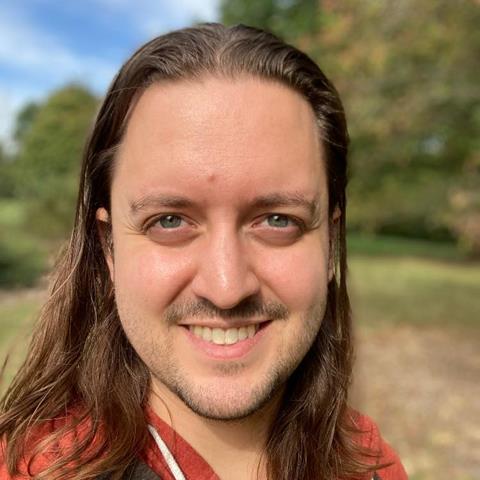
Stay skeptical? This week’s guest is Thom Krystofiak, the author of Tempted to Believe: The Seductive Power of Claims About “The Truth.”

Thom grew up Catholic but as an adult began practicing Transcendental Meditation. He followed gurus and groups for decades but was never quite convinced of the more spectacular claims of TM. 

Thom shares about his experiences in the TM movement and what pushed him out. He also discusses important questions people, regardless of their belief or skepticism, could ask themselves: What do I mean by truth? How do I find the truth? And how much does truth really matter? 

Quotes

I am, by nature, a skeptical man. My skepticism shows no signs of
mellowing, but grows sharper and deeper with time. And yet I have spent my life surrounded by believers.

[Is it] better to be fooled many times than to be a skeptical man[?]

Am I missing something?

“Why is that I’m not susceptible to any of the beliefs the people around me hold…”

“[Flying] wasn’t happening yet for us as individuals, but maybe if we put three thousand people together in one place…maybe that’ll be something!” 

“…the rise of fake news and alternative facts and the more bizarre conspiracy theories…all of these things are based on beliefs and they’re based on beliefs that do not have evidence…’”

“Some of our greatest societal challenges…resonate with these same principles: How much does the truth matter, what do you mean by the truth and how do you find the truth?”

“It’s not just a matter of, ‘Do you accept evidence at all as a valid way of finding out what’s true?’…it becomes a much more difficult task of sifting through competing versions of evidence.”

“Some people have given—either themselves or others—the license to make things up…”

Links

Thom’s personal site
https://krystofiak.com/

#AmazonPaidLinks

Interact

Join the Deconversion Anonymous Facebook group!

Deconversion
https://gracefulatheist.com/2017/12/03/deconversion-how-to/

Secular Grace
https://gracefulatheist.com/2016/10/21/secular-grace/

Support the podcast
Patreon https://www.patreon.com/gracefulatheist
Paypal: paypal.me/gracefulatheist

Podchaser - Graceful Atheist Podcast

Attribution

“Waves” track written and produced by Makaih Beats

Transcript

NOTE: This transcript is AI produced (otter.ai) and likely has many mistakes. It is provided as rough guide to the audio conversation.

David Ames  0:11  
This is the graceful atheist podcast. Welcome, welcome. Welcome to the graceful atheist podcast. My name is David. And I'm trying to be the case with our community manager Arlene continues to run the Tuesday evening after the podcast drops hangout. If you want to be a part of that, please join the deconversion anonymous Facebook group at facebook.com/groups/deconversion. Special thanks to Mike T for editing today's show. On today's show, my guest today is Thom Krystofiak. Thom has written an amazing book called tempted to believe the seductive power of claims about the truth, quote, unquote. What Thom has done here is really describe what skepticism is, why it's necessary and how to be skeptical without being cynical, and without being a jerk about it. What I think you're going to find interesting is that Thom's religious experience, although he grew up a Catholic is really about his time in the transcendental meditation movement, and more from a new age point of view. So what's interesting is, he's bringing skepticism from that perspective. And he begins the book by asking the question, Am I missing something? And the book is really the answer to that. I loved this book, I this is the book that I wish that I had had when I was going through my own deconversion. I hope you enjoyed the conversation with Thom, and I hope you and to help you go out and get the book. tempted to believe. Here is Thom Krystofiak to tell his story.

Thom Krystofiak, welcome to the graceful atheist podcast.

Thom Krystofiak  2:06  
Thank you, David. It's a pleasure.

David Ames  2:08  
Thom, you've written a book called tempted to believe the seductive power of claims about the truth. And as I just mentioned to you offline, this could not be more timely. I said in previous promotion of this particular interview that if I were going to give it a subtitle, I would say it is skepticism without being an asshole. I might have been a little bit more catchy. Yeah. And that is kind of right in the lane of what we're trying to do here on the gristmill atheist podcasts. So you are incredibly welcome. So glad that you're here.

Thom Krystofiak  2:47  
Thank you, thank you so much.

David Ames  2:49  
What I'd like to do is begin with, you know, your personal journey and for lack of a better term, your spiritual journey and what that was like, and then we'll jump into the book after that. Okay.

Thom Krystofiak  2:58  
Yeah, let me try to boil it down. as briefly as I can, you know, I did not go through a difficult deconversion process in my, in my life, I was raised as a standard Catholic, I went to Catholic schools all the way through high school, including Jesuit High School. But, and I of course, absorbed all that as you do as a child. And you're more or less, I'm more or less assume that was just the way things were. But, you know, my my leaving the church or leaving belief of that kind took place quite naturally. For me, it was just the way my mind started asking questions, even when I was, I suppose around 16. And then, strangely enough, one of the Jesuit priests sort of there were some liberal priests in our, in our school, he thought it was a wise thing and what was called theology class, to assign Sigmund Freud's the future of an illusion, which is, which is all about Freud's idea that religious beliefs were illusory. And here's the psychological reasons why. And that really spoke to me. But in addition to that, my own thinking just about how is it that we can possibly know all this really definite stuff about the nature of the universe, so that'll happen. And so it was, it was, it was graceful. For me. It was graceful both for me, and it was, it was treated gracefully by those in my life. You know, luckily for me, I didn't have a problem with my parents, you know, freaking out that, that I had left the fold that they had invested in, you know, in so many different ways, right? There weren't that kind of they were those kinds of people, so I didn't have that issue. Even my teachers at school they knew by the time of my senior year of high school, they knew where I was but they didn't cause trouble either. So I had a graceful exit, it was easy. Okay. Then what happened to me is when I was in college, I started for whatever reason, beginning to have a sense that perhaps there's something more to this reality than what the day to day that we're all in meshed in. Now, whether recreational drugs had anything to do with that, or whether it was just some sort of natural curiosity, I don't know. But I was interested in the possibility. And so when I heard various people in groups talking about ways to open to greater realities, I was intrigued. And I explored a few of them. But the one that got me was Transcendental Meditation. And the reason it got me ultimately, in the beginning, was because they had embraced scientific approach to verifying the benefits. Right. So I mean, the kinds of benefits let's put it this way, a scientific approach to to verifying some changes that happened into people and people who practiced TM. You know, they certainly couldn't verify the broader claims that they may have been interested in. But they, but they had that scientific attitude, they had done some pioneering research that was published in Science Magazine and Scientific American. And, and I will say that, that hooked me I said, okay, if I'm going to try something, this is the one. So that's what I did. I liked it, I liked the way it work, the effects it had on me. And so I, as, as the years of few years unfolded, I got seriously interested and became a trained teacher of Transcendental Meditation, which, you know, this is, as people may know, this is a, a program or a practice that was brought out to the world by Maharishi Mahesh Yogi. In the old days, I mean, some decades ago, a lot of people would recognize that name. These days, not so much, probably. But, you know, he was the guru of the Beatles, etc. That's the way he was always talked about in the press way back then, you know, millions of people learned all around the world, 10s of 1000s of people were teachers, it was a big deal. And as you can imagine, we we'd go, we were in the training was done in Europe, I was in Europe anyway, I was pursuing my own studies, but the trainings were generally in Europe, and they would last, you know, over the course of the entire training might be six months or more. And so you're completely enmeshed in this world of people who are absolutely enthused not just about the practical fruits of meditation, but about these ancillary claims that are more and more extraordinary about, about what the universe was about, and what human life was capable of, and so forth. And being in meshed in math for six months. And having, you know, you naturally have a desire to do well and be part of, you know, to be a good teacher and be part of this whole thing. I naturally was drawn to at least partial acceptance of some really extraordinary things. Now, I don't I don't think I ever became a full on believer in the sense that many people are believers and things about some of these claims. But they certainly enticed me and made me think they were possible. And so I'll just briefly mention a couple of them. So the the biggest thing that happened during the time I was doing that training was an advanced program was cut was brought out, in addition to the regular 20 minutes, twice a day of meditation, which was the whole thing in the beginning, an advanced program was brought out which was basically human levitation, the ability for the human being, to fly, not just some sort of internal thing that felt like you are floating but actually, the claim was, yes, we're talking, floating, flying through the air. And, and I was, you know, some people did it before I decided to try it, because, hey, why not? This is, this would be fantastic. If

David Ames  9:32  
it was. Yeah.

Thom Krystofiak  9:36  
You know, it's a little weird to say that I would even be willing to try it because it's so outrageous. No, that's such an outrageous claim. It flies in the face of just everything we know about physics and science. And that doesn't mean I don't rule things out is completely impossible if they fly in the face of current scientific knowledge. You know, there are things we can learn that we haven't learned yet, but this is pretty cool. pretty far out there. So, but nevertheless, I was far enough into it to say this is worth a shot. And some people had done it that I knew before I did a little bit before I did. And it came back with some, you know, reports that sounded like they were verifying the thing in some way. Anyway, so I jumped in and did it. And it was extraordinary. It was absolutely one of the most extraordinary things I've ever done in my life. And I think a lot of people might say the same, just the way the body reacted to this, essentially just a mental process. That was that was engaged. And it's, it's something that I think would be a great subject of scientific research exactly what is going on there where the body does some things it's never done before, in response to a mental stimulus. And so it was wild. It was incredible. It was energetic, but it wasn't flying by. It wasn't levitation by any match.

A couple of years later, after I had done this, and then come back, and I was teaching meditation, and here in the US, I, marshy put out the word that he wanted to gather 3000 people, this was in Amherst, Massachusetts, to do this technique of skill of yogic flying together for the first time in human history, you know, and I said, okay, at that point, I was willing to entertain the possibility that, okay, it wasn't happening yet for us as individuals, but if we put 3000 people together in one place, and we're all doing it simultaneously, maybe that will be something and something extraordinary. And, as I said, in the book, when I when when I did that, for the first time in that large group, I was expecting something to happen. You know, exactly what, who knows, but something really different from what had happened ever before. Right? And it did. So, you know, that's not to say there were it's not, it's a rich internal experience. It's something that people get value out of, and a number of ways by doing it. Maybe even some integration of brainwaves, and mind and body and all these things have been explored. But certainly it wasn't what the claim was, it didn't happen. Of course, it hasn't happened since. So that's one thing. And then my wife and I moved to a little town in Iowa called Fairfield, Iowa, which had about 9000 people at the time. And again, Maurice, she made up made the call in 1983, to say, let's get 7000 people into this little town of 9000. And all do this together. And that will really crack the world open. It wasn't so much, oh, we're gonna fly. Isn't that really cool? It was more. His focus was always what can we do as individuals that will affect the collective consciousness is the word he would tend to use the collective consciousness of the whole human race? Is there somewhat, and he certainly believed, apparently that, that, that that should be possible. And originally, the idea was, well, let's just get enough people to practice TM just to meditate, and that will change the world. And then as that wasn't happening fast enough, he said, Well, let's get this advanced group. And let's get them together. And then we'll see what can really happen. And so we said, Great, we quit our jobs, we moved down here along with 7000 people, it was an, again, a really amazing experience. And then, many of those people were encouraged later to stay, to form a permanent community to keep doing this together. And they built two large dome structures where the people would come every day and twice a day and do this. So the idea was, well, we'll keep doing this and then we will finally crack it all up. So this group here in Fairfield, that up maybe about 3000, stayed over time, not the first day, but they managed to arrange their lives so that, you know, they could somehow support themselves. Some entrepreneurs came started some businesses brought businesses, people managed to support themselves and got rolling here, and states, so maybe two to 3000. At the peak, we're here. And there's still probably 2000 here. And this group of people that I was now fully enmeshed in because I never lived in a community of two or 3000 people who believed a lot of very extraordinary things I'll just mention a few in a moment. And so all the people around me that I associated with believed a raft of things and these would be The one I already mentioned, you know, possibility of human levitation. Another one would be the fact that certain practices, they're called the Yagi O's, and in Sanskrit or an Indian lore, but these are basically just practices, performances can influence by performing some ritualized event, chanting some stuff in Sanskrit pouring some materials on some objects, you know, whatever the ritual was, that can eliminate problems change the course of, of a person's life accompany even as a society. And of course, the idea that a large group doing something together like this would like, like these practices would utterly transform human human life on a collective level. And belief in astrology, it's called Jyotish. Again, the Indian version is called Jyotish. But it's essentially just astrology, that it's a perfect predictive science. And on and on, so I'm surrounded by a belief in karma, you know, the fact that everything that's happening to us was because of things in past lives, or parent lives, and it's all highly orchestrated. And reincarnation, you go on and on. And this was the assumed coin of the realm among the people I was living with, including my wife. And I was curious about some of these things, but really not not a believer in any of any of them. Yeah. Especially, you know, as the flying, it became clear that wasn't really happening that one drifted, drifted away, even from my consideration that it's any kind of likely event at all.

So this was the origin of the book for me over the book that I wrote, because in my own internal exploration process, which was, why is it that I am not susceptible to these beliefs that everybody around me is holding to one extent or another in the early days, especially? And it was just a fascinating question. It wasn't just a intellectual academic thing, like, Oh, I wonder why it was also it wasn't like I had tension about it, or felt that I was horribly missing something. But I did wonder if I was missing something. Because a lot of a lot of these people were quite admirable, quite intelligent, etc, accomplished. And they managed to believe these things and found some sort of benefit in their lives from believing these things, apparently. And I wasn't. And so I'm going, what, what am I missing here? And so I just tried to dive into that, and exploration on many, many different fronts and different levels to see. Was I missing something? Or were they just applying criteria about reality that I could not subscribe to, due to lacks a lack of evidence, basically. And that, you know, that's essentially what I what I came to, and feel comfortable with. And that, to me, let me say one more thing that a major demarcation or separation that I make in the book is between something that someone chooses to have in their life because they like the way it feels, they just like, like having in their life, and making a definite claim about something about the universe or the world, or how human life works, a claim. So to me, a claim is something about, about an event that will appear in the material world, I claim that astrology will predict this in my life. Well, I want to see that prediction come true. It's a claim or the claim that you can levitate we want to see we need to see the levitation otherwise, let's not talk about it in that in that term. You know, if doing a certain spiritual practice or ritual is supposed to alleviate a problem, let's see does does that actually play out? And so yeah, my focus was on on claims. I'm happy to have people have whatever they want in their life that makes them feel satisfied as long as they're not bending the reality and making claims factual claims about the nature of human life, that really cannot be not only cannot be established, but all the evidence that we do have, seems to contradict it. And as as the years went on here, I mean, we've been here for 39 years. Yeah, so. So it's a long, it's a lifetime, you know. And during that time, many of the people, at least the people that are my closer friends, have had us not the same degree, necessarily, as I am in this journey, but a movement in that direction. And I'm pleased and happy to report that to some small extent, at least, some of the people who've have read my book have had some of that perspective solidified. And it kind of brought together some of the maybe thoughts they started having, but brought together in a more coherent way. That is, how do we want to look at this world? How do we want to evaluate claims about this world to make sure that they're, they're valid, and that they have substance,

David Ames  21:08  
that so many things, I want to respond to their couple things, just just to say that one of the things I've really appreciated about the book is the humility and the kindness with which you describe some of these, in your words, off grid claims. And there's an empathy for the human condition and are and you know, the title of the book, tempted to believe that we are all tempted to believe in things that may or may not have enough evidence for it. Again, very much in line with what we're trying to do here with the podcast that just, you know, we're all human beings, we're all susceptible to these things. And, and yet, we are all after the truth, we're trying to find the truth. So I really appreciated that. One of the things I think, for my listeners is going to be interesting, my listeners tend to be former evangelical Christians, on some part of the spectrum from D convert from deconstruction, you're just doubting to full blown D converted atheists is that this comes at it from an orthogonal an angle, many of those evangelicals, when they were believers would have seen transcendental meditation as evil. And so it's, it kind of sneaks in past some of those defenses. And yet, I was amazed at the parallels, right? This is, again, the human condition. And last thing I'll say is, I also very much appreciated that you acknowledge the difference between the potential positive benefits of the experience and community versus a claim about the way the the universe actually works, and making a really hard bright line between those two. So for example, if you find, you know, performing the ritual of, you know, beneficial to you for your mental health, if you find meditation, or any of these, these kinds of practices, beneficial, more power to that person, not, that's fine. It's when the person begins to claim that this is affecting the world in some way that is beyond the realm of physics, that that's when we start to care about the truth.

Thom Krystofiak  23:09  
Right? Well, that's great. And, you know, I appreciate your noticing what you're calling the humility in the book. And that has been an advantage. I just ran into someone at the grocery store yesterday, he goes, Thom, I love your book. And I didn't know she was reading it. And not not a close friend, but someone I an acquaintance. And she mentioned the same thing that compared to what what you often expect in books that are trying to deconstruct for former beliefs. You often have people like Richard Dawkins would be the extreme example of someone who is often described as caustic, and dismissive and so forth. And yeah, I mean, I didn't want to do that. And I don't feel that so. So that's cool. The one thing I didn't say yet that I want to say, and I think it's germane to what you were just speaking about is that, well, let's let's get into it this way, that the whole idea, the difference that you just summarized between doing something that feels beneficial, or that you'd like to have in your life, versus making a claim about how the universe actually works in observable ways. That's a that's a bright line. You know, that's a clear distinction. Some people many people don't care about the second thing. They don't care if it can be proven if there's evidence for it. They just clearly don't. And, and you go, Okay, well, is that all right? Is that is that just another way of being? And to some extent, I want to sort of go in that direction and be again generous to say, well, that's the way that's the way their life is going. And those are their values, but This is the other area that was not the impetus of my book, but sort of got sprinkled in as the time went on, with the rise of the incredible the rise of fake news and alternative facts and, and really bizarre, more bizarre conspiracy theories and so forth, and the divisive pneus. In our political sphere. All of these things are based on beliefs, and they're based on beliefs that do not have evidence. And these things are not a matter of, oh, well, this is someone's internal life, it's their spiritual life, or whatever it is. And, you know, we shouldn't be too concerned about what they're doing inside their own head.

But when it starts to manifest, as it really seriously has, not just in America, but really around the world, when these kinds of alternate realities, not based on facts start being treated as if they were facts, and building entire, you know, political movements on them. We've got problems. And so this is what started to become more apparent to me even though it wasn't part of my original impetus, that the same kinds of questions that we're talking about here about how you evaluate what's true or not, or whether it's important that you evaluate things in a certain way as to being true or false. Whether you apply the rigors of evidence and rational thinking or not. It it's it's become a matter of really deep societal importance outside the realm of religion or New Age beliefs or, or the kinds of things I was talking about in my background, well, outside of that sphere, as important as all those fears are, we have another big thing on our hands. And it's completely related, just as you said, even though my book is not talking about the typical journey that that a lot of your other guests and people have gone on, you found that it was resonant with some of those same same processes. Well, now we're having, to me, some of our greatest societal challenges outside of those realms, also resonate with the same principles, which is, how much does the truth matter? And what do you mean by the truth? And how do you find the truth? And, to me, the greatest challenge that we face, perhaps, is that people totally disagree about that. What's interesting, though, is there are people who go, especially in the spiritual realm go, I don't, I'm totally not interested in objective means of proving any of this. I have my own internal truth that I am totally solid and clear about, you know, that's one thing where you just sort of deny the applicability of any kind of objective truth you go. That's that's not that's not relevant here to me. And that's, that's a, that's a tough issue. But that's, that's mostly on the subjective or spiritual realm. When you get into these other societal realms, where people are arguing about what's true, or what isn't true. A lot of times the people who are saying really outlandish things,

Unknown Speaker  28:43  
claim to have proof. They're

Thom Krystofiak  28:46  
not saying, oh, proof doesn't matter. This is just the way I feel I have an intimate experience with Jesus Christ or with whatever. Don't talk to me about proving it's irrelevant. They're saying, No, we can prove this. Yeah. So if you, for example, I don't want to offend any particular groups that you have your listeners, but it's an obvious, obvious example, in our society. If, if Donald Trump or some or his fall, so many of his followers are going to say, the election was stolen, they don't say, I have a feeling the election was stolen, or, you know, my, my spiritual guide told me the election was stolen, they say it was stolen, and we have evidence, right, you know, and then they bring it to court. And of course, all the courts so far, have failed to agree that there was any kind of evidence, but nevertheless, the claim is made or a lot of conspiracy theorists will claim that they have evidence certainly the big one is the nine 911 truthers who, you know the idea that it was an inside job and it was totally put up fake thing. They'll put out reams of really impressive looking video discussions with some experts and so forth, proving that there's no way these towers came down in this way from from airplanes. And so this is what gets doubly difficult. Because it's not just a matter of do you accept evidence at all as a valid way of finding out what's true? They'll go, yes, of course we do. And we've got evidence. And then it becomes a much more difficult task of sifting through competing versions, right of evidence, and say, which one of his really holds up. And the problem is that none of us most of us are incapable of doing all of that background, evidential research or checking ourselves. And so we naturally have to ferret out which of the experts or authorities out there in the world are the ones that we have reason to think are reliable. And then we follow those. So this gets really thorny. And that's why the only the only hope I see is in a greater depth of education emphasis, I don't know if this will ever be happening in our educational systems, to the process of doing exactly that. How do you weigh how do you ferret out the the reliability of a piece of evidence of an authority of suppose it expert? You know, how do you weigh these things? You can't just take the one that feels?

David Ames  31:44  
Exactly. And I you do talk about that a lot of just, and within the world of disinformation that basically, we just pick the paradigm that makes us feel the best. And that's no way to do this. I want to jump on this just for a second and say, This is why the book is timely for a number of reasons. You know, I think, you know, even beyond the political and the religious, you know, we're under an onslaught of advertising being thrown at us and with social media, and what have you that we are constantly evaluating claims, whether we know it or not, and being conscious of that, and having a standard is just deeply important. And in particular, and in time of disinformation. And in a time where technology is going to only get make the problem worse for the foreseeable future, that we will have more and more claims that we have to evaluate, having a sense of what the standard is for good or sufficient evidence is just absolutely critical.

Thom Krystofiak  32:44  
That's right, and it's going as you say, it's going to get more and more intense. Speaking about social media, you know, you get, you get the problem of what are called Deep fakes, which are, there's, the better and better ability is of technology to create a video of you saying something that looks exactly like you're saying it even though you would never say that and never did. And so, it's going to go to a completely different level of difficulty, to tell the difference, and to see how any, any sort of authority is going to try to step in, to prevent some of these clearly wrong attempts to fool people. So it's, it's one thing in the old areas, you had stories, you know, if you go back 1000s of years, you had people telling stories about the origin of life, or some savior or some holy man. We, we basically had stories and that worked incredibly well. You know, you have billions of people subscribing to essentially stories that were created 1000s of years ago, or laid down 1000s of years ago, stories passed on were very potent, and they always will be, although, as we've been seeing, at least in in Western societies, for the for large degree, in more industrialized Western societies, that the grip of some of those religious stories has been greatly weakening, you know, in not true all over the world, but certainly true and like in Europe, and, and so forth. And even in the US among, among young, younger people. So some of these stories are not having the same potency that they had before. But but now we're gonna get a whole as you said, a whole onslaught of things, whether it be in advertising or even more, more dangerously, in those parts and those people who use social media to try to change your, your critical beliefs, about about things that really matter. It's one thing to convince you that this is the best bike to buy, you know, Hi, some advertising, you know, it's another thing to convince someone about the reality of some political claim or some or some factual claim, and to do it in a way that that you're completely incapable of, of yourself telling the difference. That is truly alarming. So, yeah, so it's not just a matter of individuals getting better at being able to tell the difference between some someone who's trying to fool him and someone who's giving them a good solid piece of information. It's, again, as I said, the question is going to be to what extent government or society is going to have to try to put some controls over this rampant growth in MIS misinformation that gets more and more sophisticated.

David Ames  35:50  
And again, this is the I don't want to say argument. But the reason why skepticism is necessary. I think skepticism as a word has negative connotations, people think cynicism. And the thing I really related to you, and I think that my listeners will relate to is finding yourself what feels like alone? Why am I the only one who in your words is not susceptible to these these claims like that is the deconstruction deconversion experience, we find ourselves in this hermetically sealed bubble of people saying the same things, reinforcing the same things. We've heard the answers, we understand the answers, but the answers are not satisfying. And the the temptation is to say, maybe there's something wrong with me. And and yet, again, this entire book, and everything you're talking about here is about why skepticism is necessary. And that if the truth matters, you know, we can't we can't make someone value the truth. But if they do value the truth, there has to be some process some way of understanding, again, have good evidence or sufficient evidence, and can therefore be accepted or that need to be discarded.

Thom Krystofiak  37:02  
Yeah, absolutely. It's an interesting process that you and your guests and others go through in terms of that, that we could say, a light a light bulb turning on or something, something inside being activated, to start to wonder about these things. And that that really is the essence, you know, it's like, do we wonder about what's true? I mean, obviously, all scientists have always wondered about what's true. That's that, that sense of, and they do it in a way that is, that is not constrained by necessarily what came before. It's not like, Oh, we've always been told that rocks fall, because it's the nature of things to go towards, you know, the center of the earth. You know, with no idea of gravity, just that it's the nature of things. And someone starts to wonder about that. You just have to wonder, how does, how does this really work? And what's really going on here, that, that light bulb coming on, which doesn't come on for some people? Yeah, it just, it just doesn't, they're, they're happy with, with the world that they're living in, and the beliefs and practices and community that they have, it's working, it's working for them? And it's only when a question comes up internally, to wonder about it and to ask certain questions. And I don't know how that exactly happens. But why it happens for some and not for others. Exactly. Yeah. It may just be that some people are temperamentally more open or ready to ask certain questions than others than others are.

I was on a podcast called Buddha at the Gas Pump, which is a fabulous thing. It's actually it's a friend of my longtime friend of mine, is behind it. He's interviewed like, I don't know, six or 700 people, and they tend to be people from the spiritual world, about all kinds of things. But he, he also had me on, and he was very forthright and discussing the kinds of things that we are. And anyway, as part of that, there was a group that he has, I don't know, maybe 15 People who email around on these questions. And it's fascinating because that group kind of bifurcates and some of them are strongly in the camp of I have had this experience which was so strong, and so opening or was clearly a direct perception of truth. But that's the end of it. That is just the end of it. and it has, there is it's not like they they're incapable of asking questions about all kinds of things, but they're not interested in asking questions about that.

David Ames  40:11  
Right? Protected.

Thom Krystofiak  40:14  
Yeah. And there's a difference between someone who's protected by, by a religious tradition, or the fact that their parents and their schooling and all of the people around them believe it. And it's, it's a whole community thing. And it's just been deeply bred into them. And someone who was absolutely sure, because they had some sort of awakened awakening experience. And, and they don't, and I keep, from now on then trying to get them to think about the idea that it is absolutely true and wonderful that they had this amazing experience. And it had great benefits in their lives, they feel freer, they feel wider, they feel, you know, less anxious, less concern, they feel more connected. These are all great things that anyone would love to have. So there's no question about it happened. You got these fruits. That's wonderful. Yeah. But there's an the tendency to want to claim things about the universe, about the nature of life in general, beyond the experience, and they it's almost always happens, that somewhat someone, even if they have an experiential basis, for some, some wonderful thing, they ended up wanting to make claims about the universe, like everything that consciousness was primary consciousness existed eternally, and it created a matter matter came out of consciousness, sort of like God, sort of like God, God was there eternally. And all this stuff that we see he just created somehow. Similarly with that, so they tend to go in that direction, even though it's that's a claim about things that goes way beyond anything that could ever be established. Right.

David Ames  42:14  
You have some amazing quotes in the book. That's the other thing that I really appreciated about it is like this is well researched. And some of my favorites were from Fineman. The one that I've heard before, but just really struck me was, the first principle is that you must not fool yourself, and you are the easiest person to fool. I feel like that really expresses this. I think Neil deGrasse Tyson said it this way to relate to religion to what you just mentioned, that experience can trump evidence as we have to actually work fairly hard to overcome that feeling of experience that we've we've gained some insights about truth beyond just the the warm and fuzzies. And you know, the sense of awe. Last thing I'll say on this is just that it's the human experience to experience all and all as a good thing. It's when we start to attribute unverifiable or unfalsifiable claims based on that experience at all. Yeah, that's

Thom Krystofiak  43:12  
right. I mean, the quantified men, you know that you're the easiest person to fool. Towards ties directly into the opening, you know, the opening aphorism in my book, you know, whether it's better to be fooled many times, yes, than to be a skeptical man. It's all about the fooling. And whether William James, I get into this a bit as well, William James, who explored spirituality and religion and psychic phenomena, as well as being the founder of American psychology. And philosophy really, is quite an amazing man. But, you know, when he wrote the book, or the essay called the will to believe he started it off with a preface, where he was saying, the person who, let's say, is going to be skeptical about about all these things, is, is is demonstrating that he's, he's afraid to be duped, he doesn't want to be duped. And he's saying he's putting that above some of the fruits that he could get, if you would just let it go. You know, this fear of being duped which is exactly, you know, kind of what, five minutes talking about to you know, the first principle is you must not fool yourself. Why not? Why not? is sort of the interesting question. That's the, the ultimate question, really, why not? And, you know, William James, I think he kind of went off the rails as far as I was concerned, because he was saying things like, Well, if you're always going to be skeptical, you're never going to get married. You're never going to take this new job that might have a risk in it. If you're always doubting everything. You're never going to do anything. In your life, and you go, Yeah, that's true. But that's all very pragmatic stuff. That's Those are choices that you make in your life. You know, whether you doubt whether this investment is going to be rewarding or not, is not the kind of doubt we're talking about. It's not the kind of skepticism we're talking about. We're talking about skepticism about claims about reality and how it actually works, not whether this woman is going to turn out to be the perfect wife for me. Right. So you know, so he ended up being really pragmatic when he was talking about doubt and faith and the will to believe, saying, We have to believe stuff. And of course we do. I believe that it's a good thing that I am, you know, this investment I just got in recently. I believe that's all right. I don't know. But I have a strong feeling that it will be a good idea. I don't hold back and go Well, I just don't know. I just don't know. So we're not talking to some kind of debilitating, absolute skepticism or doubt about everything.

David Ames  46:03  
Right. I'm talking about solipsism. Yeah, exactly. Yeah,

Thom Krystofiak  46:08  
we're only talking about when people make substantive claims about how things are, then make a difference that make a difference to the rest of her life goes. You know, that's where you might want to have some questions. Yeah.

David Ames  46:27  
I wanted to circle back really quick to how some people who who make off grade claims say that they have evidence in my world, in my listeners world, that tends to be apologists. And there's a whole field of evidential apologetics that suggests that there is all of this evidence. And it's clear that it's basically, you know, circumstantial, hearsay, and embellished legend with kind of an objective point of view, when you're talking to that person, they are 100% convinced that they have evidence for the resurrection of Jesus, let's say, you know, there are historical record and, and so one of the, again, one of the experiences of, of deconstruction, deconversion, is when you begin to recognize, I no longer find that, that evidence such as this convincing, that isn't sufficient to the magnitude of the claim, I just want to like, talk about a bit more about the challenge of coping with people who are claiming they have evidence, but that evidence isn't sufficient for the claim.

Thom Krystofiak  47:34  
Yeah. It's a matter of how much yeah, how much leeway you give this the sources of authority in your life. And how much leeway you give to the stories and, and the types of evidence, you know, generally, people who are believing in these, a lot of religious things and other off off grid claims, will give a great deal of leeway, you know, they will give the kind of spaciousness that they would never give, let's say in a court of law, or in some actual proceeding in their own practical life, where they're trying to nail down what really happened or what really is the truth. You know, I mean, Thomas Paine had that story, you know, that. If, if anybody were to come before a magistrate, with the four gospels accounts, which, about the resurrection, which have completely different details, and to some extent, contradictory details about precisely what happened when and who did what, you know, what is this? I mean, you can't possibly accept it, you go. There's something funny going on here. This isn't this isn't this isn't anything like an objective? evidential account? So? So yeah, it's, it's something some term that I use somewhere in the book was some people have granted either themselves or others the license to make things up. You know, you allow things to be declared and accepted as truth. Because of what they the fruits that they give you. And you give a lot of license to the quality of the evidence. Yeah, I've, I've certainly, I, you know, I always like to look at things like, Oh, someone and apologists trying to present the strongest proofs for God or something or for the resurrection. I always think they're going to come up with something really cool, you know, here that I can sink my teeth into. And I'm always I'm always dissatisfied, but I I have there something in me that wants us to, it's not like I want to believe in that sense. It's not like, Please convince me but, but I would, I love to I would love to be blown away. weigh, but the strength of evidence or the strength of an argument. You know, my wife always jokes with me. I don't happen to believe in UFOs, even though that's not that could be a physical reality. I mean, it could be, but I don't think we've got the evidence. I personally don't think we've got the evidence right now. And, but, but she knows that I would love to have a UFO land on my lawn? I would, I would love it. It's not like, no, no, no, I don't want to believe in that stuff. Right. I'd be happy to believe in it. Yeah, if there was good evidence. And so it's not that some people have a desire for belief or to believe certain things, and others don't. I have. I have I don't know about desire, I kind of have a desire to be to be confronted with a, an alien on a UFO. I mean, why not great, or, or a ghost or something? I mean, I don't believe in any of these things. But how cool would that be? Yeah, if it was really something I could sink my teeth into?

David Ames  51:11  
Yeah, a few things about that. Like, I avoid talking to apologists, but when I do I point out that if you really could prove the point you're trying to make you can win a Nobel Prize, right? Like, you know, you discover alien intelligence, you know, you are a million dollar winner. They're like that, you know, all you have to do is have the evidence to back it up. And so I would love to see that kind of evidence for for something that was an amazing claim like that.

Thom Krystofiak  51:37  
Yeah, I mean, you know, there's this guy, what's his name? Greer, the Disclosure Project? You know, that's an example of someone who has assembled huge amounts of military guys or intelligence guys are this that the other thing and all kinds of other fairly obscure evidence, but mounds of it, that it's totally convincing to large numbers of people? It's like this is it. This is evidence this is this is it? Yeah. But as you say, the truly convincing evidence is never forthcoming. Yeah. It's just not.

David Ames  52:22  
You talk about a number of scientists that have, you know, a sense of wonder about the universe. And the immediate person who comes to mind to me is Carl Sagan. And his candle in the dark book, I think, really touches on this, you know, he tells the story of being a young boy, and just really being fascinated with UFOs and extraterrestrials and but his scientific nature took over and even though he would love to be able to have said, there are in fact, extraterrestrials, you know, he could not find the evidence to do so. And what I appreciated about Carl Sagan and I often say like, I'm a more of a Sega nite, atheist than a Dawkins, I guess, in the sense that I have this wonder at the cosmos, this wonder at the universe, and that, and he expressed that so so well, contrast that a bit with you also have a chapter where you talk about people who become dissatisfied, or with the scientific view of the world, and, and basically make a conscious choice to go from a more scientific view of the world to an off grid view of the world.

Thom Krystofiak  53:34  
Yeah, no, that's great. I mean, the example of Sagan who is so great, someone who, as you said, was entranced with with some of these greater possibilities, like aliens and, and so forth, but couldn't go there unless the evidence allowed him you know, he was one of the strong guys involved with SETI, you know, the search for extraterrestrial intelligence. And, but if the evidence wasn't there, he couldn't do it. And yeah, I mean, people who get, I mean, one example in the book was, this was a long time ago, but the former president of Columbia, who just came out with this remarkable statement that that where science was going meaning mostly Darwinian theory at that time, was undermining some of his beliefs in the divine origin and so forth of everything. And he just came right out and said that I would, I would rather rest in my satisfying even if they'd be deceitful dreams. Science is is not going to do it for me. And that that's an interesting problem. You know, people will, will wonder whether a view that is based on reason and science Ansan looking for evidence, therefore necessarily putting aside a lot of the things that humanity has taken sustenance for, spiritually for, for millennia, what exactly that's going to do like, some people like Sagan are going to be a brilliant and full of awe and wonder and great people, no matter what other people, if you totally remove these sustaining beliefs that they have, or if somehow they they get weakened, or lost in them. We don't really know what what what that's going, what that's going to do. And so some people do question certainly question whether science, a scientific view, has enough stuff to offer the human psyche. Yeah, those who are enamored by the wonder of the universe and of life and, and evolution and, and at every scale, it's just so remarkable from the, from the farthest reaches of the cosmos down to the tiniest bits of matter, you know, it's all uniformly amazing and wonderful, and those who are susceptible to that kind of joy or or interest are well rewarded by that kind of interest. Some people are not character are not temperamentally or characteristically as susceptible or open to those kinds of joys and those kinds of rewards. And so this is, this is an interesting question that I don't have a solid answer to, you know, those who either tired of science or are not susceptible to the charms of science, whether they just need something else. And so the people I talked about in the book, one was the guy who's known as rom das now, who was Richard Alpert. He was a psychologist at Harvard, with Timothy Leary. And they both did LSD experiments at Harvard, and got thrown out for that reason. And Alpert, when he went to his, his, his dismissal meeting, or his review, or whatever, said, I'm not a scientist anymore. I'm giving up my badge. You know, I'd rather I want to, I'd rather go to India, which he did. Where, where there are these miracles being talked about? And I'd rather believe these miracles, then be a scientist and study, you know, bring out the data anymore. And, you know, there are people with that kind of orientation, that, that they they'd rather have, sort of an extreme example of, of what Barnard Columbia said, where he'd be happy in his deceitful dreams, if they were, if they could sustain him. You know, deceit is as far as being full deceit was not necessarily a problem for some people, if they get the fruits and this is, this is a whole other area of challenge. I mean, I think, I think there's probably, I don't know, what percentage of the people on this planet are, are enthused could be enthused by, and nourished by and by the joys of, of scientific knowledge or true revelation based on evidence about the way this amazing world actually works in our lives and our bodies in the universe. versus those who are, are a little bit cool on that, or cold on that. And once something else, once once some other they want the miracles they want. They want some stories, they want some, some rich, you know, mythology, that's, you know, another person I talked about in the book was Elizabeth Gilbert, who wrote, Eat, Pray, Love, that great best seller. And at one point in her life, she says, I'm tired of science, I'm tired of skepticism. I want to feel God in my playing in my bloodstream. And that's exactly what we're talking about here. That especially if she was depressed, your marriage broke, fell apart, whatever she was in a state of pain, and she's going I want the pain to go away. Yeah, I want something that will help get this make the pain go away and replace it with something else. And, you know, science won't necessarily always be able to step in when you have certain kinds of emotional and psychological pain. I mean, forget about pharmaceuticals or whatever. But I mean, in terms of scientific knowledge isn't going to unnecessarily come in and infuse you with all this joy, if you are truly in a needy, needy state emotionally, psychologically, so these are some of the other challenges to this whole.

David Ames  1:00:13  
Yeah, for sure. And I agree with you that I think their new atheist perspective of the end of religion is ridiculous, that's never going to happen. I also found it interesting reading philosophical history that this question has been asked over and over again, what happens if we take the gods away? What, you know, what happens to society, you know, and the attempt to create civil religions and that kind of thing, the way that I, we try to approach it here is to say, you know, that, I think my conjecture is that our relationships with other human beings, is the point is the meaning in life, as it were, not that that the universe has meaning, but that, that we create that between us and that trying to provide some level of community for people to have had a soft place to land as they let go of some of these off grid claims. That's kind of what we're trying to accomplish here.

Thom Krystofiak  1:01:03  
Absolutely. You know, and something I mentioned that people are probably aware of that. There's an interesting example of Scandinavia, which is the least religious least conventionally religious part of Europe, perhaps the world. They have really stepped away from there. They were, of course, Christian, primarily Christian, Jewish, whatever, but primarily Christian in the earlier times. And that has dropped away in Scandinavia to a degree that hasn't been seen in virtually any other society. And if you look at, there are studies that are done of the happiest cultures on Earth, the happiest countries, the the healthiest countries, meaning not just you know, their physical health, but their overall well being. Scandinavian countries are almost always at the top of those of those of those studies. And so, that to me, is now granted, people will say, Yeah, but you know, they're building on this history of Judeo Christian stuff of values. And, and sure they are, but so are all of us. I mean, we're all in Western societies, we're all in mashed in a society that has a lot of roots that way, and we're familiar with all that. And various stories that still resonate with us, you know, the story of the Good Samaritan, or whatever, that's a universal story that is just incredibly moving on an empathetic level. It's not, it's got nothing to do with, who is the god? Or what kind of God is it? Or what's what sort of deal does he have? It's just, here's a human being, how do you treat them, and, you know, but we're all enmeshed in these moral exemplars, whether it be from religious stories, whether it be from other stories, historical stories, you know, we all have plenty of stories, and plenty of examples, even just movies, books, whatever, where there's good people, and that resonates with us, or we know people, you know, we people in our own lives, who were just so touching that they were so loving, or caring or connected, and that resonates with us. And we resonate to with other people's needs and suffering. And so we have that basis. And so in Scandinavia, sure, you can say, yeah, they had Judeo Christian background, well, sure, we've all got all kinds of backgrounds, but what they've managed to do is take the fruits of those some of those stories or feelings and, and myths or whatever, and they're just in the background, they're part of their ethical life, probably. And they move forward without necessarily subscribing to these more outlandish or extraordinary claims about the universe. Without without the gods really without, so the question of what's going to happen without the gods, we don't know if it would always be like Scandinavia, but but Scandinavia being the premier example in the world. Right now. Is, is encouraging. It's encouraging.

David Ames  1:04:23  
And just to wrap this up, one of my favorite definitions of religion is from Anthony Penn. And it doesn't require supernatural claims. It is the collective search for meaning. And so a sense of we are a community and we support each other and we care about each other and we are even pushing each other to good works as it were, you know, like it all of that is good. And it's only when we start to make, in your words, you know, claims about how the universe works, where the story becomes literal in some way. That that's the problem.

Thom Krystofiak  1:04:57  
Yeah. When things sort of solidify I and solidify that way into discrete doctrinal claims, whatever, obviously one of the side effects of that throughout history has been wars fought over these doctrinal differences. I mean, you know, the idea that you have to take these wonderful aspects of human life and, and, and define them and say you must subscribe, or if you don't subscribe any longer, we're going to shun you, you know, these kinds of prac. This kind of adherence to the specificities of these discrete claims, has obviously been harmful in a whole bunch of ways. And if if it were possible to, to have religion in the sense of you just described it, which I think to some extent is what's going on and a lot of Scandinavia and elsewhere, is it would be, I think it would be a wonderful thing, it would be a win win, yeah.

David Ames  1:06:00  
So heading towards wrap up here, you start the book with a couple of questions. Is it better to be fooled many times than to be skeptical? And are you missing something? We'll end with the beginning a bit here. But like how you resolve that for yourself, personally? How do you answer those questions? And again, I appreciate that's the entire book, people will go and buy the book.

Thom Krystofiak  1:06:22  
Well, you know, the book is really a journey that's rather than the book being, I ask a question at the beginning, and then I answer it for the next 300 pitches, you know, it's more, let's, let's look into this. And so it's looking at it from this angle, from this angle from this aspect of history and this aspect of philosophy, this aspect of religion, this aspect of science, it's just looking at it from different facets and illuminating different ways of, of exploring the question. So it's in the book is an exploration rather than a declaration of my of my answer, but but in the last chapter, I think I say So after all that, yeah. Is it better to be fooled? And I admit that it is. It is, for me better to be fooled in certain circumstances. And I talk about that a lot. We don't need to get into it much. But I talked about that, that if if if I was in some horrific situation in the morphine had run out, and they could give me a saline solution, which has been proven to work as a placebo after you've gotten some morphine for a while, and then they give you saline for a while, and it works just about as well as the morphine because the body has that incredible response. Please fool me. Yeah, don't tell me. Sorry, Bob, the morphine is gone. Yeah. You know, I mean, fool me. But I go to some lengths to try to explain why that, to me is an acceptable kind of fooling. And the basic reason is that morphine is real. It's a real thing. It's not like an angel that they're telling me about, which I don't believe in, it's morphine. And that's real. And they're saying, this is morphine, they're fooling me about a specific fact, but not about the fact that morphine works, which is what's working in my brain. So there are ways that I'll be happy to be fooled, but they're more like that. They're more like these technicalities. No, I don't, I don't believe for me. And this is where it comes down to something, David, it's like, who are you? Are you a person who cares about the truth? Who cares to really feel grounded? In what am I doing here? In this world? Who What am I? What is all this? If those are questions that matter to you, then then being fooled about those things is completely off the table. It's completely unacceptable if that's, if that's a high priority for you to feel that here I am in these in these small number of decades on this planet? And do I is it important to me that I make my best efforts to really understand what is true, what is going on what this is, what life is, what all of this is how should I live my life, all of these things? If that's a critical priority, which it is for me, then the idea of being fooled about those fundamentals is completely a non starter. It's just and I you know, I understand that some people in my mind might be fooled about those things, or feeling great about it. Yeah, I'm not trying to take that away from them. I'm not pontificate. I don't go after my friends who are believers and just, you know, assault them with my skepticism. But, but, but for me, for anyone who is has that kind of orientation towards towards a grounding in reality, or grounding and truth, the kind that we're talking about, it's just not it's just not a possibility. And the second question, Am I missing Something I'm not missing something that I that I haven't clearly missing something that they have, you know, they've got some stuff that I don't know. But I mean, that's true all of us have people have stuff that you don't have one way or another. But the question is whether you would really want want that. And no, I'm not missing something that at this point in my life, I wish I had, I wish I had faith or I wish I could believe these claims that I can't find evidence for. Because they'll do something for me. I can't put those two together with the desire to be grounded in truth.

David Ames  1:10:38  
The book is tempted to believe I want to give you just a second to be able to promote that how can people find the book and any anything else that you'd like to promote?

Thom Krystofiak  1:10:46  
Okay, thanks. The book is just simply available on Amazon, both in terms of print, print, book and Kindle. So it's just Amazon, you can just say tempted to believe they will, unfortunately, Amazon always keeps older editions around once they've been published. And I did a preliminary version, mostly because I wanted to have some readers have a book in their hand, as I was finalizing it. Okay, so there was a preliminary version, which is still out there. This is this is the one with the dynamic blue cover with an incredible picture on it. It's not, it's not the one that with text only. And it's the one with, you know, all the reviews and so forth. So it's pretty obvious, tempted to believe on Amazon. And, you know, not necessarily terribly germane to the things we've been discussing here today, but some of my shorter writing over the years on a variety of topics. And other things is in my website, which is simply my last name, which is Krystofiak, which I will spell. It's, it's K, R, Y, S, T O, F, as in Frank, I A K. That's krystofiak.com. And then there's some things there that also talks about the book.

David Ames  1:12:03  
Fantastic. And we will have those in the show notes. And I will try not to murder your last name again. Thom, thank you so much for being on the podcast. Oh,

Thom Krystofiak  1:12:12  
it's been a great trip. Thank you.

David Ames  1:12:20  
Final thoughts on the episode? I love this book. I loved this conversation with Thom, this is so important topic. Skepticism is it's it touches every area of our lives from the onslaught of advertising that we face every day to the misinformation and disinformation that political entities put out to apologetics. And this comes from all corners. It is not just Christian apologetics that I'm talking about. Thom comes from the Transcendental Meditation perspective, and having new age friends who are making in his words off grid claims. And I identified so much with the I feel impervious to these claims. Why is that? What is there something different about me. And so it's Thom's humility that comes through in the book in the conversation that is so profound. When you hear the word skepticism, the first thing that might leap to mind is really argumentative debate style cynics. And it is actually the exact opposite is humility, of recognizing the human condition and our susceptibility to believing things that we want to believe that we want to be true. And believing things that fit within our in group. And skepticism is actually from humility of recognizing I could be wrong. Therefore, I need some evidence to know whether this thing is true or not. The other thing that I think Thom does really well in the book, I'm not sure we completely got to it in the conversation is acknowledging the reality of the experience. These literally all inspiring experiences. Create in us a sense of having touch to the Divine, having touched the transcendent, having gained secret knowledge. When you have the experience, you can't help but make those connections. And part of skepticism is recognizing that it is our ability to fool ourselves as the Fineman quote says that is the problem. And so we are protecting ourselves by looking for objective evidence. But it is the empathy for the human condition that Thom has in the book that really speaks to secular grace, secular grace for our son elves when we believe things that don't have evidence and secular grace for those people, we'd love to believe things without evidence. The book is tempted to believe by Thom Krystofiak is amazing, you need to get this book you need to read it. It is one of those things that I'm telling you, we'll help you through deconstruction and deconversion. We will, of course have links in the show notes, as well as the link to Thom's personal sites. I want to thank Thom for being on the podcast and even more so for the book. I said to him Off mic that This truly was the book that I wish I had had when I was going through my deconversion. So thank you, Thom, for writing such an empathetic, humble and true book. The secular Grace Thought of the Week is about humility, about our own ability to fool ourselves. The Fineman quote is, the first principle is you must not fool yourself, and you are the easiest person to fool. If you really absorb that, if you really feel that viscerally. And for those of us who have gone through deconstruction and deconversion that should feel pretty real and present in our lives, you can begin to recognize when you are fooling yourself in lots of different contexts. I'd love a quote from Alice Gretchen when she was on, she said that she stopped being good at fooling herself. And I feel the same way. And if you are like me, and you find yourself skeptical, and you're like Thom and unable to accept claims without evidence, that is okay. It's actually a good thing. And it will protect you from, as we've already said, advertising, politics, disinformation, as well as religion, or supernatural claims. But it ultimately begins with, I could be wrong. And really knowing that and feeling that. So the skepticism that Thom is talking about, the skepticism that I'm talking about is less about saying where someone else is wrong, and more about recognizing where we have been mistaken. We have lots of great interviews coming up. We have got Julia from Germany, who is a doctor and at one point in time in her life, given up her medical career to participate in a healing ministry. And her deconstruction is just powerful and deep. We have Jessica Moore, who is a part of the deconversion anonymous Facebook group, and is now dealing with purity culture, and surviving the aftermath of purity culture, as well as a number of other interviews that are coming up that are gonna be fantastic. Until then, my name is David, and I am trying to be the graceful atheist. Join me and be graceful.

Time for the footnotes. The beat is called waves for MCI beats, links will be in the show notes. If you'd like to support the podcast, you can promote it on your social media. You can subscribe to it in your favorite podcast application, and you can rate and review it on pod chaser.com. You can also support the podcast by clicking on the affiliate links or books on Bristol atheists.com. If you have podcast production experience and you would like to participate podcast, please get in touch with me. Have you gone through a faith transition? And do you need to tell your story? Reach out? If you are a creator, or work in the deconstruction deconversion or secular humanism spaces and would like to be on the podcast? Just ask. If you'd like to financially support the podcast there's links in the show notes. To find me you can google graceful atheist. You can google deconversion you can google secular grace, you can send me an email graceful atheist@gmail.com or you can check out the website graceful atheists.com My name is David and I am trying to be the graceful atheist join me and be graceful human beings

this has been the graceful atheist podcast

Transcribed by https://otter.ai

Doug Traversa: Atheist Minister

Atheism, Authors, Deconversion, Dones, Humanism, Podcast, Secular Grace
Listen on Apple Podcasts

This week’s guest is Doug. Doug became interested in church when he was in junior high, and when Doug is in, he’s all in. 

He was a believer throughout high school, college and into the military. But then books and magazines happened. Doug began reading more “skeptical literature,” and the questions began. 

Doug’s faith unraveled while he was “an atheist in a foxhole,” but faith in the supernatural was unnecessary. He needed his own strength, and the strength of the people around him.  

He has since been an atheist pastor, finding the human connection he and his wife needed, without changing their beliefs or forsaking their values. As Brene Brown says, “We are hardwired to connect with others,” and Christianity has no longer cornered the marked on community and belonging. 

Quotes

“When I was twelve, I decided to get serious about my eternal destiny”

“So I began asking harder questions at church, and I soon encountered a pattern I would see again and again as we visited different churches. Once my questions became too difficult (or too annoying), I was told I just had to have faith.”

“I left God behind, at least the version taught in the Bible. I would now be unapologetically atheistic.”

“I deployed for a year…and that was my ‘atheist in a foxhole’ moment. … we were convinced at least some of us were going to die, and I was thoroughly convinced in my mind at that point that this was my last full day on earth. … At no point did I pray, acknowledge God, feel slightly drawn to God…I was perfectly good with: There is no god, and I might die tomorrow. We’ll just see what happens.”

“People have often asked me why I left the faith, and I tell them, ‘It’s because I studied the Bible.’”

“It was my reading of skeptical magazines and literature that gave me the freedom to look at the Bible in a new light, but it was the actual Bible itself that condemned itself.”

“All I can say is I’ve been extremely happy not having to believe in God, not having to worry about saving other people.”

“Having left behind a church that demanded faith, I found a most unexpected church that reveres rational thought and welcomes atheists. Amazing. Having sworn to never set foot in a church again, I find that the universe loves to throw curveballs. To quote Douglas Adams, “In an infinite universe, anything is possible.””

“When you’re taking care of someone else, you’re not thinking about yourself.”

Links

Unitarian Universalist Church of Tullahoma
tullahomauu.org

Doug’s Short story “The Faith I Left Behind” is in the book, The Sandbox

#AmazonPaidLinks

Interact

Join the Deconversion Anonymous Facebook group!

Deconversion
https://gracefulatheist.com/2017/12/03/deconversion-how-to/

Secular Grace
https://gracefulatheist.com/2016/10/21/secular-grace/

Support the podcast
Patreon https://www.patreon.com/gracefulatheist
Paypal: paypal.me/gracefulatheist

Podchaser - Graceful Atheist Podcast

Attribution

“Waves” track written and produced by Makaih Beats

Jack: Emily’s Story

Atheism, Deconversion, Podcast, Podcasters, Religious Trauma, Secular Grace, secular grief
Emily, Jack and Duncan

Content Warning: graphic wound details, surgical processes, PTSD, emotional trauma, religious trauma and dark humor.

Listen on Apple Podcasts

This week’s guest is Jack Robertson. Jack is a returning guest and an integral part of the Deconversion Anonymous Facebook group. Earlier this year, Jack’s youngest daughter, Emily, was in an accident, suffering severe burns on her body.

Jack explains how his online community and IRL friends stepped in to support his family but also recounts the platitudes and clichés given by the Christians in their lives. 

Emily’s clearheadedness, dark sense of humor and incredible resilience has brought her a long way in the healing process—mentally, physically and emotionally. Jack and the rest of their family are also healing in their own ways, supporting one another and seeking professional help. 

We are Human. We are social beings whose needs are not met by “a guy in the sky.” Our needs are met through our relationships with one another, especially those who are closest to us. 

Quotes

“It is heart wrenching to see someone you love go through that much pain…[and] there’s not anything else that you can do, other than hold their hand.”

“Do NOT, while people are still in ICU or a burn unit…message them and say, ‘You know? God only gives you what you can handle.’” 

“If I have to be caught on fire, so you can look super to heal me, I want nothing to do with you.” —Emily

“You’re going to have to talk to a professional…You can get through it, no matter how difficult it seems in that moment…”

“You don’t need the clutching of a Bible or a rosary. You don’t need that. You and your family are what are going to get you through it. Not some guy in the sky…Talk to a professional.”

“I’m going to make the fire my Bitch.”—Emily

Links

Go Fund Me
https://gofund.me/bba4d01e

Jack’s Deconversion episode
https://gracefulatheist.com/2021/10/31/jack-robertson-deconversion-story/

Kenyetta and Jack Save the World
https://www.podchaser.com/podcasts/kenyetta-jack-save-the-world-4099553
Graceful Atheist on Kenetta and Jack Save the World
https://www.podchaser.com/podcasts/kenyetta-jack-save-the-world-4099553/episodes/the-abcs-of-grace-127398471

Musings of an ADD Mind
https://www.podchaser.com/podcasts/musings-of-an-add-mind-2160439

Interact

Join the Deconversion Anonymous Facebook group!

Deconversion
https://gracefulatheist.com/2017/12/03/deconversion-how-to/

Secular Grace
https://gracefulatheist.com/2016/10/21/secular-grace/

Support the podcast
Patreon https://www.patreon.com/gracefulatheist
Paypal: paypal.me/gracefulatheist

Podchaser - Graceful Atheist Podcast

Attribution

“Waves” track written and produced by Makaih Beats

Adria: Racism in the missionary field

Atheism, Autonomy, Deconstruction, Deconversion, Humanism, Podcast, Race
Listen on Apple Podcasts

This week’s guest is Adria. Adria is a sociologist working in international development. Adria grew up in various multiethnic churches but each one seemed to worship whiteness more than Jesus. By the end of college, Adria was done. Years later, in atheist spaces, she would find racism to be just as prevalent. 

Her experience with the Christian missionaries showed her the inequity that must exist for missionary work to thrive. In the last decade she has since seen that Western nations continue missionary work; only as evangelists for “neoliberal economic systems” rather than the gospel.

Adria’s understanding of supremacy culture’s effects on humanity is invaluable to any community—church, atheist or global—working toward a more equitable world. She truly is a model of graceful atheism. 

We discuss international development, missionary work, economics, equity, racism, atheism, black non-believers and much more.

Recommendations

Organizations

Black Non-Believers
https://blacknonbelievers.org/

Books

Black Non-believing authors
https://the-orbit.net/blackskeptics/2012/09/11/books-by-black-atheists/

Tweet-Worthy Quotes

“The same reason that white women have less money than white men is the reason why black people have less money than white people. It is the system created for whiteness and white maleness.”

“We were really evangelists for this neoliberal economic system.”

“…my ascent into atheism.”

“It would mean seeing other countries, other entities, as equal, and that’s not the case right now.”

“…equity: Everyone does not get the same things because everybody does not have the same endowments.”

“I went to general atheist events…it was amusing but it definitely wasn’t welcoming.”

“That [evangelism] turned me off. Imagine how much what I do turns other people off.”

“The Church is just the world. It’s just people.”

Interact

Catch me on former guest, Robert People’s, Affinis Humanity, Instagram live Thursday August 4th at 5 PM EDT
https://www.instagram.com/affinishumanity/

Join the Deconversion Anonymous Facebook group!

Deconversion
https://gracefulatheist.com/2017/12/03/deconversion-how-to/

Secular Grace
https://gracefulatheist.com/2016/10/21/secular-grace/

Support the podcast
Patreon https://www.patreon.com/gracefulatheist
Paypal: paypal.me/gracefulatheist

Podchaser - Graceful Atheist Podcast

Attribution

“Waves” track written and produced by Makaih Beats

Photo By James Barry – http://www.treaty2u.govt.nz/images/impact-main-1.jpg, Public Domain, https://commons.wikimedia.org/w/index.php?curid=12666818

Bob Barnes: BAHACon 2022

Agnosticism, Atheism, Dones, Humanism, Podcast
Listen on Apple Podcasts

This week’s guest is Bob Barnes. Bob is a lifelong atheist and an organizer with BAHA, Bluewater Atheists, Humanists & Agnostics. BAHA “is a non-profit organization dedicated to improving the image of Freethinkers and Atheists and to give back to our communities.” 

BAHA is hosting its annual conference, BAHACon, with speakers and events you won’t want to miss! August 26 – 28th, 2022 in Sarnia, Ontario, Canada.

Links

BAHACon
https://bahacon.com

Bluewater Atheists, Humanists and Agnostics
https://bluewateraha.com/

Interact

Join the Deconversion Anonymous Facebook group!

Deconversion
https://gracefulatheist.com/2017/12/03/deconversion-how-to/

Secular Grace
https://gracefulatheist.com/2016/10/21/secular-grace/

Support the podcast
Patreon https://www.patreon.com/gracefulatheist
Paypal: paypal.me/gracefulatheist

Podchaser - Graceful Atheist Podcast

Attribution

“Waves” track written and produced by Makaih Beats

Shannon: Deconversion Anonymous

Agnosticism, Atheism, Comedy, Deconversion, Deconversion Anonymous, ExVangelical, Podcast, secular grief, Thought Experiments
Click to play episode on Apple Podcasts
Listen on Apple Podcasts

This week’s show is a Deconversion Anonymous episode.

This week’s guest is Shannon. Shannon’ story delves into the emotional experience of deconversion. Shannon grew up in an Independent Fundamental Baptist church, where the teachings were pernicious.

“It’s like ‘Love Jesus. Love God. And be afraid of demons, ‘cause they’re everywhere and they’re going to get you!’”

As a teen and into adulthood, Shannon knew her own beliefs and convictions did not always align with her church or family. She tried to be who they wanted her to be, but her decisions were never quite enough for them. 

“…showed me that no matter what I give, there will always be one step further. It’s just not good enough.”

Over the years, she slowly, like “mental velcro,” ripped out the only beliefs she had known. Where her family couldn’t hold space for her questions, her husband could. It was a hard journey, but she wasn’t on it alone.

“From, mentally saying, ‘This isn’t real. I think I’m done’ to being done? It was torture.”

Today, Shannon misses the certainty she used to have, the path laid out in front of her with easy answers. But she is able to see the world with new eyes—the glory and majesty of nature, the wonders of scientific inquiry. It has changed her for the better, and she isn’t looking back. 

“To me? [Evolutionary change] is magic.”

Recommendations

Thought Experiments For Believers
https://gracefulatheist.com/2018/12/03/thought-experiments-for-believers/

Deconversion How To
https://gracefulatheist.com/2017/12/03/deconversion-how-to/

Review of Hell is the Absence of God
https://gracefulatheist.com/2017/06/04/review-hell-is-the-absence-of-god/

Interact

Join the Deconversion Anonymous Facebook group!

Deconversion
https://gracefulatheist.com/2017/12/03/deconversion-how-to/

Secular Grace
https://gracefulatheist.com/2016/10/21/secular-grace/

Support the podcast
Patreon https://www.patreon.com/gracefulatheist
Paypal: paypal.me/gracefulatheist

Podchaser - Graceful Atheist Podcast

Attribution

“Waves” track written and produced by Makaih Beats

Seth: Deconversion Anonymous

Atheism, Critique of Apologetics, Deconversion, Deconversion Anonymous, Podcast
click to play episode on Apple Podcasts
Listen on Apple Podcasts

This week’s show is a Deconversion Anonymous episode.

This week’s guest is Seth. Seth was the oldest child in a large homeschooling family who attended attended mostly non-denominational churches. He was always studious and had read through the Bible multiple times before adulthood. 

In high school, Seth made his faith his own and dove deeply into Youth Earth Creationism. He studied at a state university and a few years after graduation began work at The Creation Museum.

“It was a dream come true for me but also turned into not-a-very-good experience…”

While living near the museum, Seth was introduced to a fringe religious movement he describes as “Messianic Judaism meets evangelicalism meets conspiracy theories.” In the Hebrew Roots movement, Seth discovered teachings he’d not encountered before and some doubts began to creep in. 

[Sharing the gospel] I went into detail on all the doctrine and as I was saying I realized I wouldn’t believe it if I were hearing it from somebody else.

Over the next year, Seth continued to experience conflicts between YEC and Hebrew Roots. The two ways of thinking were at odds—flat earth or round, scientific cosmology or the broken body of a leviathan? 

My faith “tendon” was getting stretched and stretched and stretched.

There was a point … it felt like part of my brain just broke and almost in an instant I realized I couldn’t believe anymore.

By 2020, Seth realized he was an atheist, no longer able to convince himself to believe again. 

So, finally realizing that I didn’t believe and admitting to my self I was an atheist was some of the most terrifying moments of my life on an emotional level.

“I was climbing up that slope the whole time, getting closer and closer to God and then…I stepped over the edge, and I just plummeted.”

Recommendations
Books
  • Sapiens by Yuval Noah Harari
Youtube

Interact

Join the Deconversion Anonymous Facebook group!

Deconversion
https://gracefulatheist.com/2017/12/03/deconversion-how-to/

Secular Grace
https://gracefulatheist.com/2016/10/21/secular-grace/

Support the podcast
Patreon https://www.patreon.com/gracefulatheist
Paypal: paypal.me/gracefulatheist

Podchaser - Graceful Atheist Podcast

Attribution

“Waves” track written and produced by Makaih Beats

Robert Peoples: Affinis Humanity

Atheism, Deconversion, Humanism, Philosophy, Podcast, Secular Grace
Click to play episode on anchor.fm
Listen on Apple Podcasts

I believe in you.
I believe in people.
I believe in change, and if any change is going to happen,
we have to do it.
There is no savior coming to save us
that responsibility is ours.

This week’s guest is Robert Peoples of Affinis Humanity. Robert grew up in a Black Baptist church in New Jersey. When he was young, he enjoyed church but was an inquisitive child with many questions and no satisfying answers. As a teenager, Robert looked for answers outside the church—from Thomas Paine to Allah to the Buddha. 

“When I read The Age of Reason, that set my trajectory on a whole different path.”

By 18 years old, Robert could no longer believe in anything supernatural. His understanding of the world came from philosophy, history and science. This was incredibly difficult for his family, but they continued to faithfully love and support him.

“[My mom] said, ‘Why don’t you believe in something?…’ I said, ‘I can’t…this is based on critical thinking.’”

One frustration Robert has with the Black church community is that it works to change unjust systems but then uses phrases like, “We couldn’t have done this without God.”

“It makes us co-dependent on…benevolent white leaders in power, for God to somehow change their hearts and change their minds.”

In recent years, Robert has been working with a political non-profit to ensure the “separation of state and church” and to change unjust policies. Human suffering is caused less by individuals “in need of heart change,” and more by systemic racism, homophobia, classism and other inequities.

“You can’t think transcendental thoughts. You can’t think about leaving religion…when you can’t eat, when you’re about to evicted…when you have no support.”

In the midst of all the work to be done, Robert is hopeful. He is effecting change in the world and reminding others that “to be human is enough.” He stands in awe of the beauty of nature, his daughters and this short life. His story is one of world-changing secular grace. 

“The Book of Life opens up each and every time I wake up in the morning. I write my own book.”

[Humanism] has increased my love for humanity exponentially.
I no longer love people with conditions.

Links

Affinis Humanity
https://www.affinishumanity.org/

Secular Coalition for Arizona
https://secularaz.org/

Instagram
https://www.instagram.com/affinishumanity/

TikTok
https://www.tiktok.com/@affinis_humanity

Twitter
https://twitter.com/AffinisHumanity

Interact

For a Secular Grace holiday weekend
Jennifer Michael Hecht: Doubt A History
Dr. Anthony Pinn: Humanism and Race
Sasha Sagan: For Small Creatures Such As We

Join the Deconversion Anonymous Facebook group!

Deconversion
https://gracefulatheist.com/2017/12/03/deconversion-how-to/

Secular Grace
https://gracefulatheist.com/2016/10/21/secular-grace/

Support the podcast
Patreon https://www.patreon.com/gracefulatheist
Paypal: paypal.me/gracefulatheist

Podchaser - Graceful Atheist Podcast

Attribution

“Waves” track written and produced by Makaih Beats

Transcript

NOTE: This transcript is AI produced (otter.ai) and likely has many mistakes. It is provided as rough guide to the audio conversation.

David Ames  0:11  
This is the graceful atheist podcast. Welcome, welcome. Welcome to the graceful atheist podcast. My name is David, and I am trying to be a graceful atheist. Please consider rating and reviewing the podcast on the Apple podcast store, rate the podcast on Spotify, and subscribe to the podcast wherever you are listening. Do to poor planning on my part and not at all related to the Christian holiday next weekend, we will not have a new episode. I had an interview that fell through and I did not have a buffer. The team was fully ready to produce another podcast and yet I didn't have an interview ready to go. So for next weekend, which does happen to be Easter. I have a few recommendations for you one, after you've listened to this episode, Robert Peoples of Affinis Humanity. Listen to it again. Robert is absolutely amazing. I'm also going to recommend three episodes that capture a lot of what you hear in Robert story today about humanism that is alive and proactively loving. The first is Jennifer Michael Hecht from way back in 2019. She wrote the book doubt a history. I have quoted that 1000 times it's an amazing conversation, and she is absolutely amazing. Next up is Anthony pin of Rice University. Robert and I talk about Anthony in this episode that I believe is back in 2020. Anthony has written a number of books on humanism, as well as the perspective from the black community, a really significant voice within humanism. So go back and check out that episode. And finally Sasha Siggins episode where she talks about her book, small creatures such as we, these three and Roberts episodes today that you're listening to represent secular grace and the kind of humanism that I am trying to espouse. So during your Easter weekend, jump back into the back catalogue and hear some great interviews from the past. Special thanks to Mike T for editing today's episode. onto today's episode. My guest today is Robert Peoples. Robert is the founder of affinest humanity which is an organization that is trying to promote secularism in Arizona. Their motto affinis is Latin for affinity a natural attraction to a person, thing or idea. Our mission is to alleviate religious discrimination for secular communities in education, business and government. Robert also participates with the Secular Coalition for Arizona. They recently had secular day Arizona, where they spoke and talk with legislative leaders in Arizona about secularism and the need for secularism. We discuss secularism as pluralism, the needs to recognize that even for believers, separation of church and state is good for the church as well as the state. Robert represents secular grace in so many ways, he is a humanist who is focused on loving people caring for people for representing a proactive love. And Roberts motto for finesse humanity is to be human is enough. I cannot tell you how deeply impacted I am by that simple phrase. I will be meditating on that for years to come. Robert is a quote machine. I will try to capture a handful of those quotes in the extended show notes on the blog. Listen carefully to what he has to say Robert is an amazing person. Here is Robert peoples to tell his story.

Robert Peoples Welcome to the graceful atheist podcast.

Robert Peoples  4:20  
Thank you. I appreciate being here. Thank you. Thank you for reaching out.

David Ames  4:24  
So Robert, you are the leader of an organization called Affinis Humanity whose mission statement is to alleviate religious discrimination for secular communities and education, business and government. I understand you've just participated in the secular Day at the Capitol and Arizona. Is that correct? That is correct. Yeah. And so I'm really excited to hear about your work and in the secular community. I tell you what, man, your tagline. To be human is enough. Just gets me. That is you have spoken to me This atheist soul I can tell you with with that, with that statement, this podcast, we talk about secular Grace a lot. And I think that you and your work embodies that. And as I mentioned off, Mike, you have made me a fan of yours. So I'm just really excited to have you on.

Robert Peoples  5:16  
I'm honored, I'm honored. Thank you for that.

David Ames  5:19  
So we're going to spend the first half talking about your personal story. And then probably the second half, we'll we'll get into all the things that you're doing with your work in the secular community. Let's start where we often do, what was your faith tradition growing up? What was that like for you?

Robert Peoples  5:34  
Ah, so I grew up. I'm originally from New Jersey, currently reside in Arizona right now. And I grew up in a Baptist household, I grew up in a Baptist church. Actually, it was called union Baptists. I can't even I can't believe I still remember the name of the church. And, you know, and unlike some other unlike a lot of other people that have experienced, you know, the RTS, the religious trauma syndrome connected with religion, I did not, I liked going to church. I liked the people, I like my friends. And I even sung in the choir. And however, I always had a lot of questions. I was always very inquisitive about things. And a lot of those questions couldn't be answered sufficiently. And when I was about about 13 years old, I started having a lot of questions. And my mother was saying, you know, you need to talk to the pastor, you need to talk to the deacon about this. And I said, I did, but it just doesn't sound right. It doesn't feel right, I need to do a little bit more digging. So my cousin, my first cousin, he said, You know what, Robert? I'm gonna give you a book, man. I want you to read the Age of Reason by Thomas Paine. Oh, wow, I was 13. When I wrote. I was 13. Right? My mother always instilled reading in me at a very early age. You know, she and so I was very thankful for that. And you know, in a classroom, she didn't want me to be the kind of kid where the teacher called on you to read a paragraph, I would shy away from it. So she really instilled heavy reading in me at an early age. And I have to tell you, David, when I read the age of reason, that set my trajectory on a whole different path. And so from there, I told my mother, you know, I want to study Islam for a little bit. She said, Okay. Well, I work with some doctors, and there is a mosque in Princeton University. And so if you want to learn Islam, you're going to learn true Islam, you're going to learn how to speak Arabic and the whole nine, and so I was doing a lot. And an Arabic went to the mosque for about two years. And I said to myself, Okay, I get it. Now, I want to learn Buddhism. She knew a doctor that went, there was a Buddhist, a couple, and there was a Buddhist temple in Princeton University. So I study Buddhism for a couple years. And so about that time, I was about 1718 years old, and I said, you know, I have a pretty good foundation of what all of these belief systems are, you know, not so much Buddhism, because actually, Buddhism is actually atheistic in nature, right. It doesn't have a central godhead, you know. There's a saying that goes, if you ever see the Buddha on the side of the road, kill it. Because that's not the Buddha. Right? You are. Right. Okay. Yeah. And about 1718 years old, I said, Okay. I'm an atheist. I'm an atheist. And my mother had a hard time with that. The rest of my family had a hard time with that. But I did not face any. I was not ostracized I was not treated any differently. So I don't have any you know, horror stories regarding that. She said, Why don't you believe in something even if I want you to be a Christian, but even if, if you stayed a Muslim, right, just just just believe in something? And then I said, I, I can't because this is based on critical thinking. It's not based on emotion. No one in the church hurt me. The pastor didn't hurt me. People weren't mean to me. This was based on critical thinking this was based on just academic research, history, science. And, you know, I made that declaration. And so I got out very early. You know, it wasn't I wasn't like in my, you know, because I'm, you know, I'm in my late 40s Now, and so I wasn't in my 30s These are 40s When I decided to deconstruct, I started deconstructing in my teens. So good for me, right? Because I didn't have to wrestle, you know, with the psychological trauma of that. And so yeah, that's that's how I was raised up, man, I was raised up as a as a hardcore Baptist. And, you know, my mother is still a Christian to this day, but her eyes have opened up to a lot of different issues that we've talked about throughout the years. And so yeah, you know, that's kind of like my journey started out early man.

David Ames  10:35  
Yeah, that's awesome.

I always say that I think for precocious kids, somebody who can read the Age of Reason 13 is Christianity and just, you know, more fundamentalist religion in general is just a really hard place to be, you know, especially you're asking questions to the deacon, and you're just not getting the answers that you want. And so, man, proud of you to, you know, grow through that and not and not fold under the pressure. What I find now on this side of deconversion, is the recognition of just the social pressure of religion, even like your mom saying, just believe in something. There's that social pressure of that concern, that you believe in something?

Robert Peoples  11:29  
Absolutely. And I didn't tell you during my teenage years, I was also reading Nietzsche. You know, Ludwig Feuerbach, serene Kierkegaard Oh, I was heavy into, I went down to philosophy matrix. And so, you know, I just wrestled with a lot of things very, very early. And then I would say to anyone, you know, that is deconstructing to start implementing philosophy in your life, because it teaches you how to think not what to think. Yeah, you know, and that really helped me out, David,

David Ames  12:06  
that's awesome. You have a, it's either Instagram or tick tock, where you talk about the reverse engineering of theology by using the tool of philosophy, just like you say, how it teaches teaches you how to think, absolutely, oh, that is so much fun, I'm super jealous, I didn't come to philosophy until much later in life. And I really, really wish I would have been exposed to it earlier.

Robert Peoples  12:31  
Hey, but better, but a better, you know, mean, better to grasp it, you know, now than later, you know, it's, it's something and I blame our, our educational system for that, you know, because in a lot of, you know, European schools, you know, they're teaching philosophy and grade school, and here in America, and we're not introduced into philosophy, and so we want to take it almost as an elective in college, they don't teach that in high school in this kind of America, you know, so, you know, so a lot of us just missed the boat with that, you know, if you don't seek it out, you're not going to learn it.

David Ames  13:08  
And then just one more comment about your story, I think, how important it is the step back, and the look at comparative religions. So you did it the real way you went and actually studied each of those religions, but even just taking a class, just to be able to recognize the similarities and differences. There are cultural differences, you know, radical cultural differences, but there are so many similarities as well, that it is incredibly difficult when you look at it as a whole, all of humanity and all of the religious beliefs that humanity has added over time to say, Well, mine is correct. And all the rest of them are incorrect.

Robert Peoples  13:46  
Absolutely. And, you know, and what comparative religions, the, you know, the lesson programs teaches us as well as that, you know, we are kind of restricted in this box of geography. You know, if I grew up in Iran, if I grew up in Iraq, I'd probably be a Muslim. Yeah, right. If I fought, you know, if I grew up, you know, in China, you know, China's predominantly an atheistic country. Right, I would have been born an atheist, right, my parents would probably be secular, inherently. Right. So basically, our belief systems are based on our geography. Really? Yeah. Yeah. You know, comparative religions teaches you that like, Okay, over here, over there, and it's like, Oh, okay. So it's just by happenstance that I was a Christian in my early years, based on you know, and also based on the fact that, you know, 80% of African Americans in America are Christian of some sort. Yeah. So that, you know, that leads to, you know, a whole other history, you know, dealing with the Atlantic slave trade and all that, you know, so there's like a lot of rich history. that so?

David Ames  15:08  
Let's address that, you know, so I've heard other black atheists talk about being a minority of a minority, you know, how difficult is it to be a black atheist, you know, within your own community within the atheist community? You know, are there extra challenges, there

Robert Peoples  15:27  
are huge challenges. I could say, emphatically that coming out to one's family in the black community, as gay is better than to come out that you're an atheist. Homosexuality is more embraced, than you coming out saying that you don't believe in a God in the black community. It is it is hard. You know, you know, years ago, even you know, when I was dating, I would have women say to me, you know, you're a great guy, you know, you're a great guy, but I'm just I'm looking for God fearing man. You know, you know, but good luck, you know, good luck on your dating journey. And, and I'm like, wow. So it doesn't matter how someone treats you doesn't matter how a man treats you, you know, you're more consumed with his theological background with his belief system, than just treating you like, a great human being. You know, that's, that's unfortunate. I've lost friends, friends that I've because I shoot poor, like, I love shooting pool. And, you know, you know, friends that I've met just at the pool hall. And you know, we talk about a lot of things. And one person in particular, I knew for two years, and all of a sudden, religion came up. And I said, Oh, yeah, I'm not religious. He was like, Oh, so you're just, you're just spiritual. Now, it's more than that. It's a little more than that. I'm an atheist, you know, I'm an atheist, and, and, and I'm a humanist, as well. And he said, What, well, how do you? How do you think you got here? I said, evolution. And slowly but surely, he distanced himself from me. And that happened several times. years, just, you know, just being friends. You know, and that one thing, one thing, it just, you know, had me shunned. You know, and, you know, that was, that was difficult, you know, but I gained so many more friends, so many more like minded individuals, you know, and so, it made up for that, but, yes, being a unicorn, yes, being, you know, a black male who's an atheist who was also a feminist who was also for human rights. Yeah. I am in like, the fraction of a percent in this country, you know, and so, yeah, it's, it's, it's difficult, you know, and I'm gonna just say this. By mine, by me being an atheist, by me being a humanist. For what it's worth, I've been embraced more David, by the white American community, then I have my own because of this, and, and I don't say that lightly. I, that took a lot for me to just say that. That took a lot for me to say that and, but it's true, but But now, especially being on social media now, especially Instagram, more and more black people, more and more people of color in general are coming forward and expressing their ordeals with societal religiosity, and it's given me hope, you know, it's really given me hope and so yeah, it's it's difficult, you know? It's very difficult. But But now, it's, I'm okay. You know, I'm okay. I'm okay with it because I have a huge support base. And I have people that love me, and I, I wouldn't change my decision for the world

David Ames  19:56  
you have, you know, mentioned a few times I think in Instagram and tick tock to normalize black atheism and, and I think you and your voice, you know, it's more than just atheism, it's the humanism in it, it's the humanity, it's a loving people part that I think is what will reach religious communities, right? Like, that's what's gonna reach in and say, Hey, there's a way that you can live and be kind to person without having to have a religious faith.

Robert Peoples  20:25  
And I definitely agree with that. That's why a lot of times when I, when I have conversations with people and people question, you know, my belief system, or even lack thereof, I always start out, I used to always start out with the whole, you know, atheist conjecture. But over the course of a few years, I lead off with humanism, because I, basically, I, I live my life, you know, I identify by what I do believe in, versus what I don't believe in. And I think, like you said, that opens up ears a little bit more when I say I believe in you. I believe in people. Right? I believe in change. And if any change is going to happen, we have to do it, there is no savior coming to save us, that responsibility is ours. And people tend to perk up their ears just a little bit more. When when when they hear that because let's be honest, you know, all atheists aren't humanists. Right? Right. You can't write you can't you can't be a racist and be a humanist. I know, I know, atheists that are races, right, you can't be a humanist, and be homophobic. I do know atheists that are homophobic. Right? And so, you know, so the two aren't, you know, mutually exclusive, you know what I'm saying? And so, I like to lead with humanism, because that kind of lays the foundation, when I have a conversation with individuals.

David Ames  22:03  
Awesome. Let's expand on that, how did you discover humanism? Who are some of your humanist influences?

Robert Peoples  22:12  
Oh, well see, I know, you know, I know a lot of people have, have issues with, with Nietzsche, you know, in his, you know, Neo holistic, you know, views on on life, you know, it could be a little dark. But for me, he was the ultimate humanist for me. He critiqued religion so much, but it wasn't just out of just critiquing it, just to create arguments. He cared about how it affected people. And I was put on to him by my cousin, who also put me on to Thomas Paine. And but for more kind of modern, I guess you could say, mentor that who I never met. Oh, hitch, Christopher hitscan. See, oh, man, for me, he was the epitome of of humanism, or if it was anyone that I could, that I could have met, you know, before his departure on this Earth, it would have been all hitch, you know, he and I, and I liked his, his his veracity, you know, he didn't mince words. And I think one of the reasons why, you know, humanism and secularism has not really created a foothold in the government and businesses in education is because we're still, we're still dancing around eggshells, because we don't want to offend the sensibilities of religious, right, we still kind of want to give this kind of soft answer. And, you know, you can't go for the jugular vein all the time, right, but you have to stand your ground, right? It's like something what Malcolm X once said, he says, I have more respect for a man who lets me know where he stands, even if he's wrong than one who comes like an angel and is nothing but a devil. Right? I don't care if I think that you're wrong or right. But stand on something. Right, make a decision make an executive decision. And I loved hitch for that hitch did not care and especially in this era of evangelicalism, this Christian nationalism that is basically warped into fascism. They're bold, they are bold. I mean, you we have legislators that are saying, hey, You know incest and rate they're you know no they're they're not exempt from from the abortion hey if your rate gas one it's a gift from God look at it as a gift from God they're they're saying what they want to say they're bold but us as humanists us as atheists assists secularist we're still kind of like No, no, you shouldn't say that. That's against the Constitution. The First Amendment says we have to be a little bit more aggressive and how we attack this evangelicalism that is arrested our government we have to be a little bit more even on the verge of being a little bit more militant about it, but militant with love. Right, right. Militant with love. And so yeah, oh, hitch. Yeah. Oh, hedge you know, old time Nietzsche, but modern Oh, hitch for me. Oh, hitch was the ultimate humanist for me.

David Ames  26:14  
I want to hear your thoughts on how humanism can or cannot be, in your opinion, a benefit for the black community? Do you see that as something that the black community is missing? Or needs? Or is that just something that has been helpful to you personally?

Robert Peoples  26:34  
I think it is essential. In my opinion, I think it is a mandate for black America to get out of the situation that it's in. Um, I believe that societal religiosity has hampered the progress of black people in this country. It has made us docile, and how we are treated, because, hey, don't worry about what happens to you here. You're going to be in the great bind by forever, just life is just temporary, don't worry about what people do to you. And that message has been destructive. Ah, as Bob Marley once said, you know, if you knew what life was worth, you would look for yours on Earth. And now you see the light, you stand up for your rights. And once we realize that heaven is what we create here. Heaven is what we create generationally. Once we understand that, and we break the chains of religion, we'll be able to see life differently. And we'll be able to move differently, other than just marching. Because David, let's be honest, marching hasn't helped, you know, for society to say, well, you know, what, just dress a certain way, you know, just dress professionally? Well, MLK was assassinated. So he wore suits, so that doesn't help. Protesting hasn't held, if anything, things have gotten worse. And a lot of it is because we're still arrested, mentally arrested. And this form of religiosity where we're just like, it's going to get better. God has it. It's in God's plan. If we you know, we may not understand it now, but we just have to just be be strong about it. Instead of doing the work ourselves and it pains me to, to see my people just dragged through the mud and not promote action because we're waiting on a savior to make everything okay. You know, there's something to say psychologically about when, as a child, no matter how much you studied, as an athlete, no matter how much blood sweat and tears you spent, and practicing, getting injured, studying the playbook, you then say all of this couldn't have been accomplished without the power of God. You have set your own abilities aside your own abilities aside, to give all of the glory to what and what that does to us is it makes us codependent on and I'm gonna be honest, it makes us codependent on but Neverland, white leaders in power for God to somehow change their hearts and change their minds. That is what religion has us doing, waiting on benevolent white leaders that don't really care about us, that God is going to change their heart, we have to not be so concerned about changing hearts, we need to be concerned about changing policy. I don't care what you think about me. But you're going to change this policy. And if something happens, you're going to be held lawful for that. And so that's why I believe humanism is an absolute necessity. And, and it has to be something else as well. I can't say, leave this religion alone. Come on to the side of humanism. But we're not offering anything. Let's be honest, the church has had a head start. Yeah, the church is communal, David, right. I mean, hey, if you need a job, so and so as a, as a VP at this bank, hey, they can get you a job. Oh, you want a mortgage? Oh, you know what? So and so was a loan officer. I mean, the church is a one stop David. And so for me, for us to say leave that communal, rest Haven, and then come to the side of humanism. Okay. What is there on that side? What's the benefit? I'm struggling? What do you have to offer? Do you have any outreach services? What do you have to offer? And so you know, when we're talking about, you know, like Maslow's hierarchy of basic needs, you can't think transcendental thoughts. You can't think about leaving religion and thinking about humanism, and the philosophical connotations of what that means when you can eat, when you're about to be evicted, when you're about to be foreclosed. When you have no support. But you can go to the local church and get support. We have to do better. We have to create organizations that help people. And that will make humanism very much attractive. Because where people, right, humans are communal creatures. Yeah. You see, we have to have something else besides philosophy in order to bring people in. And that's my that's my take on that man.

David Ames  32:33  
Yeah, I had Anthony pin on Rice University. And he talked about he's great. Yeah, he's great. He's amazing. Yeah, it talks about something very similar of like, we need to have a soft place to land for for people coming out of religion in general. And then the black community in particular, you know, like you say, resources, the community that all of those things that that's what I'm driving, trying to build, you know, like, how can we build community that could meet the real world needs of people in the world that that the church has been doing for millennia, right, then? And that's when I think humanism becomes functional? As it were, right?

Robert Peoples  33:16  
And you know, what I want to be I want to be a part of that. Hey, you know, let's, let's, let's brainstorm. You know, like, let's, let's brainstorm and create, you know, like, national organization with it. Like you said, you know, humanism has to be functional. Yeah. It can't just be in the head.

David Ames  33:35  
Yeah, exactly. I sometimes talk about like, I want to humanism that bleed, sweats and cries, like, you know, that we've had it so much so that it's the philosophers talking and their white towers. And you know, I'm much more interested in what it's like to, you know, you're going to be evicted and you're hungry, and you've got four children. What do you do then? That's, that's what actually matters. That's what actually counts and how do we how do we apply the principles of humanism in that environment?

Robert Peoples  34:05  
Oh, excellent. That that's you hit the hammer on the nail with that one.

David Ames  34:17  
I want to talk more about secularism that isn't necessarily something that we talk a lot about on the podcast. So what is secularism to you? And then that'll be a springboard for you talk about Affinis Humanity and what you're doing with that work?

Robert Peoples  34:34  
Oh, okay. So yeah, so the so the terminology secularism, you know, it's there, there's duality that exists within the term, right? It has a dual meaning, right. So the political meaning is anyone who believes and upholds the separation of church and state. So actually, you could be a Christian. But if you believe in the separation of church and state by political definition, you are secular by nature. If you're a Muslim, and you believe in the separation of church and state, you are secular. Now, of course, just like any other words, words evolve over time throughout history. And so now secularism has become more attached to individuals that have no religious affiliation. Right? It has evolved into that. But I think people should always keep in mind that it has a dual meaning and I am willing to work with anyone that is for to separation of church and state, I don't have to agree with your theological base. But if you believe in the separation of church and state, we can work together. You know, and, and so and that, you know, brings me to, you know, how I got connected, actually, with the Secular Coalition for Arizona. lobbyists, extraordinaire, Tory ro Berg reached out to me on Facebook, I've been living in Arizona for about 13 years. And about a little over three years ago, she just messaged me and said, Hey, have you ever heard of the Secular Coalition for Arizona? Like, No, I've never heard that organization. So I started digging, and I'm like, wow, they're a 501 C four. They're a political nonprofit. Wow, with a lobbyist. Wow, that just blew my mind. And so I met with the chair, and I was a part of the organization for a few years, you know, and so that really started getting me and getting me aware of the politics that go on with trying to implement this at Woody in Handmaid's Tale society, within the government. And it just blew my mind. I performed the secular studies there where I would speak with a roomful of lawmakers, senators, House of Representatives, and we would just have a closed door session on what it means to keep Arizona secular. And sometimes emotions flared, right? Yes, you have people you got Christians in there, you got hardcore Christians in there. You You know, you have some senators, you know, Senators that are atheist. Right. And they're and, but at the end of the day, everyone was respectful. And I learned so much about that. And so that really kind of fueled my desire to really get into the government aspects of that, before that. I was into the schools, and I'm still into schools. I have to tell this story. So I have a friend and he's, he's a principal at a school here in Gilbert, Arizona. And if anyone knows about Gilbert, Arizona, it is very well, Mormon occupied heavily. And so a friend of mine, she has a daughter, and she was the class president. And so she said, Robert, I want you to come to my school and talk about what it is to be a humanist. I said, okay, so of course, I had to talk at a meeting with the principal and a meeting with the superintendent as well. And he said, Okay, Robert, I'm gonna tell you now, you know what territory you're in, you're in Mormon. You have a very small box to operate under a very small box to operate. There are going to be fires. I know that they're going to be fires. I just want them to be manageable. So you got a small box to move in? Got you. Yeah, went in there. I did about a two hour presentation. When I asked everyone, you know, what is their you know, if they would like to share what is their belief system or lack thereof? I would say about 75% Were like, I'm atheist. I'm agnostic. I'm bisexual and agnostic. I'm gay, and I'm a secularist. I'm a human. I'm like, Whoa. I'm sort of preaching to the choir, so to speak here, right. And of course, you had other ones that were Mormon. Right, sir. And q&a came up, they asked a lot of questions. And at the end of the day, I received about I don't know maybe about 3040 emails from parents saying, Thank you for your presentation and the name of that presentation. It's almost like self fulfilling prophecy almost ready, if I can say that right? The presentation was to be human is enough.

David Ames  40:07  
Yeah.

Robert Peoples  40:09  
And that was, you know, that was wow, maybe six years ago. Okay. Yeah, you know, and so, so I was in so I went to other several schools was very well received. And then of course COVID had to show its head. And so that kind of interrupted the flow of a lot of things. But from school, then I wanted to get into business and then government. And that's when the whole secularism bit came about and serving on the board with this wonderful organization really opened up my eyes really educated me on a lot of things. Got me connected with lawmakers, even though we might not see eye to eye. I made a lot of progress with him, and influenced a lot of policies that they created. There's still a lot of work to be done. But yes, I just want to let people know that are, you know, atheists humanists, that it's okay, if someone believes in a god or if they're religious, work with them if they uphold the separation of church and state, because in the grand scheme of things, we all need each other. I don't, we don't have to agree with one another. But the key thing is to understand I don't have to agree with you. But I want to understand your perspective. And to me, that's more important than agreement.

David Ames  41:35  
I love it. Yes, absolutely. Yeah, quick story on that, you know, I think, even as a Christian, I was very much for the separation of church and state, because it's both good for the church, and good for the state. So when I, when I went through deconversion, and that was just an obvious, obvious thing that, you know, that's important to uphold. And, and I think within 2016, we had a real world example of that as kind of Christian nationalism came to the front stage. And I watched, my, my wife is still very much a believer. And when I watched her grieve, you know, how Christianity was being manipulated politically. And I think that's just a testament to why separation of church and state is important, even for believers, because it may not be your brand of Christianity that is being represented politically.

Robert Peoples  42:27  
And that's something that we we consistently and perpetually brought up in the chambers of lawmakers is that, you know, what, like you said very eloquently, your brand of Christianity may be looked down upon. Yeah, you know, so a secular society is best for everyone, for everyone. And it's just, you know, I mean, you know, peer reviewed studies have shown that, you know, and the the Happiness Index report that comes out by the United Nations, the most happiest countries in the world happened to be the most secular.

David Ames  43:07  
Yeah.

Robert Peoples  43:10  
Right. You know, children who grow up in secular households exude higher levels of empathy than religious children.

David Ames  43:20  
Yeah, interesting, which would shock a lot of people.

Robert Peoples  43:24  
But if you think but if you really dig and being, you know, coming from an ex Christian background, you know, you know, both of us, you know, we can kind of understand why that is, right, because it's a level of accountability. If I do you wrong, if I commit a wrong to you, I can't go into my closet, and pray about and say, Well, you know what, God forgave me. I don't care if you don't forgive me, my Lord forgave me. So I'm gonna go on with my life. As a person who is a non believer, I have to rectify the wrongs that I committed to you. I can't go in my closet, and ask God for forgiveness. I have to come to you, man to man, woman, a woman and say, I'm sorry, how can I fix this? So it makes sense about the empathy being higher with children that have no religious affiliation? It makes sense.

And I have a question for you if I can ask you

David Ames  44:32  
to. Yeah, please. Yeah. Go said Your wife

Robert Peoples  44:35  
is still a Christian is still a believer. How? I'm curious, how do you how do you to navigate through through through this ordeal?

David Ames  44:45  
That's a whole podcast in itself. You know, well, I'll tell you, it's your tagline. To be human is enough in that, you know, I recognize, first of all, how much I love my wife and I embrace all of her humanity, which includes her faith. But it's very hard, right? Like I don't want to pretend like it isn't difficult we we have a number of listeners to the podcast that are in what we call unequally yoked relationships. And it is challenging, it is hard. But we have recognized we've been able to communicate to one another that we we love each other for who we are, and that we're committed to the relationship and that we want to work through, we both want to work through it that that really helps. And so not every relationship, I think will survive through this unequally yoked thing. But one of the things that made me want to start the podcast was to differentiate from some of the atheist voices out there that were, you know, burn the bridge on your way out and go out in a blaze of glory, right? Yes, yeah. Yeah, there are some relationships you want to keep, obviously, not abusive ones, or psychologically or physically or anything like that, but once it you want to keep and so one of the messages that I wanted to have was, this secular Grace includes the believers in our lives to to not see believers as dumb or ignorant or what have you. But to remember what it was like to be convinced I was 100% convinced Robert 100%. And so I can't, you know, see that as lesser than or less intellectual or something like that. And so, again, my whole thing is about embracing humanity, embracing my humanity, embracing the humanity of others, that includes and entails other leaders.

Robert Peoples  46:38  
I like the I like, you know, the whole you know, secular grace, you know, atheist grace, you know, because I do see that a lot. I see a lot of ad hominem attacks. Yeah, well, actually attacking people's character, because they, they're still a Christian, or they believe in some god of some sort. And, you know, we we've all been, I mean, at least for me, I think the majority of us the reason the number one reason we were Christians in the first place was because we were indoctrinated ever since we've had a rattle in our hand and a pacifier in our mouth. I mean, I mean, you know, our brains are, you know, that the human brain doesn't fully develop until about 25 years old. So imagine you're an infant, you know, and you're experiencing all this stuff. And it's like, no wonder, like, no wonder people are struggling, you know, and me knowing that, you know, I can't commit ad hominem attacks to believers, because I know why they believe I know why they're resistant to information because the indoctrination man, the tentacles of indoctrination, are deep, and they reach far. And that's why religious trauma syndrome is a thing. You know, and some people never, you know, some people will forever deconstruct, some people will never reach a conclusion. Right? They will always struggle with the residuals of their, you know,

you know, deconstruction of their religiosity, they will always I know, people that tell me, you know, Robert, I know,

hell doesn't exist. I know, it doesn't exist, but you know, what, every once in a while, I raise an eyebrow, and I get a little nervous. Isn't that something you know, that it doesn't exist, but because of the level of indoctrination that you've experienced as a child, the residuals are still there, even though you know, it's not real, you still have a physical reaction to it. Man, that's that's heavy I almost I've really not almost I'm gonna be a be hitch in this moment. Not almost, it is a form of psychological child abuse. It is a form of psychological child abuse. Children should be raised in a neutral setting and let them decide let them decide what they want to do. Yeah, you know so yeah, I I don't go for that when when people attack people's character for I don't I don't stand by that.

David Ames  49:14  
I can tell from from the things I've read and listened to of yours. So yeah, yeah, back to the comparative religion you know, imagine if we did Middle School comparative religion class that you know, as children, the age of reason, they get, you know, exposure to more options and you know, would be able to make their own choices quite a bit better. So, absolutely.

Robert Peoples  49:45  
What, because I talked about what kind of led me down that trajectory of, of embracing atheism and humanism humanism more importantly, what led you on that path is as as As a former Christian, what transition in your life that started you questioning your own belief system?

David Ames  50:08  
Man, again, this could be an entire podcast. With 2020 hindsight, I recognize that I was a religious humanists, right, like I was all about grace, I came to Christianity in my teens. So I feel like I had a little bit of a sense of my own self without that childhood indoctrination, but I stayed in it for 27 some odd years. So it wasn't, it wasn't that I got out of it easy. But I always was focused on people. And I felt like the, the attractive part of Jesus was, I came for the sick and not the well, and, and, you know, and the attack on hypocrisy of the religious leaders. And that's what drew me to Jesus. And that was the thing that I thought it was supposed to be about. And it was, you know, years of watching other people not feel that same way or not think of Jesus the same way and be more focused on rules and not having sex and, you know, things that just didn't feel as important, right, like that, you know, was about caring for people. And so early, early on, you know, I had friends who were gay, where I recognized you, I can't, I can't hate this person. I love this person. That was one one part of it intellectually, for sure. You know, I deconstructed long before I knew what deconstruction was right? I had let go. literalist interpretation I had let go of even the authority of Scripture had really lost, lost all of it there near the end, I tell a story about reading through the Bible, in a year, a year or so before I D converted, and my wife would be like, you're angry? Why are you so angry? I, you know, that was that I, you know, I was I was reading it without the rose colored glasses on for the first time. And it was painful what I was seeing there. And so I talked about this in a, an article I wrote called, How to D convert in 10 Easy Steps as a joke. But you have this moment where you give yourself permission to doubt permission to go and seek information outside of the bubble. And I feel like that happened to me, roughly a year before a deconversion. For me, and I just started to allow myself to hear outside voices, you know, the occasional article would come up from an atheist perspective, and I'd find that I didn't disagree with them entirely. Things like the separation of church and state all of those things. But I always like to say it was 1000 things, not just one. Those are some of the mileposts along the way. But I had a oh shit moment. I was reading a Greta Kristina article that was talking about the lack of the existence of a soul. And I realized I agreed with that. And I was like, Oh, shit, I I don't believe and I was done. There was no progressive Christianity. For me, there was no anything else, I finally was able to just say, you know, kind of my skeptical personality, my need for answers that I think you have eloquently described for yourself as well. I was just going to embrace that. And let's go find, you know, the science and the philosophy that has, you know, evidence and argumentation and things that that felt like I could press on them really hard and be really skeptical, and they would still remain true, right? And how unlike that was for my faith where it felt like I was betraying God by testing him by asking questions and things like that. So that's the quick that's the quick version. Again, I could tell the a very long, long version of it, but

Robert Peoples  53:56  
Oh, no, I appreciate that. David, man, like you said about doubt, man. You know, how does the quote go? All great truths start out as blasphemies. Yes. Right. It's it's that it's that doubt, doubt is the beginning of wisdom. Yes, you know, and that's something that the church really teaches against. And so yeah, man, thanks for Wow, thanks for sharing like when you said you were done done, and that was listening to what you were saying you were base you were deconstructing for years, you know, so that's when you came to that conclusion. Like kind of very easily like, Oh, I'm, I'm Dun dun dun. Because you had the years of not even knowing that you were really deconstructing

David Ames  54:39  
I had no idea I was completely ignorant. That's what was happening, but that's exactly what was happening. Yeah.

Robert Peoples  54:44  
Oh, that's good stuff, man. Good stuff.

David Ames  54:56  
We've been talking about a lot of things, some of them negative one. I want to I hear a little bit about you have a, an Instagram where you talk about the benefits and the joy of being on this side of deconversion. Just like to hear you expound on that for a bit like, what is it like for you today that you've left kind of the religious bonds behind?

Robert Peoples  55:21  
You know, I? Wow, I can I'll lead it with a with a quote from The Hitchhiker's Guide to the Galaxy

was a Douglas Adams right? You know, why is it that we can't look at a garden as beautiful without thinking that there are fairies at the bottom of it too? Yeah, that I'll open up with that. The benefits of walking away from religion and the benefits of humanism is it has increased my love for humanity exponentially. I no longer love people with conditions with conditions on their sexual orientation, their conditions on their ethnicity, their conditions on their gender, I can walk out of my house, and I look at the hummingbird differently. I'm in all, when I see a hummingbird, I'm in all when I when I see ants, when I'm walking on the street, I'm always looking down. Because when I look at ants, which are the strongest insects probably alive that can lift to 50 to 100 times its body weight. Can you imagine if we could do that as a human? I'm, I'm six, five about 225 Can you imagine me lifting 100 times my own bodyweight. You know, I'm, I just have such a reverence for nature around me. Um, I can wake up in the morning, and I don't have to, I don't have to go to a book. You know, I don't have to go to archaic scriptures to lead me. The Book of Life opens up each and every time I wake up in the morning, I write my own book, David. I can love people, regardless of their belief. You know, before when I was a Christian, I wasn't around people who didn't believe I looked at them like they were crazy. Now, even as a non believer, I can look at a Muslim as a Christian because I have a lot of Christian friends, I have a lot of Muslim friends. And I love them even still, I may not agree with them, but it doesn't impede upon the love, I exude for them. And it's such a bag of heavy bricks just to lay down knowing that I'm not going to be here forever, that I'm not going to be in this, you know, heavenly firmament, forever. There is there is peace and tranquility, knowing that my life is finite, because it allows me to love life more. I don't want to live forever. I want to do things where I know there is a limited capacity. I have an expiration date in this world. And so that allows me to try to make as much of an impact as I can, every day of my life. And I enjoy life more because it's finite. I want to say I love my daughters more man, I I love the fact that you know, you know what, I'm probably going to outlive you but I'm gonna make sure that I have the greatest impact I have in your life. Accountability, David, um, if I do it wrong, I'm going to remedy it. I'm going to bring rectification to the issue and to see someone look at me like, wow, that took a lot for you to come forward. I don't know. If I could have done that. I would probably have had to pray about it. Talk to my church leaders. The Accountability. If I'm wrong, I'm wrong. That's it. You know, and so those are those are some of the benefits of of humanism matches of reverence and an appreciation for life and humanity. Man,

David Ames  1:00:07  
I could not have said it any better. That was amazing. Well, Robert, I am just profoundly impacted by your work, to be human is enough is going to stick with me for four years, I'm going to be quoting you on that one. So I hope that you and I can become friends, I hope that we can do more work together, I'd love your work, I want to give you an opportunity to tell people, how they can reach out for you to you how they can contribute to your work, how they can find you.

Robert Peoples  1:00:38  
Oh, absolutely. Everyone you can, you can go to my website to learn more, it's affinishumanity.org. It's a f f i n is just a little a little side note. So affinis is the Latin derivative of the word affinity, which means a natural attraction to a person thing or idea. And my attraction is to humanity. Thus, humanism, you can find me on Instagram affinis, humanity, and also Facebook, the same and Tik Tok as well. I finished humanity. And I like to I like to hear from everyone. And yes, David, we must, you know, when social media works, it works right and our connection to just to to extend past this podcast, you know, I mean, I want to really, you know, connect with you and just brainstorm about, you know, some of the things that you were speaking about, you know, bring bringing the functionality to humanism to society to real world issues. And I'm all for that man. And so, yes, let's, let's stay in touch.

David Ames  1:01:54  
Absolutely. And Robert Peoples thank you so much for being on the podcast. Hey, I

Robert Peoples  1:01:58  
appreciate you, man. Thank you.

David Ames  1:02:06  
Final thoughts on the episode? To be human is enough. Robert has captured secular grace in that phrase, I literally will be thinking about that phrase for the rest of my life. It is such a simple way to capture it and it has deep meaning. For humanists, it has deep meaning for anti racism. It has deep meaning for being a human being, period. Like Robert said, when social media works, it really works. I really appreciate this connection. I do want to thank our Lean for prodding both Robert and I to connect with one another, our lean our community manager for the deconversion anonymous Facebook group. Roberts work touches so many of the things that I care about, as we mentioned the secular grace and beginning with humanism and loving people without conditions. I need to quote him here at least once he says I believe in you. I believe in people. I believe in change. And if any change is going to happen. We have to do it. There is no savior coming to save us that responsibility is ours. And Roberts work in secularism, if for any reason that word secularism is bothersome to you think of pluralism, really, that's all we're saying is that no one ideology, whether it's religious, economic, philosophical or cultural dominates in a political sense, such that all other ideas are shut down. And the example is, like I mentioned with my wife, who was very much a Christian, but watched as a version of Christian nationalism, and not the Christianity that she would endorse, gains political power. You cannot guarantee that even if you are a believer that the version of Christianity that gains political power will be your version. And even if it is your version, you cannot guarantee that it will maintain that power. And so secularism or pluralism, the marketplace of ideas and ideologies, where there is freedom of speech, there is no religious test for for political office is an ideal, and it is both good for the church and it is good for the state. I love the work that Robert is doing in Arizona promoting secularism that is boots on the ground doing the hard work. I truly loved the way that Robert talked about reverse engineering theology with philosophy and how important philosophy was to him, even as a young man Starting with Payne's Age of Reason, and going into Nietzsche, and Kierkegaard and the existentialists, I can sometimes be negative towards the philosophy bros. But I need you to understand how much I appreciate philosophy and how important it is. It forces us to think deeply and critically about what we think, and why what we believe and why. And to be able to articulate an argument for it. It is incredibly important. And like Robert, I encourage everyone to dig in and learn philosophy. I very much appreciated Roberts willingness to talk about race that can be such an uncomfortable subject. And I appreciated the level of honesty that he brought to the table talking about not being accepted by his own community, and how hard that is. I also appreciated how much he recognizes that humanism can add to the black community. And Robert is such a powerful voice to spread that message and to spread a message of loving people without conditions. I want to encourage you to check out Roberts website affinishumanity.org, the links will be in the show notes. He has t shirts available, I think you can support him financially and the work that he's doing. He's also participating in the Secular Coalition for Arizona, we'll have links in the show notes for that as well. Please reach out to Robert and support the work that he is doing. Robert is a quote machine, go back, listen to this. I've listened to it twice already. He is an amazing human being and has such wisdom to share. I'm very glad that I got to meet Robert, I hope that he and I will have an opportunity to work together again. I want to thank Robert for being on the podcast for sharing his wisdom for sharing his love for humanity for sharing his joy in humanism and the freedom that he experiences in that. Thank you, Robert for being on the show. The secular Grace Thought of the Week is just to expound upon, to be human is enough. I'm not sure that I can adequately expand on on this. It is so profound in its simplicity. So much of what I am trying to say with secular grace is about embracing our humanity. When I say humanity, I mean our foibles, our weaknesses as well as our strengths as well as our intellect and rationality. So much of religion tries to deny our humanity that our normal human desires and wants are evil and wrong. You know, who we love or what color our skin is, and what we think in our private thoughts get categorized and moralize so that we turn in on ourselves and begin to hate ourselves. So much of what I want with secular grace is for us to be able to embrace ourselves as human beings and embrace one another as human beings. And that does include the human beings who believe in a theistic God, it does include human beings of a different race. It includes human beings have different gender identities and sexual orientations. It includes and people of religions other than Christianity, it includes people of other cultures. It is so easy to other eyes, the people with whom we disagree or who are different from ourselves and to deny their humanity. So my challenge to you is to recognize the humanity even in the people who you find difficult to love. This is secular grace. As I mentioned, we're going to take a break next week for your Easter holiday. Please re listen to this episode four or five times. I mean, really, this Robert is an amazing person and has so much to say. And then if you want to go into the back catalogue, and the links will be in the show notes to Jennifer Michael hacked Anthony pin and Sasha seconds episodes I highly recommend those for a secular Grace holiday weekend. Until next time, my name is David and I am trying to be the graceful atheist. Join me and be graceful

It's time for the footnotes. The beat is called waves for MCI beats, links will be in the show notes. If you'd like to support the podcast, you can promote it on your social media. You can subscribe to it in your favorite podcast application, and you can rate and review it on pod chaser.com. You can also support the podcast by clicking on the affiliate links for books on Bristol atheists.com. If you have podcast production experience and you would like to participate, podcast, please get in touch with me. Have you gone through a faith transition? Do you need to tell your story? Reach out? If you are a creator, or work in the deconstruction deconversion or secular humanism spaces, and would like to be on the podcast? Just ask. If you'd like to financially support the podcast there's links in the show notes. To find me you can google graceful atheist. You can google deconversion you can google secular grace, you can send me an email graceful atheist@gmail.com or you can check out the website graceful atheists.com My name is David and I am trying to be the graceful atheist join me and be graceful human beings

this has been the graceful atheist podcast

Transcribed by https://otter.ai

The Ranting Atheist

Atheism, Deconstruction, Deconversion, Podcast, Podcasters
Listen on Apple Podcasts

This week’s guest is the Nigerian podcaster, The Ranting Atheist. He grew up in a strict Pentacostal church where his parents were ministers. At home, his parents were tough on him and his brothers, and made sure they attended Christian schools, even into university. 

“They did not want me to be derailed, which is quite ironic, saying this now.”

While TRA was in university, following all the rules, his parents parents were rising in the ranks of their church. All was well until “church politics” got them. After that, his parents’ health began to decline, but TRA was still a believer. 

But as years passed and Nigeria suffered an economic recession, TRA’s faith in the Christian God started to wane. 

“Okay. We are majority Christian in the south. They are majority Muslim in the north…Everything is messed up, both in the north and the south…[The] gods we are worshipping? Nothing is working [for either side.]”

Between conversations about the Bible with a friend, Youtuber DarkMatter2525 and a false prophet in his church, many seeds of doubt were planted. 

“I lost all my faith, all my belief, my hope of the future, because looking at this whole religious mindset, people are not living in reality.”

As an atheist, TRA wanted to find a way to assist other Nigerian atheists. His podcast The Ranting Atheist has been the perfect tool.

“It enables me to understand that people arrive at atheism from different routes.”

Every weekend a new episode is released “to let Nigerian atheists know that they are not crazy and they are not alone.” TRA is living out graceful atheism one podcast episode at a time. 

The Ranting Atheist Podcast
https://www.podpage.com/TRAtheist/

Instagram
https://www.instagram.com/tratheistpod/

Interact

Join the Deconversion Anonymous Facebook group!

Deconversion
https://gracefulatheist.com/2017/12/03/deconversion-how-to/

Secular Grace
https://gracefulatheist.com/2016/10/21/secular-grace/

Support the podcast
Patreon https://www.patreon.com/gracefulatheist
Paypal: paypal.me/gracefulatheist

Podchaser - Graceful Atheist Podcast

Attribution

“Waves” track written and produced by Makaih Beats

Jeffrey Caldwell: Humanist Hospice Chaplain

Atheism, Humanism, Podcast, Secular Community, Secular Grace, secular grief
Click to play episode on anchor.fm
Listen on Apple Podcasts

This week’s guest is Jeffrey Caldwell. Jeffrey grew up in Lancaster county, PA in a liberal denomination set in a conservative area. As a child, church was “okay,” filled with the usual things—bible crafts in Sunday school and singing in the choir. His family was “quasi-religious,” so no one was ever pressured to believe anything.

Jeffrey doubted whether Christianity was real throughout middle school. Neither his parents nor his siblings took it very seriously, so he left church in high school but was still searching for meaning. 

Music, books and movies filled the space that religion often does. Eventually, his interest expanded to include philosophy, politics, social justice, all influenced by the “oldies” his dad played in the car. 

“I was fascinated by this idea of just ordinary, everyday people banding together to solve whatever problems they were facing…”

In his twenties, Jeffrey struggled with mental health issues and after a surprise encounter with a church youth group, he knew he was missing community.

“I recognized instantly that that’s what I was looking for in my life, some place where I felt like I belonged, some place where I felt like people valued me for who I was. But at the same time, I realized that I wasn’t a christian.”

He didn’t fit in with the traditional religions, so he tried the UU church. Then he got involved in progressive politics and social justice, and eventually went to seminary and became a chaplain.

“Learning to be a chaplain was learning how to sit with people who are in pain and distress and not be overwhelmed by their pain and distress.”

Now, Jeffrey has a thriving online and in-person community, Connections Humanist Community. Each week, people share stories and conversations. The members belong to a  community where they are valued and heard. Jeffrey is living out what it means to be a “graceful atheist.”

Connections Humanist Community
https://www.meetup.com/connections-humanist-community/

Interact

Join the Deconversion Anonymous Facebook group!

Deconversion
https://gracefulatheist.com/2017/12/03/deconversion-how-to/

Secular Grace
https://gracefulatheist.com/2016/10/21/secular-grace/

Support the podcast
Patreon https://www.patreon.com/gracefulatheist
Paypal: paypal.me/gracefulatheist

Podchaser - Graceful Atheist Podcast

Attribution

“Waves” track written and produced by Makaih Beats